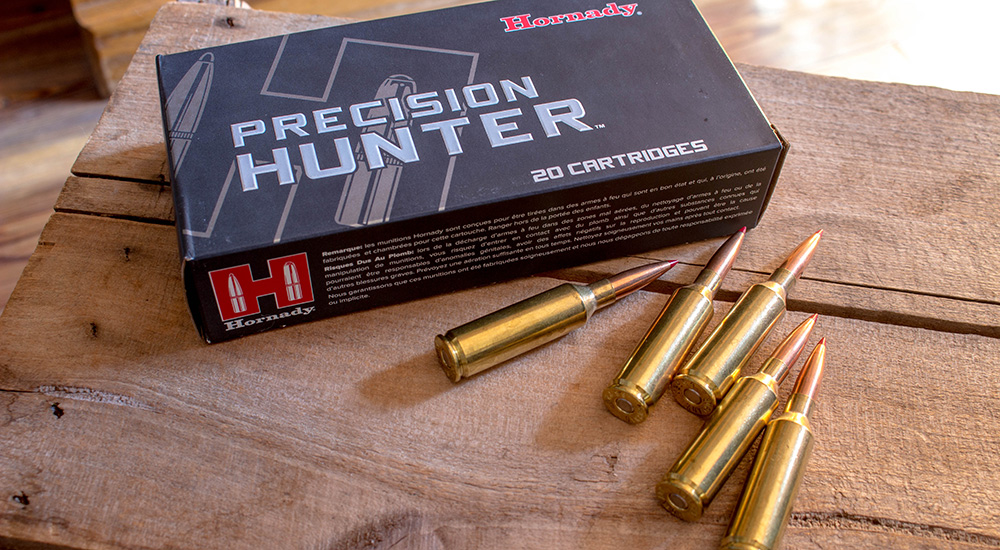
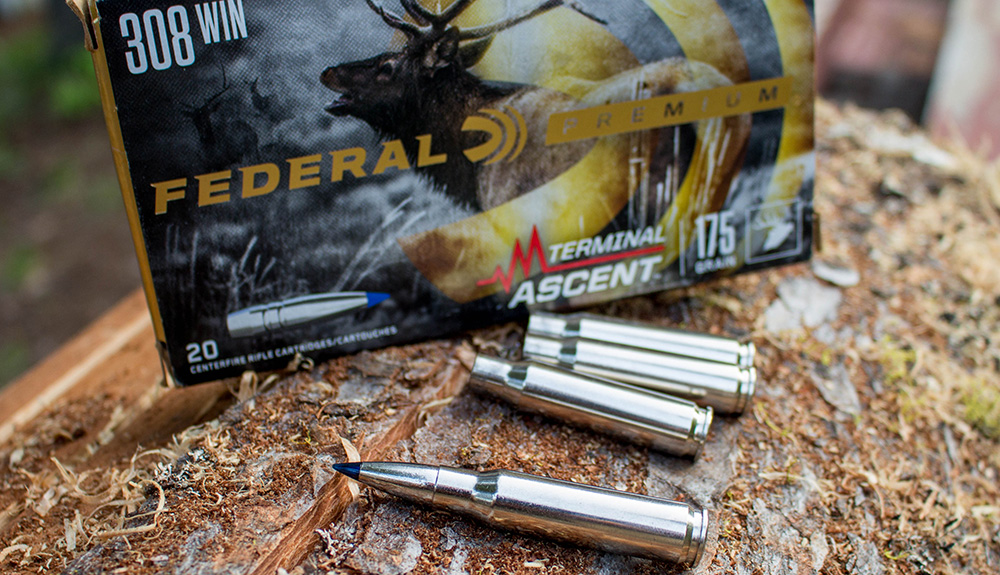
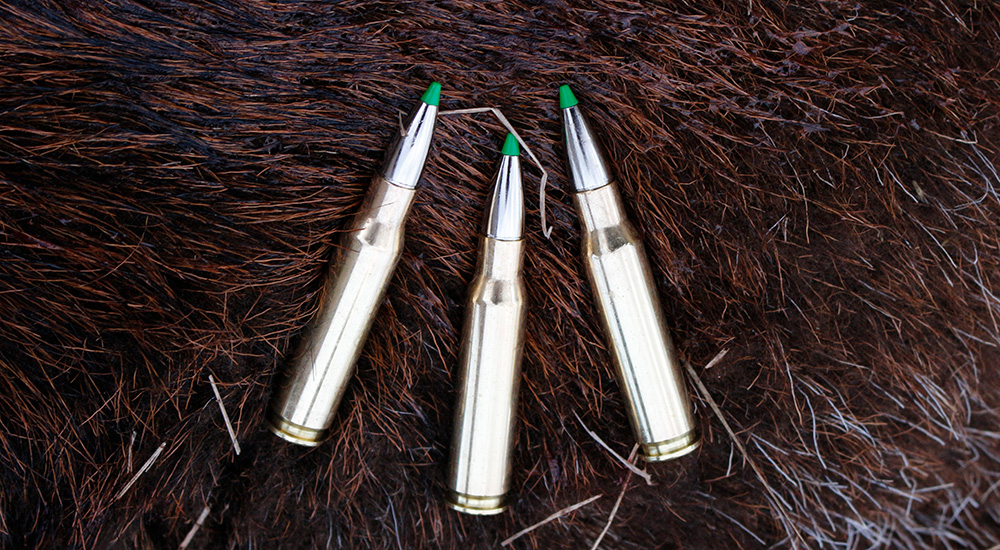
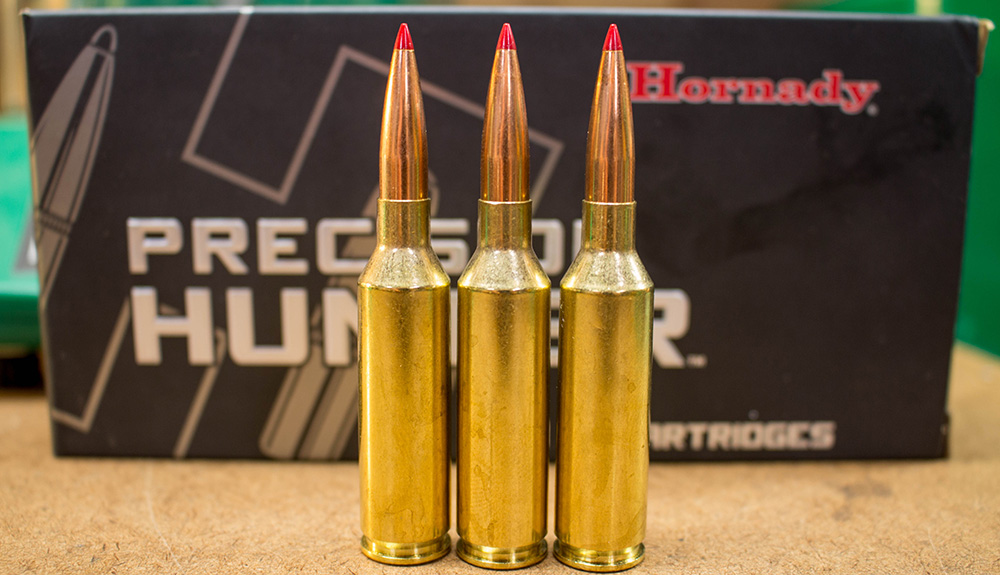
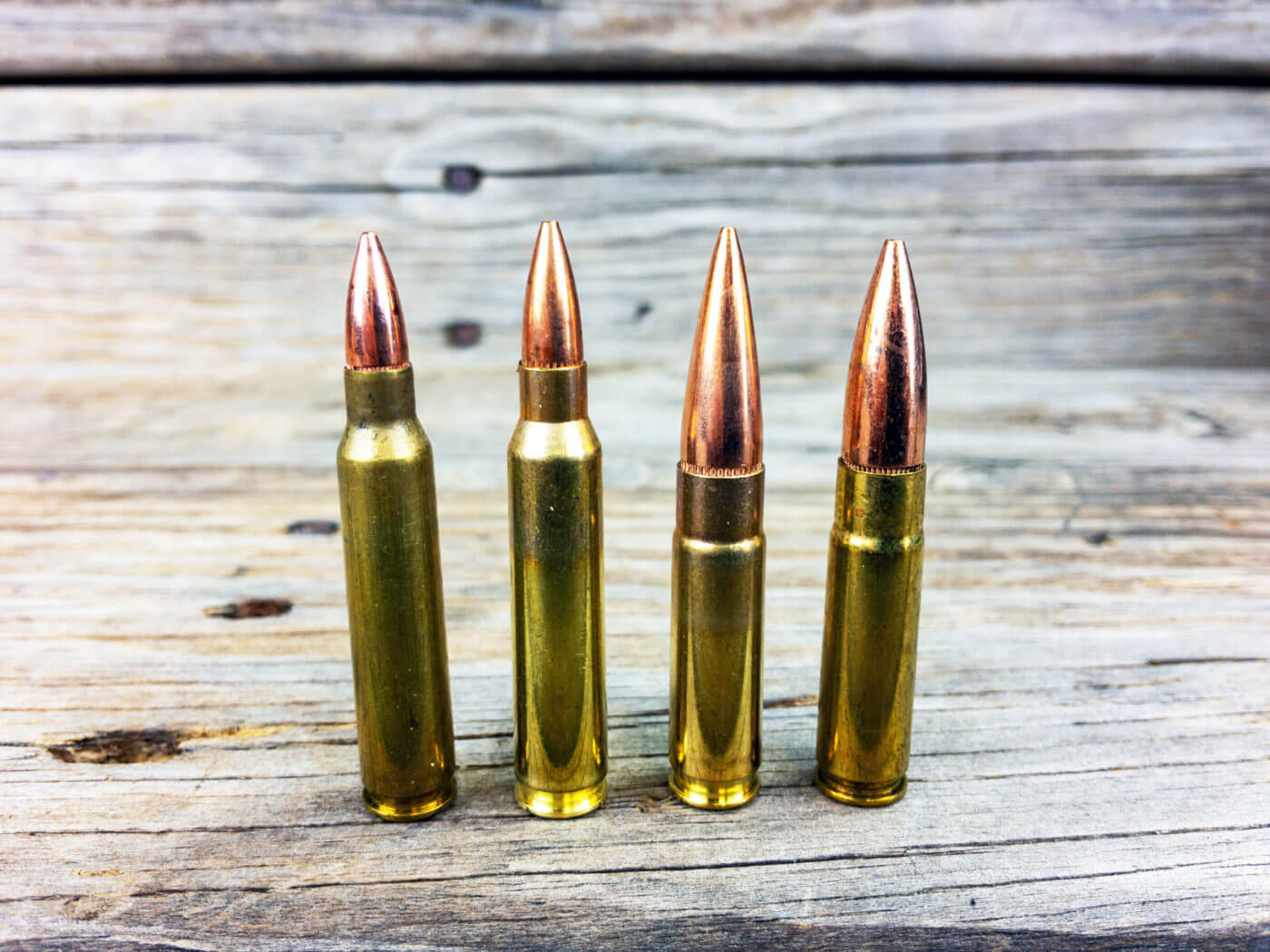
By reader request, we’re putting two short-action gems up against one another, with a time-proven veteran with 70-plus years of hunting, military and target experience, and a relative newcomer that is quickly gaining favor in the hunting fields and target range. And despite the differences in bore diameter, many hunters are flocking to the smaller bullet diameter; the question is whether or not that change is warranted. Let’s compare the differences between Hornady’s 6.5 PRC and the classic .308 Winchester.
As the younger of the pair—having been released at the 2018 SHOT Show—the 6.5 PRC (Precision Rifle Cartridge) is often referred to as the big brother of the 6.5 Creedmoor. Based on the .375 Ruger, shortened to fit in a short-action magazine, the 6.5 PRC is a rimless cartridge, using its 30-degree shoulder for excellent headspacing and chamber concentricity. The case features the .532-inch-diameter case head common to the Holland & Holland family of cartridges, and measures 2.030 inches in length, with a cartridge maximum length of 2.955 inches. This leaves ample room outside the case mouth for those bullets which possess the high Ballistic Coefficient values, and make the best choices for shooting in high winds or at long distances. Like the Creedmoor, the vast majority of projectiles will top out at somewhere between 140 and 147 grains, with few exceptions.
The 6.5 PRC does offer a respectable velocity advantage over the Creedmoor—about 250-260 fps, putting it on par with the 6.5 Weatherby RPM, and ahead of factory ammo for the 6.5-284 Norma. Though it is short and squat—and visually reminiscent of the Winchester Short Magnum cartridges—I’ve found the 6.5 PRC feeds very well in any rifle with a decently designed feed ramp. At 2960 fps with a 143-grain Hornady ELD-X, the 6.5 PRC will throw those bullets in a very similar manner to the .300 Winchester Magnum with a good 180-grain bullet; when zeroed at 200 yards, it’ll print 6.4 inches low at 300 yards, 18.2 inches low at 400 yards, and 36.2 inches low at 500 yards (where it still retains over 1,600 ft.-lbs. of energy). In the recoil department, the 6.5 PRC does have a higher recoil level than does the 6.5 Creedmoor, but I’ve found it to be completely manageable.
The .308 Winchester came to light in the sporting world before it got its marching orders in the U.S. Army, being released in 1952. It is the result of the 1940s effort to reduce the size and weight of the cartridge, in order to maximize the soldier’s potential. Starting with the .300 Savage cartridge, the end result was what the military designated the T-65. Sharing the same case head dimension as the .30-06 Springfield (derived from the Mauser cartridges), the .308 Winchester effectively reproduced the Springfield’s performance – at least from a military perspective. The sporting world would cock an eyebrow, however, and that debate between the .308 and .30-06 rages on 70 years later. Like its forefathers, the 308 Winchester is rimless, with a .473”-diameter case head, and a 20-degree shoulder for headspacing. The case length is 2.015 inches, with a cartridge overall length of 2.810 inches; the resultant cartridge is one of the first to earn the moniker of “inherently accurate.”
With the 1:12-inch twist rate of the early sporting rifles, the .308 Winchester was limited to 200-grain bullets, though many were eventually offered with the faster 1:10-inch twist. As bullet technology improved, the need for 220-grain round nose definitely faded, but the argument is still raised that the Springfield handles heavy bullets better than does the .308 Winchester. I personally feel that bullets weighing between 150 and 180 grains make the best choice for big-game hunting, as with modern designs they are rugged enough to reach the vitals on game as large as moose and elk, yet don’t take up that precious real estate in the case. Many hunters feel the 165-grain bullets are the optimum balance of bullet weight and velocity in the .308 Winchester, and there is merit to that theory. Traveling at 2700 fps, the trajectory of the .308 Winchester isn’t as flat as the .300 Magnums, nor even the 6.5 PRC, but still makes a good choice for an all-around hunting rifle. With a common softpoint bullet, and a 200-yard zero, the 308 will print 8½ inches low at 300 yards, 25 inches low at 400 yards and 50 inches low at 500 yards, retaining over 1,100 ft.-lbs. of energy at the latter distance. And while these numbers may seem anemic when compared to some of the modern cartridge designs, remember that the .308 Winchester was once the undisputed darling of the long-range target crowd.
Grab a box of premium 180-grain ammunition for the .308 Winchester and you’ve got moose and elk medicine, as well as making a great choice for black bear anywhere. If you like to use your big-game rifle for the occasional coyote, the 125-grain bullets can be very effective, if a bit rough on the pelts.
With all this is mind, which makes the better choice for the hunter? A couple of factors should help dictate your choice of purchase: first, the choice of species to be pursued, and second, the ranges at which you hunt and your style of hunting. With the flexibility of bullet weight that .30-caliber has to offer, the .308 Winchester is, was, and always shall be a very versatile cartridge. At the most common hunting ranges, its trajectory and energy levels don’t pose an issue, and I feel that for the larger species the .308 Winchester offers an obvious advantage over and of the 6.5mms. Should you want your hunting cartridge to pull double duty as a competition target cartridge, especially at long ranges, the 6.5 PRC is a fine choice. Many feel that the 140- to 147-grain bullets are plenty of bullet weight for bears, elk and moose, though the author feels that a larger bore diameter and additional bullet weight will be greatly appreciated for those species. As a deer/sheep/antelope cartridge, the 6.5 PRC is a wonderful choice, and it is in that species range where I feel the cartridge absolutely shines.
Factory ammunition for the .308 Winchester is wonderfully plentiful, with all major manufacturers offering good choices. The 6.5 PRC has assuredly caught on, with at least one load offered by Winchester, Browning, Federal, Nosler, Norma and Barnes, as well as the Hornady offerings. To pick one over the other, I’m going to fall back on my inherent desire for flexibility, and that means I’ll have to choose the .308 Winchester for the wider variety of bullet weight, even if I’m giving up the hunting performance outside of 500 yards. There is a reason that the .30-caliber cartridges remain such popular choices in the hunting arena, and while the 6.5mms are certainly impressive far downrange, the majority of hunting certainly occurs inside of 400 yards.
Looking for previous installments of our “Head to Head” series? Click here.
Did you follow your favorite archery manufacturer’s social media channels during their coverage of the 2024 ATA Show in January? Did you spy something that enticed you to upgrade, or are you a new archer in need of your first set of equipment? Many manufacturers debut new products during the Show, so there was a lot to see. Wherever you’re at in your archery journey, there’s something out there for you. We compiled a roundup of a few of the many items that debuted at the 2024 ATA Show, via the New Product Launch Showcase, below.
Bear Archery Products launched a 90th anniversary edition of its Grizzly bow. At heart, it’s the same Grizzly bow that Bear has previously produced, a traditional bow designed by Fred Bear himself, but with a new “Green Glass” color scheme and a 90th anniversary logo. Caleb Sorrells, marketing manager for Bear Archery, noted that the new bow has been well received and he predicts that it will do well for Bear. “It will be a great collector’s item on top of being a great bow,” Sorrells said. It’s available in right- or left-hand styles and in six draw weight options from 35 pounds to 60 pounds. It features a crowned, cut-on center arrow shelf with a leather side plate and a bear hair arrow rest. As always, the bow is handcrafted here in the U.S.
PSE Archery
The PSE Fortis debuted at the 2024 ATA Show. Photo Credit: PSE Archery
PSE Archery debuted multiple bows at the 2024 ATA Show, including the Fortis. “The 2024 Fortis optimizes and enhances PSE’s most stable and efficient hunting platform, elevating your shooting experience to the highest levels,” PSE said in a Facebook post about the bow. It can shoot up to 345 feet per second and has PSE’s full draw stability system, EZ.220 Snap Spacers for easier tuning, a new Kill-Shok Damper to reduce bow vibration, a new Traxion Tech Grip and a Picatinny rail to mount your sight. You can choose from the EC2, E2 and S2 cams.
A PSE Facebook post lists the 2024 Nock On Unite as “meticulously engineered to John Dudley’s specifications.” It also comes with the EC2, E2 or S2 cam and is equipped with PSE’s full draw stability system, EZ.220 Snap Spacers and a Picatinny rail. The PSE Facebook post also says the bow delivers “maximum forgiveness with greater speeds.”
T.R.U. Ball/Axcel
Axcel’s new Ranger Pin is an upgraded sight pin on the AXCEL Landslyde sights. With the new Ranger Pin, the distance from the top pin to the bottom pin is .225 inch. The sight can be used for distances between 20 and 40 yards.
T.R.U. Ball’s new Trident handle release is the “first-ever high-end thumb activated target and hunting release that automatically resets itself without any lag. It immediately fires under bow poundage,” according to the T.R.U. Ball website. The website also lists the release as having an ultra-crisp trigger and an ultra-flex personalized fit system with an adjustable three-finger piece that offers 30 degrees of radial rotation, 15 degrees forward and 15 degrees backward.
The Antler Ridge Hunting Stabilizer Kit comes with a 12-inch front bar, a 10-inch back bar, a front and back Kryptos Arc vibration dampener, an Antler Ridge Trilock adjustable offset mount, a zero-degree Centerlock quick disconnect, two 2-ounce Black Nitride weights on the front bar and two 2-ounce Black Nitride weights on the back bar.
The new Axcel Achieve XP 1.5 and Achieve XP 2.0 sights remove up to 1 ounce from the target end of the sight and are designed to improve balance and reduce vibration, according to a video by T.R.U. Ball. You can also adjust all three of the sight axes and you can align the scope to your eye. It also has a new variable range plate that accommodates compound and recurve archers and is designed for fixed-distance and multi-distance tournaments, so you can use the same sight for all your tournaments.
Next Steps
Eager to place an order for some new gear after seeing this preview? Check out each of the companies’ websites to learn more about the products. Upgrading your gear can be a great way to reinvigorate your passion for the sport. We all love products that make things a little easier, give us more options, or are simply neat to look at and archery gear is no exception.
Visit or call your local archery shop to see if they have the products you’re interested in in stock.
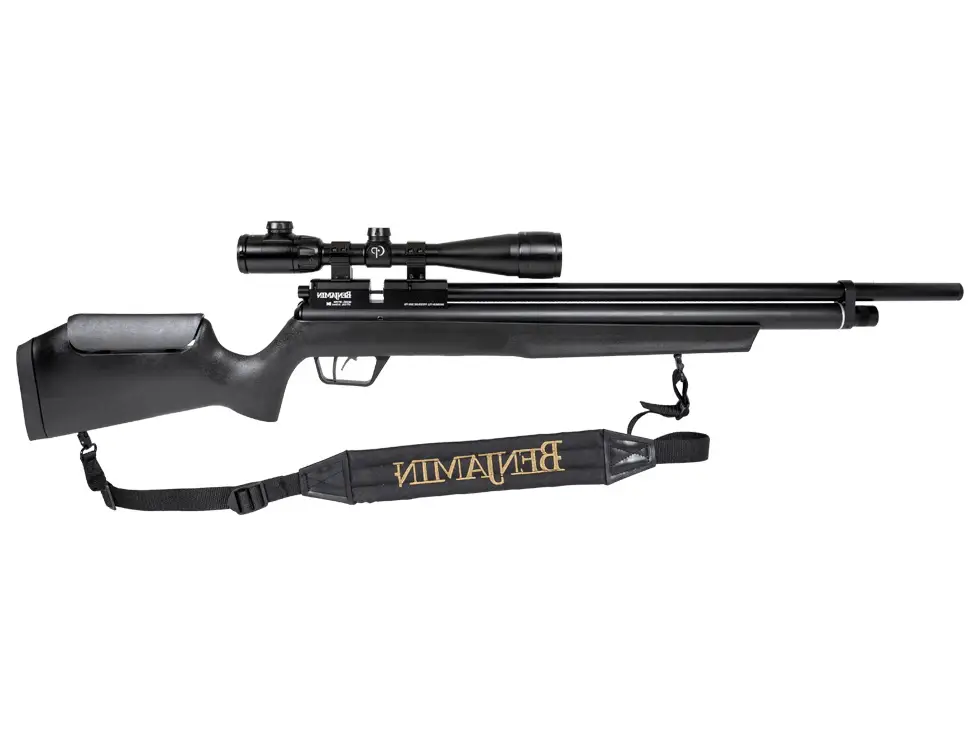
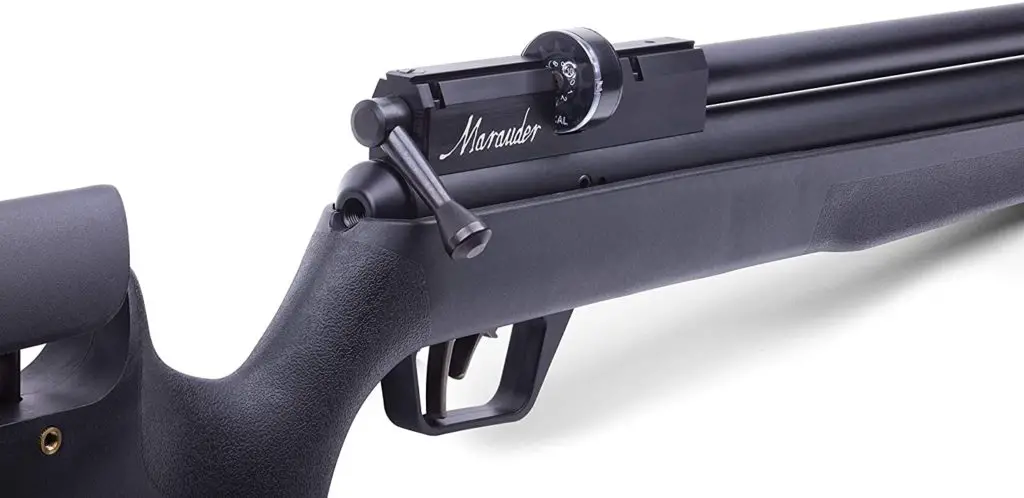
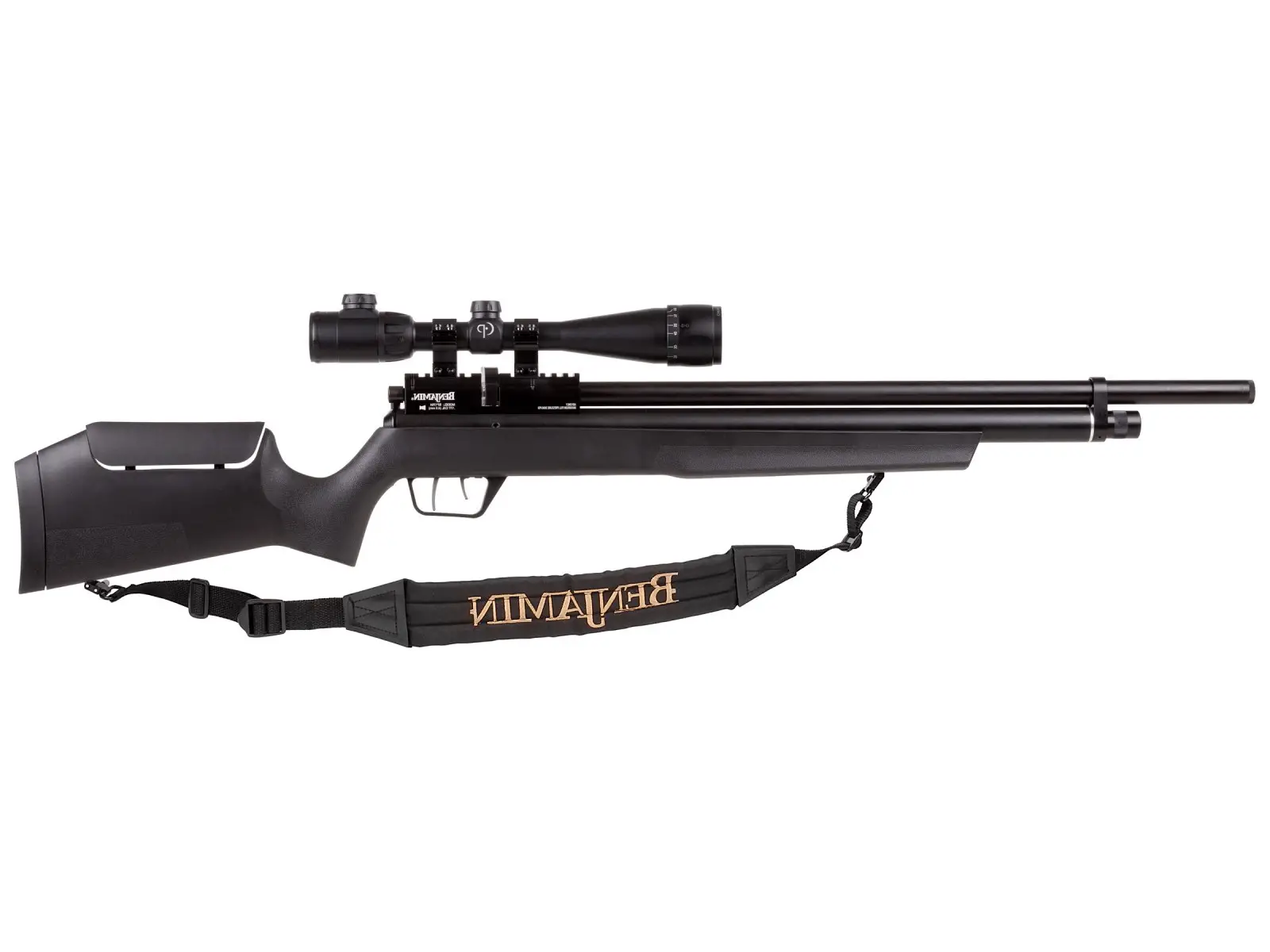
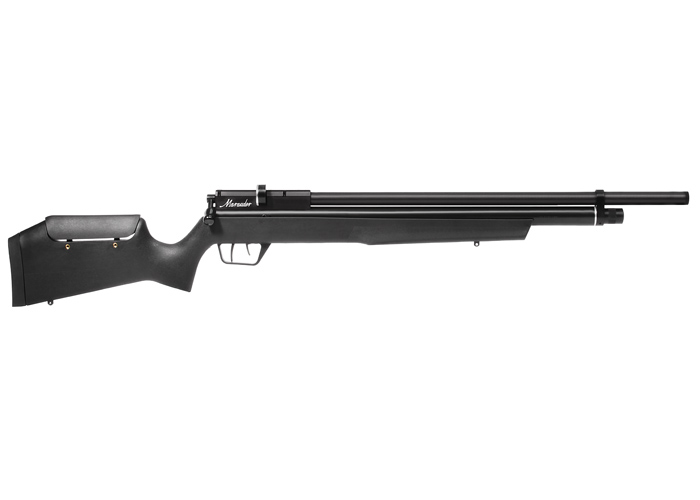
Around 90% of users recommend the air rifle due to its accuracy.
The reviews reveal that the air rifle has extreme accuracy for shooting and hunting.
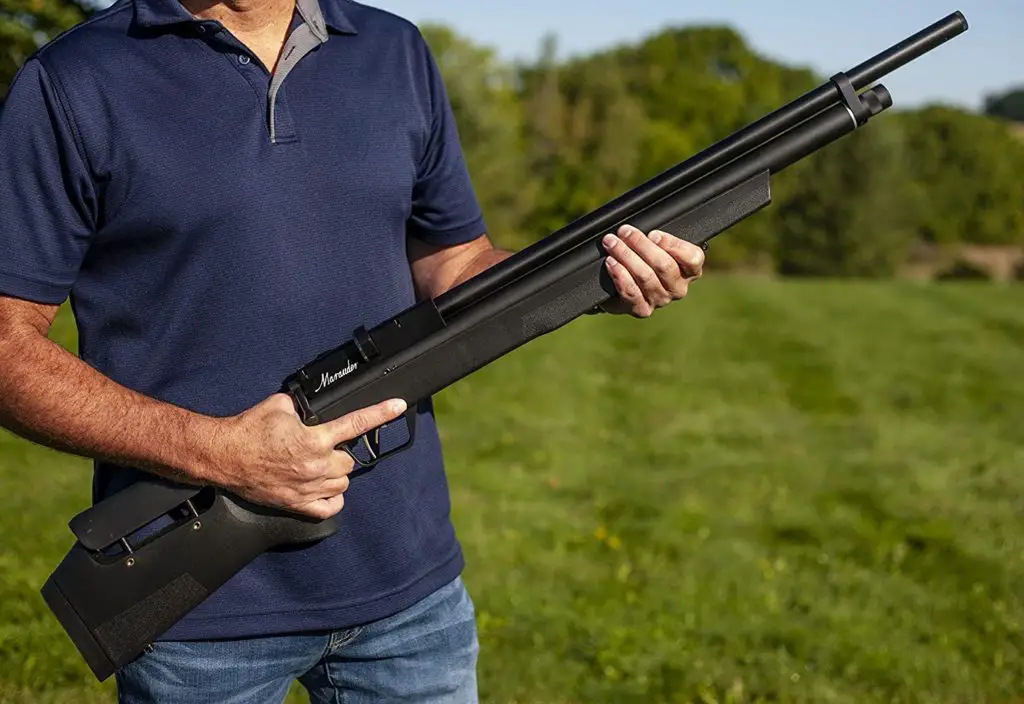
Ian with Terry Tate from Team Wild used Benjamin Marauder for their hog-hunting trip in the video below:
Many shooters are even considering extending their backyard area to make full use of the rifle’s attributes.
Moreover, those who are first-time users also find the air rifle very user-friendly and reliable.
In addition to this, the Marauder is being lauded by ex-armed forces members.
Moreover, the customers are very appreciative of the price, which is very low for the features provided.
Key Features
One of the quietest air rifles
Outstanding accuracy
Inexpensive magazines
Transfer port and hammer spring allow for adjustment of the power
Accessories such as regulators, barrels, and air reservoirs are readily available on the market
Best for shooters and hunters
Reasonable price
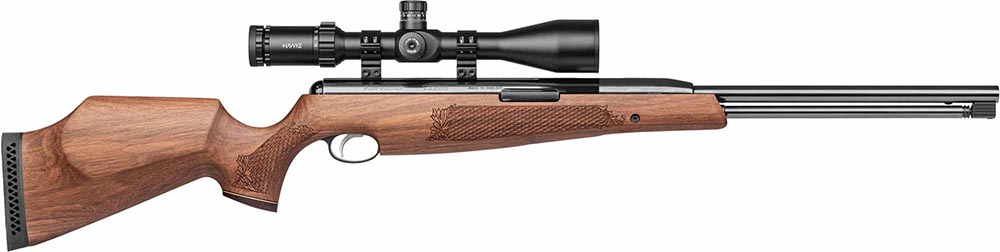
Sleek hardwood stock
Attractive appearance
Conclusion
With outstanding accuracy, reliable performance, and reasonable price, the Benjamin Marauder is the perfect choice for shooters and hunters who don’t want to spend the likes of $1000.
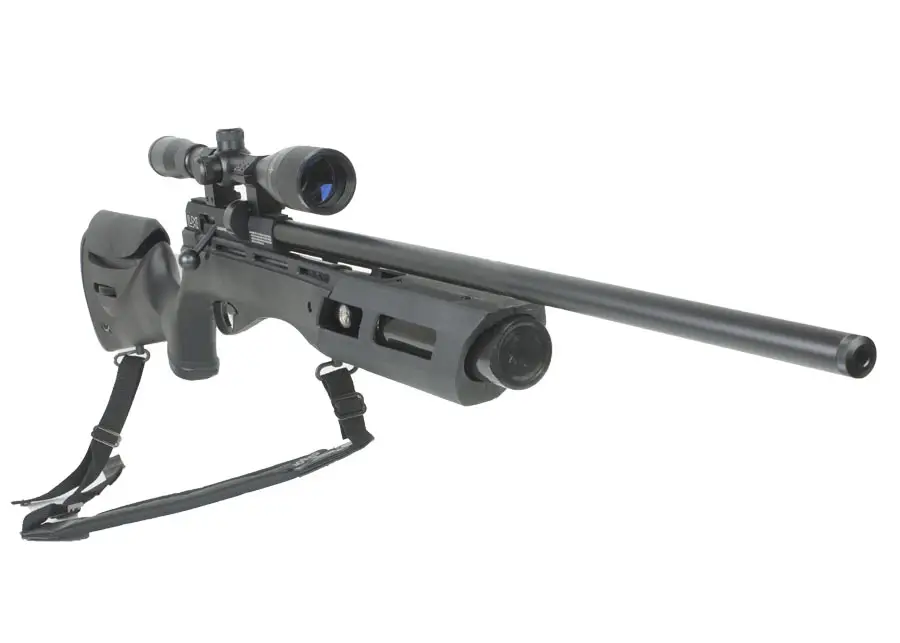
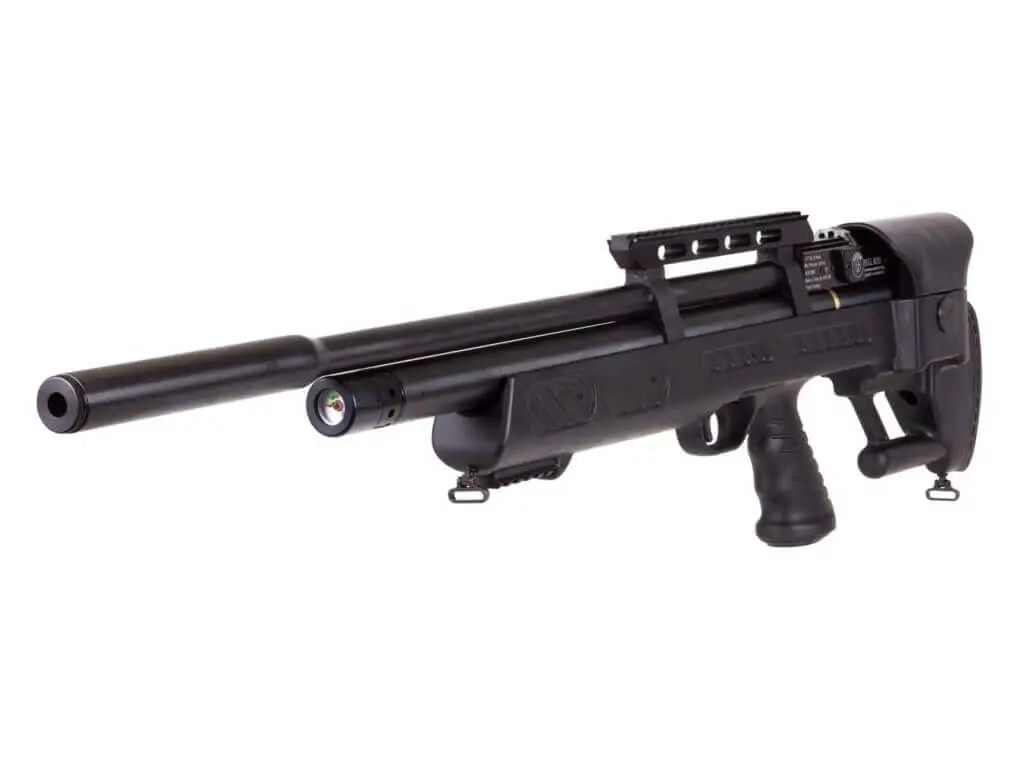
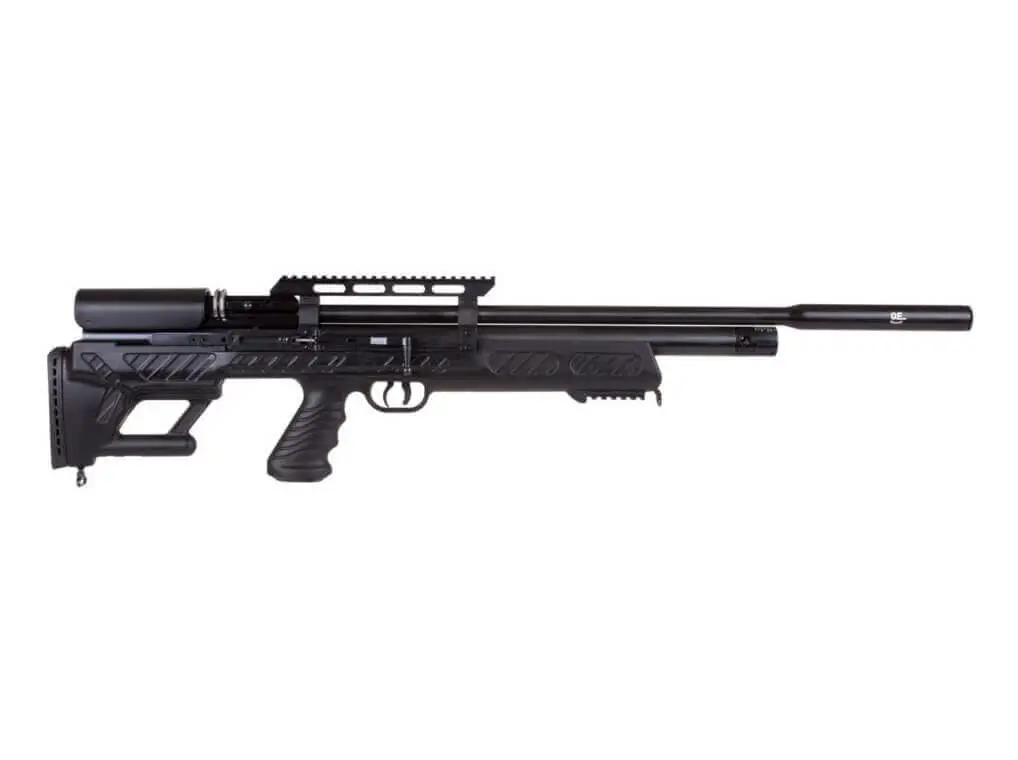
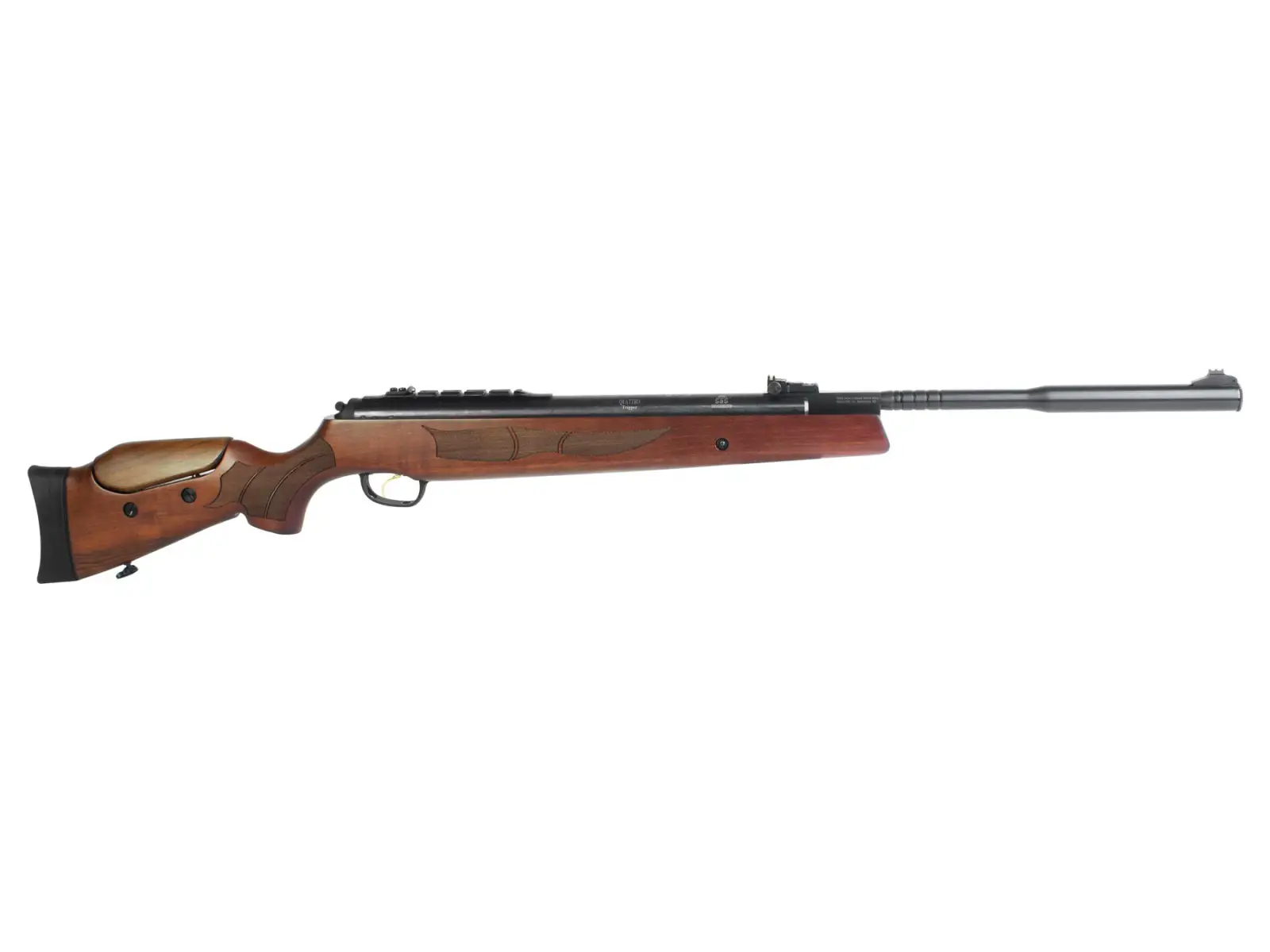
HatsanBullboss QE is known for its reasonable price, so if you’re not too tight on the budget, it might be a great gun for you.
Customer Reviews
The feedback of the customers for the Bullboss is mixed.
Some recommend it, while others have actually returned the HatsanBullboss QE.
Many users, however, do like the air rifle for its exceptional accuracy.
Moreover, the use of the trigger has also been appreciated as the trigger is much smoother.
Finally, the shooting range has been widely lauded.
In addition to this, shooters do have some complaints as well.
For example, they recommend not using the gun unless it is empty.
Due to the higher price, it might not sell as well as Benjamin Marauder.
The accuracy is commendable, but customers actually find it to be the best bullpup air rifle.
Key Features
Excellent accuracy
Quietness
Smooth trigger
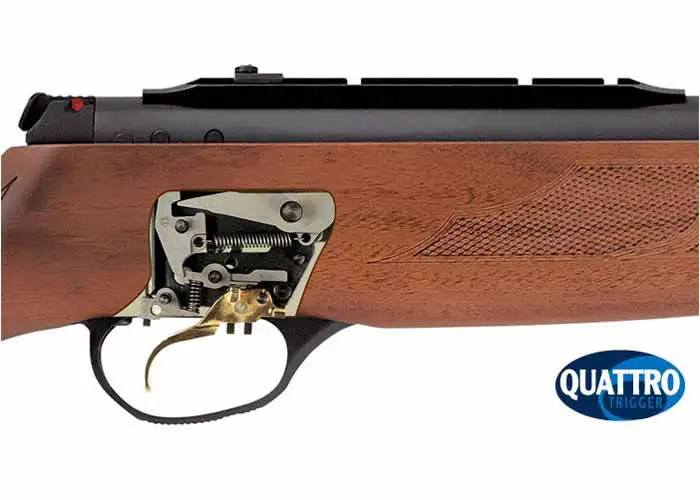
2-stage Quattro Trigger System
Hardwood stock
Ventilated rubber butt pad
Conclusion
The above-mentioned description reveals that the Hatsan Bullboss QE is one of the best hunting air rifles under $1000, for users who need an accurate air rifle with useful features.
You can see the price is not so low, but it is reasonable given the features and performance.
Unlike our first air rifle, the HatsanBullboss QE does have some undeniable flaws.
Therefore, if you wish to buy an air rifle that is accurate, good-looking, less noisy and you do not care much about the price.
Moreover, being synthetic, it’s one of the lightest best long-range rifles under $1000.
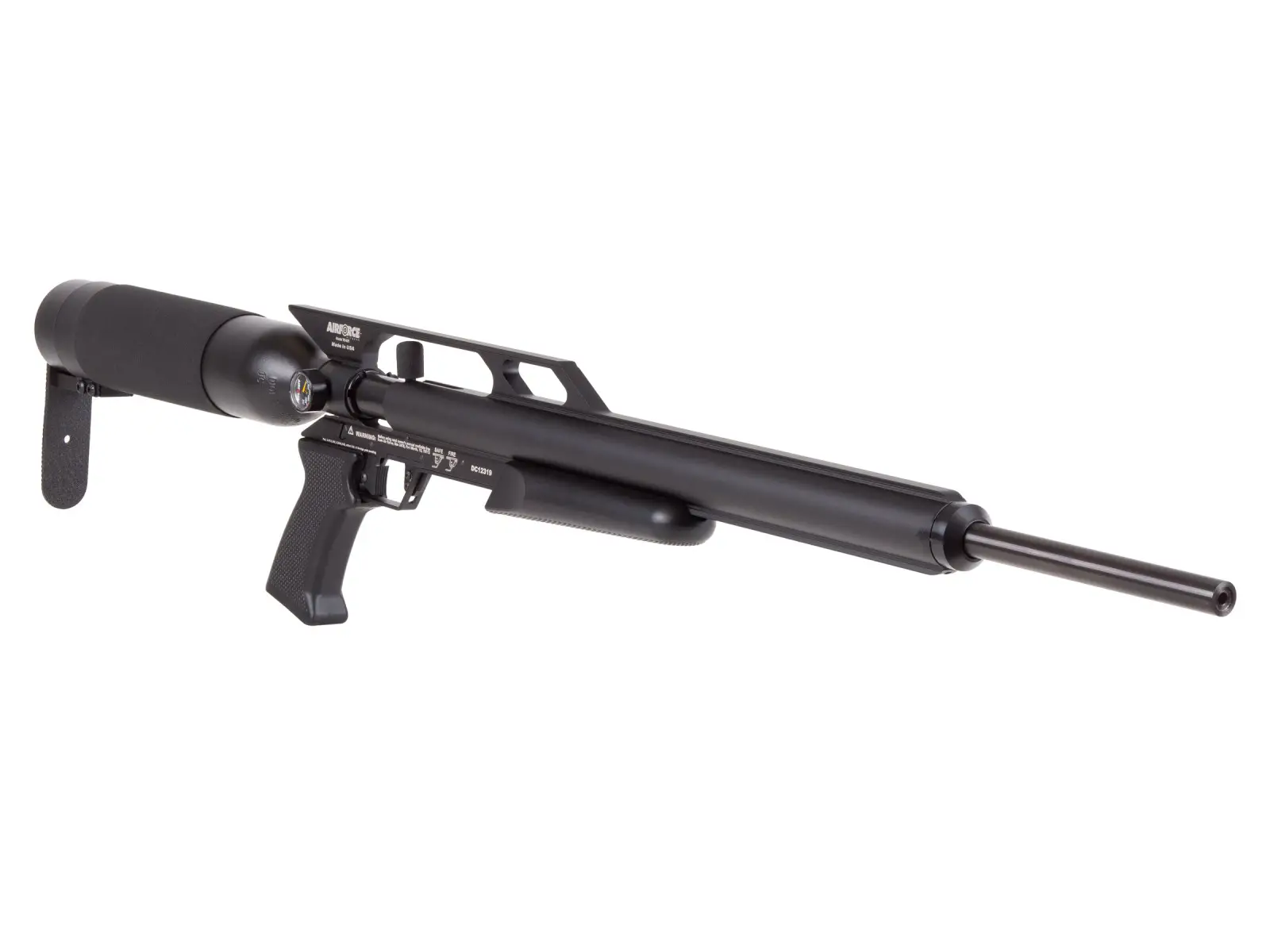
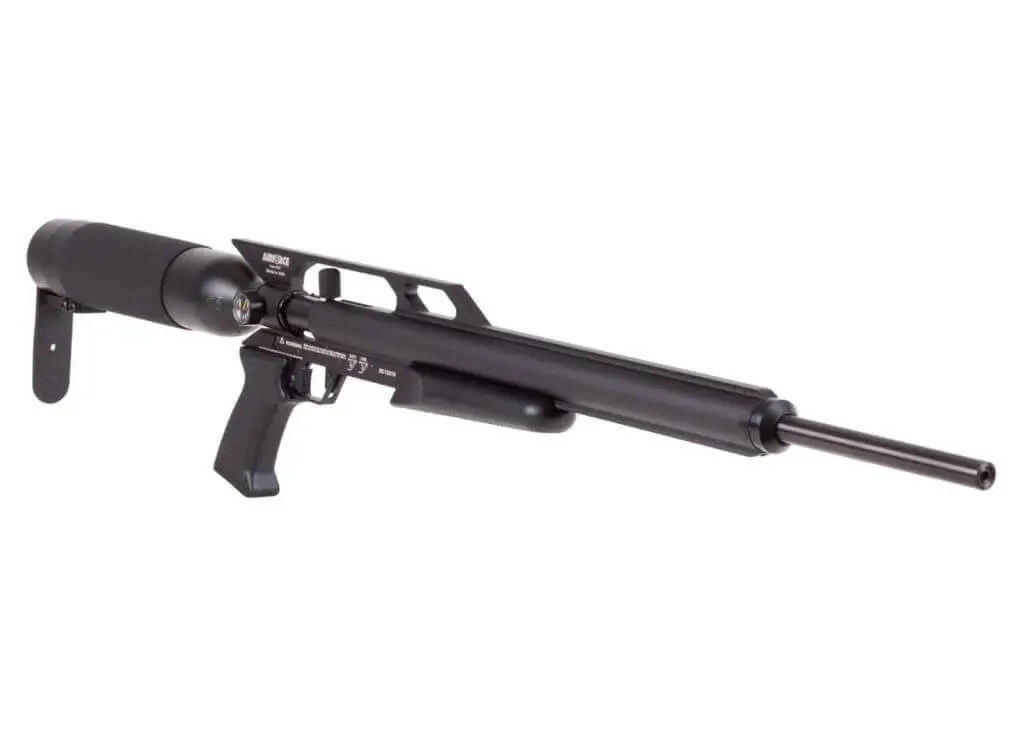
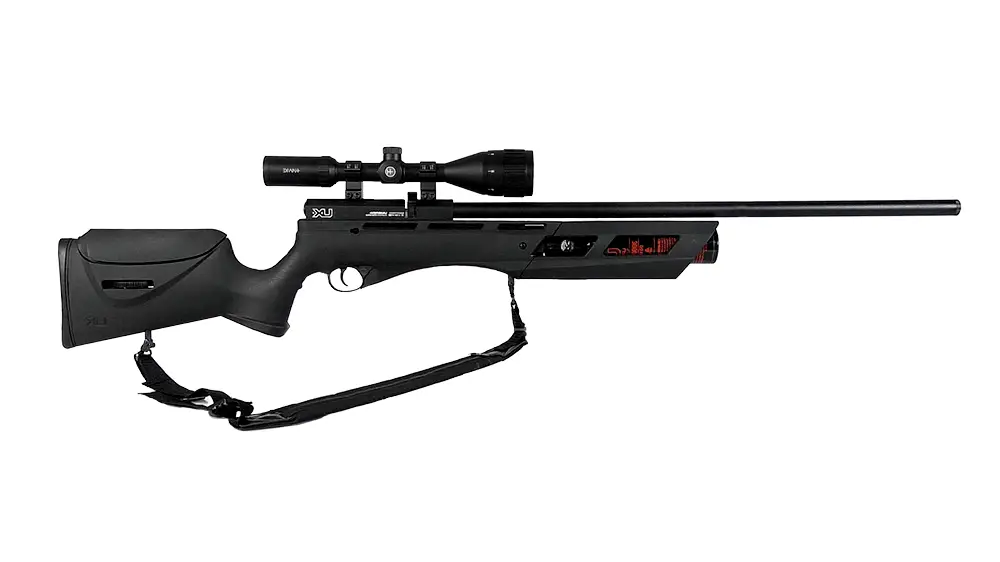
Therefore, for shooters who wish to have an enjoyable time in their backyard on weekends, the Airforce condor is a great option, as long as the noise isn’t an issue for you.
Additionally, most game hunters are satisfied with the performance, and also safety as well as power and accuracy.
Key Features
Exceptional Accuracy
Loud
Light in weight, therefore easy to use
Lifetime warranty
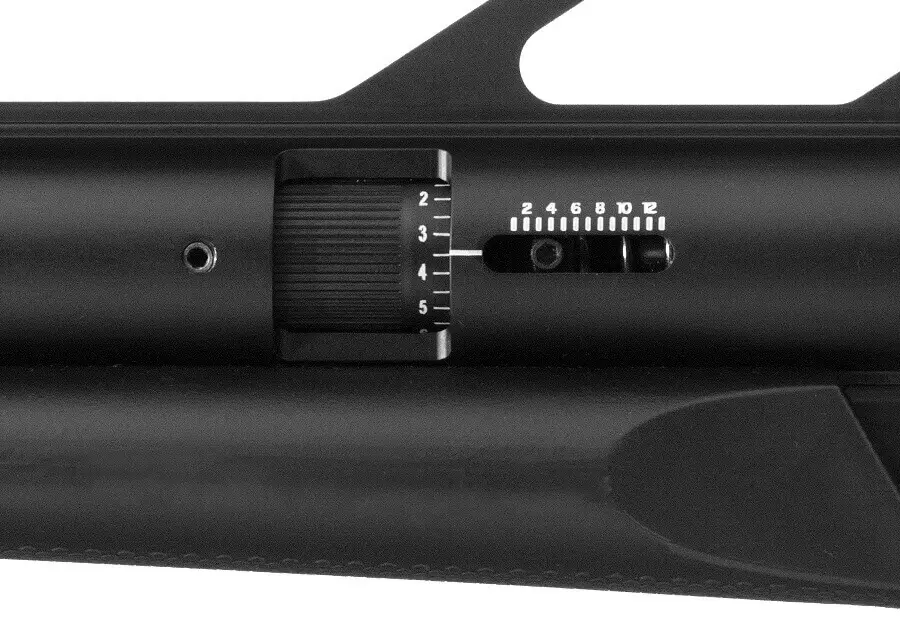
Highly adjustable power wheel
Lothar Walther barrel
Maximum velocity is 1150 fps
Conclusion
A serious air rifle for the serious shooter!
It is one of the best hunting rifles under $1000 in 2021.
It was a hurricane. A hurricane 900 miles from the nearest ocean, on the ragged edge of winter with the thermometer hovering just above zero. The day the storm hit, and the night that followed, Dale Engler of Alma, Wisconsin, was out on Crooked Slough, a backwater on the Mississippi River about 50 miles southeast of Saint Paul, Minnesota. The memory still haunted him decades later. “I am very thankful that all I got out of that ordeal was frost-bitten feet and hands, frozen ears,” he wrote in 1963. “I’m not counting all the nightmares I had the first few years after that day. In every single one, I’m still in that icy water, getting weaker and weaker, swimming toward a dark, snow-covered shore that is never there.”
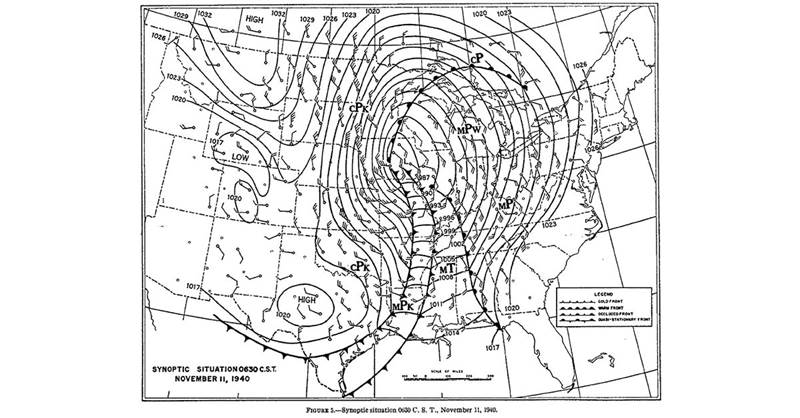
The storm was born in the gray expanse of the north Pacific, a low-pressure system that raised gale warnings along the West Coast during the night of November 6, 1940, and into the next morning. It roared up the Columbia River to buffet the Tacoma Narrows suspension bridge. The bridge’s central span began to sway, and the wind accentuated the motion, like a kid pumping a playground swing. Just after 11 o’clock in the morning on November 7, the supporting cables gave way, and the wreckage of the bridge fell into the water 190 feet below.
The next afternoon, the system collided with the western edge of a mass of arctic air sagging down from Canada over the central plains. It was the first cold of the approaching winter. The storm skirted the edge of the front, drifting southeast into Colorado, strengthening slightly, and then swinging north along the eastern edge of the cold air. By then, a wall of frigid air stretched from Wichita, Kansas, to northern Iowa, and ahead of the cold front, a mass of warm air from the Gulf of Mexico surged up the Mississippi River Valley. Around seven o’clock on the morning of November 11, Armistice Day, as it was known at the time, the storm passed from Iowa into southern Minnesota.
It was the first cold front of the season after a long Indian summer, and it sparked interest among the area’s duck hunters, especially those who were off from work or school because of the holiday. Frank Heidelbauer was a teenager living near Fort Dodge, Iowa. He would later become one of the nation’s premier makers of custom duck and goose calls, but on that morning he was just another young waterfowl hunter looking for birds along Lizard Creek west of town.
“It was foggy with a light drizzle, and warm,” he remembered 40 years later. “I had hunted about three miles of this stretch when a large flock of mallards hooked in out of the murk and landed almost in front of meI took about two steps and they were back in the air and I folded one for each of my three shots. It was while I was picking up these ducks that the wind suddenly thundered down on me out of the northwest.
“In all my days I can’t recall such a rapid change in weather. With the wind came an almost unbelievable drop in temperature, and the drizzle changed to heavy wet snow. Where there were no ducks before, the creek was now full of them, and they were obviously worn out.”
That’s how it was along the prairie creeks in central Iowa. But as the storm continued north it became much more dangerous.
The center of low pressure passed almost 200 miles west of Chicago, but the Windy City and Lake Michigan were not spared. The wind mounted steadily from sunrise through the rest of the day, pummeling the area with gusts over 60 miles an hour for much of the afternoon. Barometric pressure dropped to 28.23 inches—equivalent to a Category 3 hurricane. The temperature at noon was a balmy 63 degrees. By six o’clock that evening, it had dropped to 26. The gale pushed the water of Lake Michigan to the northeast, causing a drop of 4.8 feet along the lakefront. The Milwaukee airport reported a wind gust of 80 miles per hour. In Minneapolis, the wind rose, and then it started to snow, the first flakes of what would be an accumulation of 16.2 inches in a 24-hour span.
As the storm spun toward the upper Mississippi, scores of duck hunters along the river laid plans to take advantage of the cold front. The weather forecast in the Minneapolis Star Journal on November 10 was terse but promising for a waterfowler: “Snow and Colder Today and Monday.”
At 10 o’clock on the morning of November 11, the thermometer in Winona, Minnesota, stood at 50 degrees. A local weather observer recorded a shift in the wind and watched the temperature drop eight degrees in 15 minutes. Around noon, Engler rowed his skiff across the backwaters to an island along the river channel. Like most of the young men along the river at that time, he knew small boats and hunting on the river. It had been raining lightly, so he was wearing a canvas hunting jacket, hip boots over canvas pants, and a wool shirt.
“At 2 o’clock the rain turned into wind-driven sleet and snow and within the next 2 hours I saw more waterfowl than I’ve seen in my life,” he remembered. “About that time some hunters started to go ashore but I thought it was just an early snowstorm and paid no attention, besides, I was having the time of my life.
“Redheads and mallards by the thousands were flying over and on both sides of me. By this time those ducks coming down the river had gusts of a 60 mph tail wind behind them. Hundreds of ducks came past me within 15 feet, probably going around 80 miles an hour. At 3:45 I had 5 mallards and 2 canvasbacks, big plump northern ducks. Now [it was time] to get home and thaw out. Two hunters had been shooting off the south end of the same island I was on. I decided to walk down there and see if they had a big boat. Maybe I could bum a ride across Crooked Slough. Snow was falling so heavily by now that visibility was around 40 feet and it was getting dark. I got to the south area just in time to help both hunters out of the water. Their boat had broached and swamped . . . I saw I didn’t have a chance with my skiff.”
The three men tried to start a fire without success, and Engler decided he would attempt to swim across the backwater and get help. He stashed his shotgun, hip boots, and jacket under his overturned skiff and walked down to the water’s edge.
“I couldn’t see over 30 feet from me as I stepped into the raging water,” he recalled. “The waves were about 3 feet high. Almost every wave was going over my head. I don’t know how long I had been swimming when I bumped into a stump and found I could touch bottom.”
On shore, Engler came across two hunters who had started a large fire. After he had warmed up, he made his way back to his car and drove home, where he called the authorities and reported the position of the two men on the island. “It was the most miserable day I’ve ever lived through,” he wrote, “and I have lived through a few other not-too-comfortable days while serving 38 months in the Pacific with the Navy during World War II. I’ve never been so miserably cold nor felt so close to death as I did in that freezing nightmare.”
Three other young Winona men found themselves in similar circumstances nearby. Ray Sherin, only 14 years old, had gone out to the river around noon with his 20-year-old cousin, Bob Stephan, and 19-year-old Cal Wieczorek. They killed four ducks almost as soon as they hunkered down in the willows, but it quickly became evident that this was no ordinary cold front. Visibility dropped to 30 yards and the temperature was in free fall. They made a run for safety, but with no landmarks visible, they ran aground four times. Then the outboard died. The two older hunters dragged the boat off the mud bar and paddled in the general direction of shore.
The waves drove them onto a low islet. The two men jumped out, but before Sherin could move, a wave broke over the stern and soaked him to the skin. It was clear that they weren’t going to find their way out of the bottoms until the storm abated. Stephan and Wieczorek dragged the boat up out of reach of the waves, turned it over for shelter, and made a bed for the teen, whose clothes were already freezing solid. With no way to build a fire, the three huddled under the boat and waited for morning.
“The thing I remember best was the unending scream of the wind,” Sherin later said of the experience. “The sound of distant gunshots reached us several times. Far-off yells for help.”
At dawn they launched the boat over the 50-foot shelf of ice that had formed during the night. Heading downwind toward Wisconsin, they ran aground on an ice shelf 100 yards from shore. A skiff from the Corps of Engineers’ launch Chippewa picked them up.
Stephan was hospitalized for a week with frozen hands. Sherin, in far worse shape, spent six weeks in the hospital, fighting the lingering effects of hypothermia and extensive frostbite. He lost 58 pounds and part of one foot before he was released, just in time for Christmas.
Two other teenage boys, Dick Bice and La Vern Rieber, paddled out to a collection of low islands and took cover, waiting for a flight. It wasn’t long in coming. As the first bunch of mallards passed, Rieber killed a drake. He paddled out to retrieve the bird and, when he found that he couldn’t get back to his friend, took shelter on another island. The boys could find no fuel for fires on their separate retreats, and precious little shelter.
When Bice’s father, Ray, came home that evening and heard that his son hadn’t returned, he loaded his 16-foot boat and motor, recruited some help, and hurried out to find the boys. The men tried to launch the boat, but the massive breakers swamped it every time they tried. They finally settled down to wait for a break in the wind.
The next morning, another river man managed to slide a boat over the ice to Rieber’s island just as Ray Bice and his party arrived on the scene. The anxious dad slid his skiff over to his son’s island, where Dick had trampled a ring in the snow as he ran in circles to keep warm. He was plenty cold but unharmed.
Others weren’t so lucky.
Responding to news of the impending cold front, Carl Tarras of Winona gathered up his two sons, 17-year-old Gerald and 16-year-old Ray, along with a friend, Bill Wernecke, for a day of waterfowling on the river. When the wind shifted and intensified, they were cut off from dry land and took what shelter they could find in a stand of cattails. Gerald watched the other members of the party die from hypothermia—Wernecke first, then Ray. Carl held on until moments before rescuers arrived the next morning. Gerald had dug part-way into a muskrat house, the rescuers reported, a last-ditch effort that may well have saved his life.
Many details from other stories are lost forever. On the Wednesday after the storm, the bodies of Saint Paul hunters Roy Johnson and Thomas Cigler were discovered, partly covered with snow, on the shore of the mainland. Their johnboat had apparently been swamped by the waves. They made it to dry land but, soaked to the skin and with the wind-driven snow obliterating any landmarks, they had not found warmth and shelter in time. That same day, a Coast Guard searcher came across the body of Red Wing, Minnesota, resident Joseph Elk on an island in the river. On Thursday, the body of another missing man, Bror Kronberg of Saint Paul, was discovered. Kronberg had managed to get his boat to shore in the teeth of the storm, but searchers found his body under the lee of a haystack nearby, where he’d managed to burrow into the hay before he succumbed to the deepening cold.
Estimates of the total number of deaths vary. The National Weather Service reported that 154 lives were lost. Among those, 69 were crew members on ships and fishing boats lost on Lake Michigan. A headline in the Winona Daily News on the Thursday after the storm read “Death Toll of Hunters to Reach 20.” On Wednesday evening, the LaCrosse Tribune’s headline claimed, “27 Midwest Hunters Dead.” With the news of the desperate conflict in Europe clamoring for attention, a close count of the number of hunters who were actually lost during the storm was never made, but it’s likely that, of the 85 people not drowned in Lake Michigan, more than half were waterfowlers on the upper Mississippi.
Seventy years after the great storm, the children and grandchildren and great grandchildren of people who witnessed it still speak of it in hushed tones. It’s as if they miss something that has largely disappeared from the heartland. The corn country of the upper Midwest has been domesticated. Cut over, fenced, furrowed, converted from prairie and forest to one of the world’s great food factories, it has lost much of its essential nature. But the great weather events remainthe thunderstorms, tornadoes, hail, and blizzards that lie in wait just over the horizon, reminders that some things are still beyond our control.
It takes no great leap of imagination for a modern waterfowler to understand why hunters went out on the big water that day. They were an adventurous lot, that bunch. Like us, they whined about the bluebird days most of their neighbors welcomed, praying instead for a stiff north wind, a threatening sky, and a thermometer in free fall. While the rest of the town retreated to the fireside and drew the curtains tight, they went out to meet the storm and the waterfowl that rode it.
They witnessed a day when the business of men, and even the carnage of war, was overshadowed by the raw power of land and sky. It overcame some of them. For many more, it became the memory of a lifetime. All the wildfowl of a continent seemed to gather on a single arctic gale, the roar of the wind and the rush of wings an anthem to all that was—and still is—wild and free.
In 1971, the Michigan Historical Commission dedicated a marker in Ludington, Michigan, commemorating the tragic events of November 11, 1940.
Its external micro- and macro-hammer spring tension adjustments allow you to customize the optimal setting for each round of shots you take.
For maximum control, try out the valve control adjustment system which is externally accessible so you can always monitor the internal pressure systems and make tweaks whenever needed.
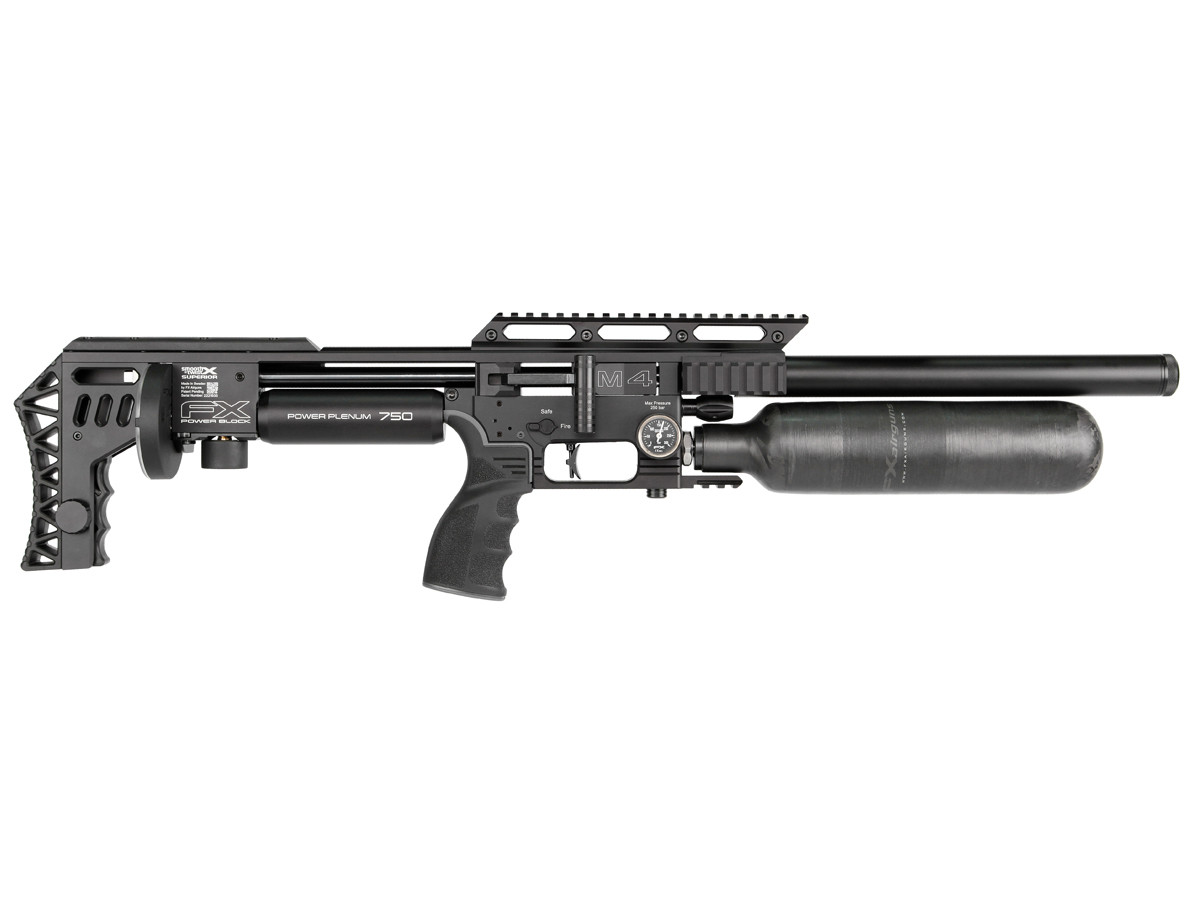
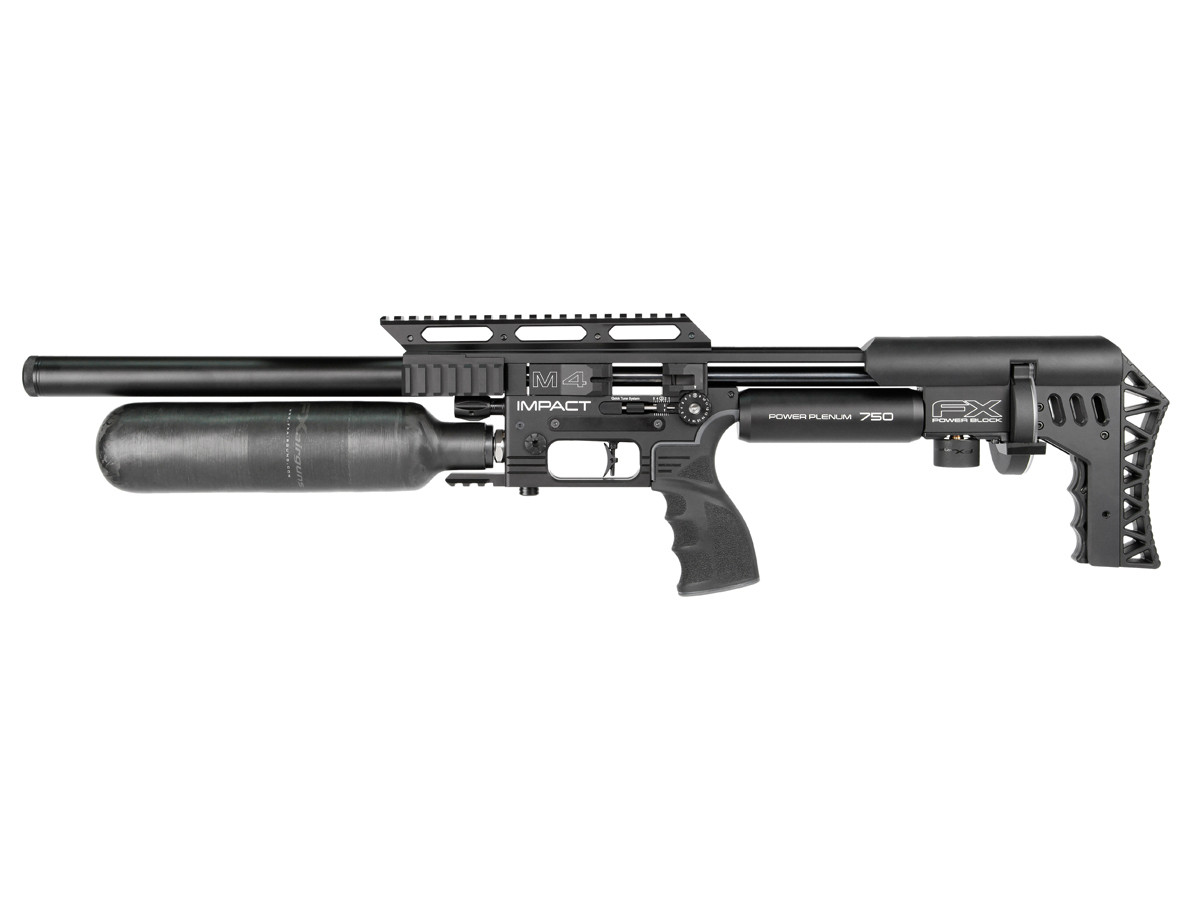
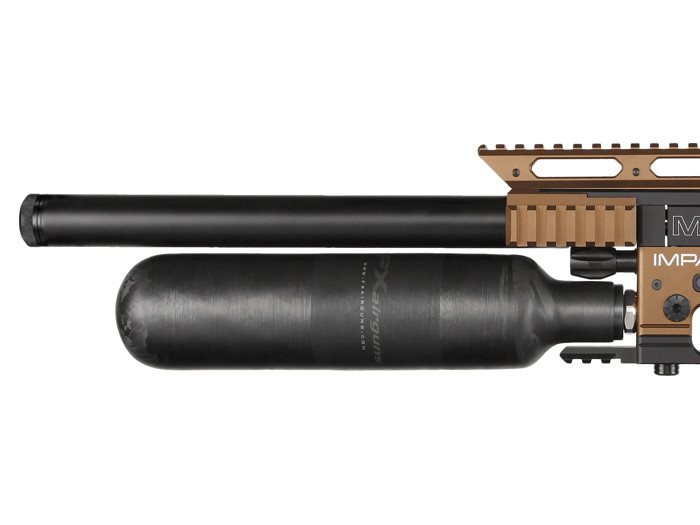
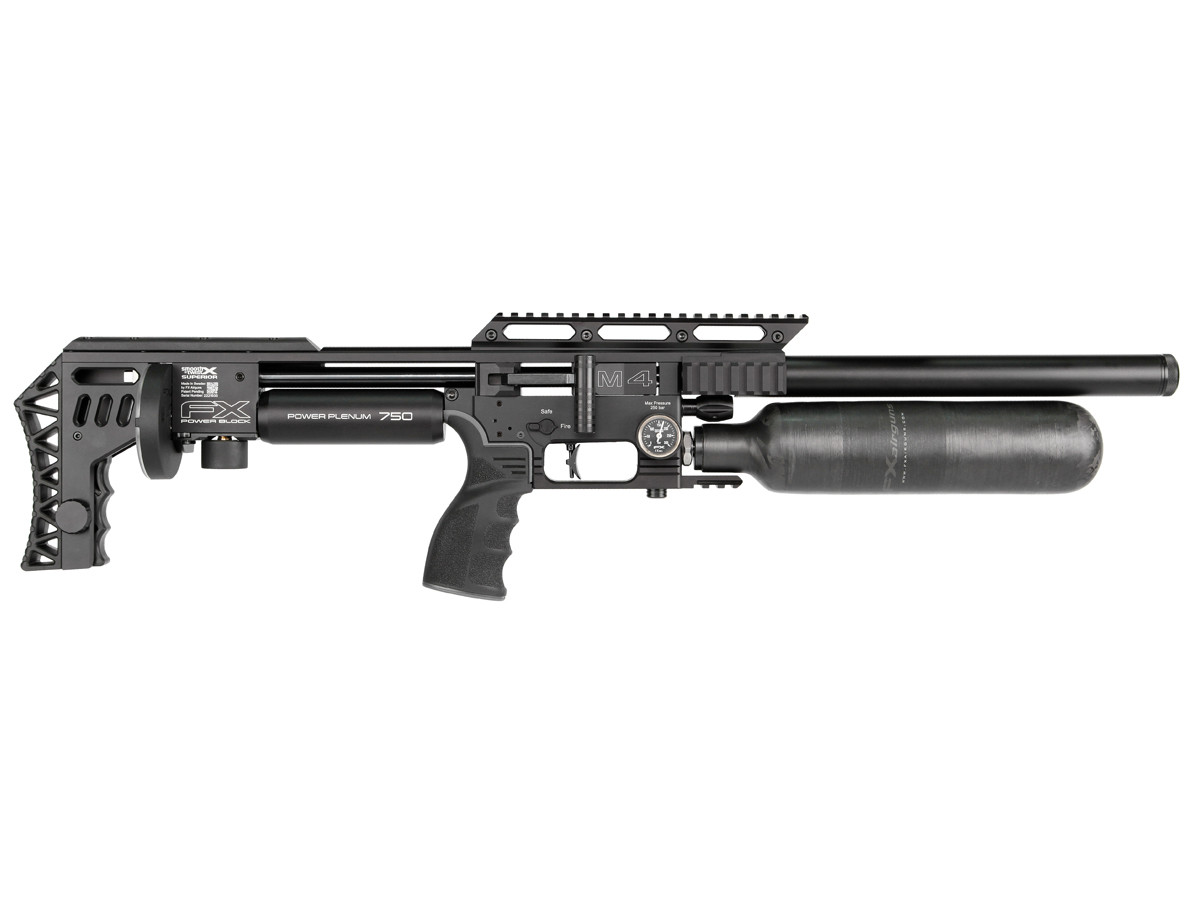
Furthermore, the new FX Airguns Impact M4 PCP air rifle is the latest breakthrough in airgun technology.
The new dual regulator system pre-reduces air pressure, providing superior regulated power and consistency with fewer standard deviations from shot to shot – a must-have for any serious shooter.
In addition, the unique Power Plenum 720 offers an increased diameter and 72cc volume for efficient and powerful projectiles every time.
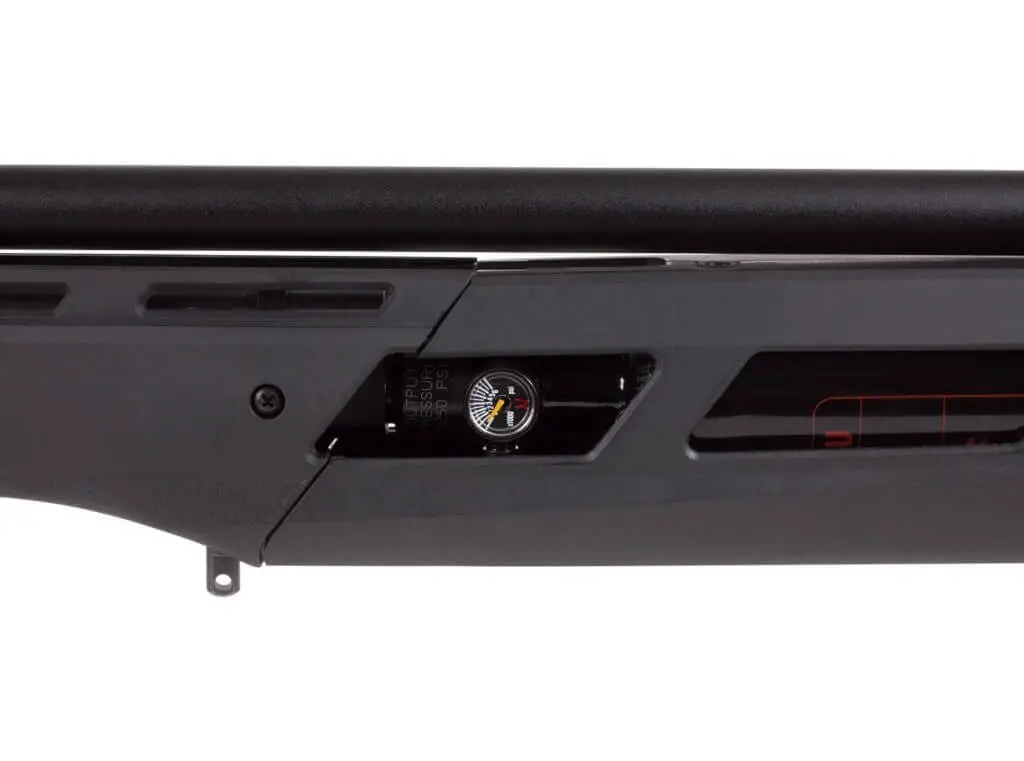
Combined with the rifle’s specially designed porting and valving system, the FX Airguns Impact M4 is perfect for precision performance in competition or out on the field. With its maximum output pressure of 250 bar, this top-of-the-line rifle ensures the accuracy you need when it matters most.
The FX Impact M4 comes in 5 different calibers available: .177, .22, .25, .30, .35 , with Black/Bronze colors.
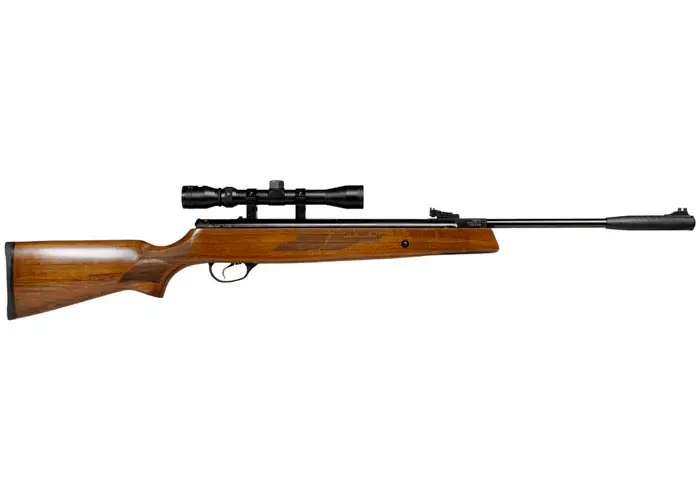
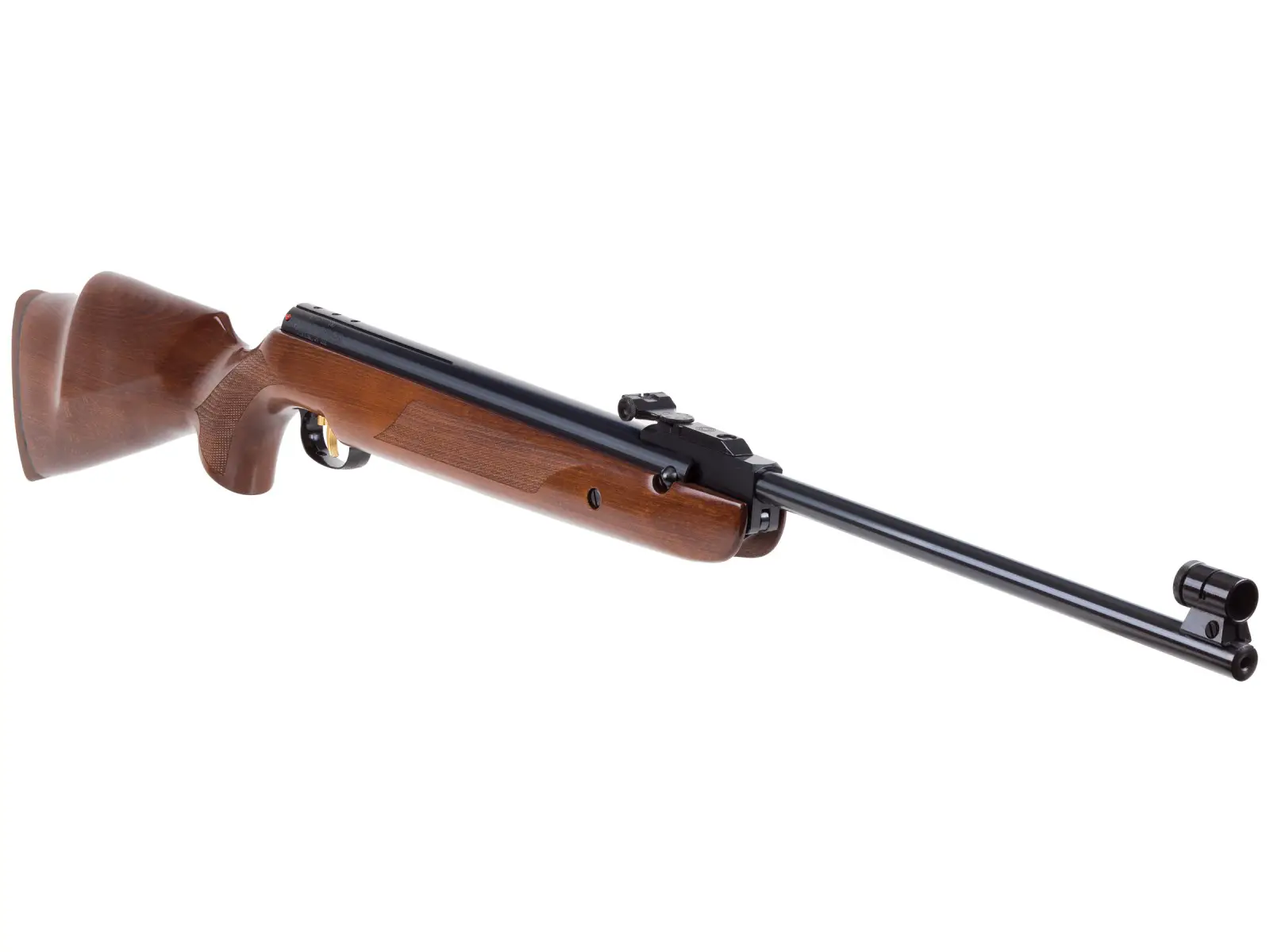
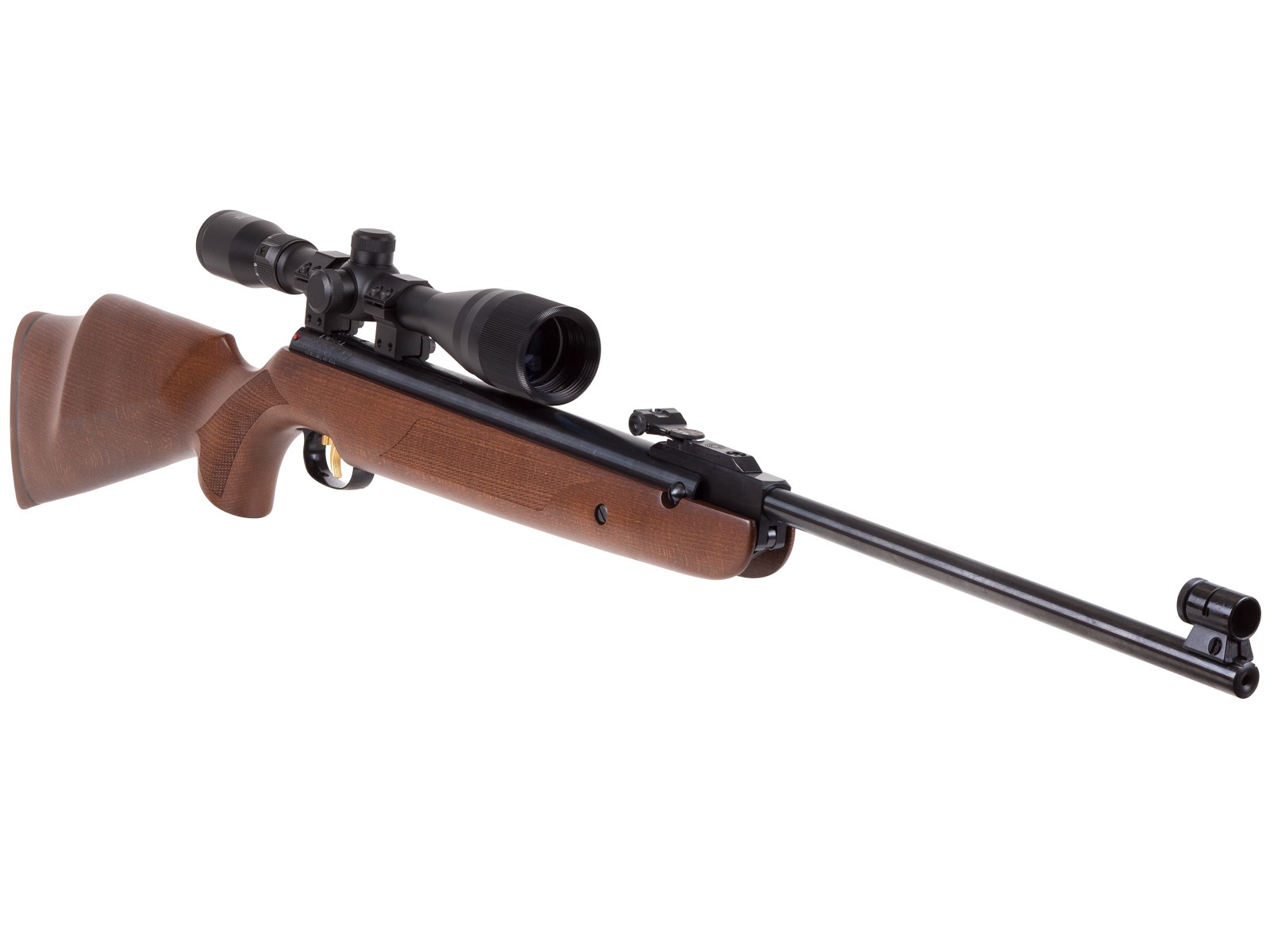
Best Fit and Finish .22 Break Barrel Air Rifle: Beeman R9
Break barrel rifles are a specialty from Beeman and this choice will not disappoint you.
You can take this gun for your hunting expeditions and target shooting games.
The success rate is high as the accuracy is master-crafted right out of the factory.
For the .22 caliber air rifle from Beeman, you get a maximum velocity of 740 FPS and the shooting sessions come with superb power.
This powerful .22 air rifle follows a single-shot shooting and comes with a spring-piston mechanism.
Shooters get a majestic rifle with hardwood Monte Carlo Stock.
Also, you get a raised cheekpiece to support ambidextrous customers. A checkered grip helps the shooter stick to the rifle at all times.
The main reason to use the break barrel system is to help in the cocking mechanism. You no longer have to apply extra force as it is completely smooth.
Beeman’s air rifle choice gives a standard dovetail to mount your optics.
Moreover, with an adjustable rear sight in place, your targets meet your sharp eyes easily.
Let’s talk about the trigger and the safety aspects.
The rifle gives the users a two-stage trigger system to avoid any accidents.
Additionally, the entire safety system in place is automatic.
Another thing you might be concerned about is the muzzle velocity and energy (or power) of this air rifle.
Typically, Beeman R9 .22 air rifles can reach over 17 FPE with an FPS between 650 to 750.
Thus, it is ideal for small-game hunting as well as target shooting.
Recoil and noise are less.
Also, for the .22 caliber, you find many pellet types compatible.
The air rifle weighs 7.3 lbs only and is lightweight for all users.
Sometimes, shooters may sense vibration for the first few attempts. Fine-tuning will help correct this issue.
Who wouldn’t love a rifle that ticks all the boxes in terms of features?
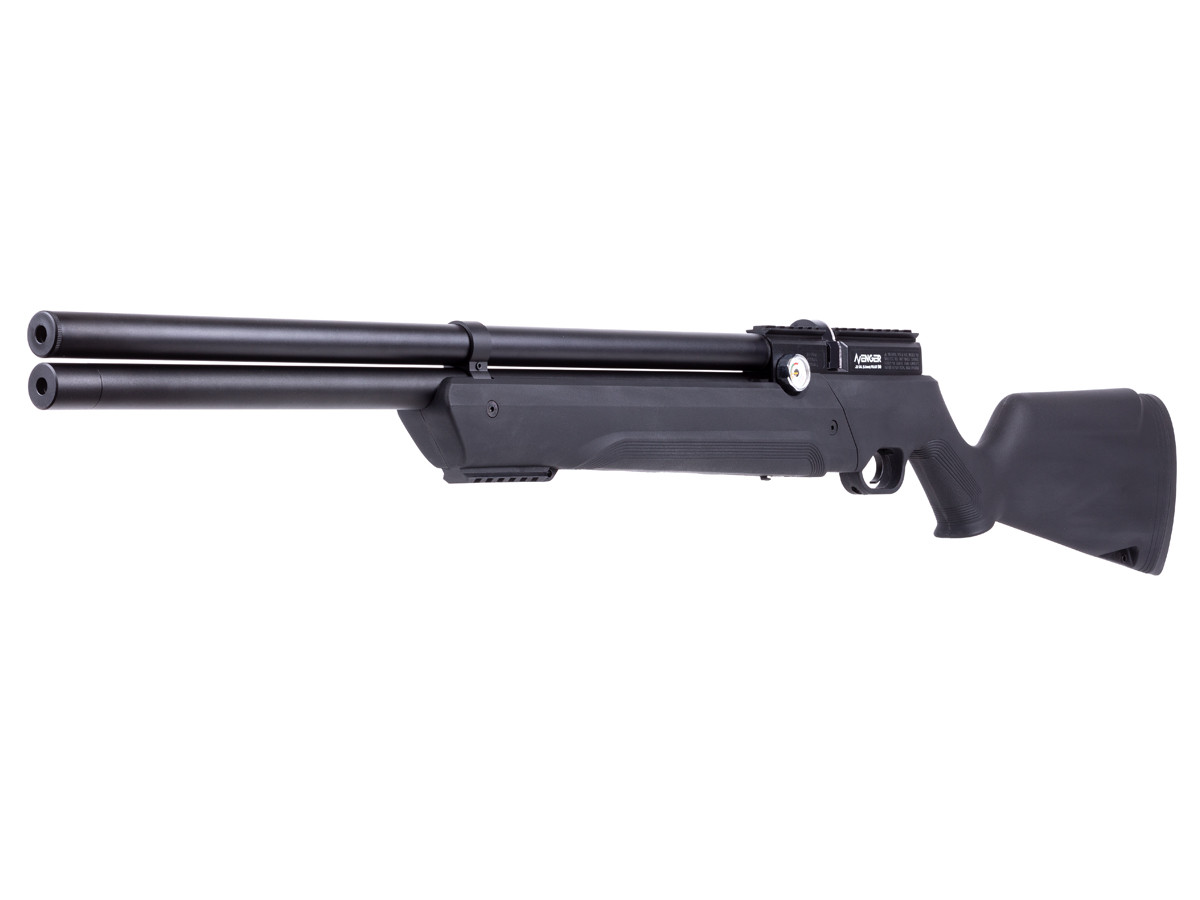
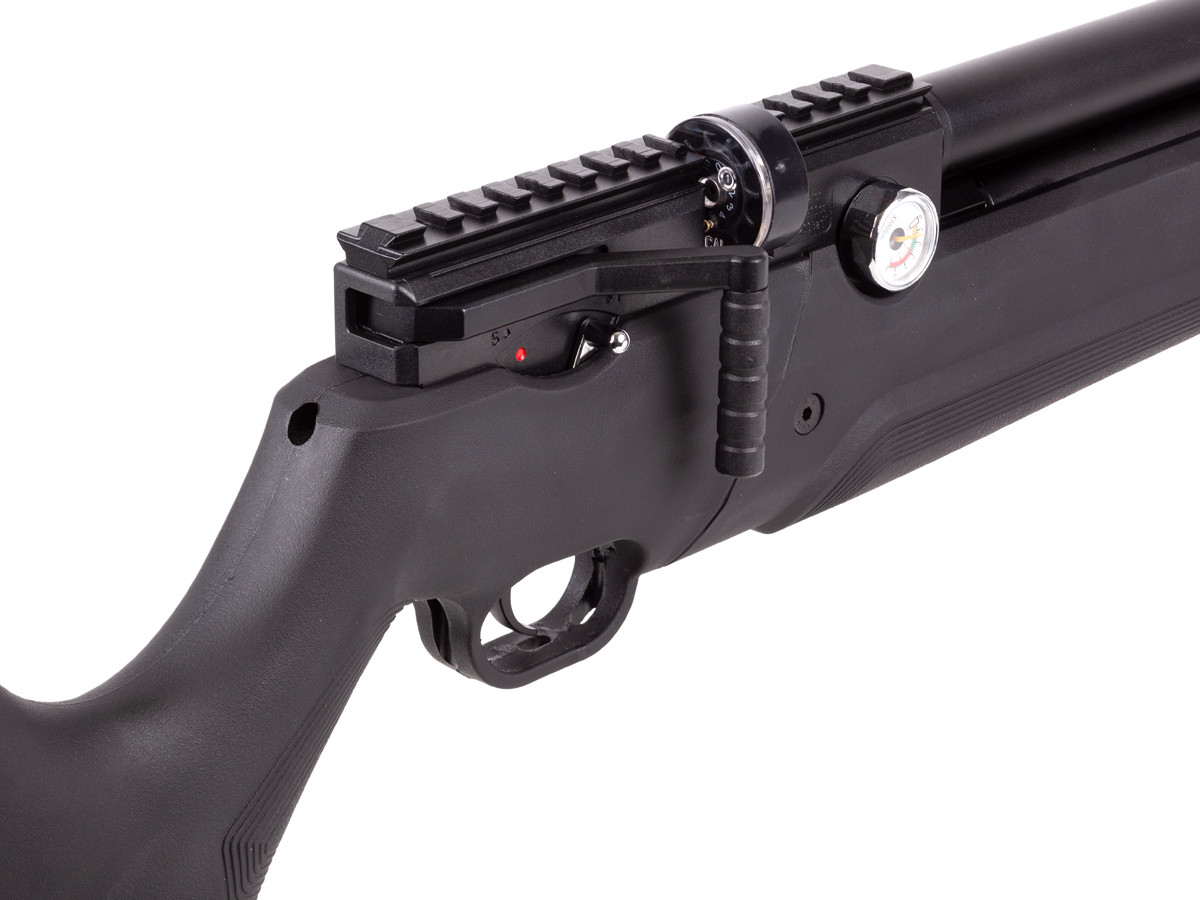
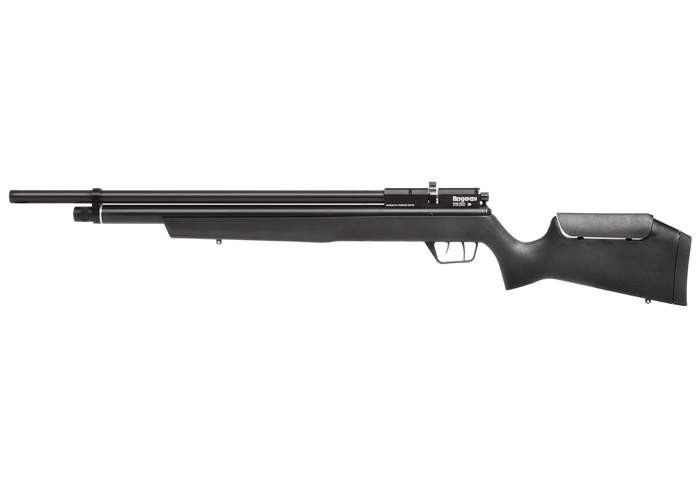
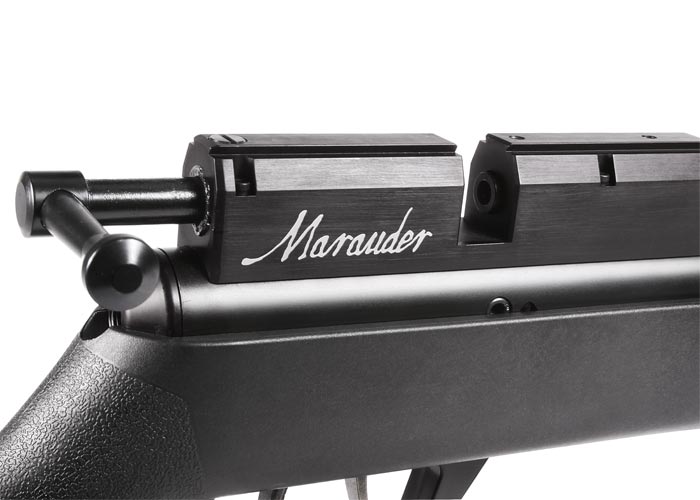
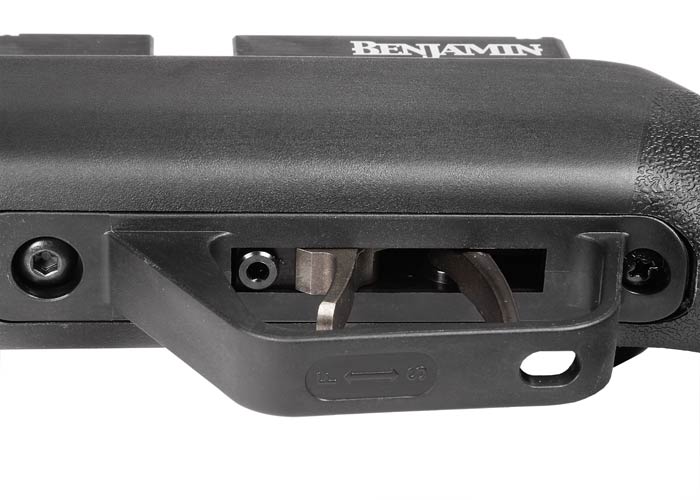
One such rifle is the Benjamin Marauder Synthetic.
This rifle has a velocity adjuster. However, the maximum velocity you get is up to 1000 FPS.
Change it according to your need and become the best at what you do.
Ambidextrous people can easily use these rifles with a vertically adjustable comb and reversible bolt. Also, the accuracy is on point with the help of a choked barrel.
Let’s have a quick look at the different pellets, respective velocities, and accuracy for this air rifle:
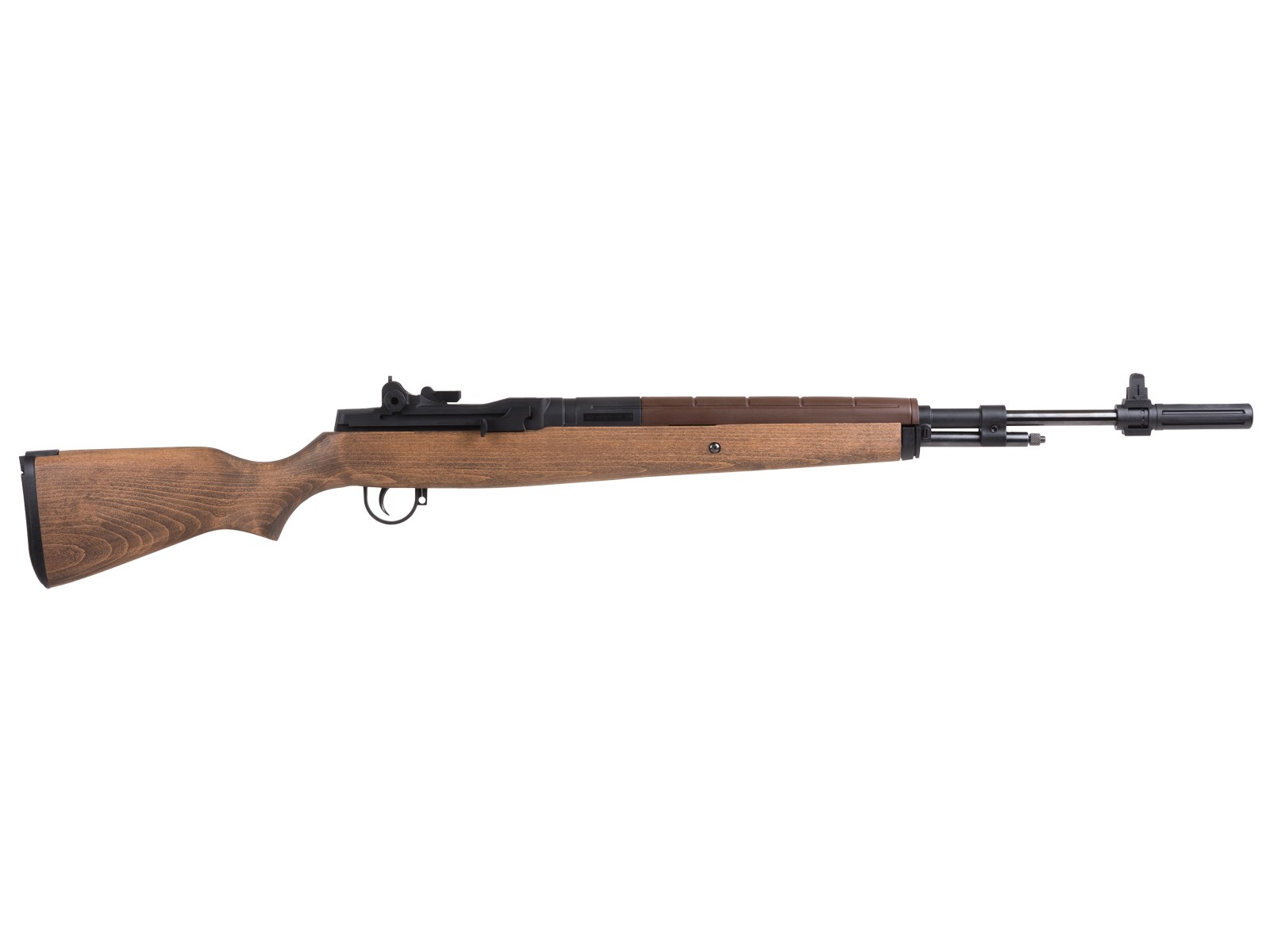
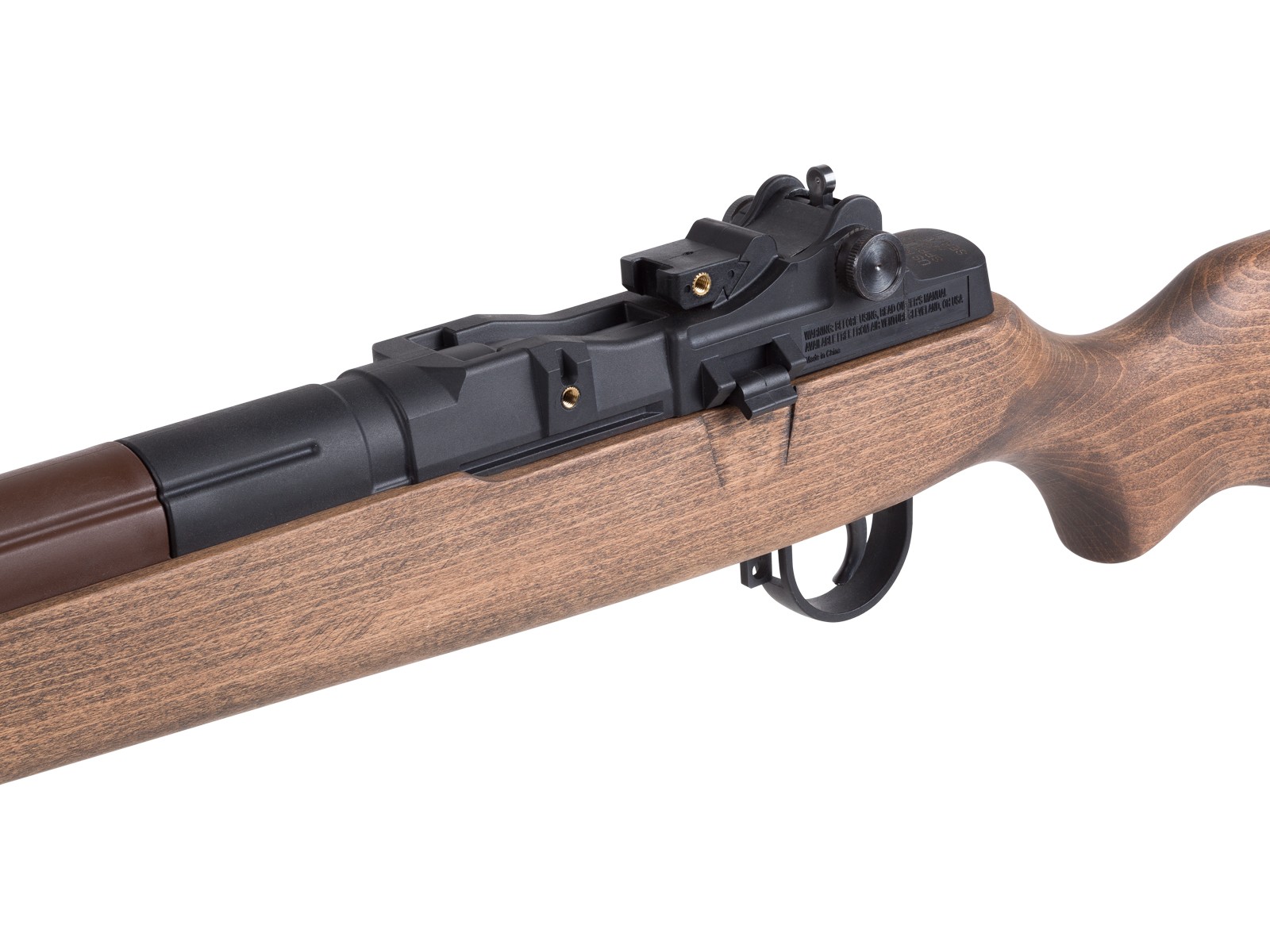
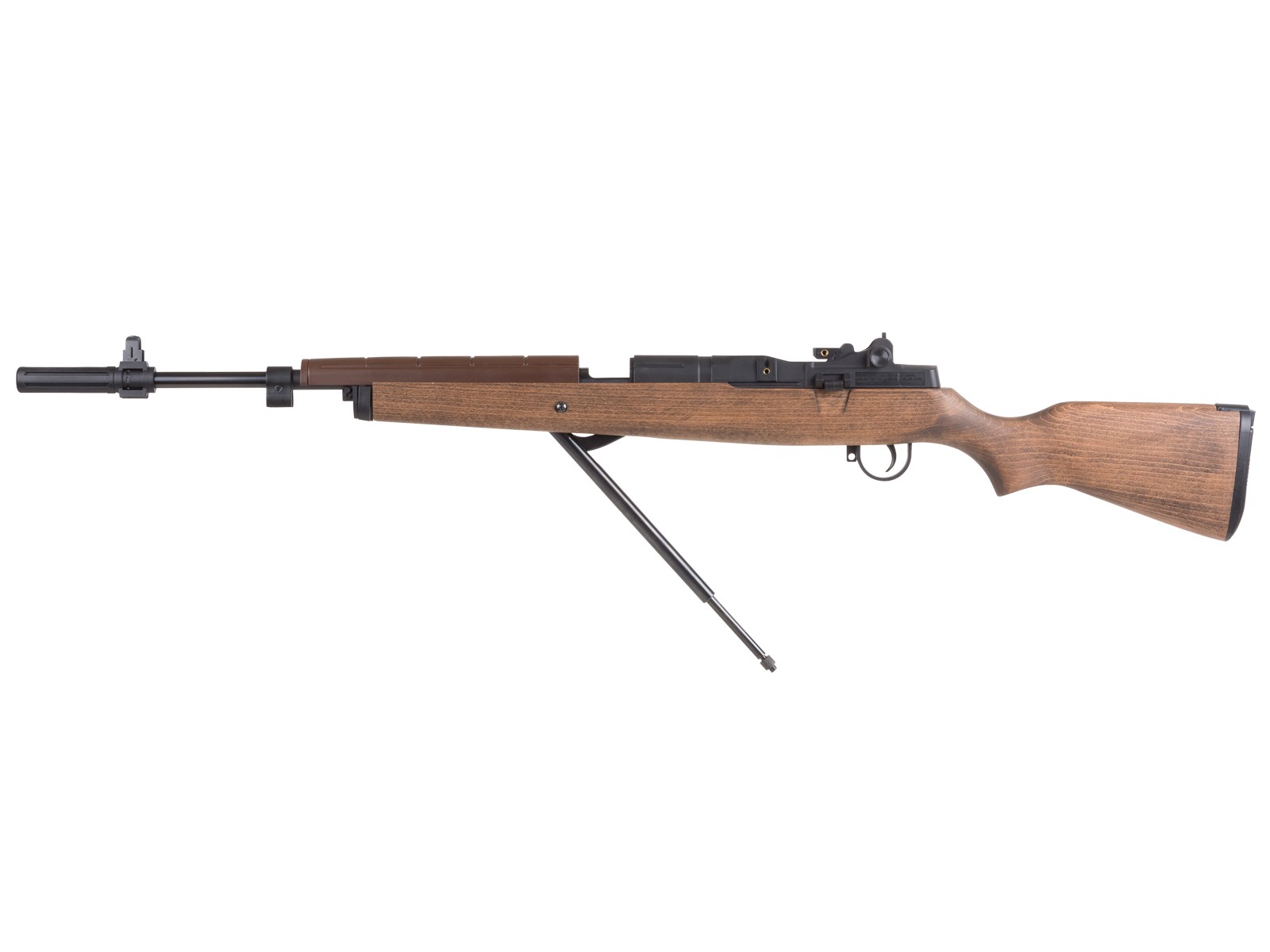
The Springfield Armory M1A Underlever Pellet Rifle is an incredibly accurate air rifle that brings a faithful replica of its namesake firearm to the market.
Developed by Air Venturi, this masterfully designed air gun features a fixed barrel and weighs 9.9 lbs, mirroring the standard of excellence set by the National Match semi-automatic rifle.
Equipped with an adjustable rear peep sight for windage and elevation, you can expect unparalleled accuracy from your shots.
The left-hand side of the rifle boasts threaded holes for mounting a traditional M1A/M14 rail mount and allows you to customize your experience with optics like scopes and red dot sights.
The beavertail extended cocking lever makes pulling back a whopping 35 lbs of force much easier than expected, without detracting from the beauty of design all firearms enthusiasts know and love about Springfield Armory products.
Whether you’re looking for an impressive piece to show off in your collection or you’re searching for precision accuracy from every shot, look no further than the Springfield Armory M1A Underlever Pellet Rifle!
In terms of the .22 air rifle, the velocity and accuracy are inversely proportional.
Again, the use of the air rifle you get plays a crucial role here.
In terms of hunting, you may need more accuracy and hence go for .22 air rifles with lower velocity.
Generally, higher velocity air rifles come with either gas-powered or nitro-powered pistons.
Power (FPE)
When it comes to choosing air rifles, several people tend to overlook the rifle’s power or FPE.
Although the muzzle velocity or FPS is an important factor to consider, you also need to look for the rifle’s power, also known as muzzle energy or FPE.
The muzzle energy states the effectiveness of an air rifle.
It depicts the amount of energy that could be transferred to the target.
Typically, the power or muzzle energy is dependent on two factors – the rifle’s FPS and the pellet’s weight.
If you need to bring down any animal, you need a specific FPE with regard to your air rifle.
For instance, small-game animals might need an FPE between 10 to 25 whereas large-game animals might need an FPE above 50 too.
Note: If you don’t know the FPE of an air rifle, you can calculate it by dividing the FPS of the gun by the pellet weight you’re planning to use.
Axes are ancient tools that come in very handy for the modern explorer. To the uninitiated, axes may all seem the same. In fact, there are several types and various constructions, some of which are better suited for off-roading, overlanding, and camping.
In this article, we’ll cover the best axes for camping and overlanding, how to choose one, and why you might need one. If you are simply looking for a quick recommendation, the Gerber Bushcraft Axe is a good choice for a durable, all-around backcountry axe.
Gerber is well-known for making quality tools for backcountry adventures. In recent years, as they’ve worked to appeal to a larger market, they’ve managed to bring down the price of their once-expensive knives, multi-tools, and other equipment.
The Gerber Bushcraft Axe hits a sweet spot between affordability and function and is a great all-around axe for camping and vehicle-based outdoor adventure. The axe is great for cutting rounds of wood and kindling and is sturdy enough for clearing thick tree branches. The hammer on the back of the axe comes in handy for hammering in tent pegs and other camp tasks. This is the heavy axe on our list, but offers the widest functionality. The axe comes with a sheath that covers the head. It comes with Gerber’s limited lifetime warranty.
Here’s my video review of the Gerber axe:
The Council Tool Boy’s Axe is a great size for camping and on-the-fly trail work. The 2.25-pound head is Dayton style and the handle is made of hickory. These aren’t as fancy as the high-end Nordic-made axes, but they are solid, unpretentious utility axes that get the job done.
Gränsfors Bruk is one of the premier Swiss axe makers, and it’s worth highlighting several of their models. These axes are a premium product and don’t come cheap. That said, they are the kind of tool you lovingly pass down to future generations.
Their Small Forest Axe has a narrow head that’s great for cutting through trunks and branches. You can certainly still use this for splitting wood, but it will be more difficult given the narrow axe head and lack of a metal collar on the top of the handle. It comes with a leather sheath. The back of the axe head can be used as a hammer.
Here’s a video about the company and its manufacturing process:
The German company, Helko Werk has been making axes since 1844 and is one of the oldest axe makers still operating in Europe. Their Journeyman Pack axe is designed to be lightweight, compact, and easy to carry while trekking through the wilderness. Comfortable to use one or two-handed, the Journeyman is a versatile tool for cutting kindling, removing limb branches, building shelters, and other light splitting or cutting work.
The Gränsfors Bruk Outdoor Axe is much shorter than the other axes on this list, making it easier to stow and carry. Its head is thin enough for felling trees and chopping limbs, but still has enough taper to be used for splitting and the handle has a protective steel collar near the head so that the axe can be used for light wood splitting tasks. Like the Helko Werk axe noted above, this is an axe that you can easily put into a backpack. It comes with a leather sheath. The back of the axe head can be used as a hammer.
Named for the US park ranger who developed this axe design, Pulaski-style axes, also known as cutter matlock, combine a felling axe head with an adze (narrow hoe-like tool) that can be used for digging in hard ground or chipping away at bark.
While they aren’t as good as the other axes at chopping and cutting wood, they are highly versatile. The adze can come in handy if you need to trench a latrine or break through ice. The Barebones Pulaski axe is a beast, with a high-carbon steel head and a steel core running through the handle. It’s on the heavy side at 5.55 pounds, but the weight gives you momentum for breaking though tough wood and ground.
How to Choose the Best Axe
An axe is a must for chopping firewood when camping. A hatchet is great for chopping small kindling, but larger rounds are much easier to split with a larger axe. They are also clutch for clearing trail obstructions when overlanding and off-roading. In heavily wooded areas, it’s not uncommon to come across tree limbs blocking in the trail, in which case an axe will help you to quickly clear the way and carry on.
Some axes, such as the Pulaski style axe discussed below, integrate additional functionality that can come in handy for breaking hard ground when you need to dig a hole and for other tasks. Combined with an off-road shovel, an axe can help solve many problems on the trail.
There are several factors to keep in mind when choosing an ax, including the axe’s construction, style, size, and cost.
Some of the most sought-after axes on the market are made in Scandinavian countries that boast a long history of axe craftsmanship — think Vikings and big axes. That said, a number of American companies make quality axes that are well worth considering.
Axe Construction
Most axe heads are made from various types of steel, with the most expensive being hand-forged versus cast. Forged steel is widely considered to result in a stronger product compared to casting, where molten metal is poured into a mold to harden. In the old days, this hammering was done manually, with a hammer, but companies that produce large quantities of axes nowadays typically use an automatic press that does the hammering. Some smaller, boutique axe manufacturers still bang out axe heads by hand.
For light use, the difference between forging and casting may never be an issue, while the difference in cost is significant. High-quality axe heads are typically made from a steel alloy that is high in carbon, which allows the head to be sharpened and hold an edge longer.
One thing you’ll see is the shape of an axes head as either Dayton style or Hudson style, particularly for axes made in America. The Dayton-style heads are more square, and good for general outdoor jobs. The Hudson-style heads fan out from the handle to form a wide cutting surface.
Axe handles are typically made of wood (hickory is a good choice) or a fiberglass or plastic composite. Sometimes the handle will incorporate a metal core to provide strength and balance the handle and the head.
Wooden handles axes will typically require more maintenance than those with composite handles. This is particularly true in desert regions where extremely dry air can cause wood to crack. However, they are also typically easier to repair than a composite handle, and the provenance of composite handles can be a bit difficult to discern sometimes (a.k.a., the head may be forged in the US or Europe, but the handle may be mass-produced in China).
Axe Length
A full-sized axe used by lumberjacks is around 36-inches long, but that’s unnecessarily large for off-roading and camping. Something smaller, around 24-inches long, will be more versatile and easier to transport. There are also axes, like the Gränsfors Outdoor Axe mentioned below, which fall somewhere between a hatchet and a full-size axe. This gives you a nice mix of compact size with a bit more swinging power than a hatchet.
Axe Style
Axes can be divided into three broad categories: splitting axes, felling axes and generalist axes used for a variety of tasks.
How to choose?
The style of axes that is best for you depends to a large extent on how you anticipate using it most. If you’ll mostly be chopping wood in camp, you’ll probably lean more towards a splitting axe. If you’ll be clearing a lot of trees off of trails, a felling axe will come in handy. If you anticipate needing to break hard ground as well as deal with wood, the Pulaski axe will provide you with that versatility.
While they may are designed towards a specific use, most axes can be used for splitting and felling. So don’t get too hung up on what style you buy — with axes such as splitting mauls that have a very specific purpose being the exception. Generally speaking, for camping and overlanding it’s a good idea to choose a relatively compact and lightweight axe that can withstand the elements.
As a word of caution, as with many products, there are many cheap knockoffs on the market nowadays. The old saying, you get what you pay for, doesn’t even hold up with some of these products. Sometimes you get far less than you pay for. The axes we highlight below are high-quality products from reputable manufacturers.
What is so special about 300 blackout? It seems that this caliber has really just taken off as a lot of companies talk about it and sell guns and parts especially for this round. We wanted to come out with a guide to our comprehensive coverage on the topic of why 300 BLK is so awesome and popular. We compare different calibers, review ballistic data and talk about all the cool builds that are viable with this cartridge.
However, we should preface that how and what the .300 AAC Blackout is good for will rely on what kind of gun the round is being shot out of. How long is the barrel? What kind of load does the .300 BLK you’re using have? Is the 300 BLK ammo that you’re using flying out supersonic or subsonic speeds? Is there perhaps another caliber that might be able to do the same job better if not at a cheaper price? These are just some of the factors for considerations when discerning what this cartridge is “good for.” Check out all of our past blogs to learn more about this .30 caliber round here:
When indulging in gun nerd stuff, especially when it’s about a particular caliber, it’s best to start at the beginning. Learn about where the .300 Blackout came from, its origins, what it was designed for and what it’s most optimal applications are here in our .300 blackout guide for best barrel length, build tips & more.
.300 Blackout, Supersonic vs Subsonic
As you’ll soon learn about the flexibility of .300 BLK ability to serve in multiple roles between its supersonic and subsonic rounds — In this blog, we compare 300 BLK in supersonic and subsonic so that you can decide for yourself what type of loads would work best for you if at all.
300 Blackout for Home Defense
As a caliber that can be shot very effectively and quietly while suppressed, this caliber was designed with our special forces in mind and their need to do close quarter battle. Well in our case as civilians, why not use it for home defense too? See why 300 AAC Blackout for home defense just makes sense as it’s a fantastic round for defending your property and family at home.
.300 Blackout vs 5.56mm NATO
If you’ve ever wondered which is better — 556 or 300 Blackout, you came to the right place.
Between .223 and 5.56mm NATO, these are the most commonly used calibers for the AR-15. But what about .300 BLK? How does this .30 caliber cartridge match up to the NATO round that still isn’t going anywhere any time soon? We dive into that in this blog by comparing the 300 blackout vs 556 NATO.
300 Blackout vs. 9mm Parabellum
After 5.56 NATO, 9mm is one of the most popular calibers that are commonly used and actively sought after (especially during the pandemic). With regard to building a new AR-style rifle one could pursue an AR-9 which would be incredibly fun and rewarding but could also choose an alternative caliber to the NATO round for an AR15 that you might already have in your safe at home. Which should you choose between the 300 blackout vs 9mm parabellum? Find out here.
.300 Blackout vs .300 Whisper
At this point you might be like, “Wait. Can’t the .300 BLK be shot suppressed really well in subsonic rounds already? What’s the deal with the .300 Whisper then?” Well, not to worry it’s not as complicated as it seems. See our explanation as we explain the minutiae of 300 blackout vs 300 whisper in this blog.
The 6.8mm cartridge is a rising star in the sphere of calibers right now as Sig Sauer recently scored a military contract with the US Army to start phasing out the 5.56mm NATO round and to use Sig’s new round instead. So how does the 6.8 SPC match up against the 300 Blackout? Find out in this blog.
300 Blackout for Hunting Deer
It’s a fair question, one that we often use to gauge how effective any caliber really is — can you kill a deer with 300 aac blackout? Explore whether 300 BLK works for hunting deer with us in this blog here.
Start your next 300 BLK Build With 80 Percent Arms
Convinced yet? Got the building itch? Check out our complete AR-15 300 Blackout build kit which will get you set up real quick to build a rifle from the ground up. But if you are already an AR-15 owner and prefer a conversion kit instead we have complete uppers chambered in 300BLK as well. If you need any help, let our legendary customer service team know so they can assist you in your build.
THE WOUNDS from his fight with a baboon weren’t fully healed when Bismark charged the Cape buffalo.
We had spent the day trying to split two satellite bulls from the herd. I had been hired to photograph a plains- and dangerous-game safari in South Africa’s northernmost province of Limpopo, and I was shooting through my telephoto lens as one of the bulls broke from cover and charged.
The hunter shot the buff at 40 yards, then again. Bismark, a wire-haired Jack Russell, stood at heel beside his handler, professional hunter Divan Human. I don’t know how many shots were fired—both by the hunter and the PH—as the buffalo thundered to 15 yards, but it wasn’t dying. That’s when Bismark broke heel and tried to ride it.
The Cape buffalo charges as hunter Wayne Messbarger settles behind his rifle. Tyler Sladen
As a lifelong hunter, I’ve seen bayed bears and treed mountain lions. As a nuisance wildlife professional, I’ve pulled badgers out of holes and I’ve been face to face with rattlesnakes under houses. Nothing compares to that Cape buffalo charge. They’re called “black death” in South Africa, and I get that now. But the heart of a terrier is unmatched, and Bismark was ready to die for us.
Bismark is unshakable, but he’s no one-hit wonder. I saw a dozen blood-tracking dogs while on safari this spring; every one was a Jack Russell. The breed was first developed in Britain for fox hunting, and its prevalence in South Africa today is a byproduct of British colonialism. Although I didn’t see any on my trip, Jagd terriers (“jagd” is German for “hunt”) are also popular among South African outfitters.
The cool thing about terriers is they can do a little bit of everything. I’ve owned Jagds for nearly a decade and they’re integral to my nuisance wildlife business in the Southwest. Although it’s no longer commonplace in the U.S., terriers were originally bred for this work. They excel at finding dead animals, locating live ones, and catching critters. Because of all that tenacity packed into a small body, they also have a tendency to get hurt on the job. (As the Jack Russell Terrier Club of South Africa puts it, the “real Jack Russell terrier does not sit on the sidelines of life.”) While PHs here release their dogs on most game tracks, they don’t allow them to trail warthogs, which are notorious for killing dogs.
Hunter stands beside a blue wildebeest that he tracked through the brush. Jack Russell terriers can have three types of coats: smooth, wiry, or broken, which is a mix of the first two. While Jack Russells in the U.S. are all over the map when it comes to physical and personality traits, the South African dogs are very true to their breed type. And as someone who appreciates working dogs—I own 15, both terriers and bird dogs—this was especially fun to see. Tyler SladenBismark takes a break by the truck. Once he got back to camp each day, he would pull bones from the skinning shed to chew on. The tracking dogs were incredibly well behaved; they never ran off or even barked really, unless we were hunting and there was an animal down. They also ate like kings. Tyler Sladen
When Bismark was younger, one of Human’s clients shot a big Nile crocodile and Bismark broke at the shot. That’s scary because you’re relying on a client to not shoot your dog, but you also don’t want the animal alive enough to kill your dog. Fortunately it was a good hit, but that’s just how it goes with terriers sometimes: You can’t proof a dog until you put him in situations like that. I saw lots of animals harvested in the three weeks I was there, and only now and then would a dog slip up and break at heel.
A standard track looked like this: As soon as the shot went off and the PH released his dog, the trackers would run in and try to keep up. Because we were hunting in such thick cover—50-yard shots were far in some cases—you couldn’t see the dog 100 yards away, let alone the kudu that was just shot. It was helpful to hear barking so you could locate him.
Whenever you go to the gas station in town or run to the corner store in the Limpopo province, there are PHs from other ranches and outfitters there. And whenever you look in the bed of a parked or idling truck, you’ll find a little Jack Russell. Tyler SladenBismark rests beside his handler, Divan Human, who discusses plans with Johan Swart, owner of Thaba-Tala Safaris (middle), and PH Divon Retief. South Africa is like the Texas of Africa—and I mean that as a compliment. The men I hunted with aren’t afraid to get dirty or get stuff done. They manage their game like Texans do (there’s a lot of high fence in South Africa). They love hunting. They love their trucks. And they love their dogs. Tyler SladenThe terriers in South Africa are used almost exclusively as blood-tracking dogs. Bismark, however, was an enthusiastic retriever to boot, and even retrieved a few birds for me. Tyler Sladen
After a shot the dog was off to the races, and the human tracker was not far behind. And the trackers were incredible. I was skeptical at first. I’ve heard stories of how great they are, but I couldn’t help thinking: I’ve hunted my whole life. How good can these guys really be? What you don’t realize is those trackers hunt year-round except for the rainy season and they track lots of animals every day.
Better yet, the dogs don’t take away from the tracker’s job because often the tracker’s job isn’t just finding downed game—it’s finding live game. South Africans only use their blood dogs for locating animals that have been hit well.
Fortunately, the Cape buffalo was well hit—several times. In the end, the bull slid to a stop just yards from our feet, with Bismark barking on its back.
Bismark sits atop the Cape buffalo that charged us. The dogs I hunted alongside obeyed commands in Afrikaans, one of the country’s 11 official languages. Tyler SladenHunter licks blood off an impala he tracked as his owner, Retief, crouches beside him and one of our excellent trackers. Resource guarding isn’t uncommon among trailing dogs, and these Jack Russells would growl if you got too close to an animal they had recovered. These were just typical terrier vocalizations and a typical terrier attitude. They never bit anyone, of course, and they would defer to their handlers. Tyler SladenBismark and Human return to camp after a long day in the field. Most hard-worked terriers are one-person dogs. Don’t get me wrong: They make great family dogs. But if you’re out and about, everyone ceases to exist to your terrier except you. Tyler Sladen
There is accomplishment and satisfaction enough in just taking a mature buck. Doing so on public land? Now that’s another level of high-five in the deer woods.
Georgia offers some very good deer hunting on public lands, from state-managed Wildlife Management Areas (WMAs) to federal lands like national forests and national wildlife refuges. Here’s a look at some of the public-land bucks taken by GON subscribers and entered in the Truck-Buck Contest this season.
Celyon WMA Bow-Buck Ceylon is Georgia’s newest WMA with 27,000 acres in Camden County in southeast Georgia near the coast. The area follows quality-buck regulations—legal bucks must have at least 4 points (1-inch or longer) on either antler or a 15-inch outside spread.
It was during the first archery-only hunt at Ceylon this season when Waynesville’s Alex Harrelson took advantage of southeast Georgia’s early rut to get a nice 10-point buck with his compound bow during a morning hunt on Sept. 23.
“The buck came through an open stand of pines chasing a doe,” Alex said. “I had to grunt twice to get him to stop 43 yards away.”
The buck had a live-weight of 180 pounds.
Muzzleloader Buck From Oconee National Forest Living in Monticello, Tyler Farmer is close to lots of great public land in middle Georgia. On Oct. 9 during the primitive-weapons/youth week, Tyler headed to a familiar tract in Jasper County.
“I went into this area on Oconee National Forest knowing it held some bigger deer. I’ve been blessed to harvest a few bucks out of the section,” Tyler said. “I got in there a little early waiting on daylight. I had that feeling something good was gonna happen. I was hunting an oak/pine hilltop on the edge of a pine thicket/bedding area. Around 8:40 that morning he appeared out of the thicket and came out into the white oaks. He presented me with a 65-yard broadside shot with my .45 cal CVA muzzleloader. It was a blessed day!”
VPA Buck… What’s A VPA? VPA stands for Voluntary Public Access—these are generally smaller tracts of private land that the state leases using money from a federal grant program. For the 2021 hunting seasons, there are 16 VPA properties that offer some type of public hunting access, ranging from archery-only deer hunting to dove hunting.
One of those VPA tracts is the 934-acre Pleasant Valley VPA in Bartow County, which offers youth bowhunting Sept. 11 to Oct. 15, and then four quota firearms deer hunts for kids. Peyton Bowan, 14, spent Halloween evening on one of those quota gun hunts, and it paid off with a 7-point buck. Peyton and his dad were set up in a ground blind when the buck offered a 75-yard shot, and Peyton made it count.
“The deer dropped in its tracks and the celebration began,” said Petyon’s dad, Mark. “It was a memorable quota hunt. Thanks DNR!”
Cedar Creek WMA Still A Deer Factory Cedar Creek WMA is part of the Oconee National Forest, but it’s managed as a state wildlife management area, which means it has special regulations and more limited days of deer hunting. The mid-November firearms hunt this season was Nov. 11-13, which hit about just right for the peak of the rut in this part of middle Georgia. Cedar Creek is in Jones, Jasper and Putnam counties.
Two good Cedar Creek WMA bucks were entered in Week 9 of the Truck-Buck contest.
Quality-Managed B.F. Grant WMA Produces 12-Point Buck Greg Williams ignored the timber-cutting operations going on in the area while he was hunting B.F. Grant WMA, and apparently a buck ignored the machinery, as well. During a quota firearms hunt on Nov. 6, Greg shot a nice 12-point buck on the Putnam County WMA that is owned by UGA.
“I’d been hunting the area for three days,” Greg said. “They had been pulpwood cutting in the area with machinery, but I figured I would give it one last try in the area. I knew there were big bucks in the area. At 6 p.m. the buck came up to cross the little field by the clearcut and the machinery, and I shot him 70 yards from the wood-cutting equipment.”
Flint River WMA In The Heart Of Big-Buck County Dooly County and the Flint River corridor have long held special esteem when it comes to producing quality Georgia bucks. Flint River WMA is in the heart of it.
On Nov. 19, Jeff Horton was drawn for the quota firearms hunt on the WMA, and he went home to Clyo with plenty of meat and a nice rack. Jeff killed a 224-lb. (live weight) 10-point buck.
“On the second day of a three-day hunt at Flint River WMA, at 7:05 a.m. a doe came out, and behind her this buck came out a minute or two later,” Jeff said. “He started to trot away, and I stopped him with a mouth call. When he stopped, he presented me with a shot 50 yards away.”
These are just a handful of the nice public-land bucks taken this season. See all the bucks entered in the Truck-Buck contest, where bucks can be sorted by county and week of the season.
If you’re not fairly immersed into the bass fishing scene, you’ve likely never heard the term “meanmouth”. And even if you are as big into bass fishing as one could be, it’s still easy to have missed the boat on this terminology used to describe a hybrid mix between a spotted bass and a smallmouth.
Meanmouth are simply that though, the resultant offspring of an unnatural union between a Tennessee Smallmouth Bass and an Alabama Spotted Bass (commonly referred to for years as Coosa spots).
With this crossbreeding occurring in nature, it seems like the term unnatural might be a bit of a stretch. But the unnatural part refers more to how the possibility of these two species mating came about in the first place- the unauthorized introduction of the Alabama Spotted Bass into smallmouth fisheries.
Though the adventurous culprits of this malfeasance were likely motivated by the somewhat pure hope of having yet another aggressive and big bass to pursue in these waters, the introduction of the Alabama Spots and the resulting “mutt” hybrid offspring makes for trouble in these historic smallmouth fisheries.
B.A.S.S. Conservation Director Gene Gilliland commented on the ramifications.
“This Alabama Bass invasion and hybridization is resulting in the decline of Smallmouth Bass fisheries in almost every reservoir where they have been introduced into in Tennessee, North Carolina, Georgia and Virginia,” said Gilliland.
Both Smallmouth Bass and Alabama Spotted Bass are ferocious fish with big appetites. But it seems as those the cross between these two is an even more aggressive fish, that’s likely to consume more than its fair share of the forage. Which will, in time, hurt the population of native bass.
“Biologists with TWRA (Tennessee Wildlife Resources Agency) are very worried that if the trend continues, many of the prized smallmouth fisheries in Tennessee will be reduced if not eliminated,” Gilliland stated. “Even the largemouth populations will likely suffer.”
The concern is that famed southern fisheries like Ft. Loudoun, Watts Bar, Tims Ford, Chickamauga and Cherokee will see a decrease in the smallmouth populations that make them so special.
“Even lakes on the Cumberland drainage like Dale Hollow, home of the world record Smallmouth Bass, are now at risk of losing their Smallmouth fisheries,” added Gilliland.
Classic consideration
The presence of meanmouth in these fisheries puts a new burden on tournament organizations, with no bigger impact imaginable than what we could see this week in the 2024 Academy Sports + Outdoors Bassmaster Classic presented by Toyota.
There are specific regulations that must be satisfied to possess a bass of a certain species, and they’re rarely the same across all bass species in a fishery. For instance, a smallmouth caught in Fort Loudon must be at least 18- inches long to keep and bring to weigh-in. A largemouth need only be 14- inches long. And there is no minimum length required for spotted bass to be kept, though B.A.S.S. will require a minimum of 12- inches on spots for the Classic.
But taking into consideration that a meanmouth is a cross between a spotted bass and a smallmouth, how long does this hybrid bass need to be if an angler wants to bring it on stage at the Classic? The TWRA has taken this stance.
There is no “official” regulation on bass hybrids, but we advise anglers if there is a question about a fish that looks like a hybrid bass, then abide by the most restrictive regulation. If an angler catches and wants to keep for weigh-in a hybrid bass that looks like a smallmouth bass x spotted bass cross or a smallmouth bass x largemouth bass cross, then those fish would need to be 18 inches.
Since these bass have several of the characteristics of multiple species present, there’s no clear and concise way to lump them in with either. This means the anglers must air to the side of caution when trying to determine the length these bass mixtures must be. The TWRA offered additional clarification on the matter.
The presence of a tooth patch is not recommended to delineate among black bass species. Brown fish with vertical bars should be considered smallmouth regardless of the presence of tooth patch and must be at least 18 inches in length to retain.
The tooth patch referenced here is a rough spot that is found on the tongue of spotted bass, and it has long been used as one of the ways to differentiate spotted bass from largemouth bass, in the event the identity of the species of the particular catch was in question.
But some of these meanmouth have the tooth patch on their tongues as well, so this is no longer a sufficient metric for categorizing a bass as a spotted bass.
Though meanmouth have muddied the waters a bit here in Tennessee, it’s not likely this bass hybrid will cause a big stir in the 53rd Bassmaster Classic this week. But the presence of this new species of bass could wreak havoc on some of the South’s favorite fisheries overtime.
The takeaway
The TWRA and other organizations want to raise awareness to the long-term consequences of the introduction of non-native fish species into any fishery. Ultimately, the unauthorized movement of fish from one public waterway to another is something the governing bodies of these fisheries would prefer to eliminate altogether.
However, with limited resources and hundreds of thousands of acres to police, stopping this practice requires voluntary submission to these regulations by anglers. And even this won’t rectify the effects of the infractions that have already taken place.
As a remedy, conservationists are recommending selective harvesting in this particulate situation in order to help stem or perhaps even reverse the ill effects of the introduction of Alabama Spotted Bass into these fisheries.
Length and creel limits on spotted bass have been reduced and even eliminated all together on certain waterways in an effort to encourage anglers to remove these non-native fish to allow the more desirable species to flourish. This is the most effective way for the public to assist in the rebalancing and preservation of these historic and prized fisheries.