

Home Blog Page 5

Diana RWS 48 Review

0

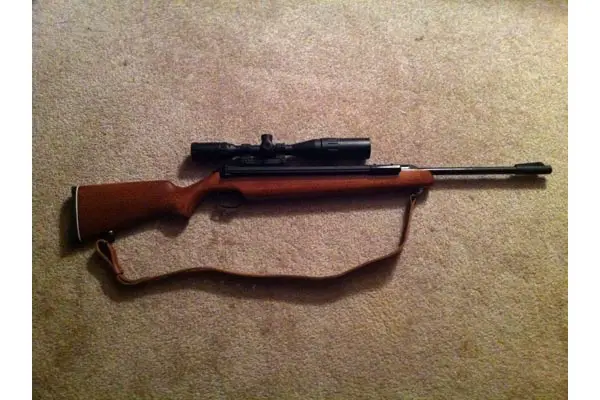
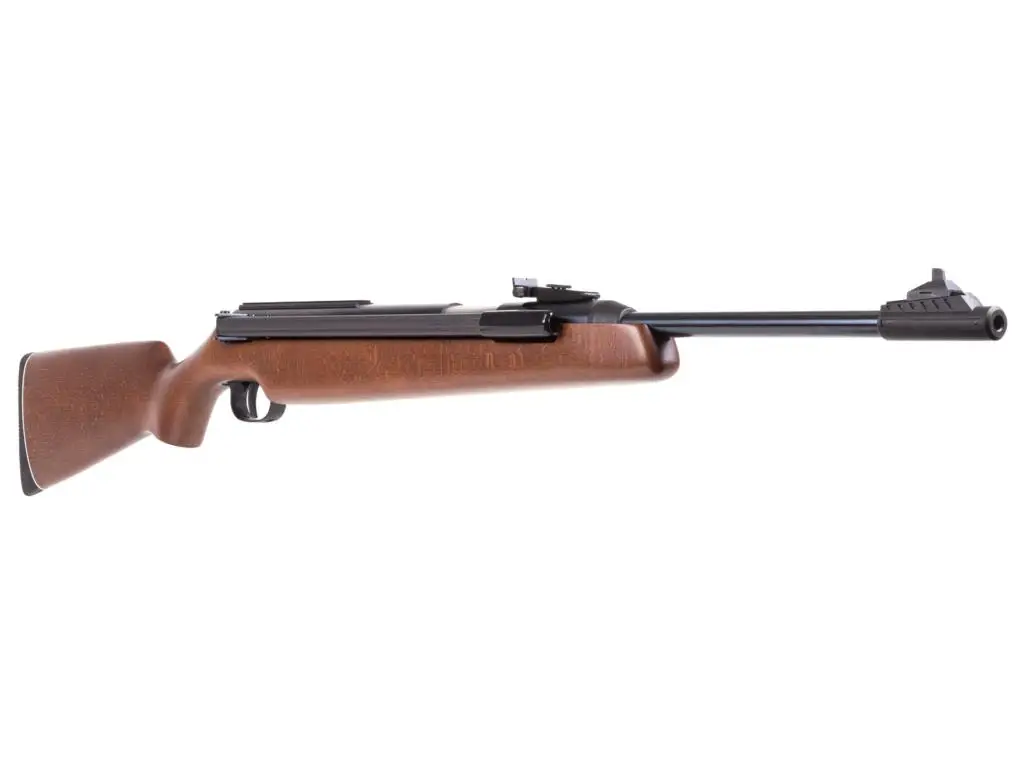
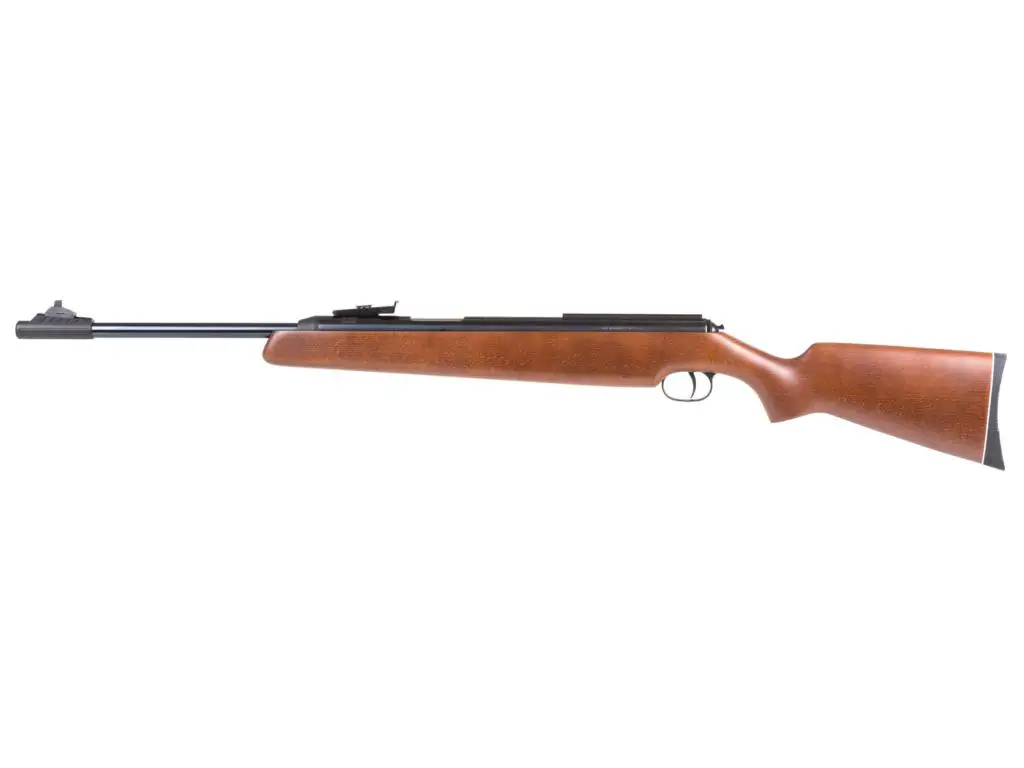
Not designed for the faint-hearted, the Diana RWS 48 air rifle is an impressive gun.

Built with beautifully crafted German engineering, this gun stands out both in performance and presence.

It fulfills its purpose as a potent, full-sized sporting air gun suitable for small game hunting, pest control and plinking.
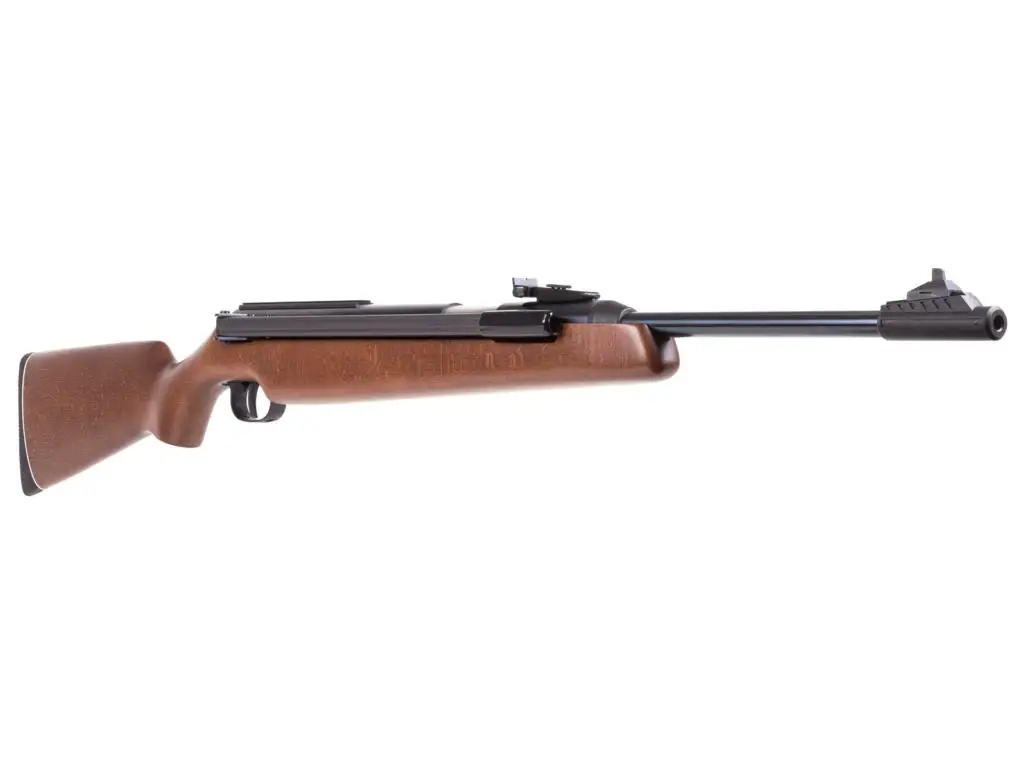
diana 48 specification

Diana RWS 48Gun type

This is a spring-piston gun.

A spring-powered gun is easy to use and has impressive accuracy.

(For more on 5 types of air rifles you need to know before buying, see this post)

Diana RWS 48 is also a side lever gun.

So in order to cock it, you need to pull the lever downwards while holding the gun upwards.

After that, you insert the pellet, push down the lock to release the lever, and put it back up.
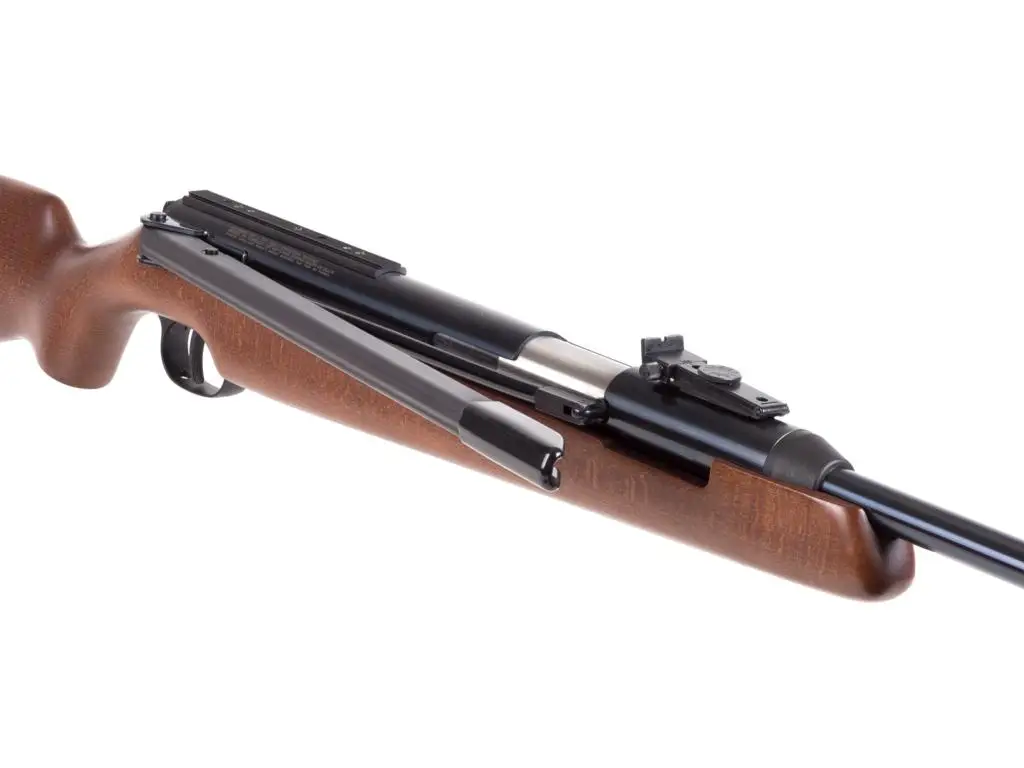
diana rws 48 is a side lever gun

It may seem complicated at first but after a couple of times, you’ll be able to work it perfectly.

The RWS 48 allows you to shoot as much since you won’t be worried about running out of gun powder like some of the other rifles .
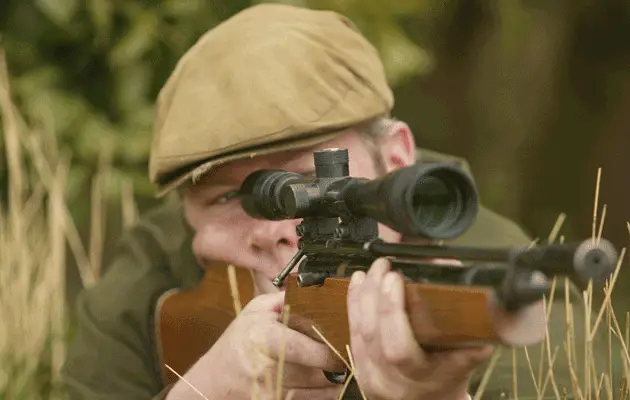
shooting with diana rws 48 air rifle

Wooden stock

The stock is made of beautiful beech wood.

Beech stock provides a lot of advantages compared to synthetic stock, see more in this post
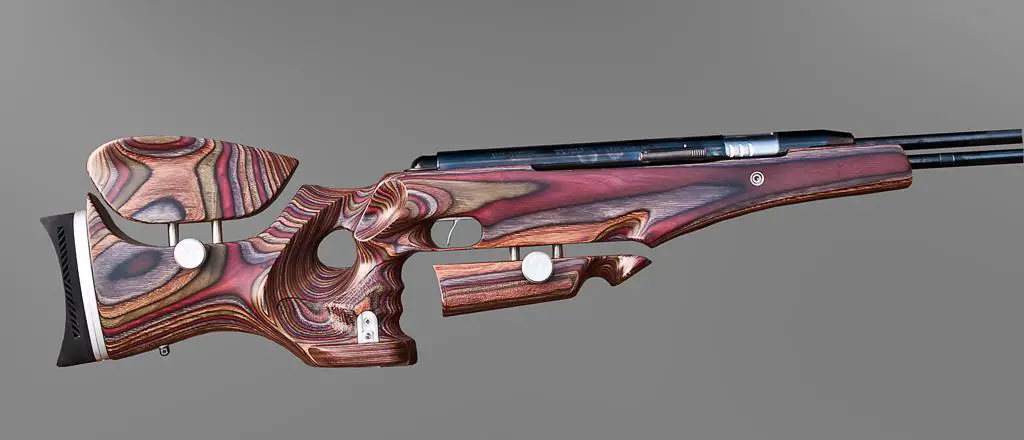
Diana RWS 48 Air rifle stock is made of a beautiful beech wood

The Diana RWS 48 has an ambidextrous stock, so whether you are a lefty or a righty, you will have no problem shooting it.

Check Price on PyramydAir

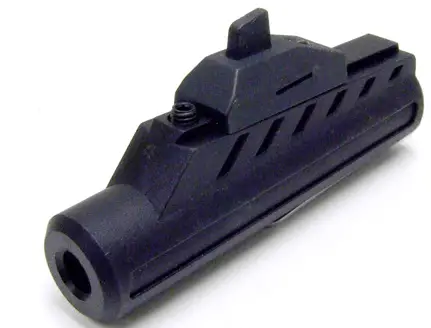
Comes with impressive sight

diana rws 48 air rifle has a very cool sight

The Diana 48 has a very cool sight.

The front sight rides are on a dovetail and are held down with a dove screw.

The dovetail is sleek and appealing, and it allows you to aim directly at your target.

The rear sight has standard RWS all metal and it has a spring-loaded ball bearing that helps it to stay put.

It also allows you to adjust for windage (allows you to adjust sight left and right)

And for elevation (allows you to adjust the sight up and down) .

If you like extra magnification then you’ll love that the Diana 48 comes with a standard RWS brand scope to provide extra magnification and improved accuracy.
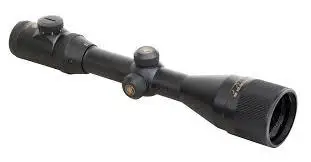
(For more on how many types of air gun sights are out there and which one is suitable for you, see this post.)

diana 48 comes with a standard rws brand scope

Equipped T05 trigger

This two-stage adjustable trigger is made of plastic (weapons-grade plastic).

So don’t worry about the trigger snapping back on your fingers in cold weather.
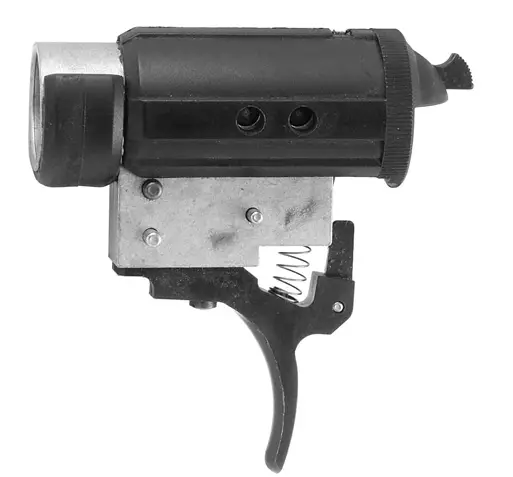
the rws diana 48 comes with a t05 two-stage adjustable trigger

With a trigger pull of two pounds 13 ounces, it’s probably the best trigger for an air rifle.

The T05 is adjustable so you can be sure to modify it to your liking, even though I don’t see where any changes would be necessary.

Velocity, accuracy and power

Velocity: the maximum velocity of the RWS Diana 48 is 1100 FPS (feet per second) for the 0.177 cal and 900 FPS for the 0.22 cal.

These are high-end velocities compared with other air rifles on the market .
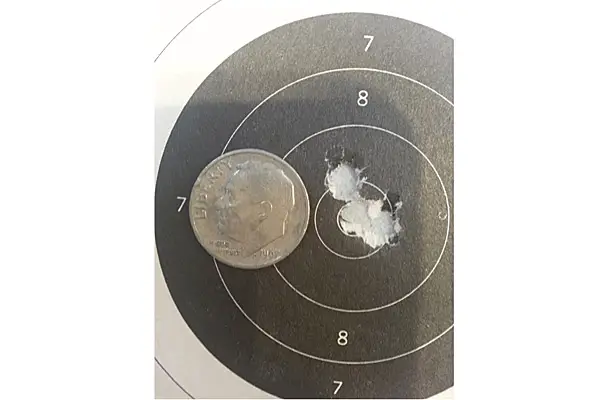
rws diana velocity, accuracy and power test

Chrony tests gave us the results as follows:

In 0.177 caliber:

.177 Pellet FPS
6.60 gr Baracuda Green Lead free pellet 1141
7.10gr Super H-point pellet 1094
7.00 gr R10 Lite pellet 1083
7.10 gr Hobby pellet 1104
7.00 gr Meisterkuglen Pistol pellet 1075
7.00 gr Silver Bear pellet 1075
6.90 gr Meisterkuglen Pistol pellet 1075
7.30 gr H&N Match Hs pellet 1039
7.90 gr Premier Lite pellet 1050
7.90 gr JSB Express pellet 1014
8.20 gr JSB Predator pellet 989
8.30 gr H&N Match pellet 1003
 8.20 gr SuperPoint pellet 1029 
8.20 gr R10 Heavy Pellet 1036
8.30 gr Meisterkuglen Rifle pellet 1031
8.20 gr Superdome pellet 1035
8.40 gr JSB Exact pellet 983
8.40 gr Silver Sting pellet 984
8.00 gr Spitkugel pellet 1006
8.60 gr Field Target Trophy (FTT) pellet 990
8.60 gr Field Target Special (FTS) 986
8.70 gr FTS Double Gold pellet 970
8.10 gr Crow Magnum pellet 978
 8.10 gr Super Mag pellet 938
10.40 gr Kodiak Double Gold pellet 879
10.30 JSB Exact Heavy pellet 886 
10.50 gr Baracuda Hunter pellet 899
10.50 gr Premier Heavy pellet 899 
 10.10 gr Kodiak Match Pellet 897
 10.10 gr Kodiak pellet 904
11.50 gr Silver Arrow pellet 832 
13.30 gr JSB Monster pellet 779
15.60 gr Baracuda Magnum pellet 603 
diana rws 48 air rifle specification

In 0.22 caliber:

.22 PelletFPS
14.40 gr Super H Point pellet886
14.30 gr Crosman Premier pellet886
14.40 gr JSB Express pellet818 
14.50 gr Superdome pellet884
14.40 gr SuperPoint pellet863
14.80 gr FTS pellet856
14.80 gr FTS Double Gold pellet840
15.20 gr Napier ProHunter pellet834 
16.00 gr Silver Sting pellet817
16.00 gr JSB Exact pellet767
16.30 gr JSB Predator pellet811 
16.30 gr Silver Arrow pellet779 
18.20 gr JSB Exact Heavy pellet762
18.10 gr Crow Magnum pellet747
21.30 gr Kodiak pellet659
21.40 gr Kodiak Double Gold pellet648
25.40 gr JSB Exact Monster pellet597
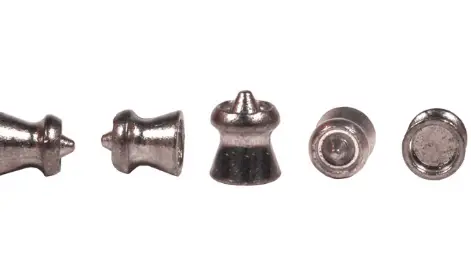
diana rws 48 air rifle pellets

The velocity of the RWS Diana 48 differs by the caliber size but is consistent between pellet grain size, which is a very impressive quality.

So be sure to choose the caliber and pellet size that best fits your usage.

(For more on the differences between .177 & .22 and which jobs they do best, see this post.)

Accuracy: The RWS Diana 48 has a great reputation for accuracy.

Shooting from rest at 25 meters, five JSB Exact pellets as a group measured 0.875-inch edge to edge (just under 0.7-inch center to center).

That’s certainly good enough for defending the garden and hitting small hunting targets.

Fun fact: the Bullseye Airgun club in Louisiana used to have a huge contingent of shooters who shot 48s and 54s in field target competitions.
air rifle bullseye

Power: on testing, I registered a high of 22.73 foot-pounds of muzzle energy on a new 0.22 cal model 48 when shooting 14.3 grain Crosman Premiers.

Noise: The RWS Diana 48 is very quiet.

Throughout all of the customer reviews, not a single user complained about the noise.

This means that it won’t be too loud for indoor target practice and can be taken out to the hunting field for a nice stealthy hunt.

Features and Benefits
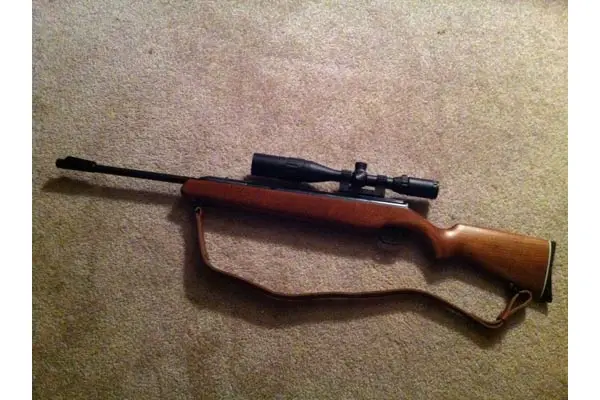
diana rws 48 air rifle review feature

Here are some of the main features of the RWS 48 and their benefits:

Features:

  • Ambidextrous stock
  • Automatic safety
  • Side lever cocking
  • Two-stage adjustable trigger
  • Beechwood stock
  • Standard RWS rear sight with spring loaded ball bearing
  • Single shot rifle

Benefits:

  • Ambidextrous Stock: The ambidextrous stock is nice because it allows both lefties and righties to use it conveniently with no awkwardness.
  • Automatic Safety:
    • Another exciting feature about the RWS 48 is the automatic safety.
    • The automatic safety assures that you only shoot when intended to, thereby protecting you accidental pellet discharge and potential injuries.
    • The automatic safety engages immediately once a pellet is inserted and the side lever is cocked back into place.
  • Lever Cocking:
    • the side lever cocking allows shooting to be more accurate because it’s less sensitive to handling.
    • It also accepts longer scopes for better magnification because the barrel doesn’t tip up and get in the way.

Two-Stage Adjustable Trigger: the adjustable trigger allows you to manipulate the amount of force it takes for the trigger to break and the shot to go off.

  • Beechwood Stock:
    • the beautifully finished beechwood stock on the RWS Diana 48 had high hardness, is heavily packed and has high resistance to abrasion.
    • So you don’t have to worry about the stock wearing out.

Standard RWS Rear Sight with spring-loaded bearing: the spring-loaded ball bearing on the RWS Diana 48 holds the setting of your site so it stays where you put it.

There’s no need to worry about losing your precious sight.

It also allows you to adjust for windage and elevation.
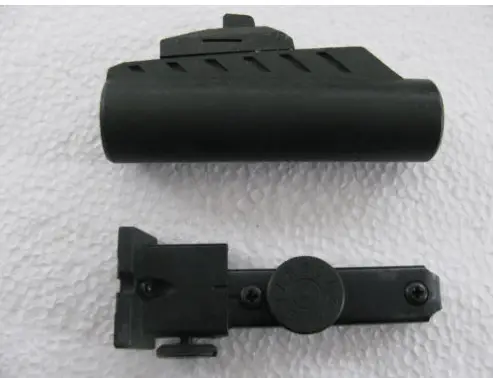
diana rws 48 air rifle standard rws rear sight

Single shot: the RWS Diana 48 is a single-shot rifle, meaning it only allows you to shoot one pellet at a time.

The single-shot helps with accuracy because you’ll always want your first shot to count.

Shooting Ability

The effective shooting range of RWS Diana 48 is up to 50 yards.

Some customer reviews said that it can take out squirrels with one shot from 40 yards.

It is suitable for target shooting, small game hunting, and pest control.
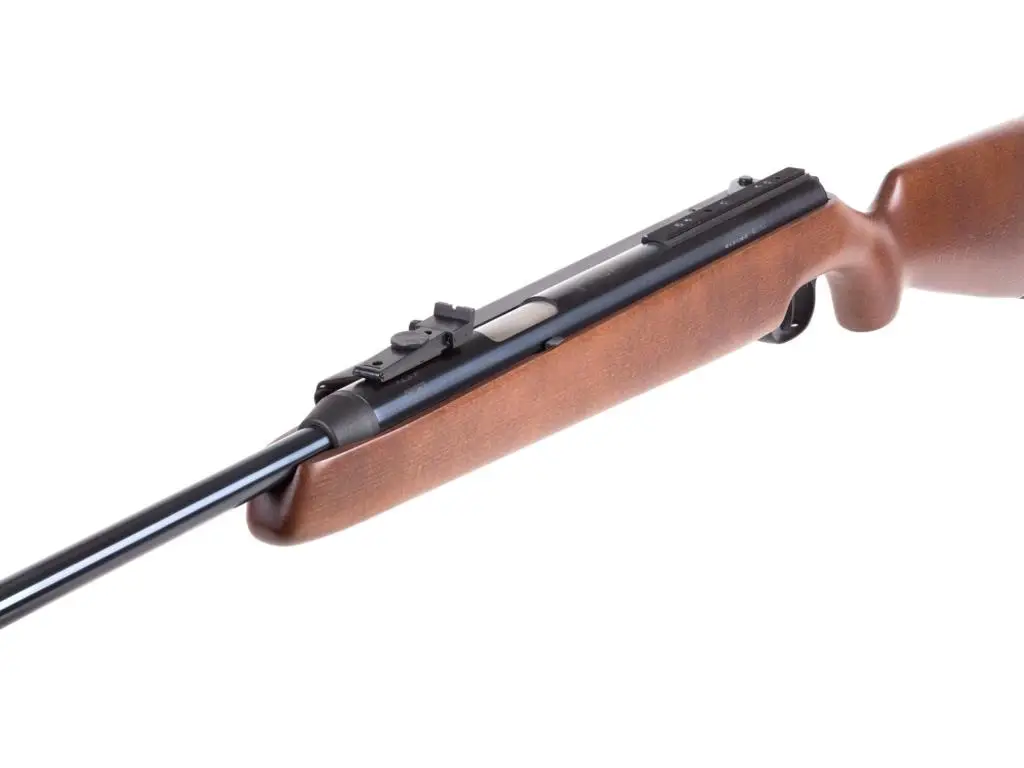
diana 48 shooting range


Unbelievable warranty

As of this date, the Diana 48 has a limited lifetime warranty.

Diana 48specs

  • Calibre: 0.22/0.177
  • Velocity: 884 FPS with 0.22, 1,100 FPS with 0.177
  • Stock: beechwood
  • Barrel length: 17.0 inches
  • Overall length: 42.13 inches
  • Barrel: rifled
  • Front Sight: blade and ramp
  • Rear Sight: adjustable for windage and elevation
  • Buttplate: rubber
  • Suggested for: small game hunting/ pest control
  • Trigger pull: two pounds 13 ounces
  • Action: side lever
  • Safety: automatic
  • Powerplant: spring piston
  • Function: single-shot
  • Body Type: rifle
  • Weight: 8.5 pounds
  • Cocking effort: 39 pounds

Customer review

There are lots of customer reviews on the Diana RWS 48.

The majority of users love its accuracy, power, and fantastic design .

Shooters also emphasize the smooth cocking action of the RWS 48.

Its barrel gives enough space for your thumb so you don’t have to struggle when inserting the pellets.

The bluing on this rifle is dark and even, and the overall metal finish is perfect as well.

Many reviewers also boast about how the Diana 48 stands the test of time.

One owner stated that he has been using the rifle for 20 years, of which he never needed any extensive repairs.

And after years of constant use, the gun still fires as well as it did when it was new.
diana rws 48 air rifle customer review
ProsCons
  • Beautiful beech stock
  • Impressive German engineering
  • Awesome trigger
  • Consistent velocities with different kinds of pellets
  • Remarkable Accuracy
  • Stands vigorously the test of time
  • Excellent customer service from the manufacturer
  • Impressive power
  • At 39lbs cocking, it is a bit stiff; it would be nice if the cocking was smoother.

RWS 48 Price

diana 48 specification

The RWS 48 has a price range of about $400.

It is a reasonable price for a gun that provides attractive design, extreme accuracy and can last for generations.

There are a couple of different listings online with different prices, but the listing I found below is the most reasonable deal amongst e-commercial sites like Amazon, Pyramyd Air, and Walmart.

Check Price on PyramydAir

Diana RWS 48Conclusion

With its remarkable numbers on power, accuracy, and velocity, the Diana RWS 48 is one of the best rifles on the market.

RWS has really delivered this masterpiece.

The Diana 48 is certainly a gun any shooter would be proud to have and watch your shooting buddies get knocked off their socks.
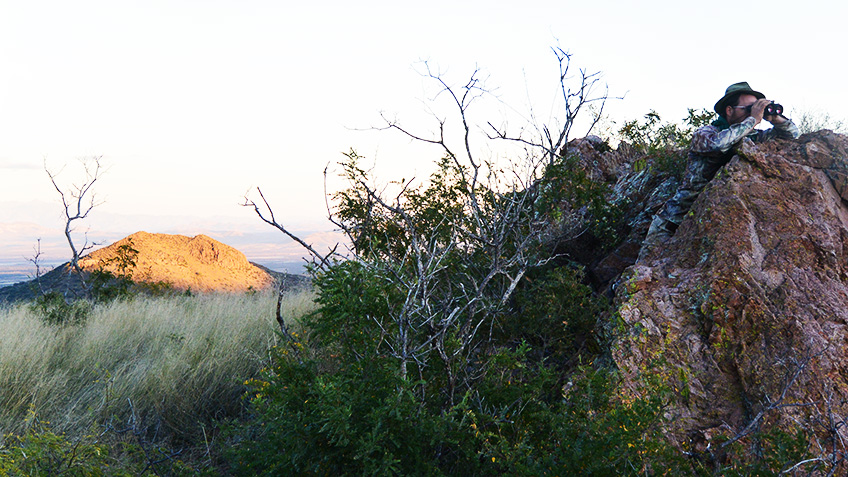
Catching Lunker Bass With Nightcrawlers

0
Catching Lunker Bass With Nightcrawlers

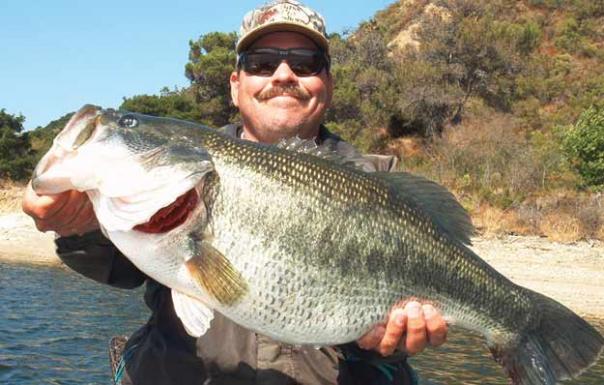
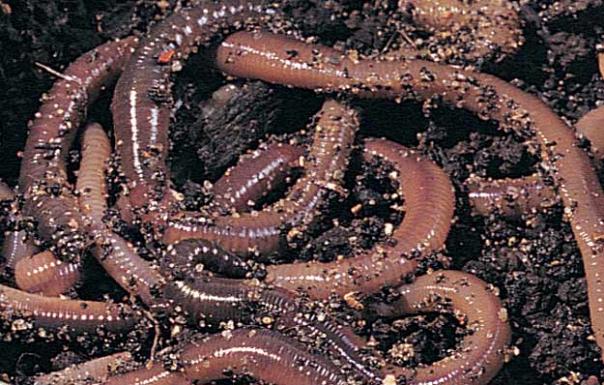
I’m always amused when an angler comments, “You caught that bass on a nightcrawler?” The guy probably has used imitations for years but doubts the appeal of the real thing. More cartons of worms than any other livebait likely are sold to novices and occasional anglers. So I often wonder where along the line experienced anglers forgot how great catching bass with nightcrawlers can be.

Virtually all fish species relish live worms. That’s reasonable since worms are high in protein; easy to swallow; lack sharp spines, bones, or claws; and are easily caught. Today, nightcrawlers are the most overlooked bait by serious anglers and trophy-bass hunters.

Fishing Crawlers

Rigging: When I’m fishing for big bass, I generally hook nightcrawlers once right through the head end. They also can be hooked through the tip of the tail, allowing a natural crawling motion. You can watch your line inch away along the bottom when crawlers are rigged this way. The only drawback to tail hooking is that the worm tends to break off on the cast, sometimes even breaking off as they try to escape.

Crawlers are best fished slowly with a short stitching motion, retrieving 3 to 12 inches per stitch, or using short slow drags with pauses of several seconds in between. A cast of about 30 feet may take several minutes to retrieve, so it’s far from a search technique. If you’re fishing an area known to hold fish, let the worm make any and all movements on its own.

Recently, I’ve “discovered” an unusual rigging tactic for tricking giant bass. Actually, the technique I now call the Wad-O-Crawlers was described by a noted big-bass expert in Bart Crabb’s book, Quest for the World Record Bass. I was amazed to read that this angler used up to a dozen crawlers at a time. Sounded unnatural and basically ridiculous. I told a fishing buddy about it and we had a good laugh.

Two years ago, however, I spotted the shadow of what looked like a big catfish, and I flipped out the live crawfish I had rigged. No reaction. I hooked up four or five sickly crawlers and cast to the fish. The line jumped and I landed a 4 1/2-pound bass.

I still didn’t embrace the Wad-O-Crawlers technique until just over a year ago when I rigged with a gob to target big channel cats at San Pablo Dam. Casting to an 18-foot drop, I was soon bitten and battling a big one, but the battle didn’t quite feel like a big kitty—short hard runs, quick turns, slugs. When it ran for the surface and leapt clear, the deal was sealed—a giant largemouth of 13 pounds.

Today I often hook three or four large crawlers into a wad. I use a fluorocarbon leader and braided line, since the leader keeps the lively worms from tying the supple braid in knots. Since this is a bulky bait, don’t pack the worms into the gap of the hook. Instead, skewer each worm once through the head end, leaving the rest to squirm. Fresh worms sometimes tie themselves in knots. Untangle them for best action and a surer hookset.

In the California reservoirs I fish, I generally fish crawler wads with no weight, or sometimes a small split shot to hold the leader on the bottom. If you must add more weight for fishing deep water, in wind or current or when drifting, use a light Carolina rig. I use a 1/8- to 1/4-ounce slipsinker with a small shot a foot or so above the hook to keep the weight from sliding down to the bait.

I prefer Gamakatsu Octopus hooks for crawler fishing, matching hook size to my gear. I usually use #6 or #4 on my microlight gear, upsizing to a #2 or #1 on medium-power spinning tackle.

Continued – click on page link below.

Location: Crawlers can be fished anywhere, but they tend to draw more attention and snag less often on bottoms with sparse cover. Crawlers aren’t a good search bait because they’re fragile and also not nearly as effective when fished fast. They’re best in areas that you already know hold good numbers of bass, or a giant. They’re effective at the mouth of feeder creeks, especially after a rain, when fish move into the area, expecting a fresh food supply.

Timing: In California reservoirs, a squirming worm will produce bass every month of the year. They work best in spring, however, when big bass are actively feeding in shallow water. Crawlers also shine during the Postspawn Period when bass linger in the shallows but become reluctant to bite typical reaction baits. In our lakes, we typically observe giant submarines lazily cruising shallow flats but refusing to strike lures.

Whenever bites are extremely hard to come by, break out the crawlers. I’ve often sighted bass that wouldn’t touch a live crawdad or various artificials, but could be coaxed into picking up a live worm.

Crawler Tackle

Crawlers can be fished on tackle as heavy as a medium-heavy spinning rod with 10- or 12-pound mono, but micro-light gear in the 1- to 6-pound class is ideal for presenting these light baits naturally. When targeting trophy-size bass (over 10 pounds) near hazardous cover, I use 30-pound-test braided line on medium-power spinning tackle. But in most situations, microlight is best.

In crawler fishing, it’s critical to cast 25 to 40 feet with little or no weight. My favorite combo is a 6-foot G-Loomis SR720 rated for 1- to 4-pound line. I match that with an Abu Garcia Cardinal 300 reel that weighs 6.3 ounces or a similar-size Pinnacle model. A velvet-smooth drag is essential. I favor Tuff-Line Plus micro-braid rated at 12-pound test but with the diameter of 2-pound mono. Of course, if that spider web-like braid hits a sharp rock, it’s back to 2-pound test.

Braid casts like a dream and matches my rod and reel perfectly. I use a Seaguar fluorocarbon leader 3 to 4 feet long of 8- or 10-pound test, attached to my main line with a blood knot. The leader not only increases abrasion resistance near the bait, but also decreases visibility and keeps the crawler in line. With my heavier combos, I use a 15- or 20-pound-test fluorocarbon leader on 30-pound braid.

When anglers ask if that rig is tough enough to deal with a 10- to 15-pound bass, I tell them of the day on Clear Lake when a buddy and I landed 935 pounds of channel cats, 70 pounds of brown bullheads and white cats, plus around 500 pounds of carp on microlight rigs.

Crawler Care

Worms should be kept fresh and lively—they need to be cool during storage and while fishing. At home, the crisper in your fridge works great. North Country anglers might get away with a cool basement or garage, but beware of hot spells. For transportation and while fishing, a cooler or special crawler carrier works fine.

Similarly, hooked crawlers stay lively much longer in cool water. If a crawler becomes limp, replace it with a fresh one. If it’s still alive, place it in a separate container. After several days in good worm bedding, worms usually are good to go for another round of fishing.

Many anglers won’t break down and use livebait, particularly worms, which they perceive as not being the coolest way to catch fish. Crawlers are for novices, right? The more people who believe that, the better the odds will be for those who know better. I’ve always felt that catching the biggest fish in my waters, using whatever methods are legal and sporting, is the coolest and most logical choice.

*Fish Chris Wolfgram, Suisun City, California, is a dedicated chaser of all big fish, particularly California’s giant largemouths. Check his trophy bass Web site, www.trophybassonly.com.

The AuthentX Craze – The Best Plastic for Walleye?

0

What is the AuthentX Craze? It’s a new sensation sweeping fish nation…walleye and sauger love plastic! And B Fish N Tackle AuthentX Moxi’s, Pulse-R’s, Ribb-Finn’s, Ringworms, Paddletails and K-Grubs are what you need to drive them sauger and walleye CRA-ZEE! In our opinion these are the best plastics for walleye. But don’t take our word for it, try our five best tips.

Are you fishing where the walleyes are?

But Walt, I bought a bag of your miracle AuthentX soft plastics and can’t catch a fish on them. What am I doing wrong?

First off, you need to go fishing right now on a river with a known population of walleye and sauger. All major rivers of the Great Lakes plus, the Mississippi, Illinois, Missouri, Rock, Fox, St’ Croix, Rainy, Flambeau, Cedar, Iowa…you get the idea…look on a map, find a walleye river and go fishing!

If you want to learn how to catch fish…you need to go to where the fish are, in abundance. Right now the best walleye fishing is where there is an abundance of fish. That’s in the rivers.

How do I find the right spot?

Those river fish are going to be in pre-spawn, spawn or post-spawn right now…they are going to travel right up to the dam and are stacked up like cordwood or they are staging downriver to about five miles. If you want to learn how to catch them quickly…hire a guide!

If you want to figure it out yourself, watch other walleye anglers and see at what depths and areas they are fishing without getting on top of them and messing with their spot. Then find another area just like it and give it a try!

Then try my TOP FIVE ways to fish a jig rigged with AuthentX plastic baits, get the net ready!

Here are the Top Five AuthentX Plastic Techniques, in No Particular Order

Rippin’ Ribb-Finn’s

Some call it Rippin’, others it’s snap jigging and some even call it getting radical. Whatever you call it…it works. It works on aggressive fish, it works on negative fish, but why? Gettin’ radical triggers the walleye’s innate response to it’s natural phenomenon! Actually, I just made that up to see if you were paying attention, I really don’t know why, I am not a scientist.

Gettin’ radical calls for a reaction strike on the part of the fish. It sees Ribb-Finn, it eats Ribb-Finn and rod bends. Speaking of rods I prefer a St. Croix 6’8″ Eyecon Snap Jig rod for all my jig fishing…especially when I’m getting radical. The extra fast rod tip lets me make a good snapping motion and the sensitivity gets the nod for a quick hook set.

To rip a Ribb-Finn or any jig and plastic for that matter, make a cast, let it hit bottom and give it a quick wrist flick of about 6″ to 12,” hold your rod until the jig settles back down and then reel in the slack. Repeat a few more casts with this action. Then, if you don’t get any takers, make a bigger sweep of the rod up to two feet, reel in slack, big sweep…etc.

The key to rippin Ribb-Finn’s is to vary your cadence, try different ripping motions and then repeating what works. This is pretty much how you fish any lure. Once you figure out the action that attracts a fish to snatch your lure, you will have success on the day!

Swingin’ Moxi’s

Some call it swingin’, some call it working the shift. Call it what you want, you can use this technique from boat or shore.

Cast slightly upstream and let your H20 Jig/Moxi combo slide downstream in a controlled drift ticking bottom once in a while. If you use too heavy of a jig, you will snag up. Too light of a jig moves too fast and is out of the attack zone.

When your jig gets to the back of the boat or end of your cast and starts to swing around is usually when a strike occurs. If you don’t get a strike then slowly begin reeling back in. Pause every so often as a fish will often follow it back to the boat or right up to you near shore. I’ve had fish strike in inches of water from shore in the Spring…so be ready to set the !!broken!!

Having the right “feel” is when you go from a guy fishing to a guy catching. Look around at the other anglers on shore or in boats around you. Catching walleye requires skill.

There is always one guy in a boat that catches most of the fish or in a group of shore fisherman, there is always a guy. The key is to gather enough time on the water catching fish to be that guy.

Draggin’ Pulse-R’s

Power dragging involves use of the B Fish N Draggin’ Jig. James Holst and Dave Coons of In- Depth Outdoors TV perfected this technique on the Mississippi River, but it works everywhere. You can pick up a Draggin’ Jig kit with a FREE DVD on how to do it right here.

And here is a quick clip from In-Depth Outdoors to check out on Mississippi River Draggin’

Dubuque Rigging Ringworms

Dubuque rigging rules! Dubuque rigging offers endless possibilities. You can double rig ringworms, use different styles of AuthentX plastic, use plastic on one jig and live bait on the other, you get the idea!

Running your main line to rod to a three-way swivel to a short line to your jig gets to bottom. Then by running a longer line off the 3rd end or the three-way to a lighter jig or a plain hook allows you to run a different type of bait of plastic so you can determine what the hot color and bait is for the day. It’s a great way to figure out an area quickly.

Getting Vertical with AuthentX

Vertical jigging is by far one of the best ways devised by man to catch a walleye or sauger. The late great walleye pros Gary Gray and Tommy Skarlis were two of the best vertical jiggers I’ve personally ever fished next to.

A great vertical jig fisherman can use the absolute lightest jig imaginable that will still remain in contact with the bottom. I’d be jigging with a 1/4 ounce jig in the Illinois River barely feeling bottom and Tommy would be in the boat next to me catching fish with a 1/16th ounce jig, Tommy was a jigging machine!

The key to vertical jigging is matching boat speed to jig speed to current speed. The river speed changes constantly, your jig speed needs to match the current speed and you then adjust your boat speed to match your jig speed.

This is easier with a heavy jig. You can use a 1 to 2 ounce jig and pull upstream or if the current is really fast, over 3 mph you may need to jig slowly downstream. But a larger jig might be too heavy for light biters. In this case you lighten your jig and slide faster downstream while trying to keep you jig vertical and in pace with the current.

AuthentX plastic is great for getting vertical. Moxi’s, Pulse-R’s, Ribb-Finn’s Ringworms and Paddletails all produce! Each has its own unique action. Sometimes a walleye will want it a little slower, sometimes a little quicker, sometimes big and bulky attraction is best, other times sleek and shiny!

You might have a plan in your head on what to do as you are driving to your spot, but be prepared to switch it up and figure what the fish want on a given day.

Word from the Captain

Finally, Here is veteran Rainy River Guide, Captain Chris Granrud of Chris Granrud Fishing with a quick tip for anglers seeking to catch more fish on plastics:

“Our favorite B fish N tackle plastics vary from the Pulse-R, Moxi and Ringworm. All have specific applications we rely upon. A wide variety of shapes and colors serve the angler well.

A quick guide tip involves nipping down the overall size of the plastic by simply cutting away a small portion of the lead edge of the plastic when encountering either a finicky bite or short strikes.”

How to select the right jig

A common question we receive is what weight jig and/or jig weight should anglers plan on bringing up with them. We prefer to utilize the H20 Precision jigs from B fish N Tackle as it offers an important plastic keeper in the form of a wire that sticks through the plastic and holds the plastic in proper position. This jig also is void of a molded collar that can cause damage to the plastic when lacing it up.

Matching jig head colors with color schematics of the plastic can offer those big walleyes a very nice finished offering. As per proper jig weight this is dependent on the flow of the river, technique being employed and the areas of the river anglers are targeting.

As a rule of thumb an angler wants to have a slight contact with the bottom when working a jig back against the current upon a slight drop of the tip.”

(As a special note this same H20 Precision jig head doubles as a fantastic crawler jig with that same wire keeper holding a piece of crawler in perfect position.)

If you enjoyed this article, you will also like these:

  • Enjoy the Beautiful Fall Colors and the Best Fall Walleye Baits!
  • Tungsten Jigs: New Age Ice Fishing vs. Old School
  • Best Walleye Lures: 2 Hot Techniques: How to Fish a Jig

Who Does Joe Rogan Hunt With? A Concise List

0

Joe Rogan has a lot of friends. But some of his best friends are people who he met through hunting. There is a certain bond that happens when you go out into the wild, track an animal down, and then share the meat over a fire for dinner.

Since he picked up hunting in 2012, Rogan has been hunting with a lot of different people including, hunting experts Steven Rinella, Doug Duren, Cameron Hanes, John Dudley, Ben O’Brien, Mike Hawkridge, and Ryan Callaghan, and friends Bryan Callen, Jocko Willink, and Andy Stumpf.

Also see: 7 Reasons Why Elk is Joe Rogan’s Favorite Meat

*Joe Rogan and Bryan Callen share a laugh while hunting

Steven Rinella & Ryan Callaghan

For Joe Rogan’s first hunt, he couldn’t have picked a better, more skillful hunting guide than Steven Rinella.

Rinella is one of the best hunters in the world and the host of MeatEater, a show about hunting and eating wild game. He also authored several books, including the popular The Complete Guide to Hunting, Butchering, and Cooking Wild Game.

Ryan Callaghan is a guide who also accompanied Joe Rogan and Bryan Callen on their first hunt. He serves the role of MeatEater‘s Director of Conservation.

Check out this incredible video of Steven Rinella and Ryan Callaghan getting charged by a female grizzle bear and her cubs.

Cameron Hanes

A frequent JRE podcast guest, Hanes is an extremely skilled bow hunter and a really good friend of Rogan. He is a former Under Armour sponsored athlete, now sponsored by Origin, and a complete beast in long distance running.

Hanes helped mentor Rogan’s bowhunting skills and shooting technique. On one particular hunt, Cameron helped Joe hunt a huge mule deer with a rifle when it got out of bow range. They’ve also been elk hunting in Utah together.

He has authored a few books, including Backcountry Bowhunting and Bowhunting Trophy Blacktail and has been on the JRE podcast over 10 times.

Also see: Who Is Cameron Hanes? A Look at His Amazing Life

John Dudley

John Dudley is a professional archery athlete and a world renowned archery coach. He won the International Bowhunting Organization (IBO) National Championship for archery.

Dudley’s brand, Nock On Archery, is complete with a podcast, apparel store, archery instruction, and bowhunting gear.

Dudley and Rogan like to go elk hunting together and then grill out with the guys. He has been on the JRE podcast 5 times.

Also see: The Amazing Life of John Dudley: Nock On Archery & Hunting

Ben O’Brien

O’Brien is the Director of Hunting for MeatEater and the host of The Hunting Collective podcast. He’s been on the JRE podcast twice so far in episodes #987 and #1215.

Petersen’s Hunting magazine featured a fantastic article written by O’Brien called Eat What You Kill: How Joe Rogan is Celebrating the Wild Meat Movement, which is definitely worth checking out.

Mike Hawkridge

Hawkridge, owner of AlphaDog Outdoors, is a lifelong hunter and skilled outdoorsman. He serves as a hunting guide that is available for hire, located in British Colombia, Canada.

Joe Rogan and Ben O’Brien hired Hawkridge for a late season bull moose hunt. The hunt was successful and they tagged a big one.

Here’s what Joe Rogan had to say about Mike Hawkridge:

When you meet him, get a good look at him and take it all in, because in this ever feminized world we’re living in, real men like him are the last of a dying breed.

-Joe Rogan on Mike Hawkridge

Bryan Callen

Rogan and Callen are both stand-up comedians and have known each other for over 20 years.

When Rogan decided to go hunting, Callen was the guy he wanted to go with him. According to Callen, Rogan called him up and pitched him an idea, saying “We’re going hunting man and I need you there.” Callen replied, “Count me in!”

Here is what Joe has said about Bryan:

“Bryan is one of my best friends if not my best friend. We’ve essentially been best friends since the day we met. He’s one of the funniest human beings I’ve ever met in my life.

He’s not a whiner, not a complainer, he’s not a guy that’s not going to be able to deal with the cold. He’s not going to fall apart or freak out. He’s a man. He can do anything, he’s just that dude.”

-Joe Rogan on Bryan Callen being his choice

Bryan explained that his conception of hunters before he went hunting was stereotypical:

“You get a bunch of guys with beer guts in camouflage and they go out and blast whatever they see.

What I came away with was a notion of profound respect for what it takes to be a good hunter and the understanding of the animal you are hunting, it’s behavior and the environment in which you’re in.”

-Bryan Callen

Also see: How Does Joe Rogan Cook Elk Steak: A Mouth-Watering Recipe!

Jocko Willink

Willink, a former Navy Seal and JRE podcast guest, went on a bow hunt in Northern Utah with Joe Rogan, Cameron Hanes, and Andy Stumpf. Jocko said, “You couldn’t really ask for a better crew of people.”

“There is something very primal about going hunting. It’s kind of like jiu-jitsu.”

“You are out, you’re stalking, sneaking around. It has a lot of correlations to my old job (navy seal). You’re trying to be quiet, setting up tactics, trying to maneuver on the enemy, on these animals.”

-Jocko Willink

Andy Stumpf

A formal Navy Seal officer, Stumpf went on the above mentioned hunt with Joe Rogan, Jocko Willink and Cameron Hanes in northern Utah.

In 2015, Stumpf set a world record by skydiving from 36,500 feet in an effort to raise money for the Navy Seal Foundation. He’s also been on the JRE Podcast multiple times.

Also see: 8 Navy SEALS That Have Been on Joe Rogan’s Podcast

Doug Duren

A farmer and conservationist, Duren hosted Joe Rogan, Bryan Callen, and Steven Rinella on his farm to hunt.

In 2014 Duren said, “A year ago I would have been completely against having two comedians come here (his farm) to hunt.”

Joe Rogan, Doug Duren, Bryan Callen, and Steven Rinella

Doug warmed up to the idea after hearing Rogan and Callen on the JRE podcast, realizing that they were two smart, funny as hell guys, who also respectful of hunting and wildlife.

Joe told Doug after the hunt, “ Thanks for being a great host. Thanks for being a great guy and providing us with an opportunity to have an incredible experience. You can’t have a better time, you can have a different time, but you can’t have a better time.”

*****

Thanks for reading!

Essential Stalking and Still-Hunting Skills

0

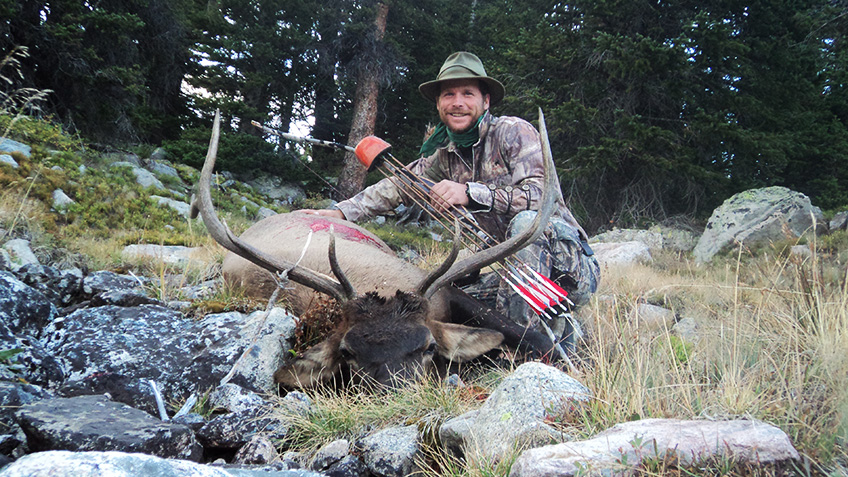
All day I’d shadowed the herd, waiting for the right opportunity to close in for a shot. There were about 40 cow elk in the herd and five bulls, each big enough to drop the string on, should one wander within range of my longbow. I began my day still-hunting along the petering-out ends of a series of ridges and into a three-month-old burn, where I found an unlikely herd of elk bugling their way through blackened tree trunks and brush stubble. I followed them out of the burn and into a lush canyon bottom where I ran out of cover. So I watched the elk climb a barren canyon wall and crest over into the next canyon, and I then ambled my way back to camp for a snack. Those elk would find a shady northeast-facing timber patch to bed in for the day, and I figured I could catch up with them mid-afternoon when they got hungry for their own snack. And that’s just what I did, zipping an arrow through a nice bull’s lungs at 23 yards as he worked his way around the fringes of the herd at dinnertime.

Closing to within bow or rifle range of big-game animals can offer a supreme challenge that requires its own set of specialized skills. I like to divide them into two categories: stalking and still-hunting. While stalking, you first spot your quarry, and then move in for a shot. When still-hunting, you sneak your way through likely habitat in search of a shot. Here are a few tips, tactics and techniques that will help you close the distance on a wily mule deer buck or a big, call-shy bull elk. You might even employ them on a pronghorn or whitetail, if conditions are right and you possess tons of patience.

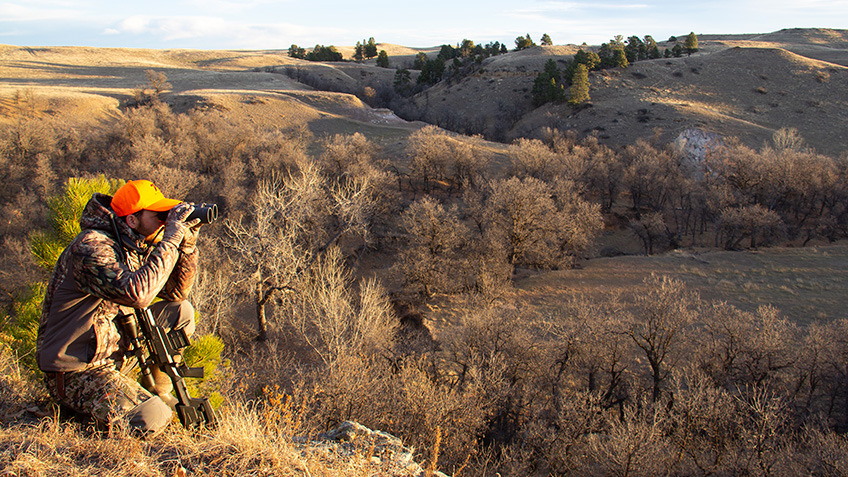
StalkingGlass Up a Beast: The first element to a successful stalk is spotting your prey. We don’t have room enough in this article to cover the intricacies of spotting in detail, but in short; use the best glass you can afford, find a good vantage point and let your eyes do most of the walking. You can cover far more country, find more animals and contaminate less territory through glass than you ever will on foot. Once you’ve spotted, watched and read the body language of your quarry, you’re ready to begin your stalk.

Plan Your Route: Before leaving your vantage point, study landmarks, choose a goal shooting position and plan your route to that position. It’s really easy to loose track of where the animal is, and where you are in relation to your goal position, once you leave your vantage point. Plan carefully, and use landmarks to guide your way.

Stay Under Cover: While executing your stalk, try to stay completely out of sight of your quarry. Land mass offers the best cover; utilize hills, rocky outcroppings, ravines and other terrain to shield you from sight. Vegetation is second best; use heavy brush, tree lines and waist-high grass to block your prey’s vision while you close the distance. If you run out of land mass and vegetative cover, you can make like a wisp of smoke and move closer using environmental changes such as drifting cloud shadows, fluctuating winds and natural distractions like other animal movement that draws your quarry’s attention.

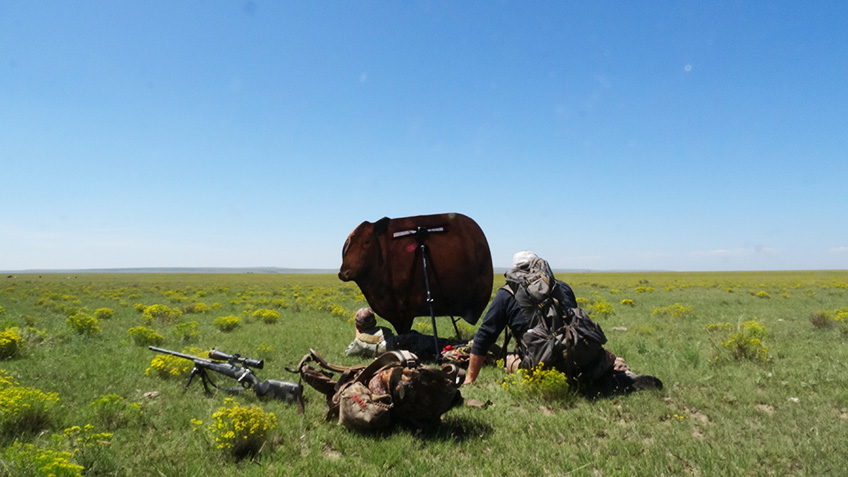
Use a Decoy: In certain circumstances, such as stalking pronghorn across short-grass prairie, a decoy can render an otherwise impossible stalk very doable. I’ve used a folding cow (of the moo variety) decoy to close within pronghorn under those very conditions. I’ve also used folding elk decoys with good success while bowhunting elk, and I’ve hid behind my saddle horse and closed the distance on elk when hunting in mustang country, where the elk are used to seeing horses. The key is to blend in, seem like part of your quarry’s daily surroundings, and move like a cow, elk or horse, rather than like a hunter hiding behind a decoy.

Play the Wind: Always, always, keep your wind (or scent) from reaching the animal you’re trying to stalk, particularly when you’re bowhunting. If they catch your wind, the game is over. So circle that extra mile, climb that extra ridge or wait that extra hour to make sure the wind is in your favor. Speaking of wind and extra hours, often the best time of day to put a stalk on an animal—especially in high-elevation mule deer or sheep country—is after the morning thermals have performed their capricious dance and everything has settled down for the day. Wait and watch until the wind has steadied and the animal has gotten up from its first bed, grabbed a quick snack and relocated to a shady position. Now the wind and your prey are likely to stay put for a few hours, giving you an honest chance to close within archery range.

Be Aggressive: I’ve often watched novice hunters begin a stalk with the utmost care; moving slowly and stepping quietly while the animal they’re stalking is still a mile or more away. That’s silly. Your first task when stalking from long distance is to close that distance as rapidly as possible. If you don’t, that animal will likely be gone when you get there. So get out of sight, and then close in aggressively. Once you’ve closed within a couple hundred yards, then it’s time to slow down and stalk carefully.

Be Patient: It’s been said that a hunter’s biggest attribute is patience. I agree. Once you’ve closed to within earshot of your prey, it’s time to slow down, become part of the environment and drift closer for a shot. Pay critical attention to cloud movement and shadows, wind gusts and air movement, and other factors that can conceal or reveal your presence. Blend in, move in concert with nature and relax: Prey animals can feel a predator’s intent, so don’t study them with a hard gaze, and don’t covet those backstraps sizzling on your evening campfire just yet. Just stay calm, work your way into position and make a steady shot. Then you can celebrate.

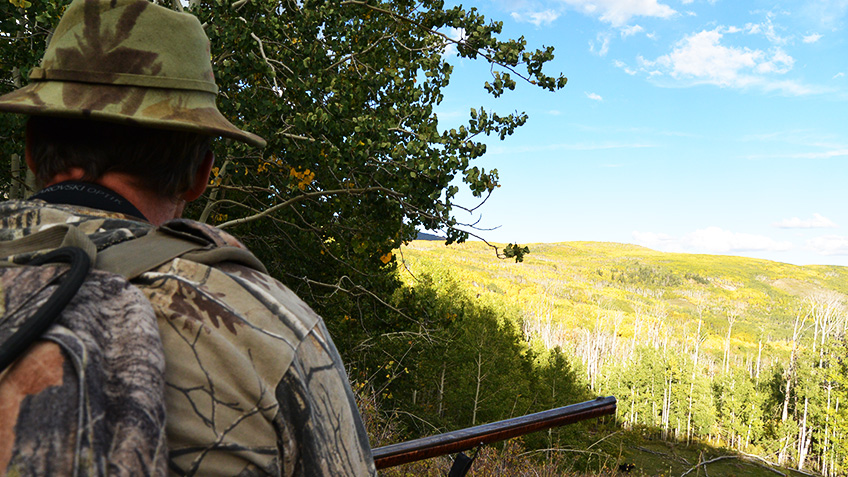
Still-HuntingHunt Wildlife-Rich Areas: When still-hunting, you try to slip into an animal’s habitat, spot them before they’re aware of your presence and make a shot. Obviously, you must hunt where game likes to hang out. Use pre-season scouting, your knowledge of the area and the species, and current wind direction to decide to where to still-hunt that day.

Use the Wind: The best still-hunting days are windy. Everything in the outdoors is noisy and moving on a windy day, meaning you can move and make noise too, with less likelihood of being discovered. Your ideal strategy is to still-hunt in an upwind direction, but hunting crosswind will work just fine, too. Try to move with the wind gusts and blend in with your surroundings.

Stay in the Shadows: Direct sunlight makes you stand out like the proverbial sore thumb, no matter how good your camouflage. Do your best to keep to the shadows, especially when you stop to look and glass.

One Step, Two Looks: The biggest challenge when still-hunting is to see your prey before it sees you, so here’s how you move: take one step, then take two long looks. Study the area in front and to the sides of you intently for any motion, anything that stands out or anything out of place. What you see might be the curving line of an antler, the texture of deer hair or the flicker of an ear. Search as far away as you can see, but study everything close-in as well; while still-hunting, it’s not unusual to close within a few yards of an animal before either of you is aware of the other’s presence.

Use Binoculars: While on the subject of looking, always carry a binocular and use it. You can study surrounding brush and vegetation using your binos like a microscope. Here’s how: Look deep into the tangle with your bino, and turn the focus knob until the area you’re looking at becomes sharp. Study that region for a moment, then turn the knob a little to focus closer or further out—it’ll highlight an entirely different section of habitat. Take your time and pick the area apart piece by piece.

Don’t Hurry: Still-hunting is not a speed game. Rather, you might take an hour to cover 40 yards, or an entire afternoon to hunt through a three-acre patch of woods. But if you’ve got a good idea those 40 yards or three acres holds game, what better way to spend an hour, or an afternoon?

Still-Hunt When it’s Damp: Everything gets quiet in the woods when it’s damp, or wet from a recent rain. That makes for good sneaking conditions; sticks are less likely to snap underfoot, leaves don’t crunch like cornflakes and your movement is muted. It’s a good time to be in the woods.

Deer Walking: We don’t always get to hunt in windy, damp or quiet conditions. Sometimes it’s simply impossible to move without making noise. When that happens, just make like one of the locals; imitate the natural sounds game make while moving. One of my favorite techniques is what noted traditional hunter and archer Fred Asbell calls “deer walking.” To deer-walk, simply imitate the one-two, one-two, one-two cadence of a four-footed beast by first stepping your heel on the ground, then a split-second later snapping down the ball of your foot, to create that one-two cadence. (You can reverse this if it’s more comfortable, using a first-ball-then-heel approach.) Take a few steps, hesitate, look for game, and then move ahead a few more steps, trying to imitate a deer’s movement pattern. Try it sometime; you’ll be surprised at how well it works.

Stay Ready: Shot opportunities can happen very fast when still-hunting, so stay on your toes. Often you’ll see your quarry just a split second before he sees you. Just stay calm, make the shot and then celebrate having successfully implemented one of hunting’s most skill-demanding techniques.

Seven Tactics for Hunting Public Ducks

0

By Wade Bourne

For some waterfowlers, the words “public hunting area” conjure up images of crowded boat ramps, fierce competition for spots, and incessant calling. Others shrug off these annoyances and point to the bountiful waterfowl hunting opportunities available on national wildlife refuges, wildlife management areas, and other public lands. Both perceptions are correct to some extent.

Managed public lands typically attract plenty of ducks. They also draw large numbers of hunters. Here are seven surefire strategies to help you bag more birds on these come-one, come-all waterfowl hunting areas:

1. Locate the Best Spots

It’s a fact: certain spots are simply duck magnets. For a variety of reasons, some places on public hunting areas consistently attract more birds than others. Hunters who learn the best spots and gain access to them will experience more consistent shooting than those who don’t.

Here’s an example. Years ago my partners and I were hunting on a public wade-in area in west Tennessee. All waterfowlers were assigned to numbered sites on a first-come, first-served basis. Through experience, we learned about a secluded spot in the back of the area that was a veritable honey hole. It was just one of those places where mallards and other puddle ducks wanted to be.

Other hunters also knew this was a good spot, so we made it a point to be the first to get there whenever we hunted it. We would get up early enough to arrive at the blind an hour before legal shooting time, and wait in the dark. Hunters who showed up later had to go elsewhere. I don’t ever remember getting to this spot an hour early and finding someone else already there.

The takeaway: ferret out the good spots. Ask the area manager or a local conservation officer to point out the places that consistently draw more birds. Check harvest reports for blinds or specific units that have the best track record. Scout during nonhunting periods to learn where the ducks want to be.

Blinds on some public hunting areas are allocated ahead of time via drawings. Other blinds and sites are assigned on a daily basis. In either case, hunters who know the best spots can make informed selections when their turn to choose comes around. Learn where the best places are and go all out to claim them, and you’ll bag more ducks.

2. Hunt When Others Don’t

As a rule, the less pressure a public area receives the better the hunting will be. This is why hunting on weekdays is usually more productive than hunting on weekends, when more waterfowlers go afield. Other good times to hunt include holidays, opening days of hunting seasons for other game, and when extreme weather keeps many hunters indoors.
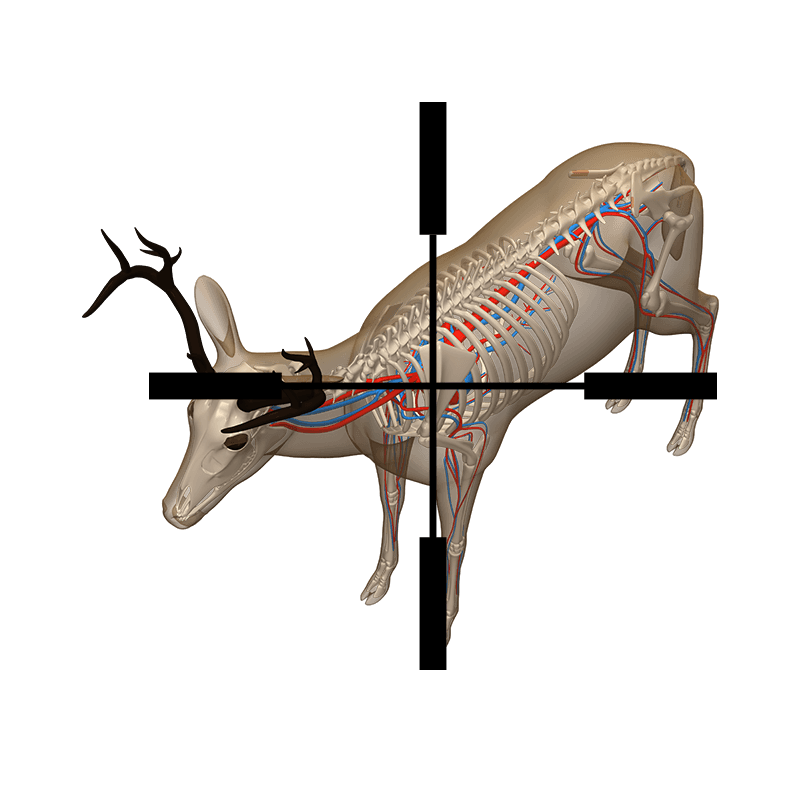
Here’s another scenario. If a popular local wildlife management area (WMA) is gunned heavily on weekends and rested on Monday and Tuesday, hunt it on Wednesday. Your chance for a good hunt should be higher on the first day the area reopens to hunting.
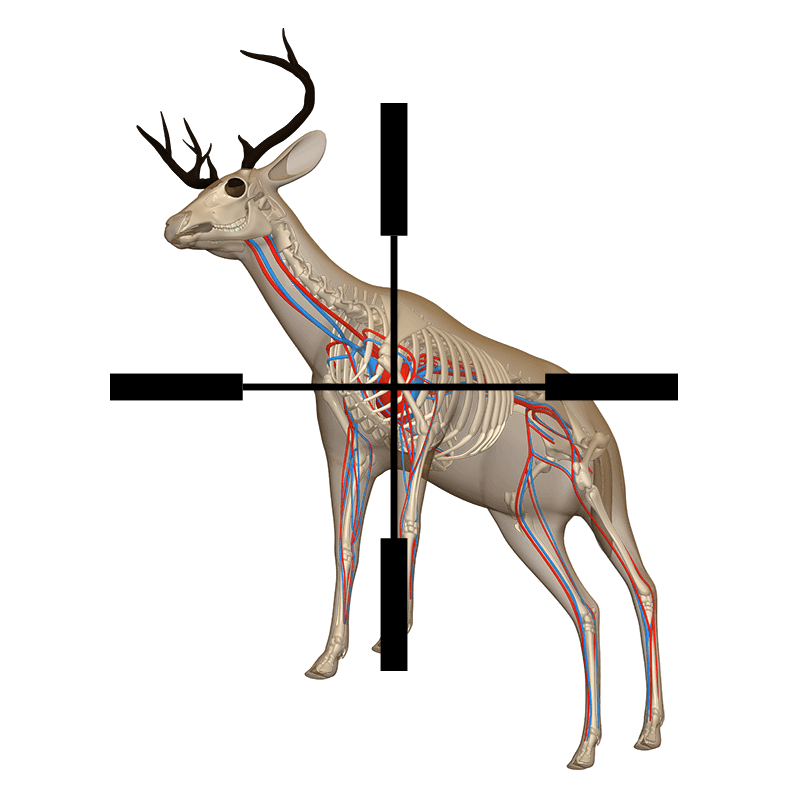
Certain times of day might also offer less competition and better hunting. Ducks often become programmed by hunting pressure. If pressure is heavy early but slackens as the morning wears on, the ducks might start feeding later in the day, when the disturbance from hunters is lower.

The point is, be alert for any opportunity to hunt on public areas when other hunters aren’t likely to show up. If you’re there when others aren’t, your odds of enjoying a good shoot will increase.

3. Hunt Where Others Can’t

He who works the hardest often fares the best. True of life in general, this old adage also applies to duck hunting. Here’s a shining example. Several years ago I wrote an article about two hunters from Little Rock, Arkansas, who frequented the state’s renowned Bayou Meto WMA. Bayou Meto’s flooded timber draws a lot of birds, but this area also has a reputation for drawing big crowds.

These two hunters made a habit of venturing into the most inaccessible reaches of Bayou Meto. They would motor as long as they had sufficient water to float their boat. Then they would climb out and start wading into thick, brushy woods through water that was only a few inches deep. This was where mallards liked to go to escape the hunting pressure in more popular-and more accessible-areas.

By working hard, these two hunters left the crowds behind and went where the ducks wanted to be. They outthought and outworked their competitors, and in doing so they consistently bagged limits of greenheads.

To increase your chances of success, hunt outside the box. Seek out and explore places that are hard to reach. Study maps and aerial photographs to find spots where ducks may go to escape hunting pressure. Learn to use a GPS-an invaluable tool for exploring backcountry. Consider hiking and wading in or using a Go-Devil boat and motor, a canoe, a kayak, or any other means of accessing new territory.

4. Hunt Multiple Areas

Don’t put all your eggs in one basket. Many states have multiple WMAs and refuges in close proximity to each other. As weather and habitat conditions change, waterfowl will move around from one place to another to take advantage of new opportunities to feed and rest. At times, ducks trade between these areas like Saturday-morning yard-sale shoppers. Hunters who keep up with the ducks’ movements and follow them can stay in the birds, while those who stick to one spot are likely to experience hit-or-miss shooting.

Several years ago, a friend and I towed a boat-blind rig to Kansas. We scouted several small public reservoirs and found few ducks, before finally hitting the jackpot. One lake was hosting several thousand mallards. These birds were flying out at dawn to feed in surrounding grainfields, then returning to the lake to rest in midmorning. My partner and I bagged easy limits of close-working greenheads from the same spot four days in a row. We did so because we were mobile. We kept moving and looking until we found the ducks.

Don’t be a homesteader. Instead, draw up an itinerary that includes several public hunting areas within a specified region, and keep moving and prospecting until you find ducks.

5. Stand Out in a Crowd

On public hunting areas, tactics that grab the attention of working ducks are often more effective in tolling birds than a more passive approach. Nowhere is this more evident than on Tennessee’s Reelfoot Lake. In a setting where blinds are close together and many hunters vie for the same ducks, professional guides often put out permanent spreads that sometimes number in the thousands of decoys. They also employ multiple wing-spinners and other motion decoys. And they are expert practitioners of Reelfoot’s legendary aggressive calling style-loud, continuous, and demanding. Sometimes several callers work together to capture and hold ducks’ attention as the birds circle and descend into shooting range.

This is not to imply that you have to put out as big a spread, add as much motion, or call as loud as a Reelfoot guide when you hunt on public land. Each situation is different. But you will gain an edge over the competition if you set out more decoys than the hunters around you, add some motion to your spread, and use insistent calling to attract the attention of passing ducks.

You can grab the attention of ducks in other ways as well. Make your decoys more noticeable by adding white to your spread in the form of pintail or spoonbill drakes. Or paint a few decoys flat black. These stark colors are more visible at long distances than drab-colored or faded decoys. Sometimes flagging draws long-range ducks as well as it does geese. Do whatever you have to do to get noticed, and you’ll have better odds of bringing birds into your decoys.

6. Hunt in Favorable Weather

Waterfowlers who time their hunts to coincide with favorable weather conditions can stack the odds in their favor. Frontal passages, heavy rain, snow, cold snaps, rapid thaws, fog, high winds, and other weather conditions can cause ducks and geese to move and be more eager to work to decoys and calls.

You should always keep an eye on the weather and plan to hunt when new birds are likely to arrive, or when “local” birds are more prone to move around. On classic waterfowling days, the migration is in full swing and new arrivals often work with reckless abandon. Exceptional gunning can also be had when a weather change causes ducks that are already in the area to become more active.

Here’s a good example. A friend of mine hunted on a WMA in Missouri a few years back. Nighttime temperatures froze the flooded cornfields where ducks had been feeding, but by midmorning the temperatures rose into the 40s and melted the ice. The ducks responded by feeding later in the morning. My friend observed this pattern and began hunting between 9 a.m. and 10 a.m. By then, other hunters were giving up and heading in, but my buddy was ready when the ducks showed up for brunch. He took a full limit of greenheads several days in a row.

Public waterfowling can go from slow to red hot when weather changes move the birds. Hunters who understand this and adapt accordingly can increase their chances for a banner shoot.

7. Remain Flexible

Finally, if the ducks aren’t coming your way, try something different. Change locations, calling styles, decoy strategies, and so on. Keep your options open, and remain adaptable and mobile.

When hunting public areas, it’s crucial to prepare for several options so you can quickly switch to a backup plan if you need to. If plan A isn’t working, go to plan B, and then to plan C.

When it comes to public waterfowl hunting, dealing with other duck hunters can be just as important as dealing with the ducks. The Golden Rule should always apply. If hunters would be considerate of each other and treat others the way they’d like to be treated, hunting on public areas would be a lot more enjoyable and productive for everybody. That’s a fact that’s as true as it is simple.

Continue Reading

How To Tell The Difference Between Real and False Morel Mushrooms

0

Spring in North America welcomes many things, one being morel mushrooms. There are a few types of morels, including true morels and false morels. There are more species of false morels than true morels. Both true morels and false morels tend to grow in the spring, under hardwood trees, especially ash and elms. Because of the similar ways these different species present, mushroom hunters are likely to come across false morels in their quest for true morels.

The Good and the Toxic

Before delving into morel mushroom hunting, foragers should have a solid grip on basic mushroom identification. What sets safe-to-eat true morels apart from false morels is a toxin known as monomethyl hydrazine (MMH), which is the same chemical found in certain rocket fuels and can cause dizziness, vomiting, and in some cases even death.

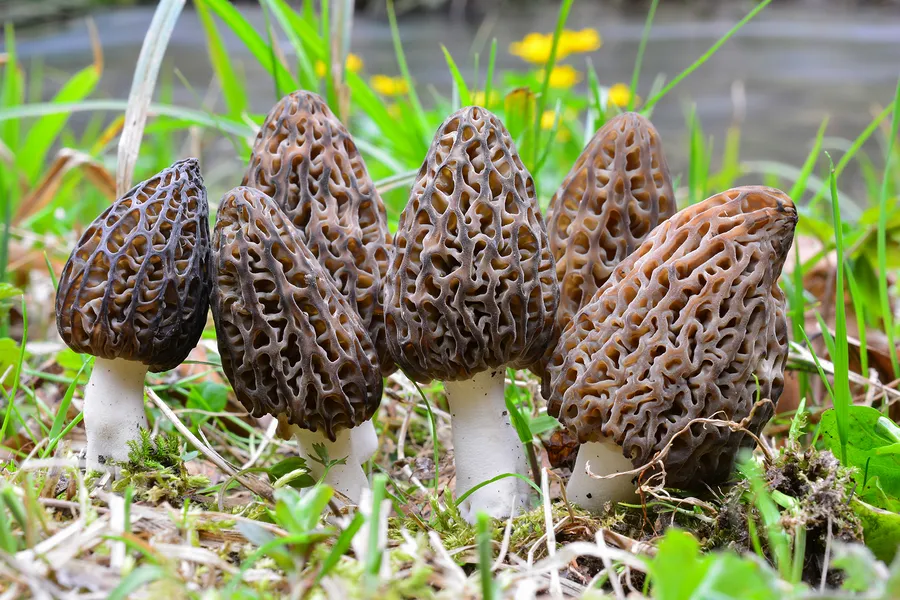
Mycologists know that true morel mushrooms are identified by narrow, pitted, wrinkled caps which are cone-shaped, hollow caps and stems, and caps attached to the stem rather than free hanging.

Black morel mushrooms have four lookalikes, and three of them are considered toxic—so it’s important to be able to tell the difference.

The good news: The three toxic wild mushrooms, Verpa Bohemica, Genus Gyromitra, and Verpa conica, are pretty easy to tell apart from true morels, if you know what to look for. Don’t let the simplicity fool you, though. One simple case of misidentification can have some nasty consequences, including symptoms of mushroom toxicity, gastrointestinal upset, illness, and death. So, although morel mushroom identification is basic, pay close attention to the small distinctions between the different species.

It is a good idea to carry a guidebook while foraging, to compare notes and photos, rather than relying on memory. A good one is Mushrooming Without Fear: The Beginner’s Guide to Collecting Safe and Delicious Mushrooms.

Read on for the top four most common false morels and ways to identify each mushroom species.

Morel Mushrooms Top Lookalikes

1. Wrinkled Thimble Cap (Verpa Bohemica)

Verpa Bohemica, or wrinkled thimble cap mushrooms, are sometimes, but not always, toxic. Still, we don’t like those chances. Verpa Bohemica is also sometimes called the early morel, early referring to the fact that Verpas generally mature just before and in the beginning of morel season.

The feature on Verpa Bohemica that most closely resembles true morels is the sort-of honeycomb cap, which is a trademark for true morels. On a wrinkled thimble, the honeycomb cap has sharp ridges and a more wrinkled look, like a sheet or brain. Cut in half, these wild mushrooms are not hollow, while morel caps are completely hollow inside.

2. Gyromitrin

Gyromitrin mushrooms are also sometimes toxic, though usually just in small amounts. That means if you eat it in small quantities, the toxins can cause nausea, stomach cramps and diarrhea. But in large quantities, eating a Gyromitra species can cause convulsions, jaundice, come, or even death.

These risks are most closely associated with two species of false morels: Gyromitra Esculenta and Gyromitra Ambigua. Many mushroom hunters in Europe consider false morels outside of those two species to be edible once cooked, but we preach caution. Note: even true morels can cause gastrointestinal upset when eaten raw, so it’s a good rule of thumb to always cook morels before consumption.

Gyromitra species can be found in many places where morels are also found. These poisonous mushrooms have the ridged caps of a true morel, but otherwise it’s much wider than it is tall, and its ridges don’t look like a honeycomb. Species of Gyromitra will have a much redder hue than a true morel will ever be, and when you cut it in half, it’s not hollow. All true morels will always be hollow.

3. Thimble Morel or Bell Morel (Verpa Conica)

Thimble Morels, in our opinion, look a lot like true morels. But they have very small, barely-visible ridges and a tiny cap. Moreover, these wild mushrooms have a skirt- or umbrella-like cap attachment.

Warning: The stem here is hollow, just like a true morel. But the cap doesn’t flow seamlessly into the stem but instead sits more underneath it.

4. Half-Free Morels (Morchella Semilibera, M. Punctipes, M. Populiphila)

Half-Free Morels are the closest relative to true black morels and look a lot like them. Luckily, they’re edible. They just don’t taste great. Half-free morels look like an ugly step-sibling to true morels, but they’re not harmful for you to eat (just not particularly tasty).

The main feature that sets them apart is that their cap looks like it’s half free, meaning the cap doesn’t flow seamlessly into the stem but instead tucks under. Usually, Half-Free Morels also have a really long stem compared to a true morel.

How to Tell Real Morel Mushrooms from Fakes

morel mushrooms growing in the forest

1. Look At the Cap

False Morels

  • Irregular, “squished” shape
  • Outward bulges
  • Wave shape
  • Hangs freely off the stem

Real Morels

  • Uniform shape
  • Pitted inwards
  • Covered in pits and ridges
  • Attached directly to the stem

2. Examine the Stem

Real morels have a hollow stem. Also, their overall shape is typically longer than they are wide.

False morels have a solid stem, and are often (but not always) wider than long. A false morel will have cottony fibers or may even be completely solid inside.

3. Check the Color

Real morels are usually a light tan, brown, or grey-black color. They’re almost never in the red spectrum.

False morels can be reddish brown or yellow.

4. Smell It

Real morels smell distinctly earthy.

False morels sometimes have a slightly sweet smell, or none at all.

5. Slice It in Half

False Morels are solid, not hollow, and are filled with cotton-like white fibers.

Real Morels are hollow from the tip of the cap to the bottom of the stem.

6. Check for Symmetry

A true morel will almost always have a nice symmetrical shape to it, whereas false morels have a wavy, uneven look. Bulges and folds will stick out, and the false morel may even look like someone stepped on it.

7. When In Doubt, Go Without

If you still aren’t sure that the wild mushroom in your hand is a real morel mushroom, leave it. False morels can be extremely toxic and the risk of poisoning is not worth the potential of a fresh mushroom.

Keep this in mind before you head out morel mushroom hunting next month.

READ MORE: 10 Edible and Medicinal Plants in the Colorado Rockies You Can Forage

Lean-To Shelter

0

The woods and wild places are drawing people to them. A weekend in the woods can wash away the stain of florescent lighting and it can reset your circadian rhythm. It seems that most of us understand the damage that our hyper convenient, over digitized, and sedentary lifestyle is doing to us.

More people are seeking the “tonic of the wilderness” as Thoreau called it.

Making wilderness shelter is something that calls to people on these wild adventures. So, let’s talk about how you can make the most fundamental and one of the most effective wilderness shelters of them all. I am talking about the lean-to shelter.

The Importance of Wilderness Shelter

What is the main reason for learning to build these wilderness shelters? Aside from just the fun of building your own fort out in the woods, there is a very important reason for studying and learning to make wilderness shelter.

This is your answer to needing shelter in a wilderness survival situation. When you need to get out of the elements and you need to affect your core body temperature a good shelter can capture your body heat and combined with fire could even save your life!

The lean-to can be a quick answer to that wilderness shelter to help you survive a wilderness emergency.

What is a Lean To Shelter?

It is called a lean-to shelter because the main wall of the shelter leans on a ridge pole. The leaning wall does double duty to protect you from the weather that could be falling above you and also the wind coming from behind. This leaning wall also traps some of your heat and holds it in your shelter.

Be sure you choose a nice flat area to build your shelter and it would help if you set up near some water sources to assure you can stay hydrated.

These shelters are easy to build and require minimal materials. This is why they are so popular when it comes to building a shelter for wilderness survival.

Gear Needed to Build a Lean To Shelter

The gear you need to build your lean-to shelter is minimal but if you have the right tools it will make an easy job even simpler.

  • Folding Saw
  • Cordage
  • Tarp
  • Survival Knife

Lean To Between Trees

The most common build for the lean-to shelter is between two trees. The hardest part about this build is finding the two trees to place the shelter between.

You are looking for 2 sturdy trees that are about 7 feet apart from one another. Pay attention to the land between those two trees. The more level the ground the better.

Now you are going to find yourself a nice sturdy ridge pole that is about 8 feet long. I find that cutting down some greenwood is best for this. I usually seek out some young American Holly. It’s strong wood and will be nice and sturdy as a ridge pole. Cut yourself an 8-foot ridge pole.

Set the ridgepole up no more than 4 feet tall. Lash the ridge pole three times with paracord. If you have 2 people this process is a lot easier. If not you can still pull it off.

With the same cord lash three times to the tree. Then three more to one side of the ridge pole and again three lashes around the tree. I run the remaining cordage between the tree and the pole warping to create tension. Tie your cordage off and move to the next side of the ridge pole.

Repeat the process on the opposite side of the pole and the second tree.

With your ridge pole in place, you can start looking for green branches to start leaning on the shelter. Green pine branches are great for this and will become the ribs of your shelter. Lean them on the ridge pole at about a 45-degree angle.

Once you achieve a collection of these branches all lined up then you can place pine boughs or just use a tarp to finish off the shelter.

Attach the tarp first at the ridge pole. You can tie it down to the trees or the ridge pole on either side. Then pull it tight and stake it to the ground.

If you have a nice big tarp then you might even want to create a simple A-frame shelter for yourself.

Detached Lean To

The detached lean-to shelter is built on the very same principle but your ridge pole is not lashed to trees. This is a good shelter to know how to build if you are in sparse forests. It can be a challenge to find trees that are set apart in just the right manner with the right ground underneath them.

In this case, you can create a couple strong tripods. You might think that building a tripod is only for smoking meats or cooking over a fire but the tripod can become the basis for your entire shelter. Look for some nice thick pine branches. You are going to need 6 of these in total.

To create your simple tripod you are going to lash the first branch three times with paracord, grab the next branch and continue with the paracord by lashing this next one. Then finally lash three times on the last branch and this will connect them all. The cordage will also keep the tripod nice and snug.

If you want you can create your tripod and then wrap more cordage around where all the sticks meet.

When you have created two similar-sized tripods you are going to place your ridge pole on top of both tripods and build your lean-to shelter normally.

Inside the Lean To

No matter what lean-to you have constructed you can also consider the inside of the shelter and how you would like to sit and sleep and store your gear.

You can make smaller lean-tos but I like to have room to store gear and get things out of the rain if need be. You can scoop up pine needles and put your sleeping pad and bag on top of them. This will add some cushion beneath you and also keep you from losing lots of heat to the hard ground through convection.

Some people will cut logs and create a wood floor in the bottom of their lean-to shelter. It is also nice to shove those pine needles to the back of the shelter to trap more of your heat inside the shelter. Pine boughs can make a nice bed, too.

You can customize this quick emergency shelter how you see fit.

Wilderness shelter with fire reflector wall built in the snow
Wilderness shelter with fire reflector wall

Warm and Dry Through the Night

The lean-to wilderness survival shelter is a simple design that every woodsman should try to assemble. If you have the right gear and a little knowledge you can set yourself up with a comfortable shelter that will keep you warm and dry through the night.

Wilderness survival shelters could be the difference between a cold night or hypothermia if you find yourself in a wilderness survival emergency.

Best carp fishing boilies, wafters & popups

0

Best boilies header

Let’s all agree from the start, boilies are the ultimate carp bait. Fished correctly nothing catches more carp around the UK and Europe than boilies and related hook baits.

But with so many available how can you know which are the best boilies on the market?

Here’s my guide to my bait and how to best fish it, it’s broken down as follows (Scroll through to what you are looking for)

Guides

  • Best small boilies (12mm and under)
  • Mid to large size (14mm+)
  • Best freezer boilies
  • Best popups
  • Best wafters
  • FAQs

Best boilie guide

Small boilies

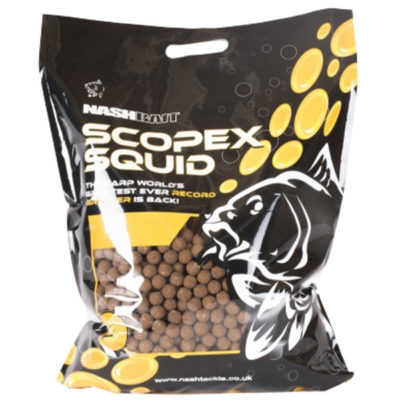
As a day session angler, I’m really keen on smaller boilies and have used loads of different ones. Smaller boilies are a killer bait for winter carping. I always carry some 12mm boilies and hook baits on day sessions – they can be good for getting a bite if it’s a quiet day. My choice for the best small boilies is – Nash – Scopex Squid. These are awesome smelling bait that and the 12mms are nice and soft. They come with a full range of matching liquids and hook baits too.

Small boilies - Nash scopex squid 12mm

A bag will last me a few sessions in winter and I generally fish them in a solid bag or small bed of broken boilies. When fishing the bottom baits I’ll occasionally use them in a method or pellet feeder as a hook bait (See my guide to the best feeder pellets here). I always get great results at the lakes I fish with these boilies and they are my go-to small bait. You can mix it up and fish a 12mm snowman which can give you an edge on some waters.

Best full-size boilies

I’m saying full size for anything 14mm+ as I class anything under that as a small boilie. This section is basically what I think is the absolute ultimate must buy boilie.

And the winner is…

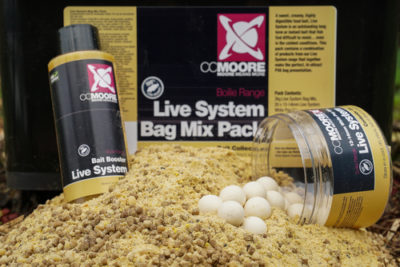
CC Moore live system boilies

CC Moore Live system

It’s fair to say CC Moores Live System boilies are my favourite boilie and these have accounted for some big carp around the world. They are a unique bait with an incredible smell and excellent consistency.

These are part of an incredible range of baits from CC Moore in this flavour with the stick mix being one of my favourite products to use. Here’s the full range –

  1. Shelf life boilies in various sizes (15mm – 18mm – 24mm)
  2. Matching Popups
  3. Balanced wafters
  4. Bag mix
  5. Base mix for rolling your own
  6. Freezer bait paste
  7. Hardened hook baits
  8. Airball popups
  9. Pellets
  10. Pre glugged hook baits
  11. Dumbell boilies

CC moore live system - the ultimate boilie range

The bag mix is fantastic for your PVA bags and it creates a good area of attraction around your bait to create a cloud of attraction. There are not many others on the market that combine these flavours and the difference gives you a good edge on harder waters rather than fishing the same baits everyone else is using.

If you want the best bait to catch more carp then I’d say you cannot go wrong with these – in summer, winter, autumn or spring!

What are the best popup boilies?

Best popups

I could have done a whole separate page on pop-ups with the amount of weird and wonderful baits there is on the market. I’ve tried fishing with the odd fluro mixed colour ones but just find they don’t work, well they didn’t for me anyway. Ones like this are not making the list!

The best popups in the UK

I’m sure someone out there loves these baits but it’s not me.

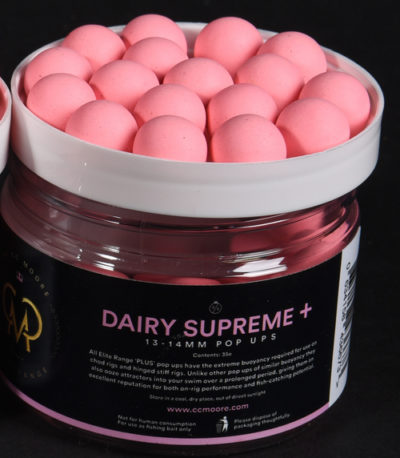
My favourite pop-ups are – CC Moore diary supreme pop-ups, washed-out pink colour. What I love about these are the colour and strength. The elite range can stay in the water for up to 24 hours and work really well with the matching glug. The 12mm is a great bait for the cooler months and is my preferred hook bait all winter. I’ll then switch to the larger sizes in the summer months.

These can be fished effectively on their own or over a bed of bait and work best with an added glug or bait spray booster. The 12mm version make great baits for a snowman rigs over a size 18mm/ 20mm boilie. These are excellent as a hook bait in a solid bag. As soon as you open a pot of these you’ll see why I rate them so highly. They are good sweet-smelling bait that is visually attractive.

Best Cheap boilies

Important – when I say cheap I mean ways to find good value quality boilies, I do not mean the £3 a kilo crap off eBay!

1 – Starmer baits – Starmer baits have a good range of quality boilies but with a bit of searching you can find 5KG bags of their offcuts and overruns at a great price – Check for stock here. With offcuts, you’ll never really know what you’re getting until they arrive and from experience, you’ll get some odd shapes and the occasional sausage in there. These are great boilies for feeding and mixing up how you fish. I’ve had some decent sessions on these.

2 – Premier baits – Randoms – Premier baits are one of my favourite frozen boilies manufacturers and for the best value freezer boilies you will not beat these at £17.50 per 5KG* (*Price correct at time of writing this blog, shipping is extra). These are again overruns from their mainline and are excellent boilies. Find them here.

Again you don’t know what you’re fishing with and will have a mix of boilies on the lake bed but at this price for the quality, you cannot go wrong. If available you’ll find them in the left-hand menu of the premier baits website.

Best freezer boilies

For big carp fishing and long sessions you simply cannot beat freezer baits. The quality of the baits are instantly noticeable and with a little prep and an air-dry bag (I use this one) then you’ll soon see the benefit of these baits.

1 – Premier Baits – Matrix Plus

What a bait the matrix is, I’ve caught loads of fish using these baits and were allowed I’ve some mates who take them to France every time they go. The Matrix plus is an advanced version of the original Matrix which is even more potent and took 2 years of testing before launch to make sure it was perfect.

The smallest amount you can buy is 5kg which comes in at a very reasonable £40 (Correct at time of writing and subject to change). Sizes go from 14mm up to 24mm and if you order 20kg or more then you’ll be able to split sizes. At a maximum, you can order 50KG for £290 which works out at just £5.80 a kilo – which is a great value.

FAQs

[select-faq faq_id=’4332′]

[select-faq faq_id=’4330′]

Where to shoot a deer – 11 shot placement diagrams (where to aim)

0

In the field, most windows of opportunity are narrow.

So acting swiftly must be your default position as a hunter.

That goes for shot placement as well.

deer shot placement question marks

You’ll learn that through a review of:

  • 11 scenarios
  • 18 diagrams
  • 9 rules

Mastery and success rely on understanding several other concepts and topics.

Like optimal bullet choice, advanced shot types, shot placement anatomy, reaction to shot, and more.

I will cover these topics in related articles.

banner linking to the shot placement example article

And link to them as we go along or at the end.

Before we get to the details, let me first explain what successful shot placement has in common with Boot Camp.

Where I’m from, we have national service.

I have fond memories of when I first got a chance to shoot my G3.

It’s not an elegant battle rifle by today’s standards. But I loved it. It was rugged, reliable, and relatively accurate. And a ton of fun at night with a Pilkington on top.

Anyway, I digress.

Your success as a hunter depends on two principles – Thinking faster than the animal and Acting faster than the animal.

There were aspects of Boot Camp I was less excited about.

Aircraft recognition training.

We had to be able to make a quick friend or foe identifications. When spotting aircraft.

And we practiced with aircraft flashcards.

This was not exactly my favorite or strong side. But it provides an important lesson when it comes to shot placement.

Success in the field depends on your ability to shoot fast and accurately.

More often than not, animals don’t hang around for long.

If you’re hunting in woodland or bush, the vegetation will further limit your opportunities to shoot.

So you must be able to quickly acquire the correct sight picture.

The flashcard concept is a fantastic way to develop that skill.

Why.

Your working memory can only manage about four concepts at once.

More, and you start dropping the ball.

Of all the things you can process in your working memory when hunting, deciding where to aim is not a good candidate. That has to be intuitive.

Enter the flashcards.

If you’re anything like me, you want to harvest venison for your freezer. Put a trophy on your wall. And live up to your role as a hunter and steward of nature.

Correct and swift shot placement is key to ticking those boxes.

quick release rifle sling banner

You’ll learn fast target acquisition in two sections.

  1. What type of shot should you use?
  2. Where should you aim in different scenarios?

If you’re in a hurry, you can skip to the end for a summary of the rules.

Or to one of the specific scenarios:

  • The broadside shot
  • The front quartering shot
  • The rear quartering shot
  • The front shot
  • The shot from behind
  • Uphill/downhill
    • Downhill broadside
    • Uphill broadside
  • Combined angles
    • Front quartering downhill
    • Front quartering uphill
    • Rear quartering downhill
    • Rear quartering uphill

There are several ways to kill a deer or other hoofed animal. One of them stands out as being fast and reliable.

efficient hunting e-book banner

The double lung shot has the biggest margin of error.

And it produces reliable killing.

A heart shot may sound alluring, but it’s not ideal.

It sits low in the body, and shooting under the heart means trouble.

Surprisingly, a bullet through the heart alone can take a long time to take effect.

Other advanced shots present additional challenges. So we’ll leave them for now.

Putting a bullet through both lungs will do one of two things, or both:

  • Create severe blood loss that causes fatal shock
  • Collapse the lungs and cut off oxygen to the brain and other cells in the body

And this is a surefire way to kill a deer.

This leads us to rule number one.

Shot placement rule #1: Use the double lung shot for fast and reliable killing.

deer anatomy

As per the diagram, you’ll see the lungs reach back into the chest cavity of the animal.

But ignore that when it comes to developing fast target acquisition practices.

Instead, consider the vital triangle.

Kevin Robertson introduces it in his book, “The Perfect Shot – Shot Placement for African Big Game” (highly recommended).

It is also good reference for deer and other hoofed animals.

And the center of the triangle corresponds with the center of the lungs.

As well as the top of the heart where you find the arteries and veins meet.

Determine the triangle with these three references:

  1. The bottom edge of the shoulder blade
  2. The shoulder joint
  3. The tip of the elbow deer shot placement triangle

Sometimes you can see the contour of the bones.

But it’s best to have a more reliable way to aim.

I’ll show you how when we analyze the broadside shot.

The broadside shot

The broadside shot is the shortest and most forgiving path through the lungs.

In the ideal scenario we’ll review here, you are at a 90-degree angle to the animal.

And at the same level.

We’ve established that the center of the vital triangle is the best aiming point for speed and effectiveness. But where exactly should you put your crosshairs?

To determine how far you should come up, follow rule two.

Shot placement rule #2 – For horizontal shots, place your horizontal post between ⅓ and ½ up the deer’s body.

As you can see, that corresponds with the center of the triangle.

deer shot placement chart - come-up

Where should you put your vertical post then? Easy, follow rule three

Shot placement rule #3 – For broadside shots, place your vertical post on the center of the front leg.

deer shot placement chart - come-up

As you can see from the image, by the center, I mean the center of the top part of the leg.

Because the lower part of the leg may reach further forward on a deer, depending on how it stands.

So, your sight picture should look like this for a full broadside shot.

deer shot placement - broadside

This is the foundational way to shoot an animal.

I won’t go into advanced shots in this article, but it’s worth mentioning one other popular shot.

With the high-heart/center-lung shot, you hit good shoulder meat that will potentially be bloodshot and wasted.

To avoid that, you can move your sight picture to the right. So your vertical post rests on the elbow point, just in the crease between the leg and the belly.

deer shot placement - rear lung shot

This shot will destroy the lungs, but you must be careful not to come too far back.

A rear lung shot may also be worth considering if you’re shooting a large animal at long range, using a high BC bullet that is fast expanding. With this shot you won’t there is further to the shoulder bones and you will shoot through less muscle.

Generally speaking, the broadside shot is easy on your bullet.

Once we move to the quartering shots, you need to consider if your bullet is fit for purpose.

Let’s see why.

The front quartering shot

Remember the bone structure triangle from the broadside shot?

It was our friend then, creating a relatively free passage for a double lung shot.

If you take a shot at a quartering animal, you need to think about the bullet’s path as it travels through the animal.

I once shot a female red deer with my 7 by 64 (similar to a 280 Remington).

I used a tipped bullet designed for deer.

I thought I was home free as the deer went down from the shot.

As the guide congratulated me on a job well done, the deer started moving and got up on all four.

Fortunately, I’d reloaded immediately after the shot, so I was ready to shoot again.

And I anchored the deer for good.

When butchering the deer, we found the first bullet perfectly lodged in the shoulder knuckle. It wasn’t a big deer. I used a bullet made for that size of animal. And it left the barrel of my rifle at a reasonable velocity.

This is just one data point, but it emphasizes that a front quartering shot means you must carefully consider your bullet choice.

And it’s not just bone structure you need to consider.

At this angle, you’ll shoot through a fair bit of muscle. Especially on a larger animal.

Please ensure the bullet you use can penetrate all the way to and through the vitals if you decide to take a front quartering shot. Regardless of what distance you choose to shoot.

Enough said.

When you do decide to take a shot, where should you aim?

You want to put your bullet through both lungs.

For a 45-degree broadside shot, that path looks like this.

deer shot placement - front quartering shot

We’ve established you should come up somewhere between 1/3 and 1/2 way up from the animal’s chest.

The exact aiming point depends on how much the animal is quartering.

Here’s a key point to consider.

The heart is offset slightly from the very front of the animal you aim at. So you don’t want to put your vertical post midway between the legs.

Instead, use rule number four.

Shot placement rule #4 – For a 45° front quartering shot, place your vertical post inside the near leg.

deer shot placement - front quartering

That’s your flash card image.

Memorize it. Be ready for action 🙂

Quick question.

Inside the upper leg or lower leg?

Generally speaking, inside the upper part, but it depends on the angle.

And speaking of angles, you must also follow rule number five.

Shot placement rule #5 – Don’t take shots more than 45 degrees off a square broadside.

I’ll explain why when discussing the front and rear quartering shots.

This brings us to the next shot scenario.

The rear quartering shot

With the rear quartering shot, you don’t have the shoulder bone to worry about.

But depending on the angle, you might penetrate the rumen.

I’ll create a separate article with more detail about key organs and shot placement.

All I’ll say here is that the rumen is full of undigested grass.

And it’s a tall order to shoot through.

Shooting through it will also introduce stomach content and bacteria in the body cavity.

That’s something you should try to avoid.

Here’s a diagram showing a 45-degree angle.

deer shot placement - rear quartering top view

It looks like you’re home free.

But in the field, the stomach will most likely be fuller.

And it sits flush with the sides of the animal.

The liver takes up space between the stomach and lungs on the right-hand side, so you might hit it.

On the left-hand side, the stomach takes up all the space. So you’re more likely to hit it when taking on that side.

Combine that with a steeper angle, and you see it’s easy to get in trouble. Just follow rule number five. No shots beyond 45 degrees from a perfect broadside.

I want you to recognize this situation as a potential issue.

Some of the highly frangible bullets that are fantastic for broadside shots at extended ranges will give you trouble if you have to shoot through the rumen.

Bear that in mind.

There is no perfect choice of cartridge and bullet for long and short-range shooting.

Make a choice and be clear on the limitations you have to work with.

With that covered, where should you aim?

Height-wise, you should still refer to rule number two.

Where should you put your vertical post?

Consider rule number six.

Shot placement rule #6 – For a 45° rear quartering shot, place your vertical post inside the far leg.

As discussed, the heart is offset from the front.

So you do the opposite than for a front quartering shot.

deer shot placement - rear quartering

That’s your rear quarter flash card.

Look at it before you go to bed at night.

Be ready… 🙂

The front shot

So if there are challenges with the quartering shots, the front shot, straight on, should be easy, right?

I wish.

Your margin of error for significant tissue destruction becomes a lot smaller.

Consider the broadside shot.

You still penetrate both lungs even if you’re a little off your target.

And “both” is the keyword here.

Even if you’re a fair bit off your aiming point.

With a front shot, the further your impact moves from the center of the heart, the less tissue you will destroy.

And veering off, you will only be able to destroy one lung.

Which makes a big difference.

I once tracked an Oryx in South Africa.

image of oryx in bushveld

Because of a high lung shot that hadn’t done enough damage.

It went down from the shock and then took off.

It took us seven hours to catch up and put it out of it’s misery. More about shock in another article by the way.

Animals can run far if the damage to their lungs isn’t substantial.

There’s no need for you to engineer that kind of situation for yourself.

Here’s an illustration showing how little you have to work with.

It’s the reason the 45-degree rule applies to front quartering shots.

If you go beyond 45 degrees, you start to approach a front shot.

And I recommend that you don’t take this shot unless you have wounded the animal.

deer shot placement - front shot

By the way, you will notice that it won’t take much head movement before you have a show-stopping object in the bullet path.

And a wounded animal to deal with.

A shot from behind

What about the opposite end?

Shooting the animal up the rear, what some folks refer to as a Texas heart shot.

By the way, I don’t think that’s fair to the good folks and serious hunters in Texas.

But let’s leave that discussion for now.

Here’s the problem with this shot.

You combine the challenges of the rear quartering shot and the front shot.

A limited target area and a great deal of show-stopping plant material.

In my book, you should only use this shot in an emergency.

If you have already wounded an animal. And you need deep penetrating bullets to have any chance of success.

Let me just pause and add one thing.

It may sound like I’ve been preaching stout bullets.

But I haven’t.

What I’m preaching is the right tool for the job.

I will write an article with more detail on cartridge choice and bullet construction.

For now, I will add that in some cases, you want a bullet that expands fast.

You don’t have much distance to work with when you shoot small deer species. So you want a bullet that opens up fast enough to destroy lung and heart tissue before it exits the animal.

And you need the same if you shoot at long ranges.

Shooting uphill and downhill

Maybe you’re hunting from a tree stand.

Or perhaps you’re fortunate enough to hunt in a mountainous or hilly area. Which, by the way, is my favorite environment to hunt.

In that case, you must consider the changes to the aiming point uphill and downhill shooting presents.

Whether you’re shooting up or down, you must consider this.

You are not aiming where you want to hit.

Your goal is to put a bullet straight through the middle of the lungs, as we discussed.

However, your aiming point is some distance from your target, so you must adjust it to ensure the correct bullet path.

It’s worth noting that this is relevant as the shot angle becomes steeper.

deer shot placement - up and downhill

Enter rule number seven.

Shot placement rule #7 – Adjust for uphill or downhill shots when the angle exceeds 20 degrees.

So how should you adjust?

Follow rules number eight and nine.

Shot placement rule #8 – If you’re shooting downhill, your aiming point must come up.

Shot placement rule #9 – If you’re shooting uphill, your aiming point must come down.

A little like adjusting open sights back in the day.

Ballistic side note: When shooting uphill or downhill at longer ranges, gravity will have less impact on your bullet. You must combine this effect with the changes to your aiming point.

Downhill broadside

Using the center of the vital triangle, inside the body, as our target, you can see from the diagram that your aiming point changes drastically for steeper angles.

Here’s your flashcard.

deer shot placement - broadside downhill

Shooting from above, you’ll get much closer to the shoulder blade.

With a bow or light for animal cartridge with a fast expanding bullet, you have to be careful about what you do.

Because your margin of error is getting smaller at that angle.

Uphill broadside

Shooting uphill, you can see how you have to aim further down the body than a regular broadside shot.

deer shot placement - broadside uphill

This is a relatively acute angle for shooting uphill, and I’ve chosen it to exaggerate and show you the difference.

Consider the 20 degrees as the point when you need to adjust.

And use this diagram as your flash card.

Combined angles

Let’s have some fun.

Let’s combine the quartering shots with the up and downhill shots.

No new rules.

The current ones still apply.

Front quartering downhill

For the front quartering and above version, you will still have to consider the bone structure.

deer shot placement - front quartering downhill

More the shoulder blade than the shoulder knuckle.

Depending on the deer’s size, the quartering shot warnings still apply.

And if you’re a bowhunter, you need to consider if the shoulder bone or blade can deflect or stop your arrow.

Front quartering uphill

As with regular up and downhill shots, visualize the center of the vital triangle inside the body. Offset a bit between the front legs.

Here’s your flashcard.

deer shot placement - front quartering, uphill

Rear quartering downhill

This is a typical tree stand shot.

The animal is walking away from you and is less likely to spot any movements.

Rule number five still applies.

More than 45 degrees, and you get in trouble.

By the way, notice how your crosshairs are much closer to the spine. But if you should shoot close to it, you’ll still penetrate both lungs.

Hunting lots from treestands?

Then tattoo this flashcard on the inside of your left eyelid…

deer shot placement - rear quartering, downhill

Rear quartering uphill

Granted, this is an unusual shot unless you encounter an animal on a ledge on a hill above you.

I once stalked a group of red deer along the base of a ridge line.

They’d moved up the ridge as I turned a corner, and I had a safe and clear uphill shot like this.

I was on flat ground, and the deer left before I could get to a knoll to take an uphill shot.

deer shot placement - rear quartering uphill

Now you know where to aim.

Don’t come back with silly excuses like mine.

Bring back a monster rack!

Wow.

Did you ever imagine you could have so much fun with deer shot placement diagrams?

Well, now you know.

Here’s a serious note.

Remember the duty we have as hunters to be effective.

We owe it to those magnificent deer we admire, hunt, harvest, and care for.

Practice your craft as a hunter.

Invest in understanding the behaviors and anatomy of the deer.

And know the capability and limitations of yourself and your equipment.

Memorize the scenarios and shot placement diagrams.

And use the nine rules to help you along the way.

As a reminder, here are the rules.

  1. Use the double lung shot for fast and reliable killing.
  2. For horizontal shots, place your horizontal post between ⅓ and ½ up the deer’s body.
  3. For broadside shots, place your vertical post on the center of the front leg.
  4. For a 45° front quartering shot, place your vertical post inside the near leg.
  5. Don’t take shots more than 45 degrees off a square broadside.
  6. For a 45° rear quartering shot, place your vertical post inside the far leg.
  7. Adjust for uphill or downhill shots when the angle exceeds 20 degrees.
  8. If you’re shooting downhill, your aiming point must come up.
  9. If you’re shooting uphill, your aiming point must come down.

By the way, I have a bonus for you. We’ve added the diagrams to the Efficient Hunting e-book.

Click here to go to the download page.

Best Air Rifle Deals

Popular Posts

What can you kill with a 177 air rifle?

0
"Unleash Your Precision: Discover the Power of a .177 Air Rifle to Take Down Targets with Accuracy. Explore the Versatility and Potential of this...

Best Distance for Sighting In an Air Rifle

0
Shooting with an air rifle always seems like a thrilling experience, but if you are a newbie then you have lots to learn. One...

Air Rifle Scope vs. Rifle Scope – Which One Fits Your Shooting Needs?

0
"Air Rifle Scope vs Rifle Scope: Unveiling the Ultimate Precision Optics. Discover the essential differences and benefits of these two optical devices, empowering shooters...