

Home Blog Page 87

Benjamin Trail NP .22 Review

0

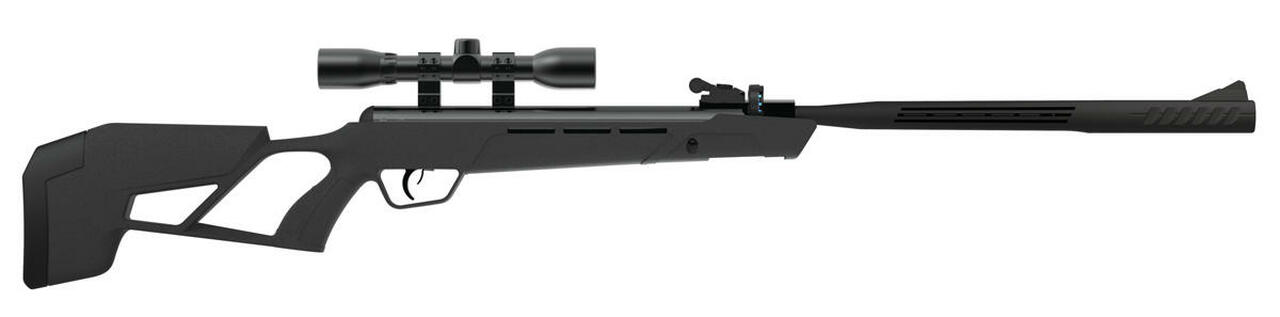
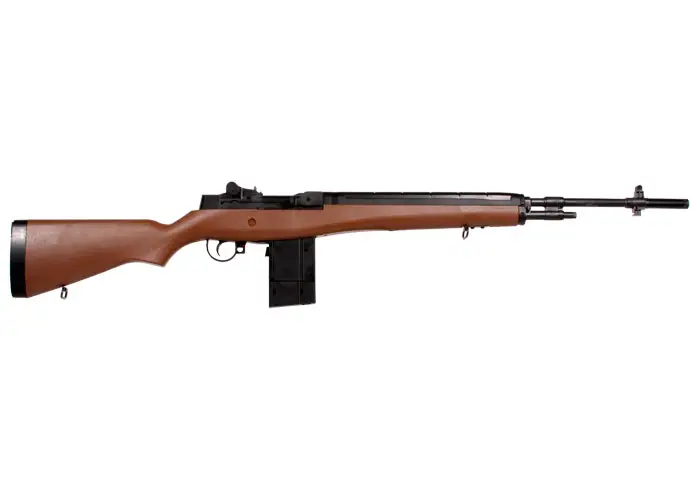
If you hate the idea of being caught in the rain with a wood stock air gun, you’re going to love the Benjamin Trail NP .22.

This rifle is a nice combination of remarkable technology with a durable stock that’s impervious to all kinds of bad weather.

It also has the potential to become your favorite pellet gun for the next few years.

Gun Type

The Benjamin Trail NP is powered by Nitro Piston technology.

A nitro piston gun (or gas piston) works the same as the spring gun but it has a nitrogen-filled cylinder instead of a metal spring.

The air in the cylinder is already compressed and you apply more pressure to it when you cock the gun.

The pressurized air is kept under tension until you pull the trigger.

When you fire, the pellet is pushed downrange the barrel due to propellant force from compressed air.

A nitro piston rifle is lighter and lasts longer than a spring gun. Besides, it produces less recoil and is easier to cock.

Furthermore, it can be left cocked for days because there is no spring fatigue.

(For more on How nitro piston technology can make your gun sport more exciting, see this post)

The caliber (the internal diameter of the bore, measured in inches) is .22 (5.5 millimeters.).

.22 is the king of hunting and is the go-to caliber for hunters and pest eliminators.

(For more on how to choose the right air gun caliber for your game, see this post.)

Aside from this, this gun is a single-shot, break-barrel gun so you can only shoot once at a time.

After the first shot, you have to break the barrel to manually reload the pellet.

Single-shot guns make you a disciplined shooter:

you have to make your first shot count since you have only 1 chance to hit the animal target

Or it will run away laughing at your face when you are still busy with the reloading action.

The barrel is rifled with helical grooves inside the bore to make the pellet spin.

Spin stabilizes the bullet, improves accuracy, and enhances the shooting range.

Furthermore, the barrel is shrouded i.e. it has a jacket enclosing the barrel

And containing the violent release of compressed air from the muzzle.

It lets the pellet escape but forces the air to use up as much of its energy before it leaves the shroud, thus reducing the noise.

(For more on things you should know about air rifle barrels before buying, see this post.)

Stock

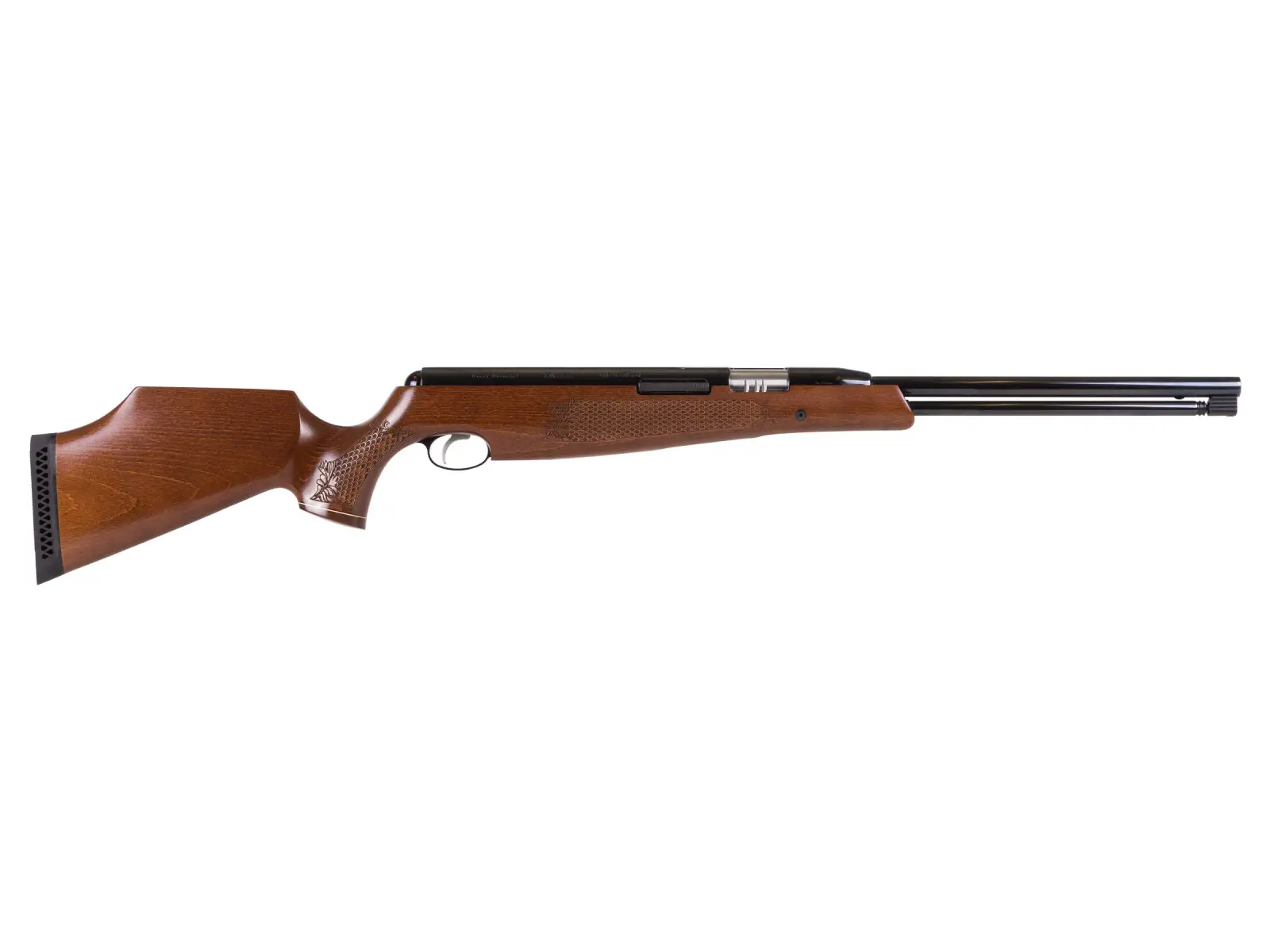
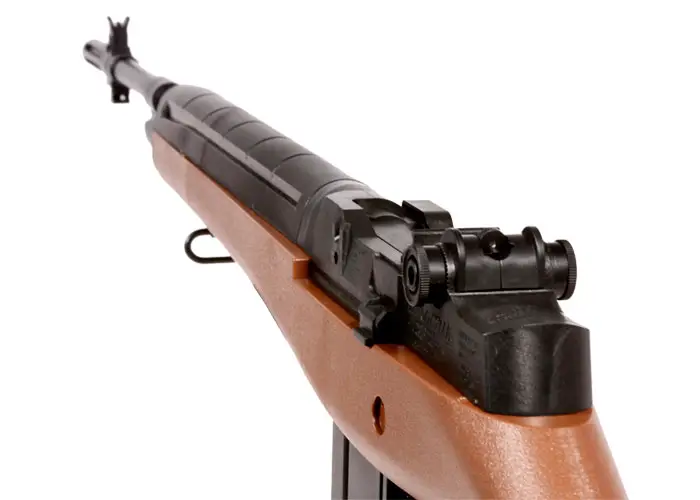
The stock is made of hardwood so it brings an intimate, authentic feel to your hand and withstands impact, shock, and abrasion.

It can be refinished easily at any time so it has a very long life span.

For more on the in-depth comparison between synthetic and wood stock, see this post.

This gun has a thumbhole in the stock

So it provides a more relaxed grip on your wrist by resting the stock on your wrist, as opposed to holding up the stock with your hand.

The thumbhole stock is best for hunters and shooters who spend lots of time in shooting positions, such as bench rest shooting.

This stock has twin raised cheekpieces on both the left and right sides of the gun.

Raised cheekpieces give you firm control in the shooting.

Furthermore, it has a textured grip and forearm to add friction to your hands when shooting, prevent slippage from the shooter’s sweat, and increase stability when aiming.

The sling swivel stud is already mounted so you can put the sling on it anytime you need to carry the gun to the hunting field

Ammo

This gun uses .22 pellets as its only source of ammunition.

While .177 is lighter and sometimes doesn’t deliver enough knockdown power to kill humanely,

the .22 pellet is heavier, more stable in its trajectory, and delivers enough energy to finish the job in one clean shot.

Thus, the .22 caliber is your best bet for small games or for eliminating pests in the garden.

(For more on the differences between .177 & .22 and which jobs they do best, see this post.)

Cocking and Loading

Cocking the gun:

First, put the gun ON SAFE, point the gun in a safe direction, hold the gun near your body and firmly tap the muzzle end to open the breach.

Next, let the gun rest on your upper thigh and grasp the muzzle tip.

Continue to pull the barrel down to its limitation to perform cocking action .

Loading the pellet:

With the breech opened after cocking, put the pellet (with the pellet’s nose lying forward) into the breech.

The pull the barrel up to its original position until it locks and you are ready to fire.

Velocity, Accuracy and Power

The Benjamin Trail NP shoots up to 950 FPS (feet per second) with alloy pellets and up to 800 FPS with lead pellets.

This is a high-end velocity compared to other .22 air guns on the market and it allows you to hunt or drop pests at long range.

For this air rifle, various shooting tests have been conducted by different shooters with positive results. 

At 10 yards, Benjamin Trail NP delivers:

1” group with Crosman domed pellet 14.3 grains ultra magnum

And 3/4” with Crosman Destroyer 14.3 grains.

At 20 yards, it provides:

  • 3/4” with H&N hollow point 12.65 grains,
  • less than 1” with Crosman pointed hunting pellet,
  • less than 1 “ with Beeman FTS 14.72 grains,
  • less than 1” with H&N field target trophy 14.66 grains,
  • less than 1” with Beeman Crow Magnum 18.21 grains.

Also, the common shooting groups are:

  • 1/2” at 30 yards,
  • 1” at 25 yards,
  • 1/2” at 30 yards,
  • 1/4” at 50 yards,
  • less than 2” at 35 yards,
  • 1/4” at 30 yards,
  • 1” at 10 yards,
  • 1” at 30 yards,
  • 3/4” at 20 yards,
  • 1” at 50 feet,
  • 1/4” at 30 yards,
  • 1/4” at 20 yard,
  • 1” at 20 yards,
  • 1/2″ at 50 yards,
  • 1/4” at 25 yards, 
  • 1/4” at 30 yards,
  • dime size at 30 feet,
  • 3/8″ at 25 yard and
  • 1/2” at 40 yards.

Some people can even manage to:

  • get zero at 50 yards,
  • hit ceramic doll and soda can at 100 yards,
  • zero at 30 yards,
  • dime size at 40 yards
  • and less than 1 “ at 75 yards. 

As you can see, this gun is an awesome tack driver with a shooting range of up to 100 yards.

But does the Benjamin Trail NP have enough knockdown power for pest control and small game hunting?

Well, shooters report that they’ve dropped starlings at 90 yards, hit a squirrel at 75 yards, taken out a raccoon at 32 yards.

This rifle is the powerhouse you can trust to go hunting with or do pest control in the backyard.

(For more on the best air rifle for rabbits, see this post)

Sight

This gun doesn’t have an open sight: No front sight, no rear sight.

But you don’t need an iron sight since Crosman has installed an awesome 3-9×40 AO scope on it with a mil-dot reticle

So you can take comfort in knowing that your accuracy is greatly enhanced

(For more on how many types of air gun sights are out there and which one is suitable for you, see this post.)

Noise

With the Nitro piston Technology, Benjamin Trail NP produces minimum audible output.

It has hundreds of customer reviews without a single complaint about noise so you can shoot without disturbing your neighbors.

Shooting range and intended use

The effective shooting range for Benjamin Trail NP is up to 50 yards.

You can use this gun for target shooting, plinking, pest control, and small game hunting.

For more on the best air rifle for squirrels, see this post

Accessories

The accessories include the Weaver-style rings and unmounted 3-9×40 AO Centerpoint Scope.

Maintenance

The Benjamin Trail NP requires very little maintenance:

Just apply a few drops of Crosman RMCOIL every few hundred shots into the compression chamber,

Use a cloth to clean the external metal parts and you are fine.

Warranty

As of this date, the Benjamin Trail NP has a one-year limited warranty from the date of purchase

Specifications

  • Caliber: .22
  • Velocity: 950 FPS with alloy, 800 with lead.
  • Loudness: 3- Medium
  • Overall Length: 43”
  • Shot Capacity: 1
  • Cocking Effort: 33 lbs.
  • Barrel : Rifled
  • Front Sight: None
  • Rear Sight: none
  • Scopeable: Picatinny
  • Bookplate: Ventilated rubber
  • Suggested for : Small game hunting/plinking
  • Trigger Pull: 3.5 lbs
  • Action: Break barrel
  • Safety: Manual
  • Powerplant: Gas piston.
  • Function: Single-shot
  • Body type: Rifle
  • Weight: 8.0 lbs.

Customer Reviews

There are plenty of reviews on this nitro piston pellet gun.

Positive reviews show that people love it for its high-tech features, high velocity, awesome power, extreme accuracy, and sophisticated design .

On the other hand, there are some negative reviews — people complain about the trigger.

They say it takes too long to pull and makes them feel uncomfortable.

This problem can be solved in 2 ways: The first is to take some time to get used to it and practice proper shooting techniques.

The second is to buy an aftermarket trigger to replace with this one.

Pros

  • Awesome accuracy
  • Superb knockdown power
  • Durable stock with lots of amazing features
  • Great scope
  • Fantastic design
  • Advanced technology
  • Quiet and recoilless
  • Easy to cock and simple to use

Cons

  • Made in China
  • Trigger takes too long to pull (takes some time to get used to or can be replaced with an aftermarket trigger)

Price

The Benjamin Trail NP is only about $200.

It’s very cheap if you consider lots of great features and technology this gun offers.

I’m sure you can get a high-end rifle to do a better job but it will cost anywhere from $500 to $2000.

Conclusion

The Benjamin Trail NP .22 has all you need for a successful hunting day.

It’s quiet, powerful, accurate, recoil-less, and functions perfectly under any kind of weather.
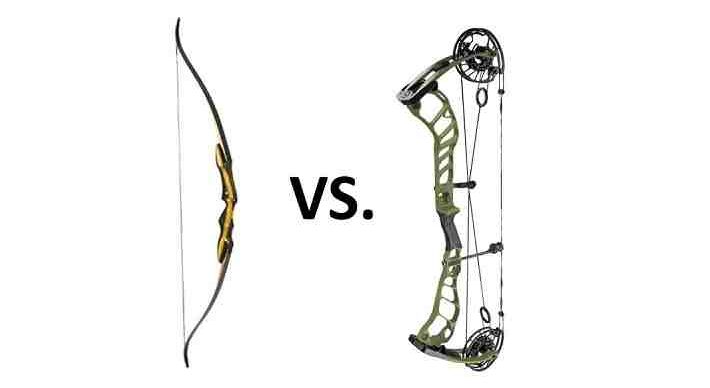
Compound Bow vs Longbow: Who Really Wins the Fight?

0

Compound bows are becoming increasingly popular nowadays. With the advancement of modern technology, compound bows are becoming more robust, flexible, and accurate.

However, a large portion of bowhunters still uses traditional longbows for archery and hunting. Now the question is, why? What is the difference between these two? And how to distinguish which one is an ideal piercing weapon?

That’s what we’re going to discuss today in our “compound bow vs longbow” guide. We’ll explore the key difference between these 2 bow types, and help you choose the best one for you.

Compound bows use a pulley system to store potential energy, resulting in high-velocity (up to 370 ft/sec), and high-powered arrows whereas traditional longbows feature a traditional outlook, are low-maintenance and are easy to carry around. Which one you’ll end up choosing depend largely on your preference.

Let’s explore more in our in-depth “Compound Bow vs Longbow” comparison:

A Brief History

Longbow vs Compound Bow

The traditional, good-old longbow comprises a bowstring that’s tied to a bowed implement. Usually, the tool is a single unit from top to bottom. To lurch your arrow far, you need to pull the bowstring back significantly.

This action requires a lot of energy and concentration. Therefore, you have to lug your entire weight backward. Besides, you need to stay upright for improved accuracy. If you have less weight, however, this action is awkward.

It’s even more difficult if your hands are unsteady. Therefore, a better contraption has replaced this mechanism in a modern-day compound bow.

Here, a pulley (cam) is introduced to recoil the strings. And to improve the versatility and reinforcement at the center, a thicker and more robust member is fitted.

Therefore, the entire length comprises a short truncated upper recurve segment, and a lower one coupled together with a much stronger middle unit.

The advantage of this new design is that it allowed for a more significant backward movement without the bow breaking apart.

What’s more? the archer now needs to spend less energy, and yet, the accuracy of the arrow has significantly improved.

Compound Bow vs Longbow: Key Differences

1. Origins

Bows have been in existence for millennia. A 17,000-year-old arrow discovered in South Africa proved that bow hunting existed even during the stone-age era.

It’s believed that the Egyptians are the ones who invented the bows and arrows. Many pieces of evidence indicate bows were in use around 2,300 BC.

During this period, the preferred construction materials were sticks from hardwood timber such as ash and oak. The string was made of sheep intestine.

Obviously, so many changes have taken place since then. From the rudimentary and inaccurate weapon, you now have an extremely lightweight and powerful tool.

Compound bow

A compound bow is an improvement upon the longbow. It’s fairly intricate. Holless Allen gets credit for the development of the compound bow.

He modified a longbow into the much stronger compound bow we see and love today. He did this by initiating several improvements to the longbow and showcasing it through a patent he applied for in 1966 and received in 1969.

The new compound made its debut in the US National Archery Competition in the 1970s.

Longbow

Bowhunting enthusiasts Baer, Hiyt, and Mathews refined the longbow using new and modern materials. They transformed the hitherto wood frame and sheep intestines elements previously used for these longbows.

But even before the new revolution in the manufacture of the longbow, a previous one had already occurred.

The most advanced modernization of medieval archery goes to the Welsh. It appears that they manufactured the longbow into a tactical offensive weapon.

Their archers managed to withhold a large regime of British soldiers in the Battle of Waterloo in 1066. But the first recorded use of a longbow was during the battle of AD 633 during the war between the Welsh and Mercians.

Since then, this particular longbow earned the name of the British longbow. It’s been used in numerous battles with the French both on land and in the sea.

2. Design

The design of a longbow varies from that of a compound bow. Let’s see what our “compound bow vs longbow” comparison guide points out about the design differences between these two types of bows:

Compound bow

The high-quality compound bows are sophisticated. They have two sewn recurve ends fitted with pulleys at the end (limb). Either or both cams feature one or more cables attached to the opposite limb.

These cams provide the pivot needed when you pull back the bowstring. This action (let off) enhances the accuracy of the arrow while giving a more natural aiming response.

The center of the compound bow (riser) pivots the limbs, bow sights, bow stabilizers, and quivers. This section required greater flexibility to transfer as much of the stored energy from the bow to the arrow as possible.

This segment curves out towards the target, making it exert more force, which is subsequently transferred to the arrow.

Newer models of compound bows have cables and cable slides as well as a higher brace height. This is the length between a grip throat and the bowstring.

Longbow

The longbow, on the other hand, comprises a long weapon measuring about four feet long. Its stave was from a D-shaped section of a hardwood branch.

It has a singular and long limb. Typically, it’s made from a single material. There is no reinforcement or clamping along the entire stretch.

Even if the bowstring structure is the same as in a compound bow, the longbow still shoots slower and requires more force.

As a result, the arching process is also more strenuous than the former. This is due to the lack of a bow curve, the absence of cams as well as a more prolonged and weaker limb.

3. Material

The elements that make the longbow and compound bow affect how these two tools perform. Let’s look and the material composition of compound bow vs longbow.

Compound bow

Previously, compound bows comprised plastic-coated steel. However, due to lower tensile strength and flexibility – that decreased the arrow’s overall accuracy, – they now feature more suitable materials.

The more prominent material currently is the high-modulus polyethylene compound. It offers higher tensile strength as well as maximum energy transfer.

Longbow

The ancient longbows were constructed mostly from yew. However, hazel and elms were occasionally used. It was then coated with resin, wax, or excellent tallow to improve its tensile strength.

Currently, however, composite materials of laminated fiberglass and tampered wood are now used to make recreational longbows.

4. Uses and Benefits

Long ago, bows and arrows were used for hunting and conquering. But presently, they are used primarily in sports hunting and bow shooting competitions. Archery has grown as a favorite pastime as well as a game in all major tournaments.

Compound bow

A compound bow has a more significant benefit due to its design. The robust cams allow for a higher energy reserve. You only draw a portion of the energy and the rest remains at the front where it’s needed most when shooting.

The horizontal limbs also reduce the vibration and recoil intensity before shooting the compound bow, improving the accuracy of the shot as a result.

Further, modern compound bows have sighting devices to improve aim, as well as mechanical release to retain shot consistencies. Therefore, you are likely to shoot accurately using less effort.

Longbow

Longbow proved challenging to use since it required an inertia of over 65 lbs to deliver the necessary projectile power. This posture is also more strenuous since you’ll have to arch significantly back to convert sufficient energy needed by the arrow.

Different types of longbows were used for assorted arrows. There existed fight arrows, with chisel arrows. Other bows accommodated hunting arrows. Even within them, they also vary between animal and bird hunting types.

When you compare a longbow vs. a compound bow, you find that a longbow is lighter and quicker to shoot. Besides, it’s also quieter.

Additionally, the longbow is easy to make since it needs just one or two tree branches.

5. Draw Length

In archery, you need to be sure about a bow’s draw length. Typically, a draw length has a close correlation with your overall body size.

Take the distance from the tip of a nocked arrow to the tip of your draw-out hands. Divide this distance by 2.5, and you’ll get your draw length,

Compound bow

For a compound bow draw length, measuring the arrow tip should ideally be around two feet beyond the riser at full draw. When you hold this position and measure the arrow length, you get the draw length by adding one foot to the computed distance.

Longbow

The draw length of a longbow is usually more than five feet. Many of the early models had their measures reaching up to 12 feet. But they commonly averaged six-and-a-half feet long.

6. Limitations

Even the best-functioning longbows or compound bows have their drawbacks. Below are some of the shortfalls that are apparent in both the compound bow and the longbow.

Compound bow

By design, compound bows have many moving parts. This structure makes them susceptible to breakages and parts malfunctions. Further, having many elements make compound bow maintenance and handling a bit expensive.

Replacement is also intensive. It requires special tools to replace and repair damaged parts or strings of the compound bow.

Longbow

The longbow stretches more slowly and unsteadily. When you draw it backward, your arms move with the full energy you are exerting. You need more power to hold back your hands firmly.

At the same time, during the process of drawing your bow, less energy is available at the point where the bowstring meets the arrow.

This has the dual effects of releasing less punch directly to the arrow, as well as exacerbating your unstable hold. Hence when you release the arrow, it first, only moves a short distance and is less linear in its movement.

Further, it’s more likely to miss its target due to a weak trajectory caused by less force.

7. Care and Maintenance Requirements

Proper care for your bow is vital. You appreciate that owning a modern compound bow may cost you up to $1,000. Even with the composite material, they have many parts and accessories that need tender care.

Compound bow

Compound bows have sights, pulleys, limbs, cables, and cams. All these are made of different materials. Further, their assembly is delicate. Hence you ought to maintain each component individually:

  • Cables: Waxing protects your cables when not in use. Do this once a month or after every exposure to the elements.
  • Limbs: Laminated limbs are susceptible to cracking under various layers. Do a thorough inspection (by rubbing with cotton wool) to identify such defects.
  • Frame: This component suffers from a lot of tension. Inspect it routinely for cracks and twists.
  • Cams: Visually check on the cams before using your compound bow. To prevent corrosion and discoloration, wipe this part clean after every use.
  • Accessories like bow-sights rest and quivers also require regular maintenance. Accurately mount them to avoid any damage through colliding with other surfaces.

Longbow

Longbows are made from composite frames or laminated timber. Run periodic inspections to identify damages to the fame and the bowstring.

Apply remedial measures similar to those on frames and limbs and accessories in the compound bows. Don’t store limbs in a hot compartment. Keep your longbow in a cool dry place. Better still, afford similar treatment to bolts and nuts.

Are Compound Bows Better Than Longbows: Which One to Get?

Compound bows and longbows have been used for centuries in hunting and archery. Now, you might be thinking Is a compound bow better than a longbow, or is it the other way around?

That’s a question that has been debated by hunters, archers, and outdoor enthusiasts for many years. Let’s find out which is the better option for you.

When a Compound Bow Is Better

Compound bows are becoming increasingly popular due to their superior accuracy and power compared to traditional longbows. While some people will always prefer the classic look of a longbow, it’s hard to deny the benefits of a compound bow.

Compound bows have several advantages over longbows. They are capable of higher draw weights than traditional longbows, allowing for greater accuracy, longer range, and more penetrating power.

The cams on a compound bow also make it easier to shoot with a consistent draw length, which can be very helpful for novice archers.

Additionally, compound bows are usually easier to maintain and tune than longbows. This can be a big plus for people who aren’t as experienced with bow maintenance and tuning.

When a Long Bow Is Better

Longbows have several advantages over their modern counterpart that make them attractive to traditionalists.

Their simpler design makes them lighter and easier to carry, making them a popular choice for hunters who must traverse long distances.

Longbows can also be more durable than compound bows since they are less complicated and require fewer parts. They don’t usually require as much maintenance or tuning either, which can be a plus for those with limited technical skills.

Finally, traditional longbows are often more aesthetically pleasing than compound bows, which can be a plus for those who prioritize looks.

Longbow vs Compound Bow: Which One You Should Get

The choice of whether to get a compound bow or a longbow is up to the individual archer or hunter. Both have their advantages and disadvantages, so it’s important to weigh all of the factors before making a decision.

Some archers may prefer the classic look and feel of a longbow, while others may be drawn to the power and accuracy of a compound bow.

Ultimately, the choice is yours, so do your research and find the option that best fits your needs. Good luck!

Conclusion

And with that, we’re at the endgame of our in-depth “compound bow vs longbow” comparison. Let’s do a quick recap.

You understand that compound bows offer better performance than longbows. However, you may still come across diehard fans of traditional bowing techniques.

To them, using both a compound bow and a longbow propel the arrow to the ordinary distance of 22 feet. But the inclusion of modern technology into bowing has made significant strides that you can’t ignore.

In fact, the new construction and materials have made bow hunting a more comfortable sport for everyone.

So, whether you aspire to hunt elks, deers, or any other small-medium game animal; or win a trophy at an archery completion, you have to start by learning how to use, differentiate and care for your bows and arrows.

Either way, you still need to practice consistently to perfect your pull, nock, aim, and shoot.

FAQs

Which Type of Bow Is More Accurate: Longbow or Compound?

Compound bows are generally considered to be more accurate than longbows as they feature a system of pulleys that help create consistent draw weight throughout the shot.

Is It Easier to Shoot a Longbow or Compound Bow?

In most cases, compound bows are easier to shoot than longbows since they feature a system of pulleys that help make the draw weight consistent throughout the shot. Compound bows also tend to be less affected by wind speeds, giving them an extra accuracy boost.

How Much Draw Weight Should I Use With Each Type of Bow?

Generally speaking, recurve bows require more draw weight than compound bows, with 40-50 lbs being the standard range for recurves and 25-45 lbs being the usual range for compounds.

For safety reasons, it is important to never exceed the maximum recommended draw weight for either type of bow.

What county in KY has the biggest bucks?

0

That is a tough question to answer because there are several counties in Kentucky with a strong reputation for trophy whitetail deer. Many deer hunters travel to Kentucky each year in search of large bucks, and there are numerous prime locations for hunting.

Some of the counties in Kentucky with the largest bucks include Ballard, Edmonson, Grayson, Hopkins, Knox, and Union. As far as the largest bucks, hunting enthusiasts have most recently reported numerous big bucks taken from Ballard County, particularly around the Kuttawa and Cave-in-Rock areas.

What county in Kentucky has the deer hunting?

Deer hunting is allowed throughout the state of Kentucky, with each county having its own specific regulations. In Kentucky, deer hunting is typically restricted to certain seasons and specific areas of land, though trekking on private land can be allowed by the landowner.

To hunt deer in Kentucky, hunters are required to have a valid Kentucky hunting license, as well as a license tag and permits specific to their county. Popular counties in Kentucky that are known for their good deer hunting include Hart, Estill, Crittenden, Ballard, Hickman, Carlisle, and Greenup.

Each region has its own unique collection of habitats and topography that can provide excellent deer hunting opportunities. Additionally, hunters are encouraged to become familiar with the Kentucky Fish and Wildlife regulations for the county in which they plan to hunt in order to ensure a safe and enjoyable experience.

Which part of Kentucky has the biggest deer?

The Southeast region of Kentucky is the area with the highest concentration of whitetail deer, especially in areas such as Wayne County and Boyd County. This part of Kentucky is mainly composed of rolling hills, forests and lots of agricultural lands, making it a great habitat for deer.

The outskirts of cities like East Bernstadt and London can also provide great hunting opportunities. The rich farming and agricultural land in the Southeast region provides a lot of food and nutrients for the deer, which makes them thrive in this area.

Furthermore, the mild climate and mild winters contribute to an abundant and healthy population of deer. With the combination of diverse habitats and abundant food sources, it is no surprise that the Southeast region of Kentucky has the highest concentration of deer.

Does Kentucky have big bucks?

Yes, Kentucky certainly does have big bucks! Not only is Kentucky home to some of the finest whitetail deer hunting in the United States, but its diverse habitat and mild climate offer the perfect environment for big bucks to grow and roam.

From Boone and Crocket record deer to an abundance of well-managed public hunting land, Kentucky’s big buck potential is well documented. Kentucky’s average buck size is larger than most other states and numerous big bucks are harvested annually.

Kentucky is a top producer of Boone and Crockett bucks, producing over 25% of all record book trophy deer in the Southeast United States. The unique mix of quality habitat and mild conditions make Kentucky an ideal place for trophy deer to grow and thrive.

Where are the biggest whitetail bucks?

The biggest whitetail bucks are found in many different places across North America. Depending on the region, there are different optimal habitats and conditions for hunting. Whitetail deer prefer habitats with plentiful vegetation and adequate cover, such as forests, woodland edges, fields and meadows.

In the mid-west and southern parts of the country, large numbers of whitetail can be found in agricultural areas with corn and other food sources. In the northern parts of the United States and Canada, the biggest bucks will typically be found in the thick forest areas with hardwood trees.

Whitetail deer are also commonly found in southeastern areas of the US, such as the swamps and wetlands.

Regardless of where they live, whitetail bucks are most active during the fall and winter months when they are in their peak breeding season. During this time, they are more likely to move around, making them more visible and reachable for hunters.

Additionally, whitetail deer usually travel during the two hours after sunrise and two hours before sunset. During these times, the weather is usually calmer and the deer are most vulnerable due to their limited vision.

Although whitetail bucks can be found in many parts of North America, some of the best places to hunt for the biggest bucks include south-central Wisconsin, south-central and south-eastern Pennsylvania, northern Minnesota, western Michigan, and parts of Illinois, Iowa, and Indiana.

These areas have the optimal habitat, food sources, and plenty of cover that deer need to stay healthy and grow large antlers. However, wherever you choose to hunt for whitetail deer, local state hunting regulations should always be followed.

Good luck!.

How big are the deer in Kentucky?

The deer in Kentucky can vary in size, depending on factors such as the species, age, and sex of the deer. Generally speaking, the average adult white-tailed deer found in Kentucky stands around 3. 5 feet tall at the shoulder, and the average weight of an adult white-tailed deer typically ranges from 120 to 200 pounds, depending on its age and sex.

White-tailed deer fawn compared to adults are generally around half to two-thirds of the size of the average adult. In addition to these species, other deer species found in Kentucky such as Mule Deer, Pronghorn Antelope, and Rocky Mountain Elk, can range from slightly larger to significantly larger than the White-tailed deer, especially the Elk, which can reach up to 4-5 feet tall and weights of up to 500 pounds or more.

Is Kentucky a good state for deer hunting?

Kentucky is an excellent state for deer hunting and is considered one of the top deer-hunting destinations in the country. Kentucky is known to have a relatively healthy deer population and large areas of land that make ideal habitats for these animals.

The state also has an ample number of public hunting areas where deer hunting is open, making it easy and accessible to visitors and locals alike. Furthermore, the winters in Kentucky tend to be mild and snowfall is generally not a major issue, allowing hunters to easily access their favorite hunting spots throughout the year.

The recently implemented Electronic Game Check system also makes it easy for hunters to register their kills and stay in compliance with regulations. All in all, Kentucky is an ideal state for deer hunting.

What county produces the biggest whitetail deer?

The largest whitetail deer harvested on record was a buck killed in Kansas and it weighed an astonishing 312 lbs. Although this buck wasn’t certified as an official Boone and Crockett Club entry, it still stands as one of the largest whitetail deer ever taken by a hunter.

Other states that are known for producing large whitetail deer include Ohio, Minnesota, Iowa, Wisconsin, Illinois, and Pennsylvania. In the specific counties, some of the top spots for harvesting large deer are Gibson County, Indiana, Atchison County, Missouri, and Marion County, Illinois.

Depending on the season and weather conditions, these counties may have a higher as well as a lower concentration overall, but they tend to remain among the top producers for large whitetail deer.

Where is the largest population of deer?

The largest population of deer can be found in North America, with an estimated 30 million white-tailed deer, according to the Quality Deer Management Association. The majority of these deer are located in the eastern United States, with significant deer populations in Texas, Oklahoma, and the Midwest states.

White-tailed deer are widely distributed, with populations existing in every state in the continental U. S. , from the easternmost parts of Maine all the way to Washington, Oregon, and California on the west coast.

Canada is home to an estimated 6 million white-tailed deer as well, making North America the home to the largest deer population in the world.

Where can I find big mature bucks?

If you’re looking for big mature bucks, the best bet is to scout out areas with plenty of cover and food sources. Try to locate areas with dense cover and natural food sources such as acorns, chokecherries, and honeysuckles.

Visit the area at least once a week at different times of the day to observe any activity. Look for buck rubs and scrape marks in the area and use trail cameras to get a better idea of the deer movement in that area.

Also, keep an eye out for any clues that reveal deer bedding areas. When you find the bedding area of a mature buck, you will know you are in the right spot. Make sure to stay downwind of the deer to not spook them and observe any specific habits they may have when you find them.

As the seasons progress and the rut draws closer, mature bucks will become more active and roam larger distances, giving you more opportunities to pinpoint them. With the right scouting, patience, and techniques, you can be rewarded with the sight of a big mature buck.

What is the state for big bucks?

The phrase “big bucks” is oftentimes used to refer to large amounts of money. Depending on the context, it can refer to any amount above what a person might expect to make in income, or to a particularly high-stakes amount of money.

In particular, the phrase is often used to refer to high-level investments, large profits, enormous gifts, or big gambles.

The phrase “big bucks” originated as an American phrase in the early 20th century, with its first known usage dating back to 1925. It quickly became a mainstay of American slang, though its usage has since spread to other English-speaking countries.

In America, the phrase is often used to refer to large sums of money which are acquired in a business setting or as a result of a serious and profitable investment.

In summary, the phrase “big bucks” is used to refer to large amounts of money, often acquired in a serious, high-stakes setting. Its usage stems from American slang and has since spread around the English-speaking world.

What kind of deer does Kentucky have?

Kentucky is home to two species of deer, the white-tailed deer and the Virginia white-tailed deer. The white-tailed deer, or Odocoileus virginianus, is the most commonly seen species throughout the state, thriving in most conditions including suburban, urban, agricultural and forest habitats.

The Virginia white-tailed deer, or Odocoileus virginianus clavium, is the more reclusive subspecies of white-tailed deer and is more commonly found in remote areas of Kentucky. The Virginia white-tailed deer is only found in a few areas in northern Kentucky, most notably in Hopkins and Christian counties.

Both species of deer are medium-sized mammals with a reddish-brown coat in summer and a greyer, thicker coat in winter. They have white tails and underparts, and males usually have antlers from late summer into winter.

The deer are herbivores, eating mostly acorns, seeds, herbs, grass and other vegetation.

Dangerous Beauty: Can Swans Kill You?

0

Swans are often seen as symbols of grace and beauty, but can these beautiful birds kill you?

The short answer is no. But swan attacks could lead to accidental deaths. Although swans are not typically aggressive, they can and will attack humans if they feel threatened or if their nest or young are in danger.

In this post, we’ll explore the potential dangers of swans and what you can do to stay safe around these majestic creatures.

From their surprising strength to their territorial nature, we’ll take a closer look at the “dangerous beauty” of swans. So whether you’re a bird lover, a nature enthusiast, or just someone curious about these fascinating animals, read on to learn more about the potential dangers of swans and how to avoid them.

Are swans dangerous?

Swans belong to the Anatidae family which also includes geese and ducks.

Swans are known to be graceful and elegant birds, but they can also be territorial and protective of their nests. While they generally do not actively seek to attack people, they may become aggressive if they feel threatened or if their young are in danger.

The swan is a giant bird and if it perceives a person as a potential threat, it may charge or chase them and even use its wings and beak to defend itself.

It is important to remember that swans are wild animals and should be respected as such. These waterfowl should not be fed by hand or approached too closely, particularly during breeding season when they are more likely to be defensive. Keep a safe distance from their nests and cygnets.

Generally, it is best to observe these beautiful creatures from a safe distance and not interfere with their natural behavior. While attacks on humans are not common, it is always best to err on the side of caution and respect the animals’ space.

Why do swans attack people?

Swans are graceful, attractive creatures that grace lakes, ponds, and other bodies of water with their presence. Despite their delicate appearance, these birds can turn aggressive when threatened or disturbed.

Nesting swans attack humans for various reasons, including territorial defense and protection of their young.

Swans such as mute swans are territorial animals, fighting tooth and nail to protect their nesting sites from any perceived threat, especially during the nesting season. These threats include humans approaching the swan too closely, especially when it is nesting or guarding its young cygnets.

When a swan perceives a human threat, it may hiss, honk violently, and even charge to frighten the human away from the swan nest or swan territory. If a person does not move quickly enough or tries to touch the cygnets, the swan may bite them to protect its brood.

Mistaken identification can sometimes lead to aggression toward humans. Swans are fiercely protective of their species, and they may confuse another bird species for one of their own, leading to assaults on people if they go too close.

The same is true for anything resembling a predator, such as dogs and other land mammals, whose movements resemble those of a coyote or fox attempting to steal eggs or prey on young birds. In these circumstances, the swan responds instinctively in defense and will attack if it feels threatened or endangered by what it considers an intruder.

Swans can also become hostile due to humans feeding them too much food near their habitat. This practice promotes overpopulation and rivalry for resources among the birds, which leads to aggressive behavior toward humans who approach them, anticipating more food.

Overfeeding the birds causes them to exhibit more defensive behavior and greater territoriality to preserve viable food sources from other birds that may compete for nutrition.

It is noteworthy that most reports of swans hurting people occur when the birds where antagonized or provoked. Additionally, swan injuries aren’t often serious and most of the time it is the bird hitting the human’s leg or arm with its wing joint.

Interestingly, the bones in swan’s wings are thinner than human bones, therefore it is more possible for the swan to hurt itself than hurting the human if it decides to attack.

What are the signs that a swan is about to attack?

A swan will display a few common warning signs when it is about to attack. It’s important to be aware of these cues so that you can take steps to protect yourself and others from a potential attack.

The first sign of an impending swan attack is aggression. A swan may become aggressive if it feels threatened or like its territory is being invaded.

The swan might start hissing, honking, and flapping its wings while rushing toward the intruder. It may also lower its head and open its beak wide to appear larger and more intimidating when facing off with an intruder.

Other signs that a swan is preparing to attack include stalking behavior and loud vocalizations. If the bird begins following someone or something for an extended period, this could indicate that it wants the person or thing out of its territory.

The same goes for loud honking or hissing coming from the bird. These vocalizations are usually meant as warnings to escape the area immediately or face the consequences.

If the warning signs have been ignored or go unnoticed by those in the vicinity of a potentially hostile swan, it may resort to physical violence to eliminate the intruder.

The show of aggression can include biting with their long necks, stomping with their webbed feet, smashing into objects (like boats), and even flying directly at people’s heads as they attempt to scare them off.

It’s important to remember that while these behaviors are often associated with aggression, they can also indicate fear in some cases.

Swans may become scared if they feel trapped or threatened by humans who don’t understand their boundaries. This means that it’s important for anyone who encounters one of these animals in the wild to pay close attention and give them plenty of space before it turns into hostility. It is also important to not approach a swan especially if it has cygnets.

It is important for adults to teach small children not to pet swans and other waterfowl at the river or lake. While most attacks don’t often result in serious injuries, but they can might their arm broken by the animal.

What to do during a swan attack?

If a swan is attacking you, it is important to try and remain calm and still. Do not run or make sudden movements, as this can agitate the attacking swan further. Slowly back away, keeping your eyes on the swan and giving it space.

Try to put something between yourself and the mute swan, such as a tree or a trash can.

If the female or male swan continues to be aggressive, seek assistance from a park ranger or other authority figure.

Can swans break human bones?

Swans have been widely thought of as dangerous animals that can break human bones. While they’re capable of aggression and defending themselves, there are no known cases of swans using their power to break a human bone.

Swans are usually more interested in pecking for food than attacking humans. These birds can and will use their strength if threatened. However, they rarely need to go beyond threatening behavior to intimidate or protect themselves from danger.

Can a swan bite your fingers off?

No, swans such as black swans may be big birds but they can’t bite your fingers off. Even though their bite force isn’t as strong as other animals, the bite from their sharp beaks can be painful.

Did a swan attack result in human death?

It’s extremely rare for a swan attack to result in human death. However, in 2012, 37 year old Anthony Hensley from Illinois drowned while trying to get to shore after being attacked by a swan.

How to Wet Age Venison

0
How to Wet Age Venison

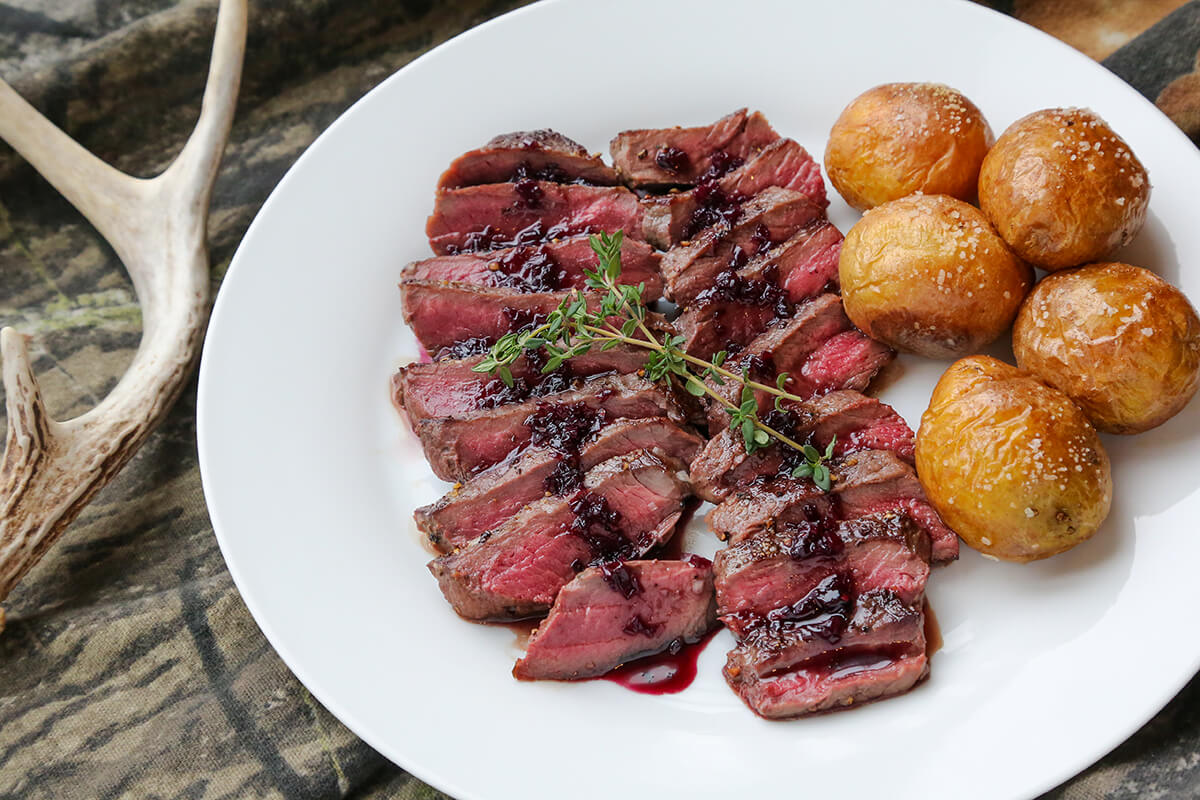
After wet aging your deer, cook it into something delicious, such as this venison eye of round with elderberry pan sauce. (Photo courtesy of Jenny Nguyen-Wheatley)

Dry aging may be getting all the attention, but don’t overlook wet aging as a way to tenderize and bring out more flavor in venison. In fact, most grocery store meat has been wet aged, and you can use the same technique on deer. I find that just a few days can help make a difference.

Benefits of Wet Aging

Aging is the process in which the natural enzymes in an animal’s muscles break down connective tissues; this helps to tenderize the meat and develop its flavors. While you won’t get the intense flavors characteristic in dry aging, there are other benefits to wet aging.

  • Wet-aged meat does not lose moisture and there is no rind to trim off, therefore resulting in no loss of weight and meat.
  • Dry aging should be done with primal cuts only, while wet aging allows for cuts of any size.
  • Wet aging does not require any special equipment – a cold refrigerator, refrigerator thermometer and vacuum sealer are all you need.
  • Takes up less space than dry aging.
  • Can be done after the meat has been frozen.
  • The entire animal does not have to be wet aged all at once. Thaw out meat and wet age as you plan your meals.
  • While wet aging does not concentrate flavors, it does help to tenderize and bring out delicate flavors that has yet to develop in freshly killed venison.
refrigerator thermometer
Use a refrigerator thermometer and place it on the shelf where you plan on wet aging meat. Refrigerators may not cool accurately. (Photo courtesy of Jenny Nguyen-Wheatley)

Cons of Wet Aging

  • You cannot wet age meat for nearly as long as you can dry age meat. The moist environment in wet aging will eventually turn to rot.
  • There is no moisture loss in wet aging, therefore no flavor concentration.
  • Mold is not a factor in wet aging, which is credited for bringing out nutty, cheesy notes possible in dry aging.

Prepping Venison for Wet Aging

Before aging meat, be sure to follow best practices for handling meat in the field. Because aging requires you to hold meat at temperatures above freezing, any cross-contamination can quickly turn into unwanted bacterial growth.

Remember to use clean tools and keep the meat away from dirt and debris. Also, avoid cutting into any scent glands and puncturing intestinal organs. Keep the meat cool at all times.

If you accidentally make a gut shot, use two sets of gloves and knives: one set to handle meat that you suspect may have come into contact with gut material and the other to handle meat you are positive did not. Keep both piles of meat separate to avoid cross-contamination. Only age meat that you know, without a doubt, did not come into contact with intestinal content.

Cuts to Wet Age

Cuts of venison used for grinding or stew do not benefit from aging. Freeze and use these cuts as usual.

For cuts that you plan on searing, grilling, sautéing or smoking, wet aging can be useful. The cuts I recommend for wet aging are the tenderloin, backstrap, bottom round, top round, eye of round and in younger animals (under 2½ years old), the sirloin tip.

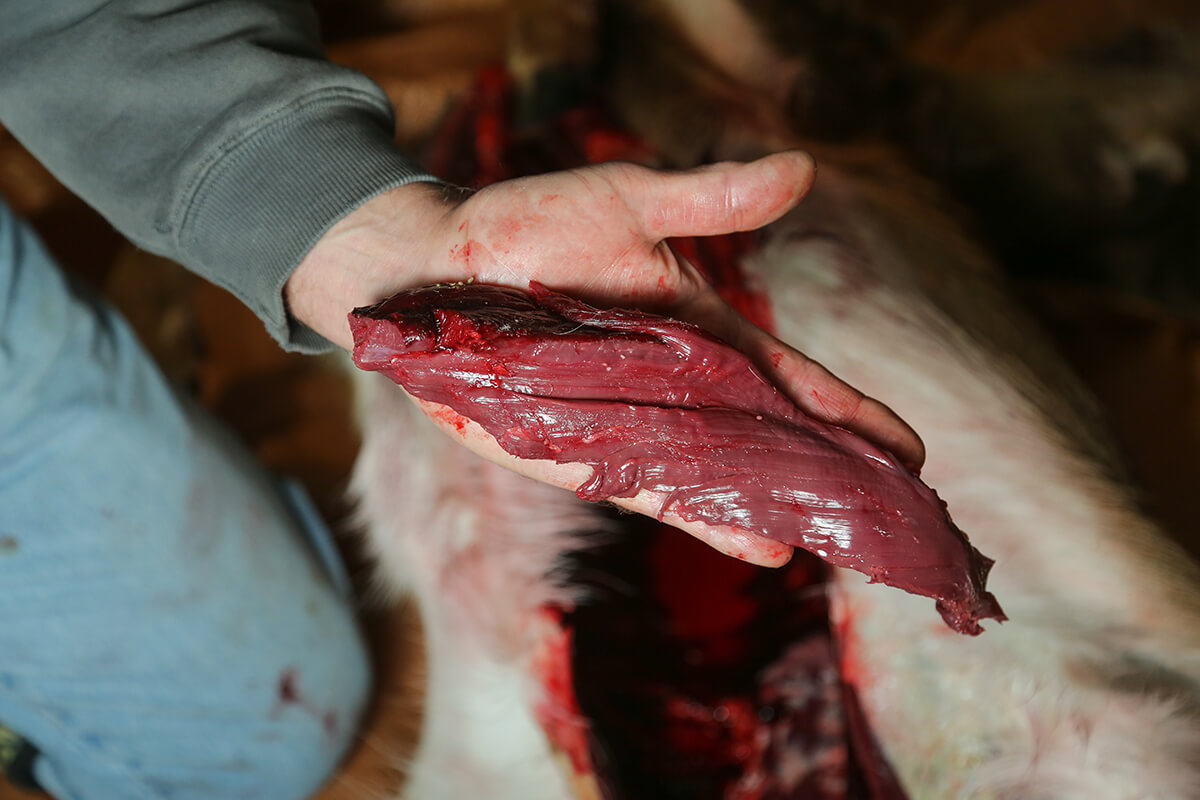
venison tenderloin
Already tender, the tenderloin, or inside strap, only need a few days of wet aging to improve its flavor. (Photo courtesy of Jenny Nguyen-Wheatley)

Vacuum Sealing

Vacuum-sealed bags keep out oxygen, which slows down bacterial growth and prevents discoloration on meat. These bags also hold in the meat’s juices, which contains enzymes that will help break down the meat, thus tenderizing it.

Before you start vacuum-sealing meat, make sure there are no stray deer hairs or debris on the meat. If the meat is wet, pat it dry with paper towels—excessively wet meat will not vacuum seal correctly. Next, break down meat according to how much you and your family can eat in one sitting, and then vacuum seal into individual packages. At this point, freeze to wet age later or wet age all of the packages now.

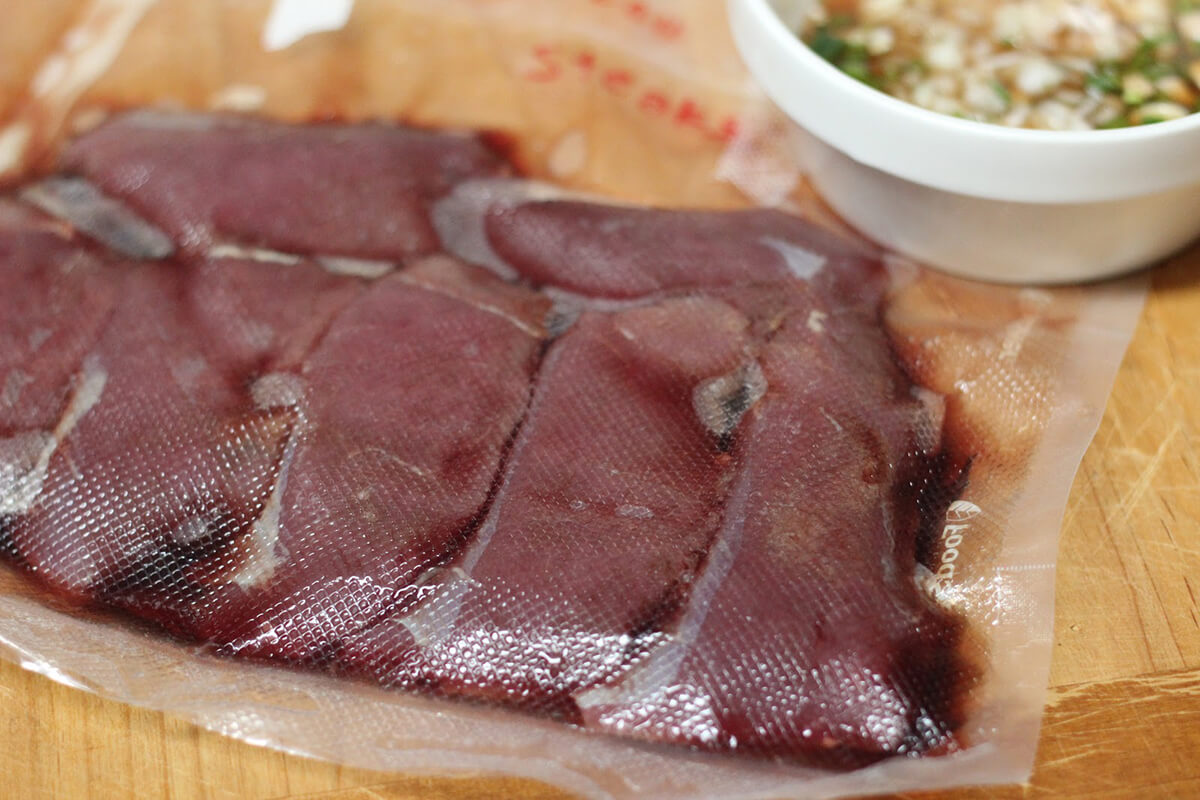
packaged venison
To wet age venison, vacuum seal meat and store it in the refrigerator for several days to several weeks. (Photo courtesy of Jenny Nguyen-Wheatley)

To Wet Age

Buy a refrigerator thermometer to make sure your fridge is cooling accurately. Adjust the temperature to somewhere above 32 but below 40 degrees Fahrenheit—I shoot for 35 degrees. Place desired vacuumed-sealed packets of venison on the lowest – coldest – shelf, and leave it alone for a few days to as long as 3 weeks.

Tenderloins: How long you wet age meat will depend on the cut and your taste. Located inside the body cavity and just underneath the rib bones, the tenderloins do little work and therefore come out tender already. I mostly wet age tenderloins for flavor rather than texture; three to four days will usually suffice.

Loins: For backstraps, wet aging time is determined by the age of the deer. If the loin came from a doe or young buck, I shoot for at least five days to a week of wet aging. For older deer, I recommend two weeks. You could wet age the backstraps longer, but being an already tender cut, you could risk the meat becoming mushy. Again, it depends on personal preference, so experiment to see what works best for you.

deer venison hindquarters
The bottom round, top round and eye of round in a deer’s hindquarters are good candidates for wet aging. (Photo courtesy of Jenny Nguyen-Wheatley)

Rounds: The cuts that may benefit from longer wet aging are those from the hindquarters of the deer, including the rounds and sirloin tip. On a 1½-year-old deer, you may not have to wet age long at all – perhaps a week. On older deer, I would shoot for 2 weeks. On mature bucks – I typically turn these animals into hamburger, but if you want to try wet aging, 3 weeks would be desirable.

There are hunters who have successfully wet aged venison for a lot longer, but I personally have not tried it.

After wet aging, cook the venison or freeze it to enjoy later.

Best Air Rifles for Hunting Small Game

0

What makes a good hunting air rifle?

Most shooters’ usual perception of air guns is that they’re for target shooting, but hunters have been using these weapons for hunting since the 15th century. During these times, air rifles were expensive and only used by the rich. Over time, technology improved to the point that mass-produced examples are now available to the public at affordable prices.

Today, air guns are still used for hunting, especially for small game. “Small game” refers to animals like ducks, squirrels, turkeys, and many other species. Not all of these creatures are sought after for meat, as some prefer to hunt for sport.

No matter your reason for hunting, it’s best to arm yourself with a reliable air gun. They’re much quieter than unsuppressed firearms and usually less regulated. Some states are more air rifle-friendly, making them a viable choice instead of owning a small-bore hunting rifle.

Below are six of the best air rifles for hunting small game. They possess enough firepower to kill prey ethically, and you can even mount accessories on them. Read on to find out all about them.

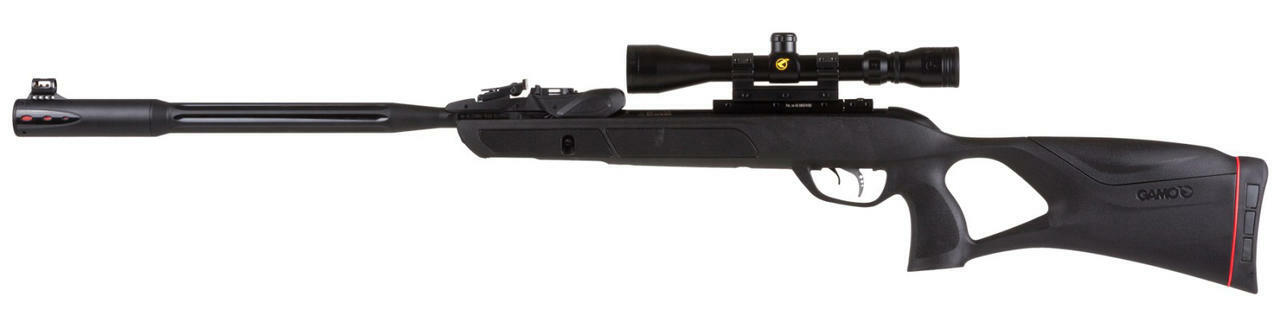
Gamo Swarm Fusion 10X Gen2 Multi-Shot Air Rifle .177 Cal, Black

Gamo Swarm

Gamo’s Swarm Fusion 10X Gen 2 Air Rifle is a sleek yet powerful weapon. It can propel .177 caliber pellets at 1,300 FPS, a muzzle velocity sufficient for quick and painless kills. The rifle achieves this via Gamo’s Inert Gas Technology gas piston, a powerful component that doesn’t kick hard.

The rifle has a built-in Whisper Fusion system for less noise when you shoot, forcing the gasses inside chambers that dampen sound.

The internal magazine holds 10 pellets, though you need to break the action open after every shot. Shooting is effortless thanks to a customizable two-stage trigger and recoil-absorbing buttpad. Your shots will only hit where you want them to go.

A 3-9x40mm scope is included in the package, and it will attach to the rifle using 11mm dovetail scope mounts. The rails are also isolated from the gun to reduce scope shaking. If you don’t want to use the scope, the iron sights will work in low-light conditions, perfect for handling pests at night.

The all-weather stock is made of black polymer, a light but durable material that endures field use easily. Its design is ergonomic and molded to fit shoulders.

Specifications

  • 1,300 FPS

  • .177 caliber pellets

  • 10 rounds in the magazine

  • Scope included

  • Highly customizable

  • Break action

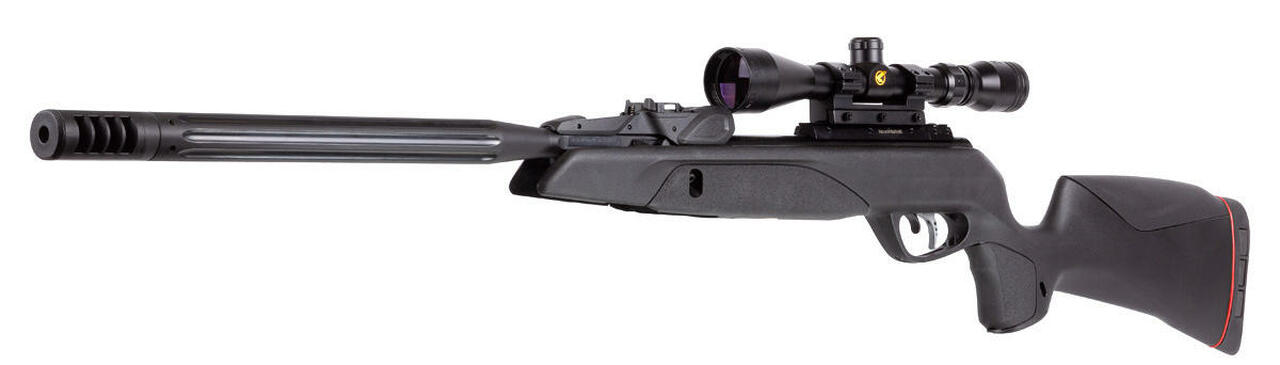
Gamo Swarm Maxxim 10X GEN 2 Multi-Shot Air Rifle .177 Cal, Black

Small Game Hunting Gamo Swarm Air Rifle

Compared to the Gamo Swarm Fusion 10X, the Swarm Maxxim 10X is an older model, the second generation of the first-ever repeating 10-shot air rifle. It’s more affordable than the Fusion, but don’t count this weapon out. You can still shoot very quickly and accurately with it.

The Swarm Maxxim 10X Gen 2 has an upgraded magazine that sits lower to the barrel. It won’t interfere with the optics as a result. As the name suggests, the air rifle holds 10 rounds at most.

Thanks to the Custom Action Trigger, you can adjust the trigger pull’s two stages to your preferences. Doing so allows your finger muscles to shoot without feeling awkward, as everyone has a different comfort zone.

Gamo’s patented Whisper sound dampening technology is also mounted onto the barrel. It will capture the gasses that propel the pellet out, reducing the noise produced. That way, you can hunt without causing a disturbance.

With the help of a recoil-reducing scope rail and rubber buttpad, you can expect to shoot accurately. The included 3-9×40 scope will fit the 11mm dovetail scope mount.

Specifications

  • 1,300 FPS

  • .177 caliber pellets

  • 10 rounds in the magazine

  • Scope included

  • Highly customizable

  • Break action

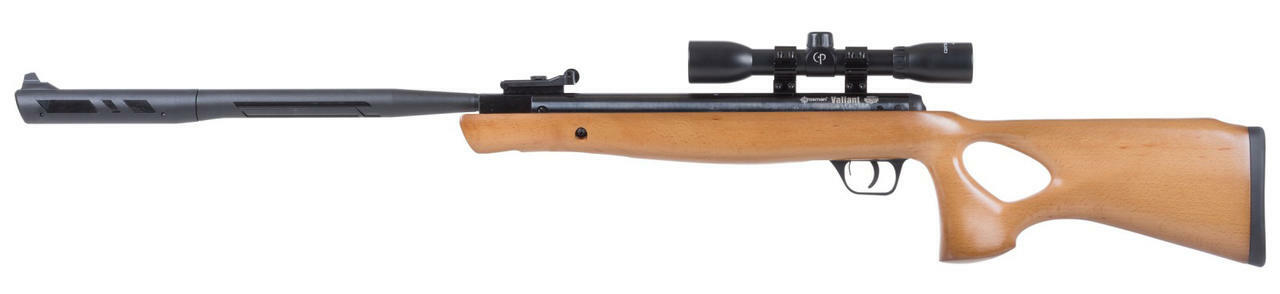
Crosman Valiant SBD Air Rifle, Nitro Piston Elite .177 cal, Wood

Hunting small game with a great wood frame rifle

Unlike the two Gamo air rifles above, this Crosman Valiant SBD is a single-shot weapon. It has no magazine for extra shots, meaning you need to reload every time. However, there are advantages to a single-shot gun.

Precision is the main benefit, as repeaters promote rapid fire. Single-shot guns also conserve ammunition and prevent misfires since you can’t stuff more than one into the chamber.

Crosman’s experience with air guns led it to employ a Nitro Gas Piston Elite instead of a steel spring. As a result, it can retain its strength despite staying cocked for hours, and the cocking action is smoother. What’s more, it works perfectly fine in adverse weather.
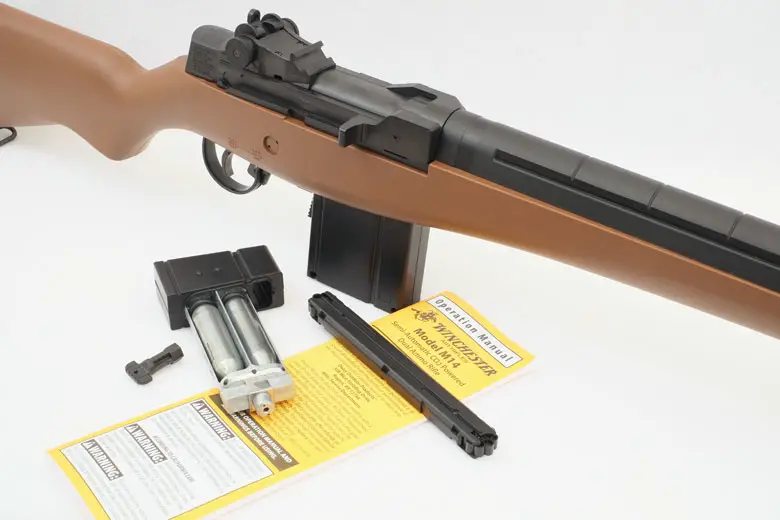
The Clean Break Trigger on this rifle has two stages when pulling, allowing shooters to pull the trigger slowly for a perfect shot. The stages are also adjustable according to your preferences.

As the rifle is meant for single shots, the barrel is a fine example of engineering. The rifling is precise and optimizes the pellet spin. There are also mounted iron sights on the barrel if you don’t want to use optics.

By default, the package comes with a CenterPoint 4x32mm scope, a fixed zoom optic that mounts onto the 11mm dovetail rail.

Specifications

  • 1,400 FPS

  • .177 caliber pellets

  • Single-shot only

  • Scope included

  • Wooden stock

  • 70% less noise

  • Break action

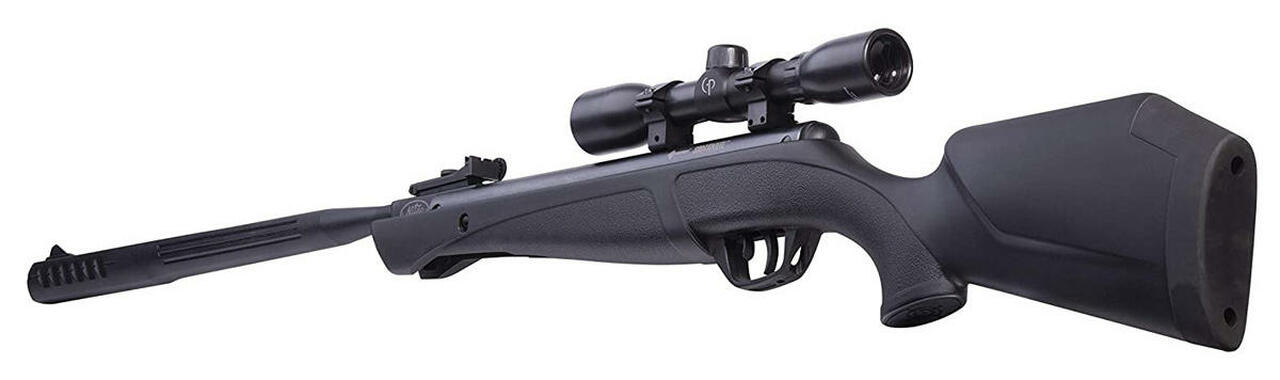
Crosman Shockwave NP QuietFire Air Rifle .22 cal w/lead pellet, Black

Hunting Small Game with a quietfire rifle

Those who want a .22 caliber single-shot air rifle will appreciate this Crosman Shockwave NP QuietFire Air Rifle. It’s painted black, and the polymer furniture is also of the same color. You can use it in any weather conditions due to its polymer stock.

Thanks to the Nitro Piston power plant, this air rifle can deliver performance most springs can’t. Springs can’t deliver 950 FPS after staying cocked for hours, but the Piston can. You’ll also find the weapon easier to cock quickly.

The QuietFire technology mounted on the barrel near the muzzle also helps reduce noise levels. It forces air to pass through two chambers, decreasing sound as it exits them. Thus, you can hunt for small game in larger numbers.

Good hunters know the importance of getting familiar with their weapons, and customization helps them create their perfect rifle. With the two-stage adjustable trigger, anyone can set where each stage is located.

You get a fixed magnification scope that mounts to dovetail rails on top of the bolt with the rifle.

Specifications

  • 975 FPS

  • .22 caliber pellets

  • Single-shot only

  • Scope included

  • Synthetic stock

  • 70% less noise

  • Break action

Crosman MAG-Fire Mission Multi-Shot Breakbarrel Air Rifle .22 cal, Black

Hunting Small Game with a Crosman

With this MAG-Fire Mission Air Rifle, hunting down pests and small game won’t be an issue. The magazine contains 10 rounds for this .22 caliber version, and the powerful Nitro Piston Elite propels them at 975 FPS. If there’s more than one animal, the MAG-Fire Mission can hit them all.

Crosman integrated its patented Quietfire technology into the barrel to reduce the rifle’s report. It helps reduce the sound immensely, so the small game doesn’t get startled as frequently. However, it doesn’t suppress the weapon entirely because ammunition is also a factor.

Accuracy is the name of the MAG-Fire Mission’s game. Several of its features are optimized for landing shots exactly where you want them. The rifled steel barrel, 11mm dovetail rail, and 4x32mm scope are all there for precise marksmanship.

That’s not all because you can also adjust the two-stage Clean Break Trigger on the rifle.

Hunting can occur in any location and weather condition, so your air rifle should be capable of withstanding damage. Although wooden stocks are beautiful, they may scratch and crack. In contrast, the thumbhole synthetic stock is ergonomic and lightweight, allowing hunters to carry this rifle for long periods without tiring.

Polymer stocks are also highly resistant to cracking, so you can expect them to stay intact despite some rougher treatment.

Despite this many components, Crosman opted to go for simplicity. The fewer moving parts there are, the lower the chances of malfunctioning.

Specifications

  • 975 FPS

  • .22 caliber pellets

  • 10 rounds in the magazine

  • Scope included

  • Synthetic stock

  • 70% less noise

  • Break action

Umarex Hammer .50 cal Air Rifle, OD Green/Black

#1 air rifle for hunting small game

While .50 caliber air rifles were designed for big game, nothing prevents you from hunting small game with them. However, you do have to be aware that .50 leaves a larger bullet hole in the animal, so it may ruin the meat if you want to eat it. That said, Umarex’s Hammer air rifle is a powerhouse.

You can load this air rifle with heavier slugs and still expect to hit 760 FPS. This velocity might not be much, but the bullet retains more energy than lighter slugs. Thus, it will do extra damage to whatever you’re shooting.

The Hammer has two shots in the magazine, and the PCP tank has enough for three shots at 100%. The fourth shot will reach around 90% of maximum velocity before requiring a gas refill.

Besides the Picatinny top rail, you also have side M-LOK rails for extra accessories like lights and lasers. These help in low-light conditions or for aiming.

The German firearms company Walther manufacturers the barrels on the Umarex Hammer, giving it a 1:24 twist that helps the .50 caliber slug fly true. The barrel will last for years, a testament to German engineering and Walther’s almost 200 years of experience.

Specifications

  • 760 FPS

  • .50 caliber pellets

  • Two rounds in the magazine

  • M-LOK rails

  • Synthetic stock

  • 1:24 twist optimized for .50 caliber slugs

  • Straight pull bolt action

Frequently Asked Questions

What pellets are better for small game?

.177 caliber and .22 caliber pellets can work for small game. The former is usually lighter and retains less energy, despite being faster. Therefore, it may not lead to a clean and humane kill in some cases.

In contrast, .22 caliber pellets are generally slower but heavier, retaining more energy despite the lower muzzle velocity. Most people consider it the smallest caliber for hunting small game.

Despite this, it’s possible to hunt for small game with .177 caliber pellets. It takes more practice to nail an ethical kill, but it’s still doable. The caliber is more suited for the smallest of small game and pests.

No matter what rifle you own, make sure it’s powerful enough to take small game down before you go hunting. You don’t want the animal to suffer from a weak shot, so letting them pass on painlessly is the best option.

Can any scope work on an air gun?

No, as spring guns and piston rifles are actually very forceful weapons in terms of recoil and kick compared to firearms. They may damage your scope badly after extended use as the mechanisms produce a lot of vibrations. Therefore, it’s best to mount a dedicated optic on your air rifle for longevity.

Some air guns offset the problem by isolating the rails, but it’s not a foolproof solution. You’ll find air rifle-specific optics much better than a standard rifle scope you mount on your .22 LR plinking rifle.

Despite the magnification, air gun scopes may also be designed to work better at closer ranges. Therefore, they will be easier to sight in after a shooting session. Firearm scopes may not cooperate with the air rifle this way, so their performances can be subpar.

An Alternative Method

Most hunters still prefer using firearms for small game, as cartridges are powerful and easy to obtain. However, air rifle hunting only rose in popularity decades ago, and companies continue to innovate and release better weapons.

It’s possible to grab your air rifle, cock it, and take out the squirrel in your yard without the neighbors finding out. Air gun technology has become advanced to the point that they make very little noise. No one will find out you’re doing pest control on your property.

The air rifles we covered range from repeaters to single-shot guns. Whether you prefer making one precise shot or taking out several creatures, there’s something for everyone here. The rifles are also optimized for hunting, with enough velocity and retained energy to propel projectiles at acceptable speeds.

Air guns are safer in most cases, and they’re often quieter. Hunters prefer their prey to stay close for a shot, so scaring them away is less likely to happen with air rifles. However, consult your local laws before purchasing an air rifle.

Choosing the Best Bushcraft Saw: The Ultimate Guide

0

If you are an avid outdoors enthusiast or a survivalist, you know that having the right gear is crucial to your success. One of the most important tools in your arsenal is a good bushcraft saw. Whether you’re camping, hiking, or backpacking, a bushcraft or survival saw can be incredibly useful for cutting firewood, clearing trails, and more. But with so many options on the market, it can be overwhelming to choose the best one for your needs. In this ultimate guide, we will explore everything you need to know about choosing the best bushcraft saw for survival and wilderness adventures.

What is a bushcraft saw?

Before we dive into how to choose the best bushcraft saw, let’s first define what it is. A bushcraft saw, or survival saw, is a type of saw that is specifically designed for use in the outdoors. It is typically smaller and more portable than a traditional saw, axe, or hatchet, making it easier to carry with you on hikes or camping trips. Bushcraft saws come in a variety of shapes and sizes, and they are often used for cutting through small to medium-sized branches and logs.

Why is having a good bushcraft saw important?

A bushcraft saw is a vital tool for anyone who spends time in the outdoors or in the wilderness. It can be used for a variety of tasks, including:

  • Building shelter
  • Gathering firewood
  • Clearing trails
  • Processing game
  • Making tools and other items

Without a good bushcraft saw, these tasks can be extremely difficult, if not impossible, to accomplish. Having the right survival saw can make all the difference in a wilderness survival situation.

Best Bushcraft Saws for Survival

Now that you know what factors to consider when choosing a bushcraft saw, let’s take a look at some of the top bushcraft saws on the market:

Agawa Boreal21 Folding Bow Saw – EDITOR’S CHOICE – Best Bushcraft Saw – Overall

The Agawa Boreal21 Folding Saw is a versatile and durable saw designed for outdoor enthusiasts. The saw has a 21-inch blade that’s made from high-quality hardened stainless steel, making it tough enough to cut through hard wood and thick branches with ease. The handle folds and snaps into place during assembly, without even needing to touch the blade, and the trapezium-shaped frame geometry increases the range of motion while sawing. Additionally, it offers good clearance above the saw blade, allowing you to cut through larger logs without having to change the angle.

One of the standout features of the Agawa Boreal21 Folding Saw is its folding design. The saw can be folded down to a compact size, making it easy to carry in your backpack or pocket. When you need to use it, simply unfold the saw, and it’s ready to use. The saw also comes with a durable nylon sheath that makes it easy to store and transport.

This saw is also lightweight, coming in at 18.7 ounces. The only downside is that it’s a bit pricier than some of its competitors, but its quality construction, ease of use, and sharp cutting action might just pay off in the long run.

An alternative to the AGAWA folding bow saw is the Gerber Gear Freescape Camp Saw.

Corona RazorTOOTH Folding Saw – Best Budget-Friendly Bushcraft Folding Saw

If you’re looking for a reliable, efficient saw for your bushcraft trip, the Corona RazorTOOTH Folding Saw is an excellent choice. The Corona RazorTOOTH Folding Pruning Saw features a 10-inch blade that utilizes pull-back action. The saw blade’s 3-sided razor teeth easily cut through small to medium branches up to 6 inches in diameter. The replaceable curved blade folds into the handle and the saw features a safety lock to prevent accidental opening when not in use. The Corona RazorTOOTH Saw Folding Saw also has a comfortable, ergonomic grip that reduces hand fatigue and makes it easy to use for extended periods of time.

The Corona RazorTOOTH Folding Pruning Saw is a durable and affordable option for those on a budget. While it may not be suitable for heavy-duty tasks or thicker branches, it is a great choice for most wood-cutting tasks you’ll face in the wilderness.

Silky Bigboy Folding Saw – Best Survival Saw for Thicker Wood

If you anticipate the need to cut down larger branches or small trees on your next bushcraft trip, the Silky Bigboy Folding Saw may be the right bushcraft saw for the trip. The Silky Bigboy Folding Saw features a 14.2-inch curved blade made from premium Japanese steel. The laser-cut, extra large blade teeth provide efficient cutting of even dry, hardwood. The handle of the saw is rubber-cushioned for comfort and improved grip.

While it’s one of the larger folding saws on the market, the Bigbog saw weighs in at just 1lb. Overall, the Silky Bigboy Folding Saw is a high-quality saw that offers excellent cutting performance and durability. Its large blade size and curved design make it a great option for a variety of cutting tasks, and its lightweight and folding design make it easy to carry and store.

HME Pocket Chainsaw Survival Saw

The Hunting Made Easy (HME) Pocket Chainsaw is designed for convenience and portability. Its compact and lightweight design allows it to easily fold up for storage in a backpack or pocket. Heavy-duty nylon handles provide a secure grip to the 36-inch high carbon steel chain. The chain features bi-directional cutting teeth to help it tackle tough cutting jobs in the wilderness, allowing you to easily cut through branches and logs.

The HME Pocket Chainsaw is perfect for those who will need to cut wood but don’t want the weight or bulk of a larger folding saw or axe.

Sven Folding Saw

The Sven Saw is a classic camping and bushcraft saw that has been around for over 60 years. Available in either a 21-inch blade or a 15-inch blade, the Sven Saw features a unique, all-metal folded saw design. The saws fold into a compact, ruler-like form that’s just 1.5″ wide and 5/8″ thick. The Sven Saws are also very lightweight, with the 21″ saw weighing less than 14 ounces and the 15″ Sven Saw weighing 11 ounces. The Swedish steel blades are crafted to last for 15-30 years and can easily cut through trunks or branches for firewood, clearing trails, and more.

Factors to Consider When Choosing a Bushcraft Saw

When choosing a bushcraft saw, there are several factors to consider. Here are some of the most important ones:

Blade Types: Finding the Right Saw for Your Needs

The blade is one of the most important components of a bushcraft saw. There are several different blade types to choose from, each with its own strengths and weaknesses. Here are a few of the most common blade types you’ll encounter when shopping for a bushcraft saw:

  • Crosscut Blades: These blades have teeth that are angled towards the handle, which makes them ideal for cutting across the grain of the wood. They’re typically used for cutting smaller branches and limbs.
  • Rip Blades: Rip blades have teeth that are angled perpendicular to the handle, which makes them better suited for cutting with the grain of the wood. They’re typically used for cutting larger logs and branches.
  • Combination Blades: As the name suggests, combination blades offer the best of both worlds. They have teeth that are angled towards the handle on one side and perpendicular on the other, making them versatile enough to handle a variety of cutting tasks.

Handle Materials: Comfort and Durability in the Wilderness

The handle of your bushcraft saw is another important factor to consider. It should be comfortable to hold, even after extended use, and durable enough to withstand the rigors of the outdoors. Here are a few of the most common handle materials you’ll encounter:

  • Wood: Wooden handles are comfortable to grip and can be customized to fit your hand. However, they may not be as durable as other materials and can be prone to cracking or splitting over time.
  • Plastic: Plastic handles are lightweight and durable, making them a popular choice for many outdoor enthusiasts. They may not be as comfortable to hold as other materials, but they’re typically very affordable.
  • Rubber: Rubber handles provide a good grip, even in wet or slippery conditions. They’re also comfortable to hold and can be very durable. However, they may be more expensive than other handle materials.
Silky Gomboy Curved Professional Saw

Saw Size and Weight: Balancing Portability and Cutting Power

The size and weight of your bushcraft saw will also play a role in how well it performs in the outdoors. A larger saw will typically be more powerful and able to cut through larger logs and branches, but it will also be heavier and more cumbersome to carry. A smaller saw, on the other hand, will be more portable but may not have as much cutting power.

When choosing a saw, it’s important to find the right balance between size and weight. Consider the types of tasks you’ll be using your saw for, as well as how far you’ll need to carry it, to determine the best size and weight for your needs.

Folding vs. Fixed Blade Saws: Which One is Right for You?

One of the biggest decisions you’ll need to make when choosing a bushcraft saw is whether to go with a folding or fixed blade design. Both types have their pros and cons, so it’s important to weigh them carefully before making a decision.

Folding saws are typically more portable than fixed blade saws since they can be folded up and easily stored in a backpack or gear bag. They’re also generally safer to carry, since the blade can be folded away when not in use. However, folding saws may not be as durable or as strong as fixed blade saws, and they may not be able to handle heavy-duty cutting tasks.

Fixed blade saws, on the other hand, are typically stronger and more durable than folding saws. They’re often designed with larger, more powerful blades that can handle heavy-duty cutting tasks with ease. However, they can be more cumbersome to carry, and the blade is always exposed, which can be a safety concern.

Different types of Bushcraft Saws

Choosing the best bushcraft saw requires an understanding of the different types of saws available and how they can benefit your needs.

1. Folding Saw

Folding saws are one of the most popular types of bushcraft saws. They are compact and lightweight, making them easy to carry in a backpack or pocket. Folding saws typically have a blade that folds into the handle for safe storage and transport.

Folding saws come in a variety of blade lengths and tooth patterns, which can affect their cutting ability. Generally, they are ideal for cutting through smaller branches and logs. Some folding saws have aggressive teeth for cutting through thicker branches, while others have finer teeth for smoother cuts.

2. Bow Saws

Bow saws are another type of bushcraft saw that has been used for centuries. A bow saw is a type of frame saw that features a long, straight blade attached to a frame that is shaped like a bow. The main benefit of bow saws is their ability to cut through larger pieces of wood quickly and efficiently. However, they are larger and heavier than other types of bushcraft saws, making them less portable.

3. Pocket Chainsaw:

Pocket chainsaws are compact saws that consist of a chain with cutting teeth that is attached to two handles. They are designed to be compact and portable, so the saw can easily fit into a backpack or pocket.

Pocket chainsaws are very effective at cutting through branches nearly a foot in diameter. To use a pocket chainsaw or wire saw, you wrap the chain around the branch or material you want to cut and pull the handles back and forth to make the cut.

4. Wire Saw:

Wire saws are similar to pocket chainsaws, but instead of a chain, the wire saws are made of a length of wire with teeth or abrasive particles. They are very lightweight and can be rolled up for easy storage. The wire design limits wire saws to cutting smaller branches. Since the wire can break or become damaged over time, wire saws are not as durable as other types of bushcraft saws. However, they are an excellent choice for ultralight backpacking or emergency situations.

Each type of saw has its own advantages and disadvantages, so it is important to consider your needs when selecting a saw. When deciding on the best bushcraft saw for you, make sure to consider the portability, field serviceability, comfort, construction quality, and blade material/teeth composition of the saw. Ultimately, understanding these factors will help you make the best choice.

What is the difference between a folding saw and a pocket chainsaw?

The primary difference between folding saws and pocket chainsaws is their design and mechanism for cutting. Folding saws feature a saw blade that is typically hinged and folds into the handle, whereas pocket chainsaws consist of a chain with cutting teeth that is attached to two handles.

Folding saws come in a variety of sizes, with larger ones being better for cutting thicker branches and smaller ones being ideal for more precise cuts. Pocket chainsaws are great for cutting through thicker branches and logs, but they are not as precise as folding saws.

Maintenance and Care: Keeping Your Saw Sharp and Ready to Go

No matter which type of saw you choose, it’s important to take good care of it to keep it performing at its best. This means keeping the blade sharp and properly lubricated, as well as storing the saw in a dry, protected area when not in use. Here are some simple steps to keep your saw in top condition:

  1. Clean the saw after each use. Use a damp cloth to remove debris from the blade, and also from the handle, if it’s made of wood.
  2. Sharpen the blade regularly. A sharp blade is essential for efficient cutting and reduces the risk of injury. There are various methods for sharpening saw blades using files and stones, but you can also take it to a professional sharpener if you don’t feel confident in your own skills.
  3. Inspect the saw for any signs of wear or damage. Look for broken teeth, loose screws, and warping of the blade. Repair or replace any parts that are not in working order.
  4. Store the saw in a dry place. This will help prevent rust and other damage caused by moisture.
  5. Oil the blade periodically. This will help keep it in good condition and also make it easier to cut with.

Sharpening your saw blade can be a bit tricky, especially if you’re not experienced with sharpening tools. One option is to take your saw to a professional for sharpening, but this can be expensive and time-consuming. Another option is to invest in a sharpening tool designed specifically for saw blades, which can make the process much easier and more affordable.

Taking proper care of your bushcraft saw helps to ensure it will perform its best in the field.

Final Thoughts About Bushcraft and Survival Saws

Choosing the best bushcraft saw requires careful consideration of several factors, including blade type, handle material, saw size and weight, folding vs. fixed blade design, and maintenance and care. It’s an important piece of bushcraft gear that is useful for a variety of bushcraft and building tasks.By weighing these factors carefully, you can select a saw that’s well-suited to your needs and will provide reliable performance in the great outdoors.

FAQs about Bushcraft Saws

Q: How do I maintain my bushcraft saw?

Answer: To maintain your bushcraft saw, make sure to clean it after each use, oil the blade to prevent rust, and store it in a dry place.

Q: Can I use a regular saw for bushcraft?

Answer: While a regular saw can be used for bushcraft, it is not ideal. Bushcraft saws are designed specifically for outdoor use and are more durable and portable than regular saws.

Q: How long should my bushcraft saw blade be?

Answer: The length of the blade you choose will depend on what tasks you will be using it for. A longer blade will allow you to cut through larger logs, while a shorter blade will be more portable.

Q: What’s the best blade type for a bushcraft saw?

Answer: The best blade type for your saw will depend on the types of tasks you’ll be using it for. Crosscut blades are generally better for smaller branches and limbs, while rip blades are better for larger logs and branches. Combination blades offer the best of both worlds and are often a good choice for general bushcraft tasks.

Q: Can folding saws handle heavy-duty cutting tasks?

Answer: Folding saws may not be as strong or durable as fixed blade saws and may not be able to handle heavy-duty cutting tasks as well. However, they’re typically more portable and easier to carry, making them a good choice for lighter cutting tasks.

Q: Can I sharpen my bushcraft saw blade myself?

Answer: Yes, you can sharpen your bushcraft saw blade yourself using a saw file or a sharpening stone.

Remi Warren: The Binoculars Expert – Finding The Right Pair For Every Outdoor Activity

0

Remi Warren is an outdoor enthusiast who is renowned for his knowledge and use of binoculars. He understands the importance of having the right pair of binoculars for the job and has an impressive collection to choose from. Binoculars are essential for any outdoor activity, and Remi Warren has used them for hunting, bird watching, and astronomy. His binoculars range from small, lightweight models, to large, powerful binoculars for long-range observation. He also has a range of specialized binoculars for different applications, such as night vision binoculars for low light use and water-resistant binoculars for marine use. Remi Warren is an expert in the field of binoculars and has shared his knowledge and experience with the world in his book “The Ultimate Guide to Binoculars”. He is a passionate binoculars user and has helped countless people find the right pair of binoculars for their needs.

What Binoculars Does Meat Eater Use?

Binoculars are a necessary tool for any meat-eater, whether you’re a hunter or an outdoor enthusiast. Binoculars allow you to better observe and identify potential game, and can be used to look for signs of wildlife such as tracks, scat, and antler rubs. They also provide a great way to scan the landscape and help you spot animals from a distance. Binoculars come in a variety of sizes and magnifications, so you can choose the right model for your needs. Many binoculars also feature special coatings, such as anti-reflection and water-repellent, which can be great for outdoor use. With a good pair of binoculars, any meat-eater can enjoy the outdoors and find their game with ease.

Is there any magnification power that meat eaters use? With a magnification of 10×50, you can see details in the sage brush that you couldn’t see with a macro lens. A six-power binoculars is typically lighter and less expensive, and they provide a more dramatic improvement in contrast to your normal binoculars. When we reach 100 yards for small game and 300 yards for big game, we are no longer in the 10-power zone. When the browtine is 300 to 500 yards away, a 1042 binocular should be sufficient magnification to see it. A good glass, in addition to calming your eyes, can also help you relax.

Steve Rinella’s Top Pick: Vortex Razor Uhd Binoculars For Hunters

Steve Rinella, host of MeatEater on the Sportsman Channel, recommends the Razor UHD binocular lineup as one of his favorite all-around binoculars for hunters and outdoor enthusiasts. Steve, who has extensive experience hunting and watching in the great outdoors, is confident that these binoculars will be a great addition to any hunting or viewing outfit. The 10×42 or 12×50 binoculars are lightweight and powerful enough to allow users to see animals in action without being detected, as well as spots where rubbings and game trails are obscured by the naked eye. Whether you’re a beginner or an experienced hunter, binoculars can help you improve your hunting skills. When using binoculars for scouting and hunting, they not only make the hunt easier but also make it easier to locate animals in the field. When mounting binoculars on a tripod, a hunter can gain a better view of his surroundings and identify nuances in the terrain that would otherwise be impossible to see with the naked eye. It is not a decision to make lightly; binoculars are an important tool for any hunter, and selecting the right pair can be difficult. However, if you want an all-around binocular that’s lightweight and powerful, Steve Rinella’s Razor UHD binoculars are a great choice.

What Binoculars For Elk Hunting?

When it comes to hunting elk, having the right binoculars is essential. Binoculars for elk hunting should have a wide field of view, a magnification of at least 8x, and a light weight design. Look for binoculars with a wide field of view to ensure you can spot your prey from a comfortable distance. Higher magnifications may also help you to spot elk more easily, but they also make the binoculars heavier and more difficult to carry. Choose a pair of binoculars with an ergonomic design and a light weight frame to make transporting them on your hunting trips easier. Investing in quality binoculars will ensure you have the tools you need to spot and track elk on your next hunting expedition.

Hunting requires the use of the proper binoculars. Western hunters should aim with the most magnification they can afford, whereas the majority of deer hunters should aim with 8x and 10x magnification. The M22 binocular is the Army’s and Marine Corps’ primary field binocular, and it has a magnification of 7x and a magnification of 50mm. This item is approximately 7 inches long by 7.2 inches wide by 7.4 inches high and weighs approximately 28 pounds, making it an excellent choice for both hunters and trappers in both regions. M22 binoculars have a much broader field of vision and are extremely useful for spotting prey from long distances. They can be used in any type of weather because they are waterproof and fog-proof. Hunting with the M22 binocular is as simple as saying it is a successful hunt.

What Binocular Magnification Is Best For Deer Hunting?

When it comes to deer hunting, binocular magnification is an important factor in helping to spot and identify your target. The best magnification for deer hunting is typically 8x or 10x. This provides enough power to be able to see the animal from a distance, while also providing a wide field of view that allows you to scan and pick up movement in the brush. The 8x or 10x magnification also helps to reduce the amount of shake that can occur when trying to focus on a target at a distance.

At the magnification level, the closer objects appear at a greater rate. With a 10x magnification, you can see a deer that is 200 yards away as if it were 20 yards away. Buying a pair of binoculars of high quality is an investment, but if you find one that meets all of your criteria, it will be worthwhile. Deer are more likely to be discovered in open areas, but elk are more common as well. If you want to see more sights in the Western United States, you should invest in a good pair of 10x binos. You can use a tripod with a magnification of 10x or higher with binoculars. A high-powered bino can cause your hands to shake while you’re taking long observation sessions.

Hunting binoculars should be no more powerful than 6-12x magnification, and they should not be necessary if you plan on using them for short distances. When observing at high magnification, a tripod will ensure steady views. All of these factors contribute to how a binocular is perceived as a tool.

When it comes to hunting optics, it is now common practice for hunters to use 3-9x variable scopes. This scope has the advantage of being versatile, allowing it to provide a wide field of view at close range while also providing magnification for long-distance shots. For some experienced shooting enthusiasts, 6x magnification may be sufficient. Those who want to get the best out of their shots in the field may prefer a magnification of 10x or more. If you combine high quality and magnification, a 10-x variable scope will perform well and be more accurate. When you want the best optics and performance out of a scope, a 3-9x variable scope is an excellent choice for any hunter, whether you are a beginner or a seasoned veteran.

Remi Warren Watch

Remi Warren watch is a luxury watch brand that is known for its classic style, quality materials and craftsmanship. The watches are designed to embody the spirit of adventure and exploration, making them perfect for the outdoor enthusiast. The watches are crafted with Swiss movement and come in a range of styles and colors, from sports watches to dress watches. They also feature a variety of features such as water resistance, luminous hands and date displays. Whether you are looking for a sophisticated timepiece for a special occasion, or an everyday watch for the outdoors, Remi Warren has the perfect watch for you.

Remi Warren’s Hunting Setup: Pro Tips For The Aspiring Hunte

Remi Warren is no stranger to the spotlight; he is widely regarded as one of the world’s foremost hunters, and his weapon of choice is of extreme importance. It is powered by a strong set of HD275 Day Six gear arrows, combined with two Evo broadheads, which weigh a total of 585 grams. Remi is shooting at the @mathewsinc. V3X 33 75# should be used to make it even hotter. The heavier arrow is accelerated by his 30 draw length. Remi Warren’s hunting show, Solo Hunter TV, is available on Prime Video. Remi’s adventures in this series include a wide range of hunting adventures around the world as well as his impressive skills. We’ll show you how to live a hunting lifestyle by interviewing one of the best hunters around.

Remi Warren Rifle

The Remi Warren Rifle is an iconic firearm known for its quality and accuracy. It is a limited-edition hunting rifle that is highly sought after by hunters, collectors, and gun enthusiasts alike. The Remi Warren Rifle was designed by legendary gunsmith Remi Warren and is a classic bolt-action rifle with a high-quality walnut stock and a 22-inch barrel. It is popular for its precision and accuracy, making it a great choice for both hunting and target shooting. The Remi Warren Rifle is a great gun for both experienced and novice shooters, and can provide years of reliable use.

Sako S20 rifles have been around for quite some time and offer some excellent features. The S20, with its highly modular system, maintains excellent accuracy. M-Lok attachment points are required to attach additional accessories such as a barricade stop or a monopod to precision rifle stocks. This bolt action rifle has a classic European appearance. You can expect years of accurate shooting with the S20, which is a highly adaptable option. Sub-moa accuracy is assured by the guns of Christensen Arms, with more expensive models having half-moa accuracy. threaded barrels for controlling recoil when using a lightweight rifle.

The Tika T3x comes in a variety of calibers as well as 19 different base configurations. The Tika is a very popular rifle among hunters and anglers at 749.99 dollars, making it one of the most affordable and well-known firearms. If Remi used this rifle in the past, it would be a great buy for someone on a tight budget who is looking for a fine rifle.

Remi Warren Gear List

Remi Warren is an avid outdoorsman and hunter, and his gear list is an impressive testament to his lifestyle. He carries a variety of essential items such as a headlamp, knife, and fire starter, along with more specialized tools such as a game-calling system, rangefinder, and GPS device. He also carries an extensive first aid kit, as well as food, water, and shelter for any unexpected situations. All of these items are essential for any serious hunter, and Remi’s gear list is a great example of the thought and preparation that goes into the sport.

A few of the most useful items in your hunting pack may not actually be hunting items at all. If you want to save time and money, I’ve compiled a list of my top five most underrated pieces of kit and what you can do with them on a regular basis. Every hunter should have new things in their pack that should be MagGyver-ing. Fill a bottle halfway with hot water and tightly seal it to keep it warm at night. The cold isn’t keeping us from doing this, so it’s a great way to get the most out of your day and sleep well at night. One of the strangest bottle uses I have come across was from a friend who told me he kept one in the tent to pee in while camping. While it is true that the size of a deer ear varies from area to area, you can measure a few from where you intend to hunt.

Deer eyes can be used to measure the circumference of their antlers. The ear span in the natural alert position is approximately 20 to 22 inches wide. In the hunt, there should be some type of cord in each hunter’s pack, such as P-cord or utility cord. Cord is something I bring on every trip because it can be used in a variety of ways. A phone can act as a signal mirror. You can still survive even if your phone dies in the worst-case scenario. Garbage bags are one of the most useful and underrated items in my hunting gear.

When high-country snow falls, it’s a great way to get plenty of camp water out of the sun and into a bottle catch below. To cross a river quickly and completely, you can use makeshift waders. Hunting poles are becoming increasingly popular as hunters become more daring. These travel pants remove a lot of the felt weight from your pack, help you stabilize in rough terrain, and make your journey more efficient. Poles can be used for both shooting and glassing because they add stability to the shot. Trekking poles, for example, can be used as poles for lightweight tents. What is a rifle sling shoulder holder?

Are they designed for use in rough terrain? Place your extra pole on the side of your pack and slightly extend it above the pack bag. How do trekking poles become spear machines? Although the outcome could have been much different, it did work that way once.

Remi Warren’s Gear For Outdoor Adventures

Remi Warren is a hunter, field editor, and host who has been hunting for many years. His adventure stories have been documented in Western Hunter Magazine, Solo Hunter TV, and The Cutting the Distance podcast. To survive in an outdoor lifestyle, Remi relies on Schnee’s Granite Boots and the Sako S20 rifle, both of which he owns. With the Schnee’s Granite boots, Remi can travel 465,000 vertical feet in a single season without fail thanks to their dependability. These boots have a lightweight design and a superior grip, making them an easy choice for Remi when he needs to get to the point he wants to go. Remi also trusts the Sako S20 Rifle with his hunting activities. He can rely on this rifle for accuracy and reliability when he goes on outdoor adventures. Remi recently got his hands on the Sako S20 for the first time and is excited to share his experience with his followers. Remi Warren’s next adventure will be easier now that he has his trusted gear. Through his passion for the outdoors, he continues to inspire others to pursue their own interests and share his knowledge and enthusiasm.

Remi Warren Shop

Remi Warren Shop is an incredible online shop that specializes in quality outdoor gear. From backpacking and camping to survival, the shop has a wide variety of products from trusted brands like Patagonia, The North Face, and MSR. Whether you need a new tent, sleeping bag, or some camping cookware, Remi Warren Shop has it all. With free shipping on orders over $50, you can get all the gear you need without breaking the bank. With unbeatable customer service and a wide selection of products, Remi Warren Shop is the perfect place to gear up and hit the trails.

Remi Warren Takes His Hunting To The Next Level With Sako S20

Remi Warren’s latest adventure, the Sako S20, has quickly become a favorite of the world’s hunters and anglers. Warren is an avid hunter who is sponsored by Under Armour and specializes in hunting on public land, and the S20 is an excellent fit for him. Warren’s hunting operations have also expanded to include hunts in New Zealand and Africa in recent months. With its innovative design, the Sako S20 is an excellent firearm for hunters, allowing them to achieve perfect balance of accuracy, accuracy, and portability, making it an excellent weapon for a seasoned outdoorer such as Warren. He began sharing his enthusiasm for the firearm on social media, praising its features and stating that it is his go-to gun for any hunting situation. Warren’s Sako S20 is an ideal hunting companion that will last a lifetime.

Remi Warren Height

Remi Warren is an American outdoorsman and hunter, who is known for his work with the National Geographic channel. He stands at 6 feet tall and has a muscular frame. His height helps him when it comes to hunting, as he can more easily traverse difficult terrain and take longer shots. He is also known for his strength, which is an important tool when it comes to packing out big game.

Remi Warren is one of the few brave souls who has self-shot a flawless mule deer hunt with a conventional bow for television. Ryan Warren and Jason Warren, his brothers, were born and raised in New Zealand. According to reports, Remi’s net worth is estimated to be $2 million. Remi Warren married Danielle Warren in a symbolic stone chapel on April 4, 2018, in New Zealand. They met on the night of the event before breaking up due to the pressures of careers. Remi and Danielle both enjoy hunting, and they have both taken part in hunting expeditions in the past. The earnings from Montana Outwest Outfitters are obviously what contribute to Remi Warren’s net worth.

He enjoys sharing his experiences as a hunter and traveler in order to inform the general public. His podcast, Cutting The Distance, has over 100 episodes. He has a large fan base on YouTube, with over 34K subscribers.

Remi Warren: Outdoor Pro, Tv Personality And Podcast Host

Remi Warren is a hunter and outdoor enthusiast who has given others his knowledge and experience through his work as a hunting guide, outfitter, outdoor writer, photographer, videographer, and television personality. He is the creator of the Live Wild podcast network and co-host of Solo Hunter TV, as well as the Cutting the Distance podcast and the Cutting the Distance podcast. He opened Montana OutWest Outfitter in the Bitterroot Valley of Montana at the age of 22 after specializing in elk and deer hunting on public land, and he soon expanded his hunting operations to include hunts in New Zealand and Africa. Warren enjoys the Mathews V3X 33 75# bow, which has an extra twist in the string and a 30″ draw that propels heavier arrows. He is the field editor for Western Hunter Magazine, where he provides readers with the most recent information on hunting and outdoor activities. Remi Warren is not only a well-known outdoor figure; he also hosts the Live Wild podcast Network, which features interviews with other outdoor professionals discussing their hunting experiences. Throughout his life, Warren has found fulfillment in doing what he loves while sharing his knowledge and experiences with others, and he has made a living doing what he loves.

Remi Warren Boots

Remi Warren Boots are the perfect choice for any stylish man looking for a classic look. These timeless leather boots are crafted with an antique-style distressed leather and feature a classic round toe. They feature a cushioned insole and sturdy block heel for all-day comfort and easy walking. With a distressed look, they offer a vintage touch to any look. Whether you are heading to the office, a night out, or a day in the wilderness, these boots will keep your feet feeling great and looking great.

Master Marksman Remi Warren: Making The Most Of Any Hunting Experience

Remi Warren is a highly regarded hunter and outfitter who has spent his entire life in rugged terrain and harsh environments. As a result, he has ascended 465,000 vertical feet in one season in Schnee’s Granite boots, demonstrating their durability and performance. Remi is a master marksman with a knack for accuracy, and his weapons are outfitted with precision. He enjoys hunting with the 7mm Rem Mag, 6.5 Creedmoor, and 300 WSM cartridges. Remi Warren began his hunting career in Montana with Montana OutWest Outfitter in the Bitterroot Valley, specializing in public land hunting for both elk and deer. Since then, he has expanded his hunting operations to include hunts in New Zealand and Africa, earning him the reputation as a leading authority on hunting in all climates and terrains. His dedication to the sport has earned him a loyal following among hunters, and his decision to wear Schnee’s Granite boots demonstrates his dedication to high-quality performance. Remi Warren can take advantage of any hunting experience when he has the proper equipment and a keen eye.

Elk Hunting Repertoire

Elk hunting is an exciting and challenging activity that requires a well-rounded repertoire of skills and equipment. Hunters must have an understanding of the terrain, know how to use a wide range of firearms, as well as have deep knowledge of the habits and behaviors of elk. Additionally, hunters must be outfitted with the proper clothing and gear to ensure safety and comfort while hunting in the wilderness. This includes items such as insulated boots and clothing, a rangefinder, a hunting knife, a backpack, and a bow or rifle. Finally, elk hunters must also be proficient in tracking and locating the animals, as well as have the patience and skill to make a successful shot. With the proper knowledge, equipment, and skills, elk hunters can have an exciting and rewarding experience.

Every year, we put Elks on public lands, and it works because we’ve done it so well that you can also do it. Learn how to use calling effectively to communicate with elk, and you will find that you are not required to hunt them the same way you would deer. Learning Curves exist. The situation is amusing, but it is a difficult one to resolve. If you bury your calls in the bottom of your pack or leave them at camp, you’ll be jeopardizing your hunting skills. Once you learn how to use mouth reeds and gain control of them, you can confidently use them on your elk. The elevation is not a joke.

I would suggest arriving at least four days before the hike to allow enough time to get used to the elevation. A challenge bugle, for example, simply removes them from view in that situation. When I was a boy, I’ve seen elk in areas with private owners. They just didn’t say anything public about it.

Elk Hunting In Wyoming & Colorado: Affordability And Abundance

Wyoming and Colorado are two excellent places to hunt elk. Wyoming has the cheapest Wyoming elk hunting tags, with bull tags starting at $600 and cow/calf tags starting at only $150. Furthermore, many hunting units in Wyoming are 100% successful with drawing. Colorado has the second largest elk population in the country, and it also has over-the-counter options, making it the most popular state for hunting. Wyoming is an ideal place to hunt elk for those looking for a low-cost experience due to its unbeatable combination of affordability, availability, and population. Colorado, on the other hand, is a great place for hunters looking for the best elk hunting in the country. The opportunities for elk hunting in both states are extremely appealing.

How Much Coyote Pelts are Worth, and Where to Sell Them

0

The market for coyote pelts and a number of other pelts is wide and gives quite the resource for avid hunters of coyotes to sell pelts and learn more about the value of the pelt they offer.

Heavy western coyote pelts are worth between $70 and $100. Eastern coyote pelts usually go for between $30 and $40. Southern coyote pelts and low-quality pelts are likely to be worth $10-15. Coyote pelts can be sold on e-commerce sites, to a local buyer, or at an auction.

There are a few places you can sell Coyote pelts and a lot to know about what makes coyote pelts worth anything.

What Contributes to a Coyote Pelts Value

The market value of the pelt changes based on the size of the pelt and, more importantly, the region it came from. Other factors are primeness and current fashion trends. (Source)

Size can be the biggest indicator, for obvious reasons. The more material sold, the bigger the cost.

However, it isn’t always the size that influences the price of the coyote pelts. Eastern coyotes are bigger than Western coyotes, so why is it that western coyotes are worth more? Simply put, it’s the quality of the fur. Unlike the course, dark guard hair of the Eastern coyotes, Western coyotes are more uniformly pale, and their prime pelts are thick, altogether creating a much higher quality.

Primeness is essentially how thick the fur is, or how prepared it is to deal with the cold. Southern coyotes don’t have to deal with cold weather, so naturally, they don’t get prime coats, but that doesn’t mean all the ones up north will always be better. If harvested too early in the season, you’ll find that the prime winter pelt hasn’t grown in yet, so the quality won’t be ideal. High-quality coyote pelts will have been hunted at just the right time, for peak thickness.

Finally, the color of the pelt and current fashion trends will also influence the market value of the pelt. After all, if someone’s going to buy it, they have to want it for something. These pelts could be used as coats, rugs, blankets, or decorations. The uses of pelts are very versatile. Simple economics will tell you that if there’s little or no demand, the selling price will be low, while if there’s a high demand, it can sell for a lot more.

Trends can change quickly, so make sure to pay attention to what is in and what is out, as you don’t want to bring last season’s pelts to next season’s auction. Those who truly care about the quality of their pelt are willing to spend lots of money, so you don’t want to miss out on that opportunity.

Types of Coyotes

That being said, a good way to predict the demand for your pelt is to be aware of what people are wanting to do with them or use them for at that time. Hunt the coyotes at the right time of year, in the best location, and you are set. The three different locations are west, south, and east.

Southern pelts aren’t the highest quality, as their coats arent as thick. The southern coyotes aren’t exposed to colder weather so their bodies have adapted. Eastern Coyotes are the biggest of the coyotes, making them harder to hunt. They are found in the northeastern part of the country, from the Great Lakes to the big state of New York.

Western Coyotes are found in Oregon, Washington, all the way up through Canada, and Alaska. Some even live in California and Mexico. It all depends on the species. Their coats are much thicker, creating a higher demand and cost. (Source)

What the Pelts are used for

You may wonder what happens to your pelts after they are sold. Even though it is just a product, you spend a good amount of time hunting the animal and prepping the pelt for the auction. It is natural that you become curious about what all your hard work goes towards. There are many different purposes for coyote pelts.

Think of it this way, you’re not selling it to be someone else’s trophy, and the only other real use for it is as a material. So, that’s how people use it, as a material to sew into something. Most recently, coyote pelts have been used as trim for winter coats to provide extra warmth around the head and neck.

They’re also used to trim parkas, and some people might make them into jackets or even blankets. Many buyers like using the pelts to add color to the finished product in addition to extra warmth.

According to Canada Goose, the company famous for their coyote-trimmed winter coats, the fur doesn’t hold water, so it doesn’t freeze, and it disrupts airflow, so it blocks wind. This makes coyote pelts great protection from extreme weather conditions. (Source)

We often wonder how animals stay warm in the winter, this is how. They have thick skin and a layer of fur to protect them from the cold wind and weather that we as humans find unbearable.

How to Sell Pelts

Selling Pelts is a difficult process since the pelt’s value should come into consideration and you’ll have a hand in how much it will make in profit from the second it comes into your possession, right to the moment it’s sold.

When you go to sell a pelt, you should look at how many you scored, and then make sure that you’ve skinned them and taken care of the pelt in a fashion that will elevate its overall value. This could be difficult or easy depending on what kind of coyote you’ve harvested and the demand for its pelt. Make the pelts look their best for the potential buyers.

While you’re looking for a buyer or negotiating a price, keep in mind that the buyer will likely try to resell the pelt, and the buyer they sell to might also be trying to sell it. All of them will be trying to make a profit from it, so they’re not likely to pay the highest price for it. Since you are the first seller, you really need to hold your ground, since you know the next person is going to make even more money off of it.

Local Buyers

Often there will be associations or clubs in your local area, with plenty of people selling or buying fur. It is not as intense as an auction. You basically set up your area and can sell your products. However, this selling option can get a little competitive, as you have multiple other sellers, with pelts from the same area as you.

The worth of your pelts will go down if you were to sell them yourself. A great advantage would be to ship your pelts out of state, to an area that has nothing similar to you. (Source) If you don’t have any local clubs, associations, or auctions to sell to, shipping your pelts out of state to another fur buyer would be the better option.

Traveling Buyers

Traveling buyers are a great way to make the most money off your pelts. It is also very convenient, as you can schedule the time that works best for you. They are of course from out of town so they don’t have other obligations limiting their schedule. They may also be in a hurry to get to the next town, so they aren’t going to spend too much time negotiating with you and lowering the price.

Traveling buyers are often from larger companies, so lowering the price isn’t one of their biggest priorities. Besides mailing in your furs or selling them at an auction, selling to travel buyers is a great way to get the most buck out of your bang. (Source)

Mail Buyers

You might have seen an ad for a mail buyer in a magazine, but you need to be careful with these buyers. They’re a convenient solution if you don’t have any other buyers nearby to sell your pelts to, but their prices can vary from their listed ads.

Some might offer to pay shipping, but they also might only offer a good price for some of your pelts. They’ll usually give you a few days to accept their offered price, and if you don’t like it, they’ll send your pelts back to you.

Fur Auctions

When there are a lot of people at an auction, the chance of getting a good price for your pelt is a lot higher. Be aware, though, that market prices for pelts might change in the time it takes to wait for an auction to be set up. You may also be charged a commission to enter your pelts into the auction, which decreases your profit.
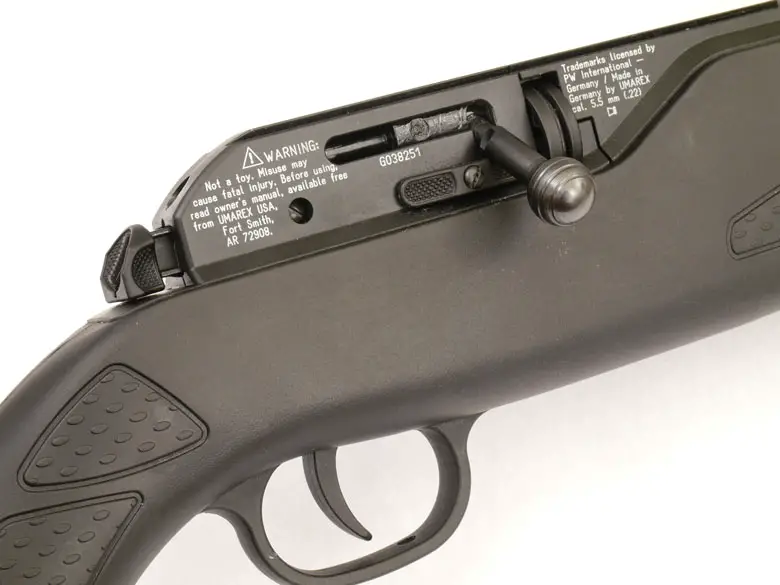
On the other hand, the location of the auction might be convenient to you, as well as the potential to offload multiple pelts in one go. So if there’s an auction near you, it might be worth your time and the commission to go there. Instead of trying to find the buyers, the auction brings the buyers to you. Most times this is worth the extra costs of commission.

If you don’t want to lose costs at an auction, then you might be better off with local buyers. (Source)

Etsy and eBay

Another way to sell your pelts is by looking online and finding a demand there. Searching on Etsy can show you whether there are people interested in pelts or parts of pelts for certain projects they have. These crafters will be less picky about the quality and color of your pelt as long as they can make it work for their project.

eBay also has a big market for pelts, and instead of having to find someone who will offer you a price you like, they’ll sell to the highest bidder. However, you might find a bigger market here for finished products rather than pelts themselves. (Source)
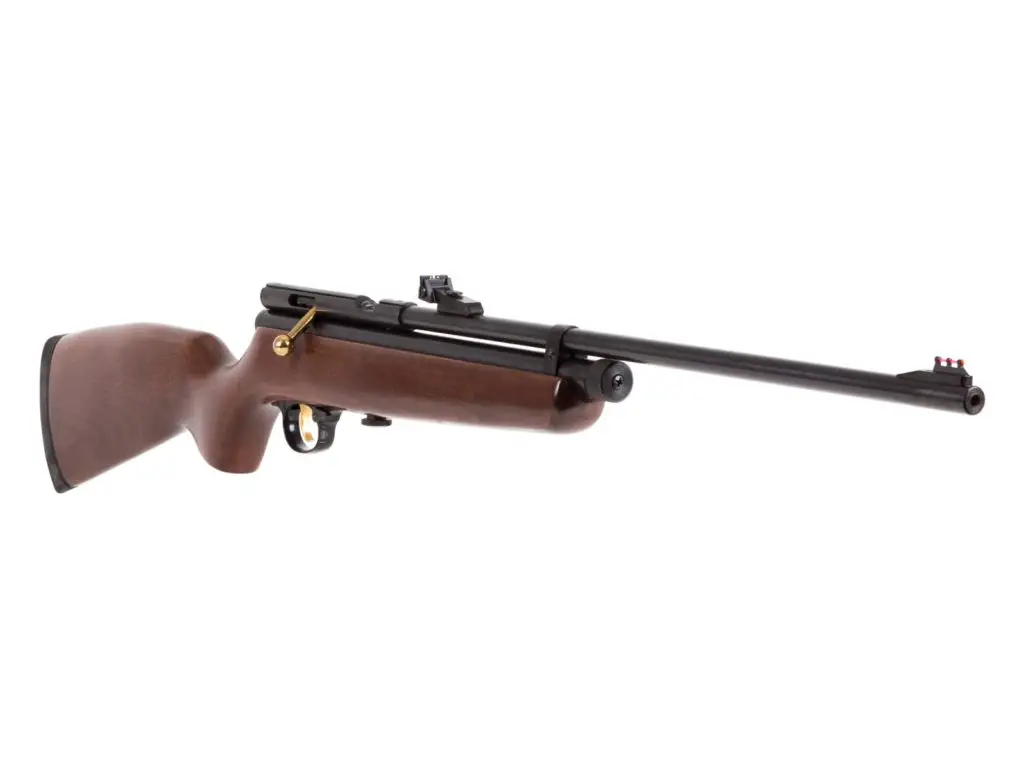
Additionally, buyers may come to eBay looking to buy in bulk for their businesses. A reseller may also buy the pelts in bulk from you to make a profit. Selling in bulk may bring in less than otherwise, but it could be a convenience to get all of your pelts sold in one go. If it is the end of the selling season and you’ve had no luck, eBay may be your solution to still making money off of your product.

When to Harvest for the Best Prices

It’s best to hunt the coyotes during harvest season. This leaves them at their best state, right before they could get mange. Mange is when a mite plants itself into the coyote’s skin. It itches so much that it causes the animal to scratch all of its furs off. If they scratch all of their hair off, the pelt will be useless. (Source) It’s important to harvest the coyotes before mange happens. You will be saving them because they will be unprotected from winter without their fur. This keeps nature in balance.
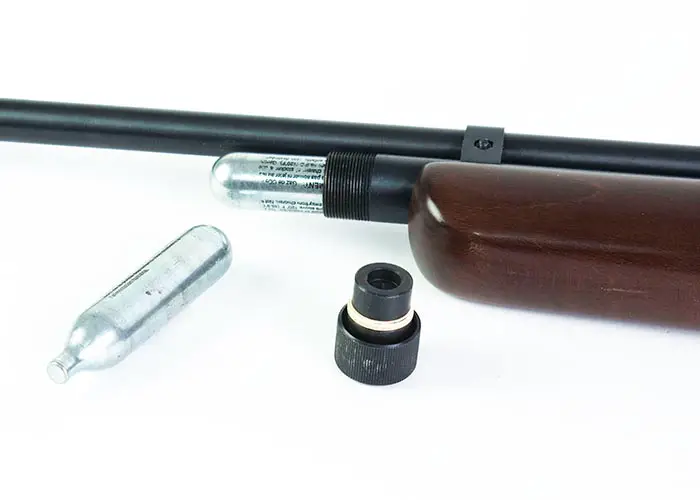
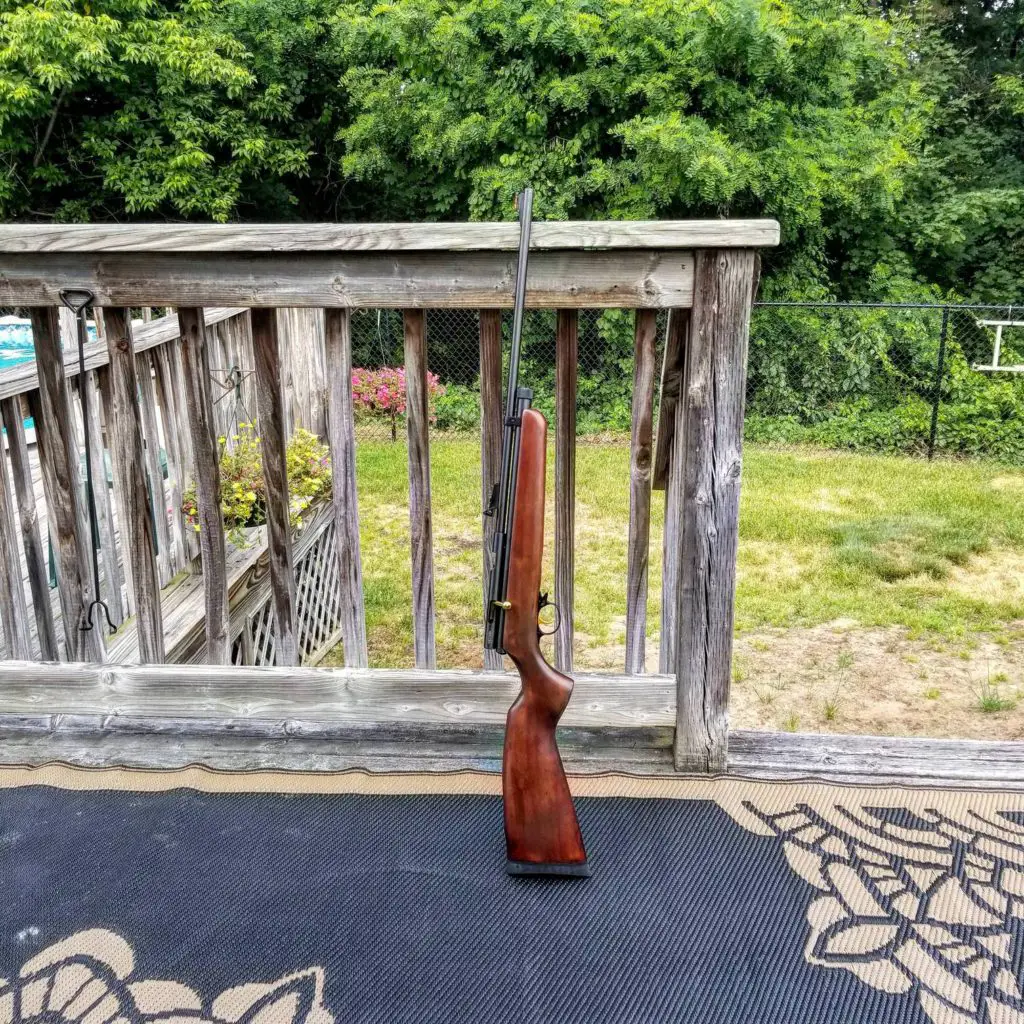
Coyotes are healthiest when legally harvested. Legally coyotes can be hunted year-round, but most hunters like to get them in the winter months at the beginning of the year. The primeness, or the thickness of the coat, depends on the time and season of when you capture them. Winter months would be the best time of year to harvest them for primeness because they have their nice thick winter coat developed. (Source)

Coyotes are best hunted during winter for the prime thickness of the coat. Primeness is a big factor in how the pelt is priced. Other factors that determine the price of the pelt include color, location of where it was harvested, its size, and the current fashion trends.

When selling your pelts, whether it is online or in-person, these factors are very important. As you can see, there are so many places to sell coyote pelts. You never have to worry about losing profit. Coyote pelts can be worth plenty as long as you market them correctly.

Best CO2 air rifles 2025 – Top 5 fantastic guns for the money (Reviews and Buying Guide)

0

For any shooter, the best air rifle is that which fulfills their personal core requirements like accuracy, power, and affordability.

There are plenty of air rifles on the market, so many in fact that you might get confused and even buy the wrong one due to the lack of proper guidance on the rifle.

However, there are gun experts who know the worth of buying an air rifle.

The demand of every person is different as some cannot deal with a heavy rifle,

Some dislike noise, some prioritize accuracy and power, people have different budgets, and of course, there are different tastes in style.

If you are searching for the best CO2 air rifle, here are the best choices for you.

From your wish to enjoy yourself on weekends in your backyard by target shooting or your wish to go small game hunting or even pest control, you will have options to choose from.

So sit tight as we take you through our list of best CO2 air rifles in 2025 at pocket-friendly rates.

Top 5 Best-Rated CO2 Air Rifles On The Market

If you are in a hurry, here is an overview of the highlight candidates in our list of best CO2 air rifles 2025:

IMAGEPRODUCTDETAILSLINK
Best Overall
Crosman 1077
  • Calibers: .177
  • Max Velocity: 625 FPS
  • Max Muzzle Energy: 15 FPE

check price on Pyramydair


check price on airgundepot

Top Pick
Winchester M14 CO2
  • Calibers:  .177
  • Max Velocity: 560 FPS
  • Max Muzzle Energy: 4 FPE

check price on Pyramydair


check price on airgundepot

Top Pick
Hammerli 850
  • Calibers:  .22
  • Max Velocity: 650 FPS
  • Max Muzzle Energy: 18 FPE

check price on Pyramydair


check price on airgundepot

Top Pick
Beeman QB78
  • Calibers:  .177, .22
  • Max Velocity: 650 FPS
  • Max Muzzle Energy: 11 FPE

check price on Pyramydair


check price on airgundepot

Top Pick
Crosman DPMS
  • Calibers: .177
  • Max Velocity: 430 FPS
  • Max Muzzle Energy: 9 FPE

check price on Pyramydair


check price on airgundepot

1. Crosman 1077

The Crosman 1077 is a 12-gram CO2 air rifle that has been in continuous manufacture since 1994.

Of course, it is incredible to know that with just a few changes over 20 years in production, the company has been delivering the best models for the Crosman 1077 CO2 air rifle.

In recent years, the Crosman 1077 has become more popular in big box sporting goods stores.

The Crosman 1077 is available for $145.

It is a fun air rifle to shoot, with its 12 shot clip and rapid-fire capability .

This is an outstanding plinker, but this is the only purpose of this air rifle.

There is not enough power for hunting any birds or animals.

For its combination of quality, usability, value, and performance, the Crosman 1077 air rifle receives a HAM silver award.

The air rifle is easy to shoot, simple and light in use.

Crosman 1077 air rifle

Specifications

  • Model number 1077
  • Lead pellet velocity is up to 625 fps
  • Weight is 3.69 lbs.
  • Length is 36.88 inches
  • The power source is CO2 power let
  • .177 caliber
  • Ammunition pellets
  • 12 shot clip capacity
  • Rifled steel barrel
  • Cross-bolt safety
  • Black in color
crossman 1077 review

Speed And Accuracy

Following is the table to show the speed and accuracy of the Crosman 1077 CO2 air rifle.

PelletMuzzle velocity-AverageMuzzle energy- AverageAccuracy
Gamo Raptor Platinum 9.7 Grain558.61 FPS3.25 Ft/Lbs.Good
H&N Field target trophy grain 10.03548.13 FPS3.70 Ft/Lbs.Good
RWS Hobby 11.9 grain579.24 FPS5.21 Ft/Lbs.Very Good
Crossman Premier HP 14.3 Grain529.82 FPS4.92 Ft/Lbs.Very Good
JSB Jumbo exact 14.35 grain531.25 FPS5.28 Ft/Lbs.Poor
H&N Field target trophy 14.66 grain486.89 FPS4.54 Ft/Lbs.Poor
H&N Baracuda match 21.14 grain418.03 FPS4.13 Ft/Lbs.Excellent best tested

The accuracy of the Crosman 1077 CO2 air rifle was good, with 5 of the seven standard HAM test pellets.

As expected, precision with the Crossman premier hollow point pellets was good.

=> Read our Crosman 1077 semi-automatic CO2 air rifle review here.

Noise

The Crosman 1077 CO2 air rifle is not powerful, therefore it is not loud.

There is no silencer, but one isn’t at all necessary.

It is a “backyard friendly” air rifle.

Therefore, you can have fun with the family at weekends or in the evening without any risk of disturbing the neighbors.

Appearance

The Crosman 1077 looks very much like a Ruger 10/22 firearm.

The design of the Crosman air rifle is traditional, with black synthetic stock .

There is bluing on the barrel. Honestly, the barrel shroud executes and matches the plastic parts well.

Crosman 1077 CO2_CR1077 specification

Trigger

The Crossman 1077 does not have semi-automatic action.

In reality, it is a double-action revolver.

Price

The Crosman 1077 is available on the market at the lowest possible cost of $96.

It fulfills the need of those who are in love with the use of an air rifle but cannot afford the expensive guns.

Customer Reviews

Most customers have given a positive response after using the air rifle Crosman 1077 CO2.

Shooters find it precise and steadfast, light and quiet.

2. Winchester M14 CO2 Air Rifle

Winchester M14 Co2 Rifle

During the ’60s and ’70s, the Winchester M14 CO2 air rifle is was seen as a tribute to U.S military veterans.

The most potent Winchester M14 pellet bb gun is a semi-automatic that can shoot both steel bbs and .177 caliber pellets.

The Winchester model M14 semi-automatic CO2 air rifle has two cartridges of 12g CO2.

The cartridges are stored in the lower clip, so you can easily access them for reloading.

There are 8 round magazines on each end which allows you to have 16 rounds before reloading.

Under supervision, young shooters can quickly learn and hone their abilities, and they would love it.

It is light in weight, and the whole family can handle it quite easily .

The Winchester M14 semi-automatic CO2 air rifle is your choice if you are not just looking for a target shooting weapon, but to experience a rifle that resembles the military rifle.

Specifications

  • Semi-automatic air rifle
  • Manual safety guide
  • The front side is fixed
  • Adjustable sight
  • Synthetic stock
  • Sling swivels
  • Steel barrel
  • 12g CO2 cartridge
  • .177 caliber
  • Manufacturer is Winchester
  • 700 fps velocity
  • Ammo type is Pellet & BBs
  • Gun weight is 2.9 lbs.
  • Length is 44.5
  • Barrel length 21
  • Loudness is four medium-high
  • Magazine capacity 16
  • Warranty is 30 days limited

Accuracy, Reliability, and Speed

Below is the table to have an idea regarding the accuracy and speed of the air rifle.

Rifle Pallet Average Muzzle VelocityAverage Muzzle EnergyResult/Accuracy
Gamo Raptor Platinum 4.7 Grain549.8 fps3.13 ft/lbsPOOR
H & N Field Target Trophy Green 5.56 grain510.5 fps3.22 ft/lbsPOOR
RWS Hobby 7 grains447.7 fps3.12 ft/lbsPOOR
Crosman Premier HP 7.90 Grain439.1 fps3.38 ft/lbsPOOR
JSB Exact Diabolo 8.44 Grain417.4 fps3.27 ft/lbsPOOR.
BEST TESTED
H & N Field Target trophy 8.64 grain396.2 fps3.01ft/lbsPOOR
H & N barracuda match 10.65 grain354.8 fps2.98ft/lbsPOOR

In the above table, you can see that the highest muzzle velocity is achieved with Gamo Raptor Target Trophy green 5.56 grain, which is 549.8fps.

This speed is accomplished at 61 Fahrenheit.

The highest muzzle velocity can be found at 95 Fahrenheit at the value of 620 fps.
After the HAM test, I can say that the accuracy is not as expected.

It was correct at 10 yards but no more than that.

All the targets were vertically displayed, maybe due to the reason for falling muzzle velocity during the shot strings.

Remember that if you choose to shoot at a high temperature, then you may have reduced stringing because the cooling effect of each shot would be less.

Winchester M14 Co2 Air Rifle

Noise

The Winchester CO2 M14 does not come with a silencer.

However, you can judge the noise level from shooting this gun, which is moderate because of the lower muzzle velocity.

If you have neighbors then the Winchester M14 is still quite suitable.

DY Winchester M14 Co2 Rifle REVIEW

Appearance

The Winchester M14 pellet bb gun is designed in the exact same style as the real firearm.

Price

$70 is the price you will pay to buy the Winchester M14 semi-automatic CO2 air rifle.

Given the features mentioned above, this is a very low price.

For those people who have an army background or have done any military-style training, this rifle is of great appeal given its likeness to the real thing.

Customers Reviews

Naturally, most reviews focus on the price.

That it costs so little actually makes the Winchester M14 CO2 air rifle a popular gift for others.

The reviews detail how it is easy to handle above all else.

3. Hammerli 850

Hammerli 850 AirMagnum Air Rifle Review

The high powered Hammerli 850 CO2 air rifle, by German manufacturer Umarex,

Introduced the world to the first mass-produced, affordable, and full-power 12 ft/lbCO2 hunting rifle — the Hammerli 850 Air Magnum.

Liquid gas powers the Hammerli 850 airMagnum, which is built with synthetic material, is light in weight and economical.

The Hammerli 850 airMagnum has been marketed as a solution for those who want a firearm, but cannot afford or own the real deal.

The Hammerli 850 AirMagnum is famous for small game hunting and pest control.

It comes with a smooth blacked-steel cocking and a generous bolt.

It has just about everything you could hope for in a CO2 repeater!

The Hammerli 850 air rifle not only looks like a firearm, but it works like one in terms of accuracy.

All told, it gives users the feeling of firing a real gun without actually doing so.

Specifications

  • The manufacturer is Umarex USA (old name Hammerli)
  • .22 caliber in Hammerli 850 airMagnumxt kit
  • The Umarex HammerliairMagnum 850 xt has the 650 fps velocity
  • Ammo type is pellets
  • The Hammerli 850 CO2 is Bolt-action
  • Barrel style is rifled
  • Firing mode is a repeater
  • Weight of rifle is 5.65 lbs.
  • Noise is 3-medium
  • CO2 mechanism
  • Automatic safety
  • Fiber option for the rear sight
  • Trigger pull is 3 in Hammerli 850 airMagnum accessories
  • Target shooting/ Small game hunting/ backyard shooting/ plinking
  • 1-year warranty
  • Testers were Doug wall
  • Model number 2251001
  • Serial number G038251
  • Price $250 – 280
  • 200 – 250 shots per cartridge
  • Quick firing 8-shot rotary magazine
  • Monte Carlo stock
  • 2 stage adjustable trigger in Hammerli 850 hPa in Hammerli 850 accessories
  • Product dimensions 12 * 45.1 * 4.2 inches

Accuracy And Speed

The speed of the Hammerli 850 CO2 air rifle can never be compared with the real thing as it does not fulfill the need for the smallest number of shots per fill.

Here is the breakdown of performance for the accuracy and speed of the Hammerli 850 CO2 air rifle.

PelletMuzzle Velocity calculated at 67F-AverageMuzzle Velocity calculated at 75 F-AverageMuzzle Velocity calculated at 90F- Average
Gamo Raptor Platinum 9.7 Grain674 fps690 fps720 fps
H & N field target trophy green 14.66 grain668 fps684 fps714 fps
RWS hobby 11.9 grain640 fps656 fps686 fps
Crosman premier HP 14.3 grain606 fps622 fps652 fps
JSB Jumbo exact 14.35 grain610 fps626 fps656 fps
H&N field target trophy 14.66 grain609 fps625 fps655 fps
H&N barracuda match 21.14 grain519 fps535 fps565 fps

The table mentioned above clearly shows an increased muzzle velocity with an increase in temperature.

But there is a limit on the rise, it cannot be said that it would progress ad infinitum.

At around 95 degrees Fahrenheit, there is an enhanced pressure in the “Valve lock”, which makes the muzzle velocity fall rapidly.

Therefore, it is right to say that around 90 degrees Fahrenheit is the high shooting temperature for CO2-powered air rifles.

The Rateagun score is just 4.1, which is a fantastic score.

hammerli 850 air rifle

Stock

The Hammerli 850 air rifle stock is synthetic, making it a great all-weather air rifle.

Noise

No doubt, it makes a bang!

Appearance

The Hammerli 850 AirMagnum combo comes within the forearm, and of course, it is removable.

The CO2 cylinder is well concealed inside, which makes it more appealing-looking.

The finish of the Hammerli 850 airMagnum air rifle is very impressive because of the well-finished metal part and the well-molded black ambidextrous synthetic stock.

read review here

Price

The price of Hammerli 850 AirMagnum in the market is $250-$280.

At such a low price, all the tests conducted by the HAM team are very satisfactory even after winning a bronze medal, I would recommend you to buy the rifle as it passes the major tests with good marks.

Customers Reviews

Customers like it for its exceptional accuracy, easy loading, and changing of the magazine.

Moreover, the very smooth trigger pull is also appreciated.

The safety is also well received.

It’s safe to use and this, of course, makes shooting a more enjoyable experience.

It does not leak CO2 even at a lower temperature or pressure.

Rick Eutsler, the owner of AirGun Web, confessed he’s a fan of the Hammerli 850 Air Magnum for many years:

4. Beeman QB78 CO2 Air Rifle

hammerli 850 air rifle

The Beeman QB78 CO2 air rifle is the best option for those who are searching for a classical look, exceptional accuracy, and affordability.

If you are looking for an air rifle at the lowest possible price yet coming with great features and benefits

The Beeman QB78 and Beeman QB78 deluxe are the best options for you to choose from, whether you’re sport shooting or messing around in the backyard.

The CO2 Bolt action rifles of the QB series have become the first choice in the world of air gunning.

Accuracy, Velocity, And Trajectory

The best accuracy is achieved from 10 meters at 20 inches.

For those who are shooting in their backyard, participating in any sport, or wishing to buy a gun for a child, the Beeman QB78 is the perfect plinker.

While testing the accuracy, we elected to use .177 caliber rounds.

Additionally, the trigger is on the spongy side, with clean engagement and a light break making it good for shooting quickly.

While compared to other low-cost rifles, the Beeman QB78 Deluxe is a perfect choice.

In this table we can see the Beeman QB78 Deluxe 0.22 caliber trajectory, using a fiber optic sight, Crosman Premier HP 14.3gr pellets, and with a sight elevation above the bore of 0.75 inches.

Range (yds)Trajectory (in)Velocity (fps)Energy (ft.bls)
504947.7
70.24877.5
100.44787.2
130.454687
170.34566.6
2004476.4
23-0.44386.1
25-0.84336

The gun fires round very flatly out to 20 yards, after which there is a drop-off.

For testing hunting capability, we used the Beeman QB78 Deluxe 0.22 caliber, and it was capable of penetrating at 21 yards.

=> Read Beeman QB78 review here

Therefore, it left no doubt that it is capable of killing the birds within 20 yards.

beeman qb78 deluxe air rifle

Barrel Length

The length of the barrel of the Beeman QB78 air rifle is 21.5 inches.

Noise

The rifle is quite loud at 2 low-medium.

Trigger

The Beeman QB78 Deluxe air rifle is available with a two-stage trigger as an upgrade.

The trigger is smooth, and quite easy to handle since the total weight of the gun is around 6.5 pounds.

Price

The price of the Beeman QB78 air rifle is $99.

Customers Reviews

Customer reviews are largely positive, but at only $99 dollars it’s hard to complain about the subpar quality.

80% of people were very much satisfied with the product, due in large part to its unbeatable price.

The Beeman QB78 standard and deluxe both come with quality features and benefits.

Moreover, the lightweight is appreciated by most.

Keeping your pocket light, the Beeman QB78 offers a great experience all the same!

5. Crosman DPMS

The Crosman DPMS is a short barrel rifle andCO2 facsimile of an AR-15/M4 platform that shoots 25 BBs in either fully or semi-automatic mode at 1400 rounds/minute.

If you are searching for an AR-15 replica for your training purposes or just to have fun, then the Crosman DPMS is the perfect powerful CO2 air rifle for you.

The Crosman DPMS gives you the feel of an authentic firearm.

You can really feel the full blowback with this one.

The DPMS SBR measures 26.5” & weighs in at 6.5 lbs with the stock collapsed, and with the stock fully extended it measures 30.5”.

The Crosman DPMS has a body made of a premium polymer that looks and feels great.

Crosman DPMS

Specifications

  • .177” caliber
  • Maximum velocity is 430 fps
  • Loudness is 3-medium
  • The overall length is 30.4.”
  • The shot capacity is 30
  • Smoothbore barrel
  • Flip-up front sight
  • Adjustable for windage rear sight
  • Weaver scope able mounts
  • Adjustable butt plate
  • Suggested for plinking and shooting fun
  • Manual safety
  • CO2 power plant
  • Repeater in function
  • Blowback
  • Rifle in body
  • Adjustment power is fixed
  • Weight is 6.5 lbs.
  • Stock is synthetic
  • Ambi grip
  • Black in color

Performance And Accuracy

Crosman DPMS SBR FullAuto

The Crosman DPMS allows you to experience high accuracy and fun at the same time.

Ammo testedGrainShot HIShot AvgEnergy
Crosmancopperheated BBs5.1 gr420 fps403 fps1.84 ft-lbs
Hornady black diamond BBs5.1 gr419 fps395 fps1.77 ft-lbs
Air venture dust devil BBs4.35 gr442 fps426 fps1.75 ft-lbs
H&N smart shot BBs7.4 gr339 fps329 fps1.78 ft-lbs

Noise

On semi-auto, it is not a particularly loud gun, reading 88.5 decibels. This makes it absolutely fine for backyard use.

Trigger

The trigger pull is not light, averaging 10 lbs 7 Oz, which is a speck heavier than typical AR/M4 triggers, which tend to run from 5.5-8.5 lbs.

Crossman DPMS grips

Loading the CO2

To stack the CO2, lift the front cover off by popping it up.

Insert the initial CO2 cartridge on the left side and utilize the integrated Alien wrench to penetrate it.

If you are not shooting much, then stop here with your CO2 cartridge.

Note that this should be finished in this order or the right cartridge will discharge all of the CO2 at once.

To reduce the loss, warm up the piercing bolt by giving it a quick twist to pierce and seal it completely.

Price

The market price of the Crosman DPMS is about 200 dollars, which is reasonable – neither cheap nor expensive.

It’s a good value though, for the amount of fun you will have with it.

Customer Reviews

The majority of the customers have been satisfied with the air rifle, as it’s been designed and manufactured for simply having fun in the backyard and scaring off pests.

Moreover, the look of the air rifle has been well received.

This air rifle does not feel cheap in your hands – it’s quite tight and robust to touch.

Overall, customers find that the Crosman DPMS is of high quality.

Related Resources:

Best Air Rifle Deals

Popular Posts

Air gun 101: The differences between .177 & .22 – Which jobs they do...

0
I’ve always believed the popular phrase: “It’s not the size of the dog in the fight that matters - but rather the size of the...

PCP vs CO2 Guns: Which One is Better?

0
The most talked-about debate between hunters and gun enthusiasts is what the best power source of a gun is.  The five main sources of power...

How to make a break barrel air rifle more powerful

0
"Unleash the Power: Mastering Break Barrel Air Rifles for Maximum Performance. Discover expert tips and techniques to enhance the power and precision of your...