There are big bull elk. Then there are really big, world-record-class bull elk. The Pope and Young Club awards North America’s finest archery-killed wapiti by size in two categories: typical or symmetrical antlers and non-typical or unsymmetrical horns. The minimum score for a typical elk to qualify for the club is 260 inches.
Arizona claims seven of the top 10 Pope and Young typical world record bull elk records. Six of the seven largest archery-killed elk in the world were taken in Coconino County alone. Other P&Y records, including non-typicals, have come out of Greenlee, Navajo, and Graham Counties.
Coconino County accounts for approximately 20% of Arizona’s hunting opportunities. It’s the largest county in the state, with some 95% of the acreage open to the public as United States Forest Service land.
Why are there so many P&Y archery records from that area? First, Arizona has a warm climate, excellent habitat, tightly managed hunting, and a Goldilocks elk population: not too big or too small.
Second, the hunting seasons favor archery, big time. Early archery season covers most of the rut in Arizona, October is closed completely, and then late archery opens in November for another two weeks. Other western states like Montana, Idaho, New Mexico, and Colorado follow the same archery-preferred early seasons.
Third, getting drawn for an Arizona elk tag is about as likely as marrying for love then later finding out there’s money, too.
Let’s take a look at the top five typical archery killed world record American bull elk:
Related: So you Want to Shoot an Archery World Record?
Score: 404”Location: Coconino County, ArizonaDate Taken: 9/15/1992Hunter: William Wright
Think back to 1992, when we striped our faces with black, brown, and green greasepaint, shot long arrows with Wasp Cam-Lok broadheads, and wore Treebark camo and boonie hats. That was the feel of bowhunting the year William Wright shot this impressive bull in Coconino County, Arizona.
Wright’s 404-inch bull is one of six record-setting archery bulls in the top 10 from that county. There’s no information on the story behind his elk — we just know it was the No. 1 bull in the world for eight years until Chuck Adams dropped a giant in Rosebud County, Montana.
Related: Speaking Elk: The 3 Elk Calls You Need to Hunt and Kill Big Bulls
No. 4 – The Chuck Adams Bull
Score: 409 2/8”Location: Rosebud County, MontanaDate Taken: 9/16/2000Hunter: Chuck Adams
With 200 Pope & Young record-class animals to his name, Chuck Adams is a bowhunting legend for good reason. Adams was the first to kill every North American P&Y big game species with a bow and arrow. The feat became known as the Super Slam, a term Adams coined after filling all 27 tags.
In 200, Adams was shooting Easton Full Metal Jacket arrows with a Hoyt bow when he arrowed his 409 2/8-inch bull in Rosebud County, Montana; and his legend went to another level. After unseating the Wright Bull, Adams’ bull held the No. 1 spot in the record books for six years. This special animal was also the 200th elk of his career.
Related: How to Speak Elk, Lesson 2: Understanding Every Funky Sound
No. 3 – The Jed Reidhead Bull
Score: 410 6/8”Location: Greenlee County, ArizonaDate Taken: 9/3/2013Hunter: Jed Reidhead
Jed Reidhead sits in the No. 3 spot in the record books with his 410 6/8-inch bull, killed in 2013. Reidhead connected with this bruiser in Greenlee County, Arizona. Located southeast of Coconino County and separated by Navajo and Apache Counties, Greenlee is a game-rich area with antelope, black bear, Merriam’s turkey, mountain lion, mule deer, bison, whitetail deer, and waterfowl. Days after notching his tag, Reidhead helped put a friend on a 370-class bull.
Related: Bowhunting Elk: 7 Last-Minute Efforts the Can Improve Your Chances
No. 2 – The Shaun Patterson Bull
Score: 412 1/8”Location: Coconino County, ArizonaDate Taken: 9/16/2005Hunter: Shaun Patterson
Another Coconino County bruiser erased Chuck Adams’ record in 2005 when Shaun Patterson, former Arizona State University and Green Bay Packers defensive lineman, shot this massive 8 x 8 typical bull. It was almost a record that didn’t happen.
Patterson said in an interview that he and his guides crawled to within 100 yards of this giant and started bugling. As the bull made his way toward them, a raghorn came out of the trees at 10 yards and busted them. Every elk vacated the premises. Relocating the bull and stalking back into range this time, Patterson made a solid shot, and the bull went down within 100 yards of where he was arrowed. The impressive animal taped out at 412 1/8 inches and earned Pope and Young glory. Today, this previous world record stands at No. 2.
Related: Elk Hunting on Public Land: How to Build a 3-Year Strategy for a New Area
No. 1 – The Steve Felix Bull
Score: 430 0/8″Location: Powder River, MontanaDate Taken: 9/10/2016Hunter: Stephan Felix
On a beautiful Montana morning in September 2016, 100 yards stood between Steve Felix and a jaw-dropping bull. The gold standard of elk — the pinnacle of the world’s finest typical archery bulls — took his sweet time bugling and feeding his way down a basin toward Felix. With a skinny, ragged-out tree marking the outside of his range, Felix waited an eternity before the giant finally followed a 310-class bull into Felix’s reach.
A well-placed 60-yard shot just behind the shoulder of this massive 430 0/8” bull (official score) was all it took. After a half-hour wait, he found the elk not far from where he’d shot it, and the rest is world-record elk history.
Shotguns deliver a solid bang! for your buck and are one of the most popular home defense choices today. Shotguns are simple, affordable, and typically extremely reliable. While there are many different types, the classic pump-action is likely the one that comes to mind most often when people hear the word shotgun. The Winchester SXP Defender was often recommended to me over the years. When an opportunity to pick up an SXP came along, I eagerly opened my wallet.
Unboxing the SXP when I got home was a quick process and revealed basic packaging. It came in a branded Winchester cardboard box with a Styrofoam insert to hold the shotgun in place. Aside from the shotgun, there was a lock, manual and plug in case you need to limit your capacity for hunting.
Everything was secured nicely in its own cut out within the Styrofoam that kept it safe in transit. I would’ve liked to see a basic soft case to be included — as a minimum — but it was not a deal breaker.
Winchester SXP Features
“The SXP is exactly what I was looking for and nothing more.” That was the thought that crossed my mind when after unboxing the SPX, shooting it, and reflecting on the experience. I wanted something relatively lightweight, with a shorter barrel for home defense purposes, a total capacity of at least six shells, and the availability of plenty of aftermarket accessories. Check, check, check, and… check.
The chamber and bore are both hard chrome-plated to reduce wear and corrosion. The SPX comes standard with a fixed cylinder choke. For those of you who prefer to run a scope or red dot on your shotgun, the alloy receiver is drilled and tapped to easily add your scope bases. The Winchester SPX features a standard brass bead front sight, drop-out trigger group, and crossbolt safety placed at the front of the trigger guard for easy access.
Specifications
Gauge: 12Capacity: 5+1Action: Pump Overall Length: 38 ½ inchesSights: Bead Front SightChamber: 3 inches (accepts 3-inch and 2 ¾-inch shells)Magazine Type: TubularBarrel Length: 18 inchesWeight: 6 pounds, 8 ounces
Range Thoughts: Handling and Reliability
One of the most enjoyable aspects about this gun was the smoothness of the action. Since it’s inertia-assisted, follow-up shots were quick and simple.
The texture on the stock and ribbing on the forearm were just enough to assist with a secure grip if your hands got wet, without being gritty and uncomfortable. The recoil pad was sufficient, but I would’ve appreciated a little bit more recoil absorption.
Short shooting sessions would not have been an issue, but for testing, I put a lot of rounds through it. With that being said, for hunting scenarios or normal shotgun range time , I think it would be more than adequate.
From a reliability standpoint, I had very few issues. Over the last four range trips, I put a total of 250 rounds downrange at both indoor and outdoor ranges, with temperatures down to the single digits. Out of the 250 rounds used for the test, 100 were various buckshot rounds, 100 were various birdshot rounds, and 50 were slugs.
I wound up experiencing two failures, both of which were failures to eject and near the tail end of the 250. Perhaps it was operator error. I can not say for sure whether I short-stroked the gun, so I hate to blame the gun.
The accuracy was as expected from an 18-inch 12 gauge. For my original accuracy test, I chose to use #4 buckshot, from 15 to 75 feet at 15-foot intervals. Of course, the groupings spaced out after 30 feet as expected. For the most part, within 45 feet, the “intruder” would be getting hit with most, if not all, of the pellets.
Winchester SXP: Final Thoughts
The Winchester SXP Defender is a solid, entry-level 12 gauge shotgun with plenty of after-market accessories to take it to the next level. Given its combination of reliability and affordability, I would recommend at least checking it out, if you are in the market for a new shotgun. I’ve been having a blast, pun intended, shooting the SXP and think you will too.
Have you had the chance to shoot the Winchester SXP Defender? Share your review and experiences in the comment section.
Bio: Ryan Domke is a freelance writer, photographer, and social media consultant with a passion for guns and tactical gear. He works with some of the largest manufacturers in the firearms industry, allowing him the opportunity to continuously learn from and knowledge share with the 2A community.
When he’s not spending time with his family, you’ll likely find him at the range or starting a new DIY project. If you’d like to check out some of his other content, you can find him on Instagram at (@TheGuyGearReview).
A rifle scope’s reticle is placed in either the first focal plane (FFP) or the second focal plane (SFP). The main difference between the two options is how the reticle behaves when adjusting the scope’s magnification. A FFP rifle scope has a variable size reticle, while a SFP rifle scope will have a static reticle at all magnifications. There are advantages and disadvantages to either option.
First Focal Plane
First focal plane rifle scopes are commonly preferred by long range target shooters. When adjusting magnification on a FFP rifle scope, the reticle your eye sees will change in size, becoming increasingly larger as magnification increases. What this means is; your units of measure per each hash mark, MOA or Mil, represent the same value regardless of the current magnification setting.
Example: a rifle scope with hash marks representing .25 MOA across the horizontal line will represent .25 MOA at all magnification levels.
First focal plane rifle scopes are starting to gain popularity with hunters who find themselves shooting their intended targets at longer distances. Knowing the hash marks represent the same value in all scenarios is an advantage in terms of speed. Speed, however, comes at a cost; the differing sizing of the reticle may be too large at certain distances coupled with magnification and can make shot placement trickier and inversely it’s also possible for the reticle to be too small. Luckily, in those scenarios, an illuminated reticle may relieve some of that pain.
Second Focal Plane
Second focal plane has been a commonly used reticle position by hunters for years. SFP is how most people expect a rifle scope’s reticle to behave, rightly so, we’ve all generally grew up looking through these scopes. The reticle stays the same size at all magnification levels which makes it easier to see at all ranges but comes at a price.
Considering the reticle isn’t variable in size, that means the hash marks on the reticle are variable in what they represent. Almost all rifle scopes default to the hashes being truly represented a full magnification, although it would be wise to double-check.
Example: Leupold’s Mark 5 HD 3.6-18×44 a second focal plane rifle scope with a magnification range of 3.6-18x, has hash marks representing 1 MOA. This is only true at its full magnification, 18x.
When the rifle scope is not at full magnification, the hash marks represent different values relative to the magnification. For example, in the above Mark 5 HD, full magnification represents 1 MOA. At half of that magnification, 7.2x, the hash marks represent double the default value; 2 MOA.
This poses an added challenge to taking a shot when you factor in having to do a bit of mental math when using hold-over hash marks.
Which one is right for me?
So, how do you choose the right rifle scope? In reality, it all comes down to preference and what style of hunting you’re finding yourself in more often. First focal plane rifle scopes are advantageous when shooting long distance where quick follow-up shots using hold-over are more likely. They are disadvantageous when you find yourself in closer ranges in dark timer considering it’s very easy to lose the smaller and thinner reticle lines against dark backgrounds.
Second focal plane rifle scopes are useful for visibility throughout all magnification ranges and when paired with a ballistics turret allow you to center punch regardless of the magnification.
If you’re having trouble pulling the trigger on a first focal plane or second focal plane rifle scope, our team at the Outdoorsmans is dedicated to finding the perfect match for you. We’ll take the time to consider your budget, hunting style, and the terrain you commonly find yourself, and we’ll marry you with a rifle scope you’ll be proud to own. Email us at [email protected] or call us at 1-800-291-8065 to get started!
A detailed review and performance comparison of Sage Salt R8, Scott Sector, G.Loomis Asquith and NRX+ fly rods
Saltwater fly rod review model-by-model comparison
This much-anticipated and perhaps overdue head-to-head review was spurred by the introduction of the Sage Salt R8. We compare saltwater rods every day in conversations with customers, but with the Salt R8 introduction, we felt the time was right to put these four series under the microscope. Each represents the leading edge of unique rod design legacies and all will be among the very best available to global saltwater anglers for many years to come.
As of this writing, these are the rods that drive the debate. We recommend and sell plenty of Winston Air Salt and Sage Igniters, as well as the underrated Winston Alpha+, but all of those are fundamentally unique and less often compared directly with the Salt R8, Sector, Asquith and NRX+. Every Igniter is stiffer, or “faster,” than any rod in this review. Every Winston, whether an Air Salt or Alpha+, is less stiff, or “slower” than any of these rods. One and all fine fly rods, they represent the extremes of preference and purpose and are thus excluded from this comparison.
Our goal in this article is to differentiate similar models to help anglers choose the rod best aligned with their fishing preferences and casting style. We cast each rod group side-by-side with two fly lines to distinguish the nuances of casting range, feel, line speed, accuracy, power and presentation. Occasionally we landed on a universal favorite, a rod we all preferred regardless of line choice. More broadly, however, the range of our observations and preferences likely reflects the diversity of our customers. All of these rods will catch fish, but each has distinct character, so choose a rod that quickens your heartrate when you reach for it!
Alternative configurations: Scott Sector 8’4″ and 2-piece models are fantastic fly rods. If your rod will live on a boat, strongly consider one of the 8’10” 2-piece Sectors. The convenience of a 2-piece rod is undeniable for the local angler. Scott’s 8’4″ Sectors fly way under the radar, too, and while not described in this article, we implore anglers to consider one on merit of lightness, casting ease and accuracy. Unfairly categorized as “boat rods,” we find the 8’4″ Sectors to be lethal fishing tools and a pleasure to cast whether on foot or afloat. Some misconceive that a shorter rod is somehow weaker. They are actually stronger fish fighters because the lever between hand and fish is shorter.
At the end of the day, most anglers prefer a 9′ 4-piece saltwater fly rod. In our opinion, the Asquith, Salt R8, Sector and NRX+ are the most compelling choices. So, let’s get on with it. Which one will make your heart race?
This article was written by John Duncan with input on every rod model from Fly Shop Manager Parker Thompson and Richard Post, our Buyer and all-around fly fishing assassin.
Sage Salt R8
Introduced in January 2024, the Salt R8 brought Sage’s saltwater fly rods back to the everyday angler. They are a joy to fish: light, explosive, intuitive and accurate. Components are second to none. The grips are smallest in class, a gracefully contoured full Wells that lacks nothing for purchase or leverage but seems to fit the hand of every angler just a little better. The Salt R8 are legacy defining rods, taking us back to the day when Sage was the first and last word in saltwater fly rod design.
Defining characteristics: lightness, easy power, high line speed and great loops with popular saltwater lines
G.Loomis Asquith
Years after its introduction (2016), the Loomis Asquith continues to astound anglers who have never cast one. While no rod will be considered “perfect,” rod designer Steve Rajeff clearly achieved or surpassed his ideals with the basic action of these fly rods. Some consider the grips to be chunky and unrefined; others find the components underwhelming, but none argue that Asquith rod blanks stand alone in flex and recovery characteristics, using more of the rod with greater resilience to generate the highest line speed of any fly rod.
Defining characteristics: elite power, lively feel throughout the blank, line speed at all distances, ability to fish any fly line
Scott Sector
Apart from the G Series, there is no fly rod that exemplifies the Scott design ethos more than the Sector. It is obvious to those within the industry that Rod Designer Jim Bartschi moves slowly and purposefully. He is one of those guys who doesn’t speak often, but when he does, everyone listens. When introducing a new fly rod, his goal is for it to stand at the top for a decade, or possibly longer. The Sector, introduced in 2019, is a marvel of design and performance. Some say it has “ideal saltwater action.” An incredibly broad range of anglers love these rods. Countless Telluride Angler customers have purchased multiple rods in the series after fishing their first. As casters and rod reviewers, we notice that Sectors cast the most popular fly lines better than other rods, including flats classics such as the SA and Rio Bonefish tapers.
Defining characteristics: perfectly tuned to their line weights, progressive action, sensational range
G.Loomis NRX+
Descendant of the rods that made G.Loomis famous (GLX, NRX), NRX+ saltwater rods are trusted worldwide for their dependable performance, familiarity to the angler and indisputable power. Like lounging in a favorite armchair, many anglers get comfortable with an NRX+ and never want to leave. They are not the lightest rods in class, nor constructed with jewel box components, but the NRX+ are built to last and built to cast, as we rediscovered in several highly competitive line weights. (Intro 2019)
Defining characteristics: power and stability in challenging conditions, familiarity, durability
Model-by-Model Comparisons
Salt R8 690-4 v. Sector 906-4
A subtle difference in action delineates these fine fly rods. The Sector is a tad stiffer in the butt and mid-section, resulting in a more “classic saltwater action,” in the words of Richard Post. It has more “gas,” and possesses a higher gear. You can lean on this rod, haul it aggressively, fish it with a variety of lines including specialized trout streamer and bass lines, which tend to fold lesser fly rods. The Salt R8 feels a little more “finessey,” in Parker’s appraisal, more oriented toward small flies and probably a better crossover rod for trout, except in the heavy streamer category. Both rods handle a Rio Elite Bonefish and Rio Flats Pro, but the Sector with a Rio Bonefish throws the tightest loops for presenting size #6 and #8 flies on the flats. Both offer plenty of feedback, but the Sage Salt R8 has more “touch,” a possible benefit in the trout arena.
Asquith 790-4 v. Sector 907-4 v. Salt R8 790-4 v. NRX+ 790-4
Only the 12-weight category possesses rods more diverse in character. The Asquith 790-4 defines its series. Light and springy beyond compare, this superhero fly rod would be the preference of any angler, except the grip is the same as on the tarpon rods in the series. It’s thick. If you don’t mind a hefty grip, this rod is among the most spectacular saltwater fly rods you will ever fish. Otherwise, keep reading. The Sage Salt R8 has the lightest, most airy feel of the group. You can’t stomp on the butt section like the Asquith, NRX+ or Sector, so choose this rod for smaller flies and classic flats applications. This would be the ultimate Christmas Island or Belize bonefish rod, but lacks the bottom end of the others. The Sector 907-4 is the opposite. As Rich describes, “it wants you to cast off the butt.” The Sector 907-4 is ideal for someone with a relaxed casting stroke, or for fresh/salt crossover with large flies. It is probably the best bass bug rod under comparison, for example, while still a lovely rod for bones or redfish. If you fish a heavy-headed redfish line, the Sector 907-4 is your rod. The NRX+ falls into the “workmanlike” category, “old school,” according to Parker Thompson, “stiff from tip to butt.” “You have to stay on it,” according to Rich. We all agreed that the NRX+ 790-4 needs the head weight of a Flats Pro line to bring it to life, which is telling. It tolerates a strong double haul and outright needs one with an SA or Rio Bonefish taper. This rod is a popular choice among freshwater anglers who use super aggressive streamer lines for transporting articulated streamers, Zonkers, pike and bass flies.
Sector 908-4 v. Salt R8 890-4 v. Asquith 890-4 v. NRX+ 890-4
This contentious group of fly rods could start a barfight, probably has. It earned our recognition for “muddiest category,” a cohort of 8-weights that proudly demonstrates the state of the art. If you own an 8-weight and it’s not one of these, you’re missing something.
The Asquith offers the greatest possible line speed without bumping to the next line weight. It toes the line, however, because with a standard bonefish taper, the ASQ 890-4 requires a strong double haul for greatest distance and pretty loops. It responds to power better than any comparable rod, but also requires precision input from the caster. We cast it with a Rio Bonefish Taper and Rio Flats Pro, the latter of which brought it to life in the hands of every caster, including Duncan, who sometimes appears asleep at the wheel. By comparison, the Sector is more finely tuned to its line weight and purpose. The Asquith has more top end potential, but nothing casts a Rio Elite Bonefish as intuitively as the Sector 908-4. If Rio were to describe the way this line is intended to present a fly, the preferred rod would be the Sector. Ranginess and loop control are unequalled with the Sector, a remarkable fly rod that seems born for bonefish. The Sector doesn’t like the Rio Flats Pro, so it may not perform as well as the Asquith with a Rio Outbound or other shooting-style line, but for true-to-line-weight fly lines, it’s a truly refined rod.
So here comes the Salt R8 890-4, one of our favorite rods in that series. It feels stiffer than the Sector but less than the Asquith. Whereas the Sector and Asquith both flex progressively (evenly, based on the amount of line in the air), the Salt R8 has a distinct sweet spot high on the blank. It’s a prototypical “tip casting rod,” but unlike its genetic forerunners, it’s an easy rod to cast. With a Rio or SA Bonefish Taper, a moderate double haul produces explosive line speed and the tightest loops you can imagine. In the end, it casts and fishes much like the Sector, just 5% stiffer. It feels even lighter than the Sector, but the caster needs to be a little more “on it,” as Rich would say. The Sector is better short and extra-long, but the Salt R8 is magic in the fishy 40’-60’ zone.
We cast the NRX+ 890-4 last in this group and it made us go back to the beginning and re-cast the other three rods. This is the best rod in the NRX+ series. While not as light and playful as the others, it is perhaps the most stable and “automatic” of them all. I had mis-pegged this rod as one that required overlining, or overpowering in the cast. Not so. It’s stiff enough to be better with a Flats Pro than with a regular Rio or SA Bonefish taper (the Rio Flats Pro is extra-heavy in the head), but casts all of these with some of the nicest loops you’ll ever see come out of a fly rod and with the greatest stability and accuracy of any rod under comparison. It’s not light or sweet in the tip, but the casting capabilities of this rod are undeniable. It is the best “large fly” rod in the group, too, so pike/musky/striper anglers take note. This is the night train.
Sector 909-4 v. Asquith 990-4 v. Salt R8 990-4 v. NRX+ 990-4
Since 9-weights are the new 10-weights for permit, we cast the rods in this category with a Rio Elite Permit and Rio Flats Pro, both of which require a rod with torsional stability and plus power to deliver a wind-resistant fly. Since we didn’t compare these rods with a Rio or SA Bonefish line, we feel compelled to observe that the Scott Sector 909-4, paired with a Bonefish taper, is perhaps the single finest 9-weight saltwater fly rod we’ve ever cast, without variance in our opinions.
9-weights are such versatile rods, the preferred line weight for countless species and one that crosses over from bones and reds to permit, stripers, roosterfish, baby tarpon and golden dorado. The Sector 909-4 throws a Rio Elite Permit as well as any fly rod. It picks up a very long line for easy second shots, critical in permit fishing. True to the series, this progressive action rod lacks the raw butt section strength of the Asquith or Sage Igniter, so there could be better rods for casting heavy shooting heads over the surf from steep beaches, but for flats applications, it’s the rod to beat. The Loomis Asquith is the stiffest rod in class, fishing like a 9 ½ weight, but offers the greatest line speed with adequate input from the caster. It also handles the heaviest specialty lines, such as the Rio Outbound, better than any of the others. The Rio Elite Permit underlines the rods slightly, but a firm haul loads and delivers spectacular loops and line speed. Choose the Sector for a combination of bonefish and permit. Choose the Asquith for permit and striped bass, if you fish bass from the beach.
The Salt R8 is built for comfort rather than speed. Ideal for all day casting, we recommend this rod with heavy lines, including the Rio Flats Pro, for repetition casting. It’s an excellent boat striper rod, for example, and also an excellent jungle rod, where you might cast all day for a golden dorado or two.
The NRX+ 990-4 casts like a Cadillac in overdrive. It is the heaviest rod in hand, but impressive at distance and in complete control with any fly line. Loop shape is outstanding with a Rio Permit line, but it has plenty of bottom end for the Rio Flats Pro, Outbound Short or SA Titan Taper lines.
Asquith 1090-4 v. NRX+ 1090-4 v. Salt R8 1090-4 v. Sector 9010-4
Parker sums it up well by observing that both Loomis rods have a “big game feel,” fishing at the top of their line class, leaning into tarpon territory. They have very stiff butt sections that feel like they were designed independently from the rest of the rod for the exclusive purpose of fighting heavy fish. This creates a slight feel of disconnection between the hand and fly line, but the power of these two rods is undeniable.
We cast all four rods with a Rio Elite Permit line and a Flats Pro. The Asquith was the best rod with the Flats Pro, but we noticed that line speed and presentation were better on all rods with the Elite Permit taper. The Asquith is the best rod for 2nd shots as the lower rod’s stiffness rips line off the water with authority, but this rod loses its trademark “springy” feel beyond 70’ on the cast. It is outstanding for aggressive beach fishing for heavy striper and roosterfish applications, where the caster is inherently overpowering the rod and needs to hold the line extra high to clear the surf. The NRX+ has a stiff butt, soft mid-section and stiff tip. It feels “hinged,” always wanting to cast from the middle of the rod, automatic in the 40-60’ range but not as light or playful as the Sage or Scott. Both Loomis rods emphasize power over presentation.
The Scott and Sage are both better permit fishing rods, and better all-day casters for false albacore, striped bass, etc. The Sector is the easiest casting but least powerful rod in the group. Being a 10-weight, it has plenty of power for permit and will be an excellent choice for less experienced casters and those who simply don’t possess a powerful casting stroke. The Salt R8 requires more input from the caster, but generates higher line speed and handles both the Permit taper and Flats Pro line with authority, whereas the Flats Pro is too heavy on the Sector. The Salt R8 feels lightest of the group and casts tight loops in the greatest range. It’s a powerful, nimble rod that best embodies the 10-weight saltwater class.
Sector 9011-4 v. Asquith 1190-4 v. Salt R8 1190-4 v. NRX+ 1190-4
The Sector is outstanding with both the Rio Flats Pro and Rio Elite Tarpon line, loading just the right amount on each swing for shots at any distance. It has the greatest range of any rod in this group, from shortest to longest. Butt section power is spectacular without making the rod heavy or clunky. This is a marvel of progressive-fast rod design. The Asquith 11-wt fishes like an 11 ½-wt. It is probably the best fish-fighter in the group, the best 11-weight for Boca Grande and other places where 100lbs+ tarpon are common. It has the most butt section resilience for second shots, but the rod feels underlined when starting a cast fly-in-hand. For many anglers, it would take a few extra swings to generate line speed. This is a great rod for guys who hammer their cast. The NRX+ is actually springier than the Asquith, especially with the heavy-headed Rio Flats Pro. It is one of the most progressive rods in the NRX+ series, reminiscent of the 8-weight, casting well in a really wide range, but it’s also the heaviest rod in this group. The Salt R8 requires a long, strong stroke. It’s bouncy on short casts, but accuracy and line speed come when you dig into the butt section. You can’t tip-cast this rod, nor stab it into the wind, but it casts a variety of lines quite well at distance. Of all the rods in this series, the Salt R8 1190-4 will draw the most mixed reviews. Cast it before you buy it.
Sector 9012-4 v. Asquith 1290-4 v. Salt R8 1290-4 FG v. NRX+ 1290-4
The Sector 9012-4 is unique from the other 12-weights. In our hands, it’s underpowered for this line class, easy to load but hard to cast with power and command. The butt section is certainly stiff enough to fight large tarpon, but the angler should choose this rod only if seeking the slowest action tarpon rod available. Consider fishing it with an 11-weight line.
The Asquith, on the other hand, provides the most casting and fish fighting power while somehow also being the lightest rod in class. The only caveat is that the caster needs to throw with power and confidence. That’s the inherent nature of 12-weight fishing, of course, but the Asquith 1290-4 is a rod that asks for power and delivers power. It is, quite simply, a mind-blowing fly rod. The NRX+ isn’t far behind, surprisingly springy and intuitive with a heavy-headed line, like the Flats Pro. It’s notably heavier than the Asquith or Salt R8, but throws well at distance.
The Salt R8 1290-4 is a surprising favorite in this group. While not quite as powerful as the Loomis rods, it provides an excellent balance of castability and command. Light for a 12-weight, it has greater stability than the Sector #12 or the Salt R8 1190-4. We were surprised at how well it handled both the Rio Elite Tarpon and Rio Flats Pro, the latter of which felt heavy and clunky on many rods that we cast on this day. Range and feel are excellent and the rod has enough stiffness in the butt to pick up line for second shots, always critical in tarpon fishing.
Telluride Angler guide Paul Xanders with a Sector-caught permit.
The following appears in the May issue of Alaska Sporting Journal:
Being based in Alaska has allowed Brian Watkins to harvest many of the big game animals making up a “Super 10” slam. But while he was able to stay in the Last Frontier to check Dall sheep, barren-ground caribou, moose and musk ox off his list, Watkins also went to the Lower 48 to help finish it. (BRIAN WATKINS)
BY BRIAN WATKINS
The Grand Slam Ovis Club started recording what is known as the North American Slam back in the 1970s. To record the slam, one must harvest all 29 recognized North American big game species.
The 29 animals can be divided into 10 categories, known as the “Super 10.” The categories include moose, caribou, deer, bear, bison/musk ox, elk, sheep, mountain goat, pronghorn and mountain lion. This is often considered the “mini- slam,” as a hunter must actively hunt all categories of animals in North America.
It just so happens that Alaska is home to species representing eight of the 10 categories – black, brown, grizzly and polar bear; musk ox and bison; Yukon-Alaskan moose; Roosevelt and Rocky Mountain elk; Sitka blacktail deer; mountain goat; Dall sheep; and barren- ground and woodland caribou.
Alaska affords the opportunity to tag out on eight game categories, most of which can be taken with an over-the- counter tag, with a few variables involved. The bison is a draw-only hunt, and there is limited opportunity for registration tags for musk ox and elk. There are draw tags available for all species. The woodland caribou is currently unable to be hunted due to declining numbers.
CONVENIENT AND AFFORDABLE
With the opportunities Alaska has to offer, being a resident helps hunters get extremely close to the Super 10 without breaking the bank. My personal chase for the Super 10 didn’t come to fruition until 2014 when I harvested my first moose. Up to that point, I had harvested whitetail deer (Pennsylvania), Sitka blacktail, caribou, mountain goat, black bear and brown bear. I was suddenly halfway to the Super 10 without realizing it.
A diehard bowhunter, Watkins has “added a new goal to harvest the Super 10 with a bow. Currently, I am sitting at nine of the 10 – with only an elk left on my to-do list.” (BRIAN WATKINS)
I set the goal to harvest the Super 10 by age 35. At the time I was 26. This would allow me to take a new species every other year.
My past stories in these pages have gone over all my hunting within Alaska, from road-based hunts to fly-outs and boat trips. Flying out is my favorite, but for cost-base hunters road hunts can be just as successful. I have harvested deer, sheep, goats, moose and caribou while boot hunting after driving to an area.
GOING SOUTH FOR SPEED GOATS
This past fall, with two animals to go, I headed south to the Lower 48 to complete the Super 10. My good friend Trevor Embry and I drew Montana pronghorn tags. I figured it would be an easy hunt. Boy, was I wrong. We were hunting public-land bucks, and they are skittish. Their eyesight is better than any other animal I’ve pursued. One of the guys hunting down there said their eyesight is like always having eight- power binoculars.
Our plan was to drive with onX maps and pick out public land, then glass and spot and stalk any animals on that land. But soon we figured out that if we saw a group of antelope, we had to maintain speed and pass them. Then, when out of sight, we could park and hike back to see if there were any bucks in the group. If you so much as let off the gas, the entire group would take off out of sight.
I snuck into 60 yards of herds multiple times, but as soon as I kneeled up for a shot, the group was off and running before I could even get my pins in sight.
Frustrations grew throughout the week as stalk after stalk was blown. Patience was the name of the game. After nearly 15 futile stalks, it came together with a buck chasing a doe right in front of me. I didn’t even need to stalk. We saw the group and were
getting into position as a buck ran directly past us and stopped broadside at 35 yards.
Watkins scored this Sitka blacktail on Kodiak Island. (BRIAN WATKINS)
THE LION SLEEPS TONIGHT
With number 9 successful, it was time to plan number 10: mountain lion! I knew the most efficient way to hunt mountain lions was with dogs. I booked a trip to Nevada for this past spring and went with Canyons West Guide Service (canyonswest.com).
The hunting style was a blast. The guide had four-wheelers with tracks on them, and we would drive mountain roads looking to cut a set of lion tracks. It was blowing 40 to 50 mph gusts while we were there, so cutting tracks proved to be a bit of a challenge. On day one, we cut a set from the evening prior, but they were pretty blown out. We let the dogs loose and climbed up a mountain in pursuit. It seemed as though the dogs treed the cat, but by the time we got there the cat must have busted out and climbed up into the cliffs, where neither the dogs or us could get to.
The next day, we set out for a new area. We cut a fresh set of tracks and drove the machines into the valley where they went. As we sat there deciding if the tracks were from a cat big enough to chase, we saw four deer on the hillside.
We figured the cat was actively stalking the deer. As we sat and discussed things, I saw the cat creeping along about 600 yards away! It was awesome. We let the dogs out after the cat and they treed it back across from where we’d just driven through.
We skinned and quartered that lion. That afternoon we went further into the mountains. My dad was along with me and had a tag as well. We didn’t cut anything fresh, so we planned to head back for the day. As we did, we cut a set of tracks we had missed along the way out. We set the dogs out and after a half hour they had the cat treed about 20 yards away from where we had just ridden past. These cats are elusive. That hunt completed my Super 10!
Watkins thought bagging a Lower 48 pronghorn would be easy, but nearly 15 unsuccessful stalks taught him otherwise. Eventually, he was in the right place at the right time, taking this buck near Missoula, Montana, last fall. (BRIAN WATKINS)
NEXT UP: SUPER 10 BY BOW
In 2017, I joined the Alaskan Bowhunters Association and befriended a group of people who are predominately bowhunters. I added a new goal to harvest the Super 10 with a bow. Currently, I am sitting at nine of the 10 – with only an elk left on my to-do list. I have since joined the board for ABA and hunt predominately with a bow myself.
I’ll get that elk eventually. ASJ
A great father-son hunt with his dad Tom in Nevada helped Brian check mountain lion off North America’s Super 10 list. (BRIAN WATKINS)
Did you ever wonder what the biggest fish ever caught looked like? With all due respect to your imagination, we wouldn’t blame you for underestimating how impressive these beasts really were. Today, we’re looking at the 17 biggest fish ever caught.
For this list, we’ve only included fish that were officially approved as IGFA All-Tackle World Records. Over the years, there have been cases of people catching even bigger fish. These, however, were either caught by more than one person, or failed to meet other IGFA World Record requirements.
As you’d expect, most of these giants are from the Billfish and Shark families, but there are a few surprise entries, too.
You’ll notice that a lot of these records date back at least a few decades. Back in the day, catch and release was a rare sight, and fishing regulations weren’t nearly as strict. Still, each of the catches you’re about to see required incredible amounts of skill and dedication to pull off. They officially are the biggest fishing feats in history.
Without further ado, the 17 biggest fish ever caught are:
Back in the day, Fernandina Beach was famous for its Goliath Grouper fishery. Up until 1990, anglers could harvest these critters, but with their population dwindling, regulators decided to ban their harvest. All in all, this record isn’t going anywhere anytime soon. Angler Lynn Joyner caught this 680 lb Goliath using a Spanish Mackerel.
16. Bull Shark – 697 lb 12 oz
Location: Malindi, Kenya
Date: March 24, 2001
Angler Ronald de Jager successfully caught this record-breaking Bull Shark by trolling a live Yellowfin Tuna. The catch broke the previous 1994 record by 12 ounces.
15. Dusky Shark – 764 lb
Location: Longboat Key, FL
Date: May 28, 1982
In 1982, Warren Girle pulled in this world record on a Bonito off Longboat Key, Florida.
14. Thresher Shark – 767 lb
Location: Bay of Islands, New Zealand
Date: February 26, 1983
David Hannah caught this Thresher using Kahawai Salmon. Catching a Thresher of any size requires a great deal of skill, because these monsters are known for bashing the hook and bait with their tail before moving in for the kill. This is why Hannah’s record is even more impressive.
13. Bigeye Thresher Shark – 802 lb
Location: Tutukaka, New Zealand
Date: February 8, 1981
A couple of years before David Hannah, Dianne North reeled in an even bigger Thresher. She trolled a Kahawai to hook the fish and then fought the beast for three hours and 45 minutes. What’s interesting is that the two catches occurred just over 30 miles away from each other.
12. Pacific Bluefin Tuna – 907 lb 6 oz
Location: Three Kings Islands, New Zealand
Date: February 19, 2014
Angler Donna Pascoe battled this Bluefin for over four hours, and in some very tough weather conditions. For her impressive catch, Ms. Pascoe received the IGFA Best World Record award for 2014.
11. Swordfish – 1,182 lb
Location: Iquique, Chile
Date: May 7, 1953
After more than 60 years, Lou Marron’s historic record still stands. It’s a testament to how people once used nothing but angling to catch the ocean’s most fearsome creatures. Lou caught the 14′ Swordfish by trolling a live Bonito.
10. Shortfin Mako Shark – 1,221 lb
Location: Chatham, Massachusetts
Date: July 21, 2001
Luke Sweeney caught this fearsome Mako during the Oak Bluffs Monster Shark Tournament in 2001. Luke was actually aboard the smallest boat in the tournament, a 24′ World Cat, when he broke the record. The fight lasted three hours, but ultimately, the Mako made it to the scales for weigh-ins.
9. Great Hammerhead Shark – 1,280 lb
Location: Boca Grande
Date: May 23, 2006
Charter captain Bucky Dennis usually fishes for Snook and Tarpon. However, according to him, when Tarpon come to Boca Grande, so do the Hammerheads. Bucky caught this 14.5′ Shark using a stingray for bait. The Hammerhead hauled his 23′ boat almost 12 miles out into the Gulf.
8. Sixgill Shark – 1,298 lb
Location: Ascension Island, British Overseas Territories
Date: November 21, 2002
Although you can find them worldwide, Sixgilled Sharks just aren’t fish you see everyday. Angler Clemens Rump caught this shark off the remote Ascension Island, in the middle of the Atlantic.
7. Pacific Blue Marlin – 1,376 lb
Location: Kaaiwi Point, Kona, Hawaii
Date: May 31, 1982
Trolling a kita lute, angler Jay de Beaubien managed to catch this Pacific Blue Marlin in under an hour! Jay’s record nearly fell in 2015, when an angler caught a 1,376 lb Blue Marlin off the very same Hawaiian coast.
6. Atlantic Blue Marlin – 1,402 lb 2 oz
Location: Vitoria, Brazil
Date: February 29, 1992
Fishing off Vitoria, Brazil angler Paulo Amorim caught this grander trolling a Molecraft lure.
5. Atlantic Bluefin Tuna – 1,496 lb
Location: Aulds Cove, Nova Scotia, Canada
Date: October 26, 1979
Nova Scotia is famous for its Bluefin Tuna fishery. Bluefins are much more strictly regulated these days, but regardless, Ken Fraser’s 1979 record still seems almost unbeatable.
4. Black Marlin – 1,560 lb
Location: Cabo Blanco, Peru
Date: August 4, 1953
Angling legend Alfred C. Glassell Jr. caught this enormous Black Marlin way back in 1953, making it one of the longest-standing IGFA World Records to date. This Marlin, along with a number of other fish Glassell caught, comprise a permanent exhibit in the Houston Museum of Natural Science.
3. Greenland Shark – 1,708 lb 9 oz
Location: Trondheimsfjord, Norway.
Date: October 17, 1987
Using a herring as bait, Norwegian angler Terje Nordvedt caught one of the biggest Sharks ever. This was one of the rare times people could see the longest living vertebrae on dry land. These sharks often live longer than 400 years!
2. Tiger Shark -1,785 lb 11 oz
Location: Ulladulla, Australia
Date: March 28, 2004
This record is a little controversial. When Kevin J. Clapson weighed his enormous Tiger shark in 2004, he thought he broke a 40-year-old record. However, since his catch was only 11 ounces heavier than Walter Maxwell’s catch from 1964, the ruling was that the record was tied.
1. White Shark – 2,664 lb
Location: Ceduna, Australia
Date: April 21, 1959
Alfred Dean’s 1959 record is by far the biggest fish ever caught and approved by the IGFA. Great White Sharks are a protected species almost everywhere these days, so it seems that Dean’s record is here to stay.
All of the catches on this list represent incredible feats by some of the best anglers on earth. With today’s conservation-oriented regulations, most of these won’t be broken any time soon. But that’s a not a bad thing – we’ll have more of these incredible creatures roaming the oceans for years to come. Besides, we’ll always have lists like this one to remind us of how impressive these beasts really are.
Your turn. Which of the catches on our list is the most impressive in your mind? Which of these records do you think anglers will break first? Let us know in the comments below.
I’ve broken quite a few fishing rods in my day – and it’s never a feeling that I’ll get used to.
Fortunately, over time, I have learned that investing in the proper equipment can help reduce these disappointments and keep my rod strong and secure.
Of course, choosing the strongest fishing rods for my day on the water certainly helps, too.
If you’re sick of breaking your favorite fishing rods, consider investing in one of these top picks. You’ll be able to finally enjoy a day out there on the water – with no accidental interruptions.
Here are 7 of the strongest fishing rods on the market today:
Last update on 2024-11-10 / Affiliate links / Images from Amazon Product Advertising API
7 Unbreakable Fishing Rods
Here are the best durable fishing rods on the market today
St Croix Triumph Spinning Rod – Lightweight & Durable Option
The St. Croix Triumph is a smart choice if you’re looking for a spinning rod with just as much backbone as your favorite species of tough-fighting fish.
It’s made out of mid-modulus graphite fiber and is both lightweight and durable without compromising sensitivity.
Available in several actions and lengths (including as short as five and as long as seven and a half feet), this strong fishing rod has a Fuji DPS reel seat and hard aluminum-oxide guides.
Not only that, but it has a slow cure finish with two coats of Flex Coat so you don’t have to worry as much about rust or corrosion, either.
Pros:
Lightweight and durable
Assembles quickly
Convenient to carry around
Cons:
Soft carrying case doesn’t hold up to all damages
>>Check Latest Price on Amazon<<
Abu Garcia Vengeance – Power For Freshwater or Saltwater Fishing
The Abu Garcia Vengeance is another one of the top strongest fishing rods for you to consider.
Made out of strong 24-ton high modulus graphite, this rod has a lightweight and responsive feel without compromising on its durability.
It is also available in several lengths and actions, with options including six and a half, seven, and seven and a half feet.
It has stainless steel guides with titanium inserts and a high-density EVA foam handle, too.
Pros:
A lightweight and balanced design
Has a micro-click reel seat hood design for a better reel fit
Can be used with all kinds of baits
Cons:
Fast action might not be suitable for all settings
>>Check Latest Price on Amazon<<
Okuma Longitude Rod – Premium Durability and Comfort
The Okuma Longitude is made by one of my favorite brands when it comes to durability.
The Okuma Longitude has sensitive, yet durable, graphite composite blanks and other premium components like aluminum oxide guide inserts (which are braid-compatible!) and stainless steel guide frames.
You won’t have to worry about tangles or damages to this rod – it’s tough and solid for all-day casting. It is also available in multiple actions and lengths.
Whether you are in the market for a long rod that’s ideal for shoreline casting or a shorter rod that’s more compact, you’ll find it in the Okuma Longitude.
Pros:
Corrosion-resistance makes it perfect for saltwater fishing
Excellent grips make it easy to reel in at any distance
Adjustable length makes it easy to handle
Cons:
Not ideal for smaller fish
>>Check Latest Price on Amazon<<
Hurricane Mako 8′ 6 Pc Rod – Best Heavy Duty Telescopic Rod
Hurricane is a lesser-known brand that nonetheless offers a large selection of reels, rods, tackle, and other accessories that are perfect for saltwater anglers in particular.
This rod has a six-section fiberglass rod blank along with durable ceramic guides. Not only that, but it’s equipped with a comfortable EVA foam handle and a graphite reel seat.
This reel seat has stainless steel cushioned hoods to help fit your reel of choice with ease. This rod is comfortable to use and you don’t have to worry about dropping it – it can hold up to most damages with ease.
Pros:
Ideal for offshore fishing and perfect for traveling
Comfortable EVA handle helps you get a smooth, effortless cast
Travels well in its compact 20-inch case
Cons:
Collapsing rod design can cause accidental damages when you start reeling in
>>Check Latest Price on Amazon<<
Okuma Celilo Salmon/Steelhead – Tested for Reliability & Quality
The Okuma Celilo is the perfect strong rod for salmon and steelhead, but you can also use it for just about any other kind of fish.
It is equipped with guide inserts made out of tough aluminum oxide and has quality-grade cork grips as well.
Not only that, but it’s 10’6” length is perfect for line rated 15-50 lbs. This kind of versatility is really unparalleled!
Again, Okuma is one of the top brands to be aware of when you’re shopping for durable fishing tackle. You’ll love the strength and lightweight feel of this rod.
Pros:
Made out of the best quality materials
Responsive so you can feel every little bite
Great if you are on a budget
Cons:
Cork rear grips aren’t the most comfortable or sensitive
>>Check Latest Price on Amazon<<
Ugly Stik GX2 Spinning Rod – Durable Construction
Ugly Stik is a classic when it comes to strong, tough fishing rods. The GX2 is one of Ugly Stik’s most popular rods, equipped with a Clear Tip that offers strength without sacrificing any of its sensitivity.
With its lightweight and durable EVA grips, this rod is incredibly comfortable to use. It has other “tough” features worth writing home about, too,
These include a graphite and fiberglass construction, one-piece stainless steel guides – oh, and let’s not forget the incredibly generous 7-year warranty!
Pros:
Lightweight and strong
Several weights available for fishing different species of varying sizes
Attractive and eye-catching
7 Year Warranty
Cons:
Not the best at fishing techniques that require a bit more finesse
>>Check Latest Price on Amazon<<
Fiblink Surf Casting Fishing Rod – Solid Carbon Fiber Construction
Last but not least is the Fiblink Surf Casting Rod. I thought it would only make sense to include at least one travel rod on this list, since you want to have a tough option for when you’re out on the road, too.
This rod is made with sensitive, solid carbon fiber construction that’s perfect if you want sensitivity without sacrificing your performance.
It has high-quality stainless steel guides so you can prevent friction and line tangles on your longest, smoothest casts.
Pros:
Available in several sizes
Minimizes friction for longer, smoother casts
Comes with a non-slip rubber shrink tube handle for added durability
Cons:
Many users complain about poor guide inserts
>>Check Latest Price on Amazon<<
Also Read: Best Fishing Rods for Beginners
Understanding What Makes a Rod Strong – or Weak
Before you start shopping for the perfect unbreakable fishing rod, it’s important to understand why fishing poles break in the first place.
There are a few things that can cause this.
The most common culprit is misuse or some kind of abuse. I’m sure I’m not the first person who has ever slammed a fishing rod in a car door or a truck tailgate.
Unfortunately, accidents happen – and while these kinds of mistakes would break even the toughest most durable rod, you should do your best to find a fishing rod that won’t shatter the minute you drop it on the ground.
Of course, manufacturing errors and defects can also be to blame when it comes to fragile fishing rods.
Sometimes a product is cheaply made with glues that come apart and materials that fracture under the slightest impact.
To find a strong fishing rod consider the selections above – but remember to always adhere to the manufacturer’s recommendations when it comes to using your rod.
Most will suggest the maximum weights that a rod can handle. Once you cast above the recommended weight, there’s a good chance that your rod is going to break – and it’s all going to be on you.
Another common rod-breaking situation is something known as high-sticking. When you get your fishing rod in a vertical position, the parts of the road with the maximum stiffness will carry the load.
This is definitely not ideal.
Also Read: How To Choose The Right Fishing Rod Length
How To Choose a Durable and Strong Fishing Rod
Spinning vs. Baitcasting
Ultimately, it doesn’t matter whether you choose to go with a spinning or baitcasting rod. Both can be equally durable.
However, you will want to consider your comfort level with both, as a rod that you aren’t comfortable using will be more likely to break due to your novice mistakes.
A spinning rod is great for handling lightweight baits like soft plastics, while baitcasting will allow you to cast a bit further. If you’re a total newbie, I recommend starting with a spinning rod to help you get the hang of things first.
Brand
When you are looking for the strongest fishing rod, the brand doesn’t necessarily tell you anything about the strength and durability of the rod.
However, you’re best off going with a well-established brand for a couple of reasons.
There are two brands that are known for producing some of the most durable, unbreakable rods – Okuma and Ugly Stik.
Although other brands, of course, also make highly durable rods, these two companies offer some of the longest-lasting options among their competitors.
I would highly recommend checking them out – some of the strongest rods I’ve ever used were made by these two companies.
Okuma Fishing was established in 1987 and despite their relatively young age they make some of the best fishing tackle in the world. Based out of Taiwan, the company offers all kinds of fishing gear.
Ugly Stik, on the other hand, is a bit older – founded in 1897. This company also sells fishing equipment that is durable, high-quality, and adaptable.
Material
Your fishing rod can be made out of several materials. If you’re a beginner looking for a durable rod, I would not recommend a composite rod as it’s going to cost a bit more. The same goes for fiberglass.
Fiberglass is the most durable material you’ll find but it is heavier and can be a bit more challenging to use if you aren’t sure how to handle it.
Graphite is flexible and lightweight, and a better choice for people new to fishing.
Portability
Another common issue that causes fishing rods to break is improperly transporting them.
If you plan on traveling quite a bit with your fishing rod, you’ll want to invest in one that is designed for maximum portability.
That might mean a few different things.
In most cases, travel rods are telescopic or can be broken down into multiple pieces. That way, you can stash them into smaller spaces without having to worry about them getting broken.
Other travel rods come with cushioned carrying cases that can protect the rod from bumps and damages while in transit.
Whether the rod you choose is a travel rod or not, make sure you always transport it in the gear or packaging recommended by the manufacturer.
That way you won’t have to worry about it getting damaged in the process.
Other Rod Considerations
There are a few other features you’ll want to consider when you’re shopping for your new fishing rod.
These are pretty standard and shouldn’t play a major role in how durable and strong your rod is but may impact the rest of your purchase decision.
For example, all fishing rods are sold with various power ratings. These are usually listed as heavy, medium, and light, with stronger power ratings indicating that the rods can be used to pull in heavier fish.
Make sure the power of your rod matches up to the type of fish you will be going after.
The same goes for the action of the rod. A rod with a slow action will bend near the base, while one with a fast action will bend at the tip.
Don’t forget about the length of your rod, either. This will determine how far you can cast and how well you can fight fish.
A longer fishing rod can cast farther but a shorter rod will give you more accuracy and control.
See Also: What Fishing Reels Are Made in the USA?
Maximizing and Maintaining the Lifespan of Your Fishing Rods
Gentle Handling is Key
When landing a catch, always handle your fishing rod with care. Avoid lifting a fish by gripping the rod above the handle.
Remember, fishing rods are engineered to distribute pressure evenly along their length, so use the handle for support.
Mind the Angle
As you approach the boat with your catch, resist the urge to lift the rod tip skyward. This action can subject the rod’s tip, especially if it’s made of graphite, to excessive strain that could lead to breakage.
Instead, maintain a gradual and controlled angle.
Steer Clear of Hard Impacts
Prevent any unnecessary impacts on your fishing rod. Striking objects or surfaces can cause damage to the exterior layer of the rod material.
If your rod boasts high-modulus construction with a high-impact resin system, such impacts could potentially compromise the rod’s structural integrity.
Choose the Right Reel Size
Selecting the appropriate reel size for your fishing rod is crucial. An improperly matched reel can exert additional stress on the rod and its components.
Consult with an expert or the rod manufacturer to determine the best reel size for your specific rod.
Regular Maintenance Matters
To extend your fishing rod’s lifespan, make maintenance a routine. Inspect it for any signs of wear and tear, clean it regularly, and store it properly in a protective rod tube or cover to shield it from potential damage during transportation.
By following these expert tips, you’ll not only increase the longevity and strength of your fishing rods but also enhance your overall angling experience. Your trusty rods will be reliable companions on your fishing adventures for years to come.
Give These Durable Rods a Try
Although you’ll have good results when you try the fishing rods I’ve recommended above, keep in mind that, for many people, finding the strongest fishing rod comes down to a bit of trial and error.
You might have to work your way through a few fishing rods to find the option that’s best for you! Don’t get down on yourself if you break a couple of rods in the process – but please be careful.
Give some of these top strongest fishing rods a try, and hopefully, you’ll find one that can stand up to whatever you throw its way.
Sighting in a new gun — or re-zeroing an older rifle — can be a very frustrating chore…
It can be such a hassle in fact, that we sometimes end up neglecting that first day at the range for fear of pulling our hair out as we chase shots all over the paper — if we even hit paper from the start.
Traditional bore sighting involves some guesswork.
But now, instead of engaging in a procedure equivalent to tossing darts at a dartboard while looking through a rolled-up newspaper, a laser bore sighting system can simplify the whole process for you.
We tested five laser bore sight products — three for general firearm applications, and two specifically for a firearm chambered in .223.
Let’s see how these products performed in the field.
By the end, you’ll have a better idea which ones performed best, under what circumstances, and the ones that might work for you.
While we performed multiple tests on each product to determine visibility and functionality, we settled on a simple test for comparison’s sake.
The goal was to zero a Savage Axis .270 to 100 yards with as few shots as possible.
We started at 25 yards, aligning our first shot using the bore sighters. From there, we would realign and shoot as necessary until we were zeroed at 100 yards.
However, we did something slightly different for the .223 bore sighting products. We wanted to see how the bore sighters would work to set the iron sights at 25 yards.
Safety Note
Remove your bore sight, either in the chamber or on the muzzle of your weapon, BEFORE test firing the firearm. Failing to do so will cause massive damage to your firearm and/or you and/or the people around you.
You would think this didn’t need to be said, but coffee is hot also. Stay safe out there, people!
And just in case, don’t forget to bring your IFAK to the range with you.
Might want some of these essentials just in case.
Best General Firearm Bore Sights
These bore sighting tools are not chamber or caliber specific and you can use them on a range of guns though limitations do apply.
1. Bushnell 740100C Laser Boresighter
This is a competent unit, but it lacks power for greater distances and has to be used in a specific way for maximum effectiveness.
The Bushnell can be set up to sight in anything from handguns and rifles to shotguns, and the kit includes arbors to fit from a .22 to a .50 caliber weapon, as well as 12- and 20-gauge shotguns.
Note, however, that this boresight will only work in pistols with barrels 4.5 inches or longer due to its length. Overall, though, the build quality is high, and the all-metal construction feels exceptionally sturdy.
However, the laser did diffuse somewhat quickly, and a special reflective surface was necessary to take full advantage of the Bushnell as we put it through its paces.
We began our testing in the early morning, with less direct sunlight, and we found this boresighter offered laser visibility to just over 50 yards on a white target. Beyond that range, it was a challenge to see the red spot on the white paper.
This is OK, though, as we began testing at 25 yards, and the Bushnell got us on paper easily.
After fitting the arbor, which took a little adjusting to get the screw seated and the fit correct, the boresighter sat snuggly in the .270’s barrel, and we could easily line up our crosshairs.
Walking in your shot.
The first shot was around 4 minutes of angle off high-left at 25 yards, so we simply readjusted for a second shot at 25 yards without the boresight, and moved out to the 50-yard target distance, where we reinserted the boresighter.
This shot was off by about 5 MOA, but we were on paper, and after a readjustment and two more shots, we zeroed the .270 at 100 yards without using the boresight.
Now, it’s important to remember, the pointer isn’t 100% accurate. It won’t point exactly where your shot goes, but it doesn’t have to do that to get the job done. The idea is to save time and ammo by not having to guess while boresighting.
So, after only two shots lined up with the boresighter, we were set up, and the Bushnell was back in the bag.
Not bad, and the unit is capable overall, as long as you know how to use it. The unit doesn’t feature a super-powerful laser, and while it was visible earlier in the day, that visibility dropped significantly over the course of our testing.
The strength of a laser dictates it’s visible range in various lighting scenarios.
It did come with a handy carrying pouch, though, and the system’s versatility is nice.
I can absolutely recommend this product as striking a great balance between price, portability, ease-of-use, wide applicability, and usability.
But be aware, you absolutely need a special reflective surface, preferably designed for use with laser boresights, for the Bushnell to be most effective in a variety of conditions.
2. LaserLyte MBS-1 Mini Laser Boresight
This more compact boresighter performed similarly to the Bushnell product, except that it is smaller and can fit into pistols with barrels from 3 inches and above.
It lacks arbors that will fit shotgun barrels and is intended for use with rifles and pistols exclusively.
Where the LaserLyte shines — pun intended — is in a slightly more powerful, tighter laser. We could spot the laser more easily past 50 yards, and its beam appeared to be tighter in our testing.
That said, the effective range is close to 65 yards, and certainly no more than 70 yards without a special reflective surface to sight off of.
As an aside, a reflective target insert would be a huge help.
When you’re first setting up the LaserLyte — and the Bushnell, for that matter — be aware, the arbors use very small screws that take some finagling to set up properly.
Work over a box or other surface where you won’t have to be concerned about dropping your screws and losing them.
Because it never works out like this.
We set the scope on the .270 out of zero and sighted using the LaserLyte. After a single shot at 25 yards, we were only off the expected point of impact by about 2 MOA.
This felt a little tighter than the Bushnell Boresighter, but we were still on paper with both systems.
After we shot again at 25 yards and readjusted the scope, we went out to 50 yards and sighted using the boresight to check the expected point of impact. The next shot was only about 3 MOA off our aim point, and we were easily able to zero from there.
We went out to 100 yards and zeroed easily without using the LaserLyte.
The unit’s greater compactness and slightly more visible laser — especially in more direct sunlight — make the LaserLyte easy to recommend.
The applications between the Bushnell and the LaserLyte are slightly different, and if you’re seeking a boresighter with greater versatility when it comes to pistols, this is probably the unit for you.
Both products performed admirably, however, and both are usable for their intended applications within similar ranges.
3. Wheeler Engineering Professional Boresighter
This unit has a lot of unique, premium features that make it an exceptional product and probably my favorite pick of the bunch.
First, it uses a green laser — every other unit we tested uses a red laser — which was strikingly more visible in daylight, all the way out to 100 yards, without any special reflective materials.
This boresighter also features a strong magnet to attach to the end of a muzzle, and this worked admirably well.
However, note that we immediately found the unit did scuff up the rifle crown when we first attached it.
We solved the problem by placing a piece of cleaning cloth in between the crown and the boresight. Arbor-based systems, in theory, may damage the bore upon insertion, so both types of alignment have their pros and cons.
The Wheeler also comes with a lithium battery and a carrying case. Everything about the unit feels premium. And the best part is, it even included a special reflective target sticker that was extremely helpful sighting in every laser boresighter we tested.
I didn’t even have to use the reflective tape I brought because of this. Way to go, Wheeler!
In terms of our test, the Wheeler wasn’t exactly the most accurate out of the box, probably because of how it attaches to the muzzle. We could rotate the Wheeler on the muzzle, and it absolutely did jump around the paper a bit.
While it took some practice, once we were confident, we took a shot at 25 yards, and we were on target! Only off by about 3 MOA high and to the right of our aim point.
This was totally acceptable, and after we readjusted our point of aim for a second shot at 25 yards, we moved out to 50 yards and re-sighted using the Wheeler. Our next shot was off around 3 MOA, this time to the bottom-right of our target point.
Green lasers are easier to see but typically consume batteries at a faster rate.
We adjusted again and were able to zero out at 100 yards. This time, however, because of the powerful laser of the Wheeler, we did use it to check our adjustment, and we were about right on to our point of aim from here.
The Wheeler is an exceptional, premium unit, and it has some excellent features. It’s priced higher than any other unit we tested, however, and it really does have a more limited range of applications in a sense, in that it really isn’t practical for sighting in a pistol.
Wheeler Professional Boresight.
While you could sight in a shotgun or a pistol with it in theory, I see most users sighting in rifles with the Wheeler.
That said, I highly recommend the Wheeler, especially if want high ease-of-use or you’re sighting in multiple firearms under controlled conditions and want a unit that will save you a lot of time.
For a gunsmith, this might be the unit to have.
For everyone else, an Arbor-based system may be more practical.
What do you think of the Wheeler? Rate it below!
.223-Specific In-chamber Bore Sighters
While these two bore sighters are designed for .223 Remington chambers, boresighters that are made for other calibers are widely available.
They also all work the same way – just drop them into the chamber like you would a normal cartridge and use per the instructions given.
Be careful when using these and, as always, adhere to the Four Rules of Gun Safety.
4 Rules of Firearm Safety
If you poke around on the internet you can find accounts from people who mistook their live ammo for their bore sight and fired their rifles unexpectedly.
Don’t be that person.
4. Sightmark Laser Boresight
This bore sight is easy to use, and worked reasonably well, though both .223 bore sighters were less powerful than the other units we tested.
The Sightmark takes three AG3 batteries, and was visible only out to about 25 yards, though using the reflective target greatly improved this range.
This was fine for the open sights on the rifle we tested. It also comes with a handy carry pouch, which was a nice addition.
Because the Sightmark operates in the chamber and sights down the length of the bore, it proved to be very accurate and extremely easy to use. We simply turned on the laser and loaded the unit, adjusted the sights, and took a shot.
At 25 yards, the Sightmark got us on paper after the first shot, and it only took three more shots to get the open sights adjusted. The accuracy off the bench held true at 50 yards.
We really only had to load the Sightmark once to get on paper, and it performed flawlessly in this application.
At greater distances sighting in an optic, however, some reflective material would absolutely be necessary.
5. GoZier Tactical .223 Laser Boresight
The GoZier performed similarly to the Sightmark bore sight. However, the GoZier does take up to four AG3 batters and we found it did appear to be slightly brighter out past 25 yards.
I’d say it had an extended range of about 10 to 15 extra yards over the Sightmark.
Practically speaking, however, it didn’t perform substantially better in terms of visibility, and still worked best with a highly reflective surface to sight off of.
After we let our test rifle cool down for a while, the test results were similar.
We loaded the laser bore sight after intentionally misaligning the rifle’s sights and then sighted the rifle in. We took a single shot, which was on paper, though we were about 2 MOA further from the dead center of our aim point compared to the Sightmark.
This was most likely simply due to the variation in how we had the sights set for the first shot, however, and after we adjusted slightly, we took three more shots.
From there, we were able to fire accurately at 25 yards, and remain on paper and readjust at 50 yards without needing to rechamber the GoZier.
Both the GoZier and Sightmark performed well.
The GoZier definitely had a slight but noticeable edge when came to visibility. But both bore sighters needed reflective surfaces to be effective and required four shots to sight in the rifle.
Both products get my vote.
Conclusion
Do you absolutely need a bore sighting product?
Not necessarily
But these units make it so easy to get on paper right from the start and are cheap enough that it seems pointless not to keep at least one of these in your range bag.
Hitting paper the first time you shoot can be invaluable, especially for newbies or those working with multiple firearms. If you’ve ever tried to zero a rifle by sighting down the bore, you’ll know how extremely frustrating it can be if you can’t consistently get on paper right from the start.
A laser bore sight will keep you from chasing your shots all over the paper, saving you time and ammunition in the process.
My favorite for rifles and pistols is the LaserLyte.
If you want to go a little bit more pro (and green), I like the Wheeler.
And for something .223 chamber specific…the GoZier takes a slight edge.
How do you go about sighting in a new rifle? What type of boresight do you use? Tell us in the comments below. If you’re heading to the range, don’t forget your Essential Shooting Range Gear!
Is duck hunting best in the morning or evening? If you ask different hunters, you’ll get different answers as to when the best time of day to duck hunt is. Some swear that the crack of dawn presents the best opportunity of the day – while others claim you’ll never go home empty-handed if you hunt in the evening. There are even some people who claim the middle of the day is the sweet spot.
The morning vs mid-day vs evening debate is one of the most hotly contested among duck hunters. That’s why today, we’re going to weigh all sides of the argument to present you with our unbiased take. You’ll learn if there really is the best time of day to duck hunt – and if so, whether it is in the morning, afternoon, or evening. Let’s get right into the debate!
Most duck hunters have their personal preferences as to when the best time to hunt ducks is. But is there really any difference in conditions from morning to afternoon to evening? As a matter of fact, there are some advantages that different times of day have over others.
For example – you have more hours to hunt in the morning compared to the evening. However, those who prefer evening hunts will point to the lack of energy and focus you have if you wake up at 3 am. Meanwhile, those who prefer to hunt in the evening claim that the afternoon winds present the perfect conditions to push birds down into your decoys for a rest.
As you can imagine, though, you may also experience certain disadvantages depending on what time of day you hunt. We’ll be sure to cover those as well as we make our way through this debate so you have the full picture.
But before we get into the pros and cons of hunting ducks at different times of day, we want to provide you with a few key pieces of information. First and foremost, you must be aware of legal shooting hours in your specific region. Most of the time, you cannot hunt ducks until it is light outside. This means you are going to be limited to certain hours of the day. With that said, let’s get into the morning vs afternoon vs evening debate.
So, Is Duck Hunting Better In The Morning Or Evening?
So, is duck hunting better in the morning or evening? Or does the afternoon shift take the cake? The fact of the matter is that you can enjoy a successful hunt in the morning, afternoon, and evening. It really just comes down to your unique preferences.
To help you plan out your next hunting time, we’ll explain the advantages each time of day offers. Stick around to the very end and we’ll give you our personal opinion on when you should hunt. Let’s kick things off by making a case for the morning shift in your duck blind:
Advantages Of Duck Hunting In The Morning
There is a strong case for the morning shift as the premier time of day for hunting. Here’s why:
More hunting hours – The earlier you start in the day, the longer you’ll have to hunt. Getting to your blind at 4 am and preparing your decoys, then patiently waiting for legal shooting hours is your best bet to reach your bird limit that day.
Feeding at sunrise – One of the main feeding times for ducks and other waterfowl is at first light. They’ll leave their roosts and head to a water source to locate food – and you’ll be there waiting to say good morning to them!
You can still make use of the rest of your day – In favorable conditions and with a bit of luck, you can reach your limit in the first few hours of the day by starting at first light. That means you can still make use of your afternoon and evening. And if you’ve got a job to get to, you can still hunt in the mornings on weekdays without calling out.
Adjust your blind/decoys throughout the day – If you start in the morning, you can afford to make changes to your blind location/decoy set up as the day goes on. If you are hunting in the afternoon or evening, however, you won’t have the time to make changes on the fly.
All things considered, hunting in the morning is a great choice. There are a few drawbacks, however. First and foremost, you’re going to have to get up early. You need to have your entire blind and decoy strategy in place before first light. If you’re not a morning person, this may be worth noting.
It’s also important to note that you need a good breeze to guide ducks to your shooting zone. In the mornings, you may not get the strong wings you need for this. Furthermore, the morning sun can really affect your vision if conditions are just right (or, perhaps wrong).
Advantages Of Duck Hunting In The Middle Of The Day
We’re not going to lie – we don’t really encourage many hunters to go out in the middle of the day. In our opinion, the debate is really between mornings vs evening. Unless, of course, this is your only option. If you can’t bring yourself to wake up early, and you need to be home for an early dinner, here are the benefits you’ll enjoy of your mid-day hunt:
Winds pick up in the afternoons – Remember that wind factor we were just discussing? Well, winds tend to pick up as the day goes on, tapering off as the sun goes down. That means you’ll catch those later divers that don’t even start flying until late morning or early afternoon.
Perfect conditions for jump-shooting wood ducks – If you’re after wood ducks or geese, you’ll find that the afternoon shift presents the ideal conditions for jump-shooting. As ducks finish their morning meal and are preparing to head out until dinner, you can take your shot.
Advantages Of Duck Hunting In The Evening
When it comes to duck hunting in the evening, you’ll find all sorts of advocates claiming that it’s the ideal time. Here’s why:
Sleep in – Perhaps the most obvious benefit of hunting in the evening is that you get to sleep in, enjoy a nice breakfast, get some work done around the house, and still get out to set up your blind and decoys before the birds flock in. You’ll be fully alert and firing on all cylinders.
Feeding in the evening – As the sun goes down and temperatures drop, birds will flock back to their water for one last feeding for the day before heading to the roost. This is where you can make a killing as a hunter – literally. Once they’re done feeding they’ll head out for the evening – presenting another great opportunity.
The biggest drawback to hunting ducks in the evening is that your window for legal shooting time is going to be small. Sometimes, you may only have a 15-minute period from when ducks are flying into your shooting zone to the point when you can no longer legally shoot. It sucks spending all that time preparing just to come up empty-handed – but that is the reality for many evening duck hunters.
The Best Time Of Day To Duck Hunt: Our Verdict
All this considered, you’re probably starting to lean towards one particular time of day as the best choice for you. As we mentioned, it will come down to personal preference. And, there are many other factors to consider as well. You should also take into account the weather, the time of year, and other conditions.
With that said, our preferred time of day to hunt is in the morning. It presents the best opportunity to fill your bag and meet your limit. However, there is really no bad time to hunt!
Final Thoughts On The Best Time Of Day To Duck Hunt
Want to learn more about what it takes for a successful hunt? Our beginner’s guide on how to start duck hunting is an amazing introductory resource. We also have an essential duck hunting gear list you should check out so you can be prepared for any conditions.
No matter what time of day you decide to hunt, be sure you have all the duck hunting gear you need for a successful, comfortable, and most importantly, safe hunt. At Texas Fowlers, we’ve got everything you need at the best prices online. From waterfowl jackets to duck hunting bibs, big and tall waders, and even other duck hunting accessories or duck hunting bags. Experience all we have to offer and shop today.
Beretta’s APX Carry is the most recent version of the APX line of polymer-outline, striker-discharged guns. Like the APX Carry in measurements and having the equivalent particular body outline is the Beretta Nano, yet the two guns wander in clear and unobtrusive regards. In contrast to the Nano, the APX Carry has a slide-stop switch and furthermore an alternate grasp outline, slide, striker guide and spring, sights, and extractor. The two models are made in Beretta’s Gallatin, TN production line. Here you will get a complete review of the Beretta APX Carry as you read further.
Serialized and controlled, the hardened steel case outline contains the terminating component. It is removable from the hold outline, making cleaning and fix simpler than guns with shaped parts. You can likewise change to various shaded APX Carry or Nano grasp outlines for $39 MSRP and modify your hold outline—without gambling lasting adjustment to the controlled part.
The slide get-together has a nitride finish. Sights are steel development with a white spot out front and glare-lessening serrations on the back. The back sight has a positioning edge for solitary slide controls in a crisis and is float movable by hand in the wake of relaxing a setscrew. The two sights are effortlessly changed utilizing an Allen wrench and furthermore fit the Nano and Pico.
This gun is solidly made with more steel and thicker plastic than a few serious guns. The grasp outline is successfully finished with raised pyramids on the front and backstraps, and sandpaper-like creases on the sides to shield the gun from contorting in your grasp during withdraw.
Two cleaned, tempered steel magazines are provided. The six-rounder has a level floorplate and an additional pinky-rest floorplate is incorporated, while the eight-round magazine broadens the tallness around .5 inches and has a polymer neckline encompassing its base. The pinky-rest floorplate and the neckline have compelling, raised-pyramid finishing on their driving edges and give a full-hand hold to little and medium-sized hands, separately.
The magazines have observer gaps, however need numeric markings showing the staying round check. Completely stacked, both prompt addition and lock into place regardless of whether the activity is shut, which encourages strategic reloads. The six-rounder can be stacked with one extra round, however will possibly completely embed if the slide is aft. There’s an impulse to trim the magazine spring to permit addition with the activity shut, yet Beretta suggests against this in light of the fact that the abbreviated spring might be deficiently solid for dependable taking care of.
The striker is halfway tensioned when the slide is racked. Squeezing the trigger withdraws the rotating trigger tab, deactivates a striker obstruct inside the slide that keeps the terminating pin away from the groundwork, and completely cocks at that point delivers the striker. Striker squares are a standard element on self-loader guns, yet the APX Carry’s structure goes farther than most in two regards.
In the first place, as the trigger is squeezed, some portion of the striker square projects from the head of the slide as it is deactivated. This permits the administrator to check that it isn’t stuck in the deactivated position, which would be perilous. Second, on the grounds that the striker square juts marginally when the striker is de-cocked, it fills in as a positioning marker. The striker must be de-cocked before evacuating the slide to field strip the gun by squeezing the striker-deactivation button on the correct side of the grasp outline utilizing a little punch or ballpoint pen tip or squeezing the trigger.
The APX Carry was tried for precision utilizing two guarded and one practice load shot from rested blockades at 15 yards. In spite of the fact that this gun will never observe useful use from a bench rest, these tests affirm if the gun fires to purpose of-point and can help decide its ammunition inclinations as for precision. The littlest normal five-shot gathering of 1.69 inches was gotten from Black Hills’ 124-grain +P JHP, with the littlest single gathering of 1.2 inches originating from SIG Sauer’s P365 115-grain JHP. All heaps printed 2-3 creeps underneath purpose of-point when utilizing an inside hold sight picture, which can be adjusted by changing the front sight.
Extra capacity testing was led utilizing two extra loads. Working was incredible more than 400 rounds with the exception of a solitary inability to load one bullet of LTech ammo. Transferring the six-round magazine to seven didn’t make any stoppages, even with Blaser 147-grain loads with a level nose normal for 147-grain shots. The trigger draw estimated 6.3 pounds utilizing a Lyman electronic scale. The stroke is long, however noticeably smooth, moving roughly 5/8 inch before breaking at a point past 90 degrees to the dragline. There is no overtravel, and the trigger must be completely delivered to reset the component. The slide-stop switch and magazine discharge are open while not meddling with hold.












 Saltwater fly rod review model-by-model comparison
 Years after its introduction (2016), the Loomis Asquith continues to astound anglers who have never cast one. While no rod will be considered “perfect,” rod designer Steve Rajeff clearly achieved or surpassed his ideals with the basic action of these fly rods. Some consider the grips to be chunky and unrefined; others find the components underwhelming, but none argue that Asquith rod blanks stand alone in flex and recovery characteristics, using more of the rod with greater resilience to generate the highest line speed of any fly rod.
 Apart from the G Series, there is no fly rod that exemplifies the Scott design ethos more than the Sector. It is obvious to those within the industry that Rod Designer Jim Bartschi moves slowly and purposefully. He is one of those guys who doesn’t speak often, but when he does, everyone listens. When introducing a new fly rod, his goal is for it to stand at the top for a decade, or possibly longer. The Sector, introduced in 2019, is a marvel of design and performance. Some say it has “ideal saltwater action.” An incredibly broad range of anglers love these rods. Countless Telluride Angler customers have purchased multiple rods in the series after fishing their first. As casters and rod reviewers, we notice that Sectors cast the most popular fly lines better than other rods, including flats classics such as the SA and Rio Bonefish tapers.
 Descendant of the rods that made G.Loomis famous (GLX, NRX), NRX+ saltwater rods are trusted worldwide for their dependable performance, familiarity to the angler and indisputable power. Like lounging in a favorite armchair, many anglers get comfortable with an NRX+ and never want to leave. They are not the lightest rods in class, nor constructed with jewel box components, but the NRX+ are built to last and built to cast, as we rediscovered in several highly competitive line weights. (Intro 2019)

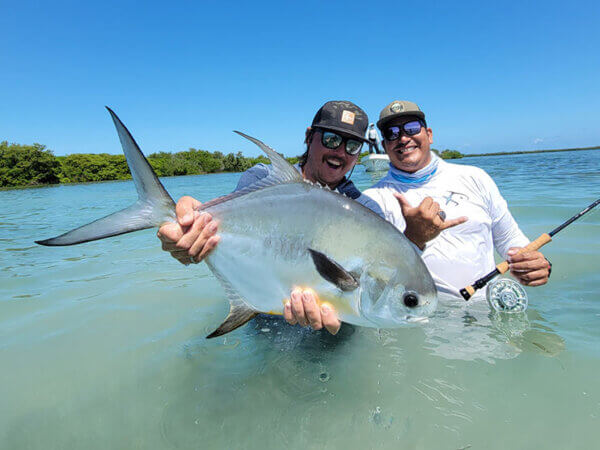



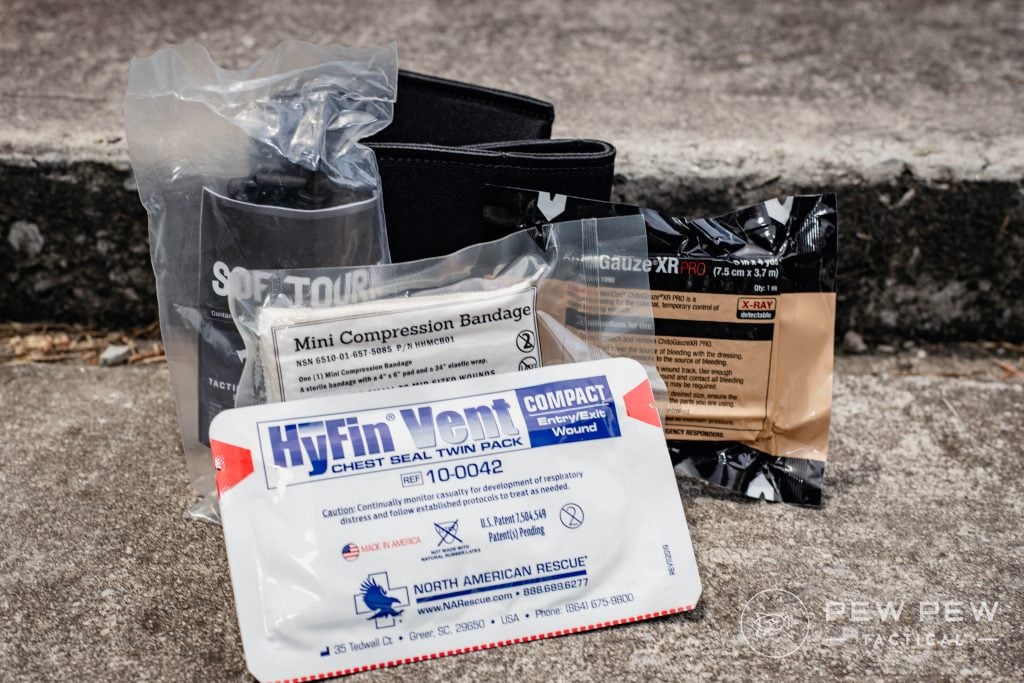
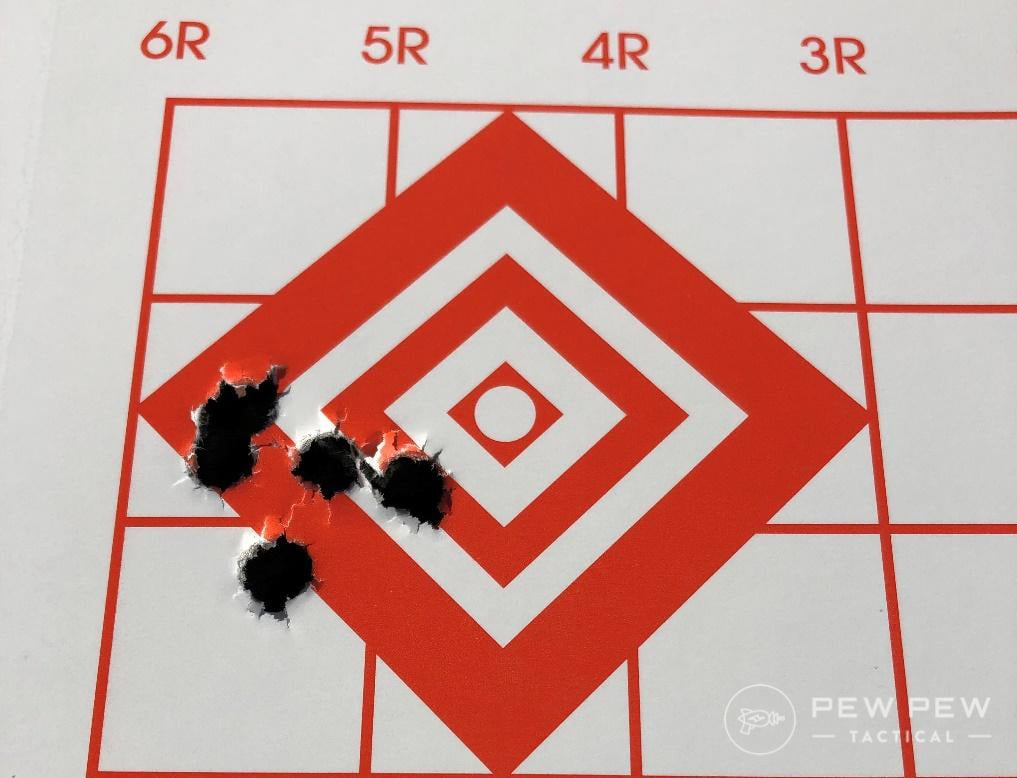
![5 Best Laser Bore Sights [Hands-On Tested]](https://www.pewpewtactical.com/wp-content/uploads/2022/01/Dropped-Screw.gif)
![5 Best Laser Bore Sights [Hands-On Tested]](https://www.pewpewtactical.com/wp-content/uploads/2022/01/Versatility.gif)
![5 Best Laser Bore Sights [Hands-On Tested]](https://www.pewpewtactical.com/wp-content/uploads/2020/01/mars-attack-alien.gif)
![5 Best Laser Bore Sights [Hands-On Tested]](https://www.pewpewtactical.com/wp-content/uploads/2022/01/Wheeler-Bore-Sight.png)
![5 Best Laser Bore Sights [Hands-On Tested]](https://www.pewpewtactical.com/wp-content/uploads/2017/01/4-Rules-of-Firearm-Safety-569x1024.jpg)
![5 Best Laser Bore Sights [Hands-On Tested]](https://www.pewpewtactical.com/wp-content/uploads/2020/01/You-Did-good.gif)