

Home Blog Page 85

Do Deer Minerals really Work to grow Big Bucks and Large Antlers? | Food Plot Seed- Food Plots- Deer Minerals- Deer Feed- EHD

0

One of the most hotly debated topics among whitetail land managers on social media is whether deer mineral products actually work. Let’s get right to the heart of the matter and ask what is meant by the word “work”. I think this can be answered two ways; do they work to attract deer? Or do they work to help bucks grow bigger antlers?

Most “mineral” products marketed to deer hunters absolutely will attract deer but most will NOT “work” to grow bigger antlers no matter the advertising claims attached to them. As a deer hunter you need to consider the reason you are putting out mineral products for deer.

If your goal is to simply attract deer to a game camera location without any regards to how the product will help deer, then basically any product will probably work to some degree. In fact if this is your goal then you should probably just consider buying a bag of cheap stock salt at your local farm store. You will honestly get the same results at a fraction the price.

Now let’s look at the question that serious land managers really want to know; can mineral products help bucks grow bigger antlers. The answer is a definitive “YES”, but there are a lot of factors that need to be considered. It is not quite as simple as putting out minerals in the summer and magically seeing bigger bucks in the fall.
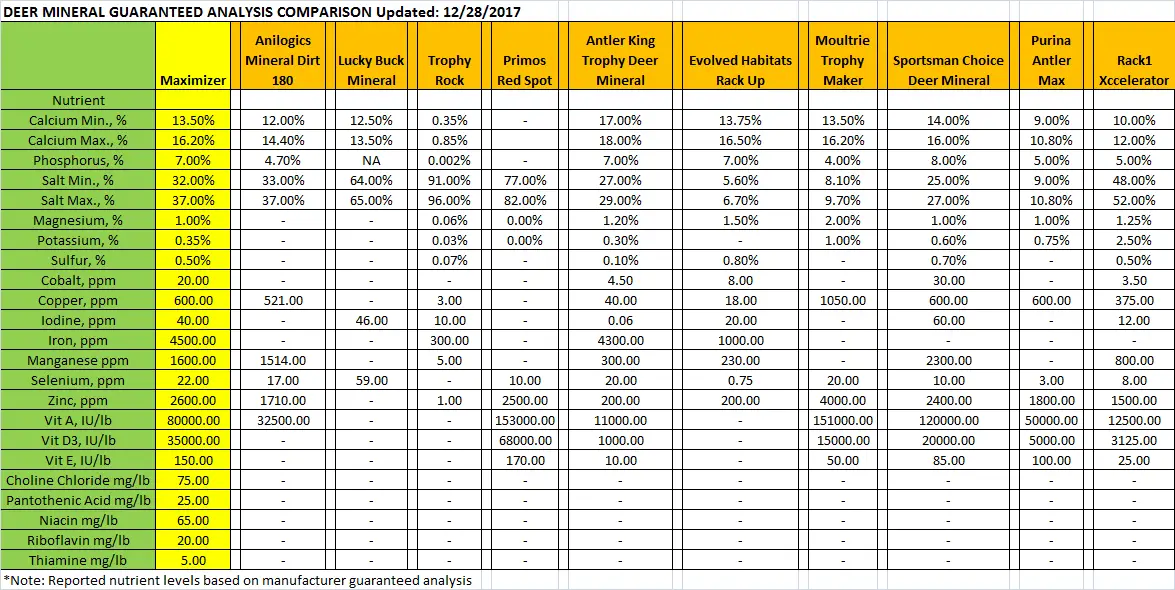
Custom deer mineral Analysis report showing the amounts of minerals found in the top brands of minerals

This chart shows that most mineral products marketed to deer hunters have gaping holes in their formulation. Most cannot possibly help increase antler growth. Click on chart for better view

Let’s start by addressing an argument that many nay-sayers throw up when they try to debunk the idea that deer minerals can help grow bigger antlers. They will state that there is no scientific research that shows minerals help grow bigger antlers. That’s true but to my knowledge there has also never been scientific research that proves minerals do not help with antler growth. The fact is, it is impossible for true scientific research to prove either way. You simply cannot feed a group of bucks mineral and know what size antlers they would have grown without it, or vice versa. Again, this type of scientific “proof” is simply not possible so we will have to rely on an open mind and common sense to help us draw conclusions.

By looking at the livestock industry it is very easy to see the value of minerals in animal diets. Essentially every livestock farmer or rancher in the United States uses minerals as part of their nutrition program. Volumes of research proves the value of minerals for increased growth rates, better reproductive performance and increased health of the animals receiving it. Think about it, these animals are being fed scientifically developed feed rations to maximize health and production and yet there is still many research proven benefits by also feeding them minerals. I think it is fairly easy to conclude that a whitetail deer consuming a random diet could also benefit from mineral supplementation.

In visiting with Real World Wildlife Products nutritionist Dr. Aaron Gaines, he provides the following perspective on mineral demand of whitetail deer, “The milk produced by a whitetail doe has twice the amount of mineral as cows milk, so if a farmer provides his cows with minerals why wouldn’t a serious whitetail land manager provide a mineral supplement to his deer herd as well?”. To take this a step further, Dr Gaines provided the following requirement comparison for a lactating doe vs. a buck that is growing antler; During a 60-day lactation period a doe needs around 215 grams of calcium and 166 grams of phosphorus. In comparison a buck that is growing antler (900 grams total weight) needs 199 grams of calcium and 98 grams of phosphorus. The take home message from this comparison is that does and bucks BOTH have a high requirement for calcium and phosphorus. It is easy to conclude that a whitetail deer consuming a random diet in the wild is no different than a cow grazing pasture; both benefit from mineral supplementation. Further, this does not even factor in the numerous micro-nutrients that whitetails also need which are often lacking in their diet.

Let’s look at this topic from another angle. The biggest whitetail antlers generally come from those regions of the country with the richest soils. Soils are essentially minerals. Those soils that grow the most productive farm crops also grow the biggest bucks. A farmer growing corn on the richest soils in the Midwest will supplement the nutrients available to his crop through fertilization. Even in these highly fertile soils any crop is limited by the required nutrient that is in shortest supply. The same principal applies to a buck growing antlers. To deny that minerals can help a buck grow a bigger rack is like saying a farmer gets no benefit from fertilizing his corn fields. Let’s also recognize that captive deer breeders growing giant antlers on their bucks are feeding minerals to their entire herd, both bucks and does.

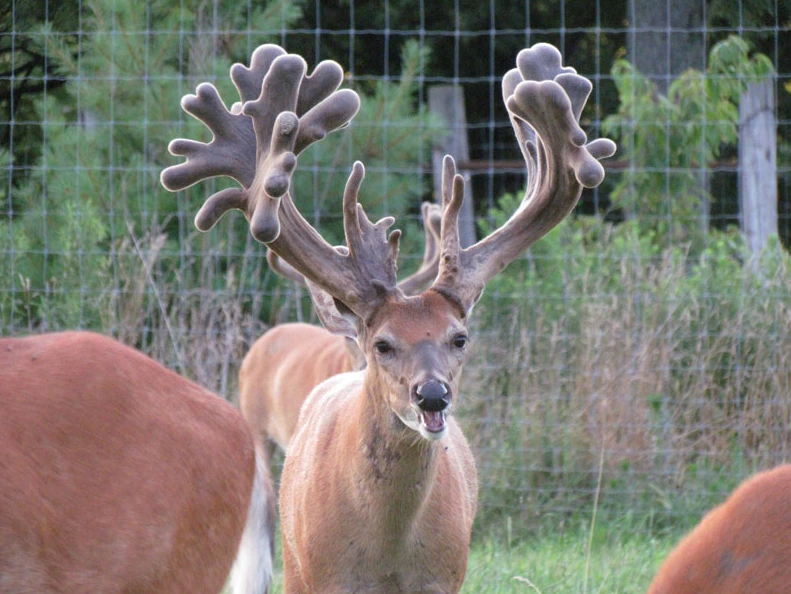
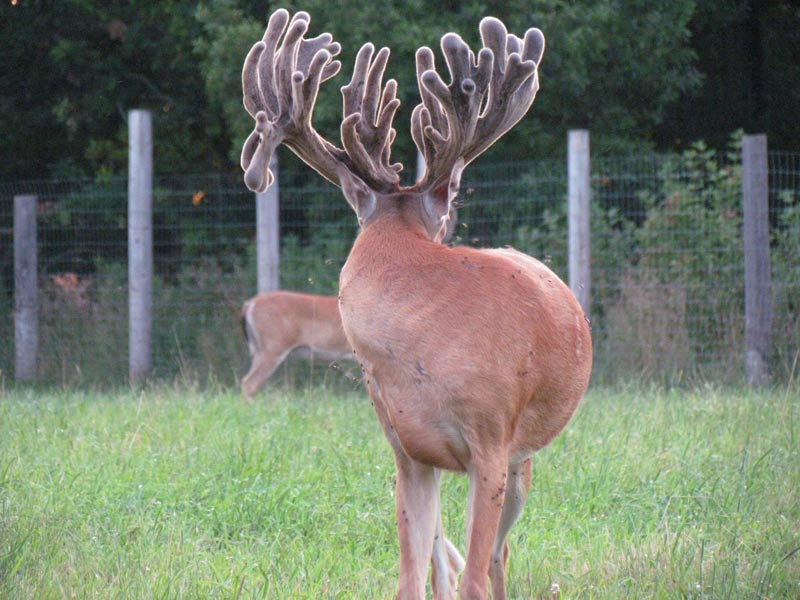
Giant Whitetail Buck eating Real World Custom Deer Minerals along with a bunch of other big mature bucks eating mineral.

Captive deer breeders know that a good mineral supplement can increase antler growth on their bucks

I hope by now you are open to the idea that mineral supplementation absolutely can help a buck grow bigger antlers. We have only reached the starting point however because there is a whole lot more we need to understand in order to maximize the antler growth of the bucks on the properties we manage. It is a little more involved than just putting out mineral and thinking that your bucks will instantly start to grow bigger antlers.

We have to start by looking at the differences in mineral products. Most products marketed to deer hunters are simply high-salt mixes made to turn a big profit margin. They contain minimal amounts of beneficial minerals and in fact are almost always totally void of many of the required nutrients needed for antler growth. Because deer crave salt, they do consume these products and thus many hunters assume they “work”. The brutal truth is that while they do work to attract deer, they absolutely cannot possibly do anything to help a buck grow bigger antlers.

Let’s go back to the livestock industry for a bit. The mineral product that a farmer gives to his lactating dairy cows is a totally different mixture than what he would give to his beef calves. The various mineral blends fed to livestock have been scientifically formulated by professional nutritionists to maximize their benefits to the specific animal ingesting it. So why would deer be any different? A deer is not a cow so feeding mineral products developed for other species to whitetail deer is not the answer.

Clearly, research involving whitetail nutrition falls short of what has been done with livestock. Still, enough has been done that a quality whitetail mineral product can be formulated. The key is not only in which specific minerals, vitamins and other nutrients need to be included but just as importantly, at what levels and ratios. While I have seen a lot of “home mineral mixes” shared via the internet, all have gaping nutritional holes that will limit their effectiveness, if they even have any effect on antler growth at all.

Now let’s look at providing mineral products to wild deer and what one can expect as far as results in terms of increased antler growth. First of all, getting the most of a deer mineral supplementation program is a long term endeavor. I think a whitetail land manager needs to be looking 5 years ahead before the full benefits of mineral supplementation will be truly realized. Again, research from the livestock industry fuels my opinion on this.
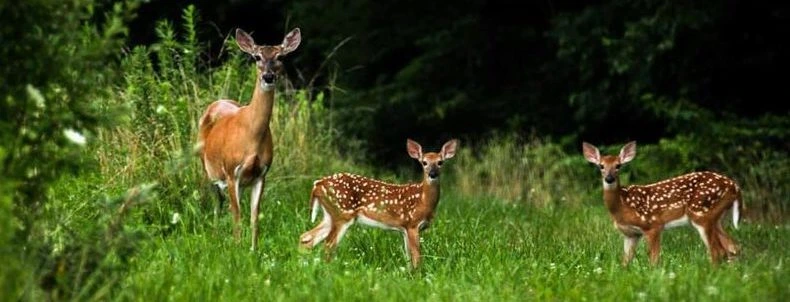
Picture of a Whitetail Doe and two buck fawns at a deer mineral site eating Real Worlds Maximizer Plus Deer Mineral which is formulated to have the best minerals for deer.

Getting a buck to reach his full genetic potential in terms of antler growth starts before a buck is even born.

A study at Oregon State University focused on “fetal programming” of beef calves. The researchers were looking at the possibility of pushing calf performance throughout life by increasing the mineral intake of cows during pregnancy. In this trial researchers showed that calves born to cows that had received increased mineral supplementation performed better and were healthier throughout life than calves born to mothers without it. This is in spite of the fact that both groups of calves got proper mineral supplementation after birth. In other words, once a calf was born it was too late for him to catch up to other calves; he had already been programmed as a fetus. The calves born to cows getting the extra minerals grew faster and had fewer health issues all the way to slaughter. It is important to note that neither group of cows in this study were “mineral deficient” but instead one group simply got increased levels of minerals. What this study showed is that once a calf is born, it is too late to push him to his genetic potential in terms of growth.

After 25 years of research with captive whitetails I believe the same is true with bucks. To really get a buck to reach his genetic potential for antler growth, it really needs to start before he is even conceived! It is extremely important for a whitetail land manager to have his entire deer herd, including his does, on a high-quality mineral supplementation program if he expects to increase antler growth. It is those unborn fawns that will one day produce the full rewards of a quality mineral program in terms of antler production.

As mentioned, for nearly 25 years I owned a research herd of captive whitetails. I focused my studies on genetics and nutrition. Several years ago one of my research projects involved mineral supplementation. My goal was to determine if mineral supplementation affected antler growth to any noticeable degree. I started by acquiring 7 sets of twin buck fawns and then separated the twins into two pens so that I had 7 buck fawns in one pen and 7 in the other. Each buck had a twin brother in the opposite pen. Both pens received the very same feed ration out of the same feed bin. The difference was that the feed in one pen was top-dressed daily with a mineral product I was developing.
Picture of a Whitetail Doe and two buck fawns at a deer mineral site eating Real Worlds Maximizer Plus Deer Mineral which is formulated to have the best minerals for deer.

Each fall after the shedding of velvet I would tranquilize each buck and then score and remove his antlers. I would figure up the total inches of antler from each pen for comparison. Remember, every buck in pen A had a twin brother in pen B. Eventually I had to abort the study and while I will readily acknowledge that this study was very limited in its scope and not of sufficient breadth to stand up to scientific review, I did see enough to form an opinion. I am convinced that mineral supplementation can increase antler growth in whitetail bucks. “To what degree?” is the big question. My best guess is that a long-term mineral supplementation program using a high-quality whitetail specific mineral could add somewhere between 10-20% to the gross antler score of a mature buck. Certainly some individual animals will respond differently than others.

In conclusion, I am convinced that mineral supplementation can indeed increase antler growth in whitetail bucks. To be brutally honest however, most of the mineral programs currently being practiced by well meaning whitetail hunters and land-managers are a waste of time and money. They will do little more than draw deer to a game camera location.

Which Deer Mineral is Best?

To this point I have purposely neglected mentioning any products by name and won’t get started on bashing products. I do however need to plug Real World Wildlife Products Maximizer and Maximizer Plus mineral products. While I played a role in the development of each product it was really a team process that took many years to perfect. Nutritionists Dr Aaron Gaines and Brent Ratliff played key roles as did world-renown whitetail veterinarian Dr Clifford Shipley of the University of Illinois.
40 pound bag of Real Worlds Advanced Deer Minerals which is also an attractant for big whitetail bucks.

Maximizer and Maximizer Plus each have over 20 different minerals, vitamins and key nutrients in very specific ratios and levels. Maximizer Plus also contains Real Worlds exclusive Expect Healthy Deer Technology® for added health and performance benefits. Captive deer breeders have taken notice of these products and are feeding them to their herds in increasing numbers. Consider this fact – there is probably not a captive deer breeder in the world feeding one of the numerous mineral products marketed to deer hunters to their herd with one exception … MAXIMIZER! If you are looking to take the bucks on your property to their genetic limits while maximizing herd health, Maximizer and Maximizer Plus are honestly your very best option.

Getting Started

Implementing a good mineral program on your property is really very simple but a few things need to be considered. For best results have at least 1 good mineral station for every 40 acres of land. These should be established in high deer traffic areas. You want every deer on the property to pass within close proximity of a mineral station each and every day.

40 pound bag of Real Worlds Advanced Deer Minerals which is also an attractant for big whitetail bucks.

To start a mineral station simply find a suitable location and kick away any leaves or other debris in about a 3’-4’ circle and pour about 20# of mineral in a small pile. There is no need to work it into the soil although it won’t hurt anything to do so. It is important to keep each mineral site replenished with plenty of Maximizer or Maximizer Plus mineral every 30 days or so. Keep in mind that mineral consumption increases in late winter and continues through the summer. In the fall and early winter consumption will not be as heavy. Remember, proper mineral supplementation is not a quick way to grow bigger antlers but instead is a long term commitment resulting in healthier deer AND bigger antlers.
Maximizer deer mineral brochure picture

Vortex Scope Reviews: Our Top 5 Best Vortex Rifle Scopes

0

This article contains affiliate links. We may earn a small commission if you purchase via these links.

Vortex has a reputation of producing high-quality rifle scopes in a budget range that every buyer can afford. The best thing is, you don’t have to pay extra to get their VIP warranty, and you don’t have to wonder if you’re getting the best price.

Vortex scopes consistently hold their value as they’ve proven to be rugged, reliable, and accurate machines – as you will see in our Vortex optics reviews.

Whether it’s entry-level quality, a premium, HD scope, or something in between, you can expect you’re getting the absolute best in your price range.

Vortex – they’re doing their job: providing you with quality options. It’s time you do yours – make sure you buy a scope that is as ready as you are for every situation you’re brave enough to face, be it in the field, hunt, or at the range.

Best Vortex Scopes

Vortex Rifle Scope Reviews

1. Crossfire II 3-9X40 Review

The 3-9×40 specs never fail when you plan on using the same scope for a range of shooting applications. It’s also the easy pick in a lineup of similarly priced scopes because it’s made with high-performance quality iconic to the Crossfire II series.

Pros:

  • Price
  • BDC reticle
  • FMC optics
  • Capped/resettable turrets
  • Fog/waterproof

Cons:

  • Canted reticles

Take this thing out to the range or the field since you can holdover out to 500 yards with hashmarks for winddrift too. It’s easy to do with 60 MOA in travel adjustment, 1/4 MOA clicks, and the dead-hold BDC reticle. Once you’re sighted-in to your 100-yard zero, reset your turrets to “0” without any tools required.

With FMC (fully multi-coated) optics, a fast-focus eyepiece, and 3.8″ of eye relief, you’re all set to get Vortex image quality.

Unfortunately, canted reticles either happen at the range or out of the box – clearly a defect that Vortex’s VIP warranty can take care of. Good thing, it’s not the trend.

This isn’t a cheap scope like every other one in the market with a similar price tag. It’s a high-performing one with unmatched warranty coverage for range, tactical, and hunting use. For as popular as it is, it’s a good bet you know someone with this very scope on their rig – that’s why you’re here!

2. Strike Eagle 1-6X24 Review

Sporting an AR-15? For close to mid-range hunting, patrol, or law enforcement applications, the Strike Eagle 1-6x scope was made for it. With low variable power, an AR-BDC 5.56 reticle, and some high-end features to brag about, this scope is bound to please.

Pros:

  • Price
  • Glass-etched reticle
  • Illuminated reticle
  • AR-BDC reticle
  • 30 mm tube

Cons:

  • Restricting eyebox

There’s some anecdotal evidence that the Strike Eagle (SE) has an unforgiving eyebox. If you plan on shooting in 3-gun comps with the SE, you mightn’t appreciate the tight parameters to achieve the right eye-to-image alignment.

Fortunately, most buyers don’t experience any optical issues, and the glass-etched, illuminated, AR-BDC reticle makes for effective shooting in the hunt, on patrol, or for home defense. The AR reticle is designed for the popular 5.56 mm cartridge, and the illuminated segmented circle makes for rapid target acquisition.

With 1/2 MOA adjustments, a wide and robust 30 mm tube body, and low, capped profile turrets, it’s really not a wonder why it’s an extremely popular AR scope for the price. The SE is set and ready to take a beating and bring down targets both near and far.

3. Viper HST 4-16×44 Review

The HST series of scopes is the perfect combination of the Viper PST and HS lines. Favorite features are meticulously paired together with a tactical approach, and what you end up with is the long-ranging Viper HST 4-16×44.

Pros:

  • Side focus
  • 30 mm tube
  • 4″ long eye relief
  • XD glass
  • Zero Stop

Cons:

  • Windage turret issues

It seems a rare occurrence of various windage turret issues plague the buyer. Anything from backwards spinning adjustments to loose turret attachments is the cause of frustration – nothing the VIP warranty can’t handle.

This is a tactical scope all the way. It has tall, exposed turrets that definitely demands attention, a robust 30 mm tube that provides 75 MOA in adjustments, and a fiber optic radius and Mag-View bar.

The VMR-1 MOA reticle has hashmarks for long-ranging shots with holdover points for wind correction. The reticle is in the SFP (second focal plane), so crosshairs will stay thin and won’t obscure your target for tight groupings at extended ranges.

With Extra-low dispersion (XD) glass elements, you’ll have minimal, if any at all, chromatic aberration and the best clarity a side focus and XR glass coatings can achieve. The CRS Zero Stop is always a much-appreciated feature.

If you’re after a feature-packed scope, the HST has a long list of them.

4. Viper PST Gen II 5-25X50 Review

Precision. Accuracy. Long-range. If there’s a scope worth pulling the trigger on, it’s with a PST Gen II scope. High magnification, FFP reticle, and optimum clarity – nothing is beyond your reach.

Pros:

  • XD glass
  • Glass-etched reticle
  • Illuminated/FFP reticle
  • RZR Zero Stop
  • 30 mm tube

Cons:

  • Heavy
  • Stiff magnification ring

It goes without saying that this scope is heavy at 31.2 oz. It’s the trade-off for all the features and build quality in this precision rifle scope. The magnification ring has said to be stiff, and there’s some demand from buyers that a throw lever be included as an accessory which would be convenient for the wide 5-25x power range, but it’s a separate buy if you want it.

The glass-etched EBR-2C reticle is in the FFP (First Focal Plane) so you can reliably use the illuminated holdover points at any point in the magnification range. With 10 illumination intensity settings and “off” positions in between on the side focus knob, you can shoot accurately at any time of day. The RZR Zero Stop feature allows you to sight-in, set your zero, and return to it with ease whenever you dial out.

With a 30 mm tube, you have 70 available MOA elevation and 35 MOA windage adjustments. XD (Extra-low dispersion) glass elements and XR FMC Coatings work together with the large 50 mm aperture to bring the brightest and clearest image quality you can expect from Vortex.

This is a lot to have in a scope, but when you demand precision, you must demand the absolute best.

5. Razor HD Gen III 1-10×24 FFP Review

Vortex has released the Gen III Razor HD and the 1-10x is more comparable in configuration to the Razor HD Gen II-E than the Razor HD Gen II. For those who understand how FFP reticles and focusing works on an LPVO, the Razor HD Gen III 1-10x will meet and exceed your expectations.

Pros:

  • LPVO
  • APO/ED optics
  • FFP glass-etched reticle
  • Friction Reduction System
  • Low capped turrets

Cons:

  • Eyebox at max. mag.

The Gen III LPVO has excellent eye relief of 3.6”, however the eyebox from 8-10x (max power) has said to be unforgiving, enough so to form complaints. As expected, max magnification is better suited to those who have the time to align themselves perfectly with it.

At 1x power, the FFP reticle does get small and there is some mention of fisheye effect. The ocular focus allows for crisp reticle focus on high-powered scopes, but on an LPVO it serves to focus the image. At 1x, it’s important to use the eyepiece ring to acquire a flat image at 1x if you experience distortion. Serving as the only focusing mechanism, it has been factory-set for parallax at 150 yards.

The optics are made with an APO system, ED glass, Optically Indexed Lenses, and XR FMC coatings. It has the works to provide edge-to-edge sharpness and color-true resolution.

The reticle is glass-etched, located in the FFP, and features the EBR-9 reticle in either MOA or MRAD with drop and windage compensation. The 1 MOA dot and segmented circle are illuminated with 11 intensity levels. The third turret illumination is complete with intermittent off positions and a locking mechanism.

Turrets are capped, low profile, and have ¼ MOA adjustments. The 34mm aluminum tube houses a premium brass alloy erector tube system with a chromium vanadium spring. It supports a steel-on-steel Friction Reduction System for tactile, accurate, long-lasting turret integrity.

It has optical, mechanical, and performance quality that will serve competitors, law enforcement, and target shooters well.

Other Vortex Scope Reviews:

  • Vortex Strike Eagle 1-8×24 FFP Review (Range Tested)
  • Vortex Razor HD LHT 3-15×42 Riflescope Review
  • Vortex Viper HS 2.5-10×44 Riflescope Review (BDC Reticle)
  • Vortex Strike Eagle 1-8×24 Riflescope Review (AR-BDC3 MOA Reticle)
  • Vortex Crossfire II 3-12x56mm AO Hog Hunter Rifle Scope (with V-Brite Reticle)
  • Vortex Optics Diamondback 4-12×40 Second Focal Plane Rifle Scope – Dead-Hold BDC Reticle (MOA)
  • Vortex Crossfire II Review – 4-12×44 Rifle Scope with Dead-Hold BDC MOA (CF2-31015)
  • Vortex Optics Diamondback HP 4-16X42 Rifle Scope w/ Dead-Hold BDC Reticle (DBK-10019)
  • Vortex Viper HS 4-16×50 Long Range Rifle Scope Review (VHS-4307)
  • Vortex Optics Viper PST 6-24x50mm FFP Scope w/ EBR-1 MOA Reticle (PST-624F1-A)

More Vortex Optics Reviews:

  • Vortex Optics Reviews: Rangefinders & Monoculars
  • Vortex Binoculars Review: Our Top 5 Picks of Their Best Binoculars
  • Vortex Red Dot Review: Our Pick of Their 5 Best Sights
  • Vortex Spotting Scope Review: Our Pick of Their 5 Best Spotters

Source of Images: VortexOptics.com

Laws for Hunting Bobcats in Colorado

0

The laws for hunting bobcats in Colorado still allow predator hunters to take bobcats. This article covers many of the fundamental laws you will need to know to get started. It also provides information such as seasons, harvest limits, and required permits for bobcat hunting in Colorado.

It is not a legal document and is not intended to cover all hunting laws and regulations. In 2022, Colorado introduced legislation to prohibit, among other things, bobcat hunting. That measure failed to become a law—but who knows what the next few years may bring. Hunters are encouraged to check for updates every season.

In Colorado, bobcat hunting season runs from December 1 to the end of February. A license is required. Bobcat may be hunted day or night, and there are no bag or seasonal limits.

Beginning March 1, 2021, a youth small game license, a furbearer license, or a furbearer harvest permit in addition to any variation of a small game license or small game and fishing combination license is required to take those species defined as furbearers, except coyotes.

Purchase a Colorado hunting license here.

Check out the Colorado hunting seasons.

First time hunting bobcats? Check out my article on the three vital tips for a successful bobcat hunt.

Did you know you can hunt coyotes in Colorado? Read this article on the laws for hunting coyotes in Colorado.

Related: Learn the rules for fox hunting in Colorado.

General laws for hunting bobcats in Colorado.

Hunting hours.

Legal times to hunt small game and/or waterfowl are one- half hour before sunrise to sunset.

An exception is made for furbearers, which can be hunted from one-half hour before sunrise to one-half hour after sunset. Raccoons, coyotes, bobcats, striped skunks, beavers and red, gray or swift foxes can be hunted at night.

See Furbearers under Small-Game Hunting Laws on page 5 for details.

Related: Need access to more properties? Find out how to ask for permission here.

Using artificial light when hunting bobcats in Colorado.

Can you use artificial light when hunting bobcats in Colorado while on private land?

Artificial light (private land) may be used at night to take beaver, bobcat, coyote, gray fox, raccoon, red fox, striped skunk and swift fox on private land with written permission of the landowner, designated agent, lessee, or authorized employee.

Related: Going the budget route? Make sure you pick the right color lens.

Related: Infrared riflescopes for new predator hunter good for 200 yards? Check out this article.

Related: Thinking you want a low budget thermal good for 150 yards? Check out this article.

Callers and decoys. Are permitted for bobcat hunting.

While electronic callers are expensive, mouth and hand callers are less pricey but take time to learn how to use.

Read this article and watch the video to learn how to use a closed reed rabbit squealer.

You can read about some highly effective but inexpensive ($20) decoys here.

You can check Amazon’s price list for callers and decoys here.

NOTE: SMART RIFLES are prohibited, including any firearm equipped with a target tracking system, electronically controlled, assisted, computer-linked trigger, or a ballistics computer. Any gun equipped with a computer processor scope is considered a smart rifle.

Can you use artificial light when bobcats hunting in Colorado on public land?

Artificial light (public land) may be used at night to take beaver, bobcat, coyote, gray fox, raccoon, red fox, striped skunk and swift fox on public lands by permit only, as follows:

a. Each permit shall be valid only for the time, species, and location specified on the permit. No permit will be valid during any deer, elk or pronghorn rifle season or during the 24-hour period prior to the opening weekend; nor during the opening weekend of any grouse, pheasant, quail, turkey or waterfowl season in those areas where such seasons are in progress.

b. An artificial light which is permanently attached to, or projected from within a vehicle is prohibited.

c. Taking shall not be permitted within 500 yards of a dwelling, building, or other structure, or in any area of public concentration where human safety would be jeopardized.

d. Such permit shall be carried while hunting and available for inspection upon demand.

e. Area wildlife managers and district wildlife managers may deny a permit where there is a potential that night hunting activities may result in significant adverse impact on wildlife resources by causing movement of large numbers of big game or otherwise.

Provided further that night hunting permits for bobcat will not be issued on public lands in the Canada lynx recovery area where Canada lynx are known to be present. When one Canada lynx has been taken by a bobcat hunter during the current year’s hunting season no night hunting permits for bobcat will be issued for the remainder of the calendar year in the Canada lynx recovery area or in the area outside the Canada lynx recovery area where the Canada lynx was taken. In such instance, any night hunting permits for bobcat already issued under this provision shall be terminated.

f. A permit shall not be required of any person, member of the person’s family, lessee, designated agent, authorized employee, or identified designee with written authorization when necessary to protect such person’s property. Refer to Chapter W- 17, Damage Caused by Wildlife for applicable regulations.

Pelt sealing requirements for Colorado.

Special Restrictions.a. All bobcat, or their pelts, shall be personally presented by the licensee for inspection and must be sealed within 30 days after take, or within 5 days after the close of the season, whichever is sooner, with a seal provided by the Division. Any bobcat hide/pelt not having a seal within 5 days after the close of the season shall be illegal and become property of the State. Seals will only be placed on bobcat legally taken in Colorado. No fee shall be required for the inspection and issuance of a legal possession seal, which shall remain attached to the hide until processed. Bobcat hides/pelts shall not be transported, shipped or otherwise taken out of Colorado until the hide(s)/pelt(s) are inspected and sealed. The legal possession seal, when attached to the bobcat or the pelt, shall authorize possession, transportation, and sale thereof. For the purposes of this regulation it is illegal to buy, sell, trade, or barter an untanned bobcat hide/pelt unless a permanent seal is affixed thereto. Only one legal possession seal shall be provided for each hide/pelt.

Forgot your password?

0

We caught up with Jay Scott of Colburn and Scott Outfitters and learned about his well-earned success on the trickiest turkeys out there. He’s the host of the Jay Scott Outdoors Western Hunting & Fishing Podcast, but he is also a passionate hunter, angler, and big game guide.

Read on to learn about his relentless turkey hunting process and what it takes to get birds on the ground with his top spring turkey hunting tips and tricks.

Table of Contents:

Introduction 1. Better to Be Early Than Late 2. Carry More Calls Than You Need 3. Locator Calls Don’t Have to Be Perfect 4. Don’t Blow a Coyote Howler at Roosted Birds 5. Pinpoint Where They Roost 6. Tactics Once They’re on the Ground 7. Play Hard to Get! 8. Be Patient 9. Go for Round Two 10. Use the Roads to Your Advantage 11. Get As Close As You Can 12. Calling Cadence Outweighs Tone and Sound 13. Decoy Positioning SHOP THE FULL GEAR LIST

SPRING TURKEY HUNTING IS ONE OF MY FAVORITE SEASONS OF THE YEAR.

For many years as a beginner turkey hunter, I really struggled with calling birds into archery or shotgun range. I’ve been schooled by so many birds that it would seem silly for me to even write an article on bowhunting or shotgun hunting turkeys.

But like lots of other things in life, it seems that persistence usually pays off. I’ve been taught many things by veteran turkey hunters whom I have constantly bombarded with questions on the “Do’s and Don’ts” and “Tips & Tricks” of turkey hunting.

I’ve also learned a lot from trial and error with the turkeys themselves. I’m constantly learning something new about spring turkey hunting every day that I pursue them. One thing I’ve learned is that no two wild turkeys act the same but there are some turkey hunting tactics that can be repeated which will increase your odds of harvesting this magnificent animal.

I’ve attempted to outline some things to remember when chasing these weary longbeards. I hope that one of these turkey tactics will be something you can latch on to and incorporate into your turkey hunting routine.

1. BETTER TO BE EARLY THAN LATE

I always try to set my alarm 30 minutes earlier than my calculated time to get to the roost tree. Usually my alarm goes off around 3:00 AM during turkey season.

I like to be sitting in the dark waiting for the grey in the eastern sky and set up in my position at least 30 minutes before the first call of the hens or first gobble. It gives the woods some time to settle down after I just walked into the roosting area.

It also gives you time to go to plan B if something goes wrong prior to your setup. Another advantage to being early is usually that puts me ahead of other hunters. Being early will never work against you.

2. CARRY MORE CALLS THAN YOU NEED

It is good to have several diaphragms, slates, and box calls. Sometimes the birds will especially like one call or another. The worst feeling in the world is not having the right call.

Don’t be afraid to take a gobble call either (be very careful using the gobbler call on public land).

3. LOCATOR CALLS DON’T HAVE TO BE PERFECT

Locator calls such as coyote howler, owl hooter or peacock don’t have to sound exactly like the natural thing to be effective in getting birds to gobble in the roost.

Quite the contrary, I’ve found that my external reed coyote howler by Primos which does not sound near as natural or authentic as my diaphragm coyote yelp, seems to get more of a response by roosted gobblers.

Remember, you are looking for a shocking response so sometimes the worst shrieking noise you can make will be the best for getting a gobbler to answer.

4. DON’T BLOW A COYOTE HOWLER AT ROOSTED BIRDS

In the morning when you’re too close, the roosted male turkey might answer but they will be very leery to come into your hen yelps because they think a coyote is close and they don’t want to get eaten.

An owl hooter is a much better choice when you are close to the roosted bird. When I say close, I mean within 200 yards of a rooster gobbler.

5. PINPOINT WHERE THEY ROOST

When roosting a gobbler in the evening, make sure you try to pinpoint the exact tree that the gobbler is roosted in. Often, I will get them to shock gobble and then I will sneak in as close as possible.

I then plan my setup for the morning. Things to be looking for while pinpointing the exact tree are:

• easiest way into the setup since it will be pitch dark.• exactly which tree you want to be leaning against and set up under.• which way the bird will fly down.• which way the bird won’t go, etc.

I like to mark the spot where I will setup on my GPS and allow the breadcrumb feature to bring me right into the setup spot the following morning. Be careful not to let the roosted gobbler see your light on the GPS.

6. TACTICS ONCE THEY’RE ON THE GROUND

In the morning or afternoon, when the birds are already on the ground, and you are just prospecting for gobblers by walking ridges, if you get a gobbler to respond move as close to his position without being detected as you can.

Once in close to the gobbler (within 100 yards) set up and try to call again. This works way better than calling from the original position. Now, if you are moving towards his direction and he gobbles loudly and in your direction like he is coming immediately get setup.

7. PLAY HARD TO GET!

Make the gobbler want to come to you. If you get a bird gobbling sometimes just shutting up is the deadliest tactic. I like to fire them up and then shut up.

I usually let them gobble twice before I call again. Usually, they will come hard if you use this tactic. You may risk a bird walking off because you shut up but if they are halfway interested, they will be headed your way. This may be the single best bit of information I have learned over the years.

8. BE PATIENT

In the evenings be in the roost area and be patient. I like to get in areas that I know birds like to roost. I sit and call about every fifteen minutes. The last 30 minutes before fly-up is primetime. Let’s say it is 30 minutes before fly-up and you make a series of yelps and a gobbler answers off in the distance.

I might hit him right back with a series of excited cuts and then just shut up. More than likely he will come to inspect. If they come in but not in shooting range just sit still and watch they fly up into their roost trees. Then you can attack in the morning.

One thing to keep in mind while hunting Merriam’s turkeys is that they typically like to roost on a ridgeline or at least where there is a contour break. The birds like to walk uphill from their roost tree and then coast horizontally into the branch.

This tactic helps them conserve energy by less flying. Sometimes you can roost turkeys without hearing them gobble by just listening for the ruckus of their wings flapping when they fly up.

9. GO FOR ROUND TWO

When the evening hunt does not produce a roosted gobbler for the next morning. There are several options for the following early morning hunt.

Go into an area where you have heard gobblers before and sit tight. Listen at prime time for gobblers in the area. If you can move while it is still dark, then pursue them. If not, wait until they hit the ground and sneak in close to them.

10. USE THE ROADS TO YOUR ADVANTAGE

Another option is to cover as much country as possible in hopes of hearing a roosted bird. This can be done either on foot or in a vehicle.

Wake up extra early and drive to an area where you have seen or heard turkeys. Stop every half a mile and blow your peacock or coyote howler.

11. GET AS CLOSE AS YOU CAN

Always try and get as close to a gobbler before calling to him. If you spot a gobbler with your binoculars try and move in very close to him without being detected.

I will try to get within at least 100 yards or closer if the terrain and vegetation will allow prior to making my first call. Your success goes up tenfold if you practice this method.

12. CALLING CADENCE OUTWEIGHS TONE AND SOUND

The cadence of your calling is more important than the tone and sound of your call. This opinion is debatable but I noticed a big difference in my success when a friend of mine showed me the correct cadence to my hen yelps.

He told me I sounded decent, but my rhythm was off. As soon as I changed my rhythm and cadence it was like a light switched on and the gobblers became way more consistently responsive to my calling. The key is to listen to the hens and focus on the cadence or timing/rhythm of their call.

13. DECOY POSITIONING

Position your turkey decoys at a 45-degree angle from the hunter on the opposite side of where you think the gobbler will come in from. Decoys can be a huge asset if you use them correctly.

On the flip side, they can hurt you if they are positioned on the wrong side of where you want the birds to end up. An example of the correct way to set them up would be: If the gobbler answers your calls to your left it would be best to set the decoys out to your right about 25 yards.

In this case, the bird will come to your call but when he gets close, he will see the decoys and walk right by you (or the hunter) on the way to the decoys to your right.

Remember when the gobbler gets close to remain silent and very still because he will be really looking for the turkey he heard. He should then spot the decoys. You will then be able to have a clear shot as they focus on the decoys.

WRITTEN BY JAY SCOTT
  • Host of Jay Scott Outdoors Hunting and Fishing Podcast with over 34.5 million downloads.
  • Professional hunting guide for 24 years in Arizona and Old Mexico.
  • Has harvested many trophies around the west, which include several animals that make the Pope and Young and Boone and Crockett record books.
  • Learn more about what KUIU gear Jay Scott thinks is best for hunting turkeys in his turkey gear list.
  • Visit Jay Scott’s Youtube to see him in action.
  • Read more about the Gould’s Turkey, the least known subspecies of wild turkey.
  • Shop KUIU’s top turkey hunting gear list for the spring and fall turkey seasons.
  • Learn about turkey hunting camo and gear with more top turkey hunting picks for the active turkey hunter.

Best Air Rifle Under $200: Why The Hatsan 95 Is A Must Have!

0

Some of the links below are affiliate links, meaning, at no additional cost to you, we will earn a commission if you click through and make a purchase.

The Hatsan 95 air rifle has been at the top of my review list for quite some time now. I’ve heard great things about it, and until I tried it for myself, I assumed that most people were exaggerating. To say I was blown away, is an understatement.

Technical Specs

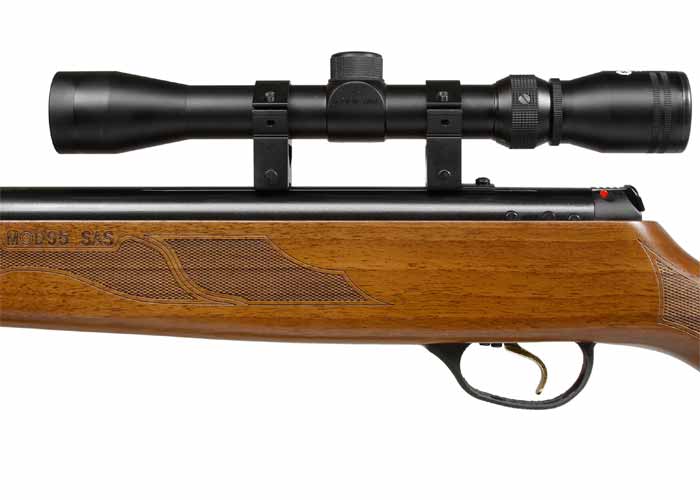
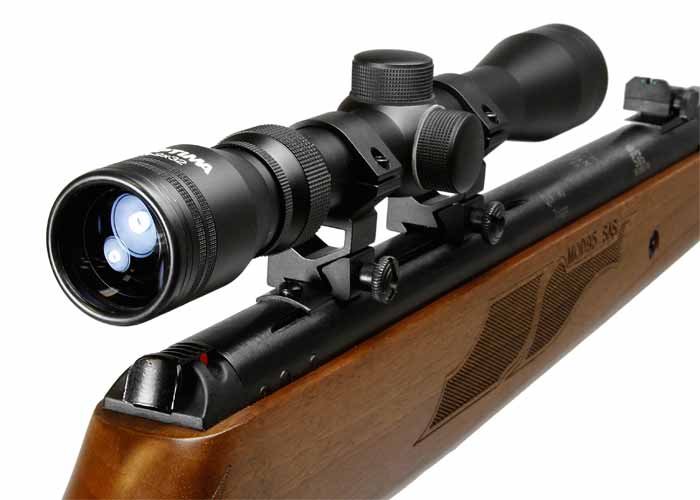
Let’s start by talking about the technical stuff first. This gun comes in three calibers: .177, .22 and .25. It’s a spring-piston break barrel single-shot air rifle with adjustable rear sight and a 3-9×32 scope. With a Turkish walnut stock and gold plated trigger, this is a beautiful air rifle.

Click here to buy now and get discounted price on the Hatsan 95 .177, .22 and .25 Caliber Air Rifle. Plus, get FREE shipping too!

Powerful Shot

Because we have three calibers with the Hatsan 95, power will depend on which rifle you choose.

  • The .177 has a velocity of 1,000fps
  • The .22 has a velocity of 800fps
  • The .25 has a velocity of 650fps

The .177 shoots faster than the other two calibers, but the .22 and the .25 will have a greater impact.

With that much power, this is a rifle that can easily be used for hunting or just plain fun plinking. At 50 yards, I had no problem taking out a squirrel with the .22. I’m still amazed by how powerful and accurate this rifle is.

Accurate and Durable

Even without the scope, this rifle is consistently accurate. At 40 yards, I was shooting with dime size accuracy.

Once the scope is sighted in, the accuracy gets even better. Fixed TruGlo fiber optics in the front and adjustable TruGlo rear sight help to further improve your accuracy.

I like the two-stage trigger on this rifle. It allows for pull weight, length of travel, first stage and second stage adjustments. The stock is ambidextrous, so any shooter can use this gun comfortably. The grip is checkered, so it won’t slip. The rubber pad on the forearm absorbs shock and reduces recoil. Just about every aspect of this gun is designed to improve accuracy.

But what about the quality of the build? A rifle can be deadly accurate, but it’s not worth buying if it only lasts a few months. The Hatsan 95 is a rifle you’ll have around for quite some time. The stock is made of Turkish walnut, the trigger is gold plated, and the barrel is made from German steel. It’s a bit on the heavy side at 7.8lbs (without the scope), but I’ve shot heavier air rifles.

Check out the beautiful detail in the walnut stock and also the trigger! (Click to enlarge pictures below)

Hatsan 95 Detail Hatsan 95 Trigger

Pros

The Hatsan 95 really surprised me. It’s an underrated gun that’s powerful, accurate and well-made. You have three calibers to choose from and it comes with a decent 3-9×32 scope and mount. It’s hard to find an air rifle that’s as well built and powerful as the 95 in the under $200 price range.

Cons

Like other air rifles, this one is loud. It’s a little heavy even without the scope at 7.8lbs. And it also takes quite a bit of force to cock it. Hatsan puts the cocking force at 35-40lbs.

I’m not really sure I would consider these cons, but they’re things you should be aware of. Most air rifles are about the same weight (or heavier even) and just as loud. Sure, it takes some force to cock this rifle, but it’s not something a typical adult couldn’t handle. And you probably don’t want kids shooting this gun anyway.

The Final Verdict

The Hatsan 95 is an accurate, powerful and well-built air rifle that looks just as good as it shoots. For under $200, this is one of my best air rifle and is easily worth double its price and is right on par with the big name rifles on the market today. I’ve had people unfamiliar with the brand think the rifle was worth well north of $400!

Click here to buy now and get discounted price on the Hatsan 95 .177, .22 and .25 Caliber Air Rifle. Plus, get FREE shipping too!

Remington Tac-14

0

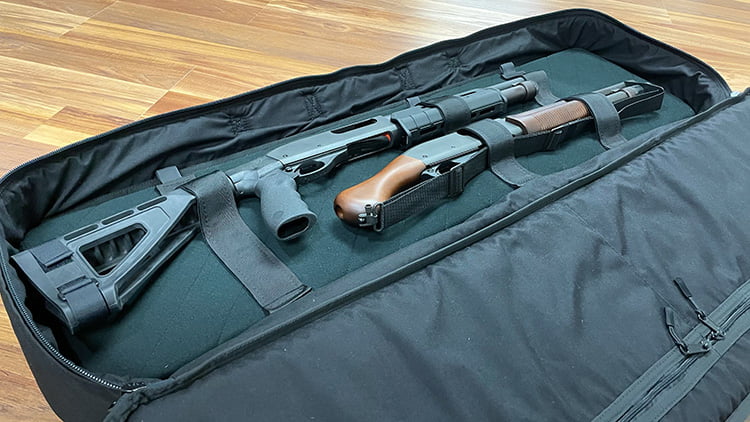
The Remington Tac-14 is a pump-action…. weapon.. that shoots 12 gauge shotgun shells. Jokes aside the Remington Tac-14 is a shorty shotgun that skirts the legal definition of a Short Barrel Shotgun and puts it right into your hands.

History of the Remington Tac-14

The Remington Tac-14 is originally released in late 2017 and while it hasn’t seen many productions in a few years, namely because of Remington’s bankruptcy and sale, it was a fan favorite upon release and continues to be in demand today.

The Remington Tac-14 really made a splash because it had all of the features of a Short Barrel Shotgun without all of the tax stamps and paperwork.

We will dive into what makes the Tac-14 legal in the next section but we hope that since Remington, now RemArms, is in new hands production of the Tac-14 and Tac-13 will soon pick back up!

Legalities of the Tac-14

So how is the Remington Tac-14 not considered a short barrel shotgun with a 14″ barrel, you ask?

remington tac 14

Well, it’s actually pretty simple.

Since the gun was never built with a stock it is not considered a shotgun, thus it cannot be a short barrel shotgun (SBS).

Shotguns by legal definition are designed to be fired from the shoulder and without a stock, this gun cannot be fired from the shoulder and thus barrel lengths do not apply.

Since pistols don’t have a barrel length required under federal law and can not be fired from the shoulder this gun is more of a pistol than a legally defined shotgun.

However, the overall length of a shotgun needs to remain longer than 26″ overall or it would fall into the any other weapon or “AOW” category of weapons.

Like SBR’s and SBS’s, AOW’s fall into the purview of the National Firearms Act, better known as the NFA. You can read way more about the NFA, SBR’s, and tax stamps in our Ulitmate Guide to Short Barrel Rifles.

State Laws

State laws are often wildly different than Federal Law and unfortunately for people living in the Peoples’ Republic of California and New Jersey, you are often left out of the freedom fun.

While we may come back in and dive into states that can’t possess right now we just recommend checking with local authorities on the legality of owning a Remington Tac-14 in your state.

Features

Features are what makes guns what they are and the features are likely why you buy gun x over gun y so what are some of the features of the Tac-14?

Time to dive in!

Grip and Ergonomics

The grip of this gun is special for a few reasons.

It takes you back to that infamous scene in the movie Training Day where “the bitch”, which was a Mossberg 500 Crusier, was racked and used to kill poor drug dealing Roger.

But shorty shotguns are nothing new and they are incredibly useful. The grip is the bird’s head style grip. The Tac-14 comes in a few different models. Namely, there is wood furniture and synthetic furniture.

The birdhead grip really makes this gun a comfortable gun to hold in your dominant hand.

However, this isn’t a super-light gun and with all your ammo toward the front of the gun in the magazine tube, you probably won’t be holding this gun one-handed very long.

We will talk about one-handed shooting later in this review.

Pump Action

The action on the Tac-14 is one of the main functions of the gun. It’s how you load the gun with freedom seeds and the main operation of the gun.

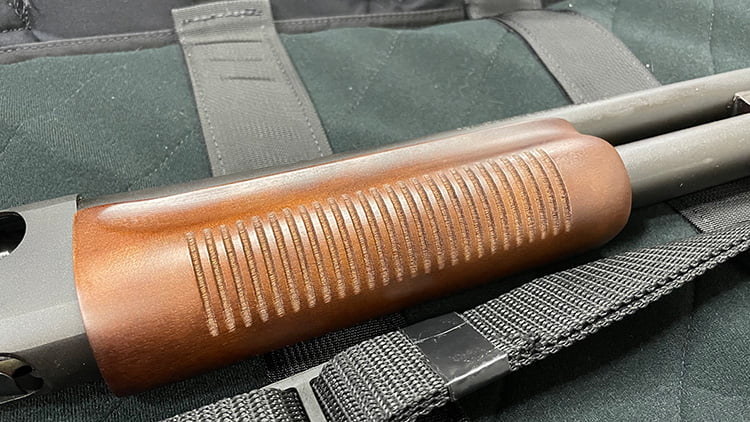
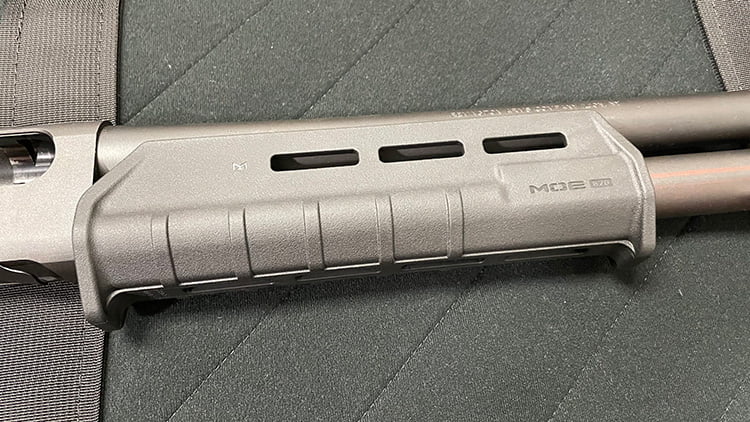
remington tac 14 handguard

The action is actually extremely smooth and overall it’s a positive experience.

Trigger

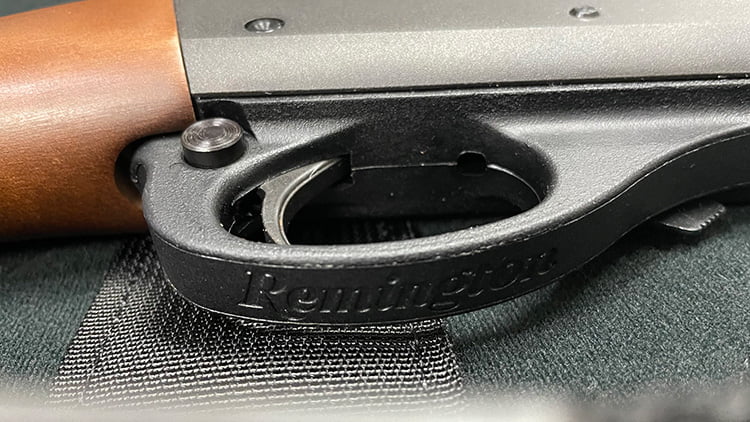
The trigger on the Remington Tac-14 is surprisingly good. I’ve never found shotgun triggers to be amazing but for what it is it’s great!

remington tac 14 triggerguard

The trigger doesn’t function much like a double-stage trigger. You don’t have much take up at all and the trigger basically starts at the wall.

With that being said it makes for an easy break and easy shooting.

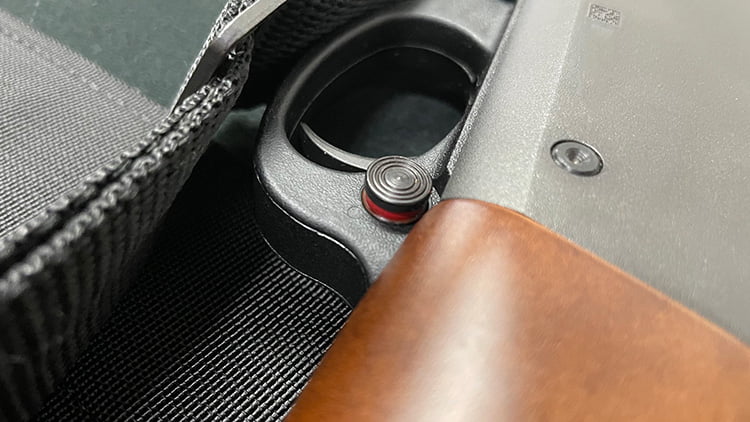
Safety

The safety sits behind the trigger at the top of the trigger well. It’s in an okay spot but honestly, it’s not great for this style of gun and how you hold it.

remington tac14 safety

There is no great place for a safety on a gun this small with this type of profile so while I don’t like the placement it does work.

There’s nothing really to report back on the functionality of the safety as it’s just a Remington 870 safety. It’s stiff but does the job.

Sling/Carry

Depending on how you use this gun you may want a sling to easily carry the gun around.

Remington Tac-14 Sling Attachment

The gun is extremely compact and can be difficult to carry at times. A sling can be attached to the Tac-14.

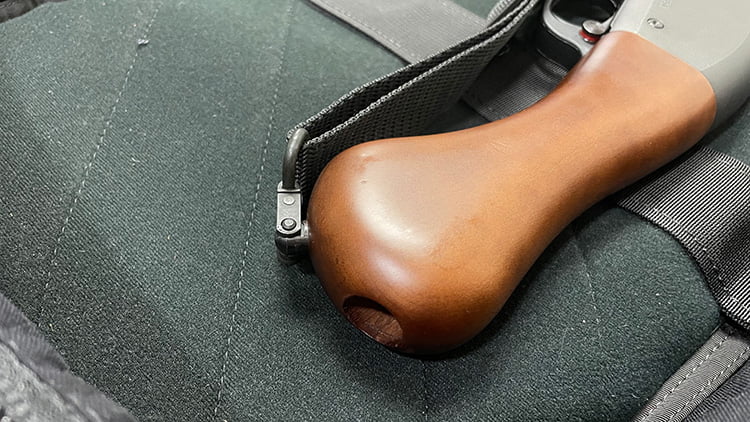
The birdshead grip has a sling attachment and you can purchase a front sling mount which I will talk more about in the accessories section.

Tac-14 Birdhead grip sling attachment

The synthetic model would allow you to attach an MLok sling attachment to the pump-action foregrip but would not allow for the front sling attachment method because the Magpul foregrip is in the way.

Accessories for the Tac-14

The nice thing about the Tac-14 is the fact that it’s built from the Remington 870 and opens it up to a ton of accessories and custom parts.

Grips

If you aren’t a fan of the birdshead grip you’re in luck. A number of companies offer new grips for this gun.

One grip that comes to mind is the Shockwave Raptor Grip (not to be confused with the Mossberg Shockwave). These can be easily switched out on your Tac-14 and provide an entirely new ergonomic to the grip of the gun.

One way to change out your grip is to add a pistol stabilizing brace. SB Tactical makes a Tac-14 pistol stabilizing brace that adds a pistol grip as well as their iconic stabilizing braces.

You can find them at a number of retailers across the web.

Forends

The most popular part of the gun is definitely the forend. You can easily swap them out and there is a number of aftermarket options for forends.

remington tac14 synethic

If you get the forend with the Magpul forend, one of the most popular accessories is the strap. These are available on Amazon and are a cheap nice upgrade to the gun that allows you to secure your grip on the pump-action.

Light Mounts

With the Tac-14 being such an optimal home defense shotgun it makes sense that you would want to be able to see if something goes bump in the night.

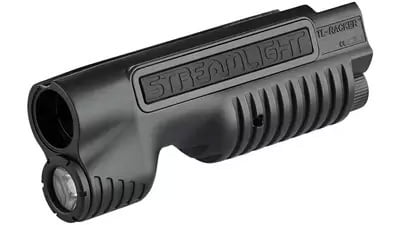
Streamlight Tac-14 Forend Flashlight

There are a number of options for light mounts, even stream makes a forend that has a Streamlight flashlight built right in.

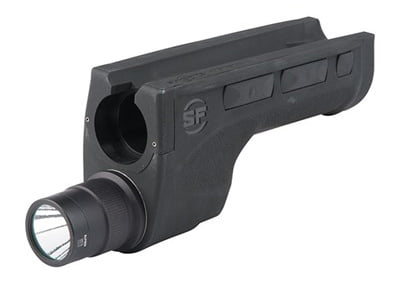
Surefire Remington Tac-14 Forend

If you are a Surefire fan you’re in luck because they make a forend light for the Tac-14/870 as well!

Sling Attachments

For the Tac-14 you have a few options for sling attachments. You definitely need two points of contact or at least one point on the grip of the gun if you wanted to single point.

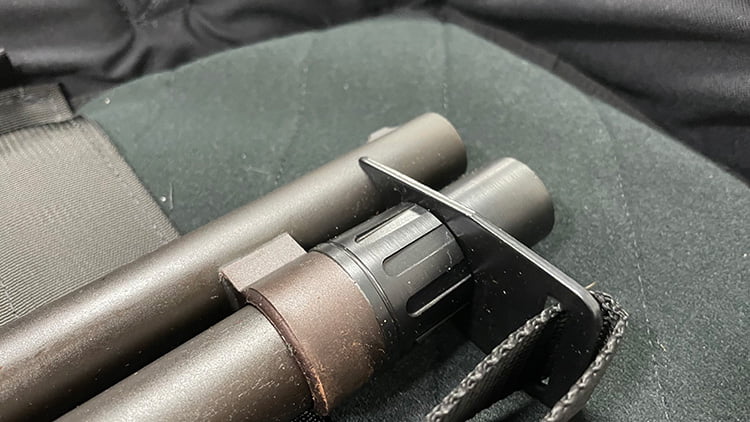
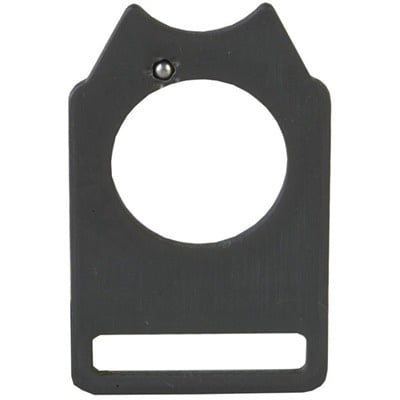
tac14 slingmount

The Remington sling mount is attached to the front of the gun via the magazine tube and allows you to thread a 1-¼” sling into the gun.

Ammo Holders

The ammo holders for the Tac-14 come in two different forms.

The first and arguability most popular option is shot cards. Shot cards are typically made of nylon and elastic and hold between 2 and 5 additional shotgun shells.

Then you have plastic mounted holders as well that attach in nearly the same spot as the shot cards.

There are also aluminum shell carriers which are the highest end of the shell carriers.

Shooting the Tac-14

Shooting the Tac-14 is… an adventure to say the least. Time to just be frank.

There is almost nothing to mitigate recoil with this gun. This is straight 12 gauge recoil in full glory.

It’s a wildly fun gun to shoot but in the pistol brace configuration, I definitely don’t want to shoot it all day.

You likely won’t be shooting this gun full extended and will likely be hip firing it more than anything.

Hip firing the gun is relatively comfortable but not accurate at any kind of distance.

High brass 12 gauge buckshot definitely has more recoil than anything I shot that was low brass.

Overall, shooting it was shooting a short Remington 870. I liked it a lot but wouldn’t want to shoot it all day.

Conclusion of the Remington Tac-14 Review

The Tac-14 has its purpose there is no double about it. Is it a range toy or a workhorse?

Well, it depends.

I see the Tac-14 is a multi-purpose gun but ironically I think it’s more of a home defense or truck gun than it is a range toy.

When I first saw this gun, I loved the idea of it. I like the compactness and thought; man, that will be a fun gun to shoot on the range.

However, when I finally got my hands on it and was able to shoot it I quickly realized it wasn’t a gun I wanted to shoot all day long at the range.

But after shooting it, it dawned on me, that this is the perfect backpack/truck/home defense shotgun. It’s compact and easy to store and easy to deploy in close quarters.

If you are looking for something to put hundreds of rounds downrange this may not be your gun. But it may be, depending on how much you like recoil.

Overall, this is a solid gun. It has its place and it functions very well.

FAQ’s

Clothing

0

Footwear

Y

our boots are the most important pieces of equipment you will bring. You can borrow a gun, jacket or pack, but rarely will you be able to borrow boots. The most important aspects are fit and comfort, followed by durability. If you have foot problems or you just want your feet to feel good, I’d recommend visiting a foot specialist and getting a set of custom orthotics made.

You should at least get an after-market insole/foot bed like Super Feet. Different boots fit different feet types. If the boot does not feel good, don’t buy it for its looks. Concerning boots, I prefer all leather for most mountain hunting situations. The Kenetrek Mountain Extreme 400 is the best I have used in any situation PERIOD!

Plastic boots are okay in cold weather and rough terrain, but are not real comfortable to walk in over flat ground. In general, boots with less side stitching are good. Gore-Tex boots work well, but I also recommend getting a pair of 13” tall, non-insulated Gore-Tex socks from Cabela’s or another laminated sock brand called Seal Skins, in the event you step in water or your feet get wet from sweat. This is cheap insurance for dry feet. Air bob type soles work well in mud and soft terrain, provide good traction, but are not very durable in rock.

Most leather boots that you see advertised for hunting are insufficient and fall apart quickly. The following are some recommendations: Kenetrek Mountain Extreme 400 are our #1 choice boot as all our guides now use them in all situations. They are very durable extremely comfortable and have almost no break in time. (Contact -Jim Winjum’s web site via our Links page). The Canada Hunter 200 or 800, Alaskan Hunter, Teton Hiker and the Denali’s. Outdoor Essentials (owned by Seighard Weitzel), sells the top of the line Meindl boots (Loggers). They have good rubber and very little side stitching and hold up well in the rocks. Danner boots work, but are not the best in steep terrain or rocks.

Other excellent boots to consider are made by Kayland, Technica, Asolo, Garmot, One Sport, Vasque, Merrell, La Sportiva, Salomon and Lowa Sheep Hunters are all good. Try to get leather boots that will handle abrasive from rocks and brush and do not break down when wet.

Your boots will last much longer if you take care of them. Wear your boots around a while before you “grease” them. I clean any oil or dirt off exposed side stitching with rubbing alcohol or acetone, then coat the stitching with Seam Grip or Freesole to prevent it from getting cut on rocks and brush. Several light coats work well. For waterproofing boots, Nikwax paste works well. Meindl makes a good Wax also. Use Montana Pitch Blend on Schnee’s boots. An old toothbrush works well for applying Nikwax. I generally heat MT Pitch Blend in a Microwave or pot of hot water and apply it with a paintbrush. Use your fingers to rub the stuff into the leather grain. Snoseal and Mink oil are not as good as those mentioned .

A trick for comfortable feet, especially on a backpack trip, where you will be unable to pack another set of boots, is to bring along another set of insoles that fit your feet slightly differently than your others. It may help prevent hot spots from forming.

A Leki or Black Diamond (“Black Diamond Carbon whippet” is my go to) telescopic hiking pole is highly recommended for most people and mandatory for people with bad knees and/or poor balance. I personally will not hike with a pack without a walking stick. One other trick for people with weak or sensitive knees is to wear a set of lightweight kneepads when hunting in rocky terrain or for stalking sheep and goats in the sharp rocks. The Sitka Timberline pants have these built in or Arcteryx also sells a very good, more durable strap-on set.

After you’ve spent all that money and time finding the right set of boots, don’t cut corners on cheap socks. Bridgedale and Lorpen makes the very best. Smart wool, Wigwam & Thorlo are excellent too. There are other brands of decent socks, but these are great. If you have high volume feet, one sock may work. Some wear a liner under a heavy sock or will wear two medium thick socks together. Experiment to find out what is best for you. Of all the clothes you wear, socks are the most important to keep clean and fresh. It is a good idea to have enough for a change every 2-3 days. Athlete’s foot and blisters are not fun. Take care of your feet.

Clothing / Outerwear:

For sheep hunts I recommend Sitka in the Optifade pattern. We all use it and it works very well in the terrain we hunt. Contact David Brinker at Sitka Gear, [email protected]. He will hook you up with the right setup for any situation. I only use clothing made by Sitka. Below there is alss some options that may work for you as well.

In general, stick with synthetics (Fleece, Schoeller, Saddlecloth, nylon/poly blends etc.) or wool. For backpacking, synthetics tend to be lighter and quicker to dry. Smart Wool is hard to beat. Wool is more odor & wind resistant than fleece, unless you use Wind stopper fleece like Beyond Fleece or Mountain Hardware. A jacket or parka with a hood is a good idea.

Make sure you have a belt or suspenders for your pants Collared shirts or Zipped pullovers work the best. A vest makes a great layering tool. Some people like them and some don’t. Down vests are very warm and work well late in the fall. A fleece or wool vest will work most of the season. A lightweight jacket made with synthetic fill (Kelvin Jacket (Sitka) or Brooks Range Jacket – Barney’s Sports) is a good idea if you get cold easily. A good hat and gloves are vital to staying comfortable.

A brimmed hat works well for warmer weather, rain and for people who don’t like hoods. They can get in the way on a backpack hunt. Later in the year, a hat with earflaps will keep your neck and ears warm. Wind block fleece gloves with a shell is a good all weather combination. For cold weather, a pair of waterfowl type, Gortex gloves (Cabela’s MT050) works well as does a mountaineering type glove made by Patagonia, Mountain Hardware or Black Diamond or Outdoor Research “OR”. I always pack an extra set of “Stormfront” gloves with me as the temperature can change at anytime. If you get cold hands easily, bring a pair of mittens also.

In warmer weather, their Microtex (Burr Barrier) and lightweight fleece is great. LL Bean makes a nice set of Worsterlon clothes and wind bloc fleece. Day One Camouflage makes some of the nicest camo fleece, especially for bow hunters. They have a huge selection of patterns to choose from. Barney’s Sport Chalet sells some excellent Wind block Fleece and lightweight backpacking clothing (The Black, 3SP Sport hill Mountain Pants are great – maybe the best all around backpacking pant made for the money).

Mountain Hardware (Wind block) and Arcteryx (Gamma MX) make excellent Wind block pants and jackets. Mountain Hardware and Arcteyrx (Gamma LT) also make excellent early season backpacking/mountain/rock pants made from a Schoeller Fabric that breathe well and are very tough.

Another great line of wind block items if made by Beyond Fleece. They can custom make any size, color, feature you want. Regarding wool, King of the Mountain is the best all around for cold weather.

Another company that makes excellent technical wool clothing is IbexWear, Filson, Sleeping Indian Designs, Pendleton & Woolrich also make nice wool clothing. If you will be backpacking, the clothing should be light, quick drying and layering is a key.

Quiet clothing is important for bow hunting. For the mountain/backpack type hunts, noise and camouflage are not as important as warmth, weight, durability, comfort, fit and layering.

Regarding Camouflage, it is not necessary, but it will help you blend into the environment. If you want Camo, Sitka is by far the best Clothing for backpacking. The pattern you choose is not critical. If you are doing a mountain hunt, choose a color that is open and blends with rocks and ledges. Sitka, Kuiu, Kryptek, Mossy Oak, Advantage, ASAT, Predator & Real tree will all work.

You are not required by law to wear hunter orange.

Rain gear is likely the most debated subject in the clothing department. If you want rain gear that is maintenance free, affordable, relatively light weight, durable and fairly quiet, consider a set of Helly Hansen Impertech in Olive Green.

REMEMBER IF YOUR HIKING IN RUBBER RAIN GEAR YOU WILL SWEAT A LOT.

Sitka Gear is what we recommend – Stormfront. You can purchase it from Cabela’s or Barney’s Sport Chalet.

Good quality, 3-ply Gore-Tex (XCR is best) shells to consider include: Patagonia, Mountain Hardware, Taiga Works, Arcteryx and the North Face, these are not camo or quiet, but can work well for mountain type backpack hunts, especially in September and later. When a Gore-Tex jacket becomes dirty and looses its DWR coating, the water will not bead up on the surface, causing it to work poorly. Gore makes a product called Revivex that works on most outerwear.

For Backpack hunting (later season sheep), I recommend this group of 3-ply Gore-Tex rain gear as it does not absorb water and is easier to dry in the wind, without a fire or stove.

To keep your pants from giving you saggy crotch syndrome, make sure they come with a set of suspenders or use a bib instead.

When you combine a waterproof layer and a quiet outer material in one package, you get a quieter product, but it also becomes heavy and more difficult to dry when saturated. If anyone can help solve this dilemma, they will be able to retire and hunt forever. This is not so much an issue on horseback or cabin/wall tent type hunts, but is very important on extended backpack style hunts. If you are comfortable hunting naked, then you will not have to worry about this dilemma.

Underwear

Layering with multiple items is better than wearing just one or two heavy layers. Synthetics are the way to go for comfort, moisture wicking and warmth. In August, bring lighter weight material; in mid-September and later, you should bring heavier weight underwear.

Try products made with Thermax, MTP, Thermastat, Capalene, Polarmax and Micro Fleece. Polypropylene is not as good as it holds odor and should not be dried in a dryer. Merino Wool underwear can work well; Smart wool, Ibex Wear, Arcteryx RHO wool and Ice Breakers are great, especially in late September and October.

I prefer neutral colors: gray, brown, green or black as they can be worn by themselves. If you have long legs, get tall bottoms or you will experience high-water syndrome. Tops with a zip-top and longer neck are warmer and more comfortable when wearing binos. Arcteryx, Cabela’s & Patagonia made great synthetic products.

Regarding underwear, briefs or boxer briefs will work. I like boxer briefs when worn alone with just pants or regular briefs when wearing long underwear bottoms. Make sure that whatever you wear does not chafe your privates (some guides call this “Baboon Butt”) as you will be walking bow-legged and your smile will fade away (this is why I recommend a tube of Tinactin in your daypack). Some people don’t wear underwear underneath long underwear bottoms. Cabela’s MTP, Apalene, Polarmax and Sporthill make great synthetics. Ibex Wear also makes a set of Wool,no-itch briefs worth trying.

How to Tell if Deer Liver is Bad [Definitive Guide]

0

Sharing is caring!

Deer – also known as venison – liver may not be a staple in your kitchen. We’ll make sure you are prepared whenever you decide to cook up a delicious deer liver pate.

This article will cover how to tell if deer liver is bad and other common questions surrounding its storage.

Signs That Deer Liver Is Bad

Brown Color

If the deer liver has changed from brown to red, then it has gone bad.

Liver should be a rich, deep red. The liver will also contract a metal-like shine when it starts to deteriorate. Although, this can be hard to notice as the liver is already a little shiny. It is best to look out for dramatic color changes.

As a general rule any form of discoloration is a sign the liver has spoiled. The liver will need to be immediately disposed of.

Sour Smell

Deer liver will start to smell when it begins to expire or deteriorate. It is common for the liver to contract a pungent, sour smell when it has gone bad.

A fresh deer liver has a non-distinct, semi sweet smell. Any smell that is different from this is a sign the liver can no longer be eaten.

Slimy Texture

The texture of deer liver begins to change when it has gone bad. A thick slime can appear on the liver when it has gone bad or has started to deteriorate.

This occurs because the liver is breaking down. If this happens, it is likely that it has been too long since the deer was killed and the liver is losing freshness. Alternatively, the liver may have been exposed to the elements, in particular, heat.

Do not consume the deer liver if you notice any of these signs.

What Do White Spots on Deer Liver Mean

White spots on deer liver are a symptom of liver fluke or tularemia. Liver fluke is a name for the parasites that infest the liver. Liver fluke can happen to both animals (like deer) and humans.

Tularemia is an infectious disease that attacks the internal organs of animals. Tularemia also presents as white spots in a deer’s liver.

It’s really important to inspect the deer liver for white spots before you consume it. White spots mean that the liver is not safe for human consumption.

If you do eat liver that has been infected with liver fluke or tularemia you may become unwell. Cooking can kill bacteria, however, it is better to be safe than sorry.

What Happens if You Eat Bad Deer Liver

Eating spoiled meat can make you very unwell. It contains pathogenic bacteria which are the cause of food poisoning and other food related illnesses. Bad deer liver should be immediately disposed of.

It’s good to note that a lot of problems derive from the freshness of the meat. To protect the liver (and yourself) make sure you refrigerate as soon as you have purchased or killed the meat.

Similarly, throw away any liver that has sat around for too long (regardless of whether it is in the fridge, freezer, or on the counter).

Can You Eat Deer Liver Raw

Technically you can eat deer liver raw. Although, medical practitioners do advise against it. This is because deer liver contains pathogenic bacteria like hepatitis e, salmonella, and campylobacter, which can make you very unwell.

It is best practice to thoroughly cook deer liver before you eat it. Cooking will immediately kill any bacteria in the liver.

Raw liver has an overpowering metallic taste to it due to myoglobin from the deer. You’re not missing out on much, it’s not even that nice to eat raw!

How to Clean Deer Liver

Before cooking, freezing, or refrigeration, you will need to clean the deer liver. Deer liver is a notoriously dirty cut of meat. It has a lot of blood, slime, and other moisture attached to it.

The more excess you can remove from the liver, the better it will taste. Follow these steps for a thorough clean;

  1. Slice the deer liver into bite sized chunks.
  2. Remove any grisly bits attached to the liver.
  3. Dissolve two tablespoons of salt in a bowl of water.
  4. Place the liver chunks into the water.
  5. Place the bowl of water with liver in the fridge.
  6. Leave to soak for a couple of hours.
  7. Pat dry with paper towels.
  8. The liver is now ready to be cooked

How Long Does Deer Liver Last?

On the Counter

Deer liver (both raw and cooked) can be left on the countertop for up to two hours. Raw, exposed meat can easily spoil at room temperature. Do not eat or cook deer liver that has been left on the counter for longer than 2 hours.

In the Fridge

Raw deer liver should only be kept in the fridge for 1-2 days. You can keep cooked deer liver in the fridge for 3-4 days (this also applies to pate). Offal goes off far more quickly than other cuts of meat.

In the Freezer

Deer liver (both raw and cooked) can be frozen for up to 3 months. After 3 months, the liver can deteriorate from freezer burn or it will start to lose its freshness.

Is It Okay to Freeze Deer Liver?

Yes, deer liver can be frozen. Here’s how we like to freeze our deer liver;

  1. Drain excess liquid and blood from the liver before you freeze it.
  2. Portion and divide your liver into meal sized portions. You don’t want to necessarily thaw the liver at a later date.
  3. Wrap your liver in clingfilm and place it into airtight bags. A vacuum sealer is the best option, however, this is not always feasible. At the very least make sure you double wrap the liver. This helps the meat stay as fresh as possible, for as long as possible.
  4. Label your liver with the date you placed it in the freezer and the date it should be used. A good rule of thumb is a 3 month expiry.

How to Store Deer Liver

Deer liver can be stored in its original package or an airtight container.

When you first purchase the liver it will come in plastic packaging. It is secure, safe, and convenient to keep the liver in this packaging.

Alternatively, you can remove the original plastic package and store the deer liver in your own airtight container. Find a container that has enough room and a locked lid.

You can also store the liver in a ziplock plastic bag. Both are great options if you want to marinate the liver before cooking.

It is best to place the liver in the fridge immediately after you purchase it. Leaving liver on the counter, while temporarily fine, can encourage product spoilage.

It is better to throw it straight in the fridge to ensure it stays fresh. You should only leave the liver on the counter if you are going to cook it straight away.

Remember, meat should be stored in a refrigerator at a temperature of 10°C. Bacteria can start to grow at temperatures under 10°C. Find the coldest part of your fridge and store the liver close by. If you need to keep the liver past its use by date then the freezer is your best bet.

Health Benefits of Deer Liver

Deer liver is rich in nutrients. It is filled with B12, vitamin A, riboflavin, and copper.

Liver is also high in protein, and low in fat. Deer liver can help you achieve a balanced, filling, and nutrient dense diet.

You should make sure that you get your deer liver from a responsible source.

The liver is a filtering organ which means that some nasty bacteria can sneak onto your plate if you’re not careful!

To Sum Up

Deer liver requires a bit of extra preparation and care than average meat. You should not eat deer liver if you notice any discolouration, slimy textures, sour smells, or white spots. If you see or smell any of these symptoms you should immediately dispose of the liver.

Deer liver can be stored in an airtight container or a ziplock bag. You can store liver on the countertop for up to 2 hours or it can be stored in the fridge for 1-2 days. Alternatively, you can freeze the liver for up to 3 months if you don’t want to cook it straight away.

Predator Calling: How to Call Bobcats Day or Night

0

Calling in bobcats is a tough task many predator hunters attempt, but few master. After reading these bobcat calling tips, you’ll be on your way to having a better understanding of how to call in bobcats at night and during daylight. A lot of bobcat calling mastery comes from understanding their characteristics, behavior, and perspective on life as they see it.

General Bobcat Calling Tips

Calling Bobcats at Night

Nighttime Setup and Location

How to Call Bobcats at Night

Calling Bobcats During Daylight

Day Time Setup and Location

How to Call Bobcats During the Day

Best States for Calling in Bobcats

General Bobcat Calling Tips

Generally speaking, bobcats are most abundant near water sources. They prefer traveling through creek beds, along rivers and streams, and even heavy brush areas. They aren’t ones to come out in the open, they almost always prefer to have cover as they are natural stalkers.

In order to be effective in hunting a territory for bobcats, the first step is figuring out if they are even in the area. A section of land that has all the characteristics that cater to bobcats, may still not actually have bobcats.

The first and foremost method of confirming if a bobcat is in the area is to search for tracks, scat, or even dead animals covered with leaves and brush or in trees.

Here’s a couple general calling tips that separate bobcats from coyotes:

  • Scan areas of cover heavily while calling, bobcats rarely fully commit to a call like a coyote does.
  • Coyote stands may be over in as little as 15-20 minutes, bobcat stands can last an hour or longer.
  • Stopping and starting calling sequences can spark a coyotes curiosity, the same tactic will cause a bobcat to lose interest. It’s important to keep bobcats focused on the target, and never stop calling. Decoys are also a great method to keep bobcats focused on the prize.
  • Location calls work to find areas with coyotes, but scouting and observing is the best method to find areas with bobcats.
  • If you’re calling bobcats in a new area, talk to the local farmers and ranchers or even Wildlife Department to get an idea where they are most commonly seen.
  • Foxes and coyotes are more likely to come to your call before a bobcat does. Be aware of this before choosing to discharge.
  • Bobcat calls should be higher pitched and at lower volumes as they get closer to the call. Bird and rabbit distress are two go-to calling techniques for bobcats.

Calling Bobcats at Night

The general bobcat calling tips we discussed above apply to calling bobcats at night, but the strategy of night time calling and day time calling is significantly different.

Nighttime bobcat calling is learning how to use the darkness to pull bobcats out of areas of cover, where they feel more comfortable. The darkness gives them a sense of protectiveness, and with the help of red hunting lights you can reveal them in the open without them knowing.

Nighttime Setup and Location

The best areas to setup while calling bobcats at night are open fields near a brush or tree line, open senderos, or even in the middle of dry creeks if there is enough visibility.

Bobcats are notorious to stay in areas of cover, but at night the darkness is their protection so they are far more willing to come out into the open. In our opinion, it is far easier to call a bobcat in at night versus the day time.

Thermals and night vision are becoming more popular for nighttime bobcat hunting, but red hunting lights can be equally as beneficial. Learn how to properly scan when predator hunting and a light can be more advantageous than night vision or thermal.

We prefer using our Predator Cannon Hunting Light Bars for calling bobcats at night, as they light up an entire field in red without alerting the cat, and are fully dimmable for near and far ranges. We’ve picked up a bobcat in the scope at over 800 yards with the Predator Cannon.

Calling Bobcats from Predator Cannon High Rack Shooting Chair

Predator Cannon Hunting Light Bar Setup for Calling Bobcats

If you’re interested in a mobile setup for calling in bobcats and covering a bunch of land, the Predator Cannon Hunting Light Bars are most likely a great fit for you. Here’s some different mounting idea’s we’ve seen from bobcat calling contest winners: Predator Cannon Hunting Light Mounting Ideas.

How to Call Bobcats at Night

When calling bobcats at night, once you start…don’t stop. They can lose interest very easily. The good news is bobcats are more likely to commit to a call like a coyote would at night in comparison to the daytime.

It’s best to know where you’re going to setup and scope the area during the day so you’re not fumbling around at night distracting critters around you.

  • Calls should be based upon what is more locally available in terms of birds and rabbits: if there are woodpeckers, use woodpecker distress; cottontails, use cottontail distress; jackrabbits, use jackrabbit distress and so on.
    • If you aren’t sure what’s in the area, the three distress calls listed above are fairly universal in attracting bobcats. The following are my favorites (in order) – cottontail distress, jackrabbit distress, woodpecker distress.
  • Learn how to scan while predator hunting, and never stop. Use the light to your advantage by using it as your camouflage without alerting the target.
    • A dimmable red hunting light that is well within their color blind range is key to illuminating the bobcat without alerting them.
    • It’s true that if the light is used properly, you can literally walk right up to a bobcat (within 30-40 yards) without alerting them.
    • I keep my bow stabilizer light on hand at all times in the event I have to be mobile while calling. It’s small enough to fit in my pocket, but has long range capabilities combined with desirable dimmable controls.
  • Constantly scan for eyes, and be prepared to act fast on a committed bobcat.
    • Be wary as raccoons, fox, and coyotes are all likely to commit to the same calls you are using to attract bobcats at night.
  • Use the wind to your advantage, position yourself downwind from the call to limit the senses a bobcat can use to expose you.
  • Even though it’s nighttime – STILL USE A DECOY. Bobcats have great night vision and will still be able to see it. This is a great way to get them to commit to the call.
    • My personal favorite decoy is a Mojo Critter, or any furry mechanical toy that has a whipping tail on it.

Calling Bobcats During Daylight

Calling bobcats during daylight can be a tough task to accomplish. One could say they have severe commitment issues unless they are enticed really, really well. The best way to entice them? Well, a decoy… or something similar such as hanging turkey feathers from a limb.

I’ve tried both and a mechanical decoy is more enticing that feathers hanging, but either one is better than nothing.

Day Time Setup and Location

Bobcats are more than likely not going to come out of cover during the day like they would at night, so the key to your day time setup is to be near areas of cover and constantly scan the brush or wooded area looking for a feline sitting on the edge of cover.

It will be your job to spot them camouflaged in cover before they lose interest and leave.

How to Call Bobcats During the Day

  • Similar to nighttime calling, the same types of calls apply – go with what is local to the area in terms of rabbits and birds, ideal calls are: cottontail distress, jackrabbit distress, and woodpecker distress.
    • Be prepared to see fox and coyotes, as they are more likely to commit before a bobcat will. Raccoons are common at night but less likely to come out during the day.
  • Anything can happen, but plan on the bobcat coming in slow and making frequent stops. Keep your eyes peeled, but most bobcats won’t come into sight until the 20 minute mark and may not come until the hour mark.
    • Be confident in your scouting and don’t leave too soon.
    • Duration of stands are much longer than coyote stands, but when moving from one stand to the next, should move at a greater distance. We typically move at least half a mile from previous calling location.
  • Decoys are extremely important to keeping the bobcats attention. Never stop calling, minimize your movements, and make your shot count. A spooked bobcat is tough to call back in no matter what your buddy says.
  • Be prepared to discharge when you are capable of taking the shot. Don’t wait too long. Despite a running call and action-packed decoy, bobcats can still lose interest very easily.
  • Be prepared for the unexpected: there are a few times where we’ve called in a dry creek bed that was not pressured and happened to be a bobcat’s territory. Within seconds of starting our call, the bobcat came sprinting down the creek bottom letting out the loudest and most unique sound I’ve ever heard, repeating it over and over. Come to find out it’s known as the bobcat bark.
    • A bobcat’s bark is typically their way of chasing another animal from its home territory. It’s a protective instinct, so if you hear it, be ready as you’ve got a cat coming quick.

Best States for Calling in Bobcats

Most states have bobcats, but some are more abundant than others. We are located in Texas, where there is no season for bobcats, but many states do have a season for taking these critters. Texas is home to some of the biggest bobcats in the nation, and they’ve become a nuisance for farmers as they favor feeding on young or injured livestock.

Here are our top 5 best states for calling in bobcats:

  1. Texas
  2. Kansas
  3. Missouri
  4. Nevada
  5. Oklahoma

Fun fact: Generally speaking, approximately 2/3 of all bobcat harvests come from trappers who are called to the area by farmers. The remaining 1/3 of harvests are from hunters.

Closing Remarks

Over the years, I’ve seen a bobcat react in just about every manner you can imagine. Each bobcat has it’s own personality and characteristics just like we hunters and our pets do, but I can say that in general terms they are going to come in slow to a call with frequent stops.

They rarely do anything that would make them stick out of the brush, so it’s extremely important for you to closely monitor the area and be aware of change, movement, and the outline of their body.

I can’t tell you how many times I’ve come close to giving up on calling in a bobcat and I do one last scan through brush and end up picking out a bobcat sitting still, patiently watching my decoy.

Thanks for reading along. I hope I am able to help another hunter learn the bobcat calling game and become a better predator hunter like those who helped me.

All About Juniper Berries: a Very Tasty Spice

0

juniper berries

If you’ve ever tasted gin, you know what juniper berries taste like. The flavor is sometimes described as citrusy and evergreen, sometimes as reminiscent of rosemary. Juniper fruit has both bitter and sweet overtones. It’s complex, and useful for flavoring much more than gin.

Technically, juniper berries are cones, but they’re soft, fleshy cones, rather than the more familiar, hard, spiky cones. Since this isn’t a botany class, let’s just call them berries for the sake of conversation.

The fruit of common juniper (Juniperus communis) is generally considered to be the most flavorful juniper berry, but J. virginiana (eastern red cedar) also produces tasty, edible berries. These are the two most common species in the U.S.

Juniper fruit takes about two years to ripen, so it’s not unusual to find both green (unripe) and purple/blue (ripe) fruit on the tree at the same time. And while a ripe fruit makes an excellent trail nibble, an unripe fruit is intensely bitter and unpleasant. I use them to make cocktail bitters, but not for eating out of hand.

You can buy dried juniper berries in the spice section of a good market, but it’s so easy to harvest your own, you’d be crazy not to give it a try. Plus, who knows how long those store-bought berries have been sitting on the shelf? When you forage for your own juniper, you’ll know exactly how fresh and flavorful they are.

The flavor of fresh juniper fruit is juicy and complex. Dried berries aren’t juicy, but they are spicy and enticing. Fresh or dry, juniper berries have a strong flavor, so use them in moderation. Just a few berries, coarsely ground in a mortar with a pestle, are enough to flavor an entire batch of sauerkraut. They also make a great glaze for cookies and a super-simple fermented beverage called smreka.

I’m often asked if juniper berries are safe to eat, and there’s some controversy about this subject. If eaten in huge quantities over an extended period of time, juniper berries may be toxic. But don’t let this alarm you unnecessarily.

The same can be said of other common cooking spices. For example, consuming large quantities of cassia cinnamon gives you too much coumarin, which may harm your liver and kidneys. But no one warns you not to bake with cinnamon. Because the amount we use in baking is generally safe. In the same way, using most juniper berries as a flavoring in dry rubs and marinades is perfectly safe, unless you have a specific allergy.

There is one juniper (Juniperus sabina) that may be dangerous when eaten, but scientific literature on the subject is frustratingly incomplete. Studies have been made of both the bark and essential oil of J. sabina. The amount of essential oil estimated as harmful to humans is approximately one gram. Unfortunately, this doesn’t take body weight into account and that is clearly relevant. One gram of a chemical constituent is going to have a different effect on a 200 pound man than it will on a 70 pound child. But even if we accept the one gram figure, this is considerably more essential oil than you would get in a few berries. And humans aren’t grazing on juniper bark the way livestock is.

An FDA abstract says that the fruit of J. sabina has high concentrations of several potentially dangerous phytochemicals, but is inconclusive. Here’s how it ends: “The quantity of toxic ingredients, sabinene and sabinol, in gin were unknown. Neither was anything known concerning their toxicity to man. In fact, no formal studies had ever been carried out on the chronic toxicity of these materials.”

J. sabina isn’t native to this country (although it may be sold as an ornamental), so in the United States you’re more likely to come across safe junipers like J. virginiana and J. communis if you’re foraging in the wild. I feel completely safe using the fruit of both of these plants in moderation. You, dear reader, will have to decide for yourself what you feel comfortable with. I hope you’ll taste a fruit before you decide.

Best Air Rifle Deals

Popular Posts

Best Air Rifle Brands – Who Makes the Best Pellet Gun?

0
In Jeff Bezos’ own words: "A brand for a company is like a reputation for a person. You earn reputation by trying to do hard...

How Far Can a .22 Air Rifle Pellet Travel?

0
"Unveiling the Power: Exploring the Distance Capabilities of a 22 Air Rifle Pellet. Discover the fascinating journey of a 22 air rifle pellet as...

How far can an air rifle shoot accurately?

0
An air rifle's effective shooting range depends on various factors, including the type of rifle, the caliber, and the power source. Generally speaking, most...