

Home Blog Page 8

The 7 Best Rimfire Scopes for .22LR in 2024

0

Shooting a rimfire rifle is a favorite pastime of mine. But beyond just plinking for fun, there’s hunting and a competitive rimfire field.

The type of shooting you do with your Ruger 10/22, M&P 15-22, or Henry AR-7 will determine which is the best rimfire scope for your 22LR.

Since the .22LR is a plinking, hunting, and competition round, there’s a lot that it can do, but it also has its limitations.

With that said, I consider scope features that address parallax, close ranges, reticle type, focal plane, and of course, cost.

Let’s dig in!

The Best Rimfire Scopes for 22LR in 2024

1. Vortex Crossfire II 2-7×32 Rimfire – Best Overall

One of the most popular scopes rated by the masses is the Vortex Crossfire II. This particular model is the 2-7×32 Rimfire scope with the V-Plex (MOA) reticle. Simple, affordable, and accurate. It’s why it’s a heavy hitter in the rimfire scope market.

Pros:

  • Cost
  • V-Plex reticle
  • SFP reticle
  • Resettable turrets
  • Fog/waterproof

Cons:

  • No illumination

Not having illumination isn’t necessarily a bad thing, but come low light or dark targets in shaded areas (think squirrels), having a red aiming dot can be a great boon. The only reticle available in the Rimfire model for this configuration is the V-Plex.

Now the V-Plex is a great and simple hunting reticle. Whether you’re popping off cans or nailing jack rabbits, the V-Plex is easy to employ. The posts are 0.57 MOA in size with the center crosshairs 0.17 MOA in size. So, they’re small enough not to cover up vitals on rodents. With the reticle located in the second focal plane, you’ll always have a full-size view of the crosshairs even at minimum 2x magnification.

Having been outfitted for the rimfire cartridge, the parallax setting is fixed at 50 yards. This will be perfect for close quarter shots as well as some reach out to 100 yards.

With 0.25 MOA adjustments, resettable to zero turrets, and caps to set-‘em-and-forget-‘em, the Crossfire is accurate and couldn’t be simpler to sight-in and employ right away.

At under $150 street price (approx.), the Crossfire II riflescope is a quality buy for plinkers and hunters. With its high ratings across the board, the masses have spoken.

2. Maven CRS.1 3-12×40 – Best for Hunting

The Maven CRS.1 was made for hunters by hunters. It’s an excellent rifle scope that I mounted to a Ruger 10/22 just because I could. It meets cost, reticle, and magnification requirements I have for a hunting scope on a .22LR rifle.

Pros:

  • Excellent glass
  • 4x zoom magnification
  • Fixed parallax
  • 0.25 MOA adjustments
  • CSHR SFP reticle

Cons:

  • Clarity at 25 yards

The CRS.1 has fixed parallax at 100 yards, and the .22LR round can and will go that far. However, at 25 yards, the clarity is just shy of sharp – it’s marginally soft. Obviously, it’s strengths are at 50+ yards, but I also think it’s just fine for 25-50 yards too.

As a C-series optic, it has excellent glass quality – it’s something Maven is pretty good at. I wouldn’t hesitate to use this as a hunting scope on my .22 or elk rifles. During field-testing, I did just that by mounting it to my Ruger 10/22 and .270. I also put it on my AR-15. Just so you know, the bundle package includes rings!
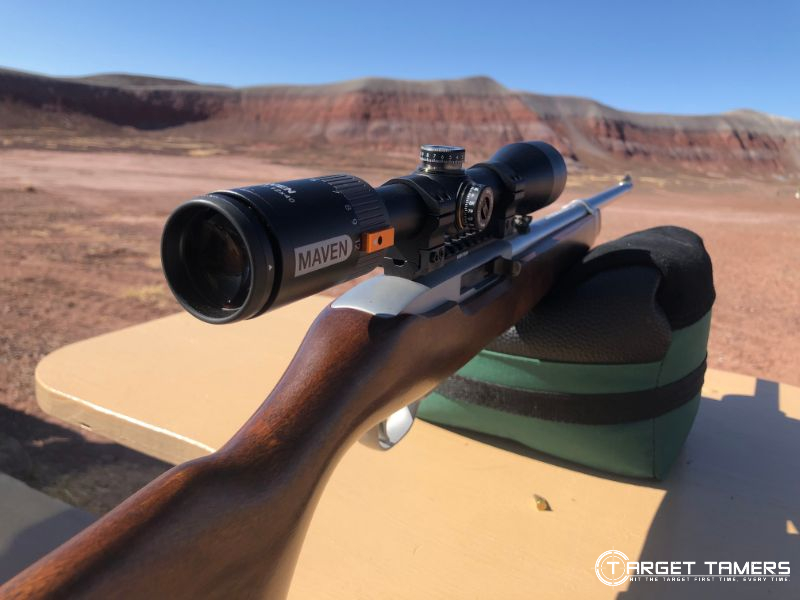
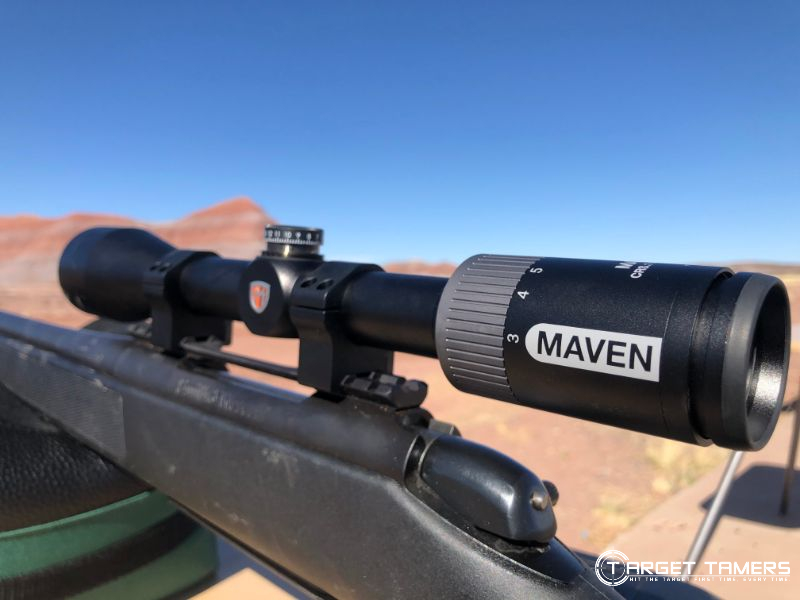
CRS1 Mounted on Ruger Rifle
Ruger 10/22
CRS1 Mounted on S&W 270
S&W .270 iBolt
Images by Tina Fa’apoi (Own Work) for Target Tamers

The CRS.1 riflescope has 0.25 MOA adjustments, it tracks excellently, and I was extremely happy with my groupings and 100-yard zero.

The CSHR reticle is a simplified version of the SHR reticle. This one is made of wire, is bold and visible, and is in the second focal plane. This is something that hunters like because it’s highly visible at every magnification. Holdover values are 5, 10, and 20 MOA at 12x magnification.

If you wanted to put this scope on a different rifle, there’s nothing stopping you from doing so. The build quality is solid. The warranty is proven. The CRS.1 would be a high-quality scope for a .22LR.

3. Burris FastFire 3 – Best Pistol Sight for .22LR

Compact, fast, and convenient. The Burris FastFire 3 is a micro red dot sight ideal for the pistol in .22LR. Even though it mounts to handgun slides, it also comes with a Picatinny base in the box for mounting to a rifle rail.

Pros:

  • 8 MOA dot
  • Dynamic illumination
  • Manual illumination
  • Sunshade cover
  • Picatinny rail mount

Cons:

  • Battery compartment lid

First time shooting with the Burris FF3, I had an oopsie kind of moment. I didn’t secure the battery compartment lid properly, and it came off when I shot a round. That was an epic user fail in my books, and fortunately, I’m more aware of that now.

Burris FF3 with cover
Cover attached & mounted to Sig P320 X Carry
Burris FF3 Sensor VS Low illumination
Sensor VS Low manual illumination
Burris FF3 box opening
What’s in the Box?
Images by Tina Fa’apoi (Own Work) for Target Tamers

I really like the compact size of the pistol sight. It’s around 1.9” in length and weighs a mere 1.5 oz. Though it’s tiny, it’s built like a tank. I racked the slide multiple times against a wooden bench leaving the Burris FastFire sight no worse for wear.

It has an 8 MOA dot powered by a CR1632 battery, defaults to dynamic (ambient) illumination, but it does have a manual 3-setting illumination override.

Range testing Burris FF3 mounted to MP1522
Battery compartment of the Sig Sauer Romeo 5
Mounted to 15/22 via included Pic mount – Images by Tina Fa’apoi (Own Work) for Target Tamers

What makes this great for both .22 pistols and rifles is that it also comes with a Pic rail in the box. Yes, I’ve mounted it to a .22 rifle and had a blast. The large dot makes it easy to see and acquire in the field.

When it comes to cost, it’s cheaper than the field-tested Leupold DeltaPoint Pro (check out our comparison of the Fastfire 3 and the Deltapoint Pro here) and other alternatives from Trijicon and Sig Sauer. As a versatile red dot sight with no perceivable parallax issues, and it’s ideal for close-range work, it’s a winner.

4. Sig Sauer Romeo 5 – Best Red Dot Sight for .22LR

The Sig Sauer Romeo 5 is one of the most highly-rated and popular red dot sights in the market. It’s affordable, has MOTAC, and it’s just as good for the .22LR round as it is for the 5.56mm and more.

Pros:

  • Price
  • Red dot sight
  • 2 MOA dot
  • Multi-height mounting system
  • Long battery life

Cons:

  • Non-adjustable MOTAC

Since it’s a red dot sight, the Romeo 5 is often shot from my AR-15 rifles. It’s seen a lot of action on top a S&W M&P 15-22. My most recent complaint is that it somehow got stuck to my 5.56mm rifle rail. Long story short – a screw extractor set was necessary. So, don’t over-torque the tension!

What makes the Romeo 5 so popular is its motion-sensor feature, MOTAC. It automatically goes into stand-by mode after 120 seconds of non-use. When motion is detected, the illumination kicks on and the dot is ready and waiting for use by the time you get rifle to shoulder.
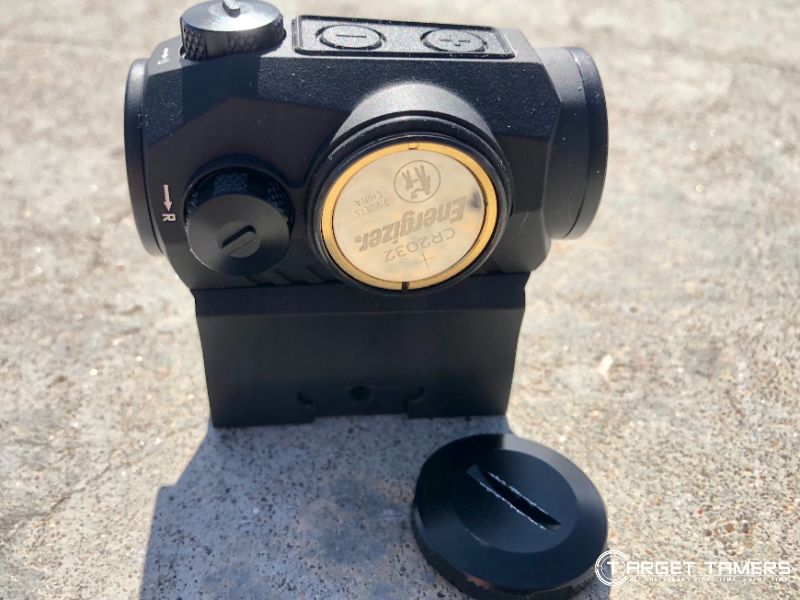
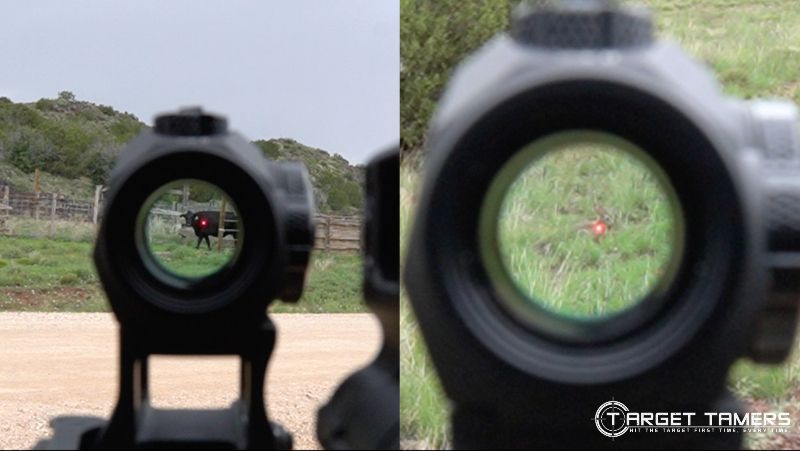
Viewing through the Romeo 5 LEFT Cow RIGHT Rabbit
CR2032 battery
The 7 Best Rimfire Scopes for .22LR in 2024
R5 on cow & rabbit
Images by Tina Fa’apoi (Own Work) for Target Tamers

It has a 2 MOA dot which is great for close-range work as well as stretching the distance to say 175 yards for long shots with the .22LR round.

With a CR2032 battery powering the Sig sight, it has a 40,000+ hour battery runtime. After well over a year, I still haven’t changed it out yet.

Considering its low price point under $150, it’s one of the top red dot sights for the money. How could it not be a great pairing for a .22LR rifle?

5. Simmons .22 MAG 3-9×32 – Best Budget Scope

If you’re looking for a quality scope under $50 for a rimfire rifle, you must consider the Simmons .22 MAG 3-9×32. It’s about as basic as it gets as evident from its Truplex (duplex style) reticle to its fully coated lenses. But it’s a cheap scope that’s worth buying when the budget is limited.

Pros:

  • Truplex reticle
  • Rings included
  • QTA eyepiece
  • Lightweight
  • Fog/waterproof

Cons:

  • Included scope rings

It’s nice for a manufacturer to attempt to include all the components needed to get shooting out of the box, but unfortunately, it seems the included rings require a little work. This usually means some shimming or lapping them. Most people end up buying different rings.

With that out of the way, the .22 MAG scope is obviously made for rimfire rifles. Even with its 3-9×32 configuration, it’s one of the lightest riflescopes in this lot at 10 oz (approx.).

The 0.25 MOA turrets are finger adjustable and capped. There is a total of 60 MOA in adjustment travel for both the elevation and windage turrets.

Simmons highlights the QTA (Quick Target Acquisition) eyepiece that seems to be comparable to a quick focus eyepiece. Though you can adjust for your vision, the optics only have a fully coated treatment, so brightness and resolution will just be acceptable – not exquisite. However, I really like that it has a HydroShield lens coating for as cheap as this scope is.

The 7 Best Rimfire Scopes for .22LR in 2024
Shooting @ 25 yards
The 7 Best Rimfire Scopes for .22LR in 2024
Shooting @ 200 yards
Images Credit: SGT Johnny USMC

Though you might hear of the .22 MAG scope having an AO or adjustable parallax feature – it does not! It has a fixed parallax setting for 50 yards.

Based on the optics and overall quality, it will be a standard performer for recreational applications. I’d say the Simmons scope will be a reasonable optic for plinking and maybe some small game hunting. For 50 bucks, it really can’t be beat.

6. Vortex Diamondback 2-7×35 Rimfire – Best for Close-Range

The Diamondback 2-7×35 Rimfire scope mightn’t seem like a far stretch from the Crossfire II 2-7×32 Rimfire. However, there are differences that could justify the jump up in price for the Diamondback.

Pros:

  • Cost
  • V-Plex reticle
  • SFP reticle
  • Resettable turrets
  • Fog/waterproof

Cons:

  • No illumination

As you can tell, the pros and cons are the same between the Diamondback and Crossfire II riflescopes. However, the differences are in the details. The Diamondback has a larger objective lens, wider FOV, and more adjustment travel with no consequence to size and weight. The real consequence is the increase in cost for these upgrades.

Like the Crossfire II, the Rimfire model has the V-Plex reticle. However, the Diamondback V-Plex Rimfire reticle is excellent in drawing the eye to the center with 1 MOA size posts and even thinner 0.3 MOA center crosshairs. This V-Plex is thicker than the Crossfire II V-Plex!

This is great especially for those with aging vision. However, without an option for illumination, there’s only so much you can do in low-light and against dark, shaded terrains.

For most people, this is not always an issue. The benefits of having a simple reticle, resettable to zero turrets, finger adjustments, and a Vortex-tough build are worth it. Focus should not be an issue from 0-100 yards as parallax is set to 50 yards – the perfect middle-ground for all things rimfire.

With the famous VIP warranty to back the scope, there’s little to dislike about the Vortex rimfire scope.

7. Leupold VX-Freedom 3-9×40 Rimfire MOA – Best for Long-Range

The Leupold VX-Freedom series is a well-known and affordable line of scopes from Leupold. The 3-9×40 model incorporates a traditional configuration but adds a unique touch with the Rimfire MOA reticle to hit long-range targets with 3x zoom.

Pros:

  • Rimfire MOA reticle
  • Finger-click adjustments
  • 0.25 MOA adjustments
  • 60-yard fixed parallax
  • Fog/waterproof

Cons:

  • No illumination

The bold lines of the reticle are 1 MOA while the hashmarks are 0.25 MOA in size. This is good for minimal subtension on targets, and should be easy for old eyes to see – even in low light though it lacks illumination.

Apparently, the VX-Freedom series of riflescopes are designed, machined, and assembled in the USA. Short way of saying it, it’s made in the USA. It’s fog, shock, and waterproof, and although it’s going to be excellent for the 22LR, it’ll certainly handle recoil from sitting on a centerfire rifle.

The 7 Best Rimfire Scopes for .22LR in 2024
Rimfire MOA reticle (right) – Image Credit: OzzieReviews

What makes it perfect for the .22 is the unique Rimfire MOA reticle. Sitting in the second focal plane, subtension is only accurate at max 9x power. The 3:1 ratio zoom (3X) provides 3-9x variable magnification that used to be the standard for most applications. Now, the 4x 3-12x configuration is replacing the one-time standard. I’d consider the 3-9x a traditional platform that has proven its worth time and time again.

Though simple in design and application, the VX Freedom scope has finger-click adjustments in 0.25 MOA increments. It has fixed parallax of 60 yards which is a great setting considering the average distance shots for a .22.

Made to be ideal for the .22 in reticle, focus, and ease of use, the Leupold VX-Freedom could be a top scope for competition and long-range shots.

A Guide to Choosing the Best Rimfire Scope for 22LR

Cost

On average, any riflescope can be used on a rimfire rifle. Rimfire scope features include reticle type, close-range focus, and usually an overall theme of simplicity. This generally results in a scope that is affordable with low to mid-range magnification, and fixed parallax of 50 or 60 yards.

ProductKey FeatureConfigurationPrice Range
Rimfire Scope Feature, Configuration & Price Range Comparisons

Scope Type for 22LR

Overall, there is a plethora of .22LR firearms from handguns to carbine pistols, flat-top ARs, and bolt and lever action rifles. This provides a wide variety of optic options to mount to a firearm with the .22LR cartridge.

The nice thing about these types of scopes is that they can be used on 17 HMR to even some or all centerfire cartridge firearms too (depending on quality and application of course).

Some of the best types of optics to mount to your 22 may depend on the firearm. For example, a red dot sight could be best for an AR-15 while a scope would be fantastic for the bolt-action rifle.

ProductOptic TypeMounting Type
Rimfire Scopes Optic & Mounting Type Comparisons

Reticle

In general, most shooters are not concerned with bullet drop and may just hold over for distances that they’ve memorized. Most scopes designed for the rimfire cartridge will have a simple, duplex reticle. More complex rimfire reticles offer BDC features for drop and wind holdovers.

The BDC (Bullet Drop Compensation) reticles are nice to have for those that are taking long shots out to 200 yards or sometimes more.

Additionally, most scopes are set in the SFP (Second Focal Plane). The reticle and crosshairs remain at full size throughout the entire magnification range.

For more info on reticle types, check out our reticles guide. For more info on FFP VS SFP, we have a guide on focal planes too!

ProductReticleReticle TypeFocal Plane
Rimfire Scopes Reticle, Reticle Type & Focal Plane Comparisons

Focus/Parallax

Many centerfire riflescopes that have fixed parallax will have the focus set at around 100-150 yards. Since this is usually the max distance when shooting .22LR rounds, this can make it slightly inconvenient when shooting inside 100 yards and as close as 10 yards.

As a result, most rimfire scopes have a parallax setting of between 10-100 yards with the average at 50 and 60 yards. This provides clarity throughout the entire magnification range and minimizes the effects of parallax.

Of course, you can always practice a consistent cheekweld to peer down the optical axis of the scope to eliminate parallax completely, but you can read more about that in this scope parallax guide.

ProductParallax/Focus Setting
Rimfire Scope Parallax Setting Comparison

Warranty

Not all riflescope warranties are equal. Some manufacturers have a warranty that precedes them for their unconditional coverage while others have limitations that can prevent cost-free repairs or resale. Regardless of how much is spent on a riflescope, a good warranty is always worth looking into.

ProductWarrantyKey Features
Rimfire Scope Warranty Comparisons

FAQ’s

Top Rimfire .22LR Scope: Which is Best?

There are a lot of rimfire scopes that are perfect for the .22 LR. Setting the budget would help to narrow down the list, and from there, other features can be determined to be suitable and appropriate or unnecessary.

The takeaway is that a rimfire scope has features suited to a rimfire firearm. Sure, you can put a Vortex Razor or NightForce ATACR on there, but I’d say it’s overkill.

Usually, the best scope for a .22 is the one that will get used, maximizes fun in the field or at the range, and doesn’t cost you an arm and a leg.

Further Reading

  • Ozark Armament Rhino 4x Prism Sight Review (Range Tested)
  • Ozark Armament Rhino Red Dot Sight Review (Range Tested)
  • How to Measure Scope Ring Height (With Pics & Calculations)
  • How to Adjust a Rifle Scope: 6 Scope Adjustments Explained!
  • How to Level a Scope on a Rifle [Step-by-Step With Pics]

What oil can you use in the spring piston of an air rifle?

0

“Unlock the Power and Performance: Discover the Ultimate Break Barrel Air Rifle Oil for Unparalleled Accuracy and Smooth Operation. Enhance your shooting experience with our cutting-edge formula, designed to optimize your air rifle’s performance, reduce friction, and extend its lifespan. Experience effortless cocking and consistent shot placement like never before. Elevate your marksmanship with the trusted choice of enthusiasts worldwide.”

break barrel air rifle oil

break barrel air rifle oil

Proper maintenance and care are essential for the longevity and performance of your break barrel air rifle. One crucial aspect of this is using the right oil for lubrication. Break barrel air rifle oil is specifically formulated to provide optimal lubrication for the moving parts of your firearm, ensuring smooth operation and reducing wear and tear. This specially designed oil helps prevent rust and corrosion, extending the lifespan of your air rifle.

When it comes to break barrel air rifles, regular maintenance is key to keep them in top shape. Break barrel air rifle oil should be applied to various parts such as the piston seal, cocking lever, trigger mechanism, and other areas where metal components rub against each other. By applying this specialized oil regularly, you can ensure that your air rifle operates smoothly with minimal friction.

It is important to note that not all oils are suitable for break barrel air rifles. Using improper lubricants may lead to damage or malfunctioning of the firearm. Therefore, it is recommended to invest in a high-quality break barrel air rifle oil specifically designed for this purpose. Regularly applying this oil as part of your maintenance routine will help keep your break barrel air rifle in optimal condition for years of accurate shooting.

In conclusion, regular oiling is crucial for maintaining the performance and longevity of break barrel air rifles. Proper lubrication reduces friction, prevents rust, and ensures smooth operation. By using high-quality air rifle oil and following manufacturer guidelines, shooters can enhance accuracy and extend the lifespan of their firearms. Remember to clean the barrel before applying oil and exercise caution when handling any firearm-related products.

How To Cook A Pig In The Ground Southern Style

0

How To Cook A Pig In The Ground Southern Style

When it comes to traditional Southern cooking, few things beat the rich flavors and succulent tenderness of a whole pig cooked in the ground. This age-old cooking method, known as “pig roasting” or “hog roasting,” brings together an entire community for a hearty feast. In this article, we will take you through the step-by-step process of cooking a pig in the ground like a true Southerner.

1. Choose the Right Pig

The key to a successful pig roast is selecting the right pig. Look for a young pig, preferably weighing between 60 and 100 pounds. It’s important to choose a pig that is fresh and sourced from a reputable butcher or farm.

2. Prepare the Pit

Prepare a pit in your backyard or designated cooking area. The pit should be large enough to accommodate the pig and have sufficient depth for hot coals or wood. Line the pit with bricks or rocks for insulation.

3. Build the Fire

Start by building a fire in the pit. Use hardwood such as oak, hickory, or mesquite for a traditional smoky flavor. Allow the fire to burn until you have a good bed of hot coals. You can also add some soaked wood chips for additional flavor.

4. Season the Pig

While the fire is burning, it’s time to season the pig. Generously rub a mixture of salt, pepper, garlic powder, and your favorite dry rub all over the pig, both inside and out. This will help to enhance the flavor and ensure a crispy, flavorful skin.

5. Secure the Pig

Place the pig on a large wire mesh or grill grate and securely attach it to a metal rod or rebar. This will make it easier to handle and rotate the pig during the cooking process. Make sure it is properly positioned above the hot coals.

6. Lower the Pig into the Pit

Using heat-resistant gloves or hooks, carefully lower the pig into the pit, positioning it directly above the hot coals. Ensure that it is centered and not touching the sides of the pit to facilitate even cooking.

7. Cover and Cook

Once the pig is securely in the pit, cover it with a layer of burlap or wet banana leaves. This will help to retain moisture and create a steaming effect during the cooking process. Then, cover the pit with a layer of dirt or sand to seal in the heat.

8. Monitor the Cooking

Allow the pig to cook slowly over the hot coals for approximately 12 hours. It’s crucial to monitor the cooking temperature, maintaining it around 225-250°F. Rotate the pig every few hours to ensure even cooking and baste it with a mixture of vinegar and water or your desired marinade.

9. Test for Doneness

To test for doneness, insert a meat thermometer into the thickest part of the pig without touching the bone. The internal temperature should read 160°F for the meat to be safely cooked. Additionally, the skin should be crispy and golden brown.

10. Carve and Serve

Once the pig is fully cooked, carefully remove it from the pit and allow it to rest for about 30 minutes. Use a sharp knife or cleaver to carve the pig into succulent pieces, including the crispy skin. Serve alongside traditional Southern sides like coleslaw, cornbread, and barbecue sauce.

There you have it – the ultimate guide to cooking a pig in the ground Southern Style. Whether you’re hosting a backyard party or a festive gathering, this traditional method is sure to impress your guests and leave them craving for more of that smoky, tender goodness. So gather your friends and family, and celebrate the rich culinary heritage of the South with a mouthwatering pig roast!

Can Doves See Color? The Answer Might Surprise You

0

Around the middle of August, wing shooters start preparing for the upcoming dove season. Shotguns will be cleaned and oiled up, camo clothing will be unpacked, and the serious hunters will try to get in a few practice rounds of skeet or sporting clays. Just before the dove season starts, I see first-time hunters at my day job, stocking up on dove hunting gear. Inevitably, one of the questions asked has to do with the ideal clothing for dove hunting, but another commonly asked, and related question is can doves see color?

As a child, dove hunting was my first introduction to the sport of wing shooting. Although I was too young to carry my own shotgun then, my father and his brothers would let me take a few shots under strict supervision. After my first dove hunt, I was hooked! I eagerly looked forward to Labor Day weekend in central North Carolina when dove season opened. My love of wing shooting also led me to hunt quail, mountain grouse, woodcock, and the occasional pheasant out of state. However, dove season remains one of my favorite hunting activities.

Dove Eyesight Basics

Like most North American bird species, all species of doves have excellent vision. Their vision is acute enough to identify small food items (usually seeds) while flying along at speeds of 50+ miles per hour.

Research indicates that, due to their eye location, doves have a 340-degree field of view. And, unlike a dove’s distant relative, the pigeon, who has issues with depth perception, nearly all species of doves have very good depth perception.

Because doves rely on their eyesight as a primary means to detect danger, they are extremely good at detecting even the smallest amount of movement. While dove hunting, the hunter’s movement is usually what doves pick up on first, causing them to flare away or change course to avoid the perceived predator.

Are Doves Able to See Color?

Not only are all species of doves able to see color, but a 2007 study found that they can also see more colors in the color spectrum than a human. The portion of the eye associated with color detection is called cones. Humans have three cones, allowing us to see reds, blues, and greens. Birds, including all species of doves, have four cones allowing them to see colors invariable to the human eye. Doves are able to see blue, green, and red but can also see ultraviolet colors. So not only do doves possess superior vision compared to a human, but they can also see colors in the UV spectrum that we can’t.

In addition to being able to see a broader spectrum of colors, the additional cone in a dove’s eye also offers wavelength filtering allowing them to see the differences or contrast in color changes. Although their vision isn’t quite up to being polarized, it’s pretty darn close. The enhanced contrast is believed to assist doves in detecting movement, identifying predators, and identifying food sources on the ground.

What Should I Wear Dove Hunting?

While blaze orange or hunter orange safety clothing certainly has its place in most hunting scenarios, out in a dove field is not one of those situations. Doves can certainly detect the color orange (quite well), and the contrast between orange and a darker background would likely make the hunter easily identifiable.

While complete camouflage clothing isn’t really necessary, I would recommend wearing darker-colored or drab-colored clothing in an effort to help blend in with the background being hunted. I prefer to wear camo pants, a camo shirt, and a camo hat with a wide brim to help block out the sun.

What to Wear Dove Hunting

Some dove hunters go the extra mile and wear either a face covering or face paint in an effort to make their face less visible. Personally, I don’t wear a face covering for early-season dove hunting but do while hunting late season doves.

Late season doves are far warier of hunters and movement and will flare away or flee at any movement or strange objects in their flight path. I find that dove decoys are more helpful during late-season hunts compared to opening day hunts.

FAQS

Here are some frequently asked questions related to dove hunting and a dove’s eyesight:

Do doves have good eyesight?

As I mentioned above, all species of doves have excellent eyesight with color contrast and very good depth perception. The color contrast aspect of their vision allows them to identify even slight movement as a predatory defense mechanism. In addition, their vision is acute enough to perceive predators or threats due to color contrasts that are not visible to the human eye.

Do I have to wear orange or blaze orange while Dove hunting?

First, I’d check the specific dove hunting regulations for the state where you’ll be hunting. It’s possible that your state may have regulations that mandate blaze orange safety clothing while dove hunting. However, since doves can see color, I’m not aware of a state that does mandate hunter-safety clothing during dove season.

Assuming that your state does not have a rule or regulation in place mandating hunter-orange clothing, I’d suggest not wearing any blaze orange while dove hunting. Doves are not colorblind and can see orange quite well. Wearing orange on a dove hunt could decrease your odds of a successful hunt.

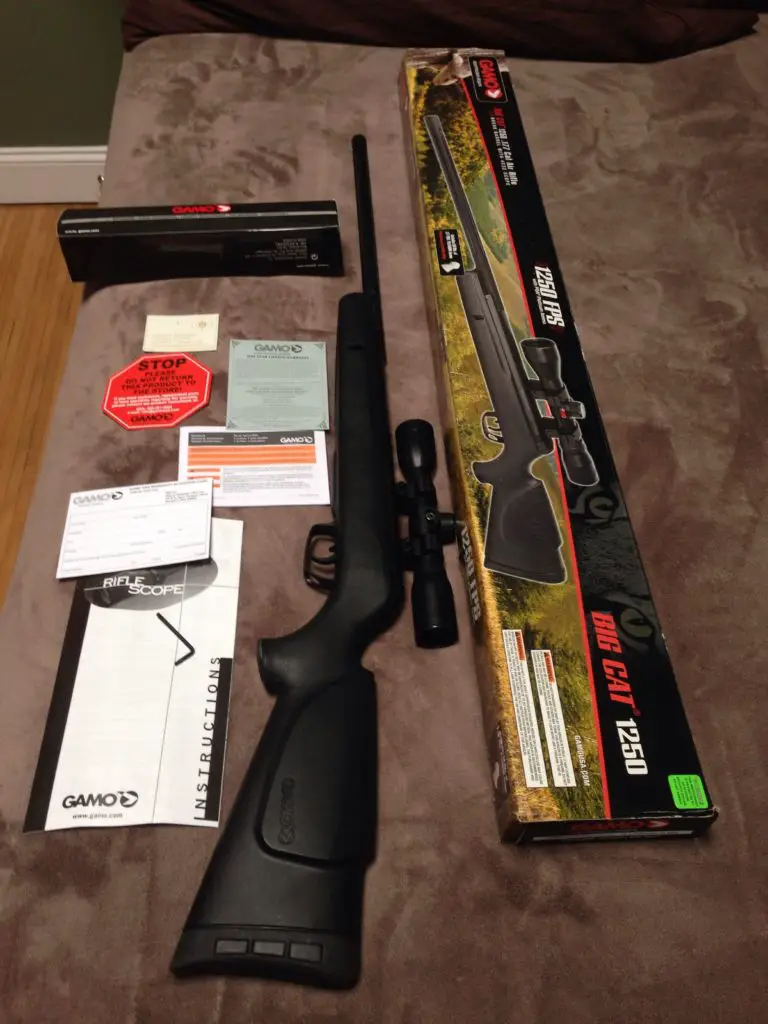
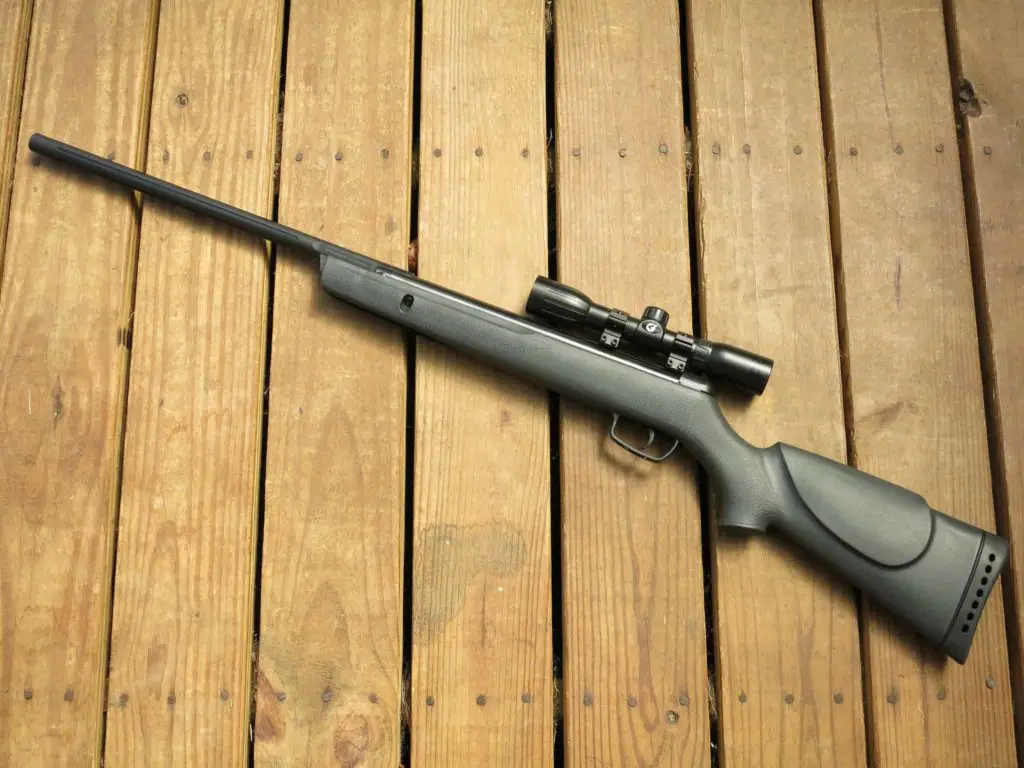
Gamo Big Cat 1250 Review

0

The Gamo Big Cat 1250 air rifle might be intimidating at first.

“Big Cat” implies that there might be something nasty about this gun.

After reviewing this gun, though, I can confidently say that this air gun will take you to the next, or should I say supersonic level!

Gamo Big Cat 1250’s Gun type

The Gamo Big Cat 1250 is a spring-powered air rifle.

For each shot, the spring inside is compressed by the cocking action.

When you pull the trigger, the spring decompresses, causing the piston to move forward.

The piston in turn makes the pellet go down range due to propellant force from compressed air.

All of this happens in a fraction of a second.

With this springer, you don’t need to pay for things like CO2 cartridges or pumping equipment like other air rifles.

(For more on the 5 types of air rifles you need to know before buying, see this post.)

The barrel of this air gun is a rifled barrel (or spiral barrel), more on that in this post.

Furthermore, this barrel is fluted.

Fluting removes material from the cylindrical surface and creates grooves.

This type of barrel is more lightweight compared to non-fluted and it dissipates heat quicker as the air inside the barrel reaches the surface .

This unique feature of the Gamo Big Cat 1250 allows you to shoot for long hours without worrying about an overheated barrel.

The Gamo Big Cat 1250 also uses a break barrel, single-cocking system.

In order to cock it, you have to slap the muzzle firmly while holding your air gun upward.

You can then insert the pellet (with the pellet’s nose lying forward and the pellet’s skirt facing you).

Once the pellet is inserted, swing the muzzle back to its original position. 

Stock

The Gamo Big Cat 1250 features black, all-weather synthetic stock.

For more on the in-depth comparison between synthetic and wood stock, see this post.

It also uses a non-slip texture design in the grip and forearm, which adds more stability to your arm when shooting.

The Gamo Big Cat 1250 has a twin cheek pad, a convenient feature for either the left-handed or right-handed shooter.

It also comes with a ventilated rubber recoil pad and helps absorb recoil up to 74%. 

Check Price on PyramydAir

The Gamo Big Cat 1250 has a twin cheek pad, convenient for both left-handed and right-handed shooters.

There is no difference whether you shoot with your left hand or right hand.

This air rifle also has a ventilated rubber recoil pad, provides a pleasant feeling for your arm, and helps absorb recoil up to 74%.

Without the recoil pad, you might hurt a little since the kickback level for a spring air gun is quite high.

Ammo

The recommended pellet for the Gamo Big Cat 1250 is the 0.177 PBA platinum pellet.

So, what’s exactly a PBA, you ask?

Well, PBA is short for Performance Ballistic Alloy pellet.

It’s domed and weighs 4.7 grains.

As the name implies, it is made from alloy (material made from combining 2 or more metallic elements), lead-free and environmentally friendly

So you can shoot thousands of rounds on your property without concern about the threat of dangerous chemicals.

The PBA pellet is 50% harder and 30 % more accurate than a conventional lead pellet.

Hence, it has more knockdown power, is more stable when it travels toward the target,

And has more ability to kill varmints quickly and clean with only one shot.

You can use PBA ammo for target shooting, plinking, small hunting, and small and large pest control.

Additionally, though, while PBA pellets generate more velocity and are more accurate than other lead pellets, it is a little pricier.

For $15, you only can buy 100 rounds.

If you don’t want to pay much for your ammo, you can purchase alternative pellets such as:

The Crosman destroyer, the Crosman Premier (hollow or domed work), Gamo Raptor, Gamo pro magnum, or Gamo rocket.

Fifty rounds come with your purchase.

This is particularly useful since it can be hard to find the PBAs.

Make sure you look through the box carefully as these pellets are somewhat hidden in the packaging.

Velocity, penetration power and accuracy

While the accuracy of this gun might vary based on your skill level, the velocity and power of the Big Cat is no joke. 

The velocity of the Gamo Big Cat 1250 is 1,250 feet per second (FPS) with PBA platinum and 1,000 FPS with lead pellets.

Since the speed of sound is around 1,100 FPS this air gun has achieved supersonic velocity and therefore belongs in the magnum class of air rifles.

This is definitely not a toy and must be handled with extreme care.

gamo big cat 1250

Chrony tests give us the following results:

PelletVelocity (FPS)FPE
PBA platinum (manufacturer)1,250 
Lead pellets (manufacturer)1,000 
4.7 grains PBA1,25016
5.4 grains1,00017.6
Squirrels, starling, opossum, raccoon, other varmints >15 

Lastly, with heavy-duty power and supersonic velocity, this gun can shoot up to 100 yards.

Most customers have no problem getting close shooting groups up to 40 yards or taking care of varmints in 40 yards or less.

Some even can shoot an apple at a distance of 60 yards.

Distance in yards:<404060100
Total distance   ?
Positive shooting groups ?  
Varmint?   
Apple  ? 

Rick Eutsler from AirgunWeb shares his expert insight about Gamo Big Cat 1250 in the video below:

Optics

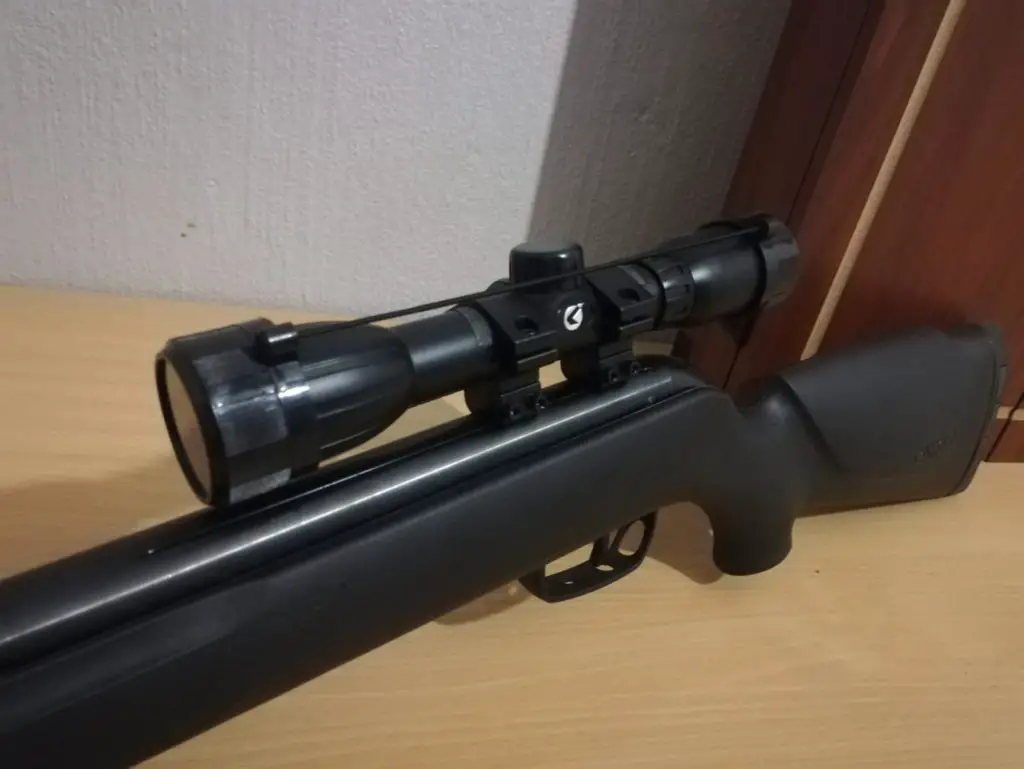
The Gamo Big Cat 1250 is equipped with a 4x x 32mm rifle scope including rings.

This scope has a crosshair so you can see clearer, aim better and shoot more precisely at long distances.

While researching the product, I found two opposing customer viewpoints around this scope.

Some found it accurate while others hated the scope.

Generally speaking, if you follow the user manual, then it seems that this scope would be a great piece for this gun.

However, if you aren’t strictly following the user manual then you may have a hard time zeroing in on your target.

If you require a more sophisticated scope for extremely long-range shooting (up to 100 yards),

And want to utilize the maximum potential of this magnum springer, then it would make more sense to switch to a more powerful scope. 

(For more on how many types of air gun sights are out there and which one is suitable for you, see this post.)

Accessories

The Gamo Big Cat 1250 only has one rifle scope as an accessory.

If you want more shooting accessories, Gamo has plenty of choices for you to choose from such as cleaning oil, gun bag, gun case, and paper targets.

Noise

The Gamo Big Cat 1250 is very loud when using the PBA pellet, but can be much quieter with other lead pellets.

This is because the PBA pellets travel at 1250 FPS, which is higher than the speed of sound.

There will be a large crack when you shoot this gun.

If you fire using other lead pellets, then the gun will be much quieter as they sit in the subsonic range. 

If you live in an isolated area, you may want to buy some ear protection while shooting with PBA.

However, if you live in a more populated region and don’t want your neighbors to report gunshots,

You can shoot PBAs at a sound-proof place like a range, your basement or garage,

Or you can also purchase other types of 0.177 lead pellets with lower speed. 

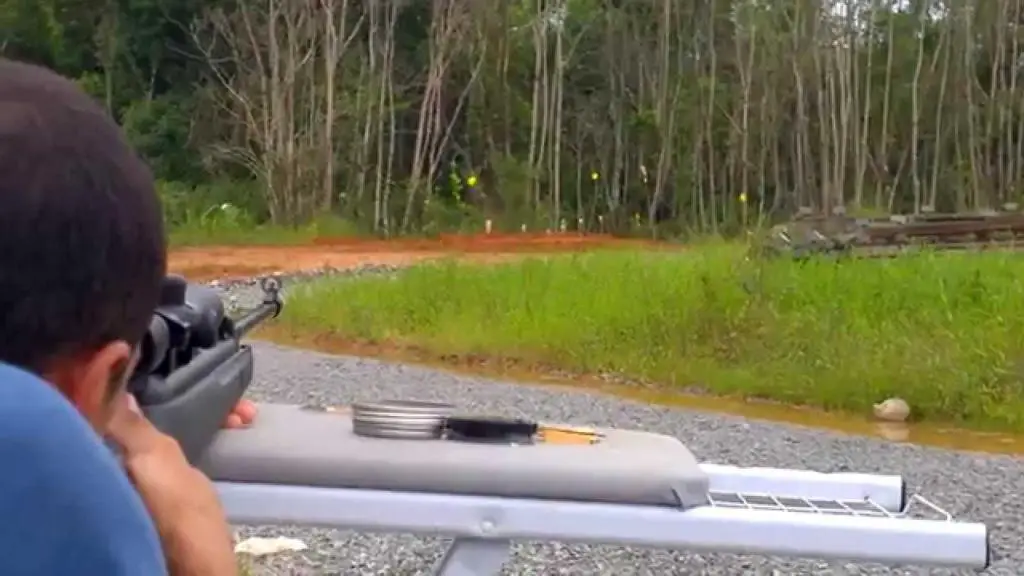
Shooting range and intended use

This air gun is intended for target shooting, small game hunting, and small and large pest control.

The effective shooting range for this air rifle and 4 x 32 scope is up to 40 yards.

If you want to shoot at a range longer than 40 yards, you may want to equip another scope with better magnification ability.

Gamo Big Cat 1250 Specification

  • Propulsion method: spring powered
  • Cocking method: break barrel
  • Stock : all-weather synthetic
  • Caliber : 0.177
  • Safety: manual
  • Weight: 6.1 pounds
  • Trigger Pull: 3.74 pounds
  • Length: 43.3 inches
  • Handedness: ambidextrous
  • Velocity : 1,250 FPS with PBA, 1,000 FPS with lead
  • Optic: 4 x 32 scope with rings
  • Warranty: one year

This air gun weighs 6.1 pounds, which is lightweight and easy to carry for everyone, from teenagers to adults.

You don’t need to buy a sling to handle this .

The trigger pull is only 3.74 pounds, which is the average trigger pull for an air gun.

It’s not too soft nor too stiff either.

Lastly, the cocking effort is 30 pounds, which is pretty hard for the shooter at first. However, this will become easier over time.

Warranty

As of this date, Gamo Big Cat 1250 has a one-year limited warranty from the date of purchase.

Pros and Cons

ProsCons
  • Great ammo
  • Supersonic velocity, high penetration power
  • Synthetic stock protects for all weather
  • Useful non-slip texture and recoil pad
  • Effective rifled and fluted barrel
  • Great scope for less than 40 yards shooting range
  • Lightweight, easy to use
  • Loud noise with PBA pellets
  • PBA pellets are expensive and hard to find
  • Scope is not suitable for extreme long range shooting (40 yards and above)

Gamo Big Cat 1250 Price

The price for Gamo Big Cat 1250 is very affordable at around $100.

It is well worth it to enjoy the supersonic velocity and magnum power of this awesome springer.

Check Price on PyramydAir

Customer Rating

There are lots of customer reviews about Gamo Big Cat 1250. We’ve covered all important factors in this Gamo Big Cat 1250 review.

Conclusion

The Gamo Big Cat 1250 is an impressive air rifle with supersonic velocity, scope, high power and accuracy.

It is more than what you can expect from an air gun for $100.

I highly recommend it for people who want to own a high-power rifle, take part in small game hunting and want to take care of varmints in a clean and quick manner.

Longbow Vs Recurve: 2024 Ultimate Guide for Beginners

0

When it comes to the debate of longbow versus recurve, there are several factors to consider.

The longbow is traditional, requiring skill and strength for its longer draw length, while the recurve bow is more compact and versatile, with a shorter draw length but still offering speed and accuracy.

Longbows lack those swept tips, but their limbs bend gracefully throughout the bow’s length. Recurve bows draw more smoothly, in general, but bow designs play significant roles in how they draw.

Well-designed longbows can be incredibly smooth, especially if their length matches the archer’s draw length. Taller archers, for example, find longer bows smoother to draw than shorter bows. If you have to buy between the two, shoot some recurves and longbows at an archery shop, and choose the one that puts the biggest smile on your face.

Longbow

The longbow, with its simple design and long limbs, has a rich historical background and offers a sense of traditional archery. It requires a higher level of skill and strength to shoot effectively, but its longer draw length can deliver impressive power and accuracy. Longbows are ideal for

  • Casual shooting
  • Target shooting
  • Field shooting
  • 3d archery
  • Hunting

Recurve

The recurve bow, with its curved limbs, provides a more compact and maneuverable option. It is favored by many modern archers due to its versatility and ease of use. The recurve bow’s shorter draw length can still generate considerable speed and accuracy, making it popular for target shooting and competitive archery.

A recurve bow stores more energy and delivers energy more efficiently than the equivalent straight-limbed bow, giving a greater amount of energy and speed to the arrow. this is currently the only bow type allowed in the Olympic games.

Some advantages are as follows:

  • Recurves offer great power, speed, and accuracy over longbows.
  • Recurve bows retain speed/power at lighter draw weights, which can be increased by purchasing new limbs
  • Recurves can be broken down, making them easy to store and transport.
  • Recurve bows are very versatile as they’re an accepted bow type in many different archery disciplines.
  • Recurves can be used for hunting because of the increased speed/power.

Recurve vs Longbow for Beginners

When choosing between a recurve bow and a longbow for beginners, consider versatility and tradition. Recurve bows offer adaptability and are versatile for various archery styles, while longbows have a classic charm and a steeper learning curve due to their traditional design

Range

In general, recurve bows have a slightly longer effective range than longbows, usually up to 60-70 yards due to their design allowing for better energy storage and transfer.

Longbows, while still capable, typically have a slightly shorter range of around 50-60 yards.

Archer’s skill also plays a significant role in range and accuracy.

Accuracy

When it comes to longbow vs recurve accuracy, recurves are generally more accurate but only when an archer uses the proper form.

The synthetic materials of recurve allow economic, predictable manufacture for consistent performance.

The greater mass of a modern bow is in itself an aid to stability, and therefore accuracy.

Arrow Speed

In terms of arrow velocity, recurve bows typically have a slight advantage over longbows due to their design, allowing for more energy storage and faster arrow speeds.

For Hunting

When deciding between a recurve bow and a longbow for hunting, the choice hinges on your hunting style and personal preferences.

Recurve bows offer versatility, adjustability, and good arrow speed, making them suitable for various game and hunting scenarios, while longbows excel in stealth and offer a traditional hunting experience, albeit requiring more skill for accuracy due to their longer draw length.

Ultimately, the decision should align with your hunting approach and comfort with each bow’s characteristics, ensuring a successful and enjoyable hunting experience.

Material

The traditional construction of a longbow consists of drying the yew wood for 1 to 2 years, then slowly working the wood into shape, with the entire process taking up to four years. The bow stave is shaped to have a D cross-section.

The recurve consists of limbs and a riser (the center section of the bow). The limbs are usually made from multiple layers of fiberglass, carbon, and/or wood on a core of carbon foam or wood. The riser is generally separate and is constructed from wood, carbon, aluminum alloy, or magnesium alloy.

Bow Noise

A bow that shoots quietly is a top feature for many of today’s archers. When it comes to generating bow noise, vibrations and the twang of the bowstring are responsible. Longbows are quieter than recurves because the string doesn’t hit the limbs as much, in turn resulting in less string slap.

String

Longbow strings are made of hemp, flax, or silk, and attached to the wood via horn “nocks” that fit onto the end of the bow. Modern synthetic materials are now commonly also used for strings in recurve. The cord of the recurve attaches to both limb tips and transforms stored energy from the limbs into kinetic energy in the arrow

Smoothness

Recurves generally have a smoother draw when compared to longbows. However, a longbow can also be smooth if the length of the bow matches the archer’s draw length. Most archers want a smooth drawing bow so they choose to recurve.

Size and Mobility

Recurves are generally smaller than longbows. Longbows range in size from 5 ½ feet to 6 feet or more. While there are a few takedown longbow options available, the majority of longbows don’t offer this option.

Portability

Recurve easily break into smaller pieces to transport them from one place to another. Takedown longbows are very popular because recurve is so easy to transport.

Adjustability

Recurves have more tuning options, making them much more versatile. Recurve bows allow the use of arrow rest, sights, stabilizers, and some bows allow you to swap out different limbs. While the longbow lacks these characteristics.

Modern Use

No English longbows survive from the period when the longbow was dominant (c. 1250-1450), probably because bows became weaker, broke, and were replaced rather than being handed down through generations.

The modern recurve is the only form of bow permitted in the Olympics (though the compound bow is permitted in some categories at the Paralympic Games) and is the most widely used by European and Asian sporting archers.

Hunting Performance

Some modern hunting recurves are one-piece bows. Hunters often prefer one-piece bows over take-down bows, because the limb pockets on take-down bows can make unwanted noise while drawing.

Even though both bow types work well for hunting, recurves tend to generate more power. Speed and power are important in hunting situations for accuracy and humane reasons. Due to the less accuracy and less power longbow is very rarely used in hunting.

Nostalgia

Longbows have a long history and were the original bow design. This is the bow type for archers who enjoy the historical appeal of medieval archery. While longbows may have been the original bow design, there’s no need to rule out recurve bows.

Availability

Availability of longbow vs recurve. Recurves are now considered to be the modern standard as this bow type provides archers with many options. This means you can expect to see a much larger selection of recurve bows available for purchase vs longbows.

If you’re a competitive archer who wants to participate in tournaments, clubs, and/or the Olympics, choosing a recurve is the right bow choice for you.

Social Importance

The importance of the longbow in English culture can be seen in the legends of Robin Hood, which increasingly depicted him as a master archer, and also in the “Song of the Bow”, a poem from The White Company by Sir Arthur Conan Doyle.

Vandal Savage showed talents with a composite recurve bow on the Young Justice episode Evolution.

CONCLUSION

Now that we’ve covered the similarities and differences between recurves and longbows, you should have a better idea of what is right for you. Since each bow type comes with its unique benefits, you must decide which one will best support your style of shooting. You can read here is a recurve bow better than a longbow?

The lightweight and quiet longbows make for a basic, fun way to try archery. While the high performance, small size, and large availability of recurve bows help provide more accuracy and precision.

7 Largest Catfish Ever Caught

0

Overall, catfish are some of the most abundant species of fish in the world. According to Practical Fishkeeping, there are now over 3,000 species of catfish around the world. Depending on the species, catfish can range in size from 1.5 to 2 inches (4 to 5 cm) to hundreds of pounds, like the behemoths on this list. All of the catfish on this list are over 100 pounds (45.36 kilograms). Nearly all of these catfish are listed as the world record for their species in the International Game Fish Association’s (IGFA) World Records Database. As of the time of this writing the records are accurate.

  1. Record Flathead Catfish

Record Flathead Catfish Source: IGFA World Records Database

The record for the largest flathead catfish belongs to Ken Paulie, who landed his big flathead over 20 years ago. Paulie’s flathead catfish weighed 123 pounds (55.79 kilograms) and was over 5 feet (1.55 meters) in length.

While Paulie’s record was verified by the the Kansas Department of Wildlife and Parks and has been standing for over 20 years, many people have questioned the legitimacy of Paulie’s catch. Paulie was using a light tackle while he was crappie fishing and the flathead was a lucky catch.

Did You Know?

Paulie’s flathead catfish was frozen for many years before it was presented to the Kansas Department of Wildlife, Parks, and Tourism in 2016 for further examination. Researchers determined that the record flathead catfish was at least 22 years old, grew very rapidly, and was most likely a male.

  1. Record Redtail Catfish (Pirarara)

Record Redtail Catfish (Pirarara) Source: IGFA World Records Database

The world’s largest redtail catfish was captured in 2010 by Gilberto Fernandes in Brazil’s Amazon River. Fernandes’ redtail catfish was 123 pounds 7 ounces (56 kilograms) and 4.62 feet (1.408 meters) long. There really isn’t any more details about Fernandes’ catch, but he did use a fiberglass Sportex rod to land the redtail catfish.

According to a news report, Fernandes has over 100 IGFA world fishing records. Just a month before he made his record redtail catfish catch, Fernandes caught another redtail that was 113 pounds 8 ounces (51.5 kilograms).

Did You Know?

Redtail catfish are not picky eaters and in the wild tend to eat fish and crustaceans. In captivity, redtail catfish eat assorted worms, frozen foods, sinking catfish pellets, and dry foods.

  1. Record Blue Catfish

Record Blue Catfish Source: The Roanoake Times

The record blue catfish was caught in 2011 in Kerr Lake, Virginia by a man named Richard Nicholas Anderson. This large blue catfish weighed in at 143 pounds (64.86 kilograms) and was 4.75 feet (1.45 meters) long. It took Anderson about 45 minutes to land the giant blue catfish, whose size surprised Virginia Department of Game and Inland Fisheries chief Gary Martel.

Anderson wanted to keep his blue catfish alive so that it could be put in a tank at a local Bass Pro Shops retail store. However, despite his best efforts, his record blue catfish died.

Did You Know?

Blue catfish were intentionally introduced into rivers in Virginia in the 1970s, but have now become an invasive species that grows and breeds rapidly.

  1. Record Goonch

Record Goonch Source: fiskefuralle.se

The record for the largest Goonch ever caught belongs to Jakub Vágner, the host of National Geographic’s “Fish Warrior.” Vágner’s Goonch was 165 pounds 5 ounces (75 kilograms) and over 5 feet (1.57 meters) long. The Goonch was caught in the River Ramganga in India.

In addition to the large Goonch, Vágner has caught several other large freshwater fish, including and 286.6 pound (130 kilogram) Arapaima and an 242.5 pound (110 kilogram) Wels catfish. In an interview, Vágner said that he is sill after the world record Goliath Tiger Fish of the Kongo river.

Did You Know?

Goonch catfish have reportedly been known to eat corpses from funeral pyres on the Kali River, which runs between Nepal and India. It is speculated that this has allowed the Goonch to grow so large and develop a taste for human flesh.

  1. Dino Ferrari’s Wels Catfish

Dino Ferrari Source: Adventure Sports Network

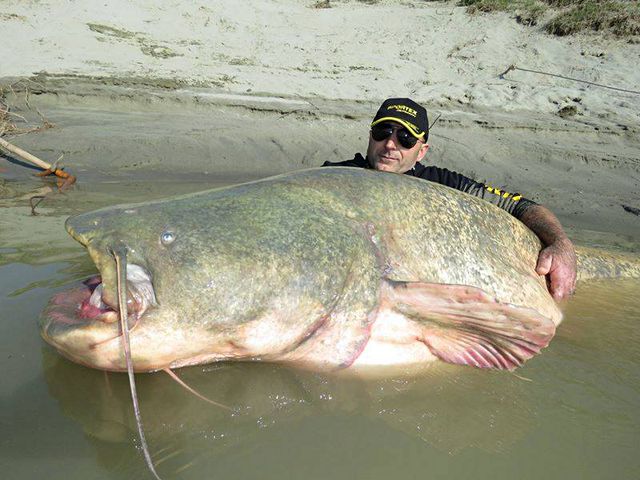
In 2015, an Italian fisherman named Dino Ferrari was featured in international news for capturing a monster Wels catfish in the Po Delta. Ferrari’s Wels catfish weighed 280 pounds (127 kilograms) and was 8.75 feet (2.67 meters) long. Although Ferrari’s catch is impressive, unfortunately he was just shy of the world record for a Wels catfish catch, which weighed 297 pounds 9 ounces (134.97 kilograms).

However, other than the official record listing on the International Game Fish Association’s website, there wasn’t enough information to feature the story of the record Wels catfish. Ferrari’s sponsor did say that his catch may hold the world record for a fish caught with a Torpedo spinning rod made by an Italian manufacturer.

Did You Know?

It took Ferrari 40 minutes to catch the Wels catfish and he decided to release the fish back into the water so he could be caught again in the future.

  1. Record Lau-Lau (Piraiba)

Record Lau-Lau (Piraiba) Source: bigfishesoftheworld.blogspot.com
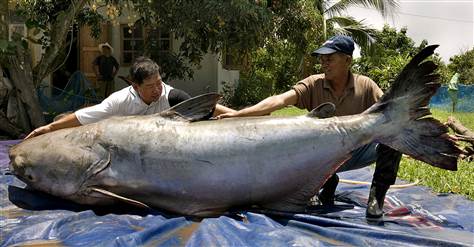
Jorge Masullo de Aguiar currently holds the world record for the largest Lau-Lau (Piraiba), which is a species of catfish that is native to South America. Masullo de Aguiar’s Piraiba was caught in 2009 and weighed 341 pounds 11 ounces (155 kilograms). This giant South American catfish was also over 6.5 feet (2 meters) long.

While Masullo de Aguiar’s Piraiba is the largest officially on record, in general, Piraiba can weigh over 450 pounds (204 kilograms). In fact, the Piraiba is the largest of the catfish species found in the Amazon.

Did You Know?

Piraiba are so large that monkeys, cats, dogs, birds, and other catfish have been found in their stomachs.

  1. Mekong Giant Catfish

Mekong Giant Catfish Source: NBC News

In 2005, a behemoth Mekong giant catfish, weighing in at a scale-tipping 646 pounds (293 kilograms) was caught in a remote village in Thailand near the Mekong River. Experts believe that this monster Mekong giant catfish is not only the largest catfish ever caught in the world, but the largest freshwater fish ever recorded.

In addition to weighing nearly 650 pounds, this Mekong giant catfish was 9 feet (2.7 meters) long. It took over an hour for the Thai fishermen to reel in the heavy catfish. Officials from Thailand’s Inland Fishery Department wanted to use the female Mekong giant catfish for a breeding program, but she ended up dying. The people from the nearby villagers didn’t let the fish go to waste and ended up eating it.

Did You Know?

The Mekong giant catfish is rare and endangered and the one caught in 2005 was the largest ever caught since Thailand began keeping records in 1981.

Air Arms Pro Sport Review

0

The Air Arms Pro Sport represents the pinnacle of spring-piston air rifle engineering, combining elegant design with outstanding performance. This detailed review explores every aspect of this premium air rifle, from its heritage to its real-world performance.

Heritage and Positioning

The Pro Sport’s lineage traces back to the legendary Venom Mach II, a handmade masterpiece by Ivan Hancock that commanded over $4,000 in the 1990s. While the Pro Sport may not quite match its illustrious ancestor, it brings much of that premium DNA to a more accessible price point. At $780 (without scope) or approximately $1,030 fully equipped, it positions itself as a premium option in the modern air rifle market.

The most frequent comparison is with its sibling, the Air Arms TX200 Mark III, which costs $150 less. This price differential raises an important question: does the Pro Sport justify its premium positioning? The answer lies in its unique combination of features, performance, and aesthetics.

Design and Construction

Aesthetics and Build Quality

The Pro Sport immediately distinguishes itself through its exceptional finish and construction. The metal parts feature a deep, mirrored black finish reminiscent of a Colt Python Royal Blue, while the wood stock (available in either beech or walnut) showcases precise checkering and elegant lines. The Monte Carlo comb and scalloped cheekpiece are expertly carved, though it’s worth noting that the stock is designed exclusively for right-handed shooters.

A unique feature is the hidden underlever system, following a design philosophy pioneered by BSA’s Airsporter series in the 1940s. This creates an exceptionally clean profile, with the cocking lever completely concealed within the forearm when not in use. This design choice necessitates splitting the forearm nearly in two, requiring additional stock screws to maintain structural integrity. That’s why the Air Arms Pro Sport is one of the best spring air rifles for the money

Weight and Balance

At 9 pounds without scope, the Pro Sport is a substantial rifle. While this mass helps dampen recoil, some shooters note that the rifle feels slightly light in the muzzle, which can affect stability during precision shooting. The overall balance, however, remains good, with the rifle settling naturally into shooting position.

Performance

Velocity and Power

The Pro Sport demonstrates impressive velocity capabilities across various pellet weights:

  • Maximum velocity of 1,100 fps with lightweight alloy pellets
  • 961 fps with 7.0 grain RWS Hobby lead pellets
  • 909 fps with 7.9 grain Crosman Premiers
  • 830-850 fps with 8-8.5 grain pellets

Most experienced shooters, particularly those involved in Field Target competition, prefer the 850-900 fps range with medium-weight pellets, where the Pro Sport shows optimal accuracy and consistency. Moreover, the Air Arms Pro Sport is one of the best air rifles for pest control

Chrony tests

CalibersPelletsFPSFPE
.22H&N Field Target Trophy 14.66 gr72016.88
.22Crosman Premier Hollow Point 14.3 Gr728 16.83
.177JSB Match Diabolo Exact 8.4 Gr755.9 10.66
.177JSB Diabolo Heavy 10.34 gr77013.62
.22JSB Diabolo Heavy 18.13 gr63516.24
.22H&N Field Target Trophy 14.66 gr71716.74
.22Crosman Premier Hollow Point 14,3 gr70415.74
.22Crosman Premier Hollow Point 14,3 gr71016.01
.22JSB Hades Diabolo 15.89 gr62013.57
.22JSB Exact Jumbo 13.43 gr67513.59
.22Predator GTO Lead Free Pellets 11.75 gr80516.91
.22JSB Hades Diabolo 15.89 gr66515.61
.22JSB Jumbo Heavy 18.13 Gr58313.69

Accuracy

Accuracy tests

CalibersPelletsDistancesGroups
.22H&N Terminator 16.36 gr40 yardsone hole
.22Air Arms Falcon 13.43 gr35 yardsdime size
.22H&N Field Target Trophy 14.66 gr35 yardsdime size
.177JSB Match Diabolo Exact 8.4 Gr25 yards0.25"
.177JSB Diabolo Heavy40 yardsone hole
.22JSB Diabolo Heavy 18.13 gr35 yards1/2"
.22Crosman Premier Hollow Point 14,3 gr30 yardsone hole
.22Air Arms Diabolo Hunter 16 gr23 yards0.75"
.22JSB Hades Diabolo 15.89 gr30 yardsdime size
.22JSB Hades Diabolo 15.89 gr25 yards0.33"
.22JSB Exact Jumbo 13.43 gr25 yards0.32"
.22Predator GTO Lead Free Pellets 11.75 gr25 yards0.21"
.22JSB Hades Diabolo 15.89 gr50 yards1.29"
.22JSB Jumbo Heavy 18.13 Gr35 yards3/8"
.22H&N Baracuda Match 21.3 gr35 yards3/8"

The rifle truly shines in accuracy testing, delivering exceptional groups across multiple pellet types:

  • 0.256 inches at 25 yards with Crosman Premiers
  • 0.317 inches with Air Arms Falcon pellets
  • 0.365 inches with JSB Exact pellets

Notably, the Pro Sport shows a preference for lighter pellets, performing best with projectiles in the 7-8.5 grain range. This characteristic makes it particularly suitable for Field Target competition, where precision at known distances is paramount.

Trigger System

The trigger mechanism is a sophisticated evolution of the renowned Weihrauch Rekord design. Factory-set at 1 pound 5 ounces, it offers extensive adjustability for pull weight, sear engagement, and first stage travel. The gold-plated trigger blade is perfectly shaped, providing excellent tactile feedback and a clean, predictable break.

Operational Considerations

Cocking System

The hidden underlever system, while aesthetically pleasing, presents some operational tradeoffs. The cocking effort measures 41 pounds – 6 pounds more than the TX200. This higher effort isn’t solely about force; the lever’s fulcrum position, necessary for the concealed design, reduces mechanical advantage compared to traditional designs. Additionally, the Pro Sport cannot be de-cocked once cocked, requiring the shooter to either take their shot or safely discharge the rifle.

Noise Characteristics

While featuring a baffled barrel shroud, the Pro Sport produces average noise levels for a spring-piston rifle in its power class. It’s generally backyard-friendly with standard lead pellets, though using high-velocity alloy pellets that break the sound barrier will significantly increase noise levels. The shrouded barrel helps manage the report, though it’s not as quiet as some PCP rifles like the Benjamin Marauder.

Scope Mounting and Sights

The rifle comes without iron sights but features a standard 11mm dovetail rail with three holes for a vertical scope stop pin. This system proves robust and user-friendly, accommodating a wide range of optics. Testing with various scopes, including Hawke and Nikon models, demonstrated excellent compatibility and zero-holding ability.

Shooting Characteristics

The Pro Sport exhibits some hold sensitivity, typical of high-performance spring-piston rifles. Optimal accuracy requires:

  • A consistent, loose hold
  • Careful attention to left hand positioning
  • Practice with the specific rifle’s balance and recoil characteristics

The rifle’s weight and recoil pad effectively manage recoil, producing a solid “thunk” rather than the spring twang common to lesser spring-piston rifles. The shooting cycle is clean and predictable, though mastering the platform requires dedication to proper technique.

Value Proposition

Despite its premium price point, the Pro Sport offers compelling value for the serious airgun enthusiast:

Strengths:

  • Exceptional build quality and finish
  • Outstanding accuracy potential
  • Sophisticated trigger system
  • Elegant, clean-lined design
  • Excellent consistency

Considerations:

  • Higher price than the similar-performing TX200
  • Significant cocking effort
  • Right-hand only configuration
  • Some hold sensitivity

Features

  • Max Velocity: 950 fps
  • Overall Length: 40.5″
  • Buttplate Ventilated rubber
  • Function: Single-shot
  • Weight: 9.03 lbs
  • Trigger Pull: 3.0 lbs
  • Scopeable: 11mm dovetail
  • Safety Automatic
  • Suggested for Small game hunting/target practice
  • Caliber: .177 – .22
  • Loudness: 3-Medium
  • Barrel Length: 9.5″
  • Shot Capacity: 1
  • Cocking Effort: 39.6 lbs
  • Barrel Rifled
  • Front Sight: none
  • Rear Sight: none
  • Trigger: Two-stage adjustable
  • Action: Underlever
  • Powerplant: Spring-piston

Pros and Cons

ProsCons
  • Quality craftsmanship, stunning walnut stock, and deep bluing
  • Well-tuned from the factory
  • Quiet and well-balanced
  • Great 2-Stage Trigger
  • Accurate up to 40+ yards
  • Packs enough punch for most of your pest and small games hunting needs
  • The cocking mechanism takes some getting used to

Conclusion

The Air Arms Pro Sport represents a fascinating blend of form and function in the premium air rifle market. While its price point places it firmly in the upper echelon of spring-piston rifles, its performance, quality, and unique design features justify the investment for the serious shooter. It’s particularly well-suited to Field Target competition and precision shooting, where its accuracy potential and consistent performance can be fully utilized.

The choice between the Pro Sport and its less expensive sibling, the TX200, ultimately comes down to personal preference – particularly regarding the hidden underlever design and aesthetic considerations. Either way, the Pro Sport stands as a testament to Air Arms’ commitment to excellence in air rifle design and manufacturing.

For the shooter seeking a premium spring-piston air rifle that combines classic aesthetics with modern performance, the Pro Sport presents a compelling, if expensive, option. Its combination of accuracy, build quality, and unique design ensures its position as a coveted choice among discerning airgun enthusiasts.

The Life of a Fawn

0

Having survived prowling predators, the whitetail fawn now matures.

Spring gives way to warm days as the summer season nears. Pesky insects start to dominate the woodlots and open fields. For the young whitetails that survived the pursuit of predators, now their lives of growing into mature deer begin to unfold.

If the parenting female doesn’t reject her offspring, which is usually due to nutritional stress, a hormonal imbalance, inexperienced first-time mothers or disease, then the process of maternal guidance is under way.

The deer fawn, although it possesses certain inborn survival instincts, still takes its lead from its mother. Foremost are concealed bedding sites, which are pre-chosen by the mother. If these locales remain undisturbed, she will use them year after year — especially if she has raised young before.

These bedding sites are essential for the fawn to conserve energy and digest nutrients for growth. The fawn is growing rapidly by now, but it still spends the majority of time bedding.

By its mother’s vocal commands and through scent-bonding, the fawn learns where these sites are within days after birth. Bedding locales, through the mother’s lead, are reinforced. The fawn can also go to bed on its own or by her cue as it matures. Besides nutrition, this aspect of the fawn’s development is crucial as to whether the infant survives and properly matures.

The mother also guides the newborn to specific feeding areas, and of course, the fawn quickly learns where the nutrients are. Besides periodically nursing from its mother, the deer fawn within just a few weeks after birth is able to forage on its own. Yet it’s still dependent on the protein content of its mother’s milk.

Deer researchers have determined that the nourishing milk of whitetails is high not only in protein but fat and vitamins as well. It also possesses colostrum, which is basically an antibiotic to resist disease.

These bedding sites and feeding locales are continually imprinted through the mother’s scent and visual guidance. Along with its inborn instincts for survival, the newborn learns to adapt and survive.

At times, the fawn is highly frisky — darting to and fro from its mother and other deer. Here, the young deer sharpens its skill to evade predators. Also, playful behavior is associated with the social order of deer as well. These behaviors and responses from the herd can determine the fawn’s status within the herd even at a young age. However, this socialization is usually more intense with female fawns than young bucks, which will eventually disperse on their own.

If nutrition and fertility are on course, females can easily give birth to twin fawns. The two youngsters are usually close together, and tend to watch out for one another. Overall, if the doe isn’t a first-time mother, her offspring from previous years will also put their eyes and ears to work — staying keen to predators. Although there are exceptions, this is typically the trend once the fawns are mature enough and accepted into the fold of older deer.

Although a button buck usually stays with its mother during its first year, there are rare situations when the young male unites with a bachelor group of bucks. Otherwise, the button buck stays with the female clan — eventually going out on its own the following year. Also, button bucks can be forced away temporarily by both dominant males and breeding females when procreation calls during the rutting season.

Gradually, the parenting female begins to shun the buck fawn — sometimes kicking and swatting at it when it attempts to nurse. She may even actually kick and charge the young male. Although the infant may stay within her range through the winter, she usually doesn’t show it any maternal attention by then.

A normal buck fawn can be rejected by its mother, yet it can also be naturally inclined to disperse on its own as well. The instinct to procreate drives it to seek out mates. In time, he leaves the doe herd on his own — even if the mother doesn’t drive him off.

Whether the button buck is on its own or within the close-knit clan of its mother and her offspring, it can easily be mistaken for a female deer — especially if antlerless harvest is on the agenda. Here, proper identification of a young male deer is crucial when certain laws are implemented for taking whitetails or if one is practicing QDM. Although it’s currently legal to take a young button buck without a polished antler above the hairline, most hunters want to pass on young males — giving them the opportunity to grow and mature. Simply, button bucks are considered to be an antlerless harvest. However, always check the current regulations to be sure the law hasn’t changed.

A button buck usually stands out from females. Of course, by the end of the summer, most female and male deer fawns have lost their spots. Body formations are a way to distinguish male from female. Young male deer have shorter necks and are somewhat squared in comparison to long-necked does. Usually the female is longer than the button buck. He also tends to wander from the females from time to time, and forages on his own.

Basically the fastest way to determine a button buck is to look for small growth on its forehead where the pedicels are located between its ears. Usually by the fall, some button bucks actually have small, undeveloped antlers protruding up, but are covered by hair. Depending on nutrition and genetics, some button bucks may even sprout a small set of spikes, but this is extremely rare.

The following year is when antler growth becomes more noticeable as the button buck grows and matures into a 1½-year-old antlered deer.

Female fawns usually stay with the doe clan for a couple of years or until they become first-time mothers.

For whitetails to reach maturity and maintain procreation, nutrition and the quality thereof is extremely important. That’s next month’s topic.

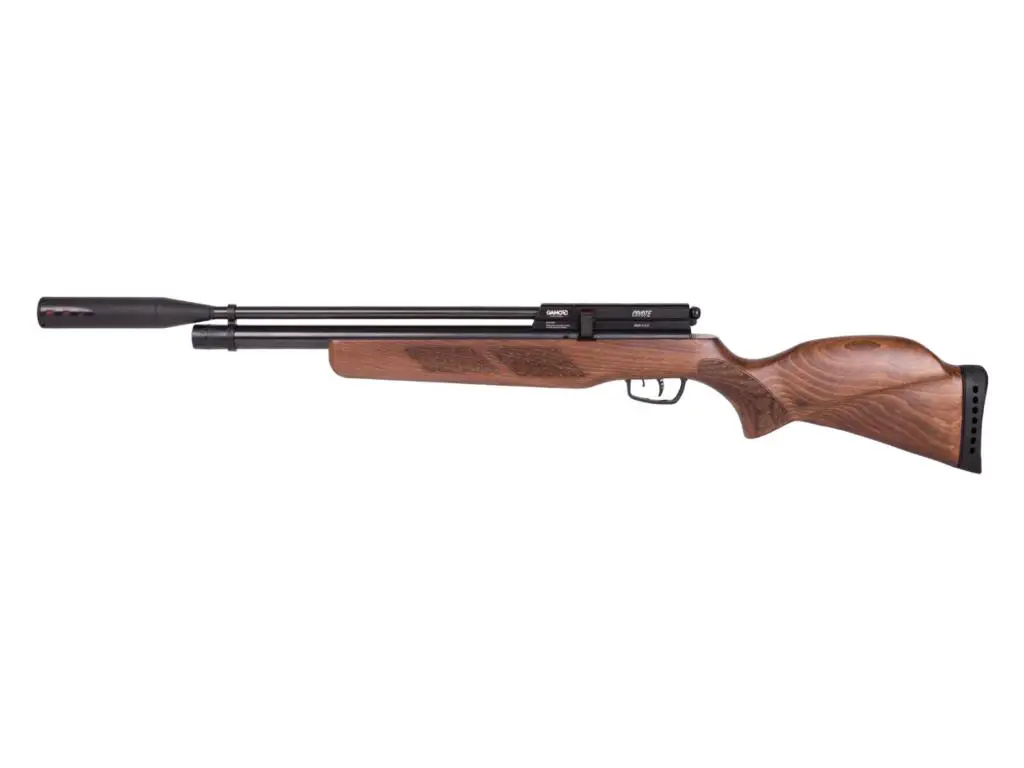
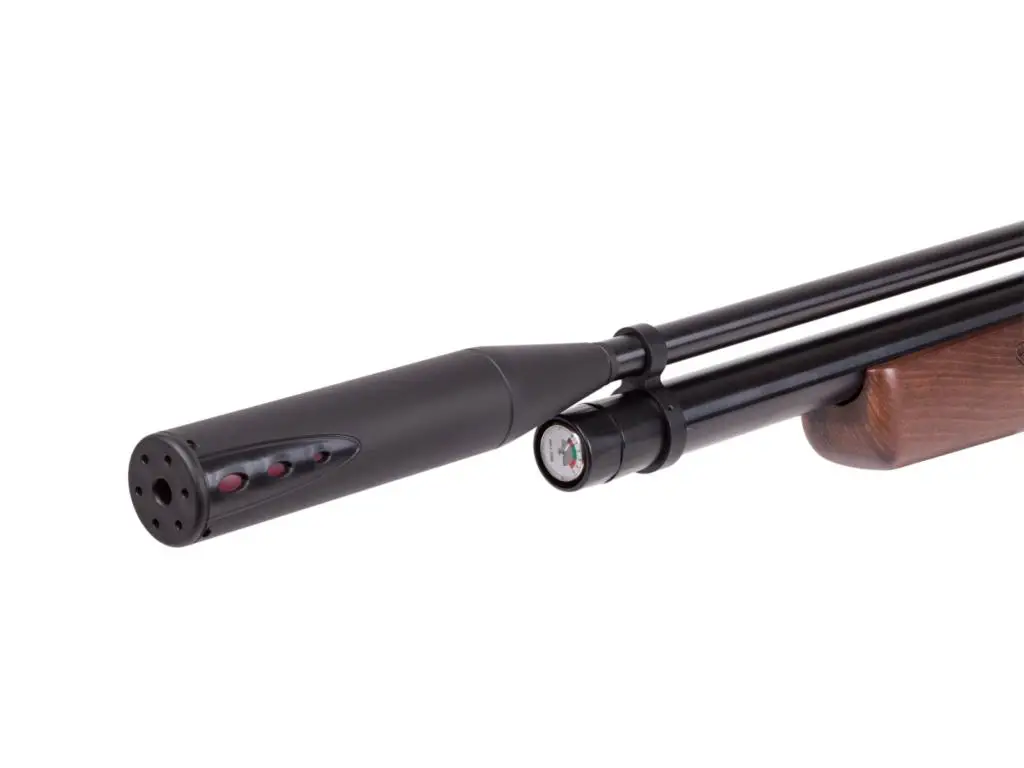
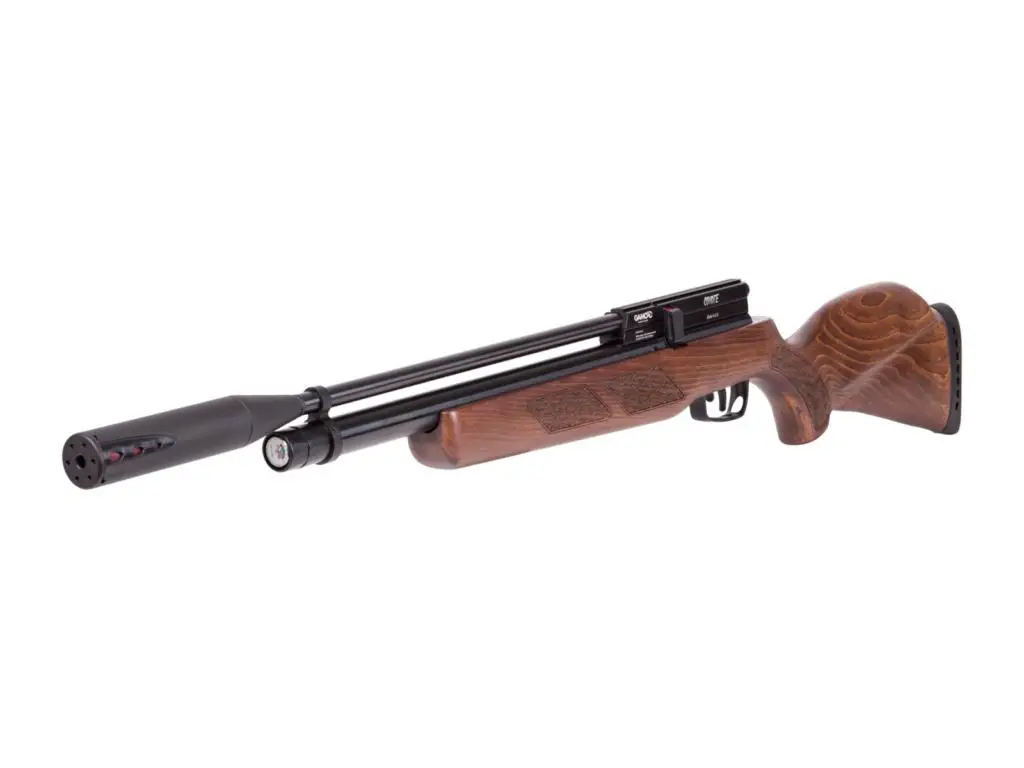
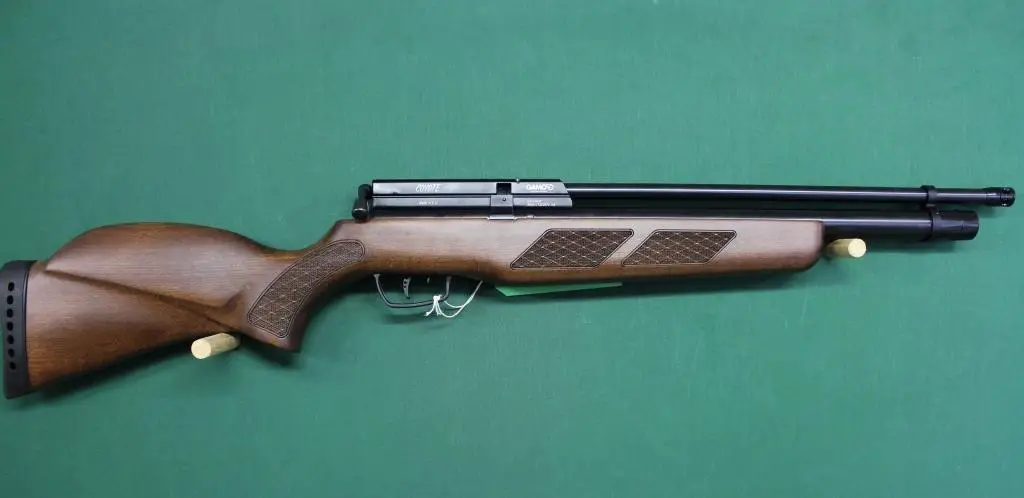
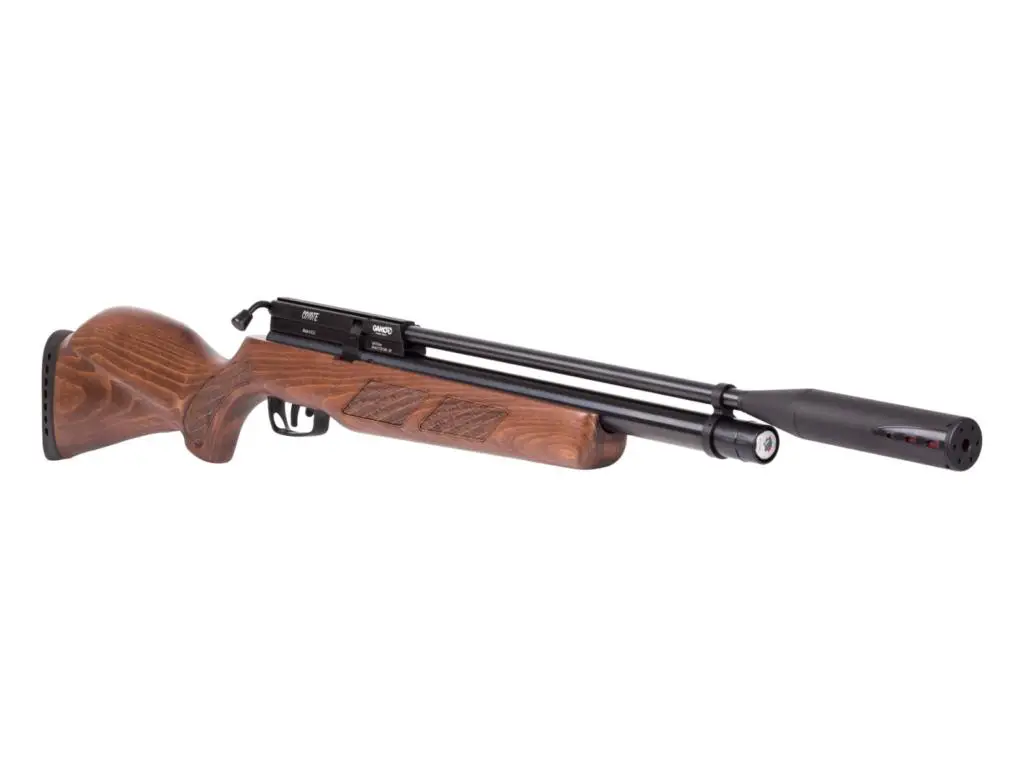
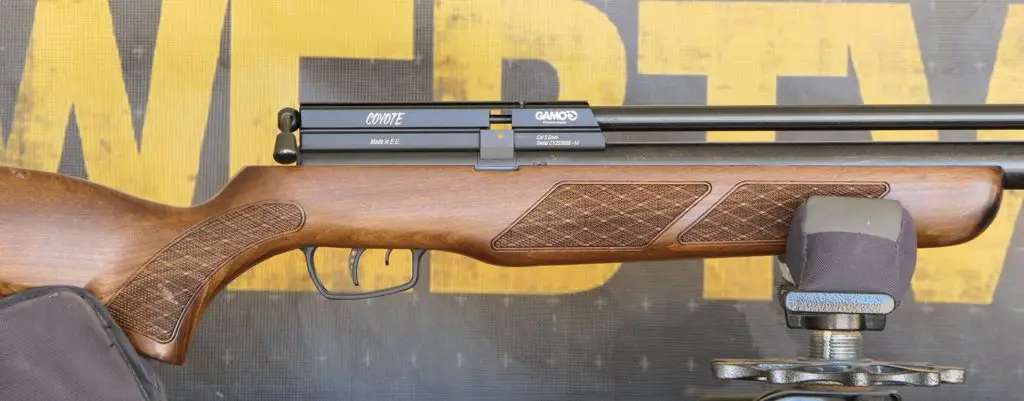
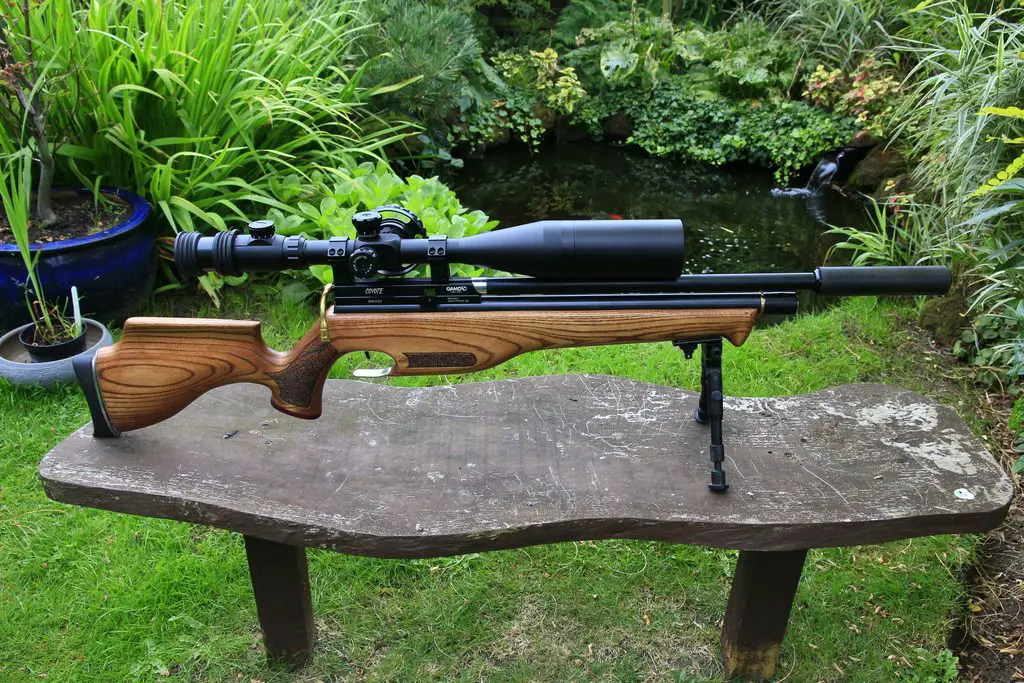
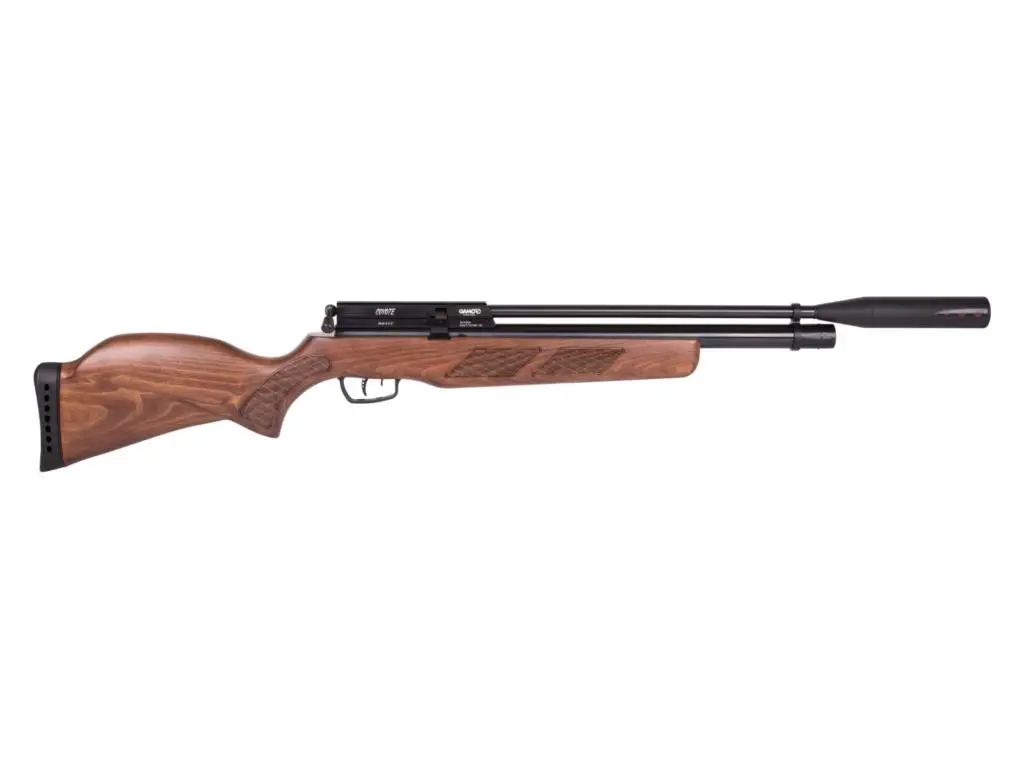
Gamo Coyote Review

0

Since Gamo is known for their excellent quality air rifles, we decided to get something in the mid-level range, which was the Gamo Coyote SE!

This gun is extremely accurate, but I especially like their unique design which makes shooting fun and comfortable.

For a mid-level air rifle, it surely delivers and can be used in many shooting situations.

So what makes the Gamo Coyote PCP Air Rifle such a worthy investment? Read on to find out!

Ultimate Gamo Coyote – Guntype

This is one of the cheaper air rifles for its range and accuracy, coming in cheaper compared to those with similar specifications.

It’s consistency makes it a great investment in the competitive market of air rifles today. It is one of the best PCP air rifles for the money!

gamo coyote review


This gun is a pre-charged pneumatic bolt-action air rifle with a multi-shot mechanism.

It’s a great choice since they’re ready to be shot after pulling the trigger.

Pre-charged pneumatic (or PCP) are guns that utilize high-pressurized air in the chamber,

Which gives off up to 4,000 psi when filling it through hand pumps or scuba tanks.

What’s great about a PCP is that it is recoilless and still offers the highest accuracy and power that you’re looking for.

Furthermore, it requires little cocking effort and is best when using large-caliber pellets .

The Gamo Coyote is more advantageous than the spring-powered or gas piston,

Which requires more practice in cocking and has difficult-to-find parts.

(For more on the 5 types of air rifles you need to know before buying, see this post.)

Stock

One of the things I love most about the Gamo Coyote SE is its looks.

It takes on the Coyote’s traditional looks but with improved design, having the well-finished wood stock and a quality rubber buttstock.

The wood stock may be chunky but it should still be appreciated for its construction all the same.

While some people like synthetic stocks for the designed grip, wood provides a more traditional feel

And actually increases the accuracy with its natural weight and material.

(For more on the in-depth comparison between synthetic and wood stock, see this post.)

Because it’s compact and easy to hold, it’s easy to shoot.

It also has the ambidextrous stock with checkering, making consistent holding a treat.

So regardless of your dominant hand, you’ll be able to adjust it for an accurate shot.

Ammo

The Gamo Coyote offers the ability to house three different calibers: 0.177, 0.22, and 0.25.

(For more on how to choose the right air gun caliber for your game, see this post.)

This air rifle uses 10-shot magazines that are easy to load, though you can also use single-shot adapters if you want single loading.

Its bolt action functioned without issues throughout my test, which improved the bolt operation and my shooting experience.

gamo coyote ammo


You’ll enjoy shooting with this air rifle because of its comfort and excellent accuracy.

And although this gun has a sleek design and compact size, it is surprisingly heavy when compared with other air rifles!

Just like other high-power air rifles, this one isn’t best used with lightweight pellets.

It gives off better accuracy and high muzzle energy when using mid-weight to heavy lead pellets.

The accuracy of the Gamo Coyote was most consistent when using mid-weight pellets made by another manufacturer.

With that being said, being able to use non-Gamo pellets is a huge plus .

This makes purchasing pellets more accessible and convenient.

You still get the best speed and accuracy even when using other pellet types, so long as they fit the mid-weight or heavier weight range.

Again, I don’t recommend using pellets with lighter weights!

Velocity, accuracy and power

The Gamo Coyote’s design is not just for looks.

Because it is a regulated design, the design actually improves muzzle velocity

And provides a greater accuracy potential when shot in longer ranges.

The Gamo Coyote offers a muzzle velocity of over 1,000 FPS when using lightweight PBA pellets.

With lead pellets, it can achieve a 960 FPS muzzle velocity.

For example on the 0.177 caliber, and depending on the pellets you use, it has a power of up to 40 FPE and a velocity that reaches 1,345 FPS.

gamo coyote specification

As for its consistency, the Gamo Coyote was superb, with a trigger pull weight that averaged two pounds and only varied by one ounce!

The accuracy was excellent when using mid-sized pellets as opposed to lighter ones.

The gun tested with excellent accuracy goes to the Crosman Premier HP 14.3 Grain, while the only poor test was from the Gamo Raptor Platinum 9.7 Grain.

The Gamo Coyote also offers extreme accuracy for its price range, competing against even costlier air rifles out there.

Its consistency and accuracy are what make it enjoyable to shoot any time, anywhere.

Heavier pellets were able to be shot with consistent accuracy.

This makes the Gamo Coyote one of the most consistent air rifles to date.

My only dislike was using smaller pellets (which I normally don’t like anyway).

Chrony tests give us results as follows:

PelletsFPSFPE
Gamo Raptor Platinum 9.7 Grain (.22)1054.9323.97
H&N Field Target Trophy Green 10.03 Grain (.22)1033.1723.77
RWS Hobby 11.9 Grain (.22)958.1624.26 
Crosman Premier HP 14.3 Grain (.22)901.91 25.83
JSB Jumbo Exact 14.35 Grain (.22)891.8225.34 
H&N Field Target Trophy 14.66 Grain (.22)893.6026.00
H&N Baracuda Match 21.14 Grain (.22)758.3126.99

The Crosman Premier HP 14.3 Grain was by far the best-tested air rifle with the most accuracy.

The only poor test was from the Gamo Raptor Platinum 9.7 Grain. The rest had good to very good accuracy.

the gamo coyote whisper is an excellent purchase for beginners and intermediate shooters

It’s important to note that the Gamo Coyote comes without double feed prevention.

So avoid operating your bold action more than once before you pull the trigger to prevent jams.

The legendary Keith Warren from High Road Hunting used the Gamo Coyote to drop a hog with one single head shot.

Sight

The Gamo Coyote only comes with the scope, but you can choose from a variety of scope styles.

There aren’t any fitted iron sights, though it does have the long scope dovetails which are located on top of the air rifle’s breech.

These dovetails are a great addition since you’ll be able to easily install eye relief requirements and the scope of your liking.

(For more on how many types of air gun sights out there and which one is suitable for you, see this post.)

Fortunately, all PCP air rifles don’t give off as much recoil, so shooting is comfortable and there’s no need to purchase mounts to reduce recoil.

The standardized scope is made with Gamo’s high-quality manufacturing and it surpasses expectations with clear views and easy mounting.

Trigger

Most of Gamo’s PCP Air Rifles come with the Gamo’s Custom Action Trigger, a two-stage trigger that includes manual safety.

With this custom action trigger, you can customize your full-length triggers to fit your shooting expertise preference.

While the instruction manual says your trigger pull weight shouldn’t be under three pounds,

Using it with two pounds didn’t really have any safety hazards.

I still recommend that you keep it around the 3-lb range just to be safe.

Its accuracy is satisfactory, having a lighter pull weight and overall consistent shots.

The first stage was a bit too light though, and I would appreciate it if it had a bit more weight for the first stage.

This lightness wasn’t a huge problem but more of a personal preference.

I love the configuration and highly appreciate Gamo’s original custom action trigger for its customizability!

Loudness

While users report it had exceptionally low noise when shot, this only works with the right accessories and shroud.

Unfortunately, the air rifle comes without a fitted silencer.

It will be pretty loud even with the proper hearing protection.

Shooting Ability

What makes it one of the best PCP air rifles to date is its quality design and compact body, which makes shooting a breeze.

It holds well and you’re able to handle it regardless of your dominant hand and stance.

It’s very compact, having the length almost of a carbine, which makes balancing and handling much easier.


You’ll like holding it without the feeling of clunkiness or hitting anything along the way.

It does feel heavier than it looks, so be wary of this when you want to carry it during long hunting trips!

gamo coyote comes with repeater function

Because of that, I highly recommend the Gamo Coyote for pest control and small game.

With its excellent accuracy, you’ll be able to target, shoot, and hit your aim successfully, using the air rifle for years to come.

(For more on the best air rifle for rabbits, see this post)

Accessories

Besides the scope, it comes with a warranty and instruction manual.

The instruction manual covers all the basics but should be expanded;

It provides only two pages of instructions for each language.

I would appreciate more information on refilling the air rifle and other necessary details.

It also does not come with an adapter for probe connection to refill the tank nor does it come with built-in silencers.

You’ll need to purchase these individually.

Specifications

Here are the key features and specifications the Gamo Coyote has to offer:

• Available in .177,.22 and .25 caliber

• 10rd removable rotary magazine

• Comes with a built-in manometer

• Self-regulated valve

• Ambidextrous stock

• Checkered forearm and grip

• Shock Wave Absorber recoil pad

• Multi-shot mechanism

• Maximum velocity of up to 1,000 fps

• The loudness of up to three-medium

• 10-shot capacity

• Rifled barrel

• No front or rear sighs

• 11mm dovetail scope

• Two-stage adjustable trigger

• Ventilated rubber buttplate

• Bolt-action

• Manual safety

• Pre-charged pneumatic power plant

• Repeater air rifle

• 20 maximum shots per fill

• 153cc cylinder size

• Shrouded

• Best used for small game hunting or plinking

• Barrel length: 24.5 inches

• Overall length: 42.9 inches

• Weight: 7.65 pounds

Warranty

One helpful aspect when purchasing the Gamo Coyote SE PCP Air Rifle is that it comes with a five-year limited warranty from Gamo themselves.

However, they don’t offer spare parts in case there are any repairs or maintenance needed once the warranty expires.

It makes upgrading a hassle and expensive since you have to look for parts compatible with the air rifle.

Customer review

Many customers have raved about the Gamo Goyote’s usability and its shooting capabilities, which are impressive.

Compared to many air rifles within a similar price range, it still has the best accuracy and consistency.

This makes it such an enjoyable air rifle to use in any shooting situation, may it be for hunting small to medium game, or in the shooting range and competitions!

(For more on the best air rifle for squirrels, see this post)

While the Gamo Coyote SE PCP Air Rifle is exceptional and well-known for its speed and accuracy,

There are still some issues users hope will improve in the long run. 

There is one minor design flaw, which is where the pressure gauge is located.

It’s located near the air tube’s end, making it difficult to read immediately.

To assess the pressure gauge you are forced to look down from the muzzle,

Which is fairly uncomfortable and can be a safety hazard if your safety isn’t engaged while checking the levels.

Overall, this gun is a worthy long-term investment since it is built with all-around exceptional accuracy.

This beautiful air rifle will last in the long run. I recommend it to anyone with a moderate budget for the mid-range Gamo Coyote PCP Air Rifle.

Pros and Cons

ProsCons
  • It feels comfortable to shoot with
  • The air rifle has the compact design
  • Offers excellent accuracy even with heavy pellets
  • Solid and durable, built for any shooting situations
  • Big shroud for silent shooting
  • Cycles smoothly without much effort
  • Ambidextrous and easy to switch hand use
  • Easy to adjust the custom action trigger
  • Excellent quality construction made from Europe
  • Power and accuracy superb even from long distances
  • Great for hunting and the shooting range
  • Need to purchase shroud or it shoots loud
  • Doesn't come with sling studs
  • The pressure gauge is located inefficiently
  • Has a difficult probe fill system
  • Moderator is made of plastic, though works okay
  • Compact but a bit on the heavier side
  • Extra magazines come at an expensive price

Price

The Gamo Coyote Whisper is an excellent purchase for beginners and intermediate shooters alike and is priced at $500.

Though it isn’t the cheapest option, it still provides users with great value for their money, offering high-quality European parts and an amazing build.

Furthermore, it comes with a five-year warranty from Gamo to ensure that you’re fully covered in case you experience any issues.

gamo coyote come with excellent accuracy

Additionally, its design is favorable since it comes with well-blued metal parts and a smooth finish.

It isn’t by far the best of all PCP air rifles but is decent compared to others in its price range.

As for me, I highly appreciate its beauty combined with a comfortable recoil factor.

I wish the pressure gauge was located in a better spot. Overall, a worthy investment!

Wrapping It Up

If you’re excited to test out this amazing product, I highly recommend Gamo for your next air rifle purchase.

If you have any questions or want to share your own reviews on the Gamo PCP Coyote, then comment below. Your thoughts are much appreciated.


Best Air Rifle Deals

Popular Posts

What Is a Break Barrel Air Rifle?

0
A break barrel air rifle is a type of air rifle that uses a break action to load and unload pellets. It is one...

Air Rifle vs BB Gun: Understanding the Key Differences and Choosing the Best Option

0
"Air Rifle vs BB Gun: Unveiling the Key Differences and Choosing the Perfect Weapon for Your Shooting Needs. Delve into this comprehensive guide to...

Gas vs Spring Piston: Which One is Better?

0
Today, you can find 5 different types of air rifles available in the industry. They are: spring pistons, gas pistons, PCP air rifles, variable...