

Home Blog Page 54

Crosman Optimus Review

0

If you have a pest problem in your backyard

And are looking for an inexpensive air gun in the $100 range to solve the problem

You have to dig very deep as there is only a small number of quality guns that pack a heavy punch at this price range.

The Crosman Optimus is one of them.

This economical rifle has a quality beyond its cheap price tag, and you will find out why in this review.

Crosman Optimus – Guntype

This is a spring-piston gun.

For more on the 5 types of air rifles, you need to know before buying, see this post.
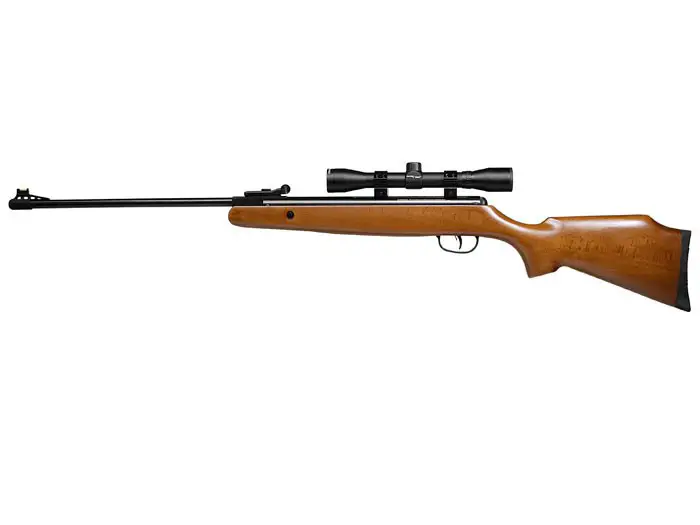
crossman-optimus

The Crosman Optimus is a break barrel gun which means that you have to cock it each time you want to shoot.

Break barrel guns are the easiest of all air guns to load because the breach is exposed when it breaks open.

Besides, it gives you an unlimited shooting capacity and is easy to repair because of its simple mechanism.

Finally, a break barrel gun is easy to clean since you have direct access to the barrel .

This is a single-shot gun.

Single-shot guns give you control over ammunition and make you a better shooter because you know you have to make your first shot count.

The rifled barrel has a caliber (the internal diameter of the bore, measured in inches) of .177 (4.5 millimeters) and .22 (5.5 millimeters).

While .177 is popular for target shooting, .22 is a go-to caliber for hunters and pest eliminators because it delivers lethal knockdown power for small game, something that .177 cannot guarantee.

(For more on how to choose the right air gun caliber for your game, see this post.)

Check Price on PyramydAir

Stock

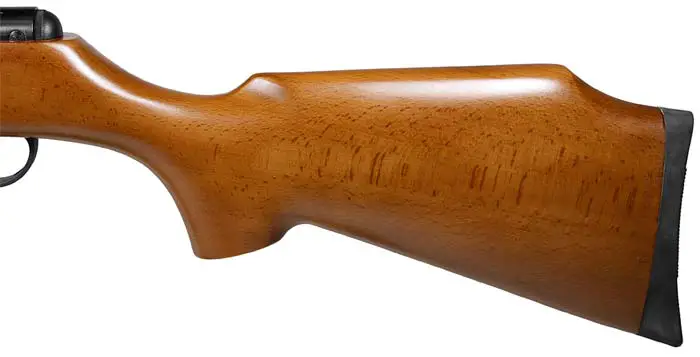
crossman optimus stock

The stock is made of hardwood so it can withstand stress, shocks, load, impact, and abrasion in daily life.

For more on the in-depth comparison between synthetic and wood stock, see this post.

Moreover, the stock is ambidextrous so you will have the same shooting experience whether you are left-handed or right-handed.

Additionally, this stock has a rubber recoil pad to absorb recoil when you shoot.

Ammo

The Crosman Optimus uses .177 and .22 pellets as its source of ammunition.

.22 pellets are heavier and have a larger diameter than .177.

It doesn’t have as much velocity as the .177 pellet but it is more stable in its direction.

Besides, it also has lots of takedown power to finish an animal in one quick, clean shot, so .22 is your best choice to protect your garden from pests.

(For more on the differences between .177 & .22 and which jobs they do best, see this post)

Cocking and loading

Cocking the gun: Hold the pistol grip with one hand, place the stock on your hip, and break the barrel all the way down to its limit.

Loading the pellet:

  • With the breech open after you cock the gun,
  • Put the pellet into the chamber (with the pellet’s nose lying forward)
  • Pull the barrel up to its original position and you are ready to shoot.

Sight
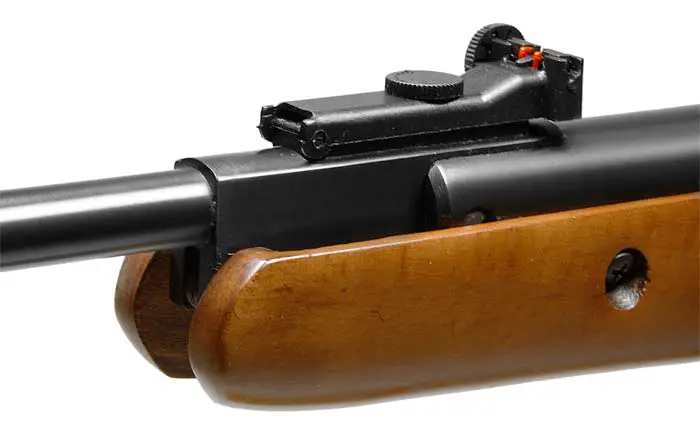
crossman optimus sight

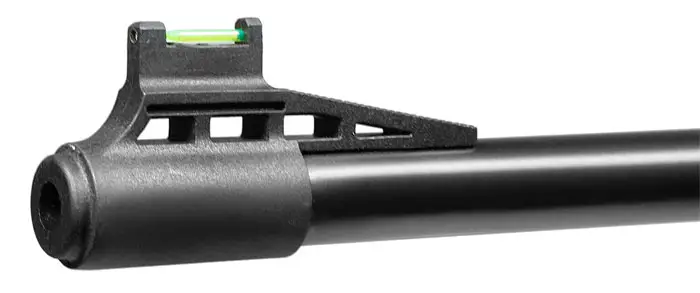
If you are a fan of open sights you’re going to love the Optimus’s sight.

The front sight is fiber optic and the rear sight is fiber optic, too. It is fully adjustable for windage and elevation.
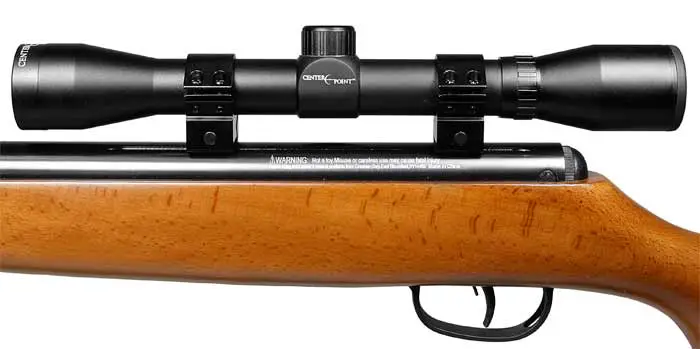
(For more on how many types of air gun sights are out there and which one is suitable for you, see this post.)

As if the fiber optic sight is not enough, Crosman has installed 4×32 scope in case you grow bored of shooting with iron sights.

32 is the diameter of the front lens, measured in millimeters.

4 is the magnification ability of the scope: It magnifies the real picture 4 times.

This scope is good enough for backyard shooting or for pest control but I suggest you upgrade to a better one if you want to go hunting.

Velocity, accuracy and power

The manufacturer claims that the Crosman Optimus 0.177 air rifle achieves a velocity of 1,200 feet per second (FPS) with an alloy pellet and 1,000 FPS with a traditional lead pellet.

And the .22 Crosman Optimus can deliver up to 950 FPS with alloy pellets.

This is a high velocity compared with other .177 – .22 air guns on the market and we can expect a serious hitting power at this level of velocity.

Chrony tests give us results as follows:

In .177:

.177 PelletsFPSFPE
8.3 grains RWS superdome93015.94 
10.2 grains JSB Exact dome pellet80714.75 
8.4 grains JSB exact dome87714.35 
Crosman premier 7.9 grains92314.95 
10.5 grains Crosman Priemier75913.43 

In .22:

.22 PelletFPSFPE
Gamo PBA 9.8 gr85415.91
RWS Hobby 11.9 gr70713.23
Crosman Premiere Hollow Point 14.3 gr71816.37

The actual velocities are nowhere near the advertised number,

But remember that the average muzzle energy is more than 13 FPE which is more than enough to deal with birds, ducks, squirrels, chipmunks, rats, etc.

Bro Wild Outdoors took out the Crosman Optimus .22 Pellet Gun for some Crow Hunting pest control here:
crossman optimus barrel

Accuracy for Crosman Optimus .177:

Distance in yards:< 30305060100
1 ?   
2 ?   
3 ?   
A quarter ?   
Tin Can (open sight)?   ?
Woodpecker  ?  

For Optimus .22, the common shooting groups are:

  • 0.509” at 10 yards with RWS Super H-point 14.2 grains
  • 0.44” at 10 yards with RWS Super H-point 142. gr
  • hit bull’s eye at 10 meters
  • dime size at 25 yards
  • quarter size at 15 yards
  • 1” at 25 meters
  • 1” at 50 meters with Crosman Premiere Hollow Point pellet
  • 1.25” at 20 yards
  • 2” at 50 yards.

Furthermore, it can:

  • pack a good punch clearing through 6/8” plywood at 20 yards
  • kill pigeon in 30 yards
  • shoot bird at 60-70 yards
  • kill bird at 75 yards
  • shoot through 1/2″ plybacker
  • put the pellet through 1” wood board
  • kill a crow at 25 yards with the pellet exit animal’s body completely,
  • penetrate a piece of a quarter inch plywood
  • penetrate a 55-gallon barrel at 27 yards
  • kill duck at 40 yards
  • punch through a license plate at 100 feet
  • shoot through 5/8” plywood at 50 feet. 

To sum up, this air rifle is extremely accurate up to 50 yards and gives you lethal stopping power to solve pest problems in your garden.

(For more on everything you need to know about air rifle accuracy, see this post)

Loudness

The audibility test shows that this gun has 100 Decibels of noise output, making it a relatively loud break barrel gun compared to other Nitro Piston guns.

Some customers say this gun is loud, too.

One shooter asked a local law enforcement officer if there would be a problem shooting it in his fence in the backyard and was told it would not be a problem.

Therefore, you ought not to get into any trouble with the police.

For the neighbors, it depends on how sensitive they are

If they are easy-going and kind then you can take it outside and have fun on your property.

Trigger
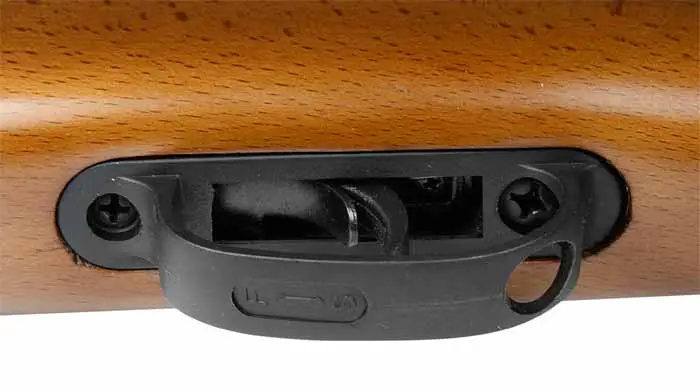
crossman optimus trigger

With the pull weight of 4 lbs 10 oz., the trigger of Optimus is quite heavy and there is a long pull required in the second stage.

However, given the price of this gun, it’s adequate.

Specifications

  • Caliber: .177 – .22
  • Velocity: 1200 (.177) – 950 FPS (.22)
  • Loudness : 3- Medium
  • Overall Length: 43.0”
  • Shot Capacity:
  • Cocking Effort: 30 lbs
  • Barrel: Rifled
  • Front Sight: Fiber Optic
  • Rear Sight: Adjustable for windage and elevation
  • Scopeable: 11mm dovetail
  • Buttplate: Rubber
  • Suggested for: Small game hunting/plinking
  • Action: Break barrel
  • Safety: Manual
  • Powerplant: Spring-piston
  • Function: Single-shot
  • Body Type: Rifle
  • Weight: 6.5 lbs
  • One thing I found interesting is this gun only weights 6.5 lbs, a lot lighter than other adult-size guns so you can carry it around all day long without feeling fatigue.

Customer review

There are lots of customer reviews on this Optimus.

Positive reviews show that people love its cheap price, say its great value for a solid break barrel rifle, accurate and hard-hitting.

The main problem with this gun is the scope: plenty of negative reviews complain that the scope is junk and not screwed tightly.

The manual is very specific about mounting the scope, so make sure you mount the scope properly and use Locktite on the screw to stabilize the gun.

The only complaint that this gun deserves is the trigger.

There are so many guns at this price range that have better triggers like the Beeman series with RS2 trigger or Ruger Air Hawk.

Overall, customers find that this gun is a great gun for the price.

The scope and the trigger could be better but for the price range, they couldn’t ask for a better gun.

Many buyers believe this is one of the best guns under $150.

Pros and Cons

ProsCons
  • Handsome hardwood stock
  • Fantastic fiber optic sight
  • Hit like a tank
  • Superb accuracy
  • High-end velocity
  • Heavy trigger with long pull on second stage
  • Loud but it cannot get you into trouble with local laws
  • Scope is not screwed tightly but you can fix it the ways I said earlier in this review

Price

The price for Crosman Optimus is just slightly more than 100 dollars.

It’s a damn cheap price for a gun that gives you small shooting groups, hits very hard, and can handle common pests such as squirrels, crows, chipmunks, etc.

Check Price on PyramydAir

Conclusion

The Crosman Optimus is a straightforward air rifle.

It doesn’t have anything fancy, but it wasn’t built to be fancy – it’s built for high quality at the lowest price possible.

This rifle is the best solution for your backyard problem. And don’t forget to have fun in the varmint-controlling process!
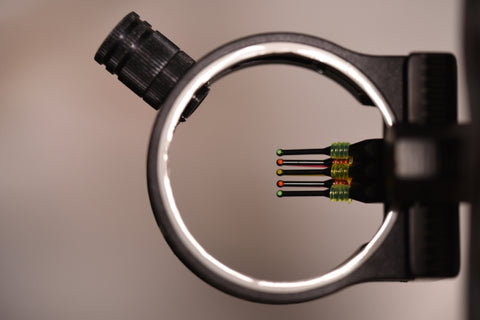
How to Adjust Your Archery Bow Sight: A Quick Adjustment Guide

0

Close-up image of an archery bow sight.

Even if you’re brand new to archery, you’ve probably heard the term bow sight before. But what is it, and why is it significant?

Bow sight refers to a component of the bow that allows you to adjust your aim to shoot more accurately. When it’s not calibrated correctly, however, it can lead to accuracy issues. Bow sight adjustments rectify this.

Now that we’ve squared away those basics, it’s time to get more in-depth about how to adjust a bow sight so you can shoot with pinpoint accuracy. Ready? Let’s dive in now!

What Is a Bow Sight & Why Does It Matter?

Bow sights are the part of an archery bow that allows you to adjust your sightlines and aim your bow better to create a perfectly-aligned shot. Shooting with laser precision is possible with a bow sight, so long as you move the sight pins to their proper spots, which can be done by adjusting the sight housing.

Four Common Types of Archery Bows

Not all archery bows are created equal. In fact, bows come in four main types:

  1. Recurve
  2. Longbow
  3. Compound
  4. Crossbow

The compound bow is perhaps the most common type, but bow sights across all four types of bows are, by and large, fairly similar. Thus, the process for adjusting a bow sight on different bows should be fairly similar as well.

When it comes to compound bow sight adjustment, the more pressing question is whether or not your bow sight is single-pin or multi-pin.

How to Recognize It’s Time for a Bow Sight Adjustment

Are you sighting properly and still not hitting the target? Is it happening again and again? It’s probably not your aim that’s at fault, but rather, the way your bow sight is calibrated.

How to Level Your Bow Sight

Before you get to adjusting a bow sight, you need to adjust the leveling of the sight. There are several axes to adjust the leveling, including a second axis and a third axis.

The second axis level can be seen through the hole of the sight. Imagine hanging a picture on a wall and leveling it. That’s second-axis leveling. Now, imagine leaning a picture up against a wall vs. hanging it straight up and down: that’s third-axis leveling, which is important if you’re going to be shooting at angles (i.e on the unlevel ground).

Leveling in either instance is as simple as loosening the sight (via allen wrench, normally) and then adjusting until the bubble of the level is centered.

How to Adjust Compound Bow Sight: Single vs. Multi-Pin

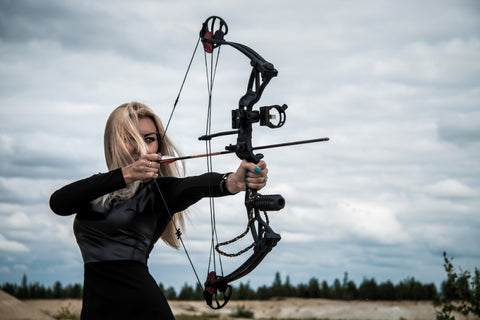
Young blonde female wields a compound bow and looks into bow sight ready to shoot.

Adjusting a bow sight looks different when the bow sight in question is single-pin compared to multi-pin. Let’s break down the steps of bow sight adjustment for each type of pin setup below.

Adjusting a Multi-Pin Bow Sight

Most archers today use multi-pin bow sights. They employ a range of site pins – normally, three, five, or seven – that can be set as aiming references for different distances – normally, 20 yards, 30 yards, 40 yards, 50 yards, and 60 yards. Often, the 20-yard pin will be the top pin and the 60-yard pin will be the bottom pin.

If it’s your first time shooting with a new sight, you’ll have to calibrate it, since you won’t know where your arrow will hit compared to the pins.

Though the highest pin will generally be 20 yards, it’s recommended to start shooting from a distance of 10 yards, using a large target so there’s more margin of error for adjustment.

Shoot, aiming for the bulls-eye, and take note of where the arrow lands. If it is too far in one direction, you’ll want to move the sight in that same direction (i.e. if your arrow hits the left of the bulls-eye, you move the sight housing left). Adjusting the sight is generally done with an allen wrench, which you can buy at any archery shop.

Once you’ve calibrated the pin for 20 yards, you’ll move to each subsequent pin. It’s important to note that you don’t want to move the pins themselves. You want the pins set in their original position until after you’ve calibrated the bow sight entirely. Then, as you shoot, you can move each pin within the sight if needed for minor adjustments.

Adjusting a Single-Pin Bow Sight

Sighting in a single-pin bow can be harder than in a multi-pin sight because it’s difficult to gauge your initial adjustments. That said, the process of actually making those adjustments is fairly simple.

The fundamentals of sight adjustment are the same: make sure you’re adjusting the sight and taking note of where your arrows are landing in relation to the target.

To adjust a single-pin bow sight, you’ll want to loosen the scope housing, then adjust it up and down to shoot from different distances.

You can also move your scope left and right by loosening the scope and re-tightening it.

Discover AccowBow Training Bows

If all the above seems like it’s overly complex, we understand. Archery is a sport that takes practice. But if you’re looking to up your archery game, AccowBow can help! Explore high-quality archery training devices. Try out the 1.0 model or 2.0 second version, and you’ll be shooting like a pro in no time.

Single pin vs. multi-pin bow sights

0

Brady Miller single pin sight

I can remember it like it was just yesterday. My dad had borrowed a bow from a family member and was tinkering with it at the dining room table. I thought to myself, “Could it be? Were we about to become archery hunters?” Up until this point, my dad and I had always toted rifles in the deer woods. Watching him shoot and sight that old bow in seemed like an agonizing process. It seemed like it took days to get it right. The sight looked like something out of a junk pile when compared to those of present day. There were no fiber optic pins or bubble levels. No, these pins were painted: a poor excuse of red and yellow. Yeah, we’ve got it pretty good today in the world of bow sights. We even have the option of having one single pin or multiple pins to look at. Pretty spoiled, right? Yet, this is a common conundrum when picking out a sight and this current topic: single pin sights versus multi-pin sights. Each have their pros and cons. Let’s look down the path of each and see which one might be the better option for you.

Single pin sights

Josh Kirchner shooting bow

Single pin sights are exactly what they sound like. Within the sight housing, there is one pin for you to focus on and one alone. There isn’t a bunch of clutter in the form of other pins and target acquisition comes faster. It puts the confusion to a minimum and, in the heat of the moment, that could help a quite a bit. These sights operate on a slider, meaning that you can dial that one pin to exact yardage. It’s a huge benefit in terms of accuracy, which is probably why it is the most popular choice for target archers. This feature takes the painstaking task of pin gapping out of the equation altogether. For those that don’t know, pin gapping is where you aim between pins. Say you’ve got a 35 yard shot. You aim between your 30 and 40 yard pin. It’s a technique that works and gets the job done, but one that will never be better than single pin accuracy.

Brady Miller Mathews bow Sitka

There are also some drawbacks of running a single pin sight. These have nothing to do with accuracy on the range, but everything to do with hunting because of having to adjust the sight to yardage, which poses a potential problem. Actually, it poses a few. The first is that things happen quickly out in the field sometimes. Say you’ve got a buck standing at 30 yards and have your sight adjusted to 30. You come to full draw and all of a sudden that buck jumps and runs out to 53 yards. Now, you’ve got to either know your exact holdover for 53 yards or have to let down and readjust your sight to 53. That is either going to potentially hurt you in accuracy or in time. Another issue is the actual act of adjusting your sight. Doing so involves movement and movement is what can bite you as a bowhunter. Drawing your bow back is movement enough. Adding more to the equation definitely has the potential of blowing an opportunity.

Shop article bar

Pros

  • Open sight picture
  • Fast target acquisition
  • Exact yardage accuracy

Cons

  • Have to adjust sight for each shot
  • Adds in movement
  • Might cost one opportunity in the field

Multi-pin sights

Multi-pin sight

Multi-pin sights are definitely the most popular in the bowhunting world, especially for beginners. When starting out, it’s comforting to know that you’ve got a set pin for each yardage. They come in three, five and seven pin models with the option of adding a slider to reach way out to longer yardage. These pins are usually set in 10 yard increments; often at 20, 30, 40, 50, 60, etc. That right there is probably the biggest advantage to using a multi-pin sight for hunting. It completely takes the step of adjusting the slider for each shot. That deer standing at 30, but then bounds out to 53? A hunter wouldn’t even have to let down from full draw. All they would have to do is switch the pin they were aiming with. They are a timesaver and, in the mountains, mere seconds can be the difference between notching a tag or eating tag soup. Not having to adjust to yardage also gives the advantage of less movement. And, on an archery hunt, the less movement the better.

Just like single pin sights, multi-pin sights are not all peaches and cream. While having multiple pins in the sight housing is a plus, it can also be a disadvantage. The first is clutter, especially with seven pin models. In dense cover with branches every which way covering up your sightline, having a bunch of pins doing the same thing is not optimal. It could create an issue with trying to pick a spot. All of those pins in there not only cover up the sight picture, but also add an element of confusion. If I had a dollar for every time I heard someone say “I used the wrong pin,” I could probably buy an out-of-state tag or two. It’s even happened to me. The first elk I shot at I couldn’t tell you which pin I used with how intense the situation was. That is the reality of bowhunting and why many of us thrive on it. The intensity and intimacy of close range encounters where thinking straight comes few and far between. In this regard, simpler is better with sights. There is also the issue of pin gapping, which doesn’t offer that exact yardage accuracy you get with a single pin sight.

Pros

  • Great for beginners
  • Have set pins for various yardages
  • Timesaver in the field

Cons

  • Multiple pins cover up the sight picture
  • Could use the “wrong pin”
  • Must be aware of pin gap for yardages in between set pins (no exact yardage accuracy)

Closing

Josh Kirchner

Choosing between a multi-pin sight and single pin sight really comes down to you and your style of hunting in my opinion. Most spot and stalk bowhunters I know that are crawling around open country usually opt for a multi-pin sight. They need the ability to adjust yardage on the fly—especially for hunting the rut when bucks move every which way without a moment’s notice. This is what I prefer as that is the country in which I mostly hunt. However, someone in dense cover or hunting from a treestand might prefer the single pin. Being in close quarters, they know their yardage and can have that single pin set right to it, ready for action. My best advice is to try these sights out and see what you like better. Even if you are a spot and stalk hunter, you might find that you prefer the simplicity of a single pin. There is nothing wrong with that. The same can be said for hunting out of a tree. This is one of the coolest things about bowhunting to me. We have the luxury of molding our system exactly to what we want and how we want it. All of this is a far cry from those red and yellow painted pins bolted within that bent piece of metal I saw as a kid.

Check this out!

For another look at single vs. multi pin bowsights, check out this article here: Single pin bow sights: Are they really better?

goHUNT's INSIDER Research Tools

Beeman R9 Review

0

After three years of ownership and countless pellets down range, I can tell you that purchasing the Beeman R9 was one of the best decisions I’ve made in my airgunning journey. Let me share what it’s really like to own and shoot this German masterpiece.

First Impressions and Build Quality

I still remember the day I unboxed my R9. While everyone was raving about tactical-looking PCPs, I found myself drawn to this classically styled beauty. The deep bluing on the barrel caught my eye first – it’s the kind of finish you just don’t see much anymore. When I ran my hands over the beech stock, I could feel the quality of one of the best spring air rifles for the money. Sure, some might say the finish is almost too smooth (I actually added a bit of grip tape to the forestock for those humid summer days), but that’s just nitpicking.

Living with the R9

Here’s what you don’t read in the specs: this rifle becomes part of your routine. Every morning, I take a few shots in my backyard range before work. The 35-pound cocking effort that seemed a bit challenging at first has become second nature – I barely notice it now. The action has actually gotten smoother over time, like a well-worn pair of leather shoes.

The Rekord trigger? It’s become my benchmark for what a good trigger should feel like. When I shoot other airguns now, I find myself comparing their triggers to my R9’s, and few measure up. I haven’t even felt the need to adjust it from the factory setting of 2 pounds 12 ounces – it’s just right.

Real-World Performance

Let me tell you about accuracy. My favorite pellets are the H&N Field Target Trophies (8.64 grain), and with these, my R9 consistently puts pellet on pellet at 25 yards. I’ve taken it to several local field target matches, and while I’m not winning any championships, my rifle certainly isn’t holding me back. The looks of surprise when this “old-school” springer keeps up with expensive PCPs are priceless.

The power level (around 14 ft-lbs) might not sound impressive in today’s magnum-powered world, but it’s perfect for what I need. I’ve successfully handled the occasional garden pest, and for target shooting, it’s ideal. Plus, the moderate power means I’m not fighting harsh recoil or dealing with scope-destroying behavior.

Comprehensive Beeman R9 Performance Data

Velocity and Energy Performance by Caliber and Pellet Type

.177 Caliber

Pellet TypeWeight (Grain)Velocity (FPS)Muzzle Energy (Ft/Lbs)
Gamo Raptor Platinum (alloy)4.71,099.3512.61
H&N Field Target Trophy Green5.561,052.3913.67
RWS Hobby7.0906.2912.76
Crosman Premier HP7.9889.1913.86
JSB Exact Diabalo8.44859.5913.84
H&N Field Target Trophy8.64857.1514.09
H&N Baracuda Match10.65744.1313.09

.22 Caliber

Pellet TypeWeight (Grain)Velocity (FPS)Notes
JSB Exact18.1561-585Common hunting load
H&N Field Target11.42772

.20 Caliber

Pellet TypeWeight (Grain)Velocity (FPS)Notes
Benjamin Diabolo14.3820
JSB13.73740-742Very consistent

Detailed Accuracy Performance by Distance

DistanceGroup SizePellet TypeNotes
10 yards0.16″-0.39″H&N Baracuda Match10-shot groups
10 yards0.125″Various5-shot groups
20 yards0.17″-0.50″H&N Baracuda Match10-shot groups
25 yards0.25″Various5-shot groups
25 yards0.4″H&N Baracuda Match 10.65gr5-shot average
25 yards0.5″VariousConsistent across users
30 yards0.49″-0.87″H&N Baracuda Match10-shot groups
30 yards0.75″VariousQuarter-size groups
50 yards<1″Predator GTOs10-shot groups
50 yards0.715″Various6-shot group

Notes:

  • Most consistent accuracy achieved with medium to heavy weight pellets
  • Hold sensitivity reported as minimal compared to other spring-piston rifles
  • Performance varies slightly with temperature and altitude
  • Factory tuning can affect individual rifle performance
  • Best results after proper scope mounting and break-in period

The Scope Situation

I’ll be honest – I swapped out the bundled Bushnell scope pretty quickly. Not because it was bad (it’s actually quite clear), but I needed mil-dots for field target shooting. I mounted a Hawke Airmax, and the combination is fantastic. If you’re buying an R9, I’d suggest getting the scope-free version and choosing your own optic based on your needs.

Daily Use and Maintenance

One thing I love about the R9 is its simplicity. There’s no need for filling tanks, no regulators to adjust, no complicated maintenance routines. A few drops of quality oil every few thousand shots, keep the barrel clean, and that’s about it. In three years, I haven’t had a single mechanical issue.

The rifle has developed its own character marks – a few small scratches on the stock tell stories of woodland hunting trips, and the bluing on the barrel has worn slightly where I grip it for cocking. Each mark makes it more mine.

Hunting and Field Use

While I mainly use my R9 for target shooting, I’ve taken it hunting occasionally. It’s dropped several rabbits cleanly at ranges up to 30 yards. The moderate power means you need to be more conscious of range and shot placement, but that’s made me a better shooter overall.

What really impresses me is how the rifle performs in different weather conditions. Whether it’s a humid summer evening or a cold winter morning, the point of impact barely shifts. This consistency is something you really appreciate over time.

The Little Things

There are small details you discover only after extended use. The way the barrel locks up with that satisfying click. How the automatic safety, which I initially found annoying, becomes a natural part of the shooting routine. The solid “thunk” when it fires, without the twang some springers develop over time.

Even loading becomes a zen-like experience. The breech design makes it easy to seat pellets perfectly every time – no thumb-destroying pellet loading here. It’s these little things that make shooting the R9 so enjoyable.

Value Over Time

Yes, I paid $570 for the Elite Combo version, and at the time, it felt like a lot of money. Looking back, it was a bargain. When I consider the thousands of enjoyable hours I’ve spent with this rifle, the cost per hour of entertainment is minuscule. Plus, unlike many modern airguns, I’m confident this one will last long enough to pass down to my kids.

What I Would Change

If I could change anything? Honestly, not much. The manual could be better – I had to learn about the decocking procedure from an online forum. And maybe the stock could use a bit more texture. But these are minor quibbles about what is otherwise an exceptional air rifle.

Final Thoughts

The R9 isn’t just an air rifle I own; it’s become a trusted companion. While others chase the latest innovations or highest power levels, I’ve found satisfaction in mastering this classic design. It’s taught me the importance of good technique, the value of consistency, and the joy of simple, well-executed engineering.

To anyone considering an R9, I’d say this: if you appreciate quality over flash, if you enjoy the process of becoming a better shooter rather than letting technology do the work, and if you value long-term reliability over short-term excitement, this rifle will not disappoint. Three years in, I’m still discovering new things to appreciate about it.

Every time I pick up my R9, I’m reminded why it’s earned its reputation as a modern classic. It’s not just an air rifle – it’s a lifetime investment in shooting enjoyment.

Can You Spot the Difference?

0

Differences between Striped Bass and Hybrid Striped Bass

Can you tell the difference between a striped bass and a hybrid striped bass?

What is a Hybrid?

Hybrid striped bass (also known as a wiper or whiterock bass) is a hatchery-created hybrid between the pure striped bass and the white bass. As seen in the image below, hybrid can be distinguished from pure striper by the broken horizontal stripes going down the side of the body. Pure striped bass have solid lines from head to tail fin.

In addition to the differences in stripe patterns, hybrid striped bass also tend to have a deeper body (from dorsal fin to ventral fin; back to belly). Pure striped bass are more slender and skinnier.

Size-wise, hybrid striped bass are fast-growing but typically max out in length midway between its parents; a 10- or 12-pounder is considered a great catch!

Hybrid striped bass are known for aggressive feeding habits which makes them highly sought-after by anglers. Often schooling by the thousands, these stocked fish surface feed on local baitfish found in Wallenpaupack such as alewife. Often called “breaking”, this surface feeding makes the fish visible and easy to catch on a wide array of lures and baits. Popular lures include casting spoons, buck-tail jigs, soft-body plastic fish replicas, and inline spinners.

Pure Striped Bass

The striped bass has a slimmer profile, more streamlined than a striped bass hybrid, until it reaches a weight of five to 10 pounds, when its body becomes heavy-looking. The sides are silvery to pale silvery-green, shading to white on the belly. There are seven or eight distinct (unbroken) dark stripes that run laterally on the side of the body. Young striped bass do not have dark lateral stripes, but instead have dusky bars.

Pure striped bass catches in the 15- to 20-pound range are not uncommon in Pennsylvania. In fact, the Pennsylvania state records both for marine and landlocked striped bass are over 50 pounds!

Even landlocked striped bass instinctively migrate upstream in the spring to spawn, traveling into the mouths of large freshwater rivers. Water temperature signals spawning time, with some spawning occurring at 55 degrees, but most at 60 to 67 degrees.

In lakes, pure striped bass move according to temperature and dissolved oxygen in the lake favoring cooler arms within the body of water during the hot summer. Striped bass feed on just about anything alive that is available. Young striped bass eat microcrustaceans, or zooplankton, and midge larvae. As they grow, their diet changes to other fish. As adults, striped bass live in roving schools, feeding mostly at night.

So, What’s in Lake Wallenpaupack?

The Pennsylvania Fish and Boat Commission stocks pure and hybrid striped bass and has been since 2000. On record, they’ve stocked over 46 million pure striped bass fingerlings and fry and over 226,000 hybrid fingerling (source).

Think twice about keeping your catch!

Both Hybrid and Pure striped bass are functionally sterile, meaning reproduction is uncommon. This trait allows biologists the ability to manage striped bass populations based on available forage without the risk of overpopulating waterways.

Stocked fingerlings typically reach legal length (20”) by the end of their fourth growing season!

2015 Pennsylvania Fish & Boat Commission Biologist Report of Lake Wallenpaupack

Examples from Local Anglers

Pure Striped BassHybrid Striped Bass Mike SwingleMike Swingle Jeff AntellJeff Antell John Cook Joe Kreylin Will Hazimof Kevin Carr Greg Edwards

What Is The Lightest PCP Air Rifle?

0

PCP air rifles are becoming more and more popular, as they provide a lot of power in a lightweight package. But which is the lightest PCP air rifle on the market? Keep reading to learn more!

The AEA Element is a lightweight, portable PCP air rifle that can be easily carried in any backpack or toolbox. Made almost completely from carbon fiber and sporting features like an ergonomic folding stock – it’s both lightweight (2.8 pounds without the scope) yet still durable enough for all sorts of outdoor adventures.

Features:

  • CALIBER: .22 – .25
  • Weight: 2.8 LBS
  • Barrel Length: 16 Inches
  • Overall Length: 35 Inches
  • Integral Shroud
  • Cocking System: Side Bolt Lever
  • Magazine Capacity: .22 Cal (10 shots) – .25 Cal (8 shots)
  • Air Filling Pressure: 3600 PSI
  • Air Tube Capacity: 180 CC
  • Muzzle Velocity: .22 Cal (1000 FPS ,14.3 GR) – .25 Cal (850 FPS, 24 GR)
  • Muzzle Energy .22 Cal 35 ft/lbs. (45 Joules) – .25 Cal 40 ft/lbs. (55 Joules)
  • Optics: Picatinny Rail Scope Mount

(For more on the best PCP air rifle on the market, see this post)

Best .223 Ammo for Coyote Hunting to Bring Them Down Fast

0

There are multiple arguments about the best coyote ammo, but hunters agree on the need to drop them fast.

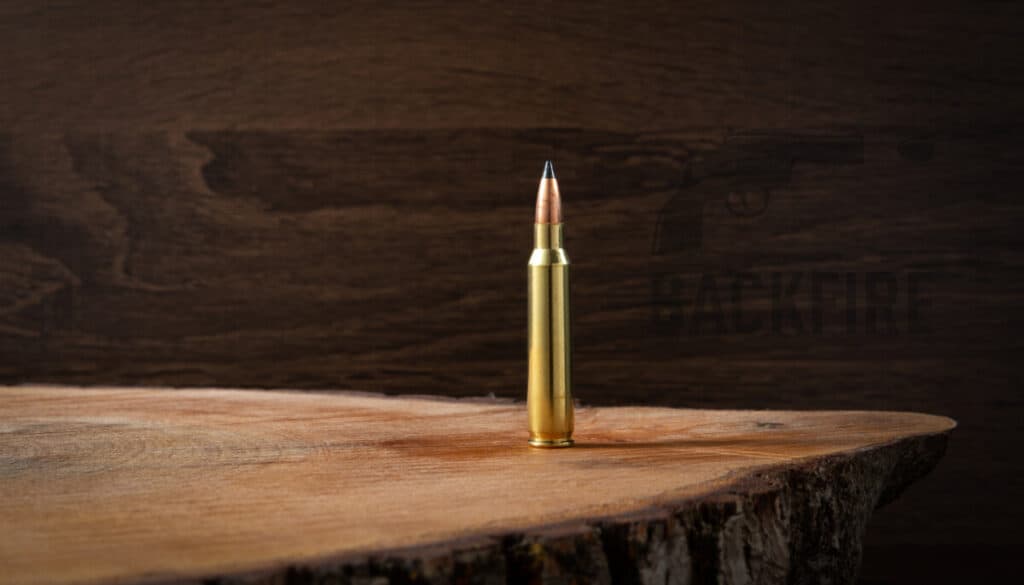
The most effective .223 ammo for coyotes is Hornady Superformance Varmint 53 Grain V-MAX (Order it from MidwayUSA here). It combines the highest ballistic coefficient with great accuracy, the highest velocity, and the least damage to the pelt. There are other options for barrels with fast twist rates and that are more affordable.

Barrel twist rate, shot distance, and affordability will dictate your most likely best performers. Take the best options, and find the most accurate one for your rifle. Read on!

The Most Popular .223 Ammo for Coyote Hunting

By far, the most popular choice for varmint and small predator hunting is Hornady’s 53 grain and 55 grain V-MAX bullets. 71 percent of skilled hunters polled preferred this round after first trying multiple other options.

I personally asked over 500 coyote hunters about their favorite .223 round and why they choose it. The two most popular are Hornady’s 55 grain Varmint Express, and Hornady’s Superformance 53 grain. Most agreed that the Superformance is superior, but many opted for the Varmint Express due to price.

Hornady’s Superformance Varmint is the king of popular coyote ammo for the .223. I find it stunning to get this much following behind anything! Here’s what they had to Say:

  • The 53-grain V-MAX combines both reliable accuracy and the explosive nature desired for a dedicated lightweight coyote round.
  • It’s the best pelt-saving option for the .223.
  • It’s a great compromise between velocity and high ballistic coefficient.

The words “explosive” and “dependable” were common descriptions attributed to this round. One hunter told me “I’ll not leave home without it. Real-world, unbiased reports from hunters continue to choose this over any other.

Hornady’s V-MAX bullet is a polymer tipped, copper-jacketed bullet with a swaged lead core. It’s a boattail design (slightly skinnier at the rear) and has a solid, flat but thin base. It also has a higher ballistic coefficient than most, which is the measurement of a straight-shooting bullet.

The Most Accurate .223 Coyote Ammo

Now let’s go over accuracy. You can’t get what you can’t hit. Accuracy is the most important part of the equation.

Hornady is well-known for making highly consistent, precision-made bullets. Their bullets are some of the more preferred for hand loaders requiring the utmost performance in cutting bullseyes and slaying canines. Hornady’s Superformance ammo is loaded under match-grade quality control.

Nosler is also a leading manufacturer of precision ammo. both companies have excellent attention to detail and quality control in the manufacturing process. Either company is an excellent bet for quality ammo.

They are super consistent in brass thickness, case length, seating depth, and powder charge. If the bullets agree with your rifle, more on that next, you can expect well under MOA (about an inch) groupings at 100 yards. That is what skilled shooters expect to find downrange.

The bullets do need to agree with your rifle. Minute differences in the chamber, throat, and barrel of your rifle will tend to favor one specific ammo over others, sometimes for no apparent reason. You need to choose the most likely accurate bullets, then try them and find the best performer for your rifle.

The best options to choose from tend to consistently be Hornady and Nosler, but don’t be afraid to try something else, sometimes that gives surprising results too. Let the rifle tell you what it likes best. Nosler does tend to over-penetrate a bit more, ruining more pelts than Hornady’s ammo.

So, what sort of accuracy do you need to hit a coyote? A rule of thumb is if you can hit a quarter (1 inch) at 100 yards, while seated at a shooting bench, you should do alright in hunting conditions. It’s important to remember that hunting conditions always reduce a shooter’s precision a bit.

The target area on a coyote is roughly the size of a softball. If you can hit a quarter on the bench, you should be able to drop a coyote in the field.

Best .223 Ammo by Barrel Twist Rate

The twist rate largely determines the best weight range of bullets you use. At .223 velocities, there’s little concern about too much twist rate, just be sure to have enough. Here’s approximately what to expect at .223 velocities.

  • 1 in 14 twist: bullets under 55 grain
  • 1 in 12 twist: bullets up to 55 grain
  • 1 in 10 twist: bullets up to 65 grain
  • 1 in 9 twist: bullets up to 68 grain
  • 1 in 8 twist: bullets up to 70 grain
  • 1 in 7 twist: bullets 55 grain and up

If you are looking at more affordable options, use this as a guide. I recommend Hornady Frontier 55 grain Spire Point. It’s a cheap, functional choice. It just tears up the hide a bit more.

Best Coyote Ammo to Save the Hides.

Coyote hides sell for around $20 plus or minus depending on the quality, and the current fur market. If they are torn up from a large exit wound, they are considered unsellable on the market. To “Save the Hide”, you want to make a small entrance hole and no exit.

That’s where lightweight, fast-moving bullets come in. Modern varmint and coyote hunting bullets are designed to quite literally explode reasonable hunting distances. They usually penetrate about 4 inches into a coyote. Not passing through but destroying the chest cavity.

There are lighter bullets with higher velocities, like Hornady’s lead-free 35 grain NTX, but these have lower ballistic coefficients. There is also a number offered in the 40 grain range. They start out blazing fast, with an impressively flat trajectory, but are tossed around by the wind and ineffective past 150 yards.

Best .223 Ammo for Coyotes Past 200 Yards

At 200 yards, things are starting to change for the lighter rounds, under 50 grains. Even if they are still going fast, they give to the wind too much. Heavier bullets in the same caliber tend to be less affected by the wind. That’s where the ballistic coefficient comes into play.

Once again, the general consensus is that the 53 grain Hornady round is the proven top-performer. At 250 yards, it has less wind drift and therefore kills more coyotes than lighter bullets. There is still plenty of killing power left at 250 yards to roll over a coyote and stop it in its tracks.

If you do want to shoot coyotes much further than 250 yards, I’m gonna recommend a different bullet. Something in the 65-80 grain range. Realize that these bullets will buck the wind better, but will not perform like the Hornady V-MAX and will give you pass through.

You will make hits but may not recover the animal. That’s more for damage control; just getting rid of them.

For shots over 250 yards, it’s really best to use either a faster caliber like the 22-250 or a heavier caliber like the .308 or 6.5 Creedmoor to be sure the bullet isn’t blown off course.

Staccato P Review: Best Duty Pistol?

0

If you want see the Staccato P in action, check out the video review above.

As always, you can head over to Pew Pew Tactical on YouTube for more guns and gear.

Recently, Staccato came out with a 2011 pistol called P.

While marketing included a mixture of approaches, it was clear the P was at least partially intended for law enforcement.

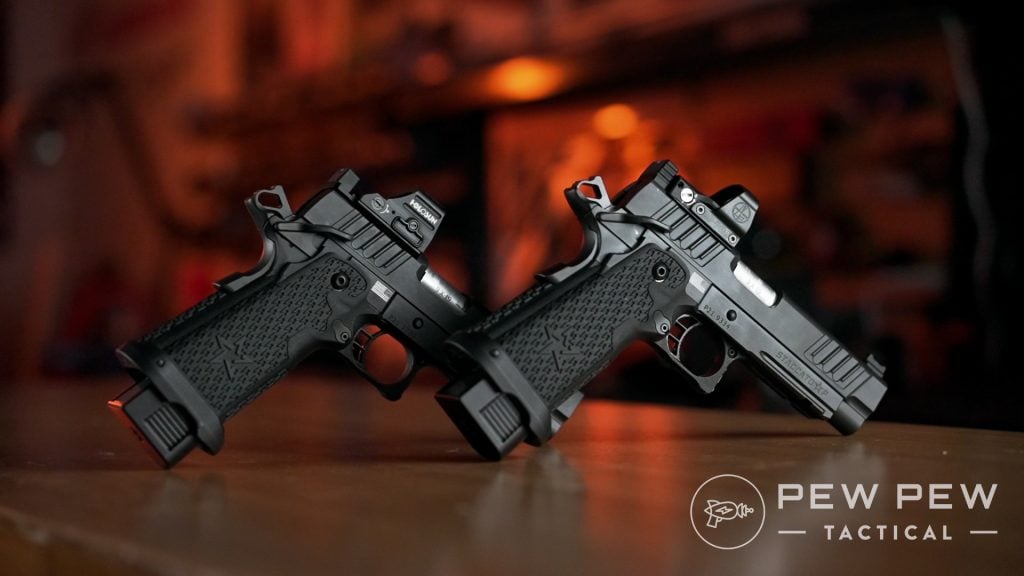
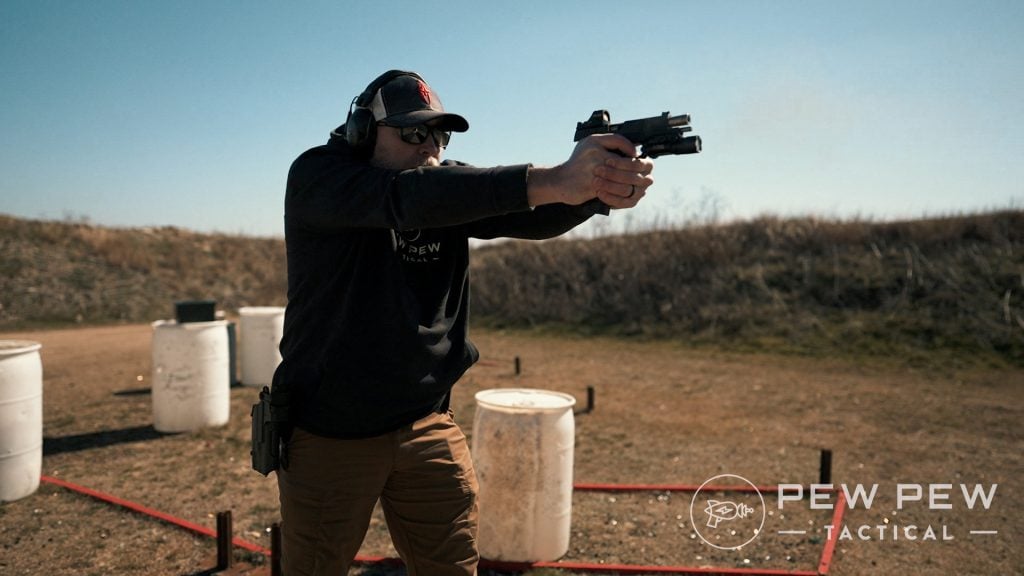
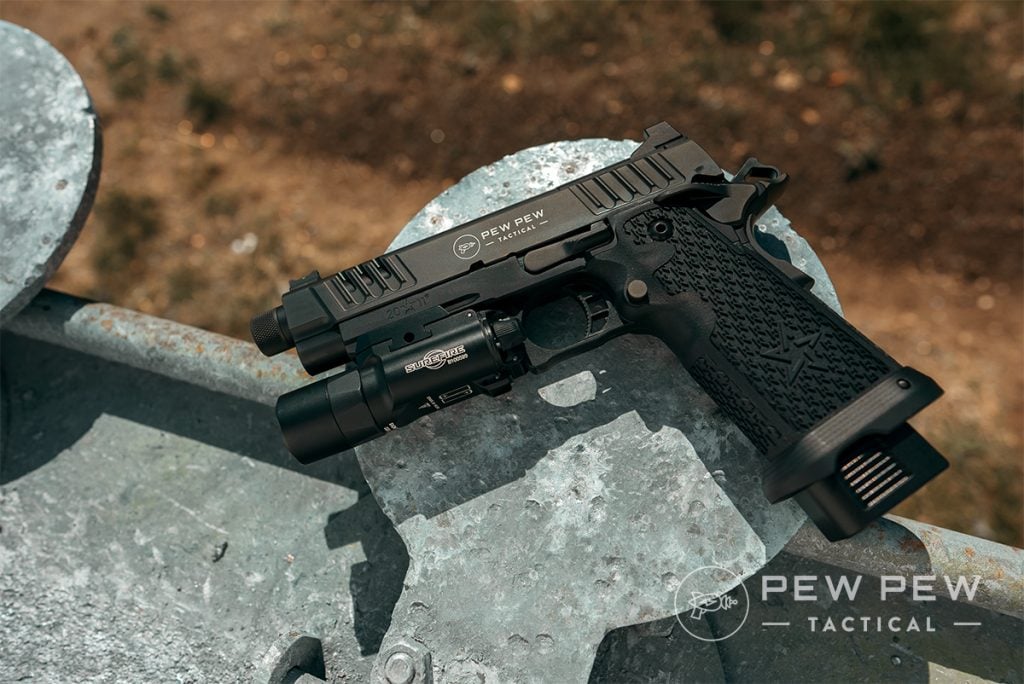
Staccato P pair close

Staccato claims the P is approved for duty use by more than 460 law enforcement agencies.

I think we can agree, calling a weapon duty rated sets a high standard.

Backed by over 22 years in law enforcement, the last seven of which I served as a POST-certified handgun instructor, I intended to test the P for myself and find out if it merited that ranking.

Staccato P Sean DV
Before digital cameras

So read on as we walk you through the specs, talk about the features, and head out to the range with this gun to find out what it’s truly capable of.

Feeling lazy to read the article? We’ve summarized the pros and cons for you.

Staccato P: Pros & Cons

Pros

  • Very accurate
  • Great trigger
  • Low recoil

Cons

  • High MSRP
  • Expensive magazines

What is the Staccato P?

So, after 100 years added to a gun’s legacy, how did Staccato evolve the 1911? What are the main differences?

First off, the general aesthetic is still the same.

Those familiar with the lines of the 1911 will recognize that DNA in the 2011.

Staccato P grip
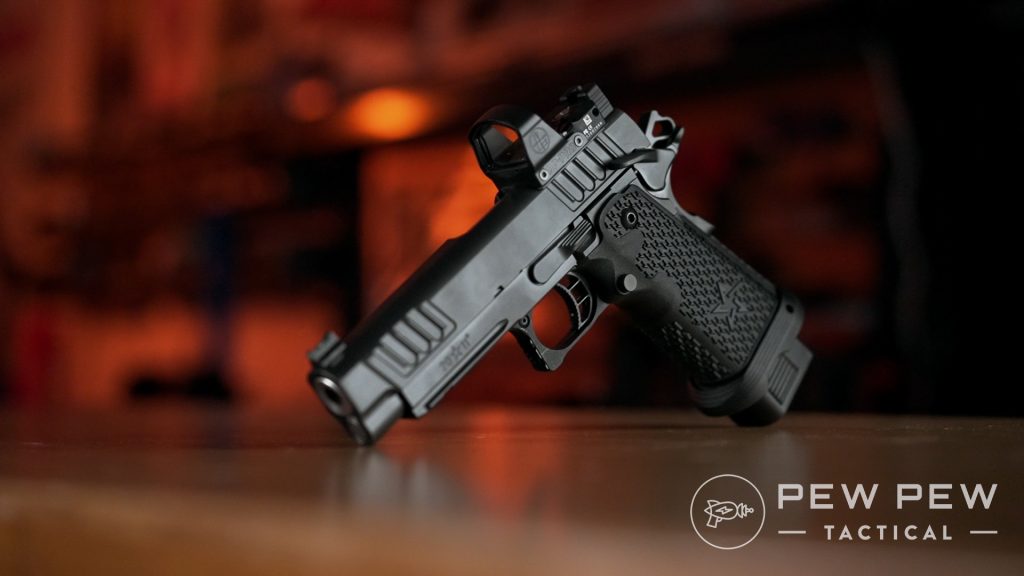
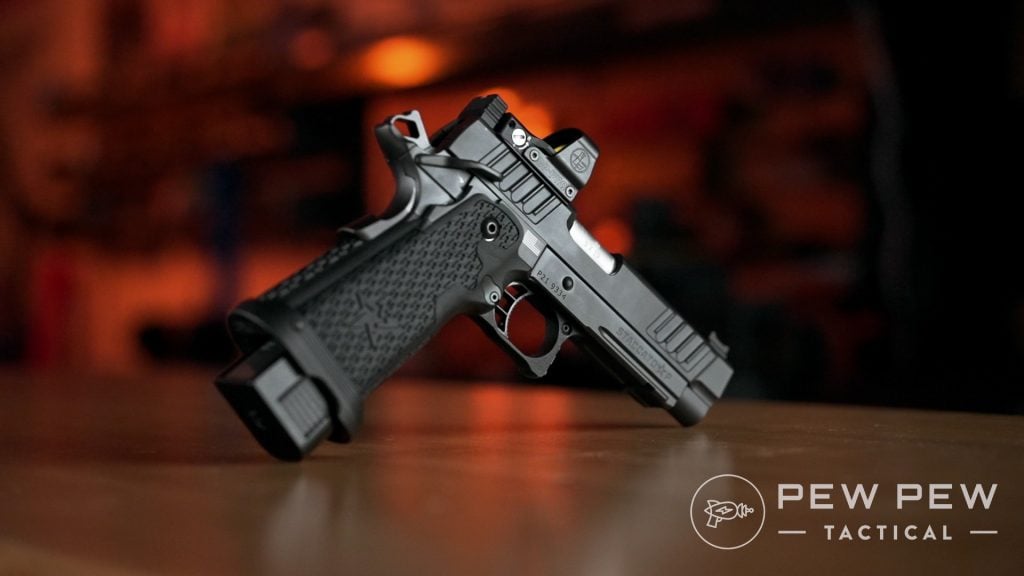
The steel frame with Leupold DeltaPoint Pro

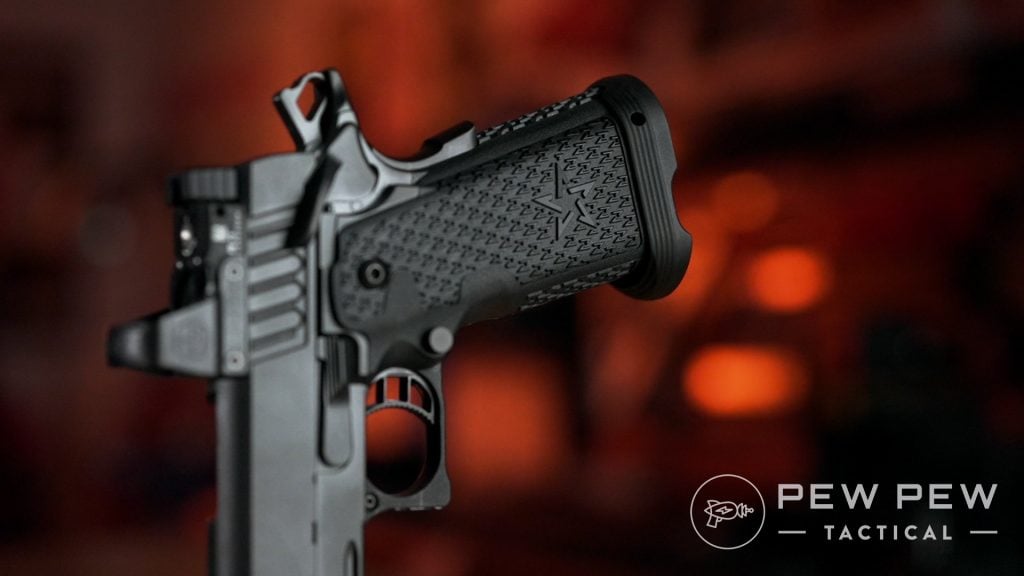
The first big difference you notice is the grip. I’ve always appreciated the narrow but hefty feel of John Moses Browning’s beauty, but the grip on the Staccato is much thicker.

This accommodates the double-stacked, 9mm magazines. When you dig into the gun and take it apart, you notice some major differences.

The frame offers either a steel or aluminum build with a polymer exterior. This allows for increased capacity and helps mitigate some of the recoil.

Staccato P recoil spring
Heavily textured gip

Plus, the outer texture is grippy. It’s got a raised pattern like an all-terrain tire that really hooks up in your palms.

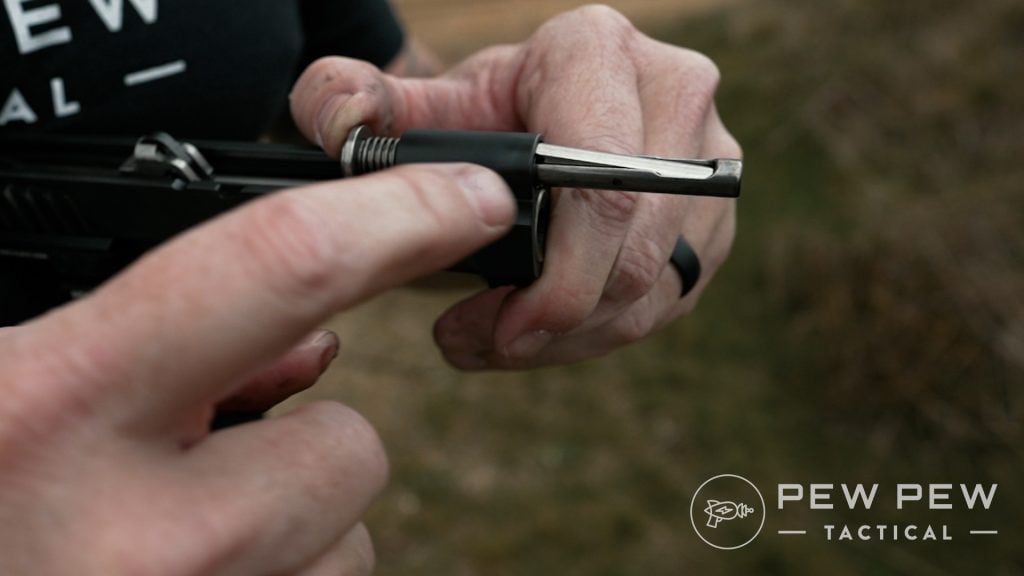
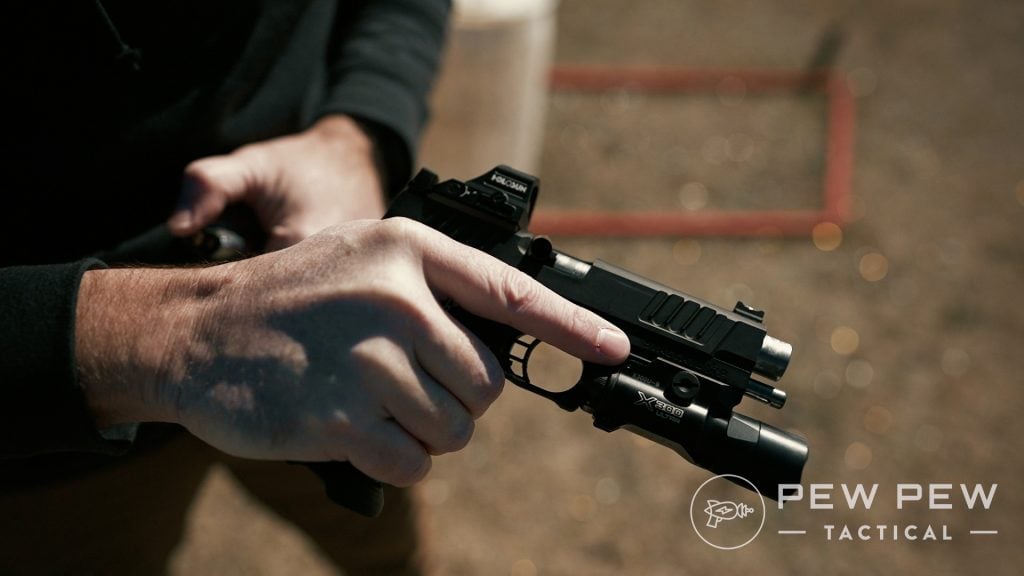
In addition, there’s no barrel bushing. Shooters compress the guide rod and spring until a clip sticks out. This catches on the end of the muzzle and locks the compressed spring in place for removal.

This is called the Dawson Precision tool-less guide rod and it is a much-appreciated improvement.

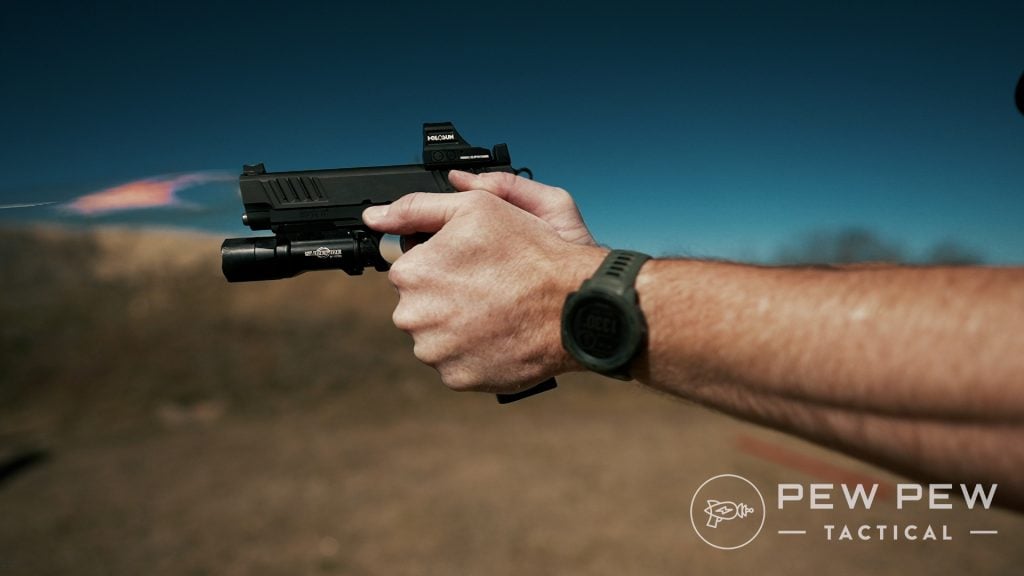
Staccato P shooting side
This upgrade is pure joy

The safety and hammer are still there as is the slide stop and the skeletonized trigger gives the impression of a higher-end 1911.

Ergonomics

Let’s talk ergonomics!

First off, the grip is really big. I wear a 2X glove and I had to make adjustments. While I could reach the mag release, I couldn’t reach the slide stop lever without adjusting my grip.

It is manageable, but police agencies are a lot more diverse nowadays and can’t follow the 6 foot or better hiring practices of old. Small-handed officers might struggle with this gun a bit at first but I think the rewards would offset this.

Author
Different techniques might be required

The P has an ambidextrous safety, but the mag release is currently only on the left side.

Interestingly, I found myself leaning more toward the aluminum frame for preference. Then again, I don’t wear a leather duty belt anymore.

Staccato P close opposed
Staccato P shooting side

The steel frame P weighed 2 pounds, 3 ounces on my digital scale, while the aluminum was 1 pound and 14 ounces.

To the Range!

There were a couple of questions I set out to answer with this test.

I wanted to see how the 2011 was improved for the average officer on the street and if Staccato was able to keep some of the qualities I loved about the 1911 while improving some of its shortcomings.

Staccato P spitfire
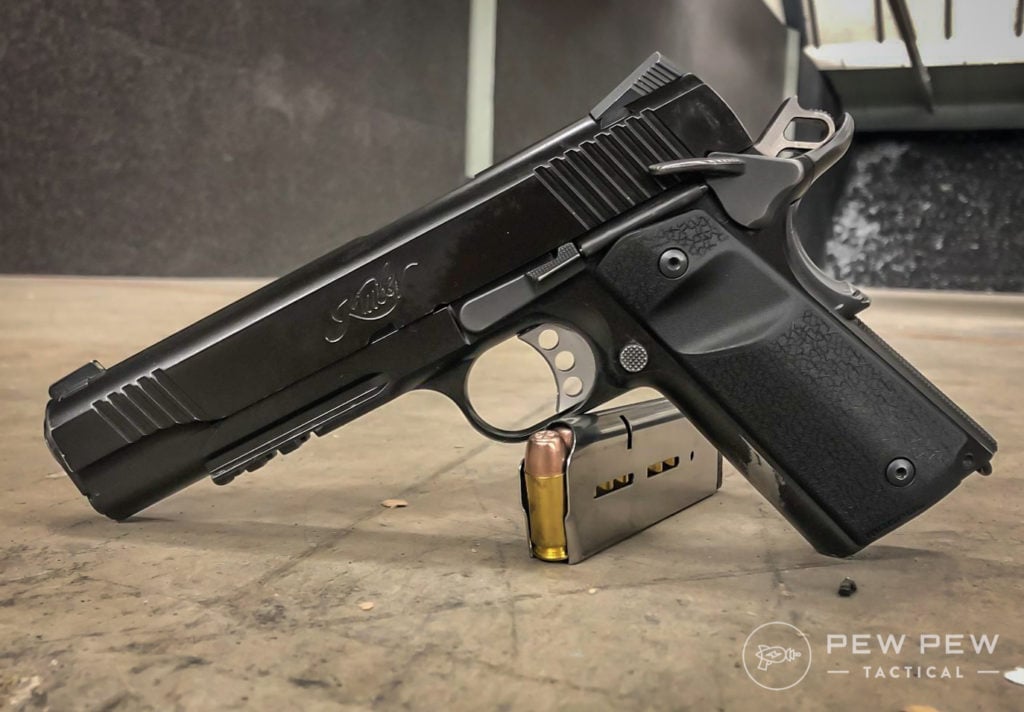
The Kimber Warrior which I carried on duty.

I carried a 1911 on duty which means I hold it in the highest regard. But it doesn’t mean the gun couldn’t stand some improvements.

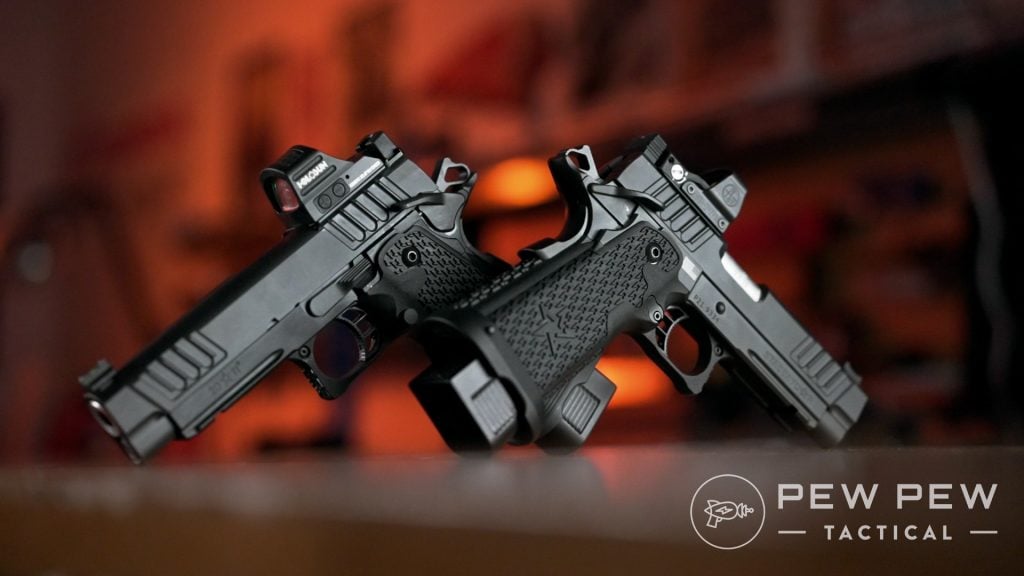
I practically ran to the range when the Staccatos came in — that’s right, I said Staccatos.

They sent two Ps, an aluminum frame, and a steel frame. Before all was said and done, I tested both and developed some preferences.

Staccato P trigger
Ahh variety

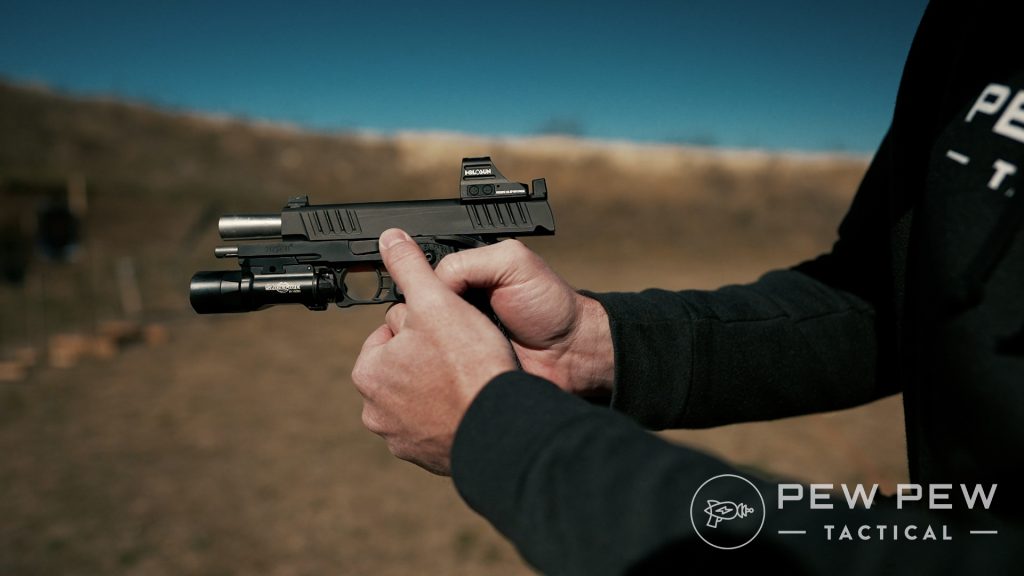
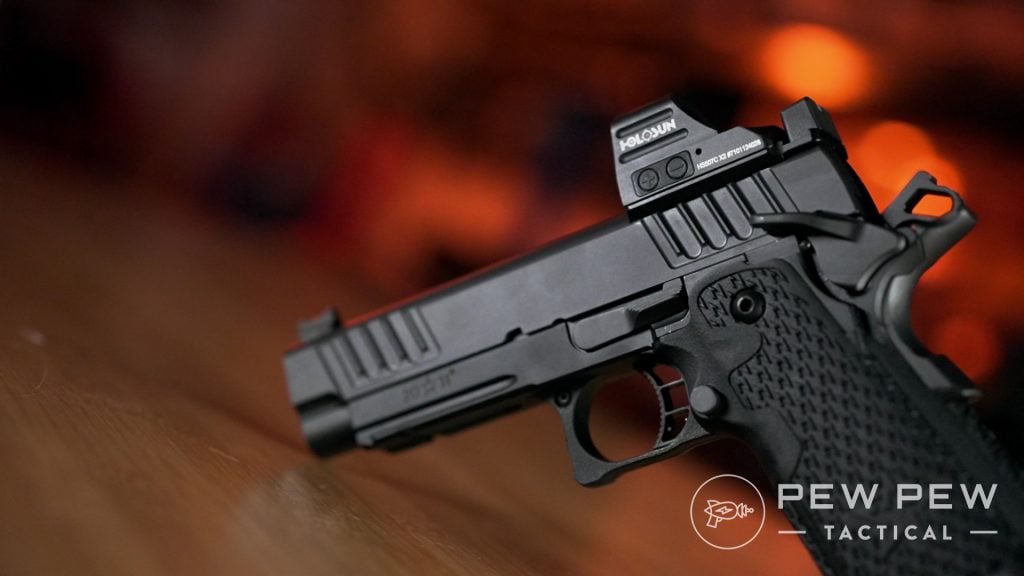
Starting out though, I ran the aluminum frame with a Holosun 507c optic and the steel frame with the Leupold DeltaPoint Pro.

I’m a huge fan of both of these red dots. (Want more red dots? Check out our article on the Best Pistol Red Dots.)

After testing began, one thing became clear right out of the gate — I’m not used to external safeties anymore!

It took some practice to implement that into my draw stroke again.

Staccato P accurate
Staccato P spitfire

The P comes with a slide lock safety and a grip safety.

There’s a philosophy associated with these, particularly as it applies to law enforcement — they serve as the final layers of officer safety, should de-escalation and weapon retention tactics fail.

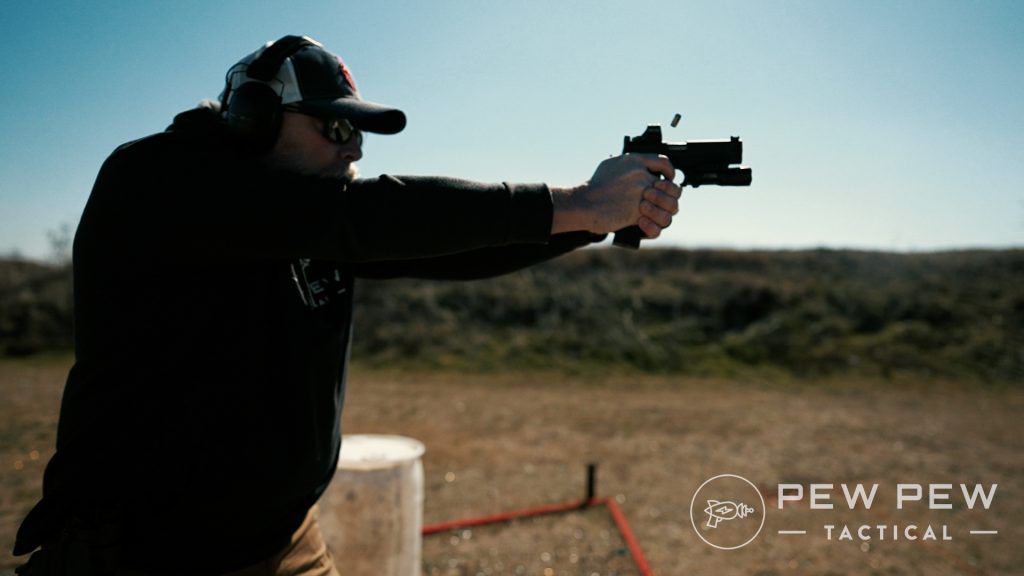
With a good grip established, I started banging away. Going back to a hammer-fired gun is like reuniting with an old, familiar, lover.

Staccato P loadout

Gone was the achingly long, sometimes squishy, trigger pull so commonly associated with striker-fired guns.

Nope, this was sheer point and click joy with a short, crisp break and reset.

Mine averaged just over 2.5 pounds on a Lyman Digital Gauge, though Staccato lists it as 4 pounds.

Staccato P stovepipe

Looking back down Memory Lane, I used to love how well I grouped shots with my 1911.

I attributed much of that performance to the trigger and it felt like the Staccato P would repeat that.

Accuracy

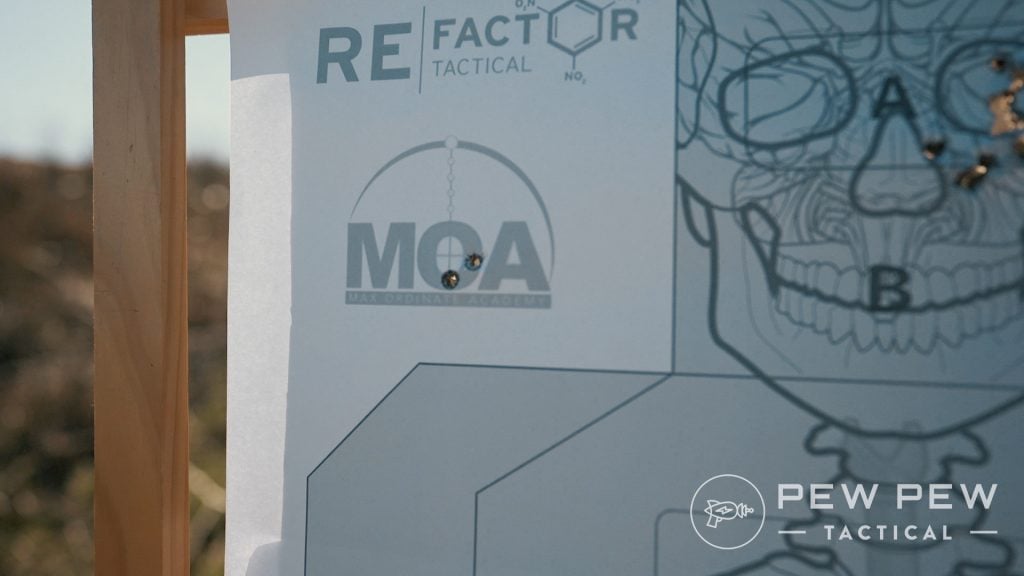
At 15 feet I fired off three shots for accuracy. The first and last went through the same hole but I threw the middle shot about an inch away.

Accuracy is strong with the P.

Staccato P ready
Should have been 3-in-1 but that’s on me

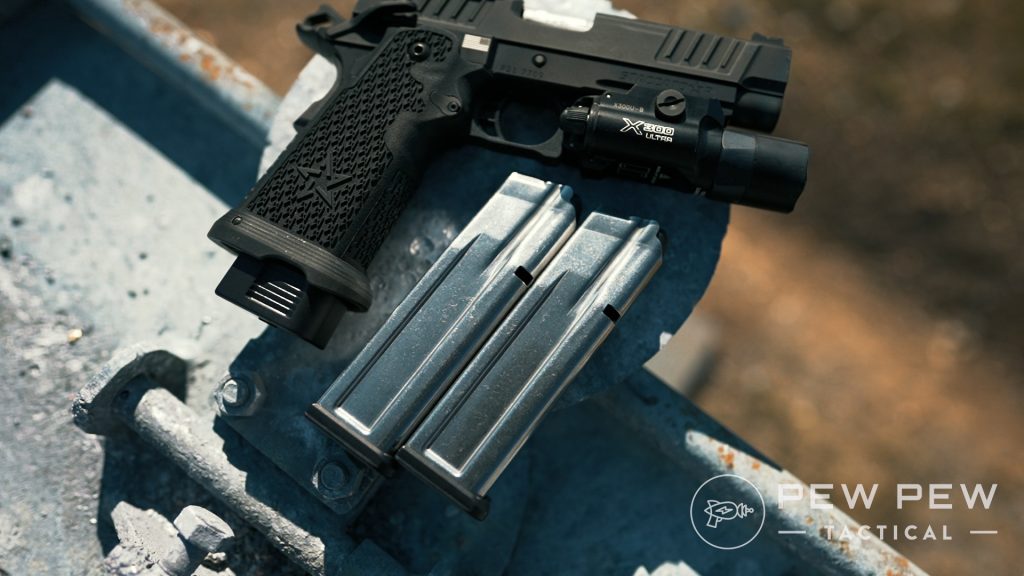
Another impression I had was loving the magazines and their added capacity. The P comes with three magazines — two are 17 rounders and the third is 20.

This means officers can walk around with 20+1 in their holster and another 34 rounds in mag pouches. That first magazine is often the most important, for obvious reasons.

Staccato P reload
20 is money

Moving onto reliability, I fired right around 1,000 rounds through each gun using American Eagle and Blazer, both at 115 grains. I also ran some 124 grain SAR USA ammo through the guns.

With the exception of two stovepipes, the guns ran flawlessly. I was able to pin this down to one box of Blazer ammo and it did not happen again.

Staccato P, Custom Configured
This only happened twice, from the same box of ammo

I ran different drills from my academy curriculum during testing and really began to appreciate this new breed of gun – an evolved fighting pistol with a pedigree.

In short, both Staccatos were fantastic.

For a full breakdown on the P’s…breakdown, see our Disassembly and Reassembly video below.

By the Numbers

Ergonomics: 4/5

The grip is really big, even though I wear a 2X glove, I had to make adjustments. Smaller-handed shooters might struggle a bit. Overall, though, it’s pretty comfortable.

Reliability: 4.5/5

I really believe the two stovepipes I experienced were ammo-induced because they didn’t happen again during the course of testing. Otherwise, the Ps were perfect.

Staccato P, Custom Other Side
Staccato P ready

Accuracy: 5/5

These guns are at least as accurate as my 1911. The excellent trigger, combined with the red dots, (the fiber optic sights are nice too) really helps with getting on target.

Add in the 4.4-inch bull barrel and you’ve got a solid package that will deliver laser-like fire if you do your part.

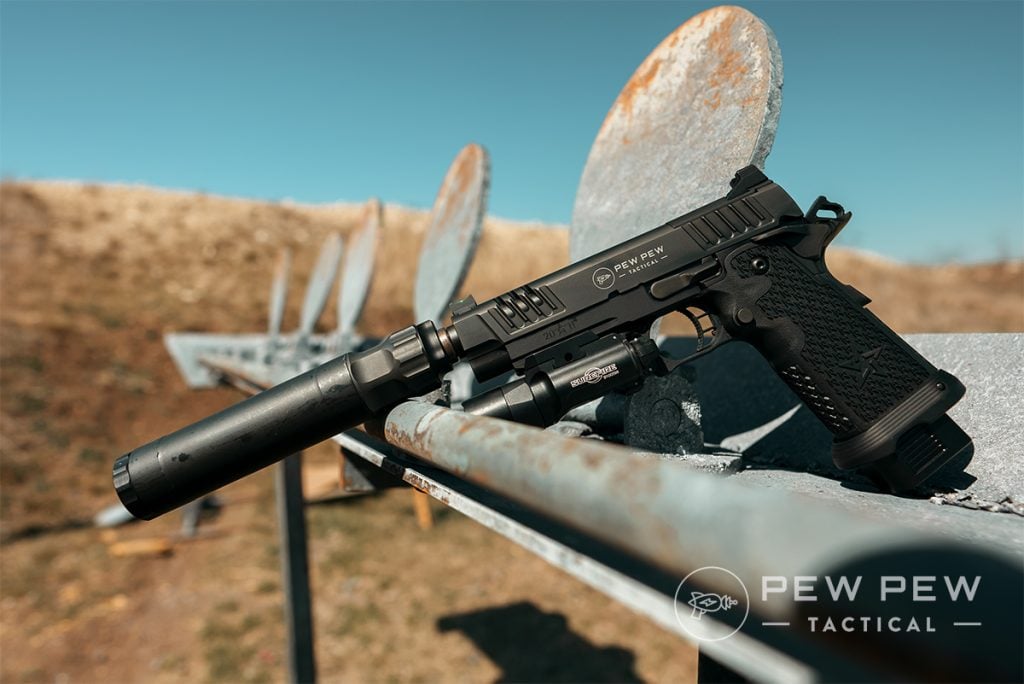
Staccato P, Custom Suppressed
The flared magwell makes reloads fast and certain

Value: 4/5

The Staccato P is expensive. The standard version is $2,099 while the optics ready version will set you back $2,399.

Compared to a polymer, striker-fired gun, this might seem outrageous, but in the world of higher-end 1911s it’s entry-level to average.

Overall: 5/5

This is an outstanding firearm. I feel like Staccato honored the past of the 1911 with due reverence while vastly modernizing the design to fit the challenging role officers face today.

Upgrades & Accessories for Staccato P

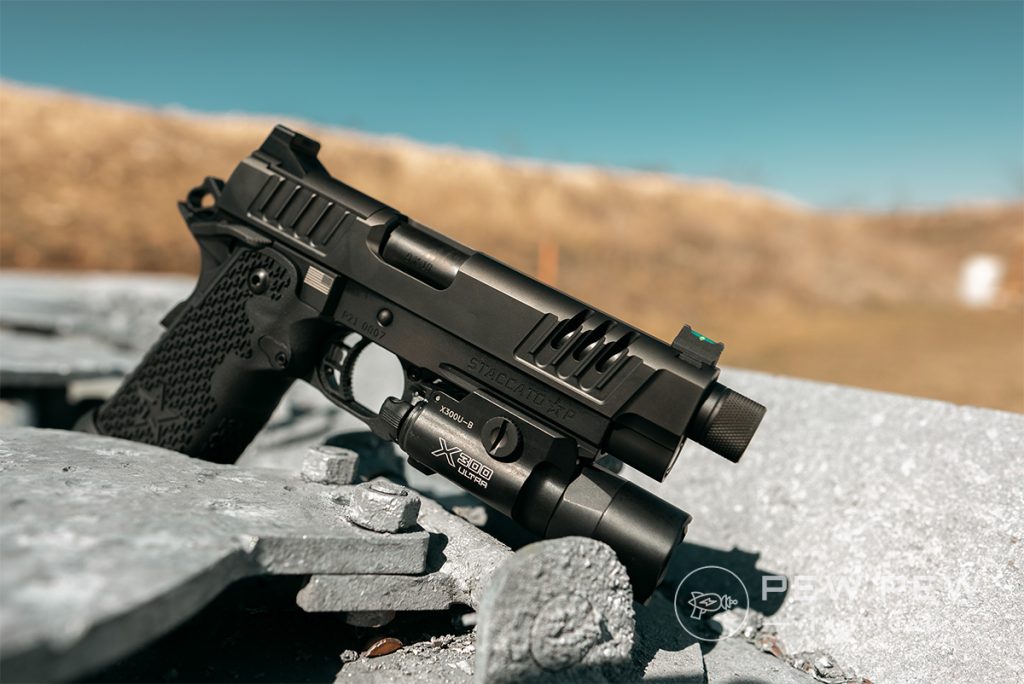
You’ll definitely want a nice pistol light with your Staccato. And for that we usually go with our gold standard…the Surefire X300. Be sure to get the B model since that works the best with metal framed handguns.

As for optics…check out our Best Pistol Red Dots but otherwise we loved using a Holosun 507C and Deltapoint Pro in our test.

Now how about even more customization straight from Staccato themselves? They’ve recently unleashed their CONFIGURATOR for the P…and we’ve got our hands on one of the first ones.

Staccato P SWAT vehicle assault
Staccato P, Custom Configured

More options will be rolled out…but we went with some custom lasering, DLC and threaded barrel, plus some front serrations.

Staccato P steel frame right
Staccato P, Custom Other Side

It looks great especially with the DLC black barrel. You can also customize the grip for more grip but we stayed with the standard.

Tenicor Staccato P
Staccato P, Custom Suppressed

And how did it run suppressed? We’re only a few hundred rounds in but so far it’s been 100% and we love the suppressor height sights.

Next step is to get the correct optic plate for this P and then get shooting!

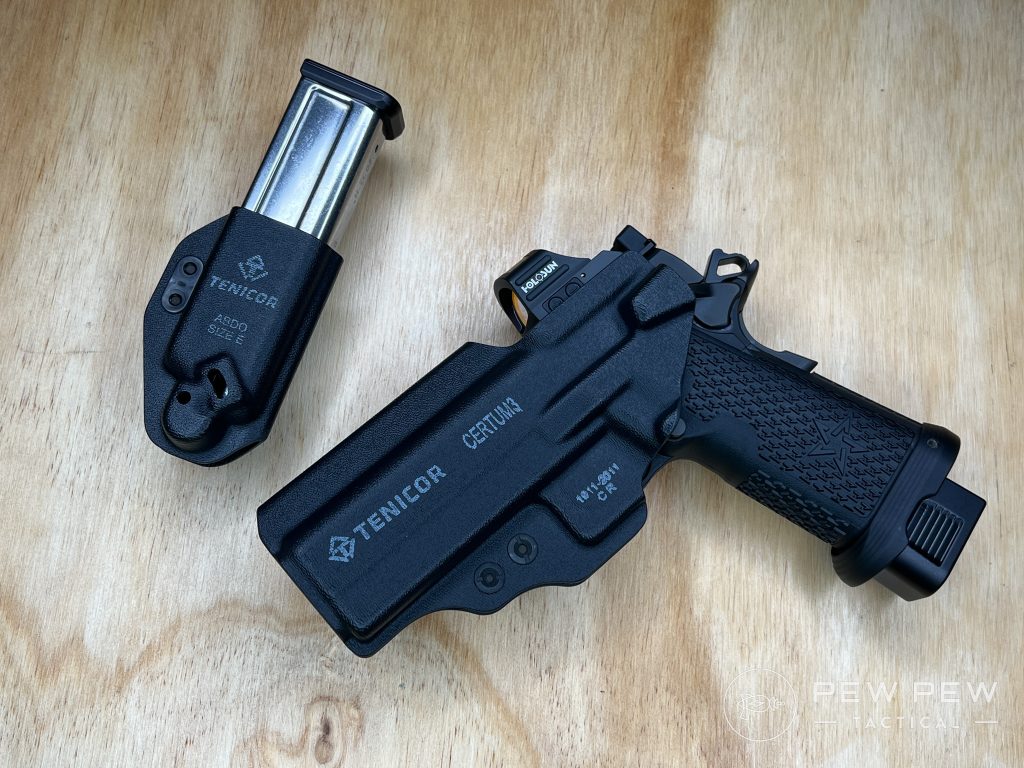
Holster-wise, I recommend the Tenicor Certum3 IWB/AIWB. This holster will get you where you need to go with the Staccato.

Field Strip & Reassembly

Don’t want to mess up your P? Check out our quick video to field strip and put it all back together again.

Conclusion

You might wonder how this information applies to the civilian customer, and to me that’s pretty simple.

Whether you love, hate, or feel indifferent about law enforcement, they can at a moment’s notice, be called upon to use a firearm to save their own life or that of someone else.

Staccato P Review: Best Duty Pistol?
SWAT training

To me, this means the equipment they use must be of the highest quality — Staccato meets that standard.

Citizens wanting to harness the P for their own protection needs would be well advised to do so.

The accuracy, reliability, and capacity are top-notch.

Staccato P Review: Best Duty Pistol?
Smooth operator

Admittedly, factors like the overall size and magwell would make it a little tough to conceal, but it could be done. I could easily envision the P serving in a dedicated home defender role too.

Staccato P Review: Best Duty Pistol?
This AIWB setup from Tenicor would be the way to go for concealment

Again, check out the full video review below.

Also please note Staccato offers a discount on the P to active duty law enforcement, veterans and first responders through their Heroes Program.

Have you tried a 2011 pistol? Would you be willing to try one out? Let us know in the comments below and make sure to check out our review of Staccato’s XC and XL models too!

Which Rifle Round is Better: 7.62 vs. 5.56 NATO

0

There was a time when I was exclusively in love with the 7.62x51mm for every rifle task.

According to the gun magazines at that time, the 5.56 was an abject failure in both Iraq and Afghanistan. So, I became convinced that the round was a poodle shooter.

Then, I joined the infantry and went to figure it out for myself.

Over my deployments, I carried weapons chambered in both 7.62 and 5.56 and got a good idea of how both worked and where they were successful.

US Marine in Combat Gear
Not me, but that pretty much sums up the infantry experience.

Like most things in life, they both have their place and the roles in which they succeed. The idea that you have to choose one over the other is silly.

Own both.

From there, you can choose the right tool for the task at hand.

Before you go selecting one or the other, though, it helps to know the real difference between them. Where do they stand in a side-by-side contest and when should you use one over the other?

Lucky for you, that is what we are exploring today. We’ll touch on the history of each round, its purpose, and ultimately which is the right cartridge for the job.

7.62x51mm NATO

With so many 7.62 rounds, I have to distinguish this one as x51mm.

This .30 caliber projectile has long been a popular choice for both rifles and handguns. Developed as a replacement for the .30-06, it was standardized with our European allies through the newly created NATO.

The 7.62x51mm became the round de jour for infantry rifles and machine guns.

Though it was short-lived as an infantry rifle cartridge in the United States, it saw wider use across NATO.

It’s worth mentioning, this caliber still sees action in sniper rifles, designated marksman rifles, and machine guns within the U.S. military.

During the development of the 7.62x51mm, Winchester saw the commercial potential and developed the .308 Winchester.

The .308 Win. is, fundamentally, the same round but intended for the civilian market.

5.56x45mm NATO

You’re probably used to see 5.56x45mm NATO a lot more than 7.62x51mm NATO. There’s a reason for that.

The 5.56 was the successor to the 7.62 in terms of general military use. It became the infantry cartridge of choice during the Vietnam War.

Developed from the commercial .223 Remington, minor alterations were made during the 5.56’s development.

Shooter Beware: 5.56 should NEVER be fired in .223 marked rifles. (But .223 can be fired in 5.56 rifles.)

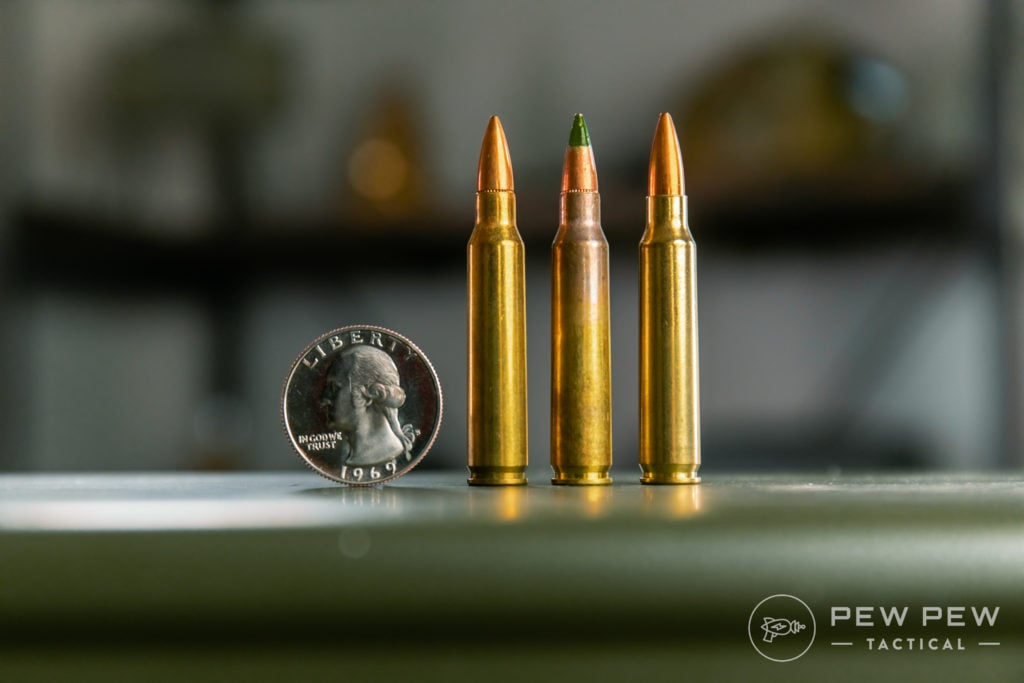
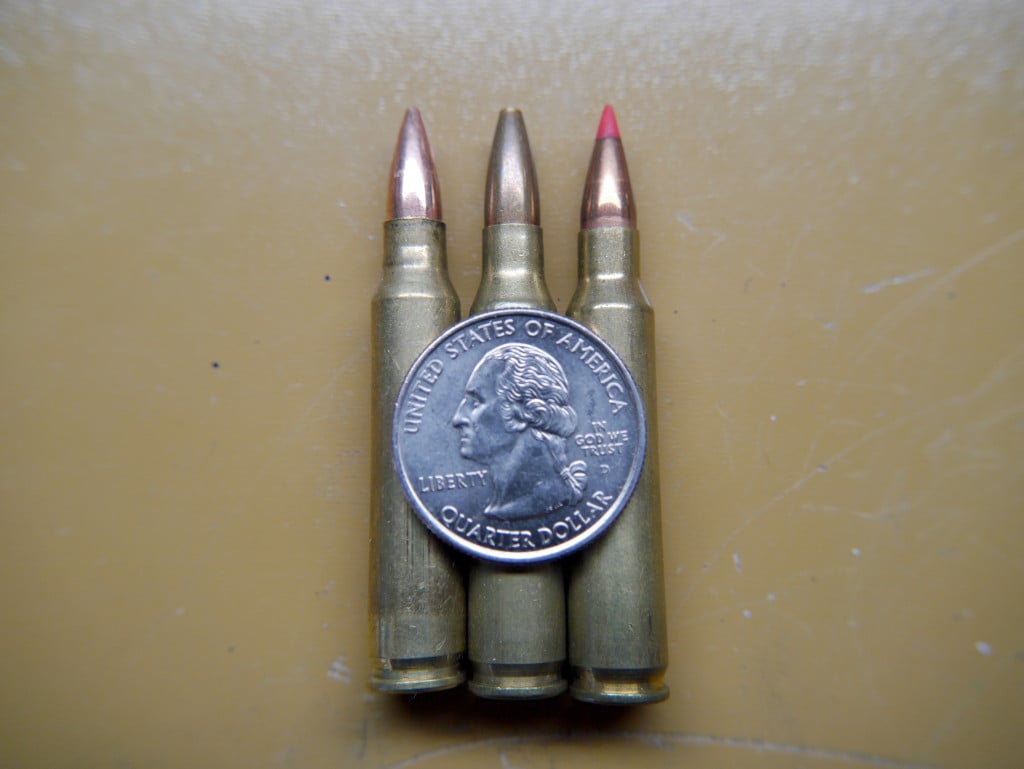
Assorted 5.56 Rounds (XM193, XM855, Gold Medal 69gr)

After its initial growing pains, the 5.56 cartridge proved to be incredibly successful.

The round serves to this day in the hands of most U.S. troops.

Paired with the vast majority of America’s favorite rifle — the AR-15 — 5.56 NATO has become one of the most popular rounds in the nation.

The Money

Before we dive into the performance, size, and uses of these calibers, let’s talk about the most common make or break for anything…

Money.

5.56 is the substantially cheaper route.

The cost of 5.56 versus 7.62 NATO is often a 50% difference in price per round. Rarely do you see 7.62 NATO below 40 cents per round.

Note: those are normal prices and we are far from normal at the time of this writing.

Whenever an event occurs that drives up demand, the first batch of rounds to hit sky-high prices are almost always 9mm and 5.56. The year 2020 is no exception with 5.56 NATO a rarity in the marketplace and crazy expensive when it does pop up.

At this point, 5.56 and 7.62 NATO are both more than a buck a round.

The Size Difference

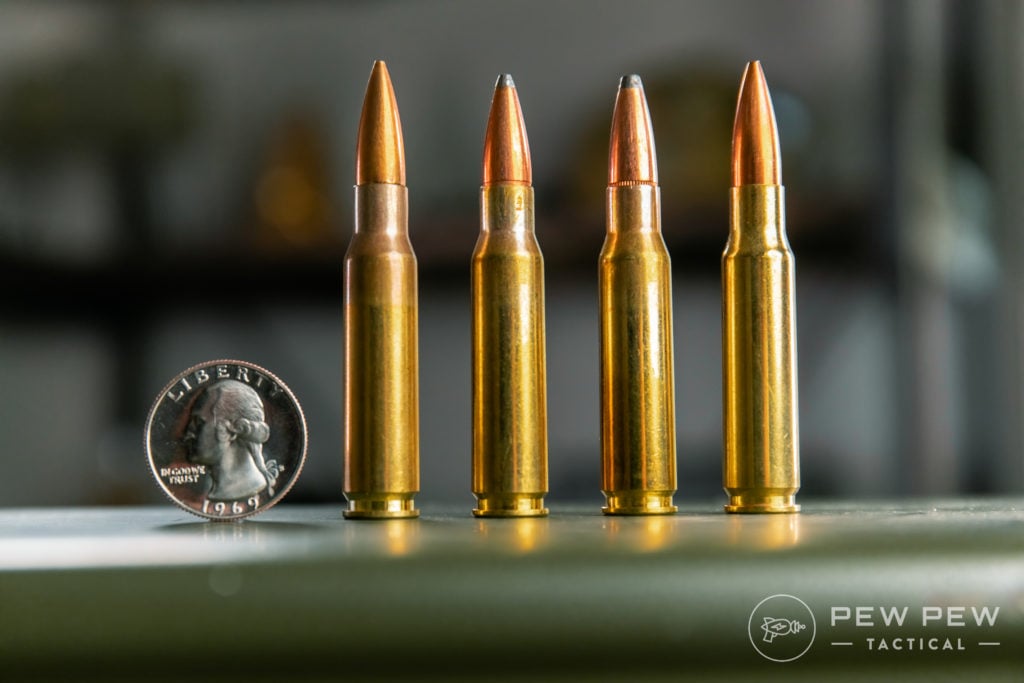
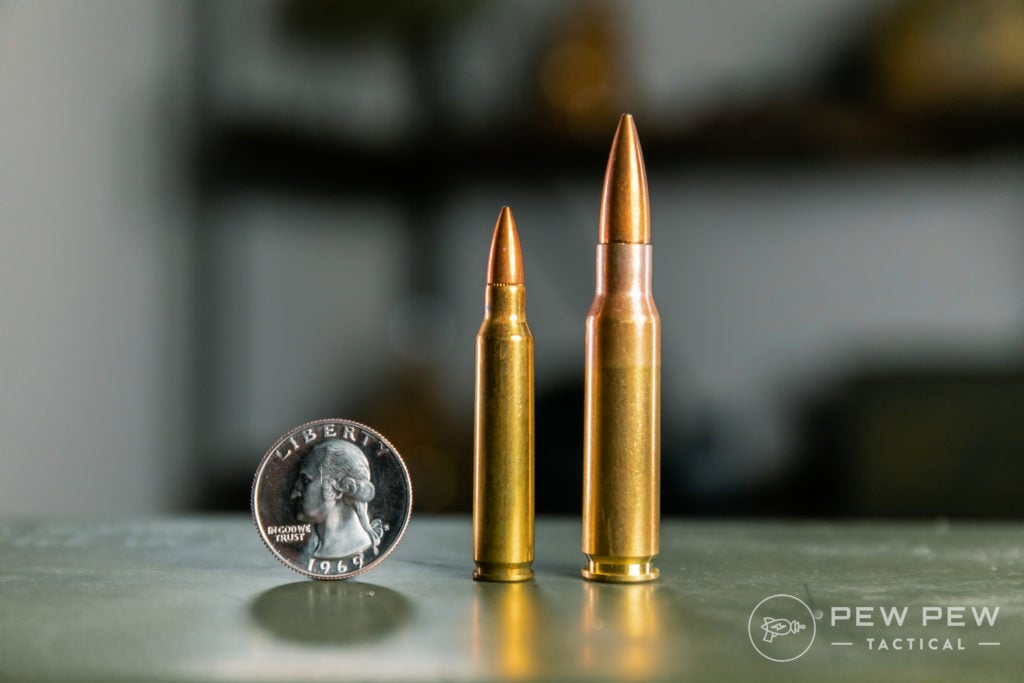
You can easily visualize the size difference when you utilize the metric measurements to describe the rounds.

The 7.62x51mm is a much bigger round — not only in projectile size but also in weight and case length.

5.56 ammunition, on the other hand, is shorter in length and thus lighter to carry.

Let’s run some numbers.

A fully loaded 30-round AR-15 magazine weighs about 16-ounces, give or take. A fully loaded 20-round SCAR H magazine weighs 17.6-ounces.

That’s a substantial increase in weight with a decrease in ammo.

5.56 vs 9mm vs 7.62x51
5.56 vs 9mm vs 7.62x51mm

Ask any soldier, the average infantryman would rather carry more ammunition. More ammo equals more suppressive fire while bettering the ability to maneuver.

Let’s be honest here, the M16 saw some growing pains in its early days. That said, the M16’s adoption proved to be successful just based on the logistics of combat.

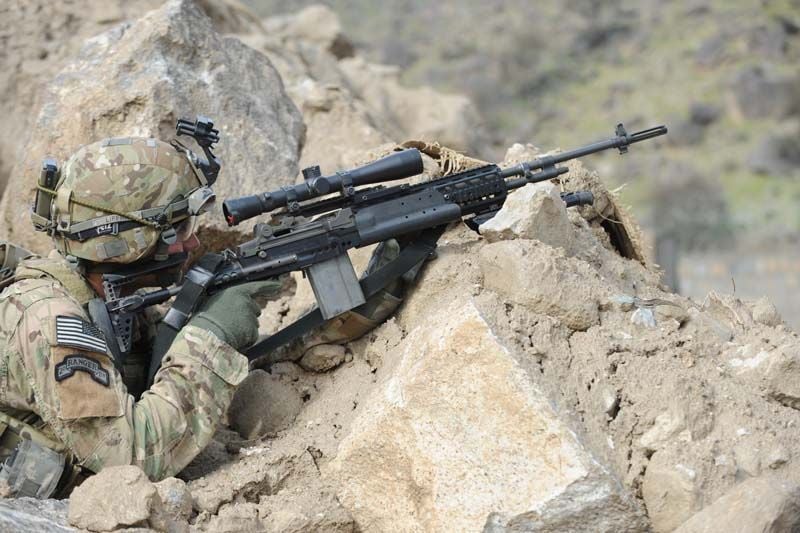
M14-EBR-Afghanistan
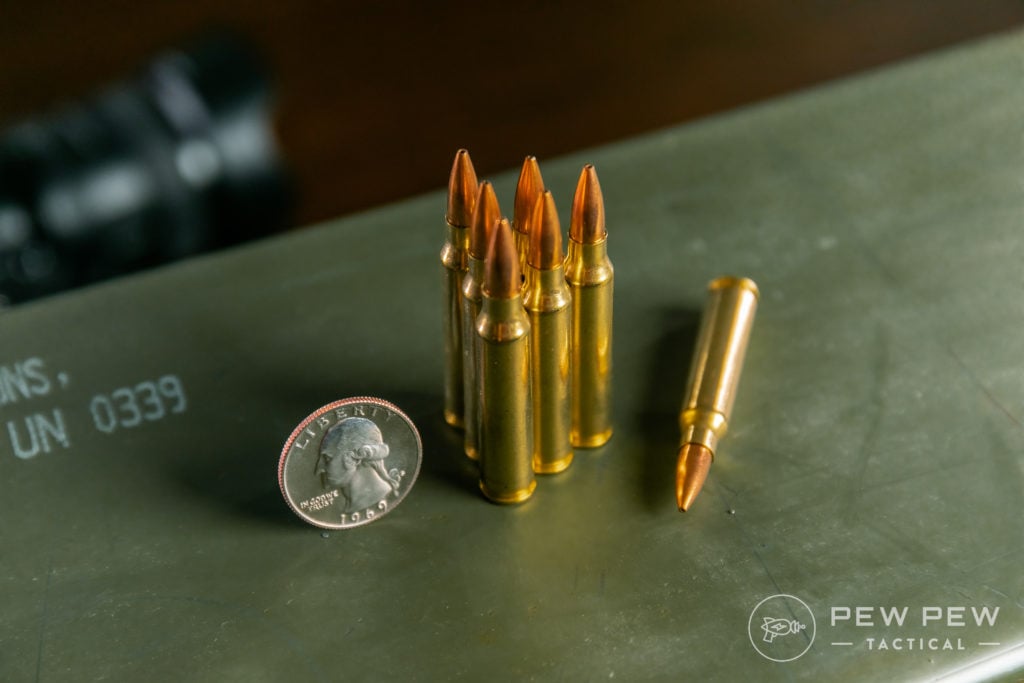
5.56 rounds

In my experience as a machine gunner carrying the M249 light machine gun, I was able to tote 1,000 rounds of linked 5.56 ammunition. The ammo was lightweight, as was the weapon.

When I took the 7.62 chambered M240 medium machine gun, I carried only 600 rounds and distributed 400 more throughout my squad.

Performance Matters

While 5.56 might be the lighter ammo weight, it’s also lighter in performance power.

The 7.62x51mm has some real punch behind it with the round retaining tremendous energy compared to the 5.56. The heavier duty 7.62 NATO is still used in the military due to the extra power and range it offers.

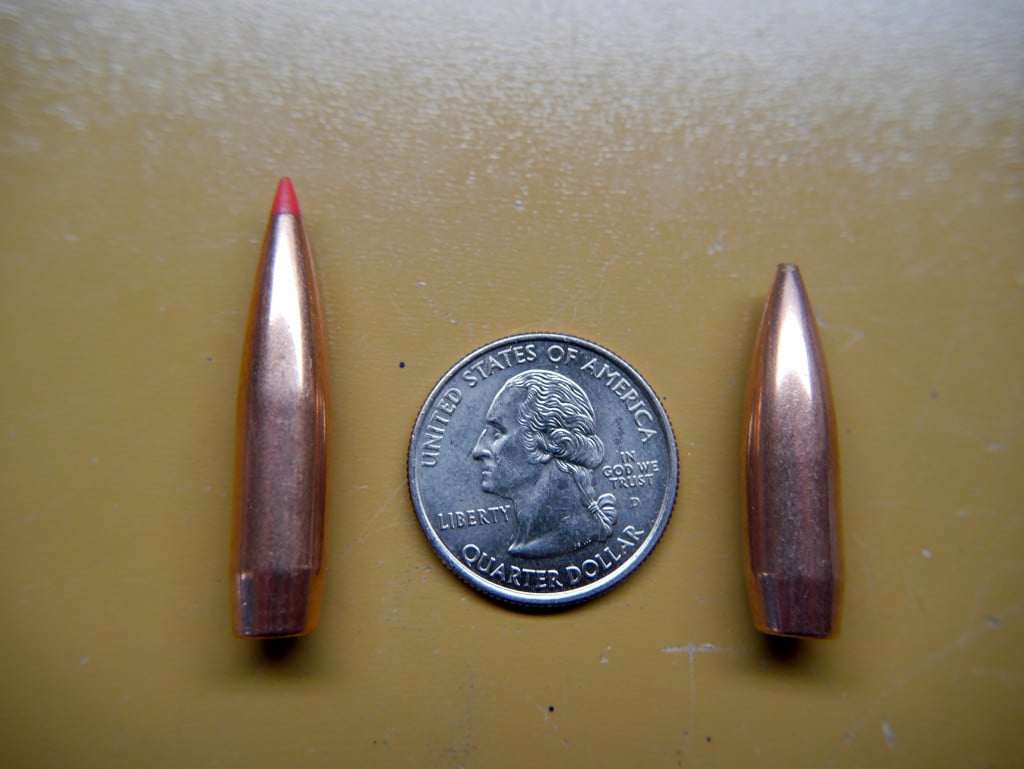
7.62 208 gr Ballistic Tip vs 175 HPBT
An M14 hard at work in Afghanistan.

When comparing the 5.56 M885A1 load and the 7.62 NATO M80 round, we see the big differences upfront.

7.62 retains over 1,700 foot-pounds of energy at 500-yards versus 5.56 which hits 950 foot-pounds at 500-yards.
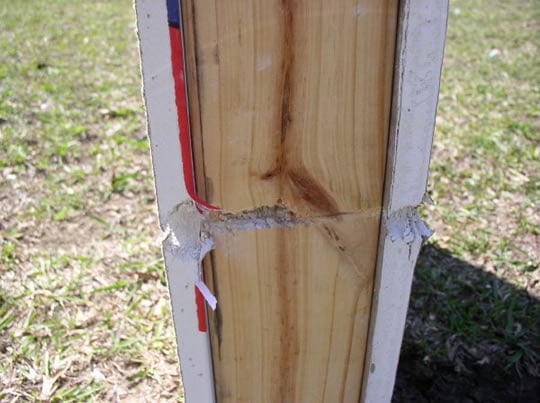
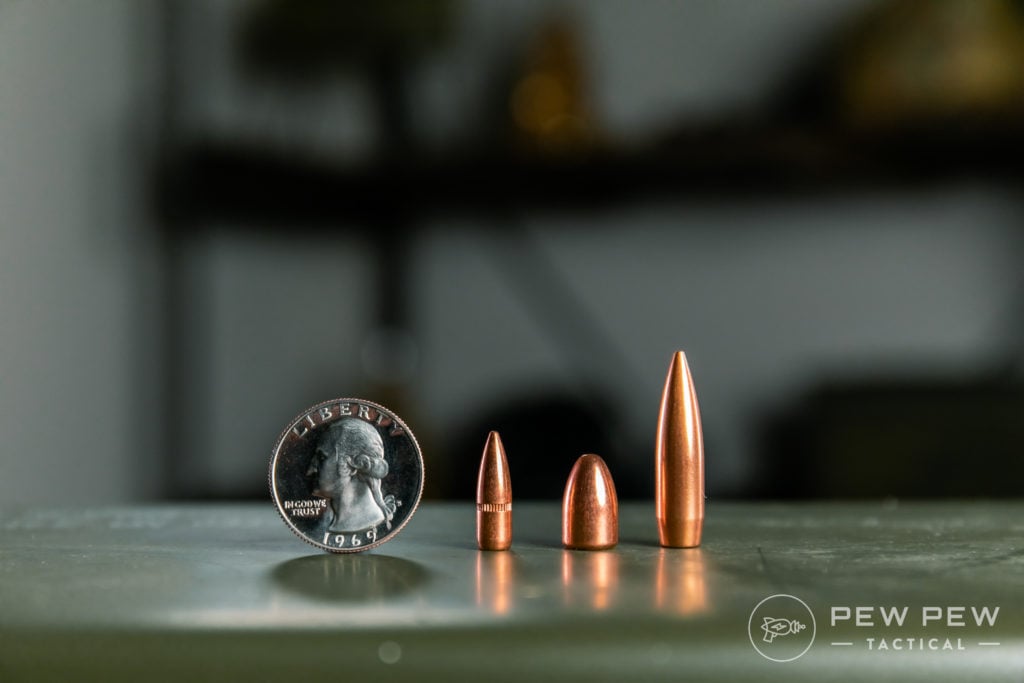
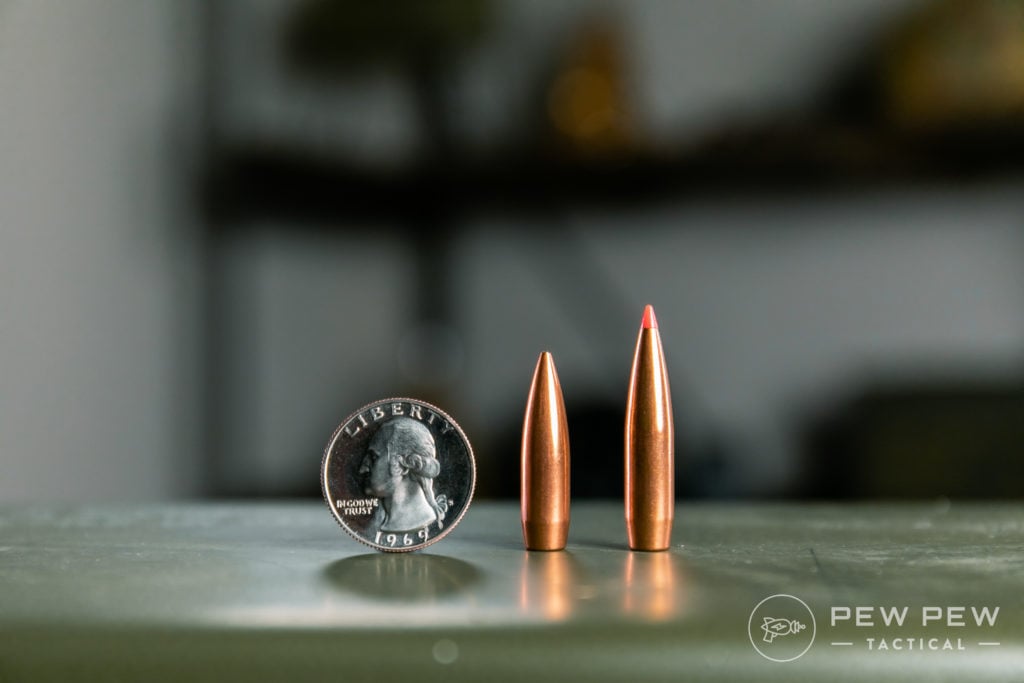
5.56 FMJ vs Open Tip vs Ballistic Tip, Side
7.62 208 gr Ballistic Tip vs 175 HPBT

Pushing out to 1,000-yards, the 7.62 M80 loads retain over 1,000 foot-pounds of energy.

That extra power makes it a more capable long-range round.

Even at moderate ranges, it outperforms the 5.56 ballistically, penetrating deeper and transfering more energy.

.308 (168gr vs 208gr)
5.56 FMJ vs Open Tip vs Ballistic Tip, Side

Remember when we said the .308 Win is the civilian form of the 7.62 NATO?

.308 Win’s performance, like its 7.62 sibling, earned it high praise among hunters. Power paired with a short-action capable design and moderate recoil made the .308 Win family an excellent round to take down large game on hunts.

poodle
.308 (168gr vs 208gr)

Though the 7.62 NATO load whips the 5.56 in range, power, and penetration, that all comes at a cost.

What is that, you ask?

Cartridge length and weight as well as muzzle rise and recoil.

When compared to the 5.56, it’s easy to see why the 5.56 is called a poodle shooter.

Insulated Wall with 5.56, Box O Truth
They call it WHAT?!

Overall, 5.56 is a much kinder, gentler experience.

There is something to be said for too much power and too much penetration.

A 7.62 NATO load is a bit much for home-defense when you start factoring in neighbors.

Miss a shot and that very powerful round will be flying very far and through lots of potential walls.

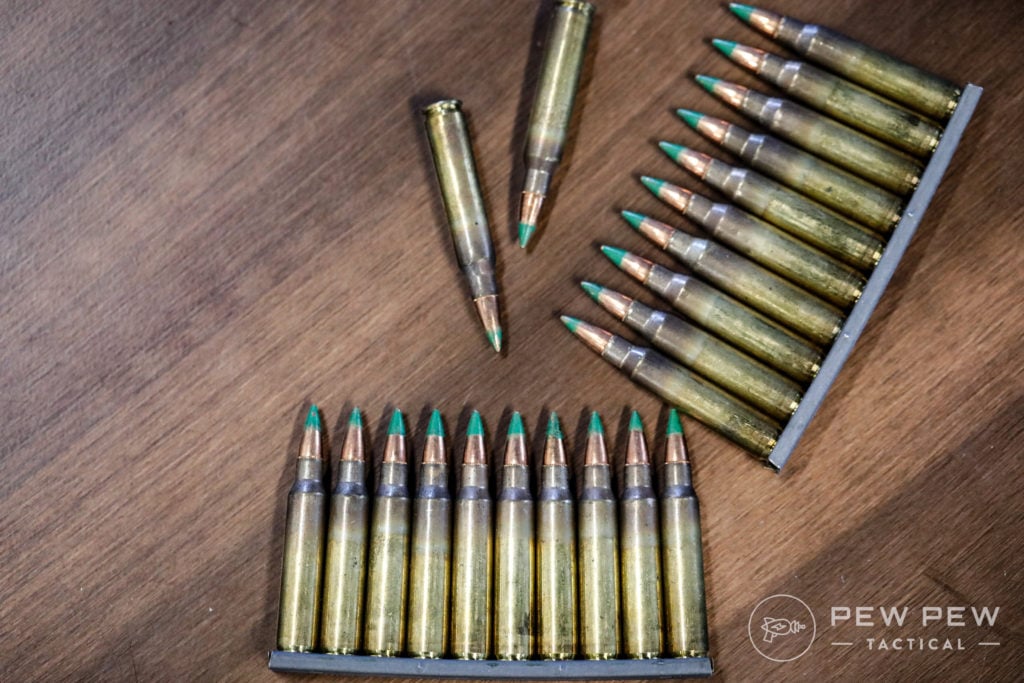
Clips of Green Tip 5.56
Insulated Wall with 5.56, Box O Truth

Where the 5.56 Dominates

The 5.56 NATO is one of the best infantry fighting calibers in the world.

It’s fought for decades and done an excellent job at its role as a general infantry cartridge.

Sure, it’s not perfect, but the cartridge has proven to be a reliable warfighting cartridge.

5.56 vs 7.62x51
Clips of Green Tip 5.56

Best used within 300-yards, the 5.56 can be pushed out to 500-yards.

It’s a great close-quarters fighting cartridge and has very little risk of over-penetration should a miss occur.

Clip of 5.56 XM193
5.56 vs 7.62x51mm

Recoil and muzzle rise are naturally quite limited, which makes it an excellent round for shooters of all sizes.

Well-suited to the competitive market where speed rules, the 5.56 is a great companion in multi-gun events. The 5.56 AR-15 absolutely dominates the competition!

km precision rifle training 2
Clip of 5.56 XM193

Competitions aside, 5.56/.223 Rem. can be used for close-range hunting on small to medium game.

Anything larger than a whitetail deer, though, should be taken with a larger, more potent cartridge.

The 5.56 and .223 Rem. are perfect for targets closer than 300-yards and for shooters looking for a lightweight, compact platform.
Where the 7.62x51mm Rules

The 7.62x51mm and .308 Win. are both powerful cartridges with long-range potential.

Perfect for Precision Rifle matches, these rounds, in general, work well in long-range shooting events.

They have their place in the heavy metal division of multi-gun matches as well.

Assorted 7.62x51mm (MEN 147gr, PPU 165gr, PPU 180gr, Gold Medal 168gr
When you want to hit things really, really far away.

If you’re looking to get into long-range shooting — and by that, we mean 500-yards plus — starting with the 7.62 NATO is one of the easiest routes to take.
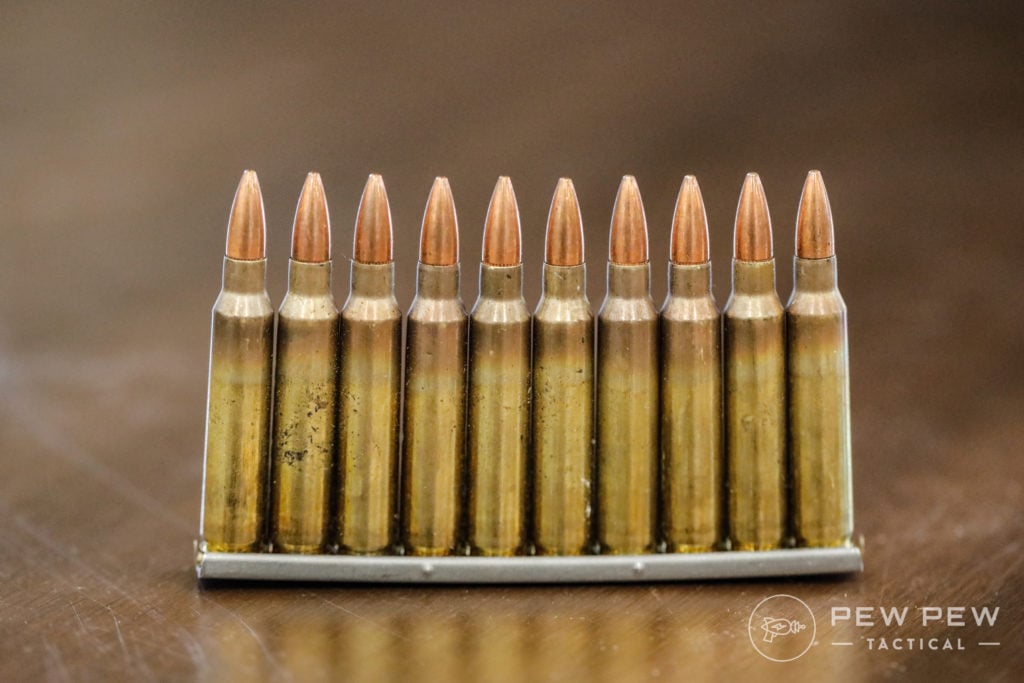
Ammo is common, affordable, not to mention, lots of data, gear, and optics are produced with 7.62 NATO in mind.

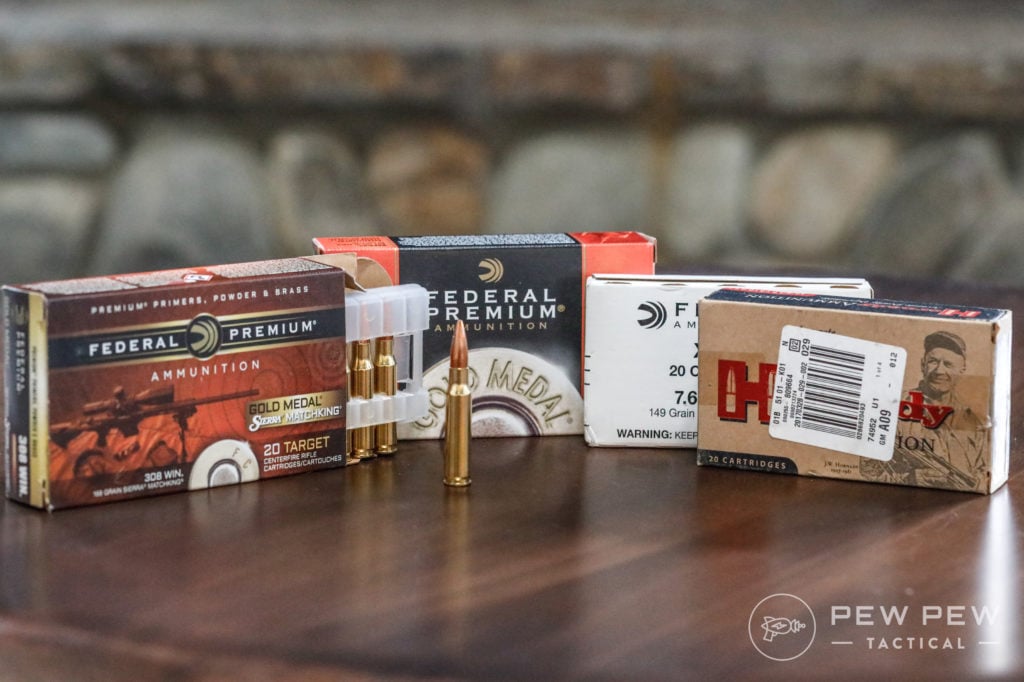
Popular .308 Winchester and 7.62x51mm Ammo
Assorted 7.62x51mm (MEN 147gr, PPU 165gr, PPU 180gr, Gold Medal 168gr)

.308 Win. is one of the most popular North American hunting cartridges. Used in bolt-actions and semi-auto guns with easily manageable magazine platforms, the cartridge can take deer, hogs, predators, and even bear with the right rifle.

When you need a little more range and a lot more power to achieve a task, the .308 Win and 7.62 NATO loads are perfect.

Favorite 5.56 and 7.62 NATO

Ok, now you know what’s what…so which brands do we prefer at Pew Pew Tactical?

Glad you asked.

Here is a collection of our favorite 5.56 and 7.62 NATO rounds. (Don’t blame us if they’re out of stock, though. Ammo shortage, and all…)

Conclusion

Let’s be real, 7.62 and 5.56 NATO are excellent fighting cartridges with long, battle-proven histories. 5.56 may be better suited for home defense and 7.62 rules long-range matches and big-game hunting, but both cartridges perform well in their respective roles.

So how do you as the shooter choose between the two? Identify the task, target, and goal. From there, you can choose a caliber and platform that fits those metrics.

Which Rifle Round is Better: 7.62 vs. 5.56 NATO
Popular .308 Winchester and 7.62x51mm Ammo

Cartridge wars are always silly, and people rarely prove one popular cartridge is better than another. Different rounds have different purposes, and there is plenty of room at the table for everyone to sit.

Which is for you? 5.56? 7.62 NATO? Both? Let us know below which you prefer and why. Want more? Check out the Best 7.62x51mm Ammo and the Best AR-15 Ammo!

What Does Gamey Taste Like? Is It Any Good?

0

Are you one of those people who enjoy the taste of beef in their food? If you are, you will undoubtedly develop a taste for gamey meat. Many people who have tried gamey meat have developed an addiction to it. But if you haven’t had the chance to try these exotic meats, you’re probably wondering what all the fuss is about and what gamey tastes like.

Gamey Meat

The taste of gamey meat has an overabundance of meaty flavor distinct from regular meat. Gamey meat has a more wild flavor than regular meat. Some people despise the gamey flavor, while others become hooked to it. However, your personal preferences will affect your perception of gamey meat.

You can use gamey meat in various dishes if cooked properly, from slow-cooked steak to burgers and pasta dishes. It has a very exciting flavor and is also very beneficial for your health. So we can say that gamey meat is, all in all, an exciting thing to try out.

Now that you’ve read a little about gamey meat, you must be eager to know more about it. In this article, we will go a little deeper into knowing what gamey meat is.

We will be discussing what exactly gamey meat is, what gamey tastes like its health benefits, and much more. So without further ado, let’s get right into it!

What Does The Term Gamey Means?

Gamey is a word you must’ve heard at least once in your life. People often say this word to express delight or distress, while eating a piece of cooked meat. Have you ever wondered what exactly they are referring to? Well, I have, so you don’t have to!

Gamey is a word used to express a strong meaty taste. It particularly refers to the wild smell the meat has when it is slightly spoiled. Mostly wild animals’ meat has a gamey taste. However, if spoiled slightly, some farm-fed animal meat can produce a similar gamey taste.

So, the next time you hear the word “gamey”, don’t restrict your thoughts to wild meat alone. It could mean any meat that has produced the taste of wild meat. Any meat can have a gamey taste, but not all meat is gamey meat. Then what exactly is Gamey meat?

What Is Gamey Meat?

Gamey meat is a term that refers to all those meats that taste very different from the standard farm-bought meats. Gamey meat is not tastier than normal meat, but neither is it bad.

But considering its exotic, wild taste, gamey meat is a must-try for you if you love to experience new flavors. There’s a high chance that you also will become a gamey meat addict! You might never know!

If you love watching cookery shows, you might have heard judges say that a particular dish has a very gamey taste. Gamey is a fascinating word for expressing flavors. Gamey meat refers to the meat of those animals that are not farm-bred. It usually refers to the meat of wild animals like deer, rabbits, elk, moose, bison, and more, which are inhabitants of the forest.

Gammy meat often has an intense smell and a different earthy flavor than normal meat. Gamey meat has a slightly tangy, sour taste and a lean texture. The flavor and texture of gamey meat have a lot to do with the wild animal’s diet.

What Does Gamey Meat Taste Like?

Next time you have a chance to grab that piece of gamey meat steak, don’t think twice! Why? Because when you are done reading this article, you will have a fair idea of what gamey tastes like and whether you will like it or not!

The taste and scent of gamey flesh are very strong. The gamey meat is slightly acidic and metallic in taste. Gamey meat has a taste almost identical to that of a cow or lamb’s liver or heart. The taste of flesh differs from one animal to the next.

This flavor is derived from the wild grass that these animals eat in the forest. It has a nutty, burned aroma that some people may dislike.

The texture of gamey meat is soft and juicy. Gamey meat tastes like a rotting mass of beef. It has a very lean texture and a strong flavor. With its taste and flavor, Gamey meat is something you may try on your menu to break up the monotony of chicken and lamb meals.

Gamey meat, however, is not for everyone due to its peculiar flavor and pungent odor. However, there’s no going back to regular meat once you’ve tried it!

7 Types of Gamey Meats And Their Taste

As Will says in Friends, “You can eat and eat and eat..and nothing can fill in that vacuum”! So next time, make some space for gamey meat on your menu. When we say gamey meat, it includes a variety of meats.

Whatever you like, be it tender and juicy meat or rough and chewy, gamey meat has something for you. Here are some popular gamey meat types you should give a try!

The 7 different types of gamey meats are:

  1. Deer
  2. Elk
  3. Antelope
  4. Wild Duck
  5. Rabbit
  6. Turkey
  7. Wild Duck

1. Deer

Deer is a popular and delicious gamey meat. There are plenty of reasons for the popularity of deer meat. One of them is its availability. Whether it’s spring or winter, hunters are too keen to hunt this animal.

Deer has very lean meat, and hence it is very important to be cautious about not overcooking it. To get the perfect gamey taste, it would be best to serve deer steak medium-rare.

Deer meat has a lot of health benefits as well. Deer meat is way too low in fat content compared to store-bought beef. Deer meat is also rich in zinc and iron.

2. Elk

Elk is another popular gamey meat. If you’re wondering what elk gamey tastes like, I’d say it has a very similar flavor profile to beef.

Elk meat is much cleaner than deer meat. However, it is more on the sweet side. So if you want to delve a little into an adventurous side, try having elk next time. Like deer, elk meat is lower in fat and high in protein when compared to beef.

3. Antelope

An antelope is one of the healthiest of all meats. It is tender in texture and sweet in taste. If you want to know what the most delicious gamey taste is, try antelope meat.

Antelope is also known as “speed goat.” It is usually found in the mountain regions of the United States.Antelope meat is extremely popular for its taste and nutritional value.

While cooking antelope, one thing to keep in mind is that it is tougher than most gamey meats. So you have to be very cautious about cooking it to perfection before serving it.

Like most gamey meat, antelope’s flesh is also lean. It is low in fat and high in protein. While cooking antelope, take extra care to debone the meat as soon as possible to avoid spoiling the meat.

4. Wild Duck

Wild duck’s gamey meat tastes like chicken, with a bit more blandness to it. Even though the wild duck is a lovely animal, its taste isn’t very likable. If you ever come across a gamey meat expert and ask them what their least favorite gamey flavor is, you’re probably going to get duck as your answer.

This underappreciated gamey meat is high in a variety of vitamins and nutrients. While cooking duck, one has to cook it until it is medium-rare. Anything less or more will make it bland and rubbery.

5. Rabbit

Rabbit has very soft and juicy meat. Rabbit meat almost tastes like chicken but with a sweet gamey taste.

The rabbit is certainly adorable! There’s no doubt about it. However, after tasting rabbit gamey, you’re likely to think it’s more delectable than cute. Like other gamey meats, Rabbit meat is low in fat (the lowest of all, to be exact) and high in nutrients.

Rabbit meat is quite lean. Rabbits are used in a variety of cuisines. Rabbit meat, on the other hand, is the finest roasted.

Now that you know what its meat tastes like, it’s entirely up to you whether to pet or cook a rabbit the next time you see one!

6. Turkey

Wild turkey gamey tastes very similar to normal store-bought turkey meat. But it has more flavor and is rougher in texture than normal turkey meat. Turkey has very lean meat and less fat than most gamey meats.

When compared to store-bought turkey, it is low in sodium content. Low sodium means better kidney functioning and a low risk of heart disease.

While cooking a turkey, make sure to marinate it with water, sugar, salt, onion, and lemon juice at least a day before cooking. The marination will make your turkey juicier and tender. So, try a wild turkey for Thanksgiving this time around!

7. Wild Pig

Wild pig gamey tastes like normal pork but with more nutrients and less fat. Who doesn’t like slow-cooked pork? If you love pork, you must try wild pork. Also, in the United States, wild pigs have been considered an invasive species, so it won’t be hard to get one of these.

While cooking wild pig, be sure to clean it thoroughly. Marinating the meat a day ahead makes it tastier and juicier. Pineapple juice is an excellent choice if you want some new flavors for marination. It will give a distinct flavor and break down the enzymes present in the meat to make it more tender and juicy.

How To Store And Cook Gamey Meat

As we have talked enough about what gamey tastes like, now we can talk about storing and cooking it. Since gamey meat is different from normal meat, before cooking it for your favorite dish, there are many things to consider.

1. Cleaning

The first thing we have to address after getting gamey meat is cleaning it. It is advisable to dress your meat immediately after hunting to prevent it from getting any bacterial infections. Take extra care in removing the skin completely as wild animals have so much fur.

After proper cleaning, refrigerate gamey meat for the next three to seven days. Refrigeration after cleaning the meat will make it softer and easier to cook. Since gamey meat is sold in a large quantity, it is usually frozen for use in the future.

2. Soaking

Once you have decided to cook the gamey meat, the first step should be soaking it. Cut the meat into equal parts and put it into a bowl. Use buttermilk or any other traditional marinade to soak the meat overnight.

Whatever gamey meat you are cooking, you must marinate it for at least 3-4 hours to get the perfect flavor. The meat is rougher than normal meat, so the more time you give for marination, the better it tastes.

Things to remember before cooking gamey meat

  1. Bring your meat to room temperature before cooking.
  2. Use a meat thermometer while cooking the gamey meat. Checking the temperature while cooking will help you to prevent it from overcooking. If the gamey meat gets overcooked, it will become extremely dry and chewy to eat.
  3. Cook over medium heat. If you cook the meat at low heat, it will lose its juiciness and make it taste bland.
  4. After cooking, let the gamey meat rest for a few minutes. Resting the meat will help with settling the flavor and help you get the best gamey meat taste.
  5. Remove the fat as much as possible. Fat plays an important part in giving an earthy flavor to the meat. So, if you don’t want the gamey taste to be overpowering, you can remove the fat before or after cooking. However, it is advisable to keep a little fat with the meat as it carries a lot of flavors.

Health Advantages of Gamey Meat

Now that you have a bit of knowledge about what gamey tastes like, I will be moving ahead to explain to you the health benefits gamey meat has to offer. If you are a meat lover like me, you need to read this section because gamey meat is delicious and nutritious!

People are highly concerned about their health in the present era. The market has capitalized on this worry by adding extra labels for animal foods such as “antibiotic-free,” “hormone-free,” “grass-fed,” and so on.

Before purchasing a chicken, beef, or pork product, we must carefully examine several labels. Even if we sift everything thoroughly, there’s a good chance we won’t find the proper one.

You don’t have to worry about all these things with gamey meat. Gamey meat is the healthiest type of meat you can eat because it comes from the wild.

1. Less fat and more protein.

In the above section, we discussed how gamey meat has more protein, nutrients, and less fat when compared to other animal meat. Therefore, if you are concerned about calorie count and nutrients, you could replace normal meat with gamey meat.

In this way, you could increase your protein intake without compromising on its taste.

2. Leaner Meats

People in some nations enjoy the meat of animals or fish that have been in motion. Such animals are said to be the healthiest and tastiest. If this is the case, gamey meat is the best meat available.

Since the animals were constantly in motion, their flesh would be thinner than farm-fed animals. For example, making bacon from a wild pig is tough since it has considerably less fat than farm-fed pigs. If you prefer a more flavorful dish, try wild pig steak instead.

3. No Hormones, No Antibiotics

Hormones and antibiotic intake are currently one of the most concerning topics. For a long time, meat has been an important element of our diet. However, meat intake has begun to cause a wide range of ailments due to increased hormone injections and antibiotic use. PCOD in girls, hormonal instability, and reduced immunity are all examples of the same.

So, what are your options? I recommend incorporating gamey meats at least once in your diet per week. Gamey meat comes from wild animals who have lived their lives on a solely wild diet. Their meat is 100% organic and pure, even though it tastes different.

4. No risk of illness.

Most animals that are farm-fed live in extremely unhygienic conditions. They have restricted movement and have a high chance of illness. Even though wild animals could also have diseases, they will most likely be healthier than farm-fed animals.

If not cooked properly, there is a high chance that these bacteria could get into us. Therefore, it is important to clean and cook meat properly.

How To Reduce The Gamey Taste?

Now that we have talked about gamey meat, what it tastes like, and its health benefits, there is an increased chance you might want to have it. But what if you don’t like the gamey taste? In that case, you should read our tips and tricks to remove the gamey taste of your favorite meat!

1. Begin Proper Cleaning

As soon as you receive your gamey meat, begin cleaning it.Remove its skin and the gut portion. This will slow down the rotting enzymes. Next, start deboning the meat as soon as you can. Dissociating the meat from bone and fat will make your meat taste less gamey.

Also, if possible, freeze the gamey meat for at least three hours of hunting. Gamey flavor heavily depends on the rotting state of the meat and its fat content. If you can decrease these two reasons, we can fairly decrease the gamey taste of the meat.

2. Soak The Meat

Once you clean it, then soak it before freezing. Soaking is one way to remove the blood taste from the meat. If you ask a regular hunter, they’ll have many suggestions for you. Saltwater, lemon water, buttermilk, etc., are some of our suggestions.

3. Freeze It

When it comes to freezing, we need to put a little effort into packing meat separately rather than putting a bunch of it into the same container. Perfectly soaked and frozen gamey meat stays for a very long period of time.

4. Perfect Cooking

When it comes to cooking gamey meat, one should cook it to perfection. Gamey meat is lean and should be cooked medium-rare. If over-cooked, gamey meat will have a leathery texture and an unpleasant taste.

5. Use Marinades

The marinade is the magic wand to vanish the gamey taste from your food. Even if you have done all the above steps, the chances are high that the gamey taste remains. In such a situation, you should rely on good marinades.

The more time you put into your meat for marination, the better it will be. However, it is advisable to marinate the gamey meat at least three to four hours before cooking.

Conclusion

Gamey meat has a tart-like taste and an overall meaty flavor. It has an exclusive flavor and aroma of its own, making it different from normal meat. It also has a multitude of health benefits. Gamey meat is exciting meat to try if you are someone who loves to try things out of the box. So, the next time you think about trying something new, try gamey meat! Whether you like it or not, you’ll never regret trying it.

Frequently Asked Questions (FAQs)

Best Air Rifle Deals

Popular Posts

Air Gun 101: What You Should Know about Air Rifle Barrels Before Buying

0
Have you ever heard the phrase: “Imitation is the sincerest form of flattery”? The Chinese must have been very sincere in emulating this proverb. I...

Air Rifle Scope vs. Rifle Scope – Which One Fits Your Shooting Needs?

0
"Air Rifle Scope vs Rifle Scope: Unveiling the Ultimate Precision Optics. Discover the essential differences and benefits of these two optical devices, empowering shooters...

Air gun 101: How Nitro Piston technology can make your shooting sport more exciting?

0
In the air gun market today, there are many air rifles made with nitro-piston technology Even the best-selling lists on gun retailer's sites have a...