


Home Blog Page 211

Benjamin Trail NP XL 1500 Review

0

The Benjamin Trail NP XL 1500 belongs to the beautiful NP XL airgun series .

It has the smallest caliber of all (.177, the others are .22 and .25) but also delivers the fastest velocity.

Although being made in .177, you will be surprised to learn that this rifle delivers more than enough knockdown power to deal with pesky pests in your garden.

(For more on the best air rifle for rabbits, see this post)

Gun Type

The Benjamin Trail XL 1500 features Nitro piston technology.

A nitro-piston gun (or gas-piston) works the same way as the spring gun does,

But it has a nitrogen-filled gas ram instead of a coiled spring as the power source. 

There is a nitrogen cylinder and a piston inside the chamber.

The nitrogen in the cylinder is already held under pressure and you apply more pressure to it when you cock the gun.

The pressurized air is kept under tension until you pull the trigger.

When you fire, the gas expands and propels the piston forward.

The piston comes swiftly after the air transfer port.

The compressed air has nowhere to go but behind the pellet, since the chamber is sealed completely.

As a result, the pellet is discharged from the barrel due to propellant force from compressed air.

(For more on How nitro piston technology can make your gun sport more exciting, see this post)

The caliber (the internal diameter of the bore, measured in inches) is .177 (4.5 millimeters).

(For more on the differences between .177 & .22 and which jobs they do best, see this post.)

It’s a single-shot, break-barrel which means that you can only shoot one shot at a time.

After the first shot, you have to break the barrel down to reload for the second shot.

Single-shot guns make you a disciplined shooter as you have to make your shot count.

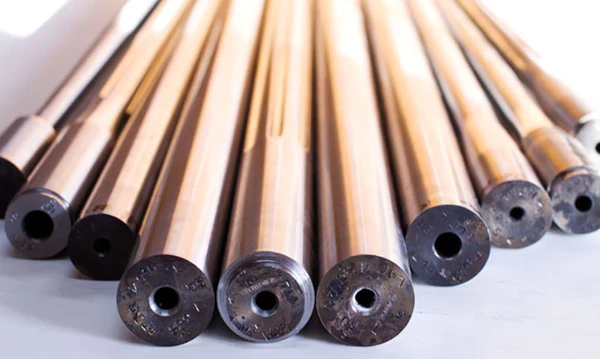
The barrel is rifled steel with spiral grooves inside the bore to make bullet spin,

Which stabilizes pellets, improves accuracy, and enhances shooting range.

(For more on things you should know about air rifle barrels before buying, see this post.)

Stock

The stock is of handsome, hardwood stock so it can withstand shocks, impact, and abrasion in daily life.

Besides, hardwood can be refinished at any time so it has a very long lifespan.

(For more on the in-depth comparison between synthetic and wood stock, see this post.)

This stock is also ambidextrous: you can shoot it comfortably whether you are a left-handed or right handed-shooter.

There are dual raised cheekpieces located on both the left and right sides of the stock.

Raised cheek pieces ensure a solid foundation and stable position for your eyes, and allow consistent sight alignment and shot adjustment.

The stock has a textured grip and forearm to add friction when shooting, prevent sweat slippage, and increase stability in aiming.

Furthermore, it has a sling swivel stud already mounted so you can add a sling to carry the gun around any time you like.

This stock has a thumbhole stock that provides a more relaxed grip on your wrist.

By resting the stock on your wrist as opposed to holding it up with your hands.

Stocks with thumbholes are best for varmint shooters

And for target shooters who spend plenty of time in a shooting position, such as bench rest shooting.

Ammo

Benjamin Trail NP XL 1500 uses .177 pellets as its only source of ammo.

.177 pellets are cheap compared to .22 and .25 pellets and you can buy hundreds of them for just a few bucks .

So .177 is your best choice when it comes to long hours of target shooting and fun plinking.

(For more on how to choose the right air gun caliber for your game, see this post.)

Cocking and Loading

Cocking the gun:

First, put the gun ON SAFE, hold the gun by your side, the firmly tap the muzzle end to expose the breech.

Let the gun rest on your upper thigh and grasp the muzzle end.

Continue to pull the barrel down to its limitation to perform cocking action.

Loading the pellet:

With the breech opened after cocking, put the pellet (with the pellet’s nose lying forward) into the breech.

Then pull the barrel up to its original position until it locks and you are ready to fire.

Velocity, Accuracy and Power

The Benjamin Trail NP XL has a velocity of up to 1500 FPS with alloy pellet and 1250 FPS with lead pellet.

This is an extremely high velocity compared to other air guns on the market

And these speeds help the Benjamin Trail NP XL belong to the magnum class of air rifle.

Chrony tests on this nitro piston gun give the results as follows:

PelletFPSFPE
Crosman Premiere 10.5 grains 102224.36 
Crosman Premiere 7.9 gr1224 26.29 
Baracuda H&N Exact match 10.65 gr102024.61 
RWS Meisterkugeln rifle 8.2 gr1069 20.81 
RWS Meisterkuglen pistol 7.0 gr1129.519.83
RWS Superdome 8.3 gr111022.71 
RWS Super Mag 8.3 gr1036 19.79 
RWS super point 8.2 gr108621.48 
Air Arms Diabolo Field 8.44 gr101319.24
JSB Match Diabolo Exact 8.4 gr1041 20.22 
Daisy Precision Match 7.8 gr980.716.66 
Crosman Premier Hollow Point 7.9 g1130 22.4 
Crosman Premier Ultra Mag 10.5 gr952 21.14 
Crosman Premier Super Match 7.9 gr110221.31 
Beeman Kodiak 10.2 gr96921.27 
Benjamin Discovery HP 10.5 gr943 20.74 
JSB Match Diabolo Exact 10.2 gr96321.01 

Those numbers are pretty close to the advertised velocity, and look at the muzzle energy of this gun:

With an average of 20 FPE, this gun produces more than enough power to deal with annoying pests in your backyard or take out a small animal in one quick shot.

Therefore, you can be confident taking this gun to the hunting field or using it to solve your backyard problem.

The power and velocity of this break barrel rifle are impressive, but how about the accuracy, you ask? 

Let’s take a look at the shooting groups of different shooters to see how the gun performs:

The common shooting groups are:

  • 2” at 50 yards,
  • 1.5” at 20 yards,
  • 1” at 10 yards,
  • same hole at 20 yards,
  • 1/4″ at 20 yards,
  • dime sized at 20 yards,
  • 1/2” at 20 yards,
  • 0.237” at 25 yards,
  • 0.578” at 50 yards,
  • dime size at 50 yards,
  • 3/4″ at 30 yards,
  • same hole at 10 yards,
  • 3/4″ at 42 feet,
  • 1/2″ at 15 yards,
  • 1.5” at 25 yards,
  • nickel size at 25 yards,
  • nickel group at 50 feet,
  • 3/4″ at 70 yards,
  • 1” at 30 yards,
  • 1 1/2″ at 25 yards,
  • 1” at 30 yards,1/2” at 30 yards and 2” at 50 yards.

As you can see, this gun is a tack driver with a shooting range of up to 50 yards.

Here is the quick highlight of this air rifle:

Sight

This gun doesn’t come with common iron sight: No front sight and no rear sight.

But it does come with a Center point 3-9×40 AO scope.

40 is the diameter of the front lens (the objective lens).

3-9 is the magnification ability of the scope: It magnifies the picture 3 to 9 times bigger than the image you see with your own eyes.

Moreover, this scope has an adjustable objective (AO) that will give you a clearer and sharper image of the target.

(For more on how many types of air gun sights are out there and which one is suitable for you, see this post.)

Noise

This is a very quiet gun: it has hundreds of customer reviews and not a single one of them complains about the noise.

But remember that sometimes the lightweight pellets break the sound barrier and produce a cracking sound that might upset your neighbors.

Shooting range and intended use

The effective shooting range is up to 50 yards.

You can use this gun for target shooting, plinking, pest control, and small-game hunting.

Accessories

This gun includes uncounted Centerpoint Optic 3-9×40 AO scope as its only accessory.

Maintenance

With its great craftsmanship, the Benjamin Trail NP XL 1500 requires very little maintenance:

Just make sure you tighten all stock fasteners, check the scope mount

And apply a drop of Crosman RMCOIL every few hundred shots to keep it functioning properly.

Warranty

As of this date, the Benjamin Trail NP XL has a one-year limited warranty from the date of purchase

Customer Reviews

There are lots of online reviews for this nitro piston rifle.

Positive reviews show that people love its magnum power, impressive velocity, high accuracy, beautiful stock, and advanced technology.

There are some negative reviews, most of the complaints about the terrible trigger and the dirty barrel.

For the trigger issue, if you are a picky shooter, you can replace it with an aftermarket trigger for about 30 bucks.

For the dirty barrel issue, as soon as you unbox this gun, make sure you clean it thoroughly

And run the bore brush through it to clean it again and you are ready to enjoy your new gun.

Specifications

  • Caliber: 0.177”
  • Velocity: 1500 FPS with alloy, 1250 FPS with lead.
  • Loudness 3- Medium
  • Barrel Length: 19.5 “
  • Overall Length: 48.25”
  • Shot Capacity: 1
  • Cocking Effort: 47 lbs
  • Barrel: rifled
  • Front Sight: None
  • Rear Sight: None
  • Scope Rail: Picatinny
  • Scope: 3×9-40 AO scope
  • Buttplate: Ventilated rubber
  • Suggested for : Target shooting/pest control/ small game hunting
  • Trigger Pull: 2.5 lbs
  • Action: Break barrel
  • Safety: Manual
  • Powerplant: Nitro-piston
  • Function: Single-shot
  • Body Type: rifle
  • Weight: 9.7 lbs

Pros

  • Advanced nitro piston technology
  • Handsome hardwood stock
  • Beautiful craftsmanship
  • Magnum power
  • Supersonic velocity
  • Quiet
  • Recoilless
  • Easy to cock
  • Hefty and durable

Cons

  • Dirty barrel out of the box
  • The trigger can be a turn-off for some shooters.

Price

The price for Benjamin Trail NP XL 1500 is about 250 dollars.

It’s a reasonable price if you consider the advanced technology, handsome stock, supersonic velocity, magnum power, and other features this gun brings.

Conclusion

This gun is a rare behemoth.

If you want to own a gun that you can brag about proudly with your friends, the Benjamin Trail NP XL 1500 is a good addition to your arsenal.
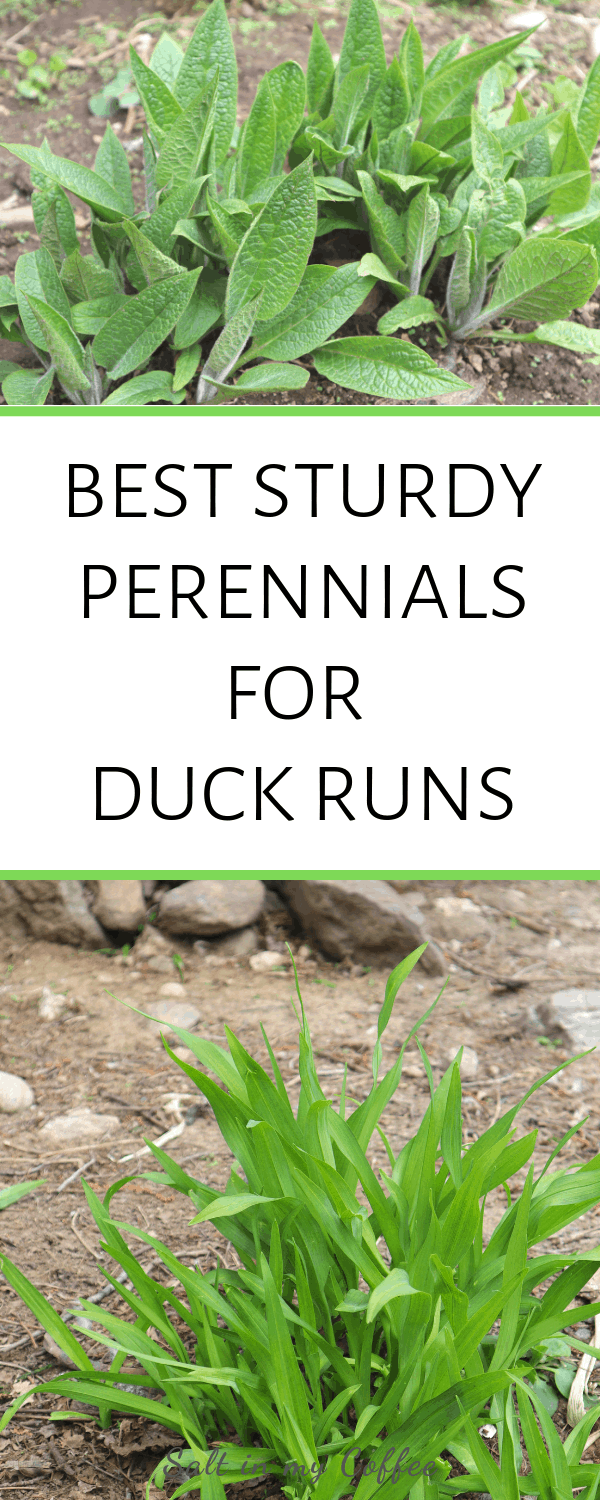
Sturdy perennials for duck runs

0

Need landscaping idea for your duck pen? These sturdy and non-toxic perennials for duck runs are great ones for adding shade, beauty, and even food to your ducks’ environment!

sturdy perennials for duck runs

This article contains affiliate links. Click here to learn more.

Landscaping a duck pen is tricky. Just like with chickens, a fenced-in grassy area is soon reduced to bare dirt, once you add ducks!

But it’s completely possible to add wonderful foliage to your duck run – it just has to be sturdy enough to withstand quite a lot of nibbling, dibbling, and trampling. These non-toxic perennials are some of my favorites, and they hold up very well to lots of attention from our ducks.

Whenever you transplant something new into your duck pen, I highly recommend placing some sizeable rocks around the base, so that the roots can’t be unearthed. You’ll eventually be able to remove the rocks, once the plant’s roots take hold, and the earth settles and firms up. Ducks do love to dibble in soft, newly-turned dirt, and mine think that any kind of gardening is group play time!

My favorite perennials for landscaping duck runs

Grapes

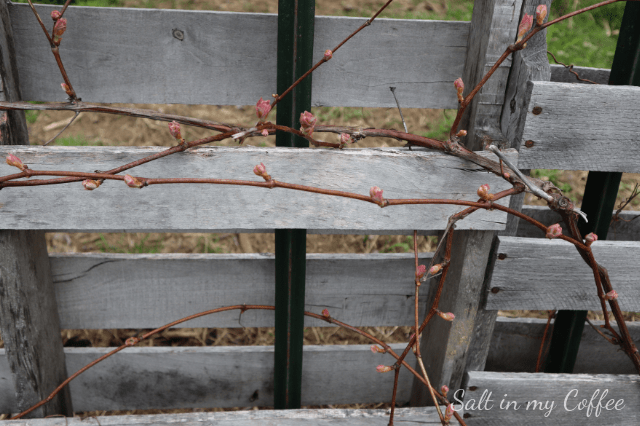
Grapes might seem an odd choice, since ducks will clearly eat any grapes within reach, and it might feel like a waste of a good grape harvest. If you grow plenty of grapes for your family in areas the ducks can’t reach, though, it will give you nothing but joy to watch the ducks enjoying their own harvest in the fall.

Grapevines are sturdy, and if you train them on a trellis above the run, they can also be a wonderful source of shade!

Mulberries

Mulberries are a bit notorious for being messy – but in a duck pen, there’s nothing wrong with that! Mulberries are safe for ducks, and your feathered pets will adore gobbling them up as they fall.

Mint

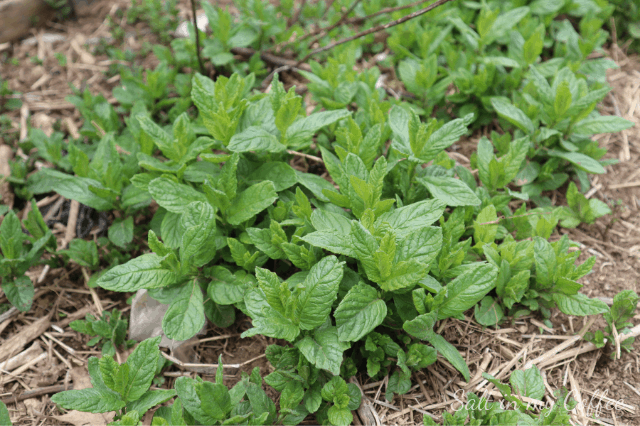
Mint is so incredibly sturdy, and spreads readily. I actually hadn’t intentionally planted it in the duck yard, but it spread there from the other side of the fence and continues to thrive. The ducks enjoy nibbling at it, and it’s a very healthful herb for them. Thankfully, it’s so robust that they never decimate it.

Blackberries & Raspberries

Bramble berries are another wonderful source of food for ducks, and they’re not easily damaged. My ducks seem especially drawn to hanging out among the canes, and watching them stretch to reach the berries once they ripen is just adorably comical!

Comfrey

Comfrey is one of those plants that’s SO sturdy, it can be invasive. Sometimes it seems that the more it’s disturbed, the more it explodes with renewed vigorous growth. These are all wonderful qualities in a duck run! The comfrey in the photo above is small and just begin to grow for the season, but by mid-summer its leaves are so large it can actually serve as a source of shade for the ducks.

Blueberry bushes

Blueberry bushes can be a good addition to a duck run, once they get established. They’re much more delicate starting out, than blackberries, raspberries, or mulberries, so you’ll want to put a protective cage around them to keep them from being decimated before they really take hold. Once they’re sizeable, they can hold their own quite well.

Daylilies

It’s very important to note that there’s a big difference between daylilies and true lilies. Daylilies are edible for humans and ducks. Lilies are toxic. (This post has photos of both and will help you tell the difference. )

I’ve had daylilies in our duck run since we first built it, and they’ve not only survived, but spread. You can see that the plant above has been trampled and nibbled – but it’s doing just fine. Daylilies also provide a wonderful splash of color in the summer when they bloom, which is a joy!

Hostas

Hostas are safe to eat for both humans and ducks, and in my experience, they’re sturdy enough to hold up to the attentions of a flock of ducks. I’ve heard of other duck-keepers, however, that have had their hostas completely wiped out by their ducks.

I think it’s worth giving them a try, knowing that even if they do get eaten, they’re not toxic. That said – you won’t want to plant your only piece of great-grandma’s special hosta in your duck pen, just in case!

Rugosa roses

While any variety of roses are safe for ducks, I really recommend rugosas as being particularly hardy and standing up especially well to heavy duck traffic. While ducks will gobble down any blossom petals within reach, rugosa roses generally grow tall enough that many blossoms with thrive out of reach. Another benefit of roses is that rose hips are edible, and ducks really enjoy them!

This is the list I always send people, when they ask what I recommend for sturdy perennials for duck runs. How about you? What do you have planted in your duck run that works well? I’d love to hear, and hope you’ll let us know in the comments below!

If you liked this post, you may enjoy:✦ How long do ducklings take to hatch?✦ How many drakes can I have in my flock?✦ Hatching duck eggs with high hatch rates✦ How to raise friendly ducks✦ 11 types of poultry for homesteads and farms

Louisiana Trophy Bucks

0
Louisiana Trophy Bucks
Every deer season, Louisiana hunters take some trophy bucks. Here are the stories behind three from last season.

This time of year, my social media feeds begin filling with photos of huge, once-a-lifetime trophy bucks. Of course, few hunters ever have a chance at a record buck, but hunters should take solace knowing their odds of tagging a big buck are better in Louisiana than in most states.

Remember, Louisiana has everything it takes to build a trophy buck, including highly productive habitat, a diverse and well-developed gene pool and a culture of management-minded stewardship. By mid summer 2018, Johnathan Bordelon, the biologist over the Louisiana Deer Study, added 29 deer to the Louisiana Big Game Recognition Program.

“Bucks meeting the Louisiana Big Game Recognition minimum criteria are harvested across most of the state,” said Bordelon. “Of course, the productive habitat within the Mississippi Alluvial Valley produces more big bucks than other habitats in the state. Older age management is the driving force behind most of it. Louisiana continues to produce its fair share of 3.5 year and older bucks each season. In fact, when compared to the rest of the nation, Louisiana typically ranks in the top three each year in the percentage of 3.5-year and older.”

It is important to understand the framework of Louisiana’s Big Game Recognition Program and what constitutes a quality buck. The program documents white-tailed deer harvested within the state that meet or exceed minimum antler size. Yearly lists are published in early to mid-summer and the all-time list is updated and published every three years. However, since the recognition program is voluntary, there are likely a number of other deer in the state that have not been added to the roll.

“TrophyBucks”

MADISON PARISH — MICHAEL MAY

Michael May started bowhunting with a Ben Pearson Hunter recurve when he was 12 years old, which was over five decades ago. Of course, he has upgraded his bow since then, so the evening of Oct. 4 found him climbing into a stand with his Matthews compound.

The old growth timber he was hunting was located along the banks of one of Madison Parish’s larger lakes. Made up of bottomland hardwoods, his spot had little to no underbrush making it easy to see deer for a distance. Nearby, a regrown thicket provided lots of browse plants for the area deer.

With an easterly wind, May settled in to enjoy an evening hunt. Soon after the woods calmed down, several does approached his stand. Approximately 4:30 in the evening, motion in the distance caught his eye. Unbelievably, a large-antlered buck rose from his apparent bedding spot approximately 100 yards away. The deer began a long creep toward the does. For nearly an hour, the buck crept forward. Soon, the buck was at 40 yards, and still coming. Eventually, the buck paused 20 yards out, turned broadside and offered a shot. Jumping on the opportunity, May drew his bow, found the deer in his sight, and released an arrow. The deer dropped on the spot.

Weighing in at 190 pounds, the deer did not size up with his normally heavier cousins from the Parish, but the 6.5-year-old buck could still hold his own. With an inside spread of 15.5 inches, this dimension only adds a small part of the deer’s 186 5/8 inches.

“I was actually hunting a larger deer that frequented the area,” said May. “I put cameras out about a month before during the first week of September. I saw this deer on camera twice, the first time on Sept. 28, and again on Oct. 3 during daylight hours.”

“TrophyBucks”

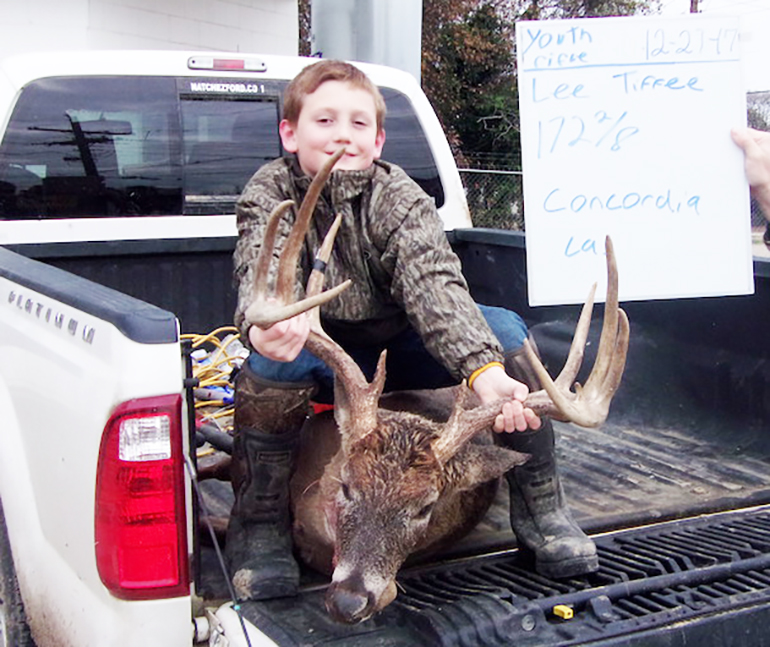
CONCORDIA PARISH — LEE TIFFEE

The best part of the hunting tradition is the hunting stories that accompany it. Each hunt, whether it is successful or not, produces a story. According to Lee Tiffee, a 10-year-old deer hunter from Concordia Parish, the circumstances leading to his encounter with a buck serve to prove that when deer hunting, a hunter needs to be on the lookout at all times.

On December 26, Lee and his father, Tom, climbed their stand on a cold, rainy, afternoon hunt. A family friend accompanied the pair but peeled off about a hundred yards or so. Their stand is found behind their house and overlooks a food plot. The woods surrounding the food plot are enrolled in Wetland Reserve Program, providing thick cover and plenty of browse and bedding areas. If the rain would let up, both hunters thought it likely deer would be moving that evening. Watching the woodline for hours seems like a job reserved for older, more mature individuals, but Lee was ready to hunt this day. A few hours into the hunt, the younger Tiffee recalled seeing a deer appear out of nowhere.

“I looked out on the food plot and saw deer,” said Lee. “It was a cull buck that had a spike antler on one side and four scraggly points on the other side. Dad said I could shoot him.”

Unfortunately, nerves got the best of him and as Lee pulled his rifle up to fire, he was shaking. Just as he was able to calm down, their hunting partner shot and the cull buck busted out of the food plot.

“We figured the woods were all awake after the shot and deer busting through the woods, so we decided we would go help our friend track and drag his deer before it got dark.”

The Tiffees started to depart their stand, but were still in hunt mode. Tom looked up and saw a deer standing on the back side of the food plot. Then, Lee saw him, but couldn’t see his antlers. The rest Tom remembers in slow motion. Lee’s gun was resting on the side of the stand, and before Tom knew what was happening, Lee was shooting at the deer. A round from the Remington 700 found its target and the buck heaved, and broke for the thicket. Now the hunting party had two deer on the ground, but the rain wasn’t letting up. They finally found some blood and tracked the deer down through a gully and up the other side. Upon seeing the buck, the pair was shocked at its size, with Lee calling the grandfather to say that he had killed a monster.

Lee and his dad dragged the deer back to the vehicle, and the rest of the story has been written down in the family history book. Lee’s buck scored 168 5/8 inches, which was enough to win the youth division at a local big buck contest. The buck now hangs proudly on his wall at home and Lee offers his hunting story to any who will listen.

“TrophyBucks”

AVOYELLES PARISH — AMANDA SMITH

The second week of January blew into Avoyelles Parish on the backside of rain and saw a cold air mass settle into the region. This weather is normal in northern regions, but can be hard to handle for Deep South hunters. Those brave enough to venture to the woods included Amanda Smith.

“I tried to get my son to sit in the stands that evening, but he didn’t want to,” recalled Amanda. The family hunts a small tract of bottomland behind their home in Avoyelles Parish. Though small, land anywhere in Avoyelles Parish may be holding big deer. This is true for the family’s hunting land.

For seven seasons, the Smiths have watched one deer in particular. The buck always produced non-typical antlers and his crown has grown every year. This week, Scotty had taken over home duty for Amanda and she took a week to hunt. They had meat in the freezer and were buck hunting, having seen the buck on a camera about a month before. He had grown and they were figuring this would be the season they took him. Interestingly, the deer the Smith’s had been watching grow over the years was unknown to their neighbors.

“On January 13th, the wind was in my favor, and I walked to the stand for the evening hunt carrying an extra piece of gear — my portable heater,” Amanda said.

Heater in hand and an H&R .444 slung over her shoulder, Smith took to the woods, using the same trail to their only stand on the property. They don’t move around a lot on the property, which is why they believe they are so successful. The hunt was uneventful and cold, at least until a deer appeared.

“When I saw the deer coming, I reached down, turned the heater off and picked up my rifle,” said Amanda. “Putting it up, I realized that the lens had fogged up. I wiped down the scope, slowly, and made a small circle just enough to see through. I put the deer in the crosshairs.

She was calm, as she believed it was a cull buck — a bent up 6 point with lame legs — they had identified for removal. With the deer standing broadside, she squeezed the trigger and he went down. Smith didn’t realize she had killed a 200-inch monster buck.

“I climbed down, walked up to the deer, realized who it was, and I went crazy,” said Amanda.

Scotty arrived on scene as did the couple’s children, making it a family affair; they kids were very excited. They dragged the deer home where it officially scored 226 2/8 inches, making it the fifth largest non-typical in the state and the biggest ever in Avoyelles Parish.

Tennessee Turkey Season 2024: Complete Hunting Guide – Dates, Bags & Regulation!

0

The Tennessee turkey hunting season is almost approaching, and hunters are preparing for an exciting and fulfilling day in nature. The Tennessee Fish and Wildlife Commission changed the season, so hunters must be informed of the new rules if they want to help protect the wild turkey population in the state. The modifications include a later start date, a smaller bag limit, and limitations on when birds may be collected. Despite these modifications, hunters can still anticipate a thrilling season filled with chances to put their abilities to the test and forge relationships with the natural world. This article will examine the seasons, permits, bag restrictions, and other rules for a productive turkey hunting season.

Tennessee Turkey Season 2024

A few changes will be made to Tennessee’s next spring turkey shooting season in 2024 to help the state’s wild turkey population. The season will begin two weeks later than in prior years, and the bag limit has been decreased from three to two birds. The fact that just one of such birds may be captured during the first seven days of the season should also be noted by hunters. The regular season will start the next month and last until the month after the Young Sportsman Hunt, which will take place statewide in that month. With these changes, hunters will be able to enjoy the thrill of turkey hunting while also helping protect the state’s wild turkey population.

TN Spring Turkey Season

Spring Turkey SeasonStart DateEnd Date Young Sportsman8-Apr-239-Apr-23 Shotgun/Archery15-Apr28-May-23

TN Fall Turkey Season

Fall Turkey SeasonStart DateEnd Date Archery24-Sep28-Oct Archery31-Oct4-Nov Shotgun/Archery15-Oct28-Oct

Bag Limits

TN Turkey SeasonBag Limit Spring1 bearded turkey per day Fall1 bearded turkey per county

Bag Restrictions

Spring Turkey: Hunters may take one bearded turkey every day during the spring turkey season, with two bearded turkeys taken throughout the whole hunting period. Only one of the two turkeys, however, can be a Jake. (a male turkey with a beard shorter than 6 inches). The presence of white banding on the wing feathers, tail feathers the same length, a beard longer than 6 inches, or spurs that are at least 1/2 inch long are indicators of an adult gobbler that is legal to harvest. It’s crucial to remember that every turkey taken during the Young Sportsman Hunt counts against the two-turkey quota for the spring season.

Fall Season: In the counties of Bledsoe, Bradley, Crockett, Dyer, Giles, Haywood, Lake, Lauderdale, Lawrence, Lincoln, Loudon, McMinn, Monroe, Polk, Shelby, Tipton, Unicoi, and Wayne, hunting for turkeys in the fall is not permitted.

Turkey Licenses

In Tennessee, you must possess a Sportsman or Hunting and Fishing Combination license and a supplementary license, which varies depending on the hunting gear you use. The complete list of turkey hunting permits is available on the tn.gov website.

Hunting Regulations

  • Tennessee’s spring statewide turkey season allows shotguns with No. 4 shot or smaller, longbows, recurve bows, compound bows, and crossbows. Night vision, infrared, and other artificial light equipment are restricted; however, scopes are permitted. During the season, hunters may utilize Airbows to fire arrows.
  • Hunting is only permitted from 30 minutes before dawn until legal dusk.
  • Turkey’s hunting prohibits rifles, pistols, electronic calls, live decoys, and ammunition bigger than No. 4 shot. Baiting is prohibited. Dyer, Haywood, Lauderdale, Obion, Shelby, and Tipton restrict boat-based turkey hunting. The General Regulations list forbidden activities.
  • Tennessee spring turkey hunting has these restrictions. A licensed hunter may help a permit holder but cannot have turkey hunting firearms. A 21-year-old non-hunting adult must accompany young Sportsman Hunt participants. Public land-hunted turkeys count against statewide bag limits and must be intact until tagged and turned in. WMAs prohibit turkey farming.
  • Some Wildlife Management Areas (WMAs) limit turkey hunting dates or quotas. All WMAs restrict turkey calling from March 1 until spring turkey hunts.
  • An adult gobbler must have one of these: a beard longer than 6 inches, equal-length tail feathers, a spur at least 1/2 inch long, or wing feathers with white barring to the tip.

FAQs related to Tennessee Turkey Hunting Season

15 Tips for Duck Hunters

0

When it comes to conserving wetlands and other waterfowl habitats, Ducks Unlimited’s greatest strength has always been its members and volunteers. DU supporters number more than 1 million strong across North America, and their dedication and support are critical to the success of the organization’s conservation programs.

DU’s ranks also are filled with the world’s most experienced and dedicated waterfowlers, people who collectively possess an immense storehouse of practical hunting know-how. Here are some of the editors’ favorite waterfowling tips that have been submitted by DU members from across the nation.

1. Camo Cord

Nothing beats natural vegetation for concealment in duck hunting. To hold natural camouflage materials on my duck boat, I use stretch cord that I purchased at a kayak supply store. Line the sides, bow, and stern of the boat with sections of cord spaced about a foot apart and secure them in place with four-penny nails, screws, or pop rivets. Next, weave vegetation such as cattails, bulrushes, or cornstalks between the cords to conceal the outline of the boat. If woven carefully, this material will remain in place throughout the season. Turner Wilder, Grantham, New Hampshire

2. Fighting Ice

Creating open water holes in frozen marshes and lakes is a very effective late season hunting tactic. If possible, break ice into large solid sheets that can be neatly pushed under the surrounding ice to create a clear, open hole. Many times, however, the ice is too thin to break up into solid chunks and shatters into numerous smaller pieces that cover the surface of the water. This not only looks unnatural to the birds, but the floating ice also quickly freezes together again. An easy solution is to bring along a large landing net. After breaking the ice, sweep the water’s surface with the net until you’ve picked up all the floating pieces.

If the ice is too thick to easily break into sheets, try something else. Using a heavy axe or maul, break open a 3’x 3′ hole. Standing in the hole, stir up the bottom sediments with your boots and kick muddy water onto the surrounding ice, creating the appearance of open water. Place shell or silhouette decoys on the skim of muddy water covering the ice to complete the illusion. On bitter cold days, you may have to kick new water onto the ice periodically throughout the hunt, but it’s well worth the effort. My hunting partners and I have taken quite a few mallards and black ducks this way over the years.Andrew J. Rzicznek, Medina, Ohio

3. Stay Late

Waterfowl frequently migrate with or slightly behind cold fronts to take advantage of strong tail winds. On good migration days, don’t leave the blind early. The best hunting often occurs late in the morning, when many migrating flocks stop to take a rest. Mike Checkett, Memphis, Tennessee

4. Crossing Over

Although most waterfowlers hunt with the wind at their backs and their decoys set in front of them, this setup has many disadvantages. First, as ducks approach the decoys, they are looking directly into the blind, making it much more likely that the birds will detect movement by hunters and dogs. Another disadvantage occurs while shooting. After the first shot, ducks quickly flair downwind from you, making follow-up shots more difficult and increasing the chances of crippling birds.

As an alternative, I like to position my spread so that ducks will decoy at a crossing angle to my blind. This makes my blind much less conspicuous to decoying ducks, and the birds are forced to cross in front of my blind again as they flair downwind from shooting. In many cases, my second and third shots are just as close, if not closer, than my first, and crippled birds will fall well within range for a quick follow-up finishing shot.Scott Dennis, Meraux, Louisiana

5. Easy Read

Many waterfowlers carry both duck and goose loads with them to the blind. After repeated handling, however, the printing on plastic cartridges can wear off or become illegible, making it impossible to tell which shot size is in the shells. To avoid confusion, I take a black magic marker and write the shot size or letters on the end of the brass casings on all my shells. This enables me to quickly identify and select duck or goose loads while they are in the shell loops of my hunting vest. Brian Garrels, Emmetsburg, Iowa

6. Clean Call

Without periodic cleaning, all sorts of particlesincluding food, tobacco, dirt, and dead vegetationcan accumulate inside your duck call. Follow these easy steps to keep plastic and acrylic calls clean and in good working order:

1. Gently remove the stopper (holding the reed assembly) from the barrel of your call.

2. Place both the stopper and barrel in a bowl or coffee cup and soak for half an hour in a combination of water and mild soap.

3. Remove them from the solution and rinse well under the tap.

4. Set them aside to dry.

5. Using dental floss or a dollar bill, gently clear any stubborn particles that may remain between the reeds.

6. Reassemble your call.Eli Haydel, Natchidoches, Louisiana

7. Calm Approach

Nothing spooks late-season ducks more than stationary decoys sitting in an open hole. On calm days I throw most of my decoys back in thick brushy cover and rely on calling to bring in the ducks. Circling birds only catch brief glimpses of my decoys while they’re working, and, by the time they get close enough to get a good look, it’s too late. Boggs McGee, Honey Island, Mississippi

8. Patience Pays

A common mistake made by many waterfowlers is to flush large numbers of ducks off a roost in the dark before dawn. If left alone, these birds will often fly out to feed at first light and then filter back to the roost later in the morning. Rather than spooking the birds in the dark, wait until sunrise or later before going in and setting up. Although you might miss out on some early shooting, you may have a better hunt overall as the birds will provide more shooting opportunities as they return in smaller groups throughout the morning. Dave Mepps, Billings, Montana

9. Wind Check

Knowing the precise wind direction is critical to correctly position decoys and blinds in fields for geese. However, this can be difficult on mornings with a light breeze. To determine the wind direction on nearly calm mornings, take along a small squeeze bottle filled with talcum powder. Before setting your decoys, simply squeeze the bottle a few times and watch what direction the powder drifts. This will clearly show the direction from which the breeze is blowing. Rock Kuhn, Northfield, Minnesota

10. Line Guide

Very few decoy manufacturers have successfully addressed the issue of adjusting decoy line for variable water depths. I solved this problem by attaching a metal shower curtain ring on the keels of my decoys. Alternatively, large fishing swivels can be used for the same purpose. When you set your decoys, simply unwrap line off the keel to the desired depth, open the curtain ring, place the line inside the ring, and snap it shut. This will prevent any more line than is necessary from coming off the keel. Lance Crawford, Delano, Texas

11. Painting Pointers

It’s always a good idea to use a stencil for painting camouflage patterns on boats and blinds. I make my stencils out of dry-erase poster boardavailable at most arts and crafts stores. First, I place pieces of natural cover, such as leaves, tree branches, and cattails, on the poster board and trace around them with a fine magic marker. Then, I cut out the outlines that I made on the poster board to create a stencil.

When you are ready to paint, simply hold the poster board up against the surface of your boat or blind and spray paint over the holes. By overlapping different shapes and using different colors, you can create a highly realistic custom camouflage pattern that will match virtually any type of vegetation and background. Doug Barnes, Germantown, Tennessee

12. Nordic Track

For older hunters such as myself, a pair of old-fashioned cross-country ski poles is a great way to keep your balance while wading and setting out and picking up decoys in the marsh. The six-inch diameter baskets at the base of the poles provide you with excellent stability and prevent the poles from sinking into the mud. Loops on the handles keep them secured firmly to your wrists, freeing your hands for working with decoys and completing other tasks.

The poles also will extend your reach to retrieve downed birds and pick up errant decoys in deeper waters. You can even use them as supports to hold up camo netting and natural vegetation as a makeshift blind. Used cross-country ski poles can often be found at an affordable price at garage sales.Warren R. Lindstedt, Portland, Oregon

13. Key Caddy

Keeping up with different sets of keys while duck hunting is a perennial challenge for waterfowlers. To simplify matters, I put all my keysfor my boat, truck, ATV, and hunting cabinon a floating foam key ring purchased at a boating supply store. This not only keeps all my keys together in one place, it also makes them much easier to recover if I drop them in the water or on the ground in the dark. Michael Simmons, Jackson, Mississippi

14. Gun Wrap

Waterfowlers can almost completely vanish in fields and marshes covered with snow by wearing a white jacket, coat, gloves, and ski mask. However, it’s equally important for waterfowlers to camouflage their shotguns while hunting in these conditions. Against a white background, shotguns become even more visible to ducks and geese, especially on sunny days. A cheap and inexpensive way for waterfowlers to conceal their shotguns in the snow is to wrap them in white medical gauze.

Secure the gauze to the end of your gun barrel with clear packing tape. Next start wrapping the gauze around the barrel, overlapping about half way each time. If you have an autoloader, continue wrapping over the forearm down to the receiver. Then cut off the gauze and secure it to the base of the forearm with more clear tape. Cover the stock in the same manner by starting at the pistol grip and wrapping to the recoil pad. This way, the only exposed area of the shotgun will be the receiver. James Campbell, Canton, Illinois

15. Tied Down

Putting up wood duck boxes is a great way to boost local waterfowl populations. However, nailing nest boxes to trees can be a hassle. An easier alternative is to tie wood duck boxes onto trees using plastic-coated laundry line. Simply drill a few extra holes in the back of the box and thread the line through. The line won’t damage trees like nails or screws, and it’s much easier to remove and relocate boxes that are unsuccessful. One word of caution, however: Always check the integrity of the line when you empty existing boxes in late fall or winter to ensure the line remains sturdy enough to hold hens and their broods. Fran Gough, Lehighton, Pennsylvania

Continue Reading

Which Compact Binoculars Are Best?

0

While a Western or open-country hunter wouldn’t be caught in the field without binoculars, that’s not the case everywhere. But are hunters who aren’t carrying binoculars missing something—even if their normal distances aren’t that great?

I often find myself asking that question while turkey hunting when a bird flies down in the first few minutes of legal shooting time, and I wish I had the added light-gathering power of binoculars. Or, it happens when I am sitting in a blind and a turkey appears 200 yards or more away. I also want more magnification then.

*This article was written without bias. Affiliate links were placed in this article after completion by the writer. If you liked this article and plan to buy one of these products – please support us by clicking the Amazon link on the product when purchasing. Thank you.

The idea of binoculars when turkey hunting doesn’t always fit in, though, since binoculars aren’t always lightweight to carry. Compact binoculars can fill that gap, however.

Testing Five Sets

I put five popular compact binoculars through two different testing protocols and looked at their overall product features.

To understand the comparisons between the products, it’s necessary to look at the inner workings of binoculars. The main types are porro prism and roof prism binoculars. It’s easy to tell which is which by looking at the construction. Porro prism is the original binocular design, with the objective lenses offset from the eyepieces. Roof prism binoculars have the objective lens in line with the eyepiece. The optical difference is the prism inside.

The other important distinction with binoculars is the size of the objective lens. Compact binoculars have objective lenses less than 32 millimeters in size. The larger the lens, generally the more light that gets let through. However, glass quality, coatings and prism quality also play a role.

To the Test

Which Compact Binoculars Are Best?I tested the binoculars using a USAF 1951 1X target. These targets are often used with a formula to calculate the resolution of an imaging system. I printed these targets out on letter-sized paper and looked at the four rows of lines and numbers. My test was to try to read the numbers in the different systems. They were shown as -2, -1, 1, and 0. I tested them at 50, 100, and 200 yards.

All the binoculars in the main test were 10-power. To be fair, putting a 25-mm objective lens against a 32-mm objective lens is not a test of equals, but there were some surprising results. Smaller objective lenses aren’t expected to be as bright as larger objectives.

The secondary test was looking at a stop sign from a mile away, looking to see if I could read the letters at that distance.

Both tests were done on an overcast day. I figured this better simulated the twilight conditions when wildlife is most active.

Results

Best Under $50

Bushnell 10×25 H2O Waterproof – ($37.99 at Amazon)

Which Compact Binoculars Are Best?American optics company Bushnell gained a reputation for providing quality optics at a reasonable price. The company has really revamped its optic line to increase quality.

These lightweight binoculars have a non-slip grip and are waterproof to three feet for 30 minutes (IPX-7 waterproof). The folding roof prism design makes for one of the smallest of the binoculars I tested. They were also the lightest and are of aluminum construction. The lens caps aren’t attached.

In the USAF 1951 test, these binoculars could clearly read the -2 line at both 50 and 100 yards. The -1 numbers were legible, but barely. These binoculars were the darkest of those tested and had less contrast. The letters on the stop sign weren’t quite legible.

With their small size and waterproof construction, I thought these binoculars would be ideal for waterfowl hunting. I don’t normally take binoculars duck hunting, but handling these, I saw them as fitting that niche. They are tough but not expensive, since that can be a tough test on optics.

Price: $37.99 USD

Prism: Roof

Weight: 10.7 ounces

Length: 4.1 inches

Twist-up eyecups for those that wear glasses

Bushnell Prime 10 x 28 ($122.00 on Amazon)

Which Compact Binoculars Are Best?These binoculars have Bushnell’s EXO Barrier to repel water and dirt. They are waterproof to three feet (IPX 7 waterproof) for 30 minutes. The objective lens caps are fastened on the body and eyepiece caps will fasten to the strap. The body has a rubber coating with a non-slip grip.

The -2 numbers on the USAF test were visible at both 50 and 100 yards, with the -1 visible at 100 yards. In the stop sign test, the letters could be read. These binoculars were the third brightest of those tested. These binoculars are a great value for the money.

Price: $122 USD

Prism: Roof

Weight: 14.2 ounces

Length: 4.7 inches

Twist-up eyecups for glasses wearers

Best Overall

German Precision Optical (GPO) Passion ED 8 x 42 – ($469.99 at Amazon)

GPO is a company led by former major optic companies that had a vision to offer top- quality products at a more reasonable price.

The Passion ED binoculars boast an incredible 99.7% light transmission through each optical surface, for a combined total light transmission of 92%. These were the only binoculars tested with ED glass.

Which Compact Binoculars Are Best?Which Compact Binoculars Are Best?

The magnesium body has a two-part coating and a more intense grip on the portions where the hands fall. The lens caps are not attached to the body of the binoculars. These binoculars are waterproof, but there was no depth or rating given.

These were the brightest binoculars tested with the most contrast. In the optical testing, the -2 and -1 numbers could be easily read at 50 yards. The -1 could be read at 50 yards and the -1 was on the edge of legibility at 100 yards. Stop sign letters were an easy read at a mile.

Price: $469 USD

Prism: Roof

Weight: 3.8 pounds

Length: 3.7 inches

Twist-up eyecups for glasses wearers

Leupold BX-1 Rogue Waterproof 10 x 25 ($80.99 at Amazon)

Which Compact Binoculars Are Best?Leupold is the established source for North American optics, with more than a century’s experience in producing quality products.



The BX-1 Rogue features scratch- and smudge-proof lenses with Leupold’s legendary light transmission. The body is armor-coated and these binoculars were tested for waterproofness to 33 feet. The lens caps are not attached to the body. Although these were the second smallest physically, the ergonomic shape makes them seem smaller. The BX-1 rated fourth in brightness.

In testing, it was possible to read the -2 numbers at 50 and 100 yards and the -1 at 50. The stop sign could just be read at a mile.

Price: $81 USD

Prism: Inverted porro

Weight: 12.7 ounces

Length: 4.3 inches

No twist-up eyecups for glasses wearers

Best Value

Vortex Diamondback 10 x 28 ($169.99 on Amazon)

Vortex has a growing reputation for its high-quality optic products. The Diamondback 10 x 28 didn’t disappoint.

Sporting HD glass, the Diamondbacks have a rubber-coated body for a better grip. They also have grooves in the body to further enhance grip. There was no mention of the waterproof level of these in the company’s material. There are flip-down lens covers attached to the body. These were the second brightest of the binoculars tested.

The resolution of the HD glass paid dividends. It was possible to read the -2 and -1 numbers at both 50 and 100 yards. These were the clearest in that regard. It was no problem reading the letters on the stop sign at a mile.

Price: $169 USD

Prism: Roof

Weight: 13.3 ounces

Length: 4.6 inches

Twist-up eyecups for glasses wearers

Notes on Magnification

I also tested to see how much power was needed to read the 0 at 50 yards with the variable power on my most powerful optic, a Bushnell Forge spotting scope with 15-45 power. To read the 0, I needed 30 power.

Both Vortex and Bushnell provided 8-power samples for testing. The lesser power gives a better field of view. It was possible to read the -2 numbers at 50 and 100 yards. It was tougher to read the -1 than with 10 power but it was legible.

Overall Winner

Since brightness is somewhat of a subjective measure, my wife Karen accompanied me to confirm my results. Her pick for best overall binoculars were the GPO Passions. I was impressed with these, but I gave top marks to the Vortex Diamondbacks. Although they weren’t as bright, I preferred the clarity and flip-down lens caps.

The testing process was an eye-opener for me, showing me the value of compact binoculars. They will fit in the pocket of any hunting coat or are light enough to hang around your neck and be at the ready. With compact binoculars, there is really no excuse to leave your binoculars at home.

Read More: “A Game of Hide & Seek: 8 Tips for Spotting & Stalking Mule Deer”

Nigersaurus: The Remarkable 500-Toothed Wonder of the Cretaceous Period

0

The internet has been buzzing with the question “what dinosaur has 500 teeth?” The answer leads us to one of the most peculiar dinosaurs ever discovered: Nigersaurus taqueti, aptly nicknamed the “Mesozoic Cow.” Let me break down this fascinating creature’s most remarkable features.

A Dental Marvel Nigersaurus possessed an astounding dental arrangement that made it unique among its sauropod relatives. Its claim to fame was its more than 500 teeth, arranged in an innovative “dental battery” system:

  • The upper jaw contained 60 columns of teeth
  • The lower jaw featured 68 columns
  • These teeth were constantly replacing themselves every 14 days
  • All teeth were aligned along the front of its mouth in a wide, straight row

Physical Characteristics Despite being a sauropod (the family of long-necked dinosaurs), Nigersaurus was relatively modest in size:

  • Length: About 30 feet (9 meters)
  • Weight: Approximately 4.4 tons
  • Distinctive vacuum cleaner-like wide muzzle
  • Remarkably light skull with bones as thin as 2 millimeters
  • Air-filled vertebrae that made its skeleton surprisingly lightweight

Habitat and Lifestyle This unique dinosaur lived around 110 million years ago in what is now the Sahara Desert in Niger, Africa. Unlike its tree-browsing relatives, Nigersaurus was a ground-level grazer, using its wide muzzle and numerous teeth to efficiently crop low-lying vegetation like ferns and horsetails. The environment it inhabited was quite different from today’s Sahara:

  • Lush forests
  • Braided river systems
  • Shared its habitat with dangerous predators like Sarcosuchus (giant crocodile relatives)

Discovery and Scientific Significance The Nigersaurus story spans several decades:

  • Initial fossils were found in the 1950s by French paleontologists
  • The definitive discovery came in 1997 when Paul Sereno’s team found better-preserved specimens
  • Named and described officially in 1999
  • Its skull became one of the first dinosaur skulls to be digitally reconstructed using CT scans

This remarkable dinosaur challenges our understanding of sauropod diversity and adaptation. While most of its relatives were reaching for treetops, Nigersaurus evolved a specialized feeding strategy more akin to modern grazing animals, proving that dinosaurs were capable of filling diverse ecological niches.

Whether you discovered Nigersaurus through recent internet memes or genuine paleontological interest, this unique dinosaur serves as a reminder of the incredible diversity of life that once roamed our planet. Its specialized adaptations and unusual features make it a fascinating example of evolution’s capacity to produce remarkable solutions to the challenge of survival.

(For more on the best air rifle for squirrels, see this post)

Air Gun 101: What You Should Know about Air Rifle Barrels Before Buying

0

Have you ever heard the phrase: “Imitation is the sincerest form of flattery”?

The Chinese must have been very sincere in emulating this proverb.

I recently spotted one counterfeit brand that threw me to the floor.

Whoever thought of parading Microsoft as Michaelsoft must be a very funny fellow.

What happened to patent laws?

Anyway, that’s what happens to many other brands, at least as seen in the following:

  • Dolce and Gabbana – Dolce and Banana
  • Nike – Mike
  • Johnnie Walker – Johnnie Worker
  • Game Boy – Game Child
  • Starbucks Coffee – Sunbucks Coffee – Stars & Bucks Coffee
  • Playstation  – Polystation
  • KFC – KFG

Anyway, this is not an anti-counterfeit campaign.

We’re here to talk about air rifle barrels.

Ever wondered why there is much consistency on Lothar Walther barrels as opposed to other barrels?

Or to start on the same ground, what is the barrel of your air rifle?

Does it really matter if it is from the US or Germany or South Africa or China?

Let me answer these questions one by one to demystify the misconceptions surrounding airgun barrels .

The function of the barrel

The air rifle barrel essentially guides the ammo from the moment the trigger is pulled to the moment it flies out into the air.

It usually takes the shape of a rounded tube and is made of high-strength metal.

The hollow space inside the shooting tube is what we refer to as the bore

This has a specific internal diameter, the most popular being .177, .20, .22, .25, .357, .45, and .50 –  in short, the air rifle caliber.

=> For more on differences between .177, .22, and other calibers, see this post

Most air rifles involve propelling the ammo by means of rapidly expanding gases.

The expansion of these gases is usually explosive in nature, and that’s what fires the pellets with such high velocity.

It follows then that the barrel must be strong enough to contain these expanding gases, be it nitrogen, air, or CO2. 

The chamber

This is the compartment at the rear end of the barrel where the pellet sits in readiness for firing.  

The Bore

This is the hollow interior of the barrel.

The ammo accelerates through this part once the air rifle is fired. 

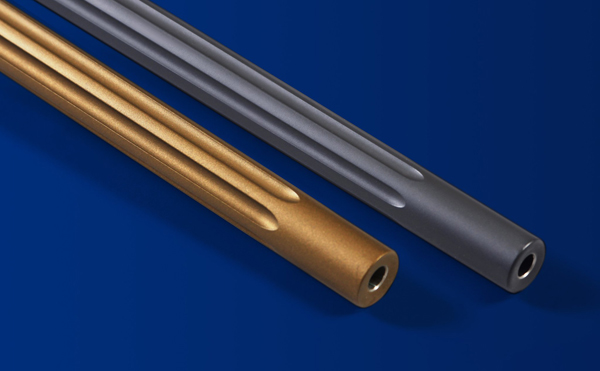
To stabilize the ammo while still within the barrel, manufacturers designed the coveted rifled barrels.

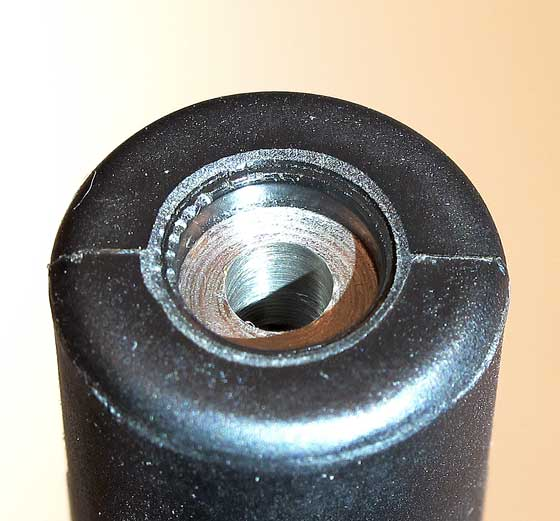
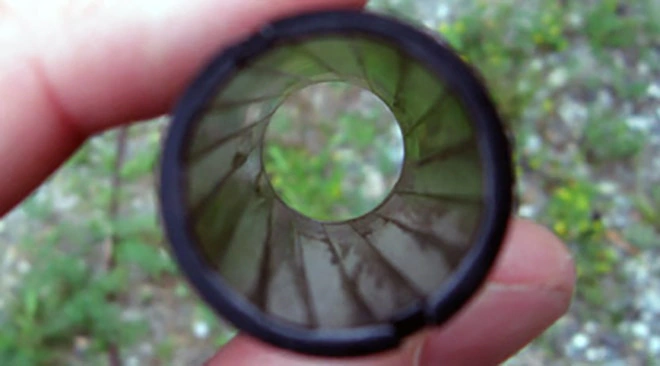
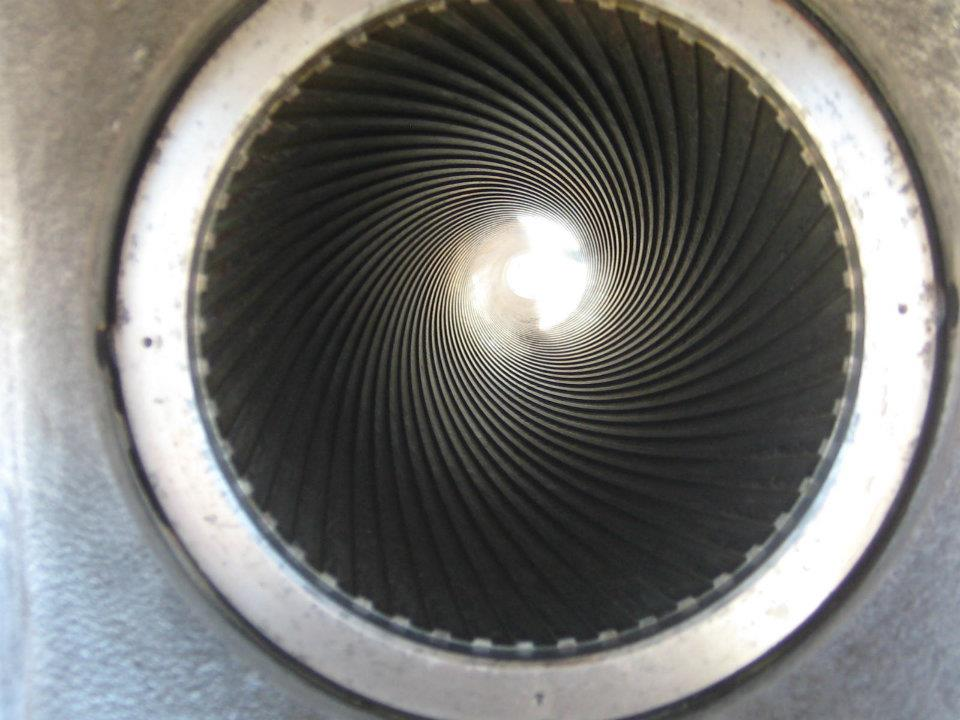
These have a series of helical grooves around the internal diameter of the barrel. 

As the ammo surges forward, it spins along the longitudinal axis of the bore and is more likely to maintain a straight trajectory.  

Smoothbore rifles are those that don’t contain riflings .  

The muzzle

This is the front end of the barrel through which the ammo exits the barrel.

The muzzle needs to be expertly machined so as to ensure the great accuracy of the rifle. 

Visualize a scenario where there are tiny gaps around the pellet as it jets out of the barrel.

The pressurized gases are likely to destabilize the ammo and veer it off the intended trajectory . 

Factors influencing the accuracy of air rifle barrels

1. The rifling method

As already mentioned, a rifled barrel is more advantageous than a smoothbore barrel in terms of maintaining a constant projectile.

This is the very start of the ballistic flight and it needs to be correct. 

One thing you need to note is that the rifling size and configuration affect the twist rate of the barrel.

This refers to the distance the ammo must travel for it to rotate once.

There exists an optimum twist rate that makes the projectile most stable.

Too low a twist rate will affect the stability of the projectile – and the same is true for too fast a twist rate. 

2. Steel used

Not all steel is of the same quality.

You can expect what will happen if the barrel is made from low-quality steel.

The machining quality of the riflings, as well as the muzzle, will be compromised, and this will affect the stability of the projectile.

3. Rifling speed

The faster the rifling process the poorer the end quality of the product.

Some manufacturers are known to rush through the process so as to lower production costs .

The worst-case scenario is having the barrel of the gun explode when firing pellets.

Your investment will vanish in your own eyes and you risk fatal injuries.

Frequently Asked Questions

1. What is a rifled barrel?

A rifled barrel is one whose hollow interior incorporates longitudinal notches as opposed to being smooth.

This helps to stabilize the pellet or BB as it accelerates along the barrel.

2. Do air rifles have rifled barrels?                

Of course, yes.

But not all of them do.

Rifling is a technology that requires high-capital investments to achieve.

Not all manufacturers are willing to spend so much money on their production process.

So quite a lot of air rifle models have barrels that are not rifled.

3. Should I oil my air rifle barrel?                

No! Please don’t.

There is a great possibility of the oil finding its way into the bore of the barrel.

When you fire a pellet, the high friction may cause the oil to combust .

When this is repeated with every shot, the airgun seals get damaged with the high heat and the gun stops working.

Instead of oiling, use a cleaning rod.

Also, consider firing a cleaning pellet once in a while. 

For the exterior of the barrel, take care not to expose it to moisture as it may rust.

Immediately you realize that water has splashed on the barrel, clean it with a dried piece of cloth.

Purchase some rust protection spray for added protection. 

4. Rifled vs Smooth Bore Barrel?

How much more accurate is a rifled barrel than a smooth bore barrel? Watch the video below to find out:

5. Is it bad to dry fire an air rifle?

Dry firing refers to shooting the air rifle without a pellet in it.

Some air rifles are specially designed to allow dry-firing.

This is especially seen in target shooting airguns, which it is expected to dry fire time after time as you test the trigger and trigger pull.

If this is the case, the manufacturer will state it plainly in the user’s manual.

However, some other guns, especially the spring-powered airguns, can suffer great damage through dry-firing.

The seals can be easily damaged through dry-firing.  

Conclusion

You now know what a good air rifle barrel looks and feels like.

Do not stop for any old thing that you find out there.

Quality matters for the longevity of your airgun and your safety. 

Sometimes it may be difficult to differentiate between good quality steel and low quality steel.

Ensure that you read detailed and honest air rifle reviews before you make the final purchase decision. Better to be safe than sorry. 

Pet Capybara Legal States 2024

0

Owning a capybara is often an extremely complicated process, as is the case with any exotic animal. In addition to the costs of purchase, the license costs and maintenance costs will be high. Licensing can be procured through Fish and Wildlife departments in the state, and some states have a third-party processor that deals with the permitting of possession of wild animals. Here, owners can get the information they need to purchase and keep a capybara safe at home.

The capybara can grow to become as large as 140 pounds and will need a diet that can sustain that weight and those nutritional needs. That is a diet that is typically very high in protein. Capybaras can eat much of the same meat that humans do.

These are animals that require water and land to thrive. Many will need a water component to live in or use it for swimming and submerging on occasion. A capybara can not tolerate the chemicals in a chlorinated pool but can enjoy saltwater pools. They can swim for hours at a time and stay submerged for up to five minutes.

These animals have uniquely webbed feet and eyes, and this helps them to swim and survive. Their nostrils are also uniquely shaped, and all of these features are to help them survive in wetlands.

States Where Owning Capybaras Is Illegal

Even though capybaras are technically legal in each state that is NOT listed below, the permitting process can be so extensive and complicated that it basically becomes illegal. The states below are those that have gone so far as to make any sort of possession illegal or have given themselves the complete authority to decide it is illegal on a case-by-case basis.

Alaska

The Alaskan Department of Fish & Game released a “Clean List” with every approved species that can enter the state and be owned. Any species not named there “may not be imported into Alaska or possessed as a pet or livestock in Alaska, and the Department of Fish and Game cannot issue a permit allowing its importation or possession.”

California

California doesn’t allow any non-native wild animal to be a pet unless otherwise instructed by the Department of Fish and Wildlife. Capybaras, and even gerbils, don’t fall into that category.

Colorado

The only wild, exotic animals you can own are those deemed safe by the Division of Wildlife. Capybaras are not included on that list, therefore, are prohibited from possessing in the state of Colorado.

Connecticut

The state of Connecticut breaks wildlife up into four categories and bans the import and possession of all of them. In regards to capybaras, the second category includes all rodents and excludes those the state deems acceptable to keep as pets.

Georgia

The Georgia Department of Natural Resources explicitly lists capybara within the rodent group as an exotic species that “may not be held as pets in Georgia.”

Illinois

There is a clause in the legislature of Illinois that gives the Department of Natural Resources the power to “prohibit or limit the importation, possession, release into the wild, take, commercialization of take, sale, and propagation of wild mammals, wild birds, and feral livestock that are not defined as protected species in Section 2.2 of this Act, to reduce risks of communicable diseases, nuisances, and damages to wild or domestic species, agricultural crops, property, and environment.” This means that it is almost impossible to own a capybara in the state of Illinois privately.

Massachusetts

In Massachusetts, regulating code 9.01 states that permits are required for possession of any non-domesticated, wild animals and these permits are never given for animals intended to be pets, essentially making it illegal to have a pet capybara.

New York

New York City has a division called the Department of Health and Mental Hygiene (DOHMH) that issues violations for those who sell or keep wild/illegal animals as pets. They even have a portal that the Department uses to collect such reports. New York state also has bans on the possession, transportation, and keeping of any wild species.

Oregon

The state of Oregon specifically notes capybaras as being animals that are prohibited from being kept within the state. Capybaras can be found on the “Prohibited Species” list.

Vermont

Permits are required to keep any kind of wild animal in the state of Vermont, but unless you are a “bona fide scientific or educational” facility, the Commissioner does not provide permits to keep or possess any wild animal. Statute 5, section 2, clearly states this ruling.

Best Fire Pistons: Are They Really Better Than Ferro Rods?

0

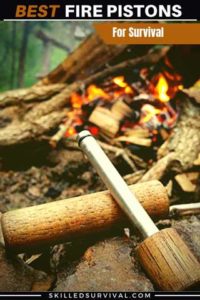
Fire PistonToday I’ve got something really exciting to share…
A Complete Guide To Researching & Using A Fire Piston

Because when it comes to survival, making fire is one of the most important.

But some fire starting devices are better than others.

And fire pistons are an excellent back up option!

But only IF you own a good one and know how to use it…

TOPICS IN THIS GUIDE… ↓(click to jump)
  • Best Fire Pistons On The Market
  • What’s A Compression Fire?
  • Science: How Fire Pistons Work
  • How To Use A Fire Piston
  • Best Tinder’s To Use With It
  • How To Make A Your Own
  • Why You Should Own One

Want a free FireHawk Tactical Flashlight?

Click Here To Get 2 For 1 FireHawk FlashlightsClick here now to access this limited time offer, just cover the small shipping & handling fee.

Best Fire Pistons For Sale Today

Let’s now look at a few of the best fire pistons on the market today.

I want to show you various types, styles and prices to choose from:

↓ Hickory Piston Review
↓ PSKOOK Piston Fire Starter
↓ Wilderness Solutions FireStarter Piston
↓ SXTL Compression Fire Starter Review

What Is A Compression Fire Starter?

It’s a proven fire-starting device that’s been around for hundreds of years.

It an ancient device of Southeast Asian origin.

Today, it’s also called a fire piston, fire syringe, or slam rod fire starter.

They use the fundamental laws of physics to heat and ignite a piece of tinder.

The design is simple – there are only two parts!

  1. It consists of a hollow cylinder.
  2. And a piston rod.

The first is a hollow cylinder with a smooth interior and an air-tight circular seal.

The cylinder size can range from a few inches in length and less than 1/2” wide to the size of a bicycle tire pump.

The second part is a piston rod that’s a fraction smaller in diameter than the cylinder.

It’s also about an inch longer.

The piston rod includes a small cavity for the tinder to sit.

It also has an airtight rubber o-ring seal on one end and a comfortable handle on the opposite end.

These parts can be made out of nearly any material.

However, metal and plastic are the most common nowadays.

That’s because they allow for incredibly smooth surfaces.

Smooth surfaces are essential for a very tight seal between the two parts.

The piston rod must be tight to the cylinder walls to prevent air from escaping.

This tight tolerance between the cylinder and the rod is what creates the magic.

Survival Gear Checklist eBook Cover -with fire piston on a rock and campfire in the background

Want a free 54 item survival gear checklist?

Click here to instantly download this Complete Checklist PDF. No purchase necessary.

How Compression Fires Starters Workfire piston lite ember

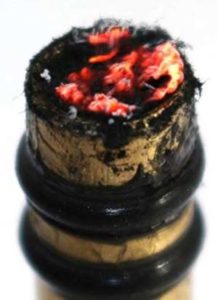
They work on the principle of the Ideal Gas Law.

If this sounds familiar, you heard about it in high school chemistry or physics class.

The Ideal Gas Law defines the relationship between pressure, volume, and temperature.

The basic premise is this:

For a given amount of a gas (i.e., air), quickly compressing it to a smaller volume results in a dramatic increase in both pressure and temperature.

This can result in a spike in the air temperature of over 400deg F.

Plenty of heat to instantly ignite a fine piece of tinder without a spark!

If this seems far-fetched, it’s not.

It’s the same law of physics that allows diesel engines to work.

↓ Fire Piston Demonstration

How To Use A Fire Piston

Using this simple survival tool is simple in concept but takes some practice to master.

↓ Piston Fire Starter

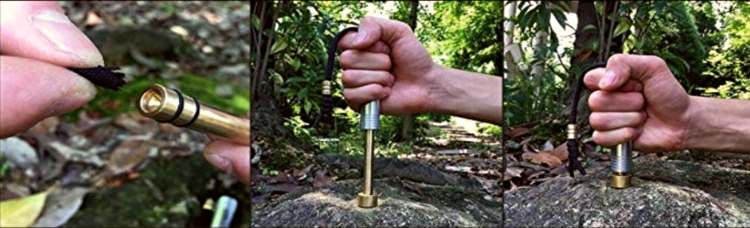
First, take the time to create a nest of burning tinder and small kindling.

This is where you’ll put the ember produced by the tube once it’s lit.

So ensure it’s easy to reach and have all the fire fuel ready before you begin.

There’s nothing worse than running out of fuel just as your fire starts to take off.

Next, place a small amount of tinder in the cavity on the front of the piston.

Don’t pack it in there, as it needs exposure to air to heat and combust.

If you pack it too tightly, it’ leaves no room for air to comingle with the tinder.

Start the piston into the cylinder, but don’t compress it too far.

Just enough to hold it in place should be fine.

Brace the cylinder against a solid object and grab the handle.

Now, quickly push the piston in, compressing the air and (hopefully) lighting your tinder.

Once the air is compressed, getting it out of the cylinder fast is important.

The tinder needs immediate fresh air – before the oxygen is consumed and the ember dies out.

So as soon as the piston reaches the bottom of the cylinder, pull it back out just as rapidly.

So in and out FAST!

Now quickly transfer the tiny ember into the fine tinder’s nest.

Once it’s transferred, gently fan it (or blow on it) to encourage the flames to grow.

If you’re successful, work up to a larger fire with kindling.

Practice all these motions until they’re smooth and consistent.

Soon you’ll master it and increase your efficiency and success.

Pro Tip: Using a dab of Petroleum Jelly in your tinder bundle can help, if your struggling.

↓ How To Use A Piston For Fire

Best Tinder To Use

While a piston fire starter can reach high temperatures, it can only maintain them for a very short time.

This means that easily lit tinder work best.

Fine cotton and dryer lint both combust with ease.

However, they burn too quickly and produce no usable embers.

By contrast, char cloth and fine bark fibers light with ease.

And this tinder burns more slowly and allows you time to remove the ember from the piston and use it to start a fire.

You can make char cloth by burning denim or cotton cloth in a closed metal container with limited oxygen.

I use a metal breath mint container with a pinhole vent.

↓ How To Make Charcloth! ↓

how to use a fire piston

How To Make One At Home

Like most tools, you CAN make one yourself with enough ingenuity, skill, and patience.

They’re fairly simple tools to build once you understand the principles behind them.

It also doesn’t have to cost much money (but will cost some “time”).

Watch this video to learn how to make one for just 1$:

↓ Slam Rod Fire Starter – Ignition By Air!! ↓

And here’s another good video on how to make one and some char cloth to go with it:

↓ Making A Fire Piston And Char Cloth ↓

Why You Should Carry One

Today, there are hundreds of tools designed to ensure your fire-making skills.

Tools range from survival lighters to solar mirrors.

They each have their benefits and drawbacks.

Some firestarters are better suited to certain situations than others.

Most experienced adventurers plan on carrying at least two different firestarters.

A primary and a backup, just in case.

But what did people do before modern technology made fire so simple?

Our ancestors didn’t have access to mass-produced plastic lighters.

They also didn’t carry boxes of waterproof matches or have Ferrocerium rods.

So if your primary source of fire is a bow drill, what can you carry for backup?

A compression fire starter is a smart backup option.

Final Thoughts

Nothing is going to replace a survival lighter as a primary firestarter.

Sorry, it’s too cheap, easy to use, and readily available.

But a piston fire starter is an exciting and reliable fire starter!

It does take practice to master, which I found both fun and challenging.

I like the durability of the build and the lack of moving parts.

There are no batteries and no fuel to run out.

This means it’s a fantastic long-term option that doesn’t rely on modern technology.

For most people, it’s an ideal backup firestarter.

And for anyone into survival or self-reliance, it’s an excellent primary firestarter.

All in all, they’re a tool worth checking out and adding to any survival kit.

Can you ever have TOO MANY ways to make a fire?

I don’t think so.

Why Trust Skilled Survival…

Go here now to review a full breakdown of:

Who We Are Our Credentials Our Mission & Product Recommendations…

Here are a few highlights of our teams credentials & certifications:

  • Certified Member of a Mountain Search & Rescue Organization
  • Plant Emergency & Safety Leader for a Major Food Manufacturer
  • Member of the 10TH Mountain Division Hut Association
  • Certifications: Avalanche 1, WFR, CPR
  • Official Gear Tester for Numerous Outdoor Gear Companies
  • Countless Multiday Backpacking trips into Remote Wilderness
  • Bachelor’s Degree In Mechanical Engineering
  • Bachelor’s Degree In Civil Engineering
  • Bachelor’s Degree In Biomedical Engineering

We’re fully aware that TRUST is NOT something you GET but is EARNED.

And we’ll continue to earn YOUR trust through our forthright and honest approach with each new Blog Post, Guide & Product we create…

Jason K.

Born & Raised In The Remote Woods Of Michigan Engineering Degree From A Major University Long Standing Member Of Mountain Search & Rescue Offical Gear Tester For Several Outdoor Companies Avid Outdoorsman: Backpacking, Camping, Fishing Years Researching & Writing About Survival & Gear

P.s. Do You Live In A ‘Danger Zone’ County?

Find out now using my Danger Zone County List & Special Report it’s absolutely FREE. In minutes you’ll know EXACTLY where you stand and if you should be worried or not..

So click here to get my FREE Danger Zone County List & Report…. Click on the image to get the List & Report for FREE and find out if YOU live in a ‘Danger Zone’ County…”

Best Air Rifle Deals

Popular Posts

PCP vs CO2 Guns: Which One is Better?

0
The most talked-about debate between hunters and gun enthusiasts is what the best power source of a gun is.  The five main sources of power...

What Is An Air Rifle?

0
If you have stumbled upon this article, chances are that you probably have a pest problem at your house. This is a very common...

Can a Felon Legally Possess an Air Rifle in Tennessee?

0
"Understanding the Legalities: Felon Ownership of Air Rifles in Tennessee" can a felon own an air rifle in tennessee? In the state of Tennessee, the ownership...