When we tested the Mantis Blackbeard Trigger Reset System, it was a high-performing item for anyone looking to get more rifle practice without spending a ton of money. A system that replaces the bolt carrier group and magazine of most AR-15 rifles, the Blackbeard allows the user to not alter the trigger pull of their weapon, and have visual feedback of where the “round” goes. The system consists of the bolt carrier replacement, which can house an adjustable laser and which also contains a motor that resets your trigger, as well as a battery pack that fits into the magazine well of the rifle like a normal magazine. To complement this, the Blackbeard can be used with the Mantis Laser Academy app, which allows for virtual target scoring for drills and games. Overall, for rifle training, it’s hard to outdo the Mantis Blackbeard, especially for indoor close-quarter training situations.
The Mantis Blackbeard excels in close-quarters rifle training, operating as a simple drop-in kit to give you realistic trigger reset. The biggest advantage to this is that it’s totally safe, due to making your rifle completely inoperable when properly installed, which means that you can theoretically use this for force-on-force or live hostage rescue. It’s also totally platform agnostic as long as you use an AR platform rifle, meaning you can use it with a Smith & Wesson M&P 15 or a military issue M4 with no extra steps. The biggest advantage, however, is that it lets you keep your trigger pull, meaning that if you’re like my friend, you can drop this into your super-expensive Radian Model 1 or LMT MARS (he has both) and appreciate the improved trigger pull that both bring with dry fire and with live fire. In my own testing, the Blackbeard greatly assisted with trigger control training, getting into a good rhythm of pressing and releasing the trigger, preventing short stroking.
The Blackbeard has no recoil or force feedback, and basically just functions as a trigger reset device and laser projector. This isn’t like the CoolFire on our list that actually provides force feedback, or the SIRT pistol, so you won’t get that simulated recoil impulse. Another thing is that even if you do use the app, it doesn’t track things like weapon or trigger control, so you won’t get the same input that you get with the Mantis X on this list. Finally, the app that you need to get training metrics from, Mantis Laser Academy, is extremely temperamental. It costs a fair chunk of money, doesn’t work in daylight, requires a tripod to use, and needs extensive setup to work properly, making this a decidedly indoor dry fire training system.
The Mantis Blackbeard is a laser trainer and trigger reset system that converts any rifle into a training rifle, and for those purposes, it’s nearly perfect. Allowing shooters to conduct dry fire training with their actual trigger pull, and without requiring them to manually reset the hammer, is extremely helpful, and the issues with not tracking motion and trigger control can be solved by adding a Mantis X device to the rifle to work in conjunction, although that lowers the value proposition significantly.
Many Wisconsin anglers have the first Saturday in May circled on their calendars. That’s because the date marks the Wisconsin walleye opener on most inland waters. Opening-day conditions can vary greatly from year to year and from one end of the state to the other. In the north, some lakes may just be losing their ice cover and spawning may just be starting. In the south, walleyes usually have finished spawning and have turned their attention to food.
Walleyes, more than most other species, move from one place to another both seasonally and on a daily basis. Understanding those movement patterns is the first step to successful walleye fishing. That’s especially true during the first few weeks of the season. The second step is to use a presentation that will trigger strikes given the time of year, time of day, and the weather and water conditions. Regardless of where you fish, you can count on finding cold water in early May, which means you’ll want to slow down and scale down your presentation.
LOCATION, LOCATION, LOCATION
In the case of walleyes, “relocation, relocation, relocation” might be more accurate. In Wisconsin lakes and reservoirs, walleyes migrate from winter habitat to spawning areas and then to spring and summer habitat, all in a period of several weeks. Learn to identify each of those habitat types and when to expect walleyes to move from one to another and you should be able to catch them during the spawning period, when they move the farthest and their behavior changes the most.
By the time the Wisconsin walleye opener occurs, most walleyes have already moved to pre-spawn staging areas. These are usually areas of intermediate depth located very close to good spawning substrate. In deep lakes, walleyes often stage just off the main break between shallow flats and deep water. In shallow lakes and reservoirs, they may stage just outside weed flats, below subtle breaks of only a foot or so, in channels and off creek and river mouths.
SPAWNING HABITAT
In landlocked lakes, walleyes normally spawn on shallow rocks, rubble and gravel washed clean and aerated by wave action. That type of substrate is often found along shorelines, on mid-lake reefs and around islands. Walleyes also spawn on sand, submerged timber or even muck, if nothing better is available.
In reservoirs, lakes with tributaries or outlets, and lakes that are part of a chain of lakes, walleyes migrate as far as they have to in order to reach suitable spawning areas. They may go many miles upstream, downstream or through several lakes to find the gravel and rock structure they need.
TIMING THE SPAWNING RUN
Walleyes migrate to spawning areas several weeks before they actually spawn. On northern waters, this migration often takes place under the ice. Spawning begins when the water temperature reaches 42 degrees. Most spawning concludes by the time the water temperatures reach the low 50s.
Most walleye spawning takes place at night, but walleyes remain in staging areas during daylight hours throughout the spawning period and for several days thereafter before they disperse. Staging areas often hold great concentrations of walleyes, usually grouped by sex and size. The smaller males often remain close to spawning gravel, while larger females stay farther away in slightly deeper water.
An early spring can cause walleyes to begin their migration earlier than normal, while prolonged winter weather can push the entire process back a week or so. Year in and year out, however, the spawning run usually follows the same schedule within a few days, depending on the latitude of the lake in question. In southern Wisconsin, spawning normally is in full swing the first week of April. Farther north, spawning takes place in late April or early May.
PRE-SPAWN TECHNIQUES
Walleyes tend to be sluggish during the pre-spawn period, when water temperatures are in the 30s. Slow, deliberate presentations work best then. Action may be best during the afternoon, when the water has had a chance to warm up slightly. A leadhead jig tipped with a small minnow is a good bait choice.
Anchor or use a trolling motor to stay over a staging area where you have marked fish and work a jig-and-minnow vertically with a short lift/drop, lift/drop action, or drag it slowly across the bottom. Inactive walleyes usually take a bait as it drops. Rather than a decisive strike, you may simply feel a weight when you lift your rod. If so, hold it steady for a moment. If the weight begins to move, set the hook.
If there is a light breeze blowing in the right direction, you can drift over staging areas with a bottom-bouncer and a floating jighead or plain hook tipped with a minnow. Again, set the hook when you feel any resistance that moves.
When fishing staging areas from shore, cast a jig out to deep water and crawl it back to you. You may lose a few jigs, but that is a good way to cover an area thoroughly.
In reservoirs, start below a dam or inlet mouth and work deep water thoroughly with a jig-and-minnow. If that doesn’t produce fish, gradually move downstream, probing shallow bars, eddies and backwaters. Shallow, submerged wood can be very productive now, as the dark wood absorbs the sun’s heat and warms up the surrounding water. Shallow-running crankbaits often take good fish in timber.
Vary lure color and size until you find what the fish want. If they stop hitting or if the weather or water clarity change, try a different size or color. Generally, use smaller, brighter baits in colder water, fluorescent colors in dark water, and natural colors in clear water.
FISHING DURING THE SPAWN
Daytime action often drops off sharply once walleyes begin to spawn. Night-fishing in shallow spawning areas can be very productive, though. Try longline trolling over gravel bars, shoreline points, reefs and weed flats with floating minnow baits like a Rapala or ThunderStick. Use a zigzag trolling pattern to give baits an erratic action that often triggers strikes. On reservoirs, use side-planer boards to troll shallow-running baits along shoreline riprap.
If you fish during the day, work staging areas carefully with a lightweight jig tipped with a small minnow or plastic tail. If all you catch are small, aggressive males, move around and keep jigging until you locate a group of females. They’ll usually be holding below the next break to deeper water.
POST-SPAWN TRANSITION
After spawning, walleyes scatter and feed voraciously during a brief transition period before they move to summer habitat. During the transition, they may be just about anywhere there is food. They often move into very shallow water because it is warmer and because they find hatching insects and young perch and other baitfish there. Since they are rarely as concentrated now as during the spawning period or when they school up again in summer, you’ll take one here, one there, so it’s best to move around and cover a lot of water. Trolling or casting shallow-running crankbaits over shallow mud flats, gravel bars, rockpiles, points and emerging weeds will take fish both day and night during the transition.
Vary these techniques depending on where you are fishing and whether spring weather is early or late in coming. The best indicator of the progress of walleye spawning is water temperature, so check it daily to help plan your approach. Now let’s look at a half-dozen of the state’s best early-season walleye waters.
BIG CEDAR LAKE
Washington County’s Big Cedar Lake harbors some big walleyes, but they are a challenge to catch in the clear water. Big Cedar covers 932 acres and has a maximum depth of 105 feet in the south basin. That basin holds most of the lake’s walleyes. A honey of a gravel bar rises to within 8 feet or so of the surface in the basin, and another one comes up out of a 20-foot saddle at the mouth of the outlet bay to Cedar Creek along the east shore. Both of those humps and the entire east shore fall off so abruptly that a mountain goat would have trouble keeping its footing there if it were dry land.
Look for post-spawn females along the drops during the day and on top of the bars in the evening and at night. Jigging works well in the deeper water, while flatline trolling with shallow-running stickbaits will take some nice fish on top of the bars. Use planer boards to troll close to shore.
BIG GREEN LAKE
At 237 feet, Big Green is Wisconsin’s deepest lake. Like Big Cedar, this is a two-tier fishery, with lake trout and ciscoes in the deeper water and bass, walleyes, northerns and muskies in the shallower portions. The lake’s walleyes grow fat on ciscoes and other forage. Some of them migrate up Silver Creek at the east end or Spring Creek at the west end to spawn. Others spawn on the lake’s gravel bars.
When the season first opens, try near those two inlets, but avoid the posted fish refuge at the Silver Creek inlet. Two large bars at the east end and two smaller bars just south of Malcolm Bay are also good spots in spring. With a west wind, the stretch along the north shore from Lone Tree Point to Malcolm Bay is a great walleye drift with live chubs or shiners.
Contacts: Schroeder’s Sports Shop, (920) 294-6462; Green Lake Marina, (920) 294-3625 www.greenlakemarina.com; Norton’s Guide Service, (920) 294-3617, www.nortonsfishingandhuntingadventures.com.
HIGH FALLS FLOWAGE
At 1,700 acres, High Falls is the largest of several reservoirs created by power dams that tame the brawling Peshtigo River. Like the river, the flowage is stained dark brown, limiting visibility to 3 or 4 feet. Countless rock bars make navigation hazardous but provide excellent spawning and feeding habitat for walleyes.
In May, look for walleyes in the northern half of the flowage, above the Highway X bridge. You’ll find spawners right in the stumps and on the shallow bars at the north end. Larger females will hold in the old river channel. A slip-bobber rig or lightweight jig tipped with a fathead minnow will take walleyes in spring.
“To avoid snagging in rocks and to help you feel a pick-up, go with the lightest jig you can manage,” says fishing guide Mike Mladenik.
Eight free public landings maintained by Wisconsin Public Service Corporation provide good access to all parts of the flowage.
The Three Lakes Chain is actually a string of 17 lakes on the Eagle River in Oneida County. Burnt Rollways Dam separates the Three Lakes Chain from the Eagle River Chain. Some folks just call them the upper and lower chain. Most of the lakes are stained a medium brown, which limits visibility and helps walleyes stay active during daylight hours.
An abundance of mid-lake structure on Planting Ground, Long and Big Stone lakes holds walleyes in spring. Deep water on Big Stone and Medicine lakes harbors ciscoes, which help produce some big walleyes. Most anglers use jigs and minnows for early-season walleyes there, as motor trolling is not permitted.
This trio of lakes located in Washburn County offers some of the best walleye fishing in the region. Upper (Big) McKenzie covers 1,185 acres, Middle McKenzie 530 and Lower McKenzie 180 acres. The two larger lakes have similar structure, with abundant gravel bars and adjacent deep water. Walleyes move freely between them via McKenzie Creek.
Walleye fishing is usually very good on the larger lakes when the season opens in May. Minnows work well now because baitfish populations are at their lowest at this time of year. Try the gravel bars at the north end of Upper McKenzie and the south end of Middle McKenzie.
Contact: Boone’s A&H Outpost, (715) 635-8955.
CHIPPEWA FLOWAGE
Formed in 1923 by the Winter Dam at the confluence of the East and West forks of the Chippewa River, the Chippewa Flowage flooded 10 lake basins and sprawls over 15,000 acres in Sawyer County. Best known for its big muskies, the “Big Chip” is also one of the best walleye lakes in the state, with a high population density sustained by natural reproduction and boosted by stocking by both the state and the Lac Courte Oreilles tribe.
With 233 miles of shoreline, 140 islands and six major tributaries, the flowage is best bitten off in small chunks. Try to fish it all at once and you’ll go crazy. When the season opens, fish the tributary mouths and the gravel shorelines of Chief and Tyner lakes. Jig with a minnow or cast diving crankbaits.
Other top spring walleye waters include Lakes Waubesa and Mendota on the Madison Chain, Pike Lake in Washington County, Big Arbor Vitae Lake in Vilas County, Lake Arbutus in Jackson County, and Holcombe Flowage in Chippewa County. If you’re planning an opening-weekend outing, check local conditions before you pick a lake to fish. You can also check the Wisconsin DNR’s weekly Outdoor Report at http://dnr.wi.gov/News/or/. With a little effort, you should be able to find the perfect spot for opening-weekend walleyes.
Originally published on February 2,2023, this article has been updated on June 4, 2024 to reflect the latest research and statistics.
The International Shark Attack File (ISAF) from the Florida Museum of Natural History looked into 120 reported shark-human interactions across the globe in 2023. Among them, there were 69 unprovoked shark attacks, exceeding the five-year average of 63 attacks per year. However, experts stress that this doesn’t necessarily mean shark attacks are on the rise.
Many people have a firm view on sharks; however, the following shark attack numbers will highlight the truth behind these majestic creatures.
Sharks are intensely beautiful creatures. I have long been fascinated by them, from the monstrous creatures of Jaws and the Meg to the real creatures that gracefully dominate our oceans. Sharks are all around tremendous animals.
Peter Benchley, the man behind Jaws, wrote his book about the killer shark but spent the rest of his days undoing the devastating image he created. Sharks have a fearsome reputation, and while they are undoubtedly apex predators, they are much more than that.
In 2023, There Were 36 Unprovoked Shark Bites on Humans in the US
16 Cases in Florida Represent 44% of the US Total Shark Attacks in 2023
Stats Show There Were 69 Unprovoked Bites on Humans and 22 Provoked Attacks in 2023
The Number of Highest Unprovoked Shark Attacks in the US
The Second Place with the Highest Number of Shark Attacks after the US Is Australia
One of the Most Dangerous Shark Beaches in the World Is Gansbaai
The Likelihood of Fatal Shark Attacks Is 1 in 4,332,817
Shark Attacks Are Highest in the Month of September
Most of the Fatalities in 2023 Were Due to White Shark Bites
The Biggest Shark in the World Is the Whale Shark
Why Do Sharks Attack People?
The main reason sharks attack people is because of curiosity. While it doesn’t make a very good catchphrase, curiosity is what draws sharks to humans. When humans enter the water and start swimming, paddling, or splashing around, they draw a shark’s attention.
There is no objective evidence to suggest that sharks actively hunt humans in the water. More attacks usually happen because more people are in the water, not because sharks are getting more dangerous. It’s all about the numbers. The more we swim in their home, the more we might run into them.
Below are some statistics discussing why sharks attack people.
How Many Shark Attacks Happen Each Year?
On average, there are about 63 unprovoked shark attacks each year, with 5 to 6 of these attacks resulting in death. In 2023, there was a slight increase to 69 attacks, but this number still fits the average trend over the past five years.
In 2022, attacks dropped to 57, marking a 10-year low. The ISAF’s annual report mainly looks at unprovoked shark attacks, where sharks bite without human provocation, like approaching them or swimming near the bait. These incidents help us understand shark behavior better. So, although attacks by sharks do happen, the overall risk remains quite low.
Shark Attacks in the US
In 2023, There Were 36 Unprovoked Shark Bites on Humans in the US (ISAF)
Shark attack data confirms that the US is the geographical home for shark bites. In line with ongoing trends, the United States had the highest number of unprovoked shark bites in 2023, with 36 confirmed incidents.
This figure is a slight decrease from the 41 cases in 2022, accounting for 52% of the global total number according to a report of all known attacks by sharks compiled by Florida’s Museum of Natural History.
In 2022, there were 108 shark interactions reported worldwide. Of these, the ISAF recorded 73 unprovoked shark bites or attacks in the United States.
There Were Also Two Confirmed Deaths in the U.S. (ISAF)
Last year, the number of fatal unprovoked shark attacks increased to ten, doubling from five the previous year. In the US, two of these attacks resulted in deaths, with one occurring in California and another in Hawaii.
In 2023, Hawaii Recorded Eight Shark Attacks, While California Recorded Two Attacks (ISAF)
In 2023, Hawaii had eight shark bites, with one being deadly. This is a bit more than usual, but the number of bites in Hawaii changes a lot each year.
California had two shark bites, one fatal. New York saw four bites, North Carolina three, South Carolina two, and New Jersey one.
A Fatal Shark Attack Occurred in Massachusetts for the First Time Since 1936 (CNN)
As reported by CNN, 2018 saw the first fatal shark bite recorded in Massachusetts in 82 years. Before the attack on the 15th of September 2018, the most recent fatal attack was recorded in 1936.
Many believe the surging population of seals on the coast has beckoned more Great White shark populations to the area.
Shark Attacks Florida
16 Cases in Florida Represent 44% of the US Total Shark Attacks in 2023 (ISAF)
Florida continued to lead the world in shark bites in 2023, with its 16 cases making up 44% of the U.S. total and 23% of the global unprovoked bites. This number is below Florida’s recent five-year average of 19 incidents.
23% of the Unprovoked Shark Bites Worldwide Occur in Florida (ISAF)
The same source data can be used to determine that Florida is responsible not only for 44% of unprovoked shark bites across the US but also for almost a quarter (23%) of unprovoked bites worldwide.
Volusia County in Florida Had the Highest Number of Shark Bites (8), Representing 50% of the State’s Total (ISAF)
The same ISAF study examined the total number of unprovoked shark bites in Florida to determine that Volusia County is the hotbed of Floridian shark activity, accounting for 50% of all Florida’s attacks. This represents a slight increase from 44% in 2022, indicating a modest uptick in shark activity in the area.
In Florida, Volusia County recorded the highest number of shark bites at 8, accounting for half of the state’s total. This matches the area’s five-year average of 9 incidents.
Of the Eight Remaining Bites, Two Were in Brevard County, Two in St. Lucie County, and One Each Occurred in Miami-Dade, Palm Beach, Escambia, and Pinellas Counties (ISAF)
Of the remaining bites, Brevard and St. Lucie counties each had two, while Miami-Dade, Palm Beach, Escambia, and Pinellas counties each reported one.
Most Shark Attacks Worldwide Statistics
Stats Show There Were 69 Unprovoked Bites on Humans and 22 Provoked Attacks in 2023 (ISAF)
In 2023, there were 69 shark attacks worldwide, similar to the average of 63 a year from 2018 to 2022. However, there were 14 deaths from attacks this year, with 10 considered unprovoked, which is higher than the usual annual average of 6 unprovoked deaths.
It’s normal for the number of attacks and deaths to vary each year. Even though there were more deaths in 2023, similar spikes have happened before, like in 2011. The recent increase in deaths, especially from white sharks, might be due to more sharks gathering near popular beaches, especially in Australia, where many surfers go.
The Number of Highest Unprovoked Shark Attacks Are in the US (ISAF)
According to data from the ISAF, the US has the highest rate of unprovoked bites in the world, and within that, Florida accounts for 44% of all US-based shark bites.
The USA reported 1640 attacks since 1580, which is almost double that of Australia, which is the country with the second most attacks.
The Second Place with the Highest Number of Shark Attacks after the US Is Australia (ISAF)
An attack map published by ISAF confirmed that after the US, Australia is the second most active country for shark attacks.
However, while it may rank second for activity, Australia is the number one country for fatal attacks.
Australia accounted for 22% of Attacks, Resulting in 40% of Fatalities. (ISAF)
Australia recorded 15 unprovoked shark incidents in total, matching the region’s five-year average. Australia experienced a higher number of shark bite fatalities, making up 22% of all global attacks and resulting in four deaths, which is 40% of the total fatalities.
Of these, seven happened in Western Australia, with one fatal incident involving a bull shark, and five occurred in South Australia, where three were fatal and involved white sharks. Additionally, there was one shark bite each in Queensland, New South Wales, and Tasmania over the year.
From 1931 to 2022, Brazil Had 111 Shark Attacks (ISAF)
In 2023, Brazil reported three bites, none of which were fatal. Research collected in the International Shark Attack File confirms that between 1931 and 2021, Brazil saw 111total attacks by sharks.
Out of those 111 incidents, 65 occurred off the coast of the state of Pernambuco.
One of the Most Dangerous Shark Beaches in the World Is Gansbaai (American Oceans)
Sharks are found in seas and oceans the world over, and despite the record number of attacks and incidents in the US and Australia, one of the most heavily shark attack hotspots of the world is off the South African coast.
Getaway reports that Gansbaai sees anywhere between 5 to 10 shark attacks per year. Sharks have become one of the key tourist attractions in the area.
In 2019, 2 Fatal Shark Attacks Occurred in the Bahama Islands and Reunion Island (Florida Museum of Natural History)
According to data gathered and published by the ISAF at the Florida Museum, 2019 saw a drop in the total number of shark-related incidents. Only 64 unprovoked bites were reported.
However, two particular bites proved fatal – one in the Bahamas and one on Reunion Island. Interestingly, this also represented a 50% decrease compared to the average.
Shark Attack Statistics
The Likelihood of Fatal Shark Attacks Is 1 in 4,332,817 (Florida Museum)
According to the Florida Museum of Natural History, it was revealed that the odds of dying as a result of a shark attack in the USA is 1 in 4,332,817.
This means that you are more likely to die from an attack from wasps, dogs, or snakes than you are from sharks.
The Rate of People Getting Drowned Is Higher than Getting Bitten by a Shark (Florida Museum)
As per a study by the International Shark Attack File, you are more likely to die by drowning than be bitten by a shark. To further quantify those statistics, you are 3,820 times more likely to drown than die from a shark bite.
The chances of drowning are 1 in 1,134 compared to the 1 in 4,332,817 odds of being bitten by a shark.
Shockingly, Deaths Due to Selfies Are Higher than Being Eaten by Sharks (NY Post)
In an article published in the NY Post, more people have died while taking a selfie in recent years than from attacks by sharks.
Between 2011 and 2017, 259 people died while taking a selfie, as opposed to just 50 shark-related deaths in the same time span.
Board Sports and Surfing Are Involved in 42% of Shark Attacks (ISAF)
In a report published by the ISAF, more than half of all reported shark attacks are a direct result of board sports and surfing. The article specifies that swimmers and waders were involved in 39% of the incidents, while snorkelers and free divers accounted for 13%.
Shark Attacks Are Highest in the Month of September (ISAF)
The ISAF is the only known repository for shark altercation statistics. According to their research, the most active month for shark attacks is September. The data relates to attacks in Florida, which is the most active location in the US for shark bites.
Stats Show Several Factors, Including Climate Change, Are Involved in Shark Attacks (BBC)
A BBC report concludes that a rise in the rate of attacks on humans is related to a number of different factors. As the number of unprovoked shark bites worldwide seems to be on the increase, the reasoning behind it is linked to multiple environmental factors.
Climate change is altering water temperatures worldwide, and as a result, shark’s natural habitat and shark attack migration paths are growing. In addition, conservation efforts are seeing seal colonies and other shark prey populations increase, thus luring even more sharks into coastal waters.
There Are Three Types of Unprovoked Shark Attacks (ISAF)
The ISAF curator, George Burgess, documented that there are three different types of attacks by sharks. These were examined in detail by Wildlife Online.
The three types of shark bites are:
Hit and Run attack: Often unseen, a shark will attack quickly, take a bite and disappear. A hit-and-run attack is the most common shark interaction.
Bump and bite attack: The bump and bite is most commonly related to feeding. These are most often severe or fatal attacks. Sharks bump their prey before circling back for multiple attacks.
Sneak attack: Sneak attacks are a combination of the above. They occur without warning and often result in multiple bites.
Shark Attack Statistics by Species
There Are Almost 500 Known Shark Species, among Which Only 30 Are Involved in Attacks on Humans (Florida Museum)
Between sharks and rays, there are approximately 1,000 different species on the planet, yet according to statistics from the Florida Museum of Natural History, only 30 have ever been involved in unprovoked bites on humans.
This means that only between 3 and 5 % of shark species have ever attacked a human.
Since 1580, 949 Unprovoked Shark Attacks Have Been Documented Globally. (ISAF)
Since 1580, there have been 949 unprovoked attacks globally. Great white sharks were involved in 37% (351 attacks) of these, with 59 being fatal.
Most of the Fatalities in 2023 Were Due to White Shark Bites (ISAF)
In 2023, most fatalities were caused by white shark bites, with three in Australia and one in California. According to the Florida Museum, the Great White is the most dangerous shark to humans.
Most unprovoked attacks by sharks are test bites, where a shark senses humans (mistakenly) as their usual prey and often leaves after one bite. However, because of their size, many species, like white and tiger sharks, can cause fatal injuries with just a single bite or two bites.
Since 1580, 351 Unprovoked Bites Have Been Attributed to White Sharks. (ISAF)
The Great White has been responsible for a record 59 fatal human bites over the centuries. They have also been involved in a staggering 351 unprovoked shark bites, which accounted for 326 attacks and 52 fatalities earlier.
The Bite Force of a Great White Shark Is More than 4,000 PSI (American Oceans)
According to American Oceans, the great white shark has a bite force of 4,000 pounds per square inch (psi).
To add some perspective, the force of a Great White shark bite is approximately 10 times more than a lion!
The Second Most Dangerous Sharks in the World Are Tiger Sharks (ISAF)
While Great White sharks are regarded as the most aggressive ocean predator, they are followed close behind by the Tiger shark.
Tiger sharks are, according to the ISAF, unaggressive and often docile sharks; however, they are still second in the number of human attacks and shark-related fatalities. Tiger sharks have been involved in 103 unprovoked attacks and caused 39 fatalities.
Stats Show the Incidence of Bull Sharks Attacks Is Highest in Shallow Waters (NWF)
Bull sharks are clever creatures that can move from freshwater to saltwater without issue. As a result, they often move into shallow rivers and bodies of water. This brings the bull shark into close contact with humans.
According to NWF, Bull sharks are also naturally inquisitive and use their mouth as a way of exploring and investigating.
Tiger sharks caused 142 unprovoked shark bites, and bull sharks caused 119 during that period since 1580. (ISAF)
ISAF warns that shark unprovoked attack figures might not be precise due to misidentification. Yet, bull sharks, tiger sharks, and great white sharks, known as “The Big Three,” cause about 65% of attacks worldwide. They’re known for serious injuries and often roam near human areas.
Hammered Shark Attacks on Humans Didn’t Cause Any Casualties (Newsweek)
According to an article in Newsweek, Hammerhead sharks have not been the cause of human fatality for over 120 years.
While the Hammerhead is the most recognizable of all shark species, it is highly placid. There have been just 16 incidents involving people, and none of them have been fatal.
The Biggest Shark in the World Is the Whale Shark (Oceana)
The largest shark in the world is the Whale shark. However, as confirmed by Oceana, despite being the largest living fish, the whale shark is utterly harmless. One of three filter-feeding sharks, Whale sharks pose no threat to humans.
Interestingly, the spotted pattern on a Whale shark’s hide is as unique as a human fingerprint.
How Many Sharks Are Killed by Humans Statistics
Globally, There Are More Than 100 Million Shark Deaths (American Oceans)
While sharks kill around 10 people a year, humans are responsible for killing tens of millions of sharks. According to American Oceans, approximately 6.4 to 7.9% of all shark species are killed each year.
To further quantify that, there are approximately 11,000 sharks killed every hour!
1.3 To 2.7 Million Sharks Are Killed To Fulfill the Fin Soup Demand (Smithsonian Ocean)
In a piece published by the Smithsonian Ocean, it was reported that anywhere between 1.3 and 2.7 million sharks are killed every year for their fins.
In shark finning, sharks are caught, their finds are removed, and the shark is returned to the ocean, alive, and left behind to drown. It is the major cause of shark mortality.
Overfishing Has Dropped the Level of Sharks by 71% Since 1970 (Nature)
Research released in 2021 and published by Nature confirms that wild shark populations have dropped by 71% since 1970. The main reason behind this is the continued expansion of commercial fishing zones.
Overfishing of the oceans has seen a vast reduction in the amount of food available for most sharks. The follow-up from this is that more sharks are dying, which, coupled with the relatively slow reproduction rate, means there are fewer sharks swimming in our oceans.
Ten Critically Endangered Gray Nurse Sharks Were Killed in the Nets in New South Wales from 2017-2018 (The Guardian)
As part of a shark deterrent system, nets were used around beaches in New South Wales with a focus on catching rogue tiger or white sharks, which pose the greatest risk to humans.
However, according to research and an article in the Guardian, between 2017 and 2018, the nets caught and killed 6 critically endangered gray nurse sharks.
Between 1950 to 2008, 577 Great White Sharks And 353 Tiger Sharks Were Killed in Nets (Taronga)
Shark attack mitigation nets in New South Wales, Australia, have caused the deaths of almost 1000 sharks between 1950 and 2008. These deaths were not the goal of the nets but an unfortunate consequence of them.
As discussed on Taronga.org, there are better and more humane ways to limit interactions between humans and sharks, especially when you consider that there were over 15,000 other marine mammals also killed in the same nets during that time.
FAQs
How many shark attacks per year?
In 2023, there were 69 unprovoked attacks, while 2022 saw 57 worldwide. This marks a change from the 10-year average of 63 attacks per year, as noted by the University of Florida.
How many people are killed by sharks each year?
On average, less than 10 people are killed by sharks worldwide each year.
How many shark attacks in 2022?
During 2022, there were a total of 108 shark interactions worldwide, and ISAF documented 73 unprovoked shark bites or attacks in the United States.
What state has the most shark attacks?
Florida has the highest number of attacks.
What are the chances of getting attacked by a shark?
As per ISAF, the odds of being killed or even attacked by a shark is one in 4.3 million around the world. You are 1500 times more likely to be attacked by a bear than a shark.
Conclusion
Sharks are an often misunderstood species that are viewed as nothing more than cold-blooded killers. Yes, sharks are effective eating machines, but they are so much more than that. As per ISAF, the risk of death from a shark attack is one in 4.3 million around the world.
I’ve always loved Halloween, and I usually do something “seasonal” when it comes around. As a disclaimer, I have to tell you that if you’re one of my vegetarian or vegan friends, you’ll probably want to skip this one. If you eat meat, and you appreciate the interesting odd tidbit, you may find it interesting, as I did.
Most of you will know that there are a lot of deer in America, and that human-deer conflicts from overpopulation can be an issue in some places. In a way we’ve created a new, almost perfect habitat for wild creatures to find food. We all know racoons are adept at opening garbage cans. Squirrels love nuts, but also don’t mind a slice of old pizza.
Bears (on my mind as I’m getting ready for an off-grid trip into the British Canadian Wilderness as I write this) are well known for being adaptive carnivores. And, as my hosta-growing neighbors can tell you, an urban garden and landscaping is a just a giant, 24-hour salad bambi bar.
I’m not even going to try to tackle arguments for or against urban hunting/culling, overpopulation, or the destruction that deer can rue unchecked on local ecology (the more pressing discussion as opposed to ethics, in my mind).
Those arguments are far too deep, sprawling, and often too opaque to cover in 1000 words or so. I do believe that the actions of man have made it so that the population needs to be kept in check, but what the most efficient and humane way to go about that is a gladiatorial arena of opinions and emotions for some.
The reality is that plenty of urban areas have deer culls, and will continue to for the foreseeable future (one location I reference used their cull to donate 8,600 pounds of venison to food shelves-a good byproduct I think). What I’m talking about today involves something much more focused on the meat of deer itself, and the timeline at which they’re harvested.
In Wisconsin and Minnesota, the deer season runs (roughly here, including archery) from late September to mid November. In places where urban deer culls are held, the season may not be in the fall, it might be later in the winter, or nearly spring, or, as in the case of the cull at U-M Dearborn I link to at the end of this post, over Spring break.
Mating season of deer should be around October-Dec. When a hunter harvests a doe, the last thing they probably think about is if she’d been with a buck. If you harvest and butcher one of those does in the spring though, the butchery can be, ahem, more interesting.
So, just so happens I have a friend in Virginia that participates in his local urban deer cull, and it’s in the spring. And, for the past few years, the does he’s harvested have had some extra baggage in their unborn fetuses. So, he sent me one to cook. Thanks Mark.
I’ve always been fascinating by the odd, unusual edible, and, I’m also a passionate consumer of offal and organ meats, so, it’s honestly right up my alley. What I really wanted to know though, was if there was a tradition of eating unborn animals around the world I could find. Besides a casual Reddit mention, I can’t.
But, humans, enterprising beings that we are, have undoubtedly eaten them, although the only historical anecdote I’ve come across is Indigenous people cooking buffalo fetus for the elderly who have problems chewing. At the end of the day, meat, is meat.
Unpacking the cooler my friend overnighted me, I found a little vacuum sealed bag with what looked to be a squirrel inside. For all intents and purposes, I’d assume you could cook a small fetus of similar animals of similar size as you would any small game. And small game is exactly what my unborn deer tasted like.
The big question. If you can get past the aversion, which, is, to be blunt, an inculturalized phobia other (non-American) people around the world probably wouldn’t have a problem eating, a deer fetus cooks up like a squirrel or other very small game, and tastes like meltingly tender deer veal. I found it mild, extremely tender and pleasant.
Imagine eating the most tender confit you’ve ever had. It is in no way strong tasting like organ meats or offal. I ate all of it’s organs to compare them with other small game, and found them near-identical to rabbit and squirrel offal in taste, which are all mild and delicious. I often compare small game offal to poultry organs (chicken, pigeon etc) as their size and taste is pretty similar.
Other notes
The proto-skin
Everything is mini, and in the process of being formed at this stage, including the skin, which feels a bit like a layer of translucent fat, and, although it won’t render out anything noticeable, at least from my experience, seems to really insulate the meat and keep it extremely moist. it was delicious, and seemed to melt into the meat per caul fat.
The tiniest of bones
One hurdle will cooking small game is that the bones can be tiny and hard to keep track of. With rare exception, I do not like bones in my soup and I find it off-putting, as will any average dinner guest.
That being said, as it was the size of a large squirrel, it wasn’t going to make a huge meal. With the higher proportion of bones, barbecuing it and slapping it on a bun wasn’t going to work, so I turned to a classic small game recipe: the ol’ Brunswick stew.
Brunswick stew is traditionally made with different types of small game, so it worked out just fine. To bulk the meat out I added 2 smoked pigeons from the freezer, rounded it with some of my favorite heirloom tepary beans from Romona Farms.
I also replaced the now common ketchup or barbecue sauce with a dash of birch syrup and some canned tomatoes. It made for one of the most interesting meals of small game I’ve had to date. If I’ll do it again, I don’t know.
Imagine for a second you’re a big bass, just hanging out on a deep water weed line. You’re not particularly hungry, as you’ve got an ample baitfish supply and fed well earlier in the morning. All of a sudden, something peaks your interest – it’s a large gizzard shad (or a big bait) swimming by, seemingly injured.
Do you strike it? Or do you let it swim by?
On one hand, you’re not particularly hungry, so you would be fine letting it swim. However, you didn’t get to be a big bass by passing up easy meals – and at 7 or 8 inches, a gizzard shad will provide enough energy to really last…
Although a bit satirical, situations like these are every day occurrences for bass. Unlike us, they don’t have a supermarket available to them 24/7/365. If they want to eat, they’ve got to do it themselves.
For that reason, bass (and most wild creatures) are extremely opportunistic when feeding, and will seldom turn down a big, energy packed meal if it’s right in their face. This is the reason why big baits are becoming increasingly popular – even in parts of the country not known for giant bass.
If you replaced the big gizzard shad in the above story with a small baitfish, would it have changed the reaction?
Probably so, as the caloric reward for the meal wouldn’t necessarily be enough to justify the chase – particularly since the bass wasn’t actively feeding.
The theory behind big bait fishing is that in order to catch big bass – you need to show big bass something that interests them enough to strike, regardless of whether they’re actively feeding or not.
Despite its popularity, “big bait” angling doesn’t come with a user’s guide, and the tools and techniques can be downright confusing to the novice angler.
For that reason, we’ve put together the following guide to four common “big baits” – and how to rig and throw them.
The original “big bait” – swimbaits have become such a diverse category that it’s hard to lump them all into one. However, in this context we’re talking about larger, paddle-tail baits (hard or soft) that are designed to imitate a large gizzard shad, stocker trout, or hitch. Popular brands include Huddleston Deluxe, Triton Mike’s Bull Shad, the Spro BBZ series, or the – Optimum/Osprey series of line-though and top hook swimbaits – in large 6-10 inch sizes.
Gear up:
The ideal swimbait rod will be long (at least 7 foot 4 inches), heavy duty, and have a sensitive tip. For 6-7 inch baits that weigh between 1 and 2 ounces, you can probably get away with repurposing a flipping stick, but for the heavier stuff – up to 5 ounces, you’ll need a custom purpose stick. Most die-hards rely on something in the 7 foot 6 inch or 8 foot range, with an extra heavy power and a long enough handle to get good leverage while working the bait. For reels, use a low-gear ratio (5.4:1) high capacity reel spooled with either 50-60 pound braid (for braid lovers) or 20-30 pound monofilament or fluorocarbon. Some swimbait anglers swear by braid for its lack of stretch, and other think it costs them fish by ripping too big of holes in bass mouths – so experiment and choose what you prefer.
How to use:
Swimbaits are designed to do just that, “swim” so they are best utilized in places where bass would encounter large prey fish in a natural setting. Structures like deep weed lines, points, humps, and ledges are all ideal. Concentrate on learning how to keep you r chosen bait at specific depths, and try to visualize where on the structure your bait is during the entire retrieve.
2. Big Bait Glide Baits
A relatively new category, glide baits are large, hard plastic jointed swimbaits designed to “glide” from side to side on a steady retrieve – and they’re the hottest thing since sliced bread across much of the country. Top choices include the River2Sea S-Waver, the Deps Slide Swimmer, and the ABT Lures Suicide Glide.
Gear up:
Glide baits work a pretty wide path, and for that reason most anglers use some type of monofilament, copolymer, or fluorocarbon, rather than braid. For 5-6 inch baits, opt for 17-20 pound line, and for larger baits, don’t be afraid to go up to 30. For reels and rods, the same type of rods that work well for swimbaits work well for glide baits – just make sure to match the rod to the weight of the lure.
How to use:
To get a big bait glide bait to work, all you need to do is steadily retrieve it, and it will automatically do its thing. Once you’ve caught a few fish, though, the opportunities are endless. Experienced glide baiters will routinely work in pauses, twitches, pops, and jerks to make the action more enticing. Glide baits excel in pressured situations, in clear water, and any time the bass are feeding up. Something about their erratic “glide” just draws strikes when nothing else will – including other big baits. Gliders are quickly becoming legendary in their reputation for strike drawing, even from smaller bass – so don’t be afraid to throw one under just about any circumstances possible.
3. Big Bait Spoons
We’ve come a long way from the days of the old Johnson Silver Minnow… Giant spoons have become standard equipment for most anglers in the Tennessee River ledge fishing community, and they’ve already been responsible for a number of top tournament finishes in the highest levels of the sport. The Nichols “Ben Parker” magnum spoon was the original – but there are now several companies making spoons up to 9 inches and a full 3 ounces. They work by simulating a large gizzard shad in its final death throes – and can often trigger a reaction strike that fires up a massive offshore school of bass.
Gear up:
Big bait spoons should be fished on stout tackle, with heavy action swimbait rods getting the call from most anglers. Reels should be super-high speed, to catch up with fish that bite on slack line, and line choices are most commonly 20-30 pound mono or fluorocarbon.
How to use:
To catch bass on a big spoon, it’s all about the fall. Make a long cast, and free spool the reel so it falls vertically to the bottom on or past the structure you want to fish. Once it hits bottom, engage the reel and “rip” your rod tip to 12 o’clock, then allow the bait to fall on slack line while following it down with your rod tip. Most bites occur on the fall, so watch your line for tics, and set the hook hard. Repeat the “hops” all the way back to the boat.
4. Big Bait Bucktails
Another “big bait” invention of the ledge fisherman is the bucktail jig – a repurposing of a saltwater and striped bass bait, just recently applied to bass fishing. The bucktail jig is just that – a one or more ounce lead head jig with a long, 6-8 inch piece of bucktail or feathers tied to it, creating the profile of a large shad or baitfish.
Gear up:
Because they’re so streamlined, you can work a bucktail jig like the Wahoo Super Striper on lighter equipment than many of the other “big baits” on this list. Repurpose a flipping stick, or pick up any other long rod that’s heavy enough to handle a 1 or 1 ½ ounce lure. Reels should be super high speed (to deal with fish running towards the boat), and spooled with heavy (17-20) pound fluorocarbon or copolymer.
How to use:
Fish a bucktail jig just like you would a flutter spoon – by stroking it hard off the bottom, and letting it fall back on semi-slack line. You really can’t work it wrong though, as there are times when offshore bass will eat them when just wound steadily back to the boat.
The first step to successfully hunting uncooperative gobblers is to become confident in your turkey decoys choice and set up. It is easier to be patient, and you will hunt longer if you know that there are mature gobblers on your property. The best way to find out for sure if the birds are there is to set out game cameras. It seems that just about everyone these days is using a trail camera or two to scope out their deer herd, but I rarely hear of anyone using them to scout turkey activity. However, I have found that turkeys can be more predictable and easier to pattern than deer and you will find historic strut zones for optimal turkey decoys placement on stubborn toms.
Best Overall: Avian X LCD HDR Jake & Hen Combo for $239.98
Best for the Price: Flextone Thunder Creeper for $49.98
Most Mobile Combo: Lucky Duck Collapsible Combo for $67.47
Best Hen: Montana Decoys Miss Purr-Fect – $79.99
Best Value: HS Strut Lite Hen and Jake Turkey Decoy Combination – $84.99
Strengths: Easy to use, durability
Weakness: In some instances (10% of the time), turkeys feared the decoys and wouldn’t come in close when using the aggressive head.
The Avian-X® LCD HDR Jake and Hen Turkey Decoy Combo is designed to stir the blood of dominant toms nearby with its heavy-duty realism. These turkey decoys are made from durable blow-molded materials based on hand-carved designs, offering unbeatable detail and longevity to deceive even the most wary of gobblers. By combining lifelike feather detail and painting with flocking in strategic areas, both the HDR Jake and HDR Hen deliver a natural look that will leave big toms eager to assert their dominance. The barely undersized HDR Jake features a quarter-strut posture and subdominant feathers, and both turkey decoys come with two interchangeable heads. The Jake includes a curled, aggressive head and a straight and submissive head, while the HDR Hen features a lowered resting head and a raised active head. The rubber molded leg stumps and included carbon mounting stake (which stores in the tail) provide a quick setup and realistic movement without any unnatural spinning. Additionally, a carry bag is included for easy transportation.
For your average hunter who doesn’t plan to run a marathon with a turkey decoy in his vest, the Avian X set carries well enough.
For all the folks who have had issues with the decoys leaking, you will find exponentially more who have been happy with the durability of these decoys
It would be hard to find turkey decoys any better looking than these, especially for the price.
Strengths: Price point, easy to use, light to carry
Weakness: Doesn’t allow for actual tail feather, slightly undersized
The Flextone Thunder Creeper Turkey Decoy has the gobbler-attracting realism of a full-body decoy in a front-profile, easy-to-pack design. Blow-molded, one-piece construction has true-to-life painted feathers and the lifelike posture of a smaller-than-average strutting gobbler to challenge without being intimidating. Tail removes for easy transport. Includes carbon-fiber stake.
Front-profile, easy-to-pack design
Blow-molded, one-piece construction
True-to-life painted feathers and lifelike posture
The HD Collapsible Jake/Hen Turkey Decoy Combo from Lucky Duck in front of them. The pose of this semi-strut jake will get any mature tom fired up. Allows you to set it up as an upright hen or partially collapsed for a breeding hen position. Lightweight pair offer exceptional detail and the durability of molded EVA plastic construction. Both decoys collapse easily to fit in your vest when it’s time to move, and then deploy easily at the next spot. Includes 2 two-piece folding metal stakes.
Realistic jake and hen turkey decoy combo from Lucky Duck
Weakness: Its lightweight and portability do lead to some less realistic features.
The ultimate portable decoy, the Montana Decoy Miss Purr-Fect can be packed down to the size of a baseball cap and spring into a full-bodied 3-D hen decoy in seconds. Detailed feathering built from an HD photo of actual feather cuts fools even the wariest of toms. In addition, the molded head and multiple leg-pole sleeves allow you to adjust the pose to fit the situation. Easy to carry and set up.
Packs down to the size of a baseball cap
3-D soft-side body with ultrarealistic feathering
Adjustable head and multiple leg-pole sleeves add realism
Best Value:
HS Strut Lite Hen and Jake Turkey Decoy Combination – $79.26
Strengths: Most realistic, durable, and transportable for the price
Weakness: Takes time to get the shape right.
Fool even the wisest toms in the woods with the H.S. Strut Strut-Lite Hen and Jake Turkey Decoy Combo from Hunter’s Specialties. This durable decoy combo features foldable hollow bodies that carry to your favorite gobbler hunting spots quickly and easily. Flake-resistant paint creates an extremely realistic look. The hen features a receptive upright position that’s sure to grab nearby toms’ attention, while the Jake’s semi-aggressive posture is sure to infuriate dominant toms and bring them running. Use the decoys apart, or together in a breeding setup. Comes with 2-piece ground stakes that help you set up quickly when needed.
Foldable hollow bodied decoys are easy to carry.
Long-lasting, flake-resistant paint for true-to-life look
Hen decoy – receptive upright position
Jake decoy – arrogant, semi-aggressive posture
Set up decoys by themselves or together in a breeding pose.
Keep Reading: Pros & Cons Of Every Turkey Shotgun Gauge
They say birds make the bird dog, meaning the more contact your pointer or flusher has with live birds, the more effective he or she will be as a hunter.
Whoever “they” are never said those birds have to be actual wild upland game species. A small flock of homing pigeons makes a great substitute for the real thing. Homers are easy to obtain and fly well on the flush. They’re durable, disease-resistant, and in most areas can be kept and used for training without any special permits. Best of all, pigeons can be trained to home back to your coop to be used again later, which makes them a highly affordable option for long-term training.
Chad Hines, owner of Willow Creek Kennels in Little Falls, Minn., offered up some tips on how to assemble a flock of homing pigeons and put them to work.
BUILD A FLOCK Hines suggests starting with 12 to 15 birds for training one or two dogs. Adult pigeons can’t really be trained to home. Seek out young birds, which are called “squeakers.” They’ll have soft beaks and actually squeak when you pick them up.
It’s possible to trap feral squeakers along with adult birds (use the adults as “kill birds”) in barns and under highway overpasses, but Hines buys most of his birds from pigeon-racing hobbyists. Racing birds can sell for thousands of dollars, but in most areas, squeakers cost $5 to $20 apiece.
TRAINING HOMERS Keep new birds in the coop for about two weeks before flying them. During that time, teach them to use a recall funnel by temporarily fixing a wire box to the outside wall around the opening of the funnel. From the inside of the coop, put the birds through the funnel and into the box. After a few tries, they’ll learn how to get back into the coop.
Once his birds can use the funnel, Hines flies them daily. He starts by keeping them close to the coop and then gradually increases the distance.
CARING FOR BIRDS Pigeons are easy to keep. Buy a gravity-style poultry feeder and fill it with corn or commercially sold game-bird pellets. Add a rubber tray with sand for dusting and some type of grit. Clean their water daily, and add a teaspoon of vinegar in the winter.
BUILD YOUR COOP A coop can be a plywood box or an elaborate pigeon condominium. The simplest structure is a repurposed pre-built garden shed like the kind sold at big-box hardware stores. A 10-foot-by-12-foot shed can house 40 to 50 birds without overcrowding, but first you’ll need to make a few modifications.
• Nail short pieces of 2-by-4 boards between the studs as perches. • Add nesting boxes if you plan to raise young birds. A 5-gallon bucket screwed to the interior wall works well. Cut a half-moon-shaped opening in the lid, and screw the lid in place. Add some straw to the inside. • Affix a wire aviary along an outer wall with a door to allow the birds to enter. • Install a wire recall funnel through one wall. The funnel should taper down from about 8 inches to 6 inches in diameter. Add a wooden shelf or perch beneath the exterior opening.
If you’re doing any kind of precision long-range shooting with your AR, you’re probably going to be shooting from a bench rest or a prone position…more so the latter if you’re really trying to reach out and touch something far away.
Stable shootin’ is good shootin’.
I’ve gone through several bipods, from the cheap to the “guess I’ll just skip eating this month,” so I like to think I have a pretty good idea of what to look for in a bipod, particularly one for an AR-15.
What makes a good AR-15 bipod?
Well, for me, an AR bipod and a bipod for a bolt gun are pretty similar, but there are a few considerations for an AR bipod that make certain ones slightly better than others.
Let’s talk about what makes a good AR-15 bipod and what bipods you should be looking at if you’re interested in shooting with one.
Shooting off bags or with a ransom rest is great and all, but good luck hauling those around if you’re hunting, participating in action shooting sports, or, worse, actual combat.
A bipod can help tremendously when shooting off of less-than-ideal surfaces.
A bipod, when appropriately used, gives you a lot more stability than trying to shoot free-hand, and it attaches directly to your rifle, so you don’t have anything else to lug around — though it does add some weight to the front end.
What Makes a Good Bipod?
Let’s talk about some of the considerations when choosing a bipod for your AR-15.
Find Something that Matches Your Caliber
Like a lot of things, the best bipod for you depends on your application. If you’re shooting a big .50 cal, you’re going to need something extremely robust and sturdy.
If you’re shooting a lightweight .22 target rifle, you still need something that will give you a stable shooting platform, but you can get by with something a little less robust.
Most AR-15s are fairly light in the recoil department, and you’re likely to be moving around with it unless you’re just doing some target shooting at the range, so you are best with something lighter if you can get it.
As with most things, you get what you pay for, so if you think you can get by with a $50 airsoft bipod on your expensive precision rifle, you are sadly mistaken.
This segues nicely into the next big consideration…
Durability of the Bipod
Your bipod is going to undergo a lot of stress between the recoil and supporting the forward load you put on it to control said recoil.
Adjustability is nice, but only if your bipod doesn’t snap in half during hard use.
Because of these stresses, we want a bipod that is going to stand up to repeated use and abuse. Now, if you’re looking for a rifle you shoot twice a year, you can skimp a little here. If you’re looking to hunt or compete with your bipod or plan on target shooting a lot, buy once, cry once.
Go with a nicer one. It’ll save you money in the long run when your cheapo knockoff doesn’t lock in place anymore.
Height of the Bipod
Height is another thing you need to choose based on your specific circumstances.
For one thing, the bipod needs to be able to reach a height that is comfortable and appropriate for the shooter. It’s absolutely possible for a bipod to be too low.
Most bipods have legs that adjust from 6 to 9 inches, which is a pretty standard height, but I personally like legs that go up to at least 15 inches to accommodate a broader range of shooting positions and angles.
Other Features
Some other little quality-of-life things are worth considering as well.
Bipod Feet
Are you mostly shooting on hard-packed dirt in the desert, or are you hunting over mostly soft-ish ground? Are you shooting off barricades and obstacles? Maybe you’re using the side of your deer stand or a tree limb most of the time.
There are specialized feet that excel on all these different terrain types and in these situations. I like a bipod with interchangeable feet so I can have whatever I need when I need it, but in general, I’d say go with a more aggressive foot than you think you’ll need.
Soft surfaces are stable surfaces, and hard-packed turf can cause your rifle to bounce more under recoil, which can make your follow-through and follow-up shots more difficult.
You may not always be shooting off a stable surface. Having the appropriate feet can help you get the most out of your bipod, no matter the conditions.
In general, your sights should stay on target through the recoil impulse, so if you find your crosshairs way off after a shot, there’s a chance your bipod isn’t gripping and is bouncing off the surface.
This is why we push forward to “load” the bipod, which is made easier with a more aggressive foot that grips the ground or other surfaces better than a smooth rubber one.
Notched Legs
This isn’t strictly necessary but notched or otherwise marked legs that let you get a really precise level are nice. These are also nice if you regularly shoot from the same bench and want to have a consistent height.
Pan and Tilt
A bipod that can pan left and right and tilt up and down is great for folks that may need to track a moving target, or otherwise have a large area they need to cover.
It’s not strictly necessary if you’re, for example, target shooting or even doing something like 3-Gun where you’re generally going to be shooting in one direction for safety purposes.
Attachment Method
Many bipods come ready to attach to the forward sling swivel on a bolt gun, which is something your AR probably doesn’t have, so may sure either you get one that works with your handguard, or you get an adapter that has a sling swivel for the other style.
Generally, a Picatinny mount with a QD lever is the way to go.
Best Rifle Bipods
Alright, with the criteria out of the way, let’s look at some recommendations. These are generally going to be for brands or particular lines rather than specific bipods because you’ll need to choose the one that meets your particular needs.
1. Harris Engineering Bipods
Harris bipods are perfect for those on a budget, especially since your AR isn’t going to put the stress on it that a larger caliber would.
I like the Harris 1A2-LM in particular because of its lightweight and easy-on-the-wallet price tag. If you’re looking to give this bipod thing a try, this is the perfect entry-level bipod in my mind.
They can regularly be found on sale in the $60 range, which is quite good for the quality and very good when you consider that some high-end bipods (that we’ll get to in a minute) can easily hit ten times that price.
2. Atlas Bipods
My preferred flavor of bipod comes from Atlas, and I will fill you in on why.
I’ve dragged mine through dirt, and mud, lost it off the side of a boat for about 15 minutes (no, it wasn’t my fault, yes I was furious), and generally abused it and never had a problem.
They are north of $200, but that’s actually pretty cheap compared to some of the really high-end bipods out there.
I’ve used this bipod on a .300 Win Mag rifle with no problems, so I can comfortably say it’s as bomb-proof as you can get at this price point, and it doesn’t bounce under heavy recoil.
It also has a really solid height adjustment and a wide variety of OEM and aftermarket feet you can easily swap out to suit your personal preference.
What’s your take on the Atlas? Rate it below!
3. GG&G Bipods
GG&G is another middle-of-the-road bipod option that is also good in this price range and is also made in the U.S., like Atlas bipods.
I include this one because I’ve heard such good things about it from other serious shooters.
Daniel Defense MK12 with a GG&G XDS bipod. (Photo: Primary Arms)
You can get a GG&G bipod for about the same price as a base model Atlas, but when you start looking at higher-end Atlas offerings, the price difference might come into play.
In general, I’d say go for either one, depending on which one is cheaper and how important some of that Atlas line’s extra features are.
4. Elite Iron Rev Lution Bipod
Are you one of those “overkill is underrated” types? Me too.
If you want a bomb-proof bipod that you can also use as a club once you run out of ammo, the Elite Iron Rev Lution is where you should look.
This is the bipod I’d buy if I needed just one to move from rifle to rifle with the confidence that it could handle anything from a .22 LR to .408 (no that’s not a typo).
Its extended legs can rotate 360 degrees within the mount, and thus you can get away with all manner of angles and configurations.
All-steel construction features no exposed springs, and an easy-locking will let you have a rock-steady shooting platform, even at weird angles.
The only downsides are the price ($600+) and the weight at 34 ounces, but if you’re looking for one bipod to do it all, this is the one.
5. MDT CKYE-POD Gen 2 Bipod
The MDT CKYE-POD might be the premier bipod on the market. I can’t think of one better than the CKYE-POD if you are a professional shooter who needs a top-tier match bipod.
Even the base model CKYE-POD allows for an extremely wide range of adjustments. (Photo: RifleShooter)
MDT designed the bipod to be easily adjustable with a single hand to allow positive control over the rifle as the bipod is deployed and put into action.
Adjusting the CKYE-POD’s leg height can be done with a single hand without much challenge. It’s quick, simple, and allows for broad adjustments.
On the standard model, adjustments range from 4.5 inches to fairly tall 15.5 inches. The height of the legs can also be adjusted independently of each other.
With 170 degrees of cant and 360 degrees of pan, your ability to move the rifle from target to target is unparalleled. There is also a pan-free version if you don’t care for the pan feature.
There is a separate tension adjustment for both pan and cant, and you can also swap the feet to best fit your shooting environment.
It comes in either left or right-handed designs, so even you wrong-handers can feel at home.
On top of all the fancy features, the CKYE-POD also featured a rugged design. It is made to last and refined with a tumble deburring process for smooth and easy operation.
This lightweight, high-tech bipod is designed with input for Norwegian special operations, earning it the Valhalla namesake.
It uses a rather ingenious and unique attachment system. You attach an included adapter, be it M-LOK or Picatinny, and then attach the bipod to the adapter.
This allows you to quickly remove and attach the bipod on the fly. Bipods are great when you need them, but when you don’t, they are boat anchors that unbalance your rifle.
After you remove the bipod, you are left with an adapter that weighs a few ounces at most, making it much easier to handle or store your rifle.
The Valhalla features 7075 construction with a hard-anodized finish. The feet feature tungsten carbide tips with textured synthetic slip-on ‘boots’ to accommodate multiple environments.
Spartan Precision designed the legs to be easily adjustable with a single hand, and they are spring-loaded for rapid deployment.
It’s a bipod designed for hunting, competition, and tactical shooting. It’s one of the most modular bipod platforms on the planet, and if you prefer that flexibility, this is the route to take.
7. Magpul Bipod
Magpul does a great job of delivering a product, and they did so again with their newly released bipods. These are half polymer and half Aluminum, meaning they are robust and lightweight.
Available in M-LOK, A.R.M.S. 17S, and Picatinny rail mounting options and in both Black and FDE colors — it’s fairly easy to find the right one for your rifle and tastes.
Adjustable between 6.3 and 10.3 inches gives most people the height options they need without adding undue weight to the system.
Weighing in at only 11 ounces also puts it at a fairly low weight comparatively, making it easy to hike and move with.
The feet aren’t our favorite we’ve used, but they do a good enough job on most surfaces and are durable even on ragged rock.
Plus, it’s got a nice clean look to it.
Final Thoughts
There are a lot of great AR-15 bipod options out there. Hopefully, this has given you some ideas about what makes a good bipod, how to choose, and some good places to start your search.
What do you think of these bipods? Do you have a favorite? Be sure to let us know in the comments below!Going to be shooting prone often? Check out our article on the 5 Best Shooting Mats!
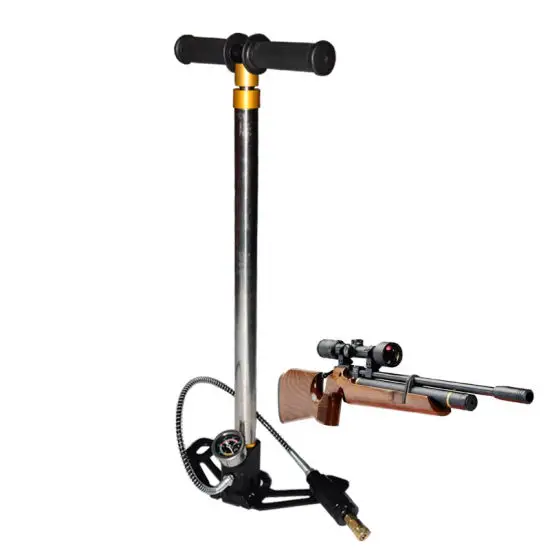
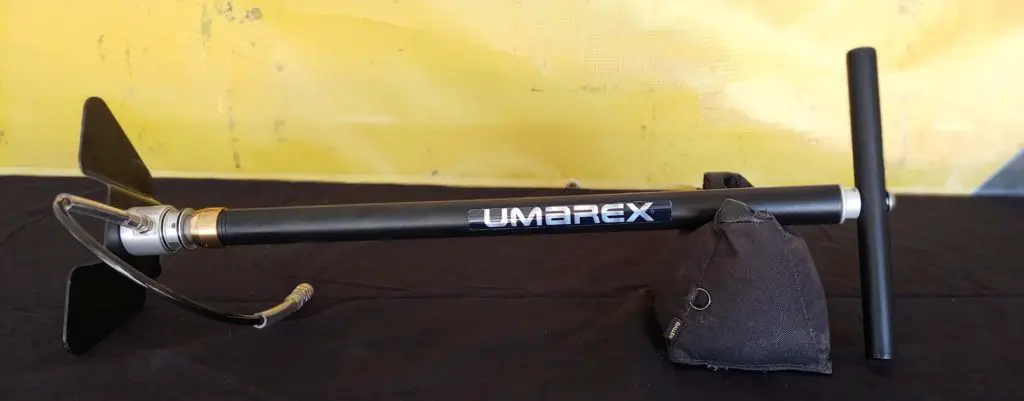
A hand pump is generally the same as a bicycle pump.
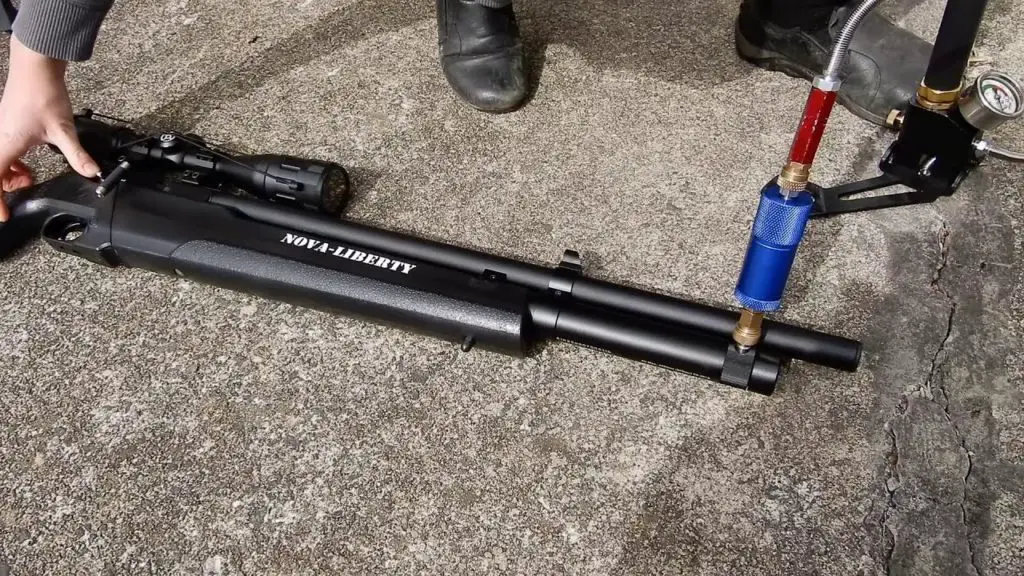
Instead of pumping bike tires, a hand pump will connect to the air reservoir of a PCP gun.
A modern hand pump can get to 3,000 psi (pounds per square inch).
When you start to pump, the beginning is easy and you can even pump with one hand to get to 1,000 psi.
However, you’ll most likely encounter more resistance once you hit 2,500 psi.
At this point, it’s best to leverage your body weight to pump the remainder.
It’s recommended that you do not pump for more than five minutes
And to let the pump cool down 15 minutes between pumping sessions to prevent overheating.
Pros
Cons
Small and easy to store
Doesn’t need any technical testing
Cheaper price compared to carbon fiber tanks
No need to refill so it doesn’t cost any money on the refilling process like air tank
Does not break easily, hand pump is generally durable and can last for years
Never run out of air power
Can be repaired and serviced easily
Hand pump is highly cost effective. You buy it once and there is little money to spend for its maintenance
Gives you ultimate control over the pressure level. You can pump the gun and stop at any pressure point that you want. This characteristic alone makes some air gun experts prefer a hand pump over air tanks for their PCP rifles
Takes some physical strength and effort to use the pump though it could be your work out for that day
Not fast in term of filling speed
Requires understanding of a hand pump to operate it successfully
Some pumps don’t have the moisture filter so they might put water into the gun and cause damage in the long run. This issue can be handled by using the pump in a climate controlled environment where the moisture level is low
Scuba tank
Scuba tanks are also called diving cylinders.
They are usually made of steel or aluminum and often have a pressure of 3,000 psi.
It’s required to perform hydrostatic testing on scuba tanks every five years.
Pros
Cons
Take very little effort to use
Fast filling speed: scuba tank will fill your PCP gun in seconds
Filled with filtered and dried air. Therefore, it won’t put any moisture into your gun and doesn’t cause any rusting problem.
Needs to be tested every 5 years
Costs money to refill
Takes significant space to store
Hard to stop exactly where you want because the pressure rises so fast.
Finding a place to refill a scuba tank could be a problem
Hard to fill completely to over 3000 psi PCP gun
Carbon fiber tank
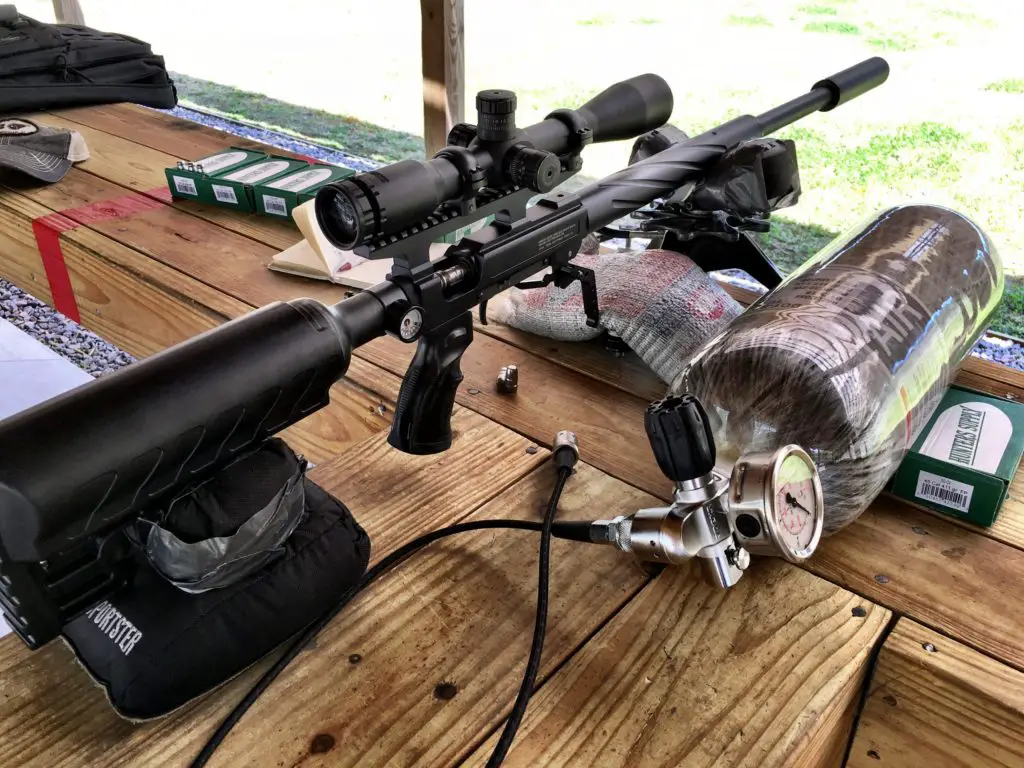
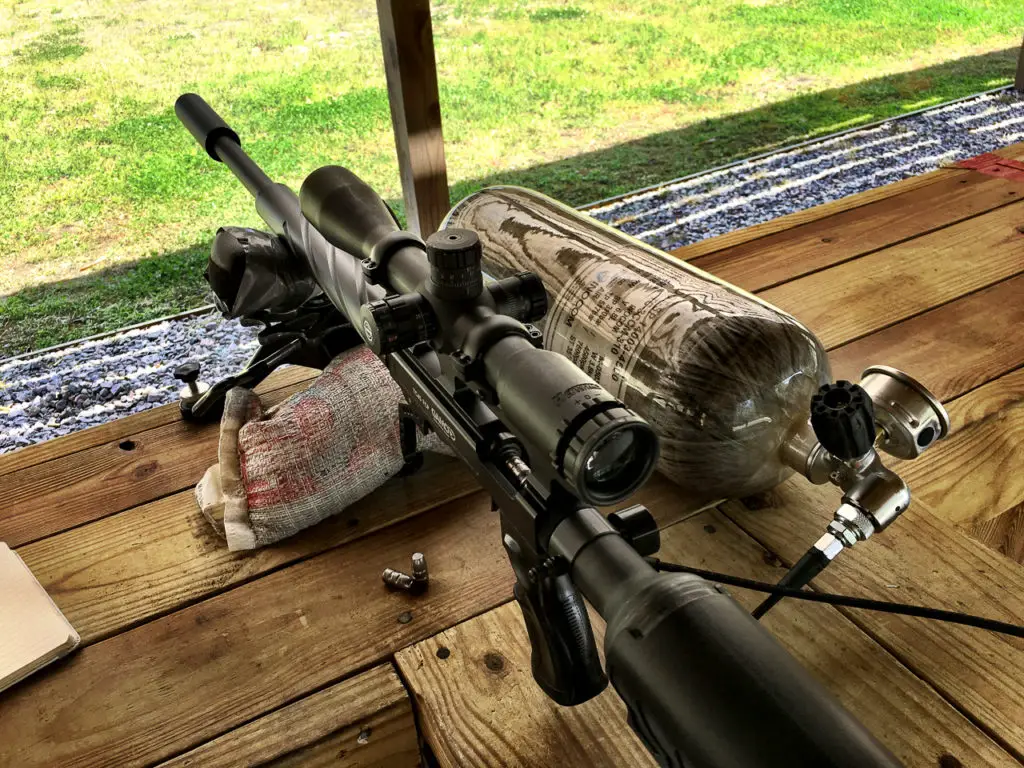
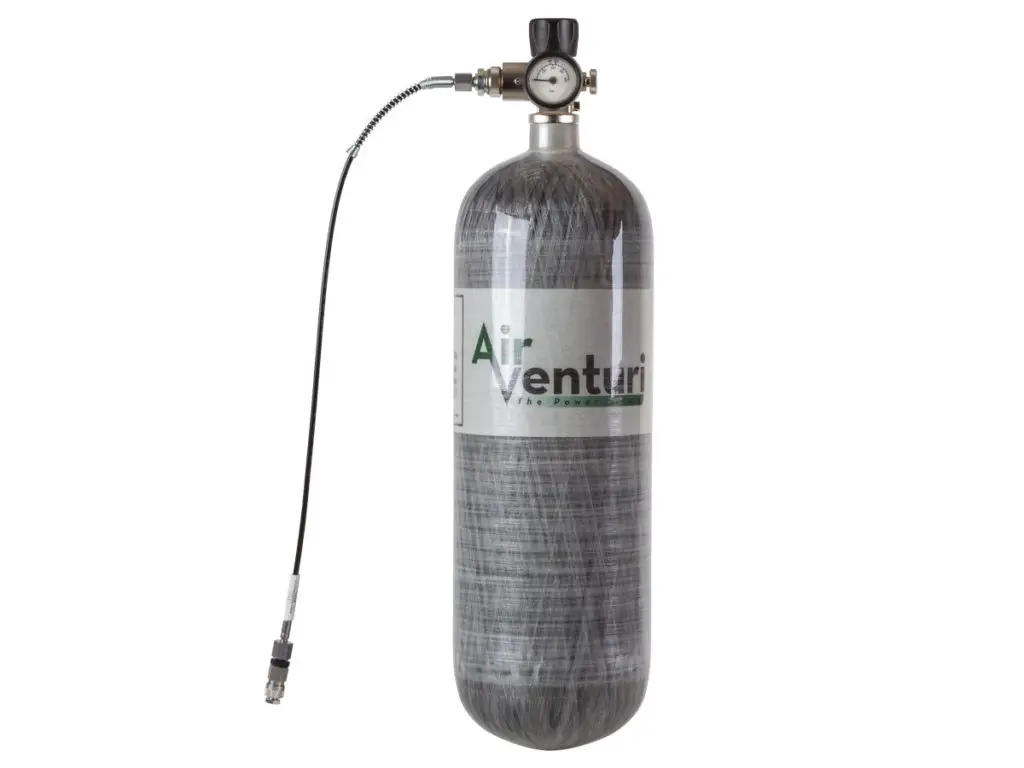
A carbon fiber tank has the same look as a scuba tank but it is much smaller.
It uses carbon fiber so the tank material is much lighter than a scuba tank.
A carbon fiber tank can get up to a pressure of 4,500 psi and gets more fills than both a hand pump and scuba tank.
Pros
Cons
Fills the gun in seconds
Available in different sizes
Compact and smaller than a diving cylinder
High pressure level, up to 4500 psi
Compact ,smaller and lighter than a scuba tank
Convenient to carry along to travel or to the shooting range
More expensive than a scuba tank or hand pump
Finding a place to refill the tank could be a problem
Costs money to refill the tank when it drops out in pressure
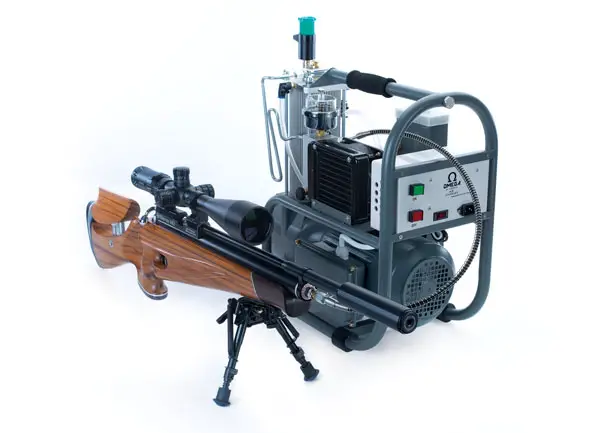
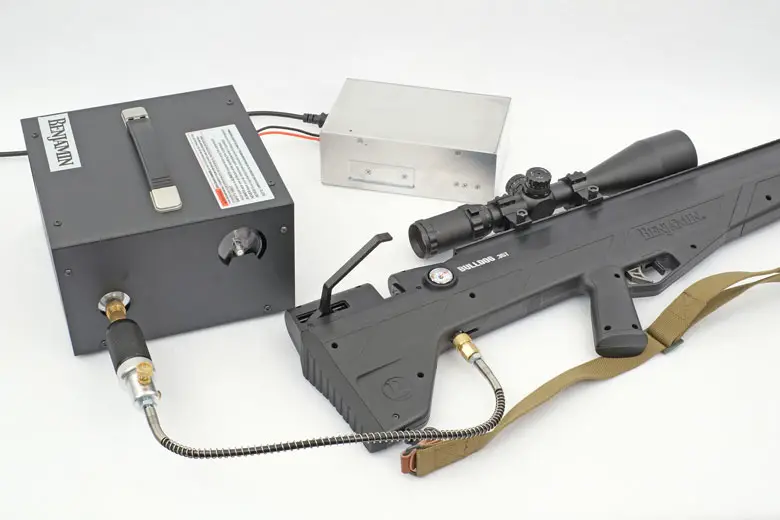
Air gun compressor
The final method is with a specialized 3,000+PSI compressor.
Disadvantages – they can be loud and expensive, although prices have come down a bit in the last couple of years.
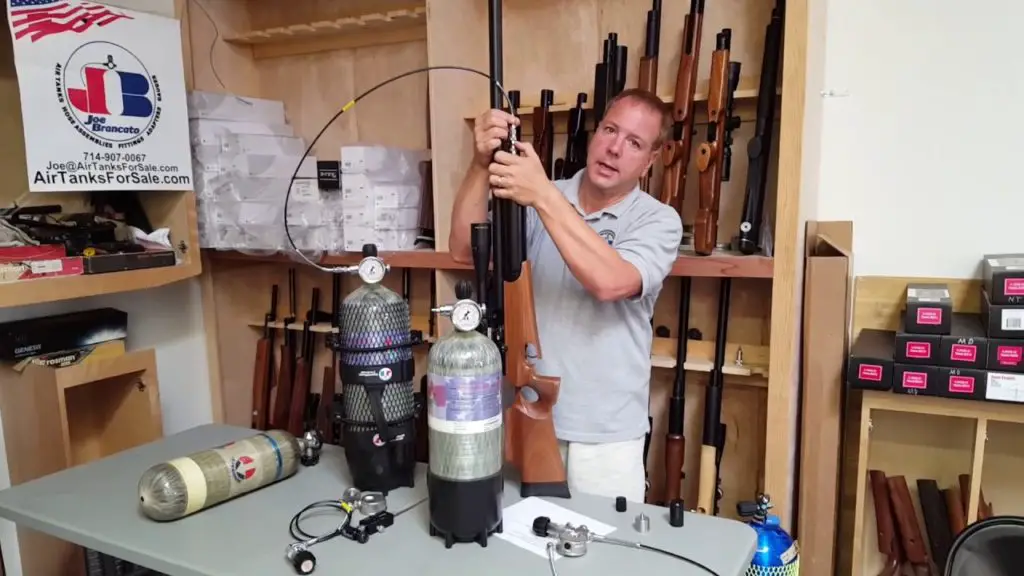
Tyler, a Pyramyd Air expert, shows us how to fill your PCP airgun using the most popular methods here:
Conclusion
Of the four air sources reviewed here, it’s easy to see how one air source may be more convenient than another.
So far, we have seen that a hand pump, scuba tank and carbon fiber tank each have their merits.
If you want a more effective method of filling your rifle, then you might want to consider a scuba tank or a carbon fiber tank.
Depending on the level of preparation you are able to provide, like if you are able to go into a store to fill your scuba or carbon fiber tank, then you might have to choose an option that is simpler.
If you’re willing to spend more money to save time on the fill-up, then choosing a scuba tank or carbon fiber tank will be best.
Make sure to research if there are scuba tank or carbon fiber tank refill locations in your area before purchasing either of these items.
If there aren’t, this may limit when you would be able to refill your tanks.
If you’d rather your air source be filled automatically or without manual effort, then a scuba tank or carbon fiber tank is a great way to go.
If you are a regular member of a local shooting range, a carbon fiber tank could be your best friend because of its lightweight and portability .
Therefore, you should think about your specific situation before making a buying decision.
If you are an occasional shooter and you don’t mind some extra work, then a hand pump will give you total control over the power of your PCP gun.
Headline: “What are They? Unraveling the Mystery Behind the Enigmatic Title”
In this thought-provoking headline, we embark on a captivating journey to explore the true nature of “They.” Delve into an intriguing investigation as we decipher the enigmatic title and uncover its hidden meanings. Brace yourself for a mind-expanding experience that challenges conventional understanding and offers new perspectives. Prepare to unravel the mystery and gain a profound understanding of what lies behind this captivating question – What are They?
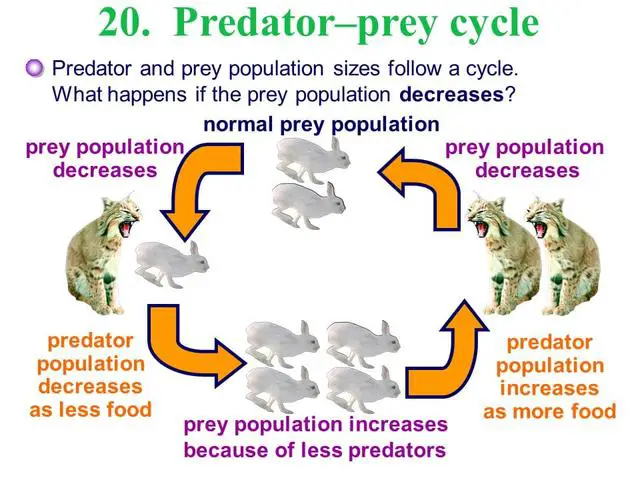
1. The Circle of Life: Understanding the Predators and Prey
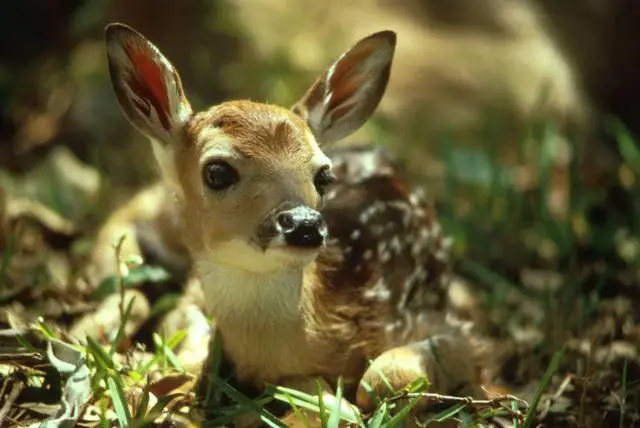
In this article, the author explores the concept of the circle of life and how it applies to various organisms, including deer. They emphasize that predators are a natural part of the ecosystem and play an important role in maintaining balance. Predators such as humans, bears, coyotes, wolves, bobcats, mountain lions, fishers, foxes, eagles, and alligators are known to hunt and kill deer. This relationship between predators and prey is essential for the survival of both species.
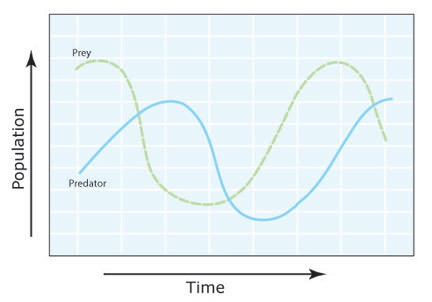
The author discusses coevolution and adaptation as key factors in predator-prey relationships. They explain that prey species have evolved ways to escape from predators, while predators have developed hunting techniques to catch their prey. This dynamic interaction between populations ensures the survival of both parties.
It is mentioned that predators cannot exist without prey and vice versa. Without prey, predators would eventually face extinction. However, prey species also benefit from predation as it reduces competition among them. Mother Nature diversifies her strategies to maintain stability in the predator-prey relationship.
The article addresses common misconceptions about predators and emphasizes that they are simply trying to make a living like any other organism. The author highlights the importance of understanding this complex relationship for a better appreciation of nature.
Overall, this section provides an introduction to the topic of predator-prey relationships and sets the stage for further exploration into specific predators such as coyotes and black bears.
2. Deer and Predators: Exploring the Complex Relationship
Predator-Prey Dynamics
Predators and prey have always had an uneasy but necessary relationship with each other. Predators, such as humans, bears, coyotes, wolves, bobcats, mountain lions, fishers, foxes, eagles, and alligators, play a crucial role in controlling the population of deer. This relationship is based on simple biology and ecology – deer are prey species and predators naturally kill and eat them. It is important to understand this complex dynamic in order to appreciate the balance of nature.
The Circle of Life
Deer are not innocent victims in a grand conspiracy; they are part of the circle of life. Just like any other organism on Earth, deer have their own purpose and place in the ecosystem. They serve as a food source for various predators who rely on them for survival. Understanding this natural process helps us appreciate the intricate web of life that exists in our environment.
Coevolution and Adaptation
Predators and prey do not evolve independently; they coevolve in response to each other’s actions. This means that as predators develop new hunting techniques or strategies, prey species adapt by developing better ways to escape or avoid predation. This constant interaction between predators and prey ensures that neither can gain the upper hand for long periods of time. It is an unbreakable bond that drives both populations to evolve for their survival.
Predator Exclusion
While predators play a vital role in maintaining ecological balance, there are instances where human intervention becomes necessary to protect certain prey species from extinction. In some cases, predator exclusion measures may be implemented to ensure the survival of endangered or vulnerable prey populations. However, it is important to consider the potential consequences of such interventions and the overall impact on the ecosystem.
The Burger of the Predator World
Deer, particularly white-tailed deer, are widely distributed and serve as a food source for numerous predators. Their abundance and variety make them comparable to a burger in the predator world. From tropical rainforests where jaguars and ocelots hunt them, to the eastern United States where wolves and mountain lions used to rely on them as their main food source, deer have always been an important part of the predator’s menu.
Coyotes: The Opportunistic Predators
Coyotes are fascinating predators that have adapted well to various habitats. They are opportunistic hunters, relying on their keen senses to search, stalk, pounce or rush their prey. While they do incorporate deer into their diet when they are abundant, removing coyotes from the predator equation does not necessarily result in higher fawn survival rates. Coyotes play a role in controlling deer populations and their presence is a natural part of the ecosystem.
Black Bears: Solitary Omnivores
Black bears have historically inhabited forested areas across North America. They are solitary animals that primarily feed on vegetation but also opportunistically prey on small mammals like mice and squirrels. Fawns are also part of their menu during June and July when they are abundant. While bears may occasionally take down a deer, they mainly rely on other food sources such as berries and birdfeeders.
In summary, the relationship between predators and deer is complex yet essential for maintaining ecological balance. Predators play a crucial role in controlling prey populations while prey species adapt to survive predation pressure. It is important to understand this dynamic relationship in order to appreciate the intricate workings of nature’s circle of life.
3. The Role of Predators in Maintaining Ecosystem Balance
Predators play a crucial role in maintaining ecosystem balance. They are an essential part of the food chain and help regulate populations of prey species. Without predators, prey populations can explode, leading to overgrazing and depletion of resources. This can have negative effects on the overall health and biodiversity of an ecosystem.
Predators help control the population size of prey species by hunting and consuming them. This helps prevent overpopulation and ensures that resources are available for other species in the ecosystem. By preying on weak or sick individuals, predators also contribute to natural selection, ensuring that only the fittest individuals survive and reproduce.
In addition to regulating prey populations, predators also influence the behavior and distribution of their prey. Prey species develop strategies to avoid predation, such as camouflage, defensive behaviors, or changing their habitat preferences. This leads to a more diverse range of adaptations within prey populations.
Predators themselves are also subject to natural selection pressures from their prey. As prey evolve ways to evade predation, predators must adapt their hunting techniques or seek alternative food sources. This dynamic relationship between predator and prey drives coevolution, where both species continuously evolve in response to each other’s actions.
Overall, predators play a vital role in maintaining the balance and stability of ecosystems. They help control population sizes, promote biodiversity through natural selection, and drive coevolutionary processes. Understanding and appreciating this complex relationship is essential for effective conservation and management of wildlife populations.
4. Predator-Prey Dynamics: A Closer Look at Nature’s Economics
In the complex world of predator-prey dynamics, predators and prey have a necessary but uneasy relationship with each other. Predators cannot exist without prey, and prey may not exist without predators. This balance is crucial for the survival of both populations.
Predators, whether they are single-celled organisms, two-legged humans, or four-legged animals like bears and coyotes, have always hunted and killed deer. Deer, being a prey species, are naturally targeted by these predators. It is a simple fact of biology and ecology that predators kill and eat prey.
While it may be tempting to view deer as innocent victims in some grand conspiracy, it is important to understand that this relationship between predators and prey is essential for maintaining biodiversity and stability in ecosystems. Without predation, some prey species would outcompete others for resources, leading to an imbalance in the ecosystem.
Mother Nature has developed strategies to prevent such imbalances. She diversifies by providing refuge areas for prey species, reducing the efficiency of predators through various means, and increasing investments in alternative prey sources. This results in a dynamic equilibrium where both predator and prey populations can coexist.
Coevolution plays a significant role in this predator-prey relationship. As predators evolve better hunting techniques and strategies, their prey also adapt by developing ways to escape or avoid capture. This constant interaction drives both populations to evolve in response to each other’s changes for survival.
Understanding the complexities of predation is crucial for appreciating the delicate balance of nature. Oversimplifying this relationship would be akin to taking a day off from learning about the intricacies of ecosystems – something we should not do if we want to truly comprehend the circle of life.
In Pennsylvania, where black bears are found throughout all 67 counties, they play an active role as predators in the lives of white-tailed deer. While bears primarily rely on vegetation for their diet, they opportunistically include fawns in their menu during the months of June and July when they are abundant. Bears, like coyotes, are part of the natural predator-prey dynamics that have shaped ecosystems for centuries.
The survival and persistence of predators like coyotes and black bears despite human persecution is a testament to their adaptability and resilience. These animals have learned to coexist with humans even as their habitats have diminished.
In conclusion, the predator-prey relationship is a vital aspect of nature’s economics. Predators and prey rely on each other for survival, and this dynamic equilibrium ensures the continuation of both populations. Understanding this complex relationship allows us to appreciate the intricate balance of ecosystems and the role that predators play in shaping them.
5. Unraveling the Mystery of Predator-Prey Coevolution
In this section, the author delves into the concept of predator-prey coevolution and its importance in maintaining a balance in nature. They explain that predators and prey have a necessary relationship with each other, as predators cannot exist without prey and vice versa. The author emphasizes that predation is a natural process and not a conspiracy against deer or any other prey species.
The author then introduces the idea of coevolution, which refers to the simultaneous evolution of two interacting species. In this case, predators and prey evolve in response to each other’s adaptations for survival. This constant interaction ensures that neither predator nor prey gains an upper hand for an extended period of time, leading to a dynamic equilibrium that allows both species to survive.
The author acknowledges that understanding predator-prey relationships can be complex and warns against oversimplifying the concept. They compare it to an economics lecture, stating that staying awake for it is one thing but truly comprehending it is another.
The section concludes by highlighting the importance of diversity in maintaining stability in predator-prey relationships. Mother Nature employs various strategies such as refuge acquisitions for prey, lower returns on predator efficiency, and increased investments through alternative prey sources to prevent an economic catastrophe and ensure the survival of both predator and prey populations.
Overall, this section explores the intricate dynamics between predators and prey, emphasizing their interdependence and how coevolution plays a crucial role in their continued existence.
6. The Burger of the Predator World: The White-Tailed Deer and its Predators
The white-tailed deer is a widely distributed member of the cervid family, found in various habitats across North and South America. They are often referred to as the “burger” of the predator world due to their popularity among carnivores. Predators such as jaguars, ocelots, and jaguarondis in tropical rainforests prey on these familiar deer species. In the eastern United States, historical accounts indicate that wolves and mountain lions were the main predators of deer before European colonization. However, these iconic predators have since vanished from the landscape.
Despite the absence of wolves and mountain lions, modern-day predators still play an active role in the lives of white-tailed deer. Coyotes, bears, bobcats, and humans are among those that continue to hunt deer as part of their daily survival. Each predator has its own size, hunting techniques, and prey selection preferences when it comes to targeting deer.
Coyotes, derived from the Aztec word “coytl,” meaning the god of music, dance, and song, are fascinating creatures. They may be smaller than a neighbor’s German shepherd but have a reputation for being formidable hunters. Coyotes can adapt to various habitats but thrive in areas with diverse vegetation cover. Their diet includes mice, rabbits, squirrels, snakes, bugs, fruit, carrion (dead animals), and occasionally young deer less than three months old.
Black bears also pose a threat to white-tailed deer populations. Historically found throughout North America’s forested regions from Alaska to Mexico, black bear habitat has become increasingly scarce due to human development. Pennsylvania is located within their range and sightings are possible in all 67 counties of the state. Black bears primarily consume vegetation but will opportunistically target small mammals like mice or groundhogs, colonial insects, and even fawns during the months of June and July.
While predators like coyotes and black bears may prey on white-tailed deer, it is important to note that deer populations have remained abundant historically. Deer have evolved alongside these predators and have developed survival strategies to ensure their species’ continuation. Coyotes, for example, incorporate deer into their diet when they are most abundant in the summer months. Removing coyotes from the predator equation does not necessarily increase fawn survival rates unless alternative prey options are scarce.
In conclusion, white-tailed deer are a popular food source for various predators in different regions. Predators such as coyotes and black bears play an essential role in maintaining a dynamic equilibrium in nature’s ecosystem. The relationship between predators and prey is complex but necessary for the survival of both species. Understanding this intricate balance helps us appreciate the diverse interactions within the “circle of whitetail life.”
In conclusion, “What are they?” is a thought-provoking question that encourages us to explore the diverse aspects of our surroundings. By seeking answers and understanding the world around us, we can gain deeper insights into various phenomena, entities, and concepts. Embracing curiosity and open-mindedness enables us to appreciate the rich tapestry of life’s wonders.












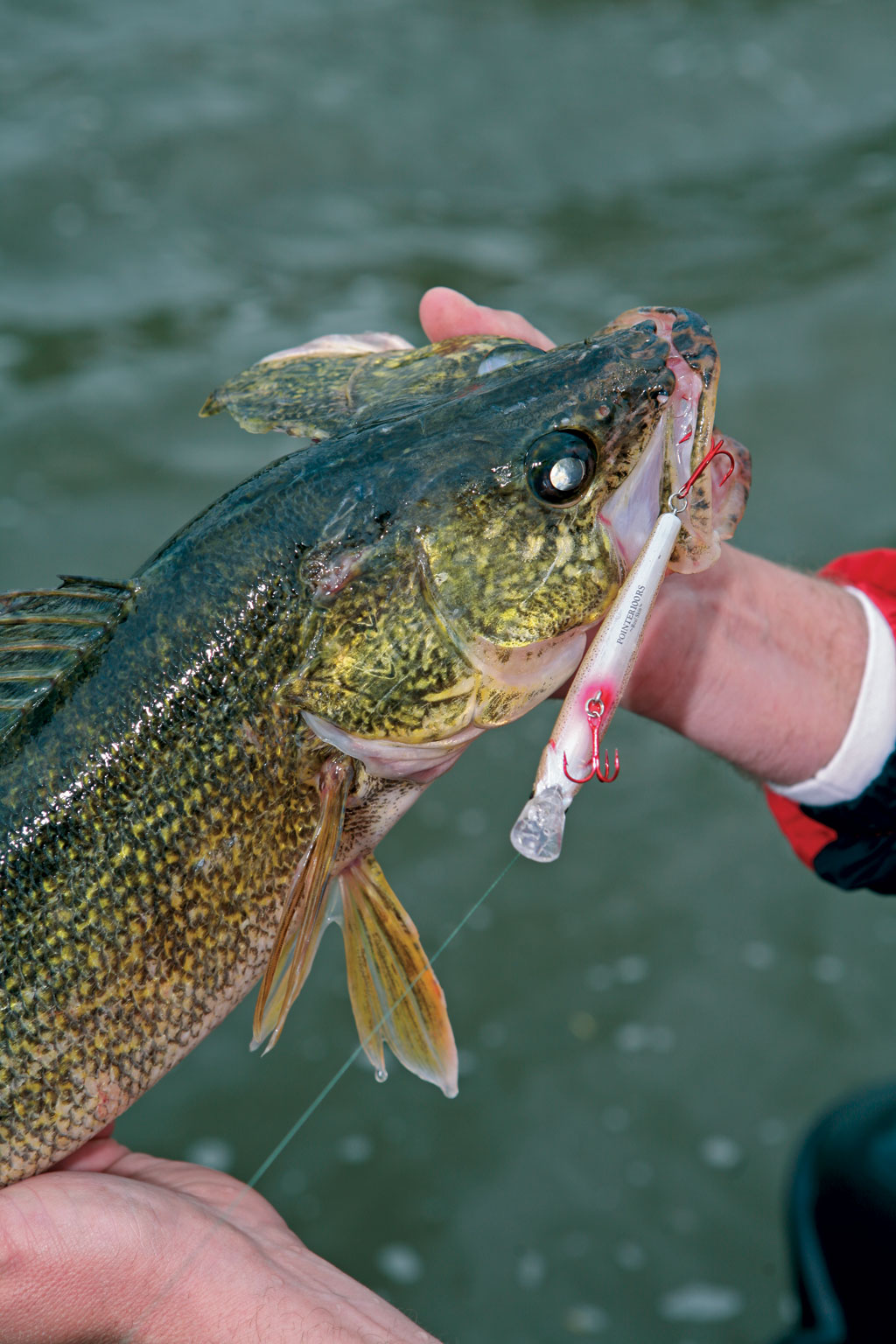


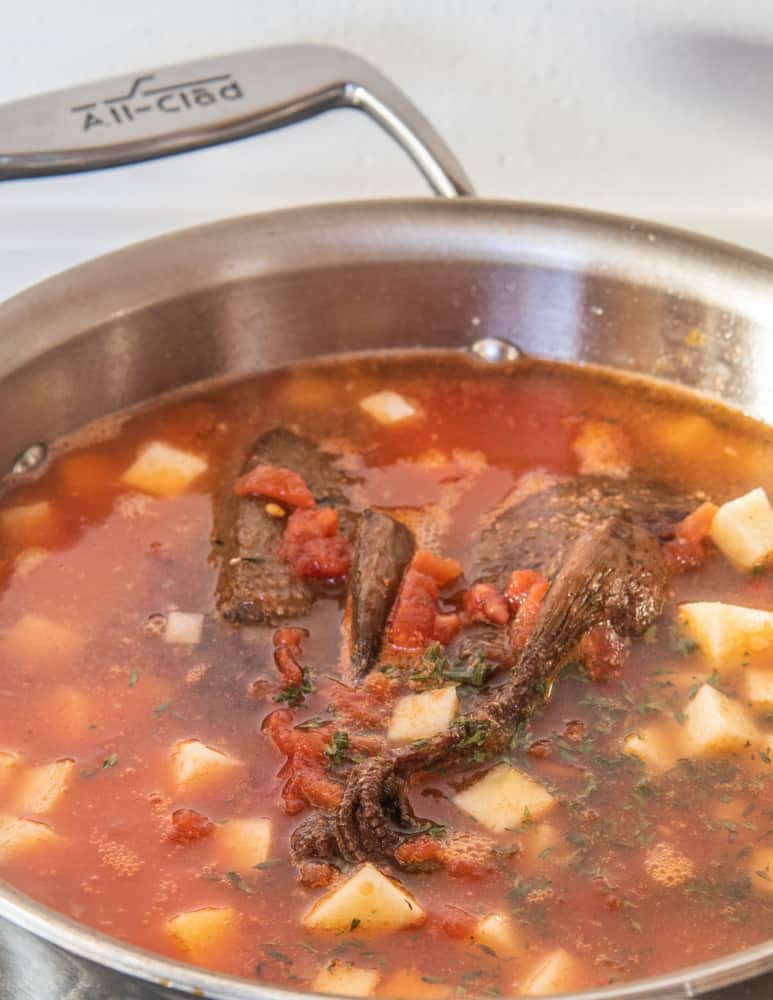
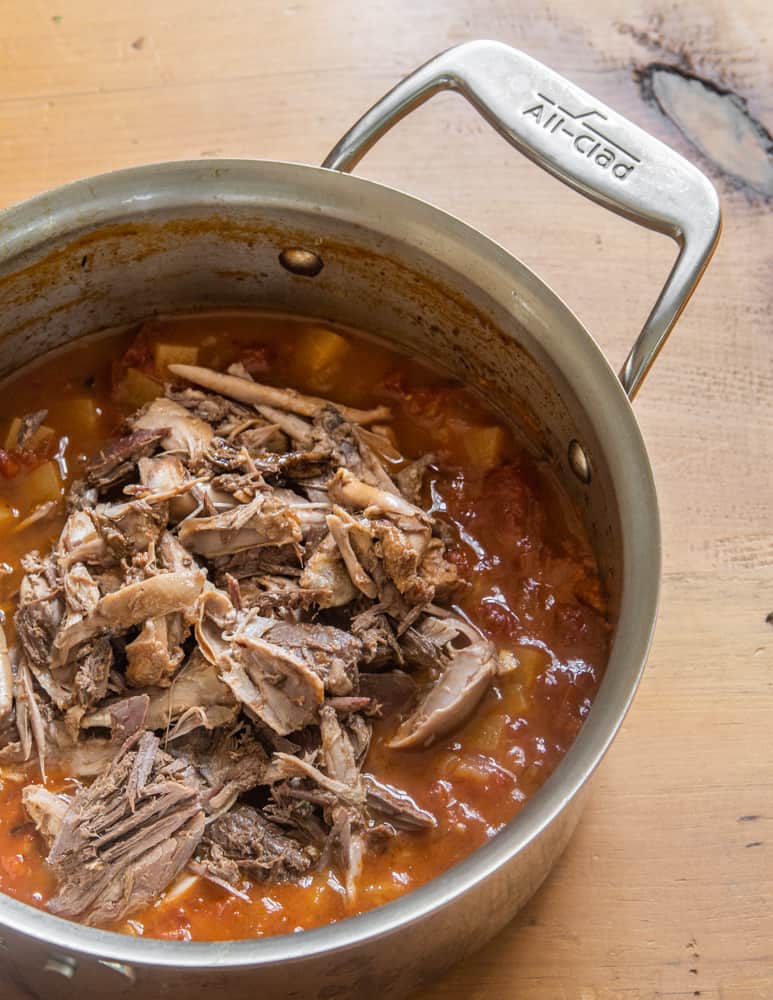

 Weakness: In some instances (10% of the time), turkeys feared the decoys and wouldn’t come in close when using the aggressive head.
 The Flextone Thunder Creeper Turkey Decoy has the gobbler-attracting realism of a full-body decoy in a front-profile, easy-to-pack design. Blow-molded, one-piece construction has true-to-life painted feathers and the lifelike posture of a smaller-than-average strutting gobbler to challenge without being intimidating. Tail removes for easy transport. Includes carbon-fiber stake.
 Strengths: Price point, mobility

 Strengths: Most realistic, durable, and transportable for the price