Home Blog Page 165

Ground Zero: Kentucky’s Record Bucks

0
Ground Zero: Kentucky's Record Bucks

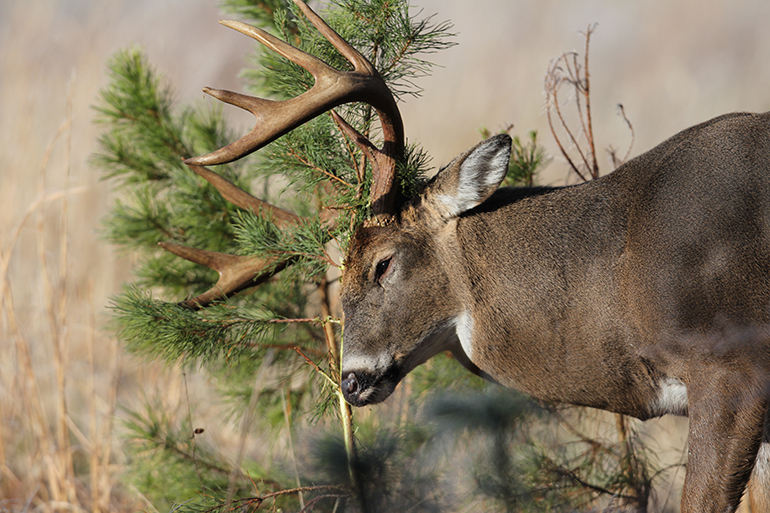
Kentucky is one of the top states in the country for Boone & Crockett bucks. Here are three best-bet counties for a trophy.

iv>

Check out this video to learn how to manage your small track of land to bag your trophy buck.

ACCESS OPTION 1

Public land is certainly an option and there have been numerous trophy bucks taken off public land in Kentucky. One place to consider is Rockcastle River Wildlife Management Area (WMA) because the KDFWR just acquired it in 2016. Prior to that, it was private land and had developed a fairly abundant deer population because the former owners, and perhaps even adjacent property owners, either did not allow it to be hunted at all or permitted only “light” hunting. So, in theory at least, there could still be an older-than-average antlered bucks on the site. Also, since much of the area is reclaimed surface-mined coal land and because at least one or more adjacent landowners grow wildlife food plots on their property, the supply of herbaceous or early successional deer forage in the area should be quite high.

Other options include Daniel Boone National Forest property in Pulaski County, some of which adjoins Rockcastle River WMA, and portions of Lake Cumberland WMA that lie in Pulaski and Wayne counties.

Yancy suggested, “Those interested in deer hunting on Lake Cumberland WMA should consider using a boat to get on portions of the area that are not accessible via public roads; just be sure to inquire in advance with the Army Corps of Engineers’ Lake Manager’s Office in Somerset, Kentucky to determine whether potential hunting locations will be boat-accessible at winter pool lake levels.”

ACCESS OPTION 2

Leasing has dramatically changed the landscape of hunting across the country. Although personally, I wish it had never come to the point it is now, the reality is that if one wants to hunt quality private land, the options are limited. It typically must be owned either by the hunter, a relative or close friend or it must be leased. The days of knocking on a stranger’s door and getting permission to hunt are, for the most part, a thing of the past.

There are lots of options for finding a lease, however. Individuals with property to lease often advertise in local want ad papers, on Facebook or sometimes Craigslist. Hunt clubs do the same thing.

Hunt clubs are generally comprised of several members who divide the cost of leasing land, thereby making it more affordable to rent large tracts of quality property. When a member drops out, these clubs often advertise to find a replacement. If you to decide to join a hunt club, be prepared to adhere to a set of custom hunt rules for the club.

Many realtors are now offering property for lease. Some of these are listed as Whitetail Properties or Mossy Oak Properties, while others are simply run under the realtor name. Many specialized hunt leasing companies are also out there, and a simple search on the Internet will pop up many results.

ACCESS OPTION 3

A third option is to employ the services of an outfitter. This is often a bit pricey, but if a hunter wants to access a certain section of the state and to have an opportunity to harvest a mature whitetail, it may well be worth shelling out a few bucks. And with all the popularity of trophy hunting in Kentucky, more and more outfitters are springing up around the state every year.

Searching for an outfitter actually servicing the three counties spotlighted here only resulted in one hit, although there may be others this writer did not find. Whitetail Heaven Outfitters hunts Pulaski County and is owned by Tevis McCauley. They also hunt other Kentucky counties as well as in Ohio and Indiana.

Whitetail Heaven has been hunting trophy bucks for many years and their properties are managed extensively. Along with prime natural habitats, they use food plots, minerals and supplemental feedings to enhance the quality of the deer population. The average harvested buck with their service is right at 150 inches and the average size typically goes up each year.

Guided whitetail hunts there and at most other Kentucky outfitters typically start at about $2,000 and goes up from there. There is a 130-inch minimum harvest size at Whitetail Heaven and some farms have a 140- or 150-inch minimum. Contact them at (800) 689-6619 or (859) 509-2704, or go to whitetailheavenoutfitters.com.

Spinnerbait Walleyes

0
Spinnerbait Walleyes
Photo Jeff Simpson

Photo Jeff Simpson

Before his untimely death, Gregg Meyer was a cagey multispecies angler who often used spinnerbaits to catch walleyes. “Once the spawn is over, walleyes are all about feeding,” he noted. “They move shallow into warm water where the food chain is in high gear. Banks and shallow flats are loaded with minnows, small panfish — all sorts of prey. Anglers usually use crankbaits and jigs tipped with bait or artificials to work that zone, but at times a spinnerbait can be more effective.

“Since spinnerbaits are snag-resistant, they work better than just about anything else around standing timber, flooded bushes, and brush,” he said. “Walleyes use that cover when feeding on panfish, shad, and minnows. Rocky shores can be good, too, especially when a modest wind is blowing in. I also fish the tops of shallow flats and along drop-offs where the flats breaks into deeper water. Preyfish must be present to get walleyes hunting shallow. In spring and early summer, some days they’re shallow and some days they’re not. You need to experiment, have faith, and not give up on this technique. Like anything else, it doesn’t work all the time.”

Spinnerbait Selection: > For walleyes, select small to medium-size spinnerbaits with ball- bearing swivels, tapered wire, and high-quality hooks and skirts.

Rigging

Meyer uses his bass tackle for spinnerbaiting — a medium-heavy baitcasting outfit 6 ½ feet long and a reel spooled with 10- or 12-pound mono or braid of similar diameter. “If you don’t have baitcasters, your kid’s spincast reel will do,” he says. “You’re fishing shallow, but you still need to be aware of structural elements, so you need sonar, unless you’re familiar with the lake’s layout. The unit also helps pinpoint baitfish when you’re deeper than 5 feet or so.”

Meyer uses spinnerbaits from 1/8- to 3/8-ounce. He wants a true-running bait with good components and uses various models from Stanley Jigs of Huntington, Texas. A tapered-wire shaft enhances vibration that may be a key component of the spinnerbait’s attraction. The Stanley Salty Boss is hard to beat.

“Some days, blade color matters,” he reported. “I switch among silver, gold, white, chartreuse, and key-lime-green blades. For the skirt, baitfish colors work fine in clearer water — silvers, golds, smoke-sparkle, and so on. In murkier water, chartreuse and white do well.”

Meyer says that top-quality polarized sunglasses are vital, as you often are sight-fishing. He favors those that block out light from the sides, such as the Wiley X models with a foam insert that seals the glasses around your face “Look carefully and you can spot walleyes in water as shallow as 6 inches,” he says. “Keep your distance, approach cautiously, and you can catch those fish.

Presentation

Meyer uses a variety of retrieves to trigger walleyes. “When they’re holding shallow and tight to the bank, cast right onto the edge of the shore. It’s common to have fish bite in the first five feet of the retrieve. In deeper water, make the retrieve smooth and slow, so the spinnerbait moves along near bottom. If you’re fishing a sloping area, slow down as the water deepens, to keep the spinnerbait down — what the bass guys call ‘slow-rolling.'”

Meyer uses the lure’s snag resistance to saturate shallow cover, easing it among boulders, weed clumps, brush, and stumps. Make it bump the cover on occasion, as that momentary change in direction can trigger bites from less active fish. He’s also found that a spinnerbait works well when retrieved parallel to a rocky bluff or the riprap face of a dam or causeway. Once you figure the prime depth, you repeat the presentation.

At times it pays to experiment with more erratic action. “Pause the bait and let it flutter,” he recommended. “The blade on a good spinnerbait lets it helicopter down, and that can be deadly on walleyes.”

Bead teaser: Greg Meyer sometimes would string beads and a tiny spinner ahead of his spinnerbait, simulating a fish in pursuit.

Tips for Success

A spinnerbait is essentially a simple lure and at times there’s no wrong way to work it. Like other lures, it doesn’t always work, but when it’s on, it can load the boat with big walleyes. Meyer has a few more tips to help get you started.

Bait: “At times, it pays to tip the spinnerbait with a nightcrawler or minnow. There’s something about the look, smell, and taste of real food. Make sure the lure continues to run perfectly straight when bait is attached. Critters often turn on the hook and ruin the presentation. So I don’t use bait unless it seems necessary.”

Short strikes: “If you get bumped and don’t hook up, try a trailer or stinger hook to nail short strikers. Some days, the stinger gets most of the fish. But it can be a pain around brush and grass, so I don’t use one until I start missing fish.”

Other species: “It’s common to catch both bass and walleyes as you move along a bank — pike as well. But if you start catching nothing but bass, it’s time to move, unless you’re just fishing for fun. I love bass, too, and it’s hard to abandon a fast bite on anything.”

Tackle care: “You’re working through cover, and the line takes a beating, even heavy mono or braid. Moreover, walleyes really slam these things. Check the line and retie to keep from eventually breaking off a lunker. After catching some fish, the lure may get out of balance. Bend the overheard wire back into shape so it runs true. Sharpen the hook, too, and replace skirts when they get threadbare.”

Blinking blade: Customize blades with a magic marker to create an erratic flicker.

Deep Tactics

Spinnerbaits are at their finest around shallow cover and on shallow banks in spring and early summer, but they can also be used deep. Again, the presence of cover often is the key. Across much of the West, when reservoirs rise they flood deeper trees and walleyes often suspend in the tops of those trees. Slow-trolling one-ounce spinnerbaits on a long line through the tops of the trees can be deadly. Anglers also use leadcore line to get spinnerbaits down.

Meyer has also had success with a teaser ahead of a trolled spinnerbait. “Before you tie on, string on a couple beads — -my favorite color, key lime — then a clevis with a tiny Colorado blade, then four more beads. It looks like multiple baitfish being chased by a smaller predatory fish,” he says.

Spinnerbaits use flash and vibration to sell the image of vulnerable prey to a predator. Meyer: “As a spinner turns, it produces a steady flash, since both sides are gold or silver or whatever. But when you watch a school of baitfish, they don’t produce a regular flash; it’s far more random. At times an intermittent flash or flicker is a better trigger than a constant flash. To produce intermittent flash, use a magic marker to blacken the concave side of the blade.”

Some anglers in the West have been using spinnerbaits for many years, but it generally hasn’t caught on elsewhere. Don’t let tradition stand in the way of success. In the right situations, walleyes eat spinnerbaits just as well as they do crankbaits and jigs.

*The late Gregg Meyer, Wilsonville, Nebraska, had a career in law enforcement, in addition to being an avid and innovative angler. This was his last of several contributions to In-Fisherman.

What Rifle Does Steven Rinella Shoot?

0

While the MeatEater crew may not publish directly a list of their specific equipment, with a little patience and some research we have identified some of the rifles that Steve Rinella does in fact shoot. These rifles are all similar but each are unique. Each of them is a high quality option, and represents a variety of budgets.

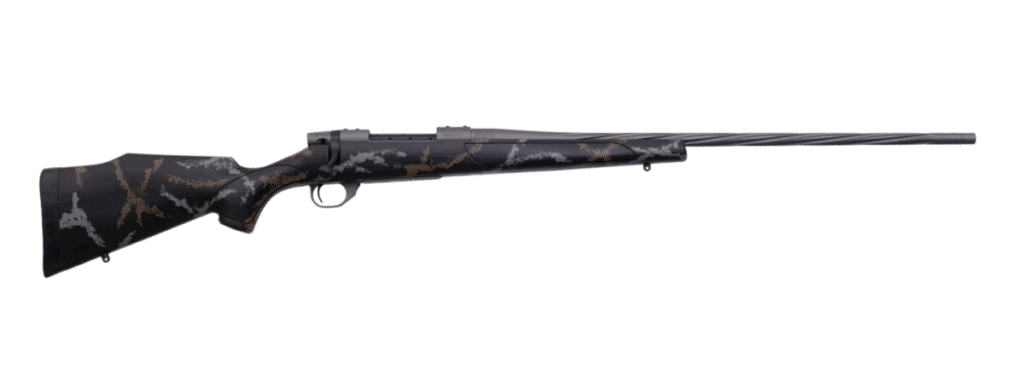
Steven Rinella shoots a variety of rifle models but always chooses left-hand actions and currently prefers the Weatherby Mark V Meateater Edition Rifle that he helped design. He has also been seen using a Savage Arms 110 rifle, a Custom Carolina Rifle, a custom built Weaver Rifle, and a CZ Model 452 for small game.

A similarity between all these rifles is all are left handed actions. Below we will talk about each one of these rifles. Keep reading to find out more about these rifles.

Weatherby Mark V Meateater Edition

If you were to find Steve Rinella out hunting today, there is a good chance Steve would have his custom Weatherby Mark V MeatEater edition rifle in tow. This rifle was designed by Steve and is exclusively available in a left handed action. The rifle has the legendary Mark V action, which is one of the strongest bolt actions in the world thanks to its 9 locking lugs.

It also boasts an amazing 54 degree bolt lift, providing plenty of room for the largest optics. Like all Mark V rifles, the MeatEater edition has a SUB-MOA accuracy guarantee, a custom Trigger Tech Trigger and threaded barrel. The rifle comes with the with Weatherby’s Accubrake ST installed on the threaded barrel to reduce felt recoil.

The custom features of this edition include a unique #2 contour barrel with spiral fluting. The fluting allows the use of a heavier barrel contour, which helps with accuracy, but keeps the rifle weight down for those long spot and stalk hunts Steve is known for. The fluting also helps keep the barrel cooler between shots, another great way to increase the shot to shot accuracy of the rifle. All the metal of the rifle is coated with Cerakote to withstand any weather. The color scheme was pick by Steve, and is a combination of tungsten and black.

This custom rifle is paired with a hand laid, fiberglass stock. The stock is black with custom brown and gray accents. The stock is a Monte Carlo style for a solid cheek weld, and classic look. Currently this edition is only available in three calibers: .257 Weatherby Magnum, .300 Weatherby Mangrum, and 6.5-300 Weatherby magnum. I wasn’t able to determine in my research which of these calibers Steve has personally selected, but if I had to take a guess I would put my money on the .300 Weatherby magnum, with the 6.5-300 Weatherby magnum as a second choice.

Currently the rifle is listed with an MSRP of $2099.00 dollars on the Weatherby website. While the cost of this rifle is high, a full custom rifle easily exceeds this price. Should you wish to have something similar without the high cost, consider the MeatEater Edition Weatherby Vanguard, a full featured rifle for less than half the cost of the Mark V.

Savage Arms Rifle

Prior to his partnership with Weatherby, Steve was partnered with Savage Arms. This partnership comes as no surprise, Savage makes fine hunting rifles and Savage has a long history of providing left handed rifles, something Steve prefers as a left handed shooter. While my research didn’t turn up a lot of specifics regarding the specific rifle Steve was using from Savage, a few educated guess can help us have an idea of what he was using.

Steve said of his savage rifle, in a video on rifle fit, that he liked his Savage rifle because for an off the shelf rifle it fit him great. Paired with Talley scope mounts and a Vortex Razor scope Steve felt like he never had trouble finding his target even when shooting from very unconventional positions.

After watching some video and looking at photos of Steve using his Savage rifle I determined a few details. The rifle was most likely from the Savage 110 family of rifles. Steve’s specific rifle appeared to have stainless steel barrel with a very heavy contour. The stock appeared to be the classic Savage Accustock. Steve did confirm in a video that he uses Talley scope mounts.

If I were to venture a guess on his specific caliber for this rifle, I would lean towards 7mm Remington magnum or .300 Winchester magnum, as Steve has made mention on the MeatEater blog about preferring cartridges that are capable for taking cleanly all the north American game animals and those two calibers are mention specifically as good choices. Prices on the Savage 110 varies from low cost to high-end, allowing a wide variety of budgets the ability to have a quality hunting rifle.

Custom Carolina Rifle

Prior to his partnership with Savage Arms, Steve could often be seen hunting with his Custom Carolina Rifle (CCR for short) in the field. This rifle made by Carolina Custom Rifles was, and likely still is, one of Steve’s favorite rifles. His chambering of choice for this rifle was the 7mm Remington Magnum.

Custom Carolina Rifles builds solid, accurate, high end rifles. When you choose to hunt with a Custom Carolina Rifle, this company will become your partner, including you in all the decision making to make sure your rifle is exactly what you need it to be. While I wasn’t able to track down the exact specs of Steve’s CCR rifle, I can tell you that CCR uses only the best actions, barrels and stocks. Some of the parts are from Lilja, or Hart custom barrels. Actions from Stiller Predator are blueprinted and paired with stock options from companies like H-S Precision, McMillan, or Manners. Buyers can expect triggers by Timney or Jewell triggers, according to the CCR rifles website.

A quick look into the MeatEater social media posts and photos and you can tell that his CCR has a custom fluted barrel, paired with a solid and great looking camouflaged stock. One of the points that Steve makes about his experience with CCR rifles is that they not only built the rifle based on the demands of his hunting schedule, but CCR service also includes pairing the rifle with the perfect Vortex optic and provided assistance establishing a great custom hand load for supreme accuracy.

Rifles from CCR begin at $4795.00, no small sum of money, however this expense provides not only an amazing rifle guaranteed to shoot 1/2 MOA or less, but includes amazing customer service and additional resources and help beyond just the rifle.

Weaver Custom Rifle

A deep dive into Steve’s twitter revealed another great custom built rifle from Weaver Custom Rifle based out of Peyton, CO. Chambered in .270 WSM this rifle was described as a lightweight mountain rifle. Using a left handed Winchester model 70 action, Steve paired it with a 4-16 x 50mm Vortex optic. The stock is a Synthetic HT stock, color is tan with black webbing. Weaver Rifles included a custom floor plate engraved with the MeatEater Logo.

Should one wish to build a Weaver custom rifle, you can expect to spend $3000.00 dollars or more. They have tons of pictures of the rifles they have built available to view on their website. I recommend checking them out if you are in the market for a custom rifle.

One of the most unique parts of this rifle is the caliber selected. .270 WSM is a great flat shooting cartridge with a short action, perfect for a lightweight mountain rifle that doesn’t have punishing recoil. Finding the ammunition on the shelf might be trickier that other calibers, but this is great choice for big horn sheep and mountain goat hunting.

CZ 452

If you spend a little time looking through Steve Rinella’s social media, you might find a picture of him hunting squirrels. His pictures often show him shooting at his quarry from a variety of unconventional positions, but if your looking at what rifle he is shooting, high chance it is his left handed CZ 452. I couldn’t determine for sure the caliber for Steve’s rifle, but if I were to guess I would bet it is a .22 LR.

The CZ model 452 is a classic bolt action rimfire rifle. Available in all the classic rimfire cartridges, what likely made it the choice of Steve Rinella was that it was available with a left handed action. Should you wish to obtain one of these high quality rifles, you’ll either need to find the model 452 second hand or move to the updated model 457. MSRP on the 457 is around $475.00 or more depending on configuration.

Bow Review: Hoyt Ventum 30

0
Bow Review: Hoyt Ventum 30

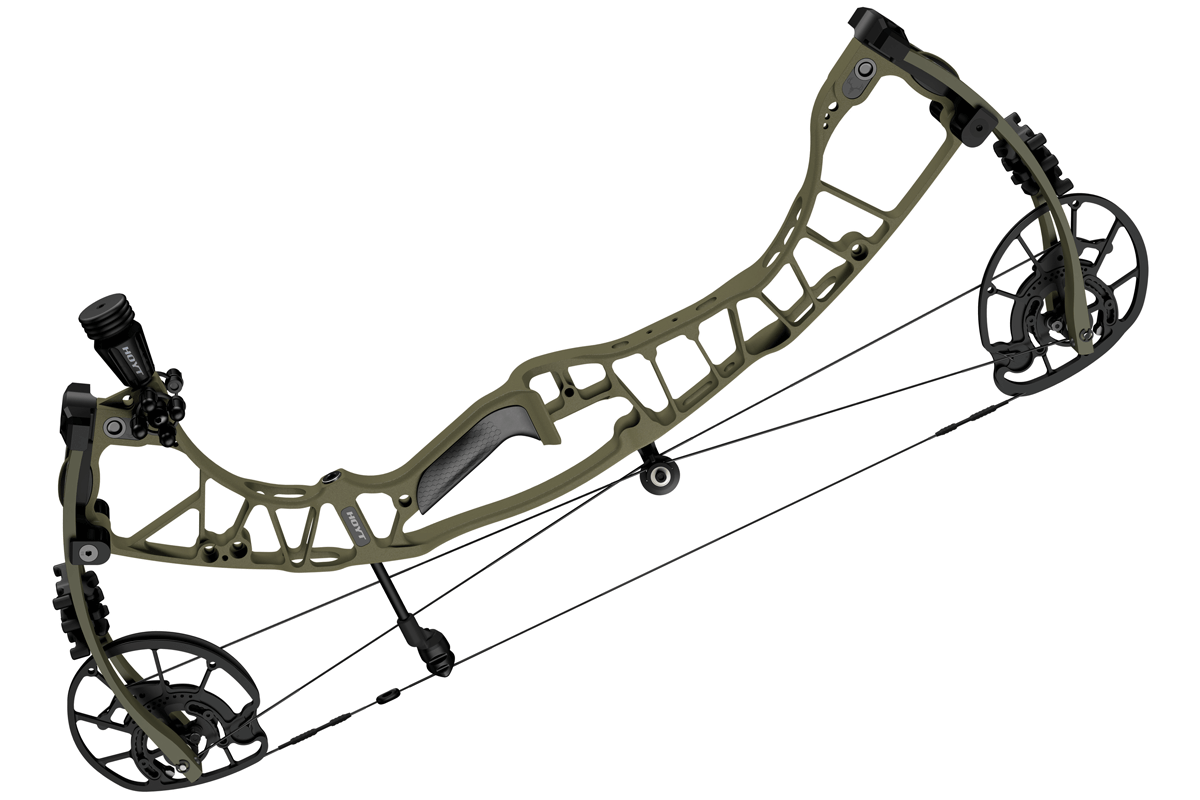
The Ventum 30 is loaded with features, including an all-new engine in the HBX Hoyt Binary Cam system that works with the Hybrid EXT split limbs to produce an advertised IBO speed of 342 fps.

Happy 90th, Hoyt! That is an impressive anniversary, and the company has done a remarkable job carrying Earl Hoyt’s passion and drive through the decades.

Hoyt pushes the envelope on innovation year in and year out and has been awarded nearly 50 patents. It’s been an impressive run, and judging from the lineup for 2021, it looks like they have no intention of letting up. Let’s look at one of their most anticipated new models, the Ventum 30.

The Ventum 30 features an all-new cam system in the HBX Hoyt Binary Cams that work with the Hybrid EXT split limbs to generate an advertised IBO speed of 342 fps. The Tec riser, with its open design, is home to Hoyt’s In-Line sight mount, Integrate Rest mount, compact roller guard, vibration dampeners, XACT grip and In-Line Short Stop Stabilizer.

Tricked Out Hub

The riser is home to many features and technologies, starting with the Tec riser design. A section of the riser loops behind the grip to create the Hoyt Tec-Lite structure, which channels vibration away from the main body of the bow, bypassing the grip and shooter’s hand. It also adds strength and gives every Hoyt bow instant brand recognition.

In addition to the typical sight mounting holes on the side of the sight window, you’ll find two on the front and a section of Picatinny rail in the box, which creates the company’s new In-Line Sight Mount. By anchoring the sight in line with the riser, balance is enhanced and the overall fit is streamlined. With the same goal in mind, Hoyt outfits their new rig with an Integrate Rest Mounting System that uses a machined dovetail on the back of the riser to attach one of QAD’s Integrate arrow rests. Once locked down, the Integrate system creates a solid and consistent platform for adjustments and tuning. A standard rest mounting hole is still available. Even the compact Roller Guard cable-management system sits in a recessed pocket and protrudes rearward to keep it in alignment with the riser.

The Ventum 30 is equipped with two forward-facing, stainless steel stabilizer mounting inserts — one in the traditional location just below the grip and another near the end of the riser by the lower limb pocket. The bottom mounting location’s position lowers the center of gravity and places it on the reflexed portion of the riser where it extends forward. The new location results in a 2-inch stabilizer having the same reach as a 6-inch one, which means you get the same or better benefits from a shorter, lighter stabilizer. Hoyt includes its 2.25-inch Short Stop Stabilizer with every purchase. A special SL SideBar Attachment is also mounted lower on the riser to increase effectiveness with a smaller and lighter side bar. The molded polymer XACT grip, a set of Shock Pods and a string stop complete the riser package.

New Cam

The HBX Hoyt Binary Cam is not a re-engineering of an older model — it’s a completely new design never before available. Described as binary, this three-groove, dual-cam system links the cams together through two control cables that attach only to the opposite cam. When pulling back the bow, you’re pulling against the cams, not the limbs as you would a yoked system attached to the outside of the limbs. This configuration is said to automatically correct for system imbalances caused by string stretch, timing, etc. The HBX covers a draw-length range of 25-30 inches using two rotating modules — 25-28-inches and 28.5-30 inches. All bows ship at 85 percent letoff; however, they can be adjusted to 80 percent without the need for a bow press.

Bunker Beast

Hoyt’s Hybrid EXT split limbs have a reputation for being built like a bunker. These multi-layered, laminated and machined limb designs are subjected to 1,000 full-on dry fires, with the bow set to an 80-pound draw weight and 30-inch draw length. Additionally, the bow design is advertised to withstand one million cycles. The company’s Uniform Stress Distribution process and Split Limb Technology create durable, wide-stance limbs that demonstrate exceptional torsional and lateral stability. Hoyt outfits the Ventum with a set of precision machined, tight tolerance limb pockets to handle the critical interface between limbs and riser.

Impressions

This is one of my favorite Hoyt bows of all time — all-around good performance with hardly any shock and no detectable vibration felt at the shot. Noise followed suit, with very little report from the Ventum 30 when fired. If there is a drawback, it’s the 4.6-pound bare bow mass weight. However, there are benefits to that mass as well. Hoyt is known for producing bows with smooth draw cycles, and the Ventum is one of their best. The XACT grip was comfortable and positioned my hand/wrist consistently.

The Specs

  • Manufacturer: Hoyt, 801-363-2990, hoyt.com
  • Model: Ventum 30
  • Riser: Machined aluminum, reflex
  • Grip: XACT, molded polymer
  • Limbs: Hybrid EXT, split
  • Draw Weights: 40, 50, 60, 65, 70 and 80 pounds peak
  • Cam System: HBX, Hoyt Binary
  • Letoff: 85 percent, with 80 percent option (advertised); 83.1 percent (tested)
  • Draw Lengths: 25-30 inches, in half-inch increments; modular
  • String: Fuse Custom, BCY X99, 57.9 inches
  • Cables (x2): Fuse Custom, BCY X99, 33.75 inches
  • Brace Height: 6.125 inches
  • Axle-to-Axle Length: 30 inches
  • Weight: 4.6 pounds (advertised and as tested)
  • Finish: Film dipped Realtree Edge and eight other options
  • Advertised IBO Speed: 342 fps
  • MSRP: $1,199
  • Comments: High performance marks across the board.

10 interesting facts about lion eyes

0

If there’s one animal that truly captures the essence of Africa, it is the lion. Lions are one of Africa’s most iconic animals. Admired throughout history, these large cats serve as a symbol of bravery and strength.

Lions have powerful bodies. They are the second largest cat species, after tigers.

In addition to their large size and sheer strength, the lion population is also renowned for its impressive eyesight. This is an advantage for their predominantly nocturnal hunting.

There are several reasons for the lion’s excellent vision. Below are ten interesting facts about lion eyes – one of their greatest hunting tools.

Lion Eyes Close Up: 10 Roarsome Facts

Much like crocodile eyes, a lion’s eyes serve as an exceptional piece of equipment.

A lion’s eyes help them hunt, especially at night.

Let’s take a deeper look into the eye of the lion.

1. Inside a lion’s eyes

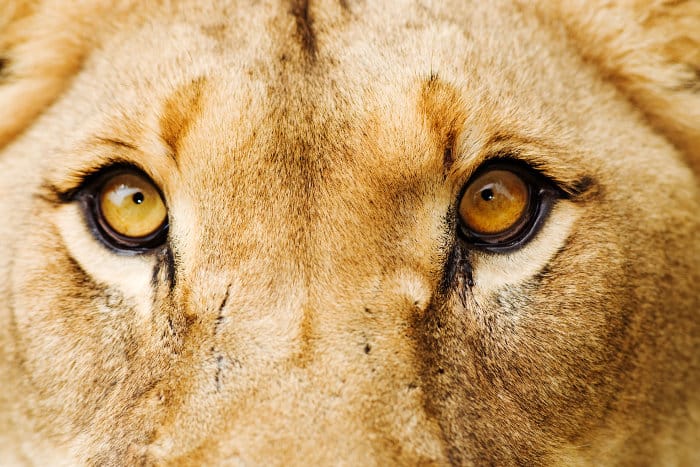
Close-up picture of a lioness

Lions have significantly more rod cells than cone cells in the retina of their eyes, especially when compared to humans. Lions have around 25 rods to each cone, while humans have about 4 rods to each cone.

The rods aid the reflection of more light into the eye, while cones are for color vision. This is what contributes most to the lion’s impressive nocturnal vision. These large cats can see 6 to 8 times better than humans in low light conditions.

Regarding cones, there are three types – namely blue, yellow, and red. Lions, like all cats, only possess the cones for short waved light (blue), and medium waved light (yellow). They cannot distinguish red colors.

2. Lions’ eyes shine

If you’ve gone game viewing at night, you may have noticed some glowing eyes looking back at you.

Lions, like most nocturnal animals, have something inside their eye known as tapetum lucidum. This is a reflective layer of cells behind the retina which acts as a mirror.

The rod and cone cells absorb light entering the eye. The tapetum lucidum reflects the light which passes through the retina and photoreceptor cells.

This gives the lion’s brain two chances to absorb the light waves and refine the image. This significantly improves the animal’s night vision.

3. Outside a lion’s eye

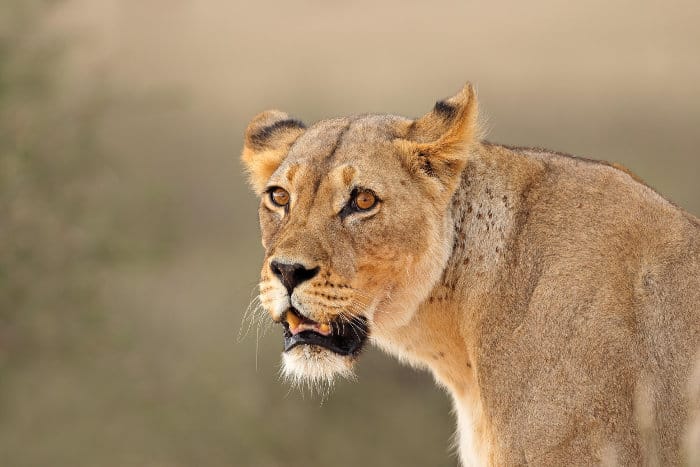
Portrait of a lioness in the Kalahari desert

The outside characteristics of a lion’s face play a significant role in its incredible night vision.

The white stripe under its eyes helps reflect faint light into the eyes, making it easier to see under low light conditions.

It also helps in mottled lighting, common in dense, bushy areas.

This unique feature is a good indication that lions are nocturnal.

If you look at a cheetah, you will notice they have black tear-like markings. This reduces glare, which is ideal as these quick, spotted cats tend to hunt during daylight.

4. Lions have a second eyelid

Lions have a second eyelid known as a nictitating membrane. This serves as an extra layer of protection for the cornea.

It also moistens the eye while maintaining vision.

The nictitating membrane acts as a windshield wiper, removing dust and anything else blown into the lion’s eye.

5. Lions have round pupils

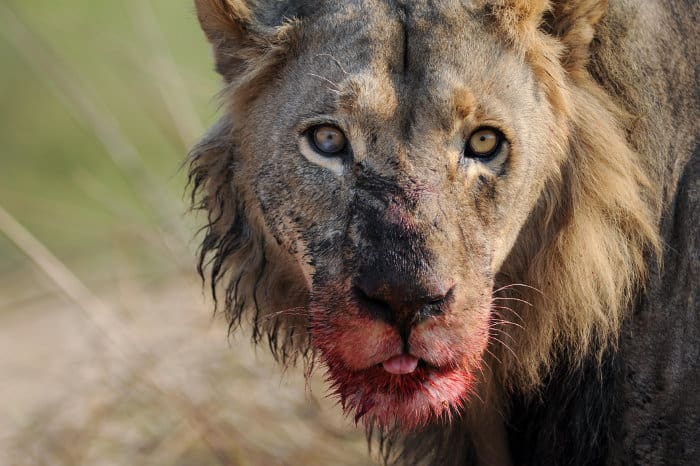
Bloody male lion with fresh kill, Moremi Game Reserve, Botswana

Most felines have vertical slits instead of round pupils. This is to maximize the capacity of recognizing the depth of a field.

Smaller cats need to crouch to get close to their prey before pouncing. Vertical slits are important as they help these cats measure shorter distances precisely.

Larger felines, like lions and tigers, have round pupils.

As they have longer legs, their eyes are at a greater distance above the ground. They are also a lot more powerful and can jump much further.

Lions do not need to get too close to their prey before pouncing and do not require a vertical pupil.

The round pupils possessed by larger felines are also known to allow more light to filter into the eye, giving them better night vision.

6. What color are lions’ eyes?

Lions’ eye colors are typically brown or amber. Even white lions, whose fur lacks the typical lion’s pigment, have a pale amber eye color (NB: some white lions have blue eyes).

As previously discussed, the anatomical structure of a lion’s eye is responsible for the eye shine we often see when game viewing at night.

The typical color of this eye shine is a red or gold hue. This can vary depending on the angle at which one views the lion.

7. Baby lion eyes

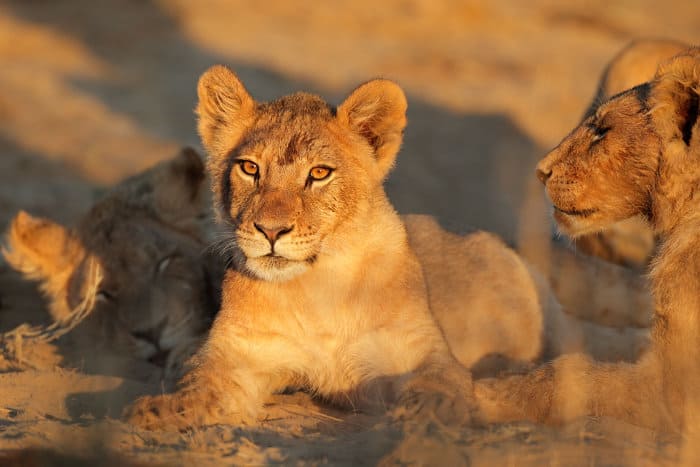
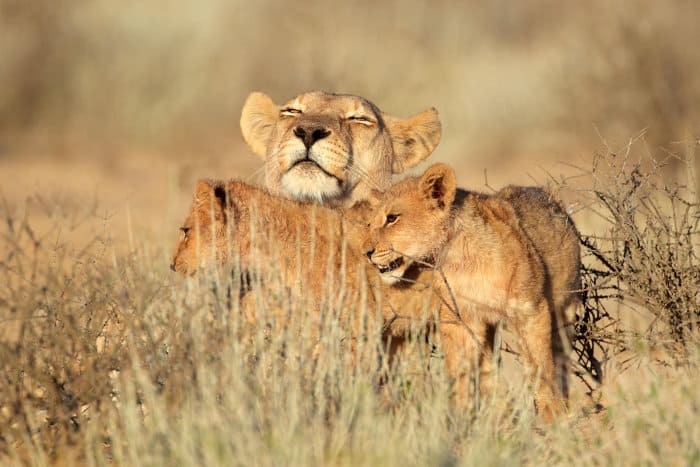
Lion cub in early morning light, Kalahari desert, South Africa

Baby lions, referred to as “cubs,” are born blind. They do not begin to open their eyes for the first 3 to 4 days after being born. Even after opening their eyes, they cannot see very well and need extra care from their mums.

Their eyes start out blue-grey and begin turning brown or amber around the 2- to 3-month mark.

8. Lion eyes and hunting

Given their impressive night vision capabilities, lions generally hunt at night. By using their vision, lions hone in on their target, coordinating their attack based on where they see their prey moving.

In a hunt and evasion scenario, sight is the most crucial factor. Lions’ prey also possess strong senses such as sight and smell, which helps them escape.

Dodging obstacles and handbrake-turning past members of a lion pride makes certain prey tougher to catch.

The key to a lion’s hunting success lies in having the conditions skewed in their favor. This is most commonly at night, long after the sun has set, and when everything has become completely dark.

Lions also hunt well during storms as the noise and wind make it harder for their prey to hear or see them.

9. The full moon can hinder a lion’s vision

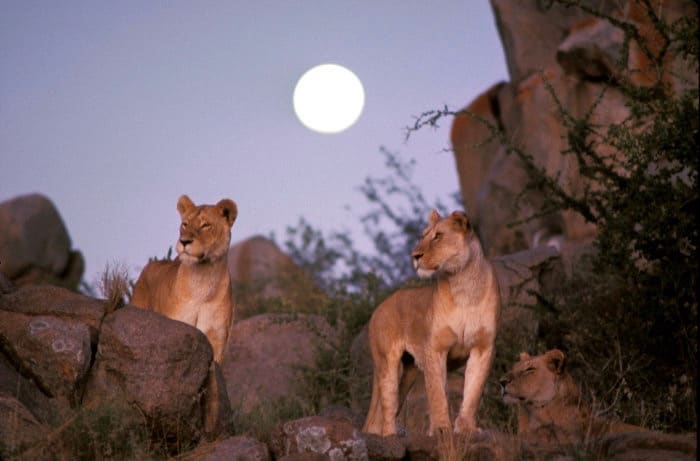
Pride of lions under the rising moon, Serengeti

As examined earlier, the darker it is, the better it is for lions. A full moon makes it easier for prey to detect and escape predators.

During a full moon, lions will often put off hunting while the moon is at its peak. They will much rather wait until the moon begins to dip over the horizon or until clouds have covered it.

10. Lion eyes positioning

Unlike much of their prey, lions have binocular vision. This suggests that their eyes point forward, allowing them to judge depth more effectively. While this is a great advantage, their eyes cannot move from side to side very quickly.

Lions have to move their entire heads from side to side to see in different directions. On the other hand, their prey has eyes on the sides of their head.

This provides their prey with a wider range of vision. It also hinders their ability to resolve single objects after dark.

For this reason, when night starts closing in, these animals move out into open clearings for increased visibility and room to move if need be.

More Incredible Lion Facts

In addition to their unique eyes, lions have many other characteristics and traits that are sure to impress you.

Below are a few mind-blowing facts about one of Africa’s largest cats.

Lions can get their water from plants

Two beautiful black-maned lions in the Kalahari desert

Lions are highly adaptable and can survive in very dry areas. In places like the Kalahari desert, they get most of their water from their prey and plants such as the tsamma melon.

Lions are big eaters

These large felines can consume up to 40 kg of meat in one meal, which is generally a quarter of their body weight.

To assist them in scraping flesh off the bones of their prey, they have tongues with sharp, pointed rasps, papillae.

Here is more information on what lions eat.

Lions roar together

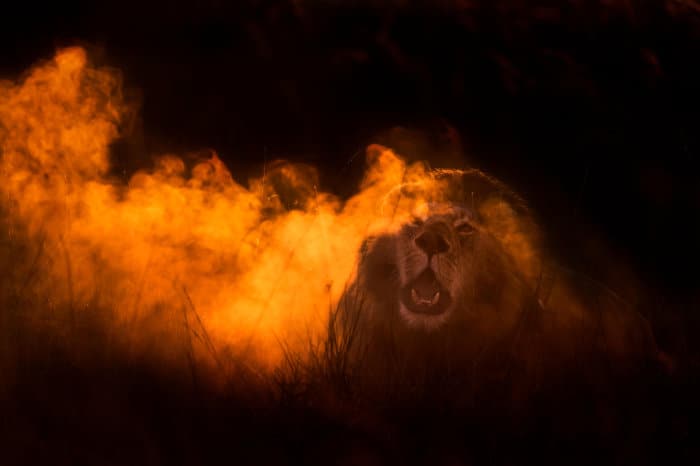
Black-maned lion roaring, with water vapour emanating from its body

Unlike other cat species, lions roar together, often to mark their territory.

A calling typically goes on for about 40 seconds.

The entire pride joins in, including the younger cubs with their tiny mews.

Lions are quick and powerful

These large cats can run short distances at 80 km/h and leap as far as 11 meters.

This, coupled with their impressive vision, makes them one of the top predators of Africa.

Lions love sleep

Lioness leaning against her cub, resting

Lions enjoy lazing around. These big cats spend 16 – 20 hours sleeping each day. They have few sweat glands and conserve their energy during the day.

They are much more active at night when it’s cooler. This is also when they hunt.

For more on these magnificent animals, check out these 10 interesting facts about lions.

What Are Your Thoughts on the Lion Eye?

Lion eyes are an incredible tool and are largely why lions have a relatively good hunting success rate. In sheer darkness, where most of us would find ourselves lost without being able to see a thing, lions move with ease.

While their eyes are highly functional, they are also beautiful with their brown-amber color.

For your next game ride, consider heading out after sunset. It is then when these large cats are most active.

It is also when you will notice their shining eyes.

Just hope that they aren’t angry lion eyes.

If you wish to see these large cats up close, be sure to check out these amazing African safari deals.

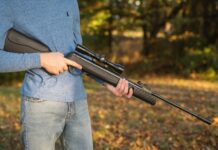
How Do Break Barrel Air Rifles Work?

0

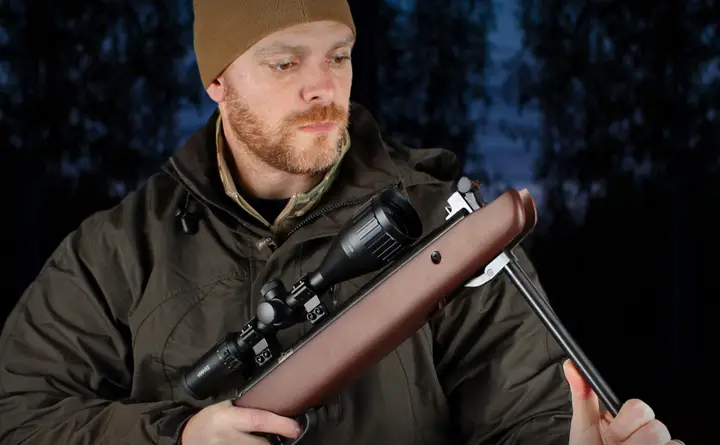
A break barrel air rifle is a type of airgun where the barrel breaks open at a hinge point just above the breech. This action allows the user to load a pellet into the chamber. The majority of break barrel air rifles are single-shot, meaning that only one pellet can be loaded and fired before the barrel must be broken open again to reload. There are some models, however, that are semi-automatic, which means that they can fire multiple shots before needing to be reloaded. In this article, we’ll take a closer look at how break barrel air rifles work and some of the advantages and disadvantages of this type of gun. 

How does a break barrel air rifle work?

A break barrel air rifle works by using a compressed spring to force air through a valve and out of the barrel. When the trigger is pulled, the sear releases the hammer which strikes the valve, allowing air to flow through. This action also cocks the gun, making it ready to fire again. The vast majority of break barrel air rifles are single-shot guns, meaning that they must be manually cocked after each shot. There are some semi-automatic models, however, that use gas cartridges or pumps to cock the gun automatically after each shot. 

Do break-barrel air rifles need CO2?

No, break-barrel air rifles do not need CO2. They can run on compressed springs or pumps.

What are the advantages of a break barrel air rifle?

There are several advantages to break-barrel air rifles. One advantage is that they are relatively simple guns that can be operated by most people. Another advantage is that they are typically self-contain and easy to maintain. Besides, break barrel air rifles don’t cost lots of money to start with.

What are the disadvantages of a break barrel air rifle?

There are also some disadvantages to break-barrel air rifles. One disadvantage is that they can be difficult to cock, especially for people with weak hand muscles. Another disadvantage is that they are less powerful than some other types of airguns, such as pre-charged pneumatic (PCP) guns. Finally, break-barrel air rifles can be less durable than some other types of guns, due to the fact that they have more moving parts. 

How to cock a break barrel air rifle?

Cocking a break barrel air rifle is relatively simple. First, make sure that the gun is unloaded and point it in a safe direction. Then, hold the forestock with your strong hand and place your weak hand over the end of the Barrel. Next, push down on the Barrel while simultaneously pulling back on the Forestock until you hear a click. This indicates that the gun is now cocked and ready to fire. Finally, load a pellet into the chamber and you’re ready to shoot! 

Why break barrel air rifles known to be hard on the scope?

Break barrel air rifles are known to be hard on scopes because of their design. When firing a break barrel gun, all of the recoil from the shot goes directly into the scope which can also cause damage over time if not properly mounted. For these reasons, it is important to make sure that your scope is properly mounted before using your break barrel gun and that you check it often for signs of wear or damage. 

Shooting Tips For Break Barrel Air Rifles

Here are some tips for shooting your break barrel gun: 

1) Make sure that your gun is properly mounted and sighted in before shooting. 

2) Always handle your gun with care and respect – remember that it is a weapon and should be treated as such. 

3) Practice makes perfect – try experimenting with the “Artilerry hold”, and don’t be afraid to put in some time at the range honing your skills with your new gun.’ 

For more on the best break barrel air rifle that hits like a champ, see this post

19 Most Valuable Rare Arrowheads Worth Money

0

Have you heard of Pfeilstörche? These are Bavarian storks with spears stuck in their necks. Scientists used these birds to discover their migration patterns from Africa to Europe. It was a revolutionary bit of knowledge, but we’re more interested in the arrowhead than the shaft.

When we think of the most valuable rare arrowheads, we focus on evolution and the hominids of the past who invented tools. But you can find arrowheads among indigenous communities that still practice traditional hunting techniques. So let’s go shoot some arrows!

Table of Contents

Most Valuable Rare Arrowheads Worth Money

1. Barbed Tanged Arrowhead Near Stonehenge (Aldbourne, Wiltshire, UK) – Found Around 1900 – Genuine Early Bronze Age Artefact

Barbed Tanged Arrowhead Near Stonehenge (Aldbourne, Wiltshire, UK) - Found Around 1900 - Genuine Early Bronze Age Artefact
Image Credit: Valuable Rare Arrowheads

Around the world, you’ll find communities like the First Nation (Canada), Inuits (Greenland, Arctic), Maasai (Tanzania, Kenya), Oceanians (Australia, New Zealand), and tribes from Polynesia and the Amazon. They maintain their heritage, including traditional arrowheads.

  • Type: Arrowhead
  • Material: Stone
  • Bids: Still Open
  • Value: $266.48

But here in the US, the most valuable rare arrowheads come from Native Americans. You can find contemporary authenticated pieces, but you can also bump into fossil finds in areas with rich archaeological digs. You might even stumble upon arrowheads lying around old farms.

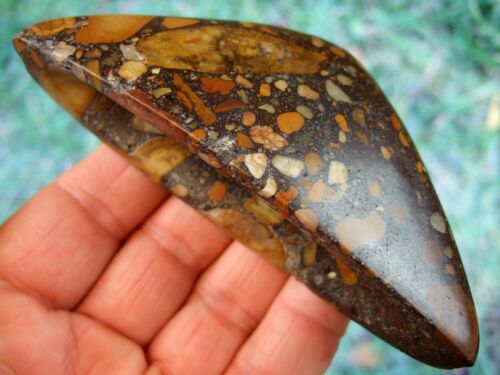
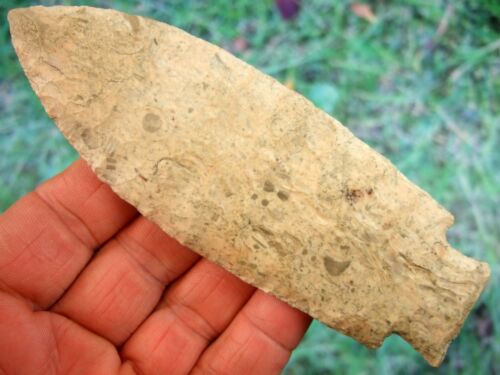
2. Missouri Cupped Bottom Puddingstone Boat Stone COA Arrowheads

Missouri Cupped Bottom Puddingstone Boat Stone COA Arrowheads
Image Credit: Valuable Rare Arrowheads

But while you’re trading arrowheads, you can make money on related items spears, and other weapons. Bird stones, banner stones, and boat stones sell especially well. These weights were attached to spears or javelins so they could travel further, and faster while carrying more force.

  • Type: Boat Stone
  • Material: Puddingstone
  • Bids: 38
  • Value: $3,400

These stone weights were part of a tool called an atlatl. And the particular one above is shaped like an arrowhead, so you can convincingly categorize it there. With pieces like this, it’s worth getting a professional evaluation. Buyers want proof that it’s not just a pretty rock.

3. Lot of 08 Old Indo Persian Rajput / Mughal Arrowheads

Lot of 08 Old Indo Persian Rajput Mughal Arrowheads
Image Credit: Valuable Rare Arrowheads

On the subject of arrowheads that are not quite arrowheads, let’s talk about Clovis points. These ancient arrowheads were first found at Clovis, New Mexico, in 1932. Experts believe they’re 10,000 to 13,500 years old. They discovered maybe 10,000 units in total at that dig.

  • Material: Metal
  • Bids: Still Open
  • Value: $250

These weapons are classified and labeled as arrowheads for convenience, but lots of them are designed for spearheads and javelins, so they’re better described as projectile points. An atlatl – which we mentioned above – was typically used to launch these sharpened stones.

4. Large Fine 6+ inch G10 Missouri Turkeytail Point with COA Arrowheads

Large Fine 6+ inch G10 Missouri Turkeytail Point with COA Arrowheads
Image Credit: Valuable Rare Arrowheads

Dalton and Folsom arrowheads are another top find for collectors. But Clovis points are the easiest to spot because they have a groove at their base called a flute. This made it simple to attach the arrowhead to the tip of a spear, arrow, or dart. The flute goes halfway up the head.

  • Material: Metal
  • Bids: 43
  • Value: $380

Clovis arrowheads are also larger than other specimens. They can be up to 6” tall and 2” wide with a concave surface on the flute end. The curved sides of the arrowhead taper towards the tip. This makes its midsection its widest point, and the slicing action makes it more effective.

5. Lot of 25 Japanese Arrowheads

Lot of 25 Japanese Arrowheads
Image Credit: Valuable Rare Arrowheads

Now that you know how to identify Clovis arrowheads, let’s look into the other two types we’ve mentioned. Dalton arrowheads are shaped like fish. They have a broad middle, just like Clovis, but they also have an inward curve near the base. They’re from 10,500 to 8,500BC.

  • Material: Metal
  • Bids: Still Open
  • Value: $150

As for Folsoms (9,500 to 8,000BC), their flutes were crafted more carefully than those Clovis bases. They also have distinctive grooves on their sides. Finally, we have Plano arrowheads from the plains. These were far simpler weapons crafted from flaked stone without flutes.

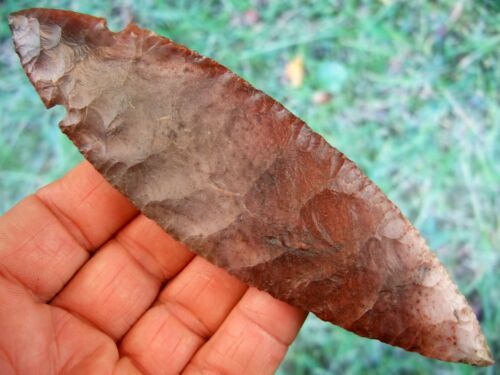
6. Authentic Ohio Beveled Serrated St. Charles Dovetail Indian Arrowhead

Authentic Ohio Beveled Serrated St. Charles Dovetail Indian Arrowhead
Image Credit: Valuable Rare Arrowheads

It’s easy for someone to fake an arrowhead. And while some of the ones you’ll find in the wild are genuine, they’re likely to be flint or chert arrowheads. Because these are younger and are pretty common, they’re not that valuable as a collectible, so you won’t make much reselling.

  • Material: Stone
  • Bids: 8
  • Value: $102.50

Ideally, a Clovis point would be perfect. The first set was found in 1929 by Ridgely Whiteman. But most of these precious arrowheads are in the hands of collectors and are out of circulation. Instead, look for unusual crafting materials like jade, petrified wood, or jasper.

7. Leaf Arrowhead – Flint Tool – From near Stonehenge (Aldbourne, Wiltshire, UK) Found around 1900 – Late Neolithic / Early Bronze Age

Leaf Arrowhead - Flint Tool - From near Stonehenge (Aldbourne, Wiltshire, UK) Found around 1900 - Late Neolithic Early Bronze Age
Image Credit: Valuable Rare Arrowheads

To date, the most valuable rare arrowheads ever found were Clovis points. The one found by Les Ira Kreis sold for a good $276,000. He found it during the 1950s while working in a Badger Mountain wheat field in Washington. The 2013 sale was sealed at a Morphy Auction.

  • Material: Flint
  • Bids: Still Open
  • Value: $174.03

This arrowhead is treasured because at 9”, it’s among the largest intact pieces in existence, and it’s made from a sea green shade of obsidian. You may wonder exactly how ancient cultures made the arrowheads. They would heat the stone and then hit and hammer it into shape.

8. Fluted 5” Clovis Point, Indian Artifact, Arrowhead, Cocke CO. TN.

Fluted 5” Clovis Point, Indian Artifact, Arrowhead, Cocke CO. TN
Image Credit: Valuable Rare Arrowheads

The arrowhead-making process had three stages. The first was flint-knapping, where you would start with a big rock and bash it to break off smaller pieces. The second stage was pressure flaking when you would use tools to chip off pieces, making the arrowhead thinner.

  • Material: Stone
  • Bids: 12
  • Value: $180.50

As the weapon got slimmer and flatter, you could sharpen the sides and edges, adding any important features like grooves or clan symbols. The final step is sometimes called notching. You could make slots to hold the twine, or you could carve out a sharp serrated edge.

9. Lot of 15 Old Indo Persian Rajput / Mughal Arrowheads

Lot of 15 Old Indo Persian Rajput Mughal Arrowheads
Image Credit: Valuable Rare Arrowheads

How did they make these weapons without modern machinery? To make the arrowheads, hunters used tools made from the horns, bones, and antlers of local wildlife such as deer, moose, or impalas (in Africa). Start off with a rounded hammer stone then move to bone.

  • Material: Metal
  • Bids: Still Open
  • Value: $300

The base of a horn or antler works well for broad work, and the narrower tips are best for finer details. Today, lots of people flint-knap for pleasure. But avoid using metal tools like hammers or chisels. They’re too fast and forceful, so they’re likely to shatter your host rock.

10. Rare Large Fine G10 Missouri Graham Cave Drill with COA Arrowheads

Image Credit: Valuable Rare Arrowheads

You’ll see a lot of sites describing the fish shape of a Dalton arrowhead. Sometimes, it’s puzzling to understand these explanations without a photo. But why did these projectile points have a fish-tail curve near the base? Well, they didn’t have attachment flutes on them.

  • Material: Stone
  • Bids: 73
  • Value: $193.50

Instead, hunters would use pieces of tendon or twine to tie the shaft to the arrowhead. The rope would be wound around the waist, that inward curve that’s close to the bottom. Daltons also had a sharp tip that would break off on impact, so many finds have that bit broken off.

11. Leaf Arrowhead – Neolithic Flint Tool – From near Stonehenge (Aldbourne, Wiltshire, UK)

Image Credit: Valuable Rare Arrowheads

If you’re looking for a book that tells you more about the most valuable rare arrowheads, try The Official Overstreet Indian Arrowheads Identification and Price Guide. You could also check the Artifact Resources Tab at Arrowheads.com for help with identification and pricing.

  • Material: Flint
  • Bids: Still Open
  • Value: $163.15

This book can be useful for scouring sales online or when you’re out in the field. You might be physically hunting arrowheads and you can look up their likeness in the book – it has lots of high-res reference photos. But be sure you’re allowed to pick arrowheads where you are!

12. Super Fine Tennessee Dark Dover Flint Lost Lake Point COA Arrowheads

Image Credit: Valuable Rare Arrowheads

The point above may have startled you. After all, YouTube is flooded with videos of people excavating all sorts of sites for antique bottles, gold flecks, and yes, arrowheads. You’ll even find tips about hunting at Native American campsites, near rivers, or in roadside ditches.

  • Material: Flint
  • Bids: 25
  • Value: $404.99

So where does ‘allowed’ come into it? Think of it this way – as you rifle through Native American sites, you may be disturbing holy sites like burial grounds, which is disrespectful. Would you want any random person digging up your grave or snooping through your house?

13. Lot of 05 Old Indo Persian Rajput / Mughal Arrowheads

Image Credit: Valuable Rare Arrowheads

Another factor to consider is legality. If you’re arrow-picking on private property, you may need the owner’s permission. Otherwise, they may take you for a trespasser and respond accordingly. Besides, anything valuable you find on their land technically belongs to them.

  • Material: Metal
  • Bids: Still Open
  • Value: $150

Also, some local governments have laws about leaving relics and fossils where they are. It’s about retaining cultural value. The county may want to turn the spot into a museum, lease it for tax reasons, or set it up as a formal archaeological site. So be sure to get authorization.

14. Large Fine G10 Missouri Hidden Valley Point with COA Arrowheads

Image Credit: Valuable Rare Arrowheads

Once you’re sure that it’s okay to hunt for arrowheads in your region, you’ll need to find the best spots. Rivers and streams are good because they’ll have tons of arrows that sunk while harpoon fishing. Rain may also carry arrowheads into the water and dump them there.

  • Material: Stone
  • Bids: 36
  • Value: $565

The best time to look is after a heavy downpour because it exposes buried items in fields and among rocks. It also washes them down to more visible spots. If you’re looking in the river itself, wait until the water level is lowest or the bed is dry so you can see your booty clearly.

15. Scythian Arrowhead, Authentic Arrow Heads, Ancient Artifact, 6th-1th Century AD

Image Credit: Valuable Rare Arrowheads

People within the industry will refer to these pieces as points rather than arrowheads. We mentioned earlier it’s because the points were used on spears, darts, and other projectiles, not just arrows. And once they got blunt or broke, they may be converted into scrapers.

  • Material: Metal
  • Bids: Still Open
  • Value: $75.65

Scrapers were useful for – say – skinning an animal, peeling vegetables, or scrubbing plant-based fibers. You can differentiate arrow points, spear points, and dart points by their size. Spearheads were the largest and heaviest while tainted darts could be quite small and subtle.

16. Fine Colorful 5 3/4″ Ohio Flintridge Dovetail Point with COA Arrowheads

Image Credit: Valuable Rare Arrowheads

The thing with arrowheads is they’re easy to fake. And if you find one on the farm while plowing, it might only be worth a few dollars. But if you bump into a genuinely valuable piece, your profits could run into the thousands considering you got it in the wild for free.

  • Material: Flint
  • Bids: 21
  • Value: $1,125

But you still need an expert, because anyone can put up a thousand-dollar listing like this one. And if it’s counterfeit (or if you’re wrong about its value), your arrowhead will sit on the auction site for years. That’s why using the ‘sold tab’ is so important. It shows what moves.

17. Lot of 12 Old Indo Persian Rajput / Mughal Arrowheads

Image Credit: Valuable Rare Arrowheads

What’s a COA? You may have seen it mentioned on arrowhead listings or other collectibles. It means Certificate of Authentication, and there are various ways to get one. It could be a sales receipt from a verified dealer. Or a report from a recognized professional appraiser.

  • Material: Metal
  • Bids: Still Open
  • Value: $250

But some Native American artifacts are contemporary, and these may include jewelry and points. They use traditional techniques to create modern pieces. They come with the artist’s name, their pueblo (or tribe), and a formally signed document verifying the piece as authentic.

18. Fine G10 Missouri Burlington Hopewell Point with COA Arrowheads

Image Credit: Valuable Rare Arrowheads

Just because a piece is beautiful, verified, and in demand doesn’t mean it’s the most valuable rare arrowhead. And this piece is the perfect example. You can see it drew a lot of attention – nearly 50 bids! But it barely sold for $100. What’s the deal? Well, you need market interest.

  • Material: Chert
  • Bids: 48
  • Value: $127.50

Before you go off gathering tons of arrowheads, look around. See what collectors want. The reseller space travels in cycles and seasons, so there are times when a particular material, site, or style is popular. The condition of your arrowhead matters too since it’s for display.

19. Rare Bronze Arrowheads 400 BC – 100 AD Unique Ancient Artifacts, 40

Image Credit: Valuable Rare Arrowheads

Suppose you find a batch of arrowheads that doesn’t look too fancy. And maybe your expert tells you they’re only worth five to ten bucks a piece. You can improve your profit by selling them as a bundle like the seller has done here. You could even throw in some pricier pieces.

  • Material: Metal
  • Bids: Still Open
  • Value: $106

Axe heads are a smart value-add if you can find them. They’re larger and more versatile than arrowheads, so they’ll fetch a higher price. But while you’re discounting your asking rate, count the weight of the batch – it could lead to high shipping costs that will swallow profits.

Tops Tips About the Most Valuable Rare Arrowheads

As you position yourself to resell rare arrowheads, try these proven tactics:

  • Get a copy of the Overstreet Guide. It helps a lot.
  • Confirm your pricing using ‘sold items’ instead of open ones.
  • Protect the arrowheads so they don’t flake off and get ruined.
  • Develop a cataloging system and keep your stock clean.
  • If you’re a picker, be disciplined and discerning or you’ll soon have hundreds!

Do you have any advice on the most valuable rare arrowheads? Tell us in the comments!

Why Can I See My No Glow Camera’s Flash and Is It Spooking Deer?

0

Answer this honestly…How many of you have had a conversation with a friend where one of these talking points came up?

  • Dude, My Black Flash camera is visible!
  • I can see my No Glow camera flash! I know it’s spooking deer!
  • I don’t know what’s wrong, I was just looking through some trail camera photos and it looks like I can see the flash from my Black out camera! I have two of them out there?

Over the years, we’ve seen this topic come up on social media over and over. Some folks immediately understand what is going on, others are baffled.

If you can see the flash from a Black Flash camera what the heck is going on? All of this boils down to two scenarios…. You don’t really have a no glow camera OR there are multiple cameras in one area and one camera is capturing another camera’s flash at night.

940NM Wavelengths To Humans and Whitetails

No Glow, Black Flash, Invisible Flash, Black Out are all trail camera terms referring to the same exact thing… Any trail camera flash unit utilizing a 940nm LED, which in the Electromagnetic Spectrum is beyond the UV Spectrum and invisible to the human eye. But what about whitetails?

When you think about how ungulates see, in what colors, and how those colors react to UV it becomes pretty damn interesting. Ungulates have dichromatic vision, they see yellow and blue colors with everything else being black/white and gray. Blue colors fall between 430-520nm wavelengths and yellow falls between 565-580nm wavelengths. So theoretically, if your trail camera is not putting out light between those spectrums, deer are not seeing it OR at least not in the same color as we see it. Now, lets pull it back to trail cameras.

Types of Flash

You have 3 categories of flash types in trail cameras, WHITE,RED, and BLACK.

White Flash trail cameras give you an actual flash. Hobbyist folks seem to really gravitate towards these types of cameras because they put out color night images. This type of light falls into the lower range of the UV Spectrum at approx 300nm.

Red Flash also called IR trail cameras include any bulb that puts out light at wavelengths between approx 625nm up to 750nm. At the bottom end light is visible at the upper end it is less noticeable.

Black Flash, aka invisible flash, no glow, black out, or whatever else you want to call it, also falls into the IR spectrum but at the upper end with a wavelength of 940nm. General science tells us that mammals cannot see light at this wavelength. Really, only amphibians and reptiles can see this type of light.

IR and Black Flash cameras have added HW to capture light at these wavelengths. This is the purpose of the cameras IR filter OR the camera could have a dedicated night sensor and lens making it a dual lens camera.

Why Can You See It?

Scenario 1: If you can see the flash with your naked eye, you certainly don’t have a 940nm flash unit. Don’t get this confused with a faint red glow before the actual flash. At times, mainly when the LEDs first get power they will likely emit some light below the 940nm range. This happens well before the flash actually goes off.

Scenario 2: You have two cameras setup in some what close proximity to one another. One camera is picking up the other’s flash. The first time it happens it’s kinda of weird but when you step back and think how trail cameras work with specific flash units and IR filters it makes a whole lot of sense.

If you find yourself in either scenario don’t panic, the wool hasn’t been pulled over your eyes. What you are seeing is completely normal in the trail camera world, it just doesn’t happen all that often because there’s not many folks running cameras on top of one another. With proper setups and going through our “spook proof equation” it’s unlikely you are actually spooking whitetails with your trail cameras.

Top 20 Colorado OTC Elk Units to Hunt for 2021

0

bull elk buglingThe most common questions I get from first time hunters and from out of state DIY elk hunters is about how to find the “best” hunting units.

I usually ask them what does “best” mean to them. I think most people mean easy. Some elk hunts can be easy, but don’t count on it.

Chances are, you should be able to find elk on every unit on National Forest lands, without any additional knowledge. But more information will always be helpful.

Of course the local hunters know when and where to find elk on units that have few elk, but non-residents will not, so choose a unit proven to have lots of elk during your hunting season.

For me, the best hunting unit has more to do with the quality of my outdoor camping, scouting and hunting experience, but I am also a numbers guy. So in this case, best will be a purely numeric analysis of Colorado’s elk harvest data for the three OTC hunts; 2nd Rifle, 3rd Rifle and Archery hunts.

You can research population estimates in the Herd Management Plans (DAU Reports – AKA Data Analysis Units) or you can see how many elk were harvested in the past and see the hunter success and the amount of hunting pressure.

If you are an out of state hunter, unless you have done lots of scouting before, I suggest you start researching units where at least 50 elk were harvested and also had better than average hunting success.

2021 Colorado OTC Elk Licenses

The OTC licenses are just that, sold over the counter and many of these OTC licenses are unlimited and will be on sale for 2020 starting in Early August (August 6 in 2020).

Colorado OTC Rifle Elk Hunts

Let’s start with the Over-the-counter (OTC) rifle hunts. The OTC rifle seasons are the 2nd and 3rd rifle seasons. In 2020, the 2nd rifle season will be Oct 24 – Nov. 1 and the 3rd rifle season will be Nov. 7 – 13.

These hunts are for Antlered Elk Only (Bull Elk) and are available in 93 hunt units (GMUs – Game Management Units) in Western Colorado. The latest available harvest data from Colorado Parks and Wildlife (CPW) is from 2019 (see tables below).

Looking at past harvest data is important in choosing a hunting unit. The harvest data reported by CPW are available compiled in various ways and it is easy to see harvest numbers, hunting success and hunting pressure for each unit. But it is a little more difficult to separate results from OTC tags from other hunts that occur at the same times and places.

Limited Entry (LE) elk hunts for both antlered and antlerless elk do occur during the 2nd and 3rd rifle seasons. There is no overlap in space (units are separated; LE only in some, OTC only in others) for the bull elk hunts, but there is overlap in the units for the limited cow elk hunts.

By removing the number of hunters that participate in cow elk hunts from the total, I attempt to get more accurate estimates of OTC rifle hunters and harvest data, but have to make some assumptions because CPW does not provide separated data. Those assumptions are that all hunters (OTC Bull Elk and Limited Antlerless) hunt with the same effort (days hunted) and have the same success during the 2nd or 3rd rifle seasons. This is not perfect, but I think is better than leaving them clumped together.

In the past, I reported these numbers for each new season when harvest reports were available, but decided that a three year average would be more useful since the numbers of elk harvested jumps around. For instance, for 2nd Rifle, there are only 14 GMUs that were in the top 20 in both 2014 and 2018 and only 10 GMUs in the top 20 every year from 2014 to 2018. So there is some yearly variation and some GMUs have been trending up and some trending down.

Table 1 shows the top 24 units for the OTC 2nd Rifle Season. Data were averaged for the last three years of harvest data available (2017 – 2019). The left side of the table is ranked by total bull elk taken by OTC tag holders in OTC units during the 2nd rifle season. The right side of Table 1 is same data ranked by Hunter Success.

Table 1. Top 24 Colorado OTC Rifle Units – 2nd Rifle Season – 3 year Average 2017 – 2019

ranked colorado otc 2nd rifle units

For total bull elk harvest, the top 24 OTC 2nd Rifle Season elk units ranged from an average of 61 to 184 elk harvested (left side Table 1). I included harvest data from 24 units instead of 20 because half (54%) of all Bull Elk Harvest (2nd Season OTC Rifle) came from 24 of the 92 hunt units and it also allowed me to include GMU 54 which ranked in the top 23 for Bull Elk harvest and for hunter success.

For hunter success (right side of Table 1), I limited units to those with an average of at least 25 bull elk over the three years, so some units had higher success than these units, but only had a few elk harvested. So, highest hunter success (with at least 25 bulls harvested) ranged from 31.3% to 12.6%. Total hunter success for the 2017, 2018 and 2019 in OTC 2nd rifle seasons was 13.2%, 13.4% and 14.3% respectively. The top 25 units ranked by hunter success accounted for 15% of all Bull Elk Harvested for the last three OTC 2nd rifle seasons.

Also notice that 13 GMUs are hi-lighted on both sides of the table, because these GMUs ranked in the top 24 for both total harvest and hunter success.

When compared to last year’s table (2015 – 2017 average), 23 of the GMUs are the same. GMU 14 was added and GMUs 28 and 24 dropped out (I used the Top 25 GMUs for Bull elk harvest last year.

When last year’s hunter success was compared, 18 of the GMUs are the same and 6 new GMUs were added, but I also changed the cutoff from 50 bull elk to 25 to be considered.

Five units (4, 13, 22, 85 and 421) were in the top units for both the 2nd and 3rd rifle seasons for both total Bull Elk harvest and for hunter success.

Colorado Hunting Maps & Hunting Accessories

Table 2 (left side) shows the top 25 units ranked by total bull elk taken by OTC tag holders in the OTC units during the 3rd rifle season. The right side of Table 2 is ranked by Hunter Success.

Table 2. Top 25 Colorado OTC Rifle Units – 3rd Rifle Season – 3 year Average 2017 – 2019

coloroado otc elk 3rd fifle units

For total bull elk harvest, the top 25 OTC 3rd Rifle Season elk units ranged from 163 to 55 bull elk (average harvest – left side Table 2). The top 25 units accounted for over half (54%) of all Bull Elk Harvest during the 3rd OTC Rifle Season(2017 – 2019), I included 25GMUs because the last two had 51 bull elk harvested and it would also include two additional units (units 5 & 551) that ranked for both total elk harvest and for hunter success.

For hunter success (right side of Table 1), GMUs had at least 29 bull elk harvest (3 year average). Remember, some units had higher success, but I only considered units that had at least 25 bull elk harvested. Hunter success (with at least 29 bull elk) ranged from 32.3% to 13.3%. Average hunter success for the 2017 – 2019 OTC 3rd rifle season was 14.9%. The top 25 units ranked by hunter success accounted for 49.5% of all Bull Elk Harvested for the OTC 3rd rifle season.

Notice the 18 hi-lighted units on both side of Table 2. These 18 units ranked in the top 25 for both total harvest and hunter success.

Colorado OTC Archery Elk Hunts

Now let’s look at the OTC Archery Hunts (Combined Either-sex and Antlered hunts). Table 3 shows GMUs ranked by total Elk Harvested (left side) and by Hunter Success (right side). There are two types of OTC Archery Elk Tags; Either Sex or Bull Elk Only. The 2021 OTC Archery season will be Sept. 2 – 30.

There are OTC Archery tags available for 122 Either Sex GMUs and 51 Antlerless Elk GMUs on public land. There is much overlap, but there are 124 total OTC Archery Elk GMUs on public land. There are also 7 additional private only units, but those data are not included. There are 49 units that offer either tag (Either Sex or Antlerless Only).

Table 3. Top 25 Colorado OTC Archery Units – 3 year Average 2017 – 2019

ranked colorado otc elk archery units

The top 25 units ranked by total elk harvest accounted for 70% of the total OTC Elk Archery harvest. The top 25 units ranked by hunter success (Table 3) accounted for 58.5% of the total OTC Elk Archery harvest.

I included a few extra GMUs in the table, because adding a few more allowed me to include 5 more GMUs that were in the top 25 for both total harvest and hunter success.

For total elk harvest (bulls, cows & calves combined), the top 25 OTC elk units ranged from 227 to 50 elk harvested.

For the top 25 units by hunter success, I limited units to those where at least 20 total elk were harvested. Some units had higher success, but only had a few elk harvested. So, highest hunter success (with at least 20 elk, ranged from 28.3% to 10.3%, compared to the overall average OTC Archery Success (2017 – 2019) of 10.1%.

Again, notice that after the latest update, 14 units are now hi-lighted on both sides of Table 3. These 14 GMUs ranked in the top 25 for both total harvest and hunter success.

For total elk harvested, the table changed over the last two years as Bull elk only tags have transitioned to Either Sex tags. In 2019 the Either sex tags were new and Bull Elk only still existed. Last year, the Bull Elk only tags were dropped.

High Hunter Density is not all Bad

Many days, I see other hunters at parking areas, and I hear them driving around on the roads, but I rarely see or hear hunters in the woods. I usually coordinate with other people I do see to make sure we don’t end up at the same place.

Also, if a unit has lots of hunters, that is usually a good indication that area has lots of access points to disperse the traffic. Of course, some areas can get very crowded, but with a few days to scout, you should be able to find less crowded areas.

Also, some hunters will go deep to find elk and they almost always bump elk (I know I bump elk that other people may get to see), those elk have to go somewhere and they might just run over you.

These tables are just to help you get started with the selection process. These are the units in Colorado where the most elk are harvested and those that have the highest hunter success. Spend a little time researching the combination of these factors and also consider the size of the units, the number of access points and the amount of hunting pressure they get.

Need to Upgrade Your Hunting Optics?

hunting optics binoculars range finder spotting scopes When you purchase products from our links, we earn commissions from qualifying purchases

There is also an OTC Plains Rifle season in eastern Colorado. These units obviously don’t have as many elk or public land as the western units, but they do offer long hunting seasons and the opportunity to hunt either sex elk with an OTC tag. The total harvest in the plains units is relatively low and most elk are harvested by local hunters that know the country and know when elk can be found there.

If you are considering a hunt in the plains units, make sure you know where the public land is and that elk should be using those areas at the time you want to hunt. Many of these units do not have any elk harvested during the season.

I no longer rank the Plains Rifle units because CPW makes it impossible to find or to separate the data.

For More info on Hunting Elk with OTC tags in Colorado and to see units maps, read my post here or download the newest Colorado Big Game Brochure here.

So now when guys ask we what is the best hunt unit in Colorado for an OTC tag, I’m going to start by sending them to this page. Good luck on your hunt.

How to Trap A Muskrat? Best Bait and Muskrat Trapping Tips

0

How to Trap A Muskrat

Muskrats are interesting animals that have the ability to live on land and in water, (although they prefer water) and also build dams underwater leading to the surface. These intricate burrows can be highly destructive to residential properties, so I can understand why you want them gone.

If you want to trap a muskrat that is becoming a nuisance in your area, here’s what you do:

  1. Choose the proper trap: you have three choices
    • Leg trap
    • Body grip
    • Live trap
  2. Decide where to place the trap:
    • Along their muskrat run (their underwater path to dry land), or
    • Near their burrow entrance
  3. Bait the trap
    • Use a root vegetables like potato, or crunchy fruit like an apple
    • Position the bait in the center of the trap to avoid the animal reaching in and grabbing it.
  4. Set the trap
    • The trap door should be open, and facing the burrow entrance or muskrat run
    • Make sure no debris is blocking the door from closing, and nothing is jamming the trigger.
  5. Check the trap: peek in about every couple of hours to see if you successfully captured the animal.
  6. Yay, you’ve caught the muskrat!
    • Calmly approach the cage or trap
    • Place a sheet on the cage to keep the animal calm
    • (If it’s legal) transport the animal between five and ten miles away from your home, or call Animal Control for proper pick-up and relocation.

Muskrats tend to stay to themselves and avoid human contact. But how can we avoid them if they are causing property damage, or creating a disturbance to our local ecosystem? This may be the case for you, and there are some key features about muskrats that you should know before attempting to trap one.

What Is The Best Bait To Trap Muskrats?

Occasionally during the winter, they will eat crayfish, snails, mussels, frogs, insects, and slow-moving fish; but muskrats are predominantly omnivores, and love to feast on plants and vegetation. Because of the strength and sharpness of their teeth, Muskrats favorite foods tend to be starchy foods or simple plants like:

  • Apples
  • Carrots
  • Water Lilies
  • Sledges
  • Cattails
  • Clover
  • Switchgrass
  • Wild rice
  • Arrow head
  • Parsnip

The musk of another muskrat is also another option as bait. It’s not the best choice because it will attract the same problem that you’re trying to get rid of, but it’s still an option.

Even certain scents like oil of Anise is a great attractant for muskrats. The goal when baiting is to use the correct bait to lure the muskrat completely into the cage. So whatever you see or notice the muskrat eating, use that as your primary bait. If you’re not sure, this list of goods should do the trick.

Want more tips for best bait practices? No problem!

  • Create a small trail of bait that will lead to the inside of the cage.
  • Place a heavy object on top of the cage to keep it from being knocked over by the elements, or another animal.
  • Be sure that the bait is positioned well, and will not lodge between the door, or jam the trigger.

What Is The Best Way To Catch A Muskrat?

The best way to catch a muskrat is by trapping them with either a live or lethal cage. Muskrats are semi-aquatic animals, and spend the majority of their time in water, traveling back and forth between rivers and the land.

Use these tactics to successfully capture your pesky muskrat

Pick Your Trap

You have three different choices: a leg trap, body trap, or live cage.

    1. Leg trap: a circular device that closes shut on the animals’ foot when it passes over it.
    2. Body trap: a large flat trap that crushes the muskrat as soon as it’s in the center of the trap.
    3. Live trap: a self-closing cage with either one or two doors for easy access

* Both a leg and body traps are lethal *

Determine the Trap’s Placement

Here are two prime choices

    1. Set it along the travel path of the muskrat, on a bank or the perimeter of a waterway.
    2. Place it a couple of feet away from their burrow entrance (a hole with mud in front of it, or surrounding it.) This option is easier to set up.

Bait Your Trap

    1. Use crunchy or starchy vegetables and fruit. A few examples include:
      • Apples
      • Parsnip

Fully Set Your Trap

    1. First, place your trap at the beginning or end of the slide set, or trail, of the muskrat
    2. The cage should be parallel with the width of the trail
    3. Open the cage door
    4. Bait the trap with the muskrat’s favorite food. Use string to hold the bait on the cage (if the cage is submerged in water.)
    5. To trap a muskrat underwater, fully submerge the trap two-to-three inches under the water, near the entrance of their slide, to stealthily disguise the cage. Use a piece of string and a weight to hold the cage beneath the water
    6. Check periodically on the cage and animal. Muskrats can become anxious if trapped for too long, thus, making them more aggressive towards you when you approach them.
  • Congratulations, your muskrat is successfully caught!
    1. Now place a sheet or blanket over the cage to keep the animal calm.
  • Once the muskrat is captured, you have two options for relocation:
    1. Transport the muskrat to a woodland area with lots of food, moisture, and a body of water (check with your local laws to see if this action is legal.)
    2. If it is illegal to transport the animal yourself, simply contact Animal Control, and they will be there to permanently rid you of your muskrat issue.

As previously mentioned, muskrats spend a lot of time in the water, so there may be a chance that you’ll end up with an aquatic trap. There are many entrapments that are available specifically for water-based muskrat sets.

How Do You Scare Away A Muskrat?

You tried baiting it…that didn’t work. Maybe you baited it well, and the mangy muskrat keeps taking the bait. When all else fails, scaring it away can work just as well as a trap or bait. But what are some muskrat repellents that actually work?

Alter Water Levels

If there isn’t enough water, muskrats cannot build their dams nor create proper burrows and den. Presuming you have control over the water level in your pond, draw the water level down to at least two feet below the normal standard.

If the pond is near your home, but you have no control over the water level, the next scare tactic is for you

Fencing

Create a fence around the areas that you want protected. Muskrats are swimmers, not climbers, so a fence is a great solution for keeping them out of ponds and waterways. Here are some tips:

  • The fence must surround the entire perimeter of the body of water in order to keep the muskrat completely out.
  • Since the fence will most likely go into the water, use post material that won’t erode quickly, like a metal T-post.
  • The best material to use for fencing out a muskrat is 1-inch hardwire mesh. Chicken wire is too thin, and the muskrat will most likely chew through it.
  • Place the posts at least three feet beneath the water to avoid burrowing, and at least one foot above the surface.

Although indiscreet, and sort of intrusive, creating a fence to protect your property is a safe and humane way of deterring a muskrat.

Electronic Repellents

Electronic repellents are best used after all of the muskrats have been collected and transported elsewhere. So once you’ve captured the nuisance, try setting up a repellent device to deter other muskrats from making the same mistake as the one you just trapped.

Consensus shows that the best electronic device to consider is a motion-activated sprinkler that quickly shoots out burst of water, which will ironically scare the muskrat out of your yard or garden.

The general instructions for setting up an motion-activated sensor:

  • Place each device about 30-35 feet away from each other
  • Position the sprinklers around the shoreline to deter the muskrats from entering the water
  • Point the motion sensor outward so it can detect upcoming invaders

Reduce Attracts

Such a simple solution, isn’t it? Getting rid of what makes the muskrats appear is one of the most significant, and cost-efficient ways to keep muskrats away. Muskrats love aquatic vegetation, which is another reason as to why they spend so much time submerged beneath the surface.

When reducing attracts, place emphasis on these treats:

  • Pond weeds
  • Arrowheads
  • Willow
  • Water lilies
  • Ferns
  • Cattails
  • Sedges
  • Rushes

By decreasing these attracts, they will have less of a reason to show up in your yard or pond; thus, creating less of a muskrat problem for you.

Predators

Although a tricky option, providing the muskrat with a predator will definitely scare it away from your property. Luckily, they have plenty of predators to choose from. Here’s a few:

  • Snapping turtle (best option because it’s an aquatic animal)
  • Weasels
  • Otters
  • Fox
  • Coyote

These are the most prominent muskrat predators that can get the job done.

Flipside to the coin: using a predator to successfully deter the muskrat away could cause another problem…the predator then becomes a pest, and you now have to get them out too!

Although an option, I don’t recommend it as an efficient solution.

Do Muskrats Bite?

Yes, biting is their number one form of defense. When an animal or human is too close to the muskrat, or makes it feel pressured and threatened, they are known to become physically assertive in order to defend their lives.

Fun Fact! Despite their smaller stature, they are well equipped and strategic enough to fight a dog, and win! There have been several cases of muskrat bites reported to Animal Control over the years.

You want to take real caution when attempting to handle a muskrat because muskrats are known to carry disease. They eat and drink directly from the earth; and the earth is filled with animal feces, urine, and animal hairs, which is how they obtain most of these diseases.

And yes, Rabies, is one of the diseases that muskrats carry.

These bacteria are usually spread via biological fluid like blood or saliva. Which is why it is imperative to take precautions when caging a muskrat. Be sure to wear heavy-duty gloves, and cover the trap with blanket once the animal is caught. It will keep them calm enough to not try and strike you.

Are Muskrats Aggressive?

Yes, muskrats are aggressive. As stated earlier, muskrats do what they must to refrain from contact with any predators, including humans. So when they are approached by one, they are known to become feisty, and will use their body as a weapon of defense.

Although one of their primary tools for fighting is escape, if that doesn’t work, muskrats will use their sharp claws that they use for burrowing, to dig and scratch at you. Their nails are pointy and slender, about an inch long, which is perfect to create a clean cut that will draw blood, if successful.

Most attacks are due to a predator trying to invade their burrows. They are very territorial animals.

Muskrats also become aggressive during their time of gestation. Because the mother is pregnant, she becomes irritable due to hormonal fluctuation. They are monogamous creatures, and the male will become very assertive if you try to harm its mate and babies.

Are Muskrats Afraid Of Humans?

Well, there are two sides to this coin. No, muskrats are not afraid of humans; however, we can scare them.

Heads: they are not afraid of humans. Muskrats spend their days eating, and building dams and burrows. At no point in time does a human cross their minds because we are not a daily part of their routine. So since we’re not their mind, they are not concerned about our well-being.

Tails: humans certainly do scare muskrats. The animals are natural-born eco-architects, and have no intentional means to cause harm. Although unintentional, their organic habit of eating vegetation, developing underground canals, and building dams causes a disruption in our human environment.

Because of the significant damage that they can cause to our crops, water lines, and property foundation, we humans tend to prey on these animals by killing them, or causing disturbance to their livelihood.

Did you know that there is a muskrat trapping season in Connecticut?

Imagine if there were a trapping season for humans? That would scare us, big time. Muskrats can become very defensive when it comes to humans, which is why it’s important to keep calm while approaching the caged muskrat. Limiting physical harm is the goal during capture and transfer.

Do Muskrats Attack Humans?

Yes, muskrats will attack a human, if they are provoked. Muskrats care about all of the work that they put into their burrows, canals, and dams, and will defend it at all cost. The most prominent reason for a muskrat attacking you is home invasion.

Excess heat can also be a determining factor of whether or not a muskrat will attack you. On very hot days, a muskrats’ body temperature can raise almost a little higher than a human, which is another reason as to why they love the water so much. But just like we get irritable, so will they.

With that being said, trapping your muskrat will definitely become a problem for them, and they will most likely attack you with a swipe of their claws, or a bite with their strong incisors. To protect yourself while trapping, wear heavy-duty gloves, and maybe even pants and a long-sleeve shirt to combat against scratches and bites, and prevent possible infection.

Do Muskrats Chew Wood?

Muskrats mostly chew on food that they will actually ingest, like aquatic vegetation, fruits, and vegetables, but not necessarily wood. People have the misconception that muskrats chew on wood because they swim and build lodges and dams, and are probably mistaking the muskerat for a beaver.

They have been known to have sticks in their mouth, or simply sit around a group of wood. That’s their building material for their new home (hopefully not in your backyard.) They stack the pieces of wood together to build an elevated mound to protect their hole, and to defend themselves against predators.

Can Muskrats Run Fast?

No, muskrats are not fast runners; however, they can run, and are quite agile.

This is good news! Now you know you won’t have to expend too much effort to catch it! Muskrats have very little feet with long nails attached to them. This feature is great for defense, and gripping the ground for cutting corners, but slows down the animal at the same time.

Another reason for their lack of running is due to their excessive swimming. Muskrats spend most of the day in marshes and other typical bodies of water. They are amazing swimmers, and their legs suffer from that because they don’t get used very often on land.

In addition, when a muskrat does have to run – from something trying to trap capture it – it simply scurries into the water and submerges itself as deep as it can go. Therefore, running on land is possible, but not the strongest feature for any muskrat

How Long Can Muskrats Stay Underwater?

Land may be a secondary environment for these animals, but they thrive in the water. Muskrats are capable of staying submerged underwater for about 20 minutes! Contrary to popular belief, they do not have gills, and cannot breathe underwater, they simply hold their breath!

They are capable of staying underwater for so long for several reasons.

First, they have flaps over their nose, mouth, and ears to protect the orifices from filling up with water. Next, their body is designed to handle a build-up of carbon dioxide, the particle that we breathe out when we exhale. They also have a membrane in front of their eyes that closes, and protects them when they go into the water.

They get a lot of practice swimming around, considering that they start swimming a couple of weeks after birth. Swimming helps them to develop their webbed feet that they use to push themselves through their wet home, and makes their tail stronger by using it as a rudder. Because of their strength, they can swim beneath the surface at speeds reaching approximately three miles an hour.

Fun fact! Did you know that muskrats can swim backwards?!

Are Muskrats Blind?

At birth, yes they are. Newborn muskrats are born blind, and stay blind until about two week after birth. Muskrats have the typical vision of any animal; however, their vision during the day is probably not as good at night.

Muskrats are nocturnal animals, meaning that they are most active between the hours of dawn and dusk. Because they are so used to roaming and eating during the dark hours, their eyes adjust to it without a problem.

The problem occurs during the day time. Although they may occasionally go out during daylight – for a meal or to escape a predator – they refrain from it as much as possible. The eyes are set for very little light, and the sun tends to conflict with their vision.

This fact makes them easy targets for predators like you and me to capture them when they least expect it! This conflict will cause them to run back to darkened areas such as underwater, or their burrow. With that being said, the best time to check your trap for your captured muskrat is within the hour of dawn and dusk, or simply at night.

Here are some of our favorite products

Thank you for reading this post. We hope you found it helpful.

Wildlife Control: We recommend Do Your Own Pest Control. They offer Rodents & Wildlife Control Supplies, Pest Control Supplies, Traps, Fumigants, Repellents, Glue Boards, Acid Sprayers, Lawn & Garden care Supplies, etc. FREE Shipping.

Pest Control Cleaning Products: We recommend Non Pesticide Roach Spray. Including Bed Bug Treatment Spray, Roach, Flea, Tick, Lice, Beetle and Mite Killer With Residual Protection. also Household Cleaners.

You Might Also Like:

  • How to Get Rid of Muskrats? (Helpful Guide and Quick Facts)
  • How to Trap a Bobcat in House? (Helpful Guide and Facts)
  • How to Trap A Gopher? Best Bait and Gopher Trapping Tips
  • How to Trap A Rabbit? Best Bait and Rabbit Trapping Tips
  • How to Trap A Beaver? Best Bait and Beaver Trapping Tips
Best Air Rifle Deals
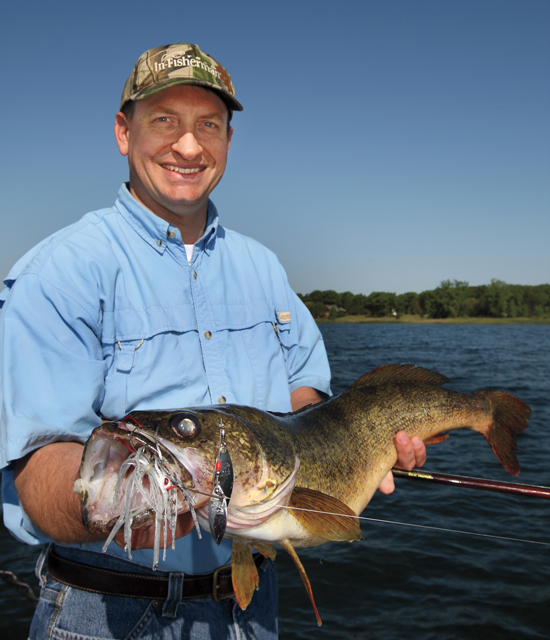
Popular Posts

How Do Break Barrel Air Rifles Work?

0
A break barrel air rifle is a type of airgun where the barrel breaks open at a hinge point just above the breech. This...

Air Rifle vs BB Gun: Understanding the Key Differences and Choosing the Best Option

0
"Air Rifle vs BB Gun: Unveiling the Key Differences and Choosing the Perfect Weapon for Your Shooting Needs. Delve into this comprehensive guide to...

Dry Firing Air Rifles: What You Need to Know

0
"Master the art of precision shooting with dry firing air rifles. Enhance your aiming skills, trigger control, and muscle memory without using ammunition. Discover...