

Home Blog Page 144

8 Differences Between Red & Gray Squirrels (Photos, ID & Behavior)

0

Most backyards in North America have only one type of squirrel that you see regularly.

In northern and eastern regions, the two most common types are red and gray squirrels.

But if you’ve ever seen these two squirrels side-by-side then you know they’re really quite different animals! Not just in terms of size & appearance, but also in their behavior, habitat & even their diet.

So today let’s explore 8 key differences between red and gray squirrels in order to gain deeper insight about our backyard tree dwelling friends.

What’s the difference between red & gray squirrels?

Gray squirrels are much larger than red squirrels. Their tails are bushier and they have a longer skull shape. Gray squirrels also have much more color variation, including black, gray, cinnamon & blond.

To start off, take a look at this side-by-side comparison of a red squirrel on the left, and a gray squirrel on the right.

Let’s break down some things to notice about these two squirrels pictured above:

1. Color

On the surface, perhaps the most obvious difference between red and gray squirrels is their color.
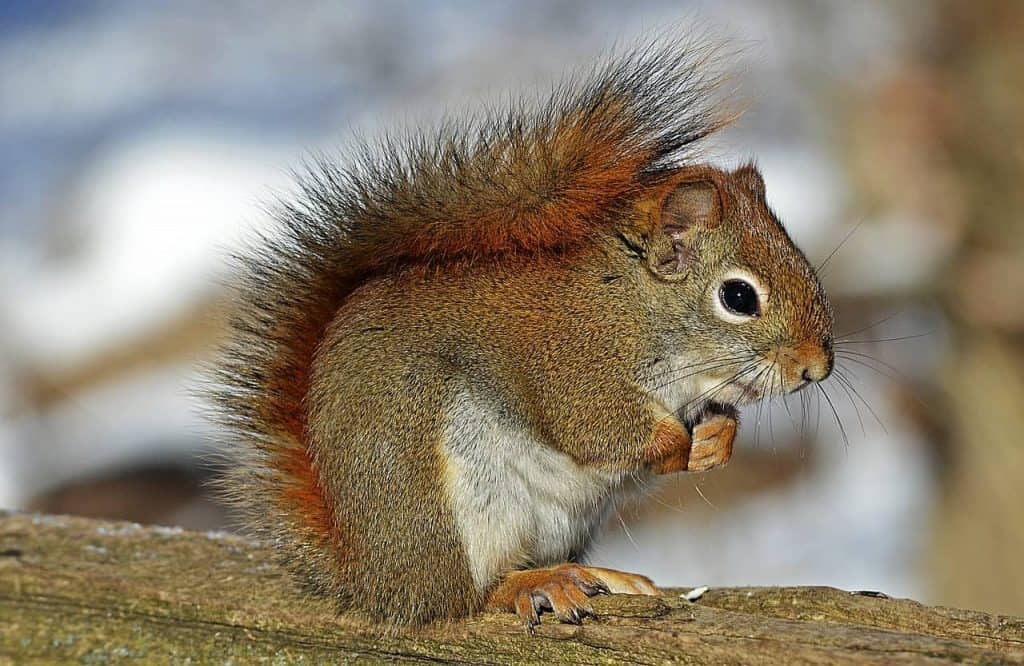
A red squirrel looking very dashing in the sunlight

Generally, red squirrels will all have this same reddish brown color shown above with very little variation. Red squirrels are a species of arboreal (tree dwelling) rodent that all have fur looking more or less identical to the photo above.

However it’s important to realize that gray squirrels are NOT always gray.

One of the big differences in gray squirrels from red squirrels is that they come in many different colors including gray, black & even shades of blond.

Black is one of the most common color variations in gray squirrels, but these are actually the same species!

It’s important to realize these color variations are all part of the same species of squirrel, and can even be brothers and sisters in the same family.

This means color can be a good way to identify squirrels, but only if you remember that gray squirrel communities are multi-colored.

The basic idea is:

  • Red squirrels are always red.
  • Any other color is a gray squirrel (or possibly fox squirrel in overlapping ranges).

In most cases these rules will work, however, New York city is known to have a population of cinnamon colored gray squirrels, which could be confused with red squirrels if you don’t know the other differences.

So while color can be useful, it’s actually not the best way to identify red and gray squirrels in all cases.

So what’s the best way to identify them?

2. Size

In general, the best way to identify gray squirrels from red squirrels is by their size difference.

Gray squirrels are significantly larger than red squirrels. According to most sources, gray squirrels weigh in at a range of 400-600 grams, which is almost twice the size of the 250-330 gram red squirrels.

This size difference is very obvious just by looking at them, and is typically the fastest & most accurate way to identify squirrels in actual practice.

If you’re used to watching gray squirrels and then you suddenly see a red squirrel, their small size will really stand out to you.

Side note: If you live further south, it’s also important to know whether your area has fox squirrels which are even bigger than gray squirrels, and sometimes even interbreed with their populations.

3. Ear Tufts

Another interesting clue to help with squirrel identification is that red squirrels grow little tufts of hair on their ears during winter.

Ear tufts are a more subtle characteristic than the overall size & color, but it still gives us a bit more insight into their character.

In actual practice, you really don’t need to look at squirrels this closely to tell them apart but it’s a funny quirk and something to look for during the cold season.

4. Social Behavior: Communal vs Solitary Squirrels

A much deeper level of knowledge about squirrels comes when you go beyond identification and begin to study their behavior.

Here the differences become even more obvious because red and gray squirrels have vastly different approaches to how they interact socially with other squirrels.

So how do red & gray squirrels differ in terms of their behavior?

Gray Squirrels Are Communal Squirrels

Gray squirrels are generally considered to be much more community oriented than red squirrels.

It’s extremely common to see groups of gray squirrels all hanging out peacefully together in the same area. They share territories, food and sometimes even sleep together.

In many ways, this is really the biggest of all the differences between red and gray squirrels because red squirrels are not communally oriented at all.

Red Squirrels Are Territorial/Solitary Squirrels

Red squirrels in sharp contrast to gray squirrels are some of the most aggressively territorial animals on the planet.

They actively defend their territories, food caches & nest sites with a wide variety of loud vocalizations and visual displays of aggression.

This aggression begins quite early after the baby squirrels are born, and continues for the rest of their life. In this sense, red and gray squirrels really are polar opposites.

5. Habitat

Aside from some occasional overlap at the edges of different habitat types, gray squirrels and red squirrels also tend to occupy very different niches in their habitat.

Gray squirrels thrive in urban & suburban environments and typically prefer forests dominated by deciduous trees (like the oak & beech forests we discussed in a different article on mast trees).

Red squirrels tend to become dominant in more remote forested habitats that include a lot of coniferous trees such as spruce and fir.

For this reason, many people who live in cities have never actually seen a red squirrel, and might not even realize they exist in your area.

The quintessential “squirrel on a power line” is a gray squirrel in almost every case. In all my years living close to red squirrels I’ve only ever seen one use the power lines to move around.

6. Diet

The result (or perhaps the cause of their habitat differences) is that despite being very closely related species in the squirrel family, red and gray squirrels eat almost completely different diets.

Gray squirrels eat a lot of large fleshy deciduous nuts like acorns & walnuts, while red squirrels tend to horde the cones of coniferous trees like spruce and feast on the tiny seeds.

Both squirrels also take advantage opportunistically of hunting insects (and even eating bird eggs!) however the exact species they hunt will vary depend on the ecology of their chosen forest type.

I covered what squirrels eat in much more detail in another article.

7. Calls & Vocalizations

Red and gray squirrels each make their own distinct set of calls & vocalizations which can be used for identification and behavior interpretation.

Grey squirrels who are upset will make a raspy bark when predators are nearby. In some cases it sounds a lot like a small dog barking.

In the following video clip you’ll hear some gray squirrel barking and related alarm calls from nearby robins and other smaller birds.

The red squirrel sound is a combination of high pitched “TIP” sounds mixed with lower range “CHUCK” calls that are used in varying combinations for different situations ranging from predator alarms to territorial situations:

Because red squirrels are so territorial, overall they tend to make a lot more noise than gray squirrels.

Red squirrels also make a loud trilling scream and are generally make a lot more noise than gray squirrels who are less easily offended. You can hear this rattling “scream” call at the 20 second mark in the following clip:

I’ve written a lot more on this topic, so if you want to explore the nuances of squirrel language, go read up about why squirrels chatter and scream so much.

8. Interactions Between Red & Gray Squirrels

Another way to gain insight about these two common messengers of the forest is to look at how they interact where territories overlap.

If you ever find yourself lucky enough to live in a place that has both red squirrels and gray squirrels living in close proximity, this is an amazing opportunity to learn and study their differences.

This is where a lot of interesting questions come up to truly define the boundaries of what it means to be a red squirrel or gray squirrel including their breeding, cooperation and competition.

Can Red Squirrels And Gray Squirrels Interbreed?

Because these are two different species, red squirrels cannot interbreed with gray squirrels.

Even gray squirrels who have a reddish color to their fur are born from two gray squirrel parents. When you see these color variations, remember that size is still the key identification characteristic as explained above in point #2.

Why Are Some Squirrels Red/Black/Gray/Blond?

So if they can’t interbreed, then why are all these different color squirrels living together?

Why can a single family of squirrels include both gray, black and possibly even other colors of squirrels?

Well, this is very similar to genetic variation in red foxes which sometimes makes them black.

It’s the same as how human children can have different colored eyes or hair than their parents. It has to do with the genetic combinations and recessive genes.

As a ridiculous example, it’s a bit similar to why red hair in humans cannot be caused by having an orangutan for a parent… because humans cannot mate with orangutans.

Do Gray Squirrels And Red Squirrels Get Along?

In most cases, red and gray squirrels have such distinct niches in the forest that their territories and trails almost never overlap.

For this reason, even if you do see red and gray squirrels nearby in the same area, they typically co-exist quite peacefully.

It’s not so much that they get along, as much as they don’t have any good reason to get in each other’s way.

Do Red And Gray Squirrels Compete?

In general – red and gray squirrels do not directly compete because they occupy different habitat niches.

Red squirrels are more dominant in coniferous forests, while gray squirrels are more dominant in deciduous forests and cities.

In mixed forests, their territories can occasionally overlap, however, even in these situations they tend to use different trails and different food sources so it’s rare for this to cause problems.

Why Do Red Squirrels Chase Gray Squirrels?

In cases where their activity does overlap, typically red squirrels will be the more aggressive and likely to chase the gray squirrels.

Considering that they’re so much smaller, this can be a funny surprise to see the red squirrels acting aggressively towards gray squirrels. But it really just comes down to the fact that red squirrels are so much more territorial.

If you spend a lot of time in mixed or coniferous forests with high red squirrel populations then you know what I’m talking about. You’ve probably been yelled at by a squirrel or two in your days!

When it comes down to it, gray squirrels and red squirrels really aren’t competing over food, nesting sites or mates, so there’s no reason for them to be territorial other than the fact that red squirrels are very aggressive towards pretty much everything.

Go Look For These Differences Yourself!

So now all you have to do is go watch your local squirrels for yourself.

Making your own observations is really what brings the magic of nature to life.

  • How many of these squirrel differences can you observe in your own backyard?
  • Are you seeing signs of territorial or communal squirrel behavior?
  • What else do you notice about your local gray and red squirrels?

Let me know what you discover out there, and happy squirrel watching!

Best .50 Caliber Air Rifles – Top 5 Hard-hitting Pellet Guns for Big Games (Reviews and Buying Guide 2025)

0

Finding the best .50 air rifle can be a daunting task. With so many to choose from, it can be hard to know which is the right one for you. In this blog post, we will outline some of the best .50 air rifles on the market and what makes them stand out from the competition. Keep reading for our top picks!
Top-rated .50 caliber Air Guns

If you are in a hurry, here is an overview of the highlight candidates in our list of best .50 air rifles in 2025:

IMAGEPRODUCTDETAILSLINK
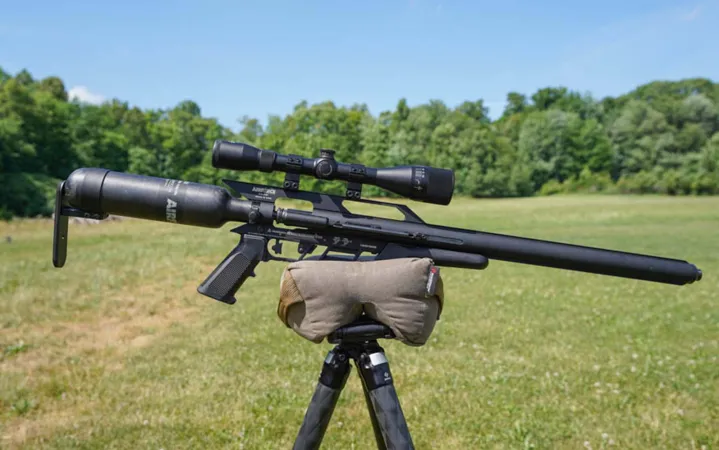
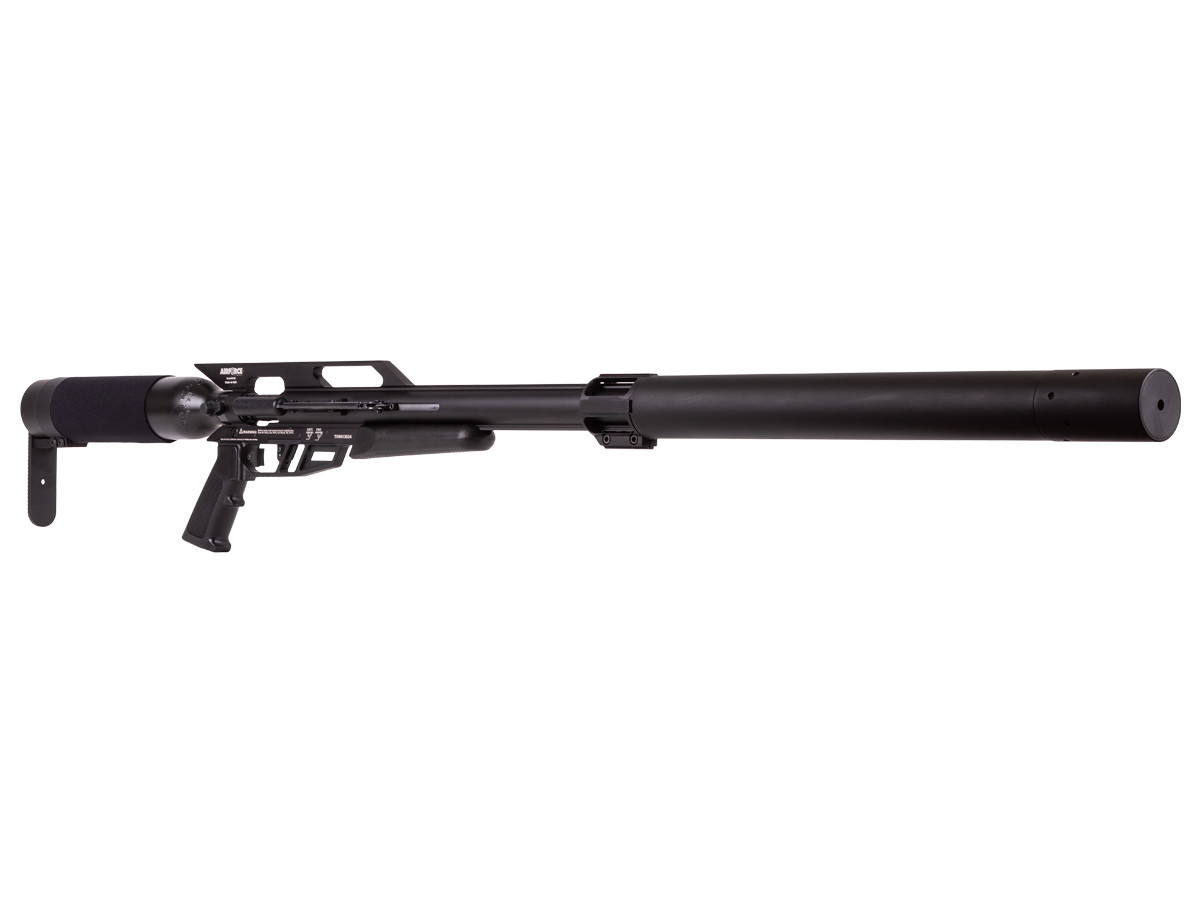
Best Overall
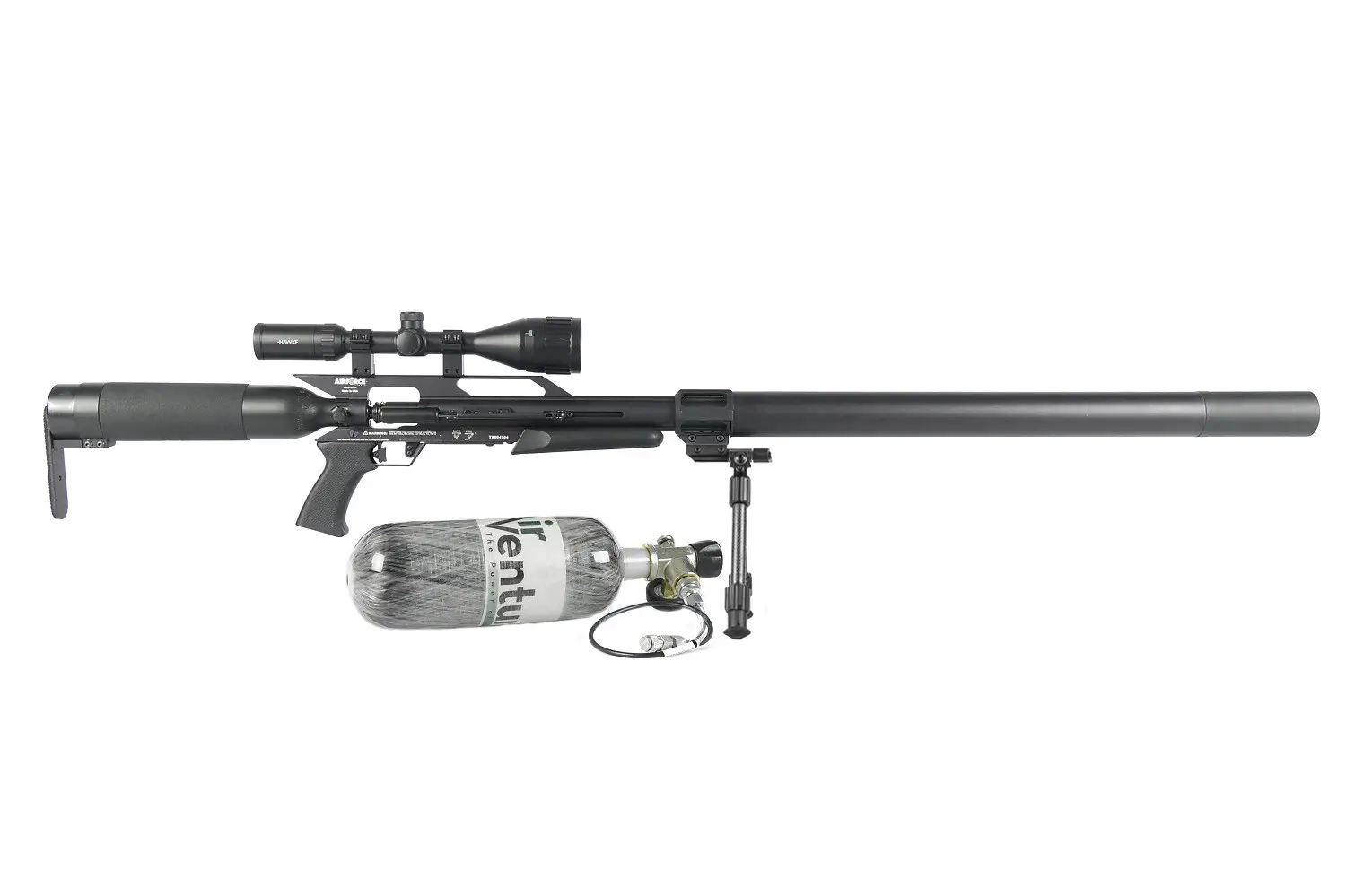
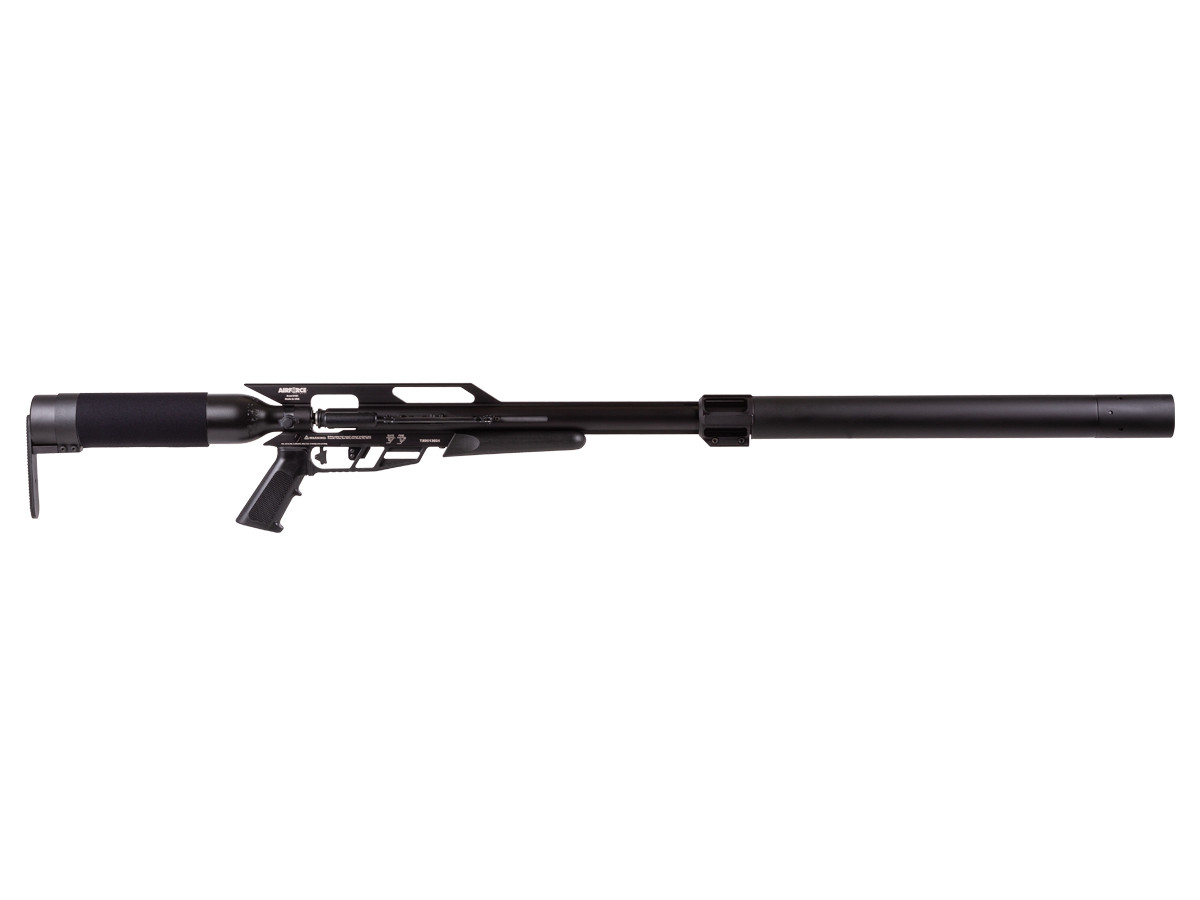
Airforce Texan LSS
  • Calibers: .257,.30,.357,.457,.510
  • Max Velocity: 960 FPS
  • Max Muzzle Energy: 800 FPE

check price on Pyramydair


check price on airgundepot

Best Price
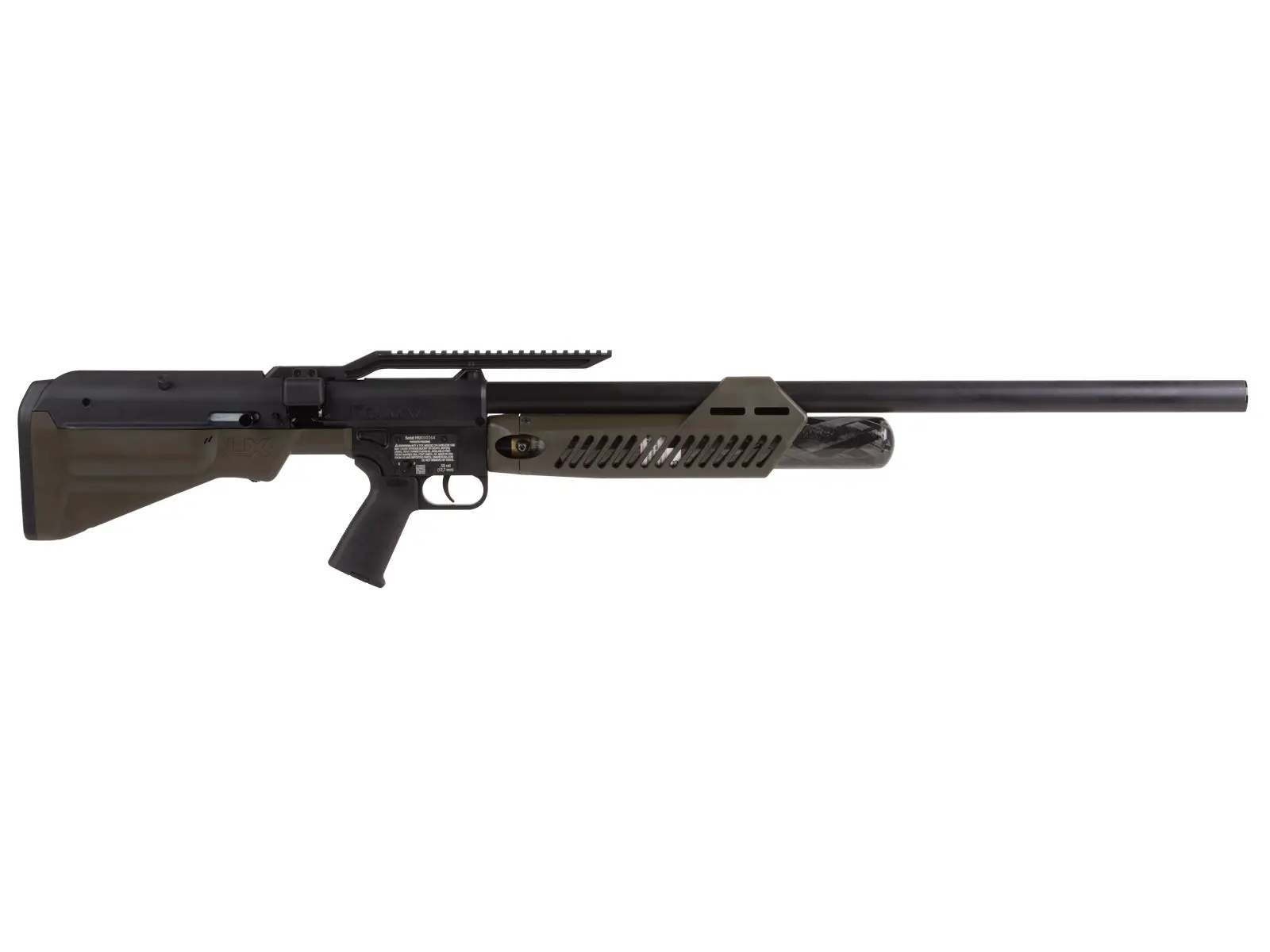
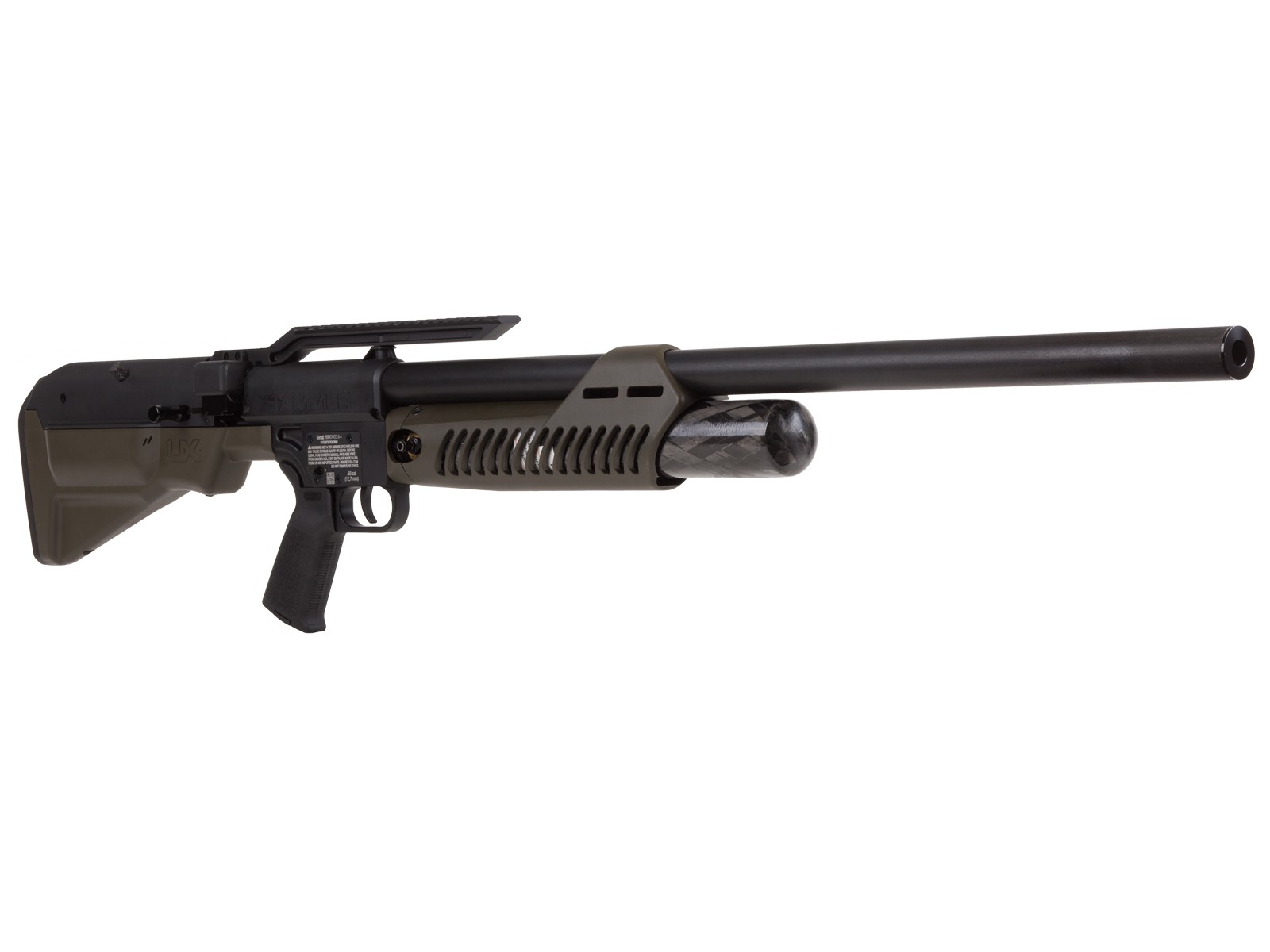
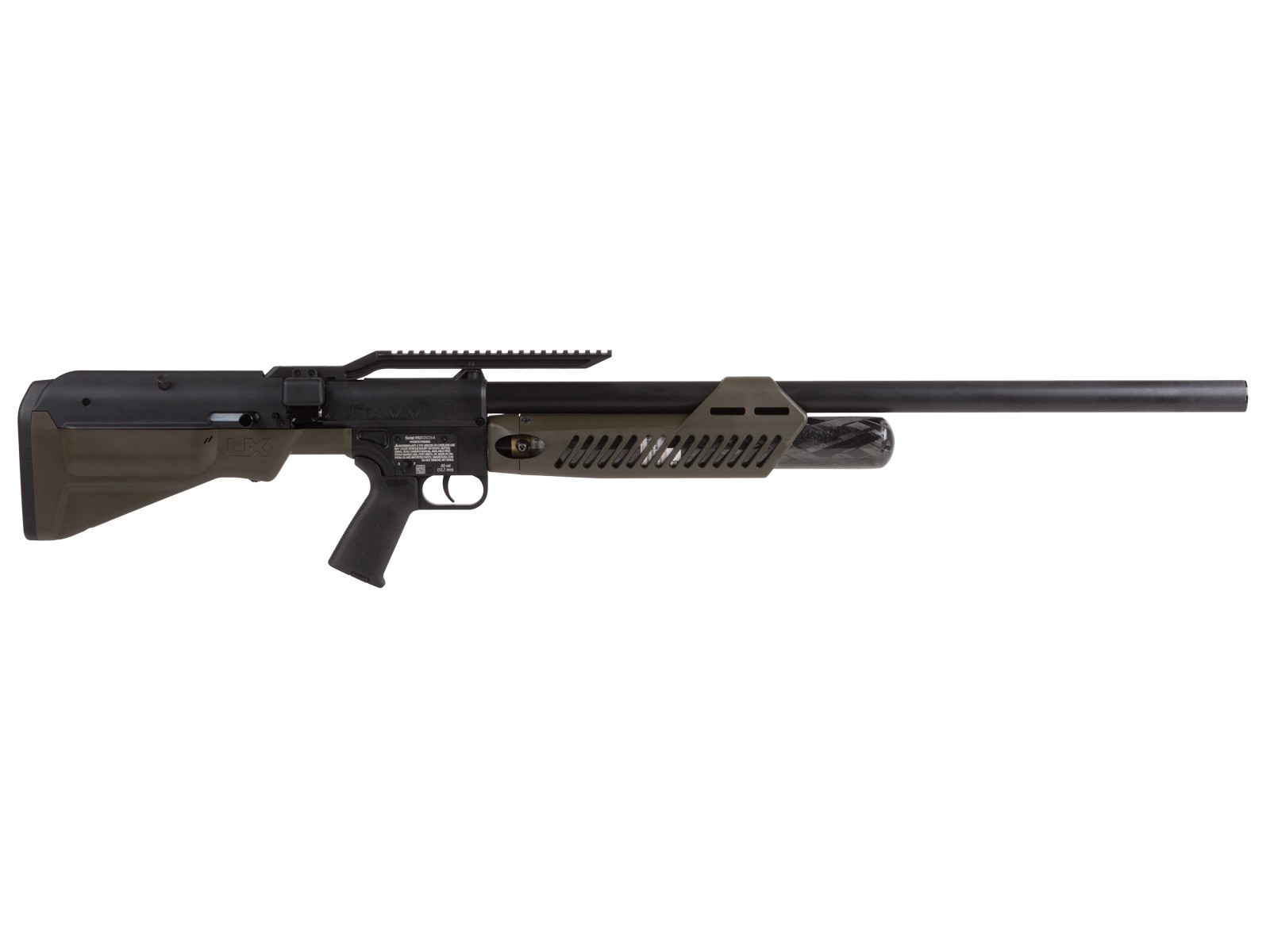
Umarex Hammer
  • Calibers: .50, .51
  • Max Velocity: 1000 FPS
  • Max Muzzle Energy: 705 FPE

check price on Pyramydair


check price on airgundepot

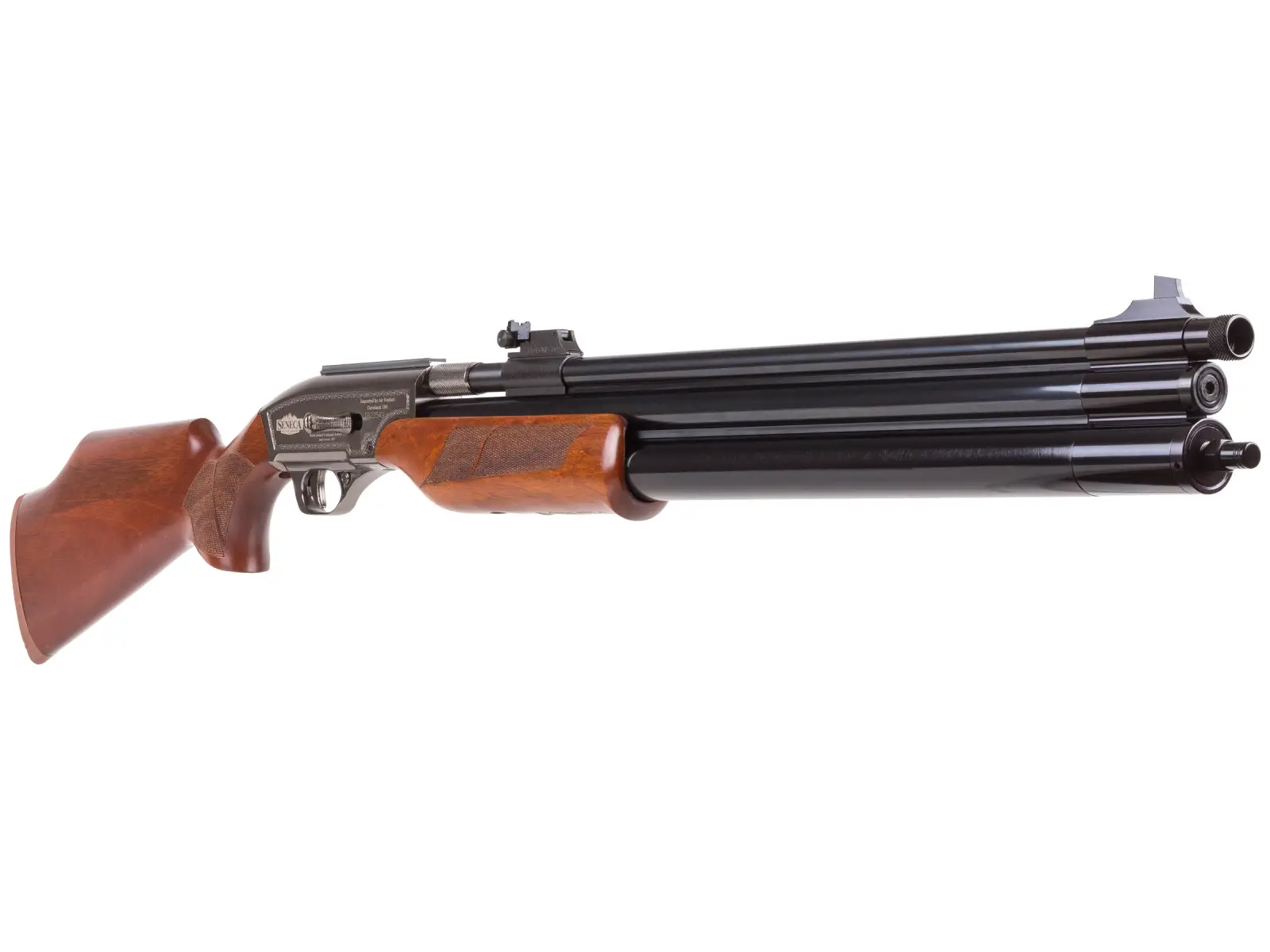
Best Shotgun
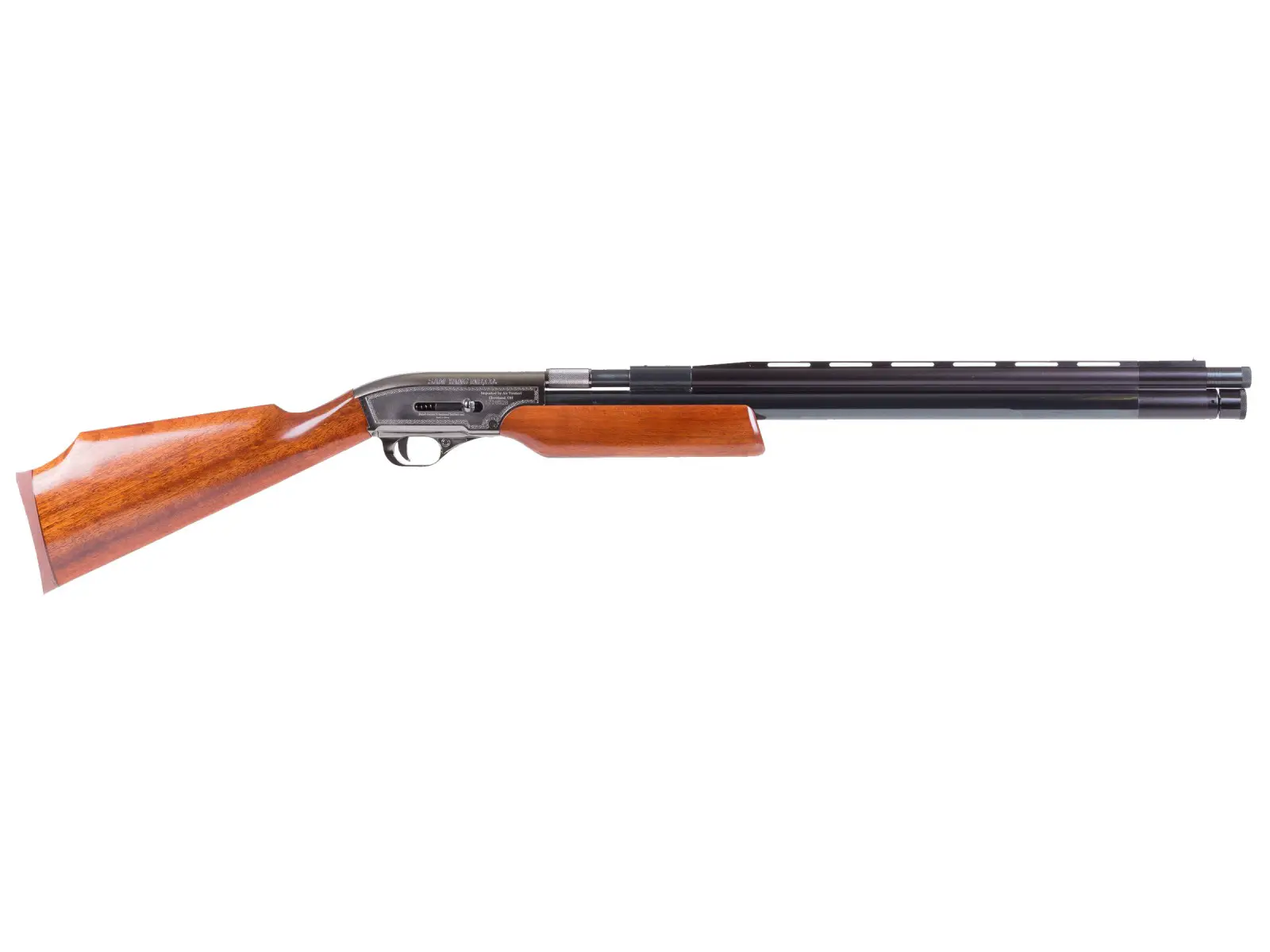
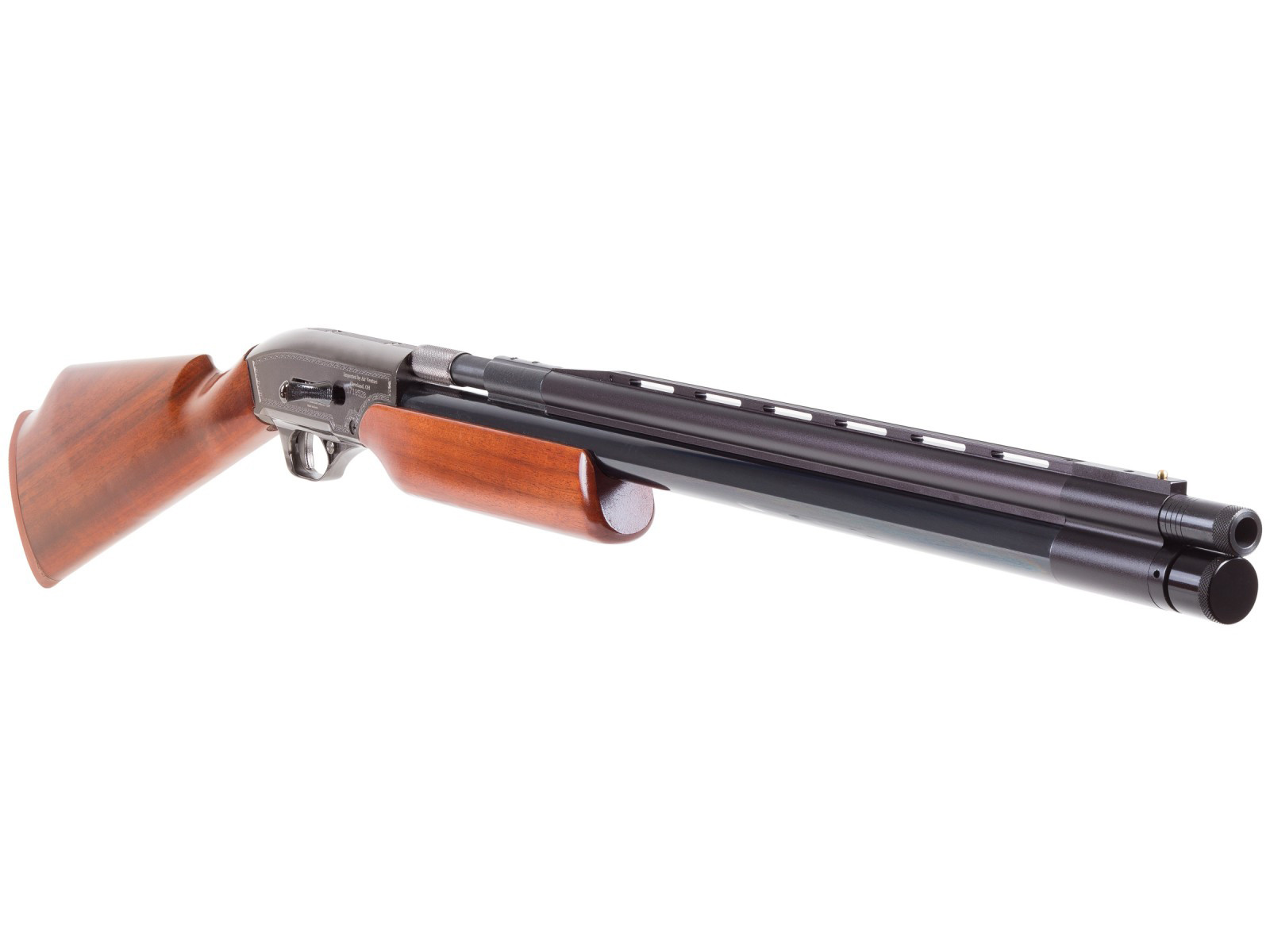
Seneca Wingshot II
  • Calibers: .50
  • Max Velocity: 1130 FPS
  • Max Muzzle Energy: 360 FPE

check price on Pyramydair


check price on airgundepot

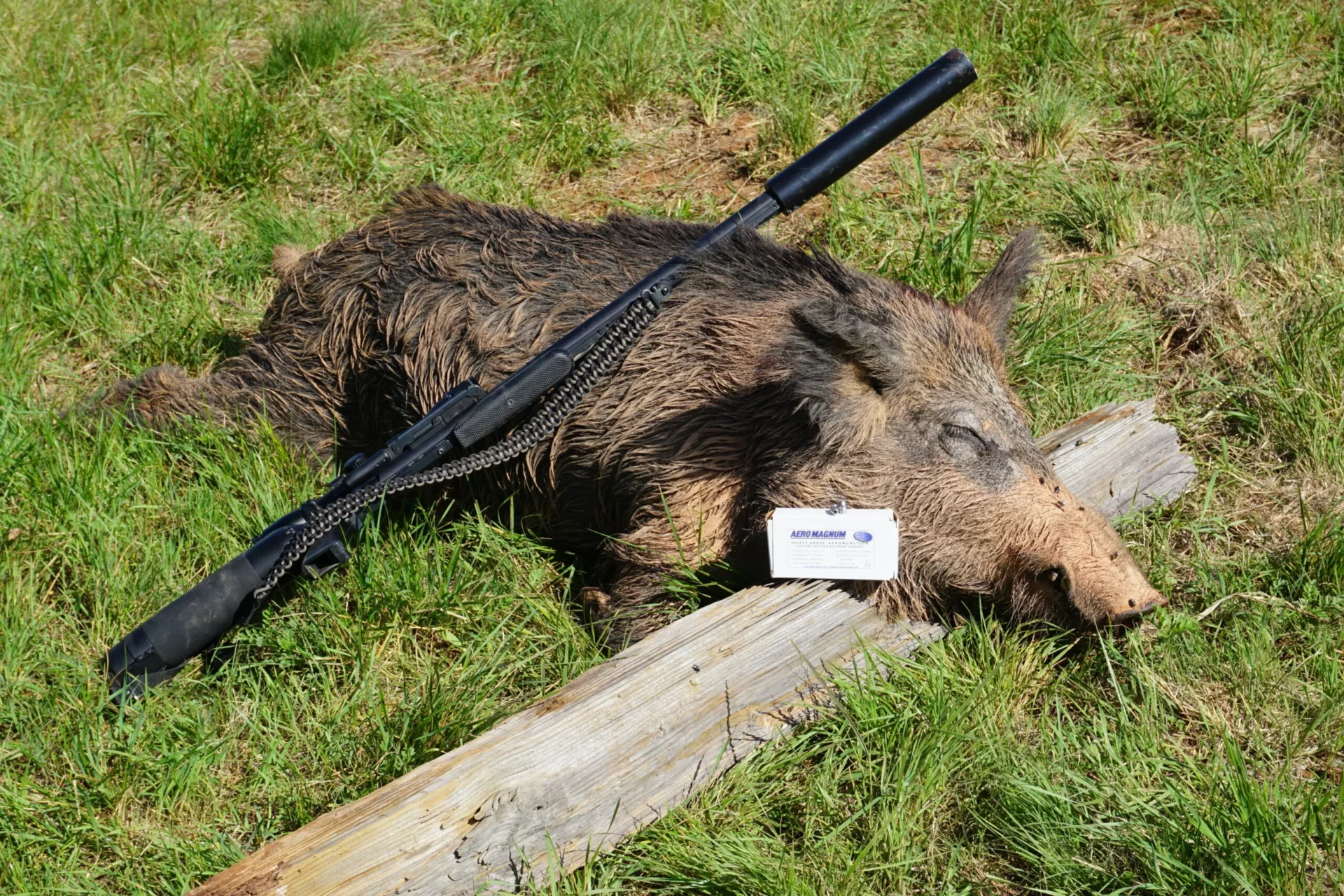
Best For Hogs
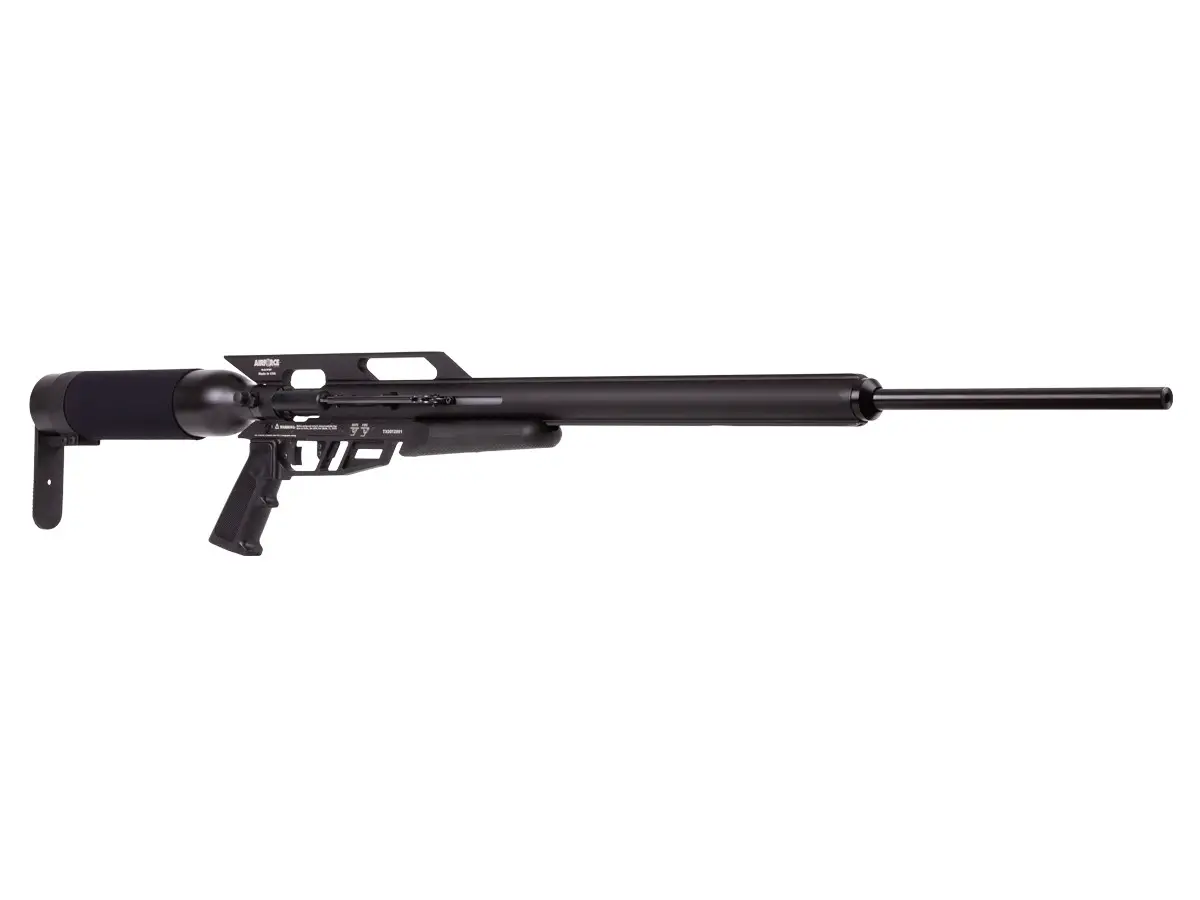
Airforce Texan Big Bore
  • Calibers: .257,.30,.357,.457,.510
  • Max Velocity: 960 FPS
  • Max Muzzle Energy: 700 FPE

check price on Pyramydair


check price on airgundepot

Most Versatile
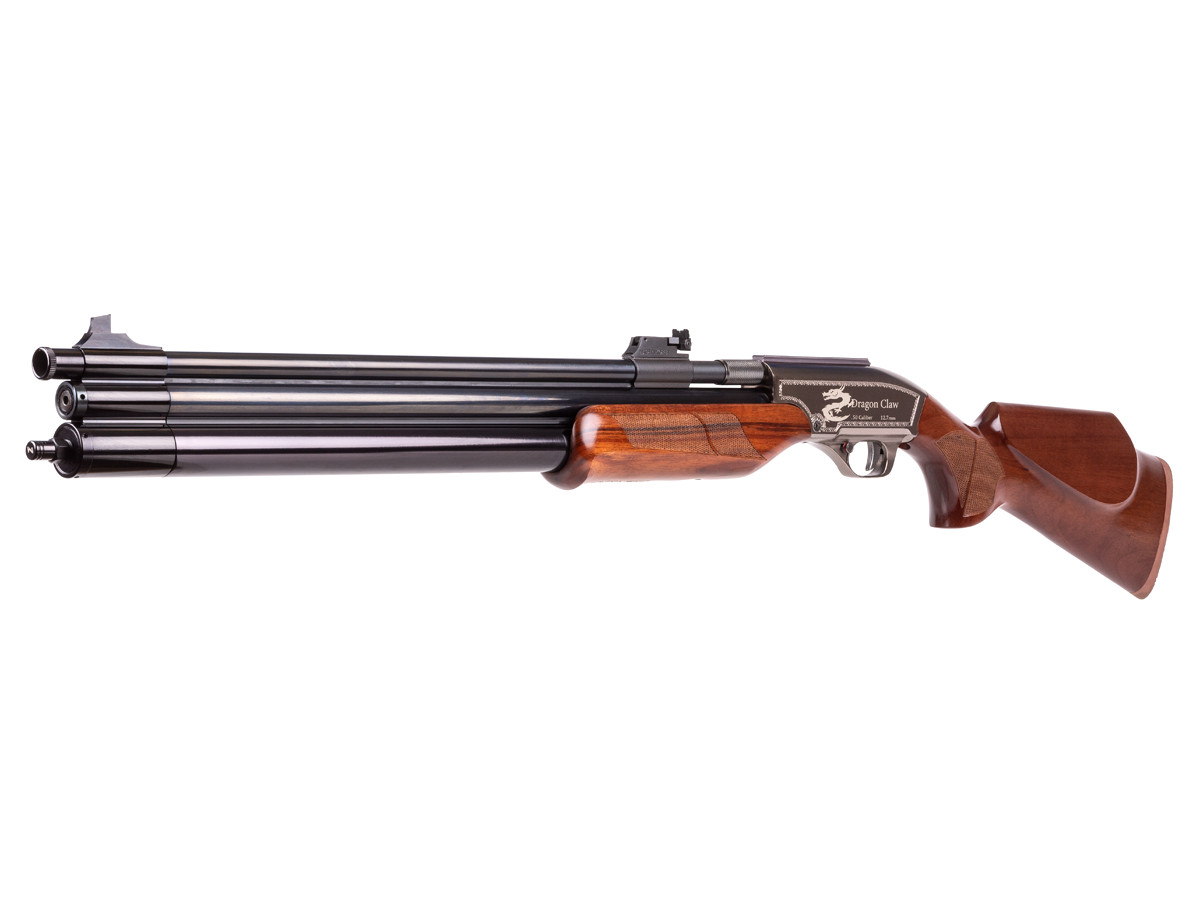
Seneca Dragon Claw
  • Calibers:  .50
  • Max Velocity: 679 FPS
  • Max Muzzle Energy: 230 FPE

check price on Pyramydair


check price on airgundepot

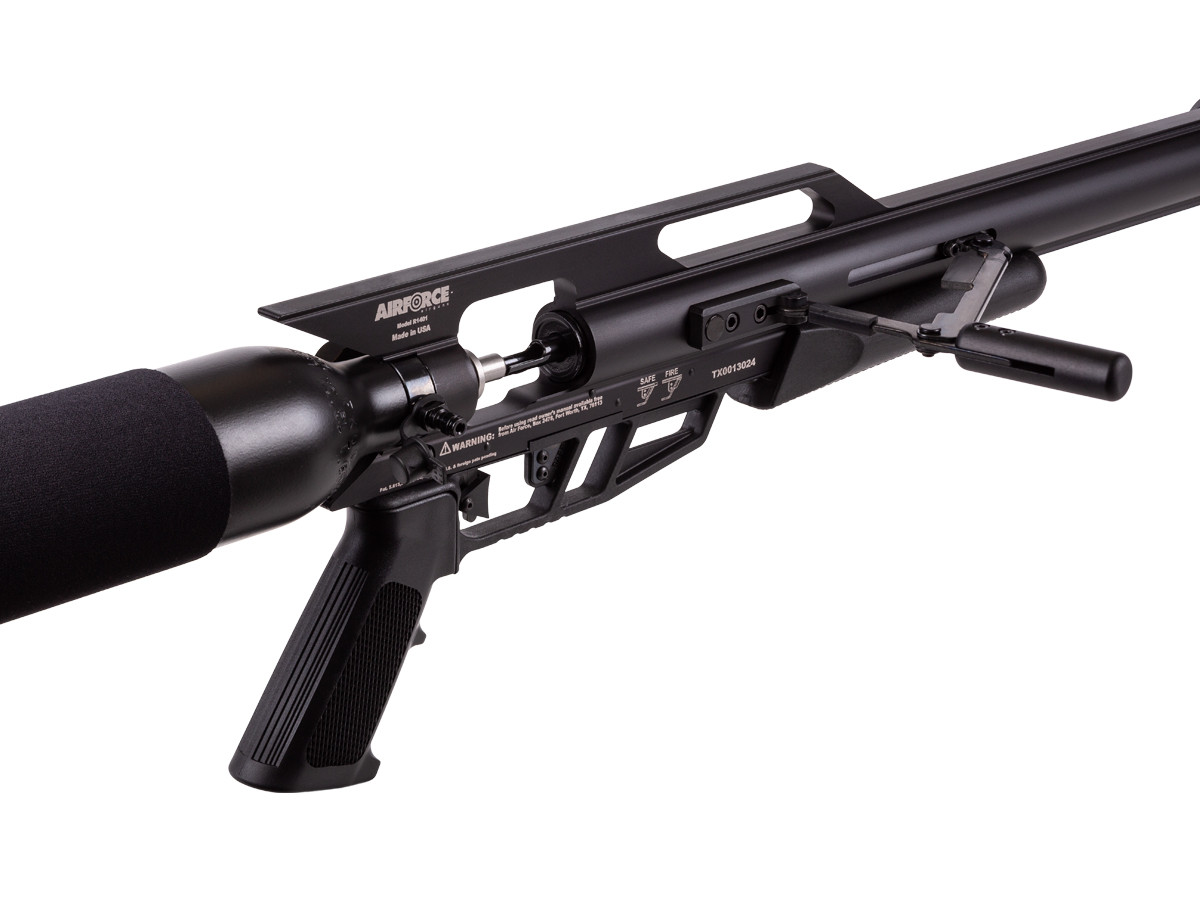
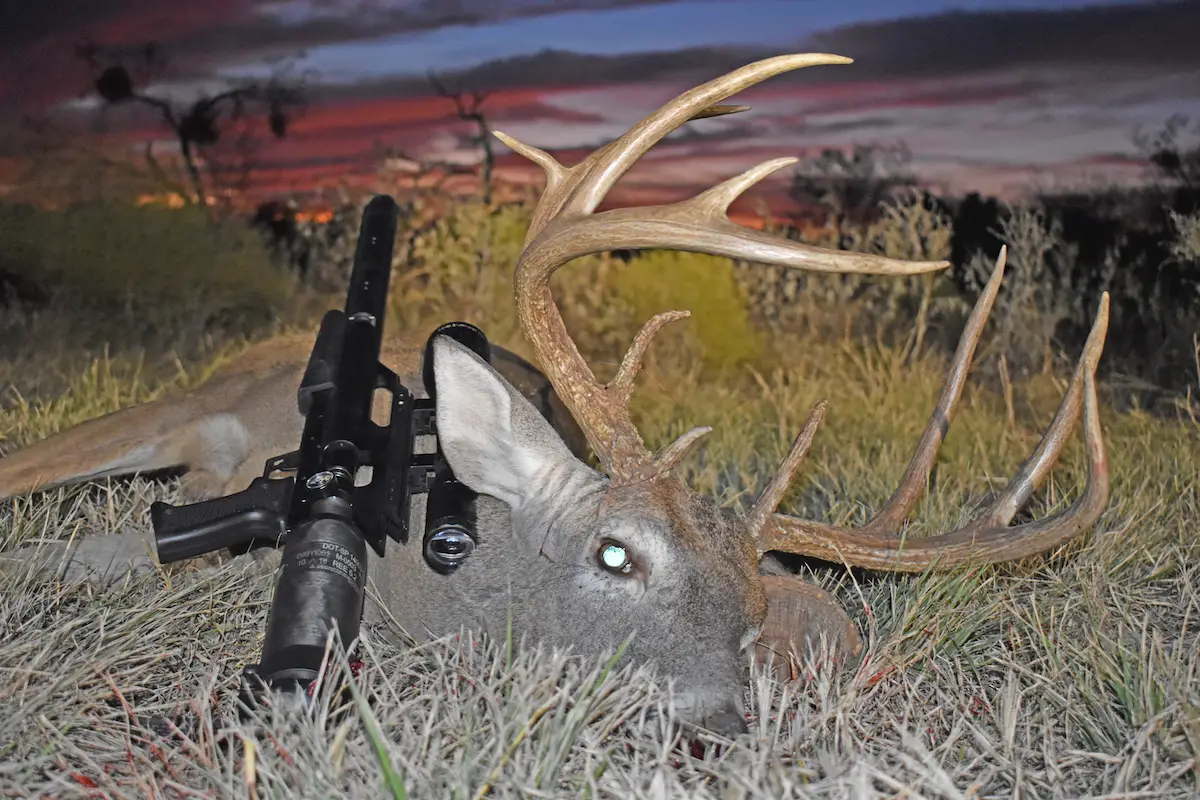
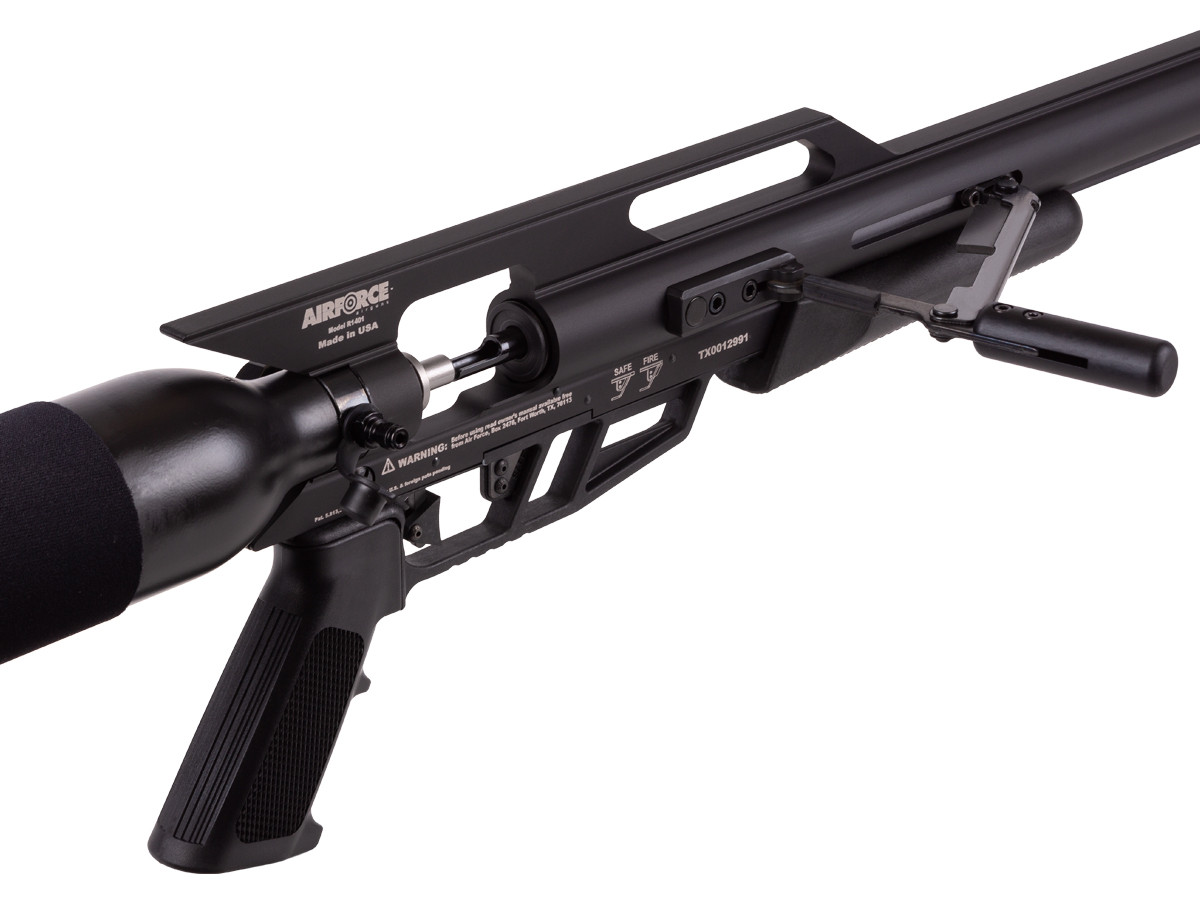
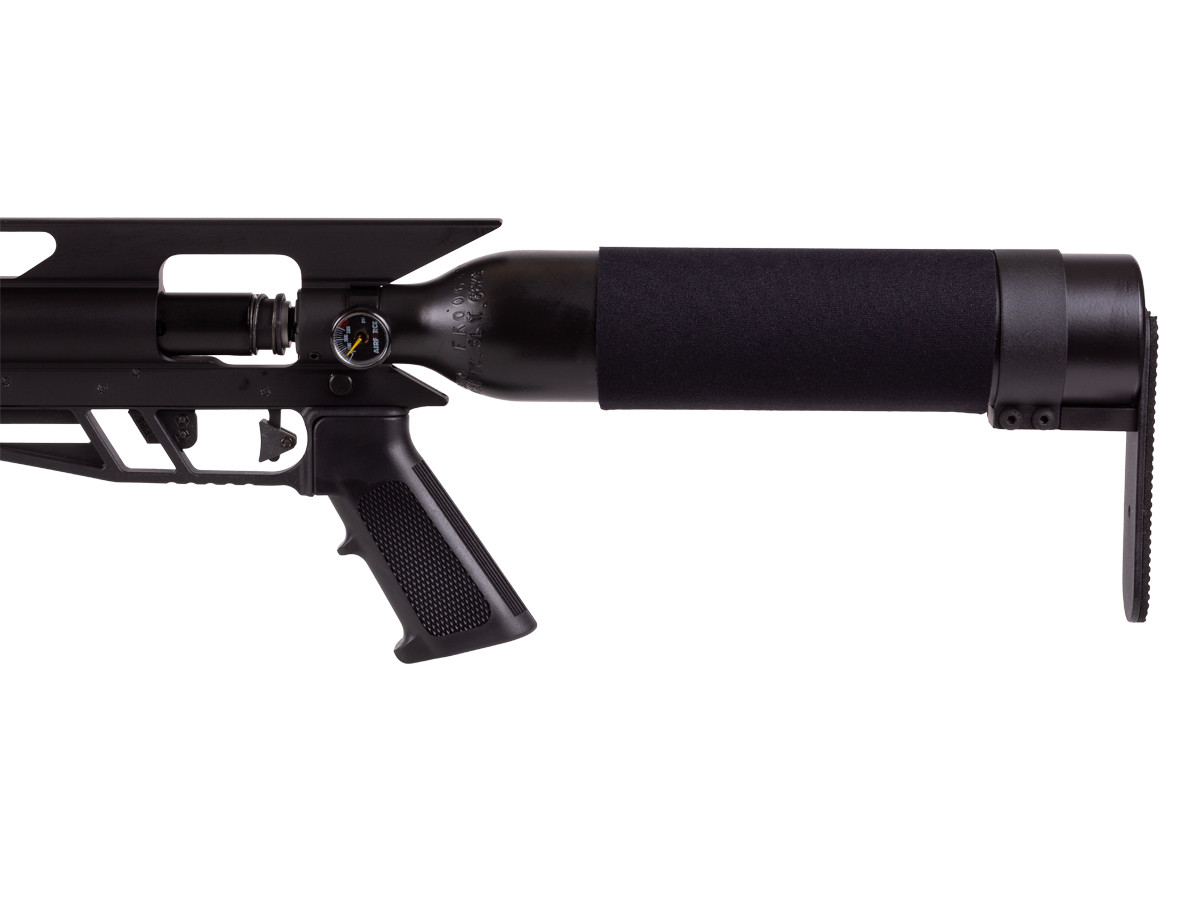
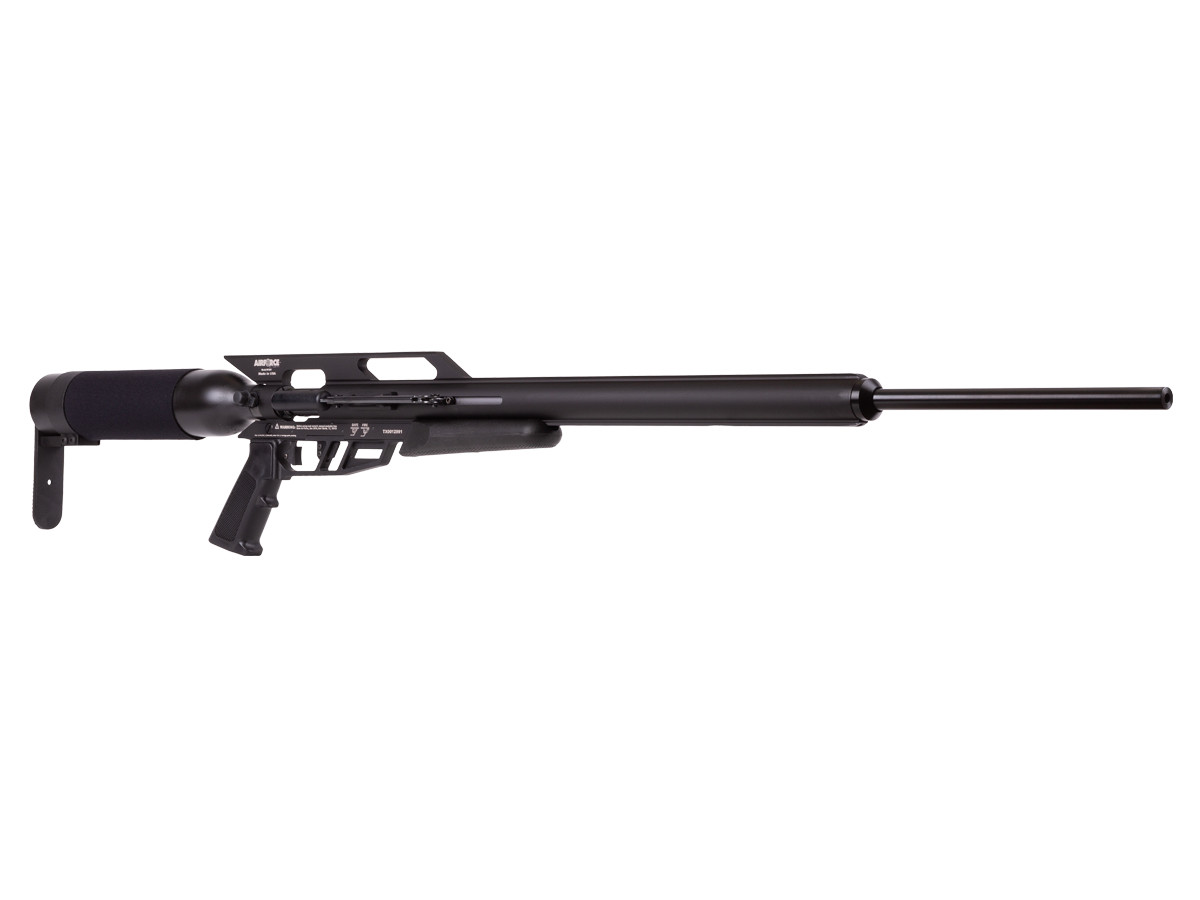
1. Airforce Texan LSS

The AirForce Texan LSS PCP air rifle gives shooters the best of both worlds by combining the power of a full-sized Texan with the sound suppression system of the Texan SS.

The concept for the LSS comes from direct feedback from hunters in the field who wanted the extra power and ability to shoot heavier slugs provided by the traditional Texan with the added benefits of a quieter gun like the Texan SS.

Easy to load and simple to use, this Big Bore air rifle will let you focus on hunting with the knowledge you have enough power to get the job done.

The addition of .357 and .308 Calibers provides greater flexibility for predators, varmints, and other small to medium size games. So if you’re looking for an air rifle that can do it all, look no further than the AirForce Texan LSS!

Chrony tests

CalibersPelletsFPSFPE
.457 Hornady Round Balls 143 Gr1050350.16
.25772 grain bullet1130204.2
.457 290 grain813426
.457 350 grain780473

Features:

  • Velocity: Up to 1100 FPS
  • Pressure relief device
  • Max Fill Pressure: 3000 psi/200 bar
  • Energy: up to 700 foot-pounds
  • Adjustable power
  • 490cc air tank
  • Two-stage, adjustable trigger
  • Safety: automatic on cocking
  • Lothar Walther barrel
  • Low-effort, sidelever cocking
  • Features acoustic baffle system

Recommended uses

  • Pest control – small/medium/large game hunting: deer, hogs, rabbits, squirrels, coyotes.

Pros and Cons

ProsCons
  • Made in the USA
  • Top-notch quality and craftsmanship
  • Easy to operate
  • Superb accuracy(one hole groups at 50yds)
  • Excellent power (800 FPE with 500+g ammo)
  • You will need an adapter if you want a Picatinny scope mount

Check Price on PyramydAir

2. Umarex Hammer

When it comes to air rifles, there is simply no comparison to the Umarex Hammer.

This incredible rifle can shoot a 550-grain pellet at a staggering 760 FPS, making it one of the most powerful air rifles on the market today. With an impressive 705 ft-lbs of energy, the Hammer can take down even the largest game with ease.

And because it uses compressed air instead of gunpowder, it produces very little noise and recoil, making it ideal for hunting situations. Whether you’re looking for power and accuracy, or want an air rifle that is in a class all by itself, the Umarex Hammer is a perfect choice.

Features:

Umarex Hammer .510/.50 PCP Air Rifle

  • Precharged pneumatic (PCP)
  • German made Barrel with .510 diameter grooves
  • 2-round chamber magazine (includes 2)
  • Rifled barrel
  • Straight pull speed-bolt with 2 lbs cocking effort
  • 3-lb trigger weight
  • Regulated to 3,000 psi per shot
  • 4,500 fill pressure (24 cubic inch carbon fiber tank)
  • Built-in manometer (pressure gauge)
  • Weaver/Picatinny optics rail
  • PolyOne designed and manufactured stock
  • AR Magpul style grip
  • Integrated rear sling stud
  • 3 slots in forearm grip to accept M-LOK attachments
  • Quick Disconnect Foster fitting
  • 43.75-inch overall length
  • 8.5 pound overall weight unloaded without scope
  • 29.5-inch barrel length with full-length composite shroud
  • Made in the USA

Pros and Cons

ProsCons
  • Affordable price
  • Well-built and powerful
  • Can take down deer and Cape Buffalo
  • Well-balanced and not too heavy (8.5 lbs)
  • The bolt is not of great material and does not like cold weather

Check Price on PyramydAir

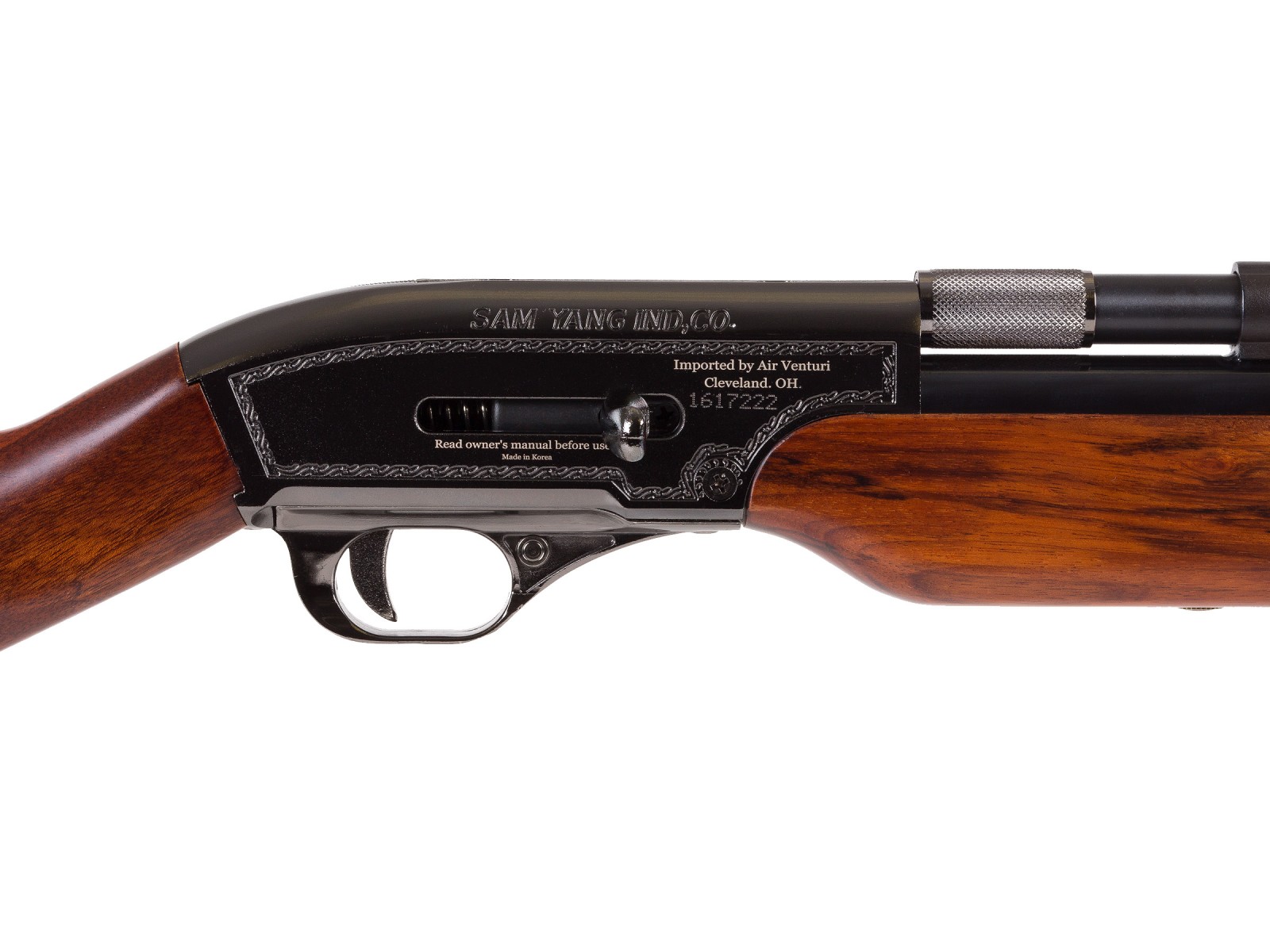
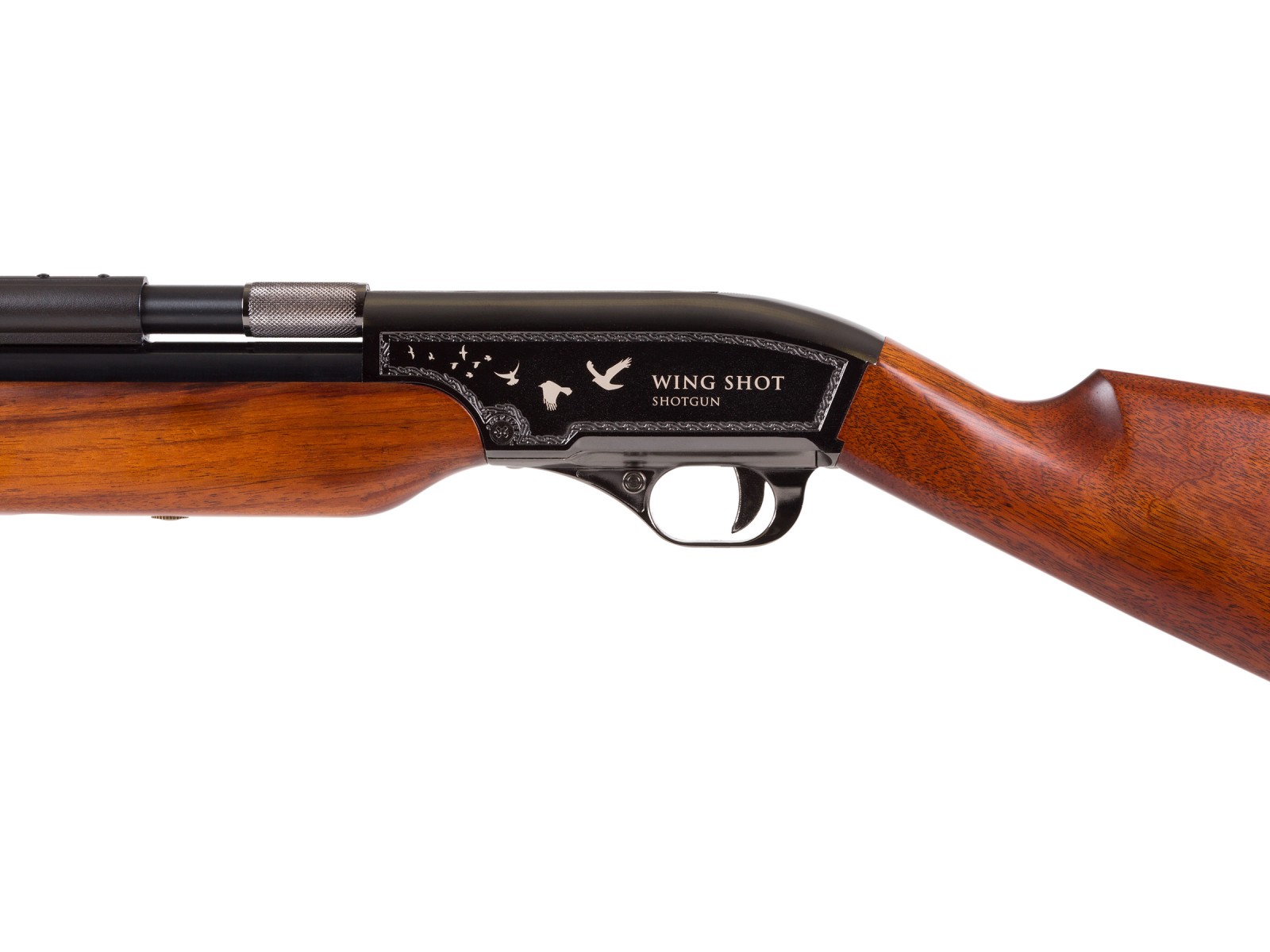
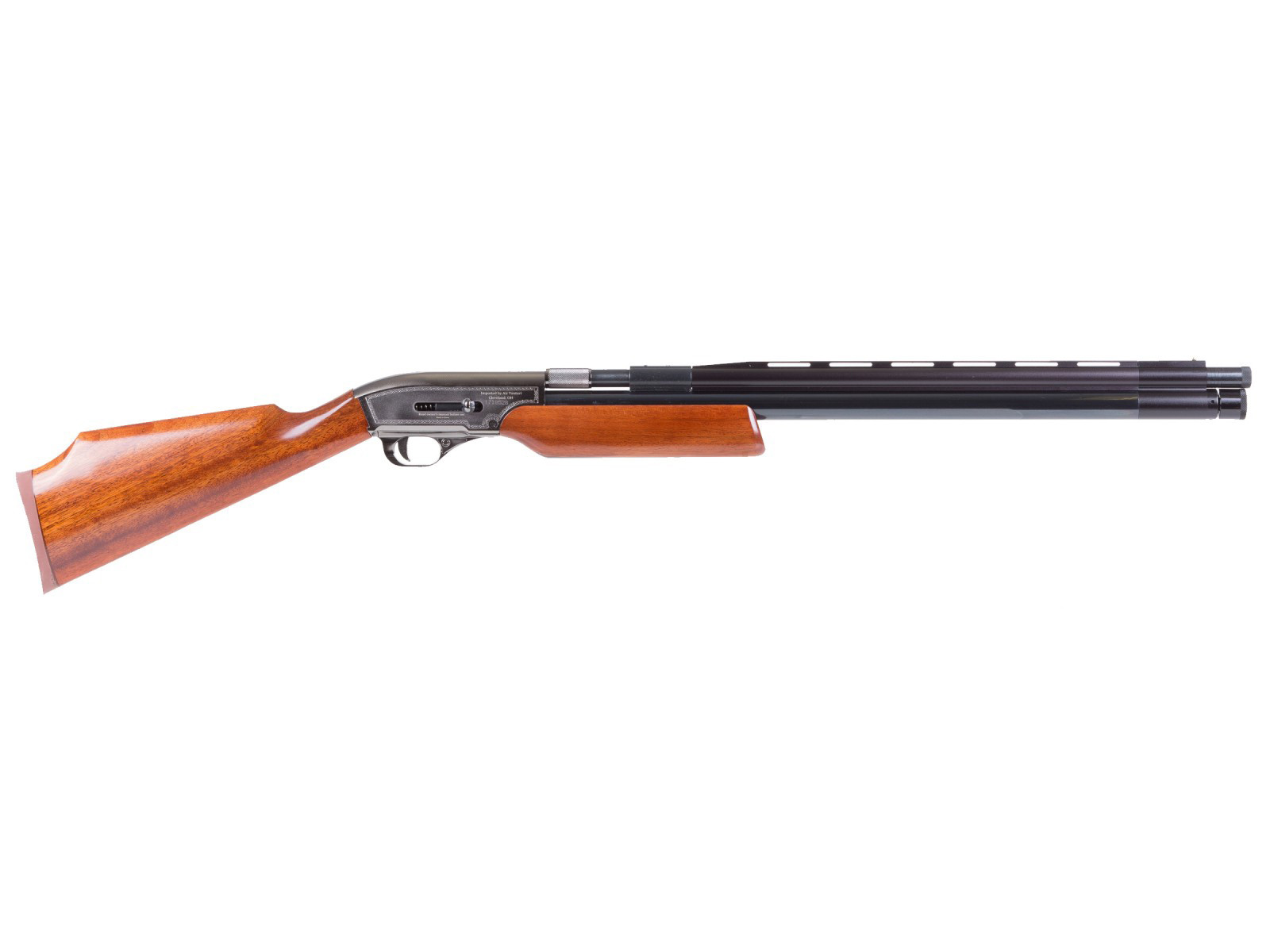
3. Seneca Wing Shot II

The Seneca Wing Shot II Air Rifle is a versatile and powerful air rifle that is perfect for hunting small to large games. With a caliber of 0.50″ and a barrel length of 22.5″, this shotgun air rifle has the power and accuracy you need to take down your prey.

The hardwood stock provides a smooth, comfortable grip while the bead front sight ensures precise aiming. The ventilated rib makes it easy to acquire your target, making this air rifle perfect for any hunting situation.

Whether you’re looking to take down a big buck or some pesky varmints, the Seneca Wing Shot II Air Rifle has the power and performance you need to get the job done right.

Chrony tests

CalibersPelletsFPSFPE
.50Air Venturi 177gr739215
.50Air Venturi 430 gr Air Bolt507246

Features:

  • Precharged pneumatic (PCP)
  • Single-shot
  • Smoothbore
  • Bead front sight (no rear sight)
  • Built-in manometer (pressure gauge)
  • Ambidextrous hardwood stock
  • Removable choke
  • Single air reservoir (244cc)
  • Shoots .50-caliber lead bullets or .50-caliber shotshells
  • Shoots .50-caliber Air Venturi Air Bolts

Recommended uses

  • Small/Medium/big game hunting: javelinas, deer, coyotes, rabbits, squirrels, prairie dogs

Pros and Cons

ProsCons
  • Excellent build quality & feel
  • Great knockdown power
  • Great for shooting birds and hunting quail
  • Can load it with a shot to take care of small rodents & pests.
  • Lightweight 
  • Simple-to-follow instructions
  • No follow-up shot if you are using arrows

Check Price on PyramydAir

4. Airforce Texan

The AirForce Texan is the world’s most powerful production air rifle, and it just got even more powerful. With .45-caliber bullets reaching up to 1,000 fps and 600+ ft-lbs of force, thanks to the updated TX2 valve, the AirForce Texan is a real powerhouse.

With its adjustable power settings, you can customize the rifle to your specific needs.

It also features a pressure relief device, making it safe and easy to use. The low-effort side lever cocking system makes cocking the rifle a breeze.

The Texan is available in .257, .308, .357, .457, or .510 caliber and comes in an original black finish. 

Easily load a projectile, cock the gun, take aim, squeeze the trigger, and deliver jaw-dropping power. Because the gun doesn’t come with open sights, you’ll need to mount a scope. But that’s no problem because an entire world of hunting opportunities has just opened up to you!

Accuracy

CalibersPelletsDistancesGroups
.308JSB EXACT DIABOLO, 50.15 Gr50 yards1/2"
.308JSB Exacts....50.15 gr25 yardsnickel size
.457340 grain 100 yards0.75"
.457143 grain round ball50 yardsone hole
.457150 gr ball75 yards3/4"
.457Air Venturi FP 350 gr50 yards0.73"
.357Aero Magnum 50 yards0.66"
.357Predator Polymag50 yards1.42"
.357Aero Magnum 100 yards1.31"

Chrony tests

CalibersPelletsFPSFPE
.357JSB Diabolo Exact 81.02 gr1100217.74
.30Slug 85 grains 1040204.19
.457Air Venturi Round Ball 143 Grains1016327.85
.357Air Venturi Round Ball 66 grain1066166.58
.357Air Venturi Flat Point 127 grain847202.36
.30Nielson 122 gr. hollow point
692129.76
.30Hunter Supply 134 gr. s.p.
721154.71
.457Semi-wadcutters 215 Grains835332.94
.457Air Venturi Round Ball 143 Grains, 1044 346.17
.457Slugs Nielsen 350 gr809508.77
.457Slugs 405 gr765526.42
.457Air Venturi FP 350 gr710391.87
.257Nielsen 85gr1048207.35
.257Areo Magnum 70gr1139201.7
.457Air Venturi PHP 250gr813367.01
.457Air Venturi SWC 265gr820395.76
.457Air Venturi FP 350 gr746432.62
.457Air Venturi FP 405 gr704445.82
.357Aero Magnum 128gr915238.02
.357Predator Polymag 81gr989175.97
.457Roundball 143 gr907261.28
.457Hollow point 200 gr848319.43
.457Round Nose 350 gr791486.38
.457Round Nose 405 gr750505.98
.457Hunters Specialty 310gr806447.29
.457Hunters Specialty 350gr769459.7

Read review here

Features:

  • Velocity: up to 1100 feet per second*
  • Max Fill Pressure: 3000 psi / 200 bar (Only use compressed air or dry nitrogen)
  • Action: Single shot
  • Weight: 7.65 lbs
  • Length: 48 inches
  • Barrel:34 inches
  • Trigger: 2 stages, adjustable for position
  • Sights: Open or optical may be installed
  • Air Tank Volume: 490cc
  • Safety: Automatic on cocking
  • Energy: up to 650-foot pounds

Recommended uses

  • Pest control – small/medium/large game hunting: deer, hogs, groundhogs, squirrels, rabbits, coyotes.

Pros and Cons

ProsCons
  • Made in the USA
  • Powerful and fun to shoot
  • Great for deer or hogs
  • Easy side lever
  • Safety in the perfect spot
  • Lots of mods and ammo choices
  • Can drive tacks at 100+ yards
  • The rifle is a bit long

Check Price on PyramydAir

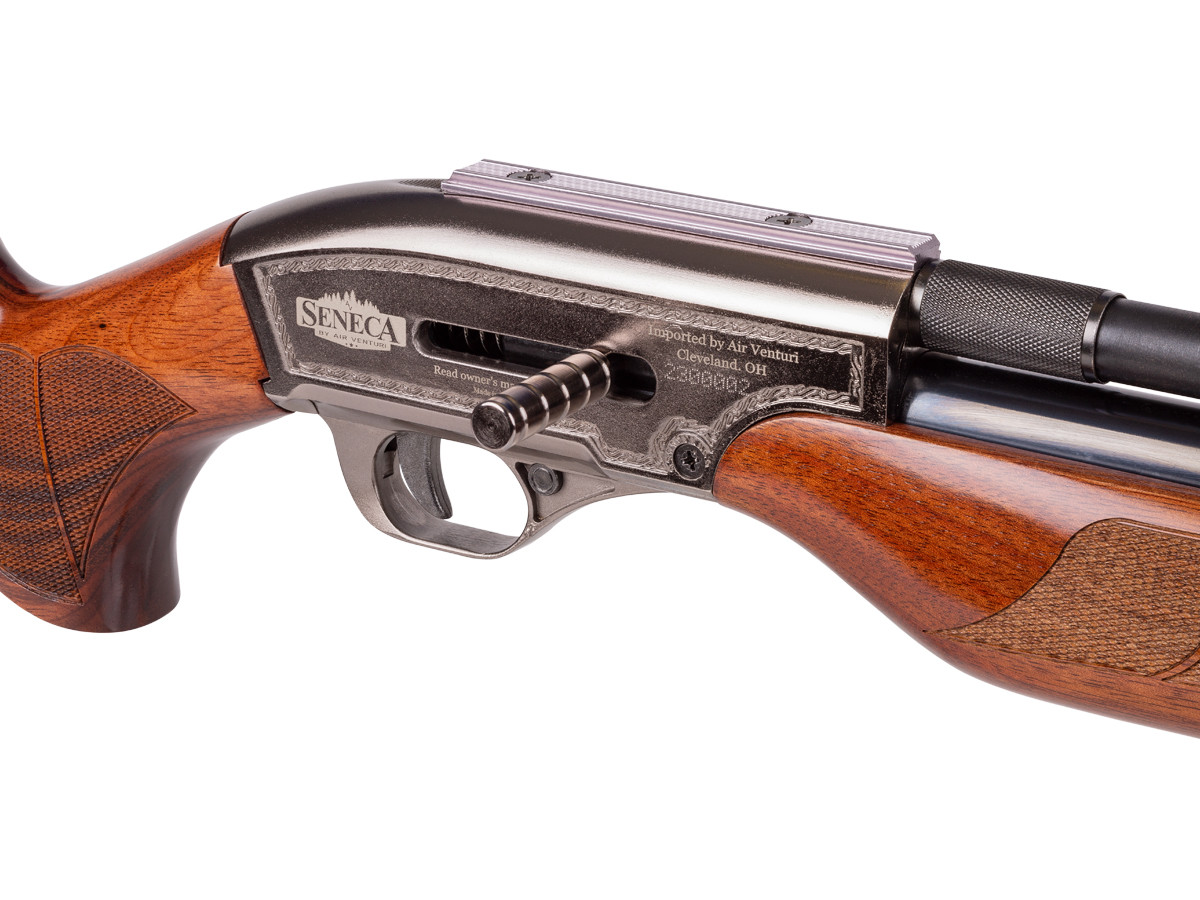
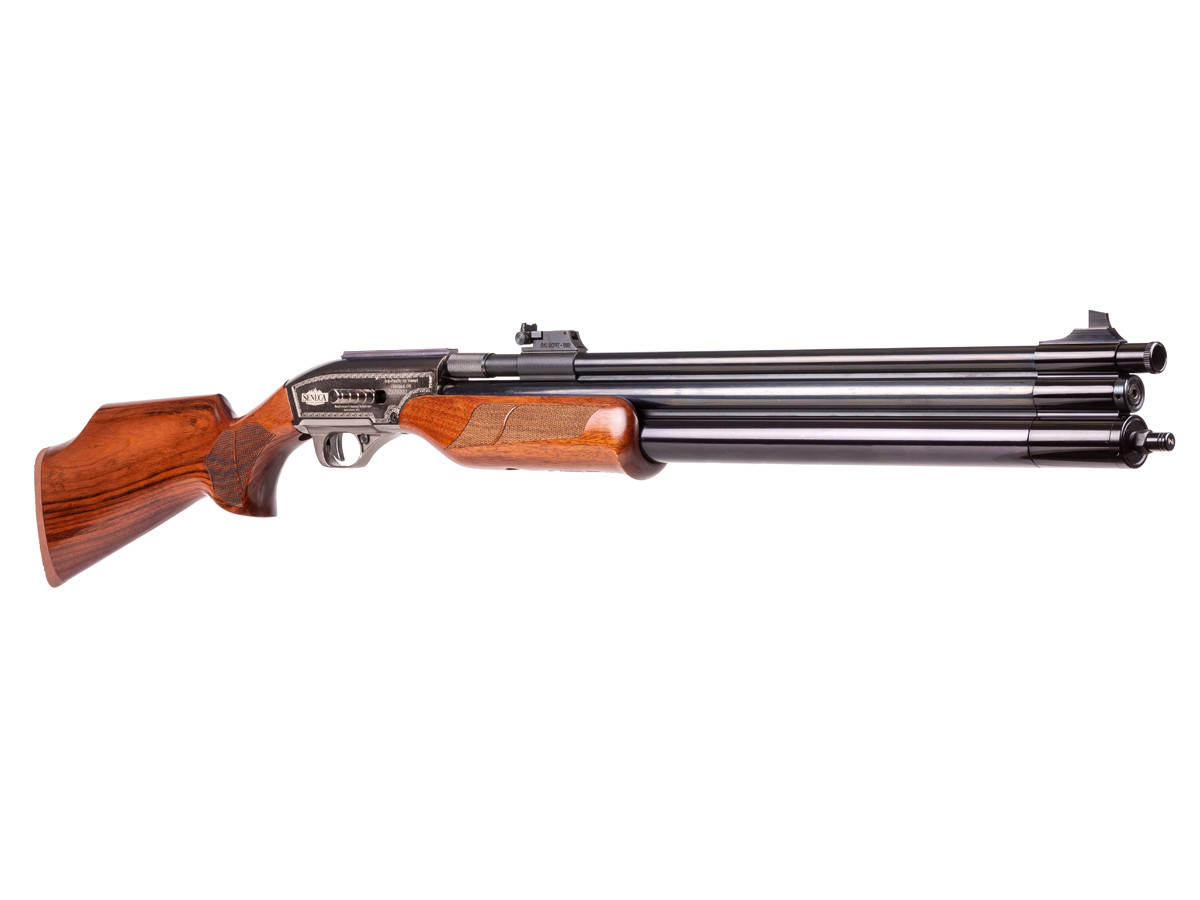
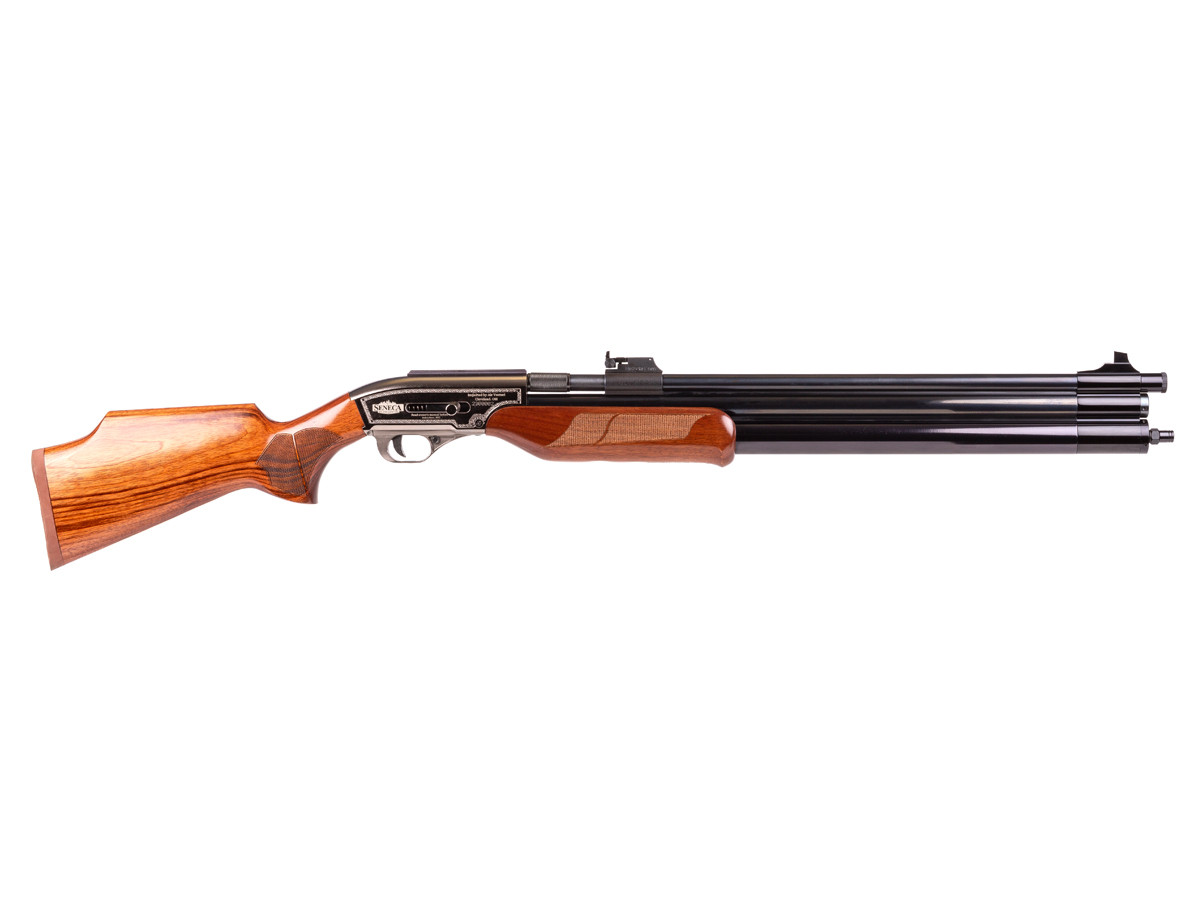
5. Seneca Dragon Claw

The Seneca Dragon Claw is a powerful PCP air rifle that can shoot .50-caliber projectiles with 230 ft-lbs. of muzzle energy. This makes it a great choice for hunting larger animals like feral hogs, javelinas, coyotes, and foxes.

With two large air reservoirs, you can get more shots from a single fill, making it ideal for extended hunting trips. The Dragon Claw also features a quick-disconnect Foster fitting for easy filling, and an onboard pressure gauge so you can keep an eye on your air levels.

The Seneca Dragon Claw is one of the few .50 cal air rifles that shoot arrows. Whether you’re looking to take down some large game or just want the added power and flexibility that this rifle offers, the Seneca Dragon Claw is a great choice.

Chrony tests

CalibersPelletsFPSFPE
.50Air Venturi Round Ball 177 gr630156.03
.50Air Venturi FP 336 gr556230.7
.50300 grain Pellet738362.9
.50Air Venturi 210gr640191.04
.50Air Venturi 336 gr545221.66

Features:

  • Precharged pneumatic (PCP)
  • Single-shot
  • Rifled barrel
  • Bolt-action with longer cocking handle
  • Fixed front sight
  • Fully adjustable, removable rear sight
  • Dual air chambers (500cc total air capacity)
  • 3,000 psi max fill pressure
  • Built-in manometer (pressure gauge)
  • 11mm scope rail (use only compact scopes)
  • 2 power levels (first bolt stop is low power, second is high)
  • Up to 860 FPS with 177 grain round balls
  • Up to 600 FPS with Seneca Air Bolts
  • Up to 340 FPE with 336 grain flat nose slugs
  • Hardwood Monte Carlo stock with checkered forearm & grip
  • Raised right-hand cheekpiece
  • Includes Male Quick-Disconnect Foster Fill Connection on rifle

Read review here

Recommended uses:

  • Small/medium/large game hunting: hogs, buffalos, deers, groundhogs, coyotes, javelinas.

Pros and Cons

ProsCons
  • Great looking
  • Powerful and consistent
  • Can shoot multiple projectiles (bullets or arrows)
  • Very little recoil
  • Save a ton of ammo
  • Easy cleaning
  • Two power setting
  • A little bit heavy

check price on Pyramyd Air

FAQs

What can you hunt with a .50 cal air rifle?

.50 caliber air rifles can be used to hunt a range of games, including small animals like squirrels and rabbits, as well as larger ones such as deer or hogs. It can even take down bears or buffalos with properly placed shots.

What’s the most affordable .50 caliber air rifle?

The least expensive .50 caliber air rifle at this time is the Umarex Hammer. It is a synthetic stocked 2-shot precharged pneumatic air rifle that offers great accuracy and power at a price that is well below other rifles of the same caliber.

How powerful are .50 caliber rifles?

The power of a .50 caliber rifle can vary greatly depending on the specific model. With current .50 caliber PCP air rifles getting up to 800 ft-lbs of energy,  these guns can be very powerful, making them great for hunting hogs, deer & larger predators.

10mm Ballistic Gel Testing

0

By Yamil Sued

The 10mm Auto is an undeniably powerful round, born in the mid-1980s from disappointment with the perceived inadequate performance of the 9mm. The cartridge was designed from the ground up to have immense stopping power, and it would prove itself to be a capable performer in both self-defense and hunting applications.

Testing the Perception

But how powerful is it, exactly? We all hear about how terrific the 10mm is, but what if we perform a 10mm gel test to see what kind of penetration and expansion we can expect?

I decided to do just that, taking a Springfield Armory Range Officer Elite Operator 10mm 1911 and running three different full power 10mm loads through it and into ballistic gelatin. Check out my video above to see how it all did on the range.

Shooting 10mm self defense ammo into ballistic gel
Yamil used a Range Officer Elite Operator in 10mm for the ammo test.

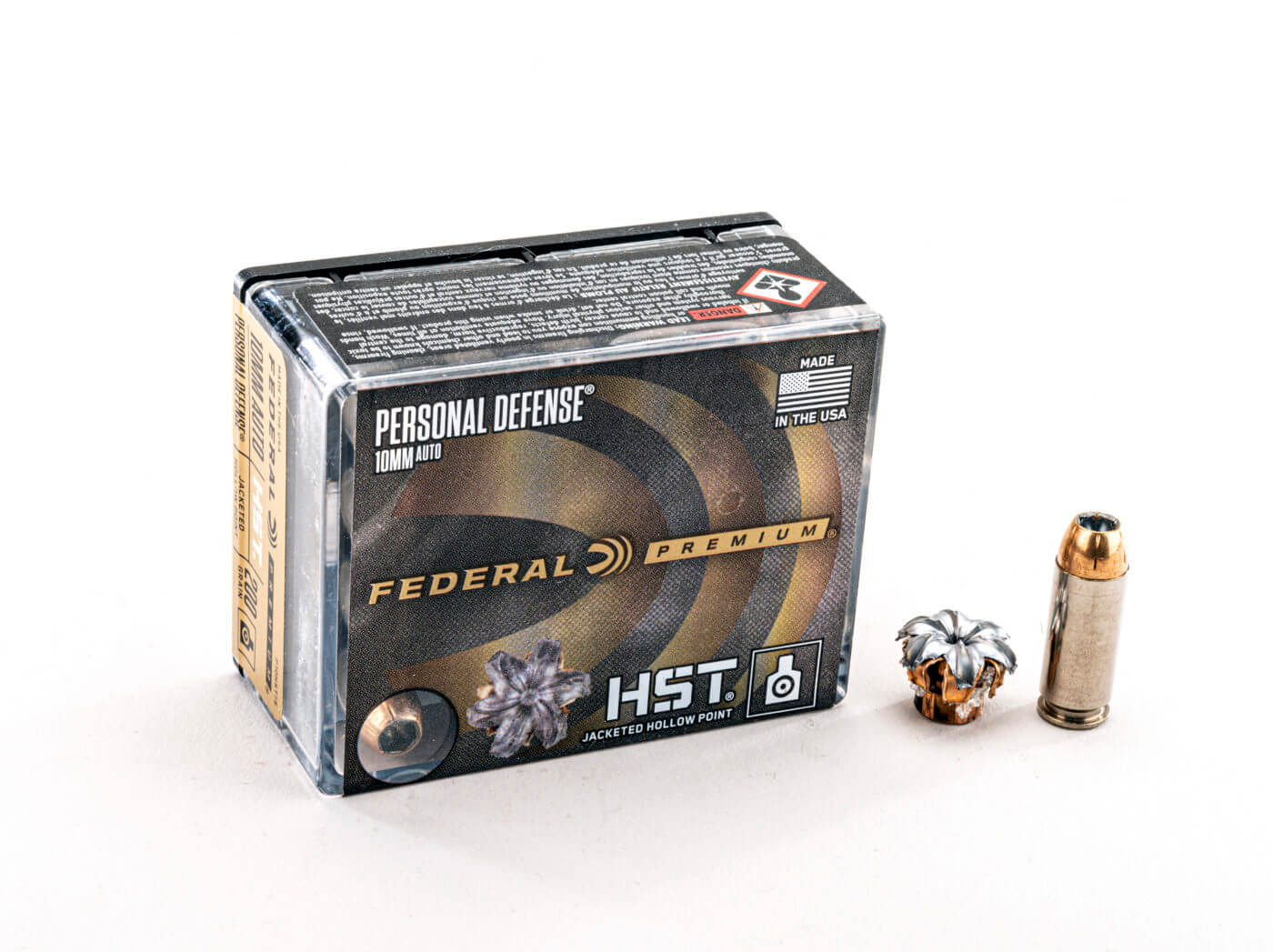
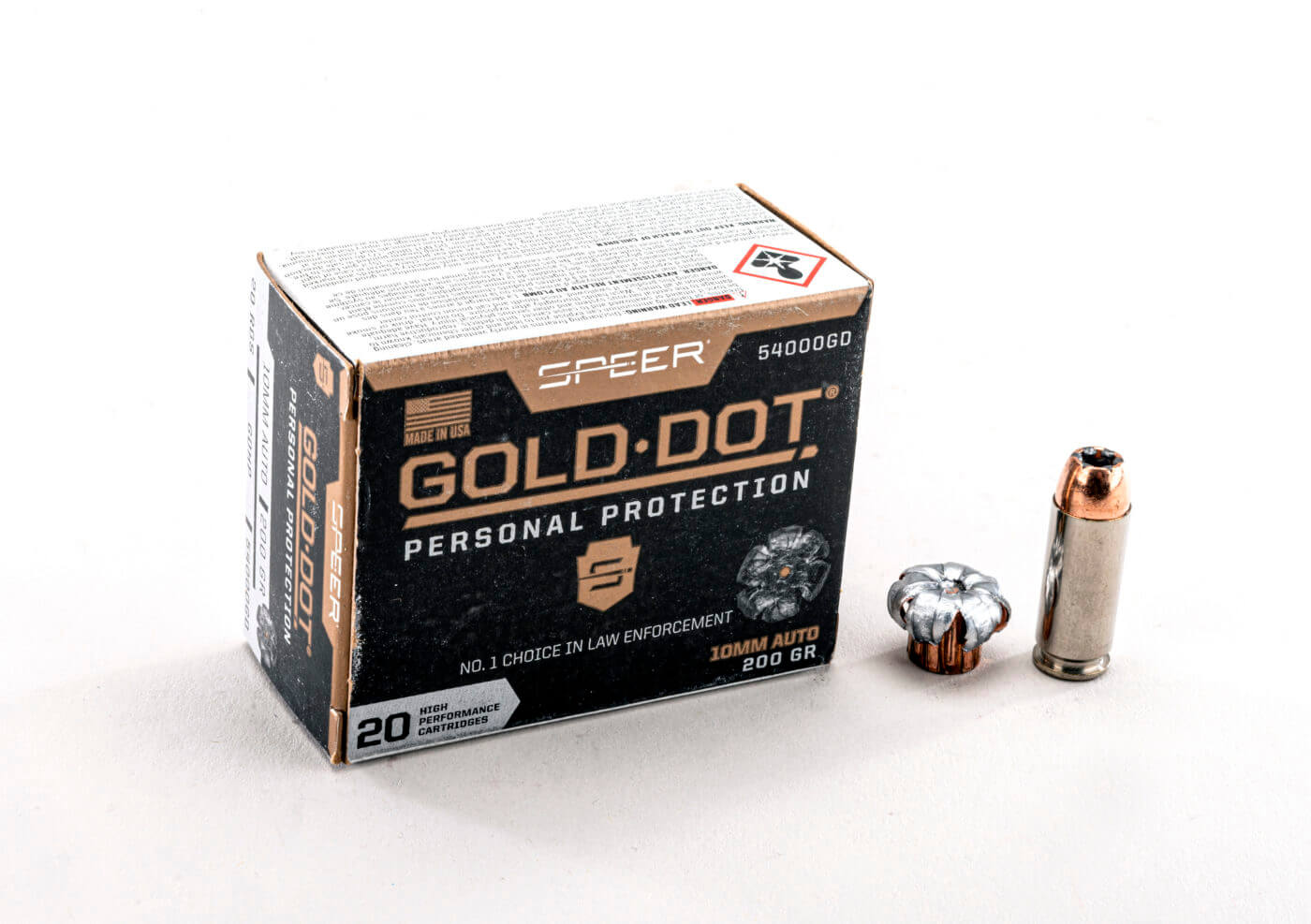
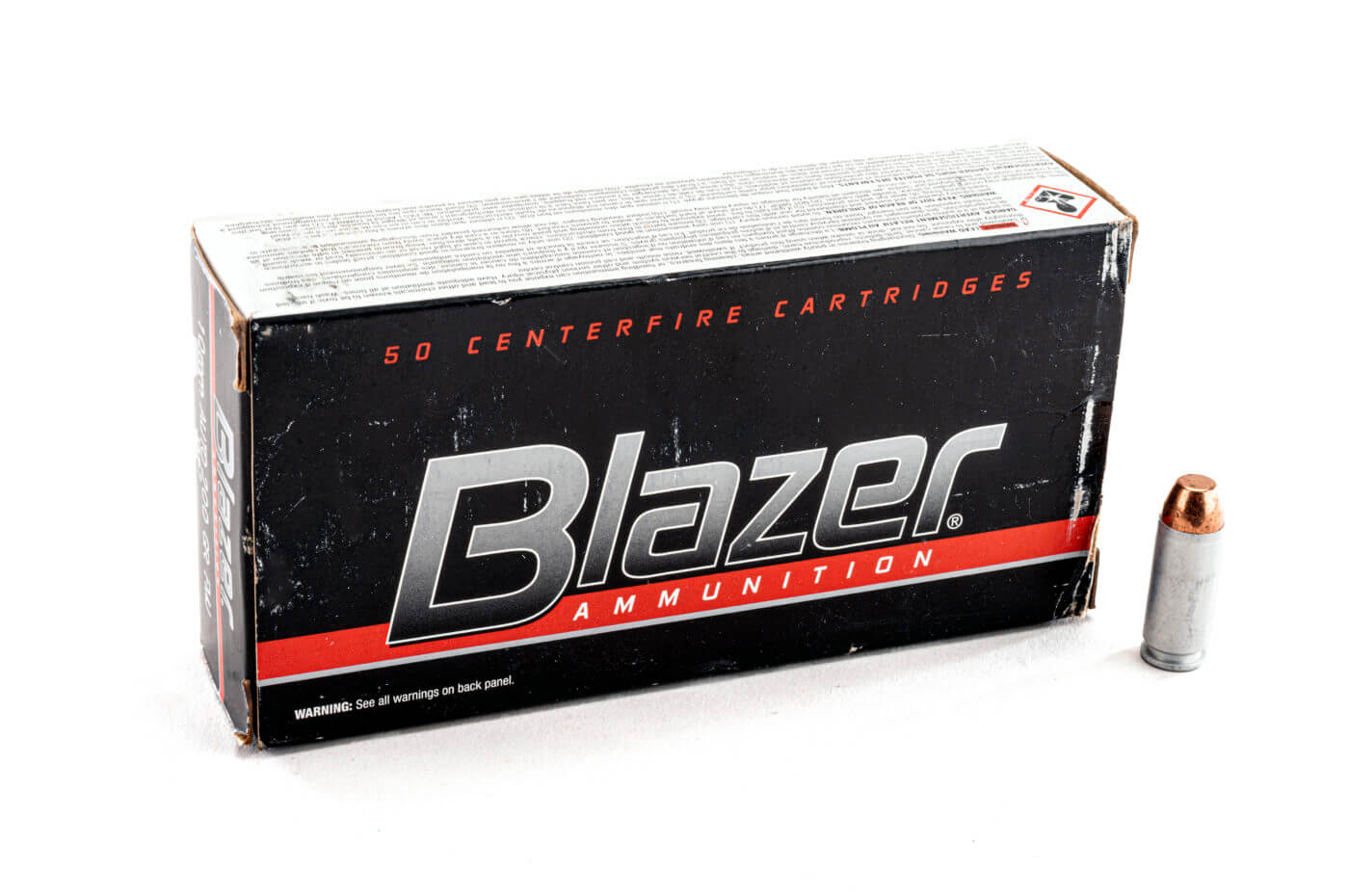
For this 10mm ammo comparison, I selected three loads, all with bullets weighing 200 grains. These loads covered both high-performance 10mm self defense ammo as well as basic range ammunition. I tested Federal Personal Defense HST, Speer Gold Dot Personal Protection Gold Dot Hollowpoint, and CCI Blazer FMJ range ammunition. Both of the full power personal protection loads used proven hollowpoint bullet designs while the range load used a 10mm FMJ projectile.

Federal HST ammunition
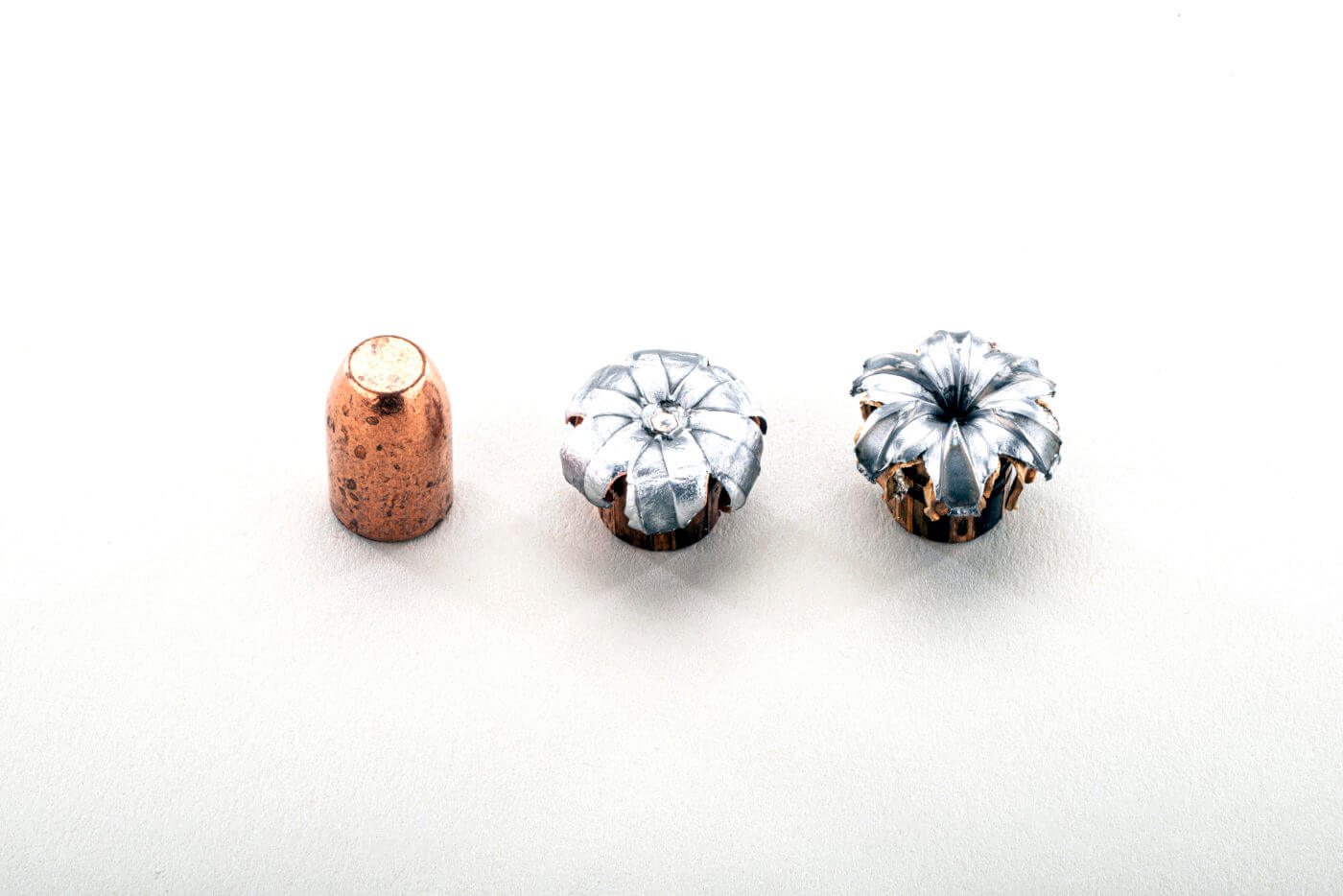
The first load tested was Federal’s 200-gr. HST 10mm. Note the uniform expansion of the bullet recovered during penetration testing in ballistics gel.

10mm Ballistics Performance

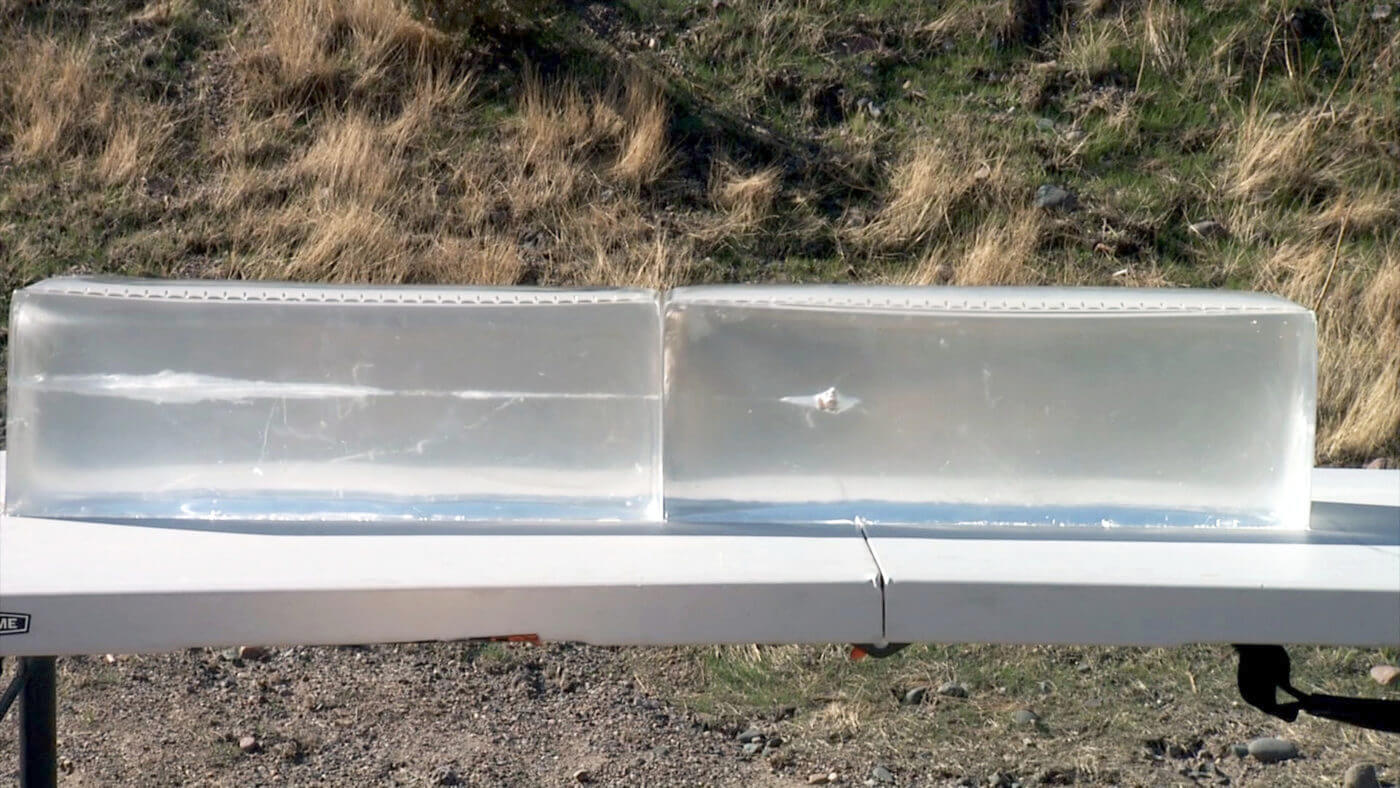
I set up a 32″-deep batch of ballistic gelatin and set about running all three loads through the RO Elite Operator 10mm. I was very impressed with the performance of all three loads and found that the 10mm does really push out some power.

10mm ballistics gel test
The author set up 32″ of ballistic gel for the testing.

Hollow Point vs. FMJ in Ballistics Gel

When testing 10mm penetration, both the Speer and Federal drove to roughly 18″ deep in the gelatin (within 1″ of each other), and expanded very nicely. These are both very powerful and effective rounds.

With the Blazer load, the FMJ punched clean through all 32″ of the gelatin, and impacted heavily on the safety berm behind it.

Excessive penetration is generally not preferred for defensive ammunition. While FMJ loads are great for paper targets, they simply do not expand in an attacker and will generally overpenetrate as this 10mm gel test shows.

10mm Speer Gold Dot
Speer Gold Dot Personal Protection 200-gr. 10mm ammo was also tested. Like the HST, the 10mm Gold Dot bullet also showed excellent expansion in gel.

I also chronographed all three 200-gr. loads to see how they performed. The Federal HST came in at an average of 1,130 fps, the Speer Gold Dot at 1,100 fps, and the Blazer ammo at 1,030 fps.

10mm Blazer FMJ ammo for target practice
Yamil also threw some Blazer 200-gr. FMJ ammo into the mix. When comparing self defense loads with FMJ, the ball rounds will almost always overpenetrate.

Conclusion

My test was intended to show 10mm ammunition performance and penetration, both full power self defense ammo and FMJ target ammunition.

FMJ vs Hollow Point in Ballistic Gel
The two hollowpoints expanded nicely and stopped at around 18″ of penetration. The FMJ round blasted through all 32″ of the gel.

I think that the results speak for themselves — the 10mm is an undeniably powerful round, and one that clearly will excel in both a hunting and self-defense role.

Editor’s Note: Please be sure to check out the new The Armory Life forum, where you can comment about our daily articles, as well as just talk guns and gear. Click the “Go To Forum Thread” link below to jump in!

Join the Discussion

Go to forum thread

Featured in this video

How Long To Hang A Deer In Warm Weather? 40-70 Degree

0

If you’re hanging a deer in warm weather, you’ll want to do it as soon as possible. The ideal temperature for hanging a deer is between 40 and 60 degrees Fahrenheit. If the temperature is any warmer than that, you risk the meat spoiling. The length of time you’ll need to hang the deer will depend on how warm it is. You’ll generally want to hang the deer for at least 24 hours, but in very warm weather, you may need to hang it for 48 hours or more.

If you’re processing your deer in warm weather, you’ll need extra care to prevent the meat from spoiling. Here are some guidelines for how long to hang your deer in warm weather:

If the temperature is above 60 degrees Fahrenheit, you should only hang the deer for one to two days. You can hang the deer for three to four days if the temperature is between 40 and 60 degrees Fahrenheit.

And if the temperature is below 40 degrees Fahrenheit, you can hang the deer for up to seven days. Remember, it’s always better to err on the side of caution when hanging your deer. If you’re not sure how long to hang it, it’s better to hang it for a shorter period of time rather than risk the meat spoiling.

Ask a Deer Processor: How long should you hang your deer?

How long can a deer hang in 60-degree weather

Assuming you are referring to the temperature of the air and not the ground, deer can hang in 60-degree weather for an indefinite amount of time.

The reason being, is that as long as the internal organs remain cool, the deer will not begin to rot. The rigor mortis, in which the muscles stiffen after death, will also be delayed in cooler temperatures. So, if you are hoping to age your deer meat, 60 degrees is the ideal temperature.

Can you let a deer hang in warm weather?

It’s not recommended to let a deer hang in warm weather. The warmer the temperature, the quicker the deer will spoil. If temperatures are above freezing, the deer should be refrigerated or frozen as soon as possible. If it’s not possible to do either of those things, then you can let the deer hang for a day or two, but any longer than that is not recommended.

How long will a deer last in 50 degree weather?

If you’re asking how long a deer will survive in 50 degree weather, the answer is that it depends on the deer. In general, deer can withstand temperatures as low as -20 degrees Fahrenheit, but they will start to feel uncomfortable when the temperature goes above 50 degrees Fahrenheit. If the weather is particularly hot or humid, the deer will start to suffer from heat stress, which can lead to death.

How long can you let a deer hang?

When it comes to deer, there are a few different schools of thought on how long is too long to let a deer hang. Some people believe that as long as the deer is properly taken care of, there is no set time limit. Others believe that waiting too long to process a deer can result in the meat becoming tough and unpalatable. So, how long can you let a deer hang? Ideally, deer should be processed as soon as possible after being harvested. This means that the deer should be gutted, skinned, and deboned as soon as possible after being killed. If you are unable to process the deer right away, it is important to take steps to ensure that the meat stays cool and does not spoil. If you are unable to process the deer immediately, it is best to hang the deer in a cool, shaded area. The temperature should be below 40 degrees Fahrenheit to prevent the growth of bacteria. If the temperature is above 90 degrees Fahrenheit, the deer should be processed as soon as possible. It is also important to keep the deer away from predators, insects, and other animals. If the deer is hanging in an area where there are other animals present, it is important to check on the deer regularly to make sure that the meat has not been contaminated. In general, it is best to process a deer within 24 hours of harvesting it.

Is it OK to hang a deer in 60 degree weather?

The quick answer is yes, it is perfectly fine to hang a deer in 60 degree weather. In fact, this is actually an ideal temperature for hanging and aging venison. If the temperature is too cold, the meat can freeze and if it is too warm, the meat can start to spoil. When hanging a deer, the animal should be gutted as soon as possible after being killed. The intestines can release bacteria into the meat which can cause it to spoil. The deer should then be hung by the hind legs from a beam or other sturdy structure. If the temperature is too cold, the meat can freeze and if it is too warm, the meat can start to spoil. The ideal temperature for hanging and aging venison is between 32 and 40 degrees Fahrenheit. However, 60 degrees is still within the acceptable range. If the temperature is consistently above 60 degrees, you may want to consider placing the deer in a cooler or refrigerator to prevent the meat from spoiling.

Conclusion

If you’re planning on hanging a deer in warm weather, you’ll want to take some extra precautions to make sure that the meat doesn’t spoil. First, you’ll want to choose a cool, shady spot to hang the deer. If possible, hang the deer in a breezy spot so that the air can circulate around the meat and help keep it cool. Secondly, you’ll want to make sure that the deer is completely gutted before you hang it. If the intestines are left in, they can quickly start to rot and contaminate the meat. Finally, you’ll want to check the temperature of the meat regularly. If it starts to get too warm, you can either move the deer to a cooler spot or take it down and refrigerate it.

.300 PRC vs. .300 Win Mag: Rifle Cartridge Comparison Review

0
.300 PRC vs. .300 Win Mag: Rifle Cartridge Comparison Review

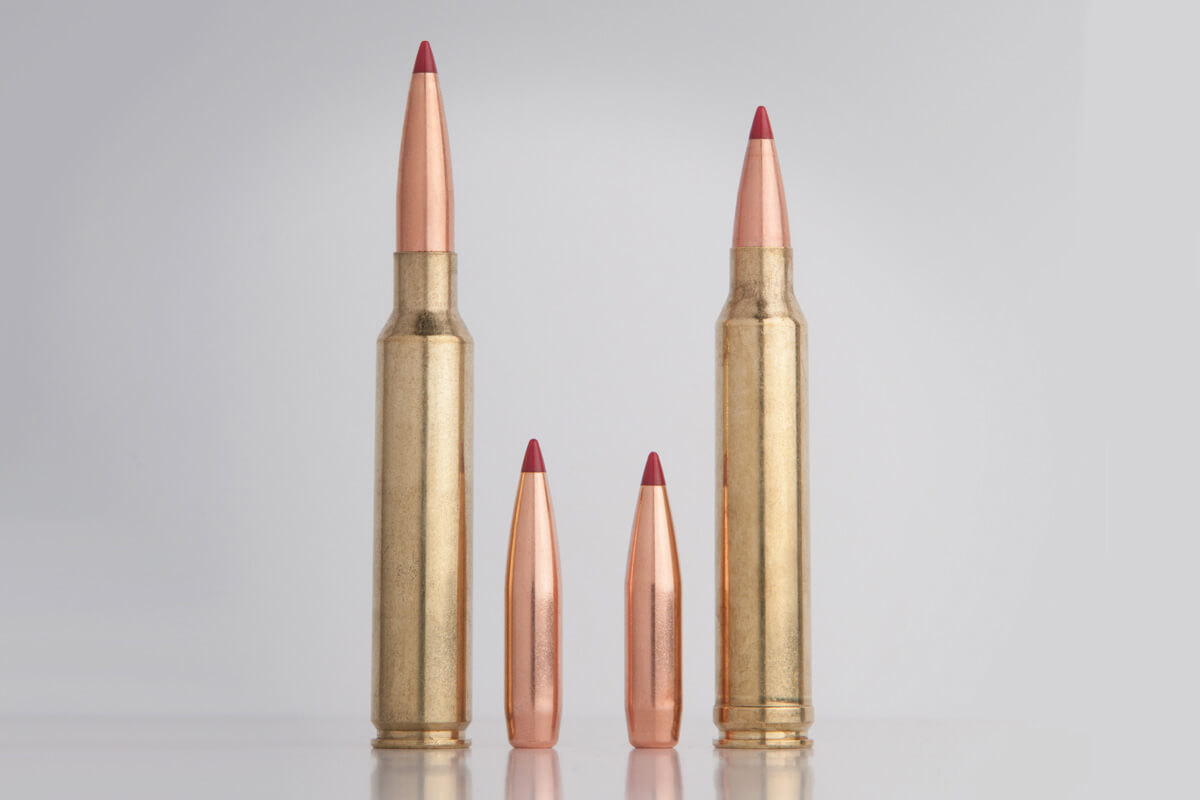
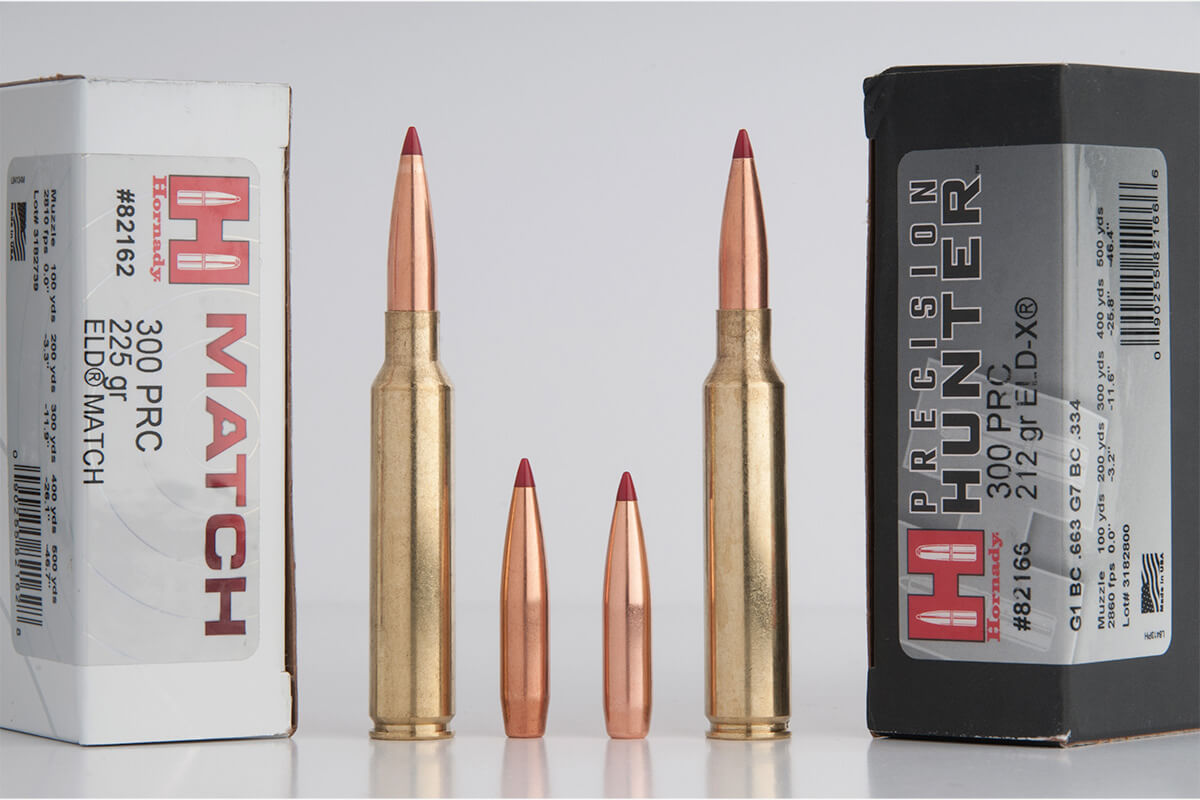
There are two big differences between the .300 PRC (left) and the .300 Win. Mag. (right). The PRC shoots high-BC bullets faster and better. The Win. Mag. is readily available anywhere in the world.

When the .300 PRC (Precision Rifle Cartridge) was announced, most shooters scoffed: “Just what we need—another .30-caliber magnum.” It seemed like the proverbial answer to an unasked question.

Then, savvy shooters took a closer look and were impressed. They gave it a try and became even more impressed.

Within three short years, the .300 PRC became the primary .30-caliber magnum challenger to the worldwide king of the .300s: the .300 Winchester Magnum. That’s a meteoric rise in prominence, rivaled only by its own smaller sibling: the 6.5 PRC.

.300 PRC vs. .300 Win Mag: Rifle Cartridge Comparison Review
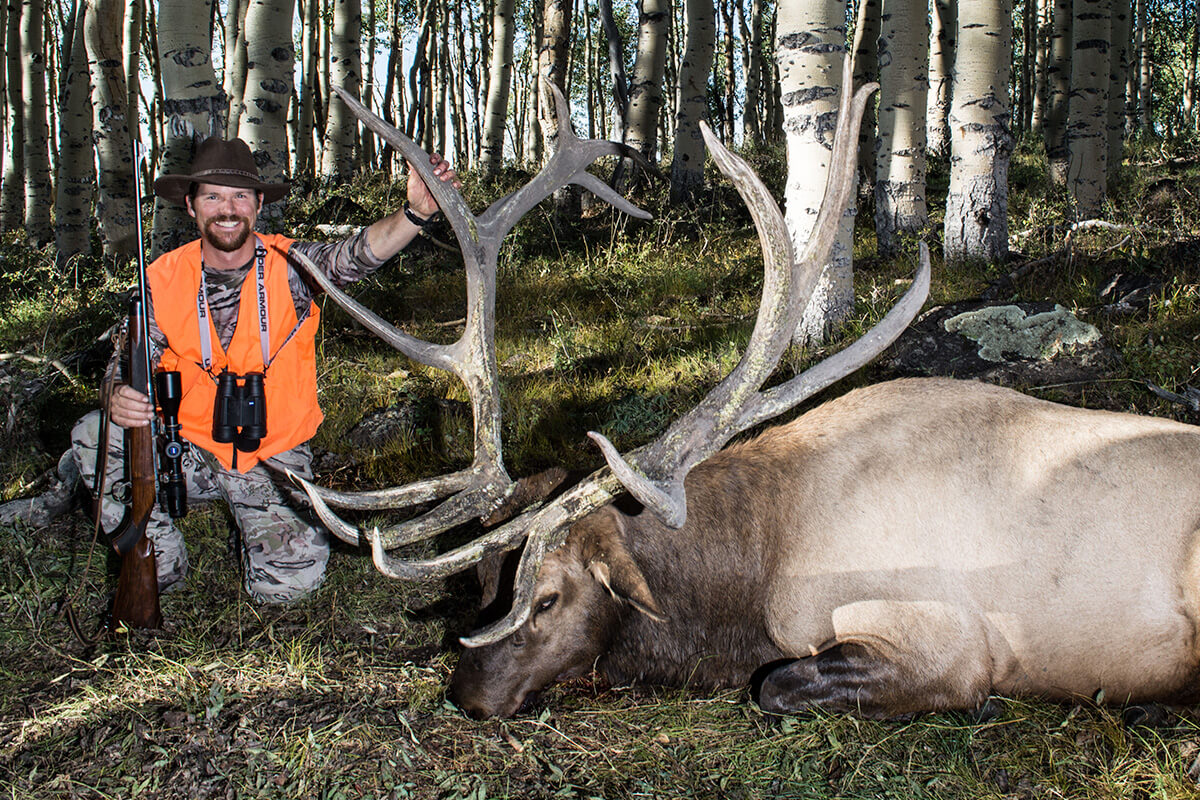
After a lifetime of applying, in 2015 the author drew an exceptional elk tag in Utah. His choice for the hunt was his favorite .300 Win. Mag., and it cleanly killed this monster 402-inch bull. But then, the .300 PRC hadn’t yet been introduced.

Now that we have both “The King of .300s” and this new high-octane modern challenger, the question must be asked: Which is better?

As a philosopher might say, “The answer is very simple, yet also very complex.” Here’s the short version: Which one is better for you depends…on you.

Each .30-caliber magnum cartridge has advantages and disadvantages. Your needs as a shooter and hunter will dictate which is best—for you. But I suspect you already knew that. So, without further ado, let’s dive into the pros and cons.

Because it’s the veteran, let’s accord the .300 Win. Mag. the respect it deserves and address it first.

.300 PRC vs. .300 Win Mag: Rifle Cartridge Comparison Review
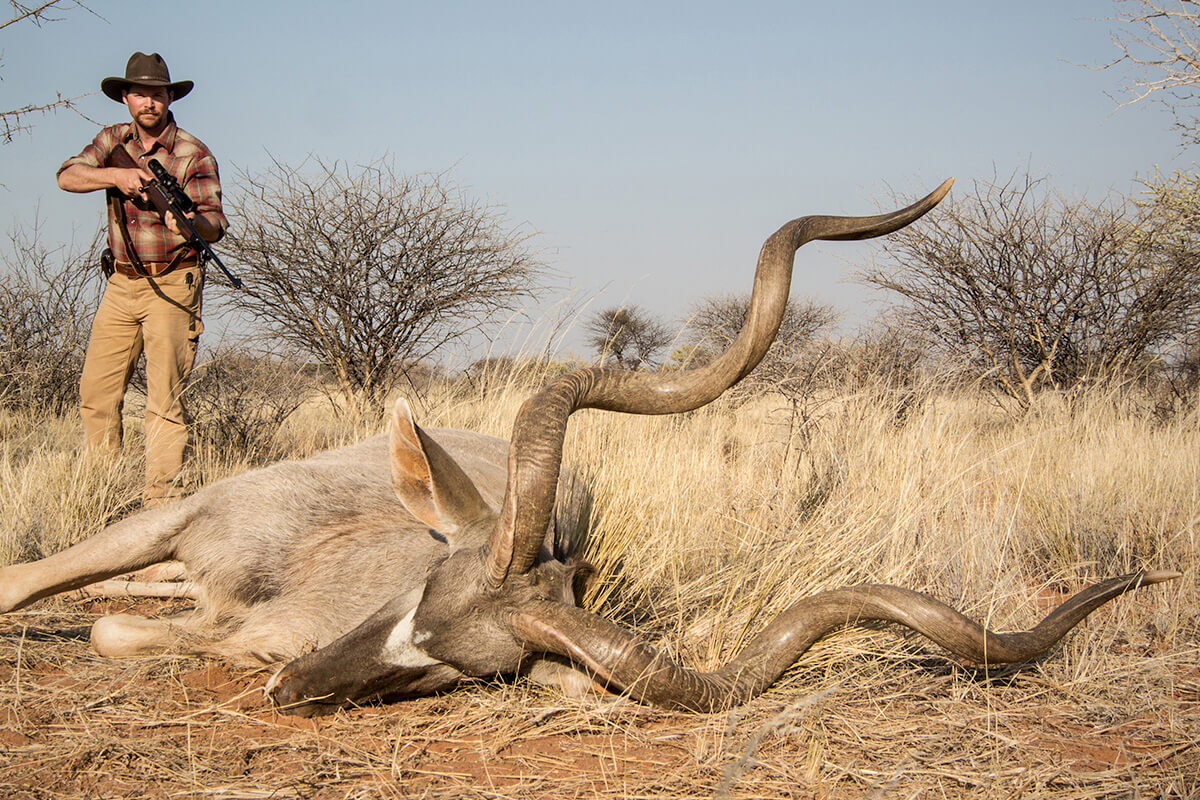
From Alberta to Africa, the .300 Win. Mag. has served this writer well. This 56-inch kudu bull fell to a 180-grain Trophy Bonded Tip bullet while hunting with Kowas Hunting Safaris in Namibia.

.300 Win. Mag. Pros

The .300 Win. Mag. is the worldwide dominant .30-caliber magnum. It’s cleanly taken every big-game animal that walks American soil and probably every legal species of critter that walks the earth—anywhere. That’s including terrorists at some pretty jaw-dropping distances, in the hands of our sniper boys and their British pals.

Although its stubby neck and belted behind are outdated design characteristics that theoretically are not optimal for accuracy, the .300 Win. Mag. has always confounded its skeptics and shot better than it has any right to.

Powder-capacity-to-bore-diameter ratio is on the top side of optimal, meaning it’s on the cusp of being overbored without actually being overbored. As a result, it’s surprisingly efficient, particularly with heavy, aerodynamic bullets in the 200-grain weight range. As a lovely side benefit, such bullets absolutely wallop big game.

.300 PRC vs. .300 Win Mag: Rifle Cartridge Comparison Review
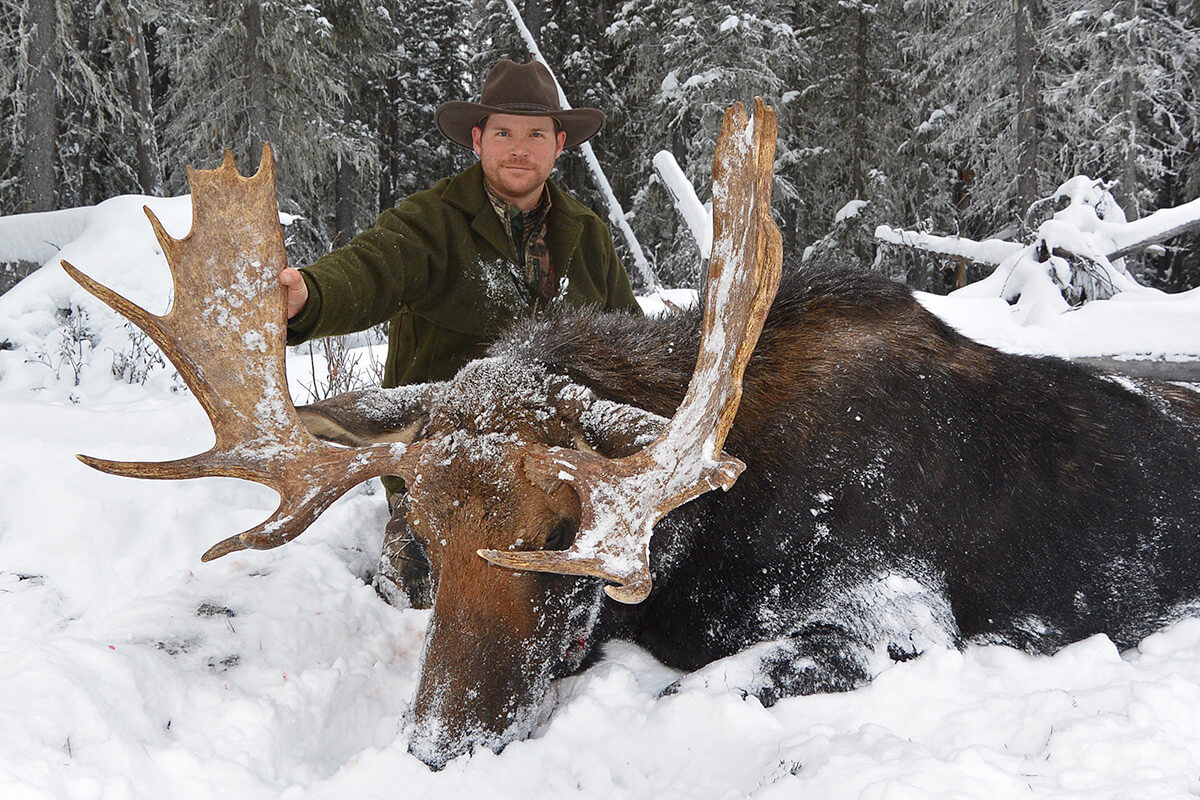
Canada is gnarly and challenging in November. This nice bull moose fell to a couple of .300 Win. Mag. bullets.

On the subject of bullets, you can get factory ammo loaded with a broad spectrum of different projectiles. Light and fast, heavy and tough, heavy and sleek and super-efficient, you name it. It’s easy to find a load tailored perfectly for your purposes, whether that purpose is shooting whitetails way off across a beanfield or moose in an alder thicket or steel targets a half-mile away.

Also, handloading data is widely available and exhaustive in scope. If our selection of factory ammo is broad, handloading potential is truly vast. Pick any bullet from 110 to 250 grains and have at it. Rifling twist rates apply.

Every rifle manufacturer offers myriad models chambered in .300 Win. Mag., so you can be really picky when selecting just the right rifle. Just as important, magazines—whether internal or detachable types—have all the wrinkles ironed out of them. Most .300 Win. Mag. rifles easily contain the advertised number of cartridges and feed them smoothly and reliably.

Because the .300 Win. Mag. is so widely respected and available around the world, it’s an excellent option for travelers—domestic and international—because even if your baggage gets separated in transit and lost, as long as your rifle arrives, you can always find ammo in a local shop.

The combined result of all these advantages stacked up is one of—if not the—best practical choices for hunting any non-dangerous game, anywhere around the world.

.300 PRC vs. .300 Win Mag: Rifle Cartridge Comparison Review
Shown here are the two .300 PRC factory loads currently available. By next year, there should be several more from various manufacturers. And, of course, the cartridge is a handloader’s dream.

.300 Win. Mag. Cons

Okay. Here we go. The grand old king of the .30s does have some downsides, too. Mostly, it’s in the fact that many rifles chambered for it have quite loose chamber tolerances. In such, the demons contained in the short neck and belted case design emerge. They can wreak havoc with accuracy.

An old but proven cartridge design rule recommends that the neck of a cartridge be at least one caliber long, meaning that for a .30-caliber cartridge, the neck should be at least three tenths of an inch long. Designers curtailed the neck of the .300 Win. Mag., gambling that it would prove sufficient and the propellant capacity gained by pushing the shoulder of the cartridge as far forward as possible would pay off.

When manufacturing ammo, whether at the handloading bench or on the factory assembly line, it’s harder to hold tight tolerances when the neck is short. Bullet concentricity is at risk. Neck tension is less consistent. And so forth.

The belts on traditional magnum cases were originally designed to give the long, tapered cartridges of yore a predictable surface to headspace against. Holland & Holland’s .375 H&H and Super Thirty have a lot of body taper and shallow shoulders. This enables cartridges to feed like grease on glass and to extract easily and reliably—particularly important characteristics in cartridges commonly used on dangerous game in Africa and India. Easy extraction was a big deal when cordite propellant was the go-to bullet-pushing chemical of the day; it tended to exhibit pressure spikes in tropical weather conditions. Those cartridges needed the belt.

Our .300 Win. Mag., however, doesn’t need the belt. On it, the belt is just a holdover from the parent case. Had designers owned a functioning crystal ball, perhaps they would have seen fit to lathe-turn the belt off of their prototype .300 Win. Mag. cases, which would have created a really optimal cartridge case shape for the embryonic new round.

Here’s the important takeaway, folks. The belt is outdated, yes. It’s useless, yes. But the belt harms absolutely nothing at all. Performance doesn’t suffer, reliability doesn’t suffer, nothing. So quit griping about the belt.

.300 PRC vs. .300 Win Mag: Rifle Cartridge Comparison Review
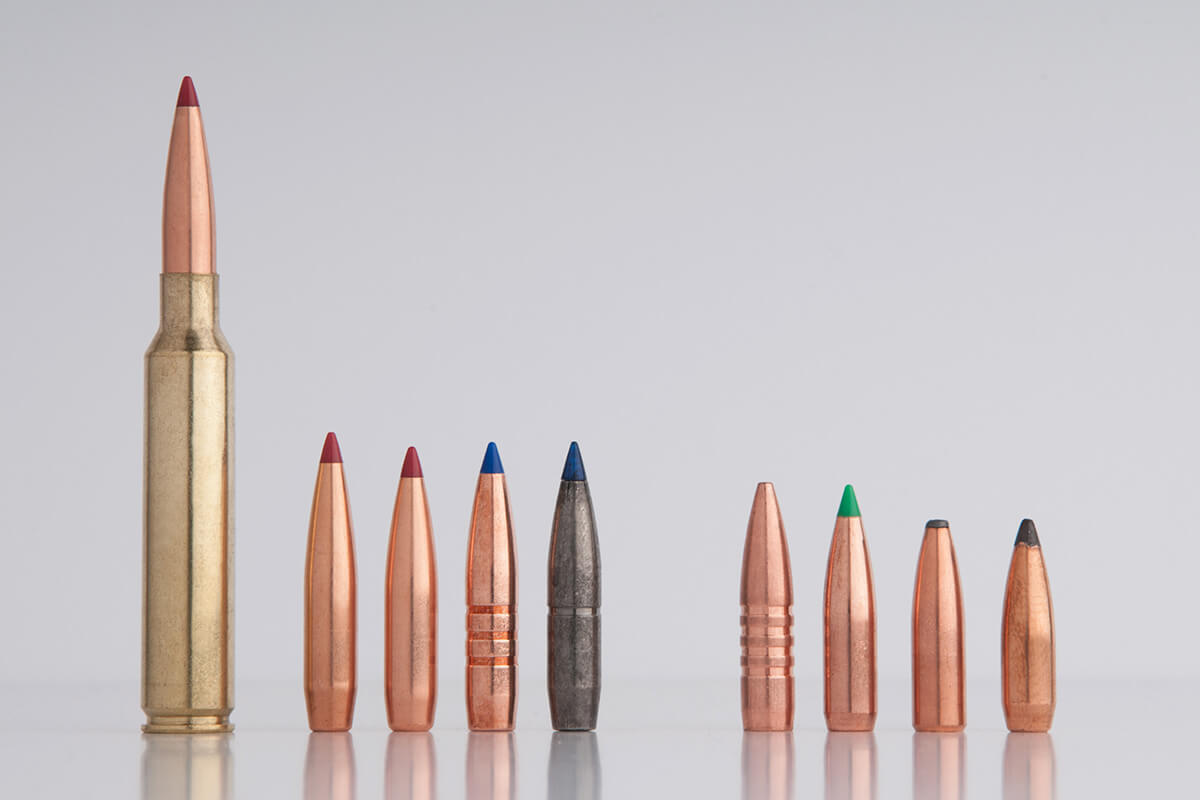
While it will shoot any .30-caliber bullet well, the .300 PRC is particularly well suited for heavy-for-caliber, highly aerodynamic projectiles, such as those shown at left. With such, it’s undoubtedly better than the .300 Win. Mag.

.300 PRC Pros

Ah…here we go. This is the Ferrari of rifle cartridges. Introduced in 2018, the .300 PRC utilizes a .375 Ruger case necked down to hold .30-caliber bullets. This is a broad-based, non-belted, standard-length (.30-06 length) case originally derived from the .404 Jeffery.

Geometrically, the .300 PRC case is as nearly perfect as mankind and computers can achieve. Neck length is ideal. Shoulder angle is ideal. There’s no belt around the case head. There’s little efficiency-robbing taper to the body.

“Against all odds,” naysayers grudgingly admit, “the .300 PRC has a toehold.”

“Thanks to an ultimate combination of refined characteristics,” acolytes claim, “the .300 PRC is rapidly earning the recognition it deserves.”

Both are right.

When the .300 PRC launched, we already had the .300 H&H, the .300 Win. Mag., the .300 WSM, the .300 RUM, the .300 RSAUM, the .300 Norma, the .300 Weatherby, the .30-378 Weatherby, the .300 RCM…my word, more .30-caliber magnums than a beaver could shake a stick at.

However, not one of this long list of cartridges stacks every characteristic in the “positive” column and none in the “negative.” Many have outdated case design features. Some are overbored. Some are underpowered. Some are efficient, but not configured to shoot high-ballistic-coefficient (BC) bullets with best-in-class aerodynamics.

There are very few cartridges about which one can say, “It has it all.” The .300 PRC is one. The few disadvantages associated with it—and, yes, there are some—have nothing to do with design or performance and everything to do with distribution and availability. But I’ll get to that soon enough.

Weatherby
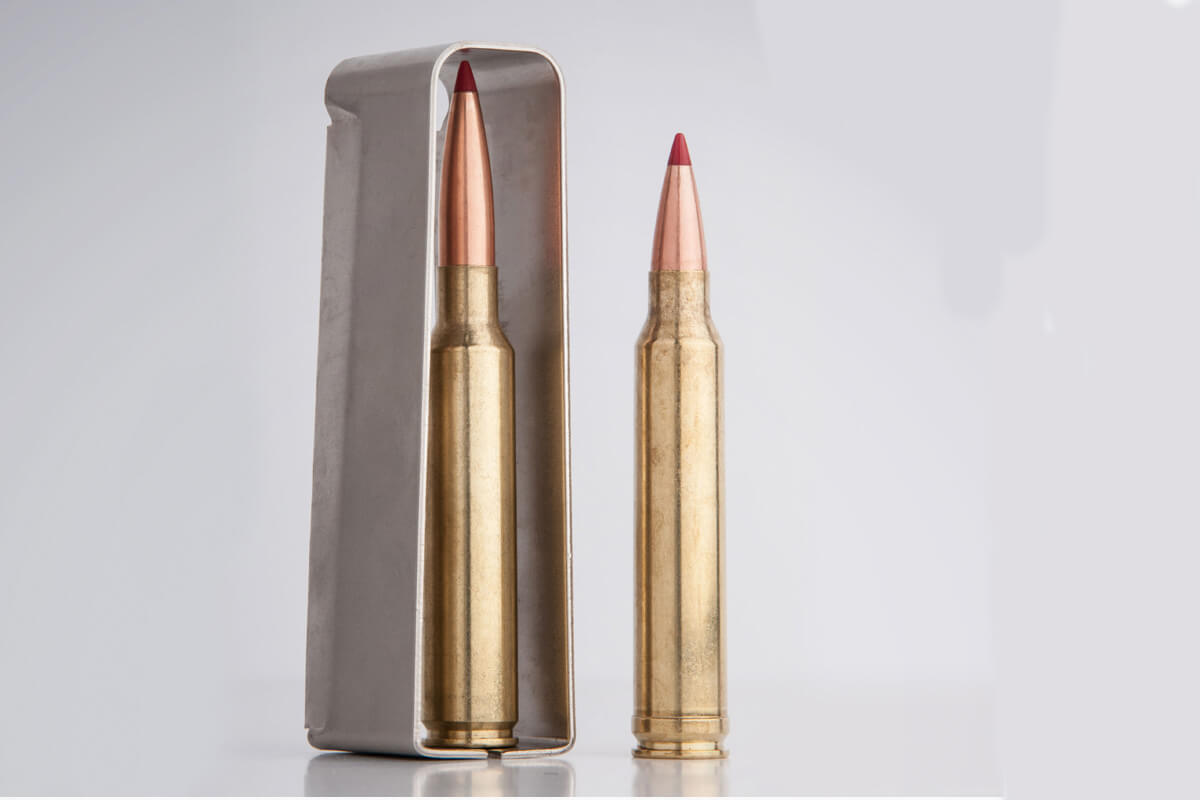
As you can see here, the cases of the two .30-caliber magnums are about the same length. However, the .300 PRC (left) has a much longer “head height.” It does require a proper magnum-length magazine. The .300 Win. Mag. (right) will fit and function through a .30-06-length action.

Let’s start with the most important characteristics and work down. Foremost, at least in this man’s opinion, is the fact that from the ground up the .300 PRC was engineered to provide optimal performance with long, heavy-for-caliber, high-BC bullets.

Hornady’s cartridge gurus (they’ve dreamt up and introduced the three most successful new cartridges of the 21st century) gave the .300 PRC a generous “head height.” Head height is the distance between the cartridge case mouth and the end of the magazine. It dictates how much bullet can stick out of the end of the cartridge case and still allow the whole cartridge to fit into a rifle magazine.

Traditionally, powder capacity was valued more than head height, so bullets were given short, blunt ogives (the curve from the tip of the bullet to full diameter) and seated deep into the case. Cartridge shoulders were positioned far forward so that the case would hold as much propellant as possible. That bullet bases would protrude way down into the propellant chamber was accepted as a necessary evil.

Not necessary, claimed the .300 PRC’s architects.

Case in point (if you’ll forgive the horrible pun): The thunderous .300 RUM and the .300 PRC have nearly identical overall cartridge lengths. Both require true long rifle actions. However, the shoulder on the RUM is much farther from the cartridge base. The RUM holds considerably more powder, yet the .300 PRC will shoot flatter at long range.

How? Because Hornady’s engineers optimized the efficiency of the internal combustion chamber and gave the cartridge plenty of head height. You can comfortably load .300 PRC cartridges with extremely sleek, aerodynamic bullets that have long, fine-entry noses. In the .300 PRC, bullet bases don’t protrude down into powder capacity. Projectiles start slower than the blunter bullets from the .300 RUM but hold their speed better and quickly overtake them. At extreme range, there’s just no contest.

But we’re not here to compare the .300 PRC with the .300 RUM. So how does it stack up to the .300 Win. Mag.? I love the old Winchester cartridge, so it hurts my feelings a little to say this, but the .300 PRC walks all over it, ballistically.

Why? Because the .300 PRC shoots those long, high-BC bullets that won’t fit and feed from .300 Win. Mag. magazines, and it starts them nearly as fast as the .300 Win. Mag. shoots normal bullets.

.300 PRC vs. .300 Win Mag: Rifle Cartridge Comparison Review
Spring of 2018 found the author in Africa, hunting free-range plains game with the yet-to-be-announced .300 PRC. It proved extraordinary. Here, von Benedikt was after mountain reedbuck, hunting with Crusader Safaris.

In addition to cartridge head height optimal for modern, extreme-BC bullets, the .300 PRC features a chamber spec’d with very tight tolerances. You’ll rarely, if ever, see a .300 PRC rifle that won’t shoot due to a sloppy chamber. Plus, the chamber throat and rifling leade areas are engineered for ideal compatibility with those sleek-nosed, high-BC bullets we’re making such a big deal about.

Crucially important in making all these cutting-edge puzzle pieces fit together is fast rifling. Most .300 PRC rifles have a twist rate of 1 turn in 9 inches or faster; some are as fast as 1:8. Either will properly stabilize most of today’s extreme-range superbullets.

The .300 Win. Mag. (and basically all the other .30-caliber magnums) have a 1:10 twist rate that will not adequately stabilize today’s best long-range projectiles.

Let’s move on. In the world of internal combustion, the .300 PRC has a much different chamber shape than the .300 Win. Mag. It contains more gunpowder, so one might think it crosses the cusp into overbore territory.

Nope. Not quite. Thanks to the way it holds that propellant in a broader, slightly shorter cylindrical shape, it burns a tad more efficiently than the .300 Win. Mag. When ignited from one end, a fatter, shorter column of powder burns more instantly and efficiently than a long, skinny column.

Before listing the .300 PRC’s disadvantages, let’s take a look at a ballistic comparison between it and the .300 Win. Mag.

I’ve crunched ballistics using the best high-BC factory loads listed on Hornady’s website.

Hornady
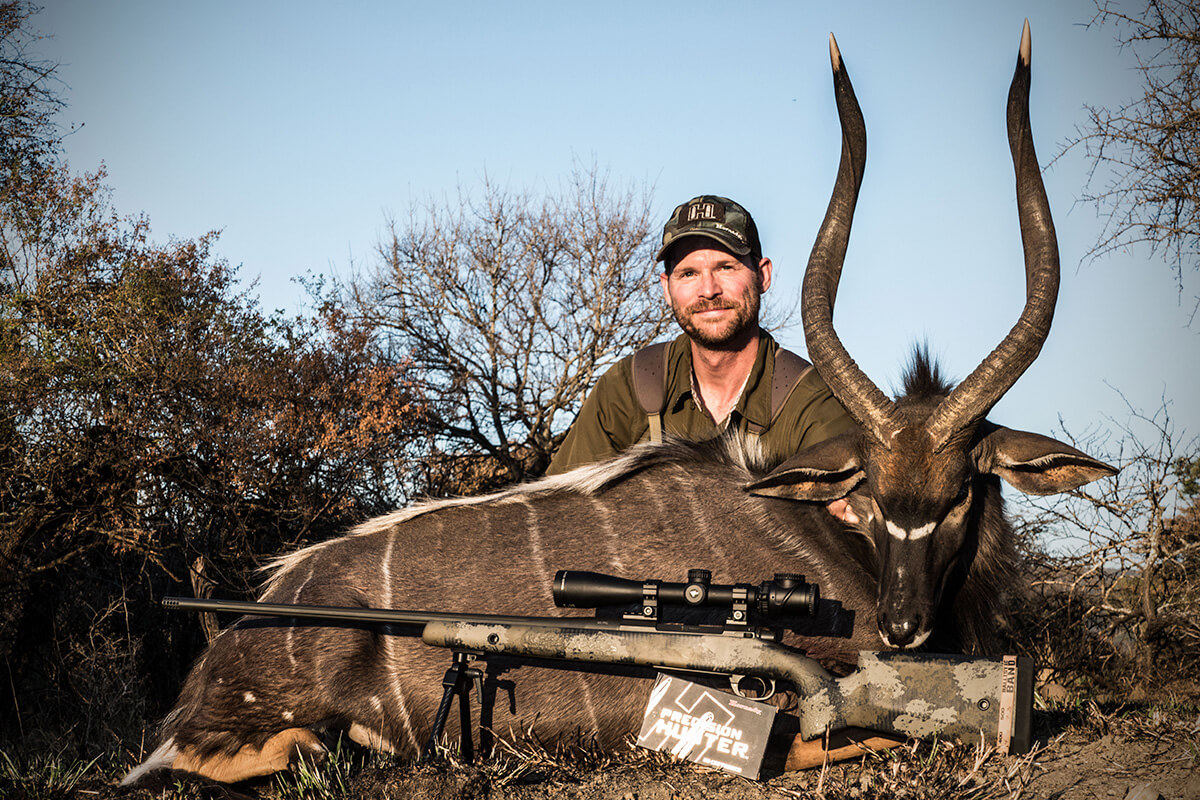
Dedicated hunting with Crusader Safaris turned up the holy grail of free-range nyala—a bull with perfect lyre-shaped horns that stretched nearly 30 inches. The .300 PRC worked its magic, dropping the bull with a Hornady 212-grain ELD-X bullet.

In the .300 Win. Mag., the 200-grain ELD-X projectile has a G1 BC of 0.597 and a G7 BC of 0.301—really pretty darned good. It’s rated to exit the muzzle at 2,850 fps. It is, candidly, a fantastic load.

In the .300 PRC, the 225-grain ELD Match bullet has a G1 BC of 0.777 and a G7 BC of .391. That’s nearly unearthly, and it doesn’t hold a candle to the extreme-BC projectiles handloaders like me get all giddy about, such as the 250-grain A-Tip.

But I digress. The 225-grain projectile is rated to exit the muzzle at 2,810 fps, just 40 fps slower than the .300 Win. Mag. bullet.

I’ve included a chart to display long-range performance out to 1,500 yards. The ballistics were calculated using standard sea-level atmospherics, a 200-yard zero, and a 10-mph full-value crosswind.

.300 PRC Cons

The .300 PRC’s disadvantages are minuscule and don’t reflect specifically on the cartridge, but they must be considered nonetheless.

Worst is the current very limited selection of factory-loaded ammunition. As I write this, only Hornady offers factory ammo—and just two loads. This is changing fast, and I predict that within a year we will see factory-loaded .300 PRC ammo from Federal, Barnes, Winchester, Browning, and others. Many rifle companies now list the .300 PRC in their top-five sellers, and ammo companies can’t ignore numbers like that.

For now, though, non-handloaders have their pick of…Hornady and Hornady. The good news is Hornady makes great ammo.

For handloaders, the world is their .300-PRC oyster. Dies and data are readily available, and the cartridge shoots well with darn near any combination you put in it.

I can’t even list limited rifle selection as a disadvantage. Not anymore. Most of the big rifle manufacturers and all of the boutique makers worth their salt offer several excellent models in .300 PRC.

How about recoil? Well, that’s subjective. Because the .300 PRC is usually loaded with heavy-for-caliber bullets, it does kick more than the average .300 Win. Mag. load. However, if you load them both with the same bullet weight, the difference is negligible. The way I see it, that extra recoil is symbolic of the enhanced performance you get by shooting those extreme-BC projectiles. But, yes, the .300 PRC does kick.

.300 PRC vs. .300 Win Mag: Rifle Cartridge Comparison Review
Inhabiting a vast variety of African terrain, common reedbucks like this are a low-pressure plains-game animal that are extremely fun to hunt. We stalked this mature buck on a rocky ridgeline, hunting him like a big alpine mule deer. A single Hornady 212-grain ELD-X reached out and dropped it cleanly.

So Which Is Better?

As I mentioned in the beginning, in the final analysis, only you can decide which cartridge better fits your needs. I can give you a little guidance, though.

If you’re a practical sort, who values proven performance and ready availability, I suspect the .300 Win. Mag. is your cuppa tea.

If you like finessing the last iota of performance out of your shooting setup, and you handload, and you rarely shoot factory ammo anyway, you owe yourself a .300 PRC.

Here’s the good news. As much fun as it is to weigh every aspect and characteristic, however slight, and endlessly debate the merits of one over the other, in the end you can’t go wrong with either.

.300 PRC vs. .300 Win Mag: Rifle Cartridge Comparison Review

Hammerli 850 Review – A CO2 Rifle with PCP Accuracy

0

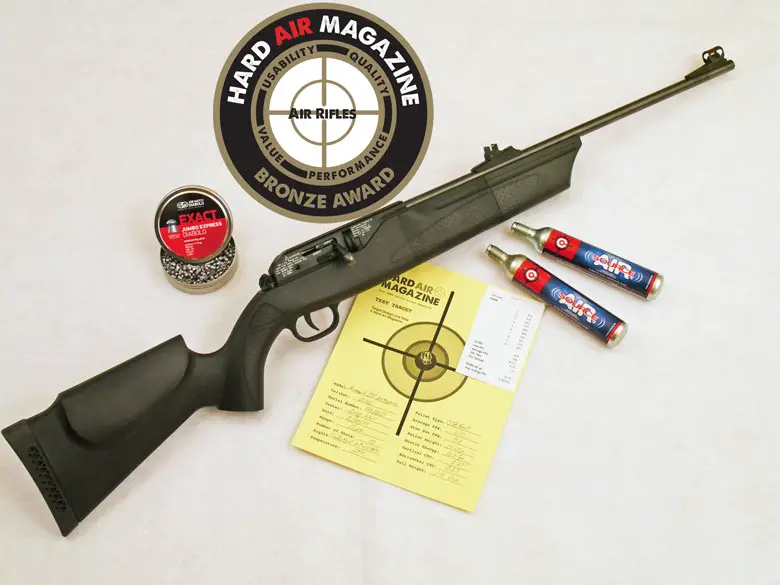
Umarex may be the new name but the old title of Hammerli remains just as popular.

This air rifle was introduced as high power CO2 option for game hunters!

The name situation makes things a bit hard to follow, but know this –

The Hammerli 850 goes under the name Umarex in the US market. 

They’re one and the same. 

German company Umarex are experts at CO2 power

(For more on the best air rifle brands, see this post)

They introduced the world to the first mass-produced, affordable and full-power 12 ft/lb CO2 hunting rifle, the Hammerli 850 AirMagnum.

It is powered by liquid gas, and made up of synthetic material, making it light in weight and economical.

The Hammerli 850 AirMagnum has been the solution for those seeking an accurate rifle with a real firearm feel but cannot afford the real deal.

Hammerli / RWS are well known for standing behind their guns, whatever they claim, and they do deliver!

Their warranty has always been the best in the market.

Therefore, Umarex Hammerli 850 is another trusted name in the community.

The Hammerli 850 AirMagnum is popular with pest controllers in particular.

(For more on the best air rifle for squirrels, see this post)

The rifle comes with smooth blacked-steel cocking and a generous bolt.

It’s a lot of fun to shoot with, so you will have a hard time putting it down.

The Hammerli 850 AirMagnum wood stock is synthetic though, known as an all-weather stock.

You can take the gun anywhere and not be worried about the finish as it is made of durable polymer with a Monte Carlo stock!

The Hammerli 850 AirMagnum uses an 88-gram air source cartridge,

Which allows you to have 200 – 250 shots before you need to change the cartridge. 

The rifle comes with a fiber-optic sight to help you acquire your target.

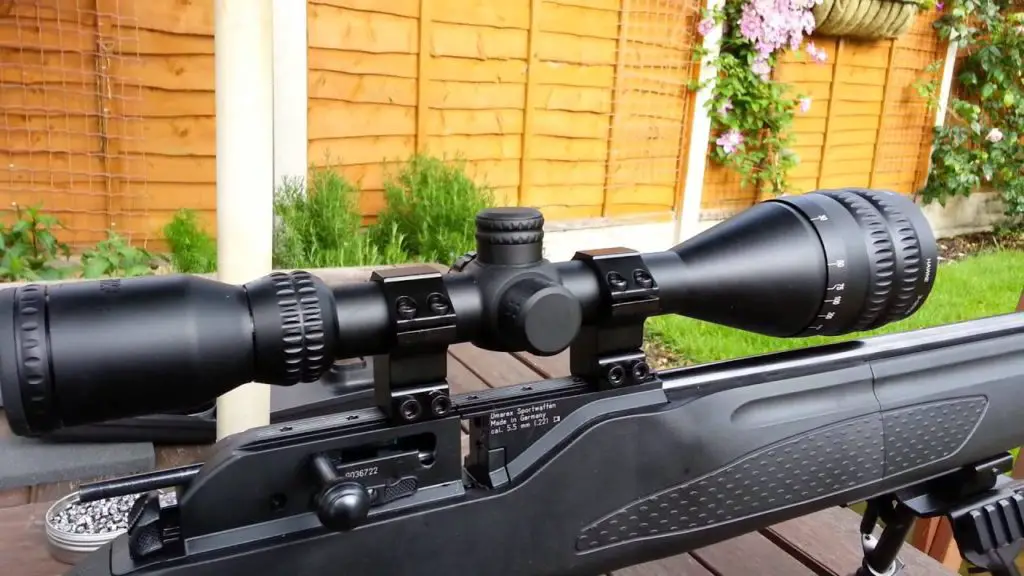
You can feel free to mount a scope on the 11mm dovetail rail.

Based on the German quality, Umarex makes a dovetail–to-weaver mount. 

This rifle is ideal for plinking, recreational target shooting, and competition.

The wooden stock is robust and reliable.

The Hammerli 850 AirMagnum not only has the look of a firearm, but it works like a firearm in terms of accuracy.

If you wish to have the experience of a military firearm, but cannot buy one, then the Hammerli 850 AirMagnum is the best choice for you. 

All told, the Hammerli 850 AirMagnum has just about everything if you have ever hoped for in a CO2 repeater!

(For more on 5 types of air rifles you need to know before buying, see this post)

Cocking Effort And Trigger

You should think seriously and consciously about the trigger performance or the cocking ability

You don’t want something that fires off course too easily. 

Luckily, the trigger performance of the Hammerli 850 AirMagnum air rifle is just unbeatable.

The HAM team has taken the test to check the ability of the trigger, and the results are amazing.

The Hammerli 850 has a cock-on-opening bolt-action,

And for sure, it is actually very easy to manage.

This means that the Hammerli 850 is suitable for both young shooters or less physically strong adults. 

The rifle does not discharge accidentally even with the lower pull weight of just 1 lb.

Therefore, the Hammerli 850 AirMagnum air rifle is safe to use in any way.

Moreover, the trigger pull is very smooth and consistent.

But I would make it clear here that if one snatches the rifle during shooting, it will miss the second target.

You would be amazed to learn that the Hammerli 850 has a bolt action that works like a firearm

This is the big attraction for you towards the rifle.

If you have a military background or interest in real firearms, you would love to have Hammerli 850 in your collection.

Note that the bolt is a little bit rough and bulky as you close the stroke.

But, maybe with time as you use the rifle, it’ll become smoother.

There is nothing wrong with having an action like this — it’s just something you’ll get used to.

Stock 

The Hammerli 850 AirMagnum wood stock is synthetic.

Umarex has made the gun to be used anytime, in any weather, and it’s beautiful in black – reminiscent of the military. 

(For more on the in-depth comparison between synthetic and wood stock, see this post.)

The Hammerli 850 has that renowned German quality as it is made of durable polymer.

With a raised cheek-piece on both sides of the Monte Carlo Stock, it is ambidextrous.

The rifle has an air-source cartridge of 88gms.

It is quite useful because it allows you to have up to 200 or 250 continuous shots before you change the cartridge.

Scope And Sight

The Hammerli 850 AirMagnum comes with fiber optic sights, which are very popular in airguns nowadays. 

These sights allow you to adjust between to a bright red, hooded foresight which is nicely designed along with an adjustable rear sight.

You can also add green fiber optics on a sliding ramp — all you need is a screwdriver to make the change.

(For more on how many types of air gun sights are out there and which one is suitable for you, see this post.)

Accuracy And Speed

Your concern regarding the accuracy has been very much considered by the Umarex Hammerli AirMagnum 850.

The speed of a CO2 air rifle can never be compared with a real gun because it cannot fulfill the requirement of a minimum number of shots per fill.

You can consider the multi-shot capability and lack of recoil at a reasonable price with a simple appearance and features.

The HAM team has tested the Umarex Hammerli AirMagnum 850 at a temperature of 65 degrees Fahrenheit. Below are the results:

PelletMuzzle Velocity-AverageMuzzle Energy-AverageAccuracy
Gamo Raptor Platinum 9.7 Grain674 fps9.8 ft/lbsGOOD
H & N field target trophy green 14.66 grain668 fps9.9 ft/lbsGOOD 
RWS hobby 11.9 grain640 fps10.8 ft/lbsEXCELLENT
Crosman premier HP 14.3 grain606 fps11.7 ft/lbsEXCELLENT
JSB Jumbo exact 14.35 grain610 fps11.9 ft/lbsBEST TESTED
H&N field target trophy 14.66 grain609 fps12.1 ft/lbsEXCELLENT
H&N Barracuda match 21.14 grain519 fps12.6 ft/lbsGOOD ONE FLYER

The muzzle velocity is quite a complicated topic when it comes to CO2-powered air guns since CO2 is performance is so dependent on temperature.

As the temperature rises, so too does the pressure of the CO2.

As the CO2 increases, the muzzle velocity increases as well since the temperature increases by 2 degrees Fahrenheit.

PelletMuzzle Velocity calculated at 67F-AverageMuzzle Velocity calculated at 75 F-AverageMuzzle Velocity calculated at 90F- Average
Gamo Raptor Platinum 9.7 Grain674 fps690 fps720 fps
H & N field target trophy green 14.66 grain668 fps684 fps714 fps
RWS hobby 11.9 grain640 fps656 fps686 fps
Crosman premier HP 14.3 grain606 fps622 fps652 fps
JSB Jumbo exact 14.35 grain610 fps626 fps656 fps
H&N field target trophy 14.66 grain609 fps625 fps655 fps
H&N barracuda match 21.14 grain519 fps535 fps565 fps

The table, as mentioned earlier, clearly shows the result of the increased muzzle velocity with an increase in temperature.

But the growth is limited; it cannot be said that it would grow at infinity.

At around 95 degrees Fahrenheit, there is increased pressure in the “valve lock”, and the muzzle velocity begins to fall very quickly.

Therefore, it is accurate to say that around 90 degrees Fahrenheit is the maximum shooting temperature for CO2-powered air rifles.

Manufacturers recommend that if you do this and your valve lock gets heated, then allow it to cool down.

This will bring the pressure down and allow you to shoot again. 

JSB Jumbo Exact Pellets achieved the best accuracy with the Hammerli 850.

However, this air rifle is not picky about pellets and shows good accuracy with a whole range. 

(For more on everything you need to know about air rifle accuracy, see this post)

Watch how this German-made tack driver puts .22 caliber pellets through the same hole at 35 yards:

click for the lowest price

Consistency

The Umarex Hammerli 850 AirMagnum demonstrates good consistency all around.

The standard deviation dropped to a lower extent of 4.2 FPS with JSB jumbo pellets. 

With GAMO platinum PBA pellets, the standard deviation recorded by the Hammerli 850 AirMagnum air rifle was just 8.7 FPS.

This was its best performance. 

The weight of the trigger pull was rock-steady, with no such variations when tested by HAM. This is outstanding and quite rare!

Loudness 

The Hammerli 850 AirMagnum air rifle is a high-powered CO2 air rifle with no silencer.

However, this is not the disappointment it might seem as many shooters like the noise!

It’s worth noting that the HAM team expected the sound to be much louder because it is high power CO2,

So the noise still doesn’t meet the norm for this type of gun.

You cannot compare the Hammerli 850 AirMagnum air rifle with .22 LR firearms in terms of the noise of course – it’s much quieter, even in .177 caliber.

Nevertheless, shooters looking for a quiet air rifle best avoid this air rifle. 

Shooting Ability

Amazing results here for Hammerli 850 AirMagnum air rifle!

The Hammerli 850 AirMagnum air rifle is so perfect.

It is easy to shoot as there is not such heavy cocking and no recoil.

It doesn’t take at all long to master. 

The rate-a-gun score is 4.1, which is outstanding.

The Hammerli 850 AirMagnum air rifle is very easy to handle and quick on the target.

The 16 joules valve is best for shooting with accuracy.

You can load the clip of the Hammerli 850 XT very smoothly, but it is suggested for you to take some time to push every pellet right down to the hole

So that the compressed pellet is seated correctly by the O ring that runs around the clip.

The HAM team experienced no misleads during the examination of the Hammerli 850 AirMagnum air rifle.

Appearance

The attractive color and design of the Hammerli 850 AirMagnum air rifle would urge you to get one for any shooting activity, be it backyard shooting, hunting, or sports competition. 

The Hammerli 850 AirMagnum combo comes within the forearm, which is removable, the CO2 cylinder is well concealed inside.

The finish of the Hammerli 850 AirMagnum air rifle is very impressive, featuring:

  • A well-finished metal part
  • And a well-molded black ambidextrous synthetic stock.

Note here that the Hammerli 850 AirMagnum wood stock version is available in the US.

It might be available in Europe but we’re not sure about the price.

The price for a Umarex Hammerli AirMagnum 850 can be high outside the US.

Outstanding Grip

With the stock of black synthetic material, the Hammerli 850 AirMagnum wood stock has a slim pistol grip.

It has raised dots, which will increase the grip.

It has a thick rubber butt-pad, and the cheek-piece makes it suitable for shooting from both sides.

Pros

  • Adjustable rear fiber optic sight 
  • The air rifle has a rifled steel barrel with all-weather synthetic stock and both are durable and eye-catching just as you see the Umarex Hammerli 850 air magnum
  • Hooded front fiber optic sight
  • As you buy, you would 3-9 * 40 mm of AO optic from the center point.
  • It has hardwood stock, and it has sling mount
  • The speed can be shooting up to a velocity of 1100 fps.
  • It is ideal for the small hunting game
  • It has higher efficiency rate when you read the instructions
  • Outstanding accuracy
  • Over-length is 41 inches, therefore; easy on shoulders
  • Light in weight as it is synthetic
  • Great trigger
  • Easy to shoot
  • Accurate with all tested pellets
  • Best to experience firearm
  • Great CO2 bolt-action
  • Safe while using with family due to safety mode
  • It does not emit CO2 even at the lowest muzzle velocity, therefore; safe to use with the 

Cons

  • High-cost CO2
  • Poor open sight
  • Balky bolt action
  • Harder trigger but adjustable

Price

The Hammerli 850 AirMagnum costs between $250 and $280.

Being a CO2 air-rifle, this is a viable alternative for the shooters or hunters who are looking for a PCP rifle with minimal recoil and don’t want to buy a refill tank. 

If you compare the accuracy and reliability, and indeed the real firearm feel, none can beat the Hammerli 850 AirMagnum at such a low price.

HAM Rating

Economical70%
Accuracy70%
Trigger and cocking effort90%
Consistency 90%
Loudness50%
Sight 20%
Shooting ability90%
Appearance 90%

The conclusions for the hard air magazine test are satisfactory.

The HAM team loves the Hammerli 850 AirMagnum.

It’s accurate and has an eight pellet clip and bolt action.

You can handle it very easily, and it doesn’t need tuning. It’s also very durable. 

Specifications

  • The manufacturer is Umarex USA (old name Hammerli)
  • .22 caliber in Hammerli 850 AirMagnum xt kit
  • The Umarex Hammerli AirMagnum 850 xt has the 650 fps velocity
  • Ammo type is pellets
  • The Hammerli 850 co2 is Bolt-action
  • Barrel style is rifled
  • Firing mode is a repeater
  • Weight of rifle is 5.65 lbs.
  • Noise is 3-medium
  • CO2 mechanism
  • Automatic safety
  • Fiber option rear sight
  • Trigger pull is 3 in Hammerli 850 AirMagnum accessories
  • Target shooting/ Small game hunting/ backyard shooting/ plinking
  • 1-year warranty
  • Testers were Doug wall
  • Model number 2251001
  • Serial number G038251
  • Price $250 – 280
  • 200 – 250 shots per cartridge
  • Quick firing 8-shot rotary magazine 
  • Monte Carlo stock
  • 2 stages adjustable trigger in Hammerli 850 hPa in Hammerli 850 accessories
  • Product dimensions 12 * 45.1 * 4.2 inches

Customer Reviews

The reviews of the customers are very much in favor of the Umarex Hammerli 850 air magnum,

As people appreciate the rifle’s accuracy and the price, as well as the easy loading and changing of the magazine. 

Moreover, the smooth trigger pull is widely appreciated.

Even the retired servicemen and engineers who have bought the rifle left positive reviews. 

Even the reviews reveal that people who bought some other rifle or gun previously were disappointed with their decision

And are encouraging other people to go for the Umarex Hammerli 850 AirMagnum as it is the best choice for hunters. 

Not only hunters will reap the benefits, however.

If you’re looking to have a good backyard shooting session, or even looking to teach someone how to handle a firearm, this is a great starting point. 

Moreover, one of the users of the rifle commented that bottle O ring blew just after the 5th CO2 bottle.

This suggests that the rifle should have some quality standard.

Additionally, since the Umarex Hammerli 850 AirMagnum is synthetic, it’s praised for being to light.

It’s easy on the shoulders so you can carry and fire it all day. 

Generally, there are no recurring complaints made about the Umarex Hammerli 850 AirMagnum

So it’s safe to assume that it has no chronic problems. 

In the same way, safety is also being considered because the Umarex Hammerli 850 AirMagnum comes with accuracy and safety.

The rifle is safe to use without much stress.

It does not leak CO2 even at lower temperatures or pressure.

Conclusion

Hammerli 850 is an excellent CO2 air rifle for the money.

The Hammerli 850 AirMagnum fulfills every primary requirement of the shooters.

If you are looking for a magazine-fed bolt action rifle, with accuracy and ease of use, Hammerli 850 AirMagnum suits you down to the ground.

Do Wolves Feast on Deer?

0

“Wolves vs. Deer: Unveiling the Age-Old Predator-Prey Relationship”

The Varied Diet of Wolves: Exploring Their Consumption of Deer

The Varied Diet of Wolves: Exploring Their Consumption of Deer

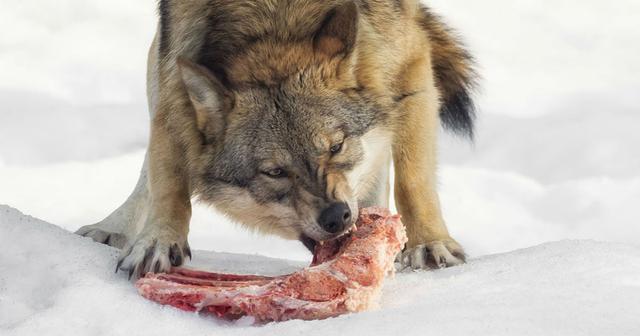
Wolves are known for their adaptability when it comes to their diet. While their main prey consists of large, hooved herbivores such as moose, elk, and deer, they have also been observed consuming a variety of other animals. This includes smaller mammals like beavers, hares, marmots, and rodents, as well as fish and birds. Wolves are even known to scavenge for carrion and garbage. However, their occasional predation on domestic livestock and pets has led to conflicts with humans and a negative reputation for the species.

The specific diet of wolves depends on the availability of prey in their habitat, as well as the size and vulnerability of the prey. Different regions across the Northern Hemisphere have varying populations of ungulates (hooved animals), which serve as the primary prey for wolves. For example, Arctic wolves hunt caribou and musk-oxen in their icy habitats, while wolf packs in Idaho, Montana, and Wyoming primarily target elk, moose, deer, bighorn sheep, and mountain goats. Mexican gray wolves prefer elk and deer as their wild prey in North Carolina.

In parts of Spain and Italy, wolves tend to feast on red deer, roe deer, and wild boar. In Central Asia, ibexes, argali sheep, and wild goats are the main prey for wolves. The Himalayan wolf inhabits high altitudes in the Himalayas and Tibetan plateau where they hunt Tibetan gazelles.

While wolves can survive on 2.5 to 3.7 pounds of meat daily, successful reproduction requires them to consume 5 to 7 pounds per day. Despite this need for food intake for reproduction purposes or survival in general; however; wolves typically do not eat every day but instead follow a feast-or-famine lifestyle. They can go for days or even weeks without eating, and when they do make a successful kill, they can consume up to 20 pounds of food in one meal.

Hunting large ungulates like elk, moose, caribou, and musk-oxen is easier and safer for wolves when they hunt in packs. It takes skill, energy, and luck to successfully take down such large prey. While wolves are skilled hunters, they are not always successful due to various factors such as the age and experience of the wolf, the vulnerability of the prey (e.g., old, injured, sick or young individuals), the time of year and day, the terrain, and the weather conditions.

Research has shown that wolves tend to target the most vulnerable individuals within a herd or flock of prey species. This includes older animals, those that are injured or sickly, as well as individuals with a history of poor nutrition. By targeting these vulnerable individuals, wolves ensure their own survival by reducing competition for resources.

The relationship between wolves and their prey is complex and influenced by various factors. In some cases where more than one prey species is available in an ecosystem, wolves may switch their focus from one species to another depending on the availability and abundance of each. For example, in northeastern Minnesota’s east-central Superior National Forest where white-tailed deer, moose, and beavers are present as top menu items for wolves; researchers have observed that when moose populations declined by over half from 2006 to 2016; wolf populations almost doubled instead of decreasing. Wolves supplemented their diet by hunting white-tailed deer during this period.

Similar observations were made in other locations where wild ungulates became scarce or absent. A study conducted in Alaska’s Alexander Archipelago revealed that while ungulates represented about 65% of wolves’ diet on a regional level; the kind and proportion of ungulates varied across different locations. Sitka black-tailed deer were the main prey on several islands, while moose and mountain goats were the primary prey on the mainland. When one of these ungulate species declined or became scarce, wolves adapted by changing their prey to a variety of other species including land mammals (beaver, black bear, rodents, etc.), marine life (mammals and fish), and even birds.

In instances where wild ungulates or other wild prey are scarce or absent from the landscape, wolves may turn to alternative food sources such as domestic livestock. This brings them into direct conflict with humans and has been linked to seasonal patterns like grazing seasons when livestock are more vulnerable. Wolves have also been known to scavenge for garbage in certain areas. In Israel, wolf scat analysis revealed that they consume not only meat scraps and fruit but also non-food trash items like human hair, plastic containers, cigarettes, and eggshells.

Fruit is another surprising addition to wolves’ diets in various regions across Europe and China. Studies have found evidence of wolves consuming cherries, berries, apples, pears, figs, plums, grapes, melons; even regurgitating wild blueberries for their pups at rendezvous sites in Minnesota’s Voyageurs National Park.

Understanding the varied diet of wolves is crucial for wildlife management policies and debunking myths surrounding wolf predation. By studying what wolves eat and how it relates to their habitat and prey availability; researchers can gain insights into the ecological dynamics between predators and their prey while also addressing conflicts with humans over resources.

From Moose to Deer: Understanding the Prey Preferences of Wolves

Wolves are large carnivores that primarily prey on ungulates, such as moose, elk, and deer. However, they are not strict carnivores like some species of cats. Wolves have adapted to a more varied diet and are considered generalists and opportunistic hunters. In addition to ungulates, wolves also prey on smaller animals like beavers, hares, marmots, rodents, fish, and birds. They are also known to scavenge carrion and garbage. Unfortunately, occasional predation on domestic livestock and pets has contributed to the negative reputation of wolves among some people.

The flexibility in their diet is one of the reasons for the success of wolves as a species. It allows them to survive and thrive in various ecosystems across the Northern Hemisphere. The type of prey available, its size, and vulnerability determine what wolves eat. Different regions have different dominant prey species for wolves. For example, Arctic wolves hunt caribou and musk-oxen while elk, moose, deer, bighorn sheep, and mountain goats are the main prey for wolf packs in Idaho, Montana, and Wyoming.

Wolves can survive on 2.5 to 3.7 pounds of meat daily but require 5 to 7 pounds per day for successful reproduction. However, they do not eat every day and live a feast-or-famine lifestyle. After successfully hunting a large ungulate, a wolf can consume up to 20 pounds of food in one meal. Hunting large ungulates is easier and safer for wolves that hunt in packs compared to hunting alone.

Research has shown that wolves tend to target the most vulnerable individuals within a herd or flock of prey species. This includes the old, injured, sick or young individuals with less visibly discernable vulnerabilities such as poor nutrition history. When wild ungulates and other wild prey are scarce or absent from the landscape, wolves have been observed to switch their prey preferences. They may supplement their diet with alternate prey species or turn to domestic livestock, leading to conflicts with humans.

Understanding the prey preferences of wolves is crucial for wildlife management policies and dispelling myths and misperceptions about wolf predation. By studying what wolves eat, researchers gain insights into factors such as prey availability, vulnerability, terrain, climate, disease, and fragmented landscapes that influence wolf diets. This knowledge helps in conserving wolf populations and promoting coexistence between wolves and humans.

Feast or Famine: How Wolves Adapt Their Diet to Include Deer

Feast or Famine: How Wolves Adapt Their Diet to Include Deer

Wolves are known for their adaptability when it comes to their diet. While their main prey consists of large hooved herbivores like moose, elk, and deer, they have also been observed hunting smaller animals such as beavers, hares, marmots, and rodents. In addition to these land-dwelling creatures, wolves have been known to consume fish and even birds. They are opportunistic hunters and scavengers, often feasting on carrion and garbage. However, this varied diet has also brought them into conflict with humans as they occasionally prey on domestic livestock and pets.

The flexibility in the wolf’s diet is one of the reasons for its success as a species. It allows them to survive and thrive in various ecosystems across the Northern Hemisphere. The type of prey wolves eat depends on its availability, size, and vulnerability. Different regions have different dominant prey species for wolves. For example, Arctic wolves hunt caribou and musk-oxen while elk, moose, deer, bighorn sheep, and mountain goats are the primary prey for wolf packs in Idaho, Montana, and Wyoming.

Wolves typically do not eat every day but live a feast-or-famine lifestyle. They can go days or even weeks without eating but can consume up to 20 pounds of food in a single meal after successfully hunting a large ungulate. Hunting large ungulates like elk and moose is easier and safer for wolves that hunt in packs. However, hunting success depends on various factors such as the age and experience of the wolf, vulnerability of the prey animal, time of year and day, terrain, and weather conditions.

Research has shown that wolves tend to target the most vulnerable individuals in a herd or flock of prey species. This includes old or injured individuals as well as young ones. Wolves also target prey with less visibly discernable vulnerabilities, such as a history of poor nutrition. In instances where wild ungulates and other prey are scarce or absent, wolves have been observed to switch their diet to include alternate prey species. This prey switching behavior helps them survive in environments where the primary prey species is in decline.

In some cases, when wild prey is unavailable, wolves turn to domestic livestock as a food source. This brings them into direct conflict with humans and has contributed to their negative reputation in certain areas. Wolves have also been known to scavenge from garbage dumps and consume non-food items accidentally, such as plastic containers or broken glass.

Overall, the wolf’s diet is influenced by factors such as prey availability, vulnerability, terrain, climate, and disease. Understanding what wolves eat and how they adapt their diet is crucial for wildlife management policies and dispelling myths and misperceptions about wolf predation. By studying their diet and prey relationships, researchers can gain valuable insights into the behavior and ecology of these fascinating animals.

Deer on the Menu: Unraveling the Relationship Between Wolves and Their Prey

Wolves have a diverse diet that includes large, hooved herbivores known as ungulates, such as moose, elk, and deer. However, they are not limited to these prey species and also hunt smaller animals like beavers, hares, marmots, rodents, fish, and birds. They are even known to scavenge carrion and garbage. This adaptability in their diet has contributed to the success of wolves as a species, allowing them to thrive in various ecosystems across the Northern Hemisphere.

The specific prey that wolves target depends on factors such as availability, size, and vulnerability. Different regions have different dominant prey species for wolves. For example, Arctic wolves primarily hunt caribou and musk-oxen, while wolf packs in Idaho, Montana, and Wyoming mainly rely on elk, moose, deer, bighorn sheep, and mountain goats. The Mexican gray wolf favors elk and deer as its wild prey in North Carolina.

Wolves can survive on 2.5 to 3.7 pounds of meat per day but require 5 to 7 pounds for successful reproduction. However, they do not eat every day and live a feast-or-famine lifestyle. After successfully hunting a large ungulate, a wolf can consume up to 20 pounds of food in one meal. Hunting large ungulates is easier and safer for wolves that hunt in packs compared to hunting alone.

When it comes to hunting strategies and behaviors of wolves, studies have shown that they tend to target the most vulnerable individuals within a herd or flock of prey species. This includes the old, injured, sick or young individuals with less visibly discernable vulnerabilities such as poor nutrition history.

The relationship between wolves and their prey is complex and influenced by various factors such as the number of prey animals available. Research conducted on Isle Royale, an isolated ecosystem, revealed that the moose and wolf populations tended to reflect each other. When moose numbers were high, there was more food for wolves, leading to better nutrition, higher pup survival rates, and an increase in the wolf population. As wolf numbers declined, they put less pressure on the moose populations, allowing them to rebound.

In multi-prey ecosystems where more than one prey species is available, a decline in the primary prey species can lead to two possible outcomes for the predator population. The predator population may also decline or it may continue to increase by supplementing its diet with alternate prey. This phenomenon is known as “prey switching.” For example, in northeastern Minnesota’s east-central Superior National Forest, wolves primarily target white-tailed deer, moose, and beavers. When the moose population declined significantly from 2006 to 2016, instead of decreasing in number, the wolf population almost doubled. Wolves supplemented their diet by hunting white-tailed deer and continued preying on moose calves.

In instances where wild ungulates and other wild prey are scarce or absent from the landscape, wolves exhibit flexibility and resilience in their diet. They may turn to domestic livestock as a food source, which often leads to conflicts with humans. Garbage dumps can also serve as a food source for scavenging wolves.

Studies have shown that fruit can also be part of a wolf’s diet. Scat analysis across different regions has revealed the presence of various fruits like cherries, berries, apples, pears, figs, plums grapes, melons in their diets.

Understanding what wolves eat and their relationship with prey species is crucial for wildlife management policies and dispelling myths about wolf predation. By studying these aspects of wolf ecology, researchers gain insights into how wolves interact with their environment and shape conservation strategies.

Debra Mitts-Smith, an expert in wolf literature and art, conducts research on wolves and is currently working on a cultural history of the wolf. The International Wolf Center provides educational resources and information about wolves to promote their survival and the understanding of their role in ecosystems.

Wolves and Deer: Examining the Complex Interactions in their Food Chain

Wolves and deer have a complex relationship when it comes to their food chain. Wolves primarily prey on large, hooved herbivores such as moose, elk, and deer. These ungulates make up the main source of food for wolves, but they are not the only prey that wolves target. Over half a century of research on wolves has revealed that they also prey on smaller animals such as beavers, hares, marmots, rodents, fish, and even birds. Wolves are opportunistic hunters and scavengers, which allows them to adapt to a more varied diet compared to hypercarnivores like cats who eat only meat.

Vulnerable Prey

Studies have shown that wolves tend to target the most vulnerable individuals in a herd or flock of prey species. This includes the old, injured, sick, or young animals that are easier targets for predation. Wolves also target prey with less visibly discernable vulnerabilities such as a history of poor nutrition. By focusing on these vulnerable individuals, wolves increase their chances of successful hunts and ensure their own survival.

Prey Switching

In areas where more than one prey species is available, wolf-prey relations become even more complex. When the primary prey species goes into decline or becomes scarce, two things can happen: the predator population may also decline or the predator population may continue to increase by supplementing its diet with alternate prey. Biologists call this “prey switching.” For example, in northeastern Minnesota’s Superior National Forest where white-tailed deer, moose, and beavers are the top menu items for wolves, researchers found that as the moose population declined by more than half from 2006 to 2016, wolf numbers almost doubled instead of decreasing. The wolves supplemented their diet by hunting white-tailed deer and continued to prey on moose calves, contributing to the ongoing decline of the moose population. Only when the white-tailed deer population also declined did the wolf population start to decrease.

Scavenging and Human Conflict

Wolves are known to scavenge for food, including carrion and garbage. This scavenging behavior can sometimes bring them into direct conflict with humans. In areas where wild prey is scarce or absent from the landscape, wolves may turn to domestic livestock as a food source. This leads to conflicts between wolves and livestock owners. Additionally, wolves have been observed scavenging in garbage dumps and consuming non-food trash items such as human hair, plastic containers, cigarettes, and eggshells. These behaviors highlight the flexibility of wolves’ diets and their ability to adapt to different food sources in order to survive.

Overall, studying what wolves eat provides valuable insights into their ecological role and helps shape wildlife management policies. Understanding the complex interactions between wolves and their prey species, such as deer, is crucial for maintaining balanced ecosystems and mitigating conflicts between humans and wildlife.

Dietary Flexibility of Wolves: Insights into Their Consumption of Deer

Dietary Flexibility of Wolves: Insights into Their Consumption of Deer

Wolves are known for their dietary flexibility and ability to adapt to different prey species. One of the main prey animals for wolves is deer, which includes species such as moose, elk, and white-tailed deer. Research has shown that wolves have a varied diet and will also prey on smaller animals such as beavers, hares, marmots, rodents, fish, and even birds. They are also known to scavenge carrion and garbage.

The type of prey that wolves consume depends on factors such as the availability of prey in their habitat, the size of the prey animal, and its vulnerability. Different wolf populations across the Northern Hemisphere have different preferred prey species. For example, Arctic wolves hunt caribou and musk-oxen, while Mexican gray wolves primarily target elk and deer. In Spain and Italy, wolves tend to feast on red deer, roe deer, and wild boar.

Wolves can survive on 2.5 to 3.7 pounds of meat daily but require 5 to 7 pounds per day for successful reproduction. However, they typically do not eat every day and live a feast-or-famine lifestyle. After successfully hunting a large ungulate like an elk or moose, a wolf can consume up to 20 pounds of food in a single meal.

While hunting large ungulates takes skill and energy, it is easier and safer for wolves that hunt in packs. Wolves are skilled hunters but not always successful due to various factors such as the age and experience of the wolf, the vulnerability of the prey animal, the time of year and day, terrain conditions, and weather.

Studies have shown that wolves tend to target the most vulnerable individuals in a herd or flock of prey species. This includes old or injured animals as well as young individuals or those with a history of poor nutrition. The flexibility and resiliency of wolves become especially apparent in areas where wild prey is scarce or absent from the landscape.

In instances where the primary prey species goes into decline, wolves may resort to “prey switching” by supplementing their diet with alternate prey. For example, when the moose population declined in northeastern Minnesota, wolves increased their predation on white-tailed deer. Similarly, in Alaska, wolves expanded their dietary niche to include a variety of species such as land mammals, marine life, and birds when ungulates became scarce.

However, when wild prey is unavailable, wolves may turn to domestic livestock as a food source, leading to conflicts with humans. They have also been known to scavenge from garbage dumps and consume non-food items incidentally.

Understanding what wolves eat and how they adapt to different prey species is crucial for wildlife management policies and dispelling myths about wolf predation. Research on the dietary flexibility of wolves provides insights into their ecological role and helps shape conservation efforts for both wolves and their prey species.

Sources:
– International Wolf Center: https://wolf.org/
– “Dietary Flexibility of Wolves: Insights into Their Consumption of Deer” (International Wolf magazine)

In conclusion, wolves are natural predators that do indeed eat deer. Their diet primarily consists of herbivores such as deer, aiding in maintaining a balanced ecosystem. Understanding the predator-prey relationship between wolves and deer is crucial for wildlife conservation efforts.

Best Chokes for Teal Hunting (Try These FIRST!)

0

The ability to hit a fast-moving bird is the most important aspect of teal hunting, but having the right choke in your shotgun when the bird finally commits to the decoys is second. In this guide, we’ll take a look at the three choke tubes that work well for hunting teal and why you should consider them.

The most popular steel shot sizes for teal hunting are #6 and #4. Choosing a choke tube that can deliver uniform patterns at the right distances is critical for early teal season success. Carlson’s Modified choke happens to pattern #6 shot extremely well, producing consistent results at 30 yards.

best-choke-teal-hunting
Blue winged teal

Top 3 Best Choke Tubes for Teal Hunting

These are the three chokes that you should consider for your next teal hunt that can provide dense and consistent patterns downrange with steel shot. As always, patterning your shotgun is extremely important to find out which choke tubes and ammo work best out of it.

1) Carlson’s Modified Choke Tube

Carlson’s is one of the most trusted choke tube brands in the industry and their extended modified choke is perfect for teal hunting. It delivers a dense pattern out to 35 yards with steel #6’s and makes for a versatile all-around choke tube for most teal hunting situations.

Regardless if you’re hunting the rice fields of Texas or the rivers of Arkansas, this choke performs exceptionally well at medium ranges over decoys for teal. #4 and #6 shot happen to be the sweet spot with this choke, and fast flying teal just can’t escape it. This is the TOP pick.

2) Patternmaster Code Black Choke

The Patternmaster Code Black is a top-of-the-line choke tube that provides unmatched performance for long-range teal hunting situations. If you’re thinking of picking up a new choke not just for teal, but to use all season long, this is the choke to consider.

The Patternmaster Code Black is great for field hunts, ponds, lakes, and rivers where the range of shots varies and you’ll be able to handle it all without having to change chokes mid hunt. Patternmaster works with internal studs that halt the wad just before it exits the barrel, resulting in a controlled wad seperation that increases pellet distribution and limits flyer pellets. Expect it to pattern closer to a full choke. This is the TOP pick for MAX range.

3) Carlson’s Cremator Choke Tube

The Carlson’s Cremator choke tube is an excellent choice for teal hunters who need a versatile choke that can perform well with a variety of shotshell loads. This choke tube uses a unique design that consists of multiple tapers, which work together to provide a consistent shot pattern. This makes the Cremator ideal for hunting situations where you need to be able to adjust your shooting style quickly and accurately.

The Cremator is equipped with triple shot technology which gradually compresses the shot column as it exits the barrel to prevent deformation. This is the perfect choke for medium range teal hunting with #4 and #6 shot. Carlson’s Cremator can produce 80% of pellets inside a 30-inch circle at 40 yards with the right ammo. This is the BUDGET pick.

Why a modified choke works best for Teal Hunting

Modified chokes are the middle ground of choke diameters (0.705”) and because of this are versatile in many different hunting situations. Chokes in modified can handle teal decoying close as well as long fast-moving passing shots as they attempt to exit.

Modified choke tubes work especially well with #6 steel shot and it’s not uncommon to pattern this choke and ammo combination and receive 80% coverage in a 30-inch circle at 30 yards. Steel shot also works well with an improved cylinder choke tube like the Carlson’s extended choke mentioned above.

How to hunt Teal

Teal are some of the easiest waterfowl to hunt during the special early season. They typically decoy with reckless abandonment and are suckers for spinning wing decoys. Your choke setup will likely need to be tailored to the types of teal you will be hunting and how they react to decoy spreads.

Teal hunting in tight spaces can limit which chokes are best. If most of your shots are in thick brush or dense vegetation, shots within 20-25 yards where an Improved Cylinder (0.715”) which opens the shot up quicker will be the top choice.

For teal in open terrain like rice fields where birds may pass from further out, the modified (0.705”) or improved modified (0.695”) are the top choices that will keep your pattern together for shots between 30 and 40 yards.

Teal Choke Tubes and Ranges

  • Improved Cylinder (10-20 yards) – Up close decoying shots
  • Modified (20-40 yards) – Decoying and medium passing shots
  • Improved Modified (35-45 yards) – Long range decoying shots
  • Full Choke (40-60 yards) – High flying birds over 40 yards

Ballistics show that a 1300 fps load of steel #6 shot enters 0.90″ of gel penetration at 30.5 yards, while a 1300 fps load of steel #4 shot enters 0.90″ of gel penetration at 33.4 yards. These are the max ranges for #6 and #4 steel shot while teal hunting.

The chart above shows the recommended choke tube and range in yards for teal hunting. Modified is the best choke for typical teal hunting shots that include close decoying and bird exiting scenarios. Improved cylinder is the best for close flushing shots just as the teal rises. Improved modified (IM) and full chokes are best for longer range shots after the bird is exiting and gained full momentum.

Teal Hunting Field Tips

  • Get a set of improved cylinder, modified, and improved modified chokes
  • This will let you switch chokes as conditions change
  • Steel #6’s and an IC choke tube work well on close birds
  • Keep shots below 40 yards, know your ammo and choke limitations
  • A full choke may be needed for those days where birds are skirting the decoys
  • Windy days, especially those with cross winds, you may need to up your pellet size
  • Pattern your shotgun to find out what choke and ammo work best
  • If using a tight choke, allow a bird decoying close to get distance before shooting

Modified choke tubes can take a lot of the guess work out of teal hunting. They usually work well with most ammo and won’t damage the birds at close ranges.

Having a set of choke tubes in your hunting vest or backpack is the best option that works well for changing conditions. You can tailor your setup to how teal are responding while in the field and changing a choke only takes seconds with a good choke wrench.

What to expect

When it comes to choosing the right choke tube for hunting teal, Carlson’s Modified choke stands out from its competitors. The Carlson’s Modified choke is engineered with a unique design that provides consistent and even shot patterns, resulting in better accuracy and a higher precision. Unlike most of its competitors, the Modified choke ensures that the shot is evenly distributed, reducing the chances of having holes or gaps in your pattern. Overall, the Carlson’s Modified choke is a top performer, delivering outstanding results that set it apart from the competition.

Bottom Line

Teal hunting requires a choke size geared toward the situation at hand. #6 and #4 steel shot are popular pellet sizes most teal hunters use. Naturally, finding a choke tube that patterns these loads well is key to success in the field.

A modified choke such as the extended chokes that Carlson’s offers work well for an all-around teal hunting choke tube with small steel shot. The Patternmaster Code Black and Carlson’s Cremator choke are two options for chokes you can use for teal season and also rely on in the general season as well.

Hunting teal and figuring out how the birds are responding will help determine which choke size you may need. Shots on teal in open terrain tend to be longer where a modified or improved modified are best. Teal in dense vegetation and brush may only require an improved cylinder for shots inside 20 yards.

Latest Posts

  • Best Waterfowl Choke Tubes for Duck Hunting Success
  • Choke Tube Diameter and Constriction Table
  • 7.5 vs 8 shot: The 3 Key Differences to Know

Last update on 2024-11-08 / Affiliate links / Product Images from Amazon Product Advertising API

How to Adjust Draw Length on a Bear Compound Bow

0

Most modern bows have a complex method to adjust the draw length, and most require a bow press.

However, Bear compound bows are generally very easy to adjust and do not require the use of a bow press.

For this reason, Bear compound bows are one of the best bows for beginners.

Bear Adjustment System

How to Adjust Draw Length on a Bear Compound Bow

Bear bows are one of the most beginner-friendly compound bows on the market.

This is because Bear archery made their bows completely adjustable for the draw weight and even the draw length.

There are some variations between the models, but the concept is generally the same.

Adjusting the Draw Length

Adjusting the draw length on your Bear compound bow is quite simple and can be done in less than ten minutes.

There are two steps to adjusting the draw length of a compound bow. First, we will adjust the module; this will set the draw length to your desired length.

Second, we must set the stop; this will ensure that the cams stop turning when you drawback.

Tools Needed

How to Adjust Draw Length on a Bear Compound Bow

Adjusting a Bear compound bow is so easy that there are no tools needed other than the right size Allen keys.

This varies from model to model, so I like to have an Allen key set.

Fitting the small screws can also be a bit tricky, so I like to put my bow in a bow vice when adjusting it; however, this isn’t necessary.

Adjusting the Module

How to Adjust Draw Length on a Bear Compound Bow

A compound bow module determines the draw length of a compound bow.

Many modules have only a limited range, allowing the bow to be adjusted in only small increments or in some cases, not at all.

However, the modules found on a Bear compound bow have a wide range of adjustments and, in most cases, do not need to be swapped for any size draw length.

How to Adjust Draw Length on a Bear Compound Bow

To adjust the draw length on the bear compound bow module:

  1. Find your draw length number. Once you know your draw length, you can find it’s corresponding number on the bear compound bow cam. For example: on a Bear Wild compound bow a 28 inch draw is number 4 on the module.
  2. Secure the bow in a position that is comfortable to work on.
  3. Locate the module. This is usually located on the cam on a single cam bow. On a dual cam bow the module is typically located on the tom cam.
  4. Unscrew the two screws on the back of the module. Be careful not to lose the screws as the module will fall once the two screws are undone.
  5. Slide the module to the number that corresponds with your draw length.
  6. Locate the two holes that perfectly align between the module and the bow and redo the screws. Hand tighten the screws and be careful not to overtighten.

Adjusting the Stopper

How to Adjust Draw Length on a Bear Compound Bow

Now that the draw length is set, we have to set the stopper to align with the draw length.

  1. Locate the stopper. Typically on a single cam bow, the stopper is located on on the outside of the cam.
  2. On a dual cam bow, there are two stoppers, and it is important that both are set equally to ensure your bow is firing evenly.
  3. Undo the stopper and set it to the same number as what you set the module to.
  4. Drawback your bow to check your draw length.

Important Things to Remember

Ensure that you are using the proper tools. Some bow manufacturers use metric measurements, and others use imperial. Find the one that fits your bow perfectly to prevent damaging the screws.

Double-check that you are undoing the proper screws. There are a lot of screws around the cams of a bow, so it’s important to double and triple-check that you have the correct screw.

Undoing the wrong screw could cause damage to the bow and injury to you.

Final Thoughts

Adjusting the draw length on a Bear compound bow is straightforward.

Once you find your corresponding number on the module to match your draw length, it’s only a matter of moving the module and the stopper to that number.

The whole process takes less than ten minutes, and you’re back up shooting again.

It’s easy to mistake the screws, so double-check that you have the right screw before undoing it to prevent damage and possible injury.

Rainbow Trout Taste: Are They Good for Eating?

0

Rainbow trout has a mild and delicate flavor. Cooked properly, rainbow trout meat is light pink, tender and flakes easily. Trout has a slightly nutty flavor and is completed by flavors such as thyme, bacon and pine nuts.

Brown troutcaught from a river has a fishier, stronger taste. The meat is darker and contains more oils. Larger brown trout can be extremely gamey tasting and may need to be soaked in milk overnight before cooking to help remove excess oils.

Cutthroat trout and brook trout are milder but still have that trout taste. The steelhead trout has orange color meat and is similar to salmon. Once cooked, the light orange meat has a delicate texture.

Lake trout, Dolly Varden, arctic char, and brook trout are actually more closely related to the salmon family. These fish are varieties of a group called char. While they come from the same family as trout, they are more salmonlike in taste and appearance.

What does rainbow trout taste like?

The taste of the rainbow trout varies depending on how and where the fish was caught and by what they feed on.

Rainbow trout caught in the wild has a mild flavor. It has a bit of a fishy taste befitting of a freshwater fish, but has a more delicate flavor than other trout species. Freshwater trout or farmed trout is found in stocked ponds and rivers. This depends on the clarity of the fresh water and what type of other fish live in the water. Like other fish, trout eat many things, including bugs, algae, smaller fish, and debris off the bottom.

Many anglers say lake trout taste is similar to eating dirt. Others say it depends on how many trout live in the water and if they have a sufficient food source with a healthy population of fish to eat. Rainbow trout eating fish will have different flavors and textures to the meat than trout dining on the algae and debris in the lake water.

Nutrition value of rainbow trout

Eating rainbow trout is recommended by doctors because of its high nutritional value. Rainbow trout contains low levels of dangerous mercury but has high values of essential amino acids including Omega-3 fatty acids. Properly cooked fish retains its nutritional value and has heart-healthy levels of Vitamins A, D, and B12. Rainbow trout is also a good source of low-fat protein.

Trout vs Salmon: Taste Differences

Trout and salmon are closely related, so it makes sense that the fish have similar tastes. Both are oily fish with pink meat. Brown trout and golden trout have flesh with more of a reddish-orange color. This meat tends to be oilier and these trout taste like salmon more than the others. Rainbow trout and speckled trout have lighter colored meat, that is softer and mushier than the meat from other trout fish.

Best Seasoning for Trout and Other Freshwater Fish

Rainbow trout can be enjoyed pan-fried, battered, grilled over a fire pit or baked.

Rainbow trout is one of the most commonly eaten trout. Raised in fish farms or hatcheries for fly fishing, rainbow trout are bred for sportsmen who want to catch and release or catch and eat trout. While they can reproduce in the wild, many of the young fish do not make it through the life cycle because they are eaten by other fish.

There are many ways to cook rainbow trout. Many anglers like to cook a whole trout over a campfire by the side of the stream after a day of trout fishing. Pan-fried in butter and drizzled with lemon juice, fresh rainbow trout offers a mild flavor and flaky white meat.

Butter

It is possible to fry fish in olive oil or vegetable oil, but butter is best when cooking trout or any delicate fish. Put the butter in the pan over medium-high heat. Once the butter begins to sizzle lay the fillets in the pan. Allow them to fry for 3-5 five minutes, basting them with the excess butter. This helps cook the fish through and keeps the side facing up from becoming dry. Flip the fish once and finish the cooking.

Thyme

Thyme, a wild-growing herb from the oregano family has a minty, lemony taste that tames the gamey taste of trout. It is especially tasty when combined with lemon or garlic.

Lemon

Lemon is an excellent addition to any fish dish. When fish die, their bodies begin to produce amines. Similar to ammonia, these alkaline molecules enhance smell and taste. The result is that nasty, strong, fish like smell. Adding an acid, in the form of lemon juice, affects rainbow trout taste by neutralizing the amines. The resulting trout taste is mild and meaty.

Dill

Dill using sparingly can add a little bit of bite to your fish meal. This tangy herb is just a little bit citrusy and can help reduce that fishy trout taste. It also adds a dash of bright color to your dish.

Garlic

Pungent, aromatic garlic is added to many seasonings and spices. Paired with garlic and lemon, it makes rainbow trout taste tangy and flavorful without destroying the actual trout taste.

Bacon

Bacon and fish are excellent partners in the pan. The crispy thin slices of bacon provide a nice complement to the mild, meaty fish fillets. The bacon grease imparts a slightly smokey, salty flavor and makes the rainbow trout taste like you just cooked it over an open fire.

Capers

Capers are small edible buds that have a sour, lemony taste with the texture of olives. Capers are made by bringing the unripened buds in vinegar. This creates a tart, acidic bite that affects fish in much the same way lemon juice does. The acidic capers neutralize the amines that create that fishy taste and smell.

Best Ways to Cook Trout

Pan-Fried

Trout can be pan-fried with the skin or without. Using butter for frying and having a hot pan allows you to produce crispy skin without burning the fish. A seasoned cast iron pan over an open campfire is the preferred cooking method for many anglers. Be sure to keep basting the fish with the excess butter when pan-frying to keep it from getting dried out.

Battered

Battered and fried fish is delicious, no matter if it is rainbow trout or some other species of fish. Make a simple batter using a packaged mix and beer or milk. Drop the battered fish pieces in boiling hot oil and cook until it floats to the top and is lightly browned.

Grilled

Like salmon, trout fillets or fish steaks can be grilled. Firm trout like browns or lake trout hold up best to grilling, but it is possible to prepare rainbow trout on the grill. For best results, the grill needs to be preheated to medium heat and the grill grates should be well greased or buttered because the fish will stick. After gutting the fish, stuff the cavity with butter and spices and grill the trout for 4-6 minutes on each side.

Baked

Baked rainbow trout is healthy and easy to prepare. Line a baking sheet with foil squares. Place the trout skin side down and brush it with melted butter. Sprinkle seasonings on top and add a thinly sliced lemon. Loosely close the foil around the fish. Bake at 375 degrees for 20-25 minutes.

My favourite trout recipe

  • Ingredients
  • Butter
  • Bacon (chopped)
  • Thyme – small bunch. Strip the leaves off the stem and use leaves only.
  • Lemon slices
  • Olive oil
  • Salt
  1. Take one or more medium sized rainbow trout (approx 13” or 1lb) cleaned and scaled
  2. Take out a 14”piece of aluminum foil – one for each trout
  3. Place the each trout in the centre of the foil
  4. Put a chunk of butter, the bacon, thyme and a couple of lemon slices into the gut cavity of the fish
  5. Rub the olive oil into the flanks of the fish and season with salt
  6. Close up the aluminium foil wrapping up the fish to seal in the ingredients
  7. Cook on medium heat on the grill (or in a pan) for 20 minutes
  8. Unwrap and serve

How to Clean Rainbow Trout

Rainbow trout has many tiny pin bones and deboning it would make it easier for you to enjoy the fish.

Rainbow trout can be prepared for cooking in several ways. The skin of the fish is completely edible, although some people do not like the way the cooked skin of rainbow trout tastes.

The simplest method of cleaning is to simply gut the fish and give it quick rinse in cold, fresh water. You can then grill, pan fry, or bake the whole fish.

How to Debone Cooked Rainbow Trout

Rainbow trout, like other trout, have many tiny pin bones. These small bones should not be eaten. After cooking the fish, you can remove the bones by lifting the entire skeleton out in one piece.

Cook the whole fish after gutting it. Remove the fins. Use a sharp knife to split the skin along the spine. Use a fork to gently press the meat down while you lift up on the tail. The fish will split into halves. You can then lift the entire skeleton by lifting it carefully.

Final thoughts on rainbow trout taste

The final thing to remember about trout is their taste is influence by what they feed on. In general, lake dwelling fish have a higher proportion of crustaceans in their diet – such as crawfish – and as a result have pink flesh that tastier and more appealing than their river-dwelling cousins.

Best Air Rifle Deals

Popular Posts

Dry Firing Air Rifles: What You Need to Know

0
"Master the art of precision shooting with dry firing air rifles. Enhance your aiming skills, trigger control, and muscle memory without using ammunition. Discover...

Can a 22 air rifle kill a deer?

0
"Debate over whether a 22 air rifle can effectively take down a deer has sparked curiosity among hunting enthusiasts. With its lower muzzle velocity...

How far can an air rifle shoot accurately?

0
An air rifle's effective shooting range depends on various factors, including the type of rifle, the caliber, and the power source. Generally speaking, most...