Home Blog Page 45

Marlin Vs Swordfish Vs Sailfish: What’s The Difference?

0

If you’re looking for a one stop shop to answer all things billfish, you’ve come to the right spot. Fishing for these beasts of the deep is among the most exciting things you can do on water.

While they may look similar to the untrained eye, there are a few major differences between these species that make all the difference when trying to hook one up. Below, we share everything you need to know when putting these species head to head- whether marlin vs swordfish or sailfish vs marlin, we’ve got you covered.

cancun sailfish

A beautiful sailfish from Captain Travis’ Cancun sailfish fishing trip.

Marlin vs Swordfish vs Sailfish: What is a billfish?

cabo san lucas marlin fishing

Marlin, Swordfish, and Sailfish are all Billfish

Up close and personal with a blue marlin from Captain Jim’s Cabo San Lucas marlin fishing trip

Billfish are some of the most advanced species on the planet. Highly migratory, billfish spend their lives in a constant state of movement, making their way from to tropical breeding grounds in the winter, and back to subtropical feeding grounds in the summer. They are located in every ocean, and some have even been tracked swimming across the entire Atlantic.

All billfish, whether swordfish vs marlin vs sailfish, have the iconic “sword” coming off the front of their body. Also called a rostrum, they use it to slice and stun their prey, making for an easy snack when they circle back around to finish the job. All billfish have advanced swim bladders that allow them to change depths rapidly without exerting a ton of energy. Some species like swordfish frequent depths around 1,500 feet deep during the day time, so it’s important have a good knowledge of the water column when fishing for them.

Where can I catch billfish?

All billfish reside in deep water. A good place to start is close to the edge of the continental shelf – the place where the relatively shallow water around land drops off into the deep blue abyss of the open ocean.

They frequent the continental shelf drop-off where ocean currents upwell nutrient rich water. These areas contain high concentrations of baitfish, and the billfish are all over them. You can also find them closer to shore around underwater seamounts and other seafloor features that attract schooling baitfish.

The migration patterns of billfish rely greatly on water temperatures. They’re able to anticipate the seasons and make the move to better feeding and breeding grounds depending on the time of year. Based on location, season, and proximity to ocean currents lets experienced billfish anglers predict their location with sometimes pinpoint accuracy.

matagorda marlin fishing

A “grander” blue marlin caught in the Gulf of Mexico far offshore from Matagorda on Captain Clayton’s overnight fishing trip

What are the differences between Marlin vs Sailfish vs Swordfish?

Understanding the differences between these apex pelagic ocean predators is the key to knowing how to catch them. While they’re all relatively similar in appearance, the behavior is often their most defining feature.

Marlin vs Sailfish vs Swordfish

kona blue marlin fishing

Marlin

A gorgeous Kona, Hawaii blue marlin caught on Captain Shawn’s sportsman’s trip

Marlin are widely regarded as the most prized gamefish species in the ocean. The largest species is the black marlin that resides in the Pacific and Indian Oceans, and can reach lengths of 15 feet and weigh over 1500 pounds. In the Atlantic, blue marlin are king, reaching lengths up to 13 feet and weighing over 1300 pounds.

The main defining features of a marlin is its dorsal fin. The fin is smaller than the other species of billfish, and connects to the spine along a soft ridge. Their bills are often shorter and more rounded than the bill of a swordfish or a sailfish.

Fishing for marlin generally means taking a boat ride out to the continental shelf or beyond. In some locations like Cabo and Hawaii, this could be a short boat ride. In other places like Texas, this could mean an overnight trip.

The best marlin lures are those that create a lot of disturbance in the water when trolling. This typically takes form of a large plastic bulb with a silicon or rubber skirt like a squid’s tentacles. Marlin are highly aggressive predators, and even the vibration and noise from the boat can attract them to your lure.

Swordfish vs Marlin vs Sailfish

key largo sailfish

Swordfish

Swordfish are another highly sought after gamefish from the depths. They are easily identified by their dorsal fin, which protrudes up from their spine almost like a shark’s. Their bill is also the longest in proportion to their body out of the other billfish.

Swordfish can reach lengths of 15 feet, and weigh over 1,400 pounds. They can tolerate a much larger temperature range than the other billfish, allowing them to dive to depths of 10,000 feet under the ocean’s surface.

Swordfish descend much deeper than other billfish species, often spending their days in waters around 1800 feet, and ascending into shallow water to feed during the night. If targeting swordfish during the day, a common technique is “deep dropping”. Deep dropping for swordfish can be done on conventional heavy tackle, using a variety of squid-like lures, but the use of electric reels has been growing in recent years. Deep dropping involves dropping your lure down to extraordinary depths, and the assistance of an electric reel helps a lot when reeling in thousands of feet of line.

Sailfish vs Swordfish vs Marlin

costa rica sailfish fishing

Sailfish

Sailfish are generally considered the most accessible of the billfish species, depending on your location. If the ride out to the continental shelf is too long, you can target sailfish a bit closer to shore. This is a main difference in blue marlin vs sailfish for example: blue marlin are usually found much further offshore.

They are characterized by a large dorsal “sail” that runs the entire length of their back. The swordfish is the only billfish that’s been observed hunting in groups, using their large sails and bills to herd prey into a “bait ball”. They then take turns darting in and out of the ball, scooping up the bait stunned by the bills of the other sailfish.

Catching sailfish is mostly done in the same manner as marlin fishing. The vibration of trolling plugs behind the boat mimics the disturbance of injured prey, and the sails attack them ferociously. Another one-of-a-kind technique is kite fishing. A kite is attached to a reel or an outrigger and released behind the boat. A lure (bait or artificial) is rigged to the kite and skates along the surface of the water mimicking a sailfish’s favorite snack – a flying fish. Once the sail bites, the line disconnects from the kite, and you’re ready to start reeling.

Looking for a swordfish, sailfish, or marlin fishing trip?

venice swordfish fishing

A trophy Louisiana swordfish caught on Captain Chandler’s Venice trophy hunt trip

Experienced guides have all the gear and experience you need to catch the billfish trophy of a lifetime. A good rule of thumb for gauging the possibility for catching billfish on a charter is how far offshore you’re going, the time of year, and location. If you’re looking to plan a billfish trip, contact us and we can recommend the best location and guide for the season.

28 Nosler vs 300 PRC: Perfecting the Long Range Hunting Rifle

0

28 Nosler vs 300 PRC

The 28 Nosler and Hornady 300 PRC are two centerfire rifle cartridges that were developed for long range shooting and hunting. They represent the pinnacle of 21st Century ballistic technology and development that were designed to hit targets at ranges of over 1,000 yards while maintaining sub-MOA accuracy.

Long range hunting is not a new concept, for decades hunters have been relying on cartridges like the 300 Winchester Magnum, 7mm Rem Mag, and 300 Weatherby Magnum to reach out past 500 yards. Although these rifle cartridges are effective at taking big game, their chamber designs limited the types of bullets that could be used.

Hunters wanted access to longer, more aerodynamic bullets to maximize downrange performance, and the 300 PRC and 28 Nosler were designed from the ground up with these bullets in mind.

How then are you to decide which cartridge is best for your style of shooting or unique hunting needs?

In this article, we will evaluate the 28 Nosler vs 300 PRC to help you understand the differences between the two and give you a clearer idea of which cartridge is best for your next hunting rifle.

What is the difference between 28 Nosler and 300 PRC?

The primary difference between the 28 Nosler and the 300 PRC is that the 28 Nosler fires 0.284” diameter bullets compared to 0.308” for the 300 PRC. Also, the 28 Nosler has higher case capacity and will generally have higher muzzle velocity than the 300 PRC.

Cartridge Specs

When evaluating centerfire rifle cartridges, it’s a good idea to analyze the cartridge specs to gain more knowledge of each.

Both cartridges draw their heritage from rounds designed to hunt large or dangerous game. Hornady developed the 300 PRC from the lesser known 375 Ruger cartridge while the 28 Nosler comes from the 404 Jeffery. The 404 Jeffery sired the majority of Nosler’s cartridge line, namely the 30 Nosler, 26 Nosler, and 33 Nosler as well as other cartridges like the 7mm Remington Short Action Ultra Magnum (SAUM).

One of the most prominent differences between the two is that the 28 Nosler fires a bullet diameter of 7mm or 0.284” while the 300 PRC fires the more common 30-caliber or 0.308” diameter bullets. The 300 PRC fires heavier bullets between 190 and 225 gr while the 28 Nosler fires lighter bullets typically between 160 and 185 grains.
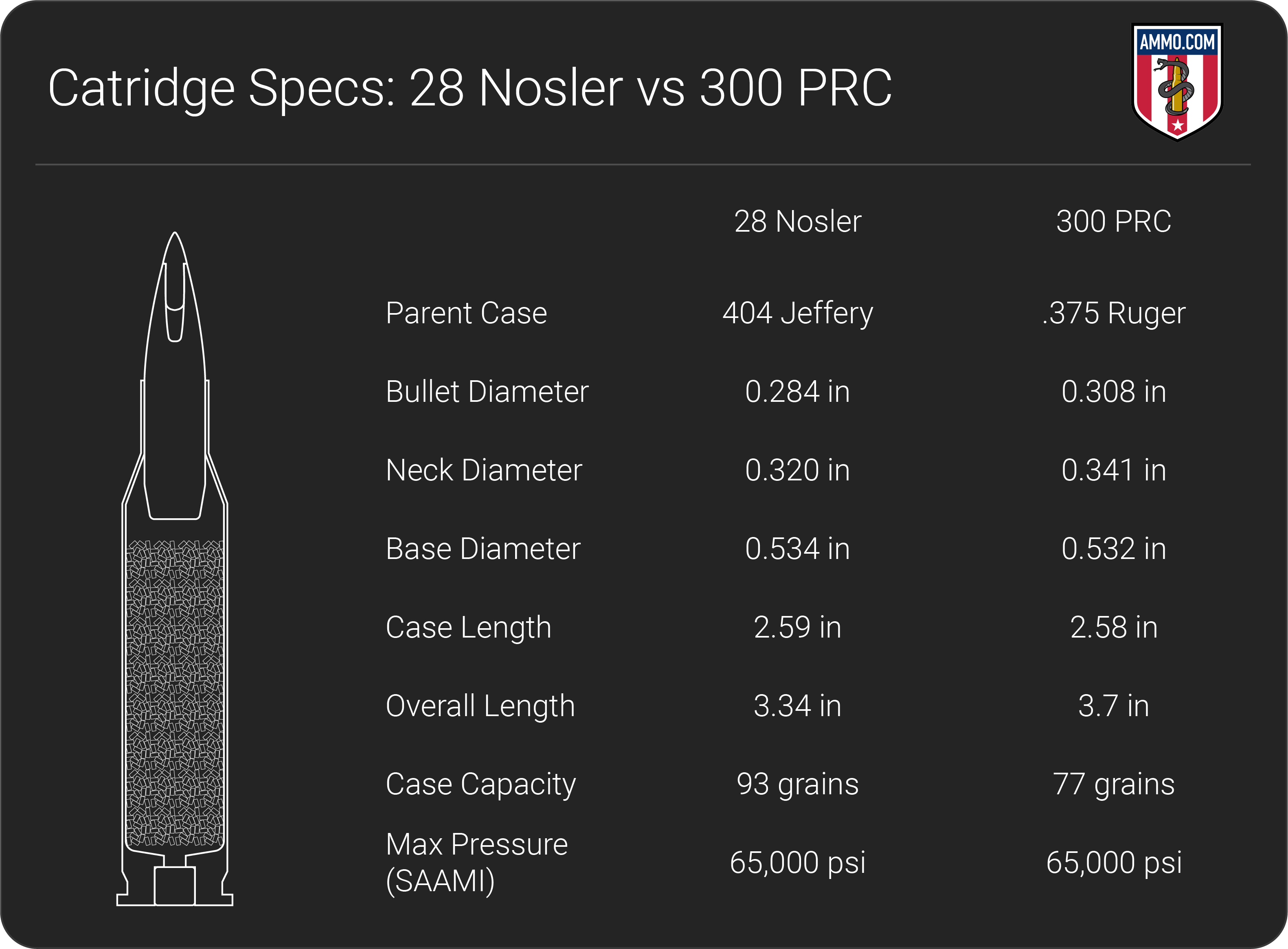
28 Nosler vs 300 PRC dimension chart

Another striking difference between the two cartridges is their overall length. The 3.7” long 300 PRC towers over the shorter 28 Nosler at 3.34” despite both having nearly identical cartridge case lengths at 2.58” and 2.59”, respectively.

This difference in overall length demonstrates a major difference in design concept between the two rounds. The 28 Nosler was designed to fit into a standard long action like the 30-06 Springfield, while the 300 PRC fits into a magnum action like the 338 Lapua Mag.

When Hornady set out to build the 300 PRC, they developed what they considered the ideal 30-caliber round and then built the rifle action around it. In contrast, Nosler developed the 28 to fit into a long action as it is lighter and has a shorter bolt throw. This will mean that follow up shots will typically be faster with a 28 Nosler and rifles for the cartridge will be lighter than those for 300 PRC.

Both cartridges require the use of a magnum bolt face thanks to their base diameter of 0.532” for the 300 and 0.534” for the 28.

Although the maximum chamber pressure for both cartridges is 65,000 psi per SAAMI specs, the 28 Nosler has considerably more case capacity at 93 gr compared to 77 gr for the 300 PRC.

Recoil

Recoil is an important consideration when purchasing a new rifle as a round with heavy recoil will be more difficult to control and will slow your rate of follow up shots.
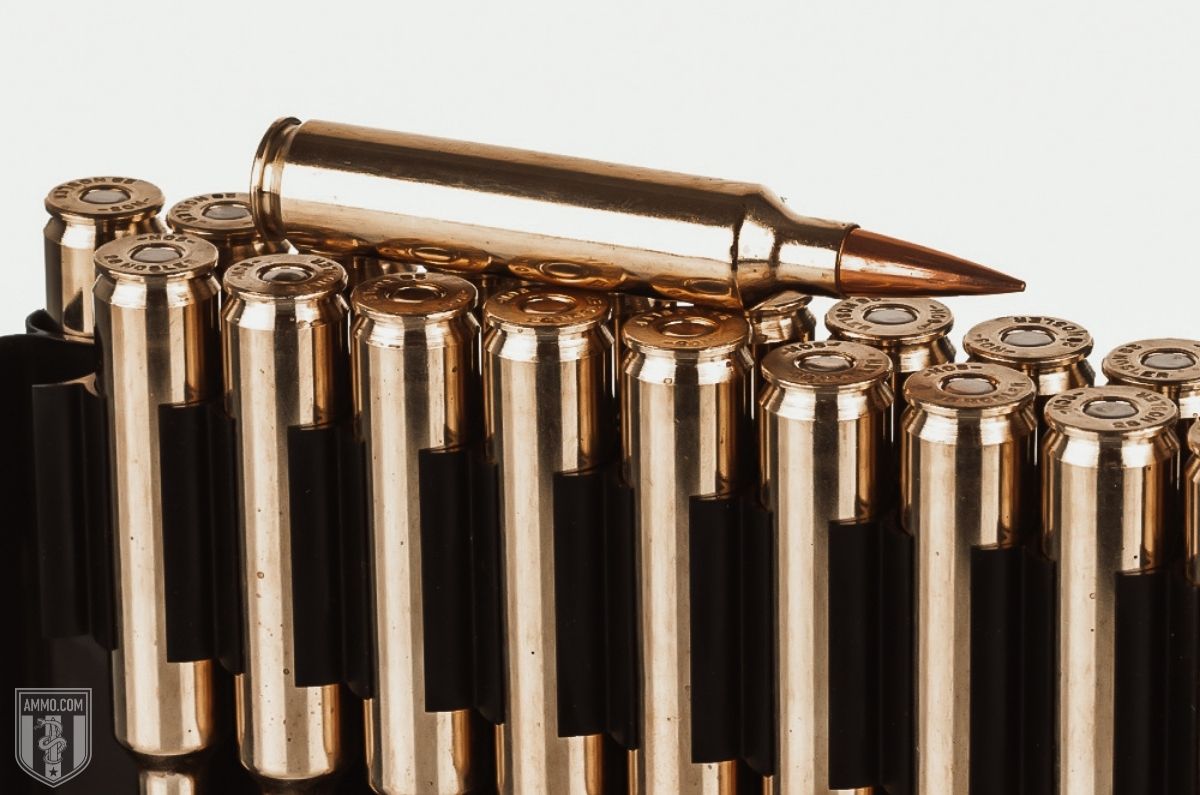
28 Nosler ammo for sale

Recoil is affected primarily by muzzle velocity (FPS), powder charge, bullet weight, and rifle weight.

For this recoil comparison, it is impossible to achieve a pure “apples to apples” comparison as the 300 PRC fires heavier bullets than the 28 Nosler. The lightest factory load available for the 300 is the Hornady Outfitter firing a CX polymer tip 190 grain bullet traveling at 3,000 fps. The 175 gr AccuBond Long Range traveling at 3,125 fps will be selected for 28 Nosler.

The Savage 110 will be the test firearm as it has configurations for both calibers and weighs around 8.7-pounds.

Given these parameters, the 300 PRC will have 32.9 ft-lbs of free recoil while the 28 Nosler will have 32.3 ft-lbs of free recoil. In this case, both rounds have almost the same free recoil energy.

However, the 300 PRC was designed to fire 200+ grain bullets, and the 212 gr ELD-X is their recommendation for big game hunting. Traveling at 2,860 fps, the 212 gr load will have a free recoil of 36 ft-lbs.

Anything over the 20 ft-lbs threshold is generally considered heavy recoil, which is why many rifles for both cartridges will come with a muzzle brake installed from the factory. A muzzle brake works by redirecting gasses from the burned gunpowder to help reduce felt recoil.

However, the 28 Nosler will generally have less recoil than the 300 PRC as the 28 is firing lighter bullets.

Barrel Life

The 300 PRC will generally have a longer barrel life than the 28 Nosler.

When a cartridge is fired, the powder charge is ignited to push the bullet down the barrel. The resulting flame touches not only the base of the bullet, but the rifling as well. Particularly vulnerable is the rifling at the mouth of the chamber.
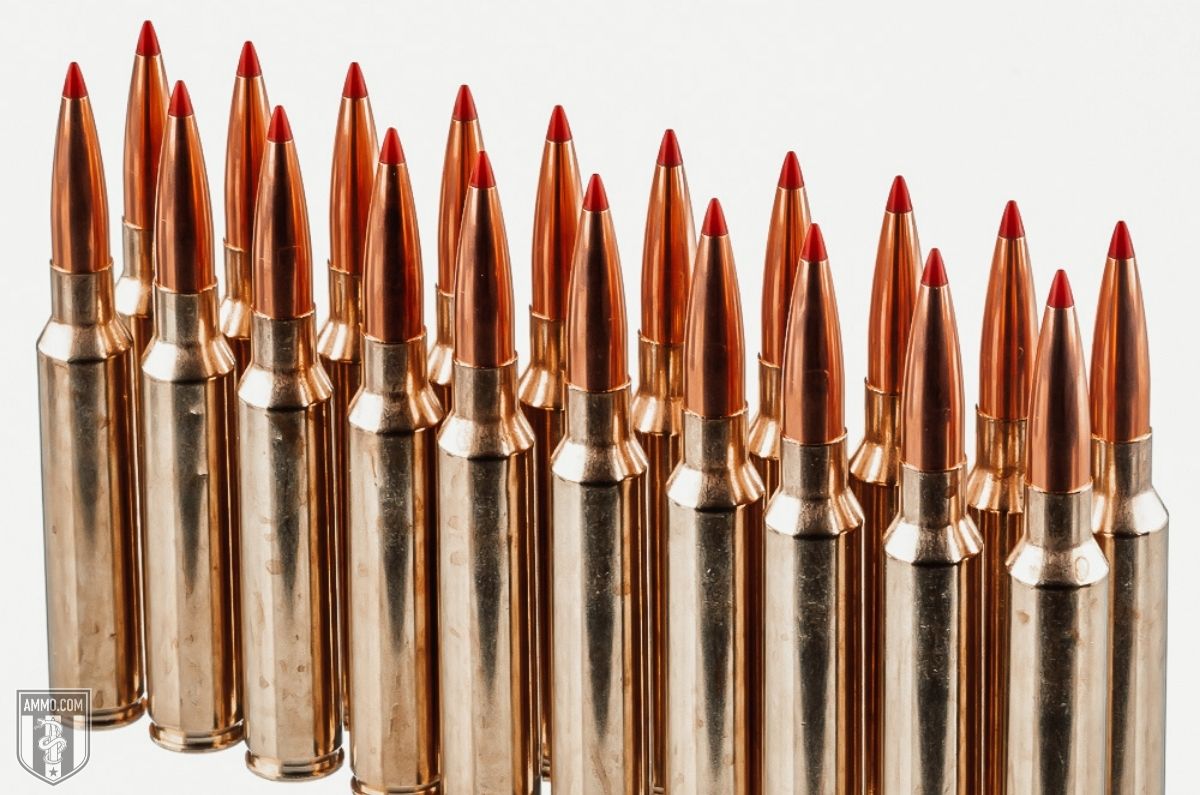
300 PRC ammo for sale

Heat is the enemy of barrel life, the hotter you get your barrel the faster the rifling will begin to wear out.

Both the 300 PRC and 28 Nosler are know as being tough on barrels, however the increased powder charges of the 28 are particularly brutal.

It should be noted that most hunters will not “shoot out” a barrel for multiple seasons with either cartridge. Those who report short barrel life are typically high-volume competition shooters that are shooting near maximum charge handloads to achieve as much muzzle velocity as possible.

To increase your barrel’s lifespan, it’s best to run either factory ammo or handloads below maximum charge. Furthermore, allowing the barrel to cool between strings of fire will also help extend your barrel life.

However, many shooters report a loss in peak accuracy for 28 Nosler around the 800-round mark, while the 300 PRC can last near 1,500 rounds before accuracy begins to suffer.

The reason for this massive difference is that the 28 fires a smaller diameter bullet with a larger powder charge. This means that all the additional heat is focused on a smaller area which increases erosion of the rifling.

Although most hunters should not experience any difference in accuracy for multiple seasons, a 300 PRC will typically have longer barrel life than a 28 Nosler.

Muzzle Velocity, Kinetic Energy, and Trajectory

Browse any shooting or hunting forum and you find tons of posts expounding on the benefits of 300 PRC ballistics or that 28 Nosler ballistics are the best in the business. This can create a lot of confusion among new shooters, so let’s take four of the most popular factory loads on the market and see how they stack up against each other!
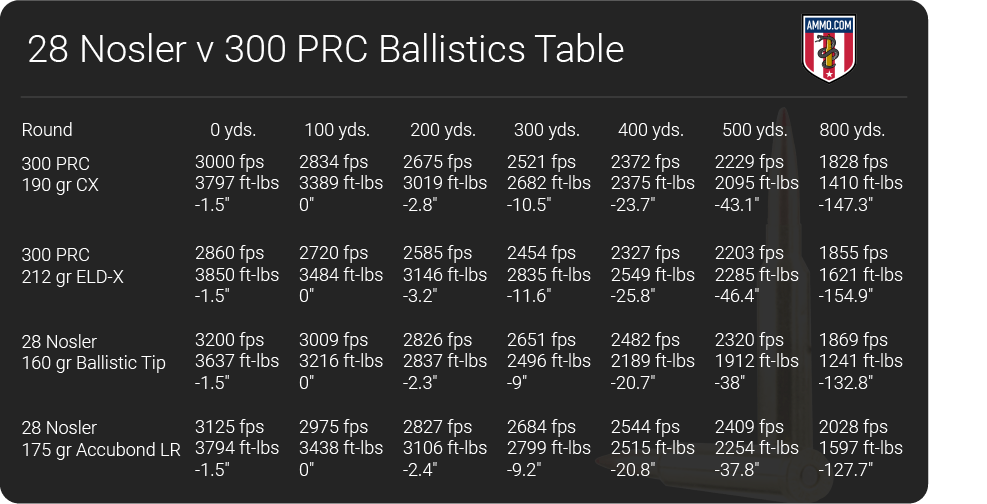
28 Nosler vs 300 PRC ballistics table

For this comparison, we will analyze the Hornady 190 gr CX and 212 gr ELD-X offerings for 300 PRC. The 225 gr ELD Match load could also be considered, but as this load is designed for long-range target shooting and not a hunting cartridge, it was excluded. For 28 Nosler, the 160 gr Ballistic Tip and 175 grain AccuBond Long Range loads will be compared.

In terms of muzzle velocity, the Nosler rounds were superior to the Hornady factory ammo. Thanks to the added case capacity, the 160 gr Ballistic tip left the muzzle at 3,200 fps and 3,125 fps for the AccuBond. Comparatively, the 300 PRC 190 gr CX load has a muzzle velocity of 3,000 fps and 2,860 fps for the 212 gr ELD-X.

Both rounds have an incredibly flat trajectory that surpasses even the 6.5 Creedmoor and 300 Win Mag. However, the increased muzzle velocity of the 28 Nosler gives it a flatter trajectory than the 300 PRC by a respectable margin.

Perhaps the most interesting data point is how close the two Nosler rounds are at 800 yards, as they are only separated by 5.1” of bullet drop at -132.8” (160 gr) and -127.7” (175 gr). The 300 PRC Hornady loads experienced -147.3” (190 gr) and -154.9” (212 gr) of bullet drop at 800 yards.

Although the 28 Nosler may have superior ballistics in terms of muzzle velocity and trajectory, the 300 PRC has it beat in terms of kinetic energy. At 3,850 ft-lbs of muzzle energy, the 212 gr Hornady ELD-X round has the highest kinetic energy of all four selections of factory ammo at 0 through 800 yards.
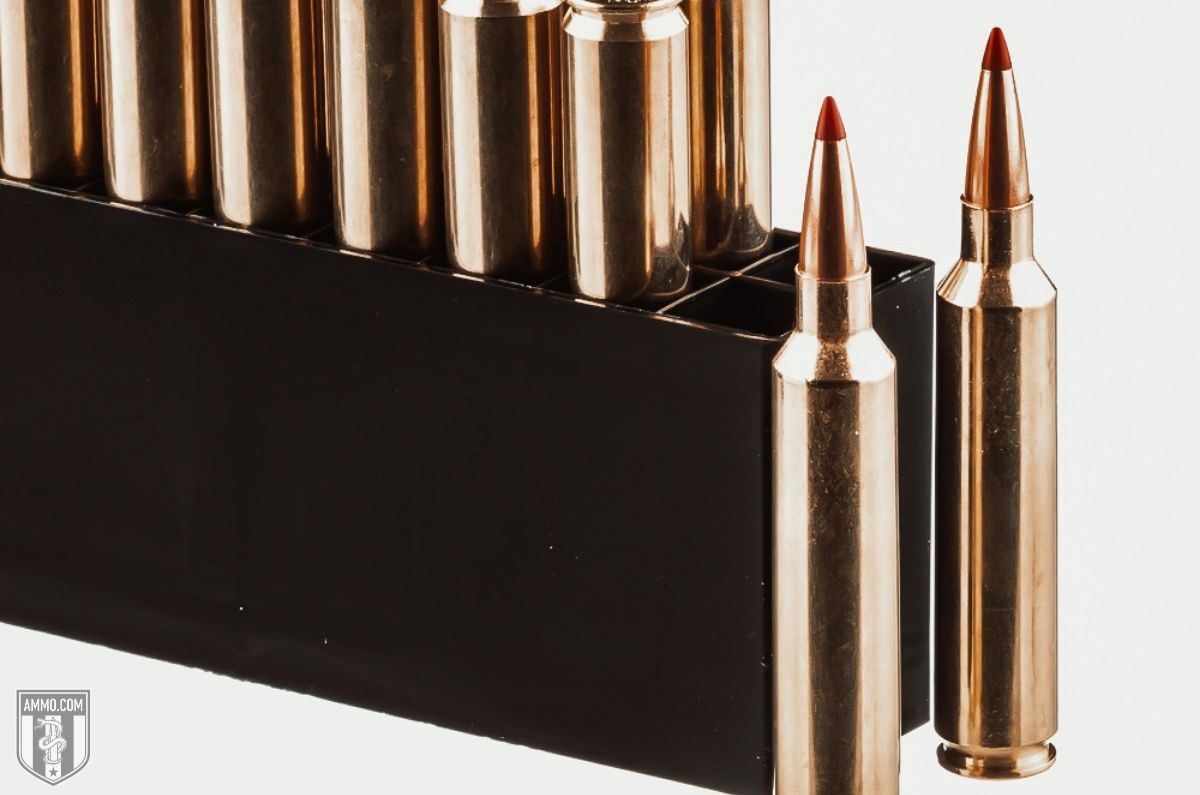
28 Nosler ammo for sale

The 28 Nosler is no slouch when it comes to kinetic energy though, as 3,637 ft-lbs for the 160 gr Ballistic Tip and 3,794 ft-lbs for the 175 gr AccuBond is nothing short of impressive. The 175 gr AccuBond in particular is very efficient at retaining its kinetic energy over distance, as it only trails the 212 gr ELD-X at 1,597 ft-lbs at 800 yards.

Ballistic Coefficient and Sectional Density

The 300 PRC has a slight edge over the 28 Nosler in terms of ballistic coefficient and sectional density.

Ballistic coefficient (BC) is a measure of how aerodynamic a bullet is and how well it will resist wind drift. Sectional density (SD) is a way to evaluate the penetration ability of a bullet based on its external dimensions, design, and weight.

Both rounds were developed with a high BC in mind. Nosler and Hornady wanted to create a cartridge that was extremely resistant to wind drift and having a flat trajectory. To achieve this, they built their cartridges around extremely aerodynamic bullet designs.

The 300 PRC 212 gr ELD-X and 190 gr CX from the previous section have a ballistic coefficient of 0.663 and 0.575, respectively. In contrast, the 160 gr Ballistic Tip has a BC of 0.531 while the 175 gr AccuBond has a higher BC at 0.648.

All four bullets have a high BC for their respective weight, meaning they will be extremely resistant to wind drift. However, the 300 PRC with its increased bullet weight, will buck the wind more efficiently.

In terms of sectional density, both cartridges are nearly identical. The 212 gr Hornady round has a SD of 0.319 while the 190 gr bullet measures at 0.286. In contrast, the 160 gr Nosler bullet has a SD of 0.283 and 0.310 for the 175 gr AccuBond.
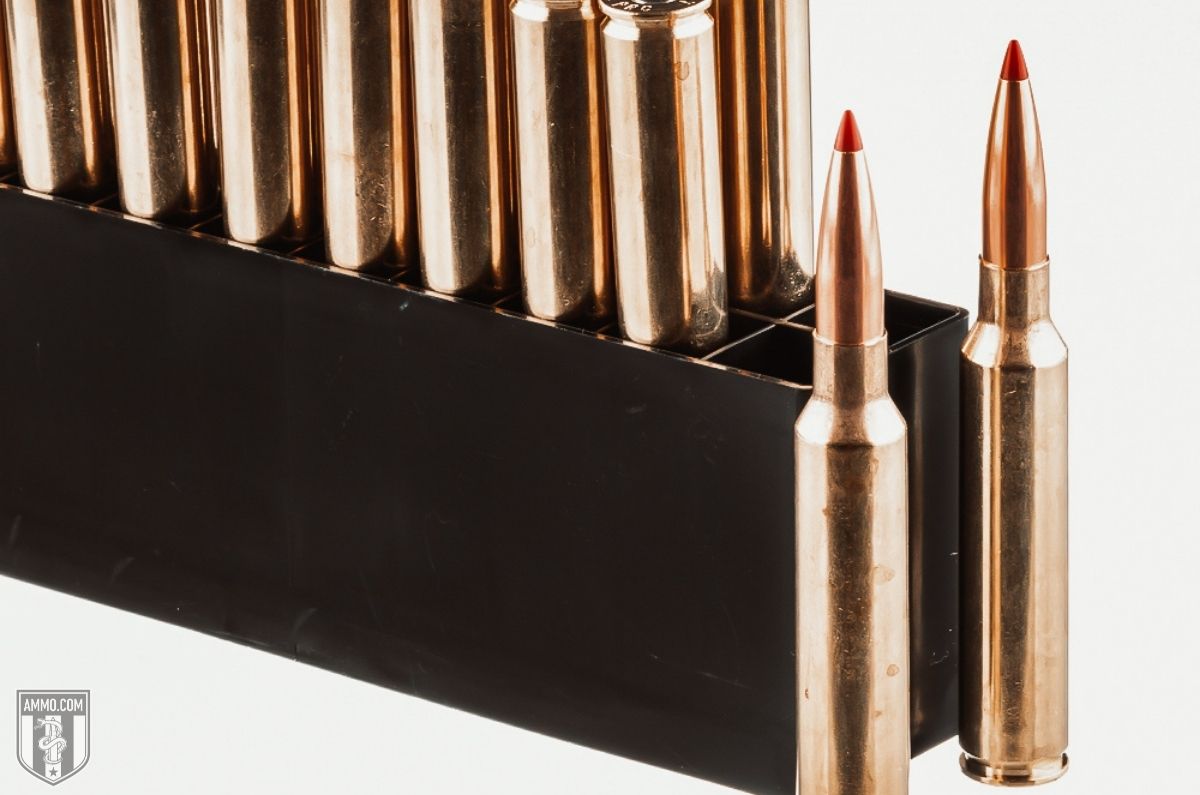
300 PRC ammo for sale

With SD values this close, it is unlikely that a hunter nor a mule deer will be able to discern any difference in terms of penetration.

Hunting

Both the 300 PRC and 28 Nosler make excellent long range hunting cartridges for medium to large game like whitetail, mule deer, antelope, elk, and black bear.

The amount of kinetic energy that both cartridges bring to bear is impressive, with some loadings being capable of ethically harvesting an elk at 800 yards. This gives hunters an incredible amount of flexibility of when and where they can hunt.

Although both rounds are capable of long range hunting, proper practice needs to be done to ensure a clean kill on any animal you shoot at these distances.

Neither the 300 PRC nor 28 Nosler are suitable for varmint hunting as they are way too powerful for these small game animals. For this type of hunting, we would recommend a smaller (and less expensive) cartridge like the 223 Remington, 22-250, or 22 LR depending on the varmint in question.

For big game, it’s hard to say that either cartridge is superior to the other. Both have adequate kinetic energy and flat trajectory for long-range shooting. The 28 Nosler has slightly less recoil, which is ideal for longer range shots, while the 300 PRC has slightly more kinetic energy, which is good for ensuring a clean kill.

The bottom line is that both rounds are effective big game hunting cartridges so long as your shot placement is adequate.
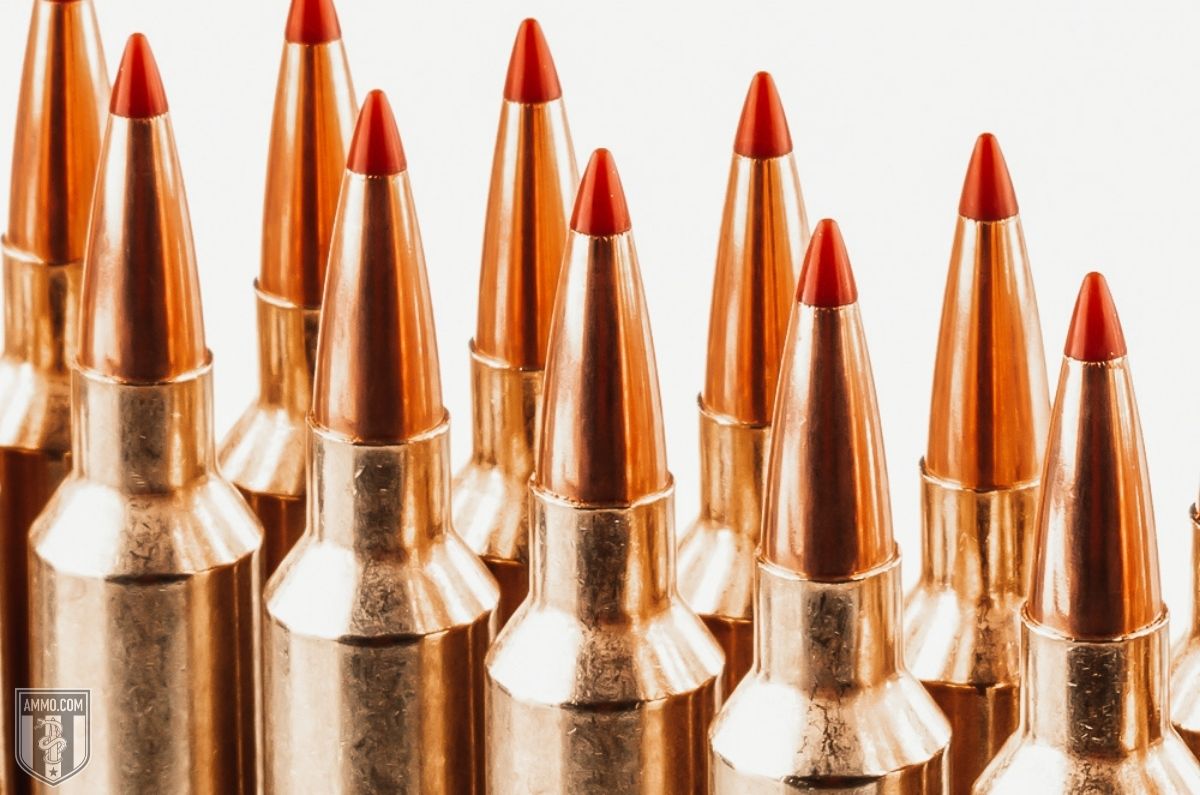
28 Nosler ammo for sale

Ammo and Rifle Cost/Availability

The 28 Nosler and 300 PRC are still relatively new cartridges on the market compared to old standbys like the 300 Win Mag, this means typically corresponds to low ammo availability and limited options in terms of different load options.

This couldn’t be more true than for the 300 PRC, as there are currently four different ammo options for it available on the market (three from Hornady and one from Federal). However, the 28 Nosler has considerably more factory ammo options at the time of writing. Most 28 Nosler ammo come from Nosler itself, however Hornady just released a new 162 gr ELD-X load while Browning has three different options available.

Although the Nosler round might have 3x more options available to its name, those rounds are typically more expensive than 300 PRC factory loads.

On average, 300 PRC will cost around $3/round, which is in stark contrast to Nosler factory ammo which runs over $5/round. The Hornady and Browning options for 28 Nosler are slightly less expensive at $4/round, but the 300 PRC is clearly less expensive to shoot.

When it comes to firearms, bolt action rifles with 20+” barrel lengths are the only options for both cartridges at the time of writing. As the 300 and 28 were built for long range precision shooting, a bolt action rifle that maximizes the capabilities of each is preferred.
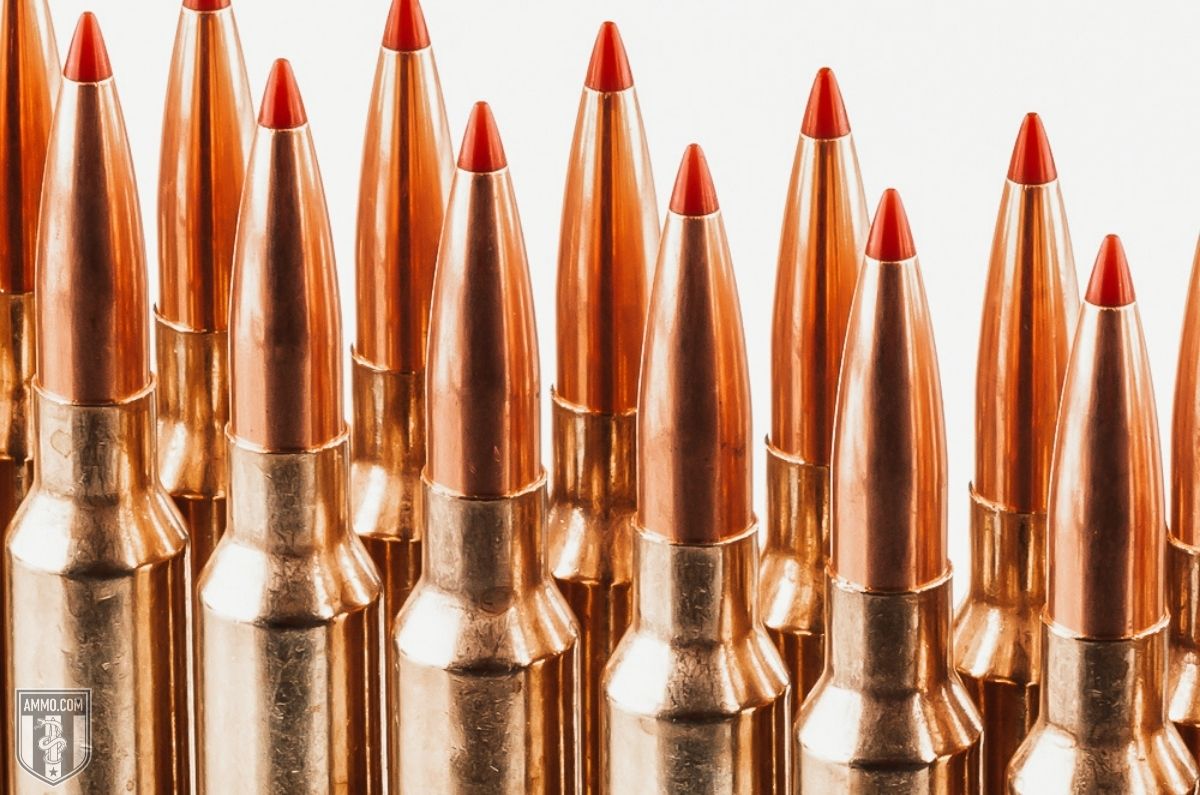
300 PRC ammo for sale

Rifles are available for both calibers from Savage, Bergara, Christensen, and Browning. For precision rifle shooting (PRS) competitors, long range competition-ready rifles for 300 PRC are available from Ruger, Savage, Barrett, and others.

One other aspect to consider is rifle cost, as most all standard hunting rifle offerings will run you close to $1,000 or more for each cartridge. Competition rifles for 300 PRC typically start around $2,000 and go up from there circa summer 2022.

Reloading

If you like to handload your own ammo, both cartridges offer you a lot of options for customization in terms of projectiles and powders to make the perfect reloads for your competition or hunting rifle.

Although currently there are only a few factory loads for both cartridges, reloading offers shooters considerably more versatility to tune your favorite 7mm or 30-caliber bullets to your rifle.

There’s no denying that there are many popular 7mm cartridges, such as the 7×57 Mauser, 7mm SAUM, 7mm-08 Rem, 7mm WSM, and the 7mm Weatherby Magnum. However, the 7mm cannot compare to the unabashed love affair that North America has with the 0.308” bullet diameter.

Some of the most popular cartridges in the USA fire 308-caliber, such as the 300 Win Mag, 308 Winchester, and 30-06 Springfield. This means that there will be considerably more reloading options in terms of bullets for the 300 PRC.
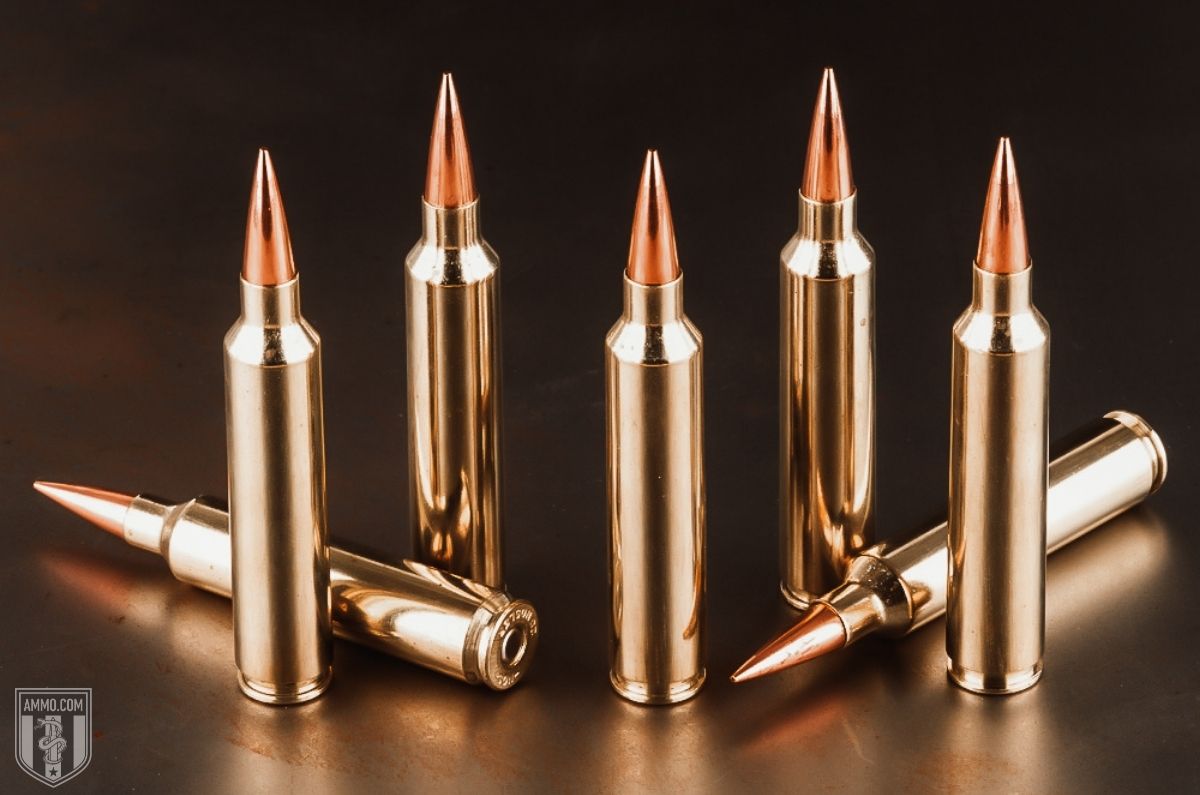
28 Nosler ammo for sale

This is not to say that the 7mm is underrepresented, as virtually every bullet manufacturer like Norma, Barnes, Berger, Nosler, and Hornady have 7mm bullet options available for reloading your 28 Nosler. It just means that there are more options available for the 300 PRC.

In terms of reloading data, Hornady and Nosler provide detailed load data on their respective websites. Other powder manufacturers like Hodgdon also have published load data online.

Powder selection for both cartridges is fairly diverse, with Retumbo, H1000, and IMR 7977 being common between both calibers.

Sourcing brass for reloading might be a little trickier, as neither caliber is currently in military or police use and I’m guessing you don’t have a lot of 404 Jeffery or 375 Ruger brass just lying around to form your own cases! The best practice is to retain your brass from factory ammo or purchase new or once fired brass.

Reloading is a great way to help offset the rather steep cost of ammo for both cartridges and can really enhance your downrange accuracy if you plan on shooting long range.

Final Shots: 300 PRC vs 28 Nosler

The 300 PRC and 28 Nosler represent an evolution in long range rifle cartridge development. Instead of trying to make better bullets for old cartridges, Hornady and Nosler started with the ideal bullet and built the cartridge around it.
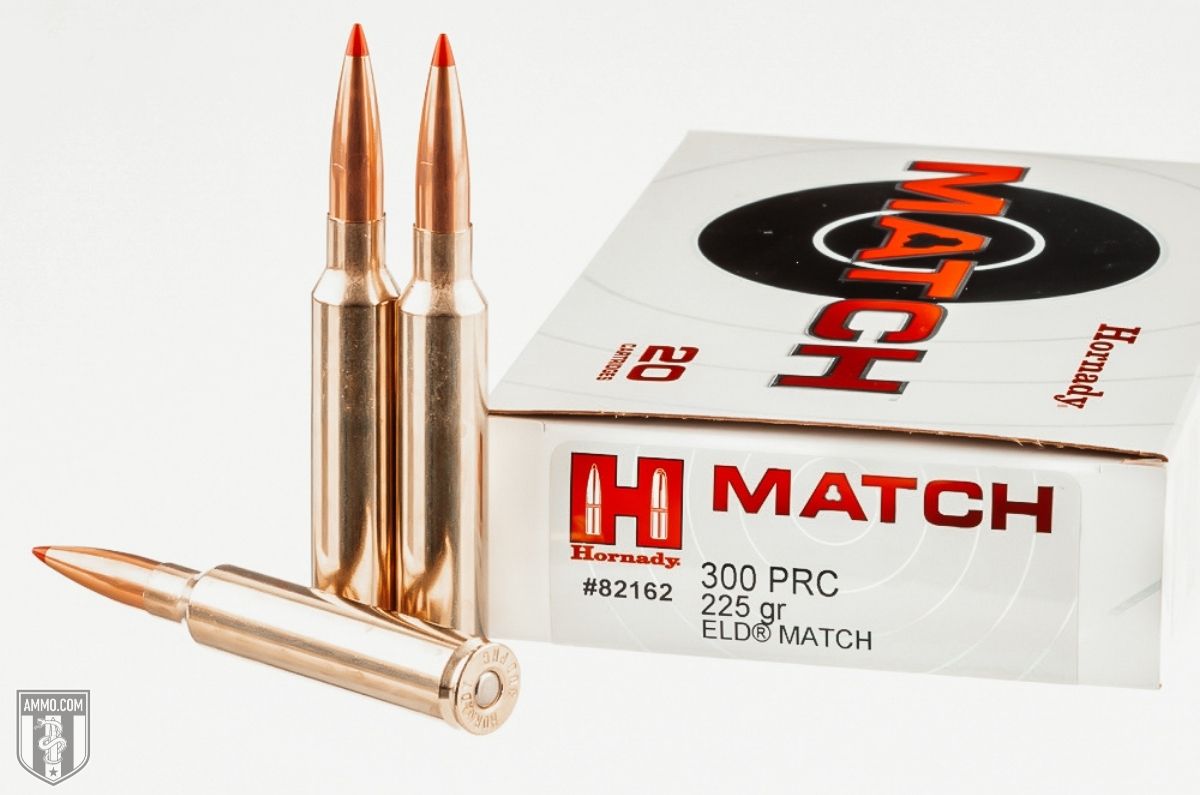
300 PRC ammo for sale

The 300 PRC is Hornady’s attempt to maximize the performance of the 30-caliber bullet. Utilizing incredibly sleek, high BC bullets, Hornady created a true magnum cartridge that can easily score hits at 1,000 yards and beyond.

The 28 Nosler came into the shooting scene riding off the coattails of the success of the 26 Nosler and sought to push the envelope of the 7mm bullet. Nosler wanted to create a hotrod magnum round that capitalized on the naturally flat trajectory of the 7mm round.

Deciding between the 28 Nosler and 300 PRC comes down to personal preference and your goals as a shooter. The 28 Nosler has less recoil and is flat shooting thanks to higher muzzle velocity at the cost of reduced barrel life. In contrast, the 300 PRC has slightly higher recoil and muzzle energy but has longer barrel life.

No matter which cartridge you choose, make sure you stock up on ammunition here at Ammo.com and I’ll see you on the range!

Great Meals For Hunting Camp

0

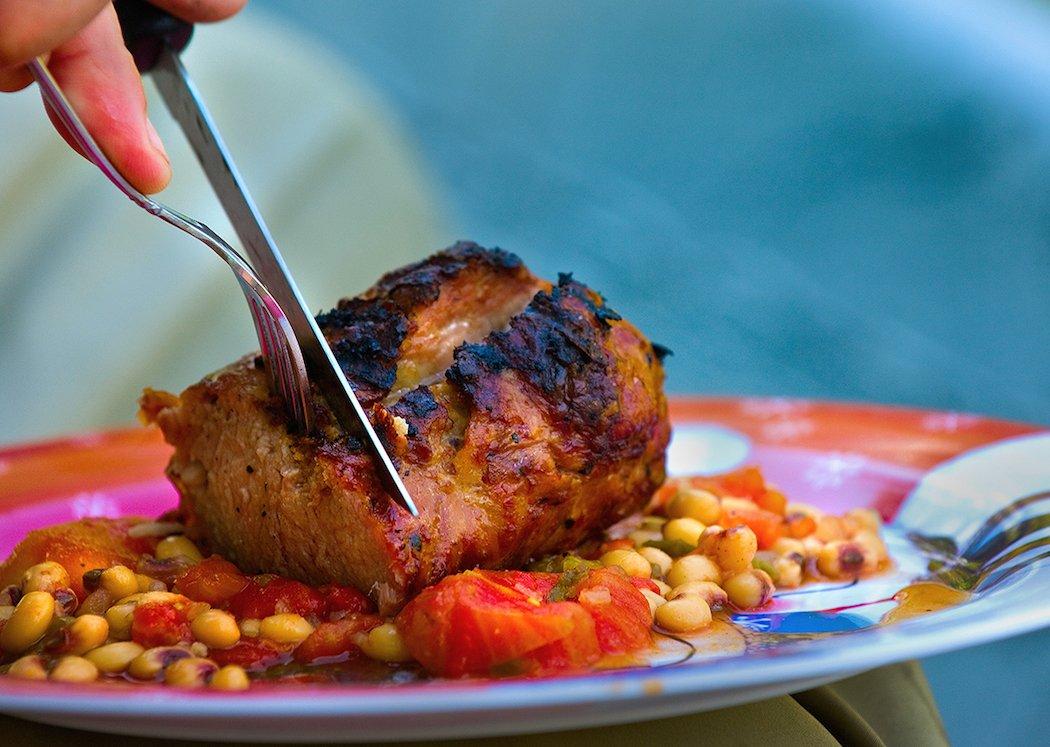
Cooking in camp is always fun, especially for everyone's taste buds. (Bill Konway photo)

One bitter cold January morning, I found myself in the duck blind of a good friend, an older gentleman with the title to a prime piece of Pamlico Sound saltmarsh. About mid-day, my breakfast was wearing thin, and I wondered aloud if there were any snacks to be had. My pal pointed me to a cooler in the stern of the boat. It’s loaded, he said. Help yourself. I opened up the lid. Inside I found a bag of chips, a jar of salsa, and enough canned beanie weenies for a small expeditionary force. Perhaps you have never wondered what ice-cold beanie weenies taste like in a 22-degree saltmarsh. Methinks you never should.

I thought of that day this past spring as I was loading up for a quick, two-day canoe camping trip along the Roanoke River. I’d volunteered to handle dinner duties, so I knew what sort of food would be desired. The cooler held 24 dove breast fillets, fresh Parmesan cheese, olive oil, garlic, chopped parsley, and other things rarely found in a two-man canoe. My buddy, Scott, was packing breakfast. I didn’t know what he had up his sleeve. But I knew Scott…and I knew it wasn’t instant grits and Pop Tarts. If I’m cooking breakfast, he’d told me earlier, then make sure you pack plenty of stove fuel. I could feel my arteries hardening already.

So here are some recipes to take your shore lunches and riverside dinners to a new level. They’re easy. A few call for wild game, but you can substitute your favorite cuts of meat. Most can be prepared with a single skillet, and all are designed for a backpacking stove. These recipes will make you forget all about beanie weenies.

DOVES CARBONARA

On my last canoe-camping trip, we feasted on this little bit of Italy deep in the swampwoods of eastern North Carolina. The hardest part about cooking this dish is not eating the dove breast fillets right out of the pan.

  • One dozen dove breasts, filleted
  • 2 garlic cloves, minced
  • 12 ounces uncooked, thin spaghetti noodles
  • ¾ cup grated Parmesan cheese
  • 2 tablespoons finely chopped fresh parsley
  • 1 cup milk
  • 3 eggs
  • 2 tablespoons butter
  • ½ teaspoon black pepper

AT HOME: Fillet dove breasts, and place in plastic baggie. Chop parsley. Break eggs, and combine with milk; store in small water bottle.

IN THE FIELD: Cook spaghetti noodles and drain. Melt butter in large nonstick skillet. Sauté dove breasts and minced garlic for one minute. Reduce heat to low, and stir in noodles, cheese, parsley, and pepper. Pour egg-milk mixture over noodles, and cook about four minutes, stirring constantly, until sauce thickens.

NO SWEAT ASIAN VENISON

This is a one-pan wonder. It’s cheap, easy, filling, and fast, and makes its way to my home table a couple of times a month in various interpretations. Replace the venison with shrimp and the beef-flavored noodles with shrimp-flavored noodles, and have an entirely different taste.

  • 12 ounces uncooked, thin spaghetti noodles
  • 2 garlic cloves, minced
  • ¾ cup grated Parmesan cheese
  • 2 tablespoons finely chopped fresh parsley
  • 1 cup milk
  • 3 eggs
  • 2 tablespoons butter
  • ½ teaspoon black pepper
  • 1 pound venison, cut into strips
  • 2 teaspoons dark sesame oil, divided
  • 1 12-ounce package of broccoli slaw
  • 1 cup sliced green onion
  • 2 packages of beef-flavored ramen noodle soup
  • 1 ½ cups water
  • 2 tablespoons soy sauce

AT HOME: Slice green onions into half-inch pieces. Slice tenderloin into thin slices.IN THE FIELD: Heat one teaspoon sesame oil in a skillet over medium-high heat; add venison and onions, and sauté about one minute. Remove to a separate plate. Heat remaining oil until hot; add broccoli slaw, stir-fry one minute. Add to plate with venison and onions. Add water to skillet and bring to a boil. Add noodles from both packages and seasoning packet from one package. Cook until most of the liquid is absorbed, stirring frequently. Stir in venison, onions, and slaw, add soy sauce and combine.

FISH FRIED RICE

It's meals like these that make hunting camp that much more special. (Images on the Wildside/Denver Bryan photo)Stir-frying cold rice prevents the grains from clumping. Add to the mix bite-sized chunks of fresh fish—the firmer the flesh, the better—and here’s a meal you can cook in one pot quickly. Use 1½ pounds of fish fillets, cut into bite-sized pieces.

  • 4 tablespoons soy sauce
  • 1/8 teaspoon minced ginger root
  • 1/8 teaspoon ground red pepper
  • 2 tablespoons vegetable oil, divided
  • 1 cup canned peas
  • 1/3 cup green onions, sliced
  • 2 packages boil-in-bag rice, chilled
  • 2 tablespoons fresh parsley, chopped
  • 3 eggs

AT HOME: Mince ginger root, and mix with red pepper and soy sauce; store in small plastic bottle. Chop parsley. Chop green onions into ¼-inch pieces. Cook rice, then store in plastic baggies.IN THE FIELD: Heat one tablespoon of vegetable oil in large skillet over medium high heat. Stir-fry fish fillets one minute. Add peas and onions, stir-fry 2 minutes. Add soy sauce, stir well, and remove the fish mixture from pan. Heat one tablespoon of vegetable oil, and add the rice and chopped parsley. Stir-fry one minute. Scrape mixture away from center of pan, leaving a softball-sized hole. Add eggs and scramble. Mix with rice and fish.

CHOPPED DUCK SANDWICHES IN CHERRY BARBECUE SAUCE

I first tried these sandwiches during the peak of the striper run on the Roanoke River. Almost forgot to fish. This is an excellent barbecue sauce for chicken, so make a double portion and freeze the leftovers. You can find the ancho chilies in specialty food stores and fine grocery stores.

  • 1 cup apple cider vinegar
  • 1/3 cup ketchup
  • 1/3 cup chopped onion
  • 1/3 cup dried tart cherries
  • 1/8 cup water
  • 1 ½ tablespoons molasses
  • 1 large dried ancho chili pepper
  • 1 garlic clove
  • ½ teaspoon ground coriander
  • pinch of ground cloves
  • 2 pounds duck meat, chopped
  • 4 large kaiser rolls

AT HOME: Grill or sauté duck breasts or whole ducks, then chop the meat. Remove stem and seeds from ancho chili pepper. Combine all ingredients (except for duck) in a medium saucepan. Bring to a boil, then reduce head to medium-low, cover, and simmer until cherries are tender (about 20 minutes). Let cool, then puree the mixture in a blender. If needed, return sauce to pan, and simmer uncovered until sauce thickens to consistency of tomato-based barbecue sauce. Add chopped duck.IN THE FIELD: Load up the buns and eat.

CAJUN FISH WRAPS WITH SLAW

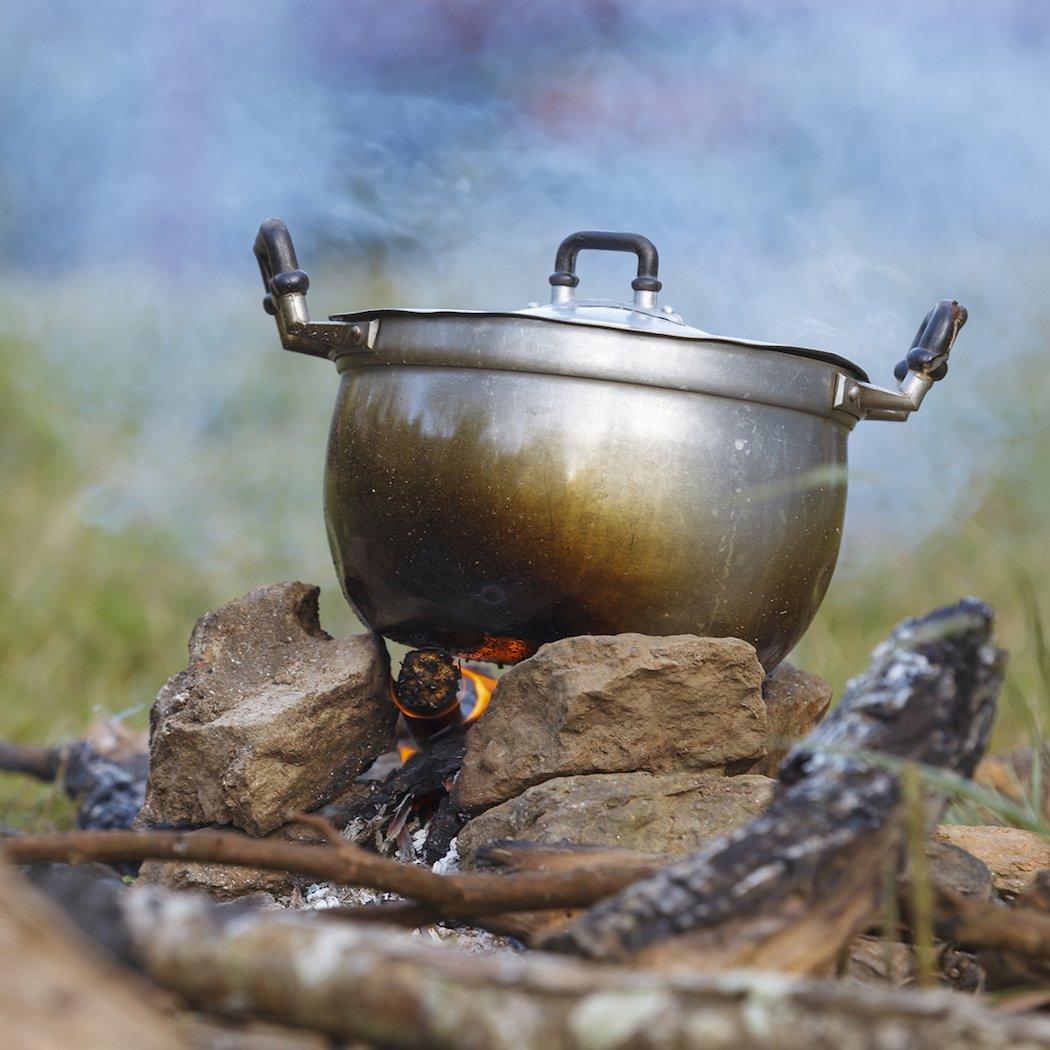
You don't need a lot of gear to make these camp meals a reality. (Imaake/Shutterstock photo)This is easier than falling off a mossy log. To make it even easier, buy cole slaw from your grocer, but you’ll miss the apple punch of the cider vinegar. A great thing about wrap sandwiches is that you can eat them with one hand, leaving the other hand free to grab a rod and set the hook.WRAPS

  • 1 tablespoon all-purpose flour
  • 6 tablespoons Cajun seasoning powder
  • 4 half-pound fish fillets
  • 1 tablespoon butter
  • 4 8-inch flour tortillas

SLAW

  • 3 ½ cups thinly sliced red or green cabbage
  • ¼ cup mayonnaise
  • 1 ½ tablespoons cider vinegar
  • ½ teaspoon sugar

AT HOME: Make the slaw by combining all four ingredients in a bowl, cover, and chill in a plastic baggie.IN THE FIELD: Catch fish, fillet fish. Mix flour and Cajun powder in a plastic baggie, add fillets one at a time, and shake until covered. Melt butter in a skillet, and sauté fillets until done. Place one fillet in a flour tortilla, top with slaw, roll up and eat.

GRILLED VENISON TENDERLOIN SANDWICHES WITH SUN-DRIED TOMATO MAYONNAISE

Cold, thinly sliced venison is the finest sandwich meat ever made. I’ve packed these sandwiches into duck blinds and on paddle trips for years. One of the secrets is good bread. I don’t know what’s better—the sandwiches, or the looks on the faces of my pals as they stare into yet another PB&J.

  • ½ cup soy sauce
  • ½ cup Italian dressing
  • 1 to 1 ½ pound venison tenderloin
  • 4 tablespoons prepared sun-dried tomato pesto, such as Bella Cucina
  • 4 tablespoons mayonnaise
  • 8 leaves Romaine lettuce
  • 8 slices onion
  • 4 hearty grain sandwich rolls or 8 slices of bread such as sunflower or nut grain

AT HOME: Combine pesto and mayonnaise; store in refrigerator. Combine soy sauce and Italian dressing; marinate tenderloin overnight. Slice onions into 8 thick slices, with all rings intact. Grill tenderloin and onion rings. Prepare each sandwich with: sliced tenderloin, 2 tablespoons sun-dried tomato mayonnaise, and two onion slices. Place lettuce leaves in separate plastic baggie.IN THE FIELD: Add lettuce to sandwiches. Keep an eye on the bobber.

— Mountains to Marsh

0

I wanted to put together a total list of fish species I’ve caught, just to try and keep a running tab. Hopefully it will continue to grow as I fish more new waters. I think I get just as excited catching new species as I do catching truly big fish. I’m not on any kind of mission to catch a certain number of species, I just think it will be interesting to maintain and revisit the list from time to time. It should also help to serve as a place to ID a fish that you’ve caught, but have no idea what it is. Of course, I’m not a biologist, so take what I post with a grain of salt, most of my knowledge comes from experience, and the internet. In time I will add other freshwater fish from different families, then move on to saltwater, but for now here are the sunfishes.

Warning to some though, things are about to get nerdy. I’ll separate each species according to it’s taxonomy. Today I’ll start in freshwater with the sunfishes, family Centrarchidae, which has 8 genera, and 34 species native to North America. So far I’ve caught 21 of them. It helps to live in the Southeastern U.S. if you want to catch a variety of sunfish.

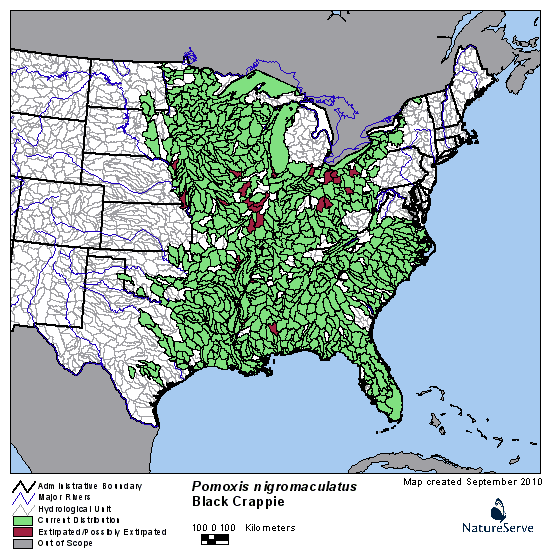
Where possible I’ll put up a picture and a distribution map of those that I’ve caught. Click the map for more information about that particular species. The distribution maps come from the original NatureServe Explorer or the USGS Nonindigenous Aquatic Species site. Both are pretty good resources for finding information on specific plants and animals. I did not produce these distribution maps so I can’t confirm their complete accuracy, but I do trust they are mostly accurate.

Update, June 2018: Both of Lance Coley’s articles on black bass species have gone the way of the do-do. Tim Bonvechio and Patrick Cooney have a pretty good article on black bass up on The Fisheries Blog highlighting the 9 species that the scientific community are in agreement on. Work is being done to add more and those are mentioned in the article as well, so be sure to check it out.

Update, April and August 2021: I added a few new-to-me species this year and updated range maps for species that didn’t have one or where the range map info was old and outdated

Ambloplites – Rock Bass

Ambloplites ariommus – Shadow bass

IMGP4880

Ambloplites rupestris – Rock bass

IMGP0816

Centrarchus – Flier

Centrarchus macropterus – Flier

Lepomis – Sunfish

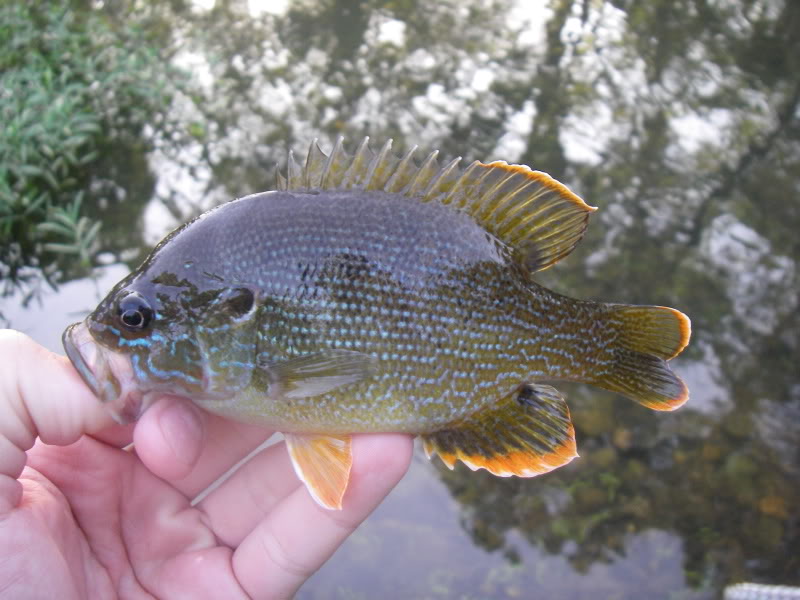
Lepomis auritus – Redbreast sunfish

IMGP0450

Lepomis cyanellus – Green sunfish

IMGP0447

Lepomis humilis – Orangespotted Sunfish

Lepomis gulosis – Warmouth

IMGP5604

Lepomis macrochirus – Bluegill

IMGP6182

Lepomis marginatus – Dollar sunfish

IMG_8956
dollar_sunfish

Lepomis megalotis – Longear sunfish

IMGP4363

Lepomis microlophus – Redear sunfish

IMGP5611

Lepomis miniatus – Redspotted sunfish

IMGP4366

Lepomis punctatus – Spotted sunfish

Micropterus – Black Bass

Redeye Bass

Micropterus cahabae – Cahaba bass (formerly Redeye bass, from the Cahaba River drainage)

20180506_095017

Micropterus chattahoochee – Chattahoochee bass (formerly Redeye bass, from the Chattahoochee River drainage)

IMG_7278

Micropterus coosae – Redeye(Coosa) bass (Redeye bass from the Coosa River drainage)

IMG_5322

Micropterus sp. cf. M. coosae – Bartram’s bass (formerly Redeye bass, from the Savannah River drainage)

IMG_7463

Micropterus sp. cf. M. coosae – Altamaha bass (formerly Redeye bass, from the Altamaha River drainage)

20180920_104839

Micropterus tallapoosae – Tallapoosa bass (formerly Redeye bass, from the Tallapoosa River drainage)

IMG_5262

Micropterus warriorensis – Warrior bass (formerly Redeye bass, from the Black Warrior River drainage)

107-0759_IMG

Smallmouth Bass

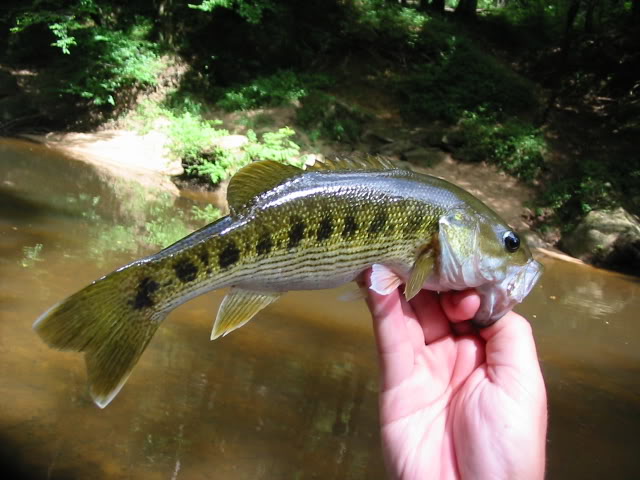
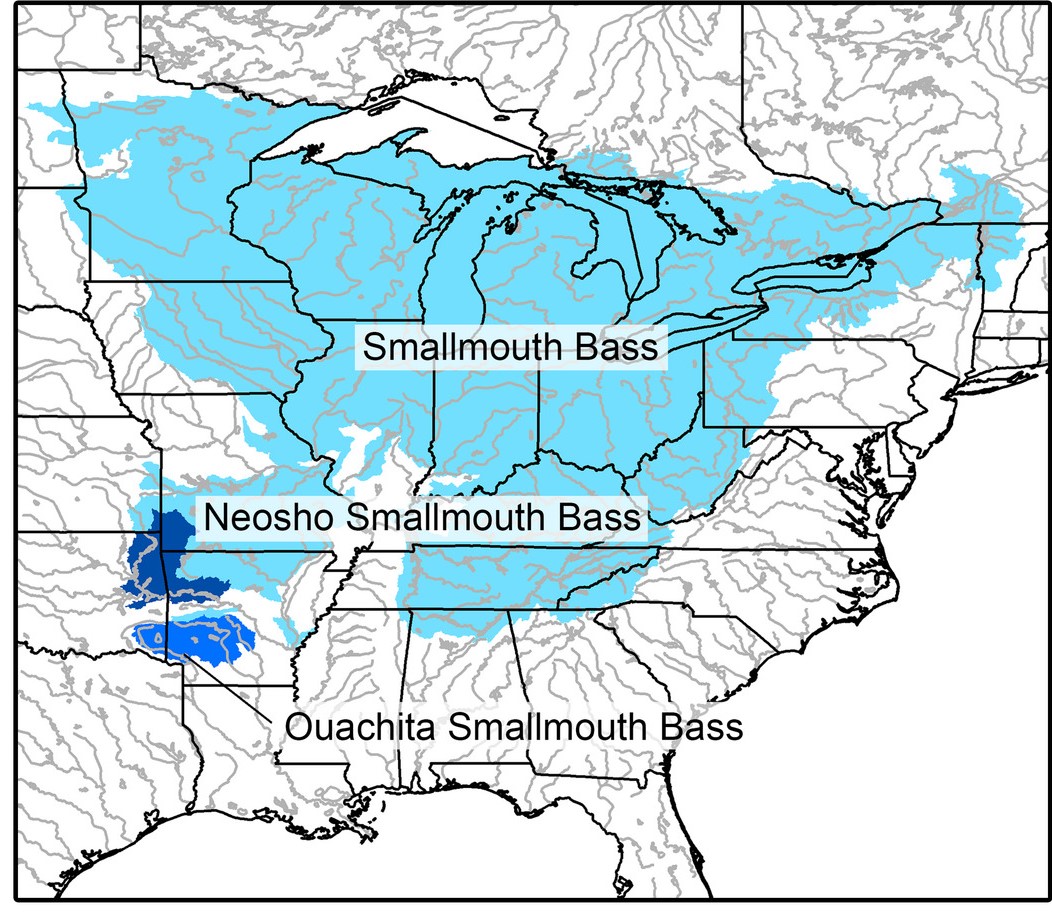
Micropterus dolomieu dolomieu – (Northern) Smallmouth bass

107-0740_IMG

Micropterus dolomieu velox – Neosho Smallmouth bass

IMG_0759

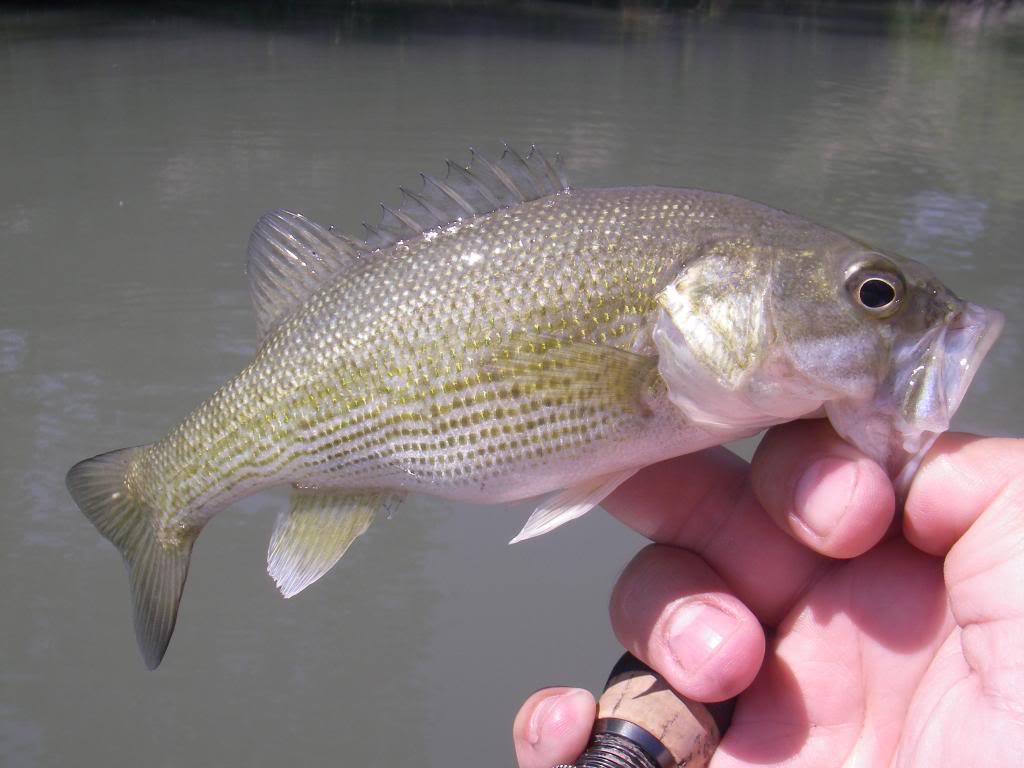
Micropterus sp. cf. dolomieu velox – Ouachita Smallmouth bass

IMG_0644

Largemouth Bass

Micropterus salmoides – (Northern) Largemouth bass

img_9937

The Other Black Basses

Micropterus cataractae – Shoal bass

IMG_7497
shoalbass

Micropterus treculii – Guadalupe bass

IMGP8191
guadalupe_bass_range

Micropterus hensalli – Alabama bass (formerly Spotted bass, of the Mobile River drainage)

IMGP3996

Micropterus punctulatus – Spotted bass (Kentucky)

IMGP4903

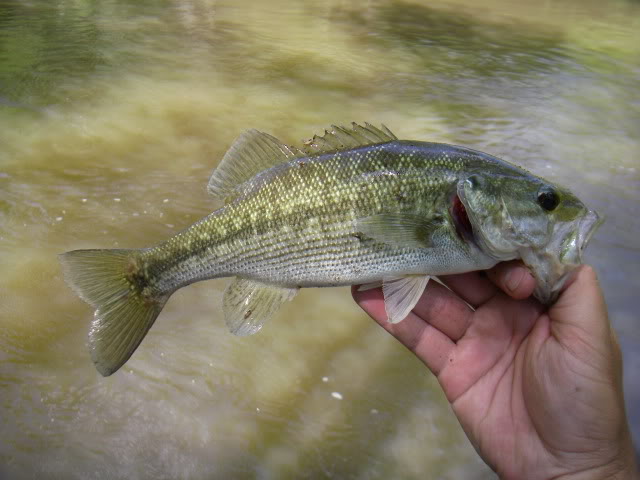
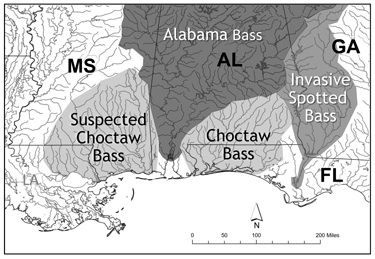
Micropterus haiaka – Choctaw bass

img_8660
choctaw_bass_map

The newest member of the black bass family as discovered by biologists with the Florida Fish and Wildlife Conservation Commission. Their range falls in between the Alabama bass and the Shoal bass in Gulf draining streams on the Florida panhandle and in Alabama.

Pomoxis – Crappie

Pomoxis annularis – White crappie

IMGP3967

Pomoxis nigromaculatus – Black crappie

IMGP5276

GUEYDAN, LA. DUCK CAPITAL OF AMERICA.

0

DSC03140 (Copy)

We had two things in mind for yesterday’s adventures. We first headed for the small town of Gueydan’s local museum. Gueydan is known as the Duck Capital of America and we were hoping to see ducks in and around the area as we went. I guess it is fitting that we saw duck decoys in the little Gueydan Museum run by Jane Hair.

DSC03132 (Copy)

Ms. Jane Hair also hosted a Spirit of the Swamp art contest for local artists. This was my favorite.

DSC03142 (Copy)

The item I had never seen before, which Il always look for, was this musical instrument. Simple in its construction. Almost makes me think I could make one myself. We’ve mentioned before what a friendly place this area is, and we met a couple at the museum we had met previously in Lake Charles during Mardi Gras. They all assured us that it was possible to see millions of ducks in the area.

DSC03145 (Copy)

The brochure on Gueydan also mentioned Ellis Stansel’s Gourmet Rice, that the locals call popcorn rice. Sounded intriguing and Jane called to see if we could tour their facility. She gave us directions and off we went.

DSC03155 (Copy)

This is a photo of a picture of Ellis Stansel stapling closed a bag of rice.At one time everything was done by hand. Now, the process is all automated.

DSC03152 (Copy)

The person who gives tours was not available, but Macy, a young woman employee, let us look around and sent us home with a bag of gourmet rice. It is the odor when cooking that gives it its nickname of popcorn rice because it smells so much like popcorn. The picture shows the many products they sell. About a 1,000 pounds a day.

DSC03147 (Copy)

Stansel grows crawfish in the rice fields as well. The little red caps of crawfish baskets show above the water.

DSC03172 (Copy)

As we drove around the back roads, it was pretty obvious why this is the duck capital of the world. The many rice farms, and swampy bottom land around the area attracts those millions of birds, with good food.

DSC03162 (Copy)

The birds fly when disturbed and circle then return to eating. What a site to see. At one farm, the tractor was moving through the water and the birds were moving ahead of the tractor to eat something from the disturbed mud.

DSC03169 (Copy)

Some would have more white than black birds.

DSC03175 (Copy)

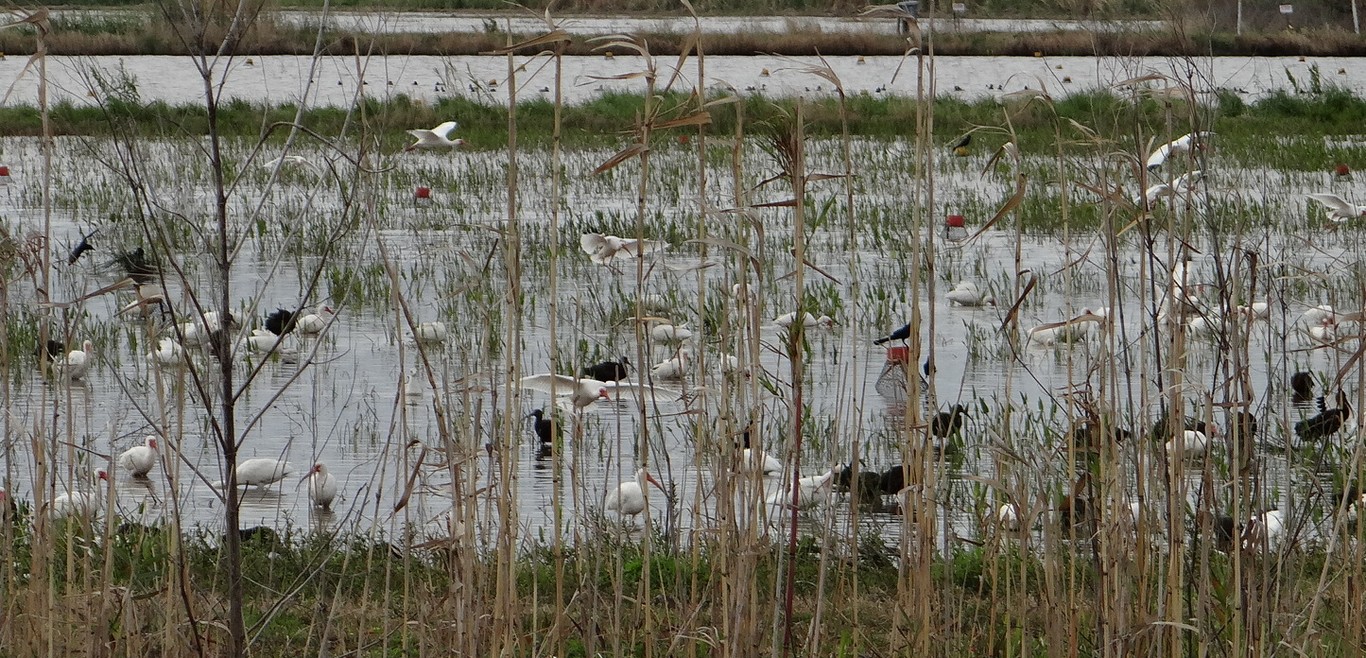
A closer looks and the birds are not ducks at all. They are ibis’. Ducks come at a different time of year, apparently.

DSC03187 (Copy)

We saw huge numbers of birds flying in formation over the vast rice fields. The curved beaks are Ibis’.

Mark and Marlene

We returned to the American Legion for a nightcap and met this very adventurous retired educator, Marlene and her husband Mark. We talked to a whole new crowd from the day before and some of those we met earlier. Chad, Julia, Norman, Bob, Moose…I don’t remember everyone’s name. We were told you have to go to the Red Rose Bar. They cook a dinner for everybody on Wednesdays. We drove behind Chad and Julia.

Delta-Owner of Da Red Rose

She introduced us to Delta, the owner of the Red Rose. Her husband liked roses.DSC03200 (Copy)

Miss Janet Theriot and her husband. Janet is known as MaBee.

DSC03213 (Copy)

She gave me an autographed copy of her cookbook.

Theresa

Theresa.

Tina

Tina. I met such strong, interesting, independent women.

DSC03208 (Copy)

And their men. Before the evening was over, we lite-weights had to leave. Jim fades about seven p.m.

DSC03210 (Copy)

These friendly folks sent us home with dinner to go. Roasted tongue with just a hint of Cajun seasonings. Excellent.

Top 100 Duck Hunting Dog Names! (2024)

0

dog names for duck hunting

Duck hunting dogs, also called gun or bird dogs, are truly set apart from other dogs. Bred and raised specifically for duck hunting, these dogs have different personalities from other dogs-and fittingly, they should have different names from other dogs!

But the tricky question is: what should you name your duck hunting dog? In this article, we’ll break down 100 of the best dog hunting dog names for your hunting companion.

Check out these other articles: 10 Hunting Dogs That Don’t Shed and Strong Female Dog Names.

Boy Duck Hunting Dog Names

Boy Duck Hunting Dog Names

Whether you’re looking for pointer, golden retriever, or black lab duck hunting dog names, there are many available options for male duck hunting dogs. This list reflects the variety of names for boy duck hunting dogs, from the fierce to the friendly.

  1. Ace – First on our list of duck dog names, this is a great name for a dog who seems adept at just about everything.
  2. Captain – For a natural-born leader.
  3. Trooper – For a dog who can weather any storm.
  4. Dodger – Great for a dextrous and agile dog.
  5. Hunter – An on-the-nose name for an excellent duck dog.
  6. Killer – For a dog that seems extra eager about duck hunting.
  7. Trapper – For a clever and witty hunting dog.
  8. General – For an older dog who can lead a pack.
  9. Commander – For a dog with a naturally commanding presence.
  10. Marshall – Great when a dog exudes power and authority.
  11. Leader – Ideal if your dog is ready to take the helm on a hunting trip.
  12. Stalwart – For a dog that’s loyal to you to the end.
  13. Speed – One of many cool duck hunting dog names for agile dogs.
  14. Bourbon – Great if your favorite thing after a hunt is to kick back with your dog and a drink.
  15. Bud – For a true friend-or a dog who likes to drink Bud Light.
  16. Charger – For a dog who’s maybe a little more enthusiastic than intelligent.
  17. Coffee – A great name for a dog who’ll be with you at the crack of dawn.
  18. Bull – One of many great duck dog names for labs.
  19. Scout – For a hunting dog with stamina and agility.
  20. Sport – For a young, enthusiastic dog.
  21. Rogue – Best suited to a dog that follows its own rules.
  22. Ranger – Ideal for a dog that seems completely at home in the wilderness.
  23. Glory – If you think your dog is poised for success, this name could be a good luck charm.
  24. Bolt – For a dog that can speed off and bring back a duck in no time.
  25. Fighter – For a dog with spunk.

Girl Duck Hunting Dog Names

Girl Duck Hunting Dog Names

There’s an equally rich cache of cute hunting dog names for female duck hunting dogs.

  1. Dancer – Ideal for a graceful and agile dog.
  2. Fidelity – For a dog who will always stay by your side.
  3. Loyalty – Another name for a duck dog that is your ultimate partner.
  4. Faith – A name for a duck hunting dog that you can trust.
  5. Freedom – A dog that seems to belong in the wild deserves this name.
  6. Mistress – For a dog with an air of authority.
  7. Lady – For a dog that seems like she could be a royal.
  8. Huntress – For a dog that is perfectly suited to her job.
  9. Amazon – For a dog that’s commanding, authoritative, and a master hunter.
  10. Grace – For a dog that is poised and in control.
  11. Rose – A great name for a dog that’s beautiful as well as deadly.
  12. Liberty – A patriotic name for a hunting dog.
  13. Luster – For a dog with a shimmering coat.
  14. Vixen – For a dog well-suited to the wild.
  15. Willow – A name for a dog as sturdy as a tree.
  16. Goldenrod – For a dog whose fur is light and shiny.
  17. Hope – When all else seems lost, this dog will come through for you.
  18. Rebel – For a dog who you can’t get under control.
  19. Witch – For a dog who’s rambunctious-for ducks and you!
  20. Enchantress – For the dog who always attracts everyone’s attention.
  21. Bard – For a dog that’s extra vocal.
  22. Tulip – Great for a younger, more delicate hunting dog.
  23. Angel – For a dog that’s always on the ball-or an ironic name for a perpetual troublemaker.
  24. Kestrel – For a dog that’s a natural-born hunter.
  25. Glamor – A great name for a pooch with pride.

Hunting Dog Names Based on Nature

Hunting Dog Names Based on Nature

Do you want to give your duck hunting dog a name that draws on the rich symbolism of the natural world while still evoking their hunting vocation? Check out this list.

  1. Thunder – To reflect a booming presence.
  2. Lightning – If they can run this way and that in a flash.
  3. Peak – For a dog that’s the pinnacle of hunting.
  4. Cloud – For a light-colored or mysterious dog.
  5. River – If your dog moves fluidly like running water.
  6. Sunburst – For a bombastic and excitable dog.
  7. Bear – For a big, furry dog.
  8. Wolf – To remind you of their wild heritage.
  9. Birch – To reflect the stalwart integrity of the tree.
  10. Acorn – For a smaller dog you’re nourishing since birth.
  11. Basil – For a dog with a little spice.
  12. Tiger – A feline name that connotes wildness and ferocity.
  13. Falcon – Great for a fast, graceful dog.
  14. Thistle – Beautiful, but dangerous.
  15. Shark – For a dog that’s out for blood-duck blood.
  16. Hammerhead – For a dog that loves to hunt but maybe isn’t the smartest.
  17. Sawgrass – If you’re hunting in Florida, this botanical name is perfect.
  18. Oak – For a dog that’s big, dark, and sturdy.
  19. Rainbow – For a dog that seems to lighten up the place wherever they go.
  20. Typhoon – For a dog that’s an unstoppable force of nature.
  21. Bramblepelt – Good name for a dog that’s not afraid to get down and dirty.
  22. Briar – For a dog ready to dive into the depths to get its quarry.
  23. Snow – Great for a pale, mysterious hunter.
  24. Midnight – Ideal for a dog that moves in silence.
  25. Storm – The opposite: for a dog that loves to make noise.

Names for Hunting Dogs Based on History and Culture

Names for Hunting Dogs Based on History and Culture

One of the best ways to decide on a dog name is to draw from hunters (or the hunted) in history and culture). Check out some of these:

  1. Nimrod – Despite the connotation of stupidity, this is actually the name of a famed biblical hunter.
  2. Elmer – After dopey-but-eager hunter Elmer Fudd.
  3. Orion – After the constellation and the Greek mythological hunter on which it’s based.
  4. Rexxar – Perfect for fans of the Warcraft franchise.
  5. Daffy – An ironic name based on the Looney Tunes duck.
  6. Herne – A ghost hunter from English folklore.
  7. Geralt – The legendary monster hunter from the Witcher books, video games, and TV series.
  8. Artemis – After the Greek goddess of the hunt, who notably turned the hunter Actaeon into a stag and had her dogs hunt him.
  9. Diana – Named after the Roman counterpart to Artemis.
  10. Robin – After the bird and folkloric bowman Robin Hood, or the DC Comics superhero Robin.
  11. Pan – After the Greek god of wilderness and hunters.
  12. Hubertus – After the patron saint of hunters.
  13. Thor – After the superhero and Norse mythological powerhouse.
  14. Bloodsport – The gun-toting hero of The Suicide Squad.
  15. Daisy – Another ironic name: Daisy Duck.
  16. Donald – Based on Disney’s Donald Duck. Especially great if you aren’t a particular fan of Disney or have a sense of humor.
  17. Scrooge – Based on the character from Disney comics and DuckTales.
  18. Huey – The first of three brothers in DuckTales.
  19. Dewey – The blue-hat-wearing brother in DuckTales.
  20. Louie – The DuckTales brother who rocks a green outfit.
  21. Davy – Based on the folk hero and real-life man Davy Crocket.
  22. Teddy – Based on American president and naturalist Theodore Roosevelt.
  23. Mighty – After the film The Mighty Ducks and the corresponding hockey team.
  24. Wolverine – After Marvel Comics’ famous wildman superhero.
  25. Lon – Named after Lon Chaney, star of The Wolfman.

Conclusion for Duck Hunting Dog Names

If your dog is going to be a duck hunter, you’ll want to give them an appropriate name. Remember to keep their name short, easy to pronounce, and not similar to any of your family. We hope you enjoyed our list of the best duck hunting dog names and found something for your puppy!

Other articles you would like:

  • Are Goldendoodles Good Hunting Dogs?
  • Best Hypoallergenic Hunting Dogs
  • Best Shock Collar for Hunting Dogs

Dropping Coyotes in Their Tracks! The Targets and Techniques

0

Drop Coyotes in Their Tracks!

If reading ain’t your thing you can check out the video version of this article here!

Coyotes have a knack for getting up and running off after what appeared to be a solid impact. Practice on the trigger is the best remedy for this issue, but using the right target goes a long way to extend the value of your time at the range and ammo expended.

That’s why I collaborated with South Dakota’s veteran coyote killer, Ken Nordstrom, when we created our new . These reactive, full-size coyote silhouette targets show you exactly what you’re doing right at the range, and more importantly, what you may be doing wrong. Because they’re anatomically correct, these new targets not only help you increase your accuracy through practice, but they quickly show you whether or not your aiming method works at various ranges. I am thoroughly convinced that they’re the best steel coyote targets on the market.

Before the introduction of these new targets, our coyote targets measure 12×24 inches, simply because that’s what fit in a Postal Service Flat Rate Box. Ken, quick to see the value in a life size target, offered us a great deal of information he’s gathered over his 40 years spent hunting coyotes.

“My brother Steve and I started coyote hunting in the 80s, and eventually got into tournament hunting,” said Nordstrom. “We’ve placed 7th in the Midwest Coyote Calling Tournament and 12th in the National Coyote Calling Tournament. Over the years, we realized that if we failed to retrieve a coyote that we’d shot, it was because we weren’t taking into account just how small their vital zone is.”

Nordstrom explains that because of the small size, speed, tenacity and color of a coyote, if they’re not stone dead upon impact, they’re generally never recovered, so it’s extremely critical to hit them in the vitals. Beyond that, there’s a great deal more fur on winter coyotes than most hunters are aware of. For those simply looking to control predators, a gut shot or a neck shot is likely to take the animal out of the gene pool, but for hunters looking to harvest hides or compete, coyotes need to fall in their tracks.

Let’s get lethal

“As soon as we wised up to this issue, Steve and I started measuring every coyote we killed,” explained Nordstrom. “We measured them with fur on and fur off. Taking the dimensions we collected over the years – literally thousands of dogs – we determined the average size of an adult coyote. We even went one step beyond that. We recorded where the instantly fatal impact occurred on the body of the coyote.”

The numbers told an interesting story. 18 inches seemed to be a magical number. Coyotes, on average, measure 18 inches from the point of the shoulder to the back of the rump. From the bottom of the chest to the top of the ears when the dog is looking at you is also 18 inches. Do you want to take a guess what the height of an average coyote is from the ground to the shoulder? If you guessed 18 inches, you’d be correct. Sometimes 20 inches, if it’s a mature male in full winter plume, but close enough.

So there are three ways to measure a coyote, all of which yields about 18 inches. Back in the ‘80s and ‘90s, before the fancy laser rangefinders we have today, that was extremely important. It’s still important today, especially in situations when a dog is coming into a call quickly, or if you have coyotes at different ranges and you don’t have time to use a rangefinder. It’s also great if you’re hunting with a thermal without an integrated range finder. Knowing the size of a coyote allows you to use your riflescope’s reticle to range the animal, or at the very least, helps you estimate distances simply by becoming acquainted with how big a coyote looks in your scope at a given range.

But here’s the catch; when looking at a broadside coyote, a good winter coyote is going to have about 11 inches of fur and non-vital impact zone, split between the top of his back and hanging down below his ribcage. When you skin out the coyote, you’ll find that you really only have about 7 inches of vertical kill zone behind his shoulder. The width, or horizontal measurement of that kill zone is roughly the same, 7 inches. These animals look big with their fur on, but once you skin them and see how small the margin of error is on an adult coyote, it’s easy to see how so many hunters lose coyotes every year.

With Ken’s help, I these numbers to steel. The new coyote targets, and the reactive steel flappers, are extremely true to the shape and size of an adult coyote. You’ll notice that, when looking at the broadside target, the flapper is not located center-of-mass. That’s because, on a live coyote, there’s more fur below the kill zone than above it.

The same holds true with a coyote facing the hunter; there’s more fur and non-vital area facing you than there is kill zone. The kill zone on a front-facing coyote is between 3 and 3.5 inches. A dog that takes a bullet in the shoulder can run off on three legs. The neck, even though it looks like a good target, measures only 2 to 2.5 inches in width, and even less of that is spine. Ken has even seen coyotes take a round through the windpipe, only to jump up and run off a few seconds later. The arteries or the backbone are the only vital components in the neck. As a result, our front-facing coyote target features a realistic vital zone-sized flapper and discounts the neck.

Setting up the rifle

There are a lot of different approaches to setting up a coyote rifle, but Ken prefers a method he’s used for many years. Knowing the drop on his 22 Creedmoor, he zeroes his rifle an inch and a half high at 100 yards.

“I do this because if a coyote comes in quickly, head on, and I know that the center of the vital zone is about three inches above the ‘armpit,’ I can put the crosshair right on his armpit, the bullet will impact inside the vital zone at 100 yards. At the same time, if I have a broadside coyote at roughly 300 yards, I can just put the crosshair on the center of fur behind the shoulder and I’ll make a good vital zone shot.”

Simply put, Ken finds that a 1.5 inch high zero at 100 yards is the most practical scope setting for the coyote hunting he does most often.

Target testing

Ken’s first experience shooting at the newly designed targets quickly showed the value of the anatomically correct silhouettes and vital zone flappers. His first shot, at 140 yards, impacted the vital zone flapper of the broadside coyote target, though just a touch high. Dead coyote.

His second shot at the same range was on the forward-facing coyote target. Impact landed on the vital zone flapper. Dead coyote.

His third shot, at 214 yards, was on a broadside coyote target. His impact was on steel but below the vital zone. It became clear that the bullet likely would have touched nothing but fur. Ken thinks he pulled the shot. Live coyote, and one that won’t come back to the call for a very long time.

His fourth shot, on a broadside coyote standing at 300, was a dead center impact of the vital zone flapper. Dead coyote.

Field application

Ken had an opportunity to try his zero and aiming method on an anatomically correct, reactive target that showed how accurate his entire setup was. The beauty of the new is that A) you can practice on life size targets to become better acquainted with how a real coyote looks in your scope at a given range and B) no matter your zero and aiming method, the target doesn’t lie. Whether your round impacts the vital zone or not is blatantly obvious.

full-size, reactive vital zone coyote targets

Walmart’s Hassle-Free Air Rifle Return Policy

0

Walmart’s Air Rifle Return Policy: Simplifying Returns for Your Peace of Mind. Discover the hassle-free process and generous return policy offered by Walmart when it comes to air rifles. Get peace of mind knowing that if you’re not satisfied with your purchase, Walmart has your back with easy returns and customer-friendly policies.

walmart air rifle return policy

walmart air rifle return policy

Returning an air rifle purchased from Walmart is a straightforward process thanks to their customer-friendly return policy. Walmart allows customers to return air rifles within 90 days of purchase, provided that the product is in its original condition and packaging. It is important to note that all returns must be accompanied by the original receipt or proof of purchase.

In order to initiate a return, customers can visit their nearest Walmart store or use the online return portal on the Walmart website. If returning in-store, it is recommended to bring the air rifle along with all its accessories and packaging for a smooth return process. For online returns, customers can print out a prepaid shipping label and send the package back through any authorized carrier.

Once returned successfully, customers have several options for reimbursement. They can choose to receive a refund in the original form of payment or opt for store credit. Additionally, if the air rifle was purchased as part of a bundle or promotional offer, customers may need to return all items associated with the offer in order to receive a full refund. Overall, Walmart’s air rifle return policy prioritizes customer satisfaction by providing flexibility and convenience throughout the process.

In conclusion, Walmart’s air rifle return policy ensures customer satisfaction by offering a 90-day return window for most products. However, it is crucial to review the specific guidelines and conditions for returning air rifles to avoid any complications or misunderstandings.

Are Red Dot Sights Good For Air Rifles?

0

Red dot sights are commonly used on pistols, but what about air rifles? Are they just as effective? Let’s take a look at the pros and cons of red dot sights on air rifles to see if they’re worth the investment.

Pros of Red Dot Sights:

  • Huge range- Red dot sights have a much larger range than traditional iron sights, making them ideal for long-range shooting.
  • Fast and straight- Red dot sights are incredibly fast and straight, meaning you can get on target quickly and accurately.
  • Easy to spot- The red dot is easy to spot, even in low light conditions. This makes it easier to keep your eye on the target.

Cons of Red Dot Sights:

  • The Picatinny mounting rails obviously won’t fit standard scope grooves, so most airgunners will need to buy mounting adaptors. These aren’t expensive, but they’re an on-cost which needs to be considered.
  • Red dot sights can be susceptible to damage from impact or vibrations. This means they might not be ideal for some types of air rifles such as break barrels.

Conclusion

Red dot sights have a lot of advantages, but there are also a few things to keep in mind before you purchase one. They’re more expensive than traditional iron sights, but they offer a much larger range and are faster and easier to use. However, they may not suitable for break barrel air rifles.

Hiking With Wide Feet: Wide Width Hiking Boots That Will Make Your Feet Smile

0

Enjoy Happy Trails, the free monthly newsletter from Hiking For Her.

Receive a free resource: Hiking Layering System Explained

If you’re hiking with wide feet, you know what I mean when I talk about smiling feet!

Smile, purr, send little heart emojis into the air, it’s all good when it comes to finally finding a pair of hiking boots that fit your wide feet.

So let’s get to it!

Just so you know, I recommend the brands and stores that deliver the goods. Some of my links go to trusted affiliates, meaning Hiking For Her earns a small percentage of your purchase price.

  • It costs you nothing extra to support this website while hiking with wide feet 😉

Best brands for hiking with wide feet

As a hiker, I have my personal favorites that I know work for my quirky ultra wide feet.

I also follow all the hiker chatter on line, so I learn about hiking boot brands reported to work well for hiker’s wide feet.

Although I try hard to give you reliable information, please be flexible with these recommendations.

Your wide feet are unique, and you will have to experiment with the brands I’m about to recommend.

Ready?

Here are my two lists of wide width hiking boot brands you should look at.

My personal listof hiking footwear that accommodate wide feet

These brands have been on my wide feet for decades:

  • Keen
  • Salomon
  • Zamberlan
  • Merrell

My researched list of wide width hiking boots that are reported to work well

These brands perform well for other hikers with wide feet, based on top selling statistics and trail reports:

  • Oboz
  • LaSportiva
  • Altra
  • Vasque

General tips for shopping for wide boots

Before you dig into particular brands, it’s important to realize that every outdoor brand becomes known for certain important features.

The brands of hiking footwear I’m sharing here have wide width options along with their other options, or are built with a wider toe box to begin with.

But beyond brand names, it is important to know exactly how to shop for wide width trailwear.

  • Drop down to my tips before you buy a pair.

And if this is your first pair of hiking boots, read my detailed tips for selecting the right pair here.

Now let’s take a tour of those brands!

Why Keen boots make hiking with wide feeta comfortable experience

Here’s the whole story in one diagram:

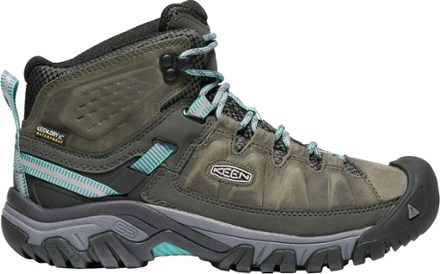
And here’s the boot you will find on my feet for day hikes on established trails, wearing a day pack.

119903KEEN Targhee III Waterproof Mid Hiking Boots
You can read my detailed Targhee review here.

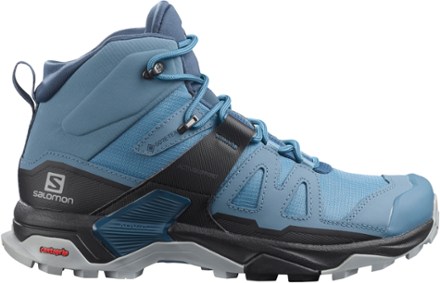
Salomon hiking boots if you arehiking with wide feet

These are the boots I use when I need good traction and ankle support, on day hikes as well as multiday trips.

187457Salomon X Ultra 4 Mid GORE-TEX Hiking Boots
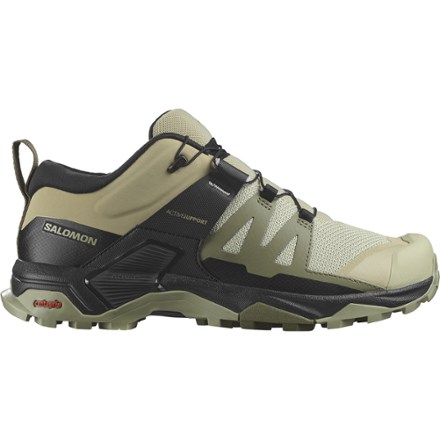
Note that these boots have a high cut. If you don’t want your ankles surrounded and protected, consider these Salomon trail shoes instead.

They are what I wear for straightforward day hikes on non-rocky, dry to moderately muddy trails.

187460Salomon X Ultra 4 Low Hiking Shoes

Zamberlan hiking boots for wide feet

These boots are built for rugged use. And the price reflects that.

So only look at these if you’re going to be wearing them through tough conditions.

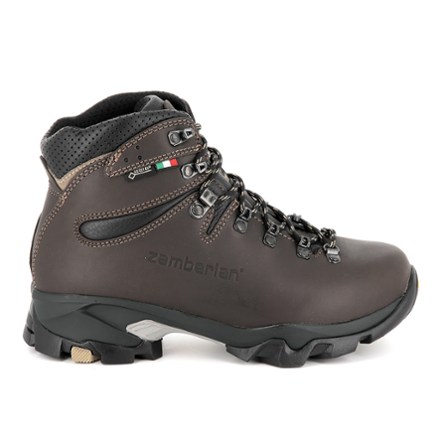
Zamberlans are on my feet when I do multiweek backcountry treks, because they stand up to water, rock, jagged trail debris, snakes, and more.

And while they are not labeled “wide width”, the toe box is plenty roomy for my wide feet.

They also receive rave reviews from hikers with toe problems, including hallux rigidus and arthritis.

128769Zamberlan Vioz GTX Hiking Boots

An important sizing note

I always go up one full size with this brand, to accommodate foot swelling and my two pairs of hiking socks.

In fact, the first time I bought a pair of Zamberlan hiking boots, I made the mistake of ordering my regular size. They were a bit snug :/

  • So if you’re going to use sole inserts, or are at all concerned that your regular size might be too snug, order up one size.

Merrell trailwear whenhiking with wide feet

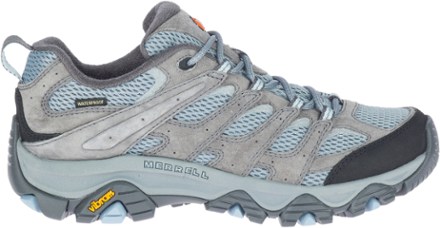
These are the trail shoes I wear when I want to go fast and light, with minimal weight on my back.

They give good traction and are quite comfortable.

Ordering up a half size gives you a good chance that you will enjoy roominess, if you have any doubt.

Also, I only wear one pair of socks with them, and never get blisters.

202124Merrell Moab 3 Waterproof Hiking Shoes

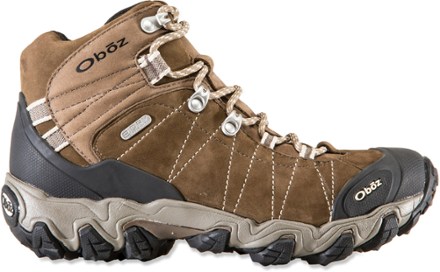
Oboz hiking boots in wide widths

These boots seem to run a bit small, so be sure to order up a size, and make certain you select the wide option.

857721Oboz Bridger Mid Waterproof Hiking Boots
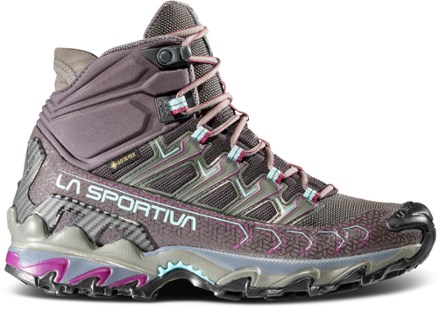
LaSportiva boots for wide feet

These boots are ankle protectors, so choose them for trails that will fling roots, rocks and debris at you.

And the tread will impress you.

As with many European brands, they can run a bit narrow. You know what to do if you’re hiking with wide feet!

183603La Sportiva Ultra Raptor II Mid GTX Hiking Boots

Altra Lone Peak boots

These boots feature a wide foot bed, nice and roomy for your toes. They call it the “Footshape toe bed”, designed to allow your toes to relax and spread out naturally.

They run up to a size 12.

217487Altra Lone Peak Hiker 2 Hiking Boots

Tips for shoppingfor wide width trail footwear

There are many brands which have given hikers with wide feet good outcomes. And now you’re familiar with some of them.

Here are a few general tips for shopping for wide width hiking boots, to make your choice a bit easier. You want to be hiking with wide feet and a wide smile on your face, right?

Hiking boot reviews are gold mines of information

As with buying any hiking gear, read the reviews and cross check user experiences before trusting your feet to any one brand.

Pay close attention to how reviewers describe their feet.

  • You want someone to mention a wide width.
  • And if you’re lucky, they will also mention their arch height.

If in doubt, go up in size

If you have feet that are just a tad bit wider than “normal”, you might not have to worry about sizing.

But if you have truly wide feet, and have struggled with sizing before, order up a size or at least a half size.

And pay attention when you look at the boot, either on line or in the store.

  • You want the “wide” version if the brand makes regular width as well.

Relax, it’s REI!

Because you are purchasing from REI Co-op, you can return the boots and try another size if they aren’t perfect the first time.

  • More REI benefits here

Be prepared!

I don’t recommend that you pop into a gear store on a whim to try on wide width boots or trail shoes.

Go at the end of your day when your feet are at their maximum size.

And bring your own hiking socks, so you can get an exact feel for how wide the boots run.

  • What’s that? You don’t use dedicated hiking socks? Read this!

If the lacing right out of the box seems weird on your feet, unlace them and try some other lacing techniques, like these.

Pro tip

Need insoles that fit wide hiking boots?

Embrace hiking with wide feet

Don’t let the width of your feet slow you down.

(Ha! A hobbit foot just flashed through my mind. Embrace the width!)

Take good care of your wide feet with my foot care tips for hikers.

BTW, If you’ve found other brands of footwear that makes hiking with wide feet a good experience for you, drop me a line here. I’ll add it to our list!

Home > Best Hiking Gear >

Hiking With Wide Feet: Best Hiking Boots

Best Air Rifle Deals

Popular Posts

Air Gun 101: How many types of Air Gun Sights are there and which...

0
The former American president, Joe Biden, was recently quoted saying: If you need more than ten rounds to hunt, you better stop that business and...

Can a 22 air rifle kill a deer?

0
"Debate over whether a 22 air rifle can effectively take down a deer has sparked curiosity among hunting enthusiasts. With its lower muzzle velocity...

Master Small Game Hunting with an Air Rifle: Tips and Techniques

0
"Experience the thrill of small game hunting with an air rifle! Embark on a captivating journey as you test your accuracy and precision in...