

Home Blog Page 46

How To Tell If Deer Meat Is Spoiled (4 Ways To Know)

0

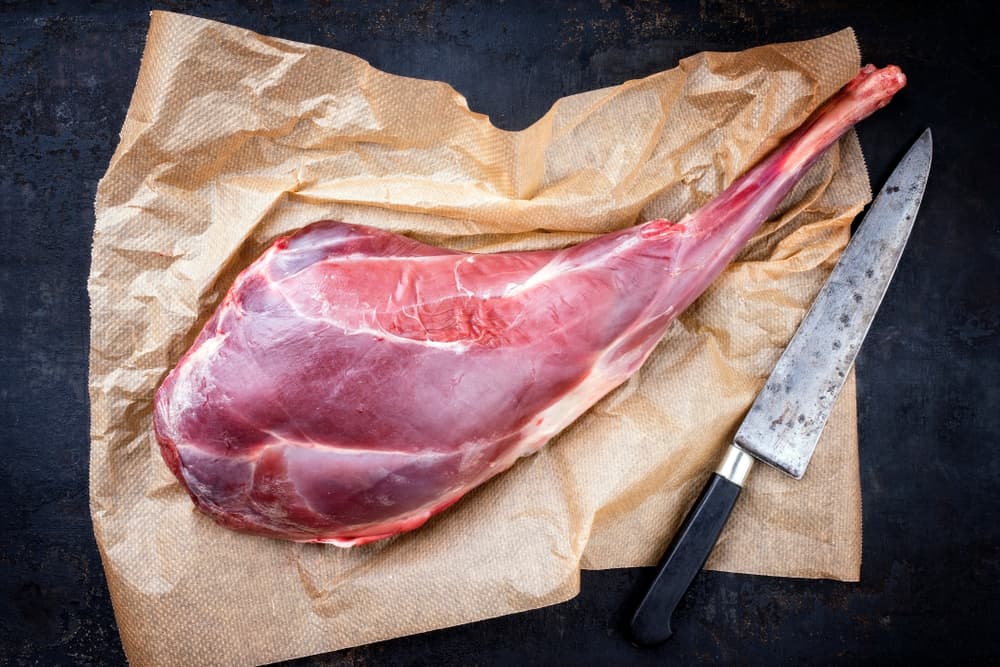
Raw aged leg of venison with bone as top view on brown paper

Deer hunting is a tradition that can be found in every culture.

It has served as a way to provide food, materials for clothing, keep deer populations from overwhelming local ecosystems, and even as a hobby or for sport.

Those who enjoy deer hunting or know someone who does knows just how tasty venison can be.

However, it may be difficult to tell whether or not the deer meat is still good.

How To Tell If Deer Meat Is Spoiled (4 Ways)

Fresh venison meat steaks on a board with forest plants and juniper berries

In order to tell whether or not deer meat is spoiled, you are going to need to use all of your senses.

You can tell deer meat is spoiled by the touch, smell, and look of it.

There’s no need to taste it, as that can be hazardous for your health.

There are also other factors that you can use to tell whether or not your deer meat is still healthy to consume.

1. The Touch Of The Venison
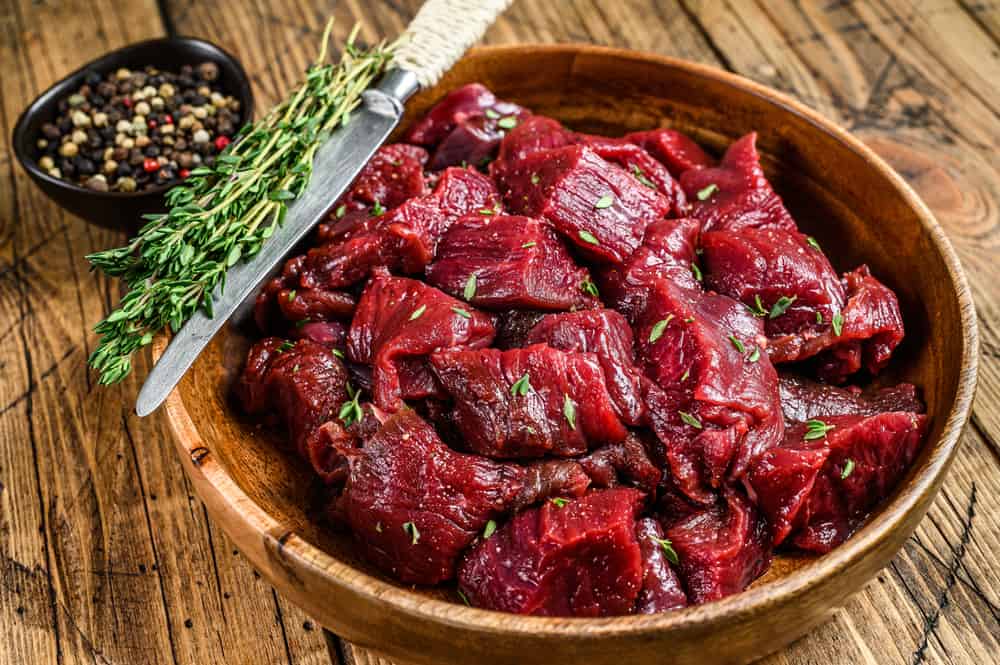
Raw cut wild venison meat for a goulash in a wooden plate

Your venison won’t feel fresh if you touch it.

The deer meat will feel slimy and wet to the touch.

While your venison should be damp, it should never be soggy or slippery.

You may not be able to tell if your deer meat is spoiled by the touch if your venison has been frozen.

Luckily, there are multiple options for analyzing the freshness of your venison.

2. The Look Of The Venison
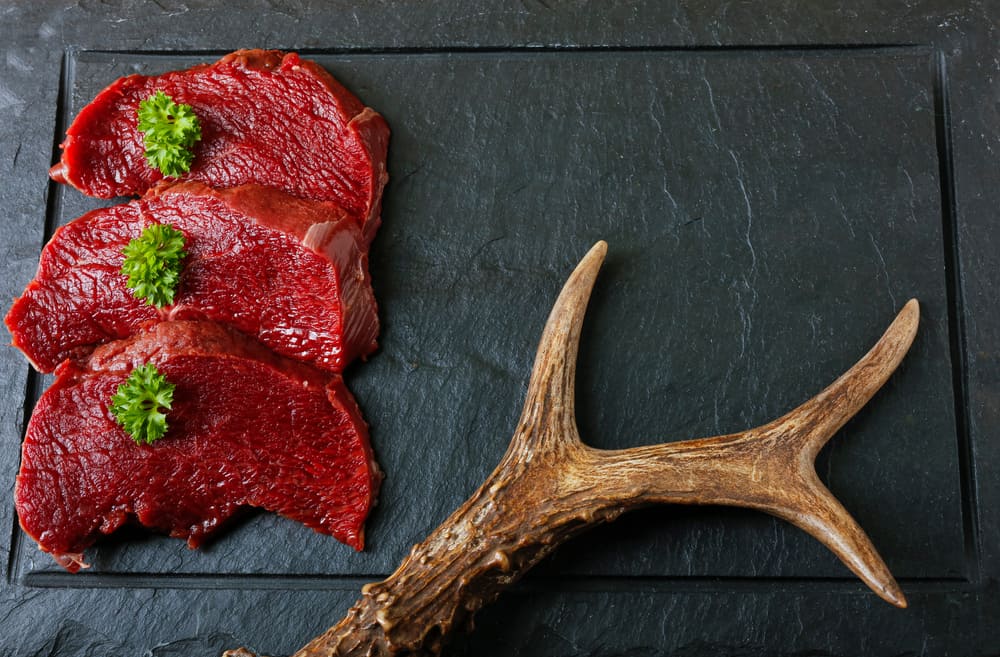
Raw steak meat from roe deer on the bridlic chopping board

The first way you can tell if deer meat has gone bad is by the look of it.

Your deer meat should be a nice, deep red.

If your venison is brown, then you have a problem.

Spoiled meat will also have a metallic shine to it, but that can be a difficult deciphering tool because deer meat always has a certain shine to it.

This natural shine comes from the deer’s thick tendons and muscle structure.

It is better to go by the color if you are solely going off of looks.

If you’ve already ground up your meat, then you should take a look at the inside of each ground chunk.

If the inside is brown, then the meat is no longer good.

3. The Smell Of The Venison

Handsome man with beard wearing professional cook uniform smelling something stinky

You will mostly smell the revolting aroma of spoiled deer meat before you can even get to the other steps of studying the venison.

A sewage-like smell will attack your nose and seep deep into your nostrils.

If your deer meat has been frozen, you may not be able to smell it at first.

The smell will get increasingly intense as the meat thaws.

Prepare for your whole house to reek of sewage by opening the windows and airing out the house beforehand.

4. The Timing Of The Venison
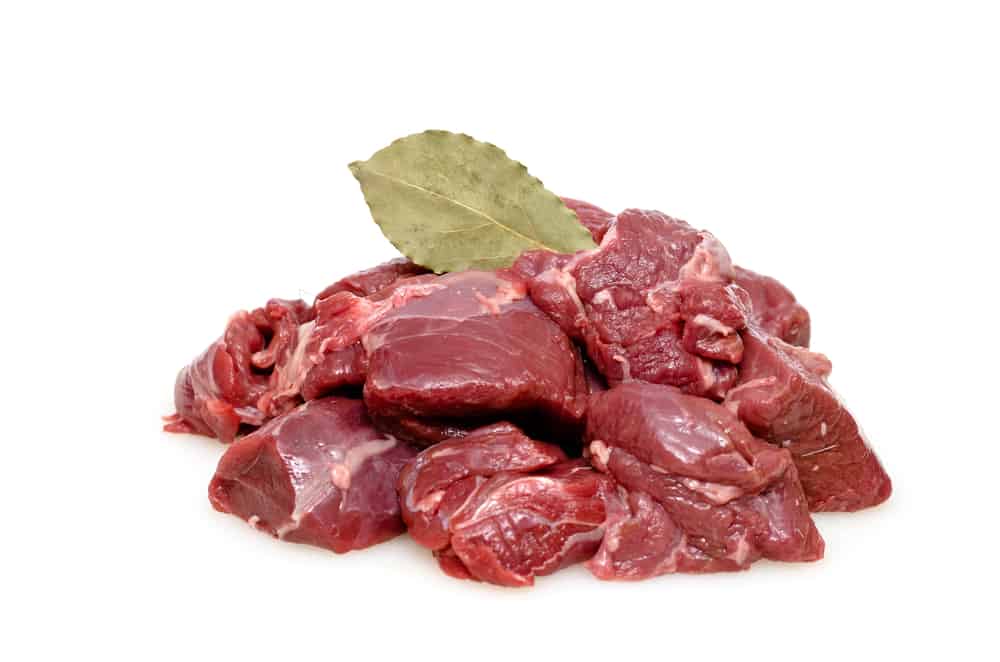
Raw venison from deer as goulash with bay leaf

There are two time frames that you will want to consider when trying to figure out if your venison has gone bad.

The first time frame you will need to take into consideration is when it was killed, dressed, and stored.

In order to keep your meat good for as long as possible, you will need to shorten the time between when the deer was killed and when it was frozen.

The time limit between those two events will be shorter if the weather is hot and humid.

You can leave deer meat out for the longest time when it is cold and dry.

The second time frame you’ll want to consider is how long you have been storing your meat.

You’ll also want to consider where it is being stored.

In the refrigerator, your meat will last three days.

Ground venison can last in the freezer for three months.

Venison roasts and steaks can be stored in the freezer for six to nine months.

Eating Spoiled Meat

Young man having nausea at home

Avoid eating spoiled meat at all costs.

The effects of eating spoiled meat can be devastating to your digestive tract.

If you have eaten questionable meat and that meat turns out to be spoiled, you may experience symptoms such as stomach pain, nausea, and diarrhea.

However, the worst-case scenario is death.

Rotten meat is where bacteria such as Escherichia coli and salmonella prosper.

Cooking your meat may get rid of any future bacteria forming, but it does not get rid of the toxins that they leave behind.

Those are left deep inside of the meat.

Ground meats will need to be cooked to a minimum of 165 degrees Fahrenheit.

Venison steaks and roasts will need to be cooked to 145 degrees Fahrenheit or higher to have any chance of killing these germs.

There’s another germ you will need to worry about.

Clostridium botulinum can be found in all sorts of meats.

This bacterium causes vision problems, paralysis, and even death.

There are five different types of Botulism.

There is infant botulism, wound botulism, iatrogenic botulism, and adult intestinal toxemia.

Each type of botulism is based on where it forms.

It can form in your wounds, your food, your cosmetics, your intestines when you’re an infant or adult, and even your food.

Foods that are canned or made at home without the proper equipment are at a higher risk of having foodborne botulism.

All forms of botulism are fatal.

If you or a loved one are potentially suffering from botulism, then go to the emergency room immediately.

Diseased Venison
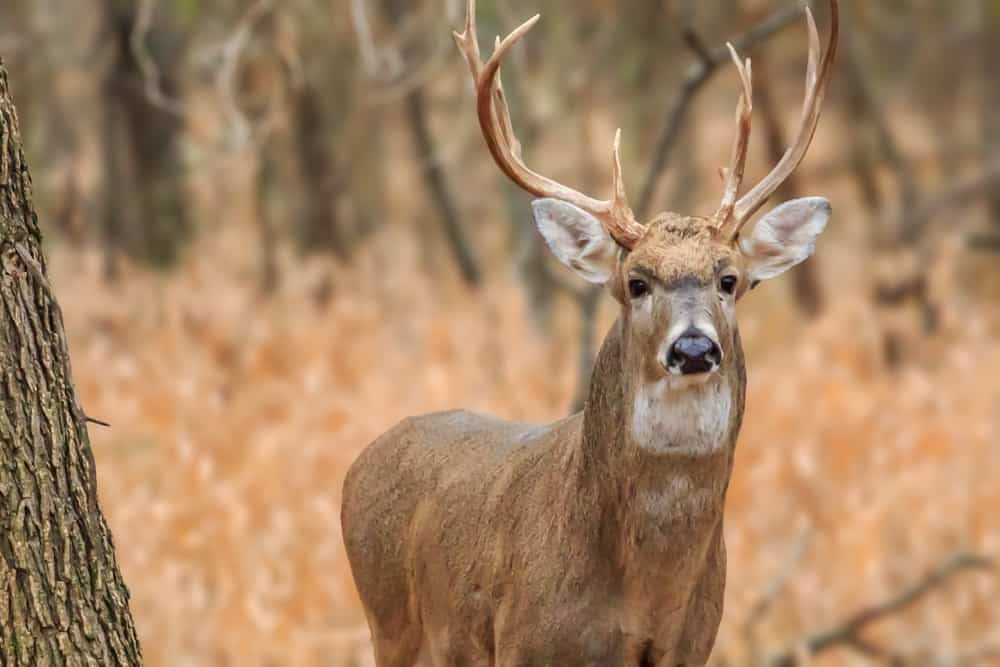
White-tailed deer (Odocoileus virginianus) buck in the forest at Martin Nature Park in Oklahoma City

There is something vastly more dangerous than simply spoiled meat.

There is a disease that is going through the United States’ deer population called Chronic Wasting Disease.

Similar to Mad Cow Disease, Chronic Wasting Disease eats away at the brain.

The U.S. Centers for Disease Control and Prevention hasn’t linked the disease to anything that indicates humans can get it, but the organization still highly discourages eating meat from deer with this disease.

Before you go for your hunt, you should look into whether or not Chronic Wasting Disease is prevalent in your hunting area.

Those hunting for food should select another location for hunting or be prepared to have your meat tested once you bring the venison home.

There are other precautions you can take to avoid eating diseased meat as well.

How To Avoid Diseased Meat
Shooter sighting in the target

One of the first things you can do to avoid diseased meat is to not shoot sick or weak-looking animals.

Instead, you should call your local fish and game department to inform them of the animal.

Should you accidentally shoot a sick-looking animal, turn it into your local game department so they may record and analyze it.

By doing this first tip alone, you will be helping keep your loved ones, the local community, and the local deer population safe.

Whenever you are dressing your deer in the field, make sure to wear latex or rubber gloves.

This will help you avoid direct contact with any potential contaminants.

It is better for you to bone out your deer, rather than sawing straight through the spine, brain, or any bone.

During the deboning process, try to avoid touching the brain or spinal tissues for longer than necessary.

You should wash your hands immediately and thoroughly after the field dressing is finished.

You will also need to make sure that your tools are completely clean and have soaked in 40% bleach for a minimum of five minutes each.

You should avoid eating the brain, spinal cord, spleen, eyes, tonsils, or lymph nodes of the deer.

While most of these things will be removed during a normal field dressing, you may still need to make sure to avoid lymph nodes.

By cutting away all of the fatty bits of the deer, you will have cut away any lymph nodes.

Hunters who want to be extra cautious may choose to ensure that, when their meat is processed, their animal is being processed individually, without any other meat mixing in.

Best Venison Meals
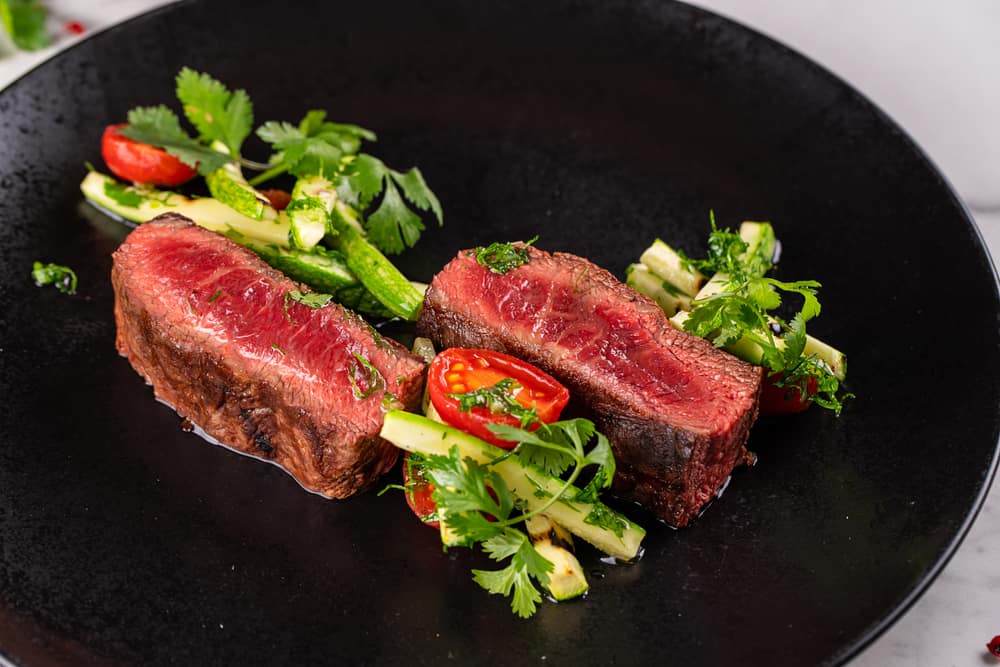
Fine dining Venison meat steak with vegetable

Venison can make for a hardy, protein-packed meal that has that signature gamey taste.

While that gamey taste isn’t for everyone, there are many ways to prepare venison as a meal.

It doesn’t all need to be your basic venison roast.

The best kind of jerky is venison jerky, by far.

This meaty, gamey jerky is the perfect snack while working or even hunting more deer.

All you will need to make it is venison, chili powder, onion powder, liquid smoke, soy sauce, Worcestershire sauce, black pepper, garlic powder, and teriyaki sauce.

If you like your venison jerky spicy, add some hot sauce and hot paprika.

You will want to cook your jerky at 150 to 175 degrees Fahrenheit.

You will cook one side of your jerky for three hours before flipping it over and cooking the other side for another three hours.

When in doubt, turn your meat into sausages!

With some venison, garlic powder, black pepper, mustard seed, tender quick, onion powder, and liquid smoke.

All meat lovers agree that the better sausages have cheese in them.

If you’ve never made sausage before, you may end up having a lot of fun with the steps it takes to make sausage.

The coarser you grind the meat up beforehand, the better it will stay together in a sausage.

You’ll want to leave your logs in the refrigerator overnight to help make the sausage firmer.

The better you mix your meat with your other ingredients, the better your sausage will hold up and turn out.

Venison makes excellent meat for any soup or stew.

Its gamey taste pairs well with vegetables, cheese, and herbs.

Any soup that has beef in it can be easily replaced with venison for a more gamey taste.

You can also add venison to vegetable-based soups, like potato soup.

The starch of the potatoes soaks up the gamey venison.

Health Benefits Of Venison

HEALTH BENEFITS. Chalkboard with written message

When you’re trying to decide on what to eat for a healthy meal, venison may not cross your mind.

It may be shocking just how many health benefits that venison has.

When most people go hunting, they aren’t thinking about the healthy meat they’re bringing home to their families, but luckily, your hobby is good for the whole family.

Deer meat is packed to the brim with protein.

In 100 grams of venison, there are 24 grams of protein!

A fourth of deer meat is pure protein.

The protein from venison is a complete protein, meaning it contains all of the essential amino acids that our bodies need in order to survive.

Complete proteins are what keep our immune systems, hormones, and crucial enzyme production in order.

Those who love beef but need to cut back on saturated fats should consider replacing beef with venison.

Deer meat is vastly lower in saturated fats than most other red meats.

Venison isn’t just a great source of protein, but it is also an excellent source of iron.

With 25% of the world’s population having an iron deficiency, we could all use a little venison.

There are two different types of iron: haem and non-haem.

Non-haem iron mostly comes from plants, but it doesn’t absorb into the body as well as haem iron.

Haem iron comes from most meats, excluding the liver, spleen, and bone marrow.

Zinc is one of the trickiest minerals to get into your system, with most people just opting to take zinc supplements.

By eating 100 grams of venison, you will get almost a third of the total zinc you need in a day!

Zinc is responsible for keeping your skin healthy.

It is also a crucial mineral for reproductive health, especially in men.

Quality Of Meat Weighs On Quality Of Shot
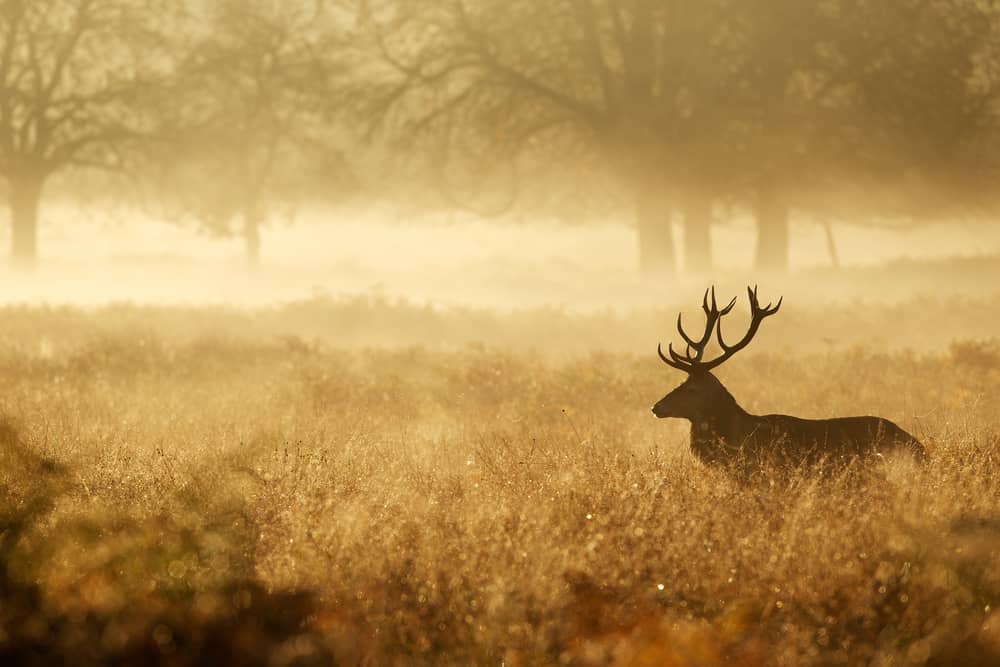
red deer

The quality of your meat weighs heavily on the quality of your shot.

The best hunters will kill their meat as humanely as possible, which means doing it with the fewest number of shots.

Plus, scaring your prey will only cause their body temperature to rise as they run for their lives.

You’re looking for the “one shot, one kill”.

You’re out in the field, and you’re aiming at the broadside of a buck.

Wait for the deer to have his leg extended and aim for a third of the way up his body, right behind the leg.

That is where the heart and lungs are.

This shot gives you room for error because of all the vital organs in the area.

With this shot, it is better to shoot a little high than a little low.

If the deer you’re hunting is looking toward you, you should aim for the lower quarter of their chest.

A deer’s lungs and legs are the best tools they have for escaping.

You want to take out the lungs because that will result in a quicker death for the deer.

Never forget the importance of respecting the animal you’re going to make a meal out of.

Texans have their own special spot to shoot a deer for a quick death.

Your deer will need to be facing away from you with its butt showing.

Use that tail of theirs to make the perfect marker for the “Texas Heart Shot“.

By shooting straight through the tail, you will be hitting the aortic artery and puncture the heart and lungs, which will lead to internal bleeding.

Plus, their white, little tails make it easier to see exactly where you need to shoot.

Isn’t it a great day not to be a deer?

NEXT: 50 Words That Begin And End With T (And How To Use Them)

Best Bow Brands [And 1 That Hunters Avoid]

0

In the world of archery, choosing the best bow brand is paramount to your success. Whether you’re a seasoned archer or a beginner looking for their first compound bow, the quality of your bow can significantly impact your accuracy, performance, and overall enjoyment of the sport. In this article, we’ll guide you through our expert recommendations for the top compound bow manufacturers in the market today.

These bows offer unparalleled craftsmanship, cutting-edge technology, and precision engineering, ensuring you have the best equipment to elevate your archery game.

The 10 Best Bow Brands

Best Bow Brands Comparison Chart

Sorted By Average Price – Highest To Lowest

1. Mathews Archery: Precision Perfected

Mathews Archery has earned a well-deserved reputation for crafting some of the most accurate and reliable compound bows in the industry. Their dedication to precision engineering is evident in their patented Single Cam Technology, which provides archers with a smooth draw cycle and exceptional accuracy. Whether you’re a target shooter or a hunter, Mathews Archery has a bow that suits your needs, making them a standout choice for discerning archers.

2. Hoyt: Tradition Meets Technology

Hoyt Archery seamlessly blends tradition with cutting-edge technology. As one of the oldest and most respected names in archery, Hoyt has a legacy of producing high-quality bows that have stood the test of time. Their innovative designs, such as the modular cam system, give archers the flexibility to fine-tune their bows for optimal performance. When you choose a Hoyt bow, you’re not just investing in a piece of equipment; you’re becoming part of a storied tradition of excellence.

3. Bowtech: Pioneering Innovation

Bowtech is a name synonymous with innovation. With a rich history of pushing boundaries and setting new standards, Bowtech has consistently delivered top-tier bows that cater to a wide range of archers. Their commitment to quality and performance shines through in every product they offer. From the accuracy of their Binary Cam System to the adjustability of their bows, Bowtech’s dedication to excellence sets them apart from the competition.

4. Elite Archery: Precision Redefined

Elite Archery takes pride in redefining precision in the hunting crowd. Their commitment to detail and craftsmanship is unmatched, resulting in bows that deliver unparalleled accuracy and consistency. Elite’s unique shoot-through riser design minimizes torque and vibration, giving archers the edge they need to excel. If you demand nothing but the best in terms of precision, Elite Archery is the brand to consider.

5. Prime Archery: Innovative Excellence

Prime Archery is known for its innovative approach to bow design. They’ve introduced the Centergy Technology, which optimizes balance and stability for shooters. Prime bows are highly customizable, allowing archers to fine-tune their equipment to their exact preferences. If you’re looking for a bow that combines innovation with precision, Prime Archery is a brand worth exploring.

6. Obsession Bows: Precision Meets Passion

Obsession Bows is a brand that embodies the passion of archery enthusiasts. Their bows are meticulously crafted to deliver unmatched precision and consistency. The Obsession Hybrid Cam System offers a perfect blend of speed and accuracy, making them ideal for both target shooters and hunters. If you’re looking for a bow that’s born out of a deep love for archery, Obsession Bows is the choice for you.

7. Bear Archery: Time-Tested Quality

Bear Archery is a name that resonates with archers who appreciate time-tested quality. With a heritage dating back to the early 20th century, Bear Archery has a legacy of producing bows that combine durability, performance, and affordability. Their Bear EAZ Cam System ensures a smooth draw and consistent accuracy, making them a favorite among bowhunters. When you choose a Bear Archery bow, you’re choosing a piece of history that will serve you faithfully.

8. PSE Archery: Affordable Excellence

For those seeking a balance between performance and affordability, PSE Archery is a standout choice. They’ve consistently delivered bows that provide exceptional value without compromising on quality. PSE’s commitment to innovation is evident in their Evolve Cam System, which offers impressive speed and accuracy. If you’re an archer on a budget but refuse to compromise on performance, PSE Archery has the perfect solution.

9. Mission Bows: Unmatched Versatility

For archers who a more affordable option, Mission bows offers a range of versatile and dependable options. Their bows are engineered for accuracy and durability, making them a favorite among hunters. With adjustable draw lengths and exceptional build quality, Mission provide archers with the tools they need to succeed in the field.

10. Diamond Archery: Tradition with a Twist

Diamond Archery is an American archery manufacturer based in Eugene, Oregon. They are known for their high-quality bows that are designed for both beginners and experienced archers. Diamond bows are known for being easy to use and adjust, making them a great choice for people of all ages and skill levels.

Diamond Archery offers a wide range of bows, from youth bows to high-performance target bows. They also offer a variety of accessories, such as arrows, sights, and stabilizers.

The Worst Bow Brands

Cabela’s & Bass Pro Shops Bows

When it comes to bows, I would stay away from any Cabela’s/Bass pro branded option.

Of course, most of the time retailers have their products made by a separate manufacturer. In this case, it’s Bear Archery. While these two (and now one) brands, have rotated manufacturers in the past, everything is currently being made by Bear.

Now, there’s nothing wrong with a Bear bow. It’s just the fact that when you look at customer service, as well as small design changes. They aren’t going to be as good as an actual knowledge-holding manufacturer.

My Final Thoughts On Bow Manufacturers

In conclusion, hunters and target shooters have exceptional options from reputable manufacturers. Each of the brands mentioned here has a unique approach to design, innovation, and performance. Your choice ultimately depends on your specific preferences and requirements as an archer. Whether you prioritize precision, affordability, tradition, or innovation, there’s a perfect bow waiting for you among these top manufacturers. Make an informed decision, and you’ll be well on your way to becoming a more skilled and successful archer.The choice of your compound bow can make or break your performance. That’s why it’s crucial to consider these top manufacturers, each known for their unique strengths and innovations. By choosing a bow from one of these esteemed brands, you’ll not only enhance your archery experience but also position yourself for success on the field or at the range.

For a somewhat related subject, take a look at our blog comparing Bows vs. Crossbows!

Choosing the Perfect Grain for Hunting White Tail Deer with a .30-06 Bullet

0

Discover the ultimate choice: the best grain for your 30.06 bullet when hunting white-tail deer. Unveil the ideal combination of power and precision, ensuring a successful hunt every time. Explore our expert recommendations to maximize your shooting performance and achieve unparalleled results in the field.

Choosing the Perfect Grain for Hunting White-Tailed Deer with a.30-06 Bullet

Choosing the Perfect Grain for Hunting White-Tailed Deer with a.30-06 Bullet

When it comes to hunting white-tailed deer with a.30-06 bullet, choosing the perfect grain can make all the difference. The.30-06 Springfield cartridge has a long history of being a popular choice among hunters, and its versatility allows for different grain options depending on your specific needs.

The Importance of Grain Weight

One of the key factors to consider when selecting a bullet for hunting white-tailed deer is the grain weight. The grain weight refers to the mass of the bullet, and it directly affects its trajectory, accuracy, and terminal performance.

For lighter game like white-tailed deer, a lighter grain weight such as 150 grains is often preferred. These bullets are known for their flatter trajectory and higher velocity, making them ideal for longer shots or open field hunting situations.

On the other hand, if you are hunting in thicker cover or at closer ranges, a heavier grain weight like 180 grains may be more suitable. These bullets offer greater stopping power and better penetration, which can be advantageous when dealing with larger-bodied deer.

Considerations for Shot Placement

Another important factor to consider when choosing the perfect grain for hunting white-tailed deer is shot placement. While shot placement should always be precise regardless of bullet selection, different grain weights can affect how forgiving or unforgiving certain shots may be.

Lighter grain bullets tend to have less recoil and muzzle blast, allowing for quicker follow-up shots if needed. This can be beneficial in situations where you may need to take multiple shots at a moving target or in dense vegetation where visibility is limited.

Heavier grain bullets, on the other hand, may deliver more energy upon impact and provide better terminal performance if shot placement is less than ideal. However, they also tend to have more recoil, which can affect accuracy and follow-up shot capability.

Final Thoughts

Ultimately, the perfect grain for hunting white-tailed deer with a.30-06 bullet will depend on your personal preferences, shooting abilities, and hunting conditions. It is important to consider factors such as range, shot placement, and the specific characteristics of the game you are targeting.

Experimenting with different grain weights during practice sessions can help you determine which option works best for you. Remember to always prioritize ethical hunting practices and select a bullet that ensures a clean and humane kill.

In conclusion, the.30-06 Springfield cartridge offers hunters a wide range of grain options for hunting white-tailed deer. Whether you choose a lighter 150-grain bullet for flat trajectory or a heavier 180-grain bullet for increased stopping power, the versatility of the.30-06 allows you to tailor your ammunition choice to your specific needs.

Optimal Grain Weight for Successful White-Tailed Deer Hunting with a.30-06

Optimal Grain Weight for Successful White-Tailed Deer Hunting with a.30-06

White-tailed deer hunting with a.30-06 is a popular choice among hunters due to the versatility and effectiveness of this cartridge. When selecting the optimal grain weight for your.30-06 ammunition, there are a few factors to consider.

1. Bullet Performance

The performance of the bullet is crucial in determining the optimal grain weight for white-tailed deer hunting. It is recommended to choose a bullet that expands reliably and retains enough weight to penetrate deeply, ensuring an ethical and effective kill.

2. Distance and Shot Placement

Consider the typical distances at which you will be hunting white-tailed deer. If you anticipate shots at longer ranges, opting for a heavier grain weight can help maintain trajectory and energy downrange. However, if most of your shots will be within closer distances, a lighter grain weight may provide flatter trajectory and greater accuracy.

3. Personal Preference

Personal preference also plays a role in selecting the optimal grain weight for white-tailed deer hunting with a.30-06. Some hunters prefer heavier bullets for their increased penetration capabilities, while others prioritize flatter trajectories offered by lighter bullets.

Here are some commonly used grain weights and their suitability for white-tailed deer hunting with a.30-06:

– 150-grain: This is often considered an all-purpose load for white-tailed deer hunting with excellent accuracy and flat trajectory. It provides sufficient power for ethical kills on medium-sized game.
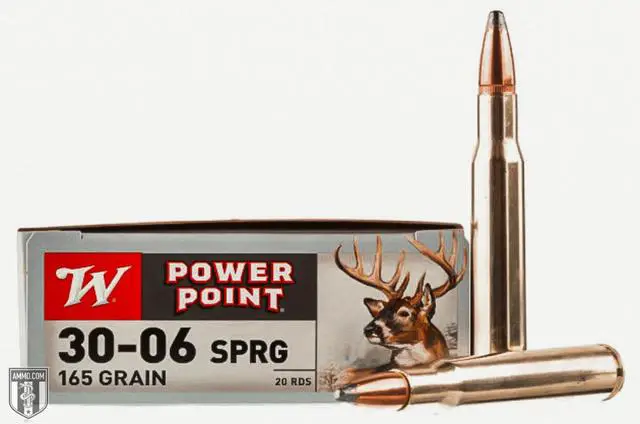
– 165-grain: A compromise between the 150-grain and 180-grain loads, this grain weight offers good performance on white-tailed deer at various distances. It strikes a balance between trajectory and energy transfer.
– 180-grain: With its heavier weight, this load is ideal for hunters targeting larger white-tailed deer or hunting in areas with dense vegetation. It provides deep penetration and is suitable for shots at longer ranges.

Remember, shot placement and bullet performance are paramount when hunting white-tailed deer. Regardless of the grain weight you choose, practice shooting with your selected ammunition to ensure accuracy and familiarity with your rifle’s performance.

In conclusion, the.30-06 cartridge offers a wide range of grain weights suitable for white-tailed deer hunting. Consider factors such as bullet performance, distance, and personal preference when selecting the optimal grain weight for your specific hunting needs.

Finding the Ideal Bullet Grain for Bagging White-Tailed Deer with a.30-06

When it comes to hunting white-tailed deer with a.30-06 rifle, choosing the right bullet grain is crucial for a successful hunt. The.30-06 cartridge has been a popular choice among hunters for many years due to its versatility and power. However, selecting the ideal bullet grain can greatly impact your accuracy and effectiveness in bringing down your target.

Considerations for Bullet Grain Selection

1. Range: One of the key factors to consider when choosing the ideal bullet grain is the range at which you will be hunting. Different bullet grains have varying ballistic characteristics, including trajectory and energy retention. For close-range hunting, such as in dense cover, a heavier bullet grain like 180 grains may provide better penetration and stopping power.

2. Flat Trajectory: If you are planning on taking longer shots or hunting in more open areas, opting for a lighter bullet grain like 150 grains can help maintain a flatter trajectory. This means that the bullet will drop less over distance, allowing for more accurate shots at varying ranges.

3. Game Size: Another important consideration is the size of the game you will be pursuing. While white-tailed deer are not particularly large animals, using a heavier bullet grain can provide added assurance when it comes to delivering an ethical shot and ensuring quick kills. A 180-grain bullet can offer sufficient energy transfer for larger deer or if you anticipate encountering other big game species like elk or moose.

4. Bullet Performance: It’s essential to choose bullets that are designed specifically for hunting purposes and offer reliable expansion upon impact. Modern bullets have come a long way in terms of performance, with controlled expansion and high weight retention being desirable qualities. Consider premium bullets from reputable manufacturers that are known for their consistent performance.

5. Personal Preference: Ultimately, the choice of bullet grain may also come down to personal preference and what you feel most confident using. Some hunters swear by a specific bullet weight based on their past experiences and success rates. It’s important to find a balance between what works well for you and what is appropriate for the game you are pursuing.

In conclusion, finding the ideal bullet grain for bagging white-tailed deer with a.30-06 involves considering factors such as range, trajectory, game size, bullet performance, and personal preference. Whether you opt for a heavier 180-grain bullet for larger game or a lighter 150-grain bullet for flatter trajectories, selecting the right ammunition can greatly enhance your hunting experience and increase your chances of success.

The Best Grain Weight for Effective White-Tailed Deer Hunting Using a.30-06

When it comes to hunting white-tailed deer with a.30-06 rifle, choosing the right grain weight for your bullet is crucial. The.30-06 cartridge offers a wide range of bullet options, from 150-grain to 180-grain and even heavier. Each grain weight has its own advantages and considerations for deer hunting.

150-Grain Bullet:

A 150-grain bullet is a popular choice for deer hunting with a.30-06. It offers a flatter trajectory and higher velocity compared to heavier bullets, making it ideal for shots at longer distances. This grain weight provides excellent accuracy and sufficient energy transfer for ethical kills on deer. It is particularly well-suited for smaller-bodied deer species or when shooting in open terrain where longer shots may be necessary.

165-Grain Bullet:

The 165-grain bullet is often considered a versatile choice for white-tailed deer hunting with a.30-06. It strikes a balance between the flatter trajectory of the lighter bullets and the increased energy of the heavier ones. This grain weight offers good penetration and expansion, making it effective on medium-sized game like white-tailed deer. It provides adequate stopping power while still maintaining manageable recoil.

180-Grain Bullet:

For hunters targeting larger-bodied white-tailed deer or seeking maximum energy transfer, the 180-grain bullet can be an excellent option. This heavier bullet weight delivers greater knockdown power and deeper penetration, making it suitable for shots at close range or when encountering larger bucks. However, it may have a slightly more pronounced trajectory arc compared to lighter bullets, so adjustments in aiming may be necessary at longer distances.

In conclusion, selecting the best grain weight for effective white-tailed deer hunting using a.30-06 depends on various factors such as the size of the deer, shooting distance, and personal preference. The 150-grain bullet offers flatter trajectory and higher velocity for longer shots, while the 165-grain bullet strikes a balance between trajectory and energy transfer. The 180-grain bullet provides maximum stopping power for larger game or close-range encounters. Ultimately, it is important to choose a grain weight that suits your specific hunting situation and ensures ethical kills.

Maximizing Success: Selecting the Right Grain for White-Tailed Deer Hunting with a.30-06

Maximizing Success: Selecting the Right Grain for White-Tailed Deer Hunting with a.30-06

White-tailed deer hunting is a popular pursuit for many hunters, and the.30-06 Springfield cartridge is a versatile choice for this game. When it comes to selecting the right grain bullet for white-tailed deer hunting with a.30-06, there are several factors to consider.

1. Bullet Weight

The weight of the bullet plays a crucial role in determining its performance on white-tailed deer. For lighter game like deer, bullet weights ranging from 150 to 180 grains are commonly used with the.30-06. These bullet weights offer an excellent balance between flat trajectory and sufficient energy transfer upon impact.

2. Trajectory

Having a flat trajectory is important when hunting white-tailed deer, as it allows for more precise shot placement at varying distances. A flatter-shooting bullet, such as a 150-grain option, can help maximize accuracy and increase the likelihood of a clean kill.

3. Energy Transfer

When choosing a bullet for white-tailed deer hunting, it’s essential to ensure that it delivers enough energy upon impact to effectively take down the animal. Bullets in the 150 to 180-grain range provide ample energy transfer, resulting in quick and ethical kills.

4. Consider Shot Placement

Shot placement is crucial when hunting any game species, including white-tailed deer. Regardless of the bullet weight chosen, it’s important to aim for vital areas such as the heart or lungs to ensure a humane kill.

In conclusion, when selecting the right grain for white-tailed deer hunting with a.30-06 Springfield cartridge, opt for bullets in the range of 150 to 180 grains. Consider factors such as trajectory, energy transfer, and shot placement to maximize your success in the field.

Unlocking the Potential: Discovering the Optimum Grain Weight for Harvesting White-Tailed Deer with a.30-06

Unlocking the Potential: Discovering the Optimum Grain Weight for Harvesting White-Tailed Deer with a.30-06

White-tailed deer hunting is a popular pursuit among hunters, and choosing the right ammunition is crucial for a successful harvest. The.30-06 Springfield cartridge has long been favored by hunters for its versatility and effectiveness on various game species, including white-tailed deer.

When it comes to selecting the optimum grain weight for harvesting white-tailed deer with a.30-06, there are several factors to consider. The weight of the bullet plays a significant role in determining its trajectory, energy transfer, and terminal performance upon impact.

For many years, the default choice for hunters using the.30-06 was the 180-grain bullet. This weight provided adequate power and penetration for larger game such as elk, black bear, and moose. However, with advancements in bullet technology, hunters now have more options to choose from.

The flatter-shooting 150-grain bullet has gained popularity among hunters targeting deer due to its ability to maintain a relatively flat trajectory over longer distances. This weight is suitable for most deer hunting scenarios and offers excellent performance on medium-sized game.

For those seeking a compromise between flat trajectory and game-stopping power, the 165-grain bullet is an excellent choice. It strikes a balance between velocity and bullet weight, making it versatile enough to handle various hunting situations effectively.

It’s important to note that shot placement plays a crucial role in harvesting white-tailed deer ethically. Regardless of the grain weight chosen, accurate shot placement will ensure quick and humane kills.

In conclusion, when selecting the optimum grain weight for harvesting white-tailed deer with a.30-06 Springfield cartridge, hunters have multiple options available. The 150-grain bullet offers flat trajectory and is well-suited for most deer hunting scenarios. The 165-grain bullet provides a compromise between trajectory and stopping power, while the 180-grain bullet remains a reliable choice for larger game. Ultimately, the choice depends on the hunter’s preference and the specific hunting situation.

In conclusion, the best grain for a 30.06 bullet when hunting white-tail deer depends on various factors such as distance, shooting skills, and preferred results. It is recommended to consult with experienced hunters or professionals to determine the ideal grain weight that suits individual needs and offers optimal performance in taking down these game animals effectively.

The 10 Best Ice Fishing Rods for 2024 Winter Fishing

0

The key to a successful fishing experience has the right gear. Choosing the best ice fishing rods can make all the difference when it comes to catching fish through the ice.

In this blog post, we’ll provide you with a list of our 10 favorite rods for winter fishing, so you can be ready to hit the ice when the time comes!

Top 10 Ice Fishing Rods

Tip! Check out our other ice fishing gear guides if you’re just getting started.

10 Best Ice Fishing Rods Reviewed

  • Abu Garcia Venerate
  • 13 Fishing Widow Maker Evolve
  • St. Croix Mojo Series Ice Fishing Rod
  • Fenwick Elite Tech
  • Shakespeare Ugly Stik GX2
  • Frabill 6986 Combo
  • Atataka Ice Fishing Rod
  • Fiblink 2-Piece Portable Travel Ice Fishing Rod
  • Berkley Cherrywood HD Ice Fishing Rod
  • Shakespeare Wild Series Ice Fishing Spinning Rod

1. Abu Garcia Venerate

Best Ice Fishing Rod Combo

If you don’t already have an ice fishing reel that you love, it might be worth jumping and getting this solid ice fishing combo by Abu Garcia.

This is a solid carbon blank with stainless steel guides that have been upgraded with zirconium inserts.

The ultra-light is great for panfish and small trout. It’s well-balanced, and the reel has a smooth rotation. It’s comfortable to hold for long periods, and the rod is strong yet sensitive. This also makes a great ice fishing gift.

2. 13 Fishing Widow Maker Evolve

13 Fishing ice rods are stellar! If you’ve been ice fishing for some time and would like to move away from the budget rods, this would be the next best step up.

It’s a graphite blank that has great action. The cork handle is comfortable, and the guides are Alps thin wire double diamond guides, which are a nice step away from the generic stainless still guides found on cheaper ice rods.

3. St. Croix Mojo Series Ice Fishing Rod

We’re a huge fan of St Croix ice rods. St Croix continues to put out quality products year after year.

Consider using this rod if you’re looking to go after bigger fish like walleye, pike, whitefish, or lake trout. It’s sensitive enough to feel the slightest nibbles yet has enough backbone to hoist the big fish from the bottom. Walleyes ice fishing just got a lot more fun with this rod.

This is a popular rod and one you’d likely buy again throughout the years.

4. Fenwick Elite Tech

This is a very popular graphite ice fishing rod made by a company that knows a thing or two about catching fish. This rod is super sensitive and has a strong backbone with a quick tip. You might need a spring bobber if you’re going for small fish, but overall this is a great rod for your arsenal.

Best of all, it was not expensive. It’s not every day you get a quality rod at a good price.

5. Shakespeare Ugly Stik GX2

Best Beginner Rod

If you’ve never tried an Ugly Stik, then you’re missing out. These rods are darn near indestructible and will stand up to multiple years of abuse. If for some reason, you are able to wear through or break it, they are so well priced that picking up another is not a problem.

What’s better is this rod comes with a reel that will also stand up to a beating. This is the best beginner rod, especially if you are looking for long-lasting gear selling at an affordable price.

6. Frabill 6986 Combo

Here’s another extremely reasonably priced ice fishing rod and reel combo made by Frabill. Even if you’re fishing in sub-zero conditions, you can rest assured this rod will deliver. It comes with an ultra-sensitive micro spring bobber to sense when you have the slightest activity on your line.

Best of all, it comes at a price that might have you buying two just because you love them so much!

7. Atataka Ice Fishing Rod

If you’re looking for a little more sensitivity for your panfish bite, then check out this Atataka rod. It has a sensitive tip that should help you sight fish as well.

It’s flexible and has a strong backbone. The reel seat is nice, and the cork handle is comfortable. The orange tip is a nice feature to see the tip moving against the snow.

This will be your rod if you’re looking to put a bunch of bluegills, crappie, and even some largemouths in the cooler.

8. Fiblink 2-Piece Portable Travel Ice Fishing Rod

Sometimes you need to travel to find a hot bite in the cold weather. If you’re not looking to lug your expensive gear, you should look at this new Fiblink travel ice fishing rod.

It’s a carbon composite rod that is light and sensitive. You’ll be able to catch everything from perch, walleye, trout, and panfish. Best of all, it has an old-school pistol grip vibe which is more unique than anything we’ve seen in a while. It’s definitely worth a look!

9. Berkley Cherrywood HD Ice Fishing Rod

If you’re looking to start ice fishing and don’t want to spend a lot of money on gear, you need to check out this Berkley Cherrywood HD. Pair it up with a small 500-size reel with some light monofilament, and you’ll be all set to catch some small panfish on the water.

This rod is made from a 100% fiberglass ice fishing rod blank and comes with a comfortable cork handle. It has three guides, so it’ll be a bit better against freezing if you’re fishing outside.

This ultra-light can bring in crappies up to 22 inches. It’s also affordable, so if you break it, you won’t break your bank by replacing it.

10. Shakespeare Wild Series Ice Fishing Spinning Rod

If you’re looking for a comparable rod to the Berkley Cherrywood HD, but want more guides because you’ll be fishing inside your ice shed, then this is worth your consideration.

It’s made from fiberglass and comes with stainless steel guides for added durability. It has a light tip and a strong backbone.

This rod will have no problem bringing in walleye up to 27 inches on the medium power model. It’s a great walleye rod!

How to Choose the Best Ice Fishing Rods

There are some general rules of thumb to decide what type of setup you’ll need for ice fishing. We’ve listened to experts to see what they like to use so that you can determine what to get prior to hitting up your local shop or buying online.

Note: just FYI, it’s an ice fishing rod, not an ice fishing pole.

Generally, we’ll bucket our setups between panfish and larger fish. There are many ways to catch fish, but follow these guidelines if you have to start from scratch.

Ultralight Fiberglass Rod Setup

If you’re looking to catch panfish, including perch or bluegill, and want to use micro baits, you should get an ultralight ice fishing rod 18-24 inches in length.

You’ll want to pair that rod with the following:

  • 500-size ice fishing reel
  • 2-6lb mono/fluoro or
  • 5 lb braid

Ultralight Ice Fishing Graphite Rod Setup

Sometimes fiberglass just won’t cut it in terms of sensitivity. Therefore, if you’re planning on going jigging for small walleye, crappie, bluegill, or rock bass, you should get an 18-24 inch rod fishing in your ice hut or 28-30 inches you’re fishing outside.

You’ll want to pair that rod with the following:

  • 1000 size reel
  • 2-6lb mono/fluoro
  • 5-8 lb braid
  • ML with fast action

This setup will be super sensitive, so we like it for jigging. For an even more feel, try using a 5-pound braid with a four-foot fluorocarbon leader.

Bigger Fish Ice Rod Setup

If you’re in an area where you can go for bigger fish, you’ll need another setup entirely. If you plan to go for whitefish, walleye, lake trout, or other monsters, then you should look at a medium to medium-heavy rod.

You’ll want to pair that rod with the following:

  • 2500-size reel or
  • Baitcaster 150-200 size
  • 4-10lb mono/fluoro
  • 5-10lb braid
  • 28-36inch length when fishing outside
  • 18-24 inside the tent

Again, feel free to use a braid with a fluorocarbon leader if you want a bit more sensitivity. Your way to select the right rod stiffness for the size fish you’re going after. Problems happen when you don’t dial this in properly.

Fiberglass vs. Graphite Ice Rods

When you’re choosing your ice fishing rod blank, you’ll likely be deciding between fiberglass and carbon fiber.

Fiberglass blanks are:

  • super soft
  • great for live bait and micro presentations

Graphite blanks are:

  • a little stiffer
  • great for working baits

Ultralight vs. Medium vs. Medium-Heavy

Make sure you match rod power to the size of the fish you’re targeting.

  • Ultralight to light: target panfish
  • Medium to Medium-Heavy: target walleye, lake trout, pike, white fish

Walleye Ice Fishing Rig

Walleyes are a fun fish to target and are a bit special. They need a good rod and reel to bring these fish to the surface.

They should have a solid backbone rod with a quality reel and drag. This will allow you to achieve a good hookset and to be able to play a fish properly. Make sure you drill a proper size hole in the ice or use an ice chisel to make an opening to get out your catch!

Guides

The worst thing that can happen when fishing is your guide freezing up. This can be quite frustrating and can damage your line if you’re not careful.

Usually, when guides are too small and it’s super cold outside, they’ll freeze up. The opposite of small guides are big guides, which can be nice, but tend to be clunky and take away from the balance of the ice rod.

You’ll also find that the bigger the guides, the less there are on the rod.

When possible, go with more guides for a better rod bend. If it’s freezing and you’re fishing outside, go with bigger guides.

Frequently Asked Questions

The Tradition of Deer Camp

0

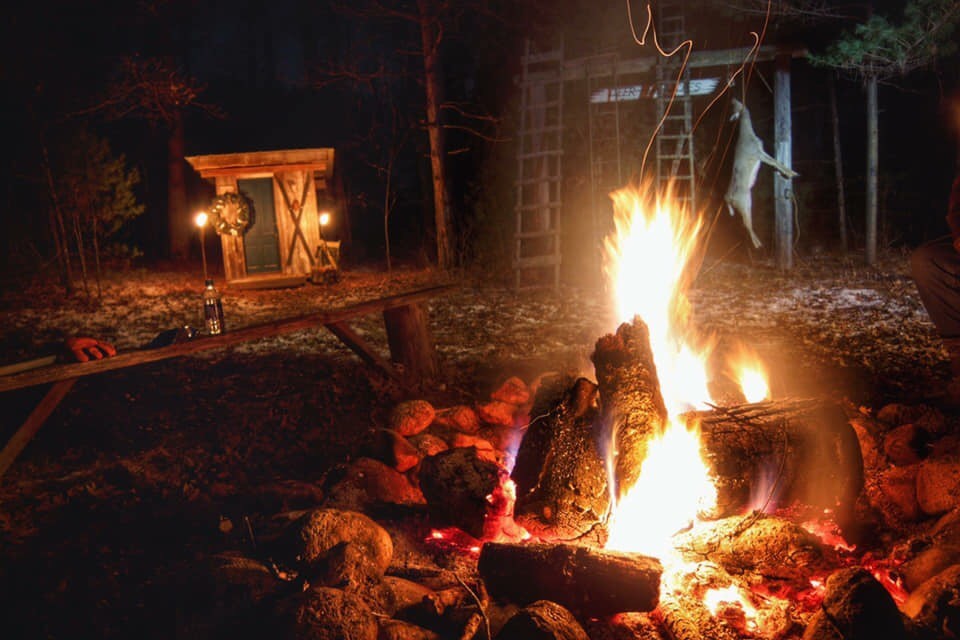
Vacation days are put in at the beginning of each year with anticipation building for the next cup of Grandpa’s “Joe” and maybe a shot at the big one Uncle Scott missed last year. Small towns close school the day before opener and sales for HotHands and propane soar. Gas stations staff up for the big push and supermarket delis are fully stocked to supply the masses. Step outside the eve before opening day and draw a deep breath, the smell of burning log fires infuse the air from chimneys of nearby deer camps around each bend, over the next hill, and across the way.

The crew from Schumacher’s deer camp

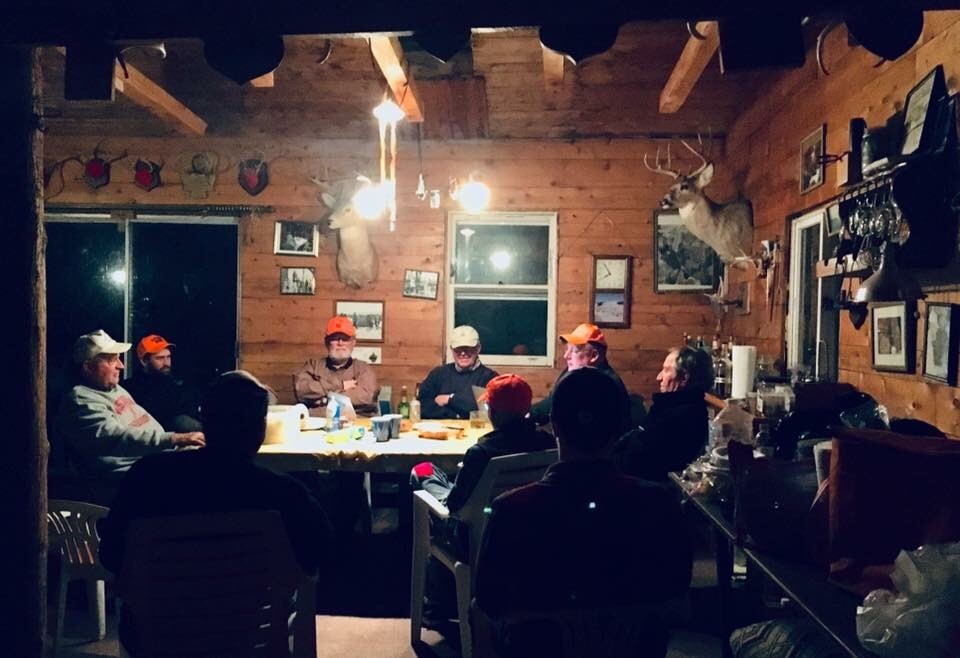
Deer camp is more than a “place”, it’s a tradition with generations of history in the making. The story of Uncle Jack shooting a doe from the hip never gets old, that dusty bottle of Peach Schnapps hasn’t moved since he took his last pull. Big John’s triple extra-large orange parka has hugged the same bedpost since the season before his heart attack, no one moves it, and no one complains. A broken aluminum arrow shaft with a two-blade broadhead rests across the rack of small buck Cousin Nick took years ago when tree bark camo looked like tree bark and big bucks meant big bodies.

Submitted by Lucas Karls. The cabin was built from the trees on the property over 30 years ago. Each log was handled 14 times before the project was complete.
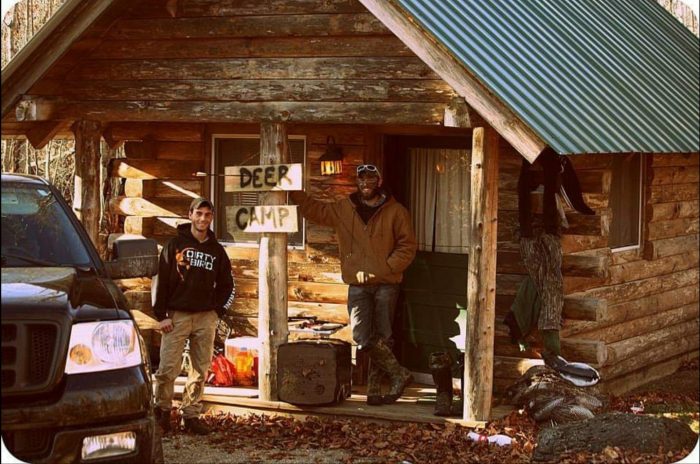
Cousin Tommy always shows up early to sweep out the ladybugs and stack the wood stove for heat before the rest of the party arrives. It will be cold beers and highballs over ice while the night is young, and fingertips will trace the property map, pausing over who’s sitting where and rekindle stories of what went down in years past.

Keep Deer Camp Alive

The tradition of Deer Camp has grown roots across much of the upper Midwest, but a tree only grows if it gets water and light is cast upon it. As generations come and go, the legacies they leave behind influence new stories and inherited tradition. If you let the tradition die with the loss of members who carried them, the leaves will fall from the tree and its roots will dry up and wither away.

My Grandpa, Tony Ubl, made the finest corned beef. He’d make a couple roasts before opening weekend, slice them against the grain a quarter-inch thick and serve it cold every opening day after the morning sit. As the family would return to “the shack”, the corned beef would be gone before the air had time to touch it.

Mitch Goeck’s Wisconsin Deer Camp

Tony slipped on a snow-covered log and hurt his shoulder while still-hunting his way back to the shack one morning. The fall reminded him of his age and Tony decided it would be his last weekend of Deer Camp. It wasn’t a decision he let be heard, he just didn’t show up the following year. The corned beef everyone loved so much was sorely missed, but not as much as Tony.

Deer Camp is something to look forward to, it’s something everyone can count on. Friends and family come together for more than the hunt, they do it for the comradery of doing something different than the everyday norm. It’s the stories re-told year after year, moms chili and Grandma’s cookies. It’s the pile of ladybugs swept outside next to the shoe rug, and the stinky outhouse that accounts for more jokes than anyone can keep track of.

We know that Uncle Kenny takes hunting less seriously than the rest of us, but he still comes up and sits opening morning. Dad and the twins always get the back room because they snore so loud, but without the hum keeping everyone up at night it would be too quiet. Henry always has the latest gadgets he likes to show off, and it’s always a conversation to have on the drive into camp – what will Henry bring this time?

Garrett Meilinger’s family deer camp

Encourage the Next Generation

Don’t let Deer Camp become a thing of the past. Introduce your children to Deer Camp and influence them with traditions of your own. Modern-day deer registration has already taken away a cornerstone from the structure Deer Camp was founded upon, where visiting the local registration stations was always a place to see deer taken over the weekend, shake hands, and tell stories. Keyboard cowboys have taken their toll on the principles of hunting, creating a false perception of standards for what is worthy and what isn’t – hunting and competition have no relevance. As a hunting community, I hope we can resuscitate traditional Deer Camp and introduce future generations to these topics we continue to write about.

Long live Deer Camp!

Nathaniel Melton’s family deer camp

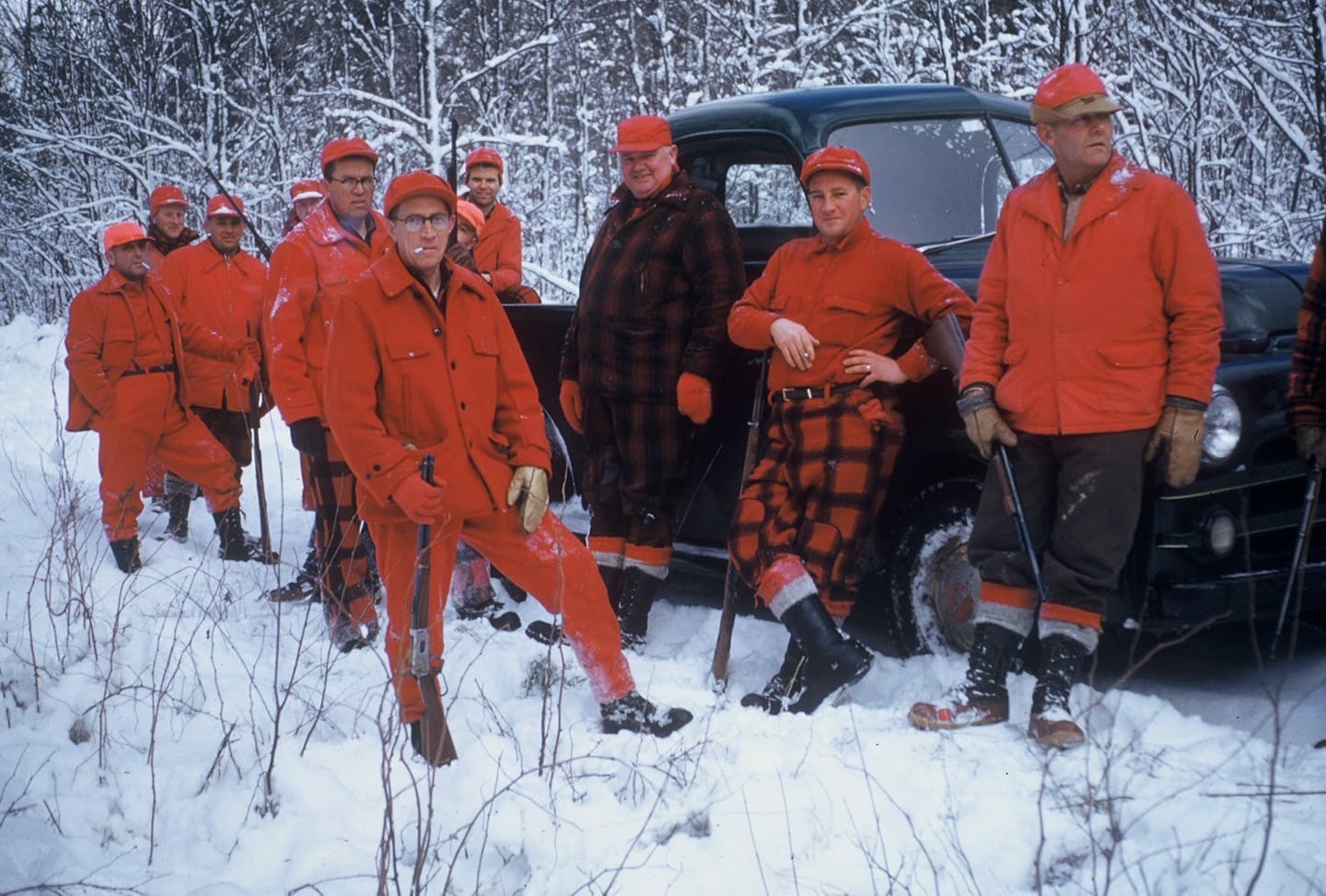
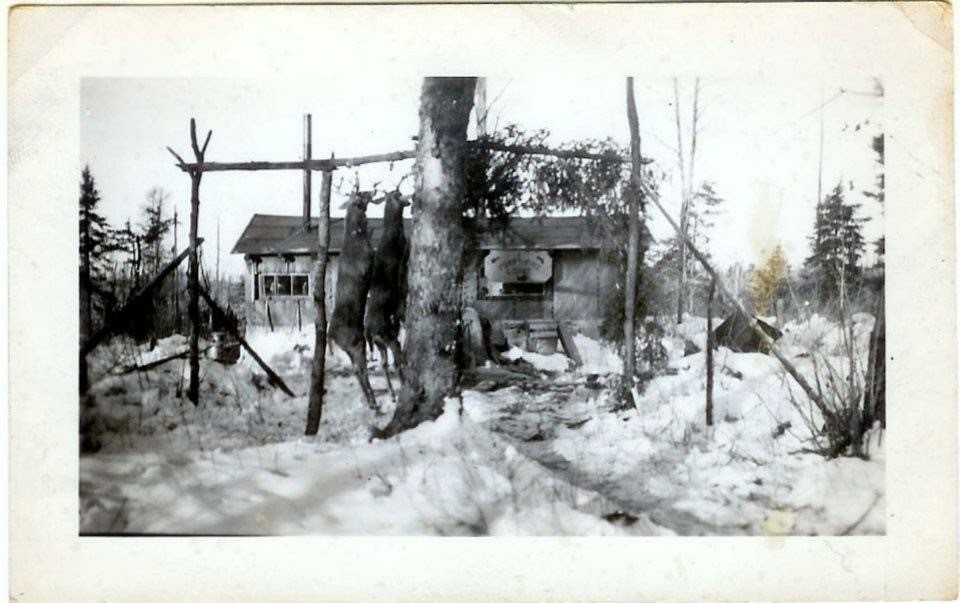
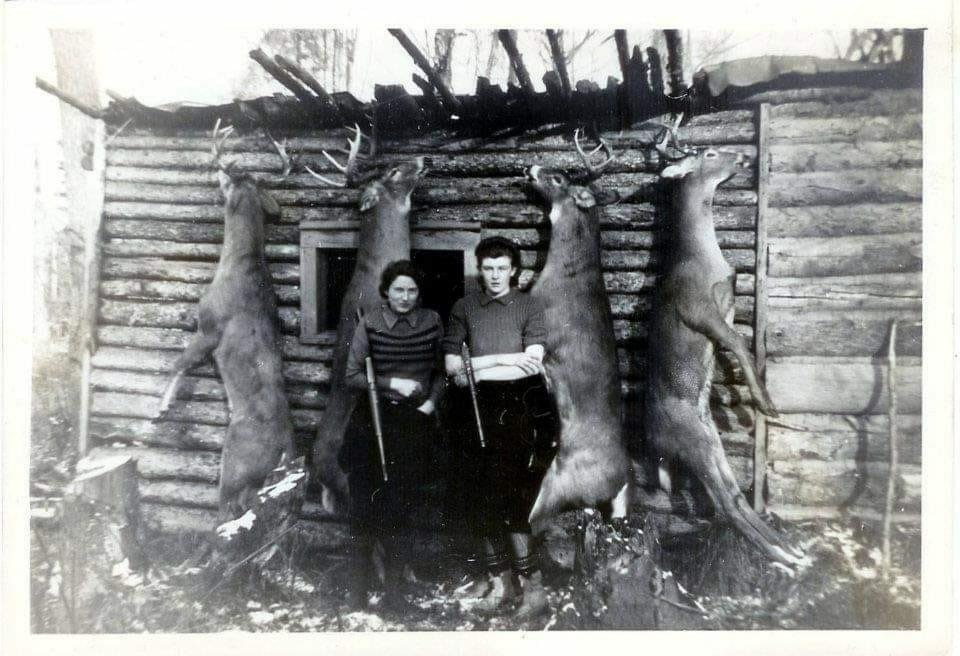
Vintage Deer Camp Photos: A Blast From the Past

Hamm Camp, Loretta, WI

Hamm Camp

The women of the Hamm Camp, Loretta, WI

10mm Auto vs .45 Colt (LC Long Colt) Ammo Comparison – Ballistics Info & Chart Caliber Ballistics Comparison 07 Dec, 2018 Posted By: Foundry Outdoors The following ammunition cartridge ballistics information and chart can be used to approximately compare 10mm Auto vs .45 Colt (LC Long Colt) ammo rounds. Please note, the following information reflects the estimated average ballistics for each caliber and does not pertain to a particular manufacturer, bullet weight, or jacketing type. As such, the following is for comparative information purposes only and should not be used to make precise predictions of the trajectory, performance, or true ballistics of any particular 10mm Auto or .45 Colt (LC Long Colt) rounds for hunting, target shooting, plinking, or any other usage. The decision for which round is better for a given application should be made with complete information, and this article simply serves as a comparative guide, not the final say. For more detailed ballistics information please refer to the exact round in question or contact the manufacturer for the pertinent information. True 10mm Auto and .45 Colt (LC Long Colt) ballistics information can vary widely from the displayed information, and it is important to understand that the particular characteristics of a given round can make a substantive difference in its true performance. Caliber Type Velocity (fps) Energy (ft-lb) 10mm Auto Handgun 1200 550 .45 Colt (LC Long Colt) Handgun 1050 500 [Click Here to Shop 10mm Auto Ammo] [Click Here to Shop .45 Colt (LC Long Colt) Ammo] Velocity As illustrated in the chart, 10mm Auto rounds – on average – achieve a velocity of about 1200 feet per second (fps) while .45 Colt (LC Long Colt) rounds travel at a velocity of 1050 fps. To put this into perspective, a Boeing 737 commercial airliner travels at a cruising speed of 600 mph, or 880 fps. That is to say, 10mm Auto bullets travel 1.4 times the speed of a 737 airplane at cruising speed, while .45 Colt (LC Long Colt) bullets travel 1.2 times that same speed. Various calibers Energy Furthermore, the muzzle energy of a 10mm Auto round averages out to 550 ft-lb, while a .45 Colt (LC Long Colt) round averages out to about 500 ft-lb. One way to think about this is as such: a foot-pound is a unit of energy equal to the amount of energy required to raise a weight of one pound a distance of one foot. So a 10mm Auto round exits the barrel with kinetic energy equal to the energy required for linear vertical displacement of 550 pounds through a one foot distance, while a .45 Colt (LC Long Colt) round exiting the barrel has energy equal to the amount required to displace 500 pounds over the same one foot distance. As a rule of thumb, when it comes to hunting, muzzle energy is what many hunters look at when deciding on what caliber of firearm / ammunition to select. Generally speaking, the higher the muzzle energy, the higher the stopping power. Again, the above is for comparative information purposes only, and you should consult the exact ballistics for the particular 10mm Auto or .45 Colt (LC Long Colt) cartridge you’re looking at purchasing. [Buy 10mm Auto Ammo] [Buy .45 Colt (LC Long Colt) Ammo] Please click the above links to take a look at all of the 10mm Auto and .45 Colt (LC Long Colt) ammo we have in stock and ready to ship, and let us know any parting thoughts in the comment section below. Foundry Outdoors is your trusted home for buying archery, camping, fishing, hunting, shooting sports, and outdoor gear online. We offer cheap ammo and bulk ammo deals on the most popular ammo calibers. We have a variety of deals on Rifle Ammo, Handgun Ammo, Shotgun Ammo & Rimfire Ammo, as well as ammo for target practice, plinking, hunting, or shooting competitions. Our website lists special deals on 9mm Ammo, 10mm Ammo, 45-70 Ammo, 6.5 Creedmoor ammo, 300 Blackout Ammo, 10mm Ammo, 5.56 Ammo, Underwood Ammo, Buffalo Bore Ammo and more special deals on bulk ammo. We offer a 100% Authenticity Guarantee on all products sold on our website. Please email us if you have questions about any of our product listings. Leave a comment Comments have to be approved before showing up Your Name * Your Email * Your Comment * Post Comment

0

The following ammunition cartridge ballistics information and chart can be used to approximately compare 10mm Auto vs .45 Colt (LC Long Colt) ammo rounds. Please note, the following information reflects the estimated average ballistics for each caliber and does not pertain to a particular manufacturer, bullet weight, or jacketing type. As such, the following is for comparative information purposes only and should not be used to make precise predictions of the trajectory, performance, or true ballistics of any particular 10mm Auto or .45 Colt (LC Long Colt) rounds for hunting, target shooting, plinking, or any other usage. The decision for which round is better for a given application should be made with complete information, and this article simply serves as a comparative guide, not the final say. For more detailed ballistics information please refer to the exact round in question or contact the manufacturer for the pertinent information. True 10mm Auto and .45 Colt (LC Long Colt) ballistics information can vary widely from the displayed information, and it is important to understand that the particular characteristics of a given round can make a substantive difference in its true performance.

Caliber Type Velocity (fps) Energy (ft-lb) 10mm Auto Handgun 1200 550 .45 Colt (LC Long Colt) Handgun 1050 500

Velocity

As illustrated in the chart, 10mm Auto rounds – on average – achieve a velocity of about 1200 feet per second (fps) while .45 Colt (LC Long Colt) rounds travel at a velocity of 1050 fps. To put this into perspective, a Boeing 737 commercial airliner travels at a cruising speed of 600 mph, or 880 fps. That is to say, 10mm Auto bullets travel 1.4 times the speed of a 737 airplane at cruising speed, while .45 Colt (LC Long Colt) bullets travel 1.2 times that same speed.

Various calibers

Energy

Furthermore, the muzzle energy of a 10mm Auto round averages out to 550 ft-lb, while a .45 Colt (LC Long Colt) round averages out to about 500 ft-lb. One way to think about this is as such: a foot-pound is a unit of energy equal to the amount of energy required to raise a weight of one pound a distance of one foot. So a 10mm Auto round exits the barrel with kinetic energy equal to the energy required for linear vertical displacement of 550 pounds through a one foot distance, while a .45 Colt (LC Long Colt) round exiting the barrel has energy equal to the amount required to displace 500 pounds over the same one foot distance. As a rule of thumb, when it comes to hunting, muzzle energy is what many hunters look at when deciding on what caliber of firearm / ammunition to select. Generally speaking, the higher the muzzle energy, the higher the stopping power. Again, the above is for comparative information purposes only, and you should consult the exact ballistics for the particular 10mm Auto or .45 Colt (LC Long Colt) cartridge you’re looking at purchasing.

Please click the above links to take a look at all of the 10mm Auto and .45 Colt (LC Long Colt) ammo we have in stock and ready to ship, and let us know any parting thoughts in the comment section below.

Foundry Outdoors is your trusted home for buying archery, camping, fishing, hunting, shooting sports, and outdoor gear online.

We offer cheap ammo and bulk ammo deals on the most popular ammo calibers. We have a variety of deals on Rifle Ammo, Handgun Ammo, Shotgun Ammo & Rimfire Ammo, as well as ammo for target practice, plinking, hunting, or shooting competitions. Our website lists special deals on 9mm Ammo, 10mm Ammo, 45-70 Ammo, 6.5 Creedmoor ammo, 300 Blackout Ammo, 10mm Ammo, 5.56 Ammo, Underwood Ammo, Buffalo Bore Ammo and more special deals on bulk ammo.

We offer a 100% Authenticity Guarantee on all products sold on our website. Please email us if you have questions about any of our product listings.

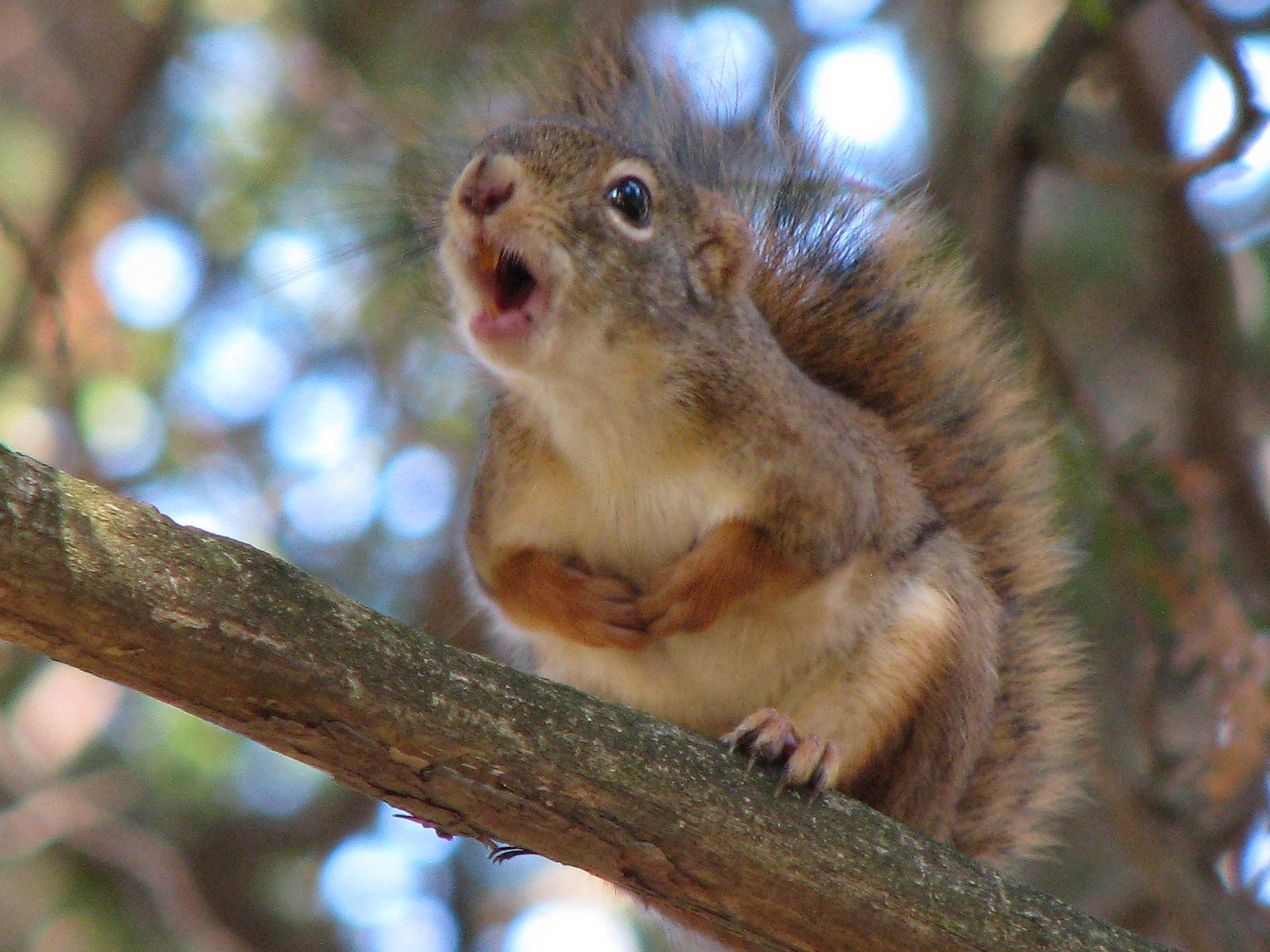
What sound does a squirrel make? (Surprised Answers!)

0

As an outdoor enthusiast who has spent countless hours observing wildlife, I’ve always been fascinated by the diverse vocalizations of squirrels. These charismatic creatures, often seen darting across our yards and parks, are far from silent neighbors. In fact, they’re quite the communicators, with an impressive repertoire of sounds that serve various purposes. Let’s dive deep into the world of squirrel sounds and decode what these chatty creatures are trying to tell us.

The Language of Squirrels: Understanding Their Vocal Arsenal

Squirrels are remarkable communicators, capable of producing an array of vocalizations that serve different purposes in their daily lives. From warning calls to mating signals, each sound in their vocabulary has a specific meaning and context. Let’s explore the main categories of squirrel sounds and what they signify.

Warning and Alarm Calls: Nature’s Security System

One of the most common and important sounds in a squirrel’s vocabulary is their alarm call system. These calls are essential for survival, helping to alert other squirrels and even different species about potential dangers in the area. Here’s what to listen for:

The “Kuk” is a short, sharp barking sound that squirrels repeat rapidly when they spot a threat. Think of it as their version of “Hey, watch out!” This sound is often the first line of defense when a squirrel spots something suspicious.

Following the “kuk” is often the “quaa” – a lower intensity sound that serves as a secondary warning. This combination of calls helps other squirrels understand not only that there’s danger, but also what kind of threat they’re facing.

Perhaps most interesting is their sophisticated system for distinguishing between ground and aerial predators. The “seet” call – a high-frequency but quiet sound – is specifically used for ground predators like cats or dogs. When they spot an aerial predator like a hawk, they’ll combine this with a bark, creating what’s known as the “seet-bark” call. This distinction helps other squirrels know whether to look up or down for the threat.

(For more on the best air rifle for squirrels, see this post)

Territory and Dominance: The Sound of Squirrel Real Estate

Squirrels are territorial creatures, and they’re not shy about letting others know when they’re crossing boundaries. Their territorial sounds include:

  • Rattles and screeches that serve as warning signals to intruders
  • Aggressive chattering produced by rapidly grinding their teeth
  • Sharp, threatening screeches when another squirrel gets too close to their space

These sounds are particularly common during feeding times or when protecting their nests. If you’ve ever watched squirrels at a bird feeder, you’ve probably witnessed this vocal display of territory defense.

The Language of Love: Mating Calls

During mating season, squirrels become particularly vocal, using specific sounds to attract mates and communicate their intentions. Male squirrels produce a soft “muk-muk” sound while pursuing females – a gentle vocalization that’s meant to be non-threatening and attractive to potential mates.

Females respond with their own specific vocalizations, including “kuks” and “quaa” sounds when they’re receptive to mating. These mating calls are typically softer than their alarm calls but still distinct enough to be recognized by interested suitors.

Baby Talk: The Sound of Squirrel Infants

Baby squirrels, known as kits, have their own unique set of vocalizations that develop as they grow. Their vocal development follows an interesting timeline:

  • At 3 days old: First capable of making soft squeaks
  • At 3 weeks: Can produce growling sounds when hungry
  • At 4 weeks: Develop the ability to make short screams
  • Throughout infancy: Use high-pitched chirps to call their mother

The “muk-muk” sound, interestingly, is also used by babies when they’re hungry – the same sound that adult males use during mating season, but in a completely different context.

Squirrels in Human Spaces: Understanding Urban Wildlife

For those living in areas with squirrel populations, understanding their sounds can be particularly useful, especially if they’ve taken up residence in or around your home. Here’s what to listen for:

Morning and Evening Activity Squirrels are most vocal during their peak activity periods – early morning and late evening. During these times, you might hear:

  • Scurrying and scratching sounds as they move about
  • Rolling noises from nuts and acorns being transported
  • Gnawing sounds as they work on maintaining their teeth or creating nest spaces

In Your Attic or Walls If squirrels have made their way into your home, they create distinctive sounds:

  • Light running and scratching noises
  • Rustling sounds from nest-building activities
  • Rolling sounds from stored food items
  • Squeaking and chattering during social interactions

The Nighttime Exception: Flying Squirrels

While most squirrels are active during the day, flying squirrels break this rule. These nocturnal creatures make high-pitched chirping sounds and can even produce ultrasonic vocalizations that humans can’t hear. If you’re hearing squirrel-like sounds at night, you might have flying squirrels in your area.

Practical Applications: Using Squirrel Sounds

Understanding squirrel vocalizations has practical applications for both wildlife enthusiasts and homeowners:

For Wildlife Watching:

  • Learn to identify different species by their unique call patterns
  • Understand squirrel behavior and social interactions
  • Predict potential threats in the area by interpreting warning calls

For Home Management:

  • Identify the presence of squirrels in your structure
  • Determine the best times for humane removal
  • Distinguish squirrel sounds from other wildlife

Frequently Asked Questions (FAQs)

Q: Why do squirrels make a crying noise?

A: Squirrels make crying-like sounds primarily when they’re in distress, injured, or when baby squirrels are hungry and calling for their mother. This sound can also be a warning call to alert other squirrels of danger.

Q: Do squirrels make noise at night?

A: Most squirrels are diurnal and quiet at night, except for flying squirrels, which are nocturnal. If you hear squirrel-like sounds at night, it’s likely either flying squirrels or possibly a different animal entirely.

Q: What does it mean when a squirrel chatters its teeth?

A: Teeth chattering is typically a sign of aggression or territorial defense. It’s a warning signal to other squirrels or potential threats to stay away from their space.

Q: How can I tell if the sounds in my attic are from squirrels?

A: Squirrel sounds are typically heard during daylight hours and include scurrying, rolling (from nuts), and scratching noises. They’re usually louder than mice but quieter than raccoons.

Q: What sound does a squirrel make when in danger?

A: When in danger, squirrels typically make a series of “kuk” and “quaa” sounds, which are sharp, repetitive barking noises. They may also screech if directly threatened.

Q: Are baby squirrel sounds different from adult squirrels?

A: Yes, baby squirrels make distinctly softer, higher-pitched sounds than adults. They typically make squeaking noises and soft “muk-muk” sounds when hungry or calling for their mother.

5 Timeless Bowhunting Quotes From Fred Bear The Father Of Modern Bowhunting

0

Fred Bear is the father of modern bow hunting. Born in Waynesboro, Pennsylvania, Bear didn’t even hunt until late into his 20’s. But his passion for the outdoors, conservation, and hunting grew quickly.

In 1933 Bear found himself unemployed during the Depression. He and a friend saved a small amount of money (huge for that time) and created Bear Archery that year.

Bear struggled for many years. But as more states allowed bowhunting and its popularity grew, Bear was at the forefront of the race. Bear spent his entire life dedicated to improving the hunting experience. Archery hunting today is still marked with Bear’s wisdom. Here is a small part of his legacy and why he is still relevant to bowhunting today.

Knowledge

“You can learn more about hunting deer with a bow and arrow in a week than a gun hunter will learn in his entire life.”

Bear hunted everything with a bow, from small game to Kodiak brown bears. He knew those animals well. One could argue that there are skilled rifle hunters that have animal smarts. But it’s a hard sell to say that a rifle brings you as close to learning all the quirks, body language, and sign of any animal the way bowhunting does. Archery, in its nature, forces a hunter to study the habits of animals and improve the skills needed to get closer to them.

A rifleman may know of a scrape or deer trails along travel routes. But a bowhunter needs to know precisely what will occur in those spots. He needs to be concerned with the smallest details of his entry and exit access. There is less room for error with wind and thermal currents. The close shooting range needed to make an ethical shot is only a fraction of what most gun hunters need.

When a bowhunter finds a place to hunt, he has to imagine the deer standing right where he is. He has to know why a deer wants to be in that spot. A hunt that fails to be a student of the woods is hunting almost purely on luck.

Investment

“If you consider an unsuccessful hunt to be a waste of time, then the true meaning of the chase eludes you.”

Remember when you were a brand new hunter? Your whole pre-hunt was spent hoping to come home with something you shot. But think back to the first time you saw a deer in the woods. Most of us weren’t even close to that animal.

My dad and uncle always said, “Well, we didn’t get anything, but we sure had fun!” After I saw my first deer when hunting, I finally understood that statement. My knees and hands shook so hard that there would have been no way I would have been able to draw my bow even if that deer had been close enough.

Bringing meat home to the table is an awesome bonus. But the fun is built into the hunt itself! Start thinking this way, and every one of your hunts will be a good one.

Self-Improvement

“Immerse yourself in the outdoor experience. It will cleanse your soul and make you a better person.”

Today, managing stress and self-care is a popular topic. Therapists, medicine, classes, special exercises, the list goes on. There are more and more medical diagnoses emerging. Suicide rates increase every day. Face it; the real truth is that people are hurting.

I’m not claiming that being outdoors and hunting is the way to fix it all. In fact, many of those options I listed are needed methods of help. But plenty of research proves that unplugging from the world and being outside in nature significantly decreases stress. With a targeted goal in mind and the surroundings of a hunter, hunting is one of the best stress relievers, and it can’t be bought.

Expertise

“The flight of the arrow is as true as the skill and the nerve of the man with the bow.”

Nothing in the world will test your nerves more than a giant whitetail buck. They can make the biggest baddest dude shake like a leaf when up close and personal.

Having a goal of shooting a big buck seems simple. But it’s far more complex than you’d imagine. It’s a good idea to aim for the clouds before you aim for the stars. If you haven’t killed any deer with your bow, start with whatever you get. If that’s a doe or any legal buck, so be it. Your skill will improve, and you’ll be better because of it. As a result, more success will be at the end of the blood trails you follow.

Passing Thoughts

Of all the things hunters do, the one thing they don’t often do is think about why they love to hunt. I’m sure most could rattle off a superficial list of good reasons, but they’d likely miss the big picture.

There isn’t anything quite like bowhunting, and Fred Bear said it best.

” When a hunter is in a tree stand with high moral values and with the proper hunting ethics and richer to the experience, that hunter is 20 feet closer to God.”

Author: Aaron Hepler

Why Are Crossbow Arrows Called Bolts?

0

If you are interested in crossbows or have one, you may know that their arrows are called bolts. The terminology is confusing because some people call arrows, while others insist they are bolts. Most manufacturers agree that you can call them arrows or bolts, but there are distinct differences.

This term bolt dates back to medieval times when oxen were huge contraptions on wheels drawn by crossbows. They used short projectiles that didn’t have vanes and looked like darts. Some say they were called bolts because when they hit the enemy, they hit it like a bolt of lightning.

How Do Bolts Differ From Arrows?

The primary difference between a bolt and an arrow is the length. Technically, bolts are shorter than arrows, and they don’t have their stabilizing vanes in the back. When crossbows were first made in the middle ages, they were huge devices that were in wheels, and they were drawn by oxen.

They were used by the military, and it was the first weapon that was considered simple to use, inexpensive to make, and operable by most untrained soldiers. Back then, the projectiles were shorter and heavier than arrows, and they could make it through chainmail. They would hit the target hard and fast, and it was unexpected, so they called it a bolt.

Differences Between Bolts and Arrows:

  • Bolts are 16 to 22 inches long, while arrows are 27 to 32 inches
  • Both have four parts, including the shaft, the fletching, the broadhead, and the nock
  • Bolts are heavier than arrows
  • Bolts shoot straighter due to design
  • Bolts penetrate better
  • Arrows are deadlier at further distances
  • Arrows are more accurate at longer distances
  • Bolts have a slower load time
  • Heavier bolts make for quieter shots

How Are Crossbow Bolts Constructed?

There are different parts to the crossbow bolt, including the length, the weight, the type of nock, and the shaft materials. Different crossbow manufacturers recommend the type of bolt that will shoot best. You should follow their recommendations because they will include other information such as the length, weight, and type of nock you should use. You need to choose a bolt that fits with their recommendations or you can risk damaging the crossbow.

Bolts are constructed similarly to arrows, but they are tougher because they need to withstand the pressure of being shot at more than 400 fps. They are usually 16 to 22 inches long, with 20 inches being the most common length. You should go shorter than 16 inches because the field point or broadhead could get caught on the crossbow rail.

The weight of your bolt includes the weight of the bolt, crossbow nock, insert, vanes, and field point of broadhead. Most manufacturers will tell you how many grains each shaft weighs, which is how many grains are in each inch of the shaft. You might have a bolt that is 15 grains per inch, and if the bolt is 20 inches, you just multiply the grains per inch by the length. 15 x 20 = 300, so now you know it weighs 300 grains.

Then, you need to add the weight of the nock, the insert, vanes, and tip to get the total weight. Keep in mind that heavier bolts will have more downrange energy and give you better penetration.

The Kinetic Energy of Bolts

If you plan to hunt small game, such as deer, you can use a minimum of 23 pounds of energy. If you hunt larger game, such as elk or black bears, you will need 43 pounds of kinetic energy.

Your bolt will lose three to four percent of its energy for every ten yards it has to travel, so you need to factor all of this in when you are choosing a bolt. You can actually use a kinetic energy calculator to find out how much energy your bow is delivering.

The Bolt Fletching

Most people prefer smaller two-inch vanes over larger ones that are four or five inches. The reason for this is that the smaller vanes lift some weight off the back end of the bolt, which adds to the front of center ratio. As a result, you can shoot more accurately. The best way to decide which vanes are best for you is to practice with different sizes of vanes.

The Crossbow Nocks

The nocks also come in different sizes, and you need to make sure that you use the correct size for your crossbow or your string could jump the nock and cause a dry fire. Some of the nocks are half-moon, flat back, capture, and hybrid moon nocks. You should look for the lighted crossbow nock that matches the type of nock you want to use. If you use a lighted nock, you can easily see where the bolt struck.

Broadheads

There are different types of broadheads available as well. Some companies make them with expandable blades, and they are designed just for crossbows. You can choose an expandable or fixed blade, but make sure that you sight your crossbow for the type you plan to shoot.

What Material Are Bolts Made of?

The shaft of your bolt should be made of carbon fiber, aluminum, or a combination of both. The least expensive option is aluminum. While it is durable, it bends easily, and this makes it pretty useless. Carbon fiber is the most expensive option, and it flies well and is very durable. It also penetrates your target better than aluminum.

Bolts that are a combination of the two have the best properties of each, and they can improve your durability, accuracy, and speed. You can find bolts made of fiberglass or wood, but they are not common. Neither works well or is safe to use on modern crossbows.

Do People Use Arrows on a Crossbow?

If you have a crossbow, you cannot shoot arrows that are designed for a standard bow. However, you can shoot arrows that are made for a crossbow. The problem is that crossbows have a shorter draw length and a higher draw strength, so an arrow for a regular bow would be too long. If the crossbow doesn’t break the arrow when you release it, it has too much weight and the center of mass is too far forward.

In addition, when the draw strength is higher, as it is for a crossbow, it needs a sturdier and heavier arrow or bolt; otherwise, the arrow will split from the force. You need to stick with arrows or bolts that fit the recommendations of the manufacturer for your crossbow.

Final Words

Bolts are the projectiles used by most crossbows, and they are different from arrows. Bolts are shorter than arrows, and they have different vanes. When crossbows were invented, they were very large and sat on wheels. They had to be drawn by oxen because they were too heavy to carry. They were easy to use, and the bolts were short and fat so that they could penetrate the enemy shields.

Today, bolts are projectiles between 16 and 22 inches, while arrows are usually longer. You can’t interchange which ones you use as you could damage your crossbow. You need to pay close attention to what the manufacturer for your crossbow recommends and choose bolts or arrows within that range.

Sources

  • http://www.bestcrossbowsource.com/crossbow-bolts-arrows-guide
  • https://www.grandviewoutdoors.com/gear/choosing-the-right-bolt-for-your-crossbow-set-up
  • https://hunthacks.com/crossbow-bolts-guide-arrows-construction-nocks-tips

First Focal Plane vs Second Focal Plane: Which Do You Choose?

0

If you’re in the market for an LPVO, it goes without saying that you’d want the best glass that you can afford. But before we get into the best lpvo for you, there’s another question we have to answer first: Do you choose an lpvo with first focal plane or second focal plane? We’ll get into all of that in this article today.

What is an LPVO?

So what is an LPVO? LPVO stands for low powered variable optic. Essentially, it’s a scope that allows you to adjust the magnification power from 1X to something higher. The most common lpvo power ranges go from 1X to 6X, 1X to 8X and 1X to 10X.

FFP vs SFP

ffp vs sfp diagram

When browsing online sites you may see the acronyms ‘FFP’ and ‘SFP.’ FFP stands for first focal plane and SFP stands for second focal plane. To make sure you don’t unintentionally purchase the wrong lpvo, pay attention to these optics’ acronyms in the product title and description. But what is the difference between first and second focal plane?

What is First Focal Plane?

One way to help you better understand first focal plane vs second is to remember ‘FFP’ as ‘front focal plane.’ Take a look at the image above and you’ll see several pieces of information. Notice where in the figure it says ‘objective’ and ‘eyepiece.’ The eyepiece is the rear part of the scope closest to your eye. For a first focal plane lpvo, the reticle is placed on the plane (magnification erector assembly) furthest away from your eye and closer to the front of the scope.

Great, what does that all really mean? Based on where the reticle is placed it will give you a different focusing and aiming experience with your lpvo. For first focal plane optics the reticle will change in size in correlation with which power magnification you are using. The higher power you go, the larger the reticle will appear. As you reduce magnification, the reticle shrinks in size. At 1x power the reticle is barely visible and that goes for the illuminated red dot as well (if the lpvo has one). Another caveat is that at max power, the reticle may become so large and thick that it could cover up the target in an undesirable manner (depends on manufacturer and model).

Is a first focal plane scope better?

Generally speaking, the common trend for most shooters is to buy FFP scopes. The more accurate answer is that FFP is not necessarily the better option but it is certainly the more easy and convenient one. A lot of critics will say that using high quality FFP scopes will improve your shooting and chances of acquiring a target faster. Why is that?

The reason for that is because with a first focal plane lpvo, the mil dots or holdover marks on a FFP scope’s reticle will remain accurate no matter what magnification power you are using. This means that, depending on the reticle type you’re using, there is little to no calculations ever needed while aiming. That’s why competitors and hunters alike will often choose FFP LPVO’s over a SFP.

What is the best first focal plane scope?

It’s a tough call but we would say that a couple of the best first focal plane lpvo scopes include the Nightforce ATACR 1-8×24 or the Vortex Razor HD Gen III 1-10×24. We wouldn’t consider any 1X to 6X lpvo as the best because with a larger optical range, the clarity of being at 6X on the aforementioned ATACR or Razor is just that much clearer than a lpvo that maxes out 6X.

What is Second Focal Plane?

Now that you know what the first focal plane is, understanding the second focal plane is a lot easier. Since the first focal plane is closest towards the front of the scope, the second focal plane is the one closest to your eye when looking through the scope. Thus, the reticle is located on the second focal plane for SFP LPVO’s.

With a SFP lpvo, unlike with a FFP lpvo, the reticle maintains the same size no matter which power magnification is being used. How does that translate to your shooting experience? Well, with SFP, it means that your reticle’s hold off marks are only accurate at a designated power set by the manufacturer so some may see that as a major losing point.

However, SFP glass is typically clearer and has less distortion at higher magnifications. Something rarely talked about, if ever, is that SFP lpvo users also get to enjoy a brighter red dot compared to FFP lpvo scopes which aids in faster target acquisition at short distances. More importantly, if you simply remember your holds at each magnification, the accuracy of SFP hold off marks becomes a non-issue. So definitely don’t disregard SFP LPVO’s as an option while you’re shopping around as it is a more than viable option.

What is a second focal plane good for?

Optics manufacturers market second focal plane LPVO’s as good options for low-light situations such as hunting or scenarios that don’t require you to use hash marks for range estimation. There’s definitely some wisdom in that — take a look at the image above. That’s the (MOA) reticle of the Vortex Razor HD Gen III 1-10×24 FFP lpvo scope.

Notice how there are several numbers next to all the holdover marks? Well these sort of reticles aren’t used with second focal plane LPVO’s since those numbers and mil dots would only be accurate at one of the power magnifications set by the manufacturer. As information that is only accurate at one of the scope’s settings it just wouldn’t make sense for a SFP scope to use that kind of reticle. Most SFP lpvo’s will use a reticle similar to the one in the image below.

If you’re shooting with an AR-15 or an AR-10 at targets inside of 500 yards, the second focal plane LPVO is going to work perfectly. That being said, SFP optics have traditionally been used by hunters the most.

Is the second focal plane better?

“Better” is such a subjective unit of measurement. Every shooter is going to have a different set of deciding factors for what type of lpvo works “better” for them. If the reticle changing in size bothers you in FFP scopes, then a SFP scope might be more suitable to your preference. When it comes to first focal plane vs second — If you venture into long distance and precision shooting but don’t mind doing some quick conversions for calculating accurate MOA for the reticle’s hold off marks then SFP is going to work for you. For those that don’t want to be doing any math or extra critical thinking then SFP may not be for you. While higher quality (really depends on price range) FFP lpvo’s may not have this issue — some SFP lpvo’s can be just as effective, if not more, in close quarters situations since SFP scopes tend to have brighter red dots.

What is the best second focal plane LPVO?

In our opinion, the best second focal plane lpvo is EOTech’s Vudu 1-8×24 SFP. While 1-8x power lpvo’s are not commonly made with second focal plane reticles EOTech designed this expressly for 3-gun competitions. That means this lpvo is great for short to mid-range hunting distances as well. Of course, if you’re hunting larger game or doing precision shooting you might want something with more range and in that case this optic would not be the best for those applications.

LPVO Applications

What are all the applications that a lpvo can be used in? In this section we’ll discuss all the instances where iron sights, red dot sights and holographic sights just might not cut it but a lpvo might be more suitable.

LPVO – Competitive Shooting

A lot of competitive shooting involves cardboard slaying at very close distances. But to make things more interesting, it’s very common to see a couple of steel targets be set out a couple hundred yards away for a match. While a red dot, reflex or holographic sight can be perfect for any target inside of 100 yards, it might get difficult once targets start being placed out double or triple that distance. Accuracy is important and gets you higher scores in some types of matches but at the end of the day, speed is the name of the game. An lpvo can help competitors save significant time in finding their target and taking aim which is paramount when looking to place and win medals.

LPVO – Target Practice

Plinking is really fun. Sometimes there’s nothing better than the positive feedback of hearing the sound of steel ringing through your ear pro. But at some point, you have to ask yourself, “what the heck are you doing?” Are you shooting with any sort of purpose or are you really just mag dumping? Hopefully, you’re training for a specific reason. Whether your reason for doing target practice is for competition or more for a duty purpose, having an lpvo is a force multiplier as it increases your effective range and accuracy. If you expect to be engaging targets further out than 100 yards getting a lpvo is highly recommended.

LPVO – Law Enforcement/Military

It doesn’t seem like lpvo usage is as common with local law enforcement just yet but you can be sure that our military is definitely all aboard on the lpvo train. For most civilians and competitors we won’t really need any lpvo with power magnification ranges above 1X to 10X. However, soldiers in the military may need to regularly engage with the enemy at much further distances than that range allows for. Which is why there are also several LPVO’s that cover a much further distance. Just look at all the different ATACR riflescopes that Nightforce offers.

LPVO – Hunting

LPVOs are perfect for hunting varmint and smaller game 1X to 6X power is the perfect amount of optical range needed to hunt coyotes or feral boars. But of course, if you need more range you opt for a scope with 1X to 8X or 1X to 10X power. Anything bigger than that and we tread into medium powered variable optics and that’s not a lpvo anymore.

Start your next AR-15 build with 80 Percent Arms!

We hope this has helped better inform you on the first vs second focal plane debate. Whether you get a FFP LPVO or a SFP LPVO, you’re going to need a dope AR-15 to put it on! Start your own 80% AR15 build today and let our awesome customer service team know if you need any help along the way.

The anti-gunners in gun control advocacy groups and politicians are constantly going after our rights to have and make our own firearms. Don’t believe us? You must not have been paying attention to the news the past couple of years. Subscribe to our emails below to get our weekly newsletter so you stay informed and apprised of the most important 2A News today.

Best Air Rifle Deals

Popular Posts

Gas vs Spring Piston: Which One is Better?

0
Today, you can find 5 different types of air rifles available in the industry. They are: spring pistons, gas pistons, PCP air rifles, variable...

Can a Felon Legally Possess an Air Rifle in Tennessee?

0
"Understanding the Legalities: Felon Ownership of Air Rifles in Tennessee" can a felon own an air rifle in tennessee? In the state of Tennessee, the ownership...

How to choose the right Air Gun Caliber for your game?

0
A story is told of three Native American hunters. Two are smart, the other somewhat ignorant. On the first day of the hunting season, one of...