Millions of years of isolation on a continent of extremes has seen Australia evolve some pretty freaky animals.
We’ve got kangaroos that live in trees, sex-crazed antechinus and snakes capable of delivering enough venom to kill dozens of humans with a single bite.
There are a lot of tall tales when it comes to our fantastical fauna and it can sometimes be pretty hard to tell fact from fiction.
So much so that we couldn’t fit every Australian animal “myth” into one article.
So here’s part two of debunking Australian animal “myths” (spoiler: you’ve probably guessed by now but the quotation marks are there because despite our better instincts, some of these myths turned out to be true).
If you missed part one or you like reading terrible things about quokkas, you can catch it here.
And if you’ve got any more Australian animal myths you want busted (or confirmed), let us know.
OK, so this article is about native animals and sure, most dogs aren’t native.
But we’re shoehorning this in because the Australian dingo qualifies as native under federal environmental law, and this is just too good a rumour not to look into.
Have you ever seen a dog doing circles before settling on a spot to poo?
If you’re like most rational people, you’ve probably filed this alongside such dog behaviours as growling at the doormat, howling at sirens and chasing one’s own tail.
But thankfully, researchers from the Czech University of Life Sciences Prague aren’t like most rational people, and decided to investigate.
They monitored 70 different dogs of 37 breeds making 1,893 bowel motions and 5,582 wee stops over a two-year period.
At first, the orientation of the dogs appeared fairly random.
But there can be local variations in the strength and direction of the Earth’s magnetic field, which is measured by geometric observatories.
When they excluded days of magnetic instability, they found our canine friends were picking up on some serious electromagnetism.
“Analysis … of dogs sampled during calm magnetic field conditions revealed a highly significant axial preference for north-south defecation,” they wrote in their paper published in Frontiers in Zoology.
According to their data, the dogs showed a strong preference for facing either north or south when relieving themselves, and significantly had an almost complete aversion for aligning their bodies on an east-west axis.
Other animals such as birds are known to be able to detect electromagnetic fields, which they use for navigation, so it’s not a huge stretch to presume dogs might also have this capacity.
However, it’s unclear what evolutionary benefit there could be for a dog to align themselves north-south while heeding the call of nature.
And this is only one research paper that doesn’t even look at dingoes specifically.
Still, if you’re ever lost in the bush and have your dog with you, you could use this as a way to get your north bearing.
But remember it’s magnetic north, and probably not accurate on days of magnetic variability.
So, it’s probably best to still use a compass.
Do kangaroos lure their predators to watery graves?
Kangaroos have a reputation for being pretty feisty — especially during the mating season.
When the big males are fighting each other or an unwitting passerby, they can be a pretty intimidating presence.
But as grass eaters, surely they’ve no reason to use violence outside the competition for mating rights? Right?
There is, however, a rumour doing the rounds that if kangaroos are being chased by predators, they’ll lead them into water, and drown them.
The verdict? True, but it’s a question of intent.
“There’s a very strong instinct — kangaroos will go to water if they’re threatened by a predator,” kangaroo ecologist Graeme Coulson from the University of Melbourne says.
Dr Coulson says his neighbour lost two dogs that way.
“It was a bull terrier that went in and it was drowned. Then he got another dog, another bull terrier, and it died the same way.
“So he got a third dog, and he kept it locked up.”
But given kangaroos get no benefit from killing an animal, it’s likely they’re actually entering the water in the hope they’re not followed.
Running into water is a common defence mechanism for a number of herbivores, according to Matt Hayward from the University of Newcastle.
“In Africa, herbivores do the same thing — they run into water if they’re being chased,” Professor Hayward says.
“I’ve seen wild dogs chase impala into dams.
“I’ve seen buffalo waiting in water surrounding by hyenas.
“But they tend to just wait [in the water] until the animal gets bored.
“I don’t think it’s about trying to drown them.”
Is it true whales and dolphins don’t get cancer?
There’s a curious paradox when it comes to whales and cancer.
Because of their huge size, they have vastly more cells than humans and should therefore be at much greater risk of cancerous cell mutations.
However, the opposite is true: the occurrence of cancer in whales as well as other cetaceans like dolphins is far lower than in people — a phenomenon known as Peto’s paradox.
Research published this year in Proceedings of the Royal Society B found that cetaceans have rapidly evolving tumour suppressor genes (TSGs).
These can slow down cell division, repair mistakes in our DNA and kill off cancerous cells before they spread out of control.
According to the researchers, the tumour suppressor gene turnover rate — the rate that genes are gained and lost through mutation — is 2.4 times faster in cetaceans than other mammals.
And they think this has allowed whales to develop a more efficient system of preventing cancer as they evolved their large body size.
But there’s a difference between less cancer and no cancer, according to marine and estuarine ecologist Olaf Meynecke from Griffith University, who says the idea that whales never get cancer is a myth.
“They get ulcers, uncontrolled cell growth and even skin cancer,” Dr Meynecke says.
“I am not sure who put the myth out there, but clearly someone who has not looked at a whale closely.”
Can black cockatoos signal that rain is on the way?
According to folklore, when black cockatoos take wing, there’s rain on the way.
Depending on where in Australia you are, you may have heard this applied to red-tailed black cockatoos, yellow-tailed black cockatoos, or to Carnaby’s black cockatoos — the so-called “rainbird”.
Obviously rain doesn’t fall every time a black cockatoo flaps its wings, but there may some broad truth to the claim, according to bird expert Bob Doneley from the University of Queensland.
“There is absolutely no way I would discount this,” Professor Doneley says.
“Most of this is built on observations by Indigenous people as well as people living in the bush and being familiar with the birds’ body language.”
Rain is a cue for many birds to become more active and in some cases, to breed, he said.
They’ll be more likely to be moving around more, and actively calling and vocalising, which increases the chances that people will notice them.
“That will look to us ignorant people like birds flying around, getting excited.”
For the Carnaby’s black cockatoo, their migration coincides with the rain season, according to Adam Peck from BirdLife Australia.
Carnaby’s migrate to the wheat belt at the time when the winter rains start, and the success of their breeding season depends on how much rain falls, he says.
What isn’t completely understood yet is how exactly the birds know rain is on the way, according to Professor Doneley.
“It’s probably to do with changes in the air — the humidity, even the sound of distant thunder,” he says.
“There are millions of years of genetic evolution for birds to know when rain is going to arrive.”
The world is full of ugly rifles…and so is my gun safe.
The truth is, I like them. I appreciate the durability of synthetics, I value a weather resistant stainless barrel and, in the field, the practicality in the shape of a more tactical stock opens up more shooting positions.
But these are not my favorite rifles.
My favorites all have classic lines, wood stocks, and blued barrels. I’m willing to forgive them a little if they’re not surgically accurate.
The Winchester Model 70 has always been my favorite sporting rifle and I’ve been chasing deals on the pre-1964 versions for a long time now. These guns were designed right, built right, and they almost always offered surprising accuracy.
And then Winchester bastardized them in 1964 to cut costs and compete with Remington’s cheaper and less refined push-feed Model 700 -which they were having huge success with.
Model 70 purists – guys like my grandad – vomited as they lost their reliable control round feed actions and watched Winchester’s overall quality take a nose-dive. But the side effects only lasted a short 28 years before Winchester listened to their customers and in 1992, the company started producing control round feed actions again.
Today, the Winchester Model 70 may be the best rifle the company has ever made. They beat the pants off anything Remington has ever produced, and they’ve turned many of us into believers in their rifles again.
I own several of these newer guns.
Before our last trip to Africa, I sent my current catalog model .30-06 M70 Supergrade off to a company that manufactures and installs iron sights. I like hunting with irons when I can get away with it and the lack of them on most of the new M70’s bothers me.
When I got back the rifle back, the crew that did the work clearly beat my Supergrade up in the shop. There were scratches in the bluing and even a small gouge on the barrel. Mind you, these rifles are designed to be head turners, so I wasn’t thrilled with the way they treated it, but I don’t own safe queens and I knew I’d be putting new scars on it soon.
I’d shot this beauty before having the sights installed and knew it to be an accurate rig, but while it was off being thrown around the sight installer’s workshop, Unknown Munitions sent me some 180gr Barnes loads for our safari. When the rifle came back, I mounted a Leupold VX-3HD 2.5-8×36 in Talley quick-release rings and hit the range.
I’d never tried 180’s in this gun and with a max power of 8x in the optic I had to look through my spotting scope to see my first 3-shot group.
I knew at first glance that the cluster had to be ½” or less. I let things cool for a few minutes then shot again. Slightly larger group but still less than the ¾” mark. I zeroed the scope and dead centered the bullseye. I fired one more round to confirm zero and then packed everything up.
I went back to the office and used the velocity info from the doppler I set up on the shooting bench to update my Sig Kilo 2400ABS rangefinder with the data that would allow me to stretch the Supergrade out in the field. Since first using this system a few years ago, I haven’t taken a trip without it.
Fast forward to the shooting range in safari camp. We all uncased our rigs to check zero before hunting. I center-punched the target with two rounds and put the rifle away. Almost everyone commented on how good looking the rifle was and I think I was the only hunter in camp that didn’t need to make scope adjustments on the bench.
Over the next two weeks, the Winchester took a beating in the Landcruiser between the shots that downed game from 60 yards to 332 yards. The last round I fired was on a smaller animal at 470 yards. The blesbok died with a single round to the heart while my buddies drank beer and watched.
Several people have tried to buy this rifle from me since.
It will never be sold.
Summary:
The current Winchester M70’s are rifles to own. People bitch about the newest models being made in Europe these days, but I don’t want to hear about it. My Portuguese models are as good or better than anything Winchester has ever put their name on. If I have one gripe, it’s the lack of iron sights on all but the Safari Express models. Winchester really should make a series of the rifle in .270 and .30-06 to mimic the classic pre-64 design. They’d sell the hell out of them.
Pros:
Beautiful. Accurate. Control round feed for ultimate reliability.
The U.S. Army is on the verge of updating its howitzer fleet to double the shooting range. The M109A7 Paladin and M777 howitzers are likely to see a serious increase in the distance at which they can support friendly forces while staying out of the range fans of Russian and Chinese-made artillery.
One part of this upgrade: a gun barrel nearly as long as a telephone pole.
A Work of Art(illery)
Field artillery is back in vogue. The U.S, has spent the past two decade in infantry-intensive wars in places like Iraq and Afghanistan, but the shift back to big-power potential warfare against enemies like Russia and China has turned attention back to the artillery branch. Howitzers and rocket launchers are the primary means of fire support for ground forces in conventional battle and can strike targets miles behind enemy lines.
The U.S. Army has some very good artillery weapons, including the M109A7 Paladin self-propelled howitzer (above) and the M777 towed howitzer. Long-distance shooting really isn’t their strong suit, though. Both guns can fire to a range of 14 miles with conventional shells and 18.6 miles with rocket-assisted shells, or RAPs, which give each shell some extra oomph but at a cost of less explosive filler and slightly less accuracy.
The problem is that Russian guns can shoot even farther. Russia’s older self-propelled howitzer, the Msta, can shoot to ranges of 24 miles while the new Koalitsiya howitzer has a range of 43 miles. That means that U.S. howitzers must operate within range of Russian guns, and the Koalitsiya could bombard U.S. artillery forces at maximum range without U.S. guns being able to shoot back.
Winning the Range Game
The Extended Range Cannon Artillery program is an attempt to buy more distance versus Russian artillery by improving existing American guns. In the short term, as Breaking Defense points out, that includes a new RAP round, the XM113, which will push existing guns to 24 miles. The XM113 will start hitting the field in 2 to 3 years. A combination of RAP shell, new propellants and a new, super-long howitzer barrel should push Army howitzers to 43 miles.
The new howitzer barrel, recently tested at Yuma Proving Ground and shown above, is 58 calibers long. In cannon and howitzer terminology, the caliber of the barrel is not the barrel diameter, but the length. In this case, the gun is 58 times the diameter of the barrel. To determine the length of a 155mm/58 caliber howitzer, multiply 155 by 58. That’s 8,990 millimeters long, or 29.49 feet. That’s six feet longer than the existing gun on the M109 howitzer.
Longer barrels allow the explosive gasses produced by burning propellant to act longer on the shell, so it gives the barrel at greater velocities. Greater velocity equals greater range. A short-barreled rifle, for example, will have a slower muzzle velocity and shorter range than a rifle with a longer barrel.
In addition to the ERCA upgrades, the Army could end up fielding the new Nammo ramjet artillery shell. Nammo, a Norwegian company and contractor in the XM113 program, claims its ramjet shell can reach ranges of 60 miles or more. Powered by a ramjet, the round uses the surrounding air as fuel, reducing the need for fuel on board the shell itself.
The Army’s new cannon tech should keep U.S. artillery competitive with Russian artillery, at least while the Army is busy buying a replacement for the M2 Bradley infantry fighting vehicle and M1 Abrams main battle tank. The long barrels make travel a bit awkward, especially through forests and urban areas, but the benefit to Army artillery will be significant and at minimal cost.
If you are looking for a new or pre-owned bass boat, you’ll find no shortage of popular bass boat brands available. These brands specialize in creating boats designed and equipped for bass fishing primarily in freshwater, but some are ready for the rigors of saltwater as well. Bass boats typically have a powerful outboard motor for fast access to where the fish are and a stealthy electric trolling motor to avoid spooking them once you arrive. The boats also include specialized fishing features like livewells, fish-finders, open decks for casting, and storage spaces for rods and tackle.
With the wide array of brands on the market, working out which type of bass boat may be best for you will take some study. This guide should give you a good start towards understanding the advantages of different types of bass boats and learning about the best bass boat brands on the market today.
Before we begin exploring the different brands, let’s talk about the big differentiator among bass boats, the construction material. Bass boats are usually made out of either fiberglass or aluminum, with some bass boat brands focusing on one or the other, and others utilizing both materials. Here are the advantages of each type.
Advantages of aluminum
Aluminum hulls are lighter, making them easier to tow and launch, reducing draft, giving them a higher power-to-weight ratio, and making them some of the most fuel-efficient boats on the water.
Aluminum construction is usually less expensive when it comes to small -boat models, including bass boats (which generally top out at around 22 feet), creating boats that are more affordable.
Aluminum boats require minimal maintenance.
Impact damage is usually easier to repair with aluminum, since it tends to dent instead of shattering or cracking.
More information: The Best Aluminum Bass Boats on the Market Today
Alumacraft Classic 165 Sport aluminium bass boat. Photo credit: Alumacraft
Advantages of fiberglass
Fiberglass construction allows for more complex shapes in the hull and topsides, and more molded-in integrated features and components.
The strength, weight, and seaworthiness of many fiberglass boats allow them to be used more comfortably in heavier seas and at faster speeds than than many aluminum boats.
With more weight and a bit more draft, fiberglass boats tend to drift slower in a breeze and don’t get buffeted around as much at the dock or boat ramp.
Fiberglass boats can be made in nearly any color desired, and most people feel they have more visual appeal.
We’ve chosen 10 top brands based on performance, reputation, and value. However, there are many other factors that might make a brand the top brand for you. The companies below offer a wide array of models, from boats that are affordable to top performers.
Bass Cat
Founded in 1971, Bass Cat is a small-volume builder of top-tier competition-level bass boats. All their models are available with a lifetime, transferable structural warranty.
Bass Cat offers six models of bass boats in their Premium range, two models in their Advantage range, and two in their Vision range. Their models have long lists of standard features that go well beyond the norm and include items like dip -net scabbards, digital switch panels, jack plates, and custom welded and fitted trailers.
Bass Cat bass boats for sale
Crestliner
Crestliner has won CSI (Customer Satisfaction Index) awards for 15 consecutive years for its boats, and the company’s aluminum bass boats are considered some of the best in the industry. Crestliner bass boats have all-welded aluminum hulls for strength and durability and back up their boats with a limited lifetime warranty on all main seam welds and a three-year bow-to-stern warranty.
Crestliner offers a wide variety of bass boat options for anglers, ranging from 16 feet to 21 feet, inches in length. Power options range from 20 horsepower to 250 horsepower. Their high-end offerings are tournament-ready and are built with 0.125” gauge aluminum, as opposed to the more common 0.10” gauge.
Crestliner bass boats for sale
Crestliner XF 189. Photo credit: Crestliner
Lowe
Lowe builds aluminum boats only and has a reputation for making highly versatile bass boats with multiple power and interior options. Customization options include a multitude of innovative fishing features and style choices such as different electric trolling motors, fishfinders, and jack plates.
Lowe currently offers two series of boat models for bass fishing. The economical Skorpion line has three models available from 16 to 17 feet. The Stinger line includes four models dedicated to bass alone, plus two multispecies models, and ranges from 17 feet, 7 inches, to 19 feet, 10 inches. All feature angling accouterments like lockable rod storage, livewells, fish-finders, and tournament-style seating.
Lowe bass boats for sale
Lowe WV1260. Photo credi: Lowe Boats
Lund
In business since 1948, the Lund brand is extremely popular with people who know a lot about boats. This boatbuilder uses innovative layouts to create bass boats that use space efficiently without sacrificing comfort.
Lund’s aluminum boat line includes two bass boat styles between 17 feet, 9 inches and 20 feet, 10 inches long. One, the Pro-V Bass XS, is a premium-priced boat designed for tournament fishing that has all the features an angler could want, including a four-seat layout with hydraulic steering, lighted instrumentation, and a custom fiberglass console and dash. The more affordable Renegade line includes smaller, simpler models intended for crossover fishing for multiple species.
Lund bass boats for sale
Lund 1875 Pro V Bass XS. Photo credit: Lund Boats
Nitro
Nitro is a top brand among fiberglass bass boats and its Z series has nine different models from 17 feet, 4 inches to 21 feet, 2 inches, widely ranging in both price and performance. All are sold as fully equipped boat-motor-trailer packages, and the vast majority of the options Nitro offers are upgrades to existing stock equipment.
Many of their models include high-tech electronics with features like side-scanning not just at the helm, but also on the bow. And these are often networked via NMEA2000, so units like the fishfinders and the trolling motors can work in sync.
Nitro bass boats for sale
Nitro Z18. Photo credit: Nitro
Ranger
Founded in 1968, the Ranger brand is a household name in the world of bass boats and has a reputation or creating boats that are built to last. The company makes a wide range of bass boats, both fiberglass and aluminum, to appeal to various types of anglers.
Ranger’s aluminum bass boat line has six models. Each one offers foam-filled hulls, all-welded construction, and numerous fishing features. Their fiberglass lineup has 11 models from 18 feet, 8 inches to 21 feet, 9 inches.
Ranger bass boats for sale
Ranger Z519. Photo credit: Ranger Boats
Skeeter
Skeeter is a bass fishing -boat brand that has been in business for 75 years. The company designs tournament-worthy, high-end bass boats from 18 feet, 6 inches, to 21 feet, 4 inches. They come with an eye-opening lifetime limited structural warranty, a 10-year transferable warranty, and a three -year component warranty.
These are not inexpensive boats, and even in stock form are outfitted with powerful outboards, advanced electronics, jack plates, and potent electric trolling motors. You’ll have a difficult time finding any bass fishing features you can dream of that doesn’t appear on their list
Skeeter bass boats for sale
Skeeter FXR20 Apex. Photo credit: Skeeter Boats
Tracker
Tracker has taken the top spot as America’s No. 1 seller of aluminum fishing boats by offering a wide selection of affordable boat models through the popular Bass Pro Shops and Cabela’s Boating Centers, as well as additional area dealers. Made with all-welded aluminum hulls, Tracker boats come packed with fishing features like a Lowrance color fish-finder, pedestal seating at the bow and stern, and Minn Kota trolling motors.
Tracker offers a lineup of six modified-V bass boats ranging from 16 feet, 8 inches to 18 feet, 7 inches. Tracker models come with generally modest price tags and most don’t offer tournament-level performance, but they are packed with standard features and offer a tremendous bang for the buck.
Triton builds a wide range of fiberglass bass boats from 18 feet, six6 inches to 21 feet in length. These are tournament-level boats and the newest, the 2024 20XP Patriot, boasts speeds of over 70 mph. Triton utilizes a double-brace, seven -cross-member stringer system to reduce hull and deck twisting and attain top-level performance.
Along with the top-tier performance, Triton brings a visual flair to the table. Their boats are available in 14 different color packages which are coordinated with the trailer. They also feature high-end accessories, like Centric II mesh pedestal seats, ResQ retractable reboarding ladders, and Vault trailer hubs.
Triton bass boats for sale
Triton 21XRT. Photo credit: Triton Boats
Xpress
Xpress boats build a line of eight aluminum bass boats from 17 to 21 feet, ranging from tournament-level to beginner boats. While they come fairly well equipped, a huge list of optional items allows for a lot of customization ranging from blinker-style trim control to premium sound systems with RGB lighting.
One unusual component of the Xpress bass boat offerings is the Xplorer lineup, which is designed to serve as a bass fishing machine during the summer and a waterfowl hunting boat in the winter. It has a basic bass boat design but a smaller foredeck coupled with an enlarged cockpit, and is finished completely in camo.
Xpress bass boats for sale
Xpress X21Pro. Photo credit: Xpress boats
If you love bass fishing, there’s no doubt that sooner or later there will be a bass boat in your future. Just which one you choose will be a tough call. Maybe it will be one of the top 10 brands we’ve called out here, and maybe a smaller builder or a custom make that strikes your fancy. Either way, it’s a sure thing that once you make your choice your bass fishing will get a whole lot better.
If you’re pressed on time, here’s a quick list of the best 22LR scopes:
Leupold VX-Freedom Rimfire: Best Overall 22LR Scope
Vortex Crossfire II 2-7×32 Rimfire: Best Close-to-Medium Range Scope
Bushnell Drop Zone-22 2-7×32: Best Short-range Varmint Hunting
Athlon Argos BTR 6-24×50: Best Short-to-Long Range 22LR Scope
1. Leupold VX-Freedom Rimfire: Best Overall 22LR Scope
The Leupold VX-Freedom Rimfire is the best overall 22LR scope.
I’ve used it for hunting, target shooting, night time hunting and more.
What makes it so versatile?
Keep reading and I’ll show you…
Glass Clarity & Reticle
Here’s the thing:
When a scope is positioned at a low price point like the Leupold Freedom Rimfire, it usually equates to reduced quality.
But that’s wasn’t the case here.
In fact, the glass on this scope is just as crisp and clear as the glass used on more expensive Leupold sights.
It’s also great in low light conditions, making the visibility problems I usually face with early morning shooting nonexistent.
But what about the reticle?
It’s a standard duplex reticle set in the second focal plane.
This allows you to have a strong and easy to see reticle at all magnifications.
Eye Relief & Eye Box
It has a whopping 4.1” of eye relief!
That’s more than any other scope on this list.
The best part?
You can shoot with both eyes open, and accurately hit your target without worrying about getting a black eye 🙂
Durability & Weight
The VX-Freedom Rimfire is well built.
It’s crafted with lightweight aluminum that is O-ring sealed and nitrogen purged.
In other words:
It’s completely shockproof, waterproof and fogproof.
In the dead of winter, with snow actively falling, I didn’t have a single temperature or fog related problem.
Elevation & Windage Knobs
The dials worked correctly, and are set at ¼ MOA with audible clicks to ensure precision.
However, the knobs feel cheap. The plastic used on the knobs is soft and feels like something you find in a dollar store.
Don’t get me wrong:
The knobs work fine and do exactly what they are supposed to do. I just wish Leupold used a higher quality plastic or even aluminum for the knob.
That being said, they are accurate, easy to use and track true. It’s also easy to zero, and holds zero even with strong recoil or accidental drops.
Magnification & Parallax
The 1.5-4x magnification is perfect for hunting and target shooting.
In fact, I’ve used it up to 200 yards without a problem. Further than that would require more magnification. I’d recommend checking out myVortex Viper HST 4-16×44 Review.
Although parallax is fixed, I experienced no blurriness or fuzziness when shooting within 100 yards.
Leupold VX-Freedom Rimfire Review: Is It Worth It?
If you’re looking for the best overall 22 LR scope that will work in almost any situation, then the Leupold VX-Freedom Rimfire is for you.
Here’s why. It’s:
Affordable
Clear glass
Lightweight
Works well in low light
Short-to-medium range magnification
In short:
The Leupold VX-Freedom Rimfire Riflescope is budget friendly and easy to use scope. Plus, it’s backed by Leupold’s lifetime guarantee.
You break it, they’ll fix it…free of charge.
2. Vortex Crossfire II 2-7×32 Rimfire: Best Close-to-Medium Range Scope
Looking for the best close-to-medium range scope for target shooting? Then get a Vortex Crossfire II 2-7×32.
Not only is it affordable, but the scope’s features is built with quality.
Like what?
Keep reading to find out…
Glass Clarity & Reticle
Glass clarity is always one of the defining features on a Vortex optic and the Crossfire II 2-7x is no exception.
This scope has a fully multi-coated lens that provides a stunningly bright and clear view of your target.
The lens also has an anti-reflective coating. This reduces light absorption to minimize any glare that could appear in your sight,
What’s better is the V-plex reticle.
It’s a popular hunting reticle that can be used for about any hunting applications. That’s why I recommended it in my 4 best scopes for Ruger 10/22 guide.
However, it’s wire constructed. Although it’s not bad, it can break and occasionally lose their position.
This reticle is a second focal plane (SFP) which lets you increase or decrease magnification without changing the size of the reticle.
So the reticle gets to do its job without obstructing your view of the target.
Eye Relief & Eye Box
One sure sign of a quality optic is the eye relief.
A good scope should allow you to have a comfortable distance between your eye and the eyepiece while still being able to clearly see the full field of view.
The Crossfire II really delivers in this area. It offers a very forgiving 3.9 inches of eye relief at the lowest magnification and 4.7 inches at the highest magnification.
The eye box (range of positioning behind the eyepiece) is also really generous. This allows for faster target acquisition and is a big reason why this optic can be recommended for both tactical use as well as for hunting.
Durability & Weight
The Vortex reputation is built on the company’s resolve to make a product that endures.
Crossfire II displays all the signs of the vortex standards
Like other Vortex products, the Crossfire II has been designed to surpass the standards of similarly-priced riflescopes.
The hard-anodized tube is made from aircraft-grade aluminum which protects it against scratches and dings.
The design is also shockproof, ensuring that the components aren’t easily jumbled by the movement of your gun. Not to mention movements that come with normal use, such as, having it packed up with the rest of your gear in the back of your truck, or even accidentally knocking it over or dropping it.
The scope is O-ring sealed and nitrogen purged, making it both waterproof and fog proof.
If for some reason any of these features fail or your scope is damaged in any way, Vortex covers it with its VIP lifetime warranty.
The company will either repair or replace your Crossfire II, no matter what the problem is or how long you’ve had it.
To top it all off, this heavy-duty scope weighs just 14.3oz. — a comfortable addition to most rifles.
Elevation & Windage Knobs
The turrets on the Crossfire II are medium height and finger adjustable.
The knobs have a sturdy feel to them and can be easily manipulated, even with a gloved hand. Both turrets are capped to protect your settings and can be reset back to zero after sighting in.
Windage and elevation can both be adjusted to 60 MOA with each click measuring ¼ MOA.
Magnification & Parallax
With a magnification of 2-7x, this is a scope meant for close to medium-range shooting.
The parallax adjustment is fixed up to 100yds which is a good fit for this level of magnification.
Vortex Optics Crossfire II 2-7×32 Review: Is It Worth It?
With a price tag of only $129, you are getting a great scope with quality features that many people pay twice as much for.
Not only that, but when you take into account the lifetime warranty, it’s almost a no brainer.
In short:
If you’re looking for a solid tactical scope that excels in hunting, then I’d recommend the Crossfire II.
3. Bushnell Drop Zone-22 2-7×32: Best Short-range Varmint Hunting
Want to do short-range varmint hunting?
Or rimfire tactical matches?
Then take a look at the Bushnell Drop Zone-22 2-7×32. It’s literally designed for the .22 LR round.
The best part?
It’s super affordable. Let’s take a closer look…
Glass Clarity & Reticle
The glass is surprisingly good.
In fact, I didn’t notice any tunnel vision from the bezel like I do with other similarly-priced optics.
But what’s even better is the Drop Zone-22 BDC reticle.
It’s specifically engineered for 38-40 grain, .22 LR high-velocity loads, with a 50-yard zero.
What that means is it specifically measures the .22 LR’s trajectory, giving you completely accurate bullet drop estimates.
This is perfect if you do short-range varmint hunting or rimfire tactical matches.
Eye Relief & Eye Box
The 3.6” of eye relief is very forgiving — even at full magnification.
Also, the eye box is generous. I didn’t experience any eye fatigue.
Durability & Weight
The Drop Zone-22 is built like a tank.
It’s O-ring sealed, argon purged and crafted from durable aluminum. Which means, the scope is waterproof, fogproof and shockproof.
However, it comes at a hefty cost:
Heavy weight.
At about 19.5 ounces in weight, the Drop-Zone 22 is one of the heaviest scope in its class.
Elevation & Windage Knobs
The exposed target turrets are reliable.
They produce positive, crisp clicks. No tools are required. And the ¼ MOA is very precise.
However, the dials are a bit stiff to turn…at first. With usage, it’ll loosen up.
Moving on, zeroing was easy. After 7 rounds, I was zeroed in. It also held zero like a champ. 82 rounds and a few hikes later, I still haven’t lost zero.
Magnification & Parallax
Just like the turrets, the power ring is also rather stiff.
The solution?
Use a throw-over lever. This makes turning the knob a breeze.
No products found.
The scope is also equipped with an adjustable side parallax knob. This is gold…considering the price of the optic.
It can adjust as low as 10 yards to infinity. A plus if you’re plinking, engaging close targets or rimfire shooting.
In short:
The 2-7x magnification and parallax adjustment is clean and precise.
Bushnell Optics Drop Zone-22 Review: Is It Worth It?
If you’re looking for a budget-friendly 22LR scope, then get a Bushnell Drop Zone-22.
Here’s why. It’s got:
Durable
Clear glass
Long eye relief
22LR BDC reticle
Side parallax adjustment
It’s literally designed for small game hunting, plinking and rimfire shooting.
The best part?
It’s backed by Bushnell’s lifetime warranty. So if ANYTHING happens to the scope, they’ll fix er’ up for free.
4. Athlon Argos BTR 6-24×50: Best Short-to-Long Range 22LR Scope
The Athlon Argos BTR 6-24×50 is the best short-to-long range scope for your 22lr rifle.
In fact:
The Argos BTR packs in many of the features of top-dollar scopes, but for a fraction of the cost. Like what? Keep reading to find out…
Glass Clarity & Reticle
The glass on the Argos BTR is very high quality, which means the image you see through your scope is clear and crisp. In fact, the Argos BTR excels in low-light conditions.
I’ve found that it’s the perfect scope for dusk and dawn hunts. This is because the BTR is made with a fully multi-coated lens which provides fantastic light transmission.
I’ve noticed that when I zoom in to 18-24x, I get a little bit of blurriness. That said, for under $400, you really can’t beat the image clarity of the BTR.
Now let’s take a look at the reticle.
I was expecting a pretty basic reticle from this scope, especially considering the price. However, the BTR uses an illuminated, etched APMR MIL reticle. It’s anything but basic!
Here’s a look at the APMR MIL reticle:
I really like the illuminated reticle, especially when I’m shooting in low-light conditions. There are 11 brightness settings which means that I can find the perfect illumination level every time.
I do wish that the BTR had an auto-shutoff feature to help save on battery life, but I tend to keep an extra Lithium battery in my bag just in case.
Also, since the reticle is etched into the glass, you don’t need to turn on the illumination at all if you don’t want to. The etched reticle is also much more durable than a wired crosshair, so you don’t have to worry about your wires getting knocked off center.
One of the best things about the Argos BTR is that it is a first focal plane riflescope, which means that the reticle grows as you zoom in on your target. No more calculations for holdover or windage when you change your magnification.
I love that the MIL reticle works at all ranges, and this feature usually only comes in scopes that cost over $1000.
Eye Relief & Eye Box
The eye relief on the BTR is a nice, comfy 3.3 inches. This is perfect for low-to-zero recoil calibers like 22lr.
The eye box is also nice and generous, although I’ve noticed it does shrink a little as you zoom in to max.
Durability
The Argos BTR is incredibly durable. The tube is made from heat-treated, aircraft grade aluminum and is sealed with O-rings.
As if that’s not enough, the whole tube is made from a single piece of metal, which makes it stronger and more waterproof than multi-piece scope tubes. The BTR is also argon-purged and uses an etched reticle.
All of these features mean that the scope is able to handle any kind of conditions and take any kind of punishment that I might throw at it.
Elevation & Windage Knobs
Here’s the scope’s biggest con…
The turrets move very easily, with almost no resistance…which can lead to over adjusting.
However, I spent about ten minutes re-greasing the turret caps. When I was done, the turrets felt much less mushy and the clicks were a lot louder.
If you’ve never regreased turrets before, here’s a quick video showing you how to do it:
Zeroing was a very easy process. I was able to zero the scope in less than ten rounds once I was hitting paper.
And I’ve put hundreds of rounds through my 22lr since, and the zero has held true.
In my experience, these turrets have proved to be very reliable.
Parallax & Magnification
The parallax adjustment knob works very well. It’s easy to turn and accurate. This makes for easy adjustments in the field.
The 6-24x magnification is probably my favorite thing about this scope. Whether I want to shoot something ten yards out or plink a target at 1000 yards, the BTR is my go-to.
The scope image is very clear up until about 20x. After that it gets a little bit blurry, so you may want to invest in a higher-end scope if you want to do a lot of extreme distance shooting.
That said, I’ve found that the Argos BTR still functions well at 1000 yards, especially when you consider the price.
Mounting & Rings
The Argos BTR doesn’t come with any rings or a mount, so I’d suggest getting a set of High Scope Rings that fit your 22lr.
The scope does come with a set of lens covers, which is nice. It also includes a battery for the illuminated reticle.
I went ahead and bought a 50mm Athlon Sunshade to use for my daytime shooting.
It helps a lot with glare and reflections.
Is the Athlon Argos BTR 6-24×50 Worth It?
If you need an all-range scope for your 22lr, you can’t go wrong with the Argos BTR.
Here’s why. It has:
First focal plane
6-24x magnification
Excellent in low-light
Reliable, hand-adjustable turrets
Illuminated, etched BTR MIL reticle
Fully multi-coated glass for clear, crisp image
And all of this comes in a package that costs a fraction of what other competing scopes cost.
If all of that wasn’t enough, the BTR comes with Athlon’s Gold Medal lifetime warranty, so you know you’re covered if anything happens to your riflescope.
If you want all these features in a low-cost riflescope, then the Argos BTR 6-24×50 is for you.
Looking for a riflescope for your AR? Here’s our list of the 7 Best AR-15 Scopes and Optics.
Now It’s Your Turn
I hope you enjoyed my best 22LR scope for target shooting guide.
So as a recap:
If you’re looking for the best overall .22LR target shooting scope, then get the Leupold VX-Freedom Rimfire.
What about the best close-to-medium range optic? The Crossfire II 2-7×32 is for you.
If you’re into short-range varmint hunting, then opt-in for the Bushnell Drop Zone-22.
Or if you’re looking for the best short-to-long range scope, then get the Athlon Argos BTR 6-24×50.
Whichever .22LR scope you choose, you’re bound to hit a reliable, yet effective optic. I’ve spent hundreds of rounds through each one with no failure.
Now I want to turn it over to you:
Which rifle scope will you pick for your .22LR?
Let me know by leaving a quick comment down below.
Earth’s oceans are full of big surprises – something Kori Garza knows better than most.
The marine biologist has been on thousands of shark dives around the globe through the years and gets a “serene feeling” when she’s in the water with the “big beautiful predators.” But nothing could prepare her for the massive shadow that approached from the murky depths of the Pacific Ocean in November 2018.
“We all just paused, jaws dropped and were like, ‘Now that’s a shark,'” Garza said. “It was so much bigger than what you would expect anything in the water to naturally be coming towards you.”
Tiger sharks are the second deadliest in the ocean and normally reach about 12 feet long. The longest on record used to be 15 feet. This gigantic creature, who Garza and her team named Kamakai, measured in at 18 feet based on their estimations – larger than the boat used for the voyage.
“Her mouth couldn’t even close she was so big and she couldn’t really move her fins,” Garza explained. “They were kind of stuck in this position and she was slowly swimming around. Much rounder than normal, but very calm and comfortable – wasn’t aggressive or territorial.”
Garza’s crew only had an hour with the apex marine predator before it moved on. The team was diving at a shark sanctuary in French Polynesia, which meant no tagging as they would have been forced to capture the animal – a practice banned in the region since 2006.
In Garza’s new documentary, “World’s Biggest Tiger Shark?” – part of National Geographic Wild’s “Sharkfest” season – she’s joined by cinematographer Andy Casagrande for a mission to find and film Kamakai once more, while searching for any clues that might explain why sharks in the South Pacific seem to be growing bigger each year.
“When I came here I was so shocked there was this amazing hot spot for tiger sharks and nobody was talking about it,” Garza said. “It made me think of how many tiger shark hot spots are out there waiting to be found, especially in this region.”
As the team searches for Kamakai, they look for unique features that distinguish the animal from other giant tiger sharks they may happen upon, including stripe pattern, dorsal fin and white lines around the mouth.
Garza, who grew up in St. Louis, said she became intrigued with sharks after watching “Jaws” as a child, and took a particular affinity for Richard Dreyfuss’ character, Hooper, in the classic film.
“It was the coolest thing I’ve ever seen,” Garza said. “When I saw the marine biologist, I thought, ‘Wow, I want that job. How do I get that job?'”
A few years later she found herself at Hawaii Pacific University studying for her dream job. She’s been diving with sharks for a decade.
Garza said she hopes to show people tuning in to “World’s Biggest Tiger Shark?” new information on the predators, including never-before-seen hunting tactics and uncommon filming locations.
“Almost everything you see from tiger shark documentaries is from the same spot – Tiger Beach, Bahamas. I’m excited to share the French Polynesian, Tahitian sharks because it highlights our shark sanctuary, one of the biggest in the world,” she said. “It’s important to see how these sanctuaries support ecosystems with these big predators on top.”
“World’s Biggest Tiger Shark?” premieres July 19 at 8/7c on National Geographic. An encore presentation will follow on Aug. 11 at 9/8c on Nat Geo Wild.
Hornady has an incredible track record with cartridges over the last 20 years: 6.5 Creedmoor, 6.5 PRC, 300 PRC, 17HMR. The list goes on. In fact, I’d guess that 60% of the new hunting rifles in most gun stores today are chambered in a cartridge designed by Hornady.
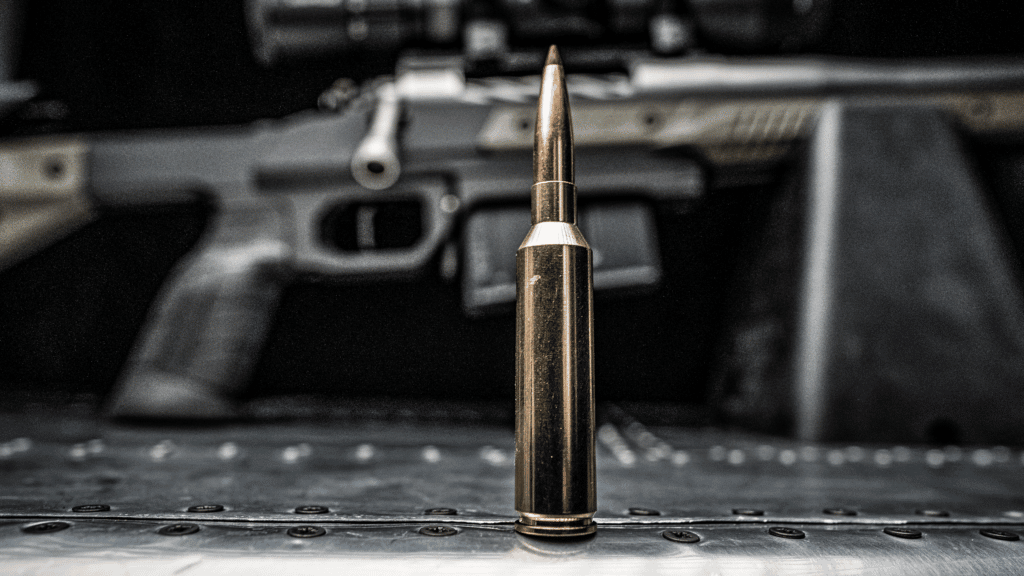
The 7mm Precision Rifle Cartridge is a long-action centerfire rifle cartridge designed to shoot 180 grain bullets at 2,950 fps. It is intended for long-range shooting due to its ability to utilize high BC bullets, and is also uniquely suited for hunting large animals such as elk.
The 7mm PRC is similar to a 7mm Rem Mag, but it can shoot heavier bullets with higher BC’s, has no belt which causes problems for reloaders, and slightly less case capacity so longer barrels are not necessary. Think of it as a modernized 7mm Rem Mag.
CartridgeBullet WeightMuzzle VelocityMuzzle EnergyAction LengthCaliber28 Nosler300 PRCGunwerks 7 LRM300 Win Mag300 WSM7 PRC6.8 Western7 SAUM7mm Rem Mag280 AI
The Precision Rifle Cartridge line is now broad enough that for many hunting uses, shooters will have a tough time deciding between the 6.5 PRC, 7 PRC, and 300 PRC.
As you can see from the above table, the 7mm PRC is most similar to the Gunwerks 7 LRM. In fact, Aaron Davidson, CEO of Gunwerks, jokingly said that the new 7PRC is the 7LRM. Obviously, there are many technical differences between the two, but they do fill a nearly identical hole in the market.
Personally, I have said for a long time on the Youtube channel that my ideal hunting cartridge would be a 7mm shooting 180 grains at 3,000 fps. That’s exactly what the 7PRC is, but it is by no means the only cartridge that offers those specs.
My prediction? The 7mm PRC will beat the following cartridges in sales over the next 20 years: 280AI, Gunwerks LRM, and the 7mm Rem Mag. Personally, I like all three of those cartridges for different reasons, but I think this new cartridge will become so popular over the next few years that those cartridges will quickly fade in the rearview mirror. Obviously, the 7mm Rem Mag isn’t going to just vanish in the next 10 years. It’s an incredibly popular cartridge, but over time, I expect the 7 PRC to overtake it.
The following table compares the 7 PRC to several other cartridges using Hornady’s Precision Hunter line of ammunition.
Energy at 200Max Effective Range (2,000 fps)Drop at 400Drift at 400Bullet WeightMuzzle Velocity7 PRC(175gr ELDX)7 PRC (195gr Berger EOL)7 PRC (160gr CX)300 Win Mag7mm Rem Mag280 AI6.5 PRC270 Win308 Win7mm-08 RemThe goal of this table isn’t an “apples to apples” comparison. Later in this post, I’ll show the 7mm Rem Mag with a 180 grain bullet like the 7mm PRC. I’m trying to mimic Hornady Precision Hunter ammo with this table.
Recoil
The recoil of the 7mm PRC produces 27.7 ft-lbs of energy at a recoil velocity of 14.1 fps. That is more recoil than a .30-06 but less than a .300 Win Mag. It is on the upper end of what most large adult shooters can comfortably tolerate.
When I first shot the 7 PRC in a lightweight rifle, I was surprised by the stout recoil; however, adding a muzzle brake or a suppressor tames the rifle dramatically. I shot a coyote yesterday with the 7 PRC and had no problem seeing the bullet impact the coyote and the aftermath without losing my view of the target in the scope due to recoil.
Before SAAMI drawings of the 7 PRC were released, I fully expected the 7 PRC to follow the industry-wide trend of overbore hot-rod cartridges. I thought for certain it would have more powder capacity than a 7 Mag so Hornady could advertise the new cartridge “beating” the old standard.
I was pleasantly surprised to see that the cartridge is quite mild. The 7 PRC has very slightly less case capacity than the 7mm Remington Magnum, but also has a twist rate and neck length capable of shooting much heavier bullets than are common in a 7 Mag.
CartridgeH20 CapacityMax COALCase LengthShoulder AngleHead DiameterNeck Length28 Nosler300 PRC7 LRM300 Win Mag300 WSM7 PRC6.8 Western7 SAUM7mm Rem Mag280 AI
Bullet Weights
The 7 PRC is designed around the 180-grain ELD-Match bullet; however, some people will certainly point to the fact that the 7mm Rem Mag has been able to shoot 180-grain bullets for many decades. The specified twist rate for each cartridge dramatically impacts the ability for a firearm to spin a bullet fast enough to stabilize a long bullet in flight.
Shooters will gravitate toward heavy-for-caliber high-BC bullets in the 7mm PRC. I have a table showing the highest BC 7mm bullets, but here are a few bullets likely to be popular in the 7mm PRC:
175gr Hornady ELD-X
160gr Hornady CX
180gr Hornady ELD-M
195gr Berger EOL
183gr Sierra MatchKing
180gr Berger VLD Target
180gr Berger VLD Hunting
175gr Berger Elite Hunter
175gr Nosler Accubond
Below are the specified twist rates for many similar cartridges to the 7 PRC. A faster twist in the rifling of a barrel allows the bullet to spin more quickly to stabilize longer (and consequently heavier) bullets.
CartridgeTwist RateBullet Weight Range28 Nosler300 PRCGunwerks 7 LRM300 Win Mag300 WSM7 PRC6.8 Western7 SAUM7mm Rem Mag280 AI
Converting Your Rifle to a 7 PRC
Backfire was the first publication to put together a 7 PRC as soon as the SAAMI specs for the cartridge were released. Building a rifle with no reloading data and no established manufacturing was a challenge, but now you can easily get a rifle rebarreled for 7 PRC.
I highly recommend Preferred Barrel Blanks for this job. I had them make me a short 20″ carbon fiber-wrapped barrel chambered in 7 PRC. I’m getting impressive velocities despite the short length, and the accuracy has been insanely good-one of the most accurate rifles I’ve ever shot.
Be cautious when rebarreling a rifle into any of the “PRC” cartridges. Due to the extremely tight tolerances of these cartridges, I’ve seen MANY manufacturers struggle with delivering barrels that spike pressures or have brass that doesn’t fit right. The #1 reason I recommend Preferred Barrel Blanks is because they’ve sorted through those issues and can deliver problem-free prefit barrels.
The cool thing is that Preferred Barrel Blanks does prefits for just about any action you already have. You can get a new barrel for your Ruger American, Tikka, Bergara, Savage, etc. Or, you can of course use a custom action like a Terminus, Defiance, etc. As long as it’s a standard long-action, you should be just fine putting a 7 PRC barrel on it.
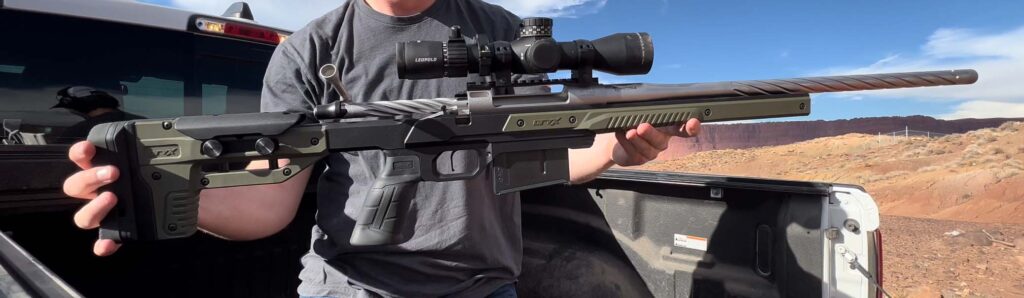
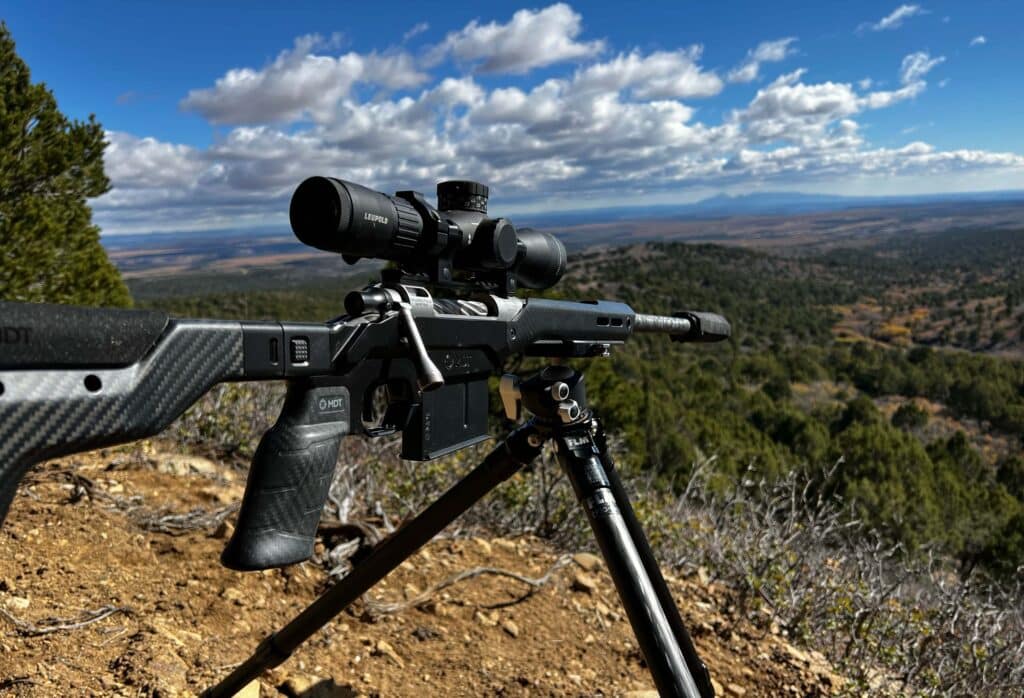
If you’re new to this, just call Preferred Barrel Blanks at (435) 635-6900 and tell them you read about them on Backfire and you want a 20″ carbon fiber-wrapped prefit barrel like the one they made for me. When it gets mailed to you, you screw it on and you have a 7 PRC! Simple as that. Below is a picture of the 7 PRC that Preferred Barrel Blanks built for me (Note: I also bought a MDT HNT26 chassis from them, which they had in stock).
This is my 7 PRC custom rifle build. It uses a Defiance Anti action in a standard long action length, a carbon-fiber-wrapped 20″ barrel from Preferred Barrel Blanks, an MDT HNT26 chassis, a Triggertech Special trigger, and a Leupold Mark 5 3.6-18×50 scope. It’s pricey, but also the finest rifle I’ve ever shot.
Factory Rifles Offered in 7 PRC
I have a complete article on the best rifles available now in 7mm PRC.
As soon as the cartridge was officially announced, Hornady announced many rifle makers that will be producing factory offerings for the 7 PRC.
I was somewhat surprised by the list of firearms manufacturers who are not yet jumping on board with the 7 PRC. Tikka, Browning, and Bergara are conspicuously missing from the list and yet they all chamber for the 6.5 PRC.
Since this new cartridge has been announced, I’ve talked with my contacts at many of the major rifle manufacturers and have been surprised by how many of them are extremely frustrated with working on PRC chamberings in their rifles. There have been many changes to the reamer specs of the other PRC cartridges, and the tight tolerances make manufacturing difficult.
Reloading for the 7 PRC
I’ve done a significant amount of handloading and reloading for the 7 PRC over the last few months. Using dies from Whidden, I got to work.
Initially, I expected H1000 or Retumbo to be the best powders for the 7 PRC since they are fan favorites of the 7 Mag. I quickly saw that the 4 fewer grains of case capacity in the 7 PRC made these powders not ideal. So far, my favorite powder for reloading the 7 PRC is H4831SC using standard large rifle primers.
The challenge of loading for any of the PRC cartridges is the extremely tight tolerances. Even fairly experienced reloaders sometimes struggle to get reloaded brass to fit properly into the rifle.
Obviously Hornady makes dies for the 7 PRC, but I personally am not a fan of their dies. The only other company I’ve seen with die sets is Whidden Gunworks. They sent me their full-length bushing resizing die and micrometer seating die and I’ve been amazed with the quality. Seriously, it’s by far the nicest die set I’ve ever owned-and I’ve tried just about every brand out there.
Loading the 175gr ELD-X Bullet in the 7mm PRC
Important Note: This is anecdotal testing. Your results may vary. Unlike a load data book from one of the ammunition companies, I am not measuring pressure with a computer. I’m just looking at the brass for symptoms of being over-pressure, but sometimes those symptoms don’t show up until a cartridge is significantly overpressure as could be measured by a computer. This is for academic purposes only. Do not rely on my anecdotal testing for your rifle. If ya do… you might blow your face off.
First, let’s take a look at H4831SC powder loaded with a 175gr ELD-X bullet. This is using CCI Large Magnum primers, and shooting out of a 24″ test barrel.
Powder ChargeVelocity (fps)Notes
Next, I loaded H1000. Unfortunately, the chronograph (Labradar) glitched out and didn’t record all the velocities, but I did at least shoot the following two that were recorded. Note that BOTH of these are a compressed load, so you couldn’t really go much faster than this with H1000.
This is again shooting the 175gr ELD-X bullet out of 24″ test barrel with a large magnum CCI primer.
Powder ChargeVelocity (fps)Notes
Last, I shot Accurate Magpro powder with the same 175gr ELD-X and CCI large magnum primer out of a 24″ test barrel. Here’s what I found.
Powder ChargeVelocity (fps)Notes
I also received some information from a gentleman in Canada who built a 7PRC. Here’s what he reported using a 175gr ELDX, Federal 215M primers, and Reloder26 powder. Here’s that data using his 24.5″ barrel:
Powder ChargeVelocity (fps)Notes
After seeing these numbers, I’m most interested in pursuing H4831SC for this cartridge. H1000 ran out of space for powder before I reached max velocity. Magpro had a lot of case capacity left, but wasn’t getting the velocity I’d hope to see without just burning a ton of powder.
Personally, my load for the 175 ELD-X in the 7mm PRC will be 64gr of H4831SC, which should yield around 2,925fps. I believe that should be a max load but still safe in my rifle, efficient loading, and impressive speed.
It seems that the cartridge was designed to compress the load right at the point where you’d reach pressure with these common powders.
Interestingly, I loaded 61.2 grains of H4831SC in a 7mm Remington Magnum, and a 7mm PRC. I used the same primer, and the same 175gr ELDX bullet. However, the 7mm PRC shot on average 105 fps faster.
There is still quite a bit more case capacity left with Magpro (my guess would be you could go to 77 grains before it compresses), so that could be an option for max velocity, but you’d be going through quite a bit more powder to get there.
Loading the 195 Berger EOL Bullet in the 7mm PRC
For this load, I chose the 195 Berger EOL and loaded it to max COAL of 3.34″. I used CCI large magnum rifle primers, and lovingly caressed each bullet before sending it on the ride of its life. I’m still using the same 24″ test barrel by Preferred Barrel Blanks for this cartridge.
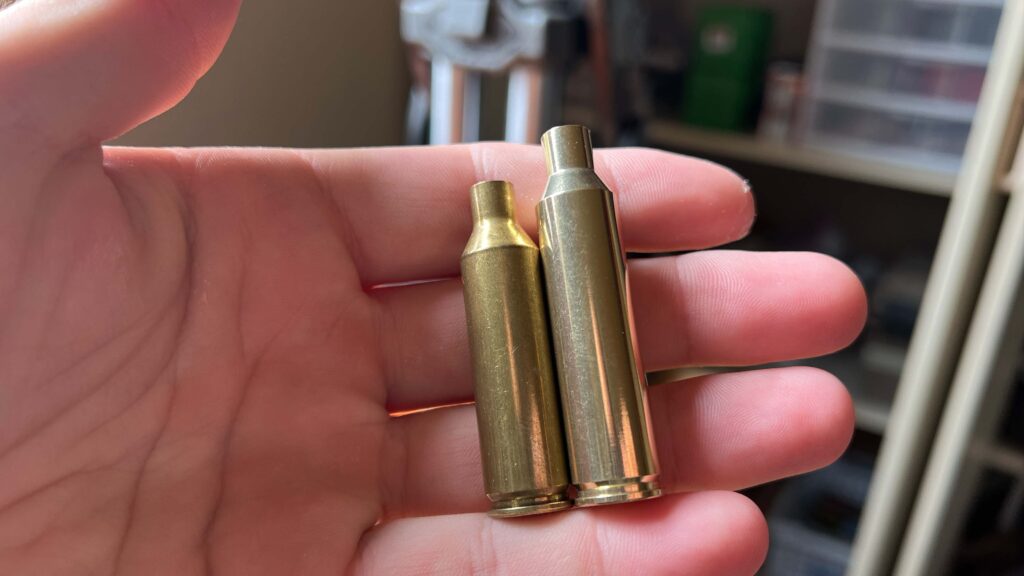
Powder ChargeVelocityPressure SignsPowder ChargeVelocityNotesOn the right is a 7mm PRC case, shown next to a 6.5 PRC.
Loading the 150gr Hornady CX Bullet in the 7mm PRC
Note that with these loads, I switch to a standard large rifle primer-not a magnum primer.
Powder ChargeVelocityNotes
I personally worked up my load using the 150gr Hornady CX bullet, but now Hornady has announced a new 160gr CX bullet with a much higher BC and only one band instead of the two bands on the 150gr CX. I will likely switch to that bullet once it becomes available.
Surprisingly, the factory ammunition for the 160gr CX bullet offers the same 3,000fps muzzle velocity as the 175gr ELD-X bullet. I expected it to go a little faster in the CX due to the lighter weight, but copper bullets can also increase pressures, so it seems that Hornady wasn’t able to get any increased speed out of it.
History of the 7mm PRC
Hornady officially announced the cartridge on October 26, 2022 at the NASGW Expo. The 7mm PRC was approved by SAAMI on June 7, 2022 and the public introduction was released on June 16, 2022. Backfire’s Youtube channel was the first publication to break the story of the cartridge’s SAAMI approval, and Backfire was also the first group to build a 7mm PRC and show it to the public.
Air rifles have been around for centuries, but only recently have they become popular in the United States. There are a number of air rifle manufacturers in the country, each with their own unique products. In this blog post, we’ll take a look at some of the best air rifles made in America. Whether you’re looking for a plinking gun or a serious hunting tool, there’s sure to be an American-made air rifle that’s perfect for you.
Walter Benjamin introduced the first Benjamin air gun in 1882. They were one of many high-powered rifles that came about as a result, but this particular design grew in popularity over time and led to him creating his own company called “Benjamin Gun Company.” The name has since been acquired by Crosman who only helped make it more popular than ever before! There are various styles available with updated technologies for both professionals looking for something classic or enthusiasts wanting new challenges alike – all backed up by 24/7 customer service at Crosman.
Benjamin Airgun selection includes everything from its breakthrough multi-pump pneumatics, break barrels, and even some of the best-precharged pneumatic (PCP) on today’s market (Like the Benjamin Marauder). In addition to their great rifle line up, they also offer a wide variety in pistols as well offering single shots or multiple shots at any time you please!
American Air Arms
Tom Costan had been dreaming of a company that manufactured shooting sports equipment with American labor for years when he finally got his wish. He founded American Air Arms, which specializes in high-quality PCP air rifles and shotguns made from nearly 100% domestic materials – all to ensure customers get only top-grade performance at an affordable price point
Umarex USA
Umarex USA, Inc. is a premier provider of airguns and airgun accessories to North America, designing, developing, and marketing sport shooting products under the RWS, Walther, Hämmerli, Beretta, Colt, Smith & Wesson, HK, Ruger ®, Browning, Makarov, Tactical Force, and Combat Zone brands. Umarex USA moved into a new 117000 square foot facility in July of 2010 located at Chaffee Crossing in Fort Smith Arkansas. The new facility is home to its warehousing and distribution operations as well as its corporate offices which include marketing sales and a fully staffed customer service department that handles product refurbishment warranty work and technical advice. Future operations at this facility will also include manufacturing. Umarex sporting guns can be purchased at many retail locations or your local firearm dealer can order them from several firearm distributors.
Airforce Air Guns
AirForce is a company that specializes in creating the most accurate and high-quality air rifles for all types of shooters. With over 20 years of experience, they have built their reputation on being dedicated to only producing American-made products with passion as well as excellence from both manufacturing facilities located around Texas (Fort Worth) and Tennessee( Minor Hill).
Rigging dead bait to catch pike is one of the more popular methods used to catch these fish. When northern pike just won’t rise for spoons or crankbait using bait fish can be a great way to land a few fish. There are a number of different methods depending on the technique you are using from bottom fishing, float fishing, casting, trolling or even ice fishing.
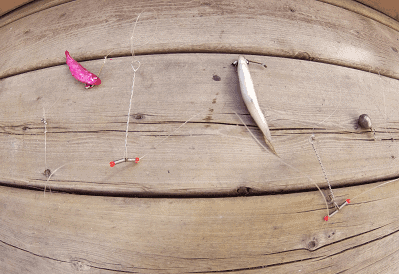
This is probably one of the best known and most commonly used dead bait rigs for pike and also walleye. Very inexpensive ( a few dollars) and hardy, you will land a number of fish with one before needing to replace it. These rigs consist of a length of monofilament a few feet long with two steel arms to hold the bait away from the mainline.
At the top is a barrel swivel with bearings to stop line twist. Below that are the two metal arms, these also incorporate red beads as a way to attract the pike’s attention. A snelled hook on a short (4 inch or so) monofilament leader is then added off these arms.
Lastly on the very bottom is a snap to add fishing sinkers. This makes it great to use in lakes or even targeting a pocket of water in faster moving rivers where pike may be hunting.
I use the pickerel rig a lot as a dead bait rig for pike both in open water and ice fishing season. I will often use two different baits on them. Something like an anchovy on one and then a green or yellow smelt on the other.
Quick Strike Rigs
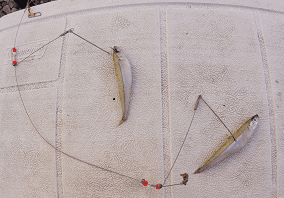
The quick strike rig consists of two or three treble hooks with monofilament leader. The commercially available rigs can have a wire leader instead. In there most basic form you can just make your own with the leaders going up to a central loop. Additionally you can add red beads as an extra visual attractant. A barrel swivel at the top is also a good idea as pike love to roll after they feel a hook set.
I have used quick strike rigs for a few years now when ice fishing with tip ups and, they are absolutely deadly. My usual tactic is to use a much larger bait such as an 8 inch herring, looking to land a solid 3 foot+ northern pike.
Jackfish Rig
Jack fish rigs are quite similar to Pickerel rigs. Instead of the monofilament leaders holding the hooks in this case there is a solid steel leader. Jackfish Riggs still incorporate the red beads to help attract pike. These rigs normally have larger hooks then the pickerel rigs. Another thing I will do with a jack fish rig is swap out one of the hooks for a jig head.I find yellow or green jig heads particularly effective in this case. There is a little spring holding the hook in place on a jack fish rig that makes this modification quick and easy.
Snelled Hooks
Standard snelled hooks will work fine for applications such as float fishing. Suspending a deadbeat underneath the float is ideal for some situations such as heavily weeded areas where you don’t want to get snagged constantly. Also can be good if you know fish are holding in a certain depth. This will work with a standard bobber and with a slip bobber.
Big is ok as far as hook size is concerned. For decent-sized smelt and anchovy try a 2/0 or 3/0 size snelled hook. If the pike are only small hammer handles ( 12 or 16 inch fish) you may want to downsize a bit and go with a 1 or 1/0 size hook. Again this will depend on your bait size as you don’t want a massive hook for small shiners.
Rigging Jig Heads with a Minnow
I’ll often use just a standard jig head paired with a dead bait instead of a soft bait. This technique will work great with anchovies or colored smelt. I seem to have great success with yellows and greens. There are even jig heads with a small propeller that seems to work well if you’re moving them in the water for extra Flash.
You have to make sure to use a steel leader when using a jig head. Pike are notorious for severing through fishing line.
Tipping Spoons with a Minnow
Another great way Of using dead bait is tipping the end of your artificial lure with a small piece of bait fish. A small piece of belly meat from a bait fish added to a spoon introduces scent to an already flashy presentation.
Related Products
Frequently Asked Questions
Can you use “Bait” from the Grocery Store?
The grocery store is great place to get bulk bait fish to use as pike bait. You can often get several times more smelt or anchovies for the same price as a package from your local bait shop.
Can Pike Smell?
They can indeed, pike will follow a scent trail a fair ways underwater. Their sense of smell is not as well developed as some species. For this reason its good to use high oil bait fish. I prefer anchovy for this reason. During ice fishing season I will thaw anchovy overnight in a Ziploc bag to make them extra juicy and stinky.
Pike will eat carrion naturally so smelly dead fish is their thing. If you are going for larger pike consider a much larger dead bait on a quick strike rig. Herring are a good choice for this again as they are an oiler fish.
Some people will also catch and freeze suckers for this purpose also. Suckers arnt considered game fish so you should be fine to do this in your state or province. As always its smart to consult your local fishing regulations about this.
How do you make Dead Bait Rigs for Pike?
You can easily make a quick strike rig for pike fishing with dead bait. In its simplest form all you need is a few feet of monofilament and a few treble hooks. The exact size will vary depending on the bait fish you are rigging from smelt all the way up to foot long white sucker fish.
I personally will have one side of the rig shorter than the other. This will ensure a “head down” presentation as most fish take bait fish head first. I also tend to go with smaller treble hooks for my quick strikes. Some people also add a third treble hook to the rig, if the regulations in that jurisdiction allow .
Should Dead Bait Hang Horizontally or Head Down ?
When you were rigging a dead bait for Pike with a quick strike rig you have a couple of options on how to orient the bait. A very popular way is to make sure your folks are set of equal length so the bait hangs horizontally in the water. Another popular option is with a shorter leader on the dorsal hook and a longer one on the head hook so that your bait will hang head down in the water. Many fish will take a bait head first which is why this is also advantageous.
Pike will eat carrion naturally so smelly dead fish is their thing. If you are going for larger pike consider a much larger dead bait on a quick strike rig. Herring are a good choice for this again as they are an oiler fish.
Some people will also catch and freeze suckers for this purpose also. Suckers arnt considered game fish so you should be fine to do this in your state or province. As always its smart to consult your local fishing regulations about this.” } },{ “@type”: “Question”, “name”: “How do you make Dead Bait Rigs for Pike?”, “acceptedAnswer”: { “@type”: “Answer”, “text”: “You can easily make a quick strike rig for pike fishing with dead bait. In its simplest form all you need is a few feet of monofilament and a few treble hooks. The exact size will vary depending on the bait fish you are rigging from smelt all the way up to foot long white sucker fish.
I personally will have one side of the rig shorter than the other. This will ensure a “head down” presentation as most fish take bait fish head first. I also tend to go with smaller treble hooks for my quick strikes. Some people also add a third treble hook to the rig, if the regulations in that jurisdiction allow .” } },{ “@type”: “Question”, “name”: “Should Dead Bait Hang Horizontally or Head Down ?”, “acceptedAnswer”: { “@type”: “Answer”, “text”: “When you were rigging a dead bait for Pike with a quick strike rig you have a couple of options on how to orient the bait. A very popular way is to make sure your folks are set of equal length so the bait hangs horizontally in the water. Another popular option is with a shorter leader on the dorsal hook and a longer one on the head hook so that your bait will hang head down in the water. Many fish will take a bait head first which is why this is also advantageous.” } }] }
Whitetail deer might seem like quiet creatures, but in fact they communicate vocally quite a bit. However, different deer noises may all sound the same or very similar to the untrained ear. The truth is, deer’s different vocalizations have lots of different meanings—all of which you need to learn in order to become a better hunter. Here’s what you need to know.
Understanding the behavioral intricacies of whitetail deer is no easy feat. These language complexities make hunting deer both fun and challenging. Fortunately, humans have been studying all of these vocalizations for years for both hunting and conservation purposes, which has led to a better understanding of what each noise means. We now can now decipher micro variations in dialect, giving us a deeper sense of what deer are trying to say.
Without question, learning these different vocalizations and what they mean will make you a better hunter. Learning the sounds deer make can make you that much better at deer calling. But it also helps you to understand why deer act the way they do in certain situations. Knowing how to identify the four common sounds deer make, what each deer sound means, and what prompted the deer to make it, will help make you a better hunter in the long run.
Deer Sound #1: Grunts and Growls
A grunting sound is easily the most common vocalization hunters will hear in the deer woods. The grunt is a standard form of communication, but there are a few different variations of grunts that all have slightly different sounds.
If you spend enough time in a blind or a stand watching adult deer and hear these grunts and observe the behavior that follows, eventually you start to make sense of the context of the situation, and you start to understand the nuances between common sounds and the different sounds that deer make—and begin to emulate them. You can emulate all of these sounds with a grunt call, which is particularly effective when a buck is riled up. Effective calling and timing of those sounds will bring a buck right to you.
The most common deer grunt is a low and quick “urp” sound, which is what’s called a contact grunt or social grunt. Both male deer and female deer use these grunts to announce their presence in an area and identify themselves to other deer, almost like saying, “Hello, I’m here.” They sound a little different between the sexes, but both serve as a way of establishing a social hierarchy.
The Doe Grunt
A doe grunt is one of the common sounds deer make. A doe grunt is much higher sound than that of a buck. Female deer have smaller bodies, and just like in humans, this results in a shorter airway. Does use grunts in a slightly different way than bucks do. Does don’t really grunt to show dominance, but more so to communicate with one another. Deer are highly social, and they try to gather together when they can, so a grunt is the deer’s way of telling others it’s around and ready to mingle, so to speak. The mothers also grunt to call the fawns if it’s feeding time or if they’re moving to a new location, almost like a mother raising her voice to her children.
I couldn’t count the number of times I’ve watched does feeding right out in front of me, only to start sparring with the younger deer and chasing them off. The whole time, the more mature doe was making this grunt noise, which became deeper, raspier, and more aggressive as she asserted more dominance.
The Buck Grunt
A buck grunt is a different sound that is a little deeper and guttural than that of a doe, which produce more of a higher, nasally sound. Bucks make a loud grunting sound to show their dominance. While all deer make soft, long grunts to call to one another, the deep, short grunt of the buck is the male claiming does and territory.
When most of us think of buck sounds, our mind gravitates to buck grunts. We think of that echoing, saliva-inducing sound that only comes from a buck during the rut. However, there’s again a wide range of variations, but all of them are unique to the peak of hunting season.
While bucks will use short grunts to stake out their territory and intimidate rivals, they sometimes use the same sound to establish dominance when chasing does, which many often call “trailing grunts.” The sound is virtually unmistakable and enough to get any hunter’s blood pumping, as it means only one thing: a buck is coming in hot on a doe’s trail, so get ready for action. The sound itself is somewhat of an excited “urp-urp-urp-rup” along with the ruckus of crunching leaves and cracking branches.
The Tending Grunt
Another type of deer grunt is a tending grunt. A tending grunt is a deer call made by bucks when they are following a doe during rut and want to mate. The tending grunt is a deep guttural call made of long, drawn-out notes, softly, without aggression or loudness—a guttural “urrrrrrrrrp” sound, which often includes a mix of short grunt sounds, too, all of which signify ownership to a doe, as well as other interested bucks. Big bucks use this grunt to assert their dominance, frustration, and let everyone in the area know what they are after. They also use it to ask the doe to stop so they can breed.
The Buck Growl
Slightly less common is the “buck bawl,” “growl,” “rage grunt,” “breeding bellow,” or “buck roar,” all of which are different names for the sound big bucks make when an estrous doe is near. Noticeably lower and a tad eerie, this guttural vocalization doesn’t even sound like it’s coming from a deer. The video above is a perfect example of just that. Rutting bucks make this sound when they’re frustrated—which is exactly what it sounds like—because they’re lonely or a doe hasn’t allowed them to breed yet.
A number of grunt calls have hit the market in recent years to create a version of this sound, but it’s a difficult one to pull off, and thus should be reserved for experienced callers. Without the perfect pitch and cadence, you’ll run the risk of scaring away bucks instead of attracting them. However, if you’re looking for a new challenge, or if you feel like you’re grasping for a new approach after failing with some of your default calls, it’s worth a try.
Deer Sound #2: Bleats
Doe bleats, much like grunts, have numerous variations, all dependent on a given situation. Like deer grunts, bleats happen in a variety of situations and each different sound has its own meaning.
A common doe bleat happens in social situations. The bleat is a higher-pitched vibrating sound, similar to that of a goat. They mostly do it when they are gathered together or with their fawns, and it signals contentment.
Bleat calls are interesting. Much like grunts, it seems bleats have many different meanings depending on the situation. First there are estrus doe bleats, which they make when they’re in heat but there aren’t any bucks around. The intensity of this sound comes down to how long the doe has gone without a suitor. Most of the can-style calls you can buy on the market are designed to resemble a more desperate mating call but does use bleats all year long for various purposes, one of which is to communicate with their fawns.
Additionally, fawn bleating can be a distress call. It’s this reason we hear this sound used for coyote hunting, as the agonizing sound triggers nearby predators who might be looking for an easy meal.
Deer Sound #3: Snort-Wheeze
A common sound deer make is the deer snort, or snort wheeze. The snort-wheeze is an intimidation call and one that’s just not a sound or deer call one hears very often. This one has a sound like the deer is trying to clear some stuffed-up sinuses. This is the call mature bucks like to use in the pre-rut and rut when they want to intimidate a rival away from their does. Hunters could potentially hear this one when there are two bucks in the same area during that prime time.
This deer snort call sounds exactly like it is described. It’s a short, loud sniff or snorting sound followed by a long wheeze. It’s a different sound than the common deer grunts and bleats hunters usually hear in the woods.
It’s also worth noting that bucks sometimes use the two parts of the snort wheeze on their own. For a large, dominant buck, they might only need to give a single snort to send a younger rival packing. Whatever sound they use, if you see and hear a buck making these sounds, do a scan of your surroundings. It is likely there is another buck in the area that you haven’t
Deer Sound #3: Blowing
One common sound that deer make, especially does, is blowing. Blowing is an alarm sound often accompanied by stomping. If you’re new to hunting, this is the most likely deer vocalization you will hear first. Veteran hunters know what I’m talking about. There are several stages to a doe sensing danger, and the annoying thing is, every one of them escalates as they warn other deer in the area that something just isn’t right.
Big, mature does especially are the ones you’ll hear blowing the most. These does are the wise old matriarchs of their group, and they’re always on the lookout for danger. Their instinct is to protect the baby deer in the group. Usually, if a doe spots you, it’ll start out with a stare-down, then the doe will start stomping her feet.
The foot stomping says to other deer, “Hey, something isn’t right here, be on alert!” Once the doe is certain there’s danger, she’ll loudly start blowing. It’s a very shrill sound, almost like a whistle. If it makes you jump when you hear it, that’s what the doe intended.
Once a doe starts making this sound, it’s gameover for your hunt. Does who have been spooked will often run off while continuing to make the sound as they vanish out of sight. This is the one call you don’t want to hear or emulate!
Deer Sound #4: Sniffs
Whitetail deer have an amazing sense of smell. If a deer begins to sense something is off, they may start sniffing the air, sometimes quite aggressively. Not only are they trying to get a better smell, but they’re also alerting the rest of the herd. The sniff doesn’t sound much different than a human sniff, only stronger and deeper. Imagine air being sucked in through a deer’s large nose.
READ MORE: Do Deer Eat Meat? Examining This Strange Phenomenon
"Air Rifle Scope vs Rifle Scope: Unveiling the Ultimate Precision Optics. Discover the essential differences and benefits of these two optical devices, empowering shooters...