Home Blog Page 28

How to Skin a Bear: The Complete Guide

0

When I think of skinning a bear, I’m reminded of one of my favorite hunts with my son in Montana. When he was only 12 years old, he took down a bear with his rifle using the “spot and stalk” method.

Getting within range of those bears and taking the shot is a big challenge. I’m proud of my son for accomplishing that Herculean task, and even prouder of how we skinned that bear together after it was taken down.

Skinning a bear is no easy feat. It takes precision, concentration, and strategy. Don’t worry – we’ve been there and can explain how to do it, step by step.

What to Know Before Skinning a Bear

Skinning a bear is very different from dressing other game. A bear’s anatomy poses certain challenges that all hunters should be aware of. For the purposes of this blog, we’ll focus on how to skin a black bear; however, the following tips also apply to brown bears.

If you’re planning to bring your bear to a taxidermist (or even if you aren’t), it’s important to keep the bear in the best possible condition. The paws are a bear’s most distinguishing feature and must be left on the hide. If you’re a beginner, do not try to skin out the paws yourself — your taxidermist will thank you.

Speaking of the hide, it also needs to be preserved as well as possible. Avoid poking holes in it and ensure it’s clean before delivering it to the taxidermist. This will increase the chances of successful tanning.

How to Prepare to Skin a Bear

Be aware of what you’ll need to deliver to the taxidermist. As mentioned, don’t try to skin out the paws on your own; deliver them attached to the hide.

Next, you must know how to field dress a bear. Game bags are crucial for keeping the meat clean and organized, so be sure to have them at the ready. Clear your surrounding area and drag the bear to a clean spot, keeping dirt off the hide.

Place the bear on pine needles, leaves, or grass to maintain cleanliness. Open garbage bags also help preserve the meat. If it’s hot, move the bear to a shaded area to rapidly cool the hide and carcass.

Along with game and garbage bags, a reliable fixed-blade knife is a must-have. Additionally, carrying some paracord can be useful, especially if you’re on your own and need to secure a leg while you’re skinning a bear.

You won’t need a saw for this job. Your fixed-blade knife can handle everything you need.

How to Skin a Black Bear: Step by Step

Let’s get to the meat of this blog post (pun intended). Here’s how to skin a bear:

  1. Lay the bear on its back with its legs spread out (it should resemble a starfish).
  2. Once the bear is situated, make a center cut from the anus straight through the bear’s belly to the base of the neck. Then, on the inside portion of the front legs, make a cut from the joint (of the wrist) near the foot up to the armpit area, angling up and forward into the center of the sternum.
  3. On the inside of its back legs, cut from the foot joint to the centerline cut you made in step 2.
  4. Next, you’ll begin to skin out the front and back quarters. Start on one side of the bear, then move to the other and put it in a game bag.
  5. While skinning the legs, cut the joint just above the foot to keep the paw attached to the hide. Then remove that skin from that leg with the paw still attached. Remember, it’s important to keep the paws attached when skinning a bear for a rug or other taxidermy.
  6. From that point, skin the hide away from the rest of the carcass, being careful to keep dirt off the hide.
  7. Finally, cut through the neck at the base of the skull and remove the bear head from the carcass, but keep it attached to hide.

Common Mistakes to Avoid When Skinning a Bear

Resist the temptation to skin the head and paws separately. I cannot emphasize enough that they must stay attached to the hide.

Also, refrain from folding the meat and hide before they completely cool. Hair is a great insulator; it’ll spoil the meat on the inside, and cause hair to fall out of the hide.

Don’t leave too much fat on the hide while skinning a bear. Removing as much fat as possible reduces packing weight. Be careful while you do this — avoid cuts in the hide as well as you can.

Most importantly, only salt the hide after removing all the flesh, as it will make proper mounting nearly impossible.

The post-skinning process is pretty simple: Cool the animal down and get it to your taxidermist as soon as possible. Freezing or storing it in a cooler or on ice in a garbage bag provides optimal conditions for the taxidermist.

How to Skin a Bear: Final Thoughts

Like anything, learning how to skin a bear takes repetition and time. I’ve definitely improved my process since I became a master bladesmith years ago.

Even if you’ve been skinning bears for years, there’s always room to improve, so we encourage you to save this post for future reference. Following these steps and avoiding common mistakes will make a big difference in your skinning practice.

by Josh Smith, Master Bladesmith and Founder of Montana Knife Company

Voting From the Rooftops – Section One: The Capability of the 50 Caliber Sniper Rifle

0

“The advantages are obvious when you consider that many of the same targets of rocket and mortar fire can be neutralized with M33 ball, API M8 or Multipurpose ammunition.”

—”Heavy Firepower for Light Infantry,” Barrett Firearms Manufacturing, Inc. brochure advertising its Model 82A1 50 caliber sniper rifle18

The 50 caliber sniper rifles proliferating on today’s civilian market are coveted by Osama bin Laden’s Al Qaeda and other international terrorist organizations because the cartridge they fire offers a devastating combination of range and power. This section explains why the .50BMG round can slice through body armor like a knife through warm butter, knock down hovering helicopters, rip up armored limousines, destroy radar dishes, and ignite bulk fuel tanks—all at the length of 10 football fields.19 Here is the summary of the round’s merits by an enthusiastic essayist in the authoritative journal The Small Arms Review:

The fifty caliber’s ability to be deployed by one individual and give that person the capability of discretely engaging a target at ranges of over one mile away are definitely alluring from a tactical standpoint. While the .50 cal sometimes seems to be exaggerated, it is hard to imagine a round that at ranges of over a mile and a half away, has more kinetic energy than a .44 Magnum, and has unbeatable penetration as well.20

The trained operator of a 50 caliber sniper rifle like the Barrett M82A1 has the choice of accurately hitting a long range target at 1,800 meters (1,969 yards) away,21 blasting through two inches of solid concrete at the shorter range of 200 meters (219 yards),22 or destroying a spectrum of personnel and material targets at other ranges.23 These choices—the balance of extremely long-range and enormous striking power—are enhanced when specially designed “match,” “armor piercing,” or “armor piercing incendiary” ammunition is used.

To appreciate the threat of the 50 caliber sniper rifle, it is necessary to consider its extended accurate range, its exceptional power, and the extraordinarily destructive characteristics of special 50 caliber military ammunition widely available on the civilian market.

Extended Range and Accuracy

Apologists for the unrestricted sale of 50 caliber sniper rifles to civilians often downplay the sniper rifle’s long range accuracy. But the evidence from manufacturer advertising, military manuals, expert writing, and civilian owners themselves is that the 50 caliber rifles are accurate at ranges of at least 1,000 yards, and in the hands of a patiently trained and well-practiced marksman, nearly 2,000 yards. It is sobering to think of what Al Qaeda or other terrorists who have these sniper rifles can do with them from a distance of 20 football fields, especially given the planning and training of the terrorists that attacked the World Trade Center and the Pentagon on September 11, 2001.

The great mass of its bullet and the large size of the case into which the bullet is loaded give the 50 caliber round its deadly reach. Taken together, these result in much higher momentum than lesser rounds, such as the 30 caliber rounds of most other military sniper rifles.d The staff columnist of Very High Power Magazine, published by the Fifty Caliber Shooter’s Association—a tiny organization of competitive shooters vociferous in its defense of the unrestrained civilian sale of 50 caliber sniper rifles—summarized this point in an article comparing the 50 caliber to the 7.76 NATO (.308 Winchester) “its next, closest, US military competitor” as follows:

For military users, the .50 BMG caliber cartridge offers a significantly larger payload volume over the .30 calibers. Also, with the speed and weight of the .50 projectile, muzzle energy is outstanding for a small arms caliber. This translates into a longer range bullet that can still deliver a punch.

Fifty Caliber Sniper Rifles Are Used by Armed Forces Worldwide

This Swedish soldier takes aim with a Barrett M82A1 50 Caliber sniper rifle. According to Forbes magazine, a sale to the Swedish army in 1989 was Barrett’s first government contract. How long a range? According to the U.S. Army, the 50 caliber rifle more than doubles the range of the sniper over the .308 round:

The typical range for a sniper attack is 300 to 600 meters with medium-caliber rifles. Shots from 800 to 1,000 meters are the exception. However, heavy sniper rifles (.50-caliber, 12.7-mm, 14.5-mm, and 15-mm) with ranges of 1,200 to 1,500 meters are now proliferating around the world.25

Manufacturers of 50 caliber sniper rifles also claim accuracy at these and even greater ranges. “With confirmed hits out to 1800 meters, the Barrett model 82A1 is battle proven,” Barrett Firearms states in its promotional brochure.26In fact, U.S. forces using Barrett M82A1s routinely engaged Iraqi forces out to a range of 1,600 meters (1,750 yards) during the 1991 Gulf War.27 For readers familiar with Washington, DC, this is roughly the distance from the Smithsonian Institute Metro stop to the West Front of the Capitol, where inaugural ceremonies are held. Another manufacturer, Aurora Tactical, says that its Model 650 Special Light Anti-Materiel Rifle (SLAMR) “enables a skilled marksman to deliver exceptionally accurate fire on targets in excess of 1500 yards.”28

These ranges, in the vicinity of one mile, are at the outer limits of what may be expected from a skilled marksman. But they should not be dismissed as beyond the reach of dedicated terrorists like Al Qaeda, especially given the civilian training available and discussed in Section Four. In fact, some expert observers consider the 1000 yard range—the equivalent of 10 football fields end to end—to be comfortably within the grasp of the serious shooter. For example, two publications reviewing the performance of a new entry into the 50 caliber market, the ArmaLite AR-50, addressed the range question. American Rifleman, the NRA’s official journal, said the .50 BMG is “ideally suited for precision target shooting at distances of 1000 yds. or more.”29 The Small Arms Review, dedicated to the arcana of military weaponry, said, “It turned out that hitting something at 1000 yards was not the challenge. The real challenge was finding a place to safely shoot at a target 1000 yards away.”30

Finally, advances in the design of 50 caliber rifles and ammunition alike have gradually improved the performance of expert shots at the 1,000 yard range. Thus, the diameter of the group of winning rounds fired in world record competitions steadily declined from 9.3125″ in 1986 to 2.6002″ in 1999.31

In short, the evidence is clear that the power of the 50 caliber sniper rifle in trained hands reaches from at least 1,000 to as far as 2,000 yards.

Destructive Power

It must always be kept in mind that the 50 caliber sniper rifle’s threat is not only a function of the long ranges described above, but a devil’s blend of long range and massive power. The operator will balance these two depending on the nature of the target. For example, IRA terrorists who assassinated British soldiers and Irish constables fired from ranges as short as 120 yards. The rounds the IRA snipers fired easily ripped through high grade military body armor worn by the soldiers, inflicting instantly mortal wounds.32 On the other hand, the longest confirmed kill in sniper history was achieved at a distance of 1.42 miles in Vietnam, by U.S. Marine Corps Gunnery Sergeant Carlos N. Hathcock. That feat is all the more impressive given that 50 caliber sniper rifles had not even yet been invented—Hathcock was firing single shots from a 50 caliber machine gun that he jury-rigged with a telescopic sight.33 The 50 caliber sniper rifles being sold to civilians today are much more sophisticated and finely made than Hathcock’s makeshift weapon.

Although the 50 caliber sniper rifle presents a dramatic assassination threat because of its extraordinarily long range, that threat must not blind us to the super gun’s power to destroy material targets. This destructive power is at least as serious a terrorist threat as assassination, and is more likely to cause mass casualties and widespread disruption to commerce and civic order. Here, for example, is Barrett’s description of the power of its Model M82A1:

This revolutionary .50 caliber semi-automatic rifle allows sophisticated targets to be destroyed or disabled by a single soldier. Armored personnel carriers, radar dishes, communications vehicles, aircraft and area denial submunitions are all vulnerable to the quick strike capability of the Barrett 82A1. With decisive force and without the need for the manpower and expense of mortar or rocket crews, forces can engage the opposition at distances far beyond the range of small arms fire….The 82A1’s light weight makes transportation as easy as walking….With night vision equipment, the weapon is even more effective under cover of darkness. The muzzle brake reduces felt recoil to no more than that of a 12 gauge shotgun….The advantages are obvious when you consider that many of the same targets for rocket and mortar fire can be neutralized with M33 ball, API M8 or Multipurpose ammunition.34

An excerpt from the U.S. Army’s manual on urban combat indicates that it agrees with Barrett’s assessment of the 50 caliber sniper rifle’s ability to destroy materiel targets:

These heavy sniper rifles were originally intended as anti materiel weapons for stand-off attack against high-value targets, such as radar control vans, missiles, parked aircraft, and bulk fuel and ammunition storage sites. Because of this, they are only marginally accurate enough for long-range shots against individual personnel. It is their ability to shoot through all but the heaviest shielding material, and their devastating effects, that make them valuable psychological weapons.35

How destructive can the 50 caliber sniper rifle be in the hands of an Al Qaeda terrorist? That depends on the ammunition—and the target.

Overview of 50 Caliber Ammunition

The U.S. military uses at least eight different types of .50BMG ammunition, each type designed for a specific use.36 There are also various brands of civilian ammunition, much of it designed and manufactured for long-range competitive shooting, and 50 caliber ammunition can be reloaded at home. Worldwide, at least 100 variants of 50 caliber ammunition are produced in more than 30 countries.37 All of these types of 50 caliber ammunition have one thing in common: they are extremely powerful. Even so, some varieties are much more destructive than others.

The ammunition that 50 caliber sniper rifles fire today was originally developed during the First World War as both an anti-tank and machine gun round.38 Developments in tank armor soon made tanks generally impervious to 50 caliber rounds,39 but according to the Marine Corps and other authorities, the 50 caliber can still blast through more lightly armored vehicles, such as armored personnel carriers, and thus clearly through armored limousines. “Size Matters”

Relative size of 30 caliber and 50 caliber rounds. Most military and police sniper rifles are in 30 caliber.

In fact, one of the reasons that the FBI requested that tanks be brought into the notorious and ultimately tragic siege of the Branch Davidian compound at Waco, Texas Size matterswas that the Davidians were armed with two Barrett 50 caliber sniper rifles.40 An Army general told officials that even the U.S. “Bradley fighting vehicles would be vulnerable to .50 caliber weapons.”41 It is clear that the presence of these super guns in civilian hands contributed to the escalation of force in the encounter. The implications for the security of high-profile dignitaries and others traveling in civilian armored cars, equally clear, are discussed in Section Three.

50 Caliber Ammunition Available on U.S. Civilian Market

The following review of four types of 50 caliber ammunition that are available to civilians in the United States—and thus easily available to foreign and domestic terrorists—describes the destruction the 50 caliber sniper rifle can inflict.

The availability of this ammunition in U.S. civilian markets is wholly aside from the fact that military ammunition stocks also can be procured from underground sources. Arms and ammunition—including such destructive items as M-16 assault rifles, machine guns, TNT, dynamite, plastic explosives, land mines, and hand grenades—are regularly stolen from U.S. military armories.42 Fifty caliber sniper rifles have proliferated in military forces around the world, and 50 caliber ammunition is made in more than 30 countries. Those foreign forces, including some that are less than friendly to the United States, have stocks of military ammunition that are available to any terrorist with the right connections. Arms and ammunition are also stolen from these foreign forces, friend and foe alike, sometimes on a staggering scale.43 Fifty caliber sniper rifles are also now finding their way into the arsenals of civilian police,44opening another potential channel for acquisition of the more exotic 50 caliber ammunition through theft45 or other leakage.46 As Jane’s Intelligence Review noted recently, “the hardest category of military exports to control is dual-use technology—technology that has both civilian or military applications.”47 This description snugly fits the 50 caliber military sniper rifles sold by Barrett and other manufacturers to armies and civilians alike.

Ball ammunition. The simplest and most common round of firearm ammunition is called “ball.” The U.S. Army says 50 caliber ball is used for training and against personnel and light materiel targets.48 Ball has less penetrating power than the specialized rounds discussed below. But the bullet’s power against material objects is nonetheless awesome, varying as in all cases with distance. Thus, the Army says that at the long range of 1,500 meters (1,640 yards), ball ammunition can penetrate one inch of concrete, six inches of sand, and 21 inches of clay.49 At the lesser range of 35 meters (38 yards), ball ammunition can penetrate an inch of armor plate and 16 inches of log wall.50

Of course, a bullet that can penetrate an inch of concrete from the distance of 16 football fields can do massive damage to any softer target (such as human beings or unarmored public utility fixtures) from that and lesser ranges. Moreover, Army tables cited in the paragraph above show that the effects of ball can be enhanced by repeated firing at the same target, a capability of the semi-automatic 50 caliber sniper rifles like the Barrett M82A1 and others.gThis thought is captured in the following quote from a noted expert author on sniping:

It’s the .50’s tremendous ability to penetrate bunkers and building that makes it so deadly….This means you can pulverize enemy positions and induce casualties without necessarily seeing an enemy soldier. When firing at positions, don’t be thrifty; riddle them with enough bullets to ensure damage.51

In lieu of such brute force, the 50 caliber sniper rifle’s performance can be substantially enhanced by the use of ammunition specially designed to destroy hard targets—ammunition that makes the rifles what expert Mark V. Lonsdale calls “a cost effective way to engage the enemy’s high-tech equipment, light skinned vehicles and aircraft, especially when compared to the cost of hitting the same targets with rocket or mortar fire.”52

Armor-piercing and incendiary ammunition. The Army says that the basic 50 caliber armor-piercing round is designed for use “against armored aircraft and lightly armored vehicles, concrete shelters, and other bullet-resisting targets.”53 The armor-piercing effect is achieved by the bullet’s design, which wraps a hardened core of a substance like manganese-molybdenum steel with a softer metal jacket.54 Incendiary ammunition is self-descriptive, used for “incendiary effect, especially against aircraft.”55 In other words, it sets things like airplanes, fuel, and other combustible materials on fire.h Tracer ammunition, familiar to the public from scenes of night combat, leaves a visible trail of incendiary light. Variant rounds combine armor-piercing, incendiary, and tracer effects.56

As the following table demonstrates, the capabilities of the 50 caliber sniper rifle is substantially enhanced by the use of basic armor-piercing ammunition.

50 Caliber Armor-Piercing Bullet Penetration

Material 200 Meters(219 Yards) 600 Meters(656 Yards) 1,500 Meters(1,640 Yards) Homogeneous Armor Plate 1.0″ 0.7″ 0.3″ Face-Hardened Armor Plate 0.9″ 0.5″ 0.2″ Clay 28″ 27″ 21″

According to expert John Plaster, armor-piercing rounds at the shorter range of 100 yards (one football field) can penetrate nine inches of concrete, 1.8 inches of unarmored steel, 3.5 inches of aluminum, and 96 inches of timber.57

Saboted Light Armor Penetrator (SLAP) Ammunition. Designers of anti-armor ammunition have long used the idea of replacing a given caliber gun’s projectile with a projectile of smaller diameter but more dense material. In order to seat the smaller projectile in the larger ammunition case, and to gain the necessary spin from the gun’s rifled barrel, the projectile is wrapped in a “sabot” or “shoe.” The shoe rides the length of the gun’s barrel, then drops away from the projectile when it exits the barrel. The much higher velocity of a “saboted” round enhances its armor-piercing performance.

The U.S. Marine Corps developed 50 caliber SLAP ammunition in the 1980s, and it was used in 1990 during the Gulf War’s Operation Desert Storm. It uses a .30 inch heavy metal (tungsten) penetrator in a plastic shoe, which is .50 inch in diameter. “Since the mass of the saboted penetrator is much lighter in weight than normal ball .50 caliber ammunition, SLAP’s velocity can be significantly and safely increased,” according to the Marine Corps. “This produces a very fast round with a very flat trajectory which enhances hit probability…and extends the light armor capability…significantly.”58

According to Winchester, the civilian contractor that developed the 50 caliber SLAP round, it delivers “superior and proven performance against lightly armored vehicles and armoured attack helicopters at ranges up to 1500 meters.”59

Components of “saboted light armor piercing” (SLAP) round

The 30 caliber bullet fits into 50 caliber case with plastic “sabot.” Sabot falls away after round exits the barrel of the gun.

A round that has “proven performance” against an armored attack helicopter at 1,600 yards is a clear threat to America in the hands of any terrorist group that, like Al Qaeda, has acquired the means to deliver it in the form of the Barrett 50 caliber sniper rifle.

Raufoss Multipurpose (Armor-piercing, explosive, incendiary) Ammunition. The crown jewel of 50 caliber sniper rifle ammunition is the Raufoss multi-purpose round, developed by a Norwegian company and manufactured under license by several companies, including Winchester. Said by experts to be the most popular round with U.S. military snipers,60 it was used to devastating effect by U.S. forces in the 1991 Gulf War.

Designated the MK211 by the U.S. military, the Raufoss round was described by Jane’s International Defense Review in 1994 as “the most influential development of the past decade” in 50 caliber ammunition.61 The round combines armor-piercing, explosive, and incendiary effects and uses a “highly effective pyrotechnically initiated fuze…[that] delays detonation of the main projectile charge until after initial target penetration—moving projectile fragmentation and damage effect inside the target for maximum anti-personnel and fire start effect.”62 According to its developer, Nordic Ammunition Company (NAMMO), the round can be used in “sniper rifles similar to Barrett M82A1,” has “the equivalent firing power of a 20 mm projectile to include such targets as helicopters, aircrafts (sic), light armour vehicles, ships and light fortifications,” and can ignite JP4 and JP8 military jet fuel.63 (The typical 20mm projectile to which NAMMO equates its 50 caliber Raufoss round is approximately .8 inch in diameter, thus more than half again as wide as the 50 caliber. It is used in anti-armor and anti-aircraft cannons, often with an explosive charge.64 The Vulcan 20mm cannon has been the standard internal gun armament of most U.S. combat aircraft—currently including F-14, F-16, and F/A-18—since the 1950s.65)

According to the Marine Corps, the Barrett “M82A1A…fires the .50-caliber RAUFOSS ammunition, which contains a tungsten penetrator and a more powerful explosive charge than the API ammunition….it has penetrated an inch of steel at 2000 yards.”66 Jane’s International Defense Review estimates that the round is “probably capable of disabling a man wearing body armor who is standing behind the wall of a house at 2,000m…. (and) can perforate the foundation of a high-rise building (20cm reinforced concrete) at 400m.”67 Reasonable persons probably would agree that blasting through 20 centimeters (7.87 inches) of reinforced concrete from four football field’s distance is an impressive performance.

The antipersonnel sniping potential of the Raufoss round—touted by both NAMMO and Winchester in their advertising material—inspired an unsuccessful attempt in 1998 by the International Committee of the Red Cross to have the round Raufoss Rounddeclared an “exploding bullet” banned under international law.68 The Raufoss Round—The Crown Jewel of 50 Caliber Ammunition

How the Raufoss 50 caliber multi-purpose round works. The armor-piercing bullet penetrates the armor. Then a delayed action fuze sets off the explosive part of round, producing fragmentation and incendiary (fire-starting) effects.

Availability of Specialized 50 Caliber Ammunition on U.S. Civilian Market

The implications of the potential uses to which a terrorist might put 50 caliber armor-piercing, incendiary, SLAP, or Raufoss ammunition can only be described as frightening. Yet all of these types of ammunition are available on the U.S. civilian market. SLAP is less frequently offered than ball, armor-piercing, and incendiary variants, and Raufoss is rarely offered publicly. Yet the VPC has documented public offerings and apparent sales of all the varieties discussed above in the civilian market (again, aside from leakage from military stocks worldwide).

Ball, armor-piercing, and armor-piercing incendiary are routinely sold through a variety of Internet web sites and mail order catalogs, and at least one site has also offered SLAP.69 In addition to these commercial outlets, armor-piercing and SLAP rounds have been offered for sale through at least one Internet gun auction site.70

Finally, SLAP and Raufoss have been offered for sale through postings on a popular 50 caliber Internet bulletin board.71 One correspondent on the board claimed to have “acquired some Winchester manufactured (real) SLAP ammo which was acquired from a Winchester rep for free.” If this is true, that incident marked a source of leakage that cut out the military middle man.

In sum, the most destructive types of ammunition for the 50 caliber sniper rifles are freely available in the U.S. domestic market—wholly aside from whatever leakage may exist from military sources, not only within the United States, but abroad, including from the armed forces of hostile, terrorist-supporting countries.

In the next section, we report on the hands into which 50 caliber sniper rifles have fallen, including Osama bin Laden’s Al Qaeda and other terrorists and criminals.

c) .50BMG is the technical designation of the round. The BMG stands for Browning machine gun, one of the earliest weapons using the round.

d) Generally speaking, modern ammunition consists of four parts, assembled into a unit called a “round” or “cartridge.” The components of the round are (1) the bullet, i.e., the actual projectile that the gun shoots; (2) the propellant charge, or gunpowder, which when ignited rapidly expands into a high pressure gas that expels the bullet out the barrel of the gun, (3) a “primer” which ignites when struck by a firing pin and in turn sets off the main charge of powder, and (4) a case or “shell” in which the powder, primer and bullet are assembled. Ammunition size is commonly expressed in terms of the approximate diameter of the bullet, measured either in inches (e.g., .50 BMG is roughly half an inch in diameter) or millimeters (e.g., 12.7 mm). Although the dimensions of 50 caliber rounds vary depending on the type (i.e. “ball,” “match,” “armor-piercing,” etc.), the typical 50 caliber bullet is .510″ in diameter by 2.27″ in length, the case is 3.9″ in length, and the overall length of the assembled round is 5.425″. (The overall length is somewhat shorter than the sum of the case and bullet because the bullet is “seated” within the case.) Dimensions from: Dean Michaelis, The Complete .50-Caliber Sniper Course: Hard-Target Interdiction (Paladin Press, Boulder, Colorado, 2000), p. 391; Ian V. Hogg, The World’s Sniping Rifles (Greenhill Books, London,1998), p. 123; Ian V. Hogg, The Greenhill Military Small Arms Data Book (Greenhill Books, London, 1999), p. 280.

e) Last February the FCSA’s president reported that it was “rapidly approaching 2600 members.” “From The President’s Bench,” downloaded from The Fifty Caliber Shooter’s Association Internet web site, http://www.fcsa.org on February 13, 2001.

f) It is not true, nor has the VPC ever claimed, that a 50 caliber round can penetrate the armor of a modern tank, despite occasional erroneous reports to that effect. What is true is that the 50 caliber can force tank crews to “button up,” and well-placed shots could destroy or degrade certain external equipment and vision blocks on some tanks. See, e.g., undated article “How to ‘Tickle a Tank,’” Soldier of Fortune, posted on Barrett Firearms Internet web site, downloaded from http://www.clickstudio.com/barrettmilitary/sof.htm on September 29, 2001. These, however, are generally military matters beyond the range of this report and the VPC’s interest.

g) Semi-automatic firearms typically have an ammunition magazine, popularly called a “clip.” They fire one round every time the trigger is pulled until the magazine is empty. The trigger of a semi-automatic firearm may be pulled rapidly, but it must be released between each round. This differs from the fully automatic weapon, or machine gun, which continues firing as long as the trigger is held down until the magazine is exhausted.

h) Fifty caliber sniper rifles have been banned from some public shooting ranges because of fires set by enthusiasts firing various types of incendiary rounds. See discussion in Section Four.

i) Source: John L. Plaster, The Ultimate Sniper: An Advanced Training Manual for Military & Police Snipers (Paladin Press, Boulder, Colorado, 1993), p. 221.

Back to Voting From the Rooftops Table of Contents

How to Fix Cracked Hunter Boots

0

If you’re a fan of Hunter boots, then you know that they can be both stylish and functional. However, keeping them in good condition can be challenging if your boots get cracked. Whether the damage is from water, salt, or just general wear and tear, this guide will show you how to patch them up in no time!

This blog post will show you how to fix cracked Hunter boots using simple techniques that won’t damage the boot material. So read on for tips on how to get your Hunters back in good shape!

Things or Materials You’ll Need

  • Chapstick or Petroleum Jelly
  • Scissors
  • Duct Tape
  • Black Sharpie
  • A Metal Covered Bottle Cap
  • Paper or Cardboard

12 Steps to Follow: How to Fix Cracked Hunter Boots

Step 1

First, locate a small enough stick or twig so it reaches from one of the holes in your boot up to your heel. Then, grab the stick and use it to scrape all of the debris, salt, snow, etc.

Step 2

Remove all debris from your boots using a small stick or twig. Once you have removed everything, run the Chapstick or Petroleum Jelly along with the split. Doing this will help keep it moist while you are repairing your boot.

Step 3

Use the black sharpie to color over the crack. This will help it blend in with your boot and prevent further damage from happening. Do this to both sides of the shoe.

Step 4

Take a clean cotton ball or cloth, moisten it with water, and then use it to wipe away any dirt that is still on your boot. This will ensure that the fixative has a clean surface to attach to and help prevent new cracks from appearing.

Step 5

After the split is gone and the area is dry, place a piece of clear tape over it before using duct tape. Finish this step by covering the whole split with duct tape.

Step 6

Set a metal bottle cap over the split. This will help strengthen the boots once they are dry and put them on again. The idea is that if you did it correctly, the boots should hold together until you get home or to a place where you can properly fix them.

Step 7

Place your boots in the sun with the metal bottle cap over the split. Make sure they are sitting evenly so that no air can get in between them. This will help dry them out faster without causing further damage to your boot.

Step 8

After two hours, check on your boots and return them if they aren’t completely dry. Ensure the area is arid before moving on to the next step.

Step 9

Now, cut off a small piece of duct tape and place it over the split in your boot using clear foot powder or baby powder. Use an even coat of this powder across both sides of your boot.

Step 10

When the duct tape has been applied, place a piece of duct tape over it and repeat with clear foot powder or baby powder. Follow this by placing another piece of tape over the split and using your Chapstick or Petroleum Jelly once more to coat both sides of your boot. Repeat until you have covered up the split.

Step 11

Place your boot dryer or an old shoe for weight inside your boots and leave them there overnight. The next morning, you’ll want to remove them and give the area another coating of clear foot powder or baby powder. Then, put them back on and wear them as normal until they are completely dry.

Step 12

Once they are dry, take a piece of tape and cut it small enough to fit over the split. Cut off any excess tape after you have placed it where you need it. Follow this with clear foot powder or baby powder and repeat until your split is completely covered and sealed up. The split should be gone, and your boots should look good as new.

You Can Check It Out to Buckle Hunter Boots

Note

If you don’t have clear foot powder or baby powder, place a piece of tape over the split and use either Chapstick, Petroleum Jelly, Glue, or all three until your boot is fixed! These are just temporary solutions how to fix cracked hunter boots while you are on the go.

Some Tips and Suggestions

Here we have given some tips and suggestions on how to fix cracked hunter boots.

  1. Consider using a spray adhesive instead of glue to strengthen the bond between layers of transparent tape. Spray adhesives are designed for use on smooth surfaces, so be sure to test on an inconspicuous area first.
  2. To adjust the fit of your boots after you’ve taped them together, try shaving down the heel with a file for a better fit.
  3. If your boots are too tight after shaving the heel, consider adding an insert or two to relieve some pressure on your feet.
  4. Remember that if you take good care of your taped-together Hunter boots, they should last much longer than before!
  5. Consider boots like Blundstones for quick fixes. They’re more affordable and very easy to tape together since there are fewer seams.
  6. If you determine that your split is not fixable, you can always return them or exchange them for a new pair online or at your local Hunter dealer!
  7. If the crack on your boots is on the sole of your boot, you might want to consider taking them to a shoe repair shop. They can add another layer or two on top of the crack and use extra reinforcement to keep it from splitting again.

Seven Reasons That Causes Cracked Hunter Boots

Now that you know how to fix cracked hunter boots, here are some reasons that cause cracked hunter boots so that you can prevent them in the future.

1. Fade

When the color of your boots fades, it is a sign that you need to reglaze them. This can result from water, sunlight, and heat exposure.

2. Water Damage

If your boots have been moistened too often or kept in a humid area for long periods, then they can crack or split. This is because the leather becomes too soft and loses its shape.

3. Wet Boots

If you have been wearing your boots in snowy, slushy, or rainy weather, then the cold and moisture can cause damage to your boots.

4. Sunlight Damage

This is a common problem for rubber-soled shoes of any kind. The sun’s ultraviolet rays dry out your shoes and can eventually lead to cracks and other damage.

5. No Maintenance

If you do not clean and maintain your boots regularly, they will not last as long. Routine care can prevent dirt, water, salt, snow, and other harmful elements.

6. Poor Storage

If you keep your boots in an unheated area or do not cover them during the winter months, for example, then the leather will become stiff and brittle.

7. Faulty Leather

If your boots are made from faulty leather, they will not last very long. This type of damage is difficult to repair.

Does Gorilla Glue Work on Rain Boots?

Gorilla Glue works on a wide variety of materials, but the company cautions that it shouldn’t be used on some leathers and rubbers. Gorilla glue is water-based and contains no VOC or formaldehyde. Nevertheless, the product makers warn against using it on plastics, fabrics, foams, and rubbers, including most rubber boots.

Some types of rubber can react with the glue and turn white, while others will experience a significant loss of strength after being glued. It is possible to use Gorilla Glue on some rain boots, but only if the product lists the boot as compatible.

What Glue Is Best for the Rain Boots?

It would help if you found a strong adhesive that will bond with the rubber of your Hunter boots. Most waterproof glues or cement are ideal for this type of repair, but they may not be enough on their own. Be sure to add a quick-drying clear coat to your project after applying the glue while still wet. This will provide extra protection and make your new bond last longer.

Rather than spending money on a new pair of boots, you can get many more years out of your current pair by fixing the straps. This is not as difficult as it may sound and won’t require any extra materials that you don’t already have at home. You need some gum or glue that has been designed to adhere to rubber, a few fine-grit sandpaper sheets, and a steady hand.

Can You Fix Cracked Rubber Boots with Shoe Goo?

Shoe Goo is a thick, rubber-like liquid that can be applied to the cracks in the rubber boots to help seal them and protect them from further damage. Shoe Goo is a liquid or putty, but both types contain an adhesive that works similarly. This product can be used on new or old boots and may help restore the boots’ waterproofing.

The product doesn’t dry remarkably quickly, so it allows for repairs to be made without caving to the pressure of having to run out the door with wet feet. Shoe Goo works best on rubber that isn’t very thick or heavily cracked, as it can weaken over time and should only be used on boots that don’t require heavy-duty repairs.

Frequently Asked Questions

What Is the Best Way to Fix Cracked Hunter Boots?

A: When the leather on your brand new boots cracks, it’s very disappointing. Fortunately, there are ways to fix them to look just like new again. The simple way to repair cracks is to simply put a small amount of shoe cream or conditioner into the aperture and then work it in with your fingers.

You can also use a wet cotton tip swab to rub the product into the crevice. Let it dry overnight, and then apply a second coat if necessary. Buff with a soft cloth to bring back the shine once dried. An easy way to avoid any damage to boots is by simply applying mink oil, which helps waterproof them. You must buy high-quality mink oil to get the best results.

What Are the Dangers of Fixing Cracked Hunter Boots?

A: Using too much shoe cream or conditioner can make them look worse, not better. It may also cause the leather to dry and crack even more quickly. In addition, many products sold for this purpose tend to leave a greasy film on the boots that will attract and hold dirt and dust, which may ultimately cause your boot to dry rot.

Do-it-yourself repairs also run the risk of permanently damaging the boots. For example, it is easy to accidentally use too much shoe cream or conditioner or rub it into unintended areas. This can result in a discolored surface on the leather, a more severe cracking in the future, or some other unusual change.

What Can I Use to Repair a Broken Zipper on My Hunter Boots?

A: Repairing a broken zipper on your favorite Hunter wellies is much cheaper than replacing the boots. The plastic teeth are held together with an interlocking system attached to two walls of the zipper housing. This means you need to piece together both sides of the wall to restore the strength lost when one side breaks away from its counterpart.

Hunter boots are made with a waterproof material, and the zipper is not. Without one or both of these elements, your boots will no longer be truly waterproof. You can piece together the wall holding the teeth together with a vinyl adhesive, which you can find at any hardware store. Though it comes in a tube and is designed for use on sticky surfaces, the vinyl adhesive provides a waterproof hard shell once it has dried and hardened.

Conclusion

If you want to make your boots last longer, then there are a few ways to fix the cracks on them. One way is using boot polish or shoe cream on just the surface of the leather where it’s cracked. This will fill in the gaps and help seal up any exposed areas, which could cause more damage if not taken care of right away.

Another solution would be to use something like wax paper over all of the parts of your shoes that have cracks so they don’t get worse. We hope this blog post on how to fix cracked hunter boots has been helpful. If you have any questions or thoughts about how to take care of them in general, feel free to reach out! We’d love to help you get back on track with these top-quality shoes that will last for many years if taken care of properly.

You Can Check It Out Put Beads on Shoelaces

Best 300 Win Mag Rifles for Hunting – Ultimate Guide (2024)

0

What are the best 300 Win Mag rifles for hunting in 2024?

Originally designed in the 1960s by taking the legendary 375 Holland & Holland Magnum case and necking it down to shoot a .30 caliber bullet, the .300 Winchester Magnum remains one of the most popular centerfire rifle cartridges in use today. Not surprisingly, many companies like Browning, Christensen Arms, Remington, and Winchester produce a wide range of 300 Win Mag rifles for hunting deer, black bear, elk, moose, and other big game animals.

Essentially duplicating the performance of the old 300 H&H Magnum cartridge in a standard length action rifle, the 300 Win Mag was an almost instant hit among hunters and shooters in North America. Known for being relatively flat shooting, having great accuracy potential, and for retaining lots of kinetic energy at extended range, versatility is the name of the game with the 300 Win Mag.

In addition to use with competitive shooters and even in a few sniper rifles (Chris Kyle famously used the cartridge with a lot of success in Iraq), the 300 Win Mag is especially well suited for hunting a wide range of big game at short, medium, and even long range.

However, not all 300 Win Mag rifles are created equal and different situations require different characteristics in a rifle.

For instance, a heavier rifle with a longer barrel will work great for hunting whitetail deer or pronghorn in more open country that’s relatively flat or gently rolling. On the other hand, that same rifle would not be a lot of fun to carry high up in the Rocky Mountains hunting mule deer or elk.

Fortunately, there’s a wide variety of 300 Win Mag rifles well suited for just almost any big game hunting situation from Alaska to Zimbabwe. So, regardless of whether you’re planning on hunting moose and caribou in Alaska or Canada, elk in Colorado or Montana, or some other big game hunting adventure elsewhere in the world, there is pretty much guaranteed to be something for everyone on the list below of the best 300 Win Mag rifles for hunting.

In this article, I’m going to show you the best 300 Win Mag rifles for hunting elk, moose, deer, pronghorn, black bear and all sorts of other big game. I’ll also go over the pros and cons of each individual rifle and help you select the right one for your specific hunting situation.

Before we get started, here’s a disclaimer: some of the links below are affiliate links. This means I will earn a small commission if you make a purchase. This commission comes at no extra cost to you. This helps support the blog and allows me to continue to create free content that’s useful to hunters like yourself. Thanks for your support.

It’s also important to realize the rifle is just a single part of the equation. Even the best rifle won’t be of much use without a high quality scope and without appropriate ammunition. Learn more about what I consider the best scope, ammunition, and sling options for the 300 Win Mag at the links below.

Best 300 Win Mag Ammo For Hunting Elk, Deer, & Other Big Game

9 Reasons The Leupold VX-5 HD Is A Great Hunting Scope

11 Reasons The Leupold VX-6 HD Is An Even Better Hunting Scope

Best Hunting Rifle Slings For 2024

Now that we’ve got all that out of the way, let’s get started.

Browning X-Bolt

picture of Best 300 Win Mag Rifles for Hunting browning x bolt

The Browning X-Bolt Speed is an outstanding 300 Win Mag rifle for hunters wanting a lightweight and easy to carry rifle that’s capable of great accuracy and has a reasonable price tag to boot.

Browning X-Bolt rifles in general are well regarded by many in the hunting community for their nice trigger, good accuracy, and for their very short 60° bolt lift that’s incredibly fast to cycle.

The X-Bolt Speed has all those characteristics along with a few other nice touches that set it apart from the rest of the pack like a composite stock with an Ovix camouflage pattern, a cerakote finish for corrosion resistance, a great recoil pad, and a 26” threaded barrel with a muzzle brake.

Tipping the scales at just under 7 pounds, this rifle is also pretty lightweight and easy to carry. However, the recoil pad and included muzzle brake will both reduce perceived recoil for the user. That muzzle brake may also be removed and replaced with a thread protector (included) or a suppressor.

The Browning X-Bolt does not come with a formal accuracy guarantee, but these rifles in general are known for outstanding accuracy right out of the box and 1 MOA groups with good quality ammo are not uncommon.

All in all, this is an excellent 300 Win Mag rifle with plenty of capability and a reasonable price tag. It should be right at home up in the mountains of Colorado pursuing elk or out on the open prairie of Wyoming in search of pronghorn where encounters with game at longer ranges are more common.

  • Overall Length: 46.75″
  • Barrel Length: 26″
  • Length of Pull: 13.625″
  • Weight: 6lbs 13oz
  • Rifling Twist Rate: 1:10″
  • Threaded Barrel: Yes, Muzzle Brake included (M13x0.75 thread pattern).
  • Magazine Size: 3
  • Accuracy Guarantee: No
  • Left Handed Models Available: No, but the X-Bolt Hunter and Medallion are available in a left handed model in 300 Win Mag
  • MSRP: $1,379

BUY A BROWNING X-BOLT SPEED HERE

Also Available At: Sportsman’s Warehouse

Winchester Model 70 Super Grade

picture of Best 300 Win Mag Rifles for Hunting model 70

A hunter looking for a 300 Win Mag rifle with a good mix of elegance and functionality would be hard pressed to beat the Winchester Model 70 Super Grade. While a rifle with a synthetic stock and cerakote finish may be very functional, those rifles often don’t look nearly as nice as a rifle with a walnut stock and a blued steel barrel and action.

Jack O’Connor was a noted fan of the Winchester Model 70 and current production Model 70s by the Winchester Repeating Arms Company incorporate a lot of the features and characteristics that hunters like him appreciated in the rifle. These rifles have a pre-64 style controlled round feed with a claw extractor for maximum reliability when feeding a new cartridge and extracting a fired cartridge.

This action type is ideal when hunting dangerous game like brown or grizzly bear where the ability to reload and quickly take a follow-up shot could be the difference between life and death. In my opinion, the best hunting rifles for pursuing dangerous game all have a controlled round feed action like the Model 70.

This rifle also has a fixed magazine using a hinged floorplate (in contrast to the detachable box magazines some rifles use). The Model 70 Super Grade also has an excellent Pachmayr Decelerator Recoil Pad to reduce perceived recoil.

Weighing 8.5 pounds unloaded, this is not an especially heavy or lightweight rifle. It’s a touch on the heavy side, but not excessively so. It wouldn’t be my first choice for a super light mountain rifle, but will work really well in that role.

Instead, I think the Model 70 Super Grade is an excellent 300 Win Mag hunting rifle for someone who wants a very stylish rifle that’s also well suited for a wide range of hunting situations ranging from mule deer and pronghorn all the way up to large game black bear, elk, and moose.

  • Overall Length: 46.75″
  • Barrel Length: 26″
  • Length of Pull: 13.75″
  • Weight: 8lbs 8oz
  • Rifling Twist Rate: 1:10″
  • Threaded Barrel: No
  • Magazine Size: 3
  • Accuracy Guarantee: No
  • Left Handed Models Available: No
  • MSRP: $1,589

BUY A WINCHESTER MODEL 70 HERE

Also Available At: Sportsman’s Warehouse

Savage 110 Apex Hunter XP

picture of Best 300 Win Mag Rifles for Hunting savage

The 110 Apex Hunter XP by Savage Arms is one of the most reasonably priced 300 Winchester Magnum rifles currently available on the market. While Savage had a somewhat checkered reputation at one point, their rifles are generally highly regarded these days.

In fact, some Savage rifles are capable of absolutely tack driving accuracy and are used by lots of hunters with lots of success each year.

The Apex Hunter XP in 300 Win Mag has a 3 round detachable box magazine, a black synthetic stock that may be adjusted for length of pull, a user adjustable AccuTrigger (approximately a 2.5 to 6 pound trigger pull), and comes from the factory with a Vortex Crossfire II scope mounted on the included rail system.

Additionally, the 24-inch barrel is a good balance of long enough for good performance with the 300 Win Mag cartridge, but not so long that the rifle is unwieldy. In fact, the rifle is reasonably lightweight and is about as compact as possible for a rifle in that chambering.

Realize that you will take a small hit to your muzzle velocity by going with a 24″ instead of a 26″ barrel, but that tradeoff is worth it in some situations.

Savage also makes an identical version of the 110 Apex Hunter XP for left handed shooters. So, this rifle is a great choice for someone looking for the best left handed 300 Win Mag rifle.

This is not a high end custom rifle and it lacks a lot of the bells and whistles other, more expensive rifles have. However, the Savage 110 Apex Hunter XP is a very functional rifle that will work well for someone with a smaller budget who wants a good all-around 300 Win Mag hunting rifle.

  • Overall Length: 44.875″
  • Barrel Length: 24″
  • Length of Pull: 13.75″
  • Weight: 8lbs 1oz
  • Rifling Twist Rate: 1:10″
  • Threaded Barrel: No
  • Magazine Size: 3
  • Accuracy Guarantee: No
  • Left Handed Models Available: Yes
  • MSRP: $709

BUY A SAVAGE 110 APEX HUNTER XP HERE

BUY A LEFT HANDED SAVAGE 110 APEX HUNTER XP HERE

Also Available At: Sportsman’s Warehouse

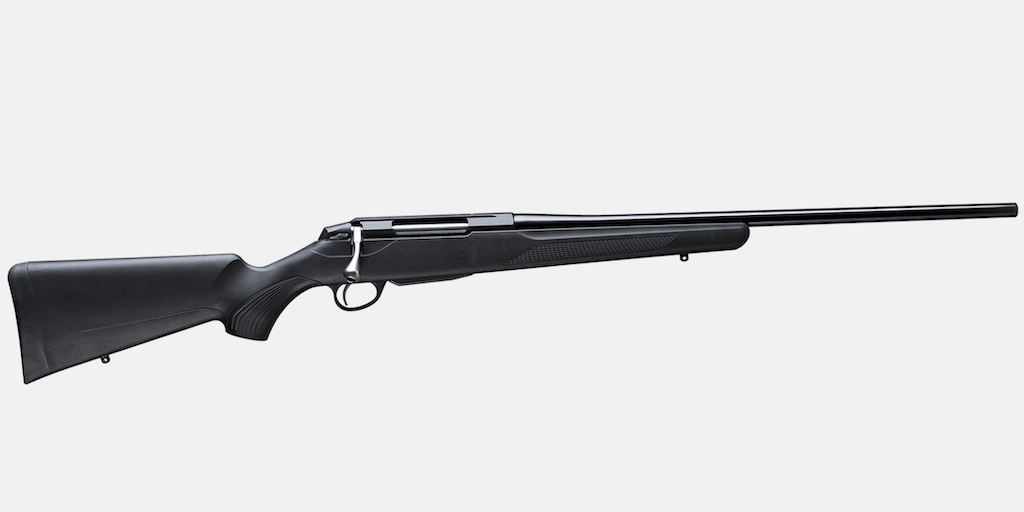
Tikka T3x Lite

picture of Best 300 Win Mag Rifles for Hunting tikka

Made in Finland, the Tikka Tx3 Lite is another really well designed, extremely functional rifle. These rifles have an excellent reputation for accuracy, durability, and reliability under really demanding conditions.

I wouldn’t say they’re the absolute best 300 Win Mag rifles available, but they’re still really darn good and are an outstanding value. These Tikka rifles fall into a similar category as the Savage 110 Apex Hunter I just mentioned: no frills, reasonably priced, and very functional.

The Tikka T3x is a little more expensive, but it’s also just a generally nicer rifle. The Tikka is also a little lighter and more compact. It’s also available in a left-handed version. The Tikka also has an adjustable trigger. So once again, the Tikka T3x Lite is a great choice for a southpaw looking for a great left handed 300 Win Mag rifle.

Nothing against the Savage 110, but I really like the Tikka T3x Lite and this is where I’d steer a hunter wanting a great all-around 300 Win Mag hunting rifle that’s available at a reasonable price. There’s a reason why this is such a popular rifle with hunters in Europe as well as North America.

  • Overall Length: 42.6″
  • Barrel Length: 24.3″
  • Length of Pull: 13.75″
  • Weight: 6lbs 8z
  • Rifling Twist Rate: 1:10″
  • Threaded Barrel: Yes (M15x1 thread pattern).
  • Magazine Size: 3
  • Accuracy Guarantee: Yes (1 MOA)
  • Left Handed Models Available: Yes
  • MSRP: $779

BUY A TIKKA T3x LITE HERE

Also Available At: Sportsman’s Warehouse

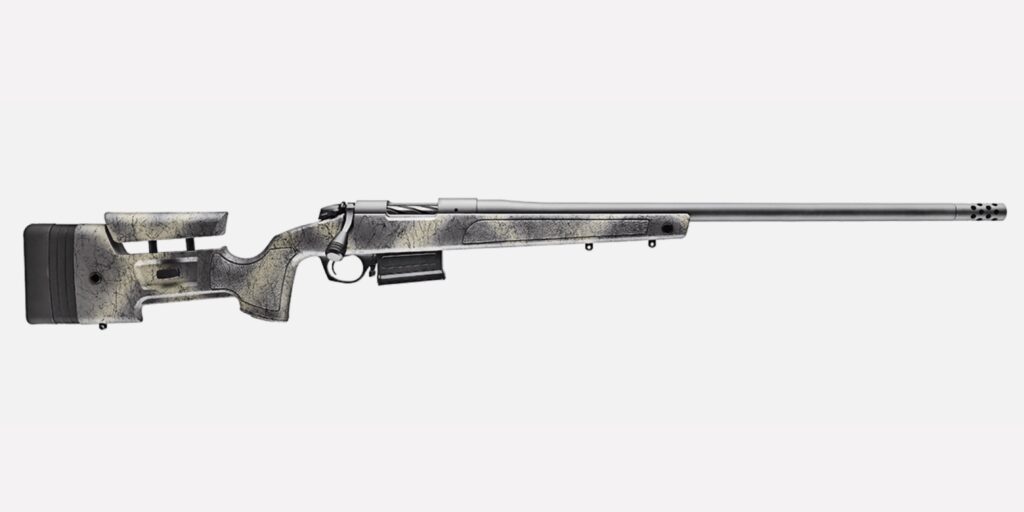
Bergara B-14 HMR Wilderness

picture of Best 300 Win Mag Rifles for Hunting bergara hmr

Bergara is known for producing extremely accurate rifles and very high quality barrels.

The B-14 HMR Wilderness combines those attributes with a high end, mini-chassis molded into the adjustable stock. HMR stands for Hunting and Match Rifle, which is a great description of the capabilities of this particular rifle.

The stock is has an adjustable comb to bring the shooter’s eye in perfect alignment with the scope and is also adjustable for length of pull via spacers in the stock to fit shooters of varying sizes. The stock also includes quick detach flush cups for a sling (and also has regular sling swivels).

The Wilderness Series of rifles use hand-painted camouflage stocks with increased texture and grip. Their actions and barrels are also have a Sniper Grey Cerakote® finish for protection from the elements in harsh weather.

This rifle also has an excellent Bergara Performance Trigger and a 5 round AICS style detachable magazine. Of note, this rifle has one of the largest magazine capacities for any 300 Win Mag rifle (3-4 rounds is typical).

The Bergara B-14 HMR Wilderness 300 Win Mag rifle has a 26″ long #6 Bergara barrel with an omnidirectional and multi-ported muzzle brake to reduce perceived recoil.

Not surprisingly, this rifle is a real shooter and Bergara has a 1 MOA accuracy guarantee with these rifles. Longer barrels will often (though not always) deliver higher muzzle velocities. So that long, 26″ long barrel will also help maximize velocity and downrange performance from the heavy hitting 300 Winchester Magnum cartridge as well.

The downside of this rifle is that it’s on the heavy side at 9.9 pounds.

It will be an outstanding shooting platform for long-range shooting, but won’t be a lot of fun to carry for really long distances in rough terrain. For that reason, those looking for an extremely lightweight 300 Win Mag rifle for mountain hunting should probably look elsewhere.

This is an absolutely perfect 300 Win Mag hunting rifle for those hunting in more open and/or gently rolling terrain where a stable shooting platform and the best long range performance are more important than a lightweight and easy to carry rifle.

Get the Bergara if you want a great rifle with a long effective range. Go with something else if that’s not what you’re looking for.

  • Overall Length: 47.5″
  • Barrel Length: 26″
  • Length of Pull: Adjustable from 12.25-14.5″
  • Weight: 9.9lbs
  • Rifling Twist Rate: 1:10″
  • Threaded Barrel: Yes, Omni Muzzle Brake included (5/8-24″ thread pattern).
  • Magazine Size: 5 Round AICS Detachable Magazine Provided
  • Accuracy Guarantee: Yes, 1 MOA with quality factory match grade ammunition
  • Left Handed Models Available: Yes, the standard Bergara B-14 HMR is available in a left handed model in 300 Win Mag
  • MSRP: $1,260

BUY A BERGARA HMR WILDERNESS HERE

Also Available At: Sportsman’s Warehouse

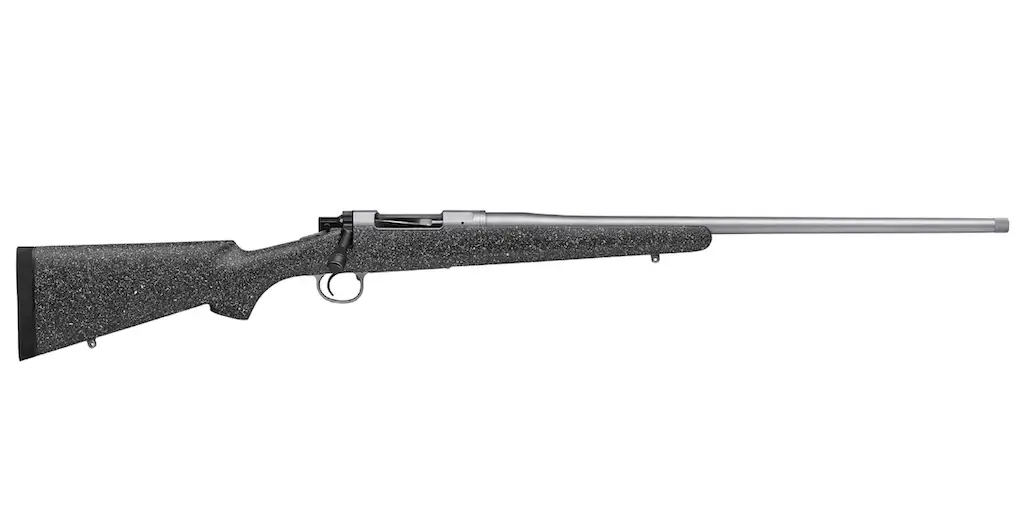
Nosler M21

picture of Best 300 Win Mag Rifles for Hunting nosler m21

The Bend, Oregon based Nosler Inc. has developed a reputation for producing great ammo over the years. However, Nosler also makes some high end rifles and their M21 is their latest addition to the Nosler rifle brand.

Like their older M48 rifles, the Nosler M21 is designed to provide hunters with a feature rich production rifle with performance approaching those delivered by custom builds.

Nosler partnered with the Mack Brothers from South Dakota to design the M21 action, which is based on the Mack Brothers’ EVO action with a few customizations from Nosler. The rifle uses a one piece, spiral fluted, and Nitride coated bolt made from 4340 Chrome Moly steel. The result is a sleek, lightweight, and corrosion resistant bolt that’s also optimized for reliability under demanding conditions.

The M21 rifle has a crisp, single stage TriggerTech trigger that’s user adjustable from 2.5 to 5 pounds.

All M21 rifles use a Shilen match grade stainless steel barrel that’s hand lapped and comes with a threaded muzzle (thread protector included). Finally, the rifle also uses a McMillan Hunters Edge synthetic carbon fiber stock that’s both lightweight and extremely durable.

The end result is a rifle that’s incredibly accurate (Nosler has a 1 MOA accuracy guarantee with these rifles), reliable, functional, and reasonably lightweight. These rifles also look pretty nice as well.

Weighing just over 7 pounds unloaded and without a scope, this is not an especially lightweight or heavy rifle. Instead, it fits right in that sweet spot where it’s heavy enough to be a good shooting platform without being so heavy that it would be a pain to carry on a hunt in rough terrain.

Those looking for an extremely lightweight 300 Win Mag rifle for mountain hunting or a heavier rifle optimized for really long range shooting should probably look elsewhere.

All things considered though, the Nosler M21 is an outstanding 300 Win Mag rifle for hunting a variety of big game. In fact, this is the rifle I’d recommend for a person looking for a high performance, all-purpose 300 Win Mag hunting rifle with the best combination of reliability, accuracy, and performance under a wide range of possible hunting situations.

  • Overall Length: 44.5″
  • Barrel Length: 24″
  • Length of Pull: 13.5″
  • Weight: 7.1lbs
  • Rifling Twist Rate: 1:10″
  • Threaded Barrel: Yes, thread protector included (5/8-24″ thread pattern).
  • Magazine Size: 3
  • Accuracy Guarantee: Yes, 1 MOA with Nosler factory ammunition
  • Left Handed Models Available: No
  • MSRP: $2,795

BUY A NOSLER M21 HERE

Also Available At: Sportsman’s Warehouse

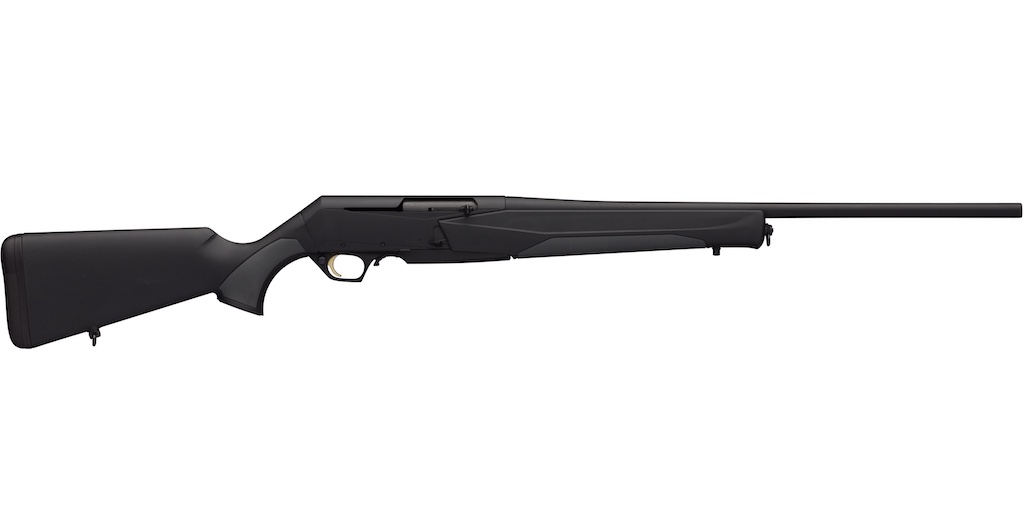
Browning Automatic Rifle

picture of Best 300 Win Mag Rifles for Hunting browning BAR

Looking for a 300 win mag semi-auto rifle? You don’t have many choices, but the Browning Automatic Rifle (also known as the BAR) is a really good option for those who want an autoloading instead of a bolt action rifle.

Even though they share the same name, this rifle is completely different from the BAR used by American troops in World War II. Modern BARs are designed for hunting use and utilize a short stroke gas piston, a hammer forged barrel, and a 3 round detachable magazine. It’s also drilled and tapped for a scope.

While this semi-automatic rifle is probably not going to be as accurate for you as typical bolt action rifles (like the Browning X-Bolt for instance), it’s still plenty accurate. It also offers an almost instant follow-up shot to the hunter as well, making it a good rifle option for situations where that’s ideal (like feral hog hunting).

Though it will work great out to several hundred yards, the Browning Automatic Rifle is not designed for long range precision work. Instead, this semi-auto 300 Win Mag rifle is best for hunters who want a rapid follow up shot on game at closer range and it will work great in that role.

  • Overall Length: 46.125″
  • Barrel Length: 24″
  • Length of Pull: 13.325″
  • Weight: 7.5lbs
  • Rifling Twist Rate: 1:10″
  • Threaded Barrel: No
  • Magazine Size: 3
  • Accuracy Guarantee: No
  • Left Handed Models Available: No
  • MSRP: $1,499.99

BUY A BROWNING AUTOMATIC RIFLE HERE

Also Available At: Sportsman’s Warehouse

Enjoy this article on the best 300 Win Mag rifles for hunting in 2024? Please share it with your friends on Facebook and Twitter.

Make sure you follow The Big Game Hunting Blog on Facebook, Instagram, Twitter, and YouTube.

NEXT: HOW 11 BEST HUNTING EAR PROTECTION OPTIONS FOR HUNTERS

NEXT: 7mm REM MAG VS 300 WIN MAG: WHAT YOU KNOW MAY BE WRONG

How To Add Fat To Lean Ground Beef [Tried And Tested Methods]

0

In this article, I’m going to show you seven quick and delicious ways to add that all-important fat to your ground beef.

Let’s get straight to the juicy bit.

How do you add fat to lean ground beef? The best way to add fat to lean ground beef is to use beef back fat (tallow). Ensure the tallow and beef are cold before mixing them together. An easy fix is to grate butter or cheese into the beef. Or mix in a fattier meat like sausage or chorizo.

Ways to add fat to ground beef

You can add fat to your ground beef in a variety of forms. Here are the best things to add:

  • Beef fat (tallow)
  • Bacon or bacon fat
  • Butter
  • Chorizo
  • Sausages
  • Cheese
  • A fattier type of mince

Keep reading to find out more about each option.

Add beef fat

This is my personal favorite. Adding beef fat to lean ground beef can transform it into something truly magical.

The trick to using beef fat is to use BACK FAT specifically.

Why?

  • Back fat is more ‘buttery’ and has a melt in your mouth texture VS regular beef fat.
  • Many butchers give it away for FREE. And even if your local butcher decides to sell it, it won’t be expensive.

How to add beef fat (tallow) to ground beef

Assuming you’ve got your tallow ready to go, you’ll need either a food processor or a dedicated meat grinder for the next part.

  1. Ensure both the tallow and beef are COLD before adding to your food processor. I recommend placing them in the freezer for around 20 minutes before your ready to process them. If the meat is too warm it will smear and you’ll end up with mushy ground beef.
  2. The same applies to your grinding equipment. Place it in the freezer at least one hour before you need to use it.
  3. Work out how much tallow you need to get the desired lean to fat ratio. If you’re unsure, skip to this section where I cover it in detail.
  4. Grind together the ground beef and the tallow just until they’re both properly mixed. Don’t overdo this step. Too much handling can also result in a mushy texture.

It’s that simple.

If you don’t have a grinder or food processor at home, you may have some luck asking your butcher if they’d be willing to work in the fat for you.

Add bacon or bacon grease

Bacon is here to save the day. You have three options when it comes to adding bacon to ground beef:

  • Grind raw bacon and mix with the ground beef before cooking/making patties
  • Add cooked bacon to your ground beef
  • Use the bacon fat/drippings

Mixing ground (or finely chopped) raw bacon with your beef before cooking will create a deliciously fatty and flavorsome patty.

But it means you’ll have to cook the burger ALL the way through. You don’t want any raw bits of bacon lurking in the middle of your burger.

Like your burger to have a bit of pink?

Cook the bacon BEFORE adding it to the ground beef.

Or use the leftover bacon grease – which by the way tastes AMAZING. You can mix a bit into the burger, or simply cook the burger using the fat. Learn how to collect and store it here.

Add sausage

Sausages are a great way to make your ground beef more juicy and fatty. And it’s super easy.

You don’t need any additional equipment to mix them together.

Take the skin off the sausage, and then mix the meat and ground beef together in a bowl.

Voila! Problem solved.

Just like with bacon, you’ll need to make sure that you cook the burgers all the way through if you add raw sausage.

Add chorizo

Chorizo is yet another insanely delicious way to add flavor, fat, and life to your ground beef. As the burgers cook, the chorizo oil will seep out into the meat. YUM.

I keep it simple when adding chorizo. If the beef is 90% lean, I recommend adding 1 part chorizo for 3 parts ground beef.

Remember: cooking is an art, not a science. You won’t do any harm by tweaking the above ratio to your liking.

Psst… make sure all your guests like chorizo before going full steam ahead with this option.

Add cheese

No good burger is complete without a hefty portion of cheese to go with it.

So why not add some cheese into the beef instead of on top of it?

Adding cheese is a foolproof way to add fat and oozy-juicy-ness (is that even a word?). All without needing to add any other meats.

Here are a few of my personal favorite additions:

  • Blue cheese
  • Feta cheese
  • Cream cheese

Simply add a generous helping of your favorite cheese into the raw ground beef and gently mix by hand.

If you’re using a solid cheese I recommend cutting it into small chunks or use a cheese grater.

Cold cheese works best for this task. I’d even go as far as freezing the cheese for 20-30 minutes before mixing it into the raw beef.

Add butter

Let’s not forget about butter. Adding butter to ground beef elevates the beef’s flavor profile while not adding any other distractions (flavors). Butter also adds moisture and tenderness to the beef.

And it’s very likely that you have some handy right now.

How to add butter to ground beef

  1. Dice or grate the butter into small pieces (too big and you’ll have pockets of air in the beef once the butter melts).
  2. Ensure the butter is cold (like ice cold) before adding to the beef. I recommend freezing both the butter and beef for about 30 minutes to make sure they’re at a similar temperature.
  3. Gently work the butter pieces into the ground beef and form individual patties. A light touch is crucial here to prevent the ground beef from turning mushy.

Mix in a fattier mince

This option might seem obvious, but sometimes we miss the obvious options!

You don’t have to stick to using one type of beef.

If you have an old pack of 15% mince (pork or beef) in hanging around in your freezer, take some of this and mix it into your 5% mince to increase the fat content.

You can go with 50:50 if you want to significantly increase the fat levels, or just add a handful. It’s totally up to you.

How much fat should I add to my ground beef?

I’ve created a handy table to help you calculate how much fat to add to your ground beef.

Let’s go through a quick example to illustrate how it works.

You have 10% fat ground beef (90% lean) and decide you want to make burgers with 30% fat (70% lean).

Now you have to match the type of ground beef you have (in the columns) with your desired ground beef type (in the rows).

40% Fat30% Fat20% Fat20% Fat15% Fat10% 7% Fat
The percentages in the table represent how much pure fat to add to the total original weight of your ground beef.

To turn 10% fat ground beef into 30% fat ground beef, you’ll need to add 22% of the total weight of your original ground beef in pure fat (e.g. tallow, bacon fat, butter).

Confused? Lets go through a real life example:

If you have 2lbs of 10% fat ground beef, you’ll need to add 7oz (0.44lbs) of fat to make a 30% lean mix. 0.44 lbs is 22% of 2 lbs.

If you aren’t interested in being so scientific, you can approximate! Your burgers will still be delicious.

Tips for making lean ground beef juicy

Here are a few final tips to help you get maximum juiciness and tenderness from your ground beef:

  • Don’t overwork the meat. Overworking the beef makes it tough and lifeless. Treat it gently and you’ll be rewarded.
  • Cooking burgers? Just flip them ONCE. Pretty much the same logic as #1. Also, avoid the urge to press the patties too much with your spatula when cooking (unless you’re planning to smash them!).
  • The fattier the beef, the more heat you need. Generally speaking, leaner cuts should be cooked on a medium flame, whereas high-fat cuts should be cooked on a high flame. Adjust depending on the amount of fat you decide to add.

Related: How To Make Fine Ground Beef

Best Caliber for Deer Hunting

0

William W (Bill) Gabbard

deer calibers
Left to right 223, 25-06, 7mm08, 270, 280, 308, 7mm Rem Mag, 300 Win Mag

What is the best caliber for deer hunting?

This question has been discussed over campfires, in hunting camps, and during Monday morning quarterbacking sessions for ages! I watched two co-workers nearly ruin a good friendship over the difference in a 243 Winchester and a 6MM Remington. A fellow that I used to work with had a 264 Winchester Magnum named “Big Joe” that in his mind was the only viable caliber for deer hunting.

When I started deer hunting in the 1970s, most of my friends either used a 30-06 or a 30-30. A few folks used a 243 Winchester (the smallest caliber that was legal for deer hunting in Kentucky at that time), a couple of fellows that I knew used a 270 Winchester, and one guy used a 280 Remington. The guy with the 280 handloaded because of the limited availability of ammo. Back then, no one that I knew used a “magnum” anything for deer hunting. Magnums were what those folks that went out west used!

Boy how times have changed! When I began this article, I asked many friends of mine who deer hunt what caliber they used and why they thought it was the best. The variety of calibers used has expanded greatly in the last 40 years. Just from my friends and family, the list now goes from 222 Remington to 300 Remington Ultra Magnum. I personally have killed deer with rifles ranging from 204 Ruger to 300 Win Mag. The reasons for this change are many and could possibly be an article all its own, but let’s look at what hunters are using now and why. Keep in mind that I am not attempting to cover every caliber available, so if I miss your favorite, let us know what it is and why it’s your favorite.

204 Ruger

While this round will kill deer, is exceptionally accurate, and has almost no recoil, I cannot recommend it for deer hunting. The bullets are just a little too light and not constructed heavily enough to hold together for clean consistent kills.

222 Remington

Henley McIntosh, a cousin of mine, loves this round and has killed several deer with it. But again, due to the light bullets in most factory ammo, I would only recommend it in the hands of a competent marksman.

223 Remington

Randy Bryant, Vice President of the local Sportsman’s Club and competitive shooter, is a big fan of the 223 using heavy bullets in an AR style rifle. He is hunting at fairly close ranges and is a great shot. Bullet selection is critical if using the 223 for deer hunting.

243 Winchester

Maddi
Maddi’s deer with 243

More than one of the folks surveyed said that this is their number one choice for deer. Ashley Sandlin, local Deputy Sherriff, said that it kills good, doesn’t kick, and that her kids love to borrow it when they go hunting. Henley Mcintosh stated that this was probably the best all-around caliber because of lack of recoil, accuracy, and all the energy is used up in the deer. My brother, my granddaughter (Maddi Mastin) and lots of other folks mentioned 243 in their answer.

caliber grouping
Maddi’s 243 on paper

244/6mm Remington

Very similar to the 243 Winchester but limited availability of factory ammo is an issue.

257 Roberts

A wonderful caliber for deer but hardly anyone in my circle of friends even mentioned it. A good friend of mine who passed away a few years ago loved this caliber for its accuracy and lack of recoil. Limited supply of readily available factory ammo is a shortfall.

25-06 Remington

Another old classic that seems to be getting passed by these days has great accuracy, light recoil, and great long-range capabilities. Trish Bishop has tried different calibers but keeps coming back to her 25-06.

6.5 Grendel

Jon Allen of Nighthawk Tactical Solutions uses the Grendel on hogs and is planning to deer hunt with it this year. Jon says accuracy (which I must back him up on), almost no recoil, as well as dramatic kills have him excited about this caliber. My granddaughter Maddi is already eyeing my bolt-action Grendel. The growing supply of ammunition, and choices of types of bullets and the ability to use AR style rifles as well as bolt guns are all positives for the Grendel.

6.5 Creedmoor

The Creedmoor has taken the hunting world as well as the shooting world by storm. While none of my folks surveyed have taken a deer with this caliber, at least four said that they are planning to use it this year. Most are citing accuracy, long-range capabilities, and light recoil as their reason. Gun-Nut Dustin Cooper has killed deer with 243, 270, 30-06 and 300 Win Mag and said, “I just want to see what it does on a big ol buck.”

260 Remington

Mike Gross, custom gun builder and competitive shooter, uses a Model 7 Remington in 260. Light recoil, incredible accuracy and “drop in their tracks” kills are his reasons.

264 Winchester Magnum

I must mention the 264 out of respect to my friend Dexter Evans, as it is the only caliber he recognizes. As far as I know, the Remington Sendero SF II is the only production rifle currently available, and factory ammo is limited.

270 Winchester

This long-time favorite was mentioned by several folks. The 270 has been available as a factory round since 1925 and is showing no signs of letting up. Extremely accurate, incredible kills, long-range capabilities, manageable recoil, incredible variety, and ready availability of factory ammunition are on its long list of attributes. It is available in bolt action, pump, semi-auto and even lever action rifles.

ad for bottomland camo

7mm-08 Remington

The cross between a 243 and a 308 the 7mm-08, offers an incredible array of possibilities. This caliber has a tremendous following and for good reason. Paul Johnson mentioned the amount of versatility in tailoring loads, lack of recoil, incredible accuracy and great knock-down power. Carl Cooper laid down his 300 Win Mag for the 7mm-08 because of the lighter recoil and plans to never look back because of the killing power of the little round. Phyllis Cornett likes it because of the accuracy and lack of recoil. Mossy Oak’s Walt Gabbard said, “It is still hard to beat the 7mm-08.”

280 Remington

While the 280 has never seen the commercial success that the 270 Win has, most gun writers agree that it is ballistically superior to the 270. Factory ammo is available with bullets ranging from Norma’s 125 gr to Remington’s 165 gr. The availability of ammo from online and big box outdoor stores are just a few of the reasons that this great caliber is staying alive.

7mm Remington Magnum

7mm-08 grouping
3-shot group with 7mm Rem Mag from a Browning BBR

This is the caliber that a many choose when they first get a case of “Magnum Fever.” The choices in factory ammo are staggering as are the options in building a suitable handload. The 7mm, as most folks call it, is accurate and hard hitting making it a favorite. When Walt Gabbard was 14, he got his first case of “Magnum Fever” when he killed an 8-point buck. Its only drawback is that with a poorly designed or ill-fitting rifle stock, the 7mm Rem Mag can be a little bit uncomfortable to shoot.

30-30 Winchester

The 30-30 was one of the most popular calibers around years ago and it is still hanging in there. However, based on my small sample of local hunters, not nearly as many folks use it now. Retired U.S. Army Colonel Brad Turner is still a fan though. Col. Turner stated that where he hunts 100 yards is a long shot and the 30-30 still drops them in their tracks!

308 Winchester

The 308 is one of the most popular calibers around, and there are plenty of reasons. Accuracy, long-range capabilities, good knock-down, manageable recoil, an incredible array of choice for factory loaded ammo as well as an almost endless list of components for the hand loader are just a few. The 308 is available in bolt, pump, lever, and single shot as well semi-auto rifles. Sheriff Kelly Shouse quickly replied 308 when asked what his favorite deer caliber was, an answer that was echoed by his son Hunter, as well as Benny Gabbard and his son Ben. Several others mentioned it as their second choice.
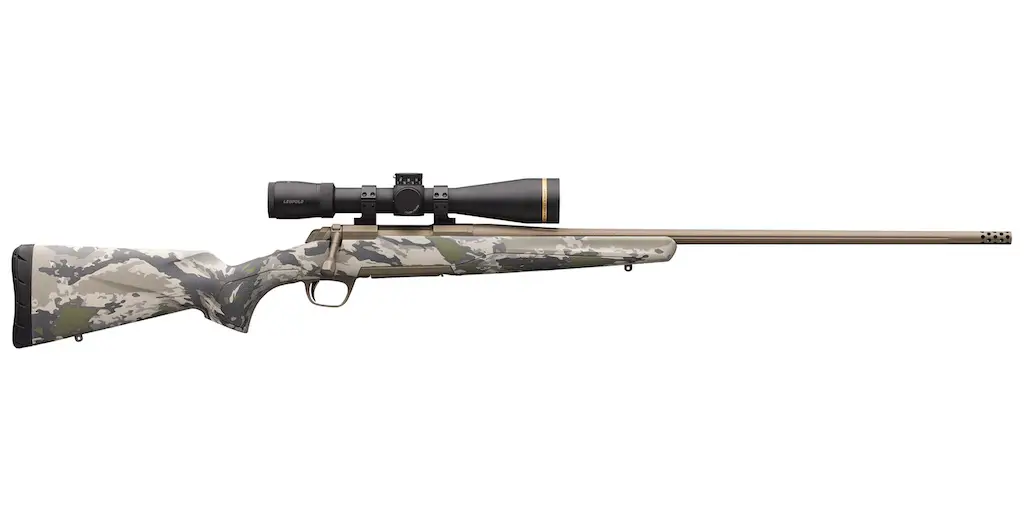
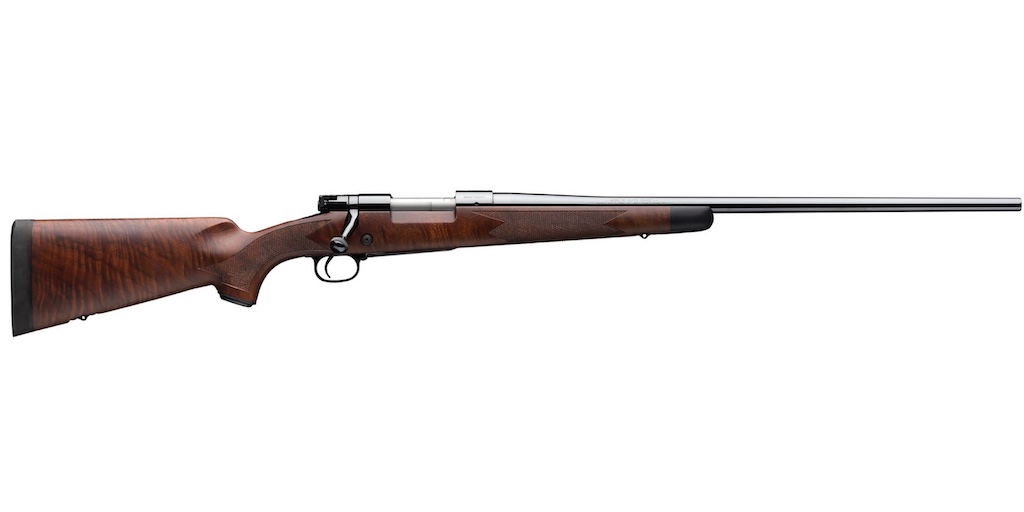
30-06

The old 30-06 has been around since 1906 and is still extremely popular. Several people mentioned it as their all time favorite or as their second choice. Availability of ammo, knockdown power, and just about any style of rifle being available are among the first attributes listed for the 06. Its only drawback can be recoil if it is in an ill-fitting stock.

300 Winchester Magnum

You might be surprised by the number of hunters that use the 300 as their primary deer rifle. An exceptional round for long range, it gives no quarter in performance on whitetail. When paired with the proper rifle and proper bullet weight the 300’s main drawbacks would be recoil and that a fairly long barrel is required to maximize its performance. Gary Deaton, Mike Gabbard and Hank Patton, all accomplished deer hunters, can usually be seen carrying well-worn 300 Win Mags that they are very comfortable with. Patton said, “I just love watching them smack the ground at the drop of the hammer, no tracking involved.” 300 Remington Ultra Magnum

Only one of my friends uses this caliber. Jamie Thomas said that hands down this is his favorite. “It flat kills – no tracking, no chasing. I pull the trigger and the game is over!” Limited selection of factory ammo and recoil are the only two downsides to this caliber.

This article is not a scientifically researched article quoting feet per second and foot pounds of energy retained at specific distances. It is a collection of observations calling on the knowledge of experienced and successful deer hunters. Each of the hunters that I have discussed here fits this description. Some of them have been deer hunting for more than 50 years, while some are new to the sport. So my conclusion to the best caliber of deer hunting is the caliber your centerfire rifle with properly constructed bullets will shoot comfortably. It is every hunter’s responsibility to be familiar with and know the capabilities and limitations of their rifle in order to become proficient with it.

Oh, and to the guy in the back there asking, “Hey Bill what do you use,” I always put a lot of thought into what I am going to hunt with, accuracy, energy, my comfort level with the rifle and for the past 12 years here in Kentucky, I reach in the vault and pull out the same rifle. An old Remington 700 chambered in 7mm Weatherby Magnum. Nobody else I know hunts with one, but it shoots 0.3 in groups with my handloads, just fits me, recoil is not an issue and results on the other end are incredible!

Bill Gabbard deer

Crosman 2100 Classic Review

0

Seldom in our lives, can we find a product that’s worth twice as much as what we pay for it.

And when we do find it, we bring it everywhere, brag about its awesomeness, and double the real price in your story to show off.

The product is truly fantastic, everyone absolutely believes in your story.

Sounds nice? Sounds good?

What would you think if I told you that today you’re gonna find such a bargain?

Don’t believe me?

Take a look at the Crosman 2100 Classic in this comprehensive review to see if I’m telling the truth.

Crosman 2100 Classic – Guntype

To start off, this is a multi-pump pneumatic air rifle.

Variable pump guns have a piston and a cylinder in the chamber.

The air in the cylinder is already pressurized and you apply more pressure to it when you cock the gun.

When you shoot, the pellet is propelled downrange inside the barrel by the driving force of compressed air.

The multi-pump rifle is generally lightweight, compact, and recoilless.

Moreover, it allows you to have control over the power of the gun:

Pump it 3 times if you are shooting indoors or in your garage and have no need for high power

Pump it 10 times in case you need power and want to work out a little bit.

For more on the 5 types of air rifles you need to know before buying, see this post.

The caliber of this gun is .177” (4.5 millimeters) which is the most common caliber for target shooting and plinking.

For more on how to choose the right air gun caliber for your game, see this post.

This Crosman 2100 is a BB repeater .

With a BB repeater gun, you don’t have to open up and reload or cock every time you want to shoot a BB.

Each time you shoot, a new BB is reloaded automatically.

This air rifle is not only a BB gun but also a single-shot pellet gun. Single-shot rifles tend to be cheap and simple to use.

And you can teach a newbie shooter how to handle a single-shot gun in only a few hours.

Having the ability to shoot both BB and pellet, this Crosman 2100 gives you an awesome option to switch from BB to pellet in case you get bored with shooting BB.

Besides, you can teach your kids how to operate a BB gun and a pellet gun at the same time without having to buy 2 types of guns separately.

The barrel is rifled steel with helical grooves inside.

(For more on things you should know about air rifle barrels before buying, see this post) .

The receiver is made of metal, too.

That’s an outstanding feature because BB guns normally don’t have metal receivers.

Therefore, you can shoot this gun for years without having to buy a new gun.

Stock

The stock is made of synthetic material with a metal receiver.

Unlike Woodstock which is heavy and easily affected by moisture and temperature, the synthetic stock is light and functions perfectly under any kind of weather

So it’s a great choice for people who live in a humid place and for shooters who don’t want to bother with stock preservation.

For more on the in-depth comparison between synthetic and wood stock, see this post.

This gun has a textured grip and forearm to add friction to your hand when shooting, prevent slippage from shooter sweat, and add stability when aiming.

Besides, it has a rubber buttpad to absorb recoil so you can enjoy long hours of shooting without getting a painful shoulder from the gun’s kickback.

Ammo

Crosman 2100 uses .177 pellets and .177 BBs as its main source of ammo.

BB is damn cheap: you can buy a thousand rounds of BB for just a few bucks.

And .177 is one of the cheapest pellets you can find on the market.

(For more on the differences between .177 & .22 and which jobs they do best, see this post.)

Sight

The open sight is fiber optic, hence you will align the sight faster and more accurately, even in the low-light condition like dusk.

Furthermore, the rear sight has windage adjustment (allows you to adjust the sight left and right) and elevation adjustment (allow you to adjust the sight up and down).

For more on how many types of air gun sights are out there and which one is suitable for you, see this post.

Cocking and loading

Pumping the gun: First put the gun “ON SAFE”, and open the forearm all the way until it reaches the limit.

Then return the foregrip to its original closed position and you just finish one pump.

Repeat the process to add more pumps to the gun (the minimum is 3, and the maximum is 10).

Loading the BBs: Slide the grip cap toward the rear of the airgun.

Pour no more than 200 BBs into the reservoir hole.

Close the grip cap.

Pull the BB follower stem back and latch in the notch.

Then point the barrel straight down.

With a hand-twisting motion, shake and twist the air gun to fill the visual magazine.

Take the stem out of the notch and release it to hold BBs in the visual magazine.

Cock the bolt by pulling it all the way back.

The magnetic bolt will automatically pick up a BB.

Push the bolt all the way forward slowly (you can see the BB move through the port) and you are done.

Loading the pellet: Pull the bolt all the way back, and place one pellet (nose first) in the loading port. 

After that push the bolt all the way forward and you are ready to shoot

You can see how easy to operate this gun by watching the video below:

Velocity, accuracy and power

Crosman 2100 has a velocity of up to 755 FPS with steel BB and 725 FPS with lead pellet.

This is medium velocity compared to other pellet guns and high velocity compared to other BB guns

So it ensures that you have more than enough velocity for a pop-up tin can or blow-up water balloons.

Chrony tests have given us the following results:

For 10 pumps

PelletFPSFPE
Crosman 5.5 grain BB559 5.2 
Crosman 7.9 grain Hollowpoint Premiere pellet625 6.9 
Crosman 8.0 gr Copper head pointed pellet617 6.8 
Diabolo Basic 7.0 gr537 4.48 
JSB Exact Monster Diabolo 13.4 gr475 6.72 
Super H Point pellet 6.9 gr647 6.42 
RWS Super Mag 9.3 gr557 6.41 
RWS Super point extra 8.2 gr603 6.62 
RWS Super dome 8.3 gr590 6.42 
Crosman Premier 7.9 gr655 7.53 
JSB Exact 8.4 gr dome608 6.9 
JSB exact RS 7.33 gr646 6.79 

From the figures above, we can see that this Crosman 2100 generates the highest velocities with :

  • Crosman Copperhead BB,
  • Crosman Premier pellet
  • And Super H Point pellet.

Furthermore, the average FPE is 6-7 FPE.

Thus, if you want to deal with squirrels or chipmunks with this gun, you need to be at close range and hit it with the perfect shot placement.

And if you want to take care of birds, this gun has more than enough power to drop doves, crows, and pigeons.

For this multi-pump gun, various shooting tests have been conducted by different shooters with positive results.

The common shooting groups are:

  • 3/4″ at 25 yards,
  • 1/4″ at 30 yards,
  • 1/4″ at 25 yards,
  • nickel size at 25 feet,
  • 1” at 25 meters,
  • 3/4″ at 30 yards,
  • 3/4″ at 50 feet,
  • 3/4″ at 25 yards,
  • 0.539” with Crosman Premiere lites at 10 meters,
  • 1.05” with JSB Exact RS at 10 meters,
  • 0.809” at 25 yards with Crosman Premiere lites,
  • 0.809” at 25 yards with RWS Superdome,
  • 0.48” with H&N Baracuda green at 25 yards.

(For more on everything you need to know about air rifle accuracy, see this post)

For plinking, many shooters can:

  • Shoot soda cans at 35 yards,
  • knockdown an old HDD at 40 feet,
  • hit a balloon at 10 yards,
  • hit a cola cap at 18 yards,
  • hit water bottles at 70 meters,
  • hit an ice cube at 40 yards.

Some can even manage to hit an old car rotor at 80 yards and a water bottle at 100 meters.

As you can see, this rifle is extremely accurate for target shooting on a firing range up to 30 yards and can take down common plinking objects with a shooting range up to 100 meters.

Airgun Evolution used the Crosman 2100 Classic for some much-needed indoor pigeon pest control here:

Loudness

This gun is very quiet. It has hundreds of customer reviews without a single complaint about noise so you can take comfort knowing that your plinking day doesn’t bother your neighbor’s afternoon.

Shooting Ability

The effective shooting range of this gun is 30 yards. You can use this gun for target shooting, plinking, and dropping birds.

Specifications

  • Caliber: 0.177”
  • Velocity: 755 FPS
  • Loudness: 3- Medium
  • Barrel Length: 20.84”
  • Overall Length: 39.75”
  • Shot Capacity: 17
  • Cocking Effort: 3-10 pumps
  • Barrel: rifled
  • Front Sight: Fiber Optic
  • Rear Sight: Adjustable for windage and elevation
  • Scopeable: 11mm dovetail
  • Trigger: Two-stage non-adjustable
  • Buttplate: Plastic
  • Suggested for: Plinking/Target shooting
  • Trigger Pull: 4.75 lbs
  • Action: Bolt-action
  • Safety: Manual
  • Powerplant: Multi-pump pneumatic
  • Function: repeater
  • Body Type: Rifle
  • Weight: 4.81 lbs
ProsCons
  • Awesome double function rifle
  • Great metal receiver
  • Beautiful stock with useful texturing grip
  • Breath-taking fiber optic sight
  • Decent velocity
  • Extremely accurate
  • Quiet
  • Easy to use
  • Made in the USA
  • Pumping action takes some time to learn
  • Pumping the gun can be tedious at some points.

Price

The price for Crosman is only $60.

Considering this is a double-function rifle with a metal receiver, high velocity, and remarkable accuracy, this is the best bang for the buck.

And remember that when you buy from PyramydAir you save $10 more than when buying from Crosman.

There are a couple of different listings online with different prices but the listing I found with the lowest price is the cheapest price among online e-commercial sites like Amazon, PyramydAir, Walmart, etc.

Conclusion

The Crosman 2100 is often considered an underpriced gun.

I would not be surprised if an air rifle at this high-quality level sells at 100 dollars or more but it is just 60 dollars for the whole package.

If you want a fun BB/pellet combo gun that lasts for years, this is a gun to go for.

Current IGFA World Record Halibut 2024: Largest Ever (with pic)

0

Of all the species out there, the Pacific halibut is the largest halibut of them all.

Catching one of these big fish is something that many anglers hope to do and some have actually managed to catch some truly giant halibut over the years.

In this article, we look into the story behind the current IGFA world record halibut as well as some other monster halibut that feature in the record books too.

Largest Halibut Ever Caught: 459lb Record Fish

  • Angler: Jack Tragis
  • Date: 1996
  • Size: 459lb
  • Location: Dutch Harbor, Alaska

The largest halibut ever caught on record is a Pacific halibut caught by Jack Tragis off Dutch Harbor, Alaska, in June 1996. The fish weighed in at a staggering 459 pounds, making it the IGFA all-tackle world record holder for this species.

The fish fought Jack for two hours before he was able to bring the giant fish aboard the small boat he and his friends had been using for the day on June 11.

At the time of his record-breaking catch, Jack was using a Shakespeare Sturdy Stick rod, a Penn Senator 4/0 reel, Aimer line, and a Big ugly jig.

Before landing the world record halibut, Jack and his fishing buddies had already landed several halibut (although these were much smaller) and were getting ready to head back to shore after spending the day fishing in waters that were around 200 feet deep. It was on his last cast of the day that Jack successfully caught his 459-pound record-breaker.

It took Jack two hours of fighting before the fish was able to be bought on board the small boat he and his friends had been using for the day. This big halibut was over eight feet long and five feet wide.

Jack’s catch didn’t just set a new record, it actually beat the former record by almost 20 pounds. Prior to Jack landing his giant pacific halibut, the biggest ever caught was a 440-pound fish that had been caught back in 1978.

This is one world record that will likely take a long time for anyone to even get close to, let alone try to break.

See also: Alaska fishing licenses: How much do they cost and how and where to buy?

Atlantic Halibut All Tackle Record

Thomas was able to submit all the details needed to the IGFA confirming his catch as the new record for the largest Atlantic halibut ever caught.

On the 28th of July 2004, angler Thomas Nielsen set a new world record for Atlantic halibut when he landed a big halibut that weighed in at an impressive 418 pounds 13 ounces. Thomas caught his record-breaking fish while bait fishing in Vannaya Troms, Norway. He was using a Shimano rod, a Shimano reel, and a Dyneema line baited with cole fish.

It took more than an hour of fighting for Thomas to successfully land the fish but once he did, he was able to submit all the details needed to the International Game Fish Association (IGFA) who ultimately confirmed his catch as being the new record for the largest Atlantic halibut ever caught.

California Halibut All Tackle Record

Angler Francisco J. Rivera was fishing in Santa Rosa Island, California, USA on the 1st of July 2011 when he landed his 67-pound 5-ounce California halibut that set the new record for the largest fish of this species ever caught.

He was using a Calstar rod, a Penn reel, and an Ande line.

In addition to his fishing gear, Francisco was bottom fishing using live squid as bait.

See also: California fishing license info: Costs, Where to buy and Different Types

About The Key Halibut Species

One key thing to remember when fishing for halibut is to be patient and wait for a bit of time after any halibut strikes your line.

Distribution

Pacific halibut can be found on the continental shelf of the northern Pacific Ocean and the Bering Sea.

Atlantic halibut can be found in Northerly places from Canada all the way to Iceland. If you are looking for Atlantic halibut in the US, then they are most common in the Gulf of Maine.

California halibut are most commonly found south of San Francisco.

Size Range

Pacific halibut males are usually smaller than the females of the species. Although not all will grow to extremely large sizes, this species is sometimes referred to as a barn door fish as some can grow up to around 500 pounds in weight and more than eight feet in length.

Atlantic halibut have a pretty slow growth rate so their true size is not always commonly seen. Although usually under eight feet in length, it is thought that these fish could grow up to 15 feet.

California halibut can live for up to 30 years and can grow up to around five feet in length and up to 72 pounds in weight.

Favored Fishing Techniques

One key thing to remember when fishing for halibut is to be patient and wait for a bit of time after any halibut strikes your line. Ideally, you might want to let the fish eat your bait before setting your hook.

A circle hook tends to work well for halibut fishing so these can be a useful addition to your fishing gear.

Another thing to keep in mind is that big bait can lead to some big halibut being caught.

Eating Qualities

Halibut is a delicious white-fleshed fish with a firm, meaty texture.

Halibut contains nutrients that are very good for your heart. These include nutrients such as omega-3 fatty acids, niacin, selenium and magnesium.

In regards to taste, halibut has a mild and sweet taste and has very lean, white flesh.

Halibut is considered a high-quality food source and makes for a great addition to your diet.

The True Hunter Leaves Things Better Than They Found Them: Going Deep with Bill Jordan, Founder and CEO of Realtree Outdoors

0

Whether managing a piece of property and its timber, cutting in trails, or doing big business deals, it is best to think of tomorrow. In a society that is obsessed with instant gratification and an “I need to have it all today” mentality, true long-term thinkers who care about preservation have become rare commodities. At SHOT Show I had the privilege to sit with and interview the hunting industry icon and my friend, Bill Jordan, a man who lives for preservation and for a better tomorrow. Since my younger days in Betamax and VCR format, I have watched Jordan and his Realtree Monster Buck videos. I have donned Realtree camo in the woods for as long as I can remember. In case it isn’t obvious, I am a pretty big Bill Jordan and Realtree fan.

I interviewed Bill for my upcoming book and he was generous enough with his time to meet in between some major deals Realtree was negotiating at the show, but that is the kind of guy Jordan is. The interview inspired me enough to blog about it as well as feature a chapter around his story in my upcoming book. Above being a brilliant, powerful visionary, and a true industry leader, the coolest thing about Jordan and what he himself is most proud of is what has spawned from his Realtree empire for others that got their start with him. He glows when talking about how proud he is of all of the people that today have become industry leaders and have succeeded in their own right. I asked Jordan if he ever takes time to drive his Chevy pickup truck out to a quiet spot on his hunting property to sit and think about the empire he has created.

“What I am most proud of is all of the great talent that has come from Realtree and that today enjoys great individual success. Seeing people like Michael Waddell, Nick Mundt, Travis T Bone Turner, Lee and Tiffany Lakosky, and so many others that started with Realtree succeed and help grow the industry is what makes me proudest. I guess I don’t think so much about my success; I really think about all of the great talent that Realtree helped to cultivate. That is my proudest accomplishment I suppose. Well, that and building a business that my son Tyler can step into and follow in my footsteps, if that is what he chooses to do long-term,” Jordan explained.

What really strikes me as I type away on my Delta flight home is the genuine Southern tone in Bill’s voice, the softer humble side of Bill Jordan. It occurs to me that Bill does not really know just how great he is or just how powerful he has become. When you get deep with Jordan, it is clear that he is basically the same humble, energy-infused kid loaded with a deep passion for the sport of hunting and for creating a product that is second to none. Nearly three decades ago he was at his first SHOT Show, where he got his breakthrough moment in business when he cracked the code on how to enter the licensing market and changed the landscape of the camouflage industry.

What I find most special about Bill Jordan beyond his incredible vision, intense focus, competitive spirit, and inspirational personality, is his focus and care about what he is doing today: creating a better tomorrow and what his personal success has spawned for others.

What Do Air Rifles Shoot?

0

“Exploring the World of Air Rifles: Unveiling the Projectiles These Mighty Firearms Shoot!”

what do air rifles shoot

what do air rifles shoot

Air rifles are firearms that use compressed air or gas to propel projectiles. These rifles can shoot a variety of ammunition types, including pellets, BBs, and darts. The type of ammunition used depends on the specific design and purpose of the air rifle.

Pellets are the most common type of ammunition for air rifles. They are small cylindrical or round projectiles made of lead or alloy. Pellets come in different calibers, ranging from.177 to.50 caliber, and they can be either diabolo-shaped (with a larger head and narrow waist) or round-nosed. Pellets offer accuracy and consistency in shooting and are suitable for various applications such as target shooting, pest control, and small game hunting.

BBs are another type of ammunition used in air rifles. They are small spherical projectiles typically made of steel or copper-plated steel. BBs are mainly used for recreational purposes like plinking (shooting at targets for fun) and casual target practice. Compared to pellets, BBs generally have lower accuracy due to their shape but can still be effective within shorter ranges.

In conclusion, air rifles shoot projectiles called pellets or BBs. These small metal or plastic objects are propelled by compressed air, making air rifles a popular choice for recreational shooting and pest control. With various types and sizes available, it’s important to use the appropriate ammunition for safety and effectiveness.

Best Air Rifle Deals

Popular Posts

What Is a Break Barrel Air Rifle?

0
A break barrel air rifle is a type of air rifle that uses a break action to load and unload pellets. It is one...

Air gun 101: What is a PCP air rifle? Is PCP gun the best...

0
A PCP air gun is one of five types of air rifles in the market today. PCP air guns have become more and more...

Air Gun 101: How many types of Air Gun Sights are there and which...

0
The former American president, Joe Biden, was recently quoted saying: If you need more than ten rounds to hunt, you better stop that business and...