Home Blog Page 27

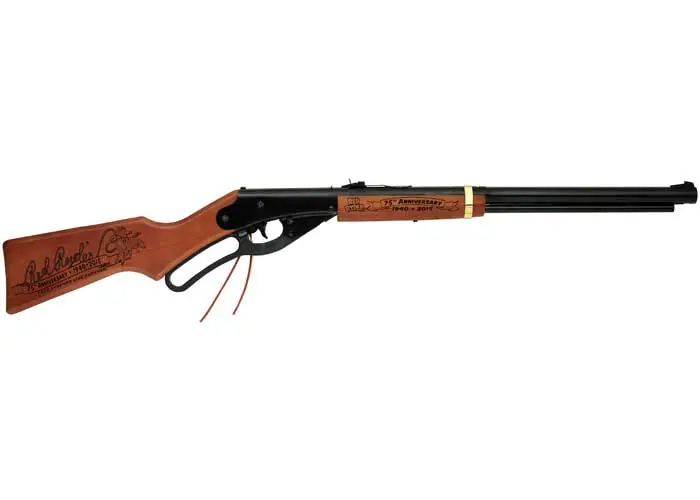
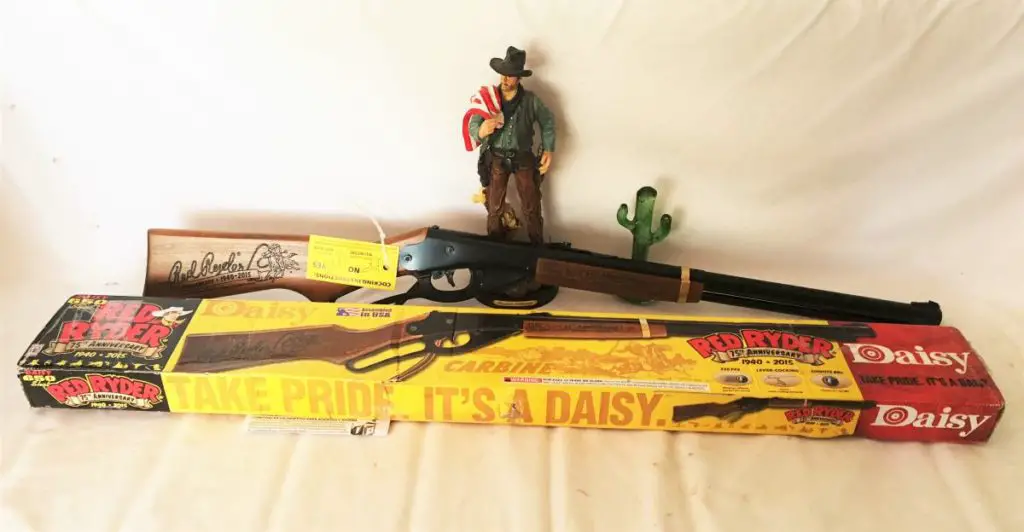
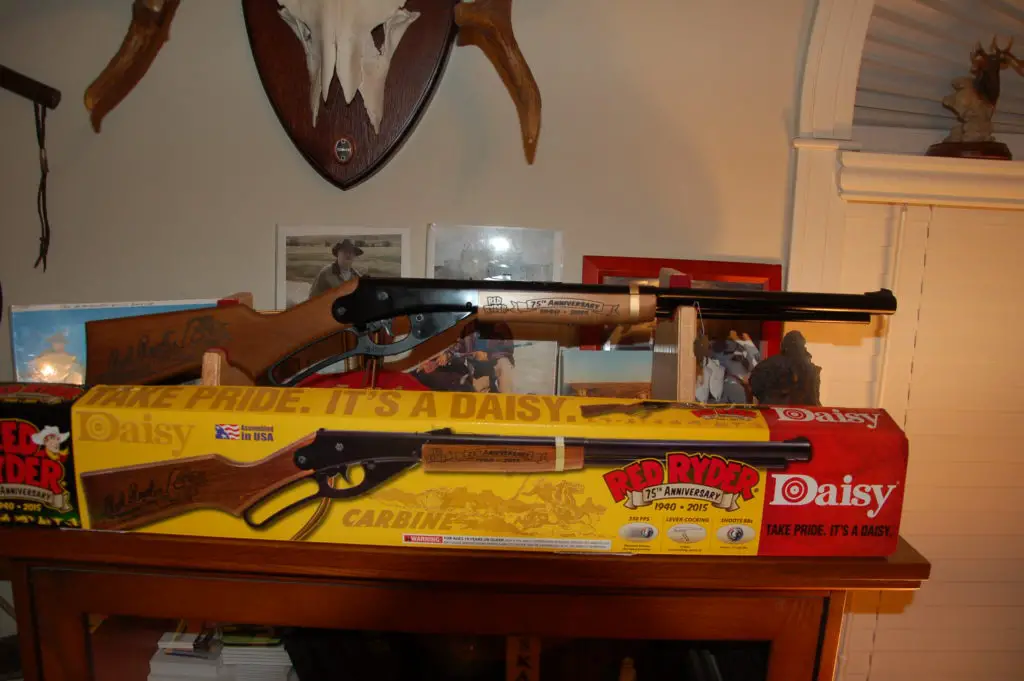
Daisy Red Ryder 1938 – 75th Anniversary Special Edition Review

0

An American classic.

You shoot one.

Your dad shoots one.

Your grandfather shoots one.

For 75 years, generations after generations have enjoyed the fun the Daisy Red Ryder brings.

For most of them, this BB gun has become part of their childhood that goes with unforgettable memories.

A part of American history has integrated into the good, old Red Ryder rifle.

Here are the interesting facts that you don’t know about the history of the most popular air gun in the world:

1. Its original name is the Red Ryder Carbine model 40 (from 1940 to 1942).

The manufacture of Red Ryder was postponed in the time of World War II (1945 to 1954)

2. The model 94 Red Ryder was made from 1954 to 1957

3. The 1938 Red Ryder re-entered the line in 1972 and became the 1938 A and 1938 B in 1979 when they add mechanical safety into the gun.

From that time, it got the name model 1938 till today.

4. Model 1938 was chosen because that’s the year when Stephen Slesinger and western artist Fred Harman,

(who illustrated the Red Ryder comic book character) approached Daisy with the idea of making a Red Ryder pistol (which later become a famous rifle instead)

5. That 1938 conversation led to what is probably the longest-lasting still-existent licensing agreement in American business history.

The licensing agreement was initiated in 1938, signed in 1939, and the first gun produced in 1940

6. Some of the earlier special editions were based on the 1938 date.

For example, a 50th Anniversary came out in 1988, and the 60th Anniversary gun was sold in 1998.

7. In 2005, Daisy began celebrating anniversaries based on the first date of production (1940), with a 65th-anniversary gun.

The 70th-anniversary model came out in 2010.

This Daisy Red Ryder 75th anniversary edition BB gun is dated 2015, but it debuted just before Christmas in 2014.

Alright, that’s enough for nostalgia, let’s check out this newest version of the Red Ryder!

Daisy Red Ryder 1938 75th Anniversary – Guntype

Daisy Red Ryder 1938 75th Anniversary

This is a spring-piston, level-action air rifle.

For more on the 5 types of air rifles, you need to know before buying, see this post.

This air gun uses an under-level cocking system meaning that the level for cocking is located under the forearm.

Unlike break barrel gun in which you have to open the chamber to load the ammo,

with this cocking mechanism, you can quickly get the Daisy Red Ryder back in action with only one, simple level pulling step.

And it requires so little force to do so even a 10 years old child can do these steps quickly and easily .

The caliber (the internal diameter of the bore, measured in inches) is .177 (4.5 millimeters).

.177 is the most common caliber with a flat trajectory (the path the bullet travel before it hits the target)

And flat trajectory makes accuracy simple for everyone, even a newbie shooter (more on that in this post)

While the cocking level is made of aluminum (an upgrade compared to the plastic level on the non-special edition of Daisy Red Ryder), the barrel is smoothbore, steel barrel so it makes the BB fly smoothly.

(For more on things you should know about air rifle barrels before buying, see this post.)

You don’t have to worry about wearing out your barrel over time with BBs since there is no groove inside it.

This gun is a repeater which means that you can shoot multiple shots at a time.

No manual reloading after each shot is required, just pour the BBs in and enjoy a long hour of fun plinking.

Check Price on PyramydAir

Stock

Daisy Red Ryder 1938 75th Anniversary stock

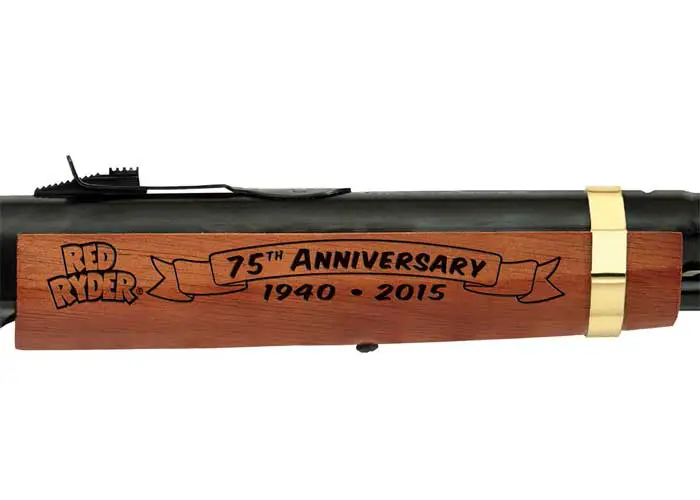
The stock is made of stained solid maple wood stock with a golden band on the forearm.

It gives the gun a handsome look, adds rigidity to the holding feels, and provides you true connection with your air rifle.

(For more on the in-depth comparison between synthetic and wood stock, see this post.)

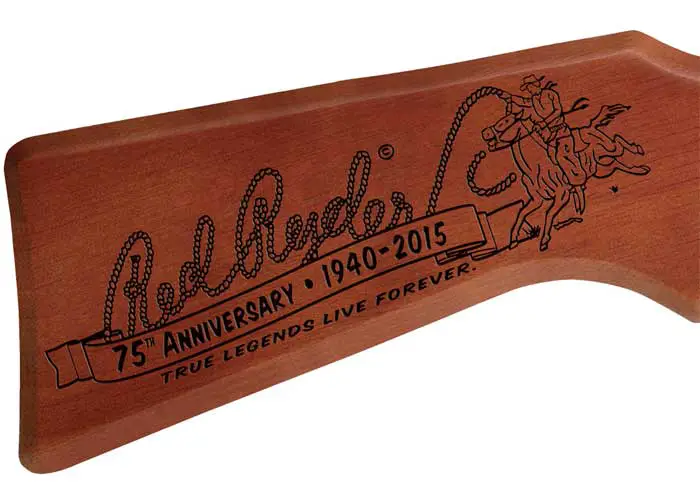
What makes the 75th Anniversary edition stand out is the 75th Anniversary laser-engraved graphics embedded in the stock.

It catches anyone’s attention and reminds them of the proud history of this starter BB gun since 1940!

However, a hardwood stock can expand or contract due to changes in temperature so sometimes you have to perform glass bedding (filling gap in stock with epoxy-based material ) to keep it in shape.

MidwayUSA shows you how to do just that in the video below:

Ammo

The Daisy Red Ryder 75 Anniversary uses .177 BB as its only source of ammunition.

BB is dirt cheap: you can buy a thousand rounds of premium BBs for just a few bucks so it’s very cost-effective when you do target shooting and plinking a lot.

Sight

Daisy Red Ryder 1938 75th Anniversary sight

This gun comes with traditional open sight: The front sight is a fixed blade and ramp while the rear sight is adjustable for elevation (allow you to adjust the sight up and down).

(For more on how many types of air gun sights are out there and which one is suitable for you, see this post.)

This feature disappointed me a little bit, I thought that at this memorable anniversary of the 3 quarters of the century, Daisy would make the fully adjustable rear sight

But it seems that they don’t think it’s extremely important for shooters.

Cocking and loading

Step 1: Put the SAFETY ON and load BBs

Push trigger safety from left to right so no red is showing.

Tilt the gun to its right side, place your thumb on the arrow, and push the load-door in and up.

Cup hand under the barrel and slowly pour in new Daisy BBs and then close the loading door.

Step 2: Cock the gun

When cocking, raise muzzle with sight up.

Firmly grasp the cocking lever and pull outward until it is fully cocked.

At this point, a BB could be loaded into the ready-to-fire position and your gun must be handled with care.

Close cocking lever and your gun is ready to fire

Step 3: Feed BBs

Your Daisy has a gravity feed system.

To ensure proper operation, you should always raise the muzzle up while cocking to ensure that a BB rolls into a firing position.

When raising the muzzle, be sure the front sight is pointed upward since the gun will not feed properly if it is on its side

Step 4: Ready and fire

Aim at the safe target, put the SAFETY OFF, and gently squeeze the trigger to shoot.

Velocity

The velocity of the Daisy Red Ryder 75 Anniversary rifle is 350 FPS.

This is not high velocity compared to other BB guns on the market and it doesn’t even have enough power to drop birds so this gun is suggested for fun plinking and target shooting only.

Shooting Ability

The effective shooting range of The Red Ryder is 5 meters away – about 16.5 feet.

This BB gun can be used for plinking, shooting paper targets, and for training new shooters on how to properly and safely handle an air rifle.

Specifications

  • Caliber: 0.177” (4.5mm)
  • Velocity: 350 FPS
  • Loudness: 1- Low
  • Barrel Length: 10.85”
  • Overall Length: 35.4”
  • Shot Capacity: 650
  • Cocking Effort: 13 lbs.
  • Barrel: Smoothbore
  • Front Sight: Blade and Ramp
  • Rear Sight: Adjustable for elevation
  • Scopeable: No
  • Trigger: Single-stage
  • Buttplate: None
  • Suggested for: Plinking/Target shooting
  • Action: Lever-Action
  • Safety: Manual
  • Powerplant: Spring-piston
  • Function: Repeater
  • Body Type: Rifle
  • Weight: 2.2 lbs

Customer review

The Daisy Red Ryder has lots of customer reviews with positive ratings.

Almost all the reviews show how people love this BB gun, how it brings back their childhood memory, and plenty of them buying for their children.

There are very few negative reviews of this rifle and no major issue is found.

Pros and Cons

ProsCons
  • Quiet
  • Magnificent Nitro piston technology
  • Excellent craftsmanship
  • Outstanding accurate
  • Awesome power
  • Adequate scope
  • Imported from another country

Price

The price for Daisy Red Ryder 75th Anniversary Rifle is only 50 bucks.

It’s so cheap if you think about how much American history is imbued in it.

Check Price on PyramydAir

Conclusion

The true legend lives forever.

From the page of a comic book to the big screen, the Daisy Red Ryder 75th Anniversary Special Edition remains faithful to its original design.

This level-cocking rifle is lightweight, easy to cock, and durable.

It’s a great gun for introducing your kids to shooting sports and for displaying in your family room as part of the air gun collection.

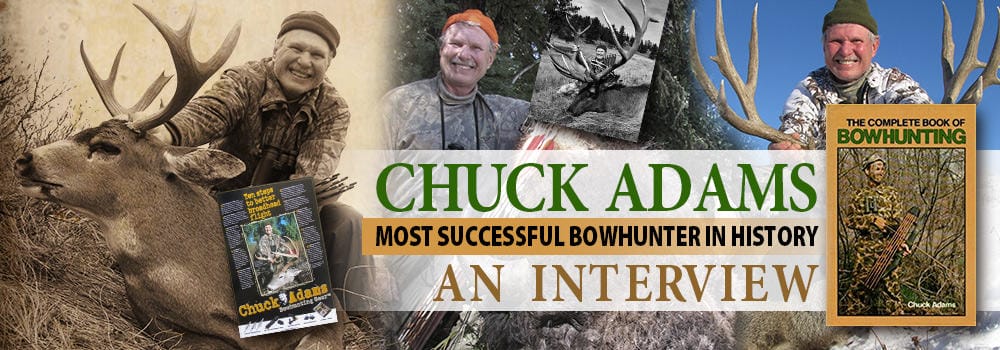
Chuck Adams – Most Successful Bowhunter in History: An Interview

0

images: Chuck Adams

By PJ DelHomme

Chuck Adams reveals what it takes to keep bowhunting—even into your 70s.

Chuck Adams is perhaps the greatest bowhunter of all time. That’s a bold statement, but consider this. In 1990, Adams became the first archer in history to harvest all varieties of North American big game—a feat called the Super Slam. As I write this in early August 2022, he has more than 210 Pope and Young record-book entries, which is more than any other hunter in history. In addition, he’s racked up six bowhunting World’s Records. Adams turned 71 in May, and I was able to track him down before he headed back to Alaska to hunt solo for Sitka blacktail deer. Here’s what he had to say.

You started bowhunting in California when you were 13. Why bowhunting?

The minimum age you could hunt big game there was 12, and both my grandfathers and dad had great hunting spots. As a young kid, I would think about hunting deer all year. Using a rifle, I got my deer down in a few days, and I thought it was a lot of anticipation for the pay off. I took up bowhunting, so I could hunt more and kill less. I got my first deer with a bow at 16. It took me three years to do that, just like my hero Fred Bear.

How do you continually get out there and get it done? What’s your secret?

It’s probably genetics. My dad was packing deer on his back when he was in his 80s. And I live a really healthy lifestyle. I don’t drink alcohol. I don’t eat domestic red meat—it’s all wild game. I’m out there hiking around and doing something all the time. I can tell you I still feel like I’m 30. I carried three deer back to my camp [last season] about five miles. The average Sitka deer is 60 pounds of boneless meat.

How often do you practice shooting your bow?

I talked to a doctor about 20 years ago because my friends were having shoulder issues. My doctor said I would be better off shooting less. So that’s what I did, and I’m one of the few guys over 60 that I know who has had no shoulder problems. And I usually shoot a 75-pound bow.

I’ll usually start shooting 20-30 arrows twice a week in May. Then in July, I shoot about 60 arrows each week. I always warm up with about five minutes of shoulder rolls. I also take time between shots to re-oxygenate my muscles. When I shot tournament archery, I watched people shoot too fast, and they didn’t let their muscles or their mind recoup between shots.

Did you ever go on a hunt and think you weren’t going to make it back?

I wrote about the “Death March” in one of my books about a hunt in British Columbia in the 1970s. We had 29 horses and mules when we started, and nine of them died on the trail because of malnutrition. The hunt was set up with one of the companies I worked with, and they didn’t do their research. It started snowing, and we didn’t dare ride the horses except to cross the streams, which we did 28 times—I counted. If we all hadn’t been in good shape, I’m not sure what might have happened.

How much does luck play into hunting—bowhunting in particular?

It’s huge—sometimes. For example, I didn’t expect to kill the new World’s Record typical velvet Sitka deer last year, and it was the first deer I saw on the trip. Overall, though, luck is fairly small when it comes to planning. The most important thing in bowhunting is persistence. If you’re persistent enough, you will overcome anything.

Do you ever kill anything without big antlers? Do you take all that meat home?

I love the meat, and I pack it all out. I eat the heck out of wild game. Nowadays in Alaska, the excess baggage fees have gotten so high that I donate some meat to the local mission on the island. If my bush pilot needs meat, I’ll sign it over to him. And the laws are pretty clear about wanton waste. This year I applied for a cow elk permit in Wyoming, which I’ll probably get. And one in Montana, too.

Most folks can’t say they hunt for a living. Can you say that?

No. I make a living, so I can hunt. I write, do seminars, TV shows and rep a few companies that I like, so I can go hunt. If I felt any pressure to hunt, I think I’d quit. I hunt for fun, not to make money.

Any hunt you would never want to do again?

Polar bear. I was 1,000 miles away from my outfitter, and it was a rodeo from start to finish. My guide said he had the best dogs, but they had supposedly run away, so he had another set of dogs that were terrible. They ran away from the first bear we saw. I ended up stalking that bear myself.

Do you have a state or terrain that speaks to you more than others?

My two favorite states to hunt are Montana because of the variety of game and Alaska because there you can hunt most species without a guide. I only go with a guide if it’s legally required. I’ve been bowhunting for 50 years, so I don’t really need one. Guides do have knowledge of the area. But honestly, I wouldn’t want another Chuck Adams guiding me because two bowhunters make twice as much noise as one.

In just about every photo I see of you, you’re wearing the same faded camo and old boots. Why not upgrade to high-tech camo?

I don’t think all those new camo patterns work as well as merino wool and traditional stuff. I think it’s a stunt. That stuff is too expensive. You can fade a pair of black Levis and be just fine. Today, I would say there is a cult following all those camo patterns. When guys show up at hunting camp all wearing the same fancy camo, I just laugh.

Any plans to hang up your bow and take up golf?

I’ll hang up my bow when I can’t put one foot in front of the other. I’ve got 211 Pope and Young animals, the most of any hunter, and my buddy Frank is trying to catch me. That’s really not the reason, but I am challenge oriented. I can’t stand the thought of running a race and even seeing anyone close. I hunt because I love it. I think the bottom line is that I enjoy bowhunting as much as I ever have. The glitter has never worn off for me.

Learn more about Chuck Adams at his website, www.chuckadamsarchery.com. Or follow his exploits on Instagram @Chuckadamsarcheryofficial.

PJ DelHomme writes and edits content from his basement office in western Montana. He runs Crazy Canyon Media and Crazy Canyon Journal.

Other Articles You Might Like:

12 Tips to Help You See More Deer on Archery Opener

Adjust Your 3-D Archery Routine For Opening Day

Kentucky’s Top Deer Counties – Part 1

0
Kentucky's Top Deer Counties - Part 1

During the 2006 deer season, Kentucky whitetail hunters returned with a bang to post a near-record harvest of 122,233 animals – just shy of being 10,000 more than the previous season. Following the highest harvest on record in 2004, the 2006 season missed the mark of 124,752 by just 2,500 deer. Hunters obviously found a good deal more success in the Kentucky woodlands last season.

Or else it was time to restock the freezer from the big harvest two years before.

Either way, the numbers certainly show that whitetails in the Bluegrass are alive and well – and plentiful.

Over the past five seasons, harvest numbers had climbed steadily from approximately 115,000 in 2002, to 116,000 in 2003, and then the record season of about 124,000 in 2004.

In 2005, the significant drop in the kill back to 112,000 or so didn’t seem to fit the upward trend. Kentucky Fish and Wildlife Department Resources (KDFWR) deer biologists weren’t sure why the decline occurred. After a record season, the chances of topping it the very next year are normally slim. Yet a reduction of more than 10,000 was somewhat unexpected.

Perhaps the hop up from 2005 to 2006 of about 10,000 animals was likewise a little unusual. With the additional harvest data from 2006 now in hand, it’s certain that the herd remains in excellent shape – and that in 2005, hunters just didn’t take as many deer as they did the year before, when the record was set.

That year, the weather was quite warm early in the season. Perhaps deer didn’t move as much as usual. Or maybe other conditions made hunting tougher than it normally is.

Whatever the reason, 2005 was an off year, though the 2006 season was another story altogether. Hunters got on track and took very nearly the minimum 125,000 deer that KDFWR biologists would like to see harvested each season.

It’s interesting to note that of the 20 counties with the highest density of deer per square mile from last year, only one county within that list changed for this year.

Using harvest numbers versus the number of square miles of habitat as an indicator, Logan County entered the top 20 counties for highest density, while Scott County dropped out. All of the remaining counties listed using 2005 season data stayed on the list after 2006 data was calculated.

Of the top 20 Kentucky counties, eight show a density of 10 deer per square mile, while all the other 12 have better than seven deer per square mile. Note that the counties with the best densities aren’t necessarily the counties with the highest harvests. Counties with less habitat can have a lower harvest, yet rank high in deer per square mile – just because in general, fewer deer are taken from smaller counties.

Statewide, the Commonwealth had 37 counties with a harvest of 1,000 animals or more, eight with over 2,000 and two more with more than 3,000 deer taken. Last year, then, more than a third of Kentucky counties produced harvests of 1,000 deer or better.

Likewise, five other counties on the top 20 deer-density list had fewer than 1,000 taken, but scored very well using that parameter as an measure of herd size.

From all indications, the 2007 season should give hunters the same opportunity to be successful, reach that magic mark and help keep the herd in balance and in check.

Here’s the breakdown by wildlife region of the trends in herd growth throughout Kentucky, and where you can expect to find the highest concentrations of deer this fall.

SOUTHEAST REGION

Last season, if you recall, in Kentucky’s toughest region for deer hunting, one lone county topped the 1,000 deer-per-county harvest minimum we use to help determine the better places to find numbers of whitetails.

Last season, three counties came on strong and made the cut – although interestingly, the county wasn’t one of the three in 2005.

Whitley County had a harvest of over 1,000 animals in 2005, but reported a few less in 2006. But a reported 958 whitetails wasn’t too far off the mark. Likewise, Casey and Cumberland counties also nearly broke the 1,000-mark harvest club. Each had more than 970 deer taken last year.

This indicates that these three counties are knocking on the door of having much improved herd numbers, say, over just five years ago – despite having less-than-ideal habitat for deer to thrive in.

In the Southeast Region last season, top performers were Green County at 1,225, Pulaski County at 1,009 and Adair County at 1,001. You’ll note by looking at the map that these counties, as well as the others mentioned, are not in the heart of the Cumberland Plateau. Rather, they lie on the outskirts of the more mountainous Southeast Region.

That’s a key in locating where more whitetails will potentially be in this neck of the woods. Yet in much of the region, things are starting to blossom nicely, given the Southeast’s overall habitat quality.

Last season, the total number of deer taken in the Southeast Region was 17,770, a significant jump from the previous season. Most of the 29-county region saw a jump in individual county harvests last season. Generally, these counties still register as the lowest in density, or deer per square mile, but numbers do appear to keep climbing slowly.

Several counties in the middle of the pack for this region saw jumps of 50 to 100 more deer harvested last year. Last season, more than 20 counties reported harvests of over 400.

Counties in the region that ranked highest in deer density were Cumberland, Taylor and Adair, all of which are carrying about three deer per square mile of habitat. In this region, Cumberland and Taylor counties – though not among the counties with 1,000 or more deer harvested – are still good spots to find more deer this season.

NORTHEAST REGION

In 2006, the Northeast Region reported more than 16,000 deer taken, which was also an increase over the previous season. In terms of harvest, the better counties remained the same as the previous season. Once again, Bracken County is tops in the Northeast in terms of highest deer density, holding 7.66 deer per square mile. But Boyd and Robertson counties are barking at Bracken’s heels, with six deer per square

mile – give or take.

The biggest harvest numbers from last year were posted in Lawrence, with more than 1,500 being taken. In this region, Bracken (with 1,450), Carter (1,427), Lewis (1,303) and Greenup (1,220) all posted high deer densities, at almost four deer per square mile.

Lewis comes in just shy of three deer per square mile, and Carter and Lawrence fall in between the highs and lows out of this bunch.

In this region, the top five counties all saw good increases in harvest over the previous year, a sign of the excellent 2006 season throughout Kentucky. They’ll likely top the 1,000 mark again this season, and perhaps be joined Morgan or Boyd counties, which narrowly missed the list last year. Both counties had takes well over 900 in 2006.

Counties in the Northeast Region continue to be generally managed under a four-deer season limit. In some cases, only two of those four may be taken with a firearm. This restriction cuts down on the number of antlerless deer being taken, given that most hunters are going to hold out to take their one buck with a gun.

In fact, a majority of hunters take only one deer anyway, often taking a doe late in the season when if no buck can be found.

Counties with some of the lowest harvests and densities in the region are Martin, Montgomery, Magoffin, Menifee and Floyd. Although deer are present, hunting these counties will be no doubt tougher. For their best chance of success, hunters in these counties will need to scout for pockets of higher deer numbers.

Generally, counties like these remain under a stricter management approach, trying to maximize herd growth in the shortest amount of time. During some periods of the season, that may mean no hunting of antlerless deer with a firearm, so be sure and check seasonal regulations for all the details.

BLUEGRASS REGION

During the 2006 deer season, both the Bluegrass and Green River regions placed 16 counties apiece in the 1,000-harvest club. But overall, the Bluegrass Region was responsible for adding about 3,000 more animals to the total statewide harvest than was the Green River Region. These two counties are tops in Kentucky for producing large numbers of white-tailed deer. Both contain the best habitat and receive the most hunting pressure, which adds up to higher harvests. Bluegrass Region hunters took more than 36,500 deer in their 31-county area of central and north-central Kentucky.

The Bluegrass Region is where hunters will find the most generally liberal gun-hunting season. A large number of counties open to a 16-day modern gun season, for either sex of deer the entire time.

Most counties also offer unlimited doe harvest – a reflection of how well a county’s herd is doing.

A majority of the counties (16, to be exact) on the top 20 deer-density list are located in the Bluegrass Region. Ironically, that region also carries some counties such as Bourbon, Fayette and Jessamine that lie right at the bottom of the list. They offer extremely limited habitat, compared to other more rural counties in this region.

Outside the top spot, Bluegrass Region counties occupy all the rest of the first 10 slots for highest numbers of deer per square mile. Statistics for Boone, Shelby, Owen and Gallatin counties are right at or above the 12-deer-per-square-mile mark, while Anderson, Campbell, Spencer, Henry and Pendleton all offer nine to 10 deer per square mile.

.270 Winchester vs .257 Weatherby: Which is Best for Whitetail?

0

.270 Winchester

Being a Western guy, I have psychological issues with choosing the best caliber for just one species. Me, I want to be able to shoot anything from coyotes to moose with the durned thing.

So while it’s not short and fat and it’s not a fire-breathing magnum dragon, Winchester’s classic .270 gets it done on most anything, assuming shrewd projectile choice.

Whitetail hunting offers perhaps more variation in shot type and animal size than any other North American big game, so it behooves hunters to shoot a cartridge capable of making the most of any situation. Whether you’re threading a timbered needle-hole toward a massive Wisconsin corn-eater or driving a steeply raking shot into the hip of a 280-pound Saskatchewan monster, the .270 Winchester kills whitetails as well as any cartridge – and far better than most.

Importantly, it does so without beating up the shooter. Recoil generated by a .270 Winchester is just a shade past comfortable, but it’s not painful.

Some might argue that the .270 is more cartridge than one needs for whitetails. My condolences to those poor misguided souls. I hope that someday when they lay the crosshairs on a heavy-boned, densely muscled, rutted-up northern buck and its shaggy coat and testosterone-filled attitude, it will lead them to the light.

As for bullet, any good 130- to 150-grain bullet makes wonderful whitetail medicine, but I’d go with Nosler’s outstanding 140-grain AccuBond. It’s tough enough to hold together through shoulder bones, expands dramatically, wreaks havoc on vitals, and is fairly aerodynamic, enabling skillful hunters to reach way out there if need be.

Part of what makes it so great is that a hunter can walk into just about any country gas station and buy a box of .270 cartridges.

-Joseph von Benedikt

.257 Weatherby Magnum

It’s human nature to want the most bang for the buck, and few are satisfied with a cartridge that is ideally suited for just one job. Instead, they opt for a jack-of-all-trades cartridge. The good news is there are cartridges that will do decent work on everything from mice to moose, but the bad news is they don’t do any one thing particularly well.

The .270 Winchester fits into this category. It was my first rifle, and I killed a pile of game with it. I’ve learned since, when possible, to match the caliber to the game. Since many hunters hunt strictly whitetails, why not pick a cartridge that is the right tool for the job?

For me, the best whitetail cartridge is the .257 Weatherby Magnum. Invented by Roy Weatherby in 1944, it was his favorite cartridge as well. Why? Because it has low recoil and a laser-like trajectory, and it kills quicker than any cartridge has a right to. Spitting out a 100-grain bullet at 3,500 fps, no other commercially produced deer round has such a flat trajectory.

This means that without a lot of thinking, or confusing ballistic reticles, or scope adjustments, a hunter can place a bullet in the vitals from spitting distance all the way out past 400 yards simply by holding the crosshairs in the middle of the deer.

While there are factory loads featuring 87-grain pills up to 120-grainers, deer hunters will do well to stay in the middle of the spectrum at 100 grains. Smart money selects premium bullets because the cartridge’s high velocity tends to tear lesser bullets apart. Monolithic solids, Bear Claws, and Partitions all work great on deer and carry the magical 1,000 ft.-lbs. of energy out past 600 yards for true long-range performance.

So regardless of whether your whitetails are of the tiny Couse variety or great, swollen-necked Saskatchewan giants, the .257 Weatherby Magnum is the ideal cartridge bar none.

-Mike Schoby

Types of Yellow Mushrooms (with Pictures) – Identification Guide

0

Yellow mushrooms commonly grow in front or backyards and seemingly appear from nowhere. You can find yellow mushrooms growing in lawns, flower beds, under shrubs, in forests, and on rotting tree trunks. The yellow fruiting bodies can have cylindrical stems, dark or light-colored gills, and a flattened or rounded cap.

Some varieties of yellow mushrooms, like golden chanterelles and yellow oyster mushrooms, are edible. However, many varieties of yellow fungi are poisonous, and eating them can result in severe gastrointestinal upset. Additionally, some yellow mushroom look-alikes like jack-o-lanterns resemble edible varieties like chanterelles.

This article is a basic guide for identifying common yellow mushrooms in yards, lawns, and woodlands. It does not provide advice on distinguishing edible yellow mushrooms from poisonous ones. Foraging mushrooms for consumption requires expertise and experience. The National Capital Poison Center warns you should “never pick and eat wild mushrooms unless they’ve been identified by an expert.”

Why Yellow Mushrooms Grow in the Yard

Yellow mushrooms grow in yards when conditions are right. Yellow mushrooms grow vigorously in soil with plenty of organic matter and in damp conditions, warm temperatures, and high humidity. They flourish in damp soil under decomposing leaves and decaying plant material. You may also find spongy yellow mushrooms growing on trees.

It’s good to note that finding yellow mushrooms in your yard indicates that the soil is healthy and rich in organic matter. Having conditions encouraging diverse yellow mushroom species to flourish adds biodiversity to your yard’s ecosystem.

Yellow Mushrooms in the Lawn

Yellow mushrooms thrive in lawns due to favorable conditions such as moisture, decaying organic matter, and shade provided by grass. Fungi form a symbiotic relationship with grass roots, aiding nutrient absorption. Lawns offer an ideal environment for these vibrant fungi to sprout and contribute to the ecosystem.

Common types of yellow mushrooms you are likely to find in lawns include yellow fieldcaps (Bolbitius titubans), golden chanterelles (Cantharellus cibarius), golden waxcap (Hygrocybe flavescens), golden spindles (Clavulinopsis fusiformis), and jack-o-lanterns (Omphalotus illudens).

Related reading: How to get rid of mushrooms in a lawn.

How to Identify Yellow Mushrooms

To identify a yellow mushroom, mycologists examine the shape, color, texture, and appearance of gills under the cap. Many mushrooms have a skirt-like ring on the stem. You can also tell a lot about a yellow mushroom species by the stalk’s appearance and odors the yellow fungi emit. Also, some yellow mushrooms change color when bruised or cut.

Types of Yellow Mushrooms (with Pictures): Identification Guide

Let’s look in detail at the diverse range of fungi species with yellow, canary-colored, or golden-yellow stems and caps.

Golden Chanterelle Mushroom (Cantharellus cibarius)

The golden chanterelle is an edible wild mushroom with a vibrant golden-yellow color. Identifying features of the tasty yellow mushroom are its vase-shaped, upturned cap, wavy margins, yellowish gills, and apricot-like aroma. Also called girolles, the fungi grow 1” to 3” (2.5 – 7.5 cm) tall, with a cap up to 4” (10 cm) wide.

Golden chanterelles are often found in lawns, forests, and naturalized areas. The vibrant pale yellow to dark yellow-orange mushrooms appear in late summer to late fall. In some cases, red dots appear on the caps if the mushroom is damaged.

Golden chanterelles have poisonous look-alikes called jack-o-lantern mushrooms. Therefore, you must be careful when foraging for the yellow-orange mushrooms.

Mud Puppy Mushroom (Cantharellus californicus)

Mud Puppy Mushroom (Cantharellus californicus)

The mud puppy is a type of creamy-yellow to bright-yellow wild mushroom native to North America. The yellow mushroom is characterized by caps in an irregular vase shape and pale gill-like ridges on the stem. These yellow woodland mushrooms grow 2 to 12” (5 – 30 cm) tall.

You will often find mud puppy mushrooms growing near streams or in wet habitats. Also called oak chanterelles, the orange-yellow mushroom species is found sprouting near oak trees. It’s a popular edible mushroom in the western United States.

Yellow Fieldcap Mushrooms (Bolbitius titubans)

Yellow Fieldcap Mushrooms (Bolbitius titubans)

Yellow fieldcap mushrooms are a type of yellow lawn fungi. The mushrooms are easily identified by their distinctive bright yellow color, convex or bell-shaped caps, and upright, slender, whitish-yellow stems. The gills of the yellow fieldcap are initially yellow but turn brown as the mushroom ages.

Yellow fieldcaps grow 1.12” to 4.7” (3 – 12 cm) tall with a cap up to 2.5” (7 cm) in diameter. The pale yellow mushrooms are found in various habitats, including lawns, meadows, and grassy areas. They are often seen growing in clusters or scattered groups.

Flowerpot Parasol Mushroom (Leucocoprinus birnbaumii)

The flowerpot parasol is a small, yellow mushroom commonly found in indoor potted plants. Also called plantpot dapperling, the yellow mushroom is identified by its distinctive bright yellow cylindrical, and sometimes flattened, cap; sulfur yellow gills, and a slender stem 1” to 3.5” (2.5 – 9 cm) long. It sometimes emits a fungus or mushroom smell.

The flowerpot parasol grows in lawns and woodland areas in tropical regions. However, most people recognize this yellow fungus species as a common mushroom that grows in plant pots. Although it’s poisonous for humans to consume, it’s harmless to houseplants.

Golden Oyster Mushroom (Pleurotus citrinopileatus)

Golden Oyster Mushroom (Pleurotus citrinopileatus)

The golden oyster mushroom is a species of bright yellow mushroom characterized by its round caps with an indentation in the center. The bright yellow mushrooms grow in dense clusters with caps 0.75” to 2.5” (2 – 6.5 cm) in diameter. They often have cylindrical white curved or bent stems with widely spaced gills.

Golden oyster mushrooms typically grow in clusters on decaying wood, such as logs or tree stumps. They fruit mainly on elm trees. As they mature, they develop a distinctive funnel shape. They are easily recognizable in shape and color, contrasting with dark brown tree bark.

Golden oyster mushrooms have a delicate, mild flavor and a slightly velvety texture.

Jack-O-Lantern Mushroom (Omphalotus illudens)

Jack-O-Lantern Mushroom (Omphalotus illudens)

The jack-o-lantern mushroom is a bright orange-yellow mushroom that looks like yellow chanterelles. The fungi grow in clusters and are identified by their convex cap that becomes funnel-shaped and closely-spaced gills covering curved stalks. The chanterelle look-alikes grow 2” to 8” (5 – 20 cm) in diameter and length.

The jack-o-lantern mushroom is also known for its bioluminescent properties. It can emit a faint greenish glow in low light conditions, especially at night, giving it its common name. You can find the mushrooms during summer and fall at the base of trees.

Chicken-of-the-Woods Mushroom (Laetiporus sulphureus)
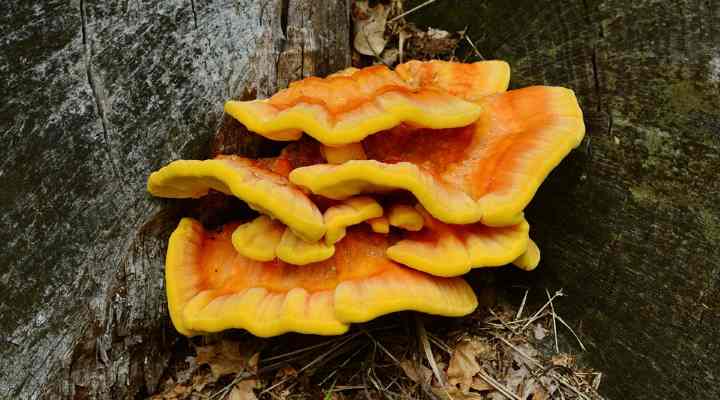
Chicken of the Woods Mushrooms (Laetiporus sulphuerus)

Chicken-of-the-woods is a yellow-orange bracket fungus that grows as clustered shelf-like structures on trees. This edible mushroom is identified by its large, golden-yellow, fan-shaped mushroomsdies growing up to 24” (61 cm) wide. The mushroom’s surface has a suede-like texture and exudes a fungal aroma.

The sulfur-yellow chicken-of-the-woods is common in woodlands in North America. You will find the yellow or orange fruiting bodies on several hardwood deciduous trees like willows, poplars, oaks, beech, and fruit trees.

The common name of this edible yellow mushroom—chicken-of-the-woods—refers to its chicken-like taste when cooked.

Golden Ear Mushroom (Tremella aurantia)

Golden Ear Mushroom (Tremella aurantia)

The golden ear fungus is a type of brightly-colored gelatinous mushroom that grows on decaying wood. The golden-yellow mushroom has a unique texture and appearance. It consists of dense clusters of wrinkled, folded lobes and grows 2” to 6” (5 – 15 cm) in diameter.

When mature, the golden ear mushroom turns golden brown and resembles an orange cauliflower. Although it is considered safe to eat, you must cook it before consumption.

Witch’s Butter (Tremella mesenterica)

Witch’s Butter (Tremella mesenterica)

Witch’s butter is a distinctive yellow, almost translucent jelly fungus with gelatinous masses of irregular lobes. Common names for the fungus describe its appearance—for example, yellow brain, yellow trembles, and golden jelly fungus. The fruiting bodies grow 3” (7.5 cm) in diameter and are found on decaying wood.

Witch’s butter resembles the golden ear mushroom and is related. The differences between the two are that witch’s butter has a greasy or shiny appearance and has thinner lobes. Although it’s considered edible, not everyone agrees that witch’s butter is safe to consume.

Golden Spindles (Clavulinopsis fusiformis)

Golden Spindles (Clavulinopsis fusiformis)

Also called yellow coral, this unusual yellow mushroom looks like clusters of spindle-shaped coral. The fruiting bodies are clusters of pencil-like golden-yellow spindles with pointed tips. The thin clubs grow 2” to 5” (5 to 13 cm) tall. The large tufts of coral-like fruiting bodies are easy to spot in a landscape.

Golden spindles are a common vibrant golden-yellow color lawn mushroom. They inhabit undisturbed grassy areas, woodlands, and forest floors. They often appear after periods of rain, and their bright color makes them stand out among the surrounding green vegetation.

Yellow Patches (Amanita flavoconia)

The yellow patches mushroom is native to North America and is easily recognizable by its yellow-orange warty cap. The cap may be smooth, or covered with small flakes. This highly poisonous yellow mushroom has a pale yellow stalk, densely growing gills, and sticky yellow warts on its yellowish conical to rounded cap. The yellow-orange cap grows 1.2” to 3.5” (3 – 9 cm) in diameter.

The yellow patches look striking, with their vibrant yellow colors acting as a warning signal. The large toadstool-like fungus grows in groups or solitary near oak and hemlock trees in woodlands. It typically sprouts in late summer through fall.

Yellow American Blusher (Amanita flavorubens)

Yellow Patches (Amanita flavoconia)

The yellow American blusher is a yellow wild mushroom with a wide disk-like cap found in North America. This mushroom is identified by its vibrantly yellow-colored cap, ranging from lemon-yellow to brass-yellow. The cap measures 1.4” to 4” (3.5 – 10 cm) wide and sits on top of a thick cylindrical stem up to 6” (15 cm) tall.

The yellow American blusher mushrooms are commonly found in hardwood forests near oak trees. The mushroom’s yellow flesh slowly stains reddish when cut. The yellow mushroom also has a shaggy appearance below the stem’s ring.

Golden Waxcap (Hygrocybe flavescens)

Golden Waxcap (Hygrocybe flavescens)

The golden waxcap is a beautiful bright-yellow-orange mushroom found in lawns and meadows. The rounded or flat-capped mushroom is identified by its yellow-orange waxy cap, pale yellow to orange cylindrical stem, and closely spaced pale yellow gills. The slender stem grows 1.5” to 4” (4 – 10 cm) tall, and its cap is 0.8” to 1.7” (2 – 4.5 cm) in diameter.

Yellow-orange or lemon-yellow golden waxcaps typically appear from spring through fall and grow in small groups or clusters. They prefer moist soil and are common in deciduous and coniferous forests. They often grow profusely close to beech trees.

Common Yellow Russula or Ochre Brittlegill (Russula ochroleuca)

Common Yellow Russula or Ochre Brittlegill (Russula ochroleuca)

The common yellow russula is a large mushroom with a dull yellow convex or flat cap and thick white stipe (stem). The edible yellow mushroom grows 2” to 4.5” (5 – 12 cm) wide, and its stipe is 1” to 3” (3 – 7.5 cm) long.

The ochre brittlegill is similar in appearance to the yellow swamp brittlegrill (Russula claroflava), which has a convex egg-yolk yellow cap and a thick, upright, stout white stem. The yellow swamp brittlegrill mushroom is said to be tastier than the ochre brittlegrill mushroom.

However, it is important to properly identify this mushroom before consuming it, as some russula species can be poisonous.

Yellow Pholiota Mushroom (Pholiota flammans)

Yellow Pholiota Mushroom (Pholiota flammans)

The yellow pholiota is a brightly-colored golden-yellow mushroom with an easily recognizable scaly cap and stipe. The identifying feature of the yellow fungus is its triangular spiky scales covering its surface. These are arranged in concentric rings. The mushroom has a cap with a diameter of 3.14” (8 cm) and its stem is 4.7” (12 cm) tall.

Yellow pholiota mushrooms often grow in clusters on decaying and dead wood of coniferous trees. They can grow in dense clusters or singularly and are commonly available in late summer through fall. The yellow pholiota is considered edible but is not widely sought after due to its bitter taste.

Butter-Foot Bolete Mushroom (Boletus auripes)

Butter-Foot Bolete Mushroom (Boletus auripes)

The butter-foot bolete is a type of wild mushroom with a yellow cylindrical stem and flattened brownish-yellow cap. The identifying characteristic of this large yellow mushroom is its dry, solid cap, ranging in color from pale yellow to golden brown. As it matures, the yellow flesh turns white.

The flat golden brown cap on the mature mushrooms grows 1.6” to 5” (4 – 13 cm) in diameter and has a velvety texture. You can forage for this mushroom near oak and beech trees, and it fruits from mid-summer through late fall.

Golden Scruffy Collybia Mushroom (Cyptotrama asprata)

Golden Scruffy Collybia Mushroom (Cyptotrama asprata)

The golden scruffy collybia is easily identified by its bright yellow to orange cap covered in yellow or orange spikes. Also called spiny woodknight, the mushroom is identified by its cushion or convex-shaped cap, widely-spaced white gills, and shaggy cylindrical stipe. The bright yellow mushroom grows up to 2.6” (6.6 cm) tall, and its cap is 1” (2.5 cm) in diameter.

The golden scruffy collybia mushroom is found on the deadwood of deciduous and coniferous trees, and can be found in tropical areas of the world.

Wood Hedgehog Mushroom (Hydnum repandum)

Wood Hedgehog Mushroom (Hydnum repandum)

The wood hedgehog is a yellow mushroom body with an irregularly shaped yellow or tan-colored cap and a wavy margin. Also called sweet tooth mushroom, the forest mushroom has a yellowish stipe, thick white flesh, and whitish spines under the convex cap. The mushroom’s unique feature is its spines instead of gills.

Wood hedgehogs grow 1” to 4” (2.5 – 10 cm) tall with a large irregular yellow to tan cap up to 6.5” (17 cm) wide. The mushrooms grow singly or in groups on the ground of coniferous and deciduous forests.

Yellow Webcap Mushroom (Cortinarius delibutus)

Yellow Webcap Mushroom (Cortinarius delibutus)

The yellow webcap is a medium-sized mushroom with a shiny, slimy dull yellow cap and white stem. The mushroom is identified by its bell-like cap that becomes flattened with age, cinnamon colored gills tightly packed under it, and a thick whitish stem with a swollen base. The yellowish mushrooms are found in deciduous woodlands in North America.

Yellow webcap mushrooms range in size from 2” to 4” (5 to 10 cm) tall, with a yellowish-brown cap measuring 1.6” to 8.1” (4 – 8 cm) in diameter.

Yellowfoot Chanterelle Mushroom (Craterellus tubaeformis)

Yellowfoot Chanterelle Mushroom (Craterellus tubaeformis)

The yellowfoot chanterelle is an edible yellowish-brown mushroom, identified by its small funnel-shaped cap. Other features of the small mushroom are the cap’s wavy margin, depressed center and shallow gills, and hollow stems. The mushrooms grow up to 3.1” (8 cm) tall with a cap 0.4” to 1.5” (1 – 4 cm) wide.

The yellowfoot chanterelle mushrooms appear in groups on the forest floor or on decomposing logs.

Chicken Fat Mushroom (Suillus americanus)

Chicken Fat Mushroom (Suillus americanus)

The chicken fat mushroom is a yellow mushroom with a bell-shaped to flattened cap and porous underside. Identifying features of the mushroom are the reddish or brownish streaks on the cap, crooked yellow stem, and tube-like opening underneath the cap. It grows solitary or in clusters in North American pine forests.

Chicken fat yellow mushrooms grow 1.2” to 3.5” (3 – 9 cm) tall, and its cap is 1.2” to 4” (3 – 10 cm) wide. It gets its name from its unique appearance-a greasy yellow texture resembling chicken fat. It’s also called the American slippery cap.

Related article:

  • Types of Edible Mushrooms
  • Types of Red Mushrooms – Identification Guide
  • Types of Lawn Mushrooms – Identification Guide

Can a Felon Legally Own a PCP Air Rifle?

0

“Understanding the Legality: Can a Felon Own a PCP Air Rifle? Discover the regulations surrounding felons’ ownership of PCP air rifles, exploring legal restrictions, potential consequences, and exceptions in different jurisdictions. Gain insight into the intricate intersection of criminal records and firearm possession to make informed decisions.”

can a felon own a pcp air rifle?

In the United States, the ownership of firearms by felons is generally prohibited, including traditional firearms such as handguns and rifles. However, when it comes to PCP (pre-charged pneumatic) air rifles, the laws regarding felons’ ownership can vary from state to state. In some states, felons are allowed to possess PCP air rifles because they are not classified as firearms under federal law.

PCP air rifles use compressed air or gas to propel projectiles, making them distinct from traditional firearms that utilize explosive propellants. As a result, some states do not consider PCP air rifles as firearms and do not restrict felons from owning them. Nevertheless, it is crucial for felons to research their specific state laws and regulations regarding the possession of PCP air rifles to ensure compliance with the law.

In most states, felons are prohibited from owning firearms, including PCP air rifles. It’s crucial to understand and comply with the local laws governing firearm ownership, as violating these regulations can lead to serious legal consequences.

Guide to Buying a First Bow and Arrow for Kids

0

There are many reasons a kid might get a fire under their butt about archery. Maybe they watched Hawkeye, Brave, or one of the Hunger Games movies and want to give it a try. Maybe they watched some of the archery competitions from the 2020 Olympic Games last year or they have a friend who is already into archery inspiring them. Were they super into that bow and arrow toy they got for their birthday one year with the suction-cup arrows? That’s a good sign. Getting a bow and arrow for kids could result in a great hobby, an avid competitor, or even a great bowhunter.

However it got there, I highly suggest supporting your kid’s interest in archery. Like football or dance, excelling in archery requires practice, discipline, persistence, decision-making, attention to detail, and other qualities that are ultimately useful in everyday life. And it’s a heck of a lot of fun.

Shopping for a youth compound bow can seem daunting if you have little to no experience with archery. Even an experienced bowhunter might not know exactly where to start. A thousand questions probably loom, but don’t sweat it! Let’s unravel the intricacies of buying a bow and arrow set for your world-class archers-to-be into understandable terms.

Determining Dexterity

Before you shop for a youth bow, you must determine your child’s dexterity. It doesn’t matter what hand they use to write or hold a fork; it’s all about eye dominance. Don’t worry. This won’t require an expensive eye doctor appointment. All you have to do is:

  • Have your child touch the tip of their index finger and thumb together to create a circle.
  • Tell them to fix their gaze on a round object, like a clock or doorknob, that is at least several feet away.
  • With both eyes wide open, tell them to extend their arm and center the object inside the circle they created with their hand.

  • Now, tell them to close their left eye.

If the object remains centered in the circle, they are right-eye dominant and need a right-handed bow. If the object moves out of the circle when they close their left eye, it means they’re left-eye dominant and need a left-handed bow. But you’re not ready to shop just yet.

RELATED – Chris Bee Q&A: How Archery Competition Improves Bowhunting Accuracy

Will a Used or Hand-Me-Down Bow Work?

Naturally, when a new childhood interest arises, parents on a budget often seek ways for the youngins to explore that interest without breaking the bank. In this case, that means looking for a used bow or accepting a hand-me-down from a friend or relative. In some cases, this can work just fine.

First, you need to measure your child’s draw length and determine what draw weight they can comfortably pull. A cheap, used bow or even a nice hand-me-down can often not be adjusted to fit your child’s needs. Don’t let “free” or “cheap” overpower good judgment. But if a used bow can be tuned correctly, then go for it. If you’re thinking about buying a used bow from a stranger, we’ll get to that in a bit.

Determining Draw Length and Weight

You can get a good estimate of draw length at home, and here’s how to do it. But it’s best to visit a local archery pro shop to get accurate measurements taken. Sounds expensive, right? Usually, it’s not. Lots of shops won’t charge anything to measure a kid’s draw length or let them test fire a few bows to figure out their ideal draw weight. If you’re going to be shopping at a larger big-box store, be warned, they won’t have an expert on staff. It’s best to start at a pro shop.

You absolutely must have the draw length and weight for your kid’s bow dialed in out of the gate. It’s critical. Get either wrong, and archery will become nothing more than a frustration for them.

You might also be wondering if buying a bow is worth the expenditure for a continually growing child. Fortunately, some bows are designed especially for youth archers with a wide range of draw-length and draw-weight adjustability that will last them into adulthood.

RELATED – Get in Bow Shape: A 21-Day Archery Lesson Plan

So What’s the Best Bow and Arrow for Kids?

These bows are all quite affordable, especially because some will adjust to keep pace with your child’s growth spurts. Plus, that adjustability makes them easy to sell on Facebook Marketplace or eBay if your kid just doesn’t dig archery or moves on to a new bow.

PSE, Bear, Quest, Mission, and Diamond offer highly adjustable bows. None is identifiable as “the best” because that comes down to individual preference regarding fit and feel, and each bow manufacturer designs things differently. The most important attribute to consider is the bow’s grip; it must fit your child’s hand in a natural, comfortable way.

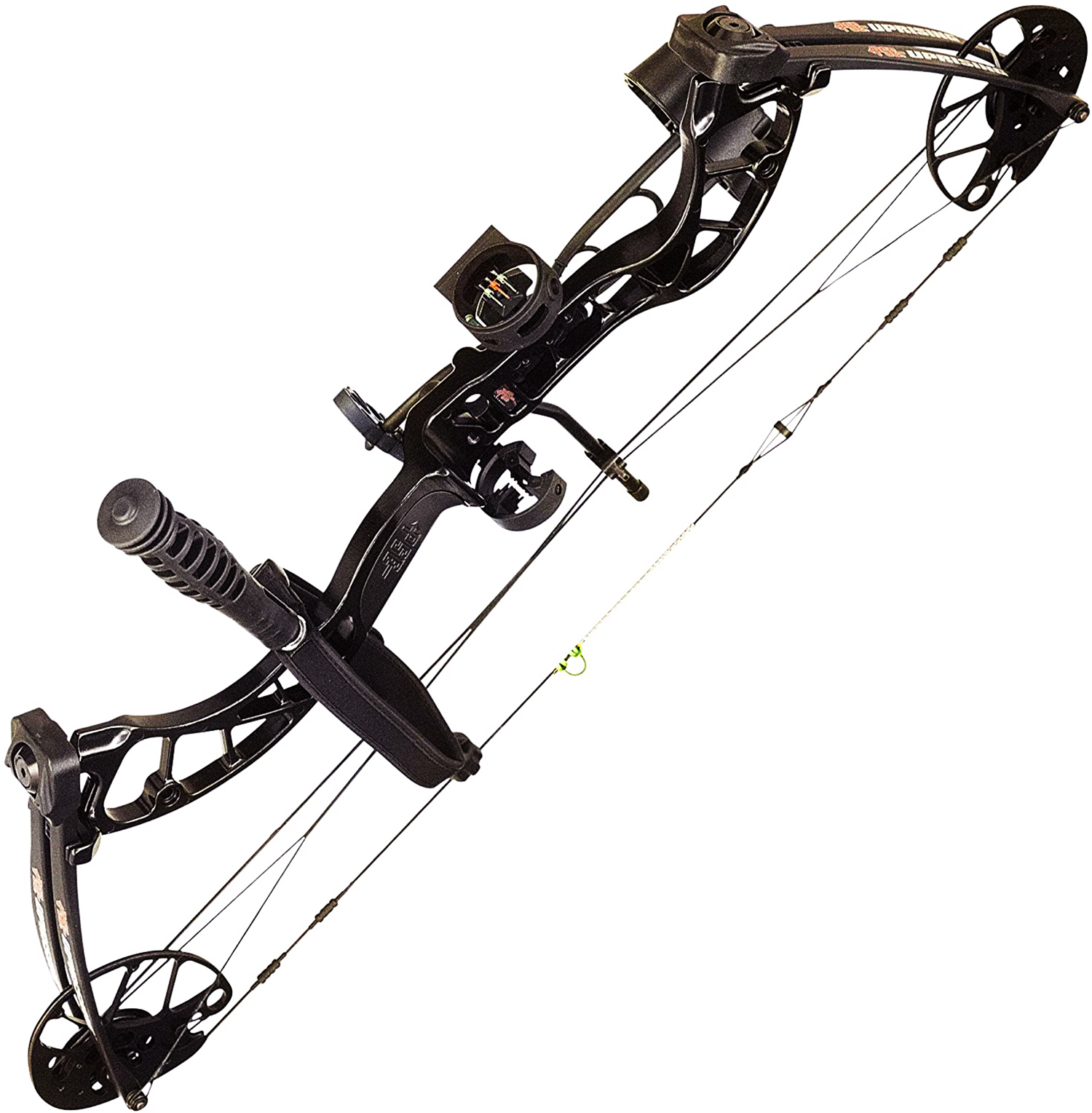
PSE Uprising
The PSE Uprising features a wide range of adjustability for draw weight and length, making it an excellent first bow and arrow for kids.

The Bear Cruzer G2 is a solid choice. Its draw weight can be adjusted from 5 to 70 pounds and it sports 12 to 30 inches of draw length. It can be set up to fit a 4-year-old girl as well as an adult man who is over 6 feet tall.

The Bear Legit is another good option with a slightly heavier overall draw weight, but it’s still adjustable from 14 to 30 inches and 10 to 70 pounds. It’s great for teenagers interested in both archery and bowhunting. Both models come with accessory packages, not including arrows.

The PSE Uprising offers similar adjustability, as does the Mission Hammr.

When shopping for a bow and arrow for kids, you want to choose a bow that can be adjusted and grow with the child as their draw length and weight increase over time.

All of these bows offer exceptional value, but each has its own distinct fit and feel. Again, when comparing bows from top manufacturers, fit and feel make one bow “the best” for any shooter. It might also be a good idea to choose a set that includes an arm guard. If a kid gets a forearm burn from the bowstring early on, they could develop a flinch. An arm guard can let them shoot with confidence until they get their grip and stance just right.

RELATED – World Record Bulls: The Top 5 Typical Archery Elk

Should You Buy a Used Bow and Arrow for Kids?

You can likely find some of the bows mentioned above for sale in used condition online well below MSRP. But, before you buy used, consider the bow’s condition and lack of warranty.

Bow warranties are only valid to the original owner. If a limb splinters after you buy a used bow, the manufacturer probably won’t replace it for free. Also, bowstrings (usually not covered under warranty, even for the original owner) may have incurred wear from use and you might face the reality of buying a new bowstring-and-cable set for the used bow right away.

It’s important to tune and paper tune a bow and arrow for kids so they start on the right foot.

Lastly, don’t assume that when a used bow arrives on your doorstep that your kid can unbox it and commence shooting. Most likely, it will need to be adjusted to their specs and tuned, which will require a trip to the local archery shop. Shops usually charge by the hour for this kind of work. You might save money initially, but it could cost nearly as much or more than a new bow by the time your kid is ready to hit the archery range.

In contrast, most archery shops include setup and tuning at no additional fee with a new-bow purchase. Plus, you get the warranty, and the bow will have a fresh bowstring-and-cable set, which should last up to two years with proper care, depending on use.

RELATED – The 8 Best Archery Pro Shops From Every Region of the United States

What About Arrows?

Arrows aren’t one-size-fits-all. Arrow shafts are designed with stronger spines (stiffness) for more powerful bows and weaker spines for less powerful bows. Gold Tip, Easton, and Victory are top arrow manufacturers that offer great youth arrows.

Gold Tip Lightning arrows have been a top choice for probably two decades now and would make a great arrow set for kids. It’s a carbon-fiber arrow that’s durable and affordable. Gold Tip has additional options if your kid is interested in bowhunting.

Easton has both aluminum and carbon arrows for young archers. Understand that aluminum shafts can bend under pressure. That means the more kids use them and pull them from targets, the more likely they’ll bend, and then they won’t fly true. But, if you’re confident that your young archer will handle them carefully, consider the XX75 Neos for recreational shooting with lightweight bows. The INSPIRÉ makes for a good carbon arrow choice. Easton has bigger and better options for bowhunting arrows.

You also can’t go wrong with Victory. The Ares, Venus, GenX, and V-Force Jr. are all carbon-fiber arrows designed for youth chasing different pursuits, from recreation to competition.

Arrows will perform best when cut to length based on the bow setup. Save yourself some trouble and buy your kid’s arrows through a pro shop that will measure and cut them to the proper length for you.

Hopefully, most of your youth archery shopping questions have been answered. Should you have more, your local archery dealer should be happy to address them so you can get the little ones slinging arrows soon.

READ NEXT – Bowhunting Starter Kit: Everything You Need to Archery Hunt This Year

Hot New Fishing Gear for the Summer of 2022

0

We try to cover cool new fishing gear as it hits the streets, and as FishTalk reader know, nothing related to fishing is out of bounds. For the upcoming summer of 2022 we have four totally awesome goodies and we’re hoping that at least one of these will be of interest to you no matter what sort of an angler you are. Here goes:

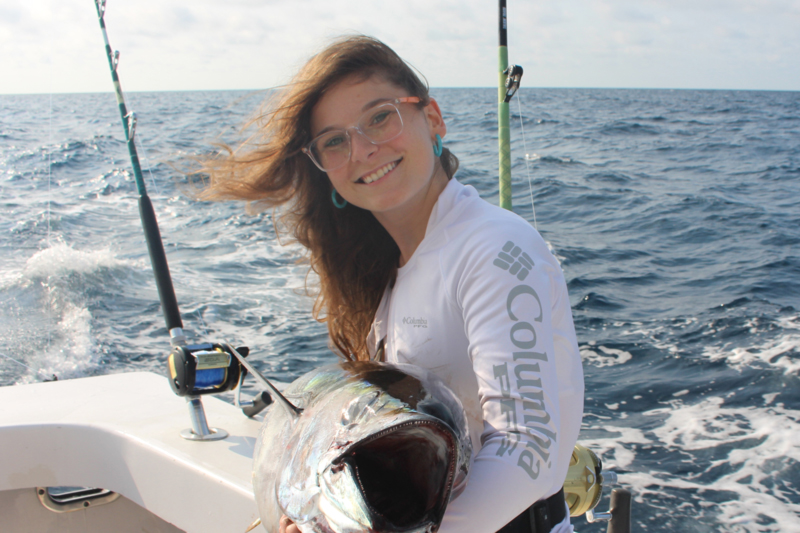
columbia fishing shirt
Our intrepid FishTalk fishing reports editor Mollie Rudow gave Columbia’s PFG line a serious workout.

Columbia PFG Shirts and Shorts

The Columbia PFG line makes no false promises — if anything, it overdelivers. Last summer, I tested out some of their gear both on and off the water to see how it holds up. Trying out their Women’s PFG Tidal II Shorts, Women’s PFG Tidal Tee II Long Sleeve Shirt, and Women’s PFG Tidal Tee Hoodie, I stepped onto boats fully outfitted in clothing to fish.

IMO, the most impressive feature of Columbia’s gear is how fast it dries. When tuna fishing in the Women’s PFG Tidal II Shorts and Women’s PFG Tidal Tee Hoodie they got totally soaked in fish blood, then blasted by a saltwater washdown to remove it. The spray removed all the blood, leaving the shorts looking new and dry within 15 minutes. Within 20, the Tidal Tee Hoodie was also totally dry. All of the clothing provided excellent movement and avoided chaffing; scooping crabs off the trotline truly put this to the test. During the scooping the clothes were comfortable, and the shirt cuffs even withstood the blue-crab-claw test. The PFG Tidal II Shorts also have two spacious front zippered pockets, which comfortably held my phone, wallet, and a variety of snacks throughout the day.

All in all, Columbia’s PFG line is lightweight, durable, highly functional clothing that’ll seriously up your comfort and flexibility on the water. Many of their options, including the ones I tested, offer Omni-Shade UPF 50 sun protection, an absolute essential for time on the water. While made for fishing, I also wore the shorts and both shirts while white water rafting, hiking, running, and generally out and about. I ended summer with a tan line proving how much I enjoyed these shorts — if you pick some up, I reckon you will too. Price: $40 to $60.

-By Mollie Rudow

frabill power pack
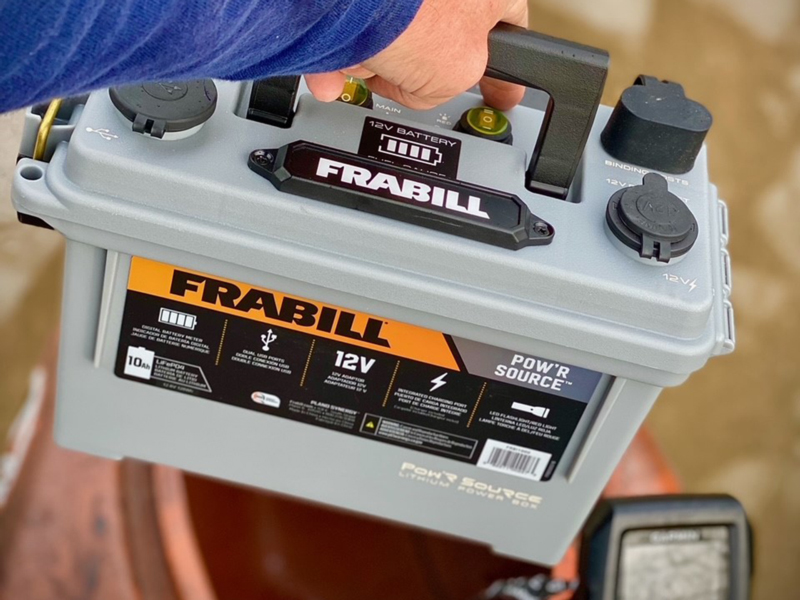
Power up with the Frabill Pow’R Source.

Frabill Pow’R Source

New for 2022, the 12-V lithium battery Pow’R Source from Frabill is sure to power all your camping and fishing needs. The lightweight 10-amp-hour battery is housed in a hardy waterproof case that features two USB ports, a 12-V outlet, and binding ports. Whether you’re powering your fish finder, recharging your phone, or using the flashlight feature to tie on a bait, the Pow’R Source is a surefire way to power up your day out on the water. I tested it while kayak fishing and it powered my Garmin Striker fishfinder for four fishing days in a row, without making so much as a dent in the juice supply. Price: $219.99.

snakehead jawbreaker
Tame those snakes, with the Snakehead Jawbreaker.

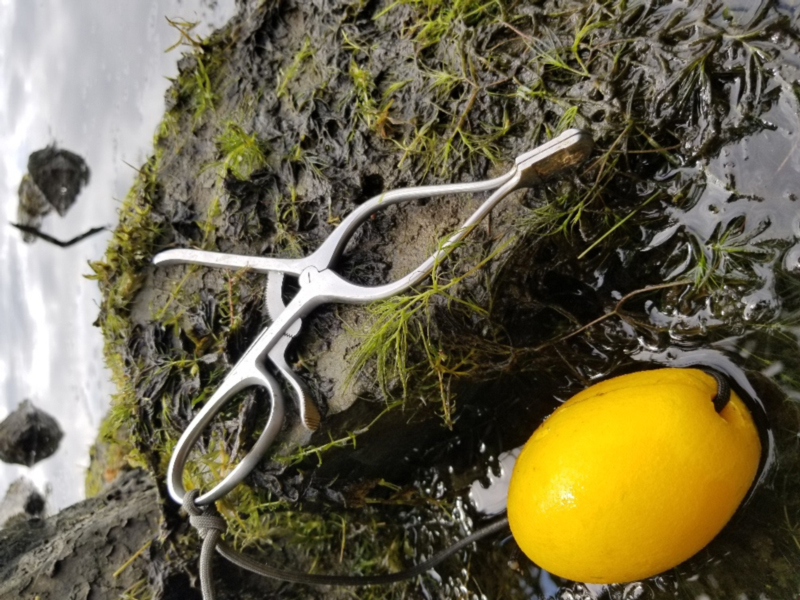
Snakehead Jawbreaker

Prying open the mouth of an angry snakehead is no easy chore, at least it isn’t if you don’t want your fingers perforated, but you’ll have to master the task to retrieve your topwater frog post-catch. Enter the Snakehead Jawbreaker. We spotted this inventive tool while wandering the Pasadena Sportfishing Group’s fishing tackle show, and it struck us as the perfect solution to the average snakehead’s angry attitude. Slide the bill into the fish’s mouth, squeeze the handles, and these reverse-hemostats ratchet open to spread the fish’s jaws wide and keep ‘em that way. The tool also has a large float attached so dropping it overboard isn’t a disaster. Price: $39.99.

quatro braid fishing line
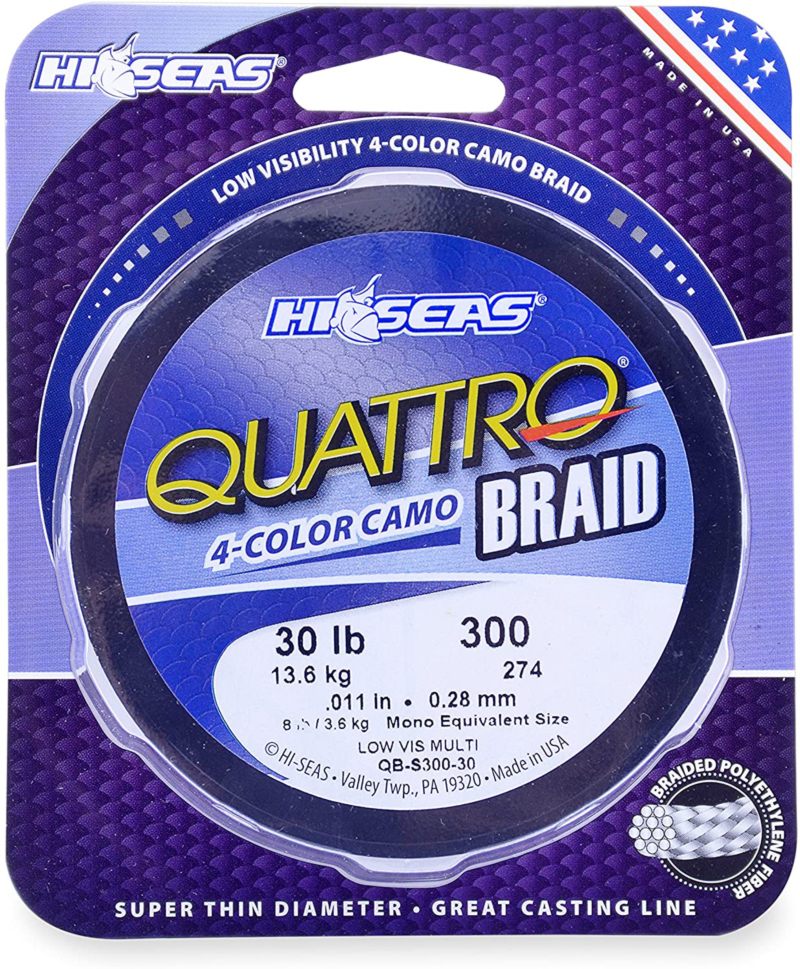
Looking for a line that’s better than the average braid? Check out Quattro Braid.

Quattro Braid Fishing Line

Ever wonder what braid line looks like underwater? Well, the fish won’t tell us. We can, however, try casting with camo. We did just that after spooling up with Hi Seas four-color camo Quattro Braid in 20-pound test. The concept behind Quattro is incorporating blue, black, green, and red colors patterned in short random lengths, to break up visual patterns in the water. Yet you can still spot this line above the waterline like bright-colored hi-vis lines — without tipping off the fish to your line’s presence. This line feels like other braids with zero stretch and sensitivity that mono can’t even dream of coming close to. However, made with tightly woven ultra-high-molecular polyethylene fibers, it also offers a bit less diameter than some competitors and measures up at .008 inches versus the common .009 inches. If you like the idea of casting with 20-pound line that has the diameter of six-pound mono and offers a unique way to visually deceive those dwellers of the depths, check this stuff out. Price: $25.99/300-yard spool.

-By Staff

Steel Shot vs. Bismuth vs. Tungsten: What Gives You the Best Bang for Your Buck?

0

Have you ever been knee-deep in flooded timber, crouched alongside a tree as you watch a flock of mallards work your decoys like they read the script perfectly? You give them a few last feed chuckles as they cup their wings, and you make your shot. You swing perfectly with the appropriate lead, only to watch them all turn and fly out of your life forever, leaving you with nothing to show for it aside from possibly a wounded bird. Has this happened to you? If you’re an avid waterfowler, odds are it has.

The situation I described is all too familiar for most waterfowlers, especially since the federal banning of lead shot for waterfowl in the early ’90s. While this ban played an important role in conservation—fewer birds and other animals are now exposed to toxic lead fragments—the fact remains that most modern waterfowl loads can’t quite match the fatality of lead.

However, in recent years, variations of waterfowl loads have hit the market and gained the attention of outdoorsmen. Variations include split loads, where you could see a mix between a smaller and larger shot to give you that extra knockdown power while still providing enough pellets. Bismuth loads provide a greater density, ensuring cleaner kills. And finally, there’s the revolution of tungsten, which is nearly 70% denser than lead, providing a level of kinetic energy the likes of which hunters had never seen.

But with rising ammo prices and a lack of information surrounding the different shot loads, hunters can have a hard time figuring out which product gives them the best value. I’ll break down the pros and cons of each shot and let you make the final decision on what to put in your shotgun this season!

Steel Shot

What started off as a crunch-time decision to create an effective shot load after the federal ban of lead waterfowl loads led into it becoming the most common waterfowl and upland ammunition today. However, the progression into this wasn’t so glamorous. Steel is an extremely hard metal with a very low density (roughly 7.8 grams per cubic centimeter). This means the shot is very rough on chokes. It also has extremely lower energy rates, especially at long distances.

Over the years, the development of steel shot loads has progressed—through methods of wad advancements, powder improvements, and even shot size stacking. Many hunters have grown to appreciate steel for its low cost as well as its effectiveness in close quarters. Though the complaints regarding wounded birds have decreased with these developments, waterfowlers still feel there is too much risk associated with steel, and they often go with something a little denser and more powerful.

Bismuth Shot

Bismuth shot was the first steel alternative after the federal ban of lead shot in the United States. With a far more impressive density compared to steel (roughly 9.6 compared to 7.8), bismuth proved to be a much more fatal alternative while also being much less harsh on shotguns, especially older ones.

The introduction of bismuth also had its downsides though. Unfortunately, it’s an extremely brittle metal that was inconsistent and had a lack of durability during contact with larger birds. Combining this with its price point higher than steel, it was hard for consumers to make that switch.

The good news is that technology has caught up and improved upon those inferior earlier designs. After nearly a decade with a small market presence, bismuth has made an impressive comeback in recent years with its developments of durable metal blends, bridging that gap for waterfowlers who want better kinetic energy without paying tungsten price.

Tungsten

Tungsten has become a staple as the most effective and lethal shot option for waterfowlers, turkey hunters and upland enthusiasts alike. Tungsten super shot (TSS) has 60% greater density than the once-beloved lead shot and nearly twice the density as steel, making it a bird crusher!

Due to its high density and velocity, hunters can get the same knockdown power with smaller shot sizes, allowing for a much larger kill zone. To put this into perspective, the amount of penetration you would get from using No. 4 tungsten at 40 yards is still nearly 10% greater than the penetration you would get from using steel shot at 20 yards. This equates to fewer wounded birds and quicker limits.

The drawback to shooting tungsten is an extremely high price point. Apex Ammunition is one of the leaders in the market for tungsten waterfowl loads. For a price comparison, its TSS ammo is currently priced at nearly $5 per round, compared to its steel blend, which is roughly 92 cents per round. While this price gap can be somewhat astounding, the argument remains that while you may pay more for TSS per round, you’ll be shooting fewer shots and bagging more birds.

Best Bang For Your Buck

Whether you decide to use steel shot, bismuth, or TSS will ultimately come down to your experiences with each, your budget, and the value you see in the options. It’s no secret that while the lead ban took away a very deadly and affordable option, it is an incredible conservation move for protecting our wildlife, and there are options on the market that perform at the same level and even higher, even if at a higher price point. In my experience, using TSS has proven to be well worth the money given its knockdown power and the ability to use smaller shot sizes, giving me a lower margin of error and, thus, more harvested birds. Having said that, I am friends with many avid bird hunters who swear by the effectiveness of modern steel and bismuth loads, and their success is hard to argue with. I would encourage everybody to at least experience all three and make your decision based on how well they perform for you! Good luck this season!

READ MORE: TICK EASE FOUNDER “TICK MAN DAN” TELLS ALL ON THE DANGERS OF THESE PESTS

Offshore: Making a Gaff

0

Making your own gaff is a fun and relatively inexpensive project that almost anyone can do with basic tools and components. It allows for personal customization, and the satisfaction of sticking a fish with a gaff that you made is second to none!

Materials

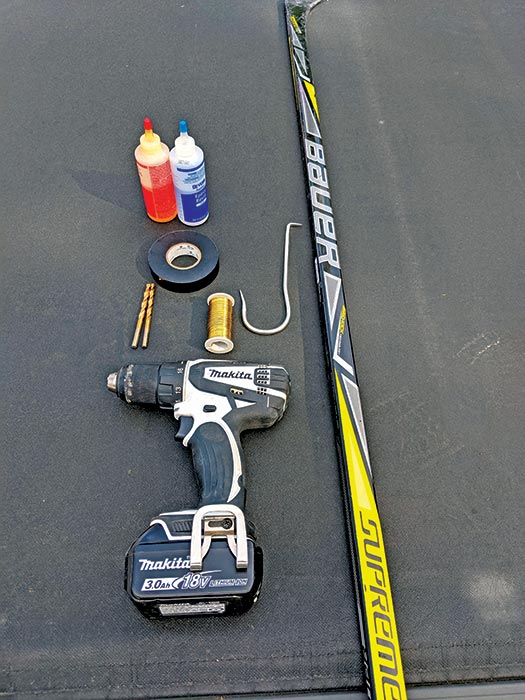
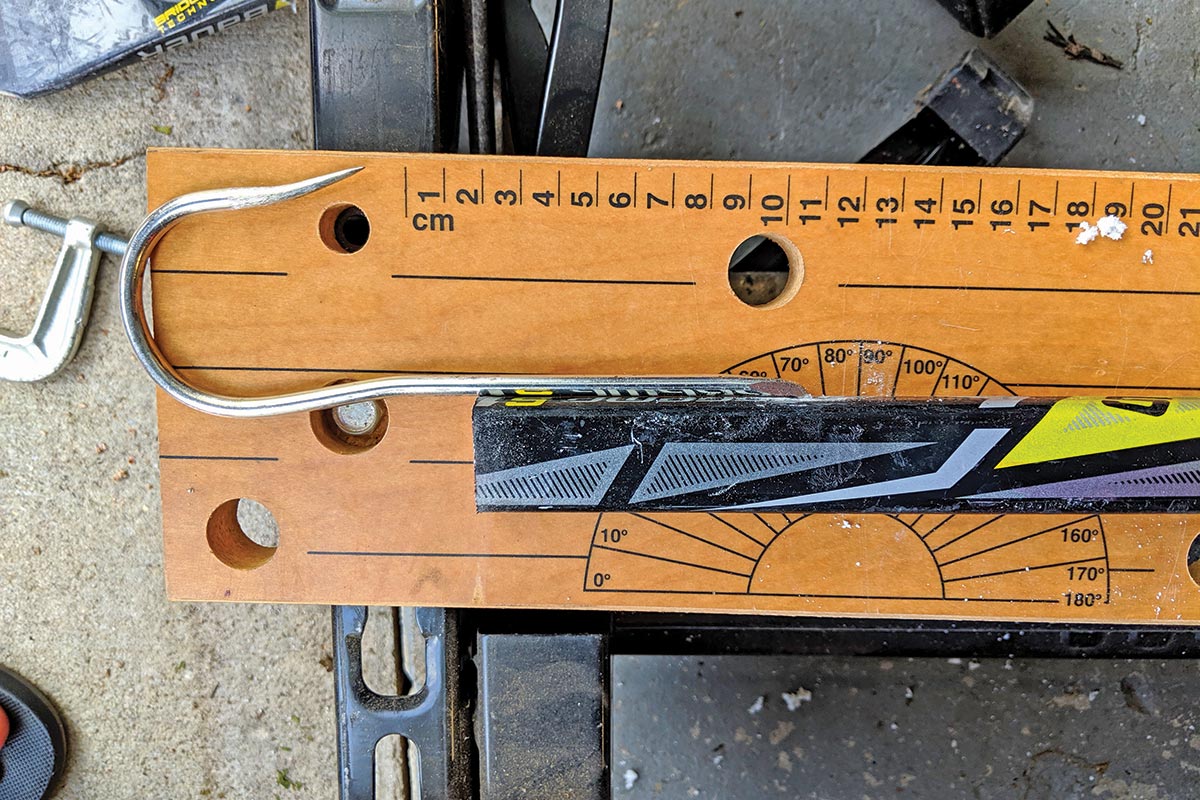
  • Simple materials for building a gaff
    Simple materials for building a gaff, which in this example the author uses an old hockey stick as a handle.

    Handle

  • Gaff hook
  • Paracord, hockey tape, or heat shrink for grip
  • Electrical tape
  • Wire (Like the type to hang pictures)
  • Two-part epoxy
  • Drill and various drill bits
  • Spray paint

First thing is to choose what size gaff hook would be best suited for the type of fishing. For smaller fish like bluefish, mahi, false albacore, or bonito, a 2- to 3-inch hook would be more than adequate. If you’re building something bigger strictly for tuna, shark, and other large offshore species, a 3- to 4-inch hook might be better. That said, a good all-around size is 3 inches which can be purchased at most tackle shops for between $5 and $10. Choosing the best material for the gaff handle is also important. Some people prefer bamboo since it is flexible and strong. Others like rigid handles like broomsticks; hockey sticks, broken rods, or almost anything else can be used as a handle, as long it is durable. The length can be customized, anywhere from a 1-foot lip gaff to an 8-foot reacher is possible. I believe 3- to 5-foot is a good multi-purpose length handle.

Measuring where the barb is is going to be stuck into the handle
Hold the hook up against the handle and determine where the barb is going to be stuck into the handle.

Hold the hook up against the handle and determine where the barb is going to be stuck into the handle. Mark it on the handle; then drill a hole in the handle so the barb fits in there and then outline the shank of the hook on the handle. Remove the hook; then, while holding a drill bit or routing bit on top of the handle lengthwise (parallel to the handle), burr out the outline of the hook shank so that way there is a channel where the shank will sit. Be careful if using bamboo or a somewhat hollow material not to go all the way through; just a little indentation will work fine. Mix some two-part epoxy and put some in the hole for the barb and channel for the shank. Lay the gaff hook in its place and wrap tightly with wire. Epoxy should also be added on top of the wire and hook for extra durability. Let the epoxy cure and harden fully. Once the epoxy is fully dried, it is time to wrap the shank and wire. Before doing this, it might be a good idea to hit the area with a quick coat of spray paint to seal up any exposed wire or hook shank that is showing. This will help prevent corrosion to those areas. The color doesn’t matter since it will be covered up anyway. Depending on the handle material, that could also be painted; it is good to paint wooden handles in particular as a sealant and to prevent the wood from getting waterlogged.

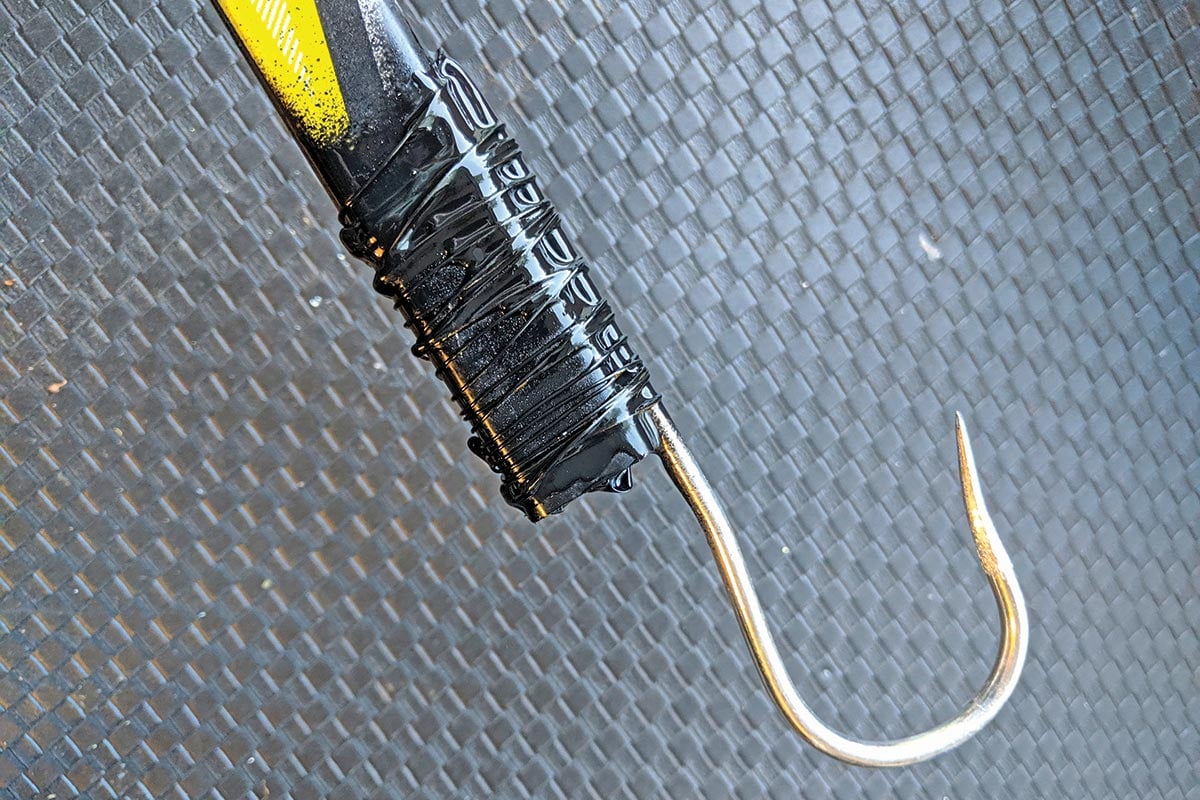
wrap the epoxy, wire, and hook shank; electrical tape, heat shrink, or even paracord/string works fine
Time to wrap the epoxy, wire, and hook shank; electrical tape, heat shrink, or even paracord/string works fine, as it’s mainly aesthetic. The epoxy, wire, and barb are what mainly holds the gaff hook.

After the paint dries, it’s time to wrap the epoxy, wire, and hook shank. For this, electrical tape, heat shrink, or even paracord/string works fine. This is mainly for aesthetic purposes and doesn’t add too much support. The epoxy, wire, and barb are what mainly holds the gaff hook. Having some type of grip on the handle is important, especially if the wood is painted or the material is slippery. Remember, the user’s hands will most likely be wet. Figure out where the gaff handle is naturally gripped when you’re about to stick a fish and add the grips there. The grip can be anything from paracord wrapped around, hockey tape, or heat shrink rod grips; all work great! If using paracord or some sort of rope/string to make a grip, it is important to wrap it tight and finish off the ends with epoxy, so they don’t come undone. What’s nice about this gaff is that it’s something you made and is completely tailored to your liking. Next time NOAA’s offshore forecast leaves you stuck at home, give it a shot!

Best Air Rifle Deals

Popular Posts

How far can an air rifle shoot accurately?

0
An air rifle's effective shooting range depends on various factors, including the type of rifle, the caliber, and the power source. Generally speaking, most...

What Is a Break Barrel Air Rifle?

0
A break barrel air rifle is a type of air rifle that uses a break action to load and unload pellets. It is one...

How Do Break Barrel Air Rifles Work?

0
A break barrel air rifle is a type of airgun where the barrel breaks open at a hinge point just above the breech. This...