


Home Blog Page 176

Best Sniper & Precision Rifle for Beginners [Ultimate Guide]

0

Interested in pushing past the 100-yard line? Want to get into long range shooting but are confused with all the terminology and myths surrounding it?

Today’s goal is to get you to a solid starting place to build and improve on for years to come.
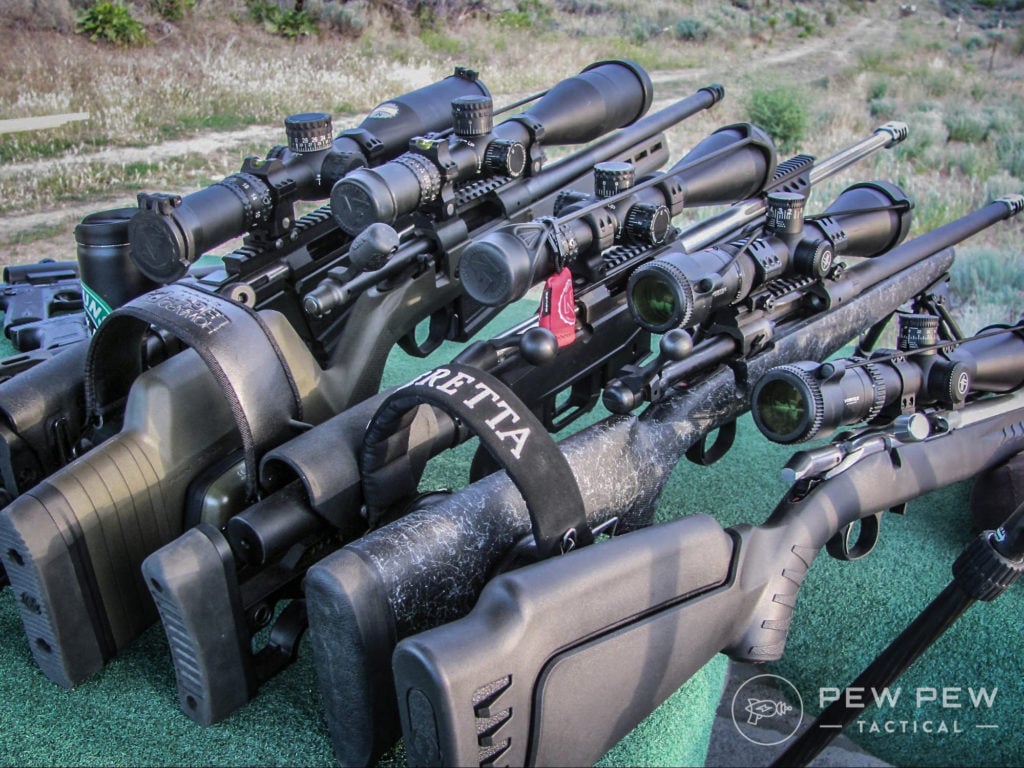
A herd of long-range rifles means a good day no matter where you are!

We’ll lay out some of our recommended rifles for beginner precision shooters as well as point out other considerations to think about when choosing your first precision rifle.

So, keep reading to learn more about what you’ll need to get those long-range shots!

THE QUICK LIST

Best Long Range & Precision Rifles

1. Tikka T3X CTR

From the factory, the CTR comes with quite a few desirable features.

A hammer-forged and threaded barrel makes for an accurate shooter ready to accept a suppressor. That’s almost a requirement these days.

The action is straight enough to accept aftermarket pre-fit barrels without any machine work needed.

Not to mention, the scope base uses lugs and screws for attachment. This creates a rock-solid attachment system.

The safety locks the bolt in place, preventing any unwanted opening, and that’s especially handy if you use it as a hunting rifle.

Its stock is a bit basic, but it’s sturdy enough to prevent flex, lending to an accurate rifle.

Personally, I consider the CTR a phenomenal starter rifle since they’re very accurate out-of-the-box.

But don’t worry; you can upgrade this series with a plethora of aftermarket parts.

2. Tikka T3X TAC A1

The T3X TAC A1 is the bigger, more well-featured brother of the CTR.

It uses the same action and barrel but adds a few tricks…

Ruger Precision Rifle (8)

Starting from the front, it sports a threaded barrel with a large 3-port brake. This brake reduces recoil but can also be removed for suppressor use.

A 2-stage, adjustable weight trigger, replaces the standard Tikka trigger.

But the biggest and most noticeable feature is the chassis. It offers an M-LOK forend upfront for attaching all the accessories you want.

This rifle also brings aluminum bedding blocks for the action.

And the factory grip is comfortable but can also be swapped for your favorite AR-pattern grip. We prefer versatility at PPT!

The rear end features a folding stock that is adjustable for length-of-pull and comb height. But it uses a standard AR-15 interface…you know that means…

It can be swapped for your preferred stock.

3. Ruger Precision Rifle

Ruger jumped into the precision rifle world with the Ruger Precision Rifle, and they knocked it out of the park!

With the growing popularity of precision rifle matches, Ruger reached out to some of the experts in the field to collaborate on a rifle. And the RPR was born.
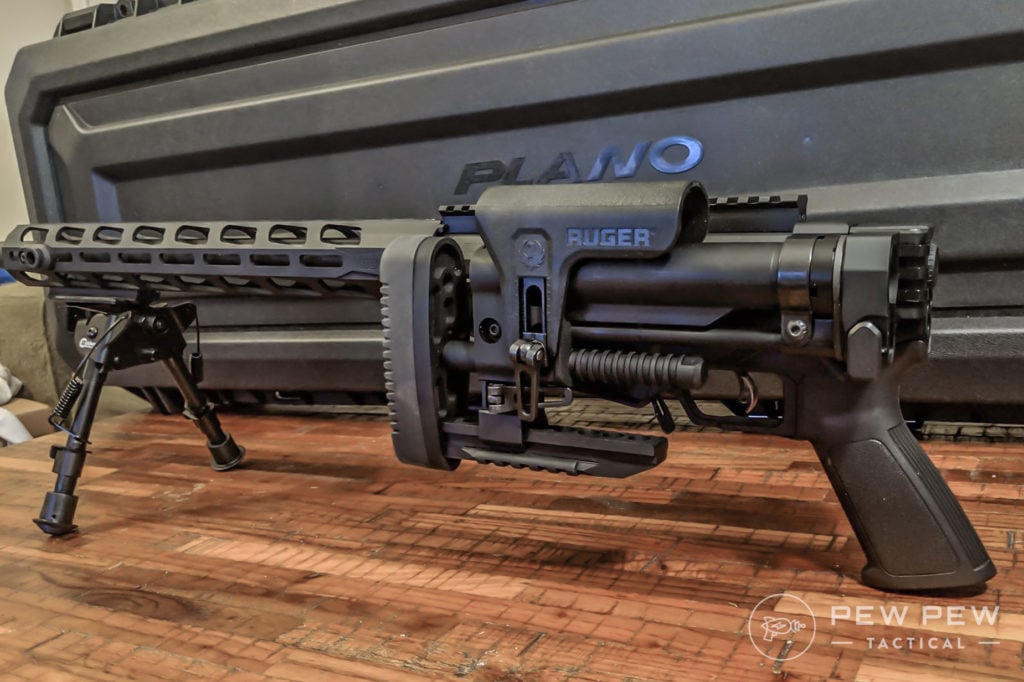
Ruger Precision Rifle (3)
Ruger Precision Rifle

This is truly the AR-15 of the bolt-rifle world…a list of aftermarket parts would require its own lengthy article.

From the factory, it comes with a threaded barrel, all sitting on a cold hammer-forged 5R rifled barrel.

An aluminum M-LOK forend accompanies the front of the gun for attaching accessories.

One of the key features of this rifle, though, is its magazine adaptability. It will easily handle DPMS pattern, Magpul PMAGS, and industry-standard AICS mags.

An adjustable trigger, standard AR-15 safety, and grip complete the fire controls.
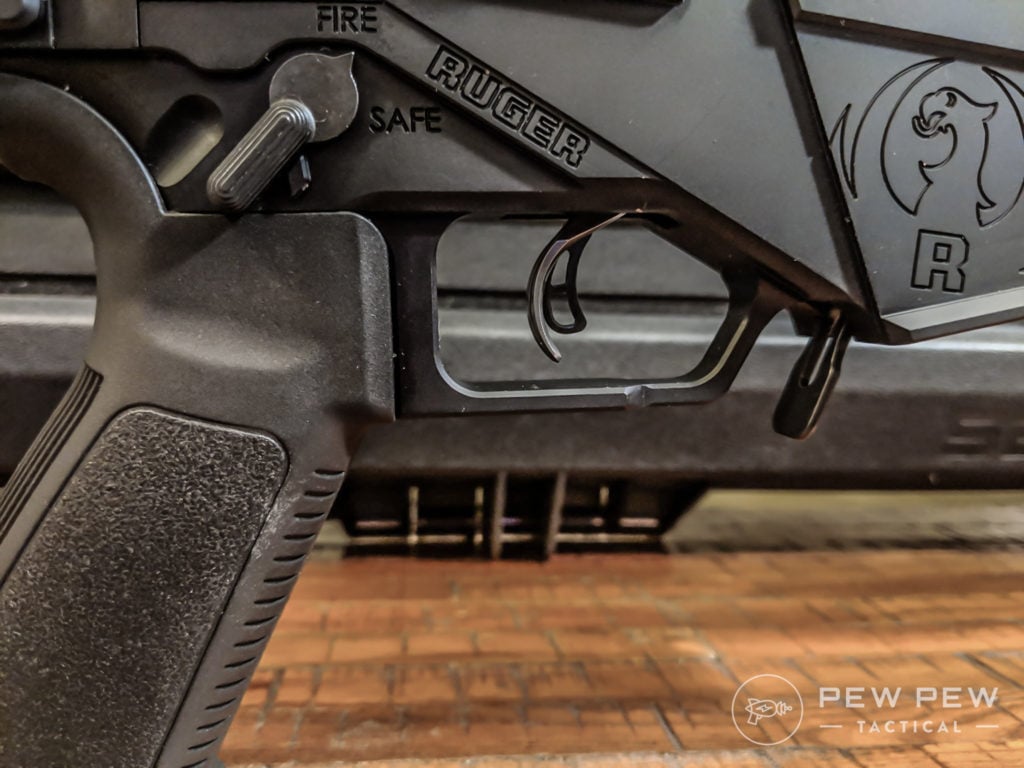
Ruger Precision Rifle (4)

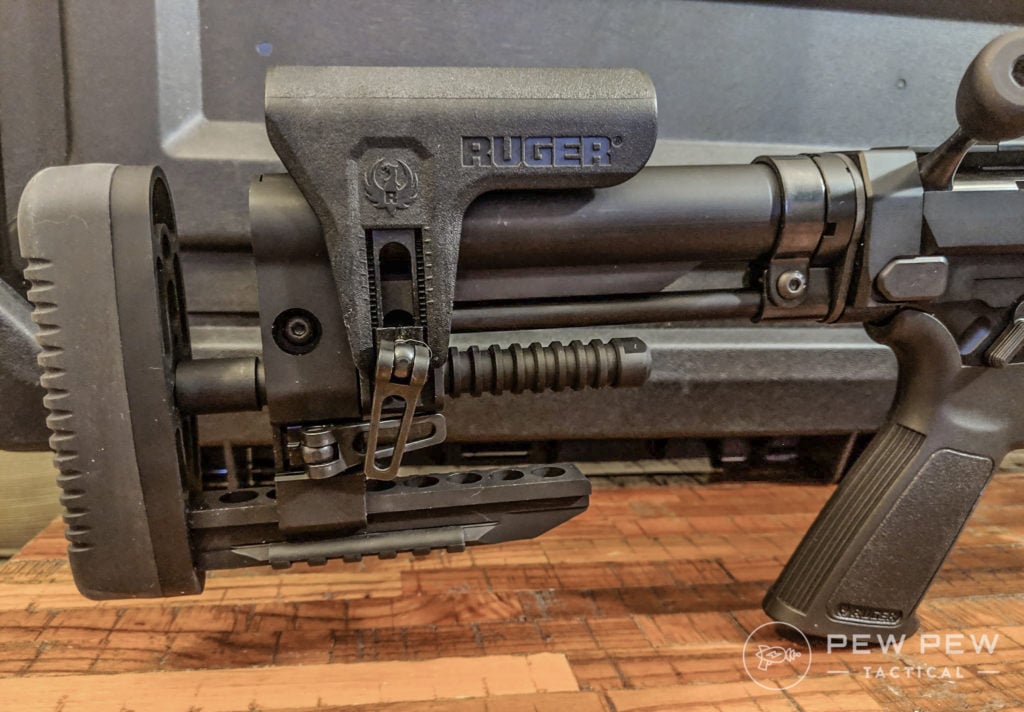
Moving on, it comes with a fully adjustable, folding buttstock. This stock is adjustable for both length-of-pull and comb height.

And it uses a standard AR-15 interface, so the RPR works with any aftermarket option.
Bergara B-14 HMR and B-14r (1)

Oh, and did we mention that the Ruger Precision Rimfire makes an excellent trainer rifle that will keep things consistent but cut down on ammo costs.

4. Bergara B-14 HMR

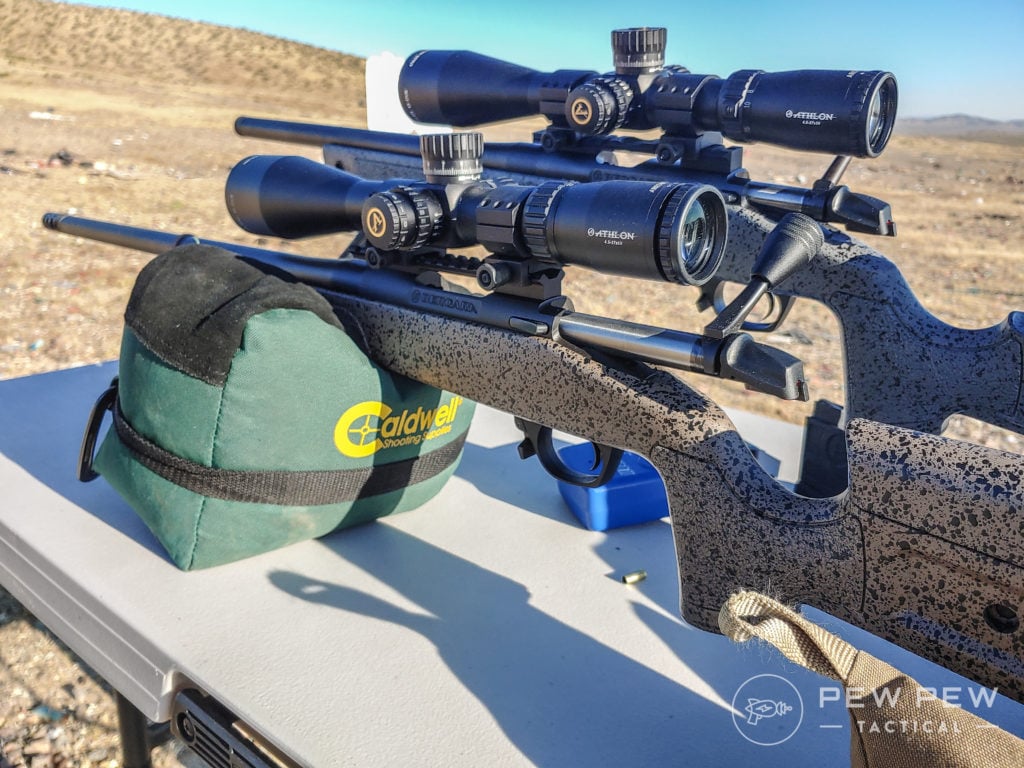
The Bergara B-14 HMR rifle hits every mark for anyone that wants a solid crossover platform.

A number of people have gotten into the precision rifle game to further their skills in the field, and instead of building two separate rifles…why not buy one that can perform at the distance range and the hunting field? It just makes sense.
Bergara B-14 HMR
Bergara B-14 HMR and B-14r

Like some other models, the B-14 HMR offers a match-grade threaded barrel with a thread protector. You’ll have to supply your own break if you want one, though.

The receiver is patterned after the Remington 700, which means it accepts any Remington 700 base or aftermarket stock.

A match-grade trigger adds to the features.
Nice
Bergara B-14 HMR

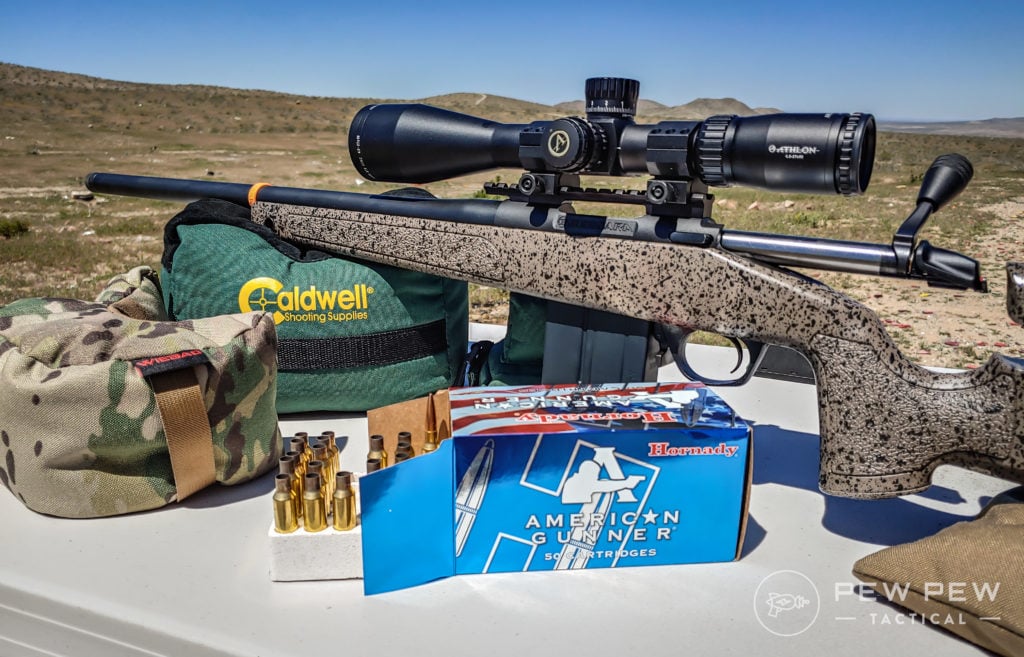
Its factory stock features an aluminum mini chassis for accuracy and molded-in QD flush cups for your favorite sling.

Length-of-pull and comb height adjustments help fit the rifle to any shooter. Bergara also offers a matching .22 LR training rifle for cheap practice.

5. Accuracy International AT

Alright, guys, here it is, my one wild card…

Accuracy International’s AT is the next generation of the wildly popular Accuracy International Arctic Warfare — one of the most widely issued military sniper rifles in the world.

Pew Pew Tactical Flatline Sling

While many aftermarket parts are available right out of the box, this rifle needs no improvement.

For starters, it provides a match-grade threaded barrel fitted to the receiver with AI’s quick loc system.

Ever wanted to change calibers at the drop of a hat?

Well, now you can. The quick loc system barrels make swapping calibers easy with just a 4mm hex key and about two minutes of time.

This rifle’s receiver is flat-bottomed and bonded to a rigid aluminum chassis, and the bolt features six lugs and a short and fast 60-degree throw.

A match-grade 2-stage trigger helps you realize all of the rifle’s accuracy potential.
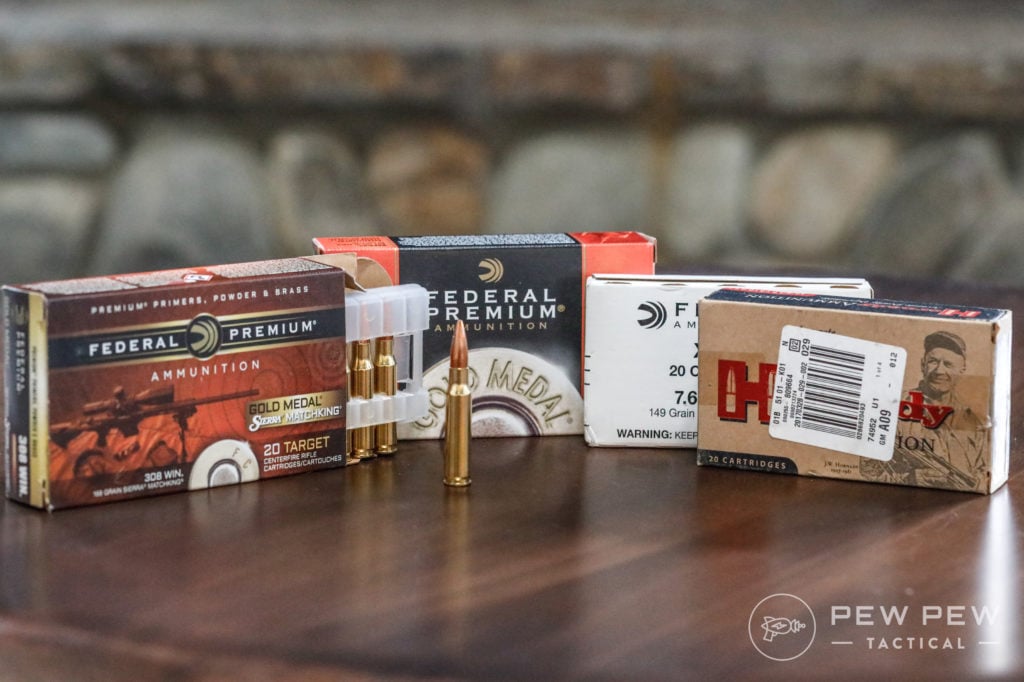
Popular .308 Winchester and 7.62x51mm Ammo

The AT also delivers a 3-position safety with some unique features. Position one is safe, locking the bolt in place and rendering the trigger safe, while position two keeps the trigger safe but allows you to run the bolt to safely unload the rifle. And position three is fire.

Covering the aluminum chassis is a set of molded plastic skins that users can switch out for any color they desire.

The stock also features multiple sling attachment points in either a folder or fixed version.
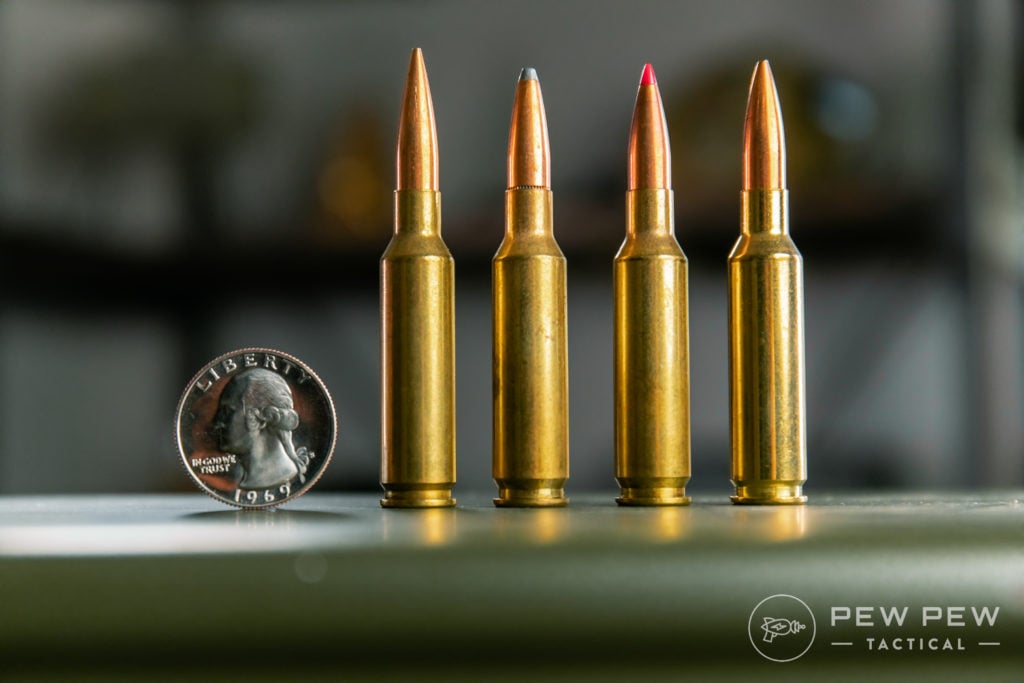
Assorted 6.5 Creedmoor (L to R: Federal FMJ, Soft 129gr, Ballistic Tip 120gr, Gold Medal 140gr)
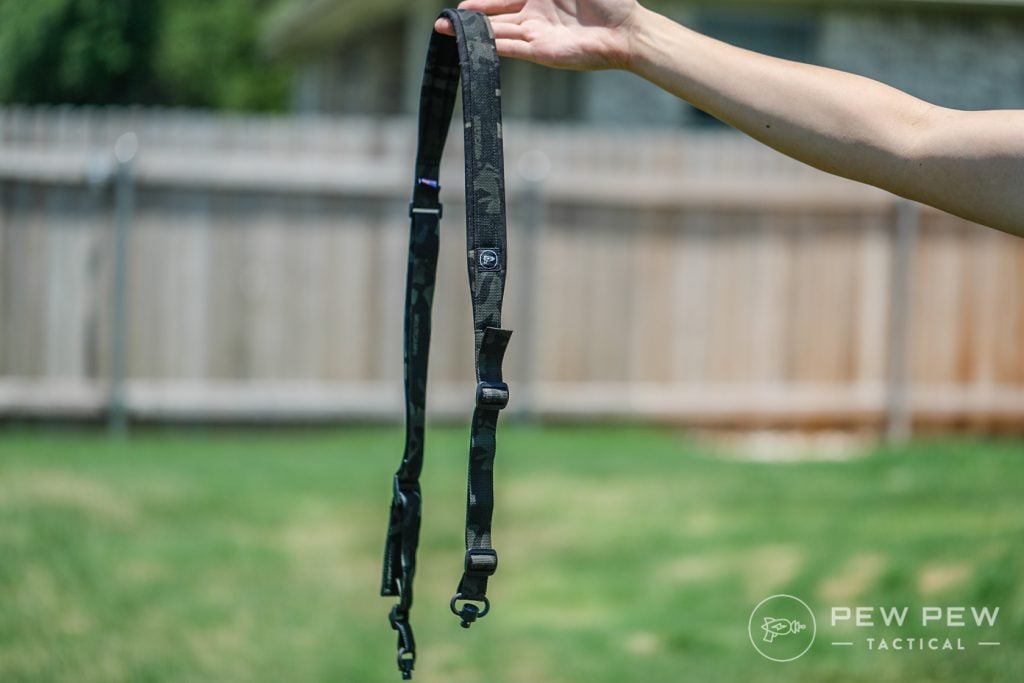
You can even add your own PPT sling!

If all you want to do for a rifle is mount a quality optic and get to shooting, the AT proves hard to beat.

Dependability and consistency are the hallmarks of the AT line of rifles.

.308 Winchester vs. 6.5 Creedmoor: Which Caliber Is Better for Long Range Shooting?

.308 Winchester has been the go-to standard in long range shooting for the last half-century for a few reasons…
Rifling, wikipedia
Popular .308 Winchester and 7.62x51mm Ammo

Tons of available match ammo and regular plinking ammo exist for it — from match grade to surplus. If you decide to reload your own ammo down the road, an abundance of bullets and reloading data is available…more so than nearly any other round.

But how do you save money when shooting this round? Keep your expensive match ammo for the longer distances and use cheaper surplus ammo for close-in positional work.

6.5 Creedmoor

What about 6.5 Creedmoor?

6.5 Creedmoor is the newer, cooler kid on the block. It pushes out farther and drops less than a .308.

Factory loads or handloads; both work just fine in an accurate rifle
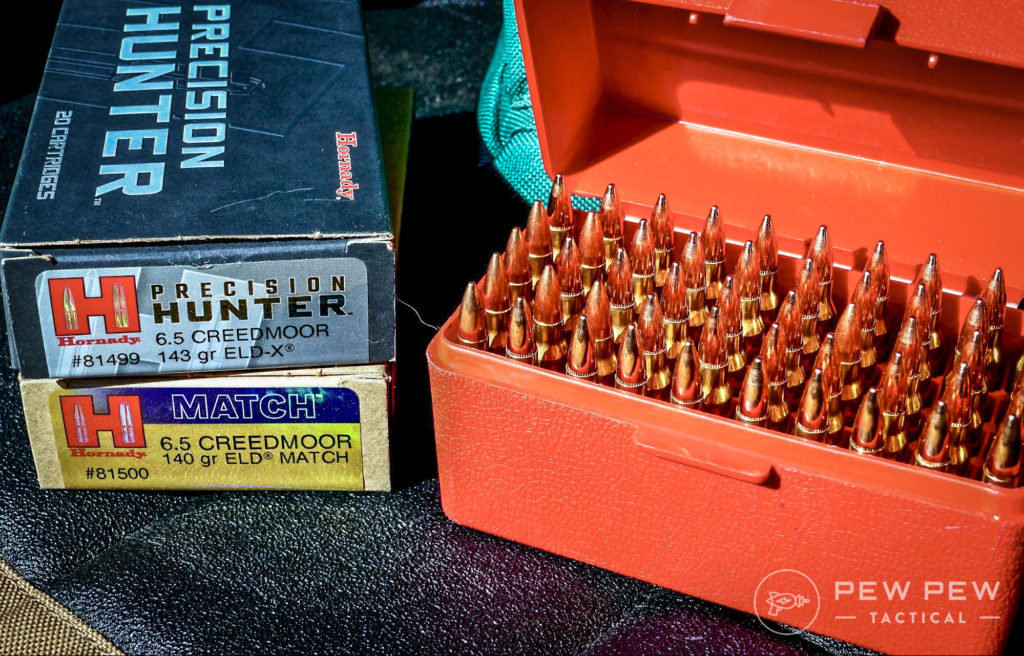
Assorted 6.5 Creedmoor (L to R: Federal FMJ, Soft 129gr, Ballistic Tip 120gr, Gold Medal 140gr)

Factory match-grade ammo is available with good quality. While overall ammo choices and reloading data aren’t as prevalent as a .308, quality ammo is still readily available.

So, which do you choose — .308 Win or 6.5CM?

Honestly, both options are proven choices for beginners.

Twist Rates & Precision Shooting

I’m sure everyone has seen the markings on the side of a rifle barrel — 1/10, 1/8 — but what do these numbers mean?

Basically, it refers to the length of the barrel required to make one full turn of the rifling. So, 1/10 would translate to 1 full turn in 10 inches of barrel length.
Bergara B-14r on the ShadowTech PIG0311
Rifling (Photo: Wikipedia)

Twist rates are important because they stabilize the bullet at longer ranges, especially when it starts going into the trans-sonic and sub-sonic territory.

For a beginner rifle, you want something with a very versatile twist rate as you try different ammunition or handloads to find your preferred ammo.

9 Tested Long Range Scopes
Match-grade and handloads

With a .308 Win, a 1/10 twist is generally preferred. Over the course of my career with precision rifles, I’ve never run across a bullet that won’t perform well in a 1/10.

On the other hand, with a 6.5 Creedmoor, a 1/8 twist will be your most versatile option. All of the lighter weight hunting bullets up to the heavier precision rifle bullets will perform well with this twist rate.

Upgrading a Precision or Long-Range Rifle

This is going to be a big one…

Since this is a beginner rifle article, you’ll probably want to upgrade and accessorize. One trip to your local, long-distance range or precision rifle match, and you’ll be dreaming of new parts.
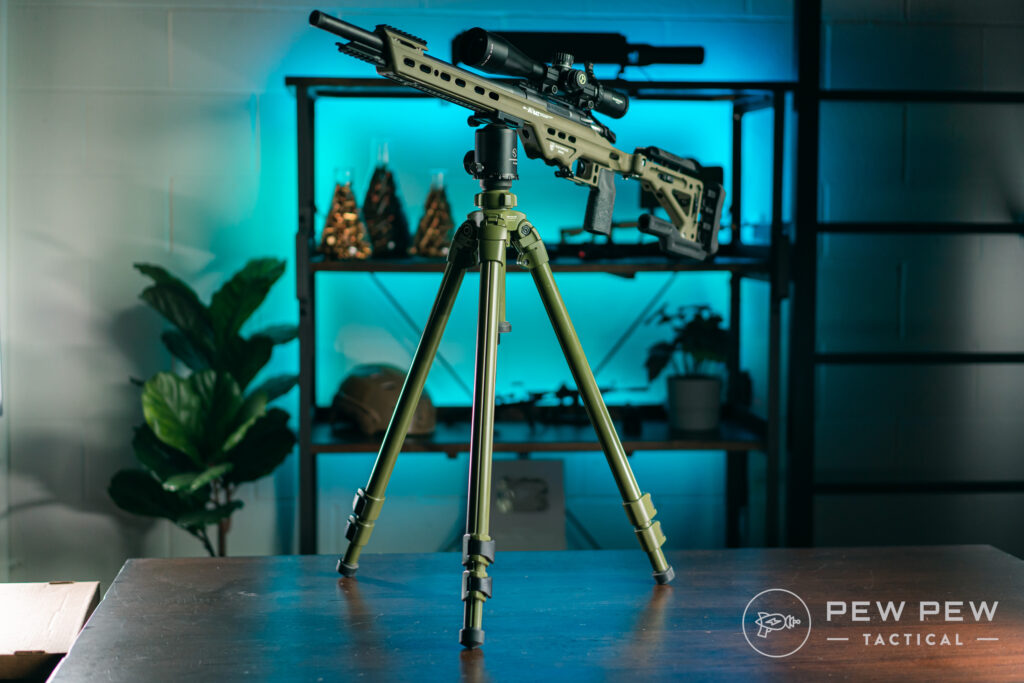
Goals Punch

From stocks, chassis systems, magazines, triggers, and even barrels…using a rifle platform that can be upgraded with aftermarket parts is huge!

Accessories like bases, rings, bipods, and stocks can make or break a rifle. I’m not saying you have to buy the most expensive accessories, but solid quality parts will keep your rifle performing, and you focused on the target.
13 Test AR-15 Triggers
Bergara B-14r on the ShadowTech PIG0311

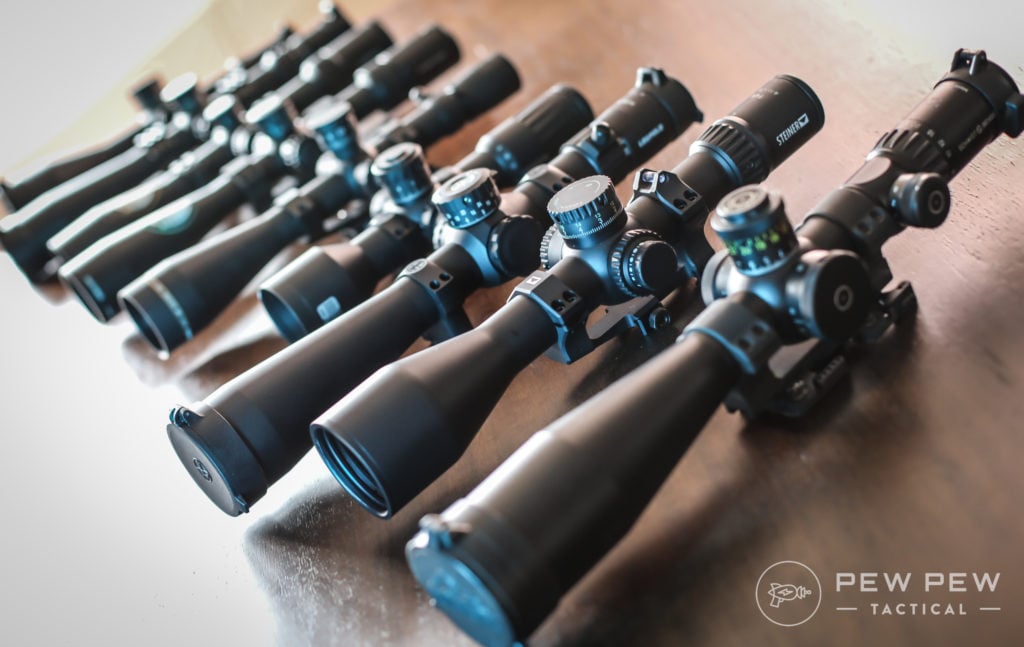
Since you need to see what you’re aiming at, a good scope is an absolute must.

Yet again, the most expensive is not always needed. With the rising popularity of distance shooting, a lot of companies have started to produce solid optics at very reasonable pricing.

When shopping, match the reticle to the task — a duplex hunting reticle will not do any good when trying to do holdovers at distance.

.223 Long Range Shooting Setup
Oh yes…we love optics!

And try not to overdo the magnification — believe it or not, too much can hinder you. A good 3-18 or 5-25 can cover most situations.

Lastly, repeatable adjustments are a necessity. They keep your rifle and you consistent at longer distances.

Things to Consider When Choosing a Precision Rifle

Know Your Goal

My best piece of advice for anyone wanting to get into the long-range game is to have a clear idea of the end goal.

Best Sniper & Precision Rifle for Beginners [Ultimate Guide]

I’ve seen many people buy the hot commodity of the week that doesn’t fit with what they need in a rifle. This is a costly, aggravating path to take.

Easy Maintenance

One of my biggest priority’s when it comes to rifle selection is being able to maintain it.

That means having the ability to swap major parts like triggers, barrels, and stocks without taking it to a gunsmith.

Best Sniper & Precision Rifle for Beginners [Ultimate Guide]
Can you swap triggers easily?

Maintaining out-of-the-box accuracy without any additional expenses accurizing or bedding is a big factor. Personally, I want the ability to do the work at my own workbench, and you probably do too.

Price

Long range set-ups can run a little more than your average rifle, but with the out-of-box features and adaptability, a little investment up front will save you a lot of money in the long run.

Best Sniper & Precision Rifle for Beginners [Ultimate Guide]

Conclusion

With a bit of planning and forethought, the path to precision rifle shooting can be a fun and rewarding journey.

.223 Long Range Shooting Setup

Hopefully, we’ve given you a good list of rifles to consider when shopping and some other considerations to factor in when making that final selection.

What are your favorite long range rifles? Let us know in the comments below. Need some scope recommendations? Check out our guide to the Best Long Range Scopes.

Why You Should Use an AR-15 as a Deer Rifle

0

Do you hunt with an AR? (Michael Pendley photo)

The AR-15 is one of the most popular rifle platforms of all time. It only stands to reason that its popularity would bleed over into the hunting world. It has, in a big way. According to a recent study by the National Shooting Sports Foundation, 27 percent of hunters surveyed have used a modern sporting rifle (MSR) in pursuit of game. Of those, 48 percent report having used a MSR within the past five years, illustrating a growth in the use of the platform among those hunters surveyed. Of those answering yes to the use of an MSR for hunting, nearly 60 percent state they have used that platform to hunt large game.

It's even fun for the kids. (Michael Pendley photo)That popularity has spawned a number of larger caliber choices for AR-15 rifles. Bullet diameters ranging from 6.5mm all the way up to .450 are now mainstream. Some of the most popular include the .300 Blackout, the .450 Bushmaster, and the 6.5 Grendel. Rifles and ammo for all of these are readily available and they all do a great job on deer-sized game.

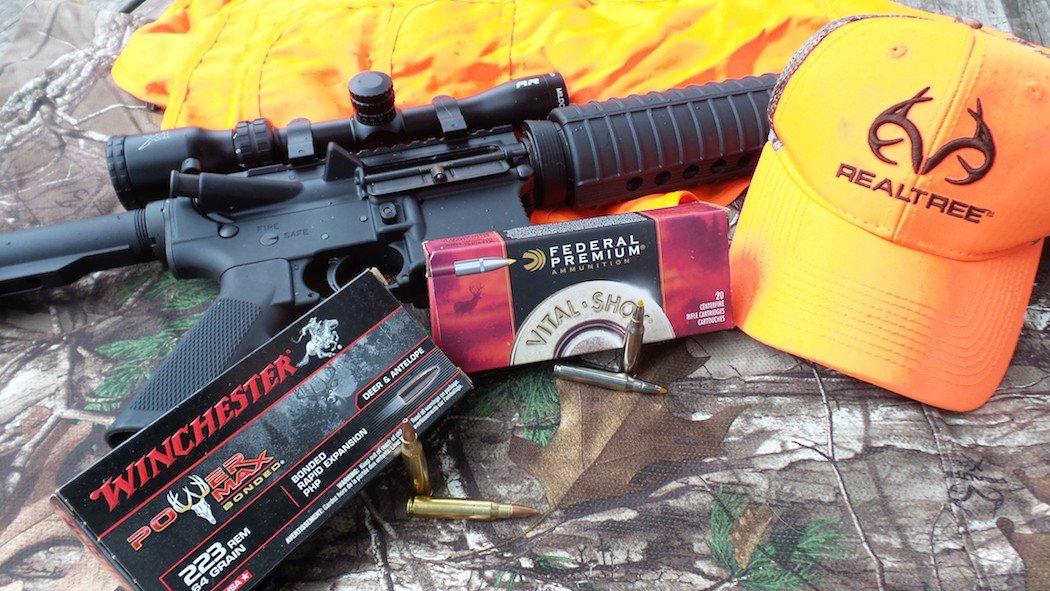
But what about the most popular caliber in the platform, the .223/5.56? With their adjustable stocks, light weight, and nearly non-existent recoil, AR-15s in the .223/5.56 caliber make the perfect gun for young or small-frame hunters. But is that caliber a legitimate choice for the deer hunter? Just a few short years ago, I would probably answer that question with a not really. Yea, the .223 would get the job done, particularly on smaller deer in the deep south, but there was just too much margin for error to make it a reliable deer cartridge.

But, all that has changed in recent years. Ammunition manufacturers, noting the increased popularity of AR rifles among hunters, have set about making the .223/5.56 a genuine deer cartridge. To make this happen, they have borrowed proven designs from other big game bullets and added innovative new features specific to the lightweight bullets found in the .223 to form a tough and reliable cartridge tailor made for deer hunting with the modern rifle platform.

Winchester Ammunition

Winchester Ammunition

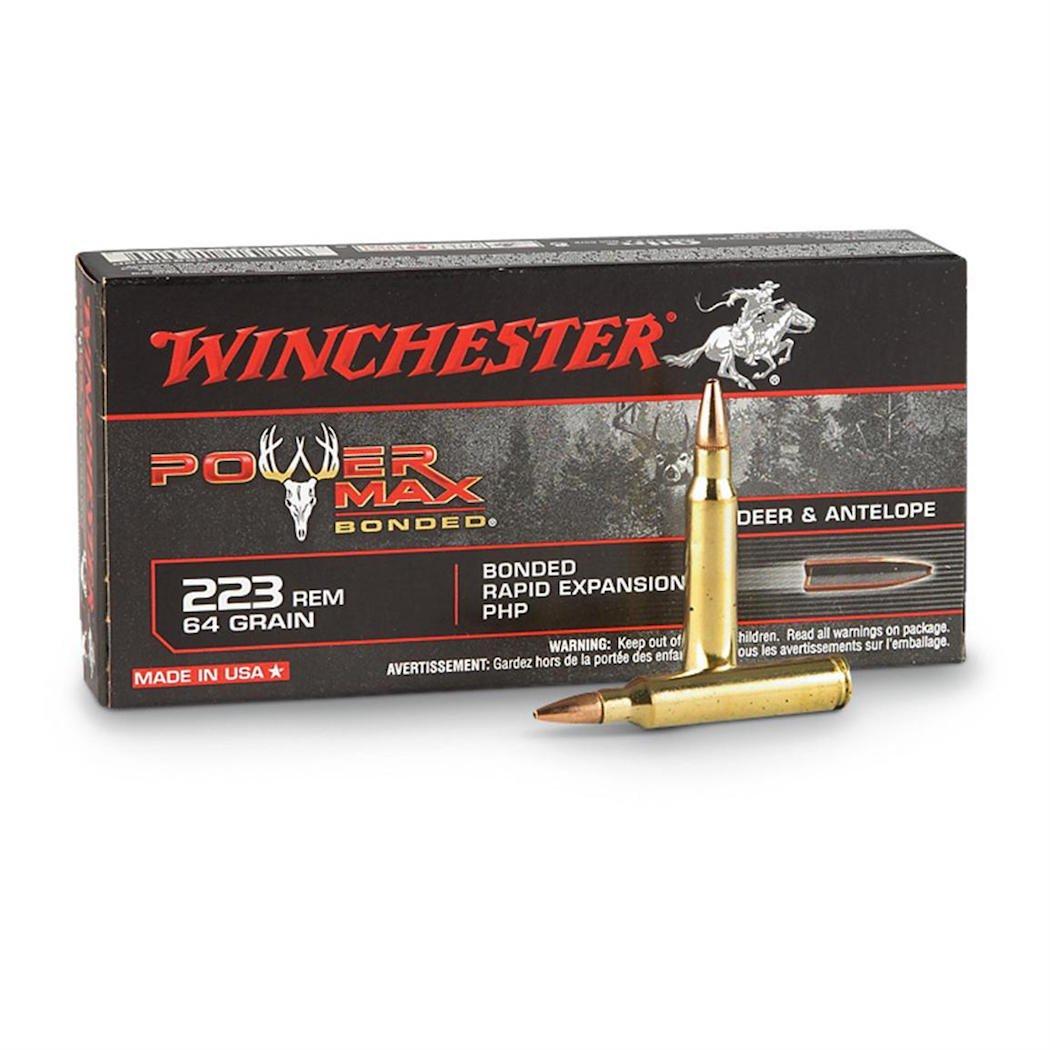
Winchester’s foray into this market is the 64-grain Power-Max Bonded. According to Mike Stock, the center-fire product manager for Winchester, he loves the round.

Our .223 Remington 64-grain Power-Max Bonded really was created purely as a deer hunting bullet, Stock said. What makes a good deer bullet in .223 is very different than what makes a good deer bullet in larger calibers. In heavier bullets, I will always recommend a deer bullet to rapidly fragment which means a tapered jacket that is thin at the nose. However, in .223, we often max out at about 64 grains to achieve good accuracy in 1:12 bolt rifles so we have to put that weight to good use in order to get the penetration we need for deer. That means relatively thick jackets all the way to the nose and in the case of Power-Max Bonded, a protected point also helps with the delayed expansion. This all goes together for an accurate, controlled expansion bullet that can penetrate more than enough for use on deer.

Since 2005, Federal Ammunition has offered a bonded .223 bullet in their proven Fusion line as their go-to for medium game. That changed in 2015 with the introduction of their new Trophy Bonded Tip to their Premium Vital Shock line of hunting ammunition.

MODEL R-15 PREDATOR RIFLE

Federal’s J.J Reich says, The new Trophy Bonded Tip is based on our time-tested Trophy Bonded Bear Claw design. For decades, the Vital-Shock Trophy Bonded Tip has proven itself as one of the most effective cartridges available in many popular calibers. New in 2015, the .223 Rem is the newest caliber in the lineup. The bonded bullet retains more than 90 percent of its weight, penetrates deep, and shoots flat and accurately thanks to its high-ballistic coefficient. Polymer Tip, Long Boat Tail and Skiving all help that performance. The solid copper shank crushes bone, and exterior skiving on the nickel-plated bullet ensures optimum expansion at any range.

Both of these bullets have proven themselves numerous times in the field on white-tailed deer. These new premium bullets have changed how we look at the .223/5.56 as a deer hunting caliber. While shots should still be limited to ranges maxing out at around 100 yards (the small bullet just sheds too much energy beyond that range), hunters can now feel confident in taking their rifles afield during deer season.

Bonus reads: The Great Debate: Firearms Seasons During the Rut | 18 Great Gun Hunting States for Deer Hunters

Click here for more deer hunting articles and videos.

Check us out on Facebook.

Thanks for Signing Up!

0

The giant bull dolphin struck the skirted ballyhoo rig with a vengeance, catching the fishermen by surprise. They were already locked in battle with two other large dolphins. Half an hour later, the big bull lay on the bloody deck of Salty Intentions, a 25-foot Contender owned and captained by Michael Bell. His friend James Roberts caught the fish using a Star Rods Aerial Stand-Up Rod paired with a Penn Squall 16VS reel.

Angler James Roberts (L) and Michael Cahoon (R) with new Georgia state record Mahi-Mahi.

Bell and Roberts had been fishing with Michael Cahoon, Shaun Bragg and James Bashlor approximately 90 miles off the Georgia coast when they landed the prize mahi-mahi on April 26. The Georgia DNR officially certified the fish to weigh 68-pounds, 1.6-ounces—a new state record.

Mahi-mahi, also known as dolphinfish, dolphin and dorado, typically range from 10 pounds to 30 pounds when boated. The world record mahi-mahi, caught off the coast of Costa Rica in 1976, tipped the scales at 87 pounds. The previous Georgia state record for mahi-mahi was 67-pounds, 9.6-ounces, caught by fisherman Will Owens in 2019.

Run to the Gulf Stream

St. Catherines Sound is located on Midway River, between St. Catherines Island and Ossabow Island, approximately 28 miles south of Savannah, Georgia. For more than 20 years, Captain Michael Bell has been making the 80-plus-mile trip from the sound to the Gulf Stream, where he chases tuna, wahoo, mahi-mahi and other bluewater gamefish.

The long distance requires an extra early start, so on April 26, the group of anglers met at Captain Bell’s house at 2:00 am. They left the Georgia DNR Demere Creek Ramp onboard Salty Intentions around 3:30 am, heading east toward the Triple Ledge in the darkness.

“We’ll go to the Triple Ledge and try to catch a wahoo and a blackfin tuna to start out. They normally hang out on that ledge, so we’ll put out some wahoo and tuna gear,” Bell says.

Trolling Triple Ledge

Breezy conditions that day limited the Contender, which is powered by twin 200-hp Yamaha outboard motors, to a top speed of 30 miles per hour. The sun had just started to rise when the group reached the Triple Ledge. They began trolling along the structure and soon caught a pair of amberjacks down deep using a planer. After catching a few mahi near the ledge, they decided to run further offshore. Captain Bell scanned the horizon, looking for a temperature break, weed line, feeding birds—anything that would hold fish or indicate feeding fish.

At around 400-feet deep, the fishermen crossed a long weed line that a couple of boats were already working. After scanning the area, they continued on until they reached a depth of 1,800 feet. Despite a thorough search, they couldn’t find any fish, so Bell decided to head toward the Deli Ledge. On the way, they again crossed a weed line in about 400- to 450-feet of water, approximately 85 to 90 miles offshore.

“I’m assuming it was the same rip that I had seen south of there, so we stopped on that rip and then we set out a spread,” Bell recalls. “We didn’t do anything for the first few minutes, and then the next thing you know, the bite was on.”

The Salty Intentions crew had found a Mahi motherlode.

Fish box aboard Salty Intentions filled with the days catch, including the new state record dolphin fish.

“They just started tearing it up. I had a Squid Nation bucket dredge out and it got to where we were catching so many fish that I couldn’t even run it, so I put that in the boat,” Bell says. “We started tearing the dolphin up. We caught dolphin nonstop, all day. We loaded the boat with dolphin.”

Monster Mahi-Mahi

Shortly after 2:30 that afternoon, a double-header of dolphin hit the starboard long and short riggers. Bell slowed the boat in order to manage the spread while they fought the two fish. On the opposite side of the boat, James Roberts grabbed a rod and began to reel in line in order to free up room for the other anglers. That’s when a large bull dolphin hit the skirted ballyhoo—and then dropped it.

“When I picked the rod up, I snatched it out of the outrigger. It fell back probably two seconds before the boat’s momentum caught up with that lure and started snatching it again. That activated that fish. I don’t know where he came from—but he came from hell, buddy. He came out of the water and knocked the bait out of the water twice,” Roberts says. “Each time he’s doing it, Captain Bell kept hollering, “Drop it back! Drop it back!” I would hit the free spool, drop 30 to 50 feet back, lock it back down and it snatched it again.”

Similar to sailfish and other gamefish, mahi-mahi will often initially strike a bait and drop it. They will then circle back and, if the bait appears to be dead, proceed to try to eat it.

Captain. Michael Bell with state record fish.

“The fish hit it, struck out and commenced to peeling drag,” Bell remembers. “At this point, we got a triple hookup. We’ve got two mid-20s dolphins on the right side of the boat and him on the left side of the boat and it’s burning out. I see the fish charging away and it was a huge bull dolphin. I had no earthly clue that it was that big. I just knew it was a nice one. I’m thinking an upper 40s fish, just a really nice bull dolphin.”

As Roberts continued to fight the monster Mahi, the rest of the crew cleared the remaining empty rods and finally landed the other two fish. Everyone then focused on the Mahi that Roberts was tangling with.

We reeled him in and he burned the drag out. We finally got him in sight. We got off the braid and onto the mono. I usually run about 60 yards of mono on there,” Bell said. “You could see him out there. He was like a giant planer board. You couldn’t make up ground with him when he turned sideways in that current, so I had to start easing in his direction and we’d reel up to him.”

Bell handed the wheel over to James Bashlor, another seasoned fishing boat captain who was fishing onboard Salty Intentions that day. Bell then grabbed a gaff and continued to coach Roberts who had been fighting the big fish for nearly 30 minutes.

“It was straight battle. It wasn’t no playing alongside the boat. His ass was back there tailing and walking and hauling ass,” Roberts says. “He kept taking line. I just kept fighting him back in until he finally wore out.”

Captain Bell gaffed the mahi, but the tip of the gaff accidentally lodged in the boat’s rub rail, leaving the fish hanging precariously over the water. Roberts grabbed a second gaff and hooked the fish in the tail. At the same time, Bell finally cleared the boat’s rub rail with his gaff and slung the mahi into the boat. That’s when the fishermen realized that they possibly had a record mahi on their hands. They stowed their gear and Bell set a course for St. Catherines Sound sea buoy, which was 94 miles away at that point.

“It was literally the best fishing trip I think anybody on that boat had ever had in their life,” Bell says. “We caught 44 dolphin that day, and we had some monsters. We had that state record, but we had several fish in the 40s and a ton of fish in the 30s. It was epic. We had five 60-quart coolers full of fillets.”

After returning to shore, the fishermen had the mahi officially weighed at the Georgia DNR Richmond Hill Fish Hatchery. Although James Roberts will go into the record book, he credits everyone on board for making the catch possible, especially Captain Michael Bell.

“I attribute this entire day to Captain Bell and his crew because he’s got his shit together. He knows what he’s doing. I’ve been fishing offshore off and on for over 20 years, and I’ve never had the pleasure of fishing with people as good as Captain Bell,” Roberts says. “We caught 44 fish that day. Ninety percent of the dolphin we caught tail-walked across the water, so it was a thrill all day long.”

Star Rods Continues to Set Records

Michael Bell began using Star Rods exclusively onboard Salty Intentions after fishing with the rods on James Bashlor’s boat.

“Honestly, I love them. They’re a fantastic rod for the money in comparison to other rods,” Bell says. “My rods are three years old now and I haven’t missed a beat with them. I troll the Gulf Stream with them. I also bottom fish with them. I’ve caught a truckload of fish on those rods—big sharks. I got videos and pictures of 200- to 300-pound sharks that we caught while we were bottom fishing with those rods. Not to mention huge red snapper, grouper and 30- to 40-plus pound amberjacks. I mean I’ve worked them.”

Both Bell and Roberts are quick to praise the Star Rods Aerial Stand-Up Rod that landed the new Georgia state-record mahi. The six-foot Star Rods EX1530C6 features a medium action and a line rating of 15-30 lbs.

“It didn’t let me down at all. That’s all that he’s got on his boat is Star Stand-Up with Penn 16VS’s and I was impressed,” Roberts says. “I had no problem at all fighting that fish. I believe that rod could have handled something twice that size.”

Learn more about Star Rods and find an Official Star Rods Dealer at StarFishingTackle.com

South Dakota Pheasant Hunting

0

Never been to South Dakota pheasant hunting? You might not know what you are missing.

That was the case with me. Having hunted only in Minnesota and Iowa from 1979-1999 I enjoyed the pheasant hunting that the land afforded me and my hunting partners for years.

Being passionate about habitat and wanting to really affect my hunting outcomes and experiences I began looking for pheasant hunting land to purchase, develop and enjoy. I started in Iowa and through several contacts came across a realtor in Iowa who had some land for sale in Iowa but also South Dakota. I had never hunted pheasants in South Dakota but always assumed it was about as good as Iowa (which was way better than Minnesota at the time). After some discussion and persuasion by the realtor I figured I’d have to be stupid not to go out and at least look at the property.

Just driving out there, which was in the springtime, I could tell by how many birds were hanging around the roads that the bird numbers were good. Long story short is I ended up buying the acreage there and hunting/developing the property for pheasants, deer and turkey since 1999. Every opening weekend we harvest between 30-60 birds per day. I also heard stories around the state of parties of 20 hunters getting their 60 bird limit in as little as ½ hour. That’s more chaos than hunting I would venture but just the same – that’s what South Dakota wild pheasant hunting is capable of producing.

Pheasant Capital of the World? I think most hunters would agree. If you read most pheasant hunting outlooks and forecasts, such as Pheasants Forever or Outdoor News, you’ll find that the statistics again and again point to the South Dakota bird and harvest numbers as the reigning leader.

As recently as 2005, the pheasant population approached 10 million birds (1 40-year record). Number of birds harvested that year was nearly 2 million roosters (11.2 birds per hunter. 2 birds per person per day).

This quote from the Pheasants Forever website on the 2005 season sums it up:

“Overview: The 2005 pheasant hunting season was a year to remember across the upper Midwest. South Dakota maintained its hold as the “Pheasant Capital” with an estimated harvest of over 1.9 million roosters, a 40-year high. Iowa, North Dakota and Kansas all checked in with big 800,000 bird totals.”

South Dakota boasted a rooster harvest over twice as large as the next nearest competitors.

In addition to the native resource, South Dakota also reigns champ in the offerings of public hunting, free walk-in access to private land and a host of commercial fee hunting opportunities. In fact, it could possibly be that since South Dakota’s commercial pheasant hunting is so strong and established that Cabela’s in Mitchell can attract hunters from all 50 states in the union on South Dakota’s annual opening pheasant weekend.

Today the passionate upland bird hunter, thanks to the internet, has excellent access to whatever quality pheasant hunting package they desire. If it’s a pheasant hunting trip of a lifetime you desire, look no further than South Dakota. Whether you’re a budget minded do-it-yourselfer looking for the best public land hunt or Bo Jackson looking for that $5000/day experience you can find it. You’ll have to do a little research. But it’s time well spent.

What ever you do, get to South Dakota soon and experience “The State of Pheasant Hunting”.

Check Availability of UGUIDE South Dakota Pheasant Hunting Camps Here

Run Cost Scenarios of your groups pheasant hunting package here with our Trip Cost Calculator

Great Backyard Duck Breeds

0

They say that ducks are the “new chickens” – backyard farmers all over the country are beginning to enjoy the pleasure of keeping ducks. Our ducks are all different breeds because I enjoy variety and I like being able to tell them apart….and because there are so many great breeds I couldn’t choose just one!

Before I kept ducks, like most people, when I pictured a duck the first thing that came to my mind was a large white duck with an orange bill – like the one that tries to sell me insurance in case I get hurt. The next duck I thought of was the classic green-headed Mallard that graces nearly every pond in the Northern Hemisphere.

That was pretty much the extent of my duck breed knowledge. The large, white Pekin duck is the most popular domestic duck breed around. The Mallard is thought to be the breed that nearly every domestic breed of duck is derived from so you will recognize their traits in many domestic breeds. While Pekins and Mallards are awesome, there are tons of other amazing duck breeds available, many of whom are on the endangered list, and would love to find a home in your yard.

If you are thinking about adding some ducks to your life, check out some of these popular duck breeds!

Let’s start at the beginning….

Mallard

Native to most countries in the Northern Hemisphere, Mallards are thought to be the “father” of all domesticated ducks except for Muscovy. Mallards are small, making them capable of flight. They don’t tolerate confinement very well, so if you keep Mallards you risk them flying away and not returning unless you can provide a nice, large, covered enclosure. Mallards lay a beautiful greenish egg, and are highly energetic and talkative. They have one of the lowest egg-laying rates of the domesticated breeds, laying just a couple of eggs per week.

Wild Mallards are widely hunted and removing birds from the wild to raise in captivity is a big no-no with US Fish & Wildlife. Raising wild ducks is actually illegal in many states. When keeping Mallards, you need to mark them to show you have not “duck-napped” them. Metzer Farm, one of the biggest duck breeders in the country, removes the back toe as soon as they hatch to permanently mark that duck as domestically bred.

Male ducks have a glossy green head with a white ring around their neck and grey on their wings and belly, while the females are mainly brown-speckled with a blue band on their wing called speculum feathers. Most people that keep Mallards do so for purely decorative reasons, or for training hunting dogs.

photo credit: Robert Adami, Shutterstock

Pekin

Beautiful all white feathers on a heavy, large size bird. Pekins are popular because they are dual purpose. Hens lay a large number of white eggs so they are great to keep as layers. Their fast growth rate & light-colored skin also make them excellent to raise as meat birds. Around 90% of the duck meat produced in America comes from Pekins. Pekins are a heavy-weight bird with a calm, friendly, curious disposition, lots of eggs and meat if you want it – Pekins are a great all-around choice.

photo credit

Muscovy

A really interesting bird native to the southern hemisphere. Commonly referred to as a duck, Muscovies in fact are a different species than the Mallard duck relatives. Their meat is leaner than duck meat with a plump breast like a turkey. They nest like ducks do, but also like to roost at night like chickens. Muscovies are shaped like a duck and are able to mate with a duck, but the offspring will be sterile and are referred to as mule ducks. They do not quack; the male has a low breathy call, and the hen a quiet coo which makes them perfect for backyard farmers with close neighbors. The male has large red fleshy growths around his eyes called caruncles, the females also have caruncles but to a lesser extent. Most domesticated Muscovys are dark brown or black & white.

photo credit

Cayuga

The only duck breed developed in the United States, Cayugas originated near Cayuga Lake in New York. They are a medium-heavy breed that is slow growing. Cayugas have gorgeous black iridescent feathers that can look green when light shines on them, black bills and black feet (laying females and older birds sometimes have a bit of orange in their feet). They are usually raised for exhibition or eggs and their calm disposition makes them a great choice for backyard flocks. Hens generally lay 3-4 eggs per week and have a charcoal or black-colored shell early in the laying season. Mid to late season eggs & eggs from older birds are usually very light gray. Cayugas are listed as threatened status by the Livestock Conservatory.

photo credit

Buff Orpington

Buffs originated in the Orpington area of Kent, England in the early 1900s (by William Cook, the same man that gave us the popular Buff Orpington chicken). A medium size duck, originally bred as an egg laying breed, you can expect an average of 3-5 white to light brown eggs per week. They have lovely fawn buff feathers with a brownish orange bill and a sweet personality. Buff Orpingtons are listed as threatened.

Rouen

A wonderful multi-purpose duck. A large bird that will lay 3-5 bluish tinted eggs per week. Rouens are a popular alternative to Mallards because they are nearly identical, but much larger so are too heavy to fly away. The males have a glossy green head with a white neck ring and a grey body. The females are brown laced with blue speculum feathers. Their calm disposition also makes them wonderful pets or additions to your backyard farm.

Crested

Usually raised for exhibition purposes or as pets, crested ducks are large white ducks with a ball of feathers, or crest, on their heads. They are slow growing so they are not a popular meat choice, but do lay fairly well (2-4 eggs per week). Bantam crested ducks & crested ducks in colors other than white have also been gaining popularity in recent years. The crest is actually a genetic mutation causing a deformity of the skull, so breeding them sometimes causes some controversy among animal rights groups. Breeding can be tricky – breeding a crested duck with another crested duck can be fatal for the offspring. To breed them you need to breed a crested to a non-crested duck, 1/4 of fertile eggs will never hatch, 1/4 will be crest-less, and only half of the ducklings will develop a crest.

Saxony

A great dual purpose breed, the Saxony is a heavy, fast growing duck that also lays a large amount of white or light blue eggs. Originally bred in the 1930s in Germany, nearly all the breeding stock was lost in World War II. Saxony are listed as critically endangered by the Livestock Conservancy. Males display the typical Mallard pattern, but their colors are unique from any other breed. The male’s head & wing markings are blue-gray, with a chestnut breast and cream belly. The females are a golden buff with cream/white facial stripes, neck ring & belly. They are calm, curious & excellent natural foragers.

photo credit

Call Ducks

Their petite size, calm temperament & playful attitude make Call ducks very popular as pets or for exhibition. Adorably small; full-grown adults tip the scale at under 1.5 pounds. Call ducks were originally bred by duck hunters. The Call duck’s quack attracts wild ducks to the hunting area. For hunting, Call ducks have been nearly entirely replaced by artificial duck calls & decoys, so now these ducks are mainly raised as pets. As expected, they have a very loud call and are very talkative so they might not be the best choice if you have close neighbors. In recent years, multiple colors of Call ducks are becoming available. The two most popular are white (an all white duck) and grey (looks like a mini Mallard)

photo credit

Swedish

A medium to large size dual purpose bird, they are slow growing and excellent natural foragers. You can expect 3-4 eggs per week with varying shades of white, blue and green. They have calm temperaments and will make a great addition to your backyard farm! Black Swedish are mostly black with a white patch on their neck & chest. Blue Swedish are a slate blueish gray with a white patch on their neck & chest. The color blue will not breed true however. If you breed a blue male to a blue female, half will be true Blue Swedish, a quarter will be Black Swedish and the other quarter will be Splash or Silver (either speckled white & grey or a silvery gray)

photo credit

Runner

These ducks do not have the typical “duck” body shape – they are lightweight and stand upright like penguins, they always remind me of bowling pins! Their upright stance allows them to run fast rather than slowly waddle like other domesticated ducks. They were originally bred in China to help rice farmers control insects in the rice paddies. They are excellent egg layers & natural foragers, laying 4-5 eggs per week that usually have a blueish tint to them. Runner ducks tend to be nervous and can stampede when startled.

photo credit

Khaki Campbell

Campbells are usually raised for their superior egg production, they can lay 5-6 cream colored eggs per week! Their excellent egg laying abilities make Campbells one of the most popular choices for backyard keepers. They are a medium weight bird, their smaller size means that some birds are able to fly for limited distances. Developed in the late 1800s by Adele Campbell, she crossed a Runner with a Rouen to create a duck that would lay well like a Runner but will be bigger to use as a meat bird. Campbells are a warm khaki color with the drakes having a darker bronze colored tail and dark head.

Magpie

A lightweight bird, they are excellent egg layers – laying 4-5 colorful eggs per week. Magpie’s eggs can vary from white, cream, blue, and green. Their feathers are usually black & white, but also can be found in blue & white with an orange bill. Generally a quiet & calm breed, they make excellent additions to suburban farms.

photo credit

Silver Appleyard

This is a BIG duck! In coloring, they are similar to Mallards with the male featuring a green head, brown mottled chest with some feather lacing, and cream colored underbody. The females have a silver/white underbelly with brown lacing and iridescent speculum wing feathers. Silver Appleyards are calm & friendly and very reliable egg layers.

Welsh Harlequin

A colorful all purpose duck, they are raised for exhibition, eggs & meat. Welsh Harlequins are a medium weight duck and are also prolific layers, laying 4-6 eggs per week that vary in color from white to light blue tint. They are calm and great natural foragers. The females have a black bill with white & brown feathers and a blue speculum feather ban. The males have an orange bill and closely resemble a male Mallard with a green head, white neck ring and brown body. Welsh Harlequins are one of the few duck breed that have a natural sex-linked characteristic. At just a few days old, 90% of them can be sexed by bill color. Welsh Harlequins are listed as critically endangered.

Hunting Hogs with a 9mm Carbine?

0

Apart from destroying farm fields, contaminating water supplies, and transmitting diseases to livestock, pets, and humans, did you know that wild hogs are known to attack and fatally injure or even kill human beings?

It’s no wonder farmers and hunters are interested in finding a firearm that is powerful enough to take down this invasive species. The 9mm carbine has rapidly become a preferred option for many hunters, especially when it comes to hog hunting. This is because it is effective at short distances, accurate, and cost-effective than most other firearms. Though it requires a perfect shot at a short distance to put down the hog humanely.

Well, this article will be answering some of the frequently asked questions concerning hog hunting with a 9mm carbine.

Can you hunt hogs with a 9mm?

Yes, you can hunt hogs with a 9mm carbine. This firearm is powerful enough to kill a hog at a short distance, and most hunters prefer using it as the only firearm during hog hunting. With this firearm, you will be assured of being able to kill the hogs as quickly as possible. However, you need to take a perfect shot if you are to instantly kill the hog. One can use it as a primary weapon for the hog hunt, but it can be considered as a secondary firearm as well.

You will appreciate that this firearm is not only perfect at killing hogs, but it is also a very economical weapon that farmers, hunters as well as trappers. Importantly to note, you need to have advanced marksmanship for you to be able to take down a hog without causing it too much suffering, especially because this gun is used for hunting in short distances. It brings about a challenging experience during the hunt, as well as an amazing excitement to the hunter. It is, therefore, correct to say that a 9mm carbine is an incredible weapon for you to gun down a hog.

Hunting Hogs with a 9mm Carbine?

Why a 9mm Carbine Is a a Good Option

It is important to note that hogs have a thick skull and hide as compared to other animals you could hunt. This simply means that when you venture into hunting hogs, you need to have a pistol with a longer barrel, and be loaded with fast, strong bullets that will easily penetrate and kill a hog. If you are to ascertain success in your hog hunt, carrying a carbine greatly increases the odds in your favor.

The 9mm carbine fits this bill, as it has a longer barrel. Though the 9mm bullets are small, they are effective when shot accurately at a close range. This simply means that a bullet in such a longer barrel will be able to build up incredible pressure that will guarantee a greater penetrating force as well as faster nominal velocity. This makes this carbine an incredible firearm to take out your hog.

You will also appreciate the fact that this gun is easy to carry, which will only make the hog hunt a little less strenuous. You will be able to execute your hunts with ease, especially stalk hunts which would require you to move about much more before finally getting your kill.

Destruction of Meat

When you are looking to preserve the condition of the hog’s meat and hide, this is the best gun to use for the hunt. You will note that the 9mm bullets are relatively small, which means that they will only create a small entry and exit points in the hog. You do not have to worry about destroying your meat when hunting with the 9mm carbine, even when you get to shoot at short distances.

Best Handgun to Finish Hogs

For a handgun, you could consider using the Glock 40 for hunting hogs. This is because it comes with a 6-inch barrel. This will ensure that you can pursue the hog effectively, and take it down without issues. This is a lightweight weapon that you can easily carry around as you head out for the hunt. When you are hunting hogs with your dogs, this is the best gun to use as you will not get tired carrying it around, and it’s an overall really well-made handgun.

Is it Humane to Use a 9mm?

Killing a hog with a 9mm carbine is only humane when you do it at a short distance and have the right shooting skills to hit the right spot. This means that you can take out the hog with a single shot and quick. When you do not hit the right spot, you are likely to injure the hog and lead to a lot of suffering before it finally dies.

Conclusion

For a successful hog hunt, it is important to invest in the right gun if you are to realize incredible results. You also need to consider ethical issues towards the hog, and you should not put it through unnecessary suffering. Using a 9mm carbine is a good choice when your sure you will make a perfect shot. And personally I’m really in love with Ruger’s new PC Carbine that I think you should have a look at!

Have a fantastic hunt!

Caribou Hunting in Alaska Hunting Fortymile-White Mountains Caribou

0

All zones of the Fortymile Caribou hunts are subject to openings and closings on short notice. Call the Fortymile hotline at (907) 267-2310 for information before departing for the field.

Fortymile Caribou Hotline (907) 267-2310

Fortymile Caribou Zones

Zone 1

Access in these portions of Units 20B and 25C is generally via Chena Hot Springs Road and the Steese Highway.

The Zone 1 portion of the hunt will be closed by Emergency Order if this zone’s harvest quota is reached.

Zone 1 Description

Unit 20B, that portion within the Chatanika River drainage north and east of the Steese Highway, and that portion south and east of the Steese Highway, except the Middle (East) Fork of the Chena River drainage upstream from and including the Teuchet Creek drainage and except the Salcha River drainage.

Unit 25C, that portion east of the east bank of the mainstem of Preacher Creek to its confluence with American Creek, then east of the east bank of American Creek, excluding that portion within the drainage of the south fork of Birch Creek and excluding that portion within the Yukon-Charley Rivers National Preserve.

Zone 2

Access is difficult. Hunters generally fly in or boat up the Goodpaster or Salcha Rivers.

The Zone 2 portion of the hunt will be closed by Emergency Order if this zone’s harvest quota is reached.

Zone 2 Description

Unit 20B, that portion south and east of the Steese Highway within the Middle (East) Fork of the Chena River drainage upstream from and including the Teuchet Creek drainage and the Salcha River drainage.

Unit 20D, that portion north of the south bank of the Tanana River.

Unit 20E, that portion within the Charley River drainage, the Seventymile River drainage upstream from and including the Granite Creek drainage, the North Fork Fortymile River drainage upstream from, but not including the Champion Creek drainage, the Middle Fork Fortymile River drainage upstream from and including the Joseph Creek drainage, the Mosquito Fork of the Fortymile River drainage upstream from and including the Wolf Creek drainage, and the drainages flowing into the Yukon River downstream from the confluence of the Seventymile and Yukon Rivers.

Unit 25C, that portion within the drainage of South Fork Birch Creek and that portion within the Yukon-Charley Rivers National Preserve.

Zone 3

Access is generally via the Taylor Highway and the Fortymile River and its tributaries.

The Zone 3 portion of the hunt will be closed by Emergency Order if this zone’s harvest quota is reached.

Zone 3 Description

Zone 3; Unit 20E, remainder (the road and trail accessible portion of the herd’s range in the vicinity of the Taylor Highway).

Zone 4

Access in these portions of Units 20B, 20F and 25C is generally via the Elliott and Dalton Highways.

The Zone 4 portion of the hunt will be closed by Emergency Order if this zone’s harvest quota is reached.

Zone 4 Description

Unit 20B and Unit 20F those portions north and west of the Steese Highway, north and east of the Elliott Highway to its intersection with the Dalton Highway, then east of the Dalton Highway and south of the Yukon River, excluding the Chatanika River drainage.

Unit 25C, that portion west of the east bank of the mainstem of Preacher Creek to its confluence with American Creek, then west of the east bank of American Creek.

Have additional questions?

Please visit the FAQs for Hunting Moose and/or Caribou in Fortymile Country.

A Beginner’s Guide to Growing Lion’s Mane Mushrooms

0

Lion’s mane is the common name given to a number of mushrooms in the Hercium genus, namely H. erinaceus, H. americanum and H. coralloides. All three species are edible and taste slightly similar to shellfish. They also grow in similar habitats around the world. So, from a cultivation and culinary perspective, they can almost be considered as interchangeable. However many mycologists consider H. erinaceus to be the true lion’s mane mushroom, so this article will mostly focus mostly on this species.

What is Lion’s Mane Mushroom?

H. erinaceus was first documented in 1797 by French physician and botanist, Jean Baptiste François Pierre Bulliard, who named the fungus after the Latin name for hedgehog. In most languages, the common name usually makes some reference to the many beautiful long white spines that dangle below the fruiting body and release the mushroom’s spores. The Japanese name Yamabushitake (mountain priest mushroom) refers to the pom poms found on the clothing of solitary Buddist mountain priests. In Chinese, the mushroom is often referred to as Shishigashira, which translates to lion’s head.

Lion’s mane is found mostly in the northern hemisphere, most commonly in North America, Europe, Japan, and China. The mycelium grows on both dead and living hardwood trees, mostly on old oak or beech, where it produces mushrooms from late summer to early fall (though this may extend into winter and spring in warmer regions). Wherever it grows, lion’s mane may not fruit reliably every year, and its rarity in some countries has led to it becoming legally protected from harvesting, to encourage its growth.

As well as being delicious, lion’s mane also contains a biochemical cocktail of compounds that are attracting emerging interest from the medical community. These include β-glucans, hericenones, and erinacines, which are compounds of therapeutic interest for diseases like dementia, diabetes, and cancer, as well as conditions like inflammation and skin aging.

Read: Why You Should Grow Your Own Mushrooms

How to Grow Lion’s Mane Mushroom

Like many other fungi, lion’s mane mycelium easily grows on cereal grains like rye, wheat, and millet. Though lion’s mane mushrooms rapidly emerge from colonized grain, it’s predominantly a wood-loving fungus, so a bulk substrate with a high proportion of wood can really improve yields. Supplementing woody bulk substrate bags with extra nutrients, like bran or soybean hulls, can also help boost your crop.

Lion’s Mane Mushroom Growth Stages

Despite its unusual appearance, Lion’s Mane follows a similar growth cycle to most commonly cultivated mushrooms. Spores released from mature mushrooms germinate into mycelium, which spreads out through the substrate in its search for nutrients. Once the available substrate runs out and environmental conditions are suitable, the mycelium bunches up in small clumps to form hyphal knots, followed by denser clumps of fungal tissue called primordia, which then go on to turn into the fruiting body—or what most people call mushrooms. As these mushrooms mature, they release the spores and the cycle begins again.Lion’s mane can be white, pink, yellow, or brown depending on different growth and environmental factors. While a white color is most common, pink lion’s mane tends to grow at lower temperatures or when the mushrooms are exposed to direct sunlight. Mushrooms can turn brown or yellow as they become overripe, or if the humidity drops over the fruiting period.

Read: The 5 Best Mushroom Grow Kits for Growing Easily at Home

Lion’s Mane Mushroom Grow Kit

Cultivators face unique challenges when growing lion’s mane mushrooms. Lion’s mane has high moisture content and is a very delicate mushroom, particularly compared to other gourmet species like oysters, shiitake, or hen of the woods. As such, lion’s mane is much harder to find at your local grocers or farmers’ market; they are easily damaged in transit from farm to table. So, growing lion’s mane yourself may be the best way to access high-quality, delicious mushrooms for home cooking or do-it-yourself herbal supplements.

Basic Materials:

  • Lion’s mane spore- or liquid culture syringe
  • Sterile grain jars
  • Sterile bulk substrate bags of hardwood sawdust, up to 50% supplemented by dry weight with bran or soybean hulls
  • Still air box
  • Fruiting chamber

Unlike other homegrown mushroom species such as oysters or Psilocybe cubensis, lion’s mane prefers wood-based bulk substrates such as hardwood sawdust, which can be supplemented with additional nutrients like wheat bran or soya hulls. This supplemented substrate has a high nutrient content and lacks the beneficial bacteria found in coir or manure, so must be sterilized to prevent contamination.

Lion’s mane is easily grown indoors, using the standard equipment you’d use for any home mushroom grow. If you live in an area that’s suitable for outdoor mushroom growing, lion’s mane can also be grown in a damp, shady spot in your garden.

Growing Lion’s Mane Mushrooms Indoors

Growing lion’s mane indoors follows many of the same steps of any typical mushroom grow. Yet, prior to starting, there is one important factor to note: Cleanliness is paramount when growing lion’s mane mushrooms indoors. Sterilizing your equipment and your workspace prior to spawning and fruiting mushrooms will help keep you and your mushrooms healthy as you cultivate. We cover sterilization in more detail in our How to Grow Mushrooms Course. Nevertheless, here are the basic steps to growing lion’s mane indoors:

Step 1 – Inoculation: Sterile grain jars are inoculated with spores or liquid culture, inside a still air box to minimize the risk of contamination.

Step 2 – Incubation: The grain jars are then incubated until filled with wispy white lion’s mane mycelium. Using a still air box, a small amount of colonized grain is then added to each sterile bulk substrate bag, before sealing and incubating once more.

Step 3 – Fruiting: Once your bags are colonized you can punch a few small holes in each one, then put them in your fruiting chamber (such as a shotgun fruiting chamber or Martha closet).

If you get your temperature, humidity, and fresh air exchange right, you can expect to be harvesting tasty fresh lion’s mane about a month after inoculation.

Growing Lion’s Mane Mushrooms Outdoors

If you live in an area where lion’s mane grows naturally, then an outdoor grow might be a good choice, especially if you have limited space indoors. When choosing a species to grow, do some research into which species grow most abundantly in your local area. If H. erinaceus doesn’t grow near where you live, check for similar edible species such as H. americanum or H. coralloides instead.

It is worth noting that due to its rarity, lion’s mane is a protected species in some regions of the world, with specific laws that may prevent harvesting. While it’s normally recommended that you source mycelial cultures from locally abundant species, legal restrictions on picking may make cloning wild specimens difficult. Such restrictions may not extend to spore collection, however, so you may be able to collect spores from wild specimens and purify cultures on agar (or buy from a trusted vendor who has done the same).

To grow lion’s mane outside, simply follow the same indoor growing process above, but place your bulk substrates outdoors when it’s ready to fruit. A humid and shady spot in your garden is perfect, though a bit of extra misting from a spray bottle will help encourage mushroom growth during dry spells.

Growing Lion’s Mane Mushrooms on Logs

As a wood-loving edible species, lion’s mane can also be grown on hardwood logs from trees like beech, maple, or oak. Growing on logs can take a little extra time and effort, but the results can be very rewarding. It’s best to use freshly cut logs, no older than about three months, to ensure they’re not too dry. If you live in an area where lion’s mane grows natively, it’s best to inoculate your logs during the wetter seasons of autumn and winter to give your logs plenty of moisture to help out the growing mycelium.

You’ll need:

  • A selection of hardwood logs, cut to manageable sizes
  • Hardwood dowels colonized with lion’s mane mycelium, or colonized sawdust spawn and log inoculation tool
  • A drill and drill bit the same size as your dowels or inoculation tool
  • Food grade wax, such as beeswax or soya wax
  • Paintbrush or cotton dauber

Step 1 – Inoculation: Drill a series of holes arounda few inches apart, evenly across each log. Hammer in your colonized hardwood dowels, or fill each hole with sawdust spawn using your inoculation tool. Melt your wax (in an old tin can or crock pot), then paint each hole to seal it from bugs. Paint each cut end of the log with wax to keep in the moisture.

Step 2 – Incubation: Stack your logs somewhere shady, cool and damp to allow the mycelium to run through the wood. This can take up to a year or two, and it’s important to keep your logs hydrated throughout dry spells.

Step 3 – Fruiting: It can take a year or two for logs to start fruiting, depending on a range of environmental factors. Logs can either be left in place to begin fruiting, or stacked in ways to increase airflow and make harvesting easier. If you have a few logs you can try different configurations to see what works best, but keep them out of direct sunlight and well-watered to increase the chances of a bumper crop.

When to Pick Lion’s Mane Mushroom

Most growers like to pick lion’s mane while it’s still white and the teeth have become visible; they look like tight little pom-poms or clouds from a distance. If you leave lion’s mane mushrooms too long, they can start to turn golden brown and take on a shaggy appearance. This change in color and appearance indicates a lower quality, in terms of both taste and texture.

How to Harvest Lion’s Mane Mushroom

Lion’s mane can be easily harvested with a sharp knife, by cutting the mushroom off at the base, where it first emerged from the substrate. After harvesting, handle them carefully as they can bruise and begin to look less appealing to eat. However, if you do knock these mushrooms around a bit, don’t worry—they’re still perfectly safe to eat.

Do PCP Air Rifles Need Special Scopes?

0

If you are an outdoors enthusiast, you may be considering purchasing a PCP air rifle for your next hunting trip. While these rifles can offer lethal accuracy and power at long distances, there is one important factor to consider—scopes. Do PCP air rifles need special scopes?

Understanding the Scope Needs of PCP Air Rifles

The answer is NO. Any scope will work on a PCP as there is little to no recoil. In the case of spring air guns, however, a special scope must be used due to the significant amount of recoil generated by the springs when firing. This type of scope has a reticle braced both in front and in the back to absorb shock.

For other types of air rifles (e.g. PCP or CO2 guns) you can use any scope but it is a good idea to get one with AO or side focus down to 10 or 15 yards.

This feature enables you to quickly adjust the focus on your target without having to take your eyes off it, giving you an advantage when tracking the game at close range.

Additionally, for hunting purposes it is also a good idea to get a holdover reticle that takes into account the trajectory of air guns—this style of the reticle will help compensate for bullet drop so that you can make more accurate shots from longer distances.

All in all, while PCP rifles do not require special scopes like some other types of air guns do, they still benefit from specific features like AO/side focus and holdover reticles that make shooting more accurate and efficient. By understanding what type of scope your particular firearm needs and investing in quality optics, you will have everything you need for successful hunting trips with your PCP air rifle!

Crocodile Vs Great White Shark: Who Wins And Comparative Analysis

0

Crocodiles and great white sharks are magnificent marine creatures that intrigue one and all. Let us draw a comparative analysis between them.

Crocodiles are reptiles who live on land and water, whereas great white sharks prefer residing in deep waters and will not survive on land. Both crocodiles and great white sharks are dangerous, aggressive creatures who prey on smaller animals of the ocean. However, they frequently attack each other too.

There are several questions that people might have regarding crocodiles and great whites, especially when it comes to the critical differences between them. Today, we will answer some of the most commonly asked questions.

_qaEZZRhhYBUPACV1OeBrIgvqX4VySETP22PqMj79PWrDz2Rfwldb7XOflvN7b1ypHyYFwUFzjrnLPlRnuHV6YODq-lwVBbAIifrzkA9Xecb2EW6SU15mt7xAuG3rZ_Je4fX-gEo

Image Credits: “Madagascar, crocodiles” by luc legay is marked with CC BY-SA 2.0.

czdZEUtatg5Je1Gq2EFhtM2smjIKNh2fo8p7dVdAZcnq0z6heoe_Kiq9sBa-a-XmWEZMwyBSdUd0NJFe3Eh0XsVKgc2ez9qwOEui_NIm5LKZ6eCDPuouzc0mVHG1VyL5E5YNVM98

Image Credits: “Great White Shark” by Elias Levy is marked with CC BY 2.0.

How are crocodiles different from great white sharks?

Crocodiles and great white sharks are two different species with several distinguishing characteristics. Let us learn more in this regard.

Crocodiles belong to the family of reptiles, whereas great white sharks are essentially a cartilaginous shark species. In addition, crocodiles can move on both land and water, whereas sharks cannot survive outside water and swim at a depth of 1200 meters or more. Besides, crocodiles are generally considered stronger than great white sharks.

Of course, there are several similarities between the two animals. For one, they are both fierce predators who prey on numerous marine creatures.

Will great white sharks win in a fight against crocodiles?

BaieNrOSoDlhm9MFD36mDbT45GhVRcJ9SmurnVKDPGJrc8QRNDaWst07DV47hoQtXi24qC77yaopZhVEx-55CDl44Ve3CU_HXM9pQzTaNIsEG-K0sGedQNCWFAOtHgRILqnHXG_3

Image Credits: “Great White Shark” by Elias Levy is marked with CC BY 2.0.

Great white sharks and crocodiles are both predators and fighters. But, who will win in a fight against the other? Let us find out.

Great white sharks will win in a fight against crocodiles in deep waters but lose to them in shallow waters. Crocodiles are powerful creatures who can bite and tear apart their prey, and any smaller shark species cannot hold their own against them. However, great white sharks are powerful enough to prey on crocodiles.

We must mention here that great whites are also better swimmers comparatively and can see better in deep waters, which gives them an added advantage over crocodiles.

Crocodile vs. great white shark bite force

Crocodiles and great white sharks have varying bite forces. Allow us to tell you more in this regard.

The crocodiles have greater bite force, not just in comparison to great whites but also most marine animals. For example, crocodiles have a bite force of 3,700 psi, and their jaws are quite powerful as well, whereas great white sharks have a biting force that extends up to 4,000 psi, depending on the size of the shark.

We must mention here that in the case of great white sharks, the larger their size, the more powerful will be their biting force.

Nile crocodile vs. great white shark

KNnUjTSDOWB4fs2SN0WUrNWEmo4dHX5joChVPohFPmrj0U-uBQsG1bH_8wJ1G34sp4jhJ2U-3V9T9F6U2LvoFBZN4lzY10dFzrbtn8tcgza00JOp4wuHwY0iBUy4qR8qXyWwg1kj

Image credits: “Nile Crocodile basking” by Steve Slater (used to be Wildlife Encounters) is marked with CC BY 2.0.

Nile crocodiles and great white sharks are two popular oceanic species. Let us draw a comparative analysis between them.

Nile crocodiles attack anything and everything that comes their way, whereas great white sharks are more selective. As some of you might already know, great white sharks prefer eating seagulls and other shark species. They attack humans out of confusion but never deliberately, whereas there is recorded evidence of Nile crocodiles actively preying on humans.

Nile crocodiles are also known for attacking other crocodiles, small hippos, and birds.

Sea crocodile vs. great white shark

hkHU2Sr0CosbNBPf82ECLAjp8Jm9nwsuLWMEtvV-MvDHuYmU19KJXLB70BAgTQ7LoSvmUxjVzewHorJzPNOcGjl2Mqm-cIivc-KjMtyZMBIArsiIXHb130kdL1MAd3Bnpe-GyhVd

Image Credits: “Saltwater Crocodile” by thinboyfatter is marked with CC BY 2.0.

Ej3TCcT7SwlheHpMayyrqvbyeBB4uwAHigp3P2oAFpt3mCp7sV4IYbJZp6FFjhTIUc36CQhumnAXz3kphKnAzoDMxNcSib5p3ghwNvlexW5eIA71KMNLT0Ro9Ohb1FziLh4tGsUz

Image credits: “Great White Shark” by Elias Levy is marked with CC BY 2.0.

Sea crocodiles and great white sharks are intriguing creatures. Allow us to chalk out a comparative analysis between them.

Great white sharks are slightly bigger than sea crocodiles and can overpower them in combat, although not easily. Great white sharks are better swimmers and can maneuver through the ocean, especially deep waters, with ease, whereas sea crocodiles may not have the same swiftness.

Moreover, we must mention here that crocodiles cannot see as well as great whites in the water, which gives the sharks an added advantage.

Tiger shark vs. crocodile

j4haNoKSNGVTFf9487ds_gK2N6Y4555oPDko96Nn_HWfU8kjUMFHGf07o7CbGiiBq0MEh8_eJ8uVBt5McD0ISHK75h2vNPLRAiDyIcxtcjpU8rxgZ8ETwiU8iBdGJa6DWLHyfAZd

Image Credits: “Tiger Shark at Sea World, Gold Coast” by kevgibbo is marked with CC BY 2.0.

Tiger sharks and crocodiles are dangerous, ferocious creatures. Let us together explore their differences.

Tiger sharks definitely have the upper hand over crocodiles. This is because they can move around better in water, have greater agility, and have sharp, powerful teeth with a strong biting force. Therefore, they can easily cut through turtle shells and attack crocodiles as well. There have been instances of tiger sharks preying on and eating crocodiles.

That being said, crocodiles are ferocious hunters too and often prey on smaller shark species, including young tiger sharks.

Shark vs. crocodile bite force

Sharks and crocodiles have different bite forces in general. Allow us to tell you more in this regard.

Crocodiles are the most powerful biters among all terrestrial species. They have a bite force that extends up to 3,700 PSI and has around 66 teeth that are four inches long each. On the other hand, sharks have teeth that extend up to two inches and have a bite force of 4,000 PSI.

However, shark teeth are serrated and therefore make it easier for them to cut into and tear apart the flesh.

Saltwater crocodile vs. great white shark size

Saltwater crocodiles and great white sharks vary in terms of height and weight. Let us tell you more about their size.

Great white sharks happen to be bigger than saltwater crocodiles and weigh around 6,500 to 7500 lbs, whereas most saltwater crocodiles grow up to 800-1600 lbs only. Besides, great white sharks and crocodiles have similar heights, with sharks growing up to a maximum length of 21 feet, whereas saltwater crocodiles grow up to 22 feet.

Crocodiles, in general, have a tougher hide which makes them more resilient to attacks, and they can hold their own against great whites.

Conclusion

Great white sharks and crocodiles are among the two most intriguing oceanic creatures. They are both highly dangerous and can get quite aggressive towards humans. While crocodiles attack quite indiscriminately, great white sharks prefer preying on sea lions, seals, and smaller shark species. Both these animals are threatened by overfishing and commercial exploitation, due to which it becomes essential for government bodies to take adequate measures to ensure their conservation.

Best Air Rifle Deals

Popular Posts

Master Small Game Hunting with an Air Rifle: Tips and Techniques

0
"Experience the thrill of small game hunting with an air rifle! Embark on a captivating journey as you test your accuracy and precision in...

Can you dry fire a gamo air rifle?

0
Unveiling the truth behind dry firing a Gamo air rifle, this intriguing headline delves into the possibility of safely practicing without ammunition. Join us...

Pump Air Rifles vs Break Barrel

0
Exploring the Pros and Cons: Pump Air Rifle vs Break Barrel - Unveiling the key differences and advantages between two popular air rifle mechanisms....