

Home Blog Page 160

Shed Hunting Michigan: How to Find a Pile of Antlers in the Great Lakes State

0

Shed hunting Michigan is tough, but it can be done.

As I walked past my treestand over to the puddle of standing water in the forest, I glimpsed what looked like tines poking out of the standing water. As I came closer, it immediately became apparent from the milky white coloration and the layout that I was looking at a brow tine, G2, and G3 just barely breaking the surface. Had the water been any higher, I might have missed seeing the shed antler completely.

After using a stick to pull the small 4-point side out of the water, I stood up, glanced to the side, and immediately felt dumb. The matching side was also laying in the water only about six feet away, and I hadn’t spotted it until then.

The tines were sticking barely half an inch above the shallow water’s surface. It was my second matched set of the year.

It also just goes to show that looking for deer antlers in Michigan can be much harder than other parts of the country. These antlers easily could have been lost to time. As soon as the rains that accompany this time of year come, the antlers would be submerged completely, and quickly hidden by dead leaf litter in that swampy area.

After more than 25 years of looking for shed antlers in Michigan, I’ve discovered many of the tips and techniques that are good for other states don’t always translate to the Great Lakes State. Fortunately, I learned how to shed hunt this state the hard way. Now you won’t have to do the same. This is how I find shed antlers every year in Michigan.

When do bucks shed their antlers in Michigan?

In my experience, most Michigan bucks seem to start shedding their antlers around the second week of February. Many are completely shed out by March. The earliest in the year I’ve found a shed is mid-January. There are always outliers to these times though. I’ve gotten trail camera photos of bucks holding their antlers into late April here before. The factors that affect when deer shed their antlers are going to be different for each animal based on the animal’s health, testosterone levels, and other factors. Although it does seem like more bucks shed earlier the more severe the winter. As much as I hate long, lingering snows, those kinds of winters always leave me rubbing my palms together in anticipation. Mainly because it seems to concentrate where bucks shed their antlers more than a mild winter, but we’ll talk more about that later.

I should also note that you shouldn’t believe the myth that all antlers get completely chewed up if you don’t hurry. I’ve found shed antlers in Michigan in July and even September before. I will note that on private lands in Michigan, it helps a lot if you can hold off searching until March. On public lands that isn’t always an option because of the competition of course. In my experience, the less pressure on the deer the better, especially if you have exclusive rights to shed hunt a spot.

Think small when searching.

It’s easy to get excited scrolling through Instagram and seeing people piling up the big antlers in Iowa, Illinois, and other states of the Midwest. However, we need to temper expectations in Michigan a little.

Let’s be honest; our deer management is not great here. Most whitetail deer do not live to see their second birthday, especially the yearling bucks. You can thank our overly-long deer hunting seasons and bag limits that may be a little too generous. But I digress. The point is, if you go out looking for a sun-bleached 5-point side, odds are you’re not going to find it here in Michigan. Unfortunately, I think that’s why a lot of Michigan shed hunters get discouraged.

I finally found my first 5-point side this year and it took me nearly 25 years to do that. I’ve found antlers every year for the last decade, but it took that long to find a 5-point. It’s just not easy to find the big ones here.

Speaking of tempering expectations, you also shouldn’t expect to find a ton of antlers in Michigan, not without a ton of walking anyway. My record for a year is 11 and I’ve done that twice. Most years I’m finding around five at the most. They’re not easy to find in this state!

Finding sheds in Michigan requires more patience and persistence than it does in other states, and calls for a commitment to looking for smaller antlers. I’ve found more fork horns than any other type of antler.

There’s a lot to explain that we won’t get deep into, but it’s important to “train your eyes” to look for sheds. And once you do that, you need to commit to only looking for a tiny bit of antler at a time. I’m usually watching for only a few inches of bone. I probably spot more antlers by looking for the curvature of the main beam than anything else.

Unless you’re a natural, it takes time to train yourself to do this. For more detail on training and conditioning your eyes, check out this previous piece on the subject. Learn from those tips, and read on for more Michigan-specific pointers.

Where deer shed in Michigan.

If I had to estimate, I would guess I’ve found approximately 70% of my Michigan sheds in feeding areas or tall grass cover over the years, especially after a winter with snow that stays on the ground for weeks at a time. Winters like that help to concentrate the deer in one area and bucks will spend an inordinate amount of time restoring their fat reserves which were exhausted during the rut.

My second favorite spots to look are bedding areas, especially the ones on south-facing slopes. I should note that while I have found antlers while grid-searching bedding areas, they are not usually the areas that pan out best for me. This goes against a lot of the advice you’ll read in most shed hunting articles, but I cannot deny my own results favoring feeding and transition tall grass over bedding areas over the years.

Many Michigan hunters, including myself, spent years convinced that all bucks in this state drop their antlers in the thick cover where it’s hard to walk ten feet without bending over or brushing through thorns. I can count on one hand the number of sheds I’ve found in thickets like those. Not only is it hard to search, it’s also not usually the place bucks frequent during the winter months. Once the hunting season is over, they know the pressure is off, and they tend to let their guard down a little. They’ll start wandering closer to the food and in more open areas when the snows arrive.

Most hunters think because crop fields and food plots are usually more open, they can cover these areas quickly and move on. As a result, they walk right past antlers they should have found had they taken the time to slowly and properly grid-search the area. One of the worst pieces of shed antler hunting advice I ever read about was to use a four-wheeler to cover ground quickly. I did this for years without finding a single shed. I’m convinced now it’s because I was going much too fast. I shudder to think of how many antlers I’ve missed over the years due to improper search techniques.

Another prime area to search is the cover immediately surrounding food sources. Michigan deer are under a ridiculous amount of pressure during deer season. In some areas, the seasons stretch into January, well after the first snow and cold temperatures. At that point in late winter, most bucks are worn down after the rut and they just want to eat. However, they’re not stupid about it. They still like to stage up along the edges of these food sources and scope the food plot or field out before they head out.

I’ve also seen too many shed hunters in Michigan waste time randomly following heavy deer trails through the woods. I usually only start checking the trails closely when I’ve exhausted the bedding areas, feeding areas, and grassy cover.

Even then, one big thing I’ve noticed over the years is that the big bucks are rarely using the heaviest of trails. A lot of those tracks are does and fawns. Many bucks, especially the older ones, seem to take lighter trails running parallel to those, especially if there’s more cover.

Don’t forget about water. Last September I found a small three-pointer ten yards inside the woods off a public Lake Michigan beach in the Upper Peninsula. That find came after I found a 110-inch matched set from a big 7-point while kayaking a river in July. The 4-point side was what caught my eye when I spotted it laying on the bank. The 3-point match was sitting in the river itself right next to it. If there’s a pond or river running through the area you shed hunt, you owe it to yourself to check the shores of it closely. Don’t forget to look IN the water too. Case in point: my submerged pair mentioned earlier.

Other things to keep in mind.

The biggest thing I’ve learned about Michigan deer over the years is that they don’t behave like the majority of other deer. The animals here receive so much pressure from deer hunters that there is often little rhyme or reason to many of their behaviors. Many articles will tell you not to look for sheds in the same places where you had a sighting during deer season. However, Michigan deer usually don’t follow those rules. If an area provides food, water, and cover, many bucks are content to stick to the same area all season. This is especially true of areas that receive little hunting pressure.

Although you should also be aware many Michigan bucks will also sometimes roam a larger-than-normal area than other states. Case in point: I’ve found sheds from bucks I watched all season before, but I also sometimes find random sheds from deer I later learned were photographed most of year three to five miles away. You’re more likely to find those roamers during a mild winter when bucks aren’t stressed about finding food. Most hunters associate a buck’s wanderlust with seeking out does during the rut, but some will continue wandering well after the rut is over.

The bigger point is that sheds can be found almost everywhere in Michigan. If you’ve exhausted the obvious spots, it’s time to move to the less obvious ones. Think way outside the box. The biggest shed I’ve ever found was from an urban buck. I found that 65+ inch, four-point side in a tiny patch of woods behind a movie theater. The antler was laying less than thirty yards from a heavily-used bike path and forty yards from a road! Michigan bucks are extremely smart and will seek sanctuary wherever they can find it sometimes. Shed hunters who are successful here year in and year out know how to find these honey holes.

Most of all, I encourage anyone interested in shed hunting to not give up no matter where they’re searching. It takes time and patience to find antlers in Michigan. However, if I can pull it off year after year, I’m convinced anyone can at this point. Get out there and burn some boot leather, and you may be surprised at what you find.

For more outdoor content from Travis Smola, be sure to follow him on Twitter and Instagram For original videos, check out his Geocaching and Outdoors with Travis YouTube channels.

READ MORE: 7 SHED HUNTING TIPS FOR THOSE WHO JUST CAN’T SEEM TO FIND THEM
What Makes a Good Fish Fillet Knife?

0

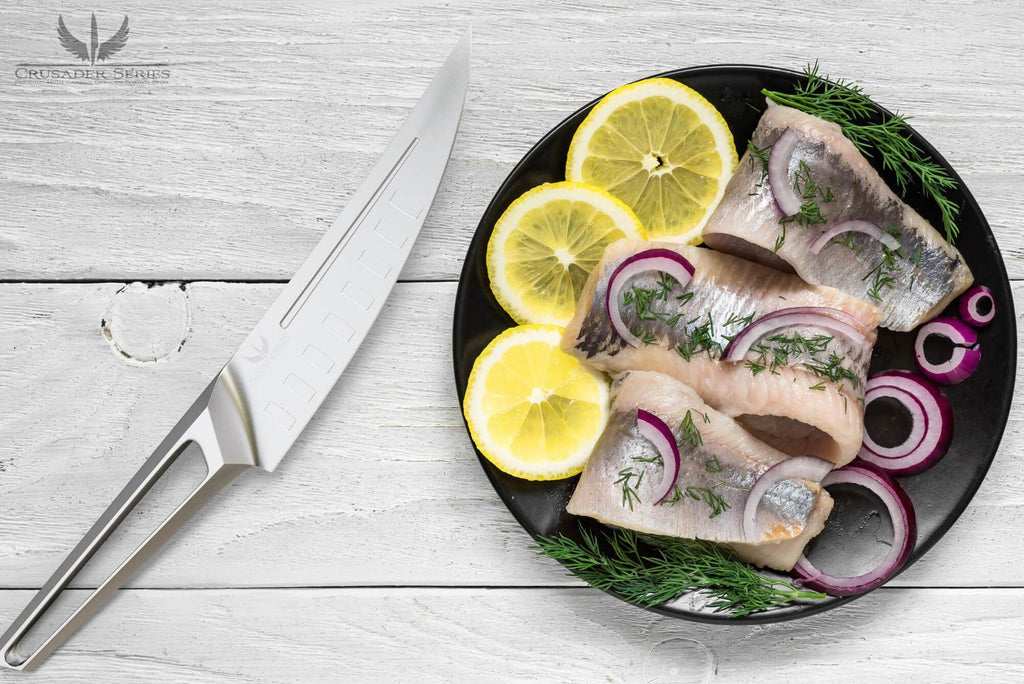
Stainless Steel fillet knife with hollow handle next to a plate of uncooked fish and sliced lemon

Crusader Series 6.5″ Fillet Knife – NSF Certified

  • Material — Pick a blade that won’t rust easily, and can last you forever.
  • Thin, Flexible Blades — Slice through the fillet with ease, and make precise cuts.
  • Sharp-Edged Blades — Pierce the fish and remove the fish bones intricately.
  • Blade Length — The optimal blade length for a fillet knife varies by fish. Check out the table below.
  • Handle Type—Choosing a handle that comfortably fits into your hand is essential. It allows for a firm grip.

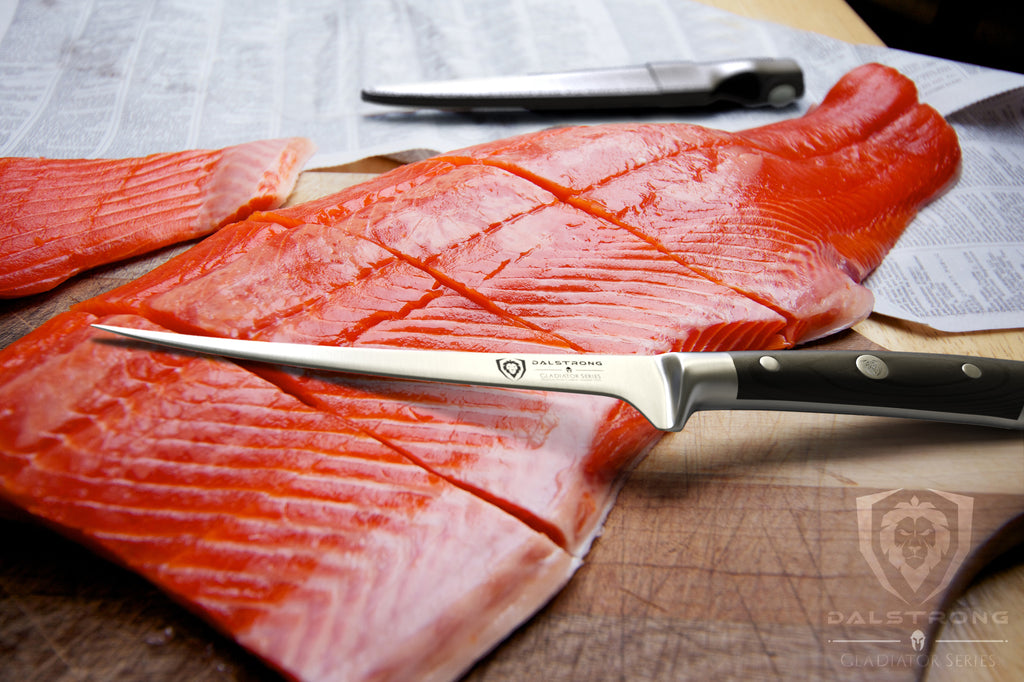
Skinny fillet knife with its blade resting on a large. uncooked red fish

Gladiator Series 7″ Flexible Fillet Knife

Let me preface this by saying I’ve only gotten into fish in the last 6 years or so (I’m 33 at the time of writing this). Now, before you rush to judgement, I remind you I live in a country that is globally known for its meat and people here will prefer beef over just about anything. Sad, right? But those are the facts.

That’s why, when I first attempted to cook my first fish at home, I was disappointed at the fact that I did not own the proper tools to process it. Longer story short, I ended up cooking the entire fish but it felt like cheating, in a way. I couldn’t help but feel that something was missing so, after a quick online research process, I went ahead and ordered myself a fillet knife.

Filleting, for those of you who don’t know, is basically separating the flesh of the fish from the bone. This is achieved by making smooth, precise cuts along the fish’s backbone, from the tail to the head. Initially, it might sound like a daunting task but a fillet knife can make the job way easier thanks to its flexible yet robust blade, giving you more control over the entire processing endeavor.

And while its raison d’etre might be filleting fish, the fillet knife should also be your go-to tool for the earlier stages of the fish preparation process, aka de-skinning and deboning. Other culinary tasks such as whipping up poultry fillets, producing ultra-thin slices of carpaccio meat, and even deveining shrimp are also among the things a filleting knife can excel at.

So, you see, when you invest in a quality fillet knife, you’re actually investing in a highly versatile tool that will greatly enhance your entire cooking process.

But enough of the chit-chat, let’s get down to business. Here’s everything you need to know about what makes a good fish fillet knife.

  1. What makes a good fish fillet knife?
  2. What is the best knife for filleting fish?
  3. What is a filleting knife used for?
  4. What is the difference between a fillet knife and a boning knife?
  5. What kind of knife do you use to cut fish?
  6. Dalstrong Film – The Fishmonger & The Sea

1. What makes a good fish fillet knife?

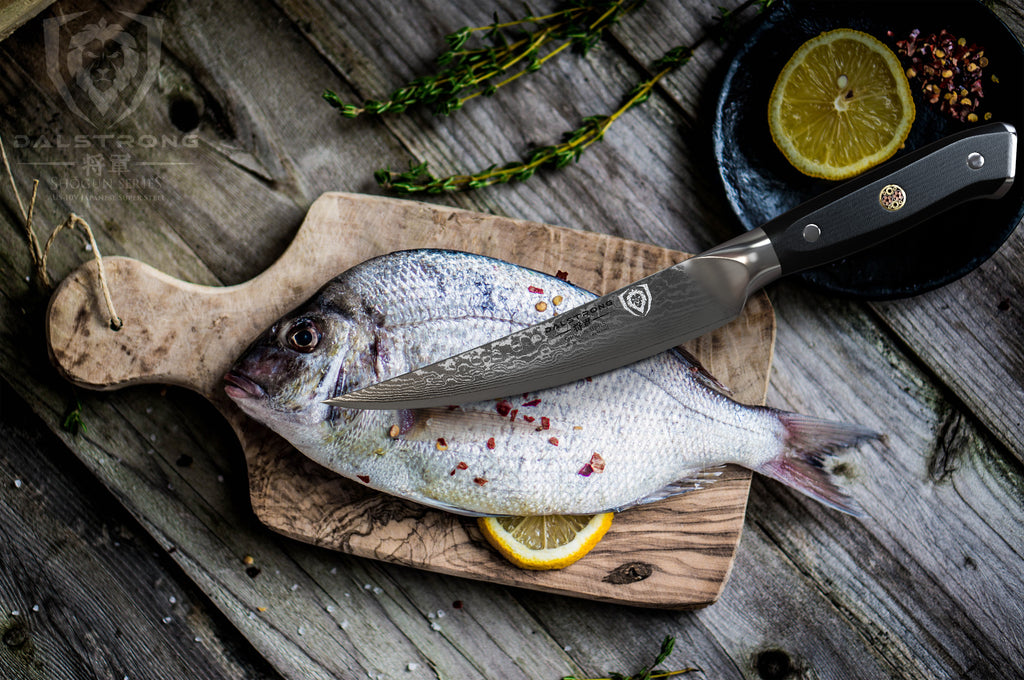
Small fillet knife resting on an uncooked fish that is laying on a small wooden cutting board

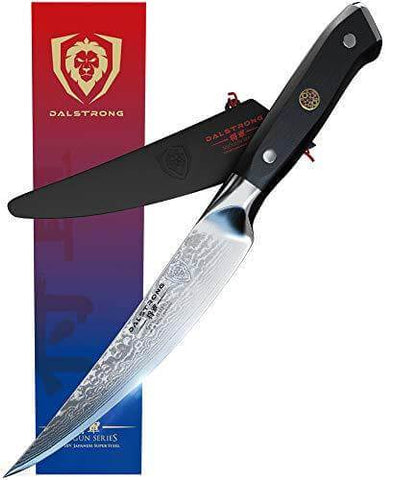
Shogun Series 6” Fillet Knife

There are several aspects that you want to look out for in a good fish fillet knife. These include:

  • Material — Pick a blade that won’t rust easily, and can last you forever.
  • Thin, Flexible Blades — Slice through the fillet with ease, and make precise cuts.
  • Sharp-Edged Blades — Pierce the fish and remove the fish bones intricately
  • Blade Length — A cheaper blade might be good for small-fry but you want something that can handle all manner of catches.
  • Handle Type—Choosing a handle that comfortably fits into your hand is essential. It allows for a firm grip.

Material

You may only be using your knife at home, but a key thing to remember is: fillet knives are also likely to be used on a fishing expedition. This means they’re going to be exposed to saltwater.

You might be wondering how that’s relevant?

All fillet knives should be corrosion-resistant because of this. A high-carbon stainless steel blade ensures that your knife remains in prime condition, even if it gets wet.

Cheaper knives do sell themselves as being made out of stainless steel, but you’ll find they’re less brittle and lacking the high-carbon the higher end knives offer. These will rust more quickly and lose their sharp-edge.

It’s one of the first aspects you should look for in picking a good knife.

Thin, Flexible Blades

The keyword here is control, and this is something often overlooked. Your knife needs to be thin and flexible, so you can make clean precision cuts.

Imagine trying to do that with a cheap and thick knife.

You’ll likely tear the flesh, and snap the fish’s bones as you make the cut — in turn, that makes it more liable those bones will get lost and end up on your plate!

Sharp-Edged Blades

You’ve found the perfect blade. It’s made of the highest carbon steel, it’s thinner than a piece of string, yet when you go to make your cut, it hardly leaves a mark on the fish!

That’s because you need a sharp-edged blade.

It says that an ideal fillet knife’s edge will have an angle of 12-17 degrees. It’s one of the finer bevels.

A fillet knife needs to be sharp so you can make a smooth cut, just like butter!

It also helps with the fish bones, too. If you spot an elusive bone inside your fish, you wouldn’t want to tear at it with a blunt blade. That could ruin the entire filleting process.

You want to get underneath the bone with a fine point and get it out with ease.

That’s why you need a sharp knife.

Blade Length

It’s easy to overlook the blade length.

You pick up a knife and assume it’s good for the job. 9 times out of 10, it probably is.

However, with a fillet knife, you may be making your life more difficult.

While smaller sized knives allow for more flexibility, when filleting large fish you need a longer blade.

We’ve made a handy guide to help you:

Knife Length Fish Type 4-6” inch blade. Perch Trout Walleye Pan Fish Mackerel 7-8” inch blade. Pink Salmon Salmon 8”-9.5” inch blade. Codfish Tuna Catfish Halibut

Having two or three blade sizes available is a brilliant idea, as you’ll always be prepared — no matter what type of fish you plan to cook!

Knife Handle

Similar to the length, another aspect often overlooked is the handle. Luckily, however, this one is a matter of preference!

Choosing a handle that comfortably fits into your hand is essential. It allows for a firm grip.

Remember: A firm grip means better control. Better control means a better cut.

These are the main three different types of handles available on the market:

  • Wood — Comfortable to hold and very sturdy. Slippery when wet.
  • Rubber — Better grip than wood, easier to clean. Not as sturdy as wood.
  • Plastic — Better grip than wood, easier to clean. Not as sturdy as wood.

2. What Is the Best Knife for Filleting Fish?

As you might’ve inferred from my lengthy preamble, the best knife for filleting fish is, wait for it, the fillet knife. Featuring a lightweight blade that gently curves from the handle to the tip, the fillet knife is the best suited knife to turn a whole fish into a series of longitudinal strips of flesh also known as, yes, you’ve guessed it, fillets.

With a blade length ranging from 6 to 11 inches, this member of the boning knife family is pretty much the only tool you’ll need to de-skin, debone, and filet your freshly caught fish like an actual pro.

In terms of variety, there are two main types of fillet knives out there that you can easily find on any online retailer:

  • Japanese-style fillet knives, usually called deba, which are less flexible but extremely sharp thanks to their single-beveled blade (it’s only sharpened on one side).
  • On the other hand, Scandinavian (also known as German) fillet knives are also popular, featuring a double-beveled blade with a heftier feel.

At the end of the day, there is no right or wrong when choosing between these two varieties. It all comes down to preference—Japanese fillet knives offer more precision at a granular level but Scandinavian fillet knives are sturdier and therefore better suited for outdoor activities.

If you’ve made it this far, we assume that you might’ve done some research on your end, trying to determine which fillet knife to finally purchase. You might’ve read about Bubba Blade or Rapala, known for their state-of-the-art folding fillet knives and fishing knives. And while we encourage you to follow your heart, we’re not here to tell you what you already know.

We take it for granted that you wouldn’t be reading this article if you weren’t looking for something different, something that could both spice up your kitchen and accompany you on all of your trips and excursions. A unique fillet knife that looks good and, most importantly, feels good.

For that reason, we handpicked a few items from Dalstrong’s wide assortment of fillet knives to offer you a couple of forward-thinking solutions to your current filleting dilemma.

Let’s get started!

1. Filet Knife 6″ | Shadow Black Series | | NSF Certified

Filet Knife 6

There’s no denying it, the Shadow Black Series 6” Filet Knife is one mean-looking knife. Its pitch-black titanium coating makes it look like something Batman would use on his fishing trips. Skin, bone, sinew—nothing stands a chance against its 7CR17MOV-X vacuum-treated steel blade, painstakingly hand sharpened to 16-18° per side for optimal performance.

Pros:

  • Peerless design.
  • Black, non-reflective titanium-nitride coating for corrosion-resistant, non-stick properties.
  • Features an ergonomic handle for maximum comfort.

Cons:

  • At 6”, it might not be the best option for working with larger fish.
  • Its unique looks might not be for everyone.

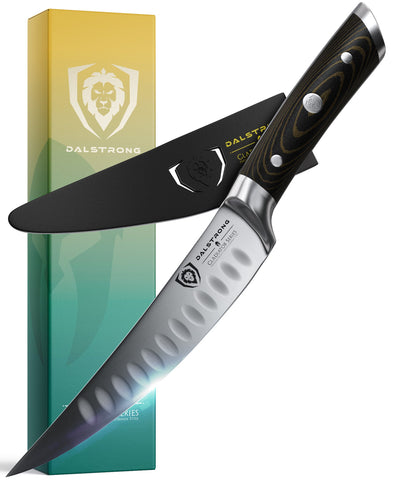
2. Curved Fillet Knife 6″ | Gladiator Series

Curved Fillet Knife 6

The Gladiator Series’ 6” Curved Fillet Knife is a true all-around performer. From filleting fish and poultry to finely mincing onions and shallots, the versatility of this excellent knife knows no boundaries. Forged from a single piece of high-carbon German ThyssenKrupp steel, its blade is designed for laser-sharp precision.

Pros:

  • Beautiful hand-polished finish.
  • Excellent edge retention.
  • Comes with a PerfectFit Dalstrong Sheath.

Cons:

  • Its design is a bit more conservative than other knives on this list.
  • Some cooks might prefer a thinner fillet knife blade.

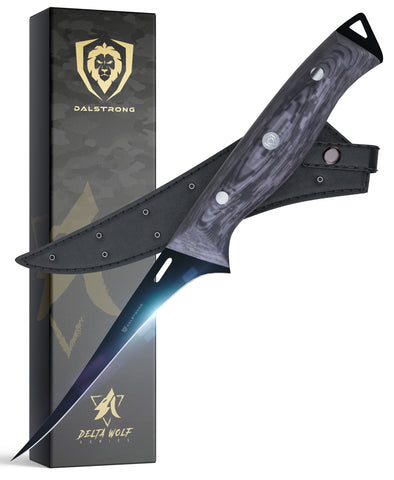
3. Fillet Knife 6″ | Delta Wolf Series

Fillet Knife 6

Don’t be fooled by its size, the Delta Wolf Series 6” Fillet Knife is one ruthless performer. Inspired by the Special Operations Force of the same name, it features a high-carbon 9CR18MOV steel blade with a narrow tip that will allow you to filet, trim, de-bone, de-skin, and butterfly with minimal effort. Whether in your kitchen or in the great outdoors, this stunner of a knife is sure to turn heads wherever you go.

Pros:

  • Edge is painstakingly hand sharpened to 8-12° for optimal performance.
  • The triple-riveted G10 camo handle is designed to withstand the most extreme conditions.
  • Comes with a gorgeous PU Leather Sheath.

Cons:

  • Some outdoorsy cooks will prefer a slightly longer knife to work with large fish.
  • Its stealthy looks might not be everyone’s cup of tea.

4. Shogun Series 6″ Fillet Knife

Shogun Series 6

A part of Dalstrong’s very own Shogun Series, this 6” fillet knife marries centuries of Japanese knife making knowledge with modern technology to superb results. With a blend of Japanese high-carbon AUS-10V steel and 66-alternating layers of SUS410 damascus, its blade offers the perfect balance between maneuverability and strength.

Pros:

  • Stunning Tsunami Rose pattern on the blade.
  • Nitrogen cooled for enhanced harness, flexibility and corrosion resistance.
  • G-10 Garolite handle adorned with a classy copper mosaic pin.

Cons:

  • Its price point might be a little high for casual home cooks.
  • Believe it or not, more conservative chefs will prefer a clean stainless steel finish as opposed to the Damascus steel’s distinctive pattern.

5. Fillet Knife 6.5″ | Crusader Series | NSF Certified

Fillet Knife 6.5

Last but not least, we have the Crusader Series’ 6.5” Fillet Knife. Sporting a minimalist design inspired by medieval swords, this knife will become a trusted ally in your kitchen for all things filleting. Built from a single piece of German-made ThyssenKrupp stainless steel painstakingly sharpened at 16-18 degrees per side, the Crusader is one stellar piece of craftsmanship that will stand the test of time.

Pros:

  • Full tang blade for strength and robustness.
  • Its seamless transition from the blade to the handle makes it super hygienic and easy to clean.
  • Comes with a handcrafted Acacia wood magnetic sheath to keep your knife secured and in place.

Cons:

  • Some folks prefer the feel of a traditional wooden handle.
  • Its modern looks might be a turnoff for more conservative chefs.

3. What Is a Filleting Knife Used For?

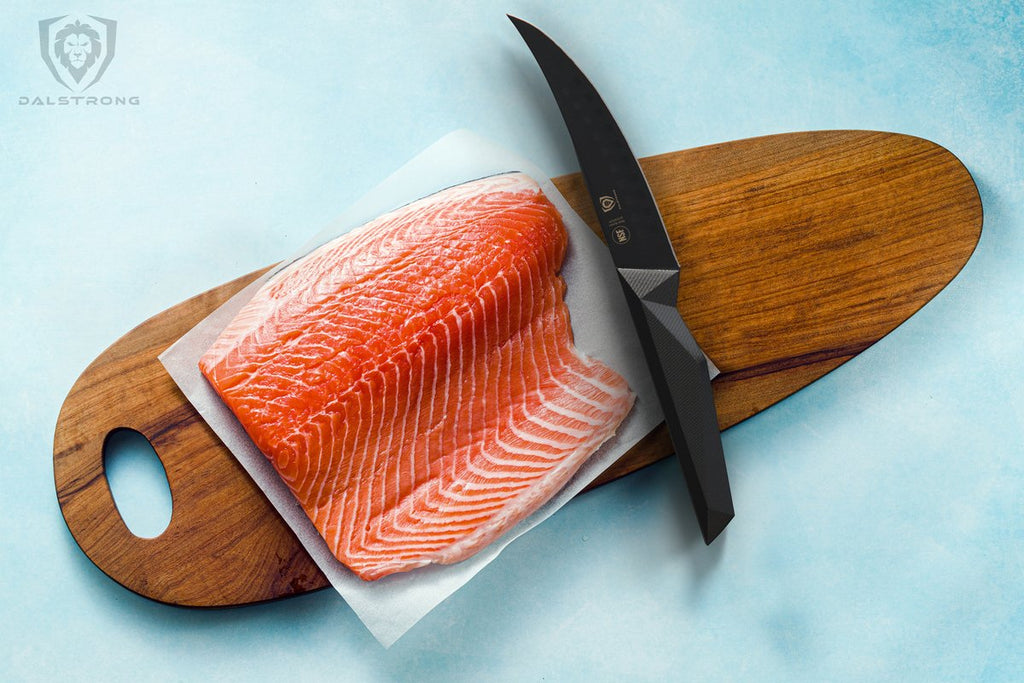
Uncooked fish on a wooden cutting board beside a black fillet knife with a light blue surfaceFillet Knife 6″ | Shadow Black Series
Like we established before, a fillet knife’s main purpose is to produce thin strips of flesh from an entire fish known as fillets. Due to its flexible blade, the fillet knife can cut around the contour of the bones, joints, and skin, making sure nothing goes to waste.

But far from being a one-trick pony, the fillet knife has many aces up its sleeve. Some of the things you can also do with a filet knife include:

  • De-bone, filet, and remove the fat from a whole chicken.
  • If you don’t own a meat slicer, the fillet knife can act as a decent substitute to get ultra-thin slices of beef.
  • Since this type of knife is specially designed to work with fish, it can also come in handy when removing the scales and removing all of the internal organs. This process is also known as cleaning.
  • Cut, slice, and peel fruits and vegetables.
  • Create sophisticated garnishes for your salads and cocktails.

Pro tip: If you want to look cool while filleting fish for a fancy dinner at home, check out our collection of aprons.

4. What Is the Difference Between a Fillet Knife and a Boning Knife?

While there might be some overlap between these two, the truth is that they serve two entirely different purposes.

Let’s start with the specs:

Boning Knives

  • Designed to separate bones from meat and fish.
  • Average blade length: between 5 and 7 inches.
  • Type of blade: usually flat with a straight and slightly curved tip.
  • Removes meat from heavy bones or tiny bones from fish.
  • Slightly thicker than fillet knives.

Fillet Knives

  • Thinner and more flexible than most other knives.
  • Average blade length: between 6 and 11 inches
  • Type of blade: features a gentle upward curve that ends in a sharp curved tip.
  • Perfect for removing scales from a fish without damaging the meat.
  • Can’t handle excessive force like a chef’s knife—it’s mostly meant to perform delicate tasks.

To sum it up, fillet knives are a part of the boning knife family but are generally designed to work solely with fish. Their fillet blade is thinner and more flexible than most boning knives, allowing for a greater degree of control. Like we’ve mentioned before, a fillet knife can perform many other tasks but an irresponsible use can dramatically reduce its lifespan and damage the sharp blade.

Boning knives, on the other hand, are a bit sturdier and can easily process larger pieces of beef and game. While they’re considered more versatile than fillet knives, boning knives are not as flexible and will not perform as well with delicate meats such as fish. This requires a level of flexibility and finesse that only the fillet knife possesses.

Pro tip: What’s your sharpening go-to method? Whetstone? Sharpening steel? Regardless of your weapon of choice, this nifty sharpening tutorial covers pretty much all you need to know about keeping your knife blade’s sharp edge.

5. What Kind of Knife Do You Use to Cut Fish?

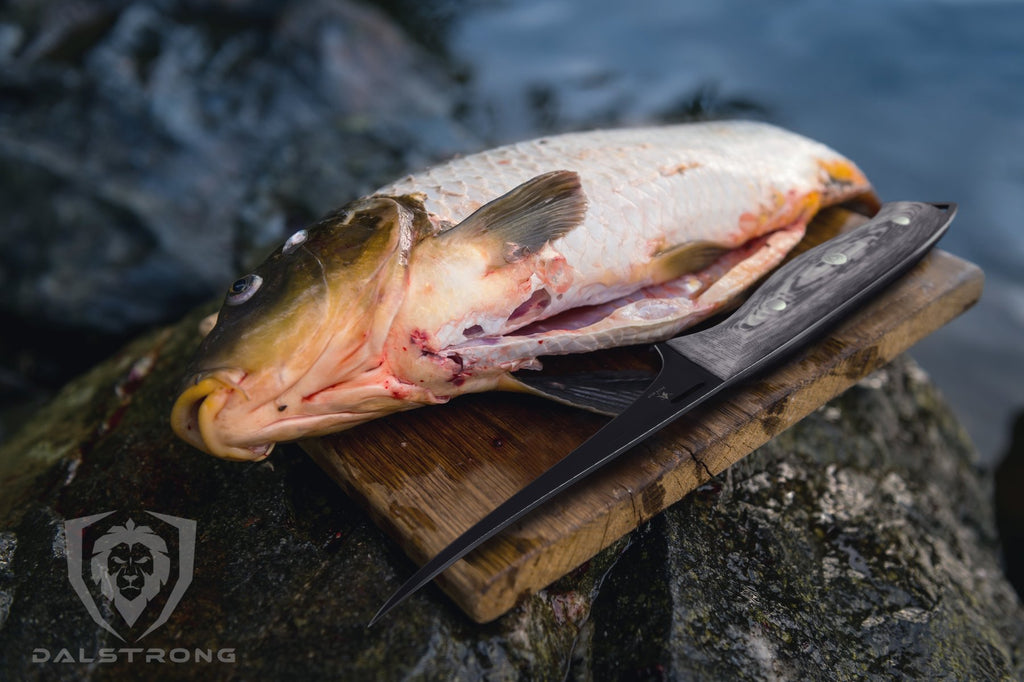
A black fillet knife next to a raw fish by water

6” Fillet Knife | Delta Wolf Series | Dalstrong ©

There’s just no way around it. Processing fish requires a high quality fillet knife. Your average kitchen knife or chef’s knife just won’t do.

If you want to step up your fish-processing game, you need a fillet knife with corrosion-resistant properties. This is a must, since prepping fish means you’ll be working mostly in wet environments. Most modern high-carbon stainless steel blades will do just fine.

Also, when working with fish, hardness is not so much of a concern. What you need is a thin and flexible blade that can breeze through the fish’s fragile bones and skin without leaving a full-on carnage on your cutting board. A good fillet knife can transform an entire fish into precisely cut fillets with surgical precision.

Note: There are also electric fillet knives that can work just as well as a fixed blade. That said, they’re generally larger, heavier, and more expensive. Now, that wouldn’t be a problem if you were only using it in your kitchen but think about your fishing trips: would you wanna carry around a power source wherever you go? We didn’t think so either.

Frequently Asked Questions

What is the best quality fillet knife?

The best quality fillet knife can vary depending on personal preferences and needs. Factors to consider include the knife’s blade material, sharpness, flexibility, and handle comfort. Brands like Wusthof, Victorinox, and Bubba offer reliable options. An electric fillet knife, like those from Rapala or American Angler, can also be a good choice for efficient filleting. A comfortable handle with a nonslip grip enhances safety and control.

6. Dalstrong Film – The Fishmonger & The Sea

SHOP FILLET KNIVES TODAY

You can also check in with our Expert Knife Finder Quiz and get specific recommendations based on your needs.

Dalstrong Expert Knife Finder

Written by Pablo Perez

When he’s not adding way too much butter to his recipes, Pablo likes to write about knives, music, food, cinema, and all of the other things that make life worth living.

Saddle Hunting and Hunting Saddles: A No BS Beginner’s Guide

0

Public land whitetail hunting is nothing new. However, in recent years, it has exploded in popularity. But why? There are a few major reasons, but there’s one big solution that is allowing hunters to be more nimble and get to where they need to be to take down deer on public dirt: hunting saddles.

Knock-on-door permission is difficult to obtain these days, and most blue-collar whitetail goers can’t afford a pricey lease. Also, many whitetail hunters are over the constant grooming of private land to create a whitetail haven. Food plots can work, but they also take a hell of a lot of work, time, and often money.

Plus, hunting public land is easier and better than ever before. As more whitetail hunters look to get in the field, state game and fish agencies have done an excellent job of creating more public access nationwide.

And some bowhunters want the added challenge of chasing big bucks on public dirt.

There are entire YouTube channels like The Hunting Public and outdoor television shows dedicated to public-land deer pursuits. In today’s whitetail world, it’s cooler to be a run-and-gun public-land warrior than it is to have hundreds of acres of private, manicured whitetail dirt.

Of course, public-land hunting ushers in a litany of challenges. One of those challenges is treestand hunting. Leaving a hang-on stand with climbing sticks in a tree overnight is illegal in many states. In other states, you can leave a stand-and-stick combo in a tree for a week, but not for a month.

And, of course, aluminum hang-on stands and sticks are a chore to tote around the woods, and for many public land whitetail hunters, especially those who find regular success wandering off the beaten path, weight and space in a backpack is an issue if they’re hauling a stand and their climbing gear.

Plus, since not everyone has things like ethics and scruples, there’s also no guarantee all the parts of your stand will still be there when you walk in pre-dawn to your public land spot.

RELATED – Tactical Flashlight: What to Look For Before You Drop the Cash

The Tree Saddle

Enter the tree saddle into the deer hunting gear arsenal.

A tree saddle is a significant win for those who prefer hunting North America’s favorite big-game animals from 20 feet up. Also called hunting saddles or treestand saddles, they are specialized equipment used by hunters to provide a secure and comfortable way to hunt from a tree without using a large metal platform.

A tree saddle consists of a harness-like system that goes around the waist. It typically includes a waist belt, leg loops, and adjustable straps. The harness distributes your weight evenly and provides stability while you’re standing in the tree.

A small platform is used for foot placement, but the harness system brings a new name to hang-and-hunt. A hunter hangs in the air, with their feet on the miniature platform. A rope from the waist belt will run to a line with a carabiner, which wraps around the entirety of the tree’s trunk.

A saddle is drastically lighter than any kind of climbing tree stand, and you can hunt with one from even the most gnarled and crooked trees in the woods. Plus, your mobility is greatly maximized once you’re in the tree.

How to Use a Tree Saddle

To use a tree saddle, select a suitable tree and attach the climbing system. Many saddle hunters use lightweight aluminum climbing sticks to help them get up the tree safely and quickly.

Once you reach the height you want, secure the saddle to the tree by wrapping a rope or webbing around the trunk and connecting it to the saddle. This creates a secure attachment point.

Next, you can sit or stand in the saddle, supported by the harness. The saddle design allows for flexibility and maneuverability, enabling you to shift positions or rotate around the tree trunk to get the best angle for a shot. Some tree saddles also have additional accessories, such as platforms or pouches for gear storage.

Tree saddles are popular among hunters who value mobility, versatility, and stealth. They offer a lightweight and portable alternative to traditional treestands that allows hunters to set up quickly in various locations and adapt to changing hunting conditions. Additionally, tree saddles provide a more intimate connection to the tree, enhancing the feeling of being one with your surroundings.

RELATED – Rifle Backpack Guide: Buy One That Doesn’t Suck

The Big Benefit

With a saddle, platform, and sticks, you can hop from tree to tree quickly and quietly to take advantage of right-now deer movement.

From the early season to the rut to the late season, you can quickly move around the woods to put yourself in the best position to take advantage of what’s putting a big buck where he wants to be: food, girls, and cover.

And hunters who border-hop and hunt whitetails on public ground in multiple states don’t need to have a pickup bed full of treestands and sticks if they switch to a saddle. A single platform, a set of climbing sticks, and a saddle is all you need.

The Best Hunting Saddles, Platforms, and Sticks

It’s hard to beat the Venatic Saddle from TrophyLine, a top-of-the-line saddle manufacturer. Weighing only 20 ounces without the bridge and 30 ounces with the bridge and carabiner, this ultralight saddle provides comfort, durability, and ease of use.

The fabric is ultralight ripstop nylon, and a rigid rubber MOLLE band runs the entire length of the saddle for adding pouches and accessories. The rubberized waistband boosts comfort and grip.

The straps have been cut in half to increase comfort but without sacrificing strength. I also love the durable Foldback Lineman Loops. The foldback design prevents snags on brush when hiking in.

Pair the Venatic with TrophyLine’s Onyx Platform and Double Step Mini Climbing Sticks. The Angled Perimeter of the Onyx means angles on each side of the platform, with built-in non-slip ridges for more secure foot placement, plus the single-cast post is a breeze to set.

The 17-inch Double Step sticks come in a four-pack, and, as the name suggests, they feature fixed double steps for increased comfort and safety, and the pivoting V-bracket on each stick means you can get a stick to fit any trunk.

RELATED – Vortex Razor HD 4000 GB: High-Tech, Tough, and Precise

The Phantom Starter Saddle Kit from Tethrd is a great piece of gear and a favorite among bowhunters. The kit comes with everything you need to get up a tree and get to hunting for just over $400.

The kit comes with the Phantom Saddle, a Lineman Belt, a tether, and an optional platform. With this kit, you’ll have everything you need to wander public and private tracts looking for that perfect 18-feet-up ambush point. Once you find it, this system will have you safely and comfortably up the tree in no time. The saddle fits waist sizes ranging from 28 to 40 inches.

It’s important to note that hunting laws and regulations vary by jurisdiction, so you must familiarize yourself with local regulations and obtain any required licenses or permits before engaging in hunting activities.

Additionally, any hunting equipment, including tree saddles, should always be used with proper safety precautions and after training to minimize the risk of accidents or injuries.

Final Thoughts

Killing a whitetail with any weapon is a difficult task. However, when a buck exposes his weakness, whether it be a late- or early-season food source or his need to chase girls, being able to be where he wants to be will stack the odds of success in your favor.

Few tools allow you to capitalize on deer movement quickly and quietly the way a lightweight, comfortable tree saddle can.

READ NEXT – Mess Kit History: Feeding Backcountry Adventures for Generations

Tuna Fish Sizes: How Big Can Tuna Get?

0

In terms of the biggest tuna ever caught, you are looking at a monster that weighed 1496 pounds. The beast was a bluefin tuna and was nabbed off the coast of Nova Scotia. How big do tuna get? Well, they grow huge, but the maximum size will depend on the species of tuna and the Gulf of Mexico is a haven for tuna of all sizes. [1]

Tuna Species of the Gulf of Mexico

Tuna fish size ranges from the smaller Tunny and Skipjack to the massive bluefin and yellowfin.

Yellowfin – Fish with Baitfish, Squid, or Crustaceans

Yellowfin are found the world over, they are one of the most targeted tuna with around 12 million pounds caught by rod and reel around the world. [2] Yellowfin can grow to six feet in length and over 400 pounds.

Bluefin – The Biggest of the Tuna Species

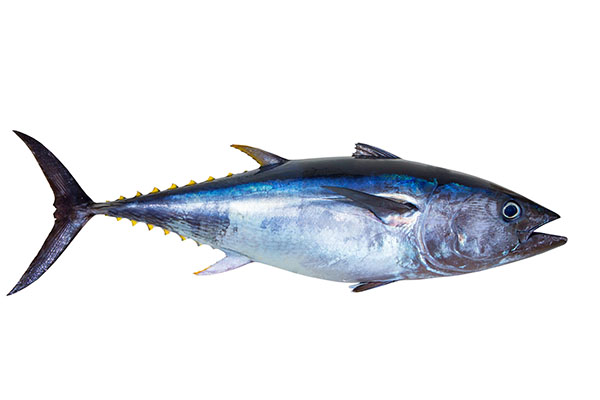
Bluefin Tuna

If you are looking for a monster game fish, the bluefin tuna is likely a good target. They can grow to 13 feet in length and weigh upwards of 2000 pounds. That’s a ton of fish that is as long as two NBA basketball players. The record for a pole-caught blue tuna is 1495 pounds.

Blackfin – A Smaller, but Fun Tuna

Blackfin tuna reach a size of 39 inches and a weight of 46 pounds. Most anglers would rather target yellowfin or the elusive bluefin tuna, but the blackfin tuna is a strong fighter and very good to eat.

Little Tunny – A smaller variety with Trophies in the 30-37 pound range

Little tunny is a schooling tuna that feed on baitfish and crustaceans. You find them in open waters and along the coastal waters. Fishing little tunny is a big sport because while they are smaller tuna, they are strong, and they fight hard. You can also use little tunny as live or cut bait for bigger tuna and shark fishing. [3]

Skipjack – A Trophy is 25-33 Pounds

Skipjack is similar to little tunny in that they stay small and are schooling fish. You can target them with herring or baitfish, and you will find them in coastal and deep waters off of Florida and around the Gulf. These are not the biggest tuna, but they put up an amazing fight. Even at 20 pounds, they will bend the rod and fight.

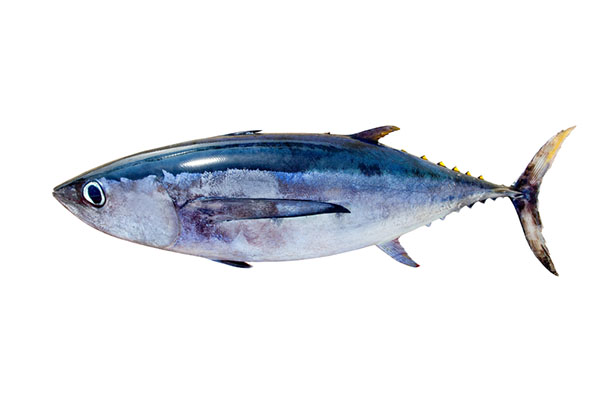
Albacore – Thunnus alalunga – A True Tuna

Albacore

A big albacore is going to be around 39 inches though as a species they can reach lengths upward of 51 inches. Unlike many tuna, you find albacore in schools without other species of tuna. By nature, these are highly migratory fish, and finding them may mean focusing on baitfish. April and May and Late fall are the best times to target albacore. [4]

Bigeye – A bigger version of Yellowfin

A trophy bigeye tuna will approach 5 feet in length. According to Sport Fishing Magazine, the record for bigeye tuna is 392 pounds six ounces. Bigeye are often found near the surface where they feed on baitfish, but they can also be deep at over 800 feet. [5]

Some of The Top Tuna Species Caught in the Gulf of Mexico

The holy grail of tuna fishing is the bluefin tuna. They are elusive fish that seem to be on everyone’s bucket list of big fish. In truth, the blackfin is likely to be a bigger fish. Yellowfin are another top tuna species for anglers who want to battle big fish.

In comparison, the world record for yellowfin is 388 pounds 12 ounces but in Florida, the record is 240 pounds. [6] According to American Oceans, the biggest bluefin tuna is 1496 pounds. [7] That is a massive difference in size which is why almost everyone wants to battle a bluefin. Our list of top tuna includes:

  • Bluefin
  • Blackfin
  • Yellowfin
  • Bigeye

What’s the biggest tuna ever caught?

The biggest tuna ever caught was the 1496-pound bluefin. In the Gulf of Mexico, the biggest tuna ever caught is thought to be the bluefin tuna caught by Ron Roland off the coast of Louisiana. It topped the scales at 1152 pounds. Both of these catches tell us why bluefin tuna is on everyone’s fishing bucket list. [8]

Conclusion

If you are wondering how to catch a tuna, the options are fairly simple – deep sea fishing while trolling with live or cut bait. One of the problems with fishing tuna in the Gulf is that the geologic structure of the Gulf is diverse. You need a captain that understands the topography of the deep water and the location of deep structures.

Tuna – all species – are highly migratory. So, fishing them requires that you know where they are right now as their location is not static. Many species of tuna range from the Atlantic Ocean to the Pacific Ocean and elsewhere in the tropical waters of the globe. Even smaller species of tuna or small fish will put you on par with some of the best game fish on the globe.

Silver salmon, for example, is one of the most sought-after fighting fish around, and they weigh around 20 pounds. They do not compare in fight and strength to a small tuna. That is why tuna fishing is so popular. Not only do they fight hard, but they also taste good too.

While tuna is available all year long, April and May are great months to target tuna off the coast of Florida. November and December can also be peak months for tuna fishing in the Gulf while the summer months are busy for tuna anglers. What do you do between April and November? You fish for tuna or other big fish. A charter boat is probably going to be one of the best options you have to fish tuna during their peak season and also during the off-season.

Record Beaver Harvest in 1951

0
Karl Kroll, left, and Donald “Buzz” Chamberlain pose with their 82 pound beaver.

In the spring of 1989, I sat down to talk with Donald “Buzz” Chamberlain and his wife Betty at their downtown Boscobel antique store. It was one of my first interviews and I was a little nervous about whether people would talk to me.

I didn’t need to worry though. People were more than happy to talk to me about the river and their escapades.

Buzz told me about his record breaking beaver that he trapped on March 28, 1951 at the mouth of the Blue River in Grant County with his buddy Karl Kroll.

Weighing in a 82 pounds, the beaver was big enough to warrant a mention in the Wisconsin Conservation Bulletin (the precursor of Wisconsin Natural Resources Magazine) of June 1951. Buzz is pictured to the right in the photo along with Karl Kroll, who helped him trap the monster animal.

Original text from the Wisconsin Conservation Bulletin for June 1951.

The two used a set trap to capture the beaver. They received $35 for the pelt which was pretty good money for the day.

Chamberlain told me that 1951 with the first year that beaver were trapped in Grant County after a trapping ban. I wondered if the large size of the beaver was related to the trapping ban. I wanted to verify the ban so I went to the State Historical Society (SHS) and checked the hunting regulations for that era. I sat in between the tightly-packed stacks at the SHS library going through the old paper regulations and found one line in the 1949-50 pamphelt regarding Beaver.

Beaver – Season, if any to be established by the Conservation Commission at its December meeting.

Text from the 1949-50 Wisconsin Trapping Regulations.

Since the pamphelt was inconclusive about a trapping ban, I contacted Jessica Rees Lohr, Wildlife Research Scientist at the Department of Natural Resources (DNR) to see if she could solve this mystery.

She put me in touch with Shawn Rossler, DNR furbearer specialist and he stated:

“My recollection is that we (WI) closed the beaver season on and off from 1903-1947. Starting in 1947 or 48, we had some form of beaver season…but I don’t know what years they were regulated or considered unprotected. I believe we had season dates that lasted anywhere from 9 – 200 days…some counties were open and others closed. That said, I don’t have any additional documents to reference that would give us specifics for the opening of Grant County to modern, regulated beaver trapping, unfortunately.”

So what do I believe?

My instinct it is to believe Buzz and that trapping was banned in Grant County in at least one year prior to 1951. That’s not the sort of thing that people just make up.

To absolutely know for sure, I’d have to dig through the Conservation Commission’s notes about trapping in that era. I tried to do this, but found no one at the DNR who would help me. Through an open records request, the DNR sent me the Wisconsin Wildlife Harvest Summary: 1930-2018. In this report, it states beaver harvest information in 1951 for just the top counties in northern Wisconsin: Vilas, Bayfield, Iron, Washburn and Sawyer. The average pelt price was $11.81 so Buzz got a good price for his beaver. Prior to 1951, there is no listing of Grant County as a place where beaver were harvested.

Does this report validate that there was no trapping of beaver in Grant County prior to 1951? Not exactly, but it’s the best that I could come up with.

For now, I choose to believe Buzz and that the large size of the beaver could have resulted from a ban on trapping in the years prior to 1951.

Buzz Chamberlain passed away July 12, 2003. He is buried in the Boscobel Cemetery in Boscobel, Wisconsin.

Alone Season 8 Gear List: Alone Season 8 Approved Participant Gear List Here

0

Alone Season 8

Alone is a History reality television show that airs in the United States. It chronicles the self-documented daily hardships of ten individuals (seven partnered teams in season 4) as they attempt to survive alone in the woods for as long as possible while only having a limited supply of survival gear. The participants are segregated from each other and all other people, with the exception of medical check-ins. They can “tap out” at any moment or be removed if a medical check-in is failed. The contender who lasts the longest receives $500,000. grand prize. Read on to get the entire Gear List for Alone.

Alone Season 8 Gear List

Listed below are all the items that are allowed on the show,

  • 1 pair of high-leg hunting boots

  • 1 pair waterproof Arctic winter boots

  • 1 T-shirt

  • 1 fleece/wool shirt

  • 2 wool, fleece or cotton sweaters

  • 6 pairs of wool socks

  • 2 hats (brimmed, wool, fur, Arctic or baseball)

  • 2 buffs or neck gaiter (no balaclavas)

  • 1 shemagh OR scarf

  • 4 pairs of gloves

  • 2 pairs of underwear/briefs

  • 1 insulated parka-style jacket

  • 2 pairs of outdoor pants/bibs (can unzip into shorts)

  • 1 pair of fully insulated or waterproof winter pants/bibs

  • 1 waterproof un-insulated shell/Jacket

  • 2 pairs of thermal underwear (long top and bottom)

  • 1 pair of gaiters

  • 1 leather belt (or synthetic equivalent)

  • 1 toothbrush

  • 1 pair of eyeglasses

  • 1 personal photograph

Shelter

  • 12×12 ground cloth/tarp

  • 8-mm climbing rope – 10M

  • 550 Paracord – 80m

  • 3-mm cotton cord – 40m (non-waxed cord)

Bedding

  • 1 multi-seasonal sleeping bag

  • 1 bivi bag

  • 1 sleeping pad

  • 1 hammock

Cooking

  • 1 large pot

  • 1 steel frying pan

  • 1 flint or Ferro rod set with standard-sized striker

  • 1 enamel bowl for eating

  • 1 spoon

  • 1 canteen/water bottle

Hygiene

  • 1 bar of soap

  • 1 8-oz tube of toothpaste

  • 1 face flannel

  • 1 40-mm roll dental floss

  • 1 small bottle of bio shower soap

  • 1 shaving razor (and 1 blade)

  • 1 towel (30” x 60”)

  • 1 comb

Hunting

  • 1 300-yd roll of a single-filament fishing line up to a max of 20 lbs weight test + 35 assorted barbless hooks (no bigger than size 7/0, no lures.)

  • 1 Primitive Bow Recurve or longbow + 9x Arrows

  • 1 small-gauge gill net

  • 1 slingshot/catapult + 30 steel ball bearings + 1 replacement band

  • 1 net foraging bag

  • 2 lbs of 20 or 21-gauge trapping (snare) wire

  • 3 lbs of one solid block of salt

Food (2 items max)

  • 2 lbs of beef jerky (protein)

  • 2 lbs of dried pulses/legumes/lentils mix (starch and carbs)

  • 2 lbs of biltong (protein)

  • 2 lbs of hardtack military biscuits (carbs/sugars)

  • 2 lbs of chocolate (simple/complex sugars)

  • 2 lbs of pemmican (traditional trail food made from fat and proteins)

  • 2 lbs of GORP (raisins, chocolate, peanuts)

  • 2 lbs of flour (starch/carbs)

  • 2/3 lbs rice / 2/3 lb sugar / 2/3 lb of salt (all separated)

Tools

  • 1 pocket knife

  • 1 hunting knife (blade edge length no larger than 10”)

  • 1 Leatherman multi-tool or similar

  • 1 sharpening stone

  • 1 roll of duct tape or 1 roll of electrical tape

  • 1 small shovel

  • 1 small sewing kit

  • 1 carabiner

  • 1 LED flashlight

  • 1 pair of ice spikes (studded walking aids for icy conditions

  • 1 scotch-eyed auger

  • 1 adze

  • 1 2-handed draw knife (blade no longer than 5 inches)

  • 1 hatchet

  • 1 saw (Blade no longer than 3 feet)

  • 1 axe

Prohibited Items

  • Fuel, lighters or matches

  • Bug spray/mosquito repellant

  • Sunscreen/chapstick

  • Sunglasses or prescription transition lens eyeglasses

  • Goggles

  • Beauty products

  • Map (detailed topographical)

  • Compass

  • Unapproved technology (anything with a battery or an engine, e.g. cell phones, computers, watches, etc.)

  • Professional snares

  • Firearms of any kind

  • Ammunition

  • Explosives or gunpowder

  • Animal poison

  • Professional fishing rods

  • Fishing lures, flies, bait kits

  • Fishing traps

  • Food/beverage (except as explicitly listed above)

  • Decoys

  • Animal calls

  • Tree stands

  • Professional bows/crossbows

  • Scopes of any kind

  • Tents or shelters

  • Stoves, pressure cookers or other cooking appliances

  • Hydration packs

  • Fire pits

  • Electric or propane lanterns

  • Inflatable boats

  • Filtration, purification devices, iodine tablets

  • Coolers or food storage boxes (except optional bear canister)

  • Next Article ››

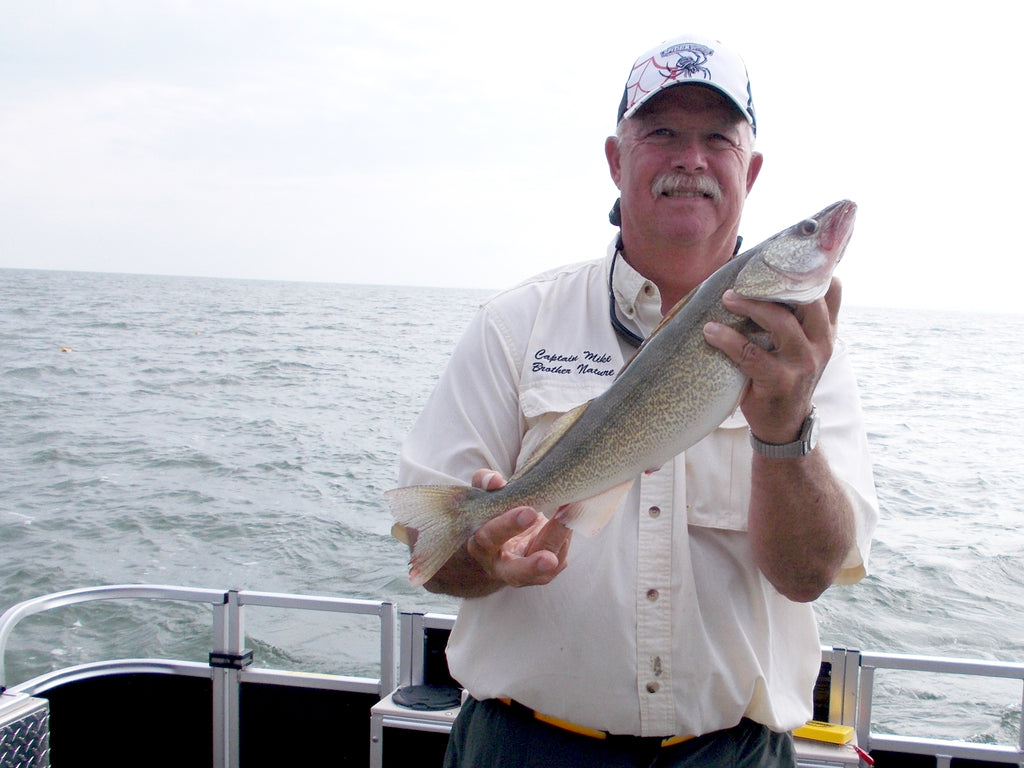
Forget Walleye Speed by Capt. Mike Schoonveld

0

“It’s a number’s game.” Lance said. “It’s not the way most guys do it. It’s not the way I used to do it. But if you just do the math, it makes sense and when you look in my livewell at the end of the day, the numbers in there show fishing with the odds in your favor wins out most of the time.”

That’s what walleye pro, turned walleye educator, turned walleye guide—just call him a walleye entrepreneur—Lance Valentine told me last July.

I fished Saginaw Bay with Lance to experience big water fishing on a pontoon boat. Valentine fishes Sag Bay on a Angler Qwest 824 Pro Troll.

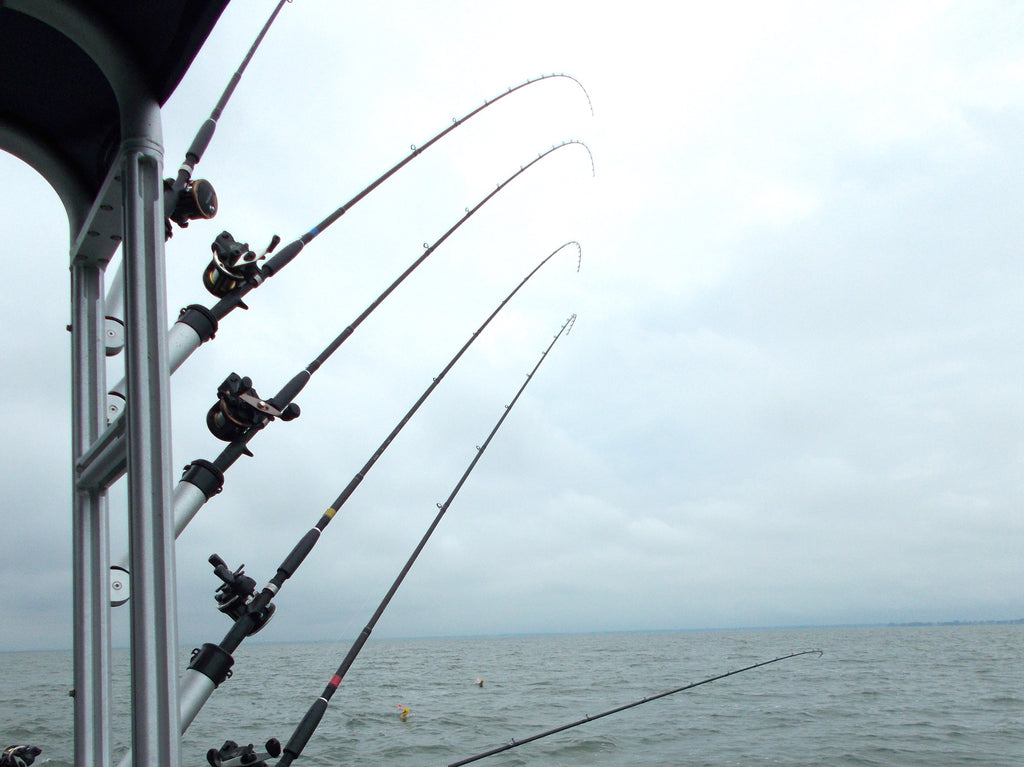
As eye opening as the pontoon boat experience was, his “numbers game” fishing was equally revealing. It involves finding the part of the water column where the lures being trolled are getting the most hits, putting the maximum number of lures in that zone, then upping those odds by speeding up the troll to make sure those lures swim by more walleyes.

walleye trolling speed fishing plugs

Valentine puts all the lures on one side of his boat at the same depth.

Key number one, lure speed.

Everyone knows (or assumes or has been taught) walleyes will only bite a “lazy” lure. How many times have you heard the importance of having a boat which will slow down to walleye speed—walleye speed normally being something under two miles per hour and often half that.

How about twice that? “I troll a couple tenths of a mile per hour either side of four miles per hour.” Valentine explained.

“It’s easy math,” he continued. “Here on Saginaw Bay, most places on Lake Erie or at other lakes where walleyes suspend over vast reaches of open lake with little if any structure, fishermen use trolling tactics primarily to just cover a lot of water.

However you prefer to visualize it, whether it’s so many walleye per mile or so many walleye per acre of water, it doesn’t matter. When I’m going twice as fast, I’m covering twice as many miles or cutting a swath through twice as many acres of water than the guy trolling at half my speed—at what is considered to be a normal trolling speed. When I show my lures to twice as many active walleyes, it makes sense I catch more of them.”

walleye speed trolling fishing fish

How fast is your walleye speed? If it’s not close to or over 4 mph you are missing out.

Will they bite a lure going that fast? Of course they will. Anyone who has ever trolled much with planer boards has undoubtedly caught fish when the boat is turning and the outside lures are pulling through the water much faster than when trolling straight ahead.

How much faster?

The exact speed doesn’t matter or if it does, you do the math.

I’m sure there’s a complicated mathematical formula involving pi and other numbers you can use to calculate the MPH of those lures. What does matter is a common rule of thumb trollers often follow. If bites are coming when the boat is turning either speed up or slow down when going back to a straight course. Boost the trolling speed if the bites are coming on the outside lines, slow down if the bites are coming on the inside lines.

Realistically, the difference isn’t so much attributable to speed as it is lure action and depth. The fish aren’t swimming around looking for a meal going 1.8 mph to the point they will shun anything swimming at 2.2. They are just looking for something that looks good to eat and they can catch.

Don’t worry about them being able to catch it. Walleyes aren’t speedsters, but neither are 260 pound line backers on a football team. The big guys, given an angle, regularly bowl over 170 pound halfbacks in the open field. Walleyes can catch your fast moving lure if they think it looks good to eat.

I’m sure one of the reasons the term “walleye speed” was coined had to do with lure action rather than walleye preference. Many of the baits and plenty of lures that look good-to-eat at slow speeds don’t look (or sound) like walleye fodder when trolled above a certain speed.

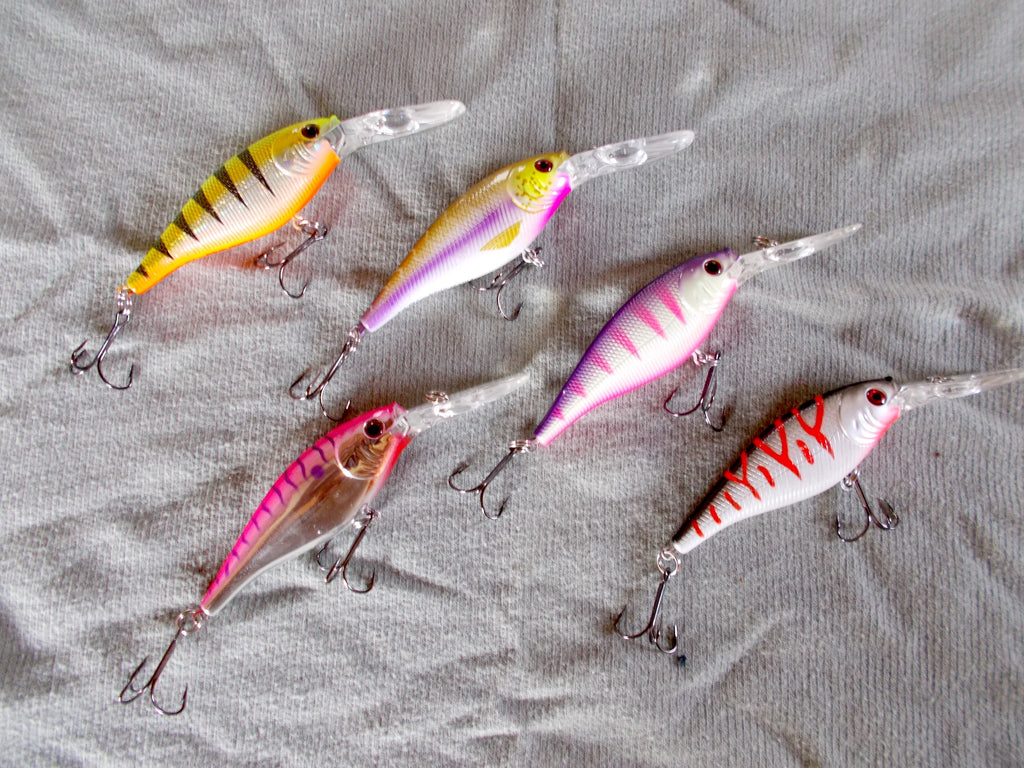
Valentine’s go to lure for trolling that fast is Flicker Shads. He used a variety of colors the day I fished with him, but all the same #7 size (size may vary with the time of year). “Flicker Shads are great lures,” Valentine said. “And they troll perfectly straight at four miles per hour. Sure, there are other lures that will work at fast speeds and most lures can be tuned to run that fast. That’s not why I use all the same baits. All I’m doing is simplifying.”

fishing walleye boat speed rod great lakes

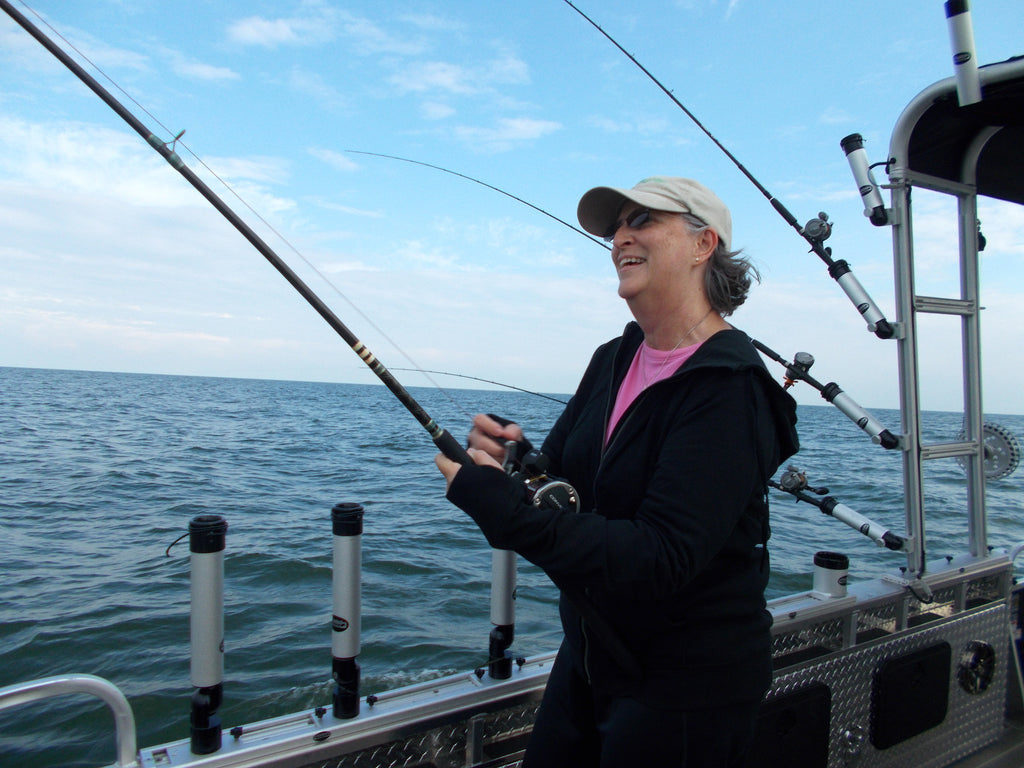
The author’s wife Peg is the beneficiary of Valentines speed walleye tactics.

Fishermen tend to over think what’s going on under the waves and there are dozens of variables, big and small, to consider. Does it make a difference if the fishing line is monofilament or fluorocarbon? Is a 2 1/2-inch lure better than a 2 3/4-incher? Should the leader behind a Jet Diver or Dipsey Diver be 40 inches or 50? Does the color of the diver make a difference? Should the lure color be matched to the diver color? Does the lure color even matter? Is the color of the underwear I’m wearing make a difference?

The answer to all these questions (except for the underwear thing) is “sometimes.” More to the point, “sometimes” is a continuum going from almost never to quite frequently.

Many anglers head out trying to find the perfect lure, the perfect depth, the perfect speed and the perfect color or pattern to make the fish bite—all at the same time. I’ll admit to fishing that way, at times.

I try to cover as many of the variables as possible by positioning lures high, medium and low in the water column by mixing ‘riggers, divers, weighted line, lead core and copper wire at times. I may have spoons, flies and plugs out. It’s called covering the bases or the shotgun approach.

When a shotgunner catches a fish, which of the variables was it that coaxed the fish on the line?

Was it the particular lure?

Was it the speed?

Was is the color or depth?

If that fire-tiger lure that caught the fish was swimming 12 feet deep, would that fish have mistaken it for an edible baitfish if the lure had been swimming at 18 feet? Would it have even seen the lure? If a the first fish came on a spoon on a downrigger, should you put spoons on the divers? It’s trial and error and besides being confusing, it’s time consuming.

Will the trip be over before you figure it out?

Not Valentine. Lance further simplifies his already simplified lure selection process. Besides years of experience telling him likely areas and depths to fish, Valentine watches his sonar to make sure there are fish in the area he’s fishing. He’s much more interested in the marks showing suspended fish in the water column than the ones belly to bottom.

“Those suspended walleye are active fish, they are the ones most likely to bite trolled lures. And though a walleye will swim up to bite a lure passing overhead six or eight feet, undoubtedly more; I know I’ll get more bites by putting my lures in the narrow, three or four foot zone where the most active fish are suspended and feeding.”

walleye trolling fishing suspended crankbaits jerkbaits great lakes

“Covering the bases” anglers agree and will stagger the depths they are presenting their lures at the beginning of the day to let the fish “tell them” the perfect depth. So they use one lure that will troll 8 feet deep, another that will go 15 and use other tactics to put lures at other likely depths.

How long does it take to learn the 15 foot level is best? If there’s only one lure in the spread or on each side of the boat running at 15 feet it may take a long time. A walleye will certainly swim horizontally one way or another to chase a lure, but how far? If it will swim six feet but the lure is 10 feet away, you won’t catch it, you’ll never know the lure is at the perfect depth.

So what Valentine does on Sag Bay is match his sonar readings with experience and select the two most likely productive depths to sample first. This is more the “rifle” approach, than the shotgun. He puts all the lures trolling on one side of his boat at the one distinct depth and all the lures on the other side at different depth. He does this by using line counter reels and letting out specific amounts of monofilament before attaching his in-line planer to the line.

His simplified lure selection method described earlier makes this easy. Sure, he could consult tables and run lure X which will troll at 12 feet deep on 50 feet of line and deploy lure Y which the tables show will troll at 12 feet with 65 feet of line and so on.

“That introduces another whole level of complexity in setting the lures and then, when a fish does bite, was it the depth or was it the lure?” Valentine said. “By using identical lures, except color, I can zero in on the best depth and be certain the results aren’t being confused by other factors.”

crankbait walleye trolling speed jerkbait fishing fish troll leadcore downrigger

Valentine varies the color of his lures, but uses all the same model and size to help keep things simple.

By putting all the lures on one side of the boat at the same depth, if that’s the “active-fish” zone, Valentine will know quickly.

No bites? Adjust them all higher or lower.

There’s a far greater chance of a fish spotting and striking three or four or five lures covering a wide swath of water than the chance of fish spotting just a single lure. If, in a short period, Valentine gets more bites on the lures trolling on lines set 40 feet behind the planers on one side than on the ones set 60 feet behind the boards on the other, he will adjust the lead-length on all of the lures on the less active side.

Once he gets all the lures in the active layer of water, he can then, need be, zero in on specific colors. “Most of the time, once I get all the lures into the strike zone, I’m getting enough action on all or most of them, I don’t even have to worry about switching from golds, to silvers, to painted,” he said.

That’s a good thing.

– written by Capt. Mike Schoonveld

SPEED TUNING

If you find your normal hard bodied baits won’t tolerate zipping through the water at “Valentine-speeds” and you don’t want to buy to lures that will troll fast and faster, just tune up your existing lures. Here’s how.

First, speed the boat up to the speed you want to troll, tie on the lure and let out five or six feet of line. Troll the lure along side the boat, out of any wake or turbulence, and watch the action. If the lure tries to swim on its side or even rolls over you will need to adjust the eye of the lure where the line, split ring or snap connects.

tuning plug tool fishing crankbait offshore tackle

The rule to remember is: Bend the eye ring towards the bottom of the lake. If the lure swims or rolls starboard side up, bend the eye to the port side. Usually, just a tiny, often just a millimeter tweak or two, will put it right.

Wild Ramp Salt Recipe (with Foraging Tips)

0

wild ramp salt

I’ve often said that if I could forage only one wild food, it would have to be ramps. These wild leeks are delectable, and I love them sautéed, in ramp soup, in frittata, and in this delicious wild ramp salt.

Identifying Ramps

Ramps - wild leeks

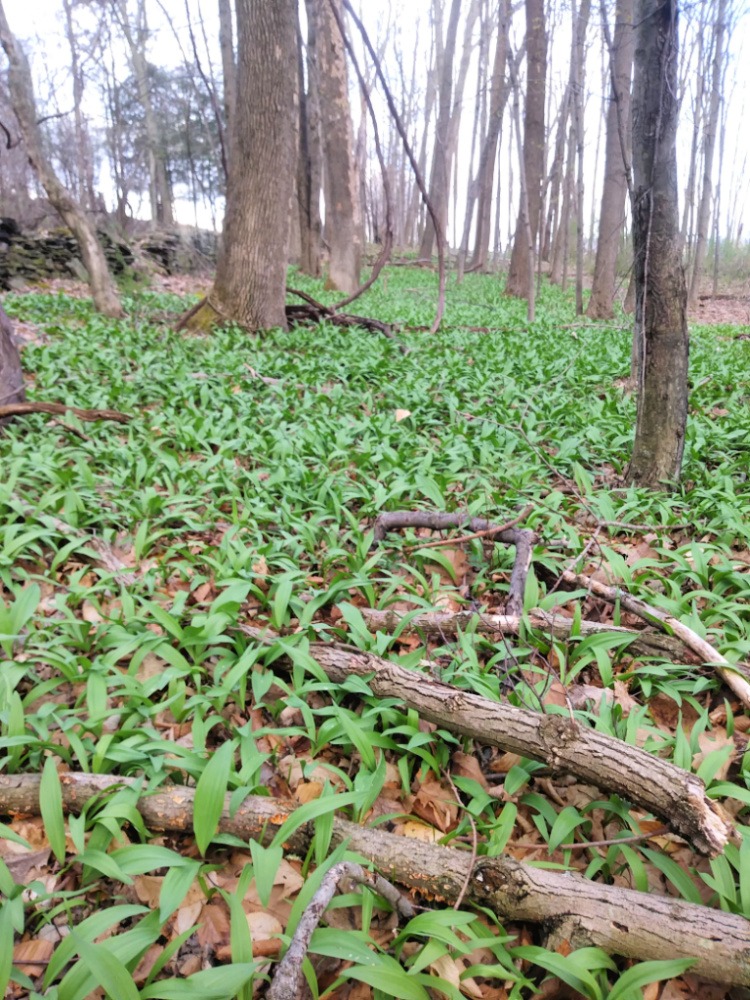
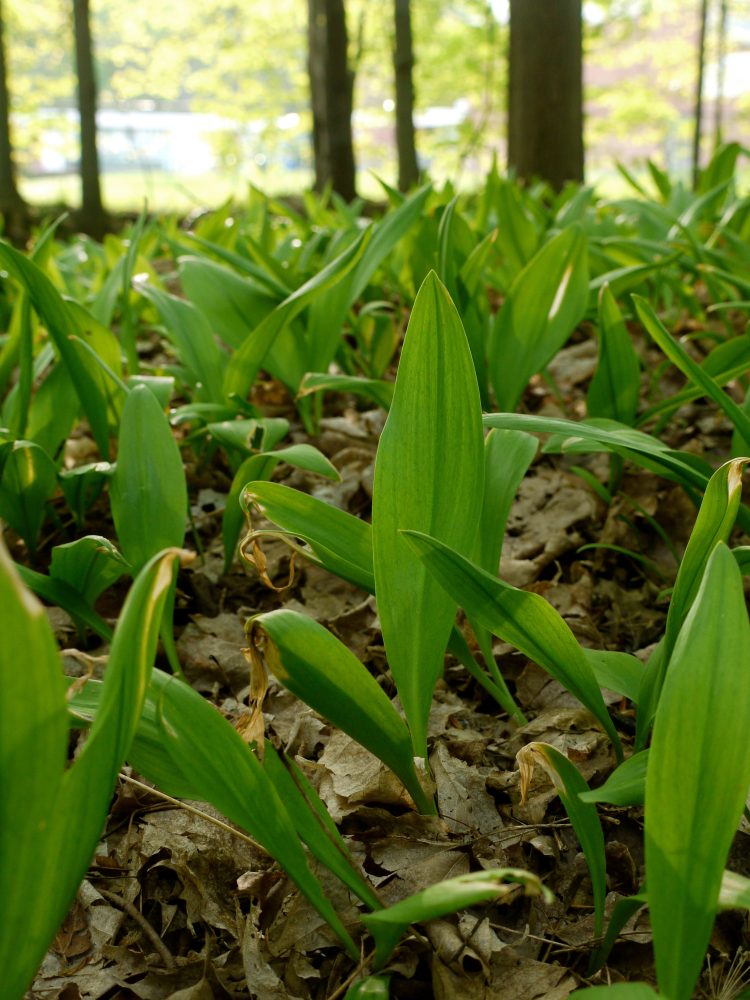
Ramps, also known as wild leeks (Allium tricoccum), are found in the eastern U.S. I generally find them on north facing slopes under deciduous trees in late April or early May.

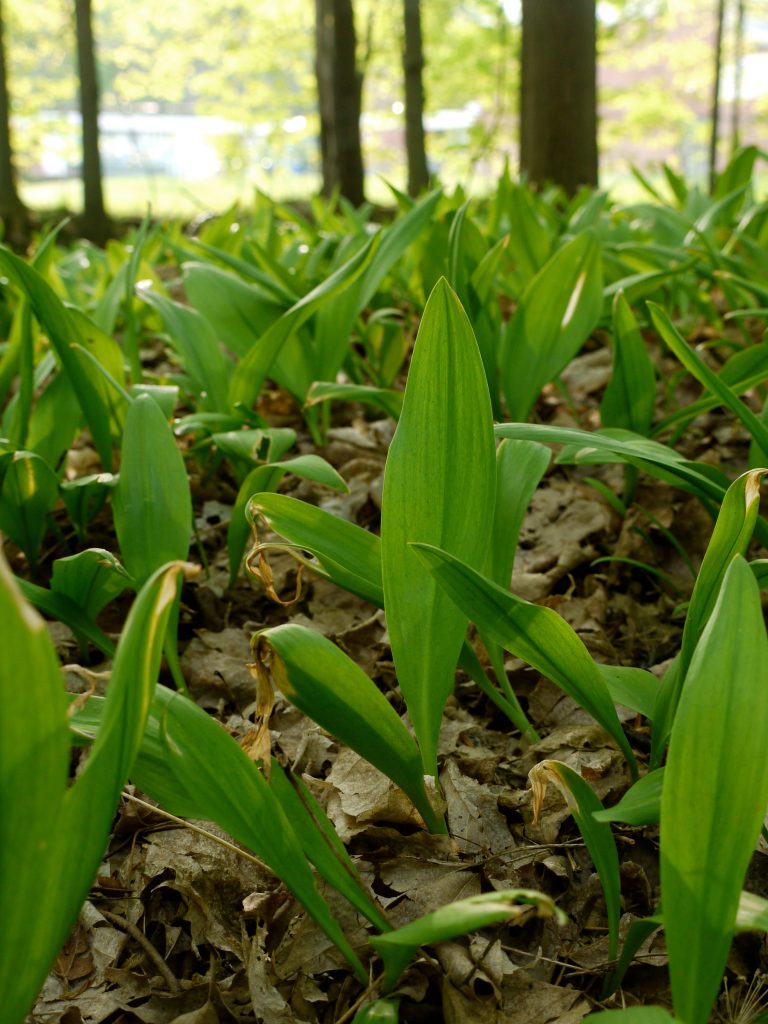
Each ramp plant has 2 – 3 broad leaves with entire (smooth) margins. The bulbs are white, and the stems may be white or burgundy. One of the most important identifying characteristics of the ramp is its garlic aroma. Crush a leaf; if you don’t smell garlic, you don’t have ramps.

Beware of the lily-of-the-valley, a poisonous look-alike.

Foraging Ramps

Unfortunately, ramps are among the most controversial of all foraged delights. Post an article on social media about ramps, and you’re sure to get trashed, one way or another.

There are those who are completely against any harvesting of ramps, and others who insist that only the leaf, and not the bulb should be harvested. I understand. Big city restaurants pay top dollar for ramps, and consequently they are over-harvested.

My advice is to harvest based on your location, and the number of ramps growing. Never take more than you can use, leave some for others, and most importantly make sure the patch from which you are harvesting is treated with respect so that the ramps can reproduce and provide for others for generations to come.

wild ramps under deciduous trees

That said, I do personally harvest both the bulb and leaf. Where I harvest, there are acres and acres of wild ramps, and we take very few. If ramps are scarce in your area, don’t harvest at all. If you find a nice patch, but it’s the only patch around, then I suggest that you only harvest one leaf from each plant and leave plenty so that the patch can continue to reproduce.

Another important tip for harvesting is to harvest in the middle of the patch where the ramps are crowded. Leave the ramps at the edges of the patch alone, so that they can continue to spread out.

And I also always scrub my digging tool before heading into the woods so that I don’t bring any disease from my garden into the woods. I then carefully dig a bulb here, and a bulb there, being careful to replace any displaced soil. After leaving the patch, no one should be able to tell that you were there.

Lastly, some foragers advise harvesting the ramps by cutting just above the roots. The thinking is that you still get the bulb, but leave the roots to grow again. I did practice this method for a year or two, but it was suggested to me that I was potentially introducing disease into the patch with this method and so I no longer harvest this way.

washed ramps

Wild Ramp Salt

Wild ramp salt may used as a finishing salt to add extra flavor to any savory dish, or as a rub for meat. To make, first dehydrate your washed ramp leaves by placing them in a dehydrator in a single layer at 100°F for 4 – 6 hours until brittle. (I use an Excalibur dehydrator).

Then powder them in a blender (I use a bullet blender), coffee grinder, or mortar and pestle.

Then simply mix 2 parts ramp powder to 1 part fine sea salt.

More Posts on Foraging You’ll Love

Ramps and Potato Soup

Ramps and Garlic Mustard Frittata

Oven Roasted Potatoes on a Bed of Pine

Homemade Blueberry Mead

Low-Sugar Elderberry Jelly

Dandelion Oil Lotion Bars

5 Common Plants to Forage for Food and Home Remedies

Tips for foraging ramps (and make ramp salt)!

What Does Raccoon Taste Like? Does It Taste Good?

0

What does a raccoon taste like? If you’re a meat lover, especially exotic ones, this question would be in your mind.

Like any exotic meat, raccoon meat is not found on the open market.

So, many people don’t know what this meat tastes like.

Some may even wonder if it’s edible- to which we say yes.

This post serves as a guide to what raccoons taste like.

We will also provide tips on how to cook this meat and if there is any risk to having this raccoon meat.

What is Raccoon?

A raccoon is a nocturnal animal known for its intelligence. It’s a mammal found mainly in North America.

This little furry animal is known for its distinctive features, especially its tail and masked face.

Another fascinating aspect of this animal is that it’s been around for decades.

Raccoons are omnivorous animals and are surprisingly seen during the day.

It eats fish, snails, fruits, and vegetables.

You can also see them feasting on garbage in the city if there is food scarcity.

Hence, cleaning and cooking raccoon meat thoroughly is necessary before consuming it.

Raccoons are also scavengers, which make them likely to carry parasite or diseases.

Their meat might be nutritional, but proper cleaning and cooking are required.

It also applies to any exotic or bush meats since they are prone to carry diseases.

What Does Raccoon Taste Like?

The taste of raccoon meat may vary depending on what it eats.

If it feeds on dead animals or garbage, it is likely to have an unpleasant smell.

Raccoon meat tastes like chicken or turkey but greasier.

Some even say it tastes like beef, but that’s debatable.

Everyone has different taste buds, so you may not get the same feedback.

But one thing we can say is that- raccoon meat is tender and buttery.

It’s rich-flavored meat that tastes best when it’s roasted or barbecued.

This meat’s texture is tender, making it delightful to eat.

However, its strong smell might be offsetting.

We’d suggest using herbs or spices to eliminate the smell.

It might be smelly when raw, but once you cook correctly, the smell goes away.

Those who have tasted the meat also compare it to fried lamb.

It shares the same tender texture and flavor.

Unlike other exotic meat, raccoon meat is tastier, mainly because of its buttery texture.

It’s not chewy or strenuous, mixed with enriching flavor.

Eventually, it depends on how you cook the meat.

Correctly cooked raccoon meat shouldn’t be tough or chewy.

That way, you can enjoy its soft texture and the aroma of herbs.

Getting your hands on good quality raccoon meat would be an excellent way to enjoy this exotic meat.

It’s tastier, healthy, and safe for your health.

However, that seems challenging as this meat is not found mainly in the open market.

How to Cook Raccoon?

Raccoons are scavengers and filthy animals.

If you get your hands on this exotic meat, ensure that you clean it properly.

Wash the meat with clean water twice or thrice to get rid of dirt.

Once the meat is cleaned, set it aside and wash your hand before you proceed with cooking.

Slice the meat according to your preference and season it with salt and herbs.

This will help eliminate strong odor and make it more flavorful.

Since the meat is tender, you don’t have to marinate it overnight.

You can cook this exotic meat differently, but our recommendation is roasted.

Also, to have a better taste, remove fats from the meat.

Check the steps below to make a roasted raccoon.

But before that, these are required ingredients that you should have:

  • ½ cup flour.
  • Black pepper.
  • Bay leaves.
  • Onions.
  • Cooking oil.
  • Salt.

Season the meat pieces with pepper and salt; bread them with flour.

Take a frying pan and sprinkle cooking oil over it.

Put the pieces and then brown for some minutes.

Once the pieces are brown, transfer them to a roasting pan.

Add bay leaves and slice onion for more flavor.

Cover the pan with aluminum foil and bake at 375F for two hours.

And there you go. The roasted raccoon is cooked and ready to eat.

What is the Risk of Eating Raccoon Meat?

Racoon meat is edible, and there is no risk attached to it unless it’s undercooked.

Since this animal is filthy, it might carry diseases or bacteria.

Hence, it’s crucial to cook thoroughly to eliminate these.

You’d be surprised to know that this exotic meat is packed with nutrients.

It’s healthier than beef and is a rich source of protein and potassium.

But be wary when purchasing raccoon meat.

Some people might sell infected ones, which we’ll not know, especially if you’re new.

Ensure that the meat doesn’t have too much odor.

Admittedly, it has a strong smell, but poor-quality ones might smell worse.

Avoid eating raw raccoon meat which might be dangerous.

Additionally, if you have health issues like a weak immune system, then it would be better not to have it.

We also advise pregnant women to avoid eating this exotic meat.

It might not be suitable for your newborn as this meat might carry diseases that would be harmful to your baby.

Compared to other exotic meat, raccoon meat is tastier because of its tender texture.

Eventually, it all depends on how you prepare and cook the meat.

Final Thought

As we conclude the article, we hope it was helpful and has answered your question regarding raccoon meat and its taste.

This tiny animal is popularly known for its distinct features and intelligence.

Its meat is tender and not chewy compared to other exotic meats. It’s edible and nutritional too.

However, avoid having undercooked raccoon meat as it may carry parasites or other diseases.

It might be harmful to your health, leading to various health implications.

So, clean the meat well before you cook it.

If you’re new, refer to the guide above on cooking and preparing raccoon meat.

About The Author

The Biggest Fish Ever Caught

0

Record Fish

Every angler considers bigger fish to be better in some way. The desire to catch bigger fish keeps the sport fresh for many people and for some, it’s the only reason they keep making casts or heading offshore. Here are some of the biggest fish ever caught in saltwater and the anglers who managed to bring them in.

Marlin Next To The Boat In Hawaii

What’s the Biggest Marlin Ever Caught?

When it comes to the largest marlin ever caught there can be a few different answers. The biggest marlin ever caught on rod and reel was a blue marlin out of Oahu, Hawaii. In 1970, a party of anglers fishing on the Coreene C, with Captain Cornelius Choy caught a blue marlin that weighed 1,805 pounds. This incredible fish became known as “Choy’s Monster” and hasn’t been broken for over 50 years.

The other answer for the largest marlin ever caught is a black marlin that was caught on August 4, 1953, by Alfred Glassell, Jr. This black marlin is the world record marlin according to IGFA rules. Regardless of rules this marlin is one of the one of the greatest catches in fishing the history. The black marlin was caught in Cabo Blanco, Peru, on the boat “Petrel” which was captained by Stirling Stuart. The record setting fish weighed in at 1,560 pounds and 14 and a half feet long.

What’s the Biggest Swordfish Ever Caught?

Back on May 7, 1953, Louis E. Marron caught the World Record swordfish while fishing in Iquique, Chile. Louis was fishing with his wife Genie, aboard a boat named “Flying Heart III” which was captained by Eddie Wall. This giant swordfish weighed 1,182 pounds and is still the IGFA all tackle world record.

What’s the Biggest Tuna Ever Caught?

For the largest tuna ever caught, we found both the bluefin and yellowfin world records. According to the IGFA, the bluefin tuna world record is currently held by Ken Fraser. On October 26, 1979, fishing with Captain Eric Samson on “Lady and Misty” from Port Hood, Nova Scotia, Ken managed to land a monster bluefin tuna weighing 1,496 pounds. This weight was taken after the fish had been dehydrating in the boat for nearly 10 hours.

The IGFA world record for the biggest yellowfin tuna was landed by Guy Yacom while fishing in Mexico on September 18th, 2012. This record-setting fish weighed an incredible 427 pounds. While it was not caught on rod and reel, a bigger yellowfin weighing 480 pounds was speared in 2018.

What’s the Biggest Grouper Ever Caught?

The goliath grouper is the largest grouper species in the world which means that naturally it’s responsible for the world record. The IGFA world record goliath grouper was caught May 20th, 1961 by Lynn Joyner in Fernandina Beach, Florida. This world record fish weighed an incredible 680 pounds and is unlikely to be broken with current laws banning anglers from targeting this fish or handling them outside of the water.

What’s the biggest Tarpon Ever Caught?

Finally the largest tarpon ever caught was taken off the coast of Rubane, Guinea-Bissau, Africa by Max Domecq. According to the IGFA records this inshore giant weighed 286 pounds, 9 ounces and likely was well over seven feet in length. While a story of an even bigger tarpon has come to light recently, it was not officially weighed but instead, it was released safely back into the ocean.

Best Air Rifle Deals

Popular Posts

Air gun 101: Everything you need to know about air rifle accuracy

0
Wyatt Earp has said: Fast is fine, but accuracy is everything And I just thought how many airgunners are obsessed with muzzle velocity and muzzle energy,...

Best Distance for Sighting In an Air Rifle

0
Shooting with an air rifle always seems like a thrilling experience, but if you are a newbie then you have lots to learn. One...

Air gun 101: What is a PCP air rifle? Is PCP gun the best...

0
A PCP air gun is one of five types of air rifles in the market today. PCP air guns have become more and more...