

Home Blog Page 159

Ultimate Guide To Muzzle Devices: Muzzle Brake vs. Compensator vs. Flash Hiders

0

Have you ever wondered how a flash hider actually works, or what’s inside a suppressor? Confused about the difference between a brake and a compensator? Or maybe you’re just curious which muzzle device will help you shave a second or two off of your competition time – whatever the case may be, you’re in luck, because we’re doing a deep dive on the different types of muzzle devices and exploring the pros and cons of each one.

Flash Hider

While the name is fairly self-explanatory, the science behind flash hiders (also known as flash suppressors) is more complicated than you might think.

When a bullet is fired from a typical long-barreled rifle, most of the propellant is burned before the bullet exits the barrel. But with a shorter barrel, where there isn’t enough time for the powder to be fully consumed, the result is an almost instantaneous two-stage muzzle flash – the primary flash is caused by super-heated propellant gases trailing behind the bullet, and the secondary flash is caused by residual gases that ignite after being exposed to oxygen in the air, creating the infamous “fireball” that you’ve probably encountered if you’ve ever fired an SBR or shot a firearm without a flash hider (especially at night).

This created an obvious problem as militaries around the world began shifting towards shorter, more maneuverable carbines – while increased muzzle flash also made the shooter a more visible target, the bigger problem was that it significantly impacted the shooter’s vision during night-time engagements, and in extreme cases could even cause temporary blindness.

One of the earliest examples of a flash hider can be seen with the clamp-on conical flash suppressors used on Lee-Enfield Jungle Carbines in the later years of World War II, but the example that most shooters are probably familiar with is the A2 “bird cage” flash hider that comes standard on most AR-pattern rifles. But how does it actually work? The answer is that the holes or gaps in the flash hider divert the super-heated gases from the primary flash, while also minimizing oxygen flow and rapidly cooling the residual gases to reduce or eliminate the secondary fireball effect.

If you’re shooting a carbine or short-barreled rifle, often shoot at night, or frequently use cartridges that either require large powder charges or the use of slower-burning powder, a flash hider is going to be your best friend.

A2 Flash Hider

Muzzle Brake

When you fire a gun, the energy created by expanding gases is used to propel the bullet forward. And if we recall Newton’s Third Law of Motion, that means the same energy is exerted in the opposite direction, resulting in what we feel as recoil. In order to reduce that recoil, those gases need to be redirected – and that’s exactly what a muzzle brake is for.

While brakes were first invented to tame the recoil of artillery and vehicle-mounted gun systems, they eventually made their way over to the world of small arms as well. They became especially useful for reducing the recoil impulse of large-bore rifles and anti-materiel weapons, often cutting the felt recoil by as much as 50%.

In simple terms, a brake works by redirecting gases backward, typically at a 45-degree angle to the shooter. In effect, this “pulls” the weapon forward, counteracting recoil. Some muzzle brakes also come with one or more expansion chambers cut into them, which help to bleed off escaping gasses and reduce their momentum, further reducing recoil.

So who needs a muzzle brake? Typically, anyone who is shooting big-bore firearms with otherwise unmanageable recoil, though they are also popular among many medium-bore hunters who may have to fire from awkward positions or who want to be able to spot their hits at longer distances. They are also a common choice for shooters putting together lightweight rifle builds, since the reduced mass makes recoil more noticeable and there are many muzzle brakes constructed of lightweight aluminum or polymer that add negligible weight.

As with all muzzle devices, there are some trade-offs: the gasses diverted by a muzzle brake are still moving very quickly, increasing the perceived decibel level and concussive force of each shot for anyone who is in their path. If you’ve ever had the privilege of going to an indoor range and ending up next to someone running a brake, you know just how unpleasant it can be. Those gasses can also kick up dust and debris if you’re shooting from a prone position, which is something to keep in mind for those who live in drier climates.
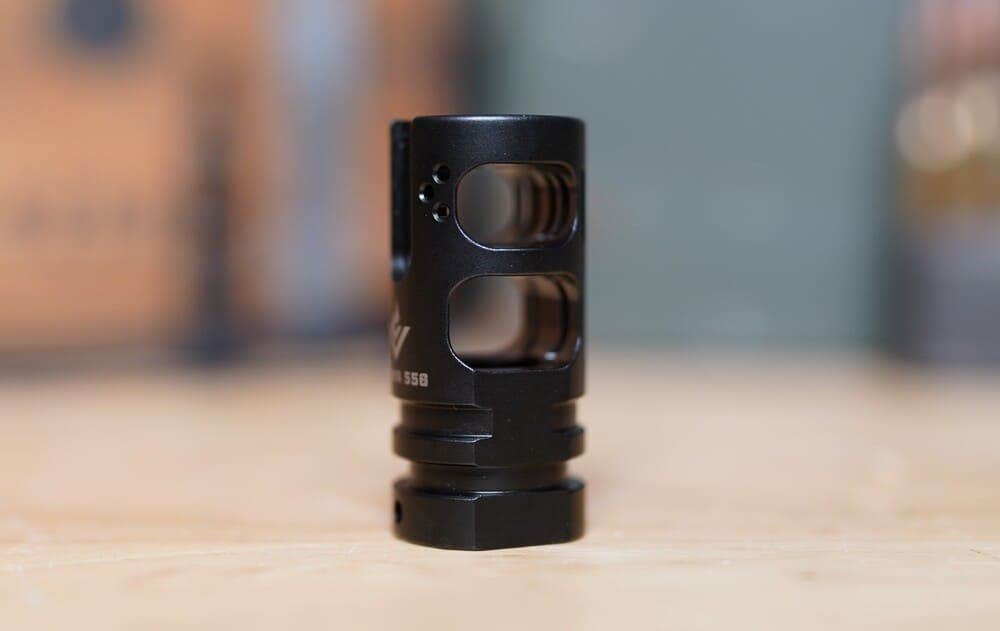
Muzzle Brake

Compensator

While some will argue that a compensator is just another type of muzzle brake, they perform a specific enough role to merit their own separate discussion. Whereas a muzzle brake is intended to lessen felt recoil, a compensator is intended to reduce muzzle climb (also known as muzzle flip). To accomplish that, there are two basic compensator designs: linear and radial.

A linear compensator redirects gas in a straight line forward of the shooter, reducing some of the noise and concussive force of the muzzle blast and making the firearm more comfortable to fire for the user and anyone standing nearby. Because they reduce muzzle climb less than a radial compensator, linear compensators are typically seen on short-barreled rifles or AR pistols, where recoil management is less of an issue than the decibel level and shockwaves generated by each shot.

A radial compensator usually (but not always) vents gases at a 90-degree angle to the shooter, and can often be identified by the holes, or “ports,” cut into it. Because each compensator must be specifically designed to suit the shooting platform it is intended for, there are naturally some unusual designs floating around, as well; the most famous example is probably the iconic AKM “slant brake,” which actually isn’t a brake at all – it is an aggressively angled compensator that is canted roughly 22 degrees off center to the muzzle in order to counteract the natural up-and-to-the-right recoil pattern of the AKM when fired by a right-handed shooter.

While compensators are great at what they do, and are a frequent mainstay of competitive events that require the shooter to deliver fast follow-up shots, there are a few things to keep in mind. Like muzzle brakes, most radial compensators will make even a relatively soft-shooting cartridge painful for everyone else around you, and the ported holes effectively shortens your barrel length, resulting in some loss of velocity. As well, linear compensators can create a very small amount of turbulence at the muzzle crown due to some of the gases actually being pushed out of the barrel faster than the bullet – for the vast majority of shooters, this effect will be unnoticeable, but those who are interested in extreme long-range shooting or precision benchrest shooting will likely want to look elsewhere.

Compensator on Barrel

Suppressor

First things first: No, “silencers” aren’t really silent. Suppressors reduce a firearm’s muzzle report by reducing the speed and pressure of the gas created when a cartridge is fired, and while the effect can be significant, it’s not as dramatic as Hollywood would have you believe.

Suppressors work by using a series of sound baffles to create a sort of “maze” for the gases to navigate, causing them to slow down and cool off enough to reduce the sound of the gunshot. These baffles are usually made of a lightweight metal such as titanium or aluminum, though a few manufacturers have successfully used plastic baffles for .22 LR suppressors. These baffles can either be machined out of a single piece of metal, in which case they are called a “monolithic core” suppressor, or they can be manufactured in multiple pieces and combined in a “baffle stack” suppressor.

Generally speaking, a monolithic core suppressor will be less expensive, easier to clean, and less prone to experiencing a baffle strike, while a baffle stack suppressor will be slightly quieter, shorter, and able to make use of alloys such as Inconel that are more efficient but also more difficult to machine into a monolithic design.

While suppressors are by far the most expensive muzzle device on this list, and also require the extra expense and legal headache of securing an NFA tax stamp, they are a great all-around option for those with enough patience and money. Not only does a suppressor dramatically reduce noise, it also eliminates muzzles flash by cooling the gases as they travel through the baffles. Not only that, muzzle climb and felt recoil are slightly reduced thanks to the reduced energy of the gases and the added weight and length of the suppressor. They’re an increasingly popular choice for hunters who don’t want to scare off nearby game or use bulky ear protection, and if you’re building a rifle for home defense, a suppressor will ensure that you are not temporarily blinded by muzzle flash in a dark room or subjected to permanent hearing damage.

Man using suppressor on range

The Bottom Line

As is often the case when it comes to firearm accessories, choosing the best muzzle device for your needs ultimately comes down to your mission. While the standard flash hider that comes mounted on many modern rifles is perfectly adequate for most situations, upgrading your muzzle device is often a relatively inexpensive way to squeeze some extra efficiency or better performance out of your gun, whether you want a jack-off-all-trades tool or a highly specialized setup.

Best everyday or bug out boots? We review the Timberland® Earthkeepers

0

The best endorsement of a product is to use it continually and take its reliability for granted.

My Timberland® Earthkeeper boots fit that description and they have been through the wringer.

by Leon Pantenburg

There was no comparison shopping going on when I bought my Timberland Earthkeeper boots. My old Georgia® work boots were about worn out, and I was sorta looking for a new pair. The Earthkeepers were on a sale rack in Bend, Oregon, there was a pair that fit me and the price was right.

Today, I don’t think about my Timberland work boots. They’re just there, parked by the back door to the garage or they may be tossed in the back of my pickup. The Timberlands get pulled on when I mow the yard, walk the dog, climb a ladder, work with power tools, trim shrubs and trees and grub around in the garden. If I’m working outside, chances are I’ll be wearing them.

Originally released in 2007, according to the Timberland website, this boot was the start of the Earthkeepers® Edition that has grown to include shoes, clothes, and more.

Here are the specs of the Timberland Earthkeeper boots style 15551210:

  • Better Leather from a tannery rated silver by the Leather Working Group for its water, energy, and waste management practices
  • Footbed lined with leather from a tannery rated silver by the Leather Working Group for its water, energy, and waste management practices
  • 100% recycled PET laces
  • ReBOTL™ fabric lining containing at least 50% recycled plastic
  • Midsole of EVA-blend foam for high-rebound cushioning
  • Steel shank for arch support
  • TPR welt
  • Rubber outsole
  • Imported

Here’s the good stuff:

Wear: My Earthkeepers have been worn regularly for the past decade or so. Finally last fall, the sole started to separate from the upper. Some glue and a C clamp fixed that, and the soles are good for a lot more hard wear.

Comfort: It goes without saying that work boots need to be comfortable, especially if you will be standing and working all day. The Earthkeepers don’t have any sort of waterproof liner, so they are cooler than most boots with some sort of waterproof liner. This also means that you can’t wade in water without getting your feet wet. That’s fine – I have Muck Boots for wet conditions.

Style: As work boots go, these look good in most situations. I wear mine with jeans and Carharts, or with cut-offs and a T-shirt when I go to Lowe’s to pick up stuff. Working people typically don’t worry about their footwear’s appearance, but it’s nice to have a good-looking pair anyway.

Urban dwellers have discovered work boots, and the sensible footwear has a place in the big cities. If you ever have to evacuate your home due to natural or man made disasters, these are the boots you want to be wearing.

Fit: My foot size is 11, EE width, in hikers. The Earthkeepers fit my feet just right.

Laces: My boots still have the original laces, and they show minimal wear. The laces stay tied and perform as should be expected.

Care: I don’t do anything to my Earthkeepers. The boots get cleaned as needed. I suppose the leather should be treated with mink oil or some leather preservative and that may happen some day. To keep your Earthkeepers looking good, the leather should be maintained regularly.

Then there’s this:

Durability: It’s been mentioned that the sole started to separate from the upper. Considering how hard these boots have been worn, that’s acceptable. They can be re-soled.

Sole: I prefer a smooth sole on work boots. I have hikers with aggressive tread for hiking and hunting, and the soles should match the terrain. But in a boot you might be wearing to go in and out of a house, from the truck to the combine or from the barn to inside, the sole needs to be easy to scrape off and clean. Also, a smoother sole is better for climbing on ladders.

Most hiking trails these days are well-worn paths, and aggressive tread is overkill. A smoother sole is easier on the environment.

From the website: At the heart of the Timberland® brand is the core belief that a greener future is a better future. This comes to life through a decades-long commitment to make products responsibly, protect the outdoors, and strengthen communities around the world. The brand has committed to plant 50 million trees worldwide by 2025, and has a bold vision for its products to have a net positive impact on Nature by 2030, giving back more than they take.

Do you need a pair of Earthkeepers?

Everyone needs some work boots, even folks who live in the city. These boots have proven themselves, and I will be looking for a new pair if mine ever wear out!

Please click here to check out and subscribe to the SurvivalCommonSense.com YouTube channel – thanks!

How Big is a Moose Compared to a Human?

0

Ever wondered how big is a moose compared to a human? Adult Moose usually measure up to 9 feet (2.8 meters) in terms of body length. Compared to a human, the average moose has a much bigger body overall, while also having a total body mass that is in the range of ten times that of a person at the same height.

A common sight in the colder regions of North America, moose are generally friendly creatures that pose little of a threat when approached. They’re known for their distinctive calls, deer-like antlers, and their bulbous noses that make them easy to tell apart from deer or elk.

But how big can a moose get, compared to a human?

Moose are the biggest representatives of the deer family, and a single look at one will tell you why. Larger than any horse, deer, or other hoofed animals, the moose towers above most mammals including us humans. If you want to know more fascinating facts about moose and their impressive bodies, feel free to take a look at our quick fact sheet below!

Close up of large moose looking off to the side

Related Reading: Do Moose Come Out in the Rain?

How Tall is a Moose?

While it is easy to see that moose are incredibly massive animals, and their bodies can easily dwarf those of us human beings, there is the question of how tall moose really are, not just how big overall. Being four-hoofed animals that never walk upright, the total body dimensions of a moose are a bit misleading when it comes to visualizing just how large a moose looks when put next to a human.

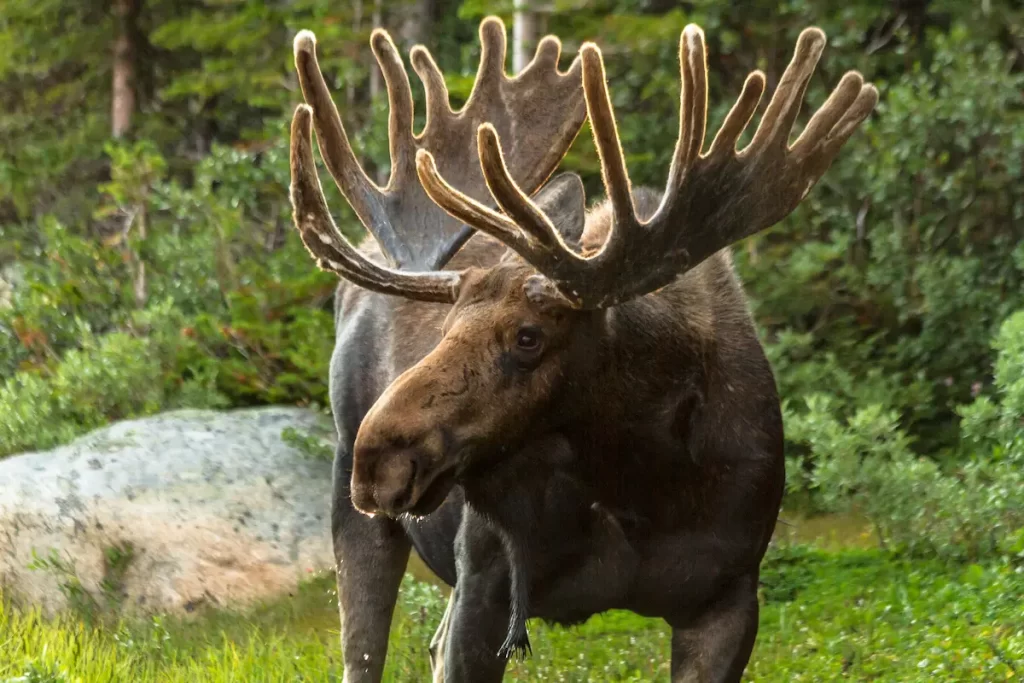
Adult moose measure about 6 to 7 feet (1.8 to 2.2 meters) in height when measured at the shoulder. However, when the head and antlers are taken into account and the moose stands tall, this figure can eclipse 10 feet (3 meters).

As you can tell, the measurement of a moose’s height paints a different picture than the sole body length numbers alone – however, it should still be quite clear to see that moose are gigantic animals, and even smaller specimens will have us, humans, walking in their shadows due to their sheer mass and size.

How Big Can a Moose Get?

Over the course of a moose’s life cycle, their bodies change and develop quite radically, just like ours. Therefore, how big a moose can get depends on a few factors.We’ve laid everything out in the quick overview below. It should give you everything you need to know about the dimensions of a moose.

  • First note that moose exhibit sexual dimorphism, i.e. females are of different size and appearance than males. A female moose will not grow antlers, and is on average about 60-70% the body mass of a comparable male
  • There are a few recognized subspecies of moose, the largest of which is the Alaskan moose. The so-called Taiga moose, which is common across Central Europe, Russia, and parts of Kazakhstan, is noticeably smaller
  • As moose age, their bodies grow larger and stronger. Male moose start growing antlers after about a year of age, and they renew them after every mating season. At their peak, the antlers alone can be over 6 feet (1.8 meters) long, somewhat shorter in the case of Eurasian moose
  • Moose calves are about the same size as horse calves, but they grow very quickly and reach adult size after a year
  • The biggest moose ever confirmed was a male Alaskan moose shot in 1897 – it measured 7.6 feet (230 centimeters) tall at the shoulders and weighed 1,800 pounds (816 kilograms)

Why Are Moose So Big?

While it is obvious that moose are some of the largest herbivores found in North America and Eurasia, the less obvious fact is the answer to the question of why their bodies are as massive as they are.

The truth is that moose need to be so large in order to properly survive in their natural habitat. The cold temperatures and harsh seasons that moose often experience in Alaska and Siberia have effected great evolutionary pressure on these animals – and it shows.

Moose have many tricks up their sleeves in order to cope with their home climate. For example, their many hairs are hollow on the inside, which helps them insulate for added warmth.

The incredible weight that moose pack on is also no coincidence – large volumes of fat storage provides another way to weather the freezing temperatures outside, so moose like to keep themselves well-fed.

And in turn, this excessive body weight needs to be supported by strong limbs and muscles – which is why the body of a moose needs to reach its uniquely humongous dimensions in order for these animals to thrive.

In fact, when moose are introduced to warmer climates (as is unfortunately the case more and more often these days as areas historically populated by moose undergo climate change), their bodies suffer greatly. They lose weight, experience chronic stress, and female moose will also develop fertility issues.

All in all, the short answer for why moose are so big is that they have evolved more so than almost any other four-hoofed herbivore to survive exceptionally well in the cold.

No wonder, then, that there is only one animal that shares the moose’s habitat and can rival it in size – the bison, another mammal whose gigantic body is mostly the result of evolutionary pressures intended to make it easier to survive freezing winters.

Related Reading: Can You Ride a Moose? Has It Ever Been Done?

How Big Are Moose Antlers?

The antlers are easily the most recognizable aspect of the moose’s appearance. However, just like deer, moose “renew” their antlers every season, and with each passing year the antlers grow longer, taller, and more intricate. It should also be noted that female moose (cows) never grow antlers.

The antlers of an adult male moose are typically up to 6 feet (1.8 meters) long end-to-end. The moose with the longest antlers are by far the Alaskan variety, while Eurasian moose tend to display slightly shorter specimens.

The antlers of a moose can add significantly to the animal’s overall size, though most formal measurements of moose are based on the height measured at the shoulders.

Why Are Moose Antlers So Big?

Though they add a lot of distinctiveness to the visual appearance of a moose, it is a question worth asking why moose grow their antlers to such an impressive size to begin with.

The antlers of the moose are used for display purposes, indicating a male’s sexual prowess and overall health and strength. If multiple males compete over a single female, they will actually use their antlers to fight. The victor is then generally taken to have the stronger antlers, and by extension the stronger, healthier body with the superior genes. Therefore, natural selection has led to most moose growing impressively large, intricately-shaped antlers.

The moose’s antlers might not be as significant to the animal’s daily lifestyle as most other parts of their bodies – however, when mating season strikes, their antlers are their number one tool of choice in order to attract the perfect mate. And in cases of rivalry between male moose, they can serve as potent weapons and displays of strength!

Are Moose Dangerous?

Now that you know all the basic facts about the size of the average moose you might encounter in the wild, you might be a bit worried that these large animals with their weapon-like antlers could pose a threat to your or your loved ones. But is it true that moose are dangerous animals?

While moose are certainly massive and strong enough to cause serious damage to people and their property, they are not very aggressive animals. Generally speaking, it is hard to provoke them, and incidents where moose attack humans have been incredibly rare throughout history.

The moose is not an animal that will charge or attack a random bystander for no good reason. As long as you keep your distance and do not make any moves that could be considered threatening, you should be perfectly safe.

If a moose does charge you, it is also a good idea to flee and not try to do anything to calm it or go any closer – moose can run at 35 mph (56 kph), and they generally only let go once they realize that their aggressor has given up.

Continue Reading: How Long Is Moose Meat Good in the Freezer? [ANSWERED]

Grizzly Bear Attacks, Kills Bison in Yellowstone as Visitor Rolls Camera

0

Everyone who visits Yellowstone National Park, especially these days, considers themselves an amateur photographer. They’ve all got a high quality camera attached to the phone in their pocket, and any instance of wildlife needs to be captured.

When a single grizzly bear 200 yards off the side of the road can be enough to stop traffic, then an interaction between a young bear and a young bison is definitely going to get noticed.

That was the case for Michael Daus, who was enjoying a day in Yellowstone with his family and came across this scene. In what ends up being a five-minute filmed ordeal, the bear and bison go at it, fighting mere feet from parked cars, crossing a bridge, and eventually splashing into a river.

Daus allowed the video to be used and published by Jackson Hole EcoTour Adventures, who added some interesting and educational commentary to the clip.

Grizzly Bear versus Bison Filmed at Yellowstone National Park

The incident took place near the Grand Prismatic Overlook trail, which is a particularly popular, and therefore typically crowded, part of Yellowstone Park.

This snippet, taken from the YouTube caption Daus added to the video, gives some more context:

“We knew the bear was in the area, as we saw it near the road, less than a mile before turning into the parking lot for the grand Prismatic Overlook hike. While there was a steady flow of walkers, we carried bear spray and remained on the lookout for the bear the entire time.

“We weren’t crazy about returning to find the bear so close, just beyond the opposite side of the small parking area. We didn’t even see it until we were at our vehicle. I was particularly relieved that the bear seemed more interested in the bison, so while very close to the car, we simply maintained what felt like a safe distance.

“Having lived nearby for decades not minutes, we certainly don’t want our actions or the appearance of our proximity to the animals to set any kind of bad example about approaching wildlife. The camera on this phone boasts a pretty amazing lens and zoom capabilities. So I was able to get all the shots from further than it may appear. The kids enjoyed watching safely from the sunroof of the car. Thanks for the concern, just the same.”

A fight of this magnitude, between two wild animals so revered across the United States and the rest of North America, made it that much more special to capture via video. And honestly, it’s also special because there aren’t 40 alternate angles shot and uploaded to the internet from the crowd that would have certainly been gathered if it were peak season.

In fact, for those who’ve visited Yellowstone and are familiar with the area, like our own Travis Smola, this clip came as a shock.

“I’ve been there a bunch of times, it’s one of the busiest parts of the park,” Smola said when he saw the video. “I can’t believe there weren’t 2,000 people there watching this unfold.”

Yellowstone grizzly bears have been known to prey on bison, as well as elk calves or other ungulates. Yellowstone’s wolf and bear populations are the bison’s only large predators in the Park.

READ MORE: CAT FIGHTS OFF ATTACK FROM THREE COYOTES IN SECURITY CAM FOOTAGE

8 Most Expensive Crabs in the World

0

Evolution really likes crabs.

That’s not entirely true. Evolution doesn’t “like” anything. It’s just a natural process that develops and changes species. It doesn’t have likes or dislikes.

But here’s what’s kinda crazy — evolution keeps making crabs, and scientists don’t know why. Seriously.

For decades, scientists have been aware of carcinization, the natural phenomenon of organisms evolving into crabs or crab-like creatures.

According to an expert at Florida International University, “Carcinization can be defined as the evolutionary process leading to the crab-like form.”

Evolutionary biologists aren’t sure why carcinization occurs, but some say it might be caused by the crab’s ability to survive. The crab-like form might have features that make it more resilient than other organisms, making it more likely to climb the evolutionary tree.

No matter why they exist, Earth is home to a bunch of crabs (about 5,000 unique species to be exact).

With so many crabs, it can be hard to pinpoint the most expensive varieties. Some are common foods, others are protected and face extinction due to habitat loss. With this list, we’ll look at the most expensive crabs you could actually buy. Keep reading to learn more!

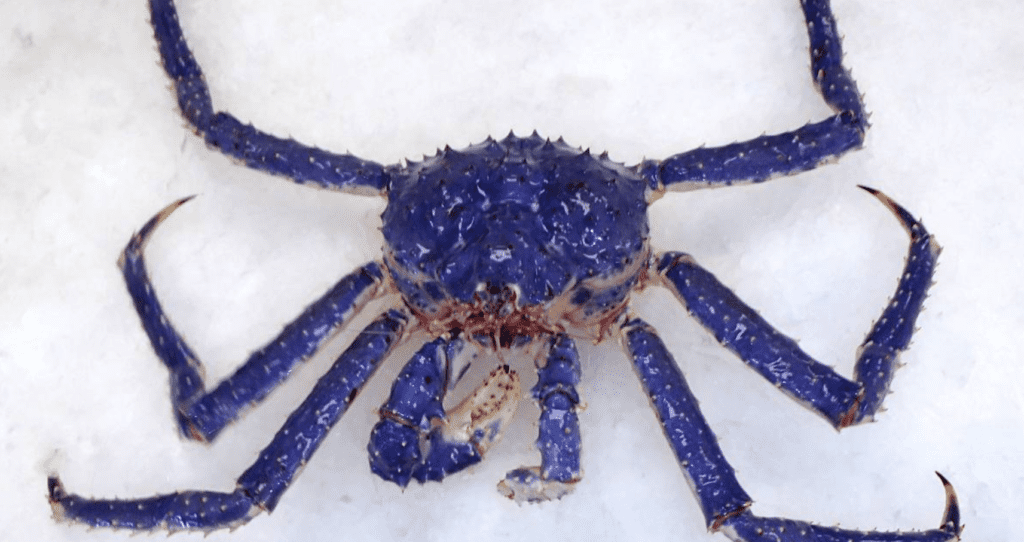
8. The Blue King Crab

The Blue King Crab photo source: adn.com

First up is the elusive blue king crab. The creature is often found near the chilly Diomede Islands, a small region between Alaska and mainland Russia.

Blue king crabs eat worms, small fish, algae, and even other crabs! Beyond the Diomede Islands, these blue creatures live in cold waters surrounding Hokkaido, Japan, and the Sea of Okhotsk.

Blue king crab prices are hard to nail down, but you could easily spend about $30 on one of these animals. The species is relatively rare and not as popular for eating as the Alaskan king crab. The species’ population is also spread pretty thin, with small pockets living scattered across the globe.

Warming oceans could be causing the crabs’ strange distribution. The animal evolved to live in cold water, so changing temperatures can isolate them in colder remote regions.

All those factors make the blue king crab hard to find and pretty expensive.

Did you know?

The Alaska Department of Fish and Game says the blue king crab population is quite low, so commercial fishing companies can’t catch them. The Department says there aren’t any direct threats causing the risk of extinction, but the species’ small population is concerning.

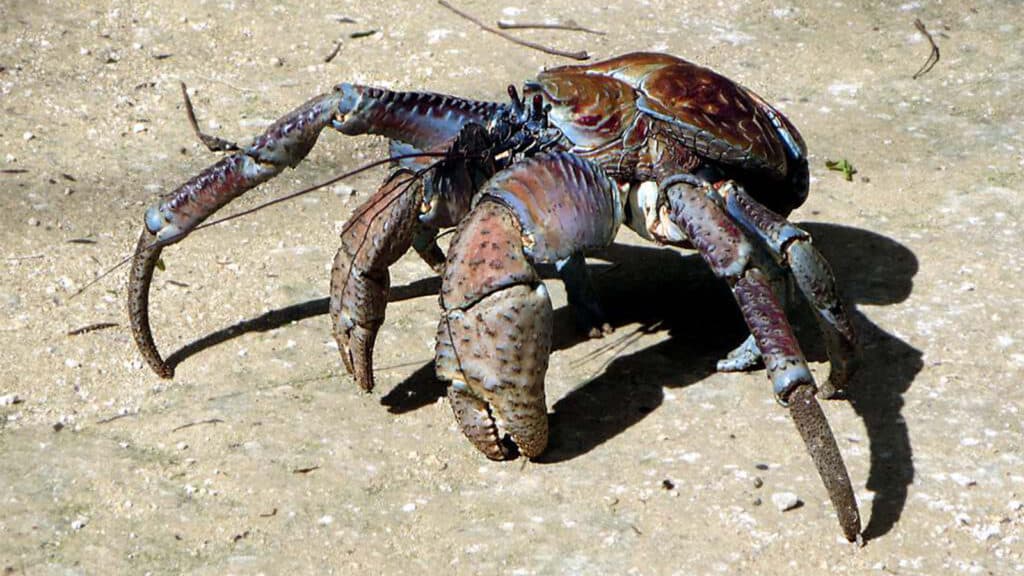
7. Coconut Crabs

Coconut Crabs photo source: animals.howstuffworks.com
The massive coconut crab is just that: massive. These huge creatures are about 40 inches long and weigh 10 pounds, making them some of the biggest crabs on this list.

When they’re young, the nocturnal coconut crab lives in dense vegetation or piles of fallen coconuts to avoid the sun.

As they get older, the crabs usually make burrows among tree roots and logs. These damp homes keep the animals safe from the heat until they head out for food at nightfall.

As scavengers, coconut crabs eat the shells of other crabs to get their daily dose of calcium. They also enjoy fallen fruit and dead animals found near their beachfront homes. Some even eat birds!

Sadly, coconut crabs are threatened by habitat destruction and over-harvesting. The species was officially labeled “vulnerable” by the IUCN, and experts are worried about their future. As a result, these animals can be hard to find and very expensive.

Did you know?

Female coconut crabs usually choose to mate with males that are the same size or bigger than themselves.

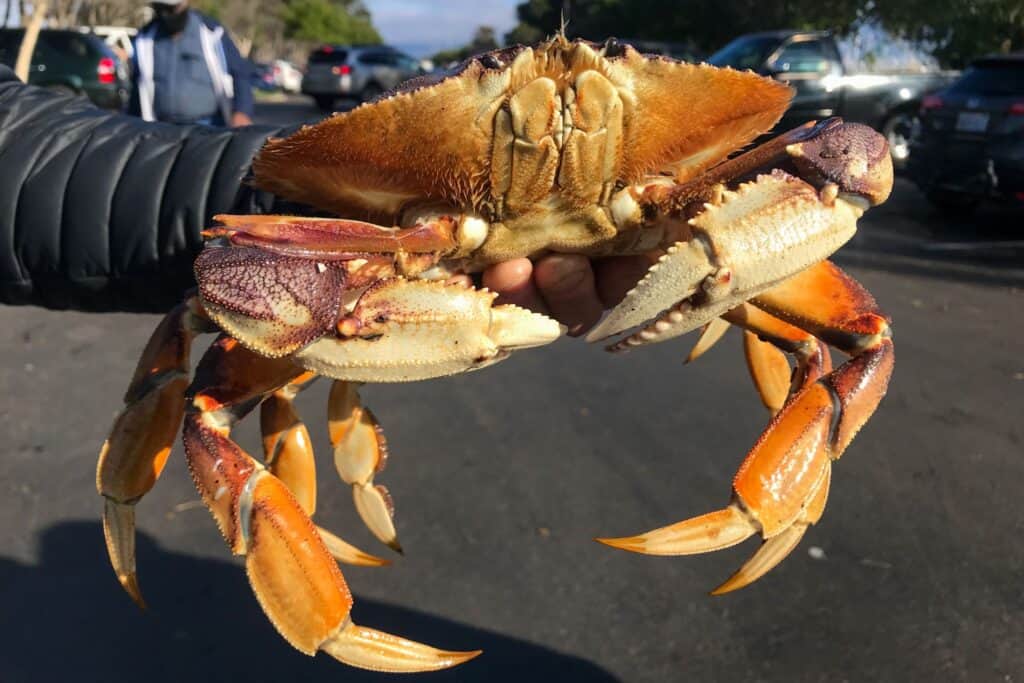
6. The Dungeness Crab

The Dungeness Crab photo source: sfgate.com

The Dungeness crab, a popular meal in the San Francisco Bay Area, is known for its mild taste and juicy texture. The variety is a common choice for crab cakes, but its steep price tag is a little hard to swallow.

Final costs depend on the crab and its seller, but you could easily spend $40 on one of these creatures. Others go for closer to $45 per pound. For a typical 2-pound crab, you’re looking at a $90 dinner.

Did you know?

The Dungeness crab lives along sandy ocean floors near the coast of Alaska. It can also be found down in Magdalena Bay, Mexico, and throughout California’s coastal waters.

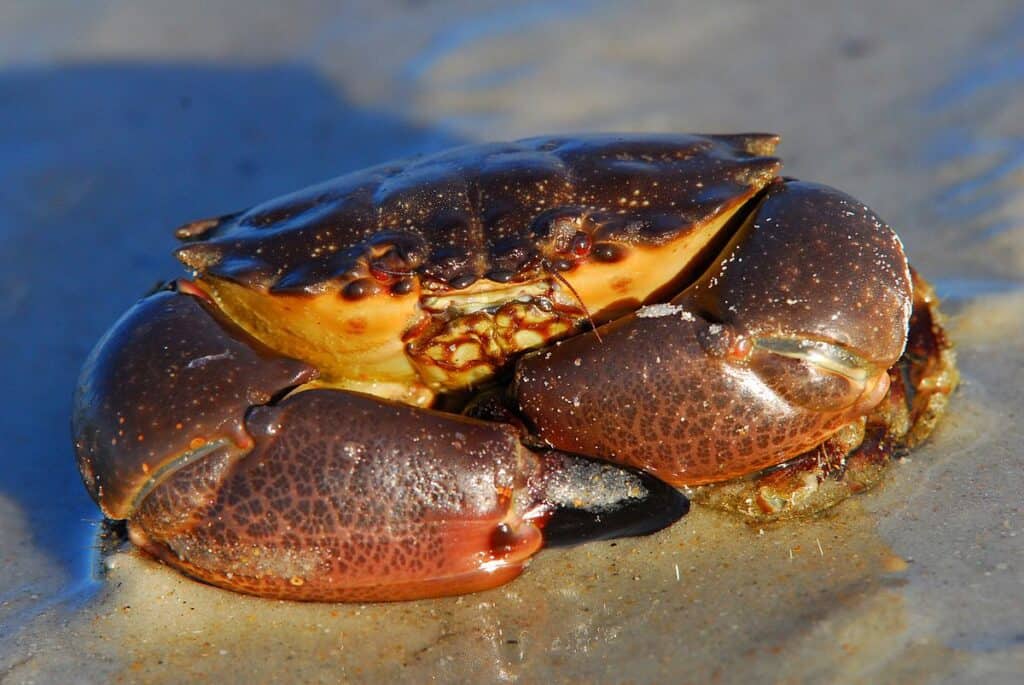
5. Stone Crabs

Stone Crabs photo source: commons.wikimedia.org

Stone crabs are often found along the coasts of North Carolina and Florida. The variety is a favorite among restaurants, many of which charge upwards of $70 for a small plate of stone crab claws.

Stone crab claw harvesting is a pretty unique process. Fishers catch the animals in underwater traps, then break off their claws and throw the rest back to the waves. Crabs can regenerate limbs, so the animal will regrow its missing claws over time.

Florida is one of the biggest producers of stone crab claws. The state regulates harvesting by requiring each claw to be at least 2 ⅞ inches long before its removed. Some scientists are concerned about claw harvesting despite this rule.

A study by the state of Florida found that as much as 82% of crabs die when both claws are removed and up to 60% die when one claw is removed. Those high death rates make some worry about sustaining healthy stone crab populations.

Did you know?

Stone crab claws have to be boiled and put on ice soon after removal, otherwise they go bad.

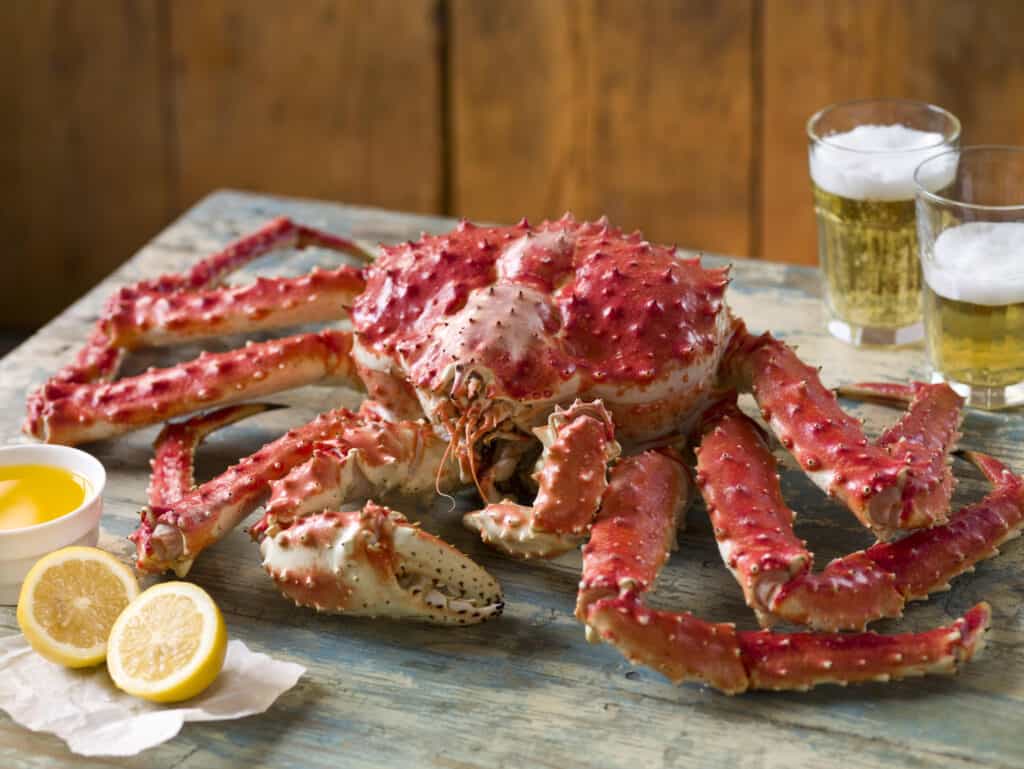
4. The Alaskan Red King Crab

photo source: cnbc.com

Coming in at number four is the Alaskan red king crab, a large species that can live up to about 30 years. Males can grow up to about 24 pounds and have legs up to 5 feet long.

Red king crabs live throughout the coastal waters of Japan, British Columbia, the Bering Sea, Alaska, and many other regions — but the most expensive variety comes from Alaska.

A 2-pound, wild-caught Alaskan red king crab can sell for up to $180!

Did you know?

Like other crabs, this variety is omnivorous. The species enjoys a whole range of dead and decaying organisms along the ocean floor, including fish, plants, and more.

3. Crystal Crabs

Crystal Crabs photo source: oceanictrading.com.au

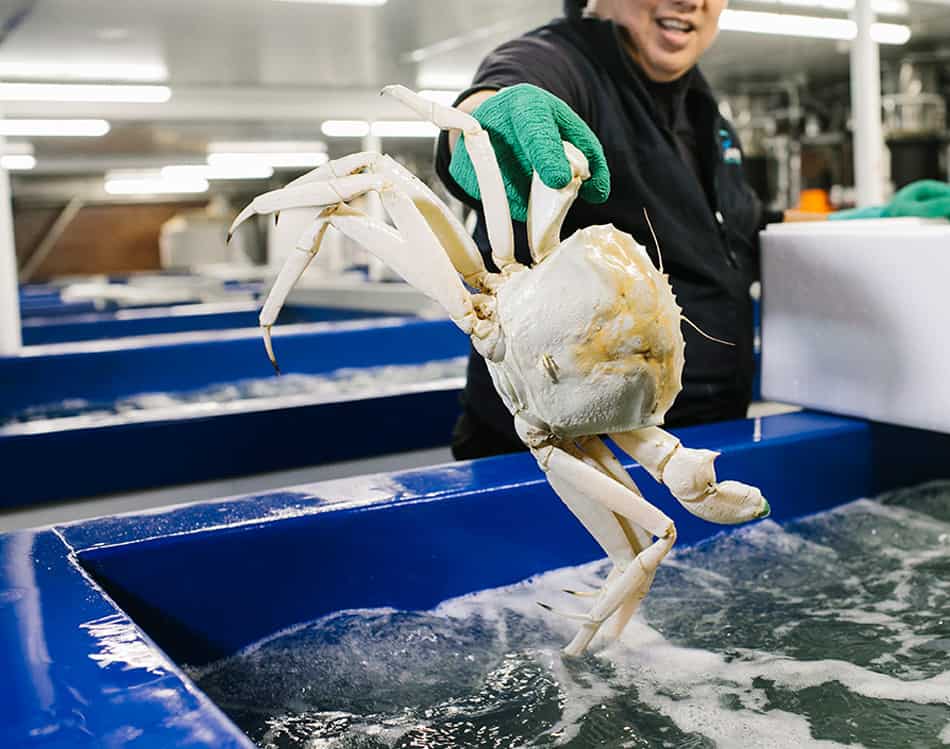
The crystal crab is one of the most popular varieties among high-end chefs. The species has a thin shell and yields large portions of meat, making it a popular choice for restaurants.

Crystal crabs only live along the western coast of Australia. As deep-sea crabs, the species can be tricky to catch, making it more expensive. Although the variety isn’t endangered, crystal crabs’ isolated population boosts prices too.

A single crystal crab can sell for as much as $300, making it the third most expensive crab on the planet.

Did you know?

Unlike other species, crystal crabs remain white after being cooked.

2. The Giant Spider Crab

The Giant Spider Crab photo source: christies.com

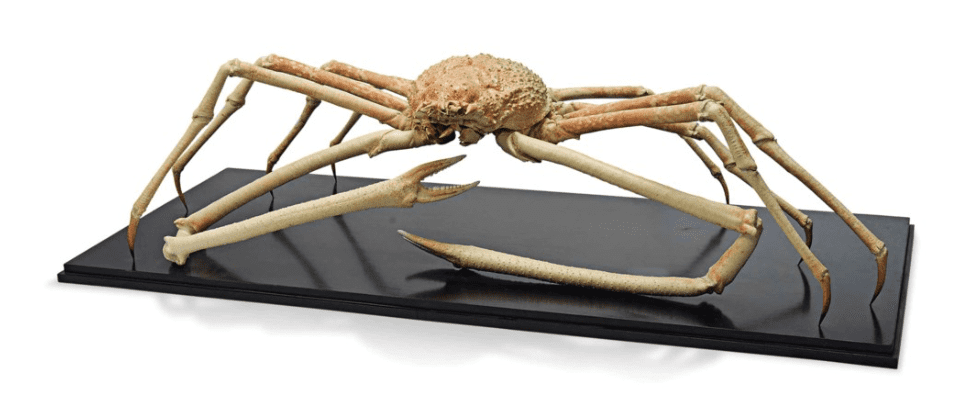
The horrifyingly huge spider crab lurks along the seafloor near Japan. Living up to 100 years, the massive creature can grow legs over 12 feet long and weigh more than 40 pounds!

Despite their monster-like appearance, giant spider crabs are actually quite tame. The animal moves slowly along the ocean floor, snacking on dead organisms as it moves through the water.

Giant spider crabs aren’t commonly fished because they live so deep under the waves. Still, the creatures are a delicacy in Japan. If they aren’t eaten, the species might be preserved and presented as a unique collector’s item — like this taxidermied specimen sold in 2014. The huge creature was auctioned for about $12,000!

Did you know?

Giant spider crabs often live 50 meters below the ocean surface.

1. Snow Crabs

Snow Crabs photo source: cnbc.com

Snow crabs are the most expensive crabs.

Snow crabs are mainly found along parts of Greenland, Eastern Canada, Alaska, and Japan. You could easily spend several hundred dollars on these animals regardless of their origin, but Japanese snow crabs can be particularly expensive.

Why? In Japan, snow crab fishing season runs from November to early March. Traditionally, buying the first caught crab is a status symbol. People are willing to spend thousands to get their hands on the first crab of the season. One sold for $18,000 in 2018, while another earned a jaw-dropping $46,000 in 2019.

Tetsuji Hamashita purchased the record-setting crab, saying, “I know it’s extreme. But it’s the custom.”

Did you know?

Snow crabs live among the muddy bottoms of cold ocean waters. The creatures feed on worms, fish, shrimp, and other small organisms.

Sausage Casings 101

0

Sausage casings are an essential part of making sausage. After all, when we have a look at what sausages are made of, we have, of course, the stuffing with the meat, the sausage seasoning, and the meat casing. After all, a sausage isn’t a sausage without something to stuff it in. But sausage casings are also important in ensuring your end product is flavorful, processed evenly, and has great texture.

The type of casing used is typically dictated by tradition but also varies by processing technique, ingredients, and size. Most sausage casings are natural, collagen or fibrous, with a wide array of sizes and applications depending on the type of sausage.

But what is the casing on sausage? Is the sausage casing edible? What are sausage casings made of? PS Seasoning professional chefs answer all your questions about sausage casings.

What is the Casing on Sausage?

Sausage casing is the material that encases the filling of a sausage. Natural sausage casings are usually made of animal intestines but can also be made from collagen, or cellulose material.

What are Sausage Casings Made of?

Generally, sausage casings are made either from beef or sheep intestines, collagen, or cellulose. Though more rare, some sausage casings are made of plastic such as lunch meat and bologna.

Types of Sausage Casings

Natural Casings

natural hog casings

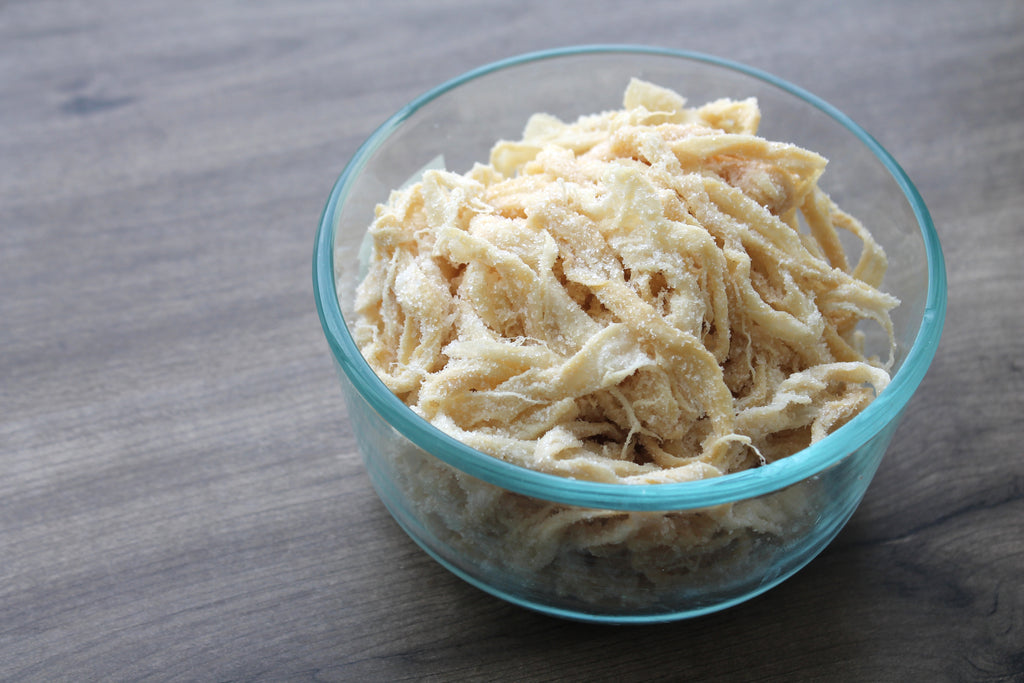
Natural sausage casings are made from the submucosa of the small intestine, a layer of the intestine that consists of naturally occurring collagen. The use of natural casing goes back centuries — it’s one of the oldest forms of sausage-making, a classic in the sausage tradition. They are the most popular choice today because of the “snap” they make when bitten. Natural sausage casings are also flexible, tender, easy to stuff, and are durable enough to hold up to smokehouse processing. Natural casings are commonly used for fresh sausage, smoked sausage, snack sticks, brats and more. Your natural sausage casings will come either packed in salt or a saline solution. The saline solution is designed for quick use, so once you rinse them off, you can use them within about 30 minutes after soaking in warm water. If salt-packed (in other words, heavily salted), you need to rinse off the salt from the natural casings, soak them in cold water and run cold water through them. After about half an hour of soaking in warm water, they can be used for stuffing sausages. These natural casings can be repacked in salt and stored in the freezer for up to a year.

Hog casings

Hog casings are the traditional choice when making any type of link sausage like bratwurst, Italians, and kielbasa. This type of natural casing is also commonly used for making smoked polish sausages, ring bologna with a small diameter and landjäeger.

29-32 mm Small Brats • Link Sausage • Landjaeger 32-35 mm Brats • Italian Sausage • Rope Sausage 35-38 mm Polish • Kielbasa 38-42 mm Bologna

Sheep casings

Sheep casings are the most tender of the natural casings. The smaller diameter of sheep casings makes the perfect for making small link sausages like breakfast sausage and hot dogs, to snack sticks.

20-22 mm Breakfast Sausage • Small Snack Sticks 22-24 mm Breakfast Sausage • Snack Sticks 24-26 mm Small Hot Dog • Wiener 26-28 mm Large Hot Dog • Wiener • Landjaeger

Beef Rounds

Beef rounds get their name from their characteristic round shape. They have minimal fat and are ideal for fresh, cooked or smoked sausage such as Ring Bologna, Polish, Mettwurst, Holsteiner, and Blood Sausage. These beef casings are very heavily salted in order to conserve them, so you need to rinse them in cold water then run warm water through them. The best treatment is to soak the beef casings overnight in cold water and soak them in warm water for about 30 minutes before beginning your sausage stuffing work.

Beef Middles

Beef middles are straight long casings that have a heavier texture wall with some fat. These beef casings are ideal for dry and semi-dry sausages like Salami, Liverwurst, Bologna, or Summer sausage.

Beef Bung Caps

Made from the end of a cow’s large intestine, beef bungs are large-diameter sausage casings that are typically used for large bologna, headcheese, souse, capicola, and mortadella.

Shop Natural Casings

Collagen Casings

collagen sausage casings

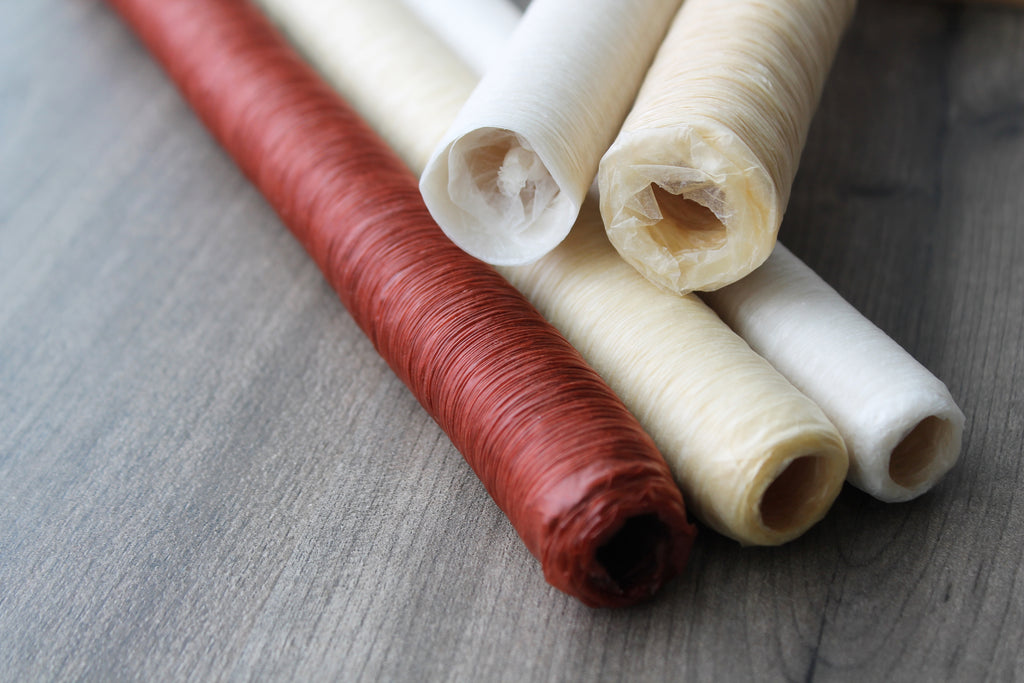
What is a collagen casing? Collagen casings are processed, edible sausage casings produced from the collagen in cow or pig hides, bones, and tendons. While they don’t give much of a snap, they’re inexpensive and give more uniformity in weight and size compared to their natural counterparts. Collagen casings are packaged in sheets around a tube that can easily be loaded on your stuffing horn, with no soaking required. They come in two varieties based on processing:

Fresh Collagen Casings

As the name implies, fresh collagen casings are used specifically for fresh sausages like bratwurst and breakfast links. These tend to be more tender casings that are unable to withstand hanging in a smokehouse.

Smoked Collagen Casings

Smoked or processed collagen casing are a bit stronger and thicker than fresh collagen to hold up to the processing schedule in the smokehouse, and can be used for making snack sticks, ring bologna, hot dogs or wieners. Their durability holds up well when hung on smoke sticks during processing. Collagen casings are available in clear and mahogany colors (no taste variation).

19 mm Smoke Mahogany Small Snack Sticks 21 mm Fresh Clear Small Breakfast Sausages 21 mm Smoke Clear or Mahogany Snack Sticks 23 mm Smoke Clear Large Snack Sticks • Small Pepperoni 26 mm Smoke Clear Hot Dogs • Wieners 30 mm Fresh Clear Brats • Link Sausage 40 mm Smoke Clear Ring Bologna • Liver Sausage • Kielbasa 43 mm Smoke Clear Ring Bologna • Liver Sausage • Kielbasa

Shop Collagen Casings

Fibrous Casings

fibrous sausage casings

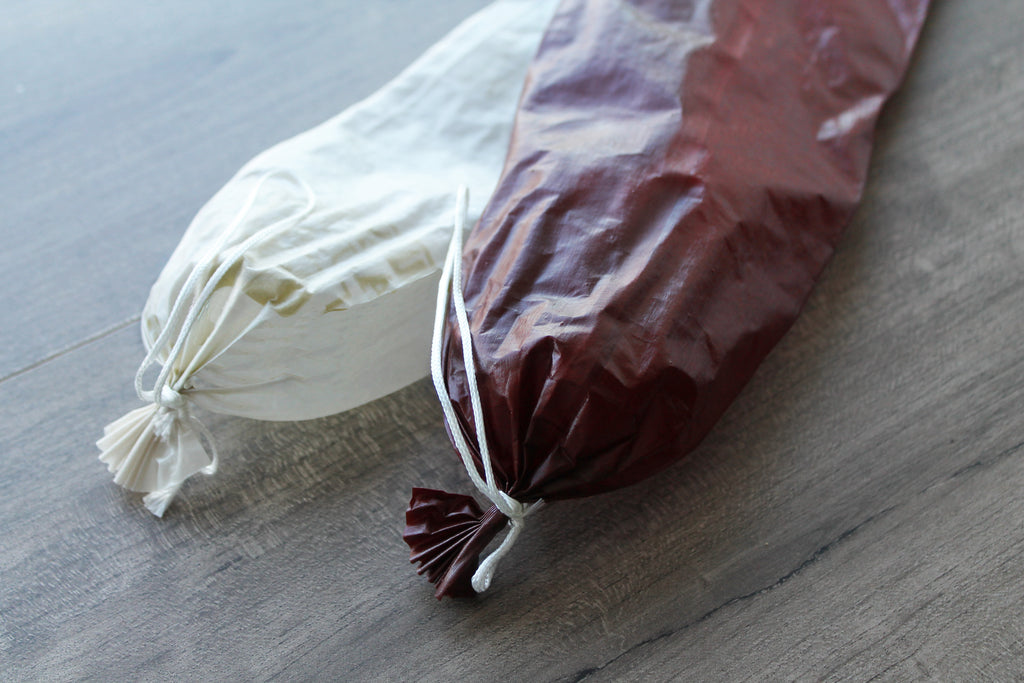
Fibrous casings are inedible sausage casings made from a form of cellulose material that peels away easily when cooked. They are also made from a specific tree called the Abaca. The fibers in the Abaca tree are very strong yet easy to work with — they’re very stretchable. Fibrous casings are most commonly used for making pepperonis, summer sausage, bologna, liverwurst, and other fine smoked sausages. Their durability allows tight stuffing, making them ideal for fine or emulsified sausages. Fibrous casings should be soaked for at least 25-30 minutes in warm water (80-100 F). Lay the sausage casings flat in warm water and submerge completely, with the tied ends lower so that any trapped air can escape. After soaking, squeeze excess water out before stuffing your sausages.

There’s two main kinds of fibrous sausage casings — clear and mahogany. You can also get them printed with a design. The benefit of a mahogany casing is you’ll get a consistent color when you are smoking the sausage.

1″ Thuringer • Pepperoni • Salami • Cracker-Sized Sausages 2-2.5″ Traditional Summer Sausage 4″ Large Summer Sausage • Hard Salami 8″ Olive & Pimento Loaf • Mortadella • Deli & Sandwich Meats

Shop Fibrous Casings

Hunting Glossary | Decoding Confusing Deer Hunting Terms

0
hunting terms
Photo via Dmitrij Paskevic

I will always remember telling a hunting story to a non-hunting co-worker a few years back. I was rambling on about the specific details of a deer hunt over the weekend using all the fancy deer hunting lingo. He graciously let me continue.

But when I had finished, he smiled and said, “That’s great; could you repeat that in English?”

I’m not sure if it actually happened, but it feels to me like I stood there with my mouth agape for about 5 minutes before I could muster an intelligent response.

Needless to say, I was a little embarrassed.

It had literally not even occurred to me that the deer hunting slang and hunting terms I had grown so used to would be so foreign to someone who had not hunted before.

As with any community or group, there is always a certain level of technical jargon to understand. But if you’re learning to hunt, there is a ridiculous amount of hunting terminology slang words to wrestle with. Trying to understand someone who uses these deer hunting terms and phrases might seem like you’re trying to test out of a college language requirement (and not doing well, either).

I felt it was about time I write an article to define some of these deer hunting terms for you. Reference it whenever you need to. When you’re done, check out the list of small game hunting terms too.

Common Deer Hunting Terms

Antlers The bony growths on a buck’s head. They’re called racks or horns too, but horns do not fall off; it’s just a misnomer. Deer, elk, and moose have antlers. Bag / daily limit The legal number of animals of a certain species you can kill each day. Bed Where a deer actually lays down, they leave an oval depression in the grass or snow. Larger beds usually belong to bucks. Bedding area A place where deer will rest and sleep during the day; usually this is found in dense thickets or places where they can easily hide. Bleating Does make a whiny bleat noise to communicate with each other and signal they are in estrous. Blowing Often following a “white flag”, deer will snort loudly (i.e., “blow”) to alert other deer about a threat. Broadside The most ethical shot at a deer is when they are standing perpendicular to you so you can see one entire side of their body. A broadside shot to the vitals is a quickly-killed deer. Brow tine The first antler tine nearest to a buck’s head. Browsing Deer are adapted to eat woody shrubs and herbaceous plants quickly by roughly tearing off large chunks and continuing on their walk. Buck A male deer. Busted / spooked When deer or other game smell, see, or hear you, they will get nervous and/or leave the area quickly. Button buck A male fawn deer that only has little bumps for antlers in its first year. These are generally considered legal does because their antlers are less than 3 inches long and can be confused for does in the field. Can call An accessory piece of hunting equipment, this call is typically in the shape or a small can and sounds like a doe bleating, which they use to communicate with other deer. Climber / climbing tree stand A tree stand that wraps around a tree trunk and has a seat section and foot-hold section. You use leverage to climb the tree. Doe A female deer. Estrous When does are ready to mate, they are “in estrous”, much like a dog is “in heat”. Fawn A fawn is a deer that was born the spring of the same calendar year. Can be a newborn with spots or look like a small deer at 6 months old. Feeding area A place where deer will eat during the night, whether that includes a corn field, food plot, young forest, or shrub patch. Field dressing After shooting a deer, you need to remove the entrails quickly so the meat doesn’t spoil. Also called “gutting”. Fork buck / forkhorn A male deer with a forked tine on each side of its head, but no more than 4 points or tines. Funnel A narrow area where topography and/or habitat features cause deer to converge on a single trail. For example, where a forest is pinched by fields on each side. Glassing Using binoculars or a spotting scope to look for wild game from a good vantage point. Grunt tube A tubular deer call that sounds like a buck grunting, which they typically do during the rut. Grunting Bucks make a low-pitched grunt at each other to signal aggression, especially during the breeding season (rut). Gut shot The region of a deer that holds the stomach, intestines, liver, and various other organs. A gut shot is to be avoided as it is likely to slowly kill a deer, but it is extremely difficult to find them. Hang-on tree stand A tree stand base that connects to a tree via a ratchet strap. It also requires separate ladder sections to be attached to the tree so you can access it. Harvest A popular term in wildlife management circles, the act of killing or “taking” an animal. It’s unpopular with many hunters due to the gardening analogy, whereas hunting is the act of taking a life. Horns A permanent bony protrusion from an animal’s head. See the difference from “Antlers” above. Cows, sheep, goats, or antelope have horns. Hunting weapons Generally defines any guns (rifle, shotgun, muzzleloader, or pistol) or bows (bow or crossbow) used to hunt animals. Different from tactical weapons, which are used more for target shooting. Ladder tree stand A tree stand that props up against a tree, using multiple connected ladder sections. License A hunting license should be purchased for each species or type of hunting you do. It is granting you the privilege to hunt. Mast The fruit or nuts of trees, including apples, pears, berries, grapes, acorns, walnuts, etc. Mature A deer is considered mature by most people when it reaches 3 1/2 years old. Nubbin buck See “Button buck” above. Paunch See “Gut shot” above. Pinch point See “Funnel” above. Possession limit The legal number of animals of a certain species you can physically have in your possession (in the freezer, canned, etc.). This may be more than the daily bag limit. Processing The process of skinning, quartering, and cutting all the meat off of a deer carcass. Doing this yourself can be intimidating, but you know exactly how the meat is treated this way too. Quartering (butchering) The act of cutting the “quarters” off of a deer while processing/butchering it. The quarters include all four legs. Quartering (shot) When a deer is slightly facing away from or towards you. Quartering away shots are great for bow hunters or gun hunters, but a quartering to shot should be avoided. Rack See “Antlers” above. Rattling A hunter uses two antlers to make it sound like bucks fighting, which can lure a mature buck into shooting range. Generally more useful in areas with little hunting pressure and lots of mature deer. Rub When a buck rubs its antlers against a tree to mark its territory, strengthen its neck, or remove its velvet, it scrapes the bark away. Commonly found in areas bucks like to hang out. Ruminant Like cows, deer quickly feed on plants while they can, and then lie down to chew their cud. This cud-chewing, combined with their four-chambered stomach, digests the food when they’re in the safety of their bed. Rut / pre-rut / post-rut The rut is when deer enter the peak of their breeding season (i.e., they breed the most). The pre-rut includes the weeks leading up to the rut, while the post-rut includes the weeks after it. Scent drag A piece of rope with a cloth at the end. The cloth is usually sprayed with a deer scent and drug through the woods behind a hunter to make it smell like a deer traveled the same path. Scope Magnifying optics usually mounted to the top of a rifle that allow you to make an accurate long-distance shot at an animal. Scouting The act of investigating a hunting property before you actually hunt it. A scouting trip helps you to find good hunting locations based off of wildlife sign. Scrape A scratched area on the ground (usually about 1-3 feet across) where a buck or doe leaves scent from its hooves and urinates into it to communicate to other deer in the area. Seasons The time allotted to hunt a certain species, usually open for a set number of days. Shed / shed antler As bucks enter late winter, the antlers on their head will fall off so they can start growing new ones in the spring. Shooter Usually used to describe a deer you would kill (one of legal status and to your liking). Sign The evidence left behind from animals, including tracks, trails, beds, rubs, scrapes, etc. Spike buck A male deer with only one tine on each side of its head, forming a spike. Stamp Some wild game species (e.g., waterfowl, pheasants, etc.) may require you to purchase a special additional stamp. The proceeds from these stamps will generally support additional conservation efforts for that species. Still-hunting Walking very slowly through the woods, trying to ambush an animal before they see/hear you. Tag In addition to your hunting license, you will have a field tag. This paper slip will contain basic harvest data about your animal, and serves to validate or fulfill your license. Tines The single bony extensions on an antler. Also called “points”. For example, an 8-pointer would have 8 tines (4 on each antler). Velvet In the spring and summer, velvet is living tissue that covers the development of deer antlers, making it one of the fastest-growing tissue in the world. They usually shed this tissue before hunting season. Venison Meat from a deer is called venison. Vitals The chest cavity of a deer that holds the heart and lungs. A shot with a bow or rifle in the vitals will usually quickly kill a deer and is the most ethical shot. White flag When white-tailed deer retreat, they raise their white tails to show a predator they were spotted. Not a good sign.

Using This List of Hunting Terms

Clear as mud?

As you can see, the deer hunting vocabulary is full of odd hunting terms; some make sense and some just don’t. I hope this hunting terms glossary will help you sort through that confusion.

It’s important to note that the hunting terms listed above really just scratches the surface for deer hunting. Besides that, there are specific bird hunting terms, turkey hunting slang words, and various other hunting phrases. If it’s helpful, I’ll add a list for those someday too.

I didn’t want to overwhelm you with one post!

The next time you hear another hunter talking in hunting slang, I hope you can use this list as a helpful resource to engage in the conversation.

If nothing else, feel free to call them out on it like my co-worker did to me. It will probably open their eyes to start using more inclusive hunting language going forward.

Anything I missed? Send me a quick message with deer hunting terms you’ve heard that boggled your mind.

Turkeys: What’s a beard? And Spurs?

0

Wild turkeys are interesting creatures with unique physical characteristics like the beard and spurs. If you’ve wondered about the makeup and purpose of beards and spurs, keep reading. You’ll soon find answers.

Turkey Beards

If you’ve seen a male wild turkey, you likely noticed a shock of long, dark, fibrous bristles hanging from its breast plumage. That’s called a beard, and it’s made of modified feathers. Male turkeys, called gobblers – and some female turkeys, called hens – have beards. Only about 10 to 20 percent of hens grow beards, and it’s likely a genetic mutation, according to Sciencing.com.

Beard Function

The beard’s function is not known with certainty, but it might influence mate selection by hens. According to the National Wild Turkey Federation’s website, longer beards signify older, healthier males and thus superior mates.

Beard Length

Beards begin growing when turkeys are about 5 months old, and keep growing 4 to 5 inches annually. According to Turkey & Turkey Hunting magazine, a 2-year-old gobbler’s beard usually measures 8 to 10 inches. When it’s 3 years old, a gobbler’s beard will have grown about 14 inches. However, few toms have beards that long because bristles wear off at the tip as the beard grows.

But not all beards break or wear off. In a recent Realtree.com article by Steve Hickoff, Top 5 Longest Wild Turkey Subspecies Beards, this former NWTF staffer listed the longest beards on record for each turkey subspecies:

– Easterns: 22.5 inches, shot in Bowie, Texas.

– Osceolas: 19.125 inches, shot in Lafayette, Florida.

– Rio Grandes: 15.375 inches, shot in Beckham, Oklahoma.

– Gould’s: 14.0625 inches, shot in Canatlán Durango, Mexico.

– Merriam’s: 13.875 inches, shot in Brown, Nebraska.

On average, Eastern wild turkeys have the longest beards of all subspecies, while the Merriam’s has the shortest.

Number of Beards

Turkeys can also sport more than one beard. The NWTF’s Wild Turkey Records show Tyler Blake Mumpower shot an Eastern turkey with 13 beards in Spring 2017 in Pennsylvania; and Kooper Bays shot an Eastern turkey with 10 beards in 2015 in Missouri. It’s far more common, however, to bag birds with two or three beards.

Turkey Spurs

A spur is a long talon or claw on the back of a turkey’s leg, about 2 inches above the foot. Spurs are made of smooth, shiny keratin, and range in color from black, gray or pink. Some spurs even look pearlescent, while others are tipped with dark tones, according to Hickoff’s Realtree.com article, Turkey Spurs are Like Antlers to a Deer Hunter.

The Spur’s Function

Spurs help gobblers establish dominance, according to the NWTF’s website. Older, more dominant birds have the longest and sharpest spurs, which helps them fend off younger turkeys when vying for breeding rights.

Spur Length

Both sexes are born with small button spurs, but the spur keeps growing after birth in males. Turkeys with spurs less than a half-inch long are likely 1-year-old jakes, while turkeys with spurs measuring a half-inch to 1 inch are typically 2-year-old gobblers. Spurs on 2-year-olds tend to have blunt tips. After age 2, spurs grow slowly. Gobblers 3 or older wield sharp, curved spurs that are slightly hooked.

Although spur length and sharpness can help hunters estimate a turkey’s age, they’re not sure bets. Like beards, spurs can break or wear down. The Wild Turkey Zone website reports that Osceolas usually have the longest spurs of the five American subspecies, mostly because they generally live in swampy areas with soft dirt. In contrast, Merriam’s turkeys live in rocky, mountainous areas, so their spurs are typically shorter from continuous wear and tear on hard surfaces.

Final Thoughts

Hunters often consider turkey beards and spurs – no matter their size – as trophies, and collect them as keepsakes or display them with fan mounts. And because many states let hunters shoot bearded hens, beards and spurs often help hunters determine which turkeys are legal targets from afar.

Are you ready to start your own turkey hunting adventures? Prepare for your first turkey hunt by visiting an archery shop to pick up the necessary gear and supplies.

Girardoni Air Rifle

0

“Unleash your shooting potential with the Girardoni Air Rifle – a revolutionary firearm that combines power, accuracy, and elegance. Experience the thrill of precision shooting like never before, as this state-of-the-art air rifle delivers unmatched performance and craftsmanship. Whether you’re a seasoned marksman or a beginner in the world of shooting, the Girardoni Air Rifle is your ultimate companion for every target and competition. Discover the future of firearms technology with this iconic masterpiece.”

girardoni air rifle

girardoni air rifle

The Girardoni air rifle is a historic weapon that revolutionized the field of firearms. Invented by Bartholomäus Girardoni in the late 18th century, this air rifle was ahead of its time in terms of technology and capabilities. It was one of the first successful repeating rifles, capable of firing multiple shots without the need for manual reloading.

The Girardoni air rifle gained significant recognition during its use by the Austrian military. With its impressive range and accuracy, it became a favored weapon for soldiers and marksmen alike. The rifle’s unique design utilized compressed air stored in a detachable reservoir, which allowed for rapid fire and reduced recoil compared to traditional firearms.

Despite its early success, the Girardoni air rifle eventually fell out of favor as advancements in conventional firearms surpassed its capabilities. However, its innovative design laid the foundation for future developments in air gun technology. Today, the Girardoni air rifle holds a special place in history as an important milestone in firearm evolution.

In conclusion, the Girardoni air rifle was a groundbreaking invention that revolutionized military tactics during its time. Its innovative design and impressive firepower made it a formidable weapon, enabling soldiers to shoot multiple rounds without reloading. Although it had its limitations and ultimately faded into obscurity, the Girardoni air rifle remains an important milestone in firearm history.

The 8 Best Slingshots For Survival

0

When most people think of slingshots, their heads are probably filled with images of cartoon trouble-makers ala Bart Simpson and Dennis the Menace. And while slingshots can certainly be used for the purposes of making mischief, they were not originally intended for that purpose. Rather, they’re a relatively modern reinterpretation of a much older tool: the sling (like the one used by David against Goliath in the biblical story). And that device, like its modern counterpart, was actually widely utilized for the purposes of hunting and survival.

You might think that, in this day and age, slingshots are all but obsolete — what with guns, bows and arrows, crossbows, etc. But we’d suggest looking at it a different way: using a slingshot is a way of developing better hand-eye coordination, they’re less intrusive and dangerous than firearms, they’re a good deal more approachable from a budgetary standpoint than any of the aforementioned alternatives, and more. If that sounds like something you might be interested in, you’ll definitely want to check out the following guide covering the best slingshots for survival.

Why Carry A Slingshot?

Slingshots as we know them are a relatively modern invention, dating back to just the mid-1800s — a result of the fact that Charles Goodyear invented vulcanized rubber in 1839 and patented the technology in 1844, which slingshots depend upon for their elastic, springy bands. And while they’re typically portrayed in media as the tools of troublemakers, they actually offer quite a lot of genuine value in the hands of a skilled user. We’ve mentioned a few benefits already, but we’d like to take a moment to outline them more in-depth and touch on a few others to better help you understand why you might want a slingshot for survival usage. The following are just some of the reasons you should pick up a slingshot:

Budget-Friendliness: Especially when compared to lethal firearms, slingshots are extremely budget-friendly — both in regards to the initial investment but also in regards to replenishing ammunition (rounds are much more pricey than BBs). In earnest, even the most high-end of slingshots can be purchased for a relatively reasonable price, especially when compared to the alternatives.

Hand-Eye Coordination Development: Target shooting of any kind requires a measure of hand-eye coordination to be done right, but utilizing a slingshot can take even more skill and can help you better develop said skill. Not only does a user need to be able to properly aim to send their ammunition in the right direction, but they’ll also need to properly judge distance, wind resistance, and numerous other factors — much like firing a bow and arrow, but with far less of a monetary investment.

Packability & Portability: The only other projectile weapon that even comes close to the packability and portability of a slingshot is probably a handgun. And, even then, handguns tend to be far heavier, as is their accompanying ammunition. By contrast, there are slingshots (worthy ones) that are small and slender enough to stash in the pocket of your jeans. When it comes to packability and portability, slingshots are tough to beat.

Unobtrusiveness: This ties in closely to the above metric, but we’re including it because it isn’t exactly the same thing. You see, thanks to the fact that slingshots are so compact, they’re also relatively lightweight and easy to use for people of all ages and skill levels. Yes, a professional with years of experience is going to be able to do things a beginner couldn’t fathom, but the learning curve for proficiency is shortened thanks to the manageability of the hardware. Put simply: firing a slingshot is easy to learn but difficult to master.

Marksman Laserhawk III Slingshot

Best Budget Pick: For just a few dollars more than the above option, the Marksman Laserhawk III has some significant upgrades (and one downgrade). These include (but are not limited to) a fully adjustable yoke, a band that’s good for shooting distances of up to 250 yards, and an extremely low weight. As mentioned, there is one downside: this one does not collapse for easier pocketing. Still, if you’re serious about taking your slingshot skills to the next level, this is a superb place to start.

Barnett 16043 Cobra Slingshot

Best with Sight: There is no shame in utilizing training aids, especially when it comes to developing skills that might come in handy in a survival situation. For that reason, we’re fond of the Barnett 16043 Cobra Slingshot. With its metal frame, extended wrist brace, contoured Soft Touch grip, and powerful band, this is an excellent budget-friendly slingshot. But its biggest benefit comes from the included front-end sight, which makes aiming this slingshot even easier and will help you develop your hand-eye coordination faster, especially for beginners.

Hella Flip Folding Slingshot

Best for Travel: The San Francisco-based crew at Hella Slingshots only knows one thing – and that’s how to build a solid slingshot. And, they do so at an affordable price point. Built from a combination of steel and plastic, this slingshot includes a stabilization arm that can fold down for easier transport and comes with a powerful, stretchy band and a faux-leather pouch. As a starter “wrist rocket” style slingshot, this one is an extremely solid buy.

SimpleShot Axiom Ocularis Slingshot

Best for Hiking: As mentioned, there are slingshots on the market that are both high-end and highly compact/portable. The SimpleShot Axiom Ocularis is one such slingshot, measuring up at just 6″ in total height and 2.2oz in total weight. This also happens to be a recreation of SimpleShot founder Nathan Masters’ personal Axiom Ocularis model — which should lend credence to its overall value. Furthermore, it’s built from an injection-molded proprietary thermoplastic material offering “unmatched strength and reliability.” And it can be customized to accept flat bands, tubes, and looped tubes — letting you customize it to your shooting style.

SimpleShot Scout LT Slingshot

Best Small Option: SimpleShot’s Scout XT was one of the brand’s most popular and successful models. But that doesn’t mean there wasn’t room for improvement. Enter the SimpleShot Scout LT you see here, the result of years of work and listening to customer input. This sling is just as capable as its larger counterpart, but measures up at just 5″ in height — making it one of the smallest, best slingshot options available. And since it comes offered with 25 color combinations (five different frames and five different scales), it’s also exceedingly customizable.

Pocket Shot Survival Kit

Best All-in-One Kit: By a wide margin, the Pocket Shot is the most unique and compact slingshot on our list — utilizing a circular frame with a pocket-style pouch that, together, can offer better consistency regarding speed, accuracy, and a shorter learning curve than any other slingshot on our list. But this particular kit is even better, as it actually includes a number of other survival tools, including a fishing line, a saw, a compass, and even a storage tin in which you can store it all. Of course, if you want your pocket shot with a more traditional-style handle, the brand actually offers those, too.

Marksman Pocket Hunter Slingshot

Best for Practicing Your Aim: You can try to fire an arrow with any of the slingshots on this list, but you’ll probably not be very successful. By contrast, however, the Marksman Pocket Hunter Slingshot was actually made specifically with this purpose in mind, marked by a pocket with a paracord pull tab, making it a far superior alternative. In fact, the sale actually includes a 31″ carbon arrow. Whether you’re a seasoned archer seeking out hardware that’s a bit more compact or you’re looking to make the transition into learning how to fire a bow and arrow, this is the slingshot for you.

TOPS Knives Sling

Best Overall: Though the investment comes with a significant jump in price, the overall quality and craftsmanship of the TOPS Sling are more than worth the extra scratch for those serious about their slingshots. After all, it was crafted here in the USA using rugged 1095 carbon steel, which is paired with black canvas Micarta for the handle scales, a top-grain leather pouch, and a powerful band. If you’re the type that had wooden slingshots as a child and you’re looking to recapture those glory days with something a bit more rugged and refined, you definitely can’t go wrong here.

Best Air Rifle Deals

Popular Posts

Pump Air Rifles vs Break Barrel

0
Exploring the Pros and Cons: Pump Air Rifle vs Break Barrel - Unveiling the key differences and advantages between two popular air rifle mechanisms....

Can a Felon Legally Possess an Air Rifle in Tennessee?

0
"Understanding the Legalities: Felon Ownership of Air Rifles in Tennessee" can a felon own an air rifle in tennessee? In the state of Tennessee, the ownership...

Best Distance for Sighting In an Air Rifle

0
Shooting with an air rifle always seems like a thrilling experience, but if you are a newbie then you have lots to learn. One...