

Home Blog Page 93

The Ojibwa Bird Snare

0

Traps to capture birds can come in as many forms and designs as types of techniques, but they all have the same origin source in that they were constructed to capture food. Trapping fowl of any type was as a whole, not regulated or tracked in any way.

When populations were depleted or the species started showing strains from being trapped, such as when songbirds where in fashion at court for their voices or native species were hunted only for their plumage, regulations and laws were put into place to protect the birds.

Bird Haven

In the middle 1700’s, in the region of Ontario Canada, the native people were hit hard with diseases like TB (Tuberculosis) and Small Pox. The remaining people fled to more populated areas, leaving the land unpopulated and unhunted for about 75 years.

It just happens the opposite was occurring in the bird community, and a certain species had a big boom in growth. In this region of Canada, it was berry rich and predator sparse with a lack of competition for food, so a sweet haven that was perfect for birds to flourish.

Rise of the passenger pigeon

This bird was the passenger pigeon and some of its relatives like doves, and the population rivaled those of the buffalo on the plains of the west. Just one flock could swell to numbers of 2 billion birds. Due to this high number of birds, native peoples begin to move back to the prey rich lands.

This abundance in food with forests untouched by people served the native population quite well and several tribes of the Anishnaube moved into the area, with the strongest being the Ojibway.

In the Columbidae bird family there are about 42 breeds and 310 varieties. The stout bodied bird that has a short neck and slim bill many people think that dove and pigeon can be used for both. But dove is from the French for “peeping” and pigeon from the Germanic name for diving.

The larger types of this family are called pigeons, and the smaller ones are doves. But in common terms, the rock dove is what most people refer to as a pigeon and its subspecies are domesticated and the feral ones in the cities.

The passenger pigeon, at one time was thought to be one of the most numerous species on earth. One colony recorded in 1871 by ornithologist A. Wilson was reported to have over 100 million breeding birds.

Evolution of bird trapping

The type of bird and its habits help explain how the bird trap evolved to be most efficient at providing catch as a food source. In the thick Canadian forests not all traps are successful. Traps like the deadfall, spear based traps, or the scissors derivatives do not seems to be that effective for the environment.

The pole was meant for birds to serve as a perch. With birds such as grouse or grosbeaks they are more ground birds that fly straight up into the protective trees if startled to hide. As the passenger pigeons are perching birds, the Ojibwa bird pole snare was developed.

The Ojibwa Bird Pole Snare

Although a primitive trap, it has a design that is quite sophisticated in its elegance.
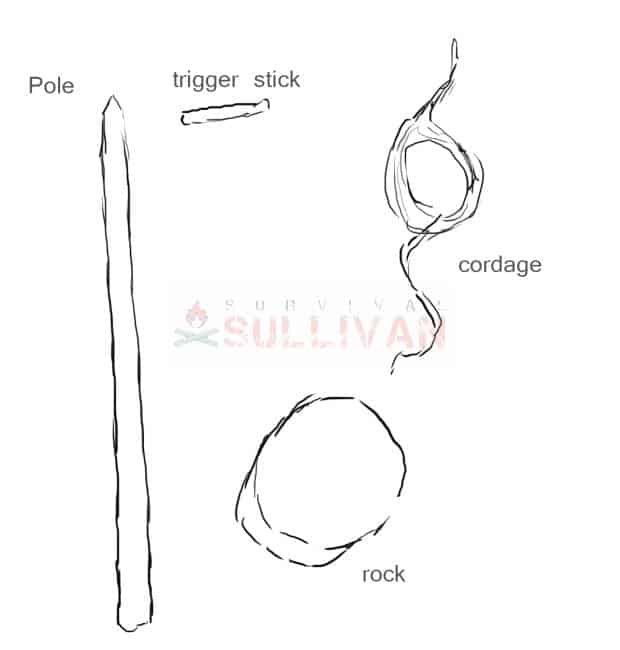
materials

The basic set up consists of 4 main elements:

The Pole

The main piece is a tall pointed pole, about 4 feet in height that you drill a hole in. The hole is bored so there are no snagging pieces inside. You can use flint like the native people, or a hacksaw.

A cord or rope must go through smoothly and without any resistance. The method a lot of bush craft people use is contributed to Kochanski and it is cutting a hole with a long Bowie or hunting knife.

This method makes more of a conical bore on each side so the cord has a range of motion, you can drill the hole of course. Either method would be functional as long as the walls of the hole are smooth inside. You can use your knife to carve a point at the pole’s top. This will discourage birds from landing atop it, and aim them more towards the trigger stick for a seemingly better perching place.

The Triggering Stick

The next piece is a stick that is long enough and thick enough to let a bird perch on it, preferably non-resinous wood (so no pine or cedar). Think of the dowel rods used in bird cages to gauge the width. This triggering stick will fit into the hole as a plug, keeping the snare open by preventing it from sliding shut until it is activated by a bird’s weight on it.

When the bird lands and pressure is presented on the triggering stick, it will cause it to be released. This will allow it to close the snare and shut it.

The Snare

Through the ages many materials have been used from leather strips, natural twines, to wire. I don’t like wire as its too rigid for this type of snare trap and can get misshaped quite easily. After a few uses, it may not slide closed properly, allowing for your catch to escape, or can bend a few times then just snap right in two.

So the consensus is using cord is the best all around. I like the inner strands from paracord as they have a great tensile strength, will not rot or mildew like other natural cords, and slide pretty well allowing for the snare to shut. If you have no paracord, then most cords will do for a while.

The Weight

For this type of snare to work, the activation of the trigger will need to be countered with a weighting mechanism. There are 2 types of mechanisms that will work. A bent sapling to snap the snare closed when activated, or a rock for weight to pull the snare closed with gravity.

The rock method is the one employed by the Ojibwa as it can’t break or be affected by weather like a sapling. So during the long and harsh winter months, the rock won’t fail making it the best choice.

This is the finished Ojibwa bird pole snare:
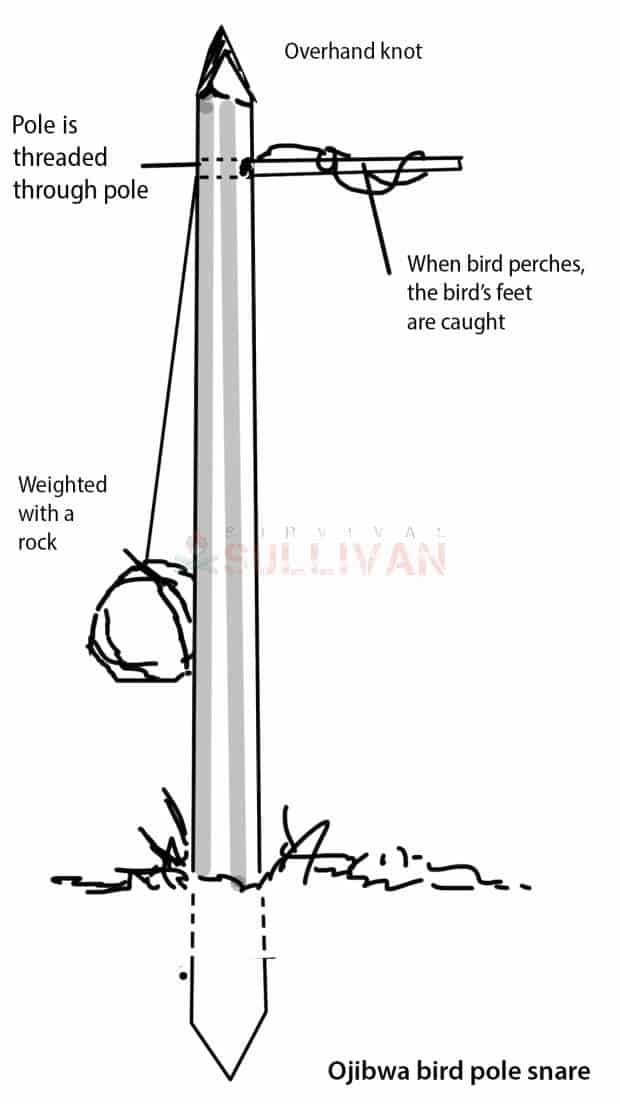
Ojibwa bird pole snare

Here is a closer view of the trigger, and the way it fits into the pole with the snare set.
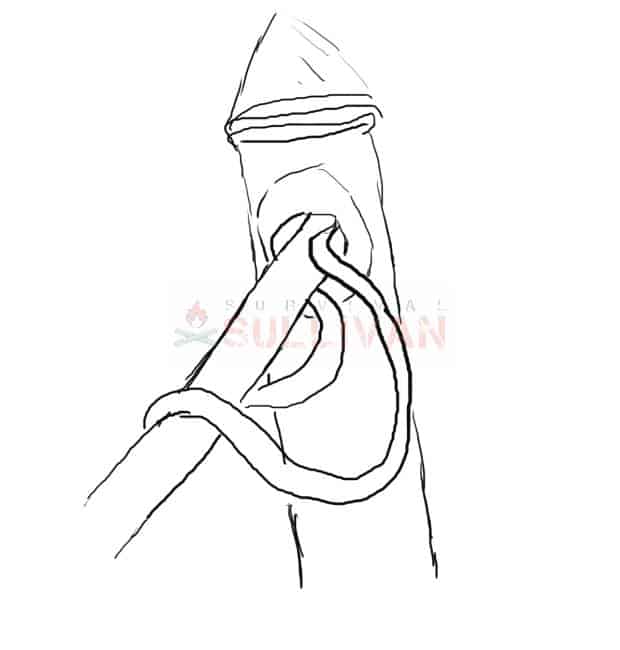
cord

This is the properly sharpened tip of the pole, to insure the pigeon or any bird to choose the trigger branch as a landing spot for a safer grip.
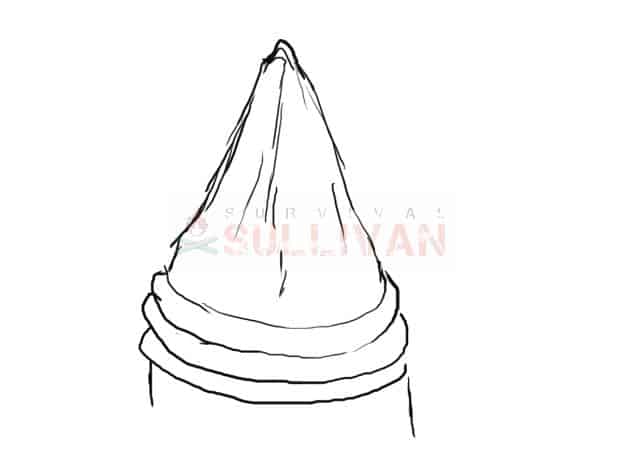
spear tip

One variation on the Ojibwa bird pole snare is to add a toggle clip to keep the bird off raised quite a way off the ground and some say its smoother and safer for the prey, but it is not needed. The Ojibwa people used the Ojibwa bird pole snare for many centuries and it is still a reliable trap to this day, so either way is fine.
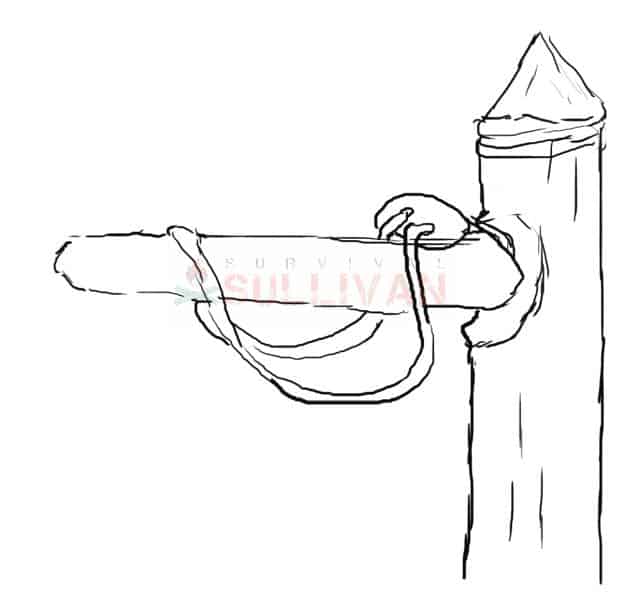
toggle

Using a toggle does insure the birds legs don’t break when the snare is closed, so it is a more humane method. It also may mean the bird, depending on its type, may escape if a particularly strong breed.

Setting the Trap

It is a fairly simple set up. It would be better to practice a few times to make sure your snare line feeds smoothly and the trigger fits snug enough to not fall too soon, but loose enough to be triggered when needed.

A note: To stop the rock for pulling the snare by gravity alone, I have seen people put a knot in the snare close to the rock. This is not advised as it may prevent the snare cord from sliding correctly and let your bird loose.

If the trigger stick is snug enough, you will not need any knots or special ties to keep it from shutting before being triggered by the bird’s weight.

This is what the trap looks like when it is set properly:
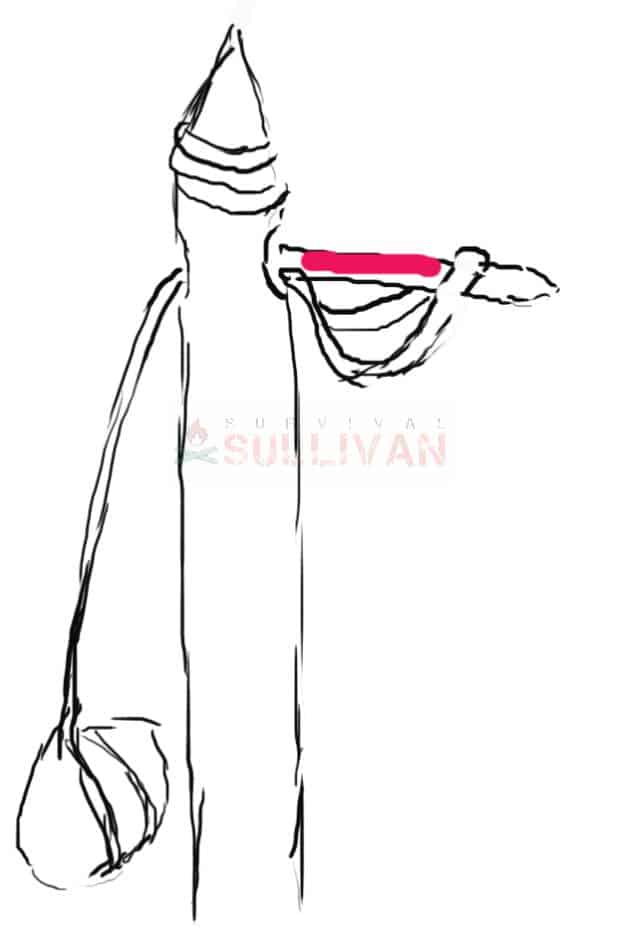
proper set

As the bird lands here (marked with red), the weight will offset the balance of the stick that has been placed in the pole’s burrowed hole, dislodging it, and letting the rock pull the snare shut as seen below.
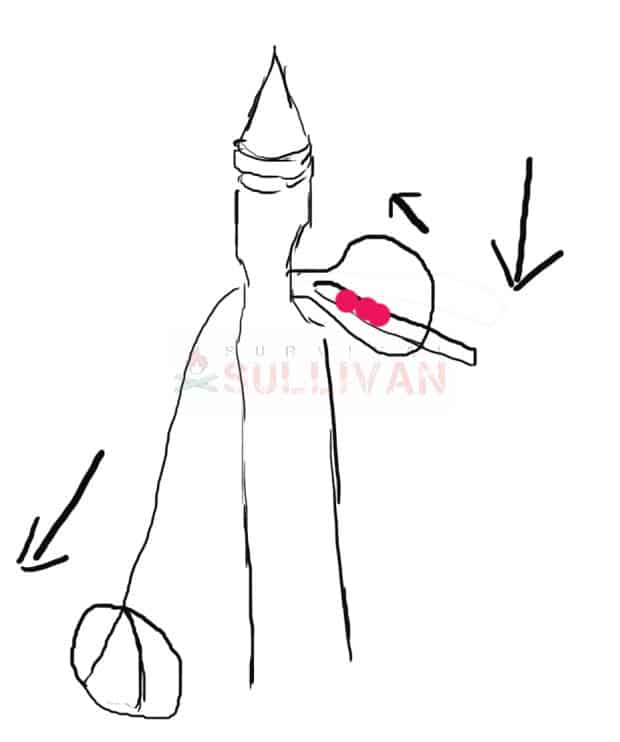
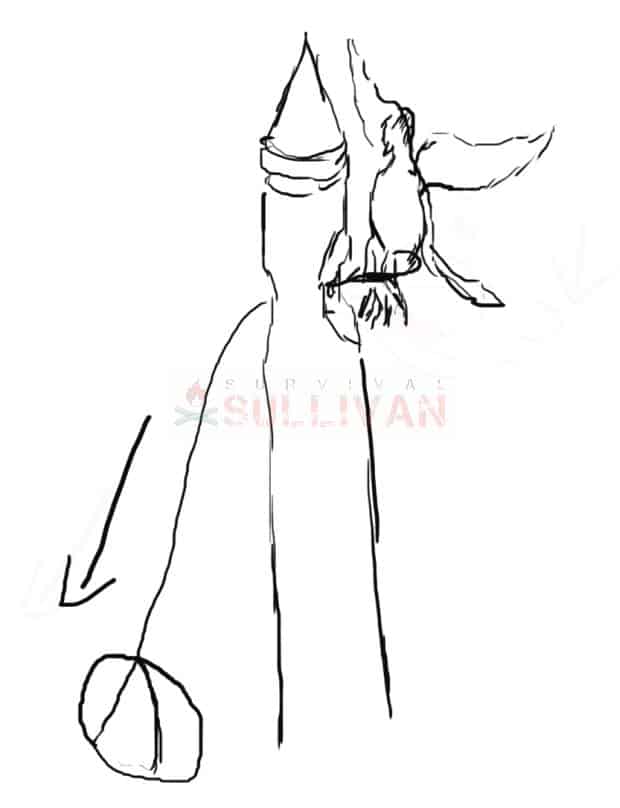
activate
caught

One way to entice birds to land and perch is to scatter grains and berries around the stand, or place a leaf with seed in the snare hole. As they come in for landing they will perch first to survey the land for competition, or predator hiding spots.

Have your trap close enough to trees that the birds will fly down onto your perch, but not too close to the local foliage that they just go straight to the seed or bait that you have placed to lure them in.

As stated before pigeons and other migratory birds that perch will be a good prey for this type of snare. This trap was made to harvest the larger passenger pigeon, so it can catch a good sized bird. Rock doves and grouse can also be caught with this type and a few more birds quite effectively.

Final Thoughts

As laws and seasons can differ in many states, you will want to check with your local Wildlife and hunting Bureau for the legality side. For a post collapse situation, using a trap such as the Ojibwa snare can mean life or death in the rough terrain of places like Canada and Alaska.
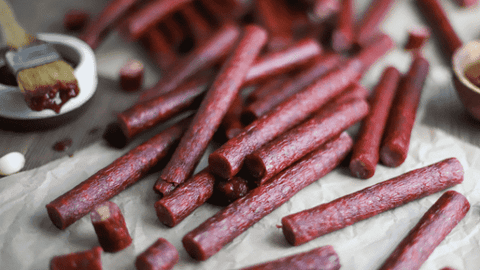
Meat Sticks Recipe: How to Make Homemade Venison or Beef Sticks

0

Meat sticks, snack sticks, beef sticks, slim jims, whatever you want to call them, these on-the-go meat snacks are a staple in sausage making. A cousin of jerky, this semi-dry sausage is thinner in diameter and can be made from pork, beef, venison or other combinations of wild game.

Meat sticks are ground then stuffed in either collagen or natural casings. They can be seasoned with virtually any profile and enhanced with add-ins like high-temp cheese, encapsulated citric acid or cultures. No matter how you flavor your meat sticks, they’re the perfect hand-held meat snack and are a great way to utilize your venison or leftover trimmings.

Tools of the Trade

  • Meat Grinder with 3/8” and 3/16” plates
  • Meat Mixer or Your Hands
  • Meat Lug or Large Food-Safe Container
  • Stuffer (13 or 16mm horn)
  • Smokehouse

Meat (and Fat) Instructions for Meat Sticks

For this venison snack stick recipe, making sure you have the right meat-to-fat ratio is important. For the best meat sticks, you’ll want to shoot for a range of 15-25% fat and 85-75% lean for the finished product. Any leaner, and you risk a dry and crumbly texture in your snack sticks. This is especially important when making deer sticks. When working with venison, we recommend adding about 50% venison and 50% pork trim with 50% fat content into your snack sticks. Pork trim, or the trimmings from the shoulder or butt, are typically available at your local butcher shop (make sure to call ahead!). If you want to be really precise, you can separate the visible fat from the meat and weigh them out separately to get the exact ratios right for your venison sticks.

Grinding & Mixing for Snack Sticks

Meat sticks don’t require a very fine grind, as you’ll want to retain some visual separation of fat and meat in your final beef sticks. To get the right snack stick texture, we recommend grinding twice; the first pass through a 3/8“ plate then twice through a 3/16” plate.

Pro tip: Remember to always keep your sausage stick’s meat cold! We recommend popping your meat block back into the cooler between grinds to prevent smearing.

Once each of your proteins has been ground, you can begin mixing either by hand or by using a meat mixer. We recommend doing it by hand for batches less than 25 lbs as you don’t want to break the any encapsulated citric acid or high-temp cheese you’re adding into your snack sticks.

Beef Sticks Seasoning & Additives

Begin by adding your seasoning to your meat sticks. Whether you’re making pork, venison, beef sticks, we recommend our No. 765 Honey BBQ Snack Stick Seasoning or No 769 Willie’s Seasoning. Both have a great depth of flavor that are equally good on their own or mixed with other additives like high-temp cheese. Other favorite meat stick seasonings are:

  • No. 769 Honey Sriracha Seasoning: Sweet with just the right amount of heat. Comes with Speed Cure. Perfect for beef sticks.
  • No 491 Seven Pepper Seasoning: Feel the burn! This blend is just like the name implies with chili, jalapeno, chipotle, habanero and red peppers. Comes with Speed Cure. Amazing for venison sticks.
  • No. 798 Pepperoni Stick Seasoning: The delicious taste of pepperoni in a snack form. Comes with Maple Cure. Best for pork sticks.

If your seasoning doesn’t have any larger pieces, you can season after the first grind and have the grinder do some of the distribution for you.

All of our meat stick seasonings come complete with cure for up to 25 lbs. of meat. Nitrites help preserve the red in the meat in the absence of oxygen and also kill bacteria that can result in food-borne illnesses. Add the appropriate amount of cure for your meat batch to your water and stir to combine.

Once the seasonings and cure have been well incorporated into your meat stick mix, this is the time to add in any other flavorings. We like to add in high-temp cheddar cheese and encapsulated citric acid. Encapsulated citric acid gives a mouthwatering tang to your finished sausage sticks and because it’s coated, won’t break down the texture of the meat.

For meat snack sticks, you’ll want to get a good amount of protein extraction before stuffing. The end results should be sticky and pasty, with seasonings well incorporated throughout. For proper jerky stick flavor and color development, refrigerate your meat mixture overnight or for several hours before stuffing.

Shop Sausage Seasoning

Meat Sticks Casings

Meat sticks have a smaller diameter and are typically made with either natural sheep casings or small collagen casings. We prefer the irresistible “snap” that comes from natural sheep casings, but collagen casings will offer better uniformity and rich mahogany color for your snack sticks. For the best beef sticks, we recommend:

  • 20-22 mm Natural Sheep Casings (Home Pack)

  • 20-22 mm Natural Sheep Casings (Preflushed)
  • 21 mm Mahogany Processed Collage Casings

  • 21 mm Clear Processed Collagen Casings

Shop Sausage Casings

Meat Sticks Processing

One of the trickiest parts of making meat sticks is the processing or smoking process. If the sausages heat too quickly, the fat has the potential of melting out of the beef stick and the encapsulated acid can break down. The key is to gradually increase the temperature to ensure there’s no fat or additive loss inside the snack sticks.

The type of combustible you will use for smoking also has an impact on the taste and smoking process of your meat sticks. It is best to do some research and figure out which material you should use to obtain the best beef sticks.

To make the best smoked snack sticks, we recommend using a high quality electric smokehouse, like the Pro Smoker PK-100, which uses sawdust as smoke fuel. Always refer to your manufacturers instructions for smoking times and temperatures, but as a general rule, our recommend processing schedule is:

  • Set smokehouse to 120° F. Hung sausage sticks and set in the smokehouse to dry for ½ hour (no smoke)
  • Increase temperature to 130° F and smoke for 1 hour (dampers closed 75%)
  • Increase temperature to 150° F and smoke for 1 hour
  • Increase temperature to 170° F and remove smoke
  • Cook until internal temperature of the snack stick reaches 155° F degrees

Shop Smokers

Cooling

There are two ways to cool down sausages and snack sticks after the smoking process: air drying or ice bath. If you choose to air dry, let the meat sticks rest at room temperature for about ½ hour to bring the internal temperature of the snack sticks down to 110 degrees before placing them in the fridge to cool completely. The ice bath method goes faster, but both processes with get the casings to firm up and create the nice snap texture when you bite into your beef sticks.

Once in the fridge, wait until the snack sticks reach an internal temperature of 39 degrees before vacuum packing or storing. If properly sealed and packaged, snack sticks can last in the freezer for several months or in the refrigerator for 2-3 weeks.

Enjoy Your Homemade Beef Sticks!

You now have succeeded in making your own homemade meat sticks! Whether you chose to follow it as a venison or beef sticks recipe, we are sure you will feel proud every time you go for a quick meat snack!

Don’t hesitate to check out all our sausage recipes and meat & sausage tips!

For printable instructions, see our recipe for Honey BBQ Venison Snack Sticks.

How To Grip Compound Bow (Pro-staff tips)

0

Gripping a compound bow is probably one of those things you don’t worry about or notice until it becomes an issue. I’ve had my fair share of grip issues and sometimes still tweak it slightly.

There are three stages you’ll need to go through to fix your grip:

  • Good and bad grip
  • Proper bow hand grip
  • Making your grip you’re own

In this post, I will take you through what a good and lousy grip placement looks like, how to improve it if you’ve got a wrong placement, and finally, how to make your grip comfy. We’ll cover Good and bad grip placement; How to grip the bow properly, Making your grip your own.

Good And Bad Grip

So to understand what makes a bad grip ‘bad’ and a good grip ‘good,’ I’m going to talk about both so that you might be able to recognize if these are some of the things you do or don’t do. I believe it’ll be easier if I talk about the lousy grip first.

Bad Grip Placement

Bad compound bow grip
Incorrect bow grip

You’ll know a lousy grip placement when you see a guy holding onto his bow tight. The best comparison I can make to a wrong grip placement is gripping your bow as if you were gripping a baseball bat, knuckles out, fingers wrapped around, lots of tension in your hand. (pic number 1)

On paper, it sounds like it should work, right? Well, this couldn’t be further from the truth. The reason some guys do this is simply an anticipation of the shot. When their trigger goes off, they want to grab the bow subconsciously. What it’ll do is create torq in your shot. From the moment the trigger goes, your brain tells you to grip the bow.

This happens in split seconds. So the arrow is still in the bow. Your bow hand is the last thing to touch the arrow before it leaves the bow. So if you go from not gripping the bow at all to gripping it really tight, it’s going to torq the bow and change the flight of the arrow.

Good Hand Placement

Correct compound bow grip
Correct bow grip

So the opposite, good grip placement can be done in a multitude of ways, but the one common denominator is that the bow isn’t being gripped super tight. The bow is being held by the thumb and fingers pressing on either side of the bow.

What this does is it doesn’t create any form of tension in hand, and you are keeping the bow steady with the thumb and fingers (picture 2). Now, you can position your fingers in a load of different ways, but we will get into that later in the article.

Proper Bow Hand Grip

So here I’m going to walk you through how to get a good consistent handgrip placement. I’ll be explaining as if you are a right-handed archer (swap hands for left-handed archers). With your left hand, make an L shape with your fingers and thumb 90 degrees, then turn your hand about 30 degrees to the left.

Get your bow and slot your hand in (picture 3). Try to get some contact with the palm of your hand with your bow grip. Then what your going to do is your going to curl in all your fingers and run them at a 45 degree down from the shelf of your riser, then push your thumb along the inside of your riser.

You will achieve the best handgrip when you try to squeeze your thumb and fingers together without them actually touching. This will put pressure on both sides of the bow, putting a little torque in the bow.

Let’s say that previously you were gripping your bow last second in anticipation. You can follow the steps above to try and get used to the new idea. You can place your fingers straight out instead of curled. However, ultimately you want to be able to have your fingers curled for a better and more consistent pressure in hand.

Making Your Grip Your Own

Once you’ve gone and practiced the steps in my last heading, I almost guarantee you you’ll have said something along the lines of ‘I wonder could I move my…’, and the answer will usually be yes! A person’s grip is as individual as their thumbprint. You can move the angle of your hand down or out, move your first finger and your second finger around the front of the bow.

Like I said before, there is a multitude of things you can do. Once you’re keeping that squeeze instead of gripping, you can play around with it. All I’ll say is once you find something that you find a comfortable stick with it.

There’s no point in changing the way you hold your bow 24/7. At first, it might feel like a conscious effort to get your hand in the same spot. Over time, practice will make it subconscious action.

To give you an example of a grip, I’ll explain mine. Place the first two fingers around the front of the bow and the last two pushed up against the edge of the grip, thumb pushing onto the grip on the other side. I also use some sticky grip tape which I highly recommend.

Related Questions

Are shot trainers good? Shot trainers are suitable for practicing the execution of your shot, but sometimes, since it’s not the same pressure as a bow, the timing of your shot can be different.

You may find the following posts useful:

Should you wrap your bow grip?

Field archery shooting tips

How to hold bow arm steady?

How to use back tension with a trigger release?

What aperture for my peep?

Archery sight marks

Where Is the Brisket on a Deer? (And How To Remove It)

0

Many people love meat because it’s a good source of protein. Do you need ideas on the tastiest meat dish for your lunch or special event? You’ll never go wrong with well-cooked deer brisket, as it has a spicy flavor when you serve it hot.

The brisket on a deer lies at the bottom of a deer’s chest, in front of the ribcage. Removing a deer’s brisket involves removing the shoulders, backstrap, and tenderloins and cutting through the cartilage.

The rest of this article will:

  • Delve deeper to explain where to find deer brisket.
  • Discuss whether you must sear a deer’s brisket.
  • How to remove brisket off a deer.
  • Where to find the best meat on a deer.
  • You’ll also learn the differences between venison backstrap and the tenderloin and what part of a deer is best for steaks.

Can You Get Brisket off a Deer?

Two Hunters Prepare to Skin, Dress and Process a Dead Deer

Though tough, brisket is one of the most delicious meats in mammals, including deer. While butchering a deer to get the brisket may seem like a painstaking process, it’s achievable with the right tools and skills.

You can get brisket off a deer even though it’s smaller and leaner than a cow’s brisket. Using a sharp knife, you should remove it by cutting off the meat between the forelimbs on the deer’s chest through the cartilage. Also, cut out all fat up to the backbone.

Since a deer’s brisket is smaller than other big animals, removing it is a challenge to most people. However, when you follow the right butchering procedure, you can get the brisket off the carcass.

You can make the best fajitas, burgers, or sausages with this piece of meat or trim and grill it under higher heat.

Related Best Knife for Processing Deer | Hint: You Need Two.

Should Brisket Be Seared?

Brisket should be seared because it is essential to build up the meat’s flavor. However, you need to prepare it adequately before searing it and let it slow-cook in the oven or pan. Slow cooking makes the meat tender and easier for you to slice it afterward.

Searing venison brisket is a common preparation method in most traditional dishes as it adds flavor to the meat. Searing involves cooking the meat’s surface under high temperatures until it caramelizes, otherwise known as forming a brown crust.

Adding some oil creates contact between the brisket and the cooking surface.

  • Before you sear the brisket, trim away the fat pad on the brisket’s outer surface. A large sharp knife will come in handy during this preparation step.
  • Then, marinate it using salt, pepper, or other spices a day before you cook it.

Moreover, it’s important to remember that deer meat is generally tough, and storing it for a couple of days enables the aging process, which will make the meat tender, including the brisket. Do this before starting your cooking process, and you’ll have tender briskets.

After aging, trimming off fat, and marinating the deer’s brisket, you can now sear it.

If you notice that there are still some grey spots on the meat after searing, it means one side of the brisket didn’t cook well. To avoid these spots, you should ensure that you flip both sides to burn evenly.

How To Remove Deer Brisket

You might be thinking about getting a professional butcher to remove the brisket from your deer, right? However, there’s an easier way to do this in the comfort of your home.

Removing a deer’s brisket is one of the final meat-cutting steps of butchering.

After you’re through with the major butchering procedure, you can remove the brisket in a slab using the flat of your knife. Cut the meat carefully against the lower-chest region, trimming off the cod fat and tallow.

To get to the deer’s brisket, you have to butcher cut major parts. Here are the steps:

  1. Cut and pull the shoulders from the torso of the deer to expose the cut zone which your knife will pass through.
  2. Pull the front leg away from the torso, and with your knife’s blade parallel to the ribcage, cut the hinge area.
  3. Remove the backstraps and the tenderloin, but trim away the excess fat layer first. To do this, find the hip bone and cut under this bone to the backbone on both sides. Loosen and get the meat off by ensuring that your knife is close to the bone.
  4. Cut through the ribs down to the backbone. You’ll find the brisket on the outer surface of the ribs. Cut it off while your knife’s blade is against the lower-front chest region and remove any cod fat.

Check out this YouTube video that shows the process of removing a brisket:

Where Is the Best Meat on a Deer?

After butchering a deer, you’ll want to get the most out of the process. Many people go for the bigger and popular venison chunks. But where’s the best meat on a deer?

The backstraps and tenderloins are the best meat cuts of a deer. These parts are tender and will give you a succulent and delicious meal. Other preferred parts include the hindquarters, rump, and chucks.

Backstraps and tenderloins are a favorite to most venison lovers as they are tender and easy to cook. The hindquarters have a variety of uses, as you can use them as steak, in stews, kebabs, or jerky.

There are many other recipes for preparing this dish that you can try out on your own.

Is Venison Backstrap the Same As Tenderloin?

Differentiating between the venison backstrap and tenderloin can be a bit confusing.

A backstrap isn’t the same as a tenderloin. The venison backstrap is the meat along a deer’s spine on the outer part of the backbone. However, tenderloin sits beneath the spine, inside the abdominal cavity along the backbone.

Tenderloin is about 10” to 12” (25.4 to 30.48 cm) smaller than the backstrap but very delicious.

What Part of a Deer Is Best for Steaks?

Cartoon Deer with Crosshairs on it

Are you a steak lover? Well, you can make the best steaks from some parts of venison.

The hindquarters of the deer is best for steaks. The top and bottom rounds have extensive muscles but also have tender sections. They produce the best steaks and cuts for other dishes. Venison hindquarters are large, with cuts for various uses.

You can get the best steak from these parts in young or older deer. However, the bottom rounds are more tender than the top ones.

Final Words

You can get brisket off a deer by following the correct butchering process all by yourself. It may not be a very easy cut to make, but it’s doable. Once you have the brisket, you can leave it for a few days to age and then prepare it for cooking by marinating first.

Searing the brisket is also a great idea as it helps to lock in the flavors.

For more, check out The 5 Best Ways to Preserve Meat in the Wild.

.30-06 Springfield vs .45-70 Government Ammo Comparison – Ballistics Info & Chart Caliber Ballistics Comparison 07 Dec, 2018 Posted By: Foundry Outdoors The following ammunition cartridge ballistics information and chart can be used to approximately compare .30-06 Springfield vs .45-70 Government ammo rounds. Please note, the following information reflects the estimated average ballistics for each caliber and does not pertain to a particular manufacturer, bullet weight, or jacketing type. As such, the following is for comparative information purposes only and should not be used to make precise predictions of the trajectory, performance, or true ballistics of any particular .30-06 Springfield or .45-70 Government rounds for hunting, target shooting, plinking, or any other usage. The decision for which round is better for a given application should be made with complete information, and this article simply serves as a comparative guide, not the final say. For more detailed ballistics information please refer to the exact round in question or contact the manufacturer for the pertinent information. True .30-06 Springfield and .45-70 Government ballistics information can vary widely from the displayed information, and it is important to understand that the particular characteristics of a given round can make a substantive difference in its true performance. Caliber Type Velocity (fps) Energy (ft-lb) .30-06 Springfield Rifle 2820 2920 .45-70 Government Rifle 1680 2270 [Click Here to Shop .30-06 Springfield Ammo] [Click Here to Shop .45-70 Government Ammo] Velocity As illustrated in the chart, .30-06 Springfield rounds – on average – achieve a velocity of about 2820 feet per second (fps) while .45-70 Government rounds travel at a velocity of 1680 fps. To put this into perspective, a Boeing 737 commercial airliner travels at a cruising speed of 600 mph, or 880 fps. That is to say, .30-06 Springfield bullets travel 3.2 times the speed of a 737 airplane at cruising speed, while .45-70 Government bullets travel 1.9 times that same speed. Various calibers Energy Furthermore, the muzzle energy of a .30-06 Springfield round averages out to 2920 ft-lb, while a .45-70 Government round averages out to about 2270 ft-lb. One way to think about this is as such: a foot-pound is a unit of energy equal to the amount of energy required to raise a weight of one pound a distance of one foot. So a .30-06 Springfield round exits the barrel with kinetic energy equal to the energy required for linear vertical displacement of 2920 pounds through a one foot distance, while a .45-70 Government round exiting the barrel has energy equal to the amount required to displace 2270 pounds over the same one foot distance. As a rule of thumb, when it comes to hunting, muzzle energy is what many hunters look at when deciding on what caliber of firearm / ammunition to select. Generally speaking, the higher the muzzle energy, the higher the stopping power. Again, the above is for comparative information purposes only, and you should consult the exact ballistics for the particular .30-06 Springfield or .45-70 Government cartridge you’re looking at purchasing. [Buy .30-06 Springfield Ammo] [Buy .45-70 Government Ammo] Please click the above links to take a look at all of the .30-06 Springfield and .45-70 Government ammo we have in stock and ready to ship, and let us know any parting thoughts in the comment section below. Foundry Outdoors is your trusted home for buying archery, camping, fishing, hunting, shooting sports, and outdoor gear online. We offer cheap ammo and bulk ammo deals on the most popular ammo calibers. We have a variety of deals on Rifle Ammo, Handgun Ammo, Shotgun Ammo & Rimfire Ammo, as well as ammo for target practice, plinking, hunting, or shooting competitions. Our website lists special deals on 9mm Ammo, 10mm Ammo, 45-70 Ammo, 6.5 Creedmoor ammo, 300 Blackout Ammo, 10mm Ammo, 5.56 Ammo, Underwood Ammo, Buffalo Bore Ammo and more special deals on bulk ammo. We offer a 100% Authenticity Guarantee on all products sold on our website. Please email us if you have questions about any of our product listings. 3 Comments Donald Beedle – Apr 21, 2020 Thank you very much for this data and for your concise and appropriate use of this general comparative data. Great job explains it and warning on how to use this info. It is exactly what I was looking for. I just had a curiosity and was looking for a quick but trustworthy comparison so I would have to look up the info for myself. Thank you again, great job. God protect, heal and bless you and your family. Michael Taranto – Aug 20, 2021 Both are good choices, but depends on what you want to hunt and at what distance. If you own a new manufactured rifle in 45/70 and want to load your own you can get much higher energy than a 30-06. 45/70 is better for short distance in brush with a heavy bullet. Jimmy from Canada – Oct 19, 2021 .30-06 Springfield, 170 grain at 2850 fps = 20.8 Taylor Knock-Out Factor (TKOF) 500 grain X (1,628 FPS in 22″ barrel)) X .45″ cal. or .452″ = 367,928 /7000 =TKOF of 52.56 .45-70 Buffalo Bore’s 430-grain hard-cast bullet, at roughly 2000 fps and 3,600 ft.-lbs. from the muzzle. (look up how TKOF is calculated) .45-70 IS much MORE POTENT than 30.06 in close ranges. (see also trajectory and engery loss in balistics for correct comparison because 30.06 runs longer distances and shoots flatter than rainbow .45-70 hard hitter. A hotgun slug has 70 to 80 TKOF!!!! BUT loses half its energy at 100 yards to get an idea when comparing rounds. Leave a comment Comments have to be approved before showing up Your Name * Your Email * Your Comment * Post Comment

0

The following ammunition cartridge ballistics information and chart can be used to approximately compare .30-06 Springfield vs .45-70 Government ammo rounds. Please note, the following information reflects the estimated average ballistics for each caliber and does not pertain to a particular manufacturer, bullet weight, or jacketing type. As such, the following is for comparative information purposes only and should not be used to make precise predictions of the trajectory, performance, or true ballistics of any particular .30-06 Springfield or .45-70 Government rounds for hunting, target shooting, plinking, or any other usage. The decision for which round is better for a given application should be made with complete information, and this article simply serves as a comparative guide, not the final say. For more detailed ballistics information please refer to the exact round in question or contact the manufacturer for the pertinent information. True .30-06 Springfield and .45-70 Government ballistics information can vary widely from the displayed information, and it is important to understand that the particular characteristics of a given round can make a substantive difference in its true performance.

Caliber Type Velocity (fps) Energy (ft-lb) .30-06 Springfield Rifle 2820 2920 .45-70 Government Rifle 1680 2270

Velocity

As illustrated in the chart, .30-06 Springfield rounds – on average – achieve a velocity of about 2820 feet per second (fps) while .45-70 Government rounds travel at a velocity of 1680 fps. To put this into perspective, a Boeing 737 commercial airliner travels at a cruising speed of 600 mph, or 880 fps. That is to say, .30-06 Springfield bullets travel 3.2 times the speed of a 737 airplane at cruising speed, while .45-70 Government bullets travel 1.9 times that same speed.

Various calibers

Energy

Furthermore, the muzzle energy of a .30-06 Springfield round averages out to 2920 ft-lb, while a .45-70 Government round averages out to about 2270 ft-lb. One way to think about this is as such: a foot-pound is a unit of energy equal to the amount of energy required to raise a weight of one pound a distance of one foot. So a .30-06 Springfield round exits the barrel with kinetic energy equal to the energy required for linear vertical displacement of 2920 pounds through a one foot distance, while a .45-70 Government round exiting the barrel has energy equal to the amount required to displace 2270 pounds over the same one foot distance. As a rule of thumb, when it comes to hunting, muzzle energy is what many hunters look at when deciding on what caliber of firearm / ammunition to select. Generally speaking, the higher the muzzle energy, the higher the stopping power. Again, the above is for comparative information purposes only, and you should consult the exact ballistics for the particular .30-06 Springfield or .45-70 Government cartridge you’re looking at purchasing.

Please click the above links to take a look at all of the .30-06 Springfield and .45-70 Government ammo we have in stock and ready to ship, and let us know any parting thoughts in the comment section below.

Foundry Outdoors is your trusted home for buying archery, camping, fishing, hunting, shooting sports, and outdoor gear online.

We offer cheap ammo and bulk ammo deals on the most popular ammo calibers. We have a variety of deals on Rifle Ammo, Handgun Ammo, Shotgun Ammo & Rimfire Ammo, as well as ammo for target practice, plinking, hunting, or shooting competitions. Our website lists special deals on 9mm Ammo, 10mm Ammo, 45-70 Ammo, 6.5 Creedmoor ammo, 300 Blackout Ammo, 10mm Ammo, 5.56 Ammo, Underwood Ammo, Buffalo Bore Ammo and more special deals on bulk ammo.

We offer a 100% Authenticity Guarantee on all products sold on our website. Please email us if you have questions about any of our product listings.

How to Fly with Bowhunting Gear

0

You’ve put in unsuccessfully for years, trying to draw a tag for your dream hunt. When you finally get that coveted tag in hand, make sure your hunt gets off to a smooth start. You’ve got to get there first. Learn all you need to know about flying with archery equipment well in advance of your flight.

If you do your homework and you’re proactive about complying with regulations, you shouldn’t have any trouble flying with archery gear. Most airlines permit you to fly with a bow and arrows, but it’s a good idea to call your airline for specific information and to learn if there are any size restrictions on your bow case.

According to Transportation Security Administration guidelines, your bow, arrows and hunting knives must be checked; they can’t be part of your carry-on baggage. There are no specific regulations requiring releases to be checked, but be aware that most airport security officials are unfamiliar with archery equipment and may mistake your release for a firearm part, given that it has a trigger, or even brass knuckles, depending on the release style. It’s best to keep it in checked baggage.

Because they don’t encounter archery equipment every day, some security agents may not know the rules as well as you do. Expect delays and have your facts in order to help the process go smoothly. Print out a copy of TSA regulations on archery equipment and carry it with you for added insurance.

Packing your bow properly not only helps things go smoothly at the airport, but it also protects your equipment. TSA regulations don’t require your bow to be in a hard-sided case, but using one is an excellent idea because baggage is often handled roughly. The only reason you might consider using a soft case is if your final destination involves flying in a bush plane where weight is a factor.

Your case must be locked. Most bowhunters buy a TSA-approved lock. TSA agents have universal keys that can open these locks. Your case will almost certainly be opened and inspected, and if you don’t have a TSA lock and aren’t there to open the case yourself, the lock could be cut. If you don’t want agents to access your case in your absence, ask if an agent can examine the case right at the ticket counter while you supervise, or wait to go through security until you’re sure your case has been inspected. Keep your key on your person at all times. Once inspected, your case should move through baggage without a hitch.

Pack your bow case to protect your gear. Use tie-down straps to secure your bow within the case. Stuff hunting clothes or other soft material around your bow, particularly around delicate sights. You may even consider wrapping your sights with foam or bubble wrap. Arrows should be stored securely in the case’s foam slits or in a separate arrow tube stored within the case. Broadheads should be removed from arrows and stored in a hard container inside the bow case. Also, package your hunting knife in a sheath or hard container and store it inside the case.

On the day of your flight, arrive at the airport well before your departure time in case you run into hassles. Most airlines charge fees for checked bags (and even more for oversized bags, which may apply to your bow case). One alternative is to ship your bow prior to your flight. You won’t have to deal with airport hassles, but you probably won’t save much money, either, and you still run the risk that your bow doesn’t make it to your destination. Plus, you’ll have to forgo a few days of shooting practice.

When you reach your final destination, with any luck, your bow case will pop up into the baggage claim area as expected, but don’t be alarmed if you don’t see it right away. Sometimes large bags, or those that may be considered weapons, have to be picked up at the baggage claim office with a photo ID.

Flying internationally with a bow usually isn’t a problem, but some countries may restrict it, so check in advance. It’s a good idea to fill out Form 4457, Certificate of Registration for Personal Effects Taken Abroad, ahead of time. That proves you owned the bow while in the United States, shielding you from paying tariffs upon your return. Carry your hunting license or archery organization membership card as well. Agents in other countries may not understand hunting and could think you are using your bow as a weapon. Having this paperwork on you makes you look more legitimate.

Here are some resources for further information:

TSA Provides Travel Tips for Hunting Season

https://www.tsa.gov/news/press/releases/2018/09/12/tsa-provides-travel-tips-hunting-season#:~:text=An%20assembled%20bow%20and%2For,prohibited%20in%20carry%2Don%20luggage.

TSA Travel Tips Tuesday: TSA Recognized Locks

https://www.tsa.gov/blog/2014/02/18/tsa-travel-tips-tuesday-tsa-recognized-locks

Form 4457 – Certificate of Registration for Personal Effects Taken Abroad

https://www.cbp.gov/document/forms/form-4457-certificate-registration-personal-effects-taken-abroad

How to Travel with Archery Equipment

https://www.completeguidetoarchery.com/how-to-travel-with-archery-equipment/

Here’s a guide for flying internationally with archery equipment and some regulations by country:

http://www.airline-baggage-fees.com/sports/archery-equipment-bow-and-arrow/

Deer Hunting Season in North Carolina 2022-2024

0

North Carolina is one of the top 10 hunting states with almost 700,000 paid license holders. And these hunters are serious about whitetail deer. It’s the most popular game animal with nearly 250,000 hunters spending an average of 15 days per season going after their quarry. If you want to harvest one of the more than 200,000 deer taken in the state each year, be sure you’re aware of the season dates and regulations.

2022-2024 Season Dates

North Carolina deer hunting seasons vary by region, though it’s worth noting that the archery season starts on September 10 everywhere.

Also be aware that the “gun” season for each zone applies to antlered deer only. You can only hunt antlerless deer in an “either-sex gun” season. These are a bit more complicated, so it has its own separate section below.

The archery seasons are either sex unless otherwise specified.

Northeastern and Southeastern Zones

WeaponDates

Central Zone

WeaponDates

Northwestern Zone

WeaponDates

Western Zone

WeaponDates

Either-Sex Deer Seasons

Regardless of their zone, each county in North Carolina follows one of five types of either-sex season in which both antlered and antlerless deer can be taken. These often coincide with part of the standard antlered-only gun season.

Type of Either-Sex SeasonDatesCounties

North Carolina Bag Limits

North Carolina has a pretty high bag limit of six deer, though there’s a season maximum of two antlered deer. There is no daily bag limit.

If you want to hunt more than six deer, it is possible to get bonus antlerless harvest report cards that allow for an additional two antlerless deer per card during the special urban archery season in the participating towns and cities.

Urban archery season lasts from January 14-February 19, and you can find the participating municipalities on page 66 of the North Carolina Inland Fishing, Hunting & Trapping Regulations Digest. The report card costs $11 for both residents and non-residents.

North Carolina Licenses and Costs

North Carolina is a fairly hunter-friendly state in that all you need is a license to hunt deer and any other game animal. In fact, you can even get a combo license that covers both hunting and fishing.

That said, there are many different kinds of licenses divided between annual and lifetime licenses with different prices for residents and non-residents. To be considered a resident, you have to have lived in North Carolina for six months or have established a permanent residence for 60 days. Students attending a university in North Carolina as well as active-duty military stationed in North Carolina or from North Carolina and stationed outside the state.

Anyone hunting in North Carolina needs a license except for:

  • A landowner, their spouse or their dependents under 18 hunting on their own land
  • Members of the armed forces serving outside of North Carolina in the state on leave for 30 days or less
  • Youth under age 16 as long as they have completed a hunter safety course or are accompanied by an adult

Combo Licenses

Annual LicenseDetailsResident CostNon-Resident CostLifetime LicenseDetailsResident CostNon-Resident Cost
*For those born on or before August 1, 1953, residents can buy senior lifetime licenses when they turn 65. For those born after that date, they may purchase the senior lifetime license at age 70.

Hunting-Only Licenses

Annual LicenseDetailsResident CostNon-Resident CostLifetime LicenseDetailsResident CostNon-Resident Cost

Big game includes deer, bear and wild turkey, so if you’re a whitetail hunter, make sure to get the appropriate license. If you already have a lesser license but want to hunt deer, you can add it on. It costs $14 for residents and $100 for non-residents.

In addition to the above prices, residents of Georgia, South Carolina, Tennessee and Virginia receive specific discounted non-resident prices for licenses, so make sure you check the digest.

Hunter Education Requirement

You must take a hunter education course and receive a certificate of completion to get a hunting license in North Carolina. The only exceptions are if you have a valid license acquired before July 1, 2013, or obtain an apprentice permit. Hunters with an apprentice permit must be accompanied by a licensed adult 18 years old or older. The Hunting Heritage Apprentice Permit is free.

What Weapons Can You Hunt With in North Carolina?

Archery

North Carolina allows bowhunting with longbows, recurve bows, compound bows and crossbows. Recurve and longbows must have a draw weight of at least 40 pounds while compound bows must have a draw weight of at least 35 pounds. Crossbows have a minimum draw weight of 100 pounds. Broadheads must have a cutting diameter of at least ⅞ inch.

Blackpowder

During blackpowder season, North Carolina only allows firearms manufactured before 1898 that cannot use fixed ammunition or replicas of such a weapon that haven’t been modified to fire fixed ammunition.

Gun

During deer gun season, North Carolina allows the use of shotguns no larger than 10 gauge and pistols with no restrictions on length or caliber. Additionally, any rifle is legal except for fully automatic rifles or those prohibited by specific counties.

Can You Hunt With an AR-15 in North Carolina?

Yes, you can hunt with an AR-15 in North Carolina. The only exceptions are if you have modified your AR-15 or similarly styled rifle for automatic fire or if the specific county has a law that supersedes the state regulation.

What Types of Deer Are Popular in North Carolina?

Whitetail deer are the only species of deer native to North Carolina. There are around 200 elk present in the state, but it is not legal to hunt them. As a result, whitetail deer is by far the most popular game animal, which is also true for the country in general. In 2022 North Carolina deer hunting season, nearly 250,000 hunters spent 3.7 million days harvesting overing 200,000 deer.

What Else Is Popular to Hunt in North Carolina?

Although more people hunt deer in North Carolina than any other game, it’s actually only the fourth most harvested animal. In 2022, doves were by far the most heavily hunted with a total harvest of more than 830,000. Ducks and squirrels were second and third respectively.

Other popular game animals include:

  • Rabbits
  • Raccoons
  • Coyotes
  • Geese
  • Quail
  • Wild swine

Top WMAs for Deer Archery Hunting

0

Deer archery is the same as statewide season on a number of Wildlife Management Areas. Increased opportunities to archery hunt on WMAs and liberal bag limits means there has never been a better year to archery hunt white-tailed deer in Oklahoma. With so many places to choose from, we’ve rounded up the top WMAs for archery hunting whitetail deer in each region to help you get started. And as you head into the field this year, remember that Hunters in the Know … Take a Doe!

Beaver River WMA/wildlifedepartment.com

Northwest

Less than 100 miles northwest of Oklahoma City is Canton WMA. Its 14,877 acres surround the majority of Canton Lake known for excellent walleye fishing. Canton WMA has a lot to offer Oklahoma bowhunters. Much of the area adjacent to Canton Lake and the North Canadian River is a densely vegetated bottomland habitat. Primitive camping is available at designated areas along most access roads on the area. Additionally, developed campgrounds with RV hookups are available around Canton lake. Contact the U.S. Army Corps of Engineers for more information on the developed campground sites.

Ft. Supply WMA and Cooper WMA are just 8 miles from Woodward and surprisingly don’t receive a lot of attention from bowhunters. The river bottom consists of cottonwood, American elm, hackberry and eastern red cedar, giving bowhunters excellent options for ground or treestand hunting. A bonus is the proximity of these areas to Woodward, which offers hunters who aren’t into “roughing it” the chance to grab a hot meal and sleep in a warm bed.

Beaver River WMA covers a sprawling 17,700 acres in western Beaver County. From the eastern boundary, a hunter would have to walk more than 15 miles to reach the western boundary. Near the southern border lies the Beaver River. Pockets of river bottom hardwoods can be bustling with deer activity. These pockets are great for the hunter who doesn’t have a tree stand or blind and simply uses natural vegetation as cover.

Cookson WMA/Photo by Jena Donnell

Northeast

Both Cookson WMA and Cherokee PHA/GMA were previously closed to archery hunting from the opening day of muzzleloader through deer gun season. Now, archery hunting is the same as statewide season dates, giving archery hunters an additional 6 weeks of hunting. (Some weekends are closed for controlled hunts only). These 2 areas combined offer more than 46,000 acres giving archery hunters lots of space to roam.

Hulah WMA is in the heart of big deer country. This WMA is vast, covering more than 16,000 acres in Osage County. In Oklahoma, Osage county holds the record for most bucks harvested during the archery season with 681 bucks during the 2019-20 season. Hulah WMA is often overlooked as hunters focus on leasing private land in Osage county.

James Collins WMA/Photo by Jena Donnell

Southeast

Three Rivers and Honobia Creek WMAs are a popular spot for gun hunters. In fact, Three Rivers WMA had the second-highest harvest totals for the 2019-20 deer gun season, and the highest deer harvest totals overall (archery, muzzleloader and gun). So what does that mean for archery hunters? Early access to one of the top destinations for whitetail hunting.

Ouachita WMA is always a great destination, but be warned, this WMA is not for the faint of heart. Covering 232,000 acres of remote and rugged forest land of the Ouachita mountain foothills, this will not be an easy hunt but it will be rewarding.

Atoka WMA is unique in that it is part of a chain of public hunting land. To the east is the Atoka Public Hunting (PHA) area bordered to the south by Stringtown WMA and McGee Creek WMA. With so many public areas sharing borders, it is like a public land supergroup.

James Collins WMA has a reputation for producing trophy bucks, meaning it can get crowded. Our advice is to carve out some weekday trips to avoid weekend crowds. Take some time to scout the area, and be ready to hunt the week prior to opening deer gun season. Crowds are smaller, and deer are beginning to move. But even if you can’t do that, James Collins is still a great option for those who intend to hunt archery during the statewide gun season, since the area is closed to gun hunting.

Sandy Sanders WMA/Photo by Jena Donnell

Southwest

The Black Kettle Wildlife Management Area is contained in the Black Kettle National Grassland. It is one of Oklahoma’s most popular public hunting areas. More than 100 scattered units make up the 30,710 acres, also making it the largest WMA in western Oklahoma. Archery hunting on this WMA has its challenges and requires a lot of planning and scouting. But ask any bowhunter who has been hunting here, it is well worth it.

Waurika WMA offers bowhunters the chance to hunt without the noise and pressure from gun hunters. Except for a controlled hunt, this area is closed to rifle hunting, making it a perfect destination for bowhunters to hunt during the rut. Just be sure to check the regulations as the area could be closed for it’s controlled hunt.

Packsaddle WMA has grown in popularity over the last decade and for good reason. Great deer management has not only produced a healthy deer herd, but also nice sized bucks. The success found at Packsaddle has not gone untold, however. A great time to bow hunt the area is after the 9 day gun season when the crowds have left and the deer are still active.

Sandy Sanders WMA in southwest Oklahoma is quiet, rugged, and remote. It’s the perfect spot for any bowhunter looking for a unique Oklahoma hunting experience. Some hunters enjoy Sandy Sanders because they have opportunities to use “spot and stalk” hunting techniques.

Note: See the “Public Hunting Lands Special Area Regulations” section of the Oklahoma Hunting Guide for more information.

Need a Hunting License?

Herbicides and Sprays for Food Plots

0

Chemicals at first glance can be confusing. How are we supposed to know what all the different herbicides on the market do and which ones to use, when we can barley even pronounce the lengthy words that look like they fell out of an organic chemistry textbook. “What herbicide can I spay on my food plot?” is one of the most common questions we get, so I decided to create an herbicide guide to help fellow food plotters understand chemical weed control.

Before Planting-

Before planting any of our food plot blends, it is important to kill off all vegetation in the plot area. This creates an area that is free of any weed competition, allowing the seeds get established without fighting other plants for resources. In order to kill all vegetation, I recommend using a glyphosate product. The chemical glyphosate is found labeled under many different trade names, the most popular being “Roundup”. Glyphosate is a non-selective herbicide meaning that it will kill most plants that it comes in contact with. Glyphosate works by absorbing though the leaves of the plant then spreading to all parts, disrupting amino acid production need for growth. It is important to note that glyphosate only affects actively growing plants and does not affect seeds in the soil. After the plot area has been sprayed and killed off, the seed can be no-till drilled in, or the plot area can be disked and planted.

Preemergent herbicides can also be used as a preventative application to keep weeds out of your food plots. Preemergent chemicals are used just as they sound, they are applied to the soil before the weeds germinate and emerge. Thus, with preemergent herbicides, weeds are not sprayed when they are found in the food plot, instead the area is sprayed beforehand to keep the weeds from coming up all together. There are residuals in these chemicals which stay active in the soil and has a residual killing effect on germinating plants for a specific amount of time. These chemicals can be a great tool for food plotters, but it’s important to read the herbicide label to see what crops the specific chemical is approved for and to see how long the residual effects will be on the soil as that may dictate what can be planted in the plot area later on down the road. Some chemicals won’t allow planting of specific crops within a certain time period of the application due to the ability of the chemical to kill of specific germinating seeds.

Weed Control in Fall Annual Plot- This includes our food plot blends: Brassica Banquet, Canola Crave, Greenfield, Max-Attract, Root King Radish, Shake & Rake, Trophy Grazer Oats, Turbo Turnip, Ultra Forage, & Wicked Greens

Weed control in fall annual plots is usually not necessary as long as the food plot area was prepared correctly before planting. There may be some weeds that will show up in the plot, but most will die after the first frost. The weeds should not get to a threshold where they will need chemical control in fall annual plots.

Weed Control in Perennial Plots- This includes our food plot blends: Alfa-Feast, Champion Chicory, King Ladino White Clover, Monster Mix, & Rackup Red Clover.

Weed control is a necessary aspect if you plan to keep your perennial plots lasting for years to come. Spraying onto growing vegetation to kill the weeds that are already in you plot calls for a post emergent herbicide, and a selective herbicide at that. Since you will be spraying onto some foliage that you want to keep but some that you want to kill, it is important to get an herbicide that is selective and only kills the weeds.

To understand what selective chemicals to use on perennial plots, its important to understand two main types of weeds, grass weeds and broadleaf weeds. Grass weeds have leaves that are narrow blades. Common grass weeds would be Crabgrass, Goosegrass, Giant foxtail and so on. Broadleaves, in contrast, are plants where their leaves are not a narrow blade but a more rounded leaf. Examples of common broadleaf weeds are Ragweed, Redroot Pigweed, Pale Smartweed, Cocklebur and this list goes on for miles.

weed control food plots

The seeds that are in our perennial mixes such as clovers, chicory, and alfalfa all fall into the broadleaf plant category. With that being said, controlling grass weeds in perennial plots can be accomplished by applying a grass specific herbicide. This herbicide will only target the grass type plants and will not harm the broadleaf plants. One type of grass specific herbicide is Clethodim, which is safe on any of our perennial food plot blends.

Controlling broadleaf weeds in perennial plots can be a little bit trickier but can still definitely be done. All of the plants in our perennial plots are considered broadleaves, so we have to select an herbicide that can kill the broadleaf weeds but not our broadleaf plants that we want to protect. For our King Ladino White Clover and our Rackup Red Clover, we recommend using a 2,4 DB herbicide commonly found labeled as “Butyrac”. This will not harm the clover but can kill many broadleaf weeds. If you have both broadleaf and grass weeds in your clover, do not mix clethodim with 2,4DB in the same tank. Instead, you can either spray the plot in two different applications, one with clethodim then go back later with the 2,4 DB, or you could use Imazamox as a single application.

When chicory is added into the mix with our blends, Monster Mix, Alfa Feast, and Champion Chicory, we suggest using the chemical, Imazamox, which can be found labeled under “Imox” and “Octivio”. The great thing about Imazamox is it can control both grass and broadleaf weeds, but it is important to read the label as the plot will need to be sprayed when the chicory is at a specific crop stage in order for it to not be harmed by the chemical.

It is important to note that I only listed a small selection of chemicals on the market and there are many other chemicals that will work. When using chemical herbicides, it is always important to read the label because it will tell you how to safely use the chemical, what crops it is safe on, what weeds it kills, and what rate to apply the chemical.

Perennial Food Plot Herbicide Flow Chart

Perennial Food Plot Herbicide Flow Chart image

How far can a 22 bullet travel in miles?

0

The distance a 22 bullet can travel in miles depends on several factors, including the barrel length of the gun firing it, the type and weight of the bullet, and the type of firearm powder used in the load.

Generally speaking, a 22 bullet can travel up to 1. 5 miles in a standard rifle barrel with a velocity of 1,200 feet per second, while the same bullet in a handgun barrel can reach a maximum of 0. 75 miles when fired at 1,000 feet per second.

It is worth noting that the trajectory of the bullet will also have an impact on the overall distance traveled, with the bullet losing velocity and dropping in elevation over time and across distances.

Can a 22 bullet go a mile?

It is technically possible for a 22 bullet to go a mile, however it is highly unlikely. 22 bullets travel at significant lower speeds than other ammunition due to their light weight. Depending on the gun being used, the velocity of the bullet could range from 955 to 1218 feet per second.

This means that it would take the bullet around 10 to 14 seconds to travel a mile, depending on the velocity of the bullet. Factors such as wind speed, wind direction, bullet drop, and air resistance could all significantly reduce the range of the bullet, making it even less likely for a 22 bullet to travel a mile.

If a gun is only intended for short range shooting, it would also be less accurate at long ranges, further decreasing the chances of the bullet making it a mile. Ultimately, a 22 bullet has the capability to go a mile, but various factors make it incredibly unlikely.

How many mph does a 22 bullet travel?

The exact speed of a 22 bullet when it leaves the barrel of a gun will depend on the type of gun and ammunition used. Generally speaking, the velocity of a 22 caliber rifle round or handgun round can range anywhere from 1000-2000 fps (feet per second).

This is equivalent to around 735 mph (miles per hour) to 1470 mph. For comparison, a 45 caliber round can travel up to 900 mph.

Will a 22 go through a deer?

No, a 22 caliber bullet is not likely to pass through a deer. It is an extremely small caliber bullet, designed mainly for smaller game like small birds, squirrels and rabbits. The small size of the bullet makes it incapable of producing sufficient wound channels that can effectively debilitate larger animals like deer.

Although certain modern, high-velocity 22 rounds are capable of producing sufficient energy to drop deer, one should always use larger and more powerful rounds, like the 30-06, for hunting deer. The moderate but sufficient energy that these rounds possess, combined with the larger, more effective bullet size, allows the hunter to more reliably and humanely take down deer.

What is the maximum range of .22 rifle?

The maximum range of a. 22 rifle depends on a number of factors, such as the type of rifle, the type of ammunition being used, environmental conditions, and the skill of the shooter. For typical. 22 rimfire rifles with standard velocity ammunition, the effective range is typically around 100 to 125 yards, with a maximum range of up to around 200 yards.

However, this range can be significantly increased with higher velocity ammunition such as. 22 Magnum and. 22 Hornet, and expert shooters may be able to take reliable shots up to 300 yards. The range of a.

22 rifle can also be extended even further by using heavier bullets with a higher ballistic coefficient, however this is more likely to be a factor for target shooting rather than hunting.

How far does a 22 bullet drop at 100 yards?

The bullet drop of any given round is heavily dependent on the specific round being fired, as well as the conditions in which it is fired. Generally speaking, a typical 22 caliber bullet (such as a. 22LR) fired from a rifle at 100 yards will have an approximate drop of around 22 inches.

This is assuming the bullet is being fired with a zeroed sight and that environmental factors such as wind are not present. Factors such as a different rate of twist in the barrel, projectile weight, and even muzzle velocity can contribute to the bullet drop, potentially altering the answer by a few inches.

Is .22 better than 9mm?

When debating whether the .22 is better than a 9mm, the answer really depends on the situation. It’s important to remember that there are advantages and disadvantages to both types of ammunition.

The primary benefit of a. 22 is that it is much less powerful than a 9mm. This makes a. 22 a potentially safer option to use as it has much less of an associated risk to cause serious injury if an accidental shot is fired.

Additionally, a. 22 is much cheaper than a 9mm and can be purchased in larger quantities, making them a great choice if you are looking to practice your shooting skills without breaking the bank.

That being said, the 9mm is a much more powerful round and thus is better suited for self-defense scenarios. A 9mm is more than capable of doing some serious damage so it is definitely the better choice for those looking for protection.

Furthermore, it is a relatively common caliber so it will be easy for you to find ammo for your gun if you ever need to.

In conclusion, the answer to the question of which is better between the. 22 and the 9mm depends on the situation. Those looking for a good round for training purposes would be better served by the. 22, while those looking for a round suitable for protection should go with the 9mm.

How far can you shoot a squirrel with a 22?

The maximum distance at which you can shoot a squirrel with a. 22 rifle depends on a number of factors such as the type of ammunition used, the rifle’s accuracy, the shooter’s skill and the environment in which the shooting is occurring.

Generally, most rimfire rounds (. 22 Long Rifle being the most common) are accurate to about 50 to 75 yards, depending on the rifle. For hunting squirrels, a maximum range of 50 to 60 yards is recommended, with any shots beyond that distance being very difficult to truly account for and potentially unethical due to the injury risk posed to the animal.

It is always best to consult your local gun laws with regards to hunting squirrels, as regulations often differ greatly depending on the location and season.

Is a 22 enough for defense?

The answer to this question depends on a variety of factors. Generally speaking, a 22 is not considered to be enough for self-defense, as it is often too small and low-powered to effectively stop a potential attacker.

It is important to remember that criminals may also be armed and prepared to defend themselves, so having adequate protection that offers more stopping power than a 22 is important. Additionally, if you plan to carry a handgun for self-defense, you should make sure that it is legal to do so in your state and that you are properly trained and licensed.

In some states, handguns must be at least a certain caliber or power level in order to be considered adequate for defense. Ultimately, it is important to determine which firearm is best suited to your needs, and consider factors such as size, power, and lifecycle cost before making your decision.

How many feet does a 22 go per second?

The speed of 22 feet per second is approximately 15 miles per hour, or 6. 7 meters per second. This is the velocity or speed at which something is moving for each second that passes. To find out how many feet a 22 can traverse in a given period of time, you would need to know the amount of time passed.

For example, if an object is moving at a rate of 22 feet per second and it has been moving for 10 seconds, it would have gone a total of 220 feet.

Is a 22 Magnum a powerful round?

Yes, the 22 Magnum, also sometimes referred to as the 22 WMR (Winchester Magnum Rimfire), is indeed a powerful round. It is a rimfire cartridge that was developed by Winchester in 1959 and fired a pointed soft point bullet.

Its performance is higher than the traditional 22 LR in terms of velocity, energy, and stopping power. It has been used for hunting and target shooting since its adoption. The. 22 Magnum is a high velocity round with ballistics typically ranging from 1,900 to 2,200 feet per second with muzzle energy of approximately 210 foot-pounds.

This makes it a much more powerful round than the. 22 LR, which typically has a velocity of 1,100 to 1,300 feet per second with a muzzle energy of approximately 100 foot-pounds. As such, it is a powerful and effective round for hunting small game like rabbits, squirrels, and some varmints, as well as for self-defense.

However, due to its powerful nature, special caution should be taken when handling and firing this round.

Are 22 magnums accurate?

It depends on the situation and the shooter. Generally speaking, the. 22 Magnum cartridge is more accurate than the standard. 22LR cartridge, as its longer case and higher velocity produces less muzzle flip.

With quality ammunition and good technique, it is possible to achieve good accuracy with a. 22 Magnum. That said, recoil can still be a factor, and certain shooters may find they are more accurate with the.

22 LR due to the lower recoil. Additionally, some modern rifles are better suited for the larger case of the. 22 Magnum and will be more accurate than those that are not. Ultimately, it will likely come down to personal preference and mechanical accuracy.

What is the range of a 9mm pistol?

The range of a 9mm pistol can vary greatly depending on the type, model, and ammunition being used. The range is typically somewhere between 50 and 150 feet in ideal conditions. Factors such as wind speed, humidity, and rain can affect the range drastically.

A 9mm pistol bullet will typically travel at around 1100-1300 feet per second, depending on the type of ammunition. Most 9mm pistols are designed for close range shooting and typically lack the accuracy and power for distant target shooting.

For this reason, many who use a 9mm pistol prefer to use it for self-defense rather than target practice.

How far does a 9mm bullet travel before it drops?

The answer to this question depends on the type of ammunition being used, the size and weight of the bullet, and the environmental conditions present. Ballistic tables and calculators in ballistic programs can help to estimate an accurate distance, but some broad estimates can be made.

Generally, 9mm bullets fired from pistols can travel roughly 1,200 yards before they start to drop. Rifle rounds fired from 9mm carbines have a longer range, with the bullet typically dropping around 1,800 yards.

Subsonic ammunition with bullets weighing around 110 – 115 grain have a shorter range and typically drop at around 900 yards.

These distances also depend on several environmental factors, such as wind, rain, and temperature. Inclement weather can affect the trajectory of the bullet and reduce its range, while high altitudes can increase the range of the bullet.

The muzzle velocity and bullet shape will also play a role in how far the bullet travels before it drops.

How many yards can a 9mm shoot?

A 9mm handgun is designed for short range shooting, and therefore the range of the firearm is highly dependent on the type of ammunition being used. With the proper ammunition, the typical range of a 9mm handgun can be from 25 to 75 yards, although it could potentially reach up to 100 yards.

It is important to note that snipers can achieve up to 300 yards or beyond, using 9mm ammunition. To achieve the most accuracy and distance, upgrading to a rifle would be strongly suggested as the proper platform for long range shooting.

Best Air Rifle Deals

Popular Posts

Can a Felon Legally Possess an Air Rifle in Tennessee?

0
"Understanding the Legalities: Felon Ownership of Air Rifles in Tennessee" can a felon own an air rifle in tennessee? In the state of Tennessee, the ownership...

5 Types of Air Guns You Need to Know Before Buying

0
Have you ever wondered how many types of air rifles are out there? Is your head spinning around with various powerplants and you don’t know...

Air Gun 101: What You Should Know about Air Rifle Barrels Before Buying

0
Have you ever heard the phrase: “Imitation is the sincerest form of flattery”? The Chinese must have been very sincere in emulating this proverb. I...