Home Blog Page 92

Budget-Friendly Turkey Loads That Still Knock Toms Dead

0
Budget-Friendly Turkey Loads That Still Knock Toms Dead

Eight turkey loads that won’t break the bank.

Affiliate Disclosure: This page contains affiliate links. We earn from qualifying purchases.

In recent years, expensive high-end specialty loads—some with price tags of $75 or more—have dominated the shotshell aisles when it comes to spring turkey hunting. And that’s easy to understand as the combination of great hunting techniques, specialty choke tubes, and high-end ammunition products combine to help hunters fill a tag or two on America’s grand game bird of the springtime woods.

So, we asked the question: Are there affordable shotshells available, for say under $40, that will still knock down an old wise gobbler while he struts? Yes, if you know where to look. Better yet, just like what lesser-priced shotshell offerings did for decades prior to the super shot revolution in turkey loads, these more economical loads still put a gobbler’s fan on the wall and a hefty longbeard on the dinner table.

Many of these are available at your local hunting retailer, and some are even on sale right now. If you can’t find them in your own backyard, they are readily available at major online retailers.

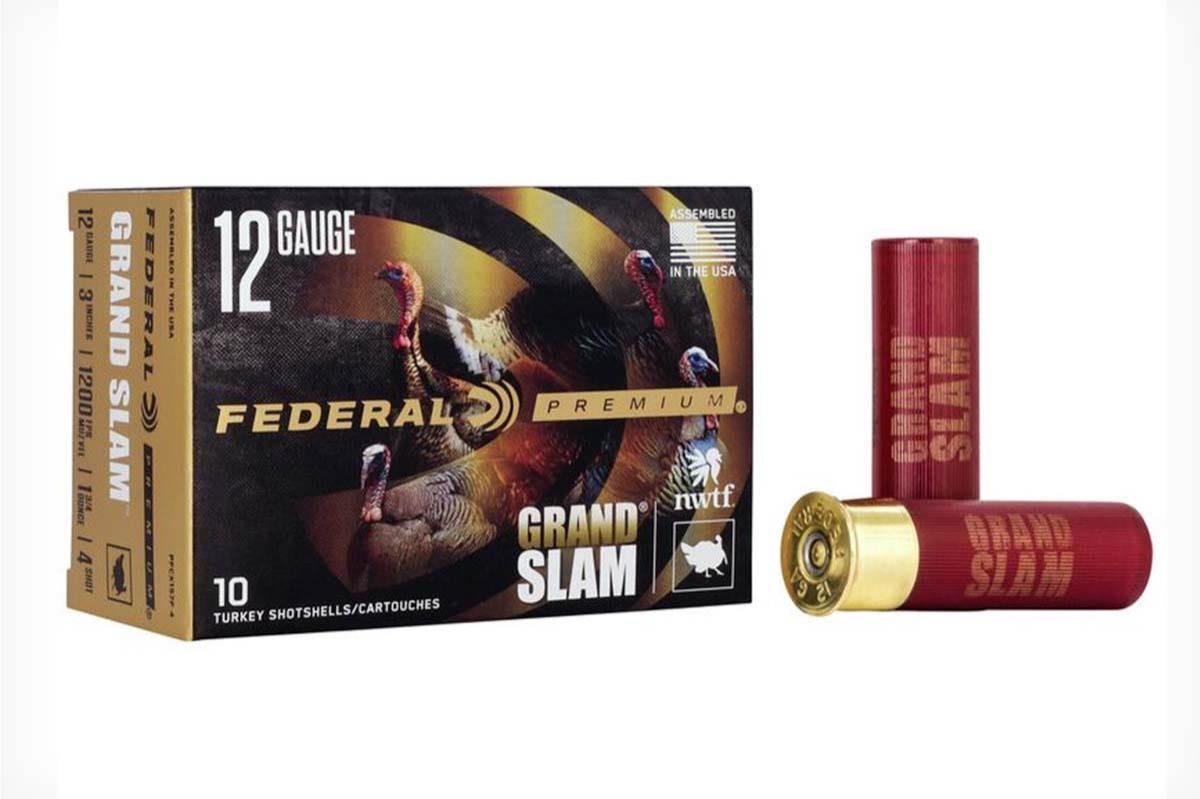
Federal Grand Slam

Federal Grand Slam
Federal Grand Slam

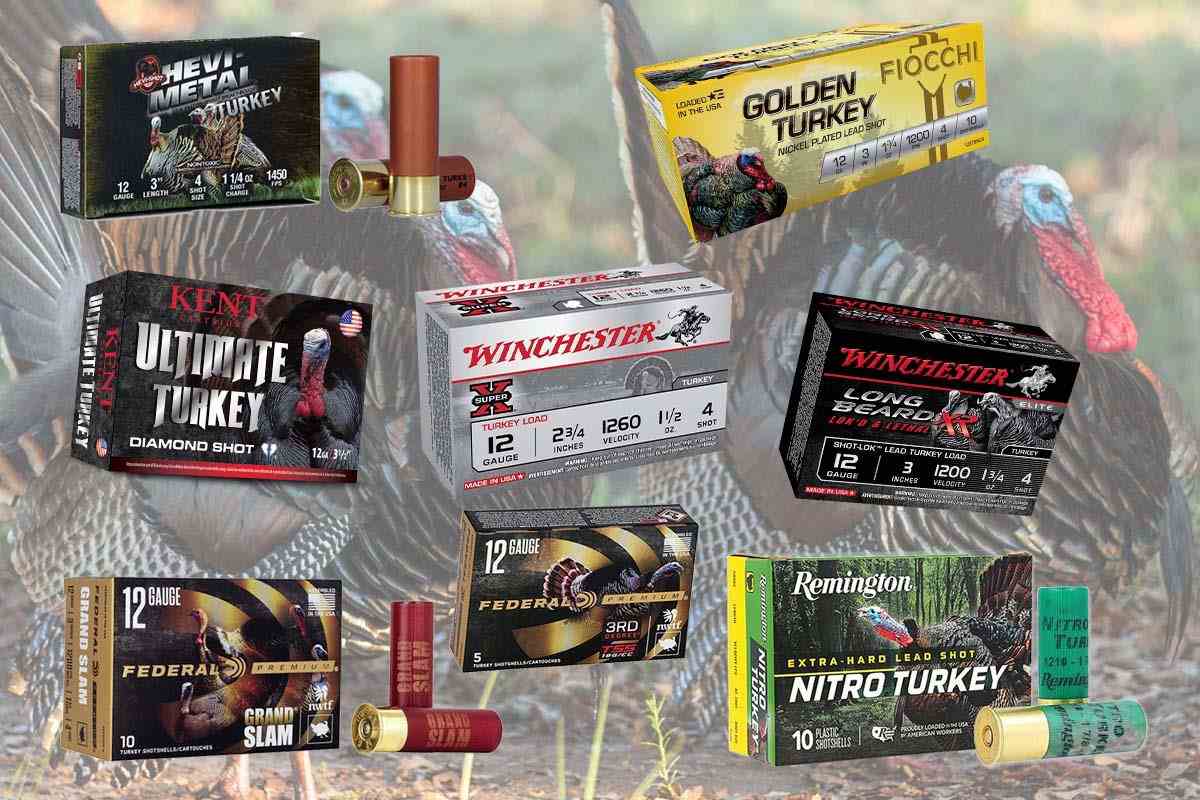
A reliable offering from Federal Premium Ammunition, the Grand Slam turkey load uses the Minnesota company’s FLITECONTROL FLEX wad system, which opens from the rear for a controlled release of pellets and pattern density shot after shot, and works in both ported choke tubes and standard choke tubes at the end of the barrel in your turkey scattergun. With an advanced buffering compound kept in place by a roll crimp and clear card wad, the buffering in the shotshell prevents pellet deformation as the copper-plated lead shot travels exits the barrel and choke at 1200 fps. With 10 shotshells (2 3/4-inches) in the box and a portion of the proceeds donated to the National Wild Turkey Federation, this shotshell will help you take a gobbler this spring in the local woods and across the country as you finish out your wild turkey Grand Slam. federalpremium.com | $24.99

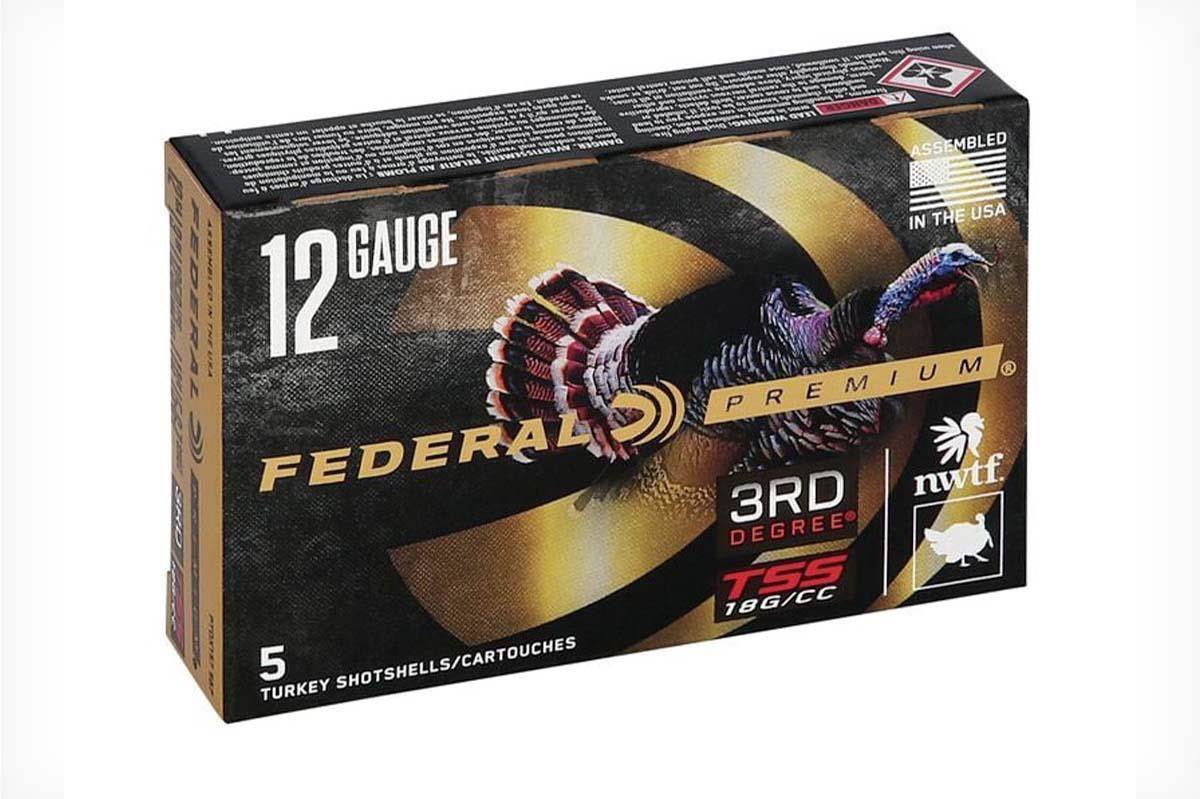
Federal Premium 3rd Degree

Federal Premium 3rd Degree shotshells
Federal Premium 3rd Degree

This shotshell from Federal Premium Ammunition actually gets hunters into the specialty turkey load market, without breaking the bank. That’s thanks to Federal’s 3rd Degree turkey load that combines the Minnesota company’s FLITECONTROL FLEX wad and a three-stage payload blend of #5 copper-plated lead shot, #6 FLITESTOPPER lead, and 18g/cc #7 HEAVYWEIGHT TSS (Tungsten Super Shot). The result according to Federal is pattern forgiveness at close ranges, a lethal knockout at mid-range, and extra-dense, high-energy deadly patterns at ranges of 40 yards or more. It’s a bank account friendly, super-charged turkey shotshell that works no matter the shot situation you are presented with this spring. And as with the Grand Slam from Federal Premium, a portion of the proceeds on this mid-30 dollar range box of shotshells will go to the NWTF to help ensure gobblers are roaming the woods for years to come. federalpremium.com | $35.99

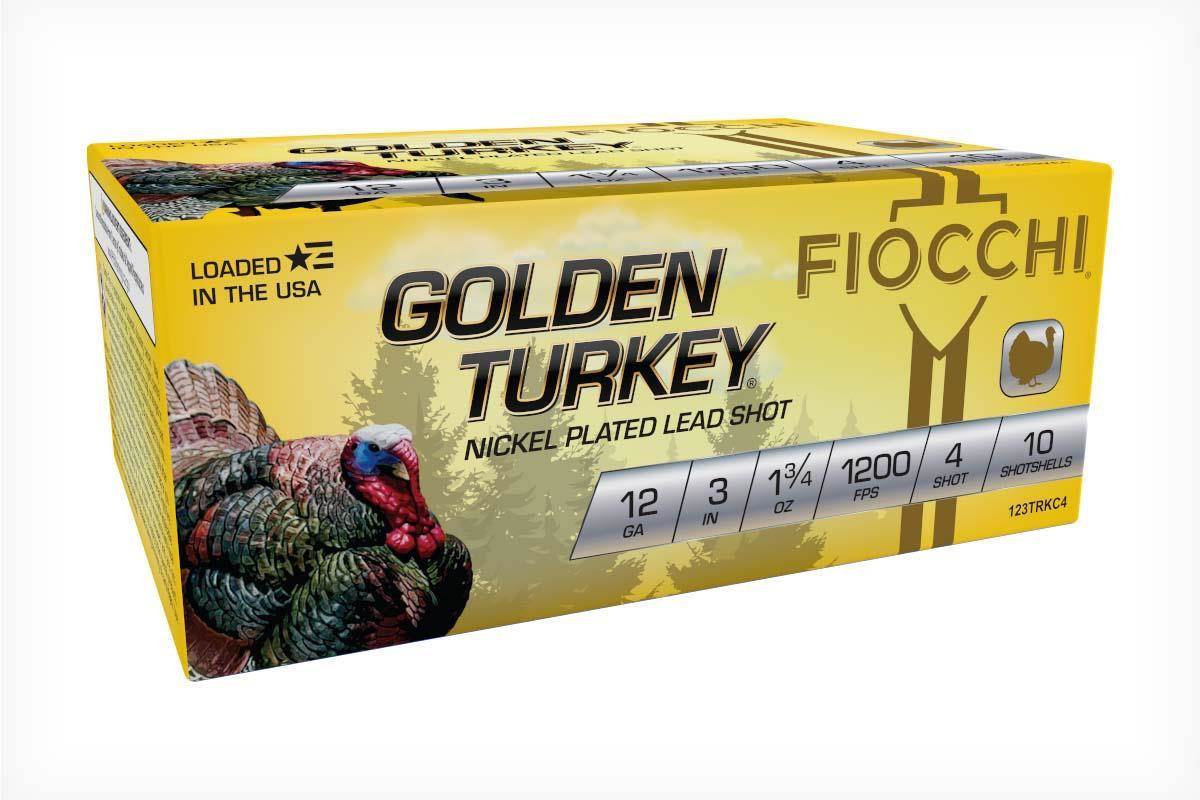
Fiocchi Golden Turkey

Fiocchi Golden Turkey
Fiocchi Golden Turkey shotshells

Last year, Fiocchi updated its Golden Turkey Load. With three-inch shells using nickel-plated lead shot, an improved wad, and clean-burning powders, the result is a simple shotshell that remains the gold standard for many gobbler-getters. Whether you’re shooting a 12-gauge and wanting #4, #5, or #6 shot sizes, or a 20-gauge and #5 and #6 shot sizes, these shotshells feature 1 3/4-oz. loads and 1 1/4-oz. loads respectively. And with a 1200 fps payload, high-grade construction, and dense patterns downrange, it’s hard not to like these loads, especially since they check in at under $20. fiocchiusa.com | $19.99

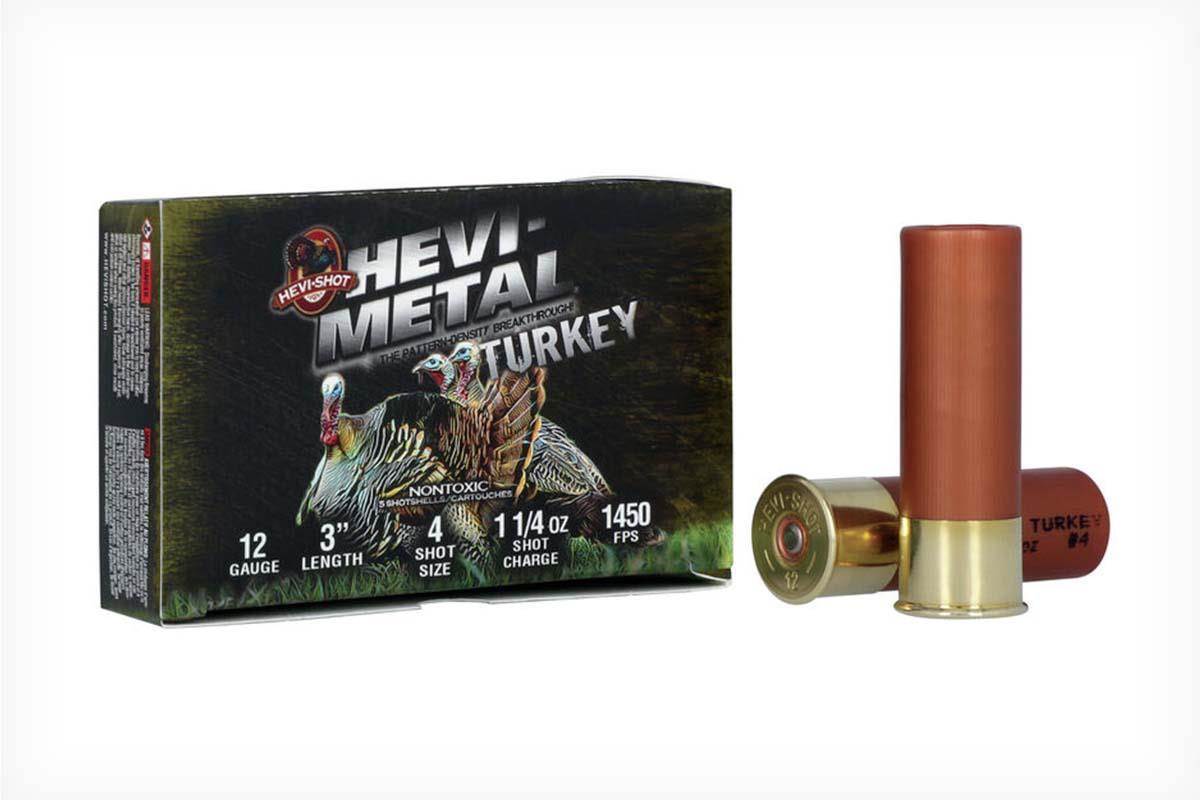
HEVI-Shot HEVI-METAL Turkey

HEVI-Shot HEVI-METAL Turkey
HEVI-Shot HEVI-METAL Turkey shotshells

HEVI-Shot is legendary among waterfowl hunters who need a shotshell that can knock down greenheads at the edge of effective range, or a 20-plus pound Canada goose dropping down into a spread as winds blow during a December snowstorm. But the company is also known for its other high-performance shotshells, and nothing changes in that reputation when we’re talking about a box of HEVI-METAL Turkey loads featuring a blend of #4 and #5 pellets. Add in the company’s Pattern Density Technology to layer in those pellets—including a layer of 30-percent HEVI-Bismuth #5 shot and a layer of 70-percent #4 steel shot-and the result is a hard-hammering load at an amazingly friendly price-point. hevishot.com | $17.99

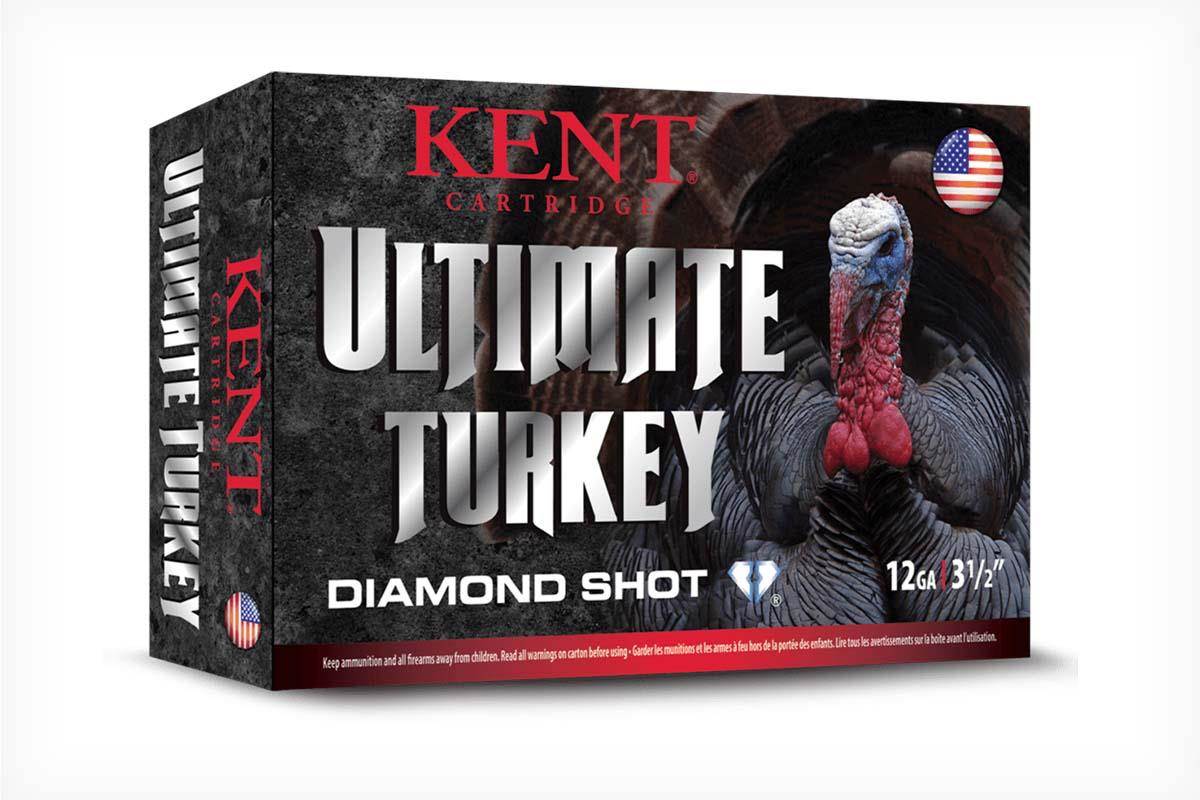
Kent Ultimate Turkey

Kent Ultimate Turkey
Kent Ultimate Turkey shotshells

Kent is no stranger in the shotshell-making game, producing great waterfowl and upland bird hunting shotshells for years, making them a favorite in many hunter’s duck blinds and hunting vests. But they also produce great turkey hunting shotshells, too, with a price tag that makes them look like they’re left over from a generation ago. Except, they’re not, they’re the latest shotshell from the West Virginia-based ammunition brand that helps turn out the lights every year on lots of wily old mountain toms, swamp gobblers, and prairie strutters. With the Kent Ultimate Turkey Diamond Shot load, hunters in 2024 get consistent tight patterning thanks to Kent’s high antimony, super-hard Diamond Shot loads in #4 and #5 shot sizes. Add in custom blended powders to go with the uniform pellets, and the result on the patterning board is a tight swarm of pellets. kentcartridge.com | $14.95

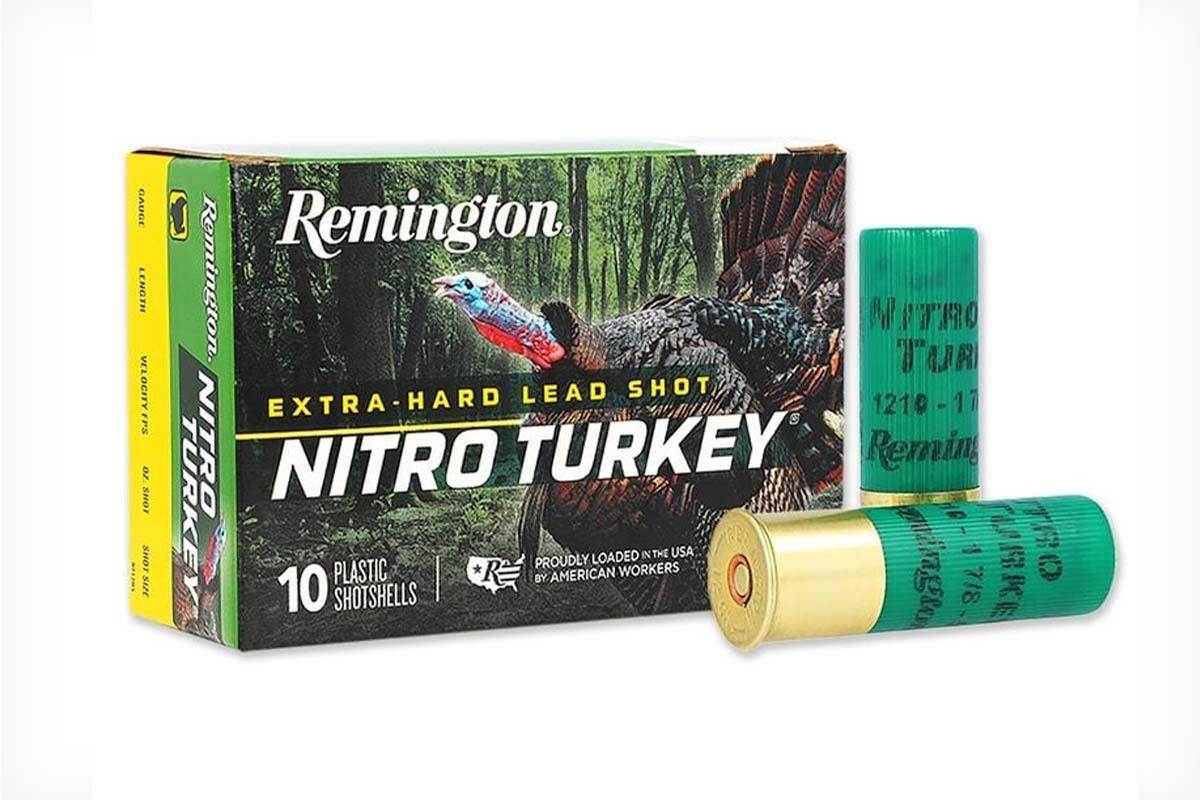
Remington Nitro Turkey

Remington Nitro Turkey
Remington Nitro Turkey shotshells

Growing up, I was a Remington guy, much like some families are Ford and others are Chevy. I didn’t know any different since the local Gibson’s store where I saved up and bought my first shotgun—yup, a Remington 870—carried the line from the famed American gun maker and ammunition maker that fell on hard times in recent years. With the purchase a while back of Remington’s ammo brands by Federal Premium Ammunition, the chance to run a Remington shell is still there for my 870 (a different one since the original one was stolen out of my truck after a dove hunt) thanks to the Remington Nitro Turkey loads that carry copper-plated, buffered loads that gets delivered by a blended powder recipe. Add in a Power Piston one-piece wad, along with a 1 7/8-oz. payload of shot whistling downrange at 1210 fps and the 80-percent pattern density will still kill a longbeard deader than a hammer. remington.com | $14.99

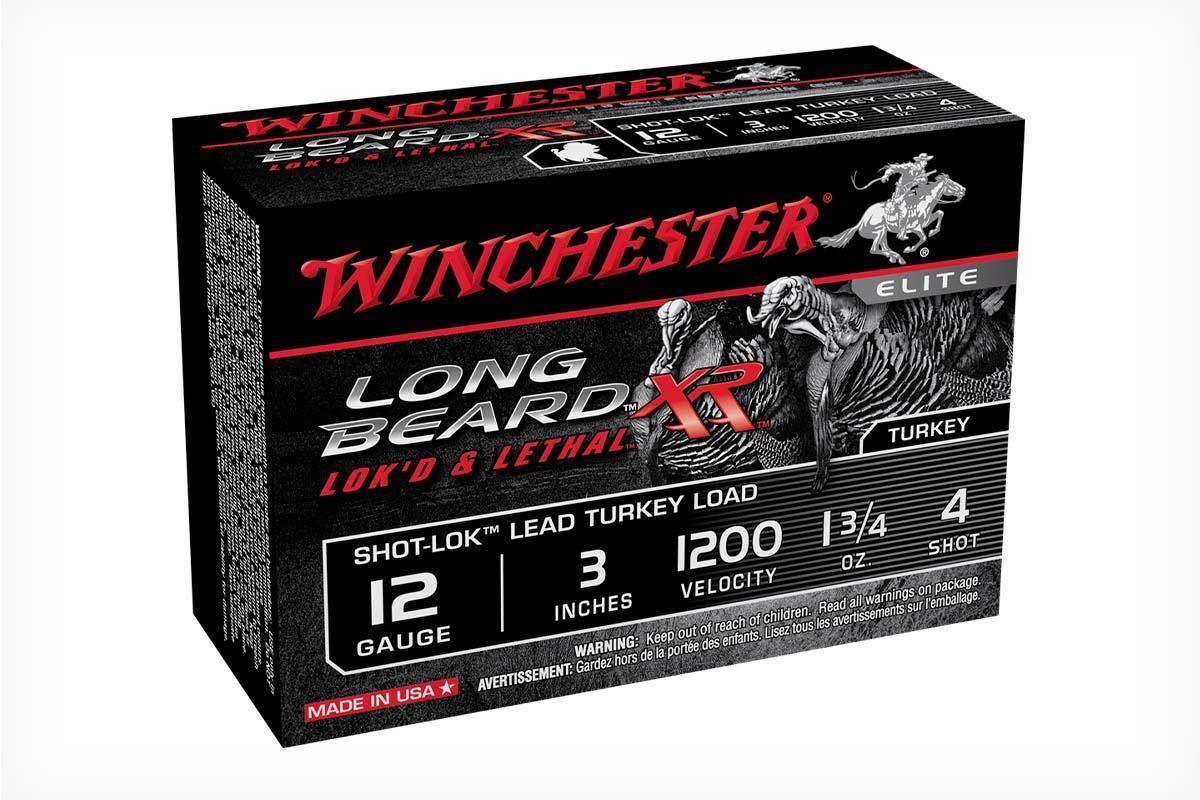
Winchester Long Beard XR

Winchester Long Beard XR
Winchester Long Beard XR shotshells

In years gone by, most turkey hunters kept their shotgun shooting ranges dialed in at 40 yards or less. But with the advent of great turkey hunting specialty chokes and high-performance loads with TSS (Tungsten Super Shot), bismuth, and more, those effective range distances have been extended in recent years. And thanks to Winchester, that’s true with a 12-gauge or a 20-gauge load that doesn’t break the bank, delivered with the company’s tried-and-true Long Beard XR load. That load has been a winner for Winchester and is billed as the most innovative turkey load ever developed by the longtime leader in ammo manufacturing. That’s achieved thanks to Winchester’s Shot-Lok Technology, which helps bring about amazing consistency and longer downrange capabilities with dense patterns hitting overwhelming a 10-inch circle out to 60-yards. While offering the knockdown power of higher priced loads, this shell delivers a deadly punch to a gobbler’s noggin at an easy to digest price-point, while still allowing turkey hunters to push the limits of what they once thought possible when a longbeard would hang up and refuse to come another step closer. winchester.com | $24.99

Winchester Super-X Turkey Load

Winchester Super-X Turkey Load
Winchester Super-X Turkey Load shotshells

This is a tried-and-true turkey load that has given out a RIP dinner table invite to countless longbeards over the years, my household included. With the Super-X line being a part of Winchester’s lineup in some capacity since 1922, the Super-X series has made lots of wingshooters happy down through the decades, including gobbler-getters like myself. That’s because those hunters have come to rely on the Super-X Turkey load’s copper-plated hard shot, custom blend of powders, and Grex Buffering, which combine to deliver tight patterns at long ranges, a high-velocity payload that turns the lights out on a spring turkey noisily strutting about, and cost-effectiveness. In short, this is a well-rated and dependable shotshell from one of America’s legendary ammunition brands that continues to deliver high-quality construction, superior in-the-field performance, and economic value for hunters looking to fill a turkey tag or two. Even if they don’t want to spend most of a Ben Franklin $100 bill on the shotshells that they put into their turkey vests this spring. winchester.com | $11

Walther Terrus air rifle: Part 1

0

by Tom Gaylord Writing as B.B. Pelletier

Part 2 Part 3 Part 4

Walther’s Terrus rifle with synthetic stock.

This report covers:

  • Quick notes
  • The Terrus
  • The rifle
  • Sights
  • Trigger
  • Stock
  • A threaded muzzle!
  • Overall impression

Quick notes

Thank you for being patient in April. It was a busy month for me!

Now that the last event is over, I’ll get back to accuracy tests for both the Benjamin Bulldog and the Hatsan BT-65. I now have additional bullets for the Bulldog and additional pellets for the Hatsan, so this should be good. I hope to get to the range later this week with both of those rifles.

I finally got my HW 35 at the Malvern airgun show, and it came with a big surprise. The rifle has been tuned! From the feel of it, the tune was a good one; but, of course, I need to test it thoroughly to know for sure. I had plans for tuning the rifle after my basic test, but now those plans will hinge on how well the rifle is already shooting. I may leave it as it is. I hope it’s also accurate.

The Terrus

Today, I am reporting on the Walther Terrus breakbarrel air rifle because Rick Eutsler bragged about it so much when we were filming American Airgunner 2 weeks ago. I shot his Terrus, which has a wood stock, and found it to be very pleasant. It didn’t vibrate, the cocking was easy, the trigger was nice and it seemed to be accurate, though I didn’t have a chance to test it like I’m going to test this one!

One thing I really liked about Rick’s rifle was the thin forearm on the wood stock. It made the rifle feel nice and sleek in my hand — sort of like a Beeman R7, but more powerful — yet not as big and heavy as a Beeman R9. This is the kind of airgun I’ve wanted for many years, and perhaps it has finally been built.

The rifle I’m testing for you today has a black synthetic stock whose forearm is swollen like a pregnant whale. I do not like the feeling, though it’s possible to hold it near the triggerguard, where it’s slender. I wish the designers had left the stock thin when they made the molds. But at least now you know there’s a difference between the wood and synthetic stocks.

From underneath you can see how the forearm swells in the middle.

If you like a full beavertail forearm, get the synthetic stock. If you like a slim forearm, get the wood one.

Rick’s rifle, a .22 caliber, was also calm when it fired. This one I’m testing has a slight buzz. It’s not even as much as the FWB Sport, but it’s there. I’m just saying.

Rick’s rifle was easy to cock and so is the one I’m testing. His trigger was very nice and so is the one I’m testing. If the rifle I’m testing is also accurate, this will be the best market value in a breakbarrel spring gun. At $230, it will be an absolute killer of a deal.

The test rifle is also in .22 caliber. It does come in .177, as well. The test gun’s serial number is LG004249; but if it’s accurate, I plan on buying it and tuning it for you.

Here’s the deal — Umarex, are you listening? I had high hopes for the FWB Sport and was very disappointed when the rifle I tested failed to live up to its rich history — meaning the FWB 124. Suddenly, the Walther Terrus bursts on the scene with most of what I was looking for in the FWB. And the price is fantastic! If this rifle is accurate, then I can overlook the very slight buzz in the powerplant until I have the time to tune it out.

In other words, Umarex, the Terrus may be the very spring rifle I have been looking for. All it has to be now is accurate.

The rifle

The Terrus is a medium-sized breakbarrel spring rifle. It’s smaller than an R9 but seems to deliver similar power. It weighs 7.5 lbs. with the synthetic stock and is 44.25 inches long. It’s rated at 800 f.p.s. in .22, and you know I’ll test that for you. I don’t care if it launches medium-weight .22-caliber pellets at 700 f.,p.s., as long as they all go to the same place.

Sights

The Terrus has open sights! Yes, Walther saw fit to put adjustable open sights on this rifle — even at this low price point. They’re fiberoptic; but when I complained about fiberoptic sights in a Round Table session on American Airgunner, I found I was alone in my opinion. The other 3 guys seem to like them. Of course, I shoot more at targets than they do, and they use airguns for more practical things such as hunting, so I think that’s the difference. Anyhow, the Terrus has sights, and the rear sight adjusts crisply in both directions.

There are grooves in the front ramp for a hood, but no hood came with the rifle. That red fiberoptic tube is very unprotected.

There are 11mm scope grooves cut into the spring tube. And there’s a single hole for a vertical scope stop pin. So, the Terrus is ready for whatever kind of shooting you intend doing.

Trigger

The trigger is 2-stage and crisp! Thank you, Walther. There’s an adjustment for the length of the first stage travel, but that’s all — and that’s all you need. This trigger is crisp and delightful. No, it’s not a Rekord trigger, but it’s way more precise and crisper than any trigger found on similarly priced airguns. Only the now-discontinued Bronco trigger was as good.

The one trigger adjustment controls the length of the first stage.

The trigger blade is very wide and straight, which will please most shooters. But the blade is plastic, and that will invite some criticism. Actually, this kind of trigger blade isn’t part of the sear mechanism and can be made of plastic without a problem, but the traditionalists will complain.

Stock

The synthetic stock has a rough finish in a matte black. It is SOLID! No need for foam. Walther listened to their customers. Both the forearm and pistol grip have generous ares of aggressive stippling that really grips your hand. And, with the safety located in the top center of the pistol grip behind the receiver — shotgun style — this stock and rifle are 100 percent ambidextrous.

The pull is 14.25 inches, which fits most adults. The solid buttpad is a grippy black rubber with a rough surface to grab your shoulder.

A threaded muzzle!

The muzzle has a knurled steel cap that protects 1/2″ x 20 threads for a European silencer. Of course, an airgun like this is already super quiet, so a silencer won’t have much to do. But this is a feature that will play well in the UK, where the Terrus’ over 12 foot-pound power puts it into the firearms certificate (FAC) category.

There it is under the cap — a threaded muzzle. Dream of silent airguns! And, yes, it does look like the front sight comes off for use with a scope.

Overall impression

Can you tell I like this rifle? It’s more than just like — I am thrilled Walther got it so right on the first try. It’s not a gun they’ll make a lot of money with, but it’ll be one that I can get a lot of new shooters to buy because of the price. Most of the features I want are there. There are more of them in this rifle than in any other at this price. I hope it’s accurate! If it is — watch out!

Best Scopes for 22LR: For Squirrel Hunting & Competing [2022]

0

Ruger 10/22 with Simmmons Truplex mag22 Let me make this clear to you.

This is the Only Guide on the Internet with full depth info about the best scopes for 22LR as of 2022. The field test results plus unbiased straightforward talk is what makes this list so popular. (jump to main section).

I love shooting, always have. Like most country folk do, I started off with a Daisy Air Gun which launched a brass BB like a jet off a Carrier – or at least I thought so.

As a kid, once I had proved to the old man that I had some sense for responsible gun ownership, I began plinking with my .22 Long Rifle in the dried-out riverbed behind the house.

Like most kids I got a hand-me-down. Dad’s old tube fed, Model 80 Marlin was true and sure but had a broken extractor, so after each shot, I had to pop out the spent brass with my trusty pen knife.

I loved the low recoil combined by the quiet pop of the rifle as I plinked beer cans and then advanced to popping the thousands of prairie dogs that had commandeered my neighbor’s pasture.

In my teens I was introduced to the 22 Mag, or more officially, the .22 Winchester Magnum Rimfire (WMR) cartridge, but I always fell back to the beauty and simplicity of my .22 Long Rifle for cheap and fun shooting.

To the date of the writing of this article, there is no gun comparable out there for putting down varmints from as small as rabbits to as big as coyotes. Especially when it comes to cost.

This simple, cheap, and wonderful round is produced in the billions each year and can yet become scarce when politicians start threating gun control.

Now talking about hitting those targets or hunting squirrels and those small critters out there, you would need a scope regardless of the distance they’re at!

We know if we are target shooting (in competitions) or hunting small animals like squirrels and armadillos, all we need is precision and results!

So either way, if you’re an expert (perhaps you skipped the intro) or you’re someone just starting out, here are the best scopes for the 22LR rifle.

Comparison Table for the Best Scopes For 22LR:

Quality Scope for My .22, why Should I Care?

Back in those days, living on the plains of Eastern Colorado, we shot .22 rifles, peeping across iron sights at squirrels and such.

I could not afford a rifle scope, but any prairie dog inside of 50 yards was a goner when I was in the prone position.

These days, we rely on heavy duty and accurate optical sights to deliver an accurate crushing blow.

Where once we were looking through a rear and front sight now, we were looking through the glass of a scope mounted to our barrels.

At first, I bought the cheapest scope I could find. I wasn’t looking for high quality or multi coated or fog proof optics.

I made some good shots with the $30 scope but I sought out a better solution if not the best.

My .22 needed a companion scope that would bring out the best features in the chambering.

How Were the Scopes for the 22 Rimfire Chosen?

The list is built from scratch for the year 2022, so the 22LR scopes mentioned here have up to date information.

Here are things that I considered, researched, and tested while searching for the best .22 scopes:

I spend most of my time in the High Country of Colorado. The weather is unpredictable, and the terrain is abusive.

My scope requirements tend to fall more on durability, weatherproofing and weight. A broken or hazy scope is useless at 12,000 feet.

Test Bed:

Marlin Model 60 chambered in .22 LR, semi-automatic, with 18 round tube fed magazine.

This is a steady and reliable rifle and offers a standard platform with which to mount our test subjects.

The Marlin is a lightweight rifle and we wanted to keep it that way, thus scope weight played a significant factor.

Best 22LR Scopes for Squirrel Hunting and Target Shooting:

Leupold VX-Freedom 3-9x40mm Rimfire Riflescope
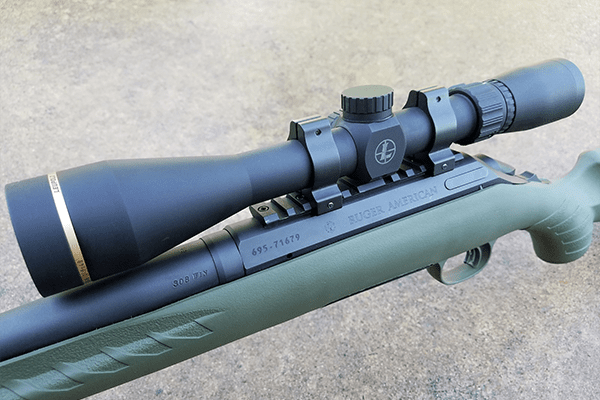
This Leupold VX-Freedom toughed it out with us on a late late-season, plains coyote hunt on the sagebrush and dog-hole dominated rolling hills of Arapahoe County, Colorado.

Out of the box, this high quality, fully coated, rifle scope had the look and feel of one of the best scopes offered on the market. It mounted seamlessly to my Marlin using provided scope rings.

The Power
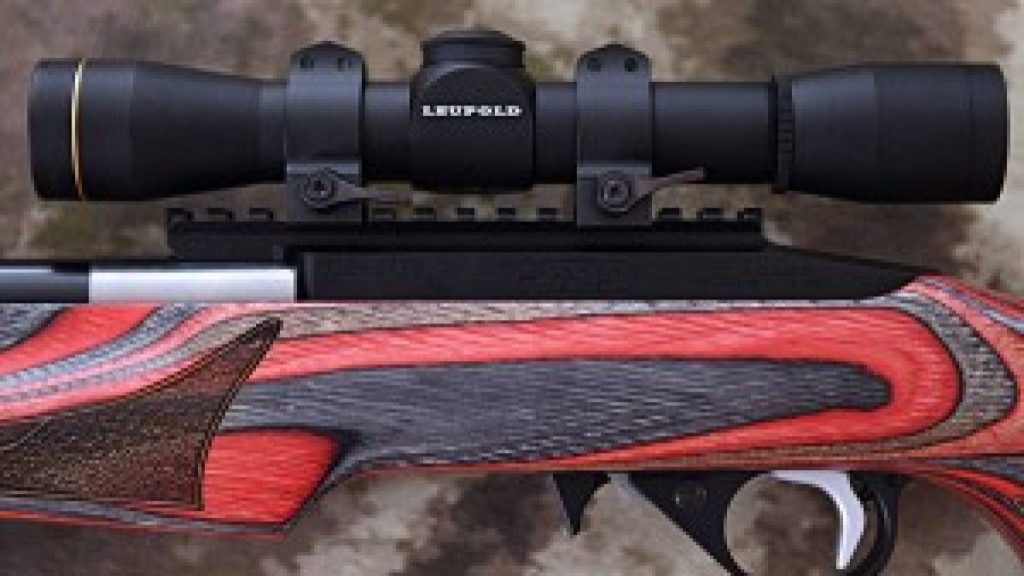
leupold-vx-freedom-rimfire

This Leupold is a variable power scope that far exceeds the requirements of shooting the .22 LR. The 3-9×40 allows you to dial from 3 up to 9 magnification to suit your hunting needs. The 40mm objective lets in a ton of light during shooting hours. It was more power in a scope than I needed for shorter range “varmint hunting”.

I usually hunt inside 100 yards, so I shot the scope with a setting around 5 which is quite practical for most hunters. I found that any magnification over 9 just wasnt worth it in short range, small game hunting. A fixed scope would most likely be the best candidate for hunting small game at a short range. But to each their own.

The Objective Lens

This scope’s objective lens is a little larger than what is required for the .22 LR and offered a noticeably clear sight picture. It was clear and bright at 40mm and provided the best light transmission front to back as we shot from dusk to dawn.

I did shoot my rimfire in the evenings and found that the larger objective was far more gracious in letting in light as you approach dusk.

Fuzziness and blurriness were not a problem during our intense hunt. The scope’s optics performed in an outstanding fashion. I selected the simple duplex reticle for quick and easy range finding. I got on to several coyotes within the first several hours of hunting and wanted to lock on as quickly as possible. All ‘yotes inside of 100 yards went on to Valhalla and their furs to the taxidermist.

Rugged and Durable

Yes, this rifle scope performed well out of the box on our weekend coyote shoot in the snowbanks of Kiowa Creek in Eastern Colorado. There were quite a few creek crossings, climbing on our bellies and hauling scope mounted rifles into tree stands. We are rough on gear out here and the Leupold performed very well under the worst-case conditions.

Knobs and Dials

Both the Diopter adjustment and the magnification zoom, as well as the elevation and windage turrets functioned smoothly. Windage adjustments were smooth and reported a loud click to ensure accurate and confident shooting.

Affordability

You’re not going to get to get away with spending less than $400 for a Leupold scope. In this case, the scope cost more than the rifle, but it is what it is, and the shooting experience was exhilarating.

Leupold FX-1 4x28mm Rimfirescope

I really wanted to check out this no-nonsense scope, that had set magnification at 4x which is perfect for .22 LR shooting. It was also more streamlined and lighter than the other candidates we checked out and fitted very well to the Marlin with the extra purchase scope rings.

The Power
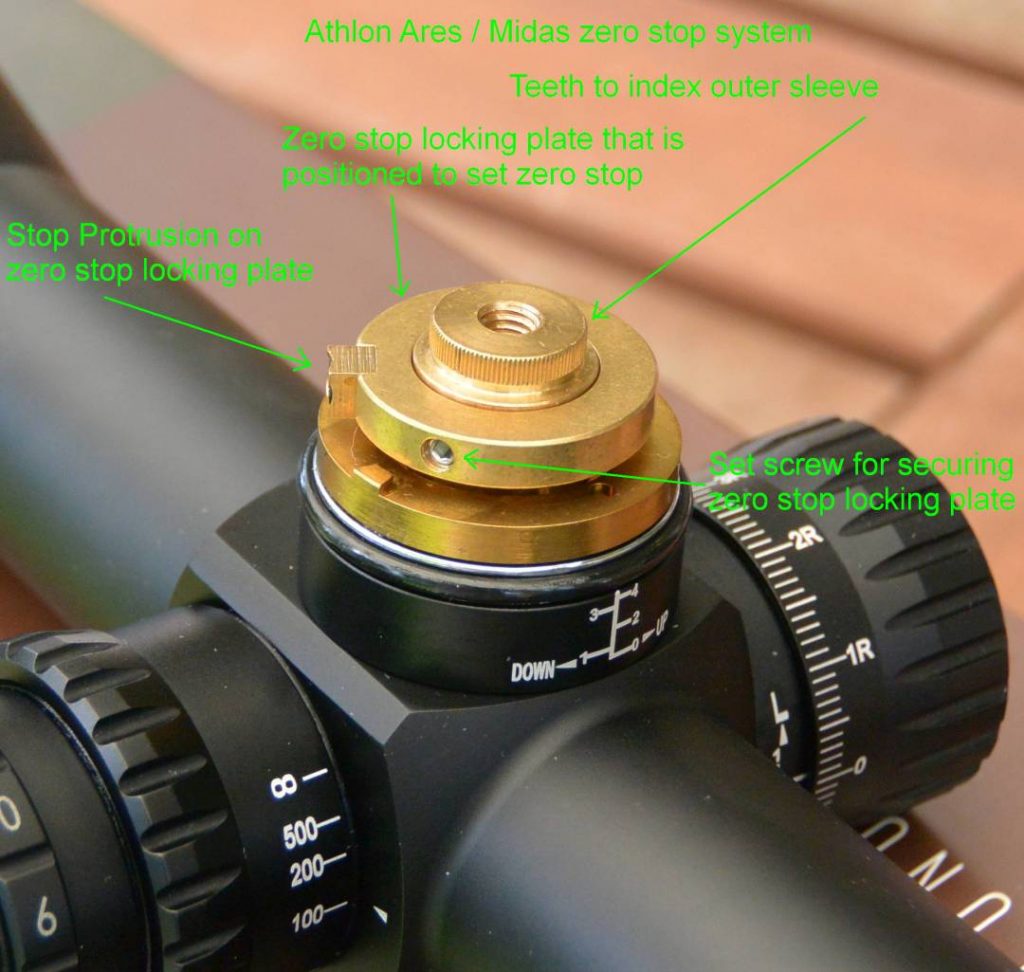
Leupold-FX-1

This one is a non-variable power scope. The 4x was more than appropriate for the max effective ranges of the .22 Mag, inside 100 yards, which allowed quicker target acquisition to kill on most targets.

Of the two other scopes, this one was the toughest to get the sight picture clear and there was some blurriness, but it was not that annoying. It may have been a manufacturing defect in that scope. I’m very used to peeping through Leupold scopes and my expectations are always very high that I will be looking though the finest, state-of-the-art optics.

The Objective Lens

The 28mm objective works simply fine for plinking, target shooting and hunting.

As I shot all day on the range, I noticed the glass was not as crisp and clear as the other contenders and as I continued to shoot till dusk and found out that it did not provide the same light transmission as the other scopes. With that being said, I was still able to keep all my shots inside a 2” ring out to 125 yards. Albeit, having to strain my eyes a bit more.

Rugged and Durable

Unfortunately, I was not able to take the FX-1 out into the field for a stress test to see it is the best .22 scope in this category – only the range. These Leupold scopes are some of the most durable scopes out there on the market. I do not take their word for it either. I’ve been shooting through their scopes for over 20 years. I frequently compare notes with my shooting buddies, and I’ve heard through the grapevine, from other shooting enthusiasts, that you get what you pay for, and these Leupold scopes are pretty tough hombres.

Knobs and Dials

I did not have any major complaints on scope adjustments. They were not near as smooth as the other tested scopes and windage and elevation turrets did not provide loud enough clicks for me to be sure of their adjustment.

Affordability

I got mine for $300, so it did not break the bank, but it was a bit pricy for a plinking scope. For varmint hunting it’s probably the way to go if you have a budget but don’t want to mount a scope of lesser quality.

Athlon Optics Midas TAC 6-24×50 First Focal Plane Riflescope:

A buddy of mine from Nebraska called me up to rid his fields of some pesky prairie dogs. I knew this would be a good opportunity to try out the professional grade Athlon Optics Midas TAC.

We’d be shooting out to 150+ yards, a long way for the 22 LR, and I wanted to see how this great looking scope would perform against its more affordable rivals.

I mounted one up on to my Marlin with Vortex Optics Tactical 30mm Riflescope Rings. The mounting was simple, and I was able to adjust the scope to my preferred eye relief distance of around 4 inches for the .22 – not much recoil to worry about and I really hate getting scope bitten.

My first peep down the scope gave me a look at The Christmas Tree MOA reticle. I could tell right off the bat that it was a little much for a simple 1,200 fps 30 grain round and was better suited for 30-06 or .308 caliber weapons.

All that was necessary for this shooter was a simple duplex reticle where I just put the crosshairs on the target and pull the trigger.

The Power
Athlon Optics Midas TAC 6-24x50

The 6-24×50 allows you to dial up some serious magnification – which gives you a workable field of vision down to 6 feet at prairie dog range. The scope gets all that is needed for short range shooting just right.

With this power I was able to set back away from the alert little rodents without scaring the little buggers back down into their holes, and I hit most of the prairie dogs I set my sights on.

Hunting outside the 100 yard range with a .22 LR, I shot the rifle with the scope set at 7 power. I am biased about short range varmint shooting and I’ve always considered a fixed magnification scope the best candidate for hunting small game at shorter ranges with a 22 LR.

The Objective Lens

This scope’s 50mm objective meets and exceeds all the requirements for plinking and target shooting; well beyond what is required for the standard .22 Long Rifle and its limited range.

The 50mm objective allowed plenty of light for my daytime prairie dog hunt but we had to pack it in late afternoon.

One thing for sure, the large objective barley fit my rifle using standard rings, and I was not able to set the scope far back enough to achieve my preferred eye-relief. This problem will probably vary from rifle to rifle.

Rugged and Durable

The Athlon Optics family has a reputation for meeting the most grueling weather and hunting conditions around the world.

Unfortunately, I did not get a change to introduce this scope to the rigors of Colorado hunting but I’m looking forward to taking to the limits this winter with a late season Muley hunt on the plains east of Denver – this time mounted to the top of my .270 Winchester.

Knobs and Dials
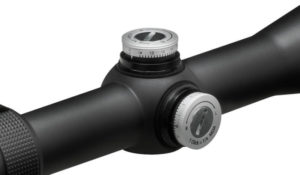
Very well engineered! Audible and reliable clicks on the windage and yardage turrets.

Affordability

With a price tag around $700, this is the least affordable of the rifle scopes tested, its performs very well for your basic rimfire, short range shooting activities and probably is a little much given this scope is designed for shooting high velocity magnum rounds out to 700 yards or greater.

Vortex Crossfire II 2-7×32 Rimfire

You can’t complete a list without having Vortex in it, can you? The only thing entry level about this scope is it’s price.

The successor of Crossfire, the Vortex Crossfire II is a versatile piece built specifically for rimfire rifles.

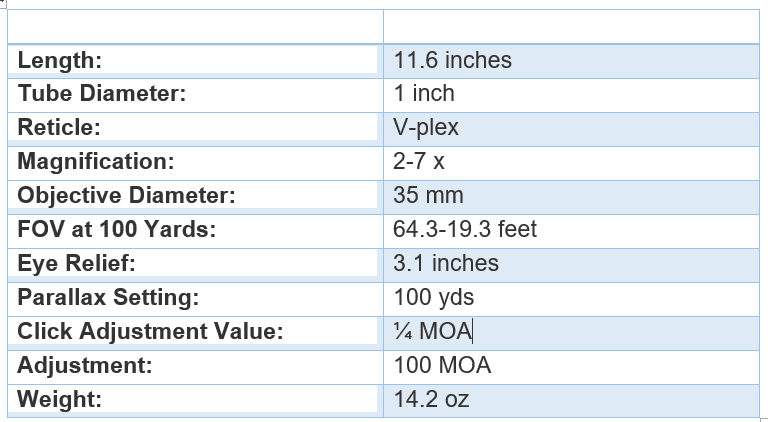
Specifications:

Clarity and Build:

The scope produces a clear, crisp picture and features multi-coated lenses, Fast-focus eyepiece and a V-Plex (MOA) reticle.

The efficient light transmission through the lens makes it a good choice for outdoor as well as indoor shooting.

The Vortex Crossfire II is built on a single-piece aircraft grade Aluminium, hence making it a robust piece and the O-ring seals make sure that no dust or moisture gets in.

The hard ArmorTrek coating protects the exterior lenses from scratches and oil.

The capped zero reset turrets give a positive feel and can be tracked easily.

Accuracy:

While testing it, we found it to be clear at 25, 50 and 100 yards.

The scope was mounted on a Smith & Wesson M&P 15-22 shooting various ammo. After sighting in, the rifle shot 1/2 inch groups at 50 yards.

We got 4 inch groups on an average with rests in place at 100 yards and 1 inch groups at 25 yards indoors respectively.

The Crossfire II provided generous eye relief and held zero perfectly throughout the test.

Tested On (Rifles and Recommended Mounts):

If you’ve Ruger 10/22, the medium rings like Leupold Std Medium Rings will do good and if you’re looking for quick detachable rings then Weaver Quad-Lock Rings work well.

For Marlin 795-LTR Redfield .22 See-Thru Dovetail Rings work well.

At low power, we were able to shoot with both eyes open and the view never got black regardless of the head movements.

Pros:

Cons:

Vortex Diamondback 2-7×35 Rimfire Scope:

If you liked the Crossfire II, then you’ll love the Diamondback!

This beautiful beast is carved out of a single piece of aircraft grade aluminum hence making it resistant to shocks and magnum recoils.

Specifications:

Clarity:

Talking about clarity, as usual, the quality is exceptional, the pictures are sharp, vivid and bright; all credit goes to the multi-coated lenses which increase light transmission up to 91%.

You’re simply getting clarity that matches up to the scopes being sold at higher prices.

The turrets are super good, give a positive feel and in no way, they’re soft or mushy.

The low profiled capped turrets prevent any sort of damage to them and yes, the Diamondback features the zero-reset turrets.

The glass etched V-plex reticle is super helpful in various hunting applications.

Furthermore, the scope tube is Argon purged hence making it fog proof and the O-ring seals make sure that the scope remains waterproof and dustproof.

Accuracy:

We mounted the scope on a CZ 452 22LR shooting CCI stingers.

It took us 6 rounds to zero at 50 yards. We shot first two rounds for checking and fine tuning. The rest of the 20 rounds were dead on.

Pros:

Conclusion:

So that’s the thought process of my findings and the results of the field testing that I came up with to select the best .22 LR Scope. At the end of the day, I love standing on that pile of rimfire shells on the range.

I’ll wipe down the rifle and scope and write down some more notes on what I think is the best 22 Scope for a rimfire.

After shooting over 1,000 rounds behind these scopes, I found the Leupold VX Freedom Rimfire Rifle scope outperformed its competitor scopes in every aspect that I considered essential, except price. It is the best 22 scope solution for my rimfire. And, as of today, it is still mounted to my semi-auto rimfire.

  • Provided tight groups at 100 yards and respectable at 125 yards
  • The multi coated optics stayed clear and fog-proof during the worst weather conditions
  • The eye relief was most forgiving, allowing me to quickly acquire my target
  • Scope adjustments were easy to use, clicks were audible and the adjustments smooth
  • It certainly is the best of the best scopes out there for varmint shooting with the scrappy little .22 LR

I’ll be straightforward here.

Choose either Leupold VX-Freedom or Vortex Crossfire II, these are currently the best scopes for 22LR. There isn’t much difference in clarity or features. I’m a Leupold guy so I’ll go Leupold VX-Freedom, if you love Vortex, then choose the Crossfire II.

Both of these scopes are a great choice for competitions, plinking and small game hunting.

Both of these scopes are beasts in themselves and can give a tough fight to scopes available in higher price.

Choose any of the shortlisted scope and you’re good to go.

Thank me later!

How to Choose a Scope for 22LR?

How much Magnification for a 22LR Scope?

If we talk on the basis of the usual range, effective distance, and bullet drop then hunters shooting 22LRs generally don’t go beyond 100 yards. I’ve seen most of my friends plinking or hunting squirrels at no more than 75 yards.

Considering the average distance and the size of animals or pests, you wouldn’t be needing anything more than 9x magnification.

If you’re considering a 22LR scope for long range hunting, then keep reading.

Where Should I Buy the Scope From?

Amazon. Don’t need to explain much here.

The customer service, quick delivery and easy returns make Amazon my preferred marketplace to buy 22LR scopes. I’ve had very negative experiences with many other websites but Amazon has always been good for me. The scopes are generally available at a discount and the customer ratings help a lot too.

Long Range Hunting & Shooting with 22LR:

As mentioned in my earlier post, 22LR drops like a rainbow after 100 yards.

Personally, having shot the Savage Mark II out to 300 yards with subsonic ammo, I can tell you it isn’t easy to hit with accuracy.

Still there are some amazing people out there doing the impossible and making the 22LR work way beyond its limits.

Guess what? It’s all about how good you are!

Though the scopes on my list are capable of hunting at long distances but distances like 700 yards are just extreme and aren’t a practical effective range for hunting and plinking.

Top 5 Best Streamers for Trout – And How to Fish Them

0

What are the Best Trout Streamers?

There are thousands of different types of streamer patterns available today. However, many of these flies will not catch fish when pursued with the most common methods used by practical fly fishers in trout streams across North America.

As a general rule the best trout streamers are:

  • Autumn Splendor Streamer
  • Slumpbuster with Cone Streamer
  • Zonker-Grizzly Streamer
  • Muddler Minnow Streamer
  • Muddy Buddy Streamer

If you’re looking to add some variety to your trout-fishing arsenal – or perhaps want to put some additional “pluck” into your prey – here is a list of five great streamer patterns to use in local trout streams.

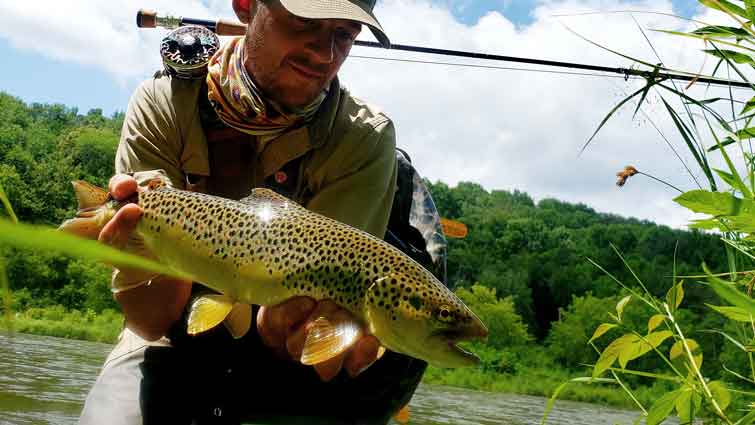
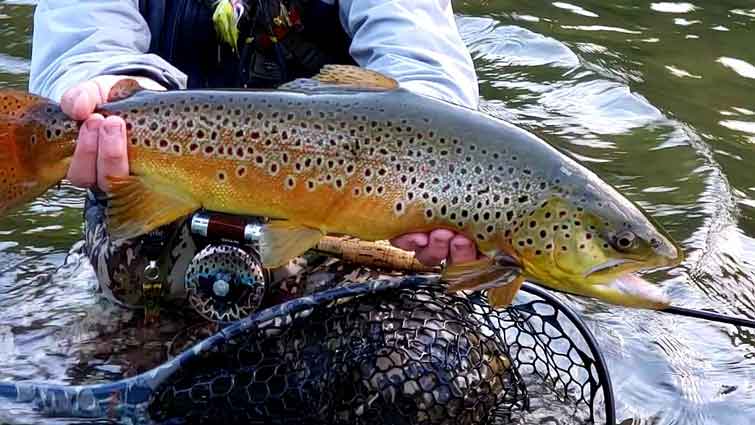
Tom Dosoff Catching Nice Brown Trout

1. Autumn Splendor Streamer

The Autumn Splendor might be the most famous bugger design ever created, developed on the Roaring Fork by Tim Heng. One should not be fooled by the name because this bug catches fish all year round. It is based on a straightforward principle that works with most fish species from trout to bass and pikes, the basic idea of catching something.

The Autumn Splendor Streamer is a streamer that was originally tied in the Roaring Fork Valley of Colorado, but it has since gone viral from coast to coast! The Autumn Splendor is a more active and flamboyant version of the flash bugger that’s just as good for trout as it is for bass.

There are different ways to make this fly work, but most people use it as an indicator/strike indicator for fishing nymphs or wet flies downstream, where you fish it high in the water column on sinking lines and let it sink down on its own.

Streamer Fly Fishing for Trout Video

As far as colors go, darker colors definitely seem more attractive for fish in low light conditions, but that’s just one factor among many others that are equally important when you’re fishing streamers or buggers – it’s not just about color.

According to some anglers, another benefit of using a certain kind of flies is that they behave differently on the water, making it easier to target fish by reading their reaction and adjusting accordingly through matching their pace or speed. That’s why most fishers choose streamers over other types of flies – they can either mimic different species at once or behave like selective baits all on their own.

The Autumn Splendor isn’t the only one that’s high on demand among those who choose streamers as their go-to method of choice, you can find any number of different patterns.

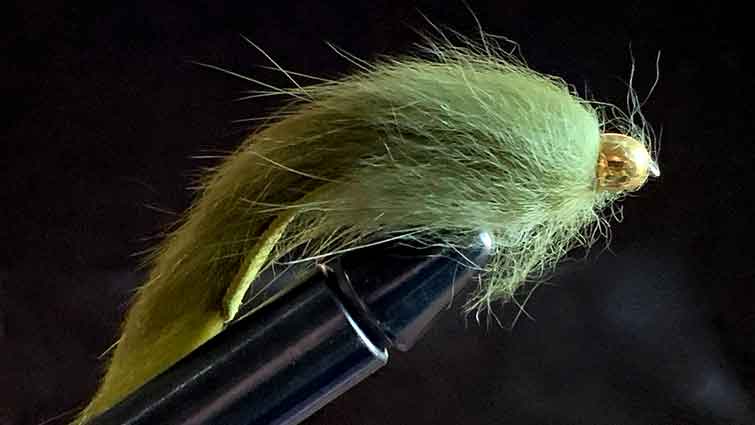
2. Slump Buster with Cone

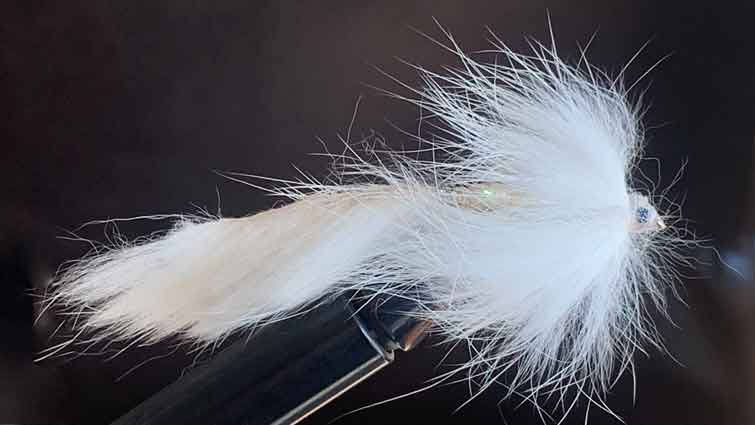
The Slumpbuster is one of the few new streamer patterns that are much more than a Wooly Bugger variant. To create a fish attracting jigging motion in the water and its matuka-style fur strip wing seductively breathes without fouling, the front end of this fly is heavily weighted.

Slumpbuster Fly Fishing Streamer in Green

The Slump Buster is an excellent choice if you’re looking to cast upstream and let it drift slowly towards you or do some jigging with it. In shallow water, use a floating line and strip it with short jabs. The head of this fly rises as it is stripped and goes between strips.

Slump Busters are meant to be fished on fast-moving rivers when fish feed near the surface, but when salmon appear in deeper areas, this bug could serve as an indicator fly for nymphs or bottom bugs too. Slumpbusters work best at depths where you need a stiff leader to get them down just a few feet from your weight upfront.

Large Brown Trout Caught on Slumpbuster

If you’re having difficulty landing a fish, try switching to a Slump Buster and casting, retrieving, and hanging on. It has the ability to move erratically through the water that excites fish.

  • Use a floating line in shallow waters and strip it with short stomps.
  • When you strip this fly, the head rises up and it dives down between strips.
  • In deeper water, utilize a full sinking line; let it sink for a moment before stripping it erratically.

Olive or Black Slump Buster streamers are perfect for all fresh and saltwater fishing adventures. Unlike zonker strips of rabbit with their very long hair, these skin strips were short-haired, nicely mottled, and thin-skinned for easy wrapping.

There’s no doubt that this fly is a great choice if you want to fool a fish with a highly visible streamer at slower speeds. Slumpbusters are perfect for shallow water fishing but can be used in all kinds of conditions.

3. Zonker-Grizzly Streamer

A Zonker Fly’s slick profile will imitate a minnow or a leech. This snag-resistant fly is ideal for bottom fishing and is a great pattern to use with nymphing techniques.

Zonker Fly Fishing Streamer - Grizzly Color

One of the most popular patterns ever, the Zonker-Grizzly Streamer is a technical fly type – it has what’s known as a high-risk profile. Especially in clear water with light penetration, this is one of the best streamers out there because it functions beautifully on depths where you can’t measure your fly line or see your indicator.

The Zonker is a great streamer that is highly effective in both still and running water. It’s usually fished with longer leaders and heavy tippet, so it can get down quickly to fish feeding near the bottom or lie on top of it if you want it to mimic a crayfish or crawfish. The black Zonker is best in clear to slightly stained water, whereas brown is great for very dirty water.

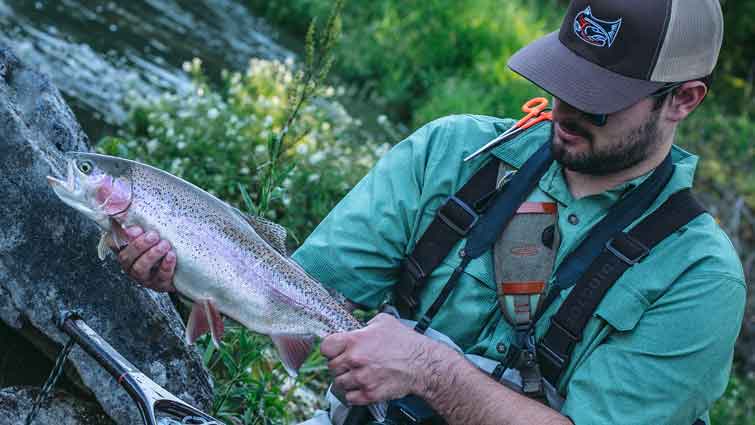
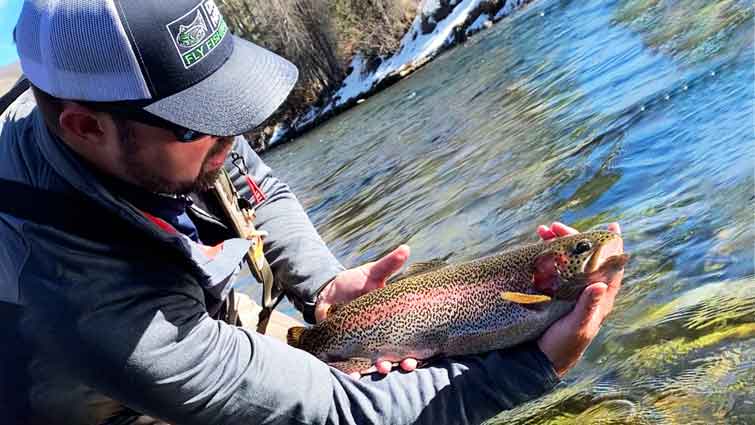
Rainbow Caught on Zonker

The Grizzly Zonker is a beautiful minnow imitation. This traditional streamer has a lot of pulsating action while swimming and is ideal for big trout, bass, and various other species.

A zonker is a fly constructed from a piece of fur. Zonker strips are strips of hide that, when wet, soften and create a fly with bulk that pulsates when retrieved. It’s great for bigger flies, such as streamers and pike fly patterns.

The Zonker Streamer is one of several popular patterns often used by fly fishing guides for steelhead and salmon. It has an extended body section that makes it very easy to tie this fly onto any size hook. This pattern’s profile reminds predators of minnows that live near stream bottoms or slow-moving rivers or ponds, thus making them eat this fly instead of your regular dry flies.

4. Muddler Minnow Streamer

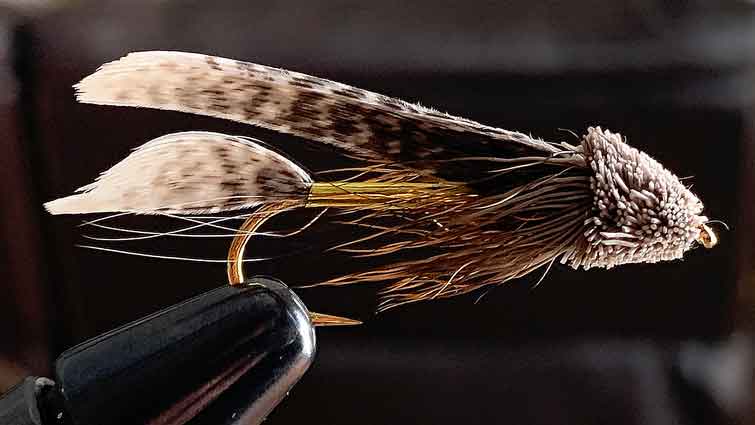
Developed by Charlie Fox, one of America’s most successful anglers at longtime, Muddler Minnow Streamer is a classic and among the best flies for large, aggressive fish like pike and musky. As you might guess from its name, it’s simply a streamer that resembles a minnow, but that doesn’t mean it will only work on trout – even though there are other patterns that work better for them.

Muddler Minnow

This particular pattern can also be fished as an indicator fly for nymphs or wet flies downstream when you have a sinking line to cast with or attach it to a leader/tippet knot and drift it over the surface of the water.

One great thing about Muddler Minnow Streamers is their durability because they’re tied with deer hair instead of feathers, so they should last you a while and not tear apart too easily. Unless you break them against the rocks and logs, that is!

5. Muddy Buddy Streamer

Muddy Buddy streamers are an excellent and versatile option for any fly fisher and can be used in both fresh and salt waters. This particular fly has a weight-forward design which makes it useful when fishing deeper areas where you cannot see down to spot fish.

Muddy Buddy

The Muddy Buddy Streamer comes in several colors and if imitation is what you seek, try out the black or olive muddy buddy streamer. These colors are ideal for fishing in murky water when visibility is limited.

The black color of this streamer is perfect for the area with the most silt in river water which is usually in the deepest part. Since this fly has a larger profile, it can be used as a comfortable choice when going for larger fish.

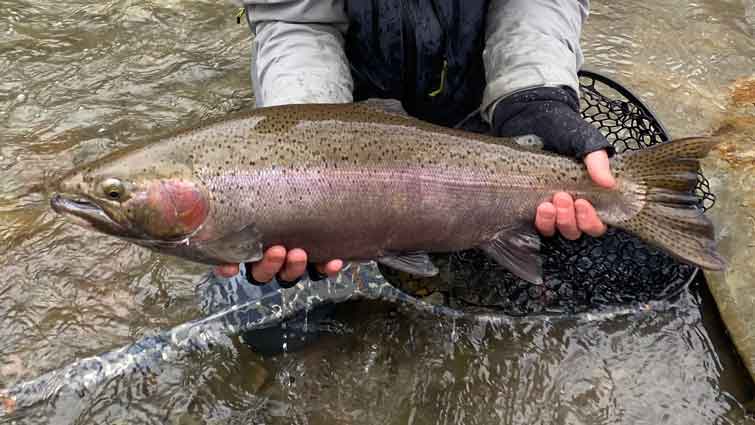
Large steelhead caught on streamer

This fly is effective during the warm summer months when many saltwater species are feeding near the surface of the water. The best time to use this streamer is from early morning until late evening, but keep in mind that you should be aware of changing currents if fishing with this streamer.

When casting this streamer, you will want to try and keep your line as straight as possible which will help the streamer ride horizontally through the water column instead of floating vertically.

Muddy Buddy streamers are great if you’re looking for an option that can be fished in both still and running waters, sink at different depths, and imitate virtually any type of prey fish. Their weight-forward design makes them effective even when cast upstream into the current or used as an indicator fly for other nymphs or wet flies.

What Flies Do You Use for Fly Fishing?

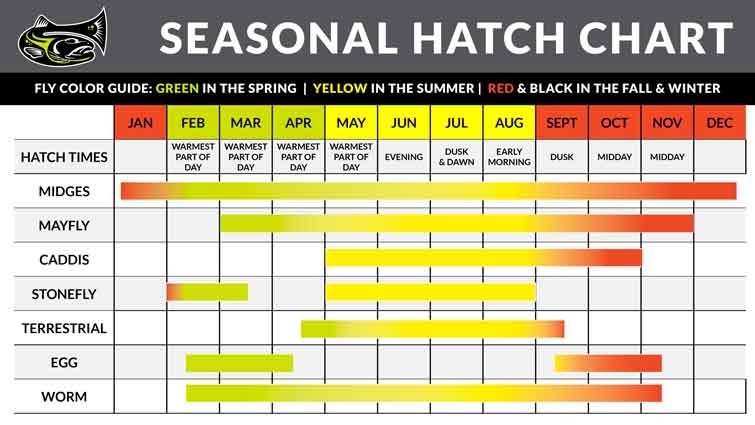
When fly fishing, the type of fly used depends on the situation. For example, in the late summer, when the water is low and warm, mayflies, midges, and stoneflies are a good bet for catching trout. On cold winter days, midges, eggs, and worms are also effective flies to use.

Catch More with Streamers

What Is the Best Fly for Fly Fishing?

The best fly for fly fishing depends on the season. For example, when trout are feeding on nymphs and emerging insects in the early spring, an excellent fly to use is a stonefly. The best time of the day to fish is around the warmest part of the day for this type of situation.

In addition, when caddisflies start hatching in May and June, try using a fly that imitates them, such as Griffith’s Gnat or Pheasant Tail Nymph. On hot summer days when there isn’t much insect activity, you might want to use an attractor such as Royal Wolf or Elk Hair Caddis, which work well because they imitate aquatic food items such as crayfish and minnows.

Seasonal Hatch Chart for Fly Fishing

What Flies Are in Season for Fly Fishing?

The flies in season vary greatly, but for the most part, the best time for fly fishing is from May through September. Fly fishing in the winter and spring months can also be successful, but the type of fly used will typically be different. For example, caddis and stoneflies aren’t commonly used in the winter months.

In addition to these essential flies, there are many other options that work well at certain times. During cold weather in winter, try using egg patterns or small nymphs such as Pheasant Tail Nymphs. When trout are near the bottom-feeding on crayfish in summer, use Woolly Buggers or Worm Patterns.

How Much Do Flies Cost for Fly Fishing?

In general, flies cost anywhere an average of $2 to $3. Flies typically cost more the larger they are, and those are made of materials such as peacock herl, marabou, and mink fur. Flies can also be bought in bulk to reduce their price per fly.

The cost of flies can vary a significant amount depending on the materials used. Some of the most expensive flies are made from.

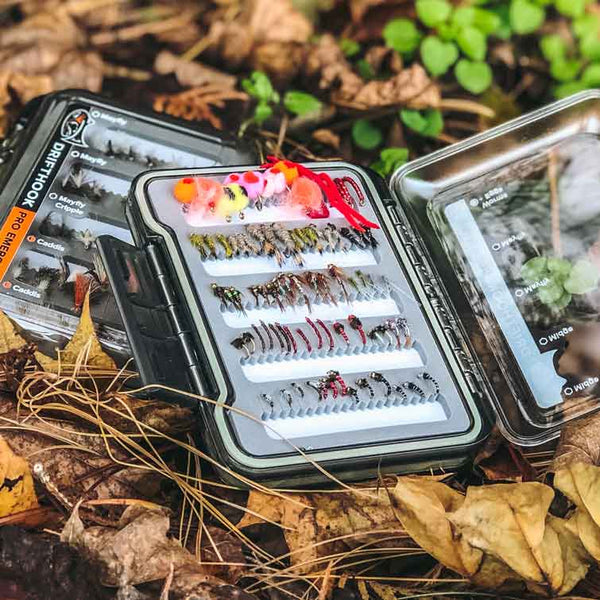
Fly fishing flies in nice box

What Are Fly Fishing Flies Used For?

Fly fishing flies are used to catch fish. Flies are typically used in trout fishing and come in various shapes and sizes that imitate insects. Flies will typically draw fish to the top of the water where your fly is or imitate things that fish feed on below the water.

Different patterns of flies are used based on the time of year, water conditions, and location. Flies come in all shapes and sizes with various materials used to construct them. Materials for fly construction can be very expensive with fur being one of the most expensive pieces.

Matthew Bernhardt

Conclusion

Streamer patterns are also very good for fly fishing beginners because of their size and the fact that they can easily imitate a big baitfish which is one of the most common prey in rivers and lakes, but they’re mainly used to target large trout. This article discusses five great streamer patterns for trout fishing:

  • Autumn Splendor Streamer
  • Slumpbuster with Cone
  • Zonker-Grizzly Streamer
  • Muddler Minnow Streamer
  • Muddy Buddy Streamer

Streamer patterns are among the most popular fly patterns for fly fishing. They are fantastic attractors and can be easily tied in a few minutes; they can imitate anything from baitfish to leeches, crawlers, nymphs, and more.

A Deep Dive on the Glock Modular Optics System (MOS)

0

When you think about reliable handguns available on the market today, you probably think about Glock. Indeed, Glock has been among the leaders in handgun manufacturing for decades. At the same time, this doesn’t mean that Glock hasn’t stopped trying to improve their handiwork. The Glock Modular Optic System (MOS) is being rolled out for some of their most popular handguns. What does it mean for the future, and what are the advantages of using this system? If you would like to get the most out of your Glock pistol, you should familiarize yourself with the Glock Modular Optic System and some of the available modifications.

What Is the Glock Modular Optic System?

The Glock Modular Optic System has been designed to make it easier to mount optic sights on your pistol. As Glocks are becoming more popular and competitive shooting matches, many individuals are looking for a way to mount optic sights to increase their shooting accuracy. Furthermore, optic sights have also become popular during the past few years for target shooting and home defense.

A few of the most important points to keep in mind when it comes to the Glock Modular Optic System include:

  • The Glock Modular Optic System makes it easy to add iron sights to the handgun, so you have a backup in case something goes wrong with the optic sights
  • The Glock Modular Optic System is designed to make it easier for you to transition between targets.
  • The clarity of the Glock Modular Optic System, allowing you to acquire your target faster.
  • With the Glock Modular Optic System, your shooting will be more accurate

The versatility, speed, accuracy, and clarity of the Glock MOS are already popular worldwide.

How Is the Glock Modular Optic System Installed?

Thanks to the Glock Modular Optic System’s intuitive design, it is relatively easy to mount the site quickly. Using just a few tools, you can rotate the site on your pistol. All you have to do is remove the old sight, remove the adapter plate, install the new adapter plate, and mount the new sight.

All pistols that have been made using the Glock Modular Optic System come with multiple play options. Therefore, you can tailor the plate you want to fit the site you are using. A few of the most popular plates currently in use include the 00 Cover Plate, the 01 Eotech, the 02 Trijicon, the 03 C-More, and the 04 Leupold Delta Point.

What Are the Advantages of Using Reflex Optics for the Glock Modular Optic System?

If you decide to go with reflex optics, you will enjoy several upgrades over traditional iron sights. Even though iron sights can still be effective, reflex optics allow you to look through the radical and focus your target on the dot, lining it up with whatever you are aiming at.

You can also adjust the size of the., making it easier to see when you are in close combat or bright lights in the room. If the light is dim and your target is farther away, you may prefer to use a smaller one. The customizability conferred with the Glock Modular Optic System provides numerous advantages.

Other Customizable Features Are Available for Your Glock Pistol as Well

Even though the Glock Modular Optic System has gotten a lot of attention for all of the advantages it provides, you can customize your Glock pistol in other ways as well. For example, you may want to improve the safety of your Glock pistol by installing a plunger spring for Glock generations one through five. Or, if you would like to alter the trigger pull weight of your Glock pistol, you may want to install a new trigger connector for your Glock pistol. Ghost edge connectors are available for the Glock 42, Glock 43, Glock 43x, and Glock 48. Be sure to check out all of the options you have available, so your Glock fits your needs perfectly.

Check Out More Glock Options from Ghost, Inc!

Without a doubt, the Glock Modular Optic System has numerous advantages. This is just another way that you can customize your pistol to meet your needs. If you would like to learn more about the options you have available to you, check out the wide selection of ghost modifications available from Ghost, Inc. today!

Glock Parts and Handgun Accessories by Ghost Inc

Glock OEM Parts – Glock Base Plates – Ghost Parts – Glock Magazines – Glock 42/43/43X/48

The world’s best Glock triggers, Glock connectors and Glock parts and accessories

Night Fishing For Trout

0

Night fishing for trout can be a real challenge, but it can also come with great rewards. Some of the biggest trout come out at night and can be caught close to shore. There are a lot of questions around trout fishing at night and I hope to answer them for you here.

Do Trout Come Out At Night?

As trout mature, they tend to do most of their hunting and feeding during the night. They come out at night to hunt for minnows, shiners, mice, and smaller fish.

This is why night is a great time if you want to target big fish. The majority of an average trout’s diet is made up of insects and worms. However, as they grow in size (typically over 20″), they will look for bigger meals such as minnows and smaller fish.

Of course, if the opportunity arises during daylight, they will attack a wounded or unsuspecting minnow. This is why lures work so well at catching trout. However, it is much easier for these big trout to sneak up on and ambush prey in the darkness of night.

Big trout come out at night not only because hunting is easier, but also because it is safer. A big trout’s only real predators are birds, humans, and sometimes bears. This makes it dangerous for them to move into the shallows during the day where they can be seen. But at night they can safely move into the shallows where their prey is plentiful.

Do Trout Sleep?

Trout sleep, but not in the same way that we humans do. Rather than shutting completely down, they will go into a sort of trance. They may even need to continue swimming if they are in a river.

Is Trout Fishing Good At Night?

Normally, trout fishing is not very good at night, however the exception is if you are targeting trout over 20 inches. Big trout feed on smaller fish, and they are most actively hunting at night.

What Time of Day is Best For Trout Fishing?

The best time to fish for trout is around sunrise and sunset. The reason is because this is when there is the most bug activity. Bugs are the main food source for 99% of trout. That being said, the best time to catch giant trout is after dark.

So all in all, If you are fishing an area with only smaller trout, you are probably better off fishing during the day light. But if you know there are some big trout over 20 inches, then it may be worth fishing after dark.

Do Trout See At Night?

Trout are a major predator within their ecosystem and rely heavily on eyesight. Although they don’t have night vision, they are good at detecting movement and seeing outlines.

When you are choosing the lure you’ll use to fish for trout at night, it’s important to use opaque, dark colors, as well as fish-like profiles.

Biologists have also been doing a lot of research on something called lateral lines. These are built in sensors that fish use to detect vibrations and other disturbances in the water. These lateral lines play a huge role in helping trout key in on their target. So even if a fish can’t see your lure, it will likely be able to detect the vibrations of it.

Can You Catch Trout at Night With PowerBait?

You can catch trout with PowerBait at night, but it not as effective as lures or even worms. Trout rely partially on vibrations to hunt prey at night, and since PowerBait doesn’t make any movement, it doesn’t put off any vibrations.

PowerBait is also designed to catch stocked trout rather than wild trout

Do Stocked Trout Bite at Night?

Stocked rainbow trout generally don’t bite at night. They have been raised in a controlled environment and fed fish pellets their whole life. Although they still have some natural instincts, they haven’t grown up with a need to hunt for food at night.

And as I mentioned earlier, the trout that feed at night are for the most part, big trout that rely heavily on eating smaller fish to maintain their size. Stocked trout are usually around 8 to 12 inches and after being stocked in the lake or river, will eat mainly insects and other small bugs.

If you want to fish for stocked trout, your best bet would be to use worms.

Trout Fishing at Night with Worms

Worms are a good bait for catching trout at night. They put off both smell and movement which can help trout to find them in the dark. Fish them under a bobber close to the shore. They work best during or after a rain.

Bait fishing for trout at night isn’t the most effective method. Most trout aren’t hunting for food at night, so it’s important to catch their attention and trigger their instinct with something like a spinner or Rapala. These will put off a strong vibration alerting trout near by.

Lure Colors For Trout Fishing at Night

Since it is more difficult for trout to see at night, it is important to use colors that will give clear profiles for trout to see. This is done best with colors like black, purple and dark blue. These will have a solid outline against a moonlit or starry sky.

You should avoid clear swimbaits that will be difficult for fish to see.

If you want to learn more check out my article on lure colors for night fishing.

Trout Fishing at Night with Lights

Some anglers use lights at night to fish for speckled sea trout. These lights can attract speckled trout and help to illuminate your baits and lures. However, lights do not work well for attracting freshwater trout when night fishing. In fact, lights are likely to scare fish away.

You should still bring a head lamp or a flashlight for your own use of getting around in the dark, but try not to shine the light into the area you are trying to fish.

Some night anglers prefer using red lights because they allow your eyes to stay dilated so you can see better in the dark.

Brown Trout at Night

Your best chances at having a good experience night fishing for trout is to go somewhere that is known for big brown trout. Brown trout are the most active at night and are extremely aggressive.

Use solid dark colored swimbaits, spinners, and even topwater lures. Most of the brown trout move into shallow water near the banks at night. They are hunting for minnows, frogs, and even mice.

Brown trout have some of the most sensitive lateral lines amongst trout. This is why it can be vary important to utilize lures that vibrate, rattle and splash.

Conclusion

If you want to try night fishing for trout, go somewhere that is known for having big trout over 20 inches, preferably big browns. Use lures that put off a lot of vibration and or splash near the surface. Focus mainly in shallow water near shore. And be careful not to shine lights into the spots you are fishing.

Fatal Attraction: 4 Decoy Spreads to Pull in More Ducks, Geese

0
Fatal Attraction: 4 Decoy Spreads to Pull in More Ducks, Geese

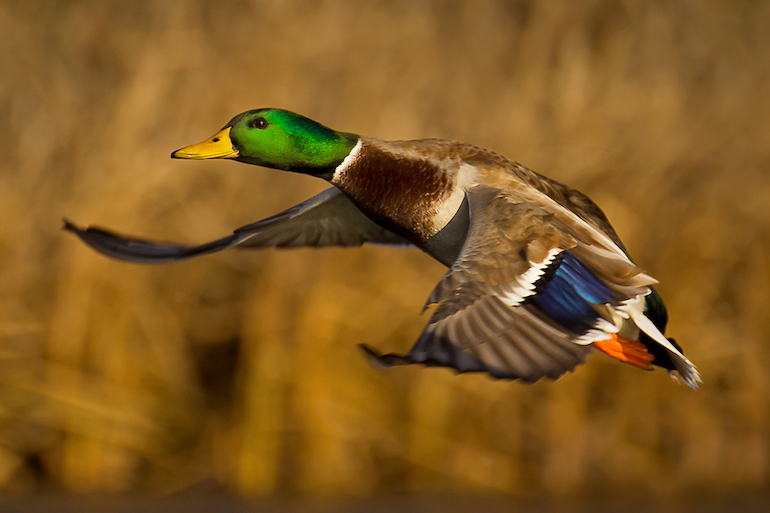
While mallards are the predominant dabbler species targeted by Southern waterfowlers, many of the spreads detailed here draw more than just greenheads. (Shutterstock Image)

Fooling waterfowl consistently means adapting to the variables that present themselves both in the field and on the water. Ultimately, how convincing your decoy spread is will either make or break a hunt. Here, we outline four decoy spreads, each proven to dupe even the wariest flocks under most conditions.

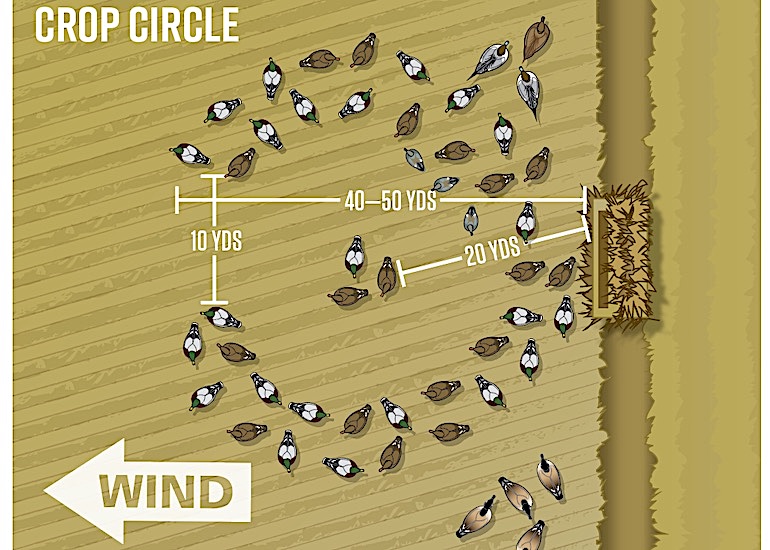
THE CROP CIRCLE

This spread is effective for hunting ducks in a harvested agricultural field. Unlike many field decoys setups, the Crop Circle draws ducks in extremely well even with light and variable winds.

Ducks and geese tend to decoy into the wind, but harvested grain fields are so attractive that ducks might drop from the sky from any direction. This spread keeps ducks out in front where shooting them is easiest.

Puddle ducks that drop into an agricultural field that already has ducks on it will land behind those ducks rather than in front of them. They also like to land near individuals and small groups that have moved away from the main flock. Anyone who has had a floating decoy drift off during a water hunt has likely noticed this behavior, and it also occurs in fields.

Duck-Spreads
The Crop Circle spread is designed for harvested grain fields and excels on days when winds are light and variable, as it keeps ducks honest and prevents them from dropping in randomly from any direction. Instead, birds will head for the upwind, inside edge of the circle and land at the ends of the tails, or they’ll home in on the small flock in the middle of the spread. (Illustration by Peter Sucheski)

The decoys are set in a circle with a small flock or an individual decoy in the center. No matter which way the wind is blowing, ducks will either head for the upwind, inside edge of the circle of decoys to land at the tails or they’ll target the small flock (or single) in the center. A narrow gap in the downwind side of the circle entices ducks to enter the circle at that location.

Mallards are usually the mainstay species for a field hunt. However, setting small flocks of other ducks, such as gadwalls and pintails, upwind on the hunter’s shooting shoulder side, can entice these other ducks to decoy while saving the best shooting angle on the shooter’s strong side for decoying mallards.

If Canada geese are in the area, setting a small group of goose decoys away from the main circle of duck decoys and on the side opposite the secondary duck decoys can provide a bonus opportunity.

THE FISHHOOK

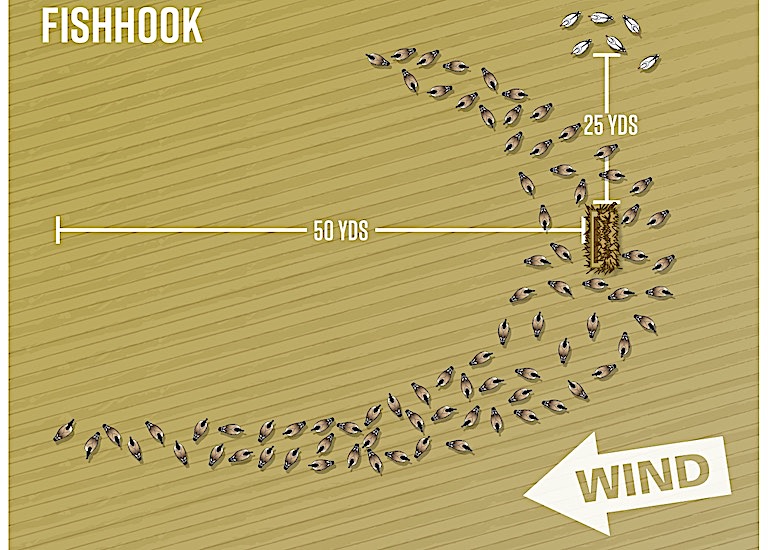
One of the most reliable decoy setups on land or water is the Fishhook, also known as a “J Spread.” The Fishhook works best when the wind is angling over the shooter’s shoulder or parallel to the bank. The shank of the fishhook extends downwind.

Canada geese are the primary targets with this setup. If secondary species (i.e., white-fronted or snow geese) are in the area, setting small groups of decoys for them upwind, outside and away from the point of the hook, might entice them to drop in.

Duck-Spreads
The Fishhook’s primary target is Canada geese. Also referred to as the J Spread, the Fishhook offers good shot opportunities across the setup. The Fishhook works best when the wind is angling over the shooter’s shoulder (or parallel to the bank when hunting over water). Given a flock’s proclivity to circle a spread several times before committing, it’s important to position this spread away from tall cover that could deter the geese from landing. (Illustration by Peter Sucheski)

It’s important to set this spread well away from any tall cover, including trees, cane, cattails and fencerows. Canada geese might circle a spread several times before taking a long-approach flight path as they decoy from downwind. They’ll shy away from any tall object they have to pass over while circling and might balk if any tall cover is near the shank of the hook during their final approach. Even a single bush can cause them to change their minds and flare away.

The blind should be at the apex of the hook bend. Geese will land anywhere along the inside of the bend, so being situated for shooting at its center provides the best opportunity no matter the approach angle.

THE GAPPED FISHHOOK

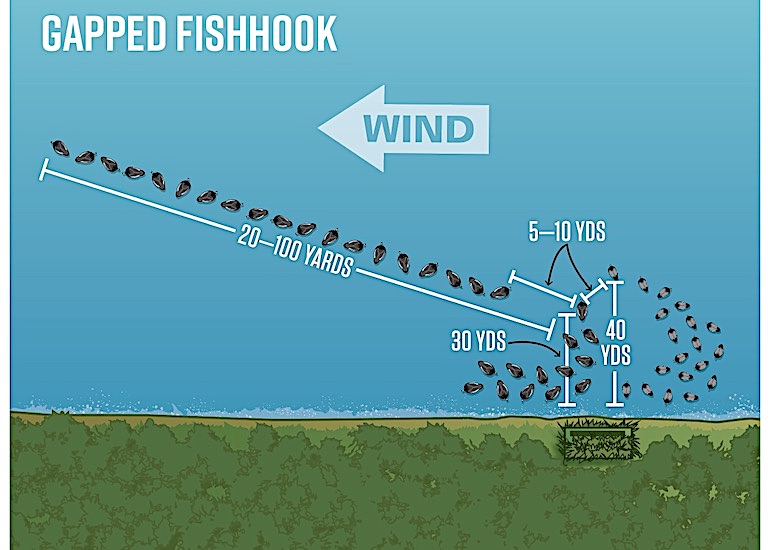
This spread is best for hunting diving ducks that have been hunted hard and are blind wary. The Gapped Fishhook is set up so the long shank of the hook runs away from the boat or bank blind positioned at the hook’s point.

Diving ducks are seemingly hypnotized by the long line of decoys leading to the hook bend. However, the line must be perfectly straight, with decoys spaced evenly 4 or 5 feet apart. Using gang rigs, also called longline or trotline rigs, helps to maintain the straight line and keeps decoys spaced evenly.

The line can be 100 yards or longer, extending far downwind. Passing ducks locate the end of the line and fly along it until they reach the bend in the hook, where they decoy to the head of the decoys. However, if there is any gap or division in an otherwise straight line of decoys, decoying divers might land in the gap(s) and out of gun range.

Duck-Spreads
The Gapped Fishhook is designed to fool blind-shy diving ducks that have been hunted hard. A longline up to 100 yards in length extends upwind from the hook’s bend and the blind position and serves as a runway for divers. Keep in mind that the longline must remain perfectly straight for the spread to work effectively, and decoys should be spaced just 4 to 5 feet apart to prevent ducks from landing in gaps short of the kill hole. (Illustration by Peter Sucheski)

Diving ducks tend to decoy to the head of a rig because of the way they feed. After swimming submerged and feeding on the bottom, birds at the rear of the flock will surface and leapfrog over ducks feeding in front of them because the easiest-to-find food has been eaten.

A gap should be left at the end of the straight shank just before the hook bend. Diving ducks can decoy very close to the water, and the gap keeps the hunter from shooting his decoys. Another flock of diving ducks should be set to attract secondary birds.

For early-season spreads, ring-necked duck decoys can serve for the main body and scaup for the secondary species, but species composition should match the ducks seen in the area. The secondary species decoys are set with the hook point facing outward from the blind, leaving a gap between the two bodies of decoys.

This leaves another open area where you don’t have to worry about shot striking the decoys. Ducks will attempt to land at either gap or at the head of either body of decoys, depending upon the species.

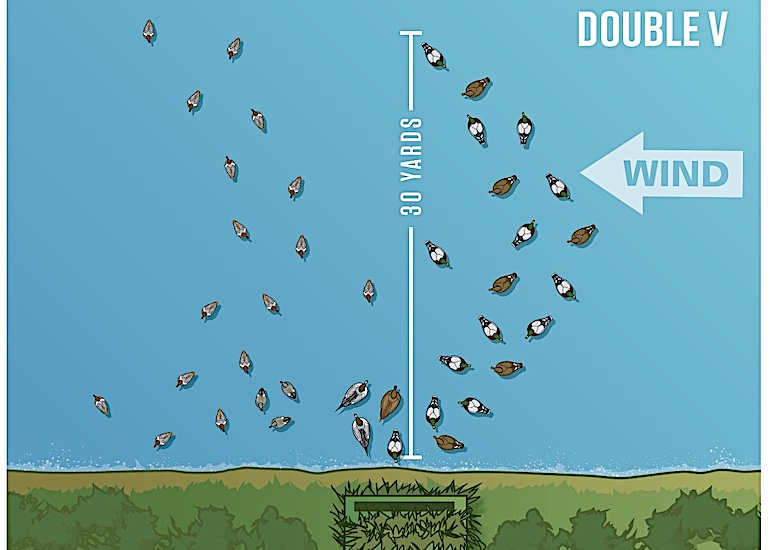
THE DOUBLE V

The Double V spread is a great water setup for puddle ducks, and it can attract primary and secondary species as well as oddball ducks. The first V is set slightly upwind, with the wind blowing parallel to the bank. The second V of decoys is set 10 to 20 yards behind or downwind of the first V. In November, most Southern waterfowl hunters are served well by using mallards and green-winged teal decoys to fill out these two Vs.

Duck-Spreads
The Double V is one of the most versatile puddle duck spreads, as it attracts a wide variety of birds. Include dekes of any number of different species, including green-winged teal, mallards, black ducks, pintails, gadwalls or even confidence decoys like coots. (Illustration by Peter Sucheski)

Setting a single teal and a single mallard decoy in the gap between the two Vs gives singles and small flocks a landing target. Puddle ducks usually land behind the decoys, rather than in front of them like divers do. This setup works well when puddle ducks are drawn to the inside angular bends of the Vs or to the single decoys in the gap(s) between them.

Other secondary decoys can be set near the blind in the gap between the two Vs of primary decoys. These can include black ducks, pintails, gadwalls or confidence decoys like coots, depending upon the various species that are in the area. Even diving ducks may be attracted to decoys set in this location. The idea is to give them a landing target within the large Vs that constitute the main attraction.

FRESHEN UP YOUR SPREAD

Time for a decoy upgrade? Check out these four fakes.

Duck-Spreads
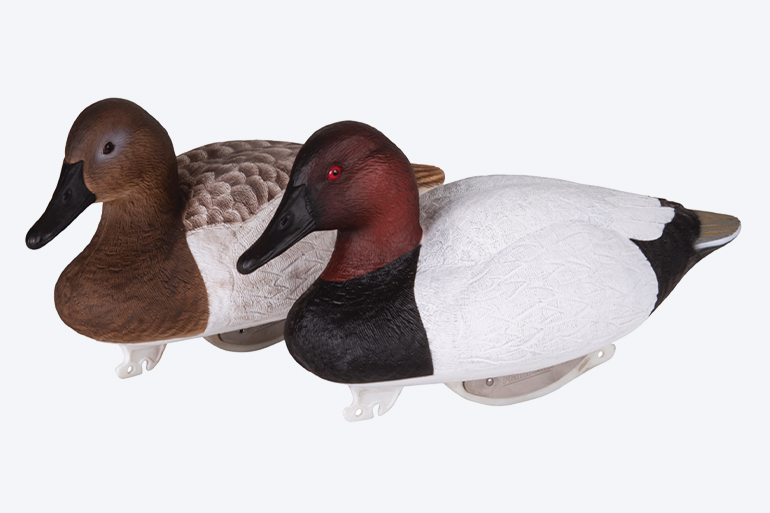
Flambeau Gunning Series Canvasback

Flambeau Gunning Series Canvasback decoys pair the round-bottom design of old-time, hand-carved decoys with a modern, skeg-style keel for a lifelike ride under any water conditions, even in the shallow waters of flooded farm fields. The plastic outer shell is quiet, and the interior is foam-filled for durability. The patented UVision finish reflects the real ultraviolet plumage signature that ducks see. ($139.99/six; flambeauoutdoors.com)

Duck-Spreads
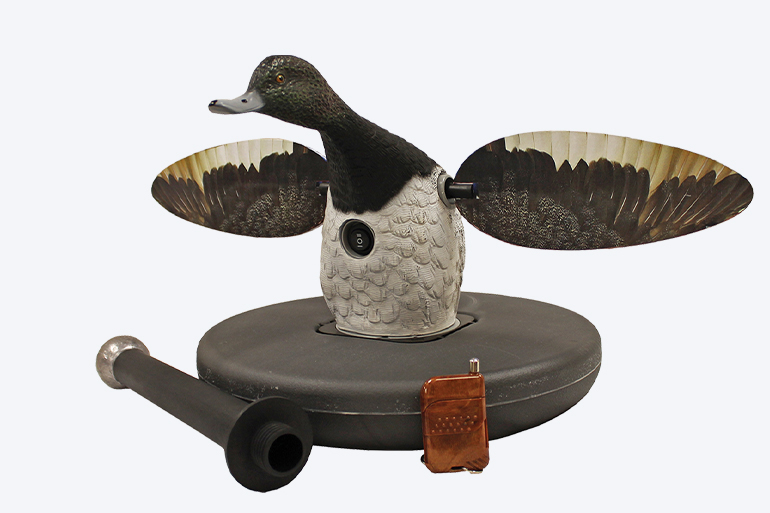
Mojo Elite Series Floater

Mojo’s Elite Series Floater decoys solve the problems associated with setting spinning-wing decoys on stakes by replacing the stakes with easy-to-install floating plastic bases. Each decoy includes a remote control. The float has a removable 11-inch bar with a 14-ounce weight that stabilizes it in rough conditions. Available in mallard, bluebill and redhead drakes. ($139.99; mojooutdoors.com)

Duck-Spreads
Tanglefree Lesser Canada Skinny silhouette decoys

Tanglefree’s 60 Pack of Lesser Canada Skinny silhouette decoys contains 40 upright, 10 walker and 10 feeder geese for customizable, ultra-realistic spreads in a number of scenarios. All 5-dozen decoys feature flocked heads for improved realism. A Flight Series decoy bag in Optifade Marsh camouflage is included for easily transporting the lightweight dekes to and from the X. ($434.99; tanglefree.com)

You're Dead: 5 Best Marksman Rifles on the Planet

0

The designated marksman rifle is becoming increasingly popular in recent years.

The United States is purchasing more of them through the Army’s Compact Semi-Automatic Sniper System (CSASS) program. Also, in a recent reform of infantry equipment, the British Army announced that it would be ditching its version of the M249 SAW, the L110 Minimi, and buying more L129A1 designated marksman rifles.

What rifles could be considered the best for this role?

1. Knight’s Armament Company M110

While the M110 was originally procured as a semi-automatic replacement for the M24 sniper rifle by the U.S. Army, it has been used successfully in the designated marksman role as well. In USMC service, it replaced the M39 EMR and M14 DMR as a designated marksman rifle, both variants of the original M14. In Army service, it replaced various versions of the M14 EBR.

Based on one of Eugene Stoner’s last designs when he worked for Knight’s Armament Company (KAC), the SR-25. The SR-25 (Stoner Rifle 25) is an update of the original AR-10 updated with elements of the AR-15, hence the “25” in the name is based on adding the 10 and 15.

At the time of adoption, the M110 featured advanced ergonomics for an AR rifle. It had an ambidextrous bolt catch and safety for ease of off-hand manipulation and faster reloads.

While the M110 is said to be on the chopping block to be replaced by the new H&K CSASS, U.S. Special Operation Command’s recent adoption of the 6.5 Creedmoor as a long distance round may extend the service of the M110. Versions of the M110 chambered in 6.5 Creedmoor were tested as SOCOM’s next DMR/sniper rifle in March 2018.

2. H&K SDM-R (M110A1 CSASS)

While the M110 was a successful program, the U.S. Army wanted a smaller and lighter version to be easier to carry and fit in with squad more. The procurement of a M110 replacement was run under the moniker of M110A1 Compact Semi Automatic Sniper System (CSASS). While KAC submitted a shortened version of the M110, the H&K G28 (a variant of the HK417) won the contract.

While the original M110 was used in both the designated marksman and sniper roles, the Army decided to split the CSASS program into two different rifles, the CSASS meant for snipers and the SDM-R meant for designated marksmen.

The difference between the CSASS and the SDM-R is in the type of ammunition they are meant to use and the scopes mounted on the rifle. The CSASS mounts a 3-20x Schmidt and Bender optic and is optimized for M118LR sniper ammunition. The SDM-R mounts a 1-6x Sig Tango Low Power Variable Optic (LPVO) and is optimized for the use of standard M80A1 ammunition. The 1-6 Sig Tango features an integrated bullet-drop compensating reticle that allows for faster, albeit less precise shots, as the scope isn’t meant to be “dialed” in like the more powerful Schmidt and Bender optic.

3. SVD

While old and obsolete compared to most other rifles on this list, the Soviet SVD can be considered the original designated marksman rifle. While the name includes “снайперская винтовка,” which literally means “sniper rifle,” the Soviet conception of sniping is far closer to the Western designated marksman than the Western sniper.

The SVD has proven itself to be reliable, rugged, and accurate since its adoption in the 1960s. The PSO-1 scope was the best designated marksman scope in the world when adopted, featuring a ballistically matched elevation adjustment out to one thousand kilometers, and a simple windage adjustment. In contrast, most western scopes were set to a fixed zero at the time. It also featured an advanced infrared light detector, although this feature began to be of dubious utility as the West phased out infrared spotlights on their night vision equipment.

The SVD continues to see use in many countries around the world today.

4. L129A1

Like the M110, the L129A1 is a variant of the AR-10 meant for use as a designated marksman rifle. However, the design features custom upper and lower receivers made by Lewis Machine and Tool (LMT). During British trials for a designated marksman rifle, the L129 beat out the FN SCAR, other AR-10 offerings (albeit, not one from KAC) and the HK417.

The L129A1 proved wildly popular with British troops in Iraq and Afghanistan, being one of the highest rated weapons used by troops. It’s one of the only Urgent Operational Request (UOR) weapons from Iraq and Afghanistan that has outlived its temporary nature and has gone onto be an integral part of the British rifle squad.

5. FN SCAR

The FN SCAR has also seen significant use in designated marksman roles across various militaries. While FN offers specialized sniper variants of the SCAR, the common standard length SCAR has found to be suitable to performing designated marksman roles.

In American service, only SOCOM uses the SCAR in a designated marksman-type role. In SOCOM usage, the SCAR is usually topped with a 1x/6x or 1x/4x ELCAN optic, which feature bullet drop compensating reticles.

Like the M110, the SCAR was tested in 6.5 Creedmoor as a potential candidate to become SOCOM’s next semi-automatic sniper/designated marksman rifle.

Charlie Gao studied Political and Computer Science at Grinnell College and is a frequent commentator on defense and national security issues.

Image: Wikimedia Commons

Foraging Pheasant Back Mushrooms (Cerioporus squamosus)

0

Pheasant back mushrooms (Cerioporus squamosus), also commonly known as Dryad’s Saddle, are a common edible mushroom that’s easy to identify. They used to go by the Latin name Polyporus squamosus, so you might find them in old field guides under that name as well.

Pheasant Back Mushroom

Pheasant back mushrooms are large speckled brown mushrooms, with a pattern on the surface that appropriately enough resembles the pattern on a pheasant’s back. The speckles are actually very thin brown scales, and you can gently separate them from the cap if you’re careful.

They’re easy to identify and a perfect wild mushroom for beginners since they don’t have any look-alikes.

Sometimes they’ll go by the name hawks wing mushroom, which again, is because of their feather-like patterning and large size.

They also go by the name of “dryad’s saddle” because they sprout out of trees in a large saddle-shaped shelf, perfect for a wandering dryad (wood nymph) to ride. The mushrooms get big fast, which makes them easy to spot as the saddles protrude conspicuously in the woods.

The trick is, that the best tasting pheasant back mushrooms are the small, delicate ones. Once they’re gigantic like a saddle, they’re tough and unpleasant to eat. At that stage, they make wonderful mushroom broth, but if you want to eat the actual mushrooms you need to find tiny ones.

As luck would have it, there are often several tiny, immature pheasant back mushrooms growing under mature saddle-sized ones, so just flip them over and maybe you’ll get lucky. Ideally, they’re no more than 2 to 3 inches across when harvested.

Larger specimens have a leathery texture, but you can still use them in mushroom powder or soup stock. You can also cut away about an inch of flesh from their leading edge, and that part will still be tender.

pheasant back mushrooms

Where to find Pheasant Back Mushrooms

Pheasant back mushrooms, like chicken of the woods mushrooms, are prolific decomposers and they’ll sprout in the same spot year after year. Once you’ve found a log that produces pheasant backs, you’ll be able to come every year.

Generally, they produce in the spring months, a few weeks after morels. Here in Vermont, that’s usually the first week of June, but in more reasonable climates it’s late April and May.

We also often get a flush in the Autumn months, so I check my spots twice a year. Often enough I’ll see them sometime in September too. In warm locations, they’ll sometimes fruit as a winter mushroom too.

Look for them on dead and dying trees, particularly elm but often other hardwood species as well, including oak, ash, and maple. They will grow on living trees as a parasite, breaking down the heartwood and eventually killing the tree. More often though, I find them on dead and downed trees as a decomposer.

Stately elms were once a common park and roadside tree, but they’ve been killed off by a number of diseases in the past few decades.

I have a particular elm that I watch each spring. It’s downed by the side of a backcountry dirt road that I often travel, and I can “drive-by forage” with my eyes to see when the pheasant back’s are ready.

When this log in bright sunlight fruits and is large enough to see driving by, it’s too far gone to harvest. That’s not the point. Right by a dusty dirt road isn’t the best place to forage anyway…but it does tell me when to check my woodland spots.

This log heats up quicker in the spring than other locations, and when the pheasant backs are big on it, they’re just about the right size in shady woodland spots (or at the edges of cool parkland spaces).

Identifying Pheasant Back Mushrooms

Once you think you’ve found a dryad’s saddle, identification is pretty simple.

First, you want to look for the distinctive pheasant pattern on the top. That’s probably what drew you to the mushroom in the first place.

Make sure it has a single attachment point to the log, usually a thick round single stem where it sprouts from the wood. Unlike chicken of the woods which grows as a fringe, pheasant backs come out with a stem.

Pheasant Back Mushroom

Flip the mushroom over, and you’ll notice honeycomb-shaped pores. When the mushrooms are older, the pores are quite deep and really distinct.

That’s when it’s easiest to see their shape, which isn’t quite exactly like the regimented honeycomb in a beehive. It’s a bit more free form, and the honeycomb shapes are a bit irregular.

Still, it kind of reminds you of honeycomb.

Pheasant Back Mushroom Underside

On younger pheasant backs, it’s a bit harder to see.

The pore surface is just starting to develop, and the honeycomb is quite small and not very deep. It almost looks like irregular pinpricks, but if you look closely the holes aren’t round.

They won’t be very deep at this point, less than 1mm. Later they’ll be up to 2- 3 mm deep as the mushroom grows.

The spore print from dryad’s saddle is white, though it’s usually not necessary for identification since it doesn’t really have any close look-alikes.

Pheasant Back Mushroom Pore Surface

If you’ve got a dappled, pheasant-colored cap with a honeycomb surface underneath, you’ve got a pheasant back. Simple as that.

Beyond that, the smell is a dead giveaway.

While most mushrooms smell like, well, mushrooms, these have a bright, almost citrus-y cucumber scent. Some people compare its scent to freshly cut watermelon rind. Not the fruit, just the fresh aromatic green smell of the rind.

I know, hard to believe, and often the smell isn’t all that strong in older specimens or intact mushrooms that haven’t been cut. Cut one though, and you’ll smell the cucumber.

Sliced Pheasant Back Mushrooms

Harvesting Pheasant Back Mushrooms

Harvesting is pretty simple, just reach in and gently break the mushroom off of the deadwood. It should come away easily, as my 4-year-old demonstrates below.

You shouldn’t need a knife or any other harvesting tools, but you can use one if that’s your preference. The stalk usually isn’t consumed, it’s only used in stocks because it’s quite tough, even in young pheasant backs.

Feel free to cut it off in the field, or bring it home as I do for other uses.

How to Cook Pheasant Back Mushrooms

Young pheasant backs can be dusted clean, sliced, and sauteed in butter or oil. They have a distinctive, almost acidic flavor that to me tastes like they’ve been splashed with vinegar already.

Add in their cucumber-like smell, and I think they do particularly well in pasta dishes. They’re also good in cold (but cooked) salads, like couscous salad or pasta salad. They add a brightness to the mix, but also the savory umami of any mushroom.

Personally, I think they’re great with minimal preparation. Some people, however, think the pore surface has an awkward texture once cooked. It can be peeled off if you prefer, and once you get started it’ll peel away like an orange peel (or the peel of a puffball mushroom).

You can also use a sharp knife to strip away the pore surface. (Or just leave it on, as I do.)

Removing Pheasant Back Mushroom Pore Surface

Some people actually like to just peel pheasant backs altogether, removing both the dappled pheasant cap surface and the pore surface.

That’s actually pretty easy to do, provided you cut the mushroom first.

Simply slice them, and then you can peel away the top surface and the poor surface, as they are distinct layers. (Again, I don’t do this, I eat them whole as is, sliced and cooked. This is a matter of personal preference, and some just don’t like the texture of the surface layers.)

Pheasant Back Mushroom Slices

Once sliced and sauteed, you can use pheasant back mushrooms anywhere you’d use sauteed mushrooms. Since I think they taste a bit acidic, as if they’ve already been lightly tossed in vinegar, I think they do especially well with cooked greens.

Last season I paired them with wild asparagus, hosta greens, dandelion greens, and some edible flowers from my yard. It made for a truly spectacular wild foraged lunch with little more than butter and wild vegetables/mushrooms.

Larger pheasant back mushrooms tend to be tough, and don’t taste nearly as good as smaller ones.

If you only find big ones, the best way to use them is in a mushroom stock. Simply simmer them in a bit of water until you’ve extracted their color and flavor, then strain and cook with the broth as you otherwise would use broth.

More the recipe following sort? Here’s a recipe for pheasant back stock.

Pheasant Back Mushroom Recipes

Beyond a simple sautee, or mushroom broth with the larger ones, I’ve also found a number of recipes using dryad’s saddle if you’re feeling adventurous:

  • Pheasant Back Mushroom Burgers
  • Tempura Fried Pheasant Back Mushrooms
  • Stinging Nettle and Pheasant Back Palak Paneer
  • Dryad’s Saddle Pickled Mushrooms with Jalapeno and Dill

At this point, I don’t know of anywhere that sells pheasant back mushrooms commercially. You might get lucky and find them at your local farmer’s market, as I sometimes do. They’re often just coming in at the tail end of Morel season here locally.

Farmers Market Dryads Saddle and Morels

Mushroom Foraging Guides

Looking for more mushroom foraging guides?

  • Morel Mushrooms
  • Puffball Mushrooms
  • Chanterelle Mushrooms
  • Shaggy Mane Mushrooms
  • Lion’s Mane Mushrooms

Foraging Pheasant Back Mushrooms

Hybrid Bass Fishing | The 5 Best Baits for Epic Fights

0

Hybrid Bass are pound for pound the hardest-pulling fish in freshwater.

In 1995, I was crappie fishing with a white road runner, 4-pound test line, and an ultralight. I was bringing the lure back to the boat using a lift-and-drop technique. Suddenly, my line darted to the left so fast the water was spraying from the line. My drag started screaming and the fight was on.

I turned on the trolling motor and followed the fish to keep from getting spooled. That fish fought hard for 5-10 minutes! I thought I would never land it! Finally, I held a 6-pound hybrid striper (a.k.a. wiper). It was the best fight of my life and came as a complete surprise. After this first experience, I have made it a point to chase wiper every chance I get.

Targeting these bruisers can be fairly straightforward. Hybrids are super aggressive fish and travel in packs like wolves. This means you can literally wear your arm out catching one after another! Here are my top 5 hybrid bass lures for chasing big fish.

Links on this page are part of the Amazon affiliate program. If you click on them and make a purchase within 24 hours, we may receive a small commission. Thank you!

#1 – Hybrid Bass Explode on Big Prop Baits

There is absolutely nothing like seeing your topwater bait get knocked 3 feet in the air and then engulfed by a 6-8 pound hybrid bass. I saw this the first time fishing a 2-3 inch prop bait for largemouth bass. A big hybrid slapped it straight up in the air and then smashed it when it landed.

I had seen big chop baits used for Peacock Bass and immediately wondered: “Will hybrids attack them the same way?” A few weeks later, I had my answer. I was bass fishing when I heard the sound of a hybrid feeding frenzy one hundred yards away. I flung my new wood chopper bait before I even got close.

My adrenaline surged as it got smashed the same way my smaller prop bait had. For the next 30 minutes, I battled fish after fish! Catching fish any way is fun. However, if you tell me I can catch fish after fish and see the explosion… I dare you to tell me that’s not the #1 way to catch hybrid bass!

Another bonus of this hybrid topwater lure is you can actually draw the school of hybrids towards you. When two or three of you are in a boat splashing these baits around, it can draw these surface feeders to you. There are two great benefits of this. First, you don’t spook the school and end the feeding frenzy. Leave that to the jet skiers. Second, you can draw some of the largest fish from the perimeter of the frenzy!

This technique is best mid-summer to late-fall when the shad population is larger and the white-bass spawn is complete. Hybrid bass will target both.

The Luhr Jensen Wood Chopper bait I used is very hard to find, however, River2Sea recently made a topwater it named the “Big Mistake”. This bait works much the same way and will have your rod bending in no time.

Other topwater options for more subtle days include the Storm chug bug, Rebel Pop-R, or Spooks. I haven’t thrown a River2Sea Whopper-Plopper or the Berkley Choppo for hybrids yet, but would love to hear from some of you that have!

Due to the explosions and absolute fun, these are my at the top of my best hybrid bass lures list.

#2 – The Versatile Paddle-tail Swimbait

The simple reason this classic lure is at number two is versatility. You can fish fast (spring to fall) or slow (winter). It can be fished deeper: add a little weight or tie it with a 4-foot leader behind a deep-diving crankbait. It can also be fished near the surface. Again, I love to fish it fast almost like a wake bait.

Even though the swimbaits are reliable they do have a drawback. Hybrids will destroy them! You can go through a bag pretty quickly. Therefore, it’s a good idea to have more than one bag on hand.

The Sassy Shad and similar paddle-tail swimbaits are great lures to catch hybrid year-round.

#3 – Hybrid Bass Burning a Lipless Crankbait

WARNING!!! This technique may move you towards early carpel tunnel surgery. Check your drag!

One summer day headed out in a Bass Buster Boat with two fishing buddies we saw strange wakes and flashes of white just under the surface. There was no surface feeding but there was definite chasing going on! We tied on 3/4 ounce lipless crankbaits in shad patterns. Then we cranked them back as fast as we could just under the surface.

We caught fish after fish. I was shaking off 4 pounders as fast as I could looking for that big hybrid bite I dreamed of catching. Something in the 8-10 pound class. While I didn’t achieve that, all three of us caught 4-6 pound wiper on every cast for over an hour. Without a doubt, it was one of those special days.

Lipless crankbaits are also versatile in technique. You can speed burn them or yo-yo them with a lift and drop. At times, trolling a lipless crankbait is a great way to relax and catch fish.

#4 – Old Reliable – The Spoon

Spoons are great for the heat of the summer and the cold of winter. Both times of the year, hybrids will be deeper on the river or creek channels. Verticle jigging a flutter spoon is a great technique to reach the school and coax them into biting.

#5 – The A-Rig (a.k.a. Umbrella Rig)

These rigs mimic a school of shad. Exactly what these schools of hybrids have been rounding up. The A-Rig can also be retrieved fast or slow with varying weights to reach the depths of the school. However, the A-Rig is not without its challenges. You could be faced with catching multiple fish on one cast. That’s a great problem to have!

Final Cast

Hybrids are undoubtedly one of the most fun, hardest-fighting fish for fishing enthusiasts. They are sure to instill some amazing memories for young and old. We hope you too find these lures to be the best lures for hybrid striped bass. Coming soon…we will explore some of the best places to pursue the hybrid bass in Texas.

Until then, tight lines and fin time. We hope to see you out on the water chasing ThePerfectComb for some epic wiper fights.

Best Air Rifle Deals

Popular Posts

Synthetic vs Wood Stock: The Final Showdown Between Brunette And Blonde

0
I understand that you’re here to get some quick facts on synthetic vs wood stocks Probably to guide your purchase.  Quick alert - the debate...

What can you kill with a 177 air rifle?

0
"Unleash Your Precision: Discover the Power of a .177 Air Rifle to Take Down Targets with Accuracy. Explore the Versatility and Potential of this...

PCP vs CO2 Guns: Which One is Better?

0
The most talked-about debate between hunters and gun enthusiasts is what the best power source of a gun is.  The five main sources of power...