Home Blog Page 91

Best Cuts of Meat From Wild Hog

0

Wild hogs may not be as revered as venison, but with the right recipes and the right cuts of meat, I’d argue that wild hog is just as good as venison.

By far, the best cut of meat from wild hog is tenderloin, but there are many more cuts worth knowing.

6 Best Cuts of Meat From a Wild Hog

In essence, most cuts of meat from a wild hog are good, which makes it difficult to pick the best.

Much of the decision comes down to what you want to eat. The flavor profile is the same through most cuts, and it’s primarily textural differences that make one cut stand out above another.

Some cuts are more suited to specific tasks, like a backstrap is most suitable for jager schnitzel.

However, if I could only choose 6 cuts, these would be my choices:

Tenderloin

Best Cuts of Meat From Wild Hog

The tenderloin is the king of all cuts across a range of large animals, and this is no different for wild hogs.

Arguably the only cut better than the tenderloin is the fillet mignon, which of course, is actually part of the tenderloin.

However, for wild boar, I like to use the whole tenderloin.

Wild boar tenderloins are not very large but what the lack in size they make up for in texture and taste.

They are a very versatile cut of meat that can be roasted, grilled, fried, or smoked.

My favorite recipes with wild hog tenderloin are stirfry and roasted.

Because the tenderloins are not very large and extremely tender, they cook fast.

Backstrap/Loin

Best Cuts of Meat From Wild Hog

If the tenderloin is the best cut of meat from a wild hog, the backstrap has to be the second best.

The backstrap or loin is the long muscle that runs along the top of the back.

If you were to divide the top of a wild hog into four, it would go top of the head, blade, shoulder, loin, then leg.

The loin would be second on the scale of tenderness, only second to the tenderloin.

However, unlike venison backstrap, wild boar loin tends to be a little drier, which also makes it a little more challenging to cook.

For this reason, I recommend using a good brine if you are baking or roasting.

If you are confident in your cooking skills you can also use a marinade to add flavor and tenderize the meat a little more.

There are a plethora of dishes that you can make with wild boar loin, which is why it is on our list of best cuts.

One of my favorite dishes is a simple German dish, wild boar Jagerschnitzel.

This dish is simple to make, the meat does not dry out, and it’s tasty.

Ribs

Best Cuts of Meat From Wild Hog

This may be an unpopular opinion simply because of the work involved, but if you are not afraid of a little work to get some of the best flavors any wild game has to offer, then you could easily move wild boar ribs to the top of the list.

Earlier I said most cuts of wild boar meat taste the same, and the main difference is the texture and versatility; well, ribs change all that.

They are only moderately versatile but probably the most flavorful cut of meat from wild hogs.

The downside is there is a lot of work in preparing them, and there is not much meat.

Unlike your regular pork ribs, wild hog ribs have much more membrane, which is also tougher, and a lot of silver skin to contend with.

I like to treat them similarly to shanks; I sear them on the grill to get a nice char, after which I continue with whatever recipe, such as smoking, barbecuing, or simply baking.

Shank

Best Cuts of Meat From Wild Hog

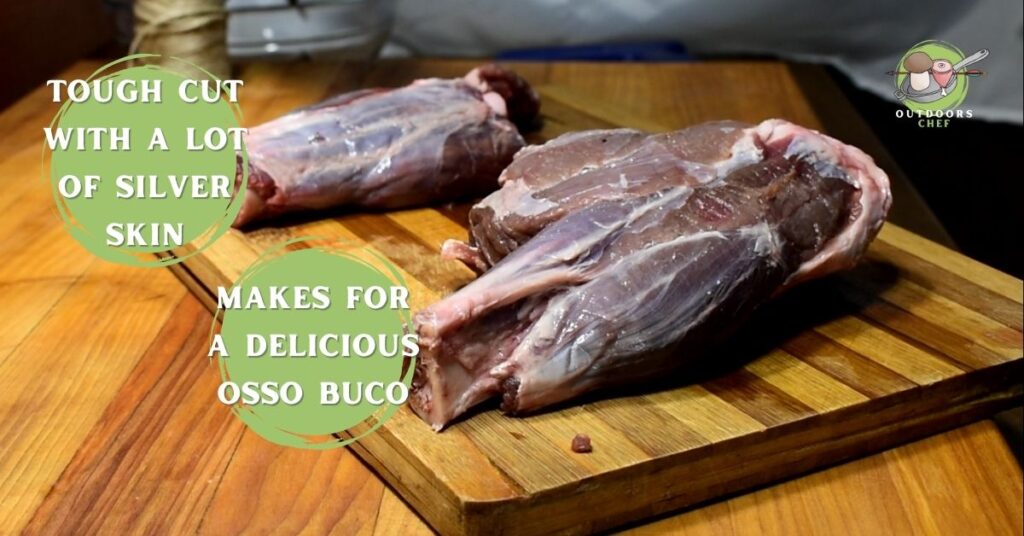
Yet another controversial cut, the shank, makes it to the top of my list. Just like the ribs, most people aren’t willing to put in the effort for shanks, which is a shame because they really are one of the best cuts of meat.

Like the ribs, the shanks are very flavorful. Also, like the ribs, they are covered in silver skin and membrane.

The shank is an extremely tough cut of meat, but with the right approach can be turned into very tender meat.

A classic shank dish is osso buco, which is not traditionally made with wild boar, but forgive me if I say I prefer it to venison osso buco.

Another way to get fall-apart tender meat is in the pressure cooker, and you could use my venison recipe to make pulled shank tacos.

Whatever you choose to make, give it time, and you will not regret eating wild boar shanks.

Boston Butt

Another choice cut of wild hog that may not get as much love as it should is the Boston butt.

The name may be confusing because this cut of meat comes from the shoulder.

The Boston butt is from the higher part of the shoulder, above the picnic shoulder.

This is one of the best cuts for pulled wild hog. The Boston butt is typically well-marbled and tender due to its limited activity.

This cut can be used in many different ways. I have sliced and grilled it, made sausages and burgers, and made pulled pork from it.

One thing worth remembering is that it is a little on the fatty side, and most people find the taste of pork fat unpleasant.

In pulled pork, the taste may be unnoticeable, but for other dishes, you may want to cut the fat out unless you have a smaller hog.

Ham

Best Cuts of Meat From Wild Hog

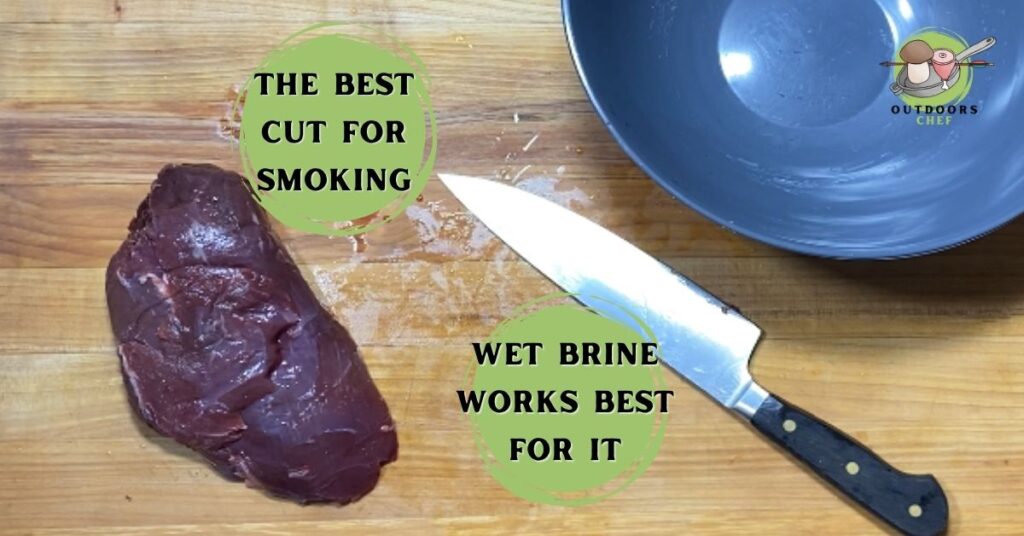
This list wouldn’t be complete without mentioning ham. Wild hog ham is just as good if not better than pork ham.

I know this may be hard to believe, given that pork ham has all that juicy fat to add flavor.

The difference is when it comes to smoking. The flavor of wild hog works so much better with smoking than pork.

With a simple wet brine and your favorite wood for smoking, you can turn a wild hog ham into a masterpiece that will impress the fussiest of your friends.

Final Thoughts

Like most people, it’s difficult for me to choose my favorite one of anything. I’d rather have them all.

Choosing the best cut depends greatly on your skill level and what cooking methods you have access to.

If I had to choose one cut from the list as my favorite, I would probably opt for the ribs. They have so much flavor, better than any beef or pork ribs you have ever tried.

2024 Guide to Top Turkey Decoys

0

Written by Bethany Beathard

Spring time will be upon us soon, which means gobbler chasing weekends. If you want to increase your chances of turkey harvesting success, consider investing in a turkey decoy. The purpose of using decoys is to lure in a wild tom turkey. Decoy manufactures continue to produce realistic designs. According to Audubon bird studies, turkeys have excellent eyesight. They are able to see three times more clearly than 20/20 vision. Additionally, they can also see in color and have a 270-degree field of vision. This provides them an upper hand on both predators and hunters. It can be challenging when trying to choose the right turkey decoy for you. Be sure to research the states regulations regarding the use of decoys prior to purchasing. First and foremost decide on how much you are willing to invest and set your budget. Consider the terrain and time of season you will be hunting. Scouting the turkey’s behavior in your local setting will be a benefit.

Most Realistic Tom: Avian-X HDR Strutter

You get what you pay for here, as far as realism and durability. Avian-X has created a life-like, high quality design. These decoys are made up of a molded dura-rubber material with non-chip paint. They are collapsible; yet, not the fastest to deploy in a hurry. This tom features a versatile design. You can exchange the heads between worked up tom’s red, white and blue display or a relaxed tom’s solid white head. Avian-X really added to the versatility with this bird. The adjustable synthetic tail fan and beard allow you to transform the decoy from tom to jake. This heavy-duty construction will really increase the longevity of use over multiple seasons. The cons are these decoys tend to be on the bulkier side and are an expensive investment.

Most Realistic Hen decoy: Avian-X HDR Hen or Avian-X HDR Heavy-Duty Feeder Hen

Avian-X has really put in the work creating versatile hen designs. First, the Avian-X HDR Hen, is perfect for tempting aggressive, dominant toms. This decoy includes 2 removable head designs, resting and active. Next, the Avian-X HDR Heavy-Duty Feeder Hen, showcases a relaxed hen, easily inviting on-looking toms. Both hen decoys showcase enhanced flocking and realistic paint detail, adding to the realism. Again, Avian-X has made another collapsible decoy to withstand years of use. However, these decoy are still expensive and not the most compact design.

Most Realistic and Budget Friendly Set: Primos Hunting Lil Gobstopper Hen and Jake Combo

Primos really did a good job producing an affordable decoy combo. The set can be paired together or used separately giving you variety in your hunting set up. The use of authentic colors and posturing of these birds really set a realistic unintimidating setting. Nonetheless, gobblers cannot stand seeing a jake take their place next to a mature hen. The small design and collapsible feature really makes for a convenient choice for on the go hunters. With the price point landing around $60 you really cannot go wrong. Primos set you up to get the job done with this budget friendly duo. A con here is the use of plastic stakes, you may consider upgrading to a heavier duty metal stake. Even with an upgraded replacement you would be well under budget.

Most Economical: RedHead Foam Turkey Decoy 3-Pack

If you do not want to make a big investment, the RedHead Foam Decoy 3-Pack is the way to go. These are a simple foam set that come with a two-piece metal step-on stake. RedHead offers 3 different poses and lifelike painted feather detailing. The three of them together provide a perfect flock to attract that long beard you are waiting for. This set is light-weight, inexpensive and easily packable. If you have been on the fence, purchasing these decoy would be a perfect introduction without the large investment. However, the cons are they are not as realistic, the foam is not very durable and the longevity of use is uncertain.

Best Reaping: Montana Decoy Wiley Tom 3D

Disclaimer: Turkey reaping decoys are very effective, but should only be applied on private lands with no other hunters. Be sure to refer to your sates regulations concerning this method.

The Wiley Tom 3D decoy is one of a kind. Montana Decoys set the bar with a realistic versatile decoy. This decoy offers a 2D option with a see through window, perfect for reaping. Subsequently, the 3D option offers a versatile stake designs for a traditional stationary set up. This tom has the option to add a real tail or wing feathers as a replacement. The Wiley Tom 3D is ultra-light weight and fully collapsible. This decoy gives you the best of both worlds. It displays realism; yet, is ultra-light weight for a run and gun hunt. The price of this decoy is on the higher side and the light weight construction may affect the lifetime of use

Most Compact: Miss Purrfect XD

Montana Decoy’s Miss Purrfect XD Hen is arguably the best hen decoy on the market. This compact design fully collapses and for easy totting. It is ultra-light weight, yet, they did not skip on realism. This hen offers three position adjustments: standing, feeding and breeding. Feather cuts give the added element of subtle movement, which increases the realistic effect. The price point lands under $80 making it a mild investment. The downside is this decoy is not waterproof; and, because it is made up of fabric the probability of fading is higher.

Best Motion Decoy: Higdon Outdoors Motion Full Strut Tom

Disclaimer: Refer to state regulations regarding motion decoys before purchasing. Again, when using motion decoys or reaping method, use all safety precautions. Abstain for public land hunting with either method.

Higdon Outdoors Motion Tom decoy displays realistic motion and eye catching detail. The motion paired with the full strut features will surely have that longbeard ready to engage. This motioning tom decoy really makes for an irresistible set up. This decoy is battery operated and will take a moment to set up. You can locate an easy tote hand on the bottom of the fan. A magnetic fan mount allows you the option to replace the fan with a natural fan. The cons with this bird is the high cost and some state prohibit the use of motion decoys.

Final Thoughts

It is no secret that the turkey decoy business is booming. Companies continue to produce realistic birds and I see no end in sight. Hunting over decoys adds an upper hand to the hunter trying to lure in a tom. Having a decoy or a decoy spread gives the turkeys a visual endorsement to you calls. Do you need a decoy? No, but is a good addition and may be a crucial piece to securing your harvest. As always, be cautious when transporting decoys or harvested birds through the woods. When hunting over decoys be aware if other hunters are in the area. Also consider you proximity to the decoy, better safe than sorry. Happy hunting everyone!

The Miracle Of Nature: How Bird Poop Can Help Your Garden Grow

0

For centuries, humans have used fertilizers to help plants grow. But did you know that birds can also provide a natural fertilizer for plants? It’s true – bird poop can help plants grow, as it contains nitrogen, phosphorus, and potassium – the same three elements found in commercial fertilizers. In addition to these essential nutrients, bird droppings also contain trace amounts of other vital elements and minerals. Bird poop can also contain beneficial microorganisms that can help break down organic matter and aerate the soil. So while you may not want to use it directly on your plants, bird poop can provide an important contribution to the health and growth of your garden.

Because bird poop is a great compost material, it is also a natural fertilizer for plants. The key is to use it correctly, and to be careful not to feed it to animals that are the source of the poop. When manure from domesticated birds is used, it is best to use guano derived from seabirds. Birds’ domesticated feces have a high chemical content that aids in fruit growth and flowering plant development. This advantage is due in part to the high concentration of phosphorus found in manures containing horses or cows. When it comes to the use of bird droppings as fertilizer, there is a clear distinction between domesticated and wild birds. As a result, you will be able to keep your plants healthy and happy by knowing which types of bird poop are harmful to them.

If a wild pigeon comes into contact with a tree or shrub directly, it may become extremely acidic. Regardless of whether it is from domesticated or wild animals, handling animal manure should always be done with caution. These are some gardening tools that you can use to make container gardening easier. I will earn a commission if you link to these, which are affiliate links. Kensington Watering Cans are fashionable, strong, and dependable, and they can be used to water potted plants with precision. I enjoy using the Garden Guru Trowel because it is very durable and comfortable to use.

It is not harmful to consume them. Yes, if the droppings land directly on young, still fragile tissues, they can cause “burn” (the damage caused by the high concentration of minerals in the droppings), but this is usually very minor.

Bird-whispering or tilling is a natural activity for them whenever they come across earthworms or other insects, which helps to aerate the soil and promote plant growth, and bird-whispering also allows them to plow or till the garden soil with their beaks

They help fertilize plants by transferring pollen (via their bills) from one flower to another, similar to how bumblebees do. Bird pollination is most common in tropical areas, where it helps pollinate a few food crops such as bananas, papayas, and nutmegs.

Do Birds Make Good Fertilizer?

Yes, birds make excellent fertilizer. The droppings of birds are incredibly rich in nitrogen, phosphorus, and potassium-all essential elements for healthy plant growth. Birds also help spread the fertilizer over a wide area as they fly from place to place. Additionally, the droppings of birds can act as a natural pest repellent, helping to keep away pesky bugs and insects that can ruin crops. Finally, bird droppings can help improve soil structure and fertility, making it easier for plants to take up the nutrients they need. In short, birds make great fertilizer and can help keep gardens and farms healthy and productive.

Bird droppings are the most effective organic fertilizer because they contain the most concentrated amount of nitrogen. Birds drop their seeds in no time; after 5-7 days, you can see the results. The composition of litter can vary greatly depending on whether the bird that produced it did so before or after hatching. Deep bedding of dry peat or chopped straw should be used to house poultry. Bird organics are laid out at a rate of 15-20 cm over the entire compost heap surface. The nitrogen content of this material rapidly evaporates during storage, and by the end of 50 months, it has disappeared. During the winter months, it is possible to freeze the litter, layer it on the court, and store it in this manner.

Nitrogen is lost as nitrogen is removed from the soil in the autumn. In spring, you must plant the litter in the soil at least 2 weeks before planting. Doses should be no more than 200 g and no more than 1 kg per 1,000 square meters. When it comes to making litter, tomatoes prefer to use other organic fertilizers. In the main dressing, compost is used in 4-6 liters of liquid top dressing per season (2-3 per season). It is easy to burn plants if you come into contact with the high concentration of substances found in council litter. If this does not work, try to avoid it but if it does, bring in plenty of water.

Granular bird droppings have long been regarded as one of the most valuable types of organic fertilizers due to the nutrients they contain, which are nearly identical to mineral fertilizers. This natural fertilizer can be composted to make it more efficient and effective. Those who are new to composting can benefit from using bird droppings with other compostable materials at a rate of 1:40. Nonetheless, the compost should be thoroughly mixed to ensure efficient breakdown. A mask and gloves should be worn to prevent the inhalation of any potentially hazardous particles, and bird droppings should be handled with caution by carrying gloves. When properly applied, granular bird droppings can provide an effective and safe method for nutrient enrichment in soils.

Do Birds Help Plants Grow?

Birds not only help animals, but they also help plants. Hummingbirds pollinate flowers to produce seeds that plants need to grow. Some birds, such as the Blue Jay, actually plant seeds. They collect and hide the seeds for later consumption, but they do not return for them all, so the seeds sprout and grow into new plants when they return.

Protect Your Garden From Birds: A Better Solution Than Talking To Plants

A long-running debate about whether talking to plants aids in their growth has been ongoing. Some people swear by the technique, but there is no scientific evidence to back it up; there is no consistent evidence that talking to plants or singing to them boosts their productivity. Plants can be harmed if you have birds in your garden. Crow and blackbird populations are especially dangerous because they dig up seeds or feed on mature crops. Bird deterrent devices such as scarecrows, nets, and other bird-catching devices can be installed in your garden to keep birds at bay. While talking to plants may not provide them with the necessary growth stimulation, bird protection does.

Does Pigeon Poop Make Good Fertilizer?

Pigeon poop, also known as guano, contains a high concentration of nitrogen, making it an excellent source of nitrogen-rich fertilizer. Pigeon guano was used as a fertilizer for hundreds of years up until the introduction of agribusiness, which resulted in a more efficient and cost-effective method of production.

Avoid Feeding Pigeons: The Unintended Health Risks

Pigeon feeding has been a cherished practice among many people since its inception. This seemingly harmless practice, as it turns out, can have serious consequences for human health. Birds, particularly pigeons, have a high level of acidity, which can burn plant stems and roots rather than aid in plant growth; adding bird droppings to soil too soon can also burn plant stems and roots. Furthermore, pigeons’ excreta contains bacteria such as Escherichia coli (E. coli), which when introduced into the food or water supply can cause illness. These birds are not to be fed, so you should keep a low profile and keep a safe distance.

What Is Bird Fertilizer Called?

In Spanish, guano (Spanish for excrement) refers to a pile of birds’ or bats’ feces. Gano is a highly effective manure because it contains a high concentration of nitrogen, phosphate, and potassium, all of which are required for plant growth.

The Benefits Of Chicken Manure: A Sustainable Fertilize

Chicken manure is a valuable fertilizer that has long been regarded as a valuable agricultural and horticultural crop. This plant aids in the release of macro- and micronutrients in addition to acting as a soil amendment. As compared to other animal manures, chicken manure and the associated litter contain higher levels of nitrogen, potassium, phosphorus, and calcium as well as organic matter (Zublena, 1993). It is important to note that nitrogen content in chicken manure can aid in plant growth and development due to its ability to increase photosynthesis. Furthermore, chicken manure contains uric acid, which is produced by birds rather than mammals, in addition to the nutrients. Because Uric acid is soluble, it can be seen as a white paste when it is excreted from the kidney into the cloaca – the single body of water where the body excretes, urinates, lays eggs, and mating takes place – the other body of water empties Nitrogen is a valuable source of nitrogen that is slowly released over time, which can help to improve soil fertility and support healthy plant growth. Uric acid is a valuable nitrogen source of nitrogen. It is a valuable fertilizer that provides a variety of benefits to agricultural and horticultural activities. Nitrogen, potassium, phosphorus, and calcium are among the nutrients found in it, with uric acid assisting in the gradual release of nitrogen. As a result, chicken manure can be an efficient and environmentally friendly method of fertilize soil and promote plant growth.

What Nutrients Are In Bird Poop?

The birds are known to contain a high concentration of phosphorus and nitrogen, and when they come into contact with water, these nutrients are added. It is not uncommon for nutrients to be added to an existing ecosystem over time.

Birds poop, also known as guano, contains a plethora of plant nutrients such as nitrogen and phosphorus. If a bird dies, knowing exactly how much water it pumps out can help predict the environment’s future. nutrients are trapped in a goldilocks zone in bodies of water Seabirds produce nitrogen in the same way that fishermen do, but not as much as bean farmers. One of the most important factors in keeping ecosystems healthy is understanding the delicate balance between nutrients.

Birds’ droppings can have a significant impact on the environment in both their immediate surroundings and in their surroundings. Water contains a high concentration of phosphorus and nitrogen, which can be added to it to increase the amount of algae blooms. Because the blooms block out the light, they can overtake the water and kill the aquatic life. The spread of transmittable diseases and infestations from bird droppings on land can be greatly accelerated. Several diseases, including histoplasmosis, cryptococcosis, salmonellosis, and E. coli, can be transmitted through bird droppings, and people are exposed to them when birds fly. ectoparasites can also bite people, and over 50 different species of parasites can live in structures. As a result, it is critical to take preventative measures to avoid these types of environmental and health risks. Regular cleaning and maintenance of areas with birds should be conducted to reduce bird droppings. Furthermore, if there is an infestation, it is critical that the problem is treated correctly by a professional exterminator. When we address these issues, we can help protect the environment and the health of our communities.

Do Birds Help Plant Trees?

Yes, birds do help plant trees! A variety of birds eat the seeds of trees, transport them to other areas in their droppings, and help them to germinate. This is especially helpful for species such as the ponderosa pine, which relies on birds to carry the seeds from one area to another. In addition, some birds, such as the blue jay, will often cache or store extra seeds for future use, thus helping to spread the seeds even further and increase the likelihood of successful germination. In this way, birds can be important in helping to spread and even regenerate forests.

How do birds help trees grow? We investigated the impact of land-use intensification on aquatic trophic cascades in this study. Conserving herbivore populations can have an indirect impact on plant productivity by regulating the number of herbivores. Factors that influence the strength of atrophic cascade are still unknown. Insectivorous birds are responsible for an 16% reduction in arthropod abundance and a 14% reduction in plant damage. The eradication of pests such as Adelges cooleyi and Pseudotsuga menziesii, which were particularly prevalent in crop trees (mostly Pseudotsuga menziesii), resulted in a 30% reduction. As a result, despite this effect, birds did not cause a trophic cascade that would have resulted in increased crop tree growth.

By attracting native birds to your garden, you can contribute to the environment in a simple and rewarding way. Not only do these birds provide pollination and insect control benefits, but they also benefit from the care and maintenance provided by a well-maintained garden. If you provide a variety of native plants in your garden, you can ensure that it is a habitat for a variety of birds, who will eat the nectar, seeds, and insects that the plants provide. Trees can grow and become stronger due to the presence of wind, which aids in their growth and development. A garden that is specifically designed for the native birds of your area will provide both a positive and mutually beneficial relationship between the environment and the garden.

Are Birds Important To Plants?

Birds, whether in the wild or in captivity, disperse seeds for plants that provide us with food, medicine, timber, and recreation all over the world. Among their qualifications, they are well-traveled and have a wide range of abilities. The seeds they eat have a pulp and a seed coat, which helps them germinate.

The Vital Role Of Birds In Forest Ecosystems

Birds provide critical services to plants and other wildlife in addition to their role as an essential component of the forest ecosystem. Birds play an important role in reproduction, which is why they are important pollinators. Pollen is transferred from one flower to another to ensure that plants can continue to grow and reproduce. They provide a valuable link between flowers. Native plants spread and thrive as a result of birds’ assistance in spreading seeds. Birds, for example, provide pollination, but they are more than that. It is also important to keep their populations in balance and prevent them from growing too large in order to control insect, rodent, and other small animal populations. This helps to keep a healthy forest ecosystem as well as a diverse and vibrant environment. Birds play an important role in the health of forests by providing pollination services, regulating animal populations, and controlling insects. There is a strong link between their presence and the health and diversity of the ecosystem; they play an important role in many native plants’ survival.

What Is The Relationship Between The Birds And Trees?

Birds and trees share a commensalistic relationship, with the birds preferring a place to build their nests while the trees are unharmed and not impacted by their presence. When two species collaborate and live in the same environment, mutualism occurs.

A Symbiotic Relationship: Trees And Birds

It is beneficial for both trees and birds to have a mutually beneficial relationship. Trees, like birds, provide essential food sources, but birds also provide a valuable service to trees. A bird’s diet consists of nectar, fruits, and other tree parts, as it moves from tree to tree, scattering and distributing seeds. The birds’ pollination and spread of the seeds allows trees to reproduce and spread their species, which is a benefit for the trees. Trees provide food, shelter, and nesting sites for birds in addition to serving as food, shelter, and nesting sites. Some birds rely on certain trees for survival in order to survive. In terms of the environment, trees and birds live together. Birds eat trees and provide food and shelter, whereas trees assist in pollination and seed dispersal. It is critical to keep trees and birds together in the same area because they are mutually reliant on each other.

Do Birds Help With Seed Dispersal?

Bird seed dispersal is perhaps the most dependable method of plant seed distribution due to the birds’ ability to traverse vast distances in short periods of time.

Birds And Animals: Nature’s Seed Dispersal Agents

Animals carry them out of their fur and feet, and foxes, skunks, mice, and other small rodents inadvertently eat them and then dispose of them in their parent plants, whereas other animals such as birds eat them while carrying them in their mouths. Two of the most important components of the ecological cycle are ornithophily, which allows birds to pollinate flowers, and syzoochory, which allows birds and other animals to seed. Ornithophily ensures that flowers are pollinated, whereas syzoochory assists in the dispersal of plant seeds in order to create a more diverse environment. It not only assists flowering plants in survival, but it also provides food for birds and animals. Birds and animals can aid in the continuation of the natural cycle of ecological balance, thereby promoting a healthy environment.

Is Parrot Poop Good For Plants

Parrot poop is an interesting question when it comes to plants. While it is true that parrot poop is high in nitrogen, which is beneficial to plants, the high levels of uric acid in the poop may be harmful. Additionally, the bacteria and parasites in the poop can be hazardous to both you and the plants. Therefore, it is generally not recommended to use parrot poop to fertilize your plants.

Bird Poop On Plant Leaves

Bird poop on plant leaves can be an issue for gardeners and plant lovers alike. Not only can bird droppings be unsightly, but they can also contain bacteria that can stunt the growth of the plant or even cause disease. Furthermore, bird droppings can be high in nitrogen, which can make the leaves of the plant too acidic and cause them to burn. To avoid this problem, gardeners should provide birdhouses and bird baths to attract birds away from the plants, as well as discourage them from roosting in the area. Additionally, they may want to cover the plants with netting or cheesecloth to protect them from the droppings.

Bird Poop On Garden Vegetables

Bird poop on garden vegetables can be a distressing problem for gardeners. Unchecked, bird droppings can lead to diseases in vegetables, as well as unpleasant tastes and textures. To prevent bird poop from ruining a garden’s vegetables, it’s important to take steps to limit birds’ access to the garden. This can include netting over the vegetables, setting up scare devices, or simply keeping an eye out for birds and shooing them away. Additionally, gardeners should inspect their vegetables for signs of bird droppings and remove any affected produce before it contaminates other vegetables. With a little effort, gardeners can protect their vegetables from bird poop and enjoy a healthy crop.

How To Use Bird Poop As Fertilizer

Using bird poop as fertilizer is a great way to naturally provide essential nutrients to your garden or lawn. To use it, you can either scoop up the poop directly from the ground or purchase a bagged product that has been composted. Once you have the poop, you can either spread it directly over the soil or mix it with some water and use it as a liquid fertilizer. Another option is to mix the bird poop with compost or other organic matter to make a nutrient-rich soil. You can also use a slow release fertilizer to ensure your plants get the nutrition they need over a longer period of time. Whichever method you choose, make sure you use a mask and gloves when working with bird poop to protect yourself from any potential harm.

The most effective method for disposing of bird droppings is to turn them into organic fertilizer. Plants can easily obtain basic micro and macro elements and amino acids from processed litter. Organic fertilizer derived from recycled litter is environmentally friendly and effective in the inhibition of pathogenic micro organism, larvae, and helminth eggs. For the purpose of poultry waste disposal, there are numerous technological advancements in the works. We believe that the most effective way to process birds’ waste is to use organic and organomineral fertilizers. Because granular bird droppings contain primarily organic compounds, they do not have the same properties as soil phosphates such as iron, aluminum, or calcium. We looked into how chicken manure is processed and how organic fertilizer is obtained from it.

The microwave is one of the most recent methods of processing chicken manure. The goal of this study is to assess the effects of various doses of bird droppings powder on seed germination, plant growth, and subsequent growth. Chicken droppings that are microwaved produce a loose granular material of brown color with inclusions (feed particles), with a faint scent of the raw material and a moisture content of less than 10%. A variant with a shorter processing time, in addition to energy savings, is more rational. Microflora was found to be absent from the finished product. The following characteristics were chosen for the soil that would be used as the main soil: black soil. The pHx was 6.92, the humus was 0.41%, and the particle content was 11%.

As part of the experiment, various amounts of powder were applied to the soil: the first version included a pure grass mixture of cereals. In the second experiment, 1 g of powdered milk was added to a cereal crop mixture. It took 14 days for the experimental and control variants to be counted. The best way to stimulate plant growth and development during cereal crop planting is to introduce 2 g of powder into the soil during the seed-sowing process. The Ark plant is a safe and effective plant for the environment to use in the prevention of pathogenic microorganisms, larvae, and helminth eggs as well as weed seeds by processing litter into powder via microwave. By processing bird droppings into powder, the content of organic matter in the final product can be preserved. This type of organic fertilizer contains a high concentration of nutrients and is well adapted to plants’ needs. There is no limit to the shelf life of powder in granules; it does not have toxicity.

Create An Effective Fertilizer With Bird Droppings

Trees and other plants can benefit greatly from bird droppings as a fertilizer. It is critical to carefully manage the droppings in order to reap the full benefits. A bird poop fertilizer can be made by combining one piece of bird poop with four or five pieces of brown matter such as sawdust, straw, or other bedding materials. If necessary, water the compost mixture lightly if it is damp, but not to the point where it becomes soggy. Nitrogen-rich leaves can provide essential nutrients to trees and other plants, allowing them to grow and thrive. In fact, one study discovered that trees grew much better in areas with bird droppings. Following these steps will provide you with an effective fertilizer for your trees and other plants, as well as help the environment by recycling bird droppings.

Is Bird Poop Good Luck

It’s one of the most popular bird superstitions, and it’s true if you’re unfortunate enough to get pooped on by a bird. Because it was originally created in Russia, it is thought to be good luck; however, due to its origins, the chances of it happening are extremely slim.

According to legend, a bird poops on you or something you own, which results in good fortune. According to Russian superstition, the chances of being pooped on by a bird are extremely low. An expert in probability devised a formula to estimate the chances of being struck by bird feces in New York City.

A Blessing From The Heavens: The Good Luck Of Bird Poop

Birds poop is regarded as a blessing in many cultures around the world. It is uncommon for birds to poop on humans, and it is considered a blessing from the heavens for the animals. The Russian Orthodox Church considers it to be a lucky fruit. Jews believe it is a sign of God protection. In China, there is a belief that the bird is delivering a message from a higher power, while in India, there is a belief that it can live for a long time. It is thought that poop from birds is a sign of good fortune, whether it is on your house, in your car, or anywhere else. Despite the fact that it may not be the best experience, it is still an adventure worth taking part in because the idea that something as unique and as unexpected as this can bring you happiness and wealth is something to celebrate. As a result, don’t be too concerned if you find yourself being pooped on by a bird. Accepting the blessings that the bird has bestowed on you can help you gain good fortune.

Can Bird Droppings Kill Plants

Using Avian Control liquid bird repellent, it is possible to keep bird droppings out of the garden. The dropping of seeds can be fatal to your plants and ruin your garden for the season.

Minerals such as phosphorus (P), nitrogen (N), calcium (C), potassium (K), and magnesium (Mg) can be found in bird droppings. You will usually not be harmed by mature leaves and plant parts. uric acid (C5H4N4O3) is found in bird droppings and contributes to the white color. Gardeners, pets, and other birds are not at risk, but plants are. When a bird’s gut is passed through its seeds, it sucks up the pathogens that have already built up on the outside of the seeds. Bird droppings should not be applied directly to garden plants if there is a high amount of their waste in your garden.

The BEST Trotline EVER!?!? Catch More Catfish With This Method

0

I wanted to share something with you guys that has really changed the way my family and I have been running trotlines. However, before I lay out the design for you… let me say that I realize we all have our preferences on how to do things (especially fishing). Saying that one method is the “absolute best” is like saying one muscle car is better than all the others, or that one type of truck model is the best ever built. You’re never going to get everyone on the same page agreeing on this… and I’m okay with that.

If you have a different method that you think is better; please feel free to share it in the comment section below. The more discussion the better….

Ok, back to the post.

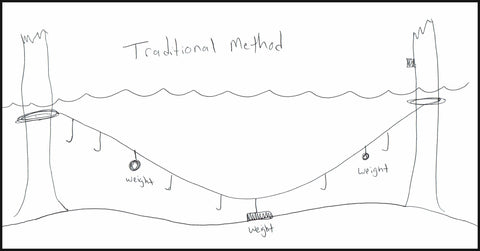
For as long as I can recall my family and I have been running trotlines on Lake Sam Rayburn and Toledo Bend (more recently). We have used the traditional design (see image below) which involves tying the trotline off at both ends (usually to a stump), and then sinking the line to the bottom in the middle. We’ve used this method the majority of my life and have done really well with it.

This is an “old-school” design that was probably used by your great great grandfather if he ran lines. It has literally been around forever, and it works great. However, this design is based off the old assumption that catfish are simply “bottom dwelling scavengers” and not much else. We know this isn’t true (see my last post about the Best Catfish Bait), but we still set our lines out in the same old fashioned way.

I want to encourage you to try this “new” (it’s not really new… just different) method if you haven’t. It has literally changed the way my stepdad and I fish, and I don’t see going back to the traditional method of running lines anytime soon. This has consistently produced more and LARGER catfish for us. Pretty much all the large catfish pictures you may have seen on our site, Facebook Page, or Instagram have been caught using this method.

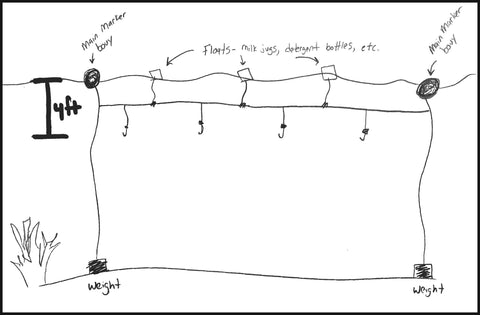
Ok, so here’s how to set the line. First check out this basic diagram – I’m obviously no artist, but you’ll get the point.

The obvious difference between this method and the old method is that you will now be floating the hooks and bait. This will have the wind and wave action moving your bait around and helping you to catch more fish. Cool huh?

As for actually setting up your line, you can go as cheap or heavy duty/expensive as you’d like. However, I would strongly recommend that you do the work up front and create a solid-stout line that you can catch those large cats on… because you will be hooking them and nothing is more frustrating than losing those huge fish.

Here are a few tips for setting up your line:

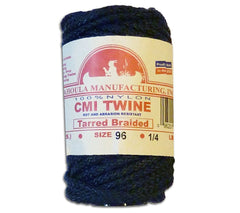
  • Used HEAVY Line – I recommend using 96 Tarred Nylon which is about 600 lb test. Pro-Tip… the larger line is thicker and WAY EASIER on your hands when running lines all day. You’ll thank me later.

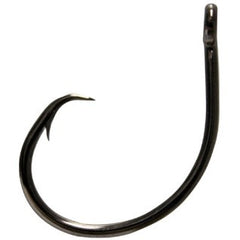
  • Circle Hooks are a MUST – an instant way to catch a minimum of 20% more fish per run (even if you don’t use the new trotline model) is to switch to circle hooks. A 6/0 straight hook won’t give you half the holding power that a 6/0 circle hook will provide. They’re that good… and definitely worth the extra cost.

  • Swivels, Swivels, Swivels – Those cheap trotline clips are great for smaller fish and setting quick lines; however if you’re going after large catfish then you need to be using swivels. These will help to prevent a large fish from getting off the hook by keeping them from tangling the staging line into the main line. I recommend using the 3/0 to 6/0 Swivels as they’re super heavy duty and will last you at least 2-3 years in the water.

  • Tight Lines – Get your line as tight as possible before setting the hooks. You can use about 50lbs of cinder (or whatever) on each end and this will do the trick to keep it still. In all honesty, you likely don’t need this much weight as they will sink into the mud and get covered… I just tend to overdo things. = )
  • Use Clear Bottles – You don’t need a lot to float your lines. I recommend using clear Gatorade type bottles every 10-20 feet (whatever you prefer) to keep your lines afloat. Using the clear bottles will help to “hide” your line at a distance from folks you don’t want to find it.
  • Fish Shallow – Keep your main line about 4 feet below the surface. This will allow boats to pass over the top, but still keep your bait in the hot-zone. This works great for summer months when the water is hot.

I think that’s about it. I feel confident that if you take the time to set your lines up using this method that you will find yourself catching more and larger fish. It’s worked for me, and pretty much everyone I know now uses this method over the traditional one of sinking your lines.

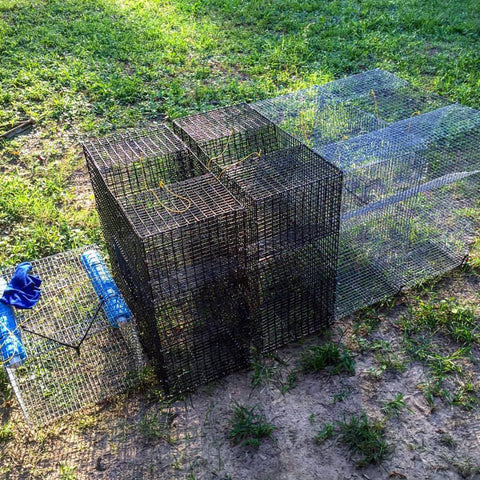
One final thought, and a bit of a selfish plug… you’re going to need good bait to catch fish. If you haven’t checked out our different bait fish traps yet, then please take a minute to check them out here:

Click Image For Info

I sincerely hope that you’ve enjoyed this article and have found at least something useful. If you have, please don’t hesitate to share it on Facebook with your fishing buddies. Thanks for reading, and God bless!

U.S. fisher's lake trout catch poses challenge to record set in N.W.T.

0

A 33.24-kilogram lake trout.

A greenish-grayish speckled whopper the weight of a golden retriever.

That’s a big fish.

And that’s the fish that Scott Enloe reeled in from the Blue Mesa Reservoir, a man-made lake in Colorado, last week.

Enloe’s catch poses a challenge to the record set by angler Lloyd Bull, who pulled a 32.6-kilogram lake trout from waters in the Northwest Territories in 1995.

“It’s obviously the largest one I’ve ever seen,” Enloe said of his remarkable haul.

“It was exactly 47 inches long and it had a 37-inch girth … I’m a 35-inch waist and it was bigger than me.”

Catch may not officially break record

But Enloe’s catch may not make it into the International Game Fish Association’s (IGFA) record books, where Bull holds the top lake trout spot.

That’s because the organization requires that fish be weighed on land.

Enloe weighed, measured and photographed his fish on his boat — and then he let it go.

“Whether I get my name in the books or not, that’s irrelevant to me,” he said. “I was not going to kill the fish regardless.”

Zac Bellapigna, angler recognition coordinator for the IGFA, said Enloe wouldn’t have had to kill his trout, necessarily. Fishers can bring their fish to shore, weigh them, and release them alive.

“I commend him for releasing the fish alive, that’s a good thing,” said Bellapigna.

‘One of the best fishing spots in the world’

About 3,000 kilometres north of the Blue Mesa Reservoir sits the majestic Great Bear Lake, site of an Indigenous-led UNESCO-recognized biosphere reserve. It’s known for producing some of the biggest lake trout ever caught.

“Growing up, we caught a lot of pretty big trout,” said Naokah Bailes, who was raised in the Sahtu region and has been fishing in Great Bear Lake since she was small.

“Little did I know I was actually fishing at probably one of the best fishing spots in the world.”

The people who know Great Bear Lake, or who’ve visited, give many reasons for why the lake is a unique place to cast a line.

For one, it’s huge — one of the world’s largest — and there’s only one community on its shores: Délı̨nę, which has a population of a little over 600.

“It’s such a small community, right?” said Bailes. “Even if someone’s out there fishing all day, the lake is so big we would never have an actual impact on the fish populations.”

Even bigger fish netted in Great Bear Lake in 2009

Ask people in the Délı̨nę about fish, and one name comes up again and again: George Kenny.

Kenny netted a lake trout from Great Bear topping 38 kilograms in 2009.

That fish didn’t survive, and it’s now memorialized in the community’s Great Bear Lodge.

“There’s something about the genetics, also, in Great Bear Lake that produces very large fish,” said Mike Bryant, who once penned a column as the “Fishin’ Technician” and is now the group publisher for Northern News Services in Yellowknife.

Not all its trout grow to “super sizes,” he said, but a strain of them do.

Bryant, who visited the lake in 1997 and plans to return this summer, pointed out that a good chunk of IGFA’s lake trout line class records have been set at Great Bear Lake.

“Great Bear Lake is like an aquarium. It’s full of fish,” said Danny Gaudet, Ɂekw’ahtide (leader) of the Deline Got’ine government.

Gaudet also fishes — but for food, not trophies.

There’s nothing that compares to the meat on a Great Bear Lake fish, he said, and you’re always guaranteed to catch one.

Gaudet said that if more tourists travel to Great Bear Lake for fishing, and fish in a sustainable way, it could benefit the community’s economy.

It’s one reason why he says he’s actually happy for Scott Enloe, because big catches like that draw in tourism.

“If it sustains that economy for them, that’s great,” he said. “Of course, we’re from Great Bear Lake and we will break the record again.”

10 Best Gloves of 2024

0

Best Men’s Winter Gloves

Carhartt Waterproof Insulated

Material: Polyester | Touchscreen Compatible: No

If you’re looking for classic, reliable, and easy-to-wear winter options, we recommend the Carhartt Waterproof Insulated. Their functional construction and flexible polyester material make them dexterous despite their bulk. All that insulation keeps your hands toasty. One of our testers wore them in temperatures as low as -20° F while collecting glacial data in the Yukon. After that, it’s easy to recommend them for shoveling the walk or walking the dog. It doesn’t hurt that they block wind, and the main body is waterproof.

While the outer shell does repel water effectively, its cozy fleece cuff does not. When it gets wet, moisture creeps up the liner and inside. You can protect the cuff with the sleeve of a jacket, but that doesn’t work in a snowball fight. Sweat can build up in them as well. Once wet, they often take more than a day to dry. While they move well, their slippery fabric and bulky insulation make it difficult to complete detailed tasks, like tying your shoelaces. Though imperfect, these are the best winter gloves we’ve tested for daily use.

Best Women’s Winter Gloves

Carhartt Quilts Insulated

Material: Polyester | Touchscreen Compatible: No

The Carhartt Quilts Insulated women’s winter gloves are almost as warm and water-resistant as the men’s, making them a good option for anyone with smaller hands. They’re soft against the skin and well insulated, with quilted polyester insulation and fleece lining. Though not technically waterproof, they repel water and block wind completely. Straps that tighten at the wrists hold them in place, and a tab that extends from the thick synthetic palms makes them easy to pull on.

While Carhartt doesn’t claim these are waterproof, they hold their own in wet weather. During a submersion test, water only snuck through one seam just before the two-minute mark. The cozy fleece lining is a weak point, though. It holds onto moisture, which can sneak in from the cuff. They take up to two days to dry. The fingers are short and bulky, and the fabric is slick, making it hard to perform detailed tasks. And a few loose stitches from the start have us questioning their durability. Still, they’re reasonably priced for hands looking to shovel, pull sleds, and make snowballs.

Best Ski Glove for Men

Arc’teryx Fission SV

Material: Nylon, polyester, goat leather, Gore-Tex | Touchscreen Compatible: No

Since they’re meant to be worn for days at a time, the best skiing and snowboarding gloves are warmer, more technical, and pricier than most winter-generic options. The Arc’teryx Fission SVs are the best we’ve tested. The tough, synthetic shell is reinforced with a double layer of goat leather, while a Gore-Tex membrane insert keeps your hands dry. The combination shuts out cold, wet, or windy weather. We’re also impressed with how well they hold up. It took 150 days of use to see wear on the leather palms and fingers, which is far better than the competition. They’re also warm and breathable, keeping your hands toasty and dry. Despite the generous layer of insulation, they’re very dexterous and keep our hands useful in the snow.

The Fission SVs do run large. They’re wide and lack an adjustable wrist strap to tighten and hold them in place. They’re also expensive. Since they work well for a range of outdoor pursuits, you’re likely to get your money’s worth. If you’ll be out for hours or days in brutal winter conditions, these are the best gloves we recommend.

Read more: Arc’teryx Fission SV review

Best Ski Glove for Women

Arc’teryx Fission SV Glove

Material: Nylon, Polyester, Goat leather, Gore-Tex | Touchscreen Compatible: No

These technical snowboarding and skiing pair are the favorite of both our men’s and our women’s testing teams. The Arc’teryx Fission SV is a unisex option with a synthetic shell reinforced with two layers of goat leather. They’re tough and durable, barely showing any wear after months of intensive use. The Gore-Tex membrane kept our hands dry in even the most trying conditions, day after day while remaining breathable and avoiding sweaty hand moisture build-up. Though they’re not touchscreen compatible, these warmly insulated gloves are still surprisingly dextrous.

However, these genderless handwear run a bit large and are best on wider hands. They also don’t have an adjustable wrist strap, which can be a dealbreaker for some women. They’re also some of the most expensive ones we’ve tested, though their functionality ensures we wore them through pretty much every winter endeavor, getting the full range of use out of this investment. Ultimately, we’re big fans of these and recommend them to anyone looking to get outside without getting cold hands.

Read more: Arc’teryx Fission SV – Women’s review

Best Overall Women’s Ski Mittens

Black Diamond Mercury Mitt – Women’s

Material: Leather, Pertex nylon, waterproof BD.dry | Touchscreen Compatible: No

If you have trouble keeping your hands warm, mittens may be for you. The Black Diamond Mercury Mitts are our favorites. They’re double layered, with an insulated, fleece-lined insert (the warm and quick drying Primaloft Gold if you’re interested) and a durable shell. The outer layer features a water-repellant shell, waterproof insert, and large gauntlet cuff that overlaps your jacket sleeve to form a weatherproof seal. These mittens breathe well, and the removal liners dry quickly if you’re hands go clammy at the top of a steep drop. They’re also durable. Some of our testers have worn them for years. Despite braving some seriously frigid climates, we haven’t found a cold they couldn’t handle.

Mittens keep your hands warmer than gloves by letting your fingers huddle together, but they sacrifice dexterity. We have to remove these mitts to do much of anything with our hands, and it would be nice if they had leashes so they weren’t so easy to drop in the snow. When it’s really cold, we like to pair a thinner liner underneath and then pull these mittens on for serious weather protection. We love them for frozen days and any time we’re worried about keeping our hands warm.

Read more: Black Diamond Mercury Mitt – Women’s review

Best Men’s Ski Mitten

Black Diamond Mercury Mitt

Material: Leather, Pertex nylon, waterproof BD.dry | Touchscreen Compatible: No

Black Diamond also makes a men’s version of the Mercury Mitt. The only difference between them is that the men’s version runs larger. Our men’s and women’s test teams can’t say enough about the warmth and weatherproofing of this two-layer mitten. The puffy, fleece-lined inner mitt holds warmth, while the waterproof shell keeps the weather out with a large gauntlet cuff. They’re also well-built, featuring a goat leather palm, overlapping layers, and a handy patch for wiping your nose. They proved durable for long cold winter days.

The downside to mittens is that they make it hard to use your hands. The Mercury Mitt proved to be one of the least maneuverable ski or snowboard gloves or mittens in the lineup. It’s often hard to complete basic tasks like zipping a jacket or working small buckles while wearing them. As a result, we often take them off and wish they had a leash to help us keep track of them. As long as you can deal with having to expose your hands to the elements from time to time, these mittens can’t be beaten when it comes to warmth.

Read more: Black Diamond Mercury Mitt review

Best Value Men’s Ski Glove

Gordini GTX Storm Trooper II

Material: Polyester, Gore-Tex, synthetic leather | Touchscreen Compatible: No

Gordini has been making a version of the GTX Storm Trooper IIs for a long time, and they’ve consistently offered exceptional value. They never fail to impress our testers with how much warmth and weather protection they offer at a significantly lower price than the competition. Our hands consistently stay dry and content in these. Solid construction also means that they’re durable enough to last multiple seasons for even our most dedicated ski testers — industry pros who are on the hill well over 100 days a season.

These aren’t the warmest option we’ve tested, though. They aren’t our top recommendation for bitterly cold days when only the die-hard folks brave the elements. They’re also unwieldy, with insulation stacked at the fingertips, making it hard to complete simple tasks like handling a zipper or buckle. Note: We tested these just before the company simplified the name to Gordini GTX Storm Glove. The changes are largely cosmetic, and we’ll direct you to the newer version. They’re the option we recommend to anyone looking for excellent performance on a budget.

Read more: Gordini GTX Storm Trooper II review

Best Value Ski Mitten for Women

Burton Gore-Tex Mitten – Women’s

Material: Recycled polyester, polyester, Gore-Tex | Touchscreen Compatible: Yes

The affordable women’s Burton Gore-Tex Mittens are impressively warm and easy to wear. Combining a lightweight liner and a waterproof mitten shell, they give you the best of both worlds. The liners (like actual gloves with separate fingers) are touchscreen compatible, making it easy to use your phone without exposing your hands to wind and weather. The outer mitten shell is surprisingly nimble as well. It’s also well-insulated and decently warm. The durable palm stands up to a fair bit of abuse, and the price is hard to beat.

These mittens aren’t the warmest we’ve tested. The shell material feels less durable than some of the higher-priced options, and the fabric does eventually saturate when exposed to wet weather. The inner waterproof liner keeps your hands protected, but you do end up with a soggy outer layer. Still, if you’re looking for a bargain, these mittens are an excellent option. If you’re not into mitts and want a good deal on a women’s glove, check out the Dakine Camino.

Read more: Burton Gore-Tex Mitten – Women’s review

Best Liner Glove

Achiou Touch Screen Thermal

Material: Acrylic, polyester | Touchscreen Compatible: Yes

Liners are great on their own in mild weather and do a lot to improve the warmth rating of a winter pair when layered underneath. Lightweight, soft, and impressively warm, the Achiou Touch Screen Thermals are an excellent example. They balance insulating your hand, blocking wind surprisingly well, and letting moisture and sweat escape. If the Achious do get wet, they dry quickly. Touchscreen-compatible patches on the thumb, pointer, and middle fingers let you use your devices without exposing your fingers to the cold.

On the downside, you have to wash these by hand. And we don’t love their fit. The cuffs are short and often disappear beneath your outer mitt when worn as a liner. The thumbs are long, making their touchscreen patches less effective than those on your fingers, which work wonderfully. All told, if you’re looking for durable, affordable liners, these are our picks.

Best Unisex Work Glove

Mechanix Wear Coldwork Original

Material: Rubber, fleece, softshell | Touchscreen Compatible: Yes

The Mechanix Coldwork Originals are the best work options we tested. Meant for cool to cold weather, they have a lightweight fleece lining with a durable softshell and rubber exterior. They breathe well, which is great for warmer days, and our lead tester found them comfortable for small engine repair down into the teens and twenties. They’re machine washable and work well for a range of activities, from raking leaves to shoveling. All five fingers are touchscreen compatible, making it exceptionally easy to check the instructions on your phone for whatever YouTube project you have going. They also moved so well that we rarely needed to pull them off to complete a detailed task.

Since they’re insulated, these aren’t the best for warm fall days. They’re also not waterproof, are slow to dry, and aren’t warm enough for extremely low temperatures. Though the size small Mechanix fits our women testers with size small hands, the fingers are a touch long. If they are too big for you, we’d recommend checking out the Wells Lamont Hydrahide women’s option. If they do fit you, though, we highly recommend the Mechanix for detailed tasks in mild to chilly weather.

Best Mountain Bike Gloves for Men

Giro Xen

Material: Polyester, rubber, polyethylene | Touchscreen Compatible: Yes

Light and breathable with a dialed fit and precise padding, the Xen is a top-notch choice for biking. Mesh panels keep your hands from overheating, and supple palm fabric provides excellent feedback from the handlebars and the trail. Padding across the knuckles and wrapping around the outside edge of both hands kept our skin intact when we grazed a few rocks and trees during testing. Giro claims that their product engineering process results in a Superfit. We have to agree. With a velcro wrist tab that effectively snugs them around your hand, these fit to a T. The touchscreen-compatible thumb, pointer, and middle finger keep you connected.

Our only concern with the Xens is how long they’ll last. They arrived out of the box with frayed seams, their construction is relatively lightweight, and the wrist closure is not as robust as we’d like. That said, they stood up during our tests, including a few light impacts. All told, these perform well for a range of riders and styles, from downhill laps to long, aggressive trails. They’re the ones we tell our friends about. There’s also a women’s version, the Xena, that we expect would deliver the same outsized performance in smaller sizes.

Best Unisex Climbing Glove

Petzl Cordex

Material: Goat leather, nylon | Touchscreen Compatible: No

The Petzl Cordex are the best climbing gloves we’ve tested for a day of belaying. Combining a sturdy leather palm with a breathable synthetic backing, they manage to maximize palm protection, durability, and comfort simultaneously. Well-placed leather reinforcements increase durability and provide additional padding. We especially appreciate the extra leather on the thumbs and index fingers, taking the edge off a day of rope wrangling, belaying, and rappelling. The nylon baking keeps them lightweight and makes them our favorite option for hot days when a full leather day would mean sweating hands and potential blisters.

The leather surface doesn’t grip as well as we’d like, and this isn’t our favorite for long belays. The fit isn’t precise either, making it harder to handle carabiners and perform other detailed tasks than we’d like. We still consider them dexterous, just not the best we’ve seen. We love this option for its cooling comfort on hot days and the extra padding in its tough and supple leather palms. It’s our favorite option for causal craig belays.

Best Crack Climbing Gloves

Ocun Crack Glove

Material: Synthetic, rubber | Touchscreen Compatible: No

If you need to protect your hands for crack climbing but are sick of taping up, crack gloves are an excellent alternative. The Ocuns are our favorites. Their thoughtful construction balances durability and hand protection with enough sensitivity for precise placements. We put in a few thousand feet in these on both rock and plastic splitters and struggled to find flaws. Most crack climbing mitts we’ve tested felt either incredibly durable but too bulky or thin and flimsy. Despite the Ocun’s slim profile, they provide plenty of padding and hold up under steady abuse.

The Ocuns run small. Our testers ordered one size up, and we suggest that you do the same. Aside from that, the only issue we have with these is their wrist closure strap, which can be hard to secure. Once you get it to hold, the excess strap tucks behind the backing and out of the way. They’re not cheap, but after hundreds of pitches, they still deliver unrivaled performance.

Why You Should Trust Us

We’ve tested close to 200 pairs of gloves over the past 11 years to bring you this review and carefully researched even more before deciding which ones we should buy and test. We sent our winter test teams out into the cold and up into the mountains, handed our garden and work testers shovels, banished our mountain bike test team to the single track, and climbed and belayed our way to glove guru status. We took detailed notes and photos along the way, documenting each model’s performance in the real world before taking them back to the lab for repeatable tests.

We assess each product’s performance in key metrics like:

  • Fit and Dexterity
  • Warmth
  • Water Resistance
  • Durability and Protection
  • Breathability
  • Features

We tested winter and work gloves in Maine, Canada, and Alaska, tackling daily chores, winter runs, small engine repair, and glacial research. Lead tester Clark Tate has lived in every major mountain range in the US and likes warm hands. So do Amber King, who moved from Canada to Colorado’s San Juan Mountains, and ski patroller, Jackie Kearney. Amber and Jackie test and review women’s ski gloves. IMGA Mountain and Exum Ski Guide, Jeff Dobronyi, heads the men’s ski glove review. He spends over 120 days a year on his skis and needs handwear that can keep up.

Bike racer, Jeremy Benson, and bicycle product developer, Zach Wick, tested the men’s mountain bike gloves. Longtime riders, Pat Donahue and Annie Clark, teamed up to test the women’s mountain bike gloves. Both organize their lives around singletrack, and Pat has worked in the bicycle industry for eight years. Chris McNamara and Steven Tata tackled the climbing glove review. Between them, they’ve climbed El Cap 80 times (70 and 10 times, respectively). We tend to trust their judgment on all things climbing.

Decide When and Where You’ll Wear Them

We’ve established that you need a pair of gloves, but what do you need them for? Make sure you consider all the tasks you’d like to tackle while wearing them, and think about what type of weather and conditions you’re likely to encounter. Then we’ll walk you through how to find the right pair for your unique needs.

Decide How Much You Can Spend

Another important factor to consider is your budget. It’s important to decide how much you can afford upfront so you won’t be wooed by the flashiest options available. There’s often a sweet spot where you get nearly top-of-the-line performance without spending top dollar. We make it our mission to find those options and steer you to them.

What Type of Glove is Right for You?

There are three general glove types – 1) cold weather or winter versions that are meant to keep your hands warm, 2) garden or work pairs that protect your hands from dirt, abrasions, and blisters, and 3) sport options that are built to protect your mitts during a specific activity like skiing, rock climbing, or mountain biking.

These categories overlap, but the boom in outdoor recreation has led to more specialized options over the years. This is great for your hands but can be hard on your wallet. Wherever possible, we point out where any given pair can pull double or triple duty.

Winter Gloves

The most basic purpose of these is to protect your hands; often, this means keeping them warm. Since winter temperatures vary widely across the globe and winter activities vary widely across individuals, this is a broad category, varying from classic waterproof snow gloves to mittens to light liners. We’ll break these down below.

Single vs. Double Gloves — Single gloves have only one layer. Double versions have two; an outer shell and an inner liner. You can pull off the shell to reveal the thinner, more flexible liner when you need to perform detailed tasks without completely exposing your hands to the elements. This gives you the benefit of a weather-protective layer without having to deal with the bulk of one when you need to check your phone or tie a shoe. Double gloves are nearly essential in seriously cold climates where frostbite is a frequent concern.

Liners — If you do opt for an unlined or single winter glove, you can always buy a separate liner and layer the two. Just make sure that the combination isn’t tight enough to restrict blood flow since blood brings warmth to your extremities. Liners are also a great stand-alone option for shoulder seasons. Often lightweight and stretchy, they can work wonderfully for high-output activities like running or cross-country skiing.

Gloves vs. Mittens vs. Lobster Claws — The great thing about mittens is that they keep all your fingers in the same compartment, allowing them to share heat. The downside is that then your fingers aren’t available to use. You can solve this problem by adding a liner in super cold weather. Keep your digits cozy in the mitten when you don’t need to use them, and deploy your liner-gloved hand when you do.

Another option is to buy a lobster claw, which divides the mittens into two sections, one for your pointer finger or pointer and middle fingers, and one for the rest. These really shine while biking in the winter months, when you need to keep a few fingers on the break but can use all the warmth you can get.

Garden and Work Gloves

Garden and work options protect your hands from detritus and damage. Rough surfaces, rocks, and wood can abrade your hands or splinter. Tools can quickly cause blisters. A well-fitting pair can protect you from this pain and keep you working longer. Whether or not these are also insulated depends on the time of year they’re meant to be used.

Winter versions of work and garden gloves will have some level of insulation; a few are also waterproof. The tradeoff is that insulation is bulky, making it harder to get work done. Those meant for warmer weather will be lighter, thinner, and more dextrous. They will also provide protection from the sun and will, hopefully, breathe well. You can layer liners underneath these to extend their use into the colder months.

Sport Gloves

These are built specifically for the task at hand. In this review, we cover skiing/snowboarding, climbing, and mountain biking gloves. Ski options are waterproof and insulated, as a matter of course. Climbing and mountain biking versions can be used in a wider range of temperatures and thus vary in warmth and breathability. What they all have in common is that they’re meant to keep your hands healthy when you head out to the wild. Here are some things to keep in mind while searching for your perfect pair.

Ski Gloves

Winter gloves can be used to keep your hands warm while walking from the car to the office. Ski gloves are tasked with keeping your hands dry and warm for a full day, often while spending half of it sitting very still on a chair lift. That’s why they are almost always heavily insulated and waterproof. They also often include additional features like nose wipe patches and large gauntlet cuffs meant to extend over your jacket sleeve to help keep the snow out.

If you are using yours in the backcountry, hiking your way up the mountain before skiing back down, it’s a good idea to take two pairs with you for safety. One can be lighter weight and more breathable for the climb. Or you can wear a pair of liners for the sweatier part of your day.

Climbing Gloves

Few climbers wear gloves while they’re climbing a rock face. Instead, the best climbing gloves give your hands a break when you’re handling rope while belaying and repelling. As such, they have to be flexible enough to function just as well as your bare hands, and they have to grip the rope well. Leather palms often last longer, but synthetic options are more breathable, which is great for hot weather. Our favorite options combine the best of both worlds.

Crack climbing is a different story. Traditional climbers have long taped the backs of their hands before wedging them into rock clefts to heft their bodies up a mountainside. Dedicated crack climbing gloves have since become popular.

Some die-hards still swear by the feel and function of tape or by the flawless technique that makes them unnecessary. Others enjoy that modern crack gloves are made of tacky rubber and work a lot like climbing shoes to improve friction while saving you from paying for every mistake in blood. The best crack climbing gloves are tough enough to be durable and protective without being so bulky that they make it hard to fit your hand in smaller spaces.

Mountain Biking Gloves

Mountain bike gloves protect your hands if you crash or glance a tree branch or rock while riding. More conservative or confident riders may opt for a lightweight model with only fabric and a bit of leather between them and the dirt. Aggressive or crash-prone riding styles and dedicated downhill trails demand more protective elements with integrated gel, foam, or rubber padding.

You’ll also want an excellent grip to make sure you have solid contact with the handlebars and breaks. If you are riding in cold, wet weather, you may want waterproof versions with light insulation. If you ride in the summer, look for options that breathe well.

How Will You Need to Use Your Hands?

You’ll also need to consider what you’ll need to use your hands for and whether the pair you’re interested in is capable of the task. For example, winter mittens are warm but make it difficult to complete complex tasks like transitioning from skinning uphill to skiing down in the backcountry. A well-fitted, highly dexterous model will let your hands move more naturally, and you’ll have to remove it less frequently throughout the day. Other aspects to consider are grip, durability, and features like touchscreen compatibility or a leash.

Dexterity and Fit

One of the first things you’ll notice after pulling on a pair is whether or not it’s easy to use your hands while wearing them. How well they fit will be a factor, but how well it moves is often this is a function of its purpose.

Insulated winter options are bulky by nature and must balance the need for warmth with the need for flexibility. As we mentioned above, mittens are warmer but less dextrous still. That’s probably fine if you’ll be skiing at a resort, riding the lift all day, and have easy access to a lodge for any major tasks or adjustments. If you’re heading into the backcountry, though, you’ll need a more dexterous option.

That’s also true if you work with your hands outside during winter months. Insulated versions that prioritize dexterity won’t be as warm, so you’ll have to plan accordingly. Hopefully, you’re working hard enough to generate warmth. We pay close attention to the flexibility and articulation of each pair we test.

Grip

A solid grip is always important, but perhaps most important for working, mountain biking, and climbing. To work, you have to be able to hold tools; to bike, you must hold onto bars and breaks; and if you’re belaying or rappelling, you really need to hold onto that rope. Some offer lather palms to improve grip. Others implore tacky rubber or gripping patterns. We note these features where we find them. Since basic winter mitts can be slippery, we look for those with enough grip to complete simple tasks.

Common Important Features

Touchscreen Compatability — Capacitive touchscreens like your smartphone are covered by a thin, transparent layer of conductive material. When you touch them with your bare finger, you interrupt the current. The device recognizes that as touch. For gloves to work the same way, they must include a conductive material, often in the form of a thread pattern or patch of fabric on several of the fingertips and the thumb.

This technology is increasingly common, especially since people often navigate trails and off-piste slopes using mapping features on their phones, not to mention documenting their epic adventures. Touchscreen compatibility is especially important in liners, which may be all that’s left standing between you and a bitter winter breeze while you figure out where you are on the mountain.

Cuff type — The cuffs can also affect how well it fits and how effectively it blocks the wind and weather. For winter and ski versions, it matters whether the cuff is designed to extend over the sleeve of your jacket. The style is known as a gauntlet cuff and creates a double layer that’s an effective seal against wicked winter weather.

Also, pay attention to whether or not there is a velcro or buckled strap to hold it in place or to adjust the fit. Small tweaks can really improve the fit and function of any handwear.

Winter-Specific Features — Winter and ski options often have more bells and whistles than the rest, probably because they stand between you and frostbite. A leash, for example, can help you keep track of them if you have to pull them off on the mountain. Keeping them dry and out of the snow is a safety concern. A nose wipe patch certainly improves your comfort, and fun additions like a Tuskegee to clear the fog from your goggles can come in handy in a pitch.

Conclusion

Taking good care of your hands can keep you out on the ski hill, on the singletrack, or on the job longer. But with all the options on the market, it can be overwhelming to find your perfect fit. We hope we’ve helped you find the perfect glove for your goals.

Best .308 Rifles For Hunting, Battle & Sniper (Bolt, Semi Auto & More)

0

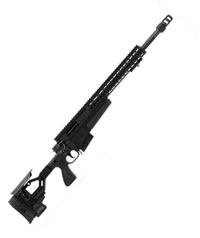
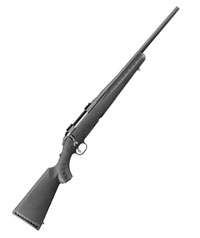
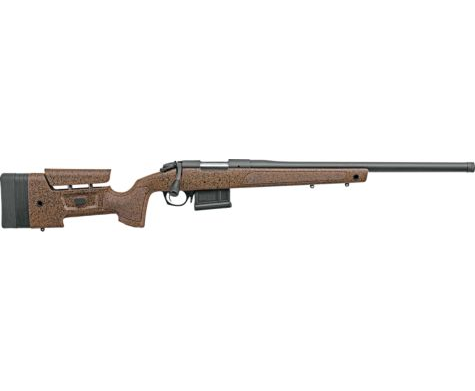
Ask any gun enthusiast which is their favorite rifle cartridge, and they will most likely tell you the .308. First introduced in 1952, it has become the cartridge of choice for hunting, sporting, military, and law enforcement.

Deep penetration and long-range capability are some of the reasons why it is so beloved. Also, the .308 Winchester is compatible with a wide variety of rifles. So much so that it is tough to pin down the best 308 rifles.

From bolt action rifles to AR-10s, the .308 Winchester is one of the most versatile cartridges out there. So which is the best .308 rifle on the market? This is undoubtedly a difficult question to answer.

Nonetheless, after researching extensively on the subject, we have narrowed it down to 10 rifles. These ten are in different categories. We have selected the ten based on their performance, user feedback, and our own personal experiences.

A Quick Check Of The Best 308 Hunting Rifle For The Money

The Best Bolt Action .308 Rifles

In an age where everything is automated, firearms included, bolt action rifles are a rare exception. To operate a bolt rifle you need to manually pull back the bolt and push it forward to chamber around. While these rifles rely on a rather ancient technology, their reliability cannot be disputed. They are popular with hunters. However, they are also used as sniper rifles in the military. From our research the best bolt action .308 rifles are;

Savage Arms 10 FCP HS Precision Rifle

  • 24-inch barrel
  • Matte black finish
  • Removable 4-round magazine
  • 10-pound weight
SAVAGE ARMS - 10 FCP HS PRECISION 24IN 308 WINCHESTER MATTE BLACK 4+1RD

The title of the best 308 bolt action rifle for the money goes to the Savage Arms 10 FCP precision rifle. At its core, it is a versatile rifle capable of fulfilling several roles. It has all the features of a reliable tactical gun and is also a dependable hunting rifle for deer.

Carbon steel is the primary material used to make this weapon. It is the material that is used to build the rifle’s 24-inch barrel as well as its receiver. Speaking of the receiver, we found it to be super rigid.

As for the barrel, it is built with a heavy profile aimed at minimizing barrel whip. At the back is the adjustable Savage AccuTrigger. The rifle is fitted with a removable magazine that holds four rounds.

Our main issue with the rifle is that it is not the most lightweight. Weighing 9.6 pounds, mainly this is quite a heavy firearm. However, this is primarily due to the heavy barrel.

Remington® Model 783™ Bolt-Action Rifle and Scope Combo

  • Adjustable crossfire trigger system
  • Factory pre-installed 3-9×40 scope for 308 cal
  • Removable steel box magazine
  • 22-inch Magnum Contour Barrel
Remington 783 Bolt-Action Rifle with Vortex Crossfire II Scope

Costing over $1000, the Savage Arms 10 FCP is not for everyone. The same cannot be said about Remington’s 783 bolt action rifle. Priced at below $500, it is one of the more affordable options available on the market.

The rifle comes with a free-floated carbon steel barrel. But what makes this rifle stand out is the adjustable crossfire trigger system. We found the trigger system to be quite impressive, considering the rifle’s price.

We found the push-feed action and 90 degrees bolt throw smooth and positive. However, the gun’s two-position safety was a bit clunky. Nevertheless, it worked well enough. You get a four-round steel magazine with a steel magazine latch. This is a welcome addition given the price tag.

If you are on a budget, this is the best .308-action rifle. Its features are rare to find in guns at its price point.

Top Semi Auto Rifle 308

Unlike bolt action rifles, semi-automatic rifles use a gas blowback system to chamber rounds. Thus there is no manual operation. As such, they are considered ideal for tactical purposes.

The most popular semi-automatic rifles are AR-10-style firearms. For tactical purposes below is our pick of the best 308 tactical rifle.

Savage MSR 10 Hunter Semiautomatic Tactical Rifle

  • 5R rifled 18-inch barrel
  • Six-position AXIOM stock
  • AR blaze trigger
  • The lower and upper receiver
savage msr 10 hunter semi auto 308 rfle

Savage Arms’ MSR 10 Hunter may look like an AR-10-style weapon, but it’s very different from conventional AR-10s. As its name suggests, it is built for hunting purposes. However, it can be used as a tactical rifle as well.

With a 16-inch barrel, its design is reminiscent of that or a carbine. Meaning it will be easy to use in either a tree stand or a ground blind. It uses the same direct impingement of other gas-operated AR-10s.

Compared to other AR-10-style firearms, this one has a shortened aluminum-alloy receiver. Similarly, the bolt carrier is also shortened. The result is a shorter rifle that weighs less than most similar firearms.

Another unique feature is the 12-inch free-floating handguard with MagPul’s M-lock system. This comes in handy when you need to install accessories. Instead of hanging on the barrel nut, the handguard is bolted directly onto the upper receiver. This translates to the gun being more accurate.

Though it’s been around since 2017, it is the best semi-auto 308 chambered rifle around for hunting.

Top 308 Hunting Rifle

Hunting is an art that requires specialized tools. Thus, not every rifle is suited for hunting. The 308 hunting rifle needs to be lightweight and compact. A heavy rifle will be difficult to handle as you traverse different vegetation and environments.

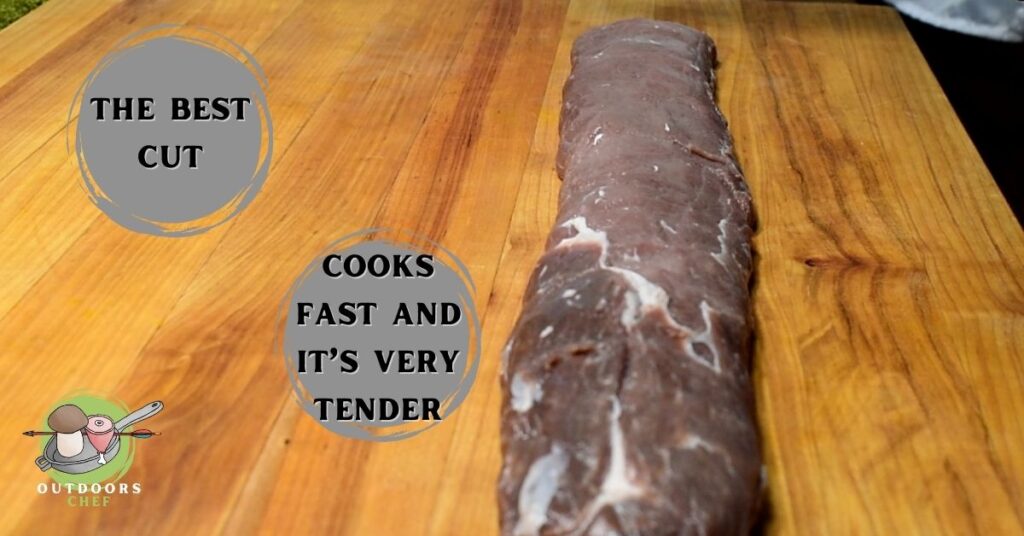
Accuracy is another important factor to consider. Ideally, bolt-action rifles are best suited for hunting. And here are our top picks.

The Ruger No 1 Centerfires Rifles

  • Sliding tang safety
  • Ruger scope mounting system
  • Sculpted receiver
  • 18 inch barrel

The title of the best 308 rifles for hunting has to go to the Ruger No 1 Centerfires Rifle. A gun that has stood the test of time has proven itself time and time again. And remains a darling of many the world over.

Available in several variations, the single-shot hunting rifle is steeped in the simplicity of the past. What makes it so popular is its ambidextrous nature. There is no line disturbing comb on the buttstock, and neither is there a cheekpiece.

More importantly, it comes with a tang-mounted safety and no bolt to interfere with the operation. The buttstock has a rubber recoil pad with a black spacer. The pistol grip is something many love about this gun. This is a classic gun with all the features of a top-quality 308 hunting rifle.

So what makes it the best choice for hunters? For starters it has a thin action which makes it easy to hold in one hand. It’s also just the right height for carrying over your shoulder. The absence of a protruding bolt handle makes it easy to carry on while on horseback.

Winchester Model 70™ Featherweight Rifle

  • 3-position safety
  • Grade-I walnut stock
  • Pachmayr Decelerator recoil pad
  • 22 inch barrel
Winchester® Model 70™ Featherweight Rifle

Like wine, the Model 70 has gotten better with age. This hard-hitting bolt-action rifle of the 1950s is still widely used. The walnut stock of the original Model 70 was a thing of beauty. And although modern Model 70’s come with a wooden stock, it is still a feast for the eyes.

While it has undergone design changes over its 66 years of existence, the modern Model 70 still retains some of the flair of the original. The current Model 70 still uses the original’s controlled round feeding system.

The MOA trigger system is by far the most exceptional trigger system to be fitted on a bolt-action rifle. It has zero take-ups, zero creeps, and zero overtravel. The stock still has the Pachmayr recoil pad that soaks up much of the recoil.

Top 308 Battle Rifle

The chaos of battle necessitates a semi-automatic rifle that is both hard-hitting and easy to handle. Throughout history, there have been a plethora of battle rifles designed for the 308 cartridges.

One of the most famous battle rifles is the M14 Garand. Thus it should come as no surprise that the best battle rifle is one that is a close relative of the Garand. The Springfield Armory M1A-A1 rifle.

Springfield Armory M1A-A1 semiautomatic rifle

  • 18 inch carbon steel barrel
  • Composite stock
  • Two-stage trigger
  • Muzzle break
Springfield Armory Standard M1A Semi-Auto Rifle

The M1 Garand was the darling of the US military during world war two. It even saw action in Vietnam. Needless to say, it’s a legendary rifle, and its successor is no different. The Springfield Armory M1A-1A.

The walnut stock paired with a parkerized steel is reminiscent of its more legendary counterpart the M14 Garand. Left-handed shooters will love the positioning of the rifle’s charging handle. It is located on the right side of the action. Making it easy to reach.

One of the things we loved about this battle rifle is how easy it is to change the magazine. The positioning of the magazine release at the rear of the magazine well makes it easy to release the magazine.

The trigger is also a delight. It is a classic military two-stage trigger that requires little effort. While it is good enough to earn the title of the best 308 battle rifle, there are some things we did not like.

The main one is the positioning of the bolt release. Positioned on the left side of the receiver, we found it to be challenging to locate. All the same, it is a fantastic piece of military hardware that has continued the legacy of its predecessor.

308 Sniper Rifle Review

Sniper rifles are designed for precision shooting from a distance. As such, they require advanced technologies for accurate shooting. Due to their sophistication sniper rifles are quite costly. Most cost upwards of $5000. When you are splashing such kind of money on a rifle you need one that can deliver. The Accuracy International AX black rifle is undoubtedly the best you can buy.

Accuracy International AX Black .308 Win. 20” Rifle SFP PSR-BL308-BL20-SP

  • 40.5-inch overall length
  • Two-stage adjustable trigger
  • 20-inch stainless barrel
  • 20 MOA Picatinny rail
Accuracy International AX Black .308 Win. 20 Rifle

If you are feeling adventurous and want to splash money on the best 308 sniper rifle, you cannot go wrong with AX Black .308. The latter is a flagship sniper rifle from Accuracy International. Costing upwards of $7000 is quite the prize. Unlike most other guns on this list, this one is made from aircraft-grade aluminum. The aluminum is then coated in a corrosion-resistant protective coating. It comes installed with a rail for mounting accessories such as optics.

The QuickLoc barrel release system allows for easy and fast removal of the barrel. You can swap out the barrel using a 4 mm hex wrench. The whole process takes a few minutes. It is also fitted with a chassis folding stock that reduces the length of the gun by up to 260mm.

The magazine holds ten rounds and is a low-friction magazine. Accuracy International’s tested and proven 3-position safety improves the design of this weapon.

308 Tactical Rifle Reviews

When it comes to close-quarter combat or shooting tactical rifles are best. And the best tactical rifles are AR-10 and AR-15 style rifles. These rifles are also easy to handle and most importantly need to be ambidextrous.

Smith & Wesson M&P 10 sport

  • 20 round magazine
  • Picatinny rail system
  • 6-position telescopic stock
  • 16-inch barrel
Smith & Wesson M&P10 Sport Semi-Auto Rifle

AR-10-style rifles are considered fantastic for tactical purposes. And the Smith & Wesson M&P 10 sport is among the best. It is by far the best 308 tactical rifle due to its combination of excellent performance and a relatively affordable price tag.

Priced at around $1000, it is quite affordable for an AR-10 rifle. However, the most important thing is how it is compared to other AR-10 rifles. The first thing you notice about this rifle is the availability of all the main controls on both sides.

The safety selector, bolt catch, and magazine catch controls are available on both sides. This means it can be used comfortably by both left and right-handed shooters. Additionally, the magazine is textured to give a secure grip.

The upper receiver isn’t anything we haven’t seen before. You get the same forward assist and solid rail that comes with other AR-10 platforms. What was a bit disappointing about the rifle was the standard charging handle. It is stiff and small than average.

In spite of its few shortcomings, it is still the best 308 semi-auto tactical rifle in our view — especially given its price and features. If you are a serious hunter and want to get a perfect bull’s eye hit try to use one of today’s best bipods For AR 15 rifle.

Budget 308 Rifles Review

Spending $1000 on a rifle is not possible for everyone. For some of us, $500 is the most we are able and willing to spend on a firearm. Fortunately, there are some fantastic rifle options available in the budget market. These are rifles that cost less than $500. Ideally, a budget gun should offer quality without breaking the bank. Our choice for this category is the Ruger American Rifle Bolt action rifle.

Ruger American Rifle Bolt Action Rifles

  • 3-5 pound adjustable trigger
  • Rotary magazine
  • Three-lug bolt
  • 22 inch barrel
Ruger American Rifle Compact Bolt-Action Rifles

You don’t need to spend thousands of dollars on a bolt-action rifle. With $500 or less, you can get your hands on the Ruger American Rifle. While it is an affordable rifle, it does not feel or even look cheap thanks to its parts.

The stock is made of a rigid polymer plastic of some kind. It looks sleek and does not have the same grip as some other similar products. However, this isn’t a big problem. Its barrel, on the other hand, is a free-floating barrel. Generally, free-floating barrels offer more accuracy. Thus the use of a free-floating barrel is very much welcomed. Some people may not be pleased with the trigger on this rifle, though. Like many other budget rifles, it utilizes an adjustable trigger that feels cheap.

Nonetheless, this is not a deal-breaker, especially since this is designed to be a budget rifle for target shooting.

The Best 308 Rifles For The Money

Value for money is important when choosing a firearm. When choosing a firearm, it is important to consider the price and the features they offer. There should be a balance between the price and features offered by a firearm. The one firearm that offers the best balance of features and price is the Bergara B-14 HMR.

Bergara B-14 HMR

  • 5 round magazine
  • 20-inch barrel
  • The adjustable extended bolt handle
  • 9-pound weight
Bergara B-14 HMR Hunting/Match Bolt-Action Rifles

Precision shooters and big game hunters will love the Bergara B-4 HMR hunting bolt action rifle. Weighing about 9 pounds and fitted with a 22-inch contoured barrel, it is not too heavy for carrying through forests and foothills.

The stock of the gun helps in transitioning from a big game hunting rifle to a precision shooting one. An aluminum mini chassis is molded into the polymer stock to form a pistol grip. It also allows the barrel to float freely.

The stock also has an adjustable comb height and length of pull, which also aid inaccuracy. By loosening a thumbscrew on the side of the buttstock, you can increase height by 1.25 inches. The increased comb height allows for better shooting.

On the other hand, the 22-inch barrel is long enough to provide the velocity needed for a match. But it’s also not too long as to be difficult to maneuver while on a hunt.

What To Consider and Avoid Before Buying 308 Rifles

These ten are just a few of the many rifles that accept the .308 cartridge. The market is flooded with all kinds of .308 rifles. So how do you choose the best for you? It all depends on what you are going to use your gun for.

For Hunting

If you are a hunter, chances are you will be carrying your rifle for long distances. As such, the 308 hunting rifle needs to be lightweight and functional. Less emphasis is placed on accuracy when it comes to a hunting rifle. As more emphasis is placed on ease of handling and weight. A hunting rifle should be lightweight and easy to handle. Also, hunting rifles accommodate only a small number of rounds. In most states, there is a limit on the number of hunting rifles can hold. Most hunting rifles are built with internal magazines. Though these types of magazines are slower to load, they make the gun look sleek. Also, an internal magazine means fewer moving parts.

Weight

While hunting rifles are lightweight, target shooting rifles are not. In fact, for target shooting, you are encouraged to get a heavier gun. A gun with a heavy barrel rifle offers more stability, which is what you need when target shooting. Also, more weight means reduced felt recoil. It also means more stability in the sight picture. All of which are essential for target practice.

Cost

Three hundred eight rifle prices range from as low as $400 to as much as $7,000. For hunting purposes, a $500 rifle is more than sufficient. However, if you want a tactical rifle, be ready to spend a bit more cash. Tactical rifles are designed to offer the best of both worlds. They offer the maneuverability of a hunting rifle and the precision of a target-shooting rifle. As such, they come equipped with advanced features and technologies. These types of rifles are used mainly in military and law enforcement. Additionally, they are also commonly used in “run and gun” style shooting competitions. The bottom line there is no need to spend thousands of dollars for a rifle that you will use for hunting.

Brand

This isn’t the most critical factor to consider, but it is something to have in mind. Some of the best rifle brands include Winchester, Ruger, Remington, and Smith & Wesson. While there are many other gun makers out there, some people may feel comfortable buying from these mentioned.

Frequently Asked Questions

Conclusion

Due to the sheer number of rifles that use the .308 cartridge, you will be spoilt for choice when searching for a .308 rifle. Thus, it is essential to consider what type of rifle suits you best. While bolt action rifles are ideal for hunting, they are not recommended for close quarter shooting.

Rifle Peep Sights: How to Improve Your Vision? (Ultimate Guide) – Ranger Point Precision

0
  • Over the years: Peep sights for improved vision
  • How do peep sights improve your vision?
  • Wrapping up

Peep sights work by being a small aperture that you look through. The peep sight is attached to the back of a rifle and allows you an improved view – without having to take your eye off the front sight / point of impact .

People who use peep sights on rifles tend to enjoy an enhanced level of vision as well as better accuracy. Simply looking through a peep sight has been found to improve vision by about 5 percent , and this number increases if peep sights are used regularly. This improvement in vision has greatly benefitted hunters who hunt at dawn and duskPeep sights are becoming more popular by the day, especially on lever action rifles, because of the easy installation and more accurate field of vision, as compared to other sights. If rifle peep sights are new to you, it’s advisable to give them a shot before you completely write them off as something that doesn’t work in your favor.

Read ahead to find out more about how peep sights help in not only improving your vision, but also your overall shooting experience!

Over the years: Peep sights for improved vision

In the early days of peep sights, hunters used peep sights on rifles to help them shoot more accurately in low light conditions. Peep sights were found to be very helpful in hunting during twilight hours when the game was most active but the sun had not risen yet or had already set. The aperture in a peep sight collects light and amplifies it as you look through it, which improves your ability to see your target in dim conditions.

People have long known peep sights to improve vision, so peep sights on riflesare widely used across the world. This improvement in vision is especially useful when aiming at targets during low light-time, or hunting during twilight hours.

However, although peep sight installation on rifles is becoming more popular than ever, some shooters are still hesitant to use peep sights because they’ve never tried them before or do not understand how peep sights work and how they improve vision.

How do peep sights improve your vision?

Rifle peep sights greatly improve daylight vision, as well as work well in low light conditions – which has helped many shooters hit their mark with greater ease than ever before. Peep sight usage is becoming more popular every day among rifle owners who would like an easy way to improve their ability to see targets when shooting at night or in twilight hours.

The benefits of installing peep sights on your rifle are many and varied, but the ability to see your target more clearly in low light conditions is one of the most important reasons to install peep sights on your rifle.

Peep sights also don’t obstruct the target as much as other types of rifle sight due to their sleek design and peep sight installation is easy to do. Additionally, the wide field of view that peep sights offer makes it easy for shooters to follow the action and keep track of their targets.

Even in low light conditions, peep sights will help you see the target more clearly so you can make that perfect shot. Some good examples of peep sights are the Marlin 1894 peep sights and 1895 peep sights.

The merits of installing peep sights on your rifle:

1) Peep sights don’t magnify the target like telescopic sights do, which can be a benefit or a drawback depending on the shooter’s preference.

2) Peep sights don’t require batteries to operate as telescopic sights do.

3) Peep sights handle recoil better than telescopic sights do.

4) Peep sights offer a wider field of view than telescopic and prismatic sights.

5) Peep sights are easy to use, even for beginners.

6) Peep sights are an excellent choice for all types of competitive shooting.

7) Peep sights work well in low light conditions, making them perfect for hunting at twilight hours.

8) Peep sight installation is simple and easy to do; and they work on many different types of rifles without needing tools for installation.

Moving ahead, let’s get a better insight into how to use a peep sight on a rifle, and what’s the way to pick the best fit.

How do I pick the right peep sight for my rifle?

1) Determine the peep sight aperture size you need for low light (smaller) or full light shooting (larger).

2) Decide on a peep sight mount style that will work best with your firearm model and shooting preferences.

3) Determine peep sight windage and elevation settings to align with your front sight..

4) Check customer reviews of peep sights from reputable brands to ensure quality is up to par before you buy.

5) Once you have chosen the peep sight that you want to purchase, make sure to measure the size of your rifle’s existing rear sight aperture and order a peep sight that is the same size or larger.

6) If your rifle does not have a rear sight aperture, choose a peep sight with a built-in aperture ring that fits the diameter of your barrel.

7) Some peep sights come with interchangeable aperture rings in different sizes for shooters who want to customize their sighting system.

8) Follow the manufacturer’s instructions for peep sight installation.

9) Test your new peep sight at an outdoor shooting range before taking it on a hunt. Sight in your rifle with the new peep sight to make sure the shots are landing where you expect them to.

Wrapping up

At the end of the day, peep sights are a great choice for shooters and work to greatly improve their vision when shooting in low-light conditions. Whether peep sight installation is right for you depends on your preferences, but you’re sure to go home with dinner if you’ve installed peep sights on the rifle you’re using.

Moreover, peep sights are a great way to improve your vision when shooting in low light conditions, and they offer several other benefits that make them a better choice than other sighting systems. Whether you’re a hunter, shooter, or gun enthusiast, peep sights are worth considering as an upgrade to your rifle.

Happy Shooting!

Pickerel: Better Fishing Than Eating

0

In the winter anglers do many odd things to channel their fishing fever into substitutes, hoping to dim in some small fashion the feverish intensity of their urge. They whittle new plugs, polish old plugs, discard battered flugs, tie flies, mend nets, read outdoor journals, pore over maps to find new fishing spots to try in the spring, dream about exotic trips to Canada, Yellowstone, Iceland.

If they have the time and money they jet to Florida and pursue glamorous saltwater species. Florida in the winter isn’t really such a red-hot place to fish: It’s better by far in the spring.

Area waters are ignored, except by a few hardy souls with butane in their veins who know about a green snake of a gamefish called the chain pickerel. These toughskinned pickerel-pursuers couldn’t care less that hatches on the trout streams and spawning in the bass lakes are months away. Their quarry loves the cold.

The Washington area offers prime pickerel waters within a one- or two-hour drive in just about any direction (though north, south and east are preferable to west.) Pickerel are in ponds, lakes, rivers and huge impoundments. Yet they draw little attention from fishermen.

Some people simply don’t like the cold, and since pickerel bite best from December through March, quite a few potential anglers never try them.

You’re probably read that pickerel are harsh on the palate, poor fighters and ugly. The last point is moot, the second false. The first one is true.

Pickerel have tasty, sweet meat, but few people get past the first mouthful before they give up in disgust at the bones riddling the flesh. You can try scouring them with cross-cuts and frying in hot oil, which is supposed to make the bones “chewable.” But even chewable bones are anathema to some. There are also complex filleting methods you can look up in dusty tomes if you’re dead set on eating everything you catch.

Whether the pickerel is an ugly fish we’ll leave to the aesthetes. Certainly they are prehistoric-looking, with long, pointed snouts, enormous mouths and a ghastly set of razor-sharp teeth.

Describing the fighting ability of a fish – any fish – is always risky, because each fish is an individual. One pickerel may fight like the devil and the next may fight like a wet paper bag. The same is true of bass, trout and catfish. Generally speaking, pickerel are good fighters – but not great.

But fighting really isn’t much more important than eating qualities or looks where pickerel are concerned. What’s appealing is the whole ritual of pursuing a unique gamefish in his home waters and enticing him to take the bait. Fishing is first and foremost a battle of wits (man) against instincts (the fish). When pickerel are the quarry, the encounter is rich and challenging.

Pickerel habitat encompasses a broad spectrum of water types. Lakes and tiny ponds hold fish, as do sprawling impoundments, broad rivers and wadeable streams. Pickerel prefer blackwater ponds and creeks – waters with a low pH that are stained brown with tannic acids given off by certain plants.

Certain of Maryland’s Eastern Shore ponds and rivers come to mind immediately, as do similar branches and lakes in the tidewater portions of Virginia. The Choptank is one of Maryland’s better pickerel rivers, as are the Nanticoke, Pocomoke and Severn: A list of ponds in Maryland that contain pickerel is printed in the fishing regulations pamphley given out where licenses are sold.

Virginia pickerel, called jackpike by locals, inhabit many blackwaters. The Mattaponi, Pamunkey and Chickahominy, located east of I-95 between Richmond and Fredericksburg, are classic pickerel rivers. A.P. Hill and Quantico military reservations also offer good pickerel possibilities.

However, pickerel also thrive in waters about as black as Mountain Dew. Such inland lakes as Anna and Kerr offer many outsized pickerel in the four – and five-pound range.

Average pickerel in most waters run closer to one or two pounds. Due to their diminutive size, heavy bass tackle is not required to catch the lean fish. Ultralight or light spinning gear is in order, with lines testing four to eight pounds. Den’t worry about the tales of pickerel’s teeth shearing the line. It rarely happens. Wire leaders only serve to impede the action of lures and bait.

Those who favor artificials may hate to admit it, but pickerel can usually be caught more readily with live minnows. Their diet consists almost entirely of other fish, and they seem powerless to resist a helpless victim floundering within reach. So greedy are pickerel that I’ve caught them on small shiners when they still had freshly killed seven-inch-long sunfish bulging in their stomachs.

Look for pickerel in moderate to shallow depths of lakes and rivers where they cruise for food. The fish also like to hold parallel to weedbeds and dropoffs, where they lie in ambush waiting for an unwary baitfish to fin by. When a minnow swims near, the pickerel contorts its body like a snake coiling to strike and darts with blinding speed at the victim, clenching it sideways in the grasp of its inward-angling teeth.

If the pickerel are deeper than five feet, use either a shad dart and minnow or a fine wire hook, split shot and minnow. Crawl the bait in slowly. If the jackpike are in the shallows you can use a bobber and move the minnow from spot to spot after a minute or two if you don’t get a strike.

Lures can take pickerel, also, and sometimes they’ll outfish a minnow. The Johnson Silver Minnow tipped with a pork rind is the old standby pickerel hait, and it hasn’t lost its appeal. Also good are red- and-white Daredevils and broken-back Bebels and Rapalas.

Work these lures with a moderate to fast retrieve and a tight grip on your rod. The strike of a pickerel can be an explosive thing – something that’s sure to take the chill out of a cold wintry day.

Forrest Fenn’s Treasure Was Discovered in This National Park, but Rangers Want to Keep Exact Location a Secret

0

Forrest Fenn, treasure, map, wyoming,
Forrest Fenn’s map and treasure which was recently discovered in Wyoming.

It’s been almost two years since Forrest Fenn’s riddle was solved, and the $2 million worth of treasure he’d buried was found. Until recently, the only thing we knew about its location was that it was in Wyoming. Until now.

A recent article on Outside Online has revealed that the treasure was buried in ‘an iconic American landmark’ in Yellowstone National Park. Park Rangers are aware of the exact location but want to keep it a secret. They’re concerned that should the exact location be revealed, it would become swamped by tourists, damaging the fragile landscape. However, an ongoing lawsuit against Fenn (who passed away in September 2020) may result in that location being revealed.

Author Forrest Fenn confirmed in a blog post in July 2020 that his chest filled with $2 million worth of treasure was found in Wyoming.

Many of the searchers for my treasure had solves that seemed to neatly fit the clues in my poem. Then when the finder found and retrieved the treasure, other searchers wondered how close they had been to the right spot. Because I promised the finder I would not reveal who found it or where, I have remained mostly silent.

However, the finder understands how important some closure is for many searchers, so today he agreed that we should reveal that the treasure was found in Wyoming. Until he found the treasure, the treasure had not moved in the 10 years since I left it there on the ground, and walked away.

Perhaps today’s announcement will bring some closure to those whose solves were in New Mexico, Colorado, or Montana.

To all of those who did not find the treasure, we hope that you got some enjoyment from the chase. f

For a decade, the $2-million treasure chest sat undiscovered in the Rocky Mountains, with the only man who knew where it was leaving clues to its whereabouts, promising whoever found it could keep it. At least four died in its pursuit, and many sacrificed jobs and their livelihoods. Finally, some lucky sleuth found it. But that didn’t stop the disbelievers.

Forrest Fenn, treasure chest,
Forrest Fenn with his treasure chest that was found in Wyoming.

As is the case with many mysteries, there were plenty of people calling it a hoax, claiming conspiracy theories and disbelieving it even existed. But Forrest Fenn, the man behind the quest, put those theories to rest by releasing pictures of the discovered treasure.

Forrest Fenn, treasure,
Photos taken by the man who discovered it.

The 89-year-old art and antiquities collector posted three pictures of the treasure on dalneitzel.com, a fan blog dedicated to the treasure hunt. While some remained skeptical, most of the comments on the site congratulated the finder and thanked Fenn for the experience.

Forrest Fenn, treasure
Fenn wearing a bracelet made of silver, which has been tarnished black.

It all started when art dealer and former air force pilot, Forrest Fenn, revealed in his self-published 2010 novel, “The Thrill of the Chase”, that he had buried a lockbox full of about 2 million dollars worth of gold, gems, and artifacts. The clues to the treasure’s whereabouts were hidden in a 24 verse poem that is included in the memoir. Many people have quit their jobs and spent their life savings in the quest to find the buried treasure.

THE TREASURE HAS BEEN FOUND

It was under a canopy of stars in the lush, forested vegetation of the Rocky Mountains, and had not moved from the spot where I hid it more than 10 years ago. I do not know the person who found it, but the poem in my book led him to the precise spot.

I congratulate the thousands of people who participated in the search and hope they will continue to be drawn by the promise of other discoveries.

So the search is over. Look for more information and photos in the coming days.

– Forrest Fenn, June 6th 2020

treasure, wyoming,
Forrest Fenn

Mr. Fenn stated that the Treasure was located in the 1,000-mile stretch of the Rocky Mountains from New Mexico to the Canadian border and at least 5,000 feet above sea level, in an area that an 80-year-old would not have trouble accessing. Fenn estimates that over 100,000 people have attempted the search for his treasure and originally said that he hoped the hunt would push more people outside to enjoy the wilderness. Asked how he felt now that the treasure has been found, Fenn said: “I don’t know, I feel halfway kind of glad, halfway kind of sad because the chase is over.”

  • Related: Police Warn of ‘Deadly Pursuit’ as 2 Have Died in 2 Years Searching for Buried Treasure in Rocky Mountains

Within days of the treasure being found, three separate lawsuits were filed by people claiming they solved the puzzle first, with one lady claiming that the man who got to it first “stole her solve”.

  • Related: Man Who Found Forrest Fenn’s Treasure May Have to Fight For it as 3 Others Claim They Solved Puzzle First

In March 2020, two Coloradan snowmobilers were searching for Forrest Fenn’s elusive treasure when they became stranded, and one died in a Utah park. In June 2017, New Mexico authorities found the body of Paris Wallace, a Colorado Pastor who had joined the hunt. A year before Randy Bilyeu disappeared while searching for the treasure, his remains were found in the Rio Grande seven months later.

treasure, Rocky Mountains, deadly, wyoming,
The map and clues left by Fenn. Credit: Instagram
Best Air Rifle Deals

Popular Posts

Master Small Game Hunting with an Air Rifle: Tips and Techniques

0
"Experience the thrill of small game hunting with an air rifle! Embark on a captivating journey as you test your accuracy and precision in...

.22 vs .25 Air Rifle: The Ultimate Comparison Guide

0
When I first got introduced to the world of rifles, I often thought that a bigger caliber meant better performance. So, I thought that...

Synthetic vs Wood Stock: The Final Showdown Between Brunette And Blonde

0
I understand that you’re here to get some quick facts on synthetic vs wood stocks Probably to guide your purchase.  Quick alert - the debate...