Home Blog Page 56

The Stories Behind the Biggest Whitetail Deer—EVER

0

They may not be the prettiest specimens on the planet, but then again, beauty is in the eye of the beholder. And we’re willing to bet you wouldn’t pass up any of these bucks because they were a tad asymmetrical. Some of these deer were taken by hunters who didn’t mind a lot of junk. One deer’s death remains a mystery, while another got “ran over by a damned old train.” Classic country songs aside, these are the stories of the biggest whitetail deer to make it into the Boone and Crockett records.

Want to see the score charts?

It’s easy. First you’ll need to register on B&C’s website. It’s FREE and takes less than a minute to complete. If you already have an account, simply log in to gain access.

Number 1 – Missouri Pick Up

Score: 333-7/8 Location: St. Louis County, Missouri Year: 1981

Its rack weighs more than 11 pounds, and it has more cheaters than a daytime soap opera. But that’s about where the drama ends for this guy. He was found dead inside a fence along a road in northern St. Louis County. A hunter who already had his buck notified the warden who got permission to retrieve it. They couldn’t find any bullet holes and didn’t have any ideas on the cause of death. It was only 5 ½ years old. The head was forgotten until the first of the year when the warden took it to the taxidermist who knew at first glance what he had. It was measured and dubbed the biggest and baddest whitetail of all time. It remains property of the state of Missouri on display for all its citizens to see.

View Score Chart

Number 2 – Ohio Pick Up

Score: 328-2/8 Location: Portage County, Ohio Year: 1940

Taken down by a train, this buck hung in the Kent Canadian Club in Kent, Ohio for years. Dick Idol, an outdoor writer and avid antler collector, acquired the antlers from the club a few decades after it died. He had it officially measured and the entry measurement had it coming in as number one. Idol declared it number one and started to spread the word that a new king was crowned. The buck still had to go before a Scoring Panel at the 19th Awards. The panel score was lower, and the buck was bumped to number two. According to the records, “The slightly lower score…is explained by the necessary interpretation of several points on the beam as being either typical or non-typical.” To be fair, the rack has nearly 200 inches of abnormal points.

View Score Chart

Number 3 – Brewster Buck

Score: 327-7/8 Location: Edgar County, Illinois Year: 2018

Yes, you’ve seen this buck here before, but don’t you think it’s worth another look? This is the biggest free-ranging whitetail ever taken by a hunter, and it was taken by a guy who is no stranger to world-class whitetails. Luke Brewster and his friends are whitetail fanatics with a knack for consistently taking giant bucks. The group called this buck Mufasa and Brewster (who lived in Virginia) was in the right place at the right time on a November morning when the buck stepped into bow range.

View Score Chart

Number 4 – Butcher Buck

Score: 321-3/8 Location: Chase County, Kansas Year: 2019

If you’re scoring a deer like this, it’s best to just clear the calendar and put on a pot of coffee. Brian Butcher had been hunting the same property for 13 years, and in April 2019 his trail camera snapped a photo of this creature. In the fall, Butcher returned to hunt in his treestand on the edge of a CRP field when the buck returned. At 25 yards, Butcher released an arrow. And it was all over—except the scoring, of course. That took a little while.

View Score Chart

Number 5 – Tennessee Tucker Buck

Score: 315-1/8 Location: Sumner County, Tennessee Year: 2016

For two years, Stephen Tucker held the crown of having killed the biggest free-ranging whitetail of all time before Brewster’s Illinois giant fell. Tucker killed his buck on his family’s small farm during Tennessee’s November muzzleloader season. It was, in fact, the second time he’d had the buck within range. The first time he saw it, Tucker had the buck at 30 yards, but his muzzleloader failed to fire. Eventually, Tucker caught up with the buck again.

View Score Chart

Honorable Mention – Bryant Crossbow Buck

Score: 304-3/8 Location: Fulton County, Illinois Year: 2001

Illinois isn’t known for harboring caribou, but the shovel-like eye-guard on this bruiser could have come from the Arctic Circle. Considering that hunter Jerry Bryant wasn’t after caribou or even a deer when he shot the new Illinois state record, the buck is a pretty good blind luck story. Bryant was minding his own business back in 2001 in a treestand on his buddy’s farm enjoying a Twinkie and some Mountain Dew with his trusty crossbow by his side. Because he was injured on the job a few years back, he couldn’t pull back his compound, so he applied and got a special permit to hunt with a crossbow.

A group of gobblers came into view, and when he reached for his bow (he was actually turkey hunting), they spooked and took off. Soon thereafter, a doe cruised by, urinated and moved on. Hot on her tail was Big Buck Jones (seen here). It stopped to sniff her puddle of pee, which gave Jerry a 15-yard slam dunk. The buck didn’t even flinch after being shot through the heart. It took a few steps, wobbled, and died. Jerry kept the news of the buck on the down low as he was going through a rough divorce at the time and didn’t want half his buck taken. Once court was adjourned, he revealed his 36-point buck.

View Score Chart

Interested in Reading More About Whitetails?

How to Butcher a Turkey- Humanely

0

Have you purchased or priced out a locally raised free range non-gmo/soy free turkey for Thanksgiving? Well, they can be a bit on the expensive side. Understandably, it’s a very high quality product but it’s just an expense that we can’t justify.

Several years ago, we decided to start raising our own turkeys for the holidays and just for some good eating at other times of year. We have also raised some to sell which helps offset the cost of raising them for our own family.

Turkeys really are a joy to raise and are quite good foragers. They still have to be fed some feed, we choose non-gmo/soy free grower feed.

We have tried several options for tractors for the turkeys to move them on pasture as well as free ranging them. I enjoy letting them just free range but they like to go a little further than I want them to.

Butchering a turkey is much like the chicken butchering process, just on a much larger scale.

How to Butcher a Turkey

First we caught several and tied them up by their legs. They are pretty big and heavy but very docile. I’d suggest making some kind of kill cone or using a feed sack with a corner cut out for the head to go through. This will just reduce the amount of flopping as you butcher them.

If you’ve ever butchered any poultry, you know the nervous system causes a lot of flapping and what not during the process.

How to butcher a turkey at home. Butchering turkeys on your own is a great skill to learn on the homestead. It

After hanging them up we chose to cut the main artery on either side of the neck. This ensures the bird bleeds out well for cleaner meat and is humane. The nervous system causes them to flop and flap a bit so stay clear until they stop so you don’t get flogged. This is where the kill cones come in if you have them.

How to butcher a turkey at home. Butchering turkeys on your own is a great skill to learn on the homestead. It

Next we scalded them in a drum filled with water over a fire. Scalding causes the feathers to loosen up so that they can be plucked.We regulated the temperature by adding cooler water or stoking the fire depending on what our goal was. Turkeys should be scalded at 145-150 degrees.

How to butcher a turkey at home. Butchering turkeys on your own is a great skill to learn on the homestead. It

Now that they were scalded we hung them up again by the feet and began plucking. If you have access a chicken plucker that’s large enough for a turkey, they work quite well and are much faster than hand plucking.

Once we had most of the feathers out we moved them to a table for further plucking and cleaning as well as removing the innards, head, and feet. After they were clean we placed them in a chill tank of cold water.

How to butcher a turkey at home. Butchering turkeys on your own is a great skill to learn on the homestead. It

How to butcher a turkey at home. Butchering turkeys on your own is a great skill to learn on the homestead. It

Once the turkeys were all plucked and clean we packaged them in poultry shrink bags. This is done by placing the bird into the bag and dipping it into 180 degree water. and then seal the bag with a twist tie. I don’t have any pictures of this part because I was quite involved in the process.

How to butcher a turkey at home. Butchering turkeys on your own is a great skill to learn on the homestead. It

The turkeys ranged from 12lbs to 21 lbs with most of them being about 17lbs. Now we have beautiful, healthy turkeys ready to freeze, eat, and sell.

It’s really not hard to learn how to butcher a turkey. You’ll be able to raise and butcher a high quality turkey for a fraction of the price of one you can buy. Butchering turkeys at home is a skill that I’m so glad we learned!

Here is our step by step video on how to butcher a turkey (we also use a plucker in the video):

For more on how to butcher a turkey-

A Farmish Kind of Life

The Spruce

The Self Sufficient HomeAcre

More posts like this:

Yes, You Can Hunt American Bison Here's How

0

If you’re looking for an adventure and a chance to hunt one of the largest land mammals in North America, then bison hunting in the United States is for you! In this blog post, we’ll discuss everything you need to know about hunting these impressive creatures, including where to go and what you need to bring. We’ll also provide some tips on how to bag your bison buck. So if you’re ready for an unforgettable hunting experience, keep reading!

The American Bison, also called the buffalo, is one of the few legendary animals the great plains of North America. For a select few hunters, tagging one of these animals is a dream, and one of the ultimate tests of your hunting sportsmanship skills.

Once you’ve set your sights on adding one of these majestic creatures to your trophy collection, the question becomes where and how you’ll hunt it. We’ve scoured the country for the best ranches to give you the best experience, both hunting and relaxing.

Bison Hunting For Beginners

Most hunters are familiar with the basics of deer hunting before they even touch the trigger for the first time. Bison hunting though is a bit more exotic and so I want to start off with some quick bison hunting tips for beginners.

What To Expect On Your First Bison Hunt

Hunting American bison, also known as buffalo, is a significant undertaking that requires careful preparation and respect for the animal and its natural habitat itself. Here are some things a person should know before they begin:

  1. Understand the Regulations: Hunting bison is regulated by state and federal laws. You should check with local wildlife agencies or hunting guides to understand the specific regulations in your area. This may include obtaining a hunting license and a specific bison tag.
  2. Physical Fitness: Bison hunting can be physically demanding. Bison are large animals that often live in rugged terrain, so hunters should be in good physical condition.
  3. Equipment: You will need a high-powered rifle, as bison are large and tough animals. A .30-06 caliber rifle or larger is often recommended. You’ll also need appropriate clothing for the weather and terrain, as well as camping gear if you plan to hunt for several days.
  4. Hunting Skills: Bison are large, but they can be elusive. Understanding their behavior, knowing how to track them, and being patient are all important skills. Hiring a guide can be very helpful if you’re new to bison hunting.
  5. Field Dressing and Transport: Bison are massive animals, often weighing over 1,000 pounds. You’ll need to know how to field dress the bison to preserve the meat, and have a plan for transporting it. This often involves having a vehicle capable of carrying the animal, or packing out the meat in multiple trips.
  6. Respect for the Animal and Environment: Bison are a symbol of the American West and hold significant cultural value for many Native American tribes. It’s important to approach the hunt with respect for the animal and its environment.
  7. Safety: Bison are large, powerful animals and can be dangerous if provoked or cornered. Always maintain a safe distance and never attempt to approach a bison too closely.

Remember, hunting should be done responsibly and ethically, with a focus on our conservation efforts and respect for wildlife.

How Much Does A Bison Weight?

The average bison bull will weigh between 1000-2000 pounds, with cows (females) and big bulls on the lower end of that spectrum and big bulls often weighing well over 2,500 pounds. A full-grown bull can stand up to six feet tall at the shoulder and twelve feet long from nose to tail. Their massive heads can account for one-third of their body weight.

What States Have The Best Bison Hunting?

There are several states with large bison populations and great hunting opportunities. These include Montana, Wyoming, Colorado, Nebraska, North Dakota, South Dakota, Oklahoma, and Texas. Each state has different rules and regulations regarding bison hunting, so be sure to do your research before planning your trip and pick a professional bison hunting outfitter who can make sure everything goes smoothly.

Is A Buffalo The Same As An American Bison?

Most Americans use the term “buffalo” and “bison” interchangeably and this is a misnomer that historians believe began when the first European settlers began exploring the American west and thought these huge animals were the same as “Old World” buffalo herds such as Cape Buffalo and Water Buffalo that are native to Africa and Asia. American Bison however are not closely related.

Regardless though, in the context of big game hunting – buffalo and bison hunting methods are pretty much the same here in the United States. Though there are actually places where you can hunt Asian Water Buffalo in Florida though.

Are Bison Endangered?

The American bison was once on the brink of extinction, but thanks to conservation efforts, their populations have rebounded in recent years. There are now more than 450,000 bison in North America, with the majority of them (~400,000 bison) living on private ranches and farms for hunting and harvesting as livestock. The rest of the wild bison live in national parks and other protected areas such as zoos, wilderness preserves, and state or regional parks.

What Does Bison Meat Taste Like?

Bison tastes similar to beef, but their meat is leaner and has a slightly sweeter flavor. Like beef though, it depends highly on the type of food that the animal eats and you’ll notice regional variations, as well as large differences between farm-raised bison, fed a diet of hay and native grasses followed by grains to turn the natural yellow fat color into a milky white. In fact, wild buffalo meat is also a great source of essential fatty acids due to the natural grasses consumed.

Bison steaks are best when cooked medium-rare to rare, and the buffalo meat can be used in any recipe that calls for beef.

Best Time For Buffalo Hunting

The best time for hunting trophy bulls is between September and February. Winter hunts are the best time of year if you are looking for full robes. However, for those doing meat hunts, summer is a better choice since the weather can often be better and the meat bulls have been feasting so the meat will be a bit fattier and more flavorful. Ultimately it depends on what you want out of your own trophy bulls and buffalo hunts as to what time of year is best.

Best Weapon And Ammo For Buffalo Hunts

The best weapon for bison hunting is a rifle that can handle large and heavy bullets. A good choice would be a .300 Winchester Magnum or larger. As for ammunition, you’ll want to use bullets that are designed to penetrate deeply, such as the Nosler Partition or the Barnes TSX.

However, many people enjoy hunting buffalo with bow and arrow, while others like to add an additional level of challenge by hunting with muskets and historic weapons in the style of early pioneers.

Do I Need An Outfitter or Guide To Hunt Bison?

While you don’t technically need an outfitter or hunting guides to go bison hunting, it is highly recommended, especially if you’re a beginner. A good outfitter will not only help you with the logistics of your bison hunt, but they will also ensure that you are following all the rules and regulations.

Additionally, most outfitters and ranches offer hunting on their own private property. This means there is less risk of encountering other hunters as well. However, several states do offer public-land bison hunting opportunities. These include: Alaska, Arizona, Montana, Utah, and Wyoming. As with other large game, these tags are limited and awarded by lottery, often with preference to state residents.

Our Picks For The Best Bison Hunting Outfitters

Hunting the legendary American bison is an experience that is as achievable as it is exotic. While acquiring one of those public-land bison hunting tags is quite literally like winning the lottery, there are numerous options for those aspiring buffalo hunters who are looking to work with a bison hunting outfitter.

Having an expert hunting guide and a trained, experienced, and knowledgeable outfitter will make the difference between a mediocre hunting trip and a bucket-list-worthy adventure that you will remember for the rest of your life.

This list is not ranked. While there are certainly great buffalo hunting outfitters and some that fall short, we find that it is just as important to find a bison hunting outfitter that matches an individual’s personality and style. As such, we’ve chosen to organize our list of buffalo hunting ranches and lodges by state and encourage you to find one that matches your hunting style best.

Bison Hunting In Colorado

Colorado is one of the best places for bison hunting. With its diverse landscape of great plains and large herds of bison, Colorado is a mecca for hunters looking to add this impressive creature to their trophy deer collection.

Some of the best places to hunt bison in Colorado are on private ranches. These ranches offer experienced guides, comfortable lodges, many hunting grounds and access to some of the largest herds of bison in the state.

Prairie Ridge Buffalo Ranch

This working buffalo ranch offers a variety of activities orbiting around their private herd of bison roaming the Colorado prairie. From tours designed for families, cookouts, and of course buffalo hunts, Prarie Ridge Buffalo Ranch has something for everyone.

Cassidy Outfitters

Offering a wide variety of big game hunting options on this private ranch, this is almost like a free-range bison hunting experience since the fences are low and the bison are roaming free across thousands of acres of canyons packed with pinyon, rocks, and cedars as well as the flat grasslands of this private ranch.

Bison Hunting in North Dakota

Outside of Yellowstone National Park, one of the best places to see wild bison is at Teddy Roosevelt National Park in western North Dakota. While that park is an amazing destination to hunt bison and explore for those packing a camera instead of hunting gear, the state is also home to private herds and some fantastic bison hunting outfitters as well.

The Bison Ranch Lodge & Outfitters

Get out of the south, and take your next bison hunt to the northern plains of North Dakota, where bison used to roam freely. Here you’ll find The Bison Ranch, about 2.5 hours west of Fargo, ND. The ranch has operated continuously since the 1920s, and has over 30 years of experience in the bison industry.

The hunt is unlike any other experience you’ll have anywhere else. The expert guides are dedicated to helping you harvest an incredible animal to fill your freezer, not to mention take a trophy. The focus is on hunting methods helping you take the best shot to humanely harvest your trophy, and preserve the most usable meat.

They even have a full state-approved butchering facility to prepare your harvest for an additional fee. Your lodge has a fully equipped kitchen so that you can prepare meals of your choosing.

Bison Hunting In Montana

Montana is one of the top states in the country when it comes to trophy bison hunts and exotic landscapes ranging from the Rocky Mountains to the wide-open prairie.

The state is home to several large bison herds, making it a great destination for hunters looking to add this impressive creature to their trophy collection.

Montana also offers some of the best opportunities for free-range bison hunting in the country. These hunts take place on public lands and require more planning and preparation than hunts on private ranches.

Bison Hunting In Tennessee

Tennessee might be one of the most surprising places to include on this list but don’t worry, you can go buffalo hunting here at one of the top exotic hunting lodges east of the Mississippi.

Caryonah Hunting Lodge

Forget having to head out west to get an opportunity to have a quality buffalo hunt. Caryonah Hunting Lodge is located about 75 miles west of Knoxville, TN. You’ll have the choice between the luxury cabin for groups of up to 22 people, or one of the 10 rooms in the hunting lodge. In either setting, your stay is comfortable, with high-speed Internet access, flat-screen TV with cable, comfy leather furniture, and Italian-tiles showers. You’ll also have an all-you-can-eat breakfast and lunch provided throughout your stay.

Most hunts at Caryonah are in close range due to thick brush and heavy cover. You’ll likely have your opportunity in under 100 yards, many within about 50 yards, making this one of the most exhilarating hunts you’ll experience. Your guide will even haul your harvest into the ranch’s walk-in cooler.

Bison Hunting In Texas

The folks in Texas will hunt pretty much anything and so it’s no surprise that the Lone Star State is also one of the top places for bison hunting too.

Texas is home to several large bison herds, making it a great destination for hunters looking to add this impressive creature to their trophy collection.

Bison hunting in Texas offers some of the best opportunities for free-range bison hunting in the country. These bison hunts take place on public lands and require more planning and preparation than bison hunts done on private ranches.

Ox Ranch

Ox Ranch is a step above the common hunting ranch for those who want more than simply a place to hunt bison. The accommodations are top-notch, with luxurious leather furniture and incredibly comfortable beds. You’ll also have some of the best food you’ve experienced while staying here, and have an assortment of other activities when you’re not hunting your bison, including night vision hog hunting.

The ranch boasts 18,000 acres, and has about 20 head of bison on the ranch’s property, including the more rare white buffalo. Your hunting package is all-inclusive, so you don’t have to worry about lodging, meals, or finding an experienced hunting guide. You can even use one of the ranch’s rifles if you prefer not to bring one of your own if you prefer.

Champion Ranch

Champion Ranch brings an entire resort experience to your buffalo hunt. You’ll certainly enjoy your hunting experience with one of the Ranch’s professional guides, who are themselves lifelong hunters. You’ll aim to tag a trophy between 800-2,000 lbs, with an animal up to 25 years old.

While at the ranch, you’ll enjoy 5-star accommodations no matter what lodging option you choose. You’ll find ample opportunity to relax with the cigar lounge, one of the three unique bars, live music, and so much more. You’ll satisfy your craving for spectacular food with the game dishes prepared by Executive Chef Aaron Chavez.

Montgomery Properties Ranch

The Montgomery family has over 6 generations’ experience in ranching, including both habitat and wildlife management. The success of this program has resulted in the success our hunters have enjoyed during their trips.

Your bison hunting package is all-inclusive, providing your lodging, chef-prepared hunting trip favorites, a guide for your hunt, and a stocked bar for afterward. You’ll also have access to the on-site rifle and archery range and trophy bass fishing. You’ll wonder why you waited to visit Montgomery Properties Ranch.

Bison Hunting In Utah

Utah is one of the top states in the country when it comes to big game hunting and offers a wide variety of landscapes, from the Rocky Mountains to the sagebrush-covered desert.

The state is home to several large bison herds, making it a great destination for hunters looking to add this impressive creature to their trophy collection.

West Canyon Ranch

For a more mountainous experience, head over to the West Canyon Ranch, tucked away in the northern Wasatch Mountains in Utah. There are two cabins housing guests, both of which offer you the comfort you’re longing for while experiencing a hunt. The packages include lodging, meals, beverages, airport transportation and field care. You’ll even enjoy the signature 50oz tomahawk steak on your last night at the ranch.

Your trophy hunt will give you the opportunity to take a 6-10 year old bull. This will not only give you an incredible trophy of your choice, but will fill your freezer with some incredible meat. On West Canyon Ranch, you’re free to use your weapon of choice, including rifle, muzzle-loader, bow and arrow, or crossbow.

Bison Hunting In Wyoming

When it comes to Americans and their first experience seeing wild bison, Wyoming probably comes to mind first. While there is a huge herd of more than 4,600 bison that call Yellowstone National Park home – there are also plenty of bison outfitters here that are ready to guide you on an epic buffalo hunting experience.

Rockin’ 7 Ranch

Moving a little further west, you’ll find Rockin’ 7 Ranch about two hours north of Cheyenne, WY. Your stay at Rockin’ 7 is where rustic meets comfort, bringing the best of the old-fashioned wood lodge to the modern hunting experience.

For this hunt, you’ll have the pick of the herd, with about 140 total heads to choose from, both cow and bull. You pick the one you want, and your guide helps you stalk close enough to get a clean shot, usually within about 100 yards. Your package includes both lodging, all meals, and your guide fees. There are no hidden trophy fees while hunting on Rockin’ 7 Ranch. Meat processing and taxidermy are not included in these packages.

Bison hunting is a popular pastime in the United States, and for good reason – these massive creatures are impressive to see in the wild. If you’re interested in embarking on your own buffalo hunt, there are plenty of great destinations to choose from. Just remember to be smart, be safe, and enjoy the experience!

Latest News

0

What is the difference between a regulated PCP and an unregged one?

by Nigel Allen

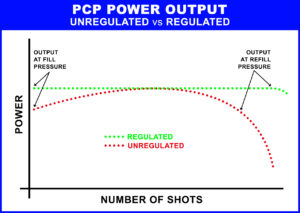
Precharged pneumatic (PCP) air rifles are powered by compressed air contained in either an integral air cylinder or buddy-bottle. Although the PCP is the serious airgun shooter’s choice, its concept is inherently simple: a hammer strikes a valve which releases some air to thrust the pellet out of the barrel. The hammer always strikes with the same force, so the amount of air released by the opening valve changes as the rifle’s on-board air pressure behind it drops. This affects the velocity (power) output of the rifle as it progresses through its air charge, resulting in what’s known as a power curve.

The specific shape of the power curve varies according to the rifle’s design. Generally, an unregulated PCP’s power output will rise to a peak before dropping off to the point it needs recharging. A power output that’s dependent on the air rifle’s pressure is not ideal because the pellet’s downrange point of impact (POI) will alter accordingly. Because of this, many airgunmakers incorporate an air regulator into their guns. In a regulated PCP, the power output stays consistent throughout its entire air charge.

Comparison of typical power outputs from a regulated and non-regulated precharged pneumatic air rifle

So, which to choose? Although a regulated PCP may seem the ideal, unregged PCPs have been around for many years and are still popular. Indeed, much R&D has been undertaken in the PCP world, so the simple ‘knock-open’ valve of old is a far cry from what we see on today’s airgun hardware. The Slingshot hammer/valve set-up used in the unregulated Daystate PCPs is one such example of how far unregged PCP design has evolved. Nevertheless, characteristics of unregged and regged systems are an important consideration when choosing a PCP for your specific shooting needs.

UNREGULATED PCP

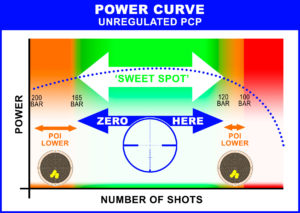
Between the first and last shots of an unregged PCP’s charge of air – its ‘usable’ range – the output will follow a power curve, peaking somewhere around the mid-point of the curve. While the duration of the peak depends solely on the rifle’s inherent design, this part of the curve is referred to as the ‘sweet spot’. It’s where the shot-to-shot consistency – and so the rifle’s accuracy – will be at its best. The longer the sweet spot, the better. Ideally, that is where you want to be doing most of your shooting (and where you should zero your scope).

Of course, you can shoot either side of the sweet spot, but you may well see a slight change in the pellets’ POI. At relatively close ranges this probably isn’t a problem, but it may shift your pellets outside acceptable limits for hunting or competitive target shooting at longer distances. Therefore, with any unregulated PCP, it pays to familiarise yourself with the characteristics of its power curve so that you can compensate for POI shift if required.

Although an unregged PCP lets you shoot throughout its usable pressure range (200 down to 100 BAR in this example), the best consistency, power and accuracy will be obtained by shooting in its ‘sweet spot’ (165 down to 120 BAR in this example)

For example, your rifle may fill to 200 BAR and then, 150 shots later, need a refill at 100 BAR. Let’s assume its sweet spot spans 65 of those 150 shots. Then it would be worth noting on the rifle’s manometer what pressure range relates to that 65-shot section – perhaps between 165 and 120 BAR. If the number of shots you get per charge of air doesn’t bother you, you could choose to fill the rifle only to 165 BAR each time, and always refill it at 120 BAR. Yes, the trade-off is that you’d be reducing the rifle’s shot-count, but in return you’d be getting an output performance on a par with a regged PCP. Plus, by starting at lower pressures, charging the rifle from a manual pump will be less effort, and you’ll get longer periods between scuba tank fill-ups.

REGULATED PCP

Where an air regulator is fitted to a PCP, air release is far more controlled for the entirety of the rifle’s charge and there is therefore no power curve. Effectively, a regulateded PCP offers a sweet spot that extends from the first to the last shots of the usable shot range. In some cases, because a regulator deals with air delivery more efficiently, the rifle also returns more shots between fill-ups.

Generally, a regulator system incorporates a secondary air chamber (the plenum chamber) which is designed to operate at a constant pressure. This means that as the rifle’s air pressure drops, the main firing valve always delivers an exactly-metered volume/pressure of air. The benefit of this is that the rifle’s power output is the same, no matter where it is within its charge cycle.

That said, it is important not to let the pressure in the rifle’s main air reservoir drop below that of the regulator’s operating pressure, else the regulator effectively becomes redundant in the air flow chain. Many gunmakers now incorporate an additional gauge on their regged PCPs to specifically indicate the regulator status, like on the Brocock Commander PCP.

The regulated Brocock Commander has two manometers – one for its HUMA regulator’s fixed pressure (top) and one to show the pressure status of the rifle’s main air reservoir

While ‘managing’ the power curve of an unregged PCP isn’t exactly a headache for most shooters, there’s no denying that the fill-and-forget operation of a regulated PCP is more straightforward. However, regulated PCPs cost more than their unregged counterparts, so you have to weigh up their worth in your particular scenario.

FT, HFT and benchrest competition shooters, who seek ultimate precision in every aspect of their sport, may be able to justify the outlay for a regged PCP, but for everyday shooting/hunting assignments, a good quality, unregged PCP is equally as good if you have a full understanding of its power curve.

Yet never dismiss the addition of a PCP regulator as ‘just another thing to go wrong’. That may have been the case when airgunsmiths were experimenting with them many decades ago. But just like knock-open systems have evolved, the PCP regulator has also graduated. Specialist regulator manufacturers have risen to the forefront of the airgun industry, with many gunmakers incorporating their proven designs in their regulated PCP. Daystate, for instance, have partnered with the world renowned HUMA to develop a metering system in the new regulated HR Huntsman Regal, Renegade HR and Wolverine R air rifles.

Hands-On Mountain Man History Lesson: DIY Tanning Beaver Tails

0

A few weeks ago, my landlord came knocking at my door on a Tuesday morning. When I answered, he said, “I’ve got a dead beaver out here. You want it?”

What are you supposed to say to that?

“Sure, I’ll take it!”

The words fell out of my mouth well before I realized I didn’t have any idea what the hell to do with a dead 37-pound beaver or how to process it even if I did. But I knew I wanted to make like a guy from the 18th century and take a shot at tanning the animal’s tail with nothing but a throwback attitude and the breadth of collective internet knowledge.

It soon became apparent that I did not have the skills to tan an entire beaver pelt, but the tail — I thought I could manage to tan the tail. Maybe. Sort of. And while figuring it out, I would get a glimpse into the rich history of trapping and part of how they processed the beavers they took, first hand.

Smell the Butt, Eat the Beaver Tails

The beaver-trapping business is an old one; its zenith came in the 18th and 19th centuries, mainly due to the fashion industry in the US and especially overseas. Beaver fur was all the rage, and the fur’s excellent ability to repel water made it an especially sought-after material for hats and other garments.

But what about the tail? After processing, beaver tails were extremely useful for making a number of high-quality leather goods. Plenty of folks have also been known to eat beaver tail — no not the Canadian treat made of deep-fried dough topped with cinnamon sugar and whipped cream with the same name — folks do eat actual beaver tails, especially trappers.

There are a number of ways to prepare what was once thought of as a mountain man’s delicacy. There’s no real amount of meat to be had from the tail, but it’s where a beaver stores most of its body fat.

When you skin a beaver, you’re not going to find a lot of subcutaneous fat like you would on a raccoon, because it’s all in the tail. If you were living in the backcountry for months on end, trapping and purely living off the land, that readily available source of good, pure fat would have been most welcome and perhaps necessary for survival and maintaining reasonable health. In a modern context, you can cook the tail, remove the fat, render it, and have a supply of high-quality cooking fat that can be used for all sorts of things.

In the old days, you’d encase the tail in clay and cook it on some hot coals, and then cut through the charred leather and the inner membrane to get to that pure fat. If your landlord ever drops a fresh beaver on your stoop and you’re brave enough, you can do the same by wrapping it in tin foil and throwing it on the grill.

Surprisingly, folks who have eaten that fat report that it’s basically tasteless. It can also be rendered and used like lard to cook other things.

The tails are pretty damn useful when still attached to the beaver, too. Beavers can slap that large, flat tail on the water surface to issue a danger warning, and it works extremely well as a rudder when they swim. On land, the sturdy tail, which is typically a foot long and 2 inches wide, is useful as another leg to help beavers reach branches and to stabilize their bodies when going to work on a tree trunk.

The animals also use their tail as a lever when dragging bulky and heavy branches into position for dam building. Some people think beavers also use their tails to pack mud into their dams, but they actually use their front feet.

Now, about the smell. You may have heard somewhere that beaver tails smell like vanilla. That’s sort of true. Beavers have castor sacs, a scent gland that creates a chemical compound in the form of a thick yellowish goop, called castoreum, which they use to mark their territory. The glands are actually located under the tail, so it’s the beaver’s ass that smells like vanilla, not the tail itself.

Castoreum smells and tastes so much like vanilla that it’s been used as a food flavoring and in perfumes — but these days, most vanilla scents are synthetic and castoreum is rarely used in vanilla extract (but it’s still on the FDA’s list of approved food ingredients, so you never know).

Because of their fur, skin, tails, and sweet, sweet ass-stink sacs, beavers were hunted and trapped nearly to extinction on two continents. There were only 1,300 Eurasian beavers in the wild at the beginning of the 1900s.

The North American beaver was also nearly hunted out of existence for their pelts and vanilla ass juice. There were an estimated 100 to 200 million beavers on the continent. By the early 1800s, there were hardly any.

But time marched on, and so did the fashions that required an abundance of beaver pelts. Demand declined and trappers moved on to other quarries and professions as the American Frontier dwindled.

Since then, reintroduction efforts in the US, Mexico, and Canada have been successful and their populations are once again abundant.

The Eurasian beaver population has also made a comeback, though not as dramatic, thanks to reintroduction efforts in France, Germany, Poland, and in parts of Scandinavia and Russia.

RELATED – Wildlife Scientists Lead the Charge in Montana’s Cwd ‘Zombie Deer’ Fight

Beaver Trapping in the 21st Century

Today, very few people make a living by trapping beavers. Instead, most are hobbyists and amateurs.

Beavers are amazing creatures, but they can wreak havoc on the local landscape, which is exactly what was happening on my landlord’s property. They were felling trees with tremendous speed and building dams that were causing flooding and cutting off the water supply to a large pond in a state-managed wildlife refuge that butts up against the property. That pond eventually empties into a nearly 700-mile-long river. So, with the blessing of the government officials in charge of the refuge, my landlord began setting traps and dispatching beavers. And that’s how I wound up playing 21st-century mountain man.

Tanning Beaver Tails

Before I got to tanning, I hit GoWild, a social media community geared toward the outdoors, and a bunch of users chimed in with their own experiences, best practices, and words of encouragement. I used what seemed like a couple of solid YouTube tutorials as guides, a few meager cutting implements, and just jumped into it. Fair warning: If you aren’t a patient person, you might want to tap out about now.

Lesson 1: Don’t Cut to the Tip on Beaver Tails

The first task, obviously, was to remove the tail, which was accomplished with a pocket knife and little difficulty.

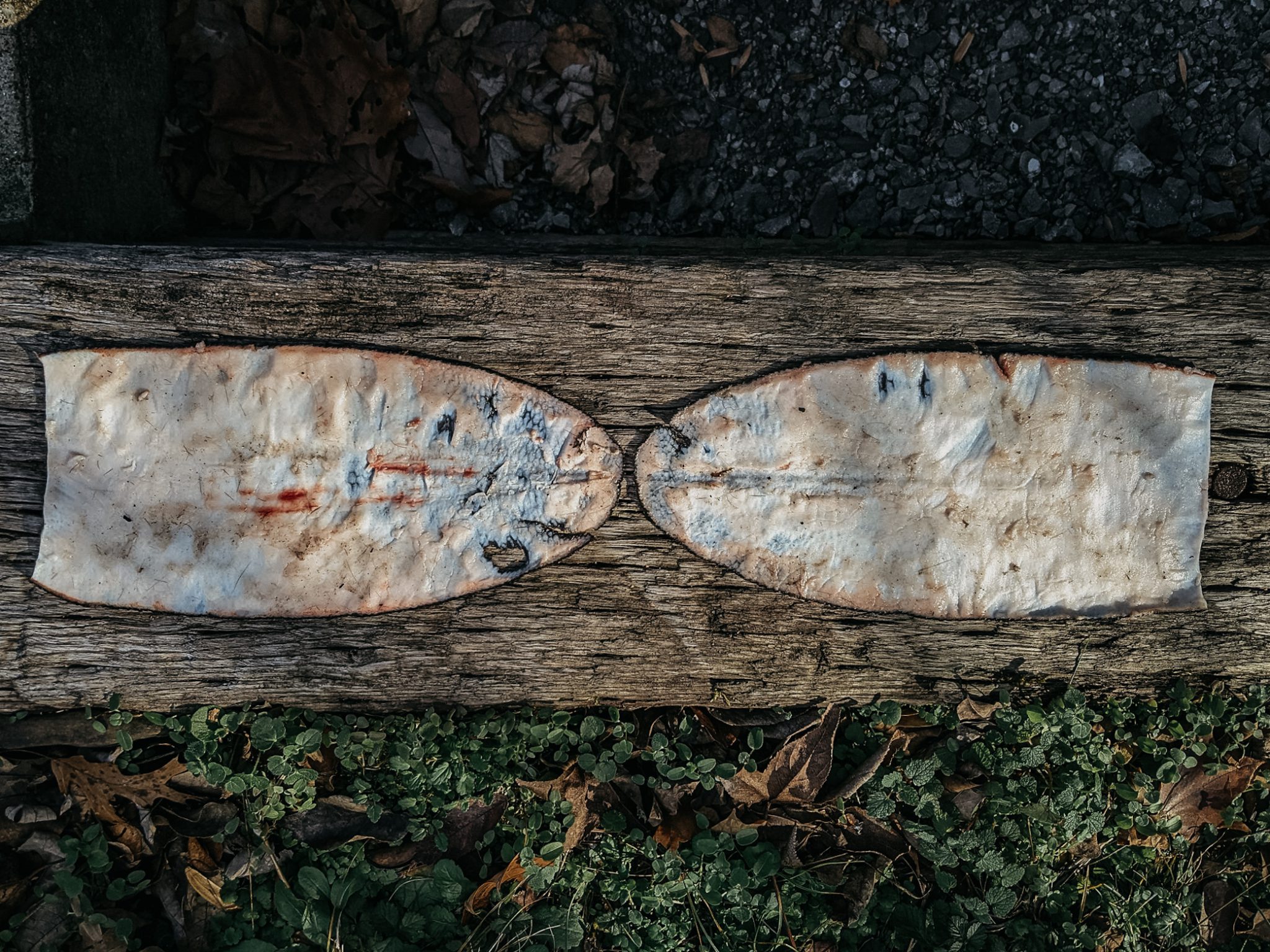
Then, I cut the tail in half along the edges and began removing the outer skin. Most of this process was really easy, but as you get closer to the tip, the tail gets really thin. I made a couple of wrong moves that an experienced hand would not have made, and put some small holes in the tail leather.

I also discovered that any injury the beaver sustained to its tail that had healed over created really tough scar tissue was all but impossible to separate from the thin outer layer of the tail, resulting in a few more small tears.

Actually pulling the tail apart was more difficult. The interior fat is incredibly slimy and slippery, so I clamped the tailbone in a small bench vise and then got a good solid grip and started pulling the two halves away from the bone. The tactic worked, and they came apart relatively easily.

beaver tails
After cutting up both sides of the tail, the author clamped the tail bone in a vise, pulled the tail apart. While fleshing the tail with a skinning knife, he removed a bit too much in some places and not enough in others. A proper fleshing knife would have helped. T. Logan Metesh/Free Range American

Later on, I learned that you don’t have to try to split the tail all the way to the tip. Just get as close as you can without feeling like you’re going to risk poking through. If you get to this point, then the tail is usually thin enough to separate itself cleanly into two pieces just by pulling it apart.

RELATED – Sporting Dog Restrictions Fail in NH, Falter in MD, Progress Elsewhere

Lesson 2: Use the Right Knife

Next, all the fat and other tissue must be removed from the soon-to-be leather. I learned quickly that having a proper fleshing knife for the task, which I did not, would have made this step a lot easier. I made due with my sharp skinning knife, but the blade’s contours weren’t right for the task and it took a lot longer than it should have, and the results weren’t as clean or thorough as they should have been.

Lesson 3: Tendons Are Tough

I also learned that all of the tendons in the tail closest to the spine are incredibly tough. Given the power that a beaver’s tail has, this makes complete sense, but those sinewy little fibers were abnormally strong and definitely gave even my sharpest knife a run for its money.

With as much of the flesh removed as possible, I was set to start the actual tanning process. It wasn’t difficult, but it was time-consuming.

RELATED – Shed Hunting Tips From Connor Clark: How to Rule the West

Salt and Wait, Acid and Wait, Base and Wait, Wash

First, I thoroughly salted the flesh side of the tail halves with regular table salt and let them sit for 24 hours to dry out. After that, the tail was pretty dry and stiff.

Then, the halves went into a bucket of warm water for another 24 hours to rehydrate.

With the tail thoroughly salted and rehydrated, it then needs to be washed with dish soap to remove any remaining salt and beaver grease.

With the prep work finally done, I decided to go with the alum tanning process (aluminum sulfate and salt) because it seemed easiest and I could get the granulated alum at the grocery store.

I added the tails, granulated alum, and salt into a bucket of clean water with a 1-to-2 ratio of alum to salt. Then it soaked for 72 hours. Told you — lots of waiting.

At this point, I was three days in and the tail pieces were beginning to firm up and feel like leather, but I noticed the edges were starting to develop a slight curl.

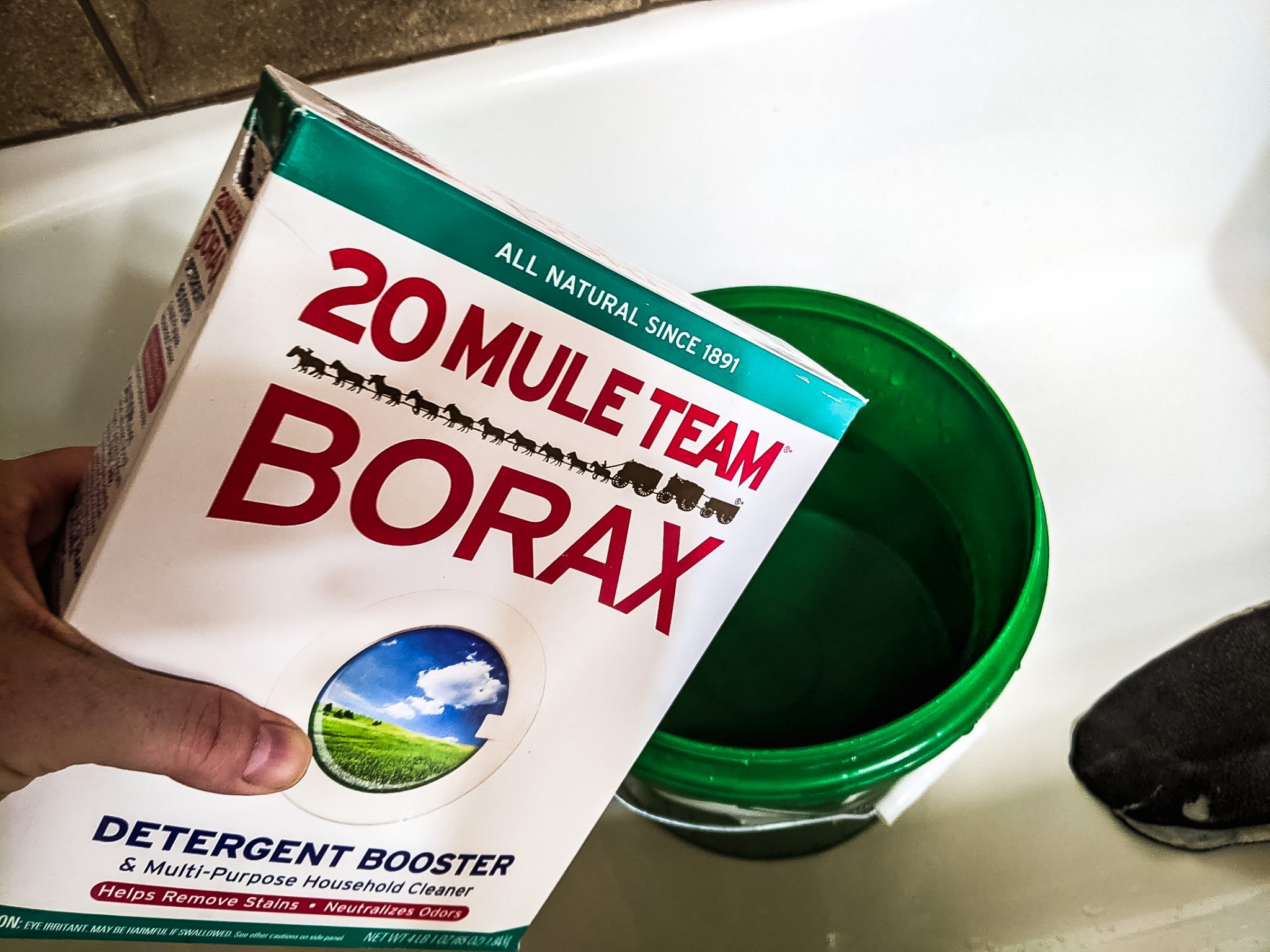
Next, the acidic alum has to be neutralized with a base. Borax works well. I dumped the bucket, filled it with some more water, added the tail and the Borax, and stepped away to wait for another 24 hours.

That was it for the tanning process and the pieces were ready for their final drying stage.

adding borax
The tanning alum is an acid, so it had to be neutralized with a strong base once the process was complete. T. Logan Metesh/Free Range American

RELATED – Wild Hunting Tactics: How 7 Apex Predators Do What They Do Best

The Final Results

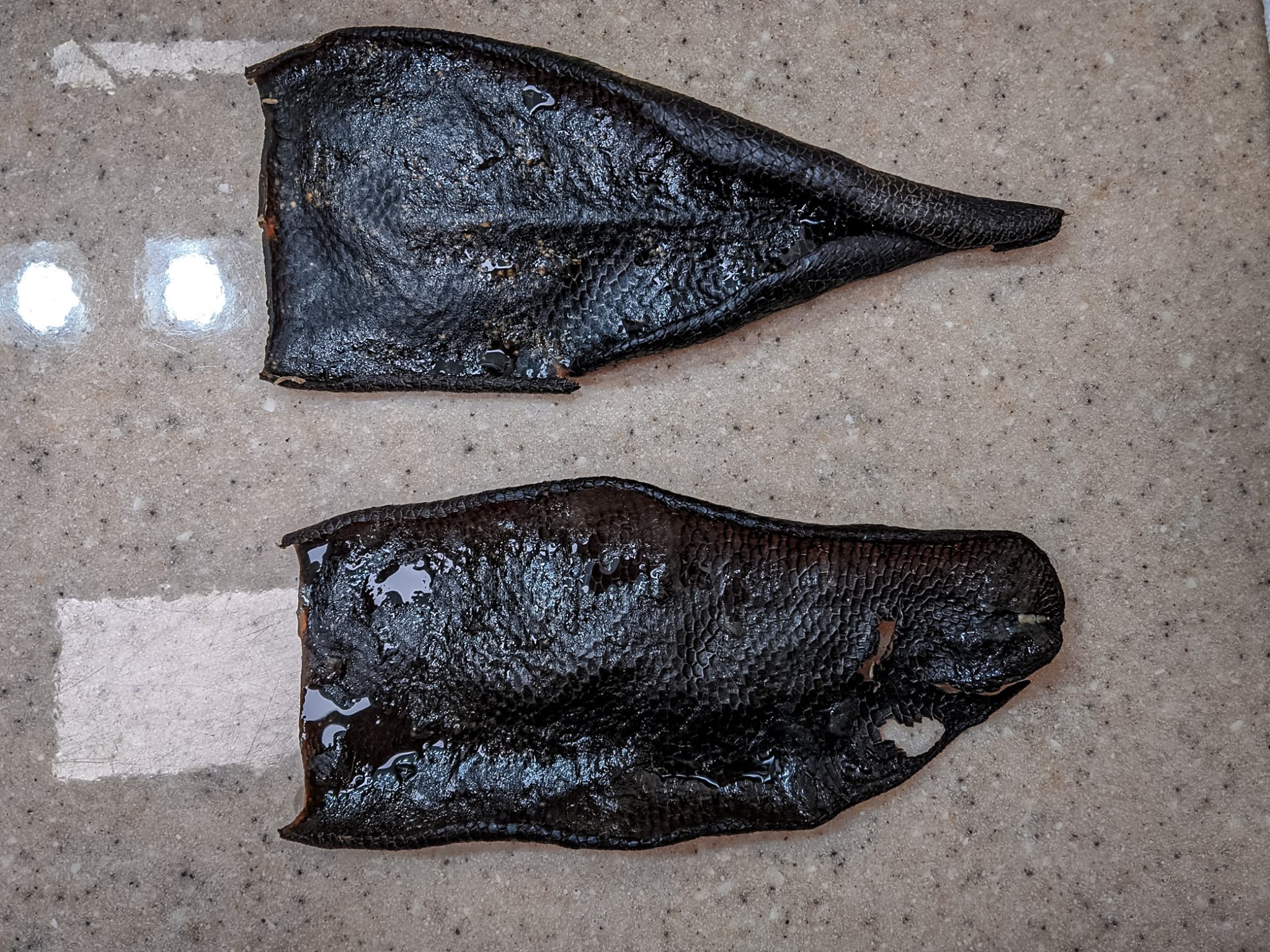
I set them on some paper towels and then left for a week to visit family out of state, which wasn’t the best idea. When I got back, the pieces were definitely dry, but the result wasn’t what I was expecting — they were rock hard and severely curled at the edges. Plus, little puddles of beaver grease had accumulated in places.

too dry
The author let the tail pieces dry for a week unattended, and they took on some severe curls and had grease pools in the thicker spots. It was a rookie mistake, but a good lesson learned. T. Logan Metesh/Free Range American

I wiped up the grease and worked the pieces back and forth in my hands and over the edge of a counter to try and loosen them up into something close to pliable. The edges were rock hard and there was no way to remove the curl they’d acquired. I tried some leather conditioner to add some moisture back in.

The endeavor, I’d say, was a partial success — but I learned a hell of a lot going through the process.

Next time, I will certainly do a few things differently. I’ll be sure to use more appropriate knives and clean the inside of the tail more evenly. Leaving it to dry unattended for a week was also a bad idea. I also want to consider taking this guy’s advice, do some better knife work, and leave the skin as one piece when filleting the tail, so it can lay flat. His method for removing the tail bone by cutting it out looks easier than the vise method, so I’ll try that, too.

I might also sandwich the leather between some iron mesh during the last step and see if that can prevent any curling that might occur.

For now, the pieces of beaver leather are sitting on top of my gun safe, occasionally driving one of my dogs crazy when she catches the scent. Hopefully, the results of my next attempt will be more than just a learning experience and can be made into something useful.

If you come into the possession of a few beaver tails and, like me, have no tanning knowledge and don’t want to risk ruining the leather, you can trim it up according to the directions on the Specialty Leather Productions site, freeze it, and mail it to them. They’ll tan it and send you back perfect beaver leather for $6.50 per half.

READ NEXT – Wolves in Northern Minnesota Helping Moose, Eating Beavers

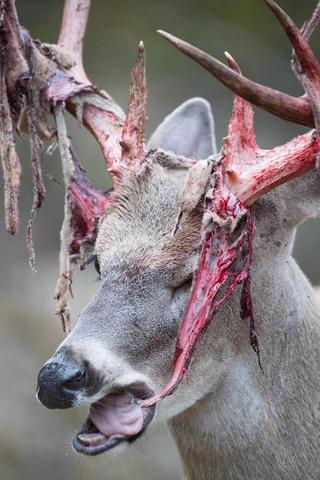
Do Deer Feel Pain When Shedding Velvet?

0

“Unveiling the Mystery: Exploring Deer Antler Growth – Do Deer Experience Pain during Velvet Shedding?”

1. The Sensation of Shedding Velvet: Does It Hurt for Deer?

1. The shedding of velvet on deer antlers is a process that involves the deer rubbing their antlers on vegetation to remove the dried and irritating velvet. While it is difficult to interview deer for their perspective, observing their behavior suggests that the velvet becomes itchy or irritating as it begins to deteriorate in late summer/early fall. The deer are motivated to scrape off the velvet on vegetation during this time.

2. Once the blood supply to the velvet is cut off and it starts to dry, the deer’s physical behavior indicates that they experience discomfort and itchiness. They vigorously rub their antlers against trees and shrubs to alleviate this sensation. It is believed that once the itching stops, there is no longer visible evidence of discomfort for the deer.

3. The shedding moment of the velvet may cause a brief stinging or hurting sensation for several seconds, according to observations. However, after this initial moment, there is no longer visible evidence of discomfort for the deer.

4. From observation and knowledge of the physiological process at work, it can be inferred that deer can feel their velvet. The velvet is living tissue until it becomes drying and irritating tissue. As the velvet dries, it becomes itchy and annoying for the deer, similar to how a scab on our knee might itch. This prompts them to rub their antlers on solid surfaces to scratch that annoying itch.

5. Deer have no fingernails or hands with which to scratch, so rubbing against trees and other surfaces helps shred and remove the drying velvet, relieving them from itching sensations. Once the itching stops, they stop rubbing their antlers.

6. Overall, while shedding the velvet may cause some itching or irritation for deer, there is no evidence to suggest that it causes significant pain or harm to them during this natural process.

Note: The additional paragraphs provided in your content are unrelated information about inheritance and investing in art. Please provide specific content or questions related to deer shedding velvet if you would like further information.

2. Understanding the Discomfort of Shedding Velvet in Deer

2. Understanding the Discomfort of Shedding Velvet in Deer

When it comes to shedding their velvet, deer exhibit behaviors that suggest they experience some discomfort during the process. While deer have not cooperated in interviews on this topic, analysis of their body language and behavior provide insights into how they may feel.

During the antler growth process, when there is living velvet on the antler, it is very sensitive. Deer strenuously avoid disturbing or damaging it, indicating that it may be uncomfortable for them if touched or bumped. Once the blood supply to the velvet is cut off and it begins to deteriorate in late summer or early fall, their physical behavior suggests that the velvet becomes itchy or irritating. They are motivated to scrape it off on vegetation to alleviate this discomfort.

Observation suggests that the moment of shedding can be painful or stinging for several seconds. However, after that initial discomfort, there is no longer visible evidence of any ongoing discomfort. It is believed that when the velvet is ready to shed, it causes an itching sensation for the deer. As a result, they vigorously rake their antlers through shrubs and tree branches to rub off the dried velvet.

The shedding of velvet does not appear to hurt the deer significantly. Instead, it seems to relieve them from any irritation caused by the drying and breaking velvet. The itching sensation prompts them to rub against hard surfaces until all traces of velvet are removed.

In conclusion, while we cannot fully understand how deer experience discomfort during shedding due to their inability to communicate with us directly, their behavior and body language suggest that they do feel some level of irritation or itchiness as their velvet dries and breaks away from their antlers.

3. Exploring the Pain or Itchiness of Shedding Velvet in Deer

Observation and Analysis of Deer Behavior

Based on reasonable analysis of video footage and observing the behavior of deer throughout the antler growth process, it can be inferred that while there is living velvet on the antler, it is very sensitive. Deer strenuously avoid disturbing or damaging it, suggesting that it may cause discomfort if disturbed. However, once the blood supply to the velvet is cut off and it begins to deteriorate in late summer/early fall, their physical behavior suggests that the velvet becomes itchy or irritating. This motivates them to scrape it off on vegetation.

The Shedding Process

After scraping off the velvet, there is no longer visible evidence of discomfort. The shedding moment itself may cause a brief stinging or hurting sensation for several seconds. However, once the velvet is shed, there seems to be no further discomfort for the deer.

Comparison to Human Sensations

From observation and understanding of the physiological process at work, it can be concluded that deer can feel their velvet. While they may not think about what they feel in the same way humans do, they likely experience an itching sensation as the drying velvet becomes irritating. This itching sensation motivates them to rub their antlers against trees and other surfaces to remove the drying velvet.

In conclusion, shedding velvet does not appear to hurt deer but rather causes an itching sensation that they are motivated to alleviate by rubbing their antlers against various surfaces until all the dried velvet is removed.

4. The Physical Experience of Shedding Velvet in Deer: Does it Cause Pain?

4. The Physical Experience of Shedding Velvet in Deer: Does it Cause Pain?

When it comes to the shedding of velvet in deer, there is still some debate about whether or not it causes pain for the animals. While deer have not been cooperative in providing direct answers through interviews, video analysis of their behavior during the antler growth process can provide some insight.

Based on reasonable analysis of their “body English” throughout this process, it appears that deer are highly sensitive to the living velvet on their antlers and take great care to avoid disturbing or damaging it. This suggests that while the velvet is still alive, it may be very sensitive and potentially painful if disturbed.

However, once the blood supply to the velvet is cut off and it begins to deteriorate in late summer or early fall, the physical behavior of deer changes. They exhibit signs that suggest the velvet becomes itchy or irritating to them, motivating them to scrape it off on vegetation. This implies that as the velvet dries and deteriorates, it may cause discomfort or itching for the deer.

Observation also suggests that there may be a moment of pain or stinging when the shedding of velvet occurs. However, after this initial moment, there is no longer visible evidence of discomfort. It’s possible that when the velvet is ready to shed, it causes an itching sensation for the deer, leading them to vigorously rub their antlers against shrubs and tree branches to remove the dried velvet.

Overall, while there may be some discomfort associated with shedding velvet for deer, particularly as it dries and becomes irritating, it does not appear to cause long-lasting pain. The rubbing and scraping behavior exhibited by deer during this process suggests they are actively trying to alleviate any discomfort caused by the drying and deteriorating velvet.

Please note that this information is based on observation and reasonable analysis rather than direct communication with deer themselves.

5. Unraveling the Mystery: Do Deer Feel Pain when Shedding Velvet?

5. Unraveling the Mystery: Do Deer Feel Pain when Shedding Velvet?

When it comes to the shedding of velvet from their antlers, deer have not been very cooperative in providing direct answers. However, through careful analysis of their behavior and body language during the antler growth process, we can make reasonable conclusions. It appears that while there is living velvet on the antlers, it is very sensitive, and deer go to great lengths to avoid disturbing or damaging it. This suggests that they experience discomfort if the velvet is disturbed.

As the summer progresses and the blood supply to the velvet is cut off, it begins to deteriorate. At this stage, deer exhibit physical behavior that indicates the velvet becomes itchy or irritating to them. They are motivated to scrape it off on vegetation as a means of relieving this discomfort. Once they have successfully removed the velvet, there is no longer visible evidence of discomfort.

The shedding moment itself may cause a brief sensation of pain or stinging for several seconds. However, after this initial moment, there does not appear to be any visible evidence of ongoing discomfort for the deer. It is important to note that this understanding is based on observation and analysis rather than direct communication with the deer.

In conclusion, while we cannot fully understand how deer experience pain or discomfort during the shedding of their velvet, their behavior suggests that they do feel some level of irritation or itchiness as the velvet dries and begins to fall off. The rubbing and scraping behavior they exhibit serves as a means of alleviating this discomfort until the velvet is completely shed.

Note: The content provided above includes information from multiple sources and has been paraphrased and synthesized for clarity.

6. Debunking Myths: The Truth about the Sensations of Shedding Velvet in Deer

6. Debunking Myths: The Truth about the Sensations of Shedding Velvet in Deer

Can deer feel their velvet?

From observation and knowledge of the physiological process at work, it can be said that deer can feel their velvet. While they may not think about it in the same way humans do, the drying and dying velvet can become itchy and annoying to them. The velvet is a blood-rich covering that dries as it completes its role in antler formation. As the velvet dries, it becomes itchy and irritating, similar to a poison ivy rash or a scab on one’s knee but over a larger area on the head. This irritation causes deer to rub their antlers against any solid surface they can reach to scratch the itch.

Does shedding the velvet hurt?

Based on observations, shedding the velvet does not appear to hurt deer. In fact, some believe that the velvet actually irritates deer once it begins to break and fall off. All deer species go to great lengths to remove the velvet once it has completed its job and the antlers have hardened. They will thrash and rub against trees, sometimes causing damage or even killing young trees in the process. The rubbing helps shred and remove the drying velvet, relieving the itching sensation.

Why do deer rub their antlers?

Deer rub their antlers against trees or other hard surfaces to aid in removing the drying velvet. It is believed that this rubbing helps alleviate the itching caused by the dying tissue. Deer do not have fingernails or hands to scratch themselves like humans do, so rubbing against solid surfaces is their way of relieving discomfort. Once the itching stops and all visible signs of discomfort are gone, deer resume their normal activities.

Overall, while shedding velvet may cause an itching sensation for deer, it does not appear to be a painful process. The rubbing and scraping behavior observed in deer suggests that they are motivated to remove the drying velvet and relieve any irritation or discomfort it may cause.

In conclusion, deer do not experience pain when they shed their velvet antlers. Shedding velvet is a natural process that allows for the growth of stronger antlers, and it does not cause discomfort or harm to the deer. Understanding this helps us appreciate the beauty and resilience of these magnificent creatures in their natural habitat.

What do points mean in regard to hunting deer?

0

Understanding the Significance of Points in Deer Hunting: Unveiling the Secrets behind these Markers

Understanding the Significance of Points in Deer Hunting

Understanding the Significance of Points in Deer Hunting

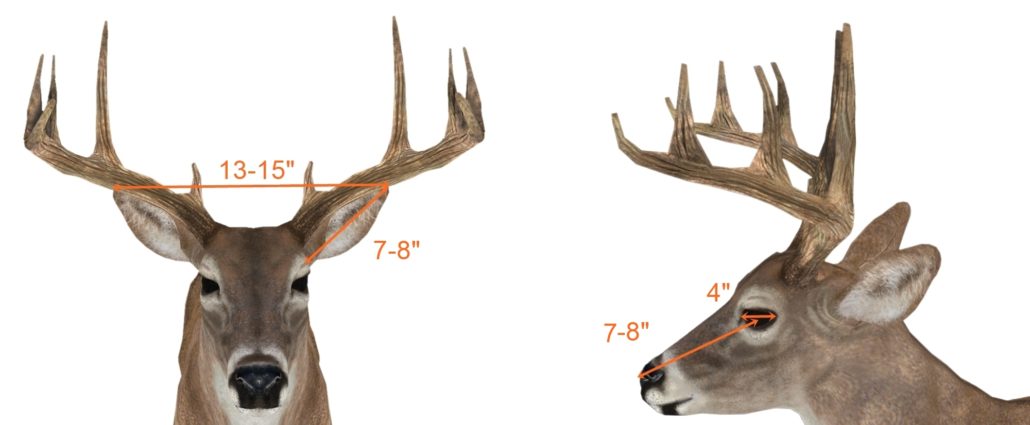
Deer hunting is a popular sport in many parts of the world, and one aspect that hunters often pay attention to is the number of points on a deer’s antlers. Points refer to the tines or branches on the antlers, and they are used as a way to gauge the size and maturity of the deer.

In some regions, such as Montana, hunters may use different terminology when describing the number of points on a buck. For example, instead of saying “there is a ten point buck,” they might say “Look, there is a 4 by 4.” This means that the deer has four points on each side of its head. In other words, it could be called a 4 point buck.

However, in other parts of the United States, a “10 point buck” would refer to a deer with ten total antler points on its entire head. The way points are described can vary depending on location.

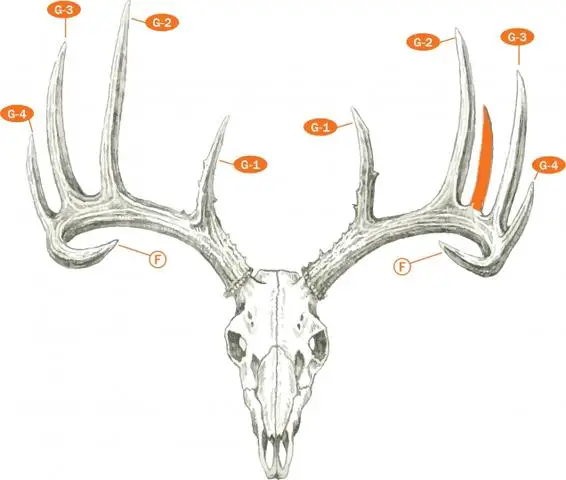
There are two different ways of counting points: eastern count and western count. Eastern count includes the eye guards and totals the points in both antlers. So if someone says they bagged a 10 point buck using eastern count, it probably means a buck with five points on each side, including the eye guards.

On the other hand, western count does not include the eye guards and only counts the points on one side. Therefore, what would be called a 4 point buck in western count would be referred to as a 10 point using eastern count.

For simplicity, most whitetail deer are described using eastern count while most mule deer and elk are described using western count.

In conclusion, when referring to points on a buck’s antlers in hunting terminology, it generally means an “antler point.” However, it’s important to note that how these points are described can differ based on location and the counting system used.

Decoding the Meaning of Points in Deer Hunting Terminology

Decoding the Meaning of Points in Deer Hunting Terminology

When it comes to deer hunting, the term “points” refers to the number of tines or branches on a deer’s antlers. For example, if someone says they spotted a ten point buck, they are referring to a deer with ten tines on its antlers. The number of points is often used as a way to gauge the size and maturity of the deer, with more points typically indicating a more mature and larger animal.

However, it’s important to note that the way points are described can differ depending on the location. In Montana, for example, if someone were to say there is a ten point buck, it would mean that the deer has ten different antler points on each side of its head. In other words, it would be referred to as a 4 by 4 in Montana, indicating four points on each side of its head.

In other parts of the US, a “10 point buck” would refer to a deer with ten total antler points on the entire head. So while the term “point” always refers to an antler point, how they are described varies based on location.

There are also two different ways of counting points: eastern count and western count. Eastern count includes the eye guards and totals the points in both antlers. Western count does not include eye guards and only counts the points on one side. For example, a 4 point buck using western count would be called a 10 point using eastern count.

To summarize, when it comes to deer hunting terminology, a point refers to an individual antler point. However, how they are described and counted can vary based on location and counting method used.

The Role of Points in Assessing Deer Size and Maturity in Hunting

The Role of Points in Assessing Deer Size and Maturity in Hunting

In hunting, “points” refer to the number of tines or branches on a deer’s antlers. When someone says they “spotted a ten point buck,” they are referring to a deer with ten tines on its antlers. The number of points is often used as a way to gauge the size and maturity of the deer, with more points typically indicating a more mature and larger animal.

It is important to note that the way points are described can vary depending on the location. For example, in Montana, someone might say “Look, there is a 4 by 4,” which means that the deer has 4 points (antler branches) on each side of its head. In other places across the US, a “10 point buck” would refer to a deer with ten total antler points on the entire head.

There are also different methods of counting points in hunting. Eastern count totals the points in both antlers, including the eye guards. Western count, on the other hand, does not count the eye guards and only counts the points on one side. So a 4 point buck in western count would be called a 10 point using eastern count.

To summarize, when it comes to assessing deer size and maturity in hunting, points play an important role. They refer to the number of individual points on the antler tines and can vary in how they are described and counted depending on location and counting method used.

Exploring the Different Ways Points are Counted in Deer Hunting

Exploring the Different Ways Points are Counted in Deer Hunting

Eastern Count vs Western Count

In deer hunting, the term “points” refers to the number of tines or branches on a deer’s antlers. However, the way these points are counted can vary depending on the location and counting method used. The two main counting methods are Eastern count and Western count.

Eastern count involves totaling the points in both antlers, including the eye guards. For example, if someone says they bagged a 10 point buck using Eastern count, it means that the deer has 5 points on each side, including the eye guards.

On the other hand, Western count only counts the points on one side of the antlers and does not include the eye guards. So a 4 point buck in Western count would be called a 10 point using Eastern count.

The Boone and Crockett Scoring System

To determine whether a projection on an antler qualifies as a point, hunters often refer to the Boone and Crockett scoring system. According to this system, each tip of an antler protrusion is considered one point.

However, there are specific criteria that must be met for a projection to be counted as a point. The projection must be at least one inch long and longer than it is wide at that length. This means that small nubs just starting to grow may not be counted as points.

Additionally, broken off antlers may not count if the stump is short and wide or broken at the base under 1 inch.

The Boone and Crockett Club, founded by Theodore Roosevelt, is a nonprofit hunting and conservation organization that sets standards for measuring native North American game animals. They also keep records of notable specimens based on their scoring system.

In conclusion, when it comes to counting points in deer hunting, there are different methods and criteria used. Eastern count and Western count refer to whether the points are counted on both antlers or just one side. The Boone and Crockett scoring system provides guidelines for determining what qualifies as a point based on length and width criteria.

Unraveling the Mystery: What Points Really Mean in Deer Hunting

Unraveling the Mystery: What Points Really Mean in Deer Hunting

Deer hunting enthusiasts often use the term “points” to refer to the number of tines or branches on a deer’s antlers. When someone says they “spotted a ten point buck,” they are indicating that the deer has ten tines on its antlers. The number of points is commonly used as a way to gauge the size and maturity of the deer, with more points typically suggesting a larger and more mature animal.

However, it is important to note that the way points are described can vary depending on the location. For example, in Montana, someone might say “Look, there is a 4 by 4,” which means that the deer has four points on each side of its head. In other words, it could be called a 4 point buck. On the other hand, in some regions across the US, a “10 point buck” would refer to a deer with ten total antler points on its entire head.

There are also two different ways of counting points: eastern count and western count. Eastern count includes all the points in both antlers, including the eye guards. So if someone says they bagged a 10 point buck using eastern count, it probably means a buck with five points on each side, including the eye guards. Western count only counts the points on one side and does not include the eye guards. Therefore, a 4 point buck in western count would be called a 10 point using eastern count.

To simplify matters, most whitetail deer are described using eastern count, while most mule deer and elk are described using western count.

In conclusion, when referring to points on a buck’s antlers in hunting terminology, it signifies an individual antler point. However, how these points are described can differ based on location and counting method used.

The Importance of Points: A Guide to Interpreting Deer Antler Size in Hunting

The Importance of Points: A Guide to Interpreting Deer Antler Size in Hunting

Deer antlers are a significant aspect of hunting, and the number of points on a buck’s antlers can provide valuable information about its size and maturity. When someone mentions a “ten point buck,” they are referring to a deer with ten tines or branches on its antlers. In different regions, the way these points are described may vary.

In Montana, for example, if someone says there is a “ten point buck,” it means that the deer has ten different antler points on each side of its head. However, in other parts of the US, a “ten point buck” would refer to a deer with ten total antler points on the entire head. The terminology used to describe the number of points differs based on location.

To simplify things, most whitetail deer are described using an eastern count method. This count includes all points in both antlers, including the eye guards. So when someone claims to have bagged a “ten point,” it likely means they shot a buck with five points on each side, including the eye guards.

On the other hand, there is also a western count method that does not consider the eye guards and only counts the points on one side. For instance, what would be called a “four point buck” using western count would be referred to as a “ten point” using eastern count.

The Boone and Crockett Club, founded by Theodore Roosevelt, has established standards for measuring native North American game animals and keeps records of notable specimens. According to their scoring system, each tip of an antler protrusion is considered one point. To be counted as a point, the projection must be at least one inch long and longer than it is wide at that length.

It’s important to note that small nubs just starting to grow or broken off antlers with short and wide stumps may not count as points. The Boone and Crockett Club’s scoring system helps ensure consistency in assessing deer antler size.

Understanding the number of points on a buck’s antlers can provide hunters with insights into the animal’s maturity and size. Whether using eastern or western count methods, these points serve as a valuable gauge in hunting and contribute to the overall excitement and challenge of the sport.

In conclusion, the number of points on a buck’s antlers refers to the individual tines or branches present. The way these points are described can vary based on location, with different counting methods used in different regions. By understanding the significance of points, hunters can better interpret deer antler size and make informed decisions during their hunting endeavors.

In conclusion, points are a measurement system used to assess the age and size of deer during hunting. They provide valuable information for hunters in terms of trophy quality and herd management. However, it’s important to remember that points alone don’t define the overall hunting experience or the ethicality of the practice. Ultimately, responsible hunting should prioritize conservation efforts and respect for wildlife.

An Interview With Remi Warren, Host of Apex Predator

0

www.remiwarren.com

In our opinion there are few things as inspiring as the stories of those willing to take the path less traveled. The history books are full of examples of explorers, prospectors, pioneers, and mountain men that chose to lead a different life. But in a modern world increasingly living a digital reality, and many of us neck deep in the rat race, these stories are becoming less and less common. The outdoors industry, by nature, attracts a relatively high proportion of men and women that have charted a less than common course through life. One that doesn’t necessarily follow today’s conventional definition of “normal”. But then there are those that take this to a whole new level, that somehow manage to keep one foot in the digital age, while truly blazing trails across a variety of mediums with an incurable desire to push their limits and question what’s possible. They may use modern technology to tell their stories in print, film or online but their spirit is as “pioneering” as that of the first human’s to cross the Bering Land Bridge. These outliers live on the fringes of their industries, unwilling to accept the status quo, and coast through their day to day lives.

Remi Warren is without question one of these outliers. From guiding and outfitting hunters in the mountains of the West to print, photography, TV and film projects, Remi has amassed a resume that most people would dream of. All before the age of 30.

Well known for his role in the award winning Solo Hunter TV show, his latest project Apex Predator, is not to be missed. One part Animal Planet, one part hunting show and one part human performance experiment it is without question one of the most unique concepts to hit ANY media scene in recent memory. We caught up with Remi in one of his rare down times between hunts and his various projects, so read on for one of the more inspiring interviews we’ve published to date. We cover everything from filming, to New Zealand, and hunting like a wolf so this installment of Blazing Trail is about as eclectic as it gets. Enjoy! Blazing Trail - July 2015 - Post Image Remi, you’ve had and continue to have a diversified career in hunting and outdoors media: guide, outfitter, writer, TV personality and now producer of your own show Apex Predator. How did it all start?
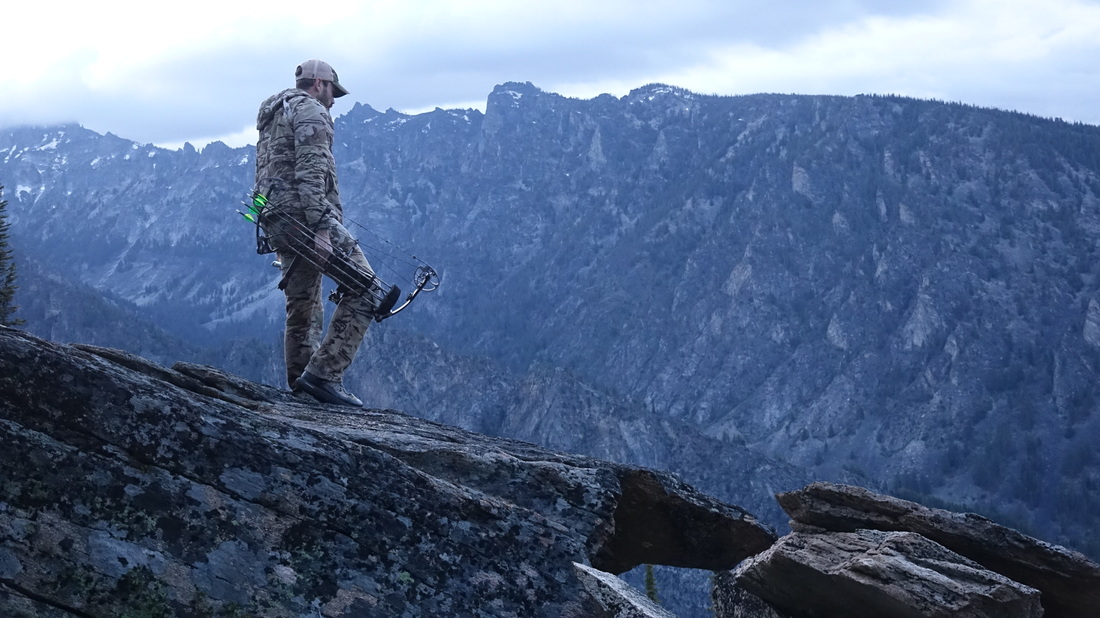
I really just started out guiding. Outdoor, TV and all this stuff was something that I always wanted to do and my thought starting out was I’d get into it by guiding. After high school I went up to Montana where I’d grown up hunting with my grandpa and took the Spring and Summer semesters off in college. So I had about six months to guide and work and I really had no plan; I just packed up my truck and headed to Montana. I figured if I had no other choice but to figure it out, I’d figure it out. I was there hunting a lot and didn’t have a job and kind of living in a tent, and because I was hunting so much, I ran into a guide who was working in the same area.

I was actually stalking a deer and these guys kind of messed up my stalk so I talked with them for a little bit and the next day I was on this group of elk in a completely different area and some guys came up behind me but I was way in front of them, so I’d kind of “claimed” the herd in terms of hunting etiquette. They said hey, didn’t we see you yesterday? I said yeah. And then they said wait, were you here two days ago? I again said yeah. So three days in a row I was in the same place as these guys and the guide asks if I was interested in talking to the outfitter about working for them. So I agreed to talk to the outfitter and the outfitter says hey instead of working against me, do you want to work for me? And that’s how I got started guiding!

That sure worked out in your favour!

Yeah, exactly. But when you’re out there, when you give yourself no other option and trust that you’re going to figure it out things will work out, that’s my philosophy. On the writing side of things, I’ve always enjoyed writing so I honestly just started writing. I worked for a small publication in Montana for a while called Real Hunting. It’s no longer around but I got hooked up with them, by again running into the owner out in the hills. I was guiding and I used to keep this photo album, both of the stuff I’d shot and scenery and client photos as well, in my truck for when I pick up clients to give them something to thumb through and get excited about.

So I was just talking to this guy and he asked me some questions and so I showed him this photo album and he was impressed with the photos. I mentioned that I did some writing and that was pretty much it. I started working with them but quickly kind of ended up being the main editor and did essentially everything for the magazine from graphic design to laying out stories to writing about half the content. That probably gave me years worth of magazine experience in a pretty short period of time. It was a lot of hard work and not a lot of pay but it was worth it because I was building a resume and by that point, I was 22 years old and had a repertoire of running a magazine and hundreds of articles and stuff that nobody else my age had. I really just dove headfirst into the industry, but my philosophy is just work hard and don’t ask for anything and that’s worked so far.

A lot of people ask what’s the easiest way to have a hunting TV show and I used to absolutely hate that question because I don’t know the easiest way. I did it my way and my way wasn’t easy! Blazing Trail - July 2015 - Post Image The easy way usually doesn’t get you where you’re going or where you’re wanting to go. Unfortunately, I think a lot of people see all the shows and see how affordable filming equipment is and think it is easy but it’s obviously not. But that doesn’t mean you shouldn’t just dive in and bank on the fact that you’ll adapt and figure it out if that’s what you really want to do.
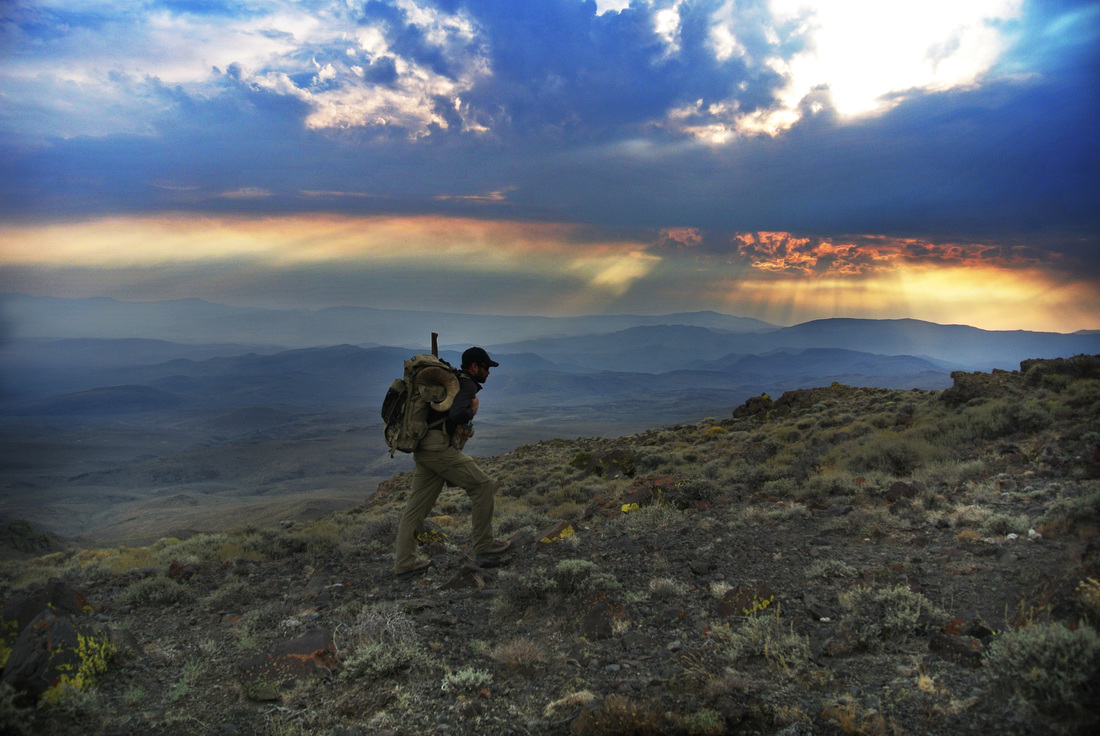
Yeah. Exactly. I think that’s my big thing, if you commit to doing it, you’re going to do it. It’s not that hard but it’s really hard for people to commit to something that’s scary or unknown. Nobody is going to give you anything, you’ve just got to realize that and go and work hard. Don’t ask for anything and prove that you can do it and people will start giving you what you need. For me, that’s how it worked out. It involves a lot of work for not much initially but for me, I didn’t care. I was doing what I loved. And that’s why I was a guide and then outfitter so I could make my own living and not have to rely on something else working out.

So from running that publication or doing the bulk of the work for that publication, when did you actually make the jump into your other projects? Obviously you now have the outfitting business and then on the writing side you write for Western Elk Hunter and more recently you branched into Solo Hunter and now Apex Predator. We’d probably need the entire interview to tell the story behind all of that, but what’s the brief timeline?

I was just finishing up college and it ended up that the guy who bought the outfitting business from my grandpa back in 1980 called me up as he knew that I was looking to stop guiding for another outfitter, that I wanted to go out on my own. I was planning on actually trying to buy out the guy that I worked for but one of the other outfitters in the area called me up and said I’ll sell you my business for what I bought it for in 1980. That sounded pretty good so it ended up that in the year I graduated college I bought the outfitting business and getting my own Forest Service permit, etc. for the area. I was about 22 at the time and so I’d been guiding, now had my own outfit and then at the same time, I was really working hard on the magazine in the off season. The magazine was pretty much what I did for the bulk of the off season and then in the Fall I guided. Blazing Trail - July 2015 - Feature Image So this all led into just buying some cameras and I honestly just started filming my hunts. I’ve actually filmed my hunts since I was probably 15 years old, so I filmed my own hunts, I filmed clients’ hunts and I filmed pretty much everything I could, I just loved filming things. I just filmed and filmed and filmed for years. I wasn’t even sure I was ever going to do anything with the footage but I saw it more as practice. One day I wanted to have a TV show so, in my mind, I was just practising for that day. I couldn’t even tell you how many hours of footage I had but it was a lot!

Then one day, I saw something online, I don’t even know where it was, probably on YouTube, called Solo Hunters. By this point I rarely if ever watched TV so it was the first I’d heard of it and I thought it was a really cool show concept. So I called them up and told them I had a lot of footage and listed off some of the better hunts and footage that I’d taken. The guy that owned and ran the show ended up living not very far from where I live. We were about four miles apart!

I assume you mean Tim Burnett?

Yep. So he suggested that we meet up and he asked if I really had all the footage I said I did. I told him of course I did so he asked me to bring it to his office one day and when I did he was like holy smokes! He was looking for some additional content at the time and I was literally thrown into the show. But I’d filmed for no other purpose other than the practice film. I wasn’t trying to make an “audition” tape or anything like that. Obviously the footage wasn’t as good as when I now go out with the intent of filming for Solo Hunters, I was just filming for YouTube clips really. But we used it for the show and I kept filming and kept pushing myself to make it better and better and over time, it kind of morphed into the Solo Hunter episodes that you see today.

Ok, let’s jump into your most recent project: Apex Predator. For the record, what an awesome show, really such a cool concept. For our readers that haven’t seen it the wolf pack episode is literally must watch TV for the outdoorsman or woman.

Thank you very much. It’s a tactic that my brother and I wondered about for a while now. And as you saw in that episode, it definitely works. It’s not for everyone obviously but goes to show that humans are pretty crazy hunters in their own respects. The human body is capable of a lot more than we give it credit for most of the time. We just don’t realize it when we’re stuck in our own little worlds. But when you go out there and try something a little bit different, something that maybe isn’t mainstream or something people think about as a valid technique and it turns out to be successful that’s pretty cool. Especially when it’s modelled after a highly adapted and successful predator that we as humans assume we can’t compete with. Blazing Trail - July 2015 - Post Image If you look at some of the anthropological data that’s emerged from the barefoot running movement in the past few years, the prevailing theory is that’s how we initially hunted, by running animals down, literally to the point of exhaustion. Combined with our brains, our physical attributes make for a pretty lethal combo.
Yeah, exactly. That’s the thing too. We can run a lot smarter. Elk can run fast but we can run smart. So in that particular episode it worked because the elk ran down below the road for a few miles before cutting back uphill to use their planned escape route. We instead ran up to the road and used the road to cut across and headed them off, we ran a fraction of what it did and exerted half the energy by just thinking a little bit.

So what was the inspiration behind Apex Predator?

The show is inspired by nature and my fascination with the natural world, plain and simple. I was out hunting in an area where I hunt all the time and I was walking up the ridge and noticed some wolf tracks. It’s a certain route that I follow and have figured out over the years that it was the best way to approach this one great elk spot due to how the wind typically behaved, the terrain, the cover, and everything else. So I noticed on this one particular day in the snow, that there are wolf tracks and the wolf tracks are following the exact same route that I am, literally to the tee and it’s not the most natural or easy route. It’s not like following a corridor, it’s following a ridge at then at one point it ducks off the ridge and goes into this thicket of trees and then it comes back up and then drops back down into this other valley and it comes back up to this other meadow. So I stop and I think about it and that wolf knows exactly what I know. It’s amazing! We were both hunting these elk the exact same way!

And I think a lot of us wonder am I hunting this animal right? So when you’re out there and have this sort of scenario, here is an animal that hunts day in, day out and they do they’re doing the exact same thing that I’m doing? I must be doing something right! It knows what I know and vice versa and that was a pretty cool experience. Blazing Trail - July 2015 - Post Image In another instance, actually the first time I saw a live wolf, I was out elk hunting with my bow and I this wolf pops up right in front of me, and this is before we ever really saw them in our area, so I was pretty excited about it. It was only about 40 – 50 yards away so I got my camera out and filmed it a little bit and then got back to hunting. I was hunting this pretty big elk and drew up back around the ridge I knew they were on and started to put a stalk in on this herd of elk. But before I get close – I’m about one ridge away – the wolf runs up from the bottom at the side and starts chasing them. At this point I figure well, my stalk’s already over, so I might as well try to cut them off as I had a feeling I knew where they were going.

With the wolf chasing them the elk headed up and I knew the better route so I started sprinting up the hill. I could see them most of the way. Their tongues were hanging out. It was a hot day. I was drinking water out of my hydration bladder as I was running and they were just beat and I ran right up and stood behind a big ponderosa tree and these elk were walking by pretty much close enough to touch. I snapped a few pictures with my camera and the bulls never came out. A couple of smaller bulls did but the bigger bulls didn’t and my assumption was that their antlers were so heavy that they had to turn and cut away from the herd before the younger bulls and cows did which I later saw (the bulls) down the ridge.

But it was eye opening! It showed that it’s actually possible to keep up with elk in steep terrain. I’d always heard growing up, “well if an elk runs away, they’ll go for ten miles.” And that’s just not necessarily true. But those things you grow up with are in your head and I was just like, wow. From that moment everything I’d ever known about hunting was in question. I decided I just needed to experience it for myself and find out what is true and what’s not. That was a real eye-opener. I looked at it as, that’s how the wolf would hunt and for us to be able to do that same thing, that’s pretty crazy. I thought what other animal could we emulate or learn from? So those ideas had been in my mind for a long time and I thought about the show for a really long time and thought about the other animals out there that we as humans might have similarities to or are so specialized in one task or skill that we could learn from? Or maybe we can’t do it all but it’s something that we need to learn and so that’s where Apex Predator came from. Blazing Trail - July 2015 - Post Image Awesome! That was going to be one of my questions: how did you go about picking the various species that you ended up deciding on for each episode. It’s such an interesting mix and a truly unique concept. Even if someone isn’t that into hunting, there is some very cool stuff in the series. For instance, the free diving training you went through was incredible. To be able to learn to hold your breath that long is impressive and most people would say there is no feasible way the human body can do that. But as you found out, that’s just not true.
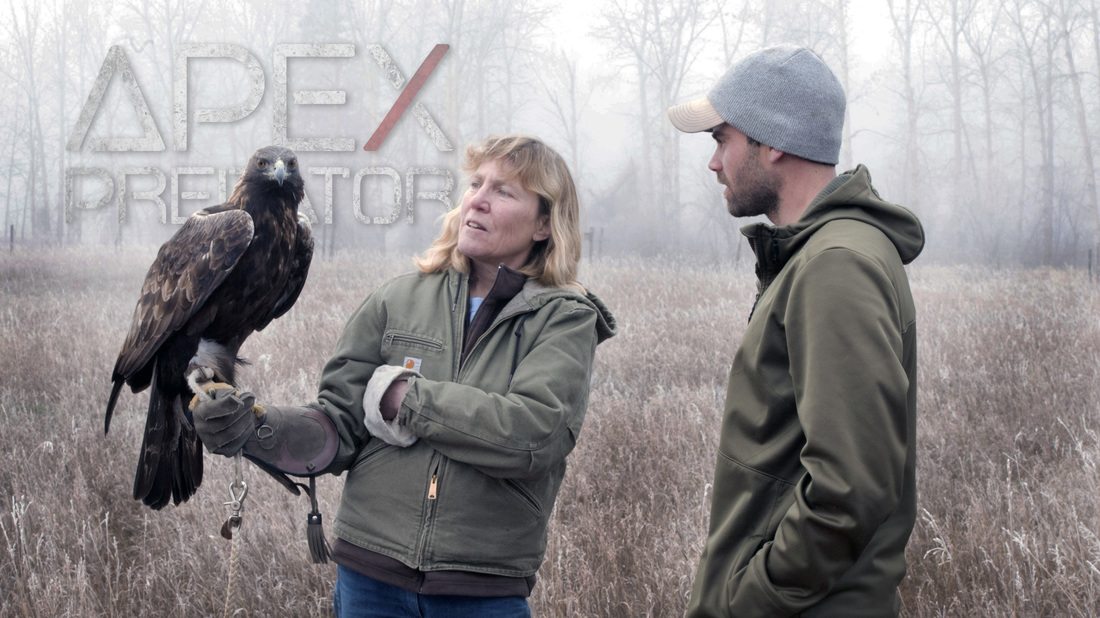
Yeah. Exactly. I think almost everyone can do exactly what I did. One of the things I wanted to do with the show was show others that we can do a lot more than we think. I’m not necessarily anyone special. I’m in good shape and I have certain genetic capabilities and qualities and accumulate a lot of training time because I’ve spent so much time in the field, I’d say the better part of my adult life. So I have a few things stacked in my favour but when it comes to stuff like holding the breath, I have no experience and any single person out there can do exactly what I did in that episode.

All of our bodies are designed naturally to handle much longer under water than we think. It’s just whether you can get past the mental threshold or barrier. So I think that’s one of those things I would have never understood. I would have heard about it and probably thought it was cool but until I tried it I wouldn’t have really understood it. I learn through experience. I’m not stubborn but I don’t necessarily take things entirely at face value. I try to take good advice when it’s given but I also need to learn things on my own sometimes and this is one of those things. For me it’s always been better to learn through experience and I think by showing the experience through the show, people will get a better appreciation for what is in fact possible and gain a better understanding of the concepts. I love to learn new things and so any time I can learn something new myself or share some kind of learning, I think that’s pretty awesome.

That is the power of video. Our publication obviously is written content only and for the most part, long form written content which has been well received but ultimately, when people SEE it, like you said, it’s a whole other game. It’s one of the most unique “hunting” shows – it’s a biological case study.

Exactly! Blazing Trail - July 2015 - Post Image A human biology case study through the lens of our abilities as hunters. To me that is the human story and a lot of people don’t grasp that. To hunters that’s not necessarily news. I think a lot of hunters probably don’t have as deep of an appreciation for that aspect of hunting but, in particular, the non hunters or of course the anti-hunters don’t see it as a natural human activity which of course is the farthest thing from the truth.

Yeah, and that’s another reason I wanted to do it. It opens it up to a broader spectrum of people and it’s not that I’m trying to cater to people who don’t hunt, but I’m just showing people who don’t hunt and people who do hunt that we’re not that much different from many of the animals out there. To be honest, I learned a lot from the animals we covered in the show and I use techniques that we (humans) learned from animals a long time ago, every day. Whether you’re sitting in a tree stand hunting deer or crouching in a ground blind, these are tactics adopted from animals.

Or in the buffalo episode, where we looked at the Plains Indians and how they figured out the relationship between the wolves and the bison. With humans, if the bison run they’re safe, as at that time our weapons were pretty primitive and we needed to get close. But with the wolves, they kill by chasing. A wolf would not attack a standing bison because they just aren’t strong enough. So they need to get them to panic and run and then they can catch them. So the bison wouldn’t run where possible when wolves approached but would when a bipedal human did. So the Plains Indians developed a technique, later made famous in a classic Western painting, where they would wear wolf skins and crawl within shooting distance of the bison herd. And again, as we show in the episode, it’s a tactic that works.

It just speaks to the power of the adaptive human mind and body. I think that’s one of the things you covered really well in Apex Predator, the mental aspects of it. The ability to do it physically still boils down to the mental aptitude and willingness to just go out and try it.

Absolutely, you have to be willing to try new things and fail sometimes if you want to learn. Blazing Trail - July 2015 - Post Image You seem to have a definite affinity for the wolf and I couldn’t agree more, for me the wolf is one of the most fascinating animals on the planet. But the wolf issue is very different in Canada than it is in the US given the history of their near eradication and then the ill-planned re-introduction. What is your take on the wolf situation in the West? You guide and outfit in Montana and there are many people that call the West home who believe that the whole “smoke a pack a day” approach is the most appropriate response. I’m going to go out on a limb and guess that you don’t agree with that?
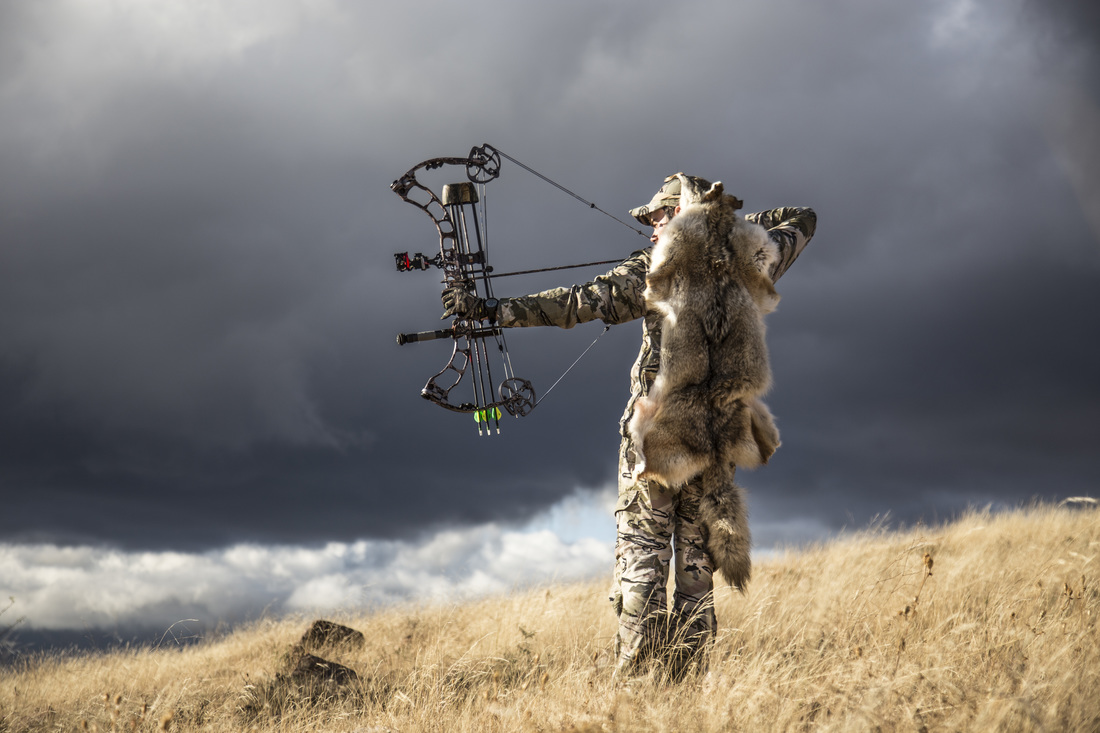
As hunters, we get all up in tiffs about the anti hunters and non hunters being so emotional but then on the wolf issue the same emotional reaction is happening with hunters as well. When we go that route, we lose all of our bargaining power, all of our credibility. We really lose everything that we stand for and that really bugs me because if we’re going to stick to a model (the North American Wildlife Model), then we need to stick to that model.

Sometimes that model doesn’t necessarily go with what we personally and emotionally feel. But if we start managing animals based on emotions and not science, then what are we doing? We’re no different than everybody that’s against hunting because the only argument they have is an emotional one. We can’t “cherry pick” our stance and handle things emotionally for one situation and then when it’s in our favour, fall back on the science and conservation based approach and say this is what we stand for. I think we stay a lot more credible if we just pick our management strategy and go with it. So I think the predators need to be managed, and I think the non-predators need to be managed but we need to stay aligned with the model we know is the right model and not get caught up in these emotional arguments. It really hurts our cause.

I couldn’t agree more. Eradication is no different than outright protection. Those are logically identical mindsets and emotionally identical mindsets, and as hunters our number one counterpoint to the anti-hunting groups is the scientific, rational, unemotional benefits of hunting, which we know to be irrefutable. There is no debate on the balance of science and logic, we win. We win every time. But when we get drawn into these emotional battles, as you said, it ruins our credibility.

Yeah, exactly. Blazing Trail - July 2015 - Post Image When did you start outfitting in New Zealand?

I started going over there… I don’t even know now… about five years ago probably.

So, being a guy who has outfitted in New Zealand now for a number of years, for somebody who is looking at New Zealand as maybe their first international hunt because it is quite a popular spot it seems these days, do you think DIY is a realistic way to go for your first hunt, or do you think that’s biting off a little more than they can chew?

It’s definitely biting off more than they can chew and that’s just my honest opinion. But it does depend where you’re from and what your experience is. I’m just going to be blunt about it. If all you’ve ever hunted is deer from a tree stand, you’re not ready. You won’t handle it and you’ll probably die. It’s serious stuff in NZ.

Let’s say we’re talking about a Rocky Mountain US or an Alberta, BC, or Alaska resident who’s hunted sheep, goats or high country elk and mule deer?

I think that if you have a lot of mountain goat and sheep hunting experience, you’ll be fine. I know a lot of guys who have a lot of experience but it’s a lot harder to hunt than anywhere else I’ve ever hunted, physically, and I think the problem is there are shortcuts with the helicopters. So you see all these people, say on TV or in magazines, who probably shouldn’t be in those kinds of mountains shooting animals and you assume that it’s easy. And the assumption that it’s easy is what gets people in trouble.

I think if you have experience you’d be fine but if you don’t have that true mountain hunting experience, on a level of skill from one to ten, NZ is a ten! It depends where you go too. I hunt areas that are really hard to hunt and it’s where I like to hunt but it’s dangerous and it’s hard but those are the areas that I like. The mountains are steep and they’re big and sometimes the weather can be pretty bad with floods and even simple access is tough. If you don’t have experience it’s not for you – you probably shouldn’t try it on your own – but if you’ve been hunting a lot and if you’re smart and you realize that it is going to be difficult and you come prepared, then it shouldn’t be a problem. It’s really on an individual basis so I can’t really say one way or the other but I will say if you don’t have any true mountain hunting experience, it’s probably not a place to start off with or, it wouldn’t be something that I’d go out and do by myself. Blazing Trail - July 2015 - Post Image Great input. Let’s move on to some filming questions. There a lot of people these days really into self-filming and documenting their hunts and adventures, whether it’s with a GoPro or other products, but it’s not as easy as it looks. What are some tips, say three to five tips for people that want to go out and film their hunt and get more experience with that side of things?
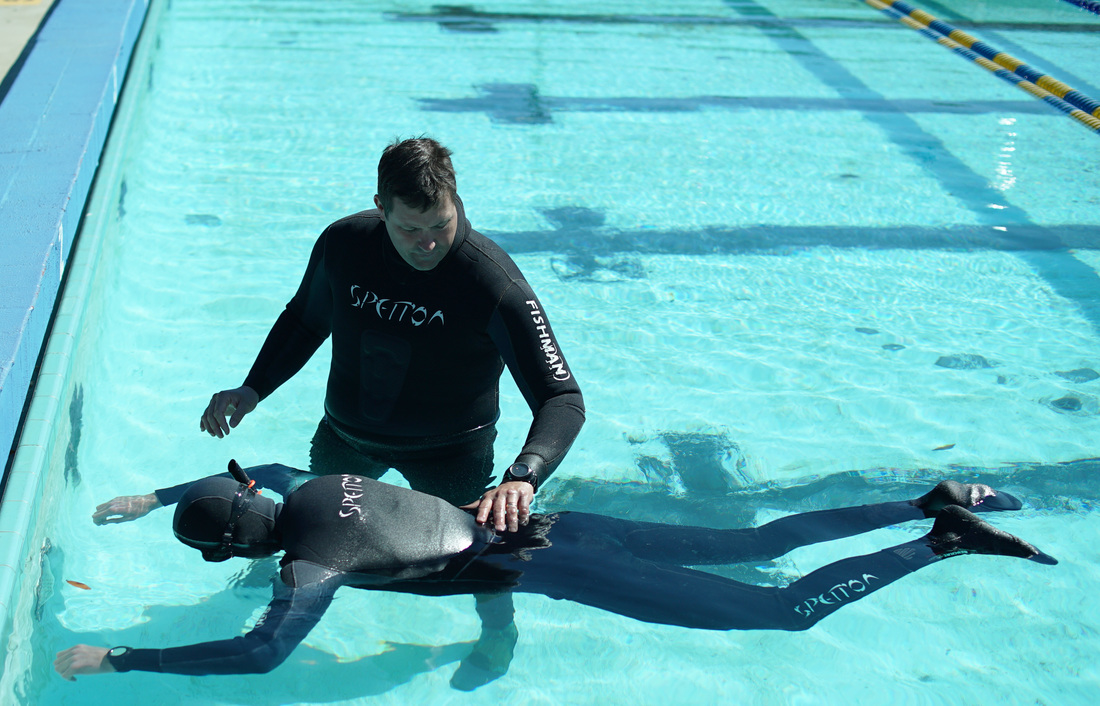
The most important thing is get a camera you’re not afraid of thrashing. Everybody always asks about the most expensive camera. My feeling is, only get a camera that you’re comfortable having out 100% of the time. If it’s in your pack, you aren’t going to use it. I’ve gone through that – it needs to be accessible. Some people worry it’s an expensive camera and just keep it in their pack. That’s the worst place. If you have a camera and you keep it in your pack, you might as well leave it at home. So have your camera at ready, that’s number one. The most important thing is you can’t share anything you don’t film. Don’t forget to hit the record button, I’ve done that I don’t know how many times. Just be familiar with your gear because a lot of times, things happen in the moment. Something will always go wrong at crunch time like a battery dying. If you’re really familiar with your camera and use it all the time, you’ll know all the settings, every function. People just grab them and flip them open and know how to record and that’s it but things can go wrong. You should know how to quickly fix things not necessarily mechanically but operationally. Those are pretty much the main tips. Oh, and always bring extra batteries!

I think the ‘be familiar’ tip is really good one because. I’ve only taken my GoPro on a couple of hunts and you’re spot on, number one it was in my pack and I didn’t bother using it 90% of the time but then when I did take it out I wasn’t familiar enough with its functions to capture all the things I wanted to capture!

Exactly. A good way to look at it is take the camera out on as many non-hunting outings as possible. I would just go out and every time I shot my bow, I’d film because setting up a camera with a tripod fast, especially with bow hunting, is the hardest thing I’ve ever done in my life. So I’d practice the camera part (setting it up, getting it ready) outside of hunting situations.

I used to shoot a lot of big mule deer and since I started self-filming, I’ve shot maybe one or two big mule deer because it’s just that hard. I actually didn’t really rifle hunt very much until I started doing Solo Hunters because the challenge is now the filming. When you’re crawling in close and it’s difficult to do so the more you practise with it in a controlled environment you’ll learn the easy things that make it even easier.

Of course, makes sense. Blazing Trail - July 2015 - Post Image Every hunt you go on, film your friends. I’ll bet if I put all my videos that I had just on one timeline and let it play, it would probably play for a year straight without stopping.

Wow! That’s a lot of film.

I’ve had that much time behind the camera and just over the years, it’s just filming, filming and filming. Maybe not that much, that’s probably an exaggeration but I don’t even know how much footage I have or had or erased. Quite a bit but it feels like I’ve got so much footage I could never even comb through it all.

Exaggeration or not, the bottom line is the point you’re making is you have practised a lot. Non-stop, every chance you get. If that’s something you actually want to go after then get out there and practise.

Yep, exactly. Even on my off days, I’ll go film… I’ll just film some random thing. I’m on the road all the time but I meet up with a friend who is a photographer and we’ll go out and take pictures or videos of even non-hunting stuff. Just film whatever. Practise wherever you can.

I think that brings up a good point too. Hunting seasons are only so long and if you only film when you’re hunting then you’ll be figuring out the filming half the time if not 75-80% of the time as opposed to getting good footage or at least getting the practice in whether it’s fishing or hiking or trail running or climbing. Just get out there and do it.

The other thing too with filming is, the way I am, you have to have a goal. If your goal is to film a hunt, then that’s your goal. You pass up opportunities that are not going to be filmed. It has to be your number one priority, and it’s very hard for people to do that and so that’s another reason it’s so hard to capture great footage. They want to get into filming but then a big buck walks out and they shoot it. If you really want to get into filming, then that is your most important goal and that’s really hard to commit to but once you commit to it, then you get things on film. An Interview With Remi Warren, Host of Apex Predator Great insight, OK last few questions. For someone going on their first international hunt, what would you say is the best bang for their buck? What’s the best mountain hunt out there outside of North America?
Definitely New Zealand. It’s just accessible and there is a lot of opportunity. If you’re English speaking it makes it nice. Compared to other places in the world, it doesn’t have the cultural troubles or political troubles. It’s got wild species, wild places. It’s a pretty cool place.

You’ve got a lot of good footage from there so it seems like a hell of a place to go and hunt if you’re into that style of hunting.

As always, let’s finish with some rapid fire questions. You’ve been to a lot of places – so you can answer this question in one of two ways – what’s your bucket list hunt or what’s one you have done and you would give anything to do again?

I want to hunt Stone sheep in BC and I want to hunt ibex in one of the “stans”.

What’s the toughest or most satisfying hunt you’ve been on?

The most satisfying for me is big mule deer with a bow. The challenge is a big part of it and for me it’s just one of those animals that I really get into. I think it’s pretty challenging to get a really big, high country mule deer with a bow. So that’s one of them for me for sure, and then I’d probably say tahr in New Zealand. I’ve got a lot of respect for those animals and that hunt. I like the country you find them in and it’s a truly fun hunt.

You’re known for being willing to eat just about anything. What’s the gnarliest game animal or species you’ve ever gone out on a limb and tried?

I’ve got to think about that. There is something and I always forget what it is. I was thinking about it the other day, I had something that was really bad. An Interview With Remi Warren, Host of Apex Predator It wasn’t the coyote you ate on Meateater with Steven Rinella was it?

The coyote wasn’t bad while we were eating it but it’s not necessarily something I want to keep eating all the time. McDonald’s is probably the worst thing I’ve eaten in a long time. There is actually a lot of times that I’ve been on the road and pulled off and got something at a rest stop and thought, I would rather eat coyote.

The pink slime, Slim Jim type of stuff?

Yeah. Those processed, mystery meat products are just disgusting, I would definitely rather eat coyote than a lot of that stuff.

And last one, as a longstanding writer, what are some key book recommendations? These don’t have to be ‘how to’ books, they can just be really good historical accounts but what are some really good books that you have loved, or gifted that’s from the hunting or outdoor-adventure realm?

One of my all-time favourites is Peter Capstick’s Death in the Long Grass. I’ve probably read that book about a hundred times. I did it for every book report in school growing up. I’ve read all of his books and that made me want to go to Africa so when I turned 18, that’s what I did, I went to Africa. I just really like those kind of stories. When I was growing up, I read Cameron Hanes’ bowhunting books and was really into those as well. I really enjoyed his books and they really helped me formulate my plans for the kind of hunting I was into. I basically read his Bowhunting Trophy Blacktail book and was like, “I’m going black tail hunting!” He put some really great stuff in all his books. Those would be my top recommendations.

From the Editors:

Apex Predator is one of the most unique “hunting” shows to hit the air in a long time. Remi’s insatiable curiosity, and obvious respect for the animals he’s studying is rivaled only by his willingness to dive in and get dirty in his attempt to learn from and mimic some of the world’s top predators. If you have even a passing interest in animal biology and human potential, it is literally must watch TV.

To learn more about Remi and his various projects or to download episodes of Apex Predator go to either www.remiwarren.com or www.apexpredator.tv for episode listings and more info.

Live Bait Fishing Tackle

0

Product Description

The ICBM Weighted Long Distance Float – long casting bobber / float – waggler missile will help you reach far-away spots. Goes a long way on light line up to 80 yards and consistently longer than any you have every fished. Try one – Bombs Away.

If you need to launch a float long distance to cover water, the ICBM Weighted Long Distance Cast Bobber is your weapon. Deliver either artificial or live baits long distance with these weighted bobbers. The ICBM offers you the ability to make long-distance casts on spinning tackle to fish your extreme conditions. If you are fishing deep water over 20 ft., or you wish to cast 150 – 200 feet away, these floats will easily work for that distance. A very long-casting float. Long distances can be achieved with very easy casts.

** PRODUCT NOTE -2 Weight size variations are IN STOCK. The float differs in weights and will be either Medium Long (second-heaviest) or Long (heaviest) you may receive different colors when ordering this product. Float tips are all the same high-visibility orange.

These floats have been reinforced and sealed top and bottom with epoxy for added strength and built to last!

The ICBM Weighted Long Distance Float – Bobber can also be fished with 1/32 oz. jig and requires only 2 grams of split shot to balance the float which saves the angler money! The floats are weighted and require the addition of only a couple big split shot to sink the float down lower in the water.

If you are not used to casting this float, your first casts should be soft-medium so you can feel the power of this missile-style weighted waggler float. Slowly add a little more power on your next casts and see the distances you can achieve. The use of a longer rod and light line will create tools for you to reach far out into lakes and reservoirs and even fish 20 – 30 feet below the surface at long-distance.

This is a great float for fishing plastics or small minnows for crappie, perch, walleye, panfish and trout. This can also be fished with small artificial worms for bass as well as half a crawler, leeches (great), grubs, particle baits, red worm, wax worm or crickets – very versitile float. Carp anglers and catfish anglers will love these bobbers.

We suggest using a Quick Change Float Snap or the Pro Float Connector to fish these at their maximum. You can adjust sizes to match changing conditions and swap out a different weight and size of float if needed. If the wind dies down, you should always go with the lightest float possible. This float is great for high winds and in waves.

Use a longer rod like our 9 foot rod or 10 foot float series rod and a big reel loaded with light line (4 lb. or 3 lb.) line to max out your casts. As you use 6 lb. or heavier lines, the casts will go shorter, but still a long way out from your position. After the float lands in the water, you can quickly reel in with your rod tip below the water and sink the line. Sinking the line will keep your float in place even at a long distance away.

The float (bobber) comes pre-loaded with it’s own weight which means you won’t have to use as much split shot to sink your rig, saving you money and setup time. At longer distances, you can leave some split shot off to raise the float antenna upward- offering high visibility at long distance. The high-visibility yellow stem can be seen clear across the lake!

Can be fished on Firewire braided or mono filament lines and using many baits including baits up to medium-sized minnows. When casting the ICBM Weighted Long Distance Waggler, you start slow and pick up the pace during the cast. Make sure you aren’t wrapped around the tip- or you will snap you line on the cast. Take your time, enjoy bombing casts!

10 Things to Keep in Your Deer Pack at All Times

0
10 Things to Keep in Your Deer Pack at All Times

Packing Out Heavy: If coming out of the woods or off the mountain is all about coming out heavy with a big set of antlers and a load of fresh venison, a key to such success is to go in with a hunting pack that has the right tools at a hunter’s disposal.

I’ve been in a few needed-gear discussions through the years, and my pack is wiser and better for it after such campfire sessions.

In fact, if you happen to look through my pack right now, odds are you’ll find a few of those must-have items that weren’t always there before; things like a book or magazine to read, a roll of toilet paper, and a copy of the latest hunting regs.

By the way, if you’re going to rummage through my hunting pack, be sure to put down that package of Old Trapper Jumbo Kippered Beef Steak because it’s mine, and no, you can’t have it. The same goes for the Old Trapper Original Deli Style Beef Sticks, while we’re on the subject.

But there are other items in my pack besides some great-tasting beef jerky. And some, put simply, are so vital to a solid outcome that if you head into the woods without them, you’re not really ready to hunt, in my humble opinion.

With that in mind, here’s a guide to 10 indispensable items that every deer hunter will want to have handy in a hunting pack.

Bright Stuff

In all my years of hunting, one of the most indispensable items I’ve made a habit of never leaving home without is what I call “the bright stuff.” That includes a compact and bright flashlight, like those made by Surefire or Streamlight, tools that can help a hunter get to the stand way before dawn, back to the truck well after sundown, and during the O’ Dark Thirty search for a downed buck.

You’ll also find a headlamp. And batteries, don’t forget the extra batteries. Why? Because nothing—and I mean nothing—is as worthless as a bright flashlight or headlamp that won’t shine on a moonless night.

GAF-Old-Trapper
Load Up with Old Trapper: As you get ready to pack up for a few days at deer camp or a few hours in the local whitetail woods, don’t forget to pack away your bow and/or favorite hunting firearm. But also don’t forget to load up on Old Trapper.

Sharp Stuff

If being able to find your way into and out of the dark deer woods is one necessity in a hunting pack, so, too, is a way of field dressing a downed buck and notching a deer tag. After all, that’s the end goal of a deer hunt, right?

Early in my hunting career, there was always a Buck Knives 110 Folding Hunter—besides being a timeless classic in the hunting knife world, it was also a Christmas present from my late grandmother Zelma—tucked away in a zippered pocket. There’s also a Knives of Alaska Cub Bear caping knife and a KOA Bobcat hatchet tool as well.

And since knives can see their edges dulled from use in the field, be sure that you have a knife-sharpening device of some sort, something like the multi-function, portable sharpening system, Smith’s Pak Pal Pocket.

GAF-Old-Trapper
What to Pack: A deer-hunting pack isn’t complete without such essential tools as a hunting knife, a quality flashlight, a grunt call or two, and something to snack on. When it comes to the latter, it’s hard to beat the lean and mean beef jerky products from Old Trapper.

Stand Prep Gear

While on the subject of sharp things, don’t forget a few tools for prepping the area around your deer stand.

Obviously, a good limb saw is a fine start in this department, as is a pair of brush-cutting shears, or garden pruners, to help snip away a limb or two that might block a clear shot path when Mr. Big comes calling. Since some public hunting areas won’t allow cutting or pruning activity, a handful of black or brown zip ties is a must to hold back protruding vegetation along with a few feet of paracord for the same purposes.

Gloves

Most hunters carry a pair of camouflage gloves (don’t forget the face mask or head net, either) in their pack, gloves that will help hide hands from the prying eyes of a deer cruising through the woods.

But there are two other types of gloves you’ll want in your pack as well. The first is a pair of leather or canvas work gloves for dealing with moving big tree limbs, pushing logs out of the way, or dragging a big buck out of the woods.

And last—but certainly not least—is a pair of field-dressing gloves in your pack, indispensable tools when it comes time to getting a downed buck ready for transport back to camp. After all, you plan on punching a deer tag on your next hunt, right?

Hunting Extras

I used to think having an extra bowhunting release or supply of rifle or muzzleloader bullets was overkill and just added unnecessary weight to a pack that already seemed heavy enough.

That is, until I dropped one of those items to the ground 20 feet below my treestand as shooting time arrived. Or discovered that such vital necessities were back in my pickup truck, two miles back down the trail and minutes before I expected Old Swamp Daddy to show up. In such instances, what’re a few extra ounces worth?

GAF-Old-Trapper
Some Like It Hot: For protein rich snacks, it’s hard to beat Hot & Spicy and Peppered Beef Jerky from Old Trapper. Just don’t forget a deer grunt call, an extra bow release or some more bullets, and even your set of rattling horns.

Rain Gear

I’ll be honest, if the day’s weather forecast shows an all-day downpour is coming, I’m probably going to skip out of deer hunting (unless there’s an enclosed hard ground blind I can sit comfortably in as everything gets drenched).

But for the times when an unexpected shower pops up on the radar, some lightweight rain gear is a blessing and a half, helping me stay warm, dry, and comfortable, just long enough for the woods to come alive as does and big-antlered bucks get up, shake themselves dry, and start to move again.

Hunting Calls

I’ll admit that I was once a skeptic about carrying hunting calls. You know, the extra weight thing, and the nagging question of whether or not they really worked.

But then came hunts where I saw firsthand proof that the grunt calls and rattling horns I wasn’t always sure about actually did work. In fact, I can still see the South Texas buck all wide-eyed and nostrils flaring as he came searching for a buck fight that didn’t exist.

Now, you’ll never find me in the deer woods these days without a grunt call, a fawn bleat call, and some way to simulate a pair of old bucks knocking their heads together again. Like doubting Thomas, I’m a believer now.

Power, Power, Power!

A high-school football coach friend of mine is fond of the running game for his program. After all, it’s worked wonders down through the years and sent a number of good running backs on to play college football. So, it’s no wonder that he often says that his favorite brand of gridiron action revolves around “Power, power, power!”

The same is true for deer hunters and the powering up of their smartphones or other electronic devices. While I could wax poetic here and say that we should leave such devices back at camp, none of us ever do.

And after texting back and forth to my wife about the adult kid’s Christmas lists, looking at e-mails from the boss, or checking the latest football score on a Saturday afternoon, I know firsthand how the cold temperatures and long hours of deer hunting can zap an electronic device of its life-giving power.

The solution? Keep a charged-up power supply handy in your pack, along with a power cord, and you’ll get through a long day of hunting with plenty of electronic juice to spare.

Hydration

In the good old days, I’d have probably just written something here about carrying a thermos of hot coffee or a bottle of water, something to wash lunch down and help keep a hunter hydrated.

But as a hunter moving through his 50s right now—loosely translated, that means that I have trouble staying alert and my muscles get sore pretty easily—I now opt for hydration that brings a benefit beyond simply slaking my thirst.

That means carrying a packet or two of hydration mixes from hunting nutritional product companies like Mossy Oak Wellness, Mtn Ops, or Wilderness Athlete, among others. Depending on what product you like, there are various flavor options as well as products that can help with muscle tissue recovery, a boost of energy without the caffeine-related crash, and even give a boost to your immune system.

GAF-Old-Trapper
Fill It Up! When it comes to prepping a hunting pack for a day in the deer woods, you can never have too much Old Trapper Beef Jerky.

Nutrition

Last, but not least, you’ll want to make sure that your pack has some way to fuel the big hunting engine known as your body, a way of gaining some nutrition, a few calories, and staving off a growling stomach until you can get back to camp and can grab a hot meal.

When planning for a lengthy deer hunting sit, I’m going to be packing food items like a turkey sandwich or two, two or three packages of peanut butter crackers, and a few sleeves of my favorite nuts or trail mix.

Whatever is going into my pack, I want food and snack items that are protein-rich, low on fat, skinny on carbs and calories, aren’t terribly smelly, and come in packages that are easy to open and don’t make a lot of noise as I’m fumbling around.

That leads to one of deer hunting’s most perfect snack options, the beef jerky products made by Old Trapper, the Oregon-based company founded in 1969 that is one of America’s leaders in making tasty and nutritious jerky products like the company’s time-honored Old Fashioned Beef Jerky in the clear 10-ounce packaging.

From a nutritional standpoint, the Old Fashioned flavor checks all of the boxes for yours truly: it’s low in fat (as in zero percent for overall fat and saturated fat daily allowances), it’s low in per-serving calories (70) and carbs (6 grams), and it packs a powerhouse punch of protein (11 grams).

Not to mention that it’s plenty darn tasty and satisfying, too. Plus, if you’re familiar with the history of the Forest Grove, Oregon, jerky-making company, then you’ll recognize that it’s this jerky—and its lean cuts of seasoned and lightly brown sugared beef—that started Old Trapper’s run to the top of the mountain, all out of the back of a small grocery store.

GAF-Old-Trapper
Tuck Away Some Teriyaki: When it comes to properly packing a good hunting pack, you don’t want to overdue what you put in. But then again, you’ll need certain must-have items, like a bright flashlight and headlamp, a good hunting knife and a way to sharpen it again, a hunting call or two, a way to power your smartphone, and some nutritious snacks like Old Trapper’s Teriyaki Beef Jerky.

Today, the company still uses real wood, real smokehouses, and the time-honored processes that result in jerky that is never tough, always tasty, and a welcome part of any deer hunter’s pack.

Numerous other options are in the Old Trapper line-up too, including Old Trapper Teriyaki Beef Jerky; Old Trapper Peppered Beef Jerky; and Old Trapper Hot & Spicy Beef Jerky.

And don’t forget the Old Trapper Zero Sugar Beef Jerky; the oval coins of Old Trapper Old Fashioned Double Eagle Beef Jerky; or the company’s various snack stick products like the Old Trapper Teriyaki Deli Style Beef Stick and the Old Trapper Jalapeno Beef & Cheese Snack Stick among others.

In short, there’s a number of great items deer hunters need to keep in their hunting pack throughout hunting season, from the warm early days of September and October, to the bitter cold days of late December and early January as the buzzer gets ready to sound.

And while most all of these gear items are important in their own right, at the forefront of what needs to go into your pack are the beef jerky and meat snack products from Old Trapper, items that no deer hunting pack should be without.

Best Air Rifle Deals

Popular Posts

What Is a Break Barrel Air Rifle?

0
A break barrel air rifle is a type of air rifle that uses a break action to load and unload pellets. It is one...

PCP vs Gas Piston: Which One is Better?

0
The perfect airgun is a difficult pick when you are new to gun-hunting. There are a lot of things to keep in mind, starting...

PCP vs CO2 Guns: Which One is Better?

0
The most talked-about debate between hunters and gun enthusiasts is what the best power source of a gun is.  The five main sources of power...