



Home Blog Page 25

How to Refill 1lb Propane Tanks

0

I will teach you how to legally and safely refill 1 lb propane bottles for the best savings available. If you don’t already know: Coleman 1 lb propane bottles are extremely expensive (Later I will explain why it is dangerous and illegal to refill disposable propane cylinders with a refill kit). You will end up paying around $13.99 for a 4-pack at a big box store or up to $6.99 for a single 1lb cylinder at a convenience store.

Costs of Refilling Your Propane

Compare that to refilling a 5-gallon cylinder. You can get propane by the gallon (not by the pound) for $2.59-$3.50. You get about 8.35 pounds PER gallon. Let’s assume you purchased the Coleman 4-pack which comes to a price of $15.00 after tax (7.25% in CA) and is, therefore, $3.75 per pound. If you get your fuel from a filling station, you only pay $0.332 per pound. You can already see the savings without doing the math.

You will need a refillable 20 lb tank propane tank and the Flame King refill kit $45-$50, which you can find online at FlameKing.com or Sportsmans Warehouse. The kit comes complete with a stand, adapter and a 1lb tank. You can purchase more tanks for about $15.00 each.

Have your own way to mount your tank? You can purchase the adapter here for about $23.00. If you don’t already own a 20 lb tank, you can find one at your local hardware store. I purchased mine at Tractor Supply for about $35.00 (yes, these are some upfront costs, but look at the long-term savings). You can check 20lb tank prices online here. I recommend getting a digital scale for precise measurements but this is optional. I use an AWS digital scale which I purchased on Amazon for around $12.

Once you have all of your equipment, you’re ready to start filling!

How To Refill a 1lb Propane Tank

Place your 20 lb tank upside down on the stand, hook up the adapter and attach your refillable 1 lb propane canister. Use the provided hex key wrench to open the bleed valve on the 1lb tank. Press the valve lever on the adapter and let the process begin. You will start to hear liquid propane enter into the cylinder. The large tank needs to be upside down because you want the liquid propane to fill the small cylinder, not propane in its gaseous state. Otherwise, you’ll only get a fraction of the fuel!

The stand allows you to hold your 20lb tank upside down and hook up the 1lb tank below it without touching the ground. The filling process is pressure equalization in both tanks. Once you see the propane gas start shooting out of the bleeder hole, you know you’re done. This took me a better part of 1 minute to fill.

If you purchased the optional digital scale then you can make precise measurements.

I start by weighing the empty cylinder (make sure your weight setting is in the “oz” mode), press the ‘tear’ button and this will zero the measurement. Then fill the cylinder, place it on the scale, and repeat the process until you reach 16oz (1 pound). You can also weigh the cylinder without tearing the empty weight, write down the weight and add 16oz to the total weight. Once it’s full, you can write down the weight on the cylinder for future use.

That’s it! You’re done and ready to enjoy the savings by never having to purchase another disposable propane tank again! Additionally, you can take a little pride that you’re not dumping precious resources into landfills.

Here is a detailed version of how I did it and the equipment I used.

The stand is designed to support the 20-pound bottle but not to leave it on the stand if you’re not using it. There is no support feature from accidentally knocking the bottle off the stand. It is easy to assemble with a pad, 2 U-shaped support bars, wing nuts, screws, and washers. You don’t need any equipment except your hands to assemble.

The attached propane refill tap station ready-to-use.

The refillable 1 lb tanks each come with a hex key as well as a plastic tank valve cap. I purchased 3 additional one-pound tanks and each came with a hex key.

The propane cylinder cap is threaded and has four rings to easily carry with your fingers or for whatever you wish to use them for. My only complaint is that I was it was a little more sturdy, but they’re a lot better than the disposable caps.

The relief valve is shown just above the main valve.

Pictured is the propane bottle and refill adapter together. You will notice there is a U-shaped protrusion that will fit into the tank valve. This is to prevent the filling of propane cylinders not approved by Flame King (or the Department of Transportation).

The complete set-up with both propane bottles is ready to go. I like how the 1 lb propane tank sits off the ground for easy attachment. The relief valve is easy to access should your propane refill begin to overflow.

Brought the set-up to the campsite.

Here is where the hex key attaches to the relief valve. Flame King suggests opening the relief valve slightly to allow liquid propane to occupy the space inside the 1 lb propane cylinder.

Once you have everything securely attached, you are ready to operate your refill station. Begin by opening the main valve on your 20 lb propane tank.

Press and hold down on the lever to begin the propane refill process. I personally like how you can start and stop the process by just letting go. As you press down, you will hear the liquid propane start to flow into the smaller propane tank. While you’re filling the propane tank, open the relief valve just a hair. You will hear and smell escaping gas.

This is ok because it’s just the oxygen and gas coming out. The liquid propane is filling from the bottom up and pushing out the oxygen. Once you begin to see a white mist of propane, close the valve on your 1 lb propane cylinder and depress the valve on the propane refill adapter.

That is it! According to Flame King, you have filled the tank to approximately 80% (around 1 lb of fuel).

Once you are finished, it is now time to detach your 1 pound propane cylinder from the tap. This is where gloves will come in handy. First, close the main valve to your 20 lb cylinder.

When removing the 1 lb content from the propane refill station, there is a high chance propane will vent out from the tap. This is extremely cold and could cause a burn to some degree (no pun intended). There is also residual in the tap system and that can spray out cold fuel.

I found that as long as the main valve is closed, you can press the fill lever and release the pressure from the tap. Remove the refill kit from the 20 lb tank and finally take the main propane tank off and flip right side up. Store all your propane tanks in a well-ventilated area. Do not store where any escaping fumes could be collected next to an ignition source (water heater, gas dryer, etc).

As an added measure of safety, I spray soapy water on the end of the 1lb propane tank. If you see small bubbles forming, then you have a leak. Try depressing the main valve and let it snap shut. This usually does the trick. If nothing, then wipe off and you’re ready to store or use. Cheers!

Dangers of Refilling Disposable Propane Cylinders

Now I explain why it is dangerous and illegal to refill those disposable cylinders. Disposable 1 lb propane tanks are convenient for their intended applications and looks like an easy job. Unfortunately, they are not supposed to be refilled and according to federal law, it is illegal to transport refilled disposable cylinders. Getting caught and having it proven that you refilled the tanks seems very unlikely, but it’s still not worth the risk.

Technically, you can refill them so long as you do not transport them and keep them on-site. The valve design has an overflow safety feature that is supposed to release propane if the pressure is too great. I have refilled several containers with a standard refill adapter (which some believe is a great accessory to their camping gear) with no issue and many other people have done this too.

Chances of a critical failure may be low, but I ask you this question: How much is your life, your loved one’s life, or your body worth to you? Is it worth the risk to save a few dollars to refill disposable tanks? I’m one to spend a few extra dollars for better quality material and peace of mind.

Weight Difference Between Propane Tanks

The disposable Coleman DOT 39 propane tanks are much lighter than the Flame King tanks. The disposable tanks have an empty weight of 13.37oz while Flame King is 22.46 oz. A difference of 9.09 oz or over a half pound! That is more metal on the cylinder. Simply holding both empty tanks in hand, you can easily feel the difference in weight.

By comparing both cylinders, one can see the difference in the welding between the 1lb propane tanks. The flame king simply looks more durable while the disposable Coleman propane cylinder is seam welded.

The reason is metal fatigue (learn more about metal fatigue here). Every time you deplete the propane out of the Coleman bottle, the pressure naturally decreases. Refilling the tank quickly introduces pressure back into it. Even with the pressure relief valve, repeating this process a lot of times begins to wear on the structural integrity of the cylinder and it can increase the likelihood of a catastrophic failure. This is especially true around the seam weld.

If you reload ammunition, you know that you can only reload the brass x-amount of times before you have to retire it. Refillable tanks are DESIGNED to be depleted and refilled over many uses, and they’re DOT approved for transport.

If you are dead set on refilling disposable 1 lb propane tanks, customers can purchase a refill kit on Amazon for a price of around $6. Those things are a pretty cheap accessory to your camping gear. I found a high-quality brass adapter at Harbor Freight for $20.00.

Even with that, you need to find a way to support the 20lb tank upside down. Then, you will need to repeat the process of attaching the 1lb propane tank to the adapter, open the valve, fill until you hear the propane stop, bleed the Schrader valve (which reportedly tends to leak after repeated bleeding) or unscrew it, re-attach and repeat until it is full. With the

Flame King, you get the stand, fill valve adapter, and a hex key which allows you to fill a tank in about 1 minute. If you value your time, this is another way to save money.

Do Raccoons Eat Cats?

0

That’s a question that pet owners have been asking for years. Some people swear that they have seen a raccoon snatch up a cat right out of their yard, while others believe that raccoons prefer to stick to their own kind and would never touch a feline. So, what’s the truth? Are raccoons predators of cats, or are they simply taking advantage of an easy meal? Keep reading to learn more about this topic.

Why are Raccoons a Threat to Cats?

Raccoons are a threat to cats because they are predators. Raccoons will eat small animals, including cats if they have the opportunity. While it is not common for raccoons to hunt and eat cats, it is always important for pet owners to take measures to protect their pets from possible predators, including raccoons. Raccoon-resistant trash cans and animal fencing can help keep pets safe from these critters.

(How to get rid of chipmunks? See this post for more)

What Can You Do To Protect Your Cat From Raccoons?

There are several things that you can do to protect your cat from raccoons. One of the best things that you can do is to make sure that your cat is up-to-date on its vaccinations. This will help to protect your cat from diseases that raccoons may carry. You should also keep your cat indoors, especially at night when raccoons are most active. If you must let your cat outdoors, make sure that it is in a secure area that raccoons cannot access. Finally, make sure to clean up any food or garbage that might attract raccoons to your property. By taking these precautions, you can help to keep your cat safe from harm.

How To Keep Raccoons Out Of Cat Food?

One way to keep raccoons out of cat food is to store the food in a securely sealed container. Raccoons are very clever and resourceful animals, so it is important to make sure that the container is not something that they can easily open. You should also keep the food in a place where raccoons cannot reach it, such as on a high shelf or in a locked cupboard. Finally, you can try feeding your cat at times when raccoons are not active, such as during the day.

(How To Get Rid Of Iguanas? See this post for more)

Do Raccoons Eat Cat Food?

It is not common for raccoons to eat cat food, as they prefer to eat small mammals, insects, and fruits and vegetables. However, there have been cases where raccoons have eaten cat food, so it is important to be aware of this possibility if you have a pet cat. If you are concerned that raccoons might be attracted to your cat’s food, you can take measures to protect the food, such as storing it in a securely sealed container or keeping it in a place where raccoons cannot reach it.

What Do Raccoons Eat?

Raccoons typically eat small mammals, insects, and fruits and vegetables. This diet helps them to stay healthy and provides them with the nutrients that they need.

Raccoons In Backyard? Here’s What to Do:

If you have a raccoon in your backyard, one of the best things to do is to contact a professional wildlife control company (or take care of it by yourself with an air rifle). These companies are experienced in safely removing raccoons from properties. Once the raccoon has been removed, you can take steps to prevent them from returning, such as sealing up any holes or gaps that they might use to get back into your yard. You should also make sure to clean up any food or garbage that might attract raccoons to your property.

(For more on the best air rifles for pest control, see this post)

FAQs

Can raccoons transmit diseases to my cat?

Yes, raccoons can transmit diseases to cats. This is why it is important to make sure that your cat is up-to-date on its vaccinations. Additionally, you should take measures to keep raccoons away from your cat, such as keeping it indoors or in a secure area outdoors.

Can raccoons give my cat rabies?

Yes, raccoons can give cats rabies. This is why it is so important to make sure that your cat is up-to-date on its vaccinations.

Can cats help in keeping raccoons away?

Having a cat would not necessarily mean having no raccoons in your backyard. Raccoons are dangerous and robust animals, and they are bigger than your cat. This means that even the friendliest cat cannot protect your property from a raccoon invasion.

A raccoon has injured my cat, what should I do?

If a raccoon has injured your cat, the first thing that you should do is to take your cat to the vet. It is also important to contact a professional wildlife control company to have the raccoon removed from your property. Once the raccoon has been removed, you can take steps to prevent them from returning, such as sealing up any holes or gaps that they might use to get back into your yard. You should also make sure to clean up any food or garbage that might attract raccoons to your property.

Other animals that can attack your cat:

1. Dogs

2. Coyotes

3. Foxes

4. Bobcats

5. Owls

6. Hawks

7. Weasels

8. Raccoons

9. Bears

10. Cougars

Conclusion

Raccoons are easily adaptive, and their diet depends on whatever they have access to, if that means your cat, they will attack it and eat it. Raccoons will eat your cat if they do have other food resources around them but there are cases where they will only get into quarrels with them over fight or territory. It is best to keep your cats inside and away from any potential danger. If you do find a raccoon in your backyard, the best thing to do would be to contact professional help to get it removed as quickly as possible. There are also measures you can take afterward to prevent them from returning.

Tru-oil vs Linseed Oil: The Top 5 Things You All Wanted To Know

0

What’s one of the most popular oil finishes out there right now? Tru-oil.

It’s popularly used as a way to add a high gloss shine on everything from guitars to furniture. And this quick-drying finish is super easy to apply with even a rag, all thanks to its thinner consistency.

After it is dry, the finish Tru-oil leaves behind is a fantastic almost glass-like gloss on wood. And the reason it is able to do all of this, in no small part, boils down to its Linseed oil ingredient.

Made from a blend of Linseed oil (and sometimes Tung oil), Varnish, and Mineral Paint Thinners, Tru-oil brings with it many of the benefits of a Linseed oil finish… but without the waiting around time.

But, does Tru-oil really beat out pure (or boiled) Linseed oil as a wood finish?

Tru-oil dries in less than half the time of Linseed oil. And it doesn’t yellow with age, the way Linseed oil does either.

However, Linseed oil soaks further into wood than Tru-oil, better helping to protect it from decay (caused by moisture). Plus, due to its thicker consistency, Linseed oil needs fewer application coats than Tru-oil.

But, the key difference between the two lies more in the condition of the wood you will be coating them onto.

Linseed is better on bare wood. It works best by penetrating wood pores, leaving very little film resin on the surface (once you’ve wiped away the excess).

But what if those wood pores are already filled with a previous oil finish?

In which case, Tru-oil is a better choice when it comes to refinishing wood. Once you’ve stripped off the original finish, Tru-oil will protect that wood by mostly building up film on the surface. It will still penetrate the timber, just simply not as deep as a Linseed oil finish would.

Still puzzled as to which oil finish to use on your woodwork piece? Well, keep reading to get the answers to the top 5 questions we always get about these two popular oil finishes…

Your Top 5 Tru-oil Questions

1). Is Tru-oil Pretty Much The Same As Linseed Oil?

Tru-oil is very different from Pure Linseed Oil. Mainly due to the fact that Linseed oil is a natural finish, and Tru-oil is not.

Made from flaxseeds, pure Linseed oil has been used as a key ingredient in making moisture resistant stains, paints and finishes.

Boiled linseed oil differs from Tru-oil too. That is because boiled linseed oil, (also referred to as BLO), is created when pure linseed oil is put through a superheated chemical treatment. This treatment process drastically reduces the drying time of pure linseed oil.

2). What Is Tru-oil Made Out Of?

Tru-oil is a blend of Linseed/Tung oil, varnish and paint thinner.

In other words, Linseed oil is one of many ingredients that can be found in Tru-oil. But Linseed oil and Tru-oil are not one and the same.

Related Post: The Top 3 Tru-oil Alternatives That’ll Give Your Guitar A Fine Finish

3). Is Tru-oil Flammable (Just Like Linseed Oil)?

One of the first things you should know about Linseed oil is that it doesn’t take much to set off this substance.

In fact, you don’t even need a spark for this oil-based finish to spontaneously go up in flame.

This high combustibility factor comes about due to Linseed oil reacting with oxygen molecules in the air. Which is why you always need to be careful when disposing of Linseed oil soaked rags (even if they’re dry).

Now, Tru-oil is just as flammable as Linseed oil – for much the same reason. So you should apply the same safety precautions when disposing of rags that have been soaked in Tru-oil. Safety precautions such as;

  1. Don’t bunch up multiple rags together.
  2. Lay them out separately so that they can dry slowly.
  3. And don’t reuse or store them. Simply wait for them to become bone-dry, and then throw them out.

4). Is Tru-oil Weather Resistant?

It’s moisture-resistant, not weather resistant.

In other words, it can shrug off a bit of humidity – and help prevent wood rot and decay.

But it won’t protect wood from a deluge of rain water – or high humidity environments.

Related Post: What You Need To Know About Danish Oil vs Tru Oil

5). And Does Tru-oil Dry Into A Hard Film?

A hard film? No. But does Tru-oil cure into a stiff, rigid film? Yes, it does.

That’s because Tru-oil isn’t very scratch resistant or durable. So if you are looking for something that can handle a lot of dings and dents, this is not the wood finish for you.

Tru-oil is just too thin a substance to really leave behind a thick hard resin.

If you want a finish that’ll give your guitar more protection, then you need to check out polyurethane. This fast drying sealer is scratch-resistant, and waterproof. Learn more by clicking over to our article: When Should You Use Tru-oil Vs Wipe-On Poly? [3 Key Comparisons]

Your Top 5 Linseed Oil Questions

1). What Is Linseed Oil Best Used For?

It’s used in everything from paints, to stains, to finishes. But, at its core, it is best used as a way to help prevent wood decay and rot from setting into wood.

By soaking into and throughout wood, it manages to coat those wood fibers in a lubricant that cures into a resin that keeps moisture out.

2). So, Is Linseed Oil A Good Wood Finish?

It is a great finish, provided that you use it for what it is intended for… and that is to add waterproofing to lumber.

It is not, however, completely waterproof. Which means it will more often than not require at least some kind of top coat sealant to go over it.

Related Post: Can You Put Epoxy Over Linseed Oil (For A Longer Lasting Finish)?

3). How Long Does Linseed Oil Last On Wood?

It takes up to 3 days for Linseed oil to dry into a solid film. And it can take up to 10 weeks for it to cure into a hard resin.

Related Post: How To Make Linseed Oil Dry Faster (What You Need To Know)

And if you then apply a tough and durable sealer, (such as an oil-based polyurethane), over that Linseed oil finish, then it can last 5-10 years.

4). When Should I Use Linseed Oil On Wood?

This wood finish should only be used on bare wood that hasn’t been previously covered in any other penetrating stain or finish.

Linseed oil needs to soak to work. And anything that stops it from doing just that will prevent this finish from doing its job effectively.

5). Is Flaxseed Seriously The Same Thing As Linseed?

Raw Linseed oil is an oily substance that gets crushed out of Flaxseed.

The oil this plant produces is all natural, food safe, edible, and can even be used as a food supplement. And this raw and uncut version of Linseed oil takes forever to dry.

Okay, not quite forever, but it will certainly feel like it.

Important Note: Boiled Linseed oil is not at all fit to be consumed at all in any way shape or form. Although once it has completely and thoroughly cured, it does become food-safe enough to use as a finish on kitchen utensils.

References

Drying and oxidative degradation of linseed oil – ScienceDirect

What To Do If You Have A Conflict With A Bear

0

Prevention is Your Best Bet!

Bears are naturally shy animals and prefer to avoid people. Conflicts arise when they are attracted to human food or garbage or when we surprise them while out on the trail.

See Living and camping in bear country for tips on how to prevent bears from getting into food and garbage around your home and camp.

If You Have a Problem With a Bear Around Your Home or Cabin

If in spite of your best prevention efforts a bear is causing a problem around your home and cabin, here are a few things you can do to get it to leave.

  • First make sure that you and your family are in a safe spot (inside a house or vehicle, or standing close together with 3 or more people).
  • Make noise (yell, bang pans, etc.) to scare the bear.
  • If the bear is not threatening, watch it and try to figure out why it is attracted to your home or camp. Fix the problem after the bear leaves. You can call your local Fish and Game office for suggestions.
  • If the bear is a threat to a person’s life or your property you may either call the Police (911), your local Fish and Game office, and/or shoot the bear yourself.
  • Remember, if the bear has been attracted to your home or camp by improperly stored food or garbage, it can NOT be legally killed.

If You Kill a Bear in Defense of Life or Property (DLP)

You may kill a bear in defense of your life or property if you did not provoke an attack or cause a problem by negligently leaving human or pet food or garbage in a manner that attracts bears and if you have done everything else you can to protect your life and property (5 AAC 92.410).

Property means your dwelling, means of travel, pets or livestock, fish drying racks, or other valuable property necessary for your livelihood or survival. While game meat is considered your property, you may not kill a bear to protect it unless the meat is critical for your survival. Even in this situation you still must do everything possible to protect the meat (i.e. proper storage, scaring the scavenger, etc. See Safely in Bear Country) before you may kill the bear.

If you have to shoot a bear, be sure you shoot to kill – wounded bears are potentially more dangerous than healthy bears. Also be very careful of what lies beyond your intended target – stray bullets can travel over a mile and still be deadly.

Bears killed in defense of life or property belong to the state. If you kill a bear you must remove the hide from the carcass and must also salvage the skull (Bear Hides: Skinning and Field Care) (PDF 506 kB). You must give both the hide, with claws attached, and the skull to ADF&G. You must also notify your local ADF&G Wildlife Conservation office or Alaska Wildlife Troopers immediately. You are required to fill out and submit a Defense of Life or Property Report Form (PDF 114 kB) questionnaire concerning the circumstances within 15 days.

Unlock the Power: Exploring the 22 Air Rifle Velocity for Superior Shooting Performance

0

“Unleash the Power: Exploring the Impressive Velocity of 22 Air Rifles”

22 air rifle velocity

22 air rifle velocity

When it comes to 22 air rifles, one of the crucial factors that shooters consider is the velocity of the projectile. The velocity refers to the speed at which the pellet or bullet travels after being fired from the rifle. For many shooters, a higher velocity is desirable as it can improve accuracy and increase the effectiveness of their shots.

22 air rifles are known for their versatility and power, making them popular among hunters and target shooters alike. The velocity of these rifles can vary depending on several factors such as the type of ammunition used, barrel length, and overall design of the rifle. Generally, 22 air rifles have velocities ranging from 600 to 1000 feet per second (fps), with some models even reaching speeds beyond that range.

It is important to note that while a higher velocity can provide advantages in terms of accuracy and impact, it also comes with certain considerations. High-velocity shots may be louder and produce more recoil compared to lower-velocity options. Additionally, factors like wind resistance and bullet drop become more significant at higher velocities. Therefore, shooters need to find a balance between speed and other factors to optimize their shooting experience with a 22 air rifle.

In conclusion, the velocity of a.22 air rifle plays a crucial role in determining its effectiveness and accuracy. Higher velocities result in greater energy transfer, increased range, and improved penetration. However, it is essential to consider factors such as safety, local regulations, and the purpose of use when selecting an appropriate velocity for your air rifle.
https://www.youtube.com/watch?v=cyTZGOMSMUk&pp=ygUVMjIgYWlyIHJpZmxlIHZlbG9jaXR5

The Best Automatic Knives for Everyday Carry

0

Though typically thought of as a fairly modern piece of gear, automatic knives actually date back to the mid-1700s, when smiths in Europe first began equipping flintlock and coach guns with folding spike bayonets. Over the next century, this design would evolve into the earliest handheld switchblades, ultimately kicking off the auto knife segment that continues booming today with an ever-growing array of increasingly capable models.

And while the options in this space were once fairly limited, it’s hugely grown in popularity over the last decade or two, becoming the go-to option for legions of EDC enthusiasts. However, with literally hundreds of available offerings to choose from, it can be difficult honing in on the standout models that objectively tower over the rest. So, with this in mind, we’ve thoroughly scoured the segment to deliver this guide to the best automatic knives you can buy, counting down our picks for the finest available options on the market, while also touching on what factors to consider when shopping.

While automatic models share a great many traits with regular, manually-deployed knives, there is still a small handful of finer points that are crucial to explore when shopping in this area. In an effort to simplify your search, we’ve pieced together this condensed guide on the five most pivotal factors to review before pulling the trigger on your purchase.

Materials & Construction: No matter what type of knife it is that you’re shopping for, overall quality, durability, and performance will largely boil down to the materials used to construct it, with automatic models being far from an exception. As such, when shopping for an auto, it’s imperative to review the material(s) being utilized to craft the model’s handle (and/or frame), as well as the type of steel that the blade is composed of.

Action & Deployment: Just like with normal, manually-opened knives, one major factor that hugely separates truly premium auto models from cheap imitators is the knife’s deployment and action. Whether this is of the slide, switch, or push-button variety, these more high-end autos tend to feature powerful spring mechanisms and equally robust locking mechanisms. It’s also worth checking out the particular type of deployment a knife is using, as there are automatic folding knives as well as spring-loaded OTF — or “out the front” — models.

Aesthetic Design: Just like with their manually-deployed counterparts, automatic knives are produced in an enormous variety of different shapes, sizes, and styles. This means that whether you’re a hardcore minimalist, a fan of busy, involved designs, or anywhere in between, there will almost certainly be an auto model that jives with your personal aesthetic taste. A great many of these knives are also produced in a myriad of different constructions and/or finishes.

Craftsmanship & Quality: Because automatic knives tend to be more expensive, they’re often embraced and produced by more premium knife makers. In addition to an auto knife’s blade and handle constructions, locking mechanism, and deployment, the overall quality of execution and craftsmanship on display can also wildly vary, and as such is another area that distinguishes top-shelf knives from the more budget-friendly blades on the market. Unsurprisingly, with such high levels of quality and fit and finish, quite a few of the more premium automatic knives on the market come backed by generous — often lifetime — warranties.

Legality: As convenient as automatic knives are, they’re unfortunately illegal to carry in some regions — a fact that’s largely owed to the traditional association between criminals and switchblades. There are also locales with specific laws regulating what type or size of automatic knife can be carried, such as California which limits the blade length on legal auto models to two inches or less. And, while the simple possession of an illegal auto knife is no more than a misdemeanor in most states, it can still result in exorbitant fines and even jail time, making the legality of any auto knife that you’re considering well worth looking into prior to making your purchase.

Böker Stubby Strike

Gerber Auto 06
Photo: Blade HQ

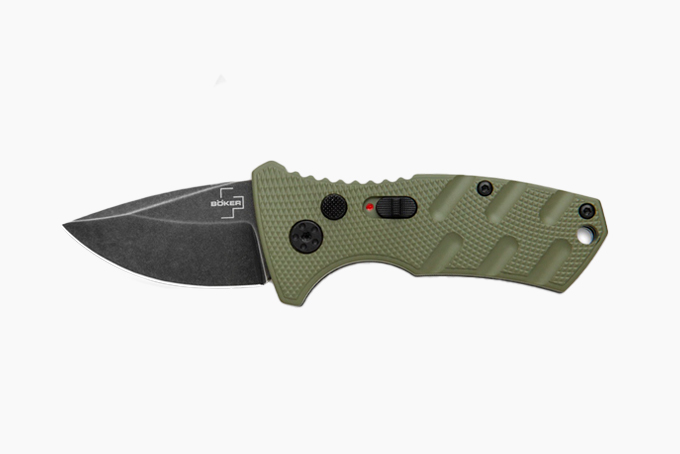
Best CA-Legal Auto: Böker’s aptly-named Stubby Strike is a compact, California-legal auto model with a stout, 1.875″ drop point blade that’s crafted from D2 steel before being treated to a black stonewashed finish. Equipped with a righthand side, deep-carry tip-up pocket clip, this knife features a set of stainless steel liners adorned in OD green texture-coated aluminum scales and is armed with a push-button locking mechanism. Measuring 5.325” when open, the Stubby Strike Auto tips the scales at just 3.22oz.

Kershaw Launch 1

The Best Automatic Knives for Everyday Carry
Photo: Blade HQ

Best Affordable Auto: Released in 2015, the Launch 1 has long been one of Kershaw’s most popular — and thoroughly capable — everyday carry knives. The auto model features a black anodized aluminum handle with a Bullseye red push button opener that’s mated to a black stonewashed drop point item made from CPM 154 blade steel. Unfortunately, due to its 3.375” blade length, the Launch 1 can’t legally be carried in some regions, including California, as well as the UK, where automatic knives are banned outright.

SOG Knives SOG-TAC AU Compact

The Best Automatic Knives for Everyday Carry
Photo: Blade HQ

Best Tactical Auto: A tactical powerhouse that lends itself extremely well to everyday carry, SOG Knives’ SOG-TAC AU Compact is a California-legal automatic that’s constructed around a stainless steel frame sandwiched between a set of textured black aluminum scales. Outfitted with a reversible, tip-up deep-carry pocket clip and a safety-equipped automatic version of SOG’s proprietary XR locking mechanism, SOG-TAC AU Compact’s thumb-slide deploys a special cryogenically heat-treated 3.00” D2 tool steel tanto blade that’s fortified via a black titanium nitride coating — and offered in a number of different blade shapes that are available in plain-edged, serrated, or partially serrated variants.

Buck 110 Auto Knife

The Best Automatic Knives for Everyday Carry
Photo: Buck Knives

Best Vintage-Styled Auto: Originally designed by Al Buck in 1963 before being released the following year, Buck Knives’ 110 Folding Hunter has unequivocally been the American heritage brand’s most iconic model for the nearly six decades that it’s been in production. More recently, the Idaho-based outfit opted to bestow the 110 with the auto treatment, arming it with a push-button auto-deployment in its otherwise unchanged handle — which on this version of the 110 Auto is crafted from top-shelf Crelicam Ebony wood and paired with a 420HC stainless steel clip point blade with a satin finish. Made in America, this knife is also sold with an included leather friction-fit sheath.

Gerber Auto 06

The Best Automatic Knives for Everyday Carry
Photo: Blade HQ

Best Self-Defense Auto: The Gerber 06 is a well-built EDC-friendly automatic knife that’s constructed around a handle that’s been machined from a solid piece of aluminum billet into an ultra-ergonomic shape that provides absolutely stellar grip — whether held normally or in a reserve grip. Add to that a beefy razor-sharp 3.625″ (drop point or tanto) blade made from premium CPM S30V, and you’ve not only got an amazing tactically-inspired everyday carry knife, but you also have one of the best auto-deployed fighting knives on the market (for under the $300 mark). A handgun-style safety switch ensures that accidental deployments won’t occur either.

Spyderco Autonomy 2

The Best Automatic Knives for Everyday Carry
Photo: Blade HQ

Editor’s Pick: The second-generation Spyderco Autonomy is an absolutely incredible everyday carry knife that, despite the addition of an automatic blade deployment setup, retains everything that EDC enthusiasts have come to love about the Colorado-based company’s blades. This includes a beefier, 3.50” version of Spyderco’s unique drop point blade shape — which is made from ultra-corrosion-resistant, nitrogen-based LC200N rustproof blade steel — that’s mated to a G-10 handle equipped with an auto version of the firm’s signature compression lock. And, despite no longer being deployed manually, the Autonomy 2’s blade still sports a smaller version of Spyderco’s instantly-recognizable circular thumb opening — another classic Spyderco design hallmark present on this knife.

Benchmade 9400 Auto Osborne

The Best Automatic Knives for Everyday Carry
Photo: Blade HQ

Best Overall EDC Auto: Since being introduced at the Blade Show in 2000, the utterly game-changing Osborne has not only been one of the most sought-after and trusted Benchmade knives, but it’s also unequivocally one of the all-around very best everyday carry knives ever conceived. Spurred on by the 940’s immense popularity, in May of 2020, some 20 years after the original Osborne debuted, the Oregon City outfit released an automatic version of the much-beloved EDC folder, retaining the normal variant’s green-anodized aluminum handle and 3.40” CPM S30V reverse tanto blade, however, Benchmade’s patented AXIS locking mechanism has been jettisoned in favor of a push-button deployment setup. Interestingly, the auto-spec Osborne actually weighs 0.25oz less than the manually-opening version.

Emerson Knives Bullshark

The Best Automatic Knives for Everyday Carry
Photo: Emerson Knives

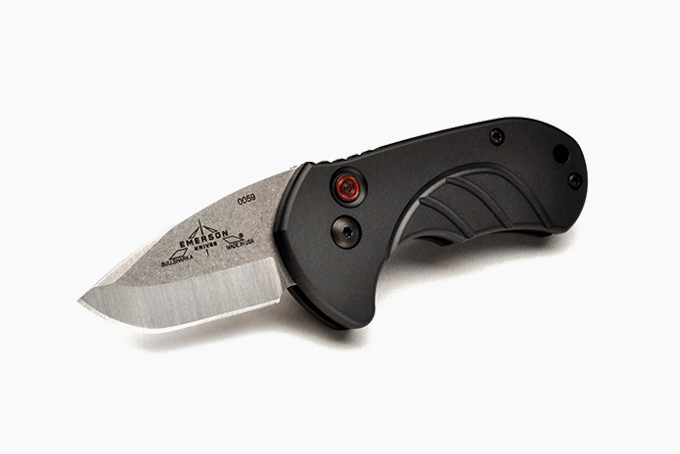
Best American-Made Auto: In late 2020, Emerson Knives unveiled its very first automatic model in the American knife maker’s more than quarter-century-long history with the Bullshark. Legal to carry in Emerson’s home state of California, the Bullshark is a surprisingly capable and utilitarian knife for packing such small dimensions, with the 4oz auto measuring just 5.30” when open. The Bullshark’s hard-anodized black aluminum handle is linked to an auto push-button-deployed 1.90” 154CM blade that’s 0.125” thick and rated between 57 and 59 on the Rockwell scale.

Microtech Ultratech

The Best Automatic Knives for Everyday Carry
Photo: Blade HQ

Best Auto OTF: Since the brand’s inception in 1994, Microtech Knives has established itself as one of, if not the single finest producer of tactical auto and OTF knives, as evidenced by the North Carolina company’s blades being the go-to choice for countless elite military operators — as well as being the knife of choice for none other than John Wick, who carries a UTX-70-spec of the Microtech Ultratech on screen, along with one of the brand’s Combat Troodon models. Engineered to withstand a lifetime of hard use in hostile conditions — meaning it’s more than robust enough to stand up to regular EDC duties — the Ultratech S/E (seen here) features a contoured and jimped black-anodized aluminum handle with a milled thumb-slide that rapidly deploys this knife’s blade — a 3.44” drop point item crafted from ultra-premium Böhler M390 steel.

12 of the Best Turkey Decoys on the Market for Big Gobblers

0

To most people, spring fever means days on the water, family cookouts in the backyard, and a long-awaited wardrobe transition. For turkey hunters, however, the mainstream intrigue is only secondary to the nonstop chaos of breeding competition among gobblers, and all of the incredible hunting opportunities the season brings. The same hunters get restless once they have a taste of the action, itching all year long to get back into the budding woods with a shotgun and a repertoire of calls and strategies they’ve been sitting on since last season. And, while good game calls and effective hunting blinds are necessities, nothing throws an exclamation point on a turkey hunting approach better than some well-placed decoys. With such a large market for decoys, however, it can be difficult to know which ones are worth spending your money on.

Sometimes a big Tom just needs a little extra motivation to con him into archery or shotgun range, so we did the research to find the best turkey decoys on the market today.

Avian-X HDR Jake and Hen Turkey Decoy Combo

This combo is perfect for areas full of especially aggressive birds, as they offer a wildly lifelike appearance that’s sure to bring big Toms in on a string. Each decoy is blow-molded and comes with two interchangeable heads to change up your presentation on the fly. And to make things more convenient in the field, they come with a carry bag for easy transport to the field, as well as carbon ground stakes for a quick-and-easy setup.

MOJO Outdoors Tail Chaser Max

For the hunters who like the run-and-gun approach, this is a hard option to beat. This turkey fan decoy comes with a printed photo-realistic Tom in a full strut position, which folds up for portability. It also features legs that help give your gun a steady rest for the shot, which will probably come in handy after being on the move just to get into position. And, if you want a little more realism, you could always attach a real turkey fan, too. At $40, this is a bargain.

Lucky Duck Lucky HD Collapsible

This is a solid, versatile option for only $70. If you’re lucky, you might even find it on sale for less. Made of durable plastic and a folding metal stake, this strutter turkey decoy folds up to make it easier to transport. Similar to the last option, this fan is also removable if you prefer having a real one, which might give you a slight edge to draw in that old, aggressive gobbler.

Dave Smith Decoys Jake Turkey Decoy

The Dave Smith brand has a great reputation for turkey decoys of exceptional quality, but they do come at price. This Jake decoy is made of a resin and has over 70-perfect five-star ratings on the Cabela’s website. The company claims its decoys can stand up to being shot multiple times without showing damage. Each includes a ground stake and a handy carry bag for transportation, and features exceptional attention to detail.

Primos Gobbstopper Turkey Decoy Combo

Anything from Primos typically lives up to the hype these days, and these soft-sided decoys are no different. Each decoy included in this combo folds up quickly with stakes and a carry bag, making them great for when you need to wander far off the beaten path for that prime spot. For $70, you get a Jake and a hen that are sure to enrage any big gobbler that sees them. Boasting a high rating on the Cabela’s website from buyers, this is a great option for shopping on a budget.

Dakota Decoy X-Treme Feeding Hen

If you want a hard plastic decoy that is designed to last many seasons, this feeder hen is a solid choice. This is perfect for a more casual setup sure to ease the nerves of hesitant birds. Built of EVA plastic, this decoy is airbrushed with fine details that will consistently draw in big birds. Additionally, the metal stake stores inside the body when not in use.

Montana Decoy Fanatic

Another fan decoy built for stalking, this option offers great portability, as well as a see-through mesh window so you never have to break the illusion of another bird. This setup allows you to sneak up on those birds that are wary of your stationary decoys. For a mere $44, you can’t go wrong.

Flextone Thunder Chick Hen Decoy

Besides having an awesome name, this is a solid decoy at a price that’ll fit almost any hunter’s budget. Blow-molded and built of a one-piece construction, this decoy boasts both durability and simplicity. Flextone also includes a carbon-fiber stake, and offers both a feeding and an upright option, which gives you flexibility in your setup. Ideally, you can buy more than one and set up a variety of different looks to coax cautious birds.

Davey Smith Mating Motion Pair

If the big birds are too wary of your strutter decoys, you may need something more to draw them in. Few decoy setups spice things up more than a controllable mating pair. A cord allows you to manipulate gobblers with this Jake-and-hen combo, which presents the potential to absolutely enrage territorial gobblers that ignore every other kind of setup. Like any other Davey Smith decoy, this combo isn’t cheap, but users swear by its effectiveness. It also comes with ground stakes and a carry bag.

Hunter’s Specialties H.S. Strut Hen and Jake Combo

These two foldable, hollow-body decoys are sure have the big gobblers running, and at an affordable price. These decoys feature flake-resistant paint that should last season after season. Both are bright and colorful, guaranteeing at least a look from any curious gobbler nearby. For the hunter on a budget, you get two solid decoys for $70.

Avian-X Strutter

For one of the best Tom turkey decoys on the market, it’s hard to go wrong with the highly-rated Avian-X. This strutting decoy comes with a silk tail standard, but includes the ability to add real feathers. Many hunters consider this the gold standard for strutting gobbler decoys, as so many have tagged out using it.

Redhead Reality Series Crazy Jake

Nothing will fill a dominant Tom with rage more than a young Jake strutting in his territory. This one is smaller than other strutting decoys, which should prove less intimidating for birds that are shy of standard-sized decoys. You can also adjust the look by mounting a real tail fan or by trimming the beard. For $50, this is a bargain.

For more outdoor content from Travis Smola, be sure to follow him on Twitter and check out his Geocaching and Outdoors with Travis YouTube channels.

READ MORE: HIGHLIGHTS FROM OUR WEST TEXAS TURKEY HUNT

How to Fillet & Process Silver and Bighead Asian Carp – Fast & Easy!

0

As I’ve shared in past videos, unbeknownst to most Americans, the troublesome, invasive Asian carp is one of the most nutritious and delicious fish in the world. But along with the unique challenges of catching the silver and bighead Asian carp, the next big task is processing them. This is also perhaps the number one deterrent that keeps people from utilizing these fish more frequently. Now, if you don’t mind eating fish in a manner that requires picking out or around the bones after cooking it, such as eating whole rainbow trout or other fish with small delicate bones, then there’s no issue whatsoever, just cook the Asian carp any which way you want and eat and pick away. The bones can be removed quite easily after cooking. However, if you desire a boneless filet, as many Americans are accustomed to, then you’ll have a little more work to do.

The silver and bighead Asian carp have two rows of intricate Y bone structures which require a special technique to get a completely boneless fillet from them. There are lots of great videos out there on this on this topic, and I’ll be making one myself here in the future, so stay tuned for that. But the process that I’m going to be sharing here requires a meat grinder and is very simple. And if you’re a deer hunter who makes a variety of products from your own ground venison, then all this will be very familiar to you.

No matter what method you use for harvesting Asian carp, a vitally important part of processing and eating them, or any fish for that matter, is to bleed the fish out immediately after it’s caught. I did a past video on this if you’d like to learn more. Filleting an Asian carp is initially the same as most any other fish, and it’s very common to filleting cod. There are lots of different ways that you can do this, but this is the method that I find easiest. I make my first initial cut at the dorsal fin and cut right down the backbone to the tail area. Next, I cut around the head about halfway down the rib cage and then meet up with my first cut to finish off the filet. I then wash my fillets off, put them in a cooler, and when I get home, I soak the fillets in salt water for a few hours or overnight to draw out any remaining blood in the filet. After soaking in some saltwater, I remove the skin from the fillet as you can see here.

After skinning, I then trim away the dark meat on the other side which is the slow-twitch muscle fibers of the fish that are used for long-distance swimming. This dark meat tends to have a strong flavor, so it’s good to remove as much of it as you can. To easily do this, I fold the fillet in half and slice the dark meat right off. Again, for this method, you’ll be using a meat grinder, which is a super easy way of processing the Asian carp to turn it into fish patties, fish tacos, fish burgers, fish sticks, fish nuggets, fish cakes, and all kinds of other delicious recipes. To do this, simply run your whole skinned and trimmed fillets through a meat grinder with a small or fine grinding plate. I recommend running the fish through twice for optimal breakdown and blending of the bones, which also adds extra calcium to the finished product, making it even more nutritious. After grinding the filets thoroughly, simply season and shape the ground fish however you desire and start cooking. If you’d like to learn more about the Asian carp, check out the book Eat the Enemy, which is a complete guide to catching and cooking the Asian carp. Check out the video below to see more…

(Thanks for your time! As you may have noticed, there are no annoying, irrelevant third-party ads cluttering up this blog article. If you enjoyed this content and would like to make a donation to help Three Minutes Outdoors with bills and production costs (which are sometimes quite hefty!) it would be greatly appreciated. Click here to make a donation today.)

Carp illustration images used under managed rights from © Joseph R. Tomelleri.

Asian carp video footage courtesy of Great Lakes Fishery Commission

Turkey Legs Tell the Tale of Our Unsung Tendons

0

Most of us omnivores eschew turkey tendons, the elastic strands that get in the way of a forkful of pure dark- or light-meat delight. For a team of Brown University researchers, however, these dinner discards are providing some new insights into how our bodies move and protect important muscle fibers.

High-impact activities, such as hiking down a mountain, can be hard on our muscles, as the hard shock of landings damages fibers (fascicles) during descent.

Muscles, however, are not acting alone, it turns out. “We used to think that all of the motion of the body could be explained from the action of our muscle motors,” Thomas Roberts, an associate professor of biology at Brown and co-author of the study, said in a prepared statement. “It is becoming increasingly apparent that springy tendons are a big part of what makes us go.” And what help us stop, according to the new turkey research, published online Tuesday in Proceedings of the Royal Society B.

Turkeys happen to have a similar muscle and tendon structure in their legs as humans do, even though their knees bend the opposite way. So the researchers dropped half a dozen wild turkeys (Meleagris gallopavo) and used high-speed sensors and cameras to observe their landings. How do you drop a 9.5-pound turkey, scientifically? The birds were placed in harnesses, lifted 1.5 meters into the air and then released (a height from which, the researchers noted, “the animals were able to land safely, repeatedly in a controlled fashion”). Foil strain gauges glued to turkey’s tendons were used to measure changes in muscle fibers 1,000 times a second via sonomicrometry.

The turkey landing data suggested that tendons can protect surrounding muscle fibers by taking in a good portion of the initial energy from a hard landing—then releasing it back to surrounding muscles more slowly.

“Something has to take up the slack, and it falls to the tendon,” Nicolai Konow, a postdoctoral research in ecology and evolutionary biology at Brown, and paper co-author, said in a prepared statement.

The process of landing turns out to be similar to what we already know about how the tendons and muscles work together to take off for a jump. When a person—or domestic fowl—jumps up, the power initially generated by the muscle is, in part, stored by the tendon, which provides the quick-release burst of energy. Just the opposite happens upon landing to dissipate the energy, the new findings suggest: “Power attenuation is similar to the familiar mechanisms of power amplification,” the research team wrote in their study. “In both cases, the tendon allows a separation in time of the muscular event and the movement event.” On the turkeys’ landings, the muscle fibers stiffened against the impact, sending energy to the tendon, which then released it some 2.4 times more slowly back to the muscle fibers.

The findings could have an impact, so to speak, on reconstructive tendon surgery as well as sports training, where the results might come as somewhat of a shock. After all, tendons are often thought of as the vulnerable links, owing in part to the major problems they can cause if they snap (think of poor Achilles). But perhaps we can think of the tendons as protectors, too. “We can say that in real ways, the muscle has a safety net with the tendon there protecting it,” Konow said.

What are turkey giblets and gizzards, and what are you supposed to do with them?

0

If you’re a new cook making a Thanksgiving turkey for the first time, you might be puzzled by what’s inside the body cavity of your bird: strange little lumps of flesh, oddly shaped and, even odder, gift-wrapped in paper or plastic like something of value.

It’s the humble yet clever giblets, which we now attempt to explain. Read on to learn what your turkey did with these bits and pieces, and why you might find them valuable, as well.

Even if you end up throwing them out, you’ll learn all about turkey anatomy and poultry parts, which you can use as fodder for the inevitable small talk at your Thanksgiving table.

Of giblets and gizzards

First: giblets (pronounced “JIH-bluhts”) is the general term used to describe the “edible offal” of a fowl, typically organs such as the heart, liver, gizzard and sometimes the kidneys. The detached, deskinned turkey neck, which you’ll also find tucked inside the bird, is also often included in the catch-all term of giblets.

The heart, liver and neck, unsurprisingly, have a similar function in a bird as they do in a human. But the gizzard is something special. It’s part of the digestive system, a muscular food-grinding organ that helps a bird such as a turkey to digest seeds and insects. It’s also known as the gastric mill or hen’s teeth, because it does what teeth would do — if birds had teeth.

A more scientific name for the organ is the ventriculus. But almost everyone just calls it the gizzard, said Prof. Rob Porter, an avian expert at the University of Minnesota College of Veterinary Medicine.

All birds have gizzards, but so do crocodiles, alligators, earthworms, some fish and crustaceans and even dinosaurs, according to the “8 Things You Didn’t Know About Gizzards” page on the website for DeLong’s Gizzard Equipment, a poultry processing equipment company in Macon, Ga.

Gizzards and other giblet parts can be simmered with herbs and vegetables to make stock. At Thanksgiving, the stock and minced-up giblets can be mixed with turkey pan drippings, flour and cream to make giblet gravy. Or they can be used to make giblet dressing. The strong-tasting liver, however, is most often roasted rather than boiled before being made into gravy or stuffing.

A Midwestern delicacy

Sometimes these extra bird parts are a star attraction of their own.

You can find recipes for smothered turkey necks, Southern smoked turkey necks, slow cooker turkey necks and curried turkey necks. The New York Times once published a recipe for turkey necks “osso buco style,” braised slowly “until the flesh fell away from the bones in tender silky strands.”

“There’s a lot of muscle in that neck,” Porter said.

And fried chicken gizzards are a traditional Southern dish.

“In Uganda, Cameroon, and Nigeria, the gizzard is traditionally set aside for the oldest and most respected male at the table,” according to DeLong’s.

But Wikipedia asserts that pickled turkey gizzards are a delicacy particular to the Midwest.

It’s true, says Reinhard Liebner, owner of the Milwaukee-based Bay View Packing Co. Liebner said his company’s pickled turkey gizzards sell well in Minnesota, where they can be found in taverns and grocery stores. They’re especially popular among hunters, anglers, snowmobilers and football tailgaters, maybe because the jars of brine-soaked gizzards don’t need refrigeration, even months after opening.

“It’s convenient. It’s ready to eat,” Liebner said, and they taste like the dark meat of a turkey, except it’s richer, with “more organ flavor. It’s a delicacy,” he said.

Other giblet gems

  • A turkey with giblets includes a neck, gizzard, heart and liver, but probably not the ones the turkey had during its life. Turkey companies process hundreds of thousands of birds at a time, so it’s pretty hard to keep straight whose neck was whose.
  • If you put the turkey in the oven and forget to remove the giblets, it’s not necessarily a disaster. Butterball turkeys, for one, package giblets in an oven-safe paper bag just in case. Butterball and Jennie-O also sell “oven ready” or “ready-to-roast” giblet-free whole frozen turkeys that can go straight into the oven inside a cook-in bag.
  • The word gizzard comes from a Middle English word “giser,” which evolved from the Latin word “gigeria,” meaning giblets.
  • Over the centuries, “giblets” has been used as a slang term for certain parts of the human body. To “join giblets” could mean having sex, shacking up or forming a partnership, according to Green’s Dictionary of Slang. More recently, giblets has become slang for accessories that come with an electronic consumer product, according to the Urban Dictionary. And “gibbing” has become a gamer slang term derived from giblets that means to vanquish a digital foe in a way that scatters their body parts.
  • In an episode of “The Beverly Hillbillies,” Jethro starts a restaurant called the Happy Gizzard. And gizzard was a handy rhyming word for E.Y. “Yip” Harburg, the lyricist for the music for “The Wizard of Oz.” If, as Dorothy sings, “the Wizard is a wizard who will serve,” then the Cowardly Lion will become “brave as a blizzard,” the Tin Man will be as “gentle as a lizard,” and the Scarecrow will be “clever as a gizzard.”
  • Turkey neck has also become a term for an undesirable human condition: the wrinkled, sagging skin on a person’s neck as one gets older. If you’re developing a turkey neck, some suggested solutions include neck and facial exercises, cosmetic creams, Botox, plastic surgery — or wearing turtlenecks.
Best Air Rifle Deals

Popular Posts

What can you kill with a 177 air rifle?

0
"Unleash Your Precision: Discover the Power of a .177 Air Rifle to Take Down Targets with Accuracy. Explore the Versatility and Potential of this...

Dry Firing Air Rifles: What You Need to Know

0
"Master the art of precision shooting with dry firing air rifles. Enhance your aiming skills, trigger control, and muscle memory without using ammunition. Discover...

Can a 22 air rifle kill a deer?

0
"Debate over whether a 22 air rifle can effectively take down a deer has sparked curiosity among hunting enthusiasts. With its lower muzzle velocity...