

Home Blog Page 203

Randy Newberg: Here’s How to Hunt Elk Out West On Your Own

0

You and your buddies have talked about it for years. Well, no more excuses. Pack up your rig, point it west and hunt elk. Here’s how.

At 0430 last September, I poked my head into my 8-year-old daughter’s room to wake her up. In an hour, we’d be hiking in the dark to find a herd of elk near our home in Montana. As I closed the door to leave, I heard tell herself-just as she always says before a gymnastics tournament, test or swim meet, “You got this.”

On our hunt, we heard a few bulls bugle, and my daughter thought that was pretty cool. I didn’t have the heart to tell her we likely heard other hunters bugling, not actual elk. After all, we were on public land, not terribly far from an open road, and it was Saturday. But do-it-yourself (DIY) elk hunting on public land in the West is never a slam dunk. In fact, only around 20 percent of Montana elk hunters fill their tag in any given year.

While the odds aren’t great, don’t let that dissuade you from heading west to hunt elk; there are plenty of things you can do to tip the scales more to your favor. For that, I turned to Randy Newberg. Once a mild-mannered CPA living in Bozeman, Montana, Newberg has since given up counting beans to become a hunting “celebrity” and public lands advocate. His niche isn’t whacking and stacking giant bulls on some game farm. His style is as far from that as it gets. He’s dedicated his podcasts (Hunt Talk Radio), TV Show (Fresh Tracks), and YouTube channel (Randy Newberg, Hunter) to the DIY, public land hunter. And he’s killing elk every year at the spry age of 56.

Newberg grew up in the Midwest fishing for walleye and hunting cagey whitetails. He’s honed his tips for elk hunters through his own trial and error, and he never pulls any punches when it comes to teaching others about hunting elk. “I am so thankful that I was a whitetail hunter when I moved west because it caused me to fail,” he says. “I view every hunt, whether I kill an elk or not, as a success as long as I learn something.” And that, as you will find, is exactly the attitude you need to succeed at elk hunting.
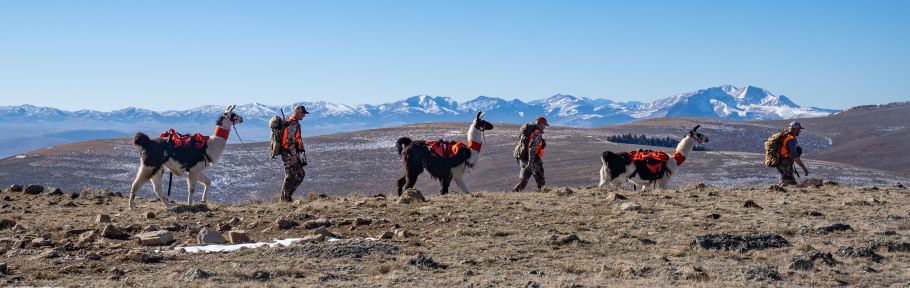
Randy with his two- and four-legged friends on an elk hunt.

Where to Start Your Elk Hunt

If you’ve read this far, chances are you’ve considered the idea of hunting elk. Great, now convince some buddies they want to hunt elk, too, but be discerning. “Picking the right people is huge,” Newberg says . “Make sure everyone is compatible. Go on a camping trip first. A hunt isn’t the place to sort out who you want in a foxhole with you.”

Once you’ve got one or two good friends on board, it’s time for a heart-to-heart about what the definition of a “successful” public land elk hunt looks like. “Elk hunting is not typically a one and done thing,” he says. “If that’s your definition, then go to a ranch. If you want to become an elk hunter, then you have to keep at it.” Put another way, manage your expectations. If your one goal is to come home with a big bull to hang on the wall, then a DIY, public land elk hunt isn’t for you. If your goal is to try something new, be physically and mentally challenged and make memories to last a lifetime, then you’re on the right track. For perspective, it took Newberg seven years to kill his first elk-and he lives a stone’s throw from some of the best elk hunting in the county.

“Always beware the man who owns only one rifle.”

Randy Newberg

Now, decide on the state where you want to hunt. If you want to go right now, or maybe next year, many first-time elk hunters look to a state like Colorado that offers ample over-the-counter (OTC) tags. Plus, Colorado has around 250,000 elk, by far the most of any state. Most of those elk are going to be cows, you know, the ones without antlers. If you’re on a tight budget and this is your first time hunting elk, consider hunting a cow. No, they don’t sport antlers, but they are absolutely delicious and way more abundant than a 300-inch herd bull.

Navigating the hunting regulations for a new state can be harder to understand than your truck’s wiring diagram, but you don’t have to go it alone. There are a number of websites and services out there dedicated to help you find your tag and take your money. For instance, if you choose to hunt Montana, the state offers a Hunt Planner, which may or may not work depending on the moon phase. When it works, the planner comes complete with maps, tags and hunting districts. Don’t be afraid to call your chosen state’s fish and game department, either. After all, your license money helps fund the department.

Randy and son Matthew on an elk hunt together in Wyoming

Do I Need New Gear to Hunt Elk?

Now that you’ve picked a state, convinced a couple of buddies to go and hashed out expectations, it’s time to talk gear. Fair warning: you need to buy less stuff than you think. “Gadgets and gizmos are not going to kill you an elk,” Newberg says. “If you think that’s all there is to it, then just give me the money. Educate yourself and get in the woods. Feed your brain-that’s the best tool you got.”

Hunters can and do get wrapped up in buying gear because it’s an easy way to prepare. Keep it simple. Don’t let gear consume you and your hunt. “Whatever you’ve got for your deer rifle (and if you shoot it well) just bring it,” he says. “Always beware the man who owns only one rifle.” The most popular elk calibers are .270, .30-06 and 7mm Remington Magnum. While ammo can be hard to find right now, you do need to practice and know your effective range. If you consistently shoot baseball-sized groups at 200 yards, you should be ready for the elk woods.

If you are looking to invest in one thing, buy a quality pair of binoculars. You’ll spend a fair amount of time simply looking for elk at dawn and dusk, and good glass really does help ease the strain on your eyes. If you plan on camping, make a list of items you think you’ll need and then see what you and your buddies lack. Buying a wall tent is much more reasonable when the cost is split three ways. Or you can stay at a local hotel where hot showers are always welcome after a long day of hunting.

Before you start the drive, you’ll want to have at least five spots picked out within the unit of the state for which you have a tag. This is critical. “But I’ve never been there. How am I supposed to know what to look for?” you say. I hear you. If you can’t scout with boots on the ground, then the next best thing is to scout from space. Use GoogleEarth or apps like onX and GoHunt to give you a bird’s eye view of the terrain.

Keep in mind that elk need three things: food, water and security. Look for areas away from open roads and easy hunter access. Open, south-facing hillsides or alfalfa fields entice elk to feed at dawn and dusk, while north-facing timber provides refuge and a place to hide. If you really want to get into the nitty-gritty (and you should), Newberg can help. He’s broken elk hunting down into five calendar seasons: early season, pre-rut, peak rut, post rut and late season. To learn more about this strategy, tune into his YouTube channel where he goes into each season in-depth. Also, check out his elk hunting e-guide, which you can download as PDF and read as you drive across the country to elk camp.

Time to Hunt Elk

Once you get to the mountains, you’ll soon realize why success rates are low. “You’re going to be completely intimidated by the landscape, its steepness, the vastness of the terrain and the low animal densities,” he says. Whatever you do, keep a positive attitude and take it easy. You’re supposed to be having fun, right?

Chances are, you’ll be sharing the landscape with other hunters, which is why you picked five spots before leaving home. Find the spot where there are the fewest hunters. Once there, spend the first three days just scouting and poking around. “You have to find elk first-that’s your biggest time commitment. The reason most people don’t kill an elk is because they can’t find an elk,” Newberg says.

You find elk by getting up in the dark, hiking to a high ridge or peak, sitting on your butt and looking through a spotting scope or binoculars at far off hills. Elk move most at dawn and dusk, so you need to be in position and looking at those times of day. And please, pack a headlamp. “Most of my friends who come from the Midwest are scared shitless to leave the truck before daylight,” Newberg says with a laugh. “There are tons of grown men who do not like being in the woods after dark. So, ask yourself what you’re afraid of and learn more about it. If you’re afraid of grizzly bears, then learn where they’re going to be and don’t be there.”

Sip your coffee and glass the hills, focusing on what’s closest to you first and then look to distant ridges. Check the immediate area for sign, too. Are there rubs, scat and beds? No? Then maybe you’re not in the right spot.

Just like whitetails, elk have a keen sense of smell. Let the wind dictate your movement. As a general rule, air (thermals) will descend down the mountain in the morning. By afternoon, those thermals will creep back upslope. If you’re hiking uphill in the morning, you’re off to a good start.

Let’s say you get lucky, make a great shot and have an elk down. Congratulations. Now, veteran elk hunters will tell you, the real work begins. Elk are big, like 500 pounds big. If you’re more than a few hundred yards from the truck, and most times you will be, you need to get that elk into manageable chunks. Don’t even try to drag it. Instead, quarter it. And guess what? Newberg can teach you how to do that, too, without even gutting it. It’s called the gutless method. If you Google “gutless method”, you will find plenty of videos online to walk you through the process. It’s a little daunting at first, but 80-pound quarters are a much more reasonable haul than trying to pack out an entire pony.

Hunting elk on your own isn’t impossible, but it’s not easy, either. “It’s going to be work, but it’s fun work,” Newberg says. Be honest with yourself, do your homework, make a plan and put in the work. Remember, you got this.

Drone Fishing: Everything You Need to Know

0

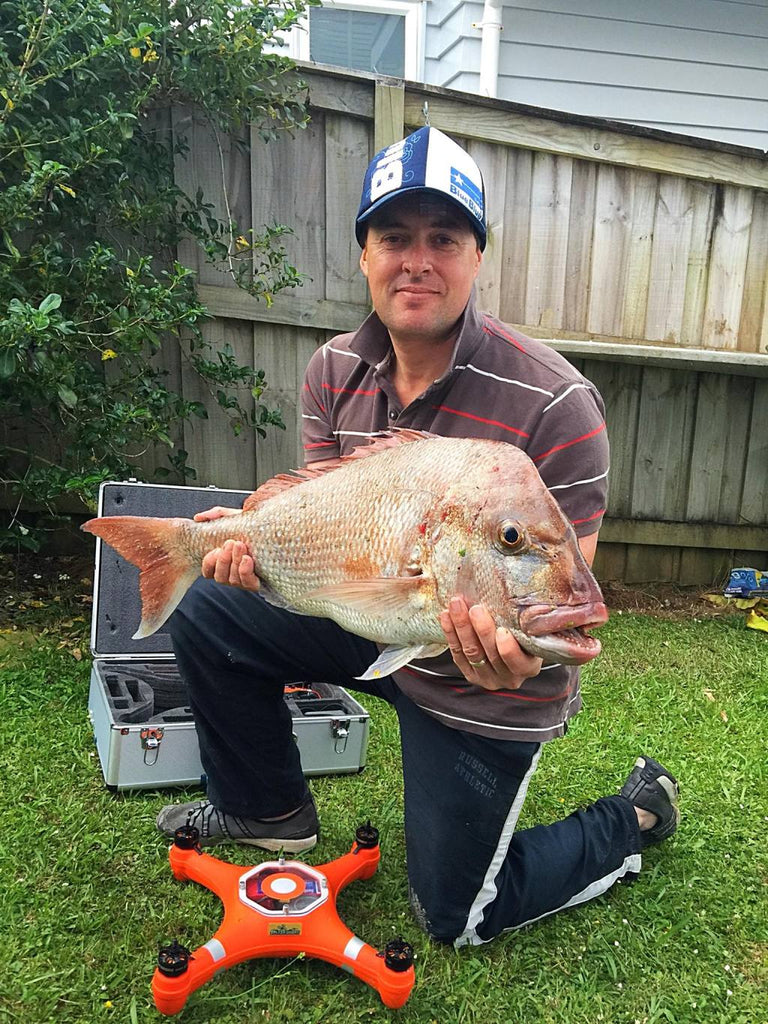
If you like sitting around the sea and savoring your free time, drone fishing is something that can be appealing to you. While fishing works as a fantastic pastime, a drone can make it much more fun and ensure that you have a catch every time.Whether you plan on doing it as a career or a hobby, drone fishing offers many benefits. So, how does it work? What do you need to do it? Is fishing with drones indeed the future? Here’s everything you need to know.

What Is Drone Fishing?

As its name suggests, it is angling with the use of a flying robot. Drone fishing offers several ways to simplify the process of fishing. Rather than gamble your time away with a chance at getting good fish, you can utilize unique drone features to optimize how to get the fish you want.There are many ways to do drone fishing, depending on how much work you want to do yourself. For starters, you can use the fishing drone to scout for a fishing area. Rather than using the drone to pull the fish, you use it as an aid to scout for an excellent place to fish and find the best spots you can use. Some drone fishers connect their underwater camera to check out the local fish population. You can use your drone camera to scope the local waters if you’re hunting for specific fish like tuna, salmon, or others.Another way to do drone fishing is to use it as a bait release drone. As the drone flies around, it casts off the bait, giving you ample opportunity to catch fish. You can use various types of bait to get more fish, from throwing chum to get more fish in one area to using worm bait to reel in fish.The most common use of drones in fishing is to reel in fish, known as “dropping the line.” Rather than use a fishing line, you can have a drone do the catching for you. Depending on how much interaction you want, this can be the least fun part of drone fishing. However, this is also the best way to get a catch every time.Drones are fantastic for career fishing, especially if you like reeling fish from your boat. You can extend your catch range or add a few extra meters to your fishing zone.

drone-used-for-surf-fishing

How Does Drone Fishing Work?

If you’ve never done any boating or have been away from this hobby for a while, you may be wondering what goes into doing these activities. In this case, it’s best to start with the basics. First, you need to know the laws surrounding the use of your drone. Most countries have regulations regarding where and when you can fly your craft. While some places allow you to use yours freely, others require you to get a license, register your aircraft, and adhere to other requirements. Next, you need to learn how to pilot your drone. You must learn how to control your copter and maintain and fly it properly. You need to learn special piloting techniques if your drone is huge. Third, you must ensure your drone is equipped for fishing and not just for show. There are several types of bait-dropping mechanisms, depending on your drone model. For example, SplashDrone 4 and Fisherman FD1 are purpose-built drones with integrated bait droppers. They also have a remote-controlled line release and many more. Another type of drone includes a tension-triggered release line, which utilizes DJI-compatible bait droppers.Finally, you need to find a good spot to launch your drone. There are plenty of great places for launching a drone, from public waterways to private property. Depending on your needs, you can also use your boat or fly from the shore as a staging platform.

Who started drone fishing?

Drone fishing was not always how it was today. Fishing with drones is still a new activity even after a few years. The activity started with a certain Milton Frear, the owner of JCMatthew in New Zealand. The company deals with different high-quality adventure brands and technology, from camera equipment to personal transportation.

drone-angler

Frear was the distributor of SwellPro in New Zealand, one of the first waterproof drones publicly available for purchase. He used the first-generation waterproof drone, the Mariner, for bait-dropping on the beach in 2014. This personal choice was a clever use of a feature not for its intended purpose.How?The Mariner had a release mechanism initially designed to drop live-saving equipment during an emergency. However, as a lifelong fisherman, Frear understood the novel way of utilizing the feature to drop some bait and get the fish going.Later on, several people started using their drones for fishing too. In particular, Jaiden Maclean of Sea Ulcer wanted to prove if they could fish using drones. Their Youtube video, “Drone Fishing For Tuna,” was a testament to the viability of fishing with a good drone.Their video went viral, garnering as many as 5.3 million views and influencing an audience that loves fishing and flying drones, combining them into one unique hobby. This inspired many would-be anglers to try drone fishing, and it took off from there.Swellpro is the first company who made a waterproof purpose-built fishing drone with an integrated release mechanism. This allows easy fishing and combines scouting, baiting, and angling in a single drone loadout.

Is Drone Fishing Worth It?

Drone fishing is an enjoyable activity for many people, especially due to its many benefits. Whether you’re doing it as a hobby or as a career, using a drone to get some good fish is fun. While some may think it’s less challenging, it also has its own technical hurdles that you need to overcome.So, is drone fishing worth it? Yes! Here are some benefits you can expect when you start drone fishing.

drone-fishing-for-sharks

1. Extend The Range Of Your Cast

As the title implies, this allows you to extend the reach of your casting. While a conventional rod has a range of 10 to 15 meters, your aerial capabilities can extend that to as much as 100 meters. This allows you to cover a wide radius, making your chances of getting a snag or a fish much higher.While you can always use a boat to find the fishing spots you want, you can also use a drone and stay on the shore. This gives you a way to go fishing in locations that need a boat to access it, offering a richer space to gather the fish you want.

2. You Have Better Control Over Your Lure

When using conventional rods, you have to rely on hardware to release your hook and lure. When the bait hits the water, your gear must do the rest. The issue with this approach is that you have no say in how the lure behaves once it enters the water. If you use a deep-sea fishing rod, then it can sink to the bottom, making it hard to retrieve them. The mobility of an aerial vehicle gives you more control over your gear. You can quickly move to the best location to make your drop. You can also adjust how fast you move your gizmo, allowing you to bring it in fast or slow, depending on what you’re trying to achieve.

3. Scout For Good Fishing Spots

Using your UAV, you can simultaneously do two things: find a great place to angle and find the right spot for the right species. Scouting with a boat or a kayak can be limiting. If you can’t access an area by boat, then all you can do is hope for the best. On the other hand, when you use your droning to fly over the ocean, you can find a great location for different types of fish and sea life. This lets you modify your technique to make sure you get what you want.

4. Saves Time And Money

While most hobbies cost money, this one can actually save you money, especially if you do it regularly. Unlike traditional boats, you don’t require gas, insurance, or anything else with drone fishing. All you really need is an appropriate form of electricity to power your drone and your other fishing gear.. While you may be thinking it’ll take a lot of time to get the hang of doing this kind of recreational sport, it actually saves you time and effort. As compared to traditional forms of sports, this one doesn’t take as much physical exertion. You also don’t need to lug heavy boats or drive your car to get some fresh fish.

Can You Use Any Drone For Fishing?

If you’re thinking about getting into drone fishing, then you might be wondering if you can use your old drone to do some cool tricks. While it can, the results will be less than stellar. You want them to have the right specs.For starters, you want the drone to be 100% waterproof, from the copter itself to the camera and reeling equipment it uses. Drones can easily die with a strong splash of water with a big wave. You want the vital electronic parts protected so you can keep it operational.You also want a fishing drone that can handle high wind resistance and high payload capacity. The oceans pack strong winds, so your drone should be able to handle somewhere between 29 to 50 kph winds. As for payload, depending on the fish you want to catch, you want to go up to 1 to 2 kgs, which is enough bait to catch you a tuna.You also want a drone with a long flight time to allow for more drops per single charge. This also gives you more time to get your drone come back to safety if you’re fishing from the beach. You also want a good, high-quality camera, preferably an underwater camera for better scouting.

What Are The Best Drones For Fishing?

There are three excellent options on the market if you’re looking for fishing drones. Depending on your needs, every drone offers a different feature. These include:

SplashDrone 4

SwellPro’s SplashDrone 4 is a 5th-gen waterproof drone, offering features that fit every drone fisher’s needs at every skill level. It can float and has IP67 seawater proofing, with the ability to withstand Beaufort Force 7 winds (31 mph/50kph) during its flight.It also offers a swathe of features that allow multifunctional payload and open interface design. This allows you to equip the SplashDrone 4 with optional 1- to 3-axis payloads, from 4K, night vision to thermal cameras. It has a 30-minute flight time without load, with around 12 to 15-mins flight time with payload.

Fisherman FD1

Fisherman FD1, on the other hand, offers almost the same specs, with an IP67 seawater proofing and a max payload capacity of 2kg. It also has a max wind resistance of 44.75 mph/ 72 kph but an equivalent flight time to the SplashDrone 4. Its massive casting range gives you a 1.6 km radius and up to 6 bait drop missions per charge.

spry-drone-for-fishingSpry+

Spry+ offers a different value than the SpalshDrone 4 and FD1, working as a lighter scout drone with an 800 m control range. Its 4K30fps camera offers easy scouting opportunities for high quality video opportunities. Its waterproofing and corrosion resistance offers a way to scout the waters with no issue at all.
How Much Does A Fishing Drone Cost?

The normal price range for a quality, durable, and functional drone for fishing and outdoor/aerial photography is between $1000 to $2000. This depends on factors like the brand, type, and weight of the product. The cost varies, depending on the features and capabilities you want your droning to have. Some models like the Spry+, for example, are much cheaper compared to other options. The Spry+ costs somewhere around $1000, while the SplashDrone 4 costs around $1800.While this may sound expensive for fishing, you need to remember that a fishing drone can replace several fishing equipment. It can replace a set of fishing rods, scouting gear, boating fees, and underwater cameras.

What Is The Longest Flight Time For A Fishing Drone?

The 20 to 30-minute battery life of most standard consumer-grade fishing drones, which is more than enough for an average fishing trip. The SplashDrone 4 and the Fisherman FD1, for example, can fly for 30 minutes without any load. It can traverse the 1-2km radius of your cast, offering you plenty of opportunity to get the bait in the water. Most recreational drone users spend around 15-20 minutes to do multiple bait drops. A few minutes is more than enough to fly the drone over great distances.

Conclusion

As you can see, there are plenty of reasons why you should consider drone fishing. From its versatility to the sheer amount of things you can do, drone fishing is the future. From helping you find the best place to dropping your lure, you can do so much with one amazing tool. If you’re looking for a great way to spend your time, then investing in a quality fishing drone is one of the best decisions you can make.

What Can You Hunt with a .177 Air Rifle? (Quick Answer!)

0

With a .177 air rifle, there is a lot you can do including target shooting and hunting. Talking of hunting, what can you hunt with a .177 air rifle?

As a whole, a .177 air rifle can take on the small-sized game, pests, and birds. So, ethically, you can kill rats, pigeons, squirrels, rabbits, and co. In some special cases, a powerful .177 would even take down slightly larger animals like groundhogs.

While a .177 air rifle is popularly used for backyard plinking and target practice, they are certainly a good choice for hunting down small game. However, as a shooter, you need to be within the correct range and using more imposing pellets, aim accurately at the target.

Doing otherwise means you could mishit and end up only injuring the animal. Let’s look into this topic further.

What Can You Hunt with a .177 Air Rifle?

There are plenty of animals a .177 air rifle can down. However, they will only be small-sized although you can still kill larger animals with higher-end, powerful .177 air rifles.

The animals you can hunt with a .177 air rifle include most rodents like mice and squirrels, rabbits, both small and large birds, mongoose, chicken, among many other small game and pests.

Generally, .177 air rifles do not produce a lot of muzzle energy but you get enough to take on the mentioned animals. You can definitely kill game using very little power as long as you make the most out of the shot by preparing well.

Another thing you gain by shooting a .177 is top velocity. There are not many air rifles that shoot over 1000 fps more than this caliber. With top velocity like this, accuracy, which is a key quality of the best hunting air rifle is never going to be a problem.

Most .177 airguns have a minimum of 12 foot-pounds of muzzle energy and the maximum range you will engage a target with such an air rifle and get results is about 35 yards. Yet, there are certain .177 air rifles that can produce as much as 30 foot-pounds past 50 yards.

If you are looking for an efficient and effective air rifle in the .177 category, you can consider the Benjamin Trail NP XL air rifle, (View on Amazon) a gas piston break barrel that offers plenty of power in excess of 25 foot-pounds of muzzle energy and great accuracy.

Alternatively, you can work with the Gamo Swarm Maxxim air rifle (View on Amazon) that offers a 10x magazine for non-stop shooting. Swarm Maxxim offers consistent power and great durability.

What is the Effective Range of a .177 Air Rifle?

When you are hunting or doing another activity such as target practice, it’s important to understand the air rifle’s effective range. This helps you to estimate how far your air rifle can go to get you reasonable results.

One pertinent question you can ask yourself about a .177 is what is the effective range of the pellet gun? Generally, with a .177 air rifle, you can shoot accurately at your target out at 60-80 yards.

The reason why the effective range of most .177 air rifles is such high is because of the faster velocities most of them come with. Take an example of 1000 fps. If you fire a pellet at this velocity, its trajectory goes flatter and this means more accuracy at longer distances.

Many .177 caliber air rifles offer velocities in the excess of 1000 fps. Look at this Gamo Whisper Fusion Mach 1 air rifle (View on Amazon) that can send pellets downrange at 1420 fps and offers many other indispensable features of a proper air hunting air rifle.

Whether you are hunting for rodents or birds, the Whisper Fusion has the perfect effective range to get the job done always.

Is a .22 Air Rifle More Powerful than a .177?

There is no doubt that two of the most renowned calibers of air rifles feature .22 and .177. Oftentimes, many people think that they are the same in functionality and power but that’s not true.

You would probably ask: is a .22 air rifle more powerful than a .177? There is no straightforward answer to this but basically, a .22 air rifle would be more powerful than a .177 air rifle. On average, a .22 caliber air rifle is capable of producing over 18 foot-pounds of muzzle energy while a .177 about 15 foot-pounds.

If you consider the kind of pellets each shoot. The .177 pellets are lighter than the .22 pellets. What this means is that the heavier .22 pellets are hard-hitting more than the lighter .177 pellets.

It’s true that a .22 air rifle will shoot pellets at a slower speed. But that’s probably due to the heavy nature of their pellets which is exactly the reason why the guns generate the extra energy compared to their .177 counterparts.

So, if you were looking for a perfect choice in an ideal hunting scene, you will definitely consider a .22 any time.

That, however, doesn’t mean that .177 air rifles are not powerful enough. In fact, there are certain .177 air rifle models on the market that offer serious power than .22 air rifles.

Can You Kill a Deer with a .177 Air Rifle?

Sometimes if you are just getting some foothold in the airgunning world, you think your air rifle can tackle almost every target on the way. Many newbie hunters keep asking the question; can you kill a deer with a .177 air rifle?

By and large, on paper, you cannot kill a deer with a standard .177 air rifle. This is because the pellets used are extremely lightweight and literally below 10 grains in weight. This means they generate less power on impact.

A deer is not the ordinary small targets like birds and rodents you’d easily knock down with that amount of energy. Deer is large and it takes a lot of power. So, you’d probably want to use a higher caliber like a .30 or above.

Nevertheless, there is a slim chance of hitting and knocking it down with a .177 air rifle. You need to be extremely close to the animal and make sure you hit it in the head or lung area.

Even with that, the size of the pellet used in form a .177 will not impound the deer on the spot. It may run off with the injury; which is unethical and irresponsible on your side as a shooter.

If using less powerful air rifles on large animals is going to be a personal trend in hunting, sooner than later the authorities will be on your shoulders. So, as much as you want to try out new things, it’s just cruel to engage a deer with a .177.

Can a 177 Air Rifle Kill a Fox?

A fox is a fairly large animal. And if you have only a .177 air rifle in your possession, you’d likely ask whether a 177 air rifle would kill a fox or not.

In general, there are very few .177 air rifles that can humanely kill a fox under normal circumstances. Not unless you close into about 10-15 meters and aim the pellet right through the fox’s head.

Of course, it has to be a more powerful .177 air rifle with a minimum of over 30 foot-pounds of muzzle energy. If you are not sure about your air rifle, you simply get a higher caliber and work with it rather than making the animal suffer due to a mishit.

One thing you have to remember about foxes is their tough skin that takes an awful lot of energy for a pellet to penetrate.

What .177 Pellets Are Best for Hunting?

When you go out hunting for squirrels and rabbits or other small game, you definitely need proper hunting pellets. For the record, not all pellets you find on the market are meant for hunting.

The best .177 pellets for hunting weigh much higher. They are supposed to hit hard and leave some massive impact on the target.

Ordinarily, a 177 pellet is lightweight, weighing in at 7.5 to 10.5 grains on average. With this weight, it’s hard to knock down most animals and birds.

But, it’s possible to still get .177 pellets weighing in the region of 14.5 grains. These are practically heavier pellets and provide some serious knockdown power, which is what you need for any hunting activity.

The shape of the pellet is another big factor in its effectiveness. The best shapes for hunting include hollowpoint, wadcutters, and domed pellets.

You can consider the Crosman Premier Super Point .177 Cal pellets (View on Amazon) that come in a 500 ct tin.

Final Thoughts: What Can You Hunt with a .177 Air Rifle?

You can hunt a lot of small-sized animals and birds in the wild and in your backyard. These could include rodents like rats and squirrels and birds like pigeons and swallows.

Different .177 air rifles come with different power capabilities. This offers shooters a chance to even extend their list from just small game and pests only to some fairly larger targets as well.

How to find and catch crayfish

0

The crayfish, crawdad, crawfish discussion is kind of like the creek, crick discussion — it comes down to regional preference. I’ve heard it all three ways but grew up saying crayfish.

The first time my dad took me to catch crayfish I was both nervous and enchanted by them. We rode our bikes from the home where I spent most of my childhood to the creek down the road. Under the bridge we lifted rocks to look for them, being careful not to stir the water so we could see them. And in one swift motion, dad grabbed them and lifted them up for me to inspect.

I remember asking if it hurt when they pinched his hands, but years of pouring concrete for a living had hardened them to the point the curious-looking creatures couldn’t even puncture his skin. I have been pinched and it’s uncomfortable, but not unbearable. My daughter, Vayda, has been pinched and it turned her off catching them with her hands for a long time. So we got a net.

Catching crayfish is kind of a summer tradition. The creek my dad took me to the first time now runs through his backyard and provides endless amusement. We catch tadpoles in the spring, largemouth bass and bluegill after a good rain and crayfish in the summer when the water is warmer.

Strategies to catch crayfish

Crayfish can be caught in freshwater lakes, ponds, rivers, creeks and streams. They are frequently found in habitats with slow-moving water and plenty of rocks and vegetation to provide cover.

They are easiest to find during the summer when water is warmer and most active at night because they are nocturnal. For these reasons, the best time to go crayfishing or set traps is near dusk.

Catching crayfish by hand. The best way to find crayfish is by lifting rocks in shallow areas of a creek or stream. You’ll need to be mindful of the way the water is flowing, lifting rocks into the current so the dust that gets stirred up by lifting the rock is carried out of your field of view. You also want to lift rocks slowly to avoid startling the crayfish underneath. Once you’ve located a crayfish, slowly reach your hand into the water, approaching from its tail. When you’re ready make one fluid motion to grab the crayfish’s body behind its claws to avoid getting pinched. You could also use a net to try scooping crayfish instead or to place it in front of the crayfish and attempt to get it to run in on its own by touching its tail.

Bait crayfishing. Another method you can try is by using a fishing pole and bait fishing with worms, fish parts or even a piece of hotdog or raw meat. Attach the bait to the pole by tying a fishing hook or safety pin on the end of your line and placing the bait on it. Lower the bait into the water and slowly wiggle it until you feel or see a crayfish grab hold. Then slowly pull it towards the shore. If you are close enough to see the crayfish attached to the bait, you can try scooping it up with a net.

Using traps. You can catch crayfish in larger quantities by using traps. Open traps are collapsible nets that are open at one end. Closed traps are a little more intricate with a funnel at one end to prevent crayfish from escaping. Open traps can be placed out for several hours with enough bait. Closed traps can be left overnight. Some traps are baited utilizing a hook that hangs in the center and others use bait boxes or bait jars. Traps should be no larger than three feet in height, width and depth. Cylindrical-, beehive- and cone-shaped traps are preferred to square-shaped traps.

Crayfishing regulations

Many states require a fishing license to catch crayfish in public waters. In Ohio, you need a fishing license to catch crayfish in state waters. Additionally, it is unlawful for any person except licensed bait dealers to possess more than 100 crayfish or a combination of crayfish, minnows and other baitfish that exceeds 500. Additionally, a bait dealer’s permit is required of persons buying or selling minnows, crayfish and hellgrammites.

Some states also have restrictions on transporting crayfish because some species are considered invasive. Make sure to check the guidelines in your state before you go crayfishing.

Resources

  • Ohio Department of Natural Resources

Turkey Calling for Beginners

0

There’s a reason why many hunters cite spring turkey hunting as their favorite pursuit of all. It’s because one encounter with a raucous, king-of-the-woods gobbler as it’s coming into your calls will make your knees knock and your heart lurch.

But turkeys have eyesight sharp as cut glass and are more wary than whitetails, so stalking one is difficult to impossible. Indeed, to have success this spring, you’ve got to know how to call one in. While master turkey callers spend a lifetime perfecting the craft and have dozens of various calling skills available in their repertoire, here are a few basic calls with which all turkey hunters should begin.

Calling turkeys consists of two main elements: Knowing how to make a specific call, and then knowing when to make it. For now, let’s focus on three basic calls, each of which is demonstrated in the video embedded above.

Locator CallsLocator calls aren’t calls that mimic turkeys; rather they are imitative sounds of other animals that challenge a gobbler’s dominance and spur them into gobbling—such as owls, crows, woodpeckers, hawks and others. When an owl hoots at dawn, for example, an old boss gobbler can’t stand it, so he’ll often gobble back at the owl to let him know who’s boss. (Or at least this is what we think is going on in a turkey’s brain.) This stimulus/response mechanism in springtime gobblers is nearly automatic, meaning that no matter how many times an owl hoots (or a crow crows, or a woodpecker cries) the gobbler nearly always answers back. And when he answers, he gives away his position so an astute hunter can move in on him and formulate a plan of attack.

So, all turkey hunters should know how to make an owl call. I can make the sound by blowing air through my hands or just with my voice, but I prefer a store-bought owl call because I can use it while wearing gloves-and it’s much louder than my voice alone. I like the Big Hooter Owl Call made by Hunter’s Specialties/HS Strut, because it’s loud and easy to blow. (HS also makes an instructional DVD on turkey calling, and I highly recommend it).

The Call: Owl HootUsing a tremendous amount of air pressure by filling up your lungs, blow into the call with short, powerful bursts of air. After you purchase a call, click here to learn how owl calls sound, or better yet, spend time in the woods at dawn and dusk, and listen to the call of a barred owl. Then try to mimic the owl’s nine-syllable call that sounds like “Who-cooks—for-you; Who-cooks—for—you-all?

When to CallGobblers respond best to owl calls in the morning just before dawn, while they’re still roosted in trees. So if you’re not sure if a gobbler is nearby, sneak to the edge of the woods or other vantage and rip off a loud hoot. If there’s a gobbler within a couple hundred yards, he should answer. If he does, make note of exactly where the sound came from; you have just located a gobbler! If one doesn’t gobble, move a couple hundred yards to another location and try it again. You can use an owl hooter—often with success—anytime of the day to locate gobblers. So keep it handy and use it often.

Hen CallsFemale adult turkeys, or hens, make many types of calls including clucks, purrs, putts, cutts and others. But the staple call they use to attract a potential mate is called the yelp.

The Call: YelpA yelp is a series of short, high-pitched sounds that a hen uses to call to its clutch, other hens and to gobblers in an effort to find a mate. The sound can be made with a box call, a slate call, a mouth call (also called a diaphragm call) and others. But for beginners, I recommend the slate call (also called a pot call), like this one made by Zink Calls. Less expensive slate calls are readily available from Primos, Hunters Specialties, Knight & Hale and other callmakers.

The call consists of about 9 to 12 two-note yelps that, when made in a rhythmic series, sound somewhat like “yyyyeeee-elp, yyyeeee-eelp, yyeeee-eelp, yeeeelp, yeeeelp, yeelp, yelp, yelp, yelp, yelp.” Start by placing pressure on the striker upon an edge of the slate call, then drawing the stiker swiftly about an inch to the middle, then making a circle with the striker so the sound can be quickly and rhythmically repeated.

Because it’s virtually impossible to teach a new caller how to make sounds via written words, again, it’s best to watch one of the many online instructional videos on call makers’ websites or on YouTubeto actually hear the tone and cadence of a yelp. Or, you can sit in the woods and listen to actual hens and try to mimic them. However, the cadence and knowing when to call is more important than the exact tone, because all hens sound a little different; some are raspy and may have a shorter series of yelps while others are more high pitched.

When to YelpIn the springtime woods when the sun is up and birds have flown to the ground from their roosts, there is really no bad time to yelp. A yelp tells other turkeys, “hey, I’m over here”; and/or “why don’t you guys come over here?” It also says to a prospective gobbler, “Hey big boy, you sound cute. Are you looking for a date? Come on over here.”

So, a yelp can be used to entice a gobbler to gobble. Then, when a gobbler responds, a series of yelps is best used to attract the gobbler within shotgun range.

If a gobbler begins coming to you after you yelp, you should use the yelp call sparingly. Afterall, if a gobbler is coming to you, he’s doing what you want him to; calling more might make him change what he’s doing. Again, yelp sparingly, because sometimes an old gobbler can be attracted to a hen that plays a little hard to get.

Remember, if you’re calling to a gobbler and it chooses to be silent as it comes in, you may not know it’s coming. But rest-assured it is looking for the maker of the calls (you!), so it’s critical that you remain as still as possible. One movement—even a slight move of the head or a hand that swats a mosquito—will likely cause the gobbler to flee. And for this reason, when using a pot call, it’s best to keep the movement of your hand as it moves the striker concealed behind your knees or other objects such as foliage.

The Call: CluckWhen hens aren’t alone, lost or asking their family or a gobbler to “come over here,” they constantly make little clucks and purring sounds as they feed and when they’re content. If you’ve ever heard a flock of chickens feeding in a barnyard, you’ll notice that all of them make many clucks, purrs and putt sounds most all of the time. So do turkeys. Clucks convey to other turkeys that “all is good,” and “this grub is good, sister. All is well.”

While clucks sound subtle to us, gobblers hear them well and make them comfortable. If a gobbler thinks hens are around, it would sound weird to him—even alarming—if no natural clucks are coming from the hens. So hunters should learn a basic cluck that can be used to calm and attract gobblers.

To make a cluck, simply place pressure on the striker toward the middle of the pot call, then draw it firmly and swiftly about a half inch across the slate so it makes a very soft sounding “cluck” noise. Again, the best way to learn the cluck is to listen to audio of a cluck. A cluck is not so much to call in another bird, but rather a noise made by a turkey out of contentment, almost as a cat purrs. But because turkeys are gregarious animals, other turkeys can hear that content and be attracted to it. So you should know it.

When to CluckAnytime you’re set up in the woods and ready to see or hear a turkey is a good time to cluck. Mainly, however, clucks should be used randomly between series of yelps to let nearby turkeys know the following: 1. A hen or a group of hens are nearby; 2. They’re very comfortable, relaxed and probably feeding; and 3. they can come on over if they want.

Often some simple clucking—rather than loud raucous yelping—can soothe shy gobblers and convince them to come in even if perhaps they don’t feel like actually breeding at the moment. Unlike yelping, it’s difficult to cluck too much, provided you keep your clucking very soft and subtle.

Like any instrument that produces sound, turkey calling requires practice to make the sounds perfectly, every time, and while your adrenaline surges. Then you should know when to use them, and when to use restraint not to overcall. With time and experience, you can become a master that few gobblers can resist. But expect to send a few running the opposite direction in the process.

BSA Air Rifles in USA – The Ultimate Guide

0

“BSA Air Rifles: Enhance your shooting experience with precision and power. Discover the top-quality air rifles from BSA, available in the USA. Explore innovative features, exceptional craftsmanship, and unrivaled performance for both hunting and target shooting. Elevate your shooting skills with BSA Air Rifles today!”

bsa air rifles usa

bsa air rifles usa

BSA Air Rifles USA: The Perfect Choice for Shooting Enthusiasts

When it comes to high-quality air rifles, BSA is a name that stands out. With decades of experience in crafting precision firearms, BSA offers a wide range of air rifles that are specifically designed for the American market. These air rifles are known for their exceptional accuracy, power, and reliability, making them the perfect choice for shooting enthusiasts in the USA.

Whether you are a seasoned hunter or a target shooter, BSA air rifles provide unparalleled performance. Their advanced technology ensures consistent and precise shots every time. With various models available, you can choose the perfect rifle to suit your needs and preferences. From lightweight and compact designs for easy maneuverability to powerful options for long-range shooting, BSA has something to offer every shooter in the USA.

In conclusion, BSA air rifles have established a strong presence in the USA with their exceptional quality and performance. Offering accuracy, power, and durability, these rifles are highly sought after by both beginners and experienced shooters. With a wide range of models to choose from, BSA continues to be a top choice for enthusiasts looking for reliable air rifles in the USA market.

The Art of Duck Hunting: Selecting the Perfect Choke for Every Scenario

0

Duck hunting, a tradition passed down through generations, merges skill, patience, and technical prowess. At its heart lies the choke — an often-underestimated piece of equipment. The choice of choke can significantly influence the success of a hunt. Here’s an expanded guide to help you navigate this decision.

Understanding Choke Constrictions:

choke of shotgun

Cylinder (CYL):

  • Constriction: None.
  • Spread: Maximum shot dispersion.
  • Usage: Ideal for very close range like upland bird hunting or home defense.

Skeet:

  • Constriction: Very slight.
  • Spread: A bit tighter than a cylinder but still quite open.
  • Usage: Designed for skeet shooting where targets are close and crossing.

Improved Cylinder (IC)

  • Constriction: Light.
  • Spread: Offers a moderate spread.
  • Usage: Versatile for upland bird hunting, close decoying ducks, or early stations in sporting clays.

Light Modified (Light Mod):

  • Constriction: Between IC and MOD.
  • Spread: Narrower pattern compared to IC.
  • Usage: Slightly longer shots than IC, good for varied scenarios in both hunting and clay sports.

Modified (MOD):

  • Constriction: Medium.
  • Spread: Tightens the spread considerably.
  • Usage: A go-to for many hunters; it’s versatile for medium-range shots. Commonly used in trap shooting and for waterfowl over decoys.

Improved Modified (IM):

  • Constriction: Between MOD and FULL.
  • Spread: Even tighter pattern.
  • Usage: Suitable for longer range shots in waterfowl hunting, late stations in sporting clays, and handicap trap shooting.

Full:

  • Constriction: Tight.
  • Spread: Concentrated pattern with minimal dispersion.
  • Usage: Long-range shooting, turkey hunting, and long-distance waterfowl shots.

Extra Full/Turkey:

  • Constriction: Extremely tight.
  • Spread: Maximum pellet concentration.
  • Usage: Designed primarily for turkey hunting where headshots at longer ranges are the norm.

Additional Points:

  • Pattern Density:

This refers to the concentration of pellets in a given area of the pattern. The tighter the choke, the denser the pattern in the center.

  • Shot Strings:

Tighter chokes might result in longer shot strings, meaning the pellets reach the target over a slightly longer time span.

  • Material Compatibility:

Ensure your choke is compatible with the shot material you’re using. For example, not all chokes are designed for steel shot, which can be harder on chokes than traditional lead.

  • Safety & Maintenance:

Always ensure your gun is unloaded before changing a choke, and regularly inspect and clean your chokes for optimal performance.

Scenario-Based Choke Selection:

Scenario-Based Choke Selection_

Early Season, Over Decoys:

  • Scenario: Ducks are less wary and more likely to come in closer to your decoy spread.
  • Best Choke: Improved Cylinder (IC) or Skeet.
  • Why: It allows for a wider shot spread at closer ranges.

Timber Hunting:

  • Scenario: Hunting in flooded timber or swamps, where shots are usually sudden and close.
  • Best Choke: Improved Cylinder (IC).
  • Why: Quick shots at close ranges require a more open pattern.

Mid-Season, Open Water:

  • Scenario: Hunting on larger bodies of water or where ducks are more spread out.
  • Best Choke: Modified (MOD).
  • Why: A balanced choke that provides a versatile pattern for varied shot distances.

Late Season, Wary Ducks:

  • Scenario: Ducks have been hunted for a while and have become more cautious, often staying at longer distances.
  • Best Choke: Full.
  • Why: Provides a tighter shot pattern for those longer shots.

Pass Shooting:

  • Scenario: Shooting at ducks flying overhead or at a considerable distance.
  • Best Choke: Improved Modified (IM) or Full.
  • Why: You need a tighter pattern to ensure a successful hit at long ranges.

River or Stream Hunting:

  • Scenario: Hunting in narrow waterways where shots can vary from close to somewhat distant.
  • Best Choke: Light Modified or Modified (MOD).
  • Why: Offers flexibility for a mix of shot distances.

Hunting with Steel Shot:

  • Scenario: Many areas require a non-toxic shot, and steel is a common choice.
  • Best Choke: Generally, one constriction is more open than you’d use with lead. For example, if you’d typically use MOD with lead, use IC for steel.
  • Why: Steel doesn’t deform like lead and often patterns tighter. Hence, a more open choke can give you a similar pattern with steel as a tighter choke would with lead.

Fast & Agile Ducks (e.g., Teal):

  • Scenario: Hunting smaller, quicker ducks that often come in fast and change direction suddenly.
  • Best Choke: Improved Cylinder (IC) or Skeet.
  • Why: The wider spread compensates for these birds’ fast, unpredictable movement.

Hunting Over Spinning Wing Decoys:

  • Scenario: Using motorized, spinning-wing decoys to attract ducks.
  • Best Choke: Modified (MOD).
  • Why: Ducks tend to flare just before landing, giving a slightly longer shot that the MOD choke can handle efficiently.

Coastal Sea Duck Hunting:

  • Scenario: Hunting in vast coastal waters where sea ducks tend to be further out.
  • Best Choke: Full or Improved Modified (IM).
  • Why: Longer shots over open water demand a tighter pattern for effectiveness.

Puddle Ducks vs. Divers:

  • Scenario: Hunting in areas where both puddle ducks (like mallards) and diving ducks (like canvasbacks) are present.
  • Best Choke: Light Modified or Modified (MOD).
  • Why: These chokes provide a good middle ground for both close-in shots on puddle ducks and longer shots on divers.

Late Season, Snowy or Rainy Conditions:

  • Scenario: Weather conditions can affect visibility and the flight pattern of ducks.
  • Best Choke: Improved Modified (IM).
  • Why: IM provides a tighter pattern that can be beneficial when landing shots in less-than-ideal visibility.

Using Heavier Than Lead Loads (e.g., Tungsten):

  • Scenario: Using high-density shot like tungsten, which patterns more tightly than steel.
  • Best Choke: One step more open than usual; if you’d use Full for steel, use Improved Modified (IM) for tungsten.
  • Why: Tungsten’s density allows it to maintain energy and pattern tightly, even with a more open choke.

Chasing Wounded Ducks:

  • Scenario: After an initial shot, sometimes ducks are wounded and glide a long way before settling down.
  • Best Choke: Cylinder (CYL) or Improved Cylinder (IC).
  • Why: For finishing off wounded ducks on water or ground, you don’t need a tight pattern.

Additional Considerations:

Duck Calls & Choke Coordination:

If you’re skilled in calling ducks and can consistently bring them in closer, you might opt for a more open choke.

Double-Barrelled Shotguns:

For those using over-under or side-by-side shotguns, consider a combination of chokes. For example, an IC in one barrel for the first, closer shot and a MOD or IM in the second for a potential follow-up at a longer distance.

Adaptability:

While starting with a certain choke is good, always carry a choke tube wrench and a few different chokes with you. Ducks can be unpredictable, and being able to adapt to changing situations can make a big difference.

Pattern Test:

Whenever you’re trying a new choke or ammunition type, it’s a good idea to pattern-test your shotgun. This will give you a clear picture of how your gun, choke, and ammunition work together.

Safety First:

Always ensure your firearm is unloaded before changing chokes. And ensure the choke is appropriately seated and tightened.

Versatility:

If you’re unsure of the exact scenario you’ll face, the Modified (MOD) choke is a good middle-ground choice for many duck hunting situations.

Factors Influencing Choke Choice

Factors Influencing Choke Choice

Shot Material:

Non-toxic steel shots act differently than traditional lead. Steel retains its shape more, so often a more open choke is needed compared to lead for the same pattern.

Shot Size:

#4 or #5 might be optimal for ducks, but remember, smaller numbers indicate larger pellets, influencing spread and energy.

Gun Barrel Length:

Longer barrels often produce slightly tighter patterns. While the choke is more influential, barrel length can’t be ignored.

Weather Conditions:

Wet conditions can affect how wads (that hold the shot) behave. Wind, too, can shift patterns. Adapt based on the day’s forecast.

Maintenance and Adaptability:

Choke Rotation:

If you hunt in diverse environments, consider rotating chokes. Some hunters swap at midday based on changing duck behavior.

Cleaning:

Residue buildup can alter constriction. Regular cleaning post-hunt is crucial.

Visual Inspection:

Always check for dents or damage. A damaged choke can harm both the gun and the shooter.

Safety & Best Practices:

  • Never Force a Choke: If it’s not threading easily, recheck to avoid cross-threading.
  • Choke Markings: Familiarize yourself with the markings on your chokes. Most manufacturers engrave the constriction type on the choke.
  • Listen and Observe: Talk to fellow hunters and observe the patterns of the ducks. Sometimes, real-time adjustments based on collective experience can be beneficial.

The Role of Shooting Techniques:

rules of shooting

Swing & Lead:

Your choke choice should align with your shooting style. A wider spread might be better for those who ‘swing through’ the bird. A tighter spread can be effective for those who maintain a constant lead.

Follow-through:

This is essential for successful shooting. A tighter choke may require a more disciplined follow-through to ensure accuracy.

Duck Species and Behavior:

Ducks

  • Teal and Wood Ducks: Being agile and fast, these often require a more open choke like IC.
  • Mallards and Pintails: These bigger birds might be best approached with a MOD or even IM for longer shots.

Ammunition Velocity:

High vs. Low Velocity: Faster shots (high FPS) might tighten your pattern. If you’re shooting high-velocity rounds, consider if you need to adjust your choke.

Equipment Compatibility:

Matching Choke to Gun: Ensure your choke is compatible with your shotgun. Using a mismatched choke can be dangerous.

Environmental Considerations:

Terrain Awareness: In terrains with tall reeds/grasses, shots might typically be upward, requiring lead changes and possibly choke choice.

Water Reflection: On sunny days, glare from the water can affect visibility. Consider how this may affect your shot placement.

Advanced Techniques:

Advance Techniques

Double Chokes:

Some advanced hunters use a dual choke system when hunting with over-under or side-by-side shotguns. If needed, this allows for a quick follow-up shot with a different spread pattern.

Feedback Mechanism:

  • Pattern Testing: Regularly testing your shot pattern on paper targets can give insights into how your chosen choke behaves with different ammunition.
  • Adapting Mid-Hunt: Don’t be afraid to switch chokes if you observe your first few shots are ineffective. Use those moments as feedback.

Hunting Ethics:

Wounded Birds:

It’s our responsibility to reduce wounded birds. You might be shooting too far if you notice many birds getting winged but not downed. Consider a tighter choke or holding off until they’re in range.

The Human Factor:

Experience Level:

Beginners may benefit from a more forgiving, wider spread choke like IC, while seasoned hunters can fine-tune their preferences based on nuanced experiences.

Reaction Time:

Some hunters have lightning-fast reflexes while others are methodical. Knowing your personal speed can inform your choke choice.

Gun Specifics:

  • Barrel Smoothness: Over time and use, the inside of a shotgun barrel can develop microscopic roughness or even larger imperfections. This can influence the shot pattern.
  • Shotgun Age: Older shotguns, especially antiques, may not be designed for modern chokes or steel shots. Always ensure compatibility.

External Factors:

  • Air Pressure & Altitude: Higher altitudes can affect shot spread due to thinner air. It’s a subtle effect but one that dedicated hunters might consider.
  • Temperature: Cold can make gun oil viscous. This, in turn, can influence shot speed and, by extension, shot spread.

Hunting Partners:

Duck hunting partners

Team Coordination:

If hunting in a group, coordinating choke choices can be effective. For instance, one hunter can use IC for closer birds while another is prepared with a FULL choke for distant shots.

Technological Advancements:

  • Choke Adjusting Tools: Some modern chokes can be adjusted in the field without completely swapping them out, allowing dynamic responses to changing scenarios.
  • Smart Chokes: Emerging technologies might offer chokes that adjust based on detected range or even species of the bird.

Holistic Strategy:

  • Decoy Setup: Your choke choice should complement your decoy strategy. A wider spread is essential if your decoys are set for close encounters.
  • Hunting Blind Placement: Your hideout’s location concerning expected duck flight paths can dictate shot distances and thus choke choices.

Constant Learning:

  • Hunt Reflection: After each hunt, assess what went well and what didn’t. Were there many missed opportunities due to choke choice?
  • Hunting Logs: Maintain a journal of hunts, noting down choke choice, weather conditions, duck species encountered, and successes/failures. Over time, patterns may emerge that can guide future choices.

Environmental Respect:

Habitat Preservation: Understand the habitat you’re hunting in. Sometimes it’s best to move to a different spot if the area shows signs of over-hunting, even if it means reevaluating your choke choice.

FAQ’s

Conclusion:

Duck hunting is as much a science as it is an art. Each factor, from the minutiae of shotgun maintenance to the broader strategy of the hunt, plays its part in the overall experience. The choke, in its silent, steadfast role, offers both challenges and rewards. By considering all these facets, hunters not only elevate their chances of success but also deepen their connection to the age-old tradition of the hunt.

Can a felon own an air rifle in michigan?

0

“Exploring Felon Firearm Rights: Air Rifle Ownership in Michigan”

Can a felon own an air rifle in michigan?

In Michigan, the ownership of firearms by felons is heavily regulated. While state law allows for the possession of certain types of firearms by individuals with felony convictions, it remains unclear whether this extends to air rifles. Although an air rifle may not be classified as a firearm under federal law, Michigan statutes do not specifically address whether felons can possess or own such weapons. Therefore, it is essential for individuals with felony convictions in Michigan to seek legal advice or clarification from local authorities regarding the ownership and possession of air rifles.

One potential avenue for felons to legally own an air rifle in Michigan is through obtaining a restoration of their firearm rights. This process involves applying to the court and demonstrating that they have been rehabilitated and are no longer a risk to society. If successful, felons may regain their firearm rights and potentially be allowed to possess an air rifle. However, it is important to note that this process can be complex and time-consuming, requiring the assistance of an attorney familiar with firearm laws in Michigan.

In Michigan, felons are prohibited from owning firearms, including air rifles. State law treats air rifles as firearms, subject to the same restrictions. Therefore, a felon cannot legally own an air rifle in Michigan.

Best Crappie Baits

0

Best Crappie Baits

Widely abundant across the United States, crappies are one of the most popular fish targeted by many anglers. They can be found in large schools, are relatively easy to catch, and make fantastic table fare. There are a countless number of different baits you can use to catch crappies, but the following list includes the best and most universal lures for targeting this America’s favorite panfish.

Hair Jigs

Hair jigs are one of the best crappie baits out there available for anglers. They continually produced numbers of big crappies all across the country. One benefit to using hair jigs is their effectiveness without having to use live bait. In fact, hair jigs give off more action and will produce more fish when they are not teamed with live bait. Marabou, synthetic, and bucktail hair jigs are all valuable tools to have in your arsenal because they mimic different types of bait and that can be crucial depending on the time of year.

VMC Dominator Marabou Hair Jig

marabou hair jigs best crappie baits

During spring and early summer when crappies are keying in on bugs and other aquatic invertebrates, marabou hair jigs are top producers. Marabou jigs like the VMC Dominator marabou jig in a 1/16-ounce are deadly baits for big crappies, especially during bug hatches. They do a fantastic job imitating invertebrates and other forage that big crappies feed on throughout the spring and summer months. Available in black, white, and brown color options the VMC Dominator marabou jig works in all types of fishing environments for big crappies.

Big Bite Baits Lindner Panfish Special

best crappie baits Lindner Panfish Special

Designed by longtime fishing legend Al Lindner and the Angling Edge Team, the new Big Bite Baits Lindner Panfish Special is locked and loaded for battle with big slab crappies. This panfish jig features a solid soft plastic body with a feathered tail that ebbs and flows with the slightest rod twitches or water currents. Outfitted with a #2 hook and dressed in the best crappie and panfish colors hand-selected by Al Lindner and the Angling Edge crew, the Big Bite Baits Lindner Panfish Special deserves a home in any crappie angler’s tacklebox.

Northland Gypsi JigNorthland Gypsi Jig

The Northland Gypsi jig has been a staple for panfish anglers for years and for good reason. Available in a variety of bright, fish-attracting colors its simple yet sleek design tantalizes big slabs into biting. The Gypsi jig can be fish as is, but also works great paired with livebait. This synthetic hair jig gives off a ton a flash and attracts in big crappies from a distance and is available in three sizes 1/64-ounce, 1/32-ounce and 1/16-ounce. The Northland Gypsi jig is a must have for those serious crappie anglers.

Plastics

Today’s crappie plastics come in just about every shape, color, and size imaginable. Plastic also do a fantastic job triggering strikes without the aid of livebait and one of the many benefits of using plastics is their versatility and effectiveness in all different types of fishing scenarios. They’ll catch crappies in shallow, dirty water swamps and are just as effective in deep, clear water lakes. They can be fished in weeds, wood, under docks and any other place else crappies harbor. There is a shape and color for every situation a crappie angler could imagine. The following plastics are the best options out there for crappie anglers.

Lit’l Hustler Tube

best crappie baits

The crappie tube is arguably to most used plastic in the country. Its simple design has probably accounted for more crappie catches than any other bait out there. They can be bought in just about every color pattern imaginable, but the classic red body with white legs has been a staple for many crappie anglers. Whether you’re shooting docks on reservoirs in the midwest, spider rigging multiple lines for giants in the deep south, or using forward-facing sonar to cast towards and pick off individual fish suspended over brush the crappie tube is the perfect bait for the job.

Jenko Big T Curly Frybest crappie baits

Tied for first in popularity with the tube, the curly-tailed grub is one of the best crappie baits out on the market. This style of plastic has been a staple for anglers for decades. Similar to the tube, the curly-tailed grub can be found in just about every color imaginable and its tantalizing action is a killer for big crappies.

Big Bite Baits 2″ Crappie Minnr

best crappie baits

The Big Bite Baits 2″ Crappie Minnr is a small soft plastic that perfectly imitates a variety of miniature baitfish and minnow species that crappies prey upon year-round! When paired with a small crappie jighead, the Big Bite Baits Crappie Minnr makes a delectable offering that is great for dock shooting, casting at individual or schools of fish with forward-facing sonar and more! Available in a wide variety of colors, this is the perfect plastic for targeting the biggest fish in a school!

Puddle Jumperbest crappie baits puddle jumper

One of the best crappie baits for springtime slabs, the Puddle Jumper is a staple for many northern anglers. This plastic gives off a ton of action in the water mimicking invertebrates and other forage crappies feed on. Its unique winged body allows the bait to glide when falling and the tails provide action when suspended above fish. Available in a wide variety of colors the Puddle Jumper is a great option for big crappies.

Hardbaits

They are a couple of hardbaits that make this list because they truly deserve to be in the conversation as one of the best crappie baits. Although they are limited seasonally, both have a time and place and deserve a spot in your tackle box.

Rapala #4 X-Rap

best crappie baits

When the conditions are right the #4 Rapala X-Rap is one of the best crappie baits out there. This bait truly shines during the springtime when crappies are moving up shallow in order to spawn. This jerkbait can be fished both in an aggressive “slashbait” technique or with a classic straight retrieve, but ultimately, the angler defines the cadence for maximum effectiveness in any given scenario. Measuring 1 1/2 inches long and available in ultra-realistic baitfish patterns it’s the perfect bait for big crappies!

Northland Puppet Minnow 1/8 Ounce

best crappie baits Puppet minnow

Designed originally for ice fishing the Northland Puppet Minnow has proven itself in open-water scenarios. This bait shines in deep water situations when it’s fished vertically, particularly in fall. The Northland Puppet Minnow mimics small baitfish and is available in a wide variety of natural and UV colors. It’s darting, erratic action is irresistible for big crappies!

Hatsan Bullboss Review – Your Best Hunting Partner

0

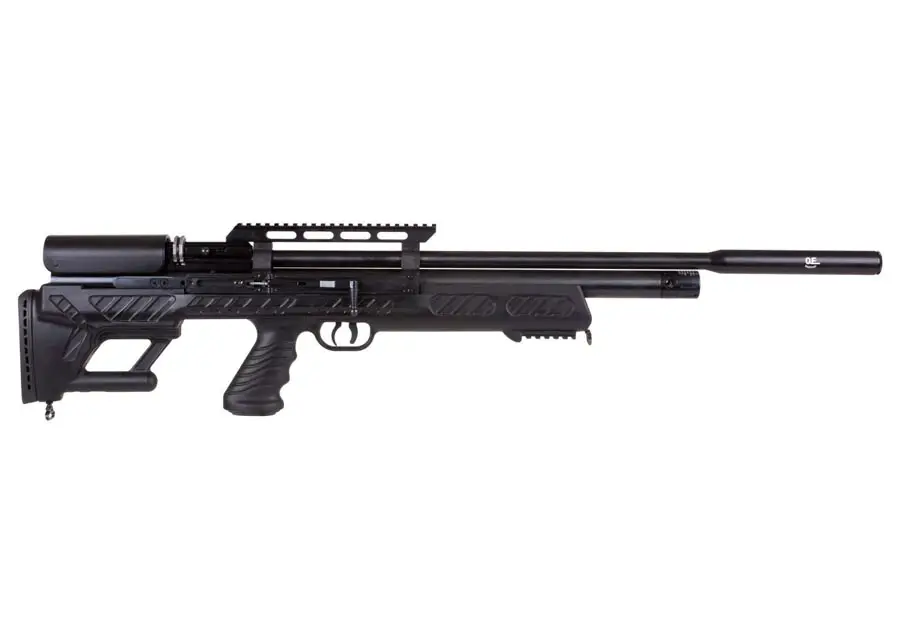
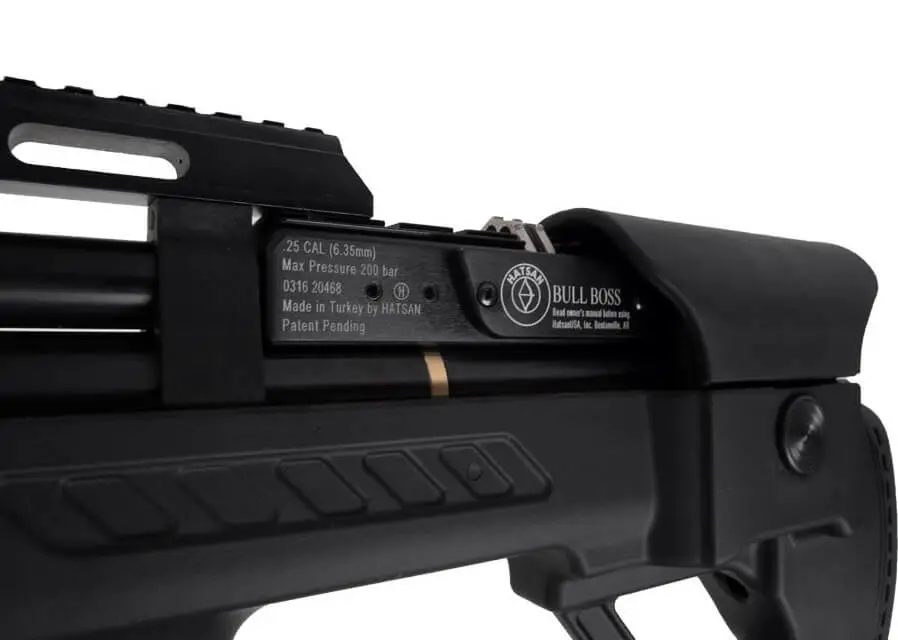
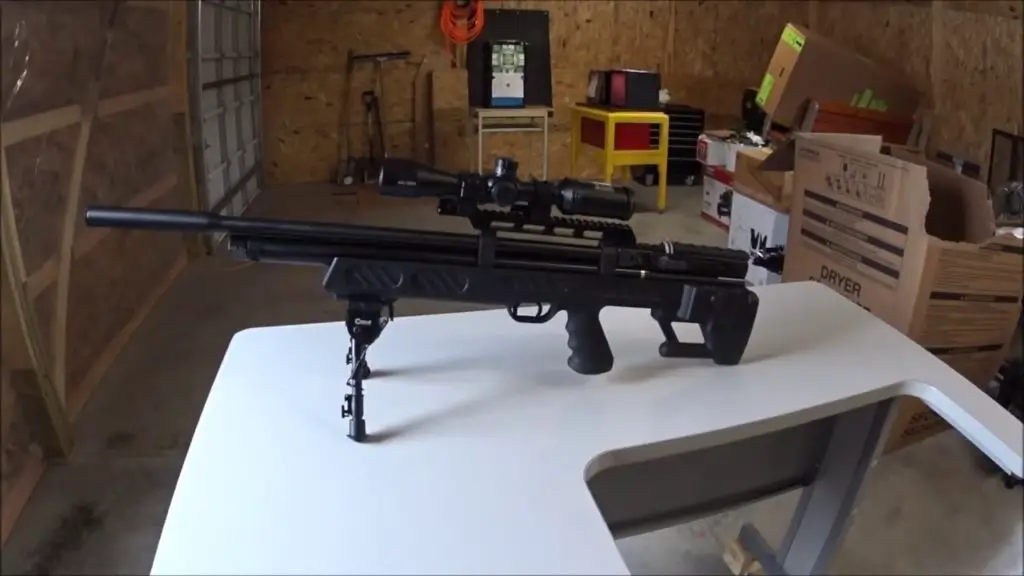
With the accessible bullpup format, the Hatsan Bullboss is available in .177, .22 and .25 calibers.

The manufacturer Hatsan claims that the air rifle is designed with a streamlined bullpup

That provides shooters with a quality PCP, including advanced features.

Bullpup PCP air rifles are generally expensive.

Regardless of this, Hatsan decided to provide shooters with the air rifle they dreamed of without breaking the bank at $499.99.

Hatsan Bullboss QE is among the best PCP air rifles under $1000.

The Bullboss has a power level of 42 ft/lbs.

This power level is available in .25 caliber version.

The air rifle utilizes a smooth side lever action.

The manufacturers claim that the lever-action provides the shooters with steady and consistent shots.

They also claim that shooters will love the trigger guard as it allows easy access to the safety.

The Hatsan Bullboss is equipped with the Hatsan’s proprietary QuietEnergy Technology.

With this technology, the air rifle has a shrouded sound, which diminishes the noise by 50%.

Besides this, the Hatsan Bullboss incorporates an anti-double feed system.

The anti-knock system ensures that there is no air leakage if the air rifle is dropped.

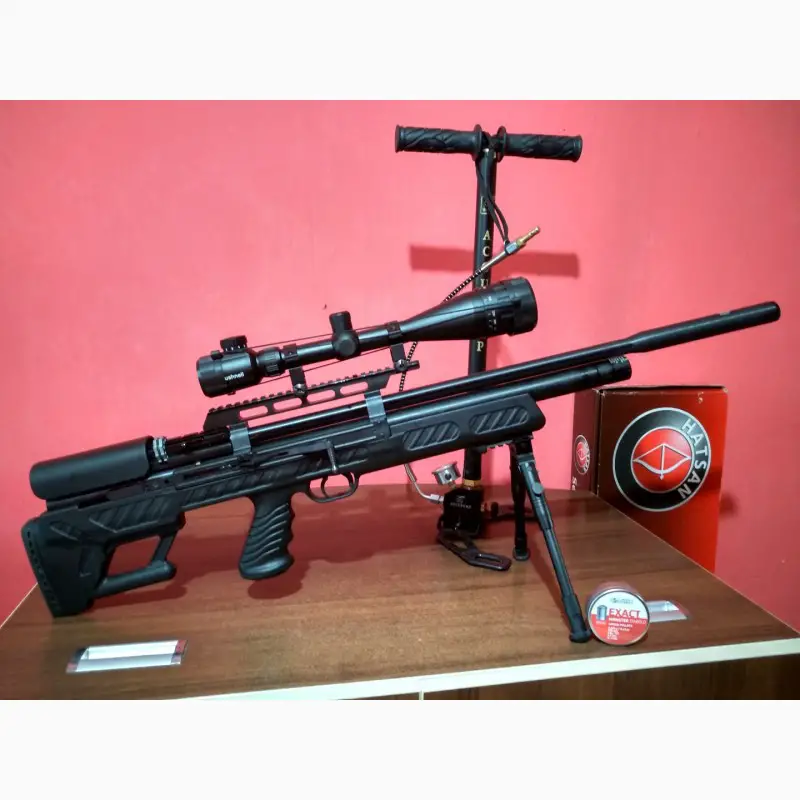
The Hatsan Bullboss can be customized according to the shooter’s preferences.

It is not only the features that can be adjusted but a Picatinny optics rail and a 6-slot Picatinny rail can be bought to add.

Hatsan tells us that the Bullboss air rifle will be even more customizable in later years as more add ons and upgrades become available.

Here I will be discussing all the features and the benefits of the Hatsan Bullboss air rifle and will leave it up to you to make an informed decision on whether it’s the best air rifle for you.

Editor’s Rating


Quality 95%
Accuracy 90%
Price 85%
Loudness 98%
Power & Accuracy 95%


The Hatsan Bullboss Pump Combo Features

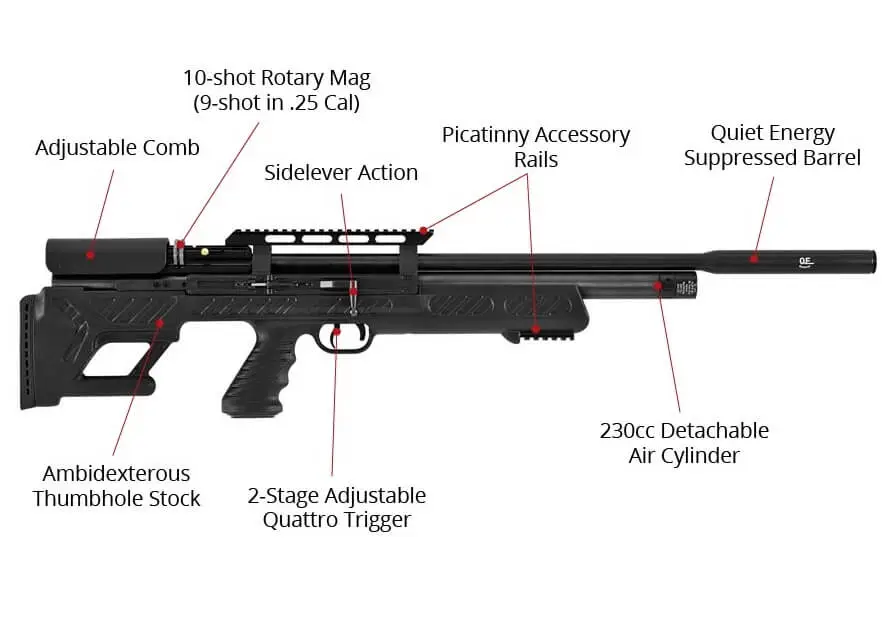
  • Synthetic ambidextrous stock
  • Pre-charged pneumatic Air rifle
  • Air Venture G6 Hand Pump ($199.99 value)
  • Bullpup design
  • Side lever cocking mechanism
  • Picatinny scope rail/Accessory rail
  • Detachable 230 cc air cylinder
  • Extra cylinder availability
  • 10-rd rotary magazine ( 9-rd in .25 caliber)
  • The anti-double pellet feed system
  • Anti-knock system for the prevention of gas wastage
  • 2-stage Quattro trigger
  • Elevation-adjustable cheek combo
  • QuietEnergy fully shrouded barrel – Integrated sound moderator
  • Muzzle energy is .177 caliber, 27 FPE, .22 caliber, 38 FPE, .25 caliber, 42 FPE
  • Ideal air rifle for hunting up to medium size quarry
  • Various O rings, reservoir bleed valve, four rotary clips, sling, hard case
  • Owner’s manual for the guidance.

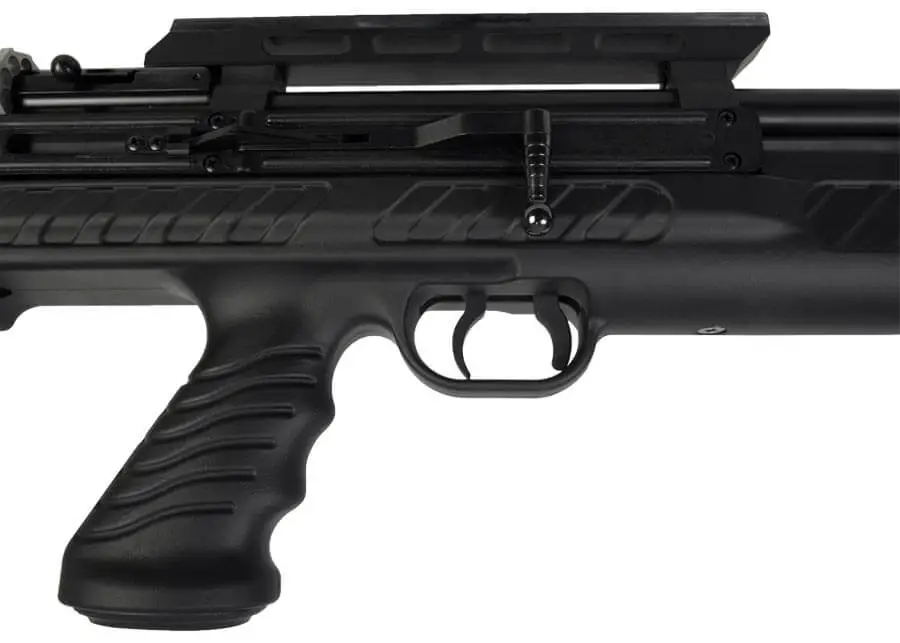
Come with Quattro Trigger

hatsan bullboss trigger

Most impressive is that the Hatsan Bullboss is equipped with a Quattro trigger.

Therefore, you can easily adjust the trigger travel and trigger level according to your requirements.

Here’s some info on how the Quattro trigger can be adjusted.

  • Screw 1: this is for the trigger pull force adjustment.
    • You have to rotate the screw clockwise for less trigger pull force before discharge.
  • Screw 2: This is also for the travel trigger adjustment.
    • You will rotate the screw clockwise to have less trigger travel before discharge.
  • Screw 3: this screw is to adjust the force to pull the trigger until the end of the 1st stage .
    • The force will be increased as you turn the screw clockwise.

You should note that to obtain this adjustment, the adjustable butt pad should be pulled out a bit.

Moreover, you should only make small changes at a time, as over adjustment can make the air rifle inoperative.

Loading The Rifle And Shooting Ability

The Hatsan Bullboss with its rear sight and magazine incorporates a raised boss.

If you take aim from the rear sights, this would be rotated clockwise.

You can load the pellets through the rear of the magazine.

Through the retaining O rings, push the pellets’ noses until their skirts lie flush or maybe below the bottom of the face of the magazine.

You have to pull the cocking handle backward to fit the magazine into the rifle, and then you will be pulling until it stops.

Note here that this operation cocks the trigger mechanism. You have to be wary of safety measures here as otherwise, the rifle will discharge.

After that, put the magazine into the slot from the right side, then unlock the magazine release bolt.

You do not have to close the cocking handle until you are ready to shoot .

Make sure that the magazine release bolt is fully closed before you fire, as it can compromise performance if left even a little bit open.

The cocking handle should lie against the rifle. Now you can pull the trigger, and the Hatsan air rifle is ready to fire!

Jon from Airgun Depot gives us an in-depth look at the Hatsan Bull Boss here:

Hatsan Bullboss Stock

The Hatsan Bullboss is made of synthetic stock, however, it’s very attractive and classical in appearance.

(For more on the in-depth comparison between synthetic and wood stock, see this post.)

The Hatsan Bullboss has a butt pad that is adjustable for the length of pull.

The butt pad is quite friendly for your use.

All you have to do is to loosen the two screws located on the right of the stock.

After that, you have to tighten the screws so that the pad becomes solid.

Note that there is no stock length of pull and butt pad adjustment on the Bullboss model.

How to maintain Hatsan Bullboss

Here, I will be discussing the ways you can maintain the Hatsan Bullboss.

Magazine O-Rings Replacement

You shoot hundreds of times, so the magazine in which the O-rings retain the pellets should be replaced from time to time.

As you substitute the magazine, the cocking lever of the rifle becomes stiff to operate.

Moreover, if you reposition the O-ting in its groove, this may also alleviate the stiffness. Oiling can also be beneficial.

Lubrication Of The Rifle

After every 500 to 1000 shots, it is recommended to clean the barrel with a cleaning rod.

Never lubricate inside the barrel.

Always keep in mind to unload the rifle before oiling or cleaning.

Make sure that the gun barrel is clean and not blocked. Periodically apply the oil on the following parts of the air rifle.

  • The mechanism
  • The pellet probe
  • The cocking lever sliding surface
  • The stern of the magazine pin
  • Magazine release
  • Outer O-ring
  • The magazine axis hole

You should not attempt to disassemble the Hatsan Bullboss when it is charged, but you do have to remove and replace the air cylinder.

Never fire the Hatsan air rifle when the cylinder is empty. Otherwise, the air rifle can be damaged.

Manual Safety And Precautions

It is of the utmost importance to have safety measures when you are dealing with something dangerous.

The safety button can be set to ON and OFF manually, according to your will.

If you want to ON the safety button, pull the lever to the rear. In this way, your trigger cannot be pulled.

Moreover, if you want to turn off the safety, push the safety button forward.

Here are some precautions while using the air rifle.

  • Make sure the air gun is not cocked while you fill the air cylinder.
  • Safety is in the ON position; the magazine is not mounted in the air gun.
  • If the air tube is empty, fill in the air tube after cocking the air rifle and keeping the cocking bolt open at the rear.
  • You must have a concern for the safety measures before filling the air cylinders.
  • It is compulsory for the shooters to wear eye and ear protection while filling the air cylinder.
  • You have to monitor the air pressure from the air gauge of the hand pump/scuba charging kit while you fill the air cylinder.
  • Do not come in contact with eye contact while you fill the air cylinder.
  • The air gun will fire if not cocked correctly.
  • Never pull a firearm towards you by the muzzle
  • Do not walk, jump or run when carrying a loaded air rifle
  • The air gun should not be used under the influence of alcohol

Bullboss – Speed and Accuracy

Here we will measure the speed and accuracy of the Bullboss.

CALIBER.177 Caliber.22 caliber.25 caliber
MAXIMUM MUZZLE VELOCITY1170 fps1070 fps970 fps
ENERGY27 ft.lbs38 ft.lbs42 ft.lbs
MAGAZINE CAPACITY10109
AIR TUBE VOLUME200cc200cc200cc
FILL PRESSURE200BAR200BAR200BAR
NUMBER OF SHOTS PER FILL160150135
NUMBER OF SHOTS AT OPTIMAL VELOCITY554545
OVERALL LENGTH935mm935mm935mm
BARREL LENGTH585 mm585 mm585 mm
WEIGHT4.3 kg or (9.5 lbs.)4.3 kg or (9.5 lbs.)4.3 kg or (9.5 lbs.)

The results may differ up to 20% owing to the change in pellet weight, temperature, elevation, shape, and other aspects.

The above results are gained with the energy when there was no constraint on the rifle calculated with the air tube at optimal pressure value .

PCP air rifles start at the minimum velocity, and then they tend to augment and acquire the highest of optimal pressure value, and then again start to decrease as the air tube pressure goes down.

Jim Chapman takes the Hatsan BullBoss air rifle in .25 caliber, to see how it will perform against feral hogs in central Texas, and the result will surprise you:

How about the Hatsan Gladius?

Another Hatsan PCP air rifle, the Hatsan Gladius comes with a maximum of 10 shots and manual loading.

The Gladius has a side lever action like the Hatsan Bullboss.

The Gladius is also available in an extended version ( Gladius Long) with a 585mm barrel and 100 fps (30 m/s) more muzzle velocity.

It allows the air rifle to perform better than Bullboss.

Below we will weigh up the Bullboss and the Gladius to find which is best.

Speed and Accuracy

The chart below details Hatsan Gladius’ velocity, energy, weight, and barrel length, and clarifies the speed and accuracy of the air rifle.

ModelMax. Muzzle VelocityEnergy No. Of Shots per FillWeightBarrel length
JoulesFt.lbs
Gladius1070 fps3022904.65 kg (10.2 lbs.)495 mm
970 fps4231854.65 kg (10.2 lbs.)
870 fps4634804.65 kg (10.2 lbs.)
Gladius long1170 fps3627854.8 kg (10.6 lbs.)585 mm
1070 fps5138754.8 kg (10.6 lbs.)
970 fps5742654.8 kg (10.6 lbs.)


Due to some changes in temperature, pellet shape, pellet weight, and elevation, the Muzzle velocity can differ a bit.

If you have any restrictions from an energy point of view, you can adjust the muzzle velocity.

The above results are obtained when we have no restrictions.

Therefore, it has been measured at optimum pressure to have the desired outcome.

For PCP air rifles, the velocity would be lower initially, and then you can have a maximum pressure level in the tube.

Likewise, it will start to decrease again as the pressure in the air tube goes down.

Gladius Power

Here, I will be discussing the power of Hatsan air rifle at different calibers, i.e., .177 caliber, .22 caliber and, .25 caliber

Power settingGladius average energy 4.5mm/.177 caliber (in joule)Gladius Long average energy 4.5 mm / .177 caliber (in joule)
63036
52630
42226.5
31721.5
21215
178.5


Power settingGladius average energy 5.5mm/.22 caliber (in joule)Gladius Long average energy 5.5 mm / .22 caliber (in joule)
64251
53642
43136
32428
21619
11011.5


Power settingGladius average energy 6.35mm/.25 caliber (in joule)Gladius Long average energy 6.35 mm / .25 caliber (in joule)
64657
53946
43339
32529
217.520
11012

Hatsan Bullboss vs. Gladius

Both Hatsan Bullboss and Gladius have almost the same specifications, power, and accuracy, but there are differences.

First of all, the Gladius is more expensive than Hatsan Bullboss,

Secondly, an extended version is available for the Gladius but not for the Bullboss.

The above data shows that in accuracy and power, there isn’t much to separate the Gladius and the Bullboss,

But as we said, the Gladius has an extended option, which is helpful for long-range shooting.

Little Noise

The Hatsan Bullboss is not the quietest air rifle, but it’s still calm enough to ensure that you are not going to bother the neighbors.

The Hatsan Bullboss is equipped with QE technology, making it one of the quietest PCP air guns out there, but it is still not totally silent.

Compared to the Hatsan Gladius, both use the same QE technology.

Hatsan Bullboss – Pros & Cons

ProsCons
  • Powerful and consistent
  • Has three calibers of your own choice, .177 caliber, .22 caliber, .25 caliber
  • Adjustable trigger
  • Manual safety trigger
  • Great on shoulders
  • Weight distribution is perfect
  • Synthetic
  • Great appearance
  • It feels lighter than the actual weight
  • Level action, so it is very accurate and reliable
  • Spares magazines are available
  • Easily accessible accessories
  • Slings
  • Tools to purge the cylinder
  • Popular bullpup format
  • Competitive price
  • Quality PCP rifle
  • Advanced features 
  • Great maintenance manual
  • 42 ft/lbs. of energy available in .25 caliber
  • Lever action is smooth
  • Consistent and follow up shots
  • The trigger has safety which is inside a trigger guard
  • Quiet energy QE technology
  • Fully cloaked sound and it surely diminishes the blast by 50%
  • Anti-double-feed system
  • Original anti-knock system to ensure that there is no air leakage
  • great guidance to have precautions
  • Air leakage is negligible if gun drops
  • Easily adjustable Picatinny optics rail and a six-slot Picatinny rail 
  • 32 consistent shots at .25 caliber
  • Highly expensive
  • The butt pad is not adjustable
  • Heavier
  • A limited number of air rifles available in some countries in northern Europe.
  • No any version for long-range/distance
  • People discouraged to buy the Bullboss when they come in a cross with the Gladius as it is much updated than Bullboss

Hatsan bullboss Specifications

  • Price is $499.99
  • Average power:
    • .177 caliber – 27 ft-lbs (1070 maximum fps)
    • .22 caliber – 38 ft-lbs (1070 maximum fps)
    • .25 caliber – 42 ft-lbs (970 maximum fps)
  • Detachable ten shots magazine of .177 caliber or .22 caliber
  • Nine shots magazine of .25 caliber
  • Automatic & manual safety
  • Anti-double pellet averts further loading into the barrel
  • The original anti-knock system thwarts gas from wasting when the air gun is knocked
  • 2-stage fully adjustable Quattro trigger system
  • Air cylinder discharging cap with Quick fill nozzle
  • Manufacturer is Hatsan
  • Velocity is 1170 fps
  • Ammo type pellets
  • Side lever action
  • Barrel style is rifled
  • Fire mode is a repeater
  • Gun weight 9.5 lbs.
  • Overall length 36.8
  • Firing Hatsan Bullboss with Barrel length 23
  • Loudness is three medium
  • Magazine capacity is 10
  • Pre-charged pneumatic
  • Rail is weaver/Picatinny
  • Shots per fill are 40
  • Two-stage adjustable
  • Small game hunting/shooting/target
  • 1-year warranty
  • Product dimensions 1x1x1 inches

Price

The Hatsan Bullboss’s price is about 500 dollars.

This is a reasonable price for a gun full of exciting features, and it’s 200 dollars cheaper than Gladius’s 700 dollars price tag.

What shooters say about it

The reviews for the Hatsan Bullboss .25 calibers are mostly in favor of the air rifle.

Users are happy with tools like spare magazines; tools to clean the Hatsan Bullboss air cylinder, and the consistency, power, and ease of use.

The weight of the Hatsan Bullpup is distributed so evenly that it is very easy on the shoulders.

Customers relay that it feels lighter than it actually is.

One of the reviews reveals that for the power output, the air rifle is very quiet, and can do some damage at 20 yards.

Additionally, shooters appreciate the synthetic stock and the cocking lever.

Their experience mentions that it is not an effort to cycle the next round to take another shot.

Overall, the Hatsan Bullpup is recommended by users to use at .25 calibers; the shooters find it performs the best among the 3 calibers.

Many people claim that the regulator is not necessary, but if you would like to shoot small targets at varying distances, a consistent shot string would be required for that shooter.

For most hunting, the accuracy level of the Hatsan Bullpup is quite adequate while pressure is in the green arc.

Customers find the lever action better than the bolt action.

Likewise, the magazine is easy to load and seems to operate flawlessly.

Some customers have also suggested some changes that could be made to the Hatsan Bullpup.

First of all, the first rail does not feel the sturdiest with a bipod hooked up.

The trigger of the Hatsan Bullpup is considered excellent, but it is a 2-stage trigger.

Customers would also like to see the Hatsan Bullboss QE featuring interchangeable calibers while keeping the same power and accuracy.

This is because the Bullboss does not have the same potential for three different calibers; instead, they perform differently.

Also, people claim it would be better if the butt pad was able to be adjusted.

While comparing the Hatsan Bullboss to the Gladius, customers prefer the Gladius for being an accurate and long-distance air rifle.

However, the price of Gladius is a bit higher, so that is to be expected.

Overall, people’s impressions of the Hatsan Bullboss air rifle are very positive.

Concluding Thoughts on the Hatsan Bullboss QE

The Hatsan Bullboss QE rifle encompasses each and everything you wish for your hunting trip, or even for backyard use.

The versatility & ergonomics of the Hatsan Bullpup stock make your shooting experience comfortable and memorable.

The incorporated QE technology in Hatsan Bullboss .25 adds a certain quiet to the air rifle,

Which is also loaded with realistic features like a detachable air cylinder, Picatinny rails, anti-double pellet feed, and a two-stage adjustable trigger.

In addition to this, the air rifle is perfect in accuracy and speed, and it comes with inside lever action, which is far better than a bolt action.

Other than this, the .177 caliber air rifle, .22 caliber, and .25 caliber air rifle give the best shot experience.

All three features perform differently but not the same way.

(For more on how to choose the right air gun caliber for your game, see this post.)

While it’s not as good as the Gladius extended version, it’s still a good air rifle in its own right!

Overall, this Hatsan Bullboss QE review reveals that it would be the best partner for your next hunting trip.

(Are Deer Nocturnal, Diurnal, or Crepuscular? See this post)

Best Air Rifle Deals

Popular Posts

What Is a Break Barrel Air Rifle?

0
A break barrel air rifle is a type of air rifle that uses a break action to load and unload pellets. It is one...

PCP vs Gas Piston: Which One is Better?

0
The perfect airgun is a difficult pick when you are new to gun-hunting. There are a lot of things to keep in mind, starting...

Can you dry fire a gamo air rifle?

0
Unveiling the truth behind dry firing a Gamo air rifle, this intriguing headline delves into the possibility of safely practicing without ammunition. Join us...