


Home Blog Page 2

2021 Yamaha Wolverine RMAX 1000 Test Review

0

According to Yamaha, the 1000cc class is, by far, the largest in the sport/utility segment among trail riders and explorers. Since its public release on Sept. 3, Yamaha’s brand new sport/utility Wolverine RMAX2 and RMAX4 have created a firestorm of positivity and excitement among SXS enthusiasts not seen for a Japanese machine since the time when the Yamaha Rhino 660 was the sportiest machine on the market.

If a manufacturer wants to create excitement that turns into sales instead of criticism, they have to build SXSs with class leading specifications that deliver on the promise of quality and performance without major compromises. That’s exactly what Yamaha has done with their new Wolverine RMAX 1000, and enthusiasts have responded accordingly with many of our viewers split between elation over putting money down on a new RMAX and those suffering with buyer’s regret over last year’s purchase.

Many of the RMAX’ specifications are not only leading in the sport/utility class, they’re competitive or more impressive than some sport models we’ve tested. Infected with enthusiasm shared with our viewers, we met up with Factory Yamaha at Mild to Wild Off-Road in Sparta, Kentucky for a private one-on-one test day with the RMAX2. Open twice a year for public riding, Mild to Wild is the private testing grounds for our pro level test driver, Justin Frasure, owner of RAZR Sharp Customs and a former pro rock bouncer. His company builds SXS chassis, suspension parts, roll cages, bumpers, as well as complete turnkey trail and rock bouncer builds. Justin was joined by UTV on Demand editor, Chad Westcott. Chad is an avid off-roader who teaches SXS driving courses to first responders. With two drivers and 7 plus hours of seat time under our belts, we’re ready to share our impression of Yamaha’s exciting new RMAX2.

Trim Packages

The RMAX is currently available in 3 trim packages: the $19,799 base model; our test unit, the $21,999 XT-R edition; and the $23,299 Limited Edition. The standard model comes with GBC’s new Dirt Commander 2.0 radial tires with Maxxis Carnivores used on the XT-R and LE models. The XT-R and LE models also benefit from various digital throttle modes, backlit switches, blue LED interior lights, removable Adventure Pro GPS/tablet integration, Pre-installed VRX 4,500 Warn winch controlled by a switch on the dash, and upgraded front bumpers with four light pod mounts vs 2 on the standard bumper. Limited editions also benefit from a factory installed SSV Works stereo and Yamaha’s removable key controlled Speed Management system, which limits top-speed to 25MPH while still allowing full power for work or hills. Base models can be easily upgraded with any or all of the before mentioned features found on the XT-R and LE models. One item not easily upgraded are the Fox IQS shocks, which are tunable from inside the cabin. More on that later.

Engine Performance

At the heart of the new RMAX is a brand new 999cc, liquid-cooled, parallel twin-cylinder engine featuring 4 valves and double overhead cams per cylinder. Its 270° firing order helps increase torque and traction. Premium pump gas is recommended with the engine’s sport class worthy 11.2:1 compression ratio. It’s said to produce class leading horsepower and torque peaking out at 108hp at 8,500rpms with a 9,250 RPM redline. That’s 8 more HP than the General XP 1000, the 60” sport class, 4HP more than the Talon 1000, and within 2hp of the RZR XP 1000.

Yamaha is claiming a 4% reduction in rotating mass compared to the 850cc class Wolverine X2/X4 models for improved rev-ability. A counter balancer and 4-point rubber engine mounts were employed to keep vibration to a minimum.

Oil is circulated via dry-sump lubrication with an oil cooler for added cooling. A shallow sump profile on the bottom and inclined engine layout allow for a more compact design with a lower center of gravity.

Air intakes for the engine and CVT are mounted high under the hood making ingesting dirt and water less likely. There’s tool-free access to the primary foam filter with a secondary paper filter Yamaha claims will not pass dirt. Fuel is delivered via Yamaha Fuel Injection with dual, 48mm throttle bodies.

A fully automatic Yamaha’s Ultramatic CVT transmission relies on a primary wet clutch to handle engagement eliminating the need to slip the drive belt on take-offs or getting back on the gas, greatly reducing wear allowing Yamaha to cover the RMAX with their 10 year belt warranty. This type of transmission is a bit harder to tune with aftermarket clutch kits, though. Exhaust from the CVT is utilized to cool the exhaust pipe and spark plug coils. Spiral

beveled and helical cut gears with rigid gears nestled in a detached transmission along with single inline front and rear driveshafts help keep the drivetrain running smooth and quiet. Yamaha’s On-Command drive system delivers the capability of 2wd, 4wd, and 4wd with front differential lock. Available on XT-R and LE models, for the first time, Yamaha is offering multiple drive modes on a SXS with their Yamaha Chip Controlled Throttle offering sport, trail, and crawl modes. Each mode delivers full power with sport mode tuned for quick acceleration and responsiveness to throttle input. Trail mode is tuned for a more linear response and acceleration similar to a cable actuated throttle. Crawl mode offers slower response for greater traction in rocks or mud. Drive modes also affect engine braking. Trail and crawl modes offer full engine braking with sport mode tuned for smoother engine braking, preferable when coming down from speed in whooped out or choppy terrain.

The engine fires right up emitting a mild sporty rumble from the exhaust with db levels we find acceptable inside the cabin for a work capable SXS with sporty intentions. The transmission shifts smoothly and effortlessly between high, low, neutral and reverse regardless of situation. Rolling on the gas from a dead stop or getting in and out of the throttle at speed, clutch engagement is magically smooth and gearbox like with no feel of belt lash like some other CVT equipped machines. It’s one of the smoothest, most natural, feeling CVT transmission he’s experienced.

The butter smooth clutching feeds in the engine’s seamless power delivery. It’s linear, yet fun; controllable, but fast enough to provide a thrill level missing from the X2 and X4. Low-end power is respectable, easily getting the car moving on flat or slow technical terrain. Seamlessly building power into the midrange, the RMAX can generate decent trail speed without having to rev the engine hard. A strong torque curve entering the midrange allows the RMAX to tackle impressively long steep climbs instilling confidence that you’re not going to run out of power.

Pushing the limits of the engine’s performance racing from corner to corner on the roomy trails, you quickly forget that there’s a dump bed behind you. It delivers the type of engine performance we’ve come to expect from the naturally aspirated sport class, all-be-it very refined. When you ask for it, the RMAX has enough thrust to push you back in your seat. We got the tires spinning cresting mild rollers in the trail and it’s possible to break loose and steer a bit with the back end in corners, even in limited slip 4WD. We had our machine close to 60mph on one of the longer straightaways we encountered with the RMAX apparently topping out at 73MPH, so cruising at 50mph on smooth, fast trails shouldn’t be an issue.

Exploring the drive modes, crawl mode allowed us to easily crawl our way through big creek rocks with plenty of power to keep crawling and no sign of wheel spin. On the other hand, with full power on tap, Justin tackled one of the longest, steepest climbs we came across in crawl mode. Even if full power wasn’t necessary, it was there, if needed, which is brilliant.

Trail mode provides a very natural feeling acceleration that seems proportional to the demand placed on the gas pedal. It works well for any type of driving from technical to sporty; good thing as this is the only mode available on the stock base model. The gas pedal, while improved over the one on the older Wolverine X models, still drew mixed reviews with Justin wishing for a heel pocket. Fortunately, low-speed pedal bob is no longer an issue in trail or crawl modes with the digital throttle filtering out most unwanted input without feeling laggy.

Sport mode is sort of similar to slapping a ¼ turn twist throttle on your dirt bike. It doesn’t change the power capabilities of the engine; it simply delivers more gas with less movement of the throttle. Sport mode’s snappy delivery right off idle can reintroduce some unwanted pedal bob that translates to forward momentum at crawling speeds if you’re not precise with your foot. Sport mode is not about babysitting the gas, though; it’s about getting immediately into the heart of the power and it does it well. Sport mode is our mode of choice for motoring or humbling sport SXS owners on the trail.

Variable engine braking seemed perfectly matched with the different drive modes. The normal, higher level of engine braking provided in crawl and trail modes do notably better at keeping speed in check on downhills. Sport mode’s reduced engine braking does well at allowing you to coast a bit more through bumps and reduces the feeling of throwing out the Anker when letting off the gas to set up for turns.

The increased traction of Crawl mode increases the capability of what’s possible, even in limited slip 4WD. However, when negotiating slick, muddy, steep, rutted climb where all four tires are spinning, it’s nice knowing that the front differential is locked with all four tires clawing for traction regardless of what we did with the throttle or if available grip changed from one side to the other.

Overall, the engine is well mannered for all day work with performance that feels worthy of a sport SXS. The General could be out gunned.

Chassis and Suspension

The RMAX is built on a brand new steel frame. Its 64” width is ideal for adapting well to nearly all types of terrain. Most of the underside of the frame is covered by a welded on steel skid plate with a front plastic skid plate and rear CV guards. Kickouts on the lower frame rails help pretend snagging rear wheels on trees of other obstacles. Our unit came outfitted with a set of 3/8” thick, UHMWPE skid plates, protecting the underside of the frame’s armor, which we’d rather not scratch up. Plus, they help slide over rocks more easily. They’d be our number one accessory pic.

Winch-ready steel bumpers feature very overbuilt looking tie down hooks for easy trailering. A channel in the grill allows an observer to keep an eye on the winch cable helping prevent tangling and binding.

The RMAX2 utilizes dual A-Arms front with wide-arc lower arms for improved ground clearance. Dual control arms out back utilize single stamped designed lower arms for improved strength. We were impressed with the thick shock mounts and stout appearance of the exposed frame and suspension parts. Justin felt construction appeared beyond what the competition is delivering at this time.

Fox Podium 2.0 QS3 shocks are used on the standard and XT-R models with Fox IQS shocks used on the LE model. Both shocks feature nitrogen reservoirs, dual rate springs with preload adjustment, and three-way compression damping adjustability with comfort, medium, and firm settings for different speeds, terrains, and uses.. The QS3 shocks have three position dials on the shocks’ reservoirs, while the IQS system allows you to select between the different compressions’ damping settings via a switch inside the cockpit.

According to Yamaha, the shocks were optimized for maximum low-speed comfort and maximum articulation while still offering a high-level of bottoming resistance.

The RMAX2 features class-leading suspension travel at both ends with 14.2” front and 16.9” rear. That’s nearly 3” more rear suspension travel than General XP 1000, within 1/10” of an inch of Yamaha’s YXZ1000R sport SXS, and more overall travel than the 64” wide Honda Talon X sport model. Equipped with a sway bar up front, it foregoes a rear sway bar for maximum articulation.

The RMAX2’s 86.7” wheelbase is claimed to improve the contact to ground feeling on steep climbs and descents compared to the 83” wheelbase of the General XP 1000. Rolling on 30X10-14” radial tires on 14” aluminum wheels, the RMAX2 delivers the square wheel tire setup we prefer. Ground clearance is class leading at 13.8”.

Optimized for use with 29-30” tires, Yamaha’s electric power steering is now offering a 2nd mode that automatically engages to make steering easier when the front differential is locked.

Yamaha is claiming a wet weight for the RMAX2 XT-R edition of 1876.1 lbs, around 172 pounds more than the slightly more compact, but similarly appointed, 850 class Wolverine X2 XT-R, which produces 69hp in comparison to the RMAX2 108hp. The RMAX certainly enjoys a substantial power to weight advantage.

Suspension performance was outstanding on the trails we tested on. The factory suspension settings are designed for two occupants with 150lbs in the bed with room to stiffen or soften the ride. That’s where we left it for our first day of testing, although Justin said he would soften the settings a bit for driving alone. We managed to bottom the suspension on a major G-out, which Justin said pushed most sport SXS’s shocks to their limits. Even then, the RMAX never bottomed harshly and quickly regained its composure.

Even with good bottoming resistance, during rock crawling, the shocks do an excellent job of absorbing square edge impacts and allowing the suspension to respond to the demands of the terrain aided greatly by the lack of a rear sway bar. It rolls over rocks and fills in holes with the rest of the RMAX and its occupants flying along comfortably above turbulence. Come to think of it, that’s kind of how the RMAX rides when you’re flying down the trail at speed. Small bumps aren’t harsh; the suspension never seems to bottom harshly; and everything in between is well dampened while still leaving you feeling very connected to the trail. Rebound damping was quick enough that the suspension is always ready for the next bump in the rocks, emitting a fun, responsive, and lively feeling over mildly rolling trail. The RMAX2 had a lot of suspension travel and it felt like it no matter how we drove it.

Driving in limited slip 4wd a majority of the time to maximize handling, entering corners at speed dive and body roll were well controlled with just enough front-end squat and weight transfer to the outside tire to get the front end hooked up and steering precisely. Justin proclaimed that the RMAX2 is the most accurate steering SXS he’s driven! In bumpy corners where the car might start to bobble, the suspension quickly settles things down. Stability in turns is very good with the feeling of a pretty low center of gravity. When you hammer down exiting corners, you feel the back end squat and transfer its weight to the outside tire, settling into the turn like a trophy truck. Even then, the rear suspension remains very responsive to bumps keeping the ride comfortable and the driver in control.

Power steering is near perfection as we’ve come to expect on all Yamaha models. It’s light with the perfect amount of feedback keeping you feeling connected to the trail while eliminating unwanted bump feedback. The only time any real effort is required to turn the front wheels is at a dead stop with the front differential lock engaged.

Stable with precise handling, and forgiving suspension. What more can you ask for from a sport SXS, we mean sport/utility?

Brakes

The RMAX are slowed by four-wheel hydraulic disc brakes. 255mm rotors with 32mm calipers are used up front with 244.5mm rotors and 27mm calipers out back. Dual piston calipers are found at both ends. Steel-braided brake lines are used for enhanced power and feel.

The brakes deliver good feel and power, but both Chad and Justin felt the pedal required more pressure than they would like. Braking improved a bit throughout the day, but still required a good amount of pedal pressure to get the most out of the brakes.

Work Capability

While we didn’t get a chance to do any hauling or towing, with all this performance comes the capability to get work done or haul more gear out for the weekend. The RMAX2 features a cosmetically well disguised, hydraulically assisted, composite dump bed with multiple steel tie-down points and 600lb of cargo capacity. A 2” hitch receiver is rated to tow an additional ton even with the bed loaded.

Interior and Other Details

Interior comfort and attention to detail are first rate on the RMAX. Entering and exiting has been made much easier compared to older X2 models. New 3-piece doors feature interior door handles located farther from flying mud. Integrated door speaker pods are designed to make installing speakers easier with improved acoustics.

A blue backlit LED display is mounted just behind the steering wheel and is easy to read at a glance. Compared to the previous Wolverine X2 and X4, the automotive style cockpit is roomier for all occupants with nearly ½” more rearward movement for the driver’s seat. Soft touch points are located throughout. The seats feature increased bolstering with new cut and sewn seat covers. The seat belts feature tool free, 6-point adjustability in 20mm increments.

Gas and brake pedals are newly designed. A 17° tilt adjustable steering wheel is constructed of a softer durometer rubber. The passenger benefits from a new quick adjust, T-shaped grab handle with 95mm of adjustment that can be adjusted in 4mm increments.

Getting comfortable in the machine is pretty easy for most body types. At 6’2”, Chad felt that he had plenty of legroom on either side. As wide as an NFL player, his shoulder rubbed the shoulder bolster a bit when he was driving although it wasn’t serious. The steering wheel is rigid, yet soft to the touch, offering plenty of adjustment. The seats are comfortable with a design that’s well balanced for easy exiting from the car while still offering a decent amount of bolstering for aggressive driving. They seem well placed in the chassis, in relationship to the front and rear wheels, minimizing rider movement traversing bumps. While the passenger grab bar is comfortable, we hardly felt the need for it unless we were on monster descents. The three-point belts are among the most comfortable we’ve used with no uncomfortable pressure points, and we genuinely appreciated the added comfort of the soft touch points, which seemed perfectly placed . All of the switches and handles feel high quality.

Riding in the RMAX is a joy with no rattles squeaks or irritating vibrations from anywhere on the machine. There’s just the pleasant sound of the engine and a slight turbo sounding hiss from the CVT.

Interior storage includes a 5.8L passenger glove box and 2.7L center console. There are cubbies in the center console as well as driver and passenger side storage shelves. There are also 2 cup holders.

XT-R and Limited edition RMAX models benefit from Yamaha Adventure Pro GPS tablet integration along with a USB charge port. The Adventure Pro can be locked in place for security and removed for use in your car or truck. The center console is rubber sealed with pass throughs to charge your smartphone while safely inside.

All RMAX2 models come with sun tops standard featuring integration with Yamaha’s accessory windshield, cab enclosure system and mirrors.

Its modern sporty styling is accented with new LED marker lights. 7.6W LED low beams with 15.2W reflector high beam headlights are found out front with LED tail and reverse lights found out back.

Accessory Integration

If you like to accessorize your rig like us, it’s worth noting that Yamaha already has over 100 accessories ready to go for the new Wolverines. Besides the skid plates, our RMAX also benefited from Yamaha’s polycarbonate half windshield, which is far less obtrusive to your sight line than some of the curved half windshields. You might as well pick up a Yamaha accessory windshield before you leave the dealer as well. They’re a great addition to any SXS.

Conclusion

While we are typically excited about new machines, we’re blown away with the new Yamaha Wolverine RMAX2 1000. It’s certainly a contender or best in class in the sport/utility segment, but it’s more than that. Although we didn’t get the chance to test it in whooped out terrain, the RMAX 1000 seems good enough to serve the needs of many enthusiasts who’ve been wishing for a 64” wide, CVT equipped sport SXS from a Japanese manufacturer. It’s both quicker and faster than a Teryx 1000, might give the Talon 1000X a good run, and will work better for many drivers than Yamaha’s YXZ1000R on tighter trails. Plus, it will let you haul more gear, work, or tow more than any Sport SXS. Its combination of performance, versatility, and refinement is unique and why we expect the 2021 Yamaha Wolverine RMAX 1000 to become one of the top selling SXSs on the market. That’s saying a lot, but the new Wolverine RMAX2 1000 is really that good.

Tags: 2021 Yamaha Wolverine RMAX 1000 Test Review, 2021 Yamaha Wolverine RMAX2 1000 Test Review, can-am commander 1000, comparison, honda pioneer 5, Honda Talon 1000X, off road, polaris general 1000, polaris general xp 1000, Polaris RZR S 1000, Rmax, RMAX 1000 Review, RMAX 1000 Test, rmax review, Rmax test, side by side, sxs, sxs review, utv, vs, wolverine 2021, wolverine rmax, yamaha rmax 1000 vs polaris general, yamaha rmax upgrades, yamaha rmax2 review, Yamaha wolverine rmax 1000
Why We Can’t Eat Slaughtered Geese

0

Updated, Aug. 2 | The Canada goose, according to those in the know, tastes like a dark, tender cut of smoked chicken.

That’s Canada goose from elsewhere in the country, mind you, where birds killed as part of government plans to shrink the goose population are plucked, frozen and distributed to food pantries. Food banks in Pennsylvania, for example, received 900 pounds of goose meat this year. Geese were also donated this summer to food banks in Maryland and Oregon.

But in New York State, geese that were killed this month were double-bagged and thrown in landfills. Among them – the total numbers have not yet been released – were nearly 400 geese from Prospect Park in Brooklyn.

The mass goose kill in Prospect Park — the idea is to keep them from flying into the engines of jet planes — set off outrage on City Room, where many comments railed against the killings, but others wondered: If we must kill them, why don’t we feed them to the homeless?

Update, Aug. 2, 11:18 a.m. | The official answer to that question came from Farrell Sklerov, a spokesman for the city’s Department of Environmental Protection. He said that the state doesn’t have a protocol for testing the geese for toxins and has not figured out how best to process the meat.

New York, Mr. Sklerov wrote in an e-mail, doesn’t have “sufficient guidelines that pertain to the oversight of the safe preparation or donation of geese to food pantries or soup kitchens.”

A high-level official at the federal Department of Agriculture elaborated, saying that city and state officials have waited six years for the New York State Department of Health to report on the safety of New York bird meat.

“We’re looking for a letter somewhere along the lines that says Canada geese are safe to eat, or that one should consume only a certain amount of Canada goose a month, kind of like the state does with fish,” he said, speaking on condition of anonymity because he was not authorized to speak to the media.

Other states, however, haven’t had a problem with slaughtering the geese for food.

In central Oregon, the Bend Park and Recreation District convened public meetings on ridding Canada geese from city parks.

There, officials ultimately decided to kill 109 geese with carbon dioxide, which is how New York geese were killed this month. The gas doesn’t make the meat unsafe, according to a spokesman for the American Veterinary Medical Association, who said it was often used to stun poultry.

Don Horton, the executive director of the Bend park district, said the geese were sent to a slaughterhouse, where they were processed and smoked, at $15 a bird.

“For us, the cost was not exorbitant, but if you’re killing 2,000 birds, the cost gets interesting,” Mr. Horton said.

He said he was confused by New York’s stated concern that the birds might not be safe to eat. “These are the same geese hunted by hunters all the time,” he said.

In Pennsylvania, wildlife killed because it has been deemed a nuisance to crops or parks must be donated to food banks.

“The state permit states that the geese shall be donated to a food bank or a shelter – that is a requirement of the permit itself, so they have to abide by that, or they lose the permit,” said Jason DeCoskey, who oversees special permit enforcement for the Pennsylvania Game Commission.

Mr. DeCoskey said the Department of Agriculture had a contract with a plucking house in southern Pennsylvania.

Deer make up the bulk of wildlife killed, he said, and when they are, “the U.S.D.A. will automatically call to find out if there are any needy families nearby to get them the meat.”

But for some, donating the geese to food banks doesn’t make up for their deaths.

In central Oregon, where the killed geese provided more than 1,000 hot meals, residents lashed out against the food bank director for accepting the meat.

Patrick Kwan, the New York State director for the Humane Society of the United States, also disagreed with the gesture. “What they are trying to do is make an unnecessary act seem charitable,” he said.

In Oregon, Mr. Horton saw it another way.

“We knew all along that there was a lot of opposition and that taking the meat from the geese and using that meat to feed the hungry by donating it to these two food banks would temper the opposition,” he said.

100 Phenomenal Hunting Captions for Instagram (With Puns!)

0

If you’re an avid hunter, capturing intense moments and sharing them on Instagram is a point of pride. That’s why we’ve made a comprehensive list of 100 hunting captions for Instagram.

Whether you enjoy the thrill of the hunt or the peacefulness of being in nature, these hunting quotes for Instagram will perfectly capture your experiences. For those who love to sprinkle a dash of humor in their posts, don’t miss our compilation of hunting puns for Instagram at the end of the list.

So gear up and prepare to give your posts that extra edge!

Hunting Captions for Instagram

  • Hunting is the real adventure sport.
  • Buck wild!
  • Embracing the wild, one hunt at a time.
  • This is the dawn of the deer. Let the chase begin.
  • This deer stand is my quiet place.
  • Does this camo make my hunting look good?
  • Hunting isn’t a hobby. It’s a way of life.
  • Hunt with pride, conserve with love.
  • Aim for success in every shot.
  • A hunter’s heart knows no bounds.

You Might Also Like: Nature Captions for Instagram

  • I’d rather be hunting.
  • Catch me living my best life in the wild.
  • Silent in pursuit, loud in victory.
  • There’s a part of the hunted in every hunter.
  • Deer season is here, and I’m fawning over it.
  • Embracing the wild silence.
  • A moment of patience can result in a great trophy.
  • The joy of hunting is in the chase, not the kill.
  • Do I love hunting? You bet your buck!
  • The hunt is a true test of patience.

Next: Beautiful Scenery Captions for Instagram

  • Born to hunt, forced to work.
  • The thrill of the chase, the victory of the capture. That’s hunting.
  • The beauty of nature, the excitement of the hunt.
  • Silent woods, loud heartbeat – it’s hunting season.
  • Hearing the call of the wild.
  • Nature’s finest moments are found in the hunt.
  • Live wild, hunt free.
  • The trophy pride is the result of patience and precision.
  • The legacy continues, one hunt at a time.
  • I love the camaraderie in the wild.

You Might Also Like: Travel Captions for Instagram

  • I find peace in the wilderness.
  • Hunting buddies for life!
  • In the quiet whispers of nature, we hunt.
  • Animal tracks lead to life’s greatest adventures.
  • Conservation, not destruction. That’s ethical hunting.
  • Staying where the Wi-Fi is weak but the hunt is strong.
  • Hunting tales told by campfires and starlight.
  • The call of the wild is impossible to resist.
  • Proudly carrying on the hunting legacy.
  • Nature’s secrets, a hunter’s gain.

Next: Dirt Bike Captions for Instagram

  • Rifles, racks, and deer tracks.
  • Embarking on a journey into the heart of nature is what makes hunting a thrilling experience.
  • Hunting is a passion that never fades.
  • We hunt responsibly and honor the land.
  • Hunting is a love story between a man and the wild.
  • Feel the thrill and embrace the chill, time to hunt.
  • Hunting is the pursuit of life, not the pursuit of death.
  • Moms make every shot.
  • Never underestimate a hunter’s determination.
  • Today’s office is the hunting blind.

You Might Also Like: ATV Riding Captions for Instagram

  • As the sun rises, so does the hunter.
  • A successful hunting trip is measured by the memories made, not the trophies taken.
  • True hunters are not defined by their kills but by their respect for nature.
  • The wilderness is my happy place, and hunting is my therapy.
  • Every hunting trip is an opportunity to learn something new.
  • Hunting is in my blood.
  • Hunting connects us to the land and the animals.
  • Life is a hunting ground, and I’m the hunter.
  • I came, I saw, I conquered the hunt.
  • Nature doesn’t discriminate, and neither do I.
  • Nature’s mysteries unfold with every hunt.
  • A bad day in the woods beats a good day anywhere else.
  • Bringing home the (deer) bacon, one hunt at a time.
  • Chasing adventure in the great outdoors.
  • True hunters never quit.
  • The great outdoors, where the only limit is my own ambition.
  • Hunting is my therapy, and nature is my refuge.
  • Stealth, strategy, and success: the hunter’s trinity.
  • The pursuit of greatness begins in the wilderness.
  • In the heart of the wilderness, hunters find solace.

Hunting Quotes for Instagram

  • “If we act like prey, they’ll act like predators” – Alyxandra Harvey
  • Problem-solving is hunting. It is a savage pleasure and we are born to it.- Thomas Harris
  • You know, if you need 100 rounds to kill a deer, maybe hunting isn’t your sport.- Elayne Boosler
  • I’m an outdoors girl – I like to go fishing, riding four-wheelers, and hunting.- Miranda Lambert
  • You must not only aim right but draw the bow with all your might.” – Henry David Thoreau
  • “A hunt based only on trophies taken falls far short of what the ultimate goal should be.” – Fred Bear
  • “If you are not working to protect hunting, then you are working to destroy it.” – Fred Bear
  • “You can see the true heart of a man when you’re out in the woods with a weapon.” – Jase Robertson
  • “Don’t get much better than fall. Bring on the camo, ammo, ducks, and bucks.” – Earl Dibbles, Jr.
  • “Look deep into nature, and then you will understand everything better.” – Albert Einstein
  • “To track prey, you must first know it as you would a brother.” – Michelle Paver
  • “A duck call in the hands of the unskilled is one of conservation’s greatest assets.” – Nash Buckingham
  • “The No. 1 rule of duck hunting is to go where the ducks are.” – Jose Robertson
  • “Wildlife and its habitat cannot speak, so we must and we will.” – Theodore Roosevelt
  • I have always tempered my killing with respect for the game pursued. I see the animal not only as a target, but as a living creature with more freedom than I will ever have. – Fred Bear
  • Hunting is the perfect blend of adrenaline and tranquility.
  • Hunting season: a time to reconnect with nature.
  • Nature comes alive through the lens of a hunter.
  • Hunting: where you hide yourself to find yourself.
  • In the pursuit of the wild, we find ourselves.

Hunting Puns for Instagram

  • Time to hunt. No ‘bucking’ around.
  • The silent steps of a hunter reveal the true heartbeat of the wilderness.
  • There’s a primal joy in tracking the elusive and conquering the untamed.
  • In the woods, time slows down, and the hunter becomes attuned to the rhythms of nature.
  • In the wild, I feel alive, connected, and truly free.
  • The thrill of the chase is only rivaled by the beauty of the wild.
  • Into the wild, we go.
  • Hunting: a primal instinct unleashed.
  • Tree stand naps are the best part of hunting.
  • Some girls play house, but real girls go hunting.

6 Best .308/7.62 Semi-Auto Rifles: Battle Ready

0

I want to preface what I’m about to say by making one thing clear…I love all firearms.

Big ones, small ones, common, rare, old, new, whatever — if it goes bang, it has a place in my heart.

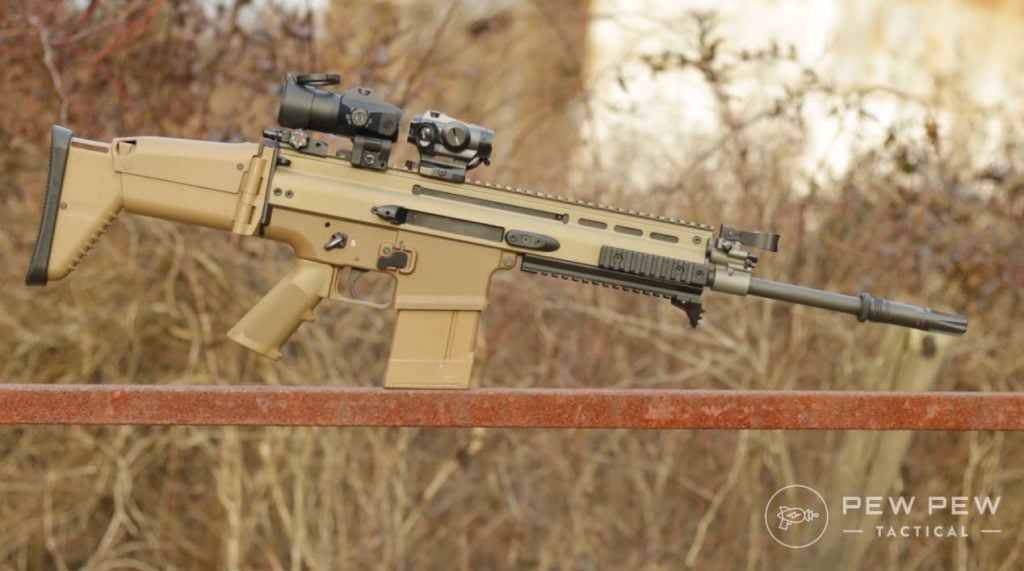
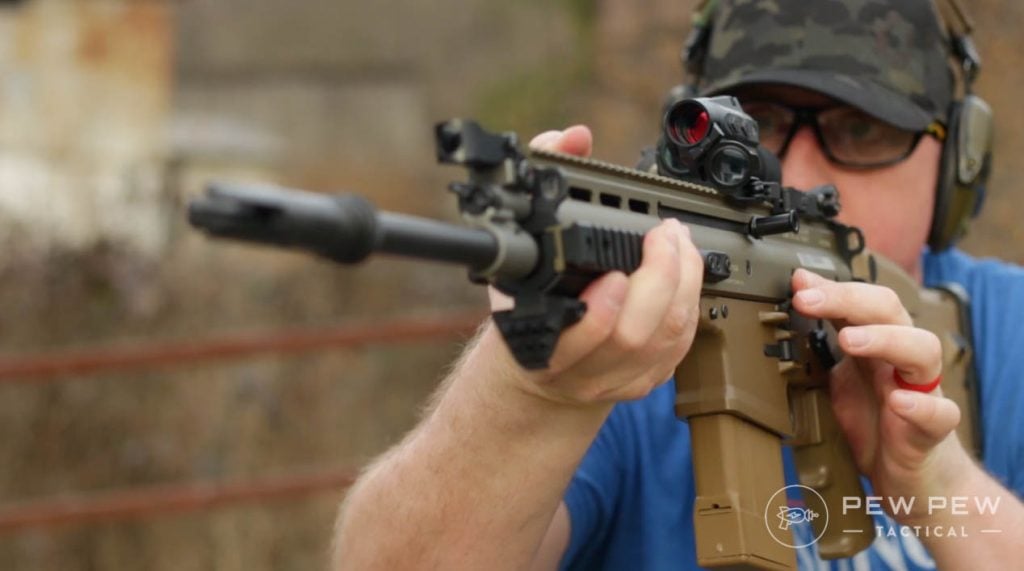
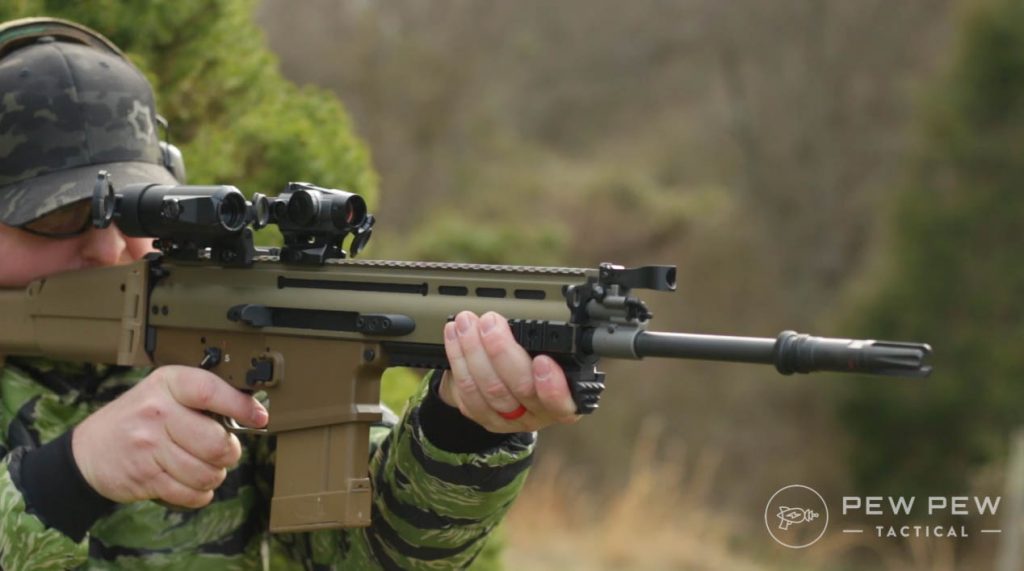
FN SCAR 17S Shooting
There is nothing like slinging some heavy .308 at a decent rate of fire.

But the mostspecial place in my heart will always be held by the majesty that is the “battle rifle” — which usually means a semi-automatic chambered in .308 Winchester/7.62×51 NATO.

Why .308?

I’ve talked before about how much I love the .308 cartridge and how perfect it is for my needs and those of most shooters and hunters.

It’s good out to 800-yards, no sweat, and with quality match ammo, it will probably be more accurate than most shooters.

So while I love things like the 6.5 Creedmoor and .224 Valkyrie, I can’t get away from good ol’ .308.

If you are a fan of .308 and on the hunt for a new battle rifle, you might have noticed there are a few options on the market. So which is best?

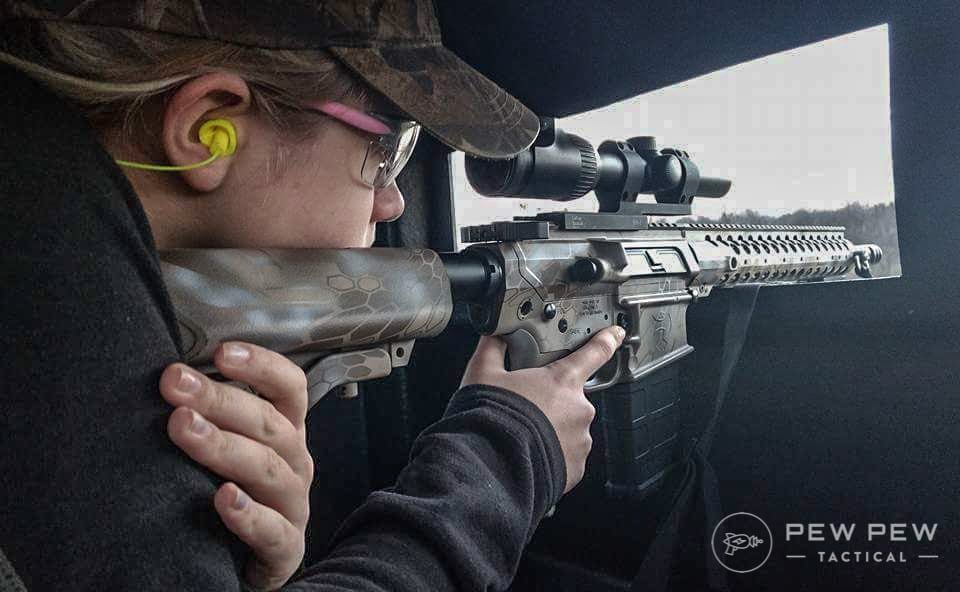
Grace running an AR-10 in .308 Win on a deer hunt at the age of twelve.
.308 AR-10 on a deer hunt.

I’m going to walk you through some of the Pew Pew Tactical team’s favorite battle rifles. We’ll examine some pros of each and discuss what makes them worthy of your attention.

So without further ado…let’s dive in.

THE QUICK LIST

Best .308/7.62 Semi-Auto Rifles

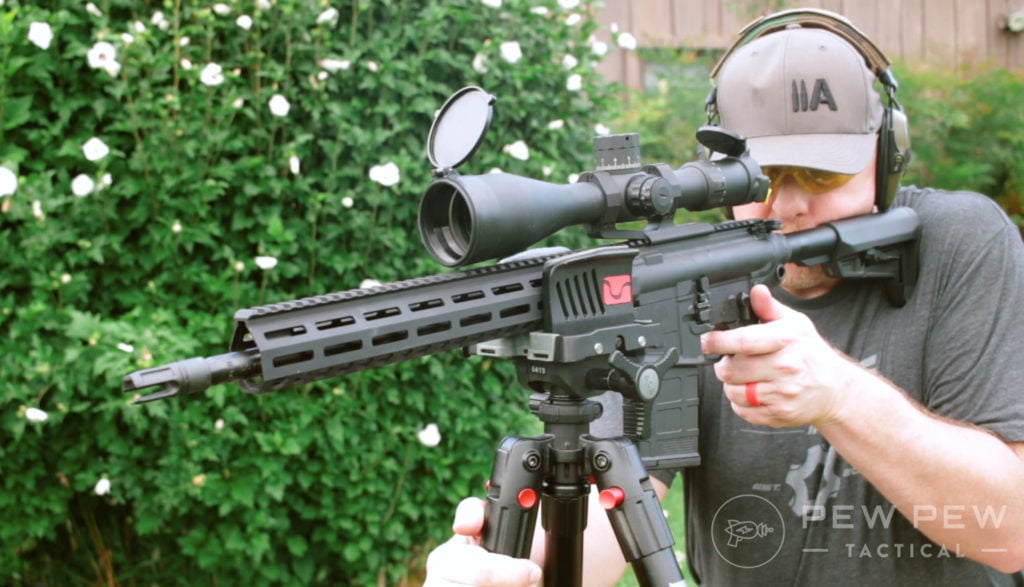
1. AR-10

When the words “.308” and “semi-auto” are uttered in the same breath, most people’s minds probably go to the AR-10.

The AR-10 is the starting point not only for most modern battle rifles but for most Western semi-auto rifles in general.

Original AR-10
The original AR-10. You can see the similarities between it and its modern counterparts.

It would go on to spawn the AR-15 and all of its variants, making it the progenitor of arguably the most popular firearm family in the world.

You can read more about the history of these rifles in our AR-10 vs. AR-15 article.

Originally developed by Eugene Stoner to replace the aging M1 Garand for the U.S. military, the AR-10 has had a long and successful life.

Sig Sauer 716i Tread AR-10 sniper johnny shooting
Sig Sauer 716i Tread AR-10

In that time, it has remained in use globally, though these days mostly in specialized circumstances or in the hands of civilians.

That said, it’s still an incredibly robust platform, and modern refinements have only made it better.

Aero Precision M5E1

The Aero M5E1 is the gold standard for people that want a customizable AR-10 without breaking the bank — though you’ll have to piece it together yourself.

Coming in somewhere between $1,200 and $2,000 depending on options, the M5E1 is an excellent choice for those who want a solid rifle that can be made great with a few small upgrades.

You can read our full review here.

Palmetto State Armory PA10

PSA is a budget firearms enthusiast’s dream come true. I’m not sure exactly how they do it, but they have everything from ammo to AR-10s at rock-bottom prices.

Best of all, their PSA-branded uppers, lowers, and complete rifles are all very cheap compared to the competition. Their fit and finish are nothing to drool over, but they go bang every time, and they’re more accurate than the price would lead you to believe.

If you’re looking for an entry model AR-10 or semi-auto .308 in general, the PA-10 from PSA is available in multiple configurations. They start at about $700 and top out at around $1100.

You can check out our reviews of the .308 and 6.5 Creedmoor versions and peep our video review of the .308 version below.

Other AR-10 Info

Simply put, the AR-10 is the king of battle rifles. They are inherently accurate, reliable, and modular. Aside from the models we listed, there are plenty of great options out there Sig 716I and higher-end options like LMT MARS-H and POF Revolution.

Be sure to check out our AR-10 vs. AR-15 and 8Best AR-10s articles if you would like to know more.

DSA FAL Full Look

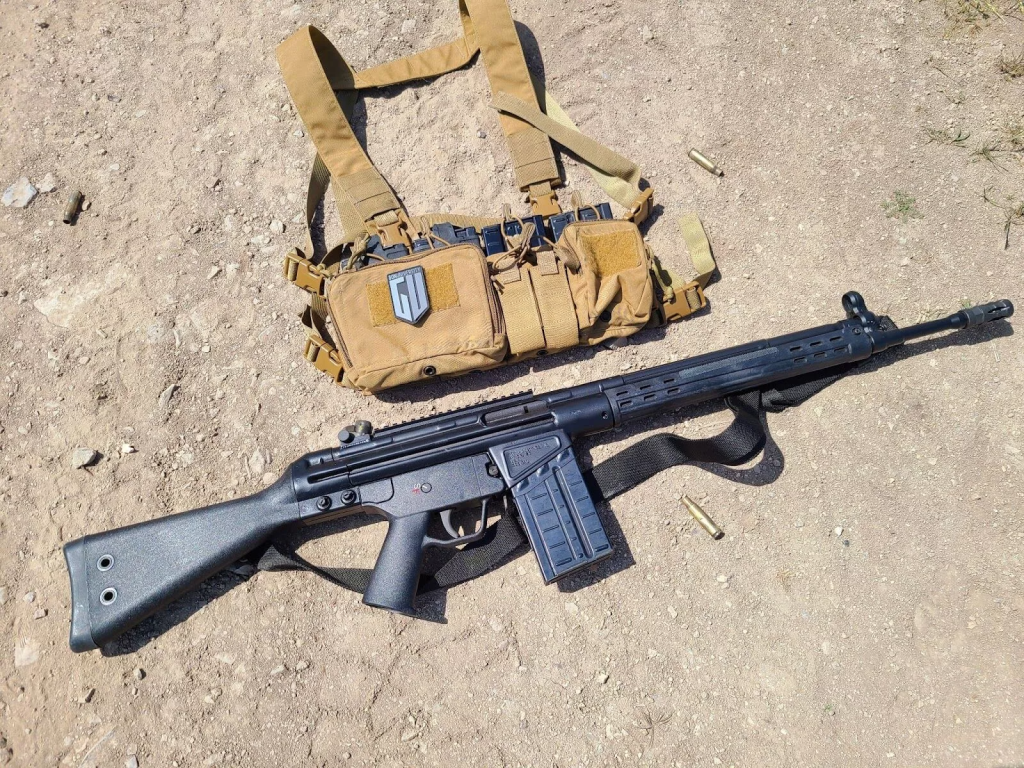
2. PTR-91

The PTR-91 is a modern variant of a gun first manufactured over half a century ago, the Heckler and Koch G3 — one of the most revered battle rifles ever produced.

Galil ACE Gen 2 Shooting
PTR-91 With Welded Top Picatinny Rail (Photo: Gununiversity)

What would go on to become the H&K G3 was first produced in 1958. Primarily designed by German engineers working for the Spanish CETME development group, the CETME-C was a roller-delayed 7.62×51 rifle.

This legendary rifle would go on to inspire a number of similar rifles (and quite a few blatant copies) and be used by just about every country with a military.

Galil ACE Gen 1 and 2
The G3 has been and still is widely in service around the world. (Photo: Military Times)

The PTR 91 is an American-made G3 clone that uses tooling references from the original H&K G3 to be as accurate as possible to that original design, but with all the advancements and improvements of a modern manufacturing complex.

It also features the iconic H&K diopter sights (the little rotating drum you probably recognize most from the MP5) and a standard 5/28 threaded barrel making it ready for suppressors out of the box.

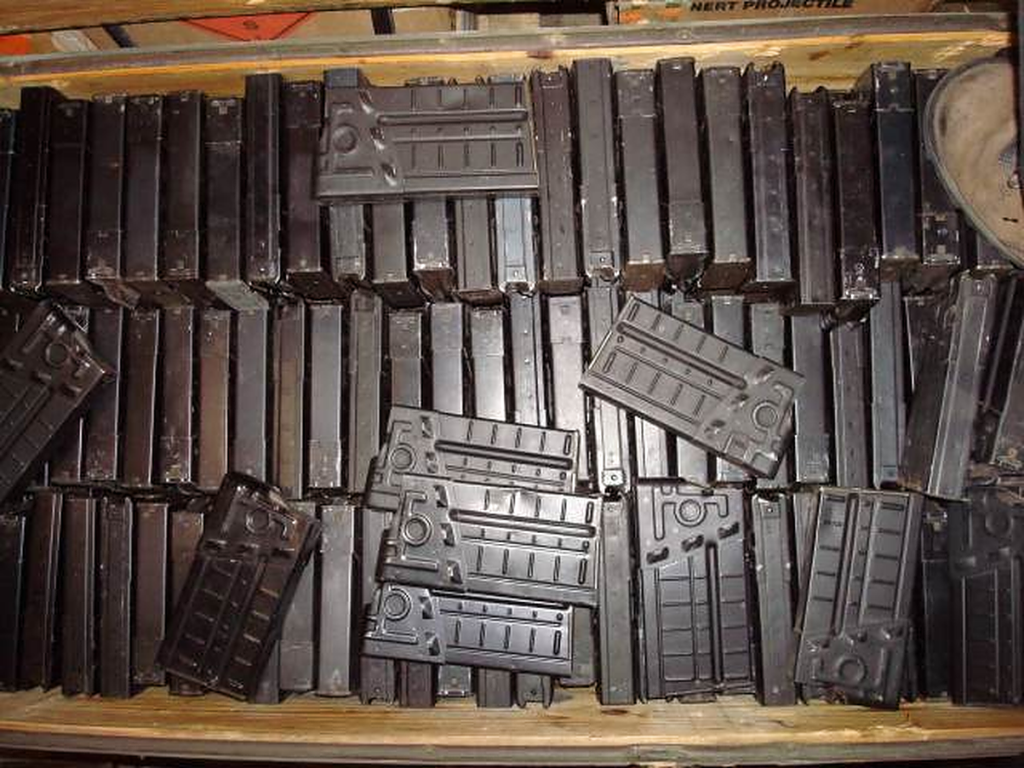
A nice bonus about these guns is the widespread availability of dirt-cheap magazines. You can find surplus magazines for $5 to $10, and new magazines can be had for as little as $10 to $15.

Galil ACE Gen 2
It’s not uncommon to run across a crate full of surplus G3 magazines at your local gun show. These things are everywhere. (Photo: kyimports)

This is a battle rifle. It’s got a stamped and welded receiver just like an AK, and the trigger does double duty as a medieval torture device. Beware, these things absolutely chew up brass; so if you are planning on reloading, this gun will literally put a dent in your plans.

I’d be comfortable calling the base model a 2 MOA gun with mid-range ammo. Stepping up to their FR model with the match-grade bull barrel is an option for those looking to squeeze a bit more accuracy out of the platform.

There are several variations of the PTR-91, but they typically run from about $1,000 to $1,400.

For a battle rifle that’ll handle anything, it’s certainly not bad at all, and I’d feel good about having one to rely on in anything from a home invasion to an alien invasion.

3. DS Arms SA58 FAL

FN Herstal developed the Fusil Automatique Léger (Light Automatic Rifle) in the 1940s and saw it completed in 1953. During the Cold War, many NATO countries adopted it as their primary battle rifle, where it earned its nickname “the right arm of the free world.”

FN SCAR 17S
DSA FAL, Improved Battle Carbine Version

It uses a fantastic short-stroke, spring-assisted piston action that was very modern at the time. The system is still relevant today, allowing the FAL to stand shoulder-to-shoulder with much newer firearms.

The FAL is one of the most battle-tested rifles on the planet, and usually, the trigger is considerably better than most of the G3 options out there, which may lead to better practical accuracy.

FN SCAR 17S Shooting
The FAL has been fielded by over 90 countries worldwide. (Photo: Warfarehistorynetwork)

I love the FAL, and it’s one of those guns I think anyone looking to build a serious gun collection should have. For me, it sits slightly above the AK and slightly below the AR-10/15 in the pantheon of shoulderable small arms.

Of course, if you want one, you’ll have to talk to an importer and get a civilian one. For that, I recommend DSA SA58 lineup. DS Arms is one of few companies producing parts and accessories for the FAL, including complete rifles.

The SA58 is a solid recreation of the FAL that holds its own against the other non-AR .308s we’ve talked about in the accuracy department. Although modern versions of these guns tend to be pricier, hovering between $1,500 to $2,500, they are fun and steeped in rich history.

Check out our review of one of DSA’s modernized FAL variants here.

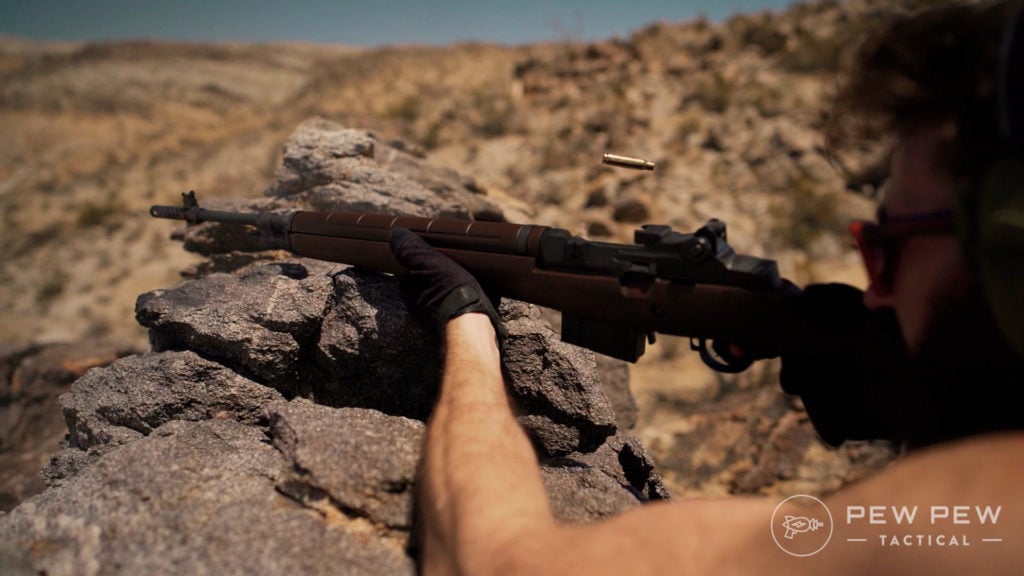
4. Springfield Armory M1A

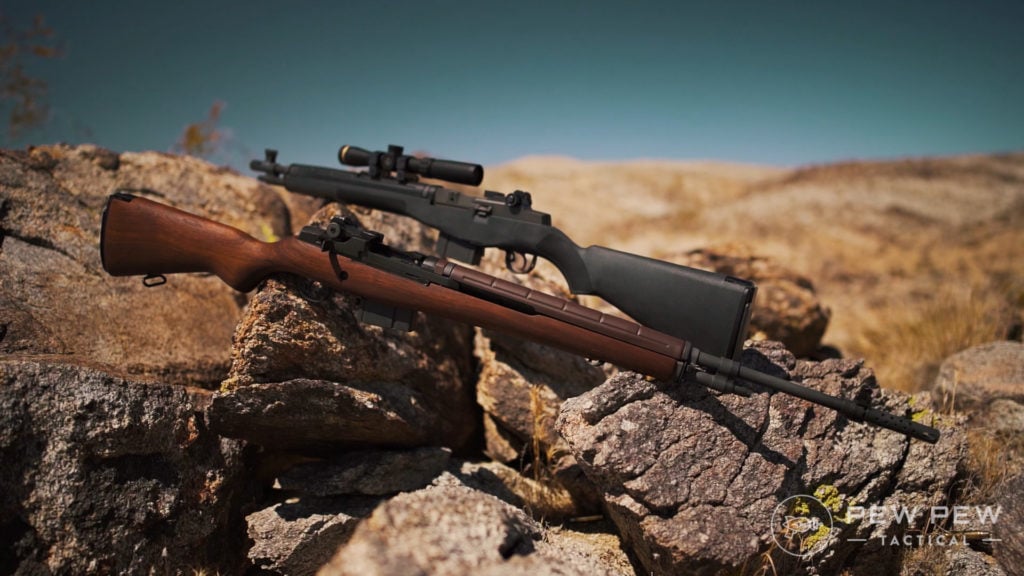
Next up is the Springfield M1A. This is the civilian version of the iconic M14 — the rifle that trounced the AR-10 and FN FAL to become the U.S. Army’s primary battle rifle back in 1959 (however arguable those test results may be).

Springfield Armory M1As

The M14 is, of course, a fully automatic military rifle, but the Springfield M1A is a semi-automatic, civilian version sold by Springfield Armory in various configurations.

You can get everything from the short-barreled SOCOM version to 21-inch barreled sniper configurations designed to get as much accuracy as possible out of the gun.

Some would say that M1A isn’t a great rifle, but I would disagree. Much of the accuracy of these guns is derived from a quality barrel and the mating of the action to the stock. This means that repeated detail strips of the gun can affect accuracy, especially on the base models.

6 Best .308/7.62 Semi-Auto Rifles: Battle Ready
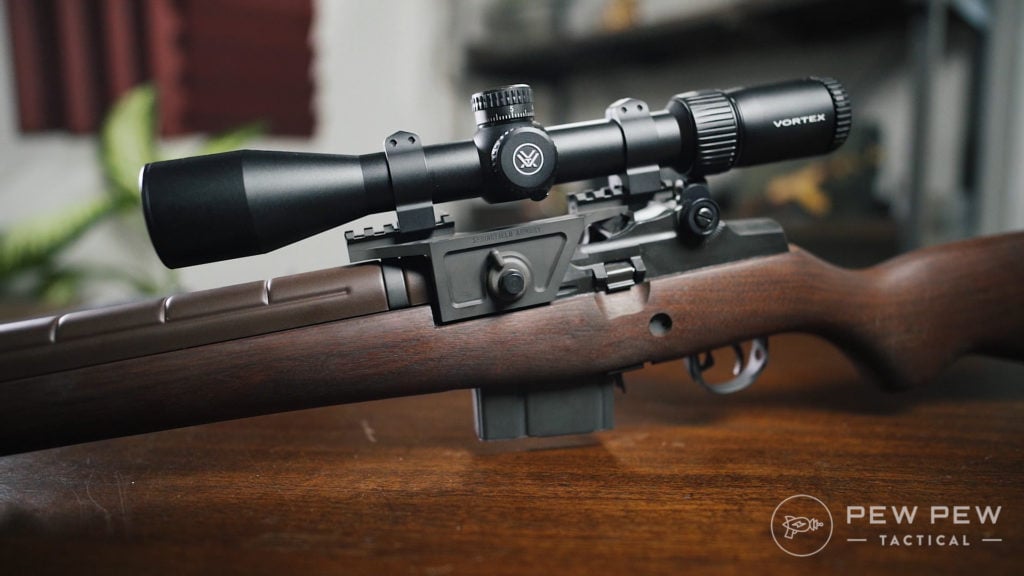
Springfield M1A with a Vortex Rifle Scope

Stepping up to the Loaded model that comes with the national match barrel is a good step in the right direction if you want those tighter groups. Fiberglass bedding between the action and stock will really let show you what a properly set up M1A can do accuracy-wise.

I own one in 6.5 Creedmoor, and I couldn’t be happier, but holy moly, do I want a .308 version. I just can’t quite justify the price for a second one, given that they run anywhere from $1,299 to $2,700, depending on trim level.

These rifles are a frequent sight on the field of competition, especially in service-rifle competitions. With classic ergonomics and excellent iron sights, the M1A lends itself well to shooting without optics.

The M14 is still used in a mostly honorary capacity by the U.S. military, with one or two exceptions — an especially notable one being its use by a number of competitive rifle teams from various branches.

While it may not be the best combat rifle or the cheapest battle rifle option these days, what it lacks, it makes up for in pure soul and fun. And if you aren’t sure which model is right for you, check out our ultimate guide to the best M1A models.

5. IWI Galil ACE Gen 2

Here comes the dark horse in the competition — the Galil ACE Gen 2 in 7.62×51 NATO. The first-generation Galil ACE was launched in 2008 but hasn’t been featured as heavily in the U.S. market, or video games for that matter, which kept it off many people’s radar.

6 Best .308/7.62 Semi-Auto Rifles: Battle Ready
Galil ACE Gen 2 Shooting

So what is it, you ask? In a nutshell, the Galil ACE is the ultimate refinement of the AK-47 platform. It uses the same long-stroke piston and rotating bolt design as the Kalashnikov and even sports a similar pop-off dust cover.

What does all that mean? It means you get the robust and proven durability of the AK platform, combined with the hearty build quality that IWI is known for. Sprinkle in a version chambered for 7.62 NATO, and you have a hell of a battle rifle.

6 Best .308/7.62 Semi-Auto Rifles: Battle Ready
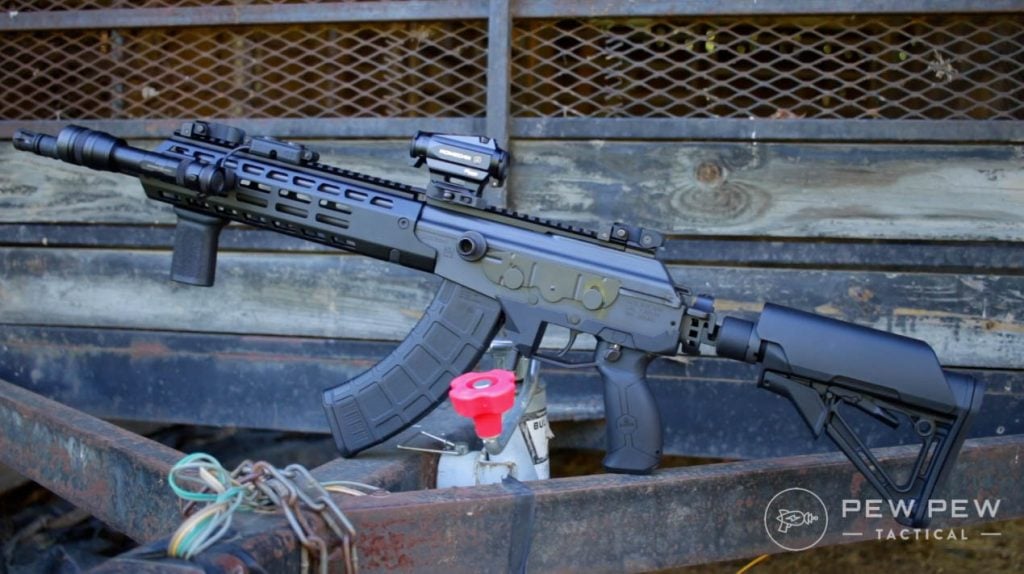
Galil ACE Gen 1 and 2

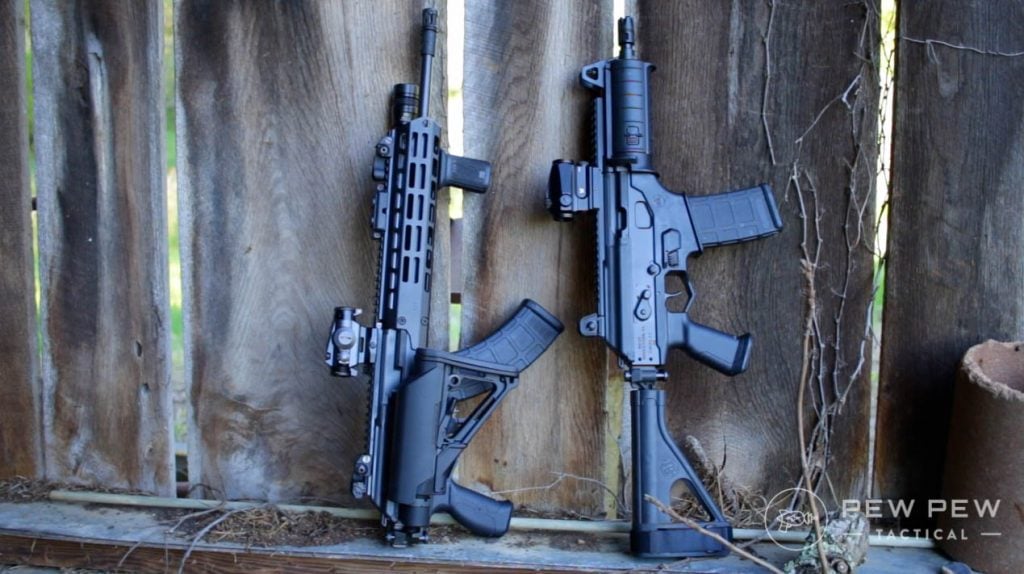
IWI recently introduced the Gen 2 version of the ACE. Updates include an M-LOK handguard, AR-style buffer tube for use with your favorite stocks, improved 2-stage trigger, and improved ergonomics.

By virtue of using a long-stroke piston, the ACE is able to have a folding stock and fire when folded. It also sports a non-reciprocating charging handle on the left side. Additionally, its cold hammer forged barrel ensures good accuracy and long service life.

6 Best .308/7.62 Semi-Auto Rifles: Battle Ready
Galil ACE Gen 2

Although a bit heavier than the SCAR-17S or the average AR-10, the ACE is still manageable at 8.6 pounds. The ACE also benefits from using standard SR-25/AR-10 magazines.

These rifles are a bit pricier, around $1,700 to $2,000, but are far from the most expensive on this list. If you are looking for something modern that isn’t an AR-10, the ACE might be your ticket.

Want to know more about the platform? Check out our full review of the 7.62×39 Galil ACE or watch Johnny B’s video below.

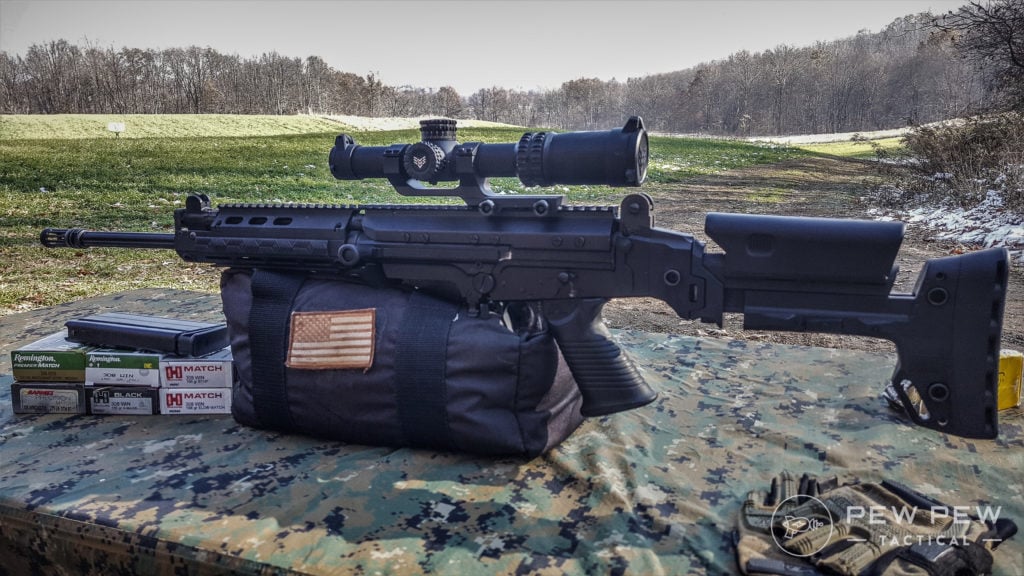
6. FN SCAR-17S

We’ve already given a spot on this list to the FN FAL, but I’d be remiss if I left out one of the most popular modern .308 battle rifles around.

6 Best .308/7.62 Semi-Auto Rifles: Battle Ready
FN SCAR 17S

The FN SCAR-H is a 7.62x51mm monster of a gun designed to be as modular as possible and to serve a variety of uses. From being a CQB weapon for various door-kickers and SF units to a scout sniper and sniper support platform, the SCAR-H can do it all.

A SCAR-H is a fully-automatic battle rifle capable of laying down 600 rounds a minute while also reaching out to the utmost limits of what the .308 cartridge is capable of.

6 Best .308/7.62 Semi-Auto Rifles: Battle Ready

Meanwhile, the SCAR-17S is the civilian version that goes bang as fast as your trigger finger can manage to go back and forth, and that’s plenty fast enough for me.

This is as solid of a rifle as you can get. The civilian version ships with a 16.5-inch barrel, but you can swap them out by removing just a few screws, allowing you to slot in any number of aftermarket barrels, from 13 to 20 inches, depending on your needs.

It uses a modern version of the short-stroke piston FN developed for the FAL, and it is currently in service in 24 countries around the world in one capacity or another.

For the civilian shooter like you and me, we get something that’s as military-tested as any rifle can be and is as close to military spec (aside from the lack of select-fire capability) as we can get.

The trigger is…not perfect, but certainly better than the FAL. The good news is that there are a considerable amount of aftermarket trigger options. If you’re going to slap a 20-inch barrel on there and stretch the SCAR out to 800 yards or more, you might consider swapping the trigger out.

All in all, it’s one of the best modern battle rifles out there and is pretty perfect if you’re looking for a heavy-duty semi-auto. The price is steep, but hey, you are getting a modern military-grade firearm, and that doesn’t always come cheap.

Be sure to check out our review of the SCAR-17S or watch the full video review below and let us know your take.

Final Thoughts

That was a look at some of the awesome semi-automatic .308 battle rifles out there. I certainly enjoyed writing it, and I hope some of this was helpful. If you haven’t found your next purchase, then hopefully, you at least learned something interesting.

6 Best .308/7.62 Semi-Auto Rifles: Battle Ready
Choices Choices

What do you think of these rifles? Which one is your favorite? Thinking about getting one? Be sure to check out what to feed these beasts with our article on the Best .308 Ammo for Target Shooting, Plinking, & Hunting.

Air Rifle Bird Hunting: Tips and Techniques

0

“Air Rifles: A Controversial Method for Shooting Birds”
Explore the heated debate surrounding the use of air rifles as a means to shoot birds. Discover the arguments, ethics, and potential consequences associated with this contentious practice.

shooting birds with air rifles

shooting birds with air rifles

Shooting birds with air rifles has become a controversial topic in recent years. While some argue that it is an effective method of pest control, others believe it poses a threat to wildlife and should be banned. Proponents of shooting birds with air rifles argue that it helps protect crops and gardens from damage caused by birds, particularly those considered pests such as pigeons or crows. They claim that using air rifles is a humane alternative to more lethal methods, as the pellets used are less likely to cause fatal injuries.

However, opponents of shooting birds with air rifles raise concerns about the potential for cruelty and unnecessary harm to wildlife. They argue that even non-lethal shots can cause significant pain and suffering to birds, and may result in debilitating injuries or slow deaths. Additionally, they highlight the risk of misidentification, where protected or endangered species may be mistakenly targeted. Critics also question the effectiveness of using air rifles for bird control, suggesting that alternative methods such as netting or scare devices could be more efficient and less harmful.

In conclusion, the debate over shooting birds with air rifles presents conflicting views on its effectiveness and ethical implications. Finding a balance between protecting crops and safeguarding wildlife remains crucial in addressing this issue. Further research is needed to assess the impact of air rifle use on bird populations and explore alternative methods that minimize harm while effectively managing bird-related issues.

In conclusion, shooting birds with air rifles is a controversial practice that raises ethical concerns and can have negative consequences for wildlife populations. It is important to prioritize conservation efforts and explore alternative methods for bird control to ensure the well-being of these creatures and maintain a balanced ecosystem.

5 Tips for Redfish in the Marsh

0

by Pete Cooper Jr.

The waters within interior salt and brackish marshes across virtually the entire Gulf coast hold red drum throughout most of the year. However, these fish are not pushovers. That is entirely a result of their environment and the main reason why so many anglers have trouble successfully fishing here. If you are one of those but would like to solve the riddle and experience the exciting action found in these areas, try adhering to the following tips.

Interior marshes are typically comprised of broad stands of various emergent grasses pocked with shallow ponds – with or without submerged grasses – and laced with small, shallow creeks and cuts. As the tide rises, it floods these ponds and shoreline grasses along the cuts or creeks. The rising water makes these sites accessible to various prey species. Those creatures now move into these nutrient-rich areas, and the redfish follow.

In interior areas it is almost always best to follow the fish into the shallowest water that you can operate your boat. As the tide continues to rise, continue to look for shallow spots. Water over 1 1/2 feet deep quickly becomes a detriment, as it masks signs of a fish’s presence.

Periods of slack tide – either on the low end or the high end – are usually best spent taking a nap or returning to the marina for a bite. Just be sure you are back on the water when the tide begins to move again. When it starts to fall, target the creeks and cuts.

These can be worked effectively by either moving along their shorelines where the falling water is pulling bait from the recently flooded grass or by anchoring at the point where a cut drains a pond. There, the current created by the water falling through the cut pulls prey from the pond. Redfish are well attracted to these feeding stations.

5 Tips for Redfish in the Marsh

As a rule, redfish in open water aren’t all that bright, and some of them can act like they want to be caught. However, if you assume the fish you encounter in the marshes are so afflicted, you won’t catch many of them.

You must move about very stealthily while fishing shallow ponds and creeks. Paddling is best if your boat allows it. Push-poling ranks a close second and provides better visibility, but it’s rather difficult to make a quick, accurate cast with a 16-foot push-pole in one hand. Unless there’s a buddy aboard who is willing to alternate rod and push-pole with you, sculling while sitting on the boat’s bow is the better option if at all possible.

If you are averse to paddling, the water’s depth is sufficient and there isn’t a profusion of submerged grass in the area, a bow-mounted trolling motor can be used effectively. But it should be set on the lowest speed that produces headway.

Whatever method of propulsion you decide on, go slowly. While that allows you to search for fish more effectively, the main reason is to prevent the boat from creating large pulses through the water that can be detected by the fish, alerting them that something is not quite right. Reds often simply swim out of the way of a boat that is just creeping along, not in the least bit alarmed. Others caught unaware may bolt, but after they dash off a ways they occasionally seem to forget what all the fuss was about. A cast at fish that respond to the boat’s presence in these manners can result in strikes you would have not received had your boat been pushing a large wave through the water.

One of the most exciting things about fishing the waters within interior marshes is that much of it is done by sight. As you move stealthily along, always look and listen for signs of fish.

A large wake moving slowly along the edge of a small pond or creek channel is definitely worth a speculative cast. A much better bet is the tip of a tail intermittently puncturing the water’s surface beside a patch of submerged grass. An entire tail waving merrily at you anywhere you might encounter one is almost a sure thing.

Then there are “crawlers” – fish which move with some purpose in water so thin that their dorsal fins and part of their backs are exposed. These fish might also appear to be almost a sure thing, but they demand a very precise cast. Unlike a “tailer,” which is a stationary target, a crawler must be led just far enough to prevent the lure’s impact from spooking the fish, yet close enough for the fish to detect it. Knowing just how much to lead the fish is determined in great part by experience and blind dumb luck! Do not expect consistent results with crawlers – but then, that’s what makes fishing for them such a hoot.

In clear water, redfish can be detected relatively easily beneath the surface. For best results, work the up-wind shorelines where emergent vegetation creates a calm surface. Move along in the direction allowing the best sub-surface visibility. Wear amber or yellow polarized sunglasses and a cap that is dark green on the underside of the bill. If you are moving along slowly and stealthily, you can spot these fish quite close to the boat, so be prepared for a short, quick cast with minimal movement.

On first inspection, a pond, creek or cut may seem to be relatively featureless. This is not the case. Irregularities abound and are often quite attractive to bait species seeking nourishment or shelter. In such places, redfish are likely to be nearby.

Small grass points in a creek’s shoreline may extend into water that is slightly deeper than that found along the adjacent bank. Here any current may be slightly stronger, causing bait to be carried along by the flow. Such a feature makes a good ambush point and should be prospected with a cast or two wherever found.

Other good spots are at intersections, especially where one cut or creek is much different from the other. It can be larger, smaller or shallower, just as long as the two channels differ. These sites are usually best on a falling tide, but they can be productive during the low end of a rising tide. Particularly target any shoreline shallows located there.

During low tide you may notice some shells on the bank of a creek. These may extend well out into the waterway, providing protection for prey species. Never pass up an accumulation of shoreline shells without making a cast or two across the water next to them.

Finally, fish may be found anywhere in ponds where the bottom is carpeted with thinly growing submerged grasses. But places where the grass grows in thick patches – often matting on the surface – tend to limit the area used by the fish. Take plenty of time looking around and casting a pond that has clumps of matted grass scattered throughout it.

Some of the hottest lures going these days for reds in interior marshes are spoon flies. They are not really flies but were created for use with fly rods. These lures do look and act like a single-hook spoon. They are very light and sink quite slowly, usually have a mono weed guard. The lures wobble and flash about, emitting audible as well as visible imitations of a baitfish. Though small at 1 1/4 inches, the redfish absolutely love them!

Of course, spin-fishermen can employ very similar lures. In this setting, especially with clear water, a small and loud 1/5-ounce, single-hook spoon can be a good choice. In areas where submerged grass presents a problem, try a 1/8-ounce buzzbait dressed with a 2 1/2-inch soft-plastic grub. In the slightly deeper cuts and creeks, junior-sized surface lures can produce some very entertaining strikes.

But day in and day out, the most reliable lure is a spinnerbait created from a gold, No. 3 1/2 safety-pin spinner, a 1/8-ounce jighead, and a 2 1/2-inch grub. With that you can make a relatively delicate presentation to a crawler, buzz it past a tailer at the edge of a thick patch of grass, or prospect the intersections, points and accumulations of shells along a creek’s shoreline.

Discover even more in our monthly magazine, and have it delivered to your door! Subscribe Now!

The Best Wading Jacket for You

0

The rain was coming down by the bucket and I huddled under a pine tree, praying that I wouldn’t get too wet. My proprietary waterproof system had utterly failed, and I wasn’t too surprised. An old ski parka layered on top of a fleece vest wasn’t exactly the bastion of water-repellence technology I hoped it would be. As a result of being wet and cold, I was missing out on the fishing—for golden trout, of all things! If you’ve ever fished for golden trout before, you know getting to them is half the battle.

It was on this trip that I learned the real value of a solid wading jacket, and I resolved to buy a nice one after getting out of that downpour. The problem I ran into, though, was how to pick the right one for me. I wasn’t sure where to start, and the reviews of wading jackets at the time didn’t exactly clear things up for me.

That’s what I aim to do with this piece. We’ll dive into some of the features you should look for in a wading jacket, as well as some factors to consider that will likely influence your decision. As always, we’ll end with a list of wading jackets that I’ve either personally used myself or had recommended to me by anglers I know and trust.

Consider the conditions

The first thing to consider when looking for the best wading jacket for you is the conditions it’ll most likely be used in. Since I live and fish mostly in the Rocky Mountains, I don’t need a bombproof rain jacket like my buddies in southeast Alaska use. They’re in the rain more often than not. I rarely face conditions that tough.

You can quickly spend a lot of cash on wading jackets if you opt for the ultra-premium steelheader-deluxe models. While those are nice to have, they’re far from necessary for the fishing I do. There’s a fine line between being prepared and preparing for a disaster that won’t ever happen.

Keep it warm

I’m a firm believer in layering for any outdoor activity, and fishing in the rain is no exception. I prefer a rain shell over an insulating layer, as that’s what keeps me most comfortable on the water. I’m sure plenty of anglers agree with that.

But do you? That’s the key here. If you want a do-it-all wading jacket that both keeps you dry and insulates, go for it. Don’t let one person’s opinion talk you out of picking a piece of gear you know you’ll enjoy.

Packability

Finally, my favorite wading jackets are packable. They’ll squeeze down and fit in a backpack, under the seat in a drift boat, or anywhere else where they’re out of the way. A good packable wading jacket should be light, too, so that carrying it around all day if the forecast calls for rain doesn’t become an inconvenience.

So with all of these features in mind, let’s take a look at the wading jackets I’d personally recommend.

Skwala RS Jacket

  • Insane build quality
  • Thoughtful design
  • Light and packable

The Skwala RS Jacket is the standard to which I personally measure every non-insulated wading jacket. Yes, Skwala is a new company, but their products are among the best on the market. What makes the RS Jacket stand out is its insanely high build quality and attention to detail. The RS Jacket is designed a half-size larger to fit over an insulating layer and your waders, so you don’t have to worry about this jacket being a tight fit. The pull tabs for the jacket’s hood are located inside the chest pockets to eliminate anything that might potentially catch fly line. And this thing will hold up to the worst downpours imaginable. It also helps cut the wind, and is extremely well-articulated, so it doesn’t bunch up when you’re hiking, rowing, or casting. What more could you ask for from your wading jacket?

Simms Bulkley Insulated Jacket

The Best Wading Jacket for You

  • Insulated for added warmth
  • Fly box friendly pockets
  • GORE-TEX lined

The Bulkley Insulated Jacket is Simms’ answer to the worst weather conditions imaginable. Seriously, this thing is bomb-proof. For starters, it’s lined with GORE-TEX both inside and out, which Simms says will keep you dry even if you’re wading in past your belly. The PrimaLoft insulation is proven to keep you warm, and Simms engineered the sleeves to prevent water from flowing up them even if you stick your arm in the river. The pockets are designed with fly boxes in mind so you’ll always have what you need within easy reach. If the ultimate in both warmth and waterproofing are what you’re after, the Bulkley is hard to beat.

Orvis Clearwater Wading Jacket

The Best Wading Jacket for You

  • Very breathable
  • Rear D-ring for net attachment
  • Lots of pockets

The Orvis Clearwater Wading Jacket offers a ton of features in a more budget-friendly price range. I’m particularly fond of the integrated D-ring for attaching a net, which removes the need to wear a full fishing pack with this jacket. It’s designed to slip over the top of all your gear, freeing you up to move unencumbered while on the water. The Clearwater also features a three-layer nylon shell that’ll keep you dry but offers superior breathability, as well. Add on the legendary Orvis quality and you’re looking at a wonderful wading jacket.

Frogg Toggs Ultra-Lite Jacket

The Best Wading Jacket for You

  • Incredibly light
  • Cheap
  • Completely waterproof

This jacket from Frogg Toggs costs a whopping $24.99, and it’s one of my absolute favorites. This thing is light, and packs down tiny. It’ll fit in a day pack without any problem. But it’s also completely waterproof, and does a decent job of retaining some of your body heat. Now, this is a no-frills jacket, intended only to keep you dry. You’re not getting a slim, well-cut hood, or articulated sleeves. What you’re getting is the best bang-for-your-buck rain jacket on the market, and one I used for years before getting a wading jacket that had a few more features.

Patagonia Swiftcurrent Wading Jacket

The Best Wading Jacket for You

  • Made from recycled nylon
  • Low-profile pockets
  • Snag-free design

Patagonia’s Swiftcurrent Wading Jacket is just another excellent entry in the company’s line of fantastic gear. This wading jacket places an emphasis on reducing or eliminating the possibility for your fly line to snag on it, which is a feature many anglers should appreciate. The fully-waterproof shell is made from 100-percent recycled nylon and it has plenty of pockets for storing fly boxes and all your terminal tackle. The jacket only weighs a hair over 22 ounces making it extremely light and easy to stuff into a day pack.

There are tons of wading jacket options on the market, and this list is only intended as a jumping-off point. Remember to carefully consider what features you do and don’t need. Something minimalist like the Frogg Toggs might be perfect for you while your buddy may need something with all the pockets and hemmed hoods.

Regardless of what you choose, make sure to take care of the jacket so it takes care of you when you need it most.

How to Go Bowfishing: The Complete Guide

0

Reading Time: 10 minutes

For years, many people wrote off bowfishing as just for archery enthusiasts or off-season bowhunters. But over the last decade or so, this fishing technique has become a beloved sport for thousands of outdoor lovers. Fun and unique, bowfishing requires absolutely no previous angling experience, making it perfect for newbie fishers. If you’re looking to make your first bowfishing steps, you’ve come to the right place.

What is bowfishing?

As you might have guessed, bowfishing is hunting fish using a bow and arrow. Sounds simple enough, right? Perhaps, but bowfishing comes with a few twists here and there. At first glance, bowfishing is almost the same as bowhunting, but there are a few key differences.

Bowfishing targets are typically much, much, closer than the ones you’d find in the woods. With no need for long-range shooting skills, beginners find it very easy to get into the sport. Not only that, the close quarter shooting takes away much of the need for specialized equipment, too.

Still, that doesn’t mean that bowfishing doesn’t have its own nuances. You are targeting a moving underwater creature, after all. In this guide, we’ll cover the species you can expect to catch, go through the gear you’ll need, show you a few bowfishing techniques you’ll want to know about, and more.

By the time you’ve read this article, there’ll be nothing between you and a memorable bowfishing adventure. Let’s jump right into it.

Where can you bowfish?

Bowfishing can take place in a variety of waters, as long as they’re shallow and reasonably transparent. From lakes and reservoirs, to rivers and streams, you can bowfish pretty much in any type of freshwater. But that doesn’t mean that you can’t give the old bow and arrow a try in saltwater, as well. Shallow flats, estuaries and bays can be a great place to shoot ‘em up.

All these waters are what hunters like to call “target-rich environments”. In plain English, that means plenty of target practice, and plenty of fish to catch!

The Gulf coast of Louisiana and Florida are two of the most popular bowfishing hotspots in the US. The Mississippi, Missouri, and Trinity River are all teeming with fish, and are extremely popular among bowfishers. North of the border, the mighty St Lawrence River is a bowfisher’s paradise.

Boat or shore?

The great thing about bowfishing is that wading a riverbank can be just as productive as meandering inshore flats on a boat or kayak. If you do decide to hop on a motorboat, make sure you go out on a vessel with a shallow hull. This will allow you to get to the best bowfishing grounds.

Nowadays, you can find flat boats with specialized bowfishing platforms, downward-facing lights, and many other amenities.

What can you catch?

Contrary to what you might think, you can’t just grab a bow and shoot any random fish in the water. In most states, bowfishing for game species is illegal. Still, that doesn’t mean that you’ll have trouble finding a fish to catch.

In freshwater, bowfishers typically start their “careers” hunting Carp. From Common Carp, through Bighead, to Grass Carp, newbies will have their work cut out for them. Hunting these species won’t just earn you a nice meal, mind you. Carp are one of the most invasive freshwater species in the country, and by catching them, you’ll be doing the environment a giant favor, too.

Garfish are another freshwater staple. Shortnose, Longnose, Spotted and Alligator Gar are all popular catches, and are legal for bowfishing in most states. Tilapia is another popular target, as well as Drum. Throw Catfish and Buffalo in the mix for good measure, and you’ve already got a decent menu on your hands.

In saltwater, bowfishers can target some truly exciting nearshore species. Flounder is the obvious choice for most people, but you can also target Sheepshead and even smaller Sharks! Bowfishers In Louisiana are particularly lucky, because in addition to these, they can legally catch Redfish, too.

Bowfishing Gear

Compared to bowhunting gear, bowfishing equipment doesn’t need to be as complex or sophisticated. There are a few items that are specialized for this type of fishing, but you won’t need to break the bank to get your hands on them. The most important items you should have are your bow, arrows and reel.

Bows

Obviously, the bow is an important part of a bowfisher’s arsenal. Thankfully, any recurve or compound bow will do, especially if you’re a beginner. There are pros and cons to each type of bow, but in the end, things come down to personal preference.

Recurve bows are the more old-school option of the two – they are essentially traditional bows with tips curved to the front for power. They are lighter and easier to maintain, but require more strength and are slightly less precise than the mechanical compound bows.

What some archers and bowhunters get wrong is that they use their heavy duty bows for bowfishing. The thing is, you’re hunting critters just a few feet away. In most cases, a bow with 30-40 pounds of draw weight will be more than enough.

What your bow should have is the ability to support a reel and an arrow rest. And that’s about it. No fancy scopes needed. Again, this is just close quarter shooting we’re talking about. The “bare bones” approach isn’t just about saving money, mind you. Shedding the extra weight will save your arms a lot of effort, and that will do wonders for your accuracy.

Nowadays, you can find a number of ready-made bow packages, which have all the gear pre-attached to them. Buying one of these might be the easiest option for most people.

Reels

The reel can make or break your bowfishing success. There are three types of reels out there, each with its pros and cons. These are the hand reel, the bottle reel, and the spincast reel. Let’s take a look at each type.

Hand Reel

The simplest type of bowfishing reel is the hand reel. The ol’ faithful of the bowfishing world, this guy is nothing more than a drum with a line spool around it. Once you’ve shot your arrow, all you need to do is grab your line and roll it around the drum as you pull. Hopefully with a fish on the other end.

Not only is the hand reel simple to use, there’s literally nothing about it that can break. It’s also the most affordable type of reel. By a longshot. The drum reel is a popular choice among the traditional bowfishers, and it goes well with recurve bows.

The downside to the hand reel is that it requires heavier lines, and a lot more manual work compared to other types. Pulling a line with your bare hands will leave a mark, so make sure you have gloves on if you’re using this reel. Lastly, retrieving lines is a lot slower with hand reels, so you better hit the target on your first try.

Bottle Reel

The bottle reel is probably the most popular bowfishing reel out there. They are reliable, and generally make life a lot easier than hand reels. On one side, you have a bottle which serves to house your line. On the other, you have a handle, just like on any other fishing reel.

Like hand reels, bottle reels typically use heavier lines. You won’t have a problem pulling your line, but accurate longshots could pose a challenge.

Spincast Reel

Spincast reels are what many consider the cream of the crop. It’s essentially a proper fishing reel mounted on a bow, and most anglers find using it comes quite naturally. Spincast reels allow you to retrieve your line faster than any other reel. And because they use thinner line, you can work those long shots with much greater accuracy.

The downside to spincast reels is their price. They can also be a nuisance to clean and maintain. For this reason, they might not be the best option for novice bowfishers. If you’re a competitive bowfisher, however, this is probably the choice for you.

Arrows

Just like bows, bowfishing arrows are something you can buy pre-made, or customize to your own liking. There are a ton of varieties out there, but all are made out of three components: the shaft, the point, and the nock.

We know what you’re thinking, and the answer is no. Using hunting or archery arrows is a bad idea. The fletching on these arrows can steer a submerged arrow in the wrong direction, resulting in a missed shot. The two components you should keep an eye on when choosing an arrow are shaft material, and type of tip.

Arrow Material

There are three types of bowfishing arrow shafts out there: fiberglass, carbon, and hybrid. All are heavy and sturdy enough to keep enough power underwater to penetrate fish. However, if you’re after larger game, carbon shafts are the better option. The only downside is that they come at a much higher price.

Arrow Points

When it comes to choosing the arrow point, it’s all about the species you’re after. These arrows all come with barbed tips. The barbs are there to make sure that the arrow sits in place while you’re dragging the fish to shore. However, they are not all the same.

If you’re after bigger fish, like Carp, you’ll want an arrow point that doesn’t need to come clear out of the fish to “set” its barbs. The arrow might stop somewhere inside the fish, and you want to still be able to pull it out. On the other hand, if you’re dealing with a fish that’s hard-scaled, you’d better use a sharper, pointier tip, so that you can penetrate its skin.

Arrow Rest

This one’s pretty simple. The arrow rest is a stabilizer which keeps your arrow still as you line up your shot. There are several shapes and sizes out there, but there’s nothing too fancy about them. But the one thing you lefties should know is that there are ambidextrous arrow rests out there.

Safety

Bowfishing happens quickly. Often, you find yourself in a heart-pounding fire-reel-fire loop, where it’s easy to lose track of what’s happening. If you don’t pay attention, your line could tangle, or slide anywhere around the structure of the bow. If this happens, and you fire your shot, there’s a good chance that your arrow will snap back, potentially seriously injuring you or someone nearby.

This is why it’s crucial to have something called a safety slide. A safety slide is a simple contraption that moves down the shaft of your arrow, bringing your line to the front, thus preventing any tangles. This piece of equipment isn’t mandatory, but it’s highly recommended that you use one, especially if you’re a beginner.

Now, let’s get to the fun part.

How to Bowfish

Compared to other fishing techniques, bowfishing isn’t what you’d call “difficult”. With practice, and a few practical tricks up your sleeve, you can become as good as just about anyone. The two main factors you’ll want to consider are stealth, and aiming.

Stealth

Bowfishing is almost exclusively done at close range, and in shallow waters. The thing is, fish that reside in such waters tend to spook very easily. This is why slipping into your target’s quarter unnoticed is extremely important. This is especially true if you’re fishing from the shore or wading.

Thankfully, with a few cues in mind, you can creep up to the most wary of critters.

  • If you’re moving in from the shore, move slowly and watch out for any twigs or branches on the ground, or anything else that might make a sound if you step on it.
  • Avoid casting a shadow over the fish you’re trying to catch.
  • If you’re wading or moving in on a vessel, try not to stir the water too much.
  • If possible, make your approach from upwind.

Aiming

Now, here comes the skill part of bowfishing. To explain it, we’ll need to go over a very brief physics lesson.

Water is denser than air, and because of that, light travels through it differently. When light waves hit the water, they refract (or bend). In practice, this means that any underwater object you’re looking at is not actually where it appears to be. It’s lower.

To hit your target, you’ll need to aim below it, and probably more than your instinct will tell you. Bowfishers have a saying “aim low, then aim lower”. It won’t take long for you to realize how true this is. Knowing just how low you should aim will come with experience. Still, there are a couple of rules to help you start out.

  • Aiming 6 inches lower. This is a simple but effective cue, particularly useful for beginners.
  • The 10-4 rule. Slightly more advanced, this rule says that you should aim four inches low for every ten feet of distance, to hit a fish that’s a foot underwater. If the distance doubles or the fish is twice as deep in the water, aim twice as low.

To become a master marksman, you’re going to need a lot of practice. Thankfully, with bowfishing, things couldn’t be easier. All you need is a body of water, your gear, and a simple plastic bottle to submerge.

Gradually, you’ll develop your own instinctive feel for aiming. In time, your accuracy will improve to the point where aiming will become second nature.

When to Bowfish

In terms of seasonality, bowfishing is best during the spring spawns, or during summer. During these warm months, you can catch fish at almost any time of the day.

Many bowfishers like to hunt during early morning, or at dusk, because this is when the fish are most active. Of course, some days will be more productive than others. But to get the best results, you’ll want to go out when the waters are calm, and visibility is at its best. That means clear skies, and no winds.

Others will opt for hunting at night. Bowfishing after sundown is very popular among boat fishers. These outings happen on specialized bowfishing boats, equipped with downfacing lights. The lights illuminate the shallow waters, giving you an exceptionally clear view of the hunting grounds.

Shoot Your Shot

Bowfishing is one of the most addictive ways to catch fish, period. It’s easy to learn, and better yet, you can find a good spot almost anywhere in the country. It’s one of the few fishing techniques that allows you to catch a tasty dinner, help the environment, and have loads of fun doing it!

And that covers it. What’s your favorite thing about bowfishing? Any tips we might have missed? Let us know in the comments below!

Volcon Stag Electric Side By Side: First Drive

0

Volcon Stag Electric UTV

For an initial review, we like to drive a new UTV at least 100 miles and get through a feel for it. For a full evaluation, and the confidence to give it a recommendation, that requires over 1000-miles of seat time. Well for this Volcon first drive we were only teased with a 6.5 mile drive and 11 minutes of seat time. That’s not to say we weren’t impressed with our findings however.

WHAT IS THE STAG

This vehicle is set to be the first electric side by side in the recreational segment. The unit is still in the prototype phase. However, production units are said to be rolling off the assembly line as soon as September with a starting MSRP of $39,999. Size and capability wise, we would compare this unit to a 4-door Polaris General and it is 64 inches wide. The Stag is only available as a four seater for now but other models, sizes and styles are in the works.

Volcon Stag Electric UTV

WHAT POWERS IT

Volcon sourced the powertrain for the Stag directly from GM. In fact, the 42KW battery pack and 125HP-140 HP, electric motor are very similar to what you would find in a Chevrolet Bolt. The front and rear differentials both come from the Chevrolet Blazer and feature, electronic lockers and un lockers.

Volcon Stag Electric UTVIS IT FAST

It’s quick. Although our test drive was brief, we would compare the power to a good working Turbo powered 4-seat RZR or X3. Unfortunately, the two prototype Stags we drove didn’t have front differentials in them, so, getting the power to the ground on a dry hard-packed track was tough. The highest top speed we saw was 58 MPH but the claimed top speed is 80. On more than one occasion, our drivers head was pinned back to the seat when the Stag found traction. It is quick, we just cant say for certain that its quicker than other cars out there until we get it head to head.

Volcon Stag Electric UTV

WHAT SUSPENSION DOES IT HAVE

All four corners use beefy, dual A-arms controlling 14-inches of wheel travel. Big front and rear swaybars do a great job controlling body roll. As for bump absorption, 2.5 inch, fully adjustable Elka shocks with remote reservoirs do an excellent job considering the vehicle weighs a claimed 2600 pounds. Most of that weight is battery and is situated along the bottom of the frame rails contributing to a very low center of gravity. The A-arms appear to be bigger and stronger than what you would find on a Polaris General or the new XPEDITION. Volcon uses automotive style unitized hubs on all four corners. These are the exact same 5-lug hubs as are found on the Polaris RZR Pro R.

Volcon Stag Electric UTV

HOW DOES IT HANDLE

The vehicle has very little body roll. It never felt tippy, wanted to two-wheel or have too much front end dive under braking. Volcon and Elka engineers did an excellent job tuning the shocks to handle the weight of the machine. We were able to hit a few small table top jumps and the vehicle flew straight and landed pillow smooth. It’s interesting to note, that they did design the steering system with the tie rods connecting forward of the spindles. This is similar to how Arctic Cat builds the Wild Cat and Robby Gordon does it in the Speed UTV. It translates to a very flickable vehicle. Electronic power steering is handled by an EZ steer set up. It was light and offered very little feedback but again, we were only driving in 2WD. With lots of power on tap, it was very easy to slide the rear end around and make tight turns quickly.

Volcon Stag Electric UTV

WHAT ABOUT RANGE AND CHARGE TIME

Since our ride time was brief we did not get to confirm any of the Volcon claims on battery life or charge times. However, the claims do not seam too far fetched. Of course milage can vary dramatically depending on how heavy your foot is, terrain and temperatures. Volcon states you can likely get anywhere from 40 miles flat-footed to 160 at a creeping pace so to be safe, they say it will go 100 miles between charges. Furthermore, if you do get down to a 20-percent charge, power output is limited to make sure you get back to where you need to plug in.

You can charge the Stag using any standard Level 1 (household 110v outlet), Level 2 (240v) or Level 3 (Super Charger) methods through the onboard, automotive style, J1772 plug. A full Level 1 charge could take up to 42 hours, Level 2 charging will top you off in 4-6 hours and a super charger can get you going in about 15 minutes. To test this for ourselves, we have already mapped out a 2-day test loop in the Mojave Desert complete with Level 2 and 3 chargers that are accessible by OHV’s. Stay tuned for that test when the production models are released in the Fall.

Volcon Stag Electric UTV

IS AN ELECTRIC UTV IN YOUR FUTURE?

There are five good reasons to own any electric UTV. One, your driving experience will be relatively quieter. Sure if you ride fast, wind noise will be there, but if you ride slow, your journey could be in near silence or better yet, you will be able to hold a conversation with your passenger. The Volcon had very little rattling from bodywork or gear noise. Two: Maintenance will be cut in half. There will be no more oil changes, air filter cleanings or servicing the transmission. In the Stag, you would still need to change the oil in the differentials and keep a close eye on wheel bearings, ball joints and A-arm bushings. Three: No more gas or exhaust smell. Trips to the gas station or hauling jugs of gas to the ride area will be a thing of the past. This also might come in handy depending on where you store your vehicle as some storage units don’t allow gas powered vehicles to be stored.. Four: It’s conceivable that you would able to power a circuit of your house or motorhome with your Stag. Imagine being in a black out, tornado or hurricane and the whole town looses power. If you keep your machine charged and ready, power is still available and better yet, it’s portable, incase your neighbor needs it more than you do. Imagine that!

Five: The thrill and power of driving an electric vehicle is something everyone wants to experience whether they will buy one or not. You will be the talk of the town, riding park or race track at least until a few more guys purchase them or other top manufacturers come out with one. For now, the Volcon Stag is it.

Volcon Stag Electric UTV

SPECS

2024 VOLCON STAG

Motor: 100+ KW

Battery:42kWH

Horsepower: 125hp

Torque: 265lb-ft

Range 100 mile + or –

Final Drive: Shaft

Suspension/wheel travel: Dual A-arms 14” / 2.5” Elka

Tires/wheels: 30×10-15 BFG KM3/Raceline

Brakes: 4 wheel disc with Regen braking

Overall Length/Width/Height: 155”/64”/78”

Wheelbase: 121”

Ground clearance: 14”

Payload capacity: 1200lb

Cargo capacity: 650lb

Tow rating: 2000lb

Drive modes: Sport, Explore, Stroll

Navigation: Garmin (optional)

Price: $39,999

Contact: www.volcon.com

World Class Whitetail Deer | Hunting Lodge | Tennessee

0

Rocky Fork Whitetails offers the ultimate World Class Whitetail Deer Hunting Lodge for Tennessee residents.

World Class Whitetail Deer Hunting Lodge for Tennessee residentsLooking for an World Class Whitetail Deer Hunting Lodge in the Tennessee area? Because at Rocky Fork Whitetails, we offer the biggest and best World Class Whitetail Deer Hunting Lodge just up the road in Ohio. If fact we deliver on your World Class Whitetail Deer Hunting Lodge you have always dreamed about.

We are simply the best place for Whitetail Deer, Elk, Mule Deer, Red Stag, Ram, Mouflon Rams, Axis Deer, Fallow Deer, Sika Deer, Black Buck and other challenging and exciting hunting experiences in Ohio; or anywhere else. So forget those Tennessee area hunts, come home to the Ohio World Class Whitetail Deer Hunting Lodge experience that only Rocky Fork Whitetails can deliver!

Hunters who have traveled from the Tennessee area, trust Rocky Fork Whitetail’s World Class Whitetail Deer Hunting Lodge; for exciting and memorable World Class Whitetail Deer Hunting Lodge experiences in Ohio. We take your World Class Whitetail Deer Hunting Lodge experience and turn it into your World Class Whitetail Deer Hunting Lodge dream, with a knowledgeable staff of World Class Whitetail Deer Hunting Lodge expertise; that will insure you the greatest experience you will ever have in World Class Whitetail Deer Hunting Lodge.

We offer many World Class Whitetail Deer Hunting Lodge and other hunting adventures:

  • Whitetail Deer
  • Elk
  • Mule Deer
  • Red Stag
  • Ram
  • Mouflon Rams
  • Axis Deer
  • Fallow Deer
  • Sika Deer
  • Black Buck

Ultimate World Class Whitetail Deer Hunting Lodge for Tennessee residentsPremium World Class Whitetail Deer Hunting Lodge for Tennessee Outfitters looking for adventure in Ohio

There is a reason Rocky Fork Whitetail’s has been ranked #1 by Tennessee residents for World Class Whitetail Deer Hunting Lodge for years; Ohio delivers the big game! World Class Whitetail Deer Hunting Lodge enthusiast know that we provide the highest quality guided World Class Whitetail Deer Hunting Lodge available for the modern day World Class Whitetail Deer Hunting Lodge trophy hunter.

Hunting on the Ohio area’s best World Class Whitetail Deer Hunting Lodge acreage, you can leave your problems at home in Tennessee and experience the excitement and the relaxation that Rocky Fork Whitetails in Ohio offers.

Our people make the difference for your World Class Whitetail Deer Hunting Lodge adventure.

Book your World Class Whitetail Deer Hunting Lodge for Tennessee residentsAttracting hunters and enthusiasts from Tennessee and beyond, a World Class Whitetail Deer Hunting Lodge at Rocky Fork Whitetails is the ultimate location for the most insane World Class Whitetail Deer Hunting Lodge in Ohio; or anywhere else.

Rocky Fork Whitetails on Ohio is dedicated to the exciting World Class Whitetail Deer Hunting Lodge and hunters from Tennessee love to come and experience that only Ohio can offer. Our unique combination of World Class Whitetail Deer Hunting Lodge experience and conditions guarantee an exciting World Class Whitetail Deer Hunting Lodge.

Because Rocky Fork Whitetails is the top choice for outfitters of all ages and skill levels coming from Tennessee we work hard to make sure you have the most exciting World Class Whitetail Deer Hunting Lodge in the Ohio area.

We know your World Class Whitetail Deer Hunting Lodge will be the adventure of a lifetime. Your facebook and instagram page will be full of exciting World Class Whitetail Deer Hunting Lodge memories that will have you asking one key question: “When can I go back!”

The Perfect World Class Whitetail Deer Hunting Lodge for Tennessee residentsWhen you journey from Tennessee to Rocky Fork Whitetails in Ohio, every World Class Whitetail Deer Hunting Lodge is ALL INCLUSIVE:
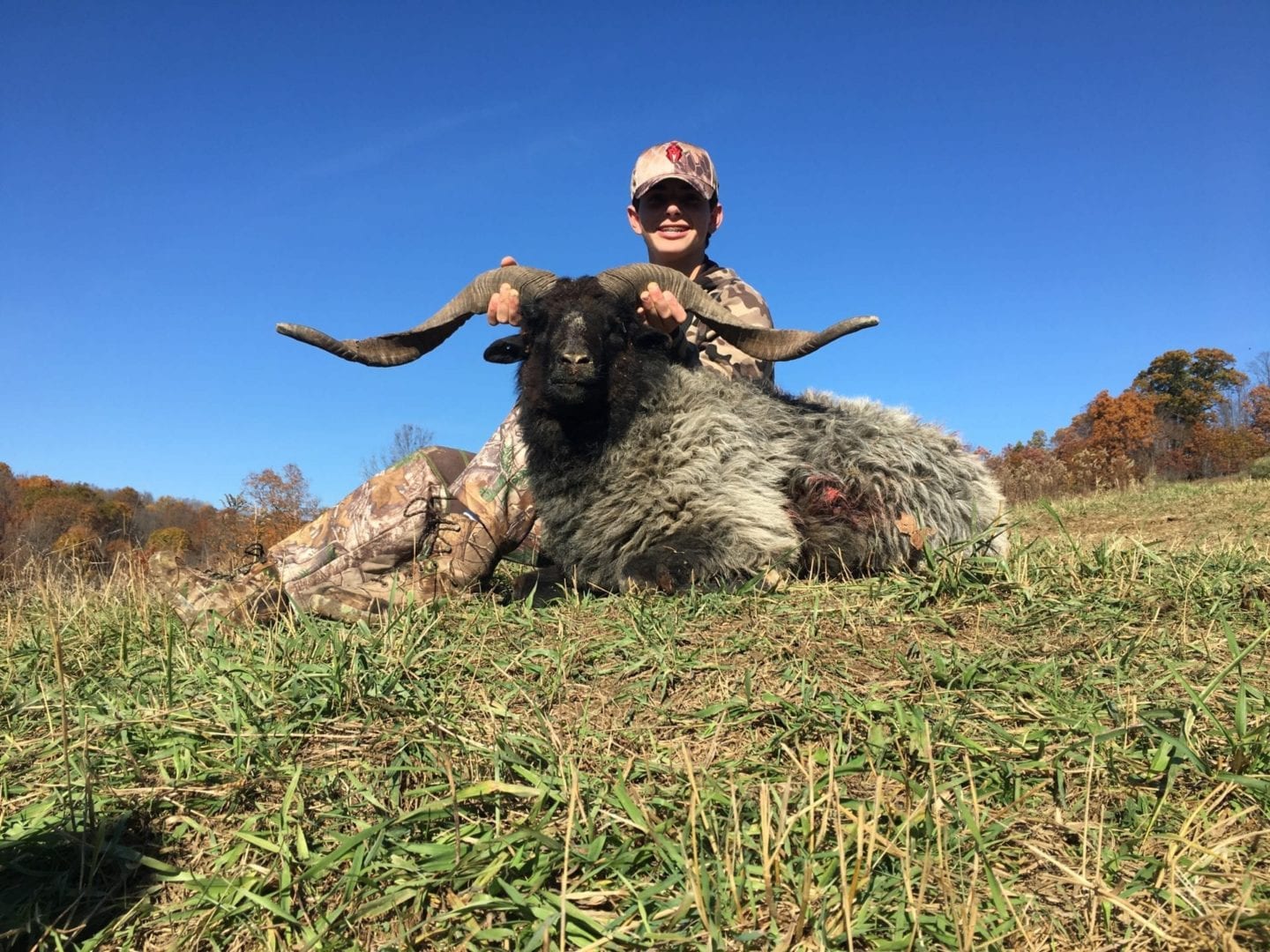
  • 5 Star Lodging (Click for more info on our Ohio Ranch and lodge)
  • Vast menu of food
  • Alcoholic Beverages
  • License
  • Tags
  • Professional Guide service
  • Caping
  • Skinning
  • De-boning of your harvest along with an on site taxidermist (additional charge).

Note: Groups of 4 or more there will be a mandatory 12% gratuity added. There is a $500 non-refundable deposit due upon booking.

Rocky Fork Whitetails in Ohio offers a unique World Class Whitetail Deer Hunting Lodge for those coming from Tennessee.

All ages and skill levels welcome for the World Class Whitetail Deer Hunting Lodge of a lifetime!

Youth hunts World Class Whitetail Deer Hunting Lodge for Tennessee residentsAnother of the things that makes our World Class Whitetail Deer Hunting Lodge so exciting, for those coming from Tennessee to our expansive 283 acre ranch in Ohio, is whether you are a beginner or a pro; Rocky Fork Whitetails diverse and expansive ranch always makes it unforgettable. Our highly skilled guides make sure to custom curtail your Ohio World Class Whitetail Deer Hunting Lodge adventure to make sure you experience the thrill of the hunt. Followed by the peace and relaxation that only our 5 star lodge nestled in the hills of Ohio can offer.

We welcome all first time World Class Whitetail Deer hunters from Tennessee and beyond to your Ohio World Class Whitetail Deer Hunting Lodge adventure.

There simply is not better place in Ohio, or anywhere else to learn the sport that from the experienced guides at Rocky Fork Whitetails. Young or old there is no age limit, if you can shoot with accuracy at a moderate distance you will net a good sized World Class Whitetail Deer; in fact, we guarantee it.

Rocky Fork Whitetails can even accommodate any special physical or dietary needs for your ultimate World Class Whitetail Deer Hunting Lodge. Your guided World Class Whitetail Deer Hunting Lodge centered in the majestic hills of Ohio will be World Class Whitetail Deer Hunting Lodge and Rocky Fork Whitetails is here to make sure you have World Class Whitetail Deer Hunting Lodge stories to tell when you get home!

(410) 984-8680 • [email protected]

At the Rocky Fork Whitetails in Ohio we want to promote and encourage future World Class Whitetail Deer hunters from the Tennessee area and beyond, welcoming them into our brotherhood of World Class Whitetail Deer outdoorsmen. We take pride in the time and care we take teaching the first time World Class Whitetail Deer hunter from Tennessee. Keeping in mind this will be the most important World Class Whitetail Deer Hunting Lodge of their life and will set the tone for their future World Class Whitetail Deer Hunting Lodge enthusiasm at Rocky Fork Whitetails in Ohio.

If you are a Father, Mother, Uncle or Grandparent that wants to experience your youth`s first time World Class Whitetail Deer Hunting Lodge, rest assured you will both have a great and memorable World Class Whitetail Deer Hunting Lodge experience with us at the Rocky Fork Whitetails in Ohio.

Hunting Lodge World Class Whitetail Deer Hunting Lodge for Tennessee residentsExperience the most awesome Lodging in Ohio for your extreme World Class Whitetail Deer Hunting Lodge!

Looking for a little get away? Perhaps a little peace and quiet after an aggressive day your World Class Whitetail Deer Hunting Lodge? Maybe the crackle of the fire as you tell your World Class Whitetail Deer Hunting Lodge stories and share memories with friends in Tennessee? Our Bed and breakfast here at Rocky Fork Whitetails in Ohio provides just the right setting to give you all this and more.

When you Travel from Tennessee for your World Class Whitetail Deer Hunting Lodge Adventure you’ll Discover we have Room to Spare!

In the off season our 5 Star Lodge becomes a Bed and Breakfast. Our Bed and Breakfast sits on 160 acres in NE Licking County, deep in the beauty of Ohio. We have 22 custom Amish made beds in the main lodge. You’ll have a World Class Whitetail Deer Hunting Lodge like no other when you choose Rocky Fork Whitetails in Ohio. The lodge also has a large wrap around deck that is great for relaxing after a long day of World Class Whitetail Deer Hunting Lodge, enjoying the view of our 160 wooded acres. Moreover, the wildlife can freely move in and out of the property on its Eastern border. This provides a indescribable immersion in the beautiful wooded area.

The property is approximately 5.5 miles from Newark, Ohio and 34 miles to I-270. There are great trails for those who like to hike during the off season of hunting. Have a little downtime between World Class Whitetail Deer Hunting Lodge? Rocky Fork Whitetails offers activities such as: 2 stocked ponds for fishing, ATV rides PLUS local pheasant, duck and trap shooting. (additional cost apply) Want more still? We are only a short hour away from Amish country and its famous attractions.

Ladies, Are you looking to the ultimate World Class Whitetail Deer Hunting Lodge adventure?

We especially like to welcome the ladies to our World Class Whitetail Deer Hunting Lodge sport in Ohio. No matter what level of World Class Whitetail Deer Hunting Lodge experience you have, we will customize a World Class Whitetail Deer Hunting Lodge to meet your skills. We will get you to the right place, at the right time optimizing a clean World Class Whitetail Deer shot. You will take home to Tennessee some great pictures of your World Class Whitetail Deer Hunting Lodge experience that you will remember for the rest of your life. Take a World Class Whitetail Deer and be featured on our website!

Call or contact us today to get your World Class Whitetail Deer Hunting Lodge in the Tennessee area experience scheduled today!

(410) 984-8680 • [email protected]

Best Air Rifle Deals

Popular Posts

How to make a break barrel air rifle more powerful

0
"Unleash the Power: Mastering Break Barrel Air Rifles for Maximum Performance. Discover expert tips and techniques to enhance the power and precision of your...

Air gun 101: The differences between .177 & .22 – Which jobs they do...

0
I’ve always believed the popular phrase: “It’s not the size of the dog in the fight that matters - but rather the size of the...

Guide to find Best Scope for Break Barrel Air Rifles

0
"Unlock the Perfect Shot: Discover the Best Scope for Break Barrel Air Rifles. Enhance your shooting experience with precision and accuracy, as we delve...