

Home Blog Page 191

David Blanton’s Tactics For Midday Toms

0

Ask any turkey hunter, whether he’s a novice or a seasoned veteran, what his meaning of the perfect spring gobbler hunt is, and nine times out of 10 his tainted version will paint a picture sort of like this….

“Well, year before last I had seen this big ol’ bird in the field bottom fuzzed up with a bunch of hens. I mean you could near about see him him any time you wanted to venture across that pine ridge to where you could see the whole field. I figured that he has to be roosting somewhere around the creek as it fed into the beaverpond.

“So one night I told my wife that I had a good mind to go see if I could kill that gobbler the next morning. I didn’t do a real good job of figuring what time it was going to get light enough to see cause I got to the top of that pine ridge and the sky hadn’t even begun to break yet. So I was sitting there catching my breath when, dad burn, if that bird didn’t gobble just down the hill at the end of the field.

“I eased down the hill toward him about 50 more yards and set up by a big ol’ rotten pine treetop that had fallen during a bad ice storm that winter. I mean that bird was gobblin’ up a storm by now. And it was just starting to get light. I hadn’t heard a hen yet, but I gave him something to gobble about when I hit that box call with three or four little yelps. I think he forgot to take a breath cause he gobbled twice in a row. Directly he flew down and landed about 30 yards from me and went into a full strut. When he lifted his head, I let him have it with both barrels.”

Sound familiar? You bet it does! Unfortunately, these textbook encounters seem to happen only to the friends of mine who take a lackadaisical attitude into the woods with them in the spring. All my buddies who really get after the longbeards and study turkey hunting as if it were a college algebra class usually recant their first dual of the day as only a very rewarding, learning experience where the only student was the hunter and the teacher happened to be a wily gobbler that left class early with a bunch of his girlfriends.

All of us turkey hunters have experienced the time when all of our heart and soul was involved in the hunt as we set up on a roosted bird at daylight, only to be totally discouraged in our calling and hunting abilities as Casanova merrily made his way through the forest with his harem, paying no attention to the deliberate approach, crafty setup and finely honed calling sequences. The rest of the morning just seemed to follow a time-tested ritual: a half-hearted march back toward the truck stopping only occasionally to vent our frustrations by making a weak stab at finding another turkey. “It’s getting too hot anyway, I think I’ll grab a biscuit and go fishing.”

It is at this very time of the day that the most successful turkey hunters, the ones that regularly fill their tags every year, have only begun to get excited about the day’s hunt.

Why? The more we learn about the behavior patterns of the wild turkey during the spring, through harvest data, radio telemetry studies of gobblers and just plain old hunting experience, the more we find that the absolute best time to kill a gobbler is between the hours of 9 a.m. and 1 p.m.

Let’s take a look at what goes on in the turkey woods during this time of day and what makes it so productive. I visited with some experienced Georgia turkey hunters who have become quite good at calling in longbeards on a regular basis.

Being in the woods a lot during the entire year is not a problem for Mike Hunt, of West Point. Mike is a timber cruiser for Jones Woodyard in LaGrange and is constantly on the go around a several-county area as he cruises, marks and bids on tracks of timber. “Big Mike” became well-known in central Georgia for his deer hunting and fishing abilities, but during the last five years, he has enjoyed his share of success chasing gobblers. What is Mike’s favorite time of day to kill a bird? Just ask him.

“I have had by far most of my luck during my lunch break. I am at an advantage over most folks because come lunchtime I am usually real close to a piece of property that I have permission to turkey hunt on. I have to be at the woodyard most mornings at 8 a.m., so my early morning hunting before work is very short. I don’t usually have a problem knowing where to go to hear a bird on the roost at daylight but almost always he has hens with him early on, especially during April. So what I like to do is set up on him as normal, and even if he doesn’t come my way, I’ll get a fix on which way he’s headed. If I am around that area two to five hours later, I’ll slip in quietly and hit him with some excited cutts from my box call.

Mike’s strategies have been formulated through a lot of trial and error, like giving up on a bird and not trying him until the following day. His new-found tactics for success are simple. Give the bird time to court his hens and eventually they’ll leave him for their nests. The lovesick tom is content a lot of times to strut in his home range waiting for the hens to return later in the day.

“When I first started turkey hunting and knew very little about turkeys and their habits, especially gobblers, I only hunted at daybreak. Eventually I killed a few birds but most mornings I just couldn’t compete with all the hens. Now, I would say that if I had to choose one particular time of day that I was allowed to go into the woods after a longbeard, there’s no doubt it would be during the middle of the day.”

Laughing, Mike added, “I’m not a world-championship caller by any means, but I’ll tell you, a lonely gobbler can make a good caller out of me.”

Mike has also seen the sport of turkey hunting grow at a very fast pace. Naturally, he sees the disadvantage of having to compete with other hunters now more than ever for a good turkey, but with his midday tactics, Mike has found a way to take advantage of the early morning pressure.

“I honestly feel that with your turkey populations getting hunted harder and harder every year, and the vast majority of the hunting pressure taking place during the first three hours of daylight, their instincts are beginning to tell them that responding to the call of a hen first thing in the morning can be risky business. But on the flip side, some aggressive calling on up in the day when most hunters have gone home can bring in a gobbler when nothing else will. The biggest turkey I have ever called in for someone was for a fellow from Florida. I had fooled with this particular bird for a few days early in the morning, then I took this gentleman one day and he killed him at about 11:15 a.m. The old gobbler came strutting in very cautiously. His spur lengths were 1 1/2 inches and 1 3/8 inches.

Don Jones, of Marietta, spends most of his time in the turkey woods in McDuffie, Hancock, Taliaferro and Wilkes counties. These areas of the state have long been known to provide many hunters a rush on any given spring morning, but they also get plenty of hunting pressure, especially the past couple of seasons. Don, like Mike, knows the rewards of waiting out a gobbler until the middle of the day.

Being an excellent bowhunter with a Pope & Young deer to his credit, Don is an avid outdoorsman who just enjoys being in the woods. Staying in the woods from daylight until well into the afternoon is not uncommon for Don during the turkey season, and consequently, much of his success comes during what he calls his “flash hunts.”

“A flash hunt is when I’m calling aggressively one moment and the next moment I’ve got a gobbler on the ground,” said Don.

He describes his midday tactic as “prospecting.” Unlike a lot of experienced turkey hunters who rely on several different types of calls during a day’s hunt, Don travels very lightly in anticipation of covering a lot of ground on a routine hunt, and he depends almost exclusively on mouth diaphragms.

“Like any other turkey hunter, I’m waiting for the redbirds to wake up while waiting for that first gobble. If I’m not able to set up on a gobbling turkey early on, I start covering as much ground as possible. I stay mainly on top of the ridge and call down into the bottoms with a lot of excited cutting calls. I won’t usually get real serious about locating a receptive tom until after the sun has had a chance to get on up in the sky,” said Don.

“The reason I don’t call real heavy early on is I feel the chances of calling a longbeard away from his harem of hens is small, and I feel like I’m just educating the birds to my style of calling.”

This point is to be taken seriously. Since turkeys are birds with very strong social ties, meaning they don’t like to hang out alone except when hens nest, it is not a gobbler’s first choice to leave the company of other turkeys early in the morning.

The established dominance order a group of gobblers plays a key role in why midday hunting can be very successful. With turkeys roosting every night in groups, whether they’re large or small groups, there is a series of events that usually take place just after daybreak during the breeding season. They turkeys fly down and the dominant toms commence to strutting and courting the hens. During this time, the subordinate gobblers (usually 2-year-old birds) will hang around the action just to watch what is going on. Sometimes they can even get away with strutting, as long as it is outside the comfort zone of the boss tom. Any effort to get too close to the hens is met with some resistance. This continues for the first hour or two after fly-down time. Eventually, these subordinate, or satellite, gobblers will have worked themselves up in a frenzy and stray off looking for some action. It is these birds that can provide, in Don’s words, a flash hunt. Also, after a little longer length of time, the dominant gobbler is given the cold-shoulder treatment by his hens as they leave him to go to their nests, making him just vulnerable enough on up in the middle of the day to come in to some excited cutting calls of a hen.

Don ends up with this piece of advice, “I try to cover as much ground as possible, cutting loudly and often to get a response. The instant that I feel like the gobbler has begun to make his way toward my calling, I will cut back considerably on the volume and frequency of my calling. This is also a good time to begin scratching in the leaves to sound like a hen is feeding. I have killed some birds by only scratching after he answered my call and was headed my way.”

With turkey season nearly two weeks old, there is a good chance that gobblers in your neck of the woods have heard their share of calling early in the morning. By giving midday hunting a try, you can increase your odds by calling to birds when they don’t normally hear a lot of excited hen talk, catching a tom whose harem of hens has given him the slip, or maybe coaxing a satellite gobbler to within gun range.

Head-to-Head Review of .30-.30 Lever-Action Rifles

0
Head-to-Head Review of .30-.30 Lever-Action Rifles
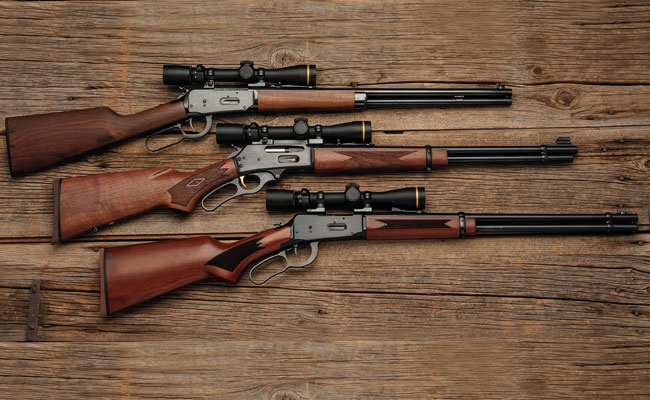
Top to bottom: Winchester 94, Marlin 336C, Mossberg 464.

For well over 100 years the most popular configuration in a lever action is a .30-30 caliber carbine with a handy, maneuverable 20-inch barrel. But a few years ago, it looked like the era of readily available lever actions was over as Winchester closed its doors and Marlin experienced production delays after it manufacturing facilities were relocated.

For a while Mossberg was about the only source for a hunting-ready lever action .30-30 with its Model 464, although Winchester and Marlin are now back in the fold as well. So for those of you pining for a new all-American hunting tool, here’s a head-to-head performance review featuring a classic .30-30 carbine from each.

When requesting test samples, I specified 20-inch barrels in .30-30 Win. caliber, in a standard configuration without bells and whistles. Marlin sent its Model 336C, which the company considers its flagship lever action. Although it has several nice but subtle features such as checkering and a grip cap, it’s not fancy. In fact, it’s the second least expensive model the company offers. A thin rubber buttpad does little to dampen recoil but prevents the rifle from slipping and clattering to the tile floor when it’s propped in the kitchen corner. Capable sights, decent straight-grain walnut and a satin metal finish complete the package.

Mossberg provided a sample of its pistol-gripped Model 464. Like the Marlin, it features checkered walnut stocks and a thin rubber buttpad. Sights feature fiber-optic inserts, which are helpful in low light but less robust than simple steel sights. One Model 464 costs less – the straight-gripped version without checkering or fiber optics – but only by $37. The nicer version is worth the dollars.

After the first Winchester I received wouldn’t accept a scope, I swapped it for the 94 Short Rifle, which has the same 20-inch barrel as the carbine but sports a steel fore-end cap and optic compatibility for a measly $30 more. A traditional (and slippery) plastic buttplate graces the carbine, and the clean, straight-grain walnut stocks are free of checkering.

To give each .30-30 carbine a fair and equal shake, I mounted matching Leupold VX-3 2.5-8x32mm riflescopes for accuracy testing. The slim little optic is one of my favorites for any quick-handling, lightweight hunting rifle, and it’s particularly suitable for a lever gun.

I also used Leupold hardware to mount the scopes. Putting an optic on the Marlin was painless. I simply screwed down the mount, installed the rings and leveled up the scope before torqueing the screws to spec.

The Mossberg was equally easy; once I’d obtained the correct bases. Oddly, the carbine takes two of the front bases intended for a Winchester. Once that dilemma was solved and the duplicate hardware obtained, the Leupold mounted up beautifully.

The Winchester base protrudes forward and partially blocks the ejection port, and I was initially concerned it would interfere with ejection, but both empty cases and unfired cartridges ejected without argument. However, all things considered, a pair of No. 403 Weaver cross-slot bases is an easier solution.

With Winchester 94 Short Rifle, the bases and rings screwed into place perfectly. With only low rings on hand, I had to finesse the optic to just the right spot to prevent interference with the rear sight. Medium-height rings would work better unless a scope without a belled objective housing was used.

What with barrel bands, weighty magazine tubes hanging from slender barrels and fore-ends that are anything but free-floated, I suppose it would be kinder to allow one’s .30-30 carbine to cool between groups, but lever actions are often shot fast and frequently, and I wanted to see how well they held their point of impact and accuracy. So I fired three consecutive three-shot groups with each type of ammunition without pause except to reload. I did allow the carbines to cool thoroughly between ammo types.

To my surprise, accuracy didn’t deteriorate materially as the barrels heated, and in the case of the Winchester – which started out good – accuracy got even better. Nor did point of impact wander appreciably.

Also surprising is that the Winchester averaged the best overall accuracy. Many Marlin aficionados will boast that rifles from their favored company will outshoot the average Winchester, but in these new-made lever guns the Winchester ruled. Although each of the other two produced sub-two-m.o.a. averages with one type of ammunition, the Winchester scored sub-two-m.o.a. with two of the three types of test ammo.

As you’ll see by perusing the accuracy charts, the Marlin preferred Barnes VOR-TX 150-grain TSX ammo, the Mossberg shot the Hornady LeverEvolution 160-grain Flex-Tip best, and the Winchester – perhaps appropriately – shot Winchester 170-grain Power-Point into tidy groups indeed. It fact, it shaded just outside of one m.o.a., eyebrow-raising accuracy from a lever gun.

It’s interesting to note that the faster-twist rifles, the Marlin and the Mossberg, shot bullets in the lighter-weight range better, while the Winchester’s slower 1:12 twist provided best accuracy with the heavier 170-grain bullets. That’s counterintuitive to conventional bullet-stabilizing expectations – until you factor in the extra length of the all-copper Barnes 150-grain TSX and the boattailed, polymer-tipped Hornady 160-grain Flex-Tip. Although the 170-grain Winchester is heavier, its flat-nosed, flat-base, lead-core design makes it easy to stabilize.

I also tested for reliability. Why? As one buddy would put it, “There’s a picture of a lever action beside the definition of ‘reliability’ in the dictionary.” Perhaps I have an extraordinary ability to make things malfunction and break, but I’ve used lots of gun designs that should never jam yet they do. So as I shot the three lever guns, I kept track.

Only two hiccups stood out. One was minor: The Marlin was stubborn to load. Not that the cartridges stuck, but the loading gate was really tigh,t and the path into the tubular magazine felt rough as the rounds were thumbed in.

The other issue occurred with the Mossberg. After each empty was ejected and the lever was closing, the new cartridge heading into the chamber tended to hang up halfway in. A quick joggle on the lever usually resulted in its letting go and chambering easily, but at least twice it stuck hard, requiring me to finger it out and start over.

By very design a lever action should run fast and smooth, so I couldn’t really ignore the problem. However, it’s worth noting I’ve had considerable experience with Mossberg’s Marinecote 464 – an early weather-resistant iteration now discontinued – and it ran like greased lightning.

The Marlin and Mossberg guns (left) have checkered wood and barrel bands on their fore-ends while the Winchester’s (right) wood is not checkered and the fore-end is tipped with a steel cap.

As for the Model 94, it loaded, fed and fired in stellar fashion – just as one would expect from the highest-selling lever-action model (more than 7 million units) in history.

With accuracy testing complete, I spent some time shooting each of the lever-action carbines casually, thumping distant large targets, shooting at smaller ones up close, and levering fast shots into a half-bushel box at about 25 yards as quickly as I could. Which leads us to the way they feel.

If you’re accustomed to and appreciate straight-grip long guns, Winchester’s Model 94 carbine with its traditional straight wrist will feel good. Otherwise, you’re almost sure to prefer the pistol-grip designs of the Marlin and Mossberg.

All three carbines balance beautifully in the hands, are responsive in the extreme, and shoulder and point nicely. Decades ago — after mankind’s primary mode of transportation shifted away from horseback — Marlin beefed-up the fore-ends of its carbines. As a result, trying to push one into a saddle

The Marlin (shown) and Mossberg feature pistol grips, which most hunters prefer over the straight grip of the Winchester – although the latter certainly is more traditional.

scabbard sucks, but they feel good in the support hand and point more naturally than their more slender cousins. I’ve always thought the fat fore-ends look ugly and don’t feel right to me, but in fairness I must admit they do rest comfortably in the hand.

While bead front sights were once popular for deep-woods, fast-and-close shooting, I grew up shooting match-type post front sights and struggle to achieve consistency with a bead. However, they are traditional, and many shooters do well with them.

The only real ergonomic issue I encountered with any of the three carbines was with the Mossberg’s lever, and it was a result of the wood-to-metal fit along the lower tang behind the trigger, where the wood stands considerably proud. Like the Winchester, the Mossberg features a trigger block activated by opening the lever. To fire, the lever must be squeezed

Unfortunately, manual safeties on lever actions are here to stay, but at least the sliding tang safeties on the Mossberg (shown) and the Winchester are a little less egregious than the crossbolt on the Marlin.

completely closed, and occasionally when I squeezed it the lever it pinched a fold of skin from the fleshy lower part of my birdy finger. It got my attention, I can tell you.

I despise any sort of safety other than a half-cock notch on a lever action, but they appear to be here to stay. There’s nothing worse than squeezing a trigger on a good buck and hearing the horrible loud “click” that signifies your failure to disengage the safety. You’ve then got to ear the hammer back again (another click), thumb the safety off (and yet another click) and hope against hope you can get another crack at the buck.

Complaints registered, I prefer the tang-located safeties of the Winchester and Mossberg to the crossbolt safety of the Marlin. They are much easier to access without shifting your firing-hand grip. However, the actual safety slide on the Mossberg is made of plastic, and I don’t think plastic belongs on a lever action.

When it comes to fit and finish, I’ll just come right out and say the Winchester Model 94 has the best

If you’re looking for true utility in a lever action and don’t care about tradition, the Mossberg’s fiber-optic sights are going to be handier in the woods than standard open sights.

wood-to-metal fit, and the high gloss blue on the metal parts is both superbly beautiful and appropriate. It will shrug off corrosion more easily than a coarser finish, too. As for the walnut stocks, the finish is simple and non-shiny. A bit better filling in the wood pores and a few coats of hand-rubbed oil would bring out the depth and beauty of the wood better, but there’s nothing ugly about it as is.

Next best on the fit and finish scale is the Marlin. Wood-to-metal seams aren’t perfect by any means, but they’re respectable, and the metal has a nice brushed satin finish. The wood is finished in a spray-on varnish, a durable option.

Finally, the Mossberg features a brushed satin finish similar to that of the Marlin. It offers respectably tight wood-to-metal joints, but in most areas the wood stands a bit too proud for my taste. In the lower tang area mentioned earlier, it creates a bit of discomfort. On a favorable note, I prefer the Mossberg’s slender fore-end to the bulky fore-end of the Marlin, and the reddish stain on the well-filled walnut is very attractive.

This isn’t really an apples-to-apples comparison because you can literally purchase two of the Marlin or Mossberg rifles for the cost of one Winchester. As you’ve seen throughout the evaluation, the Winchester consistently outperforms the other two, which makes good sense: If you’re going to pay that much more you should get more performance.

Candidly, I didn’t expect it to turn out that way. You pay a good deal for the Winchester Model 94 name, and, conversely, Marlin rifles have an outstanding reputation for offering tremendous performance for the dollar. Frankly, I expected the two to run neck and neck through most of the tests.

The takeaway? If you like fine rifles and want one superb, classic, historical tool that will offer the utmost performance of its genre, pony up the money for a Winchester Model 94.

If, on the other hand, you want the allure of a lever action coupled with a more practical price tag, opt for either of the other two. The Marlin is an established name in lever actions, and features an action legendary for strength and smooth operation, but the Mossberg runs about $100 less. You won’t go wrong with either.

What Does Forrest Fenn Mean by Home of Brown?

0

In the search for Forrest Fenn’s million dollar treasure chest, Colorado doesn’t get as much attention as the state of New Mexico or the areas surrounding Yellowstone National Park. However, I have considered that Colorado could hold a major clue for understanding the line in the treasure poem of ‘Put in below the home of Brown’. Now I don’t mean to suggest I think it is hidden there (although it could be), but just that one meaning for home of Brown could originate from there.
It is only a possibility. There are numerous times when thinking about the lines of poems I apply different meanings to them. I don’t ever want to rule out options, and never want to insist on any one line to definitely mean only one thing; no matter how much I like it. As it has been said over and over again, until you hold the chest, it is all speculation. So the following is merely that, a possible meaning for ‘home of Brown’ that I like to keep in mind.

Forrest Fenn has said his poem, if followed precisely, will lead someone to his hidden treasure. The poem acts like a map, and so once understood, a person will be able to follow the stanza’s instructions and go right to the secreted location. In thinking about this, and wondering how Forrest might give ‘precise’ enough directions within his poem, I have come up with ways on how this could be done.

One approach is by equating a distance with something else. For example, if I wanted to give the direction of, ‘walk six feet’, I might say something like ‘leave behind the distance of the dead’. Unless they are the walking dead, they should be buried about six feet and so no matter how bad an example as that is, it is a way to I could cryptically say, ‘walk six feet.’….lol….

I feel there is a similar (albeit better) possibility in the poem, and it involves the line ‘Put in below home of Brown’. I have thought the line might be Forrest’s way of cryptically saying ‘go about one mile.’

When researching the many possible meanings for ‘Brown’, the name of Molly Brown comes up as a reasonable option. Molly Brown, famously known for surviving the sinking of the Titanic, lived in both Leadville, and Denver, Colorado, during her life. And although she was born in Missouri, she spent much of her time in Colorado. Today, there is the Molly Brown House Museum located in Denver and I know many searchers have mentioned this as an option for the home of Brown.

I have considered, however, that if Brown refers to Molly Brown, and since Denver (home of Brown) is known as the ‘mile high city’ that one further interpretation for ‘put in below the home of Brown’ could be put in below ‘a mile’. Denver=a mile/5280ft=home of Brown.

So, for me, when ‘beginning where warm waters halt and take it in the canyon down, not far but too far to walk, put in below the home of Brown, I am going to put in around the mile marker and at least check if from there it’s no place for the meek….

The intention and interpretation for ‘home of Brown’ may not be to find a particular place to put in below, but be a precise distance clue. Many searchers have liked ‘spots’ and have said ‘but I couldn’t find any ‘home of Brown’ or ‘there wasn’t a home of Brown nearby’. But the above interpretation for ‘home of Brown’ fits for any place a searcher is looking. It is not saying to ‘find the home of Brown to put in below’, it could be interpreted as saying, ‘walk one mile’. Is this why some searchers were known to have solved the first two clues and then went right past all others, because they were trying to ‘find a home of Brown’ when there isn’t one on site?

Best of luck in whatever you seek….

Other articles on possible interpretations of ‘put in below the home of Brown’:

Forrest Fenn’s Possible Treasure Location: Home of Brown

Forrest Fenn’s Poem Line: Put in below the Home of Brown

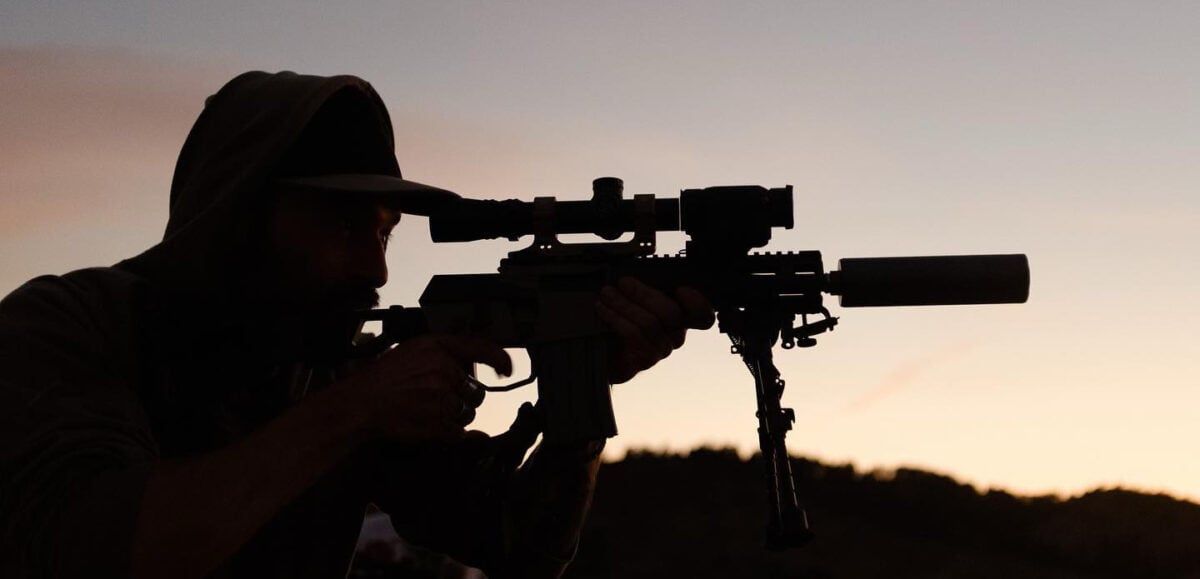
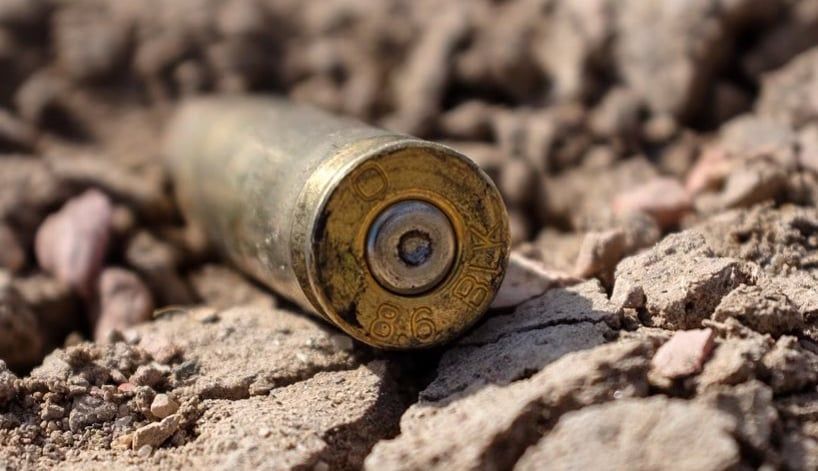
8.6 Blackout – A 2021 Update with Q’s Kevin Brittingham

0

We recently sat down with Q’s Kevin Brittingham to get an update on the highly anticipated launch of 300 Blackout’s “bigger brother” – the 8.6 Blackout. Our last update on the round was in February 2020, just before the pandemic. While we recently released the full audio of the conversation, we wanted to pull the highlights of that recording as it pertains specifically to 8.6 Blackout, and where it stands as we enter the summer of 2021.

EDITOR’S NOTE – Our January 2022 Update on the status of 8.6 Blackout with Kevin is now live on ARBuildJunkie.com.

Kevin Brittingham, Q – It would be in production if it were not for the whole ammo crisis. We have production brass now. We are making millions of shells and now it’s a matter of loading time at Hornady, and some others. Primers and powders are also becoming a problem. But we have the cartridge squared away. It’s going to cost about what a 6.5 Creedmoor costs…before COVID, that was $1.10 to $1.20 a round.

8.6 is still a 6.5 Creedmoor shortened case, blown out for a .338 bullet…For supersonic, the lightest bullet is going to be between 150 and 160-grain. Out of a 12″ barrel, we’ll be able to get somewhere close to 2,400 feet a second with that. We’ll have subsonic up to about 360 grain.

One of the first two offerings of this for supersonic is going to be a Barnes 210-grain bullet. It’s about 2,000 feet per second out of a 12″ barrel. It’s a 1-3 twist, so we’ve settled on the twist. We’re using some of the energy that is wasted, converting that to kinetic energy now by spinning the bullet faster. So in supersonic, it is more kinetic energy on target by spinning the bullet fast.

Discreet Ballistics did a great video that did a split screen where the only difference is that one is a 1:7 twist and the other is a 1:3 shooting gelatin. You can see that the 1:3 is two to three times the initial wound cavity…same muzzle velocity, same barrel length. Everything was exactly the same.

Fast twist also gives you the big, long, slow subsonic bullet. It gives you several things. The first being better accuracy because when the bullet is long and slow, you need to spin it faster. For expanding subsonic bullets…it is more reliable expansion at lower velocities, which is great for hunting with subsonic. This is going to be the first subsonic, sub-MOA cartridge, and that’s due to the fast twist. You’ll be able to shoot groups at 300 meters that are sub-3″ with the subsonic…the first offering in subsonic will be a 300-grain Sierra Match King 338 bullet, loaded to 1,050 feet per second out of a 12.5″ barrel.

After that will be the target supersonic and the expanding subsonic. It will go from there, and you’ll see other manufacturers as capacity opens up…Basically, the way to describe (8.6 Blackout) is that it is double what 300 Blackout is. It’s double the range. So, if you are comfortable with shooting a deer at 150 yards with a Honey Badger, you can shoot at 300 yards with a 12.5″ 8.6. It’s super quiet in subsonic as well. We’ll offer two silencer lengths, a short one for hunting and a full-sized one as well.

Another advantage of the lower velocity supersonic is it’s incredibly quiet as a supersonic when the bullet is going 2,000 to 2,400 feet per second, compared to something shooting 3,500 feet per second or something like that.

Q: My brother built a .338 Federal AR for hog hunting and he raves about it. Can you address to readers who might ask why not simply choose .338 Federal?

Kevin Brittingham, Q – Let me use .260 Remington vs. 6.5 Creedmoor as an example. .260 Remington is a great cartridge, and it really spawned 6.5 Creedmoor, which everyone knows is incredibly popular. The reason .260 didn’t become popular and 6.5 did is because the .260 case is too long. .260 was originally a 110 or 120-grain bullet. If you load a 140 or 150-grain bullet, it doesn’t fit into a magazine or into a short action if you seat the bullet correctly.

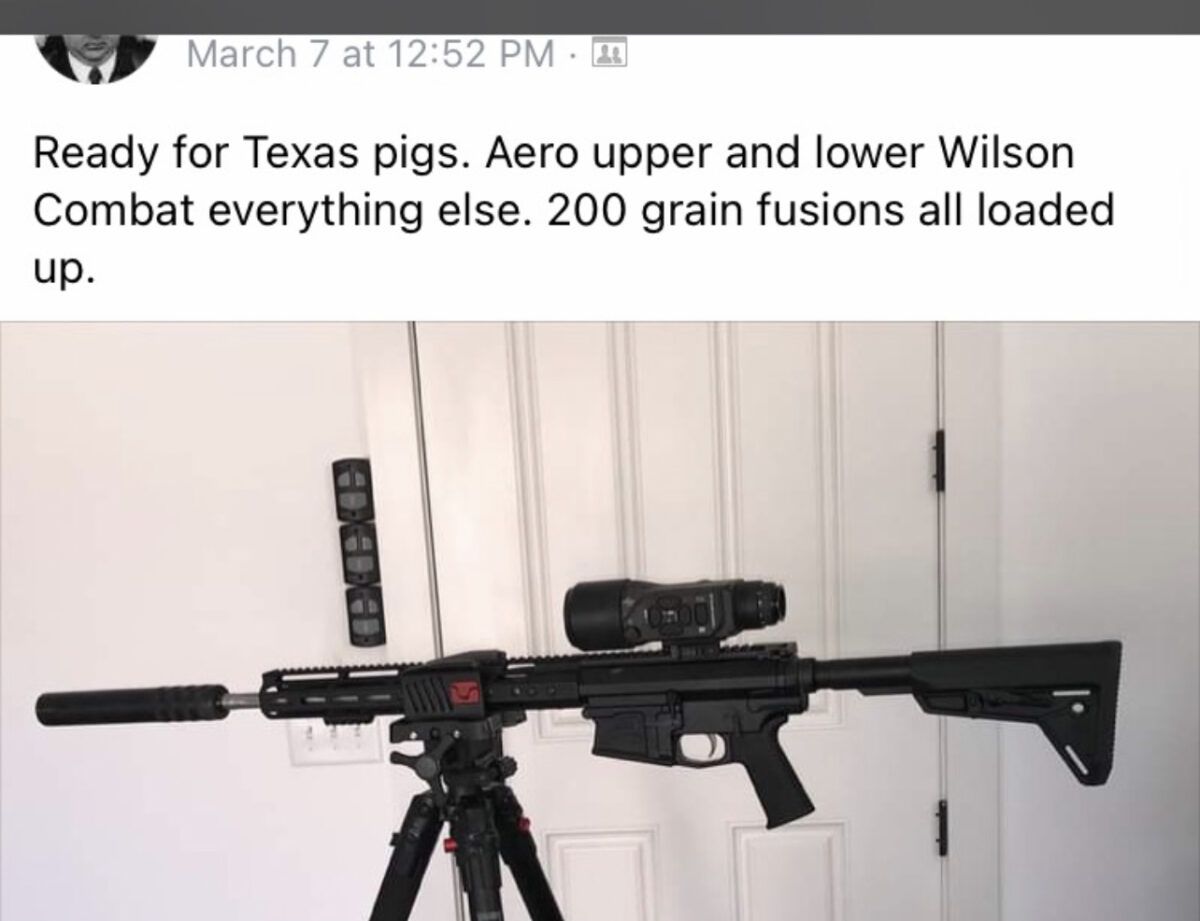
.338 Federal AR built by author’s brother for hogs. VERY effective…

So, they shortened up the case, used different powders, a different shoulder, made it more efficient, and you can get almost everything out of a 6.5 Creedmoor that you can get out of a .260, and with a big, long bullet, you can seat it correctly in the throat, and you can get full performance. You can’t do that with a .260. The case is too long.

After we did 300 Blackout, Ethan and I did a few guns in .338 Federal, Model 7s…The problem with that is if I want to load a 300-grain subsonic bullet and seat it correctly…you don’t get all the efficiency. So, you’re limited on your subsonic and your big, supersonic bullets.

With that being said, .338 Federal, inside 300 meters is superior to .308. It’s an incredible cartridge. But if you want subsonic capability, and you want to load big, long bullets supersonic and subsonic, and you want to fit them into a magazine, you have got to shorten the case. So, we didn’t do it to be different. We wanted to start with .338 Federal, but you can’t get everything out of it – have full mag capacity, long bullets, have it cycle in a gas gun, and fit into a short action.

People ask about 375 Raptor…it does not work full mag capacity in a gas gun super and subsonic. You can’t feed it in an AR reliably. It may be enough for people who tinker or are not serious about it, but it could never be a military cartridge. We’re trying to cover as much as we can with this.

Q: Where do we stand on an 8.6 gas gun currently? I recall a mention of using a POF-USA Revolution as a start, or something similar?

Kevin Brittingham, Q – Since we spoke, the owner of POF was killed. So, that’s kind of dead in the water. I do need to reach out to them. We’re going to get some of those guns and do it ourselves…8.6 in a 9″ is way more effective than 300 Blackout. We can build a 9″ gas on their Revolution or Rogue or whatever they call their gun, that weighs almost what our Sugar Weasel weighs…and you’d have twice the capability.

So, we’re not currently working on it, but we have prototype guns. The very first one that we did was a Noveske. It cycled at full mag capacity super and subsonic, and locked open on the last round.

This isn’t just a bolt gun cartridge, or a subsonic cartridge, and it’s not just a super. It’s all of it, just like 300 Blackout, barrel change only.

But, yeah, there will be gas guns. That was a huge consideration in the development of this. The first things you’ll see are probably barrels offered, or we’ll build The Fix in a 12.5″ as a pistol or SBR. Eventually, we’ll have 16″ barrels available as well for our rifle. Whether it’s SAAMI-approved or not, we’ll share the chamber drawings and everything where people can build barrels for Remington 700s and also Stoner-based guns (AR-10s and SR-25s)

We may also have a gas gun that is available in it as well. Initially, we’ll partner and support companies like Noveske, LWRC…Todd Huey of Lone Star Boars has a 12.5″ LWRC. He’s a good testimony to the Barnes 210-grain. He called me and said he shot a pig with it and he had never seen what he saw. He described it as basically he hit this pig, and it did a flip.

The very first animal I shot was a white-tailed doe in south Texas. I shot it at about 50 yards with The Fix with a 12.5″ barrel and the Barnes 210, she was broadside, and it also did a flip. I could send you a picture of the wound. It’s horrific.

Q: Let’s wrap up with timing…

Kevin Brittingham, Q – I have no idea. I’ll say we’ll be getting the first million shells in here pretty soon. We got the first production run of shells here last month. Powder and primers are the problem.

So, the first 100,000 rounds and maybe the first million will be utilized for marketing, and this year, you’ll see ammo available. There are loading dies available through Hornady now. You’ll see shells, brass available. We stopped at a 1:3 twist so you can use current Barnes .338 bullets. All the bonded bullets that we’ve tested so far…a non-bonded bullet will come apart out of the muzzle with a 1:3 twist, but bonded and solid coppers that we’ve tested stay together out of the muzzle. We’re going to put out load data, chamber drawings, all of that stuff.

As production capacity becomes available with Hornady, Discreet Ballistics, Gorilla, and some of the other companies, you’ll start to see ammo available. This year, we’ll also have barrels for the Fix available, and we’ll also have gas gun barrels available, or you’ll see drawings and us partnering with those gas gun companies, and they’ll be able to do it. But, considering the state of ammo in the industry right now, what you’ll probably see is people that who are into it will probably have to load most of their own ammo.

###

5-inch Senko Rigging Guide – Pro’s Choice

0

By TJ Maglio

There are very few baits responsible for more big bass, big limits, and tournament wins than the 5-inch Senko. What Gary created out of a ballpoint pen tube didn’t just change the soft plastics game, it changed bass fishing altogether.

How many bass fishermen catch their first bass on a Senko each year? And if you’ve ever got a true rookie in the boat with you, what’s the first thing you rig up for them?

A Senko no doubt.

The most brilliant thing about Senkos is their versatility. They are equally effective in the hands of top tour pros or the greenest of the green; and whether you’re fishing a mountain lake; lowland reservoir, tidal river, or a farm pond, you’re going to get bit.

Here’s the part where you may be thinking “Yeah; Senkos catch fish, tell me something new…”

What you may not know is that despite the Senko’s pedigree, one of the most common questions anglers still ask us all these years later is “what’s the best way to rig a Senko?”

We all know the truth.

There’s no wrong way to rig a Senko. You can use it cut in half on the back of a tiny Ned head or punch it through a thick mat of hyacinth behind a 2-ounce sinker. It really doesn’t matter much; as long as it’s in the water the bass eat it.

Since the vast majority of anglers realize that; I suspect the real question they are getting at is not “what’s the best way” but rather “how should I rig it?” Meaning what hook, line, rod, reel, etc.

A great way to solve questions like this is to sample a group of experts on the topic; listen to their opinions and then see where you fall. Which is exactly what we wanted to do. We decided to reach out to four of the Yamamoto Tour pros know specifically for their Senko prowess (Brent Ehrler, Larry Nixon, Jimmy Reese, and Jay Yelas); and ask them to break down how they specifically rig Senkos in a couple of the most popular ways (Texas Rigged and Wacky/Neko), so you can get a variety of details on the specifics of what terminal tackle, line, rods, and reels they use to catch fish across the country.

Hopefully these setups will help you narrow down your options as you search for the perfect setup for the way YOU fish!

Texas Rig

Brent Ehrler

Rig: 4/0 Gamakatsu Offset Round Bend, 16-pound Sunline FC Sniper fluorocarbon

Rod/Reel: Daiwa Tatula Elite MPS 7’3”, Daiwa Tatula Elite Reel (7.3:1)

Notes: Brent’s go-to Texas rig is actually weighted, which he likes as it shows the fish something a little different. “That little sinker really changes the fall of the 5-inch Senko. It’s still subtle but it has a really nice spiral on the fall; which bass don’t see a lot.”

Jimmy Reese

Rig: 5/0 Gamakatsu EWG (standard gauge), 12-pound Yo Zuri Fluorocarbon

Rod/Reel: Douglas Rods 7’2” Medium Rod LRS724F, Daiwa Tatula 150 (7.3:1)

Notes: The key to Reese’s Texas rig setup is versatility; and he keeps it on the deck pretty much all the time. “You can throw that thing up against a rock, dock, piece of wood, whatever you see – you can just pick things apart with it; and you can go pretty much anywhere around the country with that setup and go down the bank and catch fish.”

Jay Yelas

Rig: 5/0 Gamakatsu Superline EWG (heavy gauge), 15-pound Strike King Tour Grade Fluorocarbon

Rod/Reel: Lew’s Custom Speed Stick 7’ MH, Team Lew’s Hyper Mag Speed Spool (8.3:1)

Notes: Having a high-gear ratio reel is critical to Yelas with a Texas rig. “Particularly in shallow water; big bass will grab that Senko and just take off. If you can’t reel fast enough to catch up to it, you’re never going to get a good hook into it.”

Larry Nixon

Rig: 4/0 Gamakatsu EWG (standard gauge), 10-pound Sunline FC Sniper fluorocarbon

Rod/Reel: Dobyns 7’ Champion XP 705 Casting rod, Bass Pro Shops Johnny Morris Series (7.1:1)

Notes: Patience is the key when Texas rigging a 5-inch Senko says Arkansas legend Nixon. “Most of the time I fish a Texas rig weightless; and I’ve caught about a gazillion fish doing it. Just be patient and let the bait do its thing. If you’re not getting Senko bites; you very well could be fishing it too fast. Slow down and you’ll get bit.”

Wacky/Neko

Ice Fishing Tips for Walleye

0

Walleye, walleye, walleye!

The best walleye fishing in the world…

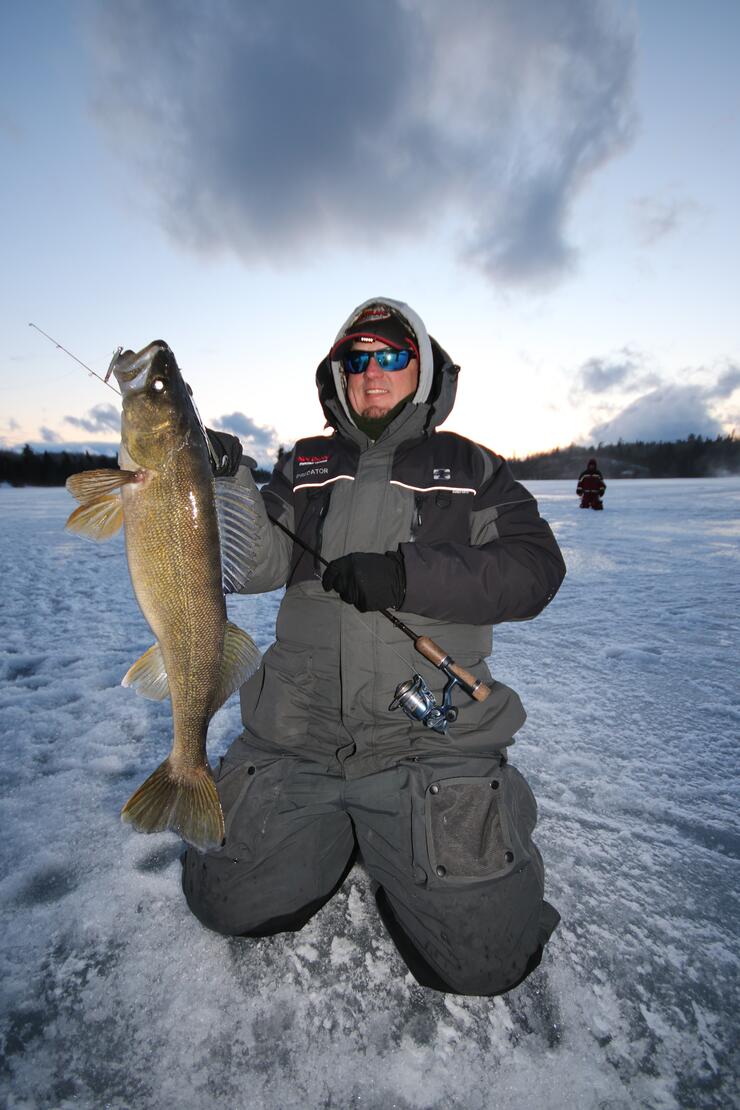
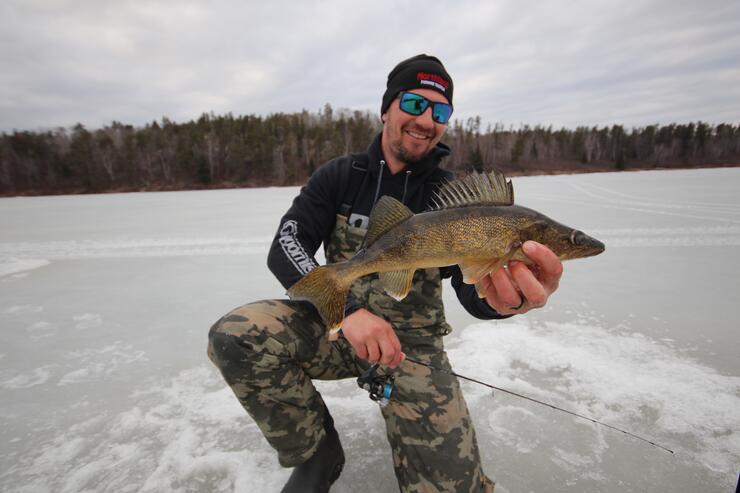
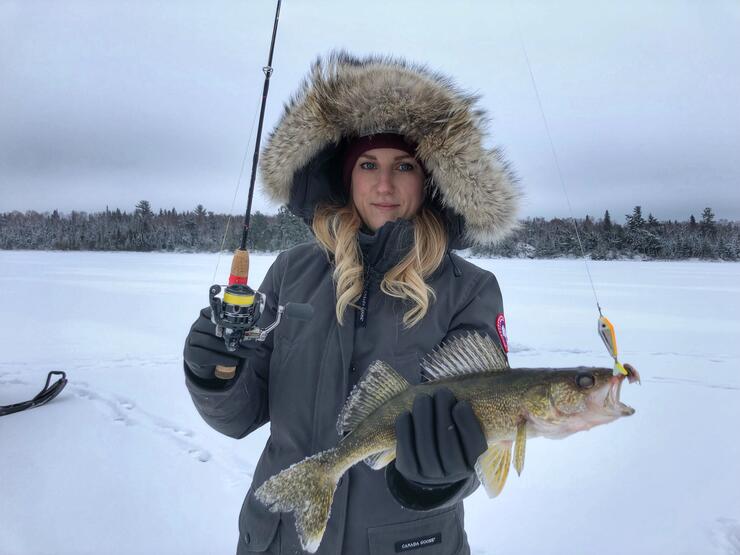
That is how I describe where I live to people I cross paths with when I’m traveling. Growing up in the Kenora area, around Lake of the Woods, I’ve been spoiled with fantastic walleye fishing my whole life. Since I was a little kid, walleye have been my favourite species to catch through the ice because the action is always reliable, they are the best fish we have to eat and we catch plenty of big ones.

Nearly all of the resorts that stay open through the winter across the Sunset Country Region will be able to put you on some top-notch walleye fishing. Here are a few of my top tips.

Where to catch walleyes through the ice

Across Northwest Ontario, we have a variety of different types of lakes that hold excellent populations of walleyes. Some are shallow and tannic-colored waters, and others are clear, deep-water lakes, with a variety of waters in between. Excellent walleye fishing exists across the region so how do you choose the best place for your ice-fishing adventure?

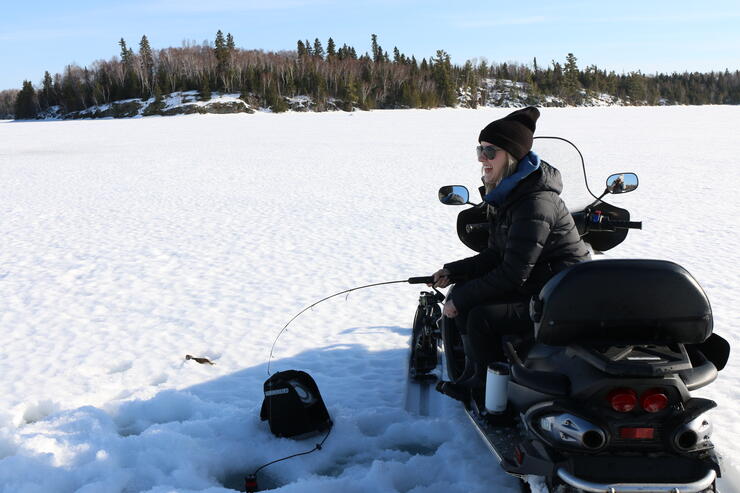
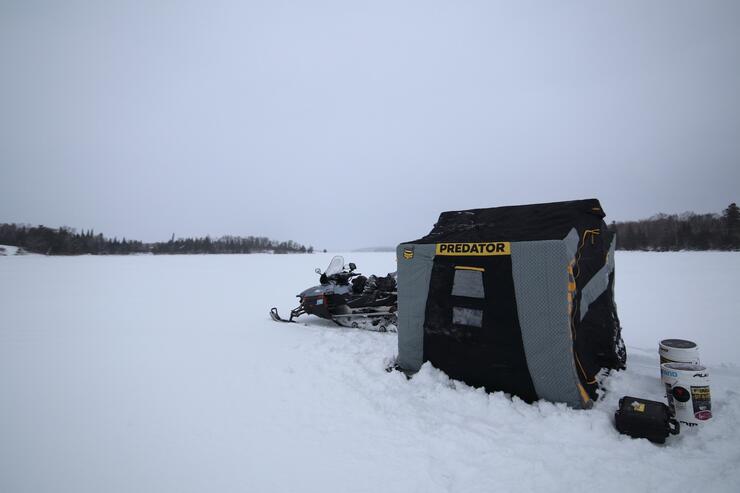
If you have visited us here in the open water season, does your favourite resort offer ice fishing? They could be a good place to start. The next consideration might be your transportation options. Snowmobiles or ATVs offer access to remote locations so you can find your own hot spots.

Drive-to-vehicle access is available on some waters, where ice roads allow you to drive right to your fishing spot. The availability of ice roads could be a discussion with whoever you book your trip with. Some resorts will rent snowmobiles, which might be a good way to go if you don’t own one. They are fun to drive and can really open up the doors for fishing opportunities.

The season is open from freeze-up until April 15. Some years we’re able to stay on the ice right up to the 15th, other years the ice is done by the end of March. Like with some of the other species, my favourite times to be on the ice are early and late in the season. Early on, it’s easy to get around without a lot of snow on the ice, and getting the first crack at some of the humps and points that are good year after year results in some great fishing.

Walleye spawn shortly after ice-out around creek mouths or in shallow bays and predictably, they show up in front of these areas in March every year for the last few weeks of the ice season. I like to focus my efforts on structures like humps and points in front of these areas and if they don’t exist, walleyes can be caught on flats just out from the first good drop into deeper water. In some of the shallow walleye lakes, particularly some of the remote lakes, we’ll catch walleyes extremely shallow late in the season, sometimes as shallow as three to five feet. When you set the hook, they’ll just come flying up the hole.

Earlier in the season, focus on main-lake humps, points, and flats. A lot of the same spots that are good in the summer are also good in the winter, you might just have to drop out and fish a little bit deeper. Because our walleye fishing is so good across the region, I have a five-minute rule for the holes that I fish. Of course, there are days when you can set up shop in a shelter and wait for the fish to come to you. That can be relaxing, you can share some good fellowship with your buddies and hey, we get real winter so some days you have to hide out inside because it’s so cold.

When I go for fun, I pick the nicer weather days and hole hop outside. If I jig in a hole for five minutes and don’t at least mark a fish, I’m moving to the next hole. Sometimes small adjustments in depth can make a big difference. Sometimes you’ll get a hole where you’re right over the top of a ledge or sharp drop and those are never as good. It’s good to be close to the edge, but a flat bottom is always the best for walleyes, where they can creep along and find your bait. The flats also allow the fish to congregate together as well.

How to catch walleyes through the ice

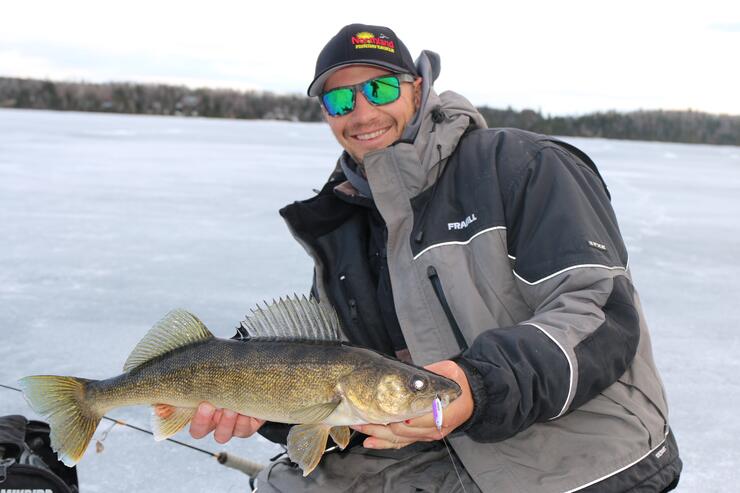
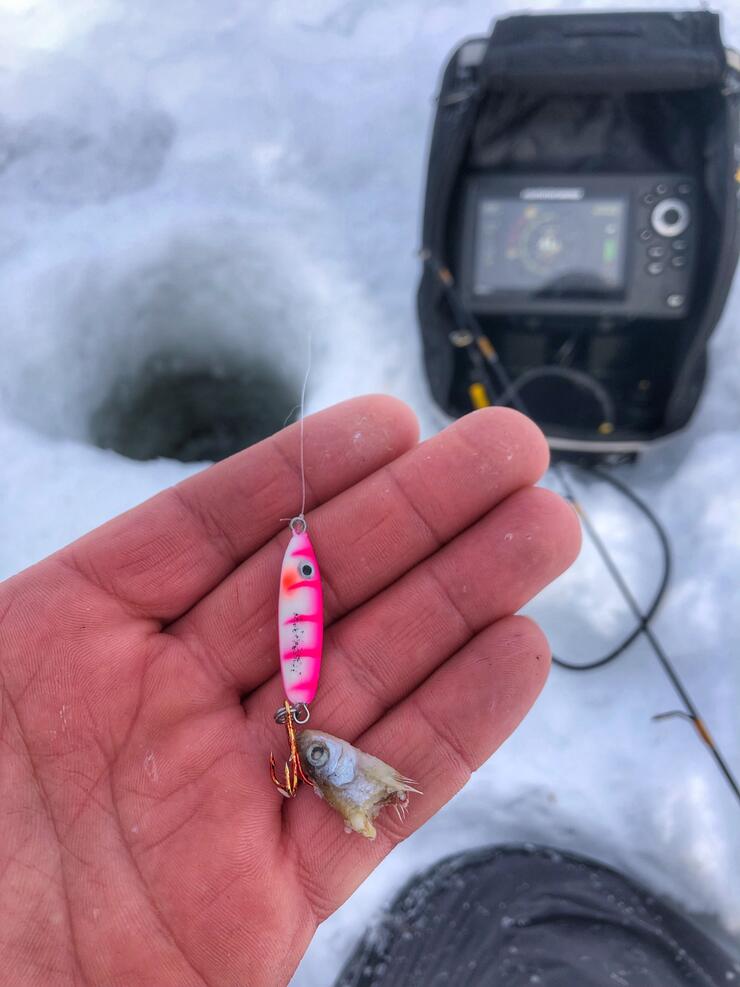
For the past twenty years, I’ve seldom used anything but a spoon for fishing walleyes through the ice. My go-to has always been a Northland Buck-Shot Spoon, popular with walleye anglers across the ice belt. I’ll always tip my spoon with a frozen minnow head and it never lets me down.

The traditional jig tipped with a minnow still works fine, I just think it’s more fun watching a spoon on my sonar unit and figuring out how to trick walleyes into biting it when they come in for a look. Some days, aggressive jigging gets bites, other days, you need to shake your spoon in a subtle manner. Figuring out how to trigger them to bite is the fun part. On some of the shallower, inland lakes, a jig tipped with a live minnow, hooked through the tail can be the best presentation. Something to consider if you fish in one of those types of lakes.

On the bigger waters, however, jigging with spoons or swimming jigs is tough to beat. Most of the time walleyes are going to be found near the bottom so electronics are not mandatory to catch fish but they will always help you put a few more on the ice. It’s good to know when walleyes are moving around beneath your hole and every once in a while, you’re going to see fish pass by that are slightly above the bottom so you can bring your bait up a bit so they can see it. More often than not, these suspended walleyes are aggressive and bite immediately.

If you are coming to visit us for a fishing trip you should also know that the “prime-time” bite is exceptional on most waters. We call that last hour of daylight “prime-time” because the walleyes almost always bite a lot better than they do the rest of the day. In fact, on some of the clear water walleye fisheries, it’s tough to catch fish during the day, then they go nuts just before dark. If you are coming for a trip, don’t be afraid to stay out there late and catch that “prime-time” bite.

Some waters in Sunset Country have special regulations for walleye fishing, including size restrictions, no-fishing areas, and bait restrictions so it’s always good to consult the Ontario Sport Fishing Regulations before you hit the ice. If you stay with a resort, they will be able to direct you on specific regulations on their waters.

We look forward to seeing you on the ice in Sunset Country this winter.

Bridger 65L Backpack Review

0

At long last, I’m excited to provide my review for the new Bridger 65-liter backpack from Mystery Ranch!

The Mystery Ranch Bridger is a highly anticipated pack series and I was thrilled to finally get my hands on one to test. For several years the Mystery Ranch Terraframe 65L has been my go-to backpack. So I was excited to see what innovations were included in the Bridger.

Right off the bat I could tell that the Bridger pack was something unique. The first thing my eye caught is the re-designed yoke / chest strap system. Borrowing from a running vest style pack, the Bridger has two chest straps that connect across much wider mesh straps than I typically see on a backpack.

Comfort is key

The result is an ultra-comfortable carry. The redesigned yoke system does an amazing job of spreading out the weight and the contact points that often lead to sore shoulders and hotspots around the arm pits.

Bridger compared to Osprey Atmos or Gregory Baltoro

Over the last year I have been able to test other popular packs like the Osprey Atmos and Gregory Baltoro. It’s helpful to have an understand of many of the packs on the market to be able to talk about some of the ways the Mystery Ranch Bridger 65L stands out from the competition.

Mystery Ranch claims the Bridger pack is the “Cadillac of backpacks”

According to Mystery Ranch – the Bridger 65 is the “Cadillac of backpacks.” This pack is loaded with internal and external pockets for maximum gear packing. The large pocket opens fully for easy accessibility to the gear you need more immediately, like a raincoat, additional snack, first aid kit, or that extra flask. It is a weight-conscious and durable pack that easily supports your overnight or multi-day mission.

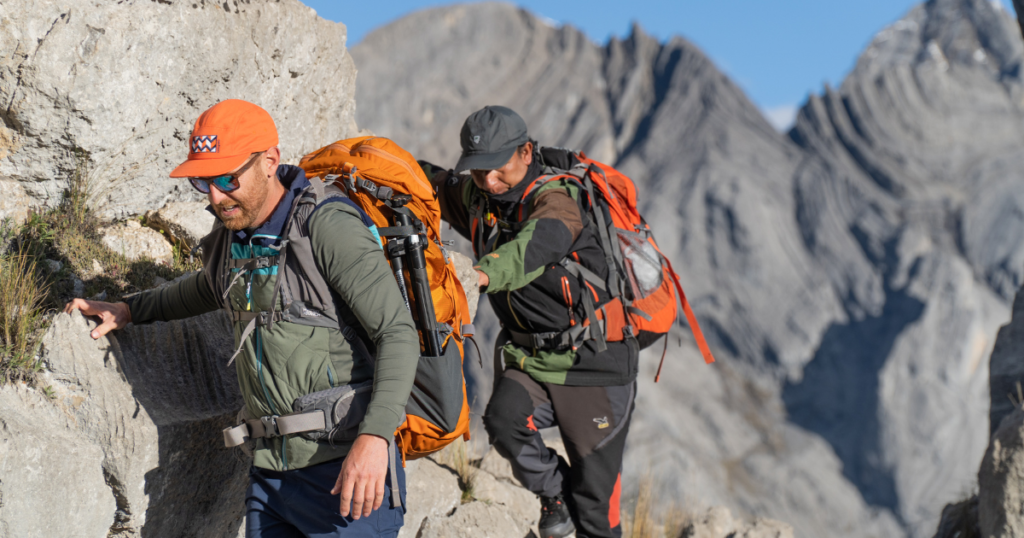
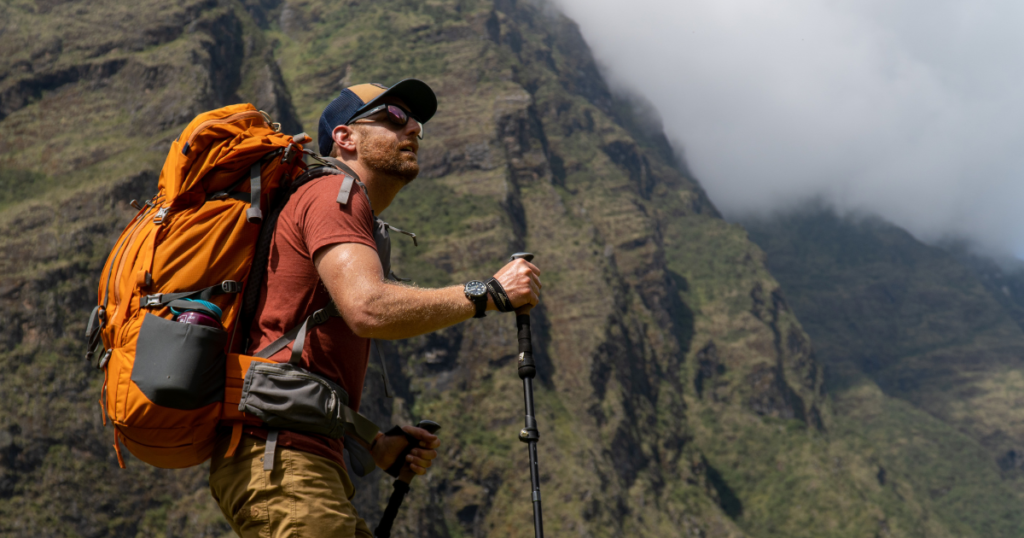
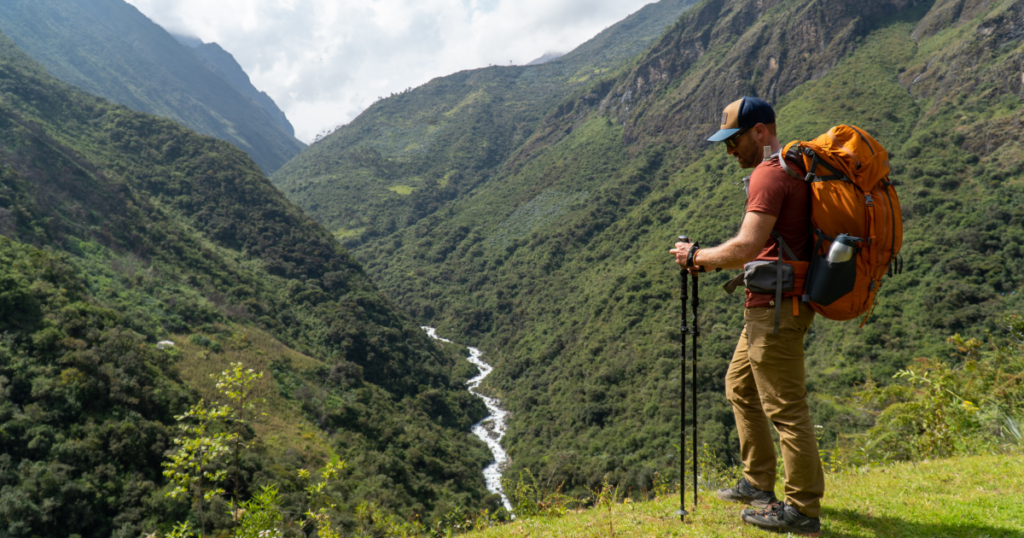
mystery ranch bridger 65L backpack review - tested in Peru

The Bridger 65 is built around the endurance yoke. This yoke is breathable, highly ventilated, with pocketed shoulder pads and pocketed waist belt for quick access to you water bottle, snacks (all the snacks!), or sunglasses. There is dual access to the main bag, including two full-length zippers on the front of the bag, and a drawstring shroud for easy accessibility to the main part of the bag without having to fully unpack.

The pack’s removable lid converts to a hip sack for shorter adventures when you may want to leave the main pack at basecamp. The Bridger 65 is hydration-reservoir compatible for additional water when you need it. There are two large, stretch woven back pockets with inner elastic top dump pockets. The speed zip sleeping bag compartment has a removable divider and a double layer bottom for improved durability.

Field testing the Bridger backpack in Peru and South Dakota

I had an opportunity to run some miles on this backpack, as well as use the Bridger 55L, on a previous backpacking trip across the Badlands and Black Hills of South Dakota. The Centennial Trail in South Dakota was a great place to test the new Bridger line from Mystery Ranch. My first impression? I love it! Let’s get into the details:

mystery ranch bridger 65L backpack review by Eric Hanson

How to choose a backpack?

Finding the right backpack is an essential cornerstone of your backpacking gear. The main categories to keep in mind when choosing a backpack are comfort, stability, breathability, torso fit, weight, accessibility to gear, and durability.

What are the best backpacks for hiking 2022?

Three backpacks come to mind when we talk about the best multi-day backpacks, the Osprey Atmos, the Gregory Baltoro and the Mystery Ranch Bridger. Comfort in backpacks is key to having a good experience. That is why the Mystery Ranch Bridger 65L is so different when compared to the Osprey Atmos 65L or Gregory Baltoro 65L. The yolk on the Bridger backpack is unique.

Is the Bridger backpack comfortable?

Yes! The Bridger 65 is very comfortable. Its comfort is one thing that helps it stand apart and what makes it so special. The thoughtful design of the pack, how you can adjust it to fit you perfectly, as well as the breathability of the yoke, all work to make this a pack you can comfortably wear for hours. The double strapped yoke (which I initially was skeptical of) really is very comfortable and I think is a beautiful revolution in backpacking design.

Is the Bridger breathable compared to Osprey Atmos or Gregory Baltoro?

Mystery Ranch has done a really nice job of creating an airflow chamber right through the middle of the yoke to allow hot air to escape through the back. The endurance yokes are breathable and highly ventilated with lots of air holes allowing heat and air to move easily through. The frame and the yoke work together to avoid back-to-pack contact thereby maximizing air flow. While I have hiked with backpacks that were a little bit more breathable, I have zero complaints with the breathability of this system.

How do you adjust the torso fit for the Mystery Ranch Bridger 65L?

When you purchase a backpack, no matter the brand or the size, it is important to be able to fit it to your body easily. Mystery Ranch has a smart and unique fitting system. You can achieve a personalized fit by removing the sheath stored inside, and then you break the Velcro bond by prying it with the sheath. Once the Velcro is separated, it is easy to either lift or lower the frame to get it fitted for your torso length.

How much does the Mystery Ranch Bridger 65L weigh?

The Bridger 65L is 5.5 pounds, which is a more than some of the other backpacks in this category. What you trade in weight, however, you gain in comfort, stability and durability.

How accessible is gear in the Bridger 65L backpack?

The placement of pockets and the placement of the zippers make ease of access a breeze. This is another feature that really makes Mystery Ranch packs stand apart from the crowd. Zippers and pockets create multiple entry points to the gear you need on the fly. When I hike, I like to separate the items that are important. Items like toilet paper, cat hole digging devices, and other items that I may want to keep out of the main chamber away from my food, clothes, and toiletries.

I love the ability to fully flay open my backpack. The Bridger 65L makes it easy for me to be able to spread open the bag and grab different lenses or different camera pieces. I also like the way the zipper works for the sleeping bag compartment. The Bridger 65L has a folding buckle that also contains a completely straight zipper all the way across. When you open the zipper, the compartment really opens up and it’s a very accessible, large space and it is easy to fit your sleeping bag in.

The Bridger pack has multiple compression straps to close it up and cinch it. I really like the side pockets on the Bridger packs, as these are great for water bottles trekking poles tripods.

mystery ranch bridger 65l eric in peru

Are Mystery Ranch packs durable?

If you are paying a premium for your backpack, you want it to last. One of the hallmarks of Mystery Ranch is that they make incredibly strong, beefy backpacks. Mystery Ranch makes packs for the military, firefighters, and people jumping out of planes. You know with the design of their backpacks rooted in this background, Mystery Ranch packs are going to last.

What is the load capacity of the Bridger backpack?

The Bridger pack can carry loads up to 55 pounds. It’s sweet spot is for carrying between 30 and 50 pounds. I have easily carried over 40 pounds and the load was surprisingly comfortable. Exceeding 50 pounds is very heavy for a backpacking trip, and if you wish to do so, that’s where other packs like the Terraframe come in.

Are the Bridger backpacks waterproof?

No. The Bridger pack is not waterproof. However, it will be able to withstand a fair bit of rain and moisture before any packed gear gets wet. The pack is made of heavy-duty nylon and treated with DWR for a water repellent finish. I’d be comfortable using this pack without a cover in intermittent rain. But if enduring consistent rain or wet conditions, use a pack cover or use dry bags inside the pack to protect your gear.

What does the Mystery Ranch Bridger 65L cost?

The Bridger 65L retailed for $349 at the time of the review. I think that’s good value for what you get. I recognize that it is a little bit on the higher end of the price spectrum when compared with the Osprey Atmos 65L and Gregory Baltoro 65L, both which currently retail for about $270 USD. But for the difference in price you get more comfort and superior stability. This pack is for both beginner and expert hikers, as both will benefit from Mystery Ranch’s innovative double sternum straps. This design has been seen before in running packs and is a game changer for backpacking as it changes how you carry the heavier loads (more stability).

Are the Bridger backpacks worth it?

The Bridger 65L will appeal to a wide audience. It is meant for the beginner backpacker who is just getting started. It is also a solid choice for the seasoned hiker who guides for a living and wants a pack to live out of that is functional and comfortable. I think that I may have found my ‘forever’ backpack. The Bridger 65 L pack is for sure my favorite pack that I have used to date! I plan to keep testing it and will do follow up posts to let you know.

Check out the NEW Bridger on the Mystery Ranch website

If you want to compare with other similar-size trekking bags I’ve reviewed, check out these other backpack reviews.

What Pork Fat to Use for Sausages (Diagrams and Details)

0

(Last Updated On: October 5, 2024)

When you are making sausages at home, the type of fat you want to use depends sometimes on the type of fat you can get.

The big assumption is that all fat is the same – but it is not quite like that.

When making sausages it’s either fresh sausage, smoked/cooked (hot smoked) sausage, or a type of dry-cured salami sausage; I love making all of them, that is why I started this website eatcuredmeat.

I want to elaborate on the best techniques I’ve discovered over the years to make my sausage with fat.

All pork fat is not the same, because it depends what part of the pig it comes from.

Important factors are also how hard the fat is and what melting point it has.

Pure back fat is the best choice, Boston butt or shoulder fat is an alternative depending on the ratio of meat to fat. Often this ratio is 20-25% fat in Boston butt or shoulder which is suitable for sausage making.

Different Types of Pork Fat for Sausage

Type of Pork FatConsistencyMelting PointGood for Sausage

Hard Pork Fat

My resources for back-fat to make sausages or salami are a commercial bacon company and also a good local butcher.

About 15 years ago, when I started sausage making, I could get pork fat for free from any butcher. The challenge nowadays is, that many butchers don’t cut up animals anymore – they are retailers sometimes.

Their meats/sausages arrive in boxes already processed at a central meat works and they will then just displayed and sold.

I was super lucky to come across a pig’s head for sale the other day. To take the jowl off was quite straightforward. First I wanted to use it for sausages, but I decided to make a dry-cured Guanciale (Italian cured meat) from each one, they say it’s like pancetta but different.

It was quite a firm piece of pork and the first one I extracted from a pig’s head. It was interesting to see the texture and the interconnective fat that was embedded into the meat.

It was actually similar to the marbled fat of a Boston pork cut from the upper shoulder (it depends, of course, on the age of the pig).

As you can imagine, this part of the animal’s head gets a lot of muscle movement from chewing. So, this meat was incredibly firm compared to all the other cuts of pork I use.

Shoulder or Boston butt carries marbling fat throughout the meat rather than white fat and meat separated (if you get a whole shoulder you do get bands of this as well). That is why it’s popular for low & slow bbq smoking/cooking because the embedded fat will melt and moisten the meat when it’s cooked in the butt.

When making sausages you can see the meat or fat you’ll be grinding, and whether it has more or less fat than the meat – to figure out your ratio (more on this below).

I am not talking about the different types of fresh sausages, that are emulsified or processed for a more generic texture such as hot dog or baloney.

Soft Pork Fat

Pork belly can still work for making sausages – it’s only an issue if you don’t keep it at or near freezing point temperature.

If you’re just learning about sausages, this is definitely one of the key points to remember: Always have your meat and fat at near near-freezing point.

With the mechanical process of mincing or grinding meat, the movement will create heat, and the heat can smear/mix the meat and fat together, which is not ideal when making sausages.

Unless your target is an emulsified, more generic consistency.

I’ve used pork belly for making fresh sausages and salami without an issue, but I’ve also been very careful keeping things around freezing point.

That’s why we use sometimes a large 1 (hp) horsepower meat grinder. We place the attachment and auger in the freezer, so when the grinding starts, everything is kept a little bit cooler. Can do this also with the 1/2 hp grinder below.

What is the Best Fat to Meat Ratio for Sausage

A 20% minimum fat-to-meat ratio is required for making most types of sausage. The maximum allowed fat in certain commercial sausages is 50%. 25-30% is ideal for many sausage recipes.

If you don’t have enough fat in sausages, it’s a waste of all the effort. The dryness makes the whole sausage nearly inedible.

Trust me I’ve been there and done that – this is not a nice outcome.

Recently I tried to reproduce the 700-year-old Bavarian Nuremberg bratwurst sausage, which you can enjoy in restaurants and also as street food around Nuremberg, Germany.

Looking through many recipes for this, I decided on 40% of pork fat. This is a very delicious sausage that literally melts in your mouth! (LOTS of marjoram, white pepper, allspice)

I’ve also found it’s quite hard to judge pork belly in terms of the fat-to-meat ratio. It just depends on how fatty the pig is and what age. Often older pigs = more fat!

Generally speaking 20 to 25% would be a rough guide for the ratio of fat to meat for pork belly.

What Cuts of Meat for Sausage

Shoulder, front leg, back leg, belly, or even the jowl or cheek of pork.

To be honest, the pig head had not much meat, apart from the jowl cheek. The jowl is on the outside of the cheek. Just for information and just in case, you want to cook the tongue – it tastes a bit like liver!

Key tips I’ve learned over the years for making sausages.

The first tip is: Taking time to remove the sinew is really important for having a good finished product. The worst thing is when you find bits of connective tissue in the sausage.

Any lymph nodes or non-meat bits should be removed. Blood doesn’t help either and spoils faster than meat. Take your time and remove it, as best as you can.

The second big tip is: Always do a test pattie after you have done your grinding and adding salt and spices.

If you’ve done your binding right by mixing it together then it should be tacky and sticky.

Another tip: If you make patties and squish it onto your palm, and hold your hand upside down, does it fall off? If it does, the meat and fat need more binding, so you have to work it more or let the dough hook do it.

I’ve read in meat science textbooks, that the myosin is then released in the meat which creates this desirable ‘tackiness’.

As I said earlier fry up a little meat patty – try it and you will know what the finished product would be like.

Another tip – Be extra careful deboning, I’ve left a cartilage chunk in the meat when deboning a leg of venison. Oh dear, the chunks were spread across 80 pounds / 40 kg of sausage!

Venison, Beef, and many other types of meat can be incorporated, as long as they have that 25% fat (in some recipes where the meats are more emulsified, olive oil or rapeseed oil is being added to the meat without the fat).

Always keep in mind for a non-emulsified fresh sausage you still want 25% fat to meat ratio to make it work.

I often use very lean wild meat like venison for my sausages which has to have the added fat.

Using Fat That Isn’t Pork for Sausage

Beef, chicken, and lamb fat can be used for making sausage – although, these meats have a different taste that isn’t neutral like pork fat.

Beef Fat

Beef fat is often yellow in color, so it can change the whole look of these sausages without dabbling into the other additives. Sometimes it’s more white, maybe depending on grain or grass-fed.

Always go for grass-fed, grain-fed is normally more intensive reared.

It has a certain flavor that definitely is far from neutral, compared to pork fat.

It’s still completely enjoyable, it depends on your personal preferences.

Chicken Fat

Chicken sausages made with chicken thighs have a lot of the fat incorporated into the meat, often blends intermuscular. That’s also why, if you fry thighs it’s very hard to overcook them!

I’ve eaten chicken sausages but I haven’t made them, so I can’t tell about this one.

Lamb Fat

Definitely has a taste of its own, and again it’s far from neutral. First, you have to like the fat flavor. The flavor of lamb sausages also depends on the age of the animal and whether being fed on the milk of the mother only. Older sheep’s meat/fat (mutton) for sausages has a very distinctive flavor and needs LOTS of garlic and rosemary for a kind of ‘funky’ flavor (in my mum’s opinion / it’s a classic combo).

Grind or Cutting Fat for Sausage

It completely depends on whether you’re making salami or a fresh sausage and on the sizes of your grinding plates.

For a smaller 25 or 28-mm sausage, a maximum of 4-6 mm when you are grinding, would be appropriate.

But for a 50 or 60-mm dry cured salami, you may be better at cubing the fat 5-12mm.

This is important for the type of sausage you want to make. Cubing the fat is another option for a more visual aspect.

What Colors Are Coyotes? – Coyote Colors (with Pictures)

0

Coyotes are medium-sized wild canids that could be traceable throughout the North American continent. These wild animals are known for their many features like size, body shape, color, and general behavior. You may confuse the coyote with wolves or dogs from some distance due to their similar standard appearance. However, there are a lot of differences in terms of their features and physical capabilities.

Some of these specific standard features are a long snout, pointed ears, a bushy tail, and noticeable coat color. When it comes to size, coyotes are bigger than foxes and dogs but smaller than wolves. In this article, we are going to discuss in detail coyote coloration or the color of coyotes.

Coyote colors

As we have mentioned before, coyotes exist throughout the different regions of North America. When it comes to coyote color variations, it also varies from one region to another. Generally, these animals are a mixture of many colors. It could be gray, light gray, red, peppered black, or white color. The inside color of the chin, chest, and belly is always white for coyotes of any region. You will also notice a spreading red color on the top of their nose. The color of the coyote has a lot of significance. Most importantly, it helps in the identification of coyotes from other wild animals.

Coyote fur colors

Coyote comes with fluffy fur which makes them larger than their usual weight and size. The fur of the coyote is highly helpful in keeping it safe from harsh weather. The fur is quite thick and long which makes the coyote appear larger than their actual body size. The fur color of the coyote varies from gray to reddish brown. You may also see the fully black fur coat of a coyote.

You may also notice more reddish or tawny tint color shade on the legs, face, and ears of a coyote. Moreover, coyotes also have very long guard hairs which are usually dark in color. By having a look at these varieties of colors, you can easily conclude that coyote is quite good at camouflaging themselves.

Coyote Color Variations: what color are coyotes?

Here we are going to enlist all the colors which the coyote can adopt. Coyote doesn’t have a single color. Most of the time, it comes in a variety of colors. Coyotes are actually the amalgamation of these colors. Some of the most prominent colors of the coyote are given as:

  • Gray
  • Brown
  • Tan
  • Red
  • Blonde
  • White
  • Black
  • Salt and pepper

Most of the time you will see the coyote only in these colors sometimes a combination of one or two of these colors. Sometimes the genetic mutation also happens in the coyote due to Melanism. This process generates a fully dark or black-colored coyote. You may also notice the happening of Albinism phenomenon in the coyote. It also leaves an impact in the form of any other color on the coyote.

Regional colors of the coyote

The color of the coyote also varies from one region to another. Let’s have a look at the colors of the coyote from different regions of the North American continent.

Eastern side coyote

Eastern coyotes are hybrid-type subspecies of the coyote. They take colors as well as other properties from both wolves and coyotes. These coyotes actually take more features from wolves. The size of this kind of coyote is also slightly larger than a normal coyote.

Eastern coyote comes with a combination of many colors. The most prominent colors of the eastern coyotes are gray, red, brown, tan, and blonde. You may also notice some rusty colors on these hybrid coyotes.

There are also multiple color phases of eastern coyotes during different times of the year. These are very rare colors of coyotes you can find on the field. You should consider yourself lucky if you witness these coyotes in the wilderness. Generally, you will find these wild animals in the east coastal areas or mid-west areas.

The eastern coyote has also been named as tweed wolf and normally exists in the northeastern parts of the USA and Canada. The eastern coyote comes with a fully white underbelly with a white chin and throat. There are also washes of black on their overall coat. Typically, these wild canid animals have very coarse fur which let them easily endure harsh winter weather.

Western side coyote

These coyotes originated from the western side of North America and gradually migrated towards all the corners of the continent. You can easily witness these coyotes in the western and southern regions of the USA, Canada, and Mexico. These animals come in reddish, tan, dark brown, blonde, orange, and gray colors. Western coyotes have a fully white belly with a slightly tan color combination. They have bushy tails along with black fur at the tip end. These coyotes do have not much heavier fur as compared to the eastern side coyote. It also makes them slightly smaller in size. Eastern coyotes also have longer legs as compared to Western coyotes.

Brown color coyotes

Many coyotes exhibit brown or dark brown colors including the eastern coyote. Eastern coyotes have different phases of colors like brown, dark brown, red, and blonde. You may not normally see brown color coyotes as the usual color of the coyote is tan, gray, and red. However, still, the brown color coyotes have a reasonable presence in North America.

Michigan coyotes

Coyotes in Michigan typically have the same color coat as you can see normally in the coyote. They are gray and red in color with a mixture of white. You may also some salt and pepper-colored coyotes in Michigan. However, a very rapid change is happening in the color of Michigan coyotes due to the movement of eastern coyotes in the mid-west areas. In these coyotes, there is more dominance of brown, dark, and tan colors. They have also been changing colors at different times of the year.

Black color coyote

Coyotes could also be black in color. This usually happens due to genetic mutation and the process is called Melanism. You may also find this kind of mutation in many other animals like badgers, bobcats, foxes, etc. However, it very rarely happens in the case of coyotes as compared to other animals like foxes who are almost 25% victims of the Melanism phenomenon. It is a very rare phenomenon and could happen to any coyote in the world.

A rare black coyote recorded by the trail cam.

Rare coyote colors

Most of the coyotes you will see in the normal colors but some of them also exhibit some unique or rare colors. It usually happens due to various reasons. Most importantly, it happens due to seasonal changes. For instance, they lose most of their heavy fur at the beginning of the summer season and expose their guard hairs.

In this way, you can easily see the inside color of the coyote. The color mutation also happens due to some other factors like Melanism and Albinism. Sometimes they are completely melanin and exhibit fully dark color and sometimes they are partially melanistic coyotes having some botches of black fur.

Do coyote coats change colors?

Yes, coyote changes the colors of their coat. Generally, they change the color of their coat on the basis of different seasons. There will be a complete change in their appearance in the winter as well as the summer season. Coyotes may look quite bulkier in the winter season as compared to the summer season as they have to face very harsh and cold weather in the winter season.

The coyote summer coat will be very thin and usually come with a mixture of red and gray colors. In the winter season, the coyote coat will be quite large, long, and heavy. They appear much larger than their original size. Coyote also changes the color of their coat due to various other reasons. For instance, the eastern coyotes exhibit four different colors throughout the whole year.

Coyote eye color

Many people are curious about the color of the coyote eye. Generally, they have yellow eyes with brown irises. Initially, at the time of birth, they have blue eyes and gradually transform colors. You will experience the change of color gradually as they grow older. Scientists have also exposed that the blue eyes coyotes have actually descended from the single blue-eyed coyote having mutant genes which causes the blue color in the eyes.

Frequently asked questions

Conclusion

People occasionally ask this question what color are coyotes? We have answered it in a very comprehensive to clear all your confusion about the color of coyotes. Coyotes exhibit many colors under different circumstances. We have explained in detail and clearly all the other aspects of these colors. By thoroughly reading this article, there will be no confusion left in your mind about the color of a coyote.

The Best Dogs for Grouse Hunting

0
The Best Dogs for Grouse Hunting
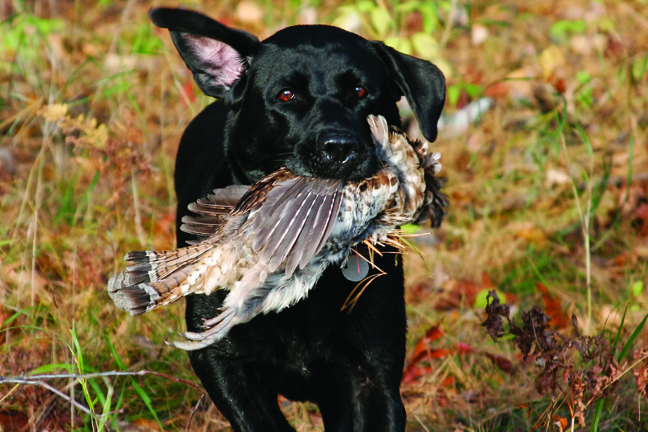
The enthusiasm Labs have for retrieving is one of their strengths as grouse dogs.

I posed the following, seemingly simple question to the members of my Upland Journal Forums, and to hardcore bird hunters, weekend warriors, dog trainers, upland guides, field trialers, breeders, and sporting lodge owners: What is your chosen ruffed grouse hunting dog breed, what is it that you most like about them, and why have you stuck with them?

Grouse Hunting Lab

The answers were anything but simple. The truth is there is no best single breed of dog for hunting ruffed grouse. This has become clear to me after four decades of hunting grouse over most of the flushing and pointing breeds.

Unless someone is irrevocably breed blind, most bird dog people will readily agree. I was pleasantly surprised at how gracious those who contributed to my research were when discussing hunting dogs, even dog breeds that were not the ones they chose to run. Dog guys like dogs.

One thing that is completely agreed upon is that good breeding and diligent training are essential, but those characteristics can only go so far in developing the dog as a grouse dog.

Serious grouse hunters believe that bird contacts are paramount to developing a grouse dog, particularly in breeds that point. The grouse themselves teach the dogs how to handle grouse. Dogs just have to see a load of ruffed grouse — hundreds of them — before graduating from a bird dog to a “legit grouse dog.” Some dogs never get to wear the cap and tassel, some become good, and very few become great.

Why is that the case? Because ruffed grouse are arguably the hardest game bird for any dog to handle, and without question one of the most challenging for the wing shooter. There are a tremendous number of variables and preferences and expectations that impact the choosing and settling on a breed for ruffed grouse hunting.

Not all of the variables have to do with grouse. Some are directly related to a particular dog owner’s personality, or where they reside, or the time they have to hunt, and the type of grouse cover they typically hunt.

Will the dog be hunting small micro covers, or huge expansive cutovers? Will it be trained for field trials as well as hunting? Will it stay in the house and sleep on the bed? Will it perform double duty as a waterfowl dog? Will it shed like the dickens? The list is endless.

For some it’s basically the breed dear old dad always had, or a breed a person read about, or hunted over, or in many instances just plain liked the looks of.

In this article I’ll concentrate on two popular flushing breeds and three pointing breeds, and why people prefer these dogs for hunting ruffed grouse. This is in no way a poor reflection on other breeds. Remember what I said: There is no best grouse dog breed.

ENGLISH COCKERS: Big Hunt In A Small Package

There is little doubt that Field Bred English Cocker Spaniels or FBECS’s have experienced an upsurge in popularity for upland bird hunting. These little bird-seeking missiles are not to be confused with American Cocker Spaniels, which are bred for looks and as pets. And FBECS’s are not just small field-bred English Springer Spaniels (the springer, by the way, is my personal breed of choice). Do not make the mistake of muttering such a thing in a room of spaniel enthusiasts. They may have been separated by size centuries ago, but have developed their own unique personalities, yet retained all the best characteristics.

This flushing dog weighs in as small as 20 pounds and upwards of 35 pounds for a large male, and come in a variety of colors. I spoke to the owner of a guiding operation in northern Maine, who runs both FBEC’s and English Pointers, and he described them as having the heart of a big dog and the cuddle of a lapdog.

He not only uses them for hunting ruffed grouse, but also as non-slip retrievers with his pointers, where they flush and retrieve ahead of a point. Another friend of mine owns a well known Orvis-endorsed hunting and fishing operation in Maine. His personal dogs, which he hunts and guides with, are FBEC’s. Most of his guides run pointing breeds. Pointing dogs are traditional for grouse so most clients request hunting over them. But according to him, at the end of the day when the bragging begins, the cockers do as well if not better in finding birds and providing shots on grouse.

Owners of FBECS’s gush over their little charges. They love the dogs’ temperaments, house manners, trainability, and their remarkably manageable size.

That’s all well and good but can they handle and produce ruffed grouse for the average bird hunter? You bet they can. The consensus from those I spoke with is they are the right dog to hunt in poor scenting conditions, such as hot and windy days — situations that can compromise other dogs. They burrow intro the thick of cover, work close, roust out grouse to the gun, and retrieve crisply to hand. They are just plain fun to be around, and they can sit on your lap and lick your face on the drive home. What more can a bird hunter ask of a grouse dog?

LABRADOR RETRIEVERS: A Model For Every Grouse Hunter

Labrador Retrievers remind me of the venerable 12-gauge shotgun. They can do it all. The Lab has really made its mark in the ruffed grouse woods, and those running them never feel under gunned.

The enthusiasm Labs have for retrieving is one of their strengths as grouse dogs.

Although there are breed lines of pointing Labs, I’m focusing on flushing retrievers. They are hard to beat when you include their perpetually positive attitude and enthusiasm. These workhorses come in variety of sizes, depending on the breeding — from huge, block-headed, otter-tailed, cattail busters to smaller, more agile, and athletic dogs — which are increasingly popular with grouse hunters. They are black, chocolate or yellow and despite some opinions, all can make great hunters. Their wonderful personalities have made them a choice as pets for non-hunters, so always seek out a hunting line of Labs if you want one to team up with you to hunt grouse.

If properly trained they simply produce bird after bird for the gun and, being the consummate retriever, are unmatched in finding cripples and bringing any bird to hand.

Lab owners are extremely loyal to their breed, like their dogs are to them. They point out the unparalleled trust and teamwork they experience while hunting with their Labs. A particularly successful grouse hunter from Michigan I spoke with, who champions the smaller, more agile 50-pound Labs for grouse, expressed that a well bred Labrador is smart, easy to train, and can bounce back from training mistakes. Known for their overall durability, they can hunt in all conditions and cover types. When these grouse hunters empty the birds from their vests at the end of a hunt, the reason for running their labs for ruffed grouse is plain to see.

ENGLISH SETTERS: Grace And Beauty In The Woods

There is no question the English Setter is the quintessential and traditional grouse hunting dog. The sheer volume of responses I received from ES lovers proved that point.

This breed has gotten a load of ink in most classic grouse hunting literature, and is well represented in sporting art, for good reason. For a pointing dog they are the whole package of beauty, elegance, temperament and — best of all — they work on ruffed grouse.

Both pointing dogs and flushing dogs can be great on grouse.

Setters generally come in two types: Ryman and Llewellyn. The Ryman being a larger, closer working, and more methodical birddog that foot hunters prefer. Llewellyn’s are a smaller, faster bird-finding machine that hardcore hunters and field trailers gravitate to.

Regardless of type, they all share a gentle nature and picture perfect looks, as well as a good nose. Some of my Setter friends and contacts readily admit they prefer a slightly slower-moving dog that they can see and enjoy as it weaves through a fall cover, with the tinkling of a bell only adding to the experience. They live for the feathery classic point, and shooting at a bird is an afterthought.

Others want a firecracker that sizzles through the woods, reaching way out in search of birds, with the distant staccato beep from a collar signaling a point. After a location is found on the GPS receiver, they head into the cover and like to be rewarded with an opportunity for a shot. This is a breed that can fit differing personalities.

I’ve heard more legends of English Setters being good or great grouse dogs than any other breed. That might be a product of their popularity, or it might be why they are so popular. It doesn’t matter: they are a proven breed for grouse hunting and look damn stylish doing it. I heard from a fair share of earnest grouse hunters who experimented with a lot of dog breeds until they found their nirvana with English Setters.

GERMAN SHORTHAIRED POINTER: Bulletproof And Versatile

I have many friends and acquaintances who run GSP’s. That should say something about their popularity and effectiveness on grouse, given we live smack dab in ruffed grouse country.

And I had the pleasure of hunting over a particularly good one. I was impressed by this dog’s no-nonsense, workmanlike hunting style. He knew how to handle and point the skittish, if not schizoid, ruffed grouse found in mid-Maine, without a lot of showing off or fanfare. I think this is true of most dogs of this versatile breed.

Tough, relentless and no-nonsense: The German Shorthair makes a great grouse dog.

That dog is over the rainbow bridge but the owner is now feeding two more GSP’s. I asked him why he sticks with them. He made the analogy that GSP’s are the Toyota Tacoma of the grouse hunting breeds. They are tough, dependable, and rarely break down. GSP owners relish the strength and durability and easy maintenance of their dogs, along with their ability to chill out in the house, but turn it on in the woods. Being a short-haired breed, little if any time needs to be wasted combing out burrs on the tailgate, leaving more time to hit the next cover.

I received input from a gentleman who runs a popular birddog website who hunts his shorthairs in a multiple of states and Canadian provinces. He expressed how his dogs consistently hunt at a comfortable range for the foot hunter, are staunch on a pinned grouse, but naturally relocate until they crack into a solid point when they hit the scent cone. A plus is they are largely natural retrievers, so few birds are lost. Versatile is the operative word; when not pointing grouse they can take on part-time work in a boat or blind retrieving waterfowl, and are handsome to boot.

BRITTANYS: The Whole Package In A Compact Size

These medium-sized, hard-working pointing dogs are rumored to have originated as poachers’ dogs, and are termed by some as “meat dogs.”

There’s nothing derogatory about that as far as I’m concerned, since despite all the aesthetics prevalent in grouse hunting lore, ultimately we are trying to add protein to our game vest.

This breed was originally dubbed a spaniel but the “spaniel” was officially removed in 1982. You have two choices of field stock Britts: American or French Brittany. Generally the American Britt is larger, lankier, and a bigger runner by design. The French Britt is more compact and generally a tighter worker. But despite “spaniel” being dropped from their name, both types have the merry, exuberant and biddable personality of a spaniel, with the point and the retrieve built in.

Britt owners I spoke with were a pragmatic group who weren’t enamored with classic high-tailed points (which is a good thing since Britts tails are docked). Britt owners appreciated the work ethic, nose and tenacity of their dogs.

A very good friend of mine who passed away a few years back adored his Brittanys, and I’ve never seen a closer bond than he had with his dogs. I had the privilege of grouse hunting with him in the states and in Canada. He was a solitary fellow, and when we met back at the truck, there was always a gleam in his eye, a grouse or two in hand, and of course a Britt by his side. If I get a pointing dog to add to my arsenal, it would likely be a Brittany.

You can’t go wrong with any of the breeds covered here if the dog is well bred, trained to your needs and expectations, and you put the dog on a load of grouse. Finding your breed for hunting ruffed grouse is like finding a spouse. There are matches made in heaven, but also mismatches. The trick is to date and play the field until you fall in love, and know when to throw in the towel and try another breed that fits you best.

Ultimately, at the end of the hunt, the measure of a grouse dog could be as simple as whether you enjoyed hunting with it, not how high a pile of feathers you’ve built by the end of a season.

Best Air Rifle Deals

Popular Posts

PCP vs Spring Piston: Which one is better?

0
When reading about guns in the search for the first one that would be perfect for you, an age-old debate comes into question. Should...

How Does an Air Rifle Work?

0
Discover the inner workings of an air rifle with our comprehensive guide! From the mechanics behind its powerful shots to the intricate process of...

How to make a break barrel air rifle more powerful

0
"Unleash the Power: Mastering Break Barrel Air Rifles for Maximum Performance. Discover expert tips and techniques to enhance the power and precision of your...