

Home Blog Page 190

Glock 17 Review: Best Full-Size 9mm?

0

Glock, Glock, Glock, it’s all about Glock. I’ll be the first to admit that Glocks are fantastic firearms that are simple, accurate, easy to use, and all in all, great guns.

What I don’t understand is the cult of Glock.
Gaston Glock
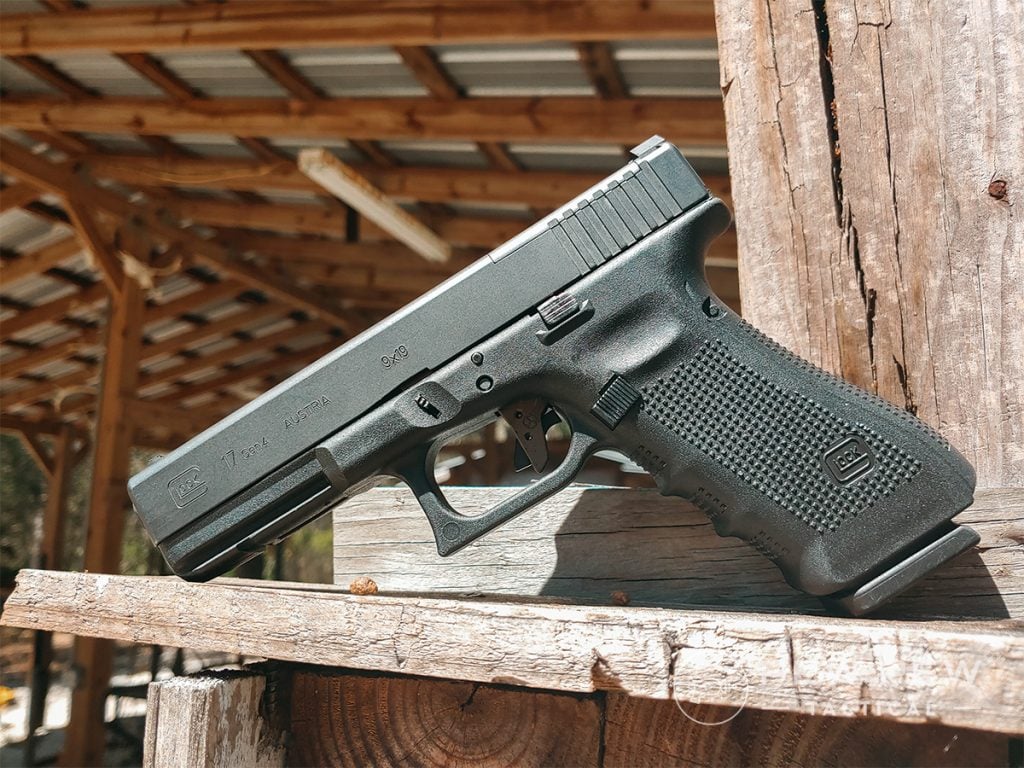
Glock G17

They lack the charm and character of guns like the CZ-75, Hi-Power, and 1911. Yet here we are with a Glock G17 in our hands, and it’s a predictably lovely gun.

Let’s explore the what, the why, and where the Glock excels.

Glock 17: Review at a Glance

Iraqi police training with Glock 17

Pros

  • Accommodates virtually all mini-red dots
  • Modular grip
  • Highly reliable
  • Tons of aftermarket support

Cons

  • Slide bite is a real risk
  • Small slide lock

The Bottom Line

The Glock G17 delivers a reliable, fairly ergonomic full-sized 9mm pistol in a very affordable package. Plus, the wide range of aftermarket parts and accessories available allow you to customize your G17 to exactly what you want.
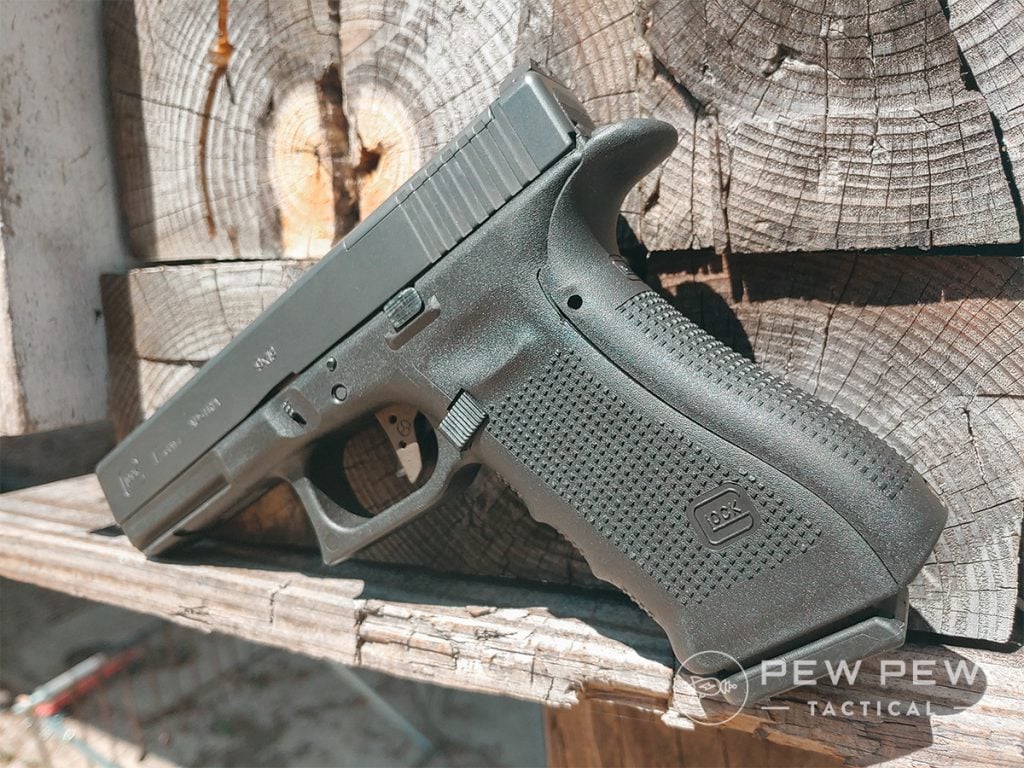
The Glock 17 is the original double-stack 9mm from the Austrian manufacturer.

Specs and Features

Specifications

  • Caliber: 9mm
  • Width: 1.26″
  • Length: 7.95″
  • Barrel Length: 4.49″
  • Height: 5.47″
  • Weight: 22.05 oz
  • Capacity: 17

Features

  • Plate system for optics that accommodates nearly all mini red dots
  • Dual recoil assembly is designed to reduce recoil and increase the life of the gun
  • Comes with a reversible magazine release
  • Modular backstrap system
  • Comes with three 17-round magazines, a handy little magazine loader, and a little tool to attach the plates and optics

Source: Glock

Background

When Gaston Glock decided to produce a handgun, he assembled a crew of engineers, firearms designers, and professional shooters to design the next big firearm. That firearm became the Glock G17.

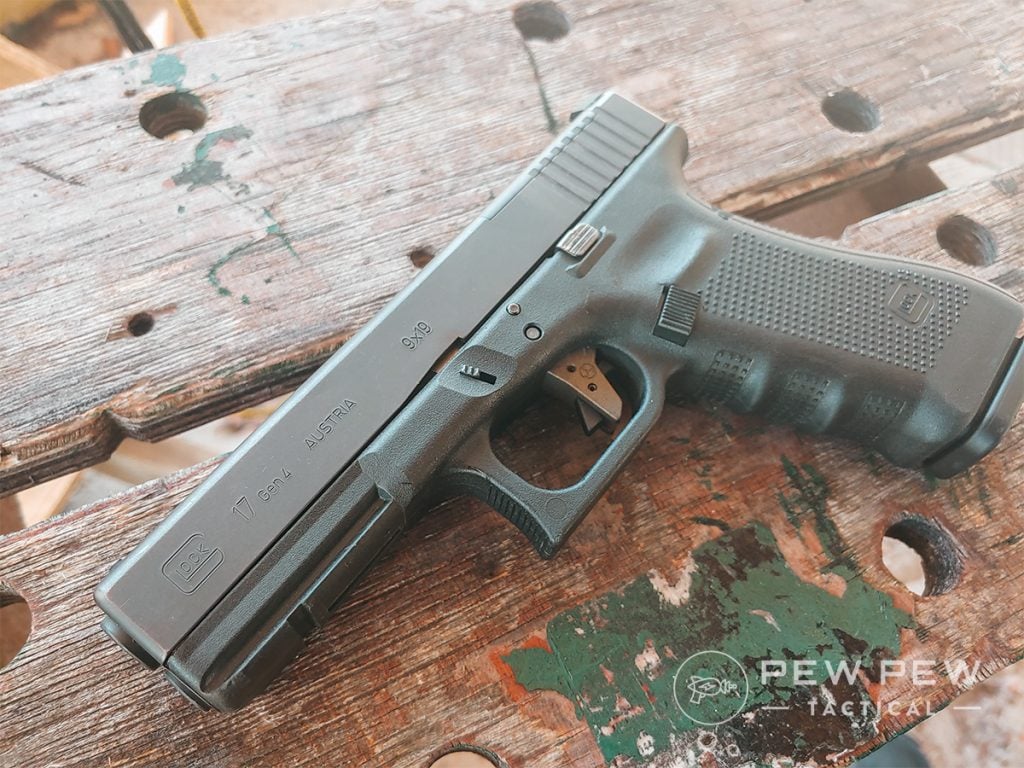
Glock G17 Gen 4
Gaston Glock

The 17 came from the fact it was Gaston Glock’s 17th patent. Glock produced the gun for the Austrian army, and it won the contract.

Gaston’s Glock G17 went on to keep winning military contracts and serves with numerous militaries and police forces, including SOCOM.
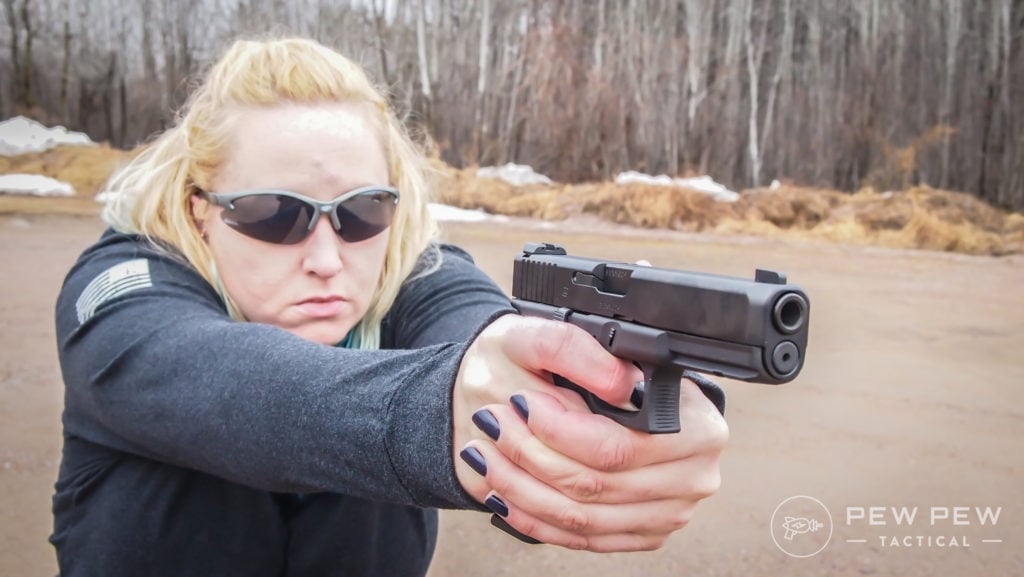
Roni and Recover Tactical 20/20
Iraqi police training with the Glock G17. (Photo: Sgt. Patrick Lair)

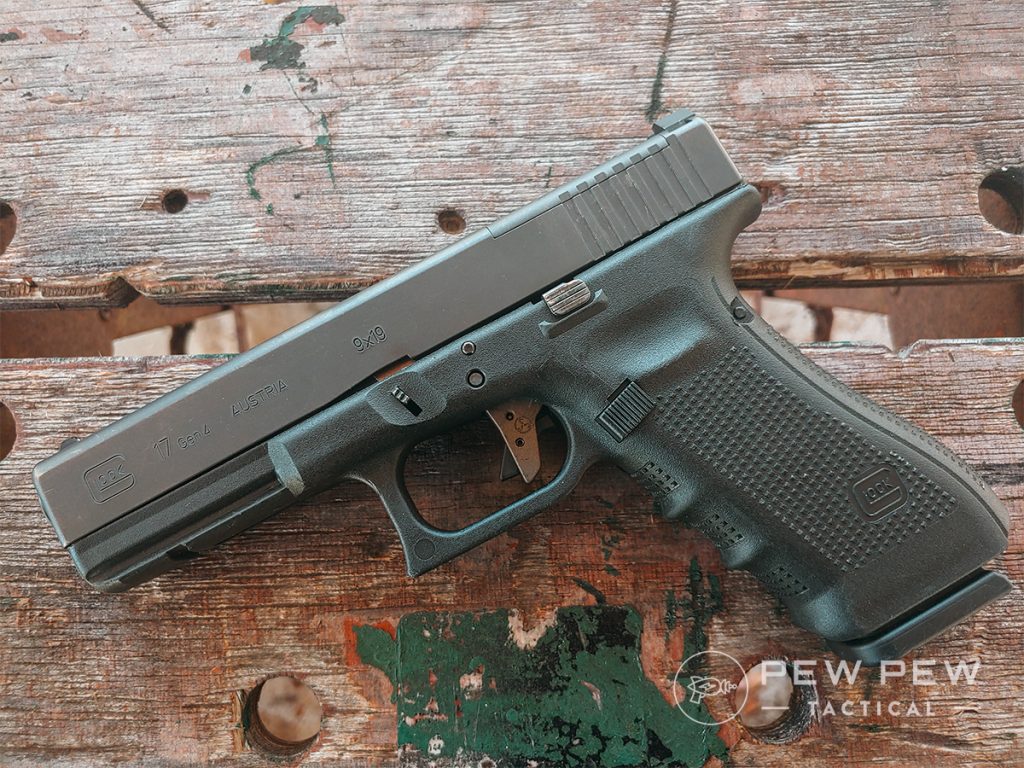
The Glock G17 is a full-sized 9mm model. It’s also a Gen 4 model with the dual captured recoil spring, rail, and finger groove-equipped grip.

Oh, and let’s not forget you also have the option of a MOS model. MOS stands for Modular Optic System, and the gun can accommodate more than a dozen different red dot optics.

There are two types of MOS systems, the standard which we have here and the MOS3. The MOS3 utilizes optic-specific platforms and only accommodates one footprint.

Who Is It For?
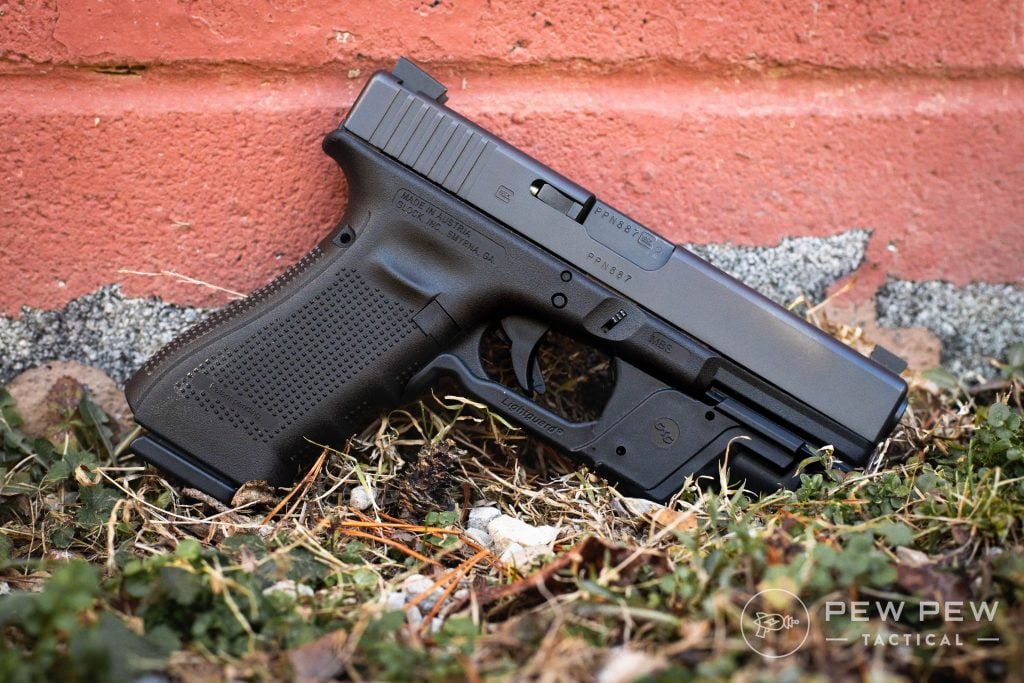
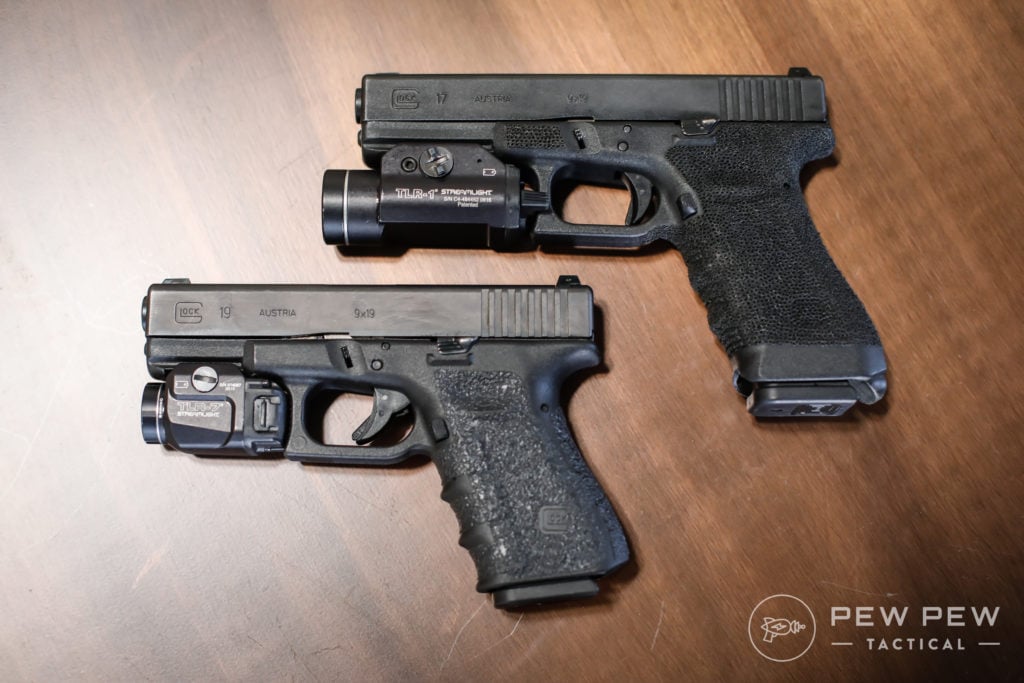
Glock 17 (top) and Glock 19 (bottom), Gen 3

The full-sized Glock G17 makes for an excellent duty weapon with police and military forces. It’s also a solid handgun for home defense.

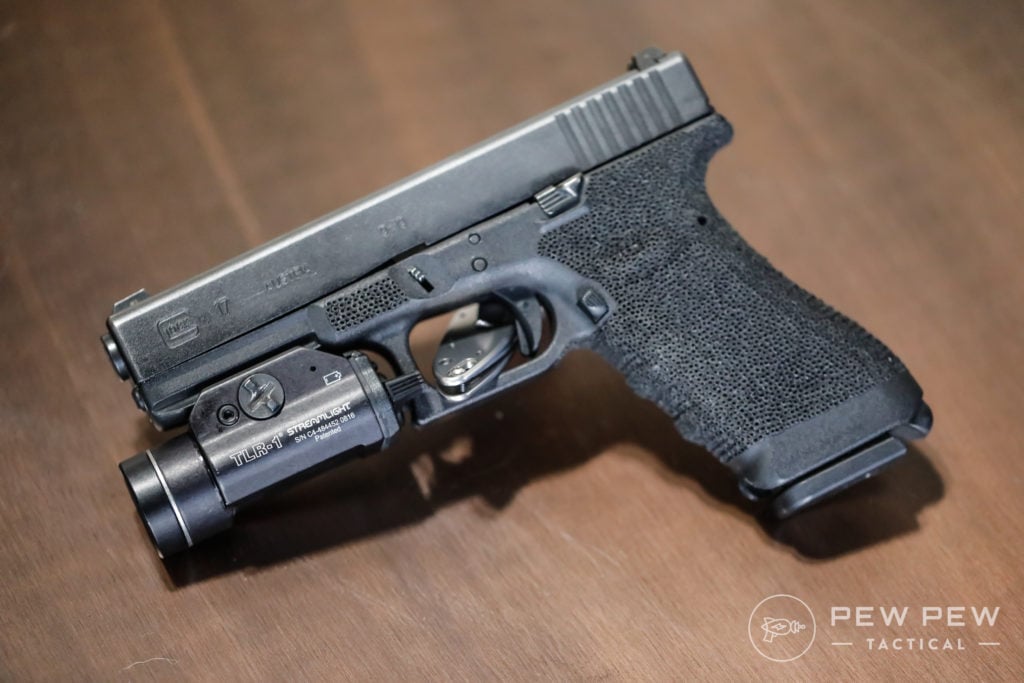
The ability to use 33-round magazines, toss a light on it, and equip the weapon with an optic makes it an excellent home defense firearm.

Most would feel the Glock G17 is too large for concealed carry. It’s a duty-sized firearm, but don’t tell that to the hardcore concealed carriers. Quite a few fellas and gals carry full-sized firearms concealed.
Glock 17 Review: Best Full-Size 9mm?

It’s not that hard to do with a good holster and a good belt.

Glock pistols are also perfect for those who like to tinker. A Glock is a lot like an AR. You can turn it into anything, or well, almost anything.

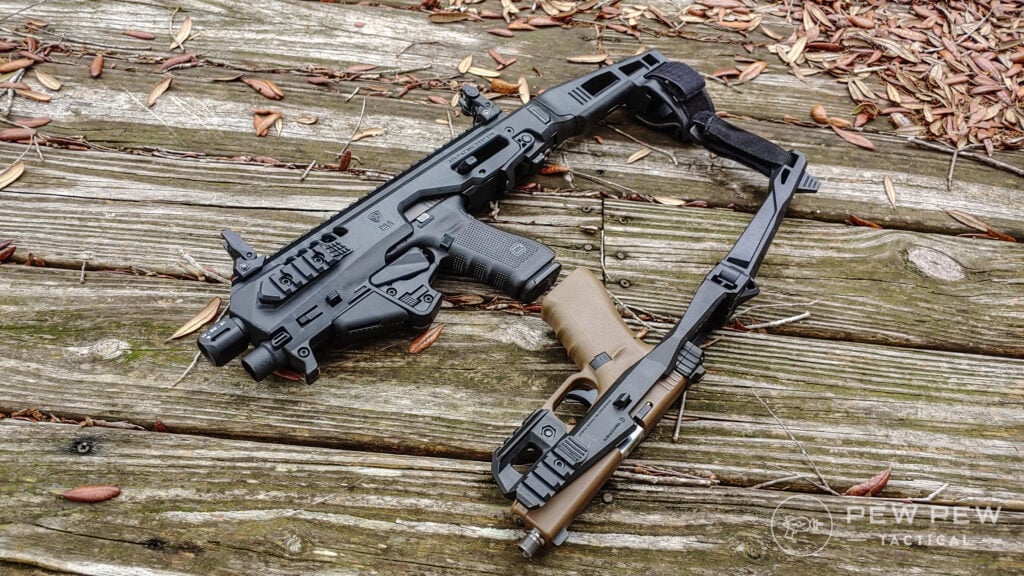
The Glock G17 can be transformed into a race gun for competition shooting, and it can be made into a subgun-like platform with dozens of different brace options.

Heck, you can turn it into a rifle if you so choose. Even a bullpup rifle if you want.
Glock 17 Review: Best Full-Size 9mm?
Some Glocks in the Roni and Recover Tactical 20/20

Fit & Feel

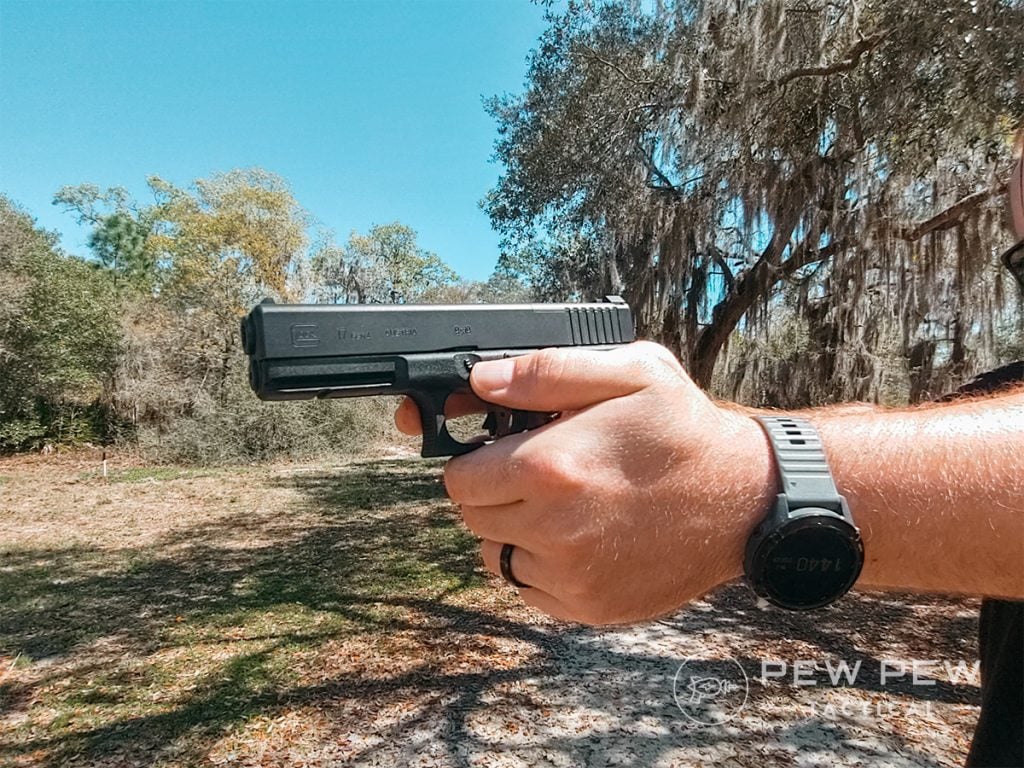
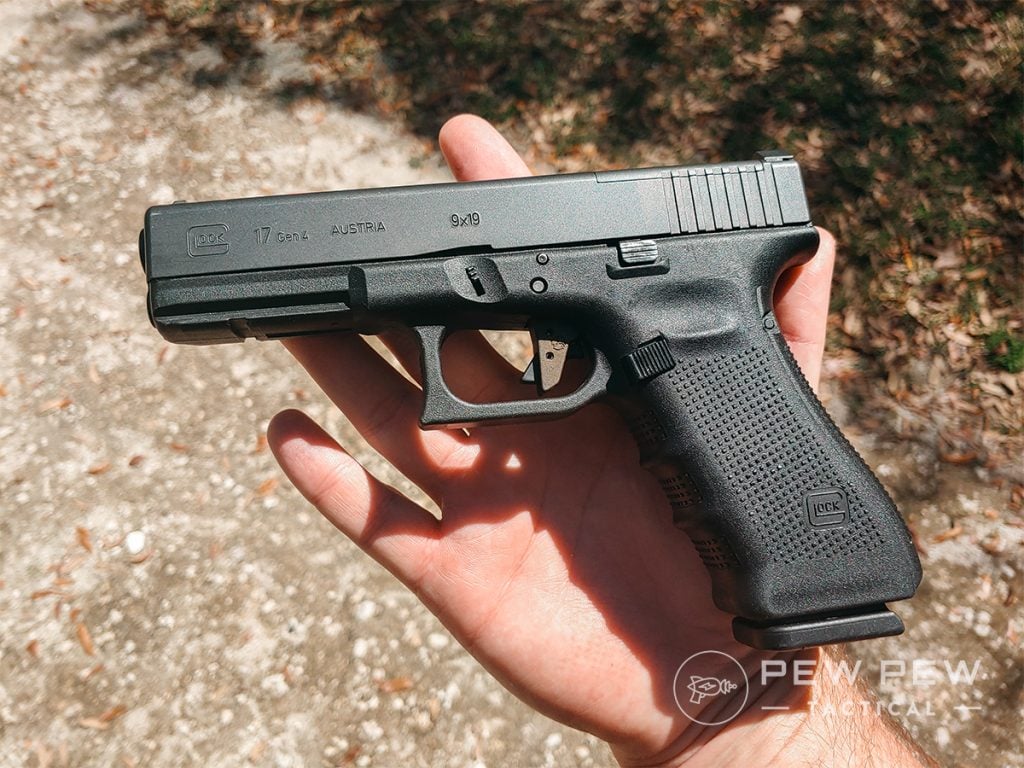
The large nature of the Glock G17 fits most hands rather well. If it doesn’t, you can add a backstrap to increase the grip size. I’ve got huge hands, and the Glock fits just perfect. I think the backstraps make the gun too clunky.
Glock 17 Review: Best Full-Size 9mm?

Big grips mean the gun’s relatively easy to handle. Full-sized 9mms eat recoil without issue, and so does the Glock G17. However, the gun has some flaws.

For one, without the rather large beavertail extensions, the gun offers some terrible slide bite to my big hands. A long day of shooting draws a little blood and gives me a nice callous. Luckily they fixed this with the Gen 5.
Glock 17 Review: Best Full-Size 9mm?

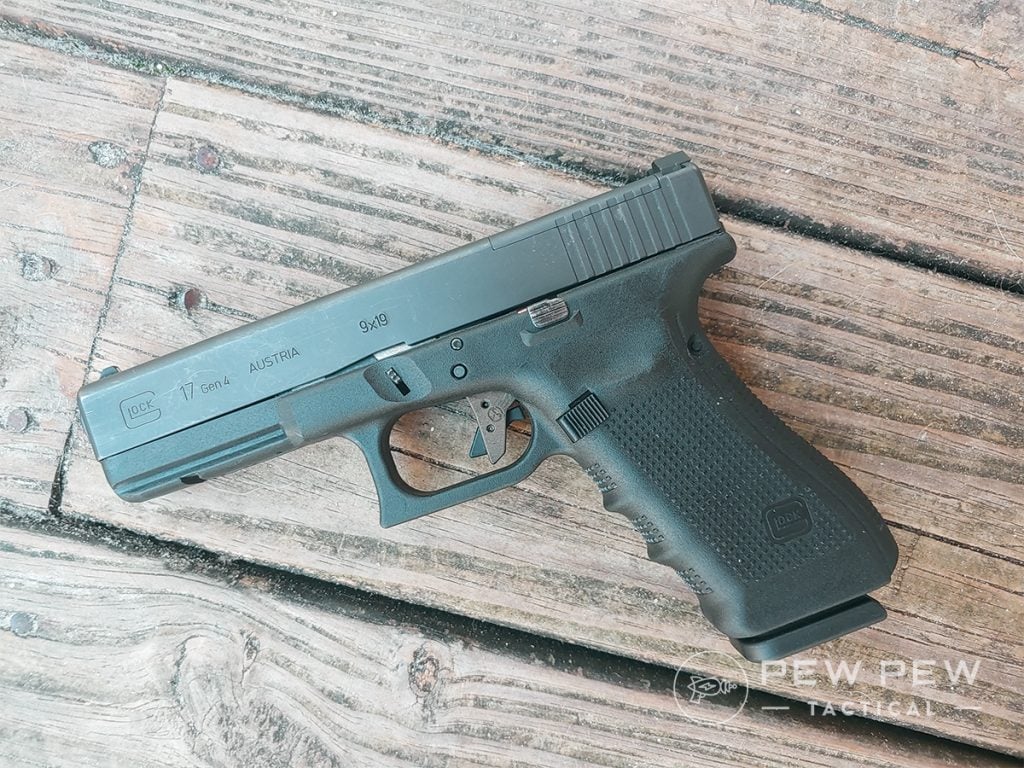
Call me soft, but the trigger also tends to rub and be irritating after shooting a few hundred rounds. I replaced the trigger shoe with a flat metal model to avoid such discomfort.

I’m a fan of the Gen 5’s smooth grip versus the grip humps, but I think that’s more my preference than a flaw on Glock’s part.

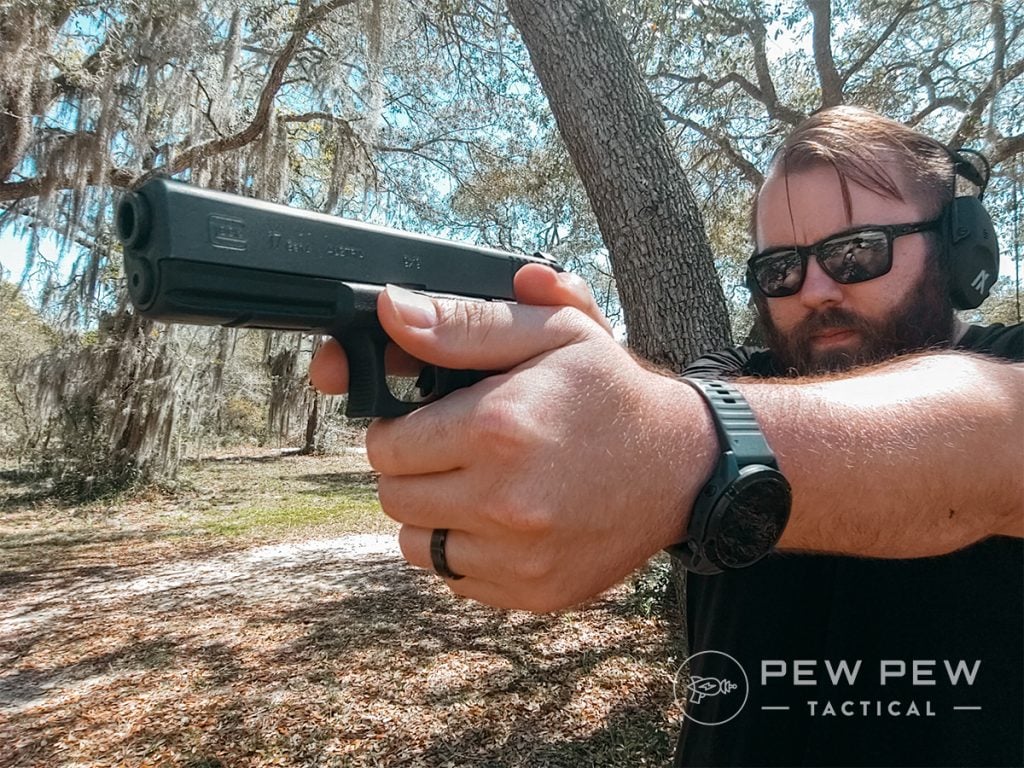
The Glock’s slide release placement is also an issue for me.
Glock 17 Review: Best Full-Size 9mm?

My thumbs press it down with a thumbs forward grip and render it mostly useless when the magazine is empty. The slide fails to lock rearward, and a click lets me know I’m empty.

The magazine release is easily reversible for left-handed shooters. It’s relatively nice, easy to engage, and better than the Gen 3 models.

How Does It Shoot?
Glock 17 Review: Best Full-Size 9mm?

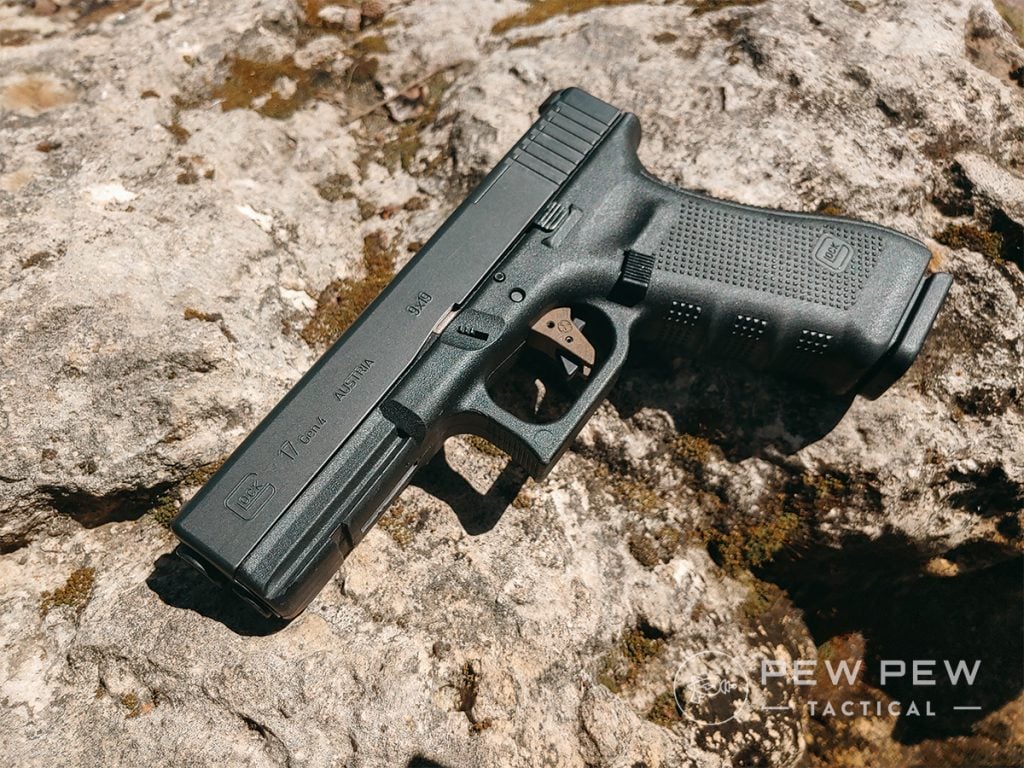
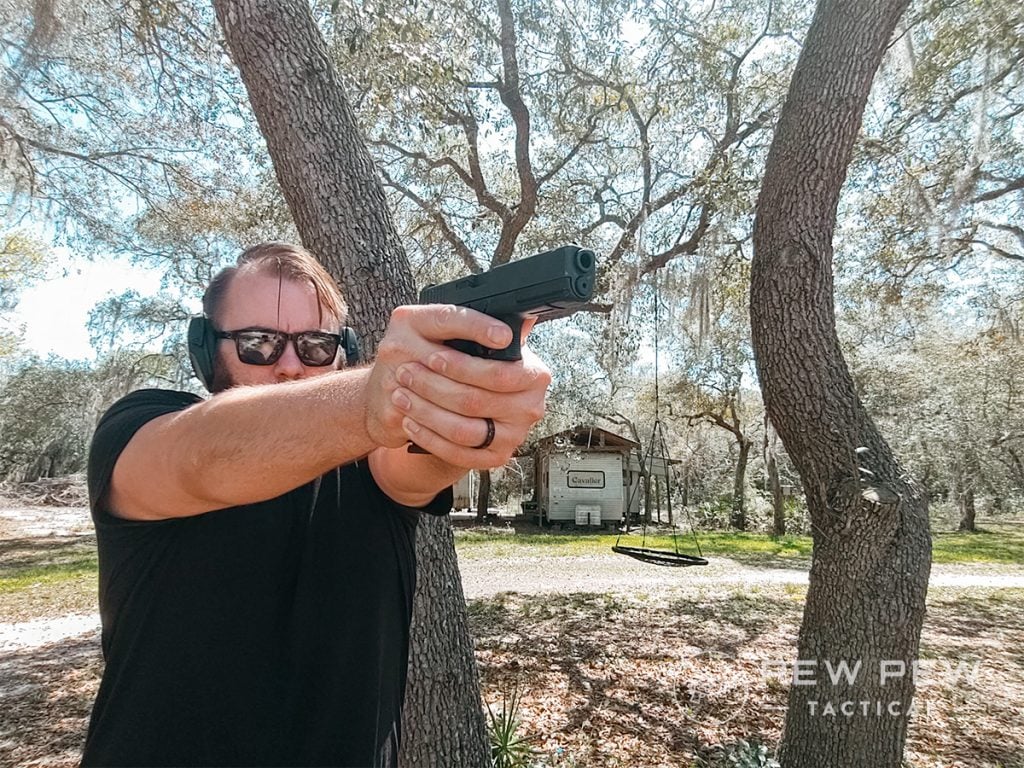
With 6.69 inches of sight radius, the Glock G17 is a straight shooter. The plastic sights leave a lot to be desired, but they are entirely competent for accurate fire. At 25 yards, I can ring the tiny 4-inch gong if I take my time.

Fast headshots are easy to accomplish at this range, and hitting anything remotely large is easy. With an IPSC steel target, I went as far back as 50 yards and landed shot after shot on the big target.

While I replaced the trigger shoe, everything else is the same as a stock Glock trigger.
Glock 17 Review: Best Full-Size 9mm?

It’s relatively smooth with a fair bit of takeup. Once we get to the wall, it’s stiff but short and doesn’t disrupt your sights. The reset is rock solid and both tactile and audible.

Slow fire is fine, but what about fast and accurate? Well, the combination of a good trigger, a controllable platform, and big white sights make it fairly easy to get on target and put holes in that target.

I fired several basic drills like failure to stop, box drills, and 10-10-10 drills with the Glock G17. The result was passing scores across the board. At first, the 10-10-10 was a little challenging but cleared up with a few practice runs.
Glock 17 Review: Best Full-Size 9mm?

Box drills don’t have tight requirements time-wise, so I used the film Collateral as my example. I beat Tom Cruise’s time with the Glock G17 and Bravo Concealment holster with a bit of practice.

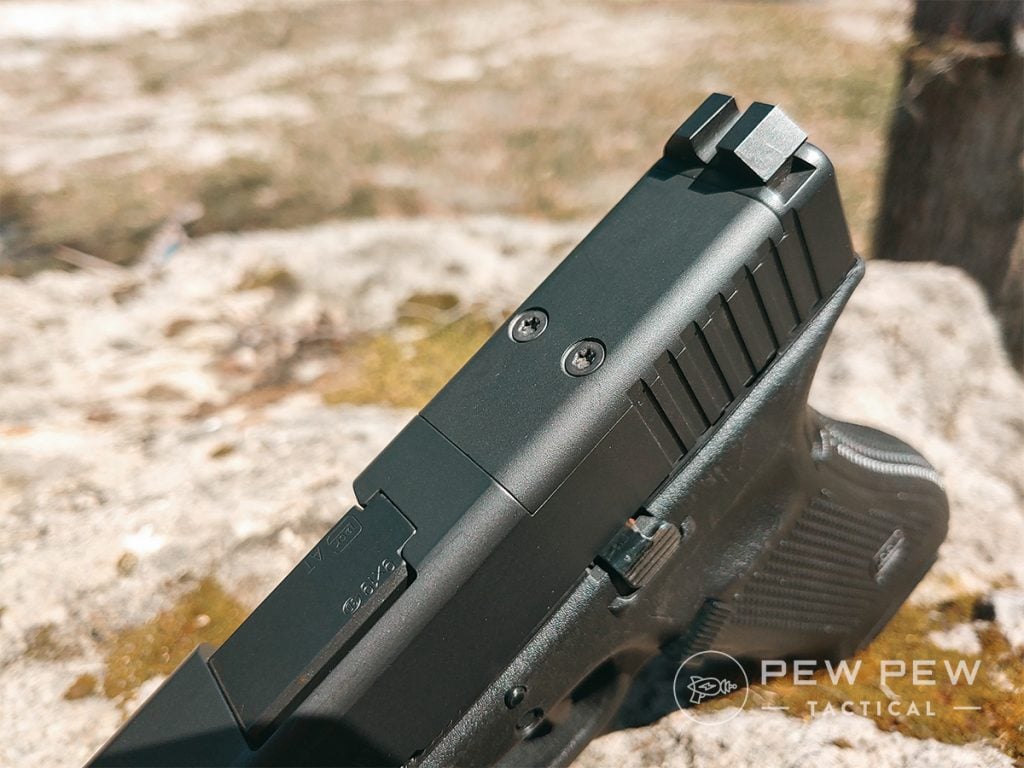
If I was to take advantage of the MOS system, I could toss an optic on and increase my accuracy even more.

The small red dot reticle makes it very easy to see your target and the dot removes the need to align sights. That leads to faster and more precise shots on target.
Glock 17 Review: Best Full-Size 9mm?
MOS plate for affixing a red dot sight

Finally, the Glock G17 is so reliable it’s almost boring. It just goes bang with FMJs, with JHPs, steel-cased ammo, aluminum-cased ammo, and so on.

The Glock G17 doesn’t seem to care much about what kind of ammo it eats.

What Sets It Apart?

These days, the Glock G17 has one main thing going for it over other pistols. Not so long ago, I would have said “reliability,” but most modern pistols made by quality manufacturers are going to be just as reliable.

These days, what really sets the Glock G17 apart is how incredibly widespread it is in the market. It’s the number one law enforcement sidearm, and almost certainly the most popular modern handgun in the world.
Glock 17 Review: Best Full-Size 9mm?
Glock G17 Gen 3

That makes it easy to find parts and upgrades, and it means that there are more upgrades available for it than any other pistol in the world.

Beyond all that, it’s still the same simple, reliable, and rugged Glock that we’ve had for the last several decades, albeit with some tweaks and improvements here and there. It’s the industry standard for a reason, after all.

By the Numbers

Reliability: 5/5

The Glock G17 doesn’t fail. It doesn’t give up and will eat whatever you put through it. There’s a big reason why the Glock dominates in the police and military armories of almost 50 countries, and it’s not because the gun looks good.

Ergonomics: 3/5

The slide bite, the small slide lock, and the blade-like trigger are downsides of a solid gun. The Glock G17 features soft recoil, is easy to control, and has an excellent wide grip that fills the hand nicely. Plus, the magazine release is a significant improvement from other Glocks.

Accuracy: 4.5/5

Handgun accuracy can be tricky to judge. The Glock G17 is about as accurate for a stock-duty-style firearm. It won’t shoot like a Czechmate but shoots pretty dang straight.

Customization: 5/5

It’s the AR-15 of handguns. You can toss on whatever accessories you want and customize the optic from the ground up. Glock G17 owners can swap so many parts and pieces that the firearm becomes less of a Glock and more of a whatever.

Value: 4/5

The Glock G17 might be the most affordable, optic-ready firearm made by a dependable manufacturer out there. The price is fair and keeps it well within most budgets.

Overall: 4/5

The G17 is a rock-solid pistol. The weapon is accurate and reliable, and while it faces some challenges ergonomically, the Glock G17 is an excellent weapon. Plus, it’s reasonably priced and easy to shoot.

Upgrades for the Glock G17

Like other Glocks, there’s a ton of aftermarket support for the Glock G17. And because of the modular design of Glocks, most G17 upgrades are also compatible with other Glocks as well.

Forget holsters and aftermarket sights, that’s nothing. You can replace everything down to the pins with custom parts, till you have a “Glock” made from entirely non-Glock parts.
Glock 17 Review: Best Full-Size 9mm?
Glock G17 (top) and Glock G19 (bottom), Gen 3

That means you can get something that’s truly custom, truly yours. And that’s always going to be something special.

For some specific recommendations, check out our guide to the Best Glock Upgrades.

Final Verdict

I think it’s safe to say that Glock’s fandom prefers reliability and function over character and charm. I get it. Well, I understand it at the very least.

Glock pistols perform, and that’s what a weapon should do at the end of the day.

The G17 is a classic, and it’s a classic that keeps evolving. You really can’t go wrong with a Glock.

Have you used a Glock G17 before? What do you think? Have suggestions for upgrades or accessories? Let me know in the comments. For more Glocks check out our round-up of the Best Glocks.
You Missed or Wounded a Buck — Now What?

0
You Missed or Wounded a Buck — Now What?

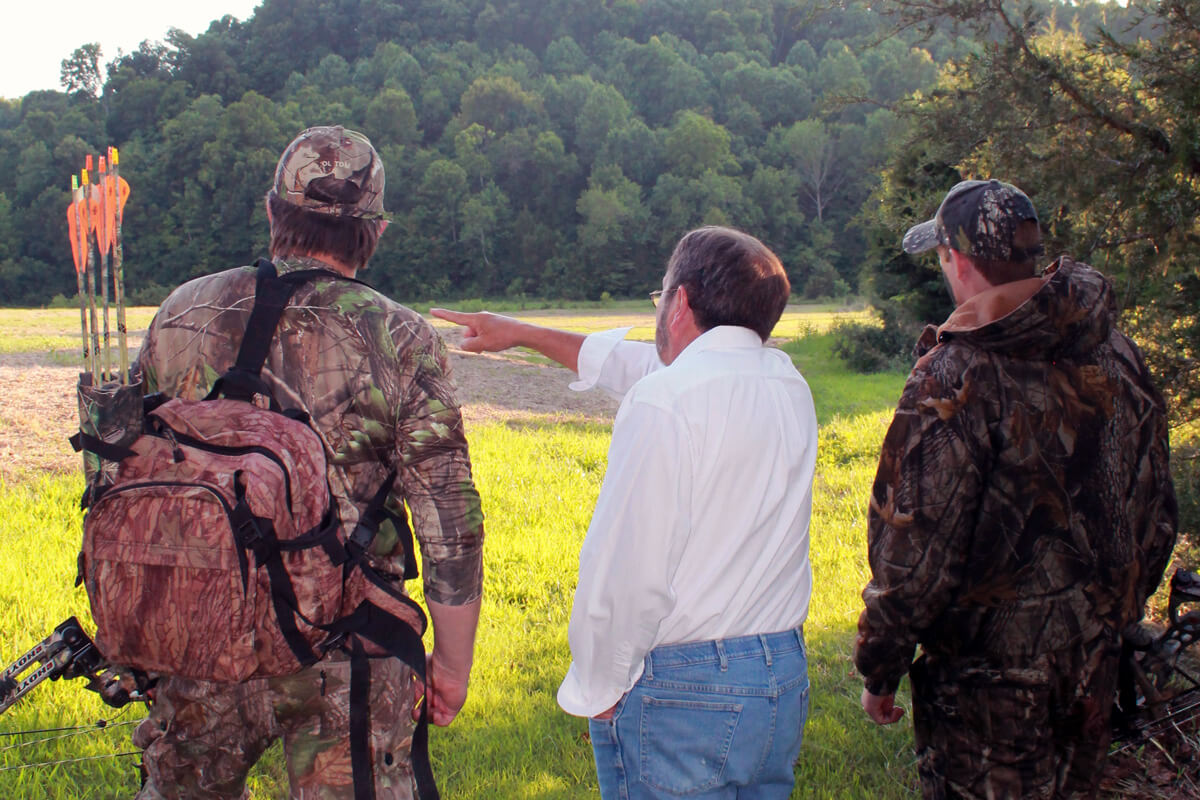
Missing and wounding deer isn’t fun. Practice aplenty and try to avoid each of the 15 primary reasons that hunters miss or wound deer. You can also check with landowners. Sometimes, they might have information on a deer you missed or wounded. (Honeycutt Creative photos)

A hunter draws back, settles the pin, but sends the arrow over the buck’s back. Perhaps he jumped the string? Another hunter does the same, but this time the arrow sinks underneath the belly. Chances are, you’ve missed a deer before, too. And if you haven’t, I hate to burst this delusion, but you certainly will if you hunt long enough.

So, what if you miss with that first arrow? Sometimes you get a follow-up shot. Other times you don’t. Here are next steps for either outcomes.

Reasons Hunters Miss a Buck

Hunters miss deer every season. In fact, I’d like to know the miss-to-hit and wounded-to-dead ratios, but we’ll never get an accurate bead on that. Still, these mishaps happen — a lot. There are many reasons why, including the following:

  • Rushing the shot process.
  • The deer was too far.
  • The deer was too close.
  • The pins or crosshairs weren’t visible.
  • Using the wrong pin or crosshair hold.
  • Ignoring the fundamentals.
  • Using poor shooting mechanics.
  • Equipment malfunctioned.
  • The vitals were obscured.
  • The angle wasn’t good.
  • A limb or other obstacle got in the way.
  • The deer was moving.
  • The deer jumped the string.
  • Buck fever struck again.
Clear out shooting lanes properly to help avoid hitting limbs, leaves, and other debris.

Regardless of which reason occurs, it shouldn’t. All of these are common excuses for missing deer, but none of these should happen. It’s crucial to take the necessary steps to overcome each one. Still, even the best hunters miss and wound deer. So, here’s what to do when it happens.

If You Miss and Get a Follow-Up Shot

Hunters oftentimes think it’s over if you miss a deer. That isn’t true. Second shot opportunities are more common than you might think. If you miss a buck, and it presents another opportunity — be it 10 seconds later or 30 minutes later — you have to be ready for it.

If it happens quickly, carefully nock another arrow, draw back, settle the pin, and let it fly. It’s good to keep your quiver within easy reach. Or pull a backup arrow out and place it somewhere that’s quickly and safely accessible.

If You Miss and Don’t Get a Follow-Up Shot

Get down and check for blood. Sometimes, it can be a hit and you don’t realize it. Once a clean miss is determined, keep hunting. Sometimes, the deer might return. Whitetails are curious animals. It might just give you another chance the same day. And the odds of getting another shot in the days to come are possible, too. Furthermore, you might see another deer you’re interested in.

If You Wound and Get a Follow-Up Shot

Always try to take a follow-up shot on wounded deer. Even if the first shot was perfect, and the deer is certain to die, take another shot if you get the chance. Doing so will likely expire the deer even sooner and makes the hunt that much more humane. Of course, if the shot was bad, taking a follow-up opportunity can mean the difference in killing it or not, and recovering it or not.

If You Wound and Don’t Get a Follow-Up Shot

The trickiest scenario is if you wound a buck and don’t get a follow-up shot. That’s when things get more difficult.

  • With a liver hit, wait five to six hours before attempting to recover the deer.
  • With a paunch (gut) shot, give the deer 10-12 hours, if conditions allow.
  • Shoulder shots are tricky and may or may not be a mortal wound. If not likely mortal, blood trail immediately in hopes of getting another shot. If it is likely mortal, give the deer a few hours.
  • Ham hits produce one of two outcomes. Either the buck bleeds out very quickly, or it lives to tell the tale. Either way, begin the blood trail immediately in hopes of another shot opportunity.
  • Leg hits are not immediately mortal but tend to set up infection over time. Blood trail immediately in hopes of catching up to the deer for another shot opportunity.
  • Spine shots aren’t usually lethal on their own. Go to the deer and finish it with another shot.

There are other bad shots hunters can make, but the above are the most common. Nonetheless, exhaust all options to recover wounded game. Oftentimes, where legal, that might even require hiring a blood-trailing dog, or even recruiting other people to help grid search for the deer.

Beat Buck Fever

It’s always best to make the first shot count. Do that, and you don’t have to worry about missing. But buck fever, and other common causes of missing, are difficult to overcome. Of course, you never want to “cure” buck fever. If that goes away, you’ve lost the excitement for hunting. But it is necessary to manage buck fever. Do that, and you keep the excitement and overcome the challenges it can present. To manage it, do the following things:

  • Follow a practice regimen. This helps to get you ready for the real deal. Consider shooting at 3D big buck targets and do other things that simulate real big buck encounters.
  • Hunt small game. Making good shots on live critters will help boost confidence once it’s time to make the shot on a big deer.
  • Don’t hold your breath. This limits the oxygen in your system. Breathe before, throughout, and after the shot process. This will help lead to a better shot.
  • Quit looking at the rack. Distract yourself if the sight of the buck is too much. Rather than staring at the deer, observe it through squinted eyes until time to shoot. Better yet, stare at the spot you’re going to aim at when shooting.
  • Envision yourself making a great shot. Visualize it in your mind. That will help lead to a good hit.
  • Be aware. See everything around you. Avoid hitting limbs and other things in the way.
  • Pick a small spot to aim at. Rather than aiming “behind the shoulder,” consider aiming at a specific hair in the crease behind the shoulder.
  • Follow your shot regimen. You’ve been practicing it for a reason. Use proper mechanics and follow through.
  • Gain experience. There’s no better teacher, and no better way to overcome buck fever. Keep after it, and you’ll eventually find the success you’re looking for.
Honeycutt-Missed-Buck-Rub-1200x800.jpg
If you miss or wound a buck, consider getting back out there. Unless it’s the last hour of the last day, there’s still some deer season left. Even then, start preparing for next season.

Overall, it’s important to accept a missed or wounded deer. It happened. Spend a few hours drowning in your misery, and then move on. Those who continue to sulk don’t improve. They wither. Instead, learn from mistakes, make necessary adjustments, improve as a bowhunter, and continue to do your thing.

Common Q&As

There are numerous questions that surround the topic of missed and wounded bucks. These are the answers to some of those questions.
Q: Does a deer’s body language help to determine the shot location?

A: Yes, it certainly can. Studying how a deer responded can indicate where the broadhead or bullet struck the arrow. For example, a deer that runs a short distance, then stops, and hunches up, oftentimes is hit in the paunch region. In contrast, a heart-shot deer usually mule kicks and runs very hard.

Q: How long do you wait before searching for a deer?

A: This varies based on the shot location. If you don’t see the deer fall, wait the appropriate timeframe. Heart-shot deer can be blood trailed within 30 minutes, double-lung-shot deer within an hour, liver-hit within 5-6 hours, paunch-shot (gut-shot) within 12 hours, etc.

Q: Will a non-mortally-wounded deer come back to the area it was shot in?

A: It might or might not. Some deer do return, although it might take a few minutes, hours, days, weeks, or months to do so. Other deer never return at all.

Q: Should I notch my tag on a lost deer?

A: This depends on legalities. Some states and situations require this, but most do not require it. In the instance that it isn’t required, this is a matter of personal ethics.

Q: How do I get over missing a big buck?

A: Continue hunting. Get back out there. But practice and prepare more than you ever have before. Generally, we create our own luck by setting ourselves up for success or failure.

.300 Blackout (BLK) vs. 5.56: What’s Best For You?

0

Time to cut through all of the chatter.

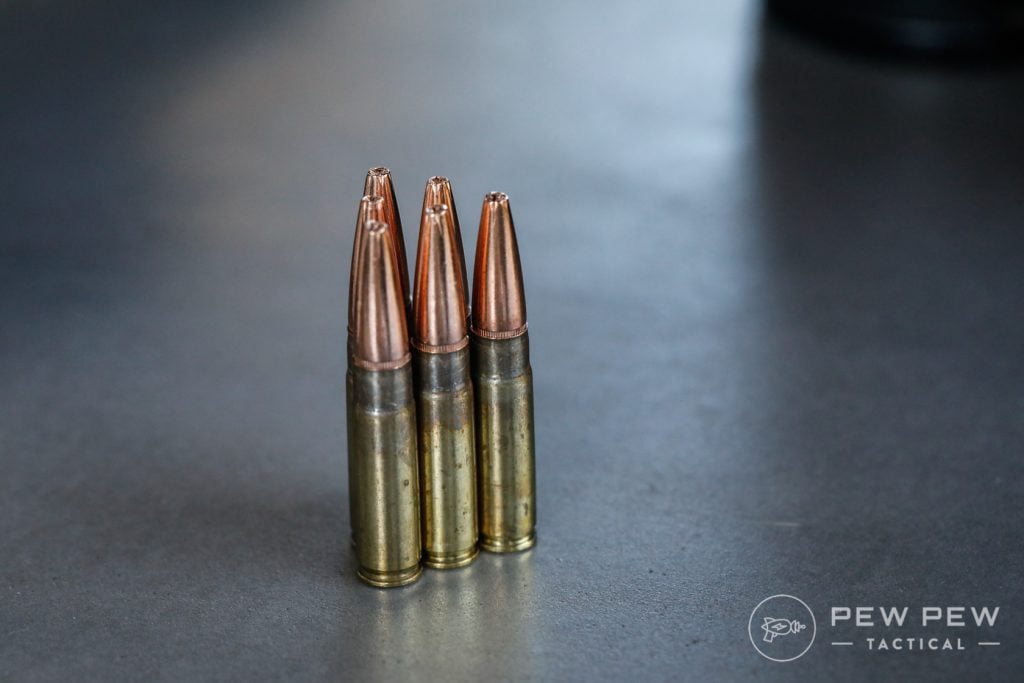
The .300 Blackout (BLK) has been called everything from the 5.56 killer to the black mamba.

.300 BLK 123gr vs 200gr

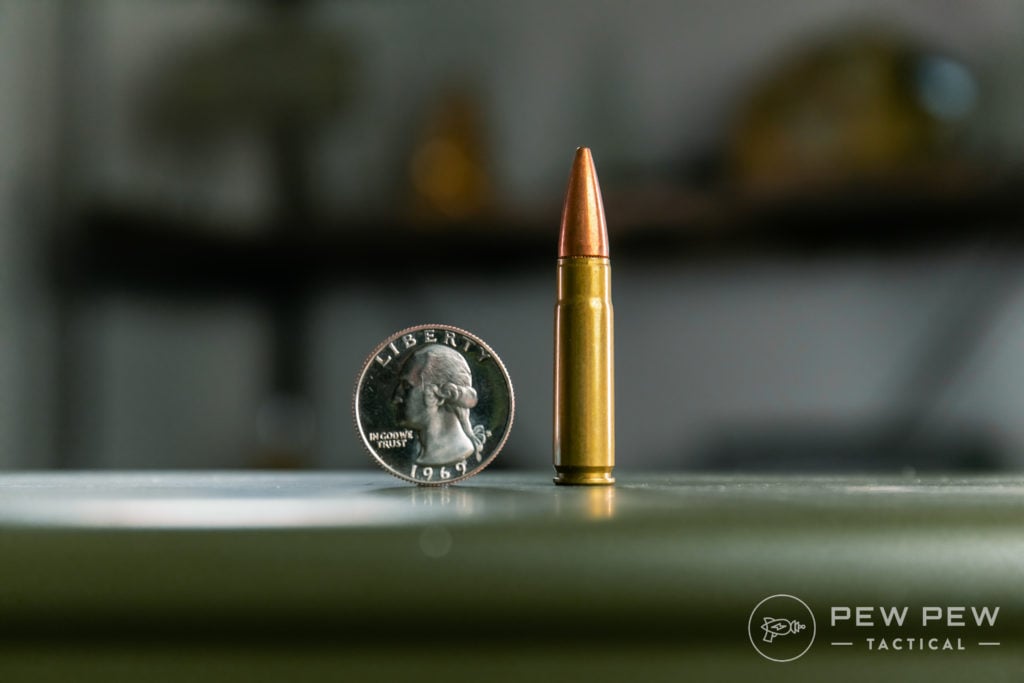
Designed by Advanced Armament Company as a replacement for the MP5SD, a 9mm sub-machine gun favored by special ops, it had to have more power, same sound level, and compatibility with the M4/AR-15.

The .300 BLK did exactly that…and gave civilians a serious upgrade for the AR-15.

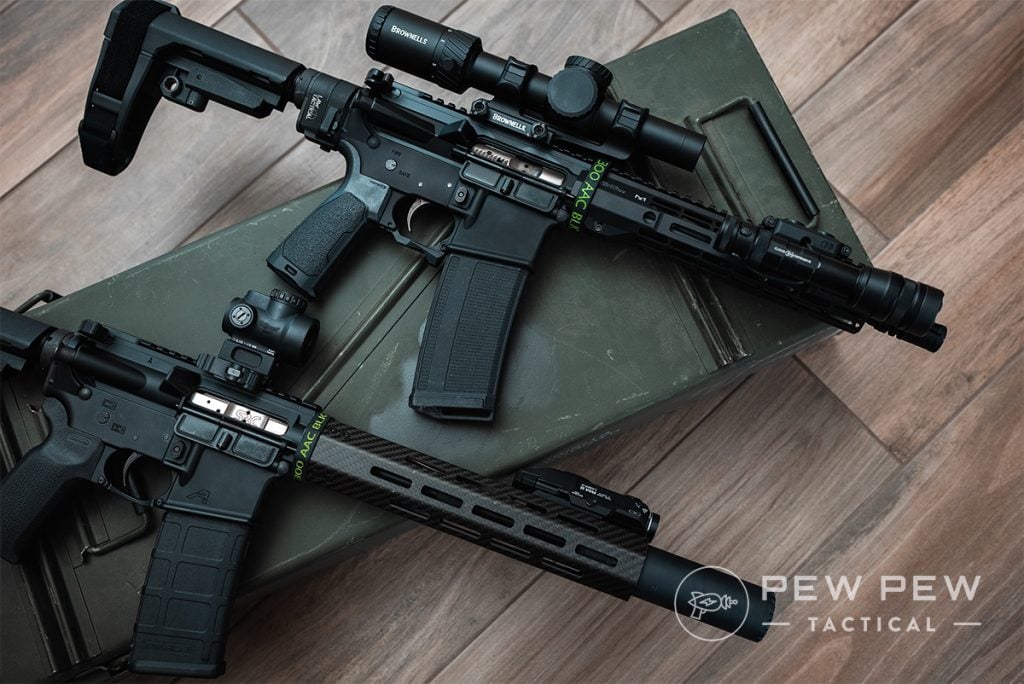
.300 BLK AR-15 Pistols

But should you consider an AR or upper chambered for .300 BLK? What are the pros/cons?

We’ll walk you through the ballistics, cost, and real-world power of the .300 BLK vs 5.56/.223. And then if you want more…we have our standalone articles on the best uppers, ammo, & even optics.

.300 BLK 123gr vs 200gr

So, if you’ve ever caught yourself pondering the .300 BLK…keep reading.

.300 BLK History

The .300 BLK has its origins in the .300 Whisper, a round designed…as the name suggests…to be shot suppressed.

The case is formed by stretching out the case of a 5.56mm NATO and trimming it down slightly.

It is then stuffed with fast-burning powders and any number of bullets weighing from 110 to 220-grain.

Voila!

.300 BLK 123gr vs 200gr

What you have now is the ultimate short-range thumper that will feed both supersonic and subsonic ammunition and get its full ballistic potential (complete burn of the powder) from a 9-inch barrel.

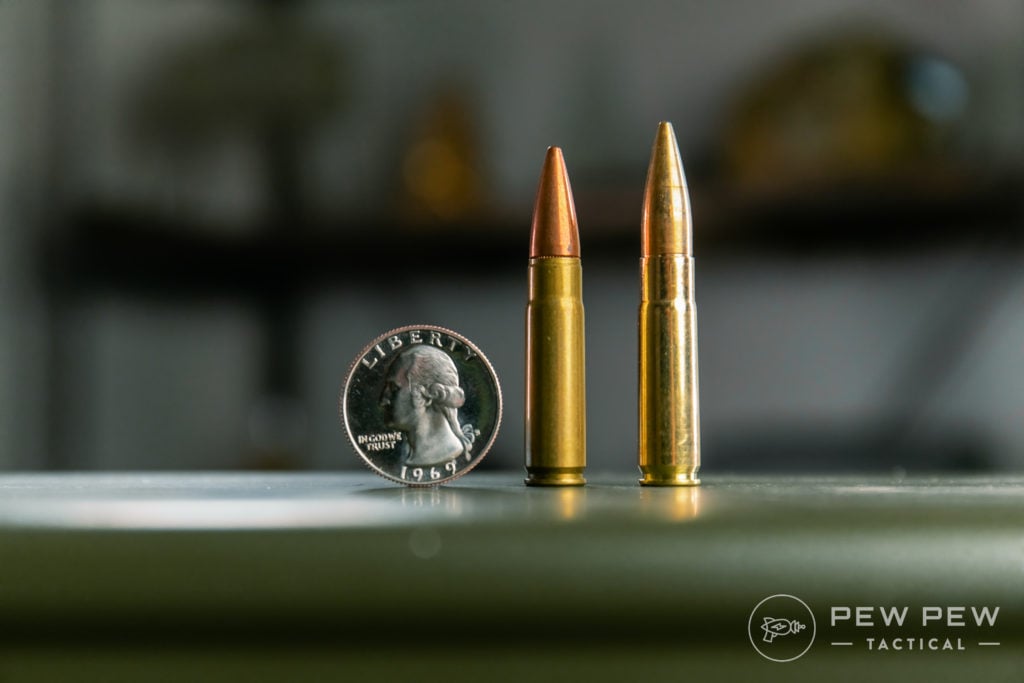
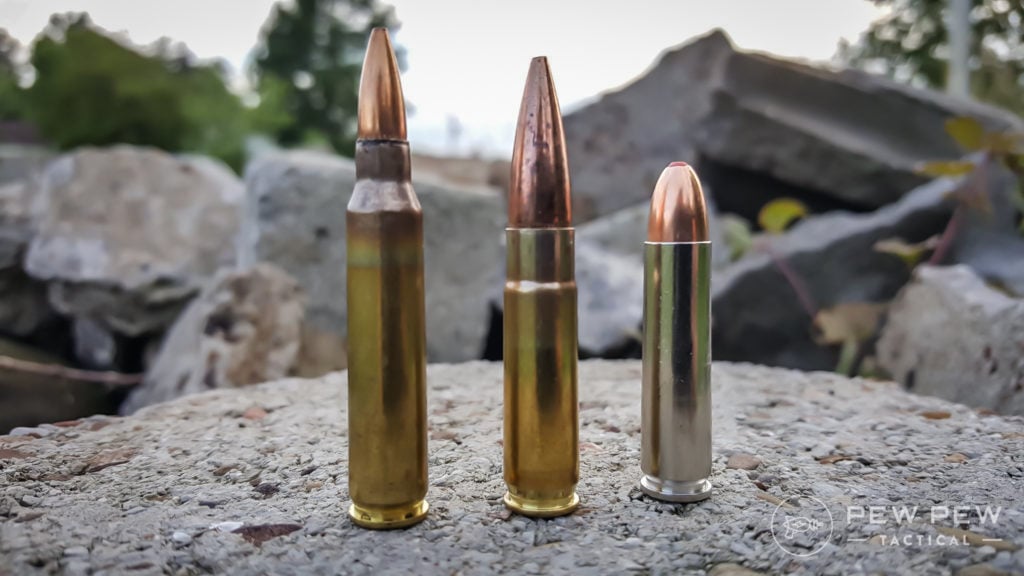
(L to R) 5.56 NATO and .300 BLK compared to the .30 Carbine
Ballistic Advantage .300 BLK Barrels, 10.3 vs 9 Inch

The .300 BLK is really what two long protracted wars in the Middle East have taught us about the modern gunfight.

You need a hard-hitting, short, light, and quiet, gun that will own 0 to 300 yards.

The AR-15/.300 BLK combo does this markedly better than the 5.56 NATO.

Why You May Want a .300 BLK Upper/Rifle

The .300 BLK has easily been the most successful new caliber in the last 20 years.

Besides the easy conversion between 5.56 and .300 BLK, the .300 BLK does a lot the 5.56 can’t.

First off, it’s a very versatile load with projectiles weights ranging from 110 grains to 220 grains.

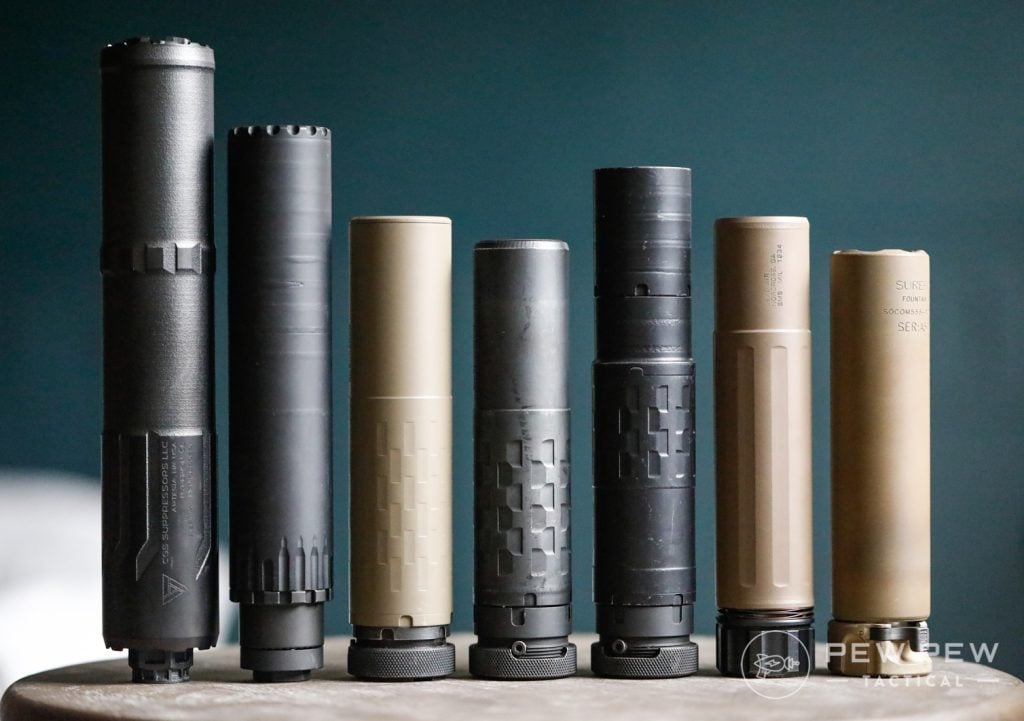
.30 Cal and 5.56 Suppressors
(L to R) 5.56 NATO, .300 BLK, .30 Carbine

The 110-grain rounds are supersonic, and the 220 subsonic.

A subsonic round is much easier to suppress, and much quieter when suppressed. The .300 BLK also reaches peak ballistic potential from a 9-inch barrel.

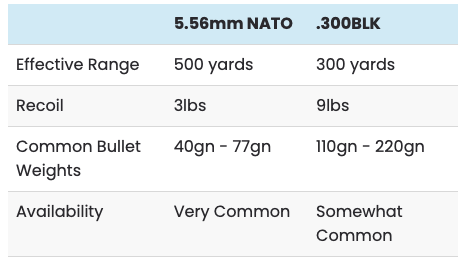
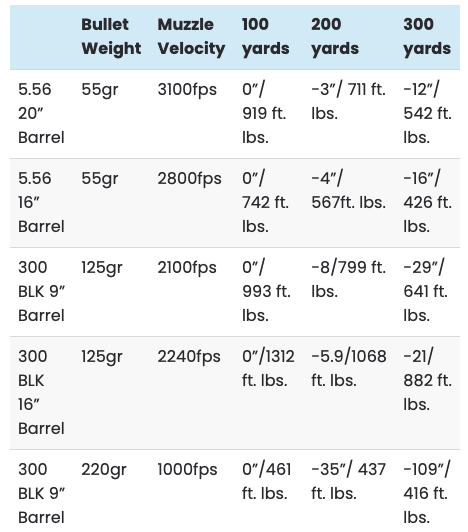
.300 BLK vs 5.56 Table
.30 Cal and 5.56 Suppressors

The 5.56 requires a 20-inch barrel to reach peak ballistic performance.

.300 Blackout vs. 5.56 NATO

Subsonic .300 Blackout

Strengths & Weaknesses

Both .300 BLK and 5.56 NATO are intermediate-class rifle cartridges for target shooting, hunting, home defense, and plinking.

The 5.56 is half the cost of 300 BLK and is available in more high-end loading suitable for precision rifle fire.

It also shoots flatter, experiences less recoil, and ammunition weighs about 40% less.

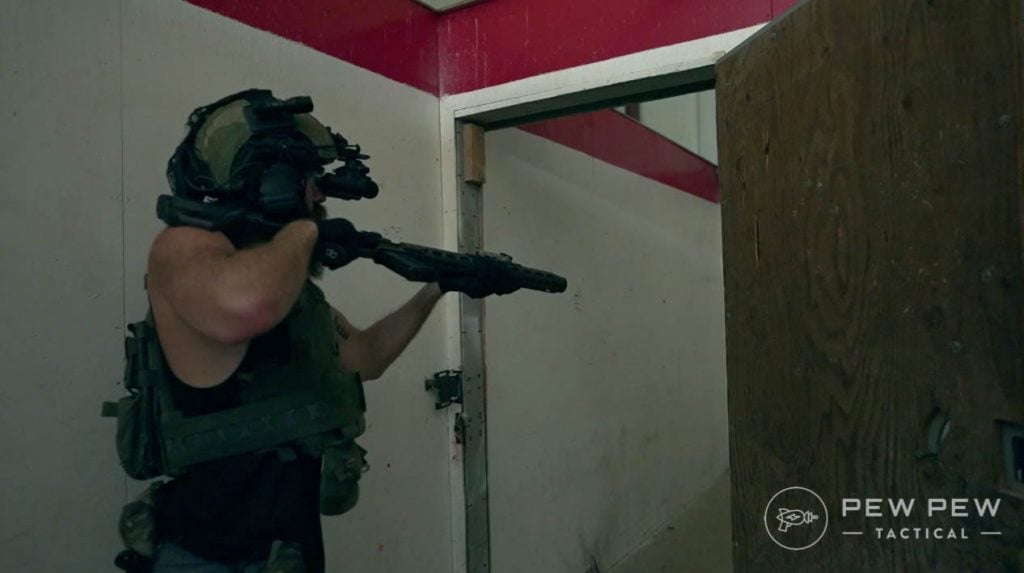
Daniel Defense DDM4ISR Shoot House
5.56

The .300 BLK offers a wider range of projectile choices, thanks to the .30 caliber bore, burns its full potential in a 9-inch barrel, and is a much better choice for hunting.

It also has the ability to cycle both super and subsonic ammunition without modification.

Terminal Ballistics 556 vs 300 BLK
Subsonic .300 Blackout

The .300 BLK also shows its strengths when short-barreled rifles and silencers are involved.

hd overpen testing 5.56 rifle
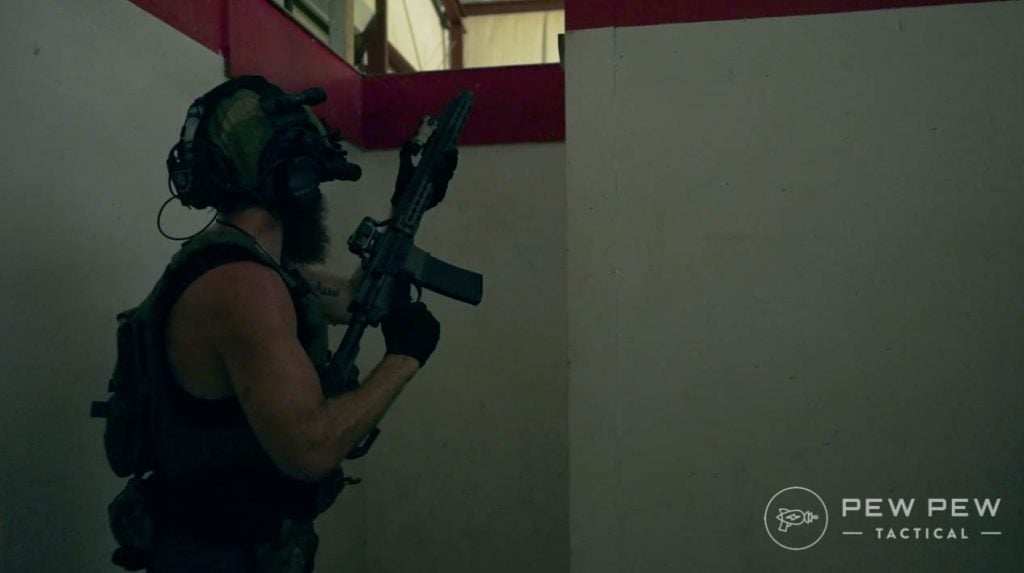
Navigating tight corners…the .300 BLK is a nice option.

For a duty rifle that will conduct CQB work, this cartridge is a godsend.

Exterior & Terminal Ballistics

300 BLK

In the table above you can see the compared ballistics of both the .300 BLK and the 5.56 NATO.

It shows the barrels that the cartridges were designed around…20-inches for the 5.56, 9-inches for the .300 BLK, and the most popular civilian barrel length of 16-inches.

Exterior Ballistics

Exterior ballistics are the qualities associated with how a projectile flies through the air — wind drift, bullet drop, and zero range all fall into this category.

You can see above that the 5.56 is significantly flatter than the .300 BLK in flight. This is due to a faster velocity.

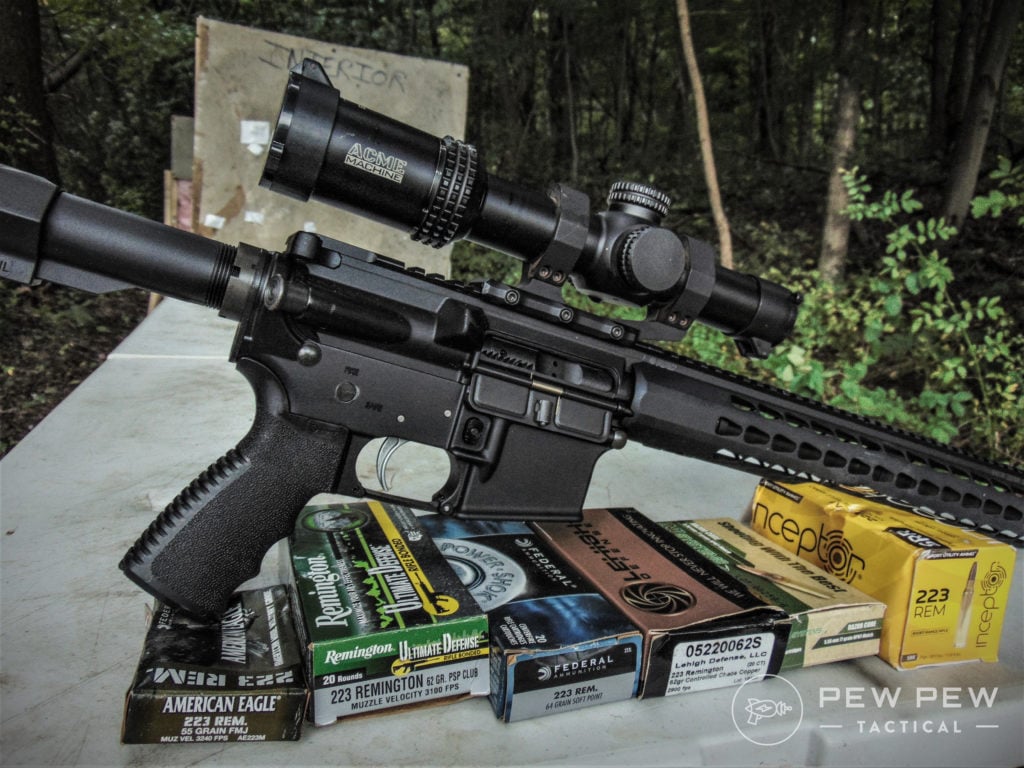
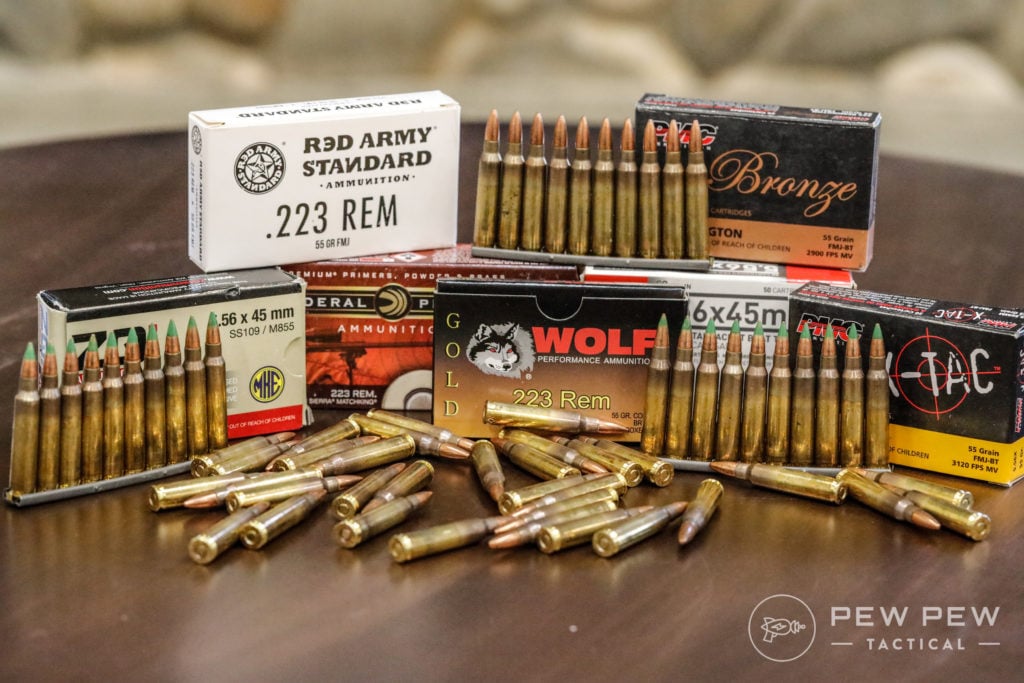
Popular 5.56 and .223 Ammo

The .300 BLK uses bullets with a higher ballistic coefficient but isn’t moving fast enough to take advantage of its sleeker projectiles.

This is why the 5.56 shoots flatter and with less wind drift despite having almost half as much energy.

Terminal Ballistics

Terminal ballistics of a round are the qualities it has when it hits the target.

The round’s sectional density, the relationship of its mass and its weight, its ability to penetrate rather than fragment, and the wound channel it creates due to its bore size are all the study of terminal ballistics.

It’s important to note that while energy numbers can give you an idea of power, it’s only a single data point.

To the untrained observer, the .300 BLK seems to have the edge in terminal ballistics.

FN 15 on the range
.300 BLK

The stouter bullets, with more mass of a larger caliber, seem to be the more effective round.

While the .300 BLK does have slight obstacle defeating capabilities it isn’t markedly better in performance than the 5.56 with the correct loading.

Modern bullet design is closing the gap between calibers and making the smaller bores more and more effective.

Additionally, the 5.56mm NATO was designed to break up, tumble and flip end over end when it encounters a target.

tiny apartment
Popular 5.56 and .223 Ammo

This is called high-velocity projectile fragmentation and deformation.

As far as a clear-cut winner goes…it entirely depends on what you want from the round.

General Shooting

Target shooting, training, or informal plinking, shooting is just plain fun.

It can get expensive so go with 5.56 NATO.

Home Defense AR-15
FN-15 on the range

The .300 BLK’s benefits just aren’t needed when all you’re doing is punching paper.

Look for bulk cheap 5.56mm and use it. You can always switch to .300 BLK when the time comes.

Home Defense

Your home is your castle and for keeping the peace you should walk softly and carry a rifle.

.300 BLK and 5.56 both have their pros and cons and what’s best for one person, may not be the best for another.

The best selling point for .300 BLK is that it can be used with a suppressor and a short barrel — both of which are great for home defense.

Deer hunting with kids? Absolutely.
The Daniel Defense DDM4ISR is an integrally suppressed .300 BLK.

A short barrel makes it easier to move around your home and a suppressor protects you and your loved ones’ hearing.

That said, a major downside to .300 BLK in home defense is they have a lot of barrier penetration. Meaning that if you miss (or even if you do hit your target) there is a very good chance those rounds will carry through the wall.

Over penetration makes .300 BLK a very poor choice for anyone living in an apartment.

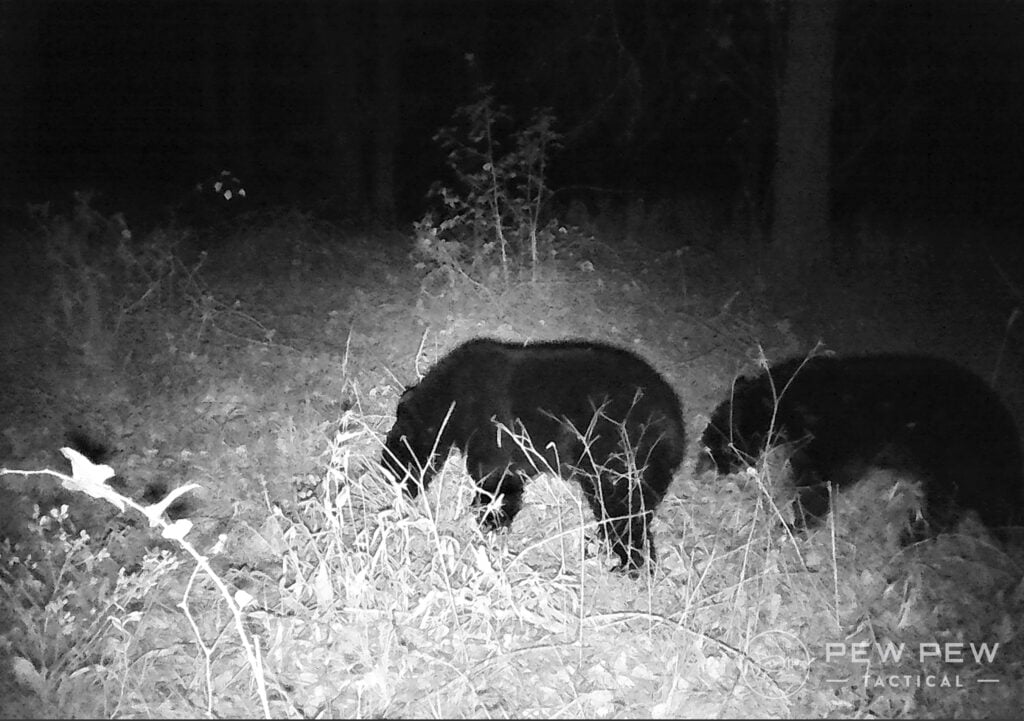
Trail Cam Bears
Apartment living do be like this sometimes.

On the other hand, 5.56 has poor barrier penetration (it will still go through several layers of drywall, but loses effectiveness much faster than .300 BLK).

So it might be a better fit for apartment living.

Hunting

With modern bullet designs, the gaps between the power of calibers are shrinking.

But what you’re hunting and the range are the primary factors when choosing a hunting round.

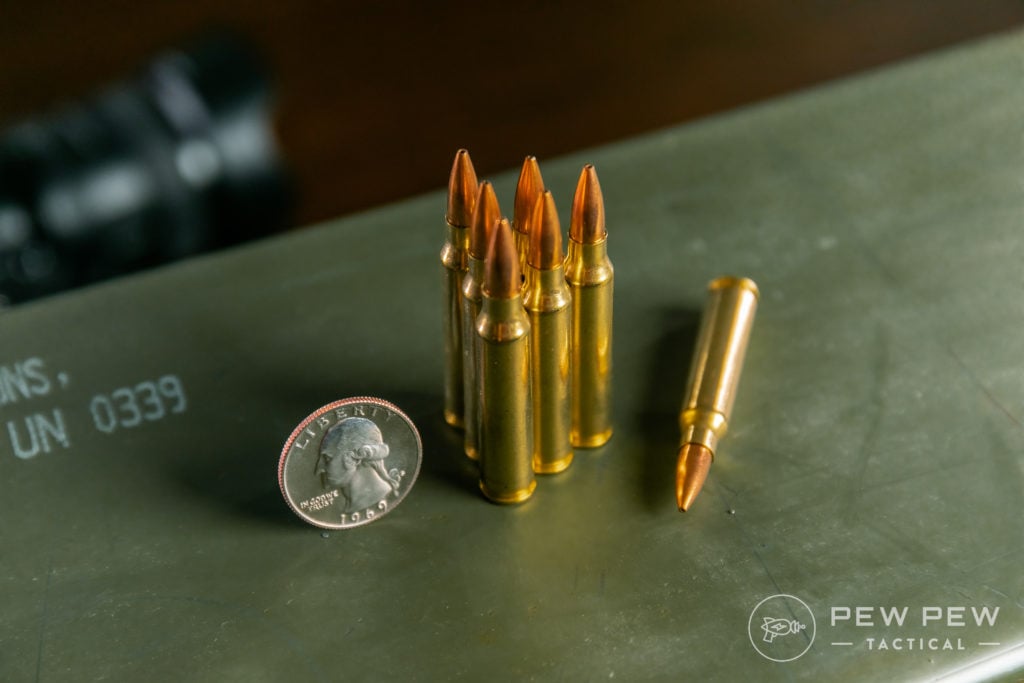
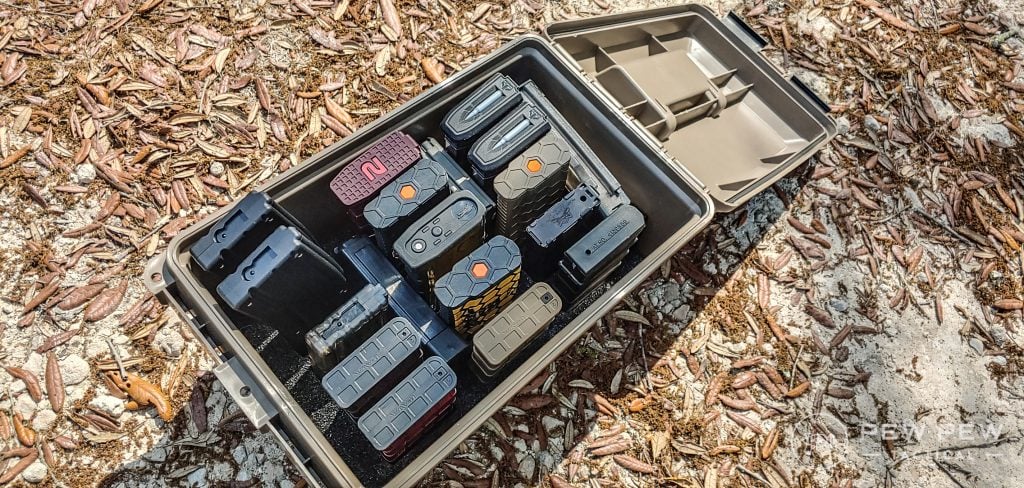
MTM AR-15 Mag Can
Hunting depends on the game and the range.

If your quarry will include only small game, predators, or mid-sized deer at ranges inside 100 to 150-yards then go for the 5.56.

If you plan on hunting medium or large game — such as deer, hogs, or smaller bears — the .300 BLK is far superior.

The extra mass gives more reliable penetration than the 5.56. And the typical hunting ranges of these animals mean that the slight disadvantage of the trajectory is negligible.

Daniel Defense DDM4ISR Shoot House
Hunting these? You might want something beefier.

However, if you’re looking to hunt any game at distances greater than 150-yards or game larger than an above-average whitetail — you should look at cartridges with a little more oomph to ensure ethical kills.

SHTF

Shoot both!

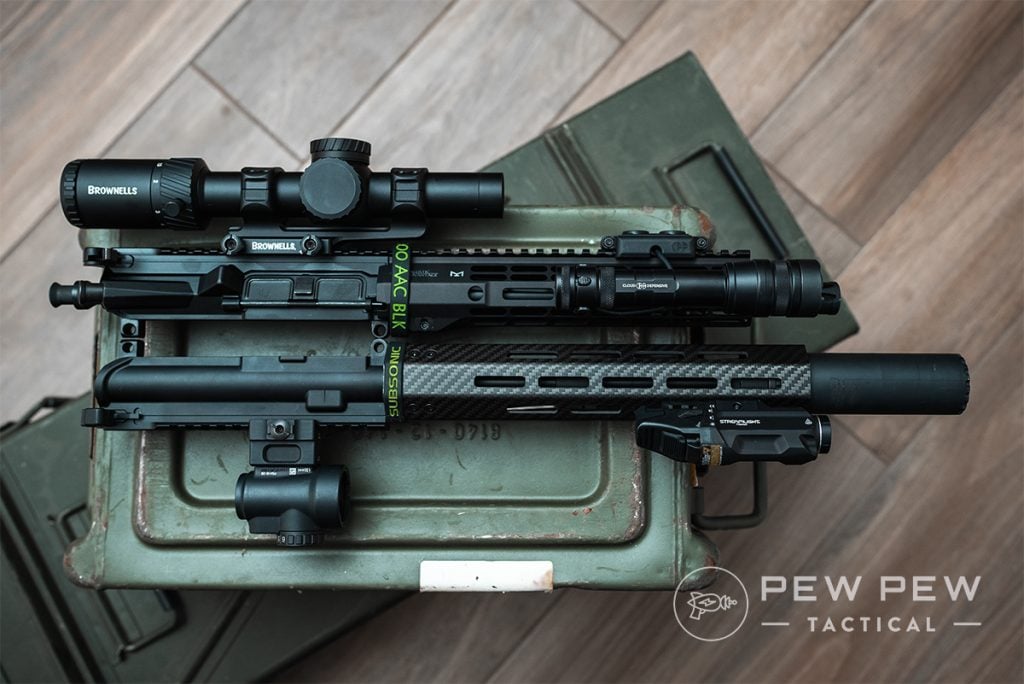
Uppers available for cheap online can make your weapons much more versatile.

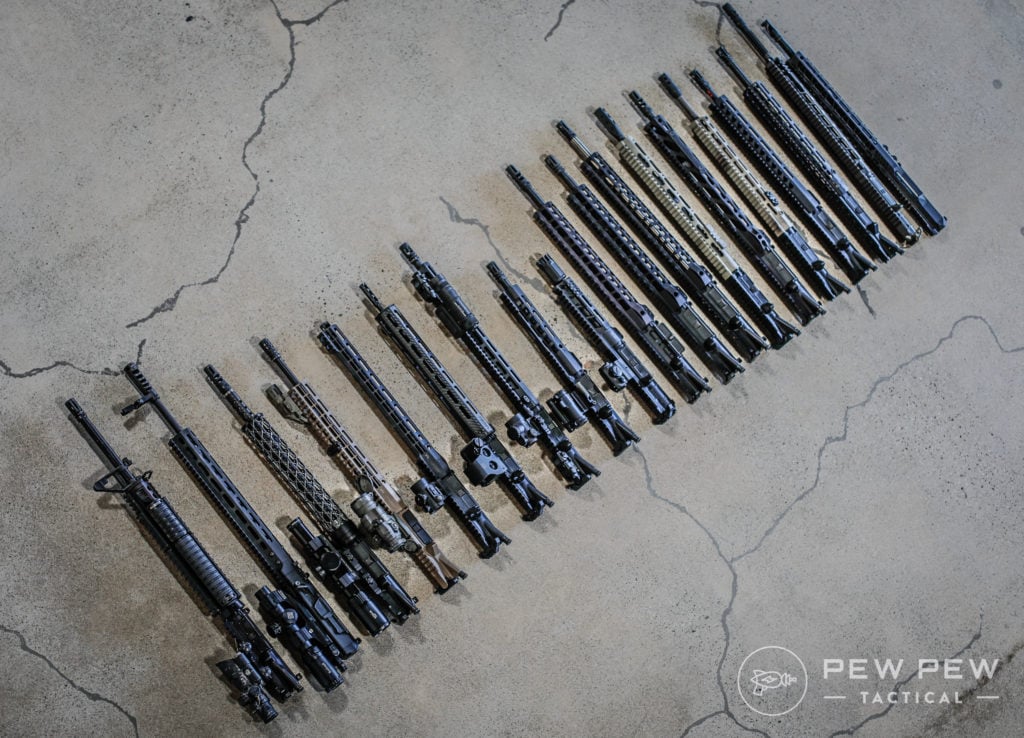
Pair of .300 BLK Uppers
What about when SHTF and you’re trying to outrun a horde of zombies?

Because the .300 BLK is derived from the case of the 5.56, all you have to do to switch caliber is change the barrel. In an AR-15 the best way to do this is to get a second upper receiver.

Keep all your mags, high-quality bolt, lower receiver, and take advantage of both cartridges.

.300 Blackout (BLK) vs. 5.56: What’s Best For You?
Get all the uppers!

.300 Blackout Safety

I do want to note one thing before you run out and get a new .300 BLK upper…you NEED to be careful when switching between uppers or even when you have a dedicated .300 BLK rifle and a 5.56 rifle.

.300 BLK can chamber in most 5.56 barrels, however, if you try to shoot it – your barrel (and sometimes more) will literally burst. Explosively.

.300 Blackout (BLK) vs. 5.56: What’s Best For You?
Like this…

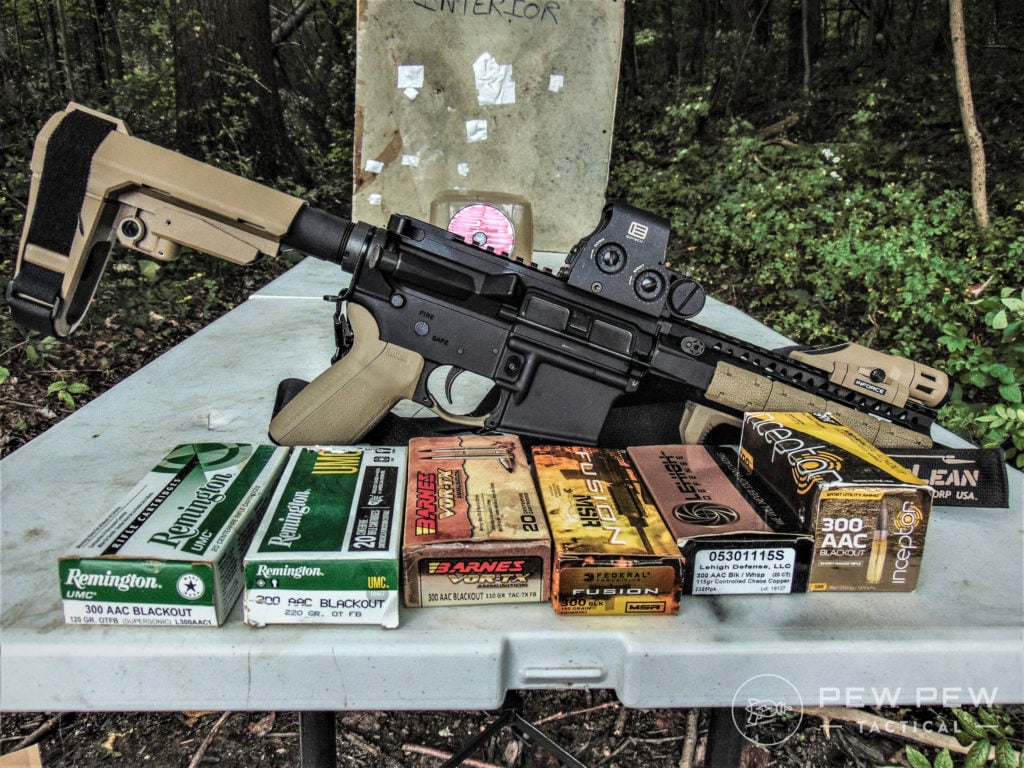
Make sure you keep ammo and mags separate.

Personally, I keep them organized by using different color mags — FDE and black for 5.56 and Olive Drab for .300 BLK. I also double and triple-check things before loading a mag into the rifle.

.300 Blackout (BLK) vs. 5.56: What’s Best For You?
Don’t just slam them all in here…

Conclusion

The .300 BLK won’t ever supplant the 5.56 for the most ubiquitous AR-15 cartridge but it does have some key areas where it really shines.

.300 Blackout (BLK) vs. 5.56: What’s Best For You?
DDM4ISR

Most notably, it does great in CQB environments or alongside suppressors and can run on your existing AR-15 — so long as you get a .300 BLK upper.

In short, we love the versatility of this cartridge.

Pair of .300 BLK Uppers

Does a .300 BLK make sense for you? We’ve got a lot more where this came from!

  • Best .300 BLK Uppers
  • Best .300 BLK Ammo
  • Best .300 BLK Optics

America’s One Fatal Shark Attack of 2022

0

Sharks have a fearsome reputation as deadly predators but attacks on humans are rare. Sharks don’t actively seek out humans as prey and prefer to hunt fish or seals.

This doesn’t mean they pose no risk and danger can arise, especially during the summer months, when more people swim in the sea. For this reason, a handful of attacks and fatalities occur every year. Attacks are usually a case of mistaken identity, as sharks may bite a human believing them to be their usual prey. Many sharks let go once they realize their mistake, but their very sharp teeth can cause life-threatening injuries.

In 2022, there have been 51 shark attacks in the U.S., mostly in Florida. Only one, in Hawaii, was fatal.

The International Shark Attack File, run by the Florida Museum—which records shark attacks worldwide—is still analyzing this year’s data.

Gavin Naylor, Program Director at the Florida Program for Shark Research, who works on the file, told Newsweek: “There have actually been a handful fatalities [worldwide] this last year. The challenge is to determine whether or not they were ‘provoked’ or ‘unprovoked.’ We are still researching these cases. In general the numbers are slightly lower this year but not significantly so.”

A stock photo shows a great white shark breaching the water. There has been one fatal shark attack in 2022 in the U.S. Peter_Nile/Getty

One fatal attack

The U.S. saw one fatal shark attack in 2022, in Hawaii.

A woman from Washington State had been snorkeling off the coast of Hawaii near Keawakapu Point on December 8 when she disappeared without a trace. She had been with her husband at the time, who was also snorkeling nearby.

Several days passed with the woman’s whereabouts remaining a mystery, before officials confirmed that she had been attacked and killed by a shark.

Several eyewitness accounts confirmed the cause of death.

One witness told Hawaii’s Department of Land and Natural Resources that he had spotted the couple snorkeling as the shark approached. He said he began yelling at them both to get out of the water.

The witness then said he saw a shark feeding on something “in the middle of the red cloud in the water.” The woman disappeared, but the eyewitness continued yelling at the man to get out of the water.

The woman’s husband also said he had seen a shark about 50 yards offshore. After the woman went missing, he continued to search for her. The shark then began to circle the man, but eventually left the area. The husband had noticed it had blood around its gills.

The shark’s exact species was not confirmed but some believed it to have been a tiger shark. The tiger shark is one of the “Big Three” shark species responsible for most shark attacks on humans, along with the bull shark and the great white.

The U.S. is usually the country with the highest number of reported shark attacks per year, the International Shark Attack File said.

There have been a few more shark attacks in 2022 compared with the previous year when the International Shark Attack File recorded 47 confirmed unprovoked shark attacks.

In 2021, there were 42 percent more shark attacks than in 2020 but this was largely explained by fewer people being in the water during the coronavirus pandemic.

Of all states, Florida is usually the one with the highest number of attacks. This trend has been consistent for decades and the state has consistently topped shark bite charts. In 2021, Florida’s 28 shark attacks represented 60 percent of the U.S. total.

Shark bites in 2022

While there has only been one U.S. fatality this year, it has not been the only attack to occur.

A 17-year-old high school cheerleader, Addison Bethea, had her leg amputated after being attacked by a shark in Florida.

Bethea had been in the waters off Keaton Beach on June 30 when she was attacked by a shark thought to be 9 foot long.

The shark did not let go of her leg until Bethea’s brother dragged her out of the water away from its grip. The teen survived the attack but lost a leg.

In November, a California woman was bitten and shaken by a shark. Lyn Jutronich had been swimming off Del Mar Beach in San Diego on November 4 when she felt the shark slam between her legs.

As the shark clamped down on her right leg, it shook the limb once “like a dog” before letting her go.

Once an avid swimmer, Jutronich said she was not sure she would ever go into the sea again following the incident.

A spate of shark attacks also took place in New York state from June 30 to July 20. There were as many as six shark bites during this time, across beaches in the same vicinity. Before this, the Shark Attack File had only recorded 12 unprovoked bites in New York before 2022.

Do you have an animal or nature story to share with Newsweek? Do you have a question about sharks? Let us know via [email protected].

“);jQuery(this).remove()}) jQuery(‘.start-slider’).owlCarousel({loop:!1,margin:10,nav:!0,items:1}).on(‘changed.owl.carousel’,function(event){var currentItem=event.item.index;var totalItems=event.item.count;if(currentItem===0){jQuery(‘.owl-prev’).addClass(‘disabled’)}else{jQuery(‘.owl-prev’).removeClass(‘disabled’)} if(currentItem===totalItems-1){jQuery(‘.owl-next’).addClass(‘disabled’)}else{jQuery(‘.owl-next’).removeClass(‘disabled’)}})}})})

Maintaining Oak Tree Health

0

Is your tree healthy?

Twig growth for the season should be from 3 to 24 or more inches in length. Bark growth cracks usually indicate that the tree is healthy. Tissue in the cracks should be bright green or pink when scratched. However, loose and discolored bark or unusually flattened areas on the trunk is indicative of a diseased condition.

Root Zone Management

Maintain an undisturbed soil area above the root zone if possible. (For management purposes the root zone extends out 1/3 the distance beyond the drip line of the tree. The drip line is the outermost edge of a tree’s foliage). Minimize grading, digging, trenching, covering the ground with asphalt or concrete or landscape plants, excessive foot traffic, or vehicle parking. Proper management maintains free passage of water and air within the root zone. The area extending 6 feet from the trunk is the most vulnerable and should always be left undisturbed and uncovered.

Pruning

Mature oaks do not require pruning except to remove dead, weakened, diseased, or dangerous branches. If pruning is necessary, trees should be pruned in the dry season. June and July is best.

Irrigation

Native California oaks have evolved in a Mediterranean-type climate where there is little rainfall between late spring and early autumn. As such, they generally do not require irrigation during this dry period and, in fact, trees may be adversely effected by supplemental watering during this period since warm-moist conditions can favor harmful diseases. It is particularly critical that the trunks of oak trees remain dry. However, if the winter season is unusually dry, then a supplemental irrigation in the early spring can complement natural rainfall. Water deeply, to one to two feet, in the outer two-thirds of the root zone. Alternatively, placing organic mulch under the tree can conserve moisture in the root zone by reducing surface evaporation. Mulch also inhibits the growth of weeds, which can compete with oak roots for moisture and nutrients. As mulch breaks down, it also increases organic material in the soil which improves water percolation, aeration in the root zone, and long-term nutrient availability.

Newly planted trees may require supplemental watering while they are establishing in the landscape. These plants may require irrigation up to one every month in the dry period.

Fertilization

A healthy, mature oak under natural conditions does not require supplemental feeding. The leaf litter and other organic debris on the soil supply nutrients as they decompose and release nutrients to the soil and roots. Supplemental fertilization may be needed when the organic debris is removed or when the oak exhibits disease or when growth is poor. Generally, young trees can be fertilized to establish them quickly.

Nitrogen is the primary nutrient of value to oaks. Prior to rain or irrigation, fertilizer can be spread on the ground to cover the outer two-thirds of the root zone. An alternate application method is sometimes useful. Fertilizer can be injected with water or placed in holes dug into the ground, 18 inches apart, along the tree’s drip line. Fertilizers should be applied at a rate of two to four pounds of actual nitrogen per thousand square feet of area. (For example, if a nitrogen fertilizer contains 20% elemental nitrogen, then 10 to 20 pounds of fertilizer would be applied per thousand square feet of area). Organic nitrogen or slow release nitrogen sources are preferable. Organic sources should be applied in late winter to allow the nitrogen to move into the root zone. Inorganic sources should be applied in late spring after the first flush of growth.

Compatible Gardens

Drought tolerant plantings can be incorporated into the landscape around oaks. Many California native plants, once established, may require little or no watering. Again, plantings within the root zone area are not recommended.

NOTE: The information on this page was excerpted from from Living among the Oaks, a publication of the Integrated Hardwood Range Management Program, University of California Cooperative Extension. For more information, click here.

Bear Bite Force: How Much Damage Can Bears Do

0

Did you know that bears have some of the strongest bites in the animal kingdom? While they don’t exactly rank at the top in terms of overall strength, their jaws can pack a serious punch.

So, which subspecies top the bear bite force scale? Who’s managed to sink their teeth into the title of the most powerful jaw? Let’s take a closer look at the six main contenders to find out.

Strongest Bear Bite Force

Before we get into details, you need to understand the basic measurement used to determine an animal’s bite force. It’s usually expressed in PSI, or pounds per square inch. This refers to the amount of pressure that the animal can exert with their teeth.

To give you some perspective, the human jaw can generate about 200 PSI of pressure. But when it comes to bears, the numbers are a whole lot more impressive.

Next, we’ll list six subspecies with a strongest bite force.

Polar Bear Bite Force

The polar bear’s claim to fame is its massive size. And when you’re that big, it’s no surprise that you’ve got an equally a powerful bite. These apex predators can weigh up to 1600 pounds and measure over ten feet in length—perfectly matching a bite force of 1200 PSI.

They store fat in their bodies to help them withstand the cold weather and survive for extended periods without food. And this extra weight gives them added strength, allowing them to take down prey that is much larger than they are. When they’re not chomping down on seal meat, polar bears also enjoy munching on berries, roots, and seaweed.

Despite their imposing strength, polar bears are actually quite gentle creatures. They’re known to playfully wrestle with each other and even interact with humans on occasion. But don’t be fooled by their friendly demeanor—if you get on their bad side, they won’t hesitate to show you just how dominant they really are.

Grizzly Bear Bite Force

The grizzly bear is the next contender on the list. These massive animals are found across North America and can weigh up to 1500 pounds. And while they’re not quite as large as polar bears, they more than make up for it with their ferocious appetite. The bite force of a grizzly bear rounds out to 1160 PSI, making it one of the strongest in the animal kingdom.

These bears have a diet that consists mostly of meat, but they’re also known to eat nuts and roots. Their jaw is designed for crushing bones and flesh, which comes in handy when they’re taking down their prey. And while they might look slow and sluggish, they can actually run at the speed of up to 35 miles per hour—making them one of the fastest land animals on the continent.

Unlike polar bears, grizzlies are not known for their friendly demeanor. In fact, they’re one of the most feared animals in North America. And with good reason—when they’re angry or provoked, they can be absolutely ferocious and take no prisoners. In fact, they’re the most aggressive bear species out there and they’re responsible for the majority of bear-related human fatalities.

Brown Bear Bite Force

This is the type of bear you’re probably most familiar with—they’re often featured in children’s stories and movies. But while they might look cute and cuddly, brown bears are actually quite dangerous. They weigh between 600 and 1500 pounds and have a bite force of 975 PSI.

Brown bears are found throughout North America, Europe, and Asia. Their widespread habitat is due to their ability to adapt to a variety of climates and ecosystems. Their fur helps keep them warm in cold weather and their long claws are perfect for digging up food. Their diet mainly consists of vegetation, but they will also eat fish, small mammals, and carrion.

While brown bears are typically introverted and elusive creatures, they are fiercely protective of their cubs. If they feel like their young are in danger, they will attack—even if that means taking on a human. After all, a mother’s love knows no bounds. And that’s something we can all admire, even if we don’t want to get too close to these giant animals.

American Black Bear Bite Force

The American black bear is the smallest of the three main types of bears found in North America. But don’t let their size fool you—they can still pack a powerful bite. These bears typically weigh between 250 and 600 pounds and have a bite force of 970 PSI.

While they’re not quite as large as grizzlies or polar bears, they more than make up for it with their agility. They can climb trees, swim swiftly, and run up to 30 miles per hour. They’re mostly herbivores, but they will also eat meat on occasion. And their diet consists of a variety of items, including fruits, nuts, roots, and insects.

American black bears are generally shy and timid creatures, which means they rarely interact with humans. But if they’re startled or feel threatened, they can be aggressive and even dangerous. Unless you’re a trained professional, it’s best to stay away from these bears and admire them from a distance.

Asiatic Black Bear Bite Force

The Asiatic black bear is found throughout Asia and is the smallest of the three main types of bears. Their bodies are smaller and more compact than their American and grizzly cousins, with slightly longer claws. And while they might be small, they still have a powerful bite—their jaws boast a force of 650 PSI.

For the most part, Asiatic black bears are herbivores. They’ll munch on fruits, nuts, and leaves, with their sturdy jaws crushing through even the toughest of vegetation. They will also eat meat if they’re starving, but it’s not their preferred food. These bears are also excellent swimmers and climbers, which helps them escape predators and find food in hard-to-reach places.

In general, Asiatic black bears withdraw from human contact and avoid confrontation. Interactions with other animals are also rare, as these bears tend to be solitary creatures. They are, however, close to their own families—mothers will stay with their cubs for up to three years to ensure they’re safe and well-fed.

Giant Panda Bite Force

Next up is the bite force of a bear that’s more likely to make you smile than scream—the giant panda. These adorable creatures are found in the mountains of central China, in mostly forested and bamboo-covered terrain. And while their diet consists mainly of bamboo, they’re still capable of delivering a powerful bite. Their jaws boast a force of 212 PSI.

Their fur is thick and woolly, which helps protect them from the cold. Their bodies are stout and compact, with short legs that make them look quite clumsy. But don’t let their appearance fool you—giant pandas are excellent climbers and can even swim fairly well.

These bears are generally gentle giants. They don’t feel the need to be aggressive and are content to live a peaceful life in the bamboo forests of China. However, they are still wild animals and should be treated with caution. After all, a giant panda’s bite may not be as strong as some of the other bears on this list, but it’s still powerful enough to cause some serious damage.

Key Takeaways

All in all, the specifics regarding the bear bite force depend on the type of bear in question. One thing is for sure though—you definitely wouldn’t want to get on the wrong side of any of these animals, whether they’re the cuddly giant panda or the dangerous grizzly bear.

The Guide Life – What It’s Like to be a Fishing Guide Full-Time

0

I get asked all the time what it is like to be a guide.

Some of the questions I get on a daily basis are, how do you do it day in and day out?

The other question is how can you fish every day and not get sick of it?

Another one is you must eat a lot of fish.

I’ve wanted to write this article for quite some time to explain why I do what I do, and why I absolutely love what I do. But I do have to admit, this job is definitely not for everyone.

The first thing I will talk about is my background and why I think guiding fits and works for me. The biggest thing I have is a passion for fishing. Without it, there is no way a person can be successful in this line of work.

Mike Peluso Fishing Guide

To be honest, we as a guide a lot of time don’t get to fish all that much. Most of our time is trying to control the boat, rig lines, bait hooks, talk about what we are doing, etc. Don’t get me wrong, a lot of days we have to fish in order to figure out what the fish are doing and the mood the fish are in. It’s not as easy of a task as one might think.

The reason why guiding works for me is that I am a very goal-oriented person. Me playing hockey for a living did a few things for me. First, being challenged day in and day out to perform and to perform at a high level. You needed to be on top of things and you needed to be organized. The clock would mean nothing to me, other than what time I need to be somewhere. I was always early to everything we did in hockey and this is serving me well as a guide.

As a former professional hockey player, it also groomed me to work hard. I find so many situations each day with guiding that are so similar to playing hockey as a job. I think the biggest is the challenge to find and catch fish day in and day out.

I’ve told folks I don’t handle idle time all that well. So, for me, a schedule of getting up early to make sure the boat is ready to go each guided day is probably the best part of my job. I feel purpose, and my mind and body are busy.

Meeting new people can be a challenge for some. For me, hockey prepared me well for this. I love getting to know new folks if they are willing to talk. Some people are pretty reserved in the boat, and not all that easy to get to chat with. You learn to read people fast in this line of work! Especially if they are struggling to catch on to what the day is bringing as far as fishing goes.

If I’ve seen it once I have seen it a thousand times. If you have a husband and wife as clients. I can pretty much set my watch to the fact she will outfish him. Reason? Well, the wife will listen to me to a fault and the husband will try and reinvent the wheel.

fishing guide for women midwest

Here are the deal folks, I put in your hands the best rods, lines, lure, etc. To help you catch fish. The stuff I have tied on is proven over and over in my boat or fish house to catch fish, and to catch fish consistently. One of my fellow guides says it best when he tells me he would never go to our client’s place of employment and tell them how to do their job.

Another thing we have going for us is we are literally a mobile fishing advertising billboard of sorts. I know a few bass stars and a few walleye anglers who get paid the big bucks when it comes to sponsorships. More power to those guys!

However, let’s be honest here, a fishing guide like myself logs well over 250 days on the water or on the ice working directly in front of people actually fishing. Not only do we have a captive audience in our boats, fish houses, and trucks, side by sides, but we are also very visible online, gas stations, boat ramps, fish cleaning stations, etc. If you want to know how a product works, how a product doesn’t work, how a truck pulls, or a boat handles the guides are my first stop every time I am in the market. The guides like myself use these things more than anyone! It’s not even a close second.

So, what are some of the hardest things about being a fishing guide? For me, the single most difficult part is the weather. We cannot control it! I wish I could turn the wind, rain, snow, heat, etc. Off, but that’s just not possible. So, we do get beat up on those days because of the weather. We end up having to fish on days most folks would be cuddled up on the couch with a blanket and the fire on. My dad gives me grief on those days, but I always fire back, you can’t catch a 30-incher on your lazy boy.

Another pressure-filled thing is high expectations. People only see the magazine cover shots of huge tables of fish, or a client holding a fish of a lifetime. We are all guilty of it as guides. Getting people into the reality of what to expect isn’t always easy to do. In fishing, both open water and frozen water hours are like years. Just because we crushed them yesterday, doesn’t mean it will happen today. Things change and things can change fast.

Days off? For me, there is no such thing. If I don’t have a guide trip scheduled, if weather permits, I’m out chasing the bite or looking for another bite. I tried to be a part-time guide, and that is extremely hard to keep your edge and do well day in and day out. It’s hard to roll onto a body of water and just put people on fish without being on the water daily. So being a full-time guide has helped me become a better guide and it’s for sure better for my clients. They are paying good money to get out on the water and catch fish. The scenery is always good but they could stay on shore and see that. So, for me, it’s so very important to be prepared and dialed in to give these customers a great day on the water.

Cleaning fish and eating fish. It’s natural to think I would eat just tons of fish every year. I honestly eat so very few it’s sad at times.

I really try not to keep extra fish for myself. I clean so many fish every year, the last thing I want to do is clean more for myself.

Another thought process for mine is conservation. Those 5 walleyes, 20 perch 5 pike are fish my clients might get a chance to enjoy the next day, or my kids to enjoy the next day. We as guides understand this, and we want fishing to remain solid for everyone for years to come.

The ND Game and Fish does a great job of monitoring this and if they feel stocking is required and or a lower limit, they will impose one. I feel okay cleaning a catch of fish for my clients to eat and or take home with them, because of this.

Crazy stories about clients on the water or ice? Well, I think for me I am going to save all of those for a book I want to write when I retire from guiding. The problem is, I may be 90 by the time I retire if I make it that long! So we will all have to wait and see!

fishing guide in ND

Best Bass Fishing Rods

0

The best fishing rods usually end up being the ones you use the most because they feel right and have the most application. Each angler chooses a rod a little different based on their fishing preferences, budget, size, age, etc. So one rod never fits everyone and fortunately we have nearly an unlimited supply of fishing rod options out there.

But there are certain things that will make one rod better than another. Often it boils down to materials and processes in the rod build. But it can also come down to brand, length, action, and even price. I have felt really good after purchasing a $300 fishing rod and really bad after purchasing a $99 rod. So a low or high price doesn’t always indicate value.

So let us quickly rundown a few things we consider when evaluating what will be the best fishing rod.

What matters in a good fishing rod

Materials

Obviously some materials are just better than others. Higher modular graphite, additional carbon fiber weaves, even the resin and clear coat can affect a rod’s performance, weight and balance. So higher quality materials to start generally yield a more sensitive rod with a more consistent action that won’t roll against its spline. I tend to like a middle of the road modulus for power techniques and a higher modulus material for more contact techniques.

Price

This is the main determining factor for some folks, but I often advise if the best rod is a little above your budget, just wait a bit and save for the little bit better rod. In my experience, that little higher quality rod will last you a decade if you take care of it. So you are investing in long-term use. And we all want to enjoy our time on the water. Don’t settle for the absolute cheapest gear that is always causing you problems and aggravation on your personal time away from work and stress.

But don’t mistake this advice and believe I won’t grab a $79 rod if it feels like it’s well made and has good action and sensitivity. I have had some dynamite rods under $100 over the years. But typically speaking, I’m staying away from the $29 rods on Amazon.

Length

Length can be personal but most of the time it’s functional. Now if you are doing something like say skipping a jig, then the length of the rod matters in that a rod that is too long for your height can make the technique and process a lot harder on you. That can lead to some long-term wear injuries like should and elbow tendonitis. So consider the technique when choosing your rod length.

I like a shorter rod for techniques where I am going to jerk the rod tip downward like a jerkbait or a topwater lure. So I often reach for a 6-foot, 10-inch rod instead of a 7-foot, 4-inch rod.

Same for throwing a big lure like a deep diving crankbait. I want a longer rod that loads the bait a lot better and gives me a lot more distance on a cast. And, conversely, you want a shorter rod when you are roll casting short casts into tight quarters

Action / Power

We went into depth on rod action and power in a previous article, but to briefly recap, match the rods action to the techniques you like to fish. I will give you a basic six-rod setup in the best rods section below to cover 90% of your fishing. But you want a little more backbone in rods you have to drive a single hook. And a little less in treble hook bait fishing rods. You want more action in a rod you have to work with your hand and arm and less action in a rod where you just straight reel your lure.

Brand

Brand is another one of those personal things, but it can also be a functional thing when it comes to fishing rods because some brands have long storied histories of making good rods — like G. Loomis for example. So you know you are going to get a good rod just starting with a trusted brand. Same could be said for any product you buy.

But some brands also just fit certain anglers style of fishing. Maybe you have a thundering hookset and you require a brand that makes really heavy duty blanks — like Falcon for example. Or maybe you enjoy the more finessey and ultra sensitive type rods and you might lean towards a boutique brand like Megabass.

So brand is always a consideration, but some new brands will really surprise you with their quality and lineups — like Ark and Sixgill for example.

lots of fishing rods

Types of fishing rods

Really there are two main types of conventional rods which are spinning rods and casting rods. Then from there you have specialty rods like fly fishing rods, jigging rods similar to modern day cane poles, travel rods which can be multi-piece versions of the common spinning and casting rods and more.

Spinning rod setups fish with spinning reels. This setup has the reel underneath the rod so there is no need for a grip trigger. So it’s just a straight handle with a locking foregrip to hold the reel in place. A Tennessee handle has two guides that allow you to place a reel where you feel most comfortable on the handle, and then you tape the reel in place with electrical tape. But for the most part, spinning rods incorporate a standard stem-holding reel seat that locks in place with a screw-locking forenut or rear nut.

A casting rod is built with a trigger in the handle that is on the underside and the bait casting or spin cast reel sits on top of it. These rods are made to palm a baitcasting reel in your hand as you fish and the trigger is in place to keep your hand locked on and give you a little more leverage on a hookset. You push the thumb bar to let line out and cast. It takes some practice to learn to cast a baitcaster, but these types of setups have much wider applications because they can manage larger and various types of lines better than a spinning reel can. And you can build higher gear ratio reels with stronger drags generally speaking in baitcaster setups. You basically have a lot more options with baitcasting gear.

We have covered the best rods for crappie fishing already. And we intend to cover the best rods for walleye fishing and the best rods for catfishing. And eventually the best fly fishing rods. But considering largemouth bass is the most commonly chased freshwater game fish, and a good all-around bass rod can be used to fish for trout, crappie, catfish, walleye and more. This best fishing rod list will focus primarily around bass fishing.

Best Rods for Bass Fishing

About 9 years ago, I came up with the simple 6-rod and reel system for bass fishing. You can basically have six combos of rods and reels that would cover the larger majority of bass fishing and freshwater fishing techniques. I have revamped those original articles to come up with the best fishing rods for bass fishing today.

Best Spinnerbait / Chatterbait Rods

I think a good casting rod that can handle spinnerbaits, ChatterBaits and swim jigs is very handy rod for bass fishermen. I call it the “winding rod” because these are all baits that you just wind through cover shallow. So you need some finesse to direct your bait along a letdown or through some grass stalks, but you need some back bone to drive the hook.

A 6-foot, 10-inch rod is perfect for most anglers because you roll cast a lot with these baits to specific targets and lanes. If you bomb cast more with these baits where you fish, you might want a little more length on your rod.

This rod will match well with 15-17 pound fluorocarbon line or 30-40 pound braided line depending on what baits you will throw. It can also handle some light duty frog or heavier topwaters as well.

Some guys like a medium action rod for spinnerbaits and ChatterBaits but a medium heavy rod gives you more control of the fish in tight quarters and around obstructions like laydowns, stumps, dock posts, etc.

Best Spinnerbait rods we recommend:
  • G.Loomis GCX Casting Rod 6’9″ Medium 812C SBR (Best Overall)
  • Lew’s Custom Speed Stick Casting Rod 6’10” Medium
  • Jenko DCVR Hustler Casting Rod 6’10” Med Hvy
  • Ark Brandon Cobb Series Casting Rod 6’10” Med Hvy
  • Daiwa Tatula Casting Rod 6’10” Med Hvy
  • Abu Garcia Pro Casting Rod 6’10” Avena MH Spinnerbait
  • Halo HFX Series Casting Rod 6’10” Medium
  • Shimano Zodias Casting Rod 6’10” Med Hvy

Best Jig / Worm Rods

Every bass fisherman should own a sensitive and strong jig worm rod. This rod will have a good back bone with a little bit of tip action to accurately cast worms to cover or offshore targets. Most anglers will want a Medium Heavy power and a Fast action on this combo. A little more length will give you better casting and more ability to pick up line on a long cast to set a strong hook at distance.

A longer 7-foot to 7-foot, 4-inch rod usually suffices for this technique. Medium Heavy power gives you some flexibility with casting. If you want to step up to Heavy it won’t be as accurate casting but it could double as a flipping and pitching rod too.

A 12-pound to 17-pound line fluorocarbon line is best on this rod.

Best Jig Worm Rods we Recommend:
  • G. Loomis NRX+ Casting Rod 7’1″ Med Hvy 853C JWR (Best Overall)
  • Abu Garcia Veritas PLX TE Casting 7’3″ MH
  • 13 Fishing Meta Casting Rod 7’3″ Med Hvy
  • Ark Reinforcer Series Casting Rod 7’2″ Med Hvy
  • Daiwa Tatula XT Casting Rod 7’1″ Med Hvy
  • St. Croix Victory Casting Rod 7’1″ Med Hvy/Fast
  • St. Croix Legend Tournament Cast Rod 7’1″ Med Hvy/Fast
  • Sixgill Chopper Series CHOPC608MH

Best Topwater / Jerkbait Rods

Anglers should place a lot of emphasis on a solid jerkbait / topwater rod. This is one rod where it pays to have it be higher quality. A lot of the other rods you are just holding in one place most of the day. Or you are just slowly lifting and lowering when you fish. But a good jerkbait rod needs to be very precise with its casting with hard to throw lures. And same with a topwater. And then you spend all day working the rod with lots of jerks and pauses. So a heavy rod or one that is out of balance can make for a long day of uncomfortable fishing.

This is another place where a shorter rod can help because you are constantly jerking the rod down towards the water all day. A longer rod can get problematic. A shorter rod will generally respond quicker and be lighter as a result.

A 6-foot, 6-inch to 6-foot, 10-inch rod fishes well for most anglers for jerkbaits and small topwaters. If you are going to throw bigger topwaters a little longer rod with a bit more backbone might be better.

This rod will generally have lighter line or smaller braid. Something like 10 to 12 pound fluorocarbon during jerkbait season works well, and a lighter 12-14 pound monofilament or 30 pound braid fits better for topwater season.

We already covered the best jerkbait rods in our other piece, but here is our quick rundown of some of our favorite topwater rods.

Best topwater rods we recommend:
  • S.C Legend Tournament Cast Rod 6’8″ Med/X Fast (Best Overall Topwater)
  • Shimano Expride B Cast Rod 6’10” Med Hvy
  • G. Loomis IMX Pro Cast Rod 6’8″ Med Topwater 802 TWR
  • Lew’s KVD IM8 Casting Rod 6’8″ Med Hvy
  • 13 Fishing Meta Casting Rod 6’8″ Medium
  • Abu Garcia Pro Rod Casting 7’4″ Lucas MH Topwater
  • Daiwa Tatula Elite Casting Rod 7’4″ Med Hvy Howell

Best Crankbait Rods

Generally speaking, you will want a medium power rod with a moderate action to handle the wobble and pull of crankbaits with a lower gear-ratio reel paired with it. A 7-foot rod is a good starting place for an all-purpose crankbait rod. I will lean to a lighter medium light power and shorter rod for small shallow crankbaits and a longer medium to medium heavy power moderate action for bigger deep diving crankbaits. So a 7-foot medium is a good all-purpose middle of the road.

This rod will load when a fish sucks in the bait and give you a split second extra time for the bass to close their mouth and then load the rod to drive the hooks smoothly. You don’t have to set a hard whip crack hookset with these rods but rather just lean into the fish hard when it loads.

Normally this rod will have 10 to 12-pound fluorocarbon on it.

Best crankbait rods we recommend:
  • Abu Garcia Winch Casting Rod 7′ Medium
  • 13 Fishing Envy Black III Cranking Rod 7’4″ Cranking
  • Ark Essence Series Casting Rod 7’4″ Med Hvy Composite
  • Lew’s KVD Composite Cranking Cast Rod 7′ Medium
  • St. Croix Mojo Bass Glass Cranking Rod 7’2″ Medium
  • Halo HFX Series Cranking Rod 7′ Medium
  • Sixgill Kranken Series KRANKC704M

Best Big Rods for Flipping / Swimbaits

A good flipping rod starts at 7-foot lengths and can go all the way to 8-foot lengths for flipping in grass. And a good swimbait rod starts at about 7-foot, 6-inch lengths and goes to 8 foot or longer lengths. I will say that most of of the time I am using a different rod for flipping than I am for throwing swimbaits.

But if you want to keep the budget to a minimum you can get by with a flipping rod that can handle 2 ounce baits. That works well for throwing baits like big soft swimbaits on Weighted Beast Hooks, or pre-rigged soft swimbaits as well as big swimbaits on lead heads like the Scottsboro Tackle swimbait on a 1-ounce head for fishing offshore.

And you can punch 1 ounce weights with small beaver baits through matted grass or pitch 3/8 ounce bullet weights with creature baits into bushes.

I like 20-25 pound fluorocarbon for flipping or a heavy braided line for flipping heavy grass. And I like a 20-pound fluorocarbon for bigger soft swimbaits and a 20-pound copolymer line for smaller hard swimbaits and glide baits.

Best Flipping Rods / Swimbait Rods we recommend:
  • Sixgill Fenrir Series Flipping Stick
  • Ark Invoker Pro Series Casting Rod 7’1″ Heavy
  • Fitzgerald Stunner HD Casting Rod 7’3″ Heavy
  • Lew’s Elite Series Casting Rod 7’4″ Heavy
  • St. Croix Legend Tournament 7’3″ Hvy/X-Fast
  • Daiwa Tatula XT Casting Rod 7’6″ Extra Hvy (Best dual purpose rod)
  • Shimano Zodias Casting Rod 7’4″ Xtra Hvy Plus
  • Jenko Fishing Savant Swimbait Rod 7’9″ Med Hvy/Fast
  • Genesis III Casting Rod 8′ Swimbait Bailey Swim Heavy (Best Overall Swimbait)
  • Leviathan Omega Swimbait Casting Rods

Best Spinning Rods for Finesse

The final rod every angler should have and maybe even start with when getting into bass fishing is a good spinning rod and reel combo that can handle lighter finesse techniques like Ned rigs, Neko rigs, drop shots, wacky rigs, spy baits, small swimbaits and even cranking small finesse crankbaits like Shad Raps. And this rod can also catch crappie, walleye, panfish, catfish and more. So it’s a jack of all trades rod for freshwater fishing.

A medium power rod with a fast action with a 7-foot length gets the job done for most people. And a 10 to 20-pound braided line, with a fluorocarbon leader serves almost all the purposes well.

Best All-Around Spinning Rods we recommend:
  • St. Croix Victory Spinning Rod 7’1″ Med-Fast
  • Shimano Poison Adrena Spinning Rod 7′ Medium
  • Sixgill Myakka Series 7’2” M F
  • Shimano Expride B Spin Rods 7′ Medium
  • Daiwa Tatula Elite AGS Spin Rod 7’1″ Med Ehrler
  • Ark Invoker Pro Series Spinning Rod 7’1″ Medium
  • MEGABASS Orochi XX Spinning Rod Whipsnake 6’11”

With these 6 rods you can cover almost all of the situations in bass fishing. You will have to change lines on some reels to use these rods for double duty throughout the different seasons. But these rods can also fish a lot of other lures we didn’t mention like blade baits, frogs, spoons, etc.

So you can do a lot with these 6 rods and obviously they way one angler fishes is different from another. So you may want 4 crankbait rods and now big swimbait rod. Or you might want all spinning rods and reels. This is just a guide to the most popular techniques and the best rods for each as well as some specific suggestions on the best rods we like in each of these categories that we have personal experience with.

Other Fishing Rod Questions and Answers

1 Piece vs 2 piece fishing rods?

Used to a one-piece rod was far superior to two-piece rod because you had issues with rigidity and the ferrels fraying and breaking over time. But today’s two-piece rods have improved greatly and most of my two-piece rods are just as good as my one-piece rods but with the added benefit of being able to travel with me in a car or plane a lot easier. But generally speaking, I opt for a 1-piece for most of my main core bass fishing rods for more durability and fluid performance throughout.

What length rod is best?

I think for bass fishing, a 7-foot rod is hard to beat. Bass are fast and vicious predators so they can move quickly to take a bait and introduce slack. A 7-foot rod can take up a lot of line and drive a solid hookset even at distance. Shorter rods can be a little more precise in tight quarters and a longer rod can get you a bit more distance, but 7 feet is a great place to rest for bass fishing rods.

What rod can catch the most different types of fish?

I think a 7-foot spinning rod in a medium or medium light power and fast action can double duty as a great bass rod, crappie rod, trout rod, bluegill rod, walleye rod and even catfish rod. I wouldn’t want to fight a 30-pound blue or flathead on it. But it will catch you plenty of channel cats. But a 7-foot medium spinning rod can do a lot. A medium light can throw lighter baits for panfish better and is what I use most of the time for crappie fishing.

I also am a big advocate of bait finesse system rods now which uses lighter casting rods and bait casting reels geared specifically to throw light baits. I have caught bass, crappie, bluegill, stripers, white bass, yellow bass, shell crackers, catfish, drum and yellow perch on my bait finesse setups. While your tackle is usually on the smaller side, it’s a fun way to catch a lot of different fish species on small tackle.

Hopefully this round-up will help give you some ideas on rods for various bass fishing applications.

Merino Wool Versus Polyester: Base Layer Breakdown

0

At SKRE, we offer a couple of different base layers for hunting. We have our merino wool base layers and we have a polyester blend base layers. Our merino wool base layers are the Kaibab series. We offer that in a 150 weight, which is really lightweight merino wool, and a 300 weight, with a little bit of spandex added for comfortable wearing, and that is our mid-weight merino wool.

Our polyester blend is the Wasatch. It is one weight – kind of a lightweight, in between a light and a mid.

Today, I’m going to compare merino wool versus polyester. I want to go over a couple of things about each one, how you might use them, why you might use them, and that sort of thing.

When To Wear Base Layers

You might ask yourself, you know, do I even need to wear base layers? Well, I think one of the things that you have to understand when it comes to performance layering systems and all performance gear, the base layer is doing a lot of work.

The outer layers are designed to be just that – they’re outer shell layers. They’re designed to keep the elements out and allow the layers on the inside to do their job.

So when you get into a situation where you are layering, you need something that’s performance-based against your skin, whether it’s two layers or just one layer, underneath your outer.

Whether you’re wearing merino wool or polyester, or any combination of the two, you need a high-quality base layer to get the best performance out of your layering system.

I personally almost always wear a base layer of some kind unless it is really, really hot. But once the season gets going and we get into cooler temperatures, we’re pretty much always going to do something on base layers.

Differences of Merino Wool Versus Polyester

Our polyester blend is a very silky, soft, comfortable fabric. We use polyester in almost everything in the clothing world. So everyone’s pretty familiar with it. I feel like the Wasatch in the polyester blend is probably a little bit more durable, but it doesn’t perform nearly as well, in terms of what a base layer should be doing. And I do feel like in a way the polyester kind of holds in more. It kind of works more as a barrier type of base layer.

Merino wool actually comes from a Merino sheep. It’s super fine and it’s a super fabric the way it wicks moisture, it’s anti-microbial, it doesn’t hold on the scent. It is a fantastic product, but merino wool requires a little bit more attention when it comes to taking care of and even when using it.

When to Wear Merino Wool Versus Polyester

I always use the lightweight merino wool next to skin. Pretty much exclusively, always wearing that. And even when it’s warm, I like to wear the lightweight merino wool because it wicks moisture off my skin. So, even when it’s warm, I wear the lightweight next to skin. If I’m doing anything mobile or I’m walking any distance, I always wear merino wool. Because it breathes better and it wicks moisture. Wicking moisture off your skin is a very important thing when it comes to how your base layers perform.

I love to use the polyester Wasatch top as a mild temperature, long sleeve t-shirt. But I like to use it as a mid-layer as well. Sometimes I’ll wear it kind of as an in-between. Like I said before, I feel like it holds in body temperature a little more, so if I’m not moving a whole lot, if I’m not going very far, I’ll wear polyester because I kind of feel like it’s a little bit warmer.

Recap

So just to recap, the best way for you to get the true, full effect of what a performance layering system can do for you is to make sure you have a high-quality base layer, whether you’re wearing merino wool or polyester, or any combination of the two. So set yourself up with the best layering system on the market and shop SKRE’s base layers today.

Understanding Treestand Trajectory for Bowhunters

0

The vast majority of Eastern bowhunters hunt from trees, but rarely do they practice from them. Before you ascend, it’s important to understand the ins and outs of treestand trajectory.

The force of gravity upon a traveling object is strongest when parallel to the Earth. Therefore, if your sights are zeroed at ground level, your arrow will impact slightly higher when shooting at both upward and downward angles. Here’s how to maximize accuracy and become more deadly from above.

Prevent Form Breakdown

Many golfers are PGA-caliber players from the friendly mats of the driving range, but out on the course, the fairways are uneven and footing is shaky. Form breaks down. This is the same with treestands.

Travis “T-Bone” Turner of Bone Collector fame first gained notoriety as a tournament archer. He competed professionally from 1989 to 2002 and won the world championship in 1991. He’s also a hunter who’s taken hundreds of deer from treestands.

“Some people drop their bow arm when shooting down, but that changes the geometry of their form and causes missed shots,” Turner said. “It’s important to bend at the waist.”

To do this correctly, draw and aim as if the target is at your height level, and while holding that form, bend at the waist until your pin is on target.

T-Bone also suggests adding a kisser button to your bow. He says it’s particularly valuable when shooting from a stand, as it forces you to align not only your eye, but also your arms, head, and body properly. It’s a blatant fact that poor and inconsistent form will lead to bigger groups and more wounded deer.

Consider a Specialized Sight

While they have faded in popularity, pendulum-style sights work wonderfully when shooting from treestands at modest distances. They work on a trigonometric function based on the fact that your bow, the target, and the ground form a triangle whose unknown variable (the distance to the target) can be deduced. In layman’s terms, the sight uses gravity to automatically adjust to the correct range.

Once dialed-in for your bow, the sight stays on-target from about 5 to 35 yards or farther, depending on your arrow speed and your height above the ground. The higher you go, the more room the sight has to work before it “bottoms out,” thereby establishing the sight’s maximum distance. For hunters who always shoot from treestands and keep shots under 35 yards or so, pendulums are deadly.

TruGlo’s Pendulum One-Pin adjustable model works amazingly well, plus it can be dialed for ground shooting. That said, any sight you use will work just fine as long as you understand the effect of elevation and master your technique.

Consider Stand Placement and Angles

Of course, you must weigh the height at which you place your stand against the wind and how important it is to get up high to avoid being detected. As a general rule, the higher you go, the tougher the shot. While a deer and its vitals are three dimensional, the backbone can shield arrows. So the greater the angle, the smaller the margin for error in making a double lung hit.

Combine that with the fact that there is often more foliage from the tree canopy to contend with and that it’s rarely practiced, shooting at a downward angle is harder than shooting from the ground. Many bowhunters prefer climbing 20 to 30 feet, but I prefer 12 to 20 feet in typical good-wind situations.

That being said, you must also consider extreme angles. Plenty of deer have been taken while walking directly under bowhunters’ stands, and some actually like the “straight down through the shoulder blades” shot. A matador kills the bull at the end of the faena by threading a sword just by the spine, down through the shoulder blades between the neck and the back, to reach the heart. When done perfectly, it’s poetry. But when missed by a fraction, it’s appalling. It’s the same for bowhunters.

If you miss the heart, you’ll hit one lung. A deer can go a long way on only one lung. If you center the spine perfectly, you’ll paralyze the deer and have him, but if you don’t, it can glance. If there is little chance of the deer entering cover in the next few yards, it’s probably best to wait until the angle becomes less extreme.

Practice From Above

No matter where you set your zero, or what sight you choose, the key to accurate shooting from a treestand is to practice from a treestand – while wearing your hunting gear. All of it.

Get a feel for where your arrows strike in relation to your sights at various heights and distances. Certainly it takes more effort going up and down the tree, but it’ll make you a more efficient bowhunter. Bribe a helper to pull arrows and send them up.

If you hunt more from treestands, consider zeroing your pins from an elevated position. It’s better to be slightly off on the practice range than slightly off while actually hunting.

Figure 1

Tech Tricks

To truly comprehend treestand trajectory, let’s take it back to the beginning. Before rangefinders existed, most hunters would take a length of rope and stretch it from the base of the tree from which they were hunting to various distance markers – trees, bushes, or whatever was available. If the length of rope stretched for 15 yards to the base of a tree inside your shooting lane, you set your pins and shot accordingly. There was just one problem: Picture trying to climb 15 feet to set your stand while holding that rope. Eventually that rope will run out of real estate, hence the difference in true horizontal and linear distance.

Comprehending that equation is, quite simply, a critical part of under-standing arrow flight.

Nowadays, though, any bowhunter with a rangefinder in hand can instantly solve said equation. Bushnell’s Angle Range Compensation (ARC) system is just one example of this technological application. All Bushnell units equipped with ARC will calculate the angle at which you are shooting, then determine how much that angle affects the true horizontal distance to the target. In a blink, the rangefinder displays the actual linear distance, so you can adjust your point of aim. (See Figure 1, above)

(Figure 2) Bushnell’s ClearShot will show you the highest point of your arrow’s trajectory compared to straight line of sight.

But technology doesn’t stop there. Bushnell’s newest innovation for treestand hunters might change the game. The company’s ClearShot system, given proper calibration using two different pin distances, will show you the highest point of your arrow’s trajectory compared to straight line of sight. (See the small line above the crosshairs in Figure 2.) This illustrates that not only is the horizontal distance different from the linear distance in a treestand, but also the angle is not always true. Your arrow flight has an arc. Knowing that arc will allow you to thread the needle between branches and other obstacles when shooting from above interesting.

Best Air Rifle Deals

Popular Posts

Air Rifle vs BB Gun: Understanding the Key Differences and Choosing the Best Option

0
"Air Rifle vs BB Gun: Unveiling the Key Differences and Choosing the Perfect Weapon for Your Shooting Needs. Delve into this comprehensive guide to...

Air gun 101: The differences between .177 & .22 – Which jobs they do...

0
I’ve always believed the popular phrase: “It’s not the size of the dog in the fight that matters - but rather the size of the...

Air gun 101: Everything you need to know about air rifle accuracy

0
Wyatt Earp has said: Fast is fine, but accuracy is everything And I just thought how many airgunners are obsessed with muzzle velocity and muzzle energy,...