Home Blog Page 144

Benjamin Titan GP Review

0

This rifle may be branded as either Crosman #C8M22NP or Benjamin #BW8M22NP.

This is the same air rifle made by the same manufacturer.

Crosman has changed this model name to Benjamin but no changes have been made in terms of the quality or construction of the gun.

Gun type

The Benjamin Titan GP is a gas ram gun, powered by nitro piston technology.

A nitro piston gun (or gas piston gun) works the same as the spring gun but it has a gas-filled cylinder instead of a coiled spring.

The air in the cylinder is already compressed and you apply more pressure to it when you cock the gun.

The pressurized air is kept under tension until you pull the trigger.

When you fire, the pellet is propelled down the barrel with the force from compressed air.

Nitro-piston rifles are lighter and last longer than spring guns.

Besides, it has less recoil and is easier to cock.

Furthermore, it can be left cocked for days without spring fatigue.

Read more about nitro piston technology in this post to see how it can make your gun sport more exciting.

This rifle is available in both .177 and .22 caliber.

While .177 is popular and a perfect choice for target shooting, .22 is the king of hunting and is the go-to caliber for hunters and pest eliminators.

Also remember that accuracy holds true for both calibers: .177 is no more accurate than .22 and vice versa.

Besides, this gun is a single-shot break barrel gun so you can only shoot one shot at a time.

After the first shot, you have to break the barrel to manually reload the pellet.

Single-shot guns make you a disciplined shooter: you have to make your first shot count

Since you have only one chance to hit the animal or it will run away while you are still busy reloading.

The barrel is a rifled steel barrel.

A rifled barrel has helical grooves inside that make the bullet spin.

Spin stabilizes pellets, improves accuracy, and enhances shooting range.

Furthermore, the gun has a muzzle brake at the tip of the barrel. Muzzle brake gives you lots of advantages:

First, it protects the barrel tube itself from scratches and guards the critical crown areas against damage

In case the rifle is dropped or banged against hard objects.

Second, it serves as a convenient cocking handle because you have more added leverage when used on a break-barrel gun.

Third, it adds muzzle steadiness in shooting, partially eliminating muzzle wobble when firing, hence improving accuracy.

Fourth, it ensures all sounds coming from the barrel go forward.

And finally, it makes your gun more aesthetically pleasing by adding tactical construction other than a plain barrel tube.

Stock

Benjamin Titan GP has an eye-catching wooden stock so it can endure impact, stress, and collisions in daily life.

Moreover, hardwood can be easily refinished at any time so it has a very long lifespan.

Plus, the stock is ambidextrous so you can use this gun with ease whether you are a lefty or righty.

This rifle has a ventilated rubber butt-pad which is thicker and softer than normal so it absorbs more recoil in the shooting.

Besides, the stock is a dual-comb stock: it has dual raised cheekpieces on both the left and the right sides of the stock.

A dual-comb is extremely useful if you are a left-handed shooter.

Moreover, it has a thumbhole that provides a more relaxed grip on your wrist by resting the stock on your wrist as opposed to holding the stock up with your hands.

As you know, air rifles, and especially spring pistons, are considered hold sensitive,

So the ability to really grasp and pin the rear of the stock into your shoulder,

While having a nice, wide, flat, beaver tail style stock to rest your hands on for the artillery hold adds a much better accuracy.

Ammo

A Benjamin Titan GP uses .177 and .22 corresponding to 2 types of calibers.

As you can see from different e-commercial sites, .177 pellets are cheap, easy to find, and very popular among target shooters.

On the other hand, .22 pellets have more stability in their trajectory than .177 pellets so you can shoot it under windy conditions.

Besides, .22 hits the target with serious authority and often gets the job done in one clean shot,

So you can take it to the field or deal with annoying critters in your backyard.

Cocking and Loading

Cocking the gun:

First, put the gun ON SAFE, hold the gun by your side, then firmly tap the muzzle end to open the breech.

Let the gun rest on your upper thigh and grasp the muzzle end.

Continue to pull the barrel down to its limitation to perform cocking action

Loading the pellet:

With the breech open after cocking, put the pellet (with the pellet’s nose lying forward) into the breech.

Then pull the barrel up to its original position until it locks and you are ready to fire.

Benjamin Titan GP Sight

The Titan GP doesn’t have a traditional open sight.

No front sight, no rear sight.

Instead of an iron sight, you have a 4×32 Center point scope for more precision in the shooting.

32 is the diameter of the front lens, measured in millimeters.

4 is the magnification power of the scope.

It means that the scope magnifies the picture 4 times bigger than reality.

This scope is pretty decent for target shooting and plinking but you can upgrade to a more able scope for hunting or pest control.

Velocity, Accuracy and Power

In .177 caliber, the Titan GP delivers up to 1200 FPS with alloy pellets.

In .22, this break barrel rifle gives you 950 FPS with alloy and 800FPS with lead.

This is a high-end velocity compared to other air guns on the market so it’s a rifle you can use for both short and long-range shooting.

Chrony tests give us the results as follows: 

In .177:

.177 PelletFPSFPE
Kodiak Match 10.65 grains6008.52 
RWS Meisterkugeln 8.2 gr79011.37 
Crosman Premiere Hollow Point1014 18.04 
Crosman Premiere 10.5 gr89318.6 

In .22:

.22 PelletFPSFPE
RWS Hobby 11.9 gr711.59 13.38 
Crosman Premiere 14.3 gr663.4713.98
Gamo PBA Raptor 9.9 gr832.515.24 
Crosman Premiere Ultra Magnum 14.3 gr732.317.03 
Crosman Premiere Hollow Point 14.3 gr729.916.92 
RWS Meisterkugeln 14.3 gr75017.87 
Crosman Premiere Hollow Point 14.3 gr720 16.46 
Accupell 14.3 gr78019.32 
RWS Superdome 14.5 gr75318.26 
Crosman Premiere Hollow Point 14.3 gr67914.64 
Gamo Raptor 9.8 gr970 20.48 
Benjamin round nose 14.3 gr95729.09 

As you can see, the numbers in .177 fluctuate sharply

But we can expect a more stable velocity in .22, with most non-lead pellets traveling at 700-800 FPS.

Now we’re done with velocity, let’s take a look at the accuracy of this gun.

The common shooting groups are:

  • ½” at 25 yards, 1/2″ at 20 yards,
  • 1/4″ at 60 feet,
  • 1.25” at 30 yards,
  • 1/4″ at 20 yards,
  • 1” at 20 yards,
  • 1/4″ at 25 yards,
  • 1/4″ at 35 yards,
  • 1.5” at 35 yards,
  • 1/2″ to 3/4″ at 20 yards,
  • dime size at 25 yards,
  • 1/4″ at 15 yards,
  • 0.75” at 25 yards with JSB exact diabolo heavy, 
  • 3/4″ at 30 yards,
  • 0.5” at 20 yards,
  • dime size at 22 yards,
  • 3/4″ at 25 yards with Diabolo Dome 18.13 gr, 
  • 1/4″ at 50 yards,
  • 3/8” at 25 yards,
  • 1/4″ at 25 yards,
  • 3/4″ at 20 yards,
  • nickel size at 20 yards with Diabolo Exact 8.44 gr,
  • Quarter size at 20 yards with Premiere Ultra Magnum 10.5 gr, 
  • 1.25” at 30 yards with Copper head wad cutter, 
  • 1/4″ at 30 yards with Crosman Pointed, 
  • Dime size at 45 yards,
  • 1/4″ at 45 yards,
  • 3/4″ at 30 yards,
  • 1-2” at 30 yards,
  • 1/4″ at 30 yards,
  • 3/8” at 50 yards,
  • dime size at 40 yards,
  • 1” at 25-30 yards,
  • 3/4″ at 50 yards,
  • 1/4″ at 25 yards,
  • 2.5” at 66 yards,
  • penny size at 20 yards with RWS Meisterkugeln, 
  • 1” at 30 yards ,
  • 2” at 60 yards,
  • 3/8”-1/2” at 50 yards,
  • 7/8” at 67 feet,
  • 1/2″ at 25 yards with Crosman , 
  • 1” at 25 yards,
  • nickel size at 15 yards with 16 gr predator polymag,
  • penny size at 30 yards,
  • dime size at 20 yards with 14.3 gr Crosman Premiere, 
  • penny size at 20 yards,
  • 3/4″ at 30 yards. 

Furthermore, this gun can:

hit a paint can at 75 feet,

kill a starling at 55 yards,

shot down a rabbit at 65 yards with CPHP, 

hit 2”x3” cardboard at 240 feet,

hit tin can at 100 feet,

hit a tack at 20 yards (what!),

shoot crow at 40-50 yards on top of a tree,

take down squirrels at 20 yards in 1 clean shot using 14.3 gr CPHP, 

kill sparrows at 24 yards,

kill squirrels at 20 yards,

hit rats at 20 yards,

penetrate through a 1” plywood board at 20 yards,

kill a Texas 6-point buck (California 3-point) in a single shot,

kill crows at 40-50 yards,

kill Arizona squirrels at 60 yards,

take down a jackrabbit at 37 yards,

fully penetrate a gallon jug of water at 10 meters with 14.3 gr CPHP, 

blast a pellet through a 3/4″ piece of plywood at 25 yards,

out the pellet all the way through 5/8” plywood,

go through 3/4″ target backing at 35 yards,

pass through 3/4″ soft pine at 20 yards,

go through both sides of a water-filled anti-freeze jug at 50-55 yards with 14.3 gr CPHP, 

kill squirrels at 35 yards,

go through 3/4″ pine at 15 yards,

kill crows at 50 yards,

kill tree rat at 20 yards,

kill prairie dog at 67 yards,

kill Arizona squirrel at 60 yards,

kill bird at 30-40 yards,

shoot through 1” plywood at 40 yards with Hollowpoint, and blow through off a back of 3/4″ pine board. 

In summary, this gun is damn accurate and hits like a tank with a shooting range up to 50 yards.

Shooting range and intended use

The effective shooting range of Titan GP is up to 60 yards.

You can use this gun for target shooting, plinking, small game hunting, and pest control

Maintenance

No special attention is required for this gun.

Just put a few drops of Crosman RMCOIL every 500 shots to keep this gun shooting like new.

Noise

The audible test gives us a surprising result: this gun is really a quiet gun with only 86 DB of noise.

While the other break barrel rifles tend to have a sound of 100 DB or over, this gun is much quieter

And you can use it on your property without bothering your neighbors.

Benjamin Titan GP Specifications

  • Caliber: .177/.22
  • Velocity: 1200 FPS with .177/ 950 FPS with .22
  • Loudness: 3- medium
  • Barrel Length: 15”
  • Overall Length: 43.5 “
  • Shot Capacity: 1
  • Cocking Effort: 31 lbs
  • Barrel: Rifled
  • Front Sight: None
  • Rear Sight: None
  • Scopeable: 11mm dovetail
  • Trigger: 2-stage adjustable
  • Buttplate: ventilated rubber
  • Suggested for: Small game hunting/plinking
  • Trigger pull: 4.5 lbs
  • Action: Break barrel
  • Safety: manual
  • Powerplant: gas-piston
  • Function: single-shot
  • Body Type: Rifle
  • Weight: 6.75 lbs (without the scope and mounts)

Customer Reviews

If you sift through Amazon or Pyramyd Air, you will find lots of positive reviews on this gun.

People love its huge power, deadly accuracy, and quietness.

The only problem that I found in the negative reviews is the trigger.

Many buyers complain about the horrible trigger with its long, heavy second stage.

There are a few possible solutions for this issue:

First, you can manage it for yourself with some adjusting of the second stage, or you can order a special trigger like GRT-III.

Or you can fix the trigger like in this Youtube video – put a couple of washers onto the trigger sear pin and your trigger will be light and crisp.

This modification only costs you 10 minutes and a few cents.

Pros

  • Proven Nitro piston technology
  • Handy-dandy muzzle brake
  • Good-looking wood stock
  • Convenient thumbhole design
  • Decent scope
  • Extremely quiet
  • High-end velocity
  • Remarkable power
  • Amazing accuracy

Cons

  • Long, heavy trigger but it can be fixed in several ways as I said in this review.

Benjamin Titan GP Price

The price for Titan GP is about 120 dollars.

It’s a great price for the gun that gives you hard-hitting power, smooth cocking, low noise level, and fantastic accuracy.

Conclusion

For me, the GP in the name of this gun means  “Great Punch”.

It has nice features that satisfy the pickiest shooters.

Add this rifle to your inventory and you’ll be glad that you did.

Wild cherry

0

Wild cherry: Plant profile

Common names

Wild Cherry, Sweet Cherry, Mazzard, Gean, Crann Silin Fiain

Botanical name

Prunus avium (& other Prunus spp.)

Family

Rosaceae (Rose)

Distribution

Native to Europe. Widespread all over England and Wales. Although still common, less frequent in some parts of Scotland and Ireland.

Where to find Wild Cherry

Deciduous woodlands and hedgerow. Widely planted in parks and alongside streets.

When to find Wild Cherry

Fruit early to mid summer.

How to identify Wild Cherry

Wild Cherry is a deciduous tree. The tree has a straight trunk and branches that grow in rings up along the trunk. The bark is brown to grey and have ‘cuts’ around the trunk called lenticels. The leaves have elongated oval shape with serrated edges and bright green in colour, which is lighter underneath. The flowers are either white or pink in colour and are variable dependent on species / variety. The fruit is round and shiny, red in colour and has a stone in the middle.

Wild Cherry lookalikes

The Cherry Plum (Prunus cerasifera) fruit look similar, which is generally a bit bigger and come in different colours such as red and yellow. Nonetheless, all species of cherries and plums are edible.

All about Wild Cherry

There are a few different Cherry species growing in the UK and Ireland. The most common is Wild or Sweet Cherry (Prunus avium), but there are also Sour Cherries (Prunus cerasus) and Bird Cherries (Prunus padus). All Cherries are edible but have different flavour profiles.

The fruit will start to appear at the end of June and you’ll have to be quick to beat the birds. The Cherries are often a little hidden by the leaves, so it’s best to stand under the tree and spot the darker ones, though sometimes it’s more practical to pick under-ripe fruit to ripen at home.

Medicinal properties of Wild Cherry

The fruit stalks are astringent, diuretic and tonic.

Culinary uses and recipes with Wild Cherry

The flowers taste of almonds and can be made into syrup or infused in milk for making custard.

Sweet Cherries are best eaten fresh, straight from the tree and added to natural yoghourt. However, Wild Cherries are relatively small and tedious to pit and are often used to infuse drinks and make preserves and sauces.

Cherry fruit is so versatile. It can be used to make Hungarian Sour Cherry soup (Meggyleves), cooked with game or venison terrines, made into preserves such as jams and pickles or sweet desserts such as panacotta and chocolate & cherry mousse.

In the drinks front, Cherry can be used to make Cherry schnapps (Kirschwasser) and wine made of blossoms or fruit, but fruit can simply be infused into drinks to make flavoured brandy or a mock amaretto. Off the booze? Make a simple and delicious cordial or juice.

Cherry full of fruit (Prunus avium)

Safe foraging of Wild Cherries

Just like shop-bought Cherries, the seeds or pips of the Wild Cherry contain hydrogen cyanide and are poisonous. It is usually present in too small a quantity to do any harm. In excess, however, it can cause respiratory failure.

Ecological importance of Wild Cherry

Cherry trees provide a food source for many birds and small mammals, as well as used for shelter and nesting.

Benjamin Titan XS Review

0

Crosman Benjamin Titan XS.

That’s quite a name.

“Titan” infers that this gun is powerful and robust.

Fortunately, it is not misnamed.

While putting my final touches on this review, one thought kept running into my head:

This air rifle is a nasty beast that you will love for years to come.

Crosman Benjamin Titan XS – Gun Type

This airgun is powered by nitro piston technology.

Read more about nitro piston technology in this post to see how it can make your gun sport more breathtaking.

Crosman Benjamin Titan XS has a caliber (the internal diameter of the barrel) of .177 (4.5 millimeters).

For more on how to choose the right air gun caliber for your game, see this post.

It is a single-shot break barrel gun with a rifled barrel so it means that you can only shoot 1 shot at a time.

Furthermore, the gun has a muzzle brake in the tip of the barrel that redirects propellant gas to counter recoil.

A quick note about recoil:

Your rifle kicks back because the gas propels the pellet in one direction and also moves the barrel in the opposite direction.

So if you don’t want to get intense recoil, you have to change the direction of the released gas.

The muzzle brake takes the form of 2 inches tube screwed onto the muzzle and diverts gas 90 degrees around the barrel.

This is accomplished by the series of small parallel holes drilled in the tube.

The advantages? Muzzle brake cuts the recoil up to 50 percent which is a no-brainer for most shooters.

click for the lowest price

Stock

Crosman Benjamin Titan XS has a black synthetic stock.

For more on the in-depth comparison between synthetic and wood stock, see this post.

The stock has a ventilated rubber buttpad that helps absorb more recoil when you shoot.

It has non-slip checkering in the grip and forearm that:

  • Provides friction to your hands,
  • Prevents slippage from shooter’s sweat,
  • Adds stability to your arms and improves accuracy in shooting.

The stock is also ambidextrous: Left-handed shooters can handle this gun with ease as right-handed shooters.

The stock is a dual-comb stock: it has dual raised cheekpieces on both the left side and the right side of the stock.

A dual-comb is extremely useful if you are a left-handed shooter.

In addition, lefty and righty can share the same fun this gun brings.

Besides, it has a thumbhole that provides a more relaxed grip on your wrist by resting the stock on your wrist as opposed to holding the stock up with your hands.

Stock with thumbhole is best for varmint shooters and for anyone who spends lots of time on shooting positions such as bench rest shooting.

Ammo

The Benjamin Titan XS uses .177 pellets as the main source of ammunition.

.177 pellets are cheaper than other types of pellets.

If you look at the pellet count box, you will see that you’ll get exactly twice as many .177 as .22 for the same price.

Thus, .177 is your best bet if you plan on doing lots of target shooting and plinking.

For more on the differences between .177 & .22 and which jobs they do best, see this post.

Cocking and loading

Cocking the gun:

First, put the gun ON SAFE, hold the gun by your side, then firmly tap the muzzle end to expose the breech.

Let the gun rest on your upper thigh and grasp the muzzle end.

Continue to pull the barrel down to its limitation to perform cocking action.

Loading the pellet:

With the breech opened after cocking, put the pellet (with the pellet’s nose lying forward) into the breech.

Then pull the barrel up to its original position until it locks and you are ready to fire.

Velocity, accuracy and power

The Benjamin Titan XS has a velocity of up to 1000 FPS with lead pellets and up to 1200 FPS with alloy pellets.

This is high velocity compared to other .177 air rifles on the market.

Also, 1200 FPS is supersonic speed, which means that the rate of travel of the pellet exceeds the speed of sound

So you may hear a loud sound because the pellet breaks the sound barrier.

Ballistic gel tests at a distance of 25 yards have given awesome results:

  • 2” penetration with Gamo Blue Flames,
  • 3 3/4″ with Crosman Destroyer,
  • 7 1/8″ with Crosman hollow Point,
  • and 8 3/4″ with Crosman Pointed.

As you can see, the knockdown power that comes within 25 yards is more than enough to take care of pests and small critters like rabbits, pheasants, ducks, turkeys, etc.

For Benjamin Titan XS, various types of shooting tests have been conducted by different shooters with positive results.

The common shooting group is:

  • 2” group at 25 yards,
  • 1/2” at 20 yards,
  • 3/4” at 30 yards,
  • 1” at 50 yards,
  • 2” at 40 yards,
  • 1” at 25 yards, etc.

Some shooters even manage to get the zero in at 25 yards and have no problem cutting pellet holes at 40-50 yards.

Obviously, this is a highly accurate gun for less than 50 yards.

Bonus tips: this gun works best with Crosman pellets or JSB heavy pellets.

Choose one of these two types and see how Benjamin Titan blows your mind with tiny shooting groups.

Sight

The Crosman Benjamin Titan XS doesn’t have traditional iron sight.

Yep, no front sight, no rear sight.

But it does have a 4×32 scope.

Having this scope gives you the confidence you need in long-range shooting.

Crosman made the optic rail in the Picatinny style, no more worrying about tube length, eye relief, etc since you can place scope rings at any place you want.

For more on how many types of air gun sights are out there and which one is suitable for you, see this post.

Loudness

The Benjamin Titan XS produces supersonic velocity with alloy pellets so you can hear quite a loud sound if you use alloy pellets.

You don’t have to worry about being so noisy if you have 1 acre or more with a solid fence.

If you live in a populated area, this could get unwanted attention from your neighbors.

To get rid of this problem, simply use lead pellets and you will be fine.

Shooting Ability

The effective shooting range for Crosman Benjamin Titan is 50 yards.

You can use this gun for target shooting, plinking, pest control, and small-game hunting

Accessories

Benjamin Titan doesn’t need any accessories at all.

Maintenance

Benjamin Titan XS requires minimum maintenance:

Just make sure you tighten all stock fasteners, check the scope mount,

And apply a drop of Crosman RMCOIL every 250 shots to keep it functioning properly.

Specifications

  • Caliber: 0.177” (4.5mm)
  • Velocity: 1200 FPS
  • Powerplant: Gas piston
  • Action: Break barrel
  • Overall Length: 44.5”
  • Shot capacity: single shot
  • Barrel: Rifled
  • Front Sight: None
  • Rear Sight: None
  • Scopeable: Picatinny
  • Buttplate: Ventilated rubber
  • Suggested for: Small game hunting/plinking
  • Safety: Manual
  • Weight: 8.3 lbs

Pros and Cons

ProsCons
  • Outstanding supersonic velocity
  • Awesome knockdown power
  • Highly accurate
  • Amazing nitro piston technology
  • Great barrel with muzzle brake
  • Comfortable thumbhole
  • Quick-lock optic mounting system
  • Robust stock
  • Good checkering and fantastic dual raised cheekpiece
  • Wonderful scope
  • Imported from other countries
  • Quite loud if you use alloy pellet, quiet if you use lead pellet

Price

The price for Benjamin Titan is only about $130.

It is a bargain in every sense of the word.

click for the lowest price

Customer review

There are lots of customer reviews of Benjamin Titan.

Positive reviews show that people love its velocity, power, accuracy, and stock.

There are some negative reviews that talk about the scope problem.

They said that the scope is useless and cannot be used.

However, defective products are a fact we must accept when buying online and airguns are no exception.

Some people leave other negative reviews because the gun is too loud for them.

This could not be a problem after the initial break-in period or you use a lead pellet instead of an alloy pellet to produce subsonic velocity.

Warranty

As of this date, the Benjamin Titan XS pellet gun has a 1-year limited warranty from the date of purchase

Conclusion

Benjamin Titan XS is a remarkable gun for the money.

It’s powerful, supersonic, robust, and integrated with incredible technology.

I strongly recommend it for varmint shooters who want to get rid of those annoying pests in their properties

And for target shooters who want to own a gun that makes gun sport a thrill.

Best German-Made Air Rifles

0

“Unlock precision and power with the best German-made air rifle. Crafted with unmatched engineering expertise, this exceptional firearm combines unrivaled accuracy, superior craftsmanship, and cutting-edge technology. Elevate your shooting experience to new heights as you embrace the excellence of a German masterpiece.”

best german made air rifle

best german made air rifle

Germany has long been known for its excellence in manufacturing precision instruments, and air rifles are no exception. When it comes to choosing the best German-made air rifle, the options are plentiful. These rifles are not only built with exceptional craftsmanship but also incorporate cutting-edge technology to deliver unmatched accuracy and performance.

One of the top contenders for the best German-made air rifle is the renowned brand, Weihrauch. Their air rifles are highly regarded for their reliability, durability, and exceptional shooting experience. With their advanced engineering and attention to detail, Weihrauch rifles consistently prove themselves as a favorite among shooting enthusiasts worldwide.

Another notable mention in the realm of German-made air rifles is Diana. For decades, Diana has been synonymous with quality and precision. Their air rifles combine classic design with modern innovations, offering shooters an unmatched combination of elegance and performance. Whether you are a seasoned hunter or a target shooter, Diana’s range of models caters to every individual’s needs.

In conclusion, German-made air rifles are widely regarded as the best in terms of quality, precision, and performance. These rifles exhibit exceptional craftsmanship and innovative technology, ensuring consistent accuracy and reliability. With a strong reputation for excellence, choosing a German-made air rifle guarantees a superior shooting experience for enthusiasts and professionals alike.

The skinny on snoods, wattles and wishbones

0

But after decades of restocking the population, there are now about seven million wild turkeys in North America.

The turkey is a variety of pheasant. Archaeological evidence suggests turkeys roamed North America as far back as 10 million years ago. Native Americans domesticated them about 2,000 years ago.

A male turkey is called a “tom” and a female turkey a “hen.” A large group of turkeys is called a “flock.”

Wild turkeys are found in hardwood forests with grassy areas. They spend the night in trees. They have excellent vision and hearing but don’t see well at night. They can fly short distances at speeds of up to 90 km/h and can run at speeds of up to 40 km/h.

Domesticated turkeys do not fly — because of selective breeding — and aren’t likely to run very much, either. By the time the average turkey is ready for your table, it has been so fattened up at the factory farm that it has as much chance of achieving flight as you do.

It takes 17 to 20 weeks to raise a turkey that weighs 10.8 kilograms or more. That bird will have consumed around 30 kilograms of feed while it was alive.

Canada is one of the world’s biggest producers of turkeys. According to Statistics Canada, Canadian farmers produced 180,000 tonnes of turkey in 2008. That’s an increase of 6.5 per cent from the previous year.

Canadian consumption of turkey has remained relatively stable over the past two decades — at around 2.2 kilograms per person per year. However, production has increased substantially as Canadian turkey exports have grown by 30 per cent since 2001.

The top turkey-eating country in the world is Israel, at 11.5 kg per person every year. Here’s how other countries measure up, per person per year:

  • United States: 7.7 kg.
  • France: 5.9 kg.
  • United Kingdom: 4.8 kg.
  • European Union: 4.0 kg.

Why is this type of poultry called ‘turkey’?

There are several theories:

  • The Native American name for turkey is “firkee.”
  • The wild turkey’s call sounds like “turk-turk-turk.”
  • Christopher Columbus named them “titka,” which is the word for peacock in the Tamil language of India. Columbus thought the New World was connected to India.

Why do turkeys gobble?

Male turkeys gobble; hens make a clicking sound. The gobble is a seasonal call for the males. They also gobble when they hear loud noises and when they settle in for the night.

What are those fleshy things on turkey heads?

Are there different breeds?

Common domesticated breeds include: Bronze, Broad Breasted Bronze, Broad Breasted Large White, Black, Bourbon Red, White Holland, Narragansett and Beltsville Small White.

Why does turkey have white and dark meat?

For the same reason that chicken does: the legs and thighs contain dark meat because the muscles are more heavily exercised from walking and contain more fat than the meat that comes from the breast. White meat has less oxygen-carrying myoglobin than dark meat. The more work a muscle does — whether you’re a bird or a person — the more oxygen it needs.

What’s with the wishbone? Does it serve a purpose?

The superstition goes that when you find a wishbone, two people should each grasp one part of the wishbone pull; whoever is holding the longest part when it breaks will have their wish come true.

For turkeys — at least the ones who spend their life in the wild — the wishbone, which is called the furcula, is key to strengthening their skeleton to withstand the rigors of flight. It’s formed by the fusion of the two clavicles at the sternum.

The bone is elastic, allowing it to act as a spring that stores and releases energy during flight.

Why can’t I buy turkey eggs at the supermarket?

Turkeys also tend to be far more protective of their eggs than chickens. They’ll stay with them until they hatch and do what they can to keep you away from them.

Why do I feel sleepy after eating turkey?

Probably because you’ve had too much of it, combined with too much dessert and maybe too much of other stuff as well.

Yes, turkey contains an amino acid called L-tryptophan, which the human body needs to build certain proteins. The body uses L-tryptophan to make serotonin, which has a tranquilizing effect.

However, many foods contain the same amino acid — and in much greater quantities than turkey. Ever feel sleepy after eating raw soybeans? Maybe you should. They contain more than twice the levels of L-tryptophan than turkey does.

What’s with the cranberry sauce and stuffing?

It’s believed Native Americans taught the colonialists how to cook cranberries and different kinds of corn, squash and pumpkin dishes.

The origins of stuffing are not certain. Some experts say it’s a traditional dish made from bread and vegetables and most probably originated in Eastern Europe.

Sausage Casings 101

0

Sausage casings are an essential part of making sausage. After all, when we have a look at what sausages are made of, we have, of course, the stuffing with the meat, the sausage seasoning, and the meat casing. After all, a sausage isn’t a sausage without something to stuff it in. But sausage casings are also important in ensuring your end product is flavorful, processed evenly, and has great texture.

The type of casing used is typically dictated by tradition but also varies by processing technique, ingredients, and size. Most sausage casings are natural, collagen or fibrous, with a wide array of sizes and applications depending on the type of sausage.

But what is the casing on sausage? Is the sausage casing edible? What are sausage casings made of? PS Seasoning professional chefs answer all your questions about sausage casings.

What is the Casing on Sausage?

Sausage casing is the material that encases the filling of a sausage. Natural sausage casings are usually made of animal intestines but can also be made from collagen, or cellulose material.

What are Sausage Casings Made of?

Generally, sausage casings are made either from beef or sheep intestines, collagen, or cellulose. Though more rare, some sausage casings are made of plastic such as lunch meat and bologna.

Types of Sausage Casings

Natural Casings

natural hog casings

Natural sausage casings are made from the submucosa of the small intestine, a layer of the intestine that consists of naturally occurring collagen. The use of natural casing goes back centuries — it’s one of the oldest forms of sausage-making, a classic in the sausage tradition. They are the most popular choice today because of the “snap” they make when bitten. Natural sausage casings are also flexible, tender, easy to stuff, and are durable enough to hold up to smokehouse processing. Natural casings are commonly used for fresh sausage, smoked sausage, snack sticks, brats and more. Your natural sausage casings will come either packed in salt or a saline solution. The saline solution is designed for quick use, so once you rinse them off, you can use them within about 30 minutes after soaking in warm water. If salt-packed (in other words, heavily salted), you need to rinse off the salt from the natural casings, soak them in cold water and run cold water through them. After about half an hour of soaking in warm water, they can be used for stuffing sausages. These natural casings can be repacked in salt and stored in the freezer for up to a year.

Hog casings

Hog casings are the traditional choice when making any type of link sausage like bratwurst, Italians, and kielbasa. This type of natural casing is also commonly used for making smoked polish sausages, ring bologna with a small diameter and landjäeger.

29-32 mm Small Brats • Link Sausage • Landjaeger 32-35 mm Brats • Italian Sausage • Rope Sausage 35-38 mm Polish • Kielbasa 38-42 mm Bologna

Sheep casings

Sheep casings are the most tender of the natural casings. The smaller diameter of sheep casings makes the perfect for making small link sausages like breakfast sausage and hot dogs, to snack sticks.

20-22 mm Breakfast Sausage • Small Snack Sticks 22-24 mm Breakfast Sausage • Snack Sticks 24-26 mm Small Hot Dog • Wiener 26-28 mm Large Hot Dog • Wiener • Landjaeger

Beef Rounds

Beef rounds get their name from their characteristic round shape. They have minimal fat and are ideal for fresh, cooked or smoked sausage such as Ring Bologna, Polish, Mettwurst, Holsteiner, and Blood Sausage. These beef casings are very heavily salted in order to conserve them, so you need to rinse them in cold water then run warm water through them. The best treatment is to soak the beef casings overnight in cold water and soak them in warm water for about 30 minutes before beginning your sausage stuffing work.

Beef Middles

Beef middles are straight long casings that have a heavier texture wall with some fat. These beef casings are ideal for dry and semi-dry sausages like Salami, Liverwurst, Bologna, or Summer sausage.

Beef Bung Caps

Made from the end of a cow’s large intestine, beef bungs are large-diameter sausage casings that are typically used for large bologna, headcheese, souse, capicola, and mortadella.

Shop Natural Casings

Collagen Casings

collagen sausage casings

What is a collagen casing? Collagen casings are processed, edible sausage casings produced from the collagen in cow or pig hides, bones, and tendons. While they don’t give much of a snap, they’re inexpensive and give more uniformity in weight and size compared to their natural counterparts. Collagen casings are packaged in sheets around a tube that can easily be loaded on your stuffing horn, with no soaking required. They come in two varieties based on processing:

Fresh Collagen Casings

As the name implies, fresh collagen casings are used specifically for fresh sausages like bratwurst and breakfast links. These tend to be more tender casings that are unable to withstand hanging in a smokehouse.

Smoked Collagen Casings

Smoked or processed collagen casing are a bit stronger and thicker than fresh collagen to hold up to the processing schedule in the smokehouse, and can be used for making snack sticks, ring bologna, hot dogs or wieners. Their durability holds up well when hung on smoke sticks during processing. Collagen casings are available in clear and mahogany colors (no taste variation).

19 mm Smoke Mahogany Small Snack Sticks 21 mm Fresh Clear Small Breakfast Sausages 21 mm Smoke Clear or Mahogany Snack Sticks 23 mm Smoke Clear Large Snack Sticks • Small Pepperoni 26 mm Smoke Clear Hot Dogs • Wieners 30 mm Fresh Clear Brats • Link Sausage 40 mm Smoke Clear Ring Bologna • Liver Sausage • Kielbasa 43 mm Smoke Clear Ring Bologna • Liver Sausage • Kielbasa

Shop Collagen Casings

Fibrous Casings

fibrous sausage casings

Fibrous casings are inedible sausage casings made from a form of cellulose material that peels away easily when cooked. They are also made from a specific tree called the Abaca. The fibers in the Abaca tree are very strong yet easy to work with — they’re very stretchable. Fibrous casings are most commonly used for making pepperonis, summer sausage, bologna, liverwurst, and other fine smoked sausages. Their durability allows tight stuffing, making them ideal for fine or emulsified sausages. Fibrous casings should be soaked for at least 25-30 minutes in warm water (80-100 F). Lay the sausage casings flat in warm water and submerge completely, with the tied ends lower so that any trapped air can escape. After soaking, squeeze excess water out before stuffing your sausages.

There’s two main kinds of fibrous sausage casings — clear and mahogany. You can also get them printed with a design. The benefit of a mahogany casing is you’ll get a consistent color when you are smoking the sausage.

1″ Thuringer • Pepperoni • Salami • Cracker-Sized Sausages 2-2.5″ Traditional Summer Sausage 4″ Large Summer Sausage • Hard Salami 8″ Olive & Pimento Loaf • Mortadella • Deli & Sandwich Meats

Shop Fibrous Casings

Rifle Scopes: First Focal Plane vs. Second Focal Plane (Explained in Plain English)

0

What’s the difference between first focal plane vs second focal plane?

A first focal plane reticle enlarges and shrinks as you adjust the magnification while the second focal plane remains the same size.

Why does that matter and which focal plane scope should you choose?

By the end of this article, you’ll fully understand both types of focal planes so you can choose the best rifle scope for your needs.

Let’s get started!

What is the First Focal Plane?

There are two locations where a reticle can be installed within a rifle scope: the first focal plane (FFP) or the second focal plane (SFP).

With a first focal plane scope, the reticle is physically placed on the “front” of the erector tube assembly and magnification lenses. The first focal plane is furthest from your eye when looking down the sight.

How does that make a difference?

With a First Focal Plane scope, the size of the reticle will appear to grow or shrink as the scope’s magnification is increased or decreased, respectively.

FFP SAMPLE (1)

Now that you’ve got the basics, let’s talk about the pros and cons…

First Focal Plane: Pros and Cons

With the first focal plane optics, the reticle size is going to scale up or down with your magnification adjustments.

This means your trajectory markings, or holdover values, are going to remain accurate regardless of what magnification setting you’re on. This is great news if you hate doing math!

But, it comes at a cost…Literally.

The price is often higher by virtue of its more complicated construction. A first focal plane reticle is also typically associated with higher-end scopes.

With first focal plane scopes, the reticle will look small and thin with less power while the reticle will be thicker at higher power.

FFP SAMPLE (2)

It can be easy to lose those thin reticle lines, especially against dark backgrounds. Although, some of the best Leupold riflescopes have illuminated reticles for better visibility.

Also, the reticle can cover too much target at the highest setting. If this is a dealbreaker to you, that’s where Second Focal Plane comes into play…

What is the Second Focal Plane?

The most common design is SFP, or a Second Focal Plane scope. It’s also referred to as Rear Focal Plane.

With a second focal plane scope, the reticle is placed behind the magnification lenses on the erector tube assembly.

The second focal plane scope is closer to your eye. Therefore, the reticle stays the same size at any magnification range.

SFP SAMPLE (1)

Now, let’s talk about the pros and cons of this…

Second Focal Plane: Pros and Cons

Its lightweight, great resolution, and durability against heavy cartridges make it a popular choice among hunters and law enforcement.

With the second focal plane, your units of measure per each hash mark (MOA or MRAD) represent the same value regardless of your magnification setting.

However, the spacing for holdover in the reticle is only correct at the highest magnification setting. So, it’s not always reliable for variable long-range shooting.

For example:

Let’s look at the Viper HST 4-16×44. This is a second focal plane scope with a magnification range of 4-16x. The Viper HST has hash marks representing 1 MOA but this is only true at its full magnification: 16x.

Of course, you can always do the math in between. But it becomes complicated and confusing and we all know that’s no bueno.

Second focal plane scopes are more commonly seen in the average riflescope and they’re easier to manufacture. That’s why they’re typically less expensive.

First Focal Plane vs. Second Focal Plane for close-range shooting

A second focal plane scope is more suited for close-range hunting and defensive shooting.

SFP SAMPLE (1)

Why?

Because you have a strong and easy-to-see reticle even at the lowest magnification. With low-powered optics, like 1-4X optics, this is a highly undervalued feature.

When it comes to a First Focal Plane scope, you can easily lose sight of your marks at low power. This can be a hassle when you need to make adjustments for the wind or distance— especially for older eyes.

Since you’d have to zoom out to get the rest of the marks in the scope’s view, your target shrinks relative to your view. If you’re hunting small game, this can be an inconvenience.

First Focal Plane vs. Second Focal Plane for long-range shooting

First focal plane scopes are best for competitive and long-range precision shooting.

The hash marks represent the same value across all magnification levels. It allows you to use and trust those holdovers at any given point in your magnification.

This is an advantage for spotting impacts and misses for corrections. It’s also very helpful if you need rapid and precise follow-up shots.

Hitting something at longer ranges means getting as much precision as possible. With a second focal plane scope, making those fractional MOA adjustments becomes far more difficult.

Conclusion

The truth is— it’s a matter of preference and intended use. There is no “better” between the two focal planes.

Higher magnification ranges are better in a first focal plane scope. Lower magnification is fine for second focal plane scopes.

If you’re into precision shooting, especially in matches, and you don’t mind the cost: a first focal plane riflescope is great to have.

If you won’t be taking many shots where you need to “hold” for windage or elevation, a second focal plane scope is more than enough. Plus, it won’t necessarily break the bank.

There are other things you need to consider before buying an optic— like choosing the best quick detach scope mounts. At least when it comes to a SFP scope vs a FFP scope, you won’t be scratching your head anymore.

Since we’re on the topic of upgrades, my AR-15 A2 front sight removal guide is up. Go check it out!

Hunting the Late, Late Turkey Season

0

Image: ImageBy_Russell_Graves_turkey_late_season_2

Conventional wisdom holds that many gobblers are alone and seeking hens late in the season, and that’s true many days — but not always. Image by Russell Graves

Pity the poor late-season turkey hunter, as he often doesn’t know who to believe.

On one hand, barstool wisdom holds that most seasons starts too late and birds are done gobbling by the late season, so it doesn’t pay to hunt. Conversely, every outdoor writer with a degree in cliché-ology maintains that the late season is truly prime time — a period when sharp-spurred gobblers that have been henned-up most of spring are suddenly lonely and will run to the call.

Many folks wonder who’s right. And that question seems to ring louder nowadays, especially as many states are opening seasons later and running them through weeks previously reserved for fishing. So what should hunters who have traditionally quit before Mother’s Day expect from the extreme late season? After a few decades of hunting through May and even into June, I’ve learned that the late turkey season can be a glorious mosh-up of heart-pounding action and confounding questions. Here’s what you need to know.

The Stories Are True — Sometimes

Biology and anecdotal evidence suggest that many hens are incubating nests late in the season, leaving gobblers alone, on the prowl, and susceptible to calling. And in fact, I’ve witnessed some incredible late-May, strike-’em-up, run-to-the-call hunts. The largest-spurred gobbler I’ve ever taken sprinted in like a 2-year-old one late-May morning.

But that doesn’t mean such scenarios are the daily norm. Consider these examples: On May 29, 2017 — the next-to-last day of Wisconsin’s spring season — I sat in ambush along a brushy fence line and watched a gobbler breed a hen soon after fly-down and then follow about 10 girls as they fed just out of range in a stubble field. After two hours, I finally managed to irritate a nearby hen, which then attracted the flock into range, and I shot the longbeard.

On May 29, 2018 — the final day of that campaign — I struck a gobbler across a town road, probably 500 yards distant. After my next calling series, it became obvious the bird was coming, and I barely had time to find a tree and ready my gun before the longbeard half-sprinted into range. Which turkey is typical of the extreme late season? Both.

True, many hens are on nests during the late season. However, many other hens have lost nests to predation, and non-breeding jennies also dot the landscape, leaving ample single ladies for gobblers to chase. I’ve found that it’s just as common to encounter henned-up late-season birds as it is to find solo longbeards.

Also, expect some moodiness with late-season gobblers. I’ve experienced mornings when, despite seemingly ideal conditions, nothing gobbled anywhere. Songbirds and waterfowl sounded off in typical fashion, but turkeys remained so tight-lipped it was as though they’d vanished. I don’t know why. Then again, I cannot explain why turkeys tear it up one day during the gobbling peak but then gobble perhaps half as much the next day. It’s just a turkey thing.

Those quiet mornings don’t spell doom. Turkeys haven’t gone anywhere, and you can often fire up previously silent hens and gobblers later in the morning.

(DON’T MISS: 3 GREAT TURKEY CALLING SETUPS)

Don’t Buy the BS

As mentioned, some amateur biologists often claim that turkeys are “gobbled out” or done breeding when the late season rolls around. As evidence, they’ll mention seeing gobblers strutting during late winter.

Hogwash. Sure, many hens have been bred and are sitting on nests or building clutches when the late season rolls around. But gobblers don’t simply turn off their testosterone taps. Their breeding urge might wane a bit, but most remain eager and willing to tend to hens well into the late season and often after the campaign closes. A friend in Minnesota often runs during early mornings and keeps track of gobbling activity. The best gobbling day he’s witnessed? June 17.

During the late season, you might experience some days when gobblers act like they want to drift back into summer bachelor groups. They seem more interested in gobbling at each other and hooking up than in chasing hens. However, that’s a small sample size, and it usually changes daily. When that happens, don’t assume those gobblers are done with hens. They’re just not interested at the time — just like a longbeard you encounter at midseason might appear disinterested for whatever reason. (On another note, if gobblers act like they prefer a boys’ club, give them one with jake and gobbler yelping, and maybe jake gobbling and gobbling.)

Many other late-season detractors point to harvest statistics — in states that keep such records — which typically show steadily declining success as the season progresses. That makes sense. As more gobblers — and likely, relatively easy or eager gobblers — are killed, hunting prospects become more difficult statistically. In addition, any hunter knows that many surviving birds have probably been bumped, boogered and spooked, making them tougher customers. Further, hunter effort typically declines as the season wanes. Many folks kill a turkey early and are then happy to start fishing or playing golf. Those numbers don’t lie, but they shouldn’t dissuade you from hunting. You might encounter more birds earlier in the season. However, your odds of encountering the right turkey are often better than ever.

Some other folks eschew the late season because they don’t see as many big groups of turkeys or find them at spots they frequented through most of spring. That’s often true, but it doesn’t affect much. Remember, during late spring, turkeys are the most dispersed they’ll be during the year. Those hen and gobbler flocks you saw in late winter have long since busted up, with hens making nests in secluded spots with thick cover, and gobblers often running solo or with a buddy. Likewise, food sources have sprung up everywhere, and turkeys can find good eats at many spots, not just pastures, crop fields or oak flats. During that time, turkeys, as the cliché holds, are where you find them.

Image: ImageBy_Bill_konway_turkey_late_season_4

Thick late-season foliage can help but also hinder your efforts. It provides cover to hide your movement but can make shooting more difficult. Image by Bill Konway

Mind the Weather and Foliage

No one can argue that late season conditions differ greatly from those weeks earlier. Temperatures are typically warm — even hot — and the foliage has grown tall and thick. Those factors greatly affect hunting.

Watch the weather, and hunt accordingly. Heat shuts down gobbling as quick as any other factor. When temperatures reach a specific level — often about 70 in the North but warmer elsewhere — those big black birds with heavy plumage get hot and won’t expend much energy gobbling. As a result, you’ll want to make the most of opportunities during relatively cooler conditions during early mornings and evenings.

During warm, sunny midday lulls, turkeys often seek cool, shady areas to loaf. Out West, those might include cedar groves or pine-rimmed canyons. In the Midwest and Northeast, they could be shaded creek bottoms or heavily timbered hollows. Focus on these spots at midday. Sit and call at likely spots for an hour or more. If you can’t sit still, use a turkey chair to boost comfort or a blind to hide your fidgeting. Many folks dislike this style of hunting, but it’s darned effective. And remember, if you hear a distant bird gobble, you can always move.

Foliage can also throw you changeups, good and bad. On one hand, cover provided by understory plants and leafed-out trees lets you move through the woods easier without being seen. In many cases, you can slither tight to turkeys you wouldn’t dare have approached in the open woods of March and April. Further, thick stuff such as gooseberry creates edges turkeys must navigate, much like terrain rises and bends in logging roads. When you set up within gun range of those obstacles and make a turkey search for your calling, you can often shoot him the instant he pops into view and cranes his neck to look for the “hen.”

On the down side, foliage can make shooting more difficult. Find setups where you have clear, distinct lanes that allow sure shots. You’ll often have to shoot through a bit of brush or similar cover, but don’t force the issue, as even a few branches or leaves can blow up your pattern.

Likewise, thick foliage can also affect your perception of a turkey’s location, as gobbling will sound a bit muted and muffled amid all that greenery. Just be mindful about when you need to sit down and set up. One step too far is all it takes to send a gobbler out of your life.

Some folks wonder about late-season decoys and calling tactics. I’ve found that decoy basics still apply, but don’t be afraid to pare things down a bit. Single hens work great, especially if you’re near potential nesting cover. Likewise, single jakes work great, too, with the theory being that the gobbler searches for the hen it hears but then encounters a jake. The largest late-season decoy setup I use is a jake and hen combo.

Calling? Don’t change a thing. You must yelp a bit differently to every turkey you work, and the late season is no different. Take his temperature. See what makes him gobble and, more important, come toward you. Get aggressive if he likes it, but pare things down as needed. Basically, work that late-season turkey like you would any other gobbler.

Keep Perspective

The extreme late season carries challenges, but it’s a great time to hunt. Bottom line: During the extreme late season, your odds of finding a lonely gobbler willing to work to calling are likely never better.

And hey, it’s your last chance to hunt turkeys until autumn. That alone should prompt you to get out of bed and greet the dawn.

(DON’T MISS: IS A HUNTING TRIP FOR 1 TURKEY WORTH IT?)

The Flattest-Shooting Rifle Cartridges: A handy table

0

Right now, shooters are obsessed with flat-shooting rifle cartridges. The advent of precision rifle competitions and the laser rangefinder has increased the public’s desire to go long. But what are the flattest shooting rifle cartridges?

The flattest-shooting popular rifle cartridge at 1,000 yards is the 6.5-300 Weatherby Magnum, followed by the .26 Nosler, the .28 Nosler, the .22 Creedmoor, and the 6.5 Weatherby RPM. These cartridges all drop less than 255″ at 1,000 yards.

The following table averages multiple loads for each cartridge and shows an average amount of drop at 500 yards and 1,000 yards for each cartridge.

Cartridge500 yd Drop (inches)1000 yd Drop (in)Muzzle Velocity (fps)

The flattest-shooting cartridges usually have Nosler or Weatherby in their name, and the top three flat-shooting cartridges were created by those respected companies. As much talk as there is about the .270 Winchester’s ability to shoot flatly, it does not compare with these three flat-shooting options.

6.5mm and 7mm projectiles offer very high ballistic coefficients, meaning they offer excellent ability to overcome drag and wind deflection over longer distances. When considering cartridges for their ability to shoot flat, overcoming drag is critical.

When a bullet is fired, many forces are immediately working against it: gravity, wind, and atmospheric drag.

As soon as a projectile leaves the muzzle, the earth’s gravity instantly begins to affect the trajectory of the round. Equally, cutting through the air slows the projectile down, eating away at its energy. Wind also affects bullets differently, and a cartridge’s ability to overcome these three forces makes it better or worse for shooting flat and far.

Spinning high B.C. bullets at faster speeds allows the projectile to get to the target sooner, minimizing the amount of time all three forces have to affect the bullet’s trajectory.

The way in which cartridge manufacturers develop rounds to overcome these forces is the twist rates of the barrels in the rifles the cartridges are chambered in, developing longer, more aerodynamic bullets with narrower ogives and case capacity.

Barrel twist rates spin the bullet out of the muzzle in a spiral much akin to a quarterback throwing a football. The spin rate helps to stabilize the projectile along its path, cut through drag and higher case capacities give the projectile more velocity thus delivering the bullet to the target more quickly.

The 26 and 28 Nosler as well as the 6.5×300 Weatherby Magnum all utilize heavy for caliber bullets with high ballistic coefficients that are stabilized by barrels with fast twist rates. All three cartridges also offer ample case capacity, allowing enough powder to send bullets at drag-defying velocities.

Below is a chart indicating the three best flat-shooting cartridges and their muzzle velocity, drop, energy levels, and felt recoil. Recoil statistics are offered for reference.

The three best flat-shooting cartridges all drop less than 40″ at 500 yards

You can compare these numbers with your favorite cartridge using Backfire’s own table of flat shooting cartridges and you will see that the numbers indicated are in the absolute upper tiers. But let’s take a quick look at a historically popular “flat-shooting” cartridge, the .270 Winchester.

At nearly 100 years old, the .270 Win cannot compete with today’s flat shooting stars.

As you can see, one of our gold standard flat-shooting cartridges (.270 Winchester) does not compare favorably with either of the Noslers or the Weatherby Magnum. Of course, the .270 Win was developed in 1925 when 1000 yard shots were effectively unheard of.

This is not just a product of the .27 caliber bullet and its ballistic coefficient numbers. Case capacity is literally and figuratively the driving force here:

Both Nosler offerings are based on the 300 Remington Ultra Magnum and both boast case capacities of 93.5 grains of water. The 6.5×300 Weatherby magnum, as its name suggests, is based on the 300 Weatherby mag and has a case capacity of 98 grains of water. By way of comparison, the .270 Winchester (based on the .30-06 Springfield) offers a case capacity of 67 grains.

Deciding on the three best flat-shooting cartridges does not come down simply to one statistic, but a combination of all the factors inherent to a cartridge. Velocity, drop, energy and the use of bullets with their own factors which create their ballistic coefficients all should be considered.

Any cartridge that drops less than 40 inches at 500 yards or close to 200 inches at 1000 yards should be considered a flat shooting cartridge. The amount of drop is directly influenced by velocity, energy, rifle barrel, and bullet design.

With those thoughts in mind, it is easy to see why the 26 Nosler, 28 Nosler and the 6.5×300 Weatherby Magnums are the best flat-shooting cartridges offered to rifle shooters today.

Does Flat Shooting Even Matter?

Since nearly all long-distance shooters today use a laser rangefinder, does it even matter which cartridges shoot the flattest? Does it matter if there are -30″ of drop or -40″ of drop if the answer is simply to spin the turret a few extra clicks?

One argument for a flat-shooting cartridge is that it covers mistakes. I was once hunting plains game in Africa when my PH told me, holding a rangefinder, that the wildebeest was 155 yards away. I took the shot prone and then stood up after the wildebeest tipped over after a perfect shot.

I was surprised at the distance, so I asked my PH “That’s just 155 yards?” He got a stunned look on his face and said, “No, TWO hundred fifty-five yards!” Our miscommunication during the shot sequence didn’t matter a bit, because I was shooting a .28 Nosler, which put the shot only 2.8″ low at that distance. A flat shooting cartridge matters.

However, I fully admit that that a flat shooting cartridge is not nearly as important as a cartridge which is resistant to wind deflection. Still, a flat-shooting cartridge will often perform well with wind as well, because it is in the air for less time between the shot and hitting the target.

The Elements That Impact How Flat a Bullet’s Trajectory Is

Gravity impacts all objects the same. The longer the bullet is in the air, the longer gravity can pull on the object. Time of flight impacts bullet drop more than anything else. In fact, we may say that it’s the only thing that matters; however, factors that lead to time of flight changes are important to consider.

The ballistics coefficient of the bullet (a formula which considers the mass, diameter, and aerodynamic drag of a bullet to understand its ability to fight wind and continue on its path) greatly impacts time of flight because it keeps the bullet from slowing down due to inefficiency of flight.

Muzzle velocity certainly makes a difference in how fast the bullet reaches the target, but it is by no means the only factor to consider. For example, the .50BMG and the 6.5 Creedmoor both launch bullets at approximately the same muzzle velocity of 2,700fps.

However, the .50BMG bullet will reach the target with 143″ less drop than the 6.5 Creedmoor, because it has more mass which leads to a higher BC, and that higher BC given the same velocity, makes it slow down less during flight. Thus, the .50BMG drops less at 1,000 yards than the 6.5 Creedmoor.

Best Time of Year, and Time of Day to Hunt Coyotes

0
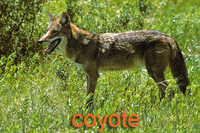
Coyote looks at the camera as photographed by Jim Harmer.

Coyote hunting is my second favorite hunting sport, next to deer hunting. It’s fairly simple and doesn’t take a lot of gear to be successful.

The best time to hunt Coyotes is a winter morning or evening. Coyotes are desperate to eat in winter and respond well to food calls both day and night. It’s also easier to spot coyotes in winter after the cover brush has died back. Winter is the most forgiving time to hunt coyotes and a great time for beginners to start.

So, how do you find success consistently and how do you maximize your chances? I’ll go over nighttime vs daytime hunting, and what you can do to find good coyotes all year long.

The 3 Most Likely Seasons For a Succesfull Coyote Hunt

The most productive coyote hunts are usually in Winter, early Spring, and late Summer. Winter is when Coyotes are most hungry. Early Spring is mating season and mature males are easier to lure in. Late summer is when pups have matured and ventured out on their own, lacking experience.

The vast majority of coyote hunters agree that the easiest time to call in a mature coyote is during the height of winter. In winter, food is scarce and it takes more food to keep up their body temperature, so they get desperate.

Coyotes are usually far more willing to respond to a basic distress call in winter than any other time of year. And, they tend to respond much quicker. Hunger is the main driving force of nature and coyotes are no exception. When they get hungry, they will start taking big chances.

Early spring, February -March, males are looking for a mate. All you have to do is sound convincing. This is the one thing that takes precedence over finding a meal. A male coyote may forgo eating for days when on the trail of a female.

If you’re after a large, thick fur, this is probably the best chance of that. Furs are still in their prime from winter, and the wariest old coyotes lose all inhibition when looking for a mate.

The Fall hunt is when the woods and fields are filled with young male coyotes that just left their mother’s side. Their lack of experience makes them pretty vulnerable to calling in. But, they do learn quickly.

How to Hunt Coyotes in Winter.

Winter is the easiest time to spot a coyote. It’s also the easiest time to lure them in with a food call. by that, I mean something like the rabbit distress or woodpecker distress call. Replicate the sound of a free meal and it’s hard for a coyote to resist.
Besides the increase of food motivation, winter is an easy time to spot a coyote. Particularly if there is a light snow cover. Coyotes may seem light-colored most of the year, but they look like a large dark spot against a white, snowy field.

Plus, after the grasses have died back and the brush has lost its leaves, it’s only easier to spot a sneaking coyote. You’d be shocked to know how many coyotes are called in but never seen in the summer months.

You may think that since coyotes are easy to spot in winter, you would be too. I find it easier to hide in winter, particularly if it’s snowy. Snow camouflage hides extremely well against a snowy background. I have hunted with as little as a white sheet covering me. It’s pretty basic really.

My favorite method is to dig a hole in the snow and cover it up with my white snow poncho. I’m 90 percent below the snow and covered well. Nothing can see me then.

If you Live in a sane climate and don’t have snow, You’ll need to use something else to break up your outline like a tree or bush, unless you are hunting during a dark night.

My biggest tip to hunting coyotes in winter is to bring hand warmers. Hand warmers will keep your fingers able to operate your call and your trigger. I always carry two or three. Generally, they don’t get used, but sometimes they’re a lifesaver.

I actually know a guy who saved his life with hand warmers. During a negative 20-degree day in the Montanna mountains, he went through the ice on a lake. After crawling out, his fingers were unable to work his lighter to light a fire. He used about 15 hand warmers to bring up his body temperature from freezing.

Hunting Coyotes in Early Spring

Hunting coyotes in early Spring means learning to use howl calls. You can use The Lone Howl effectively. The Lone Howl is just a male announcing his presence in the area. That’s a good way to bring in a territorial, seasoned male.

Another great call is the Female howl, which is a higher pitch, just letting other dogs know who’s around. Finally, there are the Female Whimpers. The Whimpers is an estrus call, letting males know it’s now or never.

I personally don’t like the early Spring hunt because I often end up soaking wet. If the weather is right, cold and dry, I’ll be out hunting. If the snow is all melting and it may rain, no thank you.

In early spring, you may need to wear winter camouflage. If there isn’t any snow you’ll probably want a really good brown or tan, since you will be trying to blend in with whatever is on the ground. Of all the times to bring a hunting seat, Spring is it. Otherwise, you may end up with a really cold, wet caboose.

Hunting Late Sumner Coyotes

The Late Summer hunt is When you can find more coyotes, but they tend to be smaller. It is probably the second easiest time to call coyotes, and it’s easier to hunt in fall than in a cold winter. Most of the coyotes shot in late Summer are males, as they travel out and claim their own territory.

Late summer is certainly not for everyone. I enjoy a hot August day hunting coyotes. But my brother in Texas, not so much. If you don’t mind the heat, it’s a great time to find some mid-season success.

Another point here is that young coyotes don’t follow all the “rules”. Things like approach from downwind and approach cautiously from a position of cover; yeah they don’t always apply here. Be sure to keep your eyes moving and stay alert. They may be young and stupid but are still sneaky and quick.

If done right, territorial calls work well in this season. But, most hunters stick to the standard distress calls, for the most part, changing up only when things aren’t working as planned.

Although the late Summer season is filled with foolish young males, do your best not to tip them off. Try to keep still, quiet, and keep your scent down.

Coyotes are More Active Just Before Dawn

Coyotes are fairly nocturnal creatures and do most of their hunting under the cover of darkness when it’s easier to sneak. The most active time in my experience has been within a few hours of sunrise. But, coyotes are fairly active all night long.

Nighttime is generally when coyotes are hunting and making social calls. That behavior starts just after sundown, and it ends just before the sun comes up. Most of the activity is often at the beginning, or the end of an all-night hunt.

Camo isn’t that big of an issue when hunting at night. I’ve seen hunters go out in a black hoodie and come back with several dogs. you just need to be quiet. There is less ambient noise at night, and sound travels further in cooler air so coyotes will hear you easier.

Nighttime hunting requires either good lights or a basic night vision setup. Nightvision is more effective and much simpler than hassling around with lights. I don’t really recommend hunting with lights for coyotes, but some people do it regularly.

Lights can get the job done but are hard to work with and don’t tend to be productive in more hunted areas. A basic night vision like the SightMark Wraith costs around $450 and it’s a good scope for daytime use too.

Really, all you need is a gun and a night vision scope. A tripod or bipod helps a lot. It keeps the rifle steady and gets it above the level of grass and brush so you can make a clear shot.

If you aren’t into nighttime hunting, it may sound daunting and too complicated. Truth is, it’s kinda easier than hunting in the day, just because it’s easier for you to stay hidden.

I wrote a full-length article on Backfire about nighttime coyote hunting. Here’s a link to it.

A sightmark wraith night vision infrared scope on an AR-10 rifle
This is Jim Harmer’s Sightmark Wraith on an AR-10 set up for nighttime hunting

Coyotes are Mostly Nocturnal, But not Completely

Coyotes are somewhat active during the day, and many are shot in daylight hours. They are much easier to spot in daylight, and shots are easier to make. a coyote can come in at any time, day or night.

It’s only been recent that nighttime hunting has become popular. It always used to be that coyotes were hunted nearly exclusively in the day. That changed as the tactical crowd started making night vision scopes more common.

Today, there are possibly more nighttime hunters than daylight hunters. And, because the price of quality night vision keeps going down, it’s something most people can do.

I still hunt mostly in the day, because hunting all night on the weekend messes me up come Monday. It works, and you have to do what works for you. Tons of coyotes are shot during the day.

Is it Better to Hunt Coyotes in the Morning or the Evening?

Early morning is often the best time of day to hunt coyotes. Depending on your area, it could be better in the evening, but most hunters prefer the morning hunt. Coyotes can be active all day, and you need to be vigilant at all times during a hunt.

There really isn’t a magic time to hunt coyotes. Like the old adage says, the best time to hunt is when you can go. It really falls down to personal preference, and whether or not you want to buy night vision. If staying out late isn’t going t work for you, that’s fine. Just hunt in the day. It works.

Jim Harmer glassing for animals in the mountains while hunting.

Coyote Hunting in Warm vs Cold Weather.

When hunting in the winter, it’s acceptable to call aggressively. In warm weather, you can call too much and scare away coyotes. Expect coyotes to be more forgiving and less wary in cold-weather, and more cautious in summer.

Being in Michigan, I know about cold. Cold isn’t usually the issue. The winter problems are moisture and wind. Consider carrying a neoprene ski mask in your pocket in case the wind comes up.

The biggest difference is how you dress. In winter, you need to stay warm and dry. You have to be fairly concerned with water repellent outerwear, and moisture-wicking or breathable underwear. Being cold and wet will kill any hunt.

If you start to sweat on your way to your hunting spot, unzip your jacket and/or take your hat off to cool down. Perspiration can make you cold when you sit down and stop moving.

If you can handle hunting in cold weather, go for it. It’s usually more productive. Just maybe bring an extra pair of socks in case your feet get wet.

The other concern is your calls. Mouth calls can freeze up, and electronic calls can have issues with freezing batteries. Prevent your mouth calls from freezing up by putting it in an inside pocket, or tucking it inside your sleeve. If it’s incredibly frigid, warm up your caller’s battery every hour in your car.

The most important accessory for coyote hunting in warm weather is bug spray. Mosquitoes or blackflies can eat you alive and make it impossible to sit still. I like the 99 or 98 percent DEET stuff. Don’t overdress, and bring water because you’ll sweat a lot.

If you avoid wearing dark colors and sit in the shade, you should be fine anywhere outside of Death Valley. I’ll also note that rifles shoot higher in the heat. Hot air creates less resistance on the bullet and increases the chamber pressure. That makes the bullet a bit flatter shooting.

The opposite is also true. Bullets lose energy quicker and start out with a tad less pressure in cold weather. Be sure to check your rifle’s zero at least in the season of your hunt.

Also, do you know why desert coyotes howl at night? It’s because they can’t see the cactuses ahead after sundown.

And now, I take my leave.

Best Air Rifle Deals

Popular Posts

How Do Break Barrel Air Rifles Work?

0
A break barrel air rifle is a type of airgun where the barrel breaks open at a hinge point just above the breech. This...

How to make a break barrel air rifle more powerful

0
"Unleash the Power: Mastering Break Barrel Air Rifles for Maximum Performance. Discover expert tips and techniques to enhance the power and precision of your...

Master Small Game Hunting with an Air Rifle: Tips and Techniques

0
"Experience the thrill of small game hunting with an air rifle! Embark on a captivating journey as you test your accuracy and precision in...