When it comes to the art of long-range shooting, snipers reign supreme.
Operating as a sniper is one of the most challenging and rewarding roles in any field or sport involving firearms.
The primary objective of this profession is to shoot accurately at a distance while maintaining safety and control.
To that end, sniper rifles are built for this purpose — to shoot from a distance with precision and accuracy, making them an ideal weapon for anyone interested in taking down distant targets.
This article will list some of the best models on the market today and what are some of the key features that make them so great.
Below are the 10 best sniper rifles for 2024.
Note: There is STRONG evidence that the Biden administration is steadily working towards the banning of ALL long rifles. These include ALL rifles that they deem an ‘assault weapon‘, many of which are listed below.
It is STRONGLY recommended that, if you’ve been on the fence on buying a long gun, you get off that fence and buy one ASAP.
The Ruger Precision .6.5 Creedmoor 24” M-LOK Bolt Action Rifle offers premium features that will enhance your accuracy and precision down range.
This rifle is chambered in 6.5 Creedmoor making it perfect for taking down any target, including elk, boars, and deer.
It also features several features to provide you with consistent shooting down range, including a 24” cold hammer forged Chrome Moly Steel barrel, a hybrid muzzle break, and a Ruger Marksman Adjustable trigger.
Its hybrid muzzle provides enhanced recoil mitigation and reduced noise.
The Ruger Marksman Adjustable trigger provides you with a customizable trigger pull between 2.25 and 5 pounds for smooth pulls and improved control.
Another prominent feature is the Ruger Precision MSR stock with an assault rifle-style grip, an adjustable length of pull, and an adjustable cheek comb to get a customized fit for any shooter.
It also includes a 15” M-Lok handguard and a Picatinny rail up top for your favorite accessories and optics for the perfect loadout.
If you are looking for a premium sniper rifle that can easily take down your target at any range, the Ruger Precision .6.5 Creedmoor 24” M-LOK Bolt Action Rifle is an excellent choice.
It is available from Palmetto State Armory. Here’s where to buy it: www.PalmettoStateArmory.com
The Springfield Armory 2020 Waypoint .308 WIN Bolt-Action Rifle is the perfect rifle for those who want a lightweight yet rugged rifle that has guaranteed accuracy.
Springfield Armory guarantees a .75 MOA because of its precision craftsmanship.
Weighing just 6.56 pounds, it is perfect for going deep in the backcountry.
Also, the hybrid profile stock and 20” barrel are crafted from durable carbon fiber and can withstand the harshest environments.
It features a Cerakote finish on the barrel and the stainless steel receiver for even more durability and longevity.
To provide over-the-top precision, it also features Springfield’s TriggerTech adjustable trigger.
The Springfield Armory 2020 Waypoint .308 WIN Bolt-Action Rifle is your best bet if you want a lightweight rifle that can handle any environment.
It is available from Palmetto State Armory. Here’s where to buy it: www.PalmettoStateArmory.com
#3. Springfield Armory M1A Loaded National Match
Caliber: .308 Win
Action: Semi-Automatic
Barrel Length: 22”
Overall Length: 44”
Capacity: 10-Round
Weight: 9.3 lbs.
Springfield Armory’s M1A Loaded National Match has the legendary M1A platform with modern features that will give you a competitive edge over your competition.
Winning competitions is all about consistency and reliability, and the Loaded National Match has everything you need to get a tight shot group.
It features a 22” National Match air-gauged premium barrel with a 1:11 twist ratio with a six-groove rifling.
The barrel also features a classic M1A Loaded long-slotted flash suppressor.
You will have precision shooting out of the box by combining the National Match .62” front sight post and a non-hooded aperture rear sight.
It also features a 2 stage Military Trigger that is fine-tuned for a consistent 4.5 to 5-pound trigger pull.
If you are looking for a sniper rifle that is custom designed to provide you with match-grade performance at a reasonable price, the Springfield Armory M1A Loaded National Match is an excellent choice.
It is available from Palmetto State Armory. Here’s where to buy it: www.PalmettoStateArmory.com
#4. Bergara Premier HMR PRO 308 5 Round Bolt Action Rifle, Mini-Chassis With Adjustable Cheekpiece
Caliber: .308 Win
Action: Bolt
Barrel Length: 20”
Overall Length: 40”
Capacity: 5-Round
Weight: 9.3 lbs.
The Bergara Premier HMR PRO 308 5 Round Bolt Action Rifle is an excellent rifle for those who want a premium shooting experience for hunting and matches chambered in .308 Winchester.
It features a Synthetic stock with an adjustable pull length and cheekpiece to get the perfect fit for any shooter.
With a 20” free-floating barrel, you will have consistently accurate shots down range.
With an upgraded bolt and feeding system, it has a premium 2-lug system that separates the floating bolt head for smooth action.
The bolt has a one-piece design and comes with a full nitride finish for enhanced durability.
The rifle also features a premium TriggerTech trigger that offers a consistently smooth pull.
It also comes with a 5-round capacity AICS-style magazine.
If you are looking for a high-performance rifle designed for hunting and matches, the Bergara Premier HMR PRO 308 5-Round Bolt Action Rifle is an excellent choice.
It is available from Palmetto State Armory. Here’s where to buy it: www.PalmettoStateArmory.com
#5. Ruger Predator 6.5 Creedmoor Moss Green 22” Rifle
Caliber: 6.5 Creedmoor
Action: Bolt
Barrel Length: 22”
Overall Length: 42”
Capacity: 3-Round
Weight: 6.6 lbs.
Ruger Predator 6.5 Creedmoor Moss Green 22” Rifle is the perfect rifle for those wanting premium features without a premium price tag.
It features a one-piece three-lug full-diameter bolt with dual cocking arms for smooth cycling.
The rifle also features a soft rubber butt pad, providing better control and recoil mitigation.
For accurate shots down range, it features a trigger with an adjustable pull between 3 and 5 pounds and a 22” threaded cold hammer forged steel barrel.
The Ruger Predator’s synthetic stock and alloy steel hardware can withstand the harshest environments.
Also, it only weighs 6.6 lbs making it perfect for long trips in the backcountry.
The Ruger Predator 6.5 Creedmoor Moss Green 22” Rifle is your best choice for a budget-friendly sniper rifle that can deliver consistent performance.
It is available from Palmetto State Armory. Here’s where to buy it: www.PalmettoStateArmory.com
#6. Sauer 100 Silver XT 6.5 Crd Bolt Action Rifle
Caliber: 6.5 Creedmoor
Action: Bolt
Barrel Length: 22”
Overall Length: 42”
Capacity: 5-Round
Weight: 6.68 lbs.
The Sauer 100 Silver XT 6.5 Crd Bolt Action Rifle is an excellent entry-level rifle that is perfect for taking your targets down at a distance.
It is chambered in 6.5 Creedmoor and has several features to provide an excellent shooting experience.
With a synthetic fixed Ergo Max stock, it will provide enhanced comfort and control.
It also features a 22” cold hammer forged steel barrel with a Cerakote finish for improved longevity and durability.
Other features include a three-position safety, an adjustable single-stage trigger, and steel hardware.
The Sauer 100 Silver XT 6.5 Crd Bolt Action Rifle is a top choice if you are looking for a solid-performing entry-level bolt action sniper rifle.
It is available from Palmetto State Armory. Here’s where to buy it: www.PalmettoStateArmory.com
#7. Savage Arms Axis II Precision 6.5 Crd Bolt Action Rifle, Matte OD Green/Black
Caliber: 6.5 Creedmoor
Action: Bolt
Barrel Length: 22”
Overall Length: 42.5” – 43.5”
Capacity: 8-Round
Weight: 9.88 lbs.
Savage Arms partnered with Modular Driven Technologies to introduce the Savage Arms Axis II Precision 6.5 Crd Bolt Action Rifle.
It includes an exclusive MDT chassis and many other features to provide precision shooting without destroying your bank account.
It features an aluminum stock with a beautiful matte olive drab green/black finish.
The stock features an adjustable comb height and length of pull spacers to get an excellent fit for enhanced control and comfort.
It also comes with a 22” carbon steel barrel that is button rifled for improved durability and accuracy.
An excellent feature is the M-Lok forend that allows you to customize your loadout.
With a 2.5 to 6 lb adjustable AccuTrigger, you will have smooth and consistent trigger pulls that ensure you will take down your target.
With its many features at an excellent price point, the Savage Arms Axis II Precision 6.5 Crd Bolt Action Rifle is a top pick.
It is available from Palmetto State Armory. Here’s where to buy it: www.PalmettoStateArmory.com
#8. Howa M1500 Australian Precision Chassis 6.5 Crd Bolt Action Rifle
Caliber: 6.5 Creedmoor
Action: Bolt
Barrel Length: 24”
Overall Length: 44.5” – 47.5”
Capacity: 10-Round
Weight: 10.8 lbs.
The Howa M1500 Australian Precision Chassis 6.5 Crd Bolt Action Rifle specializes in modularity and accuracy with its fine-tuned components.
It comes with a LUTH-AR MBA-4 fully adjustable stock with a variable length of pull of 12” to 15” for a precise fit.
With a 24” threaded precision barrel, ten-round capacity, and an M-Lok free float handguard, you can have the perfect loadout to keep a target engaged no matter the distance.
Howa backs its product with a lifetime warranty and a sub-MOA guarantee.
If you want guaranteed performance with tons of customization, the Howa M1500 Australian Precision Chassis 6.5 Crd Bolt Action Rifle is a perfect fit for you.
It is available from Palmetto State Armory. Here’s where to buy it: www.PalmettoStateArmory.com
#9. Daniel Defense Delta 5 Pro 6.5 Creedmoor Rifle 24”
Caliber: 6.5 Creedmoor
Action: Bolt
Barrel Length: 24”
Overall Length: 40.25”
Capacity: 10-Round
Weight: 11.4 lbs.
The Daniel Defense Delta 5 Pro 6.5 Creedmoor Rifle 24” has custom enhancements that you will not find in your average long gun.
It features an interchangeable 24” proprietary steel blend barrier with a Cerakote finish and an Area 419 Hellfire Muzzle Brake.
The Area 419 Hellfire Muzzle Brake provides reduced recoil and muzzle rise, allowing you to reengage your target quickly.
It also comes with an adjustable Timney Elite Hunter single-stage trigger, an M-Lok handguard, an AR-15 grip attachment, and an ergonomic thumb rest.
The synthetic stock also has an adjustable length of pull, butt pad height, and cheek riser for a fantastic fit.
Pair all that with an included ten-round PMAG, and you get an excellent package.
A downside to the Delta 5 Pro is its price, but every inch of it is well worth the price tag.
If you want a feature-rich sniper rifle perfect for newcomers or professionals, the Daniel Defense Delta 5 Pro 6.5 Creedmoor Rifle 24” is an excellent choice.
It is available from Palmetto State Armory. Here’s where to buy it: www.PalmettoStateArmory.com
#10. Springfield Armory M1A SOCOM-16 .308
Caliber: .308 Win
Action: Semi-Automatic
Barrel Length: 16.25”
Overall Length: 37.25”
Capacity: 10-Round
Weight: 8.8 lbs
The Springfield Armory M1A SOCOM-16 .308 brings everything shooters love about the standard M1A and makes it compact.
This version has a shorter 16.25” barrel and gas system with an overall length of 37.25”, making it perfect for maneuvering in tight spaces.
Its black composite stock is impervious to harsh weather and is comfortable to fit in the pocket of your shoulder.
The iron sights on the M1A SOCOM-16 are top-notch, with an XS Tritium front sight and a classic M1A rear sight.
One of the best things about this rifle is that it is semi-automatic with a ten-round capacity that enables you to continually engage your target without interruptions.
A unique feature of the M1A SOCOM-16 is that it comes with a forward scout-style Picatinny rail to accommodate close-quarters optics.
It also features a two-stage match-grade tuned trigger for crisp trigger pulls.
If you are looking for a premium rifle that will deliver at short or long distances with a semi-automatic action, the Springfield Armory M1A SOCOM-16 .308 is a clear winner.
It is available from Palmetto State Armory. Here’s where to buy it: www.PalmettoStateArmory.com
Semi-Automatic Vs. Bolt Action
Based on the shooter’s preference, they may desire a bolt action or semi-automatic rifle, but what is the difference?
Fire Rate
The most significant difference is that semi-automatic rifles can fire follow-on shots much faster.
In the long run, you can engage a target more effectively with a Semi-automatic sniper rifle.
Recoil
Bolt action rifles will tend to provide more accurate follow-on shots because of the way gas is expelled differently between the two.
Semi-Automatic rifles use some of the gas for expelled rounds to charge the weapon for another shot.
While doing this, the gas is pushed back towards the rear, and the bolt slams into the buffer spring.
Bolt action rifles only have one stage of recoil, where the recoil is pushed directly into the shooter’s shoulder pocket.
Moving Parts
While a high-quality semi-automatic rifle will have consistent performance, it is still more likely to malfunction due to having more moving parts.
.308 Winchester Vs. 6.5 Creedmoor
.308 Winchester and 6.5 Creedmoor are two of the most common rounds fired by snipers and for a good reason.
They offer plenty of power to take down your target at any range.
What Is The Difference?
Round Variety
The .308 has been around for decades with plenty of different variations in weight and complexity from lightweight 125-grain to heavier 180-grain rounds.
With the 6.5 Creedmoor, the heavier rounds are typically 1437-grain.
The .308 Winchester will generally be easier to get and is cheaper.
Recoil
The 6.5 Creedmoor has slightly less recoil than the .308 Winchester.
Ballistics
Both .308 Winchester and 6.5 Creedmoor do an excellent job at providing the ballistics you need to take down your target.
However, the 6.5 Creedmoor has better ballistics, allowing the round to have a flatter trajectory for long distances.
Final Verdict
For long-range precision shooting, the 6.5 Creedmoor is the way to go.
However, if you are the average hunter who will engage their target at less than 300 yards, the .308 Winchester is a better choice.
References
Bolt Action or Semi-Automatic for Long-Range Competition?
6.5 Creedmoor vs. .308 Winchester
See Also
12 Best Long Range Rifles
9 Best AR-10 Rifles
12 Best 308 Rifles
10 Best .22 Caliber Rifles
9 Best Rifles For Home Defense
Featured Image: GetArchive.net
Affiliate Disclosure: This post may contain affiliate links. If you click and purchase, I may receive a small commission at no extra cost to you. I only recommend products I have personally vetted. Learn more.
When a deer is shot directly in the heart, it can have dramatic and immediate consequences. The vital organ’s destruction results in rapid incapacitation and often leads to a quick and humane death for the animal. Understanding the implications of such a shot is crucial for hunters, as it ensures an ethical and efficient approach to harvesting game.
1. Understanding the Consequences: What Happens When a Deer is Shot in the Heart?
When a deer is shot in the heart, it will experience rapid blood loss, leading to its quick demise. The heart is a vital organ responsible for pumping oxygenated blood throughout the body. When either the upper chambers (atria) or lower chambers (ventricles) of the heart are hit, the deer bleeds out rapidly. This results in a swift and humane kill.
Consequences of Shooting a Deer in the Heart:
– Rapid blood loss: A shot to the heart causes significant bleeding, leading to a quick death for the deer.
– Immediate incapacitation: The deer’s ability to continue moving or fleeing is greatly impaired when its heart is hit.
– Humane kill: Shooting a deer in the heart ensures that it does not suffer unnecessarily and minimizes any potential pain or distress.
It’s important for hunters to aim accurately and ethically to ensure a clean kill and minimize any unnecessary suffering for the animal. By understanding where the deer’s vital organs are located and practicing proper shot placement, hunters can increase their chances of hitting the heart effectively.
2. The Lethal Impact: Exploring the Effects of Shooting a Deer in the Heart
Shooting a deer in the heart is considered one of the most lethal shots a hunter can make. When the bullet or arrow hits either the atria (upper chambers) or ventricles (lower chambers) of the heart, it causes rapid bleeding, leading to a quick and humane kill. The deer’s cardiovascular system is vital for delivering oxygen and nutrients to its body, so targeting its heart disrupts this essential function.
A deer’s heart is located directly in line with the middle of its front leg. The top of the heart sits at the midpoint between its back and belly. By aiming at this specific area, hunters increase their chances of hitting the heart accurately. A shot to the heart ensures that blood loss occurs rapidly, incapacitating the deer swiftly.
When a deer is shot in the heart, it may take only seconds for it to collapse and expire. This quick kill minimizes suffering and allows for an ethical harvest. It also reduces the risk of tracking wounded game over long distances.
In addition to targeting the heart, hitting both lungs is also highly effective when shooting a deer. The lungs fill most of the chest cavity, providing a larger target area than just aiming for the heart alone. Hitting both lungs increases blood loss and further incapacitates the animal.
Overall, shooting a deer in the heart results in a swift and humane kill due to rapid bleeding and disruption of its cardiovascular system. Proper shot placement is crucial for ethical hunting practices and ensuring successful recovery of downed game animals.
3. Anatomy Matters: The Outcome of a Heart Shot on a Deer
A heart shot on a deer is considered the most effective and quickest way to kill the animal. When either the upper chambers (atria) or lower chambers (ventricles) of the heart are hit, the deer bleeds out rapidly, leading to a swift death. The heart is located directly in line with the middle of the deer’s front leg, with the top of the heart sitting at the midpoint between its back and belly.
The Importance of Hitting Vital Organs
Hitting vital organs such as the heart and lungs is crucial for ethical hunting and ensuring a quick kill. A deer has a left lung and a right lung, with its heart positioned between them. The majority of both lungs are set slightly behind the heart and behind its front shoulders. As the lungs fill most of the chest cavity, they provide a larger target area compared to just aiming for the heart.
The Role of Liver Shots
The liver is located further back on a deer, situated between its lungs and stomach and right behind its diaphragm. While a liver shot is fatal, it takes longer for the deer to expire compared to a heart or lung shot. This is because blood loss from the liver is slower than from other vital organs. Liver shots produce dark red or maroon blood with a watery consistency.
Considerations for Smaller Deer
It’s important to note that smaller deer can have vital organs that are half the size of those in mature bucks. Therefore, when shooting at young bucks or does, your margin of error is reduced by 50 percent. Understanding this size difference will help ensure accurate shot placement.
The Best Shot Placement for Different Angles
When it comes to shot placement, different angles require specific aiming points. A broadside shot, where the deer is facing directly towards you, provides an unobstructed path to the heart and both lungs. The best aim for a broadside shot is directly in line with the front leg, between the halfway and lower one-third mark between the bottom of the chest and the top of the back.
For a quartering-away shot, where the deer is at an angle away from you, it’s important to aim further back than its front shoulder. Aiming at the opposite-side shoulder ensures that your arrow or bullet exits where you want it to.
On the other hand, a quartering-toward shot presents greater risks due to potential damage to the front shoulder meat and guts. If this is your only option, aim at the front side of the near shoulder, envisioning your shot exiting at the middle or back of the opposite ribcage.
Frontal shots are ill-advised as they have a smaller target area and involve more bone and fatty tissue. However, if you decide to take a frontal shot, aim high and in the middle to avoid as much bone as possible.
Other Shots Not Recommended
There are other angles and shots that are not recommended for ethical hunting. These include head/neck shots and straight-away shots where the deer is walking or running away from you. Additionally, taking a straight-down shot when in a treestand provides a small target area but may be taken if certain conditions are met.
Understanding deer anatomy and practicing shot placement from different angles will greatly improve your chances of making an ethical kill while hunting with a rifle or bow.
4. Quick Kill or Prolonged Death? The Importance of Hitting the Heart in Deer Hunting
When it comes to deer hunting, hitting the heart is crucial for a quick and ethical kill. The heart shot results in rapid bleeding, leading to a swift death for the animal. Understanding the anatomy of a deer and knowing where its vital organs are located can greatly improve your shot placement.
A deer’s heart is situated directly in line with the middle of its front leg, with the top of the heart positioned at the midpoint between its back and belly. Aiming at this area ensures that your shot hits the heart, causing significant damage and quick expiration.
In addition to the heart, a deer has two lungs located slightly behind and beneath it. The lungs occupy most of the chest cavity, providing a larger target area than just aiming for the heart alone. Hitting both lungs guarantees a lethal shot and increases your chances of recovering the downed animal.
It’s important to note that smaller deer, such as young bucks or does, have vital organs that are half the size of mature bucks. This means that when shooting at smaller deer, your margin of error is significantly reduced by 50 percent.
Taking a broadside shot on a deer is considered ideal as it provides an unobstructed path to both the heart and lungs. Aim directly in line with the front leg, between the halfway and lower one-third mark between the bottom of the chest and top of the back. This will ensure that your shot lands in the meaty area of the heart.
While quartering-away shots are also effective, it’s important to aim further back than you would for a broadside shot. A good rule of thumb is to aim at the opposite-side shoulder where you want your arrow or bullet to exit. This ensures proper penetration through vital organs while avoiding obstructions like bones.
On the other hand, quartering-toward shots and frontal shots are not recommended due to the risk of hitting bones and fatty tissues. These shots can result in poor penetration and limited damage to vital organs, potentially leading to prolonged suffering for the deer.
For hunters in treestands, shot placement can be affected by the height of the stand. Higher treestands make it more challenging to hit vital organs as the deer’s backbone shields them. Adjustments should be made to aim further back on quartering-away shots and more in front of the near shoulder on quartering-toward shots.
To ensure successful shot placement, regular practice from a treestand is essential. Using a rangefinder with angle compensation can help determine the correct shooting distance, considering the vertical height difference between the hunter and the animal.
In conclusion, understanding where to shoot a deer is crucial for ethical hunting and ensuring a quick kill. Targeting the heart and lungs provides the best chance of a clean kill, while avoiding unnecessary suffering for the animal. Regular practice and knowledge of shot placement angles will greatly improve your hunting success.
5. Shot Placement Secrets: Unveiling the Results of Shooting a Deer in the Heart
Shooting a deer in the heart is considered one of the most effective and ethical ways to ensure a quick kill. When either the atria or ventricles of the heart are hit, the deer bleeds out rapidly, leading to a swift demise. The heart is located directly in line with the middle of the deer’s front leg, with the top of the heart sitting at the midpoint between its back and belly.
Aiming for the heart provides a larger target area compared to other vital organs, such as the lungs or liver. This increases the chances of hitting a vital organ and ensuring a clean kill. Additionally, hitting both lungs along with the heart can be achieved with a well-placed shot on a broadside deer.
However, it is important to note that smaller deer, such as young bucks or does, may have vital organs that are half the size of those in mature bucks. This means that when shooting at smaller deer, hunters must be more precise and reduce their margin of error by 50 percent.
In summary, aiming for a deer’s heart is crucial for an ethical kill and quick recovery. Understanding where exactly it is located within its chest cavity allows hunters to make accurate shots and minimize suffering for the animal.
6. Ethical Hunting Guide: What to Expect When You Shoot a Deer in the Heart
Shooting a deer in the heart is one of the most effective and ethical ways to kill the animal quickly. When you hit the heart, the deer will bleed out rapidly, leading to a swift and humane death. However, it’s important to understand what to expect when shooting a deer in the heart.
1. Quick Death
When you shoot a deer in the heart, it will typically result in an immediate drop or collapse of the animal. The rapid blood loss from hitting either the upper chambers (atria) or lower chambers (ventricles) of the heart will cause quick incapacitation and death. This ensures minimal suffering for the animal.
2. Blood Trail
A heart shot on a deer will often produce a significant blood trail, making it easier for hunters to track and recover their downed animal. The blood will be bright red and have a watery consistency, indicating a successful shot placement.
3. Limited Movement
After being shot in the heart, a deer may still exhibit some involuntary movements such as kicking or twitching due to nerve reflexes. However, these movements are not indicative of life or consciousness and are merely residual effects.
4. Field Dressing Considerations
When field dressing a deer that has been shot in the heart, it’s important to be cautious as there may be substantial blood pooling around this vital organ. Take care not to puncture or contaminate any other organs while removing them during field dressing.
In conclusion, shooting a deer in the heart is an ethical way to ensure quick and humane killing during hunting. Understanding what to expect when aiming for this vital organ can help hunters make accurate shots and efficiently recover their downed animals. Remember to always prioritize ethical hunting practices and respect for the animal’s life.
In conclusion, if a deer is shot in the heart, it will likely result in rapid death due to severe internal damage and blood loss. This vital organ’s destruction disables the deer’s ability to pump oxygenated blood, causing a swift demise. Proper aiming and ethical hunting practices are crucial to ensure humane kills and prevent unnecessary suffering.
Today I’m going to show you the best rimfire scope.
In fact:
I’ve hand- tested over 10 scopes alone for this review.
The best part?
I’ve sorted the scopes by use. So whether you’re on a budget or need the best scope for .22LR rifle, you’ll find it here.
Let’s dive in!
Why should you trust me?
I’ve tested over 200+ scopes at this point — including the best AR-15 optics.
That’s why my optic reviews has been featured on various publications like:
Burris
Vortex
The National Interest
American Shooting Journal
…and more.
I personally buy every scope from my own money. In fact, I never accept outside financial support from scope manufacturers (and never will).
Why? I believe honest reviews are better than paid reviews.
Read Before You Buy
I don’t like getting ripped off. I hope you don’t either.
That’s why I created this quick section on choosing the best 22 rimfire scope for your actual needs (rather than what marketing sells).
Here’s what you need to know.
How To Choose A Rimfire Scope
In the 1990s, the Navy Seals used a .22 specs ops pistol (called Ruger MK II).
Why? 4 reasons:
Accuracy
Quietness
Cheapness
Recoil (virtually none)
This is why the .22lr caliber is the most popular cartridge today. Out the box, the 22LR can easily hit 50 yard targets without a sight.
However, with the best 22LR scope, you can easily surpass 100+ yard targets..
So how much magnification do you need? To find out, we first have to determine the 3 common…
Rimfire Shooting Distances
Here are the 3 most common ranges:
Close Range: <50 yards
Medium Range: Between 50 to 100 yards
Long Range: 100+ yards
Don’t know which range to choose? That’s OK. Just keep reading and I’ll break it down.
But if you do know your range (or ranges), then select it so you can find…
The Best Magnification for Rimfire Scopes
Before you can find the right magnification, you must first understand WHAT magnification is.
Put simply:
Magnification is how much the optic ‘enlarges’ the image. That’s it.
How do you find the right amount? By choosing a shooting distance based on your use.
Close Range (<50 yards)
This is where 22LR rifles excel.
If you mostly plink at close range, then you’re going to need:
Magnification:1 – 4X power
Alternatively, you can use a red dot for your rimfire rifle for fast target acquisition.
Speaking of red dots, I recommend reading my best pistol red dot sights guide if you’re into close range pistol shooting.
Also:
If you’re looking for added magnification or if you have astigmatism, check out my recent review of the best holographic sights.
Medium Range (50 – 100 yards)
This is the range majority of 22LR users shoot. Most people use it for small game hunting or plinking. If that’s the case, you’ll probably need:
Magnification: Between 4 – 7X power
A fixed 4X or low power variable magnification optic (LPVO) is recommended.
Long Range (100+ yards)
Not many people go past 100 yards.
But sometimes you must due to hunting or competitive shooting, then choose:
Magnification: 7X and up
If you need more than that, then head on over to my best long range rifle scopes guide. With all that said, here’s…
The Bottom Line On Magnification
Choosing a good scope for 22LR is as simple as choosing a shooting distance and then getting the right magnification.
If you don’t do this, you’ll likely buy the wrong amount (or type) of magnification for your uses. I’ve seen this more times than I can count. Don’t be that guy.
Instead, I highly recommend reading this section.
A quick pro tip:
If you combine magnifications (medium + long range), you’ll need a low powered variable powered scope. This allows you to use more than one magnification.
I hope this magnification guide helped you out. You’re now ready to find the best scope for .22 rifles below.
Let’s get started!
The 5 Best Rimfire Scopes/.22LR
If you’re pressed on time, here’s a quick list of the best rimfire scope:
Leupold VX-Freedom 3-9×40: Best 22LR Scope
Athlon Ares 4.5-30×56: Best Scope for 22LR Benchrest
Bushnell Trophy TRS-25: Best Rimfire Scope Under $100
Leupold VX-Freedom 1.5-4×20: Best Scope for 22LR Squirrel Hunting
Vortex Razor HD LH 1.5-8×32: Best for Competition
1. Leupold VX-Freedom 3-9×40: Best 22LR Scope
The Leupold VX-Freedom 3-9×40 is the best .22 rifle scope.
In fact:
I’ve hand-tested it on multiple .22LR AR-15s for a wide variety of hunting applications and casual target shooting. Trust me when I tell you I loved it, especially for my Colt M4.
By the end of this review, you’ll know if the Leupold VX-Freedom is for you.
Let’s dive in!
Glass Clarity & Reticle
The glass is crystal clear, with no edge distortions or color aberrations.
The VX-Freedom comes with a standard duplex reticle in the second focal plane.
SFP means the reticle size will remain the same even as the target size increases and decreases through its magnification range. It was effortless to incorporate hold over at varying distances.
If the duplex reticle not your cup of tea, the VX series has mil dots and ballistic reticles as an option.
Leupold also offers a custom dial service (CDS) model to provide a custom adjustable turret tailored to your ballistic specifications.
Eye Relief & Eye Box
The Leupold VX-Freedom has 4.17”/3.66” of forgiving eye relief, which keeps me from getting hit in the eye.
The scope offered a wide field of view between 100-200 yards, which is the distance I typically shoot targets.
Durability and Weight
Despite the price range, I was impressed with the durability and overall quality of the Leupold VX-Freedom 3-9×40.
The 1″ main tube is 12.39” long and weighs about 12.2 oz. It’s constructed from aircraft quality aluminum, making it waterproof, fog proof, and shockproof.
Also:
This rugged optic was impact tested on 3x the recoil of a .308 which is why it’s also known as one of the best AR-10 scopes on the market.
Elevation & Windage Knobs
The elevation and windage turrets were a little mushy.
It felt like they might twist off or break if I got too rough with them, but I will say the elevation and windage tracked true.
The adjustments are in ¼ MOA for both, a fine level of adjustment detail for under $300.
On the other hand, zeroing was a breeze. In less than ten rounds, I was pounding away at 200-yard steel plates with no issues.
I put 300 rounds on the VX-Freedom with my Ruger AR-556 rifle, and it had no problems holding zero.
Parallax & Magnification
The Leupold VX-Freedom sports a 3-9x variable magnification and 40mm objective, making it an excellent choice for medium to long-range shooting.
Speaking of long range, I have an updated list of the best 6.5 Creedmoor scopes you can use to perfect your long-range shooting.
The best part?
The zoom ring is super easy to turn. It features a large raised part that worked perfectly with thick gloves and cold, wet fingers.
Mounting & Rings
Unfortunately, this budget-oriented scope doesn’t come with accessories.
I have the VX-Freedom mounted on my Glenfield Marlin 22 model 60 using the Leupold Rifleman Scope Rings (Model #56533 – Rifleman Rings 1″ – .22 RF 3/8-inch Rings).
They come with a hex key and set screws. Furthermore, these rings allow enough clearance to use the front sights without having to remove the scope.
Also:
I purchased the Leupold Alumina Lens Shade 4″ 40mm for anti-reflection and scratch resistance.
Lastly, I replaced the flimsy bikini caps with the Leupold Alumina Flip Back Lens Cover.
Is the Leupold VX-Freedom worth it?
If you’re looking for a well-built scope from a renowned optics manufacturer, the Leupold VX-Freedom 3-9×40 is absolutely worth it.
Why? It’s got…
Quality glass
Low price tag
Second Focal Plane
Multiple Reticle Options
Great eye-relief distance
3-9x Variable Magnification
Weatherproof and shockproof build
To top it all off, the VX-Freedom comes with Leupold’s Lifetime warranty. If it breaks, they will repair or replace the scope without charge: even if you aren’t the original owner or lost the receipt.
For under $300, the Leupold VX-Freedom 3-9×40 is the best .22 scope that is not only budget-friendly but provides top-of-the-line performance.
2. Athlon Ares 4.5-30×56: Best Scope for 22LR Benchrest
The Athlon Ares 4.5-30×56 is the first scope I have purchased made by Athlon and I am a little annoyed I hadn’t found the brand earlier in life.
They produce high quality scopes that far outperform the price tag.
Here’s why the Athlon Ares 4.5-30×56 is the best benchrest shooting scope I have found to date…
Glass Clarity & Reticle
The clarity of the Athlon Ares 4.5-30×56 has blown me away. I have had scopes that are in the $2000-3000 range that can’t compete with this scope.
Whether it’s indoors or outdoors this scope has outperformed anything in it’s category.
I use this scope outdoors most often and the brightness has been fantastic so far.
I am not the most accurate shooter; however, with this kind of clarity, I have been shooting some of the tightest groupings of my life.
The FFP reticle on the Athlon Ares 4.5-30×56 is beautiful and well illuminated. The configuration fits my needs perfectly.
Eye Relief & Eye Box
The eye relief on this scope has been unbelievably versatile.
I will admit as you move higher in the magnification, it can be difficult to find the sweet spot. Overall, my experience with the eye relief has been simple and reliable.
This scope is the best scope for ruger american rimfire. I have mine calibered in .22 so I don’t have too much of an issue with recoil.
The eye relief is more than comfortable for a .22 recoil and it would definitely still be comfortable with a firearm that has much more recoil.
Durability
The durability on the Athlon Ares 4.5-30×56 has been outstanding so far. It has a few scratches but in my opinion a scope and firearm look better dinged up.
I buy my firearms and scopes to be used and slightly abused and this scope has certainly rolled with the punches.
Elevation & Windage Knobs
The turrets on the Athlon Ares 4.5-30×56 are some of the most premium feeling turrets I have ever used.
An unbelievably satisfying click sound every motion. Chincy turrets irritate me to no end.
The turrets have a 0.25 MOA click value and the adjustment has been perfect for zeroing.
My experience zeroing the Athlon Ares 4.5-30×56 was one of the easiest processes I have gone through.
This thing had to have been perfectly zerod in 5-10 shots.
Although I don’t dislike the process, I am glad it was quick and simple and I could spend the rest of my day enjoying the scope.
Parallax & Magnification
The Athlon Ares 4.5-30×56 has a magnification of up to 30X which is unbelievable to me.
I definitely am not the most capable shooter, but the extra magnification has given me some of my best groupings and confidence to date.
Parallax on the scope has been nonexistent. Even at 30X I haven’t noticed any.
The combination of clarity, magnification, and lack of parallax makes this scope an absolute no brainer in my opinion.
Mounting & Rings
When I purchased the Athlon Ares 4.5-30×56, I also purchased some 34mm Vortex Optics Precision Matched Riflescope Rings.
They work fantastic and add a very good look to a great looking scope. Easy to mount on my rifle and haven’t had to mess with them since.
In addition to this, I also purchased a 56mm Athlon Sunshade which was a must in my book.
Is the Athlon Ares 4.5-30×56 worth it?
The Athlon Ares 4.5-30×56 is in no way a cheap scope; however, for the price you get the quality of a scope that is 2 to 3 times more expensive.
This scopes has been one of my favorite purchases this year. Here’s why:
Clarity
Build quality
High magnification
In short: The Athlon Ares 4.5-30×56 is one of the most expensive scopes I have ever purchased and I do not regret a cent of that purchase.
You truly do get what you pay for with this scope and I have highly recommended it to all of my range buddies.
3. Bushnell Trophy TRS-25: Best Rimfire Scope Under $100
Penny for penny, the Bushnell Trophy TRS-25 is the best budget red dot on the market.
In fact, you’ll get the best rimfire scope for under $100!
I use this scope for target shooting, home defense, and hunting and it performs great in every environment.
Want to hear more? Keep reading…
Glass Clarity & Reticle
The TRS-25 has crystal clear glass.
The lenses are multi-coated, which reduces glare and helps to draw in light for better clarity in dim environments.
The best part is that it has an Amber-Bright coating that helps you distinguish between different shades of brown. You’ll easily be able to tell the difference between a brown tree and a brown animal when you’re out hunting.
This scope has a 3 MOA red dot reticle with 11 brightness settings.
It has an easy adjustment dial, so you can set the brightness to whatever setting works best for your own personal preference or the time of day.
The red dot is bright and crisp both in the bright sunlight and during dawn or dusk.
It also has an extended battery life, so you don’t have to worry about losing your dot in the middle of a hunt.
If you prefer not to worry about batteries, I recommend checking out my best prism scopes as an alternate option.
Eye Relief & Eye Box
With all red dot scopes, you get unlimited eye relief.
This means you’ll be able to have both eyes open, which gives you access to all your peripheral vision and promotes high situational awareness.
On top of that, you get super fast target acquisition because you don’t have to worry about eye or head position like you would with a LVPO.
Durability
The Bushnell Trophy TRS-25 was built to last.
It features shockproof construction to withstand any rough treatment. I’ve definitely banged mine on a few trees, with no evident damage.
It also is O-ring sealed, which makes it completely waterproof, even if it’s dunked under water.
Plus, it is nitrogen purged. This means you’ll never have to worry about it fogging up in humid environments.
It is compact and light, weighing only 4 oz, which makes it one of the best scopes for Ruger 10/22.
It also comes with a 1 year warranty, so you have plenty of time to test it out for any issues.
Elevation & Windage Knobs
The elevation and windage knobs are nice and tight.
You can easily use a dime to make your adjustments and they give a nice, positive click.
I zeroed mine in at 50 yards in a matter of minutes. I’ve shot thousands of rounds with this scope and have yet to need to readjust it.
Parallax & Magnification
You’ll get 1x magnification with the Bushnell Trophy TRS-25.
This is perfect for target shooting, hunting, and home defense. It gives you optimum vision at short range and works well for most intermediate distances as well.
If you want to use it for long range, it is possible if you add on a magnifier. You will lose out on your unlimited eye relief though.
The parallax is fixed at 50 yards and I haven’t noticed any issues with it.
Mounting & Rings
This scope mounts easily to most picatinny rails.
It is compatible with rifles, shotguns, pistols, and muzzleloaders, so it is an extremely versatile scope.
Depending on the type of weapon you’re mounting it to, you may need a riser, which is not included. You can choose the height that works best for your firearm. There’s a 0.83
or 1” option.
You’ll also get a nice rubber scope cover with the TRS-25.
Is the Bushnell Trophy TRS-25 worth it?
This scope is the best red dot you’ll find at a budget friendly price.
It has:
Multi-coated lenses
Amber-Bright coating
3 MOA red dot reticle
11 brightness settings
Best bang for your buck pricing
Rugged durability w/1 year warranty
If you’re looking for the best rimfire scope under $100, try the Bushnell Trophy TRS-25. You won’t be disappointed.
4. Leupold VX-Freedom 1.5-4×20: Best Scope for 22LR Squirrel Hunting
Looking for the best .22 rimfire scope for squirrel hunting? Look no further than the Leupold VX-Freedom 1.5-4×20.
With all the glass quality and clarity you’ve come to expect from Leupold, you’ll be able to accurately pop tiny varmints in all lighting conditions.
Let me show you…
Glass Clarity & Reticle
The Leupold VX-Freedom has a very clear picture.
I was impressed that Leupold was able to maintain such clarity in a lower-price range scope.
Unlike many scopes in the $200-$300 price-range, the VX-Freedom has fully multi-coated lenses and exceptionally clear glass.
Edge-to-edge, I found the sight picture to be crisp. Using Leupold’s Twilight Management System to drastically reduce stray light glare, there’s no haziness or fuzziness in my view.
I had perfect color contrast, even in low light situations.
Leupold boasts that their superior light transmission will give hunters an extra 20 minutes of shooting light. After putting this scope through its paces in the early morning and fading daylight hours, I found this to be true.
Armed with my Leupold VX-Freedom and my trusty .22 rimfire, I was able to be out when the squirrels were most active.
The second focal plane fine duplex reticle didn’t obscure even the tiniest target. I easily made headshots on squirrels within 100 yards.
For those interested in a hashed reticle, the Pig Reticle for hog hunting is listed as an option from some sellers.
Even for the range, this scope would be an awesome option for .22 benchrest shooting. No matter what you use your .22 rimfire for, the Leupold VX-Freedom will perform well.
That’s why I recommended the Freedom as my go-to hunting scope in best rifle scopes guide.
Eye Relief & Eye Box
I found this scope to have a pretty long eye-relief from 3.75 to 4 inches.
The eyebox was generous though, I didn’t have any trouble maneuvering behind the scope and maintaining a clean view through the scope.
Durability
Leupold is king when it comes to making a durable scope, and this little guy was no exception.
The lenses are coated with DiamondCoat 2 which not only improve light transmission, but provide scratch resistance.
The scope is argon/krypton purged making it fogproof in the toughest weather conditions.
It’s also sealed to withstand being submerged in over 30 feet of water.
I do not treat my scopes kindly. I haven’t bothered to cover this scope on my hunting trips. It has been tossed around, dropped, knocked and abused. Still works great, still holds zero.
Elevation & Windage Knob
I think the turrets are where Leupold compromised quality for cost on this particular optic. The turrets on the Freedom VS-Freedom are not at the same quality level that I am used to on higher-end Leupold scopes.
The finger click turrets felt mushy to me. I had a hard time telling when they finally “clicked” when making adjustments.
With that said, I didn’t have to work hard to zero the scope. I was able to sight in my gun in less than 5 shots.
The turret adjustments were definitely better than other budget scopes, but not up to par with what Leupold usually produces.
And that’s to be expected. Leupold has to cut corners somewhere to keep the price of this optic low. I would rather have slightly mushy turrets than crappy glass.
Parallax & Magnification
The magnification range for the VX-Freedom is 1.5-4x. This is perfect for small game hunting. In fact, I have taken it out to squirrel hunt several times and I loved it.
I found it easy to get headshots with this scope. Precision target shooters would be very pleased with this optic.
If I was shooting larger targets and a heavier caliber, I could easily push the range out to 400 yards. This low magnification range scope can outcompete many of the others in its class.
There is no parallax adjustment on this optic, but with such a low magnification range, parallax shouldn’t be an issue.
Mounting & Rings
No mounts or rings are included with the VX-Freedom which has a 1 inch main tube.
I choose to mount my optic with Leupold Rifleman rings that include a base.
These rings are affordable and easy to install.
Leupold did not include any lens caps either. I personally don’t have a need for covers.
I think that the scope is built well enough, it doesn’t matter. But if you would like covers, you can buy a set separately.
Is the Leupold VX-Freedom 1.5-4×20 worth it?
I think the Leupold VX-Freedom 1.5-4×20 is definitely worth the investment for anyone doing close-range, precision .22 rimfire shooting.
To recap its features, it has:
Fine Duplex Reticle
DiamondCoat2 Lens Coatings
Twilight Maxlight Management System reduces glare
Highly durable design withstands the Punisher, an extreme recoil/shock simulator
Honestly, the glass clarity of the VX-Freedom meets the standard Leupold has set with its higher-end scopes. At about $300 you will be hard pressed to find a clearer picture.
5. Vortex Razor HD LH 1.5-8×32: Best for Competition
As much as I like bells and whistles and all the fancy features on my scopes, sometimes simple is the way to go.
If I’m hunting hogs on my property or deer in the nearby woods then I don’t need the extra weight some of those scopes pack on.
At those times, you can’t beat a Vortex Rimfire Scope.
They’ve got the incredible quality I’ve come to expect from Vortex and they’re lightweight and sturdy. Which is why it’s one of the best .308 scope on the market.
But if you’re looking for a simple, elegant, and effective scope, then keep reading and I’ll tell you why this one can’t be beaten.
Glass Clarity & Reticle
The glass is ultra-clear and incredibly crisp.
This scope has HD extra-low dispersion lenses that are fully multi-coated and anti-reflective.
Colors are true through it and the resolution is great.
Whether I’m zoomed all the way to 8x or sitting at 1.5x, the clarity is the same and I can see everything I’m looking at.
The anti-reflective coating is great for when I’m hunting in low light as it lets all the light in without ruining my view.
One of its best features is the G4 BDC reticle which gives you both a target dot and hash marks in your crosshairs.
It’s simplicity and uncluttered design makes it a dream for any hunter.
Take advantage of the lens cover and cloth that are included to keep your lens performing at its best.
Eye Relief & Eye Box
It’s got a 3.8” eye relief and a generous eye box.
There’s plenty of room to maneuver regardless of your magnification setting.
While it’s not as much eye relief as some higher-end scopes have, I’ve never had an issue with it being cramped.
Durability
Like all Vortex scopes, this one is incredibly durable.
It’s made of a single piece of aircraft-grade aluminum that is hard anodized and covered in an Armortek coating.
That makes it super scratch resistant and helps it to be shockproof.
No matter what trees my scope has been banged against or brush it’s gotten caught on, it hasn’t gotten a single scratch on it yet.
On top of that its Argon gas purged to prevent internal fogging, which is a huge plus on fall mornings when the temperature is fluctuating.
Finally, it’s also waterproof thanks to the O-ring seals that prevent moisture, dust, and debris from getting into it.
You’d be hard-pressed to find another manufacturer with the level of durability that Vortex offers in its scopes.
Whatever environment or temperature you take this scope hunting in, it’s gonna perform amazingly.
Elevation & Windage Knobs
The low-capped large-diameter turrets make it really easy to read your elevation and windage adjustments.
The turrets are easily turned with finger pressure, although I do wish the click was a bit more audible. It’s there, but it’s quiet.
The caps are a nice feature though as they help protect the turrets from getting accidentally bumped out of place.
If you’re anything like me, that’s a great feature to have when you’re moving through the brush.
The scope was very easy to zero at 100 yards and it’s had no problems keeping zero.
Parallax & Magnification
The magnification is 1.5-8x with a 32mm objective lens.
Although the magnification range starts at 1.5x, for me it really felt like a true 1x.
If it’s not true, it’s so incredibly close I couldn’t tell the difference.
The zoom is fast and insanely smooth from 1.5-8x and everything in between – just like my best ACOG clone.
I had no issues with parallax until I got up to 8x magnification, but it was easy to fix and wasn’t a lasting issue.
Mounting & Rings
You’re gonna have to buy your own mount for this one as it doesn’t come included.
I use and recommend the Monstrum Cantilever Ring Mount.
No products found.
It’s easy to use, durable, and user-friendly.
Is the Vortex Razor HD LH 1.5-8×32 worth it?
I’ll admit, I’m a bit of a Vortex fan. Their optics are high quality and they stand by their products.
This is a great little scope if you’re looking for something simple and sleek.
Let’s review:
Capped turrets
G4 BDC reticle
Argon gas purged
Incredible durability
1.5-8x magnification range
Crystal clear multi-coated lens
Shock, fog, and waterproof & scratch resistant
If none of that convinces you, maybe the incredible Vortex Lifetime Warranty will.
No matter what happens to your scope, Vortex has got you covered. Go check out the Vortex Razor HD LH and decide for yourself.
How to Sight in .22 Rifle with Scope
By now, you’ve found the right optic for your rimfire rifle. You’re now ready to shoot.
No so fast.
It doesn’t matter how good of a shot you are. If your scope isn’t sighted properly, then you’re gonna miss.
I’m going to show you how to sight in your .22 rifle step-by-step.
Let’s dive right in.
Everything You Need to Get Started
You technically can zero in your gun with just a target.
However, from experience, I’ve found these following tools greatly simplify the sight-in process.
Here are the tools:
Ear and eye protection: You’re going to have to fire live rounds. These protect your eyes and ears from potential damage.
Gun Rest: This keeps your rifle as steady as possible throughout the process. This way you don’t accidentally move the gun between shots and potentially throw off the hit comparisons. You can either use a professional gun rest or a cardboard box like this.
Target: A paper target that’s anchored to something immovable (like steel).
Range: Indoor ranges are recommended but an outdoor one with windbreakers and damp or grassy ground to prevent dust clouds works fine.
Got these 4 things? Good. It’s now time to learn…
How to Sight In Your 22 Rifle Scope
Some guides may direct you to remove your scope from the mount for certain adjustments, but that shouldn’t be necessary.
If you already have your scope set on a good mount, then there’s no need to take it off for zeroing.
The biggest thing to focus on is being patient. Take your time with each step of the process and make sure you get it right.
Step 1: Set Everything Up
Get your target set up downrange and fully secured. Make sure there is a solid backdrop to catch your shots.
Aim your rifle towards the target and use your gun vice (or whatever material you’ve chosen to keep your gun secure) to anchor it in place. The surface you rest your rifle on should optimally be level.
This is also the time to put on your safety equipment. This includes the shooting glasses and some form of ear protection.
How far away you shoot from is up to you. I recommend doing it at 100 yards, as anything less just isn’t precise enough. Doing it at more than 100 is simply inviting more interference from wind or other factors.
Step 2: Aim for the Bullseye
Focus your crosshairs directly on the bullseye and fire. This is where the patience comes in, as you need to take your time and make sure you don’t affect the shot at all. The gun and scope need to do all the work.
Take note of where your shot landed on target. If the mark isn’t noticeable, then use a marker to make it so. If you completely missed, then try to figure out where the shot went and adjust your aim accordingly.
Step 3: Make Adjustments
Once you’ve fired, do your absolute best not to jostle the rifle at all. If you do, you will have to repeat the previous step.
Using your windage and elevation turrets, make adjustments until the crosshairs are perfectly centered on your previous shot.
After this, you can adjust the rifle itself until the crosshairs once again point at the bullseye. Make sure you don’t accidentally touch the turrets while reaiming.
Step 4: Shoot Again
You’ll once again need to align your crosshairs directly on the bullseye and fire. In a perfect world, this is where the bullet will go directly into the bullseye. In reality, it should be very close, but may not be perfect.
You’ll need to repeat the previous two steps until your shots are comfortably close to the bullseye. Once your shot gets close to the center, keep your crosshairs on the bullseye and fire again to make sure that there was no user error in the process.
Step 5: Cool and Repeat
It’s very likely that your scope and rifle are already sighted, but it’s always better to be safe than sorry.
Give your gun some time to fully cool down before once again shooting at the bullseye. This is just a last little test to make sure everything is truly sighted.
If the bullet lands in a surprising spot, then you may need to repeat the earlier steps to make sure that you’ve completed each one properly.
Conclusion
This is a necessary step to get the best accuracy from your rifle and scope.
The rifle and scope do a lot more work than many people think, and getting them properly sighted makes sure that they can do their job well.
Patience and safety are the biggest factors to keep in mind. Taking your time with each step will make everything go smoothly and will actually speed up the process significantly.
Having your safety equipment and a good backdrop are absolutely essential and part of the responsibility each gun owner has to keep themselves and others safe.
Now that you’ve made it through the guide and gotten your scope and gun sighted, you’ll have a much easier time doing it again in the future.
Just always err on the side of caution and follow each step with patience and precision.
Best Distance to Sight in Your .22 Rifle
Easily, the most popular caliber is .22 lr. Not only is the round itself affordable and accurate, but you can easily get a great quality rifle (I’m looking at you, Ruger 10/22), for under $150.
If you want to get fancy, it’s easy to spend thousands of dollars on an upgraded, tricked out .22 competition rifles.
Or you could easily have a formidable varmint gun in a price range in between. There’s enough variety in .22 lr availability to please every taste and budget.
Lightweight and with low recoil, .22 lr is an easy caliber for novice shooters to learn the fundamentals and for experts to fine-hone their skills.
You’re probably here because you put a scope on your shiny new .22 lr and you’re ready to start popping squirrels.
Before you get going though, we need to zero in your scope so that you can effectively place your shots at any distance.
I’m going to walk you through the best distance to zero your scope.
It probably isn’t what you expected it to be.
The Trouble with Variable Distance Shooting
There’s a bit of a debate online as to which is the best distance to sight in your scoped .22lr. Some say to sight it in for the distance you will be shooting, which is the obvious answer for plinkers and set-distance target shooting.
If you’ll be shooting at 50 yards every single time you head to the range, then 50 yards is where you need to set zero.
But if you plan on hunting small game with your .22lr rifle, you will want to be able to accurately hit the kill zone of your living targets from a wide range of distances. Small game animals have smaller kill zones.
We’re talking tiny kill zones. If you over or under shoot by a couple inches on large game, you’ll likely still be able to kill the animal. If you are high or low by more than 1.5 inches on a squirrel, you can completely miss.
For example, if you zero your hunting rifle at 50 yards, your bullet will drop 2 inches at 75 yards and 6 inches at 100 yards. Because of initial bullet rise, at 25 yards, you’ll be 2 inches too high.
That means that your bullet will hit 2 inches higher than you aimed your crosshairs at 25 yards, but then you’ll be 2 inches below the bullseye at 75 yards. At 100 yards, if you aim right at the bullseye you’ll be 6 inches too low.
That’ll leave you completely missing the squirrel at any distance other than 50 yards. Zeroing your rifle at 50 yards is a terrible idea for varmint hunters.
Ballistics
Before I explain why 50 yards is awful, let’s back up to the basic physics of firing a shot and finding zero on your scope.
When you fire a gun and the bullet leaves the muzzle, your bullet moves forward it rises, reaches an apex and then drops as the bullet begins to slow down and falls back to earth. If you were to plot the path of the bullet, it would make an arch, or to be technical, a parabola. Let’s think about it like throwing a softball.
Ideally, you’d want a flatter curve so you have a smaller margin of error at any point along the bullet’s path. To get a flatter curve, the bullet needs to move faster. It needs more muzzle velocity.
Thinking of the softball example, you need a faster pitch to get a flatter curve. A slower pitch will give you a loftier curve. Same with muzzle velocity and ballistics: a slower bullet will have a more dramatic curve; a faster bullet will be flatter.
Like your softball, your bullet will slow down and drop drastically as you increase distance traveled. This is called bullet drop. After 100 yards, your bullet will slow down so much that it will drop significantly, not proportionally.
Remember that 50 yard zero example a minute ago? You’d think that if the bullet drops only 2 inches at 75 yards, it would drop 4 inches by 100 yards, right? Nope. The bullet slows down tremendously over the longer distance and the drop is actually equal to 6 inches. A variation of 6 inches is huge when hunting small critters.
So, how do we correct this?
When you zero your rifle this means that you are setting your line of sight to coincide with the bullet’s impact somewhere along its trajectory curve.
Sighting in your rifle at, say 50 yards, means that you have made the necessary adjustments to your line of sight so that the bullet’s path will intersect, or cross that line, at 50 yards. All other factors removed, your bullet will hit bullseye at 50 yards. When using iron sights, your point of view is even with the muzzle of your rifle. Easy.
But you aren’t hunting with iron sights. You have a scope.
A scope raises your line of sight 1.5 inches above the muzzle. This changes your curve and increases your margin of error throughout a range of 100 yards.
So, how do we sight in our scope to give us the smallest margin of error along a 100 yard range?
I’m so glad you asked! Let’s apply what we just learned about bullet trajectory…
First, use a high velocity round to flatten that trajectory curve as much as possible. You might have to try a few types to find a fast round that works well with your gun.
For a rundown of ballistics from different manufacturers, check out this handy table:
Second, sight your rifle in at 75 yards.
The Magic Number
Why 75 yards you ask? Because it gives you the smallest margin of error along your bullet’s trajectory within a 100 yard range.
We’re planning on shooting small, living things, right? And you want to shoot your small, living thing and make it a small, dead thing. To do that you don’t need to impact right on an exact point, you just need to land your shot within a small area on the body of your small, living thing. This area is called the “kill zone”.
We won’t always find these small, living things at consistent distances. Sometimes, we get lucky and they are right in front of us, sometimes, they are a ways out. No matter the distance, we want the best chance of impacting the small, living thing in the kill zone with minimal adjustment on our scope.
This is where 75 yards becomes our magic number for sighting in your varmint scope. I could walk you through the math, but it’s really tedious, so I’m not going to. Suffice it to say that using the bullet’s trajectory and our line of sight, a zero at 75 yards will give us the smallest deviation of the bullet’s trajectory along our line of sight within 100 yards.
If you want to go digging into it, you can learn more here.
Basically, at a distance of 75 yards you will have a deviation of +-1.5 inches above or below your target throughout a practical hunting range of 0-75 yards. That’s a deviation of less than a full squirrel. This will put you in the kill zone at any distance without having to stress about holdover or holdunder.
At point blank, your shot will be 1.5 inches high. At 25 yards, you’ll be just over a 0.5 inch high. At 50 yards, you’ll be just over 1 inch high, and right on at 75 yards. See, no matter the distance, you’ll be landing shots within the kill zone and blasting critters.
If you are shooting at 100 yards, you’ll have a bullet drop of 3 inches. At this distance you’ll want to aim a little high to compensate for the bullet drop.
Practice & Take Notes
While all of this is pretty straight forward, it isn’t foolproof. A lot of things can impact your bullet’s travel to its target. The shape of your bullet, the ambient temperature, wind speed and direction, even air pressure can affect your shot.
It’s still a great idea to take notes when out shooting so that you can do some fine-tuning.
As you try different types of ammunition, you’ll find rounds that work really well with your rifle and some that don’t. Keep a notebook in your gun bag and make notes of this.
You may find a sweet spot for holdover at specific ranges. Make notes of this too.
Above all, go shooting. Get familiar with your rifle and your scope. The more muscle memory you build, the more instinctive your shooting will become.
Write down anything that worked, and anything that didn’t. The more detailed you are in your notes, the more you can fine-tune your setup and hone your skills.
Happy hunting!
Now It’s Your Turn
I hope you enjoyed my best rimfire scopeguide.
Now I want to turn it over to you:
Which rifle scope will you pick?
Let me know by leaving a quick comment down below.
Everyone has seen them, perhaps not knowing them by name. Gardeners despise them, but kids love them. Found under lawns, rocks, and dirt, fishermen have long turned to them for bait. They look like short thick worms, but exactly what is a grub?
Feast your eyes on the following run down about everything grub related. Find out what they are, where they come from, where they are found, and most importantly how they can be used to catch fish!
Appearance – Life Cycle – and Common Characteristics of Grubs
The definition of a grub in laymen’s terms is the larva stage (or worm stage) of a beetle. When a beetle hatches from its egg it is first a grub, or beetle larva. Beetles come in all shapes, sizes, and colors. They also come this way while in their larval form giving quite a variety to their appearance. Common grubs are white grubs which are know to be quite devastating to lawns. Other grubs might not be so conspicuous, but they can all work wonders triggering a fish to bite.
Most grubs look like short and hairless caterpillars, but they like to live under ground. Grubs often curl up when exposed making a kind of C shape. They vary in terms of lifespan, but many grubs can spend several years before the metamorphosis to a beetle takes place. They can be found in almost every area of the world. Grubs prefer soft, damp dirt and can be found under grass, rocks, dirt, old stumps, fallen trees, etc.
Grubs from a Fisherman’s View Point
While the gardener is trying to kill these pests and keep them from destroying his lawn or crop, thefisherman sees them as the next best thing to night crawlers. Yes it’s no big secret I guess that a lot of fish like to eat worms, and grubs are basically that. They’re close enough it seems, because fish don’t seem to make much of a distinction.
When it comes to fishing with grubs, there are two different classifications an angler should be aware of. The first and less common is fishing with live grubs. You won’t hear as much about this, but fish don’t care what info is out there. They’ll eat them with pleasure. The second is all about fishing with plastic lures. Specifically what’s known as grub lures. You’ll often hear single or double tailed grub associated with these kinds of plastics. They work as well or better than live grubs. Getting a start using grubs for fishing takes nothing more than an affordable spinning rod an reel combo.
Fishing with Live Grubs
Live grubs will work to catch any kind of fish that forages for worms and insects as a food source. You can use grubs as bait by employing almost any set up you like. Bobbers, fly line, or the Carolina rig are all good techniques to use. Many grub larva will pop when you pierce them, so hook them once in and back out to keep them set.
This kind of fishing will require place casting to a spot you either see fish, or believe is holding fish. Sit back and wait for a bite. Give it some time, then move and try a different area if you don’t see action.
Fishing with Artificial Grubs
Fishing with artificial grubs is also known as fishing plastics. The grub lure really doesn’t look that much like a live grub. The lures are made with tails that give a spinning look by curling as they are propelled through the water. I believe it’s this spinning effect that draws strikes.
One thing I love about artificial grub fishing is that I’m never standing around. I do a lot of casting and usually get to pull on some fish, but I’m never lazy. Another feature of fishing a plastic grub is the ability to catch predatory fish that believe it’s something swimming through the water. I get halibut and spotted bay bass that would be much less likely to eat a live grub. Trout and fresh water bass have no problem eating a live or a plastic grub.
What is a Grub Going to Catch?
There will be a distinction between species of fish you catch depending on whether you’re using live or artificial grubs. This will be the same in either fresh or saltwater bodies that provide habitat for multiple species of fish. The difference between the two lies mostly in how the fisherman is able to present them to the fish.
Using live bait mostly requires that you use weight to get your bait out when casting, and into a desired location. It then sinks to the bottom where it lays in wait for foraging fish to swim by. Now it’s not to say that larger predatory fish don’t forage at times because they do. This can often be a result of seasonal behavior. You will tend to catch foraging types of fish more often than not with this kind of technique.
When you’re fishing an artificial grub as a lure, you will tend to get more reactionary strikes. This means you will catch fish that are more predatory in nature. They’re used to having only a second to decide whether to attack or not. The spinning tail of the artificial grub is especially suited for reaction strikes. You can slowly bounce it off the bottom, or swim it at any speed desired. The tail works effortlessly either way, and drives fish mad.
Wrapping up the Grub
Any landscape artist or gardener has surely come across these pests in their everyday work. They’ve mentioned them in bellyaching conversation and been asked in return, What is a grub? It’s quite interesting that the same critters that give these professional tradesmen so much grief can be valued by fishermen. I do hope you’ve enjoyed the bit of info provided, and I suppose the moral of the story is to get those grubs out of your lawn and into the water.
You have a lot of options for catching a variety of different salmon, however, most it boils down to 3 things: bait fish, eggs and flies. Imitate these 3 things and you will catch fish.
Best Fishing Lures & Flies
Soft Baits
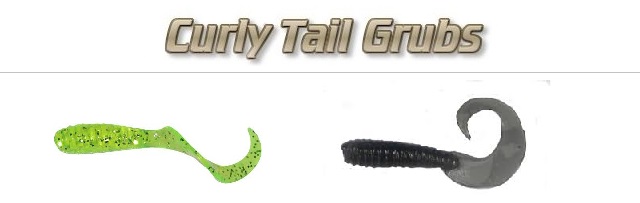
Curly tail grubs are great baits for salmon. The 4 to 5 inch grubs will work better than the smaller grubs, however, for some of the smaller salmon, don’t rule out a 2 to 3 inch grub. They are great for casting, jigging or slow trolling.
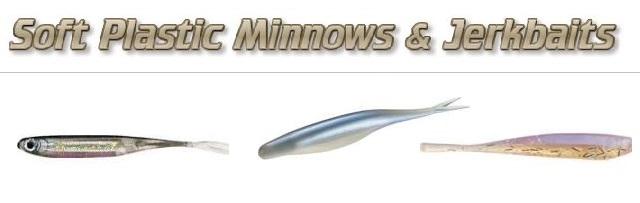
Jigging or drop shotting minnow baits aren’t a very popular way to fish for salmon, however, they can be effective. Some anglers will fish this way when they find a large school of salmon. Another way to fish with these baits is with a scrounger jighead. You can then cast them and wind them in with a steady retrieve or slow troll them.
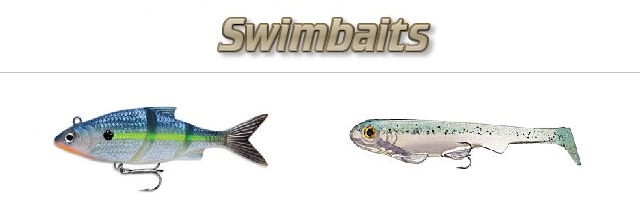
Swimbaits can be very effective for salmon. You cast them or troll them. They probably work better trolled because you can cover more water, but don’t rule out these lures when salmon move into the shorelines and harbors to spawn in the fall.
Hard Baits
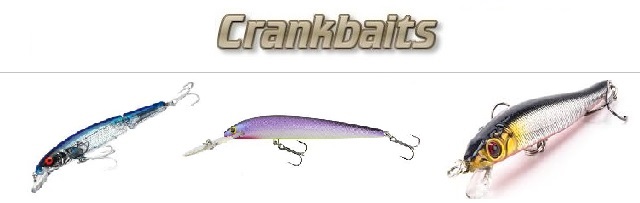
Crankbaits can be effective for salmon. Most anglers that fish crankbaits will troll with them. Whether you fish shallow, deep or in between, you have a lot of options. Some anglers report good success casting crankbaits when salmon move into the shallows during the spawn.
This is one of the most popular ways to troll for salmon, especially in the spring and early summer when salmon can be caught somewhat shallow.
Inline spinners are very popular for trout and they will work for salmon too. Most anglers won’t use spinners for salmon, however, when salmon move into the shallows to spawn, you can usually catch some fish with a spinner. On the Great Lakes, anglers fish the harbors and shorelines in the fall and do pretty well with these lures. Some anglers report success in some rivers too, however, flies and eggs tend to be much more productive in the rivers.
Spoons
Trolling spoons are the most popular types of spoons for salmon. Troll a variety of them at different depths and they will catch all types of salmon.
Casting spoons aren’t as popular as trolling spoons, but they are super effective when salmon are close enough to shore that you can cast for them. Some boaters also report good success casting spoons in the harbors in the Great Lakes. Every state doesn’t allow you to fish from your boat in the harbors, so check the regulations before using this technique.
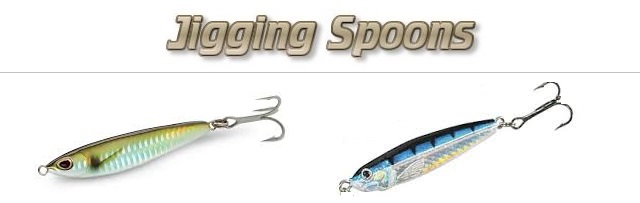
Jigging spoons can be effective for salmon when you find a school of them in deeper water. Trolling tends to be more effective so most anglers never even try a jigging spoon. They can be effective though if you are in the right situation.
Flies
They say that when salmon enter the rivers to spawn that they do not eat, however, they must still be willing to hit a bait, otherwise, anglers would never catch them. You can use a variety of flies that you see trout anglers use, however, most anglers that fly fish for salmon will stick to the egg patterns and streamers. You can catch salmon with other flies, but the ones listed below tend to be the better patterns for targeting salmon.
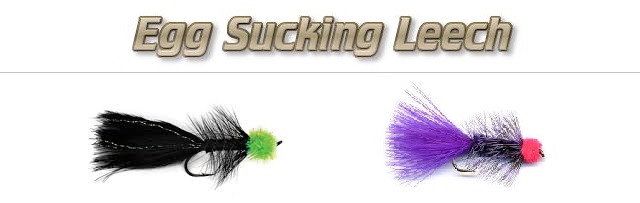
The egg sucking leech is a very unique fly that works very well for salmon. Anglers fish these at the beginning of the spawning runs all the way to the end and they tend to catch fish consistently through the entire run.
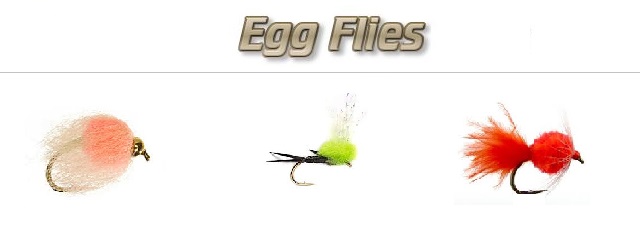
Egg flies work great, especially once the salmon start laying their eggs during the spawning runs.
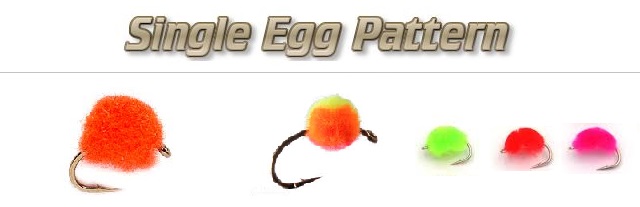
There may not be a better way to target salmon once the salmon start laying their eggs during the spawning runs in the rivers. Tie on a single egg and drift it slowly downstream.
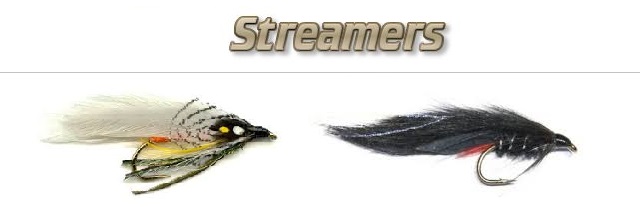
Streamers are popular flies for salmon. Fish a variety of streamers in the rivers when the salmon are running and you should catch some fish.
If you’re new to airsoft, the different ammo types on the market can be confusing.
Are you choosing the right BB weight for your gun?
Does the size of the BB matter?
Will your ammo selection impact performance and gameplay?
We’ve tried and tested every type of airsoft ammo on the market. This guide will answer your questions about BB colors, sizes, materials, and, more importantly, which is the best ammo for you.
Size
There are three size variations of airsoft BB: 4.5mm, 6mm, and 8mm in diameter. The most common size is 6mm. This is because most airsoft guns are manufactured to accept this pellet size.
Before buying airsoft ammunition, ensure your rifle is designed to accept 6mm BBs. Most gas-powered airsoft guns (GBB), Co2 pistols, and spring-powered guns will fire 6mm rounds.
8mm BBs are less common, but players can modify their gun barrels to shoot this larger size of ammo. However, based on feedback from the airsoft community, 8mm BBs are less efficient than 6mm BBs due to their larger surface area and air resistance.
Wind and spin from your guns’ hop-up unit can create poor accuracy.
Weight
The most commonly used weight of airsoft BB is 0.20g. But depending on the FPS of your airsoft gun, you can choose a heavier weight, such as 0.25g or 0.28g. The weight of your BB can influence trajectory, energy, and velocity (force).
You can fire a heavier-weight BB from weapons at a much higher rate. Your gun’s barrel will influence your shots’ performance and overall accuracy.
Depending on your play style, the type of rifle you have, and the different kinds of environments will decide what weight will be best for you.
Keep in mind that an airsoft gun and a BB gun are different. There is 4.5mm metal ammunition available, but these are not safe to use in airsoft.
You’ll have to consider your gun’s performance before you up which ammo weight you use. If your rifle’s internal parts aren’t powerful enough to support moving from a 0.20g to a 0.28g, it will impact how far you can shoot.
Here’s a list of all airsoft BB weights:
0.12g
0.20g
0.22g
0.25g
0.28g
0.30g
0.32g
0.36g
0.38g
0.40g
Most starter airsoft guns can support 0.20g out of the box. Remember, ensuring your gun’s FPS doesn’t mean you’re firing over the limit. The lighter the BB, the less it can travel over a distance.
But lighter BBs have less precision. As you’re shooting, you’ll notice your rounds become less accurate.
As you move from a beginner airsoft player to a more regular skirmisher, you might use 0.25g – 0.28g weights.
This slightly heavier weight will likely require upgrades to your rifle. Even though it’s only a few grams, it makes a big difference.
If you want to use the heaviest BBs (0.32g and above), your gun will need some serious performance upgrades. This type of BB is best suited for sniper rifles or DMRs due to the length of the barrel.
If you need clarification about the airsoft BB size, your gun allows, check for markings on the airsoft gun magazine or the handbook the manufacturer provides.
Note: the heavier the BB, the more likely it is to hurt if a player gets shot. Be conscious of your trigger discipline as you move up in weight.
Material variants
Airsoft BBs are made of plastic. There are both biodegradable and non-biodegradable options available on the market. Most brands produce high-quality BBs for both variants nowadays.
Most indoor airsoft venues will allow for non-biodegradable airsoft ammo.
This is because the BBs can be collected and disposed of properly. These non-biodegradable BBs are made of a plastic called Acrylonitrile Butadiene Styrene (or ABS for short).
However, outdoor venues such as urban sites will usually ask you to use biodegradable BBs (bio BBs). This is because they degrade over time and will not impact the environment.
They are a little more expensive, but keeping your local airsoft site environmentally friendly is worth it.
Biodegradable airsoft BBs are made of Polylactic Acids (PLA) products such as corn and starches.
As you can imagine, sweeping up 400,000 airsoft BBs at the end of the day isn’t possible (or fun).
Colors
Most airsoft BBs come in a standard white or a lighter color. The reason for this is that it improves the visibility of your shot. Shot placement and identifying your hits is much easier if the BB direction can be tracked through the air.
There are darker BB colors, such as dark green and dark blue. This naturally has an impact on visibility.
Darker BBs can sometimes be great for avoiding shot detection (i.e., opponents can’t see them coming), but they can create problems for you, too.
Tracer BBs
Tracer BBs have a luminescent coating that glows as they’re fired. Tracer BBs give you a significant advantage in indoor CQB environments where light is limited or, of course, for a night airsoft game.
For the luminescent coating to work on the BB, a tracer unit must be fitted to the end of your AEG. Your shots will then flash a cool green or red as they fly toward your opposition.
Tracers are more expensive than your standard non-glow pellets. But they’re a lot of fun and can help prevent cheat calling.
Airsoft ammo types FAQs
What ammo is used in airsoft?
Airsoft guns (sniper rifles, shotguns, pistols, and AEGs) all use BB or spherical airsoft pellets. Most commonly made out of plastic and come in the color white. The standard BB diameter is 6mm, and the most common weight is 0.20g.
What is the difference in airsoft ammo?
The main difference between airsoft ammo is size, weight, and color. The manufacturing process can differ between brands, too. Depending on the polishing process, the BB quality can vary.
This will impact performance, and your BBs will likely have imperfections if the polishing process is poor. Such as rough characteristics or small pieces of sharp plastic on the surface of the BB.
Do heavier BBs increase range?
Yes, heavier airsoft BBs travel further due to increased flight stability and path. The bigger the BB size and weight, the less likely it can be influenced by wind, rain, and other environmental elements.
Do heavier BBs hurt more?
Yes, heavier BBs hurt more. Their increased weight can result in more power and cause more damage to their intended target (i.e., other airsoft players). For safety reasons, heavier BBs are measured on a Joule’s energy chart to avoid serious injury (piercing the skin).
Is it okay to reuse BBs?
No, you can’t reuse airsoft BBs. Once they’re fired from your rifle, the integrity of the BB is compromised. In simple terms, the inside of the BB starts to crack. If you reuse BBs after they’re fired, they could shatter on the inside of your gun. You are ultimately damaging the internals of your weapon.
Writer Kevin Reese puts the Winchester Model 70 Extreme Weather SS through its paces. Verdict? Worth it.
The Winchester Model 70 Extreme Weather SS I tested was manufactured by Browning in Viana, Portugal, and like all performance rifles, it begins with great bones.
Winchester Model 70 Extreme Weather SS Review
The Model 70 Extreme Weather SS boasts a Bell & Carlson stock constructed via a “hand lay-up” process in which each composite ingredient is meticulously applied. Internal to the stock is an aluminum bedding block system designed to ensure the barreled action remains perfectly stable, balanced, and bedded for exceptional accuracy.
The Winchester Model 70 Extreme’s action and barrel form the backbone of the rifle’s performance. As a starting point, both components consist of stainless steel with a rich matte finish. True to desirable pre-1964 Model 70s, today’s iterations feature Winchester’s iconic claw extractor with controlled-round feed and a three-position safety. The safety’s middle position allows the bolt to be cycled while still on safe—perfect to safely check if a rifle is unloaded.
The Model 70 Extreme’s 26-inch .300 Win. Mag. barrel is fluted and free-floating with a 1:10 twist, recessed crown to protect rifling, and is capped by a pepperbox-style muzzle brake. The assembled barreled action delivers the consistent sub-MOA accuracy hunters demand and reliability they can trust. Additional features include precision-machined bottom metal with a hinged-plate magazine and Winchester’s M.O.A. Trigger.
Trigger Time
For testing, I used a Brownells Model 70 Long-Action single-piece scope base and Accu-Tac’s medium-height, 30mm scope rings. On top, I mounted a Sightmark Citadel 3-18×50 LR2 first-focal-plane riflescope with a mil-dash reticle and .1-MRAD turret adjustments. Underneath, I employed a Firefield Stronghold 6-9-in. bipod and my trusty Tactical Tailor squeeze bag. For ammo, I chose Black Hills Ammunition’s 212-grain ELD-X.
With the rifle setup for hunting conditions, I headed to the Arlington Sportsman Club, a local shooting range on the western edge of Mansfield, Texas. To begin, I visually boresighted to a paper target just 50 yards away, made quick adjustments, settled down behind the rifle, and squeezed the trigger. Up front, the trigger seemed a tad stiff, but the shot rang out sooner than I expected. My first lesson—the trigger has short travel and is incredibly crisp. I had expected a longer pull, and it felt as though it hovered around 3 lbs. Later testing with a Wheeler gauge resulted in a 20-pull average break-weight of 3 lbs., 6.8 oz.
At 100 yards, I employed my LabRadar chronograph and shot for groups. The Winchester Model 70 Extreme Weather SS and Black Hills Ammunition’s 212-grain ELD-X .300 Win. Mag. ammo did not disappoint! I managed a .585-MOA 5-shot group. Soon after, I also scored a .75-MOA at 200 yards. Black Hills Ammunition’s ballistic data was equally impressive. Average muzzle velocity was 2810 fps with a standard deviation of 9.7. Extreme spread was 31, and muzzle energy was 3718 ft.-lbs.
The Final Shot
With the Model 70 Extreme’s Pachmayr Declerator buttpad and muzzle brake, recoil was quite manageable, even comfortable for the caliber size and lighter rifle weight. Loaded, with a riflescope, the Model 70 Extreme SS weighs about 10 pounds.
Empty, the rifle weighs seven pounds four ounces. Considering shooting and carrying comfort, as well as accuracy and the Model 70’s proven reliability, I’m a big fan of the Winchester 70 Extreme Weather SS.
Thanks for supporting us! We may earn a modest commission from affiliate links in our articles.
Over the past few weeks, I surveyed over 100 shooters who competed in this year’s Nightforce Extended Long Range Steel Challenge in Wyoming. I know a lot of you had questions about calibers, scopes and other gear guys were using, so I put together a survey, and the match director, Scott Satterlee, sent it to all the competitors. Over 100 shooters completed the survey, including 85% of the guys who finished in the top 25 overall. Thanks to all the guys who took the time to share.
One of the fun things about the NF ELR match is it has less established paths to success than most rifle matches. In most PRS/NRL style matches, it’s very likely the guy who wins was using a 6 Dasher (or other 6BR based case), 6mm Creedmoor, or maybe a 6×47 Lapua or 6XC, which are all very, very similar in the grand scheme of things (see the data). In many Extreme Long Range matches the winner is likely using some variety of a 375 CheyTac or 416 Barrett (see the data). This Wyoming match that Scott has designed is one of a kind, featuringfeatures targets from 700-2100 yards in a wide range of scenarios and conditions. (Learn more about the Nightforce ELR match)
While there aren’t formal definitions that anyone agrees on, those distances are further than what most people think of as “traditional” long-range (average target distance at this year’s match was 1,180 yards), but also shorter distance than what many consider “extreme” long-range (90% of the targets at this year’s match were 1500 yards or less). Scott calls this “Extended Long Range,” which is somewhere between the two. As competitors, we’re still trying to figure out what works best, which makes cartridge and equipment choices much more interesting.
“This information will be super helpful to a lot of folks that want to get into the extended range type of engagements,” explained Scott Satterlee. “The Nightforce match is unique to our sport because we had calibers from 6mm through 416’s and everything in between.”
I agree, so let’s dive into the data!
Most Popular Caliber at the Nightforce ELR Match
Let’s start by looking at the calibers guys chose to run, and then we’ll dive into the specific cartridges they pick. While many shooters use the term caliber and cartridge interchangeably, when I say “caliber” I’m referring to the bore diameter of the barrel (e.g. 30 caliber) and when I say “cartridge” I’m referring to the specific type of case the barrel is chambered for (e.g. 300 Norma Mag, 300 PRC).
The chart below shows a breakdown of the total number of shooters who completed the survey grouped by the caliber they were using. I wanted to also provide context for where those shooters finished in the overall standings, so the colors in each bar is used to segment how high up they finished on the leader board. Black indicates those who finished in the top 10, blue indicates 11th and 25th, green indicates 26th to 50th, yellow indicates 51st to 99th, and light gray indicates 100th to 191st.
Like Scott mentioned, there were literally shooters running 6mm to 416 caliber rifles. However, you can clearly see in the chart above that the majority of shooters were running one of these calibers: 6.5mm, 7mm, or 30 caliber. In fact, those three calibers combine to represent 80% of the surveyed shooters!
You can also see above that some guys finished in the top 25 with 6mm and a 25 caliber rifles, and there was also one shooter who finished in the top 10 with a 338 caliber rifle. Having six calibers represented among the top 25 shooters just shows how many opinions there are in terms of what is optimal for these distances!
Now let’s filter down to just show what caliber guys the guys who finished in the top 50 chose to compete with this year. I know a few very well respected shooters that have competed at the highest levels that finished outside of the top 50 at this match, so its safe to say the guys who finished in the top 50 are all exceptional shooters. Let’s see what those guys chose to run:
The chart above shows that more shooters were running a 6.5mm cartridge in the top 50 than any other caliber. However, more shooters were running a 30 caliber cartridge in the top 10 and the top 25 than any other caliber. But, once again the 6.5mm, 7mm, and 30 calibers were the top picks, with those three combining to represent 81% of the surveyed shooters who finished in the top 50.
Most Popular ELR Cartridges
Now let’s look at the specific cartridges these shooters were using to engage targets from 700-2100 yards … in sustained winds up to 35 mph and wind gusts measured on-site up to 60 mph!
You can see a huge range of cartridges, including the 338 Lapua Mag, and precision cartridges like the 6.5 Creedmoor, 6 Creedmoor, and 6.5×47 Lapua, and larger cartridges like a 7mm Rem Mag, 6.5-284, and even the 28 Nosler. But, 5 cartridges seemed to be most popular, with several people using each of these:
6.5 PRC
300 Norma Mag
300 PRC
7 SAUM
6.5 SAUM
Those 5 cartridges represented 44% of the 100+ shooters surveyed.
6.5 PRC
The most popular choice among the 100+ shooters surveyed was the 6.5 PRC, which is a new cartridge Hornady released in 2017. The 6.5 PRC had been SAAMI approved for less than two years before this match, which is a short amount of time to already see such widespread adoption among the precision rifle community.
The 6.5 PRC is the big brother to the very popular 6.5 Creedmoor and offers up to 10% more velocity while still maintaining relatively low recoil. PRC stands for Precision Rifle Cartridge, and it was designed from the ground up with this kind of precision shooting in mind. The 6.5 PRC is a compact, magnum cartridge that can drive bullets like the 147 gr. ELD-M 200+ fps faster than the Creedmoor, which allows it to stretch well beyond 1,000 yards. Like the 6mm Creedmoor and 6.5 Creedmoor, Hornady offers high quality, match-grade ammunition for the 6.5 PRC at affordable prices. I noticed at least a couple of shooters at this match using Hornady 6.5 PRC factory match ammo.
Among those surveyed, it seems like most shooters were using their 6.5 PRC to push 144-147 gr. bullets around 2950 to 2980 fps, which should give context for the class of ballistics the 6.5 PRC provides.
300 Norma Mag
The 300 Norma Mag has been popular at this match for the past few years. It’s worth noting that the shooters who finished in the top 4 spots overall in 2020 were all using a 300 Norma Mag. The winners of this Wyoming ELR Match in 2017 and 2018 were both using a 300 Norma Mag, too. I’ve talked about this cartridge extensively in my previous posts, so I won’t cover all that again. Note: This is different than the older 308 Norma Mag, which was designed in 1959. The 300 Norma Mag is a larger and more modern cartridge designed in 2012.
The 300 Norma Mag is a large magnum cartridge that has been adopted by USSOCOM, so it’s popularity continues to rise. With heavy-for-caliber bullets from 215 to 230 gr., it’s ballistics rival that of the 338 Lapua Mag, but with less recoil (although faster barrel wear). USSOCOM’s Advanced Sniper Rifle (ASR) solicitation specified the 300 Norma Mag as one of the cartridges that rifle should be chambered in, and now there are lots of rifles being chambered for that cartridge.
Another big attraction for the 300 Norma Mag is that Lapua is now selling brass for it, which means you can get the best of class brass for it if you need extreme consistency and low variation in muzzle velocity. That is an important thing in this game! (Read more on the 300 Norma Mag)
Among those surveyed, many shooters were running 215-220 gr. bullets around 2980-3000 fps, and 230 gr. bullets around 2940-2970 fps. Jorge took 1st place overall and he said using a 30-inch barrel to push Berger 220 gr. Long Range Hybrid bullet at 2980 fps – with an SD of 2 fps!
300 PRC
The 300 PRC was also very popular among this group. It was released around the same time as the 6.5 PRC, so it’s a bit surprising to see how many precision rifle competitors have adopted it – but there is a lot to like! The 300 PRC was tested and selected by the US Dept. of Defense to use in its extended long-range sniping program.
Long-range expert and former special ops sniper, Ryan Cleckner, explains, “The 300 Norma handily beats the 300 PRC on ballistic performance. This is because it can shoot the same or similar bullet faster. However, this comes at a cost. The 300 Norma requires the same XL-sized action as the 338 Lapua Mag because of its large cartridge case and it recoils more than the 300 PRC.” The XL-sized action is due to the Norma being a “fatter” cartridge, requiring a larger bolt face.
The 300 Norma Mag has slightly more case volume, so it shouldn’t be a surprise that it can provide slightly higher muzzle velocities and a small edge in ballistics. In my survey, some shooters using a 300 Norma Mag were pushing 230 gr. bullets around 2960 fps, while shooters using a 300 PRC said they were pushing 230 gr. bullets around 2860 fps. So the 300 Norma Mag can provide roughly 100 fps faster velocities than the 300 PRC, which is more but not a drastic difference.
With the overall length of 3.7 inches, the 300 PRC requires a magnum length action. You can use it with a Remington 700 Long Action, but it requires a few modifications. Some also believe the 300 PRC addresses other drawbacks of the 300 Norma Mag, but I’ll side-step that debate. After reading a ton about both and personally talking to experts closely involved with their designs, I don’t think one is inherently better than the other. Clearly, there are good shooters using each one effectively, so it likely comes down to your particular application and personal preferences.
7 SAUM
There were also several shooters using the 7mm SAUM, also known as the 7mm Remington Short Action Ultra Mag, including one in the top 10 and another in the top 25. The 7 SAUM is a short-action, magnum cartridges similar to the 7 WSM. One of the draws to the 7 SAUM is the availability of high-quality brass through companies like Norma and ADG. The 7 SAUM offers better performance than the 300 Win Mag in a package that is almost as small as the 6.5 Creedmoor. I read a great article written by nationally-ranked precision rifle competitor, Caylen Wojcik, that walks through how he landed on the 7mm SAUM cartridge for a dual-purpose rifle build to use in extended long-range competitions and long-range hunting. Caylen said he runs 180 gr. bullets around 2900 fps with his 7 SAUM. Lou Smith finished in the top 10 with a 7 SAUM in the Wyoming ELR match, and he was running Berger 184 gr. Hybrid bullets at 2930 fps from his 30-inch barrel.
Honestly, with so many guys using either a 6.5mm or a 30 caliber, it seems like the 7mm could prove to be the happy medium. I talked with Scott Satterlee about this a couple of years ago and we both believe some flavor of 7mm magnum could arguably be the ideal choice for this match. Now with the release of 7mm bullets like Hornady’s 190 gr. A-Tip, and Berger’s new 190 gr. Long Range Hybrid Target (LRHT) bullet – I would be surprised if we don’t see more 7mm magnums in the future. Cartridge choice follows bullet design, so when new bullets are released you can always expect it to disrupt cartridge popularity as new bullet designs open new opportunities.
6.5 SAUM
Finally, several shooters chose to run a 6.5 SAUM at the Nightforce ELR Steel Challenge, which is obviously very similar to the 7 SAUM, but necked down to a 6.5mm bullet. If you just look at what the shooters who finished in the top 25 were using, there were as many running a 6.5 SAUM as any other cartridge! The 6.5 SAUM and the 300 Norma both had 4 shooters represented among the top 25. The 6.5 SAUM had two shooters represented among the top 10 and two other shooters in the top 25.
The shooter highest on the leaderboard that was using a 6.5 SAUM was Carson Rutherford, who placed 5th overall. Carson said he was using Hornady 153 gr. A-Tip bullets, and was pushing those at 3,090 fps with an SD of 6 fps. The shooters surveyed that were using a 6.5 SAUM reported a variety of velocities, but many of those who finished in the top half were pushing 140-147 gr. bullets 3090 to 3115 fps.
Here is a closer look at the cartridges used by those who finished in the top 25 at the 2020 Nightforce ELR Steel Challenge:
First, it is interesting that while the 6.5 PRC was the most popular cartridge among these 100+ shooters surveyed, nobody finished in the top 25 with a 6.5 PRC. The highest finishes were 26th, 39th, and 47th, so it wasn’t far off. I can’t help but wonder if the combination of the extended target distances and the 20-35 mph winds were a little too much for that smaller magnum cartridge. Of course, “correlation does not imply causation,” meaning the fact that those shooters were using a 6.5 PRC and didn’t land in the top 25 doesn’t mean their cartridge choice caused them to finish where they did. In fact, one of the guys who finished in the top 10 was using a 6.5×47 Lapua, which has less ballistic performance than the 6.5 PRC (and is extremely impressive!), so there is probably more going on here than raw ballistic performance. Knowing the 6.5 PRC is a relatively new cartridge, another plausible theory might be that some of the guys who just got into this style of shooting had their new rifles chambered in that cartridge, and maybe that represents a large segment of those using a 6.5 PRC. Either way, it is interesting there were no 6.5 PRC’s among the top 25.
When you narrow it down to just the top 25, you can see the 300 Norma Mag moved to the top spot, with its four shooters finishing 1st, 2nd, 3rd, and 4th overall.
Again, the 300 PRC and 7 SAUM are still popular cartridge choices among those in the top 25. Behind those, you’ll see a mix of cartridges among this year’s top 10:
7-300 WSM
The 6th place shooter was using a 7-300 WSM, which is a 300 WSM case necked down to a 7mm bullet. You might ask, “Why didn’t they just use a 7 WSM?” Great question! In that article about the 7mm SAUM I mentioned earlier, nationally-ranked precision rifle competitor, Caylen Wojcik, said he was originally thinking he’d build a 7 WSM. Caylen explained that with a “7 WSM and a 180-grain VLD (very low drag) bullet pushed at 3,000 feet per second (fps), the numbers were convincing. When I shot a WSM, I was impressed with the mild recoil but received a rude awakening when sourcing brass. It was officially unobtanium. One would have more luck sourcing unicorn tears.” Ha! Well said, Caylen. It’s sad to see that a very capable cartridge is handicapped by poor brass selection, but that’s the case with the 7 WSM.
I know there are brass manufacturers reading this. Can you see the business opportunity here? Someone should offer some high-quality 7 WSM brass!
When faced with the 7 WSM brass issue, some guys jump to the 7 SAUM and others buy the more readily available 300 WSM brass and neck it down to 7mm – and viola, you have the 7-300 WSM. The 7-300 WSM has slightly different chamber dimensions than a 7 WSM. Robert Whitley explains, “The difference is that the 7mm/300WSM has a .038″ shorter head space and a .038″ longer neck than a factory 7mm WSM, and you need to make brass for the 7mm/300 WSM from 300 WSM or 270 WSM cases.” (Read more here)
The one shooter who said they used a 7-300 WSM reported that they were pushing Hornady 190 gr. A-Tip bullets from their 30-inch barrel at 2,905 fps with an SD of 3 fps!
6.5×47 Lapua
Okay, this one surprised me! The 6.5×47 Lapua is much smaller than anything guys were using in at least the top 15 spots, but Jason Brinkman used it to finish 8th overall. The reason that is so impressive is a bullet’s time of flight to the target would be measurably longer with the 6.5×47 than something like a 300 Norma Mag or 6.5 SAUM, which means it would be significantly more affected by the wind, giving you less room for error on your wind calls. There were a ton of targets from 1,000-1,500 yards at this match, and there were sustained winds up to 35 mph! That is definitely stretching what the 6.5×47 Lapua was designed for, which means Jason must be a heck of a shooter. Jason reported that he was pushing Berger 144 gr. Long Range Hybrid Target (LRHT) bullets at 2820 fps from his 28-inch barrel. Give that man a magnum and no telling where he would’ve finished!
Of course, I’ll also mention that sometimes a big magnum might not be as “shootable” as a mid-sized case like the 6.5×47 Lapua. So I don’t want to assume Jason didn’t pick that cartridge on purpose, because of the reduced recoil and the 6.5×47 Lapua’s legendary consistency. I’ve heard many veteran shooters claim it’s one of the easiest cartridges to load for. I asked Jason if he built a full custom rifle just for this specific match, what cartridge would he pick and he said a 6.5 PRC. So clearly he is not one of the guys who would jump up to a 300 PRC or 300 Norma Mag, even if he had one. Either way, that is immensely impressive shooting, Jason!
338 EnABELR
The last cartridge in the top 10 that we haven’t talked about is a 338 EnABLR, which Chase Stroud used to claim 9th. This is a case that was designed by the Applied Ballistics team. EnABELR stands for Engineered by Applied Ballistics for Extreme Long Range. 99% of the cartridge designs out there are based on some existing case that was necked down and some slight dimension changes. However, AB’s 338 and 375 caliber EnABELR cartridges are completely original designs with no parent case.
“There are larger cartridges that make more velocity, but they’re also higher maintenance and less predictable. The EnABELR was developed to provide practical, long term, reliable performance for ELR applications for many shots, making your brass investment take you further across more rounds. What we’ve learned competing in ELR matches in recent years is that the value in consistent and reliable performance is more important than the extra +100 fps of a higher maintenance cartridge. These lessons are incorporated in the EnABELR design.” – Applied Ballistics Team
The 338 & 375 EnABELR cartridges were also designed to feed from a magazine, which can sometimes be an issue with larger ELR cartridges like the popular 375 CheyTac. Applied Ballistics provides all kinds of components related to EnABELR cartridges including chamber reamers, brass, reloading dies, complete rifle builds, and even match-grade loaded ammo with Berger Solid Bullets. Consistent ammo is important in the ELR game, and I’d bet AB produces some high-quality ammo.
Chase Stroud used his 338 EnABLR to push Berger 300 gr. bullets near 3300 fps! Here is a pic Chase posted on Instagram a few days before the match:
I don’t even need to run the ballistics to confidently say a Berger 300 gr. bullet traveling at 3295 fps clearly has the best ballistics of any cartridge in the top 10. I compared it to my ballistics, which was a 300 Norma Mag pushing 230 gr. A-Tip’s at 2,968 fps, and Chase’s 338 EnABELR had almost 20% less wind drift at 1600 yards. That is crazy! For a sample scenario at 1600 yards my elevation adjustment was 12.2 mils, while the 338 EnABELR was just 9.6 mils! I bet the trace on that thing looked like a laser beam! My 25 mph wind drift at 1600 yards was 4.6 mils, but the EnABELR was only 3.8 mils!!! That may sound similar, but anyone who has competed in this game knows that is a massive difference. But, of course, there is no free lunch. Ballistic improvements that large always come at the cost of higher recoil and shorter barrel life, which is why we’re all still trying to figure out what the “right” balance is for these distances and scenarios.
Cartridge They’d Choose If Building A New Custom Rifle Optimized For This Match
Finally, I asked people on the survey a similar question with a twist. Here is exactly how I worded the question: “If you built a new custom rifle that was 100% optimized for this one match and cost was not a factor, what cartridge would you pick?” That question seems to cut to the heart of what each shooter feels is optimal for this match, and takes into account the experience they gained from shooting the match this year. Here are the results:
Our top 5 cartridges are still the same, although they’re shuffled in a little different order. These 5 cartridges combine to represent 63% of all those surveyed:
300 Norma Mag
7 SAUM
6.5 PRC
300 PRC
6.5 SAUM
While there were just 9 shooters surveyed who used a 300 Norma Mag during this year’s match, there were almost double that number that said they’d go with a 300 Norma Mag if building a rifle optimized for this match. There were even a few other shooters who would go with wildcats of that cartridge, like the 300 Norma Mag Improved, or 7-300 Norma Mag (which is simply necked down to a 7mm bullet), or even one 7-300 Norma Mag Improved!
The 7-300 Norma Mag Improved means you are taking a big magnum, necking it down to a 7mm bullet, and then changing the angle of the shoulder to get slightly more case capacity and higher velocities. So it’s a wildcat of a wildcat! A 7-300 Norma Mag Improved could push a 190 gr. Hornady A-Tip over 3,200 fps and would provide some crazy ballistics! I ran the same scenario as I referenced for the 338 EnABELR and it was very similar, with 10.0 mils of elevation adjustment to 1600 yards and 3.9 mils of drift for a 25 mph wind. But, the bullet you’re launching is 190 gr. instead of 300 gr., so I’d bet the recoil would be significantly less. I’d bet the barrel life would still be abysmal (likely 500-1000 rounds) because that cartridge would be extremely overbore. Could it be precise and predictable? Who knows! But, I bet it’d shoot like a laser! Kind of makes me want to try one just to see. 😉
There was also a big jump up in how many said 7 SAUM, with 8 of those surveyed using it in the 2020 match, but 15 saying that is what they’d do if they built a custom rifle for this match. As I mentioned earlier, a 7mm magnum seems to be a great choice for this match. Norma and ADG offer brass for the 7 SAUM, which many consider high-quality. If Lapua started offering brass for a 7 WSM or even a larger 7mm case, I’d suspect we might even see a more pronounced move to the 7mm for the target distances in this match. I guess you could always start with a 300 Norma Mag case from Lapua, and neck it down to a 7-300 Norma Mag. Dang, it’s got me thinking about it!
There was roughly the same amount of shooters using a 6.5 PRC, 300 PRC, or 6.5 SAUM as the number that said they’d pick those if building a rifle optimized for this match.
Another interesting note here is that none of those surveyed said they used a 375 caliber this year, although I did hear a rumor that a couple of guys were using a 375 at the match. Either way, they weren’t represented in large numbers at all. However, 5 shooters said they thought a 375 caliber would be optimal if they built a rifle for this match. Three of those guys said they’d pick a 375 CheyTac, one said they’d pick a 37 XC, and one said they’d pick a 375 EnABELR. Perhaps after the 30+ mph winds this year, a few people are thinking a larger caliber might help.
Another interesting cartridge that caught my attention is the 7mm Sherman Max, which is said to be able to push Berger’s 195 gr. bullet near 3000 fps. They offer head-stamped brass for the 7 Sherman Max that is made by ADG, who uses very modern equipment and is considered by some as top-shelf brass.
Lots of interesting cartridges and wildcats in this group of wish list cartridges for this match! It’s certainly a fun list to look through.
Up Next
Next, I plan to share what optics these guys were using to reach out to 700-2100 yard targets. If you’d like to be the first to know when that next post comes out, subscribe for email notifications!
The Regional Rut Update deer-hunting report for Oct. 26, 2024. (Shutterstock image)
We’re getting closer. Can you feel it? The whitetail rut is getting into gear, and with it comes the best chance of the season for a buck of a lifetime for deer hunters.
This is Week 2 of the 2024 Game & Fish Regional Rut Update, a series of seven exclusive weekly rut reports from the field by whitetail contributors Doug Howlett (East), Darron McDougal (Midwest) and Josh Honeycutt (South). Click here for last week’s report. This week’s report includes:
In the East, Howlett reports food sources are getting most of the attention from bucks right now, but he believes “big things” are about to happen.
In the Midwest, McDougal reports mature bucks have been primarily active at night, but that’s about to change, too, and perhaps by this weekend.
In the South, Honeycutt reports rut activity has been on the rise in some states, though your hunting focus should be on food. Cool weather ahead should lead to increased deer movement.
South Carolina hunter Jamie Holler worked a 12-hour shift and managed a short nap before hitting the woods on the morning of Oct. 19. Before noon, he downed this great 14-point buck with his muzzleloader. Read Tagged Out in the South Report below to read more about Holler’s exciting hunt. (Photo courtesy of Jamie Holler)
EAST REPORT
Rut Activity Spotty; Food Is Still King for Bigger Bucks
Despite a slow week, the East seems to be on the cusp of major rutting activity.
By Doug Howlett
Persistent warm weather continues to plague the region, though a short cold snap last week did kickstart some activity.
Hunters in New Jersey, according to David Sichik of Triple B Outfitters, began experiencing increased movement with a number of smaller bucks harassing some of the first does. Sichik’s trail cams began picking up bucks chasing early last week, and by the end of the week he had clients steadily scoring on bucks as well as the meat deer they came to fill their freezers with. Tiffany Jade, a New York hunter who made the drive over to the Garden State, scored with a nice 7-pointer (see Tagged Out below). Sichik loves this time of year. The week of Halloween is when his hunters traditionally do very well. So far, things are living up to his expectations.
In Virginia, deer sign is becoming more prominent in the eastern half of the state, as evidenced by the number of rubs and scrapes beginning to pop up. Cut corn and still-standing soybeans are serving as afternoon buffets for legions of deer, making those the places to target wall-hangers, which have not yet been harassed by too many hunters. Meanwhile, in the mountainous half of the Old Dominion, deer movement is still sluggish until after dark and there remains little sign even among the flats and shallow ridge passes.
West Virginia’s Larry Case says there’s been very little rut activity in the southeastern part of his state, stretching down into the southwestern part of Virginia. But that is all about to change. The very first reports of big bucks chasing does started to come in about the middle of last week.
In New England, hunter Michael Wheeler reports, “In the last five days, I’m finally seeing bucks on cameras in the mountains of Vermont, northern New York and New Hampshire. They’re using terrain features like funnels and saddles and beaver dams along swamps. They are cruising at night in locations that normally don’t see bucks cruising except when the rut is close or coming on. I haven’t seen daytime cruising in transition areas yet, but that should start by this week.”
Wheeler is, however, beginning to find more rubs and scrapes opening up on ridges and down low near river bottoms. He notes a number of youth hunters had luck last weekend in farm country down in the valleys, hunting edges of cut corn in the morning and evening. “A few youth hunters I know were successful hunting the edges of clear-cuts and old logging roads in the evening, catching bucks browsing,” he says. There’s been little chasing going on, but by next week sightings should begin picking up rapidly.
Also in New England, Ken Fecteau Jr., says there aren’t a lot of acorns this year, and much of the activity is occurring at night. He notes there still aren’t a lot of rubs and scrapes.
Pennsylvania has seen some dandies fall in the early part of the season, with deer activity just starting to kick in. With the moon at full blast this coming week, look for activity to go into high gear from early afternoon until dark. However, if more heat shows up as predicted, early chasing activity could push back until the sun is about to dip.
We are right on the edge of big things happening, and I fully expect by the next report to hear that chasing is kicking into high gear and more tags are being filled.
TAGGED OUT
Tiffany Bezel of New York tagged this 7-point buck in New Jersey on Oct. 20 on a hunt in New Jersey. (Photo courtesy of Tiffany Jade)
Garden State Success
Hunter: Tiffany Bezel
Date: Oct. 20, 2024
Location: New Jersey
Method: Crossbow
Stats: 7 points
Tiffany Bezel killed this 7-point buck Oct. 20 while hunting in New Jersey with Triple B Outfitters. She was in a treestand using a new TenPoint crossbow her parents had bought her as a gift. She had seen the buck on camera, along with a spike and another decent buck, the night before when the trio appeared after 4 p.m. On the afternoon of her hunt, however, the 7-point buck came in alone along a runway cut in the forest and well ahead of 4 p.m. In fact, Bezel had only been in her stand about a half hour when he appeared. “It was the earliest I’ve ever harvested a buck in the evening,” she says.
VIDEO
MyOutdoorTV: ‘Drury’s Thirteen’ Monsters of the Pre-Lock
The pre-rut can be one of the most thrilling times to hunt whitetails, and thanks to our friends at MyOutdoorTV, we’re excited to bring you big-buck footage that captures the essence of hunting during late October. In this episode of “Drury’s Thirteen,” Mark Drury has his sights set on what could be the largest Missouri buck of his life, while brother Terry is in hot pursuit of an Illinois brute he calls the “Decoy Buck.”
Want more whitetail action? For a limited time, use promo code GAMEFISH30 and get a 30-day free trial of MyOutdoorTV.* MyOutdoorTV gets you motivated with world-class hunting, fishing and shooting content. Choose your favorites from adrenaline-pumping hunts, thrilling fishing escapades, valuable shooting insights and delectable wild-game recipes. MyOutdoorTV is the outdoor enthusiast’s streaming service.
*Offer valid for a limited time. Cannot be combined with other offers.
Get a 30-day free trial of MyOutdoorTV
MIDWEST REPORT
Scrapes, Rubs and Sparring Increase; Hunt Scrapes Downwind of Beds
Although mature bucks are still primarily moving at night, expect daylight activity to begin increasing by this weekend.
By Darron McDougal
Despite numerous recent social-media posts in which hunters say they’re seeing bucks with does, most mature Midwestern bucks are still homebodies and hitting scrapes at night. According to HuntStand Pro Whitetail’s Whitetail Activity Forecast, daylight movement should be on the rise by Saturday and Sunday. For now, here are some observations from the past week.
Kansas has traditionally treated Nate Hosie of HeadHunters TV well during mid-October, but he didn’t kill a buck during his hunt there last week. He says an abundance of food has bucks spread out this year. “I had some close calls,” he says, “but the big fellas were mostly nocturnal.”
Whitetail expert Bill Winke shares that things have also been slow for the past few days in Iowa. “There was a good flurry of daylight activity around the middle of October but not much since,” he says. “Trail cameras are showing that bucks are covering a lot of ground, but it is all at night … at least here anyway.”
Josh Honeycutt, the South correspondent for Regional Rut Update, killed a monster Kentucky buck in September, but he has tags for Ohio and Indiana as well. While he’s been keeping tabs on cameras in those states, he says daylight movement has been minimal. However, he’s starting to see more action during legal light, including evidence that rubbing and scraping are ramping up, too. Still, for the next week or so, he says the action should be centered near white oaks. [Editor’s Note: Be sure to check out Honeycutt’s report on the Southern rut below.]
Michigan’s Nick Vander Schuur took a dandy buck and observed some promising activity on Sunday. “I watched two mature bucks chase a doe,” he says. “Most young bucks are looking. I know of some bigger bucks that aren’t chasing yet, but they’re marking their territory with lots of rubs and scrapes. I’ve heard some sparring in the distance. The rut should be going good by this weekend.”
READ: Best Days to Hunt the Deer Rut in Each Region
TAGGED OUT
Indiana bowhunter Logan Splater took this massive buck on Oct. 15 as a front moved through his area. (Photo courtesy of Logan Splater)
Hoosier Hunter Bags Brute with Hand-Me-Down Bow
Hunter: Logan Splater
Date: Oct. 15, 2024
Location: Hancock County, Ind.
Method: Compound Bow
Stats: 157 5/8 inches
Logan Splater had been seeing only young deer in the first few weeks of the season. Then, on Oct. 15, he finally had an encounter with a massive, mature buck he’d been chasing for four years. In fact, the deer had only shown up on his trail camera a few days prior.
“I knew where he was bedding,” Splater says, “and on the 15th, the wind was perfect during the peak of a cold front. When I arrived at the property, the landowner told me he had been brush-hogging paths throughout the woods all morning, which crushed my excitement, but I went hunting anyway.
“Around 6 p.m., some does appeared, so I was ready with my bow when the buck silently stepped out,” Splater continues. “He spotted me in the tree, and we had a staredown for about 10 minutes. Finally, he took a few steps. I drew and made a quick 25-yard shot. I was shooting my dad’s hand-me-down bow from the early 2000s, which made the hunt even more memorable.”
RUT GEAR
Great gear for the deer rut (from left): Dryshod Evalusion Hunt Camo/Bark boot, Bushnell 10×42 Engage EDX binocular, Moultrie Mobile Edge Pro cellular trail camera.
Gear Essentials for Hunting the Early Rut
As the rut continues toward its Novemeber peak, old- and new-school gear and tactics can help you score big. Here’s a look at gear trends and strategies for rut hunting, including hot items from Moultrie Mobile, Dryshod and Bushnell.
Click to Read More
SOUTH REPORT
Deer Movement and Buck Sign on the Rise; Still Focus on Food
Cooler weather should lead to more deer activity in the week ahead.
By Josh Honeycutt
As we enter the final weekend of October, some areas in the South are experiencing a sharp increase in deer movement and buck sign. This is mostly limited to the northern stretches of the region and a few areas farther south. Small parts of Arkansas, Florida, Georgia, Louisiana, North Carolina, Oklahoma, South Carolina and Tennessee are seeing the beginnings of pre-rut movement.
Outdoor writer John Radzwilla is in southeastern Oklahoma where he’s starting to see more sparring on camera. Some younger bucks are even pushing does, he says. “My favorite days to hunt are cold and overcast days with rain in the forecast,” he says. “I really don’t pay much attention to the moon as much as I do the cold. You’ll drive yourself crazy trying to line everything up. Just get out there. You have to put in the time.”
BuckVentures Outdoors’ Jeff Danker is in northwestern Oklahoma, and he says the bucks are spread out and unpredictable. This is mostly due to a lot of rainfall earlier in the year. “The crops are thriving and everything is still green,” he says. “Deer are not hitting corn or feeders. Big bucks are starting to hit scrapes somewhat. There’s some movement in the evening but mostly at night. Milo is being cut now and should move deer and have new ones show up. I think it will be a great year for big deer, but so far, with all the rainfall, everything is grown up and deer can hide and eat everywhere.”
In Arkansas, Phillip Vanderpool of Legends of the Outdoors reports a massive mast crop—the best he’s seen in the Ozarks in a very long time. The Huntin Grounds’ Steven Fuller is also in Arkansas. He says it’s about time to start hunting harder. A big front that’s on its way is going to push even the big old bucks to start moving better. “In the last four days, new bucks are starting to show up in new areas,” he says. “The 2 1/2-year-old and younger bucks have been consistent on scrapes, but the older bucks should start hammering scrapes consistently this week. Does are on edge and already have their head on a swivel, so you know they are feeling some pressure.”
That said, continue to focus on food. Interestingly, Fuller is seeing very few acorns on the ground, which goes to show just how localized mast crops can be. “White oak and red oak acorns are few and far between,” he says. “I’m seeing deer even hit on what pin oaks and smaller acorns we have, and that’s not usually the case until much later into fall or early winter. Food plots and good native browse are going to be key. With cold temps and rain coming back to the forest later this week, it’s time to key on scrapes.”
TAGGED OUT
This huge buck taken by South Carolina hunter Jamie Holler with his muzzleloader earlier this month had 14 points and weighed 202 pounds. (Photo by Jamie Holler)
South Carolina Muzzleloader Monster
Hunter: Jamie Holler
Date: Oct. 19, 2024
Location: South Carolina
Method: Muzzleloader
Stats: 14 points
On Oct. 19, after working a 12-hour shift and a short nap, South Carolina’s Jamie Holler gathered his gear and eased into position at his hunting grounds. He located a scrape that piqued his interest and settled in for the morning hunt, setting up camp in a small brush blind. A nice buck cruised through at first light, but it was out of range for Holler’s muzzleloader. Then, two does appeared and walked through. He thought about shooting one of them but didn’t. Seconds later, a spike ran down off the ridge.
About 15 minutes after that, a doe and two fawns ran into view. A nice buck was behind them, and they all worked toward Jamie’s position. Eventually, though, the doe spotted Holler and they all moved off. Around 9:10 a.m., he heard a stick break and looked up to see a huge deer walking down the ridge toward him. Holler slowly raised up into position, readied his muzzleloader and waited for an opportunity. The buck disappeared, reappeared and stopped in an opening 22 yards away.
“I bleated and began working the trigger,” Holler says. “I could feel the sear in that 12-pound trigger. I took the creep out and the hammer fell. My post was centered in the rear sight and positioned right behind his shoulder when the cap and powder ignited.”
The buck turned and ran back up the hill. After an hour, Holler followed blood up the incline about 150 yards before the blood trail got tough to follow. On hands and knees, he pressed on.
“I remembered how much I enjoy hand-tracking deer,” he says. “I love being forced to slow down and pay attention to every little detail, like how every third step he was landing hard, and how the smallest blood splatter gave away his direction of travel.”
After a while, Holler heard a deer crash through a nearby creek on the other side of a hill. He decided to take a peek, but told himself that if his buck wasn’t there, he’d back out. Fortunately, the deer was floating belly-up in the creek below. Holler had centered the lungs with the shot, and the buck went about 250 yards total. The deer weighed 202 pounds and sported 14 points.
“I couldn’t have dreamed it up any better,” Holler says.
WHEN TO HUNT DURING THE RUT
Game & Fish Best Hunt Times
This free interactive Solunar calendar offers the best deer hunting times based on your exact date and location. Click below to access before planning your next trip.
Search for the Best Hunting Times in Your Zip Code
Learning how to properly hold a bass is a big part of bass fishing. Many bass anglers are quick to get out on the water and reel in a largemouth bass. Unfortunately, they aren’t sure what to do when they land it. You need to know how to hold and handle a bass safely. This is especially true for catch and release fishing. You want to cause as little harm to your bass as possible.
There is a right way and a wrong way to hold a bass. Or, more specifically, there is more than one right way, but many wrong ways.
You need to take a few things into account when you hold a bass. How you’re placing your hands. Where your thumb goes and where the rest of your fingers go. If you’re going to do a horizontal or a vertical hold. The body weight of the bass and whether you can grab its bottom lip. Not to mention the problems with the slime coat and the teeth. Yes, bass have teeth! Make sure to avoid them when you can.
Let’s take a look at some techniques for maintaining a vertical hold or horizontal hold. These will prevent you from dropping the fish. They’ll also protect you from the teeth and ensure you can easily catch and release your bass.
Vertical Hold for Bass
Holding a bass with a vertical hold is an easy and relatively safe way to hold the fish. You need to be aware of the angle you’re holding the bass at, though. Whether it’s a smallmouth bass, largemouth bass or striped bass, try to keep it straight up and down. The more you tilt the fish, the more damage you can do to its lower lip. This can damage its teeth as well. That will affect its ability to hunt when you release it.
Holding it straight up and down relieves pressure on the jaw. Place your thumb firmly in the bass’ mouth and grip the lower lip. Hold it with the rest of your fingers outside the lip firmly. You should avoid the teeth this way. It will allow for a firm but non-damaging grip on the jaw. It also helps avoid that slime coat. That way you’re less likely to drop the fish.
This method of holding bass is not supported by all anglers. That’s because not every angler is able to maintain the correct angle. There is some science behind why this is bad for a bass. Let’s look.
How a Bass Catches Prey
A bass does not eat food like a human does. Without hands, a bass needs to get food in its mouth through suction power. The muscles in the jaw of a bass are able to create a vacuum in the fish’s mouth. They suck in water and prey, expelling the water from their gills. The food is then swallowed, and the fish keeps hunting.
Imagine how much strength it would require you to suck in your dinner rather than lifting it. There is a lot of muscle power required. When you hold a fish by the lip, it puts strain on the muscles. Even if the jaw itself isn’t damaged, the muscles are connected to a fulcrum point in it. If the weight of the fish is not precisely distributed, it rests on that point. So both the jaw and the muscles can suffer. This means even if you catch and release, the fish may be unable to properly hunt.
For this reason, many anglers recommend the horizontal hold method.
Horizontal Hold for Bass
The horizontal hold is what you want when you’re looking to take a pic of your catch. It’s visually more appealing and gives a better idea of the size of the trout. It also requires that you’re more careful.
Basically, you’re going to do the exact same thing you’ll do for the vertical hold. Grab the fish by the lower lip and avoid the teeth. Keep your other fingers below the lip for a good grip. But then, use your other hand to lift up the body of the bass. You’re going to want to grip it like you’re holding a taco. Thumb on one side and your other fingers on the opposite side. Keep the fish’s head slightly above the body. This relieves jaw pressure.
Holding Bass at an Angle
You may have seen photos of anglers holding their bass at an angle. The angled hold usually involves letting the body hang over your hand at an angle. This is a bad way to hold a bass. It puts too much pressure on the jaw. Any angle that puts the body at a 10 degree or more angle from the head is unhealthy. When you put the bass back into the water, they may have permanent damage.
Small bass, just a few pounds at most, may be safe at an angle. Their bodies are not heavy enough to put too much strain in this grip. But larger bass should not be held this way.
Why Holding a Bass is Important
No doubt you have seen some anglers let a fish flop around on the shore or a dock. Sometimes this is unavoidable, fish can be slippery. But that’s also the reason you need to avoid this as much as possible. That slime coat on a bass is not by accident. The layer is what is called the mucoprotein barrier. It is actually part of the fish’s immune system. If an improperly held fish loses that layer as it struggles, it will be endangered. This is important for any species of fish you’re after. You’ll need to be wary of this if you want to hold a catfish or a trout or anything.
As we have seen, the jaw muscles and bones are at risk if the fish is mishandled. Responsible angling means concern not just for your own catch, but for everyone else’s. Many fish species have been fished nearly to the point of extinction, and that includes some bass. Preserving the sport is an important part of enjoying it.
How to Avoid Bass Teeth
Bass have teeth that are sharp. Many a hasty angler has achieved “bass thumb” from putting their thumb too far in the fish’s mouth. This happens most often when you try to remove the bass from the water. When you still have it hooked and you’re ready to pull it in. Many anglers refer to this as lipping the bass.
In order to lip a bass, you just need to get your thumb over its lip and in its mouth. This allows you to maintain control until you are able to hold the bass. However, it will probably still be struggling. There’s also a chance your adrenaline will be pumping. Many anglers overreach at this point. Then your thumb goes too deep and scrapes the teeth of the bass. This can potentially bleed or lead to an infection.
The best way to avoid bass teeth is to be calm. It’s hard sometimes with a struggling fish, and you need to act fast. But do your best to maintain control. Don’t let your thumb go too deep in the fish’s mouth. Whenever possible, use your other hand to lift the bass right away. That minimizes any potential contact.
Things to Remember
Bass fishing is one of the most popular sports in angling. But to maintain bass populations so everyone can enjoy it, you need to be responsible. Knowing how to hold a bass is key. Follow these bass fishing rules whenever possible.
Keep contact minimal. Overhandling fish is bad for the animal and can be dangerous for you as well if you get hit by the teeth.
If you are catch and release fishing, make sure you get the bass off the hook as soon as you can.
Use the horizontal method if you want a picture. Remember, you don’t need a picture of every fish, just the impressive ones.
Keep aware of the slime coat and release the fish as soon as you are able. The less stress for the fish, the better.
Consider using some fish grabbing aides. A net or a fish-grab tool can help and are less damaging to the fish.
If you are fishing for sea bass, you can use the sea itself to help hold the fish. Wait for a rise in the waves to scoop up the fish, minimizing stress.
However you hold the bass, remember not to squeeze. Squeezing a fish’s body, even if you don’t think it’s very hard, can be dangerous. The internal organs of a bass are very delicate. A wrongly placed thumb with too much pressure behind it can kill.
Avoid the gills. This is hard to do sometimes, but you want to avoid the gill plate at all costs. As with any fish, this could cause serious damage to their respiratory system.
When returning a bass to the water, slide it in head first. You may want to keep your hands under it for gentle support at first. Many fish will be stunned or shocked after being caught. This gives them a chance to orient themselves.
An air rifle's effective shooting range depends on various factors, including the type of rifle, the caliber, and the power source. Generally speaking, most...




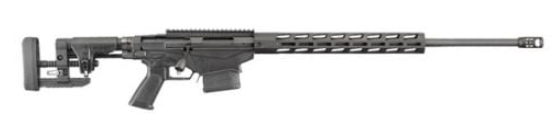


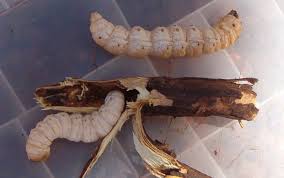 appearance. Common grubs are white grubs which are know to be quite devastating to lawns. Other grubs might not be so conspicuous, but they can all work wonders triggering a fish to bite.