Home Blog Page 131

My First Deer: There Is No Feeling Like The First Time

0

Keep reading to learn the story about how I got my first deer.

Just after first light that morning, my father tapped me on the knee and slowly motioned to our left. I looked and saw two shapes carefully moving through the mist. Looking through the scope on my rifle, I could see that the shapes were two young bucks about 50 yards away walking warily towards the feeder in front of us and my pulse quickened. “They’re bucks” I whispered to my father. “Pick one and go ahead and shoot him” my father responded. Steadying the rifle on the front rail of the deer stand, I took aim at the front shoulder of the lead buck and squeezed the trigger. With the roar of the rifle, I shot my first deer and my life changed forever.

The road to that day began many years previously when I began accompanying my father and grandfather on their deer hunting trips, as I described in my previous article. As the years went by and I grew older and more mature, I began hunting myself. I started off hunting squirrels and other small game animals. By the time I turned 11, my father decided I was old enough to hunt deer under his supervision.

That summer we attended a hunter education class together and he purchased a rifle for me: a post-1964 Winchester Model 70 Featherweight chambered in .308 Winchester. He made some special reduced power hand loads for me that had considerably less recoil than factory loads. The 130gr bullet fired at 2300 feet per second was still plenty powerful for a white tail at relatively close range, but the recoil was much easier on my wiry frame to shoot than full power loads.

My father was, and still is, very serious about hunting safely and ethically. Even though I was going to be hunting under his direct supervision, he was very strict about ensuring that understood when and when not to shoot as well as the details of shot placement. As a result, I spent hours at the range practicing precise shot placement at various ranges and angles.

Finally, I had to pass a written test designed and administered by my dad. The test covered a lot of details about hunting in general that were not covered in the hunter safety class. For instance, one of the questions was: How do you best determine if a deer is actually dead when you find the body after trailing it? Answer: while approaching the deer from behind, use a stick or the barrel of your rifle to touch the deer’s eye. If there is no reflex movement, then the deer is actually dead and is safe to otherwise touch. When we hit the woods that fall, I was probably one of the best prepared boys to ever start deer hunting.

Several years previously, my dad had constructed a two person, elevated stand down in a creek bottom overlooking a feeder on our land in eastern Texas that we would hunt from that year. That area was always a solid producer of deer: my dad once counted 17 does eating from the feeder at the same time. If there was ever an ideal place for a young hunter like me to shoot my first deer, this was it.

That first morning dawned foggy and crisp with a very light wind from the north. To this day I love weather like that because I’ve had so much success hunting in those conditions. This particular morning would be the first of those successes and I distinctly remember seeing the muzzle flash of my rifle through the fog while looking through the scope at the buck.

The buck staggered at the shot and disappeared back the way he came. From his reaction, I knew that I had made a good shot. If it is even possible, I think my father was even more excited than I was after the shot (and I was pretty darn excited). He gave me a pat on the back and said “You didn’t even feel the rifle kick did you?” No, I didn’t, and I don’t remember the report of the rifle hurting my ears either due to the adrenaline rush I was feeling.

After a few minutes, we got down and began looking for the buck. We quickly found him shot through both lungs. Even that reduced power .308 Winchester load did a number on him: the buck ran less than 25 yards after the shot. With just six points, he was not a big deer by any stretch of the imagination. However, I was a very happy young man that day and I still look back upon the hunt where I got my first deer fondly. I have plenty of larger and more impressive trophies hanging in my office, but I still proudly display the antlers from that little buck on the wall. There is no feeling like the first time and on that cold day in December I took my first step into the world of big game hunting.

Enjoy this article about my first deer? Please share it with your friends on Facebook and Twitter.

Make sure you follow The Big Game Hunting Blog on Facebook, Instagram, Twitter, and YouTube.

NEXT: 33 BEST HUNTING BOOKS EVERY HUNTER SHOULD READ

Best Binoculars for Hunting Out West

0

The best binoculars for hunting out west have a higher magnification as well as a list of other qualifications to help you spot more elk, antelope, or mule deer.

Years ago I had the good fortune of going on my first elk hunt at the NRA Whittington Center in northern New Mexico. I’d been sent there by my then-employer Sporting Classics magazine to cover the Center’s 40th anniversary. The hunt was a bonus.

Thinking back to the preparation aspect of the trip, there was a lot of discussion about the rifle and the ammunition. Some of the senior editors who’d been on many successful western hunts even suggested boots and clothing layering systems. They also stressed the fact that I’d enjoy myself much more if I went into the hunt with strong lungs and legs. But I can’t for the life of me recall a single discussion on optics.

I guess it was already assumed that I had a scope on my rifle that was “good enough.” And since binoculars were never mentioned and I didn’t know any better, I headed west with the 8x I use to deer hunt in the thick eastern hardwoods. Needless to say, they didn’t perform well, mostly because the magnification was too low. Here is what I learned from that trip and several subsequent adventures about what makes up the best binoculars for hunting out west.

Best Binoculars for Hunting Out West

High magnification binoculars are a critical part of a successful hunt.

Best Binoculars for Hunting Out West

First and foremost, the best binoculars for hunting out west have long-range performance with a wide field of view that allows you to pick out well camouflaged animals in vast terrain must be built into the binocular. My guide at the Whittington Center had an extra 10x binocular that he allowed me to use during the hunt. And while 10x definitely works, I’d get my hands on the more optimal 12x binocular.

Out on the plains, high magnification in your binocular can be the difference between putting a lot of time and energy into stalking a 65-inch pronghorn rather than a world-class 80 incher. You ought to be able to define the characteristics of the animal before making the decision to go after it. Only a binocular with high magnification will allow you to do that.

Great Low Light Performance

It was warm for October in northern New Mexico. The first three days we didn’t see many elk. The ones we did spot were at the edges of the dark timber at first light and last. This is why you need a binocular with great low-light performance. Whether you’re considering a 10x or 12x, go for a 50mm objective lens. The combination of superior light-transmitting glass and a larger objective lens will allow you to pick up more animals as they move between feeding and bedding areas at dawn to dusk.

Ruggedness & Weather Resistance

Ruggedness and weather resistance will always be high on the list of most important factors when it comes to the best binoculars for hunting out west. The western terrain is tough, so your equipment should be too. In the mountains, especially in the fall, the weather changes every hour. It’s not an unusual occurrence to watch a snow storm blow through a warm, sunny day at 8,000 feet. A binocular that’s both water and fogproof with argon gas and sealed with o-rings will provide you a tool that will function in all conditions.

A binocular built with a magnesium alloy body is about as durable as it gets. Wrapped in rubber armor and your glass is protected even if you slip and fall right on top of them. Oftentimes, the terrain is steep and footholds uncertain. Especially in the heat of the moment when you’re trying to get set up on a big bull or buck.

Lightweight

Magnesium alloy is also super lightweight, which allows you to hold the binocular steady for longer periods of time. While we’d always suggest using a harness to evenly distribute the weight when you’re spending days in the woods, a lighter binocular won’t hurt your neck or traps in the event you’re having to move quickly over rough ground.

Tripod Adaptable

When you’re hunting out west, plan on spending a lot of time behind the binocular. There is the element of luck that puts you in range of an animal on the first morning. But most often, at least one or two days are devoted to scouting and glassing. Using a quality lightweight tripod along with a binocular tripod adapter will take stress off your body and allow you to glass for extended periods of time. And there is the “human tripod,” described by TRACT co-founder Jon Allen, where you sit as low as possible, move your hands to the ends of the objective barrels, and pull your elbows into your chest. A solid foundation and less shake will allow you to see more game more often.

Best Binoculars for Hunting Out West

Glassing with the TORIC 12.5×50 mounted on a tripod helps you cover a lot of ground efficiently.

Hunting in the west is usually quite the adventure. There are so many animals, birds, trees, and landscapes that make having the best binoculars for hunting out west worth your while. These things you’re able to see well will remain ingrained in your memory for years to come.

If you need help choosing the perfect binocular and accessories for your hunt out west, please contact us at:

Email: [email protected] Phone: 631-662-7354 LIVE Chat: tractoptics.com

3 Simple Ways To Fish With Live Worms On The Bottom

0

Want to know the easiest way to catch a big freshwater fish? Put a worm on a hook, attach a few weights, and then bomb that sucker out into the fishiest looking spot you can find. Then, all you need to do is get comfortable and wait.

Fishing With Live Worms: High Passion, Low Production

In the video above, I take my cousin fishing, and go over 3 of the most straightforward ways you can fish a worm on the bottom. What this video lacks in production quality, it makes up for it with it’s honesty and entry level approach.

So, the next time you’re thinking about wacky rigging a Senko in that same old bass pond for the millionth time – instead, find a shady spot, grab a pack of worms, and do some bottom fishing!

Been In The Game For Years Making Worm Rigs

Since I was a kid, I’ve been fishing this way with my dad and brothers along the banks of rivers and ponds surrounding our house. Over the years, interests have changed, skills developed and now I spend more time flipping jigs, burning crankbaits, or looking for that surface strike from a hungry bass choking topwater frogs deep in the summer weeds.As much as I love all of those things, and boy, do I love them dearly, there is something that always draws me back to what I call ”bottom fishing with crawlers”

For me, this technique is not only nostalgic, it’s an easy way to relax on a lazy afternoon while proving to be an extremely effective way to catch big fish. This is especially true for new anglers or people in areas with a lack of species diversity, fishing opportunities, or places generally considered to be ”good fishing”.

Live Worm Fishing: Minimal Assembly Required

Worms, hooks, and weights. Together, they create the simplest rig in freshwater fishing.

Assuming you have a fishing rod and reel spooled up and ready to go (if not, click here), all you’ll need is hooks, weights, and worms to put together these three simple rigs that will catch you a boatload of fish.

Get a sturdy ”Y” shaped stick or a store-bought rod holder strong enough that it can be jammed in the ground and hold up your rod while you sit and wait for a bite.

Keeping the line between your rod and bait taught helps increase your ability to detect bites, and in return, catch more fish.

Live Worm Bottom Fishing Checklist:
  1. Fishing Rod + Reel
  2. Line
  3. Weights
  4. Hooks
  5. Worms
  6. Chair
  7. Net
  8. Shade
  9. Patience!
Nightcrawler Fishing Pro Tips:
  • Ask for a paper bag when buying worms and keep them in the shade. A brown bag keeps your worms cool throughout the day and prevents them from drying out.
  • Add a clip-on fishing bell to the tip of your rod to help alert you of any bites when bottom fishing
  • Keep a taut line on your bottom rod. This will help you detect bites much easier
  • Loosen your drag or secure your rod safely when bottom fishing. This will help prevent your rod from getting pulled in the water by a big fish (it’s happened to me twice)

Best Boat Trailer Tires: Top 8 Options & Buying Guide For 2024

0

Ahoy, mateys! It’s Alvin Reyes, the car guru and word wizard. When it comes to sailing, the only thing better than a gentle breeze and a cold drink is having your trusty ride to pull your boat out of the water.

But let me tell you, towing a boat ain’t no walk in the park. You need a solid trailer and some heavy-duty tires that won’t let you down. As an automotive engineer, car review specialist, and all-around tire enthusiast, I know the ins and outs of finding the best boat trailer tires.

Trust me, choosing the wrong boat trailer tires can spell disaster for you and your vessel. That’s why I’ve put my skills to the test and scoured the market for the best options out there. Whether you’re a seasoned sailor or just getting your feet wet, my list of top boat trailer tires will have you cruising with confidence.

So, weigh anchor and join me on this tire-tastic journey. Let’s find the perfect tires for your boat trailer and ensure a safe and smooth voyage!

The Best Boat Trailer Tires In-depth Reviews Of 2024

To find the best tires for boat trailer below, I tested and evaluated many different models for almost two years. Each of these passed my matching tests with impeccable performance.

Carlisle Radial Trail HD Tires

Best Choice

I have tried the Radial Trail HD for various purposes, including towing boats, towing heavy trucks, or regular tires.

No matter what needs it serves, the product works reasonably. I was also surprised to know that the tire has so many functions.

Despite impressive compatibility, the Radial Trail HD’s boat trailer performance has decreased. I’ve tried many different tire models to transport my small boat.

The results are often quite bad because the vehicle is not moving very steadily.

It constantly can’t keep the balance to drag a ton of metal behind. Without the support features, the load on the tires is exceptionally high.

Since equipping this Carlisle tire model, losing control has no longer appeared. It is all thanks to the solid sidewalls and solid construction available to the product.

Durability is an advantage I cannot ignore in this version. According to some measurements I have taken, the tires wear very evenly. The feature has limited asymmetry while increasing tire life.

The average tire pressure in everyday driving is always lower than most in-class versions. With reduced pressure on the surface, it will be easier for you to operate the Radial Trail HD. The protective ozone layer will be the most effective barrier if you move in hot weather.

Most versions at high load ranges do their job well. However, low-load options have much worse performance, which can cause unexpected damage.

Pros

  • High stability
  • Stable durability
  • Suitable for many purposes
  • Come with a protective ozone tire
  • Medium pressure for ease of control
  • Not become useless after carrying the boat

Cons

  • Low-quality low-load versions.

Goodyear Endurance

Best Runner Up

The Goodyear Endurance is a choice that balances many different factors.

Focusing on many characteristics at once is extremely risky. Fortunately, the manufacturer has integrated many elements to create this quality Endurance.

If I had to choose only one most important feature for a boat trailer tire, braking performance is always my top priority. It would be a nightmare to rush along with a large boat without stopping quickly. To meet this requirement, Goodyear has integrated into the product many components to reduce braking distance.

I tested the brakes with boat drag and not on dry roads. Finally, the parameters show that its stopping distance at 50 mph is 18m and 23m, respectively.

On wet roads, tires do even better with the help of Hydro Grip technology. After I stepped on the brake, the tire quickly decelerated to zero in just 24m. Meanwhile, its controllability remained undiminished.

Its surface is harder than many other tire models of the same type. According to the information provided by the manufacturer, they incorporate Kevlar technology, a high-strength fiber, into the production process.

I tested pointed objects to impact the surface to attest to their performance. No matter how hard I tried, I couldn’t leave too much damage to Endurance.

The available rolling resistance of the tire is relatively low. So my Goodyear tires help the car save much more gas.

Sizing with Goodyear Endurance is pretty straightforward, with so many options available. The problem, however, is that their prices are relatively high to reach.

Pros

  • Many sizes
  • Energy saving
  • Stable dry brake
  • Harder and more durable
  • The wet brake is pretty good
  • Stability control in wet conditions

Cons

  • Expensive

Trailer King RST Radial Tire

Best Mid Price

In the mid-range price range, it is difficult for any product to beat Trailer King RST Radial. This model has more great features than it costs you to own.

Its performance is high compared to other boat trailer tires. The better tire performance is not surprising with a large and firm center groove design.

Through stability and cornering tests, I have corroborated this information. The results also show that the tire grips exceptionally well with low deflection, even through S-corners.

Traction is a feature that I think you should pay attention to when considering the Trailer King RST Radial tire. The particular nylon layer covering the outside of the surface has dramatically improved its strength.

The more efficient the tire, the more friction and traction force is generated. So, I confidently set up N to pull the heavy boat behind.

Whether the environment is extremely hot or rainy, this Trailer King product is still easy to overcome. The raised shoulder design helps the tire quickly cool down the surface temperature in high-temperature areas.

Through a few simple measurements, I discovered that this product could lower up to 10 degrees Celsius in a short time.

Meanwhile, the drains with a deep design easily remove excess water clinging to deep water areas. With no more frictional fluid, the rate of hydration reduces.

Most of the details on the tire have a good finish except for the sidewall. The lack of performance here significantly impacts the product’s anti-vibration ability.

Pros

  • Good grip
  • Average price
  • High stability
  • Impressive heat resistance
  • Anti-hydrogenation grooves
  • Performance beyond expectations

Cons

  • Sidewall needs improvement

Carlisle Sport Trail LH

Best for Design

Design is the most outstanding advantage of Carlisle Sport Trail LH. So, its durability and performance are always adequate to serve many purposes.

The Sport Trail LH is to handle a wide range of vehicles and trailers. I’ve tried the tires on several other cars and found that the performance isn’t too much of a difference. Even with agricultural tractor models, the product is still the perfect choice to ensure stability.

Heat is the leading cause of tire wear and tear. That’s why Carlisle integrated heat reduction into the product design.

The temperature difference between dynamic and static states is not too high. This result shows the effectiveness of the excellent temperature stabilization mechanism.

This version also features heavy sidewalls and an impressive tread design to increase stability and optimize durability. Its low rolling resistance markedly minimizes the reverse effect of force on the tires.

In comparison, its lifespan is also significantly superior to that of similar models. In a year of testing, I never had to bring it to a service center.

It’s not too difficult to find a suitable Carlisle Sport Trail model. There are many sizes and load ranges to consider. Not many products have such a large selection available to the user.

Finally, its surface spikes are not too thick. Therefore, you cannot tow models beyond the maximum weight. Some hazards may arise if you still attempt to carry out the carriage.

Pros

  • Durable
  • Many different options
  • Built-in cooling function
  • Suitable for use with many vehicles

Cons

  • Can’t load beyond capacity

Hankook Vantra Trailer

Best for Durability

The Hankook Vantra is a boat trailer tire known for its outstanding durability.

This product not only possesses a durable construction but also comes with many other impressive features.

Only with the naked eye have I recognized the details that increase the durability of the tire surface. The most prominent are the prominent complex pattern blocks and deep-cut grooves.

With the help of these factors, I confidently towed the boat through more challenging terrain. The increased stability gives me more peace of mind.

In addition to the characteristics we observe, Vantra Trailer also possesses many features to optimize durability in construction. Among them are some prominent names, such as folding belt tape or high-strength bead cord.

Zig-zag grooves on the outer tire surface to increase durability and stability also have a drainage function. The comprehensive design and increased length come from a unique arrangement that prevents liquid from settling on the surface.

Without standing water, the friction force will have a more even distribution. Thereby, it is increasing the wet performance of the Hankook Vantra Trailer.

Via a trip in the rain, I had the opportunity to verify the accuracy of these statements. The Vantra Trailer does not have too many sizes to choose from. This lack of diversity will create some difficulties for users during use.

Pros

  • Stable on the move
  • Impressive durability
  • High wet performance
  • Integrate many modern details

Cons

  • Too few options

Power King Towmax STR II

Best for Budget

Few boat trailer tires strike the perfect balance between price and quality, like the Power King Towmax STR II. This factor makes this product suitable for many different users.

Towmax STR II is 30 to 40% cheaper than most other competing products. This number will increase if you buy tires on sale occasions.

The big difference saves us another significant amount of money. With the same amount of money, but with STR II, I can buy a complete set of 4 tires while many other names are only 3.

The durability of this cheap product impressed me. With Power King Towmax STR II, we can ultimately move stably within 60,000 miles.

Even with more expensive products, this number is still relatively large. You will surely be pleased about this particular element.

The load capacity of Towmax STR II is also quite impressive, especially with a relatively low-priced tire. I borrowed a friend’s boat to test its stability under heavy loads. The metal block weighs twice as much as the model I’m using, but the tires don’t seem to lose performance.

I feel the car moves better, even under heavy loads. After taking measurements, I realized that it was the traction of the tires that affected the controls.

During operation, I still have some mechanical problems with the tire from time to time. Although it’s not too severe, the annoying feeling is inevitable.

Pros

  • Low price
  • Enduring
  • High load capacity
  • Suitable customer groups

Cons

  • Prone to mechanical problems.

What Is A Boat Trailer Tire?

Boat trailers are specifically to tow boat trailers instead of focusing solely on performance. Like many other transport tires, these products also strengthen sidewalls. With this change, the tire will withstand higher internal loads while maintaining stability.

Boat trailers often come with features to help balance the impact on the vehicle.

The weight distribution of the boat is not uniform. So moving significantly when changing direction will be more prone to risks. The force balance will greatly help the driver in such complicated cases as above.

Types of Boat Trailer Tires

Boat trailers have two distinct ratings, radial and bias. Each tire line has its advantages and disadvantages. We will base on these factors to make a choice.

Radial

Radial is a tired line that favors variety. The experience that radial products bring to users is the same in many different terrains. From flat areas to areas of instability, they all share a unique outcome.

This product line is also famous for the comfort it brings to the driver on the go. High durability is also a factor that we cannot ignore. However, the repair process will be highly complicated when the radial tire has a problem.

Bias

Bias tires are the right choice for us to use on unstable terrain and many obstacles. The unique simple construction makes the product very easy to repair if problems or errors are encountered while moving.

In return, the durability of bias tires is not too high, and the performance on other surfaces is also quite bad.

Key Features To Choose Boat Trailer Tires

Size and capacity, lifespan, durability, speed, and traction are the five factors that I think you should pay attention to when choosing boat trailer tires.

Of course, many characteristics make up the quality of a tire. But to save time and money, you need to focus on the following items.

Size and Capacity

Size and load capacity are two critical factors when choosing any model. Usually, tires with a larger size will have a higher load capacity and vice versa.

However, you must choose the right size first because if the cake is too big or too small, the consequences will be enormous.

With capacity, you should buy products with parameters 20 to 30% higher than standard requirements. Owning tires with high bearing capacity but not in use will cause unnecessary waste.

Lifespan

Life is a factor that has a lot to do with the ability to operate a vehicle for a long time. In general, if possible, you should invest in long-life tires. Over time, we will realize the advantages of these options over cheaper tires but less life.

Durability

The more durable the tire, the better it is worth buying, so keep this conclusion in mind every time you decide or review a product. The durability of tires also plays a big part in maintaining performance and safety while on the move.

Speed

It is challenging to find boat trailer tires at high speed.

The average specs of these products are usually between 60 and 70mph. With towing a heavy boat, moving quickly is not a good idea.

Traction

Traction is the most important factor when traveling in wet and rainy areas.

If you travel in such places, you must choose tires that produce above-average traction to avoid hazards.

Of course, impressive traction usually only appears on more high-tech versions of tires. Therefore, you will sometimes have to spend more money on an ideal model. I think it’s worth investing in safer and more stable boat transport.

FAQs

Final Thoughts

With my real experiences, I have recommended the top 8 best boat trailer tires for 2024 and some things to consider to choose a suitable tire model for you.

From my perspective, the Carlisle Radial Trail HD Tires can satisfy you in terms of overall perfection, while the Hankook Vantra Trailer offers incredible durability in the long run.

What is your final choice? Don’t forget to leave a comment to let me know.

Thank you for reading!

Ranks Of The Most Worth Buying Tires

Can You Hunt Turkey With a Rifle?

0

Turkey hunting is one of the more challenging sports in the hunting world. Many states have a turkey harvest success rate generally in the 30% range. If only 30% of hunters are successful, many of them would take whatever advantage they could get. So the question follows, can you turkey hunt with a rifle? The answer can be complicated and is different for nearly every state. However, where it is legal, turkey hunting with a rifle can help you reach out and bag gobblers that are just a little too stubborn to come within shotgun or bow range. After all, if there was a possibility for you to use a better tool to harvest turkeys in your state and help you become a better and more successful hunter, wouldn’t you want to know about it?

So can you turkey hunt with a rifle? In short, probably not. Only 12 states allow the use of rifles (not including muzzle-loaders) in one way or another during turkey season. After some extensive research, I made atable of all 50 states that contains the answer to whether or not a particular state allows turkey hunting with a rifle and linked to the section of their DNR explaining their exact rules.

You can check the table here: Rifle Turkey Hunting With a Rifle Table

As I said before, one way or another it is possible to hunt turkey with a rifle in 12 states. I say this because out of those 12 states, none of them have the exact same rules. Some of them only allow rifles (or only air rifles) to be used during a specific season, out of a possible three seasons. So, if you do live in one of the states that will allow it, make sure you read the regulations and call your local Department of Natural Resources just to make sure.

Why You Would Want to Use a Rifle

If you have turkey hunted for a few years, you have surely been in a situation where a nice tom was just a dozen yards out of range and you had to let them pass. Turkeys seem to have a knack for escaping hunters and constantly give us trouble. If you could use a rifle, you could shoot turkeys at well over 100 yards if you wanted to. Which increases that 30% success rate significantly.

Now the next question is, is hunting turkeys with a rifle ethical or not? Personally, I feel like if a state votes to include small caliber rifles as a legal method of take, then they want more turkeys to be harvested. Giving hunters that option is ultimately going to help them harvest more turkeys, thus helping the state to keep wild turkey numbers under control. Plus, if harvesting other animals such as squirrle with a rifle is ethical, why would it not be the same for turkeys?.

What Types of Rifles Are Allowed

To continue about the argument of whether it is ethical to harvest a turkey with a rifle, obviously, you would not want to hunt turkey with a 50 BMG. Large calibers would be unethical and honestly would not leave much of the turkey left. There has to be a limit somewhere so that the turkey is still intact and edible.

This is why most of the states that do allow you to hunt turkey with a rifle, only allow small calibers such as a .22 long rifle, .22 magnum, or a .223 at the largest. Many of them only allow air rifles to be used and the largest caliber I saw listed for those was .30. It does not take a high caliber to put down a turkey if you have good shot placement.

With a rifle, you want to aim for the neck or the head. This can be a difficult shot at long ranges so it is also effective to shoot turkeys in the lungs/liver and the heart. Although headshots will make for the quickest kill.

What We Normally Use to Harvest Turkey

When we normally think about turkey hunting, or watch turkey hunting, they are hunted with a shotgun. Using a shotgun may sound like it would make it easier to turkey hunt. However, the challenge comes when you need to get a turkey within shotgun range. With a normal rifle, it is not too difficult to make a 100-yard shot, but with a shotgun, you are doing good if you make a 40-yard shot.

This is why it is important to use the correct choke on your shotgun. Chokes help you reach out and maximize your guns range and shape your pattern. It is also important for shotgun hunters to pattern their shotguns so they know what range they can effectively shoot at. These are steps that serious turkey hunters always do, but many amateurs simply ignore, leading to lower success rates.

Another way to harvest a turkey is by using a bow or crossbow. If using a shotgun was not difficult enough, bow hunting turkeys is the real challenge. Turkeys have incredible vision and they can pick up the slightest movement. So when you have to pull your bow back 20 yards in front of a turkey, it would be very difficult to remain unseen. Although it is difficult, it is not impossible and hunters do it every year. If you are looking for a true turkey hunting challenge, try harvesting one with a bow.

Lastly, many states allow you to hunt with muzzle-loaders. Some allow muzzle-loading rifles and most are muzzle-loading shotguns. So this just adds an extra challenge to the shotgun dynamic. You get one shot and a giant cloud of smoke.

Conclusion

So if you are in or are close to one of the 12 states that do allow you to hunt turkeys with a rifle, why not give it a try this season? If you have had trouble in the past getting turkeys in range, this is your ticket. Now if you see a turkey, most likely you can shoot it with a rifle. Although you will still have to locate turkeys and use your calling skills, which is also quite the challenge. Hopefully, you can take the information from this article and up your arsenal for this coming season and become a better hunter.

Thank you for reading my article about turkey hunting with a rifle. I hope you enjoyed it and learned something you didn’t already know. If you like my content, subscribe to my weekly update. If you have any other questions about turkey hunting with a rifle or just want to connect, feel free to email me at [email protected].

Umarex Gauntlet 30 Caliber Test Review

0

INTRODUCTION

This Umarex Gauntlet 30 caliber test review is slightly unusual. Although we’re using the standard HAM review formal, we’re concentrating on two aspects of this gun in considerable detail. These are “Value For Money” and “Speed And Accuracy”.

This is because the Umarex Gauntlet 30 caliber is very similar in most respects to the Umarex Gauntlet 2 in .22 caliber. The primary differences are the 30 cal’s position in the market and it’s very different power output.

So, rather than include much repetition from HAM’s earlier Gauntlet 2 review, readers are referred to that test for much basic information.

VALUE FOR MONEY

The Umarex Gauntlet 30 is different to the smaller caliber Gauntlet 2 versions as it plays on the edge of the big bore PCP market.

It sells for $50 more than the .22 and .25 caliber models. However that’s not a big deal compared to the difference in competition landscape it faces among 30 caliber air rifles.

First, let’s take a look at a selection of PCP air rifles with comparable high-level specifications. These are:

– Regulated

– Magazine feed

– Shrouded barrel

Looking a a simple price analysis, we see that the Umarex Gauntlet 30 caliber is by far the lowest priced game in town. It’s roughly half the price of its nearest competitor. And between a third and a quarter the cost of most models in this chart.

When it comes to power, the Umarex Gauntlet 30 caliber has a claimed Muzzle Energy of 100 Ft/Lb. Broadening our market definition a little, we see that. 30 caliber power levels range from 30 Ft/Lbs for the Hatsan 135 springer (included as a benchmark) through to 275 Ft/Lbs for the AirForce Talon.

Next, aking price and dividing it by power, we can see how the guns stack up. In these terms, the Umarex Gauntlet 30 caliber places second at $4.80 per Ft/Lb of claimed power.

So, yes, the Texan offers more value at $4.20 per Ft/Lb. However here we have a single load, unregulated, un-shrouded air rifle. It has the power but can’t complete on features with the Gauntlet 30. Even the Hatsan 135 springer is more than twice as expensive in price for power terms as the Gauntlet!

Umarex Gauntlet 30 Caliber Test Review

So, overall, it’s really tough to not agree that the Umarex Gauntlet 30 caliber represents outstanding value in this market!

BUY FROM PYRAMYD AIR Umarex Gauntlet 2 PCP Air Rifle 0.22
BUY FROM AIRGUN DEPOT Umarex Gauntlet 2

SPEED AND ACCURACY

OK, so the price is good. How about the performance?

The news everyone wants to hear is this. There’s plenty of power and the accuracy is pretty good too. And it shoots slugs well!

The slug-shooting performance itself will attract many shooters…

Ammo TypeWeightMuzzle VelocityMuzzle EnergyJSB Exact Pellets44.75 Grains1,003 FPS100 Ft/LbsDaystate Howler Slugs49.5 Grains996 FPS110 Ft/LbsJSB KnockOut Slugs50.15 Grains986 FPS108 Ft/Lbs

The testing was restricted to three types of ammo due to the well-known ammo shortage. However, it’s clear that accuracy of the Umarex Gauntlet 30 caliber tested by HAM was very good.

(Note that the scope elevation and windage were untouched through the test to show how the Point-Of-Impact dropped with increasing range.)

At 25 Yards, the gun printed “one hole”, 10-shot groups on the target with the JSB pellets and Howler slugs. The KnockOuts performed almost as well, with just one shot opening-up the group a little.

Umarex Gauntlet 30 caliber

Umarex Gauntlet 30 caliber

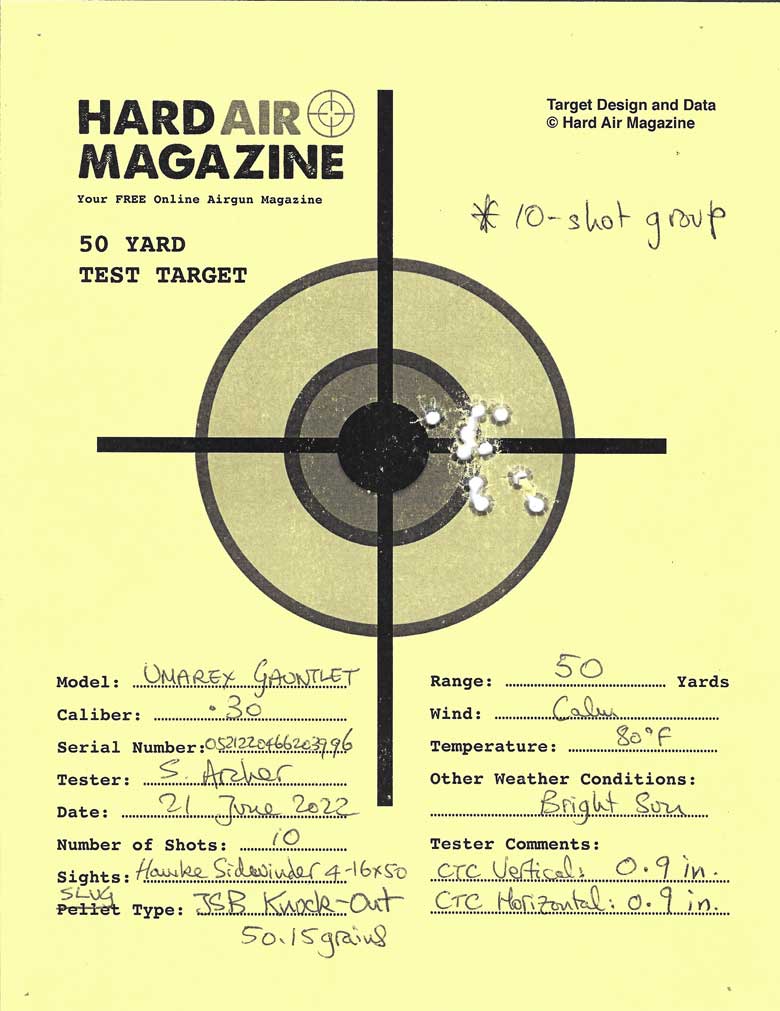
Moving to 50 Yards, we saw these “Inch-ish” Center-to-Center groups…

Umarex Gauntlet 30 caliber

I had planned to stop at 50 Yards. But I felt that there was more to come from the Howler slugs. So I shot this 5-shot group at 75 Yards.

Umarex Gauntlet 30 caliber

As the photograph with this target marker shows, here we have “Extreme Benchrest”-level accuracy from an out-of-the-box gun, shooting unsorted slugs. And with a scope magnification of only 16X. Not at all bad!!!

Umarex Gauntlet 30 caliber

TRIGGER AND COCKING EFFORT

Trigger and cocking effort are similar to that of the Gauntlet 2. The trigger’s OK, the cocking effort very heavy, despite the very oversized bolt handle.

COMPARISON TO MAKERS CLAIMS

The Umarex Gauntlet 30 caliber tested by HAM matched the manufacturer’s performance claims almost exactly.

That’s 99 Ft/Lbs with 44.75 Grain pellets and 25 consistent shots per fill. We saw a maximum of 110 Ft/Lbs of Muzzle Energy with 49.5 Grain Daystate Howler slugs and 24 consistent shots (with shot 25 being disputable)…

CONSISTENCY

The Umarex Gauntlet 30 caliber air rifle tested by HAM gave 24 consistent shots from one 4,500 PSI fill of High Pressure Air. As can be seen from the chart below, the Muzzle Velocity falls predictably after that point.

Umarex Gauntlet 30 caliber

NOISE LEVEL

With a 100 Ft/Lb Muzzle Energy, the Umarex Gauntlet 30 caliber is not going to be quiet – even though it’s shrouded.

However a change compared to smaller calibers is that it’s now threaded for an aftermarket dedicated airgun silencer. This undoubtedly would reduce the report, although at the expense of maing tis 47.5-Inch air rifle even longer!

SIGHTS AND SCOPE

For this test review, HAM used a Hawke Sidewinder4-16×50 scope, mounted with Hawke Tactical Match rings. This combination worked well, although I should have chosen a higher power for the 75 Yard targets…

SHOOTABILITY

The considerable length and front-mounted HPA tank mean that the Umarex Gauntlet 30 caliber is best fired supported. That could be sitting at a bench, prone from a bipod or rested against a tree.

Umarex Gauntlet 30 caliber

APPEARANCE AND FINISH

As for the Gauntlet 2.

BUYING AND OWNING

Don’t forget to buy plenty of ammo while it’s available!!!

The Umarex Gauntlet 30 caliber features an improved gauge face plate and superior degassing system to the other Gauntlet models previously tested.

It also includes a hammer spring tension adjuster screw for making power adjustments. This is another new feature compared to the smaller-caliber Gauntlets.

BUY FROM PYRAMYD AIR Umarex Gauntlet 2 PCP Air Rifle 0.22
BUY FROM AIRGUN DEPOT Umarex Gauntlet 2

This entire article including scoring, test targets etc is Copyright Hard Air Magazine and may NOT in part or in whole be reproduced in any electronic or printed medium without prior permission from the publisher.

APEX TSS Turkey Hunting Ammo Review & Test

0

The first shot I ever took of APEX TSS Turkey hunting ammunition put 297 pellets into a 10″ at 40 yards. Before the morning was through, I found a choke tube that would give me 378 pellets in that same circle at the same range. To put that into perspective, that is a dinner plate with almost 400 holes in it, we are talking about devastating effectiveness. Most lead turkey loads do not even have that many pellets in the shell!

The APEX TSS Turkey loads have demonstrated the best pattern efficiency of any turkey load I have ever shot as of this writing. The patterns are amazing. And as I understand it, others have gotten even tighter patterns with tighter chokes. Now there does come a point where the pattern can be too tight but more on that later.

The bottom line is this ammo is impressively effective and I could not rate it any more highly. But there is more to it than that. If you are considering this ammo or any TSS turkey shells, this review will provide you with insights and data from my firsthand first tests.

If you are looking for more info on turkey hunting shotguns, ammo, and chokes, check out these podcast episodes I have done on the subject:

  1. Turkey Hunting Guns and Ammo For Beginners
  2. Turkey Hunting Shotguns | Is Bigger Better?
  3. Turkey Hunting Shells, Shot, & Chokes
  4. Should You Hunt Turkeys With Tungsten Shot?

The Big TSS Questions.

The two most asked questions regarding turkey hunting ammo of this caliber are:

  1. Is that level of performance really necessary?
  2. Is this TSS Ammo worth the price?

After having done some tests with the APEX and hunting with TSS in general, those are easy questions to answer. For the first question, yes, this kind of performance is absolutely necessary IF you plan to hunt beyond 40 yards. Is it worth the price? Yes, IF you plant to hunt beyond 40 yards.

Tungsten Super Shot gives you increased range and lethality at range. That is its greatest strength. If you plan to hunt at 25-35 yards, it just is not needed. You can use much cheaper lead shot, like Winchester Long Beard XR to easily and efficiently take birds at close to mid-range. TSS shot gives you the ability to punch out further, to hunt at truly extended ranges. And if you want that flexibility, there is no substitute for the power and patterns that APEX brings to the hunt.

How Many Pellets Do You Need?

My rule of thumb that I use for all turkey hunting ammo of all sizes and densities is 100 pellets in a 10″ circle at the range you plan to shoot. At close range, almost anything will work for turkey hunting, lead target loads, steel, bismuth, anything. When you get to the 40 yard line however, your choices are very few if you want to get 100 pellets in a 10″ circle. There are a handful of lead loads that are up to the task, like the Winchester Long Beard.

If you want to hunt beyond 40 yards, lead quickly drops below the pattern density threshold. Even though the marketing sometimes quotes things like “Putting twice the pellets in a 10″ circle than comparable turkey loads out to 60 yards” you need to ask what are they really claiming? They are saying their lead turkey ammo is twice as good as others, but none of them live up to the standard of 100 pellets in a 10″ circle at 60 yards. But APEX TSS Turkey does.

Pattern & Ballistics Gel Test Results

I put APEX to the test at 40 yards and at 60 yards with the same Carlson’s 0.670 turkey choke and here is what I saw: 378 pellets of #9 shot at 40 yards with 170 pellets at 60 yards. This means that at 60 yards, the APEX is more effective than almost every lead load on the market is at 40 yards. These shells easily give you the ability to punch out to 70 yards, perhaps more if you have a tighter patterning choke than I did.

You might wonder if these tiny #9 TSS pellets still pack enough punch to get the job done. Well from my field testing, the #9 TSS has about 32% more power at 40 yards than lead #6, which gives it almost as much ballistics gel penetration as lead #4. And at 50 yards, the APEX TSS still had 3.26″ of gel penetration. Which is mind blowing. That is a lot of numbers, but what it means is that at range the TSS #9 packs similar power to the largest lead shot that is legal to use in my state.

I tested the APEX TSS Turkey in 3″ shells with 2.25 oz of #9 tungsten shot going at 1150 FPS using a Mossberg 940 Pro Turkey shotgun with a 24″ barrel topped with a Holosun 507k red dot. For even more, check out my video where I pattern tested multiple chokes with the APEX TSS Turkey ammo:


Can A Pattern Be Too Tight?

It can be easy to get the impression that a tighter pattern is always better, and with TSS you can actually get to the point where a pattern can be too tight. Of course, pattern density is relative to range, so if you go far enough even the tightest pattern becomes perfect. But at close range, a pattern can be so tight that you are able to miss a turkey.

If your pattern is softball sized at 20 yards so you can have a tight pattern at 60 yards, then it can be like trying to hunt turkeys with a slug gun or a rifle when you are only aiming for head shots.

I personally still want to have some margin of error at 20 and 30 yards so I can take birds that come in that close. So for me, the patterns I got with the Carlsons .670 turkey choke were ideal. Some people aim for even tighter patterns to be able to shoot even further, and that is cool, but I cannot see myself needing to shoot past 70 yards where I hunt. For my hunting area, a good realistic long-range shot is about 50-55 yards. I cannot see much further than that.

Here are some additional videos I’ve done on turkey hunting ammo to help you take things to the next level.

  • The 4 Types Of Turkey Hunting Ammo
  • 8 Turkey Hunting Ammos Put To the Test
  • The Truth & Lies About Tungsten Shot
  • How Much Difference Do Turkey Chokes Make

Cons & Concerns

So, it is not all rainbows and sunshine with these loads, there are a couple of cons. First, the recoil is major. For one or two shots under the adrenaline of hunting conditions, its ok. But for pattern testing at the range, the kick is brutal. I would recommend sizing down from the 2.25 oz to the 2.0 oz 12-gauge version to trim off some recoil energy.

Just shedding that 0.25 oz of shot cuts recoil from about 66 foot-pounds of recoil energy to 54 foot-pounds. That is a major help to the shoulder. A semi-auto shotgun can also help, check out this article I did on the subject: Do Semi-Auto Shotguns Have Less Recoil REALLY? All TSS that is hotly loaded will have the same concerns, thankfully APEX has enough load options that you can pick how much shot and recoil you want.

Second, the cost is high on TSS shells, coming in at nearly $13 per shell. You can save some if you step down to 2.0 oz version as well. They are about the same price as other TSS loads on the market, if not a little less expensive. They compare well, but TSS turkey ammo in general is expensive.

As I said early on, it is worth it if you are going to use it to its full potential. Most hunters shoot one or two shells a year in the field so a box of 5 shells may last you 3 years or more once you are sighted in, that is not a bad investment for the best turkey ammo on the market. But if you are going to hunt at short range with it, save the money and buy lead.

Conclusion & Recommendation

The APEX TSS Turkey loads are just devastatingly effective. So much so that a 20 gauge is probably more than enough for most hunting scenarios. There is really no need for the more heavily loaded 3.5″ 12-gauge shells either. In fact, this ammo really does make a 28-gauge shotgun viable for turkey hunting, those shells still have 477 pellets of #9 TSS in them.

In conclusion, I also really like APEX as a company. It is a veteran owned American company with a great story and high quality. These TSS turkey shells demonstrate outstanding performance at a good market price, and they are viable on their own merits. Being able to support a great company is just another big benefit in my book.

Be sure to listen to The New Hunters Guide Podcast and check us out on YouTube.

Till next time. God bless you, and go get em in the woods!

George Konetes Ph.D. – Founder and Host of the New Hunters Guide.

The New Hunters Guide is simply what George wishes he would have had when learning how to hunt; a single place to get practical hands on knowledge about different kinds of hunting, gear, strategy, and tips that can improve your comfort and fun factor in the woods.

A Comparison between Coyotes, Wolves, and Foxes

0

Coyotes are often known to be the smaller cousins of gray wolves, and the foxes of the coyotes. You can clearly see the similarities in their appearances. However, there are many points of comparison between the three animals. This AnimalSake article does an analysis to put an end to the age-old debate of coyote vs. wolf vs. fox.

Wolves, coyotes, and foxes have roamed the earth alongside man for millennia. And yet they still manage to be an integral part of our ecosystem. But truly what is the difference between these three wonderful creatures besides their appearance?

Apart from looking quite similar to each other, they fall under the dog family ofCanidae. The Canidae family is divided into two main categories, the Canini, which consists of dogs, jackals, and wolves, and then there is the Vulpini family, which largely consists of foxes.

However, a few questions have haunted many for a very long time―are coyotes and wolves in the same family, how are coyotes and wolves alike, and how are coyotes and wolves different from each other? This article elaborates on size, diet, appearance, etc., about these beautiful Canidae for your understanding.

Coyote Vs. Wolf Vs. Fox

Following are some points of similarities and differences between the fox, coyote, and the wolf, which will help you see the variations in the same family.

Scientific Classification

Note: The following table includes the scientific classification for red foxes and gray wolves.

Appearance

Foxes are the smallest of the three weighing around 6 to 24 lb. They stand tall at around 15 – 20 inches and 15 – 30 inches long. They have a flattened skull, upright ears, slanted eyes, slightly upward-turned snout, elongated body with short limbs, and a long bushy tail.

Coyotes are smaller than the wolf and larger than the fox. They weigh around 24 – 46 lb. and are around 4 – 5 feet long and 50 – 66 cm tall. They have a long and slender snout with triangular ears and a long bushy tail. They have a bluish-black scent gland located at the upper side of the base of their tail.

Wolves have a heavier and larger body structure in comparison to the fox and coyote. They also have a wider and rounded snout. Wolves have shorter ears and a torso with a sloping back. They also have long but less bushier tails, which they carry high while running. They also have a black gland spot on the upper side of the base of their tail.

Coat

Foxes have been known to shed their dense winter coat around April. Different subspecies of foxes come in a variety of coats of fur color, length, and density. They range from white, black freckled with white, gray underside, auburn pelt, etc.

Coyotes have light gray, red, black and white-colored fur on their body. The colors and shades vary as per their geographical location. For example, those living on high elevations have black and gray fur as compared to desert dwellers, who are more whitish-gray. The coyote’s fur consists of short, soft underfur and long, coarse guard hair.

Wolves have a dense and coarse guard fur, along with a long and fluffy regular coat. Most of the unwanted fur is shed out on the offset of spring and grows back around fall. You can often find them in a combination of grays, blacks, and whites.

Behavior

Foxes are omnivorous scavengers, who tread out in search of food in the form of small prey only at the night. Unlike other canids, foxes do not live in packs. On the contrary, some like the Arctic foxes live solitary lives.

Coyotes are strictly monogamous and the pack is centered around the nuclear family, mostly around the reproductive female. However, it has been found that other non-family members join the pack temporarily.

Wolves are often found hunting in packs of around 7 – 8 wolves. This often includes the alpha male and female, older offspring, and pups.

Vocalization

A fox’s vocal repertoire is vast depending on what it wants to convey. It whines, yelps, lets out explosive calls, combat calls, growls, barks, and produces shrill screams.

Coyotes are often heard yipping and at times giving out short barking howls.

Wolves, as you are aware, are known for their howls. They also bark and whine to communicate.

Diet

A fox’s diet mainly consists of smaller mammals, rabbits, birds, insects, reptiles, crabs, eggs, and plants.

Coyotes hunt for rodents, reptiles, amphibians, fish, birds, pigs, sheep, goats, deer, hare, rabbits, and insects.

Wolves prey upon livestock, moose, deer, roe deer, wild boar, reindeer, ibex, wild goats, saiga, mule deer, badgers, ground squirrels, hamsters, marmots, mice, foxes, coyote pups, eggs, waterfowl, bison, rodents, fish, monkeys, reptiles, frogs, snakes, insects, wolves, etc.

Predators

A fox’s natural enemies mainly consist of the coyote and wolf and other predators, viz., bears, humans, eagles, and other larger carnivores.

Coyotes fall prey to mountain lions, tigers, bears, humans, and wolves.

A wolf’s life is often endangered by predators, viz., tigers, humans, and other wolves.

Reproduction

Foxes mate around December to February, with a 52-day gestation period. The litter can consist of around 4 – 5 cubs. In the initial 2 – 3 weeks of a cub’s life, they are kept within their den receiving the heat and nutrition from the vixen. Around 4 weeks into this world, they begin to slowly emerge out of their underground homes. The cubs are weaned when they are around 6 weeks of age. At around 6 months of age, they step into young adulthood.

Coyotes mate around mid-January to early February and have a gestation period of 60 – 66 days. The litter consists of around 2 – 10 pups. The pups survive away their mother at around 7 weeks and begin to eat solids after 3 weeks. Around October to November, when the pups are 7 – 8 months old, they begin to accompany their parents on hunts. On reaching adulthood, pups split from their parents and find their own mates.

Wolves breed around January to March with a gestation period of around 63 days. The litter often consists of around 4 – 7 pups. The entire pack pitches in to care for the pups till they have reached maturity, which is around their 10 months of age. Around this time, they are able to hunt on their own and become a contributing member of the pack. At times, some young wolves disperse into the wild.

Though these beautiful creatures are found wandering in the wild, they are in constant threat due to deforestation, unlawful human encroachment, and killing. Conversational camps and programs have been enforced to reduce the depletion of their fast-depleting population. Furthermore, cross mating with our faithful companions (dogs), and crossbreeding between coyotes and wolves have brought in new species.

Best Spring Air Rifles 2025 – Top 7 Springers for the money (Reviews & Buying Guides)

0

Air rifles are a fun way to spend an afternoon, and they can also be a great tool for hunting or target shooting. When it comes time to buy a new air rifle, there are many different factors to consider.

This article will discuss the best spring air rifles on the market and what makes them so special. We will also provide some tips for choosing the right springer for your needs. Keep reading!

Top-rated Spring Air Guns

If you are in a hurry, here is an overview of the highlighted candidates in our list of the best springers in 2025:

IMAGEPRODUCTDETAILSLINK
Best Overall
Air Arms TX200 MKIII
  • Calibers: .177, .22
  • Max Velocity: 930 FPS
  • Max Muzzle Energy: 18 FPE

check price on Pyramydair


check price on airgundepot

Best High-End
Air Arms Pro Sports
  • Calibers: .177, .22
  • Max Velocity: 750 FPS
  • Max Muzzle Energy: 19 FPE

check price on Pyramydair


check price on airgundepot

Best Compact
HW50S
  • Calibers: .177, .22
  • Max Velocity: 820 FPS
  • Max Muzzle Energy: 15 FPE

check price on Pyramydair


check price on airgundepot

Top Pick
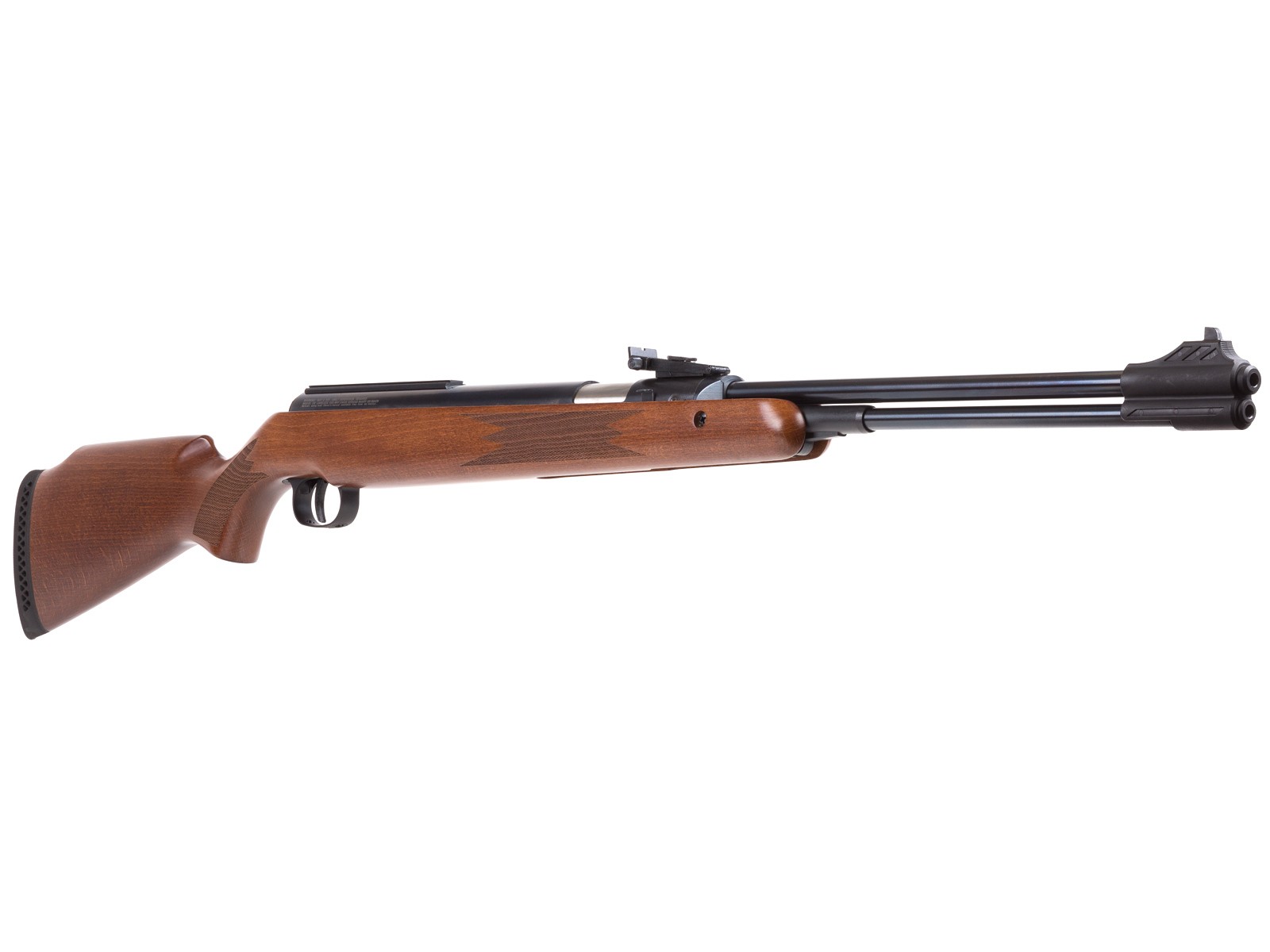
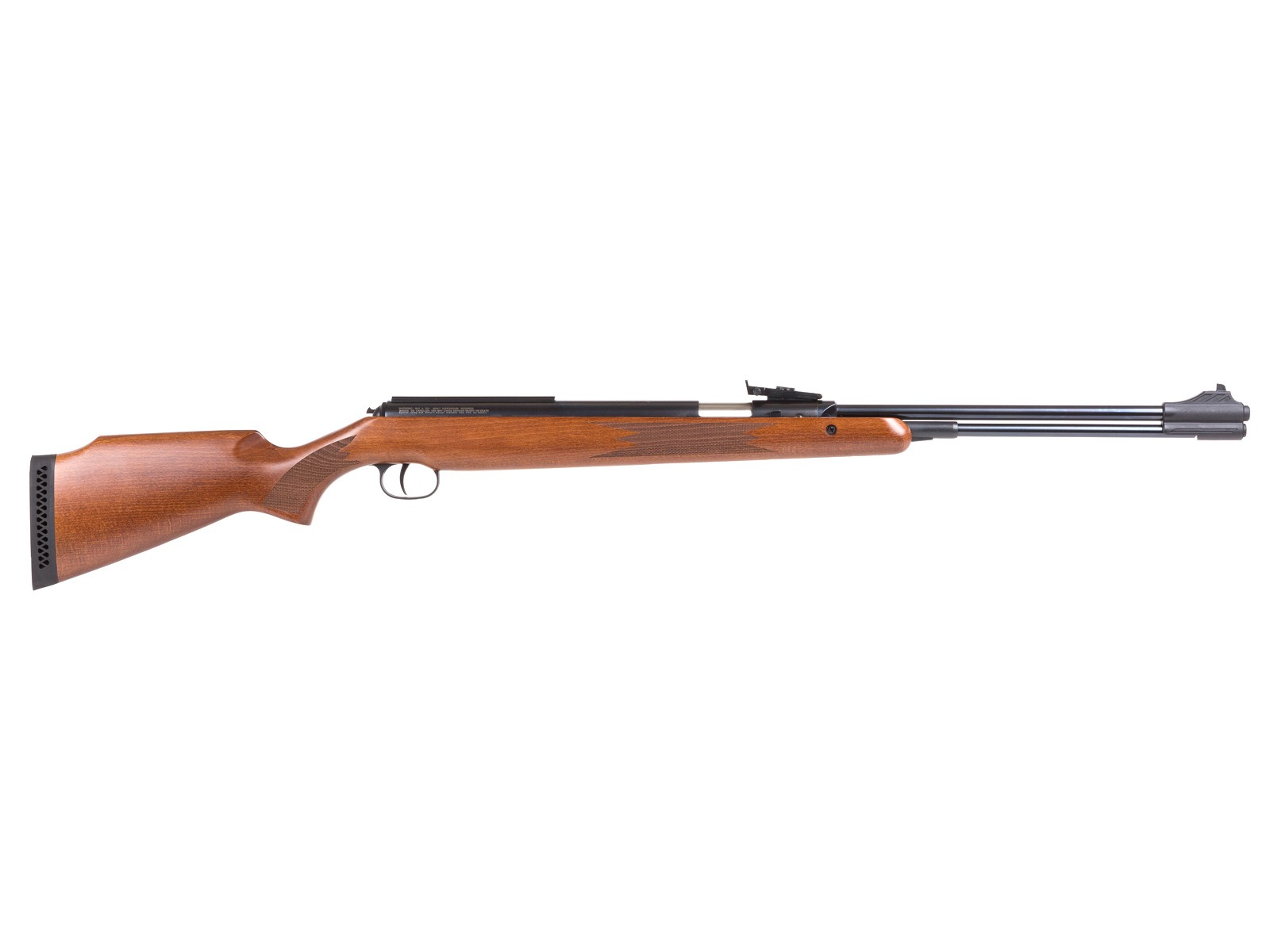
Diana 460 Magnum
  • Calibers:  .177, .22
  • Max Velocity: 1100 FPS
  • Max Muzzle Energy: 27 FPE

check price on Pyramydair


check price on airgundepot

Top Pick
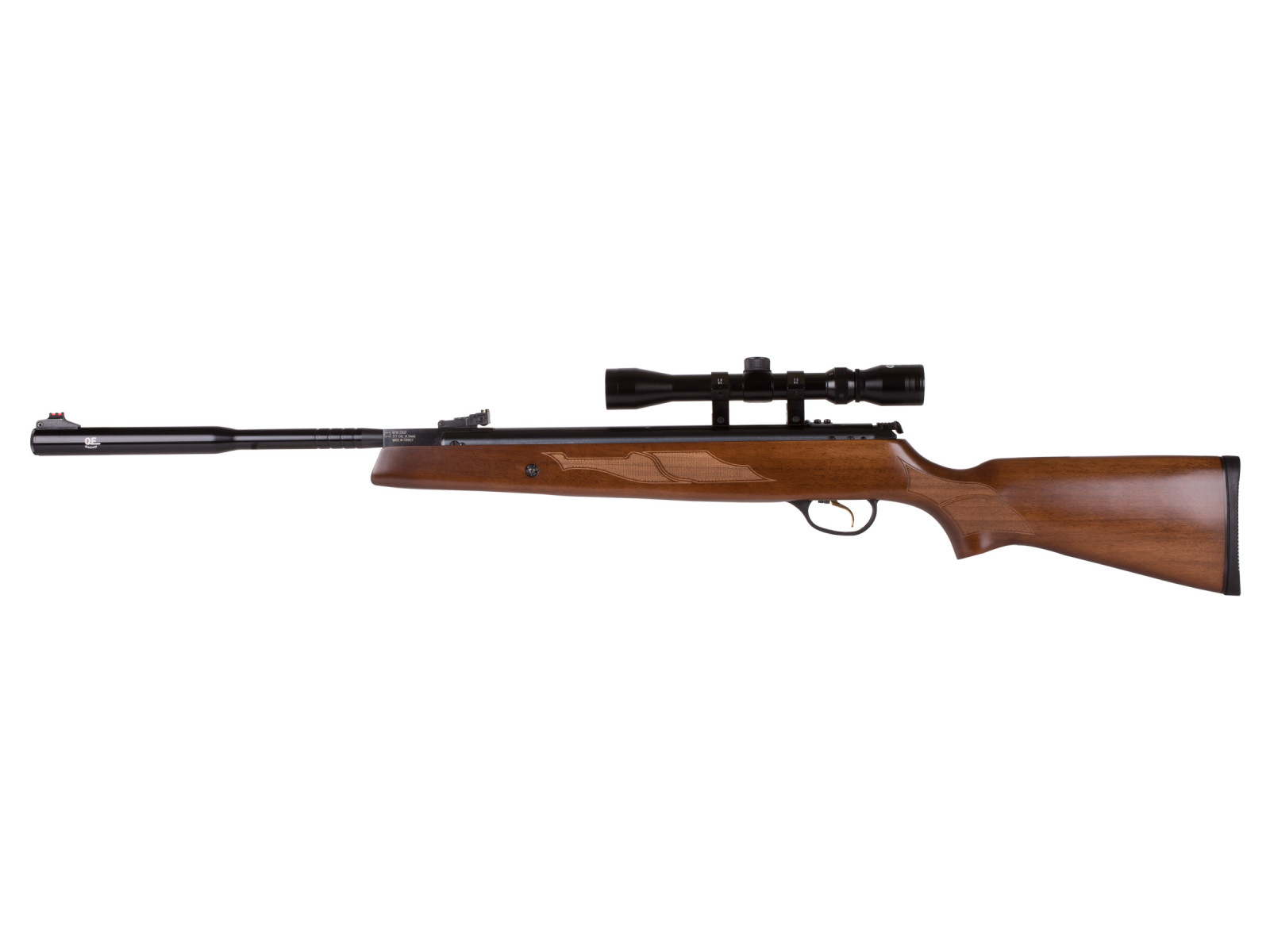
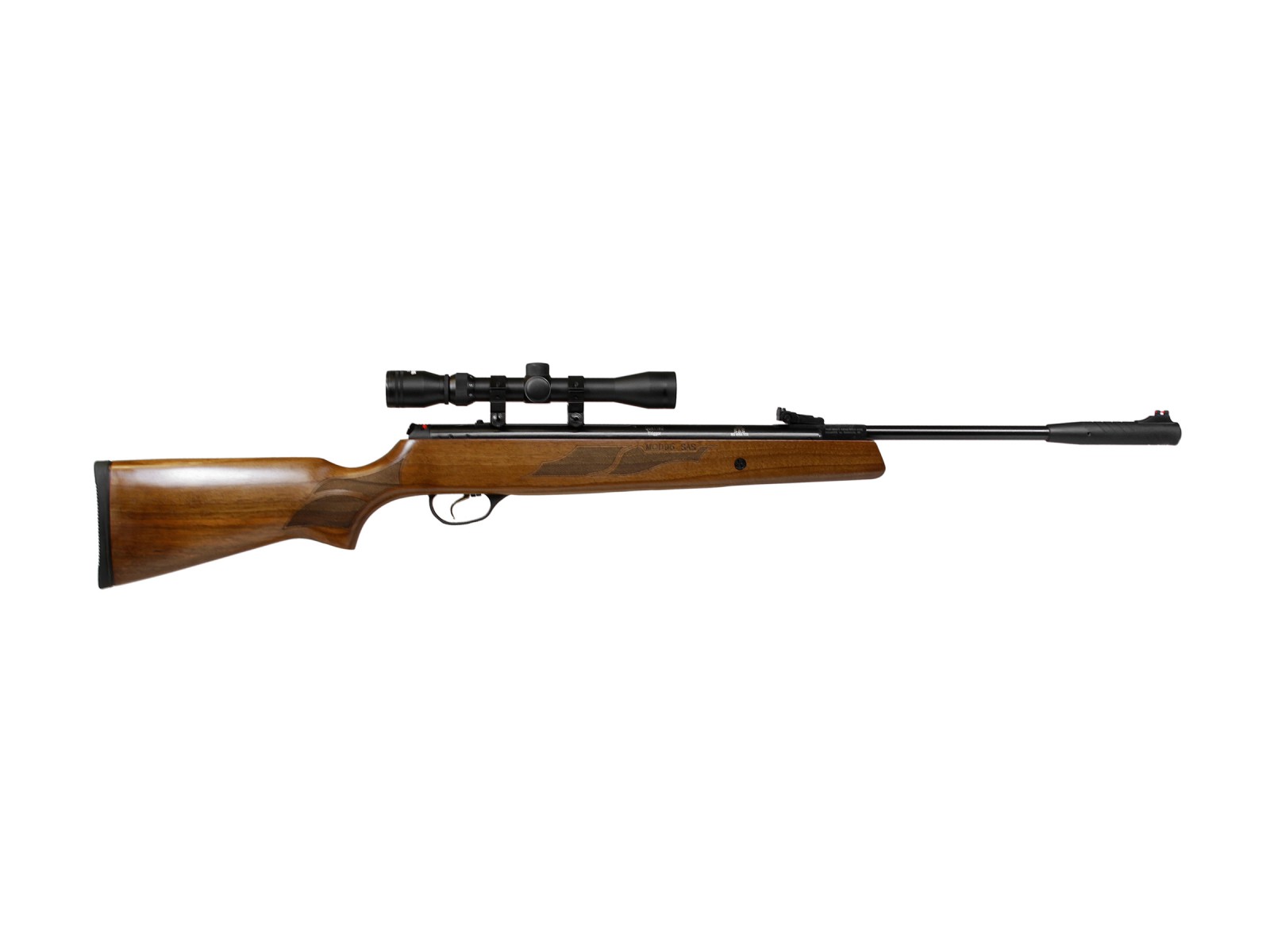
Hatsan 95
  • Calibers:  .177, .22, .25
  • Max Velocity: 1000 FPS
  • Max Muzzle Energy: 24 FPE

check price on Pyramydair


check price on airgundepot

Top Pick
Beeman R9
  • Calibers:  .177, .20, .22
  • Max Velocity: 935 FPS
  • Max Muzzle Energy: 19 FPE

check price on Pyramydair


check price on airgundepot

Top Pick
Diana RWS 48
  • Calibers:  .177, .22
  • Max Velocity: 1100 FPS
  • Max Muzzle Energy: 25 FPE

check price on Pyramydair


check price on airgundepot

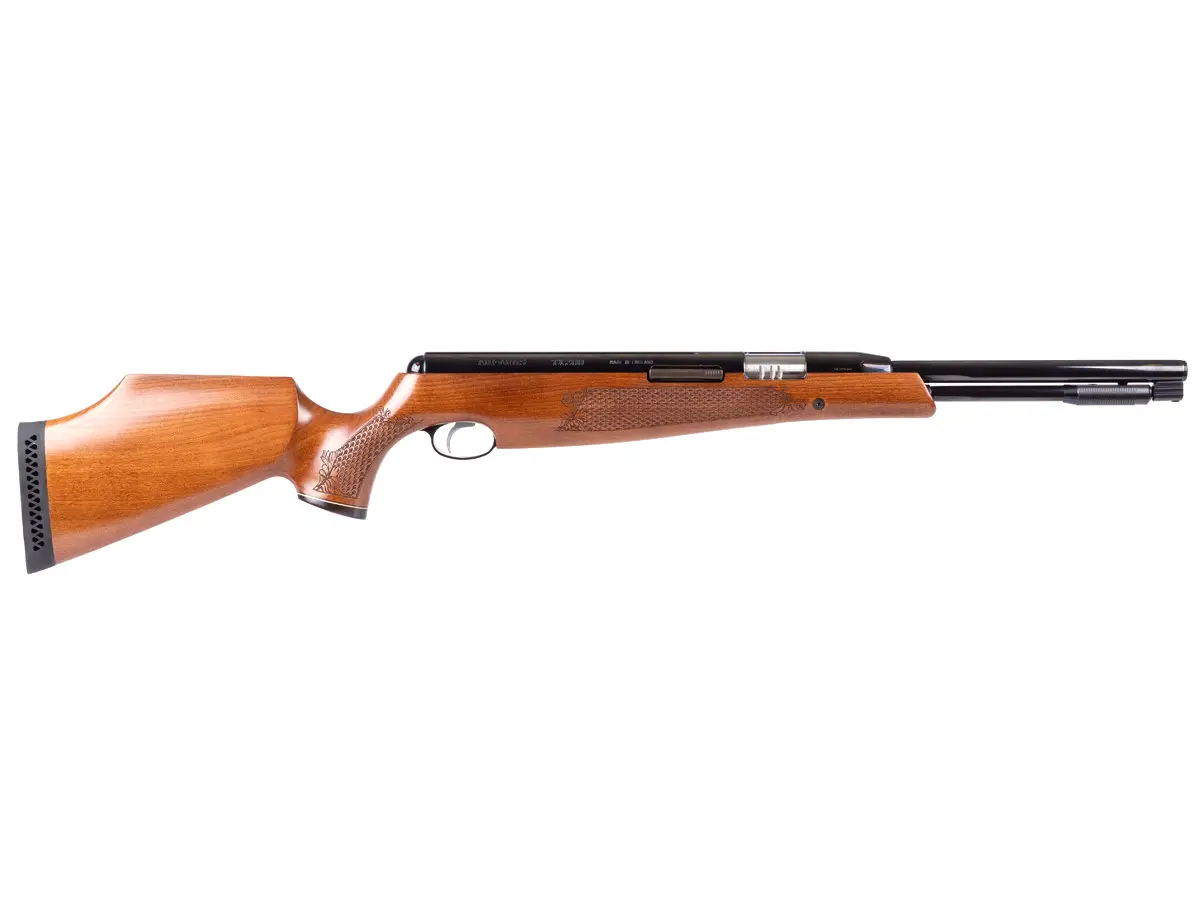
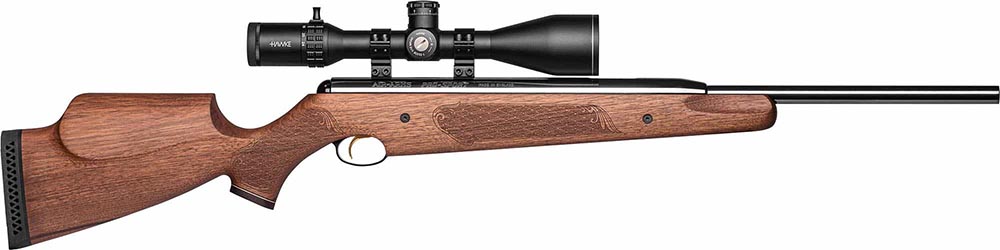
1. Best Overall: Air Arms TX200 MKIII

The Air Arms TX200 MkIII is a top-of-the-line air rifle perfect for competitive shooters and sportsmen alike.

With its powerful Lothar Walther barrel and richly finished Monte Carlo stock, the TX200 MkIII provides exceptional accuracy and fit, making it ideal for hunting or competition.

In addition to its superior performance, the TX200 MkIII features a two-stage trigger and automatic safety for ease of use. Loading is via a sliding breech, which is revealed when you cock the underlever.

The TX200 MkIII shoots at 930 fps in .177 and 755 fps in .22, making it a versatile gun for any kind of shooting. If you’re looking for an accurate, reliable, and well-crafted springer, the Air Arms TX200 MkIII is a perfect choice.

Features

  • Spring-piston
  • Underlever
  • Single-shot
  • Sliding breech cover exposes loading port during cocking cycle
  • 2-stage adjustable match trigger
  • Lothar Walther barrel
  • 11mm optics dovetail grooves
  • No open sights
  • Beech Monte Carlo stock
  • Raised right-hand cheekpiece
  • Checkered forearm and pistol grip
  • Ventilated rubber recoil pad
  • Shrouded barrel

Accuracy:

CalibersPelletsDistancesGroups
.22JSB 18.31 grain pellets50 yards< 1 inch
.2214.66 grain H&N Field Target Trophy50 yards< 1 inch
.177JSB Exact Heavy Diabolo 10.34 gr 20 yards0.21"
.22Air Arms Diabolo Fields12 meters1/2 inch
.177JSB Exact Heavy Diabolo 10.34 gr 25 meters< 1 cm
.177H&N Sport Baracuda 10.6550 yards0.88"
.177Air Arms Diabolo Field Heavy 10.3 gr25 yards0.44"
.177JSB Match Diabolo 7.87 gr25 yards0.33"
.177JSB 10.34 gr25 yards0.25"
.177Air Arms Field 8.4 gr35 yards0.7"
.177 Air Arms 10.3 gr40 yardsdime size
.177 Air Arms 10.3 gr50 yards1/4"
.177H&N Sport Baracuda 10.6520 yards1/4"
.22Crossman Premier domed 14.3 gr35 yards1/2"
.22JSB Diabolo Exact Jumbo 15.89 gr50 yards1/4"
.22H&N Baracuda Green 12.65 gr25 yardsone hole
.177Air Arms 10.3 gr50 yards1/2"

Chrony tests:

CalibersPelletsFPSFPE
.22JSB 18.31 grain pellets57211.29
.2214.66 grain H&N Field Target Trophies63513.13
.177RWS Meisterkugeln 8.2 gr 93215.82
.177RWS Meisterkugeln 8.2 gr 93615.95
.177RWS Meisterkugeln 8.2 gr 94116.13
.177RWS Meisterkugeln 8.2 gr 93115.78
.177RWS Meisterkugeln 8.2 gr 93715.99
.22Air Arms Diabolo Field 16 gr62013.66
.177JSB Exact Heavy Diabolo 10.34 gr 787.8914.26
.177JSB Match Diabolo 7.87 gr89814.1
.177 Air Arms Diabolo Field Heavy 10.3 gr83015.76
.177H&N Sport Baracuda 10.6580315.25
.22Crosman 14.3 gr75017.87
.177Air Arms Diabolo Field Heavy 10.3 gr82515.57
.177Crosman Premier Light 7.9 gr88013.59
.177Beeman Laser 7.16 gr96614.84
.22Crosman Premier hunting pellets 14.3 gr73517.16
.177RWS Hobby 7 gr96014.33
.177JSB Diabolo 8.4 gr73210
.177Air Arms Diabolo Field 8.44 gr90815.46

Pros and Cons

ProsCons
  • Underlever design and fixed barrel for accuracy and consistency
  • Famous Rekord trigger design.
  • Easy to clean
  • Beautiful blue chrome finish
  • Extremely accurate
  • Great for Field Target
  • doesn’t have open sights

Recommended uses:

  • Target shooting/Plinking
  • Pest Control/ Small game hunting: Armadillos, Chipmunks, Grey Foxs, Possums, Porcupines, Prairie Dogs, Crows, Pigeons, Raccoons, Rabbits, Rats, Skunks, Squirrels, and Turkeys.

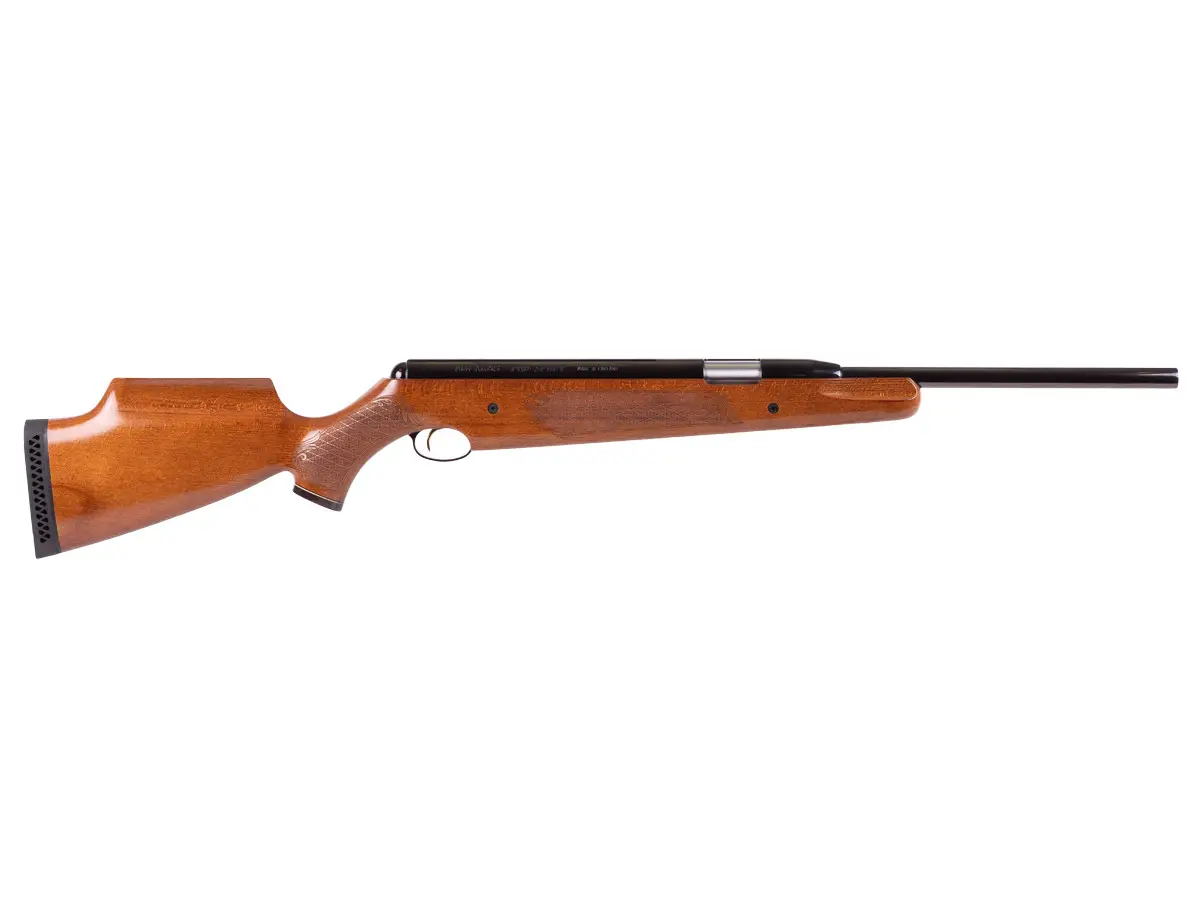
2. Best High-End: Air Arms Pro Sports

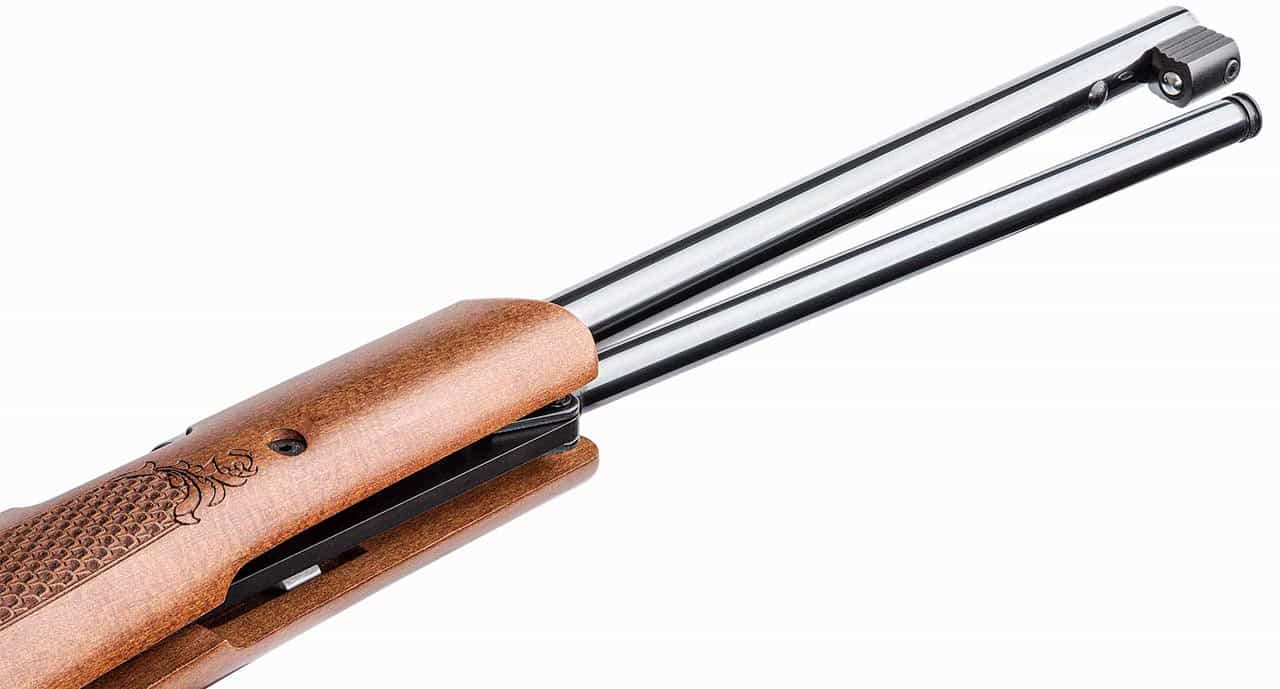
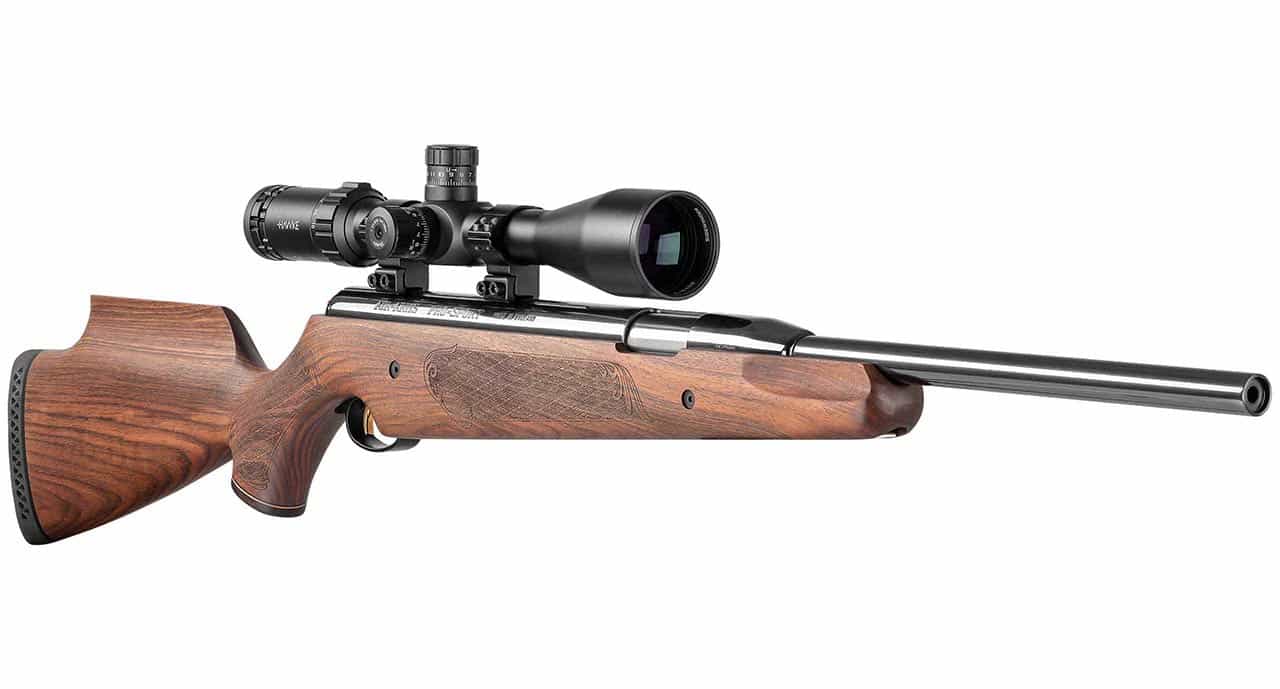
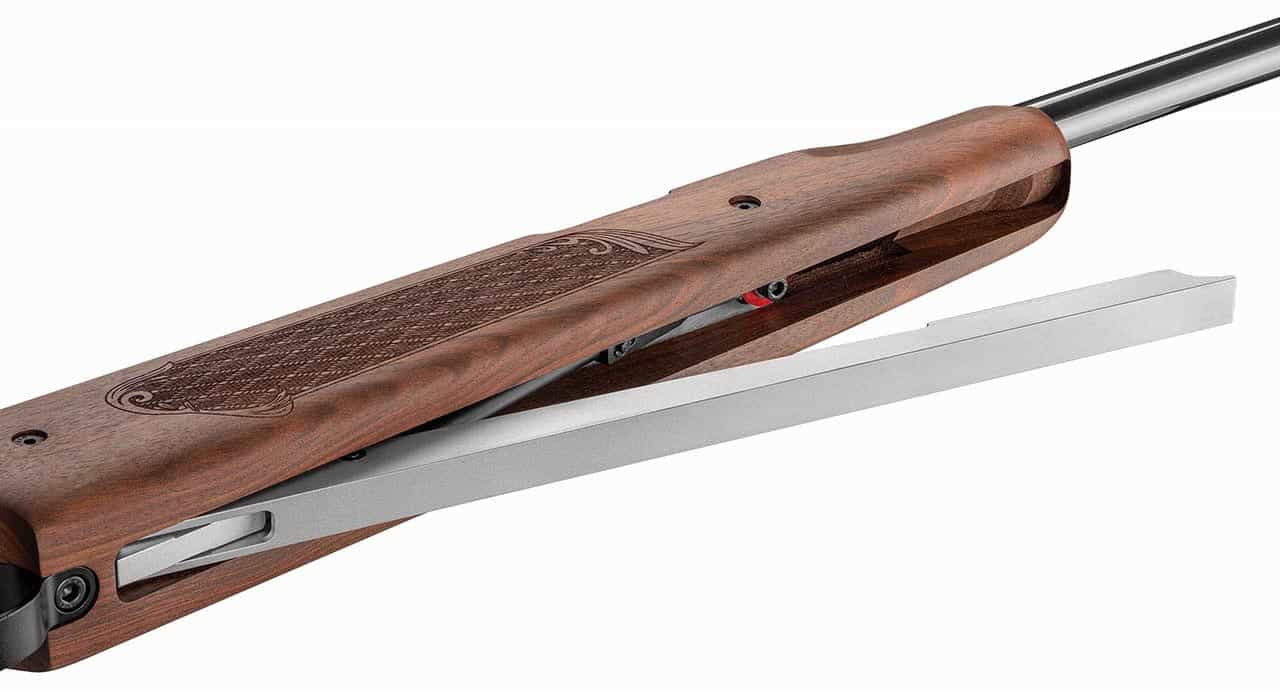
The Air Arms Pro-Sport spring air rifle is a high-quality gun that is perfect for both field target shooting and hunting small animals. The Pro-Sport is known for its accuracy and ease of use, making it a popular choice among shooters.

The Monte Carlo stock and raised cheekpiece provide a comfortable and ergonomic experience, while the 12-groove Lothar Walther barrel ensures precise shooting.

The Pro-Sport also features a barrel shroud to reduce noise and increase stealth while hunting. Get the .22 caliber rifle for an all-around versatile gun that can take down rats, mice, rabbits, and squirrels with ease.

Features

  • Max Velocity: 950 fps
  • Overall Length: 40.5″
  • Buttplate Ventilated rubber
  • Function: Single-shot
  • Weight: 9.03 lbs
  • Trigger Pull: 3.0 lbs
  • Scopeable: 11mm dovetail
  • Safety Automatic
  • Suggested for Small game hunting/target practice
  • Caliber: .177 – .22
  • Loudness: 3-Medium
  • Barrel Length: 9.5″
  • Shot Capacity: 1
  • Cocking Effort: 39.6 lbs
  • Barrel Rifled
  • Front Sight: none
  • Rear Sight: none
  • Trigger: Two-stage adjustable
  • Action: Underlever
  • Powerplant: Spring-piston

Accuracy

CalibersPelletsDistancesGroups
.22H&N Terminator 16.36 gr40 yardsone hole
.22Air Arms Falcon 13.43 gr35 yardsdime size
.22H&N Field Target Trophy 14.66 gr35 yardsdime size
.177JSB Match Diabolo Exact 8.4 Gr25 yards0.25"
.177JSB Diabolo Heavy40 yardsone hole
.22JSB Diabolo Heavy 18.13 gr35 yards1/2"
.22Crosman Premier Hollow Point 14,3 gr30 yardsone hole
.22Air Arms Diabolo Hunter 16 gr23 yards0.75"
.22JSB Hades Diabolo 15.89 gr30 yardsdime size
.22JSB Hades Diabolo 15.89 gr25 yards0.33"
.22JSB Exact Jumbo 13.43 gr25 yards0.32"
.22Predator GTO Lead Free Pellets 11.75 gr25 yards0.21"
.22JSB Hades Diabolo 15.89 gr50 yards1.29"
.22JSB Jumbo Heavy 18.13 Gr35 yards3/8"
.22H&N Baracuda Match 21.3 gr35 yards3/8"

Chrony tests

CalibersPelletsFPSFPE
.22H&N Field Target Trophy 14.66 gr72016.88
.22Crosman Premier Hollow Point 14.3 Gr728 16.83
.177JSB Match Diabolo Exact 8.4 Gr755.9 10.66
.177JSB Diabolo Heavy 10.34 gr77013.62
.22JSB Diabolo Heavy 18.13 gr63516.24
.22H&N Field Target Trophy 14.66 gr71716.74
.22Crosman Premier Hollow Point 14,3 gr70415.74
.22Crosman Premier Hollow Point 14,3 gr71016.01
.22JSB Hades Diabolo 15.89 gr62013.57
.22JSB Exact Jumbo 13.43 gr67513.59
.22Predator GTO Lead Free Pellets 11.75 gr80516.91
.22JSB Hades Diabolo 15.89 gr66515.61
.22JSB Jumbo Heavy 18.13 Gr58313.69

Pros and Cons

ProsCons
  • Quality craftsmanship, stunning walnut stock, and deep bluing
  • Well-tuned from the factory
  • Quiet and well-balanced
  • Great 2-Stage Trigger
  • Accurate up to 40+ yards
  • Packs enough punch for most of your pest and small games hunting needs
  • The cocking mechanism takes some getting used to

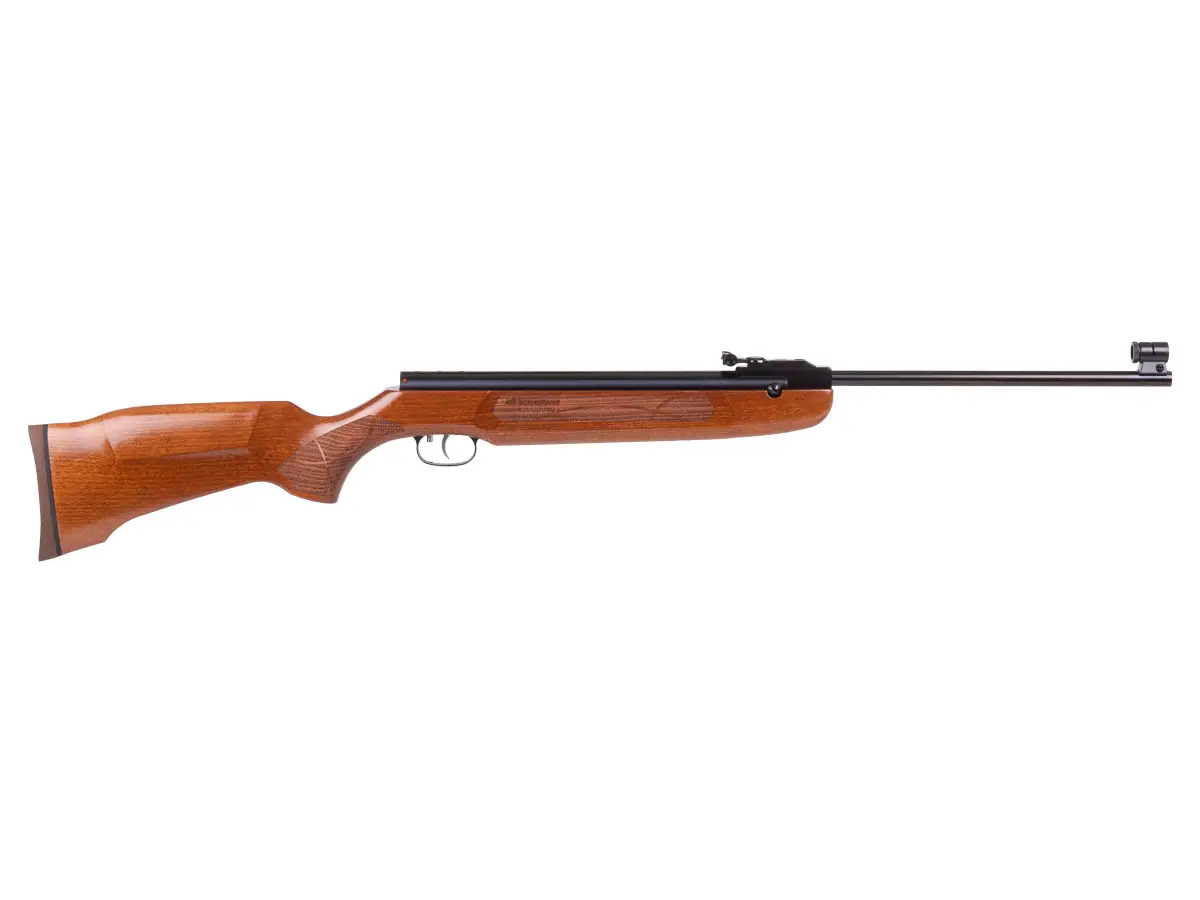
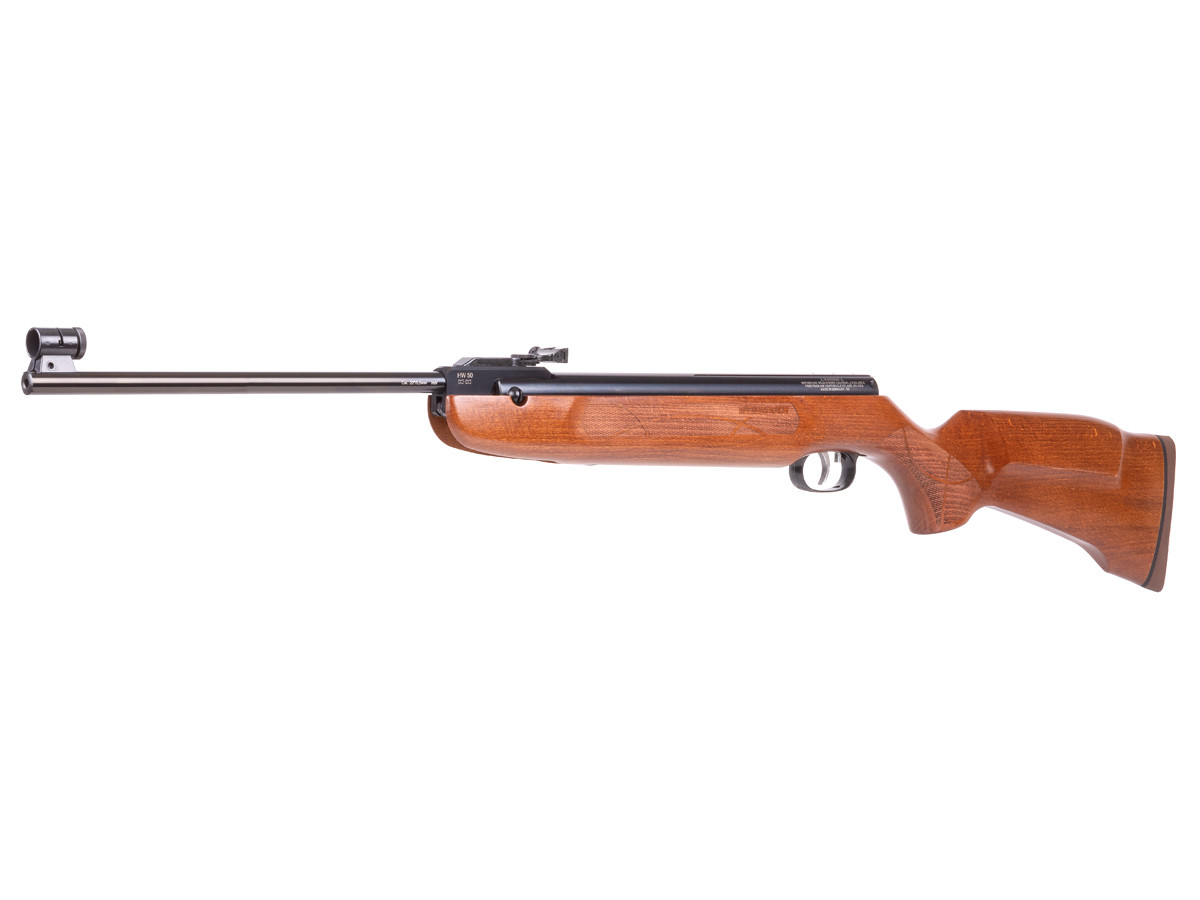
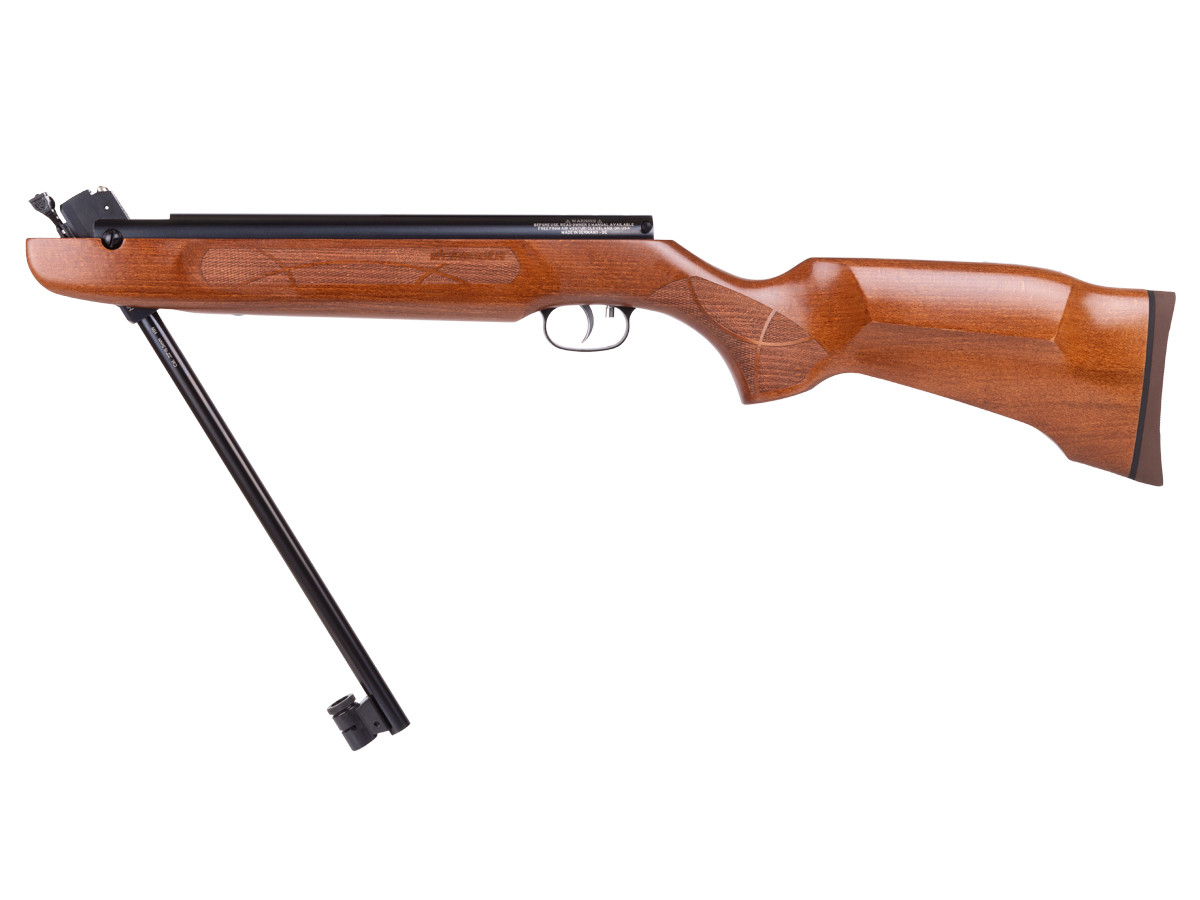
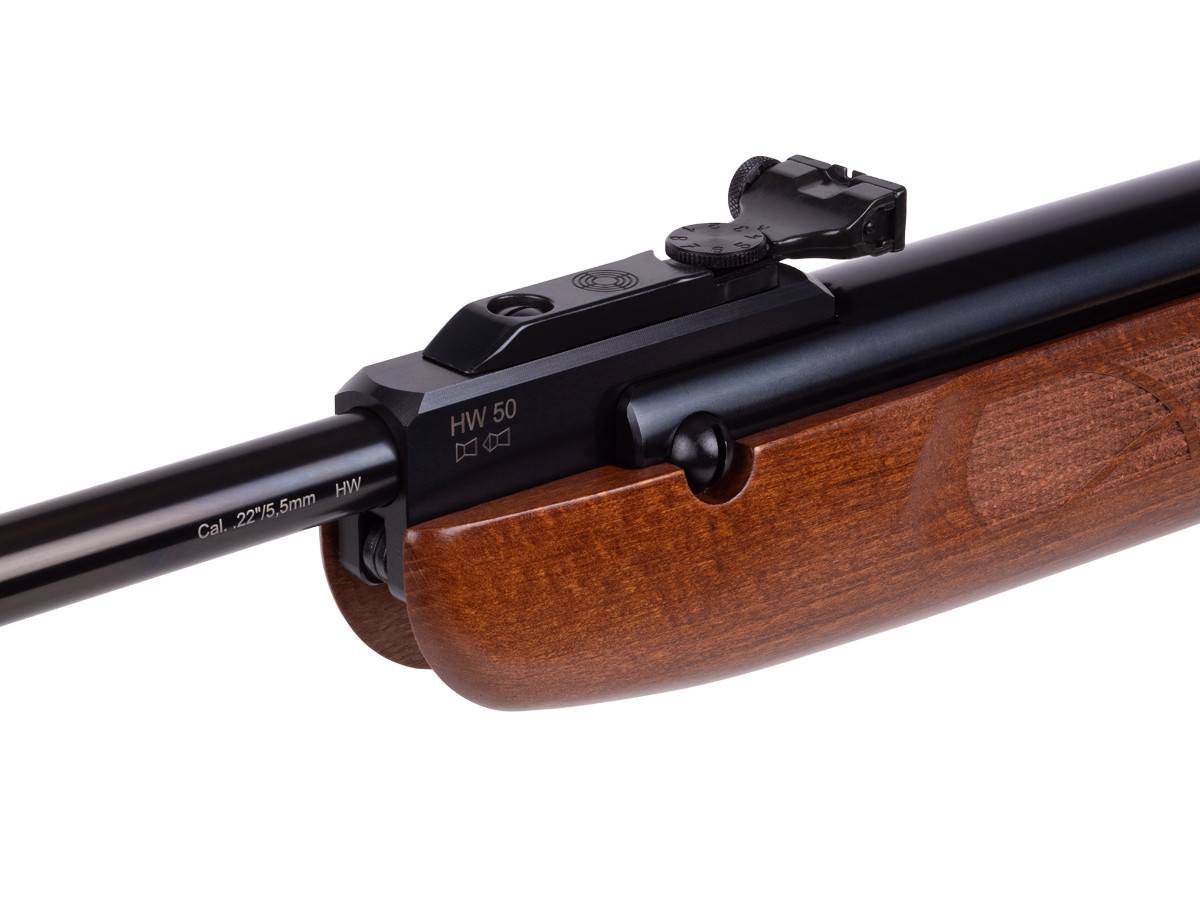
3. Best Compact: HW50S

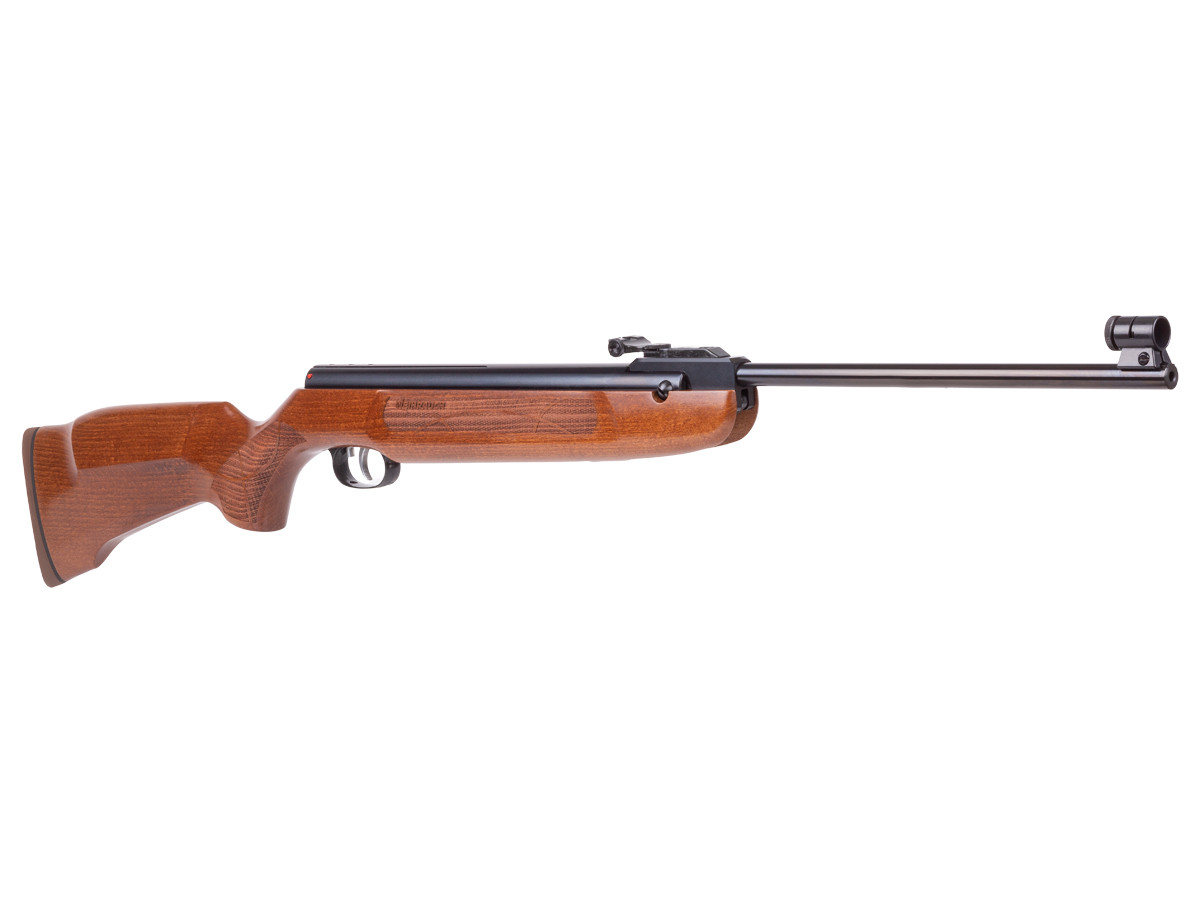
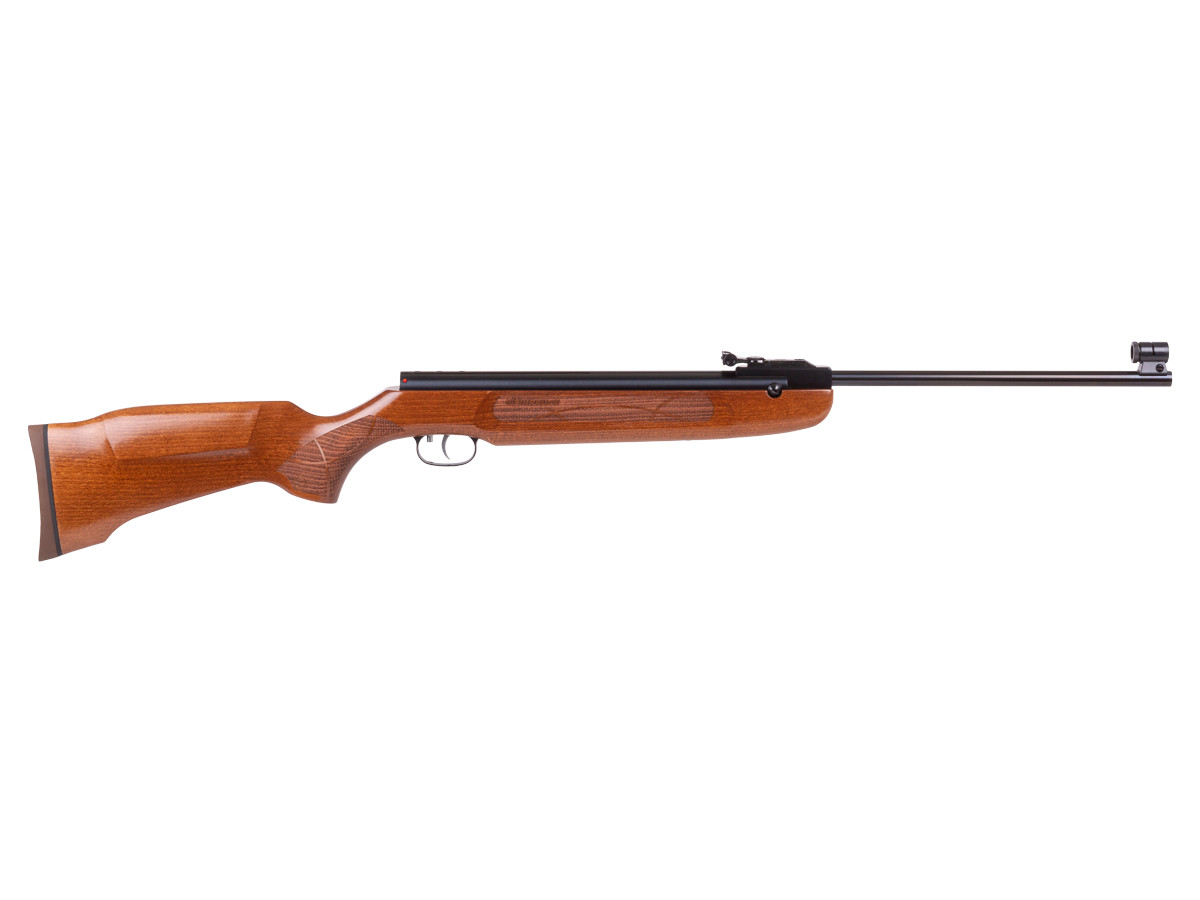
The HW50S spring piston air rifle from Weihrauch Sport is a high-quality gun perfect for plinking and hunting small rodents. With a state-of-the-art German design and construction, this gun is built to last.

The HW50S features a precision rifled barrel, making it accurate and reliable. The rugged stock is made from durable hardwood, making it sturdy and stable.

The HW50S also has an adjustable trigger, so you can customize it to your specific needs. Whether you’re looking for a gun for plinking or hunting, the HW50S is a perfect choice. 

Features

  • Single-shot
  • 24 lbs. cocking effort
  • Checkered beech stock with raised cheekpiece
  • 2-stage adjustable Rekord trigger
  • Globe front sight accepts inserts (included)
  • Adjustable rear sight
  • Steel barrel & receiver
  • Rubber buttpad
  • Incl. front sight inserts

Accuracy

CalibersPelletsDistancesGroups
.22H&N Baracuda Hunter Extreme 18.5 gr 20 yards1/2"
.177H&N Field Target Trophy 8.64 Gr10 metersdime size
.177H&N Excite Spike Pointed 8.64 Gr25 yards0.5"
.177Predator Polymag 8 Gr 15 metersdime size
.22Crosman Hollow Point 14.3 gr25 yards0.5"
.177JBS Exact 25 yards5/16"
.177Crosman Premier 7.9gr10 yardsone hole
.177H&N Field Target Trophy 8.64 Gr35 yardsdime size
.177JSB Match Diabolo Exact 8.44 Gr10 yards0.16"
.177H&N Field Target Trophy 8.64 Gr30 yards1/4"
.177RWS Superdomes 8.3gr25 yards0.5"

Chrony tests

CalibersPelletsFPSFPE
.177RWS Hobby 7 Gr86411.61
.177H&N Excite Spike Pointed 8.64 Gr76511.23
.177Predator Polymag 8 Gr 77510.67
.177Crosman Premier 7.9gr76510.27
.22Crosman Premiers 14.3 gr61011.80
.177H&N Field Target Trophy 8.64 Gr75410.91
.22RWS Superdome 14.5 gr63012.78
.22H&N Field Target Trophy 14.66 Gr61612.36
.177 JSB Exact 8.4 gr77511.21
.177RWS Super Point 6.9 Gr81510.18
.22RWS Hobby 11.9 gr65011.17
.177Crosman Premier 7.9 gr 77010.4
.177JSB Exact heavies 10.5 gr66010.16
.177Crosman Premier 7.9 Gr76910.38

Pros and Cons

ProsCons
  • Lightweight and compact
  • Beautiful stock and excellent HW barrel
  • Not very hold sensitive
  • Accurate with open sights
  • The rear sight has three different notches (different widths) and a V-notch
  • Fantastic trigger
  • Easy to cock
  • Great for shooting iguanas
  • Fiber optic front sight post would be nice

Recommended uses:

  • Target shooting/backyard plinking
  • Pest control: crows, iguanas, rats.

4. Diana 460 Magnum

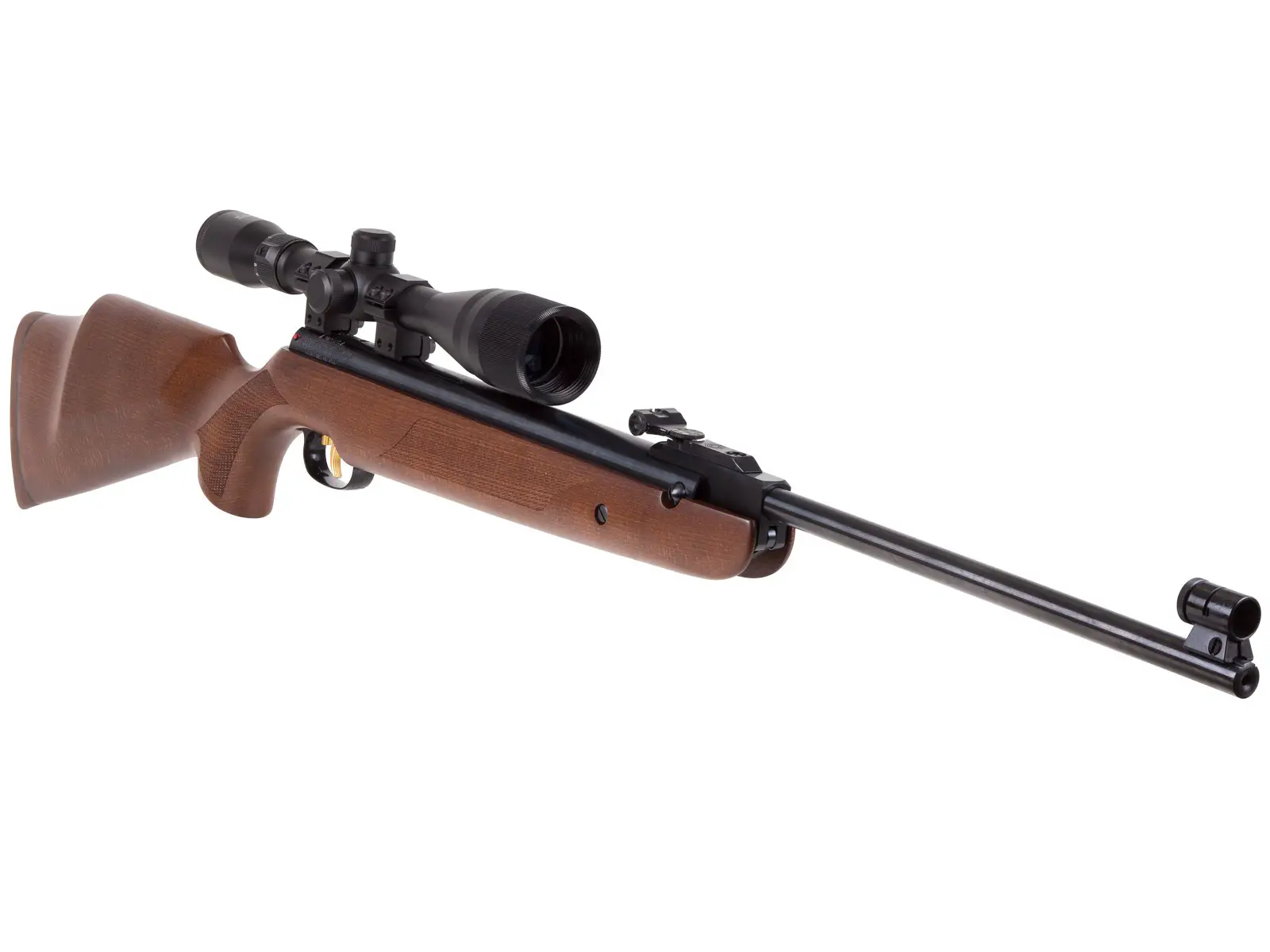
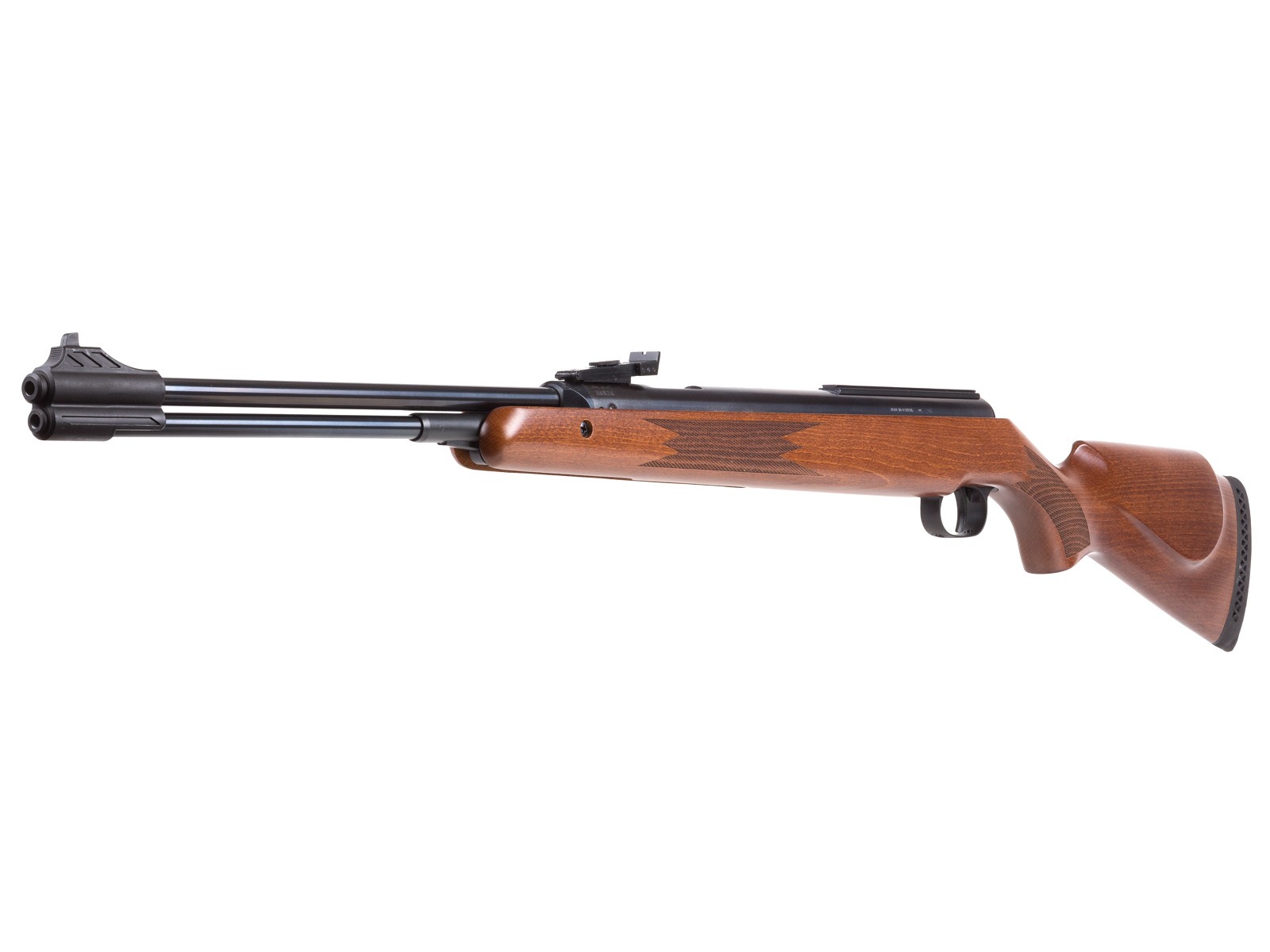
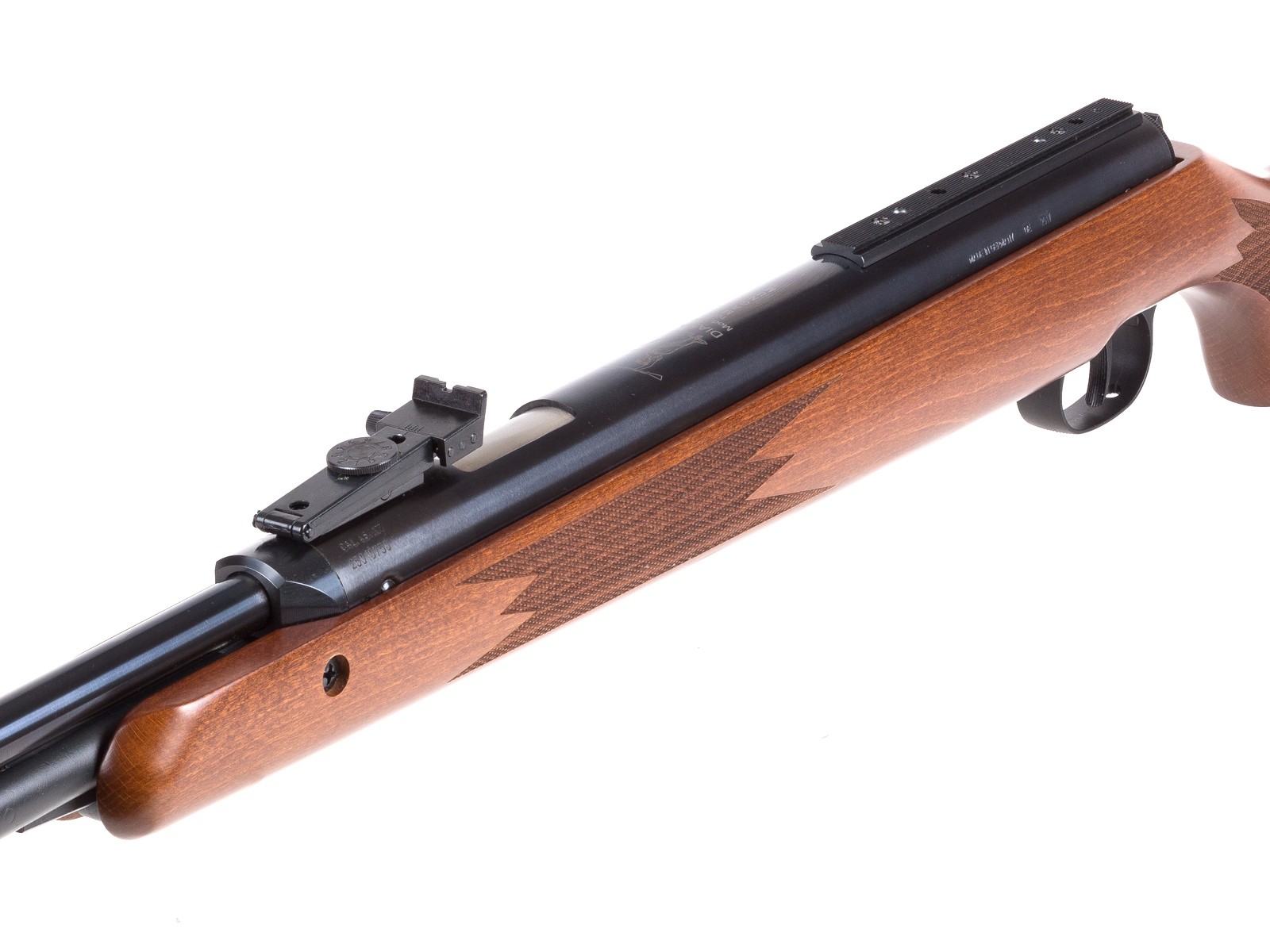
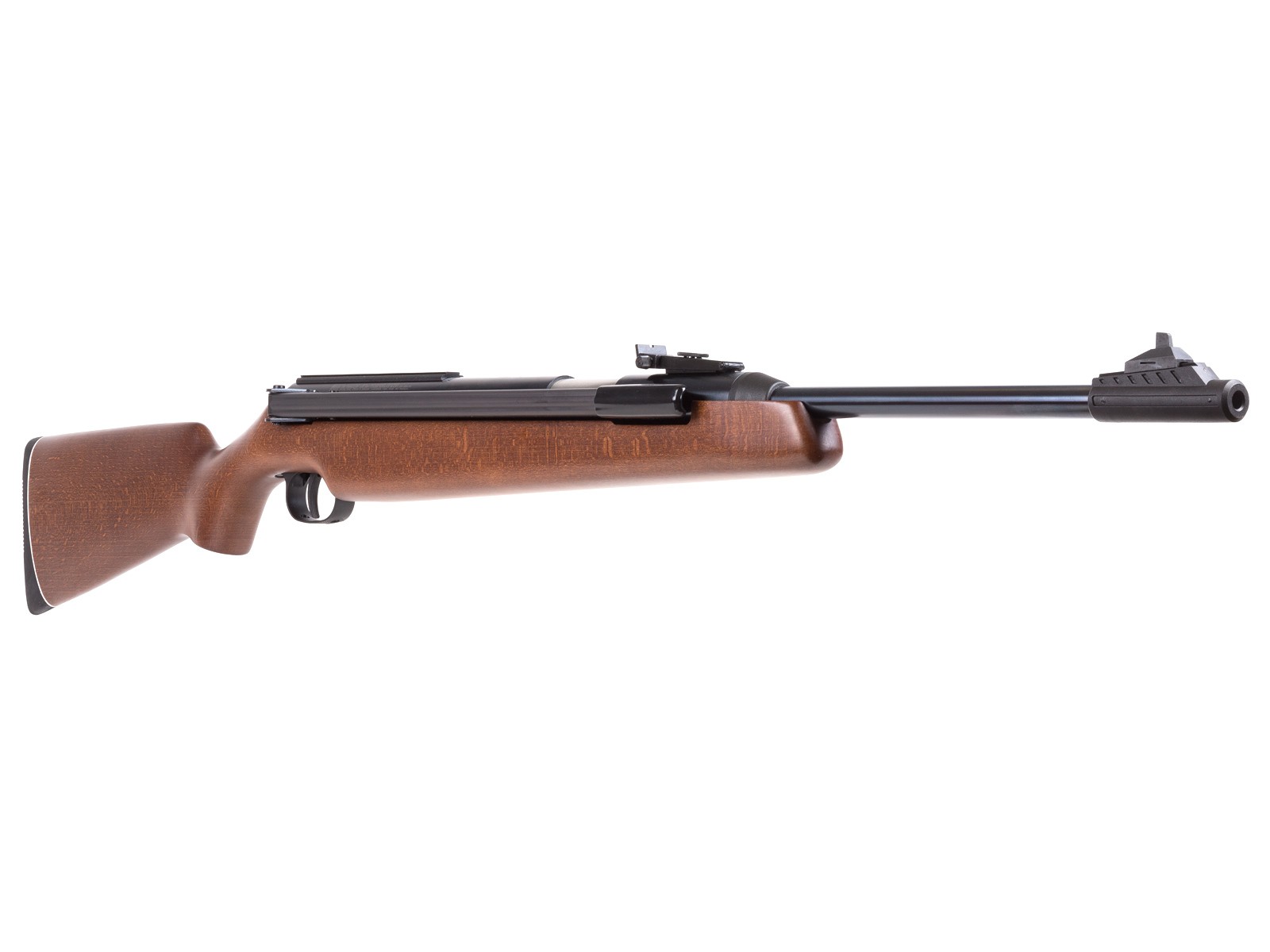
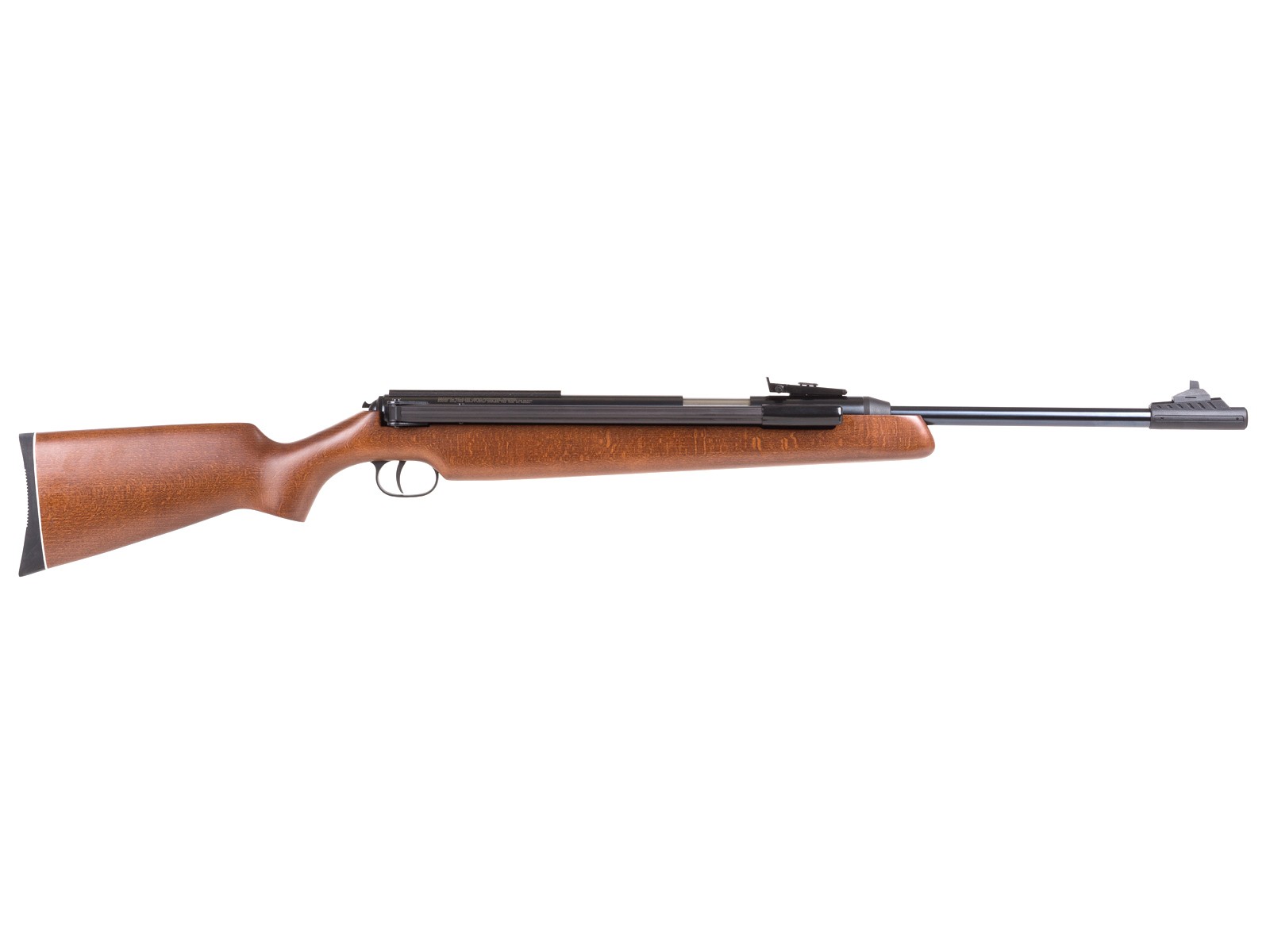
The Diana RWS 460 Magnum Breakbarrel Air Rifle is an engineering masterpiece from the fabled German airgun manufacturer.

From the powerful .22 caliber spring-piston set-up to the beechwood Monte Carlo stock with the checkered forearm and pistol grip, every detail of this air rifle was meticulously considered in its design.

Each shot you take will go downrange with a whopping 900 fps velocity, ensuring precise accuracy for varmint hunting and pest control.

With only 36 lbs. cocking effort, you can comfortably spend afternoons outdoors spending your time efficiently and accurately shooting those pests away.

And with its 11mm dovetail mounting, you can rest assured that your scope won’t easily come off making it easier to get small groupings.

The RWS 460 Magnum is a break-barrel air rifle that is perfect for any outdoor enthusiast looking to stay on target every time they shoot!

Features:

  • Underlever action
  • 1100 FPS (.177), 900 FPS (.22)
  • Loudness: 3 – medium
  • Single shot
  • Cocking effort: 36 lbs.
  • Blade & ramp front sight
  • Micrometer adjustable rear sight
  • 11mm dovetail scope mount
  • Two-stage, adjustable T06 trigger
  • Rifled steel barrel
  • Ventilated rubber buttplate
  • 3.3-lb. trigger pull
  • Automatic safety
  • Spring piston power plant
  • Hardwood stock
  • Checkered forestock and grip
  • Monte Carlo stock with raised right-hand cheek piece

Accuracy

CalibersPelletsDistancesGroups
.22Crosman Premier Hollow Point Pellets 14.3 Gr20 yardsnickel size
.22JSB Diabolo Exact Jumbo 15.89 Gr30 yardsdime size
.22Predator Polymag 15.89 gr30 yards3/4"
.22Predator Polymag 15.89 gr50 yards1.5"
.22JSB Diabolo Exact Jumbo Heavy 18.13 gr20 metersdime size
.22RWS Super H Point 14.2 Gr60 yards1.5"
.22JSB Diabolo Exact Jumbo 15.89 Gr25 yardsquarter size
.22JSB Diabolo Exact Jumbo 15.89 Gr10 metersone hole
.22JSB Diabolo Exact Jumbo 15.89 Gr25 meters0.5"
.22JSB Diabolo Exact Jumbo 15.89 Gr45 yards0.5"

Chrony tests

CalibersPelletsFPSFPE
.22Crosman Premier Hollow Point Pellets 14.3 Gr890 25.16
.22JSB Diabolo Exact Jumbo Heavy 18.13 gr77524.19
.22JSB Diabolo Exact Jumbo 15.89 Gr74919.8
.22Gamo Raptor 9.9 Gr91118.25
.22H&N Sniper Light 14 gr82521.16
.22RWS Superdome 14.5 Gr81521.39
.22Beeman FTS Copper Plated 14.72 gr 90526.78
.22RWS Hobby 11.9 gr897 21.27
.22RWS Superpoint 14.5 Gr820 21.65
.22RWS Super H Point 14.2 Gr801 20.24
.22JSB Diabolo Exact Jumbo 15.89 Gr777 21.31
.22Beeman Kodiak 21.14 Gr585 16.07

Pros and Cons

ProsCons
  • Beautiful and well-made construction
  • Excellent trigger
  • Extremely easy to be accurate
  • You don't need a scope for shooting up to 30 yards
  • Well-balanced and powerful
  • Built to last for a long time
  • The front sight is plastic

5. Hatsan 95

The Hatsan 95 is one of the best spring piston air rifles on the market, perfect for both novice and experienced shooters alike.

The beautiful Turkish walnut stock gives the rifle a luxurious look and feel, while the adjustable Quattro two-stage match trigger provides superior control and accuracy.

The SAS (Shock Absorption System) reduces felt recoil for a more enjoyable shooting experience. Whether you’re plinking at cans in the backyard or hitting targets at the range, the Hatsan 95 will give you years of enjoyment and satisfaction.

Features

  • Rifled steel barrel
  • Quattro 2-stage adjustable match trigger (adj. for trigger-pull weight, first stage, second stage & length of travel)
  • 11mm optics dovetail
  • Fixed TruGlo fiber optic front sight (red, 0.060″)
  • Fully adjustable TruGlo fiber optic rear sight (green, 0.035″)
  • Anti-beartrap mechanism
  • Automatic safety
  • Ambidextrous Turkish walnut stock
  • Checkered pistol grip and forearm
  • Rubber recoil pad
  • SAS (shock absorber system) that reduces felt recoil

Accuracy

CalibersPelletsDistancesGroups
.22Crosman Premier HP 14.3 gr50 yards1.5"
.22Crosman Premier HP 14.3 gr25 yardsquarter size
.22Predator Polymag 15.89 gr25 yardsdime size
.22H&N Field Target Trophy 14.66 Gr40 yardsquarter size
.22H&N Field Target Trophy 14.66 Gr80 yardsquarter size
.22Beeman Kodiak 21.14 gr50 yardsquarter size
.22H&N Barracuda Green25 yardsquarter size
.22H&N Field Target Trophy 14.66 Gr20 yards0.145"
.22H&N Field Target Trophy 14.66 Gr40 yards0.185"
.22Crosman Premier HP 14.3 gr10 yardsone hole
.177Beeman Kodiak Extra Heavy Domed 10.65 grain35 yardsone hole
.177Crosman Premier Hollow Point Pellet 7.9gr30 yardsone hole
.22Beeman Crow Magnum 18.21 gr25 yards1/2"
.25Beeman Crow Magnum 26.23 Gr40 yards1"

Chrony tests

CalibersPelletsFPSFPE
.25JSB Match Diabolo Exact King 25.39 Gr60120.37
.25H&N Baracuda Hunter 27.47 Gr60322.18
.22Crosman Pellet 14.3gr840 22.41
.22H&N Field Target Trophy 14.66gr79820.73
.177Air Arms Diablo Express 7.87 gr976 16.65
.25Predator GTO Lead-Free 16.54 gr77522.06
.177Crossman Premiere 7.9 gr107620.31
.25JSB Match Diabolo Exact King 25.39 Gr57018.32
.25Benjamin Domed 27.8 Gr53817.87
.22H&N Field Target Trophy 14.66gr782.619.94

Pros and Cons

ProsCons
  • Affordable price
  • Great looking Turkish Walnut stock
  • Accurate out of the box to 40 meters
  • Simple and fun to shoot
  • Great for squirrels and pests
  • The scope is not great

read review here

Recommended uses:

  • Target shooting/plinking
  • Pest control/small game hunting: red squirrels, raccoons, rabbits, pigeons, iguanas.

6. Beeman R9

Looking for a top-quality air rifle that can handle any task you give it? Look no further than the Beeman R9 Spring Piston Air Rifle. This German-made break barrel marvel is hand-assembled and ready to provide you with amazing accuracy.

It’s also lightweight, at only 7.3 pounds, so you can shoot it all day long without getting tired.

Plus, with its German heritage, you can be sure that the R9 will perform flawlessly for any purpose, whether you’re using it for hunting, pest elimination, paper targets, field targets, or plinking. If you’re planning on shooting field targets, the .177 caliber is the optimum choice.

The Beeman R9 air rifle is a top-quality choice for serious shooters. It features a hardwood Monte Carlo stock with a slightly raised cheekpiece that is ambidextrous for comfortable shooting.

The dependable break barrel mechanism is smooth and easy to cock, making it easy to get back into the action.

The famous Rekord trigger is the standard by which all other triggers are measured and can be adjusted to suit your needs. Easily add a scope on the 11mm dovetails; accept a vertical scope stop pin.

With its superior performance and outstanding craftsmanship, the Beeman R9 air rifle will surely give you the edge in competition or hunting.

Features

  • 11mm Dovetail rail
  • 2-stage adjustable Rekord trigger
  • Checkered hardwood stock
  • Includes open sights
  • 14.25″ Length of Pull
  • Fully-adjustable rear sight

Accuracy

CalibersPelletsDistancesGroups
.22Crosman Premiere Hollow Point 14.3 gr20 yardsdime size
.22Air Arms Diabolo Field 16 Gr25 yardsdime size
.177H&N Baracuda Match 10.65 gr10 yards0.16"
.177H&N Baracuda Match 10.65 gr20 yards0.17"
.177H&N Baracuda Match 10.65 gr30 yards0.49"
.22Predator GTO 11.75 Gr25 yards0.5"
.22Predator GTO 11.75 Gr50 yards1"
.22H&N Barracuda Hunter Extreme20 yards1/4"
.22RWS Meisterkugeln 14 gr 50 yardsdime size
.177Beeman Kodiak Match 10.65 gr60 yardsquarter size
.22H&N Field Target Trophy 14.66 gr25 yards0.5"
.177H&N Baracuda Match 10.65 gr25 yards0.4"
.22Beeman FTS Double Gold 14.66 Gr25 yardsone hole
.22JSB Exact pellet25 yardsdime size
.22RWS Hobby pellet30 metersdime size
.22JSB Diabolo Exact Jumbo Express 14.3 gr50 yardsquarter size
.177H&N Field Target Trophy 8.64 Gr25 yardsdime size
.177H&N Baracuda Match 10.65 Gr25 yardsdime size
.177RWS Supermag 9.3 gr25 yards1/2"
.177Crosman Premier Heavy 10.5 gr20 yardsdime size
.177Predator Polymag 8.0 gr25 yards1/4"
.177Beeman FTS 8.64 gr50 yards7/16"
.22RWS Meisterkugeln 14gr20 yards0.22"
.22JSB Hades 15.89 gr25 yards0.44"
.22H&N Terminator 16.36gr25 yards0.35"
.22H&N Terminator 16.36gr50 yards0.65"

Chrony tests

CalibersPelletsFPSFPE
.22H&N Field Target Trophy 14.66 gr 75018.32
.20JSB Exact 13.9 gr70815.48
.20H&N Field Target 11.42 gr772 15.12
.22Predator GTO 11.75 Gr75714.95
.20H&N Field Target 11.42 gr780 15.43
.22RWS Meisterkugeln 14 gr 74117.07
.22H&N Field Target Trophy 14.66 gr73017.35
.20Beeman H&N Match 10.03 Gr82014.98
.22Beeman FTS Double Gold 14.66 Gr68015.06
.177JSB Match Diabolo Exact 8.44 Gr860 13.86
.22Crosman Premier Hollow Point 14.3 Gr72516.69
.22H&N Field Target Trophy 14.66 gr70015.95
.177JSB Match Diabolo Exact 8.4 Gr80312.03
.177Crosman Premier 7.9 Gr83012.09
.22RWS Meisterkugeln 14gr71316
.22JSB Hades 15.89 gr65615.19
.22H&N Terminator 16.36gr65815.73
.22H&N Baracuda 18.21 gr65117.14
.22Predator GTO 11.75 gr81417.29
.22JSB Exact Jumbo 13.43 gr67413.55
.177Beeman Kodiak 10.6 gr77013.97
.177RWS Hobby 7.0 gr93113.45

Pros and Cons

ProsCons
  • Well-made and nicely finished
  • Great blueing
  • Extremely accurate up to 50 yards
  • Great Rekord trigger
  • Easy to cock
  • Not hold sensitive
  • Not pellet picky
  • Great for possums and raccoons
  • Fiber optic sights would be nice

Recommended uses:

  • Target shooting/plinking
  • Pest control/ small game hunting: squirrels, raccoons, chipmunks, possums, starlings, pigeons.

7. Diana RWS 48

The RWS Model 48 is a high-powered, spring-piston air rifle that is perfect for all sorts of applications.

With its ambidextrous, extended beechwood stock, robust power plant, and German-engineered accuracy, the RWS/Diana 48 pellet rifle offers shooters the kind of ergonomics, accuracy, and reliability you demand shot after shot.

This versatile air rifle is perfect for target practice, plinking, pest control, and small-game hunting.

The extended beechwood stock provides a comfortable and natural grip for both right- and left-handed shooters. The smooth, spring-piston power plant delivers plenty of power and accuracy for taking down targets or pests.

The Diana RWS 48 air rifle is a top-of-the-line product that is perfect for those who are looking for accuracy and precision.

This pellet rifle features a “floating action” that hovers on a set of rails, which makes it virtually recoilless.

In addition, the streamlined hardwood stock is extremely comfortable and easy to handle. With its superior design and craftsmanship, the Diana RWS 48 is perfect for anyone who wants the perfect shot every time.

Features

  • Beechwood stock
  • 1100 FPS (.177), 900 FPS (.22)
  • Sidelever action
  • Cocking effort: 39 lbs.
  • Blade & ramp front sight
  • Adjustable rear sight (windage & elevation)
  • 11mm dovetail scope mount
  • Rubber buttplate
  • 3.3-lb. trigger pull
  • Automatic safety
  • Spring piston power plant
  • Single shot

Accuracy

CalibersPelletsDistancesGroups
.22Crosman Premier 14.3 Gr30 yards1/2"
.22Crosman Premier 14.3 Gr25 yardsdime size
.22JSB Diabolo Exact Jumbo 18.13 Gr40 meters0.59"
.22JSB Hades 15.8gr25 meters one hole
.22RWS Superdome 14.5 Gr15 yardsone hole
.22Crosman Premier Domed 14.3gr50 yardsquarter size
.22Crosman Premier Domed 14.3gr70 yards1"
.22H&N Field Target Trophy 14.66 Gr70 yards1.75"
.22RWS Superdome 14.5 Gr25 yardsdime size
.177RWS Flat Head 8.2 gr 20 yards1/2"
.177RWS Flat Head 8.2 gr 40 yards3/4"
.22H&N Baracuda Hunter Extreme 18.52 gr50 yardsone hole
.22JSB Diabolo Exact Jumbo 15.89 Gr91 yards2.5"

Chrony tests

CalibersPelletsFPSFPE
.22JSB Diabolo Exact Heavy 18.13 gr75522.95
.22JSB Diabolo Exact Heavy 18.13 gr70920.24
.22RWS Hobby 11.9 gr 93022.86
.22Crosman Premier 14.3 Gr86023.49
.177JSB Heavy Diabolo 10.34 gr95520.95
.22JSB Diabolo Exact Jumbo 15.89 Gr76220.49
.22Crosman Premier 14.3 Gr82421.56
.22JSB Diabolo Exact Heavy 18.13 gr72621.22

Pros and Cons

ProsCons
  • German Crafted, American Built
  • Top-notch craftsmanship
  • Easy to cycle with the side lever
  • Reliable T06 trigger
  • Devastating power on small games
  • Needs minimal maintenance to be the default hunting weapon
  • Great for shooting squirrels, rabbits, hares, turkeys, possums, and groundhogs
  • A little bit heavy

read review here

Recommended uses:

  • Target shooting/plinking
  • Pest control/ small game hunting: rabbits, squirrels, raccoons, crows, jackrabbits, chipmunks, iguanas, groundhogs, possums.

MRAD vs. MOA: The Ultimate Showdown

0

When it comes to long-range shooting, there are two commonly used types of scope measurements, known as the milliradian (MRAD or MIL) and minutes-of-angle (MOA) systems. These are two separate but equally useful approaches for aligning rifle scopes, used to accurately zero in on a target via a segmented circle.

The style you choose will depend much on your personal preferences when shooting at a distance. But there are many things that may influence your decision. Here, we’ll cover the main differences between MOA and MRAD/MIL, and what they mean for your scope accuracy.

Use the links to skip ahead if you know what you want to learn about:

Some Background on How Scope Reticles and Turrets Work

There are two main components of aligning your scope properly: the reticle and turret. The reticle, either a crosshair or a red dot, provides an aiming point within the scope’s field of view. In the old days, shooters would stretch two pieces of horse hair across their scope to help guide their shot, hence the origin of the name crosshairs. In today’s shooting world, however, reticles are usually either laser-etched directly on the glass or made from simple wire. Reticles have become so advanced in recent years that some are capable of compensating for both bullet drop and windage, otherwise known as Bullet Drop Compensating (BDC) scopes.

A turret is a turnable knob on your scope used to adjust the reticle, and is normally located on the top and left side, and sometimes on both sides of the scope. There are two main types of turrets: target turrets and ballistic turrets. Target turrets were originally developed to assist long-range target shooters during competition. Using a tall turret with external markings in MOA, it allowed them to make fine adjustments when raising or lowering bullet impact. Ballistic turrets are raised as well but contain markings that usually come in 100-yard increments, providing a simpler and quicker way to adjust bullet trajectory.

When sighting or zeroing in on an optic, the reticle and turret are used in conjunction with each other to achieve the most precise long-range shot possible. This involves turning the turrets purposefully in order to move the crosshair left and right, up and down, ever so slightly.

Today’s scopes offer more accurate measuring capabilities, higher magnification, and better clarity to provide the shooter with more precision, power, and best of all, control over long-range shots. However, with more complex scope products available than ever, it can be hard to understand how to properly utilize all the marks and measurements so you can gain an accurate alignment. To help, you’ll first need to understand the difference between the two independent systems for scope alignment: MOA and MRAD.

What Is MRAD (Milliradians)?

Designed in a base-10 formula and developed for artillery purposes in the late 1800s, the MRAD method offers high-precision, easy-to-adjust scope alignment. Milliradian units (MRADs or MILs) are especially popular in military, police, and other highly tactical situations because of the measurement’s consistency over any range—a MIL is a MIL at 10 yards or a thousand yards. For that reason, they are also growing in popularity within the civilian market.

What Does MRAD Stand For?

MRAD stands for Milliradian, sometimes also abbreviated as MIL or MilRad. It’s a standard unit of angular measure, applicable throughout many areas of mathematics. In shooting, however, they are considered one-tenth increments, and the measurements work out to produce whole numbers. In realistic terms, MRAD established deflection is precisely .9999 centimeters at 100 meters or 99.99 centimeters at 1,000 meters. As you can see, the difference is negligible in terms of accuracy, so you can confidently count one centimeter at 100 meters, five centimeters at 500 meters, 10 centimeters at 1,000 meters, and so on. Because of this, MRAD is normally thought of as the easier and quicker method in terms of setting up long-distance shots, compared to the MOA method.

How Does MRAD Apply to Shooting?

MRAD-style scopes are best used in tactical scenarios when high-precision shooting is required. For example, U.S. Military forces use MIL-based scopes for certain weapon sets like snipers, machine guns, and mortars, largely because they’re capable of quickly measuring targets and compensating for changes in distance. Once you’re able to master the adjustments, they provide the ability for more precise measurements in a smaller amount of time. This video shows how an MRAD scope looks when zeroing in a rifle.

What is MOA (Minute-of-Angle)?

The other form of measurement is known as MOA, and was created by ancient Sumerians for astrological purposes. It’s set up in a base-60 format and then further broken down from there to provide an accurate measure of distance. In shooting, MOA is used to measure group size, target size, or shot dispersion, which has a circumference of approximately one inch at 100 yards on impact.

What Does MOA Stand For?

MOA stands for minute-of-angle and represents an angular measurement using a 360-degree circle. Splitting that 360-degree circle further, one MOA is equal to 1/60th of one degree. There are 21,600 MOAs in a full circle, giving the shooter precise marks to make adjustments against when zeroing in on a target. In simple terms, MOA is 1/60 of one degree of a 360-degree circle. At 100 yards, one MOA is close to one inch (1.047 inches exactly), at 200 yards MOA would be two inches, three inches at 300 yards, and so on. The caveat with MOA measurements, however, unlike with MRAD, is that the larger the distance, the more skewed your measurement gets when you round down. At 1,000 yards, for example, it’d be approximately 10 inches, but the real measurement is actually 10.47 inches. If not adjusted for, that half-inch could seriously affect the result of your shot.

What is an MOA Scope?

When searching for an MOA scope, you’ll find the majority of precision scopes come in one-eighth MOA, while standard scopes come in one-fourth MOA and red-dot scopes in one-half MOA. What this means is that with each turn of the dial you’re adjusting the scope in fractions of an inch. For example, every four clicks on a one-fourth MOA adjustable scope is one MOA, which is an inch at 100 yards. Because of this variety, many shooters find reticle alignment more difficult, in that some scopes do not produce whole numbers. Rather, it resembles something similar to .25 inches at 100 yards, .50 inches at 200 yards, and .75 inches at 300 yards.

Let’s say you’re shooting at a 100-yard target and the bullet misses your target. Using an MOA scope, you can turn the turrets to adjust the reticle for a more accurate shot. How much of an adjustment you make will depend on how far off your shot was. For instance, if you’re an inch above the bullseye, you’d want to adjust the point of aim by that same amount—or by one MOA. If your scope is calibrated at one-fourth MOA per click, then you’d need to adjust the down-position turret by four clicks (¼ * 4 = 1 MOA). Similar adjustments for left and right aiming can be made using the other available turret.

MRAD vs. MOA for Hunters

As with everything in the firearms world, there’s debate about the maximum distance you should be able to ethically shoot game. And, with ever-improving scope and rifle accuracy, it seems there will never be a clear-cut answer. It ultimately rests with what you’re personally comfortable with. That being said, the concept of one MOA at 100 yards is quick and easy to grasp, and it’s accurate enough for medium-range distances (the higher the distance the more accurate math required of 1.047 inches vs. a rounded-down one inch). However a MIL-based scope is still probably a better tool of measurement when hunting moving targets at a longer distance.

It’s true that MOA provides more precision, but because of this, it also requires more adjustment turns on a turret. MIL-based turrets, on the other hand, require fewer clicks to make a needed correction—something that can come in handy when you’re tracking an elk at 500 yards, for example. Either way, you can train yourself in any system that you’re comfortable with, and even mix if you’re good at making on-the-go calculations in your head. At the end of the day, the simplest method for you is most likely the smartest choice.

MRAD vs. MOA for Competitive Shooters

In competitive shooting scenarios, it’s generally recommended to use the MRAD system, unless you’re a seasoned competitor who is used to MOA. MOA is technically more precise, but realistically, the average person won’t be able to shoot the difference of one-tenth of a meter vs. one-fourth of an inch.

Another benefit of using MRAD in competitive shooting is that the majority of competitors will be using it as well, making it much easier to communicate with others. Most long-range sport shooters are migrating to the MRAD system if they haven’t already, and for simplicity’s sake, it makes sense to be on the same page as those you’re competing with or against.

As you begin participating in more and more competitive shooting events, you’ll find that most things—from wind holds to elevation holds to called misses to target size and beyond—will use an angular measurement (for example, “adjust one-tenth right and quarter MIL down”). As such, making changes to the scope’s reticle is easier when fellow shooters can provide instruction without you or others translating measurements.

MRAD to MOA Conversion

In general, it’s best to avoid mixing and matching MOA/MRAD turrets and reticles. Doing so results in some complicated math and having to do calculations on the fly, whereas sticking to one or the other requires fewer conversions and generally keeps it simple. For example, an MOA reticle with MOA turrets keeps measurements under the imperial system umbrella. However, if you do need to convert MRAD to MOA or vice versa, use the following formulas:

  • MOA to MIL: MOA / 3.438 = MIL
  • MIL to MOA: MIL * 3.438 = MOA

Which is Easier to Use: MIL (MRAD) or MOA?

The type of scope you choose will ultimately depend on what you’re more comfortable with. Those that prefer the metric system will find MRAD calculations easier, while if you use the imperial system, an MOA scope is ideal. Even though the two styles are very close in accuracy, the wide majority of shooters prefer MRAD due to the fact that it’s standardized in the military. For instance, one-fourth MOA gives slightly finer adjustments than one-tenth MRAD, but it’d be hard for even the best shooters to see a noticeable difference in precision. However, because of its popularity among these two communities, that popularity tends to carry over into the civilian realm, as well.
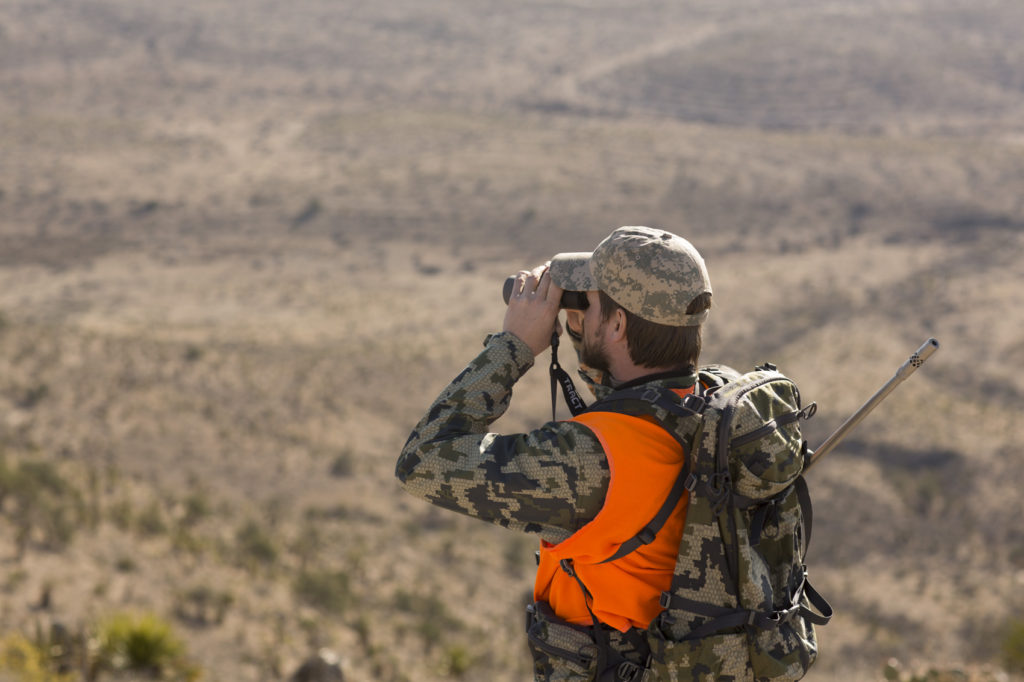
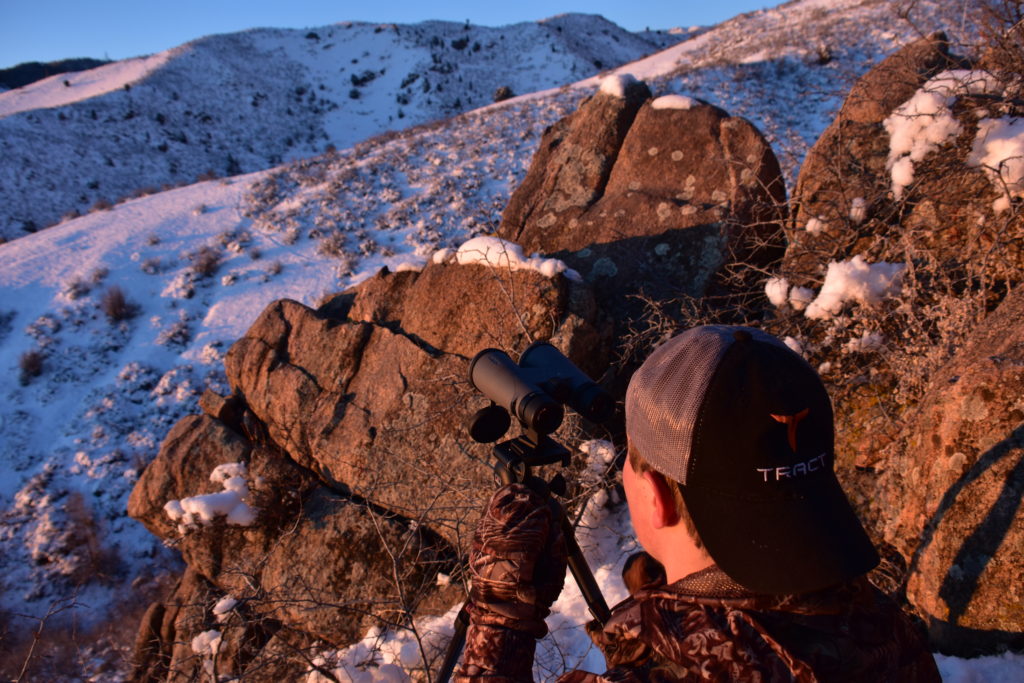
The Choice is Yours

Ultimately, it’s up to you which style of scope you purchase. The differences between MOA and MRAD mainly lie in which system of measurement you’re most comfortable with—metric vs. imperial—and your ability to conduct quick conversions or employ formulas that improve shot accuracy at long distances.

The best advice we can give you is to try both systems out. If you’re new to one or the other, put effort into learning that system of measurement to figure out what fits in with your shooting style. In general, each system provides a high level of precision, and just because the military and police stick to MIL doesn’t mean that it’s any more effective than MOA. At the end of the day, they’re both standard measurements that you can become proficient in.

Want to make your shooting experience quieter and more accurate? Look to Silencer Central, the number one provider of silencers and accessories.

We’re the only silencer dealer on the ATF advisory board and have simplified the process involved in purchasing Class 3 firearm suppressors. We quickly obtain inventory and expedite interactions with the ATF so you can spend less time waiting around and more time sharpening your shooting skills. From rifles to shotguns to pistols and beyond, we can outfit your gun with the proper silencer for your needs and help you improve your long-range shooting.

Take a look at our silencer selection for more information about our products.

Buy a BANISH 30 Suppressor >>

Best Air Rifle Deals

Popular Posts

Air gun 101: What is a PCP air rifle? Is PCP gun the best...

0
A PCP air gun is one of five types of air rifles in the market today. PCP air guns have become more and more...

What can you kill with a 177 air rifle?

0
"Unleash Your Precision: Discover the Power of a .177 Air Rifle to Take Down Targets with Accuracy. Explore the Versatility and Potential of this...

Air gun 101: How Nitro Piston technology can make your shooting sport more exciting?

0
In the air gun market today, there are many air rifles made with nitro-piston technology Even the best-selling lists on gun retailer's sites have a...