



Home Blog Page 12

Beggar’s Lice

0

Prepare to follow me down a naturalist’s rabbit hole.

Not long after moving to Idaho’s mountains in 2005, I became acquainted with an odd burr that kept attaching to my shoes and socks and to the coats of my two Malamutes when we explored the forest. Local friends told me they were called beggar’s lice.

plants, seeds
A green houndstongue plant with a new crop of green seeds stands in front of a couple dead houndstonge plants still covered in last year’s seeds.

A distasteful name perfectly suited to the annoying plant seed.

Lice (louse, singular) are parasitic insects that feed on the blood of host birds and mammals, including people, clinging at the base of hair or feathers or sucking into skin.

Beggar’s lice are seeds from the houndstongue plant (cynoglossum officinale). The seeds are nature’s Velcro, covered in tiny prongs that grab and stick to anything that happens to brush the plant when the seeds are mature. Your shoes, socks and pant legs, your dogs’ coats, the hides of deer and elk, bears, coyotes, wolves, cougars, and livestock (horses, sheep and cattle) are all wonderful hosts for beggar’s lice.

Talk about an effective and efficient seed disbursement strategy for a plant. Imagine how far the seeds might travel embedded on the hides of wildlife.

According to an article published by the Montana State University Extension:

In Montana, a single houndstongue plant typically produces 300 to 675 seeds per year, but exceptionally robust plants may produce up to 2000 seeds. Seeds either fall nearby to the ground or remain on the parent plant where they are positioned to attach to a passing animal or person. Seeds may be carried long distances this way. Seeds on the soil surface often dry out and fail to germinate, whereas seeds buried about an inch under the soil may remain viable for two to three years. Houndstongue seeds do not form large or persistent seeds banks in the soil, and germination generally requires some form of scarification or softening of the seed coat. [Scarification means breaching the natural seed coat by mechanical, thermal, or microbial methods.]

In the forest I regularly haunt, houndstongue grows in disturbed areas – where there’s been logging, or trail or road building. I usually see it surrounding logging slash piles alongside abandoned logging roads, whether the pile was burned or not. In early summer they produce pretty purple blooms, belying the nastiness of the seeds to come.

Now that I have two male dogs, I’ve noticed that houndstongue plants are as popular with canids for marking in the forest as fire hydrants and mail boxes are for dogs in cities. Perhaps it’s because the plants are growing alongside much-traveled paths and are tall, up to four feet high, allowing the scent to disperse easily over a greater distance. My dogs smell the marker left by some other creature – dog, fox, coyote, wolf – and feel compelled to add their own, resulting in seeds attaching in large numbers to their heads and necks as they get a good sniff of any existing scent, then to their flanks as they get close enough to lift a leg and leave their own mark.

Usually I watch helplessly as this transpires, and remember fondly have only female dogs. I try to call the boys away from the plants, but that rarely works. Biology requires they cover the other canid’s mark. It’s how they all communicate. It’s a rare foray into the forest that doesn’t result in a least a few beggar’s lice on one or both dogs.
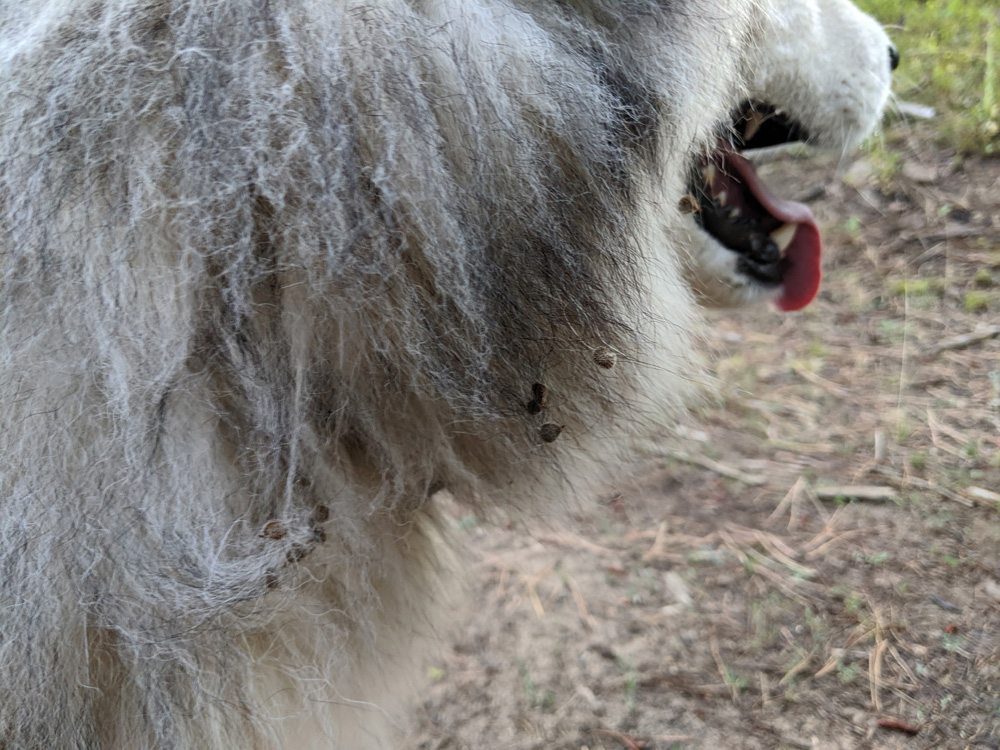
dog
Conall with just a few of the beggar’s lice he acquired on this morning’s walk in the forest.

When the boys do end up with a generous portion of beggar’s lice on their coats on the trail, I try to pull most of them off immediately before they have a chance to get tangled deeper into their fur. In winter, this means taking off gloves in frigid temperatures because the seeds will stick to my gloves. It’s an annoyance I’ve gotten used to, and the boys have learned to stay still while I pull the seeds off, muttering bad words under my breath.

Once home I take the boys into the yard and use a standard hair brush to remove most of the remaining beggar’s lice and, in late summer, the grass seeds they also acquire. I invariably miss some, but the boys are quite adept at removing those they can reach with their mouths, pulling the beggar’s lice from their fur with their small front teeth and either spitting them out onto the floor (or my bed) or swallowing them for later natural disposal.
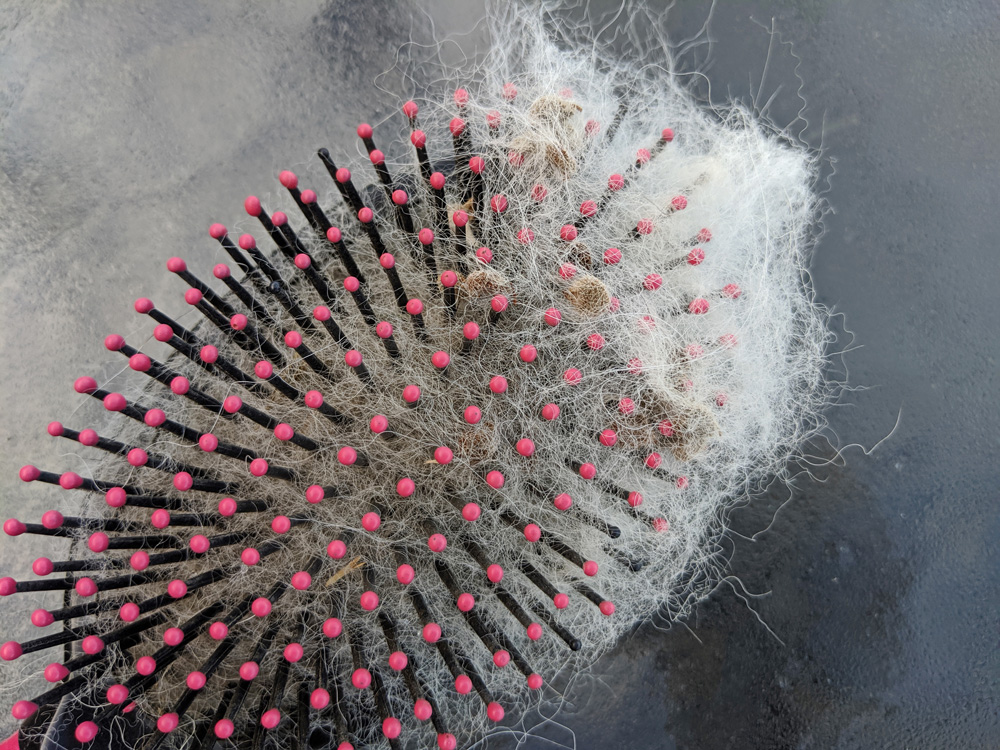
dog fur in hair brush
Beggar’s lice and dog fur removed with hair brush.

Any seeds that remain, that they can’t reach, I eventually find by massaging my fingers through their coat and pulling out what I find. The beggar’s lice and grass seeds that attach to their feet can become a problem if they work their way between toes or into the crevices between pads, so I check feet regularly and either pull the seeds out, or in some cases cut them out with scissors if they’re so tangled that pulling is painful. The sharp, black grass seeds that are prolific right now can work their way into the skin, especially between toes, causing painful ulcerations. Neither dog likes me poking between their toes with my fingers, but we all suffer through it in order to prevent something worse.

dogs, house
Finn begins working on removing some beggar’s lice from his frills (the longer fur on the back of his front legs) while Conall sits outside, awaits an attack of the grooming brush, after our morning walk in the forest.

In the 15 years I’ve played in this forest, I’ve learned to take the long, philosophical view: beggar’s lice are here to stay. It’s a waste of energy to get mad when the dogs get into them, or to try to avoid the plants altogether. They’re too prolific. I’ve no doubt beggar’s lice, along with cockroaches, will survive the worst impacts of climate change and could probably survive a nuclear holocaust. On a positive note, picking beggar’s lice and other seeds from my dogs’ coats and feet is a sort of bonding ritual, not unlike that of chimpanzees grooming parasites from each other. I don’t eat the seeds I pick, though.

Way More Than You Need to Know, But It’s Kind of Interesting

Houndstongue is native to Asia and Europe. An invasive species in the United States, it most likely arrived in the late 1800s in contaminated cereal seed. It’s now listed as a noxious weed in seven western states: Colorado, Idaho, Nevada, Oregon, Washington, Wyoming, and Montana. It’s a hardy little bugger (pun intended). One year it will send down a tap root as far as three feet into the ground, storing food for year two when it produces all those beggar’s lice.

Houndstongue is known by a number of common names: beggar’s lice, dog’s tongue, sheep bur, dog bur, sheep lice, glovewort, and woolmat – which suggest the problematic nature of its barbed seeds that stick to fur, fleece, and clothing.

Montana State University Extension

Houndstongue foliage can also be toxic to livestock, particularly horses and cattle.

As with most plants, throughout time humans have found medicinal uses for houndstongue. The Wikipedia entry for the plant contains the following subcategory describing some of its past uses:

Herbalism: In 1725, houndstooth was presented in the family dictionary, Dictionaire oeconomique, as part of a cure for madness. In that book, madness was viewed as “a distemper, not only of the understanding, but also of the reason and memory, proceeding from a cold, which drys up everything it meets with that is humid in the brain.” To cure madness, Dictionaire oeconomique noted:

“You must shave the head of the unhappy patient, and after that, apply to it a pidgeon, or a hen quite alive; or else bathe it with some brandy distilled with rosemary, elder, hounds tooth, and the roots of bugloss, or with the oyl of elder flowers: they rub their heads and wash their feet with a decoction of the flowers of camomile, melilot, balm gentle and laurel; they put into their noses the juice of comfrey, with either two or three spoonfuls of honey-water, broth, or white-wine, wherein wormwood and sage are infus’d ; or else they do for five and twenty days together, mix with their broth in the morning, half a dram of the ashes of tortoise, and they put into the pot bugloss, borage, with a pinch of rosemary to season it.”

…By the end of the 1830s, doctors in England were using houndstooth as an antiaphrodisiac to combat venereal excesses.

No thanks!

Ironic that a plant producing so many madness-inducing Velcro-like seeds was once considered a cure for madness. I can, though, see it as an effective anti-aphrodisiac, especially if beggar’s lice are involved. The name alone would be effective.

Additional lore and uses, both practical and magical, included in the MSU Extension article:

• The name houndstongue comes from the belief that a leaf worn in the shoe could ward off dog attacks.

• Extracts of roots and leaves of houndstongue have been used in folk remedies for various ailments including fever, eczema, acne vulgaris, and hemorrhoids.

• Houndstongue ointment is said to cure baldness.

• The red pigments of the outer root surface are antibacterial and reportedly have wound-healing properties.

• Roots and leaves have been used as pesticides and leaves have been used to repel moles in gardens and rodents from stored foods.

And finally, from a 1983 article for Mother Earth News, a tip for an easy way to remove beggar’s lice from clothing: A corn cob can serve as a clothes brush, too. For example, if you’ve ever traipsed through the woods, you’re probably familiar with those dry little burrs called beggar’s-lice that have a habit of clinging to your clothing. Well, whenever I come home covered with the stickers, I don’t waste my time picking the pesky seeds off one by one. I simply grab a corn cob and scrub them off with a few quick swipes.

Re-emerging from the Rabbit Hole

Whew. Sorry, that was a rather deep rabbit hole I took you down, one probably littered with beggar’s lice plucked from the fur of the hare that lives there using its little buck teeth. But kind of fun, right? I might go buy some fresh corn ears at the local farmer’s market, see whether the cob makes a good clothing and/or dog brush.

Featured photo: close up of beggar’s lice found on this morning’s walk in the Payette National Forest, after Conall removed several by brushing against it.

Urban Legends, Myths and Scary Stories from Yosemite & Bass Lake

0

We’re approaching Halloween, which means spooky season is amongst us. There are so many memories and traditions that flood our minds when it comes to things that embody the holiday spirit. Scary stories, horror movies, dressing up, and trick or treating. My personal favorite, and I bet that it’s the same for most people, is being told scary stories. There’s an adrenaline rush and entertainment value when it comes to a safe scare. Not matter the subject matter within the story, or how scary it gets, it’s only for amusement, it’s not true, and it’s not like it can happen or that it did happen. Or did it?

Supposedly, there are urban legends, myths, scary stories, whatever you want to call them, that are out there in the world that just so happen to be true. There are those that have witnessed it personally. There have been stories about Yosemite and Bass Lake that have shaken up the community. Creepy sightings and strange phenomena that were told then and are still being told now. Whether you want to believe them…I leave it up to the reader.

Get your popcorn ready, have a flash light nearby, be sure to not have any nightmares because here are the top 5 urban legends, myths, scary stories of Yosemite & Bass Lake according to The Pines Resort, Bass Lake.

1. THE EVIL SPIRIT OF YOSEMITE

With all that land and space that occupies Yosemite National Park, it has to be a cesspool of legends, strange occurrences, and unfortunate deaths. Waterfalls all over Yosemite have claimed the lives of hikers over the years but one definitely stands out. Miwok Indians believed that an evil spirit named Po-ho-no would lure hikers near the edge of cliffs before pushing them to their deaths. The fallen hikers themselves are thought to haunt the area.

The legend says that two indigenous women were picking berries at the top of Bridal Veil Fall when a mist appeared. When one of the women moved too close to it. Suddenly the wind shrieked and threw her down into the rocky, churning waters. The chief blamed the Po-ho-no, and he forbid his people from wandering anywhere near the water. The way in which its claimed victims has been by appearing as hypnotic rainbows in the mist to lure people.
2. THE NIGHTCRAWLERS OF THE CENTRAL VALLEY

Now this one is chilling to the core and very unsettling. This is probably the most famous case of paranormal activity in the Central Valley. It has of course existed in Native American legend, but these creatures, or whatever they are, have made their presence known in recent memory. What they are is tough to explain. How they’re described or seen is two tall walking pair of legs, looking they’re covered in white cloth with just a head mounted on it. No arms or torso, just a head on a pair of legs. What?
The people of the area and those around the world that have seen them call them the Nightcrawlers. They’re eerily similar to a Native American totem. When the Ahwahneechees were questioned, they reported that the “Nightcrawlers” are a peaceful race of beings that came from another planet to rebuild the union between man and nature. That’s just one interpretation.

They were sightings of them back in the 1990s but they gained in notoriety in the millennium.

Back in the 2000s, a grainy CCTV camera captured one striding across a man’s front yard in Fresno. A Fresno man named Jose was woken up by his barking dogs one morning, and he caught a glimpse of a Nightcrawler walking through his camera system.

Years later in 2011, they appeared again and caught on camera in Yosemite National Park.

Watch the footage below and come up with your own conclusion. The content on the footage maybe disturbing to some viewers.

In the years since the figure was first captured, the Fresno Nightcrawler has risen to fame on the internet, with the story even being covered by the History Channel, experts on the Sci-Fi Channel’s Fact or Faked, and recently featured on an episode of “Paranormal Caught on Camera” on the Travel Channel. Again, there is no logical explanation as to what these things are. Debate rages on what they could be, but they’re nothing of this world, that for sure.

3. THE GHOST OF GROUSE LAKE

History itself is pretty much an inventory of ghosts. And no place has a history quite like Yosemite. There’s a famous ghost that is said to lurk in Grouse Lake. It was first officially reported in 1857 by Galen Clark, who was to later become Yosemite’s very first park ranger in 1867. He had a strange experience when he was out on a hike to the small alpine lake, and claimed that as he walked along its shores that he had heard a chilling, unearthly wail seeming to come from the water itself. He proclaimed that it sounded like “a puppy when lost.”

He would later ask some Native Americans of the area what kind of animal it was that he had heard or if they had a dog that could have made the noise. They revealed that it was no animal or dog. Instead, it was the spirit of a tribal boy who had tragically drowned there years ago and who did not take kindly to visitors. It was even claimed that he would attack anyone who set foot in the water. So, if any of you are around the area, maybe it’s best that you don’t get too close to the water. Don’t what to be a casualty or have you become a story for not so good reasons.

4. THE WATTS VALLEY WOLF APE

There’s been stories of a strange creature roaming the foothills of Fresno County.

The features are described as having long grey mangy hair and the face of an ape or baboon and both human like hands and feet. It seems to have a sickly quality, where it’s coughing and foaming at the mouth. It is referred to as the Devil Ape or Devil Fang, but it’s become known as the Watts Valley Wolf Ape because of it being spotted around the Watts Valley Cemetery.
There have been plenty of accounts of this particular creature, that the first Native Americans that came over the Bearing Straight where they lived amongst this man animal and that there’s drawings of strange creatures that traveled with the indigenous folk. One of the most well-known encounters with this beast so happens to involve the legendary photographer Ansel Adams. Famous for taking photographs of Yosemite, and exposing the allure of the national park to the world, he made frequent visits to that area all the time. On one occasion, he was taking pictures in Yosemite one day when a pack of Wolf Apes came upon him while he was in his tent and he had to stay there for his own safety. Thankfully, nothing happened to him.

Another crazy incident took place where the Wolf Ape went into a single room school house one day and terrorized the students and teacher. The children piled up their desks together in desperation and climbed up to the safety of the rafters while the teacher luckily managed to lock himself into a closet. The creature broke through their desks to get at their lunches and after it got stuffed it went away. There had apparently been no sight of one for a while, but around the mid 1990’s a Wolf Ape was seen at no other than Bass Lake, where it was caught drinking water from the small lake. At the time people mistook it for a hairy man who happened to walk on all fours. But that wasn’t obviously the case. Let’s just hope that it isn’t seen again.

5. A BIGFOOT SIGHTING IN YOSEMITE

The legend of Bigfoot is so common that he’s been seen across the world over. Everybody knows what this creature is. He’s been depicted in movies, tv shows, documentaries, books, the list goes on. A lot of occurrences with this strange being has been similar, only seen in glimpses, at a distance, the sight of a very tall creature in height, covered head to toe in fur, a man monster or man ape, with a blood curdling scream, but right when you see it he disappears in a blink of an eye.

Most stories told about the sighting of this walking behemoth really hasn’t been pleasant. One story stands out with a California Conservation Corps worker that was camping in the Tuolumne meadows of Yosemite one night when he heard heavy footsteps heading straight for his tent. He went out to investigate and was confronted with what he could only describe as the furry Goliath.

He responded with a scream, so did the creature and then retreated. This is probably an encounter you don’t ever want to experience.

There’s been countless tales of supernatural occurrences and unforgettable accidents and demises. Some that seem ordinary or out of the ordinary. There’s so many to choose from that you can’t go wrong with any of them. Whatever kind of story you want to find, one that is too mature, macabre, scary, truthful, and embellished, you’ll be able to find it. No matter what story

you’re looking for, they are all good enough to keep you awake at night. And that is what’s so great about Halloween.

Sarasota Fishing Charters

0

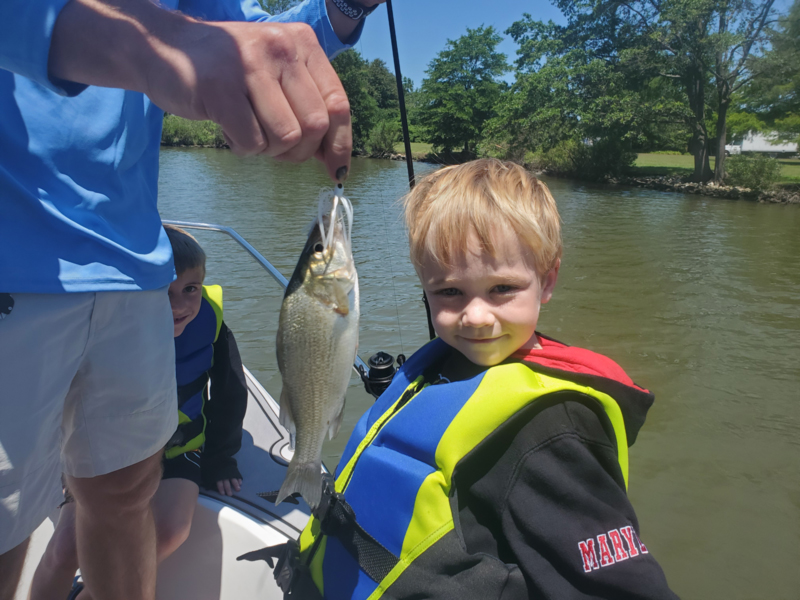
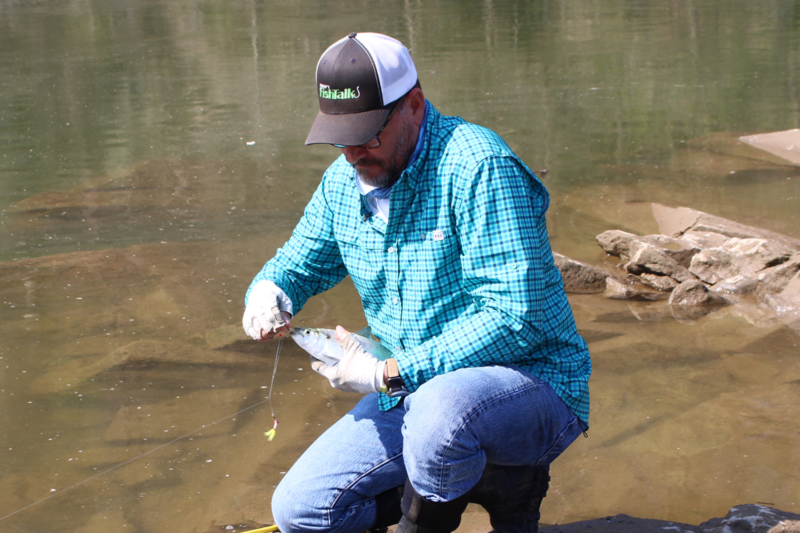
This article will list the best 13 white bass fishing lures. Since hybrid bass are very similar in habits, this list applies to them as well. Anglers fishing for white bass and hybrid bass often find them in large schools, feeding aggressively. Therefore, the best white bass and hybrid bass fishing lures are compact and cast well. White bass and hybrid bass are found throughout the country, particularly in the Midwest.

best 13 white bass fishing lures

The best 13 white bass fishing lures and hybrid bass fishing lures are;

  • Acme Kastmaster spoon
  • Blakemore Road Runner lure
  • Rat-L-Trap Tiny Trap
  • Mann’s Little George
  • Mepps spinners
  • Bass Assassin grub on a jig head
  • Rapala Husky Jerk plug
  • Rebel Pop-R topwater plug
  • Johnson Beetle spin spinnerbait
  • Johnson Sprite spoon
  • Mister Twister curly tail grub on a jig head
  • Hopkins jigging spoon
  • Rapala Shad Rap crankbait

White bass and hybrid bass characteristics and habits

white bass lures

Special thanks to Jamie Smith for the great pics and info! She loves fishing and fitness and lives in Texas. Follow Jamie on Instagram for more great pics!

white bass

White bass do not grow very large. The world record is 6 pounds, 13 ounces. However, most white bass caught are around a foot long. They are quite aggressive and are often found in large schools. Many anglers target them as they feed actively on the surface. Both white bass and hybrid bass have varied diets, but feed primarily on bait fish as they mature. White bass are found in larger lakes and river systems. They spawn in the tributary rivers in the spring.

hybrid bass fishing

Hybrid white bass are a mix of white bass and striped bass. They grow larger than white bass, growing to over 20 pounds, and can be distinguished by the broken lateral stripes on the lower half of the fish. Hybrid bass exhibit many of the same habits as white bass. The same artificial lures work well when fishing for both white bass and hybrid bass.

white bass fishing lures

White bass fishing tackle

Spinning tackle is the best choice for anglers targeting white bass. White bass lures are small and light, matching the shad, minnows, and other forage that white bass feed on. Ultralight rods and reels are usually the best choice.

white bass fishing tackle

A 6 foot light rod with a 1000 series reel spooled up with 6 pound line is an excellent all round combination for anglers fishing for white bass. This will cover most situations where white bass and hybrid bass will be encountered. Anglers fishing in areas where larger hybrid bass are available can certainly bump up the tackle a bit.

Here is a link to a nice ultralight fishing rod and reel combo from Amazon

“Fishing Lido Key is a participant in the Amazon Associates Program, an affiliate advertising program designed to provide a means for sites to earn advertising fees by advertising and linking to Amazon. As an Amazon Associate I earn from qualifying purchases. ”

Best 13 white bass fishing lures

fishing for white bass

Here is Capt Jim’s list of the best 13 white bass fishing lures. As mentioned above, white bass and hybrid bass feed aggressively. Therefore, lures that offer a fast, erratic presentation are usually the best choice. Many anglers chase “breaking” fish. These are hybrid bass and white bass that are feeding on shad and herring on the surface. Anglers often need to make quick, long casts to get in on the action. Small, compact lures and light lines are the most effective for this application.

Acme Kastmaster spoon

kastmaster

The Acme Kasmaster spoon is the perfect spoon for fishing for white bass and hybrid bass. It is first on the list of the best 13 white bass fishing lures. The Kastmaster is a slender spoon with a unique action. It casts well and can be fished throughout the entire water column, from breaking fish to vertical jigging. These spoons available in many sizes, 1/8 ounce and ¼ ounce are the most popular sizes for white bass fishing. Chrome, gold, and “split” finishes work great.

Blakemore Road Runner lure

The Blakemore Road Runner is a terrific white bass fishing lure! It sort of combines two great lures in one; a spinner and a jig. Road runner lures are compact and cast fairly well for their light weight. The 1/8 ounce and ¼ ounce sizes are best. White, chartreuse, and pink are top colors. They can be cast into breaking fish as well as working submerged structure, points, and channel edges.

Bill Lewis Rat-L-Trap Tiny Trap

The Bill Lewis Tiny Trap is a small version of the venerable Rat-L-Trap, a lure that has been catching fish for decades. It is a great example of a lipless crankbait. Tiny traps are third on the list of the best 13 white bass fishing lures. These lures vibrate and rattle when retrieved through the water. They work very well for casting to fish on the surface as well as blind casting. It is an outstanding search bait and can be trolled as well.

Mann’s Little George

mann's little george

The Mann’s Little George is an old school bait that has been around a long time. It was designed by legendary angler Tom Mann. Little George lures are quite dense and compact and can be cast a very long distance. It is a terrific lure to use on busting fish, particularly when they are a bit spooky. It also is very effective in a vertical presentation when white bass and hybrid bass are schooled up deep over structure.

Mepps Spinners

mepps

Most freshwater anglers are familiar with Mepps spinners. They have been used to catch a wide variety of species, and white bass are no exception. Mepps spinners work best in the spring when white bass have moved into tributary rivers to spawn. Spinners in general are excellent lures in rivers. They can also be trolled effectively.

Bass Assassin 2″ Crappie Dapper on a jig head

The jig and grub combo is one of the most effective fishing lures in both fresh and salt waters. It will catch just about every species that swims. Capt Jim prefers the Bass Assassin line of baits. They offer a variety of sizes and colors. The 2” Crappie Dapper on a 1/8 ounce jig head is a good all round white bass fishing lure. The 3 ½ inch Die Dapper is a better choice when larger hybrid bass are feeding on bigger shad and herring.

white bass fishing lures

These lures are quite versatile. They can be cast, both blind casting and into breaking fish, as well, as trolled and presented vertically. White and chartreuse are top colors. These baits work very well when fish are a bit less active and react better to a more subtle presentation.

Rapala Husky Jerk plug

husky jerk

Jerkbaits are very effective white bass and hybrid bass fishing lures. They have a very erratic action and put out a bunch of flash and vibration. They very realistically mimic wounded bait fish. There are many fine jerkbaits on the market. Capt Jim’s personal favorite for freshwater fishing is the Rapala Husky Jerk. It is fairly economical and comes in a variety of sizes and colors. Lighter shad patterns as well as silver and gold in the 08 size work great. They can be cast and trolled.

Rebel Pop-R topwater plug

rebel pop-r

Topwater plugs are both great fun to fish and are extremely productive in the right situation. They are a natural fit when white bass are feeding on the surface. Capt Jim’s favorite freshwater topwater plug is the Rebel Pop-R. It has a concave face which puts out a loud “pop” when twitched sharply. They also work well when fish have moved shallow near shoreline cover. Pop-R plugs are 8th on the list of the best 13 white bass fishing lures.

Johnson Beetle spin spinnerbait

beetle spin

Spinnerbaits are terrific fishing lures. While they really do not look like anything that white bass or hybrid bass feed on, they put out flash and vibration. They combine a jig and a spinner in one unit. Capt Jim’s favorite freshwater lure is the Johnson Beetle spin. It is a compact spinnerbait with a short, grub body. The 1/8 ounce and ¼ ounce baits in black, white, and green are great choices. They work best when cast and retrieved when white bass are in fairly shallow water.

Johnson Sprite spoon

The Johnson Sprite spoon is a great example of a classically shaped spoon. It has the teardrop shape and puts out a great wobble that flashed and vibrates. It really mimics a wounded bait fish. The Sprite spoon works best when cast out and reeled back in using an erratic retrieve. They can also be trolled as well. The ¼ ounce model in gold or silver works best.

Mister Twister curly tail grub on a jig head

Mister Twister revolutionized fishing back in the mid 70’s when they introduced the Mister Twister curly tail grub. A curly tail grub has incredible action in the water when simply reeled in. It can be used to fish the entire water column. It is very effective when bounced down a sloping point or over a ledge. It also works great when whit bass are in the rivers. The 3” grub on a 1/8 ounce jig head works great. White and chartreuse are top colors.

Hopkins jigging spoon

hopkins jigging spoon

The Hopkins jigging spoon is a bit of a specialty bait. While it can be cast out, it is almost always used in a vertical presentation when white bass and hybrid bass are schooled up over structure in deep water. It is one of the best baits for suspended fish of all bass species. Silver with a hammered finish is by far the top finish. ¼ ounce is a good size for white bass.

Rapala Shad Rap crankbait

shad rap

Crankbaits are last, but certainly not least, on the list of best 13 white bass fishing lures. Crankbaits differ from jerkbaits in a couple of ways. They are wider and better resemble shad and herring. They are can be purchased with larger lips that cause them to dive fairly deep. Capt Jim’s favorite crankbait is the Rapala Shad Rap. It comes in shallow and deep models in a variety of sizes and colors. It is an excellent trolling lure as well.

In conclusion, this article on the best 13 white bass fishing lures will help anglers catch more of both white and hybrid bass!

Top 10 smallest spiders in the world

0

Smallest spiders: Spiders are not the most desirable guests in the house. Everywhere they try to get rid of them, using improvised methods: slippers, for example, or chemicals. But once you take a closer look at these creatures, the desire to get rid of them is replaced by another – to release them.

Indeed, think, at the next meeting with a spider, why do not you, instead of killing them, release the representative of the arachnids carefully through the window or staircase? This requires only 2 items: a glass and a lid. You put the spider in a glass, put a lid on it, and then release it.

Did you know that you cannot kill spiders? Many legends are associated with 8-legged creatures. Among the ancient peoples, the spider in the center of the web was a symbol of the sun, from which the rays emanate.

And there is also a sign according to which a small spider (by the way, our article is about them) – for money, albeit small, and a large one – for solid amounts. As ordinary people say – the omen works, so first think about how to run for a sneaker.

In this article, we want to tell you about the smallest spiders in the world, look at their photos

1. Patu digua

Patu Digua

Patu digua is the smallest spider among all. Scientists have found that the size of the male is only 0.43 mm. – without a magnifying glass we can’t see them. The spider belongs to the family of symphytognathidae. Distributed in West Africa on the Ivory Coast.

It is unimaginable, but with this size, the spider has a well-developed nervous system, which occupies 80% of the body. In addition to the nervous system, patu digua also has a developed brain, which occupies 25% of the body.

2. Maevia Inclemens

Himalayan Spider

The Himalayan spider is tiny in size – the male does not exceed 5 mm, and the female grows up to 6 mm. For the first time, this unusual tiny spider was found on Everest, so that the representative of the arachnids can be attributed to the highest of all spiders on our planet.

If you pay attention to the name, it becomes clear that it was created for a reason, but means “living above everyone else.” The Himalayan spider was first discovered in 1922, but this species was qualified in the scientific world only 2 years later – in 1924.

3. Marpissa muscosa

Marpissa Muscosa

This type of spider can be called the most charismatic. Distributed in the Palaearctic. Marpissa muscosa in length reaches 8 mm, the color varies from gray to brownish. The spider got such an interesting name due to its appearance because its entire body is covered with hair, which is very similar to moss.

Spiders of this species prefer to settle in nests that they create in dead trees. The Marpissa muscosa inhabits North Africa, Europe, and the Asian part of Russia.

4. Ant spider-horse

Ant Spider Horse

The Ant Spider Horse is called a miracle of nature, outwardly it looks like an ant. Its dimensions do not exceed 12 mm. Among other representatives of the arthropod species, he stands out for his jumping ability and is the owner of excellent vision. Many researchers even believe that the ant spider is endowed with intelligence.

Spiders of this species are representatives of fauna and flora, they are found absolutely everywhere. Once, in 1975, one of the subspecies was discovered at the top of Everest – at an altitude of more than 6500 m above sea level. There is a version that ancient ant spiders first appeared in Gondwana, and subsequently spread throughout the Earth.

5. Tegenaria Domestica (House Spider)

Tegenaria Domestica (House Spider)

The Tegenaria domestica or house spider belongs to the funnel spider family. Of all the species, it is the most common – it lives everywhere in the wild, and also prefers to settle in human dwellings, especially they like attics. By the way, they manage to get into the apartment very easily – in warm weather, they do it through open windows.

For a person, a house spider up to 12 mm in size does not pose a danger but attacks only if it feels that something is threatening it.

An interesting fact: the house spider perfectly senses changes in atmospheric pressure. If it rains, they crawls deeper into the hole, and sits there, not sticking out.

6. Pholcus Phalangioides

Pholcus Phalangioides

Meet Pholcus phalangioides, this is a house spider that lives throughout the entire territory of our planet. It is found where there is low light in the basement, for example. If the Pholcus phalangioides is in the house, then, as a rule, it prefers the ceilings and corners of the house.

A characteristic feature of this baby (the length of adults is only 7-10 mm.) is the ability to tremble with the whole body and the net, in case it was disturbed. The trembling occurs with such frequency that the outlines of the spider blur in space, and it is almost impossible to see it.

Despite its strange feature, the phalanx spider is completely harmless to humans, and when it penetrates the skin (by 0.1 mm), a person feels only a slight burning sensation.

7. European Garden Spider (cross-legged spider)

European Garden Spider

There is a statement that the spider is dangerous to humans, but in fact, this is a myth – one of the most common spiders is poisonous only for small animals: rats, mice, etc.

The European garden spider is considered peaceful, but when outdoors it can cause some inconvenience. This species prefers places with high humidity, most often it can be found in gardens or shrubs that grow near water bodies.

The spider got its name due to its appearance – on the back of the arachnid there is a cross formed of white spots. Females are larger than males – their size reaches 25 mm, and the male does not exceed 11 mm.

8. Latrodectus Tredecimguttatus (Mediterranean black widow)

Latrodectus Tredecimguttatus

In another way, Latrodectus tredecimguttatus is called the “Mediterranean black widow“. The reason for this is two facts: the color (there are red spots on its black abdomen, but in adult females they are absent – black spiders resemble a widow) and the treatment of the female with the male – after mating, she eats him.

It is not surprising that one of the most dangerous species of spiders has been nicknamed the “Mediterranean black widow“. The spider has an interesting body structure – its abdomen is shaped like a ball. The bite of a Latrodectus tredecimguttatus is very dangerous, but all the people should not worry (if only residents of Azerbaijan, they can also be found there), because spiders live in North Africa and Central Asia.

9. Ballus (muscular horse)

Ballus

This spider species has excellent vision, providing an all-round view of almost 360º. A pair of peepholes in front, like binoculars, gives a magnifying image.

The muscular horse was named after the mythological character of the son of Hercules. The jumping horse can be attributed to the smallest spiders in the world, but to one of the largest representatives of the jumping spiders – its length reaches 2 cm.

This interesting arachnid can be found in Southeast Asia, in forests, near swamps, and in foliage. The spider has one peculiarity – it does not weave webs, but during the hunt uses a safety thread, attaching it to a solid surface.

10. Brown Hermit Spider

Brown Hermit Spider

The hermit spider is quite tiny, with legs its dimensions do not exceed 20 mm, but this does not prevent it from carrying a serious danger to humans. Its poison is so strong that without timely medical intervention, a person can simply die. In this case, the pain is not felt immediately, and the person can become a victim during sleep.

The brown spider likes to live in abandoned buildings, but it can also get into an apartment building. It is distinguished from others by the number of eyes – usually, a spider has 8 of them, and this species has 6. Despite the fact that the spider is called brown, in reality, they are also gray or dark yellow.

Whisker Biscuit vs Drop Away Rest: Which is Better?

0

Focus is often placed on a bow’s poundage, draw length, overall design and an arrows length, weight, the broadhead used, and components of the spine. With all this information there seems to be very little attention given to where the actual arrow needs to rest on the bow.

Not only is an arrow rest an integral part of a bow setup, but it can also directly affect the flight and accuracy of the arrow.

Let’s analyze two of the more unique arrow rests, the whisker biscuit and the drop-away rest.

Whisker Biscuit

The introduction of the whisker biscuit in 2003 sent shock waves through the bow hunting industry as it was viewed as a revolutionary piece of equipment that was so simple, so obvious, and yet entirely unique when compared to other arrow rests.

A whisker biscuit’s design is made for simple insertion of the arrow for nocking while providing it with complete stability, there is almost no movement in the arrow’s position.

The “whiskers” that hold the arrow in place are synthetic bristles that form a complete perimeter holding the arrow firmly.

Having the arrow completely encased means the archer can shoot from almost any angle or position. It was this benefit alone that catapulted the whisker biscuit to becoming a firm favorite amongst many tree stand hunters.

Another simple, yet masterful, piece of engineering, was the V-shaped cut into the biscuit called the quick shot – an entry slot that allows the arrow to be loaded with efficiency and ease.

Drop Away Rest

There are many varieties and adaptions when it comes to drop-away rests, but essentially, they all operate in a similar fashion and have a unique feature that distinguishes them from the static rests, such as the whisker biscuit.

The drop-away rest holds your arrow in an upright position through the draw cycle and then falls out of the way as the arrow leaves the bow.

The falling away action of the rest means there is nothing impacting the arrow’s flight. The idea is that there is no external influence on the arrow once it receives the bow’s energy.

With the very nature of hunting being unpredictable, most of the drop-away rests geared for hunters have a full-containment system which holds the arrow firmly in place during full draw.

There are three types of drop-away rests:

  1. Cable-driven rests: These use a cord that connects to the down cable of a compound bow. Once the bow is drawn, the cable pulls down on the cord, which raises the rest into position. When the arrow is released, the cord flies up and the rest falls.
  1. Limb-driven rests: With this type of rest the cord attaches to the top or bottom limb. The cord holds the rest in the down position. When the bow is drawn, the cord relaxes, and the rest rises into position. At the release of the trigger, the limb goes back to its normal position, pulling the cord tight and the rest down.
  1. Inertia rests: Here the cord is attached to the don cable or limb, but they can be cocked in the upright position which will help if the bow is drawn and then let down without shooting, the arrow will stay in the shooting position. Only once the string is released will the inertia fall away.

Pros and Cons of the Whisker Biscuit

Pros:

  • Simplicity
  • No moving parts, means zero chance of mechanical failure and repetitive maintenance
  • The arrow is firmly held regardless of how the bow is angled
  • Comes in three different sizes to accommodate small to large arrow spines
  • Not affected by varying weather conditions

Cons:

  • Although very slight, the whisker biscuit does reduce speed and accuracy of the arrow. The difference is minuscule which should not affect hunters, but it is something to consider for competition shooters
  • Whiskers will put stress on the arrow vanes, and they will need to be re-fletched after a while
  • Adds a noise to the bow. Again, a minor issue but many bow hunters want their setup to be as quiet as possible

Pros and cons of the Drop Away Rest

Pros:

  • Allows for better accuracy and tighter groupings for those hunters who want to be specific in their target shooting
  • Minimal friction on the arrow which turns out a higher arrow velocity
  • Quieter as the arrow does not have to pass through any bristles

Cons:

  • Prone to failure with moveable parts, constant maintenance must be done
  • Pricing of a drop away rest on average can be higher than a whisker biscuit
  • The arrow may fall off from the rest while moving or crawling to get closer to an animal
  • Moveable parts tend to be affected by extreme weather conditions
  • Attaching the cords to the limbs or strings may take time or be forgotten by the hunter

Which is Faster?

Speed is on every bowhunter’s mind, and many have questioned whether an arrow rest affects the speed of an arrow? The short answer is yes, but which arrow rest is faster and by how much?

Various chronograph tests on arrows fired from a whisker biscuit versus one fired from a drop-away rest have consistently shown that the arrow from a whisker biscuit is on average 3 – 6 feet per second slower than a drop-away rest.

It is simple physics that the more drag created on a moving object, the slower its speed and momentum will be.

What is interesting however, was the variation in speed of arrows with different vanes when fired from a whisker biscuit.

  • 4” Vanes slower by 1 – 2 feet per second
  • 5” Vanes slower by 5 – 7 feet per second
  • 5” Vanes with a 6-degree helical slower by 12 – 15 feet per second

How to Choose the Right Rest?

In order to choose the correct arrow rest, it is best to match the rest with the type of archer you are.

A hunter that prefers to put a stalk on through wooded areas or has no problem crawling over rocky ground to close in the distance on an animal would want their arrow to be held firmly in place and not have to fiddle with cables or drop plates just before letting an arrow fly.

Hence, they would be inclined to choose the whisker biscuit.

Then you have a competition shooter that needs every part of their bow to be perfectly in tune and adapted to pinpoint accuracy.

Competitive shooters will scrutinize every inch of their equipment and wouldn’t settle for bristles that may influence the accuracy of the arrow by as little 1/16th of an inch. This accuracy comes from the drop-away rests.

Some questions that may help with decision making:

  1. Are you happy to sacrifice a small amount of speed for arrow stability?
  2. Is the risk of mechanical failure a concern?
  3. Are you ok with replacing vanes on a regular basis?

Conclusion

Although these points can be seen as minor or easily managed through the correct maintenance of your equipment, they are none the less still issues which many archers would need to consider when deciding on a whisker biscuit vs drop-away rest.

Top 7 Deer Bullets for the .308 Win.

0

Since its inception in 1952, the .308 Win. has increasingly pilfered proponents of traditional deer hunting cartridges, such as the .270 Win. and .30-06 Springfield, and, thanks to .308 Win.-chambered “tactical” bolt-actions and modern sporting rifles (MSRs), next-generation hunters have flocked to the round, too. Due to its popularity, there’s now an abundance of ammunition (and component bullets) from which to choose for pursuing deer. Below are some of my personal favorites, and by selecting only seven, many good ones have been omitted. I also eschewed perennial favorites, such as the Core-Lokt, Power-Point and Ballistic Tip and instead opted for “different” options. Hopefully, you’ll find something new to try on your next deer hunt.

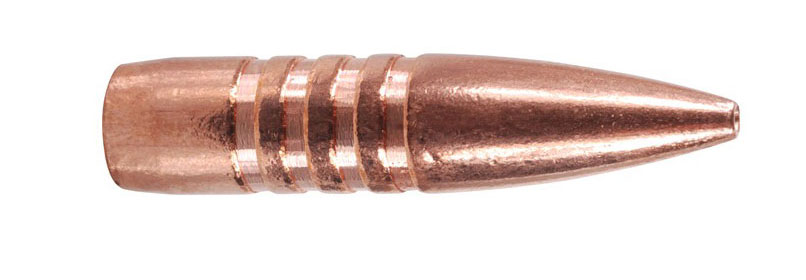
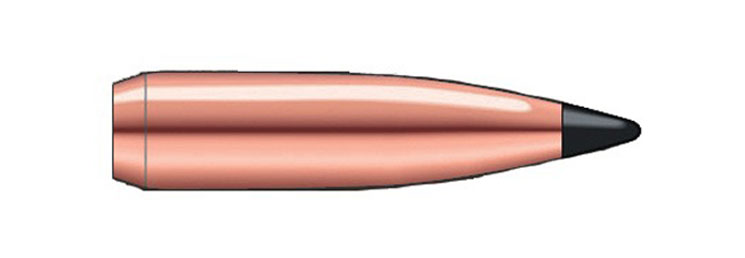
Barnes 130-grain TSX BTAmong the “gold-standard” combinations for deer hunting is the .270 Win. loaded with a quality 130-grain bullet. When loaded with the Barnes 130-grain Triple-Shock X-Bullet Boat Tail (TSX BT), you can best the downrange performance of Jack O’Connor’s baby, and with less perceived recoil to boot. With top velocities approaching 3,300 fps, the all-copper TSX BT shoots extremely flat—perfect for wide-open areas—and hits hard. Thanks to its monolithic construction, high weight retention is assured for deep penetration. Grooves in the bullet’s shank help reduce friction (and thus pressure), aid accuracy, and enable crimping. The projectile’s sole weakness is its ballistic coefficient, which is an atrocious .340; however, this can be somewhat overcome by high muzzle velocities. The Barnes 130-grain TSX BT is a handloading-only proposition right now.

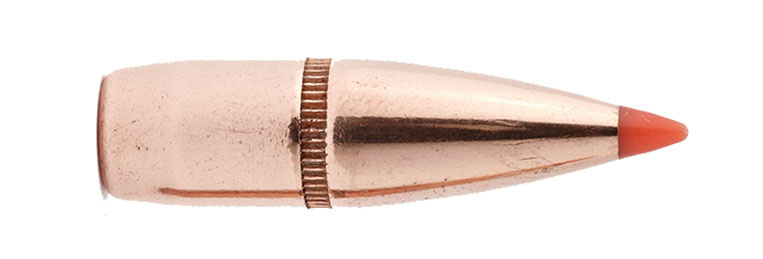
Hornady 150-grain SSTThe Hornady .30 caliber, 150-grain Super Shock Tip (SST) is aptly named—fairly-hit deer expire extremely rapidly. I know this firsthand because I’ve employed it more frequently than all others on this list. Upon impact, the sharp, red polymer tip, which, when combined with a boattail base (and streamlined shape) results in a .415 BC, is forced rearward, initiating expansion. To prevent jacket-core separation during expansion—thereby reducing penetration—the jacket is mechanically locked to the 3-percent-antimony-lead core via the raised InterLock ring. Despite their cup-and-core design, only once have I recovered a 150-grain SST, and it was when fired from a .300 Wby. Mag. Beyond phenomenal terminal performance, SSTs are superbly accurate, too. They often rival match-grade bullets. Outside of handloading, 150-grain SST .308 Win. ammunition is offered by Hornady in its Custom and Superformance lines, and the projectile is loaded in Fiocchi Extrema and Black Hills Gold, too.

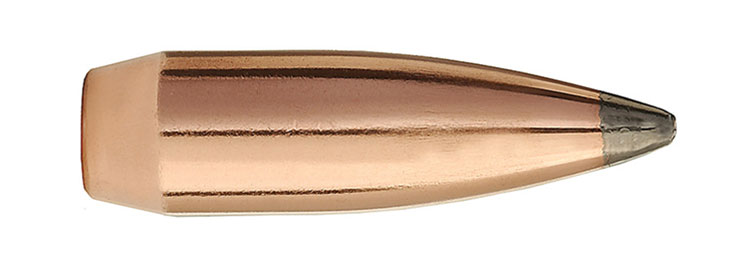
Sierra 150-grain GameKing SBTThere’s nothing flashy about Sierra’s .30 caliber, 150-grain GameKing Spitzer Boat Tail (SBT), and yet—unsurprisingly—the simple, cup-and-core-style bullet provides devastating terminal ballistics to down deer fast. Recovery distances of even the largest whitetails and mule deer are generally short (if they run at all), and the spent bullet will typically be nestled against the offside hide. It probably won’t be picture perfect—lacking a mechanical lock, jacket-core separation is a real possibility. This’ll matter not at all as you’re admiring your trophy; it did its job well. It always does. Perhaps the projectile’s only weakness is its modest BC of .380. That being said, since 150-grain GameKing SBTs are only about 30 cents each, you’ll be able to practice all year without “breaking the bank,” learning how to dial in elevation for that all-important shot. Or, just take your shot from a realistic range. At this point, these Sierra bullets are available for handloading and are also factory loaded by HSM in its GameKing line.

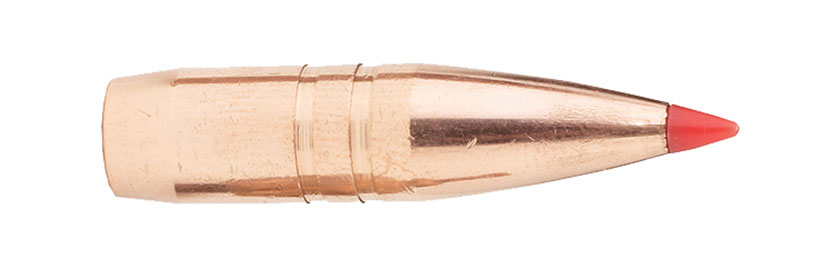
Hornady 150-grain GMXHunters who choose (or are required) to go leadless will find a great option in Hornady’s .30 caliber, 150-grain Gilding Metal eXpanding (GMX) bullet. Manufactured from copper alloy, the projectile has a polymer tip, boattail base, two relief grooves to reduce friction (and thus pressure), and fouling and aid accuracy. Expansion runs 1.5X the projectile’s pre-expansion diameter. Weight retention is upward of 95 percent, and penetration is extremely deep. It’s doubtful you’ll recover one from a broadside shot on a deer. In addition to an improved blood trail (i.e. exit hole), deep penetration offered by the GMX provides insurance for less-than-ideal shot placement. The .30 caliber, 150-grain GMX has a BC mimicking that of the like-weight SST. Outside of the biggest bears, this bullet will also work well for all North American species. It’s loaded by Hornady Superformance and Black Hills Gold.

Swift 150-grain Scirocco/Scirocco IIDeer hunters looking for a projectile that will expand reliably (upward of 2.5X) at long range, but hold up during a violent, close-range impact will find it in the Swift Scirocco/Scirocco II. Enabling said performance is a lead core that’s bonded to a tapered, extra-thick, copper jacket. In addition to aiding expansion, the polymer tip—when teamed with the secant ogive and 15 degree boattail base—create a streamlined bullet that sheds velocity slower than many of the other bullets in this list. The .30 caliber, 150-grain Scirocco II has a BC of .430. Like Hornady’s GMX, don’t expect to recover many Scirocco bullets from deer-size game, and it can be employed on all North American non-dangerous animals, too. That being said, if elk is on the menu, you might consider moving up to the 165-grain variant. Accuracy is often very good, though experimentation with seating depth will be necessary for best performance. As for the 150-grain version, outside of handloading, it’s only found in Swift High Grade Hunting Ammunition.

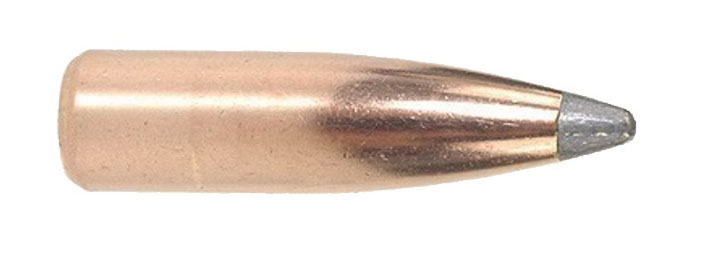
Nosler 165-grain PartitionThe grandfather of “premium” big-game bullets, Nosler’s Partition—the 165-grain variant in particular—is a top choice for hunting deer with the .308 Win.—especially if there’s an opportunity for black bear or elk, or if you’re a one-gun hunter. Featuring dual, lead-alloy cores separated by a cross member (or “partition”), the front core is washed away during expansion and serves to further enhance trauma, all while the rear portion drives deep. So deep, in fact, that seldom will you find one in anything but the largest game animals, such as elk. Like the GMX and Scirocco, the Partition provides a measure of insurance in case of a less-than-perfect shot or steep angle. Nosler’s 165-grain Partition is factory loaded in .308 Win. ammunition (Custom and Trophy Grade).

Norma 165-grain OryxFactory loaded by Norma USA (American PH), the flat-base, semi-spitzer, 165-grain Oryx features a heavily tapered, gilding metal jacket that is bonded to the lead core. This results in rapid expansion and high weight retention—bullets exhibiting ninety-percent-plus weight retention are commonplace. Given its blunter profile, this isn’t a bullet for shooting long range, but at all practical distances, it will hit hard and penetrate deep no matter what.

Only days before this piece was written I used the 165-grain Oryx to take a medium-size Virginia buck for the freezer. Catching it feeding in a hayfield undisturbed at 40 yards, the bullet entered mid-way up the left shoulder and exited around the last rib on the opposite side. The buck traveled about 60 yards before expiring. A post-mortem inspection revealed tremendous trauma—little wonder for its rapid demise. Given the performance and strength of this bullet, it would make a good one-load option for the hunter who hunts deer but also pursues bigger, tougher species, such as elk, or is going on safari.

There’s a plethora of bullets that are suitable for deer with the .308 Win. Hopefully this article will open your eyes to a few that you might not have previously considered.

Fishing For Beginners: Choosing Lure Color

0

Anyone who’s ever tried Chesapeake Bay Fishing has almost certainly stumbled into a tackle store to grab some lures at one time or another, and struggled to pick which colors to go with. With a million different variations from white to nuclear chicken, picking out which colors to keep stocked in your box is no easy task and there is no magic color that will work in all conditions. So, let’s cover all the basic necessities as well as when each has its place. Regardless of what species you are fishing for, the same rules apply.

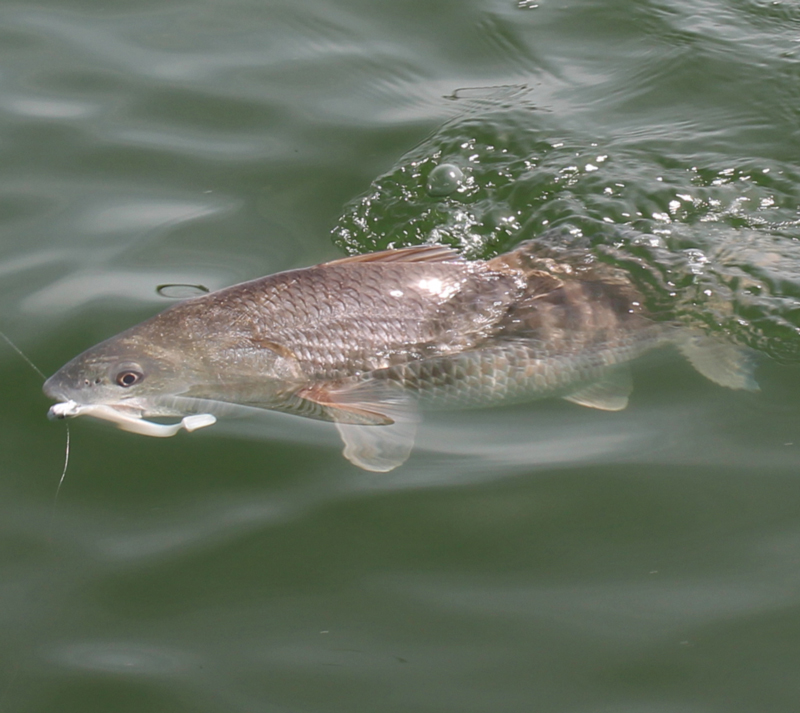
redfish ate a white jig
In relatively clear water, white is always a good starting point when it comes to choosing lure color.

First let’s talk about how the time of day and water clarity play a role in color selection. Think of clarity as a spectrum with two main categories: clear and muddy. For clear water, natural patterns will work the best since the fish have the ability to really focus on the bait. Green pumpkin is a good natural color to imitate bluegill and crawfish. White is a good color to imitate shad and bunker. Transparent and ghost patterns also work well in clear water. For muddy water, fluorescent and dark colors stand out the best. Another effective tactic particularly for muddy water is adding contrast by using a different color skirt or dipping the tail of your baits in scented dyes. Using scents such as Pro-Cure or choosing abladed lure that sends out vibrations can also be to your advantage in the muddy water because it can help fish find your lure.

bladed lures vibrate for fishing
In off-colored water, lures with blades that create vibrations will add to the appeal.

“Match the hatch” is a term you have likely heard before, and it simply means picking a lure that is similar in shape, size, and color to what the fish are feeding on. The best way to figure out what fish are feeding on is to take into account what baitfish and crustaceans live in the body of water you’re fishing, as well as paying close attention to the fish you catch. Sometimes fish will regurgitate their stomach contents when caught, which is an easy indicator of what the fish are eating. You may also notice things like bluegill tails or crawfish antennae sticking out of a fish’s gut. The majority of the time, however, it is just guesswork until you find a pattern.

The basic rule of thumb is to pick colors that best match what’s abundant in the watershed you are fishing. For instance, a pond with lots of bluegill will mean that green pumpkin and bluegill patterns will work best when targeting bass, and a lake with lots of shad will result in white patterns working well. One final note about matching the hatch: the forage fish will shift throughout the seasons as abundance changes.

When fishing in low light conditions and at night, resort to black, blue, and purple because they will be the most visible. (Bonus tip: when fishing in low light conditions use baits that give off lots of vibration and sound to help fish key in on them).

tandem rigs for fishing
Fishing tip: tying on a tandem rig allows you to experiment with two different color lures at the very same time.

The exception to the previous rules is when trying to trigger a reaction strike from fish on beds or fish protecting fry. When bed fishing for bass or snakehead, you want your bait to aggravate the fish and make it strike out of aggression. The two best patterns for this are bluegill shades, because bluegill often get chased off beds for trying to eat eggs or fry, and solid white baits because they are good for sight fishing when trying to maintain contact with a bed.

When it comes to stocking your tackle box, the best way to make sure you are prepared for any condition is to keep a few simple patterns at all times. For bass and snakehead baits try and keep a more natural pattern like green pumpkin or white and a dark pattern of each of your favorite baits. That is the bare minimum, so feel free to snag any of your personal favorite color schemes as well. For saltwater soft plastics, especially on the Bay, the majority of baitfish can be imitated using white lures. So, try and keep a white pattern for clear and stained water and a chartreuse pattern for green water. For saltwater hard-baits you can keep it simple with a few chrome lures, white, and if you are into night fishing, some black or dark purple.

Finally, always remember that feeding patterns and environmental conditions are constantly changing so although a specific color may work one day, it may not be the ticket a few weeks later. Don’t be afraid to play around with colors until you find something that works.

Bonus Tip: Match the Patch

An easy rule of thumb to remember is to match lure color with water color. Simply look out at a patch of water, and choose accordingly. In clear water, white’s a good pick; in green water, chartreuse works well; in muddy water, root beer is a good option. Match the patch, and you have a solid starting point to work from.

Bonus Tip: Depth Charge

Remember that depth affects lure color, because colors fade as you go deeper into the water column. Reds begin to disappear just a few feet down, take on a whitish hue, and are completely gone at 15 feet. Oranges and yellows disappear next, followed by greens, and then finally blues. So an orange and red plastic with a white skirt may offer great color contrast when you hold it in your hand, but if you’re letting it sink to 20 feet then bouncing bottom, the contrast level is near zero.

-By Ian Rubin

# West Virginia\’s Squirrel Season Opens September 14th: A Hunter\’s Guide

0

As an experienced outdoorsman and hunting expert, I\’m excited to share the latest news about West Virginia\’s squirrel hunting season. For both novice and seasoned hunters, this beloved tradition offers a perfect opportunity to sharpen your skills and enjoy the great outdoors. Let\’s dive into the details of this year\’s season and why it\’s such a significant event in the hunting calendar.

When is Squirrel Season in West Virginia?

When is Squirrel Season in West Virginia?

The regular squirrel hunting season in West Virginia kicks off statewide on September 14th this year. This eagerly anticipated opener marks the beginning of fall hunting activities for many in the Mountain State.

Why Squirrel Hunting Matters

Squirrel hunting isn\’t just a pastime; it\’s a crucial part of West Virginia\’s hunting heritage. Brett McMillion, director of the West Virginia Division of Natural Resources (WVDNR), emphasizes its importance: “Squirrel hunting is a long-standing tradition in West Virginia and is how many hunters are introduced to the sport.”

As an air gun enthusiast, I can attest that squirrel hunting provides an excellent opportunity to practice marksmanship and stalking skills. These fundamental abilities translate well to other forms of hunting later in the season.

Preparing for the Hunt

Before heading out, there are several key points to remember:

1. Review Regulations

It\’s crucial to familiarize yourself with the latest hunting regulations. You can download these for free at WVdnr.gov/hunting-regulations. Some key points to note:

  • Daily bag limit: 6 squirrels
  • Possession limit: 24 squirrels
  • No season limit

2. Obtain Proper Licensing

Ensure you have a valid hunting license. The WVDNR now offers durable license cards, which can be a great option for frequent hunters. Visit WVhunt.com to purchase or renew your license.

3. Choose Your Weapon

While firearms are commonly used, air rifles can be an excellent choice for squirrel hunting. They\’re quiet, accurate, and provide a challenging hunt. If you\’re new to air guns, check out our guide on selecting the best air rifle for small game hunting at Air Gun Maniac.

The Importance of Squirrel Hunting in Wildlife Management

The Importance of Squirrel Hunting in Wildlife Management

Squirrel hunting plays a vital role in maintaining ecological balance. By managing squirrel populations, hunters help ensure that resources are available for other wildlife species. This aspect of conservation is often overlooked but is crucial for maintaining healthy forests and ecosystems.

Tips for a Successful Hunt

Tips for a Successful Hunt

As someone who\’s spent countless hours in the woods pursuing these crafty critters, here are some tips to improve your chances of success:

  1. Scout early: Identify areas with abundant mast crops like acorns or hickory nuts.
  2. Learn to identify squirrel signs: Look for nests, chewed nut shells, and bark strippings.
  3. Practice patience: Squirrels are most active in the early morning and late afternoon.
  4. Master the art of stillness: Movement is your enemy when hunting these sharp-eyed rodents.
  5. Use calls: Squirrel distress calls can be surprisingly effective.

Safety First

As with any hunting activity, safety should be your top priority. Always treat every firearm or air gun as if it\’s loaded, be sure of your target and what\’s beyond it, and wear blaze orange to ensure visibility to other hunters.

Conclusion

West Virginia\’s squirrel season offers a fantastic opportunity to connect with nature, hone your hunting skills, and participate in a time-honored tradition. Whether you\’re a seasoned hunter or looking to get started, September 14th marks the beginning of an exciting time in the woods.

Remember, responsible hunting not only provides recreation but also contributes to wildlife management and conservation efforts. So grab your gear, check your regulations, and head out for some unforgettable experiences in West Virginia\’s beautiful forests.

We\’d love to hear about your squirrel hunting adventures! Share your stories, tips, or questions in the comments below. And for more information on air rifles and hunting techniques, don\’t forget to explore our other articles at Air Gun Maniac.

Happy hunting, and stay safe out there!

Shark Attack Statistics: Why, When, and Where They Attack

0

These fascinating predators are usually presented as creatures coming from the depths of the ocean to hunt and kill humans. But shark attack statistics show that the reality is different.

They reveal that shark bites aren’t as common and deadly as shown in the press. Most attacks are just sharks exploring their territory or mistaking a human for one of the species they like to eat.

But let’s see some of the most exciting numbers on shark attacks.

Top Shark Attack Statistics: Editor’s Pick

  • The odds of getting bitten by a shark are 1 in 3,748,067.
  • There were 73 unprovoked shark bites on humans in 2021 alone.
  • The US tops the list of the highest number of shark attacks recorded.
  • Over half of the US shark attacks happen in Florida.
  • Surprisingly, death by selfie is more common than being eaten by a shark.
  • Great white sharks are the most frequently implicated species in shark attacks.
  • There are over 100 million shark deaths per year around the world.
  • Shark finning and overfishing are pushing sharks to the brink of extinction.
  • Worldwide, Australia is in second place regarding the number of shark attacks.

Curious to learn more about where, why, and how often sharks attack? Read through these eye-opening facts and figures to discover the truth about why these marine animals turn on humans.

Why Do Sharks Attack People

Besides the venomous snake bite, shark attacks account for one of the most common phobias. Even though shark attacks happen, they’re not as common as you think.

However, they still happen, so let’s see how many shark attacks per year there are, why they happen, and when.

1. The odds of a shark attack are 1 in 3,748,067.

(ISAF)

Despite popular belief, shark attacks are pretty rare. There is a higher chance of dying from fireworks than getting eaten by a shark—one in 340,733.

People are also 47 times more likely to die from a lightning strike than a shark bite, a risk surfers take every time they hit the waves during storms.

2. There have been 73 unprovoked shark attacks and bites on humans in 2021.

(ISAF)

Unprovoked shark bites are defined as shark attacks where humans didn’t create any incitement or provocations. There were a total of 137 aggressive human-shark interactions last year, with 39 being labeled as human-initiated.

3. People are more likely to drown than getting bitten by a shark.

(ISAF) (PETA)

The odds of death by drowning are one in 1,134—considerably higher than death by shark bites. Other causes of death more common than shark attacks include traffic accidents, a champagne cork, and a cold.

4. Surprisingly, death by selfie is more common than being eaten by a shark.

(NY Post)

In the period between 2011 and 2017, 259 people around the world died in 137 selfie-taking-related accidents. For comparison, only 50 people were killed by sharks in the same period, according to the data on the average number of shark deaths per year.

5. 51% of shark attacks involve board sports and surfing.

(ISAF)

Boardsports usually take place in surf zones where sharks are known to swim. Also, board sports cause a lot of splashing, i.e., the kind of water disturbances that might attract sharks.

Swimmers were involved in 39% of shark attacks, snorkelers and free divers account for 4% of all attacks, while body surfers make up 6% of incidents.

6. Shark attacks are most likely to occur in September.

(ISAF) (ABC)

When do sharks attack? Analysis of the number of attacks in Florida from 1926 to 2018 shows people are most likely to encounter a shark in September. Data shows there were 103 attacks in September—significantly more than in other months of the year.

Although it’s commonly believed that sharks hunt during dusk and dawn, research indicates that the most dangerous time to be in the water is from 2-3 pm.

7. Several factors contribute to shark attacks on people.

(BBC)

The number of people in the water is directly connected to the number of bites. This could explain why most incidents occur in popular destinations for water activities.

Take the French Reunion Island as an example. It has witnessed a significant rise in tourism and an increase in shark attacks.

Another reason, experts say, is the growing number of seals, one of sharks’ favorite prey. The seal population has increased in Australia and off Cape Cod in the US.

8. Climate change also contributes to shark attacks on humans.

(BBC)

Water pollution, habitat disruption, and a shift in prey distribution due to global warming cause sharks to gather in certain hotspots around the world and thus increase the chances of human-shark interactions.

9. Sometimes, sharks are just curious.

(Britannica)

Shark’s mouth serves as a sensory organ. It allows them to examine an unfamiliar object by biting it. So sharks might bite people to check if they have the same fat content as some of their favorite prey, which we don’t.

The conclusion from analyzing shark attack statistics is that humans are too bony and don’t have enough meat and fat to satisfy sharks’ appetites.

10. There are three kinds of shark attacks.

(ISAF)

As previously stated, sharks don’t always bite to kill. Here are the three most common interactions toward humans:

  • “hit-and-run” attacks, which typically take place in surf zones and are the result of poor visibility. In these attacks, sharks usually just bite their prey and—deeming it unsavory—swim away;
  • “bump and bite,” associated with feeding intentions, in which sharks first bump into the victim and then bite it repeatedly;
  • “sneak” attacks, where biting, unlike with “bump and bite,” happens suddenly and without any warning.

11. Boats and post-mortem bites account for the remaining attacks.

(Forbes) (ISAF)

In 2019, 12 of the remaining 35 shark attacks involved motorized vehicles (up from nine in 2018).

One involved post-mortem bites (down from four in 2018), and one implicated a diver in a public aquarium. Three incidents most likely didn’t involve a shark and were classified as “doubtful.”

US Shark Attack Statistics

The number of shark attacks has been varying over the years—but the US coasts stay among the most shark-infested waters. Let’s see the latest data.

12. The US tops the list of the highest number of unprovoked shark attacks recorded.

(ISAF)

The US accounted for 64% of the total worldwide attacks in 2021, with an estimated 47 cases.

This is 42% higher than in 2020—expectedly, due to more severe COVID restrictions in that period and limited movement of people.

13. 60% of US soil attacks happened off the coast of Florida.

(ISAF)

Known as the shark bite capital of the world, Florida is the state with the highest number of bites historically. In 2021, Florida recorded 28 unprovoked attacks, none of which were fatal. The state also accounts for 38% of all unprovoked interactions in the world.

14. Volusia County, Florida, witnessed over 300 unprovoked shark attacks over the years.

(A-Z Animals)

Experts explain the numbers with murky water due to rain runoff. A shark attack isn’t uncommon in Cocoa Beach (Brevard County) either, with over 155 recorded cases.

Volusia County accounted for 63% of Florida’s total number of unprovoked bites in 2021, with an estimate of 17.

15. There were a number of shark attacks in Hawaii and California.

(ISAF)

In addition to Florida, most shark attacks happened in California and Hawaii.

Hawaii had six shark attacks in 2021, all without any fatalities. Meanwhile, California recorded three attacks, with one person falling victim to the animal.

Other states on the list are South Carolina with four bites and North Carolina with three attacks last year.

16. There was a fatal shark attack in Massachusetts for the first time since 1936.

(Boston.com)

The one deadly attack took place in Cape Cod in 2018, when a 26-year-old boogie boarder died after being bitten by a shark, presumably a great white. This was the first fatal shark bite in the state of Massachusetts in over 82 years.

Where Do the Most Shark Attacks Occur Worldwide

Don’t worry; shark attacks don’t occur everywhere around the world. Here are the most common locations outside the US.

17. Worldwide, Australia is in second place regarding the number of shark attacks.

(ISAF)

There were 12 unprovoked shark attacks in 2021 in the Land Down Under. Out of those, three were fatal attacks. This is lower than Australia’s average of 16 attacks a year over a five-year period.

Australian shark attack statistics indicate that most attacks occurred in New South Wales—six, with two being fatal. In Western Australia, one person died out of a total of four shark attacks.

18. Brazil has had 107 shark attacks and 23 casualties from 1931-2019.

(SurferToday)

Stats show that other countries where shark attacks are frequent include South Africa and the Mascarene Islands.

During the same period, South Africa had 255 attacks, 54 of which were fatal.

Moreover, the Mascarene Islands (Reunion, Mauritius, and Rodrigues) had 46 attacks, 27 of which weren’t fatal.

19. Gansbaai in South Africa is one of the most dangerous shark beaches.

(The Telegraph) (Getaway)

Also known as Shark Alley, this area is home to a colony of 60,000 seals. The great white sharks are known to hunt them.

Data shows there are around five to 10 attacks every year. Most of them happen due to sharks’ curiosity rather than their hunt for humans.

On the other hand, being one of the most dangerous shark beaches comes with economic benefits. Tourists have been swarming to South Africa for a chance to go cage diving with great whites, boosting the local economy.

20. Two fatal attacks occurred in the Bahama Islands and Reunion Island in 2019.

(BBC) (CNN)

One of the deadly attacks occurred off Reunion Island in the Indian Ocean. Surfing and water activities are limited there due to the risks of shark attacks.

This was the 24th incidence and the 11th fatal attack on this island since 2011.

The other fatal incident involved a 21-year-old California resident who had been snorkeling on Rose Island in the Bahamas.

Shark Attack Statistics by Species

Researchers have also discovered that not all shark pieces attack humans. Let’s see what the statistics say about different types of sharks and the likelihood of them attacking humans.

21. Only 5% of over 500 known species of sharks have been involved in attacks on humans.

(Florida Museum of Natural History)

Most shark attacks on humans involve three species: the great white shark, the tiger shark, and the bull shark.

All shark species differ in the way they hunt, where they live, and their motivations. Bull sharks, for example, hunt in shallow and murky water because they rely more on smell and electroreception than sight, the data suggest.

22. The data on the great white shark attacks reveals the species is involved in most human-shark interactions.

(ThoughtCo)

What is the most dangerous shark in the world? Great white sharks are the most intimidating and deadliest. The species is believed to be responsible for 314 unprovoked attacks from 1580-2015, 80 of which were fatal.

These sharks typically eat seals or whales and usually hunt in open waters. Although, judging by some facts, they are known to come close to the shore, as well.

23. Great white shark’s bite force is over 4,000 lbf or 18,216 N.

(A-Z Animals)

The strength of their bite is relative to the shark’s size. Interestingly, female great whites grow 15-16 feet, which is larger than males (11-13). The largest identified reach up to 20 feet in length. The species is also among the fastest sharks, with a cruising speed of 25 mph and bursts of 35 mph.

23. Tiger sharks are the second most dangerous sharks in the world.

(National Geographic)

Tiger sharks have killed 34 people and are responsible for 95 unprovoked nonfatal attacks.

Unlike great whites, who are known to release their prey after they find it uneatable, tiger sharks have a less discerning palate. This means they’re not in the habit of swimming away once they catch their dinner.

24. Bull shark attacks usually occur in shallow waters.

(National Geographic) (Cleaner Seas)

And what is the most aggressive shark? Bull sharks may be the least known species, but they are potentially the most dangerous and aggressive. Because they swim where we swim, the chances of humans interacting with bull sharks are pretty high.

25. There have been no fatalities from hammerhead shark attacks on humans.

(Newsweek)

Only 16 cases of human interactions with this species of shark have been noted from 1900 until today. The majority of attacks by hammerheads happened in Florida. Elsewhere, one occurred in California, one in Australia, and two off the Pacific Islands.

26. The whale shark is the biggest one in the world.

(National Geographic) (Oceana.org)

They might be the largest, but they are less dangerous to humans than some of the smaller shark species. Growing to 60 feet in length, whale sharks only eat plankton.

The shortfin mako—known as the fastest shark in the world—is also not considered dangerous to people. Some fatal attacks have been attributed to this shark, although in most incidents, some other shark species was responsible, most likely a great white.

How Many Sharks Are Killed by Humans Each Year

Statistics show that people kill much more sharks than sharks kill people. It may sound unbelievable, but the numbers don’t lie.

26. There are over 100 million shark deaths annually around the world.

(Insider)

This translates to around 11,000 sharks being killed across the world every hour. On the other hand, there have been 1,400 shark attacks in the US from 1837-2017, only a handful of which were fatal.

27. The demand for shark fin soup causes most shark killings.

(Smithsonian Ocean)

Shark finning is a cruel and vicious method of killing sharks. After the fin is cut off, the rest of the body is thrown back into the ocean, where sharks bleed to death.

When we look at the number of sharks killed by year, we see that 1.3-2.7 million of the sharks killed for fin soup belong to the endangered scalloped hammerhead species and the smooth hammerhead, currently listed as vulnerable by the IUCN.

28. Shark finning and overfishing are pushing sharks to the brink of extinction.

(Smithsonian Ocean)

Sharks are not created for massive fishing because they have low reproductive rates and mature slowly. Therefore, overfishing can destroy an entire population.

Shark population statistics show that certain shark species in Australia have declined by 75-90% due to shark culling. Stats show a growing number of interactions, thus initiating authorities’ deliberate killing of sharks.

Also, the population of some shark species dropped by 60-70% due to overfishing.

29. Sharks are vital to the health of the ocean and the planet.

(Forbes)

As apex predators, sharks keep certain species from becoming too invasive and thus support diversity in the seas, protect coral reefs, and balance the food chain.

Sharks also consume sick and weak animals, maintaining the ocean’s health, and we all know how important that is.

Frequently Asked Questions

What are the odds of being attacked by a shark?

The odds of getting attacked or bitten by a shark are 1 in 3,748,067. Dying by falling, tripping, or slipping are way higher at 1 in 127.

Do most shark attacks happen in 3 feet of water?

Not really.

Divers naturally get more attacked in deep waters, unlike swimmers and surfers whose interactions with sharks happen a lot closer to the coast.

Most divers’ accidents with sharks happen 31-40 feet in the water, while swimmers and surfers get attacked 6-10 feet in.

What beach has the most shark attacks?

The ISAF has named New Smyrna Beach in Volusia County, Florida, “the shark bite capital of the world.”

In 2019, nine shark attacks occurred there, consistent with the annual average for shark bites in the area. In other words, 43% of all incidents in Florida happened in this county.

What are sharks attracted to?

Sharks are believed to react more to sound and smell rather than sight. Some theories propose sharks are attracted to certain sounds made by a surfer in trouble, a sick fish, and the smell of blood.

The presence of blood, however, isn’t enough to provoke a shark attack unless combined with other elements, like splashing in the water or wearing jewelry (which looks like the scales of fish that sharks eat).

Some scientific tests have shown that sharks can distinguish colors, giving rise to “yum yum yellow” theories. Although these theories aren’t scientifically proven, avoiding wearing bright colors in the water might be best.

How far can sharks smell blood?

To be clear—sharks can’t smell a singular drop of blood from a mile. That’s an often repeated myth. They do have a strong sense of smell, however, smelling blood from hundreds of meters away.

What to do if a shark is circling you?

The first and most important thing about reducing the risk of a shark bite is not to panic.

Try to use anything you have as a weapon for striking their sensitive gills and eyes. If you don’t have a weapon, use your hands and feet. Hit as hard as you can and be as hostile as possible.

Sharks aren’t bears, so playing dead won’t work. The best chance of escaping a shark attack is to fight back as well and viciously as possible.

Should you be afraid of sharks?

The short answer is no. As with other animals, it’s more likely that they’re more afraid of us than we are of them.

Sharks have attacked humans, and some attacks are fatal, but so have other animals like mosquitoes, cows, and horses. Also, many interactions between sharks and humans haven’t ended with bites or attacks.

Key Takeaways

Sharks aren’t the dangerous creatures of movies and scary stories. If anything, shark attack statistics show that the number of fatal and nonfatal attacks is declining.

These magnificent fish have survived four mass extinctions of species. Yet, they have trouble surviving humans. More and more sharks are hunted for their fins, caught in nets, and killed.

They are already on the list of endangered species, and their numbers are dwindling. So rather than people worrying about getting attacked by sharks, it’s sharks that should worry about humans and their harmful activities.

Sources

  • ABC
  • All That Is Interesting
  • Amusing Planet
  • BBC
  • BBC
  • BBC
  • Boston.com
  • Britannica
  • Business Insider
  • Cleaner Seas
  • CNN
  • CNN
  • Florida Museum
  • Florida Museum of Natural History
  • Forbes
  • Forbes
  • Getaway
  • Insider
  • ISAF
  • ISAF
  • ISAF
  • ISAF
  • ISAF
  • iucncsg.org
  • National Geographic
  • National Geographic
  • National Geographic
  • NY Post
  • Oceana.org
  • PETA
  • Science Daily
  • Smithsonian Ocean
  • Smithsonian Ocean
  • SurferToday
  • The Guardian
  • The Telegraph
  • ThoughtCo
  • WFTV

How is Damascus steel the best choice for swords?

0

A Damascus Sword is any sword forged by Damascus Steel, high-grade steel made from Indian wootz steel using an ancient technology that was lost to history. Their surfaces might have vibrant whirling patterns. Damascus Steel, like Japanese folded steel, is the subject of numerous imaginative quality exaggerations, with swords claiming to be able to cut neatly through falling silk and cleave rocks in half.

The origin of the steel for the sword.

The term “Damascus Steel” has a hazy history. Two Islamic philosophers named Al-Kindi and Al-Biruni (approximately 800-873 CE) wrote about swords and the steels used to make them, describing them according to their look, the place where they were made or forged, or the name of the blacksmith. Additionally, both scholars cite “damscene” or “damascus” in parts of their descriptions of the swords.

How is Damascus steel made?

Since this process and expertise were lost in the 1700s, anyone who says their knives are made of Damascus steel does not refer to the original way they used to make them.

This steel was initially created by casting wootz, a type of steel first made in India more than 2000 years ago. In the third and fourth centuries, the city of Damascus, now known as modern-day Syria, saw a rise in the use of weapons and other objects fashioned of wootz.

Although several efforts have been made to reverse engineer the method for producing Damascus steel, no one has been able to cast an equivalent material.

Cast wootz steel was created by melting iron and steel with charcoal in an oxygen-free environment. Following the metal’s carbon absorption from charcoal, the alloy underwent a lengthy cooling process that produced a crystalline substance containing carbide.

Damascus steel is made by forging wootz into swords and other weaponry. However, this procedure was only available to the elite because it took great ability to maintain steady temperatures to manufacture steel with the iconic signature wavy pattern.

Why choose Damascus steel for swords?

Many producers choose between 2-5 alloys that work well together and create a beautiful pattern as a vital component in the process. Once the knife has been forged and ground to shape, the waves of steel meet at the edge, and you can change the blade’s performance by adjusting the alloy and heat treatment process.

If you want to acquire a high-quality Damascus steel sword, do your research and approach it as an investment.

Damascus steel is distinguished by its extraordinary hardness and a wet, streaked look created by the original material’s fluctuating carbon levels. Sometimes a single bar is welded together from different types of steel. Next, the bar is doubled over, welded, redoubled, and rewelded until the various layers of steel entangle, which is worked out to form the blade. 

The patterns created due to quenching and polishing are distinct and complicated. Damascus swords are primarily appraised by their wetness, which indicates the steel’s quality.

Conclusion

Finally, most of today’s highly exotic alloys outperform any pattern-welded steel. Therefore, having and using a Damascus steel blade is more about personal taste and respect for the time and effort it takes to create such a blade.

A well-made Damascus sword will hold its sharpness for longer than most production-quality blades, although the highest-performing blade steel may be found elsewhere.

Quality is mainly influenced by price. Damascus steel from a reputable manufacturer is of the finest quality. Knives manufactured from these steels are exceptional. 

Unfortunately, low-cost knockoffs from China, Pakistan, and India flood the market, frequently appearing on eBay and other online merchants. Avoid them because they are trash; as the saying goes, if the price is too reasonable to be true, it probably is.

Best Air Rifle Deals

Popular Posts

PCP vs Spring Piston: Which one is better?

0
When reading about guns in the search for the first one that would be perfect for you, an age-old debate comes into question. Should...

Best Distance for Sighting In an Air Rifle

0
Shooting with an air rifle always seems like a thrilling experience, but if you are a newbie then you have lots to learn. One...

Air gun 101: What is a PCP air rifle? Is PCP gun the best...

0
A PCP air gun is one of five types of air rifles in the market today. PCP air guns have become more and more...