Home Blog Page 109

AR-15 Barrel Twist Rate Explained

0

When looking into improving your accuracy or range with an AR-15, someone will mention your twist rate at some point. What are AR-15 twist rates, and how does it affect shooting accuracy? This AR-15 barrel twist rate guide will answer these questions and help you identify the best twist rate for your gun.

AR-15 Barrel Twist Rate Explained

What Is Barrel Twist Rate?

Bullets fired from guns made after the 19th-century spin/twist during flight. The spin boosts accuracy by enhancing a round’s stability and aerodynamics.

Barrels make bullets spin with the help of grooves or rifling that line the inside of a barrel. Tighter or shorter grooves lead to a faster spin rate, while longer grooves cause a slower spin.

AR-15 rifling twist rate or barrel twist rate refers to the number of times a bullet spins per inch of barrel length. For example, a 1:8 twist rate means a slug will complete a spin once every 8 inches as it travels through a barrel.

If you have a 16-inch barrel with a 1:8 twist rate, the bullet will complete a spin twice before exiting the muzzle. An 18-inch barrel with a 1:6 twist rate will cause a bullet to spin three times before leaving the gun. The more twists a bullet can complete before leaving the barrel, the more stable the slug will be when it exits the muzzle.

Is Twist Rate a Safety Concern?

You can safely fire a bullet of any weight or size from a compatible barrel with any twist rate. While the rate of twist does not affect safety, it can affect bullet accuracy and range. If a barrel’s twist rate is slower than the recommended rate of spin for a specific bullet, you are less likely to hit targets accurately beyond 100 yards.

A barrel with a faster-than-recommended spin rate may have some or no effect on your accuracy if firing a heavy bullet. On the other hand, excessive spin on a light bullet (under 50 grains) may lead to overspin, which can make a bullet unstable enough to fly off trajectory downrange.

Here’s an AR twist rate chart from the NRA that sheds more light. The numbers at the top of the chart refer to bullet weight.

AR-15 Barrel Twist Rate Explained

How Much Does Twist Rate Matter?

The lower ratio of the twist rate, the more spin a bullet will have. For instance, the same bullet fired from a 1:6 barrel will spin faster than one from a 1:7 barrel.

Heavier and longer bullets require a faster and tighter twist rate for adequate flight stability and accuracy. That’s because these bullets are less aerodynamic, and the spin improves the bullet’s ability to overcome wind resistance and travel straight to reach a target. If you select the optimal twist rate for your ammo, you can look forward to better shooting accuracy and range.

Common AR-15 Twist Rates

AR-15 twist rates typically vary between barrels, and the difference can be due to barrel length, rifling, and other factors. You can usually find a barrel’s twist rate listed under its features or specifications. Below are some of the most popular AR-15 barrel twist rates:

1:7

A 1:7 twist rate barrel is a favorite among target practice and combat shooters because it is effective for stabilizing long-range, modern bullets that weigh over 69 grains. The twist rate can also work with most rounds that weigh 55 to 70 grains. It is so effective for combat shooting that the U.S. military uses this twist rate in its M4, HK 416, and M16-A4 rifles.

You can get barrels between 6 and 24 inches with the 1:7 twist rate. The shorter barrels are suitable for close-range combat, while the longer barrels offer better velocity for long-range shooting.

1:8

Compared to other AR-15 twist rates, 1:8 is the most versatile. Barrels with this twist rate can work well with most ammo, offering sufficient stability to 70 to 90-grain bullets and preventing overspin in light rounds. While 1:8 twist rate barrels can fire most slugs with adequate accuracy, the best results occur when firing 60 to 80-grain bullets.

1:9

Barrels with a 1:9 twist offer a slower spin that works best with short, lightweight bullets (40 to 62-grain projectiles). You can use larger bullets with the barrel, but the rate of spin will not be fast enough to deliver optimal bullet stability and accuracy.

Rifle Barrel Twist Rate vs. Bullet Weight

Listening to the rifle barrel twist rate vs. bullet weight conversation, you will discover two sides – one that says bullet weight determines the best twist rate, and the other that believes bullet length determines twist rate. Both sides have a point.

Heavier bullets need more force to propel them in a straight line to hit far-off targets. Adding spin to such bullets makes them more aerodynamic and stable, enabling them to travel further in a straight line. If shooting ammo on the heavy end of the spectrum (over 70 grains), a 1:7 twist rate is ideal. However, if shooting lighter ammo (50 grains or less), a 1:9 twist rate will suffice.

On the other hand, you have experts who say that bullet length determines twist rate more than weight. The argument makes sense because, in most cases, the longer a bullet is, the heavier it becomes.

You also have the new lightweight copper and zinc bullets that are extra long to weigh the same as their lead counterparts. Simply put, many longer bullets have extra weight that requires a faster twist rate for better flight stabilization and accuracy.

What’s the Best AR-15 Twist Rate?

The best twist rate for an AR-15 will depend on various factors, such as your ammo type and how you intend to use your gun. As we’ve established, heavy and lightweight bullets require different rates of spin, but if you want a twist rate that works well with various bullet weights, we recommend 1:8.

Among all the AR-15 twist rates, 1:8 inches is the most versatile and multipurpose. Just check out various AR twist rate charts, and you’ll see that the 1:8 twist rate handles most AR-15 loads well.

While the 1:8 twist rate can handle most loads, it works best with 60 to 80-grain loads. If shooting light ammo, the 1:8 twist rate won’t cause the slug to spin out of control and veer dramatically after flying a few yards. The twist rate can also stabilize slugs that weigh up to 90 grains.

However, if you want the very best bullet stabilization and accuracy, always use the twist rate recommended for your specific ammo.

AR-15 Barrel Twist Rate Explained

Get Premium AR-15 Barrels, Made in the U.S.A.

We’ve reached the end of our AR-15 barrel twist rate guide, and here are the things to remember – a slower twist rate (1:9) works best with lighter, shorter bullets, but it can also stabilize heavy bullets aimed at close-range targets. If you are a hunter or long-range shooter firing long and heavy slugs at targets over 100 yards away, you are better off switching to a faster twist rate (1:7 or 1:8).

How can you get barrels with your preferred AR-15 twist rates? Head to our online store today to shop industry-leading AR-15 barrels that match your unique shooting needs.

#22: How to Be Obsessed and Keep Hammering. Notes from “Endure” by Cameron Hanes (Part 2)

0

If there’s one main theme of Cameron Hanes’s memoir Endure: How to Work Hard, Outlast, and Keep Hammering, it’s obsession. He’s obsessed about becoming the best bowhunter. Everything else in his life is devoted to that goal.

How do you become obsessed? Should you even be obsessed? How do you stay consistent and keep hammering away at your goals? That’s what we’re going discuss in the second and final part of my notes based on Cameron’s book. I’ll go through seven Cameron Hanes’s quotes pertaining to perseverance, working hard, and longevity.

Humbleness Leads to Greatness

The rare people who do become truly exceptional at something do so not because they believe they’re exceptional. On the contrary, they become amazing because they’re obsessed with improvement. And that obsession with improvement stems from an unerring belief that they are, in fact, not that great at all. It’s anti-entitlement. People who become great at something become great because they understand that they’re not already great—they are mediocre, they are average—and that they could be so much better.

Cameron’s take on becoming obsessed with improvement reminds me of Zen Buddhism concept of “beginner’s mind.” It’s about cultivating the mindset of a true beginner regardless of your proficiency in a given field.

You’re always humble, open to new ideas, eager to learn, and without any preconceptions. To become exceptional, we need to cultivate such a mindset at all times.

Regardless of how good we are at something, we need to be able to see and acknowledge our weaknesses—and then relentlessly hammer away at them.

We also need to stay humble and never assume we know everything there is to know. Otherwise we’ll never question our beliefs. If we aren’t open to new ideas and new teachers, at one point we’ll stop growing, forever stuck in old ways.

What Is Your Poison?

It’s one thing to find your true passion in life, but what about your poison? What is the one thing or multiple things that hinder your ability to achieve the type of success you desire? Who or what is preventing you from fulfilling your potential? For me it was a number of things: alcohol, toxic people, lack of confidence, average physical ability, and so on.

Addressing the main obstacle that prevents you from achieving success is often more valuable than blindly pushing harder.

For example, let’s imagine that you want to become financially independent. You’ve built a great career or perhaps a lucrative business. But you’re still not rolling in cash. There’s always little money left before the next paycheck.

Sure, you could grind even harder but you won’t make much progress. Why? Because the impediment is that you spend money frivolously. Before you remove this poison from your system, you won’t reach your full potential. Excessive spending will always hold you back, regardless of how hard you push.

If you aren’t making much progress, identify the main culprit. Is it because you aren’t pushing hard enough or is it because there’s a poison coursing through your veins?

Do the Work When Others Are Asleep

My alarm is set for 4:55 a.m. because getting up “in the fours” sounds better in my head than getting up in the fives, more committed, but I never make it to the alarm. I turn it off before it goes off.

I don’t dread getting up; I love it.

It’s another chance to hammer.

I’ve convinced myself that every day is a gift and I get to jump out of bed and go run. I’m usually out the door before 5:00 a.m. (in the fours) to start my fasted cardio run.

As I run down the empty streets and see the houses knowing everyone is asleep inside, in my head I kind of like it. I don’t envy them, because I feel like each morning is another chance to sacrifice a little more. I turn it into a positive and just think how I’m out there working already. That makes me feel good.

The saying goes, the greater the sacrifice, the greater the reward.

There’s something magical about doing the work while everyone else is asleep. You don’t even have to be an early riser to experience it. Many years ago, before I started waking up early, I used to be a night owl. I wrote mostly at night, between 11 pm and 3 am.

These days, my routine is the complete opposite. Instead of quiet late nights I get quiet early mornings.

Working on your goals when others are asleep will fuel your obsession because only the obsessed are so committed.

Only an obsessed person would wake up at 4 am in the middle of winter and go rucking a long distance for the challenge of it (been there, done that).

Only an obsessed person would stay up until 3 am working on the new marketing strategy for their e-commerce business.

Only an obsessed person would wake up a few hours before their shift at the warehouse starts to study a skill that will help them secure a better job.

Being Tired vs Being Weak

There is never a question in my mind asking if I’m going to run today. I’m going to run no matter what. If I’m sick, I’ll still run. If I’m hurt, I’ll go slower. I’ll limp. Nothing will change. A lot of people look for ways or reasons not to run or exercise. Those things don’t even come to my mind anymore.

If I think I’m tired, I remember moments when I’m running hundreds of miles in an ultramarathon and I’m getting an hour of sleep or less. That’s when I should be tired. The other times means I’m just being weak.

There’s no doubt that Cameron Hanes is wired differently than almost every single person on Earth. For most people, a light cold, a little injury, or feeling under the weather means no workouts until they get better. Meanwhile, Cameron only allows himself to feel tired if he’s running hundreds of miles on an hour of sleep. Talk about a wildly different perspective on things.

As a person who’s been dealing with a chronic rotator cuff injury, I adapt my workouts to keep going without aggravating it. If you can work out without making things worse, then do that.

But I don’t think it’s a smart idea to run if your swollen Achilles tendon hurts like hell and feels as if it’s about to burst.

The reason why I’m dealing with a chronic injury is because I ignored my shoulder pain for months. I thought I had to suck it up and be tough like people like David Goggins or Cameron Hanes. In the end, pretending I was indestructible destroyed me.

To be able to progress sustainably over the long term, sometimes the body needs to rest.

My calisthenics coach recently told me that for those who work out a lot, the problem isn’t making excuses but not respecting recovery enough. And taking time off to let your body heal isn’t being weak. Pro athletes do it all the time, sometimes taking months off to heal an injury that unattended could end their career.

Now, don’t get me wrong. I admire Cameron’s endurance and wish my body were as resilient as his is. Yet, in my painful experience, in an effort to imitate people like Hanes or Goggins, we sometimes ignore the warning signals, thinking we can walk them off—only to pay the price later.

As Cameron emphasizes in his book:

I don’t want to discount or minimize anybody’s effort because I know just trying your best every day is a huge deal. I know it’s a hard path at times.

I’m not speaking for anybody else with my running and my training.

This is your journey.

We’re all on different trajectories. I’m at this point and have been doing this now for decades. There are certain ways I prepare, and that’s going to change and evolve. I’m going to continue to get better and I’m going to learn and grow.

All of us are evolving. It’s just a process. A process that takes time.

Even if our goals are the same, our journeys will be different.

If You’re Not Obsessed, You’re Going to Be Mediocre

I get obsessed with things. But as I always say, if you’re not obsessed, you’re going to be mediocre. I don’t care what it is. If you have a healthy, balanced relationship with whatever dream you have, then nobody will ever know your name. That’s the cold, hard truth. Sure, there are those born with the physical capabilities to play in the NBA, but I’m sure LeBron James would say he’s been obsessed with basketball his whole life.

The best of the best usually live and breathe their obsession. Everything in their lives, be it their daily schedule, where they live, who they spend time with, etc. is about getting an edge. You can see it when studying the lives of the greats like Michael Jordan, Nikola Tesla, Pablo Picasso, or Ernest Shackleton.

A healthy, balanced relationship with your dream rarely leads to greatness.

Surfing three times a week for one hour won’t cut it if you want to become a pro surfer.

Studying physics a few hours a week won’t cut it if you want to become a renowned physicist.

Writing a few hundred words a week won’t cut if you want to become an exceptional writer.

The relationship we have with our goals says a lot about the level of success we’ll be able to achieve in them.

For example, I run once a week. When I compare running to writing—which I practice every day—it’s clear to see that I’ll never become an exceptional runner. I may have a shot at becoming an exceptional writer because my relationship with it is much closer to an obsession than in the case of running. But running is not my priority. It’s just an accessory skill.

What is your level of dedication to your goals? There’s nothing wrong with prioritizing your goals and giving it your all only to your most important objectives.

The Dark Side of Obsession

Going back to the subject of obsession, if you’re going to be great at one thing, you’re probably not going to be great at other things. The way I’ve looked at it, I know I definitely have been short in some areas because I’ve been obsessive about other things. I know I probably wasn’t the best dad, the best husband, the best whatever, because I’ve been obsessed about bowhunting. For example, spending $3,000 to go on an out-of state hunt when you don’t have the money and have a newborn baby at home … yeah, that’s probably not a good decision. That’s not being the best provider you can be, because I put my dream ahead of being a provider for my family, for the people who rely on me. If you’re being honest with yourself, and I have been honest with myself, I know I’ve fallen short. That’s not justifying it at all, that’s just being real.

Cameron’s confession poses a difficult dilemma: do you let yourself obsess about a single thing so much that you neglect other aspects of your life? Or do you choose to tone down a little so that you don’t destroy your relationships or health?

In an ideal world, we would be able to get it all. But we don’t live in an ideal world with unlimited resources and no opportunity costs. There’s a price to pay for all decisions.

For example, if you decide to become an ultra-runner, you’ll have to train for up to a few hours a day almost every day of the week. Developing mental and physical toughness to take on long races will become your day job.

Try as you might, you won’t be able to create more time out of thin air. Something will have to give. Will it be your work or business life? Will it be your relationships? Will it be your other skills that you won’t be able to practice as much as before?

Do or do not, you make a sacrifice either way. What is it for you?

I’ve been struggling with this question for years. As a generalist interested in various activities, I’m not good at any single thing. I admire men who are world-class at a single thing. But at the same time, I need to accept that I’m not like them. My version of becoming exceptional needs to be different because I’m not willing to obsess about just one thing.

What is your version of being exceptional? Is it being excellent at just one thing or being competent (but not great) in a variety of fields?

Keep Hammering

There’s an incredible quote that inspires the San Antonio Spurs that is a beautiful summary of the “Keep Hammering” mindset. I love the Spurs and their approach to professional basketball. They are always focused on how they do things, not the reward for what they do. They care about the process, not the result. In 2018, NBA star and former Spur George Hill told me about the words of twentieth-century poet Jacob A. Riis that hangs in the Spurs’ locker room:

“When nothing seems to help, I go and look at a stonecutter hammering away at his rock perhaps a hundred times without as much as a crack showing in it. Yet at the hundred-and-first blow it will split in two, and I know it was not that blow that did it—but all that had gone before.”

Cameron achieved his goals through hammering away at them. There’s a reason why he likes to say “nobody cares, work harder.” It’s purely through hard, consistent work for years and years that he became great at what he does.

When you’re in doubt, remind yourself of all the momentum you’ve built until now. Perhaps it’s not visible to the naked eye, but the rock you’ve been hammering away at for so long might be just a single blow away from splitting in two.

This concludes my two-part series featuring the best quotes from Cameron Hanes’s book Endure. Keep hammering.

Questions to Ponder

1. Do you cultivate a beginner’s mind?

2. What is your poison that prevents you from achieving your goals?

3. Are you willing to work on your goals when others are asleep?

4. How does feeling tired or injured affect your workouts? Do you skip them because you have a little injury or feel under the weather? Or quite the contrary: do you still keep going when it would be advisable to address your injury before it turns into a chronic problem?

5. What relationship do you have with your dreams? Are you truly obsessed about them or is the relationship so balanced that it’s unlikely you’ll ever go past mediocrity?

6. If you have any obsessions, how do they negatively impact your life? Are you willing to accept that downside or do you need to dial things down?

7. Do you regularly acknowledge all the momentum you’ve built until now?

If you want more advice on how to be obsessed and keep hammering, sign up for a free weekly Discomfort Club newsletter. Enter your email address below:

Notes from “Endure” by Cameron Hanes Series

[Review] Boyds Stocks: AT-One & Platinum

0

Firearms and wood go together like chips and salsa.

Despite the revolutions of plastics and the growth of space-age alloys – there is something about a good wooden stock that just cannot be replicated or imitated by anything else.

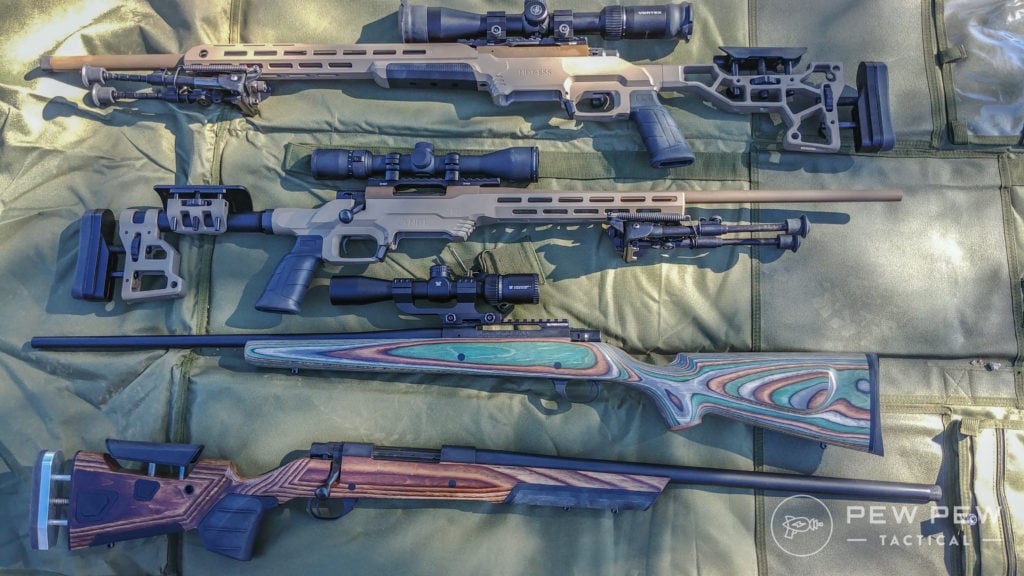
Howa 1500 in MDT and Boyds

But custom cut wood is often prohibitively expensive and metal chassis aren’t what you want to carry when on a long hunting trip.

What you need is wood. Warm, natural wood – but at a price that won’t break you.

Boyds Stocks
Just some of the styles and colors at Boyds Stocks

Boyds Gun Stocks are made of laminated layers of wood that are precision machined to fit almost any rifle action on the market. From Ruger 10/22s to AK-47s and AR-15s to the Howa 1500 Barreled Action – Boyds has a stock for you.

They also come in a wide range of colors, styles, grips, fore ends, coatings, and more!

Basically – it’s like having a custom carpenter for your rifle, but at the price point of mass-produced plastic. Starting at under $140, Boyds delivers major value for their price.

What are Boyds Gun Stocks?

When you visit Boyds site, you can’t get something with same day shipping. That’s because everything they offer they custom make after you order it. While this means that shipping isn’t Amazon Prime fast, it also means that you get your stock.

Not something that fell off a shelf.

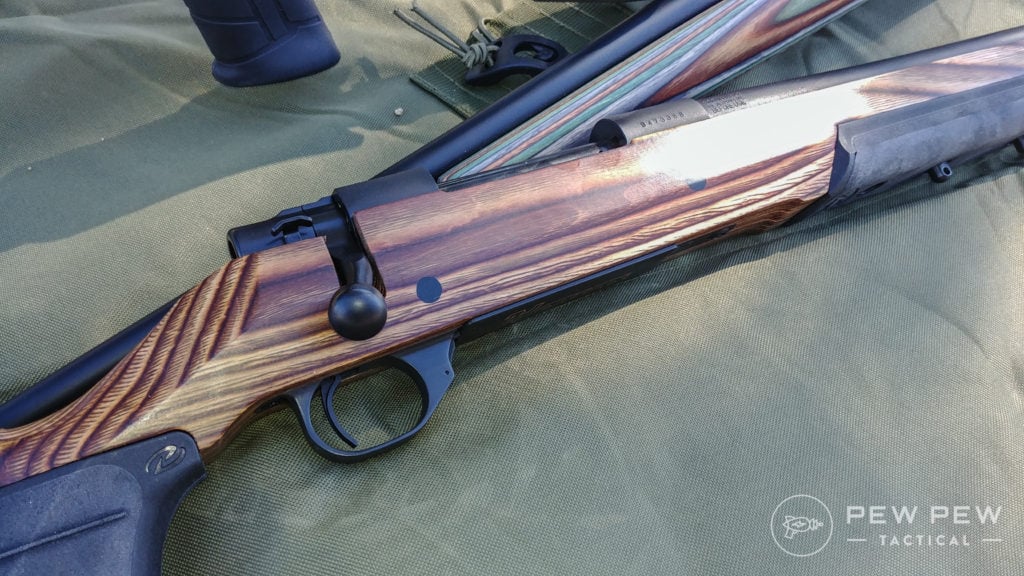
Howa 1500 in Boyds
Boyds AT-One

Every stock Boyds makes is made from laminated hardwood (layers of hardwood that have been pressed together using heat, pressure, and resin). This keeps them lightweight, strong, and delivers that warm wood feel that you’re looking for.

They’ve also been doing it since 1981, so they’ve had time to get really good at it.

Like many people, I was interested in Boyds stocks for a while before actually getting one to test out, the recent Howa 1500 Barreled Actions that were sent to me provided me the perfect opportunity!

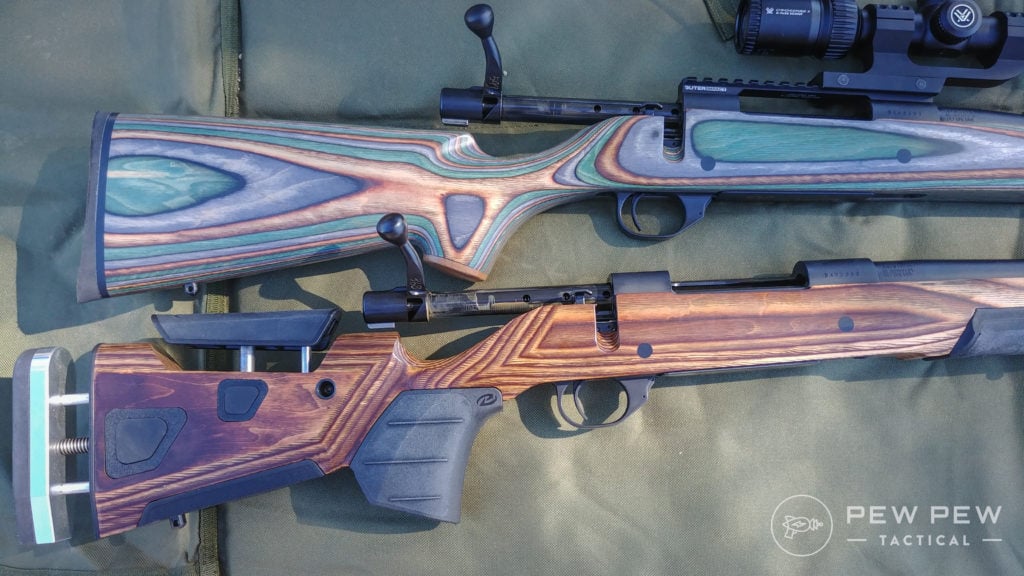
Boyds sent me two of their stocks, their highly-popular AT-One stock, and a Platinum profile stock – I got the AT-One in Nutmeg Laminate and the Platinum in Forest Camo Laminate, both are gorgeous!

Howa 1500 in MDT and Boyds

Boyds AT-One

I’ll just say it – I like this stock. If you’re looking for a stock that crosses the bridge between a custom precision stock and an easy-to-use hunting stock, this one is for you.

However, it does both roles decently without doing either role outstandingly.

Most of the stocks Boyds makes are non-adjustable, the AT-One is the exception with an adjustable length-of-pull and adjustable cheek rest.

Howa 1500 in Boyds
Howa 1500 in Boyds AT-One

Both are easy and quick to change, just push a button and move the part. Easy!

This is a nice addition to have – but it isn’t perfect as the adjustment points offered aren’t as precise as I would have liked.

While for the LoP it isn’t a big deal, you notice it a bit more with the cheek rest. For hunting, plinking, or even casual long-range shooting – the adjustments offered are perfectly adequate.

But if you wanted to turn this into a bench rest precision rifle, then the options offered on the cheek weld leave something to be desired.

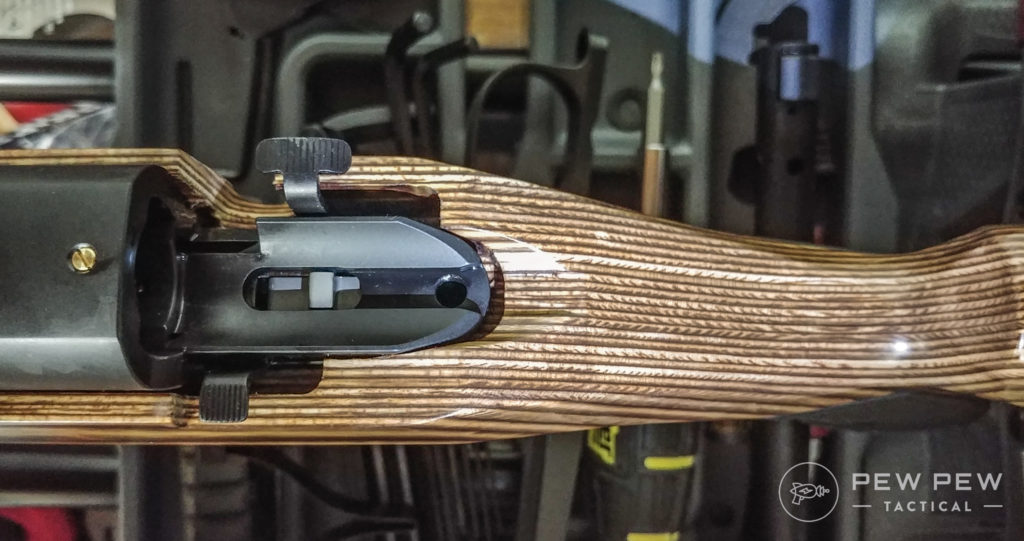
I mounted a 300 Win Mag Howa 1500 Barreled Action in my AT-One because I wanted to make sure it could take the heavy pounding that comes with a 300 Win Mag.

After several range trips, I’m happy to say that even using hot 300 Win mag loads – this stock is holding up just fine. Better than my shoulder is at least!

Howa 1500 in Boyds AT-One, 300 Win Mag
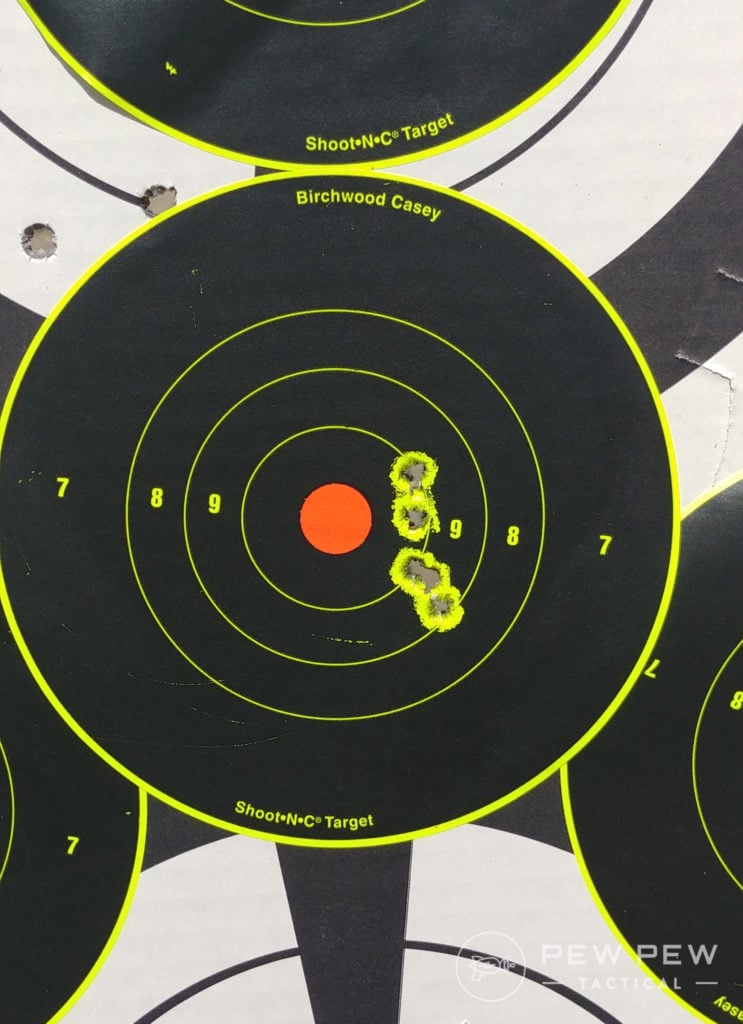
Howa 1500 in Boyds AT-One, 300 Win Mag. 5-shot group 3/4 MOA

The AT-One also makes for a good shooting rifle – the Howa 1500 BA I had mounted in it is a great rifle action, but the free floated Boyds stock allowed me to shoot this 3/4 MOA group at 150 yards.

Who is it for?

While the AT-One is a jack-of-all-trades, it does each role very well – just not perfectly. But that is exactly what many of us need in a stock, something that just works no matter what it is we’re doing.

If I want to work on my shooting at the range, the AT-One has enough adjustments to let me do that in almost any stance or configuration I want. If I want to let a friend use my rifle for the day, they can quickly adjust the settings to suit them.

It’s also great for my “do-all” hunting rifle. California summers mean thin clothing, but Montana mountains mean thick jackets.

The AT-One lets me go hunting in either without an issue since I can easily change the settings to match what I’m wearing, doing, or hunting.

In the interest of full disclosure…

I have to mention that this wasn’t the first AT-One sent to me, it’s actually the second. The first wasn’t cut correctly and was off by about 2.5mm, while that doesn’t sound like a lot – it was enough so that the action wouldn’t mount in it.

Howa 1500 in Boyds AT-One, 2.5mm out of spec
AT-One 2.5mm out of spec. Sometimes things happen, it’s the customer service that you get afterward that matters – and Boyds is well known for their great CS staff!

Boyds was on the ball though and had a new one shipped out to me in short order, the new stock had zero problems. Everything dropped in just perfectly.

Boyds Platinum

This is the classic, the wood stock that you think of when you think of “wood stock”. It’s also the stock that I would choose 9 times out of 10.

Howa 1500 in Boyds
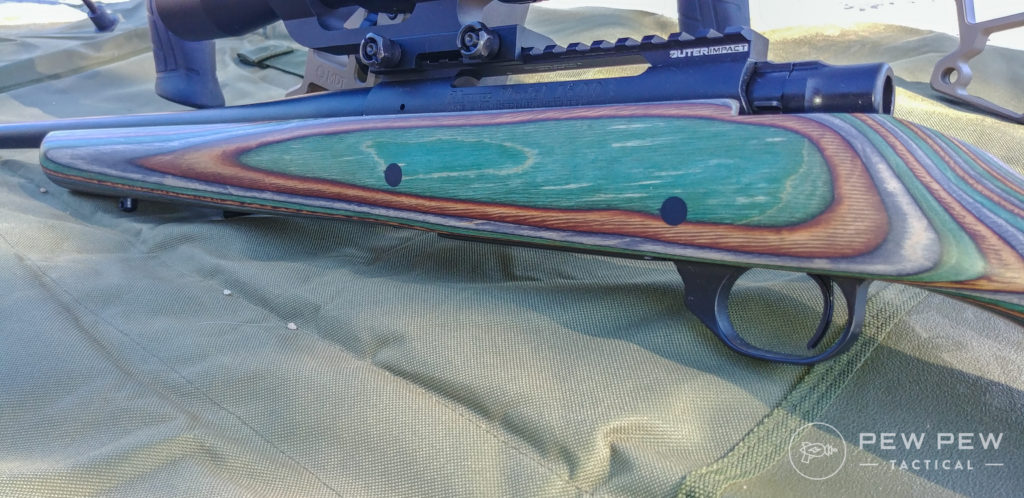
Boyds Platinum Stock

While it doesn’t offer the in-the-field adjustment ability of the AT-One, it can be customized when you order it for length of pull, grip, color, type, and a bunch more options. Boyds makes it really easy to get the stock you want right from the start.

It’s beautiful, strong, and lightweight. Everything you want from a good stock.

Don’t let the basic look of the Platinum fool you, either.

Boyds stocks are free-floated, have multiple attachment points for slings or bipods, and feel solid in your hands – something that is sorely lacking from most standard stocks these days.

Who is it for?

Everyone. Really, everyone.

From the new shooter with their Ruger 10/22 to the grandfather hunting his 1,000th deer, this is a great stock for you.

It doesn’t matter if you’re building your rifle from the ground up or if you’re just looking for an easy upgrade for a rifle you bought at a big box store, this is a great stock for you.

I think that is what I love most about the Platinum. Between the price point, the options offered, and the ease of installation – throwing almost any rifle you have into a Boyds is not only possible but can be realized without breaking into your piggy bank.

Howa 1500 in Boyds

Take a close look at the picture above and you might be wondering why I have the scope mounted like that. I decided to use the Platinum to build a sort of scout-rifle -ish build.

Why? Well, because I picked up a Vortex 2-6x Scout scope on sale and wanted to play with it.

It actually worked a lot better than I thought it would! I’ve never been impressed with the Scout-Rifle Concept, but after building a sort of kind of version of it – I can dig it.

Meat, it
.30-06 shot off-hand, standing, 75 yards. 2.24 MOA

Shooting standing with a sort-of tree branch for support, my little Scout build put a respectable group at 75 yards. This is clearly nowhere near what the real accuracy of the rifle is (sub-MOA when shot off a bench with front and rear bags), but for standing and only slight support – I was happy with it.

Definitely proved to be minute-of-deer at least!

Aim for the heart and lungs!

By the Numbers

Reliability 5/5

Zero issues at all with either stock, both allowed the rifle to work exactly as intended with no hiccups.

Accuracy 4/5

Both the AT-One and the Platinum were free-floated and that helped give me the accuracy I wanted, but since the stocks are wood and aren’t bedded I didn’t have as much accuracy as I know is possible with the Howa 1500. That said – both were still 1 MOA or better with every group using decent ammo, and that is more than enough accuracy for 99% of applications.

If you wanted though you could glass bed your action and improve accuracy by a small margin.

Ergonomics 5/5

Ergonomics are going to rely on you as much as it does on Boyds, since they give you the options of ordering the length of pull and other measurements that you want, you need to know those numbers before ordering. As long as you take the time to know what you want, Boyds will deliver right on the money for you.

Looks 5/5

If I could give a 10 out of 5 I would! These stocks look and feel even better in person than they do in pictures. If you want to see a boatload of options for style and color, I strongly recommend looking through the Boyds Gallery before ordering.

Customization 5/5

Colors, shapes, engravings, and a lot more are customizable when you order your stock. Take your time and pick out all the options you want!

Bang for the Buck/Value 5/5

The price is low and the value is high. You’re getting an almost totally custom stock for the price of mass-produced plastic, that’s just awesome.

Overall Rating 4.5/5

In all – I’m a big fan of these stocks now. If you’re looking to do a simple upgrade that makes a world of difference, this would be my top choice. If you’re looking to turn a standard rifle into your rifle, this is what you want.

But Wait, There’s More!

Boyds doesn’t JUST offer stocks for hunting rifles, they also have furniture for AR-15s, AK-47s, M1 Garands, M14s, M1 Carbines, and even Mosin-Nagants!

Bringing the same level of detail and dedication to military style stocks as they do to their hunting and plinking lines, Boyds has done an outstanding job of offering the market an option for nearly everything.

Parting Shots

Easy to install, high quality, wonderful to use, and for a price almost anyone can afford. Boyds does an outstanding job of delivering on every level and has been doing so for decades.

Howa 1500 in MDT and Boyds

Don’t forget to check out my other article on the Howa 1500 Barreled Action! Combining a Howa with a Boyds makes for an amazing hunting rifle.

Do you have a Boyds gun stock? Let us know about it in the comments! And check out more of our favorite guns and gear in Editor’s Picks.

Air Venturi Avenger Review

0

Before you become an expert hunter, you need hours and hours of practice. 

It isn’t always easy to navigate through the wide world of hunting.

Where should you practice hunting? Should you begin with a small game or a medium game? Which rifle should you practice hunting with?

These are just some of the questions you might encounter as you begin hunting. 

Trust me, I used to have the same questions that you do now. 

With all the hunting experience I have by now, one thing is clear to me: the gun and setting that you begin practicing hunting with will make or break your entire experience with this sport.

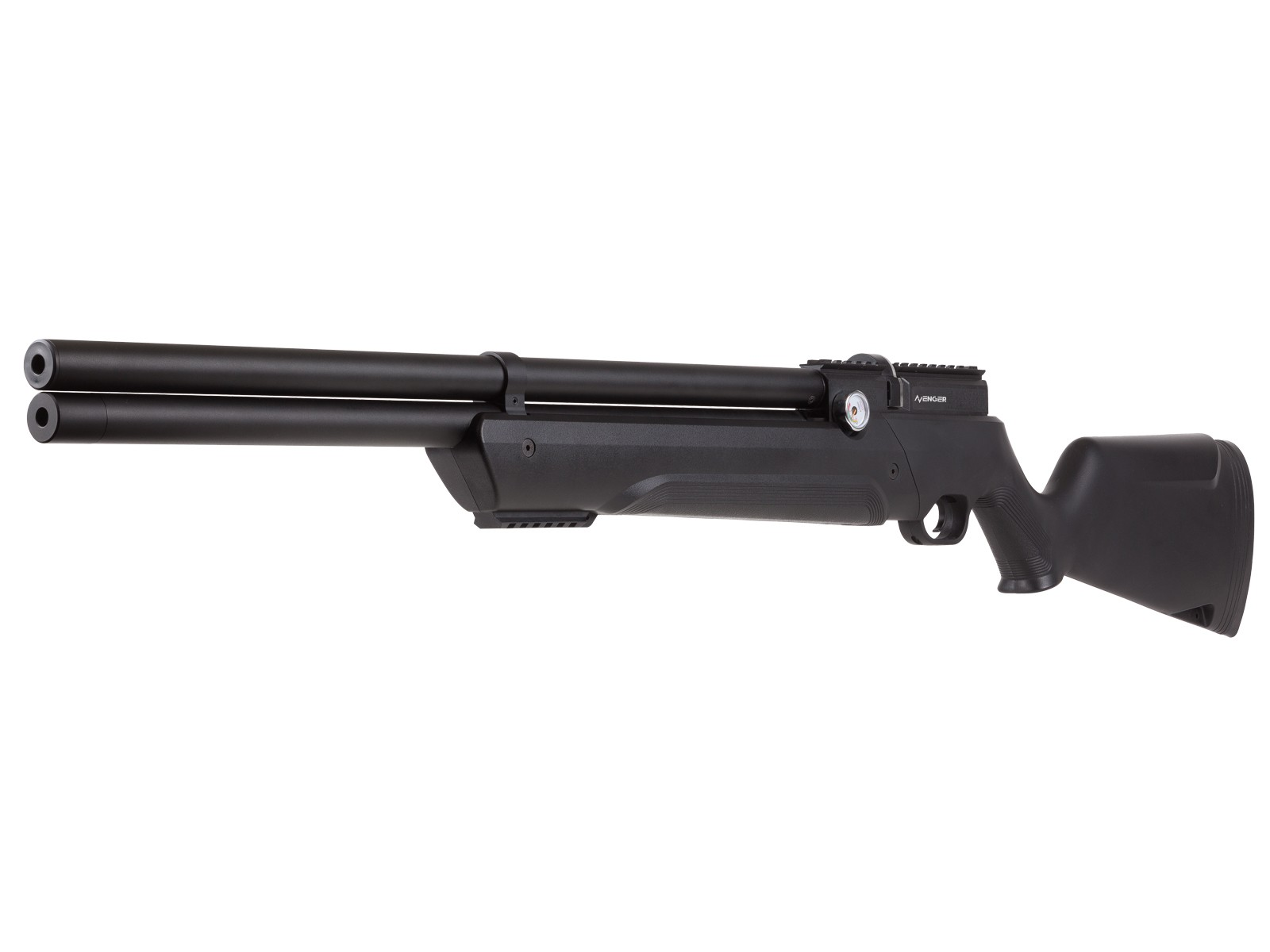
So, to make this intimidating world a little easier for you, there is a review of one of the most sought-after beginner guns – the Air Venturi Avenger. 

Now, if you have considerable hunting experience, you might have seen even experienced people using this gun to hunt small game. 

The Air Venturi Avenger is actually used by both skilled hunters and beginners alike. 

So, no matter what experience level you have, this review of the Air Venturi Avenger will have something for you. 

It might answer one of the biggest questions that you have seen floating around – Why is the Air Venturi Avenger so popular and sought after?

(For more on the best PCP air rifle on the market, see this post)

Air Venturi Avenger Complete Review

To give you the best possible idea of using the Air Venturi Avenger, let’s take a look at each feature of this air rifle:

Gun Type

Air rifles are available in various types including PCPs, Spring-Powered Piston, Variable Pump, CO2 Powered, and Gas Piston. 

Now, the Air Venturi Avenger is a pre-charged pneumatic (PCP) air rifle. Therefore, it contains high-pressurized air in its chamber for propelling the bullets.

Stock

The Air Venturi Avenger is available in three different stocks as mentioned below:

1. Synthetic Stock 

Air Venturi Avenger with synthetic stock has a sleek and classy feel to it due to its black finish. It weighs just around 6 pounds, making it comfortable to use. 

You will also find that the stock contains stippling in the pistol grip, along with forestock and integrated sling mounts. 

2. Wood Stock 

If you’re not a fan of the synthetic stock and prefer the old-school stocks, opt for Air Venturi Avenger in the wood finish.

The solid wood finish gives an absolute sturdy appearance to the air rifle. It also adds up to the weight, as this one weighs around 7 pounds. Apart from this, you can expect a stable and firm hold from this rifle. 

3. Bullpup 

Finally, Air Venturi Avenger is available in bullpup type and weighs around 7.5 pounds. Its appearance is somewhat similar to the synthetic stock, but you can expect some clear differences.

Ammo

The Air Venturi Avenger has pellet-type ammo.

Sight

The Air Venturi Avenger doesn’t have any sighting system included in it. You won’t find any iron sights or even bundled scope in this rifle. 

Now, it may seem like a limitation, but it has actually reduced the rifle’s price. Also, it allows users to mount the scope they like with the rifle. 

Trigger

The Air Venturi Avenger has a two-stage adjustable trigger. Note that the trigger action of the Air Venturi Avenger is zero.

You’ll find that you can adjust the pull weight, sear engagement, and length of the trigger externally too. 

The best part is that the trigger included in the Air Venturi Avenger bullpup offers an ergonomic feel too. This is quite tricky with bullpup-style rifles.

Cocking and Loading

The Air Venturi Avenger has a side lever and an adjustable regulator.

It also has dual triggers, both of which are easily adjustable.

In the dual gauges of this air gun, the one on the right has regular pressure whereas the one on the left has fill pressure.

This gun also has a fully shrouded barrel and manual safety.

Moreover, the Air Venturi Avenger has two magazines and a one-shot tray.

Lastly, this gun has a fire mode repeater.

Velocity, Accuracy, and Power

The Air Venturi Avenger is known for having impressive velocity, accuracy, and power. In fact, this air gun will give you the best velocity, accuracy, and power for the price range that it belongs to.

The table below demonstrates the FPE and FPS of Air Venturi Avenger with various pellets.

Accuracy

CalibersPelletsDistancesGroups
.22JSB Diabolo Exact Jumbo Heavy 18.13 gr50 yards1/2"
.25JSB Match Diabolo Exact King 25.39 Gr35 yardsnickel size
.22JSB Diabolo Exact Jumbo Heavy 18.13 gr10 yardsone hole
.22JSB Match Diabolo Hades 15.89 Gr25 yards0.41"
.22JSB Match Diabolo Hades 15.89 Gr50 yardsone hole
.25JSB Match Diabolo Exact King 25.39 Gr30 yardsone hole
.22Air Arms Diabolo Field Heavy 18 grain50 yards1"
.177JSB Exact heavy Diablo 10.34 gr25 yards1/4"
.177JSB Exact heavy Diablo 10.34 gr50 yards1/2"
.177JSB Exact heavy Diablo 10.34 gr100 yards1 1/2"
.177JSB Exact heavy Diablo 10.34 gr27 yards0.26"
.22JSB Match Diabolo Hades 15.89 Gr107 yards2"
.22JSB Diabolo Exact Jumbo Heavy 18.13 gr50 yards3/4"
.22H&N Barracuda Match 21.14 gr25 yardsone hole
.22H&N Barracuda Match 21.14 gr50 yards1/4"
.22JSB 18 gr50 yardsone hole
.22JSB Diabolo Exact Jumbo Heavy 18.13 gr40 yardsdime size
.22JSB Diabolo Exact Jumbo Heavy 18.13 gr50 yardsnickel size
.22JSB Match Diabolo Exact Jumbo Monster 25.39gr30 yardsone hole
.22JSB Beast Jumbo 34 Gr50 yardsdime size
.22Crosman Premier Hollow Point 14.3 Gr20 yardsone hole
.22JSB Diabolo Exact Jumbo Heavy 18.13 gr50 yards0.5"
.22JSB Diabolo Exact Jumbo Heavy 18.13 gr75 yards.688"
.22JSB Diabolo Exact Jumbo Heavy 18.13 gr100 yards1.25"
.25JSB Match Diabolo Exact King 25.39 Gr50 yardsone hole
.22Crosman Premier 14.3 Gr45 yardsone hole
.25JSB Match Diabolo Exact King 25.39 Gr50 yards0.45"
.22JSB Exact Jumbo Monster 25.39 gr50 yards0.33"
.22JSB Diabolo Exact Jumbo Heavy 18.13 gr50 yards0.38"
.22NSA Slugs 20.2 gr50 yards0.59"
.22FX Hybrid Slugs 22gr50 yards0.48"
.22H&N Slug HP 21 gr
50 yards0.62"
.22FX Hybrid Slugs 22gr100 yards1.55"
.22FX Hybrid Slugs 22gr50 yards0.42"
.22Jumbo Exact 16 gr50 yards1.07"
.22Patriot Javelin Slugs 23 gr50 yards0.63"
.22Patriot Javelin Slugs 23 gr100 yards1.67"

Chrony tests

CalibersPelletsFPSFPE
.25JSB Diablo MKII Heavies, 33.95 gr843 53.59
.22JSB Diabolo Exact Jumbo Heavy 18.13 gr86530.13
.22JSB Monster 25.39 gr87342.98
.22JSB Match Diabolo Hades 15.89 Gr85025.5
.25JSB Match Diabolo Exact King 25.39 Gr91046.7
.25JSB Match Diabolo Exact King 25.39 Gr90045.68
.25H&N Barracuda 31.02 gr83347.81
.22JSB Match Diabolo Hades 15.89 Gr88027.33
.22JSB Monster 25.39 gr91246.9
.22JSB Match Diabolo Hades 15.89 Gr89027.96
.22JSB Diabolo Exact Jumbo Heavy 18.13 gr90032.62
.25Slug 41 gr78556.12
.22Slug 25 gr82537.79
.22JSB Diabolo Exact Jumbo Heavy 18.1 Gr93234.92
.22Crosman Premier 14.3 Gr95028.66
.25JSB Hades 26.54 gr91749.57
.22JSB Beast Jumbo 34 Gr85054.56
.22Crosman Premier Hollow Point 14.3 Gr82221.46
.25NSA Slugs 26.8gr 90248.43
.25JSB Match Diabolo Exact King 25.39 Gr94450.25
.25JSB Match Diabolo Hades 26.54gr875 45.13
.22Crosman Premier Hollow Point 14.3 Gr97630.25
.22JSB Exact Jumbo Monster 25.39 gr89044.67
.22JSB Diabolo Exact Jumbo Heavy 18.13 gr86730.27
.22NSA Slugs 20.2 gr94840.32
.22FX Hybrid Slugs 22gr90840.29
.22H&N Slug HP 21 gr
84633.38

As you can see, Air Venturi Avenger can deliver a power-packed performance with its high muzzle energy!

Note that this rifle is excellent for both small and medium hunting games. However, it might not be the best for big hunting games. For a big hunting game, you should opt for a rifle with an FPE above 50.

A veteran hunter, Keith Warren, dropped 4 hogs in just 1 minute with the Air Venturi Avenger:

Noise

The Air Venturi Avenger has three medium loudness levels. But you can easily find a moderator to make it silent when it shoots.

Moreover, Air Venturi Avenger comes with a built-in shrouded barrel that can help with noise dampening, making it backyard-friendly.

However, note that it’s not the quietest PCP rifle out there, as some users have complained about its noise.

Maintenance

Similar to other guns, the Air Venturi Avenger is best stored with slight pressure in the fill.

 Shooting Range and Intended Use

The Air Venturi Avenger is intended to be used for small game or hunting practice. It can shoot out quite accurately to 50 or 100 yards too.

Warranty

The Air Venturi Avenger has a limited warranty of one year.

Specifications

You can find Air Venturi Avenger 25 caliber with a 10 magazine capacity, Air Venturi Avenger 22 caliber, and Air Venturi Avenger 117 caliber with an 8 magazine capacity.

The length of the Air Venturi Avenger is 42.75 inches, out of which the barrel has a length of 22.75 inches.

The weight of the Air Venturi Avenger is 6.4 lbs.

Customer Reviews

I probably don’t need to tell you the craze about Air Venturi Avenger in the hunting world. Most customers are raving about its accuracy, repetitive shots, adjustable nature, and reduced weight. 

However, a few customers have complained about low-quality synthetic stock and a poor magazine cover.

The Air Venturi Avenger is an excellent choice for beginners as well as for shooting small games.

Pros and Cons

ProsCons
  • Excellent value for the money
  • Lightweight and well-balanced
  • Powerful and easy-to-use
  • Light weight and easy to load magazines
  • Easy to cycle the bolt for loading
  • Great trigger adjustment and regulator pressure adjustment
  • The stock is hollow

Price

The price of the Air Venturi Avenger begins at around 300 dollars.

How much your Air Venturi Avenger will cost you depends on the specifications that you opt for in your gun.

Air Venturi Avenger vs Benjamin Marauder

CategoryAir Venturi Avenger Benjamin Marauder
VelocityBetween 900 to 1000 fps1100 fps
Loudness3 medium level noise74 decibels
Size42.75 inches and 6.4 lbs48 inches
Price300 USD onwards400 USD onwards

The Benjamin Marauder air gun has a velocity between 680 to 830 fps whereas the Air Venturi Avenger has a velocity between 900 to 1000 fps.

The Air Venturi Avenger has a 3 medium-level noise whereas the Benjamin Marauder makes a sound of at least 74 decibels.

The Air Venturi Avenger is 46.1 inches in size and weighs 3.3 lbs whereas the Benjamin Marauder is 48 inches.

The price range for the Air Venturi Avenger begins at 300 USD whereas the Benjamin Marauder will cost you around 400 USD.

Air Venturi Avenger vs Umarex Gauntlet

CategoryAir Venturi Avenger Umarex Gauntlet
VelocityBetween 900 to 1000 fpsBetween 800 to 1075 fps
Loudness3 medium level noiseBuilt-in barrel to reduce noise
Size42.75 inches and 6.4 lbs46.1 inches and 3.2 lbs
Price300 USD onwards450 USD onwards

The Umarex Gauntlet has a velocity between 800 to 1075 fps whereas the Air Venturi Avenger has a velocity between 900 to 1000 fps.

The Air Venturi Avenger has 3 medium-level noise whereas the Umarex Gauntlet has a built-in barrel to reduce noise.

The Umarex Gauntlet is 46.1 inches in size and weighs 3.3 lbs whereas the Air Venturi Avenger is 42.75 inches in width and weighs 6.4 lbs.

The price range for the Air Venturi Avenger begins at 300 USD whereas the Umarex Gauntlet will cost you around 450 USD.

Umarex Origin vs Air Venturi Avenger

CategoryAir Venturi Avenger Umarex Origin
VelocityBetween 900 to 1000 fps1100 fps
Loudness3 medium level noiseBuilt-in barrel to reduce noise
Size42.75 inches and 6.4 lbs43.1 inches
Price300 USD onwards350 USD onwards

The Umarex Origin has a velocity of 1100 fps whereas the Air Venturi Avenger has a velocity between 900 to 1000 fps.

The Air Venturi Avenger has 3 medium-level noise whereas the Umarex Origin has a built-in barrel to reduce loudness.

The Umarex Origin is 43.1 inches in size whereas the Air Venturi Avenger is 42.75 inches in width and weighs 6.4 lbs.

The price range for the Air Venturi Avenger begins at 300 USD whereas the Umarex Origin will cost you around 350 USD.

Umarex Gauntlet 2 vs Air Venturi Avenger

CategoryAir Venturi Avenger Umarex Gauntlet 2
VelocityBetween 900 to 1000 fpsBetween 985 to 1075 fps
Loudness3 medium level noise4 baffle design to reduce the loudness
Size42.75 inches and 6.4 lbs48.75 x 9.75 x 4.25 inches
Price300 USD onwards450 USD onwards

The Umarex Gauntlet 2 has a velocity between 985 to 1075 fps whereas the Air Venturi Avenger has a velocity between 900 to 1000 fps.

The Air Venturi Avenger has a 3 medium-level noise whereas the Umarex Gauntlet 2 has a 4 baffle design to reduce loudness.

The Umarex Gauntlet 2 is 48.75 x 9.75 x 4.25 inches in size whereas the Air Venturi Avenger is 42.75 inches in width and weighs 6.4 lbs.

The price range for the Air Venturi Avenger begins at 300 USD whereas the Umarex Gauntlet 2 will cost you around 450 USD.

Frequently Asked Questions

Where Is Air Venturi Avenger Made?

The Air Venturi Avenger air rifle is manufactured by Air Venturi Ltd. They are based in Solon, Ohio – which is where these air rifles are also produced.

How Loud Is the Air Venturi Avenger?

The Air Venturi Avenger has three medium loudness levels.

But you can find an Air Venturi Avenger moderator in gun stores very easily.

How Many Shots Air Venturi Avenger Shoot?

The Air Venturi Avenger shoots 24 shots per fill.

Where To Buy Air Venturi Avenger?

Although it is produced in Ohio, you can find the Air Venturi Avenger in stock in gun stores all across America.

In fact, this gun is so popular that you can find Air Venturi Avenger for sale in gun stores in different countries worldwide.

Do Coyotes Dig Holes? (All About Their Digging Behavior)

0

Sharing is caring!

Last Updated on October 11, 2024 by Tommy

Coyotes are great at digging holes, and there are many reasons that coyotes dig. The most common reason that coyotes use their digging talents is to create underground burrows where they raise their pups and hide from predators.

They also use their digging abilities to tear apart and hide food. Coyotes dig for food like rodents, worms, and foxes. Coyotes may also dig for carrion if given the opportunity. Digging is one of the most common ways that the coyote supports and protects itself.

You can prevent coyotes from invading your property by using galvanized wire. Install an underground barrier, which prevents coyotes from digging under your fencing. You should bury the galvanized wire at least five-and-a-half inches deep around the fence perimeter.

Do Coyotes Dig Holes, Dens, or Burrows?

Coyotes dig holes so they may sleep in dens and burrows. These wild canines are a common predator to many small animals and insects. However, they are also, themselves, prey to many larger animals like wolves and mountain lions.

Do Coyotes Dig Holes?

Coyotes dig holes for many purposes, such as safety, comfort, and finding food.

Digging is one of the many talents coyotes have that help them remain at the top of the food chain despite their small size. Coyotes use digging to steal burrows, dig up rodents, and hide from larger predators underground.

Do They Dig Their Own Dens And Burrows?

Coyotes dig their own dens and burrows. The average coyote den is only a few feet in size. But may range up to fifty feet, with several openings and rooms.

Although coyotes can dig their own burrows, they may also steal them from other animals too.

Will Coyotes Sometimes Take Over Dens From Other Animals?

It is common for coyotes to take over dens from other small animals like foxes, rabbits, and other animals. If the den they find is not big enough for them, the coyote will dig the burrow so they can fit easier.

Coyotes typically take dens from other medium-sized carnivores like skunks and raccoons. In the process, they either consume the animal or run them out of the territory.

How Do Coyotes Build Their Dens?

The most common way that coyotes build dens is by digging an underground burrow that goes at least one foot underground. They will also build dens by stealing dens from other animals and then digging them wider.

Coyotes also build dens by digging into fallen or rotted tree trunks. Rotted trunks are great temporary dens because they are easy to build, provide protection, and are great for escaping harsh weather.

How Deep Can Coyotes Dig?

Coyotes can dig very deep. There is no exact measurement available because they are always adapting to new behaviors. Since the coyote is a great digger, that means without preventative measures, the coyote can dig underneath unprotected fences very easily.

Do Coyotes Dig Tunnels?

Coyotes do not dig tunnels, but they will dig large burrows that may have several entrances. These dens with numerous entrances can easily be mistaken as tunnels because of how large they eventually become.

Do Coyotes Bury Their Food?

Coyotes sometimes bury their food. Burying their food allows the coyotes to hide their meal from larger predators like mountain lions and wolves while they are away. Then, they may return and eat the rest of their meal later.

Will a Coyote Dig Up Dead Animals?

A coyote will dig up dead animals if they smell them. One of the main parts of the coyote’s diet is carrion. Even if the coyote does not eat the dead animal, they take joy in rolling its body in the dead animal so it may enjoy the rotting smell.

Do Coyotes Dig For Grubs, Moles, Mice, or Other Things To Eat?

Coyotes are opportunistic hunters. Being an opportunistic hunter means that the coyote might dig in the ground for worms and grubs, if necessary.

Will A Coyote Dig Up Your Lawn or Flower Beds?

Coyotes do not typically dig up flower beds unless they are interested in what you have planted inside of the flower bed. In some cases, the opportunistic coyote might become interested in the smell of certain vegetables and become enticed to try the various plants in your homemade garden.

A coyote may also dig up your garden because of insects, small mammals, and rodents that live in your garden.

Did A Coyote Dig That Hole? What To Look For

Coyote holes are large, typically a foot wide. Pay attention to the exterior if you suspect a coyote dug the hole. Several visual indicators may signal that a coyote has dug the hole.

Visual indicators that a coyote dug the hole include:

  • The presence of medium-sized canine footprints
  • Dirt is flung in several directions and piles (like a dog)
  • Feces resembling a domestic dog nearby the hole
  • Skeletal remains of small animals, rodents, birds, etc.
  • Large claw marks

Coyotes are visually similar to domestic dogs. If you notice feces, hair, or footprints that look similar to a canine, that could indicate you are in the territory of a coyote. The coyote has a similar digging technique as the domestic dog.

They are slightly sloppy and dig with their dirt in piles. If you notice dirt clumped in messy piles, this is an indication of a canine hole.

You may also choose to listen to your surroundings. If you hear howling at night near the hole, that is a common sign that a coyote owns that burrow.

Other Animals That Might Dig Up Your Lawn

Many animals might be digging up your lawn without you knowing. In fact, the presence of these animals on your lawn might attract coyotes. No matter what you try, unless you rid yourself of these small pests, coyotes will continue returning for this food source even after it begins to rot.

Common animals that dig up backyards include:

  • Domestic dogs
  • Badgers
  • Skunks
  • Rats or mice
  • Groundhogs
  • Opossum
  • Moles
  • Raccoons
  • Gophers

If dirt is pushed from underground toward the surface, that indicates that a small animal is burrowing underground. Unlike coyotes, pushing dirt from under the ground is an indication that the animal lives underground.

Removing smaller animals from your yard can prevent coyotes from entering your yard. Most of these animals attract coyotes and may lead to a coyote infestation if you are not careful.

Can Coyotes Dig Under Fences? Or Get Into Chicken Coops?

Coyotes are known for sneaking into chicken coops to eat chickens and eggs. They have an easy time digging underneath fences as well as jumping over fences. To ensure that coyotes will not get into your chicken coop, you must make your chicken coop and your fence coyote safe.

How To Make A Barrier Coyote Proof

To make a barrier coyote-proof, you must extend your fence at least five-and-a-half feet underground. An underground fence prevents the coyote from digging under your fence. In most cases, coyotes will give up when their attempts are obstructed.

Good barriers to place underground are barbed wire, chicken wire, and galvanized wire. When a coyote feels this, it will no longer dig in that area. Farmers may also recommend surrounding fences with tripwires, if possible.

Sharing is caring!

The Top New Elk Calls of 2024

0
The Top New Elk Calls of 2024

(Affiliate Disclosure: This page contains affiliate links. We earn from qualifying purchases.)

I vividly remember attending a calling seminar by elk hunting legend Wayne Carlton when I was around 14 years old. Carlton put on one of the most entertaining seminars I have ever heard. After the show, I talked my dad into buying us one of Carlton’s new Fight’n Cow calls.

A couple of months later, on the opening day of Idaho’s archery elk season, after an uneventful morning, my dad and I were sitting high on a ridge, eating a sandwich and wondering what to do next. Finally, after some coaxing, Dad decided to try the new cow call. He assured me that every elk on the mountain would run the other way from the dreadful whining noise the call produced. After a short cadence of calls, though, he was proven wrong and I was blown away. You had to be there to believe it, but that mid-morning quietness was shattered by bulls bugling and coming to us from multiple directions. Over that season, we called in numerous bulls and got several shot opportunities using our newfound tool.

To my mind, the elk had never heard those noises from anything other than an elk, so when they heard it, they came to see an elk. As you can imagine, the initial effectiveness wore off over time, and they became like other elk calls – effective if used properly, but no longer the sure thing we experienced that first season.

Calls Have Comes a Long Way

Beyond the fighting cow and similar estrus-type calls, there has been a significant advancement in all elk calls, including diaphragms and grunt tubes. We as humans can imitate the sounds of live elk better than ever before, and new and existing companies are pushing the envelope and improving their offerings season after season. Here are some of the latest and best calls for your 2024 hunt.

Classic Call Companies

Rocky Mountain Hunting Calls

Rocky Mountain Game Calls has been in the game, producing quality elk calls, for a very long time, and that’s still the case today.

bullbasher

The Bull Basher Bugle Tube is a hybrid bugle with a molded body and aluminum mouthpiece. The aluminum mouthpiece allows for high pitches, and the helical “spitter” in the mouthpiece helps with airflow and makes controlling volume easier. Couple this with a throat design that provides optimal back-pressure and you can easily create a full range of bugles, chuckles and grunts. The best part is you get all this in a bugle only 18 inches in length.

rmhc-3pack

The Steve Chappell 3 Pack Signature Series of diaphragms is a tremendous set of all-around calls that is very user-friendly and can make the full range of calls, from cow/calf mews to bugles from satellites and herd bulls. Made with the company’s successful GTP frame, these diaphragms will surely be a hit with serious elk hunters and beginners alike.

voodoo

Rounding out Rocky Mountain Game Calls is the Voo Doo cow call. This external call is made with an acrylic barrel with vented holes to create ultra-realistic cow and calf sounds, and the ever-important estrus sounds for which this type of call is known.

Primos

Primos is another company that has been on top of the game call industry for many years, and for good reason: they make great stuff.

primos_bullet_bugle_hero

If you are looking for a compact bugle that’s super easy to operate, look no further than the Bullet Bugle Elk Call. This bugle uses the patented support shelf mouthpiece that lets you attach the famous snap-on blue reeds Primos perfected years ago. This system is highly user-friendly and perfect for those who struggle to use a diaphragm call to bugle, but still want to make great elk sounds.

primos_toppin

The Top Pin is an excellent diaphragm in the Primos line. The sentry plate is set at the perfect angle for producing cow, calf and small bull sounds, and the single latex reed is very thin and easy to use.

primos_tramplifier_long_range_new

Primos’s newest external reed cow call is the Tramplifier Open Reed. This open, single-reed call creates clear, high-pitched cow and calf noises and estrus sounds thanks to the acrylic barrel and soundboard. Available in long- and short-range models for locating or using in tight cover for that final call-in.

Native by Carlton

Years ago, Wayne Carlton sold his original company, Carlton Calls, to Hunter Specialties. Later in life, Wayne and his son Marc started Native by Carlton. They have a wealth of elk-hunting and call-making knowledge that goes into every Native call the manufacture.

nativebjpg

New for 2024 is the Hunters Tube with Acrylic Mouthpiece. Many guys testing multiple bugle tubes say his bugle has exceptional back-pressure, which allows you to create the guttural groans and deep bugles that real elk make. Couple that with the acrylic mouthpiece that puts your lips in the perfect position for bugling, and you indeed have a bugle capable of making ideal elk sounds.

native-yellow

The new Yellow V3 Elk Diaphragms come in three sizes to ensure a model for everyone and three weights of latex to accommodate newcomers and the most seasoned elk callers. This call should be perfect for making the biggest bugles and soft cow and calf sounds, so you won’t need to change diaphragms in the field constantly.

New to the Game

Phelps Game Calls

I won’t say Phelps is a “new” company, but they haven’t been around as long as the above companies. However, they have been a strong player in the call industry for quite some time now, producing top-notch calls worthy of consideration.

phelps-unleashed

This year’s newest addition is the Unleashed V2 Bugle Tube. At 12.5 ounces and 20 inches long, the V2 is smaller than the original Unleashed tube. Still, it delivers impressive volume and tremendous back pressure, allowing you to make the full spectrum of bugles, chuckles and grunts. This bugle comes with the EZ bugler and flared mouthpiece, so you can use the tube whether you can blow a diaphragm call or not. Another great feature is the full neoprene cover that looks good but, more importantly, keeps the bugle from making noise when clanked against your other equipment or brush.

phelps-pink

The Phelps Signature AMP Elk Diaphragm is an excellent call for the experienced caller. This call isn’t quite as sensitive or easy to blow as some of the other Phelps calls, but when used by someone who knows how to use a diaphragm call, it can make fantastic elk sounds. I strongly recommend this call when you want to step up your game.

phelps-ez-sukr

One of the more unique elk calls made in the past couple of years is the EZ SUK’R. This call is perfect for those who want to make subtle cow and calf noises but struggle to use diaphragm calls. This call can be used entirely hands-free and make cow sounds while you inhale on the call. It sounds a little strange saying that, but soon after you get your hands, or should I say mouth, on one, you will quickly see how easy this call is to use.

Born and Raised Call Company

If you don’t know who Born and Raised is, you likely don’t spend much time watching hunting videos online. The crew at Born and Raised get after the elk and have a good time doing it. A few years ago, they started making their line of game calls and are doing great with this venture.

bro

They have been working hard perfecting their bugle tubes and have hit a home run with The Bomb Bugle Tube. This tube is 21 inches long, but incredibly weighs just 8.2 ounces. Still, the tube has thicker side walls for increased volume, and the Bomb Bass chamber creates low-end sounds that travel deep into the canyons to locate far-off bulls.

september

A new favorite diaphragm of mine has the perfect name: September. If you are a beginner, you might buy a different call in their lineup. If you are experienced, though, this call can make some of the loudest, most aggressive bugles possible due to its tighter stretch. You can also make most cow noises as well.

bro-soundbite

The easy-to-use Soundbite is an excellent open-reed call for users of all skill levels. This acrylic-bodied call has a J-Frame soundboard that’s easy to use, but also allows users to tune the sound to their personal preferences. Each call comes with three reeds and an extra band as well.

Slayer Calls

The newest manufacturer in this round-up is Slayer Calls. They may be a new company, but they aren’t strangers to calling and have brought plenty of experience and put it to work.

slayer-archangel

The ArchAngel Acrylic Elk Call is a big tube that means business. It only weighs 10.7 ounces, but packs a big punch when making loud elk sounds. The acrylic mouthpiece delivers smooth sounds to the large tube, producing a great final result.

slayer-endure

The Endure (Green) diaphragm is made for intermediate or more advanced callers who want a call more tailored toward making a wide array of bugles, grunts and chuckles.

slayer-external

If you struggle to blow a mouth diaphragm, the Enchantress Push Elk Call is for you. By applying different pressure levels, you can make every elk sound there is. You can even screw it onto their tube for bugling in big bulls.

What are air rifle pellets made of?

0

Air rifle pellets have been traditionally made of lead or lead alloy. However, in recent years, manufacturers have experimented with different materials, such as bismuth and tin alloys, iron, zinc, and tin. Some pellets are even made of plastic. In this blog post, we will explore the different materials air rifle pellets can be made of and the advantages and disadvantages of each.

Why are airgun pellets made of lead?


The traditional material for airgun pellets is lead because it is soft and malleable. This means it can be deformed upon impact without shattering, which makes it ideal for use in air rifles. Lead is also relatively heavy for its size, which gives it good momentum when fired from an air rifle.

One of the disadvantages of lead pellets is that they can be harmful to the environment if not disposed of properly. Lead is a toxic metal that can leach into the soil and contaminate groundwater. It can also be harmful to animals if ingested. For these reasons, some countries have banned the use of lead pellets altogether.

Copper-coated airgun pellets


Copper-coated airgun pellets are made by coating a lead pellet with a thin layer of copper. The copper coating protects the lead core from corrosion and makes the pellet more aerodynamic. Copper-coated pellets are generally more accurate than traditional lead pellets because they are less affected by crosswinds.

The main disadvantage of copper-coated pellets is that they are more expensive than traditional lead pellets. Copper is a more expensive metal than lead, so copper-coated pellets typically cost 20-30% more than their lead counterparts.

Lead-free airgun pellets


Lead-free airgun pellets are made of alternative metals, such as alloys of bismuth and tin – or iron, zinc, and tin. These alternative metals are less dense than lead, so they are not as effective for long-range shooting. Lead-free pellets are also less aerodynamic than traditional lead pellets, so they are less accurate in crosswinds.

The advantage of lead-free pellets is that they are not harmful to the environment like traditional lead pellets can be. Lead is a toxic metal that can leach into the soil and contaminate groundwater. It can also be harmful to animals if ingested. For these reasons, some countries have banned the use of lead bullets altogether.

Conclusion


There are a few different materials that air rifle bullets can be made out of, each with their own advantages and disadvantages. The most common material has traditionally been lead or a lead alloy because it is soft and malleable ( meaning it can be deformed on impact without shattering) , relatively heavy ,and inexpensive . However ,lead bullets can be harmful to the environment if not disposed properly . As an environmentally friendly alternative , some people choose copper -coated bullets ,which despite being more aerodynamic and accurate ,are significantly more expensive . Finally , there are lead -free bullets made out of alternative metals such as bismuth ,tin ,iron ,zinc ,and plastic . While being eco -friendly ,these alternatives lack the range and accuracy of both traditional lead bullets and copper -coated bullets .

30 Carbine vs 223: A Carbine Bullet Battle

0

30 Carbine vs 223 ammo comparison

The 30 Carbine and 223 Remington are two centerfire rifle rounds that both served the U.S. military in major overseas conflicts. Although the 30 Carbine and 223 Rem represent cartridges from two different eras, both have seen varying levels of success in the civilian market.

The 30 Carbine was introduced during WWII and served through the Korean War while the 223 Remington was introduced in Vietnam and remains the primary frontline cartridge for all branches of the American military to this day.

Although the 223 Remington fires a lighter bullet than the 30 Carbine, the 223 is superior to the 30 in all ballistic categories and is a perfect example of the advancements in rifle cartridge technology during the 20th Century.

In this article, we will evaluate the 30 Carbine vs.223 to help you understand the differences between the two and give you a clearer understanding of which cartridge is best for your shooting and big game hunting needs.

What is the difference between the 30 Carbine and the 223?

The difference between 30 Carbine vs 223 Remington is that the 30 Carbine round fires a heavier 30-caliber bullet while the 223 Rem fires a lighter 0.224” diameter bullet. Furthermore, the 223 is a more powerful modern bottle-necked cartridge while the 30 Carbine is less powerful and utilizes an older slightly tapered straight-wall cartridge design.

A Note on Nomenclature

Please note that within this article we will refer to the 223 Remington (223 Rem) and the 5.56x45mm NATO round interchangeably. There are differences between the two and you can read about them in this article: .223 vs 5.56

In short, a 223 Rem can safely be fired from a rifle or handgun chambered in 5.56, however the opposite is not true.

Cartridge Specs

When evaluating centerfire cartridges, it’s a good idea to analyze the cartridge specs to gain more knowledge of each.
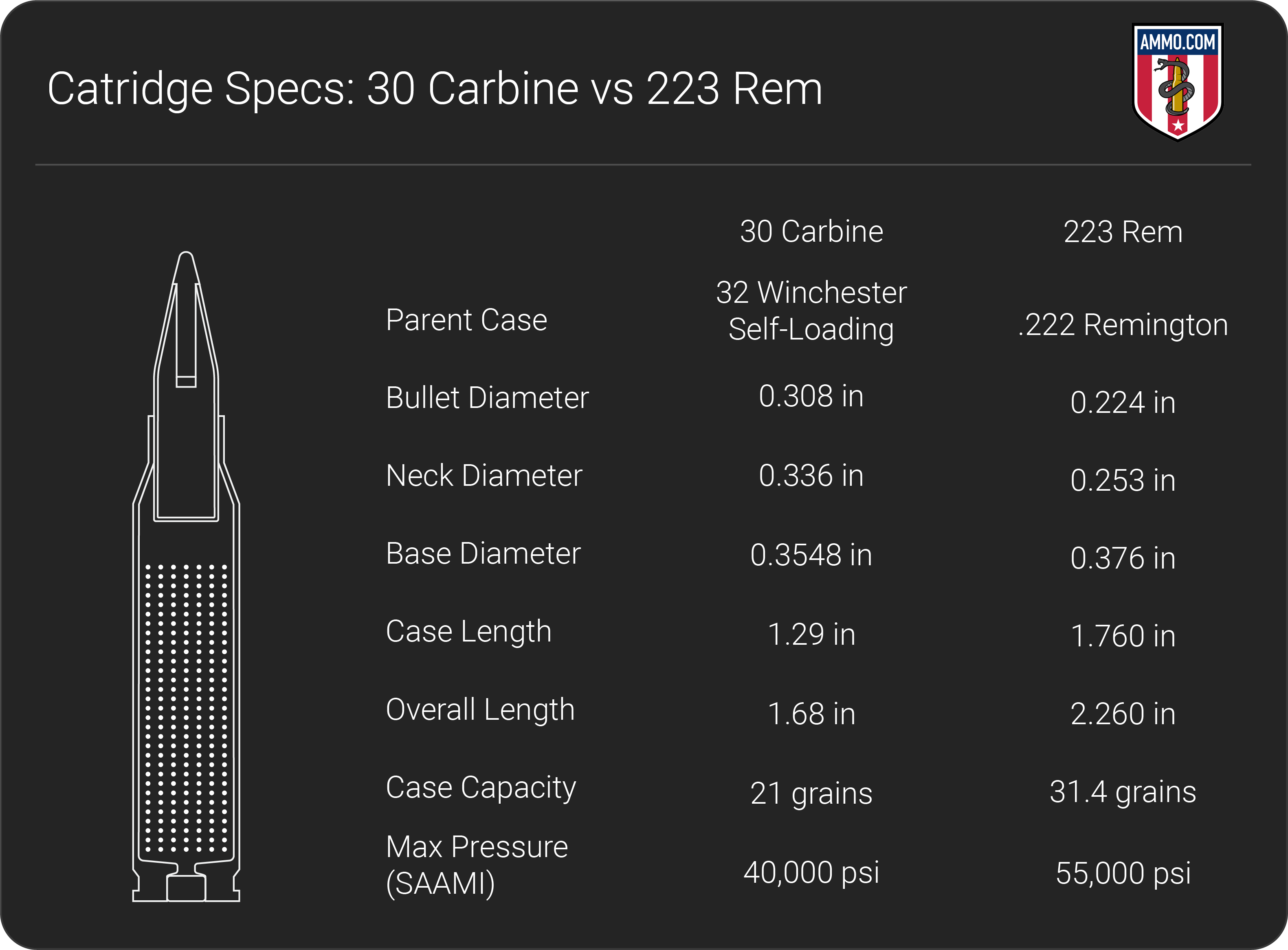
30 Carbine vs 223 dimension chart

Prior to America’s entrance into WWII, the U.S. Army wanted to provide support and mortar crews with a cartridge that was “more than a handgun but less than a rifle”. For these crews, carrying the heavier M1 Garand was inconvenient but they wanted more range and stopping power than the Thompson submachine gun or M1911 handgun chambered in 45 ACP could offer.

The resulting rifle was the M1 Carbine, which is essentially a scaled-down version of the M1 Garand and converted to use 15 or 30 round magazines. The 30 Carbine round was developed by necking down the 32 Winchester Self-Loading cartridge to fire a 0.308” diameter, 110 grain full metal jacket (FMJ) bullet.

The project was deemed a success and the M1 Carbine firing the 30 Carbine round was released in 1942 and served all branches of the U.S. military during WWII through the Korean War.

In contrast, development of the 223 Remington began in 1957 and the final design was submitted by Remington Arms to the Sporting Arms and Ammunition Manufacturers’ Institute (SAAMI) in 1962.

The development of the 223 Remington cartridge was a joint operation organized by the U.S. Continental Army Command between Fairchild Industries, Remington Arms, and Eugene Stoner of Armalite, using the 222 Remington as a parent cartridge.

The 223 Remington was chambered in the military’s new M16 assault rifle and later M4 Carbine and remains one of the most popular civilian cartridges chambered in the AR-15 semi-automatic sporting rifle.

Looking at these two rounds side-by-side, some of the differences are painfully obvious. The 223 Remington towers over the 30 Carbine by over a half an inch, as the 223 has a case length of 1.76” compared to 1.29” for the 30. In terms of overall length, the 223 Rem measures 2.26” long compared to 1.68” for the 30.

In terms of cartridge design, the 223 Remington utilizes a bottlenecked cartridge while the 30 Carbine was designed using a slightly tapered straight-walled cartridge.

Another major difference is the bullet diameter each cartridge fires. The 223 Rem fires 0.224” diameter bullets while the 30 Carbine fires a 0.308” diameter bullet.

The 223 Rem can fire a wide range of bullet weights, typically between 30 and 90 grains with the 50 gr, 55 gr and 62 gr factory loads being the most popular. In contrast, the 30 Carbine was designed to fire a 110 grain FMJ but can fire bullets as light as 85 grains and as heavy as 130 grains. Most factory ammo for 30 Carbine is loaded with 100 grain or 110 grain bullets.

One of the main reasons the 223 has a ballistic advantage over the 30 Carbine is that the 223 Rem has nearly 50% more case capacity than the 30. Capable of handling 31.4 gr of propellant, the 223’s case capacity dwarfs that of the 30 Carbine that can house 21 grains of powder.

With the added case capacity, the 223 Rem also is capable of handling significantly higher chamber pressures than that of the 30 Carbine. With a SAAMI spec 55,000 psi, the 223 has almost a 30% advantage over the 30 at 40,000 psi.

Recoil

Recoil is an important consideration when purchasing a new rifle as a round with heavy recoil will be more difficult to control and will slow your rate of follow up shots. The potential for flinching is also an issue for cartridges with heavy recoil.

Felt recoil will differ from shooter to shooter and is often dependent on firearm choice, stance, and your chosen factory ammo or handloads. However, free recoil is a more objective measure of how hard a cartridge hits based on firearm weight, muzzle velocity, powder charge, and bullet weight.

To compare the 30 Carbine vs 223 in terms of recoil we’ve selected the gold standard load for each cartridge. For the 30 Carbine we will consider the WWII M1 110 gr FMJ 1,990 fps military load and the M193 55 gr FMJ 3,200 fps military load for 223 Rem.

The firearms for this comparison will be a standard M1 Inland Carbine weighing 5.2 lbs and a standard AR-15 weighing 7 lbs for the 223.

Given these criteria, the 30 Carbine will have a free recoil energy of 5 ft-lbs compared to 4.25 ft-lbs for 223.

Although the 223 has a higher powder charge and muzzle velocity, its low bullet weight and heavier firearm help tame the already manageable recoil of the cartridge. On the other hand, the 30 has double the bullet weight and a lighter host firearm, which results is slightly higher recoil.

This is not to say that the 30 Carbine has oppressive recoil, quite the opposite actually, as most shooters would classify the 30 as having extremely low recoil. Both rifles are extremely easy to handle, a joy to shoot, and you can spend a whole afternoon plinking with either and not have a sore shoulder the next morning.

Although the 30 technically has higher recoil, both most shooters would describe both rounds as having low recoil and are excellent options for training new shooters on centerfire ammunition.

Muzzle Velocity, Kinetic Energy, and Trajectory

Previously I mentioned that the 223 Remington outperformed the 30 Carbine in terms of ballistics, but how big of a difference is it?

In this section, we will compare four popular factory loads for both cartridges.

For the 223 Remington, we will consider a Winchester 55 gr FMJ boat tail M193-clone as well as a Federal Fusion MSR 62 grain bonded Spitzer boat tail. For 30 Carbine, the M1 110 gr FMJ round nose military load will be compared with the Buffalo Bore 125 grain hard cast flat nose (FN) round.
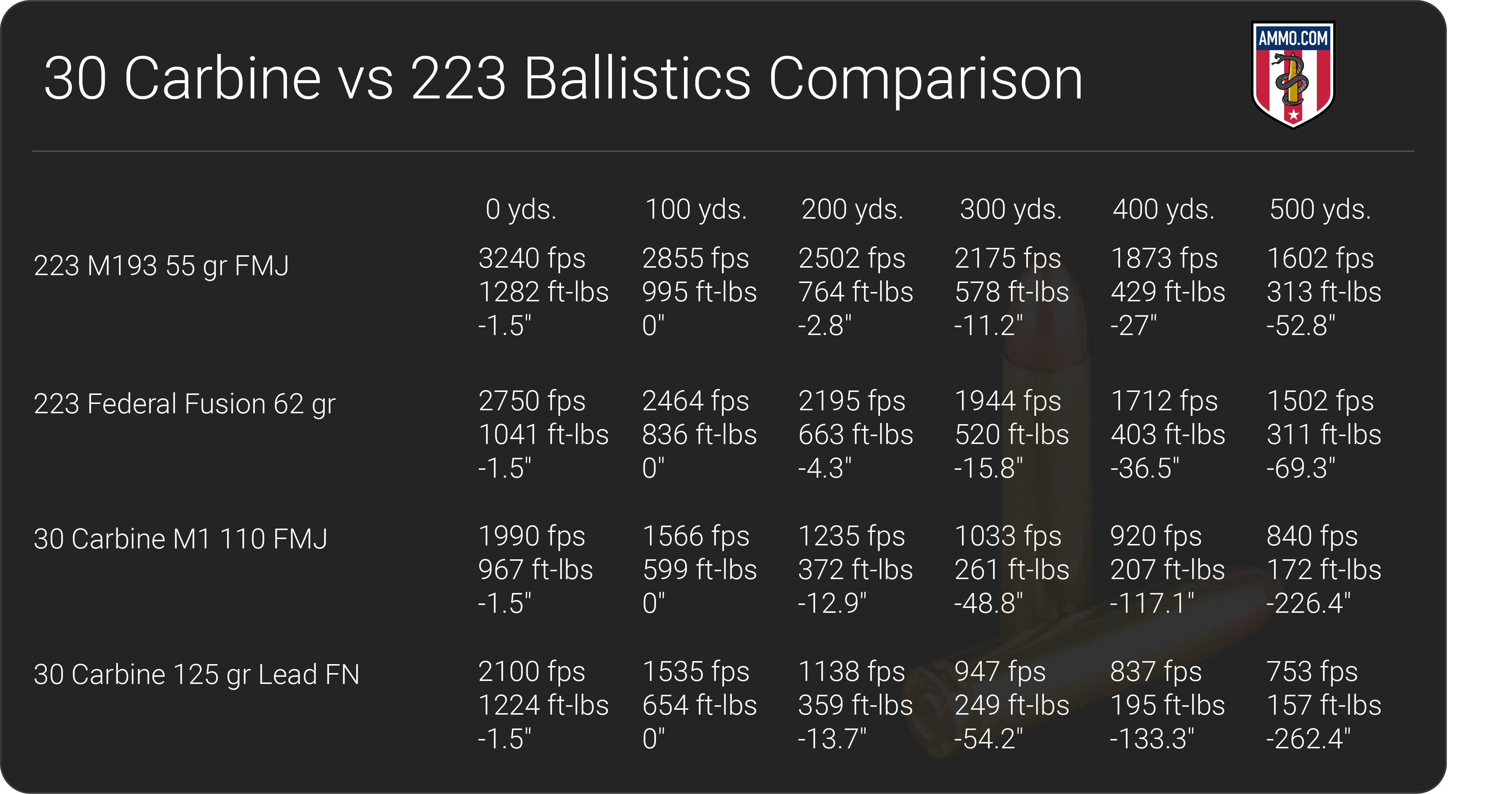
30 Carbine vs 223 Rem ballistics table

When it comes to muzzle velocity there is simply no contest as the 223 Rem leaves the 30 Carbine eating its dust. At the muzzle, the M193 55 gr FMJ load for 223 held the highest velocity at 3,240 fps while the 62 gr Fusion came in second at 2,750 fps. The 30 Carbine rounds were the slowest at the muzzle, with the Buffalo Bore 125 gr lead FN clocking in at 2,100 fps while the M1 round was the slowest at 1,990 fps.

Not only is the 223 Rem faster at the muzzle, but it also conserves its velocity more effectively than the 30 Carbine. Both 223 factory loads were still supersonic at 500 yards, while the 30 carbine loads had gone subsonic between 200 and 250 yards.

Staying above the speed of sounds (1,125 fps) helps maintain a bullet’s trajectory, as it allows gravity less time to affect the flight path.

Speaking of trajectory, the 223 Rem simply slaughters the 30 when it comes to bullet drop. At all ranges 200 yards and above, the 223 Remington had less bullet drop than the 30. This is primarily due to the aforementioned supersonic limit of the 30 Carbine.

At 500 yards, the 30 Carbine loads had over three times the bullet drop of both 223 Remington rounds. This makes the 223 Rem a more accurate long range shooting cartridge with over double the effective range of the 30 Carbine.

One of the major critiques of the 30-caliber Carbine was its lack of stopping power. The 223 Remington/5.56 NATO has also had this critique leveled against it based on combat reports from Afghanistan and Iraq.

The 223 Rem has more foot pounds of kinetic energy at the muzzle and conserves its energy more efficiently downrange for both military loads. The M193 223 load has 1,282 ft-lbs of muzzle energy while the M1 110 gr FMJ 30 Carbine rounds has 967 ft-lbs.

The Buffalo Bore load for the 30 Carbine closes the gap in terms of kinetic energy, as it has 1,224 ft-lbs at the muzzle. This load was included in our comparison to showcase the highest levels of performance the 30 Carbine is capable of.

However, the 223 Rem’s efficient bullet design really shines at longer ranges, as it has nearly double the kinetic energy of the 30 rounds at 500 yards.

So, what conclusions can we draw from these results?

The 223 Remington is clearly the more effective long range cartridge. With higher muzzle velocity and a flatter trajectory, the 223 performs best for longer distance shots.

The bullet design of the 30 Carbine doesn’t do it any favors, as it hemorrhages velocity and kinetic energy at range. However, it has two times the bullet weight and leaves a considerably bigger hole than the diminutive 0.224” diameter 223 bullets.

This allows the 30 Carbine to be extremely effective in short-range engagements but is ill-suited for long range shots. The 30 has nearly double the kinetic energy of a mild 357 Magnum load or 45 ACP at the muzzle, so the military was successful at making a round that’s “more than a pistol but less than a rifle”.

Ballistic Coefficient and Sectional Density

Ballistic coefficient (BC) is a measure of how aerodynamic a bullet is and how well it will resist wind drift. Sectional density (SD) is a way to evaluate the penetration ability of a bullet based on its external dimensions, design, and weight.

The 223 Remington continues its dominance in ballistic coefficient thanks to its Spitzer boat tail bullet design.

The Winchester M193 223 factory ammo has a listed BC of 0.255 while the Federal Fusion load has an impressive 0.310 BC. In contrast, the 30 Carbine loads have considerably lower BC at 0.166 for the 110 gr FMJ and 0.126 for the 125 gr lead flat point from Buffalo Bore.

To put it simply, the 30 bullets are short, fat, not aerodynamic at all. On the other hand, the bullets fired by the 223 are considerably sleeker, resisting wind drift and air resistance more efficiently.

For sectional density, the 30 and 223 are relatively equivalent with the 30 having slightly higher SD for the 110 gr FMJ at 0.166 compared to 0.155 for the M193 load for 223. Sectional Density data was not immediately available for the Federal Fusion MSR or Buffalo Bore loads.

Although the 30 Carbine has a slight advantage in penetration over the 223, it is unlikely that most hunters or game animals will be able to tell the difference between them.

Hunting

The 223 Remington is one of the most popular varmint hunting cartridges in North America. A 223 long gun with a decent scope makes for a potent ground hog or coyote slaying machine, as it has incredibly low recoil and a flat trajectory.

The 30 Carbine also makes for a decent varmint cartridge for short-range shots. Although the trajectory of the 30 Carbine cartridge starts to resemble a rainbow at long range, there is something nostalgic about taking your Inland Carbine out into the woods for a little coyote hunting.

But what about whitetail?

The use of either cartridge for deer is a hotly debated issue at deer camps and hunting forums across the world.

The 30 Carbine has been used effectively for deer hunting since its introduction, however standard pressure ammo lacks the 1,000 ft-lbs of kinetic energy typically cited as required for whitetail. This goes to show that shot placement and selecting a quality hollow point or soft point bullet is more important than overall kinetic energy.

Furthermore, some hunters in states that allow the use of 223 Remington for deer hunting report good success with heavier 69+ grain bullets like the Hornady 73 gr FTX. However, many states prohibit the use of 0.224” diameter bullets for deer hunting.

Although both rounds can fell a whitetail with high-power loads and proper bullet selection, neither make for a good deer cartridge.

If we had to pick one, our choice would be the 223 Remington with a proper 69+ grain hunting bullet. However, 12 gauge shotgun slugs or a properly loaded 308 Winchester will make for better deer medicine than a 223 or 30 Caliber Carbine.

Ammo and Rifle Cost/Availability

The 223 Remington cannot be beat for ammo availability, price, and rifle options.

As one of the most popular centerfire cartridges in North America, the 223 Rem has numerous factory loads available for virtually any shooting application your heart desires.

Military surplus ammo is relatively easy to find and buying bulk 223 ammo can really help keep your overall cost per round to a minimum. The 223 has become so popular that ammo manufacturers have now started offering self-defense ammo such as Speer Gold Dots, Winchester PDX-1, and Hornady Critical Defense to cover all your home defense needs.

In contrast, 30 Carbine ammo is not nearly as popular as it was after WWII. Finding surplus 30 Carbine ammo is akin to finding a needle in a haystack and is considerably more expensive than it was after the war.

Modern ammo manufacturers like Remington, Hornady, Sellier & Bellot, and Winchester still make 30 Carbine ammo, but it much lower quantities than other ammo (like 223, for example). There are limited hunting ammo varieties available for 30 Carbine, traditional soft point and hollow point ammo can be had, but most 30 Carbine rounds will be loaded with FMJ’s.

In terms of cost, cheap plinking ammo can be had for around $0.60/round while premium hunting ammo ranges between $1.50-$3/round for 223. In contrast, 30 Carbine FMJ ammo will typically cost you about $1/round while self-defense or hunting ammo usually costs around $2 for each pull of the trigger.

Considering the 223 Remington can be fired from the most popular firearm in in United States, the semi-automatic AR-15, it cannot be beat in terms of rifle availability.

However, if you are not an AR-15 person there are still multiple options available to you. If you prefer a bolt-action rifle for some long range target shooting or varmint hunting, virtually every firearm manufacturer has at least one rifle chambered in 223.

For semi-auto options, the Ruger Mini-14 is perhaps the second most popular semi-automatic rifle for 223. The AK-platform has also been modified to fire 223/5.56 NATO and there are many other popular rifles chambered in the cartridge such as the Kel-Tec RDB, IWI Tavor, Steyr AUG, Galil, and many others.

In terms of AR-15’s, the sky is the limit as all the manufacturers from Anderson to Colt offer at least one rifle chambered in 223.

Pretty much the only type of rifle not chambered in 223 is a lever-action, as the rimless design and pointed bullets don’t play well with tubular magazines.

For the 30 Carbine, your rifle options are somewhat limited to the M1 Carbine.

However, these rifles vary in price considerably depending on their date and company of manufacture. Older WWII era rifles from Winchester, Rock-OLA, or IBM will fetch a premium, while newer production rifles from Auto Ordinance, Iver Johnson, Universal, or Inland can be had for a more reasonable price.

The 30 Carbine has also been adapted to several handguns, most notably the Ruger Blackhawk. The Taurus Raging Bull and AMT AutoMag III were also chambered in 30 Carbine, however these handguns have been discontinued and used models fetch a high price on the used market.

Reloading

Reloading is one method shooters use to reduce their overall cost per round and increase the consistency and accuracy of their ammo. Furthermore, handloads can be tailored to your rifle to meet your specific shooting needs.

Handloaders have been reloading 223 brass for decades at this point, meaning that there is load data available for virtually every bullet and powder combination that makes sense. In the same vein, 30 Carbine load data has been well flushed out and there are plenty of options available.

In terms of bullets, 0.224” diameter bullets are essentially a dime a dozen and extremely simple to find. Military surplus pulled bullets can be had for loading bulk 223 ammo at a low cost per round or you can load precision rounds for matches. Hunting bullets are also extremely inexpensive for 223 and made by reputable companies like Hornady, Berger, Barnes, Nosler, Sierra, and Federal.

If there’s one caliber that’s synonymous with “America” it must be the 0.308” diameter bullet. However, the bullets fired by the 30 Carbine are not as popular as those used by rounds like the 308 Winchester or 30-06 Springfield.

Due to its chamber design, the 30 Carbine cannot utilize Spitzer-style boat tail bullets like most 30-caliber cartridges. This means the 30 Carbine cartridge has to be loaded with round nose bullets that are more popular with lever-action rounds like the 30-30 Winchester.

Finding once-fired brass for 223 is an incredibly simple task as you can often find it lying on the ground at most ranges (just ask the shooter if you can have their brass before picking it up). For the 30, finding brass is a bit more difficult as it’s not as popular of a cartridge as it once was. Factory new brass can be had from companies like Winchester and Starline, while used brass is still available on the secondary market.

Final Shots: 223 vs 30 Carbine

The 223 Remington and 30 Carbine are two military cartridges that hail from two different eras of cartridge development.

The 30 Carbine is a product of the World War I and II era that brought us the 45 ACP, the 30-06 Springfield, and the 50 BMG. It is a round that filled a specific role for support soldiers who needed a lighter weapon for close-range combat.

By modern cartridge standards, the 30 is an anemic round that lacks the stopping power for whitetail deer and is best reserved for varmint hunting or plinking with an old M1 Carbine.

The 223 Remington is a modern cartridge that signaled a change in U.S. military combat policy. It’s an intermediate round that was built for low recoil, a flat trajectory, and be light enough so that soldiers could carry a lot of ammo into battle.

In the civilian sphere, the 223 is one of America’s beloved cartridges that is fired by the AR-15 carbine and is consistently in the top 3 cartridges sold in North America. It’s a versatile round that is the gold-standard for varmint hunting as well as target shooting and general plinking.

Although there is no denying the nostalgia factor of the 30 Carbine, our choice is the 223 Remington. It offers better ballistics with lower recoil and is less expensive to shoot.

No matter which cartridge you choose, make sure you stock up on ammunition here at Ammo.com and I’ll see you on the range!

4 Duck Calls for Beginners and Experts Alike

0

Maybe you’re new to duck hunting and want to gain a basic understanding of what types of calls to bring into the blind with you. Maybe you’re a seasoned hunter but the setup you are currently running just isn’t working as well as you’d like. Regardless of the answer, there seems to be a lot of uncertainty around what calls are absolutely crucial to have on your duck lanyard, and what calls might be better left for specific circumstances.

I’m not going to lie, when I first dove head first into duck hunting, the amount of information about duck calls was pretty overwhelming. From single reeds, to doubles, to cutdowns, to J-frames, it all sounded pretty Greek to me. The truth is, it isn’t that difficult once you get a baseline of what will consistently work for you. After that, feel free to dive down the extremely deep rabbit hole that is duck calling.

In this article, I will go over four duck calls that every hunter should have around their lanyard regardless of if they are hunting flooded timber in Arkansas or corn fields in Kansas. These four calls will give you everything you need to fool those ducks into coming into your spread, and leave you with more limits, and thus, more breasts on the grill.

Products featured on Wide Open Spaces are independently selected by our writers and editors. However, when you buy something through our links, we may earn a commission.

Single Reed Cutdown

The single reed duck call has long been the lifeblood of waterfowl hunters for years. With a single reed, a hunter can manipulate the sound across a wide range of tones, making it extremely versatile in all situations. I prefer a cutdown style single reed for the simple fact that I am able to hit those loud and aggressive hails and comeback calls when they are needed, but I can also create those soft quacks as the ducks are working. Regardless of where I am hunting, a single reed cutdown is always on my lanyard, and it should be on yours too.

Single Reed J-Frame

There seems to be a good deal of confusion surrounding J-frame calls. In fact, I have found that most hunters will conclude that any call that isn’t a cutdown is a J-frame, but this is the furthest thing from the truth. J-Frames get their name from how the insert is curved, creating a “J” like shape, which as a result, alters the pitch. J-Frames offer a great, nasally sound that does the best job at mimicking a more mature hen. From strictly a realistic standpoint, nothing can compare to a single reed J-frame in my opinion. Oftentimes this is the call I will use when hunting small bodies of water, and I don’t need to be quite as aggressive. But nevertheless, it’s always on my lanyard.

Double Reed Louisiana Cut (LA)

Louisiana-style calls have seemed to grow in popularity over the years, and for good reason. Similar to a J-frame, an LA-style call combines all of the internal components into one single unit that gets inserted into the barrel of the call. LA cuts are great for when you need to hit those high pitched, raspy notes, and the double reed makes it extremely user friendly, allowing for easy manipulation regardless of your skill level. There are several great options for double reed LA cuts on the market, from Singleton, to Rich-n-Tone, to Higdon.

Whistle

The versatility and the effectiveness of a duck whistle is pretty incredible, and you might have to experience it first hand to believe it. While it’s not necessarily a traditional duck call, I can use it to mimic several different duck breeds. From pintail, to wigeon to a mallard drake, you can imitate essentially any duck you are after with very little practice using a whistle. Plus, you can pick up a standard duck whistle at nearly every sporting goods store for less than $20, so why not add it to your lanyard? It will only add realism to your setup, believe me.

Duck calling is all about convincing ducks that are flying by to stop in and join the party, and that requires a little bit of persuasion. While you might see professional duck hunters have a massive and fancy calling setup, it really isn’t necessary in order to shoot birds. Add these four calls to your lanyard and you’ll be limiting out before you know it.

READ MORE: 6 BEST DUCK HUNTING BACKPACKS

From Hater to Evangelist: My AR-15 Pistol Saga of Eating Crow

0

Once there was a time when I laughed at the notion of the AR-15 pistol. That time of laughing has passed, so if you enjoy watching others publicly eat crow, read on.

AR-15 PistolMy brother, Stephen, and I have been debating the merits of AR 15 pistols for some time, so let’s rewind this a bit. My first intro to an AR-15 pistol was some years ago at a gun store that sold NFA items like short barreled rifles (SBRs). I saw an AR-15 pistol and asked where the buttstock was. The shop keeper enlightened me, but I had lingering doubts.

Then I ran across a Kel-Tec PLR-16. It’s not exactly an AR-15 pistol, but it’s close enough in the ergonomics to fit the genre. My biggest question was, “How do you shoot that thing – accurately?” The answer I was given by the gun’s owner was a bit unconvincing: Put a single point sling on it, raise it so that your sight picture becomes apparent while pushing the gun away from you. The tension on the sling will make it stable and good to go. Right. Then he did the opposite. Holding the gun at belly button height, he fired a dozen rounds or so down range at a paper target at an indoor range. Credibility, zero. Even with ear pro on, I decided to leave the range as the muzzle blast he generated was just as ridiculous as his shooting stance.

While my interest in shorter lighter gun configurations was real, the downsides to an AR-15 pistol in my mind were several. For example, the buffer tube sticking out of the rifle all by itself looked silly. I know, looks don’t matter as long as it does its job. And while that’s true, when it comes to spending discretionary dollars, looks DO matter, and the market bears that out.

Awkward looks in this case can translate to awkward ergonomics. When I looked at that first AR-15 pistol in the gun store, stocks were sill longer and bulkier than what’s available today. The mutated shortened pistol configuration was strange to hold, and awkward to use. No chance of anything resembling a proper cheek weld there. And I once believed that unless you perfect your cheek weld, you couldn’t shoot accurately beyond ten yards. Where I came up with that, I don’t know. Maybe some internet commando forum back in the day…

AR Pistol Hog HuntThat was a few years ago, and much has changed since then, but not my interest in SBRs. Seriously, I can’t see anything magical about a sixteen inch barrel. The rules are the rules, but for practical purposes a shorter barrel can be a real plus. Put yourself on a four wheeler ATV chasing after pigs, heading for a deer blind or running down coyotes. I’ve slung a 16” AR while riding four wheelers, and it’s a pain. Minus a few inches and we’d be better off, but short of an AR-15 pistol, we’re talking about the expense and rules of access and transport for an NFA registered SBR. Better than not having a short barrel in that case, but a far cry from ideal.

The thing that changed my thinking about an AR-15 pistol was a great looking 300 Blackout version from King’s Arsenal. Yes, it was looks that turned my head and opened my mind. It was the first time I’d met Jordan King, owner of King’s Arsenal. He had a booth at the first ever Silencers Are Legal shoot in Dallas in 2012. Call me shallow, but the smooth sided upper on the billet lower all tricked out with a short barrel and a foam covered buffer tube was magnetic. King talked me through the genius of his creation and then invited me to go shoot it. Much to my surprise, I could hit Tannerite at 100 yards using an Eotech sight! Now I was interested.

Maybe you know the adage, a chicken is interested in making breakfast, but the pig is committed. Shooting with just a short buffer tube was still a bit awkward, though the foam cover was a step forward. So, I was interested. Then my friend Nathan Dudney at DRT Ammo got an AR Pistol that he raved about. Nathan is a smart guy whose job involves dealing with velocities and terminal ballistics. You certainly give up velocity with a short barrel, but Nathan’s enthusiasm got me researching. What I found was that at most common distances I’d shoot at while hunting pigs or in defensive scenarios, I had nothing to worry about from lost velocity with modern ammo.

What pushed me over the edge was a picture sent to me by another good friend, Keith Pitts, founder of Accurate Armory. I’ve known Keith longer than SHWAT™ has been around, and have confidently run his ARs for years. Keith had build an AR pistol for himself, and sent me a picture of it riding easily alongside in a vehicle. I replied with a “must have” kind of note and he built me a beauty to my own specifications. It was cool, but when I added the SigTac pistol brace, it became amazing. Today, Keith prefers the QD Buffer Tube Cover from Thordsen Customs, which I’ve not yet tried out. In any event, with the pistol assembled, it was time to go hunting!

AR15 PistolThe hunt would be a night hunt, so I chose the Wilcox RAPTAR Lite ES to work in conjunction with a helmet mounted PVS-14. Walking the fields of west Texas in the dark with that considerably lighter than usual configuration was great. My buddy Jared and I were in and out of my jeep looking for pigs. The short length was phenomenal for vehicle entry and egress, not to mention storage when we hopped in to drive to another field. Pigs died that night, and I enjoyed using my .556 AR pistol immensely (read the whole story here).

So once a “hater” I guess I’m now an evangelist. The advantages of a well configured AR pistol are clear. Storage, ease of vehicle entry and egress, weight, maneuverability, they’re all there. From the dead hog pictures, you can see the loss of velocity wasn’t an issue. You can add a silencer and still not be ridiculously long. One of the greatest benefits of an AR pistol over an SBR is the ability to travel outside your state without a permission slip from the ATF. Today, I’d be hard pressed to be more enthusiastic about the platform. I’m planning to add an upgraded trigger and perhaps a Gen 3 Law Tactical folding stock adapter for the ultimate in compact AR platform guns. In my opinion, everyone ought to get set up with an AR Pistol. So Stephen wins the debate, but now I have a sweet AR pistol and he doesn’t. Yet. And that’s how I like to eat my crow!

Best Air Rifle Deals

Popular Posts

Best Air Rifle Brands – Who Makes the Best Pellet Gun?

0
In Jeff Bezos’ own words: "A brand for a company is like a reputation for a person. You earn reputation by trying to do hard...

How to choose the right Air Gun Caliber for your game?

0
A story is told of three Native American hunters. Two are smart, the other somewhat ignorant. On the first day of the hunting season, one of...

What Is An Air Rifle?

0
If you have stumbled upon this article, chances are that you probably have a pest problem at your house. This is a very common...