



Home Blog Page 207

Walther P22 Review [Hands-On]: Perfect Rimfire Trainer

0

.22LR is not only great for plinking, but a great introductory round for new shooters.

I originally bought the Walther P22 to teach my wife to shoot, and after thousands of rounds, and plenty of new shooters…I can say that it is a near perfect training pistol.

It has tons of features found on more expensive guns and with relatively affordable .22LR ammo, the P22 can be a no-brainer buy. Read on to see if it fits your purpose!

Features and Specs

Key Specs

  • Caliber: .22LR
  • Capacity: 10+1 rounds
  • Barrel Length: 3.42 in
  • Overal Length: 6.3 in
  • Width: 1.1 in
  • Height: 4.5 in
  • Weight: 17 oz
  • Frame: Polymer
  • Grips: Textured polymer

Key Features

  • Interchangeable backstraps
  • Windage adjustable rear sight
  • Captured recoil spring
  • Double action/single action trigger
  • Threaded barrel
  • Ambidextrous mag release and slide safety
  • Has 2, 10 round mags
  • Safety: manual external, fire pin block, mag disconnect
  • MSRP: $339

More information can be found at Walther.

Pros & Cons

+Great training tool for higher caliber pistols+Can be easily threaded for a suppressor+Super light recoil+Comfortable grips+Ambidextrous controls

-Cheap feeling sights-Gets dirty easily but that’s .22LR

Background

The Walther P22 was one of the original semi-auto .22LR handguns and has been satisfying shooters since 2002.

The latest generation is now called the P22 Q and comes in a bunch of colors and variants.

Walther P22 Q Variants

We love how there’s now threaded versions and also versions that come with a laser.

Fit & Feel

The P22 is a solid handgun that has the fit, finish, and features of a much more expensive gun. A lighter polymer frame is the perfect match for the softer shooting .22LR caliber.
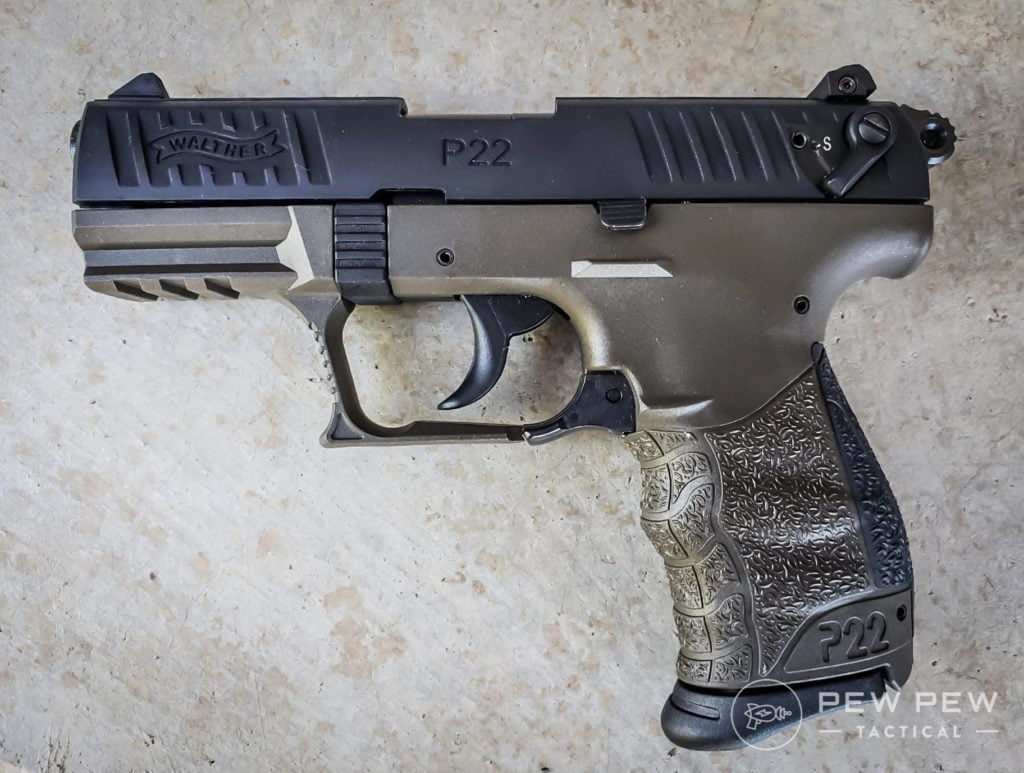
Walther P22 Side
Walther P22 Side

Barrel

Like most .22LR caliber handguns, the P22 has a fixed barrel design so takedown is a bit different than most full-sized guns, but the additional steps are straight forward.

A nice feature of this barrel nut is that an adapter is all that’s required to convert your barrel to a threaded barrel version if you live in a state that allows silencers.

Even though it is fixed barrel, cleaning the barrel is easy as it removes quickly with the supplied wrench, or if you choose, you can simply clean it while it remains attached to the frame.

Need some inspiration for a .22LR can? Check out our Best Rimfire Suppressors article.

Best .22 Suppressors

Slide and Frame

While this is a budget-priced gun, it does come with some features not normally found on lower priced guns.

A serrated slide for better grip makes the slide more easier to work, even with sweaty or wet hands. Even the hammer has serrations for added grip!

A loaded chamber window isn’t what most would consider critical, but it is a nice feature that doesn’t get in the way and gives you a simple way of seeing what condition your firearm is in.

Under the slide, you’ll find an accessory rail to mount lasers and lights on making for some nice options.

The magazine release and safety levers are ambidextrous but the slide stop is still built for right-handed shooters.

I’m also not a huge fan of the safety lever on the actual slide, but it is engineered well, and easily accessed by my thumb without having to change my grip.

It also has a very positive feel so you know when you’ve placed the P22 in fire or safe mode.

Grip

Make no mistake about it, this gun is small, and therefore, the grip is also thin and small.

Finger grooves line the grip which is a nice texture; not too rough on contact but provides good grip.

Walther P22 Grip

Out of the box comes an additional back-strap to better fit larger/smaller hands.

Most of the time, a very thin profile gun means an uncomfortable grip, but there are two things working in the P22’s favor…

First, the P22 comes with ergonomic panels, and second, .22LR is a such a low recoil round that the thinner grip doesn’t create the hand fatigue a larger caliber might.

I find the grip is similar to the HK grip on the P30 or VP9 and it is straight up comfy. For my medium sized hands, I love how snug the gun feels.

HK VP9
HK VP9 Grip

What’s even better is that my wife, who has small hands, loves the feel of the grip and overall gun.

Trigger

The action is a DA/SA with a manual safety. You have the mechanical safety on the slide, but the P22 also includes a magazine disconnect safety which prevents the trigger from being pulled unless there is a magazine in the gun.

Newer P22s also have a safety de-cocking feature that allows you to safely drop the hammer using the manual safety.

The DA/SA action is predictable but some may find the 11lb DA pull undesirable, but most of the time you are shooting it in the light 4lb SA stage.

Sights

For me, the only thing that feels “cheap” on the gun is the fact that it comes with what dot polymer sights. While this is good enough for range use, they are no one’s favorite sighting system.

How Does It SHoot?

I have never had an issue shooting different ammo types in the P22, but I have seen that a lot of P22 users claim that their handgun is picky on ammo.

Most agree that higher powered rounds don’t have issues.

Federal ammo is the ammo I consistently run through my 22lr guns and I have always had great success.

Yes, there have been some rounds that stove-pipe or FTE, but I think that is to be expected in any 22lr gun.

I feed by P22 a steady diet of 36 grain Federal, 40 grain Federal Target, and 40 grain CCI.

Sub-sonic ammo will definitely be unpredictable as it the right might not have enough power to cycle the slide.

Keeping the gun clean is definitely important in keeping jams to a minimum. I try to clean my P22 frequently, especially the feed ramp and slide rails.
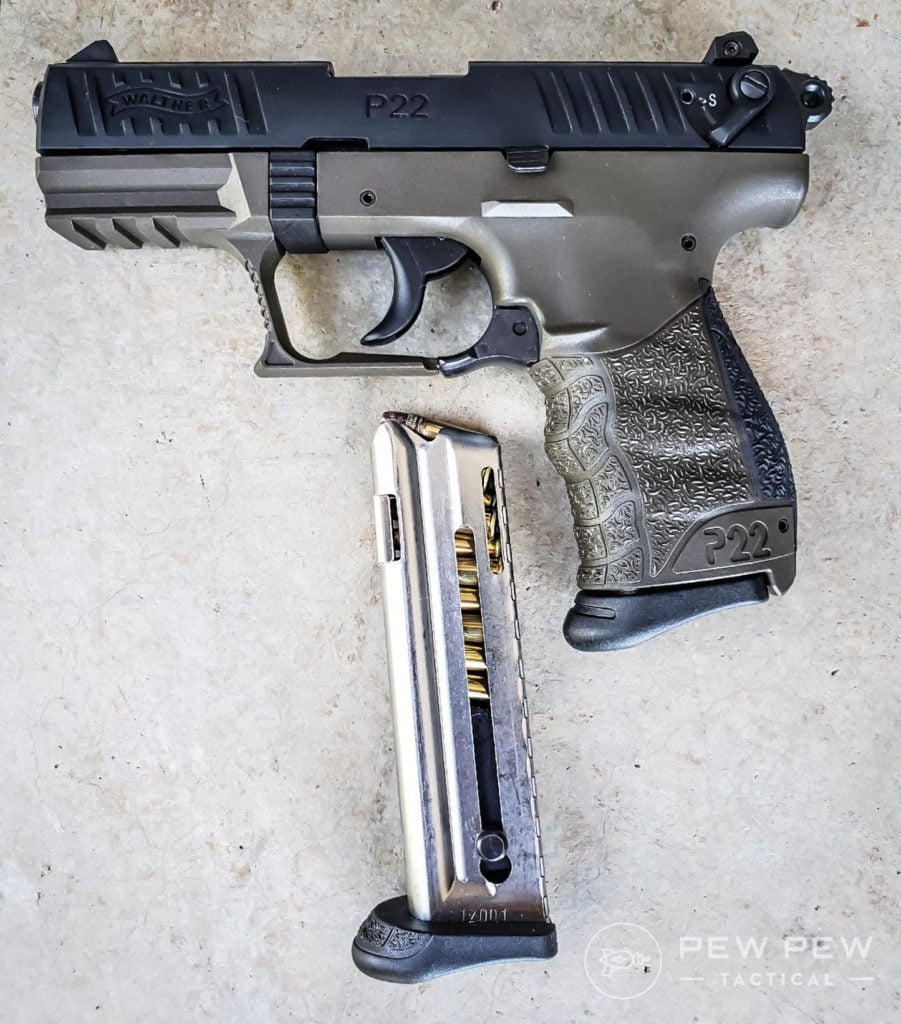
Walther P22 and Magazine

The P22 magazines are metal but pretty thin. Don’t expect these to stand up to too much abuse – thankfully, extra mags won’t break the bank.

Accuracy

My view of .22LR ammo changed after I took my first Appleseed rifle marksmanship clinic. While this doesn’t have anything to do with the P22, it does have everything to do with the round it shoots.

I showed up to the Appleseed clinic with my stock Ruger 10/22 (with a trigger upgrade) and bulk Federal ball ammo (not match, not high velocity). 1” Targets were set back 25 yards and was told to put 5 rounds inside the target with iron sights.

After balking and then realizing they were serious, I definitely cried some internal tears. But by the end of the clinic, not only was I able to do this (shooting prone), but I left with complete confidence in the accuracy of the .22LR round.

With the P22, it is accurate enough to make shooting enjoyable. We are not taking it to target competitions, but making my steel silhouettes ring is easy and a ton of fun.

I would estimate it at 2MOA if you’re doing your thing.

My wife, who doesn’t shoot nearly as much as I do, is able to comfortably put shots on target. This is due to several factors, which include grip comfort, the light weight of the gun, and the lack of recoil and sound.

Recoil

Anyone who has shot .22LR knows that the recoil is minimum.

Even in higher velocity rounds, it is still extremely manageable, making follow-up shots easy and accurate, especially since subsequent shots are single action with the lighter trigger pull.

What Sets It Apart?

For a while the P22 was the go-to semi-auto .22LR pistol out there. Now you have some competition with the Glock 44, Taurus TX-22, and the Sig Sauer P322.
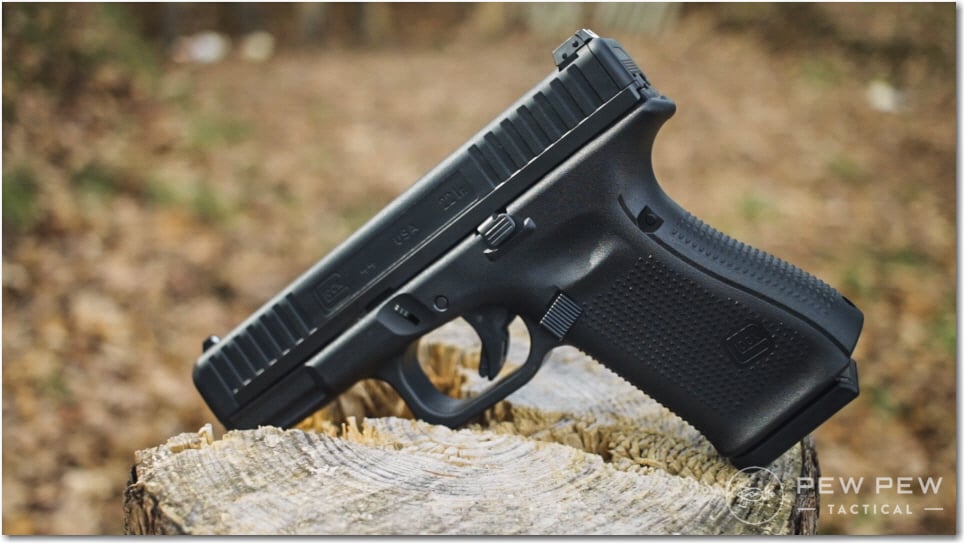
Glock 44 .22LR
Glock 44 .22LR

Though the TX-22 and Sig Sauer hold more rounds, the P22 can still hold its own based on ergonomics and reliability.

Takedown for cleaning, since you’ll be doing a lot of it, is easy with this tutorial:

By The Numbers

Ergonomics 4/5

The P22 is extremely comfortable, offering some customization of the rear grip panel. With a thin gun width, it is very comfortable to hold with both hands. All of the functions of the handgun (safety, magazine release, slide stop, trigger) are easy to manipulate and many are ambi.

Accuracy 4/5

For having a fun day at the range, it does it perfectly. There is a target barrel that can be purchased which is a longer 5” barrel, but the shorter 3.42” barrel is plenty accurate for plinking.

Reliability 4/5

.22LR handguns get dirty, and it is true that these P22s need to be kept clean (like any other .22LR handgun). If you allow it to get dirty, you may begin to experience issues. I am notorious for not cleaning my guns often and I do notice it with my P22, mostly because of how dirty .22LR ammo is.

Looks 5/5

For a .22LR, I think the P22 looks the best. Besides the fact that it is a small gun, it looks impressive. You can get the P22 in a variety of colors/configurations.

I love the military color scheme on my P22! The serrations on the slide with the Walther marking looks sharp with the grip stippling an attractive functional and beautiful addition as well.

Upgrades: 4/5

There isn’t a huge selection of upgrade parts but there is a decent amount, most of them made or sold by most retailers. Having an accessory rail means that you can fit lights and lasers (or knives) on the end of the handgun

Price/Value 5/5

The price is hard to beat! A fraction the cost of larger caliber handguns, the P22 is affordable, allowing you to invest your money into ammo and accessories. For the features it has, I believe it to be one of the best values on the market.

Overall 4/5

I love the P22! There is something special about this lightweight, feature-packed gun. My friends love to shoot it and many have made their own P22 purchase after shooting mine.

It is so much fun to shoot and is great to teach friends how to shoot. Walther hit a home run with this gun and jammed something amazing into a perfect little pistol.

Upgrades

You’ve got a rail up front so you can always add a light…our favorite go-to is the TLR-1 HL series.

And like we mentioned above…if you want to suppress the P22 all you need is an adapter kit.

And you can always do with extra mags with all the lead you’ll be slinging downrange.

Verdict

This Walther P22 is just plain fun. How else can you send thousands of rounds down range without worrying about ammo cost?

The best part is not having to compromise comfort or features for that cheap and fun range experience.

I can say from experience that the P22 is pure gold with plenty of features, accuracy, and comfort!

How do you like your P22? Got another go-to 22LR plinker pistol that you love? Let us know in the comments! If you’re ready for a rifle to go with your pistol, take a look at the Best .22LR Pistols!

Ruger Buckmark with Banish 22

Turkey Hen vs Tom: How to Tell The Difference

0

Always know your target before you pull the trigger. This is one of the golden rules of hunting. It’s not enough to just know that you’re shooting at a turkey. Just as in duck hunting you must know the species (and sometimes the sex). In deer hunting, you must be able to tell a buck from a doe. Well in turkey hunting, you must know the difference between a turkey hen vs a tom turkey.

A hen is a female turkey. They lay eggs and commonly make sounds known as clucks, yelps, cuts, kee-kees, and purrs.

A male turkey is known as a tom. Toms will make sounds known as gobbling, spitting, drumming, and yelping.

A juvenile tom is called a jake. For more information on jakes including whether you should shoot them or not, read our full article on the subject.

In most states, the law requires a harvest of only tom turkeys during the spring season. Some states allow you to shoot bearded hens. During fall seasons, there are states that allow both sexes to be harvested while others still only allow toms to be harvested.

As you can see, it is very important to be able to tell a tom from a hen. So let’s get into the differences.

Beard

Toms generally have a beard protruding from their chest. In a mature tom, these beards are usually seven inches or longer in length. Jakes will have shorter beards. Some toms have multiple beards.

Beards are black and are made of feather-like bristles.

The beard is usually easy to pick up when hunting so it is a key identifier. However, you can’t totally rely on the beard when identifying a turkey hen vs. a tom.

You see, some hens have beards. According to Julie Craven at BirdWatching, 5-10 percent of all hen turkeys have beards. And if that’s not confusing enough, some toms suffer from “beard rot” leaving them with a thin beard or even no beard at all. Beard rot results from vitamin deficiency in a turkey.

So a beard is a good guideline, but not a hard rule. What else can we use to tell a hen from a tom?

Turkey Hen vs Tom: How to tell the difference
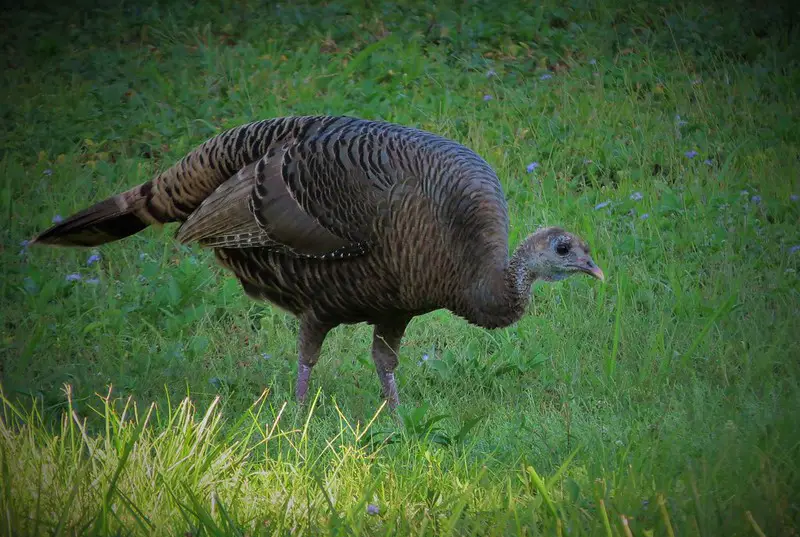
A hen, as shown above, does not have spurs like a tom. However, there are many other ways to tell a hen from a tom.

Spurs

For the most part, only toms and jakes grow spurs or “hooks”. In fact, spurs provide a rough estimate of the age of the tom. The theory is that the longer the spur, the older the turkey. The jake has a short, rounded spur while a three-year-old bird can have spurs longer than one inch in length.

A spur is a claw-like feather on the backside of the leg. They can be very sharp. Toms use the spurs to fight other gobblers and establish dominance. Spurs can vary in color from black to pink.

Unfortunately, spurs wear down, break, and even fall off. It can also be difficult to see the spurs of a tom in the field. So let’s move on to another factor we can use to differentiate a hen from a tom.

Size

Toms are bigger than hens. They typically run 11 to 24 pounds. A hen weighs from 5 to 12 pounds. The heaviest tom on record is 37.6 pounds.

Toms are also usually a bit longer than hens. The largest toms can be over four feet in length while the longest hens are usually just over three feet in length.

Size differences can be useful for determining sex if you have a mature tom and a hen. If you are seeing them separately in the field, it can be tough to determine gender based on size. Keep in mind that jakes and larger hens can be similar in size as well.

Size is another tool in our toolbox, but what other clues can we use?

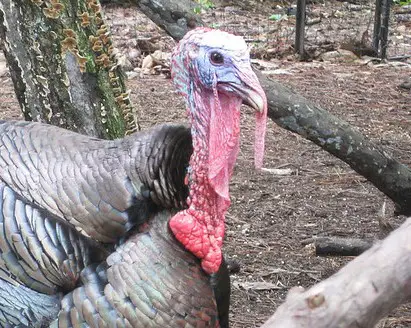
A good way to distinguish a hen from a tom is the head. Notice the mostly blue hue of the hen’s head on the left vs the red, white, and blue head of the tom on the right. The tom also has a much larger snood.

Head

The head is a great way to differentiate a tom from a hen as you will likely be focused on the head.

A tom’s head will be a combination of red, white, and blue. It is generally featherless. Toms also have a longer snood than a hen. The snood is the fleshy protuberance above the bill. It can contract, expand, and change colors based on the turkey’s mood.

The hen’s head is much less flashy than the tom’s. It is a blue-ish gray color. As mentioned above, the snood will be much shorter than a tom’s. Hen’s have small feathers on their heads.

The head is not the only coloring difference between a hen vs a tom turkey. Let’s look at the rest of their feathers.

Plumage

As you might have guessed, tom turkeys have flashier feathering than the hen like most other avian species.

The hen’s overall feathering is a browner tint than the darker, blacker tom’s. The tips of the feathers on a hen are more of a buff color. The tom turkey has dark, black color tips.

Let’s talk about how to identify the gender of a bird when tracking turkeys.

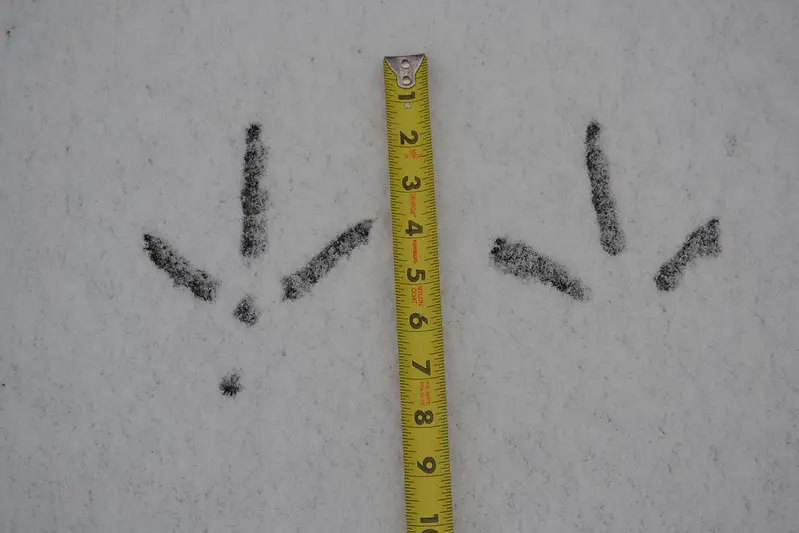
Turkey Hen vs Tom Tracks
You can sometimes identify whether the track was left by a tom or hen by the length of the track.Photo courtesy of Virginia State Parks on Flickr

Tracks

As you might assume, the bigger tom has a bigger track than the smaller hen. If you find a track that is longer than four inches, it is probably a tom. Hen turkey tracks will usually be about three and a half inches in length.

Finally, there is another sign a turkey leaves behind.

Droppings

Yep, you can tell the sex of a turkey by its excrement. Toms leave a long, sometimes j-shaped dropping. These droppings are generally about two inches in length.

Tom droppings are easily distinguished from the more clumped together hen excrement.

Turkey Hen vs Tom: Final Thoughts

Determining the sex of a turkey is not easy when you are first getting started. As you become more experienced, you will learn to recognize toms and hens faster.

A good rule of thumb is to only shoot a bird after you have identified two distinguishing traits. For instance, if you see red on the head and a beard on the breast, you can feel confident that you are shooting a legal tom.

The exception to this rule would be if you are hunting in a state that allows you to shoot any bearded turkey, and you are fine taking a hen.

Hopefully, this article has made you feel a bit more comfortable in recognizing your game this hunting season. Bookmark this page and look at the pictures periodically to refresh yourself on the signs of a turkey hen vs a tom.

If you enjoyed this article, you may also like to read about the sounds a hen turkey makes.

Rifle Scopes: First Focal Plane vs. Second Focal Plane (Explained in Plain English)

0

What’s the difference between first focal plane vs second focal plane?

A first focal plane reticle enlarges and shrinks as you adjust the magnification while the second focal plane remains the same size.

Why does that matter and which focal plane scope should you choose?

By the end of this article, you’ll fully understand both types of focal planes so you can choose the best rifle scope for your needs.

Let’s get started!

What is the First Focal Plane?

There are two locations where a reticle can be installed within a rifle scope: the first focal plane (FFP) or the second focal plane (SFP).

With a first focal plane scope, the reticle is physically placed on the “front” of the erector tube assembly and magnification lenses. The first focal plane is furthest from your eye when looking down the sight.

How does that make a difference?

With a First Focal Plane scope, the size of the reticle will appear to grow or shrink as the scope’s magnification is increased or decreased, respectively.

FFP SAMPLE (1)

Now that you’ve got the basics, let’s talk about the pros and cons…

First Focal Plane: Pros and Cons

With the first focal plane optics, the reticle size is going to scale up or down with your magnification adjustments.

This means your trajectory markings, or holdover values, are going to remain accurate regardless of what magnification setting you’re on. This is great news if you hate doing math!

But, it comes at a cost…Literally.

The price is often higher by virtue of its more complicated construction. A first focal plane reticle is also typically associated with higher-end scopes.

With first focal plane scopes, the reticle will look small and thin with less power while the reticle will be thicker at higher power.

FFP SAMPLE (2)

It can be easy to lose those thin reticle lines, especially against dark backgrounds. Although, some of the best Leupold riflescopes have illuminated reticles for better visibility.

Also, the reticle can cover too much target at the highest setting. If this is a dealbreaker to you, that’s where Second Focal Plane comes into play…

What is the Second Focal Plane?

The most common design is SFP, or a Second Focal Plane scope. It’s also referred to as Rear Focal Plane.

With a second focal plane scope, the reticle is placed behind the magnification lenses on the erector tube assembly.

The second focal plane scope is closer to your eye. Therefore, the reticle stays the same size at any magnification range.

SFP SAMPLE (1)

Now, let’s talk about the pros and cons of this…

Second Focal Plane: Pros and Cons

Its lightweight, great resolution, and durability against heavy cartridges make it a popular choice among hunters and law enforcement.

With the second focal plane, your units of measure per each hash mark (MOA or MRAD) represent the same value regardless of your magnification setting.

However, the spacing for holdover in the reticle is only correct at the highest magnification setting. So, it’s not always reliable for variable long-range shooting.

For example:

Let’s look at the Viper HST 4-16×44. This is a second focal plane scope with a magnification range of 4-16x. The Viper HST has hash marks representing 1 MOA but this is only true at its full magnification: 16x.

Of course, you can always do the math in between. But it becomes complicated and confusing and we all know that’s no bueno.

Second focal plane scopes are more commonly seen in the average riflescope and they’re easier to manufacture. That’s why they’re typically less expensive.

First Focal Plane vs. Second Focal Plane for close-range shooting

A second focal plane scope is more suited for close-range hunting and defensive shooting.

SFP SAMPLE (1)

Why?

Because you have a strong and easy-to-see reticle even at the lowest magnification. With low-powered optics, like 1-4X optics, this is a highly undervalued feature.

When it comes to a First Focal Plane scope, you can easily lose sight of your marks at low power. This can be a hassle when you need to make adjustments for the wind or distance— especially for older eyes.

Since you’d have to zoom out to get the rest of the marks in the scope’s view, your target shrinks relative to your view. If you’re hunting small game, this can be an inconvenience.

First Focal Plane vs. Second Focal Plane for long-range shooting

First focal plane scopes are best for competitive and long-range precision shooting.

The hash marks represent the same value across all magnification levels. It allows you to use and trust those holdovers at any given point in your magnification.

This is an advantage for spotting impacts and misses for corrections. It’s also very helpful if you need rapid and precise follow-up shots.

Hitting something at longer ranges means getting as much precision as possible. With a second focal plane scope, making those fractional MOA adjustments becomes far more difficult.

Conclusion

The truth is— it’s a matter of preference and intended use. There is no “better” between the two focal planes.

Higher magnification ranges are better in a first focal plane scope. Lower magnification is fine for second focal plane scopes.

If you’re into precision shooting, especially in matches, and you don’t mind the cost: a first focal plane riflescope is great to have.

If you won’t be taking many shots where you need to “hold” for windage or elevation, a second focal plane scope is more than enough. Plus, it won’t necessarily break the bank.

There are other things you need to consider before buying an optic— like choosing the best quick detach scope mounts. At least when it comes to a SFP scope vs a FFP scope, you won’t be scratching your head anymore.

Since we’re on the topic of upgrades, my AR-15 A2 front sight removal guide is up. Go check it out!

Deer Hunting With A .223 [Two Things You Need To Know]

0

Deer hunting rifle opinions are one of the most favored talked about conversations in the hunting community. And honestly it should be as choosing the right caliber is incredibly important when going after a whitetail.

A lot of hunters prefer larger calibers like the .30/30, the .30/06 or the 7mm; however, there are some out there that favor something a bit smaller. As a result, the .223 rifle has become an increasingly popular choice for deer hunting in recent years.

So if you’re asking if you can kill a deer with a .223, the answer is yes!

In this blog, I’m going to discuss the reasons why hunters choose to use a .223 rifle for deer hunting, as well as some tips for getting the most out of this versatile firearm. Let us know what caliber you’re going to use this year in the comments section below.

A Little Bit About The .223 Cartridge

The .223 cartridge, also known as the 5.56x45mm NATO, is a small-caliber, high-velocity round that was first introduced in the 1960s. While originally designed for military use, the .223 cartridge has since become popular with hunters due to its light recoil, flat trajectory, and high velocity. The .223 cartridge typically fires a 55-grain bullet at velocities of around 3,000 feet per second, making it an excellent choice for long-range shooting.

.223 Bullet Weight and Velocity Chart

Bullet Weight (grains) Velocity (feet per second) 40 3,800 45 3,500 50 3,400 55 3,200 60 3,100 62 3,000 69 2,900 77 2,750

Pros Of Using A .223 Rifle For Deer Hunting

While some hunters prefer larger caliber rifles, there are several advantages to using a .223 rifle for deer hunting. One of the main advantages is that the .223 rifle is lightweight and easy to carry, making it an excellent choice for hunters who need to cover a lot of ground during a hunt. Additionally, the .223 cartridge has a flat trajectory, which means that it retains its velocity over long distances and is less affected by wind drift than other cartridges.

Another advantage of using a .223 rifle for deer hunting is that the light recoil of the cartridge makes it easier to shoot deer accurately, especially for younger or less experienced hunters. This can be a major factor in improving a hunter’s success rate when hunting deer.

223 Rifle Bullet Comparison

Source

Tips For Deer Hunting With A .223

When using a .223 rifle for deer hunting, there are several important tips to keep in mind to ensure success. First and foremost, it’s important to select the right bullet for the job. While the .223 cartridge is capable of taking down a deer, it’s important to use a bullet that is designed for hunting, such as a soft point or hollow point bullet. These types of bullets are designed to expand upon impact, delivering maximum energy to the target and ensuring a clean, ethical kill.

Another important consideration when using a .223 rifle for deer hunting is shot placement. The .223 cartridge is capable of delivering a lethal shot, but it’s important to aim for vital organs such as the heart and lungs to ensure a clean kill. This requires practice and precision, so it’s important to spend time at the shooting range to improve accuracy before heading out on a hunt.

Finally, it’s important to be patient when using a .223 rifle for deer hunting. While the cartridge is capable of taking down a deer, it may require more careful stalking and positioning to get into the optimal shooting position. This means taking the time to scout out the area, look for signs of deer activity, and wait for the right moment to take a shot.

What .223 Rifle Should You Pick For Deer Hunting

When selecting a .223 rifle for deer hunting, there are several excellent options to choose from. One popular choice is the Ruger American Ranch Rifle, which features a lightweight synthetic stock and a 16.1-inch barrel for easy maneuverability in the field. Another excellent option is the Savage Axis II XP, which comes with a mounted scope and an adjustable trigger for enhanced accuracy.

What’s The Difference Between A .308 vs .223 For Deer Hunting?

The main difference between a .308 and a .223 cartridge for deer hunting is their power and performance characteristics.

The .308 cartridge is a larger and more powerful round, typically firing a bullet in the 150-180 grain range at velocities of around 2,800-3,000 feet per second. The .308 has a higher bullet energy, greater bullet weight, and is capable of delivering more kinetic energy to the target than the .223. This makes the .308 a better choice for hunting larger game, including deer at longer distances, as it has greater stopping power and is more capable of taking down game quickly and humanely.

On the other hand, the .223 cartridge is a smaller and lighter round, typically firing a bullet in the 50-77 grain range at velocities of around 2,900-3,800 feet per second. The .223 has a lower bullet energy and lighter bullet weight, and is typically used for varmint hunting or target shooting. While the .223 can be used for deer hunting with appropriate shot placement and bullet selection, it is not recommended for larger game or longer distances due to its lower bullet energy and lighter weight.

In terms of recoil, the .308 generates more recoil than the .223 due to its larger cartridge size and more powerful load. This can make the .308 harder to shoot accurately for some shooters, particularly those with smaller frames or less experience with high-powered rifles.

Ultimately, the choice between a .308 and a .223 for deer hunting depends on a variety of factors, including the hunter’s experience and preference, the terrain and distance of the hunt, and the hunting regulations in the specific area. It is important to choose a cartridge that is appropriate for the size of game being hunted, and to select a bullet that is designed for hunting and will deliver effective and ethical results.

Most Important Things To Know About The .223

First, not every state allows you to deer hunt with a .223 rifle. According to StagArms, the following states have outlawed this:

Colorado, Connecticut, Illinois, Iowa, Massachusetts, Virginia, Ohio, New Jersey, Washington, and West Virginia

Additionally, when deer hunting with a .223 rifle, it is crucial that an appropriate bullet and shot placement is chosen to ensure an ethical and humane harvest.

While the .223 cartridge is capable of taking down deer-sized game with proper shot placement and bullet selection, it is important to choose a bullet that is designed for hunting, such as a soft point or hollow point, which will expand upon impact and transfer energy to the animal. It is also important to consider the distance of the shot, as the .223 cartridge is not recommended for long-range shots on deer.

Final Thoughts On Hunting With A .223 Rifle

And that pretty much wraps up all you need to know about the infamous .223. While the .223 rifle may not be the first choice for all hunters, it is a versatile and capable firearm that can be an excellent option for deer hunting in the right circumstances.

By understanding the capabilities of the .223 cartridge, selecting the right rifle and ammunition, and practicing good shot placement and patience in the field, hunters can increase their chances of success when using a .223 rifle for deer hunting. As with any hunting pursuit, it’s important to always follow local laws and regulations, prioritize safety, and respect the animal being hunted.

Do you know How Much Wind Is Too Much For Deer Hunting? Well we have found the answer!

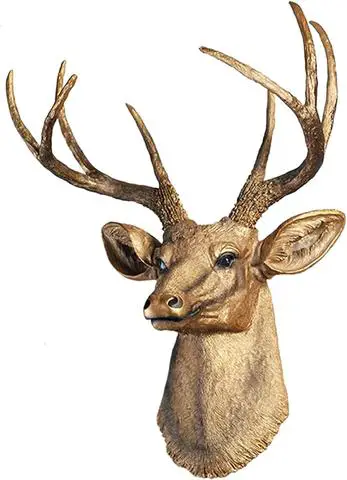
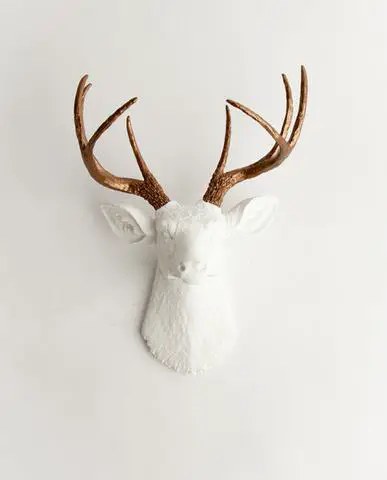
What is a Deer Head on the Wall Called?

0

“Unravel the humor behind a classic riddle: ‘What do you call a deer head on the wall?’ Delve into the amusing and unexpected answer that will leave you chuckling.”

1. Understanding the Terminology: What is a Deer Head on the Wall Called?

1. Understanding the Terminology: What is a Deer Head on the Wall Called?

A Common Practice among Hunters and Collectors

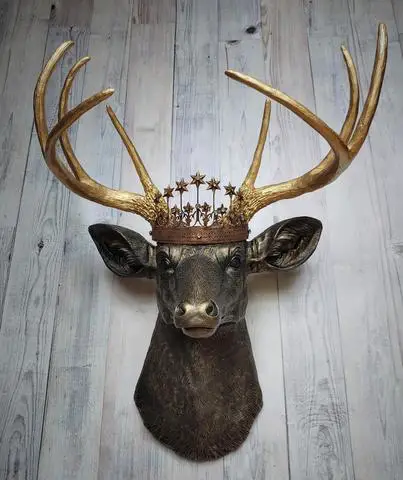
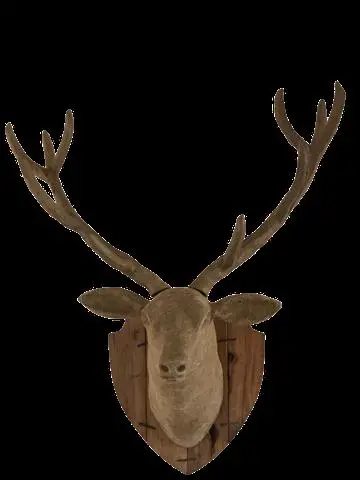
When referring to a deer head mounted on the wall, it is commonly known as a “mounted deer head” or simply a “trophy.” This practice of displaying animal heads as trophies is prevalent among hunters and collectors who take pride in showcasing their hunting achievements or appreciation for wildlife. The act of mounting these animal heads serves as a way to commemorate successful hunts or to display admiration for the beauty and majesty of these creatures.

Different Terminology for Different Animal Mounts

It’s important to note that the specific terminology used may vary depending on the type of animal being displayed. For example, if it were a bear head mounted on the wall, it would be referred to as a “bear mount.” Similarly, if only the skull is displayed without any taxidermy skin or other embellishments, it would be called a “European skull mount” or simply a “skull mount.” These distinctions help differentiate between various types of animal displays and provide clarity when discussing specific mounts.

Appreciating Taxidermy as Art

While opinions may differ on personal preferences regarding taxidermy displays, many people consider them to be works of art when done properly by talented taxidermists. Just like any form of artistic expression, taxidermy requires skill and attention to detail in order to create lifelike representations of animals. For those who appreciate the craftsmanship and aesthetic appeal of well-executed taxidermy, having multiple mounts in one’s home can be seen as an impressive collection that showcases both hunting prowess and an appreciation for nature’s beauty.

In conclusion, referring to a deer head mounted on the wall as a “mounted deer head” or “trophy” is common within the hunting and collecting community. The terminology may vary depending on the type of animal being displayed, with specific names such as “bear mount” or “skull mount” used to differentiate between different types of mounts. While personal opinions on taxidermy displays may vary, many view them as works of art if done skillfully by talented taxidermists.

2. Exploring Taxidermy: The Proper Name for a Deer Head Mount

2. Exploring Taxidermy: The Proper Name for a Deer Head Mount

The Different Names for a Deer Head Mount

When it comes to taxidermy, a deer head mounted on the wall is commonly referred to as a “mounted deer head” or simply a “trophy.” This practice is prevalent among hunters and collectors who wish to display their achievements or appreciate the beauty of these animals. However, it’s important to note that the terminology used may vary depending on the specific animal being mounted.

Understanding Various Types of Mounts

In taxidermy, there are different types of mounts depending on how the animal is preserved and displayed. For example, if it’s just the skull without any additional taxidermy work or skin, it is known as a European skull mount or simply a skull mount. This type of display showcases the intricate bone structure of the animal and is often favored by those who prefer a more minimalist approach.

On the other hand, if the entire animal is preserved and mounted, including its head and shoulders, it is referred to as a full shoulder mount. This type of mount aims to recreate the appearance of the animal in its natural habitat and requires skilled craftsmanship from a talented taxidermist.

An Appreciation for Taxidermy Artistry

While some may find these displays unconventional or even distasteful, others consider them works of art when executed properly by skilled taxidermists. The careful attention to detail in recreating lifelike poses and expressions can make these mounts truly awe-inspiring.

The author personally appreciates taxidermy artistry and proudly boasts an impressive collection in their own home. With 10 full shoulder mounts, 9 skull mounts, and numerous racks from various animals, they have created an environment that celebrates both nature’s beauty and the talent of taxidermists.

In conclusion, the proper name for a deer head mounted on a wall is a “mounted deer head” or simply a “trophy.” However, it’s important to understand that taxidermy encompasses various types of mounts, including skull mounts and full shoulder mounts. Regardless of personal opinions, when done skillfully, taxidermy can be seen as an art form that showcases the beauty of nature.

3. Unveiling the Artistry: Appreciating a Deer Head on the Wall

3. Unveiling the Artistry: Appreciating a Deer Head on the Wall

When it comes to interior design, opinions may vary greatly. Some may view a deer head on the wall as a symbol of hunting prowess or a collector’s passion, while others may see it as a questionable design choice. However, for those who appreciate taxidermy artistry and the beauty of nature, a well-executed deer mount can be truly captivating.

The Intricate Craftsmanship

A deer head on the wall is not just a mere decoration; it represents an intricate craft that requires skill and expertise. A talented taxidermist can transform a lifeless animal into a lifelike work of art, preserving its natural beauty and grace. Each mount is meticulously crafted, paying attention to every detail, from the positioning of the antlers to the expression in the eyes.

Not only does a deer mount showcase the craftsmanship of the taxidermist, but it also serves as a testament to the hunter’s dedication and respect for nature. It captures a moment frozen in time, immortalizing the memory of a successful hunt and allowing it to be cherished for years to come.

An Artistic Display

A well-placed deer head on the wall can add an element of elegance and intrigue to any space. It becomes a focal point that draws attention and sparks conversation. The juxtaposition between nature and human habitat creates an interesting dynamic that can enhance the overall aesthetic appeal.

Furthermore, when surrounded by other carefully selected pieces of taxidermy art, such as a taxidermied lynx along the sofa or various animal mounts strategically placed throughout the house, it creates an immersive experience akin to visiting a natural history museum. This curated collection showcases not only individual works but also tells a story of the collector’s passion for wildlife and their appreciation for the artistry involved.

Ultimately, whether one appreciates a deer head on the wall or not is subjective. However, it is important to recognize the skill and artistry that goes into creating these mounts. They represent more than just a hunting trophy; they embody the beauty of nature and serve as a testament to human creativity and admiration for the animal kingdom.

4. From Trophy to Art: The Significance of a Mounted Deer Head

4. From Trophy to Art: The Significance of a Mounted Deer Head

The Beauty of Taxidermy

One cannot deny the skill and artistry that goes into creating a mounted deer head or any other taxidermy piece. When done properly by a talented taxidermist, these creations can be truly breathtaking. The attention to detail, from the intricately preserved features to the lifelike positioning, transforms a simple trophy into a work of art. Each mount tells a story of the hunt and serves as a reminder of the beauty and majesty of nature.

A Display of Mastery

For hunters and collectors alike, displaying mounted animal heads is not just about showcasing their achievements or possessions. It is also a way to honor and appreciate the animals themselves. A well-executed mount demonstrates the mastery of the taxidermist in capturing the essence and character of the animal. It allows us to admire its grace and magnificence up close, frozen in time.

A Connection with Nature

Having multiple mounts in one’s house, like the author with their impressive collection, creates an immersive experience that connects individuals with nature. Each mount represents a unique encounter with wildlife, whether it be through hunting or other means. They serve as reminders of cherished memories and adventures in the great outdoors. These mounts also spark conversations and provide an opportunity for education about conservation efforts and responsible hunting practices.

Overall, mounted deer heads and other taxidermy pieces transcend being mere trophies; they become works of art that celebrate both nature’s beauty and human skill in preserving it. Whether appreciated for their aesthetic appeal or personal significance, these mounts hold a special place in many homes as symbols of admiration for wildlife and our connection to it.

5. The Beauty of Taxidermy: Identifying a Deer Head Mount

5. The Beauty of Taxidermy: Identifying a Deer Head Mount

Paragraph 1:

A deer head mount, also known as a mounted deer head or trophy, is a common practice among hunters and collectors. It involves preserving and displaying the head of a deer on a wall. This art form requires the skills of a talented taxidermist who carefully prepares and mounts the deer’s head to create a lifelike representation. When done properly, a deer head mount can be considered a work of art.

Paragraph 2:

In addition to deer heads, other animals can also be mounted in this manner. For example, if it were a bear instead of a deer, it would be called a bear mount. The term “mount” refers to the act of mounting and displaying an animal’s preserved body part for decorative purposes. In some cases, only the skull is displayed without the taxidermy skin and other elements, which is referred to as a European skull mount or simply skull mount.

List:

– Deer head mounts are commonly seen in hunting lodges and homes of hunters and collectors.
– A skilled taxidermist is required to properly prepare and mount the deer’s head.
– Other animals can also be mounted in this manner, such as bears or lynxes.
– The term “mount” refers to displaying an animal’s preserved body part for decorative purposes.
– A European skull mount refers to displaying only the skull without additional taxidermy elements.

Note: The provided content has been slightly modified for clarity and coherence.

6. Decorating with Wildlife: A Closer Look at Deer Head Wall Mounts

6. Decorating with Wildlife: A Closer Look at Deer Head Wall Mounts

The Art of Taxidermy

One popular way to decorate a room is by incorporating wildlife elements, such as deer head wall mounts. These mounts, also known as trophy displays, are created through the art of taxidermy. A skilled taxidermist carefully preserves and mounts the animal’s head, giving it a lifelike appearance. When done properly, these mounts can be considered works of art that showcase the beauty and majesty of nature.

A Variety of Options

Deer head wall mounts come in various styles and designs. The most common type is a full shoulder mount, where the entire head and neck of the deer are displayed on a plaque or directly attached to the wall. This type of mount creates a striking focal point in any room and adds a touch of rustic charm.

Additionally, there are skull mounts available for those who prefer a more minimalist look. Known as European skull mounts, these displays feature only the cleaned skull without any additional taxidermy work or skin. They offer a unique and modern aesthetic that can complement different interior design styles.

Personalizing Your Space

For avid hunters and collectors, displaying deer head wall mounts is not just about decoration but also a way to showcase their passion and achievements. Some individuals may have multiple shoulder mounts or even an extensive collection featuring various animals like bears or lynxes.

When done tastefully and thoughtfully, incorporating these wildlife displays into your home can create a sense of adventure and connection with nature. However, it’s important to consider the overall design scheme of your space to ensure that these mounts blend harmoniously with other elements in the room.

In conclusion, deer head wall mounts offer a unique way to decorate your space while celebrating nature’s beauty. Whether you opt for a full shoulder mount or a minimalist skull display, these mounts can add character and personality to your home. Just like any other form of art, it’s essential to choose and arrange them in a way that enhances the overall aesthetic appeal of your space.

In conclusion, a deer head on the wall is commonly referred to as a trophy mount. It serves as a decorative piece that represents hunting achievements and personal interests. However, ethical concerns have led to an increasing shift towards alternative forms of decor, promoting wildlife conservation and animal welfare.

Can You Eat Slugs: A Quick Guide to Edibility and Safety

0

While it is true that slugs are consumed by some animals and even humans in certain cultures, it is crucial to understand the potential risks associated with eating them. Some slugs may carry parasites, which could cause serious health issues if ingested. One such example is the rat lungworm, which has been found in some slugs and snails, leading to severe infections in those who consume them without proper handling or cooking.

To ensure safety, it is important to know the correct preparation methods if one is to consider eating a slug. Cooked properly, slugs can be a unique addition to one’s culinary experience. Still, it is essential to weigh the risks and make informed decisions before consuming these slimy creatures.

Is It Safe To Eat Slugs?

Slugs and snails belong to the same family. However, while eating snails is very known around the world, slugs are more associated with garden pests than a choice for a meal. Similar to snails, there are risks and dangers associated with consuming slugs, but they also have a significant nutritional value.

Risks and Dangers

Before you consider adding slugs to your diet, it’s essential to understand the potential risks and dangers they may pose. Slugs can carry parasites and bacteria that could be harmful to humans. One such parasite is the rat lungworm, which can cause severe neurological disorders and even death if ingested. To reduce the risk of ingesting these parasites, it is crucial to cook slugs thoroughly before consumption.

Another concern is the potential consumption of toxic substances that slugs might have ingested. Slugs often consume decaying plant matter and various garden pesticides. These substances, if ingested by a human, can have detrimental effects on their health.

Nutritional Value

While there are risks associated with eating slugs, they do contain some nutritional value. Slugs are high in protein and low in fat, making them a potential alternative protein source for those looking to diversify their diet. However, it should be noted that the nutritional content of slugs may vary based on their diet and environment.

The nutritional value of slugs may not outweigh the potential harm they can cause, so it would be wise to consider other protein sources before resorting to slug consumption.

a close up on a slug

Preparing Slugs for Consumption

Befor slugs can be consumed, it is essential to prepare them correctly to avoid any risk of infection from parasites like Angiostrongylus cantonensis, which can be carried by some species. Here are some guidelines to how to choose the right slugs and some cleaning and cooking methods suitable for slug consumption.

Choosing the Right Slugs

When selecting slugs for consumption, always opt for those found in a clean environment free from pollution or pesticides. Be cautious of small, high-risk carriers, such as flatworms, which might be carrying nematodes like A. cantonensis. It is wise to avoid consuming wild slugs due to the potential risk of parasites and infections.

Consider sourcing edible slugs from a reputable supplier or grow them in a controlled environment, ensuring a hygienic and parasite-free habitat. This lowers the risk of infection and ensures the slugs are safe to eat.

Cleaning and Cooking Methods

Before consuming slugs, it is essential to clean and cook them properly. Follow these steps to prepare slugs for consumption:

  1. Cleaning: After choosing the appropriate slugs, rinse them thoroughly under running water to remove dirt and debris. Soak the slugs in a saltwater solution for about 30 minutes to help remove any mucus and parasites present. Rinse the slugs again in fresh water to remove any traces of salt.
  2. Cooking: Cooking slugs is crucial to kill any potential parasites and make them safe to consume. Boil the slugs for at least 15 minutes to ensure they are cooked through. After boiling, some people prefer to remove the slug’s skin and discard any internal organs. While this step is optional, it can improve the texture and taste of the slugs.

Different cooking methods can be used for preparing slugs, including:

  • Pan-frying: After boiling and cleaning, pan-fry the slugs in a little oil or butter over medium-high heat for about 5 minutes on each side, until they develop a golden-brown color.
  • Grilling: Place the boiled slugs on skewers and grill them over medium-high heat for about 10 minutes, turning occasionally until they are evenly cooked.
  • Stewing: Combine the boiled slugs with vegetables, herbs, and spices in a pot or slow cooker. Cook the mixture over low heat for several hours, allowing the flavors to meld and the slugs to become tender.

Remember to always exercise caution when consuming slugs, ensuring proper cleaning and cooking techniques are followed to minimize the risk of infection from parasites.

Slug on a flower

Cultural Perspectives on Eating Slugs

Historical Usage

Eating slugs has been a part of human diet in some cultures throughout history. In certain Native American communities, slug consumption has been documented in holistic approaches to American Indian texts. These texts describe the use of slugs as a source of nutrition and their role in traditional food practices. It’s essential to consider the historical context when discussing the consumption of slugs, as different cultures and communities have varied perspectives on this practice.

Regional Beliefs

In some parts of the world, consuming slugs is an accepted practice, while in other regions, it might be considered uncommon or even taboo. For example, some communities in the Pacific Northwest and Alaska, where slug species are abundant, have been known to include slugs in their traditional diets. The methods of preparation and consumption may differ between regions, but it is clear that slugs have been and still are a part of some communities’ food culture.

On the other hand, in Western cultures, the idea of eating slugs may seem unappetizing or even repulsive to some. Due to the slimy texture and appearance, many people might not view slugs as an appealing food choice. However, it is crucial to recognize and respect that different cultures and regions have their unique reasons and traditions surrounding slug consumption.

Minerals for Whitetails

0

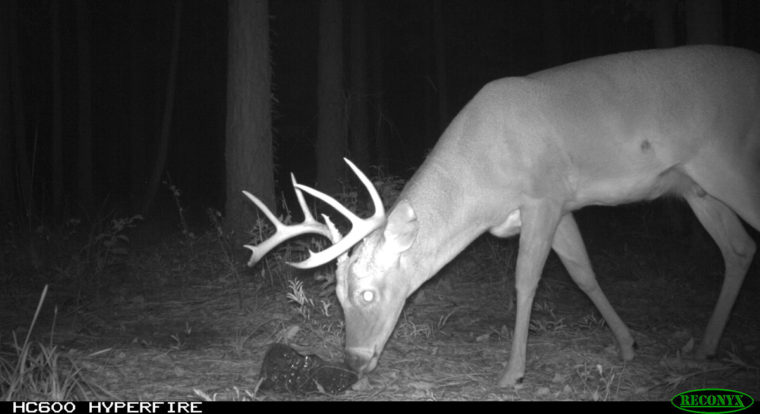
Buck visit Trophy Rock mineral site

When spring rolls around, hunters everywhere gear up to begin establishing or “recharging” the mineral sites on their hunting properties. They know that deer typically begin using supplemental minerals around spring green-up and continue until early fall. Surely, the knee-deep depressions in the soil caused by repeated years of mineral supplementation are evidence of deer need, correct? Maybe, or maybe not. Growing antlers are composed mostly of proteins (80 percent by weight); whereas hardened antlers contain roughly equal amounts of proteins and minerals. Studies have shown that calcium and phosphorus are by far the two most common minerals in deer antlers, comprising 30-35 percent of the mature antler by weight. However, a University of Georgia study detected 11 different minerals in the whitetail’s antlers. In addition to calcium (19 percent) and phosphorus (10 percent), the next most common elements were magnesium (1 percent) and sodium (0.5 percent). Lesser amounts of other minerals were found including potassium, barium, iron, aluminum, zinc, strontium and manganese. Besides calcium and phosphorus, little is known about the role of other minerals in antler growth.

Clearly minerals are important in antler development. Because of the large quantities of minerals required for antler growth, whitetails have developed the ability to “bank” calcium and phosphorus in their skeletons and then transfer these minerals during antler growth. However, these body sources of calcium and phosphorus provide only a portion needed for optimum antler growth. The rest must come directly from their diet while their antlers are actively growing. Therefore, mineral supplementation prior to and during antler growth may be beneficial.

Minerals are also important for does. During gestation and lactation does have high requirements for calcium and magnesium.

Research on domestic livestock has documented numerous benefits of mineral supplementation including increased forage intake, improved forage digestion, and increased reproductive success. In contrast, most studies on whitetails have focused on the impacts on body weight and antler development. Researchers at Mississippi State University found a strong correlation between soil mineral content (primarily phosphorus) and body size, although no correlation with adult antler size was found. They concluded that soil phosphorus levels were the best indicator of body size, probably because phosphorus deficient soils are common throughout the United States.

A classic study on the mineral needs of deer was conducted at Penn State University in the 1950s. In this study, researchers did detect a difference in yearling buck antler development between supplemented and unsupplemented groups. However, these herds were fed a nutritionally deficient diet below what most whitetails would have access to in the wild. Furthermore, when the same deer were examined the following year as 2.5-year-olds, no differences were detected between the two groups.

In a similar study conducted at Auburn University, researchers tried to detect differences in body and antler size between an unsupplemented and supplemented group. This study differed from the Penn State study in that both herds were fed a nutritionally complete diet. In addition, one group was provided a commercial mineral supplement. Over a four year period the researchers were unable to detect any differences between the two deer herds.

Without question deer need minerals, and they will readily use mineral licks. But why do they use these licks and why is their use restricted primarily to the spring and summer? Many hunters believe that it is simply because bucks need the minerals for antler growth and does for raising fawns during these months. However, several studies have shown that while deer readily use mineral licks high in salt, they rarely, if ever, use pure mineral supplements. If deer were lacking minerals, why wouldn’t they use the pure mineral supplement even if salt wasn’t present? No one can say for sure, but it’s probably because most minerals by themselves are bitter.

Could the use of salt/mineral mixes simply be due to an increased need for salt? According to research, yes. During the spring and summer, deer operate at a sodium deficiency due to the high potassium and water content of the forage. This interferes with efficient sodium conversion in the body and increases the need for sodium. This makes deer actively seek out concentrated sources of sodium such as natural or man-made licks. Research in Tennessee supports this. Type of mineral formulation affected total deer use of baited sites, with a high salt formulation receiving over four times the number of daily visits from deer as other formulations.

Almost all soils more than 25-50 miles from a seacoast are low in sodium. Therefore, in these areas, salt may be just as necessary as calcium and phosphorus to whitetails during the spring and summer.

There are three main types of mineral supplements.

  1. Food additive – these minerals are combined with a supplemental feed, and deer get them while consuming the feed.
  2. Blocks – these are commercial mineral blocks placed on the ground or on a stump, and deer get the minerals by licking the block or consuming the soil below it. Research shows blocks tend to be the least effective way for deer to get supplemental minerals.
  3. Granular – these minerals are added to the soil, and deer get them by consuming the minerals and/or soil/minerals mixture. Research shows granular minerals facilitate increased consumption by animals as they’re able to literally eat (vs. lick) the mixture. There are commercial and “homemade” granular mixes available.

What does all this mean to the average deer hunter and manager? The results of these studies suggest that mineral supplementation – especially calcium, phosphorus, and sodium – may provide some benefit, especially in situations where deer are nutritionally deprived or areas with minerally deficient soils. However, age and nutrition are the two most important ingredients for producing large antlered bucks. Regardless of the intensity of mineral supplementation, a yearling buck will still be a yearling buck. Bucks must live long enough to reach physical maturity while having access to high quality nutrition to achieve maximum antler growth. Creating a lick is certainly fun, inexpensive, and watching deer respond to these licks is satisfying. Mineral licks also provide a great place to survey deer with game cameras.

So, if you have already addressed the larger concerns of habitat and herd management, mineral supplements can be another part of your overall management plan. The key is to have realistic expectations. Don’t expect to see trophy bucks walking around this fall just because you gave them a mineral boost this spring. While the advantages of mineral supplementation have not been clearly documented, neither have any disadvantages.

Do Eagles Eat Cats? 5 Ways to Protect Your Cats

0

Now, let’s get to the question at hand: do eagles eat cats?

The short answer is yes, they can. However, it’s not a common occurrence.

Eagles are fascinating creatures, known for their majestic flight and sharp talons.

But have you ever wondered what they eat?

Read Aslo: Do Alligators Eat Ducks?

Table of Contents

Eagles and Cats

They are opportunistic hunters and will go after any prey that presents itself as an easy target.

Cats, especially outdoor cats, can be vulnerable to eagle attacks if they are outside and unattended.

This is more likely to happen in areas where eagles are abundant and there is a shortage of other prey.

Real-Life Examples

There have been a few documented cases of eagles attacking and eating cats.

In 2015, a bald eagle was captured on camera carrying off a small domestic cat in British Columbia, Canada.

Similarly, in 2019, a golden eagle was spotted carrying a dead cat in its talons in Scotland. These incidents are rare, but they do happen.

How to Protect Your Cat

If you’re a cat owner, you may be wondering what you can do to protect your furry friend from eagle attacks.

The best thing you can do is keep your cat indoors.

Not only will this protect them from potential eagle attacks, but it will also keep them safe from other outdoor dangers like cars and other animals.

If you must let your cat outside, make sure you supervise them and don’t leave them outside for long periods of time.

You can also invest in a cat enclosure that will allow your cat to enjoy the outdoors while still being protected from predators.

5 Ways to Protect Your Cats from Eagles:

1. Keep Your Cat Indoors

One of the most effective ways to protect your cat from eagle attacks is to keep them indoors.

This section will discuss the benefits of indoor cats, including protection from predators like eagles.

We will provide tips on how to keep your cat stimulated and happy while indoors, and how to create a safe and comfortable indoor environment.

2. Supervise Your Cat When Outside

If you do allow your cat outside, it is important to supervise them to minimize the risk of an eagle attack.

This section will provide tips on how to monitor your cat’s outdoor activities, including how to use a harness and leash, and how to create a safe outdoor enclosure.

3. Secure Your Outdoor Enclosure

For cat owners who want to provide their cats with outdoor access, a secure outdoor enclosure can be a good compromise.

This section will provide tips on how to create a secure outdoor enclosure for your cat, including how to choose the right materials and how to design the enclosure to prevent eagle attacks.

4. Be Vigilant During Eagle Nesting Season

Eagles are most likely to attack cats during their nesting season, which varies depending on the species and location.

This section will provide advice on how to be vigilant during eagle nesting season, including how to recognize signs of eagle activity and how to adjust your cat’s outdoor routine during this time.

5. Work with Your Community to Protect Wildlife

Protecting wildlife, including eagles, is a community effort.

This section will discuss how cat owners can work with their communities to protect wildlife habitats and reduce the risk of eagle attacks.

We will provide tips on how to get involved in local conservation efforts and how to educate others about the importance of coexisting with wildlife.

Eagles: Top Predators of the Sky

Eagles are powerful and majestic birds of prey known for their keen eyesight and impressive hunting skills.

This section will provide an overview of the different species of eagles, their habitats, and their role as top predators in the ecosystem.

We will discuss how eagles use their sharp talons and beaks to capture and kill their prey, and examine the different types of prey that they typically hunt.

The Diet of Eagles

Eagles are birds of prey and are known for their carnivorous diet.

They primarily hunt small mammals such as rodents, rabbits, and squirrels, but they also eat larger prey like deer and coyotes.

Eagles have even been known to attack and eat other birds, including other raptors like hawks and owls.

What Do Eagles Eat? A Look at Their Diet

In this section, we will explore the diverse diet of eagles and the different types of prey that they hunt.

We will discuss the hunting techniques that eagles use to capture their prey, including aerial attacks and swooping dives.

We will also look at how eagles adapt their hunting strategies to their environment and the availability of food sources.

Can Eagles Eat Cats? Understanding Their Prey Preferences

This section will delve into the main question of the article: can eagles eat cats?

We will examine the factors that influence an eagle’s choice of prey, including the size and agility of the prey, and the eagle’s own physical capabilities.

We will also discuss whether domestic cats are a common prey item for eagles, and if so, in what circumstances.

Eagle Attacks on Pets: What You Need to Know

Sadly, eagle attacks on pets are not uncommon in areas where eagles and domestic animals coexist.

This section will provide examples of reported eagle attacks on domestic pets, including cats.

We will also discuss the signs that an eagle may be targeting a pet, and provide advice on what to do if you suspect an eagle is threatening your pet.

Living in an Eagle Habitat: Keeping Your Pets Safe

For pet owners who live in areas where eagles are known to hunt, there are several steps you can take to keep your pets safe.

This section will provide practical advice on how to minimize the risk of eagle attacks, including keeping your pets indoors or supervised when outside, and securing outdoor enclosures as eagles eat cats.

The Importance of Wildlife Conservation and Coexistence

Eagles and other wildlife play a critical role in the ecosystem, and it is important to protect them and their habitats.

In this section, we will discuss the importance of conservation efforts to preserve eagle populations and their prey.

We will also explore the concept of coexistence and how humans can learn to live alongside eagles and other wildlife.

Eagle Myths and Legends from Around the World

Eagles have been a part of human mythology and culture for thousands of years.

This section will share interesting myths and legends about eagles from different cultures around the world.

From Native American traditions to ancient Greek mythology, we will explore the many ways that eagles have been revered and celebrated throughout history.

Coexisting with Eagles and Other Wildlife

We will emphasize the importance of respecting and protecting all types of wildlife, and share resources for those interested in learning more about eagle conservation and coexistence.

FAQs

Are cats scared of eagles?

Yes, cats are usually scared of eagles because eagles are natural predators and can pose a threat to them.

Is an eagle stronger than a cat?

Yes, eagles are much stronger than cats.

They have powerful talons and can carry prey that is much heavier than a cat.

Do eagles eat animals?

Yes, eagles are carnivorous and primarily eat other animals.

Their diet consists mainly of fish and small mammals such as rabbits and rodents.

Do eagles attack humans?

Eagles do not usually attack humans, but they can become aggressive if they feel threatened or if their territory is invaded.

What is eagle afraid of?

Eagles are afraid of large predators such as bears and wolves, as well as humans.

They may also be scared of loud noises and sudden movements.

Can a human win a fight with an eagle?

No, it is highly unlikely that a human could win a fight against an eagle.

Eagles are powerful predators with sharp talons and a strong beak.

What is more powerful than an eagle?

There are few predators that are more powerful than an eagle, but some examples include grizzly bears, crocodiles, and killer whales.

What is the biggest bird of prey?

The largest bird of prey is the Andean condor, which can have a wingspan of over 10 feet and weigh up to 33 pounds.

Read Also: Can Ducks Eat Sunflower Seeds? What You Need To Know

Who is stronger, a human or an eagle?

Eagles are much stronger than humans in terms of physical abilities such as strength and speed.

What is the weakness of an eagle?

One weakness of an eagle is that they are vulnerable to environmental threats such as habitat loss, pollution, and climate change.

They may also be susceptible to disease and parasites.

Eagles are opportunistic hunters and will go after any prey that presents itself as an easy target.

As a cat owner, it’s important to take precautions to keep your cat safe from potential eagle attacks.

Whether that means keeping them indoors or supervising them while they’re outside, it’s better to be safe than sorry as eagles eat cats.

They are opportunistic hunters and will go after any prey that presents itself as an easy target.

Cats, especially outdoor cats, can be vulnerable to eagle attacks if they are outside and unattended.

This is more likely to happen in areas where eagles are abundant and there is a shortage of other prey.

Real-Life Examples

There have been a few documented cases of eagles attacking and eating cats.

In 2015, a bald eagle was captured on camera carrying off a small domestic cat in British Columbia, Canada.

Similarly, in 2019, a golden eagle was spotted carrying a dead cat in its talons in Scotland. These incidents are rare, but they do happen.

How to Protect Your Cat

If you’re a cat owner, you may be wondering what you can do to protect your furry friend from eagle attacks.

The best thing you can do is keep your cat indoors.

Not only will this protect them from potential eagle attacks, but it will also keep them safe from other outdoor dangers like cars and other animals.

If you must let your cat outside, make sure you supervise them and don’t leave them outside for long periods of time.

You can also invest in a cat enclosure that will allow your cat to enjoy the outdoors while still being protected from predators.

5 Ways to Protect Your Cats from Eagles:

1. Keep Your Cat Indoors

One of the most effective ways to protect your cat from eagle attacks is to keep them indoors.

This section will discuss the benefits of indoor cats, including protection from predators like eagles.

We will provide tips on how to keep your cat stimulated and happy while indoors, and how to create a safe and comfortable indoor environment.

2. Supervise Your Cat When Outside

If you do allow your cat outside, it is important to supervise them to minimize the risk of an eagle attack.

This section will provide tips on how to monitor your cat’s outdoor activities, including how to use a harness and leash, and how to create a safe outdoor enclosure.

3. Secure Your Outdoor Enclosure

For cat owners who want to provide their cats with outdoor access, a secure outdoor enclosure can be a good compromise.

This section will provide tips on how to create a secure outdoor enclosure for your cat, including how to choose the right materials and how to design the enclosure to prevent eagle attacks.

4. Be Vigilant During Eagle Nesting Season

Eagles are most likely to attack cats during their nesting season, which varies depending on the species and location.

This section will provide advice on how to be vigilant during eagle nesting season, including how to recognize signs of eagle activity and how to adjust your cat’s outdoor routine during this time.

5. Work with Your Community to Protect Wildlife

Protecting wildlife, including eagles, is a community effort.

This section will discuss how cat owners can work with their communities to protect wildlife habitats and reduce the risk of eagle attacks.

We will provide tips on how to get involved in local conservation efforts and how to educate others about the importance of coexisting with wildlife.

Eagles: Top Predators of the Sky

Eagles are powerful and majestic birds of prey known for their keen eyesight and impressive hunting skills.

This section will provide an overview of the different species of eagles, their habitats, and their role as top predators in the ecosystem.

We will discuss how eagles use their sharp talons and beaks to capture and kill their prey, and examine the different types of prey that they typically hunt.

The Diet of Eagles

Eagles are birds of prey and are known for their carnivorous diet.

They primarily hunt small mammals such as rodents, rabbits, and squirrels, but they also eat larger prey like deer and coyotes.

Eagles have even been known to attack and eat other birds, including other raptors like hawks and owls.

What Do Eagles Eat? A Look at Their Diet

In this section, we will explore the diverse diet of eagles and the different types of prey that they hunt.

We will discuss the hunting techniques that eagles use to capture their prey, including aerial attacks and swooping dives.

We will also look at how eagles adapt their hunting strategies to their environment and the availability of food sources.

Can Eagles Eat Cats? Understanding Their Prey Preferences

This section will delve into the main question of the article: can eagles eat cats?

We will examine the factors that influence an eagle’s choice of prey, including the size and agility of the prey, and the eagle’s own physical capabilities.

We will also discuss whether domestic cats are a common prey item for eagles, and if so, in what circumstances.

Table of Contents

Toggle

  • Eagles and Cats
  • Real-Life Examples
    • How to Protect Your Cat
  • 5 Ways to Protect Your Cats from Eagles:
    • 1. Keep Your Cat Indoors
    • 2. Supervise Your Cat When Outside
    • 3. Secure Your Outdoor Enclosure
    • 4. Be Vigilant During Eagle Nesting Season
    • 5. Work with Your Community to Protect Wildlife
  • Eagles: Top Predators of the Sky
  • The Diet of Eagles
  • What Do Eagles Eat? A Look at Their Diet
  • Can Eagles Eat Cats? Understanding Their Prey Preferences
  • Eagle Attacks on Pets: What You Need to Know
  • Living in an Eagle Habitat: Keeping Your Pets Safe
  • The Importance of Wildlife Conservation and Coexistence
  • Eagle Myths and Legends from Around the World
  • Coexisting with Eagles and Other Wildlife
  • FAQs
    • Are cats scared of eagles?
    • Is an eagle stronger than a cat?
    • Do eagles eat animals?
    • Do eagles attack humans?
    • What is eagle afraid of?
    • Can a human win a fight with an eagle?
    • What is more powerful than an eagle?
    • What is the biggest bird of prey?
    • Who is stronger, a human or an eagle?
    • What is the weakness of an eagle?
  • Real-Life Examples
    • How to Protect Your Cat
  • 5 Ways to Protect Your Cats from Eagles:
    • 1. Keep Your Cat Indoors
    • 2. Supervise Your Cat When Outside
    • 3. Secure Your Outdoor Enclosure
    • 4. Be Vigilant During Eagle Nesting Season
    • 5. Work with Your Community to Protect Wildlife
  • Eagles: Top Predators of the Sky
  • The Diet of Eagles
  • What Do Eagles Eat? A Look at Their Diet
  • Can Eagles Eat Cats? Understanding Their Prey Preferences
  • Eagle Attacks on Pets: What You Need to Know
  • Living in an Eagle Habitat: Keeping Your Pets Safe
  • The Importance of Wildlife Conservation and Coexistence
  • Eagle Myths and Legends from Around the World
  • Coexisting with Eagles and Other Wildlife
  • FAQs
    • Are cats scared of eagles?
    • Is an eagle stronger than a cat?
    • Do eagles eat animals?
    • Do eagles attack humans?
    • What is eagle afraid of?
    • Can a human win a fight with an eagle?
    • What is more powerful than an eagle?
    • What is the biggest bird of prey?
    • Who is stronger, a human or an eagle?

Eagle Attacks on Pets: What You Need to Know

Sadly, eagle attacks on pets are not uncommon in areas where eagles and domestic animals coexist.

This section will provide examples of reported eagle attacks on domestic pets, including cats.

We will also discuss the signs that an eagle may be targeting a pet, and provide advice on what to do if you suspect an eagle is threatening your pet.

Living in an Eagle Habitat: Keeping Your Pets Safe

For pet owners who live in areas where eagles are known to hunt, there are several steps you can take to keep your pets safe.

This section will provide practical advice on how to minimize the risk of eagle attacks, including keeping your pets indoors or supervised when outside, and securing outdoor enclosures as eagles eat cats.

The Importance of Wildlife Conservation and Coexistence

Eagles and other wildlife play a critical role in the ecosystem, and it is important to protect them and their habitats.

In this section, we will discuss the importance of conservation efforts to preserve eagle populations and their prey.

We will also explore the concept of coexistence and how humans can learn to live alongside eagles and other wildlife.

Eagle Myths and Legends from Around the World

Eagles have been a part of human mythology and culture for thousands of years.

This section will share interesting myths and legends about eagles from different cultures around the world.

From Native American traditions to ancient Greek mythology, we will explore the many ways that eagles have been revered and celebrated throughout history.

Coexisting with Eagles and Other Wildlife

We will emphasize the importance of respecting and protecting all types of wildlife, and share resources for those interested in learning more about eagle conservation and coexistence.

FAQs

Are cats scared of eagles?

Yes, cats are usually scared of eagles because eagles are natural predators and can pose a threat to them.

Is an eagle stronger than a cat?

Yes, eagles are much stronger than cats.

They have powerful talons and can carry prey that is much heavier than a cat.

Do eagles eat animals?

Yes, eagles are carnivorous and primarily eat other animals.

Their diet consists mainly of fish and small mammals such as rabbits and rodents.

Do eagles attack humans?

Eagles do not usually attack humans, but they can become aggressive if they feel threatened or if their territory is invaded.

What is eagle afraid of?

Eagles are afraid of large predators such as bears and wolves, as well as humans.

They may also be scared of loud noises and sudden movements.

Can a human win a fight with an eagle?

No, it is highly unlikely that a human could win a fight against an eagle.

Eagles are powerful predators with sharp talons and a strong beak.

What is more powerful than an eagle?

There are few predators that are more powerful than an eagle, but some examples include grizzly bears, crocodiles, and killer whales.

What is the biggest bird of prey?

The largest bird of prey is the Andean condor, which can have a wingspan of over 10 feet and weigh up to 33 pounds.

Read Also: Can Ducks Eat Sunflower Seeds? What You Need To Know

Who is stronger, a human or an eagle?

Eagles are much stronger than humans in terms of physical abilities such as strength and speed.

Learn Buck Behavior During the Rut

0

No matter how much deer hunters prepare and strategize, often success comes down to one simple tenet: be in the right place at the right time.

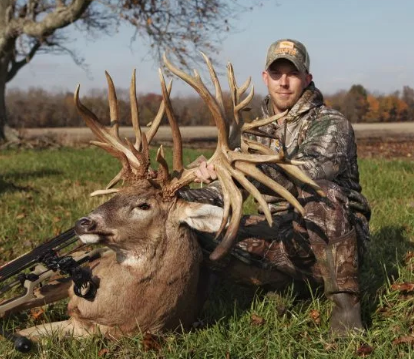
Perhaps this is no more evident than when hunting during the rut, when deer travel patterns become unpredictable and, to many, downright mysterious. Luke Brewster of Bristow, Virginia, had only a few years of bowhunting experience under his belt, but he knew that when hamstrung with limited hunting time, the rut is when you need to be on stand as much as possible.

The Brewster Buck. (photo courtesy of the Pope and Young Club)
World Record: The Largest Nontypical Whitetail Buck Ever Taken
From left to right, Pope and Young measurers Stan Zirbel, Gil Hernandez, Kyle Lehr, Ken Witt, Ricky Krueger, Jack Reneau and Eli Randall with the new world record nontypical whitetail, harvested by bowhunter Luke Brewster in Edgar County, Illinois. Photo courtesy of the Pope and Young Club.

On Nov. 1, 2018, Brewster pointed his pickup west and drove 10 hours from his home in Virginia to Edgar County, Illinois, to hunt a piece of land owned by his father, Jim Brewster. There the Marine Corps veteran met up with three other hunters, locals who had permission to hunt the Brewster property. All three are veteran bowhunters who had been mentoring Luke on the finer points of successful stick-and-string hunting. Brothers Brent and Justin Cearlock and Ron Wagoner also do most of the hunting grunt work like putting in and maintaining food plots, hanging stands and using game cameras to monitor deer on the property.

The primo buck that all of the hunters were after had been nicknamed Mufasa, or the Lion King, by Wagoner. The group had been collecting photos of Mufasa for five years, watching the buckxe2x80x99s rack metamorphosize from a huge typical to a jaw-dropping, nontypical structure. It turns out that this isnxe2x80x99t all that uncommon among mature bucks.

xe2x80x9cIn general, bucks do produce more nontypical points as they age,xe2x80x9d said Dr. Grant Woods, a well-known deer biologist. xe2x80x9cMost bucks Ixe2x80x99ve followed through research or on trail cameras for my personal hunting have an antler configuration that includes more nontypical points as they mature. This may be due to genetics, injuries, etc.xe2x80x9d

Whatever the reason, Mufasaxe2x80x99s antlers reached to the sky, stretching out into a freaky configuration that included several thick droptines. The morning of Nov. 2, 2018, Brewster climbed into a treestand situated next to a popular doe bedding area. His morning hunt was uneventful, with only a few does spotted. That afternoon, Brewster had to move to a stand farther south to give another hunter a crack at bagging Mufasa in the area where the buck had spent considerable time, based on game camera photos. His stand for the second half of the day was in a creek bottom deer travel route, with a heavily hit scrape a mere 26 yards away. As a soft rain fell, Brewster looked to the east and saw a doe bound off, frightened by some unknown danger. A moment later, Mufasa appeared to freshen the scrape. Brewster released an arrow at the monster buck and drew blood, then waited half an hour to trail his wounded prey.

Finding half of the arrow slathered in blood, Brewster surmised that hexe2x80x99d done lethal damage to the deer. He followed a short blood trail to the new world nontypical record. Upon inspecting the rack, Brewster noticed a fresh break in the left antler and what appeared to be a missing portion of bone. Sure enough, after retracing the blood trail, he found the other part of the left antler, broken off when the wounded buck ran into a tree. Due to a new rule instituted by the Pope & Young Club in 2016, Brewster was able to count the broken portion of the rack in the overall measurement.

xe2x80x9cIt is up to the decision of the measurers, but if a broken portion of antlers matches up perfectly to the rack, it can be included in the measurement,xe2x80x9d said Rick Mowery, communications and marketing manager for Pope & Young. xe2x80x9cBut it has to match up perfectly, like you often find when gluing back together a broken jar or pottery.xe2x80x9d

The broken droptine would have reduced the overall measurement by about 20 inches. While it still would have been a new world record nontypical harvested by a hunter, being able to include it in the overall measurement of 327-7/8 inches and 39 points means it far surpasses the next-largest hunter-harvested nontypical whitetail, a 47-point, 312-inch buck taken by Stephen Tucker with a muzzleloader in Sumner County, Tennessee, in 2016. The Brewster buck blows the doors off the previous Pope & Young record, a 294-inch, 39-point nontypical bagged by Michael Beatty in 2000 in Greene County, Ohio.

Brewsterxe2x80x99s success proves that all of the time and effort spent planning a hunt, capturing photos of mature bucks and studying deer movements mean little if youxe2x80x99re not in the right place at the right time. Thankfully Brewster was, and this victor will forever enjoy the spoils.

_________________

Cottonwood Tree Guide: Identification of Eastern, Leaves, Seeds & More

0

The cottonwood tree is one of the most popular tree species in the world. Going by the scientific name Populus Deltoides, the tree originates from and is common in North America, growing in the US, Canada, and Mexico.

Read on to learn more about how to identify this beautiful tree…

The trees come in different varieties and are identified quite easily using their subspecies names. Cottonwood trees growing in southern Canada and the Eastern US come from the subspecies Deltoides, while those growing in the Southern part of Canada and the Central sections of the US go by the subspecies name Monilifera. The Wislizeni subspecies grows in the southern parts of Colorado, Texas, and Mexico.

All these subspecies of the cottonwood tree can grow to a height of up to 60 meters and a diameter of about 3 meters, making it one of the largest hardwood trees in North America.

For optimal growth, the trees grow around rivers and floodplains to access water.

As noted earlier, the cottonwood tree has three different subspecies spread out across North America. The Deltoides subspecies grow in the southern-eastern parts of Canada and the Eastern parts of the US. Some of the notable areas include Ontario, Quebec, North Dakota, and Texas.

Cottonwood tree identification chart with Eastern cottonwood leaves, Black cottonwood flowers, cottonwood tree, cottonwood seeds, and Eastern cottonwood bark in oval frames

In comparison, the Monilifera subspecies grow in south-central Canada, the central US, and New Mexico. Cities in these areas include Manitoba and Alberta.

The final subspecies of the tree is termed Wislizeni. It grows mostly in southern Colorado, Texas, Mexico, and California. Identifying the cottonwood tree and distinguishing each of these tree species is quite a task. Fortunately, we’ve got you covered. In the next sections, we offer a guide on identifying the cottonwood trees and distinguishing their various varieties. We will start by looking at how cottonwood trees germinate and spread.

How Cottonwood Tree Seeds Germinate and Spread

As noted earlier, the eastern cottonwood tree grows mostly in the east side of the US, stretching all the way into Canada. The tree grows in a wide range of soil types. However, for optimal growth, well-drained soils along river banks are recommended.

The tree is also diecious, implying the male and female flowers grow on separate trees.1 Usually, the male flowers and buds grow earlier than female buds. They also tend to bloom much faster than their female counterparts.

The seeds of the tree develop in capsules hosted by short stalks. Under most conditions, the trees start producing seeds at the age of 5 to 10 years. Seed dispersal happens about two months after flowering. Water and wind are the seed’s main dispersal agents. Since most cottonwood trees grow around water bodies, the water medium and winds in such locations carry the seeds, dispersing them in the process. Unfortunately, the viability of the seeds is a bit low. To germinate, they must find moist seedbeds or be immersed in water, conditions that are not always readily available.

Cottonwood seed identification chart with Fremont cottonwood, Black cottonwood, and Eastern cottonwood seeds in oval frames.

Nevertheless, the seeds can enjoy a germination rate of as high as 90 percent under the right conditions.1 These optimal conditions include sufficient sunlight to supply solar energy and soil moisture to supply water for photosynthesis. The growth of the seeds starts slowly.

Once the root zone is developed, the rate of growth is much faster. This fast and steady pace of growth is maintained throughout the tree’s lifetime. One feature of the tree worth noting that affects its growth is its shading tolerance.

In this regard, cottonwood trees are shade intolerant. They are one of the most shade-intolerant hardwood tree species, coming second to only the Black Willow.

Both of these trees grow in the same areas, competing for light and water. However, cottonwood trees tend to outgrow Black Willows, especially in stable water and sunlight levels1 Having discussed how cottonwood trees germinate, let’s now review how the trees look like.

What Do Cottonwood Trees Look Like?

Flowers of Cottonwood Trees

Cottonwood trees are easy to identify from their flowers, leaves, barks, and seeds. The male and female flowers grow on separate trees, a property identified by the term dioecious.2

The flowers are contained in about 3 inches of catkins. Each catkin has about 15 to 40 buds and is uniform in length. The flowers in the catkins appear before the leaves and are usually pollinated by winds.

The male flowers in the catkins protrude from the tree’s branches in clusters of about 2 to 4 inches. They are typically red and yellow with between 30 and 40 stamens. In comparison, female flowers are green and appear singly. Each female flower has a separate stalk.

Leaves of Cottonwood Trees

The leaves of cottonwood trees are triangular with a heart-shaped base that tapers to a long-pointed tip. They can grow to about 7 inches long and 5 inches wide and are shiny green on the top and slightly pale on the underside.2

The stalks of the leaves are long and slender, with two glands at the top. The heterophyllous property of the leaf is perhaps its most distinguishing property. Regarding this, cottonwood trees have two types of leaves; those formed during early winter and those produced later in the season.

The trees use the leaves that grow in early winter for early spring growth, while those growing later in the season are for full maturity. The leaves are distinguishable based on their size and number of teeth, with the former having smaller and fewer teeth than the latter.

Barks of Cottonwood Trees

The barks of cottonwood trees vary in texture, color, and furrowed depth depending on the tree’s age. Typically, young trees will have smooth, shallow furrowed, light grey to yellow-green bark. 2

As the trees grow and mature, the bark’s color changes to gray and becomes rougher, and deeply furrowed. The twigs from the bark are brown and angled, with large buds of about three-quarter inches long. Green-brown resin scales cover the bark of the tree.

Seeds of Cotton Wood Trees

The seeds of cottonwood trees are formed after the pollination of flowers. Before fertilization, female catkins are about 6 inches long. Once fertilized, they produce elliptical shaped seed capsules that are initially green in color.

With time, the seeds turn brown, and the capsules split, releasing about 7 to 10 seeds. The seeds are usually attached to a white cotton-like thread that is easily dispersed by the wind.

Cottonwood trees start producing seeds at five years old, with their peak productivity coming at fifteen years.2 From that point onward, the trees will continue producing seeds for the rest of their life cycle.

Habitats of Cottonwood Trees

Cottonwoods grow in mostly riparian areas such as streams, rivers, and wetlands. The combined ecosystem of the cottonwood trees and marshlands offers an amazing habitat for different species of animals.

Some animals in this habitat include beavers, which feed on cottonwood’s tree barks, shoots, and stems. They also burrow holes into the trees to form their homes. Raptors, otherwise known as birds of prey, use cottonwoods as nests, while insects feed on the bark and other parts of the tree.

So vast is the biodiversity in cottonwood tree habitats that researchers estimate about 40 different animal species benefit from these trees.4 Other animal species in cottonwood forests include moose, deer, elk, insects, and birds.

The Cottonwood Tree Habitat’s Value to Plants

The Eastern cottonwood tree is by far the most predominant plant species in the flood plains of the US. The floods in these locations create ideal conditions for the growth of trees and other species.

Within these locations, cottonwood trees grow in pure and mixed stands. Other tree species that grow side by side with the cottonwood tree in these habitats include the white oak, black-berry, American hornbeam, and basswood. These riparian habitats that host cottonwood trees are also known to have common shrubs such as the Northern spicebush, black tupelo, and sand oak.8

Graminoid tree species in the habitats include wheatgrass, sand dune, switchgrass, and Indiana grass. These habitats are also known to have forbs (herbaceous flowering plant other than a grass) and vines. Common ones include the Asian bittersweet, poison ivy, trumpet creeper, and Virginia creeper.

Some cottonwood species grow in plains. In such habitats, tree species associated with the cottonwood tree include the green ash, American elm, and Russian olive. Shrubs in plain cottonwood habitats include the rocky mountain marple, douglas hawthorn, and Eastern wahoo. Graminoids in this location include the blue grama, Cheatgrass, and Canada wildrye. Forbs and vines include the Virginia creeper, pepper vine, and long root smartweed.

The Cottonwood Tree Habitat’s Value to Animals

Cottonwood tree habitats are exceedingly important for animal life. Eastern cottonwood trees are classified as having a fair value for most wildlife species, including songbirds, game birds, and game mammals.

For example, the northern Great Plains, which hosts eastern cottonwood trees, provides about 50 percent of deer habitats and 70 percent of the habitats for the sharp tailed grouse. Palin cottonwood regions support about 82 percent of the bird species in Colorado.8

As noted earlier, cottonwoods have three subspecies. In more casual terminology, these subspecies are termed Eastern Cottonwood, Black Cottonwood, and Fremont Cottonwood. Each of these tree types has a unique set of characteristics that sets it apart from the others.

The Eastern Cottonwood Tree

This subspecies is most popular in North America. The tree grows in riparian areas and is considered one of the softest hardwood trees in the region.

The Black Cottonwood

This subspecies grows mostly in rocky mountains. Also called the Western Balsam poplar of the California poplar, this tree is the largest type of Western Cottonwood.

The Fremont Cottonwood

This subspecies grows in California, Utah, Arizona, and Mexico. The tree is quite like the Eastern Cottonwood, save for the larger and fewer leaves and differences in flower and seed pod appearance.

Identification Based on Location

Another way to identify cottonwood trees is by looking at the ecological characteristics of the location of the trees. As noted before, cottonwood trees grow well in areas with sufficient light. The trees are the second most shade-intolerant species in North America.

They also require a lot of water. So much water that most cottonwood trees are grown in riparian areas such as rivers, lakes, and marshlands. Knowing these prerequisite conditions for the growth of the trees makes it easy to locate them.

For instance, in North America, the US’s Central, Eastern and Southwestern states have these conditions. It is therefore not surprising that most of the cottonwood in the country grows in these regions. Similarly, in Canada, cottonwood trees grow along the lakes and rivers in Ontario. Again, these conditions are favorable for the trees. Finding them in such locations is therefore predictable. By knowing the optimal conditions for the growth of the trees, identifying them is as simple as matching the conditions to a corresponding ecosystem.

Identification Based on Nearby Tree Species

Another way to identify cottonwood trees is by looking at the nearby tree species. A limited number of tree species can grow under the conditions favored for cottonwood trees. Therefore, by knowing which trees can grow under similar conditions to cottonwood trees and identifying them, locating cottonwood trees growing nearby is fairly easy.

For example, the black willow tree grows under fairly the same environmental conditions as cottonwood trees. In many locations, the two tree species compete for sun and water. Thus, by identifying black willows in a given site, one is also likely to find cottonwood trees nearby.

Notably, cottonwood trees have more than just ecological value. They are also historical monuments. The story of the Kansas State Capitol – Cottonwood Tree illustrates the historical importance of the tree.

The cottonwood tree is one of the state symbols of Kansas, and is visible in old photos of the capital and the story of how a cottonwood tree became a city symbol is quite an interesting one.

One account provides that the cottonwood tree in the old photos of the Capitol grew in the east wing of the Capitol. It offered a much-appreciated shade for dignitaries of the city, including Benjamin Harrison and Vice President Curtis.

The Kansas Historical Society shares a much more reliable account. The story goes that T.J. Anderson moved to the city in 1865 and bought a house that faced the Capitol. At one point, he noticed a small tree of about three feet growing between some of the building’s stone. He and a fellow professor decided to preserve the tree even during the Capitol’s construction, and that is how it came to appear in the photos.

Fire would later ravage the Capitol’s cottonwood tree in 1882. In 1966 the tree experienced more damage, from the Topeka Tornado that happened that year. In 1983, the Secretary of State, Jack Brier, made several attempts to prevent the tree from collapsing.3 Despite all efforts, the tree finally collapsed at the end of that year.

As one of the native trees in North America, the Cottonwood tree delivered several benefits to the ancient communities of the region.5 Most native communities used the tree for religious practices. In particular, the native tribes of Pueblo and Navajo used the tree extensively in their spiritual practices.

Its roots were sometimes used to make Kachina dolls and other objects of worship used in traditional religious ceremonies. Other ancient tribes used the tree as a source of medicine. The community doctors would use the bark and leaves of the trees to make concoctions that many believed to have healing properties.

The uses of the tree went beyond religious and medicinal applications. Some native communities used the trees to make toys and dugout canoes for sea traveling. The large size of the tree’s trunk makes it possible to create such canoes, while the leaf’s shape makes it suitable for making toy whistles.

Others used the tree to make yellow dyes. The dye comes from the tree’s buds, which have chemicals that, once dried, produce the yellow pigment.

Some communities would even consume the seeds of the trees. The seeds have a sticky feel that gives a gum-like sensation that was a delicacy back in those days.5 Cottonwood trees continue to deliver these benefits and more today.

Modern Uses of Cottonwood Trees

The uses of cottonwood trees have since increased from their native applications. Presently, the tree is used primarily for making lumber and related products.6 The tree is suitable for such applications due to its moisture content and density.

In that regard, cottonwood trees have a very low moisture content of about 12 percent measured on a wet basis, and a light density of about 28 pounds per cubic foot.7 These properties make the tree light, but very strong… exactly what is needed for interior furniture applications.

Consequently, most lumber uses of the tree are limited to interior décor. The mentioned properties of the tree also make it exceedingly suitable for making wood pulp. Wood pulp has been increasing in popularity over the past few years. Cottonwood trees are used to make this pulp that is then used to produce high-quality papers for magazines and books. Important to note here is that the uses of cottonwood are limited to light applications, which, as stated earlier, are due to its low moisture content and light density.

In exterior furniture applications, using this tree is not recommended. Its light properties make it too fragile to carry the immense loads that exterior furniture typically carries. Other modern applications of the tree include usage in making food containers and packaging.

The Legacy of Cottonwood Trees in North America

Cottonwood trees are one of the most popular hardwoods in North America. The tree has several ancient uses, including making carvings used in religious festivals. Modern uses of the tree include mostly lumber and related products, where the tree’s low moisture content and light density is highly desired.

The trees are easy to identify by looking at their flowers, leaves, barks, and seeds, the details of which are covered extensively in this guide. Cottonwood trees also offer a habitat for various animal and plant species, some of which have been listed.

Beyond the mentioned benefits, cottonwood trees have historical value, too. Kansas uses the tree as one of its symbols, a metaphor for strength and longevity. With these tips for how to identify the trees based on their local names, location, and nearby tree species, you can start searching for these trees, and impress your friends with the subspecies.

These trees do more than all of this, though. As hardwood trees, they act as carbon sinks, meaning they suck a large amount of pre-existing carbon dioxide (CO2) out of the air. So, these trees actually have the power to not just slow down climate change, but actually reverse it with their carbon removal capabilities. It’s for this reason that the world needs to conserve these trees, to help them aid the Earth as a whole.

Best Air Rifle Deals

Popular Posts

PCP vs CO2 Guns: Which One is Better?

0
The most talked-about debate between hunters and gun enthusiasts is what the best power source of a gun is.  The five main sources of power...

What Is a Break Barrel Air Rifle?

0
A break barrel air rifle is a type of air rifle that uses a break action to load and unload pellets. It is one...

Gas vs Spring Piston: Which One is Better?

0
Today, you can find 5 different types of air rifles available in the industry. They are: spring pistons, gas pistons, PCP air rifles, variable...