


Home Blog Page 180

Best HF Ham Radio for Grid Down Survival

0

Choosing the best HF Ham Radio for off-grid or grid-down survival communications is challenging. In this blog, we go through key features every HF survival radio should have. We also take a look at 5 of the best low-power, and energy efficient QRP portable ham radios, for off-grid and grid-down preparedness communications.

If you have not already seen my video entitled Grid Down Comms, I would highly recommend it. If you have seen it, consider sharing it to those just getting started in ham radio for preparedness.

Hello Operators. After the devastating earthquake and mobile phone grid failure in Turkey and Syria, an Operator reached out on Twitter, asking about the best HF radio for grid down or off grid survival. In this video and associated blog post, I do my best to highlight the pros and cons of my top HF radio picks, seen on the channel.

Best HF Ham Radio for Grid Down Survival

Why an HF Survival Strategy?

The preparedness community has been fixated on a single type of survival communications (tactical comms). We can call it tactical comms, fire team comms, squad level communications, … This type of communications is usually done over VHF or UHF on FM or encrypted digital voice, using various types of handheld portable radios.That type of communication is great once your group is all in sync. That is to say, tactical communications with short-range handheld radios only functions, once your crew has rallied. Without that initial mobilization, there is no way to coordinate short-range comms. Before the group musters, a wider coverage area of communications is required, to coordinate the rallying point. That wider range coverage is provided by HF NVIS!

The following video goes through key features every survival radio should have. It also summarizes the pros and cons of each of these radios for grid-down or off-grid survival. For a full review of each radio, check the videos posted later in this blog.

Requirements

Asking “Which is the best radio for survival?” can often leaad to many wrong answers to the question. A better question might be, “Which radio best fits our survival radio requirements?”. If nothing else, this question might lead us to much better answers. The reason is, in a disaster, grid down scenario, operating off grid, resources are not easy to come by. A radio well suited to a POTA activation might be the “worst-case scenario” for a grid-down disaster. Consider this, charging a radio on a normal day is easy and uneventful. Charging or powering a radio in a grid-down scenario, while only carrying what you have on your back, makes things much more difficult. For this reason, we have a set of important requirements, any radio chosen as our HF Survival Radio should have. Let’s go through them.

Best HF Ham Radio for Grid Down Survival

The following list includes the most important features, any HF Survival Radio should have:

  • Low current consumption on RX & efficient TX consumption
  • Minimum of 10 watts output, 5 watts is ok
  • Band coverage
    • Best case band coverage 160M – 70cm
    • Acceptable band coverage 80M – 10M
    • Bare bones band coverage 80M – 20M
  • Built-in audio interface for data comms
  • Internal battery & fast charging
  • Ability to charge the internal battery, while using and powering the radio
  • Daylight readable display.

We can also expand the list to include these key yet often overlooked features.

  • Built-in adjustable filters
  • DSP, noise reduction, notch filter, …
  • Standby mode for display
  • Speech compressor built-in
  • Easily accessible data port

Rigs mentioned in the video

The following radios are not an exhaustive list. I do not have a (tr)uSDX or Elecraft radios for demonstration. The (tr)uSDX is on the way! I do have the radios which have been demonstrated and reviewed on the channel over the years. This list includes Xiegu, Yaesu, Icom, and Lab599.

XIegu G90

The G90 is the our budget HF radio. Ultimately, the only things missing are the audio interface and external battery. At 20 watts output in a package similar to the Yaesu FT-818, this is an attractive option for someone able to live with the limited band coverage.

Xiegu X6100

The X6100 is portable portable, full featured radio. 10 watts output, built-in audio interface, filters and DSP built-in, … It suffers from slow firmware development from Xiegu, but open-source firmware has recently become available. Internal battery life is good, It can also be charged and powered externally while the radio is in use.

Yaesu FT-818

The Yaesu FT-81x is a 160M – 70cm all-mode portable HF radio, with a small form factor. It is the oldest but best-supported QRP radio by the aftermarket. Discontinued in 2024, but is still available on the used market. Definitely needs the filter fitted (if you can find one). I would suggest an external battery for the 81x. The internal Ni-MH battery pack is heavy and lacks energy density. The Windcamp Li-Ion battery pack with higher energy density than the AA Ni-MH, would be an excellent upgrade. For data it requires a Digirig, and works well with it. If you have the 817nd model, fit the RTC for more reliable data.

Lab599 TX500

The Lab599 TX-500 is the only “rugged” radio available from ham radio manufacturers. Milled from a single block of aluminum for strength and durability. The TX-500 is also comfortable in the rain, snow, and below-freezing operations. Its small modular form factor and ergonomic design are greatly appreciated. It lacks an audio interface but a Digirig can be easily fitted. Battery packs from both Lab599 and DIY599 are incoming and worth-while.The TX-500 is the only solution for those wanting a green radio option, in a pocket portable package.

Icom IC-705

The Icom IC-705 is the only FT-818 alternative with 160M – 70cm band coverage. It also has filters, DSP, notch, .. already fitted making it a full featured radio. The internal GPS is a nice touch, but can only be accessed by USB cable. Still, it allows us to leave a pocket GPS at home. The large screen is easy to read, but precautions must be taken to protect it during transport. Although larger than the other rigs in this post, all of its features means less to buy and carry as added features. This is the best equipped but least rugged out of the radio mentioned in this post. For difficult field work, I would recomment the Peovi full cage wrap and polycarbonate display protector. Having dropped my IC-705 twice without incident, the Peovi cage was an excellent inestment.

Best HF Ham Radio for Grid Down Survival

Based on many of the comments coming in, many operators still don’t understand my “Survival Radio” philosophy. Asynchronous messaging is at the core of my group’s communications strategy. A radio, tablet, and wire antenna make up the core of this all-mode, data station. Reducing capabilities eg a CW-only station, would reduce size and weight, but also irreconcilably reduce operational capability. Therefore, my station is made up of:

  • HF Radio
  • Microsoft Surface Tablet
  • Wire multi-band antenna

Microsoft Surface

My primary computer for data mode communications is the Microsoft Surface Go 2. Despite its Windows operating system, the Surface Go 2 has performed flawlessly since taking it into use. Much easier to deploy and support than a Raspberry Pi, the Surface Go 2 is the best portable data mode comms investment, made in a very long time.

Digirig Mobile audio interface

For any radio used other than the Icom IC-705 or the Xiegu x6100, I use the Digirig Mobile. There is no point buying any other audio interface for man-portable ops! It is small, lightweight, has audio and cat control, has cross-platform compatibility, and excellent customer support. Our audio interface should not be as large as our radio. for man-portable ops, anything larger than a DigiRig is ridiculous!

Antennas strategy

I recently published a post and video entitled, Portable HF Antenna Strategy for off grid comms”. That video and blog correctly point out how NVIS for regional communication is ignored by most ham radio manufacturers. In fact, NVIS is more of an afterthought, as the majority of ham radio operators spend most of their time on the DX bands. Sadly, the emcomm and preparedness communities are definitely “niche” markets. I was able to find excellent options from Tim Ortiz N9SAB, who makes lightweight multiband antennas for man-portable ops.

Looking for other ways to support the channel?

Support the channel by shopping on ebay, at Battery Hookups or GigaParts.For GigaParts and Battery Hookup, use my callsign for a small discount.Alternatively, drop a little something in the TipJar. It really makes a difference.

  • TipJar https://oh8stn.net/TipJar
  • GigaParts: https://oh8stn.net/GigaParts
  • Shop at Battery Hookup: https://oh8stn.net/batteryhookup
  • Shop at eBay (affiliate link) : https://oh8stn.net/ebay
  • Buy an N9SAB Antenna https://ebay.us/OVVZcG (eBay affiliate link)

[Review+Video] Swiss K31: Legendary Accuracy

0

Even if you are not a milsurp guy or gal, you’re gonna like this one.

It’s the one 20th century rifle that everyone should at least consider owning: the Swiss K31.

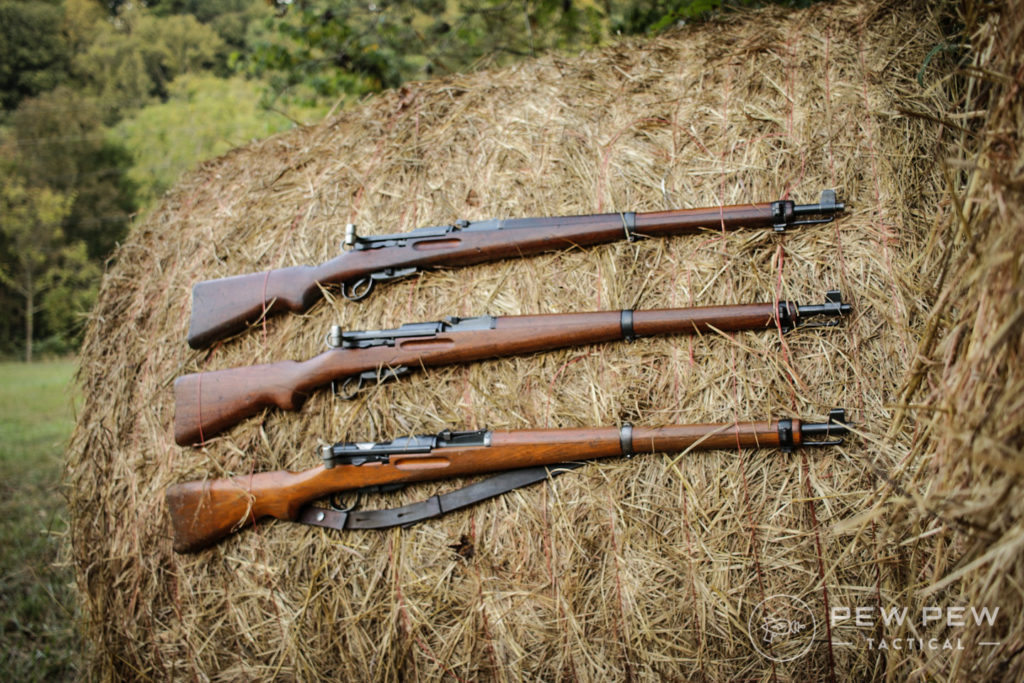
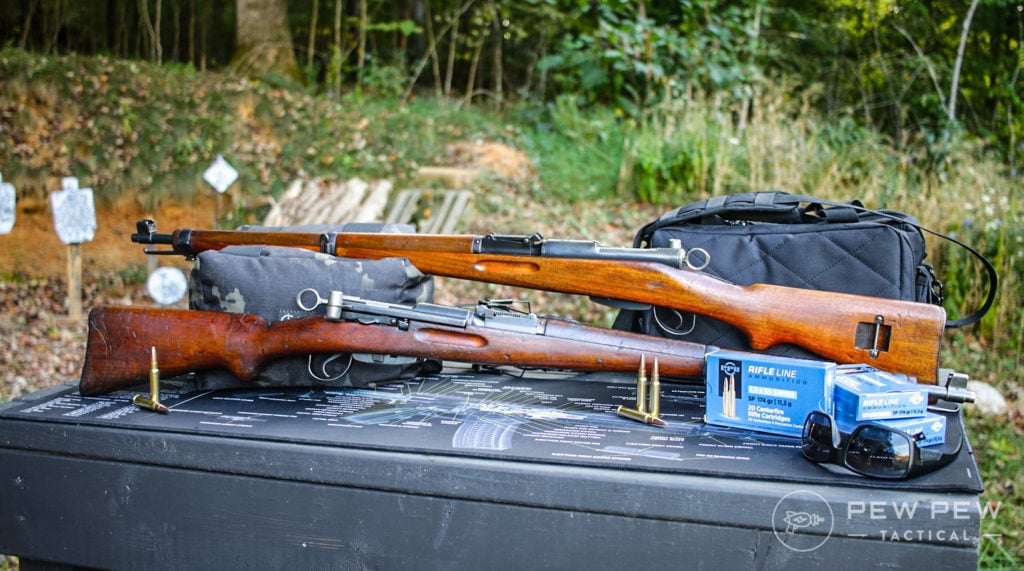
K31 set of three on rocks
Three Swiss K31 Rifles

From watches to rifles, Swiss machining is legendary for quality, precision, and beauty.

The K31 exemplifies all of these!

We’ll cover our usual review topics of accuracy, shootability, reliability and more. PLUS some tips on how to get the best K31 for your money.

And wooh, we got a full video review too from our YouTube Channel:

Popularity

The Swiss K31 has surged in popularity in recent years, and with good reason. They’re unique, fun to shoot, and stupid accurate.

Folks love these rifles and I think you are going to see why.

K31 darker wood, older rifle
Amazing condition K31!

I’m going to give you an easy overview, get three K31s out to the range, and at the end, I’ll have a quick buyer’s guide for you.

Different

Adding some lumber to your firearm collection is a nice reprieve from black plastic guns. And the K31 is different even from other milsurp rifles.

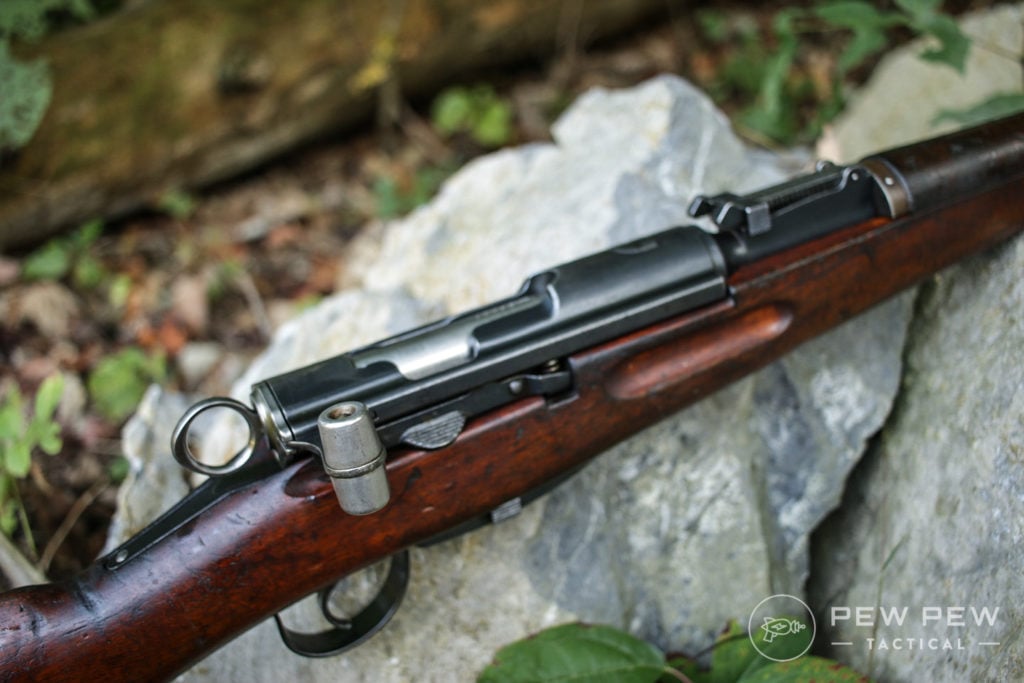
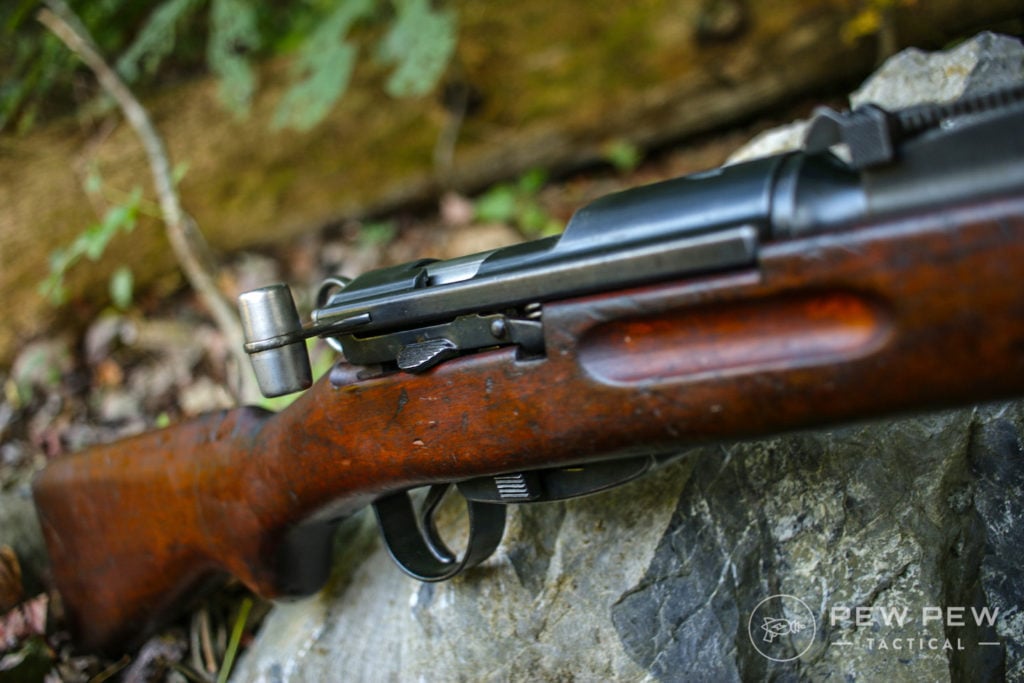
Known for the straight-pull bolt, the beer keg charging handle, and that gorgeous Swiss shield, the Karabiner 31 or K31 is desirable for both shooters and collectors.

K31 rear view
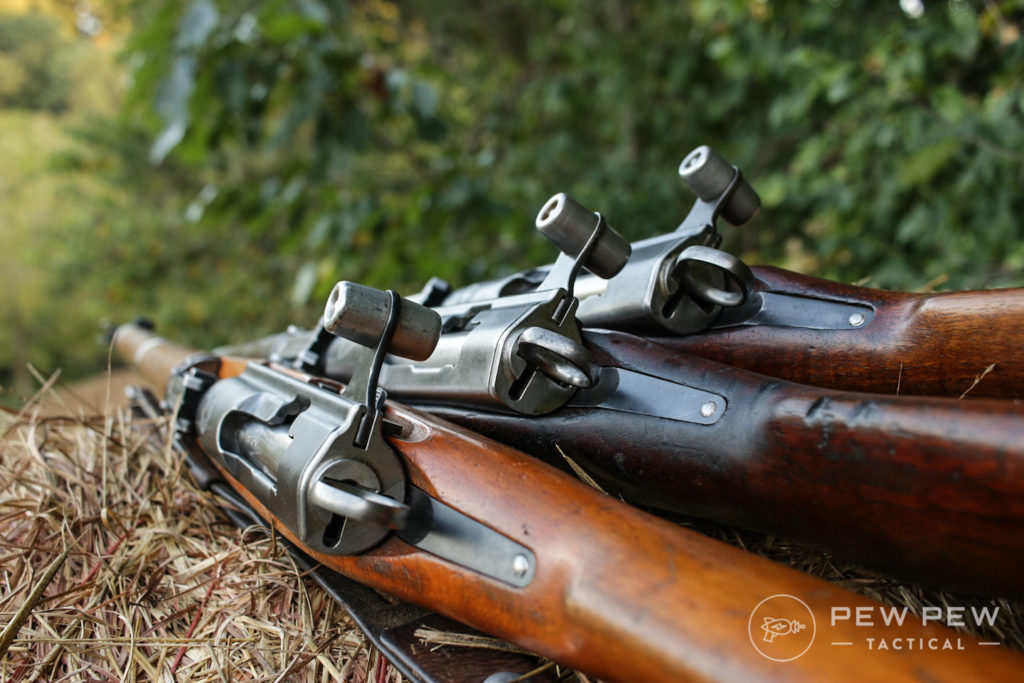
Beer keg charging handles, the classic sign of a Swiss rifle

Plus they are not for collecting dust, they’re for taking to the range.

Shortest History Lesson Ever

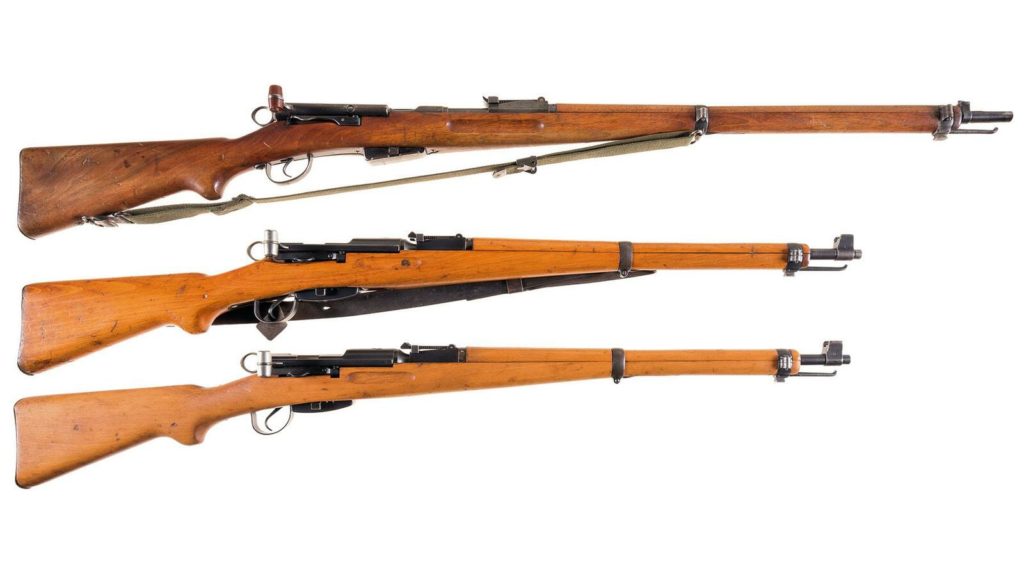
Before the K31, there were multiple variations of the Swiss straight-pull bolt rifle. But these were too long and too heavy.

Swiss Rifles, 1911 and K31
Swiss 1911 Rifle (top) was replaced by the Swiss K31 rifles (bottom two), Rock Island Auction Company

The Swiss military did a rifle redesign in 1931, and the Karabiner Model 1931 was born. It was issued from 1933 to 1958 with total production of about half a million.

Cool thing is that after Swiss soldiers finished their mandatory service, they could purchase their issued rifles. So there are loads of these guns which have been kept and maintained for a lifetime.

K31 through the ages

And often these guns reach the US surplus market in fantastic shape.

Accurate

The K31 has a reputation for excellent machining and craftsmanship which yields legendary accuracy.

Keep in mind that the technology in this gun is a century old, but the gun even today feels like a precision machine.

And working that straight-pull bolt is a fantastic experience at the range.

The Stocks

The stocks in the earlier models are all walnut, and from 1945 forward the stocks are all beechwood.

K31 set of two
Swiss K31 with beechwood (top) and walnut (bottom) stocks

So an easy eye test is light stocks are newer, and dark stocks are older.

Ammo

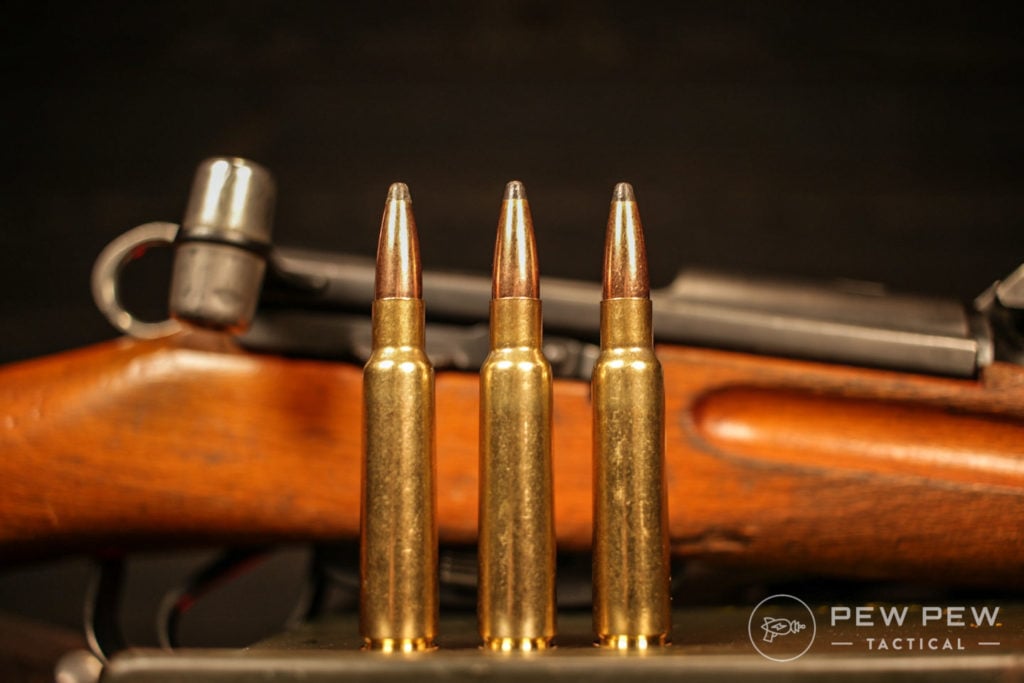
The K31 fires the 7.5 x 55mm Swiss round, also referred to as G11, but most just call it “7.5 Swiss”. Ammo is readily available, and the rifle can fire modern production ammunition.

K31 and Swiss ammo
K31 and Swiss ammo

The box magazine is self-locking and holds six rounds. Waxed cardboard clips are available for faster loading, but I usually eject the mag and load by hand.

At the Range

After 75 years of field testing, the accuracy of this rifle is not up for debate. Rounds will go where you send them, and you’ll see guys on YouTube take the K31 out to 1,000 yards with iron sights.

So for this test, I didn’t do a test at all. I just took a ton of ammo and enjoyed getting shots on target with something that’s not black and plastic. I shot from my shoulder at 75 yards with iron sights.

I fired PPU 174-grain ammo and was able to ping torso steel no sweat.

All three rifles I tested ran perfectly. Absolutely zero problems. These guns run.

The Pain

Lot of military rifles are murder on your shoulder, but the felt recoil on the K31 ain’t bad. I’ll call it medium. It’s certainly manageable.

The Sights

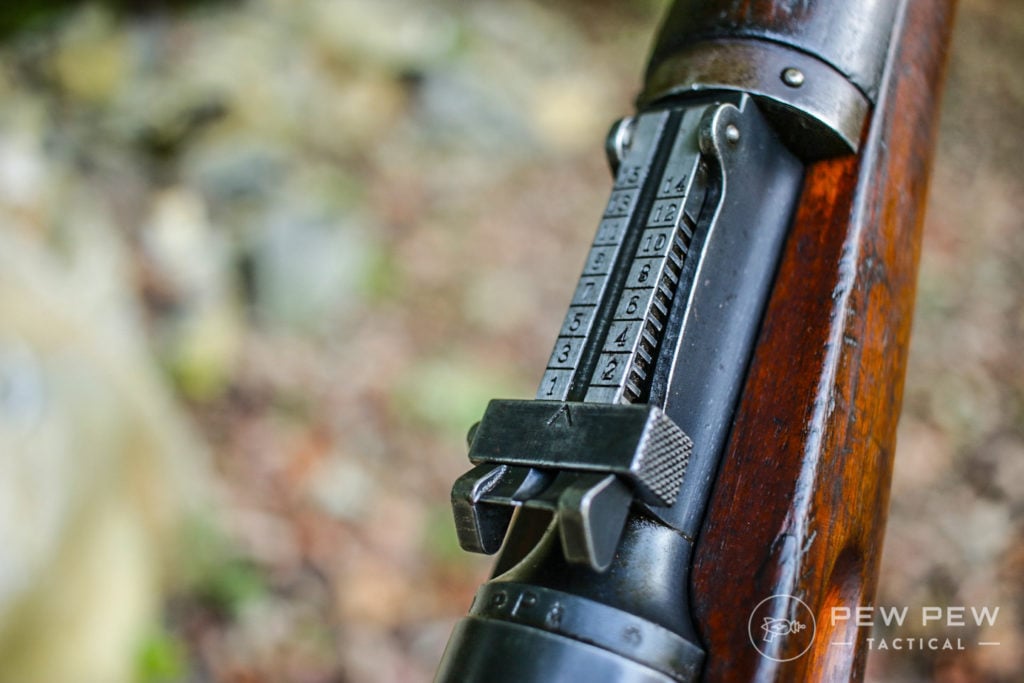
The rear sights have a leaf spring that is adjustable at 100 yard intervals. And the front sight is adjustable for windage with a nifty sliding design.

Other sight options are available, including the desirable diopter sights, but for anything other than standard iron sights, you’re gonna pay a hefty price.

The Trigger

The two-stage trigger is super easy to get used to. The first stage is ultra-light, and when you hit the second stage there is a clear wall.

K31 dark wood and charging handle

Pull comes in between 3 and 4 pounds and the break is clean and overall I like the trigger.

The Downside

Not many negatives with this rifle. You’ll hear guys say that there is no positive extraction in the design, or that at 9 pounds it’s heavy, but for me I take those things in stride.

Worst I can say is that the ammo is expensive.

Troop Tags

This is where Swiss guns just get doggone cool.

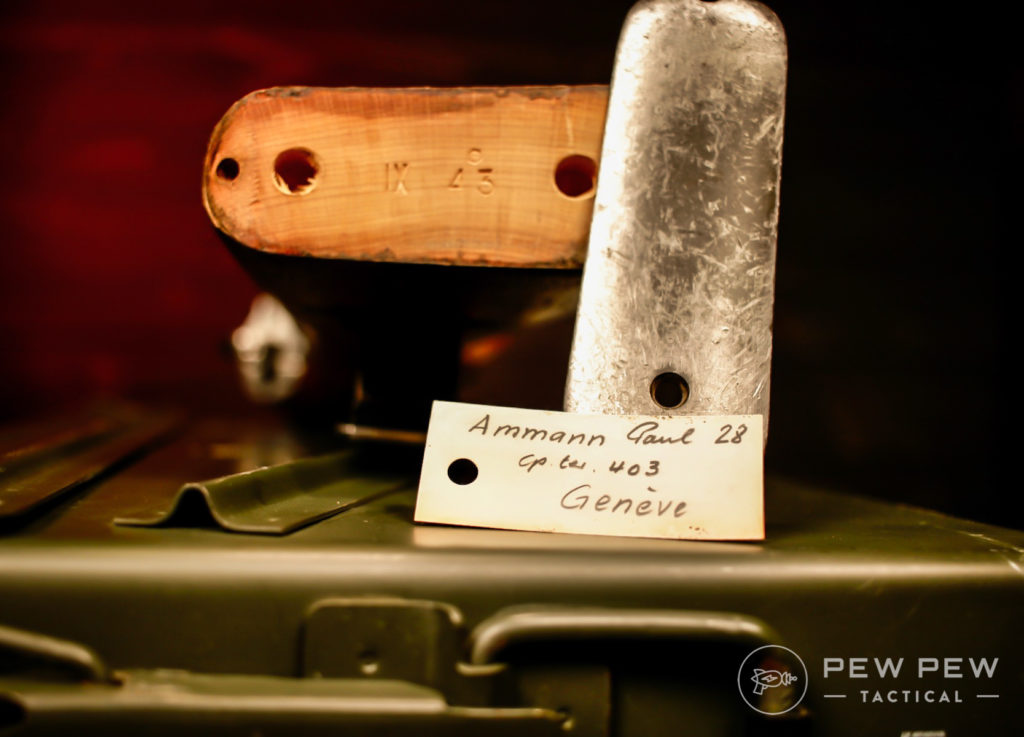
On the day that these rifles were issued, the soldier’s name, birth year, and location of issue were written down on a small white tag and placed under the buttstock cap.

K31 troop card
K31 Troop Card

These troop tags are the Holy Grail of Swiss rifle collection.

Maintenance

Because most rifles of this age have worn bluing and exposed steel, I am a little more mindful of how I maintain my K31s compared to a modern black rifle.

I clean and oil after every range trip, and I don’t handle the rifle without a quick wipe down.

A complete teardown and deep clean can be done in half an hour.

K31 Buyer’s Guide

Shopping for a K31 is easy peasy. 7 quick steps!

1. Identification

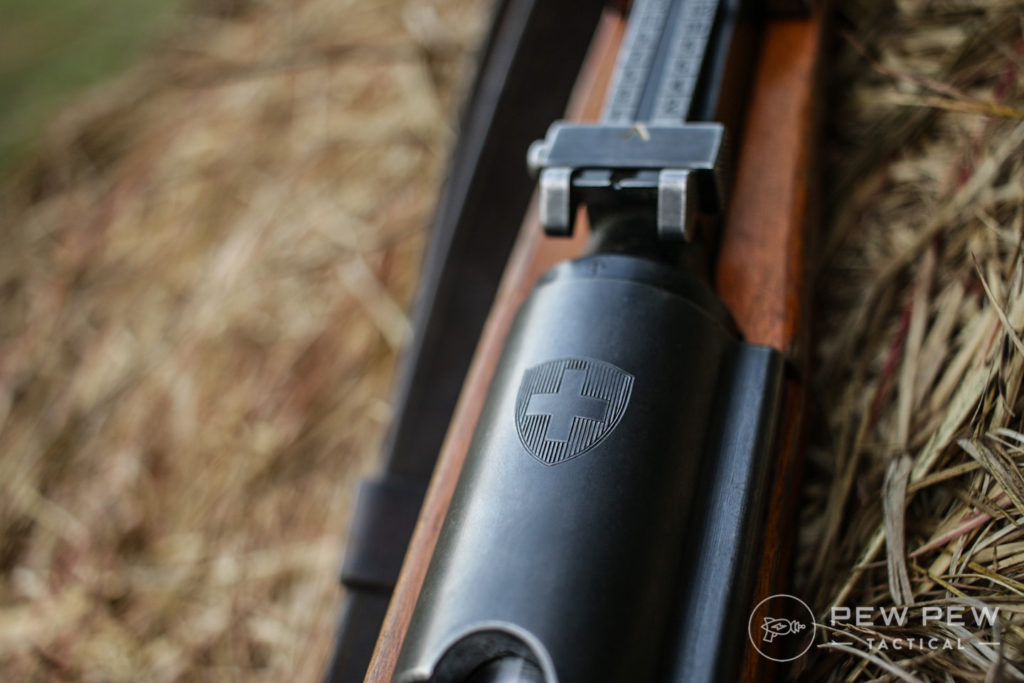
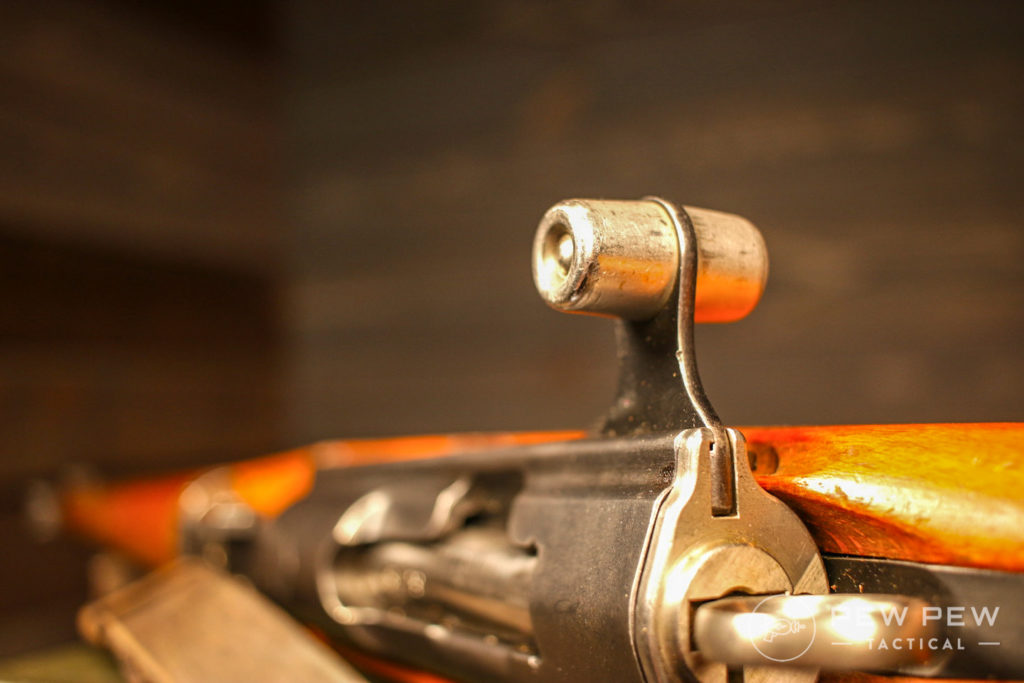
There are lots of different Swiss military rifles, but to identify the K31, look for the Swiss shield on the receiver, and the aluminum beer keg charging handle.

K31 Swiss marking light wood
Perfect Swiss Shield

Lots of other Swiss rifles have beer keg handles, but they are all reddish bakelite. Again, look for the aluminum.

K31 beer keg handle
Mmmm, beerrr

2. Overall Condition

Look for the condition of the bluing and how much steel is exposed on the barrel and receiver. Look for rust. Look for cracks in the stock. Put a light in the barrel and look at the lands and grooves.

K31 set of three on hay

If you are shopping online, all good dealers will give you solid descriptions with photos.

3. Serial Numbers

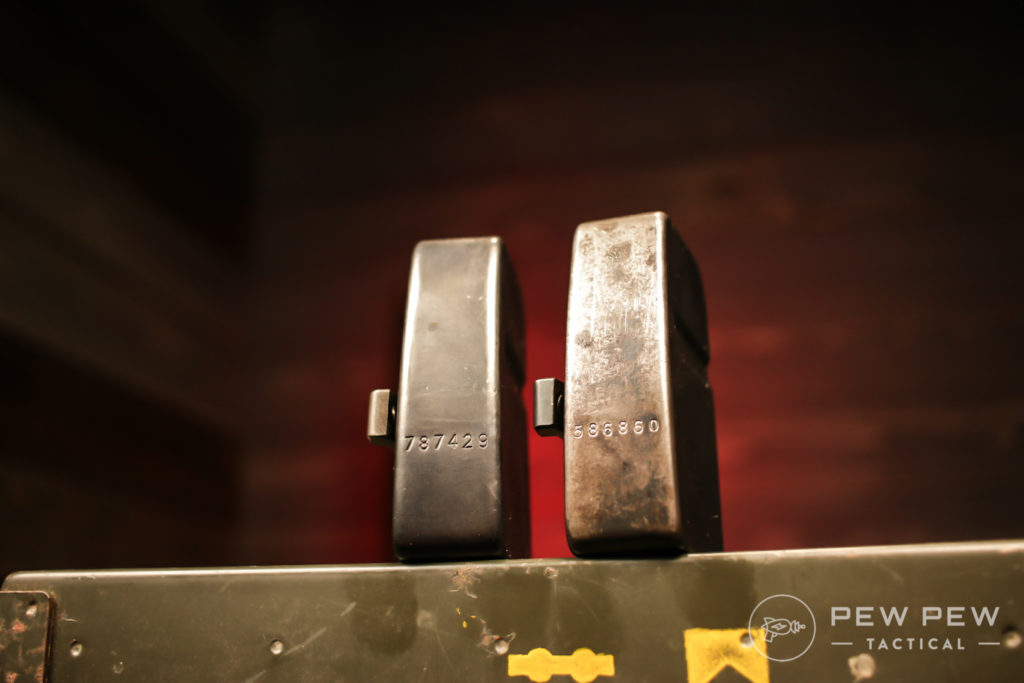
The most desirable rifles have matching serial numbers on all the major parts including barrel, receiver, bolt, stock, handguard, and magazine.

K31 magazine
K31 magazines with serial numbers!

4. Production Year

Because the Swiss did not participate in WWII, there is no pressure to get War-era rifles. K31s from the 1950s are just as desirable as earlier models.

Basically, the production year doesn’t matter.

5. Extras

I tested three standard run-of-the-mill K31s. But like all military collectibles, you can get lost in the weeds. There are rifles with diopter sights, sniper models with scopes, and guns with decades of provenance.

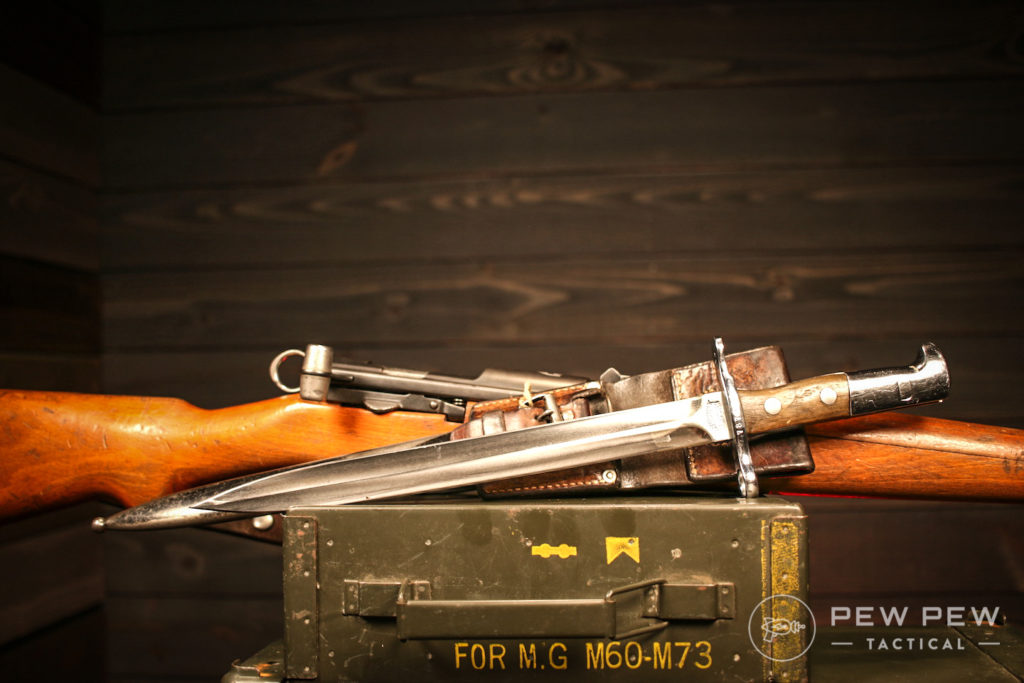
K31 and bayo
K31 and numbers matching bayonet

And you’ll pay more for extra features. But the good news is, if you are new to K31s, you can get a standard rifle in good shape without paying extra for rarer models.

Any K31 in good shape is going to be a winner!

6. Troop Tags

If you find a numbers-matching rifle in good shape with a troop tag, buy it. Just do it, period!

K31 troop card
No joke, troop cards are one of the coolest things in milsurp!

7. Price

For the K31 goes up and down, but right now a numbers-matching K31 in solid condition is $500-800. Double that price for rifles with diopter sights.

By The Numbers

Reliability: 5/5

Keep it clean and this gun will run for another 100 years.

K31 muzzles

Ergonomics: 4/5

To be fair you’re holding a giant piece of lumber. But the pistol grip feels good and grabbing that beer keg handle is addicting.

Accuracy: 5/5

The free float barrel, precision engineering, and Swiss clockwork trigger combine for legendary accuracy. If you miss, it’s on you.

K31 rear sight
K31 rear sight

Customization: 0/5

If you even think about drilling the receiver for a scope mount, you need to sit in the corner and think about your decisions. Don’t change anything, Bubba.

Value: 4/5

True you can get other milsurp rifles for half the price of a K31, but you won’t get the precision or shootability. A lot of value for the price.

These are almost always available on GunBroker and sometimes on Guns.com!

If you’re unfamiliar with either, take a look at our reviews for both GunBroker and Guns.com.

Overall: 4/5

There’s not much to dislike about the K31. It’s easy to use and maintain, fun to show friends, and performance on the range is stellar.

Conclusion

The K31 is a fun to shoot, fun to show off, and even fun to disassemble milsurp gun that is accurate and a good bang-for-the-buck, but it’s heavy and ammo can get expensive.

I had a blast with this project. Even if you are not a milsurp guy, it’s great to get at least one gun into your collection that isn’t black and plastic.

And the artwork on the receiver is a big plus.

One more time…our video review!!

Love some more milsurp? Check out our Best Milsurp Rifles You Can Still Buy.

How to Train a German Shorthaired Pointer to Hunt

0

Training a German Shorthaired Pointer to hunt can be a rewarding experience for both the dog and the owner. These dogs are natural hunters and have been bred for generations to excel in the field. However, proper training is essential to ensure the dog is safe, obedient, and effective in the hunt.

One of the first steps in training a German Shorthaired Pointer to hunt is establishing a solid foundation of obedience. This includes basic commands such as sit, stay, come, and heel. The dog should also be trained to respond to hand signals and whistle commands, which will be important in the field. Establishing a hierarchy with the dog is essential, making it clear that the owner is the pack leader.

Once a strong foundation of obedience has been established, the dog can begin training in specific hunting skills. This includes teaching the dog to track and locate the game, to point and flush birds, and to retrieve the downed game. Consistency, patience, and positive reinforcement are essential to successful training. A German Shorthaired Pointer can become a skilled and reliable hunting companion with proper training.

Understanding German Shorthaired Pointers

History of German Shorthaired Pointers

German Shorthaired Pointers (GSP) is a versatile breed first developed in Germany in the late 19th century. According to the American Kennel Club (AKC), the breed was created by crossing various breeds, including the Spanish Pointer, Foxhound, and English Pointers. The goal was to create a dog that could do it all – hunt, retrieve, and track – and the GSP was the result.

Characteristics of German Shorthaired Pointers

GSPs are medium to large dogs with a distinctive liver and white or black and white coat pattern. They are known for their athleticism, intelligence, and loyalty. These dogs are highly trainable but have a lot of energy and require regular exercise and mental stimulation. GSPs are excellent hunting dogs and have a strong prey drive. They are versatile and can hunt various games, including birds, rabbits, and deer. They are also excellent retrievers and can retrieve both on land and in water. In addition to their hunting abilities, GSPs are also great family dogs. They are affectionate and love to be around people. They are good with children and other pets but have a strong prey drive, so caution should be taken when introducing them to smaller animals. Overall, GSPs are a breed that requires an experienced owner who can provide them with the exercise, training, and mental stimulation they need to thrive. With the proper care and attention, they make excellent hunting companions and loyal family pets.

Preparing for Training

Before beginning training, it is essential to prepare both the dog and the trainer. This section will cover the physical and mental preparation needed for successful training and the required equipment.

Physical Preparation

Training a German Shorthaired Pointer to hunt requires a certain level of physical fitness. The dog and the trainer should be in good health and able to withstand long periods of activity. It is recommended to start with short training sessions and gradually increase the duration as the dog and trainer build endurance.

Additionally, it is essential to ensure the dog is up to date on all necessary vaccinations and has received a clean bill of health from a veterinarian. This will help prevent any potential health issues from interfering with training.

Mental Preparation

Training a German Shorthaired Pointer to hunt also requires mental preparation. The dog should have a strong foundation in basic obedience commands, such as sit, stay, come, and heel. It is recommended to work on these commands before beginning hunting training.

The trainer should also clearly understand the training process and be patient and consistent in their approach. It is essential to remain calm and avoid becoming frustrated or angry with the dog during training sessions.

Equipment Needed

Several pieces of equipment are needed for training a German Shorthaired Pointer to hunt. The following is a list of some of the essential items:

  • Hunting vest
  • Training collar
  • Leash
  • Whistle
  • Bird launcher
  • Birds for training

The hunting vest should have pockets for storing training equipment and birds. The training collar should be fitted appropriately and used with positive reinforcement techniques. The leash should be sturdy and long enough to allow the dog to move freely while maintaining control.

The whistle is used for recall training and should be consistently used during training sessions. The bird launcher is used to simulate the experience of a bird taking flight and should be used in conjunction with live birds for training purposes.

Basic Training

Before a German Shorthaired Pointer can become an effective hunting dog, it must undergo basic training. This training is essential to develop the dog’s obedience, socialization, and hunting skills. Basic training is divided into three sub-sections: obedience training, socialization training, and introduction to hunting.

Obedience Training

Obedience training is the foundation of all dog training. It teaches the dog to follow commands and behave appropriately in different situations. The training should start as early as possible, preferably when the dog is a puppy. The dog should be taught basic commands such as sit, stay, come, and heel. These commands are essential for controlling the dog during a hunt.

The training should be positive and reward-based. The dog should be praised and rewarded for following commands. Punishment should be avoided as it can lead to fear and aggression. The training should be consistent, and the dog should be trained in different environments to ensure it can follow commands.

Socialization Training

Socialization training ensures the dog is comfortable around people and other animals. The training should start as early as possible, preferably when the dog is a puppy. To ensure comfort, the dog should be exposed to different people, animals, and environments.

The training should be positive and reward-based. The dog should be praised and rewarded for good behavior. The training should be consistent, and the dog should be exposed to different situations to ensure comfort.

Introduction to Hunting

The introduction to hunting should start after the dog has undergone obedience and socialization training. The training should begin with basic exercises such as retrieving and pointing. The dog should be taught to retrieve objects such as balls and dummies.

The dog should also be taught to point at birds and other games. The training should be positive and reward-based. The dog should be praised and rewarded for good behavior. The training should be consistent, and the dog should be exposed to different hunting situations to ensure it can perform in any hunting situation.

Basic training is essential to develop a German Shorthaired Pointer’s obedience, socialization, and hunting skills. The training should be positive and reward-based, and the dog should be exposed to different situations to ensure it can perform.

Advanced Training

After your German Shorthaired Pointer has mastered the basics of obedience and hunting, it’s time to move on to more advanced training. This will help your dog become a more skilled and versatile hunting partner.

Hunting Techniques

Advanced hunting techniques involve teaching your dog to work with you to locate and flush out the game. This can include preparing your dog to follow hand signals or whistle commands to stay within range and perform a specific area. It can also involve teaching your dog to work with other dogs to cover a larger size and flush out more games.

Another important skill to teach your dog is how to track wounded games. This involves teaching your dog to follow a blood trail and locate the animal. This can be a challenging skill to teach, but it can make a big difference in your success as a hunter.

Retrieving Training

In addition to flushing out the game, your German Shorthaired Pointer should also be skilled in a retrieving match that has been shot. This involves teaching your dog to retrieve birds, other small game, and larger animals like deer.

Retrieving training should start with simple exercises, such as retrieving a dummy or toy. Gradually increase the difficulty by adding distractions, such as other dogs or people. It’s important to teach your dog to retrieve gently, not damage the game, and to release the game on command.

Water Training

Many hunting situations involve water, so teaching your German Shorthaired Pointer to be comfortable and skilled in the water is essential. This can include teaching your dog to swim, retrieve game from water, and work in marshy or swampy areas.

Water training should start with simple exercises in shallow water and gradually progress to deeper water and more challenging conditions. Using positive reinforcement and making the training fun for your dog is essential.

Maintaining Your German Shorthaired Pointer’s Skills

After training your German Shorthaired Pointer to hunt, it is essential to maintain their skills. Consistency in training, regular exercise, and proper nutrition are critical factors in keeping your GSP in top hunting condition.

Consistency in Training

Consistency is crucial in maintaining your GSP’s hunting skills. Training your dog at least once weekly is recommended to keep their skills sharp. Using the same commands and techniques during initial training is essential to avoid confusion. Consistency in training will help your GSP maintain their hunting abilities and improve their overall performance in the field.

Regular Exercise

Regular exercise is vital for keeping your GSP in top physical condition. Hunting requires a lot of energy, so providing your dog with enough exercise is essential to maintain its stamina. Daily walks or runs, swimming, and playing fetch are great ways to keep your GSP active and healthy. A well-exercised dog is likelier to perform better in the field and have a more enjoyable hunting experience.

Proper Nutrition

Proper nutrition is essential for maintaining your GSP’s hunting skills. A well-balanced diet that includes protein, carbohydrates, and healthy fats will give your dog the energy they need to perform at its best. It is recommended to feed your GSP high-quality dog food that is specifically formulated for active dogs. Additionally, providing your dog with fresh water at all times is crucial to its overall health and performance.

Maintaining your German Shorthaired Pointer’s hunting skills requires Consistency in training, regular exercise, and proper nutrition. Following these guidelines ensures your GSP is in top physical and mental condition for their next hunting trip.

Conclusion

Training a German Shorthaired Pointer to hunt can be a fun and rewarding experience for both the dog and the owner. It requires patience, Consistency, and dedication. The key is training the dog at a young age and maintaining a consistent training schedule.

It is important to remember that every dog is different and may require different training methods. Owners should be willing to adapt and modify their training techniques to suit their dog’s individual needs.

Some essential tips to keep in mind when training a German Shorthaired Pointer to hunt include:

  • Starting training at a young age
  • Using positive reinforcement techniques
  • Maintaining a consistent training schedule
  • Gradually increasing the difficulty of training exercises
  • Providing plenty of exercise and mental stimulation outside of training sessions

Owners should also be aware of the potential risks and dangers associated with hunting, such as exposure to wildlife, harsh weather conditions, and possible injury. It is important to take necessary precautions to ensure the safety of both the dog and the owner.

Overall, training a German Shorthaired Pointer to hunt can be a challenging but rewarding experience. With patience, dedication, and a willingness to adapt, owners can help their dogs reach their full potential as skilled and reliable hunting companions.

Swimbait Bass Fishing – Top 5 Swimbaits That Will Catch More Fish

0

You need a good swimbait to catch fish consistently. There are so many types of swimbait out on the market, making it tough to know what swimbait to use and when to use it. I have found the 5 swimbaits listed below to be great for “Kraken” bass, helping me have great success after several years of trial and error. This article will walk you through what you need to look for in a swimbait. Plus, it’ll give you a strong baseline of swimbaits to use to consistently outperform all the others. Hopefully, this information on soft plastic swimbaits will help eliminate some confusion for you. In addition, there are several tips and a video of each of these swimbaits in action to help you become a better swimbait fisherman. Enjoy the post!

What Makes A Good Swimbait

A swimbait can be one of the best lures to use for bass fishing. They allow you to cover a lot of water and-best of all-bass crush them! Unfortunately, not all swimbaits are created equal. Almost every fishing brand has one kind of swimbait or another. What separates the effectiveness of a swimbait is its size, swimming action, and the colors.

Fortunately, I’ve spent a lot of time on the water, and boiled the mass amount of products down to 5 good swimbaits that will consistently catch you big bass all year long. Feel free to leave a comment below if you disagree with any of the swimbait listed. I’m always open to try new gear and techniques. Plus, don’t forget to check out the video at the bottom of the post to see these swimbaits in action and see proof of why these are the best. Soak in the stoke!

Keitech Easy Shiner Swimbait

One of the all-time best swimbaits is the Keitech Easy Shiner. This swimbait is awesome because the tail will wobble perfectly without barely any movement on the retrieve. Plus, the thin body is a perfect baitfish imitator. The best way to fish this swimbait is with a 1/8oz. darter jig head on a light spinning rod. You can cast it a mile and the darter jig head will help keep the swimbait horizontal as you retrieve it through the water. Prepare to reel in the bites with this awesome lure.

Rigging Up Keitech Easy Shiner Swimbaits

4″ Ayu Keitech Shiner

1/8oz. Gamakatsu Darter Jig Head

7′ Medium Heavy Spinning Rod & Reel Size 30

Basstrix Paddle Tail Swimbait

I have found the Basstrix Paddle Tail to be a great swimbait on the market. Its action is incredibly unique compared to any other swimbait. The entire body wobbles as the tail kicks. This extra vibration in the water from the Basstrix swimbait’s body wobble helps draw some serious strikes. The Basstrix needs to be retrieved a little faster than other swimbaits to get the right action, but it still crushes bass. Plus, the hollow body enable some cool rigging options to keep the bait from catching in the weeds. This swimbait is a definite must-have in your arsenal.

Rigging Up Basstrix Paddle Tail Swimbaits

1/4oz. gamakatsu swimbait jig head

5″ Basstrix Ayu Paddle Tail Swimbait

7′ Medium Heavy Baitcasting Rod & Reel

Jackall Rhythm Wave Swimbait

The Jackall Rhythm Wave is one of the best swimbaits because of its perfect finesse presentation. I love how the Rhythm Wave’s tail will kick on the slowest of retrieves. Plus, the body has a good rocking action to give it a little more presence in the water. Another cool feature about this swimbait is the scale imitation body style stripes that go down across the entire swimbait. This helps give it a natural baitfish appearance in the water. The bass never fail to choke this swimbait down with some serious stoke!

Rigging Rhythm Wave Swimbaits

3.8 Prims Shad Jackall Rhythm Wave

1/8 Oz Gamakatsu Darter Jig Head

7′ Medium Heavy Spinning Rod & Size 30 Reel

Megabass Spark Shad Swimbait

I like the Megabass Spark Shad swimbait for a variety of reasons. It swims incredibly straight and the body style is a perfect representation of a small fish with the extra front fins. The tail will kick easily on a slow retrieve, and this swimbait comes in some awesome natural colors. The only downside to this swimbait is the eyes will fall off; however, this doesn’t detract the bass from chomping it down. The holes in the top of the bait also help make sure you get the bait rigged up perfectly straight every time. The Spark Shad swimbait really gets those bass “Kraken.”

Rigging Megabass Spark Shad Swimbaits

4″ Real Megabass Spark Shad

3/8oz. Megabass Body Balance Jig Head

Baitcasting 7″ Medium Heavy Rod & Baitcasting Reel

Keitech Fat Swing Impact Swimbait

The Keitech Fat Swing Impact Swimbait is really useful to keep ’em biting. I love the action on this swimbait. It is incredible. The body kick and the tail wag is perfect at the slowest of speeds. This swimbait works amazing as a trailer on a spinnerbait or a swim jig. Traditionally, this swimbait is used a lot on umbrella rigs too. Yet, it still crushes sitting straight on a lead jig head, slowly retrieved through the water. This swimbait is a bass-killer all season long.

Rigging Keitech Swing Impact Fat Swimbaits

4.8″ Ayu Keitech Fat Swing Impact1/4oz. Dirty Jigs Bluegill Swimbait HeadBaitcasting 7″ Medium Heavy Rod & Baitcasting Reel

Swimbait Fishing Video Demonstration

Here’s some footage of these 5 effective swimbaits being tested by me in one morning of fishing. Each of these swimbaits produced some decent bass. Hopefully, you can pick up a few tips from these clips on how to fish these lures as well. A good swimbait and some nice lures are, hands down, one of my favorite ways to catch bass. I hope these videos get you stoked to see how well a swimbait can work for you. Enjoy the vid!

Hopefully, this video and information will help you level up your game to catch more bass on a swimbait. Don’t forget to subscribe to the blog and follow @Krakenbass on all the main social media accounts to keep you up to speed with new posts and information to help you catch more big bass! I’d love to hear from you in the comments below to learn some of your favorite soft plastic swimbaits. There is something magical about these swimbaits that really get those bass “Kraken!”

As Always,

Stay Stoked!

Can a .22 Air Rifle Effectively Take Down a Coyote?

0

“Unveiling the truth: Can a .22 air rifle take down a coyote? Delve into the efficacy and limitations of this weapon as we explore its potential to neutralize one of nature’s wiliest predators. Discover the factors at play and gain insights into the practicality and ethical considerations surrounding this contentious matter.”

can a.22 air rifle kill a coyote

can a.22 air rifle kill a coyote

When it comes to hunting coyotes, many hunters wonder if a.22 air rifle can effectively take down these elusive creatures. The answer to this question is not straightforward and depends on several factors. Firstly, it is important to note that coyotes are resilient animals with thick fur and tough hides, making them more resistant to smaller caliber ammunition. While a.22 air rifle may be able to inflict injury, it may not deliver a lethal shot unless placed precisely.

Additionally, the power and accuracy of the specific.22 air rifle being used play a crucial role. Some high-powered models with velocities exceeding 1000 feet per second (fps) can produce enough force to kill a coyote if the shot placement is ideal. However, most standard.22 air rifles have lower velocities and may lack the stopping power required for an ethical and humane kill on such large game. Therefore, using a.22 air rifle for coyote hunting should be approached with caution and requires careful consideration of equipment capabilities and shot placement.

In conclusion, while a.22 air rifle may be capable of injuring or even killing a coyote under certain circumstances, it is not considered an optimal choice for humane and effective coyote control. It is recommended to consult local authorities and use legally approved methods for dealing with coyote-related issues to ensure both safety and ethical treatment of wildlife.

Hunting the Late, Late Turkey Season

0

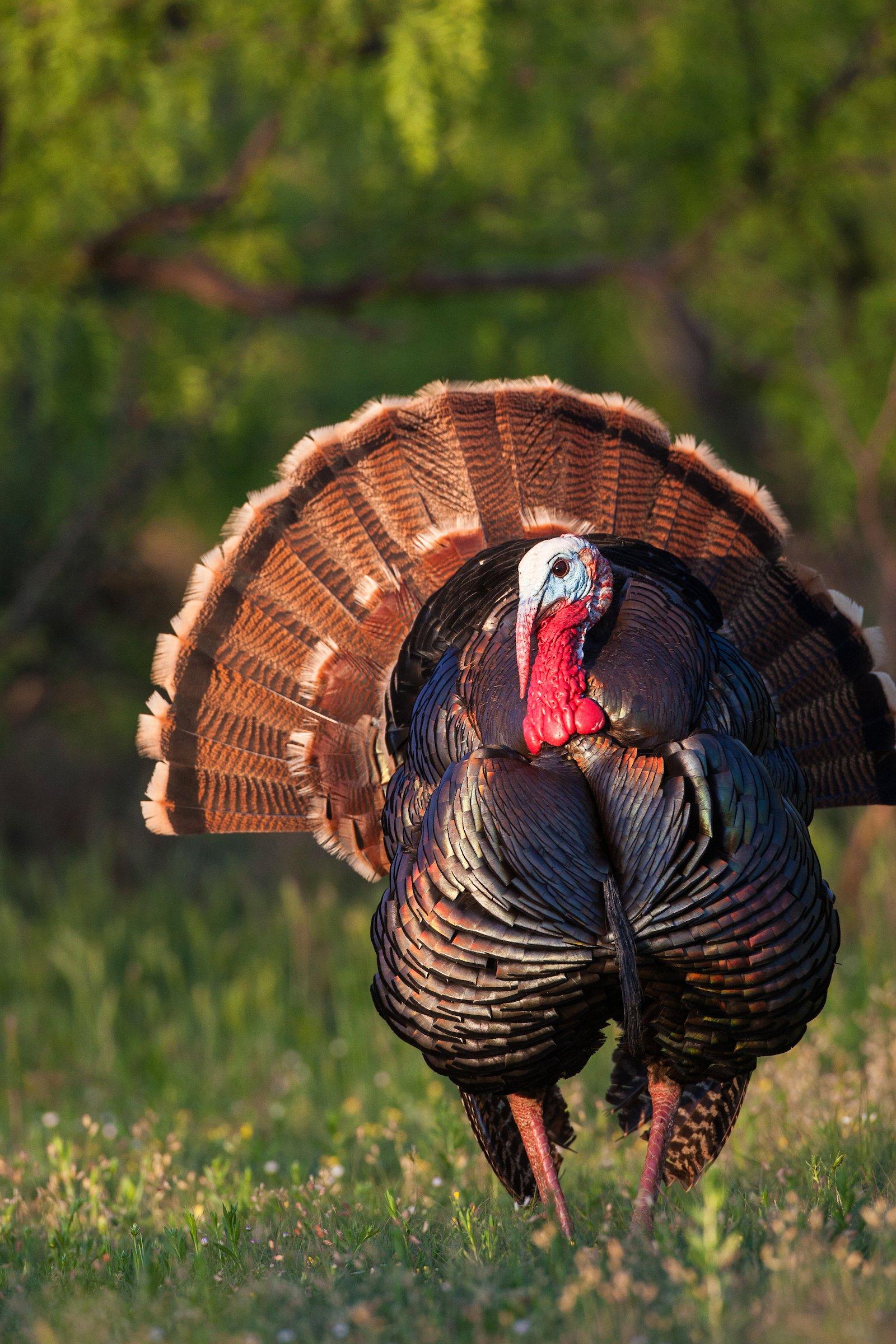
Image: ImageBy_Russell_Graves_turkey_late_season_2

Conventional wisdom holds that many gobblers are alone and seeking hens late in the season, and that’s true many days — but not always. Image by Russell Graves

Pity the poor late-season turkey hunter, as he often doesn’t know who to believe.

On one hand, barstool wisdom holds that most seasons starts too late and birds are done gobbling by the late season, so it doesn’t pay to hunt. Conversely, every outdoor writer with a degree in cliché-ology maintains that the late season is truly prime time — a period when sharp-spurred gobblers that have been henned-up most of spring are suddenly lonely and will run to the call.

Many folks wonder who’s right. And that question seems to ring louder nowadays, especially as many states are opening seasons later and running them through weeks previously reserved for fishing. So what should hunters who have traditionally quit before Mother’s Day expect from the extreme late season? After a few decades of hunting through May and even into June, I’ve learned that the late turkey season can be a glorious mosh-up of heart-pounding action and confounding questions. Here’s what you need to know.

The Stories Are True — Sometimes

Biology and anecdotal evidence suggest that many hens are incubating nests late in the season, leaving gobblers alone, on the prowl, and susceptible to calling. And in fact, I’ve witnessed some incredible late-May, strike-’em-up, run-to-the-call hunts. The largest-spurred gobbler I’ve ever taken sprinted in like a 2-year-old one late-May morning.

But that doesn’t mean such scenarios are the daily norm. Consider these examples: On May 29, 2017 — the next-to-last day of Wisconsin’s spring season — I sat in ambush along a brushy fence line and watched a gobbler breed a hen soon after fly-down and then follow about 10 girls as they fed just out of range in a stubble field. After two hours, I finally managed to irritate a nearby hen, which then attracted the flock into range, and I shot the longbeard.

On May 29, 2018 — the final day of that campaign — I struck a gobbler across a town road, probably 500 yards distant. After my next calling series, it became obvious the bird was coming, and I barely had time to find a tree and ready my gun before the longbeard half-sprinted into range. Which turkey is typical of the extreme late season? Both.

True, many hens are on nests during the late season. However, many other hens have lost nests to predation, and non-breeding jennies also dot the landscape, leaving ample single ladies for gobblers to chase. I’ve found that it’s just as common to encounter henned-up late-season birds as it is to find solo longbeards.

Also, expect some moodiness with late-season gobblers. I’ve experienced mornings when, despite seemingly ideal conditions, nothing gobbled anywhere. Songbirds and waterfowl sounded off in typical fashion, but turkeys remained so tight-lipped it was as though they’d vanished. I don’t know why. Then again, I cannot explain why turkeys tear it up one day during the gobbling peak but then gobble perhaps half as much the next day. It’s just a turkey thing.

Those quiet mornings don’t spell doom. Turkeys haven’t gone anywhere, and you can often fire up previously silent hens and gobblers later in the morning.

(DON’T MISS: 3 GREAT TURKEY CALLING SETUPS)

Don’t Buy the BS

As mentioned, some amateur biologists often claim that turkeys are “gobbled out” or done breeding when the late season rolls around. As evidence, they’ll mention seeing gobblers strutting during late winter.

Hogwash. Sure, many hens have been bred and are sitting on nests or building clutches when the late season rolls around. But gobblers don’t simply turn off their testosterone taps. Their breeding urge might wane a bit, but most remain eager and willing to tend to hens well into the late season and often after the campaign closes. A friend in Minnesota often runs during early mornings and keeps track of gobbling activity. The best gobbling day he’s witnessed? June 17.

During the late season, you might experience some days when gobblers act like they want to drift back into summer bachelor groups. They seem more interested in gobbling at each other and hooking up than in chasing hens. However, that’s a small sample size, and it usually changes daily. When that happens, don’t assume those gobblers are done with hens. They’re just not interested at the time — just like a longbeard you encounter at midseason might appear disinterested for whatever reason. (On another note, if gobblers act like they prefer a boys’ club, give them one with jake and gobbler yelping, and maybe jake gobbling and gobbling.)

Many other late-season detractors point to harvest statistics — in states that keep such records — which typically show steadily declining success as the season progresses. That makes sense. As more gobblers — and likely, relatively easy or eager gobblers — are killed, hunting prospects become more difficult statistically. In addition, any hunter knows that many surviving birds have probably been bumped, boogered and spooked, making them tougher customers. Further, hunter effort typically declines as the season wanes. Many folks kill a turkey early and are then happy to start fishing or playing golf. Those numbers don’t lie, but they shouldn’t dissuade you from hunting. You might encounter more birds earlier in the season. However, your odds of encountering the right turkey are often better than ever.

Some other folks eschew the late season because they don’t see as many big groups of turkeys or find them at spots they frequented through most of spring. That’s often true, but it doesn’t affect much. Remember, during late spring, turkeys are the most dispersed they’ll be during the year. Those hen and gobbler flocks you saw in late winter have long since busted up, with hens making nests in secluded spots with thick cover, and gobblers often running solo or with a buddy. Likewise, food sources have sprung up everywhere, and turkeys can find good eats at many spots, not just pastures, crop fields or oak flats. During that time, turkeys, as the cliché holds, are where you find them.

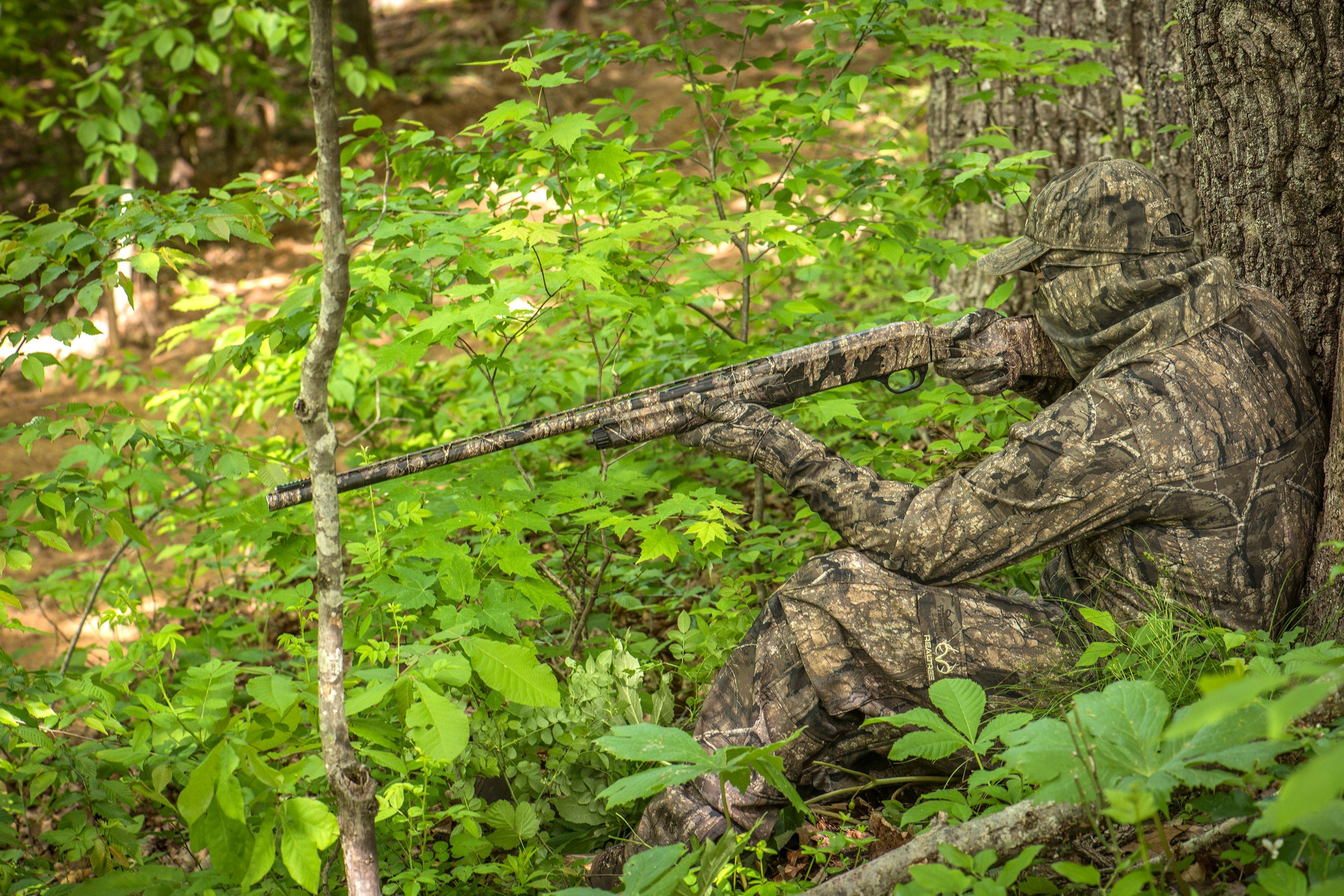
Image: ImageBy_Bill_konway_turkey_late_season_4

Thick late-season foliage can help but also hinder your efforts. It provides cover to hide your movement but can make shooting more difficult. Image by Bill Konway

Mind the Weather and Foliage

No one can argue that late season conditions differ greatly from those weeks earlier. Temperatures are typically warm — even hot — and the foliage has grown tall and thick. Those factors greatly affect hunting.

Watch the weather, and hunt accordingly. Heat shuts down gobbling as quick as any other factor. When temperatures reach a specific level — often about 70 in the North but warmer elsewhere — those big black birds with heavy plumage get hot and won’t expend much energy gobbling. As a result, you’ll want to make the most of opportunities during relatively cooler conditions during early mornings and evenings.

During warm, sunny midday lulls, turkeys often seek cool, shady areas to loaf. Out West, those might include cedar groves or pine-rimmed canyons. In the Midwest and Northeast, they could be shaded creek bottoms or heavily timbered hollows. Focus on these spots at midday. Sit and call at likely spots for an hour or more. If you can’t sit still, use a turkey chair to boost comfort or a blind to hide your fidgeting. Many folks dislike this style of hunting, but it’s darned effective. And remember, if you hear a distant bird gobble, you can always move.

Foliage can also throw you changeups, good and bad. On one hand, cover provided by understory plants and leafed-out trees lets you move through the woods easier without being seen. In many cases, you can slither tight to turkeys you wouldn’t dare have approached in the open woods of March and April. Further, thick stuff such as gooseberry creates edges turkeys must navigate, much like terrain rises and bends in logging roads. When you set up within gun range of those obstacles and make a turkey search for your calling, you can often shoot him the instant he pops into view and cranes his neck to look for the “hen.”

On the down side, foliage can make shooting more difficult. Find setups where you have clear, distinct lanes that allow sure shots. You’ll often have to shoot through a bit of brush or similar cover, but don’t force the issue, as even a few branches or leaves can blow up your pattern.

Likewise, thick foliage can also affect your perception of a turkey’s location, as gobbling will sound a bit muted and muffled amid all that greenery. Just be mindful about when you need to sit down and set up. One step too far is all it takes to send a gobbler out of your life.

Some folks wonder about late-season decoys and calling tactics. I’ve found that decoy basics still apply, but don’t be afraid to pare things down a bit. Single hens work great, especially if you’re near potential nesting cover. Likewise, single jakes work great, too, with the theory being that the gobbler searches for the hen it hears but then encounters a jake. The largest late-season decoy setup I use is a jake and hen combo.

Calling? Don’t change a thing. You must yelp a bit differently to every turkey you work, and the late season is no different. Take his temperature. See what makes him gobble and, more important, come toward you. Get aggressive if he likes it, but pare things down as needed. Basically, work that late-season turkey like you would any other gobbler.

Keep Perspective

The extreme late season carries challenges, but it’s a great time to hunt. Bottom line: During the extreme late season, your odds of finding a lonely gobbler willing to work to calling are likely never better.

And hey, it’s your last chance to hunt turkeys until autumn. That alone should prompt you to get out of bed and greet the dawn.

(DON’T MISS: IS A HUNTING TRIP FOR 1 TURKEY WORTH IT?)

What Happened to Lightfield Slugs

0

Lightfield slugs, also known as “ammo-less” or “non-toxic” slugs, are a type of shotgun slug that uses compressed air to propel itself. They were designed as an alternative to traditional lead and copper shotgun slugs, which are considered environmentally harmful.

Lightfield slugs have been shown to be just as effective as traditional lead and copper shotgun slugs, but they are significantly less expensive to produce. However, lightfield slug production has been discontinued and the company that manufactured them has gone out of business.

Lightfield slugs were once a common sight in the fields and gardens of North America. But these days, they are hard to find. What happened to them? There are a few theories about what might have happened to lightfield slugs. One is that they were simply victims of changing environmental conditions. As the climate has become drier and warmer, their natural habitat has shrunk and they have been unable to adapt. Another possibility is that they were preyed upon by introduced predators such as rats or snakes. These non-native animals may have found lightfield slugs an easy target, causing their numbers to decline sharply. Whatever the cause, it’s clear that lightfield slugs are in trouble. And that’s a shame, because these creatures play an important role in the ecosystem by breaking down organic matter and recycling nutrients back into the soil. Let’s hope we can figure out what happened to them and help them make a comeback.

Why SlugGuns Shoot High

Can You Still Buy Lightfield Slugs?

As of 2021, Lightfield slugs are no longer being manufactured. The company that made them, Lightfield Ammunition, went out of business in 2019. While there may be some retailers who still have old inventory for sale, it is getting increasingly difficult to find these slugs on the market. Lightfield slugs were known for their accuracy and power. They were popular among hunters and target shooters alike. While there are other slug brands available, Lightfield was one of the first companies to produce high-quality slugs for shotguns. If you’re looking for an alternative to Lightfield slugs, try checking out some of the other options on the market. There are a variety of different manufacturers that make quality slug products. Do your research and find the right option for you and your shotgun.

Who Makes Sabot Shotgun Slugs?

Sabot shotgun slugs are made by a variety of manufacturers, but the most popular brand is Federal. Other brands include Winchester, Remington, and Hornady. Sabot shotgun slugs are designed for use in shotguns with rifled barrels. They are made from lead or copper and have a plastic or metal sabot (a type of sleeve) that surrounds the slug. The sabot helps to stabilize the slug in flight and allows it to spin, which increases accuracy.

What is the Best 20 Gauge Sabot Slug?

If you’re in the market for a 20 gauge sabot slug, there are a few things you’ll want to keep in mind. First, what is your intended use for the slug? Hunting or target shooting? Second, what is your budget? Third, what is the range you plan to shoot at? With those factors in mind, let’s take a look at some of the best 20 gauge sabot slugs on the market: 1. Hornady SST Sabot Slug: The Hornady SST Sabot Slug is one of the most popular choices for hunting and target shooting. It’s accurate and has good penetration. It’s also relatively affordable. 2. Winchester PDX1 Defender Sabot Slug: The Winchester PDX1 Defender is another good option for hunting and target shooting. It has excellent penetration and is very accurate. However, it’s more expensive than the Hornady SST. 3. Federal Premium TruBall Rifled Slug: The Federal Premium TruBall Rifled Slug is an excellent choice for long range shooting. It’s extremely accurate and has great penetration. However, it’s quite expensive.

Are Lightfield Slugs Rifled?

No, Lightfield slugs are not rifled. Rifled slugs are designed for use in smooth bore barrels, and Lightfield makes both types of slug. Their Hybred EXP line is a good example of a rifled slug, while the Commander Slug has a saboted design that’s better suited for use in a rifled barrel.

Lightfield Slugs Auction

Welcome to our lightfield slug auction! Here you will find some of the finest slugs in the world. We have a wide variety of slugs for sale, so there is sure to be something that interests you. Our lightfield slugs are known for their beauty and rarity, and we are proud to offer them to the public. This auction is your chance to own one of these amazing creatures. We have a wide variety of slugs for sale, so take your time and browse through our selection. You are sure to find something that catches your eye. Thanks for visiting our auction, and good luck!

Lightfield Slugs 12 Gauge 2 3/4

5 oz. If you’re looking for a powerful and effective slug for your 12 gauge shotgun, then you should definitely check out the Lightfield Slugs 12 Gauge 2 3/4 .5 oz. These slugs are designed to provide maximum stopping power and accuracy, and they definitely deliver on both fronts. The Lightfield Slugs 12 Gauge 2 3/4 .5 oz are made with a patented saboted design that provides unbeatable accuracy at long range. The slug itself is made of high quality lead and is surrounded by a tough plastic sabot that helps it retain its shape during flight. This ensures that the slug will hit its target with lethal force, making it ideal for hunting or self-defense situations. The Lightfield Slugs 12 Gauge 2 3/4 .5 oz also have an impressive muzzle velocity of 1600 fps, making them some of the fastest slugs on the market. This high velocity gives them excellent penetration power, which is perfect for taking down large game animals. The Lightfield Slugs 12 Gauge 2 3/4 .5 oz are also incredibly durable and reliable, so you can count on them to perform when you need them most.

Who Carries Lightfield Slugs

Lightfield slugs are a type of shotgun ammunition that are designed to be used for hunting. They are typically made from a solid brass or copper material and have a hollow point design. The Lightfield slug was created by George Kollitides, who is also the founder of KA-BAR Knives, Inc. The Lightfield slug was designed with several features that make it ideal for hunting. One of these features is its aerodynamic design, which makes it more stable in flight and less likely to tumble when it hits its target. Additionally, the light weight of the slug makes it easier for hunters to carry more rounds with them without adding too much weight to their pack. And finally, the hollow point design ensures that the slug will expand upon impact, causing maximum damage to the animal being hunted. If you’re looking for a high-quality, reliable shotgun slug for hunting purposes, then you should definitely consider using Lightfield slugs.

Lightfield Sabot Slugs Reviews

Lightfield Sabot Slugs Reviews If you are looking for a high-powered slug for your shotgun, the Lightfield Sabot Slug may be just what you need. These slugs are designed for maximum stopping power and accuracy, and they have been proven in law enforcement and military applications. Here is a closer look at the Lightfield Sabot Slug and what it can do for you. The Lightfield Sabot Slug was developed by Dr. John Buford, who is a leading authority on firearms technology. He has over 30 years of experience in law enforcement and the military, and he has written several books on firearms technology. The Lightfield Sabot Slug is based on his research into how to create the most effective slug possible. The Lightfield Sabot Slug is made from a solid piece of copper that is precision machined to create a hollow point bullet. The slug also has grooves cut into it that help to stabilize it in flight and ensure that it spins correctly when fired from a rifled barrel. This design makes the Lightfield Sabot Slug one of the most accurate slugs available. The light weight of the slug also allows it to reach higher velocities than other types of slugs, which results in more penetration power. The sabot design also helps to protect your barrel from wear and tear since there is no metal-on-metal contact between the slug and barrel walls. So if you are looking for a high-powered slug that can deliver accuracy and stopping power, the Lightfield Sabot Slug may be just what you need.

Lightfield Slugs 20 Gauge

75″ 3/4 oz. Super-X Lightfield Slugs 20 Gauge .75″ 3/4 oz. Super-X are a great choice for those looking for a high performance slug at an affordable price. These slugs offer outstanding accuracy and terminal performance in a variety of scenarios. The Lightfield Slugs 20 Gauge .75″ 3/4 oz. Super-X are designed to expand rapidly upon impact, creating a large wound channel that is highly effective at taking down game animals quickly and humanely.

Lightfield Sabot Slugs 12 Ga

Lightfield Sabot Slugs 12 Ga are a type of shotgun ammunition that is designed for hunting large game. The slug itself is made of lead and is surrounded by a plastic sabot, or shell. The sabot helps to stabilize the slug in flight and also increases the accuracy of the shot. These slugs are typically used in shotguns with rifled barrels, as the rifling helps to spin the slug and improve its accuracy. Lightfield Sabot Slugs 12 Ga can be effective at ranges up to 100 yards, making them a good choice for hunters who want to take down big game animals such as deer or hogs.

The Lightfield Slug Mold

Lightfield slug mold is a type of mold that is used to create slugs for use in airsoft guns. This mold is made from a light-weight material that allows for the easy creation of perfect pellets every time. The pellets produced by this mold are very precise and have little to no imperfections, making them ideal for use in airsoft guns. This mold is also very easy to use and clean, making it a great choice for those who want to make their own slugs.

Lightfield 20 Gauge Sabot Slugs Ballistics

Lightfield’s 20 gauge sabot slugs are some of the most accurate and powerful slugs on the market. With a muzzle velocity of 2000 fps, these slugs can take down even the biggest game animals. And, thanks to their precision construction, they’re also extremely accurate at long range. If you’re looking for a high-powered slug for your 20 gauge shotgun, Lightfield’s sabot slugs are definitely worth a look.

FFP vs. SFP: Know the Difference

0

Outdoor enthusiasts that enjoy activities like shooting and hunting know that there’s more to their equipment than just gun choice. Choosing the proper optic to pair with your gun is an important step in gathering all the necessary equipment for your next outing. During the decision process, one common debate we come across is choosing between FFP vs. SFP scopes. Before we dive into the difference between FFP scopes and SFP scopes, let’s cover the basics of scopes as a whole.

Understanding Scopes

Choosing the right optic for our individual needs all comes down to our activity of choice. For instance, take spectator sports viewing. These activities require us to move our point of view in different directions in order to keep up with the activities in front of us. In cases such as these, a nice set of binoculars would be our best choice in optics.

Now, for the professional target shooter or hunter, the preferred optic device would be a top-quality riflescope. Riflescopes allow us to attach the scope directly to our gun. This helps us to optimize our viewing capabilities, especially at long distances, all while keeping our hands open and available to operate our gun.

Riflescopes come in many different sizes, shapes, and qualities, so it’s essential to understand the differences available to us as no two riflescopes are the same and each outdoor activity requires specific equipment to get the job done.

Types of Riflescopes

There are many different types of riflescopes that are currently on the market. While there are some that are considered rather standard, each one presents its own unique qualities that attract professional and amateur hunters and shooters. Some of the most common riflescopes include:

●Hash Reticle – These reticles are often preferred amongst hunters and long-distance shooters because they help create a more precise shot thanks to the ability to take into consideration the approximate range of your target.

●Bullet Drop Compensating (BDC) Reticles – BDC reticles take bullet trajectory into consideration. While this seems like a rather high-end option, reticles being manufactured today have some sort of BDC reticle integrated into them.

●Illuminated Reticles – These scopes are just what they sound like, illuminated. They allow us to better see our scope’s crosshairs in lower lighting situations. They come in both high-end and budget-friendly options, so we have to take our time researching different models to see which will best suit our needs.

Understanding the Difference Between FFP Vs. SFP Scopes

When it comes time to understand the difference between FFP vs. SFP scopes, it’s essential to cover some basic information. What differentiates these two devices is the positioning of the reticle in the assembly, which we will cover below.

First Focal Plane (FFP) Scopes

For a first focal plane (FFP) scope, the reticle is placed towards the front of the erector tube assembly, which is located in the back portion of the actual scope. One common misconception is that the reticle is placed in the front of the scope, when it’s placed in between the erector tube assembly and magnification lenses. This would place it towards the middle of the scope, not the front.

Since the reticle is placed in the front of the magnification lenses and erector assembly, it allows us to look through the device and grow the reticle size in the same exact relation as the image being viewed. This not only allows us to bring our target into a clearer view but allows us to see the crosshairs of our reticle better since they will increase and decrease in size simultaneously with the target.

Pros:

Many hunters and long-range shooters prefer FFP scopes because the subtensions are accurate across all magnification settings. That said, here are a few other pros of using a FFP scope:

●The crosshairs are easily visible at higher magnifications

●The subtension remains constant across all magnification settings

Cons:

One of the most significant issues with FFP scopes is the fact that they aren’t that great in poor lighting conditions. It’s also worth noting that at low magnification, and when the target is smaller, the reticle can be difficult to use properly.

●Price if often higher as they are typically associated with higher-end scopes

●The reticle can be considered pretty small when being used at low power

●Difficult to see in low light at low power

Second Focal Plane (SFP) Scopes

Second focal plane (SFP) scopes aren’t all that different than FFP scopes, besides the fact that the reticle is behind the magnification lenses on the erector tube assembly. It is located in between the eyepiece/erector tube assembly. What makes this different from the FFP scope is the fact that the crosshairs of the reticle will remain the same size through the lens, no matter the magnification setting you’re on.

Pros:

While FFP scopes are a favorite among many outdoor enthusiasts, SFP scopes are more commonly seen in the average riflescope. Some common pros of the second focal plane scope include:

●Easily visible crosshairs across all magnification settings and no change in crosshair size, making it easier to see, especially for those using these scopes for hunting

●Easier to use in lower magnification settings

●Cheaper since they are easier to produce

Cons:

While these are more commonly seen amongst outdoor enthusiasts, they do come with their downsides as well. Some of which include:

●Altering subtensions makes them accurate only at predetermined magnification levels

●Not always reliable for variable long-range shooting

Bushnell Has the Tactical Gear You’re Looking For

Knowing the different types of scopes available, as well as the difference between FFP vs. SFP scopes, is essential for all outdoor fanatics, especially when their passions involve hunting or professional shooting. We’ve outlined the pros and cons of both first focal plane scopes and second focal plane scopes for you above, however if you still have questions, then feel free to contact our team today by calling (800) 423-3537.

No matter which scope you prefer, Bushnell has a scope designed with you and your outdoor needs in mind. With over 70+ years of experience, the Bushnell team has the knowledge to help you find the gear you need for your outdoor activity of choice.

Looking for a new scope to add to your equipment? Then make sure to check out our selection of Elite Tactical scopes today!

The .221 Remington Fireball Fits

0

The whip-hand dominance of the .223 Rem. has littered the boneyard with nearly all other 22-cal. center-fire cartridges; however, the .221 Rem. Fireball remains just outside that acre’s gate because informed handloaders look at it from a different perspective than those who see it as merely a short .223. Besides, you have to like a cartridge with a cool-sounding name such as “Fireball.”

The .221 case is a close copy of the .223. Both cases have the same head diameter, shoulder angle, neck length and maximum average pressure (MAP) of 55,000 p.s.i. The only difference is that the .221 is shortened 0.3674 inches in the body. That reduces its propellant capacity to 60 percent of the .223s. But loaded with the proper propellants, the .221 produces about 90 percent of the .223’s velocity with bullets weighing up to 55 grains.

Beginnings

This short cartridge was initially chambered in Remington’s XP-100 bolt-action single-shot handgun in 1963. From the XP-100’s original 10.75-inch barrel, the .221 fired 50-grain bullets at about 2600 f.p.s. The XP-100’s barrel was eventually lengthened to 14.5 inches and chambered in other .22-cal. cartridges such as the .223 Rem. and .22-250 Rem. The .221 chambering lasted until 1985. For a while Thompson/Center chambered the cartridge in its Contender single-shot handgun. The .221 languished in neglect until 2002 when Remington gave it a face-lift as a rifle cartridge in its Model 700 Classic rifle. The last year Remington chambered the cartridge was in 2007 in the Model 700 Light Varmint Stainless Fluted rifle.

The CZ 527 American and the Model 21 from Cooper Firearms of Montana are the only rifles currently chambered in .221 by major manufacturers. The Cooper folks say the .221 is nowhere near as popular as the .204 Ruger or .223 Rem. But the cartridge has a following, and they sell about as many rifles chambered in the Fireball as they do rifles in .22 Hornet.

A Cooper Model 21 Montana Varminter was used to shoot the loads for this article. The Varminter is intended for shooting from a rest, with style. The oil finish highlights the running grain of its AA+ claro walnut stock with a beavertail fore-end. The Model 21 is a single-shot. Pushing forward the three-lug bolt picks up a cartridge from the loading pan, feeding it into the chamber. The sample rifle’s trigger has a perfect 2-pound pull.

Handloading

The Fireball case is only a smidgen larger than the Hornet case. The 3 to 8 grains of additional propellant the .221 holds, though, result in a gain of 600 f.p.s. over the Hornet with bullets of the same weight. Care should be taken when developing loads for a cartridge as small as the .221 because a big increase in velocity and pressure results from a small increase in propellant. From the Cooper Model 21’s 24-inch barrel, Nosler 35-grain Ballistic Tip Lead Free bullets had an average velocity of 2752 f.p.s. powered by 17.0 grains of H4198. Stepping up the propellant to 17.5 grains increased velocity to 2949 f.p.s. An additional 0.5 grain jumped speed to 3034 f.p.s, and 18.5 grains upped the velocity to 3,296 f.p.s.

Relatively fast-burning propellants such as Hodgdon’s H4198, Lil’Gun and Accurate 1680 are a key to loading the .221. Lil’Gun is a great propellant for the Fireball shooting lightweight bullets. From two other .221 rifles, Lil’Gun fired Berger 30-grain Varmint bullets at nearly 3900 f.p.s. and Nosler 35-grain Ballistic Tip Lead-Free bullets at 3700 f.p.s. From the Cooper Varminter, Hornady 40-grain V-MAX bullets reached 3270 f.p.s. with 15.0 grains of the propellant and 3460 f.p.s. with 15.5 grains.

Relatively slow-burning propellants provide a more sustained push to 50-grain and heavier bullets. Lil’Gun and A1680 are still good choices as well as H335, H4198, N130 and Reloder 7.

Heavier bullets also provide more uniform velocities. The 30- and 35-grain bullets had extreme spreads of velocity of up to 200 f.p.s with several different propellants. But spreads shrank to less than 50 f.p.s. with 40-grain bullets and down to 10 f.p.s. with 50 and 55-grain bullets.

How close to seat bullets to rifling lands for the best accuracy is a matter of hundredths of an inch. Bullets close to, or even in contact with, the rifling are thought to function with improved accuracy because they make less of an unsupported “jump” before engaging it. That minimizes the chance of bullets entering the rifling at an angle and flying into left field. Just as important, though, bullets seated straight with the centerline of case necks align with the chamber throat to ensure they enter the rifling straight, even if they have to move a ways to engage it.

The .221’s maximum cartridge length is 1.830″. However, Nosler 55-grain Ballistic Tips just touch the rifling lands of the Cooper .221 with a cartridge length of 1.873 inches. The Cooper rifle has no magazine, so that long cartridge length fits fine. A smidgen shorter cartridge length, though, ensures easy extraction of an unfired cartridge from the chamber. Also, pressures tend to be greater when bullets do not have a bit of a running start before contacting rifling.

To determine if accuracy was better with bullets seated just short of the rifling compared to seated back a ways, I loaded 10 cartridges each with the Ballistic Tips seated with an overall length of 1.850 inches and 1.830 inches. Before shooting I ran the cartridges through a Hornady Lock-N-Load Concentricity Tool. The majority of the bullets were absolutely true with the case necks but a few varied up to 0.002 inches. The longer cartridges averaged 0.96 inches for two, five-shot groups. The shorter cartridges averaged 0.95 inches.

Shooting

After firing 20 shots at a fast pace, the Cooper’s barrel was lukewarm and the front third remained cold. Even though the temperature was in the 20s, heat rising from the barrel created barely any mirage through the Leupold 14X riflescope. Recoil was so mild that the crosshairs scarcely jumped off target, and often I saw bullet holes appear instantly. The Cooper Varminter shot well. It probably would have shot even tighter groups, but there was the shiver factor to consider from the cold temperatures. It helped, though, thinking about warm spring days ahead and green fields of ground squirrels and prairie dogs.

The Shagbark Hickory Nut | The Art of Eating Magazine

0
Amy Trubek

2004 | No. 68

The Shagbark Hickory Nut Is It the Finest Native American Nut?

By Amy Trubek

“They are the nobility of nuts,” the chef Odessa Piper says, “what the black truffle is to mushrooms.” Shagbark hickory nuts have “more flavor… more snap, more tooth-feel than either pecans or walnuts.” Unlike most nuts, toasting is required to intensify their flavor and create the shattering texture that makes them unique. Shagbark hickory (Carya ovata) is a relative of the pecan and a North American native, widely found in Ohio, Indiana, Illinois, Wisconsin, and Iowa. It’s hard to miss because the unique bark peels away from the tree in thin strips from six inches to four feet long. The trees are often found along roadsides. On the small dairy farms that dominate the rolling hills of southern Wisconsin, the cornfields and cow pastures mingle with stands of oak and hickory.

Gathering hickory nuts has long been part of rural Wisconsin family life. I went looking for hickory nuts late one fall, when the leaves had turned a vibrant mustard yellow. The nuts had dropped to the ground, their moist green husks now hard and black, having split open along four ribs to expose thin but strong inner shells. Several people told me that when they were young, their families would take a drive in the country and pull over when someone spotted a tree. The kids would pile out of the car and race to see who could pick up the most nuts the fastest. These people recalled with pleasure the nut’s luscious combination of sweet and smoky. But as to shelling… on that subject their eyes tended to glaze over.

Shelling the nuts is drudgery. Once the hard shell is broken, typically with a hammer, the meats have to be pried out. One serious harvester I met uses a dental pick. A pound of nutmeats takes a lot of cracking and picking and scraping — up to four hours’ worth — which explains why hickory nuts are rarely found in supermarkets or restaurants. Conventional wisdom in Wisconsin holds that this activity is for old-timers.

The main place to find shelled shagbark hickory nuts for sale is at farmers’ markets. At the one in Madison, various stands sell them. Harvey Ruehlow of the Nut Factory says, “The old guys are dying off, and the young people don’t have time.” He and his wife, Beverly, learned to forage and pick from Harvey’s dad, who loved to eat cinnamon rolls topped with chopped hickory nuts — it used to be that the nuts were used only for baking.

Note on toasting from Edward Behr

Eaten raw, shagbark hickory nuts have an echo of the curious rancid fruit flavor of another North American native, the black walnut — most people don’t like it. But shagbark hickory nuts respond unusually well to toasting, and they require a degree of it to taste their best. A mere light toasting causes the odd fruitiness to disappear and a superior taste to emerge, like a cross between a regular walnut and a pecan. Enough toasting also gives a satisfying, soft, oily crunch. The effect is so good that either the shagbark hickory or the wild pecan, another member of the hickory family, is the finest native North American nut. (A competitor, once, would have been the American chestnut, before the chestnut blight eliminated it.) To toast the nuts, heat the oven to 250 degrees F, spread them on a metal baking sheet or pan, toast for two minutes until they show some color, stir, and then toast for at least a minute or two longer. The longer the time, the stronger the flavor and the more crunch. Our small group of tasters preferred them after 10 or even 15 minutes. ● From issue 68

Best Air Rifle Deals

Popular Posts

What can you kill with a 177 air rifle?

0
"Unleash Your Precision: Discover the Power of a .177 Air Rifle to Take Down Targets with Accuracy. Explore the Versatility and Potential of this...

What Is An Air Rifle?

0
If you have stumbled upon this article, chances are that you probably have a pest problem at your house. This is a very common...

Air Gun 101: How many types of Air Gun Sights are there and which...

0
The former American president, Joe Biden, was recently quoted saying: If you need more than ten rounds to hunt, you better stop that business and...