

Home Blog Page 179

Rifle Barrel life – What you should know from 3 Top rifle smiths

0

barrel throat erosion 300 norma mag

Rifle barrel life – How fast will your barrel reach retirement age?

In this age of increasing retirement age, it seems we’re expecting our rifle barrels to follow suit! In the world of high-performance rifle cartridges, barrel life maybe a short season. This month we look into rifle barrel life with 3 top gunsmiths on both sides of the Atlantic to get a shot at this highly energized topic amongst competitors, hunters and ELR shooters alike.

We spoke to three top gunsmiths in the game to find out how it effects competition shooters, ELR shooters and hunters, all after the ultimate performance for their intended game.

barrel burning article

Left to right: Mik Maksimovic presenting a new rifle to a customer, Ryan Pierce out hunting and Harry Drescher from Solid Solution Designs

416 rigby muzzle

Rigby: Barrel life with traditional rifles like this Rigby in 375H&H is almost infinite. You will probably never wear out this traditional hunting rifle’s barrel.

Rifle barrel life is a topic I come across often when discussing some of the long-range cartridges both online and in gun shops. A few have also asked me about the barrel wear on the 300 Norma Mag cartridge so I thought I will put out a few thoughts about it as well as reeling in the thoughts of some top gun smiths in the process. What do they have to say?

For this we have reached out to Mik Maksimovic at Dolphin Gun company in the UK that has built more F-Class rifles than he cares to forget about.

We also spoke to Harry Drescher in the Netherlands from Solid Solution Designs that builds many large bore rifles for long range and ELR (exlrs.com) as well US based gunsmith Ryan Pierce, who has probably built more 300 Norma hunting rifles than anyone else and is a well-respected knowledge source on the respective 300Norma Facebook group. Among other things, Ryan builds 300 Normas that are meant to hunt with. This means that weight is usually on a premium and the overall balance of the gun important.

In this way we shall get 3 expert views on the important topic.

Why do barrels burn out?

Barrel wear or rather barrel burning comes from the immense heat that is generated whenever a cartridge is fired and you’re effectively channeling all that energy through a small hole hence coining the term for some cartridges as ‘over-bore’ cartridges. This creates immense heat and friction inside a small bore, pushing a bullet along the lands of the rifle barrel. The more powder you burn through a small hole, the more your barrels burns out. Shoot a few rounds fast, any you will feel that barrel steaming! All this in the name of Long Range Performance. Check out the video below of the high performance 338LM at 1 mile that we shot in Sicily.

Rifle barrel life in perspective

A 308win cartridge will burn circa 42grains of powder for a 30 caliber bullet. A 300 Norma is burning 90 grains of powder for the same 30 cal. bullet.

A 338 Lapua burns circa 90grains of powder under a larger .338 bullet. David Tubb’s 33XC is burning close to 125grain of powder, that’s 38% more than the 338Lapua for the same bullet diameter. Those big numbers you see on your chrono have an effect on your shoulder as well as your barrel life :_)

Does short barrel life hold you back from that shiny new cartridge you’ve been craving for?

voere 338 Lapua

Voere X3 rifle topped with leading Steiner tactical optics on offer

If you’re reading this, it probably concerns you. Rifle barrel life puts many prospective shooters off a high-performance cartridge. But should you really be concerned with barrel life? Here’s one way of seeing it. If burning barrels concerns you more than the performance you can achieve, than that level of performance is probably not for you or you don’t need it. High performance cartridges are created for specific tasks. If I’m using a 37XC cartridge to take out a high value target, the cost of my round is virtually negligible. If I take a 300Norma on my next Ibex hunt, the cost of the barrel wear and the lifetime of that barrel is virtually negligible too compared to the cost of my hunt. In the same way, if I’m a prospective F-class competitor and absolutely want the top cartridge I can manage to shoot that could help me achieve a marginal advantage to WIN, then 500 rounds of barrel life maybe just the ticket to achieve that. Are you still with me? If yes, keep reading.

300 Norma cartridge

rifle barrel life 300 norma mag loads

Let’s take a hunting rifle chambered in 300Norma such as those built by Ryan Pierce. Let’s say we get 1000 rounds of tip top accuracy, 1/3 MOA accuracy shooting a 215gr at 3100ft/s without pushing it. We’re going to get impressive performance that will put meat in the freezer for years to come. It requires less than half the windage of my 308win seen below making my shots more forgiving in the same wind condition. If you take it out for practice once a month and fire 30 controlled rounds each time, that’s 360 rounds of practice in a year. That’s 3 years of practice with enough life in the barrel to bag tons of meat. Being a more wind forgiving round, it allows you make the same shot with half with difficulty. If you’re doing an Ibex hunt and absolutely must connect at any feasible distance you may be shooting, you can’t go wrong with a 300 Norma. You’re spending a few thousands on that trophy Ibex, barrel life in comparison is nothing, you guessed it! If you want to read more about the 300Norma, we prepared this in detail write up.

I’ve also noticed that the users after specific cartridges often are trying to achieve very specific goals and understand this principle better than others who just go to the range to plink and have fun burning a few rounds of ammo. Typically these rifle cartridge users build rifles around the bullet and cartridge they want to use or otherwise rechamber an existing rifle for a specific rifle which entails a new barrel and set of dies in most scenarios (as is the case with 338LM users shooting a 33XC) Typically these shooters are more involved with their goals and objectives and want to achieve specific goals.

How much barrel life are you happy with?

surgeon rifles 591 action

Above: A 308Win round is often thought of having some of the best barrel life available. 10k rounds is not unheard of in service rifles. Burning barrels is not an issue with such volume to bore ratio as found in the 308win. Get the March Scope 2.5-25×56 with upto 100MOA of elevation

View your barrel with a borescope as we did here https://www.instagram.com/p/CEGVveyJi9U/

If like us you enjoy Ultra long range, the 300 Norma Mag is a fantastic contender for 1-mile shooting as you can see here and even a few hundred yards further in the right conditions. Mine is doing 3250ft/s with a 215berger, it’s no slouch. My shooting buddy Robert is running 230s at 3050ft/s from a 29inch barrel.

high speed bullet low barrel life
Above: At these velocities, a rifle barrel may only last a few hundred rounds.

Above: Pushing the limits during ladder testing of the 300Norma Mag before taking it for the King of 1 mile competition in France.

If you shoot 3 rounds and let it cool, you’re looking at 900-1200 rounds of barrel life maybe more.

“The other question I ask shooters that write to us at rifletalks.com is, do you want a 1-mile rifle or a rifle that can potentially shoot 1 mile?”

What’s the difference some ask me?

A 300win mag can shoot 1 mile as will your 30-06 and your 284Win as I saw at the king of 1 mile with the excellent shooting of Cap Beng from France. The guy is a phenomenal army shot but under gunned with a 284win at 1 mile. Had he been running a 300Norma, the outcome could have been very different.

A one mile rifle cartridge like the 300 Norma and similar cartridges have what it takes to connect at 1 mile. They are still supersonic at the distance, their windage correction will be relatively low say 6-8MOA of wind in 10mph full value which makes it easier to connect in changing winds.

If you want to shoot 1 mile in Europe, join this facebook group, Trapani one mile shoot with more info about the next one mile shooting weekend in Sicily, Italy coming March 2021.

300 norma magnum

Considerations around rifle barrel life

Below are some questions you may want to ask yourself when deciding about a new high performance cartridge.

  1. String of shots – how many rounds are you expecting to shoot in a string?
  2. What are your objectives with this cartridge?
  3. Are you in for competition or a high-performance hunting cartridge?
  4. What is the cost of your barrel wear?
  5. What is the cost of ammo before you wear out the barrel?
  6. How can you extend the lifetime of your barrel?
  7. Are the achievements worthwhile for you?

How can I see what’s going on in the barrel?

I suggest you get yourself this borescope, for $129 it will give you a good idea what’s happening inside your barrel as you shoot your way through its lifetime as well as seeing what’s going on after you actually clean your barrel. Take the guess work out of the equation.

Above: a bartlein 308 barrel just before engaging the rifling forward of the lead, it’s brand new, only fired a proofing round through it.

borescoping rifle barrel wear

Above, a 308barrel with about 200 rounds of 300 Norma Mag through it at 3250ft/s. Surprised?

How much does your rifle barrel wear cost?

Often, shooters take this to be the rifle barrel cost. If you’re in Europe you’re looking at £900-£1300 per barrel depending on configuration, length, fluting, finish, muzzle break etc.

When you consider a high-performance cartridge doing 1000 rounds of peak performance before it drops off, you’re looking at about £1 per shot in barrel wear plus whatever it costs you to assemble your ammo. I can see some of you raising their eyebrows. If you consider the cost of 1000 high performance rounds, you’re looking somewhere at £2-3 a pop if you handload and £6-8 if you shoot factory for the big magnums and ELR rounds. That’s £2-3000 in ammo consumed before replacing the barrel…. Still interested? Ok once we’re over the financials, let’s speak to the experts.

Chat with Mik Maksimovic

What does Mik Maksimovic have to say about rifle barrel life and burning barrels? (Dolphin Gun Company UK)

mik maksimovic shooting

Producing some of the largest volume of F-Class rifles in Europe, Mik knows barrel life as the palm of his rifled hands 🙂

Rod: What kills rifle barrels fast when shooting strings?

Mik: Hey Rod, firstly, rifle barrels don’t wear out they BURN out. Heat from repeated firing burns barrels out slightly quicker

Rod: How many rounds do you expect your F-open gun to go?

Mik: I expect 2000 rounds from my 300 WSM and 1200 to 1500 from my 7-270 WSM
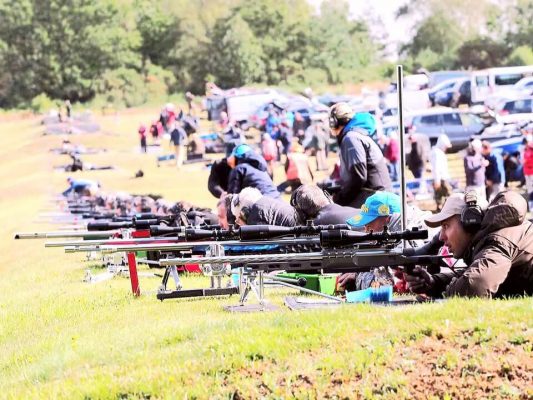
rod shooting Fclass Europeans 2019
Me at the 2019 Fclass European Championships shooting a custom 284Win built by Dolphin Gun Company in a Fox Barrel Block Chassis

Rod: Do you see any big changes in Fopen calibers?

Mik: F-Open is always evolving calibre wise, we have gone from 6.5-284 to 7mm to 30 Cal, but it’s restricted to 8mm and no one has gone down that route yet, no really good bullets in 8mm avail yet. (editor: similar challenges lie with the .408 round, not enough high performance bullets to choose from restricting the popularity of the cartridges)

Rod: What can help shooters in getting the most out of their barrels?

Mik: Using single based powders and cleaning correctly and regularly will give you the best barrel life, double based or high energy powders will burn a barrel out quicker

Rod: How far off is an FTR 308win barrel in terms of barrel wear from an open gun by today’s performance standards?

Mik: FTR 308Win barrel burns out the same as an F-open barrel, they use 20% or so less powder so they get longer barrel life, the barrel life is dependent on the calibre, and amount/type of powder burnt down the barrel.

You can email Mik [email protected] if you need more info referring to this article

284Win rifle
Your’s truly running my 284Win F-open at Bisley Ranges, UK

Ryan Pierce on High Performance hunting rifles

Next: Ryan Pierce from Piercision rifles, USA

ryan pierce on rifletalks

Above: Ryan doing what he enjoys best with his own high performance hunting rifles

Rod: What kills a barrel fast when shooting strings?

Ryan: There’s quite a few variables that come into play for killing a barrel. How hot you get the barrel. Are you shooting at a pace similar to F-class? (editor: 1 round every 80 seconds or so) That will cut barrel life in half easily if you get the barrel really hot all the time. I keep my barrels cool whenever possible. During load development I’ll wait a couple minutes between shots and use a chamber cooler during that time. The type of powder used will have an effect on barrel life also. I generally don’t let the barrels on my big magnums get really dirty. Extreme spread and accuracy opens up when that happens, due to carbon build up etc.

Rod: How many rounds do you expect your high performing 300Norma/ 28Nosler hunting rifles to go?

kentucky Windage hold

Above: High performance rounds can help you half your windage hold offs.

Ryan: Round count is pretty subjective. Accuracy requirements play a big role in that as well, along with the above-mentioned variables.

For instance, if a guy shoots a bunch of rounds through his 28 Nosler all the time and gets the barrel smoking hot while doing so he could shoot a barrel out in 3-400 rounds pretty easily. However, if you keep it cool and clean you can get 600 or more rounds down it. That’s pushing a 195gr at 3100+ fps. The Norma and Norma improved I am telling guys to expect 1000 rounds or more of good accuracy if the barrel is taken care of. I have a barrel with 800 rounds through it that still hammers. A customer sent me some groups from his awhile back that were still 1/8 moa at that round count. It all comes down to how the barrel is treated.

Rod: Do you see any big changes in high performing hunting calibers or barrels used for them?

Ryan: I did hear about Bartlein’s new steel they’re offering. Sounds like a good deal. Time will tell on the new steel.

As far as new cartridges go there’s always going to be the “latest and greatest”. “I’ve obviously built quite a few 300 Norma and Norma improved. The fact that Lapua makes the brass is a huge bonus for it. I have 28 WARM firings on a single piece of brass and the primer pocket is still tight. Feels almost brand new. Its a great round. Extremely accurate and wide nodes. Capable of sending a 230 berger over 3000 fps in a 26″ barrel and still fit in magazines while throated for heavy bullets.”

I’m currently messing with reloader 50 in my heavy 30″ barrel setup and have a node at 3150 fps with a 230 berger and no pressure signs. Its offering much better case fill than N570 also. Another one of the popular cartridges I’ve chambering for guys is the 30-28 Nosler which is simply a 28 Nosler necked up to 30 cal. It has more case capacity than the 30 Nosler. My personal rifle in it has a 26″ proof carbon and is pushing a 230 Berger at a little over 2950 fps with h1000. It’s mind blowing accurate as well. The last two groups I shot at 580 yds had .6″ vertical. I also shot a cold bore 3 shot group over 3 days at 580 yds. One shot per day. Each day had 10 mph winds from different directions. The 3 shot group was 1.7″ tall x 6″ wide. I misjudged a fishtail wind and opened the group up to 6″. The first two days the group was under 2″ and perfectly centered. It also shoots the 215 Bergers lights out at a little under 3100 fps with h1000. I’m guessing optimal barrel life for it will be 1200-1500 rounds.

200 meter shot mouflon in pyrenees

Above: Nowhere is the game more life and death than when hunting in the mountains. High performance cartridges may just be your ticket to success!

Rod: How far off are these cartridges in terms of barrel wear from traditional cartridges like 300win mag by today’s performance standards and materials?

Ryan: Both those 30 cal magnums mentioned are quite a bit faster than the 300 win mag. 300 win mag is gonna get 1500+ rounds of good barrel life if its taken care of.

Another somewhat new and great option is the 131 gr Blackjack bullet with its sky-high BC. Its been out over a year now. I’ve done a few for guys and they’ve hammered. I’m finishing up a 25 SST for myself in the next week or two and will be using that bullet with it on deer/antelope size game. Not sure how long the barrel will last but seeing as its predominantly a hunting rifle it will last a long time.

That’s the same with my bigger magnums. Remember 600-1000 rounds of barrel life in a hunting rifle is a really long time. That’s a lot of meat in the freezer, haha. If the new steel ends up offering 50% or more-barrel life in big magnums, then the 33XC might start picking up popularity in hunting rifles. My current setup has quite a bit of throat erosion at 190 rounds. My buddy said it looked like his 6XC at 2000 rounds LOL.

The funny thing is the 33XC barrel is consistently holding 2-3″ vertical at 1000 right now. How much longer it will do that I have no idea but I’m guessing the barrel will give up peak accuracy around 400 rounds or maybe a hair less. I’m going to try a different powder in my next barrel and see if that helps with throat erosion etc. Currently using N570 and pushing a 300 gr berger at 3225 fps in a 30″ proof carbon barrel. That combo definitely isn’t going to be easy on barrels!

Rod: What can help shooters in getting the most out of their barrels?

Ryan: My advice to new shooters on allowing the barrels to last as long as possible is to keep them cool. Don’t shoot 5-10 round strings. Let it cool between each shot to maximize barrel life.

Ryan is extremely knowledgeable and helpful, you may contact him here [email protected]

Remember, keep load development short when testing hi performance rifle cartridges. Learn how to load develop in < 50 rounds here.

Dutch Rifle smith on ELR rounds

FOR SALE MARCH GENESIS

FOR SALE MARCH GENESIS 6-60×56

Read about the March Genesis ELR scope.

Next from the Netherlands, is Harry Drescher (Solid Solution Designs)

harry drescher on rifletalks

Rod: What kills a barrel fast during shooting strings?

Harry: In order to answer this question, we should think about how the barrel is built and how it is constructed, that is a free-floating match barrel in a MTU style profile. Let’s take stainless steel barrels, Single point cut rifling. The critical part of the barrel is the first 10 inches from the chamber into the barrel. This is exposed to a lot of pressure, heat, carbon and coppering. It is the area where the bullet spins for the first time in the lands and grooves of the barrel. If you shoot a fast string,and repeat this, the internal surface wears fast and the heat stress will cause deformities also known as heat cracks or snake skin. In time when these deformities grow, the accuracy can drop off.

Rod: How many rounds do you expect your high performing ELR rifles like 33XC and 375chey to go?

Harry: If the customer chooses the type of barrel and the type of rifling as mentioned in option 1 we can expect loss off accuracy after as much as 1200 rounds in high performance mode. This means monolthic bullets, with speeds over 960m/s

Rod: Do you see any big changes in high performing calibers or barrels used for them?

Harry: Recently we have seen a massive increase of sales of replacement barrels in 33xc, and 37xc as well as 416 Barret. The main brand chosen is in our view Bartlein, Krieger, and Proof research. Runner up is Benchmark and Rangemaster Precision Arms barrels being both top notch supplier of button rifled barrels.

Rod: What can help shooters in getting the most out of their barrels?

Harry: Choose a matching finished length and twist rate that really helps you achieve your ULR goals. Lower twist rates can really make the difference in the subsonic phase.

First accuracy, then speed we always say. Off course it’s a relative thing.

When your barrel is freshly cut, and you start using it, it will wear out. The first few hundred rounds will be the best that you get. A good tip might be to focus your cleaning more on carbon removal and less on copper removal. In this way you maintain the performance level even better.

And for projectiles, please choose a good High BC bullet like WTC, Berger solid, Cutting Edge, SSD Holland.

Rod: How far off are these ELR cartridges from introductory cartridges like 338Lapua when it comes to burning barrels?
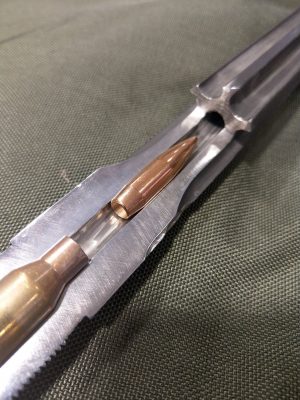
338 Lapua barrel burning
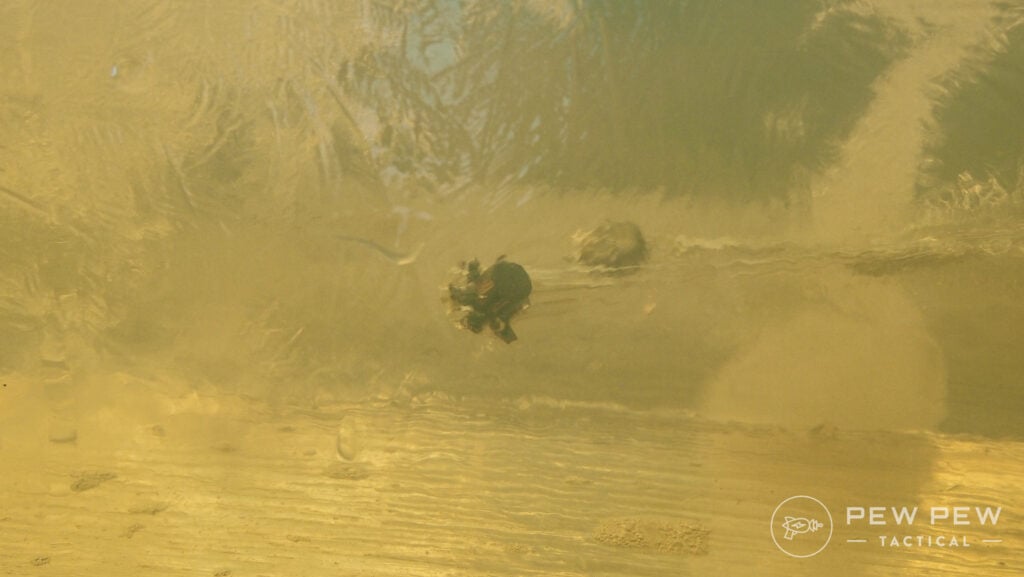
Above: Courtest of PGM Precision Rifles showing a 338LM barrel’s throat after 4000rounds of CIP factory ammo in military use with about 5mm of erosion.

Harry: The true ELR cartridges are reducing rifle barrel life fast. That is absolutely true. We have seen that already with the good old 300rum back in the days.
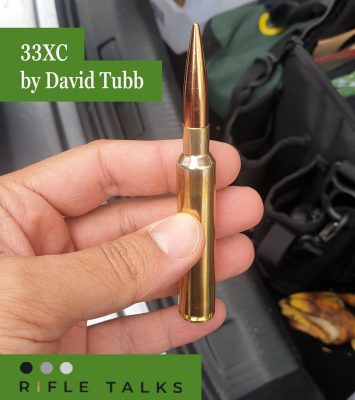
33XC by David Tubb
33XC by David Tubb: A true high performance round with heaps of potential having conquered 2020 King of 1 Mile in France competition! Rifle barrel life is not very important when you only need 20 rounds to conquer the European title!

Where a 338lapua magnum can do easily 3000 rounds without loss off accuracy, Formula 1 cartridges like 375CT, 33xc, and the others mentioned will engage your barrel rapidly. I have even had a customer who did 600 rounds laser-style in his 416Barret, ending the rifling for a good 45 percent…….. I must admit that he used a brass solid over a copper solid, but still. Yeah!

You may reach Harry Drescher here: [email protected]

Over and Out,

Rod

Enjoyed it? Share it with your friends!

What’s the best distance to practice at for self-defense? It’s not what you think

0

I see the debate of how far out to put the target almost every time I go to a range during public hours.

Put it too close and it doesn’t look very “cool.” Put it too far and it would be embarrassing to miss.

Should I put it at 21 feet because of the “21-foot rule?” Should I put it at 11 feet since half of law enforcement fatalities happen within 11 feet?

Should I put it at nine feet since an “average” self-defense encounter happens within three yards, lasts three seconds, and three rounds are fired?

The answer is a little simpler and a little more flexible than you may think.

There are a couple of distances that are important.

The first distance is six to 10 feet.

Six feet is about as close as you can get to a hanging paper target without the muzzle blast from normal self-defense rounds moving the paper too much. Six to 10 feet is close enough that any gun/ammo combination can shoot 1” or better groups.

Drilling holes flat footed at the six- to 10-foot range is an indication that you can align the muzzle properly and press the trigger without disturbing muzzle alignment.

Any flyers or problems that show up here will be magnified with distance, stress, speed, and movement.

Grip, stance, breathing, and follow-through all help, but muzzle alignment and trigger press are the only two things that are vital.

This seems like it should be simple, but what I’ve found over time is that only about 10% of shooters who carry regularly…including military, law enforcement, competition, and concealed carry permit holders…can actually shoot a five-round 1” group at 6-10 feet with perfect lighting and no time constraints.

If you’re in the 90% who throw an occasional shot at six to 10 feet, it means is that you’ve got some of what I call “low-hanging opportunities for improvement” that will be magnified with speed, distance, movement and stress. Work that you do here gets incredibly high leverage results and will impact all shooting that you do, regardless of the gun, distance, or speed.

Once you’re drilling holes at six to 10 feet…then what?

It depends on what phase of learning you’re in; whether you’re building a basic skill or trying to make it resilient.

If you’re trying to build skill, you want to aim for a distance where you’ve got a 75 to 90% success rate, regardless of the size of the target, speed of shooting, stress level, or speed of movement.

That may be slow fire at five, 25, 50, or even 100 yards, rapid fire, shooting while moving, or whatever combination of speed, accuracy, stress, and movement that puts you in that 75 to 90% success range.

That means that you’re hitting your intended target seven to nine times out of 10 and the misses tell you where the edge of your performance envelope is.

At first, you want to focus on perfection and a 99 to 100% success rate, but once you’re dialed in, you want to start expanding your performance envelope.

For IDPA, “success” might be -0 hits. For USPSA, it might be A-zone.

But, depending on what you’re doing, you might need/want to relax your definition of success. As an example, if you’re shooting at 50 yards, shooting fast, or training for self-defense while moving laterally off-the-x, you might call success anything in the -1 or B zone (reduced silhouette), or it might be any hit on target.

But the goal should always be to make precise hits faster, fast strings of fire more accurate, and do it under more and more challenging conditions.

The way you want to structure your practice is to start with drills where you’re shooting at a 99 to 100% success rate, push conditions until you’re at 75 to 90%, and then end with 99 to 100% again.

I like to think of it as a sandwich.

Start with a sure thing, push it, and then end with a sure thing.

As we cover in Praxis, this will optimize learning speed and give you the most bang-for-the-buck for your training time and training dollars.

If you’ve got the skill built and you’re working on making it resilient to stress…by whatever means of stress inoculation you happen to be using…then you might want to push things to the point where you’re only succeeding 25% of the time…but you still want to dial stuff back to where you know your performance envelope where you can succeed 75 to 90% of the time and end with a win.

How’s this play out at the range?

Start with a few rounds at six to 10 feet with sterile conditions, push time, distance, speed, movement and stress until you’re in the 75 to 90% success range, and then end with a few reps at six to 10 feet again.

As you see, no matter how fast and cool or how tactical you want to be, it all comes back to a solid foundation of the fundamentals…muzzle alignment and trigger press.

Get those down as a solid foundation and the sky is the limit.

Skip over them in an attempt to get to the “cool” stuff quicker and it’s like driving a sports car with the parking brake on and a clogged air filter…it’s simply impossible to shoot up to your potential. And that’s why shooters at all levels…from new shooters to guys retiring from tier I and special mission units go through our training and report dramatic improvements in performance.

TACTACAM Reveal X PRO Trail Camera Review

0
tacticam reveal XPro trail camera

This TACTACAM Reveal X & X PRO Trail Cameras Review is brought to you by The Old Deer Hunters. The TACTACAM Reveal X PRO Trail Camera is by far the best cellular trail camera I have ever used. This cellular trail camera is ideal for locations with limited cellular access because it comes with two sim cards, Verizon and ATT. Best of all, it is easy to use.

Cellular photos and videos from the TACTACAM Reveal X & X PRO Trail Cameras are very good, but if you actually download the videos from the card, they are fantastic and great for Youtube Videos.

Available From Amazon $149 TACTACAM Reveal X PRO Cellular Trail Camera

TACTACAM Reveal X PRO Cellular Trail Camera Amazon $149TACTACAM Reveal X Gen 2.0 Amazon $119TACTACAM Lithium Battery Pack Amazon $50SanDisc 32GB SD Card (Recommended) Amazon $11

TACTACAM Reveal X PRO Trail Camera

TACTACAM Reveal X PRO Cellular Trail CameraVerizon and AT&TNO Glow , Integrated GPS Tracking , Built in LCD Screen , HD Photo and HD Video (X-PRO)

The TACTACAM Reveal X PRO Cellular Trail Camera is the newest cellular trail cam for 2024. This cellular trail camera is ideal for locations with limited cellular access because it comes with two sim cards, Verizon and ATT.

See what is going on on your hunting property with HD quality photos and 1080 video even when you’re not in the woods. The Tactacam REVEAL X Pro camera is not only small and discreet, but powerful enough to handle the extreme outdoor weather. It’s fast trigger and no glow IR technology will freeze the action day or night. Because of the No Glow IR flash and integrated GPS tracking, the Reveal XPro also makes and excellent wireless cellular security camera or surveillance camera.

Awesafe Gun Safe, Biometric Gun Safe for Pistols*

Best 5 Bedside Handgun Safes awesafe

Awesafe Single Bedside Gun Safe $65 at AMAZONAwesafe 2-Handgun Bedside Gun Safe $119 at AMAZON

TACTACAM Reveal X PRO Is Easy to Use

Using this camera is very easy. Just load up the batteries and 32 GiG SD Card to get started. Download the app for your cell phone and add the camera. Setting the camera up is very easy with the app.

The camera has a 2″ viewing screen, so it is easy to aim during setup. You can see what the camera sees. It lets you align the camera perfectly so you get centered in the photo.

The photos are send to your phone and you can request HD photos or 1080 videos for small fee. You get 50 videos or HD photos for $5.

Customer Service is USA based by Real Hunters

TACTACAM Reveal X PRO Trail Camera Review
  • NEW 2024 MODEL! Integrated GPS Tracking – Built in LCD screen for photo viewing and programming!
  • NEW HYBRID MODE for faster picture and video delivery AND superior battery life! HD pictures and videos sent to your phone , tablet or computer via the REVEAL by Tactacam APP!
  • NO GLOW IR technology makes the X-Pro the perfect camera for hunting, security and surveillance! 96 FOOT flash and detection range! Lightening fast trigger!
  • 32gb Class 10 U3 sd card required (Recommended brand – Tactacam) 12 AA batteries or Tactacam Lithium battery cartridge required.
  • Includes Verizon and AT&T sim cards. Pick which has the best service in your area. No contract needed for activation. Pay annually or month to month.
  • TACTACAM Reveal X PRO Trail Camera Review

Tactacam’s REVEAL X-Pro cellular trail camera is the one of the best trail cams you can buy.

  • Crisp 16MP daytime photos
  • Use the app to request HD videos and photos
  • Brilliant 2.0″ LCD screen
  • No Glow IR technology
  • Fast .5 second trigger speed
  • Integrated GPS tracking
  • Multi-carrier capable
  • Compatible with Verizon and AT&T cell networks

The Tactacam® Reveal X Pro Trail Camera captures crisp 16MP daytime photos, and you can use the app to request HD videos from the cam as needed. Brilliant 2.0″ LCD screen offers up to 16MP videos and photos. No Glow IR technology combines with the fast trigger speed to freeze the action, day or night, without spooking game. Integrated GPS tracking. This game camera is multi-carrier capable and compatible with Verizon or AT&T cellular networks.

Reveal X Pro Trail Camera Features & Functions

• Requires a Tactacam, SanDisk, or Lexar Class 10, U3 SD Card, 16GB-32GB• Requires 12 AA Batteries• No Glow IR Technology effectively eliminates all visible flash• Adjustable Night Illumination at 80+ft• Detect animals at 96+ft• Sub 1/2s Trigger Speeds• Exceptional detection in all weather• IP66 Waterproof Certified• Built-in LCD Screen• Built-in GPS• Request HD Photos From App (Additional data charges may apply)• Request Video From App (Additional data charges may apply)TACTACAM Reveal X PRO Trail Camera Review

• Hybrid Mode allowing more pictures to be taken and sent instantly• External Port for Solar Panel• One Year Warranty• In-house Customer Service• USA developed and supported App• Activate cameras only when you need them• Reveal X Pro operates on AT&T or Verizon Nationwide LTE/4G Networks (SIM card change required)• LED indicator showing signal strength and battery level• Uploads thumbnail images with HD image requests (Additional data charges may apply)• Month-to-Month Data plans• No Contracts/Activation fees• Easy to use mobile app with daily camera status reportsTACTACAM Reveal X PRO Trail Camera Review

TACTACAM Reveal X Gen 2.0 LTE Cellular Trail Camera

TACTACAM Reveal X PRO Trail Camera

From Amazon $119 TACTACAM Reveal X Gen 2.0 LTE Cellular Trail Camera

Same Features As X Pro Except No LED Screen or GPSWifi To Your Phone Replaces the LED Screen To Aim Camera

AT&T and Verizon, HD Video, HD Photo, Low Glow IR LED Flash (TA-TC-XG2) for Hunting, Security, Surveillance Gen 2

  • Sub 1/2s trigger speeds , Exceptional detection in all weather , Adjustable night illumination at 96+ft , Detects animals at 96+ft , IP66 waterproof certified , Low Glow IR Technology
  • Activate cellular trail cameras only when you need them. Cell cam operates on AT&T or Verizon LTE/4G networks (SIM card change required). Month-to-month data plans. No contracts/activation fees.
  • One year warranty. In-house customer service. USA developed and supported app. On-board Wi-Fi connects to app for simple set-up and live view option with instant image capture
  • Tactacam Reveal cellular game cameras are the perfect solution for Hunting, Cellular Security Cameras, and anywhere else wireless surveillance is needed!
  • 12 AA Batteries required. Pair with the Tactacam Reveal External Solar Panel for amazing battery life! Compatible with Reveal LiPo Lithium battery pack.

ALSO SEE SPYPOINT TRAIL CAMERAS

SanDisk 32GB Extreme PRO SDHC UHS-I Memory Card – C10, U3, V30, 4K UHD, SD Card

TACTACAM Reveal X PRO Trail Camera

Available From AMAZON $11 Recommended SD Card For Reveal X or X Pro

TACTACAM Reveal X PRO Battery Pack

The Reveal X PRO takes video and photo at the same time. Yes, it will shorten battery life if you use this setting instead of photo only, but you get so much more information with a 10-15 second video than just a photo.

Lithium batteries are expensive, so I have ordered the available Lithium battery pack from AMAZON for $49. 12 Lithium batteries cost $38, so it’s a no-brainer to buy at least one battery pack per camera and a spare so you an have an extra one on the charger ready to go.

Available From Amazon TACTACAM Reveal X PRO Lithium Battery Pack

TACTACAM Reveal X PRO Trail Camera battery pack

TACTACAM Reveal X PRO vs Reveal X Gen 2

What’s the difference between Tactacam X and Pro? The Tacticam Reveal XPro has a built in video screen, a GPS feature to help you locate your camera and NO GLOW IR for night photos.

What is the range of the reveal X Pro? NO GLOW IR technology makes the X-Pro has a 96 FOOT flash and detection range!

How often does Tactacam Reveal X Pro send pictures? Once a day, twice a day or as the photos are taken.

How long do batteries last in Tactacam Reveal X Pro? One of the best features of the Reveal XPro is battery life. Set of batteries last for about 3 months. You can also get lithium battery pack that lasts for months and is rechargeable for about same price as one set of lithium batteries.

Can you use Tactacam without a plan? Tactacam offers a free plan monthly for up to 100 photos per camera. A premium plan is available starting at just $15

TACTACAM Reveal X PRO Cellular Saves You Time & Money

Trail cameras have become increasingly popular among hunters in recent years, and for good reason. Here are some advantages of using trail cameras for hunting:

  1. Increased Efficiency: Trail cameras allow hunters to monitor and scout game more efficiently. By capturing images and video of game in their natural habitats, hunters can learn the movement patterns of animals, identify their preferred feeding areas, and determine the best times to hunt.
  2. Improved Success Rates: With the information gathered from trail cameras, hunters can increase their chances of success by choosing the best spots to set up their blinds or tree stands, or by adjusting their hunting strategies based on the behavior patterns of the animals they are targeting.
  3. Reduced Time and Effort: Traditional scouting methods often require a lot of time and effort, such as walking or driving through an area to observe game. By using trail cameras, hunters can save time and money by letting the cameras do the work for them.
  4. Non-Invasive: Trail cameras are non-invasive and do not disturb the natural environment or disrupt the behavior of animals, unlike other scouting methods that can cause animals to flee the area.
  5. Remote Monitoring: Many trail cameras offer remote monitoring capabilities, which allow hunters to check their cameras from their smartphone or computer, eliminating the need to physically visit the camera site and disturb the area.

Cellular Trail Cameras Advantage

Using a cellular trail camera for hunting can provide several advantages over a standard trail camera. Here are some advantages of using cellular trail camera for hunting:

  1. Real-time Monitoring: Cellular trail camera use a cellular network to send images and videos directly to the hunter’s smartphone or computer. This allows hunters to monitor the camera in real-time and receive immediate notifications when game is detected.
  2. More Efficient: Since hunters don’t have to physically visit the camera site to check for images, they can save time and effort, and avoid disturbing the game in the area.
  3. Enhanced Coverage: Cellular trail cameras can be placed in remote locations and still provide coverage, as long as there is cellular network coverage in the area. This makes it easier for hunters to monitor game in areas that are difficult to access.
  4. Improved Success Rates: With real-time monitoring, hunters can quickly adjust their hunting strategies based on the movement patterns of game in the area. This can increase their chances of success and reduce the amount of time spent waiting for game to appear.
  5. Increased Security: Cellular trail cameras are more secure than traditional trail cameras because they do not have to be physically retrieved to access the images. This reduces the risk of theft and damage to the camera.

TACTACAM Reveal X PRO Trail Camera Review Conclusion

Overall, using a trail cellular camera for hunting provides hunters with several advantages, including real-time monitoring, enhanced coverage, improved success rates, and increased security.

Cellular Trail Camera Term Definitions

Cellular Trail Camera: A type of trail camera that uses cellular network connectivity to transmit captured images or videos to a remote location, typically a mobile device or a cloud storage service.

SIM Card: A small card inserted into the cellular trail camera that stores information necessary for connecting to the cellular network. It contains a unique identification number (ICC-ID) and allows the camera to communicate with the cellular network provider.

Cellular Network: Trail cameras us the same networks as your cell phone to send fotos. Most cellular trail cameras use ATT or Verizon, but the Reveal XPro can use either.

Data Plan: A cellular service subscription that provides a specific amount of data usage for the cellular trail camera to transmit images or videos. Data plans vary in terms of data allowance, speed, and cost.

Camera Resolution: Refers to the number of pixels a cellular trail camera’s image sensor can capture. Higher resolutions generally result in clearer and more detailed images.

Trigger Speed: The time it takes for a cellular trail camera to capture an image or video after detecting motion or heat. A faster trigger speed is desirable for capturing fast-moving subjects.

Detection Range: The maximum distance at which a cellular trail camera can detect motion or heat. It determines the coverage area of the camera and is usually measured in feet or meters.

Flash Range: The maximum distance at which the camera’s built-in flash can effectively illuminate a subject in low-light conditions. A longer flash range is beneficial for capturing clear images at night.

SD Card: A memory card used in cellular trail cameras to store images or videos locally. It provides additional storage capacity and can be used as a backup if cellular transmission fails.

Image Transmission: The process by which a cellular trail camera sends captured images or videos to a remote location. It can be done through email, text message, dedicated mobile apps, or cloud-based storage services. TACTACAM Reveal X PRO Trail Camera Review.

Remote Control: The ability to adjust camera settings, view images, and control the cellular trail camera’s functions remotely using a mobile device or a web-based interface.

Motion Detection: The feature that enables a cellular trail camera to detect and capture images or videos when it detects motion within its detection range. It helps conserve battery life by only capturing when activity is present.

Time-Lapse Mode: A feature that allows a cellular trail camera to capture a series of images at predefined intervals, regardless of motion detection. It is useful for capturing long-term changes in a specific area.

Solar Panel: An optional accessory for cellular trail cameras that uses solar energy to charge the camera’s internal batteries. It helps extend battery life and reduces the need for manual battery replacement.

Cloud Storage: Online storage services that allow cellular trail camera users to store and access their captured images or videos remotely. It provides an additional backup and easy access to the media from any device with internet connectivity.

Blackout Technology: A feature in cellular trail cameras that prevents the camera’s LED flash from emitting a visible light when capturing images or videos at night. It helps to conceal the camera’s presence and avoid spooking wildlife.

GPS Functionality: The ability of a cellular trail camera to integrate GPS technology, allowing users to track the camera’s location. It provides valuable information for scouting and locating the camera.

Two-Way Communication: A feature that enables bidirectional communication between the user and the cellular trail camera. It allows users to send commands or requests to the camera remotely, such as adjusting settings or requesting an immediate image transmission.

Cloud-Based Management: A system that allows users to manage multiple cellular trail cameras remotely through a centralized web-based platform or mobile app. It provides convenience for monitoring and controlling multiple cameras from a single interface.

Real-Time Notifications: The capability of a cellular trail camera to send instant notifications to the user’s mobile device or email when motion is detected or when certain events occur, such as low battery or SD card full.

Advanced Image Processing: Technology that enhances the quality of captured images or videos by applying algorithms for noise reduction, image sharpening, and color correction. It results in clearer and more vibrant visuals.

Wireless Connectivity: The ability of a cellular trail camera to connect to other devices wirelessly, such as Bluetooth or Wi-Fi. It allows for easy setup, configuration, and image transfer between the camera and compatible devices.

Multi-Shot Mode: A feature that enables a cellular trail camera to capture multiple consecutive images in rapid succession when triggered by motion detection. It helps to capture a series of shots and provides more detailed information about the subject.

Time and Date Stamp: The inclusion of time and date information on captured images or videos by the cellular trail camera. It helps track activity patterns and provides valuable data for research or monitoring purposes.

Stealth Design: The physical design of a cellular trail camera that aims to blend with the environment and remain inconspicuous. It often includes camouflage patterns, compact size, and anti-reflection coatings to minimize the camera’s visibility.

External Antenna Port: A port on the cellular trail camera that allows users to connect an external antenna. It helps to improve cellular signal reception in areas with weak network coverage.

Encryption and Security: Security measures implemented in cellular trail cameras to protect transmitted data from unauthorized access or interception. This may include data encryption, secure authentication protocols, and password protection. TACTACAM Reveal X PRO Trail Camera Review.

Remote Firmware Updates: The ability to update the camera’s firmware remotely, ensuring that it stays up-to-date with the latest features, bug fixes, and security patches without requiring physical access to the camera.

MMS (Multimedia Messaging Service): A messaging service that allows a cellular trail camera to send captured images or videos as multimedia messages to designated phone numbers or email addresses. It provides an alternative transmission method for devices without internet connectivity.

Cellular Trail Camera Network: A network of multiple cellular trail cameras strategically placed in different locations, allowing users to monitor and manage a larger area for wildlife observation, research, or security purposes.

ALSO SEE SPYPOINT TRAIL CAMERAS

BOOST TRAIL CAM SIGNAL

Back To Home THE OLD DEER HUNTERS CAMP

Range Review: Browning X-Bolt Max Long Range 6.5 mm Creedmoor

0

When Browning released the X-Bolt Max Long Range back in 2019, precision rifle shooters and long-range hunters rejoiced. By combining Browning’s highly-adjustable Composite Max stock with the proven X-Bolt action, long-range enthusiasts can obtain the custom fit necessary for nearly any optic. Add in 6.5 mm Creedmoor chambering—along with old stalwarts such as .300 Win. Mag. and newer calibers such as 6.8 Western—and many shooters were lining up to get one for themselves.

I decided to pair the Browning X-Bolt Max Long Range 6.5 mm Creedmoor with Swarovski’s ds Smart Optic. Although optimized for hunting, I love the clarity this riflescope provides, along with the built-in laser rangefinder. Effective out to 700 yards and some change, the rangefinding scope was perfect for shooting that day, and most importantly—it was already mounted on the X-Bolt Max Long Range 6.5 mm Creedmoor. Of course, you don’t need a fancy optic to have a good time at the range, but Swarovski’s dS was certainly a crowd pleaser during this outing.

Repeatability, thanks to customization

Whether sitting, kneeling or prone, the foundation of any well-placed long-range rifle shot begins with a well-built “house.” A stock such as the one with the Max Long Range comes in handy here. The Composite Max stock has an adjustable comb for setting eye-to-scope alignment. An ambidextrous adjustment knob and height markings makes adjusting the comb height quick and simple. Switching between two shooters, adjusting the height to find the “sweet spot” again only takes a few seconds. Three spacers are included to customize the length-of-pull. I especially like the textured gripping surfaces, along with the vertical pistol grip and thumb rest.

With a stock that sports a target-style palm swell and a flat-bottomed fore-end, the design of this rifle can help you build a stable shooting platform using a hunting pack in the field, in a similar manner to using range bags.

The X-Bolt Long-Range’s short, 60-degree throw bolt handle is extended a bit, which is helpful for when you don’t want to get off the scope. I found it to be quite repeatable, but must admit that after the first live-fire shot, I had trouble finding it again. This was more user error than design flaw. (Note: The 2021 X-Bolt Max Long Range model has an extended bolt knob.) After that initial misstep, though, it became second-nature, and soon I was ringing steel plates at 200 and 300 yards without skipping a beat. And while punching out further, up to 600 yards (700 yards is the Swarovski dS Smart Optic’s maximum effective range), I was smacking 18-inch round plates at assorted distances with ease.

The 26-inch, stainless-steel, heavy sporter contour barrel is fluted, and includes a removable muzzle brake along with a thread protector. Disregarding my neighbors on the firing line, I kept the muzzle brake on and it performed admirably. The barrel, although hefty, gives the rifle excellent balance while standing as well. Button-rifled and fluted, with a 1:7-inch right-hand twist, this fast barrel is ideal for the high-BC bullets used in precision rifle shooting and long-range hunting.

Browning’s signature gold-plated Feather Trigger is set at the factory to approximately three-and-a-half pounds. Adjustable from three to five pounds, the trigger itself has a nice feel on the fingertip, and the amount of engineering the company put in to creating it is noticeable and appreciated.

Something to note about my gear combination—it was heavy. The Swarovski dS Smart Optic is one tank of a scope, coming in at 38.4 ounces, and the X-Bolt Max Long Range rifle itself weighs more than eight pounds without a loaded magazine. Pair the X-Bolt with a smaller scope, perhaps something with a large objective lens, such as a Leupold VX-5HD 4-20X 52 mm optic, and you will enjoy the benefits of a lighter rig.

For a rifle that offers it all, such as the Browning X-Bolt Max Long Range 6.5 mm Creedmoor, a MSRP price under $1,400 certainly makes it a best buy. In addition to 6.5 mm Creedmoor, there are 10 more calibers available, including 6.8 Western, .300 PRC and 6.5 PRC. Best of all, you know you are getting a quality rifle with Browning’s solid reputation for quality. Visit Browning.com.

Gear

  • Browning X-Bolt Max Long Range 6.5 mm Creedmoor. $1,379.99, Browning.com
  • Swarovski dS Smart Optic. $4,499, SwarovskiOptik.com
  • Warne 40 mm scope rings. $251.99, WarneScopeMounts.com
  • Talley X-Bolt Picatinny base. $63, TalleyManufacturing.com
  • Armageddon Gear Squishy Rear Bag. $39.95, ArmageddonGear.com
  • Phoenix Medium Ridge Runner Bag. $84, PhoenixShootingBags.com
  • Berger 156-gr. EOL Elite. BergerBullets.com
  • Federal Gold Medal 130-gr. Hybrid OTM. FederalPremium.com
  • Hornady 140-gr. ELD Match. Hornady.com

Read more: New: Browning Buck Mark Plus Vision Americana

If it Ain’t Chartreuse…

0

Chances are the title anecdote is engrained deep in your subconscious, whether you grew up fishing the Chesapeake Bay or simply visited a local tackle shop while passing through the watershed. For those of us that fall into the former category, we likely accepted this as truth largely by way of trust in our mentors, followed by empirical validation of our own. Walk down any aisle in a local tackle shop, however, and you’ll be presented with a wide spectrum of color choices, most if not all of which will catch fish under certain conditions. So, what is it about chartreuse that made this particular color so pervasive that it was immortalized by the late great Lefty Kreh? To be honest, I never truly asked myself this question until I began to look at the problem through the lens of optics. A quick Google search of “if it ain’t chartreuse it ain’t no use” will present similar takes by local experts, so I make no claim to be the first to broach the subject. That being said, let’s consider the results of a simple optical analysis of the subject.

chartreuse striped bass fishing lure
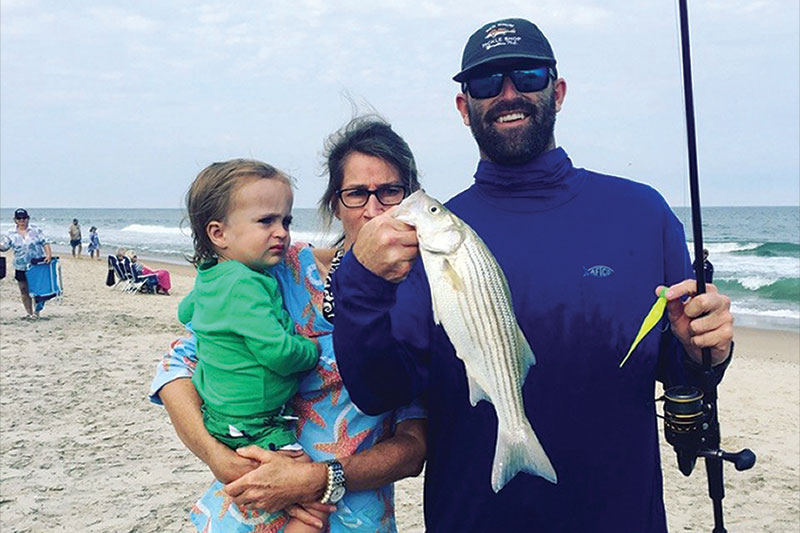
Unimpressed with the author’s surf caught dink, Beau Taylor Parr begins to ponder the validity of the title anecdote.

A wise man once taught me to seek simple models that develop physical intuition. Implicit in this statement is that these simple models must be constructed with physics that sufficiently describe the phenomenon which we seek to understand. In this light, let us reduce the complexity of the problem from which we derive such simple pleasure: to elicit a visual reaction strike in the daytime, light rays emanating from the sun must first travel through the vacuum of space for tens of millions of miles before reaching the edge of Earth’s atmosphere. At this interface, worldly optical phenomena begin. Some of these rays are reflected back into space in a mirror-like fashion, while the remainder pass through. Most of the time these rays are bent onto a new path when entering Earth’s atmosphere. For these rays to reach Earth’s surface, they must then travel along a path on which some rays are misdirected and/or plucked from thin air, by a variety of atmospheric constituents such as gaseous molecules and suspended particulate. Each ray of light represents a single color and the number of these rays that are misdirected and/or plucked from thin air depends on that color. As such, the color content at the edge of Earth’s atmosphere will differ from that on the Bay’s surface.

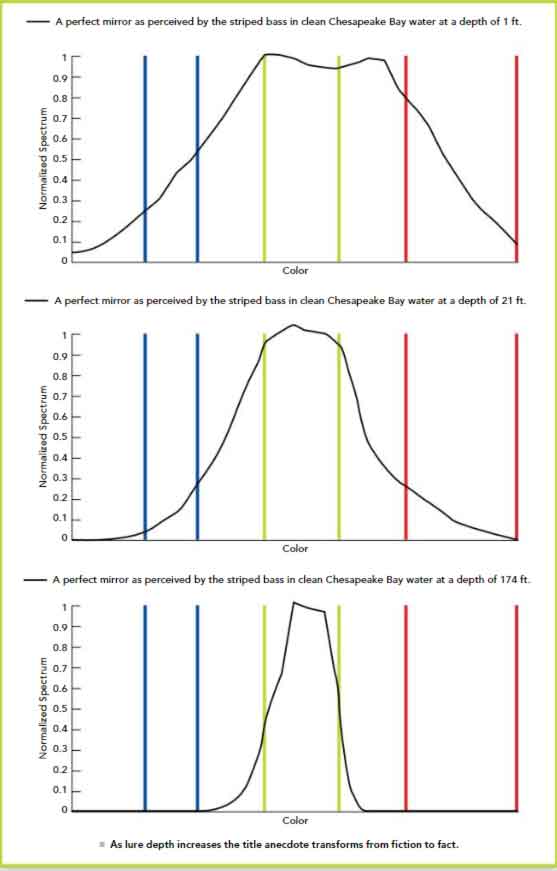
The process described above is again at play when a new interface (such as water) is introduced. The optical model described here therefore considers that rays reaching the Bay’s surface(1) are subject to being reflected, passed through, bent, misdirected(2) and/or plucked from the water column(2) all before being reflected by a lure. A perfect mirror for which all colors are completely reflected has been used instead of a lure of specific color (we’ll assess the effect of this lure choice soon enough). A detector with the daytime color response of the striped bass’ retina(3) has been situated immediately following the perfect mirror to complete the model. This color response is measured by electroretinography and accounts for the fact that not all colors are equal, as far as the striped bass’s retina is concerned. The results of this simple analysis are presented for clean Bay water at a depth of one foot, the average depth of the Bay (21 feet) and the deepest spot in the Bay (174 feet).

graph of how chartreuse looks underwater
The deeper you go, the more chartreuse seems like a natural winner.

At a depth of one foot, most of the color content that was present on the Bay’s surface has persisted and the effect of the color response of the striped bass’ retina is prominent. You’ll notice that the color response of the striped bass’s retina tends to rank colors in the chartreuse band as being most significant, although at this shallow depth most colors are still at your disposal in terms of lure selection. In proceeding to 21 feet, a depth to which you’ve undoubtedly dropped a jig or two, the progressive action of the plankton-filled water column acts like a sponge for blue and red colors. As well, as the pickiness of the striped bass’ retinal color response has begun to turn our perfect mirror into a chartreuse mirror. At a depth of 174 feet, the kind of optical transformation that striped bass dream about has effectively completed.

Not a fan of even the simplest of models without empirical validation? Neither am I. You may take some comfort in that Navy divers at depth in the Long Island Sound most commonly reported white targets as green, white, and yellow(4) – in that order. Keep in mind that that chartreuse is also referred to as yellow-green. Still not convinced? Well I’ll need the help of our community to take this argument further. For the underwater photographers in the audience, I’d like to present an open challenge to get images of a chartreuse and white lure falling into the depths of the Bay, as viewed through a filter corresponding to the color response of the striped bass’s retina.

chartreuse fishing lure
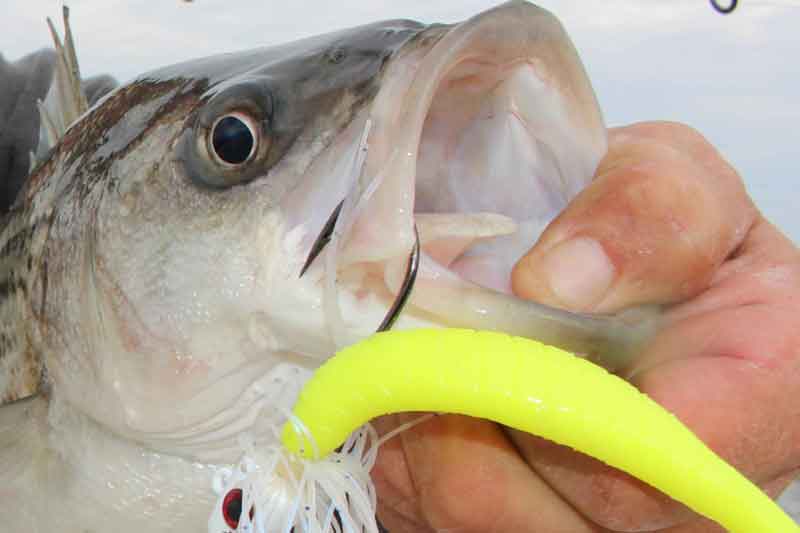
Surely, you have chartreuse in your tacklebox.

Let’s take a moment to reflect once more on the title anecdote. Regardless of whether or not striped bass can distinguish between individual colors or their brains simply rank colors differently, you’d best consider choosing a lure color that reflects or misdirects yellow-green, such as chartreuse, if you’re fishing at depth and want to elicit a visible reaction strike. As to the veracity of “if it ain’t chartreuse it ain’t no use,” you already knew that in reality it’s not absolute. To flip the script, you might consider choosing a lure color (such as black) that strongly plucks chartreuse from the available light for optical contrast to the yellow-green aquatic environment.

Don’t get out your pitchforks just yet—I’ll be danged if you see me throwing anything other than chartreuse on the first cast. That is unless we’re talking about fluorescence colors, which don’t play by the same rules…

-By Michael Brupbacher

1. U.S. Department of Energy (DOE)/NREL/ALLIANCE

2. E.O. Hulburt, Optics of distilled and natural water, Journal of The Optical Society of America, 35(11), 1945, 698-705.

3. A.Z. Horodysky, R.W. Brill, E.J. Warrant, J.A. Musick, R.J. Latour, Comparative visual function in four piscivorous fished inhabiting the Chesapeake Bay, The Journal of Experimental Biology, 213, 2010, 1751-1761.

4. J A S. Kinney, S.M. Luria, D.O. Weitzman, Visibility of colors underwater, Journal of the The Optical Society of America, 57(6), 1967, 802-809.

Best .380 Ammo: Self-Defense & Target Practice

0

For many years the .380 ACP wasn’t a hugely popular cartridge for concealed carry or home defense, but times are a-changing.

Looking to buy your first .380?

Have one and need to know what to feed it? Let’s take a look at some of my favorite ammunition choices and break down the important facts of ammo selection.

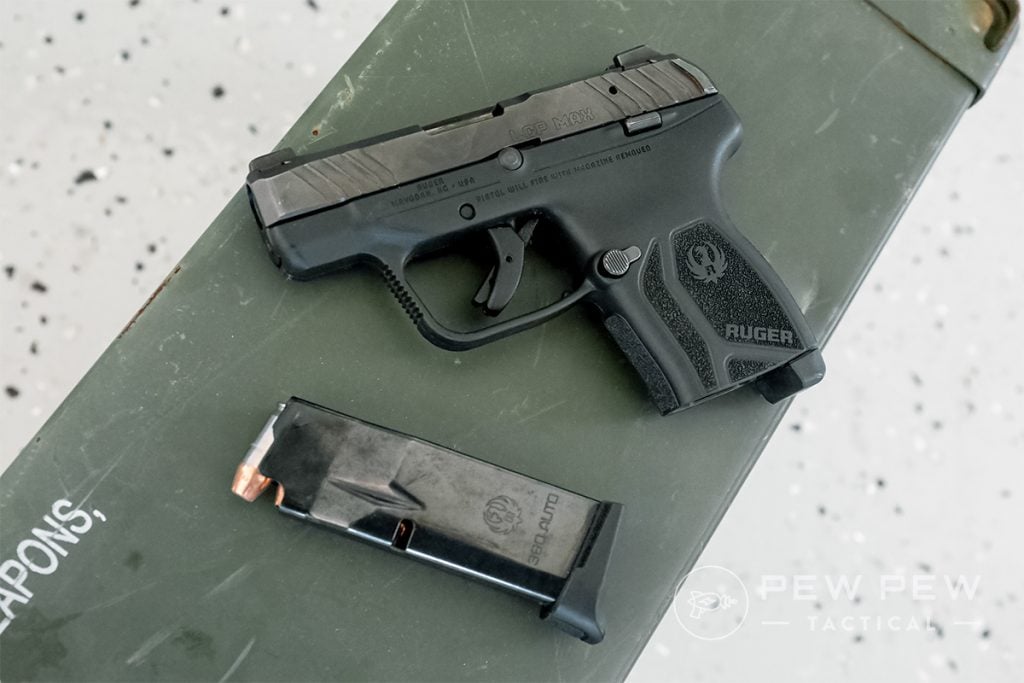
LCP Max with Mag
LCP Max with Mag

The problem with this is that with so many types of .380 ACP ammo on the market, how do you know which is the best defensive ammunition for you?

We’ve got you covered!

Here’s the current in-stock options:

THE QUICK LIST

Why Should You Trust Us

Travis Pike is an NRA-certified instructor and concealed carry trainer. Drawing on his experience as a Marine infantryman, he uses his knowledge to test and review guns, gear, and ammo for Pew Pew Tactical.

Travis shooting Primary Arms Classic Mini Reflex Sight on Arex Delta M
Doing what Travis does best.

With countless hours behind pistols of all sizes, he knows what ammo works best and which ones are best for concealed carry, plinking, and training.

How to Choose Defensive Ammo

Here are the most important factors to consider when choosing .380 defensive ammunition.

Penetration

Penetration refers to the ability of a projectile to travel through the body, determined by its composition, weight, velocity, and projectile type.

PPTGel2
Measuring penetration with ballistic gel

A lead projectile will often bend, break and deform before penetrating deep enough to cause serious harm. The same goes for a round that is too light and too slow.

Ideally, you want a round that can penetrate 12- to 18-inches of 10% ballistic gel.

Expansion

The expansion of projectiles is critical for blood loss and even pain compliance.

The larger a round can expand, the more damage it will do.

PPTGel3

When researching expansion for a certain load, know that bigger is always better, but expansion comes second to penetration.

If possible, find how the round expands through ballistic gel after being shot through denim. Denim can cause some rounds to fail at proper expansion.

Reliability

Reliability refers to the round’s ability to expand and penetrate…reliably.

During research, if you see tests where only three out of five rounds penetrate at least 12-inches or fail to expand…that brand might be so reliable.

FMJ vs Hollowpoints (9mm and .45 ACP)
You want something that always has your back…err gun.

The reliability factor also applies to the round’s ability to consistently ignite and fire.

Most defensive ammo is high quality, and you’re unlikely to find an established company producing ammo that doesn’t go boom. But stuff happens.

Projectile Type

One of the biggest factors that determine how a round will penetrate and expand is the type of projectile.

The classic bonded jacketed hollow point ammunition has long been a solid performer in both penetration and expansion.

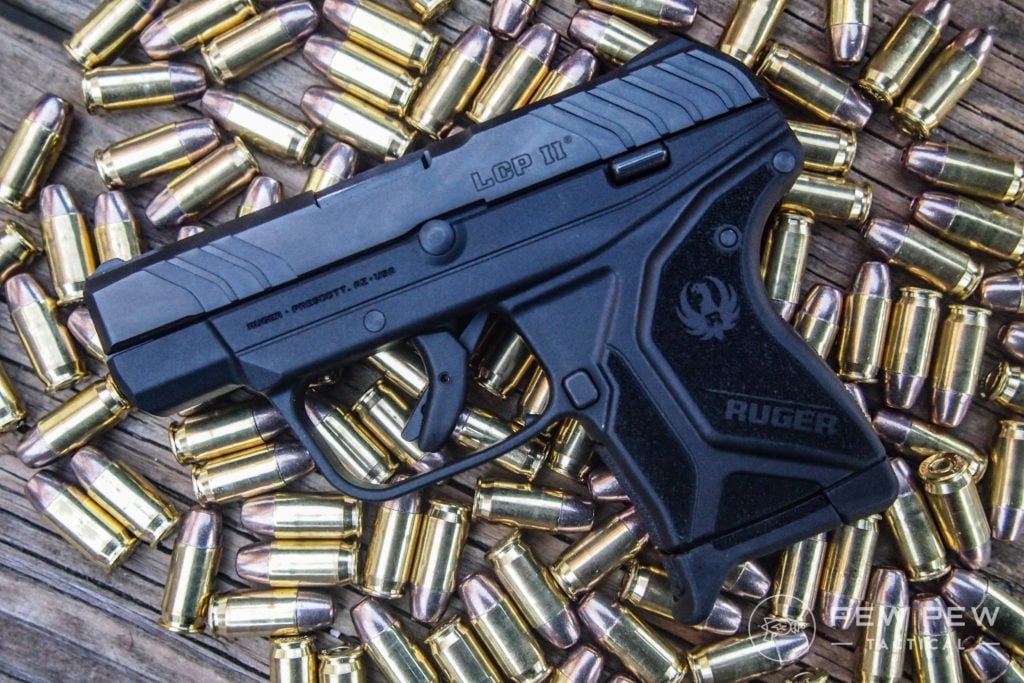
Sinterfire .380 ACP 75 grain HP Frangibles and a Ruger LCP II. If you like .380 ACP you really should check out Sinterfire’s frangibles
FMJ vs. Hollowpoints (9mm and .45 ACP)

Stay away from FMJ rounds since they do penetrate, but often penetrate way too much. I also advise staying away from gimmick projectiles that look cool but function poorly.

Weight Retention

A projectile’s ability to retain weight after expansion and penetration is a good measure of the round’s ability to deal damage to a vital part of the body.

The more weight retention, the better.

Bullets are measured in grains, so when researching ammunition, look at what the projectile weighs before and after the test.

Barrel Length, Velocity, and Weight

Most .380 ACP handguns are what we call pocket pistols — very small with short barrels. Commonly, these pocket pistols will have a barrel under 3 inches.

This affects the velocity of a projectile, as does the projectile’s weight.

PPTGel6
Ruger LCP II

When searching for the best .380 defensive ammo, you need to find a compromise between barrel length, projectile weight, and the round’s velocity. For a pocket pistol, a 90-grain projectile seems to be the heaviest round that penetrates deep enough to strike something critical. These rounds also meet a high enough velocity to expand.

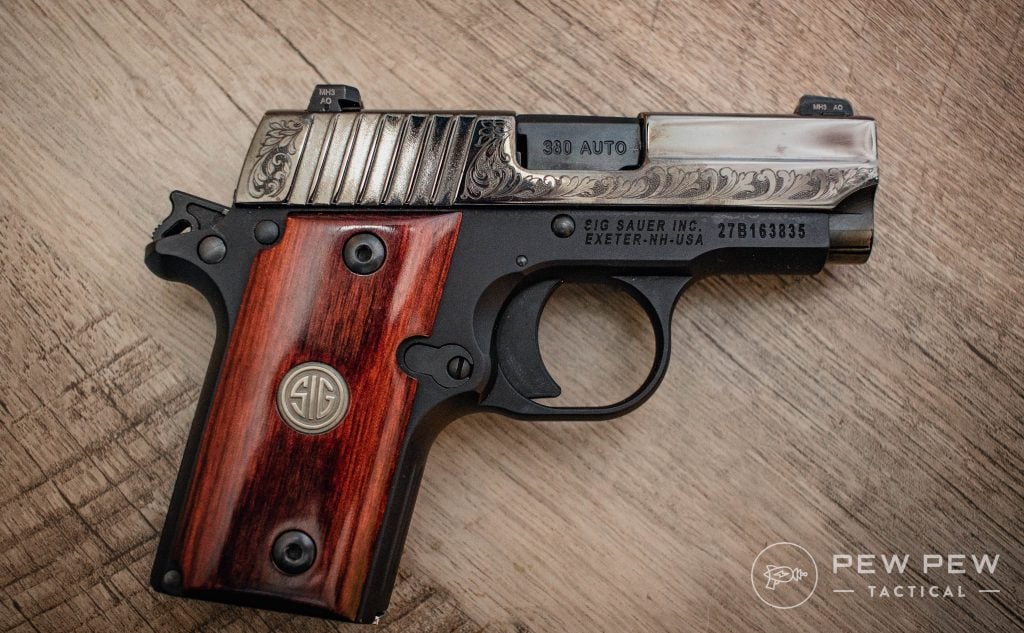
Handgun Women Sig Sauer P238
Again you want enough oomph to penetrate ballistic gel.

Lighter 77-grain and even 50-grain rounds are fast but often fail to penetrate.

Heavier 102-grain rounds are better suited for handguns with barrels longer than 3.5-inches like the Beretta Cheetah and CZ 83.

Best .380 Ammo for Self Defense

While I won’t name one brand to rule them all, I can make some suggestions based on my personal research into an effective round for my Sig Sauer P238.

For reference, this weapon sports a 2.7-inch barrel.

Goals Punch
Our Editor-in-Chief’s Sig Sauer P238.

1. Hornady American Gunner Ammunition 90 Grain .380 ACP

The Hornady American Gunner .380 ACP features the XTP projectile and penetrates very well.

This projectile is really the key to this ammunition’s success.

It offers controlled expansion to allow the round to expand gradually as it travels through the body. This ammo isn’t too expensive and is pretty common.

What’s your take on Hornady’s defensive .380 round? Rate it below!

2. Remington 88 Grain HTP

I’m not going to lie…the biggest reason I was attracted to the HTP loads was the price.

These High Terminal Performance loads come in boxes of 50 and are priced pretty competitively.

The round is a solid performer that penetrates and even expands to an impressive degree.

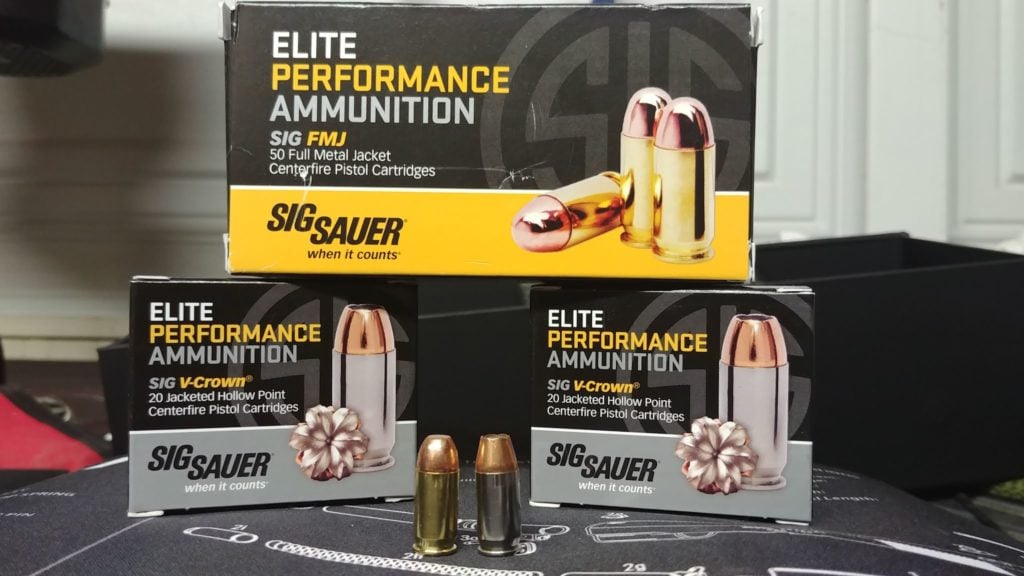
3. Sig Sauer 90 Grain .380 V-Crown JHP

Testing done by Chris Baker at Lucky Gunner has shown this round to be incredibly effective in both penetration and expansion.

The round has no issue reaching that 12-inch mark and also expands up to half an inch in size.

Sig’s V-Crown ammunition is well-built and surprisingly affordable.

4. Liberty Defense 50 Grain

If you are recoil sensitive, then the Liberty Defense 50-grain rounds are a good choice.

So, if you struggle with the recoil from a traditional round, these bad boys are better than nothing.

Best .380 Ammo for Target Practice & Plinking

5. Prvi Partizan 94 Grain FMJ

Prvi Partizan makes a huge range of ammo, and much of it is odd calibers or calibers that just aren’t in production anymore.

That is how I first started using them with their .303 Brit ammo. Since then, I’ve come to know and respect many of their calibers, and they have become one of my go-to picks for range ammo.

6. Fiocchi 95 Grain FMJ

I’ve never had a problem with Fiocchi; every round has gone bang as it should. However, it’s some of the dirtiest ammo I’ve used.

After 200 rounds of their 9mm, my slide starts to stick. After 300, I need to clean it if I want to keep things running smoothly.

It is still one of the main brands I use for range ammo.

7. PMC Bronze 90 Grain FMJ

If you are looking for reliable ammo that runs relatively clean, PMC Bronze is a great option.

In the current market, PMC ammo has been fairly available while remaining competitively priced.

This is great for those who are looking to plink with solid ammo at a solid price.

8. Sellier & Bellot

Another favorite of the PPT team for range use is Sellier & Bellot.

It’s not built for self-defense purposes, obviously, since it’s FMJ…

But it works well when you want to get some training done at the range.

The Goal of Defensive Ammo

Defensive ammunition is purpose-built. As a civilian concealed carrier or home defender, your goal in any defensive situation is to end the threat.

So, your ammunition should match that goal.

Painful to Look At

Bullets stop threats in a number of ways.

The first and most unreliable is fear. It relies on criminals thinking, “he has a gun, and he can shoot me.” It doesn’t matter what kind of bullet it is since the very thought of the bullet is enough to end the threat.

Next, we have pain compliance. Pain is subjective to the person being shot. Pain tolerance, the location of the gunshot wound, and the presence of drugs and alcohol in the body all factor into this compliance.

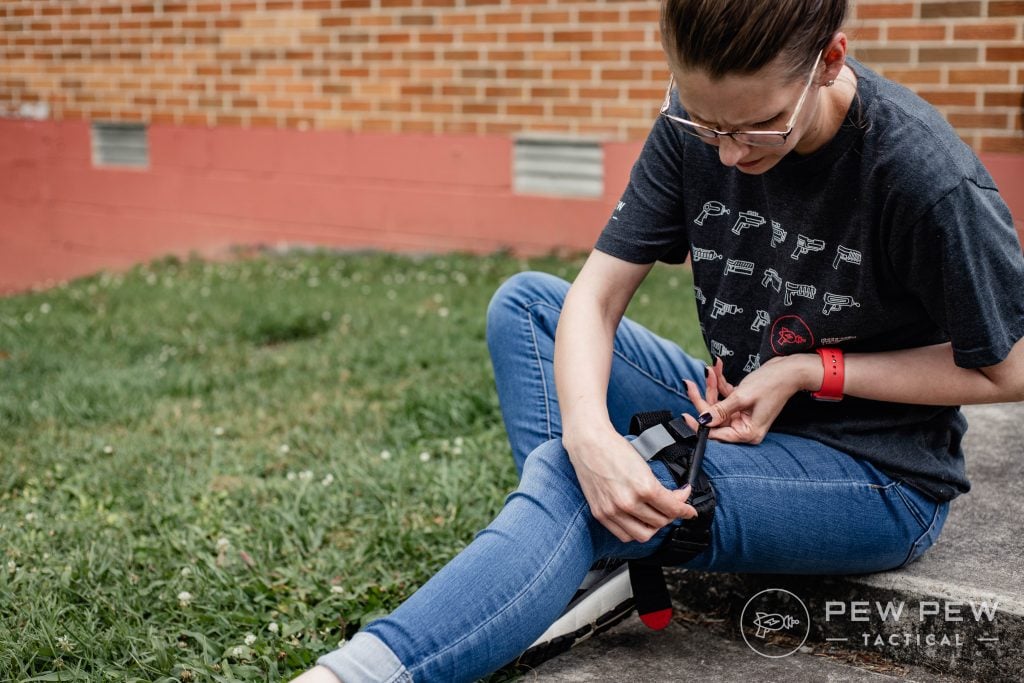
Mountain Man Medical CAT

Blood loss can also be an effective means to stop an attacker, depending on where the bullet is placed and the size of the projectile.

Now, when I say the projectile size, I don’t mean the size of the actual bullet before it’s fired. The difference between a .380 ACP and .40 S&W is literally a millimeter in projectile size.

In this case, the projectile size that matters is the size of the round after it expands in the body. Blood loss can take several seconds to several minutes, so it’s not the quickest means to end a threat.

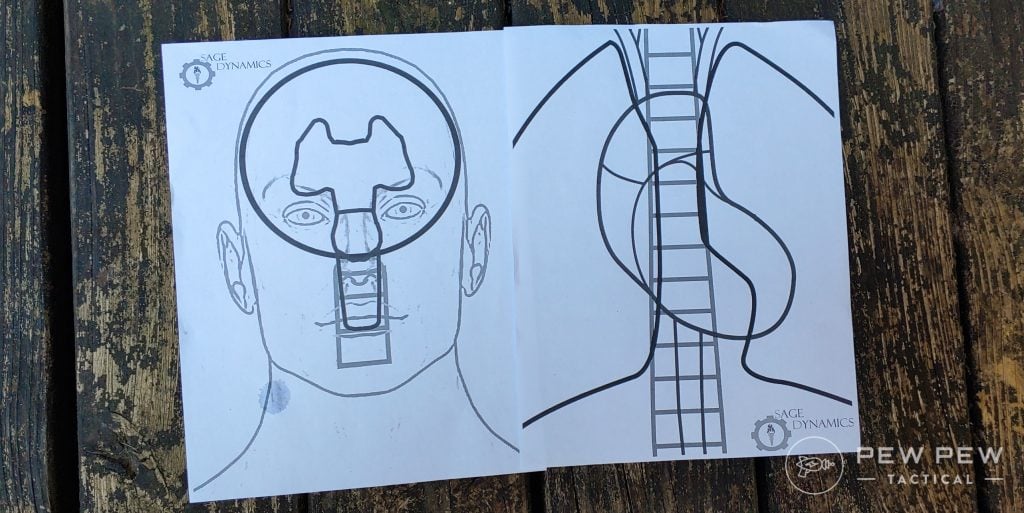
Low Round Count Drill Sage Target
How do we stop excessive blood loss to extremities, friends? Tourniquets.

Lastly, trauma to the central nervous system will typically result in the death of an attacker, as well as near-instant incapacitation. This kind of trauma requires a shot to or near the spine, brain, and/or brain stem.

S&W M&P Shield EZ shooting

Remember that just because this is the most effective means of stopping an attacker does not mean it is always appropriate or legal to use this level of force.

Make sure you know your state’s laws regarding self-defense.

The round you choose must be able to accomplish these tasks to incapacitate an attacker. A .380 ACP is a lower-powered round, so ammunition selection is even more critical.

Legends and Myths

There are a lot of myths and legends regarding pistol ammunition.

People who believe these myths will often use them to discourage the use of .380 ACP and even 9mm.

To help you sort through the mess, let’s go over the biggest two myths.

Stopping or Knockdown Power

The stopping power myth is so widespread that it has seeped into gun culture. I cringe when I hear someone bring up stopping power because there’s simply no such thing.

The ability of a round to stop an opponent hinges on the shooter’s ability to strike a vital portion of the body and for the round to penetrate deep enough to hit something to incapacitate.

gotta go fast
It all comes down to your skills.

Shot placement and penetration are the keys to stopping an attacker.

A miss with a .45 is still a miss. The heart, lungs, and brain do not know the difference between a .45 and a .380.

Hydrostatic Shock

Hydrostatic shock is a thing, but it’s not something that really occurs with handguns. To achieve hydrostatic shock damage, a projectile has to move at over 2,000 feet per second.

Sig Ammo 380

Very few handguns can achieve this speed, and .380 ACP rounds certainly can’t.

Final Thoughts

The .380 round is one some choose for self-defense or just for some fun on the range. Regardless of what you use it for, the right ammo will only help you reach your goals.

Best .380 Ammo: Self-Defense & Target Practice

We’ve listed out some of our favorite .380 ammo brands to get you started and hopefully set you down the right path.

What’s your favorite .380 ammo brand? Tell us in the comments below. Don’t have one yet? Check out our article on the Best .380 Pistols: Pocket Rockets for some recommendations.

How To Choose The Best Red Dot Sight For Glock 43x Mos

0
Red dot sight

Choosing the right red dot sight for Glock 43X MOS can greatly enhance your shooting accuracy and speed. Here are some steps to help you choose the best red dot sight for your Glock 43X MOS referenced from Weaponspecialist.org:

How To Choose The Right Red Dot Sight For Glock 43x

Check Compatibility

Ensure that the red dot sight you’re considering is compatible with the Glock 43X MOS. The MOS system has a specific mounting platform for optics.

Some red dot sights may require adapter plates, so make sure you have the correct plate for your sight or that it comes with the sight.

Determine Your Budget

Red dot sights vary significantly in price, so establish a budget before you start shopping. While quality can often correlate with price, there are excellent options available at various price points.

Consider Reticle Type

Red dot sights come with different types of reticles, such as the standard dot, circle-dot, or crosshair. Choose a reticle that you find easy to acquire and use effectively.

Reticle Size

Smaller reticles are generally better for precision shooting, while larger ones can be faster to acquire. Consider your intended use when selecting the reticle size.

Battery Life

Check the battery life of the red dot sight. Longer battery life is generally more convenient, as you won’t need to replace the battery as frequently.

Some sights have solar panels or motion-activated features to extend battery life.

Durability

Ensure that the red dot sight is built to withstand recoil and harsh conditions. Look for sights with durable construction and waterproof, fog-proof, and shockproof features.

Mounting Height

Consider the height of the red dot sight and how it aligns with your iron sights. Some sights may require suppressor-height sights or specific co-witnessing setups.

Size and Weight

The size and weight of the red dot sight can affect the balance and handling of your Glock 43X MOS. Opt for a sight that complements the pistol’s size and weight.

Brand Reputation

Research the reputation of the manufacturer. Well-established brands are more likely to produce reliable and high-quality red dot sights.

Read Reviews

Read reviews from other Glock 43X MOS owners and shooters who have experience with the red dot sight you’re interested in. This can provide valuable insights into its performance and reliability.

Try Before You Buy

If possible, visit a local gun store or shooting range that offers red dot sights for testing. This will allow you to get a feel for different models and determine which one works best for you.

Warranty and Customer Support

Consider the warranty and customer support offered by the manufacturer. A good warranty can provide peace of mind in case of any issues.

Top 5 Red Dot For Glock 43x Mos

  1. Trijicon RMR (Ruggedized Miniature Reflex): This is an extremely popular choice for many firearms, including the Glock series. It’s known for its durability, clarity, and battery life.

  2. Holosun HS507C-X2: The Holosun HS507C-X2 is a versatile and sturdy red dot sight. It offers multiple reticle options and boasts an impressive battery life. It also has a solar fail-safe system to keep it powered in all conditions.

  3. Leupold DeltaPoint Pro: This sight is designed with a large field of view and is built for speed. It is also known for its robustness and reliability.

  4. Vortex Venom: The Vortex Venom is a high-performance, yet reasonably priced, red dot sight. It has a 3 MOA dot reticle, easy-to-use controls, and a top-load system for changing batteries without having to remove the sight.

  5. Aimpoint ACRO P-1: The Aimpoint ACRO (Advanced Combat Reflex Optic) is a compact, enclosed system that is designed to withstand the harshest conditions. Although larger than some options, it’s incredibly durable and reliable.

Ultimately, the right red dot sight for your Glock 43X MOS will depend on your personal preferences, shooting style, and intended use. Take your time to research and choose a sight that suits your needs and enhances your shooting experience.

Written by: Cecil B. DeMille – Weapon Specialist

8 Best Fish to Smoke According to Chefs

0

If you have a smoker or grill at home, you may wonder what the best fish to smoke are. While salmon and tuna are often the most popular options for smoking, home chefs will be pleased to know that dozens of fish make for delicious smoked meals.

Learn all there is to know about choosing the right fish for smoking and how to get the perfect cook.

Factors to Consider When Selecting Fish for SmokingWhen choosing a fish for smoking, consider these factors:

  • Texture: The texture of the fish is crucial when smoking. Choose fish with firm, dense flesh that can withstand smoking without falling apart. Delicate fish may not hold up well during smoking.
  • Flavor profile: Consider the fish’s natural flavor. Do you prefer something potent or light? The flavor should complement the smoky notes from the smoking process. For example, milder fish may absorb smoky flavors more readily, while stronger-flavored fish may provide a bolder smoky taste.
  • Oil content: Fish with higher oil content tend to produce a richer and more flavorful result when smoked. However, you can still smoke leaner fish with proper preparation and smoking techniques.
  • Size and thickness: Thin pieces may cook too quickly and become dry, while very thick pieces might take too long to smoke evenly. Choose fish portions that are of consistent thickness for even smoking.

Best Fish for Smoking

While personal preference plays a significant role in determining the “best” fish to smoke, these fish are welcome staples in many culinary settings:

1. Salmon

Salmon has a high oil content, particularly in the form of healthy omega-3 fatty acids, which not only imparts a rich and buttery flavor but also helps the fish absorb and carry the smoky aroma effectively.

In addition, salmon has firm flesh, making it resilient during the smoking process, resulting in a moist and flaky texture when done correctly.

As all salmon lovers know, this delicious and buttery fish is versatile, especially when smoked.

Whatever the case, salmon has long been a favorite in backyard barbecues for many reasons. Learn the best way to smoke salmon at home in our guide.

2. Trout

Trout has a delicate and mild flavor that quickly absorbs the smoky nuances of the smoking process, resulting in a well-balanced and flavorful product.

It also has firm, flaky flesh that holds up well during smoking. Compared to other fish, trout is relatively small, allowing it to smoke quickly.

Trout is a popular choice among anglers, making it readily available in many regions and a favorite for home smoking enthusiasts looking to enjoy the process from catch to table.

3. Mackerel

Mackerel has a robust and distinctive flavor that produces a flavorful and bold smoked fish.

It’s also naturally rich in healthy oils, helping absorb and retain the smoky aroma effectively.

Additionally, mackerel’s dense flesh holds up remarkably well during smoking, staying moist and flaky.

Smoked mackerel often appears in the form of pate, rice bowls, salads, and even sushi.

4. Bluefish

While not a popular tablefish, bluefish is an excellent choice for smoking due to its strong and distinctive flavor. This bold flavor profile stands up well to the smoking process, resulting in a rich, smoky taste.

Bluefish’s higher oil content enhances its ability to absorb and carry smoky flavors. Its firm texture remains intact during smoking, ensuring a moist and flaky dish.

5. Haddock

Haddock has that signature mild and slightly sweet flavor you look for when smoking fish.

This mildness allows the smoky flavors to shine without overwhelming the palate.

Plus, its firm and flaky texture doesn’t fall apart upon smoking.

It’s versatile and an excellent star for dishes like chowders and fish pies, whose smoked flavor imparts depth and complexity.

6. Whitefish

Whitefish, such as lake whitefish or whitefish from the Great Lakes region, is an excellent choice for smoking because of its clean and mild flavor profile. The smoke doesn’t easily overpower it.

It holds up well during smoking and is perfect for salads, spreads, or simply enjoying as a standalone smoked fillet.

You can smoke whitefish into a seafood paella, various salads, and tacos.

7. Swordfish

Swordfish is a unique and excellent choice for smoking, thanks to its dense and meaty texture.

Smoked swordfish tastes almost beefy and is often more savory than tuna, perch, or trout. Thus, it makes the perfect protein for tacos or even on crackers.

8. Halibut

Halibut is among the most versatile fish for smoking, making an excellent addition to dishes like risotto, tacos, or as a standalone fillet.

The leanness and firmness of the flesh allow for a delectable burst of smoky flavor, especially when marinated.

In addition, frozen halibut is available year-round, making it a popular choice for family barbecues.

Kyle’s Tips for Smoking Fish

When done correctly, smoking fish can be a rewarding culinary experience. Here are some tips for first-time smokers:

  • Start with fresh fish: Use the freshest fish available. Freshness is critical to achieving the best flavor and texture in smoked fish.
  • Prep the fish: Clean and fillet the fish properly, removing any bones, scales, and entrails. Rinse the fish and pat it dry with paper towels.
  • Brine for flavor and moisture: Brine the fish for a few hours before smoking. Brining enhances flavor, helps the fish retain moisture, and adds a layer of protection against over-smoking. You can experiment with different brine recipes to customize the flavor.
  • Air dry: Allow the fish to air dry for an hour or more after brining. The fish will form a pellicle or tacky surface layer that helps the smoke adhere.
  • Select the appropriate wood: Popular wood chips and pellets include alder, hickory, apple, cherry, and oak. The wood you select will influence the flavor of the smoked fish.
  • Control the temperature: Maintain a consistent smoking temperature, ideally between 180°F to 225°F (82°C to 107°C). Use a reliable smoker thermometer to monitor the temperature.
  • Smoke the fish low and slow: Slow smoking allows the fish to absorb the smoky flavor gradually while retaining moisture and tenderness.
  • Use a drip pan: Place a drip pan underneath the fish to catch any drippings, prevent flare-ups, and keep the smoker clean.
  • Avoid over-smoking: Over-smoking can lead to a bitter or acrid taste. Smoke the fish until it reaches the desired level of smokiness, typically 1 to 3 hours, depending on the size and thickness of the fish.
  • Moisture maintenance: Use a water pan inside the smoker to maintain moisture levels and help prevent the fish from drying.
  • Check for doneness: Test for doneness by using a meat thermometer. The fish should reach an internal temperature of 145°F (63°C). It should be opaque and flake easily with a fork when done.

Remember that practice makes perfect when it comes to smoking fish. Don’t be discouraged if your first attempt isn’t flawless; learning the nuances of your specific smoker and your palate’s preferences may take some time.

Frequently Asked Questions

Can I smoke frozen fish?

You can smoke frozen fish, but thawing it thoroughly before smoking will yield better results.

Smoking frozen fish may result in uneven cooking and potentially unsafe conditions, as the outer layers may reach the desired temperature while the inner portions remain frozen.

Thawing the fish in the refrigerator or using a cold-water method ensures even cooking and better flavor absorption during the smoking process.

Can I use a regular grill for smoking fish?

You can use a regular grill for smoking fish through “indirect grilling.”

To do this, create a two-zone fire by heating one side of the grill and leaving the other unlit.

Place soaked wood chips or pellets in a foil packet on the lit side, then place the fish on the unlit side.

Close the grill lid, maintain the desired smoking temperature, and monitor the process carefully to achieve a smoky flavor while cooking the fish indirectly.

How do I store smoked fish, and how long does it stay fresh?

To store smoked fish, wrap it tightly in plastic wrap or aluminum foil to minimize exposure to air.

Then, place it in an airtight container or resealable plastic bag and store it in the refrigerator at temperatures below 40°F (4°C).

Smoked fish stays fresh in the refrigerator for about 5 to 7 days.

For extended storage, you can freeze smoked fish for 2-3 months, ensuring it’s well-wrapped and airtight to prevent freezer burn.

Summary

Fish is a highly underrated player in the barbecue game. If you have a grill at home, you’ll be surprised what you can do with the humblest of fillets.

For novice smokers, our wild Alaskan sockeye salmon is the ideal place to start. Learn the differences between lox, smoked salmon, and nova for the best results.

Practical Boat Owner

0

Sometimes (though not on Maximus) there’s a third set of batteries for high power items such as a bow-thruster or electric windlass.

Wet lead acid

Batteries that have liquid electrolyte sloshing around in them are sometimes referred to as ‘wet’, ‘flooded’ or ‘wet lead acid’ batteries.

To start the engine, boats have a starting or ‘cranking’ battery, like those used in cars, which delivers very high loads for a few seconds.

Only a small portion of the battery’s capacity is used and this is restored by the alternator once the engine is running.

For powering everything else (i.e. chartplotter, lights, fridge, etc.) boats use a domestic, or ‘house’ deep-cycle (or deep-discharge/traction) battery bank which draws a much smaller amount of power over a longer period of time.

It’s important that wet lead acid batteries are stored in a ventilated area. A disadvantage is that they can ‘gas off’ (release hydrogen) if faulty, overcharged or getting old.

Pros: cheap, readily available, lots of choice, starter batteries can be bought in automotive stores. Cons: heavy, can leak, need regular charging, useless once flat, can gas off.

Article continues below…

Wet lead acid – dual/leisure battery

An ‘in-between’ option is the ‘dual’ or leisure battery. A compromise between starting and deep-cycle batteries, these are popular on boats that carry only a single battery, or prefer to have the same type of battery for simpler charging.

Maximus had a leisure battery for starting the engine (an 85Ah Green Power) and a 100Ah deep-cycle Lifeline Battery for powering the rest of electrical equipment.

Both were flat after being left on board for two years and so could not be revived.

Pros: cheap, readily available, lots of choice, dual-purpose starter and domestic. Cons: heavy, can leak, need regular charging, useless once run flat, can gas off.

Sealed lead acid batteries (gel & AGM)

Nobody wants battery acid leaking into the bilge, but there’s a price to pay if you want more durable batteries.

Sealed lead acid batteries are sometimes referred to as VRLA (valve regulated lead acid) and there are two main types – absorbed glass mat (AGM), where the battery plates are protected by fine-stranded glass mats – and gel, where the liquid electrolyte has been converted into a gel.

AGM batteries can be used for both starter and house applications whereas gel batteries are better suited for house applications only.

Both types can withstand many more charge/discharge cycles than conventional deep-discharge batteries – for example, a 7-10 year lifespan rather than a 4-5.

Pros: leak-proof, longer lifespan than wet lead acid, AGM can be dual-purpose starter and domestic. Cons: twice the price of wet lead acid, up to 25% heavier, need regular charging, useless once flat.

Lead carbon batteries

Lead carbon batteries are not widely known. Our electrician had never fitted them, and indeed I hadn’t considered these until I spoke to Victron Energy.

However, they are highly regarded by PBO contributor Paul Sumpner, who fitted Leoch lead carbon batteries to his electric-propulsion narrowboat Old Nick.

Paul worked out his requirements, which were a regular DoD of 50%, year-round usage, a minimum of 48V, 600Ah, zero maintenance, a life cycle of 3,000+ discharges, non-vertical mounting and to be able to survive a regular partial state of discharge. Plus, they couldn’t “completely blow the budget”.

“It became clear that only lead carbon or lithium batteries would be suitable,” he said, and later confirmed he couldn’t be happier with the equipment he chose.

Lead carbon batteries are an advanced type of VRLA battery, which has a positive plate (anode) of lead, but a negative (cathode) plate made of carbon composite.

According to Victron, the advantages are less sulfation, and a lower charge voltage, meaning higher efficiency and less corrosion of the positive plate. Overall, the result should be an improved cycle life.

Pros: leak proof, longer life, less sulfation. Cons: more expensive, can’t be used for starter motor, larger and heavier than AGM or lead acid.

Lithium batteries

Lithium-ion is a broad chemistry of batteries, the most common being LiFePO4 (Lithium Iron Phosphate). They can withstand four or five times the number of cycles compared to most deep-cycle lead acid batteries (4,000+), can go down to a much lower state of charge, and can keep a reasonable level of charge for up to 12 months.

While lead acid batteries, in practice, only allow 30% of rated capacity, the best lithium batteries can be discharged to 70-80% of the rated capacity.

So really, a 100Ah lithium battery is the equivalent to having a 200Ah lead acid battery, only it will usually charge much quicker, is half the weight and a lot smaller.

A word of warning, though. Although lithium batteries can accept fluctuating voltage (13.6V-14.6V) like lead acid batteries, they should not be directly charged from an alternator because voltage spikes could damage them. A dedicated charger and battery management system is a necessity.

Pros: long-lasting, can use 80% of capacity, easier to manage, small, lightweight. Cons: expensive (up to 4 x cost of wet lead acid), boat adaptations required.

Next steps

Having had a brief look at batteries, I called marine surveyor Ben Sutcliffe-Davies. I wondered if there was any possibility of reviving flat batteries.

“I’ll be honest with you, start with new batteries,” he said. “You’re relying on this battery to start the boat. Yes it might pick up, but I guarantee it’ll be like a dying swan when you need it.”

For domestic systems, Ben likes Numax batteries, which he says a lot of the industry use. For the cranker, he said, any automotive battery would do.

“I went down to my local tyre and exhaust place, and just got four heavy-duty deep cycle leisure batteries and one tidy cranker for the engine,” he told me.

Thanks to our Project Boat Supporters

Dell Quay Marine, Osculati, Raymarine, Shakespeare Marine, TruDesign, Screwfix, Coleman Marine Insurance, MDL Marinas, Premier Marinas, seajet, Marine & Industrial, Clean to Gleam, Dometic, West System, Farécla, Navigators Marine, Lewmar, RYA, Aqua Marine, Ecobat, Victron Energy, Scanstrut, T Sails and XP Rigging.

Why not subscribe today?

This feature appeared in the March 2022 edition of Practical Boat Owner. For more articles like this, including DIY, money-saving advice, great boat projects, expert tips and ways to improve your boat’s performance, take out a magazine subscription to Britain’s best-selling boating magazine.

Subscribe, or make a gift for someone else, and you’ll always save at least 30% compared to newsstand prices.

See the latest PBO subscription deals on magazinesdirect.com

A Guide to Gator Hunting

0

Phillip Gentry

How to Hunt Alligators

Chances are pretty good that if you’re interested in hunting alligators on a recreational basis, you’ve already applied for one or more of the state alligator hunting lottery drawings available in every coastal state from North Carolina to Texas (plus Arkansas). Recreational alligator seasons are available in all of these states and season dates typically fall between August and October, depending on which state you’re hunting in. Lottery drawings take place during the summer to allot a limited number of harvest tags to a large number of interested hunters and most alligator states have made their selections and notified their lucky hunters by the end of July.

Recreational alligator hunts are a relatively new concept in most of these states, with the exception of Florida, Texas, and Louisiana, the states with the larger alligator populations, which have historically relied more on commercial harvest to control gator numbers.

gator hunt

The American alligator, once hunted nearly to extinction, has now recovered to the point that regulated recreational harvest of the animals is now allowed in Southeastern coastal states.

Lottery hunt selections are typically for a certain segment or zone of each state in an attempt to spread the harvest and hunting pressure evenly. Baiting for alligators is illegal in recreational hunting except in Florida, Texas, and Louisiana where it is restricted to mostly private lands.

American alligators are riverine in nature, mostly preferring fresh water but will venture into brackish and salt waters at times. Accordingly, alligators can be found in rivers, swamps, sloughs, lakes and ponds. Adult alligators are opportunistic feeders. Food sources include birds, fish, and mammals, as well as other reptiles and amphibians, either dead or alive.

Selected hunters typically spend a few days, or nights where allowed, afield in their allotted hunt area trying to pattern alligator traffic before the season opens. From telemetry studies, most alligators maintain a home range that varies between 1 and 13 square miles. These same studies also document strong fidelity to their individual territories. Alligators mate during the months of May and June, during which time both male and female gators may travel outside their ranges, but later in the year, during alligator hunting seasons, remain within their home ranges.

alligator

All alligator hunting states require the animal be tagged immediately after harvest.

Finding and Patterning Alligators

While a host of environmental factors such as food, water levels and water quality may dictate how far and wide an alligator may travel across it’s territory, seeing an alligator in a particular area is the most utilized patterning practice in preparation of hunting. Larger and older specimens are solitary creatures and prefer to be far removed from human activity and will reside in remote, hard-to-reach locations. While American alligators are not entirely nocturnal, these animals are definitely more active after dark.

Like many predatory species, alligators are vocal creatures. Both male and female gators have a range of vocalizations. Some hunters swear by an ability to call gators into an area, or at least make them show themselves, by making a low-pitched kissing sound produced by mouth with their lips sucked in. Another auditory method is to imitate prey by making splashing sounds that mimic a small mammal in distress.

Try This Recipe: Nashville Hot Alligator

In states that allow night hunting, many hunters rely on chance encounters with gators by shining search lights on the water. An alligator’s eyes will shine bright red when light is reflected off of them. The hunter then attempts to ease in close enough to attach a line to the animal before it submerges.

Because alligators spend the majority of the time under water than above it, the best way to estimate the size of one is judging the distance between its nostrils and it’s eyes, which is all the animal typically shows above water when cruising or hunting. Scientific studies support a scale of 1 inch distance between eyes and nostrils to 1 foot of overall body length.

Alligator Hunting Gear and Training

The methods for attachment of a line, which vary by state, include hand-held snatch hooks Thrown by hand or cast with rod and reel), harpoons, snares, or bowfishing archery tackle. In the majority of states that allow recreational alligator hunting, it is illegal to shoot an alligator with a firearm until the animal is brought under control with a rope firmly attached.

Realizing the complexities of alligator hunting and the relative newness of the sport, most alligator states offer either online training, in-person seminars, or both to educate hunters on what equipment is legal in that state and how to best use the equipment to harvest an alligator.

gators

Legal hunting methods vary by state. Most states do not allow the shooting of an alligator until it is roped under control.

Because wrestling a large alligator boatside is usually more work than one person can handle, most states allow “assistant” hunters to participate in the hunt. These individuals do not have to be drawn or randomly selected, but must accompany an alligator tag bearer and may have separate license requirements in order to participate in the hunt.

A Nod to Conservation

American alligators were on the brink of extinction as recent as the early 1970’s, mostly due to unregulated hunting. Since that time, gators in the southern coastal states have rebounded in number to the point that limited harvest is allowed. This harvest is highly monitored with the issuance of tags to only a few selected hunters and requirements that all animals be tagged immediately upon harvest as well as the labelling of alligator parts once processing has taken place. Harvest reports are also required and each state compiles hunter success, participation and animal length and weight calculations in order to properly monitor harvest.

Alligator hunting seasons are in themselves a success story in animal conservation. By allowing limited harvest of these magnificent animals, hunters can help reduce the amount of unintended alligator/human interactions, which often leads to the destruction of the offending alligator, and provide recreational opportunities, population control, and make full use of the animal.

MORE ON ALLIGATOR HUNTING: Listen to Gamekeeper Podcast’s ALLIGATOR SEASON WITH RICKY FLYNT

Best Air Rifle Deals

Popular Posts

PCP vs CO2 Guns: Which One is Better?

0
The most talked-about debate between hunters and gun enthusiasts is what the best power source of a gun is.  The five main sources of power...

Master Small Game Hunting with an Air Rifle: Tips and Techniques

0
"Experience the thrill of small game hunting with an air rifle! Embark on a captivating journey as you test your accuracy and precision in...

Air gun 101: How Nitro Piston technology can make your shooting sport more exciting?

0
In the air gun market today, there are many air rifles made with nitro-piston technology Even the best-selling lists on gun retailer's sites have a...