Normal rut expected this season with the help of timely cold fronts
This rut prediction is based on the timing of scrape initiation for each area, which from my years of observations, always occurs during the new moon phase. Scrape initiation is that time when bucks will open up traditional scrape sites for the upcoming season. It’s probably a result of an increase of testosterone and the bucks will not check or work the scrapes again until another month, when the major rut period begins.
Deer seasons are established based upon the breeding season of deer in a particular area. The southwest parishes of the state generally have the earliest dates and therefore open early. Area 2, one of the largest deer sections in the state, has the typical breeding season like many of the Midwest and northern deer states. November is the peak month of breeding activity in this Area. Areas 4 and 9 have December as the major month and Areas 1, 5 and 6 have a late rut in January.
Based on the timing of scrape initiation, I am predicting a 2022-23 rut with the major breeding periods occurring during the early weeks of their breeding range.
What happened in 2021?
An early rut was also predicted for 2021, but based upon hunter harvests and examination of female reproductive tracts, the rut was about a month later than predicted. Now generally these days when things go astray, folks jump to blame climate change, but in this case I don’t think that is the culprit. What did happen was a major hurricane. Hurricane Ida came into the state and left a path of destruction as it moved northward from the coast into the Florida Parishes.
I distinctly remember sitting in my chair that night in the Clinton area watching the storm when the power went out. I tried to contact several friends in north Louisiana to see what they could tell me about the path of the storm and then realized there was no phone service. I knew that wasn’t good. While we had damage on our property, we were spared the destruction that so many received.
After the storm, the weather during September and October was very hot and dry. What really got my attention was the out-of-season flowering of numerous fruit tree species. Our big Red Mulberry tree leafed out and flowered again and actually produced a crop of mulberries. Pears and mayhaws also flowered along with other species of trees that leafed out again.
The storm, with its stressful weather that followed, had an effect on the landscape. I believe it had an impact on the animal ecology and was responsible for a later than anticipated rut. Of course, that’s just me and what I observed.
I hunted the early season in Area 2 in Union and Bossier Parishes and experienced poor deer movement and no success. My prediction for the major rut period in Area 2 last year was mid-October. But based upon breeding dates of does from Bossier Parish that I looked at in early January, it showed that breeding began on Nov. 15, a month later than predicted. Most of my deer hunting is done in Area 4 where I live. In 2021, I had predicted the major breeding to begin in late November. The limited data I was able to collect showed it to be later. I examined a 1 ½-year-old doe that bred on Dec. 8, an older adult doe that was bred on Dec. 20, and a 10-month-old doe that cycled and was bred on Feb. 6.
Late December was predicted for the start of Area 6 breeding and based on data from 10 does that I examined, major breeding began in mid to late January. While deer movement, particularly buck movement, appeared slow, the 2021-22 harvest report showed an increase in the deer harvest when compared to the 2020-21 deer season. While I saw plenty of deer, my sightings of adult bucks was down. It seems they were always a step ahead of me!
It’s just a prediction
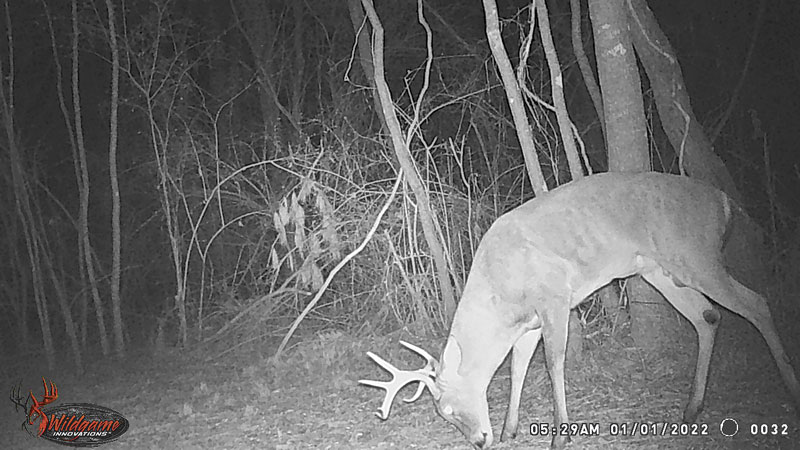
Generally scrapes and rubs are often on separate trees but this buck rubbed the tree while also working a scrape. During the minor rut period buck fawns will begin working scrapes.
Therefore, keep in mind that the rut prediction is just that, a prediction.
Weather conditions and changes in the landscape or habitat will affect deer movement and activity. During the major breeding period, most of the does in the population will be bred, at least 70 to 80 percent of them. During the minor breeding period the remainder of the does should be bred. Some of these deer are just young, like a road kill doe that I examined back in May.
This doe was bred as a fawn on Feb. 6; apparently it became sexually active at that time and had its first estrus cycle. Over the years, I have examined 1 ½-year-old harvested does that had fawned based on evidence of lactation, but this was the first fawn that I ever examined with a fetus in the uterus. This is an indicator of a healthy deer herd.
Both the Major Rut and Minor Rut periods are divided into a time of scraping and a time of breeding. Both periods are approximately two weeks long, although the scraping period could only last 5-10 days. Once does begin visiting scrapes and leaving their scent, the bucks will leave the scrapes and start following them. The chase is on followed by a period we often call lockdown, when the breeding takes place and deer seem to disappear from the landscape.
Now, on with the prediction.
Area summaries
Black staining of the tarsal gland is an indication that a deer has been urinating in scrapes.
Southwest Louisiana is the early rut region of the state and the seasons open early to allow hunters to hunt during the rut. All hunters should carefully read the regulations and season literature to know the exact location, dates and limits for each area. There are several public land areas in this region and these generally have different season dates and hunting schedules.
West Bay WMA is always a good area to hunt and last year the early October hunt produced a deer kill per every seven hunter efforts, which is good. The October hunt on Peason Ridge had a deer killed per every 4.5 hunter efforts. This region of the state is best known for waterfowl hunting, but the deer population in these parishes is good as well. They do not produce the true trophy bucks, but will produce a lot of quality adult bucks. The breeding range in these areas is September thru December, but don’t wait until November to start hunting or you may miss out on the best deer movement.
Northwest and Central Louisiana is known as Area 2 and many of these parishes have some of the state’s highest deer kills. Bienville, Union, Claiborne, Natchitoches, Winn, Jackson, Rapides and Webster are in the top 10 deer kill parishes. Bossier, Sabine, LaSalle and Grant are in the top 20. It is evident that there are good deer populations in this region and the major rut occurs in November, so hunting is generally excellent. Many hunters take time off from work on Thanksgiving week, hoping to catch it at its peak over the holidays. The breeding range is October through January, but generally by the end of December, bucks are beginning to drop their antlers. Bodcau and Loggy Bayou WMAs are two great areas to hunt.
The breeding range for Areas 4 and 9 is November through February. Generally December is the peak month of breeding activity and that is the prediction for this year. For whatever reason, Area 4 has been anointed with a three-deer limit, so hunters must be aware of this. This region of the state has been hit hard by hurricanes and for some reason the biologists at LDWF believe deer numbers are down. However, I would suggest that they need to take a closer look at these parishes and re-evaluate the situation. Deer numbers are not down in East Feliciana and some of the surrounding parishes. Public WMAs are limited in this region and an examination of the WMA harvest data won’t get hunters too excited!
Decline in participation
Perhaps providing more hunter opportunity on some of these areas might attract more attention. It appears that the overall trend on the state’s management areas is a decline in hunter participation.
The author said the story of his 2021 deer season was the right place at the wrong time. He said he just could not get on the adult bucks schedule.
Areas 1, 5 and 6 are the trophy buck areas of the state and this is due to a combination of soil, agriculture and bottomland hardwoods.
It also is the area of late breeding and it is not uncommon for hunters to find active scrapes in the woods during February and March in many of these parishes. Unfortunately, one case of CWD has been discovered in a small portion of Area 1, which has resulted in LDWF taking action to prevent its spread. The area of precaution for CWD includes portions of Tensas, Madison and Franklin parishes and hunters should know the detailed rules and regulations for hunting in this area. The primary focus of LDWF is to prevent the spread of CWD into other regions of the state. The western mountain states have been dealing with it since 1967, and it is a problem we do not need in Louisiana. If you look at the map of the CWD outbreak in the U.S., what began as a problem in one deer pen in Colorado, has become a national problem.
I attended a recent legislative hearing regarding the CWD ban in Tensas, Madison and Franklin parishes. All of the legislators wanted to know when would the ban end, how long will this last? Well, the basic answer is it does not end, once you get it, you have it, and it does not go away. Look at the CWD map; the problem just expands and gets worse. Consequently efforts to contain the disease must be made.
This is an agriculture region with bottomland hardwood and batture land, the river’s actual active floodplain, and there is no need to bait, in my opinion. Hunters can plant and hunt over food plots. However, if the disease expands from here into the piney woods, hunters will be facing troubles because of the popularity of baiting.
Many hunters around the state will use deer scents and urine when hunting and the state has enacted specific rules and regulations to address this. Hunters should be aware of this when purchasing these natural deer lures for hunting and use only approved products. It is up to us to do our part and help prevent this serious disease from expanding further into the state.
Hopefully my predictions will provide you with some insight as to the best time to hunt. Some will say that any time someone can hunt is a good time, but I can say with confidence that there are times when you are just wasting your time. The deer are just not going to move! Hunt hard and be safe; share your success with others and help teach the next generation of hunters how to hunt the right way.
Now that Discovery’s Shark Week is over, we should probably talk about who the ocean’s real apex preditor might be: the orca, a.k.a. the killer whale, or the great white.
Despite the ferocity great white sharks are marketed to display, who would win if these two went head-to-head? Let’s go to the tale of the tape, as it were, and see which one would come out on top.
Orcas are actually the largest members of the cetacean (dolphin) family. They are immediately recognizable due to their striking black-and-white coloring and imposing dimensions. Not only are these marine mammals intelligent, but they are also known for their complex communication patterns and cooperative hunting techniques. Each pod of orcas has a unique set of communicative noises, allowing them to recognize each other from great distances.
Killer whales utilize echolocation as a communication and hunting instrument. These sounds travel through the water and, upon encountering an object, reflect back, disclosing crucial information about its location, size, and shape. This sophisticated sonar system demonstrates their intelligence and adaptability, making them formidable predators in the underwater domain.
In the blue corner: the menacing Great White Shark
Contrarily, sensationalized media portrayals have long depicted the great white shark (Carcharodon carcharias) as a ruthless killing machine. As scientific research expands our comprehension, this simplistic view is gradually being replaced by a more nuanced one.
The great white shark is the largest predatory fish in the ocean (remember, the orca is a mammal), dominating the waters with its enormous size and strength. Contrary to conventional belief, they play a crucial role in maintaining the delicate balance of marine ecosystems and are not just mindless killers.
Great white sharks are torpedo-shaped swimmers with powerful tails capable of propelling them through the water at rates of up to 15 miles per hour. Their ability to breach the water’s surface, leaping out of it in pursuit of prey, has captivated and frightened onlookers for centuries.
Though, to be fair, a lot of this comes from a certain movie we’ve pretty much all seen. Steven Spielberg said one of his greatest regrets was the damage Jaws did to the shark populations.
The Battle of the Titans: Great White versus Killer Whale
FactorOrcas (Killer Whales)Great White SharksIdentification & HabitatBehavior & CommunicationSize & StrengthLifespan (Average)Hunting TechniquesDiet SpecializationSocial StructurePredator vs. PredatorOutcome in a Confrontation
As we pit these oceanic titans against one another, several crucial factors emerge. In terms of size, mass, and velocity, the orca is the superior competitor. The largest orca on record measured 32 feet (10 meters) long, though most top out at around 26 feet (8 meters). This puts a size advantage over great white sharks, which can reach lengths up to 21 feet (6.4 meters).
Male orcas can weigh between 8,000 and 12,000 pounds (3,630 to 5,443 kilograms), significantly greater than the male great white shark’s weight of 1,150 to 1,700 pounds (522 kilograms to 771 kilograms).
Lifespan is another intriguing aspect of comparison. The average lifespan of a great white shark was previously estimated to be between 25 and 30 years, but new research indicates they could potentially live up to 73 years. In contrast, the lifespan of orcas is variable, as females live longer than males. A female orca that survives the first six months has an average life expectancy of 46 to 50 years, whereas a male’s average life expectancy is between 30 and 38 years.
In terms of hunting prowess, both species are exceptionally well-adapted. Great white sharks have rows of serrated teeth and an acute sense of scent, allowing them to locate prey from great distances. Additionally, they can detect an animal’s electromagnetic fields, which aids them in locating concealed prey.
Orcas, on the other hand, are cooperative pack predators who employ sophisticated methods to obtain food. Orca pods, which can contain up to 40 individuals, exhibit hunting strategies similar to wolf packs. One interesting thing of note is that an orca’s menu varies depending on the part of the world it hails from.
“Generally speaking, the ones that eat fish do not eat mammals,” Deborah Giles, science and research director for the non-profit organization Wild Orca, told ZME Science. “The ones that eat mammals don’t eat fish. So they’re specialized populations worldwide that specialize in the food that was available to them in the past. The ones that are killing whale calves in California don’t eat fish. They only specialize in whales and other larger marine mammals. Mammal-eating killer whales in the Pacific Northwest do not attack whales. They specialize in porpoises, seals, and sea lions. As populations, they are very specialized hunters.”
Habitat and Social Interactions
Orcas are more versatile in where they can be found than great white sharks, which tend to live in waters with temperatures ranging from 53 to 75 degrees Fahrenheit (12 to 24 degrees Celsius). Killer whales, on the other hand, are found in almost all of the world’s oceans, though they tend to congregate in coastal areas and higher latitudes.
Both species have fascinating behavioral features that shed light on the various adaptations that they have developed. Orcas engage in various actions, including tail-slapping, breaching (leaping out of the water), and spyhopping (lifting their heads above the water to study their surroundings). These activities serve multiple purposes, including communication, enjoyment, and courting, among others.
Great white sharks, on the other hand, exhibit a complicated social structure in which larger individuals exert their authority over others of a similar size. They usually use displays rather than engaging in physical conflict to resolve disagreements, which demonstrates both their intelligence and their social acumen.
The Grand Finale: Orca versus Great White Shark
In a head-to-head contest between these oceanic titans, most experts believe the orca emerges as the superior competitor.
This has been proven many times in real-world scenarios. One instance is the South African shark-hunting orca brothers, Port and Starboard (so named due to the direction their dorsal fins lean). The pair recently went on a great white killing spree in June. Earlier in the year, they took out 17 broadnose sevengill sharks in a single day.
This great white was found on a South African shore in 2017 displaying injuries consistent with an orca attack. The large male was missing his liver, stomach and testes. Credit: Marine Dynamics.
Another instance occurred off the coast of San Francisco, California off the great white-infested Farallon Islands. When an orca attacked and killed a great white, sharks fled….pretty much all of them. They weren’t seen again for at least a month. One tagged shark booked it to Hawaii, some 2,342 miles (3,769 kilometers) away.
The orca and the great white shark are two titans of the ocean, each with distinctive characteristics and adaptations. In a direct confrontation, though, the orca is a more formidable predator than the great white shark due to its size, intelligence, and social dynamics.
Orcas are, without question, at the top of the marine food chain.
Knowing what basic turkey talk sounds like and being able to mimic these sounds will make the difference between a fan bobbing over your shoulder and tag soup.
by Scott Haugen
As I write these words, spring turkey season is only a few days away. Where I live in the Pacific Northwest, it’s believed to be our most harsh spring conditions since the early 1980s. I’m scouting for turkeys daily, and what I see is far different from last season.
Many hens and juvenile birds are still in large family flocks. Several toms are in bachelor flocks of the same age class, and their strutting and gobbling have been very subdued. We’re supposed to have freezing temperatures and snow the next few days, which may further delay turkey courtship and breeding activity.
Knowing this, I plan on hunting on opening day in some extensive stands of Douglas fir timber. We’ve had constant rain for days, and this is where many of the turkeys have been seeking shelter. The hens spend a lot of time preening, and because they’re in family flocks, the birds are vocal when there’s a break in the weather.
On opening day, I plan to emulate what I hear from turkeys, such as soft hen yelps with more kee-kees than I usually use this time of year. I’ll also use deeper-sounding tom yelps, which I’ve detected on my Stealth Cam trails cam video clips lately. For my decoy setup, I’ll use a new Preening Hen from Dave Smith Decoys and possibly an Upright Hen if birds hang out in big numbers and the rain continues to fall.
I’ve been fortunate to hunt turkeys in many places around our great country, and I base much of my calling on what the birds do at the time and place I’m hunting.
One season began in Florida in 80-degree temperatures, and I also hunted on a 16-degree day with snow in Washington state a few days later. Knowing what sounds turkeys make, and more importantly, what they mean, has dramatically impacted my nearly 40 years of turkey hunting.
While turkeys are vocal all year long, here are some sounds to tune into this spring.
Hen Yelp
The hen makes the most commonly heard sound in the turkey woods, called a hen yelp or plain yelp. Toms and jakes also yelp, but it’s louder, raspier, and usually more drawn-out than that of hens.
The hen yelp is an introductory call and the most straightforward sound. I’d say 80 percent of the toms I’ve called in — and seen called in — have come to a hen yelp. These sounds are usually delivered in a series of one-note tunes and occur when turkeys are within sight of one another. It sends the message that everyone is safe and lets one another know where they are.
Yelps can range from three to seven notes, even up to nine or ten as hens get more excited. The pitch and volume remain constant, with three to four notes created per second and each burst lasting up to .10 seconds. The sequence is simple and resembles a chirp, chirp, chirp, or a yup, yup, yup sound.
Yelps are easily made with box calls, slates, diaphragms, and push-pull calls. The yelp is a good call to bring birds in close, whether you can see them or not. Should birds appear edgy, plain yelps can help calm them. Yelps will also bring in hens, and toms will likely follow them.
The Cluck
The cluck is one of the most basic sounds in the turkey woods, but it still carries a strong meaning. The one to three-note sequence goes like tuck…tuck,…tuck. Its purpose is to get another bird’s attention or reassure an approaching tom that a hen is waiting. It’s a pleasing, attention-grabbing, simple, yet powerful sound when bringing in a tom.
Clucks are made up of one to three single, staccato notes, usually separated by two to three seconds. A cluck’s sharp, crisp sounds are mainly used when an approaching tom hangs up in sight of your setup.
Often, hens are called in with clucks, and I think this is because when turkeys cluck, they like hearing others respond in the same way; it’s their way of saying, “I’m here, and all is safe.” This is true with hen yelps, too. Clucks are not as intense or abrupt as putts, which is an alarm call.
When birds feed, clucks are often made in conjunction with purrs. Clucks and purrs send a message that all is safe and the birds are content, especially in a flock situation. Clucks and purrs, together, sound something like tuck, tuck, errrrr…..tuck, errrrr…tuck, tuck, tuck, errrrr, tuck. Using the cluck and purr together is natural and convincing if looking to pull in wary toms or hens. They’re also good, calm sounds to stop a tom for a shot.
The Purr
As with the cluck, purrs can easily be made on slates, box calls, and push-pull calls. Purrs are tougher to make with diaphragm calls but are worth mastering when you find yourself in the open and need to call hands-free to bring a tom in closer or stop him for a shot.
Purrs are relaxing, almost bubbly sounding, reassurance calls. They send the simple message that birds feel safe. When a flock of birds spreads out, feeding in early spring, purrs can continually be heard. Purrs are soft sounds that roll in a smooth, calming fashion, thus, are not very loud. The purr is a single, drawn-out note that sounds like, errrr. This is a great call to offer when toms are close, especially if they seem nervous.
Kee-Kee
The kee-kee is a call commonly associated with fall turkey hunting. But I’ve had great success with it early in the spring when conditions are cold and wet, and birds are in large flocks. The purpose of the kee-kee is to reassemble broken flocks, and the sound is largely made by young birds who’ve lost track of the congregation and are looking to reassemble with adult birds. Adult birds, primarily hens, also make variations of these sounds, and this is what toms will often respond to.
The kee-kee is usually made up of three relatively coarse and somewhat unevenly spaced kee, kee, kee sounds that, in total, last just over a second. The key to making this call work is sticking to the magic three-note sequence, not extending it. As birds mature, the kee-kee sounds become slightly raspier, which is what you’ll hear in early spring.
The Cutt
Cutts are a series of loud, insistent, fast-paced, single-note sounds turkeys use to announce their presence, often hoping to hear another turkey’s response. It says, “If you hear me and are ready to breed or simply socialize, come find me.”
Cutts are easy sounds on a box or slate call, but diaphragm users may find it challenging due to the complex, stop-start, and rapid pace. Cutts are made in fast bursts of two or three notes, usually followed a second or so later with more of the same. The sequence sounds something like; tut…tut….tut, tut, tut, tut…tut…tut…tut…tut. tut. tut, tut, tut. The sequence varies widely, so if offering these sounds, don’t feel like they have to be exact.
Many hunters like using cutts to locate toms by getting them to shock gobble early in the morning. I use cutts any time of day, all season long, because they are natural turkey sounds used to announce their presence and because they are loud and carry well in the big terrain of the West where I do much of my hunting.
There are other sounds turkeys, and turkey hunters make, many more. But the ones we’ve looked at here are the basics hunters should be able to recognize in the woods and create on their own at any moment.
This turkey season, listen closely to the birds in your area. Know that their sounds — especially in the early season — can vary daily, even hour to hour on those stormy days with momentary sunlight breaks. Being equipped with the right calls, and making the right sounds at the right time, can make a big difference when bringing in a boss tom.
Turkey hunting needs reliable magnification and durability. Red dot sights are known for fast target acquisition, though, and turkey hunters have to move quick.
Red dot sights have unlimited eye relief, so you can use your peripheral vision. They’re a lighter red dot scope for turkey hunting across hard terrain. Basically, turkey hunters should use a red dot.
What qualities should you look for?
Not all red dots are built equally. Some are manufactured with better parts while others are designed for a specific purpose. With that in mind, here are some important factors to consider.
Lens Clarity
When you’re turkey hunting, quickness matters. A big part of being able to sight on your target is the reticle. Some red dots have larger dot reticles that can make it hard to see everything.
Since turkey hunting is outdoors, it also helps to have a green dot option. Red dots are great for certain environments, but green is better for outdoor use. It’s just a little more expensive.
The price is worth it, though. Green dot reticles are better to stand out against tree surroundings.
Design
You never know how long you’ll be turkey hunting, so it’s good to have lighter gear. A red dot sight doesn’t weigh as much as rifle scopes, and they’re usually more mobile.
It’s also important to have durable construction. You might even want a red dot sight that’s small enough to co-witness, so remember your turkey hunting goals.
Battery
Most red dot sights for turkey hunting use batteries that you’ll have to replace when they run out. It’s better to use one that has a common battery. Of course, you also want your battery to last.
Battery life can depend on a number of factors beyond hours of use. The brightness setting you need for turkey hunting, for example, can drain the battery faster.
Versatility
If you’re like me, you have a few guns in your collection. It’s always better if the red dot sight, like something from Vortex, can fit on several, or all, of them. This can save you money and give an accuracy edge to your shooting across the board.
The Best Red Dot Scope for Turkey Hunting
If you’re pressed on time, here’s a quick list of the best red dot scopes for turkey hunting:
Trijicon MRO: Best Overall
Aimpoint PRO: Best for Long Range
Holosun 510c: Best for the Money
Vortex Venom: Best for Budget
1. Trijicon MRO: Best Overall Red Dot Scope
One of the best manufacturers out there is Trijicon, and their MRO has quickly become my favorite red dot. It has an impressive number of features, but you’ll definitely pay for them.
Glass Clarity & Reticle Patterns
Trijicon built the MRO with efficiency in mind. It has a multi-coated lens, so I haven’t had issues with smudges or clarity.
I love how easy it is to use, too. The MRO has 8 ambidextrous settings for brightness, with 4 of them meant for night turkey hunting. The 2 MOA reticle has an intense dot that I can see in countless conditions.
Eye Relief & Eye Box
Unlimited eye relief is a great feature of red dot sights for turkey hunting. However, the Trijicon MRO stands out with one of the best fields of vision I’ve seen, literally.
Durability and Weight
The high-grade aluminum tube is matte black. It only weighs a little over 5 ounces, so it’s easy on my arms for longer turkey hunting. The 2.6-inch length also lets me mount a rifle scope to co-witness.
Once I mounted it, the MRO didn’t shift at all from recoil. Even my shotgun sights didn’t move my zero, so it’s a serious piece of machinery. Trijicon’s optic is waterproof and extremely durable.
Elevation & Windage Knobs
The adjustment knobs on my MRO give me a lot of control over the settings. Each click is ½ MOA with a total range of 70 MOA for elevation and windage.
I don’t have any trouble getting to the knobs, either. The elevation is on top of the red dot sight and windage is controlled on the side.
Parallax & Magnification
The MRO is parallax-free, so the red dot doesn’t move with the sight. I haven’t had any issues with precision or maintaining my target. As with most red dots, the magnification is 1x.
Mounting & Rings
If you need a red dot sight that can mount most of the weapons in your collection, Trijicon has you covered. I’ve been able to put it on every weapon I own, so it works for shotgun sights.
On top of that, the MRO comes with a quick-release mount. If there was a situation where I could co-witness, which hasn’t happened yet, I could swap out scopes easily.
Battery
A highlight of the MRO is the battery. I’ve never had to replace it and it’s supposed to last for 5 continuous years. I also haven’t noticed any issues with the higher brightness levels.
Is the Trijicon MRO worth it?
It’s a little more expensive, but the Trijicon MRO is one of the best red dots I’ve ever used for anything. That means it’s perfect for any turkey hunting needs.
Why? It’s got:
2 MOA red dot
Multi-coated lens
Fantastic brightness settings
5-year battery use
Quality components
For the price you’re paying, Trijicon doesn’t have my favorite warranty. It only lasts 3 years, you need proof of purchase, and it’s non-transferrable. Still, with the durability, I don’t foresee needing to repair or replace my red dot sight anytime soon.
If you want efficiency without the Trijicon price, though, you might like the Burris FastFire III. It’s a little older, but it’s got some great features, like a 3 MOA reticle for improved accuracy.
2. Aimpoint PRO: Best Long Range Red Dot Scope (rewrite)
Another trusted name in sights for turkey hunting is Aimpoint. They offer the ACO and the upgraded Aimpoint PRO, and I always recommend the latter if you can afford it. There’s a reason law enforcement and the military use the PRO.
Glass Clarity & Reticle Patterns
Similar to the Trijicon, the Aimpoint PRO has a 2 MOA reticle and multi-coated lenses. The lens reduces glare, so I’ve never had a problem shooting during the daytime.
Thanks to the red dot picture quality, turkey hunting at 150 yards or farther. With some sights for turkey hunting, night vision makes the image grainy. The PRO retains a clear picture.
Eye Relief & Eye Box
You have the traditional unlimited eye relief with a PRO. I can see everything in my field of view clearly, so I can watch for movement outside of my red dot sight.
Durability and Weight
Aimpoint is one of the best manufacturers in optics. They use quality parts for their red dot scope for turkey hunting, so I’ve never had any issues with durability. The PRO’s tube is made of aircraft-grade aluminum.
The matte-black finish has water wicking and it’s waterproof, so you don’t have to worry about rain. Humidity isn’t even a problem, because the tube is sealed to be fog-proof.
The PRO is shock-proof and scratch-proof. I’ve used mine for a while and it’s survived all of my turkey hunting trips without a scratch. I was surprised at how tough it is, since it’s only 11.6 ounces.
Elevation & Windage Knobs
The elevation and windage knobs on the Aimpoint PRO are covered with aluminum caps. They’re safe, and easy to adjust with the included tool. With ½ MOA clicks, I was able to zero my PRO at 100 yards with ease.
Parallax & Magnification
The Aimpoint PRO is parallax-free with a 1x magnification, which is pretty standard for a red dot sight.
Mounting & Rings
The PRO mounts on a low-profile Picatinny rail. Since I’ve mounted it, I haven’t had to worry about it moving from recoil on any of my firearms.
Plus, the low profile helps with my field of view. The PRO works if you need shotgun sights for turkey hunting.
Battery
The Aimpoint PRO red dot uses a 2L76 battery, which is a little less common. Still, it can run continuously for 30,000 hours, so you won’t be replacing it for at least 3 years.
The highest brightness settings might affect that, but I haven’t had any issues with battery life in the last year. My PRO has 10 brightness options. 6 of them are for daytime shooting.
The back 4 are specifically built for night vision compatibility. That means I don’t have to worry if I’m still turkey hunting when the sun goes down, and the battery hasn’t failed me yet.
Is the Aimpoint PRO worth it?
I’d argue that the Aimpoint ACO and the PRO are both worth it, but the PRO is definitely superior. The ACO has similar features, but they don’t stack up to the PRO for long range.
Here’s why:
Waterproof, fog-proof, shockproof
10 settings for brightness
30,000 hour battery life
Night vision
Aimpoint has a pretty good warranty, depending on your purpose. If you’re using your PRO for competitive or professional shooting, it’s only good for 2 years.
Personal use at the range and turkey hunting, though, comes with a 10-year warranty for defects, repairs, and replacement.
3. Holosun 510c: Best for the Money Red Dot Scope
One of the newer names that impressed me is Holosun. They offer a number of optics for different needs, and the 510c reflex sight is a perfect red dot sight for turkey hunting.
Glass Clarity & Reticle Patterns
The multi-coated lens of my 510c is clear, and the LED reticle helps make the image pop. It comes with a red or green dot reticle, which is perfect for anyone with astigmatism or eye struggles.
One feature that separates the Holosun is that it can switch reticles. While I love the 2 MOA red dot, it can swap to a 65 MOA circle. It can even combine the two for a dot inside a circle.
Eye Relief & Eye Box
Unlimited eye relief and a wide field of view are pretty standard with the 510c. I didn’t notice anything wrong or better.
Durability and Weight
The Holosun 510c weighs just over 8 ounces. The high-grade aluminum tube is also 3.3 inches long, so it easily fits on a rail to co-witness. I love that the sight has a titanium hood, too.
Holosun uses great products for components, so I haven’t put a dent in my 510c. It’s been on many turkey hunting trips without any issues, especially since it’s water- and dust-proof.
Elevation & Windage Knobs
The 510c comes with a T10 L key, which is used to adjust the elevation and windage knobs. It’s easy enough to do on the fly, and the ½ MOA clicks make it easy to zero your red dot sight.
Both elevation and windage adjustments max out at 50 MOA.
Parallax & Magnification
My Holosun 510c is parallax-free past 50 yards with a 1x magnification. However, the anti-reflective coating on my lenses helps with farther shots.
Mounting & Rings
One thing that I’d use as a con is that it doesn’t come with a mount. However, it can be mounted to be a low-profile, absolute co-witness red dot sight. It’s easy to mount with the tool, too. This is great for shotgun sights for turkey hunting.
Battery
Thankfully, the Holosun 510c uses a CR2032 battery, which is very easy to find a replacement for. With 50,000 hours of battery life, though, you won’t need to.
Not only can the battery last for a long time, but Holosun extended that efficiency with two amazing features: Shake Awake and Solar Failsafe.
The former means your 510c will turn on when it senses motion. The latter means that your Holosun red dot sight can use solar power to conserve battery if you’re in the sun.
As for brightness levels, you have 12 settings to choose from. 10 of them are for daylight, and I like to keep mine around 7 or 8, depending. 11 and 12 are perfect for night vision, too, so I’ve gotten a lot of use out of the 510c.
Is the Holosun 510c worth it?
Definitely. Holosun may be newer, but they’ve certainly done their homework. The 510c delivers a premium red dot sight at a premium price.
Why? It’s got…
3 reticle options
Extended battery plus solar options
12 brightness settings
Holosun has a 10-year warranty on their red dot sights. That amount of time is great, because the durability and battery of this sight mean I won’t need to consider a warranty for a lot of years.
4. Vortex Venom: Best Budget Red Dot Scope
If you’re operating on a budget, Vortex is one of the best manufacturers you can look at. The Vortex Venom isn’t necessarily the cheapest, but it’s the best quality for your dollar.
Glass Clarity & Reticle Patterns
For starters, the Venom sticks out because it has a reticle that can switch between 3 MOA and 6 MOA. Different red dot sizes can be better for short- or long-range shots.
Whether you use 6 MOA for long-range shots or not, you still want a clear sight picture. The lenses on the Venom are fully multi-coated for the perfect image.
Eye Relief & Eye Box
As usual, you’re getting unlimited eye relief and you can see everything inside and out of your Vortex Venom.
Durability and Weight
Something that I love about the Venom is how light it is. While none of the red dot sights on this list are heavy, 1.1 ounces takes the cake.
Aluminum is a lightweight material, which is why the Vortex’s tube is made with that. The tube itself is sealed with an o-ring to prevent fog or humidity from affecting the image.
You’ll get a waterproof, fog-proof, scratch-resistant red dot scope thanks to the ArmorTek coat to your Venom. For a red dot sight under $300, Vortex makes a great argument as the best.
Elevation & Windage Knobs
The adjustments on your elevation and windage knobs aren’t quite as precise as some of the more-expensive sights. Still, 1 MOA isn’t bad and they’re not hard to get to.
The max range of elevation and windage is 130 MOA and 100 MOA, respectively. It was easy to zero and I’ve barely had to readjust since.
Parallax & Magnification
Even though it has a 1x magnification with the typical parallax-free nature of red dots, I can easily hit things at 150 yards consistently.
Mounting & Rings
The Venom is also one of the most versatile red dot sights. You can put it on a Weaver or Picatinny rail and it’s adjustable for the height of your cheek weld.
Vortex made an affordable red dot sight for turkey hunters. If you need shotgun sights when you’re turkey hunting, this could be the red dot for you.
Battery
One restriction of the Venom is the 150 hours of battery life, but that’s at the brightest setting. Your CR1632 battery can handle all 10 levels of brightness for a long time.
While the 150 hours for peak brightness may seem low, you’ll get a continuous 30,000 at the lowest. It’s about your purpose and when you plan to go turkey hunting.
Is the Vortex Venom worth it?
One of the best names in optics is Vortex and the Venom has a lot of great features for the cost. It’s the only reflex sight on this list and worth adding to your collection.
Why? It’s got…
3 or 6 MOA reticles
Variable battery life
10 brightness options
Lightweight composition
Another great quality for the cost is the Vortex warranty. It’s transferable with a lifetime warranty to get repairs no-questions-asked. I’ve loved their customer service so far and they work fast.
Still, if you’d rather go even lower, you can get the Vortex StrikeFire II for $50 less. It’s also a great red dot scope for turkey hunting on a budget. The StrikeFire II has similar features for a little less.
Final Verdict
The best red dot scope for turkey hunting comes down to preference and purpose, but my top recommendation would be the Trijicon MRO. It’s more expensive, but you’re paying for quality and versatility.
You also get both colors of reticle and a long-lasting battery for any situation. If you need a red dot scope for a unique reason, though, you can’t go wrong with the other three.
Now It’s Your Turn
I hope you enjoyed my best red dot scope for turkey hunting guide.
Now I want to turn it over to you:
Which red dot sight will you pick for turkey hunting? Or perhaps you already have one and would like to share your thoughts.
Either way, let me know by leaving a quick comment down below.
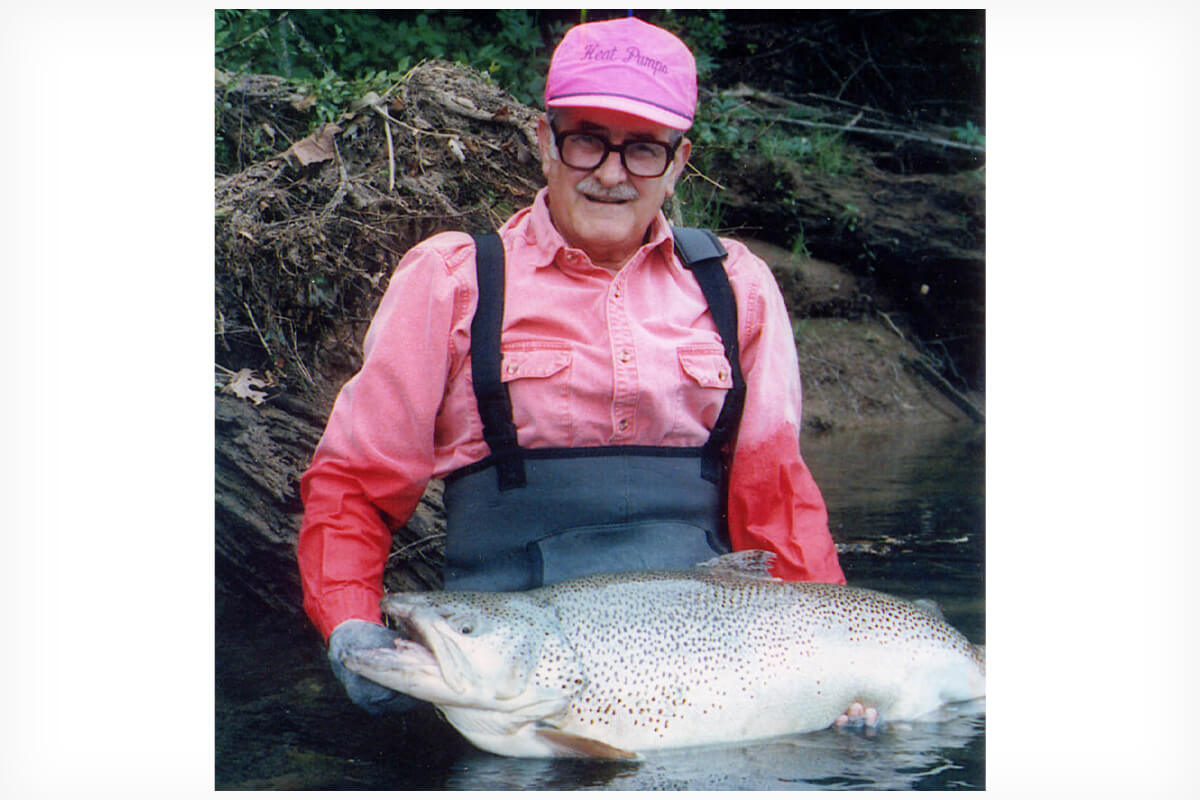
Howard “Rip” Collins is pictured with the then-world-record brown trout (40 pounds, 4 ounces) caught in May 1992. (Photo courtesy of Gregg Patterson)
Recently, a post on the Friends of the Little Red River Facebook caught my attention for a couple of distinct reasons.
The post, which showed a smiling young man holding a huge fly rod and a large brown trout from the river, was reason enough as it read:
“Personal Best Brown. Was Speechless. Sorry, I don’t have a weight or length, wanted to get it back in the water after the battle it put up. Considering the length of my net, was definitely close to or shy of 30-(inches). Hope to see someone else enjoy this fish down the road!”
The young man who caught the fish is Shen Catteau, a great friend of my two sons, Zach and Will. He’s from our hometown in North Texas and was the valedictorian at Denison High School when he graduated. After moving to Searcy, Ark., to attend Harding University, he was smitten with the fly rod, brown trout, and the nearby Little Red.
So, obviously, with a fish that was likely north of 15 pounds, and being caught and released by a hometown friend of my two boys, there was reason enough to smile. And I’d like to think that somewhere, the late Howard “Rip” Collins would think so too, beaming a huge heavenly grin from the other side of eternity.
If the name of Rip Collins rings a bell with fishing-history buffs—and fly anglers who love the trout-rich Ozark tailwaters in Arkansas—it should. Because 30 years ago, one of the most remarkable anniversaries in American angling history passed by quietly, probably just the way that Collins would have wanted it. More on that in a minute.
As astute observers might remember, it was Colins’ huge fish catch a generation ago near the river’s Swinging Bridge area (now called Barnett’s Access), that drew the attention of the angling world and really put the Little Red on the map. That catch came on May 9, 1992—Mother’s Day, that year—when Collins took an impromptu fishing trip and landed a then-world record brown trout from the chilly waters of the Little Red River tailwater near Heber Springs, Ark.
While the White River and Norfork River to the north were already well-known for huge brown trout catches—including a 1988 world-record catch of 38 pounds, 9 ounces in the Norfork River by Huey Manley—the Little Red was a bit more carefully guarded secret, a tailwater popular with anglers from Arkansas, to Memphis, Tenn., eastern Oklahoma and North Texas.
Collins—who has been gone for a number of years after a bout with cancer in the late 1990s—changed all of that in 1992, with a catch that went viral even before the Internet was going strong and social media was hardly a dream.
As angling history buffs might recall, Collins was a retired lieutenant colonel—one report says in the U.S. Army and another says in the U.S. Air Force-and normally a serious fly angler, according to a story by Sports Illustrated writer Robert H. Boyle.
With the 30th anniversary of the late Howard “Rip” Collins’ world record brown trout being observed just a few days ago, the Little Red River tailwater below Arkansas’ Greer’s Ferry Dam continues to produce world class trout. Shen Catteau (above), who fell in love with fly fishing the river after moving from Texas to Searcy, Ark. for his college years, landed this huge brown trout on a fly rod earlier this month. After a lengthy fight, Catteau released the fish quickly following a quick photo, not even measuring or weighing his personal best brown. Most observers think the fish measured near or above the 30-inch mark and weighed more than 16 or 17-pounds, an angling feat that would have undoubtedly have made Rip Collins smile. (Photo courtesy of Shen Catteau)
But when the then 64-year old Heber Springs resident took his boat out to test a balky engine on Mother’s Day, May 9, 1992, he brought along angling buddy Van Cooper and a spinning rod. After tying on a 1/32-ounce olive green marabou jig to the four-pound test line, Collins then made a cast heard around the world about 11 a.m. that morning.
What happened next is the stuff of angling legend, as Collins hooked a 40-pound, 4-ounce behemoth brown trout from the Little Red that would become an International Game Fish Association world record.
Were it not for the excellent account of Collins’ world-record catch in my friend Steve Wright’s book Ozark Trout Tales, many of the details surrounding the moment might have been lost to the passage of time.
A World-Record Tale
Wright, who has gone on to be one of the top story writers for B.A.S.S. down through the years—including this year’s Bassmaster Classic won by Jason Christie—got his outdoors journalism start in northwestern Arkansas, where he spent a year traveling the region’s rich trout waters, gathering stories and interviews in the shadow of the Boston Mountains. Eventually, those tales formed the backbone of his great book, an out-of-print volume still available on Amazon, eBay, Alibris and the like.
According to Wright’s tale of Collins and his epic catch, the angler was losing interest in the Little Red River and wasn’t even planning on fishing that fateful day. Instead, the troublesome outboard motor needing a test drive lured him out with his neighbor, Van Cooper.
While Cooper initially out-fished Collins, a tip from the late hall-of-fame fly angler Lefty Kreh lodged in Collins’ mind about matching flies and lures to the color of a riverbed, caused the angler to switch jig colors from white to olive green.
Moments later, Collins pitched his jig near a historically good beaver hut spot and began the retrieve. When the take came, he thought he had initially hooked a log. Seconds later, however, as the 4 ½ foot Browning spinning rod doubled over and the thin monofilament line pulled away from the Shimano Mark I reel, he knew otherwise.
And when the angler saw the huge fish—which later measured at 40 ¼ inches in length—he quickly knew that a different game was afoot than the other big trout and bass he had previously hooked in his angling lifetime that began as a boy in Indiana, continued in the military overseas, and finally came full circle as he retired to the Arkansas Ozarks.
“It looked like Shamu the whale,” Collins told Wright of his late-morning catch.
During the course of the long fight, Collins adjusted the drag pressure down almost all of the way, as the fish swam upstream and eventually tried to break off in a thick moss bed.
As Collins told Wright, that was an unusual tactic for the longtime angler. But given the trout’s enormous size, the abundance of laydowns and moss beds in the Little Red, and the lengthy fight that took around 20 minutes, it was totally necessary.
“Never in my lifetime have I changed the drag when I was fishing,” Collins is quoted in Wright’s Ozark Trout Tales. “But if I had left that drag setting the way it was, I would never have landed that fish.”
We Need a Bigger Net
Eventually, after repeated threats of getting into moss beds and breaking off, Collins had the fish positioned to land it. Since Collins and his angling buddy had hit the water simply looking to test the motor out. The addition of spinning gear was almost an afterthought and neither man had a net handy.
And when a nearby boat was flagged down, the first possible net was too small. Finally, another boat happened by with a big net and the fish was finally secured. Sort of, that is, since only its head went in the net and no one could reportedly lift the trout aboard.
Collins knew he had caught a monster, but still didn’t know that it was world-record class. A stickler for catch-and-release tactics, he took the big fish back to a nearby dock and put it in a submerged wire cage to keep it alive.
Later that day, as word of the huge trout began to spread around the Ozarks, outdoor writer Bryan Hendricks picked up the story in an article he wrote earlier this year about the iconic photograph that Gregg Patterson took of Collins standing waist deep in the river and carefully cradling the huge fish.
In Hendrick’s Jan. 23, 2022 story in Little Rock’s Arkansas Democrat Gazette newspaper, the tale is told about how Collins summoned Patterson, then with the Arkansas Game and Fish Commission, and told him about the huge fish.
“Rip said that he thought he’d caught a line class record, and he asked me to come up and verify it for him,” Patterson told Hendricks.
Special Delivery at Post Office
Since the catch was on Mother’s Day, Patterson reportedly told Collins that he’d come up later in the day, after church services had let out. When he arrived that evening, the journalist was startled by the size of the exceptionally large trout.
“I took one look, and I said, ‘Rip, I’m sorry, but this isn’t a line-class record,’ ” Patterson said to Hendricks. “He looked all disappointed. I said, ‘Hold on, Rip. This is THE world record. The all-tackle world record!”
Indeed, it was, as a crazy and historic angling tale continued to unfold in the Ozarks. A hatchery truck from the nearby Greer’s Ferry National Fish Hatchery was eventually summoned early the next day and the fish was transported to the Heber Springs Post Office location—where a certified scale awaited—to be officially weighed.
“There were seven or eight people in line at the post office waiting to do their post office stuff,” Patterson said in the newspaper story earlier this year. “We came in the door with this great big fish wrapped in a sheet. Big trout are a big deal in Heber Springs. They’re a big part of their economy. The guy working the counter knew exactly what was going on.”
When the fish was quickly weighed, the scale settled on 40 pounds, 4 ounces. The IGFA confirmed the world-record application and the Collins brown trout became the species’ benchmark, a spot that it would hold for almost two decades. Incidentally, there was/is much speculation that Collins’ fish weighed even more, perhaps as much as 43 or 44 pounds, since it wasn’t weighed until 24 hours later.
Collins’ world record was eventually supplanted in 2009, when a 41-pound, 7-ounce brown trout from Michigan’s Manistee River took the top spot. And today, the world record is held by a controversial trout from New Zealand, one that weighs 44-5.
Unfortunately, the stress on Collins’ world record was too much and it died before it could be released, or even be transported to an aquarium like the one at the nearby Springfield, Mo., location of Bass Pro Shops. If you’re into angling history, you might remember that’s where the one-time Texas state record largemouth bass, a fish named “Ethel” by the guide, Mark Stevenson, who caught her in Nov. 1986 at famed Lake Fork—had lived for several years.
“Due to my own stupidity and inexperience, I killed her,” Collins told Wright.
From either the catch, the loss of the record catch, or both, Collins went on to form the Friends of the Little Red River conservation organization prior to his death, an organization that continues to this day.
And while Collins and his big trout are both gone, their memories live on 30 years after their brush with fame. As do the huge brown trout of the Little Red River and the even bigger smiles by anglers like Shen Catteau.
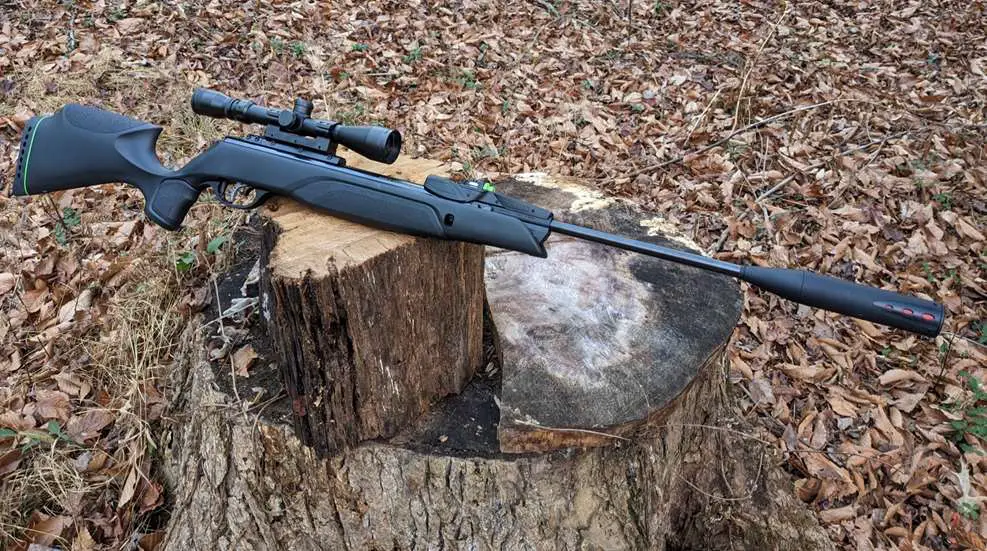
This gun is a single-shot, break-barrel gun with a rifled barrel.
Besides, the barrel is cut shorter than a typical barrel (that’s why the name of this gun is NPS with the letter “S” standing for “Short” and NP representing “Nitro Piston”) for 2 reasons:
First, it gives the gun an authentic tactical look.
Second, with a short-barrel rifle, you are good to go in the tight quarter or when maneuverability is of greatest importance.
Moreover, there is a muzzle brake at the end of the bore that redirects the gas to counter recoil.
A quick note about recoil:
Your rifle kicks back because the gas propels the pellet in one direction and also moves the barrel in the opposite direction,
So if you want to reduce recoil, you have to change the way the released gas goes.
The muzzle brake takes the form of 2 inches of tubes screwed onto the muzzle and diverts gas 90 degrees around the barrel.
This is accomplished by the series of small parallel holes drilled in the tube.
The advantages?
Muzzle brake cuts recoil up to 50 percent which is a no-brainer for most shooters.
The stock has a rubber buttplate to reduce recoil.
Besides, the recoil pad is removable to reveal convenient storage space.
You can store plenty of things in there like pellets, paper targets, lens cleaning cloths, etc.
Thus, it comes in handy when you take the gun out to the wood.
What’s special about this stock is its pistol grip: it orients the hand in a forward, vertical orientation, similar to the position one would take with a conventional pistol.
Pistol grips give you plenty of advantages:
First, you don’t need to raise your elbow as in a traditional shooting stance which is used with stock.
Therefore, it’s easy for you to maneuver in a house, stairs, around corners, etc with an air rifle with a pistol grip installed (especially in close quarters),
And it’s effortless to move, crouch, run, and hold it with one hand as well.
Second, it is much more intuitive to find the safety button.
Third, it is more convenient to hold your air rifle with your hand on a grip for a long time if you have a pistol grip.
Your hands will not get tired as fast as with a traditional grip.
Also, it reduces strain on your wrist.
Finally, a pistol grip allows you to have your hand close to the body and reduces your silhouette which is crucial in a hunting scenario.
The Crosman TR 77 NPS produces a velocity of up to 1200 FPS (feet per second).
This is the supersonic velocity that has surpassed the speed of sound (about 1100 FPS, varying with altitude and temperature),
So you might hear a loud crack if you use a lightweight pellet due to the pellet breaking the sound barrier.
Specifications
Caliber: 0.177”
Velocity: 1200 FPS with alloy/1000 FPS with lead
Loudness: 3- Medium
Barrel Length: 12.0”
Overall Length: 40.0”
Shot Capacity: 1
Barrel: rifled
Front Sight: None
Rear Sight: None
Scopeable: 11mm dovetail
Buttplate: Rubber
Suggested for: Plinking/Target shooting/Pest control/ Small game hunting
Action: Break barrel
Safety: Manual
Powerplant: Nitro-piston
Function: Single-shot
Body Type: Rifle
Weight: 5.8 lbs
This video below highlights the main features of TR77 NPS:
Customer review
There are some reviews here and there about his gun.
Positive reviews show that people love this rifle due to its hair-splitting accuracy, remarkable power, and professional design.
They are also satisfied with it because it helps them clear out unwanted critters in their garden.
On the other hand, the negative reviews say it’s too loud.
This issue can be remedied in 2 ways:
First is the gun will quiet down after breaking in, or you could use a heavy pellet that doesn’t break the sound barrier
Pros and Cons
Pros
Cons
Supersonic velocity
Decent stock
Magnum power
Fantastic accuracy
Good scope
Ergonomic pistol grip
Uniqe short barrel
Loud if you use alloy pellet
Price
The price for Crosman 30131 is only about $120.
This is a good price for a supersonic gun that has a special tactical design and delivers jaw-dropping power.
There are a couple of different listings online with different prices but the listing I found with the lowest price is the cheapest price among online e-commercial sites like Amazon, PyramydAir, Walmart, etc.
What should you choose for hunting, the .270 or the .308 cartridge? Some within the hunting community say you can make a decision with a coin toss. Both are outstanding and have have stood the test of time for decades.
Having said that, the .270 and .308 have their differences, and a good hunter should know them. Our goal is to set out what these differences are and why you may choose one over the other when hunting.
I’ll begin with the main points before diving into our cartridge comparison below for the ballistics aficionados among us.
We spent a lot of time comparing and measuring the performance of these two cartridges against each other. Overall, there is not a huge amount of difference between them â they both have similar recoil and are supersonic all the way to 500 yards. Competent shooters have had a great deal of success using either to dispatch a variety of medium and large game across the world.
Having said that, there are some advantages to choosing one over the other, depending on the scenario in which youâre hunting.
Hunting in Thick Brush?
As the .308 is a heavier cartridge with a larger diameter, it requires a long action rifle. This can add a couple extra inches to your barrel. The downside of this is that if youâre navigating thick brush or holed up in a deer hunting tree stand, you can find yourself more restricted when zeroing in quickly and quietly for your kill shot. In this case, a shorter, lightweight rifle chambered for the .270 is a much more effective hunting companion. Plus, a .270 (particularly at the lower grain end) has less recoil.
Wondering which Hunting Rifle to buy? Click here to see our Editor’s Guide!
Beau, Sniper Country Editor
Require a Longer Shot?
As I said, both the .270 and .308 remain supersonic at 500 yards. However, the .308 has a higher average bullet drop than the .270 even at short ranges (-14.5 inches vs -11.91 inches at 300 yards – see our data below). At 500 yards the difference is a full 10 inches. This may sound insignificant, but this can be the difference between success and failure, particularly at greater distances.
The flatter trajectory and greater resistance to wind drift makes the .270 the better choice. Of course, an advanced hunter may not consider this a huge challenge but as a rule, we recommend the .270.
Shooting Large Game?
At 100-200 yards both the .270 and .308 have the stopping power to dispatch an elk, brown bear or moose. However, as the .308 has a larger diameter and is sold at higher grain levels, it will outperform the .270 particularly with thick-skinned or larger, tougher animals. Having said that, you must ensure you purchase a quality cartridge that leverages controlled expansion to ensure an effective and ethical kill.
We also saw in our comparison that the .308 consistently outperformed the .270 on average for bullet momentum (up to 500 yards) which is a good indicator for improved penetration, despite the .270 having a higher average sectional diversity.
Shooting Medium Game (whitetail deer, feral hogs, etc) within 100-200 yards?
Both the .308 and the .270 can be used at this range. However, weâd argue that the .270 is preferable particularly for lighter-skinned game, such as whitetail deer. Dispatching medium game using a .308 can be overkill, particularly if youâre a meat hunter â youâll find the .308 can cause significant damage. Certainly, at this range you want to ensure youâre on the lower end of the grain spectrum for the .308 to counter this. The .270 will be perfectly efficient for you.
Affordable Hunting
Both the .308 and .270 are popular and readily available at all ammo stores online and offline. Additionally, they are both less prone to the panic buying you experience with other rounds. However, when it comes to affordability, it is worth mentioning that the .308 tends to be on the cheaper side. If cost is an important factor, you may want to investigate the 6.5 Creedmoor as another alternative.
.270 vs .308 Cartridge Comparison
Category.270.308 Bullet weights (gr)120-160125-70 Average Muzzle Velocity (ft/s)2963.32733 Average Recoil (ft.lb)19.5622.15 Average Supersonic limit (Yards)1101.251023.70 Average Ballistic Coefficient0.4380.434 Average Sectional Density0.2690.248
Both are fantastic cartridges that have been tried and tested in the field for decades. We will take a look at the history and specifications of these cartridges as well as look in detail at the ballistic categories. We will also take a look at other categories such as recoil, accuracy, and availability of the ammunition.
Our objective is not to name one cartridge as being better than the other. By looking at this information, we hope to better tease apart which cartridge is better suited for specific hunting situations. If you know the hunting you want to take part in, this article will make your decision easier.
Specs 270 vs 308
.308 Winchester.270 Winchester Parent Casing0.3.30-03 Bullet Diameter0.308â0.277â Neck Diameter0.3433â0.308â Case Length2.015â2.540â Overall Length2.8â3.340â Case Capacity56gr67gr Max Pressure (SAAMI)62,000psi65,000psi
Just from looking at the casing and overall cartridge specs we can begin to garner some information about the .270 vs .308. The first difference that we see between these two cartridges are the bullet diameters. The .308, as the name implies, has a 30 cal bullet with a .308″ diameter bullet. The .270 is fitted with a .277″ diameter bullet. These diameters play a role in the weight of the bullets that are used by the two cartridges and in other performance specs that we will look at later in the article.
You can see that the .270 is a much longer and skinnier cartridge than the .308. And even though the .270 is skinnier, its .5 inch increase in the casing length allows it to hold more powder and can withstand 3,000 more units of pressure than the .308. Obviously, just from this little bit of information, we can already guess that the two cartridges are going to show some differences in their ballistics and other We will see how these specifications influence the ballistic and other properties of the cartridges shortly.
To compare, we have selected five rounds of each cartridge that are popular for hunting and general shooting in the US. The list below shows these rounds. And though we think that we have a good selection of rounds with different grain weight bullets and performance specs, we are aware that it is still a relatively small sample size with the number of options that are available. Unfortunately, we are limited in our available space and decided to cut the samples off at ten. We know there are other great rounds that are available and some of these might be rounds you have been using for years. Their omission here does not reflect our attitude towards those rounds.
AmmunitionPrice (20 Rounds) 270 Hornady SST Superperformance 130gr$41.99 270 Federal Vital-Shok Nosler Partition 150gr$57.99 270 Remington Core-Lokt PSP 115gr$26.99 270 Winchester Ballistic Silvertip 130gr$41.99 270 Federal Sierra GameKing BTSP 150gr$33.99 308 Hornady BTHP Match 168gr$37.99 308 Winchester Super-X 180gr$27.99 308 Nosler Ballistic Tip 165gr$43.99 308 Federal Vital-Shok Ballistic Tip 150gr$39.99 308 Federal Gold Medal Sierra Matchking 175gr$36.99
To compare these ten rounds, we have gathered data from the manufacturer as well as generated a good deal from trusted ballistic calculators. Where ballistic calculators are used we kept as many variables the same between rounds of the same cartridge. Where calculations are made, we will be sure to make clear our variables. When we come to these situations we will make clear what is going on and the variables that we used.
And again, we realize the possible errors and the biases that come with using a small sample size. To combat that and provide a little more confidence to the numbers, we have compiled a much larger data set. All of these rounds can be found at the end of the article. With the larger data set of factory loads for each of these cartridges, we can be more confident that the conclusions drawn represent the full set of round options for each cartridge. It will also give us some more piece of mind when we do look at the trends found in the graphs. And if we do find some discrepancies, it will give us some more interesting talking points.
There is something to be said about computer-generated data when it comes to comparing two cartridges. The first is that these numbers are not set in stone. If you fired these rounds from your platform, you would more than likely you’re going to see numbers that vary from what you will find here. Each gun has its own unique qualities that are going to influence the numbers. Regardless, from a comparison perspective, computer-generated data is perfect for looking objectively at two cartridges and it removes environmental influences.
Recoil
The recoil of a cartridge is going to be important to a lot of shooters, especially those with not a lot of shooting experience. For more experienced hunters, most hunting cartridges, including the .270 and .308, the recoil is going to be manageable. It is important to note that what we are comparing here is straight recoil energy. The âfelt recoilâ involves a lot more factors than just the type of cartridge used. Still, looking at the actual energy still gives you a lot of valuable information and it loosely correlated to felt recoil.
If we simply look at the average recoil energy generated by these two cartridges and given by the ballistic calculator software, we see that the .270 and .308 are very similar (Graph 1).
While the .308 produces slightly more recoil energy (21.7ft.lb compared to 19.6ft.lb), it probably isnât anything significant, especially to more experienced shooters.
Of course, with different types of rounds for these two cartridges, there will be certain rounds that might be more significantly different. Let’s take a look at the ten rounds we have selected for this article and see if the trend continues (Graph 2).
We took some liberties in making this graph. We used a common grain powder load for each cartridge type that we determined from Nosler load data as well as assumed that the cartridge was being fired from a 7lb weapon. So, these numbers could fluctuate a little based on changing those variables, and we do not have the powder charge that is used by the manufacture of the round. Even with these various variables, we have kept everything as constant as possible, and the trends that we see should hold up. For the muzzle velocity, we used the data provided by the manufacturer so take that with a grain of salt as well.
Just from looking at these ten different rounds, it’s pretty obvious that there is not a whole lot of difference between the two different cartridges. We see a significant drop in recoil with the lower grain bullets than the heavier bullets which is expected, for both cartridge types. If we look at the heavier grains for each, we still see that the recoil energy is pretty similar. All of the .308 rounds do show a slight increase in recoil energy than the .270 rounds, but again, we don’t think these differences are enough to choose one cartridge over the other based on recoil. Though the differences are slight overall, we can pick out certain rounds where there is a 4 or 5ft.lb increase in recoil energy from a .270 to .308 round.
Letâs take a look at the recoil numbers with more rounds added to the group and see if the same results present themselves.
Average Recoil (ft.lb)
.308 Winchester.270 Winchester 22.1519.56
We see that the averages of the two cartridges is still pretty close with less than 3ft.lb of force difference between the two. If you look at the individual rounds (not shown) you would see a lot of overlap between these cartridges around the 20ft.lb area. There are definitely more .308 Win rounds above that mark and there are definitely more .270 Win rounds below that mark, as the averages imply. With so much overlap, we donât think there is any significant difference between these two cartridges when it comes to recoil. If youâre dead set on choosing a cartridge or specific round to get a little recoil as possible, there are more options for lighter rounds with the .270 Win but the majority of the factory loads for both cartridges are in the 20ft.lb plus or minus 2 range.
Ballistics
In this section, we will look at several ballistic properties of these two cartridges. What we will see is that there are quite a few similarities between these two cartridges as well as some small but significant differences. This information will allow us to begin teasing apart which situations will be better suited for a particular cartridge.
We will take compare the velocity, ballistic coefficients, and the short and long-range trajectories of the two cartridges. Though we will look at each of these categories separately from the other, in reality, all of them influence and play off of one another. That not only pertains to the ballistic categories but other performance categories as well. So while this method for comparing the .270 vs .308 is cleaner, all of these different aspects should be taken together to give you an idea of which cartridge is going to be better suited for specific applications. We hope to bring all this together more clearly in the application discussion later in the article.
For now, letâs jump into these ballistic categories.
Velocity
The velocity of the bullet is going to play a major role in the trajectory, which in turn, is going to determine the number of adjustments needed to make when taking shots at extended ranges. Velocity is also important to hunters because it also influences terminal ballistics and how well the bullet will expand and transfer kinetic energy to the target.
If we look at our comparison of the ten different rounds we have used we can see some general trends (Graph 3).
For the most part, the .270 rounds have a higher average muzzle velocity than the .308 rounds with close to 330ft.s more than the .308 rounds. Several of the .270 rounds have quite a bit higher velocity, especially the 130gr rounds, and that makes sense given the casing capacity. With similar powder loads and lighter bullets, you would expect higher velocities. While there are some rounds from each cartridge that are pretty similar in velocity, the trend of the .270 rounds having an average of 200-300ft.sec more velocity than the .308 rounds extends out to the 500-yard mark.
Another important concept to take away from this graph is that all of these rounds remain supersonic all the way out to 500 yards. Furthermore, if we were to extend this range we would see this trend continue for several hundred more yards. This tells us that these rounds are going to have enough velocity for efficient terminal ballistic characteristics.
While we might give the edge to some of the .270 rounds for velocity, especially muzzle velocity, we will see that this similarity doesnât always translate to other ballistic characteristics and we will look at those stats and discuss the reasoning in the next several sections.
Letâs see if the higher muzzle velocities of the .270 Win rounds holds up when we add more rounds to the group.
With the larger data set, we still see the same trend of the .270 Win rounds bringing higher velocities than the .308 Win rounds. While the difference between the averages is not as great, we are still seeing close to 200fps or a little less than that from the muzzle out to the 500-yard mark. The rate at which both cartridges bleed velocity doesnât seem to be significant.
While we are discussing velocity, we also want to take a look at how long the bullets of these cartridges can remain in supersonic flight. Both of these cartridges have been used for long-range shooting scenarios though they might not be the most popular rounds in todayâs competitions. And from a hunting perspective, we have already seen that both remain supersonic through the distances that are applicable to hunting shots.
Still, for the sake of being thorough, we wanted to see how the two compare in this category. A lot of marksmen want to know this metric because when a bullet falls below supersonic speeds, their flight becomes more unstable, and the difficulty of being accurate increases substantially.
Average Supersonic Limit (Yards)
.308 Winchester.270 Win 1023.71101.25
From the averages above, we see that the .270 Win rounds stay at supersonic speeds for about 80 yards further than the .308 Win rounds. Weâre not sure if this is a big enough difference for you to start leaning one way or the other. We do know that there is a lot of variance between the individual rounds, but the top-performing rounds in this category are .270 Win factory loads. There are several .308 Win rounds that break the 1000 yard mark, but much less often when compared to the .270 Win.
Ballistic Coefficient (BC)
The ballistic coefficient (BC) is a term that elicits a lot of attention from hunters and marksmen, or it’s a term that they don’t know a whole lot about. The theories and physics behind the ballistic coefficient can get a little out there, so we are going to simplify it in this article.
The BC is simply a rating that is derived from an equation that uses multiple cartridge/bullet variables. What this number tells you is how well the bullet resists wind drag and wind drift throughout its flight path and gives you an idea of how well a bullet will be able to cut through air and wind resistance. The higher the ballistic coefficient, the less drag, and influence this resistance will have on the traveling bullet. For shots taken at extended ranges, a higher BC often means fewer adjustments will have to be made to get the bullet on target. The ballistic coefficient is not everything when it comes to having a true flying bullet. While we think it has a large role in making difficult shots easier, don’t make the error of thinking that if a bullet has a high BC, that it is going to do all the work for you or replace experience and skill.
So, letâs take a look at the ballistic coefficients of the ten rounds we are comparing (Graph 4).
Again, there can be a lot of variance on the BC from one round to the next of the same cartridge depending on bullet design. Both of these cartridges have rounds that exhibit BCs around the .5 range and also low BCs in the .3 range. It’s a good example of how bullet design is the driving factor in this category. There are some trends between cartridge types though. The .270 is a more aerodynamic round but the .308 rounds a slightly heavier which helps them resist drag and crosswinds.
If we take the average of the given rounds, we see that the .270 has a slight advantage with only a hundredth of a difference. We also have selected some pretty high-performing .308 rounds. This is also an example of how bringing in more rounds might give us a clearer picture. From our research, the general trend of .270 rounds having higher ballistic coefficients on average holds up.
What you should take away from this section is what the BC means, as stripped-down as we made it, and the understanding that between these two cartridges, the BC can vary pretty wildly with high and low-performing rounds for each.
To be more confident that this trend is the norm, letâs take a look at the average BC for these two cartridges with larger sample groups.
Average Ballistic Coefficient
.308 Winchester.270 Winchester 0.4340.438
These two numbers are pretty dang similar. With only four thousandths of a difference between the two averages, it doesnât make much sense to make a choice between these two cartridges based solely on the ballistic coefficient. We will say that if you look at each individual round for each cartridge, youâre going to find quite a range in the BCs for both. There are high and low BC rounds for both the .308 Win and the .270 Win. If youâre planning on shooting either of these at more extreme ranges, you will need to take into account other performance factors other than the BC alone.
Trajectory
For hunters and competition shooters alike, the trajectory of a round is characteristic that garners a lot of attention and scrutiny. As most of you know, the laws of physics work on a flying bullet and rather than fly in a perfectly straight line, the flight path takes on a parabola shape. As the bullet moves downrange, it loses altitude. The more pronounced this bullet drop, the more difficult it is to make adjustments to shot placement.
For any round of any cartridge type, you want to see a flat trajectory with minimal bullet drop. Before we look at the short and long-range trajectories of these two cartridges, we wanted to take a broad outlook at the trajectory of only two rounds. We selected a round from each cartridge that are from the same manufacturer, have the same bullet design, are of similar bullet weights, and have similar ballistic coefficients (Graph 5).
We can see in this graph that there is no noticeable difference between the two rounds to the 200-yard mark. From the 200 to 400-yard mark we see the .270 round show a flatter trajectory though even here, there are only 5 inches of difference at its greatest margin.
Moving on to to the 500-yard mark, the difference increases with the .270 round showing 10 inches less bullet drop than the .308 round. Letâs expand upon this and see if we continue to see this trend when we examine more rounds with various bullet weights, designs, and BCs.
Short Range Trajectory 270 vs 308
The short-range trajectory is always important to look at. Especially when it is coming from a hunting perspective where a lot of shots are taken at 300 yards or less.
We have gathered the bullet drop data from the various manufacturers where the zero variable was set at 100 yards. Measurements were taken out to the 300-yard mark (Graph 6).
At the 200-yard mark, we do see the rounds from each cartridge begin to group with the .270 rounds showing a slightly flatter trajectory than the .308 rounds. There is a little overlap between the two cartridges here, and the averages of both show a difference of one inch. Even if we look at the two rounds with the largest difference in bullet drop between the .270 and .308, that difference is only 2.7 inches.
This difference in trajectory widens slightly as the bullets move out to the 300-yard mark. At this distance, the average drop of the .270 rounds is 11.6 inches while the average drop of the .308 rounds is 14.68 inches. And while there are still some rounds for both cartridges that hang around the middle of the pack, the difference in trajectory between individual rounds expands quite a bit from the 300-yard mark.
From this graph, it does seem that the .270 rounds show a flatter trajectory at short range than the .308. The extent of this difference may or may not be enough for you to decide one way or the other. In our eyes, both of these cartridges would be more than effective at 300 yards.
While the differences are not too dramatic between these two cartridges, we still see the trend of the .270 Win having a flatter trajectory than the .308 Win. While less than an inch difference at 200 yards, nearly four inches at 300 yards, and a little more than five inches at 400 yards, might not seem like much, it can easily be the difference between success and failure. Of course, these are just averages and there are definitely .308 rounds that perform above the average. These numbers do corroborate the trends we saw in our graph.
Long Range Trajectory
When looking at the .270 vs .308, we have to examine the long-range trajectory of these cartridges. Both of these have a history in long-range performance in an assortment of applications. Like the short-range trajectory, this data originates from the manufacturer where the zero setting was set at 200 yards and the measurements taken out to 500 yards (Graph 7).
The general trend of the long-range data between these two cartridges is very similar to what we saw with the short-range trajectory. At the 300 yard mark, the difference between the average bullet drop of these two cartridges is nearly identical. If we look at individual rounds, there are several .270 rounds that show two to three inches less bullet drop than some of the .308 rounds.
At 400 yards, the margin widens with a four-inch difference in bullet drop between the .270 and .308 rounds. It is more clear at this range where the rounds for each cartridge begin to group. You can see that the flattest shooting rounds belong to the .270 while the rounds showing the steepest drop are .308 cartridges. There is some middle ground where the .270 and .308 have rounds that behave very similarly.
At the 500 yard mark, we see the same pattern but it is much more distinct. At this point the difference between the two cartridges is right at 10 inches. If you begin picking out individual rounds, you can find some huge differences between .270 and .308 rounds where the .308 round shows between fifteen and twenty more inches of bullet drop
While it appears that the .270 has rounds with a distinct advantage in long-range trajectory, there are .308 rounds that are more than capable of being used at these ranges. And if you have hunting in mind, the trajectory doesn’t mean much if the bullet can’t bring down the game quickly which leads us to our next section.
When we look at the numbers for our larger data set, we see the same trends as previously. The .270 Win, on average, has less bullet drop than the .308 Win. In this table, we have actually extended the range out to a 700 and 1,000-yard marker. At these ranges, the difference between these two cartridges really becomes apparent. With 26 inches of difference at the 700-yard mark and 54 inches of difference at 1,000 yards, the .270 has the advantage in trajectory. And as we state in just about every category, this doesnât mean there are not .308 factory loads out there that will perform above the average, but it might be hard to find a factory load that can match the average of the .270 at 500+ yards.
Stopping Power
For hunting cartridges, the stopping power is one of the more important performance characteristics. You donât want to spend the night tracking through the woods after an injured animal because the bullet didnât have enough power to drop it cleanly. For those who are more interested in long-range shooting, this section might not carry the weight the ballistics section has. Regardless, there is no harm in knowing as much about your cartridge of choice as possible.
There are several components to stopping power of a particular cartridge. Two of these components that we will look at are the kinetic energy that is associated with the bullet as it travels downrange and the how well the bullet penetrates the target.
Energy
The energy or force (ft.lb) that is associated with a bullet on its flight path is transferred to the target on impact and can cause a tremendous amount of damage to surrounding tissue and organs which makes this component of stopping power important to examine. You will often see the loose guidelines for how much energy is needed to harvest specific animals. For most medium-size game, 1,000ft.lbs of energy is the recommended amount, and this increases the larger the animal gets. While we agree that energy is important, we also think shot placement is as important if not more. It’s also important to remember that expansion of the bullet is also important is this allows the maximum amount of energy to transfer to the target.
Letâs examine the stopping power of our ten rounds and see if we can spot any major talking points (Graph 8).
Both cartridges have a tremendous amount of energy at shorter distances, over 2,500ft.lb average muzzle energy for both. They also tend to bleed energy at the same rate as they move downrange as the differences between the averages remain within 50ft.lbs of energy throughout the 500 yards. Both cartridges and their five rounds have over 1,000ft.lbs of energy out at the 500-yard mark, and we also see that there is not really any patterns when it comes to each cartridge grouping together. There is a lot of overlap between the two cartridges with both of them having rounds that carry a significantly more amount of energy while others fall behind.
This is one of the main reasons when looking at the .270 vs .308, why the .270 is favored for hunting large game where shots are taken at increased distance. With the flatter trajectory and stopping power that is nearly identical to the larger .308 bullets at long range, a lot of people feel more confident in taking shots at game at a distance with the .270 over the .308.
But, before we take that to the bank, letâs see if those trends hold up when we take a look at a larger sample of rounds for these cartridges.
For the most part, we see a lot of the same results with the larger data set. The .308 Win has anywhere between 30 to 50 more ft.lbs of energy from the muzzle out to 300 yards. What is a little different now that we have more rounds is that the rate at which the .308 Win rounds bleed KE is a little steeper than the .270 Win rounds. We see this the most at the 400 and 500 yard marker where the .308 Win only has about 17 more ft.lbs of KE and then less KE than the .270 Win rounds at the 500 yard mark.
Penetration (Sectional Density)
Testing rounds on ballistic gels are one method of testing the penetration between two cartridges though how well a gel simulates a bull elk is up for debate. How we will compare the penetration of these two rounds is to look at the sectional densities (SD) of the bullets as it allows us to look at the two cartridges rather than the differences between bullet styles. These numbers are not going to tell you how deep a bullet will penetrate. It is going to give us an idea of the potential of each round had has for penetration.
The sectional density of a bullet is derived from the bulletâs weight and diameter and correlates to its penetration. The higher the SD of a bullet, the deeper penetration it will show. Other factors such as velocity and bullet design also play a role in penetration, but we will mostly keep the conversation on sectional density.
So, letâs take a look at the sectional densities of the ten rounds we have been using for comparison and see if any trends emerge (Graph 9).
Before we discuss any differences and trends that we see between the .270 vs .308 in sectional density we want to take a look at two rounds of the different cartridges that share the same bullet weight to show how sectional density can differ based on the variables that go into calculating the sectional density.
The 150gr .270 round shows a higher sectional density and depending on the bullet type, better penetration than the 150gr .308 rounds. The reason for this is the smaller diameter of the .270 allows more force to be localized to a smaller area and helps push the bullet deeper.
If we step back and look at the two cartridges, we see some pretty interesting results. The first is how varied the sectional densities of the .270 rounds appear. If you notice, the two rounds with SDs of .279 are the heavier 150gr bullets. Overall, the heavier bullet weights of the .308 rounds are what give the .308 cartridge a slightly higher average when it comes to the sectional density. Though the .308 on average has a higher SD here, there are .270 rounds, as we have highlighted, that have similar or better SD numbers.
Letâs take a look at the average SDs for our larger data set.
Average Sectional Density
.308 Winchester.270 Winchester 0.2480.269
Interestingly, when looking at more rounds, we see that the .270 Win takes a pretty big leap over the .308 Win. We already know that the .270 Win rounds have a smaller diameter than the .30 cal cartridge and when we added in more rounds, they contained quite a few heavier rounds that bumped up the average. What should be taken away here is that both of these cartridges have rounds that are going to range in sectional density. And there is a reason that sectional density is not used as the sole metric to determine potential penetration. Letâs move on and look at a second metric for this category,
Penetration (Momentum)
Bullet momentum is another factor that goes into stopping power and is always involved in the arguments for the best indicator for stopping power. When we look at these numbers, we are addressing how well a bullet is able to stay in motion when faced with resistance. Whether that is an obstacle in the flight path or the hide and bone of a game animal, momentum gives you an idea of how well the bullet can overcome these obstacles.
From a hunting perspective, momentum is a good indicator for potential penetration, like sectional density, and really goes hand in hand with it. Bullets with the same momentum and same mass but different sectional densities will have different penetration results. Smaller diameter bullet is going to penetrate deeper because less resistance is encountered. This scenario is also omitting bullet design, which in real-world scenarios, is just as important as any of the data we are looking at.
Momentum is a function of the bulletâs mass and its velocity and since we have looked at both, you should already have an idea of how these two cartridges will look in comparison to each other.
We have calculated the bullet momentum for our ten selected rounds and graphed them below from the muzzle out to 500 yards (Graph 10).
There is quite a lot to talk about after looking at the graph. The first is that the .308 Win rounds, at least the majority of them, leave the muzzle with a around an average of 6lb/ft.s more momentum than the .270 Win rounds. As the rounds move downrange, we do see the .308 Win rounds start to lose momentum at a faster rate than the .270 Win rounds.
By the time the rounds reach the 300-yard mark, there is only 4lb/ft.s of momentum difference between the rounds of the different cartridges. By the 500 yard marker, there is right at 3.5lb/ft.s difference in momentum between the two cartridges.
The rounds of each cartridge do group together pretty tightly until they get out to the 500-yard marker. But even before then, we do see some rounds that deviate a little from the rest of the rounds of their respective cartridge.
Letâs take a look at the averages of our larger sample size and see if the same trend persists.
The data that we have from the large sample is almost exactly the same as the averages from the smaller sample size. We see the .308 Win rounds carrying on average more momentum than the .270 but as they move downrange, we see the .270 Win rounds gaining ground. More like the .308 Win rounds are losing ground.
Accuracy
Accuracy has more to do with the quality of the firearm and the user more so than the cartridge. And while we donât think ballistics can rectify user error, we do think that certain ballistic characteristics can help you be more accurate on a consistent basis.
We have seen the flatter trajectory of the .270 versus the .308, and that may play a role in it being more accurate, especially at ranges over 300 yards. Within that range, there will be little if any difference in the accuracy of the two based on bullet drop from the .270 v. .308. And if you go back and look at the differences in bullet drop at long ranges you will see that there are .308 rounds that are more than capable of 400 and 500-yard shots.
We have also examined the ballistic coefficients of the two cartridges. From looking at that information, we saw that while the .270 had a slightly higher average BC than the .308, the .308 had rounds with similar and even higher BCs than the .270. In this case, it seemed that the BC relied more on the individual round than a difference between cartridges.
Regarding recoil, we have seen that both cartridges generate a similar amount of energy, so we don’t think that distinguishes either of the two cartridges regarding accuracy.
Price and Availability
Both of these cartridges are pretty popular in the United States. You might have a little better selection of .270 rounds when searching around a retail store than the .308, but generally, you are not going to have an issue finding these rounds and finding various types of ammunition for each.
As for price, it can vary pretty wildly depending on the make of the ammunition. Just take a look at the ten rounds that we have looked at in this article. You can find a case of .308 for twenty bucks and a box down the aisle might be forty dollars. The same can go for the .270. Based on their hunting use, we donât see any real difference in price between the two. Not enough for you to choose one over the other anyway.
AmmunitionPrice (20 Rounds) 270 Hornady SST Superperformance 130gr$41.99 270 Federal Vital-Shok Nosler Partition 150gr$57.99 270 Remington Core-Lokt PSP 115gr$26.99 270 Winchester Ballistic Silvertip 130gr$41.99 270 Federal Sierra GameKing BTSP 150gr$33.99 308 Hornady BTHP Match 168gr$37.99 308 Winchester Super-X 180gr$27.99 308 Nosler Ballistic Tip 165gr$43.99 308 Federal Vital-Shok Ballistic Tip 150gr$39.99 308 Federal Gold Medal Sierra Matchking 175gr$36.99
Applications
As we come to a close with this comparison, we want to bring all the information we have examined and use it to start trying to figure out if there are scenarios where one cartridge might be better suited than the other, or maybe applications where you canât really go wrong with either of them. For convenience, we have also included the average tables for the various performance categories below.
We think that both of these cartridges make excellent hunting options though there are hunting situations where one might be better suited than the other. So, in regards to the .270 vs .308 debate, letâs look at some of these applications.
For recoil, it’s a wash between these two cartridges. Both have a bit of a kick, but for hunters and marksman with a little experience it’s nothing you haven’t felt before, and it shouldn’t impact your shot in the field. Besides, with that adrenaline pumping, you’re not going to feel it anyway.
For small game hunting, the .270 is a much better option. This is just due to the availability of lighter grain bullets. Hitting small game with a heavy grain .308 is not going to leave anything behind and is just overkill and a waste of money.
For large game, both cartridges have the stopping power to take large game at under 300 yards and even further when in the right hands. They can both take medium-sized game at 500 yards without an issue in regards to energy. As for the penetration potential of these cartridges, the .270 Win rounds had slightly better SDs than the .308 Win rounds but the .308 Win rounds brought a little more momentum, especially at the more common hunting ranges out to 400 yards. With both cartridges excelling slightly at different categories, we donât think there is really much of a difference in how well the two will penetrate from the standpoint of these numbers. You will definitely need to take it round by round regardless of the cartridge and pay a lot of attention to how the bullet is going to react on impact.
For larger game such as deer and elk, both cartridges have enough stopping power at short range to drop animals cleanly. The .270 might be a better option when dealing with shots that are over 400 yards. There are some .308 rounds out there that perform well at these distances as well, but generally, the .270 would be the better choice. And this has nothing to do with energy or penetration, but rather the ballistics.
The big reason why the .308 is not favored in long-range shooting is the heaviness of the bullets and the trajectory. For large game at increased distances, the .308 is just harder to put on target in the kill zone. If you can, it will drop game, but for all but the best marksman, you are more than likely only going to wound the animal and never find it. And when we are talking about extended ranges we mean 400+ yards. And as we have stated several at several points, itâs not that we are saying it is impossible, we are just saying that the ballistics lean towards the .270 in this situation.
For general long-range shooting, a lot of the above discussion is pertinent here as well. The .270, on average, has higher velocities than the .308 which a lot of long-range shooters will be key on. Like all the other categories there are some .308 rounds that are similar, but there are several .270 rounds that outperform all of the .308 rounds we have looked at. The same goes for the BCs of these rounds. While the .270 rounds might have a slightly higher BC on average than the .308, it seems to depend on the individual round. Both have rounds with high enough BCs for some long-range action.
Best Rounds
Before we wrap up this article, we want to re-examine the ten rounds we have been comparing and pick a round from each cartridge that we think will excel in certain situations. This is just our opinion, and it doesn’t mean that we think our picks are the only option out there to take care of your business.
Top Hunting Round
The Federal Vital-Shok Nosler Partition 150gr is one of our favorite hunting rounds for the .270 cartridge. This round has nearly 2,000ft.s velocity at 500 yards which is more than enough to get the correct terminal ballistics. That paired with bullet energy greater than 1,500ft.lbs at 400 yards give this round excellent stopping power. We also like the heavier grain bullet that can get penetration on larger game. The long-range trajectory for this round is not as flat as other .270 rounds but it is still manageable at 400 yards and to be honest, any range after that we are not concerned with when it comes to hunting.
For the .308 Win, we like the Nosler Ballistic Tip 165gr. This is another excellent option for medium to larger game. The bullet energy is the highest of the selected .308 rounds with 1,300ft.lbs of energy at the 500-yard mark which is enough for even larger game at that range. With proper shot placement, this round still has the energy and the velocity to make a clean kill. Anything within that yard mark is no issue. For the .308 rounds, it has one of the best long-range trajectories where a 300-yard shot is no problem in the right hands, and 400 yards is even manageable.
Top Range Round
Our tope range round for the .270 is the 130gr Winchester SST Superperformance. This round excels in the velocity category with over 2,200ft.sec at 500 yards and will remain supersonic for several hundred yards beyond that mark. The BC of this round might not be as high as long-range shooters would like to see, but the flat trajectory might compensate for this with a bullet drop of only 33 inches at 500 yards. That’s pretty impressive for a factory load. This round is a bit more expensive compared to the other .270 factory loads that we have looked at, but it gives you the best long-range performance.
For our top .308 Win range round we like the 168gr Hornady BTHP Match. This round is affordable which is an important consideration when you plan burning through quite a few out on the range. This round has a great BC for .308 rounds (.45), and when paired with the velocity and long-range trajectory, you have an excellent round for precision shooting. The bullet drop is more pronounced than the small weight .270 rounds, but when compared to other .308 rounds, you can easily handle the 80 and 120-inch drop at the 600 and 700-yard mark.
Conclusion
When looking at the .270 vs .308, it’s difficult to draw a firm conclusion on which is the better cartridge. While they have some similar characteristics, there are differences that make them better in certain situations.
Itâs a new world out there. You donât have to be relegated to only one cartridge and feel it deserves all of your loyalty. To be a great hunter, you might need to turn to more than one cartridge on your adventures.
We hope that this article has given a clearer understanding of the two cartridges and also made clear that both are tremendous hunting cartridges that are readily available. When used in the right scenario, both the .270 and .308 are effective cartridges for bringing home game or smoking the competition on the range.
Ammunition List
A Brief History
.308 Winchester
The .308 Winchester/.308 Win/.308 was introduced in 1952 in the United States. From this cartridge, the 7.62×51 NATO round was also designed and saw brief use in the US military in Vietnam with the M14 Garand. Though its military career was short-lived, the .308 has become an extremely popular round in civilian use from its conception to modern day. And that is not to say that it cannot still be found in military or police force circles today, it certainly is, but not as ubiquitous as it once was.
The .308 shows certain performance capabilities, which we will get into in this article, that has given it a place in many sharpshooting capacities, including use with the police and some military forces. Where this cartridge has gained a strong following though is in the hunting world. This is a larger bullet with excellent range and stopping power. Itâs a great medium to large game rifle and can be used for just about any large game animal in the world, barring a few.
There are a plethora of options when it comes to the .308. Cartridge and bullet design give it a lot of versatility, and it is also readily available. You will find the bullet weights of .308 cartridges to fall between 125 and 170 grain with a few outliers in both directions.
.270 Winchester
The .270 Winchester/.270 Win/.270 made its appearance in the hunting world in 1925 where it would stay in relative obscurity for a time. For several years, the .270 did not have a significant following of users. Jack O’Connor, a famous writer of firearms and hunting, really pushed this cartridge and its abilities in the field and brought it to the forefront of hunting cartridges, where it remains to this day.
The .270 has gained a huge following in the world of hunting from small varmints and predators to large American game such as sheep and deer. With a leap in bullet technology, the .270 is much better suited for taking larger game such as elk.
The .270 came from the .30-03 which saw very brief use in the United States in the early 1900âs. Another cartridge that comes from this parent case is the .30-06 which are very similar to the .270. The .270 can be thought of as a necked down version of the .30-06.
As far as bullet weights go with the .270, most ammunition is going to fall between 120-160. There are smaller weights that are available for small game. Like the .308, there is a lot of options regarding bullet weight and design, and they are readily available and affordable.
Unveiling the truth behind dry firing a Gamo air rifle, this intriguing headline delves into the possibility of safely practicing without ammunition. Join us on an enlightening journey as we uncover whether this popular air rifle can withstand dry firing, providing valuable insights for enthusiasts and novices alike.
Can you dry fire a gamo air rifle?
Dry firing refers to pulling the trigger of a firearm or air rifle without any ammunition loaded. When it comes to Gamo air rifles, dry firing should generally be avoided. While some firearms can handle dry firing without any issues, most air rifles, including those made by Gamo, are not designed for this practice. Dry firing a Gamo air rifle repeatedly can cause damage to its internal components, such as the piston and spring.
The main reason why dry firing is not recommended for Gamo air rifles is that they rely on the presence of a pellet or BB in the barrel to absorb the force generated during firing. Without an ammunition load, the energy from the compressed air is not dissipated properly and can cause excessive stress on the gun’s mechanism. This can lead to premature wear and tear, reduced accuracy, and potential malfunctions over time.
To ensure the longevity and optimal performance of your Gamo air rifle, it is best to avoid dry firing altogether. Always make sure to load your rifle with appropriate ammunition before pulling the trigger. If you need to practice your shooting technique or test the trigger pull without using actual pellets or BBs, consider investing in snap caps or dummy rounds specifically designed for air rifles. These devices mimic the weight and shape of real ammunition while protecting your gun from unnecessary stress caused by dry firing.
In conclusion, dry firing a Gamo air rifle should be avoided as it can potentially damage the gun’s internal components. Dry firing without a pellet in the chamber may cause the piston to slam forward with excessive force, leading to potential harm. It is advisable to always use a pellet when operating an air rifle for optimal performance and longevity.
Undeniably one of the hottest topics in archery today is the subject of high FOC. Some see this is just another trend, while others firmly state that this information is long overdue, and it will never go away. Trendy or not, there is no denying that FOC has its place and is important for an archer to have at least a basic understanding of how it effects arrow flight, accuracy, and penetration. I have been a long standing member of the high FOC Club, but just like anything else, you can have too much of a good thing.
Let’s look at some of the pros and cons of a high FOC setup.
Lets start with a quick review of what FOC is. It stands for “Front of Center”. It is a percentage equation of your hunting arrows total weight that is located at the front half of the arrow. It is important to note that this calculation is with your broadhead on the arrow. The more weight you have at the front of your arrow, the more forward your balance point will be. Below is a great video explaining some easy steps and instructions to calculate your FOC.
PROS OF HIGH FOC
There are many opinions on the actual percentage consideration for high FOC with above 15% generally being considered high. With Doctor Ashby’s conclusion that there is a substantial penetration gain with arrows having 18% FOC or higher, you don’t have to look far for hunters that are promoting over 20% and even into the 30+ percent FOC range!
Lets look at some of the pros of high FOC. The biggest benefit to me in shooting high FOC is PENETRATION. There is no denying that increasing your front of center gives you more weight, more momentum, and more “pulling power”. Literally, high FOC helps “pull” your arrow through your intended target. I really think that pulling power should be considered a factor in a new hunting arrow formula we could call pass through potential. Where FOC X Draw Weight was divided by Pulling Power (P2) to get a number we could associate with a high probability for a pass through…we will work on that. 😊 Anyway, you get the idea. Penetration favors high FOC.
Another benefit towards penetration is to consider that with most high FOC arrow setups, you will be using a stiffer spine arrow. This causes less flex in your arrow as it enters your target allowing for more penetration, considering that the more flex you have, the more drag you create and that will impede penetration. High FOC can also help QUIET your bow, and some will say it improves your ACCURACY. For me, I do not feel accuracy really gets a big boost from increasing your front of center, but you will certainly give your setup a boost in its performance, so inherently your accuracy could benefit.
One great side effect of spending time playing with your FOC is that you are spending more time with your bow, allowing for improvements to occur in several areas of tuning your entire setup.
CONS OF HIGH FOC
With every good thing, there is also a point of simply over doing it. Generally when I am on the over doing it subject, I am referring to ice cream, but FOC is definitely in the same category, as it is all good until you have too much. No mater what you do in archery you cannot escape the laws of physics, with the law of gravity being the big factor here. At some point, too much FOC is no longer an asset. Remember the lawn dart game? Think of continuously adding weight to the end of your lawn dart. Eventually you wont be able to toss it close to hoop, let alone in it. Even though the dart will make a bigger divot in the dirt with each weight increase, if you cant reach your target what good is it?
When you get your FOC too high you are going to be sacrificing something. That something is going to be TRAJECTORY and SPEED. To be clear, as you move up in FOC, you are going to loose a little of both of those things no matter what, but with the right balance the good exceeds the bad. Too high of an FOC and you could find that a weary whitetail at a long distance can easily jump the string because your arrow is slower, and dropping more rapidly.
Another common issue with high FOC is using the WRONG SPINE arrow. High FOC will naturally weaken the spine of your arrow, and thus it could take your arrow longer to recover off the riser causing potential accuracy problems. Since adding more weight to the front of your arrow weakens the spine, it is very important to make sure you have the right spined arrow out of the gate. Starting your FOC process with an under spined arrow could even be dangerous, so consult your bow and arrow manufacturer before you jump into high FOC.
The last con I would like to mention is COST. If you get serious about high FOC, you may also get serious about spending money. Stiff spine, specialty arrows, weighted inserts, and heavy weight broadheads all come with an increased price tag. It doesn’t have to cost a fortune to shoot high FOC, but you can get caught up in it all very easily and quickly wind up with a single arrow that is over $50.00.
I am a big fan of high FOC, but as you have read it is important find a happy medium. You must factor in your average shot distance and your target species into the equation when you decide to go heavy up front. Also, be sure and be aware of your arrow spine when moving towards high FOC. You do not want to have an important factor like accuracy suffer because you are under or over spined. Thankfully, this process is not difficult and can be fun getting everything tuned just right to suit your needs.
Thank you for reading, and good luck in the field!
Discover the optimal range of a 20-gauge slug for deer hunting. Uncover the effective distance this ammunition can reach, ensuring accurate and ethical shots. Gain valuable insights to enhance your hunting experience and maximize success in bagging that prized deer.
Understanding the Effective Range of a 20 Gauge Slug for Deer Hunting
Understanding the Effective Range of a 20 Gauge Slug for Deer Hunting
The effective range of a 20 gauge slug for deer hunting depends on several factors, including the shooter’s skill, the type of ammunition used, and the firearm itself.
When using a smoothbore shotgun firing rifled slugs, it is generally recommended to not shoot at game beyond fifty yards. Beyond this distance, group sizes tend to get larger, increasing the risk of wounding or crippling an animal rather than making a clean kill.
On the other hand, if you have a shotgun with a rifled bore, rifled slug rounds can still group well enough at 100 yards for deer-sized game. However, it is important to note that newer saboted slugs should not be used in a smoothbore shotgun as they will not stabilize properly. These saboted slugs are designed to be used only in rifled bores and can extend your effective range past the old-style rifle slugs.
It is crucial to practice regularly with whatever combination of shotgun and ammunition you use so that you know your personal limits for taking game while hunting. Additionally, using a.22 rimfire gun for practice can be beneficial for improving sight picture and trigger control skills since its muzzle velocity and trajectory are similar to rifled slugs.
When it comes specifically to 20 gauge shotgun slugs for deer hunting, as a practical matter, their effective range is typically around 75 yards or meters. Slugs become increasingly inaccurate at distances beyond 100 yards and may lose about half their muzzle energy by that point. It is essential to prioritize quick and humane kills on deer-sized animals, so it is advisable not to take chances by shooting at longer ranges where accuracy may be compromised.
In some states, it may be legal to replace your smoothbore shotgun barrel with a rifled barrel during shotgun-only season. By using more aerodynamic sabot-slugs fired from a rifled barrel, you may achieve rifle-like accuracy and extend your effective range even further, potentially up to 150 yards.
However, it is important to exercise caution and not rely solely on the range of your shotgun slug. Shot placement and ensuring a clean kill should always be the top priority when hunting. Remember to always follow local hunting regulations and guidelines to ensure both safety and ethical hunting practices.
Exploring the Practical Limits of a 20 Gauge Slug for Deer Hunting
When it comes to using a 20 gauge slug for deer hunting, the effective range can vary depending on factors such as the shooter’s skill, the type of ammunition used, and the firearm itself. Generally, a smoothbore shotgun firing rifled slugs should not be used on game beyond fifty yards. Beyond this distance, group sizes tend to get larger, increasing the risk of wounding or crippling an animal without making a clean kill.
However, if you have a shotgun with a rifled bore, using rifled slug rounds can potentially extend your effective range to around 100 yards for deer-sized game. These rifled slug rounds are designed to group well at longer distances and offer better accuracy. It is important to note that newer saboted slugs should not be used in a smoothbore shotgun as they will not stabilize properly. These saboted slugs are best suited for use in rifled bores and can fly faster, extending your effective range beyond traditional rifle slugs.
To ensure success when hunting with a 20 gauge slug, it is crucial to practice regularly with your chosen combination of firearm and ammunition. This will help you become familiar with your personal shooting limits and improve your accuracy in different shooting scenarios. Additionally, practicing with other firearms such as.22 rimfire guns can also be beneficial for developing skills in sight picture and trigger control.
While the effective range of a 20 gauge slug for deer hunting may be around 75 yards as a practical matter, it is essential to prioritize safety and ethical hunting practices. Shots should be taken within distances where you are confident in making accurate and humane kills. Remember to always wear appropriate safety gear like eye and ear protection and ensure you have a safe backstop when shooting.
In some states, it may be legal to replace the smoothbore barrel of a shotgun with a rifled barrel, allowing for the use of more aerodynamic sabot-slugs. This can potentially increase the accuracy and effective range of the 20 gauge slug, achieving rifle-like performance out to distances of around 150 yards.
Ultimately, it is important to exercise caution and not take unnecessary risks when hunting with a 20 gauge slug. Understanding the limitations of your firearm and ammunition combination will help you make responsible decisions in the field and ensure the most ethical and effective hunting experience possible.
Determining the Maximum Range for a 20 Gauge Slug when Hunting Deer
Determining the maximum range for a 20 gauge slug when hunting deer can depend on various factors such as the shooter’s skill, the type of ammunition used, and the firearm itself.
In general, a smoothbore shotgun firing rifled slugs should not be used on game much farther than fifty yards. Beyond this distance, group sizes tend to get larger and there is a higher risk of wounding or crippling an animal rather than making a clean kill.
However, if the shotgun has a rifled bore, the rifled slug rounds may still group well enough at 100 yards for deer-sized game. It is important to note that newer saboted slugs should not be used in a smoothbore as they will not stabilize. These types of slugs are designed to be used only in rifled bores and can extend the effective range beyond that of old-style rifle slugs.
To determine your own personal limits for taking game while hunting with a 20 gauge slug, it is crucial to practice regularly with your chosen combination of firearm and ammunition. This will help you understand your shooting capabilities and ensure ethical and accurate shots.
It is also worth mentioning that using a.22 rimfire gun can be an excellent way to practice for sight picture and trigger control without spending too much on ammunition costs. The muzzle velocity and trajectory of a.22 rimfire are similar to rifled slugs, making it beneficial for improving trajectory skills.
When shooting with a 20 gauge shotgun slug, it is important to prioritize safety by wearing appropriate eye and ear protection and ensuring you have a safe backstop when shooting.
As for the effective range of a 20 gauge slug for deer, as a practical matter, it is generally considered to be about 75 yards or meters. Slugs become increasingly inaccurate beyond 100 yards and may lose significant muzzle energy by that distance. It is crucial to consider humane kills when hunting and not take chances by attempting shots beyond your effective range.
In some states, it is legal to replace a smoothbore shotgun barrel with a rifled barrel during shotgun-only seasons. This allows the use of more aerodynamic sabot-slugs, which can achieve rifle-like accuracy and extend the effective range to approximately 150 yards or so.
It is important to note that these ranges are general guidelines and individual shooting abilities may vary. It is always best to practice and become familiar with your specific firearm and ammunition combination to determine your own effective range for hunting deer.
The Importance of Knowing the Effective Range of a 20 Gauge Slug for Deer
The effective range of a 20 gauge slug for deer is an important factor to consider when hunting. It determines the maximum distance at which you can accurately and ethically take down a deer with a slug from your shotgun. Knowing the effective range helps ensure a quick and humane kill, as well as prevents unnecessary suffering or wounding of the animal.
It is mentioned that a smoothbore shotgun firing rifled slugs should not be used on game much farther than fifty yards. This is because group sizes tend to get larger at longer distances, increasing the likelihood of wounding or crippling the animal instead of making a clean kill. Therefore, it is recommended to keep shots within this range when using a smoothbore shotgun with rifled slugs.
On the other hand, if you have a shotgun with a rifled bore, the rifled slug rounds will likely still group well enough at 100 yards for deer-sized game. The newer saboted slugs should only be used in rifled bores as they fly faster and extend your effective range beyond the old style rifle slugs.
It is crucial to practice regularly with whatever combination you use so that you know your own personal limits for taking game. This includes understanding your firearm’s effective range and being proficient in shot placement.
While some hunters may claim that they can shoot accurately up to 150 yards with a 20 gauge slug, it is generally recommended to keep shots within about 75 yards (or meters) for practical purposes. Slugs become increasingly inaccurate beyond 100 yards, and by this distance, they may have lost about half their muzzle energy, potentially leading to ineffective or inhumane kills.
In some states, it may be legal to replace your smoothbore shotgun barrel with a rifled barrel during shotgun-only season. If you choose to do so and use more aerodynamic sabot-slugs fired from such a barrel, you may achieve rifle-like accuracy and extend your effective range to around 150 yards. However, it is crucial to familiarize yourself with local regulations and ensure that you are using the appropriate equipment for hunting.
In conclusion, understanding the effective range of a 20 gauge slug for deer is essential for ethical and successful hunting. It helps determine the maximum distance at which you can accurately and humanely take down a deer with your shotgun. By practicing regularly, knowing your firearm’s capabilities, and adhering to local regulations, you can ensure safe and responsible hunting practices.
Factors Affecting the Effective Range of a 20 Gauge Slug for Deer Hunting
Factors Affecting the Effective Range of a 20 Gauge Slug for Deer Hunting
The effective range of a 20 gauge slug for deer hunting can be influenced by several factors. One important factor is the type of barrel being used. A smoothbore shotgun firing rifled slugs should not be used on game much farther than fifty yards. This is because group sizes tend to get larger at longer distances, increasing the likelihood of wounding or crippling an animal.
On the other hand, a shotgun with a rifled bore can still provide good grouping with rifled slug rounds at 100 yards for deer-sized game. The newer saboted slugs, however, should not be used in a smoothbore as they will not stabilize. They are best suited for use in rifled bores and can extend the effective range past the old style rifle slugs.
Another factor that affects the effective range is the shooter’s skill and familiarity with their firearm and ammunition combination. Regular practice is necessary to understand one’s personal limits when taking shots at game. It is also recommended to practice with a.22 rimfire gun, which is cheaper to shoot and can help improve sight picture and trigger control skills.
Additionally, the lack of precision sights on a shotgun can present a challenge in achieving accurate target acquisition beyond 50 yards. While it may be possible to hold a 12 to 15 inch group at 100 yards with a bench rest using a 20 gauge shotgun slug, it is more practical to limit shots to within 25 to 35 yards, especially when hunting from tree stands or ground blinds in wooded areas.
As a practical matter, the effective range of a 20 gauge slug for deer hunting is about 75 yards (or meters). Slugs become increasingly inaccurate at distances beyond 100 yards and may lose significant muzzle energy by that point. It is important to consider ethical hunting practices and prioritize quick and humane kills on deer-sized animals.
In some states, it is legal to replace a smoothbore shotgun barrel with a rifled barrel and still hunt during shotgun-only season. Using more aerodynamic sabot-slugs fired from such a barrel can potentially achieve rifle-like accuracy out to 150 yards or so. However, it is always advisable to exercise caution and not take unnecessary risks when hunting.
Overall, understanding the effective range of a 20 gauge slug for deer hunting requires considering factors such as the type of barrel, ammunition used, shooter’s skill level, and ethical hunting practices. Regular practice and familiarity with one’s equipment are key to making accurate and ethical shots while hunting deer.
Achieving Accuracy and Precision: The Effective Range of a 20 Gauge Slug for Deer
Achieving Accuracy and Precision: The Effective Range of a 20 Gauge Slug for Deer
When it comes to the effective range of a 20 gauge slug for deer hunting, there are several factors to consider. The shooter’s skill level, the type of ammunition used, and the firearm itself all play a role in determining the maximum distance at which a slug can be accurately and ethically used.
A smoothbore shotgun firing rifled slugs should generally not be used on game beyond fifty yards. At longer distances, group sizes tend to increase, increasing the risk of wounding or crippling an animal rather than achieving a clean kill. However, with a rifled bore, the rifled slug rounds can still group well enough at 100 yards for deer-sized game.
It is important to note that newer saboted slugs should not be used in a smoothbore shotgun. These slugs require a rifled bore to stabilize properly and achieve optimal accuracy. Saboted slugs fly faster and extend the effective range beyond that of traditional rifle slugs.
To determine your own personal limits for taking game while hunting with a 20 gauge slug, regular practice is essential. Understanding your firearm’s capabilities and becoming proficient with your chosen combination of shotgun and ammunition will help you establish accurate shooting ranges.
For additional practice that is more cost-effective than using expensive slug rounds, consider using a.22 rimfire gun. This type of firearm provides excellent practice for sight picture and trigger control. The muzzle velocity and trajectory of.22 rimfire bullets are similar to rifled slugs, making it beneficial for developing trajectory skills.
Safety precautions should always be taken when shooting any firearm. It is crucial to wear proper eye and ear protection and ensure you have a safe backstop when shooting.
In conclusion, as a practical matter, the effective range of a 20 gauge slug for deer hunting is typically around 75 yards or meters. Slugs become increasingly inaccurate beyond 100 yards, and by that distance, they have lost a significant amount of muzzle energy. It is important to prioritize quick and humane kills when hunting, so it is recommended to keep shots within a distance where accuracy and lethality can be ensured.
In some states, it may be legal to replace the smoothbore shotgun barrel with a rifled barrel during shotgun-only seasons. By using more aerodynamic sabot-slugs in a rifled barrel, rifle-like accuracy can potentially be achieved out to distances of around 150 yards.
However, it is crucial not to take unnecessary risks or attempt shots beyond your personal skill level and firearm’s capabilities. Always prioritize safety and ethical hunting practices when determining the effective range for your 20 gauge slug.
In conclusion, the effective range of a 20 gauge slug for deer hunting typically falls within 75 to 100 yards. However, factors such as shooter proficiency and gun specifications can impact this range. It is crucial for hunters to practice and understand their specific firearm’s capabilities to ensure ethical and successful deer hunting experiences.


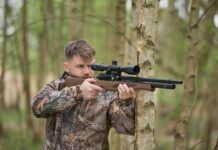


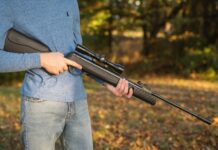


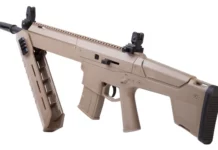




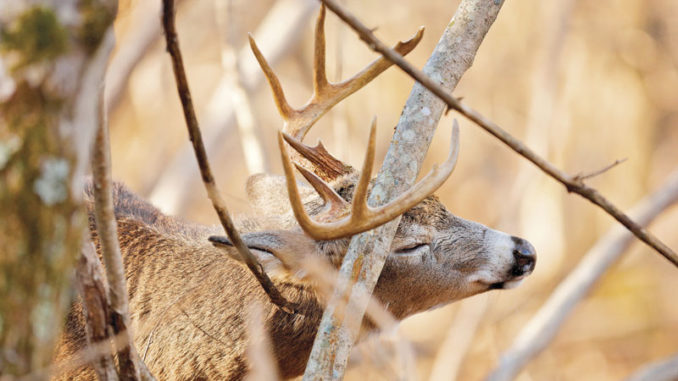
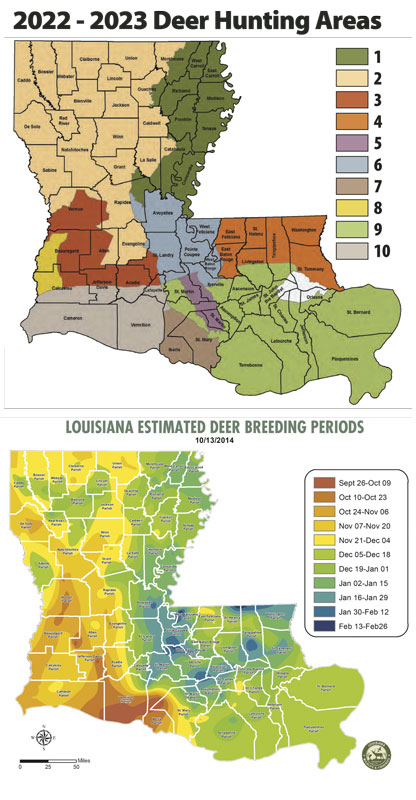 An early rut was also predicted for 2021, but based upon hunter harvests and examination of female reproductive tracts, the rut was about a month later than predicted. Now generally these days when things go astray, folks jump to blame climate change, but in this case I don’t think that is the culprit. What did happen was a major hurricane. Hurricane Ida came into the state and left a path of destruction as it moved northward from the coast into the Florida Parishes.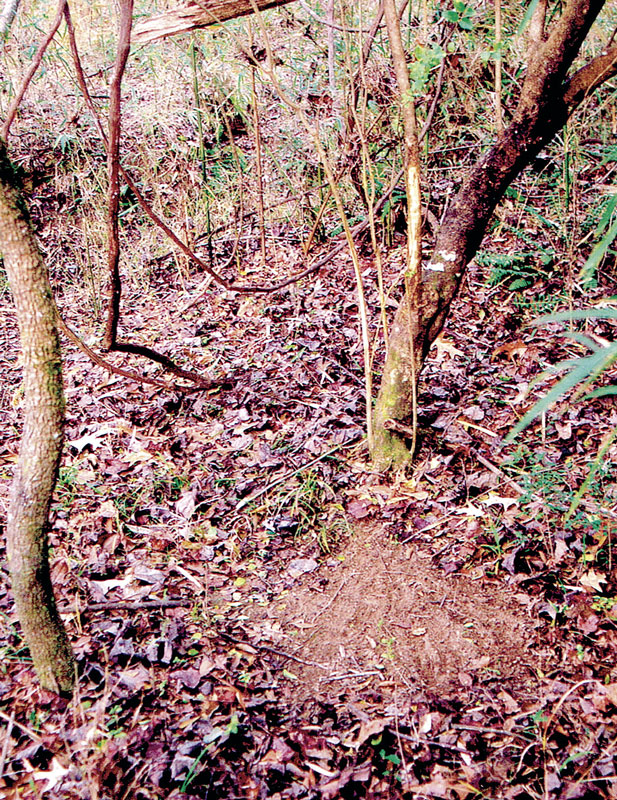
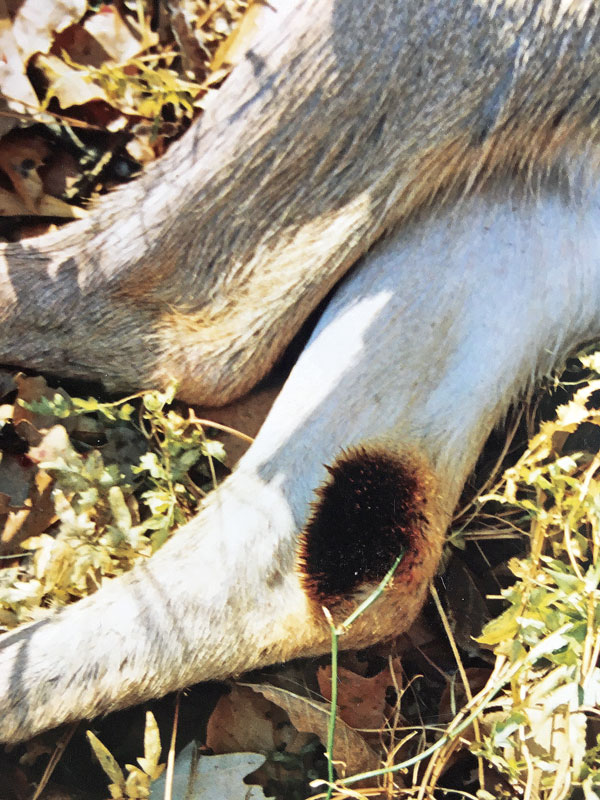
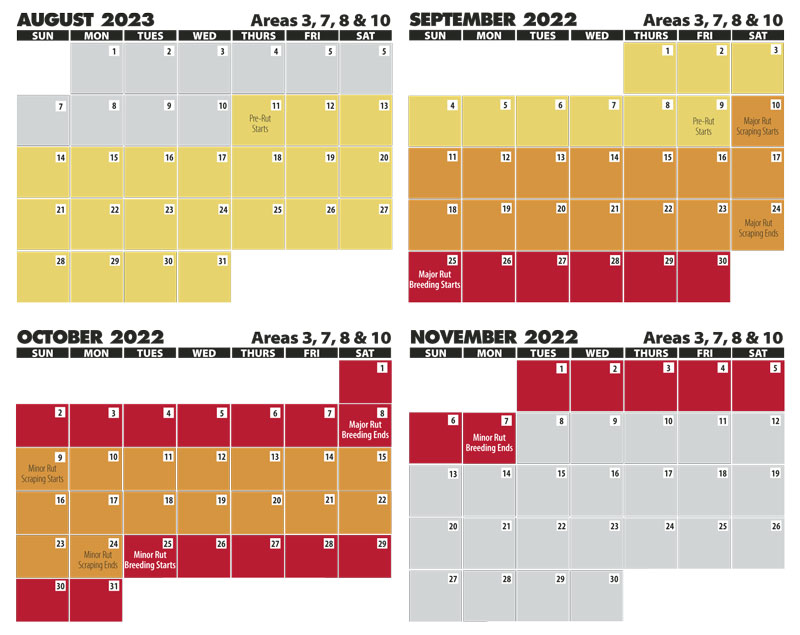 West Bay WMA is always a good area to hunt and last year the early October hunt produced a deer kill per every seven hunter efforts, which is good. The October hunt on Peason Ridge had a deer killed per every 4.5 hunter efforts. This region of the state is best known for waterfowl hunting, but the deer population in these parishes is good as well. They do not produce the true trophy bucks, but will produce a lot of quality adult bucks. The breeding range in these areas is September thru December, but don’t wait until November to start hunting or you may miss out on the best deer movement.
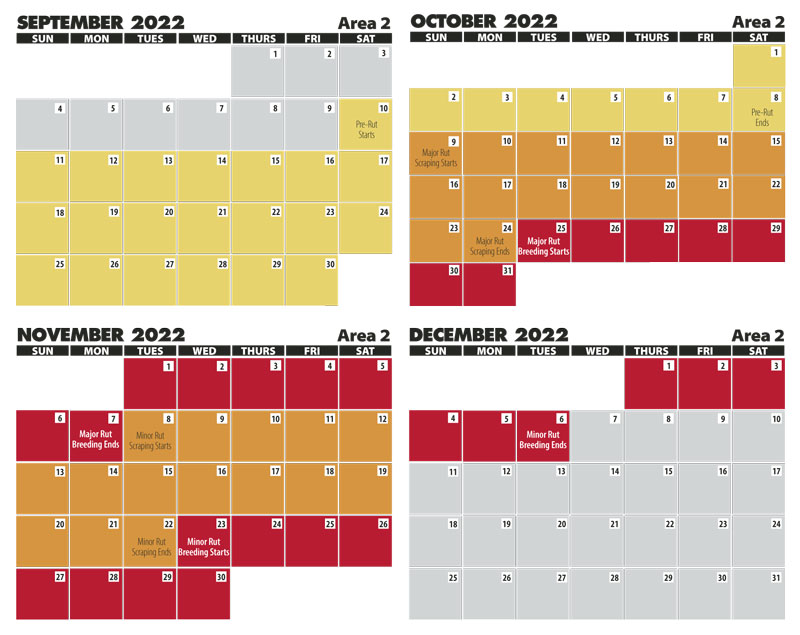 Northwest and Central Louisiana is known as Area 2 and many of these parishes have some of the state’s highest deer kills. Bienville, Union, Claiborne, Natchitoches, Winn, Jackson, Rapides and Webster are in the top 10 deer kill parishes. Bossier, Sabine, LaSalle and Grant are in the top 20. It is evident that there are good deer populations in this region and the major rut occurs in November, so hunting is generally excellent. Many hunters take time off from work on Thanksgiving week, hoping to catch it at its peak over the holidays. The breeding range is October through January, but generally by the end of December, bucks are beginning to drop their antlers. Bodcau and Loggy Bayou WMAs are two great areas to hunt.
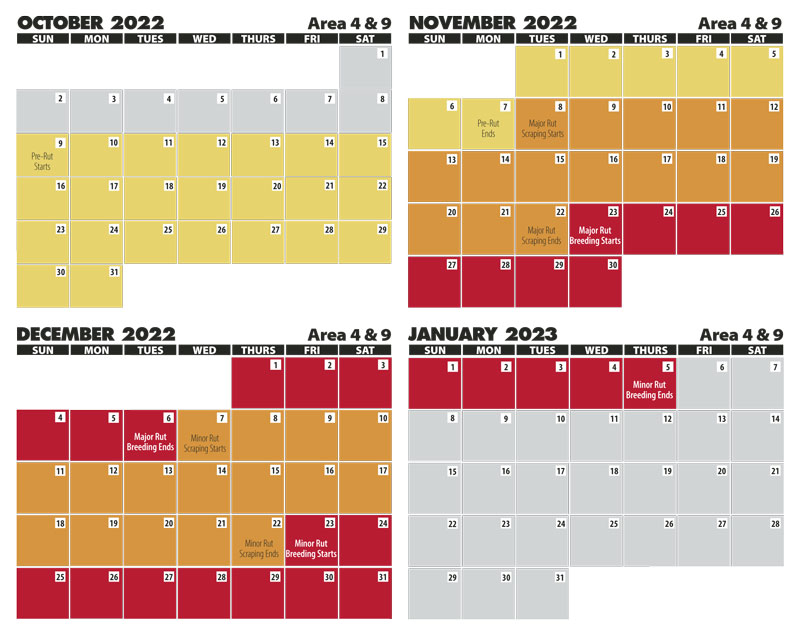 The breeding range for Areas 4 and 9 is November through February. Generally December is the peak month of breeding activity and that is the prediction for this year. For whatever reason, Area 4 has been anointed with a three-deer limit, so hunters must be aware of this. This region of the state has been hit hard by hurricanes and for some reason the biologists at LDWF believe deer numbers are down. However, I would suggest that they need to take a closer look at these parishes and re-evaluate the situation. Deer numbers are not down in East Feliciana and some of the surrounding parishes. Public WMAs are limited in this region and an examination of the WMA harvest data won’t get hunters too excited!