Home Blog Page 95

12 Efficient Deer Tracking Dog Breeds

0

Last Updated on October 20, 2022 by Evan

It is no secret that dogs are the most efficient trackers on the planet. They are very useful for hunts and save the hunters a lot of time and effort.

Here is our rundown of the best deer tracking dogs breeds:

Bloodhound

Bloodhounds are highly efficient trackers and are widely used by hunters to track deer. These scent hounds were originally bred for hunting large game-like deer and boars and are extremely persistent once they catch a scent.

They are also famous for effortlessly pursuing cold trails that other dogs aren’t able to track. This is why bloodhounds are also used by the police to track missing persons and fugitives.

The bloodhound is also the first animal whose evidence is considered legally legitimate in court. They also have a keen sense of hearing which helps them while tracking prey.

Even though they are quite relentless on a hunt, they make very loving and obedient companions to humans. They have a gentle nature and make good pets for families.

Beagle

Beagles are one of the most popular dog breeds as pets. They are also very intelligent and very useful on a hunt. Bred as hunting dogs, they have great tracking instincts and love working.

Beagles have a lot of energy and need adequate training to keep them occupied the right way. They love being stimulated and thus tend to make themselves very useful while hunting.

They have a very loud bark which comes in handy while chasing deer in thick forests. Beagles have short legs , but it does not deter them from chasing fast-moving prey like deer.

Their astute sense of smell has led to them being employed as detection dogs for agricultural imports all over the world.

German Shepherd

German Shepherds are fast, intelligent and highly trainable. Combined with their impressive tracking abilities, these skills make them very adept at tracking animals like deer and foxes.

With a high level of focus and a keen sense of smell, they make very efficient hunting dogs. Distractions do not bother them and they usually finish the job at hand even with difficult circumstances.

They are known all over the world for their vast capabilities. German Shepherds make up a significant population of K-9 units.

With a long history as working dogs, German Shepherds have proven themselves capable of all kinds of work including police work, bomb detection and disability assistance.

Scottish Deerhound

These scent hounds were specially bred for hunting deer. They have an impressive stature and are often mistaken for greyhounds.

Scottish deerhounds are very fast and are capable of chasing prey through rough terrain. This is because they are sighthounds, not scenthounds. They were used to hunt deer by coursing, a hunting method based on speed.

They have obedient personalities and are usually very eager to hunt. Their enthusiasm needs to be put to good use through training and outdoor activities. Deerhounds could turn destructive if they get bored.

Dachshund

Their looks can be deceiving but dachshunds actually make great hunting dogs. Though they were bred to track down and apprehend smaller prey like rabbits and badgers, they can flush deer out of forests or sniff out dead or injured deer.

Dachshunds have a long history as hunting dogs and the urge to track is quite innate in them. Despite their short stature, they have very good endurance. Their only flaw is perhaps their tendency to get distracted.

This problem can be tackled with a lot of dedicated training. Food is a huge motivator for dachshunds, so you might want to keep a lot of treats on hand while training this highly capable dog breed.

What they lack in size, they more than make up for with their impressive sense of smell. In fact, the part of the brain that is responsible for analyzing scents is 40 times bigger in dachshunds than humans.

Plott Hound

Plott hounds are native to North Carolina. They are also the official state dog and serve as K9 deputies in the sheriff’s department. Plott hounds are well built, strong and quite suited to hunt big game like deer.

They love a challenge and do not fear intense activities. Curious and athletic by nature, Plott hounds are widely used as hunting dogs all over the country.

With impressive speed and plenty of stamina, Plott hounds are relentless on the hunt and do not give up until the job is done.

Great Dane

Originating in Germany, Great Danes are one of the largest hunting dog breeds in the world. Deer hunters often use them for their speed and strength.

Their nature is completely opposite to their appearance—they are quite gentle and love company. Though they aren’t really known for their sense of smell, Great Danes are working dogs and have proven themselves useful to deer hunters.

Basset Hound

Basset Hounds are scent hounds bred for hunting small game. They have a very keen sense of smell and have an impressive running speed despite their short legs. They also have great stamina, which helps them on long hunts.

Basset Hounds are very fond of tracking and love hunting, making them enthusiastic partners to hunters. They have a playful temperament and make great pets for families with children.

They have a very independent nature which, while helpful in hunting, could be a problem while training. Owners need to spend a lot of time and energy to make sure their Basset Hounds are trained properly.

Black and Tan Coonhound

The Black and Tan Coonhound is native to America and was bred as a hunting dog. It has great tracking abilities and hunts entirely by scent. It is famous for its success with tracking down cold scents and is frequently used for search and rescue missions.

They are quite large and very efficient in hunting big game like deer. Despite their persistence and tenacity during a hunt, Black and Tan Coonhounds are quite calm and friendly indoors.

They are quite independent, making them efficient hunters. They need a lot of training as they can get a little stubborn, as is typical of hunting dogs.

English Springer Spaniel

English Springer Spaniels make great hunting companions. Though they were originally bred to flush prey out of hiding, they are effective at tracking bigger game-like deer or foxes.

Known as gun dogs, English Springer Spaniels would chase birds into flight, who would then be shot down by hunters. They also retrieved prey, making them very useful to hunters.

They are very enthusiastic and always eager to please, making them easy to train and work with. With amazing stamina, tracking and retrieving abilities, the Springer Spaniel is an amazing tracking dog.

Belgian Malinois

The Belgian Malinois resembles the German Shepherd in both stature and ability—it has a keen nose and is often used as a service dog by the police and the military.

They are very intelligent and extremely loyal to humans. Known for forming deep connections with humans, these dogs are highly trainable and love being engaged.

Their endurance level, strength, smartness and tracking capabilities make them efficient hunters. They have a lot of energy and do not give up the pursuit until they hunt down their prey.

German Shorthaired Pointer

German Shorthaired Pointers are favored due to their expertise in tracking both on land and water. Traditionally a breed hunting, they are quite cooperative and have a strong hunting drive.

They have a high energy level and excel at many activities, making them quite popular at dog sports. Apart from being used as hunting dogs and family pets, German Shorthaired Pointers are also used in search and rescue missions.

They have a playful nature and love being around humans and other animals. It might take a bit longer to train them since they don’t usually reach mental adulthood until they turn at least two years old.

Lion Bite Force: How Strong Is a Lions Bite?

0

With their towering manes, searing stares, and distinctive roar, lions have been the symbol of power for centuries. But just how powerful are lion bites?

The lion has a deadly bite force of 650 psi. While this may seem like a powerful bite force at first, the lions surprisingly have one of the weaker bite forces when it comes to big cats and predators. However, this weaker bite force doesn’t affect a lion’s ability to hunt its prey.

This article will cover the bite force of the lion and how it compares to the bite forces of other big cats in the jungle.

A Lion’s Bite force

The lion’s average bite force has been recorded to be around 650 PSI. When comparing this to a human’s bite force of a mere 150 PSI, this may look extremely strong, but lions have a weak bite force compared to the bigger cats.

A lion’s most substantial bite has been estimated to be close to 1000 PSI. The strength of the bite has to do with many different factors as well. The maturity and age of a lion are essential factors, coupled with the sex of the lion and what teeth it uses.

While female lions are usually the main hunters of the pride, a male lion sometimes joins in to take down larger and stronger prey.

It’s understandable how the lion doesn’t have the strongest bite force, but then the question presents itself, how did the lion rise to be the king of the jungle?

The answer here lies in technique. Lions attack the throat, generally a weaker area of an animal, and don’t require a massive force to kill their prey.

Lion Bite Force Compared

Being the king of the jungle comes with a lot of comparison and competition.

At times, it may be other bigger cats or hyenas posing competition and trying to fight the lion for power or a dead carcass of prey.

Other times, it may be an article comparing a lion’s bite force to other predators in the jungle.

1. Bite Force Compared To Tigers

Tigers are one of nature’s finest and deadliest predators in the world. Ferocious and ruthless when it comes to hunting its prey.

A tiger’s bite force is estimated to be an average of 1050 psi; that is almost similar to the bite maximum bite force estimated for a wholly grown male lion which is 1000 psi but far greater than their average.

The superior bite force of a tiger makes it understandable why a tiger prefers hunting alone because, with a bite force that strong, few animals can survive a tiger’s attacks.

2. Bite Force Of a Great White Shark

With the release of the highly acclaimed movie Jaws in 1975, the great white sharks became famous as the big bad predators of the ocean. It would be fair to compare the bite force of a lion with the great white shark.

Unfortunately, accurate measurements are difficult to come by, with some estimates as low as 625 psi and others as high as 4,000 psi.

If you thought measuring the bite force of a lion was difficult, try adding the underwater element into the mix.

3. Bite Force Of a Dog

Dogs are known as man’s best friend, but their bite force is dangerous. Generally, dogs can bite with a force of 325 PSI.

However, some bigger breeds of dogs, such as Mastiffs, German Shepherds, and Rottweilers, have a bite force closer to 500 PSI.

Although this might not feel that strong at first, a dog’s smaller size makes it difficult for them to have a stronger bite force.

Final Thoughts on Lion’s Bite Force

The lion is a highly magical creature that oozes class with every feature it possesses. It is distinguishable, and being the jungle king comes with many scrutinies.

A lion has a bite force of 650 psi, and although it may not be as powerful as the bite force of other big cats, it is essential to realize that the lion is efficient with its jaw and bite force.

FAQs

All of a Sudden, My Deer Have Disappeared

0

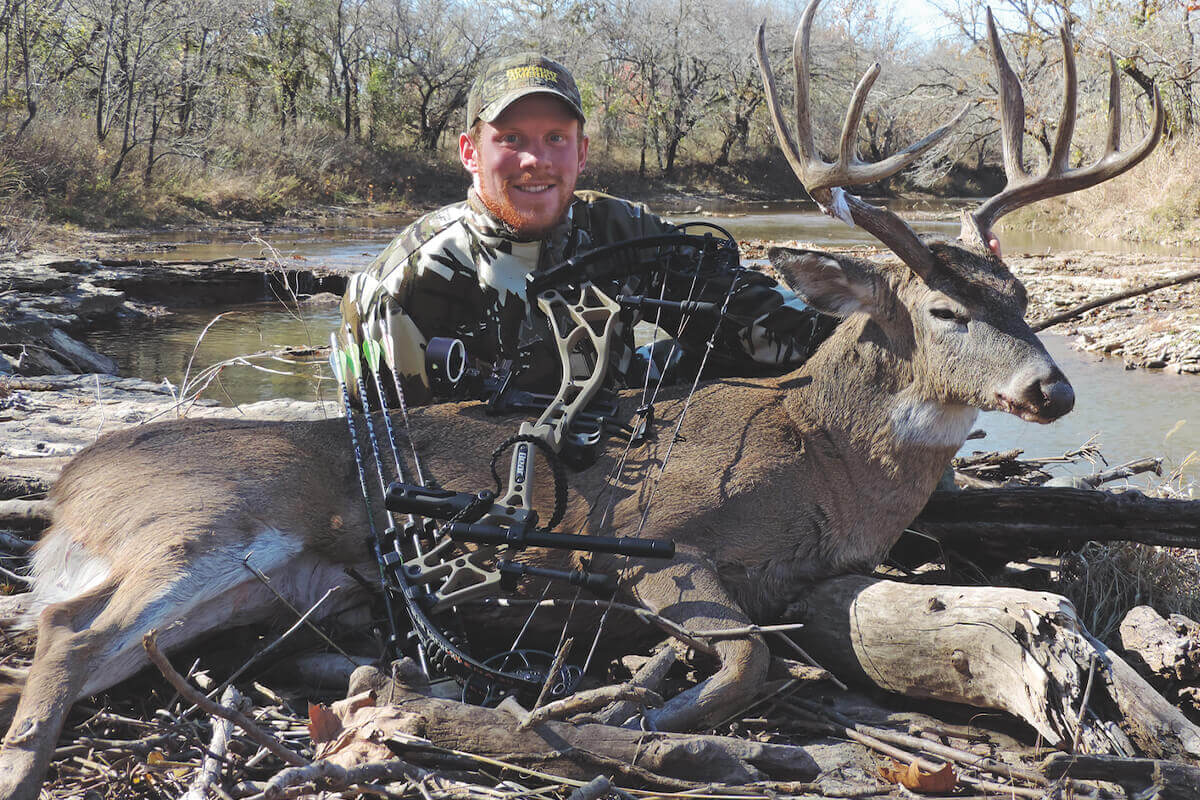
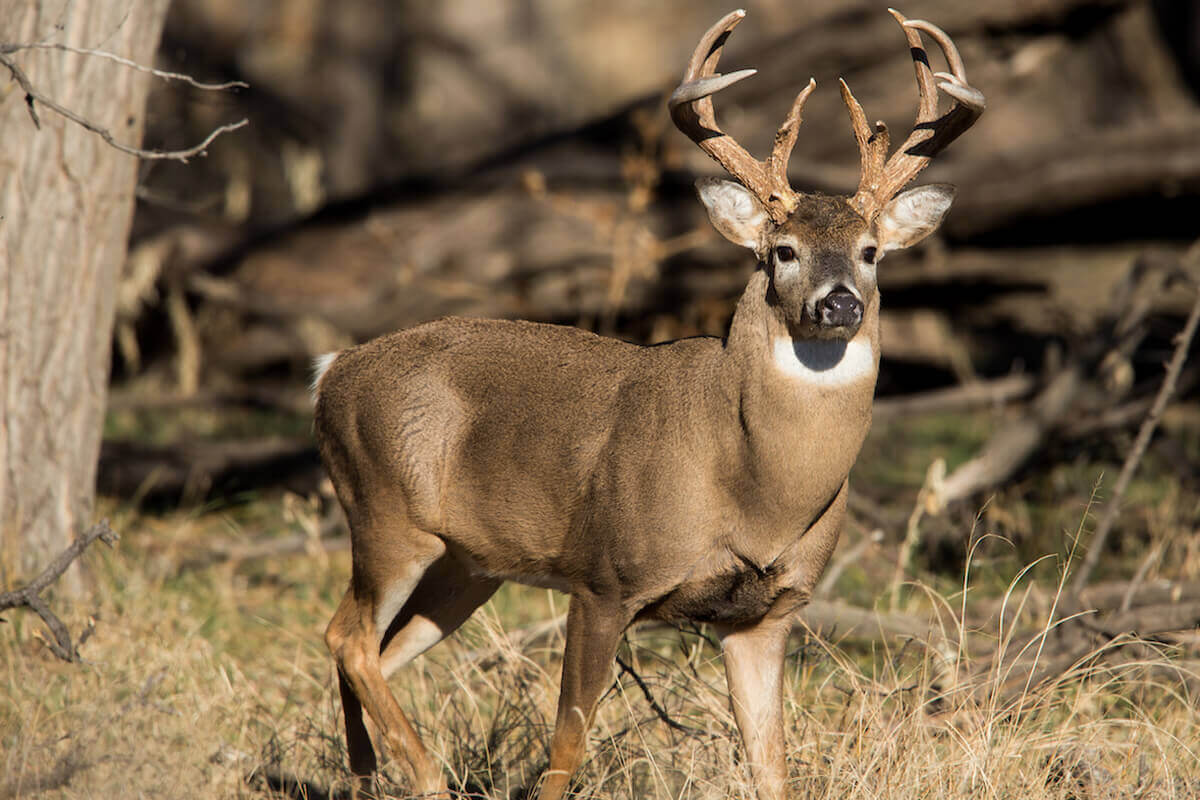
Big whitetail deerNo where to be seen…

Right when it comes time to hunt, all those deer you have been seeing the past few weeks…

Gone!

All of a sudden, they have disappeared.

Well, don’t worry. There are a number of explanations for why your deer have vanished.

Checkout the list below, hopefully it can help you locate those elusive deer.

7 Reasons Why Your Deer Might Have Disappeared

1. Heavy Hunting Pressure

Here’s the deal, if you are hunting an area that has seen a lot of traffic from other hunters, don’t be surprised if the deer are scarce.

Deer have evolved for thousands of years to avoid prey and survive. A lot of human hunters in the area is very likely to drive the deer elsewhere.

Heavy traffic

This happens every year in the week after opening day when truck loads of hunters wear out the dirt roads through popular public land.

You basically have 2 options:

  1. Hunt somewhere else (private land?).
  2. Hike your way in away from the truck loads of road hunters.

2. Weather Change

If you have recently experienced a major weather change, specifically rain, temperature, or pressure, then those deer that have been behaving one way for weeks may decide to change up their behavior.

Rapid changing weather

Your best bet in this scenario is to follow their lead and change up your behavior as well.

A lot of times when this happens you will see deer that have been out in the open head for cover. So naturally what you want to do is start hunting in thick cover. For more tips, checkout our article on how to hunt deer in thick woods and brush.

3. Lack of Food Source

Just like us humans, deer prefer some types of feed over others. When their favorite food source starts running scarce, you can expect them to switch it up and looking for a different area to feed.

One way you can prevent this in the future is to plant your own feed plot.

Deer food plot

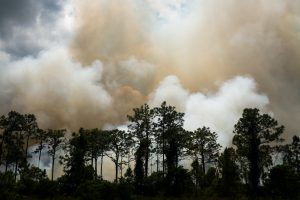
4. Wild Fires

Anyone who lives out on the west coast knows, these last few years have seen a major uptick in wild fires. As a result, insane amounts of smoke and ash have been dumped into the air. We personally have hunted areas adjacent to wild fires and the smokes seems to cause a deer to change behavior.

Wild fire

Probably due to thousands of years of evolution, deer have learned to be alerted by the smell of smoke and may migrate as a result. Be aware if you are planning to hunt a smoky area near a fire, the deer may be more scarce than usual.

5. Predators

Deer are programmed to survive. It is what they spend every day of their life trying to do. They are highly attuned to predators in the area and if they sense they are in danger, they will not hesitate to migrate elsewhere.

Baby deer even use their spots for concealment to hide from predators.

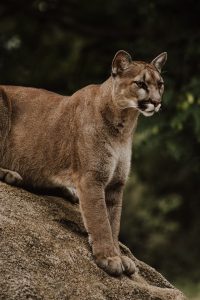
The two main predators that are likely to cause this are bears and mountain lions.

Mountain lion

Mountain lions are notorious for causing deer to disappear. Let’s just hope that the deer decided to leave the area and didn’t have a run in with a cat.

6. Nocturnal Shift

Sometimes a shift in temperature can cause deer to alter their sleep routine. If you are doing most of your hunting at night, try switching it up and hunting early morning or vice versa.

Full moon

7. Late Season

If you are hunting late in the season and don’t seem to be seeing as many deer as you did earlier in the season, it is possible other hunters may have beaten you to the punch. This may only apply if you are hunting public land but it is still a possibility and something you should consider.

Summary

Nothing is more frustrating than when you are anticipating some good hunting and don’t end up seeing anything. We hope the list above can help you pinpoint why your deer seem to have disappeared. With any luck, you will be back on their trail in no time. For those of you looking for more help, checkout our article on deer hunting tips.

Break Barrel Air Rifle Oil

0

Introducing Break Barrel Air Rifle Oil: Enhance Your Shooting Performance with Superior Lubrication. Designed specifically for break barrel air rifles, our advanced formula ensures smooth and consistent operation, enhancing accuracy and longevity. Say goodbye to friction and wear, as our high-quality oil reduces noise and recoil while protecting vital components. Elevate your shooting experience with Break Barrel Air Rifle Oil – the ultimate choice for every avid shooter.

break barrel air rifle oil

break barrel air rifle oil

When it comes to maintaining your break barrel air rifle, using the right oil is crucial. Break barrel air rifles require regular lubrication to ensure smooth operation and extend their lifespan. Break barrel air rifle oil is specially formulated to provide superior lubrication and protect the internal components of your rifle. It helps reduce friction between moving parts, preventing wear and tear, and ensuring consistent performance shot after shot. Whether you are a seasoned shooter or a beginner, investing in high-quality break barrel air rifle oil is essential for optimal maintenance.

One of the key benefits of using break barrel air rifle oil is its ability to prevent rust and corrosion. As break barrel air rifles are often used outdoors, they are exposed to various weather conditions that can cause metal parts to deteriorate over time. Applying a thin layer of oil on the metal surfaces creates a protective barrier against moisture and other elements, significantly reducing the risk of rust formation. Regular application of break barrel air rifle oil not only keeps your rifle looking great but also ensures its longevity.

In addition to lubrication and rust prevention, break barrel air rifle oil also helps improve overall accuracy. By reducing friction between critical components such as the piston and spring, it allows for smoother cocking and firing cycles. This translates into more consistent power output and enhanced precision with each shot. Whether you use your break barrel air rifle for target shooting or hunting, utilizing the right oil will contribute to better performance and increased enjoyment of your shooting experience.

In conclusion, using the right oil for your break barrel air rifle is crucial for its maintenance and longevity. Regular lubrication with high-quality oils will ensure smooth and efficient performance, preventing damage to the mechanism. Remember to follow manufacturer guidelines and consult experts if needed. Keep your break barrel air rifle well-oiled for optimal shooting experiences.

The Best Dog Crates for Car Travel 2024

0

Like many unknowing dog owners, I used to allow my dogs to ride in the back seat or hitch of the car without worrying about their safety. They lay down and were calm, so I never saw a need to use a dog crate for car travel.

When I got Sitka, however, there was no sitting calmly in the car while I drove.

Sitka is anxious in the car, and after the first ride involved him lunging at trucks and motorcycles, pacing back and forth, and whining the entire time, I knew I needed a solution to keep us safe and sane.

Initially, I secured him using a harness system from Kurgo that is crash-tested and kept him from pacing, but he’d spin and tangle himself in the straps resulting in needing to pull over to untangle his legs periodically.

From there, I decided to look into a kennel and began intense research to find the best dog crates for car travel. I asked friends, polled my Instagram audience, read reviews, and emailed brands to create a list of potential candidates.

In this post, I feature the dog crates that I considered purchasing, which means they met the criteria I will explain below. I explain why I chose the one that I did and provide suggestions for why other brands might work best for your car situation and dog.

Don’t feel like reading all the research and just want to know my top pick?This is the crate I went with for myself.It’s one of the more expensive dog crates on the market, but it is worth every penny because I fully believe that in the event of an accident, Sitka will survive.

Why Should a Dog be in a Crate in the Car?

Even if your dog was like my first dogs and settled calmly in the car, it’s a good idea to secure them in a dog kennel in the event of a car accident.

Here are the three main reasons:

Safety

Think about it, we buckle up every time we get into the car, but many dog owners don’t often consider securing their dog. In a crash, unsecured dogs will become projectiles and can result in serious injuries and death.

Security

If you are injured in a car accident, your dog will be in a safe and secure spot where they cannot run away or bite anyone.

Restraint

When I drove with Sitka the first time, I was certain we would get into an accident. His movement and whining was so distracting that I couldn’t concentrate on driving.

In 2019, Volvo conducted a safety study that determined that unrestrained dogs led to significantly more unsafe driving behaviors, distracted driving, and increased stress for both the human and the dog.

Image from Volvo Study: Unrestrained Pets Increase Stress and Distraction on the Road

In the Event of a Car Accident

In the unfortunate case that you are in a car accident, there are a few preparation steps to take to ensure the utmost safety for your pet.

This is especially important if you are injured and unable to tend to your dog after a crash.

Secure a laminated form on top of or inside of the kennel with the following information:

  • Your first and last name
  • Address
  • Phone number
  • Emergency contact for your dog who is authorized to make choices on your behalf
  • Veterinarian
  • Any allergies your dog may have
  • Other pertinent information about your dog

Keep a spare leash and a muzzle in the car and include instructions about how to remove your dog from the kennel and where to take them until you are able to pick them up (i.e. with a friend or e nearest veterinarian).

When working with emergency personnel, if you are able to, communicate to them that you will be the one to remove your dog from the kennel.

I once saw a video posted on Instagram where a dog jumped out and started to run away when the firefighters removed him from his crate. Thankfully, he had his e-collar on and was able to be recalled back.

In stressful situations, dogs can bite or run away. Do as much as possible to prevent that from happening by communicating as best you can with emergency crews and in writing.

What to Look for In a Dog Crate for Car Travel

When deciding on the right dog crate for your needs, there are several factors to take into consideration that will ensure the best fit for your dog and car, and still meet safety requirements.

Size and Fit

When you measure your dog for the crate, you want a snug fit. Too much excess space means that they can become injured due to increased impact from a crash.

You also don’t want it too snug because then your dog won’t be able to move around to get comfortable.

Since most of the kennels in this article are not available to purchase in stores, testing fit is not an option. The best plan is to provide your dog and car’s measurements and dog’s weight to the manufacturer and work with them to determine best fit.

Material

To best protect your dog in the car, look for a dog crate that is made from a single piece of molded polyethylene. A single piece means that there are no weak points in the kennel that can fail in an impact.

Materials to avoid include:

  • Wire
  • Fabric
  • Folding crates
  • Traditional plastic “clamshell” dog crates.

Crash-testing

The Center for Pet Safety (CPS) conducted a series of crash tests for dog crates in partnership with Subaru of America in 2015. CPS evaluated crates that cost between $150 and $1000 and put them to a series of tests, including:

  • The use of dummy dogs weighing 75 lbs
  • Conducted two different crash test with rear seat folded in one and up in the second
  • Simulated crashes at speeds of 30 mph

You can see the test results from the report here.

There are many dog crates out there that claim to be crash-tested, but because there is not the same requirement for testing the safety of dog crates as there is for cars or child seats, purchasers need to do their homework.

Since the most recent CPS test was performed in 2015, there are likely suitable kennels that didn’t make the list or new additions to the market that weren’t tested.

Email the manufacturer to ask about their crash testing protocols and read reviews from people whose dogs were in car crashes to validate the claims.

Strap Loops

Some dog crates come with strap loops that allow you to secure the kennel into your car. This is especially important for those whose dogs will ride in open bed trucks.

Different manufacturers may recommend different types of straps to tie down the kennel. Check in with them before purchasing if you plan to secure the kennel in your car.

Ventilation

It can get hot and stuffy inside of a plastic box, so when you’re looking for a crate for your dog for the car, make sure that it has good ventilation.

This means there are plenty of air holes on the sides that provide cross breezes.

Sizing Your Dog Crate for the Car

Depending on the kind of car you have and your dog’s size, different crates will fit differently. Further, placement depends on where your car’s crumple zones are located.

For example, the front and rear of many cars feature a crumple zone, designed to protect passengers, but that’s not where you want the kennel to sit.

You’ll want to check with your car’s manufacturer to determine where the crumple zones in your specific car are located. Next, measure to ensure the kennel will fit in the designated safe location.

Best dog crates for car travel Pinterest Image

The Best Dog Crates for Car Travel

I conducted deep research on several dog crates for car travel before making a decision. I visited several different websites and combed through reviews and talked to my community on Instagram to get their take on different kennels.

Some key features to look for include:

  • carrying handles
  • air vents
  • warranties
  • stackability for multiple dogs
  • tie down options
  • weight

A quality dog kennel that will protect your dog in the event of an accent is not cheap and you get what you pay for in most cases.

The typical wire cages or clamshell airline kennels are not suitable for safety in the event of a car crash. They will not protect your dog.

After all of my research, these are the brands that I considered, including the one I ultimately chose.

The Gunner Kennel is my top pick for the best dog crate for car travel.

Top Pick for Dog Crate for Car Travel – Gunner Kennels

Gunner is an industry leader when it comes to dog crates the car. They are the only crate that passed in the 2015 CPS study and have a 5-Star Crash Test Rated designation from the organization.

Practically indestructible, Gunner tested the kennels by tossing the crate off a 200-foot cliff, dropping a 630-lb sled on it, shot it with a shotgun, and applying 4,000 lbs of pressure to it. All tests resulted in very little damage.

This is the kennel I use for Sitka currently. You can see my Gunner Dog Crate review here.

If you can’t afford a Gunner – Dakota 283

When I was fist looking into purchasing a dog crate for the car, I initially went with the Dakota G3 Medium. Although it’s not crash test rated, by CPS, the company has don extensive testing on the kennel.

Here’s what they said when I reached out to ask:

“We have done internal testing of our kennels through a variety of impact tests including 25 ft drop testing for impact and durability. Our testing drives us to test to failure on most tests so that we know limitations and strengths.

Additionally, and most important (sic) is that our kennels have been involved in several rollover accidents with the dog surviving uninjured. This is the ultimate test and testimonial to our design and performance.”

It’s important to consider that Dakota Kennels came out after CPS conducted the safety studies.

I chose the the Dakota G3 medium because it seemed like a good mix of the Ruffland and the Gunner Kennel, with a mid-range price tag. The military strength crate is made from a single piece of rotomolded Polyethylene that resists extreme impact.

I did like this kennel and felt very confident that it would protect my dog in the event of an accident. It was roomier than the Gunner, which isn’t ideal for car travel. It’s also taller, so blocked my rear vision more than the Gunner.

Dakota 283 generously provided a discount code for Long Haul Trekkers followers. Get 10% off your order with code SITKA10 at checkout.

Best Budget Pick – RuffLand

RuffLand Kennels (formerly known as Ruff Tuff Kennels) are the one of the most popular kennels for car travel. They’re very affordable and made from a durable one-piece roto-molded construction that can withstand heavy impact.

They were tested in the CPS crash test and performed well when placed in the rear cargo area against the rear seatback, however in the test without the seatback for reinforcement, the door completely separated from the crate and the dummy dog was not retained.

You can read more about the testing here.

RuffLand kennels are tapered to ensure full breathability, even with gear stacked right up against the crate. The brand also makes tie downs specifically for their kennels to ensure further security in the car.

Best Customizable Dog Crate for Car Travel – MIM Variocage

Regarded among the safest crash-tested dog kennels for car travel, Sweden-based MIM Variocages are the only dog cage in the world certified crash-tested for front, rear, and rollover impacts.

The brand will provide a free replacement in the event of an accident.

Variocages can be tailored to various vehicles and come in 4 models with over 14 adjustable sizes. The cages are designed with a crumple zone, similar to that of cars and feature a locking mechanism.

Do you use a dog crate for car travel?

Have you been in a car accident with your dog and have any tips to share?

Gettin’ Wild: Hickory Nuts

0

By DR. DAVID COZZO

RTCAR PROJECT DIRECTOR

I once asked a fellow here in Cherokee why I did not see many hickory trees and he said, “You won’t see many above the road.”

His point was hickory trees make the best firewood and a good tree would be cut for winter’s fuel. It is also a very heavy wood, so hauling one down the hill is a lot more sensible than hauling one up hill. Hickory has tough, durable wood which had a wide range of uses, such as tool handles, chair parts, and basket handles. The inner bark of hickory is good for finishing basket rims, and weaving a chair seat from that same inner bark will last for generations. But this series is about wild foods, and with that in mind there is a great reason to encourage more hickory trees: the nuts.

Hickory nuts are a highly nutritious and tasty food. They contain nearly as much protein as chicken and are a great source of minerals, especially calcium, magnesium, phosphorous, and potassium. They are also a good source of folate (folic acid), one of the vitamins important to expectant mothers. Hickory nuts are high in fat, but it is really good fat. The bulk of the oil consists of monounsaturated fatty acids, the beneficial kind found in olive oil and avocadoes. Oils high in monounsaturated fatty acids tend to lower LDL cholesterol (the ‘bad’ cholesterol), prevent heart disease, and decrease insulin resistance, making hickory nuts a good food for diabetics. Even though they are high in fat, nuts are also considered great food for dieters. The dense nutrients and fiber tend to satisfy hunger longer, lessening the urge for a snack. But be careful you don’t overdo it or you will lose those good effects.

If you have ever cracked hickory nuts, you know how much work it can be. The shells are very tough and picking out the nut meats is time consuming. One study determined it would take around eight hours of work to get enough calories to meet one person’s daily needs. However, this is where native technology made the process more efficient. Hickory nuts were cracked and the largest part of the shell removed. The remaining nut meats and pieces of shell were placed in the corn mortar (kanona) and pounded into a paste. The resulting paste was rolled into a large ball that was placed in boiling water to make a soup broth (kanuchi). The shells that remained in the paste would separate from the paste and sink to the bottom of the pot. So how much more efficient was the mortaring process than cracking and picking out the nut meats? The same study mentioned above found that using the corn mortar provided from 12 to 35 times more energy (depending on the type of hickory nut) than just cracking and picking. Now that’s good technology! And the taste? I once had hickory nut milk made in a blender. It had a great flavor and it was like sipping the finest cream. I can only imagine how good that soup tasted.

Iowa's Legendary World Record

0

By Duncan Dobie

Taking a world-record buck is hard under any circumstances. Doing so with a 45-pound recurve and wooden arrows is even more remarkable.

Such was the situation in 1962, when then-34-year-old Lloyd Goad shot his 14-pointer in southern Iowa. At the time, the deer was the top bow typical of the modern era, at 197 6/8 net Pope & Young points, and he’d wear the crown for three years.

Lloyd died on Dec. 20, 1993, and remarkably little has been written about his great whitetail. The following was taken from his handwritten account of the historic hunt.

“I started hunting squirrels with a neighbor when I was about 14 years old,” Lloyd wrote. “Kenny was several years older than me. All of his close hunting buddies had been called off to service during World War II, but he was unable to go because of a heart condition. He was one of the finest hunters I ever knew.”

After getting married, Lloyd found a new hunting partner in his wife’s brother, Donald. They enjoyed many trips to hunt small game near the Des Moines River, in an area that later became part of Red Rock Lake.

Around 1953, the Conservation Commission opened a special deer season with a limited number of permits for a two-day shotgun hunt. It was a new experience for both men.

“Gradually our enthusiasm for deer hunting in Iowa spread,” Lloyd wrote. “We didn’t fill our tags each year, but for about six or seven years we had some very rewarding hunts.

“During the late ’50s, more and more shotgun hunters began to invade our territory,” he noted. “About that time, several of the original bowhunters in our area brought in the biggest bucks I’d ever seen! I decided the challenge of bowhunting for deer was something I wanted to try.

“Midway through the 50-day 1961 bowhunting season, I purchased some hunting equipment from the closest archery dealer around, a man named Elwood Stafford, who lived in Albia, Iowa,” Lloyd noted. “I bought myself a 45-pound York Crescent recurve bow and some cedar shafts tipped with Hill’s Hornet broadheads.

“Being a veteran bowhunter himself, Elwood was very helpful in showing me some of the fundamentals of bowhunting,” Lloyd noted. “I knew I should do a lot of practicing, so I acquired several bales of straw from a farmer. I placed them against the lube room wall of the service station (which Lloyd ran), along with several layers of cardboard.

“The longest distance I could get from the target without running the risk of having someone walk in front of an arrow was about 40 feet. Studying this distance from a gun hunter’s perspective, I said to myself, ‘This’ll be a cinch!’ But the many scars on the cement block wall were grim reminders of the misses and broken arrows that resulted from my first few practice sessions. After several days, though, I began to get the feel of a decent release, and I started shooting some reasonable groupings.”

With less than two weeks left in the 1961 season, Lloyd headed for the Monroe County woods. Hunting on the ground, he got a shot at a button buck — but the arrow sailed about four inches over the deer’s shoulder. Days later, Lloyd missed a forkhorn walking broadside at about 20 yards. That arrow deflected off a tree limb.

Although disappointed, Lloyd was now hooked on bowhunting. “Those two misses gave me more of a thrill than practically all of my shotgun kills,” he wrote.

Lloyd then had two more misses during the early weeks of the 1962 season. Little could he know that his next shot — only his fifth at a wild deer — would bring down one of the greatest typicals of all time.

“When the last day of the ’62 archery season appeared on the calendar wall at the service station — Dec. 2, 1962 — I was still without a deer,” Lloyd wrote. “I resolved to take the entire day off and hunt all day long, if necessary.

“The day began pretty much like any other — up early, a good-luck wish from my wife, Loretta, and I started on the 18-mile ride to my stand with the windows and vents open on my pickup to help rid my clothes of all household odors. Before heading into the woods, I applied a liberal dose of buck lure on the sleeves and legs of my camouflage suit and a little extra on my cap for good measure.

“To a large degree, the good fortune I was about to experience was due largely to several outings I had shared with a good friend named Paul Pearson,” Lloyd wrote. “Paul had been one of the best wolf hunters in southern Iowa during his younger years, and he taught me a lot about reading the woods and looking for deer sign — especially about trails and crossings. Since most bowhunters hunted on the ground in those days, my preferred method was to set up near a major trail not far from a little-used road crossing. You could get there quickly and quietly without spreading a lot of scent in the woods, and I found that deer liked to use these trails.

“When I reached the area I intended to hunt, I met a hunting buddy, Bob DeMoss, who planned to do some squirrel hunting in the same general area. I also ran into two other bowhunters. One had shot a doe the evening before, and he was back to look for it. He planned to continue his search in an area just north of where I wanted to hunt. His friend said he would cover a trail to the west, in case something was chased out.

“Bob decided to hunt squirrels in the timber on some state forest land just south of me across a dirt road. So I decided to hunt a well-used trail not far from the road — pretty much in the middle of all this activity — in hopes that something might happen.”

Lloyd quietly slipped into a small, triangular patch of woods near the right-angle intersection of two dirt roads. He took a stand next to a large elm not far from a fencerow that ran from one road to the other.

Hunting conditions were perfect. The area was cloaked in a heavy mist, the kind big bucks love to sneak around in. Lloyd barely had time to pick his spot before he heard a noise coming from toward the road.

“I took a peak around the elm, and there he came — slipping through the wild plum sprouts and sumac bushes with his h

ead down. He had so many points on his head that I couldn’t distinguish his antlers from the limbs of the bushes. My heart started pounding so hard I thought he must be deaf not to hear it,” Lloyd recalled.

“He walked up to the fence and stopped behind some brush not 20 feet away. I was behind the tree, and he couldn’t see me trembling. I could have taken a shot through a small opening in the brush at that time, but the experience of four previous misses had taught me that it was simply too risky. I waited.

“He just sort of melted over the fence with no effort. My bow was already in position, and all I had to do was pull it back. When I did, he stopped and looked straight at me at a distance of 18 steps. He was already beginning to whirl around and go back into the brush as I released.”

Lloyd waited a half-hour and then eased back to the truck. He met Bob a few minutes later and showed him the buck’s enormous tracks in the road crossing. Lloyd returned four hours later with friends, and they soon found the buck. Hit in a leg artery, he’d gone less than 150 yards.

“He carried 14 points and weighed 224 pounds field dressed,” Lloyd beamed. “I couldn’t have planned a more perfect ending to any season!”

This trophy had an almost perfectly symmetrical 7×7 rack, and at 197 6/8 typical, he was an easy archery world record. His mark fell three years later, when Mel Johnson arrowed his 204 4/8-inch typical in Illinois. That buck remains No. 1 in P&Y.

In 1986, Curt Van Lith arrowed a huge 11-pointer in Minnesota, tying Lloyd’s buck for No. 2 in P&Y. Their deer still share that spot, though they figure to drop with confirmation of the 203 3/8-inch Hubert “Tiggy” Collins buck, taken in Saskatchewan last fall. (See the February and August issues.)

Lloyd kept bowhunting for many seasons after downing his Iowa record. He was often asked how it felt to have to settle for shooting bucks smaller than one he’d already taken.

“Every deer is a new experience,” Lloyd would reply. “And every shot is a challenge. Not every deer will make the top of the record book, but they all make my book — bowhunting pleasure!”

Once one of Larry Huffman’s Legendary Whitetails, this giant now is in the “King of Bucks” collection at the American National Fish & Wildlife Museum in Springfield, Missouri. For more on the Goad buck, visit legendarywhitetails.com.

6.8 Western vs 6.5 Creedmoor: Is the 6.5 Already Obsolete?

0

6.8 Western vs 6.5 Creedmoor ammo

The 6.5 Creedmoor is beloved by many for its long-range shooting capabilities.

However, the 6.8 Western recently emerged as a worthy contender to dethrone the 6.5 as everyone’s favorite cartridge.

Is that possible?

When comparing the 6.8 Western Vs 6.5 Creedmoor, which one comes out on top?

Let’s find out.

6.8 Western Vs 6.5 Creedmoor

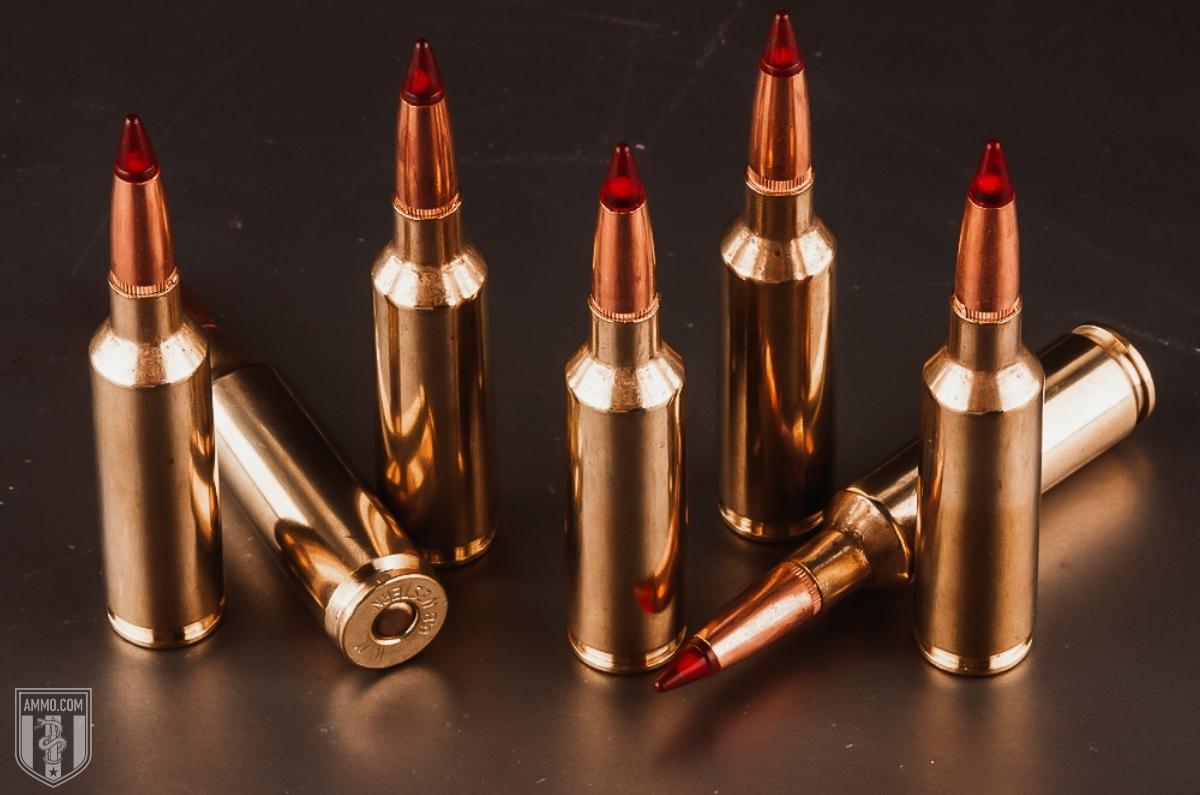
The 6.5 Creedmoor cartridge and 6.8 Western cartridge look similar to each other and the 270 WSM; in fact, if you’re not paying close attention, it would be easy to mix them up.

However, don’t let their similar appearances fool you into thinking they perform exactly the same.

We’ll walk through both calibers regarding their performance and specs to decide a winner for each category.

At the end of the article, we will count the winner of each category to determine a winner.

Cartridge Specs

As I mentioned, the 6.8 Western round and 6.5 Creedmoor round have a similar appearance, but there are noticeable differences if you know where to look.

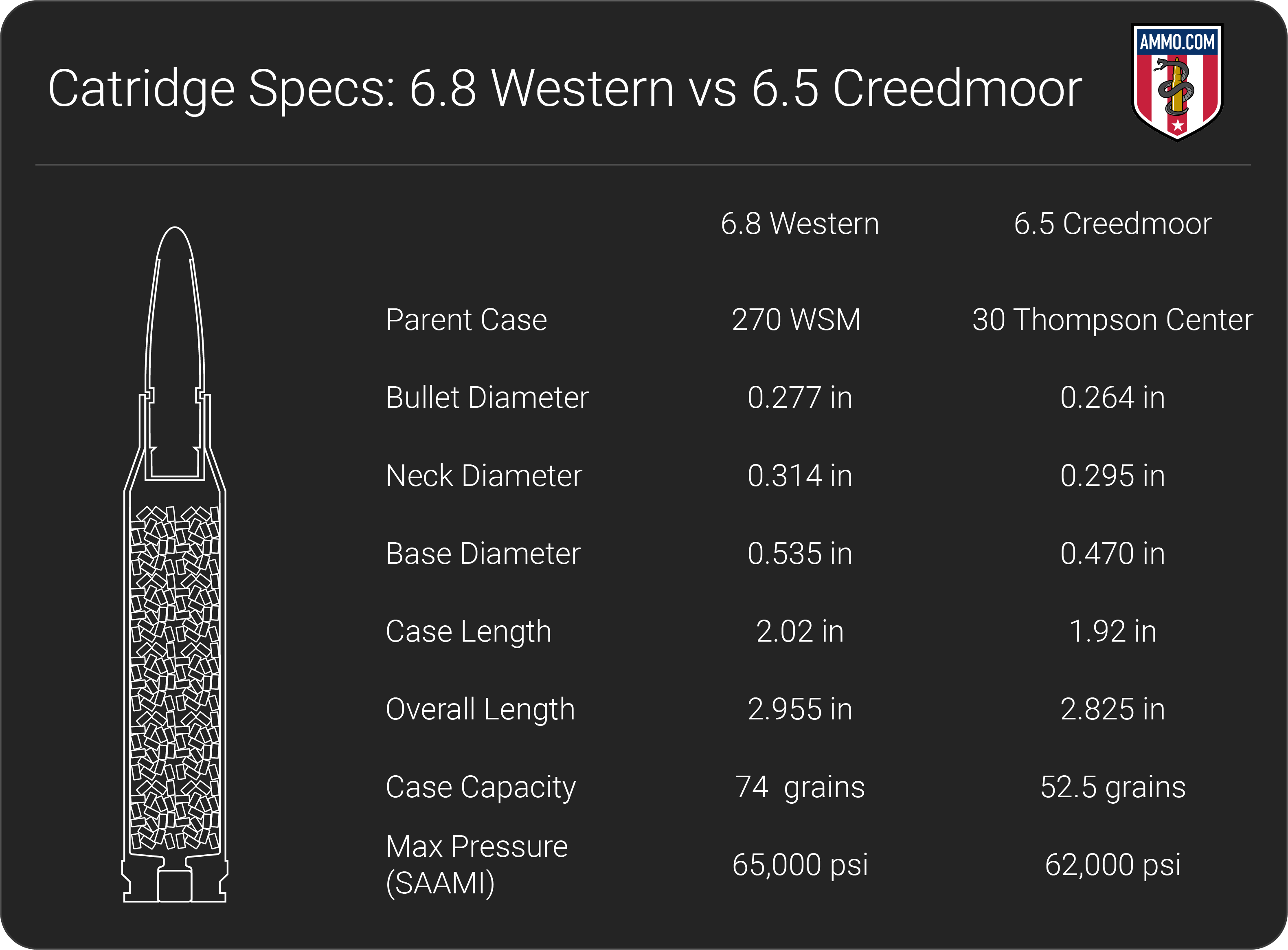
Let’s start with the bullets; the 6.5 Creedmoor uses a .264″ bullet while the 6.8 Western bullet is .277″.

The larger 6.8 Western bullet typically comes in 165-grain – 175 gr. It’s also offered in a 130-grain bullet.

The typical 6.5 Creedmoor bullet ranges in weight from 120 gr to 147gr.

The 6.8 Western has a case length of 2.02″ and a cartridge overall length (COAL) of 2.955″ which is slightly longer than 2.86″, the traditional definition of a short-action rifle cartridge.
6.8 Western vs 6.5 Creedmoor dimension chart

The 6.5 Creedmoor has an overall length of 2.825″ with a case length of 1.92″.

The shoulder angler of the 6.8 Western is 35-degree, while the 6.5 Creedmoor is 30-degree.

The 6.5 Creedmoor has a smaller rim diameter of .473″ than the .535″ rim diameter of the 6.8 Western.

It makes sense that the 6.5 Creedmoor has a smaller case capacity of 52.5gr and maximum load pressure (SAAMI) than the 74.0gr of the 6.8 Western. 62,000 psi for the 6.5 Creedmoor and 65,000 psi for the 6.8 Western.

6.8 Western Recoil Vs. 6.5 Creedmoor Recoil

As a young shooter, I was hesitant to shoot a gun with a lot of recoil. As I’ve matured, I have learned to handle the recoil better, although I’m not an expert marksman.

The lighter the recoil the easier it is to be more accurate.

Recoil still matters to me because I enjoy shooting a lot. If I’m at the range, I prefer not to come home with a bruised shoulder.

While I’m hunting, felt recoil doesn’t matter as much because my adrenaline is usually pumping, but I don’t want a rifle that will knock me out of my tree stand! And if you want an enjoyable hunting experience this fall, make sure you stock up on Hornady 6.5 Creedmoor hunting ammo and bring home the buck of a lifetime.

Felt recoil is determined by several factors, including but not limited to bullet weight, gun weight, recoil pad, and how well you shoulder the rifle.

The 6.8 Western has 30.1 ft-lbs of felt recoil, while the 6.5 Creedmoor only has 15.63 ft-lbs of felt recoil.

The 6.5 Creedmoor nearly has half the recoil of the 6.8 Western, so if you’re sensitive to recoil, the 6.5 Creedmoor is the best option for you.
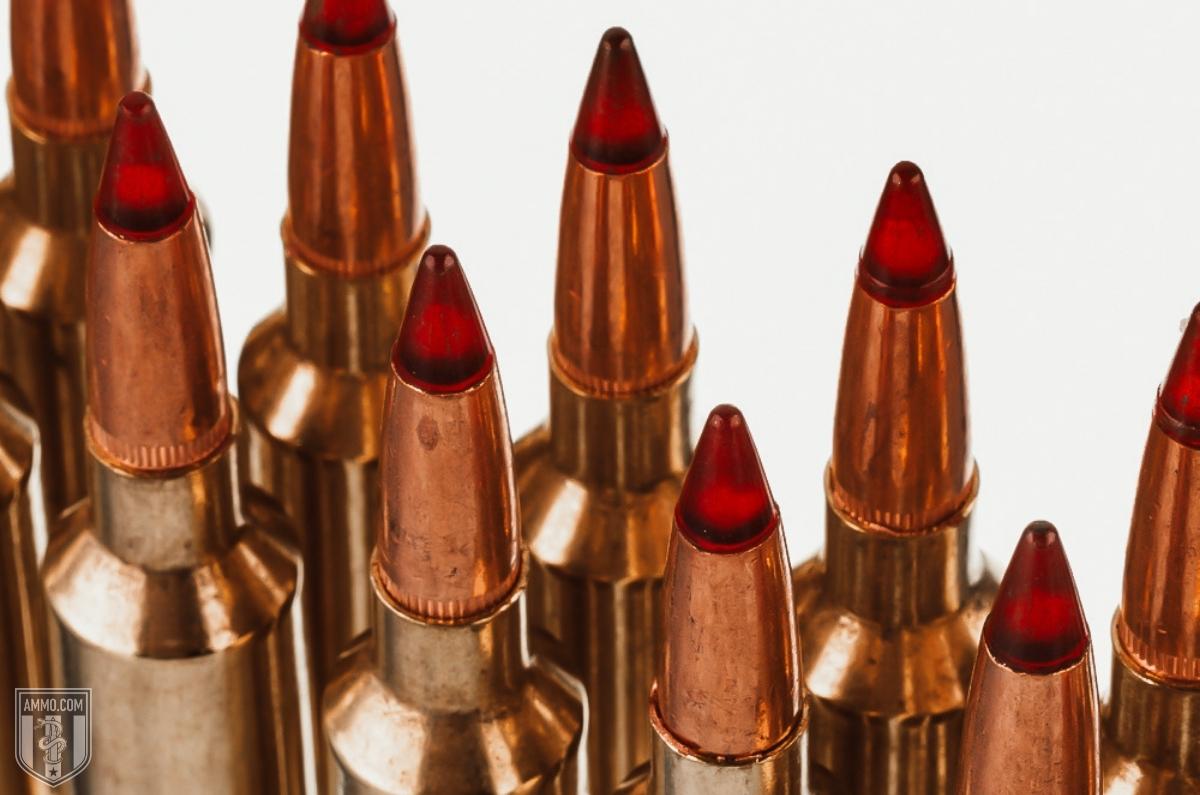
6.8 Western ammo for sale

Trajectory

The bullet trajectory matters because the flatter the bullet shoots, the better for the shooter because the adjustments will be minor compared to a projectile with more drop.

All bullets shoot in an arch because of gravity, but a faster bullet velocity will resist gravity better than a slower bullet so that it will have a flatter trajectory.

The 6.8 Western shoots heavier bullets at a faster velocity than the lighter bullets of the 6.5 Creedmoor, so it has a flatter trajectory.

Zeroed in at 200 yards, the typical 6.8 Western bullet will have a 6.3″ drop at 300yds, 18.1″ drop at 400yds, and 38″ drop at 500yds.

The typical 6.5 Creedmoor bullet zeroed in at 200yds will have 7.9″ of drop at 300yds, 22.4″ of drop at 400yds, and 44.4″ of drop at 500yds.

The winner is the 6.8 Western it has a much flatter trajectory.

Accuracy

Like everything else when shooting, several factors determine the round’s accuracy. The rifle, shooter, recoil, and bullet are contributing factors.

You can take the same rifle but shoot two different brands of ammo from it, and the accuracy will vary.

What I’m saying is that accuracy is a fickle metric.

Both calibers are extremely accurate since both were designed with long-distance shooting in mind.

There will be little difference in accuracy in the hands of a well-trained marksman.

But for the average shooter like myself, the 6.5 Creedmoor will be slightly more accurate than the 6.8 Western because it has less recoil.

The winner by a slight margin is the 6.5 Creedmoor.

Ballistic Coefficient

The ballistic coefficient (BC) measures how well a bullet resists wind drift and air resistance. To say it another way, it’s how aerodynamic a bullet is in numerical form.

High BC bullets are preferred because this means the bullets will resist the wind more.

Generally, heavy bullets will have a higher BC as it takes more force to change the flight of a heavier bullet than a lighter one.

Ballistic coefficient varies from bullet to bullet based on design, weight, and other factors beyond this article’s scope.

Anything over .500 is considered a high ballistic coefficient.

You can generally expect a 6.8 Western 165gr AccuBond Long Range bullet to have a BC of .620. The heavier 170 gr Ballistic Silvertip bullets have a lower BC of .563.

Surprisingly the AccuBond Long Range 142 gr and the Hornady ELD-X 143gr 6.5 Creedmoor bullet have a BC of .625, and the 140gr Ballistic Silvertip has a ballistic coefficient of .509.

The 6.5 Creedmoor has the higher BC, but only slightly.
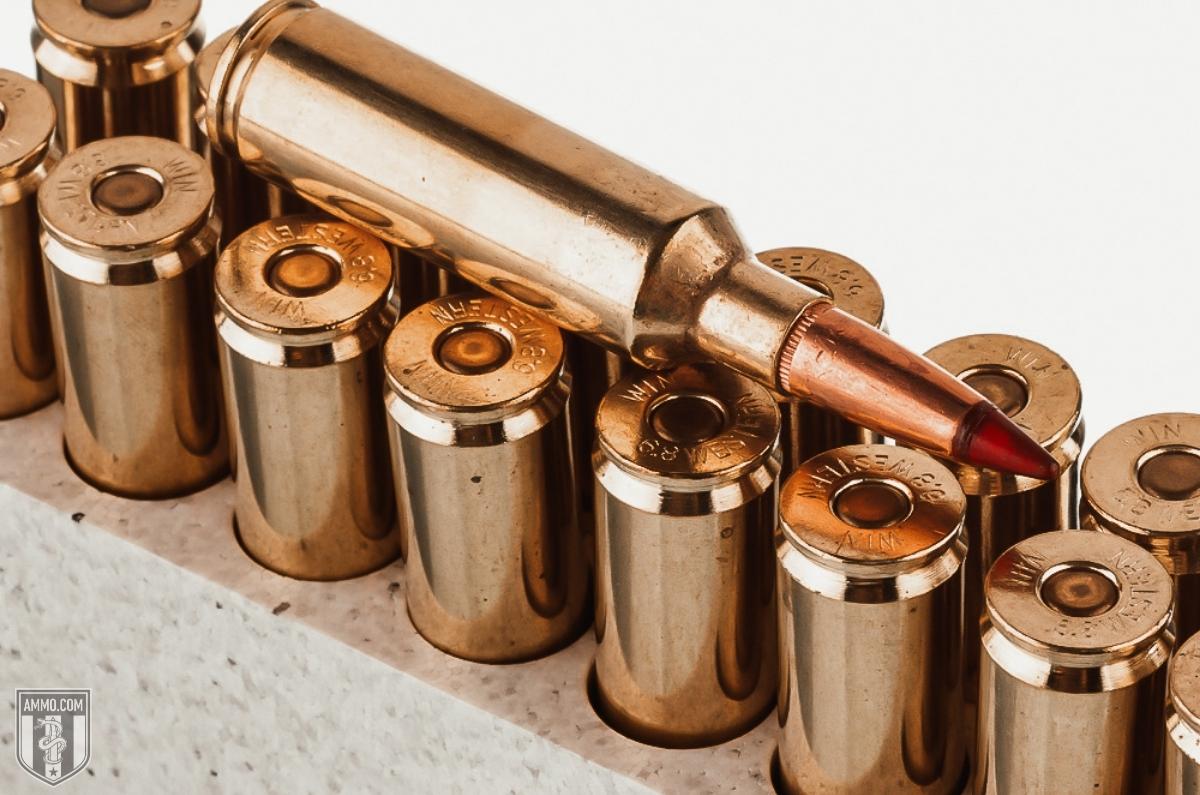
6.8 Western ammo for sale

Stopping Power

Many internet warriors will argue stopping power doesn’t matter, and they’re right, to a point.

A well-placed shot from a small caliber (with little stopping power) can be as effective as a larger caliber.

However, stopping power matters because not every shot is perfectly placed.

Generally speaking, a bigger bullet will leave a bigger hole, so the larger caliber should have more stopping power, but bullet design also plays a role.

A full metal jacket (FMJ) won’t cause as much damage as a jacketed hollow point (JHP).

Stopping power is also determined by how well the bullet penetrates the target. This is often measured as Sectional Density (SD).

Sectional density is the ratio of the diameter of a projectile to its mass.

In theory, a heavier projectile will be longer and have a higher sectional density, meaning it will penetrate further than bullets with less mass and a lower sectional density.

This means that bullets of different weights of the same caliber will have varying sectional densities.

Generally speaking, the 6.8 Western will penetrate further because it has a greater sectional density than the 6.5 Creedmoor.

The 6.8 Western is the winner of this section because it has more stopping power than the 6.5 Creedmoor due to its larger-sized bullets.

Hunting

The 6.8 Western has an advantage here because it was designed as a hunting cartridge; however, don’t discount the effectiveness of the 6.5 Creedmoor as a hunting round.

Both calibers are capable of long-range hunting, so it ultimately boils down to which hunting bullets can be used for the widest variety of species.

Which big game cartridges give you the most bang for your buck? Sorry, I couldn’t resist!

The 6.5 Creedmoor performs best while varmint hunting, whitetail deer hunting, and pronghorn hunting. It can ethically harvest a mule deer, but it’s not recommended to hunt game any larger than deer since it has a small bullet.

The 6.8 Western is capable of ethically harvesting elk. You can use the 6.8 Western while moose hunting, but most hunters prefer a larger caliber because of the increased size of a moose.

The 6.8 Western edges out the 6.5 Creedmoor to win this category of big game hunting.

Home Defense

Unless you’re defending your home from an invading army that’s still a long way off, I wouldn’t recommend these calibers for home defense or self-defense.

These calibers are designed for bolt-action rifles that are not the best for home defense situations.

This is because the bullets will penetrate walls and could harm your family members or neighbors.

They also take a long time to reload and aren’t easy to aim in close quarters.
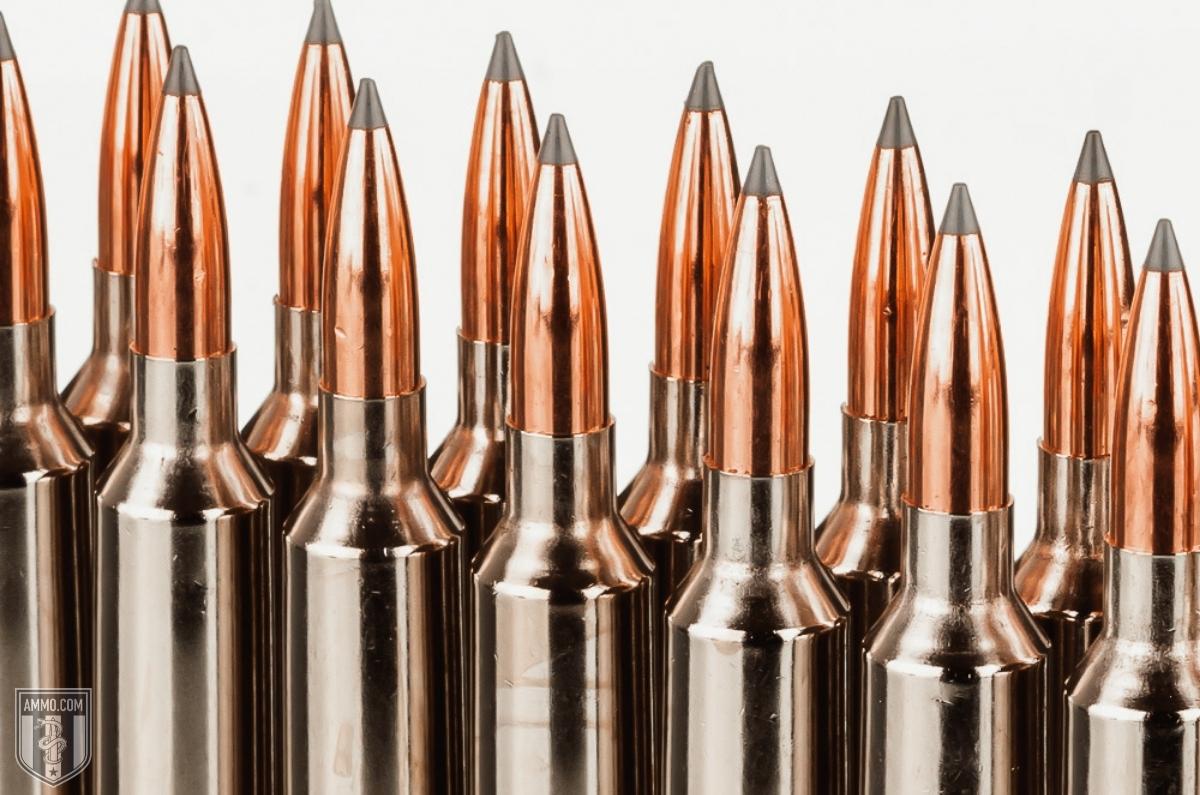
6.8 Western ammo for sale

That’s why I recommend using a 12 gauge or 20 gauge for home defense and a 9mm or .45 Auto for self-defense.

If you only own one gun and it’s chambered in 6.5 Creedmoor or 6.8 Western, by all means, use it to defend yourself, but you should understand the risks you’re taking.

This section is a tie. Neither caliber stands out for home or self-defense.

Long-Range Performance

The 6.5 Creedmoor has incredible long-range performance. It’s not even close when we compare the 6.5 Creedmoor vs. 308 Winchester. The 6.5 easily outperforms the 308 in long-distance shooting.

That’s because the 6.5 Creedmoor was designed to outperform the 308. What about the 6.8 Western?

How does it measure up to the 6.5 Creedmoor?

The 6.8 Western outshoots the 6.5 Creedmoor in long distances because it has a flatter trajectory, a heavier bullet that resists wind drift, and more downrange retained kinetic energy.

The 6.8 Western is the best choice for long-range applications.

Ammo Cost & Availability

One of the most important factors to consider before purchasing a firearm is ammo availability and its cost.

If you often enjoy shooting at the range, it’s best to go with the caliber that is more readily available and costs less per trigger pull unless you have a well-stocked trust fund!

The 6.5 Creedmoor is the older round, so more companies manufacture ammo for it, such as Winchester, Hornady, Browning, and Sellier & Bellot.

The cost per round for 6.5 Creedmoor is $1.50 to $2.75.

The 6.8 Western is still a new cartridge and much more difficult to find because not as many manufacturers are making it.

Winchester and Browning are the two primary companies that make ammo for the 6.8 Western.

As of this writing, it will cost around $2.95 to $4.60 per round.

As more companies begin to make this caliber, I suspect the price to drop at least a little due to competition.

The 6.5 Creedmoor wins this category because the ammo is easier to find and less expensive.

Rifle Cost & Availability

Winchester and Browning are currently the only two making rifles chambered in 6.8 Western because they’re the two companies that developed the new cartridge.

This means they set the price for the rifles. Thankfully, they’re reasonably priced.

A Winchester XPR chambered in 6.8 Western will cost $599, which is the same price as the same short-action rifle chambered in 6.5 Creedmoor.

Both calibers in the Model 70 also cost the same, $1,629.
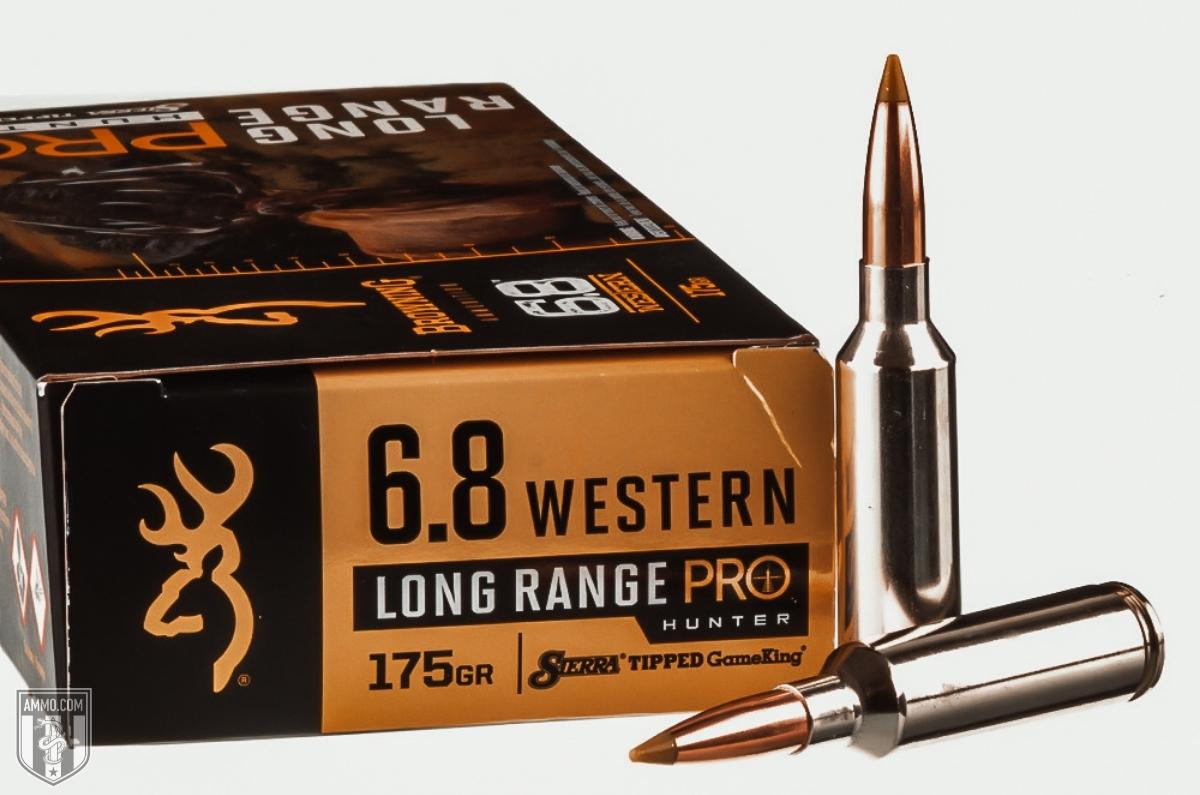
6.8 Western ammo for sale

The Browning X-Bolt chambered in 6.8 Western costs $2,699 vs. the 6.5 Creedmoor costing $2,679.

This difference is minor, but the number of companies who make 6.5 Creedmoor firearms compared to the number of companies that make rifles chambered in 6.8 Western is astounding.

Mossberg, Nosler, Ruger, Remington, Springfield Armory, Weatherby, and many more produce rifles chambered in 6.5 Creedmoor.

So the cost of 6.8 Western rifles and 6.5 Creedmoor rifles is nearly the same, but the overwhelming availability of the 6.5 Creedmoor gives it the win in this section.

Reloading

Reloading is one of the best ways to save money on ammo.

Most shooters prefer to handload because it gives them the greatest control over the final product.

Once you figure out what bullet works best with the twist rate in your barrel and the powder brand that burns cleanest, you can fine-tune each round for optimum performance.

You can control the controllable variables instead of being at the mercy of mass-produced factory loads.

Both calibers can be reloaded; however, since the 6.5 Creedmoor is the older round, more information is available.

Plus, the reloading supplies are easier to find because more people reload this caliber.

Keep in mind this also means there’s a higher demand for all the supplies, so they will be some of the most difficult to find when supplies are low.

As the 6.8 Western grows in popularity, the information will become more available, as will the reloading supplies.

Until then, the 6.5 Creedmoor wins this round.

6.8 Western Vs 6.5 Creedmoor Ballistics

The ballistics of both calibers are similar because they’re intended to be used in comparable scenarios.

However, they are not precisely the same, so the team at ammo.com made a ballistics chart for the 6.5 Creedmoor, and I found some ballistics data on the 6.8 Western.

6.8 Western Ballistics

The muzzle velocity of a 165gr Nosler AccuBond Long Range 6.8 Western bullet is 2,970 Feet Per Second (fps).

At a 200-yard zero, the 6.8 Western bullet will drop 6.3″ at 300yds, 18.1″ at 400yds, and 38″ at 500yds.

Obviously, this information will change as the variables and conditions change, but this will give you a good idea of where to begin.

6.5 Creedmoor Ballistics Chart

Note: This information comes from the manufacturer and only for informational purposes. The actual ballistics obtained with your firearm can vary considerably from the advertised ballistics. Also, ballistics can vary from lot to lot with the same brand and type load.

6.8 Western Development

The 6.8 Western traces its roots to the .270 Winchester Short Magnum (WSM) released in 2002 and its parent cartridge, the 270 Winchester.
6.8 Western ammo for sale

The .270 WSM fell short in a few key areas, primarily the lack of twist rate in the rifle barrels, so Winchester and Browning teamed up to improve it with a new cartridge that could handle a faster twist.

They accomplished their goals with the 6.8 Western and released it in 2021. Initially, they received a lot of criticism for introducing a new caliber instead of increasing the production of their other calibers because they were struggling to keep up with demand.

However, that criticism has subsided, and the popularity of the 6.8 Western is beginning to rise amongst long-range shooters and hunters.

6.5 Creedmoor Development

The 6.5 Creedmoor was created out of necessity. In 2005 Dennis Demille was approached by several competition shooters complaining about the unreliability of their guns and 6mmXC ammo.

So he talked with his friend Dave Emary, Hornady Manufacturing’s senior ballistician, who told Demille to make a list of what he wanted from a new cartridge.

Demille came back with his list-

  1. The cartridge must be able to fit into a magazine for the rapid-fire stages of the competition.
  2. Less recoil than a 308 Winchester for better follow-up shots and shooter comfort during rapid fire.
  3. Flatter trajectory than a 308 with an accurate, high BC bullet.
  4. Good barrel life.
  5. Uses readily available reloading components so results can be duplicated.
  6. Reloading recipes printed on the box.
  7. Produced in quantities that could keep up with demand.

In 2007, Hornady debuted the 6.5 Creedmoor. At first, most people were skeptical of the round, believing it to be too small for hunting and not enough power for long-range competitions.

It didn’t take long for the nay-sayers to become fans, and the rest is history.

Parting Shots

If my math is correct, the 6.5 Creedmoor won 6/11 categories, making it the winner by a narrow margin.

I think it is pretty apparent that both calibers are highly effective rounds, and neither would be a terrible choice for long-range shooting.

However, when it comes to the 6.8 Western vs 6.5 Creedmoor, the lesser recoil of the 6.5 Creedmoor gives it an edge for most people.

If you’re a big game hunter, the 6.8 Western is the way to go.

I can confidently say the 6.5 Creedmoor is not obsolete.

Sooner Booners: Trophy-Class Whitetail Hunting in Oklahoma

0
Sooner Booners: Trophy-Class Whitetail Hunting in Oklahoma

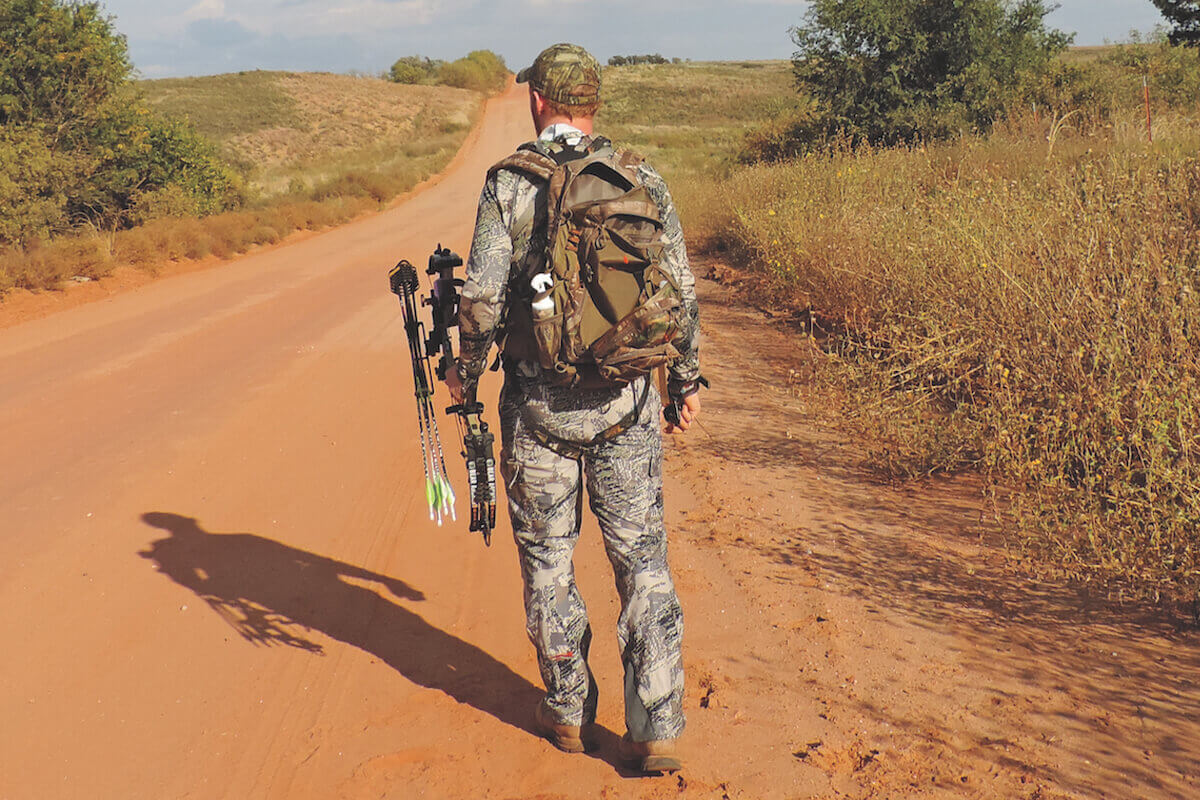
The author did his research and hunted a WMA to bag a long-tined tallgrass trophy. (Photo by Darron McDougal)

This article was featured in the November issue of Game & Fish Magazine (South edition). Click to subscribe

With temperatures reaching 93 degrees, conditions inside the ground blind were sauna-like. Despite the heat, my guide assured me that it’d be a great evening. So, as sweat beads trickled down my back and forehead, I monitored the wide-open food plot in front of me, hoping one of the surrounding draws would manufacture a mature buck.

As darkness slowly swallowed the daylight, I knew I’d be picked up soon and my evening hunt would be over. Suddenly, a big, mature 8-pointer and another buck appeared on the skyline 150 yards away. I felt a wash of adrenaline coarse through my veins as they beelined for the feeder. Suddenly, there he stood, quartering toward me at just 30 paces.

Two minutes of legal shooting light remained when he finally turned. In that instant I released my arrow, sure it would be a winner. To this day I’m not sure what went wrong. When we found the arrow there was next to no blood on it and no blood trail to be found. We spent hours looking everywhere for that deer to no avail. Needless to say, I was sick. Since I’d made contact, my hunt was over. But I’d be back in Oklahoma in November for another chance.

For the next month, I researched Oklahoma wildlife management areas for my next Sooner State hunt. The one I chose was some 200 miles from where my October hunt had unfolded. Three days in, I arrowed my then-best whitetail, a 150-inch-plus beauty. He is a tremendous trophy, especially since I took him the first time I hunted that particular WMA.

Oklahoma’s geographic location—sandwiched between whitetail meccas Kansas and Texas—is well-appointed to offer excellent deer hunting. According to QDMA’s 2020 Annual Report, 66 percent of bucks harvested in Oklahoma in 2017 and 2018 were 3 1/2 years old or older. This means that many bucks reach the age class that sees peak antler potential.

Some 4.6 percent of Oklahoma is public land. While that may not sound like a lot, in addition to sprawling national forests and grasslands, the Oklahoma Department of Wildlife Conservation manages more than 80 WMAs across the state. So, when visiting Oklahoma, you won’t struggle to find places to hunt. And, if a do-it-yourself hunt isn’t your thing, the Sooner State has many outfitters who offer a quality hunting experience.

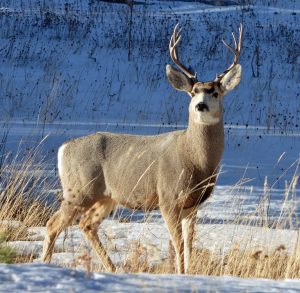
From mountains to prairies, Oklahoma is a venerable ecological cornucopia with enormous biodiversity. Here are six of the best ecoregions in Oklahoma to hunt.

Sooner Booners
Pictured: Oklahoma Panhandle white-tailed buck. Oklahoma is an oft-overlooked whitetail destination that receives minimal hunting pressure compared to many states in the South. As such, bucks here regularly achieve their maximum antler potential. (Photo by William T Smith/Shutterstock.com)

CENTRAL/SOUTHERN SHORTGRASS PRAIRIE

In Oklahoma’s Panhandle lies a sea of prairie habitat surrounded by an agricultural checkerboard. Far from population centers, hunting pressure during archery season is minimal, and a bit busier during firearms season. Folks from the eastern part of the South will find the Panhandle completely different from the deer habitat back home. If you’re a treestand hunter, most of the scouting is already done—just find some trees in the wide-open habitat and park your backside there daily.

Public-hunting options in the Panhandle include the Rita Blanca National Grasslands, Optima WMA and Beaver River WMA. Native forages include ragweed and sunflower; additionally, the state cultivates small food plots on these areas. Windmills and guzzlers have also been installed to provide hydration for wildlife in this arid habitat.

Lodging options can be found in Guymon, Boise City and Beaver. Primitive camping is available at Optima WMA and Beaver River WMA, and RV hookups can be had at Beaver Dunes State Park.

MIXED-GRASS PRAIRIE

Just east of the Panhandle is a large area that stretches more than 100 miles wide (east to west) and from the northcentral border with Kansas to the southwest border with Texas. Due to size and scope, it offers great habitat diversity and varying whitetail genetics.

The 30,710-acre Black Kettle National Grasslands in Roger Mills County offers ample opportunities to stretch your legs and find your own slice of whitetail heaven. Like the panhandle, native forages are ragweed and sunflower. While the Black Kettle is scattered into nearly 100 units, wildlife plantings and water are available on most units. Primitive camping is allowed on the entire area, and three developed camping facilities exist.

If you’re looking for a large, contiguous tract, the nearby Packsaddle WMA in Ellis County encompasses 19,659 acres of rolling upland habitat consisting of buffalo grass, sagebrush, sand plum, shinnery oak and occasional mesquite. Cottonwood, elm and hackberry line the Canadian River bottoms on the Packsaddle’s southern fringe. Vehicle access is minimal to limit impact on wildlife and improve hunting.

SOUTHERN TALLGRASS PRAIRIE

Split into two sectors, the tallgrass prairie includes Kay, Osage, Pawnee, Wagoner, Mayes and Rogers counties, among others in Oklahoma’s northern and northeastern sections. Expect an ideal mixture of prairies, agriculture, brushy thickets and riparian habitat. In this region, WMAs like the 16,254-acre Kaw and 21,798-acre Fort Gibson offer solid hunting opportunities with rich soils teeming with wheat, milo, corn and soybeans, to name a few of the plantings the state implements on these WMAs.

Oaks here are abundant. During a bumper acorn crop, focus on hunting the timber, as deer will move less since food is available in or near bedding areas. Many other hunters will hunt field edges, especially those planted in soybeans. While they may be full of deer sign, most activity in the fields will be at night, so getting deep into the timber puts you in the heart of deer activity and gets you away from pressure.

Primitive camping is available on the Kaw WMA at dedicated areas, while camping near the Fort Gibson WMA can be found on U.S. Army Corps of Engineers campgrounds. If motel lodging better suits you, check out Ponca City and Newkirk near the Kaw or Wagoner near Fort Gibson.

camping
Western Oklahoma’s mixed-grass prairie teems with whitetails and includes plenty of public land on which to chase them. (Photo by Darron McDougal)

OZARKS

Next door to Arkansas is Oklahoma’s own small Ozark region, which covers Adair, Delaware and Cherokee counties. It also touches parts of a few other adjoining counties. Vastly different from the areas we’ve covered so far, expect heavily timbered habitat with oaks and hickory amidst rolling to rocky, steep terrain. Acorns are a primary food source, while native grasses provide valuable forage and thickets provide additional cover. The area sees 40-plus inches of rainfall annually, rendering it far more fertile than the ecoregions found in the western part of the state.

Worthwhile public hunting parcels are the Cherokee and Cookson WMAs. The Cherokee WMA encompasses 31,360 acres, 16,000 of which are open year-round to legal hunting with several controlled hunts made throughout the year. Between 200 and 300 acres are planted in food plots.

  • SOONER STATE GIANT: 3-Year Quest Ends with Huge Typical Whitetail

The Cookson WMA has 14,725 acres, with more than 100 acres planted in food plots, providing vital and attractive forages. Both of these WMAs have ponds throughout, some stocked with fish like bass and catfish. Elk roam this country, too, so keep your eyes peeled.

Limited camping options are available in the two WMAs and on surrounding U.S. Army Corps of Engineers campgrounds. Modern accommodations are available in Tahlequah and Muskogee. If you like hunting in the timber, you’ll love this area.

CROSSTIMBERS

The Crosstimbers region cuts a narrow swath through the tallgrass prairie region up north, then widens out around Tulsa and runs south clear to the Red River on the Texas border. Essentially, it covers most of central Oklahoma. Plentiful stands of oaks and eastern red cedar cover this region’s rolling hills and draws. There are also numerous cattle ranches, farmlands and river bottoms throughout it.

At the Love Valley WMA in southcentral Oklahoma, you’ll find good deer numbers on 7,746 acres of mixed upland habitat, with post oak-blackjack timber and riparian habitat featuring hardwoods along the Red River. To the northeast, in Pittsburg and Latimer counties, sits the sprawling 21,353-acre James Collins WMA in the Sans Bois Mountains. It features diverse habitat, including pine forests, oak and hickory timber, not to mention uplands and native grasslands.

If hunting at Love Valley WMA, lodge in Ardmore or camp primitively at the WMA. If hunting at James Collins WMA, camp at the WMA entrance or lodge at McAlester.

OUACHITA MOUNTAINS/ARKANSAS RIVER VALLEY

In southeastern Oklahoma you’ll find dense deer populations. Big pine forests intermixed with oaks in varied terrain ranging from gentle to rugged provide ample places for big bucks to hide and mature.

Want some room to roam? The gigantic 216,503-acre Three Rivers WMA in McCurtain and Pushmataha counties delivers. Nonresidents must purchase an $85 access permit, which reciprocates for access to the nearby 91,721-acre Honobia Creek WMA, too. Both WMAs features pine plantations and hardwoods. Terrain funnels are common, and if you’re willing to hike, hunting pressure can be evaded without much trouble.

  • MUST READ: Hunter’s Red-Dirt Redemption in Pursuit of ‘Ghost’ Buck

While no designated camping areas exist on either of the aforementioned WMAs, primitive camping is acceptable anywhere on both. If hunting at Honobia Creek, consider modern lodging in the town of Clayton. If hunting at Three Rivers, lodge in Hochatown or in Broken Bow.

Sooner Booners
The Ecoregions of Oklahoma

RED DIRT OUTFITTERS

These operations are ready, willing and able to provide an unforgettable whitetail adventure.

Mixed-Grass Prairie Region

Todd Rogers owns and operates Rut-N-Strut Guide Service in Elk City, offering hunts on approximately 31,000 acres of prime deer habitat with food plots, protein and mineral sites. Rolling red hills drop into creeks and river bottoms where clients hunt from ladder stands, pop-up ground blinds and box blinds. A quality mature buck at Rut-N-Strut typically measures 130 to 150 inches, with some considerably larger. Lodging is in a two-bedroom, two-bathroom house with a kitchen, washer, dryer and satellite TV. (580-799-1920; rutnstrutguideservice.com)

Central/Southern Shortgrass Prairie Region

James Burnett owns and operates Cimarron Valley Outfitters, which is based in Elkhart, Kan., but runs whitetail hunts in the Sooner State. Cimarron Valley’s Oklahoma hunts occur from the Colorado border in the panhandle all the way to northcentral Oklahoma against the Kansas border. Quality bucks typically range from 125 to 170 inches. The muzzleloader season can be outstanding while deer are still on feeding patterns, with late muzzleloader having some good pre-rut action. (620-360-4735; cvohunts.com)

Southern Tallgrass Prairie Region

The Stuart Ranch has been family-owned and -operated since 1868, and it encompasses some 46,000 acres. Hunts take place on two ranch divisions, located in Waurika and Caddo, both in southern Oklahoma. Various types of terrain are hunted, including vast prairie grasses, rolling hills and dense woodlands. Package whitetail hunts include lodging, kitchen facilities and meals (as requested). Stuart Ranch provides transportation to and from the ranch, cleaning and cold storage of harvested deer. The ranch is set up to accommodate archery, muzzleloader and rifle hunters. (580-512-7004; stuartranchoutfitters.com)

Ouachita Mountains/Arkansas River Valley Region

The Choctaw Hunting Lodge is located in Pittsburg, Okla., and situated on 44,000 privately owned acres. The lodge is a full-service operation, offering both preserve (high fence) and native (free range) whitetail hunts. Choctaw Hunting Lodge offers four- and five-day hunts, which include a private room, meals, hors d’oeuvres, snacks and beverages, transportation to and from the field, and taxidermy prep. CHL can accommodate archery, muzzleloader and rifle hunters. (580-740-0040; choctawhuntinglodge.com)

Jack Rabbits Arizona

0

Introduction

Jack rabbits are a common sight in Arizona and the Southwest. These quick, agile creatures are known for their long ears, strong hind legs, and fast running speeds.

Despite their name, jack rabbits are actually hares, not rabbits. They are an important part of the local ecosystem, and can be found in a variety of habitats throughout the area.

In this article, we will explore some of the most interesting and important facts about jack rabbits in Chandler, Arizona. We’ll discuss where they live, what they eat, how big they get, and much more.

Whether you’re a nature lover, a wildlife enthusiast, or simply curious about these fascinating animals, this article is sure to provide you with some valuable insights.

Are jackrabbits dangerous?

No, jackrabbits are not considered dangerous to humans. They are generally shy and elusive animals that prefer to avoid human interactions whenever possible.

Jackrabbits are known for their incredible speed and agility, which they use as a defense mechanism to escape from potential threats. When they feel threatened, they rely on their ability to run quickly and change direction abruptly to evade predators.

While jackrabbits are not aggressive towards humans, they may exhibit defensive behaviors if they feel cornered or trapped. They may thump their hind legs or make sharp turns to confuse predators or individuals approaching them.

It’s important to remember that wildlife, including jackrabbits, should be observed from a distance and respected in their natural habitats. Avoid approaching or disturbing them, as they play an important role in their ecosystems and deserve to be appreciated from afar.

Can jackrabbits have antlers?

No, jackrabbits do not have antlers. Although some may argue that the famous jackalopes do! Antlers are typically found in members of the deer family, such as deer, elk, and moose. These bony structures are grown and shed annually by male deer species as a part of their reproductive behavior and dominance display.

Jackrabbits, on the other hand, are not deer species and do not possess antlers. They belong to the family Leporidae, which includes hares and rabbits. Jackrabbits have distinctive long ears and powerful hind legs that enable them to run swiftly to escape from predators.

It’s important to note that there may be certain anatomical variations or genetic abnormalities that can result in rare instances of antler-like growths in other species. However, such occurrences are extremely uncommon and not characteristic of jackrabbits in general.

When observing jackrabbits, you will typically see them without antlers, displaying their unique adaptations as lagomorphs, which include their remarkable speed and agility in evading threats.

Where Do Jack Rabbits Live?

Jack rabbits are found throughout the southwestern United States, including in the city of Chandler, Arizona. They typically prefer dry, arid habitats such as deserts, grasslands, and scrublands. In Chandler, they can be found in a variety of locations, including parks, nature preserves, and open spaces.

One of the best places to see jack rabbits in Chandler is at Veterans Oasis Park. This 113-acre park is home to a wide variety of wildlife, including jack rabbits, coyotes, and many species of birds. The park features several miles of hiking trails, as well as a lake, a butterfly garden, and a cactus garden.

What Do Wild Rabbits Eat?

Jack rabbits are herbivores, which means they eat only plant matter. In the wild, their diet consists mainly of grasses, leaves, and the bark of trees and shrubs. They are also known to eat flowers, fruits, and seeds when they are available.

In urban areas, jack rabbits may eat ornamental plants and gardens if their natural food sources are scarce. However, it’s important to remember that feeding wild animals is generally not a good idea. Not only can it be harmful to the animals, but it can also lead to conflicts with humans and other wildlife.

How Big Do Jack Rabbits Get?

Jack rabbits are one of the largest species of hares in North America. They can grow up to two feet in length and weigh as much as six pounds. Their long, powerful hind legs allow them to run at speeds of up to 45 miles per hour, making them one of the fastest animals in the desert.

What Eats Jackrabbits?

Despite their speed and agility, jack rabbits are preyed upon by a variety of predators. Coyotes, bobcats, and foxes are some of the most common predators of jack rabbits in the wild. Birds of prey, such as hawks and eagles, may also hunt them from the air.

In addition to natural predators, jack rabbits may also be threatened by human activities such as habitat destruction, hunting, and vehicle collisions. It’s important to remember that jack rabbits, like all wildlife, play an important role in the ecosystem and should be treated with respect and care.

Where Are Jack Rabbits Found?

Jack rabbits can be found throughout the southwestern United States, including in Chandler, Arizona. They are most commonly found in dry, arid habitats such as deserts, grasslands, and scrublands. In Chandler, they can be found in a variety of locations, including parks, nature preserves, and open spaces.

Will Wild Rabbits Eat Carrots?

Carrots are not a natural food source for wild rabbits, but they may eat them if they are offered. However, it’s important to remember that feeding wild animals can be harmful to their health and can lead to problems for both the animals and humans.

Carrots are high in sugar, which can lead to digestive problems in rabbits if they are consumed in large amounts. Additionally, feeding wild animals can cause them to lose their natural fear of humans, which can lead to conflicts and even aggressive behavior.

How Long Do Jackrabbits Live?

Jack rabbits have a relatively short lifespan, with most individuals living only two to three years in the wild. However, in captivity they may live up to seven years or more. Predation, disease, and other factors can all contribute to the relatively short lifespan of wild jack rabbits.

How Fast Do Jack Rabbits Run?

Jack rabbits are one of the fastest animals in the desert, with top speeds of up to 45 miles per hour. Their long, powerful hind legs allow them to cover great distances quickly, which helps them to avoid predators and locate food and water in the arid desert environment.

How Many Wild Rabbits Are in a Litter?

The number of young in a jack rabbit litter can vary depending on a variety of factors, including the age and health of the mother, the availability of food and water, and the local environmental conditions. In general, a jack rabbit litter may contain anywhere from one to six young, with an average of three to four.

Why Do Jackrabbits Have Big Ears?

One of the most distinctive features of the jack rabbit is its long, upright ears. These ears serve a variety of purposes, including helping the animal to regulate its body temperature, locate predators and prey, and communicate with other rabbits. The large surface area of the ears helps to dissipate heat, which is important in the hot, arid desert environment where jack rabbits live.

How Often Do Wild Rabbits Breed?

The breeding habits of wild jack rabbits can vary depending on a variety of factors, including the local environmental conditions and the availability of food and water. In general, however, jack rabbits breed throughout the year, with peak breeding occurring in the spring and summer months.

Will Wild Rabbits Eat Lettuce?

Lettuce is not a natural food source for wild rabbits, but they may eat it if it is available. However, it’s important to remember that feeding wild animals can be harmful to their health and can lead to problems for both the animals and humans. Lettuce is low in nutrients and high in water content, which can lead to digestive problems if it is consumed in large amounts.

How Much Do Wild Rabbits Eat?

The amount of food that a wild jack rabbit eats can vary depending on a variety of factors, including its age, size, and activity level. In general, however, jack rabbits consume about 1/4 to 1/2 pound of food per day. This may include a variety of plant matter, including grasses, leaves, bark, flowers, fruits, and seeds.

Will Wild Rabbits Eat Apples?

Apples are not a natural food source for wild rabbits, but they may eat them if they are offered. However, it’s important to remember that feeding wild animals can be harmful to their health and can lead to problems for both the animals and humans. Apples are high in sugar, which can lead to digestive problems if they are consumed in large amounts.

Are Jack Rabbits Endangered?

Jack rabbits are not currently considered to be endangered. However, like all wildlife, they face a variety of threats, including habitat destruction, hunting, and vehicle collisions. It’s important to remember that jack rabbits, like all wildlife, play an important role in the ecosystem and should be protected and conserved for future generations.

Will Wild Rabbits Drink Water from a Bowl?

Wild rabbits are typically able to obtain all the water they need from their food, and do not need to drink water from a bowl. However, in urban areas where natural water sources may be scarce, wild rabbits may be attracted to water sources such as bird baths, swimming pools, or pet water bowls. If you want to provide water for wild animals, it’s important to use a shallow dish that is cleaned and refilled regularly.

Where Do Jack Rabbits Live?

As we’ve mentioned earlier, jack rabbits are found throughout the southwestern United States, including in Chandler, Arizona. They prefer dry, arid habitats such as deserts, grasslands, and scrublands. In Chandler, they can be found in a variety of locations, including parks, nature preserves, and open spaces.

Are Jack Rabbits Hares?

Yes, jack rabbits are actually hares, not rabbits. While both hares and rabbits belong to the family Leporidae, there are some key differences between the two. Hares are generally larger than rabbits, with longer ears and legs. They also have different reproductive strategies, with hares typically giving birth to fewer, larger young.

Will Wild Rabbits Eat Celery?

Celery is not a natural food source for wild rabbits, but they may eat it if it is available. However, it’s important to remember that feeding wild animals can be harmful to their health and can lead to problems for both the animals and humans. Celery is low in nutrients and high in water content, which can lead to digestive problems if it is consumed in large amounts.

Are Jack Rabbits Fast?

Yes, jack rabbits are one of the fastest animals in the desert, with top speeds of up to 45 miles per hour. Their long, powerful hind legs allow them to cover great distances quickly, which helps them to avoid predators and locate food and water in the arid desert environment.

How Much Do Jack Rabbits Weigh?

Jack rabbits can weigh up to six pounds, making them one of the largest species of hares in North America. However, the exact weight of an individual jack rabbit can vary depending on a variety of factors, including its age, sex, and overall health.

Conclusion

Jack rabbits are a fascinating and important part of the local ecosystem in Chandler, Arizona. These quick, agile creatures are known for their long ears, strong hind legs, and fast running speeds. Whether you’re a nature lover, a wildlife enthusiast, or simply curious about these fascinating animals, we hope that this article has provided you with some valuable insights.

We’ve discussed where jack rabbits live, what they eat, how big they get, and much more. We’ve also provided some important information about the risks of feeding wild animals, and the importance of protecting and conserving these amazing creatures for future generations.

If you’re interested in seeing jack rabbits in the wild, be sure to visit Veterans Oasis Park in Chandler. This beautiful park is home to a wide variety of wildlife, including jack rabbits, coyotes, and many species of birds.

Whether you’re taking a leisurely hike or simply enjoying the natural beauty of the park, there’s no better place to experience the wonders of nature in Chandler, Arizona.

Best Air Rifle Deals

Popular Posts

What Is An Air Rifle?

0
If you have stumbled upon this article, chances are that you probably have a pest problem at your house. This is a very common...

PCP vs CO2 Guns: Which One is Better?

0
The most talked-about debate between hunters and gun enthusiasts is what the best power source of a gun is.  The five main sources of power...

What Is a Break Barrel Air Rifle?

0
A break barrel air rifle is a type of air rifle that uses a break action to load and unload pellets. It is one...