Home Blog Page 83

The Remington 870: A Look Back

0

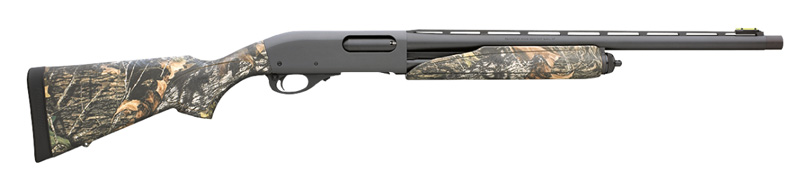
Any gun that has 11 million copies, has been used in more than 25 countries in various military and police applications, as well as a sporting arm and has become the benchmark of pump or slide-action shotguns deserves a look back at its origins, along with an examination of why it was and remains so popular. As Remington celebrates its bicentennial, the Model 870 shotgun has been a major factor in the longevity of the company for more than a quarter of its existence.

Remington had been struggling a bit in its shotgun market. From the beginning of the 20th century, Americans had been flocking toward the pump or slide-action shotgun because of its simplicity, reliability and it costing far less than any double or semi-auto. Winchester ruled the roost with its models 1897 and 1912 pumps. Their reliability had become legend, and the appeal of the Model 12 with its sleek lines pretty well spanked any of the competition. John D. Pederson had designed the Remington Model 10 slide-action, bottom-ejecting shotgun—he actually designed it in 1908, but it wasn’t brought to market until 1909—and it sold reasonably well, even serving some trench-gun duties into the 1930s. It was one of the first shotguns with a rounded profile to the rear of the receiver. The Model 10 was more fragile than the competing Winchester Model 12 so John Browning designed the Model 17 pump shotgun, retaining the bottom ejecting and loading port and successfully addressing some of the issues with the Model 10. Because of wartime production needs the Model 17 was not brought forth until 1921. Later on, the Ithaca Model 37 and the Browning BPS would share much of the engineering found in the Model 17. The Remington 870: A Look BackThe Remington Model 17 pump shotgun was a forerunner to the Model 870.

The Model 17 was a 20 gauge, and it enjoyed a fair degree of popularity as well, though it never threatened the Winchester Model 12. Another Remington engineer, Crawford C. Loomis, redesigned the Model 17 to handle 12-gauge ammo and employing side ejection, introducing it as the Model 31 in 1931. The Model 31 was produced in 12, 16 and 20 gauge and made from 1931 until 1949. Model 31s were purchased by the FBI, and one each was ascribed to each office after the Kansas City Massacre of 1933.

World War II changed everything, including manufacturing parameters. The new prevailing consideration was expense of manufacture. Cost cutting—some say cheapening—became the primary focus. With The Depression over, wages—hence manufacturing costs—were skyrocketing. Remington needed to find a less expensive way to produce pump shotguns.

In 1948 Remington designers L. Ray Critendon, Ellis Hailston and C.R. Johnson came up with a long-recoil semi-auto shotgun that featured some new technology and design. Chief among the new innovations was the use of stamped steel parts and true interchangeability allowing the gun to be assembled with much less hand fitting. When it came time to update its pump shotgun, Remington utilized these same technologies, as well as the fire-control system developed for the 11-48. The new pump featured dual action bars that constrained the torque often imparted to the fore-end when operating it, thus making cycling the action smoother and more reliable. Instead of having to machine a recess deep within the receiver for the bolt to lock up, Remington created a hardened barrel extension with a recess machine into it to restrain the thrust of the bolt during firing. By doing this, it allowed the new pump shotgun to not only be made in less time (less expensive), it also made it easier to replicate headspacing from barrel to barrel, allowing for barrel interchangeability without tools or fitting. Like its predecessors, this new Model 870 was fed from a tubular magazine beneath the barrel originally holding four rounds.

The Model 870 was an instant success, and when it was brought to market in 1950 no fewer than 15 variations were available. That availability to be so adaptable through modular technology has been a cornerstone of the 870’s success for the past 66 years. In addition to countless grades of engraving and wood quality, the 870 has been made in deer or slug-gun garb, trap and skeet versions, waterfowl, turkey and upland configurations. It has been built to the special considerations of tactical users. The Model 870 has been available in all four shotgun chamberings and from 2 3/4″ to 3 1/2″ magnum. In short, if you have a task that can be handled with a shotgun—even some pretty obtuse ones—Remington has made an 870 to address that task wellThe Remington 870: A Look Back

Sixteen years after its debut, Remington ushered its 1 millionth Model 870 out the door. Seven years later the 2 millionth 870 was shipped. Today, 66 years after its introduction more than 11 million Model 870 shotguns have been produced. While most firearms, especially with some longevity, have undergone several design changes during their manufacture to deal with unforeseen glitches that can occur in the field, the 870 has but one that I am aware of. Older 870s were capable of being tied up if the user failed to engage the shell latch. The shell could then slip back into the receiver between the lifter and the bolt in such a way as to prevent the bolt from moving rearward, thus requiring the gun to be disassembled to clear the shell. The Flex-Tab carrier introduced around 1980 took care of this rare issue, and today it’s almost impossible to bind up an 870—unless you are me.

I’ve owned four 870s, two sporters and two in riot or tactical configuration. I had an 870 Express that I used as a rough-and-ready duck gun for a while. One rainy day on a marsh in central California I managed to somehow bend the ejector spring into a paper clip, thus turning my shotgun into an inefficient single shot. With the rain pouring down I stripped the 870, laying the barrel in the reeds above the water I was in, sitting on a T-chair made from two pieces of 2×4 screwed together in a T shape and stuck into the marsh mud. My rain parka formed a parts bowl in my lap that quickly filled with rain water, thus serving as a sort of redneck parts washer. I stripped the receiver down to where I could remove the ejector spring. After straightening it back to its original configuration, I reassembled the gun and returned to my hunt. Total elapsed time: about 10 minutes … and I didn’t lose a single part!

Remington’s Model 870 shotgun has earned its just place as the benchmark of American shotguns. It’s almost unimaginable that anyone who has owned more than one shotgun doesn’t have or hasn’t had an 870 in their closet or safe. It certainly has become an icon in that company’s 200-year history.

I Think I’ve Found The Best Thru-Hiker Power Bank!

0

A good battery pack is a vital piece of gear for any hiker these days. There are many components that go into what makes the best battery pack for a thru-hike. It’s not just about the power but also the weight, how quickly it charges your devices, how long it takes to recharge in town, how reliable it is and it’s durabilty.

Based on each of these criteria I believe I have found it, the perfect thru-hiker power bank. Say hello to the:

The ZendureSuperMini 10,000mAh USB-C PD Portable Charger ( link opens Amazon)

The Tech Specs:

Here is a quick overview of the tech specs:

CAPACITYWEIGHTINPUTOUTPUT
Zendure SuperMini 10,000mAh USB-C PD Portable Charger Tech Specs

Why is This The Best Battery For Thru-Hikers?

Weight (6.35oz/180g)

It’s lighter than most other comprable 10,000 Mah (see head to head match-ups below).

For example, the super-mini weighs 6.35oz/180g while an equivalent Anker PowerCore 10000 PD weighs 6.8oz(192g).

It’s not much of a difference but every grams counts but as you’ll see below the pass-through charging functionality of the Zendure SuperMini will enable you to save even more weight!

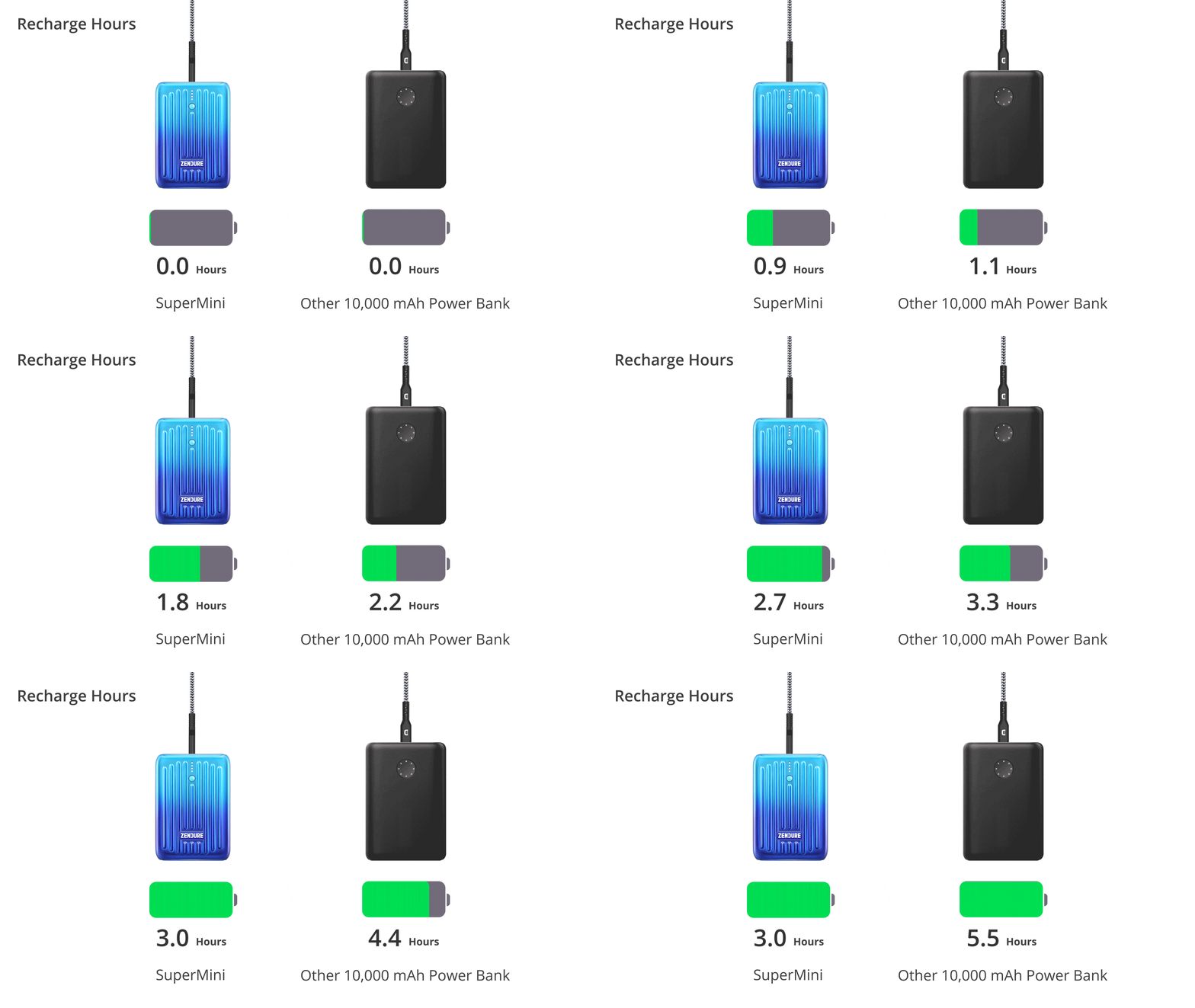
Super Fast Recharge Time (3 Hours)

Via the USB-C PD port it can recharge in 3 hours.

This means you can pop into a town, recharge your battery (both literally and figuratively) and leave town with a fully charged battery without having to stay a night if you don’t want to.

Even if you plan to stay a night a quick recharge time saves you hogging a power outlet all night or you could easily charge your battery fully when just sitting at a restaurant/bar.

Charging Times:

The Zendure SuperMini has both a USB-A and USB-C port, both of which can charge at 18watts of power. The battery supports PD (power delivery) charging meaning it can fast charge an iPhone X up to 50% within 30 mins!

Your phone will have to support PD for this to work (most new iPhone and Samsung devices do), but even if your device doesn’t this battery will charge it as fast as your device will allow.

Size and Durabilty

The outer shell feels much more durable that other batteries which can only be a good thing as your battery, along with most of your gear, will be put through the elements on any thru-hike.

Credit Card Sized SuperMini

Another major benefit of the Zendure SuperMini is the size and shape of the battery itself. It is 30% smaller than most other batteries and is roughly the size of a credit card.

This shape is much more packable than the usual longer bulkier batteries. This shape makes it perfect for slipping into a hip-belt pocket or a fanny pack for easy access.

Style

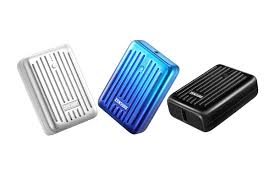
Fashion is a thru-hikers last concern but nearly every other battery is just a black brick. The Zendure Super-mini has 3 colors which a) looks cooler and b) will make your battery easier to identify at a shared charging point in a restaurant or hostel etc.

The Holy Grail of Pass-Through Charging

All the above features of the Zendure SuperMini are great but the thing that makes it head and shoulders above the rest of other batteries is that it supports pass-through charging.

What is pass-through charging and why is it so important?

Simply put this means you can charge the battery whilst at the same time use the battery to charge other devices. This quick video demonstrates the difference:

Pass Through Charging vs Normal Charging

Why is this so good for thru-hikers? Well, it enables you to replace your usual 2 USB port wall charger with a single USB port one.

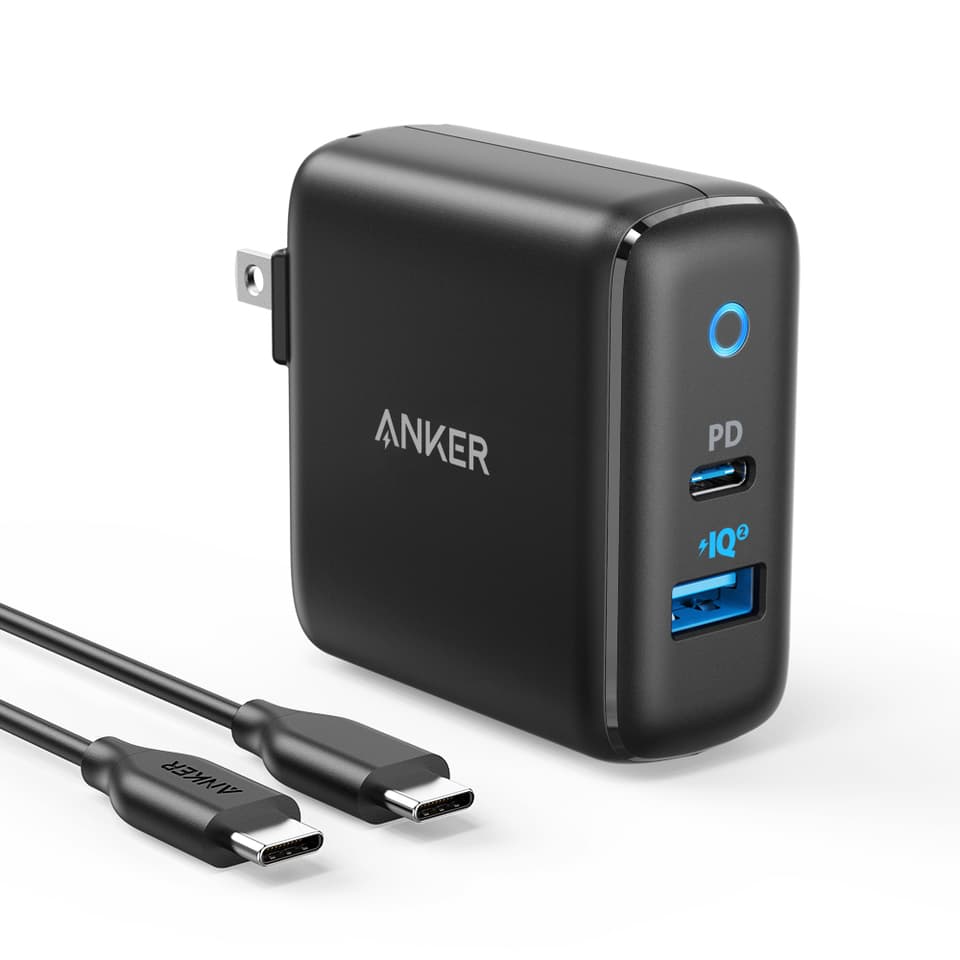
For example, say I use an Anker Powercore PD battery that doesn’t support pass through charging. When I get to town I want to charge both my battery and my phone at the same time. To do this I have to bring a 2 usb port wall charger (pictured).

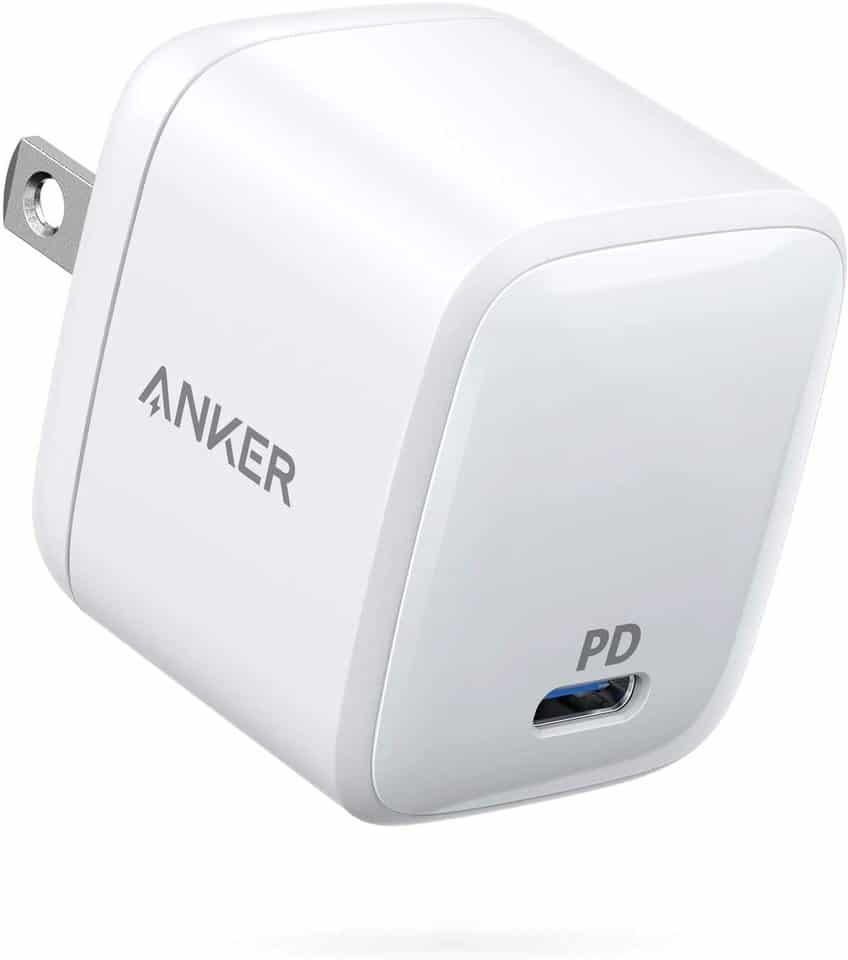
Now with the Zendure SuperMini it can turn the battery into another USB port so I only need to bring a smaller 1 port wall charger.

I charge the battery directly using the wall socket and then daisy chain my phone or whatever else I want to charge off my SuperMini battery.

As an example, the two wall chargers pictured above. The smaller one weighs 1.9oz/53g whilst the larger one weighs 8oz/227g. So by utilising the pass-through charging you save 6oz/170+g from your pack, that’s a big weight saving without any loss of functionality.

These are two great ultralight small wall chargers options that support PD to couple with your Zendure SuperMini:

  • Rav Power USB-C 61W PD Wall Charger (Foldable Prongs)
  • Anker USB-C 30w PD Wall Charger

Head to Head Match-Ups

Zendure SuperMini vs Anker PowerCore 10000 PD

CriteriaZendure SuperMini 10,000 MahAnker PowerCore 10000 PDComment
Zendure SuperMini vs Anker PowerCore 10000 PD

Zendure SuperMini vs RavPower PD Pioneer 10000mAh Portable Charger 2-Port Power Bank

CriteriaZendure SuperMini 10,000 MahRavPower PD Pioneer 10000mAhComment
Zendure SuperMini vs RavPower PD Pioneer 10000mAh Portable Charger 2-Port Power Bank

Zendure SuperMini vs Nitecore NB10000

CriteriaZendure SuperMini 10,000 MahNitecore NB10000Comment
Zendure SuperMini vs Nitecore NB10000

The Perfect Thru-Hiker Battery

The design and specs of the SuperMini make it ideal for any thru-hiker. It’s got the perfect combination of functionality and features.

It matches or surpasses most other batteries on the usual criteria and is one of the very few batteries in it’s class that supports pass-through charging. The Zendure SuperMini when utilized with a smaller wall charger can enable big weight savings.

If you’re interested in getting your own you can see it on Amazon here. Any questions just comment below.

The Best Sights for Glock 34 in 2024

0

Today I’m going to show you the best sights for Glock 34.

In fact:

I’ve hand- tested over 10sights alone for this review.

The best part?

I’ve sorted the sights by use. So whether you’re on a budget or need the best Glock 34 sight, you’ll find it here.

Let’s dive in!

The Best Sights for Glock 34

If you’re pressed on time, here’s a quick list of the best Glock 34 sights:

  1. TRUGLO TFX Pro Tritium and Fiber Optic: Best Competition Sights for Glock 34
  2. TRUGLO Tritium: Best Budget Sights for Glock 34
  3. Trijicon HD XR Night Sight Set: Best Night Sights for Glock 34
  4. AMERIGLO GL-125 Ghost Ring Green: Best Ghost Ring Sights for Glock 34

1. TRUGLO TFX Pro Tritium and Fiber Optic: Best Competition Sights for Glock 34

The TRUGLO TFX Pro Tritium Fiber Optic Sight is the best competition sight for Glocks.

In fact:

TRUGLO TFX Pro has completely transformed my results in short-range competitions. Since I began using them, my shot groupings are tighter, and my accuracy improved.

Sound like something you’re interested in?

Keep reading…

Tritium and Fiber Optics

One of my favorite features about the TFX Pro is the combination of tritium and fiber optics.

While tritium continuously glows, it’s best suited for night and lowlight because its luminescence isn’t noticeable in bright light. The fiber optic compensates for tritium’s daytime dullness because it absorbs ambient light, enabling it to glow in bright settings.

While I use these sights mainly for competition—usually in well-lit ranges—being able to rely on the tritium fiber optic combo assures me that I’m well-equipped to handle any self-defense scenario in all lighting conditions.

Eye Relief & Eye Box

The eye relief is unlimited.

This is great because—in addition to keeping both eyes open—I can get a sight picture from various distances and at different angles.

This is especially useful for self-defense, as these scenarios often unfold quickly with little time to aim.

Durability

The TFX Pro is built like the Titanic.

The rods are made from CNC machined steel coated with TRUGLO’s Fortress Finish, making it wear-resistant.

Unlike older TRUGLO sights, the tritium and fiber optics are hermetically sealed in the TFX Pro. This is great because it prevents damage during usage and also protects the tritium and fiber optics from oils, chemicals, and cleaning solvents.

While this means that the front sight is a bit longer, it ensures that your tritium and fiber optics are protected.

I don’t get hung up with the longer front sight, but I can see how it might be a hassle if you’re using a holster. So make sure to assess whether adding these sights impacts the ease with which you draw your weapon.

The rear sights come with a tensioning screw for the dovetail, so they don’t budge—even if you hit them. I appreciate the added security because it ensures that your rear sights stay put when doing one-handed manipulations.

A perk to the tritium and fiber optics is that it’s battery-free and long-lasting since tritium and fiber optics have a half-life of 12 years.

Front and Rear Sights

The contrast between the orange ring and the three green dots in the sight picture makes acquisition seamless and improves accuracy.

Although the orange ring dims in low light, it didn’t stop me from getting a good sight picture.

The rear sights’ U-notch design also promotes quick acquisition, and its elevated ledges make for easy one-handed manipulations.

I find that the U-notch’s width also provides adequate spacing between the rear and front sights in my sight picture, which helps accuracy.

Installation

Both front and rear sights are easy to install.

The sights come with an Allen wrench and tensioning screw, but I also used a

TRUGLO front sight tool:

A sight pusher:

And 242 Blue Loctite:

Just make sure that the front sight is installed tightly. Otherwise, it’ll be wobbly.

If you don’t want to install it on your own—or don’t own tools and don’t want to buy them—drop by your gunsmith for an installment.

Is the TRUGLO TFX Pro worth it?

If you want to compete with a Glock, or want sights that are optimal for self-defense, get the TRUGLO TFX Pro.

It’s got:

  • Strong build
  • Easy one-hand operation
  • Around the clock visibility
  • Quick focus and accuracy

You should know that TRUGLO only honors the 12-year warranty if your sights are installed by a licensed gunsmith. So if it’s detectable that you installed them, the warranty is voided.

Honestly, for the price, I think these are great sights. They’re made with quality material, and the Fortress Finish provides excellent protection, so you shouldn’t run into any longevity or functionality issues.

So if you’re looking for simple, but accurate and easy to use sights that are always ready to go, I would definitely buy the TRUGLO TFX Pro.

2. TRUGLO Tritium: Best Budget Sights for Glock 34

TRUGLO Tritium Night Sights are the best budget sights for the Glock 34.

In fact:

I used to have these mounted on my home defense and concealed carry pistols because of their unparalleled performance and price.

Here’s what I like about them…

Sights

These sights use the familiar three-dot design: two glowing green dots on the rear sight and one green dot on the front.

In the brighter lighting, the rear sights turn black while the front sight turns white to match the large focus and lock ring.

So, even in the daylight, these sights are guiding my eye for faster, more accurate target acquisition.

Tritium And Fiber Optics

What really makes these sights stand out is the dual tritium and fiber optic feature.

The tritium green dots glow at night without batteries, while the fiber optic white sights gather and magnify the light from the surrounding area. So they’re good in daylight, low light and no light situations.

I can use them while hunting day or night, but I also like having them for home defense.

You never know what the situation could look like, so knowing that I can use them in dim or no light situations puts me at ease.

Notch Style and Design

I have these sights on a couple of different guns, but I prefer them on my Glock 34.

I test and work with a lot of different pistols, so switching to the Glock with a heavier barrel always throws off my accuracy. Using sights, especially ones that perform to the caliber that these do, help me.

The U-Notch rear sight is designed for fast accuracy, not beauty.

The rear sight doesn’t blend well with the slide. It’s ugly to say the least, but it’s more than functional.

The angled rear sight also lets me rack the gun with one hand right off my belt — another great feature for home defense.

Durability

The TRUGLO Tritium is far more durable than any other sights in their price range, but they’re not indestructible.

I’ve shot hundreds and hundreds of rounds with these sights on my Glock 34. But, I noticed that after maybe 500 rounds, the front sight had come loose.

So if you intend on putting thousands of rounds through your gun, I’d go for a higher end glock 34 sight, like the TFX Pro.

Speaking of sights, if you’re looking for a high-end, mid-level priced optic, check out my review on the Leupold VX-R.

Mounting & Installation

You don’t have to make a special trip to a gunsmith to have these installed.

It took me less than 10 minutes to install these on my Glock 34. The front sight takes a hexagonal screw, while the rear sight is installed with an allen screw.

The drawback to the longer front sight is that it sticks out over the cutout on the top of the slide on the 34 (and 35) Glock. Not only does this not look as clean, but it can also compromise the sight’s lifetime.

What I did to fix this was to use some Loctite Threadlocker Blue 242 to prevent the screws loosening over time. I haven’t had an issue since.

Is the TRUGLO Tritium worth it?

Because of their performance in low-light and no-light situations, I love these sights for my home and self-defense Glock 34. The snag-resistant design gives me a clean draw every time, so I’m ready faster.

If you’re looking for an affordable sight that outperforms its cost, these are the sights for you. Here’s why:

  • Affordable
  • U-Notch rear sight
  • Tritium and Fiber Optic
  • 12 year, limited warranty
  • Unmatched visibility in all light conditions

In other words:

These sights have all of the premium features at half the cost. That’s why they’re my go-to for home and self-defense pistol sights.

With all the money I save, that’s more that I can put toward buying ammo and more time shooting.

So if you’re looking for the best night sights for your Glock 34 that won’t break the bank, I wouldn’t think twice about getting the TRUGLO Tritium Night Sights.

3. Trijicon HD XR Night Sight Set: Best Night Sights for Glock 34

The Trijicon HD XR Night Sight Set is a fantastic set of self-luminous iron sights for use in all lighting conditions.

In fact, I think they are the best night sights available for the Glock 34.

Let’s find out why…

Visibility

Hands down, these are the most visible pistol iron sights I’ve ever used. And I’ve tested them in all lighting conditions.

Sight acquisition during low light and night conditions is fantastic. The green lamp tubes in the sights glow very brightly in the dark. I really like this feature on my home defense Glock, because if I need it, odds are I will need it at night!

But these sights are also great during the daytime. The lamp tubes are housed within an orange outer ring which is insanely easy to see in the light.

In fact, even if you don’t plan on doing much night shooting, I still recommend these sights just for the orange ring alone. It’s that good.

Accuracy

Simply put, these iron sights are very accurate.

I mounted them on my Glock 34 and the point of impact is right above the front post.

And after months of regular shooting, I haven’t noticed any shifting at all.

I also noticed that the HD XR has a thinner front post than most other iron sights.

The thinner post doesn’t obscure your target. This is great for shooting at longer ranges, and allows for better target identification at any distance.

Durability

The HD XR Night Sights are very durable.

This is because the lamp tubes are held in an anodized aluminum frame.

This makes them much stronger than standard plastic Glock sights, but still keeps them very light.

Mounting

You’ll want to have these installed by a professional using proper gunsmithing tools.

So take a quick trip to the gunsmith, and you’ll be all set to shoot in any light conditions.

Is the Trijicon HD XR Night Sight Set worth it?

Overall, the Trijicon HD XR Night Sight Set is a fantastic set of high-visibility, durable iron sights for your Glock 34.

They’ve got:

  • Durable metal frame
  • Bright green lamp tubes for night shooting
  • High visibility orange ring for daytime shooting
  • Slim profile front post that doesn’t obscure your target

Plus, the sights are covered under Trijicon’s Limited Lifetime Warranty.

So whether you want to shoot during the day, the night, or somewhere in between, the Trijicon HD XR Night Sight Set is your best bet.

Looking for an optic for your 7.62×39? Check out our guide to the top choices.

4. AMERIGLO GL-125 Ghost Ring Green: Best Ghost Ring Sights for Glock 34

The AmeriGlo GL-125 Ghost Ring is a highly accurate, highly visible ghost ring custom tailored for Glock pistols.

In fact, it’s the best ghost ring you can buy for the Glock 34.

I don’t make this claim lightly. Read on to find out why the GL-125 is the best Glock 34 ghost ring on the market.

Accuracy

The GL-125 is incredibly accurate.

This is due to the design of the ghost ring, which uses an aperture instead of a traditional notch for the rear sight. Basically, it’s a circle, so it draws the eye naturally to the center while allowing you to focus on the front post.

This helps you level your pistol both correctly and quickly, which makes for accurate shots. Target acquisition is quicker with a ghost ring too, which is great for use with a defense weapon.

In fact, since using the GL-125 on my Glock 34, I’ve noticed that my shooting with all pistols has improved. The skills I’m perfecting by using the ghost ring transfer well even to the standard notch-and post sights on most of my other handguns.

Visibility

This ghost ring shows up perfectly well in any lighting conditions.

The tritium lamps glow a very bright green, which is easy to see in low-light or even total darkness.

And the white circle around the lamp on the front post is very easy to pick up in the daylight.

This means that day or night, you’ll be able to reliably put shots on target.

Durability

This ghost ring is insanely durable.

The ghost ring and front post are both made with a steel frame, so they can take all kinds of abuse.

I’ve even practiced racking the slide on my Glock one handed, using the sights and my belt, and they didn’t budge. Hopefully I’ll never need to use that skill, but it’s good to know I can do it in an emergency!

Mounting

Installing the GL-125 was a breeze. I didn’t even have to take it to the gunsmith.

Just snap them in place, and get to shooting.

Is the AMERIGLO GL-125 Ghost Ring worth it?

Overall, the AmeriGlo GL-125 Ghost Ring is a fantastic all-purpose Glock sight suitable for all shooting conditions.

It’s got:

  • High durability
  • Easy self-installation
  • Aperture-style rear sight
  • White circle for day shooting
  • Bright green tritium lamps for night shooting

And if all that isn’t enough, the ghost ring is covered by AmeriGlo’s standard warranty.

So if you’re looking for a good alternative to traditional notch-and-post pistol sights for your Glock 34, look no further than the AmeriGlo GL-125 Ghost Ring.

Need an optic for your AR-15? Check out my guide to the 7 Best AR-15 Scopes and Optics.

Now It’s Your Turn

I hope you enjoyed my best sights for Glock 34 guide.

So as a recap:

If you’re looking for the best competition sights for Glock 34, get the TRUGLO TFX Pro Tritium and Fiber Optic.

Looking for the best sights for Glock 34 under budget? Choose TRUGLO Tritium.

How about the best night sights for Glock 34? Then opt-in for Trijicon HD XR Night Sight Set.

Lastly, if you are looking for the best ghost ring sights for Glock 34, I’d recommend AMERIGLO GL-125 Ghost Ring Green.

That said, you can’t go wrong with any of these options. After all, I have hand and torture tested all the above sights, and proved to be reliable.

Now I want to turn it over to you:

Which scope will you pick for your Glock 34?

Let me know by leaving a quick comment down below.

How laser rangefinder modes work

0

Hunter glassing with the Vortex® Razor® 4000 Laser Rangefinder

For serious hunters, archers, and long-range shooters, understanding how and when to use target and range modes is crucial for ensuring optimal accuracy when a shot opportunity presents itself.

We’ve all been there: you’ve spent hours stalking your prey or setting up the perfect shot, only to flat out miss. Often these ruined opportunities aren’t just about shaky hands or poor conditions; they can also be due to incorrectly using your laser rangefinder.

Read on to learn how and when to use your Vortex® laser rangefinder’s target and range modes so that every time you squeeze the trigger or release an arrow, your aim is as accurate as it can be.

RANGE AND TARGET MODES EXPLAINED

Range and target modes are specialized settings on a rangefinder designed to help hunters, archers, and long-range shooters adapt to varying conditions and target characteristics. Range modes can provide distance readings that factor in elevation, angle, and atmospheric conditions, while target modes help distinguish the intended prey from its surroundings.

Choosing the appropriate mode is critical for shooting and hunting success, as it ensures that you get the most accurate distance measurements, thereby enhancing your shot’s precision when it counts.

Rangefinder Range Modes Graphic

RANGE MODES

LOS MODE

WHAT IT DOES: LOS Mode displays the actual “Line of Sight” range from the rangefinder to the target along with the slope angle.

WHEN TO USE IT: This mode is intended for shooters utilizing ballistic devices and shooting at distances beyond 500 yards with slopes greater than 15 degrees. Most commonly used ballistic devices require line of sight range input for accurate results.

HCD MODE

WHAT IT DOES: HCD or “Horizontal Component Distance” Mode is the default and primary mode for most rifle and archery applications. HCD Mode displays the slope angle compensated distance to the target.

WHEN TO USE IT: This mode is most useful for archers shooting out of a treestand, mountain hunters, and precision competitors who need an angle compensated distance for an accurate shot. Shooters simply use the appropriate level of bullet drop and wind adjustment for the range displayed and shoot. Archers use the appropriate level ground sight pin.

WHEN TO USE IT: This mode is intended for shooters utilizing ballistic devices and shooting at distances beyond 500 yards with slopes greater than 15 degrees. Most commonly used ballistic devices require line of sight range input for accurate results.

TARGET MODES

Depending on the model, Vortex® laser rangefinders offer up to four target modes to deliver accurate ranges in any hunting or shooting situation.

Rangefinder Target Modes Graphic

NORMAL MODE

WHAT IT DOES: The default Normal Mode is the standard mode that provides the targets range with the strongest range result. Utilizing the scan feature by pressing and holding the range button while in Normal Mode results in a yardage display that’s constantly updated.

WHEN TO USE IT: Normal Mode is recommended for most situations.

FIRST MODE

WHAT IT DOES: First Mode displays the closest distance when ranging.

WHEN TO USE IT: This mode is ideal for ranging a smaller target in front of other larger or more reflective objects; for example, a mule deer bedded in front of distant rocks.

LAST MODE

WHAT IT DOES: Last Mode displays the farthest distance when ranging.

WHEN TO USE IT: Last Mode is ideal for ranging a specific target behind a group of objects like brush, trees, or rocks; for example, when ranging an approaching whitetail through leaves and branches.

ELR MODE

WHAT IT DOES: ELR or “Extended Laser Range” Mode is ideal for ranging targets at extreme distances. A slightly longer response time allows for greatly extended range distances. The use of a tripod is recommended for best results.

WHEN TO USE IT: ELR Mode is perfect for ranging when Normal Mode is unable to obtain a desired range. This mode is also useful for planning long stalks. For example, range a distant landmark near the animal’s location. Drop a pin on your mobile mapping app and use this destination as a checkpoint to relocate your target. Hunter glassing with the Vortex® Viper® HD 3000 Laser Rangefinder

WHICH LASER RANGEFINDER IS RIGHT FOR YOU?

The Vortex® rangefinder lineup delivers exceptional optical clarity and accuracy essential for precise shot calculations based on the terrain, weather, and type of target. Vortex® also delivers a range of models catering to different skill levels and budgets, all backed by the VIP Warranty. Watch this Vortex® Laser Rangefinder Comparison video for a breakdown on what makes each unit unique.

Visit your local Vortex® dealer to get your hands on the different models, try out all the features, and find the best one for your hunting and shooting needs.

It’s our hope you can learn and laugh along with the expert voices we feature on this blog. We want to be clear that the opinions you see featured here are just that: opinions. The content belongs to the authors and is not necessarily the opinion of Vortex Optics.

To learn more about what you’ve read, please like, follow, and otherwise support our authors.

Shotgun Choke Tube Information

0

What Is A Shotgun Choke?

A choke is simply a tapered constriction of the gun barrel’s bore at the muzzle end. The exit end of the choke is smaller by some dimension than the actual bore of the barrel. This difference is the amount of constriction. For example if the bore of the barrel is .730 and the exit dia of the choke is .710 you have a constriction of .020. The amount of constriction for a given degree of choke will also vary between manufacturers. As a general rule for standard chokes the total range will be between .000 and .045 thousandths of an inch under bore diameter. In the case of special purpose turkey chokes it can be as much as .100 or 1/10th of an inch. The length of the choke can vary as well. Most, but not all chokes will have an overall length of between 1.5 and 4 inches. Note that many fixed choke barrels marked skeet will actually be .000 or cylinder.

They can be grouped in 3 general types:

1- Fixed chokes- They are made as an integral part of the barrel and cannot be readily changed except by a gunsmith and any alteration is considered permanent.

2- Interchangeable chokes- These can be of the “screw on” style which is externally attached or the “screw in” which is recessed into the barrel. To change the degree of constriction you simply remove and replace with a choke of a different diameter.

3- Adjustable chokes- This style of choke is adjustable throughout the entire range by turning a sleeve, which collapses or allows a collet to expand thus changing the exit diameter. A popular choke of this type is the Polychoke.

The internal design of chokes can also be broken down into three main groups:

1- Conical Parallel- This style has a cone that blends into a parallel section which helps to stabilize the shot charge as it leaves the choke.

2- Straight Conical- This has a cone only. Where the cone stops is the point where the shot exits the choke.

3- Wad Retarding-They do not have the constriction in the same manner as either of the above designs but instead use bumps or projections to alter the shot pattern.

The most common design in use is the conical parallel. All Trulock Chokes are of this design.

Shotgun Bore Diameter and Pattern Performance

I am often asked the above question by people who are interested in purchasing a new shotgun. They reason that if a specific bore size inherently gives better, that is more even patterns, then it makes sense to purchase a shotgun with that bore diameter.

Shotguns that were made in the U.S.A. were for many years, all of the same nominal bore diameter (.730 plus or minus the tolerance of the individual manufacturer) as the U.S. standard for 12 ga was .7299. With the rise in popularity of foreign shotguns such as Beretta we were introduced to smaller bores running in the nominal .721/.725 diameter. Stan Baker to the best of my knowledge was the first to do extensive experiments with backbored barrels (the process of enlarging an existing bore diameter) taking the 12 ga bore up to a nominal 10 ga diameter of .775. Some time back Browning added a new choke design to their line which they named Invector Plus to differentiate it from their original design called Invector. The new chokes and the barrels were based on a nominal .740 bore diameter. I believe that Browning was the first company to offer a factory barrel with a bore diameter that was significantly larger than standard. Currently most of the major shotgun manufacturers offer at least some models with bores larger than their “standard” bores. Some have gone totally to a new larger bore. The results of this are that today’s shooter has a very wide range of bore diameters to choose from.

Pulling from my memory I can recall the following nominal 12 ga. bore sizes. These may not be exact numbers as each manufacturer has plus and minus tolerances. Some of the below numbers have been rounded when converting from metric measurements and some for my convenience.

.725

.730

.733

.735

.740

.745

.774

Now that you have all of the background information, you can get my answer.

I have always been able to obtain the pattern that I was looking for within reason (no 100% patterns at 80 yards) with all of the above bores by patterning with different chokes and or shells. I have had shotguns on occasion that took quite a bit of work to obtain the pattern I wanted but this has never been limited to a certain bore size as they were always a random mix.

Shotgun Patterns

Patterns are normally expressed as a percentage such as 50%, 60%, 70% ect. This is the commonly accepted method comparing pattern density. In a 50% pattern ½ of all the pellets contained in the shell will strike inside of a circle of 30 inches in diameter. To find the percentage of any given load divide the number of hits inside the circle by the total number of pellets contained in the shell. You can obtain the approximate number of pellets any given load will have from a shotgun shell reloading book or you can open a couple of shells and actually count the pellets. Normally all pattern testing is done at a distance of 40 yards with the exception of cylinder and skeet 1 chokes in all gauges and all chokes for the .410 bore which are normally measured at 25 yards. Industry pattern percentages for chokes were developed using the preceding distances. If you want to compare any given choke to the industry figures you should do your pattern testing at the same distance.

The purpose for this is to allow you to select a choke that will throw a pattern that is as large as possible without having the pellets so far apart that the target can move through the shot string without receiving multiple hits. For shooting both game and clay targets you want a pattern that is perfectly even in pellet distribution over the 30-inch circle. Having said that, and after looking at thousands of patterns over a span of 25 years I could count on my fingers the number that I would call “even” and if these were measured close enough they would not have qualified. In this instance “very close” is excellent. Two exceptions to the preceding would be buckshot and turkey patterns. With both of these you are looking for a tight center cluster of pellets.

One thing to remember –The only thing that is consistent about shotguns is that very few things are consistent. Identical guns with the same degree of choke and using the same shell may not pattern the same. The same load between various brands of shells can pattern differently. Patterns will change when changing from hard to soft shot. Patterns can change when anything in the shell changes such as different wads, powders or primers. What I am trying to get across is that when you change anything such as brands, shot size, or components you will need to check the pattern as it could have changed, sometimes by an extreme amount.

Once you find a choke/shell combination that gives you the pattern you want it should remain reasonably consistent as long as nothing is changed. I am satisfied as long as the percentage stays within a 5% plus or minus deviation.

The below chart shows the relationship between the degree of choke, the percentage and constriction based on lead shot. Keep in mind that the percentages are a guide only. What you actually want is a pattern that is dense enough to insure multiple hits on your target at the distance you normally shoot.

Lead Shot Choke Chart

Constriction Percent Cylinder .000 40 at 40 yds- 70 at 25 yds Skeet 1 .005 45 at 40 yds- 75 at 25 yds Imp Cyl .010 50 at 40 yds Skeet 2 (lite mod) .015 55 at 40 yds Modified .020 60 at 40 yds Imp Mod .025 65 at 40 yds Full .030 70 at 40 yds Extra Full .040 73 at 40 yds Turkey .045 Plus 75 PLUS at 40 yds

Keep in mind that this chart should be used as a starting point only. Select the choke and pattern it. Change chokes or loads as needed to get the pattern you want. If you do not pattern your gun please feel free to accept this chart as being infallible.

What Choke Should I Use

The most frequently asked question we get is “What choke do you suggest”?

Use a choke that will give you 70 or so percent patterns at the distance you plan to shoot.

If you look back at the “lead shot choke chart” it is obvious that open chokes at long distances will have a much more open pattern than tighter chokes. I will not argue the point that you can certainly break/kill targets at 40 yards with a skeet choke but the odds are certainly not in your favor. Try your best to estimate the distance that you would normally encounter for a specific shooting condition and select a choke that gives you an evenly spaced 70% pattern with your choice of shell. Rarely, will your estimate be “on the money” so test pattern this combination at distances both closer and farther from your established base line. If the shooting distances change then change your choke to match them.

When I first started dove shooting many years ago, I noticed there were always one or two men at every shoot that almost never missed a bird. After long observation I realized that the one thing that each had in common was that they picked their shots instead of blasting at every bird in the field. They were simply shooting those birds that were within range of whatever gun/choke/shell combination they were using. In my opinion shooting range equals 70% pattern density.

While there are other variables, for all practical purposes chokes will have the biggest effect on pattern density. I look at density from two different ways. The first is the pattern percentage. This is simply a figure telling you how many pellets out of the total number of pellets that were fired at the target hit inside a thirty-inch circle. Example: 250 pellets were in the shell and 200 landed inside the circle. Divide 200 by 250 = 80%. Percentage is percentage and it does not matter what size of shot is used.

The second way is pellet spacing. Common sense tells us that a 1-¼ oz. load of #8 shot will have many more pellets than a 1-¼ oz. load of #4 shot. If both loads pattern at 70% you will have more # 8 shot in the target than you would have with 4’s. The pellets must be close enough that the target cannot slip through. While I generally think that the 70% rule is sufficient, some of the larger pellets may not give enough density. Pattern and make sure.

How To Pattern

I like to use paper that measures 4 feet square. Paper this size may be hard to find locally. If it is not available try taping several sheets of butcher paper or newsprint together. Bruce Buck the “technoid” of “Shotgun Report” suggested using red resin flooring paper. This is available at any home supply store and shows the pellet holes perfectly when viewed from the back. He noted it is available only in 36-inch wide rolls but it cuts and tapes easily. If you use small paper and your gun does not shoot to the point of aim, part of your pattern could be off of the target. You would probably confuse this with a bad pattern. Mark the target center for use as an aiming point. I strongly suggest that you use a padded shooting bench when patterning. At this point you are not checking the gun for fit and a bench rest helps to remove some of the variables. Note that if your head/eye is not located in the same place on the stock between bench rest and offhand shooting your point of impact will be different. From the correct distance, shoot at the center of the target. I would do this a minimum of 5 times on different targets with each shell or choke that is being tested. You will need to draw a 30-inch circle around the most dense portion of the pattern on each target. If you intend to do much of this get a 30-inch diameter piece of thin Lexan [Plexiglas]. You can easily move this around on the paper to find where to draw the circle. Count the pellets inside of the circle. Divide this number by the total number of shot contained in the shell and you will have your percentage. Take the percentage from each target, add them and divide by the total number of shots fired for each shell or choke. This will give you the overall average for that test. Sounds like a royal pain doesn’t it? It is, but there are no short cuts if you really want to know what your shotgun is doing.

After you have finished look carefully at each pattern for holes that are big enough to let your intended target slip through. You want a dense enough pattern to ensure multiple hits.

Point of Impact

We are asked on occasion about chokes that do not center the pattern exactly on the aiming point. Most shooters want a shotgun that centers the pattern exactly with the point of aim. Most shotguns are manufactured in theory to do this. The problem arises between theory and fact. It is not unusual to find shotguns that shoot high or low and to the right or left or a combination of these. Shotguns that pattern ½ above and ½ below the point of aim have what is commonly known as a 50/50 pattern. One that shoots ¾ of the pattern over and ¼ under the point of aim has a 75/25 pattern and so on. Certain guns are designed to give patterns other than 50/50. WE WILL ASSUME that you know if your gun was designed to give a pattern other than 50/50.

Some of the common reasons for off center patterns are listed below.

1-Defective choke tube

2-Bent barrel

3-Choke/barrel alignment

4-Loose barrel

5-Poor gun fit

6-FLINCH

This could also result from a combination of any of the above.

To check your gun for point of aim we suggest the following

1- Shoot from a padded rest.

2- Make sure to get perfect bead alignment if your gun has a center bead, if it doesn’t get the rib perfectly flat, with the bead visible.

3- Use the same load as you will use in the field or on the range.

4- Squeeze the trigger. This is easier said than done as most shotgun trigger assemblies give anything but a good pull.

5- Use targets with a center aiming point.

Shoot several targets, change chokes and repeat.

I would suggest you do this with several different chokes. If you are using aftermarket chokes also test some of the factory tubes that came with the gun.

1- If all of the chokes shoot to the same spot or at least very close to the same, your problem is not with the chokes.

2- If your point of impact changes with each choke you test your problem is not the chokes.

3- If one choke shoots to a different point of aim and the others do not. I would say that choke is defective and a call to the manufacturer would be in order.

One other thing you should be aware of is the “point of convergence” [POC]. This problem will be found only on side-by-side or over/under shotguns. Both barrels should shoot to the same spot. Again what works in theory seldom works in practice. Generally with O/Us the top barrel will shoot high. When testing for proper POC you will find it somewhat easier if you use tight chokes. If the POC is close, be happy, many are not. If you cannot live with the error I suggest you talk to the manufacturer.

Steel Shot/Waterfowl Chokes

Much has changed over the years with steel loadings. The quality and consistency of the shells has been greatly improved. However, the fact that steel shot exerts much more stress on choke tubes has not changed. The problem is that steel shot is much harder than lead. It will transmit much more energy to the choke when it strikes the conical portion and if the tube is not of sufficient strength it will cause it to deform. This is known as “choke creep”

Over a period of time choke creep can lock a choke in the barrel so that it is next to impossible to remove. Most Trulock Chokes are rated for use with steel shot from cylinder bore through improved modified with the exception of the Tru-Choke S.D. which are not recommended for any shot other than lead. In addition our Super Waterfowl Choke was designed especially for steel and all other environmentally friendly shot.

It is strongly suggested that you use our Extended Precision Hunter style choke for steel shot as they normally give a superior pattern over the flush style chokes.

Close Range -approximately out to 30 yards – Skt 1= pattern percentage of about 55% Medium range- approximately out to 35 yards-Skt 2 [light mod] =pattern percentage of 65%

Medium range- approximately out to 35 yards-Skt 2 [light mod] =pattern percentage of 65%

Long Range-35yards and further- Improved Modified =pattern percentage of 75%

Extreme Range= Super Waterfowl series=pattern percentage of 80% plus

The above suggestions normally work well with number (4, 3, 2 ect.) size steel shot. If you are using letter size (BB, BBB ect.) steel you may find your best results using cylinder (close range) improved cylinder (mid range) and modified for long range.

If you are switching from standard velocity steel to fast steel and you notice a decrease in pattern performance try backing off of choke constriction by .005 from whatever size you presently use.

These suggestions should be used as a starting point and should not be taken as a substitute for patterning your shotgun.

The recommendations below are for Trulock Chokes only.

Tungsten Iron- Use the same choke constrictions as you would for steel shot.

Tungsten Shot such as Hevi-Shot, Hevi 13, Winchester Extended Range and Federal Heavyweight.

For waterfowl and upland bird hunting we suggest you use two sizes smaller shot than you would with steel. We find that these alloys can be used in chokes with much more constriction than you can use with steel shot and they retain velocity much better. This, in my opinion makes them the ultimate choice for long range shooting. For normal patterns using # 6 thru # 2 size shot we like a skt 1 for close range, a skt 2 (light mod) for mid range and improved modified for long range. For shots on the long side of 40 yds try the extra full constriction or one of our Super Waterfowl chokes.

This type of shot can be used in our turkey chokes and normally deliver excellent patterns.

Bismuth – Use the same chokes you would use with lead shot.

All current production Trulock Chokes are marked on the body if rated for steel or tungsten or both.

Turkey Chokes

We make a wide assortment of chokes that fall under this heading. No one choke works well in all guns with all loads but one thing has to be consistent, the shot shell. You will have to shoot premium factory loads or assemble your hand loads with the best components available in order to get good dense patterns at long range. While this basically holds true for all shotgunning it is especially so when hunting turkeys. You have a very small kill zone even when the bird is at close range and it is imperative that you know exactly what your shotgun and shell is capable of doing. In testing different shells we have found several that work very well.

1- Hevi Shot

2- Federal Premium Mag Shok Heavyweight

3- Winchester Supreme Elite Xtended Range Hi-Density- No longer loaded but some existing stock may be on dealer’s shelves.

4-Winchester Long Beard™ XR™ Scroll down for more information

As a rule we found that the shells with “heavier than lead” pellets shot tighter patterns than those using lead but this may not be the case with your gun.

To get a dense pattern with a tight center you will need the Precision Hunter style choke. Our three most popular chokes have exit diameters of .670, .665 and .660. Although some shotguns like a .680 generally one of the above ends up working better. We also make a.650 and .640 but these are better suited to card shooting and not live bird hunting as they like smaller # 8 shot better. The smallest exit diameter does not always give the tightest pattern. We find that the smaller the exit diameter the more erratic the patterns. Normally one particular load will pattern considerably better than the rest. Let me repeat that you will be wasting your time to shoot a cheaply made or promotional type shell. We have patterned the above listed shells with our chokes and make the following suggestions.

Suggested turkey chokes and shot size

.690 first choice for .774 bore guns- #5/6 lead, #6 “heavier than lead”

.670 first choice for .740 bore guns- #5/6 lead, #6 “heavier than lead”

.665 first choice for .730 bore guns- #5/6 lead, #6 “heavier than lead”

.660 first choice for .725 bore guns- #5/6 lead, #6 “heavier than lead”

We have NOT had a chance to test Remington’s replacement for Hevi Shot but will do so and post the results.

Please note that a choke of a given exit diameter is usually going to give a different pattern when used in guns of different bore diameters.

Take a Beretta at .723 a Remington at .727 a Browning I.P. at .740 and using a .660 in all three guns normally gives three different patterns. Just because a .660 worked very well in your Remington does assume it will work great in your Browning.

Special Turkey Chokes for Specific Shells

Trulock Fed # 7 turkey chokes

After testing the Federal Heavyweight turkey # 7 we were so impressed we designed a series of turkey chokes especially for this shell. It gave very good results as per the below pattern. The folks at federal tell me that the # 7 tungsten pellet has the same killing power at 40 yards as a # 5 lead pellet.
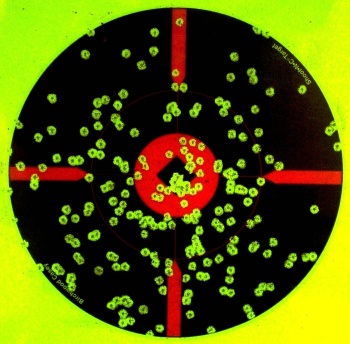
Federal #7 turkey load fired through Trulock Fed #7 choke at 40 yards.

Winchester Long Beard™ XR™ turkey chokes

These shells use lead shot that are encased in a special solid buffer that fractures upon firing. I don’t have a clue what the buffer is but I can tell you that patterns fired using this type of shell are amazing.

We developed a line of turkey chokes for this shell that is shot size specific. We make chokes specific to the #4, #5 and #6 shot sizes.

Combine the Longbeard XR™ turkey load with Trulock’s new LongBeard XR choke tubes to maximize the shell’s performance. With this remarkable combo, you can expect 10% greater penetration over standard lead loads beyond 50 yards and twice the number of pellets in a 10″ circle out to 60 yds.
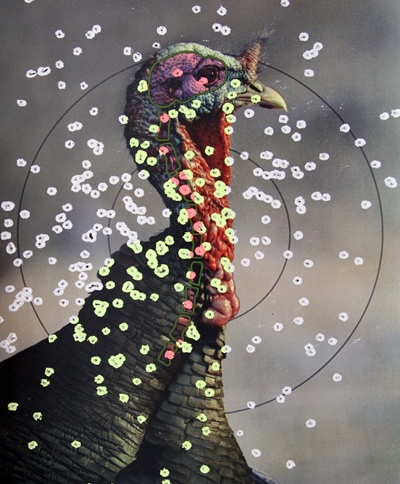
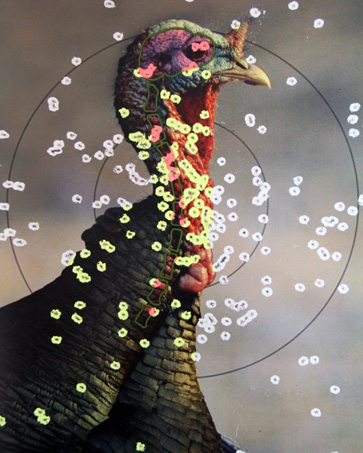
#5 Shot #6 Shot

Chokes for Buckshot

As with Turkey chokes you will be trying to get a very dense, tight pattern but since you have such a small number of pellets you cannot afford to have as many fliers. However, the rule about using premium shells does not change. Hard, plated pellets with a buffer will normally shoot tighter patterns with fewer fliers than those loads made with soft lead and no buffer. I would suggest the Precision Hunter style choke [extended] with a constriction of .030. This would be our full choke. Some gun/load combinations will work better with a constriction of .040 (extra full). One of these two constrictions will normally give you a very dense pattern.

The only sure way to know for sure which choke your gun likes the best is to test pattern and see.

Do not use turkey chokes for “00” buckshot. They have too much constriction and will decrease not increase the density of the pattern.

The constrictions suggested were based on the use of 00 size pellets.

We have patterned Hevi Shot’s 9-pellet buckshot load.

We consistently got 6 of the 9 pellets in a 10-inch diameter circle at 40 yards using an extended full and ex full choke.

00 and 000 Buckshot Choke Tubes For Big Game

Deerstroyer™ Choke Tubes

At the 2015 SHOT Show we introduced our Deerstroyer™ style of choke tubes especially for 00 and 000 buckshot sizes. All of these are made in a 4 inch overall length. For 2016 we have redesigned this choke internally for improved pattern performance. All of the Deerstroyer™ chokes have a nominal .030 constriction based on average bore size for each specific model.

Boar Blaster™ Choke Tubes

The Boar Blaster™ style of choke has a totally new internal design consisting of 5 steps with 6 parallel sections. This design has been tested with numerous loads of 9 and 15 pellet 00 and various 000 shells and has shown an increase in pattern density over conventional conical parallel choke designs with every load we have tested. Made from high strength stainless steel with a black oxide finish and knurled head.
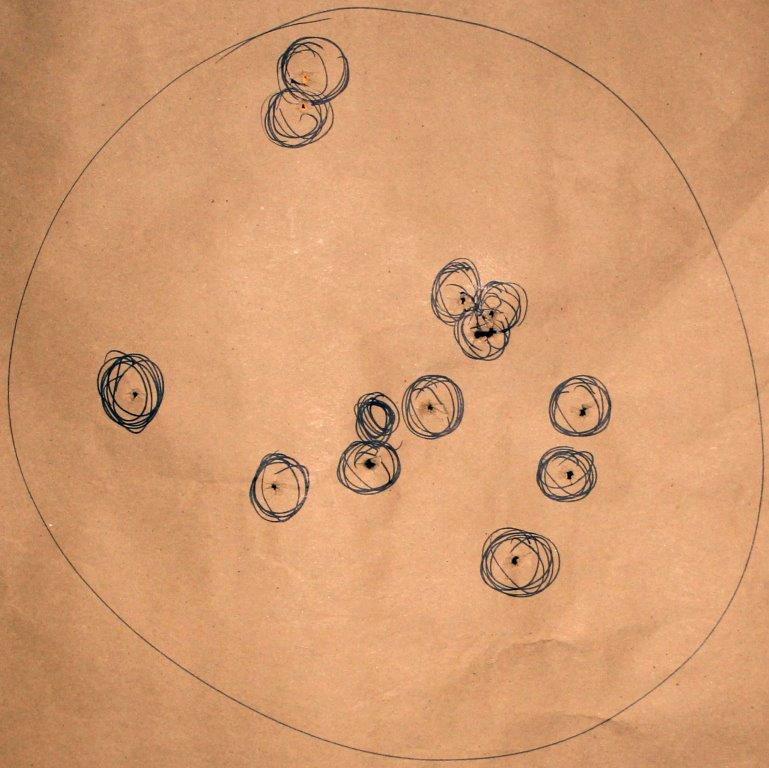
Predator/Varmint Chokes

Our suggestions on chokes are as follows.

Mossberg 835’s and similar .774 bore shotguns .710 exit diameter

Browning Invector Plus and similar .740 bore shotguns .680 exit diameter

Remington and similar .730 bore shotguns .670 exit diameter

Beretta Optima Plus and similar.733 bore shotguns .683 exit diameter

Benelli Crio Plus, Mobil style and similar .725 bore shotguns .665 exit diameter

We suggest the below loads

Hevi-Shot Dead Coyote (T Pellets)

Win Xtended Range HD Coyote (B Pellets)

Number 4 buckshot

In any given shotgun you may find one load patterns tighter than another. You will have to pattern your gun to find the best load.

Predator™ Choke Tubes

At the 2015 SHOT Show we introduced our Predator™ style of choke tubes especially for # 4 buckshot and the large pellet predator tungsten loads. All of these are made in a 4 inch overall length with a longer (3 inch) than normal conical section for less pellet deformation. All of these chokes have a nominal .050 to .060 constriction based on average bore size for each specific model.

Choke Cleaning

Ideally chokes should be cleaned each time the gun is used. Plastic fouling and powder residue will build up in screw in chokes much faster than in fixed choke guns. Powder fouling will also work between the choke and the choke counter bore in the barrel. Remove the choke and clean with a toothbrush using some sort of solvent. We use and suggest Choke Shine as a cleaner. Simply, drop the choke into the solution for a short time and it will come out with the fouling dissolved. Clean the inside of the barrel with a cleaner/lubricant such as Clenzoil making sure the threads do not have any residue, lightly wipe the choke with oil and reassemble.

Remember that rust can occur in the barrel and freeze a choke in place even if the choke is made from stainless steel. Waterfowl hunters should pay particular attention to keeping the choke and barrel clean.

Choke Tightness

Although this seems like a no brainer we believe that there is a proper way to install a choke tube. When changing a choke in the field or at the range, wipe the choke with a clean rag to keep any abrasive from being ground into the threaded area of the choke/barrel. Finger tighten and then use a wrench that properly fits the tube to finish tightening using a moderate amount of pressure. This will help keep the choke from loosening up when in use. When a choke is not properly seated the possibility of the shot charge striking the edge of the choke greatly increases. If this happens a bulged barrel and a ruined choke are almost guaranteed. Most chokes will loosen and back out to some degree if they are left finger tight. A perfectly clean, dry choke installed in a clean, dry barrel and moderately tightened with a wrench should not work loose. Having said that, most shooters are better off to make sure that there is a light coating of oil on the choke before installing as this will help prevent rust in the barrel. All chokes should be checked on a regular basis for tightness.

Prior to doing anything with a choke, be sure the gun is unloaded and the muzzle pointed in a safe direction.

Frozen Chokes

We have pulled frozen chokes in our shop of almost every brand. Normally by the time we get the barrel one or more people have attempted to remove the choke. Did you ever wonder where the saying “Fixed Guns Repaired” came from? This is a problem that can be prevented 99% of the time by simply cleaning the choke/barrel on a regular basis. The number one problem is RUST in the threaded area of the choke/barrel. If you keep this from forming, you generally will not experience any problems. The second problem is choke creep [expansion]. This fortunately is much less of a problem than rust. This is caused normally by using large steel shot in tight chokes [full or tighter]. Follow the manufacturer’s suggestions when using steel shot and the odds are very much in your favor that you will have no problems. If choke creep happens you will notice the choke becoming harder to remove and install and if you continue shooting it will eventually lock itself in the barrel.

If you find yourself with a frozen choke my first suggestion is to take it to a competent gunsmith. Make sure the smith has some experience in this line of work.

The information below is not intended to be all inclusive instructions. If you are not responsible for your own actions do not attempt to use any of the suggestions.

Unload the gun, remove the barrel from the action and soak the muzzle in a can of penetrating oil for several days. Make sure the container has a sufficient amount of oil to completely cover the barrel as deep as the choke is recessed. Use a proper fitting choke wrench and try to work the choke back and forth in small increments. If this does not work try letting it soak several more days. Heat applied to the choke area can be of help. Never get the barrel so hot that you cannot touch it with your hand for several seconds. Do not use a hammer of any kind to try and “tap” it. Soaking and low heat will get most frozen chokes out. Take your time, we have seen a number of barrels ruined because of impatience.

Choke Storage

We suggest that you keep your chokes in a padded case especially designed for them. There are a number of quality cases on the market for under $10.99. The purpose is to keep them from hitting each other or any hard object that could cause burrs or deformation. Chokes are particularly susceptible to denting in the skirt area. We have seen this occur on numerous occasions when chokes stored in plain boxes were dropped. We also urge you to clean all of the chokes that have used when you clean your gun. Alloy steel chokes need a light coat of oil prior to storage and stainless steel keeps its rust resistant properties best when it is free from all contamination.

British Shotgun Choke Tube Constrictions

Choke constrictions in Britain are normally marked using a different method that what we are accustomed to seeing here in the United States. In some cases the same name is used in both countries with an entirely different meaning as to the amount of constriction in the choke.

The below chart gives a comparison between the choke name and the amount of constriction.

Constriction Constriction British US Trulock MM Inches Marking Marking Marking .00 .000 Cylinder Cylinder Cylinder .13 .005 Imp Cyl Skeet Skeet 1 .25 .010 1/4 Imp Cyl Imp Cyl .50 .020 1/2 Modified Modified .75 .030 3/4 Lite Full Full 1.00 .035 Full Full

We have tried to give you a very basic course on chokes and their use. If we can be of any service to you please call us. We will be glad to help with any questions or problems you may have. This will be a constantly evolving paper. If you would like to see any subject discussed concerning chokes or related please let us know.

If you really must try eating slugs, here’s how to do it safely

0
If you really must try eating slugs, here’s how to do it safely

(Thinkstock)

Once again this year, every lilac in Southcentral seems to be showing signs of the latest surprise invasion. They are each harboring lilac leaf miners. Those brown patches on most leaves contain a caterpillar, one of the life stages of the pest. These eat tissue between the leaves and then use a silk thread to roll up the leaf and create a cocoon so they can pupate.

After a week, the caterpillars are transformed into small, fingernail-size moths. You may have seen them on your lawns. These will lay eggs, which will hatch into caterpillars, and the cycle will repeat. I am not sure how many cycles these moths have here in the summer, but elsewhere there are several. Let’s keep an eye on untouched leaves for the rest of the season and see what happens. Citizen science at work.

Fortunately, we are getting flowers before the leaf damage is visible. And, usually these kinds of population explosions work themselves out as natural predators take care of the problem. I have my fingers crossed.

Perhaps it is best to just see if nature will do her thing. Still, will someone remind me to suggest spraying lilacs with Bt next year just before these guys start eating? You might consider spraying this year if your leaves have not rolled up. And, you can squish the brown patches, but you will be working all day to do just one decent-size shrub.

Speaking of leaves, slugs are always around once eggs hatch early in the season. They have just gotten big enough lately to be seen easily. You know the routine. Trap them outside your gardens with beer or yeast in shallow containers they can get into and drown.

Every year I am asked if our slugs can be eaten. They can, but be careful, as slugs can carry a parasite gained from eating rodent feces which causes a form of meningitis in the human brain. If you are going to eat your slugs, you have to cook them. You also might want to purge their waste systems. I don’t recommend the practice. There are plenty of other strange things to eat out there.

Like mushrooms! The wet weather has caused the annual August explosion of fungi. I shouldn’t have to tell you to not eat any you cannot identify — just like no one needs to tell you to mask up because you already do — but I will! You need a good mycological identification book and, preferably a real experienced guide as well before you eat even the four or so that are all over, easily identified and delicious.

Some folks expend a lot of energy picking them. I leave my mushrooms in place. They are fruits of an extensive underground network, and you are not going to eradicate them. In fact, you don’t want to! Most of the mushrooms that pop up this time of year are fruiting bodies of the vast mycorrhizal fungal network that is feeding our trees. Those amanita? They support the birches in your yard.

You may not know that moose love mushrooms. So do squirrels and other animals. Treat them like summer bird feeders, only look for mammals.

Two question about the ability to grow peonies from seeds collected from plants that are now beginning to produce pods. What a loaded question!

First, seeds are not ready yet. Let the pods develop and collect them in September. These may or may not be true to the parent because they may have cross-pollinated with a different type.

Outside, these seeds are planted in a bed someplace that can be watched and maintained for the four-year-or-so wait for a decent plant. The seeds need a couple of warm months and then the chill of winter. We may or may not get enough warm time before winter here, so you can plant them indoors starting in October.

And finally, should you cut back peony plants to prevent diseases? First, of all, don’t do anything right now. Let your plants continue to grow and feed the root system. I know the standard advice is to remove peony leaves from the garden in the fall. I never have and have not had problems. If you do remove the leaves, make sure to mulch the remains to replace what you took away, and mark where the plant is so you will know next spring. Without this year’s stems it may be hard to find.

Jeff’s Alaska garden calendar

Alaska Botanical Garden: I know you read this, but have you joined, checked the website, gone to a Thursday socially distant picnic and generally taken advantage of this great institution? You should. alaskabg.org

Lawn pattern contest: Keep those wonderful lawn pattern photos coming in. It is not too late to mow a pattern into your lawn. Winner gets an autographed copy of one of my books.

Tomatoes and cucumbers: Cloudy, raining days mean no pollination, unless you be the bee.

Kohlrabi: How long are you going to wait to harvest yours? Baseball, not softball size is the way to go.

Butter and eggs: Their flowers are opening. When you encounter them, pick and remove from the landscape.

Dahlias, delphiniums: Stake yours. Those flowers are heavy when wet.

[Because of a high volume of comments requiring moderation, we are temporarily disabling comments on many of our articles so editors can focus on the coronavirus crisis and other coverage. We invite you to write a letter to the editor or reach out directly if you’d like to communicate with us about a particular article. Thanks.]

Can You Eat Bowfin Fish? [Recipe and 9 Preparation Tips]

0

For a long time, bowfin have been held in low opinion in the public eye in terms of being an eating fish. With that said, you might be wondering if you should kill bowfin like you might kill carp and eat them for food. Some people will tell you that you can, but is that advice misguided? Can you eat bowfin fish?

You can eat bowfin fish without it being dangerous, but most people don’t like the flavor because they don’t prepare it right. Incorrectly prepared, it has a soft, mushy texture. If you had to think about the flavor, most compare it to catfish with a meatier flavor.

Experience of Eating Bowfin

While bowfin will thrash and squirm after you have put them at the end of your line and they put up a spirited fight, most people don’t think you should eat bowfin—they’re wrong. They don’t taste as good as walleye, northern pike or sunfish, but you can prepare them so that they will taste better.

The flesh of bowfin is soft and jellylike when incorrectly prepared, and while it might be edible, most people wouldn’t consider it worth eating. When prepared wrong, they’d be right.

Also worth noting, they call the bowfin the mudfish for a reason. It has a strong flavor of mud, which is why many bowfishermen won’t eat them. As one bowfisherman reports, “They’re edible, but I wouldn’t go out of my way to eat it.”

The other thing worth noting is that bowfin accumulate mercury in their body, and the older the bowfin, the more mercury it will have. In particular, pregnant women must be careful because of how mercury can harm an unborn child. It can harm parts of the child’s body like the lungs, kidneys and nervous system. In addition, it could harm a young child’s nervous system as well. That said, the mercury issue is true of any predatory fish. You can learn more about mercury issues with fish here.

If you did decide to eat bowfin, you should cook it right away to keep the meat from turning mushy. Don’t worry, we’ll show you how to properly prepare it soon so that it tastes good.

What Does Bowfin Taste Like?

How they taste depends on your cooking method. In Louisiana, they have come to be known as cotton fish, which describes the texture of it unless you cook it right. You can combat the texture of bowfin by cutting it like chicken fingers, and that’s the method that I would recommend. You might compare the taste to alligator gar in some ways or catfish as we said above when done right.

You would definitely call bowfin an acquired taste. A lot of people won’t like it, but some people do call it good eating. That said, most people don’t. I’ve had it to where it did taste good, however. Bowfin have small bones that you have to be careful of. As you chop the fillets, direct your efforts away from the stomach region. That is where the bowfin caught its nickname, the mudfish because it tastes like mud.

Bowfin Preparation—9 Tips for Eating It

How you prepare the bowfin will have an impact on the flavor. The preparation stages to create a good flavor are crucial but tricky. You can go wrong in several ways. First, you can’t put water on this fish without impacting the flavor. Avoid it at all costs. If you put water on it and don’t burn it as a result, it will negatively impact the flavor. Second, you can’t put this fish in the fridge and cook it tomorrow morning because the water will impact the meat and make it mushy and difficult to eat.

When you prepare bowfin right, it will have a meatier texture than other fish. As soon as you catch a bowfin, you take it home and start frying it up. Waiting will make it taste bad, which is why many fishermen have had a bad experience with eating bowfin. If you don’t have the time to cook it right away, put it back in the water and let it go. It’s not worth it, otherwise. This isn’t an invasive fish species like the snakehead.

Let’s take the example of someone who tries to put it in the fridge for tomorrow. In one case, the individual had the bowfin meat turn entirely to mush and run through his fingers when he went to cook it. He couldn’t even attempt cooking it. That flavor would’ve been downright scary. We’ll show you how to make it taste right, and you can decide for yourself if you want to try it.

Tip #1 Fillet It While Alive: You want to fillet this fish while alive because it will let the blood run out of it. The blood is responsible for the muddy taste of the fish. Unlike other fish, bowfin can store oxygen in their blood. For those who have a light stomach, this may be too gruesome, but the average fisherman who eats fish and fillets them won’t have a problem.

Tip #2 Don’t Put Water On It: We already talked about not putting water on it, but we can’t emphasize that enough. If you don’t put water on it at all, it will hold its shape without becoming mushy. As soon as you put water on it, however, it turns to mush, making it inedible. Don’t put water of any kind on it. It’s better to avoid it altogether for the best results when cooking.

Tip #3 Take Paper Towels to Pat the Meat: You take a roll of paper towels to pat down the meat and eliminate the blood to get rid of the muddy flavor. Again, we can’t use water on the meat because it will badly impact the texture to the point that you will struggle to eat it. While you can’t clean it with water, you still want it clean. Otherwise, it would be like eating bloody meat. Be sure to clean the scales off the meat as well. The scales on the bowfin are solid, and he has some tough scales. You may want to use an electric fillet knife to clean it in the initial stages.

The Bubba 110V Electric Fillet Knife is a great knife to clean it with because it can get past the scales. It also has a slip-free handle making it ideal for fish, which can be slippery.

Tip #4 Cut It in Half and Make Nuggets: Next, you will cut the two separate bowfin fillets in half to make it into four separate pieces. You don’t need to hit it exactly at the middle part, but you want it close for the portion sizes. Next, you will cut it crossways against the grain like you were cutting fish sticks out of it.

Tip #5 Grilling vs Frying: You can grill bowfin, and it will taste incredible if prepared right. Most people choose to fry it, but you can cook it on the grill as well, and it will taste equally as good. You can also cook it on the Blackstone. With whatever cooking method that you choose, the preparation steps will all carry the same steps.

Tip #6 Use Tinfoil for Grilling: With grilling the fish, we would recommend that you use tinfoil before cutting it up into fish sticks. You will put lemon pepper, Tony’s Original Creole Seasoning and lemon juice (optional). We would only recommend the last one if you like lemon on your fish.

Tip #7 Don’t Let the Bowfin Die: If you let the bowfin die before you can cook it, he won’t taste good because you need to let the blood run out of the fish while he’s alive. You must fillet it while alive for the best flavor. This fish is extremely finicky with how you prepare it, which explains why many people don’t like bowfin. They try it one time, if at all, have a bad experience and never try it again because they don’t know how to prepare it.

I was that guy, and I very hesitantly tried it a second time when a buddy showed me.

Tip #8 Good Fish to Learn How to Fillet: The bowfin offers you an awesome chance to learn how to fillet if new to filleting fish because of how it has a thick meat, and you won’t cut through it easily. In comparison to learning on a catfish, the bowfin is much easier to learn filleting on.

Tip #9 Beware of Making the Meat Cuts Too Thick: You don’t want the meat cuts too thick because of how it won’t cook as well. Make sure that the meat cuts don’t have as much thickness for the best results.

Bowfin Recipe

To begin cooking, we will assume that you have taken the proper steps to prepare it. Remember—good preparation will give you the best flavor in the meat. You want to prepare so that the following steps will make it taste good.

  1. Take yellow corn meal and put it in a bowl.
  2. Grab a handful of Tony’s Original Creole Seasoning and throw it in the bowl.
  3. Add about the same amount of salt.
  4. Mix the bowl up well to give it the best seasoning. You want an even mixing throughout the bowl.
  5. Don’t wash anything with the fish. Remember, water will hurt the flavor. Take the fillets and put them directly into the bowl for seasoning.
  6. Once you have the fillets in the bowl, you wil cover the bowl and start shaking it to put the mixture over the fish fillets.
  7. After you have shaken it up, the mixture should take to the meat.
  8. Fire up the fryer or the grill and add the fillets into the oil once it becomes hot. You want it at about 275 degrees Fahrenheit.
  9. You will cook the meat for 12 minutes, give or take. You will know they’re done when golden brown.

Once you have done that, give the meat a try and see if you like it. Provided you prepared it properly, you may find that you like it. This isn’t the fish for everyone, but some people may say it in a new light.

The biggest problem with bowfin is that many people don’t know how to prepare it, and this meat is very finicky. If not prepared in the way outlined, it won’t taste good.

Try It for Yourself

The only way to learn if bowfin is edible is by trying it for yourself. When I first had bowfin, I didn’t like the flavor because I didn’t prepare it right. A buddy of mine showed me how to prepare it, and it tasted much better after that. Everyone will be different, and if you have the opportunity to try it, I would recommend it. You can’t be harmed by trying it one time.

With that said, the average person who doesn’t prepare it correctly may want to just throw it away or let the fish go back into the water before that point.

Bowfin Caviar: What Does It Taste Like?

While eating bowfin has never been popular, one thing that has picked up in popularity has been to eat bowfin eggs. Bowfin caviar has a jet black color, and they are firm. The taste is mildly tangy and earthy. In particular, bowfin caviar has picked up in popularity in the southern United States like Louisiana where it has the name Cajun Caviar. In South America, they call it Chourpique.

If you’d like to know what bowfin caviar tastes like, you can buy some American bowfin black caviar here. We would call it a less expensive version of sturgeon caviar. Many people have even liked it. They taste small, crunchy, mild and not overly salty. Bowfin black caviar offers you a great introduction to caviar if you never had it before.

For anyone wondering if it is Kosher, they don’t consider this Kosher in the Orthodox Union. Most caviar isn’t Kosher and when you find a Kosher, it is rare.

Bowfin caviar versus sturgeon caviar costs less. However, it doesn’t have the same stellar reputation as sturgeon caviar. In comparison to sturgeon caviar, sturgeon will taste much like the sea, but neither sturgeon nor bowfin caviar should have an overly fishy flavor.

Bowfin and Prevailing Negative Beliefs

You might be wondering to yourself, “Is bowfin dogfish?” Yes, bowfin is the same as dogfish, and if you know anything about dogfish, it has received an unjustified reputation. This native fish has existed in North America for thousands of years. You can learn more about this fascinating living fossil here.

Usually, when you catch a bowfin, you will hear the conversation go something along these lines, “You caught a dogfish? You didn’t put it back, did you? Dogfish kill other fish for fun!”

In truth, bowfin do not kill other fish for fun. They act as scavengers, and they eat some of the other fish that people love, but because they’re a native fish species, they should be left alone. Most likely, bowfin receive a bad reputation because they taste bad when prepared wrong, and they look like the invasive snakehead species. The snakehead brings diseases to native fish populations that can kill them off.

You can tell bowfin apart from snakeheads because snakeheads have one big long and continuous anal fin, while the bowfin’s anal fin is more like a regular fin. Bowfin don’t overpopulate, and they don’t cause any harm to other fish. Not only that, but they’re a native fish species: all the more reason to leave them alone.

Don’t Kill Bowfin if You Don’t Eat Them

People who say to kill bowfin speak from ignorance, rather than truth. Bowfin is like the snakehead in that it has a set of lungs, which allows it to survive on land for an amount of time. In fact, one recorded case of it surviving had the bowfin alive for up to 21 days in a dried up pond. Compare that to a northern pike, they can only live five minutes out of water.

That said, in some states like Indiana, they require you to kill snakeheads if you catch them, but these aren’t considered good eating anyhow. You should check your local laws to ensure that it is legal if you practice catch and release of a snakehead. With bowfishing, that never becomes a problem, however, because of how shooting a fish with a bow will kill the fish.
The problem is that a lot of people don’t know how to distinguish snakeheads from bowfin, and as a result, they kill them both. Bowfin do not have a continuous backfin while a snakehead does. When handling the bowfin, be careful because they have been known to bite without warning. This fish has fearsome teeth like a mouth full of canines, and they have been known to bite through fishing line.

You should only kill a bowfin if you intend to eat it.

Great Fighting Fish

If you have ever had a dogfish thrashing at the end of your line, you know what a fight these fish can put up. In fact, bowfin are one of the few species that do the deathroll like gators. They put up a furious fight. Many anglers even respect the bowfin because of its fighting capabilities. It puts up one of the hardest fights out of all the freshwater fish species. They fight harder than bass.

Check out this short video to see how a bowfin fights:

Conclusion

Provided you have prepared the bowfin correctly before you go to cook it, it will taste fine. In fact, I have known people who call it one of the best-tasting fish species around. That said, you have to prepare it right. In particular, people in the South like Mississippi seem to have the best understanding of how to cook it. If you don’t plan to eat it, you may want to release them back into the water. Some fishermen even believe that bowfin are beneficial to the local waters and the surrounding fish.

Not to mention, they never take over the waters like what carp do. In addition, they’re native, and that especially is why you shouldn’t kill them unless you plan to eat them.

Moose Size Comparison: How big are they?

0

Indeed, wildlife in Alaska is larger and more plentiful. But the size of the Moose is out of this world.

Actually, It’s a medieval creature. Most people on earth are unfamiliar with Moose, yet they are an everyday occurrence for some.

More than 500 traffic accidents involving Moose occur annually in northern New England.

The physical damages endured by car passengers are significantly more catastrophic and likely to end in fatalities due to the animal’s height and weight.

When a car slams into a moose, the animal’s long legs are crushed, causing the animal’s body to smash against the windshield and roof.

This significant problem has been noted in Canada and Scandinavia, affecting humans and animals.

You may wonder how high and huge an average moose is, which makes it so deadly in traffic accidents.

But if you are mindful of its height and bulk, you will almost certainly avoid a face-to-face encounter when driving north or camping in the woods.

These wild animals evolve and develop throughout their lives. The body mass does not accumulate until males are nine years old and females are four years old.

Let us read along and dive straight into the moose size comparison!

Introducing Moose and its subspecies

The term moose is prevalent in North America and was inspired by the Algonquian word “moosh,” which means “stripper and eater of bark” in the Innu language of Quebec, Canada.

These species of deer are the largest among deer species. There are 8 subspecies of moose, with Alces alces gigas, American moose being the biggest.

The classification includes European moose and Siberian, East Siberian, and West Siberian moose. Other species of these wild animals are often classified as North American or Canadian moose.

The male and female moose are referred to as bull and cow moose, respectively. The moose cows are comparatively smaller than bulls.

The moose prefer aquatic vegetation and wetlands for their food source and dwelling.

These excellent swimmers were almost extinct in Sweden back in the 19th century. But after expanding throughout Europe, North America, and Canada in the 20th century, they restored their population.

Size And Appearance of Moose

As per the Alaska Department of Fish and Game, Moose is the largest representative of the deer family. They are also North America’s tallest mammals.

Their height varies from 5 to 6.5 feet from hoof to shoulder. Males measure 794 to 1,323 pounds, while females weigh 595 to 882 pounds.

However, there is more divergence in the spectra than these binary numbers; a healthy Moose may range from 300 pounds to 1800 pounds!

Moose have tiny tails, a hump on their shoulders, and huge ears that can twist, allowing them to hear in stereophonic mode.

Their hair is typically dark or black, offering valuable insulation against the cold. Male Moose, known as bulls, have enormous antlers.

These can reach a width of 6 feet (1.8 m) from tip to tip. Antlers are solely used to fight for a mate and are shed each winter following the mating season.

Moose Size Comparison

Although all Moose are huge, there are geographical variances in size. Varying species sizes are determined by their habitat and genetic compositions.

Moose is, believe it or not, a pretty enormous deer, and North America has four species of these giants.

Moose species size comparison

The moose species can have variable size differences based on their genetic structure interline.

1. Alaskan Moose

This giant Moose is the biggest of the four moose subspecies and inhabit Alaska. Male Alaskan Moose may grow 6 feet 9 inches tall at the shoulder.

To put that in context, most NBA basketball players could effortlessly glide beneath a standing moose.

Alaska-Yukon Moose may weigh up to 1400 pounds. Their antlers are also a little under 6 feet wide.

2. Northwestern Moose

These moose are spotted around the North of the United States, such as North Dakota and central Canada. They reach a height of 6 feet 4 inches and weigh up to 1590 pounds.

3. Shiras Moose

The residential moose of the United States from Utah to Idaho can also be spotted in British Columbia. They are the tiniest moose subspecies.

Shiras stand 36-55 inches tall from hoof to shoulder. They may also weigh up to 1200 lbs.

4. Eastern Moose

Eastern Canada and the northeastern United States are home to Maine’s own Eastern Moose.

It is the third most populous moose subspecies, after Alaskan and Western Moose. These moose can be spotted in Seney National Wildlife Park and Tahquamenon Falls State park in the upper peninsula region.

They may reach a height of 6 feet 6 inches at the shoulder. Their weight may exceed 1400 lbs.

Moose Size Comparison to a Human

Adult bulls are substantially taller than even the world’s tallest humans!

A moose may stand up to 6.5 feet tall at the shoulder, while an adult male human stands at 5 foot 7.5 inches on average.

At the shoulder, the Alaskan Moose stands more than 7 feet higher. When the head and antlers are added, the overall height exceeds 10 feet. Even the tallest person cannot face a Moose with their head lifted.

Moose Size Comparison to a Horse

Let us contrast a Moose with a horse!

A Moose’s typical shoulder height ranges from 5 to 6.5 feet, while a horse’s average shoulder height is from 2.5 to 5.8 feet.

A full-grown Moose may weigh up to 1,800 pounds, whereas a horse can weigh between 120 and 2,200 pounds.

A Moose is thus larger than a horse in terms of size. In terms of mass, a horse is heavier than a moose.

Moose Size Comparison to a Truck

When matched to a Nissan Titan, the Moose’s and vehicle’s heights are now roughly equal.

Because most Titans are roughly 6.5 feet tall, the top of the truck would likely be slightly higher than the Moose’s shoulders.

If the Moose is huge, it should be taller than a truck!

Moose vs. Elk: Confusion solved!

The most classic mistake shooters make in Colorado is mixing Moose with elk. Moose have a lot darker fur than elk and lack the lighter abdomen of elk.

A moose’s snout is also considerably bigger and more spherical or round than an elk’s sharp nose.

The antlers of Moose and elk develop in quite distinct ways. A moose’s antlers expand to the side of its head, but an elk’s antlers grow rearward over its body.

Elk antlers have a primary shaft with long points sprouting off it, but moose antlers develop in a shovel-like form with many spikes sprouting off the thick, shovel-shaped part.

Finally, moose develop a fluttering strip of skin beneath their necks known as a dewlap or bell. This characteristic is specific to Moose and not found in elk.

Fun Facts about Moose

  • Moose can move each ear and eye independently.
  • During the rut, bull moose emits various noises, including a loud bellow, croaks, and barking when collecting their young female moose utter protracted quavering groans that conclude in cough-like moo and a grunt.
  • Moose stomachs can hold up to 100 pounds of food.
  • Every wintertime, moose lose their paddles and develop new ones the following spring. Antler development is determined by testosterone levels and the duration of the day. Antlers can also be used to determine age.
  • “Harem herd” is the term given for a herd of female moose chosen by dominant male moose during mating season in Alaska. The remaining males will compete with the herd’s alpha for the privilege of mating with the females.
  • The hollow structure of moose hair aids in protecting the animal from the cold.
  • The front legs of a moose are longer than the rear legs. This makes it easier for the Moose to jump over obstacles along its route.
  • The famous Canadian city Moose Jaw is often believed to be named after moose, but that is not the case. The city is named after the Cree language, which means A warm place by the river.

Frequently Asked Questions

Yes, Moose are gigantic, and yes, they do kill humans on occasion. Overall, moose are enigmatic animals that balance and beautify the world’s ecology.

So do you want to go to the Northern part of the world to witness this marvelous creation?

If you want to know about animals’ expertise in standing sleep or the giant Chordata that can sore in the sky, go through the respective hyperlink.

(Last Updated on August 28, 2022 by Sadrish Dabadi)

How to rig BIG chubs for fall walleye (complete guide)

0

by Travis Sorokie and Brett McComas

Live-bait rigging with giant creek chubs and redtails is one of the best ways to snag a trophy fall walleye. When I say giant, I mean dragging around minnows up to 10” long, but most commonly in the 4-6” range. The bite’s just heating up now and should be phenomenal for a few more weeks.

You can catch fish all year doing this, but I really get excited for the big-minnow bite once the water has cooled down to 62 degrees…ideally 58-60. It stays good until temps hit 45 or so…after that the fish have already fed heavy for a couple of weeks and are now transitioning to winter patterns. You can still catch ‘em, just not nearly as many.

This time of year I hit the water as soon as I can be out there — especially in clear-water lakes. You’ll have your best shot at sticking a big fish during the typical low-light periods. Later in the fall you can sleep in [or get yard work done in the morning lol]. The bite will pick up later in the day after the water has a chance to warm up, and they’ll continue to bite all day.

Many weeds start to die off when the water temps drop below 68 degrees. That’s why you’ll notice piles of weeds floating around out there. A lot of the baitfish have pulled out of those dying weeds and are now schooled up in open water. The wind positions the baitfish on structure and the fish follow.

Pay attention to which direction the wind has been blowing from in the days leading up to your trip. Even fishing in deep water such as 35-50’ the fish will still typically be stacked on the windblown sides of underwater points, bars and breaks.

My rigging set-ups are 7’ medium-power rods with Pflueger reels. I’ll spool them with #6 smoke FireLine for my main line and tie on a 36-42” mono leader. The shorter leader allows the minnows to swim freely, while still keeping them in the strike zone.

Lighter leaders will absolutely get you more bites in clear water. Would say 6-lb test is probably the best all-around size, but you’d be surprised how many times I’ll drop down to a 4-lb leader [!] when fishing big, pressured fish that have seen it all.

On the business end of things you’ll want either a #1 or #2 Daiichi red hook (depending on minnow size). The red hook is a confidence thing for me…feel it gets me more bites. Pierce the minnow through its upper lip and it’ll stay alive for hours — or until the fish get to it.

One small key to my set-up is adding a red bead between my sinker and swivel. It adds a tiny bit of color and gives off a rattling sound when the bead and sinker hit. It also helps to protect your knot so you won’t need to retie as often.

Walleye prefer a larger minnow in the fall when the water temps are on the drop. It’s the 4-7″ redtails and creek chubs that seem to work best most days, but sometimes even bigger.

Why creek chubs and redtails? Because they’re hardy minnows that will often swim right along with the boat. There’s times you’ll actually feel them ‘getting excited’ down there the moment before a walleye smacks them.

You can catch the occasional fish on a sucker minnow, but they’re usually too lethargic for this technique and will end up being drug behind the boat [versus lively darting from side to side.]

I run a 1/2- to 1-oz egg sinker depending on minnow size, wind and depth. The 3/4-oz seems to be good all around, but I bump up to a 1-oz anytime I’m fishing 30’ or deeper. The bigger sinker also helps to anchor that minnow and keep it in the strike zone.

Egg sinkers because they’re super dense for their size and work perfect for this application. I’m not dragging them on bottom, I’m trying to fish the sinker like a jig — keeping it 6-18” off bottom and as vertical as possible. Occasionally drop it down to tap bottom and raise it back up.

Trolling between 0.3-0.8 mph covers most scenarios for pulling big minnows in the fall. When it’s calmer I’ll start off on the slow end of that to stay right over the tops of fish. If the wind is blowing there will be a current that seems to get everything moving down there [on the bottom] — that’s when I’ll pick up the speed.

When I’m pulling big 5-7” minnows I’ll drop the line as soon as I feel a hit and point the rod tip straight back — that way the fish feels as little resistance as possible [when pulling line out].

I start out giving them a 25-30 second count before I set the hook. It will seem like forever before you get used to it. I’ll even wait 35-40 seconds on days that they’re sluggish. That gives them more time to turn that minnow around in their mouth after they t-bone it.

A lot of guys do a low sweeping hookset, but I pick up the slack and set the hook straight up vertically. It helps to drive the hook right into the roof of its mouth. I feel it gives me a better hook-up percentage and lose less fish that I do have on.

I like tail-hooking chubs with a longer 5-7’ leader when the fish are a little more aggressive and feeding. The minnows struggle so much more when you tail hook ‘em — can actually feel that redtail get nervous and try to get away when a fish is near.

That’s when I’ll sometimes open my bail up and let the minnow go for 10 seconds…stop the line with my finger to feel if a walleye picked it up…lot of times they’ll chase the minnow down and smoke it.

Also find I have a better hook-up ratio when tail-hooking big minnows. Fish are gonna hit the chubs head first…so that hook is already in a good position to hook the fish in the top of the mouth…don’t need to let them take it as long when setting the hook.

Tends to work best when sitting right on top of fish or barely crawling along…otherwise the chubs will die more quickly from being pulled backwards.

Lot of folks hopped on the braided-line bandwagon and never left…BUT there’s times when mono can out-produce, out-catch and out-kick braid’s butt (lol).

Here’s tourney-nut Jake Caughey talkin’ why he runs mono when soaking big redtails and creek chubs for fall walleyes:

Here’s a video breakdown of my complete chubbin’ program (locations, gear, tweaks, etc) and some specifics to the tail-hooking trick that have saved my last couple of trips from picky biters. 👊 Hope you dig it!

Want to see more stuff like this? Sign up for the FREE Target Walleye emails — packed full of fishy goodness and sent straight to your inbox twice a week:

Tips for Listening for Turkey Gobbles

0

Ron Jolly | Originally published in GameKeepers: Farming for Wildlife Magazine. To subscribe, click here.

listening for turkeys

I remember being cold! I remember the fog on the Tensas River in northeast Louisiana hung like a thick blanket in the air. The myriad of sound coming from the hardwood forest on the river’s bank was a bit confusing to my ears. The waves lapping on the side of an old Jon boat was another distraction. My Dad sat in the stern of the boat and I sat on the middle seat with his best friend Mr. Sonny Hudnall. I remember straining my ears to hear a sound they were hearing that I could not. Their mission was for me to hear my first wild turkey gobble. Again Mr. Sonny asked, “Did you hear that?” Sure, I thought. I hear water on the side of the boat, birds in the trees, water dripping off the trees into the river. “Did I hear what?” was my answer. “It will sound like oble, oble, oble,” said Mr. Sonny.

I strained to hear the sound and finally thought I did. “Was that him?” I asked. My Dad leaned close to my ear from behind and said, “Son, that was the turkey you just heard. He has gobbled six times since we have been here. He is about a quarter-mile away. You just have to learn to separate all the sounds from the sound you want to hear. Focus on that sound and you will hear it clearly. The secret to hearing is in the listening!”

That morning was the first time I heard a wild turkey gobble. There have been many lessons learned about wild turkeys since that morning over fifty years ago, but none as important as how to listen for, and hear turkeys. Here are some tips that will help you.

Know What You Are Listening For

Learning what to listen for is the first step to hearing more turkeys. The gobble of the wild turkey is one of the most unique sounds in nature. To the experienced turkey hunter there is no other sound that can be confused with a gobble. To the novice it is a sound that can be hard to discern, especially when it is far away. Even harder to detect are the more subtle sounds made by turkeys such as drumming, yelps, and scratching in leaves. All these sounds can tell you that turkeys are near.

There are three places turkeys make sounds—when they are in the tree, when they are flying into or out of the tree, and when they are on the ground. Turkeys gobble, yelp, cackle and drum in the tree and on the ground. Turkey hens often cackle when flying up to or down from the roost. The thump of wings is another distinct sound made by turkeys. In most cases a gobble in the tree has a different sound than a gobble made on the ground. It is clearer and less muffled.

As a general rule a gobble made in a tree can be heard twice as far as one made on the ground. That same “twice-as-far” rule applies to all other turkey sounds.

gobbling turkey
A gobbler in an open field will sound clear and can generally be heard twice as far as a gobbler in timber.

Judging distance and coursing sound are other factors in turkey hunting success. Hearing a turkey sound and identifying that sound is step one.

To successfully hunt that turkey you must know the direction the sound came from and how far away it was. The first step to hearing more turkeys is to know what turkeys sound like. Experience and exposure to turkeys can teach you what to listen for. A better way is to watch other hunters. Videos and DVD’s put you in the woods with experienced hunters.

Listen to the sounds on the DVDs and learn how turkeys sound in the wild from your living room. Some companies offer videos dealing with nothing but turkey sounds and identifying what each sound is and what it means.

Isolate and Concentrate

listening for turkeys
Cup your hands behind your ears and open your mouth. This gathers more sound into your ears. Obviously, you can’t hear behind you as well, but it helps to collect more sound-waves and pinpoint where it is coming from.

The second step to hearing more turkeys is to isolate yourself from any distracting noise. If you are listening with a hunting partner, distance yourself from your partner. This will eliminate any distracting sounds they make or the temptation to talk. It also helps to triangulate the sound’s direction.

Choose a listening place where you can stand or sit motionless and be comfortable. I like to rest my back against a tree or sit on a log. I do not shuffle my feet in the leaves and I do not tinker with gear. I focus on hearing turkeys. You probably think I am talking only about hearing a gobble, and that is true for the most part, but eliminating any distracting noise applies when you are listening for turkey sounds in general.

Sound Advice

Two-time World Turkey Calling Champion Larry Norton is an experienced turkey hunter who has spent years guiding clients at commercial hunting operations like Bent Creek Lodge in Alabama. Norton offers some good advice on hearing more turkeys. “I guide hunters who have hunted for years and hunters who are hunting turkeys for the first time. It is our job to get each hunter on a turkey and hopefully get that hunter a shot. That all starts with hearing, coursing and getting into position on a gobbler,” says Norton.

“I like to start on high ground. From there I can hear more country. Many of my clients like to stand close or talk while we are listening for a roosted gobbler. I simply tell them in order to start the hunt we have to first hear a gobble and I can do that best when there are no distractions. Most hunters understand this and give me space.”

“At this point we are listening at day break for sounds turkeys make in the tree. We are primarily listening for a gobble but other sounds can disclose where turkeys are. If I hear hens tree yelping, cutting or plain yelping I know where a flock is located. I hope to hear a gobble, but if I do not I still assume a gobbler is near. If I do not hear a gobble at another location I will go to the hens and hope a gobbler will fire up after the flock flies down. At least I know I have put my client near turkeys,” says Norton.

“There are times when you do not hear turkeys on the roost and this is when you have to change tactics. I go to an area where turkeys frequent and slow way down. I move a few yards and stop to listen. I like to slip to near the top of a ridge where I can hear into the next hollow. I use the ridge to keep turkeys from seeing my approach. Now I am listening for sounds other than gobbles. “I listen for the distinct swish, swish, swish of turkeys scratching in leaves or for drumming. Turkeys are constantly making soft purrs, whines and yelps. This helps keep the flock together and these sounds cannot be heard from very far away. Many times if you hear these sounds and listen really closely you will hear drumming. When you hear any of these sounds set up right there. The turkeys are close!”

Cheat Norton also uses a Walker Game Ear to enhance his hearing ability. He cautions that there is a learning curve associated with mechanical hearing devices. “You have to learn to course with the Game Ear,” says Norton. “You also have to realize that sounds you hear using a mechanical device are always further away than they seem. I use the Game Ear to get in the general area of a turkey then rely on my own ears to close the deal but I know people who use them the entire hunt. It depends on you.”

My wife, Tes, suffers from hearing loss and uses mechanical hearing devices made by E.A.R., Inc. “I put them in before I leave in the morning and take them out when my hunt is over,” said Tes. “I cannot do without them. It was frustrating at first because all sounds are magnified. The sound of your steps, the birds, the wind, traffic, everything! I really had to work at getting used to them, but it was worth the effort.”

wild turkeys
Use topography to your advantage. Try to locate from higher up when possible and from the leeward side of cover when there’s a wind.

“Coursing and judging distance were also challenging, but in time it all came together. It really helped to go with someone who could hear well and compare what I thought I was hearing to what that person was hearing. After only a few outings I gained confidence in my ability to hear, course, and judge the distance to that sound. I never go hunting without them,” said Tes.

There are other ways to enhance the ability to hear more turkeys. Cup your hands behind your ears to gather more sound into your ears. You will be able to hear better in the direction you are facing but not as well in other directions. Turn your body to listen in all directions. Open your mouth while listening. This opens the ear canal and allows more sound into the ear. Slow your breathing. Take shallow breaths with your mouth open. This reduces the sound of air moving in and out of your lungs and eliminates some of the noise that competes with your ability to hear. Close your eyes. This helps you concentrate on hearing and eliminates visual distractions going on around you.

Avoid direct contact with the wind if at all possible. On windy days listen from the down-wind side of a ridge or hill. Face into the wind and allow the wind to bring sound to you. I am blessed with good hearing ability but I carry a single over-the-ear device made by Woodland Whisper that I use when I cannot hear turkeys with my own hearing. Often that device allows me to hear a gobbler that I could not hear naturally. Problem is, that turkey is usually too far away to get to. If that turkey is on the property I can hunt I will be there to listen next time.

Common Sense

Never listen near running water, traffic, or construction. Avoid any foreign noise that competes with your ability to hear turkeys. Move as far away from distracting noise as possible. Be aware of the time of day. Turkeys generally fly up to roost near sundown. Turkeys generally fly down from their roost as soon as they can see the ground. It is important to know if a turkey is on the ground or in a tree because a gobble from roost can be heard farther than a gobble on the ground.

Hearing a turkey gobble in the rain is challenging at best. If you’re confident of the path that turkeys take on your hunting property, set up a ground blind. A ground blind is an excellent way to hunt turkey in the rain. Your gear and calls can stay dry while you wait on a gobbler to respond. Turkeys, in general, are not as vocal as usual when it’s raining, so they need to be close to respond to your call. You will want to call more than normal as the rain makes it hard for hunters and gobblers to hear.

If you know where a gobbler roosts at night, set up nearby the following morning. In the west, using binoculars or spotting scopes can help you track a turkey’s movements in the evening. If you are in an area where timber prevents you from using optics to track turkey, you can use a locator call to find them. A locator call like an owl call used in the evening can get a gobble response from a roosted tom. Once you get an answer, plan your morning sit accordingly. Knowing where a gobbler is roosted will help you hear him the next morning.

Before you can expect a gobbler to respond, you have to be proficient with your turkey calls. If what you are producing is not realistic, you may not get a response. Worse, you may scare the turkey away. Work with all your calls until you are proficient with the clucks, yelps, putts and purring that a hen might make.

The Secret to Hearing is in the Listening

It is my firm belief that the key to turkey hunting success is the ability to “hear turkeys.” When you hear and identify a turkey sound you can judge where the turkey is, how far away he is and the direction he is moving. This information tells you where you need to go. Very few turkey hunts end with a turkey in your vest that did not start by first hearing turkeys. Learn how turkeys sound. Put yourself in the best position to hear and concentrate. Do this and you will hear more turkeys!

Best Air Rifle Deals

Popular Posts

PCP vs CO2 Guns: Which One is Better?

0
The most talked-about debate between hunters and gun enthusiasts is what the best power source of a gun is.  The five main sources of power...

How Far Can a .22 Air Rifle Pellet Travel?

0
"Unveiling the Power: Exploring the Distance Capabilities of a 22 Air Rifle Pellet. Discover the fascinating journey of a 22 air rifle pellet as...

Air gun 101: How Nitro Piston technology can make your shooting sport more exciting?

0
In the air gun market today, there are many air rifles made with nitro-piston technology Even the best-selling lists on gun retailer's sites have a...