Home Blog Page 22

11 Brilliant Hemingway Quotes: Hunting & Fishing

0

Perhaps no one has been a more respected ambassador for hunting and fishing than Ernest Hemingway. Readers who may never hold a rod or rifle are transported to the African plains or the Gulf Stream waters whenever they read Hemingway’s lyrical stories, and though they may not respect what he is promoting, they can’t help but be enthralled by the tales woven by one of the world’s greatest writers. Here are 11 Ernest Hemingway quotes that prove that claim.

1. “You did not kill the fish only to keep alive and to sell for food, he thought. You killed for pride and because you are a fisherman. You loved him when he was alive and you loved him after. If you love him, it is not a sin to kill him. Or is it more?”

— The Old Man and the Sea

2. “I did not mind killing anything, any animal, if I killed it cleanly, they all had to die and my interference with the nightly and the seasonal killing that went on all the time was very minute and I had no guilty feeling at all. We ate the meat and kept the hides and horns.”

— Green Hills of Africa

3. “Best of all he loved the fall. The leaves yellow on the cottonwoods floating on the trout streams and above the hills. The high blue windless sky…Now he will be part of them forever.”

— Memorial for a friend killed in a hunting accident

4. “Now it is pleasant to hunt something that you want very much over a long period of time, being outwitted, out-maneuvered and failing at the end of each day, but having the hunt and knowing every time you are out that, sooner or later, your luck will change and that you will get the chance that you are seeking. But it is not pleasant to have a time limit by which you must get your kudu or perhaps never get it, nor even see one. It is not the way hunting should be.”

— Green Hills of Africa

5. “When you have shot one bird flying you have shot all birds flying. They are all different and they fly in different ways but the sensation is the same and the last one is as good as the first.”

— Winner Take Nothing

6. “Perhaps I should not have been a fisherman, he thought. But that was the thing that I was born for.”

— The Old Man and the Sea

7. “Somebody just back of you while you are fishing is as bad as someone looking over your shoulder while you write a letter to your girl.”

8. “I came by there five years ago and where I shot that pheasant there was a hotdog place and filling station and the north prairie, where we hunted snipe in the spring and skated on the sloughs when they froze in the winter, was all a subdivision of mean houses, and in the town, the house where I was born was gone and they had cut down the oak trees and built an apartment house close out against the street. So I was glad I went away from there as soon as I did. Because when you like to shoot and fish you have to move often and always farther out and it doesn’t make any difference what they do when you are gone.”

— “Remembering Shooting-Flying”

9. “The way to hunt is for as long as you live against, as long as there is such and such an animal; just as the way to paint is as long as there is you and colors and canvas, and to write as long as you can live and there is pencil and paper or ink or any machine to do it with, or anything you care to write about, and you feel a fool, and you are a fool, to do it any other way.”

— Green Hills of Africa

10. “Then he began to pity the great fish that he had hooked. He is wonderful and strange and who knows how old he is, he thought. Never have I had such a strong fish nor one who acted so strangely. Perhaps he is too wise to jump. He could ruin me by jumping or by a wild rush. But perhaps he has been hooked many times before and he knows that this is how he should make his fight. He cannot know it is only one man against him, nor that it is an old man. But what a great fish he is and what will he bring in the market if the flesh is good. He took the bait like a male and he pulls like a male and his fight has no panic in it. I wonder if he has plans or if he is just as desperate as I am?”

— The Old Man and the Sea

11. “You are killing me, fish, the old man thought. But you have a right to. Never have I seen a greater, or more beautiful, or a calmer or more noble thing than you, brother.”

— The Old Man and the Sea

Note: Have other Ernest Hemingway quotes about hunting or fishing? Share them in the comments!

Mossberg 590 Tactical Review

0

What is FLEX Technology From Mossberg?

One of the most revolutionary and creative designs belongs to Mossberg with its FLEX Toolless Locking System (TLS). The whole point of the FLEX TLS is to give shooters the ultimate customization ability for their guns. It’s a series of 3 (patent-pending) connectors that allow shooters to adjust or swap out the stock, forend, and recoil pad without any tools.

FLEX TLS gives each shooter the ability to customize their gun for an endless amount of shooting applications. For example, if you want a light, laser, and optic for SWAT or military use, you can simply change the standard forend to the FLEX Tri-Rail.

The FLEX TLS can swap out stocks for an overall shorter shotgun/rifle and you can change the recoil pad to your desired length. The FLEX TLS can be used in conjunction with almost every Mossberg created to enhance your capabilities and ensure you are 100% comfortable with every aspect of your gun.

MOSSBERG FLEX TACTICAL TRI-RAIL FOREND

Mossberg has the FLEX TLS incorporated fully into both the 500 and 590 models, but you don’t have to have one of those models to take advantage of the system.

FLEX was designed to be purpose-driven and guide each shooter to find the best combination of parts for their style or purpose of shooting. I can’t recommend a better system to customize your shotgun than the FLEX TLS.

The fact that you don’t need ANY tools and takes minutes to install makes a world of difference for those who value time.

Mossberg FLEX Tactical Tri-Rail Forend - Black Synthetic 95213

Buy Here

Mossberg 6-Position Tactical Stock

The 6-Position FLEX Stock will fit any 12/20 gauge tactical series shotgun with no additional tools and installs within a few minutes.

This pistol grip and stock will instantly improve the ergonomics of the gun by providing a tighter grip and adjustable LOP for specific purposes. It even comes with a hook for a sling attachment to avoid carrying your shotgun for long periods.

This specific attachment is compatible with the FLEX 22 Model due to the specifications of that model.

Mossberg Flex 6-Position Tactical Stock, Black Synthetic - 95219

Buy Here

Mossberg Flex 590 Tactical Shotgun

The Mossberg FLEX 590 Tactical is my favorite of the tactical shotgun because of the incorporated FLEX technology and the 9-shell capacity. The 590 FLEX Tactical Shotgun sets itself apart by its ability to be customized for dozens of applications.

This shotgun is already equipped with the FLEX TLS for quick and easy installation of everything from optics, scopes, lights, and lasers. The FLEX model is lighter, but it’s also about 5-7″ longer than most other tactical models.

The reason for this is to enhance the capabilities and allow shooters to collapse the stock if they want the length shortened.

Pros

  • Easily customizable
  • 20″ barrel provides a longer range for a bigger area to clear
  • 9-shell capacity is more than enough to get the job done
  • Tri-Rail system provides a lightweight and stable platform for a multitude of attachments

Features

  • Ambidextrous safety lever mounted on top
  • 20″ Barrels with Stand-Offs, Muzzlebrakes
  • Free Gun Lock/10-Year Limited Warranty Included

Why Should I Buy The Mossberg 590 Special Purpose Tactical Shotgun?

The 590 FLEX Tactical Shotgun is perfect for a 3-Gun shooting competition held by the National Shooting Sports Foundation (NSSF). This shotgun is the jack of all trades when it comes to self-defense and military CQB operations.

If you’re in the market for a Tactical shotgun and want to be able to customize the shotgun to fit your exact needs, this is the gun for you. I’m a little biased because this is the tactical shotgun that I own for my personal defense in case I have to defend my family.

I can tell you that this shotgun is smooth, accurate, has a low felt recoil, and works great with a light and a red-dot sight attachment.

Discover the Enchanting World of Elaphocentaurs: Half Deer, Half Human

0

Introducing the Enigmatic Hybrid: Half Deer, Half Human – Unraveling the Mysteries of this Extraordinary Creature.

Exploring the Fascinating World of Half-Deer, Half-Human Creatures

Exploring the Fascinating World of Half-Deer, Half-Human Creatures

The world of centaurs is vast and diverse, with each species calling themselves “tribes.” One intriguing tribe is the hippocentaurs, who are half-human and half-horse. They have a human-like upper body but possess horse-like qualities such as a slightly horse-like face with a longer jaw area, horse-like ears, a broad nose, and horse-like teeth and eyes. Their skin takes on the coloring of their horse half, and they have a mane that runs down the length of their human spine.

Another fascinating tribe is the onocentaurs, who are similar to hippocentaurs but are half-human and half-donkey. They have a smaller color pool compared to their hippocentaur cousins and possess longer ears and slightly slimmer physiques. On rare occasions, an onocentaur and hippocentaur may produce offspring called moularicentaurs.

Unicentaurs are another captivating tribe that is half-human and half-unicorn. They resemble hippocentaurs but have pure white coats and a large horn spiraling from their foreheads. Pterocentaurs are similar to hippocentaurs as well but feature wings growing from their waist just behind where their human body connects to their horse body.

Alacentaurs are centaurs that combine the features of unicentaurs (white coat, horn) with pterocentaurs (wings). Ephialticentaurs stand out with their pure black coat, fiery hair/mane/tail, red-hot hooves, fiery fetlocks, and fiery red eyes resembling nightmares.

Other tribes include zebracentaurs (half-human, half-zebra), kamilopardalocentaurs (half-human, half-giraffe), ichthyocentars (half-human, half-hippocamp), bucentaurs (half-human, half-bull/cow), criocentaurs (half-human, half-goat/sheep), elaphocentaurs (half-human, half-deer), and many more.

The world of centaurs is filled with an incredible variety of species, each with its own unique characteristics and appearances. From the majestic unicorn-inspired unicentaurs to the fierce and fiery ephialticentaurs, these half-deer, half-human creatures captivate our imagination and invite us to explore their fascinating world further.

Unveiling the Enigmatic Centaur Variation: Half-Deer, Half-Human Beings

Centaur tribes come in various shapes and species, each identifying themselves as unique “tribes.” One such tribe is the hippocentaurs, who are half-human and half-horse. However, there are several other intriguing variations within the centaur community.

Among these variations are the lesser-known deer-like centaurs known as elaphocentaurs. These centaurs possess a blend of human and deer features, with their upper bodies resembling humans while their lower halves resemble deer. They have slender arms, graceful deer-like eyes, and prominent antlers on the heads of adult males.

Another fascinating variation is the lupacentaurs, who are half-human and half-wolf. These centaurs exhibit wolf-like characteristics such as fur coloration, pointed ears, clawed fingernails, and wolf-like muzzles. Their presence adds a touch of wildness to the diverse centaur community.

Additionally, vulpecentaurs are centaurs that combine human and fox attributes. Similar to lupacentaurs, they possess reddish fur and large fox-like ears. However, they have smaller and more agile bodies compared to their lupine counterparts.

Lapicentaurs represent another unique variation among centaurs as they are half-human and half-rabbit. With rabbit-like muzzles adorned with whiskers and bucked teeth, long ears that stand tall above their heads, and rabbit eyes that exude curiosity, they bring a playful element to the world of centaurs.

These captivating variations highlight the immense diversity within the centaur community. Each tribe possesses its own distinct physical attributes that reflect their hybrid nature. From mythical creatures like unicorns to real-life animals like wolves and rabbits, these combinations create a rich tapestry of beings that captivate our imagination.

Discovering the Mythical Hybrid: The Human-Deer Centaur

Discovering the Mythical Hybrid: The Human-Deer Centaur

The human-deer centaur, known as the Elaphocentaur, is a fascinating mythical creature that combines the features of a human and a deer. These centaurs have a unique appearance with their deer-like eyes, deer-like face, and antlers on the adult males. They also possess a lithe body and longer, thinner arms compared to other centaurs.

One of the most striking features of the Elaphocentaur is their antlers. These majestic appendages grow from the heads of adult male Elaphocentaurs and come in various shapes and sizes. The antlers are often seen as a symbol of strength and beauty among these creatures.

In addition to their physical attributes, Elaphocentaurs are known for their graceful nature. They move with elegance and agility, embodying the gracefulness of both humans and deer. Their presence in mythology often represents qualities such as gentleness, harmony with nature, and an appreciation for beauty.

The Elaphocentaur’s connection to deer symbolism extends beyond their appearance. In many cultures, deer are associated with traits like intuition, sensitivity, and spirituality. As such, these mythical creatures are often seen as wise beings who possess deep knowledge about the natural world.

Overall, the human-deer centaur or Elaphocentaur is a captivating creature that combines elements of humanity and nature. With their graceful movements, striking antlers, and symbolic significance, they continue to capture our imagination in myths and legends around the world.

The Intriguing Characteristics of Deer-Human Hybrids: A Closer Look

The Intriguing Characteristics of Deer-Human Hybrids: A Closer Look

Deer-human hybrids, known as elaphocentaurs, possess fascinating characteristics that combine the features of both species. These centaurs have a unique appearance, with their upper bodies resembling humans and their lower bodies resembling deer. Their distinctive traits include lithe bodies, longer and thinner arms compared to most centaurs, deer-like eyes, and antlers on the adult males. Elaphocentaurs exhibit a graceful and agile nature, reflecting the elegance of deer in their movements.

In addition to their physical attributes, elaphocentaurs also display certain behavioral characteristics associated with deer. They are known for their keen senses, particularly their exceptional hearing and acute sense of smell. This heightened sensory perception allows them to navigate through dense forests and detect potential threats or sources of food from afar. Elaphocentaurs are often portrayed as gentle creatures who prefer a peaceful existence in harmony with nature.

Notable Features:

– Lithe bodies
– Longer and thinner arms
– Deer-like eyes
– Antlers on adult males

Behavioral Traits:

– Keen senses (especially hearing and smell)
– Graceful and agile movements
– Gentle nature

Elaphocentaurs hold a special place among the diverse array of centaur tribes due to their resemblance to one of the most iconic creatures in the animal kingdom – the deer. The fusion of human intellect and grace with the natural instincts and beauty of deer creates an intriguing hybrid that captivates our imagination.

Note: The above description is fictional and based on mythical creatures commonly found in fantasy literature.

Unraveling the Legends of Human-Deer Centaurs

Centaurs, mythical creatures with the upper body of a human and the lower body of a horse, have captivated our imaginations for centuries. Among the diverse tribes of centaurs, one intriguing group is the elaphocentaurs, also known as human-deer centaurs. These unique beings possess a striking blend of human and deer characteristics.

The elaphocentaurs exhibit a graceful and lithe physical appearance, reminiscent of their deer counterparts. They have slender bodies with longer and thinner arms compared to other centaur species. Their eyes mirror those of deer, exuding an air of gentleness and curiosity. Additionally, adult male elaphocentaurs boast majestic antlers crowning their heads.

These centaurs are often associated with nature and are believed to possess a deep connection with forests and woodland creatures. Their affinity for the natural world is reflected in their behavior and lifestyle. Elaphocentaurs are known to be agile runners, capable of traversing through dense vegetation with ease.

The folklore surrounding elaphocentaurs varies across different cultures. In some legends, they are depicted as guardians or protectors of forests, ensuring the balance between humans and nature is maintained. Other tales portray them as wise beings who possess ancient knowledge about herbal medicine and healing properties found in plants.

Despite their mythical nature, elaphocentaurs continue to capture our imagination as symbols of harmony between humanity and the natural world. Whether portrayed in folklore or modern literature, these enchanting creatures serve as a reminder of our connection to the animal kingdom and the importance of preserving our environment for future generations.

Notable Traits:

– Slender bodies with longer and thinner arms
– Deer-like eyes reflecting gentleness
– Majestic antlers on adult males
– Agile runners with a deep connection to nature
– Often depicted as guardians of forests and possessors of ancient knowledge

From Myth to Reality: The Wondrous Existence of Half-Deer, Half-Human Beings

The concept of half-human, half-animal creatures has fascinated humanity for centuries. From ancient mythology to modern fantasy literature, these fantastical beings have captured our imaginations. Among the many variations of these hybrid creatures, one particular species stands out – the centaurs known as elaphocentaurs.

The Unique Characteristics of Elaphocentaurs

Elaphocentaurs are a tribe of centaurs that are half-human and half-deer. They possess a unique combination of features from both humans and deer, making them truly remarkable creatures. These centaurs have lithe bodies and longer, thinner arms compared to other centaur species. Their deer-like eyes and a deer-like face give them an aura of grace and gentleness.

One distinguishing feature of elaphocentaurs is the presence of antlers on the adult males. These majestic antlers symbolize their connection to the natural world and their affinity for the wilderness. Additionally, their fur tends to take on the coloration and patterns commonly found in deer species.

A Life in Harmony with Nature

Elaphocentaurs embody a deep connection with nature and are often associated with forests and woodland areas. Their agility and speed make them excellent hunters as they navigate through dense foliage effortlessly. Due to their keen senses inherited from their deer half, they possess exceptional tracking abilities, making them skilled at locating food sources or potential dangers.

These centaurs are known for their peaceful nature and harmonious existence with other forest-dwelling creatures. They have been depicted in various tales as guardians or protectors of the woodland realm, using their strength and intelligence to maintain balance within ecosystems.

In conclusion, elaphocentaurs represent a fascinating blend of human and animal characteristics, specifically those of deer. Their graceful appearance and deep connection with nature make them a truly enchanting species. Whether in myth or reality, these half-deer, half-human beings continue to captivate our imaginations with their wondrous existence.

In folklore and mythology, the hybrid creature of a half deer and half human is commonly referred to as a “centaur.” This captivating creature has fascinated cultures around the world for centuries, embodying both grace and strength. Through its depiction in various legends and art forms, the centaur continues to captivate our imagination, representing the merging of human and animal qualities.

Late-Season Turkey Hunting Tactics

0

Turkey hunting can get a bit dreary as the season runs on. Like most wild game seasons, the shimmer of opening day has faded, gobbles have become less frequent, and the needle on your motivation gauge probably sits on E. But there is a bright side to the latter weeks of turkey season. Most hunters have either tagged out, turned their attention to fishing, or sworn off the sport completely. In theory, this means less competition. Unfortunately, most of the “easy” turkeys are gone, and the wary, old gobblers or skittish two-year-olds seem reluctant to gobble at best.

Still, the late season can be a great time to bag a longbeard. The past two years, I’ve been fortunate enough to take a gobbler the last week of each season. Gobbles were seldom, and the tactics required a bit of creativity, but they were some of the most rewarding hunts I’ve had to date. Here are a few tips to bag a last-minute tom.

Cover Ground

Though not always the case, you’ll need to put some distance between you and the parking lot to strike a gobbler. A lot of hunters won’t hike several miles at the beginning of the season, much less after a long month of hunting. If you haven’t already, e-scout potential roost sites that are at least a half-mile from any roads or access points. Treat this scouting the same way you would if you were planning an out-of-state turkey hunt. Look for open, old-growth timber stands with ridgelines, multiple terrain features, or ones that border private ag fields. Then, get ready to run-n-gun.

Pull a Turkey Hunting All-Dayer

The Turkey Hunting Wait
(Photo/Adam Moore)

Most turkey hunters call it quits when the gobbling slows down, but mid-morning to afternoon can be a sweet time to strike a lonely tom. If your first spot doesn’t work out, pull up stakes and head to another property or public ground. You’ll likely find parking lots at your nearest national forest vacated well before noon. Of course, you’ll want to check local regulations if your season has a midday cutoff.

Call Less Frequently

You can’t read any turkey literature without the mandatory plea to call less. While I do believe there’s a time and place to go toe-to-toe with a fired-up gobbler, the late season isn’t it.

Assuming your opening season lines up with peak breeding, most gobblers aren’t as eager as they were opening morning. Couple that with weeks of hunting pressure, and you’ll quickly find that most longbeards gobble less. No matter how many times you cutt, cackle, or yelp, he’s probably going to be reluctant to respond — at least audibly. If he does decide to commit to your calls, it’ll be silent. If you strike a bird and he goes quiet, keep the calling and moving to a minimum. He’s probably headed your way.

Subtle calling can be the way to a late-season gobbler’s heart. He’s heard every call in the book by this point. Soft clucks, purrs, and strategically timed scratches can put him at ease.

Get Close to the Roost

Turkey Hunting
(Photo/Adam Moore)

Of all the late-season birds I’ve killed, getting tight to the roost played a huge role in the success. This is an aggressive tactic, especially if you’re making a move after he gobbles, but a tom is more likely to come check you out if he doesn’t have to cross a country mile to get there. Terrain, foliage, and daylight dictate how close you can get, but if you can sneak within 100 yards of his roost tree, you’re giving yourself a greater chance.

Subtle, infrequent calling definitely applies here. Even if he doesn’t respond to your soft clucks or tree yelps, he hears you. You don’t have to make him cut you off, as fun and tempting as that seems. This is also a great time to mimic a fly-down if you can get away with the movement.

Setup on Ambush Sites

Sometimes, no matter how much subtle or excited calling you do, a gobbler just isn’t interested. If you’re still holding onto a tag the last week of turkey season, your best efforts might be to locate strut zones or travel routes and sit over them. Though not as exciting as watching a tom strut and gobble into shotgun range, it can be predictably effective. Strut zones could be a certain field edge, ridge top, or creek bottom that turkeys frequent. These can be tough to locate at this point in the season, but glassing field edges or a quick scouting trip can help you locate them.

For travel routes, dip into your deer scouting techniques. Think about pinch points in the big woods or trails that lead from timber into fields. You can also check for tracks crossing dirt roads and backtrack the likely route into the timber. Once you pin down a travel route or strut zone, sit back and get comfortable. Turkey hunting is often just a waiting game.

Final Thoughts on Late-Season Turkey Hunting

Successful Turkey Hunt with the 870

Late-season gobblers (probably) won’t throw all caution to the wind and come running to your setup, but that doesn’t mean they’re invincible. Creativity and patience go a long way at this point in the season. Include those two into your tactics, and you’ll have a decent shot at filling your tag in the eleventh hour.

The Best Traps for Blue Crabs (Avoid Trash Traps!)

0

The quality of crab traps for sale online is pitiful, to say the least. So-called “Best Seller” crab traps on Amazon and other online retailers will either fall apart or not hold blue crabs. As somebody who has spent a bit too much on crabbing gear, I’m here to tell you the difference between a good and bad blue crab trap.

When you’re buying crabbing gear, you need to know what to look for in a trap. A great crab trap has quality material, a good design, and is built to last. I’ve used so many traps that were plainly built to fail. For each trap on this list (The conventional crab pot, box traps, ring nets, and hand lines), I will point out what will make or break a crab trap. All of this is based on past experience.

Disclaimer: This article is filled with Amazon and eBay Affiliate Links. As an affiliate for these sites, I receive a small commission for any purchase driven through my link at no extra cost to the buyer. Thank you for supporting my website. I’ll mark each affiliate link with “(Affiliate link).”

Two-Compartment Crab Pot

A crab pot is what you usually think of when you think of crabbing. It’s the type of trap you see on shows such as Deadliest Catch. I have to say that I’m disappointed with the quality of crab pots online for blue crabs. More often than not, they are very low-quality and in limited stock. This is why I buy my traps custom-made.

Through recommendations of other watermen, I have found that they have the most luck through custom trap builders. Kcrabpots, a user on eBay.com, has been building and selling quality crab pots since 2002! This is the only crab pot builder for blue crabs I’m confident in recommending. Click here to find kcrabpots on eBay. You can navigate to his store via the Visit Store button on his about page.

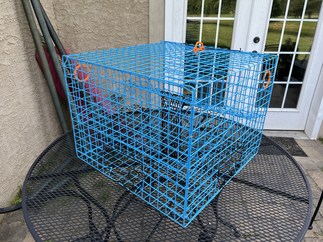
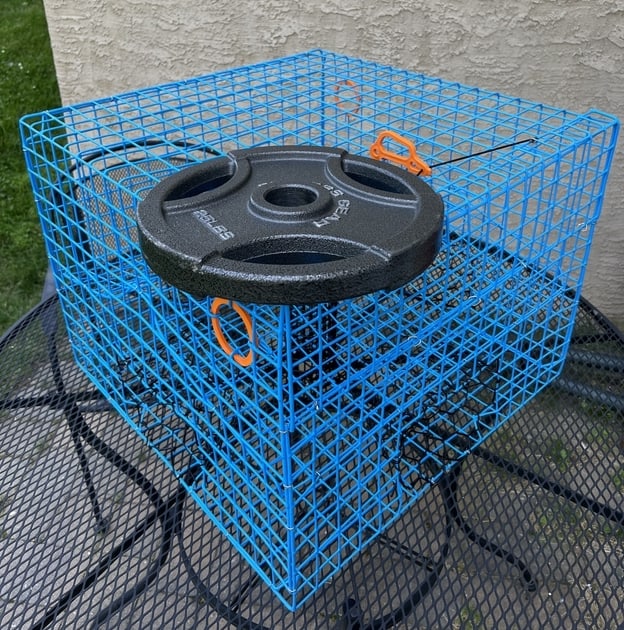
A custom-built crab pot by kcrabpots.
It doesn’t bend at a 25lb weight placed ontop!
Comes with a built-in bait cage.

I wrote a review of this crab pot, which you can read here. It’s my favorite crab pot I’ve bought out of the several others I wasted hundreds of dollars on. If you want to learn from my mistakes and save your money, I recommend you read why I love this pot.

When buying a crab pot, manufacturer’s usually get two things wrong: the strength of the wire mesh and the shape of the openings.

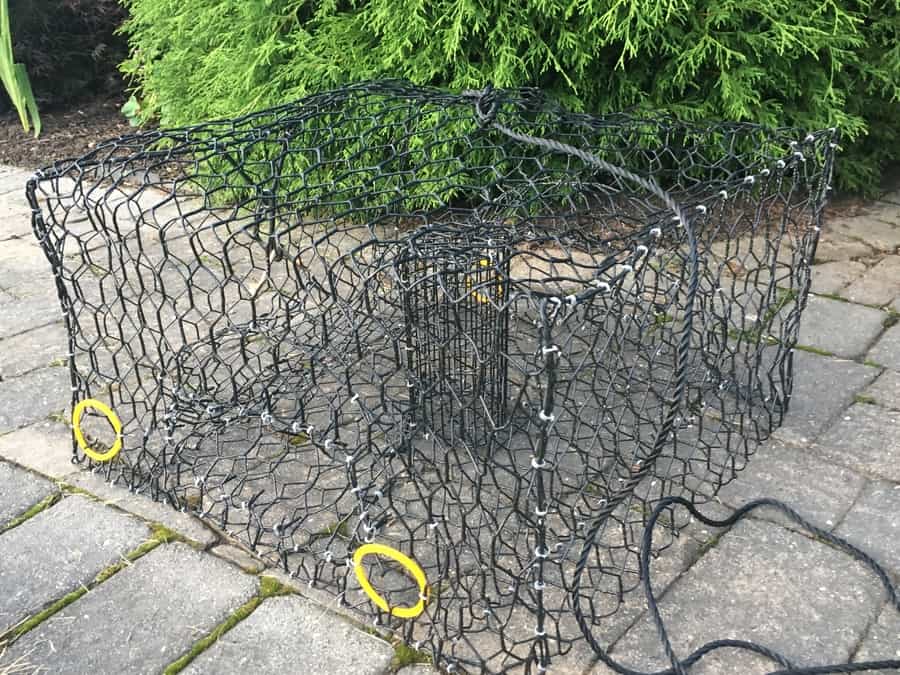
crab pot
This is an image of my old crab pot. $60 down the drain!

The image above is my failed purchase of a crab pot. It was $60 down the drain! It was made out of cheap coated chicken wire that I could easily bend, and I’m not a very strong guy! Crabs had no problem clawing their way out of the sides.

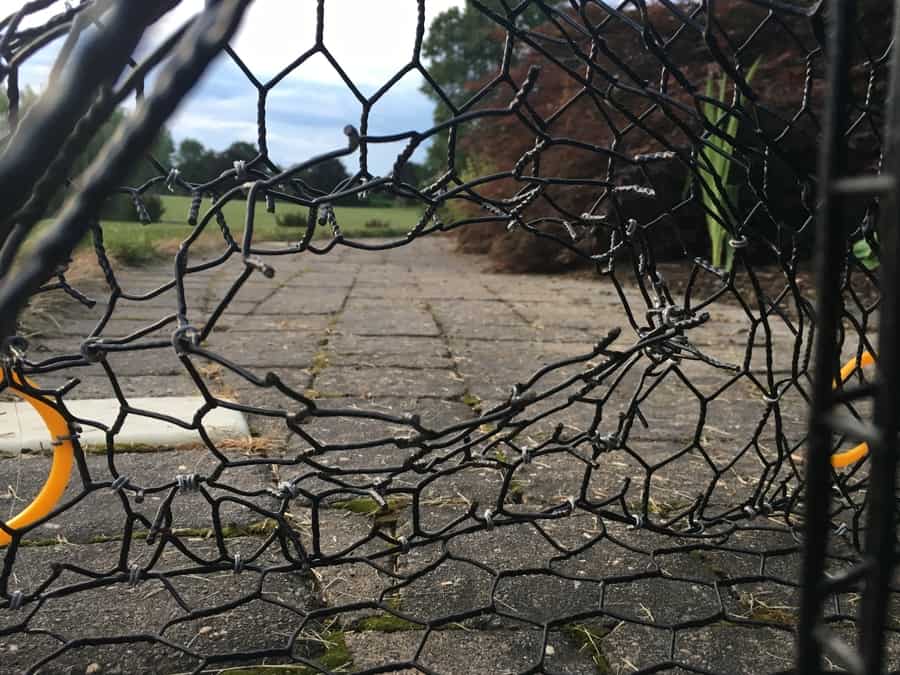
Far too often, this is the case for crab pots. However, one thing this manufacturer did get right was the trap’s openings (sort of!). They came slanted upward with enough room for a crab to easily slide into the trap, but not escape. The only problem was that the openings were made of the same low-quality wire mesh. So, the crabs had no problem bending the metal and finding their way out of the trap.

This is an image of one of the funnels on my old crab pot.

To be frank, I believe it’s best to buy a crab pot either in person or from a reputable builder. Far too often, the traps at Bass Pro Shops or other retailers, like this one, just will not work.

You will also need a crab pot harness and weighted rope with a buoy for your crab pot. I’ve found Promar sells a reliable harness. I recommend weighted rope over anything else because the slack will not float to the surface and get caught by a passing boat.

If you do go the crab pot route, be sure to check your state’s crabbing regulations. States, such as Maryland, require that you register your pot at their DNR webpage. Maryland also requires that you install a turtle excluder device on each crab pot opening.

Box Traps (My favorite crab trap)

Box traps are one of the two collapsible traps recommended in this article. A collapsible trap is a type crab trap that has to be actively triggered to trap blue crabs, unlike the more passive crab pot. This works as a great alternative for those who do not have access to a boat, do their crabbing from piers, or cannot legally use a crab pot in their state.

In my opinion, the best model of the box trap is the FoxyMate Topless Crab Trap (link to an article dedicated to this crab trap). I wrote an entire articlde dedicated to this trap, so click the link to read more about it.

If you start to do research on crab traps you may get overwhelmed at the sheer number of different versions available. There are pyramid traps, box traps, topless box traps, crab pots, ring nets, and plenty more. Forget all of these terms because they aren’t important. The only trap you should get a crabber is a Foxy-Mate Topless Crab Trap.

Here’s a picture of me holding up a crab I caught in my friend’s Foxy-Mate 66 Crab Trap (Affiliate link to Amazon). It’s not the Topless Foxy-Mate (Amazon Affiliate Link) version that I like best, but it still does the job. I like the topless version because you can stack them like cups for much easier storage. I took this picture on Taylor’s Island, MD. It was a female blue crab, so I had to throw it back.

Foxy-Mates are the ideal crab trap for anyone crabbing for Blue Crabs. If you live on the East Coast, from Texas to Maine, this includes you. They’re legal in every state on the coast and don’t come with pages long of regulations like crab pots do. Plus, they’re much cheaper! They work from a pier and from a boat or kayak, you will just need to get a buoy, some rope, and possibly a crab trap weight for anyone crabbing from a boat. The weight keeps their trap from being tossed around by the current, but it’s only necessary for crabbing in the ocean or rougher waters.

I did some digging on the internet and found that Amazon has the best prices for all of the items I mentioned. Foxy-Mates (Affiliate Link to Amazon) go in and out of stock on Amazon, but that’s because they sell for the best price here. I recommend the Foxy-Mates without a top so you can stack them like cups. You will want two or three so your crabber friend can catch more crabs at once. I usually take 6 out when I’m crabbing from my kayak.

With each trap, you’re going to need a buoy if you’re crabbing from a boat or kayak. States have different rules when it comes to buoys, so I would look at the ones they already have before making a purchase. You can read about your state’s gear guidelines on my State-By-State Crabbing Regulations page.

It never hurts to get more rope either. You can get fancy and order lead-lined rope for these traps (Affiliate link to Amazon). It’s useless if you’re crabbing from a pier, but if you’re using these traps from a boat it’s really helpful. This rope sinks with the trap, rather than float at the surface, which prevents it from getting caught in boat propellers.

With this trap, you’re going to want a weight if they are crabbing in rougher waters. I always recommend this Crab Trap Weight (Affiliate Link to Amazon) that you can zip tie to a Foxy-Mate. Tip: You can get away with zip-tie-ing some cut rebar to the trap as well, which is much cheaper.

I’ll briefly go over why I like this trap. I can sum it up in one sentence: It’s built to last a very long time and has no trouble catching blue crabs.

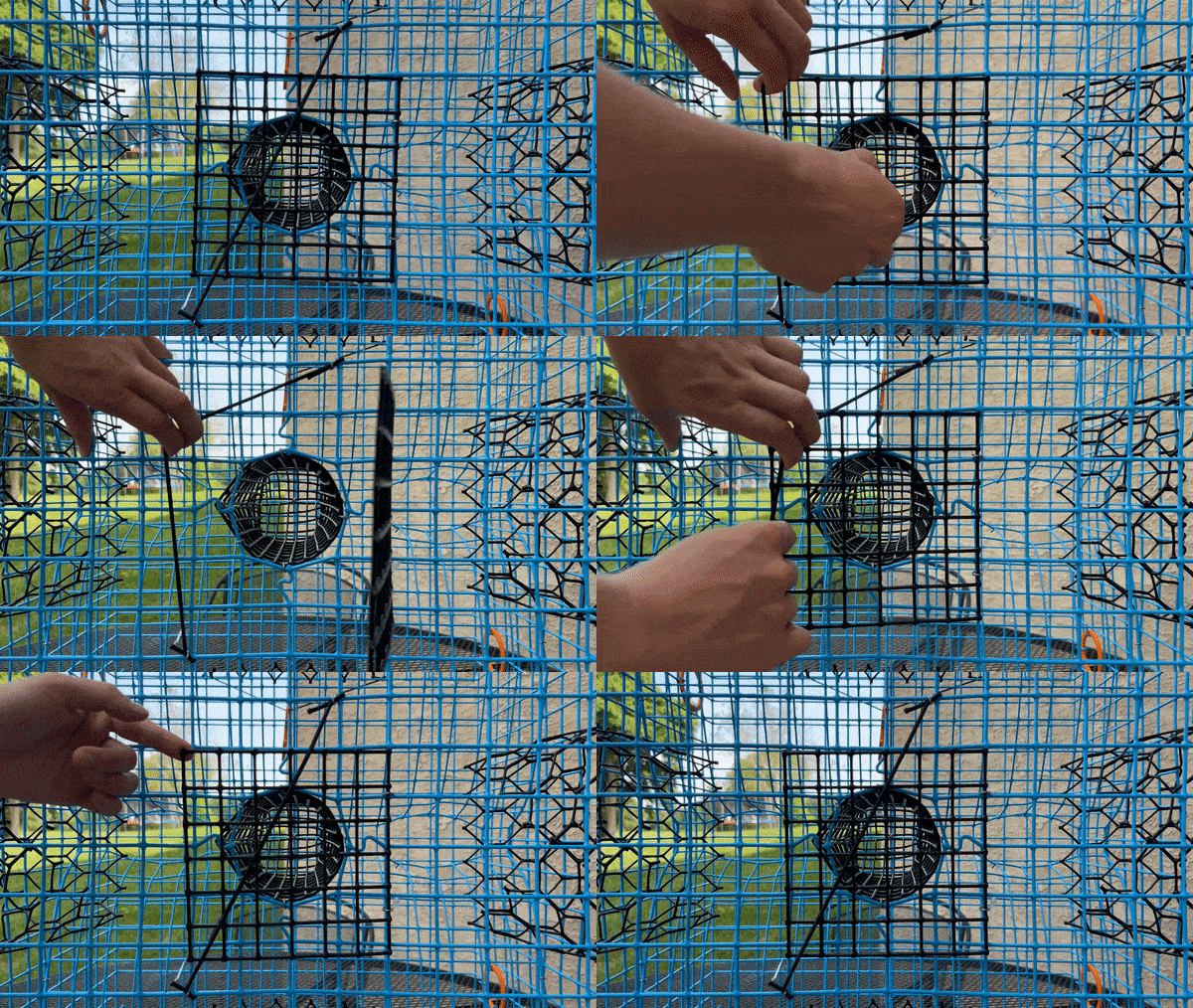
The trap works by laying flat with bait in the center to attract crabs. You can fasten your choice of bait with the spring at the center of the trap. When a crab tries to eat the bait, you pull on the harness to fold the cage’s doors upward and trap the poor crab.

It’s a great alternative to a crab pot, and much cheaper! It just takes active participation fro the crabber.

The only problem with this model of topless crab traps is that they are in short supply. They sporadically pop up on eBay or Amazon. If that’s the case, you may have to use a more-available FoxyMate box trap with the top. I find the topless version better because it’s stackable. It’s not more effective at catching crabs, just more convenient.

click here to go crabbing with folding traps

Hand-Lines (The beginner-friendly budget trap!)

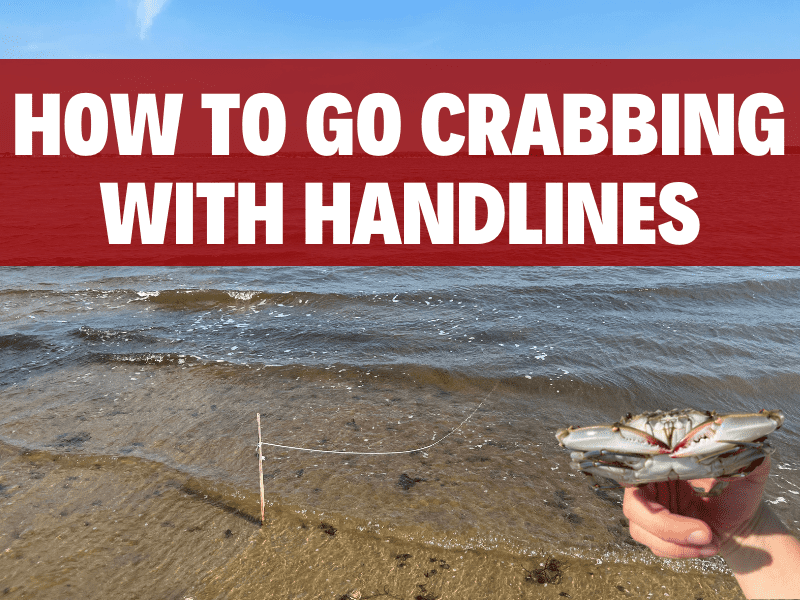
Last up on this list is the basic Hand-Line, also known as a throw-line. It’s a step up from using plain old string and a net to catch blue crabs, as people have been doing for centuries.

They work by luring crabs to a piece of bait secured to some string. When the crab finds the bait, slowly pull the bait towards you with the attached string. Once it’s in view, scoop up the crab with a dip net.

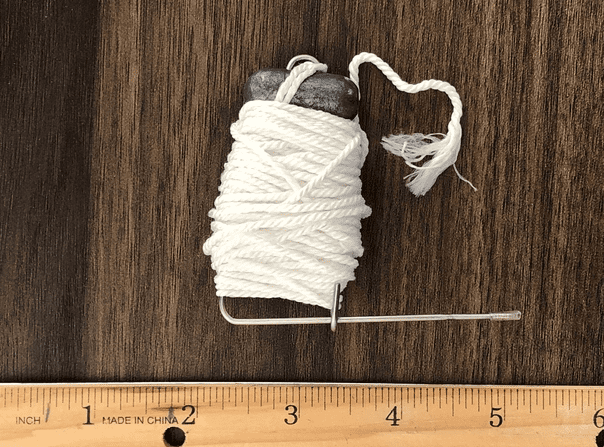
The concept is as simple as this trap. It’s a clip to better secure your bait with a built-in weight so the line goes further out in the water. This won’t limit you to plain old chicken necks, which are easiest to tie to some string.

I’ve found that when it comes to hand lines, the cheapest options do the trick. I recommend this Hand Line on Amazon (Affiliate Link). I was surprised at how many I could buy on this Amazon listing for such a low price, which is great because you need around 6 hand lines at a time to catch a decent amount of crabs.

I was surprised at what a good price his dip net was on Amazon, for a high-quality tool (Affiliate Link). If not this one, make sure to get a net with a similar mesh that’s small. I’ve found that with wider-spaced nets, crabs like to cling on for dear life which makes them annoying to deal with.

Click here to go see how to go crabbing with handlines

Traps I Would Avoid

There are so many traps on the internet that websites recommend to beginner crabbers because they don’t know any better! Don’t get tricked and waste your money.

Ring Nets (A worse version of the box trap for the same price!)

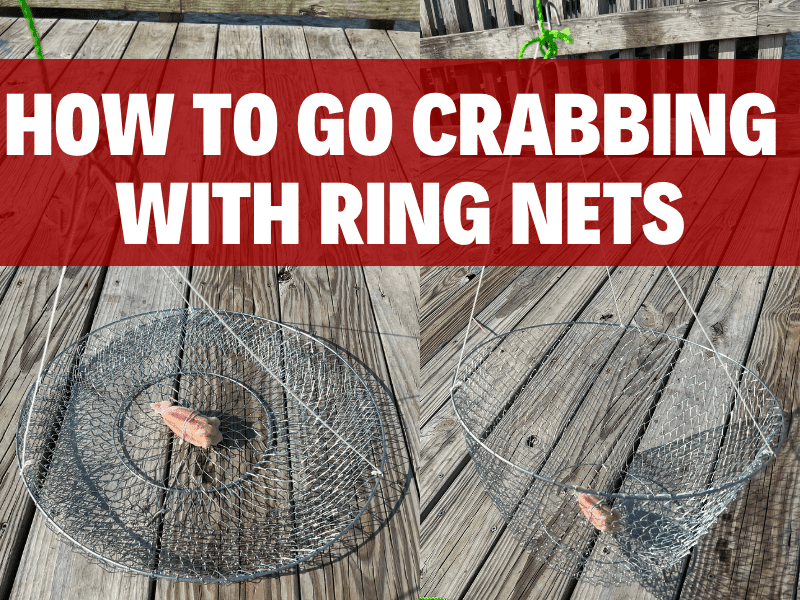
A ring net is a circular net that lays flat on the bottom until you pull on its string. When you do, it takes the shape of something like a basket, trapping any poor crab caught in the middle. You’ll find these traps on clearance at your local Walmart or bait shop since no one wants them!

If you’re going to use a collapsible trap like this, stick with a box trap. They’re more durable and reliable at catching crabs for the same price.

If you do end up using this trap, my recommendation of ring nets for blue crabs is the Hurricane Two-Ring Net (Affiliate Link). I’ve found that this is the highest-quality ring net on the market for the lowest price. It’s much cheaper than any box trap or crab pot and perfect for some hands-on crabbing.

The Hurricane Two-Ring Net is durable. Instead of the more common cotton netting ring nets that many beginner crabbers get sucked into buying, this net is made of wire mesh. While any cotton mesh net will fall apart after one or two crabbing trips, the Hurricane will stay together.

A few downsides with this ring net are the harness and lack of bait clip. The harness is made out of pretty cheap cotton string that I recommend replacing with a more durable string. Pormar made a harness for crab pots that should work perfectly here, click here to check it out on Amazon (Affiliate Link).

This ring net has no place to put your bait. Bait that gets lost in the current or stolen by crabs can ruin a crabbing trip. I’ve had some luck using a few zip ties to tie down chicken or fish (depending on what I’m using that day) to the center of the net.

One problem I’ve found with this trap is that the S-ring at the top of the harness will sometimes get caught in the wire mesh. This will prevent the net from creating a hoop-shape when you pull it up, which lets any crab in the middle to get away! I never have this problem with a box trap!

Ulmer Edge Broadhead: A Complete Review

0

Introduction

While bow hunting is still deeply rooted in older hunters’ spirits, the industry has seen incredible innovations to ensure its sustenance. The introduction of broadheads has gone a long way in ensuring this hunting tradition remains a favorite hobby for a lot of us. Although a good bow and arrow are critical to a successful hunt, broadheads offer excellent penetration to ensure that you kill the animal with just one arrow.

The Ulmer Edge broadhead is not a stranger to broadhead fans; this amazing piece comes from the trophy taker manufacturers. The broadhead sets a high bar for broadheads willing to compete with this piece of art. Make sure you check out our review of the Iron Will Broadheads.

Why this Broadhead is Unbeatable: Features of the Ulmer Edge Broadhead

Chisel Shaped Tip

The Ulmer Edge broadhead is chisel tipped, providing your arrow with incredible field tip accuracy. This design is what enables the broadhead to maintain a shallow in-flight profile.

Having a chisel-shaped tip means that the arrow reduces its wind drag by a significant percentage, as it cuts through the air swiftly. Your arrow can achieve fascinating velocity because of recessed groove retaining.

No adjustments are required when it comes to the Ulmer Edge broadhead; immediately after purchase, you can head to the ranges to get a feel of this beauty.

Razor Sharp Blades.

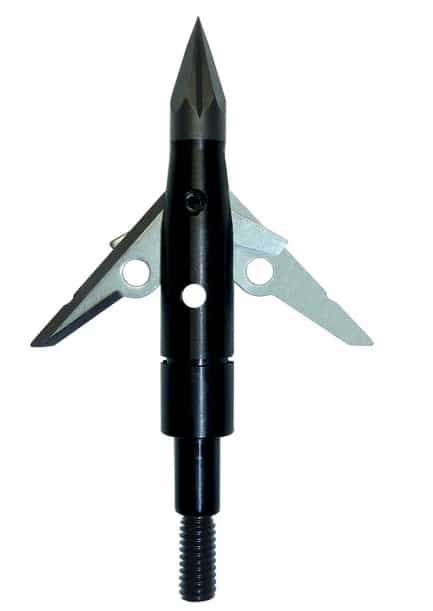
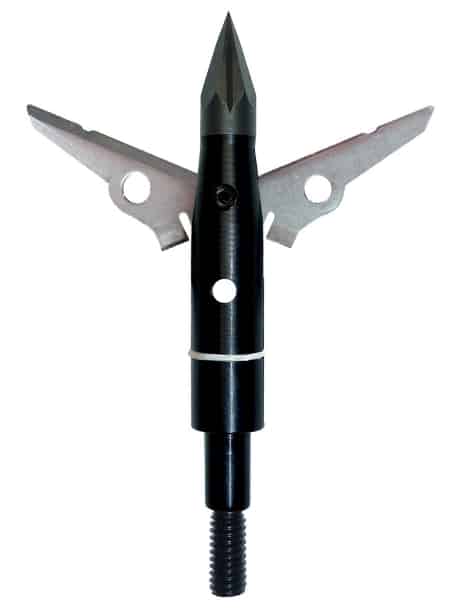
This trophy taker manufactured broadhead comes with 1.5-inch diameter blades. These blades ensure maximum penetration, whichever direction the head takes. They create a 1.5-inch entry wound, and the exit wound depends on the structure of your target. However, keep in mind that this is a powerful broadhead and can cause massive damage, even on sturdy materials.

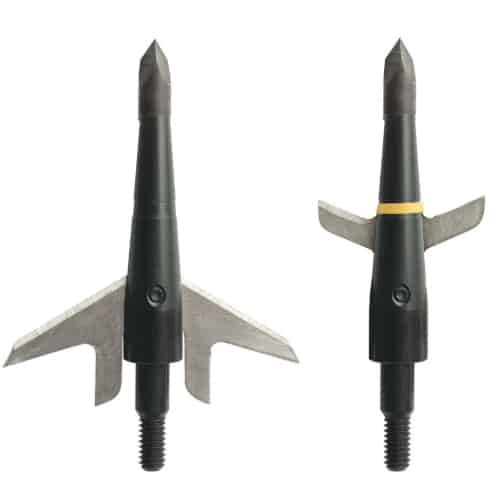
Upon impact, the broadhead deploys rear blades. The blades enable the arrow to navigate through dense bone settings. This piece is a non-barbed, two-sided Edge broadhead so that it will cause some damage even on its way out.

Once the rear blades are released, they are locked into place and can only be put at ease using a particular tool. Luckily, the tool is in the Ulmer Edge broadhead pack on purchase.

Blade Retention System

The blades that come with this broadhead are pretty sharp, installed to prevent any accidents is the blade retention system. The primary goal of this system is to lock the blades in place while in flight. The leaves are to be deployed upon impact and not while the arrow is in mid-air.

A set screw locks the blades in position, also known as a practice mode. In practice mode, you can take shots at targets without damaging the broadhead. To deactivate practice mode, disengage the set screw from the broadhead. It is effortless to understand how this broadhead works.

Performance When Practice Mode is Engaged

While in practice mode, I achieved consistent, accurate shots from 20 to 30 yards. It offers an excellent arrow flight, giving your arrow perfect mid-air balance. The quality of shots delivered in practice mode is very accurate and pleasing.

The essence of a practice mode is to lock the rear deploying blades when shooting to secure the knives. The set screws provided hold the Edges entirely even after impact.

The broadhead is very straightforward, engages the set screw for practice mode, and disengages to switch back.

Performance When Practice Mode is Not Engaged

Practice mode only locks the rear deploying blades, and this does not affect the accuracy of your arrow. When practice is not engaged, the broadhead has higher damaging power.

When in flight, the blades are locked into place and deployed immediately after the first impact. The Edges create a massive wound, creating a 1.5-inch entry wound. The exit wound will depend on the speed attained by the arrow and the composition of the target.

The sharp blades enable the arrow to find its way through robust bones. Much damage is inflicted on your target with an impressive damage ratio.

How Does it Compare to a Close Competitor?

Ulmer Edge Broadhead Vs Swhacker

There are several high-quality broadheads in the current market. However, when it comes to searching for the best, it all comes down to the Ulmer Edge and Schwacker. These two broadheads are quality pieces that offer world-class archery precision.

Blades Diameter

The Swhacker offers a larger cutting diameter than the Ulmer Edge. On the other hand, the Ulmer Edge comes equipped with 1.5 inches, razor-sharp blades, which are slightly smaller compared to Schwacker blades. Schwacker creates a more significant entry wound inflicting more damage than its competitor.

Practice Mode

Despite the blade diameter, the Ulmer Edge is still superior to the Schwacker broadhead. The rear deploying can be locked, switching your broadhead to practice mode. This feature is only available in the Ulmer Edge.

Accuracy

The Ulmer Edge is more accurate as compared to Swhacker broadheads. Unlike the Swhacker, which gradually drift to the right upon firing, the Ulmer Edge promises astonishing field tip accuracy. This piece from the trophy taker company can achieve a shallow flight profile due to its design.

Swinging Blades

Ulmer Edge broadheads rear blades can swing while cutting through your target. The modules that come with this broadhead rotate on a pivot after being deployed. In case the right Edge encounters a hard surface to penetrate, the blades will swing to the side that will inflict less damage to the leaves. This feature is not available when it comes to the Swhacker broadhead.

Great Penetration

The Ulmer Edge broadheads will give you excellent performance. If not killed, they will make sure they hit the target with high power that it leaves behind a very reliable blood trail to track it. Some Schwacker broadheads raised complaints of their target fleeing, leaving behind an unreliable trail. Even if the animal can remove the arrow with the Ulmer, much damage will be inflicted with its two-sided blade.

Why the Ulmer Edge Broadhead is Going to Impress You

  • The rubber bands are very efficient in holding the rear deployed blades in the broadhead. You will find several rubber bands on the purchase of this broadhead. After deployment of the back leaves, they stay locked in their position. They are sharp on both sides and will cut their way out when removing the arrow from your target.
  • It achieves excellent penetration with the help of its razor-sharp designed blades. The arrow goes deep into the target, causing maximum damage as it enters and exits the wound. The product is very durable and gives a long service life.
  • The stainless steel broadheads receive minimum damage due to their modern design. When in practice mode, your broadheads blade is safe from any exterior damage that may result from impact. The set screw, though small, is made from the same material as the Ulmer Edge broadhead, making it as durable as the piece itself.

Frequently Asked Questions (FAQs)

Is the Ulmer Edge Broadhead Suitable For High Powered Crossbows?

When it comes to high powered crossbows, the Ulmer Edge is as efficient as some top-notch pieces. Most of the individuals who prefer this broadhead use high powered crossbows.

The blades stay shut until impact. This provides you with great flight and mid-air balance to accurately hit your target at a massive velocity. The takedown power that this broadhead gives is incredible.

It is a very great product to grace your high powered crossbow.

Is There Any Damage to the Blades If I Use My Ulmer Edge Mainly For Practice?

The ferrules in the Ulmer Edge broadhead have a small diameter, due to this, the blades tend to stick out slightly. So when taking shot practices, the leaves may come into slight contact with your target. The effect this has on your broadhead is minimal. However, after multiple target shots, I recommend you check your blade’s sharpness before going for hunting.

Why is the Ulmer Edge Broadhead out of Stock at Most Retailers?

It seems that the Ulmer Edge broadhead had some patent infringement concerns. Other brands seemed to have very similar features as this trophy taker piece. Examples of these same features are the rear deployment blade system and set screws. These issues led to the discontinuing of this piece from most stores.

If you are lucky, you may find some stores with this magnificent piece on their shelves.

Why is the Ulmer Edge Broadhead Best for You?

The Ulmer Edge broadhead is among the high-class broadheads available in the market at the moment. Its ability to maintain a low profile providing awe-inspiring accurate shots to your arrows is very heartwarming. This broadhead has no kickback when firing, making it very friendly, even to the older hunters.

The fact that this broadhead offers a practice mode is something that will influence you to go with this piece. I believe that the trophy taker gave us a very great product.

The Differences Between Turkey Subspecies And How to Manage Each

0

Bob Humphrey

Lines on a Map

Ask most any experienced turkey hunter and they can quickly rattle off the names of the four subspecies or races of wild turkey recognized by The National Wild Turkey Federation for purposes of their Grand Slam. A fair number could probably add a fifth for the North American Slam and a sixth for the World Slam. For those not already familiar with them, they are as follows:

Eastern turkey

Eastern – The Eastern is the largest and most wide-spread race, occurring in every state east of the Mississippi River and along the length of the river’s western side, as well as eastern portions of several plains states and Texas. They are the largest (heaviest) race, sport the longest beards and are best distinguished by chestnut brown tips of their tail feathers and tail coverts. They’re strong, deep-throated gobbles are symbolic of the wild turkey.

Osceola – The Osceola (or Florida) turkey has the narrowest range, occurring only in central and south Florida. They closely resemble Easterns except they tend to be leaner with longer legs, and their primary wing feathers have heavy black barring, as opposed to Eastern where the black-white barring is more even. Their gobble is essentially indistinguishable from an Eastern.

Rio Grande – The Rio Grande’s range spans roughly from Kansas, south through Texas and into Northeastern Mexico, with transplanted populations in California and Oregon (and Hawaii). They are best distinguished by the tan tips of their tail feathers and tail coverts. Their gobble is noticeably different from that of Eastern and Osceola, being more high-pitched and warbly.

Merriam’s – The Merriam’s is scattered across parts of Arizona, New Mexico, up through the mountain states into Nebraska, the Dakotas, and along the Washington, Oregon and Idaho borders. It is best distinguished by the light buff to white tail band and coverts, and showing more white than dark banding in the primaries. While similar to the Rio, its gobble is even higher pitched and softer.

Merriam

Those are the general guidelines, but for every rule there are exceptions. A century ago, much of what is now their current range was unoccupied by wild turkeys. Thanks to the efforts of state wildlife agencies and NWTF volunteers, turkeys have been restored to most of their historical range through trap and transfer programs. But the folks conducting those efforts weren’t too particular about where their birds came from, as long as they were wild birds. As a result, current subspecies distribution is not nearly as distinct as it once was. In general, the variance is local or regional. For example, Massachusetts’ turkeys came from New York, and Maine’s came from Vermont and Connecticut, but variability is all over the map.

Alabama provides an interesting example. In areas that were repopulated with transplants, the turkeys resemble those in neighboring states. But in areas where the native stock was never extirpated, turkeys look more like Osceola turkeys, with slim bodies and long legs. Some think these birds and Osceolas are representative of a true southeastern strain. Then there are more glaring exceptions. The most extreme is probably Washington, where you can find Eastern, Rio Grande and Merriam’s.

While man played the predominant hand, some of the racial integration was and still is done by the birds themselves, mostly where the geographical range of subspecies overlap. There, you’ll find a lot of hybridization. In east-central Kansas, for example, you may find birds that gobble like Easterns but look more like Rios, and vice versa. And they tend to be among the largest. Nebraska and South Dakota have hybridization of Eastern and Merriam’s. Occasionally there’s just no explanation for what you observe. I hunted a ranch south of San Antonio where we shot birds that had that silly little girl, laughing gobble of a Rio Grande, but looked like Easterns, with brown tail bands and coverts. And on a single hunt in western Nebraska I killed three birds, one resembling an Eastern, one a Rio and the third looked pure Merriam’s. Because translocation and hybridization have led to so much diverse integration, taxonomists tend to ignore subspecies or races and simply lump them all under one species. The lines on a map distinguishing subspecies range are largely just that, lines on a map. However, they do serve as geographic boundaries for purposes of recording your Grand Slam. To my knowledge, Texas is the only state has separate regulations for different subspecies (but I could be wrong about that.)

IF YOU LOVE WILDLIFE AND WANT TO IMPROVE HABITAT SUBSCRIBE TODAY!

Management

Back when I was a budding wildlife student, my professors would tell us that much of wildlife management is people management, and that’s especially true when it comes to wild turkeys. For the most part, the birds do quite well if left to fend for themselves. At the state level, most management programs simply involve regulating hunter harvest to ensure the resource remains healthy and renewable. However, there’s a lot that can be done at the local level to produce and maintain healthier populations.

When it comes to turkey habitat, the good news is, most of what you do to manage or improve the deer habitat on your ground also benefits turkeys. Both are considered edge species, preferring the ecotone, or interface between habitat types – so, in general, the more edge and diversity, the better the habitat. Beyond that, there are some more specific steps you can take.

However, it’s difficult to get too specific with turkey habitat management recommendations because conditions vary so much across the species’ range, and because they’re such an adaptable species. In general, you want to maximize the general habitat variables: food, cover, water and space. Then look for the lowest hole in the bucket – which element is in least abundance – and patch it. And as with deer, you want to make sure your habitat meets the turkey’s changing needs throughout all four seasons.

Year-Round

Let’s start with their year-round needs, and at the top of the list is “roost trees.” Turkeys need a place to sleep at night. In my part of the world, it’s usually a big white pine. If the birds can find one, they’ll shun all other suitable trees. Height provides protection from terrestrial predators, and thick evergreen branches offer protection from owls and the elements. In the south it might be a giant oak or other hardwood, which are usually in good supply in bottom lands and stream protection zones. Out west, it’s likely to be a cottonwood, which you’ll also find near stream bottoms and shelter belts. But as mentioned, turkeys make do with what they have, and I’ve seen birds in Texas roost on power poles, shooting houses and 10 foot tall mesquite bushes. Bottom line – try to keep sufficient roost trees on the property, the more and the bigger, the better, at least when it comes to turkeys.

turkey stomach contents
Just like whitetails, turkeys love edge habitat, and many things you do to help whitetails will also benefit turkeys. Here you see the stomach contents of a recently harvested gobbler – lots of acorns, some berries, grubs, green grass shoots, and it even looks like there are three #4 shot pellets.

Spring

Spring means green-up, an increasing abundance of herbaceous greens. The birds can usually find enough to eat on their own, but give them more in the form of food plots and they’ll be better off for it, now and later on. Again, your deer plots will do just fine, but if you want to plant specifically for turkeys it’s hard to beat clover and chufa. The former you can plant almost anywhere while the latter requires loose, sandy soils. Gobblers need strutting areas. A tom will strut most anywhere when he’s in the mood but he’d much rather be in the open, where the ladies can see him, and he can see predators. That could be food plots, or just logging roads and two-tracks, all things in fairly good supply on most managed properties.

More important is spring nesting cover. Somewhat like a strutting tom, a hen will nest where she has to, but she’d much prefer some dense cover. That might be as complex as those same hinge-cuts you made for deer bedding areas, or as simple as a slash pile left over from your winter firewood cut. They will also nest in CRP areas and densely vegetated fields, so adjust your mowing schedule accordingly.

Far more important for productivity and poult recruitment is predator control, and you don’t need me to tell you how to do that. First, I’m no expert. Second, it would take another entire article, and then some. If you know what you’re doing, do it. If not, consider hiring a professional who does. Chances are it will also help with your fawn production, especially if you have coyotes.

BECOMING A GAMEKEEPER IS NOT JUST THE BEST WAY TO PRODUCE GREAT HUNTING… IT’S THE BEST LIFE! SUBSCRIBE TODAY.

wild turkey species map

Summer

At the risk of sounding like a tourism brochure, summer is the time of plenty, when nature abounds with life. Absent of some environmental catastrophe, there’s plenty of food. But the easier it is for turkeys to find the right food, the better. Right now, rapidly growing poults need protein, in the form of insects and invertebrates. They’ll find some in the forest but an open field or food plot full of hoppers and crickets is like an “all you can eat salad bar” for them. Even the skid roads and two tracks the toms used for strut zones will have more insects for their growing offspring. Summer can also be the driest period. For the most part, turkeys will get the moisture they need from their food, as evidenced by their abundance in even the most arid regions. Add water, where it’s scarce, and it only makes finding food easier. And the turkeys will come simply to drink – that’s why lying in ambush near a tank is a popular tactic in Texas.

Fall

The key for fall is food, and we’ll lump late summer in here as well. As summer draws to a close, herbaceous plants are maturing. It can be somewhat stressful for deer as the greenery begins losing its nutritional value, but it’s a boom for birds because maturing forbs and grasses produce seeds. Meanwhile, vines and shrubs are also producing a smorgasbord of soft mast like grapes and berries. Many species grow wild, particularly in disturbed areas like cut-overs, and along those well exposed habitat edges mentioned above. But mast production and availability from wild plants can be variable and unreliable. If you’ll pardon the pun, you can hedge your habitat bets by planting groves or patches of soft mast producing shrubs and trees.

Speaking of trees, many of the same species you plant in your mast orchards for deer will also benefit turkeys, particularly after the soft mast crop passes. As that group of plants dies or goes dormant, the turkeys now turn their attention to what’s left: nuts and that remains the case through winter, when food and cover are most scarce, and when turkeys can sometimes make themselves quite unwelcome. In the west, they may tear into hay bales meant for livestock. In the northeast they’ll do the same to the plastic sheeting covering silage piles. The birds will make the most of whatever they have and somehow they find a way to withstand winter. They’ll scratch away the frozen leaves to find acorns overlooked or possibly even stowed away by small mammals. They’ll plow and paw through deep powder to eat frozen clover. If the snow freezes to a crust they’ll walk on top and feed on the windblown catkins and seeds of birch and ash.

Turkeys in field

If you provide enough food on your ground, you stand a better chance of keeping the turkeys home and healthy, and keeping your neighbors happy. It’s always preferable to provide natural food but if you’re going to provide supplemental feed this is the time to do it. Just be conscientious and careful how you go about it because like deer, turkeys can quickly become dependent on you for survival when fed supplementally.

Summary

All things considered, turkeys are much easier to manage than deer. Make sure they have a sufficient amount of the proper habitat variables, which is typically the case on most managed and many unmanaged properties. Keep the predators down, time your mowing and burning to avoid nesting periods and manage your harvest rates to avoid over-exploitation. The turkeys will take care of the rest themselves. They even do a pretty good job of limiting harvest by outwitting us more often than not.

Bob Humphrey is a wildlife biologist who participated in the first modern turkey hunt in Massachusetts in 1980. Later he assisted with turkey translocation efforts in Maine and in 2006 became the first per-son to officially record a wild turkey Grand Slam with a crossbow.

Jurassic Park: The Hunt for Jersey Bowfin

0
Man in grass near water holds up a huge bowfin fish
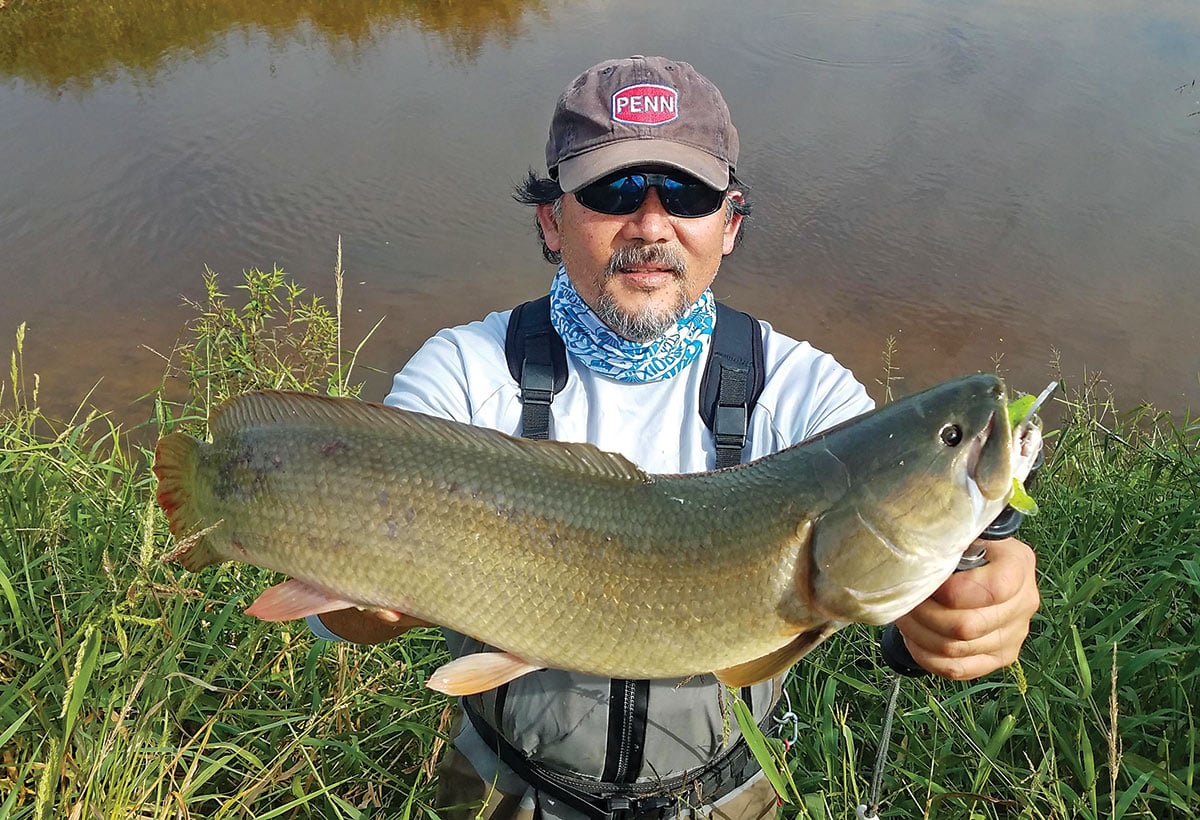
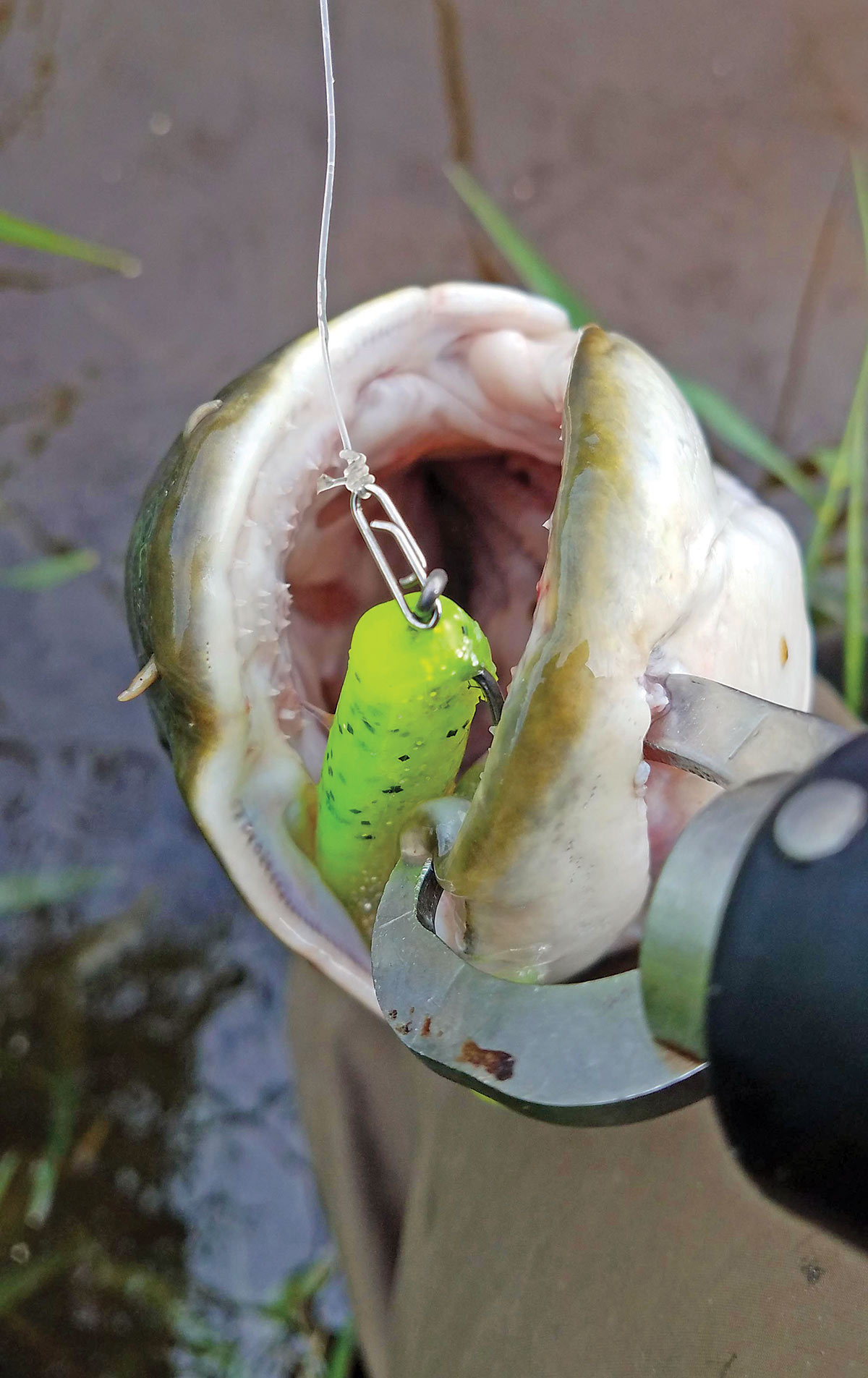
“Large bowfins can be finicky and it is important to be able to change your lures quickly before they lose their interest,” said Alberto Knie, while recommending use of Tactical Anglers Power clips (micro size up to 50 or 75 pounds) for strength and ease of lure change.

A native of New Jersey, this taxonomic relict dates back to 250 million years.

I must admit, as a kid I enjoyed playing in the mud with my older brother way too much. Little did I know, that as an adult I would find myself still reveling in that joyous childhood pleasure.

Ironically, some of my favorite fishing adventures occur in the muddiest and swampiest places that I could explore here in South Jersey. Previously, I had become quite addicted to catching monster northern snakeheads. At the time I never thought that I would find another species that would match that kind of adrenaline rush or that would thrive in such a murky, mysterious environment.

It’s a fish with as many monikers as Satan himself, and a hell-raising disposition to match. Mudfish, mud pike, dogfish, grinnel, and cypress trout, are just some of the names they are known as in different parts of the country. I had heard of them as bowfin, but never once encountered these singular beasts even though they were surely in some of the waterways where I had cast my line many times over when scouting for other, more familiar species.

It just goes to show that they have a knack for hiding in plain sight.

Where one might be inclined to cast far out in open water, bowfin could be lingering on the shallow bank underbrush submerged in the muck right at your feet. This king of the swamp really knows how to get down and dirty. Perhaps that is how they have survived for millions of years, because of their amazing ability to lay low.

A Prehistoric Native

Bowfin fish with open mouthAmia calva, yet another more formal name, date way back to the Jurassic period and their fossils have indicated that they were once widespread across North and South America, Europe, Asia, and Africa. These fish are the only surviving member of a prehistoric family of fish known as the order Amliformes. They are thought of as a highly-evolved primitive fish given that they’ve not changed much from their earliest ancestors. I’d say they must have gotten something right to have outlasted the dinosaurs. Today their population is not as widespread as it once was and is limited to the eastern part of the United States, Southern Canada, and several rivers flowing from the Eastern Seaboard or Gulf of Mexico.

Bowfin are related to gar and share their fantastic trait of being air breathers. A swim bladder serves as both a float for buoyancy and as a crude lung. The primitive lung makes it possible for bowfin to survive in poorly oxygenated water and also helps them endure extended periods of time out of the water. Another species that shares this same quality is the snakehead, a fish often confused with the bowfin in appearance. But bowfin are native to our area and have been for millions of years, where the northern snakehead is believed to have been introduced in the past decade or so.

Northern snakeheads are considered invasive and it is recommended that they be destroyed when caught. Sadly many bowfin are erroneously killed when an angler does not spot the differences between the two fish. Key differences that set the bowfin apart from the snakehead are a black eye spot (in males) located on the narrow part of their body where their tail fin is attached, a shorter anal fin, a solid tan or olive coloration, a rounded head, and an upper jaw that protrudes past their lower jaw.

Bowfin have gotten a bad reputation for allegedly having a negative impact on the environment. It is feared by some that the aggressive fish take over waterways and devour popular gamefish or simply out-compete them for food stunting their populations. It seems strange to be thinking this of a fish that has been here for millions of years. The developing attitude towards these fish is similar to the truly invasive snakehead. Perhaps their all too similar traits are responsible for this shift in opinion.

We ourselves are not without blame for having a negative impact on the environment. The use of herbicides to clear vegetation for boats could pose just as much of a threat to the habitats of juvenile fish. Still, there are some studies that have been positive for this species, pointing out that bowfin are actually indicative of a thriving habitat.

Spring & Summer Target

These fish spawn in early spring or early summer, typically when the water temperatures reach a steady 60 to 65 degrees. This is the very best time to catch them in numbers. The males make the spawning beds over sand bars, under stumps, logs or bushes in depths of up to 3 feet of water. The males also sport a vibrant lime green coloration on their fins, underbelly, and on the inside of their mouths at this time. The females can produce up to 5,000 eggs, which the males will guard until the fry reach about 2 to 3 inches in length.

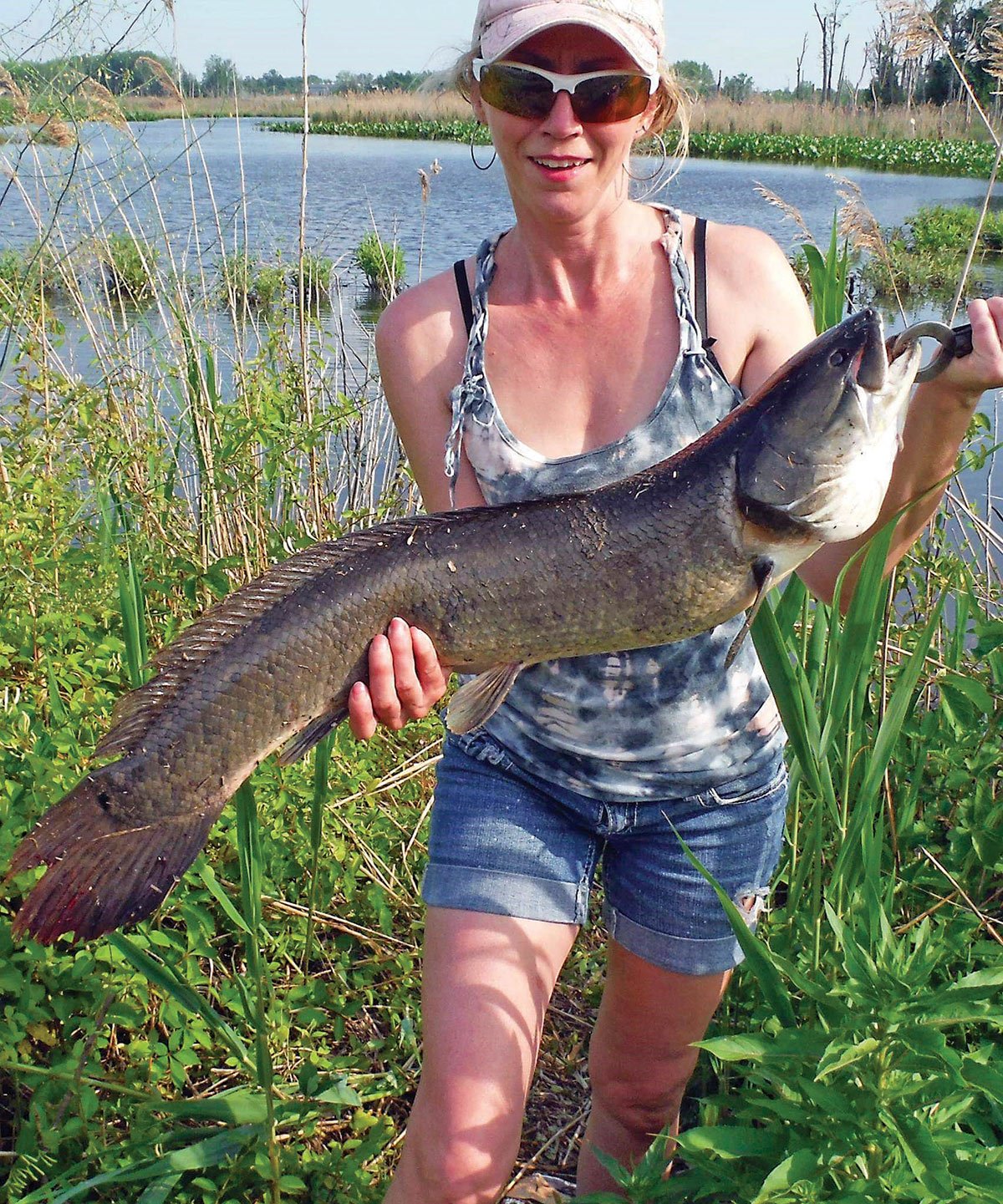
Woman in the grass near water holding a big bowfin fish
The author says you may have get a little dirty when seeking out this primitive local, but scratching one of these brutes from your bucket list will make it all worthwhile.

These cylindrical fish are ambush predators and can be caught on many of the same lures and baits used for bass. The gear that I use does not differ from anything that I would use for bass fishing. You can use either a spinning or a casting rod. I use a sturdy 6-1/2-foot medium/heavy spinning rod loaded with 30-pound braid. Braid is a must because these fish have very sharp teeth. In fact, you could find using a wire leader to be a wise choice. I just check my line for frays after I catch a couple, and if the line looks sketchy I re-tie lures or hooks as needed.

I prefer to use a reel that is sealed such as the Penn Fierce 3000 spinning reel because it doesn’t mind getting dirty or being beat on by these beastly fish. A strong super line 4/0 hook is definitely necessary when you are using bait. These bruisers can easily bend a standard hook wide open. Using cut bait has no doubt been my most successful choice for catching bowfin. It is said that their sense of smell is much greater than their sight, makes sense for a fish that thrives in stained water. I have also used shrimp and imitation crab meat with great success. When fishing cut or live bait I prefer to attach a bobber, but you certainly could fish bottom on the same rig you would use for catfish.

I find the bobber method to be more productive because you really know the moment they take the bait. Give them a few seconds swimming with it and hit them hard on the hookset. Their heads are extremely bony, and you have to really sink that hook to keep them on.

One major thing I have noticed when fishing for bowfin is that they do not spook as easily as your typical gamefish. I don’t know if it is because of their temperament, the spawn, or simply that they are not as targeted as other more sought after fish. It is pretty awesome though. So if you miss a fish on a cast, don’t worry. Let the bait sit for a minute or recast it back out to the same spot. Most of the bowfin that I have encountered have hit again, multiple times.

As far as lures, top water frogs and spinners have worked for me. The level of vegetation usually dictates which one is the better choice. Work the banks, around stumps, or under bushes. Often you will see a v-shaped wake come charging your lure.

Battle Tested Bruisers

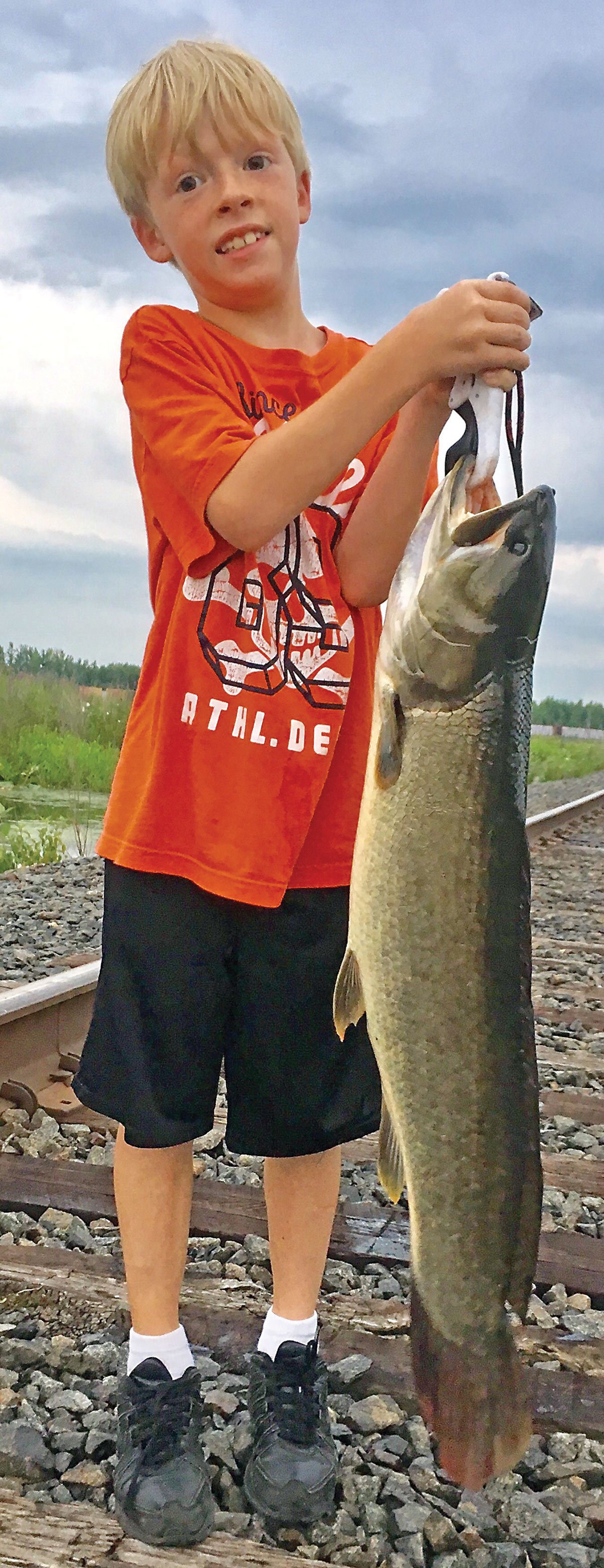
Boy in train tracks holding up a bowfin fish
Eight-year-old Pierce Dopkin set the New Jersey state record for bowfin back in 2017 with an 11-pound, 8-ounce monster that he landed while fishing with his father along the Mantua Creek in Gloucester County.

Their ability to breathe air is very useful in the heat of summer when oxygen levels are low in the water. When they need to replenish their oxygen, they surface, release depleted oxygen through their gills and gulp a fresh supply of air through their mouths. It is a telltale sign as to where they are, so when you see a swirl cast a little past it and reel in. Jigging is also a good method to entice a bite.

Some people consider this species to be a “trash fish” but they can give a better fight than many of the popular gamefish. Pound-for-pound these fish are one of the most extreme fighters I have hooked in freshwater. I can definitely understand how someone might get annoyed if they aren’t expecting this kind of bite. Bowfin can really mangle your favorite lure or snap it off altogether.

The intense tug of war that ensues after hooking into one of these prehistoric beasts reminds me of the fierce battle that you would get with a northern snakehead. The sheer power of this predator is amazing and they never seem to tire. Both fish are agile as they torpedo through the water on the other end of your line. Snakeheads seem to be more acrobatic and can leap out of the water trying to throw the hook, whereas bowfin tend to have a more bulldog approach and dig straight for the sanctity of the bottom or underbrush to escape. You will have to play these fish diligently to land them, but as you pull them in you will see that they just don’t stop trying to free themselves. They often go into a death roll much like a crocodile.

Removing the hook from these toothy critters can be intimidating. A lip gripper and pliers are must have gear to get the job done. They tend to continue to thrash violently on the gripper; safely lay them down to avoid hurting them or yourself. Catch, photo, and release them as quickly as possible so you can get back out there and catch another. Most likely there will be more fish in the vicinity.

If you don’t have any idea where to begin to locate populations of these fish, take a little time and scout some swampy tidal waterways that you may have bypassed for the beaten path. They prefer well vegetated areas with little or no current. You may find yourself catching northern snakeheads in these same areas as well. Make your own adventure and find those hidden living fossils.

These prehistoric fish are a must catch for any avid fisherman; add them to your list. You might get a little dirty, but you’ll have so much fun doing it.

Best .22 LR Rifles: Ultimate Review

0

Although not as instantaneously synonymous with American culture as Coca-Cola, but the .22 Long Rifle is up there and is an even older symbol of this great country.

From teaching kids how to shoot to clearing the forest of small game, and to ringing steel targets at 200+ yards, we now live in a golden age for the often-overlooked .22 LR cartridge. No matter what your goal or budget, we have the best of the best here for you to choose your next best .22 LR rifles.

The .22 LR Caliber

Starting in 1884, the .22 LR cartridge began as a black powder cartridge designed for basically the same thing we use it for today. Training, plinking, and small game.

With dozens of manufacturers making hundreds of types of .22 LR there is a round that can do it all. From rat shot to solid copper slugs, there is a .22 LR for it. The far most common is a simple lead bullet that is a tiny 40-grains heavy.

Basically, rimfire cartridges are ones that are struck on the rim of the casing to activate the primer compound that is in the base of the casing.

Unlike centerfire cartridges that use a primer as a separate part, rimfire cartridges keep everything contained in one case. Sometimes the bullet will be washed in copper, sometimes it will be smaller to boost muzzle velocity, there are just so many options when it comes to what .22 LR you feed your rifle.

With modern manufacturers and huge growth in .22 LR competition sports in the last 10 years, there have never been more accurate, more reliable, or more expensive .22 LR options on the market.

And yet, you can still get a bucket of bullets for next to nothing.

Best .22 LR Rifles: Practical Applications

Teaching New Shooters

Because of the ultra-low recoil, quiet nature, and zero muzzle flash — .22 LR makes for a great cartridge to help new shooters learn about firearms and the fundaments that go along with them.

Safety, handling, basic marksmanship, all these are so much easier to teach someone when they don’t need to be worried about the sound and “scariness” of what they are shooting. Be they adults or kids, .22 LR is the most common caliber to start with as a new shooter.

Training

Some .22 LR ammo is crazy cheap, and some of it isn’t. Either way, though, it’s almost always cheaper than whatever centerfire caliber you’re also shooting. For long-range shooters, pistol shooters, or tactical AR shooters, .22 LR is cheaper and more accessible than anything else.

Spending less on your ammo means getting to shoot more and shooting more makes you better at it.

It isn’t a cure-all that will solve your problems, but .22 LR is a great way to test new gear, train transitions, and weapons handling, and have a great time doing it.

Small Game

Rabbits, squirrels, rats, and more — .22 LR is a humane and ethical cartridge for anything on the extra small side. While perfectly deadly to large animals (including you) .22 LR is really suited for the small stuff and at fairly close ranges. If you have pests or want to try some fried squirrel leg, .22 LR can get it done.

Competition

We’ve seen a huge growth in .22 LR competitions at a national and local level — so it’s a great time to be in the shooting sports.

Two major ones are Steel Challenge and NRL22. Steel Challenge is an excellent starter competition game that puts the shooter in a fixed static area and tasks you with shooting a set of steel targets as fast as possible. If you’ve never shot in front of people at a competition before, this is a no-stress way of getting a toe wet.

At the same time, it has lots of room for growth since it isn’t just shot with .22 LR but with other pistol calibers also.

NRL22 is the art of shooting small targets at long distances in the least-worst optimal shooting position possible. If you’re familiar with PRS, it’s that — but with .22 LR. Weird barricades, from the prone, bracing yourself on a rooftop with bags while shooting five known distances — these are everyday things you can expect at an NRL22 match. And it’s crazy good fun.

What is the Effective Range of a .22 Rifle?

Although effective at ranges of up to 150 yards (140 meters), the. 22 LR’s effective range is typically much less. If you fire a high-velocity 22-caliber rifle at 100 yards, the bullet will fall 5-6 inches below your line of sight on average. At 150 yards, it’s 20″. After 150 yards, it’s impossible to compensate for the round’s considerable “drop.”

Maximum effective range for squirrels and rabbits is 75 to 100 yards, with a more realistic range of 25–50 yards depending on the rifle and shooter. Bullet drop is negligible at such range.

The Best .22 LR Rifles

Ruger 10/22

The classic, the OG, the GOAT — the Ruger 10/22. Since 1964, the Ruger 10/22 hit the market, and over 6 million have been sold. And that doesn’t count all of the clones that have been made and sold also.

Coming in a dozen or so different flavors, the 10/22 is one gun everyone should own at least once in their lifetimes. It’s inexpensive, a simple blow-back rifle that runs and runs. Great for teaching kids, small game hunting, or just putting holes in soda cans — the 10/22 is an old faithful that will never let you down.

A huge plus to you is that because the Ruger 10/22 has been around forever and with so many units sold, there is a massive aftermarket for it. Stocks, chassis, barrels, bolts, triggers — if you want to change it or upgrade it, you can.

Personally, I like the 10/22 Takedown model the best. Able to break in half with just the pull of a lug, this is the ultimate in quick and easy.

2. CZ 457

Like the 10/22, CZ’s line of rimfire rifles is a super classic option that comes in a huge range of flavors and models.

From beautiful wooden stocks to competition-ready chassis, there is a CZ 457 for you. Something you can always count on is that the CZ 457 will be reliable, have great shooting, and have smooth action. It might not be the fanciest design, but it has iteratively improved every time CZ comes out with new versions.

Expansive aftermarket support guarantees you have room to upgrade anything you want, but even a base-level CZ 457 is a great rifle out of the box. If you want a true classic — the CZ 457 American is my recommendation. My favorite though is the CZ 457 Varmint MTR. With a big, bold wooden stock and a flat forend perfectly styled for long-range shooting — the Varmint MTR is one badass rifle.

3. Bergara BXR

Bergara isn’t very well known for the BXR, and I think it’s a shame because it’s a great rifle that really flies under the radar.

Coming standard with a 30 MOA 1913 rail for mounting a scope and a super crisp 3.5-pound trigger, this little semi-auto shooter is built for small groups at long ranges. But with the standard model weighing only 5.2-pounds and the carbon fiber model weighing in at 4.2-pounds, this is a rifle that can stay with you in the field all day.

And thankfully, Bergara didn’t reinvent the wheel regarding the magazines — standard Ruger 10/22 mags work with the BXR. You might look at this as a modernized and very high-quality 10/22. And basically, it is. But for the price point and the features Bergara gives you, this is a very compelling option.

4. Bergara B-14r

Another rifle that I’ve used in competition to great effect — I flat out love my Bergara. Period.

Bergara is a major supporter of the NRL22 sport and their B-14r rifle is a great option for anyone wanting to shoot open class with an R700 footprint rifle.

Coming standard in a Bergara HMR stock/chassis this is a great start for anyone needing an upper-class .22 LR. The HMR B-14 in centerfire cartridges is one of the best factory rifles on the market and Bergara has done a great job bringing that quality and design to the rimfire rifle.

An adjustable trigger and an outstanding barrel combine to make this simply a great rifle. And, if you want to shave some pounds off of it, you can get the B-14r in a carbon fiber wrapped option that feels wonderful in your hands.

It’s also an amazing option for anyone of smaller stature. Taking a couple of pounds off of the B-14r turns it into a super lightweight and well-balanced rifle for hunting or shooting off barricades.

5. Tikka T1x

My first upper-tier .22 LR rifle, I love my Tikka T1x. Designed on the T3x footprint the T1x will fit most stocks and chassis that the T3x fits. It also takes the same triggers, so that’s extra nice. Coming standard with an adjustable 2-stage Tikka trigger the T1x is a great little rifle for all sorts of things.

Personally, I used it as my competition rifle for a while before I upgrade. Now I keep my Tikka in the factory stock as my squirrel rifle. It’s lightweight, handy, and deadly accurate. I shot my Tikka in NRL22X matches out to 400 yards — that’s crazy far for .22 LR.

At 100 yards I found a number of ammo types that were well within sub-MOA groupings. If you want a simple small bore hunting rifle, Tikka T1x is there for you. If you want to get started in NRL22, Tikka is there for you.

Really — you won’t be disappointed no matter what you get your Tikka for!

6. Zermatt Arms RimX

I’ll admit I’m biased, I love to shoot NRL22 competitions and a Zermatt Arms RimX is my current open match rifle.

While I could write half a book on why I love this rifle, I’ll try to just give you the highlight reel. If you want a rifle that is treated with the same respect and care that a master gunsmith puts into a centerfire match rifle — Zermatt Arms RimX is for you.

Zermatt Arms has been making outstanding centerfire rifles for years and the RimX is their venture into the rimfire world. Build for people wanting a top-tier training rifle or shooting in rimfire competitions, the RimX is excellent. From the all-metal magazines with adjustable seating to the wide range of bolt handles to pick from, the RimX is as customizable as it gets.

And of course, it’s build using the Remington 700 footprint so there is a huge aftermarket selection of stocks and chassis to choose from. Right now you can only find the RimX as a bare action directly from Zermatt Arms, but some gunsmiths and retailers are offering custom rifles using the RimX action. If you’re ready to build yourself a baller NRL22 or .22 LR training rifle, I highly recommend the RimX.

7. Vudoo Gun Works V-22

One of the absolute top dogs in the high-end .22 LR game, Vudoo Gun Works is the standard that others are judged against. Always at the forefront of .22 LR bolt rifle technology, these are rifles that win national championships regularly.

Built using the Remington 700 footprint, the V-22 fits any stock and chassis that the R700 does. Frankly, you just can’t go wrong with a V-22. But you’ll have to break a piggy bank or two to cover the payments, perfection doesn’t come cheap.

While most people will think it’s madness to spend this kind of money on “just a .22 LR rifle” keep in mind that these are really designed and marketed for the competition world. If that isn’t you, there’s nothing wrong with that!

8. Smith & Wesson M&P MP 15-22

An AR-15 format that is designed and chambered to shoot .22 LR — awesome.

Using a real .22 LR barrel and a system that is actually built for .22 LR, this is the best AR-15 platform .22 LR you can get off the shelf. And it doesn’t cost too much either.

Great as a training rifle, small game rifle, or as a stepping stone before getting into the AR-15 platform completely — the MP 15-22 is a great rifle in every respect. However, while the MP 15-22 is a solid enough rifle, it does have two major weak points.

First, the lower is made of polymer instead of metal like on a real AR-15. This is fine for .22 LR, but don’t go door-kicking with it. Second, the lower is designed to not fit other AR-15 uppers. So if you have a dream of getting this cheap and throwing on a 5.56 NATO upper, you can’t.

Wrapping Up

From popping pop cans to bringing home the squirrels for the squirrel stew to slapping steel at long distances, these .22 LR rifles can do it all. It’s just a matter of finding the perfect one for you.

I have my favorites, and I’m sure you have yours, so tell me about them down in the comments. If you’d like to see more .22 LR content, let us know.

For now, take a look at these great articles:

  • Best Ruger 10/22 Scopes
  • Best .22 LR Handguns
  • The 4 Best .22 LR Rifle Scopes
  • Best Budget Hunting Rifles

5 Tips For Hunting Teal More Successfully

0

Shane Smith

Anyone who has pursued early-season teal has certainly had their share of misses at a flock of fast-flying aerial acrobatic teal. You fire off three rounds and can’t believe you missed all three times! You start taking inventory of the boxes of shells you brought, hoping you have brought enough. I would like to lay out five helpful yet disciplined tips to put into use to consistently kill more teal per box of shells.

green-winged teal

Teal Hunting Is Fast and Furious

In the world of waterfowl hunting, blue-winged teal are one of the most acrobatic of all waterfowl. As the season goes on, their acrobatics only seems to improve. Even seasoned duck hunters are left in awe at the aerial display. There are ways to improve your odds this duck season. This brings us to our first tip to put more teal on the table.

1. Smooth is fast. This is a saying we use all the time in tactical applications and is very true for wing shooting as well. Make a smooth and deliberate mount of your shotgun and move your barrel smoothly through the bird to its head and pull the trigger. Try not to play catch-up with the bird and stay behind with the hopes of snatching rapidly ahead and making a miracle shot. Keep it smooth and follow through and you will be shocked at how many more teal you will kill.

It’s opening day, your decoys are set and everything seems perfect. Experienced teal hunters know that even with everything just right, timing is everything. From Texas to Missouri and from Louisiana to Mississippi, all duck hunters know that a little teamwork goes a long way. Timing and teamwork bring us to point number two. 2. Stand ’um up. On many, many occasions, people let teal get waaay too close before they shoot. I like to try and shoot my first shot at 20-30 yards or so and teal will usually stand straight up like a skyscraper and present you much easier shots. If you wait to shoot when they are 10 yards or so, your pattern is very tight and not very forgiving. Have someone shoot first and stand up the flock and then start picking them off one at a time.

You can improve the odds of taking blue-winged teal, green-winged teal and cinnamon teal before duck season begins. Improve your odds by knowing your shotgun and how it patterns. Knowing your shotgun, its pattern at different ranges and its performance with different ammo simply cannot be taken for granted. This brings us to tip number three.

3. Change your choke/load combination. Blue/Green wing teal are the smallest dabbling ducks in the country and require much less terminal velocity to bring them down than a mallard. This is a good time for 4s, 5s or 6s to reign supreme. If you shoot an aftermarket choke tube like a Patternmaster or JEBs, take out your full or modified and opt for a “decoy” or short-range tube. Most of your shots will be less than 35 yards, and you will have a dense and gap-free pattern with a good wad stripping choke rather than a constriction-style choke.

All duck hunters have been there — it’s opening day and you sit freezing in a duck blind before the sun comes up. You’re shooting the breeze with the other hunters in the blind and sipping coffee. All at once, the sun is up and suddenly you have more blue-winged teal than you ever dreamed of bearing down on you. What do you do next? That brings us to tip number four.

4. Keep your head down and focus. It is very easy to want to look at the whole show when 50 bluewings are twisting and dive-bombing the dekes at daylight. However, this will usually lead to three spent hulls and your retriever looking at you with disgust. Pick a single bird and kill him FIRST. Don’t worry about the others that are zig-zagging like they are possessed by a devil. When your cheek meets your stock, keep it there and maintain that focus and I guarantee you will kill more birds.

If teamwork is a key factor to bagging more teal, then you don’t want to be the weak link in the duck blind. Being organized from opening day, knowing your gear, where your gear is in the blind and how to get to it quickly is key. It is common for young duck hunters to have teal buzz through and only manage one shot. That brings us to tip number five.

5. Keep other shells handy. Teal are notorious for flying the first 30-45 minutes of legal shooting time and then almost disappearing. As soon as you are done shooting, IMMEDIATELY reload. I have certainly been guilty of looking and seeing more birds approaching and raising up only to hear a “click” and realize I never reloaded my gun. Try and keep the shells in a wader pouch, bench or somewhere that is very easy and convenient to reach. I will often attempt to put shells in a loaded gun to make sure I am ready for the next bunch that falls into the blocks. Just as fast as the action can start, it can certainly end, so be sitting on go with a reloaded weapon.

This Teal Season Can Be Different

No one wants to be a weak link. The duck hunter who can only manage a few shots despite the fact that the teal were plentiful and conditions perfect. Thinking back to the last teal season, you vowed to shoot more teal. That’s why you took the time to read these tips. Try and apply these tips this year when teal season rolls around and you don’t have to be a weak link. I know some of this may seem like common sense and other parts may be new to you, but give them a shot and see if they don’t help you this teal season. Maybe this year, you can be the hunter who tagged out.

Best Air Rifle Deals

Popular Posts

What Is a Break Barrel Air Rifle?

0
A break barrel air rifle is a type of air rifle that uses a break action to load and unload pellets. It is one...

How far can an air rifle shoot accurately?

0
An air rifle's effective shooting range depends on various factors, including the type of rifle, the caliber, and the power source. Generally speaking, most...

Air gun 101: How Nitro Piston technology can make your shooting sport more exciting?

0
In the air gun market today, there are many air rifles made with nitro-piston technology Even the best-selling lists on gun retailer's sites have a...