Home Blog Page 20

Best Thermal Binoculars 2024

0

Binocular Reviews Home > Thermal > Best Thermal Imaging Binoculars

It was not that long ago that you had to join the military or an elite police force in order to use any sort of thermal imaging device.

Thankfully for us, this relatively new night vision technology is now readily available to the general public and whilst for most people the prices cannot be regarded as cheap, but they continue to come down as the level of competition between the increasing number of brands who enter the NV market increases.

So only a few years ago your choice of thermal imaging binoculars and bi-oculars was extremely limited, but now there is a good selection to choose from and so I decided that it was high time to take a look at what is out there and compare some of the best.

Please note that in this guide I will be recommending both binoculars and bi-oculars and whilst technically different, I have grouped them together for convenience and to make it easier to compare:

Bi-ocular vs Binocular – What’s the difference?

One of the fist things you will notice when you start researching thermal optics where you can look through them with both eyes is that you are presented with both thermal bi-oculars and binoculars.

So what is the difference? Well a true thermal binocular has two objective lenses, that collect information from each of them, whilst a bi-ocular only has one objective lens, but has an eye-piece arrangement that allows you to look at the image it generates with both eyes.

These obviously both differ from thermal monoculars which only have one lens and you can only view the image with one eye.

The advantage of a true binocular is that with the same size lenses, it collects double the amount of information as a single lens this can lead to a higher quality image and better night vision. On top of this you get a better stereo effect for improve distance perception.

On the down side it costs more to make two lenses, which can in turn, but not always lead to a more expensive product. Binoculars are also often a little heavier as well.

The advantage of a bi-ocular over a monocular is that like a true binocular, it is much easier to see and use with both eyes and you get a much better, more immersive experience.

Ok, so now that we have that out of the way, lets get down to the selections:

The Best? My choices as to what I believe are the top thermal vision binoculars for 2024 are based not only on the specifications and features, but I also took into consideration how much the unit costs.

It would be easy to say that a product with all the top features and latest components is the best and you maybe right. But they won’t necessarily be affordable or good value.

So I guess strictly speaking these are actually my pics of the best thermal binoculars for the money:

First up is the very impressive and only true thermal vision binoculars on the list, the ATN BinoX-THD series:

Next is the BHS-X Command Thermal Bi-ocular from FLIR.

Initially I was going to select their more popular model within this price range, the FLIR Scout BTS-X Pro, however I noticed that the BHS-X has number of better features, including a higher frame rate (30 Hz / 8 Hz vs 7Hz):

Third on my list of contenders to the best value thermal binoculars is another bi-ocular, the Armasight Helios 336 3-12×42:

Conclusion

At the moment and at the current price levels, I find it hard to look at anything past the ATN BinoX-THD.

A true binocular with more and better features and at a price that matches or beats all of the competition and which is why it is my choice as the best thermal binoculars for the money no question.

I would love to know your thoughts and which other devices I should take a look at and consider adding to this list. You can contact me via the link at the foot of this page.

Alternative Options

If your available budget does not quite extend out to affording a thermal binocular, you do still have a number of excellent options to explore:

  • Best Thermal Monoculars under $600

What Eats A Deer?

0

What Eats A Deer? – 10 Deer Predators

In this article, we talk about the mighty predators of deer

For a long time, deer have been a commonly hunted animal – both by humans and other animals.

In fact, they were introduced into many places, such as New Zealand, simply for the purpose of pleasure hunting.

6 species of deer are found in the United States, though only two of them are native to the land.

While thinking of deer, you might be thinking of only smaller, white-tailed species (such as Bambi). However, larger animals such as moose and reindeer are also species of deer.

Despite their larger size, even these species of deer are herbivores. All deer have many large and small predators in the wild, some of whom we discuss below.

Deer Facts

  • Deer have eyes placed on the opposite sides of their heads. This allows deer to have a 310 degrees visual field. Compare this to the vision field of humans, which is only 100 degrees!
  • New-born fawns have underdeveloped scent glands and are essentially odorless. After birth, the doe licks away any odor-causing component that can be detected by predators.
  • Antlers are commonly used to distinguish male deer (have antlers) from females (do not have antlers). However, both sexes of the Chinese water deer do not possess antlers. The males are instead identified by their long canines or tusks.
  • Now extinct, the Irish elk deer was the largest-ever deer species. They could grow up to seven feet in size. Their antlers spanned as much as 12 feet!

What Animals Eat Deer?

Being lower in the food chain, deer are a primary food source for many carnivorous animals in the jungle.

They are mostly defenseless in front of larger predators and only have their speed to help them escape. Older or baby deer and disabled members of the herd are at high risk of being hunted.

Wolves Eat Deer

Deer have many natural predators. Wolves are one of the apex predators in the jungle, and deer form an important part of their diet.

Wolves hunt in packs. A single deer kill can feed a wolf pack multiple times.

Since deer also move in herds, wolves tend to narrow in on them until one of the deer gets separated or left behind.

Deer have no way of protecting themselves other than by running away or fighting with their antlers.

Coyotes Prey on Deer

Coyotes are also natural predators of deer. Unlike wolves, they are solitary creatures but will still hunt in packs to bring down larger animals.

Coyotes mainly eat many small animals, including rodents and birds. However, they are scavengers and often feed on left-behind deer carcasses instead of actively hunting them.

There has been much debate as to whether coyotes are negatively impacting the deer population in some areas.

However, it’s hard to tell whether they actively kill or simply eat leftover venison.

Bear Feed on Deer

Bears feed on a variety of animals and plants. They are omnivorous, and their diet consists of fish, small mammals, berries, grains, and honey.

They also hunt deer on occasion, as well as feed on deer carcasses.

Beers are opportunistic (lazy) hunters. They prefer to target babies and sick deer for their hunt because they are no match for the deer’s speed.

Not only are they slower, they can only cover short distances even if they try to run fast.

Hogs Are Predators of Deer

Wild hogs are generally considered an invasive species. They are aggressive and exist in the same regions as deer.

Hence both species cross paths, often making a meal out of the deer. Hogs are not native to Central and North America. They were brought there by Spanish explorers as a food source.

Now, hogs have become a primary predator responsible for the decline of the white-tailed deer population.

They actively hunt deer as well as feed on deer carcasses. New-born fawns are common victims, as they are left behind by their mothers in leaf beds to forage.

Mountain Lions Are Deer Hunters

Both whitetail and mule deer form an important part of a mountain lion’s diet. Mountain lions are a type of big cat that is responsible for hunting at least one deer per week.

Apart from deer, they also feed on elk, moose, sheep, rabbits, raccoons, and other smaller mammals. They may also eat cubs of other apex predators, such as coyotes and wolves.

Despite this, deer are their favorite as one deer can sustain them for a long time.

They hunt by aiming at the neck of these animals and snapping their spine. Mountain lions are solitary hunters.

Lynxes Can Eat Deer

Lynxes feed mainly on two types of deer – the roe deer and the red deer. This is because their habitat range primarily overlaps with the range of these two deer species.

Lynxes are big cats that are mainly carnivorous. Along with deer, they prey on smaller rodents and mammals like rabbits, raccoons, marmots, squirrels, and more.

Sometimes, they may feed on older deer carcasses. Usually, they do not hunt larger animals and prefer to eat carcasses in such cases.

Wolverines Are Deer Predators

Despite the name, wolverines are actually a type of bear. Wolverines are small in size but are bold and aggressive to take on any animal crossing their path.

Deer are not one of the primary diet meats they rely on. They mostly eat smaller mammals.

However, fawns and disabled deer can be good game for wolverines. They are not as agile and cannot hunt faster and stronger deer.

They scavenge and often eat old deer, elk, and moose carcasses.

Alligators Consume Deer

Alligators are one of the top predators of deer. They float just beneath the water, and camouflage themselves against dried wood logs.

They grab deer from the water’s edge as the herd comes looking for a sip.

They have extremely strong jaws with great crushing power. They snap the necks of their prey and drag them underwater until the animal passes out.

Alligators are cold-blooded and run on low energy. They only need one major feeding a week to keep going.

Large Birds of Prey Can Eat Deer

Deer fawns, when born, are extremely defenseless. Both young deer and sick deer can be good game for large birds of prey such as hawks and eagles.

Wild crows and vultures feed on old deer carcasses left behind by other predators.

Raptors can often take away smaller-sized deer in flight. However, this is rare, and prey birds mostly prefer smaller animals, such as rabbits and squirrels.

Humans Hunt Deer For Meat

Deer have been a prime sport animal for humans for ages. For ages, deer have been hunted as a sport as well as for food.

Deer meat, known as venison, is bitter but nutritious and high in animal protein.

Deer hunting is now illegal in most parts of the world. In the US, it is a regulated activity within certain areas, where hunting is allowed during deer hunting season if they pose a threat to crops.

This is not considered poaching as long as you have a deer hunting license issued by the State.

What Does A Deer Eat?

Deer are herbivorous animals and survive on a green, leafy diet of plants.

A typical deer diet consists of grass, acorns, sedges, leaves from trees, ground vegetation, buts, berries, alfalfa, fruits, mushrooms, and more.

Because of their dietary preferences, they sometimes also destroy crops. Carrots (or any broad-leaf vegetable), for example is a target crop which often gets destroyed if deer are around.

To remain healthy, a deer must consume around 6 to 8 percent of its overall body weight in vegetation daily.

Generally, male deer weigh between 120 to 160 pounds. Females weigh less, going up to 120 pounds.

Other Deer Articles

  • Deer hunting season in the US ranges from October to December. If you are a deer hunter, here are some tips to avoid blunders.
  • Deer have a very sharp sense of smell and hearing. Those hunting deer might wonder if keeping a propane heater with them in the cold might ward off deer. Deer can smell propane heaters; you can find out more in our other article.
  • If you’re using acorns as bait and the deer are not taking it – it could be because it’s too hard. We have covered more on this here.
  • If you have cows and other cattle nearby, this could be alarming the deer as well – check it out here.
  • If you’re worried that they’re being spooked by the smell of human poop or urine – you can read more here.
  • Foggy weather can also restrict their movement. Find a cold, low-humidity day for hunting – read more in our article on deer movement in the fog here.

Frequently Asked Questions

Wrap Up

Deer are common wild animals found in almost every forest and savanna across the world.

Other than Australia and Antarctica, they thrive on every continent and are an important link in the food chain.

Deer herds are necessary for vegetation control and for the survival of larger predators. Many wild cats, such as lions, coyotes and other big predators love to hunt deer.

While they are able to use their speed to protect themselves, the young and the sick are typically easy prey for these large animal.

Currently, deer have a conservation status of “Least Concern.” After bans on hunting deer in many countries for meat and sport, their population has been growing constantly.

Perhaps, more than anything else, human being are the biggest threat to deer.

Thank you for reading.

Guide to Trapping for Beginners

0

This site contains affiliate links. As an Amazon Associate, I earn a commission from qualifying purchases at no extra cost to you. Full Disclosure Here.

If you’re bugging out to the wilderness, or if you’re bugging in near the wilderness, trapping can be a great source of food. The major benefits are that once you’re set up, trapping doesn’t take up much time. If you intend to patrol your property anyway, checking the traps takes even less time. And if you lack the skills (or the ammunition) to hunt, bringing in protein through trapping can be very important.

Trapping might be successful for a short period of time in an urban area, assuming most humans have died of the disaster and therefore competition for this meat is low, but you’ll soon find you have to move to a more plentiful area.

Mostly, learning to trap benefits preppers in the wilderness. Even while you’re on the move, trapping in a wild enough area can bring in breakfast.

The Knowledge You Need to Start Trapping

To be a successful trapper, you need to have knowledge about the animal you are trying to trap. For this article, we’ll use rabbit or hare as our example.

rabbit in wild

It’s a plentiful animal that you’re likely to have wherever you’re trapping, and you can bait it with greens and veggies, a good trade for the potential of meat. Plus, skinning a rabbit is fairly easy for the beginner.

  1. Diet: You need to know your animal’s diet in order to place and bait your trap effectively. A rabbit eats grasses and plants at ground level, so you should place your traps there. You can use many garden veggies to bait rabbits. If you find nuisance rabbits are eating in your garden, bait your trap with whatever they are favoring.
  2. Tracks and terrain: You need to know where your target animal hangs out and what its tracks look like. Rabbit tracks are distinctive, with larger back feet and tiny front feet, moving together in a hop-pattern. It’ll be much easier to see these tracks in winter snow. In other seasons you’re more likely to see a game trail, a small path of beaten down grass which the animal frequently travels on.

As for terrain, rabbits like partly open fields full of clover, grasses and their other favorite foods. They tend to eat where shelter, in the form of bushes or logs, is nearby.

Rabbits are very habitual, which makes them a great target animal for the beginner. In fact, if you bug-in on your own property you’ll have a big advantage, because you’ll probably know where the rabbits like to hang out.

  1. Scat, burrows and nests: You also need to know what the scat (poop) looks like and, to a lesser degree, what the burrows, dens, and resting places of your animal look like. Rabbits make pellets, like all herbivores, and they are tiny. Sometimes you’ll find them in a little pile on a rabbit path, and other times the rabbit will have hopped a little bit while doing its business.

A rabbit burrow is often a small hole (10-15 cm in diameter) dug into a slope. While it can be useful to identify a rabbit burrow, trapping right outside of it is often not a great idea.

Rabbits can take the time to really survey their environment from the burrow, and can easily retreat when they sense something is wrong. Plus, there will often be multiple exits, so a rabbit can avoid your trap.

rabbit in jungle forest

Rabbits do not keep their babies in their burrows. Instead, they make separate shallow nests covered with their own hair and grasses. Mom will return once or twice a day to feed them. Don’t trap babies, or nursing moms, you won’t get much meat and you’re cutting into your own supply.

  1. Other behavior: Some animals have more complex behavior and leave more complex signs, like scratch marks, that you will want to learn all about. The only extra detail I can think about for rabbits is their hours of activity: they are most active during dawn and dusk.
  2. Legal information: There are legal restrictions on trapping. If this is a SHTF situation, you may not have to worry about that. But if it isn’t you need to read up on the laws specific to your state. Most areas require you affix your personal information to your traps, and only use certain types of traps, in certain areas, at certain times, with certain target species. Urban settings will have more requirements, which may limit you to using only live-traps and dog-proof traps.
  3. Trap selection and placement: Trapping rabbits in a survival situation doesn’t require anything fancy, a simple snare will do., as long as you place it well, which takes practice. If you’d rather purchase, or are just trying to get some practice, body grip traps are the easiest for beginners, they also offer quick death. Start with just one kind of trap, master it, and move on. Eventually, you may also dabble in other accessories, like specialized bait, calls, smells, heavy-duty gloves, game bags, guns, clubs, and more.
  4. Patience: So much of trapping is waiting. Don’t be discouraged when you initially don’t get anything. And, don’t move your traps for some time, as the more animals get used to a trap the more they will let their guard down around it. An empty but triggered trap, while frustrating, means the location is good.
  5. Dispatch and harvesting: Dispatching is the kind word for killing. You want to do this as quickly and humanely as possible. Few trappers use guns, as most are trapping for furs and guns may cause considerable damage. Rabbits can be bludgeoned to death, or you can learn a technique that breaks their neck. Then, you’ll also have to learn how to harvest the rabbit, which is the kind way of saying skin it and process the meat.

Types of Survival Traps

For legal reasons, you are likely going to want to start out using purchased traps. Primitive, hand-made traps can be illegal, in part because they are usually less humane, and, could be a danger to humans if made large enough. But, you likely won’t have access to purchased traps while you’re bugging out. Knowing how to make a trap can get you a meal anywhere.

To make a survival trap you need a knife, cord, wood, and, optionally, bait. I suggest you start with the simplest traps, aiming for plentiful small or medium-sized animals.

Try to disturb the environment as minimally as possible so there’s nothing to indicate to the animal that you were there. Remember that animals will be using smell too, so make the trap off-sites, try to match materials to the trap location, and use gloves.

1. Simple Snare

A snare is simply a noose. As an animal moves through it, it pulls the noose tight. The more the animal struggles, the more firmly it is trapped.

simple snare
Image Credits
  • To make a snare, grab your cord and use one end to tie a simple overhand knot around the other.
  • Play with the cord until the loop is about the size of your fist (this is for rabbit, bigger animals need bigger loops).
  • Tie the other end of the string tightly onto something sturdy, a nearby tree branch, buried deep into the ground, will do.
  • You can now prop up the noose with small, firmly planted sticks. Ideally, these will keep the noose open for the animal to walk into.

You can make a snare out of any string, wire, paracord, or natural cordage. However, remember that snare material needs to be strong. Even small animals will put up a fight, especially if they get caught a while before you show up.

My suggestions are to make simple snares ahead of time and place them in your bug-out-bag.

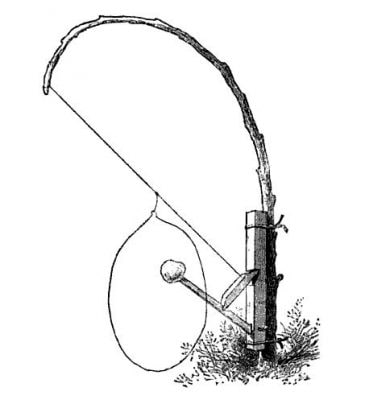
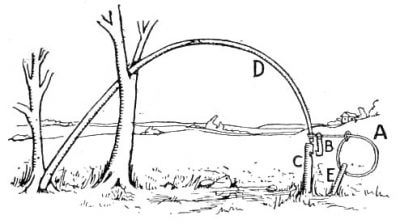
2. Spring Snare

To make a more successful trap, you can add a spring element to the snare. Young, small saplings can be harnessed to pull the small game up into the air after it is caught. This increases the chances the animal will die a quick death, and can help keep other animals from stealing your prey.

Image Credits
  • To make a spring snare, first, find a young, green, bendable sapling. Then make a noose.
  • Next, carve a trigger out of two pieces of wood. These pieces should lock into one another, but not too well. You want it to be barely holding on, that way, it triggers easily to catch your prey. The tension from the sapling will keep a properly flimsy trigger secure.
  • Bury the bottom portion of the trigger in the ground. Or, carve it into something already in the ground.
  • Tie the noose to the top portion of the trigger. Tie the top portion of the trigger to the top of the sapling.
  • Bend the sapling back so it’s under a lot of pressure, and attach the two trigger pieces together.
  • Now, prop up the snare.

The idea behind this trap is that the animal is first caught in the snare. When it struggles, it dislodges the top trigger piece from the bottom. This releases the sapling, pulling the snare and the animal up into the air. If you caught its throat, it should be strangled to death.

There are many other modifications to snare traps, but this is easiest to start with. Also, be warned, you may find that your snare traps catch the leg of larger animals, especially if you’ve made them strong, so always be prepared to deal with them.

3. Deadfall

Deadfall traps drop heavy objects on the animals in order to kill them. You have to be smart about setting these, so that you don’t hurt yourself and don’t endanger other humans. For starters, don’t stand under the weight.

deadfall trap
Image Credits

We’ll start with a smaller deadfall trap, the balance log. This trap requires bait.

  • Find a “Y” shaped piece of wood. Whittle the bottom and one end into points.
  • Find another branch, a straight one, and set it on top of a log on one side, and on top of your “Y” wood on the other. You want the branch to sit level and secure. This might require whittling down the “Y” wood a bit more.
  • Apply bait to the non-whittled end of the “Y” wood.
  • Carefully lay heavy logs on the crossbar.

The idea behind this trap is that the animal moves under the logs to get to the bait. As it nibbles on the bait it pushes the “Y” bar, which moves easily because it’s only resting on a point. When the “Y” wood falls down, so does the crossbar and the heavy logs. These should knock out the animal.

There are plenty of other kinds of traps you can make by hand, including net traps and spear traps (which can easily maim you and aren’t for the beginner so we won’t cover them here).

Keep in mind that none of these traps are likely to be humane and give you a quick kill. Instead, you need to check your traps regularly and be ready to dispatch a struggling animal when you find it.

Final Thoughts

While you might be subject to a limit by your game laws, in a SHTF situation, it’s always better to have more traps to up your chances of success. Even if the game you’re bringing in is small, a few small animals can make a meal. With a little practice, trapping can be an even more viable method of getting calories.

Author Bio: Ellysa Chenery can be found writing all over the web. She loves adapting traditional skills for new situations, whether in the wilderness, garden, or homestead. Her favorite smell is carrots fresh from the dirt.

If you enjoyed this article, consider following our Facebook page.

7.62 NATO vs. .308: Is There a Difference?

0

By Wayne van Zwoll

The idea for a short-action cartridge rivaling .30-06 performance has been around since before the Depression. But once the M1 Garand carried us through World War II, military circles took up the short-.30 banner with an experimental infantry round.

The T65 was essentially a .30-06 with a shorter 51mm rather than 63mm case. In a fit of brilliance, Winchester snatched the design for its hunting roster and in 1952 dubbed it the .308. Two years later the U.S. Army adopted the 7.62×51 cartridge and urged its acceptance by NATO, which complied in 1957.

Are 7.62 NATO and .308 Win the same cartridge?
Should you shoot .308 or 7.62 NATO in your rifle? Is there a difference?

Its debut in our M14 infantry arm, then in rifles and machine guns abroad, ensured a future for the 7.62×51 NATO. When the M16 replaced the M14 in the Vietnam War during the 1960s (read my article comparing 5.56 NATO vs. .223 here), production of 7.62x51mm ammunition continued.

National Match loads fueled by 41.7 grains IMR 4895 kicked 174-gr. BTHP bullets to 2,548 fps. Tracer, frangible, armor-piercing and grenade-launching loads followed.

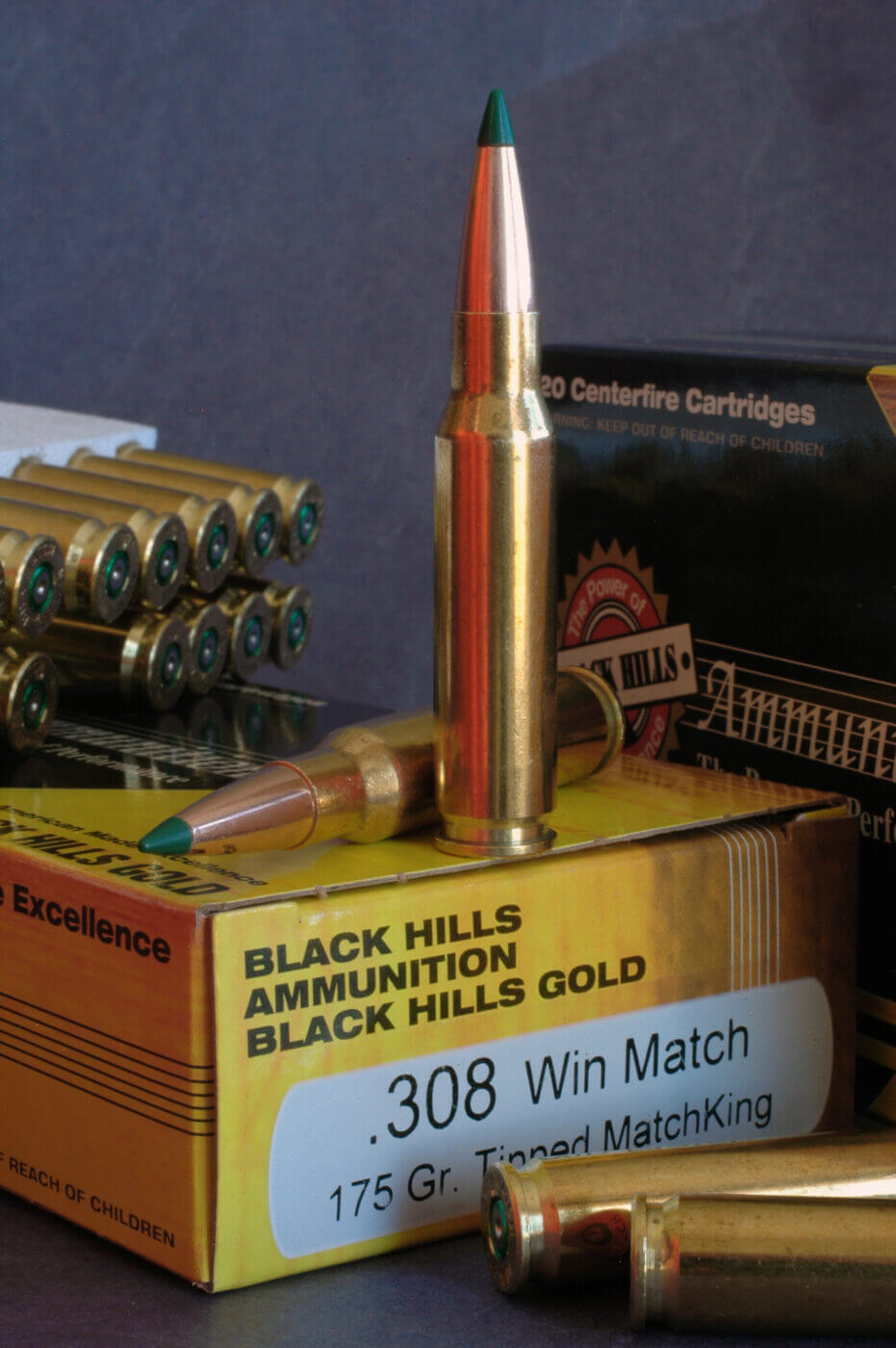
Black Hills .308 MatchKing
The .308 arrived first, as a sporting cartridge, in 1952. The 7.62 NATO, same dimensions, came in ’57.

To hunters, infantry cartridges have all the cachet of beige filing cabinets. While the .308’s short stature, light weight, low case cost and function in self-loading guns initially served military interests, sportsmen of that day were more seduced by new belted magnums. Utility, like wisdom, can be an acquired taste.

Military 7.62 brass is thicker than .308
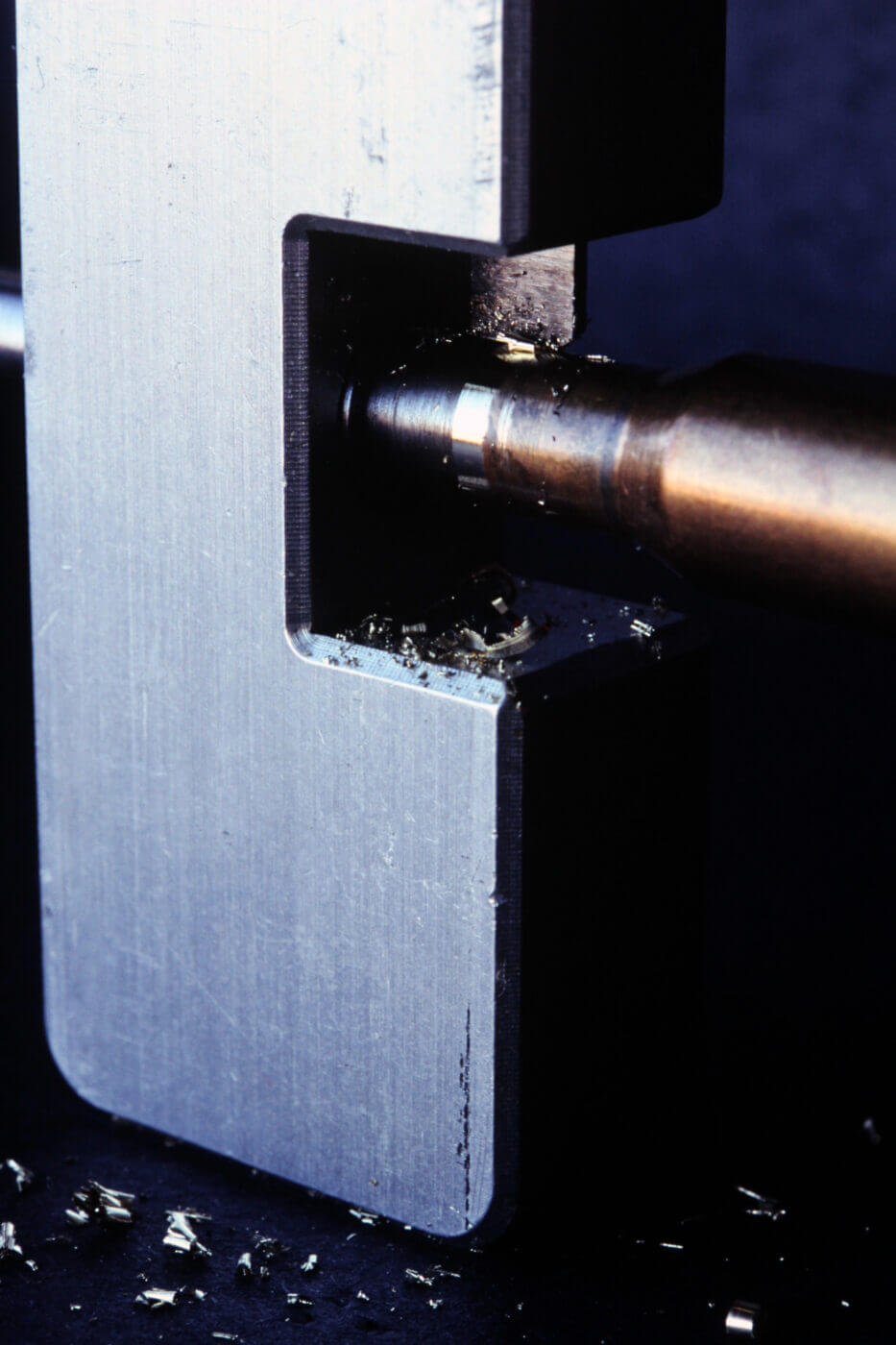
Early military brass was thicker and not as uniform as commercial. Neck turning can improve accuracy.

A Second Look

But the .308 soon earned plaudits afield. Commercial makers began to chamber bolt-action, lever-action, pump-action and autoloaders in the round.

The .308 case holds 20 percent less powder than a .30-06, and about 40 percent more than a .30-30. It has roughly half the capacity of a .300 Weatherby Magnum.

Traditional loads sent 150-gr. softpoints at 2,820 fps, 90 fps shy of listed speed for those bullets in a .30-06 but 190 fps faster than their exit from the old .300 Savage round.

Seth Swerzcek at Hornady tells me its top-selling .308 load is still the 150-gr. SST, albeit Superformance ammo with 165-gr. InterBonds at 2,840 fps brings more muscle.

Comparing the .308 with .270 and 6.5x55
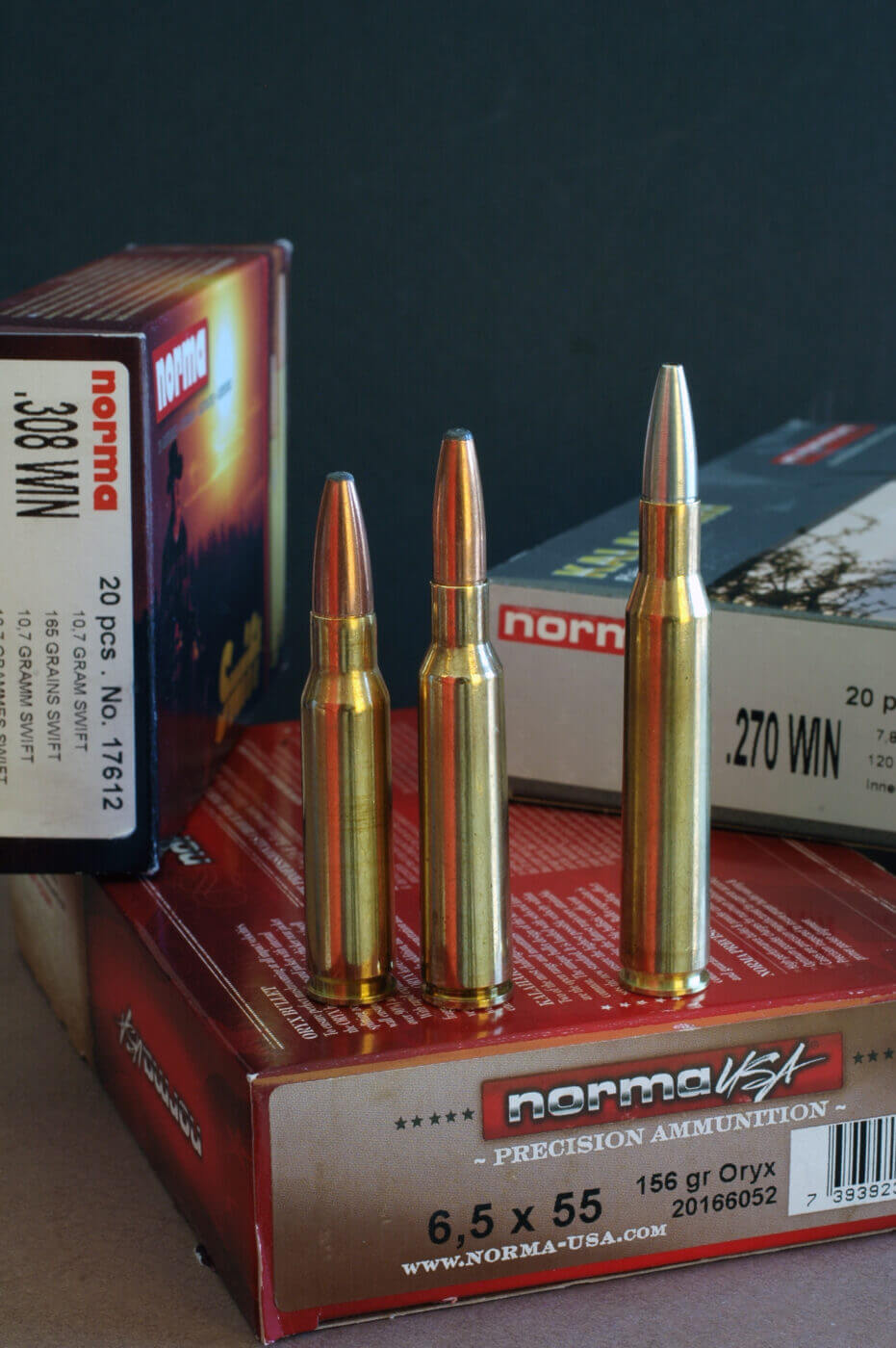
The .308 (left, shown with .270 and 6.5×55) is a true short-action cartridge.

Bench Rest shooters embraced the .308. With it, Dave Hall drilled a .4612 knot to win the Sporter class at the 1967 National Matches. In ‘68, Ferris Pindell won with a .3594 group from his .308.

Meanwhile, the round was proving itself in military circles internationally as the 7.62×51 NATO.

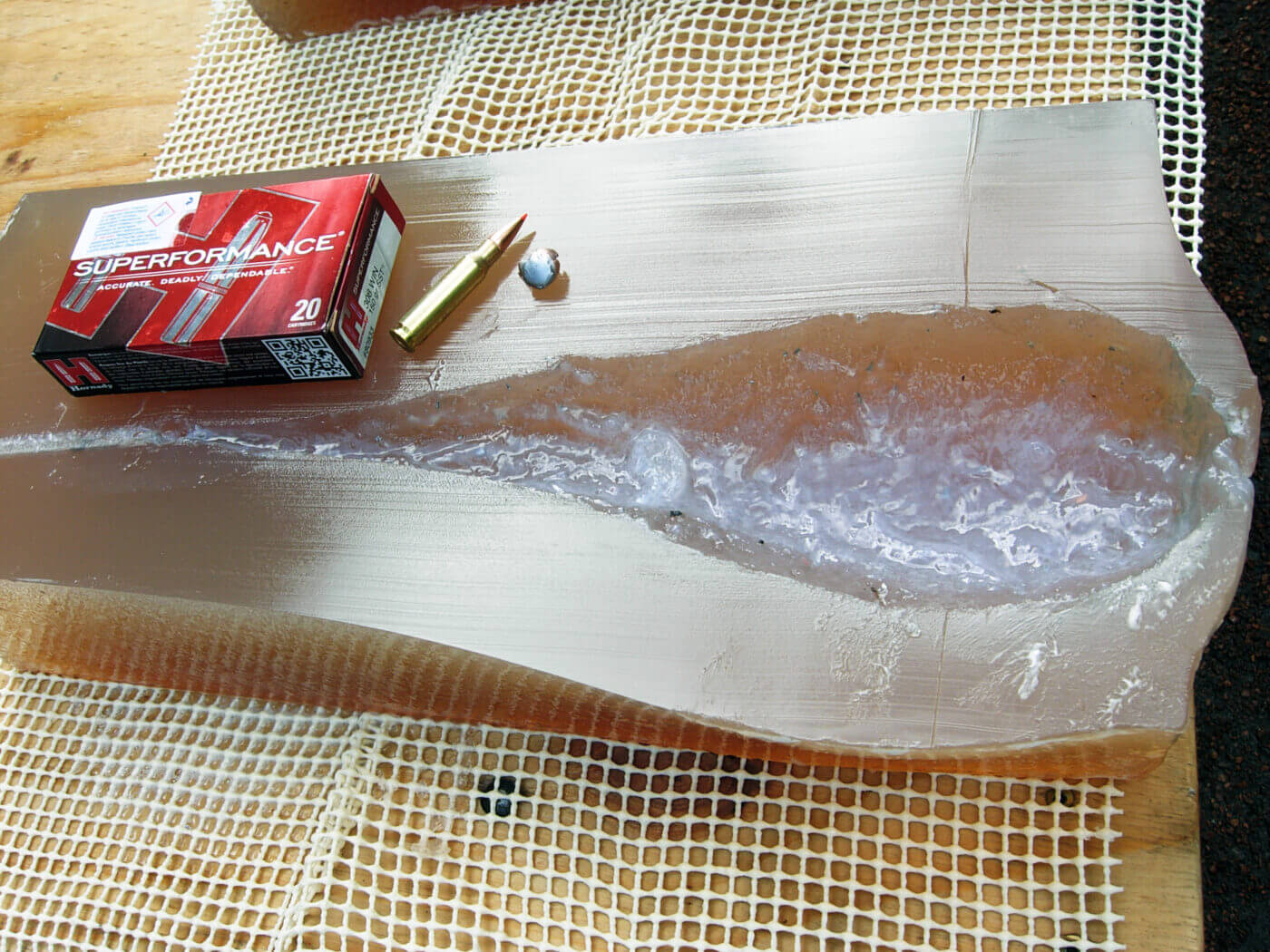
Testing the in .308 ballistic gel
This gelatin cavity shows terrific damage inflicted by a 150-gr. Hornady Superformance .308 load.

What’s the Difference?

One of the biggest questions when comparing the 7.62 vs. 308 is “what’s the difference?”

The cases are identical — same 2.015 length, 20-degree shoulder, .473 rim. Body and neck are the same. Cartridges are loaded to the same 2.800 overall length.

Of course, loads can differ. Military units and LE agencies may specify bullets of limited use to hunters, and port pressures to operate service rifles.

“We use the same brass and primers for commercial and service-contract ammo,” says Swerzcek. “Typically, Hornady recommends loads for a contract. Officials approve or tweak specs. We hew to them.”

Standards of both rounds are governed by SAAMI and its European equivalent, CIP.

“Wait!” you howl. Maximum average breech pressures differ, with the .308 having the higher range. Gunsmithing instructor Fred Zeglin notes different measuring methods can yield such disparities. Swerzcek agrees.

“The first 7.62×51 NATO pressures were retrieved by copper crusher. Current piezo-electric reads on .308 ammo are more precise and repeatable, often higher.”

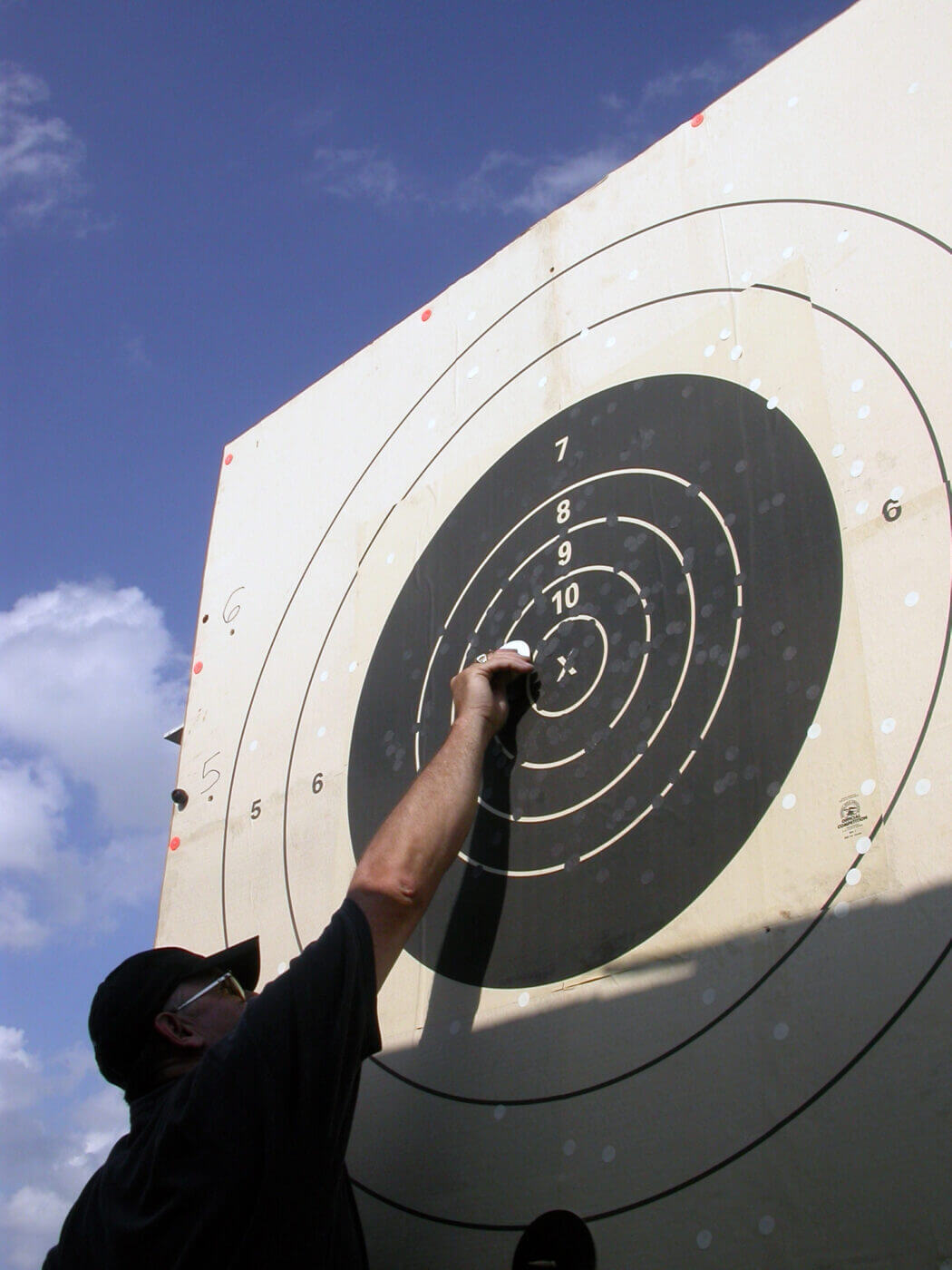
Range target practice with 7.62 NATO
Popular in National Match competition, the .308 yields about 4½ inches to 10-mph wind at 600 yards.

Jeff Hoffman at Black Hills Ammunition notes differences in measurement location. “Pressures for the 7.62×51 NATO may be taken at the case mouth instead of mid-case. We check production at both places, commonly seeing slightly lower values at the mouth.”

He also says velocities for the 7.62×51 NATO are often taken 78 feet from the muzzle, not SAAMI’s standard 15. “A small difference, but important if you’re loading thousands of rounds to exacting standards.”

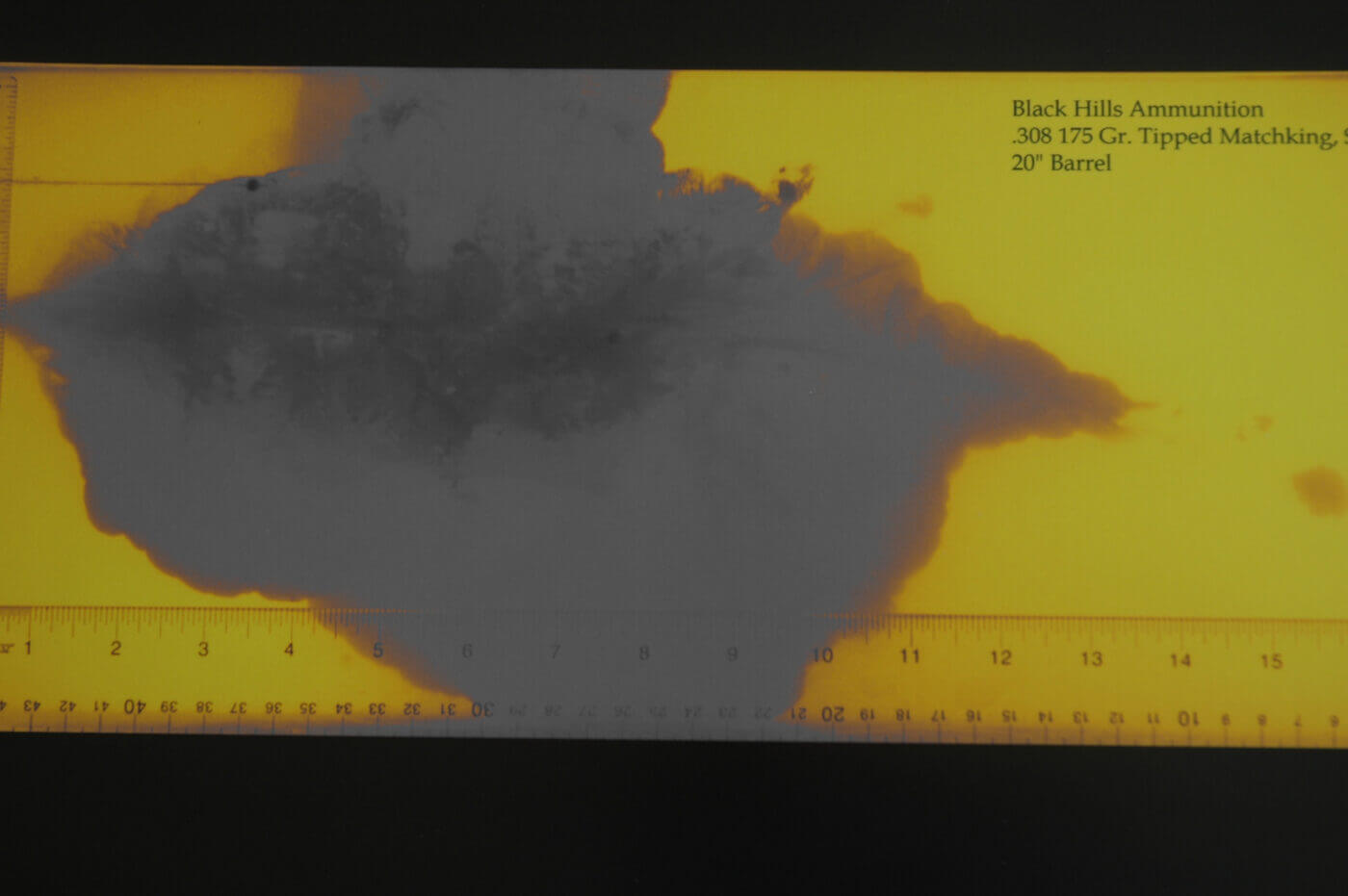
Ballistic gel testing .308 vs 7.62
Black Hills Ammunition loads both commercial and military ammo. Here: gelatin test of a 175-gr. Tipped MatchKing bullet.

What about maximum horizontal range? It’s listed at 4,500 yards for the .308, and 5,500 for the 7.62×51. “Different bullets in the trials,” say ballisticians. At extreme range, ballistic coefficient rules.

SAAMI diagrams show a headspace measure of 1.630 to 1.640 for the .308. A Frankfurt Arsenal diagram indicates a range of 1.628 to 1.634 for the 7.62×51 NATO cartridge case, while JGS reamers are held to 1.630-.640 for the .308 and 7.62×51 NATO. Barrel-maker John Krieger tells me even his reamers with special-order throats hew to SAAMI headspace specs.

Long range shooting of .308 and 7.62
Long bullets for long shots prompt sharper rifling twist, but 1-in-12 still works for almost all bullets.

Freebore and leade angle are where .308 and 7.62×51 NATO chambers seem to differ. For .308s, JGS shows .900 freebore of .3100 diameter, with a 1-45 leade angle. Chambers in 7.62×51 NATO are cut with 1.355 of 3.095 freebore, a 5-40 leade angle. Government diagrams confirm that steep leade.

A New Twist?

A common twist for both cartridges is the original 1-in-12. For the leggy bullets popular now, faster spin is common. Krieger uses and has rifled barrels 1-in-11 for high-power competition, with bullets as heavy (long) as 220-gr. MatchKings.

Dave Tooley’s Bench Rest experience nudges him toward modest spin rates. Having chambered more than 7,000 barrels, he likes 1-in-12 twist even for long-range bullets. “An exceptional 1-in-14 Hart barrel held half-minute accuracy with flat-base 187s at 1,000 yards.”

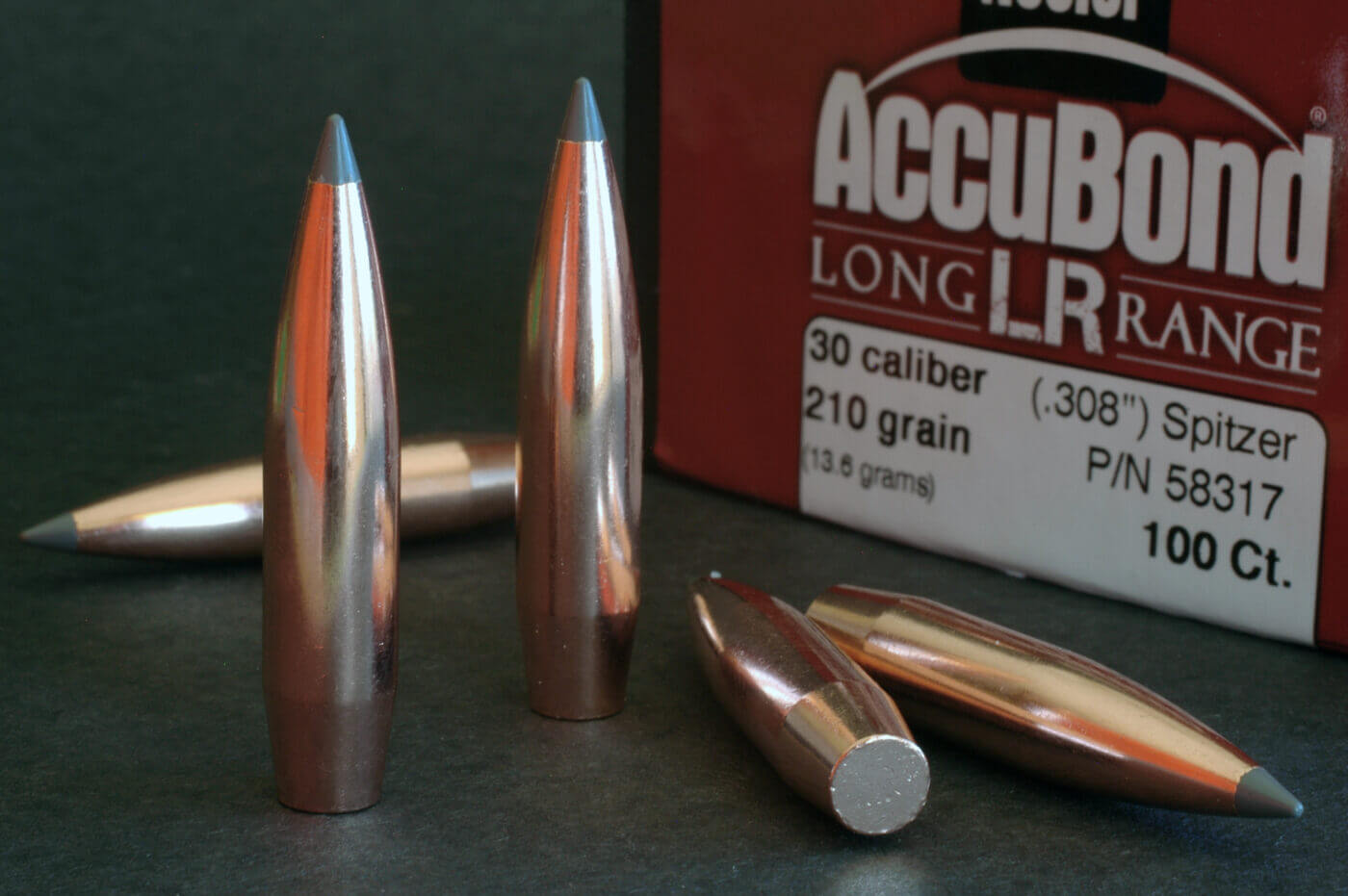
.308 caliber bullets work in both 7.62x51 and .308 Win loads
Commercial loads for the .308 generally feature bullets of 110 to 185 grains. Handloaders have heavier options.

Hornady ballistician Scott Javins agrees with Tooley that targets tell the story. But he understands shooters choosing sharper spin.

“They heed caveats from bullet-makers, and gyroscopic stability values.” GS, he explains, responds dramatically to higher spin rates. “A 168-gr. ELD Match at 2,546 fps from a .308 barrel with 1-in-11¼ rifling spins at 162,960 rpm. GS: 2.08. The same bullet sent at 2,528 fps from a 1-in-8 bore spins at 223,830 rpm. GS: 4.11.”

He adds that GS disparities may not show up on targets or game at ordinary ranges.

Bench testing the 7.62 round
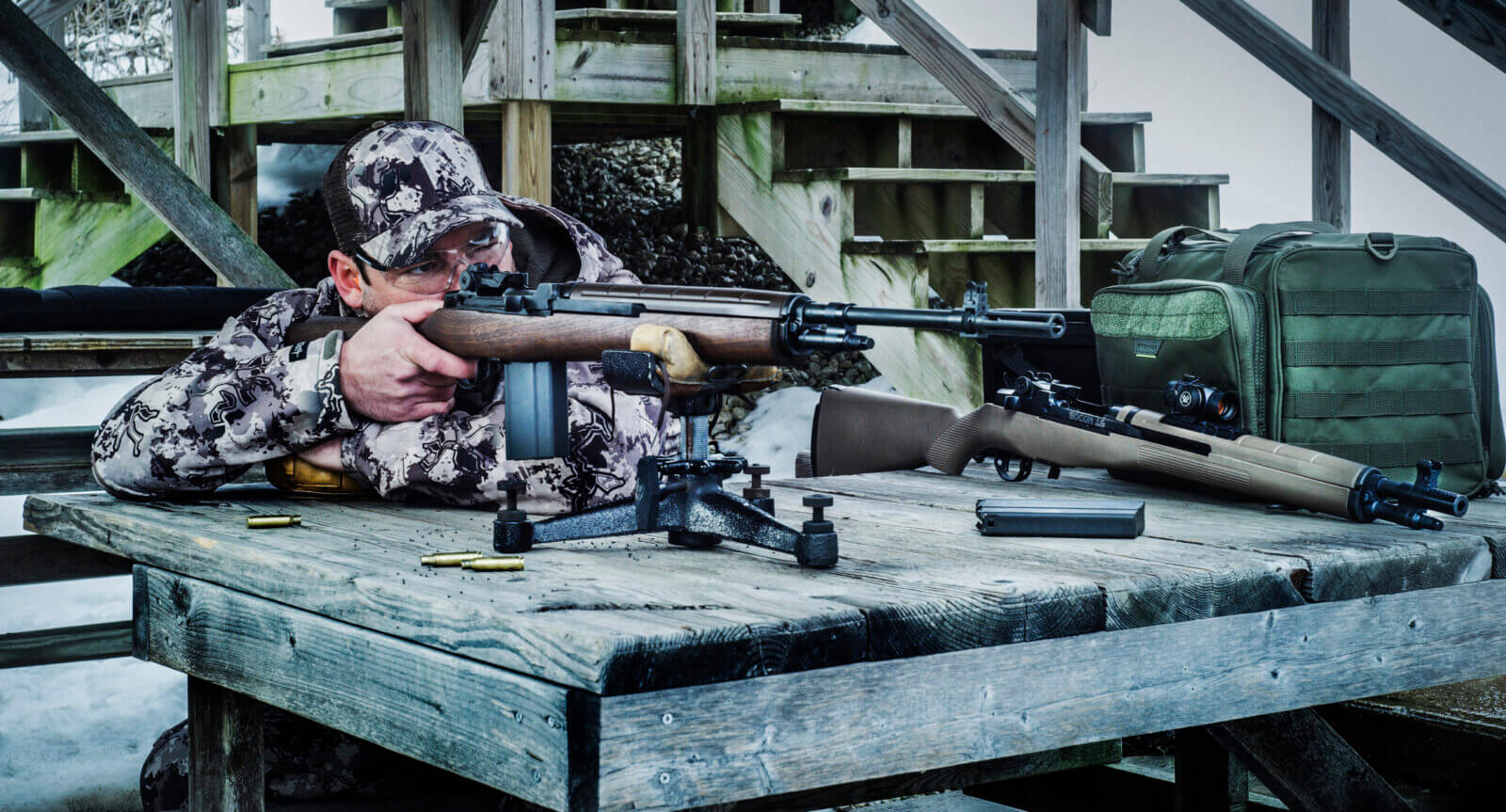
The M1A rifle (shown) from Springfield Armory is a semi-auto rifle inspired by the 7.62 NATO M14 rifle.

Which Is Better: 7.62 or .308?

While the 7.62×51 NATO designation remains common in military circles and abroad, it’s all but gone from commercial loads stateside with just a few offerings here and there. The .308, however, dominates ammo rosters, with 79 loads from five U.S. ammo makers. Federal catalogs 24 loads, Hornady 17. Even Norma of Sweden has seven loads, more than for any other cartridge in its line. No centerfire round is chambered in more rifles worldwide.

What’s the Bottom Line?

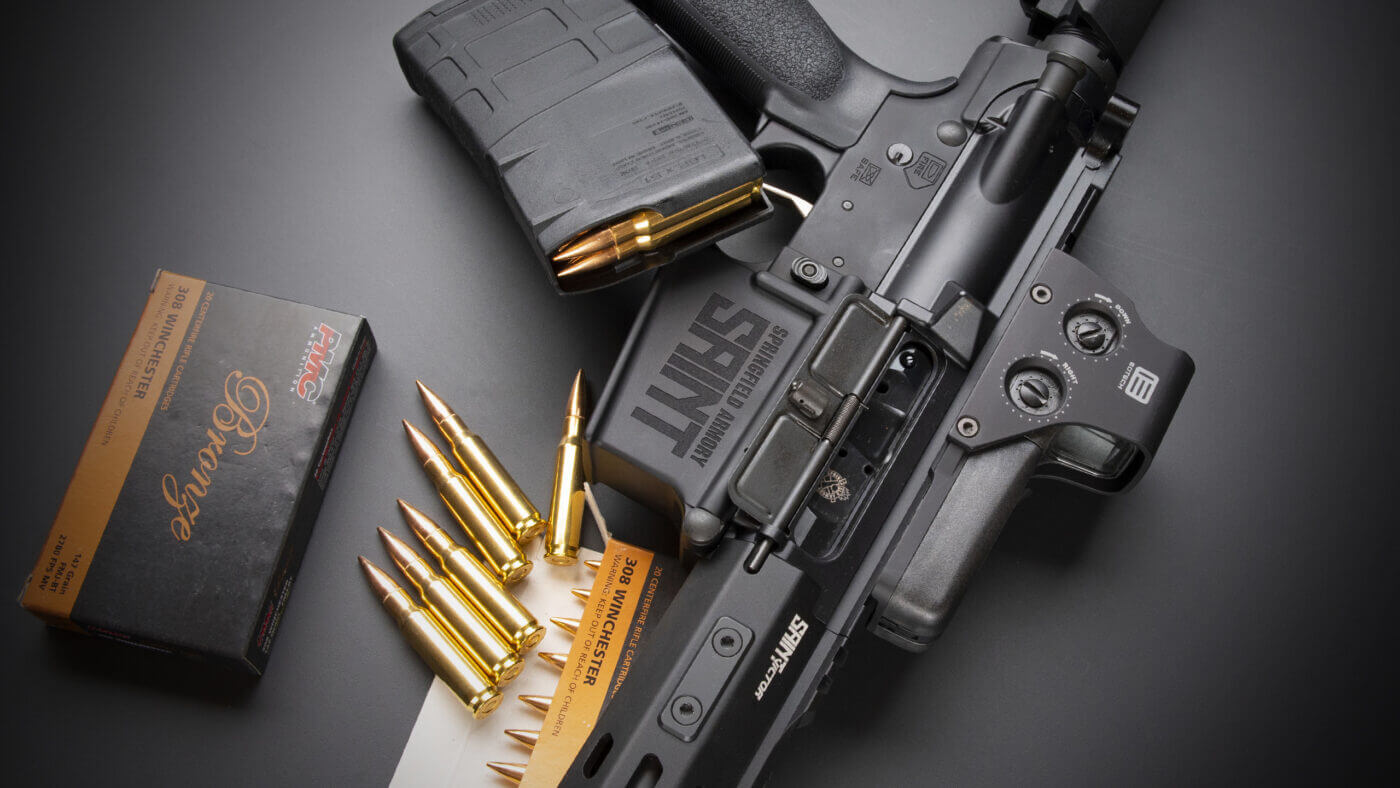
All modern .308 rifles can chamber and shoot modern .308 and 7.62 NATO ammunition without any problems, such as the SAINT Victor .308 rifles. The 7.62 NATO M1A can also safely fire both rounds.

If you plan on using a surplus rifle chambered in either .308 Win or 7.62 NATO, you should have the gun’s headspace checked by a professional to ensure you can safely shoot .308 ammunition. You can also check this on your own with quality Go-NoGo headspace gauges.

Editor’s Note: Please be sure to check out The Armory Life Forum, where you can comment about our daily articles, as well as just talk guns and gear. Click the “Go To Forum Thread” link below to jump in and discuss this article and much more!

Join the Discussion

Go to forum thread

Featured in this article

Trees With Long Seed Pods – Identification Guide (With Pictures)

0

Trees with long, slender seed pods are easily identified in woodlands and parks. The distinctive bean-like pods may look like a string of pearls, long flattened brown cases, or slender cylindrical seed pods measuring up to 24” (60 cm) long. Many of these trees with long seed pods are in the bean family Fabaceae and have similar seed cases containing several round or oval seeds.

Catalpa trees are the most commonly identifiable trees with long seed pods dangling from branches. Other trees known for their long flattened or cylindrical seed-filled pods include black locust, eastern redbud, palo verde, mimosa, and trumpet trees. Depending on the species, the long seed pods can measure between 4” and 24” (10 – 60 cm) in length.

This article explores some of the most fascinating trees with long seed pods. From the iconic catalpa tree to locust, redbud, and coffee trees, we will examine the characteristics of each tree to identify the tree species.

Trees With Long Seed Pods (Pictures and Identification)

Let’s look in detail at the most common trees with long seed pods.

Catalpa Trees (Catalpa)

Catalpa trees have some of the longest seed pods you will likely find on trees. These ornamental deciduous trees have long, pencil-like pods that grow between 8” and 24” (20 – 60 cm) long.

The slender brown seed pods dangle from branches and persist through winter. On a leafless tree, the long slender pods look like brown icicles.

Northern Catalpa (Catalpa speciosa)

Long, thin cylindrical seed pods grow on the northern catalpa tree. The bean-like capsules emerge green and turn brown as they ripen in fall.

Each pencil-thin pod of the northern catalpa tree measures 8” to 20” (20 – 50 cm) long and is filled with flat, light brown winged seeds measuring 1” (2.5 cm) long.

The northern catalpa is a large-sized deciduous tree native to North America. Apart from the long green-bean-like seed pods, the tree is identified by its white, trumpet-shaped flowers and heart-shaped leaves measuring 8” to 12” (20 – 30 cm) long.

The northern catalpa trees grow 50 to 100 ft. (15 – 30 m) tall with an irregular canopy 40 ft. (12 m) wide.

Due to the catalpa tree’s long, thin brown seed pods, it’s also called the cigar tree.

Southern Catalpa (Catalpa bignonioides)

Long slender seed capsules are an identifying feature of the southern catalpa tree. These brown bean pods are slightly flattened and measure 6” to 20” (15 – 50 cm) long and 0.3” to 0.4” (0.8 – 1 cm) in diameter.

Like the northern catalpa, the rounded pods of the southern catalpa tree emerge green before turning brown in fall. They persist on the tree through winter.

Other identifying features of the southern catalpa are its clusters of small funnel-shaped white flowers, large leaves measuring up to 10” (25 cm) long, and reddish-brown bark.

The southern catalpa is difficult to distinguish from the northern variety. However, comparing the long seed pods and flowers, you’ll notice that the southern catalpa fruit and blossoms are slightly smaller.

Honey Locust Tree (Gleditsia triacanthos)

The honey locust tree is a fast-growing, hardy tree known for its long, reddish-brown, flattened seed pods.

The easily identifiable slender pods of the honey locust tree measure 18” (45 cm) long and have a twisted shape. An unusual feature of the long brown seed pods is their honey-like, sweet pulp that matures in early fall.

Also called the thorny locust tree, the deciduous tree is native to North America. One of the characteristics of the locust tree is its thorny trunk and branches. The stiff, sharp spines on the tree grow in dense clumps.

Honey locust trees have finger-like clusters of fragrant yellow flowers and pinnately compound feathery leaves.

Honey locust trees with huge brown seed pods grow 65 to 100 ft. (20 – 30 m) tall.

Black Locust Tree (Robinia pseudoacacia)

The black locust tree is a fast-growing, deciduous tree with flat, purplish-brown bean-like pods.

Each long, thin seed pod of the black locust tree measures 2” to 4” (5 – 10 cm) long and up to 0.5” (1.3 cm) wide. The long dark brown pods contain several dark orange-brown seeds that ripen in late fall.

One of the attractive features of the black locust tree is its fragrant white flowers. The loose clusters of white blossoms grow up to 8” (20 cm) long and bloom in late spring or early summer.

Leaves on the black locust tree are dark green and consist of small leaflets growing on stems.

Fast-growing black locust trees grow 30 to 50 ft. (9 – 15 m) tall and up to 35 ft. (10.5 m) wide.

Eastern Redbud Tree (Cercis canadensis)

The eastern redbud tree is a beautiful ornamental, pink-flowering tree with brown, bean-like seed pods in the fall.

Eastern redbuds are known for the masses of pea-like rosy-pink and purple spring blossoms. After blooming, the pink flowers give way to long brown flat seed pods 2” to 4” (5 – 10 cm) long.

Long seed pods on eastern redbud trees contain small pea-like seeds 0.25” (0.6 cm) long.

After the tree’s heart-shaped green leaves drop in the fall, the dangling brown pods provide visual interest throughout winter. Redbuds are small ornamental trees growing 20 to 30 ft. (6 – 9 m tall).

Additionally, eastern redbud trees are easy to care for and maintain, adding value and beauty to any landscape in USDA zones 4 to 9.

Judas Tree (Cercis siliquastrum)

The Judas tree produces masses of brownish-purple seed pods measuring 4” (10 cm) long.

These flattened purplish seed casings appear in summer and persist through winter. Also known for its abundant rosy-purple clusters of spring flowers on bare branches, the ornamental tree adds beauty and shade to a landscape.

The pink-flowering Judas tree grows 15 to 25 ft. (4.5 – 7.5 m) tall and wide. In addition to its attractive deep pink flowers and dangling showy seed pods, the tree features heart-shaped leaves.

These seed pods emerge red in the spring, mature to green, and turn yellow or brown in the fall.

Mimosa Tree (Albizia julibrissin)

Also known as the silk tree, the mimosa tree produces brown, flat elongated seed pods 4” to 8” (10 – 20 cm) in length. In addition to its flattened bean pods, the tree is identified by its pom-pom-like clusters of pink flowers.

Each mimosa tree bloom consists of silky threads that look like fluffy pink powder puff.

The fast-growing mimosa tree grows 20 to 40 ft. (6 – 12 m) tall and up to 50 ft. (15 m) wide.

Apart from its flat seed pods and fluffy pink flowers, the deciduous tree has attractive fern-like foliage consisting of 20” (50 cm) long bipinnate leaves.

Mimosa trees are drought-tolerant and low maintenance and add a touch of elegance and beauty to a subtropical landscape.

Cape Wattle (Paraserianthes lophantha)

Cape wattle is a fast-growing shrub or small tree with clusters of dark seed pods measuring 4” (10 cm) long. The smooth, flattened pale brown seed casings contain several black seeds.

The Cape wattle seed pods follow pale greenish-yellow bottlebrush flowers that appear in early summer and persist through winter.

Also known as fernleaf wattle, crested wattle, or plume albizia, this unusual tree can be found on the west coast of the US. The small shrub-like tree grows up to 40 ft. (12 m).

Apart from its flattened brown curled seed pods, the fernleaf wattle tree has fern-like foliage like the mimosa tree.

Palo Verde Tree (Parkinsonia florida)

The Palo verde tree is a sun-loving desert tree known for its flat, thin, seed pods with pointed ends.

Each flattened brown pod of the Palo verde tree contains two large brown seeds. The pods’ tan color contrast with the tree’s green branches and stems. The long brown seed pods measure 2” to 3” (5 – 7.5 cm) long.

The eye-catching features of the palo verde tree are its green bark, bright golden-yellow spring flowers, and small bluish-green leaves.

Palo verde is tolerant of drought, heat, and arid conditions. The ornamental tree grows 20 to 25 ft. (6 – 7.5 m) tall and up to 20 ft. (6 m) wide.

Royal Poinciana Tree (Delonix regia)

The royal poinciana tree is a stunning tropical tree known for its huge brown seed pods and fiery red-orange flowers.

Popular in Florida landscapes, the royal poinciana tree produces flattened, brown or black seed pods measuring up to 24” (60 cm) long. Each stiff, strap-like pod can hold up to 50 seeds.

The most attractive feature of the royal poinciana tree is its large clusters of brilliantly colored red or orange flowers. The tropical flowers have four spoon-shaped petals measuring 3” (7.5 cm) long.

When in bloom during summer, masses of vibrant flowers cover the tree’s spreading, rounded canopy.

Royal poinciana trees grow 30 to 65 ft. (9 – 20 m) tall and have a spreading canopy up to 60 ft. (18 m) wide.

Kentucky Coffee Tree (Gymnocladus dioicus)

The Kentucky coffee tree is a slow-growing deciduous tree with long, flat seed pods and small leaves. The attractive reddish-brown bean pods grow in clusters and measure 10” (25 cm) long and up to 3” (7.5 cm) wide.

Leaves of the Kentucky coffee tree are bipinnately compound with up to nine pairs of small leaflets on leaves 3 ft. (1 m) long.

The Kentucky coffee tree is characterized by its dark brown, fissured bark, zig-zag stems, and purplish-brown pods containing oval seeds.

Traditionally, the seeds are roasted and used as a coffee substitute—hence the name coffee tree.

Kentucky coffee trees grow 60 to 80 ft. (18 – 24 m) tall and up to 55 ft. (17 m) wide. They are excellent shade trees for large landscapes, and their large brown seed pods create visual appeal in the winter. However, they can become messy when they drop.

Acacia Tree (Acacia)

Acacia trees are a group of sun-loving thorny trees that produce clusters of long seed pods. Depending on the tree species, acacia seed pods can be twisted, straight, or coiled. Some of the long, seed-filled elongated pods can have a fuzzy texture.

The acacia tree pods contain red seeds, and the pods can be brown, black, or green and measure between 2.8” and 8” (7 – 20 cm) long.

Apart from the colorful seed pods, attractive features of acacia trees are their feathery fern-like foliage and strikingly beautiful flowers that look like white or yellow puffballs. Acacia trees grow between 20 and 50 ft. (6 – 15 m).

These trees are suitable for use as shade trees in hot climates.

Desert Willow (Chilopsis linearis)

Desert willow is a small to medium-sized shrub-like tree known for its showy, trumpet-shaped pink flowers and long, linear seed pods. The slender seed pods grow 6” to 10” (15 – 25 cm) long and contain several winged seeds.

The tree’s showy funnel flowers thrive in hot, dry climates, making the tree an ideal desert plant.

Desert willows look stunning in arid landscapes when the large purple, pink, or white flowers bloom from May through September. The tree is also identified by its willow-like leaves and huge elongated seed pods that persist through winter.

Desert willow grows 15 to 40 ft. (4.5 – 12 m) with an open, spreading crown.

Trumpet Trees (Tabebuia)

Trumpet trees are a tropical tree species that are famed for their showy trumpet-shaped flowers in shades of pink, yellow, and purple. After blooming, trumpet trees produce long, slender brown pods in a banana or cigar shape.

Depending on the tree species, the seed pods can measure between 3” and 12” (7.5 – 30 cm).

Trumpet trees have moderate growth and can reach heights of 20 to 40 ft. (6 – 9 m) tall. The colorful trumpet-shaped flowers can measure 1” to 4” (2.5 – 10 cm) long and bloom in early spring on bare branches.

Yellow Bells (Tecoma stans)

Yellow bells is an eye-catching shrub-like small tree with clusters of showy yellow trumpet flowers, lush foliage, and many string-like long seed-filled pods. The slender bean pods grow 8” (20 cm) long and contain numerous winged seeds.

These blow away when the seed pods ripen, crack open, and release the seeds.

Although the narrow seed pods provide some visual interest, it’s the stunning brightly-colored yellow flowers that are attractive. Flowering continuously from spring until late fall, the fragrant yellow blossoms add plenty of color to a subtropical landscape.

The shrubby plant grows 10 to 25 ft. (3 – 8 m) tall and up to 20 ft. (6 m) wide.

Amur Maackia (Maackia amurensis)

Amur maackia is a deciduous slow-growing tree with flat seed pods, fragrant, white pea-like blossoms, and attractive coppery-bronze bark.

The Amur maackia tree’s flat bronze-colored seed pods measure 2” to 3” (5 – 7.5 cm) long. Its white flower clusters are dense panicles growing up to 8” (20 cm) long.

This ornamental Amur maacikia tree is known for its stunning white flowers that bloom in mid-summer. Useful as a shade tree or lawn tree in temperate climates, the hardy broadleaf tree grows 20 to 30 ft. (6 – 9 m) tall and wide.

After its leaves drop in the fall, peeling cinnamon bark and brown seed pods provide visual winter interest.

Purple Orchid Tree (Bauhinia variegata)

The purple orchid tree is a magnificent flowering tree with flat, sharply pointed seed pods and stunning orchid-like flowers.

The deciduous small shrub-like purple orchid tree blossoms in winter with clusters of five-petaled pink, white, or purple flowers. These are followed by flattened strap-like seed pods measuring 12” (30 cm) long.

The sun-loving purple orchid tree thrives in tropical landscapes in USDA zones 9 to 11. Sometimes growing as a large shrub, the multi-stemmed tree can grow 20 to 35 ft. (6 – 10.5 m) tall. In the right climate, the pink-flowering tree is ideal as a specimen shrub, small shade tree, or border plant.

Carob Tree (Ceratonia siliqua)

The carob tree is an evergreen tree that produces long edible seed pods. The legume seed-filled fruit can be relatively thick with a curved or straight shape. Carob pods turn from green to a glossy dark brown, almost black, as they ripen.

The sweet leguminous pods grow 4” to 10” (10 – 25 cm) and contain eight to 12 seeds.

The carob tree is native to Mediterranean regions and grows up to 50 ft. (15 m) tall and wide. The term carob comes from Greek, meaning horn-shaped, and refers to the shape of the large curved seed pods. The drought-tolerant trees are ideal for hot climates and xeriscaping.

Related articles:

  • Types of Tree Seed Pods
  • Types of Helicopter Seeds

Crabbing: 10 Trot-Lining Tips

0

Crabbing is a great way to spend time on the water, and trot-lining is a very effective and fairly easy way to fill the bushel basket. Crabbing in my family started when I was very young, when I would go out with my dad and have a fun morning—and then an even better afternoon as we got to feast on the succulent crustaceans. Then I started my own business crabbing commercially for the past two summers. Here are 10 things I learned while trot-lining on the bay.

running a trot line for crabs
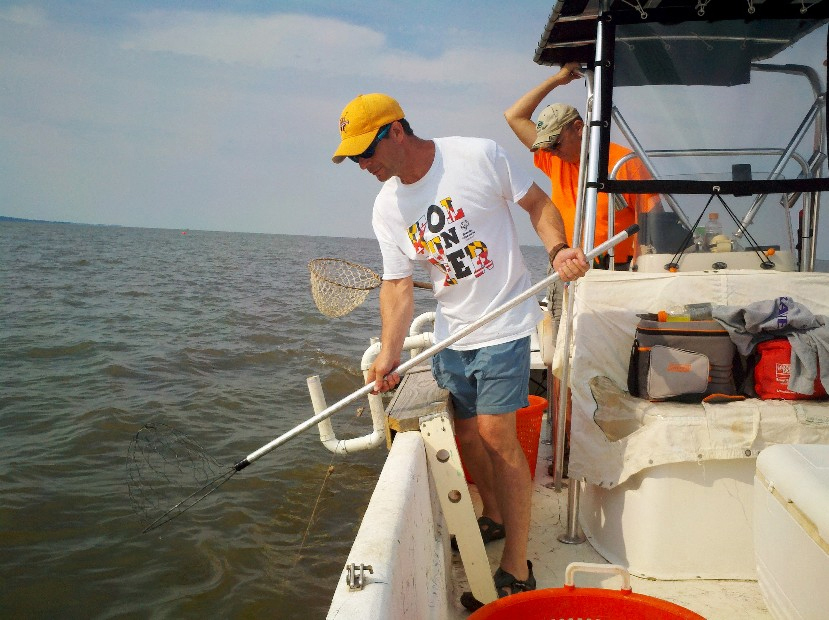
You want to catch a bushel of prime jimmies? Trot lining is the way to make it happen.

1. Don’t be afraid to pick up and move your line. Crabs are very depth- and bottom-oriented. If you’re not in the right area, you simply won’t catch crabs. Although moving the line may seem like a waste of time when you’re out on the water, if you’re only catching a crab or two that are keepers every run, it’s worth it to try a different depth. The type of bottom you’re over also plays a big role. If you notice that your trot line is flinging mud off your baits and you’re not catching crabs, go try a spot where you know there’s a shell bottom.

2. Use a heavy enough anchor. I highly recommend using mushroom anchors. Mushrooms are very easy to handle, can be dragged if necessary, and work on all bottoms. When buying your mushroom anchor, it’s crucial to choose an anchor heavy enough to stick on the bottom when you pick up the line to start running it. If your anchor is too light, you’ll drag it as the boat moves forward. This process will create lots of slack in your line, and will ruin that run—while also creating a problem (all that slack) that you need to fix. An anchor anywhere from seven to 10 pounds should do the trick. Although heavier anchors are harder to move around the boat, it is more important that you can run your trotline effectively.

3. Tighten or tie baits as tightly as possible to your line and snoods. Crabs are very tricky carnivorous devils. Whatever bait you are using, you should tie or tighten your snood as tightly as possible. On a good day of crabbing, especially if you are using chicken necks, after a couple of hours your baits will start to go missing. If you don’t tighten down the baits to your line to the full potential, even more will be missing. Crabs are able to dislodge baits from the line and they will scuttle away with it whenever possible, freeloaders taking that bait you paid for and painstakingly put on the line.

4. Use clips or carabineers at the ends of your main line. It’s great to use metal clips or carabineers for attachment points. They allow you to connect your anchor and float lines to your main line in a timely fashion. This will make setting out your line much easier, because all you must do is put a loop (at the end of your main line) in the clip and then you can keep feeding your line overboard. Also, this allows for easy storage of your anchors and floats because when pulling in the line you can simply unclip it and leave the rest of the rig on the boat until next time. When using a 1200 foot line it can be advantageous to have clips in the middle of your line, too. If you’re uncertain where crabs are going to be, you can split your trot line into two half-lines and lay them in different areas, to test where the crabs are.

5. At each end of mainline, use a short length of galvanized chain. This will ensure that the line is resting on the bottom, so crabs are able to locate the baits and hang on until the scooper is ready to attack. When using a long trot line, some people like to add another short length of chain in the middle.

blue crabs
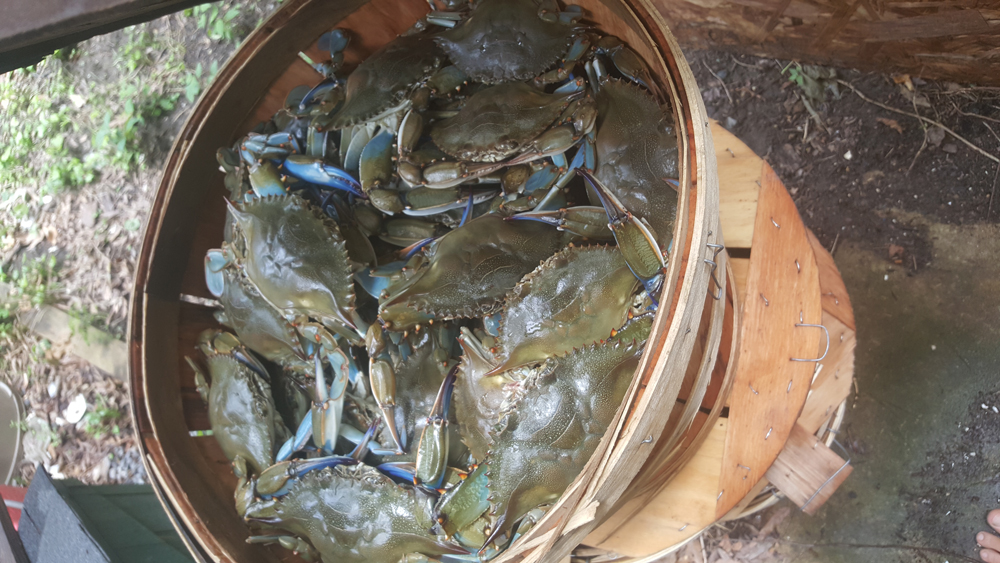
This is the kind of bushel basket we like to see – one full of blue crabs!!

6. Keep enough slack in the line. Although too much slack can ruin your run and impede on the operations, it’s crucial to make sure that your line is not too tight, either. In most cases it’s obvious when your line is too tight; it will be stretched out so you see baits a mile away, and in turn, you will watch as crabs drop the baits because they see what’s headed for them. If this is happening to you, it’s actually very easy to fix. Go to the end and grab the anchor line, pull it until you feel the anchor lift off the bottom, and then simply drop it back down. This will add a bit of slack into your line and after you run it a few times, the line should level out and run more effectively.

7. Work with the tide and wind, not against it. When it is a bit choppy or windy it can be very hard to crab. Try your best to set the line in a calmer area that’s sheltered from the wind. If you know where the crabs are but your spot is troubled by wind, it is crucial that you run your line with the wind at your back. By doing this you will avoid many troubles; going too slow while the wind pushes against your bow, not being able to control where your boat is going, and your bow crashing against the waves and scaring off crabs. Don’t worry too much about how this affects your speed, because as long as you remain at idle it’s rare to go fast enough to cause crabs to drop off, even with a strong wind at your back.

8. Judge soak-time by trot line length. How long you wait before you begin scooping crabs again, after finishing a run, depends on how long your line is. When using a 600 foot trot line, it’s important to let your baits sit for 10 minutes (give or take) before running it again. This is because with a shorter line you will run it faster, and there will be less time for the baits to rest on the bottom. If you’re using a 1200 foot trotline, however, by the time you finish your run the first baits you scooped on have already been resting on the bottom for a while so you can go back to the start and run it right away. If crabbing is really hot, even with a shorter line you should start a new run quickly—in some cases the crabs will just eat off your baits, if you give them any extra time.

9. Use a wire-mesh net. Using a nylon or cotton mesh net is a very common mistake for beginner crabbers. Making an investment into a nice wire-mesh net is very important and will lead to a lot less frustration down the road. When using a nylon or cotton net, the crabs will get stuck in the mesh much easier or the mesh will tangle in the line. You have a lot less control with the mesh, and in turn will miss more crabs.

10. Try your best not to cast a shadow over your trot line. When running the line on a bright day, it’s important that you run the trot line in a direction so that your shadow doesn’t cast over top your line. If the sun is to your back and a shadow appears over your line, the crabs will see it and let go of the baits before you have time to scoop them. It may mean changing the direction you run the line in or even how you have your trot line laid out, but either way, eliminating that shadow will mean catching more crabs.

The more you go and do it, the more crabs you will catch. Every boat and every trot line is a little bit different, and it may take a season or two to get the trot-lining process down with confidence. But scooping crabs as you watch the sunrise is very relaxing—and eating crabs as you watch the sunset may even be better.

– by Max Rudow

Want to learn how to go trot lining from a kayak? Check out this video:

Most Comfortable Tree Stands in 2024

0
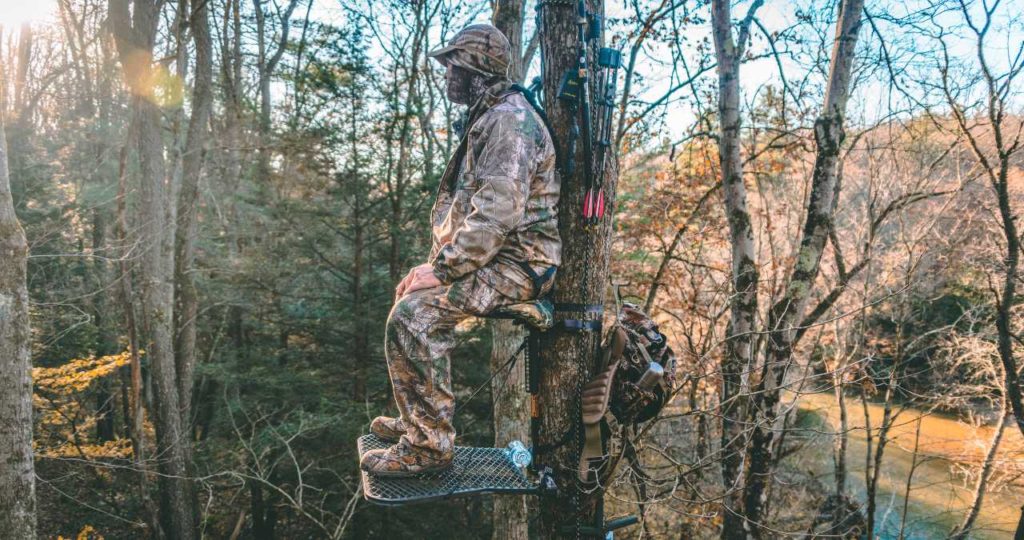
most comfortable tree stands

The most comfortable tree stands will mean you can sit for an all-day hunt without worrying about cramps, aches, pains etc.

But it’s not just about avoiding discomfort for the sake of it. (Any hunter worth their salt is willing to endure a little bit of pain to achieve success). But discomfort in a tree stand means you are more likely to shift about.

Every time you shift about, you risk giving away your position.

And so a comfortable tree stand (be it a climber, a hang on, or a ladder stand) has a practical purpose in addition to providing for our creature comforts.

The most comfortable tree stands we could find are detailed below. But if you want the top level summary:

  • Millenium are widely considered to make the most comfortable hang on tree stands. The M100U is their most popular model (you can pick one up at Cabelas or Black Ovis or Amazon).
  • The most comfortable climbing tree stand is generally thought to be the Summit Viper SD (also available at Cabelas or Amazon).
  • The most comfortable ladder stand is almost certainly the Hawk Big Denali 1.5 (available at Sportsman’s Guide and Cabelas).

Most Comfortable Hang On Tree Stand – Millennium M100U

The Millennium M100 Ultralite is widely regarded as one of the most comfortable tree stands full stop (that’s out of all tree stands, not just lock ons).

The seat is 22″ x 17″ with 17″ of height. It’s a contoured “sling” design that uses Millenium’s patented ComfortMAX technology. Not exactly sure what that is but it is certainly comfy (and most hunters who’ve sat in one will attest to that fact)!

It’s got a sizeable platform at 20″ x 38″ (which is around 5.25 square feet). It’s not the biggest platform you can find with a hang on stand but there’s plenty of room to manoeuvre into position to take a shot.

Consider adding an M105 Footrest from Millennium to pimp out your stand, even more, taking your comfort to the next level.

The Millennium M100 is the most comfortable hang on tree stand, so if you like to post in your perch for hours at a time, this is the stand for you. Just be prepared that you might doze off!

Availability

The Millenium M100 Ultralite should be available from the following stores:

  • Check princes at Amazon >>
  • Check princes at Black Ovis >>
  • Check princes at Scheels >>
  • Check princes at Dick’s Sporting Goods >>

Another Comfortable Lock On Stand – Millenium M150 Monster

The Millennium M150 is one of the biggest hang on stands you can find. It’s a bit harder to hang than the M100, but that extra room and the adjustability of the seat makes it one of the best tree stands for big guys.

The 20″x17″ seat is adjustable between 16″ and 20″ from the platform. The platform is a massive 37″ x 24″. It’s rated for 300lbs and weighs a surprising 19.5lbs.

Millennium’s M150 is hard to beat. It is spacious, comfortable, and suitable for use on almost any tree, even if it’s leaning at a bit of an angle (up to 15 degrees). And if you want even more comfort, consider purchasing a footrest.

Availability

The Millenium M150 should be available from the following stores:

  • Check prices on Amazon >>
  • Check prices at Cabelas >>
  • Check prices at Scheels >>

Most Comfortable Climbing Tree Stand – Summit Viper SD

The Summit Viper SD is hands down the most comfortable climbing tree stand you can buy today. It’s fairly lightweight, coming in at 20lbs. It’s rated for 300lbs. The 20″ x 36″ platform is a decent enough size. And the 18″ x 12″ x 20″ seat is so comfy you may just nod off.

The Viper SD also has a front rail made from aluminum that works great to support rifles, though not as much for bow hunters. The aluminum frame is constructed using DeadMetal, a sound deadening technology that reduces noise from the climbing tree stand to prevent making animals aware of your presence.

According to customers, this is a rock-sturdy stand that grips well on to abrasive tree stems such as pine and oak, but it tends to slide a little on sleek, wet surfaces. Another thing users praise is that the tree stand is very portable due to its relatively small seat, but the downfall with this is that larger people might struggle to fit onto the seat and the platform.

If you’re looking for the most comfortable climbing tree stand, the Viper SD is where it’s at. It features a seat, backrest, and armrests fully padded with foam and comfortable backpack straps, making it super portable and easy to carry. For larger people, it might be a little tight, but that’s where the Summit Goliath SD comes in…!

Availability

The Summit Viper SD seems to have good availability in a bunch of online stores. At the time of writing you could find them in the following places:

  • Check prices at Amazon >>
  • Check prices at Field & Stream >>
  • Check prices at Cabelas >>
  • Check prices at Walmart >>
  • Check prices at Dick’s Sporting Goods >>
  • Check prices at Scheels >>

Most Comfortable Ladder Stand

Hawk Hunting have been supplying the hunting community for over 50 years, during which time they’ve been at the forefront of hunting technology. It’s perhaps little wonder, then, that their ladder stands are widely considered to be the most comfortable tree stands a hunter can sit in.

HeightWeight CapacityPlatform SizeSeat Size (W/H)Big Denali 1.5Big Denali 2-Man

They sell three tree stands: the Bighorn, the Sasquatch and the Big Denali. You can takes your pick as far as comfort goes, because the seat designs are approximately the same. But it’s the Big Denali 1.5 and the Big Denali 2-Man that we’re going to discuss here.

The Big Denali has everything you could possibly need from a tree stand in terms of comfort. The padded armrests feel almost like a couch, as does the seat itself. The flip-out footrest also does its part in keeping your feet and legs from getting cramp.

And if you’re hunting with a rifle, the adjustable shooting rail means you can get into position quickly, quietly and without hunching or stretching.

Availability

The Hawk Big Denali 1.5 should be available from the following stores:

The Hawk Big Denali 2 should be available from the following stores:

  • Check prices at Cabelas >>
  • Check prices on Amazon >>
  • Check prices at Walmart >>

Another Comfortable Ladder Stand – Bolderton Outlander 360

The really awesome thing about the Bolderton Outlander 360 is the massive platform and the swivel seat. So in addition to being supremely comfortable you have a massive field of vision.

It’s a 19′ ladder stand. Its comfortable mesh seat is on a huge, hexagonal platform that gives you a lot of room to stretch. And it has a bunch of built-in camouflage blind panels to keep you concealed.

It’s an absolute beast to put up (and will probably require you to bribe a couple of buddies with some beer to help you). But once it’s up the swivel chair is so comfortable you could just as easily be in the office.

Availability

The Bolderton Outlander 360 should be available from the following stores:

  • Sportsman’s Guide >>
  • Amazon >>

Conclusion

Whether you’re looking for a hang on stand, a climbing stand or a ladder stand, comfort is probably the most important thing to most people after they’re comfortable that the kit is as silent as possible.

The hunting community are pretty much as one voice on the most comfortable tree stands:

For a comfortable ladder stand go with Hawk Big Denali 1.5.

For the most comfortable lock on stands go with a Millenium from their M-Series (like the Millenium M100U or the M150).

And for the most comfortable climbing tree stands, it’s Summit every time, specifically the Summit Viper SD.

Related Articles: feel free to check out more tree stand recommendations including the best ladder stands, the best hang on stands and the best climbing tree stands.

FAQs

What Is the Most Comfortable Climbing Tree Stand?

The most comfortable climbing tree stand is ultimately a matter of personal preference. However, we reckon the most comfortable climber (and we’re not alone) is the Summit Viper SD…

9 Best Places to Buy Ammo Online [2024]

0

So many online ammo websites, right?

Find out the best places to buy ammunition online from our own positive experiences and fails.

We’ll also cover recommended brands, types of bullets to buy, what is a “good” price, and unfortunately…restrictions based on your state.

And the current best deals for popular calibers.

October 2024 Update: Ammo prices are pretty stabilized for popular cartridges such as 9mm, .22LR, and 5.56/.223. However the Israel/Palestine conflict has added some extra demand. Also added Ammunition Depot into the mix.

AAC, Blazer, & PMC seem to be the most in-stock varieties.

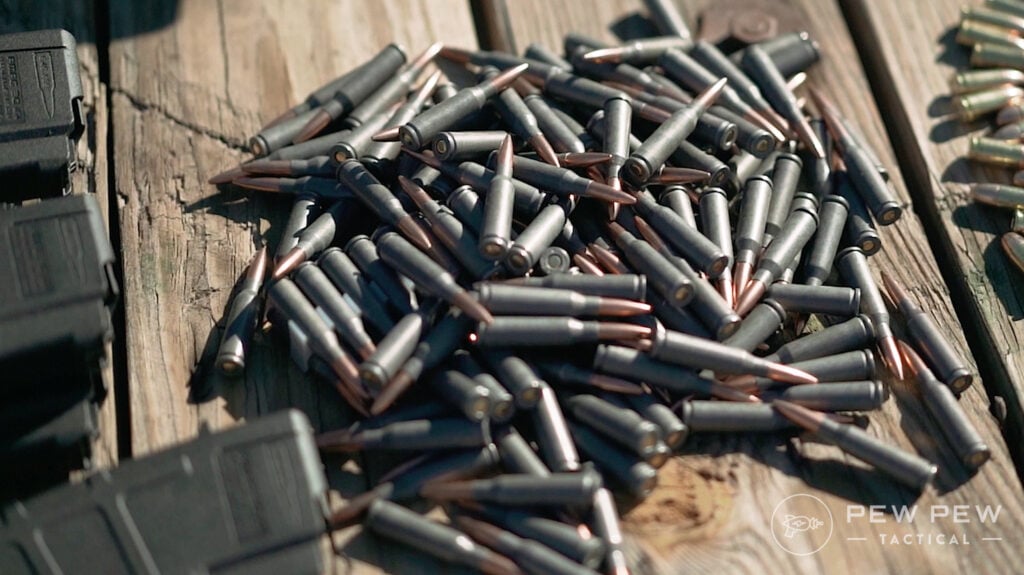
PSA AK74 Ammo Pile
Steel Ammo

THE QUICK LIST

Show more (2 items)

Best Places to Buy Ammo Online

1. Palmetto State Armory (PSA)

My go-to online place for buying BULK ammo is Palmetto State Armory.

They will usually be one of the best prices for cases (1,000) rounds of popular calibers…like .223/5.56, 9mm, and .45 ACP.

And they usually do a good job of keeping the essentials in stock…especially with AAC 9mm.

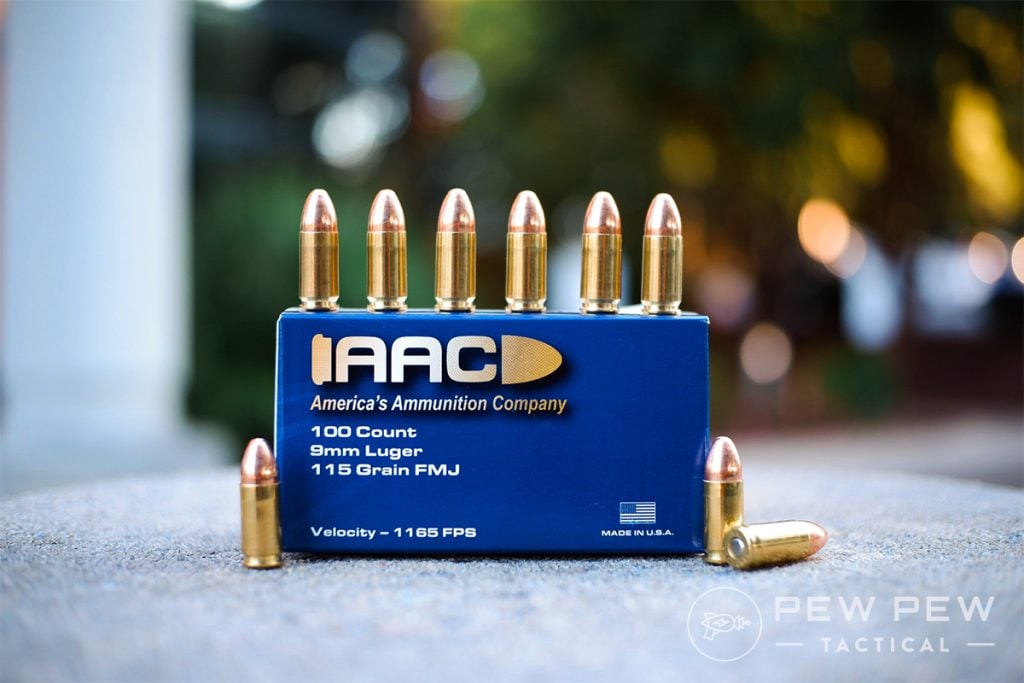
AAC 115gr 9mm
AAC 115gr 9mm

And sometimes you’ll even find free shipping for cases…otherwise, it may be about $20 to 30 bucks.

Their shipping used to be excruciating slow about ~5 years ago, but now with their in-house firearms selling like hotcakes…they’ve got their ammo shipping down as well.

  • AR-15 Ammo (.223/5.56)
  • 9mm Ammo
  • All Ammo
  • Daily Deals

What’s your take on PSA for ammo and guns?

2. Ammunition Depot

New on the list starting Summer 2024 is Ammunition Depot due to their free shipping over $149.

And just $5.99 for orders under.

You know when you’re buying ammo it’s pretty easy to go over $149.

And I know what you’re thinking…their prices must be higher to justify it. But amazingly they aren’t and can rival PSA prices for popular calibers.

My most recent order with them as been for 6 cent per round .22LR and as of right now their 9mm is 27 cents per round shipped.

They’ve been quick to ship and actual shipping time will depend on how far you are from Florida.

So if you’re buying a few boxes and love free shipping of popular calibers…check them out.

3. LuckyGunner

My go-to place to buy ammo online is Lucky Gunner for their selection, real-time inventory, and fast shipping, and shipping estimator. I’ve been a customer of theirs for over 6 years.

XM193 Rounds
XM193 Rounds

I find a lot of other retailers skimp in website tech or their shipping departments. There have been too many times where the following has happened:

  • I find a great price, order, my credit card is charged, and then I get an email a couple days later that they are out of stock. Now I can either wait for a backorder or get a refund which ties up my credit card for a week.
  • I order and it takes a week or two to ship out my order.
  • I try to see my shipping costs and I have to create a login and enter all my details first.

LuckyGunner is great since they take care of the three problems above. You get to see their live inventory next to each product, they have a 110% guarantee that your stuff will be shipped the next business day, and you can easily calculate shipping without creating a login.

4. Bereli

My go-to for 9mm for the past few months. Bereli has some GREAT deals for some items such as their Blazer Brass 9mm with free shipping and tax only if you’re from Florida.

They’ve shipped out within 24 hours for all my orders but then it’s down to whatever ground transportation does.

Check out all their ammo deals.

5. True Shot Gun Club

A relative newcomer to the list…but in the most recent dark times of ammo (2020 onwards), True Shot Gun Club has been steadily stocking 9mm and more.

Their claim to fame is being the largest ammo dealer in Arizona and top 10 in the entire US. I’ve been ordering from them steadily this past year and it always arrives.

And often at the best price too.

6. Optics Planet

Optics Planet is one of my go-to optics and accessories shops. They now have a decent selection of popular ammo calibers.

They have all the major calibers in plinking ammo plus more speciality selections like self-defense hollow points and hunting loads.

Be sure to double-check that the ammo you’re looking at is in stock!

7. Brownells

Brownells is where I get most of my specialty tools and gun parts. They also have unparalleled customer service, reasonable shipping, and some good ammo deals.

They are caught up in all the website technology which I love, so you can add all the ammo to your cart, input your zip code, and see the shipping. Makes it much easier to compare across websites.

They stand behind their products and I’ve found it really easy to return stuff. However, I’m pretty sure you can’t return ammo for safety reasons. But for parts and tools, they are the best!

See their All Ammo In Stock section.

8. Cabela’s

Cabela

Hunters and fishermen know and love their local Cabela’s and since their acquisition by Bass Pro, Cabela’s ammo prices have dropped even further!

Best of all, they almost always have the best hunting ammo you can find in almost every caliber you can think of.

Don’t forget to look at the Cabela’s branded gear also, everything from optics to rifle bags to jackets can be found with their brand name on it and so far I’ve never been disappointed with the quality or price!

9. Sportsman’s Guide

From power tools to guns and ammo, Sportsman’s Guide has almost everything under their roof – kind of like a Cabela’s and Harbor freight mixed into one!

While their standard deals are good, their deals with a Sportsmen’s Guide membership are even better! 10% off of gear and 5% off of guns and ammo, those savings can add up huge in a year of shooting.

Plus they offer ammo back-ordering.

Other Suggestions

These didn’t make our regular list but desperate times call for desperate measures and they might have some stuff left…

  • Gorilla Ammunition (niche manufacturer with subsonic loads and 8.6 BLK)
  • Sportsman’s Warehouse
  • Kentucky Gun Company
  • Cheaper Than Dirt (Extreme Price Gouging)

Why Buy Ammo Online?

A survey of gun owners conducted by the NSSF found that 53% of gun owners bought ammo online and that 86% of those cited lower prices and quantity discounts.

Lots of Ammo
Lots of Ammo

I’ve only bought ammo a couple of times at gun stores or the range because I forgot to bring my online bought ammo.

But every time I go, it’s not surprising to see prices 50% higher than what you’ll find online…even after factoring in shipping!

I’d like to also add in variety and tax savings.

Without the restraint of a physical location, online sellers can have tons of selection.

Some guns just like different ammo better than others. I like to order a couple of types to see what shoots best in a new gun, and then later put in a bulk order. Plus, our suggestions will likely be out of state for you…so no sales tax!

Recommended Ammo Brands

These are just my recommended ammo brands based on price, availability, and what worked in my guns.

I shoot a decent amount so I usually go for the budget brands. I haven’t had a problem with any of the below.

Popular Pistol Calibers
  • AAC: Currently the most affordable (and available) for 9mm and 5.56. Good stuff that has always gone bang.
  • PMC: Cheap and plentiful rounds that I have used in almost all my calibers. Made in South Korea.
  • Federal/American Eagle: Also cheap and plentiful rounds made in the USA. I use them interchangeably but word on the street is that AE is Federal’s line that is sold online and in gunshops. Federal Champion is their budget line usually found at Walmart.
  • Blazer: Another budget brand that sometimes seems too good to be true. Be aware that the super cheap one might be aluminum cased instead of regular brass. I’ve never tried aluminum casings in pistols since I wanted to keep my brass for eventual reloading, but my buddies and I have had no problems in handguns running Blazer Brass.
  • Tula: My go-to AK round brand. Super cheap with polymer coated steel cases. Who cares…it’s an AK!
  • Lake City: While US government-owned, Lake City also sells surplus ammo and brass through a lot of vendors. They also sell parts and supplies to other brands so it’s not uncommon to find ammo from Federal with brass or bullets made by Lake City. All of it is quality stuff!
  • Others: I’ve also had good success with Sellier & Bellot, and Fiocchi, but they are normally a little higher in price. And if in doubt, just Google the brand and caliber to see if there’s any complains in online gun forums.

Recommended Ammo for Common Calibers

A quick overview of the different calibers and types of bullets out there so you’ll know all the useful acronyms such as FMJ for full metal jacket or JHP for jacket hollow point.

More Popular Ammo Brands

We’ll also have some suggestions for choosing a self-defense gun as well.

Common Rifle Calibers

Even though we go through 18 calibers in the article above, you’ll probably only see/need a handful of the most common ones. So we’ll start with those first.

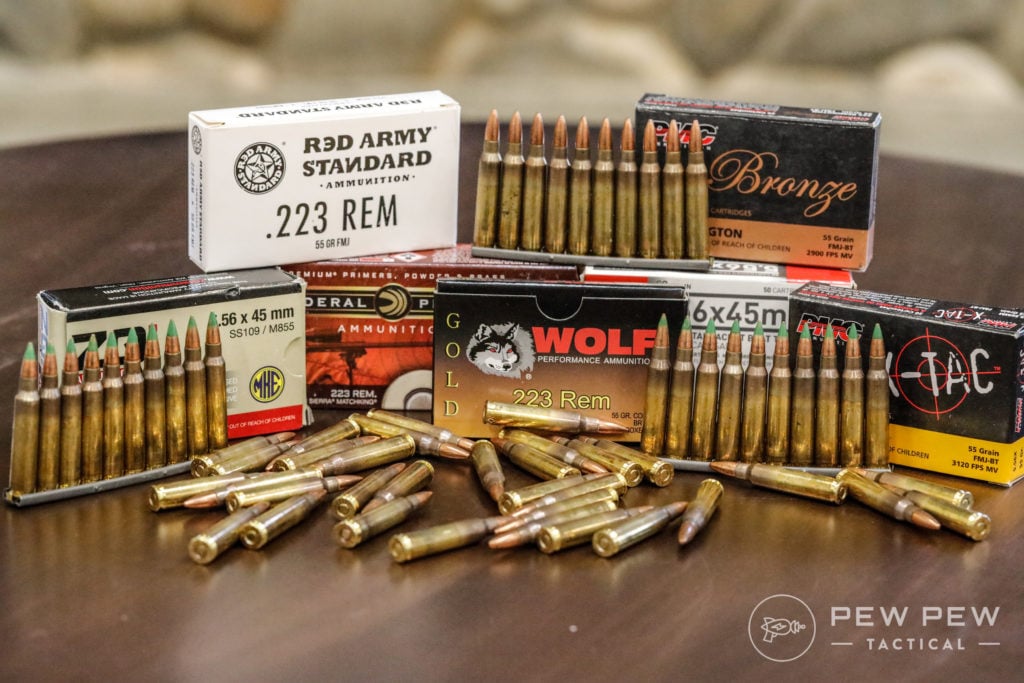
223/5.56 Ammo

The round of the super-popular AR-15.

Haven’t gotten one yet? Check out our Definitive Guide to the AR-15.

You can shoot .223 ammo in a 5.56 barrel, but since 5.56 may have higher pressures, you should not shoot them in a .223 barrel.

Popular 5.56 and .223 Ammo

I always get my barrels in 5.56 so there is no problem. Ammo is around 25-40 cents each at the most standard 55 gr bullet.

You’ll also see some designations of XM and M followed by 193 or 855 for Federal & American Eagle.

XM means it was rejected from military use for some reason but still meets commercial specifications. M means it meets mil-spec. 193 means it is a 55-grain FMJ-BT (boat tail) while 855 is 62-grain FMJ-BT with a steel penetrator for added penetration against hardened targets.

We cover everything in even more detail in Best AR-15 Ammo for Self-Defense & Range. But here are some of our picks.

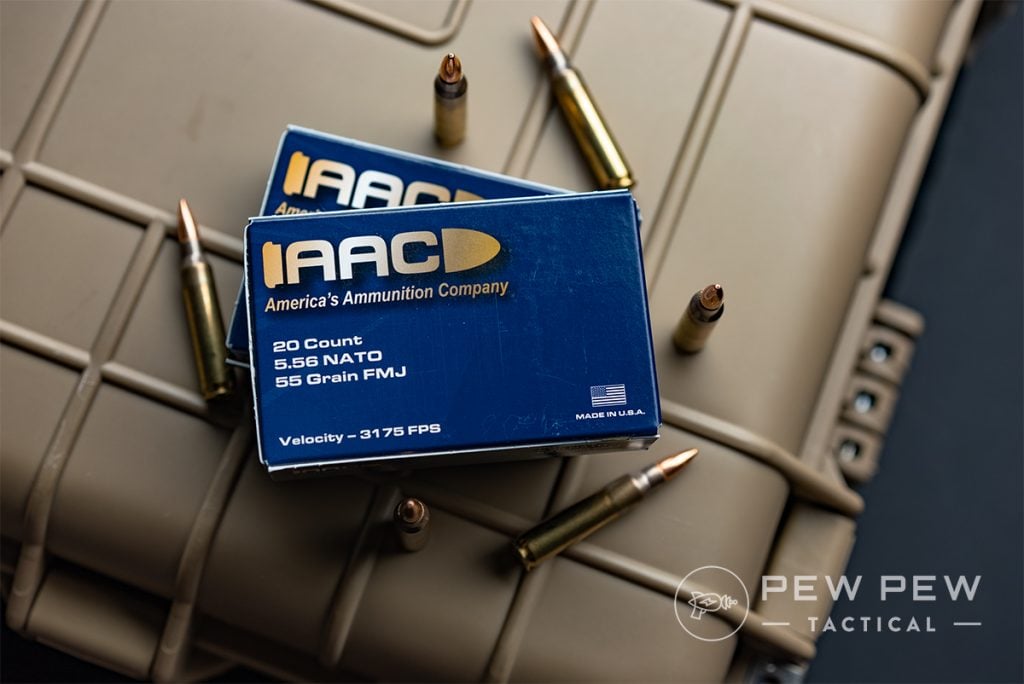
AAC 5.56 55gr
AAC 5.56 55gr

Our favorite XM193 and XM855 ammo!

And our favorite range plinking round goes to PMC Bronze since the brass is great for reloading and it’s a little softer shooting than the others (perfect for competition).

If you don’t care about reloading…Wolf Gold is the best bang-for-the-buck .223 ammo.

9mm Ammo

I’ve shot over 10,000 rounds of 9mm before I started reloading for competitions.

Price is around 30 cents a round. I prefer 124-grain instead of 115-grain which seems snappier in recoil, but I recommend trying out both to see which one you like better.

I also recommend sticking with brass cartridges instead of cheaper aluminum/steel.

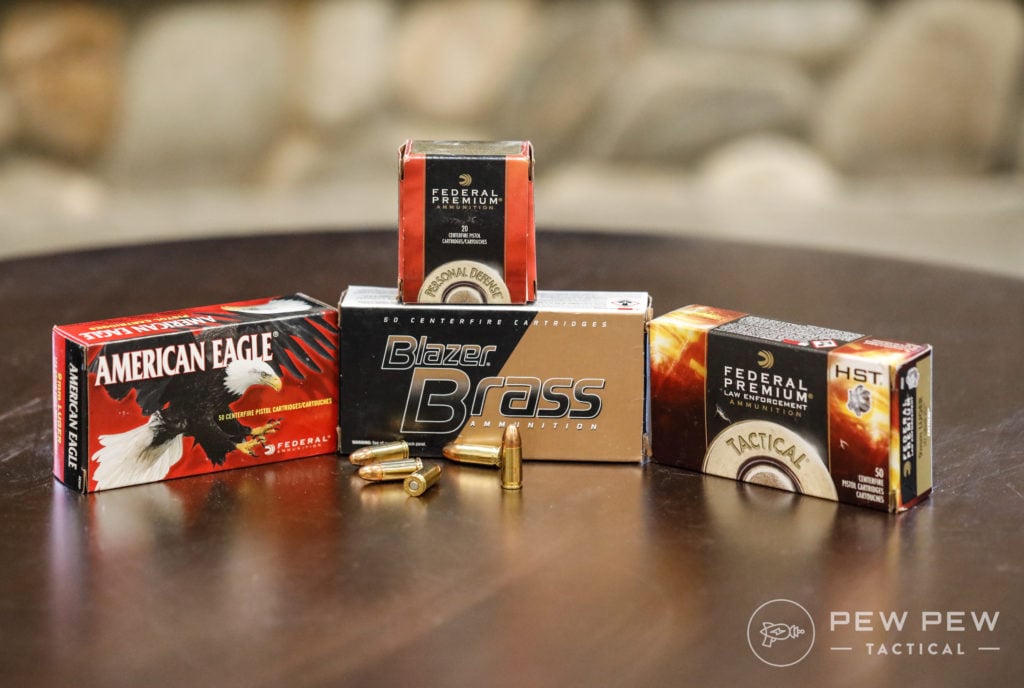
We cover everything in Best 9mm Ammo for Self-Defense & Range. But here’s a couple of our favorites…

Popular 9mm Ammo
Popular 9mm Ammo

For general purpose self-defense…we like the 124-grain Federal HST.

And for those who like heavier bullets…

For plinking…go with AAC 9mm in either 115gr or 124gr.

AAC 115gr 9mm
AAC 115gr 9mm

I also really like CCI Blazer 9mm that is brass cased.

.45 ACP Ammo

I’ve shot over 2,500 rounds of 45 ACP and also go with my standard budget list of manufacturers. Price is around 40-50 cents a round.

There’s not too much variation in weight so I stick with the standard 230-grain.

The extensive list is at Best .45 ACP Ammo for Home Defense & Target Practice but here is our main pick.

Popular .45 ACP Ammo

For self-defense, the HST passed the FBI ballistics gelatin test with flying colors…dominating in penetration and expansion.

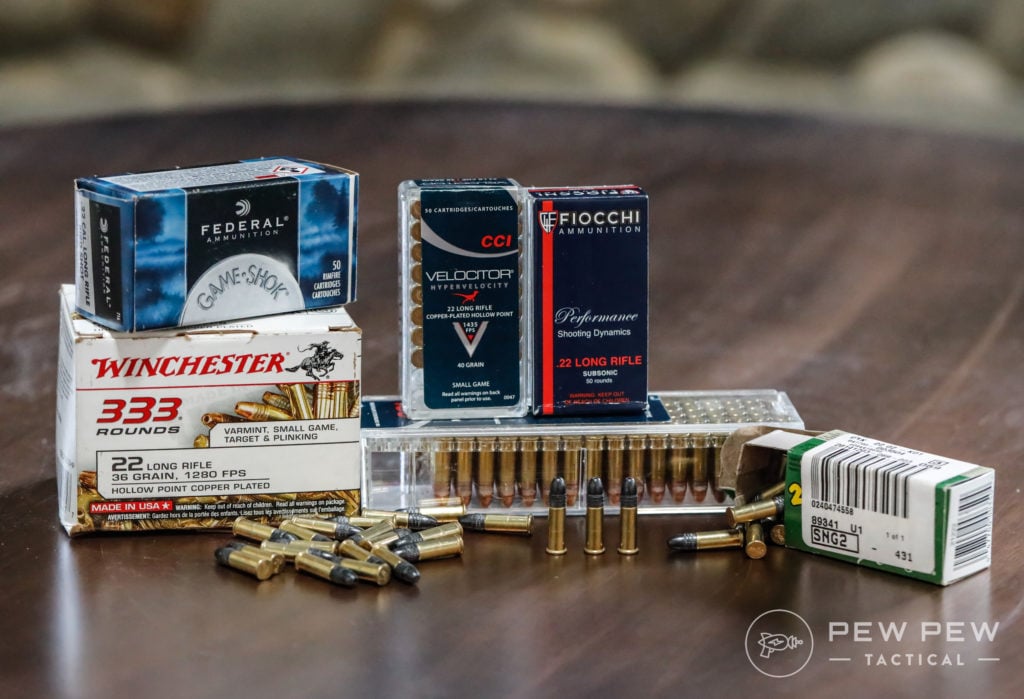
.22 LR Ammo

Reasonably priced .22 LR ammo is getting easier to find at <8 cents a round.

So what is out there (and in stock) is much more expensive.

We’ve compiled an extensive list in Best .22 LR Ammo for Accuracy, Plinking, & Hunting.

Popular .22LR Ammo
Popular .22LR Ammo

But…the CCI at 40-grain is my go-to for .22 LR in my Ruger 10/22.

  • CCI – 40 gr (Likely in stock but expensive)
  • Federal Automatch Target – 325 Rounds – 40 gr
  • Sellier & Bellot – 500 Rounds – 38 gr

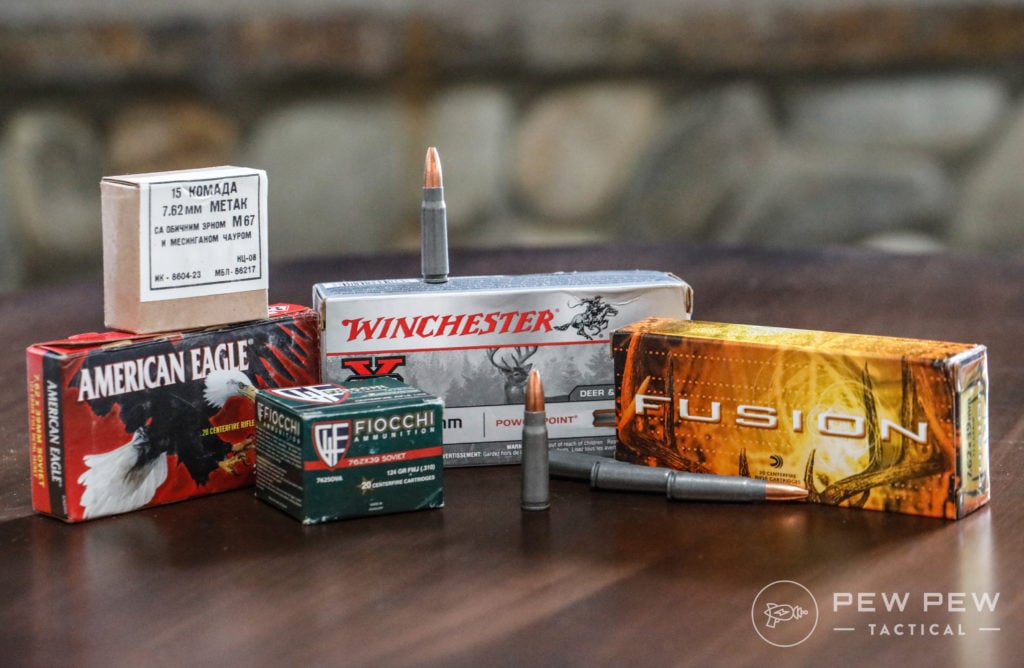
7.62×39 Ammo

The good ole AK-47 rounds. My rule is to go with ammo from countries that used the AK but to watch out for corrosive ammunition (which is pretty good shooting stuff, you just need to put more effort in cleaning afterward).

You also need to check with your shooting range rules to see if they allow magnetic (bi-metal) or non-brass ammunition such as Wolf/Tula.

Popular 7.62x39 Ammo
Popular 7.62×39 Ammo

If they don’t, you will have to go with more expensive brands or corrosive ammunition. The general weight is around 122-grain and costs from 25 to 35 cents each. Brass cartridges will be more.

  • Tula – Assorted – 122 gr FMJ (Magnetic + Steel, my favorite if the range doesn’t care)
  • Wolf – Assorted – 123gr FMJ (Magnetic + Steel, WPA Polyformance is the cheapest)
  • PMC – 20 Rounds – 123 gr FMJ (Non-Magnetic + Brass, if the range cares)

7.62×39 Self Defense Ammo

  • Sellier & Bellot – 20 Rounds – 123 gr SP
  • Hornady SST – 50 Rounds – 123 gr SST

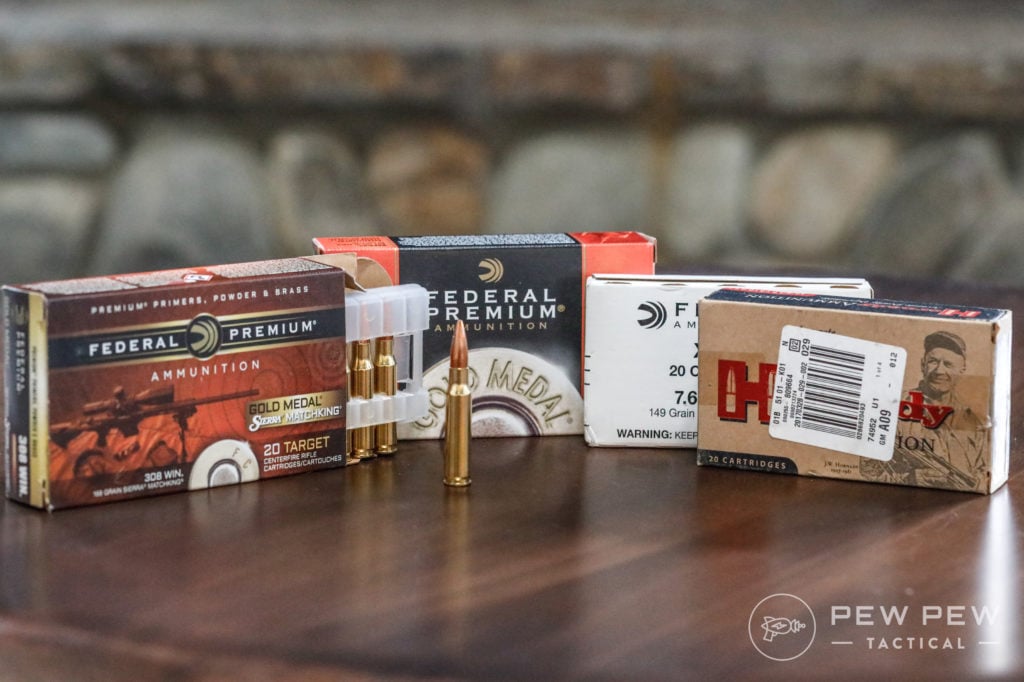
.308/7.62x51mm Ammo

Another of those rounds that are almost identical but with some differences in pressure and dimensions.

Unless you really know what you are doing, keep using the round intended for your rifle.

Popular .308 Winchester and 7.62x51mm Ammo

Since most 308/7.62x51mm ammo will be in long-range (sniper) rifles, we’ll also include some Match ammo.

Most commercial ammo will be around 147-grains and around 60 to 70 cents each while match ammo is around 168-grains and $1.50 per round. I went almost straight into reloading to get the max accuracy out of my guns so take my suggestions with a grain of salt.

All .308/7.62 ammo (Lucky, Brownells).

.308 Ammo

  • PMC – 20 Rounds – 147 gr FMJ-BT (Shot my first hundred with this)
  • Fiocchi – 20 Rounds – 150 gr FMJ-BT
  • Federal Match King – 20 Rounds – 168 HP-BT (For precision shooting)

7.62x51mm Ammo

  • Federal – 20 Rounds – 149 gr FMJ XM80C
  • Federal – 20 Rounds – 168 gr Open Tip Match (For precision shooting)

308/7.62x51mm Self Defense

  • Federal Power Shok – 20 Rounds – 150 gr SP

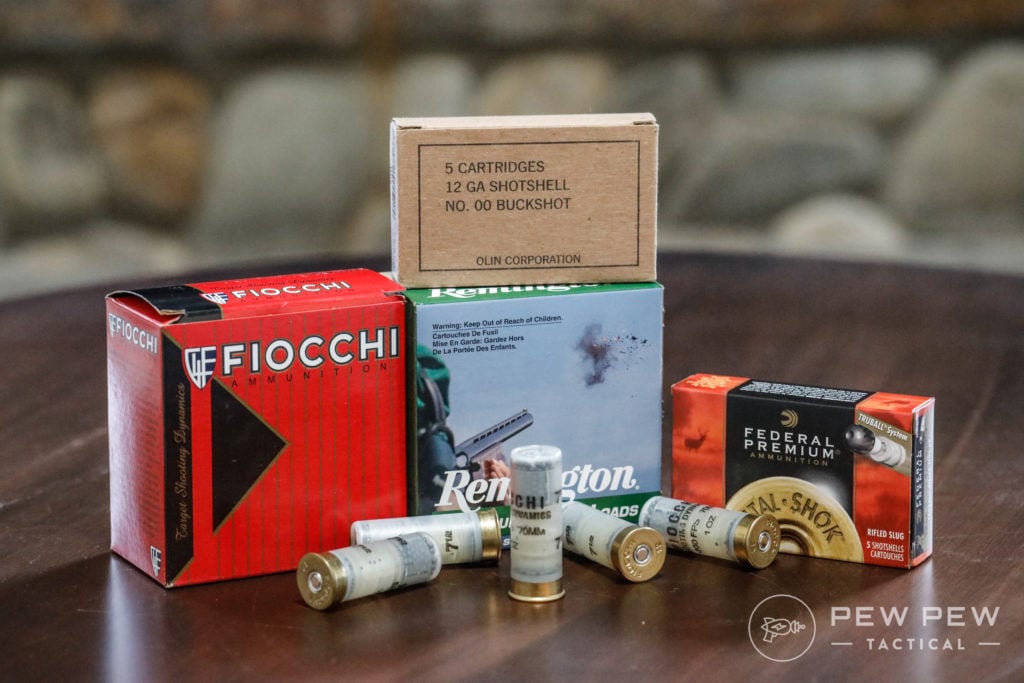
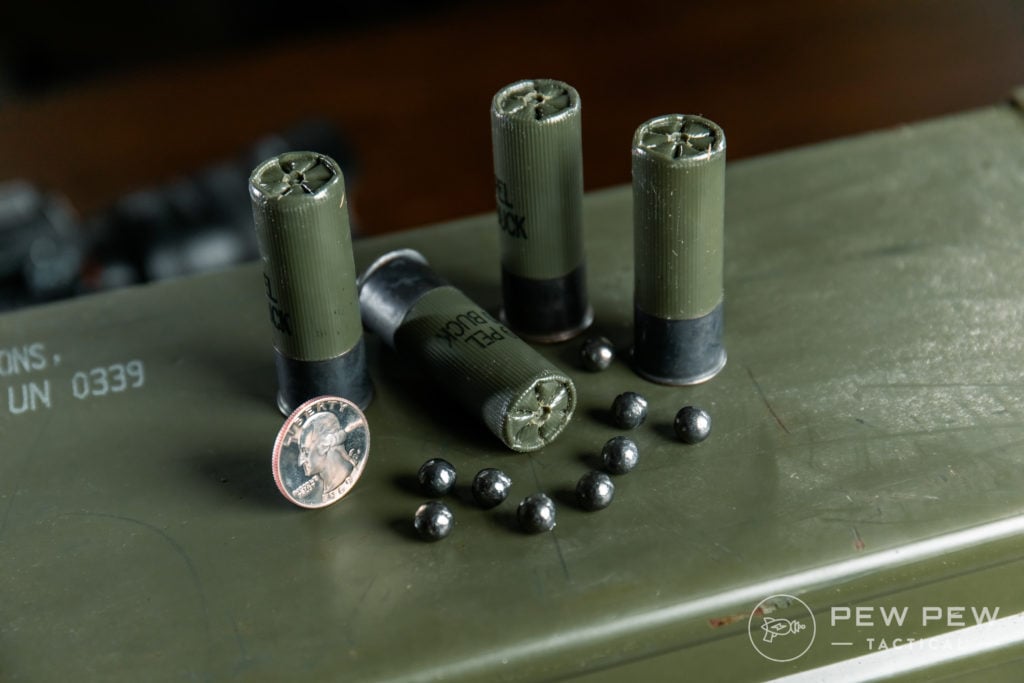
Shotgun Ammo

The shotgun is unique since there are so many different types of ammunition.

We’ll cover basic target birdshot (#8-#9 is great for clay shooting), buckshot, and slugs. Remember for birdshot, the larger the #, the smaller the pellets. And that 00 (double-aught) buckshot is great for self-defense while slugs are one solid piece of lead.

Popular 12ga Shotgun Ammo

2-3/4 inch refers to the length of the shell which will fit almost all 12ga shotguns. The problem arises from 3 inch magnum shells.

Prices will vary from 25 cents for target shots to around 50 cents — $1 for buckshot and slugs. I’ve shot tons of Fiocchi and Estate birdshot, and love the Winchester Military Buckshot.

Winchester 12ga 00 Buckshot

Check out the full list at Best Shotgun Ammo for Home Defense & Range Shooting. But here are some of our picks:

Want to see more of our favorite ammo, guns, and gear? Check out Editor’s Picks.

Pro-X™

0

I purchased the Pro-X almost six months ago after reading about it in Slingshot World Magazine. After an initial issue I experienced upon receipt of my order, I was blown away with how quickly Saunders was to, not only respond to my frustrated emails, but how fast they were to make things right. Now that I have had the time to shoot the Pro-X a while, I believe I can give it an accurate customer review. I own like 30-40 other catapults and I think the Pro-X best resembles a “star-craft” style shooter. I instantly fell in love upon first shots. I grew up in the Boy Scouts of America, shooting archery long before ever taking a slingshot seriously. However, once I discovered the true marksmanship qualities in catapults, I also realized my childhood archery fundamentals drastically minimized any learning curves related to achieving consistency and accuracy when shooting slingshots. That being said, shooting the Pro-X feels closest to a bow’s shot routine, compared to all my other frames. It makes shooting heavy caliber ammo/bands comfortable, REPEATABLE, and most importantly accurate, especially at longer distances. Don’t get me wrong, I’m capable of shooting some heavy .80 anit-cold bands and 1/2″ steel with a Scout from SimpleShot, but I would have never expected to put a grouping on target at 30 – 40 meters. That’s right, accuracy with 7/16″-1/2″ steel at that distance is achievable with the Pro-X! That is where this masterpiece shines. Everything else: The way the Pro-X folds up makes it more portable than any other of its size/caliber. The hard pouch design is revolutionary, in my opinion, allowing just about anyone to pick it up a shoot without having to worry about the perfect pouch release that plagues many new shooters. The fiber optics “Pipper Sight” puts any other attempts at a slingshot sight system to shame with how bright the military grade fiber optics are to how useful the little liquid level is for newer shooters. I love how versatile it is by having the ability to configure the sight on either fork tip depending on the distance of target. Having the ability and knowledge to tune the Pro-X to hit a target like 60 meters away really separates it from any competition. The Clod Poppers I got with my order are awesome, they are the same size as any 7/16″ steel ammo I shoot and unlike some other clay ammo brands I’ve tried, the Clod Poppers I received were all the same size and they were all perfectly round! I even found that their weight were all within 0.1-0.2 grams (1.45g – 1.65g with MOST right around 1.60g) which allows for repeatable results.

The only negatives I’ve experienced so far (A) With the Pipper Sight installed, the Pro-X won’t fully collapse. The little level is in the way from allowing the arm to click into it’s closed position. (B) Latex wears out no matter what, and I find a correlation that seems to follow the rule: the more fun you’re having, the faster they wear! With the Pro-X, Specialty band sets are required for replacement and being a shooter who cuts and makes his own replacement band sets, this is frustrating.

In conclusion, don’t buy this if you want to shoot indoors or even in tight-quarter backyard spaces. The Pro-X is DEFINITELY not a 1/4″ steel “plinker”. This tool provides power and accuracy at distances that can’t be touched by any other catapult, In my opinion, and should be used as such. I felt good doing business with Saunders, a family business, knowing that my Pro-X was made in the USA. If you are on the fence about buying, rest assured you will be getting a quality product that comes with even better customer service.

Thanks again Chuck, for the awesome Saunders experience!

The most Powerful Air Rifles in the world

0

Unleash the Power: Discover the Most Powerful Air Rifle for Unmatched Precision and Performance. Experience unrivaled shooting capabilities with our cutting-edge air rifle, engineered to deliver exceptional power, accuracy, and range. Elevate your shooting experience to new heights with the ultimate choice of enthusiasts and professionals alike.

The most powerful air rifle

The AEA Zeus in.72 caliber is currently the most powerful air rifle available. With a power output of up to 1500 ft-lbs, this traditionally styled big-bore air rifle is designed for hunting large game. The solid wood and metal construction of the Zeus helps to dampen recoil, making it a reliable and accurate option for taking down massive quarry like boar or deer.

Another contender for the title of most powerful air rifle is the Umarex Hammer. This.50 caliber rifle utilizes proprietary technology to generate over 700 ft-lbs of energy at the muzzle. With its lightweight cocking action and two-shot shuttle magazine, the Hammer offers fast follow-up shots when needed, making it an effective tool for hunting hogs or other large game.

The FX Impact air rifle is a versatile option that performs well for both small-game and predator hunting. Its bullpup design features a rugged and lightweight frame with an adjustable stock. The modular design allows shooters to easily swap out barrels, magazines, and probes, optimizing the gun for different types of hunting scenarios.

Hatsan Airguns offers the Piledriver in multiple caliber options, including their newest addition in.62 caliber. Generating over 750 ft-lbs of energy with a 650-grain hollow point slug, this bullpup configuration delivers power and accuracy in a more compact package.

The AirForce Texan series has also earned its place among the most powerful air rifles. Available in several calibers including.257,.308,.357,.457, and.50, these rifles offer adjustable customization options and reliable performance for taking down North American big game.

Airguns of Arizona’s Bushbuck bolt action sporter style rifle is another worthy contender. With its laminate stock and adjustable cheekpiece, this.452 caliber rifle is solidly built and offers a sleek design. The Bushbuck generates over 600 ft-lbs of energy and is a capable choice for non-dangerous game hunting.

In conclusion, the most powerful air rifle offers a combination of accuracy and high velocity, making it ideal for various applications such as hunting and target shooting. With advanced technology and robust construction, these rifles provide enhanced performance while ensuring safety measures are in place. Whether you’re a seasoned shooter or a beginner, choosing the right air rifle will ultimately depend on your specific needs and preferences.

Best Air Rifle Deals

Popular Posts

Air Gun 101: How many types of Air Gun Sights are there and which...

0
The former American president, Joe Biden, was recently quoted saying: If you need more than ten rounds to hunt, you better stop that business and...


Air gun 101: What is a PCP air rifle? Is PCP gun the best...

0
A PCP air gun is one of five types of air rifles in the market today. PCP air guns have become more and more...

Pump Air Rifles vs Break Barrel

0
Exploring the Pros and Cons: Pump Air Rifle vs Break Barrel - Unveiling the key differences and advantages between two popular air rifle mechanisms....