




Do Elk Bugle Year-Round? (Yes, Here’s Why)
Fact checked by Steven Lines, lifelong Hunter, and Outdoorsman.
The bugle call of an elk is a distinctive sound. There are multiple ways that a hunter can use this noise to their benefit. You can use it to track the movement of the elk. Or you can mimic their calls to attract them to the area. But will the elk bugle all year?
Elk will be most active during the rut. This occurs during the fall, usually between the end of September to the middle of October. But they will continue to bugle during the year. The bugle is their primary way of calling out potential challengers and controlling their herd.
Understanding the elk bugle is crucial for hunters. Keep reading to learn more about elk bugle calls and how you can put this information to use when hunting.
When do Elk Bugle
Elk will bugle throughout the year in North America. But the amount that they bugle will vary throughout the year.
They will be most active during the rut. This occurs during the fall months. They use this call to help them attract a mate. Because of this, it’s not uncommon for bulls to bugle most of the day. As we’ll discuss later, they will be more responsive to calls made during this time.
The breeding season will depend on where you live. Usually, though, you should start to hear bugling at the beginning of September. This will continue until mid to late October. But you might still be able to hear bugling towards the end of November.
You will be able to hear bugling throughout the rest of the year. But it will be occurring less frequently. Because of this, you will need to listen more carefully to identify the elk. Later, we’ll go more in-depth about the type of bugles you should be listening for.
What Time of the Day are Elk Most Active?
During the rut season, the best time to listen for elk bugling will be during the night. The twilight period will bring an increase in bugling activity. They will bugle most frequently during the rut. Sometimes, they can call out so much that they become hoarse.
The way the elk behaves will depend on the time of the day. During the sunrise and sunset, they will tend to be more active. This makes morning and evening hunts most productive.
During the day, they will tend to bed down. Often, they will move into thicker woods, making them more difficult to locate and hunt. It’s best to look for food and water resources.
Why do Elk Bugle
There are a few reasons why elk will bugle. Often, it will be their way of attracting a mate to the area. They might also use it to establish dominance and keep other men out of the area. Sometimes, it can be a way to alert fellow elk to danger in the area.
There are two main reasons why an elk will bugle. These are:
- When an elk is bugling during the rut, it is often a way for the bull to attract a cow to them, so they can mate. Because of this, they want to make sure that their call is louder and more attractive than other bulls.
- They can use their bugle as a way to establish their dominance. They want to make sure that other males stay out of their way. Because of this, they might use their bugle as a sign of aggression, acting as the precursor to a fight.
Other Ways Elk Attract a Mate
The bugle is just one way that an elk will attempt to get a mate. Some of the other ways they can get a mate’s attention are:
- Rubbing. During the rut, elk will rub themselves against trees and other objects. This is their way of showing their dominance. It also allows them to get old velvet out of their skin.
- Wallowing in mud and urine. This is designed to increase their scent making them more attractive.
- Hanging vegetation off their antlers. Sometimes, you will find that elk are hanging vegetation from their antlers. This is used to show their dominance.
Other Types of Elk Calls
Like humans, elk use their bugles to help them communicate their emotions. Some of the reasons why they might want to make a bugle call include:
- Warning of danger. The elk have a finely tuned sense of smell and have good hearing. If they sense a potential threat in the area, they will make noises to alert other group members. This lets them flee to safety.
- Calling for help. Sometimes, a young elk will make a call. This is often calling out to their mother or seeking some other type of help.
- Anger. Sometimes, the bulls will make a call to let other elk know how powerful they are. This can bring other bulls into the area, keen to defend their territory.
- General communication. When traveling an elk herd, elk have been known to make quieter calls to each other. This ensures that they are all moving together.
As an elk hunter, it’s essential to know the difference between each of these calls. If you know why the elk are making the bugling call, you’ll know the best way to respond to them. This will help you encourage them to get close enough to take a shot. We’ll talk about how you can do this a little later.
What Does an Elk Bugle Sound Like?
Many people are familiar with the most common elk bugle call. This will start as a low-pitched growl. But, as it goes on, it will transform into a high-pitched scream. This sound will carry long distances, so you might hear it echoing through mountainous terrain. You can listen to the bugle noise here.
Other Types of Elk Bugles
While this is the most famous type of bugle, elk will change their bugle depending on their situation. Some other kinds of bugles include:
- Locator calls. This is done throughout the year by the herd’s dominant bull. It’s their way of finding out if any other males in the area could challenge their dominance. If they don’t get any responses, they will continue on their way. Sometimes, they will stay in the same place when sending out these bulges. You can use this to your advantage, allowing you to pinpoint his location.
- Challenge bugle. Sometimes, there will be rival bulls in the area. They send out this bugle when they think their dominance will be challenged. At the end of these bugles, they will add a few chuckles.
Other Types of Elk Calls
While elk are known for their bugle, it isn’t the only sound they will make. Some of their other calls include:
- Mew. This is similar to the meowing that a kitten will make. It’s how the calves will communicate with their mothers.
- Chuckles added to the end of a bugle. This is a way for the bull to demonstrate its dominance and power. The more chuckles, the more powerful it is.
- Drum sounds. Sometimes, you’ll hear deep noises, like the banging of a drum. Because they are so deep, this sound will travel over a long distance. This is another way for the bull to prove its dominance, challenging any surrounding males. It’s most common during the elk rut.
- Bark. This is the sound no hunter wants to hear. Like a dog’s bark, the elk will use this noise to signal danger in the area. This is the herd’s cue to get out of the site.
- Chirping. This is a high-pitched noise. It’s often used within the herd to ensure the group stays together.
- Clashing. If you are elk hunting, you might hear the sound of elk clashing antlers. This is their primary way of establishing dominance, showing that they are the most muscular male in the area.
Using Bugle Calls to Track Elk Movements
Now that we know more about what a bugle is and why elk will make this noise, we can use it to our advantage when hunting. The first thing we can do is use the bugles to locate where the herd is. They will even bugle when they are bedded down.
But using a call to locate the elk can be a difficult task. It can echo off mountains and rocks, making it hard to pinpoint the cause of the signal. The good news is that you don’t need to rely on it during the rut season.
First, you’ll want to look at the trees. See if you can spot any signs that they have been rubbing on them. It’s also a good idea to look for things like droppings or tracks. This tells you how recently the elk were in the area.
Like all hunts (mule deer, red deer, moose), you’ll need to consider how the elk will react to stimuli. If there are a lot of humans around, the elk will often want to avoid that area. You should also look at a map. Look for signs of water, food, and other wildlife. The elk will want to move towards these areas.
This article goes into more depth about how you can locate both bull elk and cow elk during your hunt.
Using a Bugle to Attract Elk
Another way to use the bugle to your advantage is by replicating the call. This will bring the elk to you. Let’s look at how you can do this.
Making a Realistic Bugle Noise
The first thing that you need to do is learn how to make a realistic bugling noise. You will need to build or buy an elk bugle to do this. This is a tube that will allow you to replicate the call of the elk. This video shows you how to develop your bugle. Alternatively, you can find them in hunting stores.
How to Call for Elk
Once you have your bugle, it’s time to go hunting. Once you have located the elk, you’ll need to decide what type of bugle you want to employ. This will depend on the type of call the elk is providing.
Sometimes, you will get a more tentative call. In this case, you might need to wait until you are closer to start getting aggressive. This will help you force the elk into the open, where you can get a shot at them.
On the other hand, you might be able to get aggressive from the start. This will force the elk towards you so that you can get a good shot. Here are a few other tips that you can use:
- Be in control. You want to make sure that the elk respond to your calls rather than you reacting to them. If you can do this, they will want to come to you.
- Elk have two emotions. There are two things that the elk will respond to. They will respond to love. This is especially important during the rut, as they bugle to attract a mate. The other emotion is anger. This is what happens when you are going into their territory and start challenging their dominance.
- Understand the emotions. Many people can get caught up in trying to replicate the call perfectly. But this is often less important than reading the emotions of the elk that you are communicating with. The elk will come if you can make the right call at the right time.
- Keep practicing. Like all skills, your elk calling will improve the more you practice it. If you want more tips on what you should focus on, check out this video with champion caller Corey Jacobsen.
Why Do Some Elk Run From a Bugle Call?
Most of the time, the elk will go towards a bugle. They want to face their challenger and prove their dominance. But this won’t always be the case.
Sometimes, they will gather up their herd and leave the area. Among hunters, this is called bugling and running. There are a few reasons why this might be happening.
Sometimes, it might be a young elk. They might be too inexperienced and concerned about the prospect of going up against a bigger animal. Because he doesn’t want to lose his harem, he might want to move his cows out of the area before losing the challenge.
On the other hand, bigger bulls can also bugle and run. They might have a lot of cows who are coming into estrous. At this time, he will often be more focused on breeding than proving his dominance.
Third, the hunter might have made a mistake. If a hunter has already spooked the bull, he will be warier. If he can sense danger in the area, he is unlikely to go towards the sound. He’ll just want to gather his herd and move away from the threat.
The good news is that bugling and running are rare occurrences. In most cases, if you make a good call, the elk will come to you.
Final Thoughts
Bugling for elk is one of the essential tools that a hunter will have at their disposal. If you can understand why they are bugling, you’ll be able to respond appropriately. When done right, the elk should come to you, giving you plenty of opportunities to shoot them.
Though this will be most effective during the rut, elk will bugle all year. As a result, a good caller will always be able to attract elk into the area.
Steven Lines is a hunter and outdoorsman from Safford, Arizona, USA. Since he was a child, he has been hunting and fishing and has over 20 years of outdoor experience. Steven works as a hunting guide in Arizona during his spare time and runs a Youtube channel dedicated to sharing his outdoor adventures with others.
Sources
- https://blog.nwf.org/2014/11/5-intriguing-fall-elk-rut-behaviors-videos/
- https://www.nps.gov/thingstodo/elk-bugling-wica.htm
- https://www.fieldandstream.com/hunting/learn-the-right-elk-calls/
- https://targetcrazy.com/hunting/elk-sounds-meanings/
- https://elkhuntersguide.com/locating-elk/
The Beginners Comprehensive Guide to Choosing The Right Crappie Rod Length
Introduction: Crappie Fishing and the Length of Rods
I was recently down at the Cabelas near the house and happened to browse through the fishing rods as one does when in a Cabelas or a BassPro.
While being familiar with crappie fishing and having my favorite rods for various purposes in various lengths, I couldn’t help but notice the sheer numbers of rods and lengths available. I can only imagine how overwhelming it can be to try and select a fishing rod, especially if you are a beginning fisherman.
With that in mind we are going to discuss what the best crappie rod length is in a given situation and why you might want to select a different length. But let’s start with a quick answer, for what is the best crappie rod length, before we dive into the details.
The ideal length of a crappie rod is dependent on the style of fishing you intend to do. For shooting the docks and targeted casting a 6 foot rod is ideal. For crappie spider rigging and trolling then a 14 to 16 foot rod is the perfect choice. When ice fishing for crappie, select a rod that’s around 2 to 3 feet in length.
Now that the best lengths are out of the way, let’s discuss why these lengths are the best.
Length of Crappie Rods – Best Crappie Rod Length for Each Fishing Style
When looking for a crappie rod you can find lengths starting as small as 2 feet and ranging all the way up to 20 feet long.
This huge variance in rod lengths is due to the nuances of fishing and the different baits, presentations and conditions present during each style of fishing.
Length for Crappie General and Targeted Casting
For all around fishing in the most flexible conditions I feel that a rod between the lengths of 5 and 7 feet is ideal. Hence why I recommend a length of about 6 ft for targeted casting. Targeted casting includes working a bait along the shore line, targeting bushes and rocky outcroppings and of course shooting the docks.
A rod that is 6 feet long is small enough that you can control your cast, but still large enough to use it to control and lead the fish. Often it is necessary to guide the fish away from certain obstacles as you real it in, you will find they attempt to snag the line on anything they can once hooked.
Ideal Length of a Crappie Rod for Ice Fishing
When talking about ice fishing for crappie I mean on lakes that have a good solid ice layer over them. In these instances you are often going to be cutting a hole in the ice and fishing through that.
Since you are fishing straight down in these cases, there is relatively little need to have a long rod to properly position the bait and retrieve your fish.
For these reasons I recommend that you select a rod that is around 2 to 3 feet in length. Keep in mind that with this length of rod you need a limber rod with light action. (Quality rods should list their action rating.)
This lighter action will help to compensate for the pull when you set the hook.
Selecting a Rod Length for Spider Rigging and Trolling
Spider Rigging and Trolling style crappie fishing is where the big rods come out. Both of these techniques use the extremely long rods crappie fishing is known for.
While it is possible to spider rig with poles as short as 8 feet in length, this frequently results in tangled lines.
With many tournaments allowing as many as 8 rods, spider rigging and trolling both take advantage of this.
Rods are mounted along the front of a boat and fanned out in several directions from there, creating the appearance of spider legs reaching over the water.
Unless there is a lot of overhanging cover such as trees the longer a rod here the less chance that you will tangle your lines. Longer rods also allow you to cover more water if fishing above channels or drop offs under the surface.
Most professional crappie fishermen prefer a rod in the vicinity of 14 to 16 feet with it seeming that 16 feet rods are the most commonly seen in tournaments.
If you know what depths you intend to fish then you can set up your rods in the style of a cane pole. In these cases the rod has no reel, simply a line that is cut close to the same length as the pole. This has the advantage of allowing you to simply pick up the rod and the fish swings to you.
If you want to adjust the depths you’re fishing at though, make sure to select a crappie rod that has eyelets and a reel.
Weight Considerations For Length
While it may not be a factor you have considered, keep in mind that the longer the pole, the more it will weigh. For instance a 16 foot Lews Wally Marshall only weighs 9.6 ounces without a reel this feels like far more when it’s all held out in front of you.
I suggest that you hold the pole for a few minutes in the store to see how comfortable it is to do so. If after a relatively short period it causes pain in your wrists then you might want to go with a shorter rod.
1,2,3 Piece Rod or Collapsable How is Length Affected?
In years past sometimes your only option for longer rods was a two or 3 piece rod. Now it is not that uncommon to find 1 piece rods up to 8 feet in length.
When selecting a rod length for crappie fishing, make sure to consider not only the overall length of the rod when assembled, but also its transport length.
This becomes even more critical if you have extended travel times to reach the fishing hole. Two and three piece rods allow you to separate the pieces and reduce their overall length in that manner.
The downside to doing so with these rods is that frequently they are still rigged for fishing and if you are not careful they can easily get tangled.
Another option is telescoping rods. These rods are frequently made from fiberglass or other light weight material and feature sections that slide into each other. These come in both cane pole styles with no eyelets as well as styles designed for reels in which eyelets are positioned at each section.
One drawback is telescoping rods can rarely be found in lengths longer than 8 to 10 feet. This means you will need a 3 or even a four piece rod if looking for rods of that length.
There are mixed opinions on collapsing fishing rods, but I do feel they definitely have a place in my fishing gear.
My favorite telescoping rod is a 6’6” KastKing Blackhawk while it’s not the super long rod used for trolling, it makes an excellent all around and general casting rod to keep in the truck.
Conclusion:
To sum it up, while there is no “best” there are definitely use cases for a specific length of crappie fishing rod.
If you take nothing else from this post though, suffice it to say that for most teenage and adult anglers a 6 foot crappie rod featuring light or ultralight action is the way to go.
This length will get them started in the sport and present them with the largest selection of fishing styles. This length of crappie rod can be used for casting, spinning, fishing with a jig and shooting the docks, you can even fish a minnow under a bobber with no problems.
If you want to know more about selecting a rod length check out this article on rod lengths by age group. In the meantime, hit the water, catch a slab or two and enjoy the outdoors.
How to Store Chicken of the Woods: Top 5 Methods and Tips
Congratulations! You’ve caught yourself a chicken of the woods.
These fungi are delicious, nutritious, and gigantic — it’s common to find specimens weighing several pounds. This is a stroke of good luck, but preserving such a massive mushroom can be difficult. What exactly are you going to do with it?
I’m here to break down the best ways to store your shroom according to your resources and preferences. Once you know how to store chicken of the woods correctly, you can use your summer harvest for sustenance through the winter and beyond.
Top Five Ways to Store Chicken of the Woods
1. Refrigerator Storage
Chicken of the woods will stay fresh for up to seven days in the refrigerator.
The most basic way to keep any food fresh is to keep it cold, so storing mushrooms in the fridge is a logical place to start. This method is best for people who plan to consume, give away, or otherwise use up their chicken within a week.
It is not ideal for long-term storage. The mushrooms lose flavor after two or three days, breaking down and becoming unpalatable after about a week. Of course, some people report their chickens stay good for several weeks in the fridge, but you don’t really want to risk it. If you won’t eat it soon, use a different storage method.
Think the fridge is the best choice for you? Here’s how to do it properly:
- Ensure your fridge is 40°F or colder, the safe temperature to store produce, meat, and mushrooms.
- Cut out any visible bruising on your fresh mushrooms. Bruising promotes microbial growth and causes mushrooms to spoil faster, so remove it before it can spread.
- Aside from trimming the bad parts, do not slice or process the mushrooms before storing them in the fridge. Cut mushrooms spoil faster, so begin with whole fronds or shelves instead.
- Do not wash the mushrooms before storing them; wash them before cooking. Excess moisture promotes bacterial growth. You can pick off insects with your fingers and wipe away dirt with a dry rag.
- Use a paper or mesh bag instead of a plastic bag or Tupperware. This encourages airflow around the mushrooms and helps prevent bacteria from proliferating.
- Store the mushrooms in the central part of your fridge rather than the crisper drawer. The high humidity in the crisper could promote spoilage.
2. Freezer Storage
Chicken of the woods will stay good for up to 12 months in the freezer.
Need a more long-term option? Freezing your chicken of the woods could be the perfect choice. This method is best if you have a substantial harvest you’d like to use up over the next several months.
The jury’s out on exactly how long your frozen chicken will last. The mushroom’s water content and starting quality will be significant factors, but it should last between nine and twelve months if you prep it right.
To cook or not to cook?
People often say you shouldn’t freeze raw mushrooms, which is mostly correct. The majority of fungi contain a lot of water. When frozen, the liquid expands, turning your nice meaty mushroom into a slushie.
However, chicken of the woods has a relatively low water content and will retain much of its original flavor and texture when frozen raw. Of course, the water content can still vary between specimens. Some are more moist, especially young ones. Older fruits or those exposed to a lot of sunlight are drier.
I find raw freezing preferable simply because it reduces the processing time. My only exception is when a specimen is exceptionally young and moist. Then, I parboil or sauté it in oil and white wine before freezing it so it releases some of the juices.
You might want to try both ways to see what works for you. If you freeze chickens raw, remember to cook them thoroughly before eating them — any wild food may contain pathogens, and you don’t want to ingest those!
Is freezing your method of choice? Here’s how to get the best results:
- Clean mushrooms thoroughly before freezing. You can even wash them in water, but if you do, dry them with a towel and leave them to air-dry for at least an hour before packaging them. You want to remove as much moisture as possible.
- Chop your chicken in slices about an inch thick or leave it whole according to your preferences.
- Before packaging, you can “flash-freeze” sliced chickens for a few hours on a freezer tray. This is not a true commercial-style flash-freeze and won’t prevent ice crystals from forming, but it will prevent mushroom chunks from fusing together in the freezer bag.
- Use the proper packaging. If you use containers that trap air, ice will form and ruin the mushroom’s flavor and texture. Putting chicken of the woods in a tight, airless bag and using a vacuum sealer to remove air is best. If you don’t have one, don’t sweat it. I have great results with regular freezer bags. Simply portion your mushrooms into the bags, carefully roll out all the air, seal them, and stow them away.
- Do not defrost your mushrooms before cooking since this can corrupt the texture. Instead, cook them frozen.
3. Dry Storage
Chicken of the woods will last up to five years when dried.
Drying mushrooms is one of the best ways to preserve them for long-term storage, but it does take away some cooking options from you. While mushrooms like wood ear reconstitute perfectly, chicken of the woods is another bird entirely.
Dried chicken of the woods retains flavor nicely, but the texture gets ruined when dried and reconstituted. Essentially, it becomes mush. While you can’t use it for chicken nuggets, it still makes a delicious addition to stews and sauces. You can even grind it in the blender for some delicious umami chicken of the woods spice powder.
You can dry chickens in a dehydrator, the oven, or open air. I’ve reviewed how to prep and dry fungi in my mushroom dehydration guide, which contains all the information you need to complete the process.
Think dehydration is the way to go? Here’s how to store the harvest once you’ve dried it:
- Use mason jars, Tupperware, or Ziploc bags to keep your shrooms fresh for up to a year. Keep the containers in a cool, dark place.
- Use mylar bags to keep dried mushrooms fresh for up to five years. To help extend shelf-life further, store the bags in a cool, dark place or the freezer.
- Whatever storage container you use, consider adding an oxygen absorber. These neat little packets prevent oxygen from lingering around your dried fungi and stop spoilage in its tracks.
4. Fermenting and Pickling
Chicken of the woods will last for several weeks when pickled and up to eight months when fermented.
Fermenting and pickling are both delicious preservation techniques that rely on acid to prevent microbial growth. Pickling involves submerging food in an acidic brine, while fermentation creates an acidic environment through biological processes. Either one will work well with chicken of the woods.
We’ve discussed both methods in an in-depth pickling guide, which gives you all the info you need to get started. No matter what process you choose, don’t forget to cook the mushroom beforehand. Boiling it in water for five to ten minutes will be sufficient.
Want to try your hand at fermenting or pickling chicken of the woods? Here are some helpful tips:
- Slice mushrooms into ½-inch strips before boiling. A thinner slice ensures they cook all the way through.
- Customize your brine recipe with herbs and spices to keep things interesting with distinct flavors.
- You can use mason jars for pickling, but chicken of the woods are big. To make processing them easier, consider getting yourself a pickling crock that can hold more substantial amounts of fungi. You can transfer it to jars for storage once it has fermented.
- Store pickled chicken in your fridge or a cool, dark place to make it last longer.
5. Canning
Chicken of the woods will last up to five years when canned.
Canning chicken of the woods works great for long-term storage. Cans are compact and convenient to stow away in any corner of your home. They’re easy to pop open and they last a long time. The USDA guidelines recommend keeping cans for about a year, but this is more about quality than safety. As time passes, flavor and nutrient content can decrease, but canned items shouldn’t go bad.
Keep in mind that you must use a pressure canner to can chicken of the woods. Mushrooms are a low-acid food and have the potential for deadly botulism growth. Canning them under pressure is the only way to kill these bacteria.
The only exception is if you’ve already fermented or pickled them — in this case, the acidic environment renders it safe to water-bath can them. Check out our guides on water-bath canning and pressure canning for a complete breakdown of the two processes.
Want to try your hand at canning chicken of the woods? Here are some tips for success:
- Always cook chicken of the woods before canning it.
- Add a pinch of ascorbic acid or a vitamin C tablet to your canning liquid to preserve chicken of the woods’ beautiful natural colors.
- If you enjoy canning, consider buying a pressure canner. It makes everything easier and faster and allows you to can more items safely!
Now that you know how to store chicken of the woods, you won’t be scared to harvest the next mega-mushroom you find. Armed with all the knowledge you need to preserve it, you’ll be able to enjoy the fruits of your harvest all year long.
8 Best Survival Rifles
What if you really needed a rifle to survive outdoors?
What I mean by that is if you are a camper, a hiker, a kayaker, or anything involving the great outdoors and endless adventure, then you may carry a gun for survival purposes.
There is no logic or mercy in the great outdoors, and once you step out of civilization and into nature, you are just another part of the food chain.
As my Gunnery Sergeant would say, “it would behoove you to be ready for it.”
Some carry a handgun, some a packable shotgun, but others may prefer to take a rifle. A rifle offers more range than either a shotgun or pistol, and they are relatively more comfortable to shoot accurately.
They have less recoil than most shotguns, and their design often makes them quite compact.
Let’s go through what I deem a true “survival rifle” and my top picks to get you out of trouble. So keep reading!
THE QUICK LIST
Why You Should Trust Us
Input into this article came from the PPT editorial team, who has a combined shooting experience of 30+ years and includes instructors and competitors in multiple disciplines.

We’ve spent countless hours researching and analyzing guns and gear to determine which is the best when it comes to features, reliability, ergonomics, and bang for your buck.
We had to make some tough calls. If you don’t see your favorite rifle, it doesn’t mean we hate it, just that we couldn’t include it this time.
Defining Survival
People tend to define survival differently.
When people hear the word survival, they may think long term disaster scenario or massive emergency (see our Essential SHTF Gear). That’s fair enough, but today we are talking about more localized and personal situations.
I’m thinking hikers, campers, pilots, and anyone who spends time outdoors in the brush, over the water, and more.
This guide is also written for folks like me who live in the middle of nowhere and may desire a vehicle gun they could hike with, in the event of a severe breakdown.
These situations mean shooters are less likely to encounter a defensive situation involving another person but more than likely might encounter pests, predators like coyotes, and of course, snakes. You may also need to eat if the survival situations go on for days, so you need a game-getting gun too.
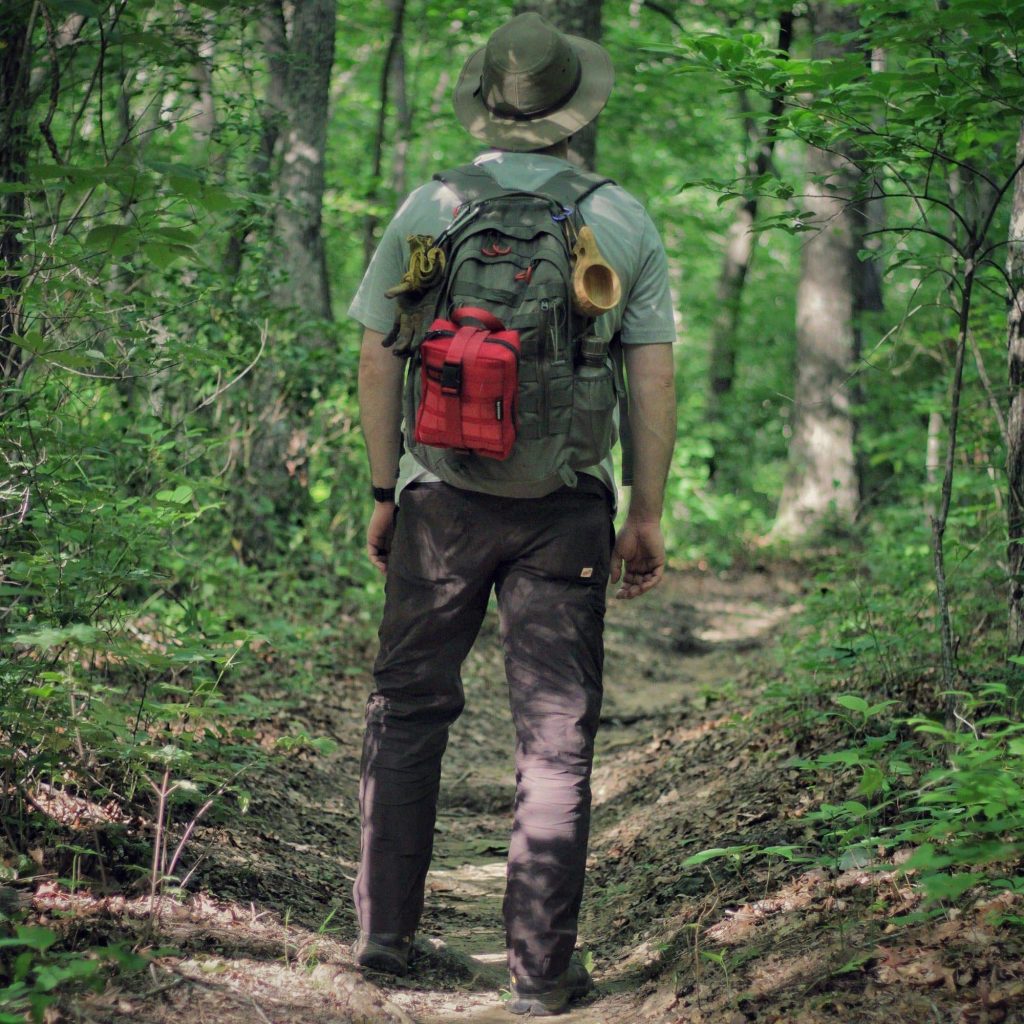
This is how I define a survival rifle.
My Standards
The likelihood of having to use one of these rifles is quite low.
I’ve been camping, hunting, hiking, and adventuring hundreds of times and never had to use mine. I have taken a few squirrels for fun and to cook over a campfire, but never needed to for survival.
With this in mind, I want the rifle to be extremely small and unobtrusive. Something you can pack without it taking up too much room or weighing too much.
For these reasons, I came up with a few standards:
- First, it needs to weigh less than 5 pounds.
- Second, it needs to be capable of fitting in a standard-size backpack. This means the gun is required to break down or fold in some way.
- Third, the design needs to have lightweight ammo that is easy to find and easy to store.
This leads me to eight distinct rifles…
Best Takedown Survival Rifles
1. Ruger 10/22 Takedown
The Ruger 10/22 is, without a doubt, the most popular rimfire rifle ever. It’s been made in the millions since the 1960s and is the standard for semi-auto .22 LRs.
The Takedown model allows the gun to be split in half and easily toted.
This is a proper rifle with a real stock, a comb for a cheek rest, and handguards. It’s everything the Chiappa is not.
It only weighs 4.6 pounds in its factory configuration and skates right under my 5-pound limit. I own a standard 10/22, and it’s one of the most fun guns I’ve ever handled.
As a semi-auto. 22 LR rifle, the gun is very easy to handle, and you can quickly dump rounds into a target. This makes it a bit more capable of taking on larger dangerous animals.
Admittedly, I’d want something bigger, but 10 rounds of .22 LR should cause enough pain compliance for a lot of animals to change their mind.
10/22 Takedown also comes with a carrying case which is nice, but it’s also easy to pack into a bag on its own. You can find magazines for the Ruger 10/22 that can hold 10, 15, 25, and even up to 110 rounds in a drum.
The takedown and assembly procedure is straightforward and quick. Its stainless steel parts are rust-resistant and very easy to clean, which is convenient for a survival rifle.
The Ruger 10/22 is an extremely reliable gun and one of the most customizable rifles you can buy.
It’s easy to tailor to your needs and is ultimately a gun you won’t regret buying. If you choose the Ruger 10/22 Takedown as your survival rifle, it can double as a great plinking gun.
Of course, you can choose any of the Ruger 10/22 models and still be decently equipped.
Oh…and there’s tons of great ammo out there. Check out our Best .22 LR Ammo Guide.
2. Henry AR-7
The Henry AR-7 was initially built as a survival rifle for U.S. Air Force pilots. It’s a .22 LR semi-automatic rifle that feeds from box magazines containing eight rounds.
Whether or not you know it, you’ve likely seen the gun in some form or another.
It has a very odd design, and this is due to the fact it’s a very early takedown rifle design. The barrel and receiver detach from the stock, and the stock is then used as a storage compartment for the receiver and barrel.
The entire design is toolless, compact, and lightweight. This gun weighs a mere 3.5 pounds and is very simple in design. It lacks any handguard, so the barrel will heat up after extended firing.
This rifle isn’t designed to be a high-volume plinker, but that doesn’t mean it won’t keep going and going.
With a 14-inch length of pull, it is excellent for adult-sized shooters. The gun is a blast to shoot and comes with two magazines. Eight rounds are more than enough for most situations, but extended magazines are available and are reasonably affordable.
The top of the receiver sports a short rail, but a mounted optic won’t allow the gun to be stored in the stock.
The gun is very lightweight and comfortable to shoot. It may be a 1950s design, but the overall design screams space age.
Plus, the use of a plastic stock means the internals of the rifle and the gun will be well protected from bounces and bumps while hiking and camping. The stock is sturdy and provides a very comfortable and easy grip when firing the weapon.
You can’t hold the rifle too far forward and must use the magazine well for a grip, but it isn’t bad. The light recoil and lightweight of the weapon make it comfortable to fire, even for an extended period of time.
The gun is called the Henry Survival rifle, and it has proven to be quite adept at its role.
Want more details on the Henry AR-7? Check out our full review here!
What’s your take on the AR-7? Rate it below!
3. Savage Model 42 Takedown
I’m a shotgunner at heart; I love shotguns and their versatility. They are great survival weapons, but this is a list about rifles, right? Well, what if I suggested a weapon that was both?
The Savage 42 weighs 6.1 pounds, but the compact version comes in at 4.65 pounds and both are takedowns that break into two pieces. It comes with its own Go Bag, which is a nice touch.
Best of all, the gun comes with one .410 barrel and a rifle barrel in either .22 LR or .22 Magnum.
This two-shot weapon is the ultimate game-getter. The bottom .410 barrel is a bit more potent than the top rimfire barrel, but the top barrel makes it easy to touch a target at a distance and gives you a precise option for medium-range shooting.
The bottom .410 barrel allows you to dispatch a variety of different game with buckshot, slugs, or birdshot. The combination of the two calibers gives you the perfect gun for collecting small game as well.
Best of all, it breaks down with the push of a single button and goes back together in an instant. The stock and furniture are mostly polymer, reducing the weight and making it easier to carry. This little gun utilizes a hammer-fired, single-action design and has a very crisp trigger.
The Savage Model 42 Compact is an excellent choice if you put a premium on versatility. It’s an affordable gun that will simply work every time while giving you options while using it.
4. TPS Arms M6 Takedown
The M6 Takedown is a classic survival firearm originally developed for the United States Airforce for pilot survival. While it might have come out of the 1950s, it’s still a viable option mainly because of its versatility.
I’m cheating a bit again with the M6. This is an article on survival rifles, and this isn’t just a survival rifle…it’s a rifle and shotgun.
TPS Arms recreates this classic survival rifle for a great price point with a few improvements.
For example, the takedown pin is an AR-style captured takedown pin that makes it easy to break the gun down for storage. Also, instead of just being stuck with .22 Hornet and .410, we get multiple options.
While the bottom barrel stays .410, the top barrel can accommodate .357 Magnum, .22 WMR, .17 HMR, .22 LR, .22 Hornet, or even two .410 barrels. There are tons of options, all of which are viable survival cartridges.
The .357 Magnum can take any medium game animal in North America, and the .410 can take down birds, squirrels, snakes, and other pests. However, a .22 LR allows you to carry 500 rounds in your cargo pocket.
Pick the right option for you and your environment, and the modern M6 rifle will serve you well.
Like the classic M6, the M6 Takedown Series from TPS Arms is super lightweight, fairly short, and separates in half for tossing in a backpack. The stock features a customizable storage compartment to fit a number of different rounds.
Additionally, the .410 barrel has interchangeable chokes, and you can outfit the modern variant with a scope rail for optical enhancement.
Not only are these guns faithful representatives of the classic M6 guns, but they improve upon the original design.
Best Folding Survival Rifles
5. Chiappa Little Badger
The Chiappa Little Badger is the first gun on the list due to how well it fits all of my standards.
It’s the lightest rifle on the list, likely the most affordable, and it is adorable. The Chiappa Little Badger is a folding rifle chambered in either .22 LR, .22 Magnum, or 17 HMR.
I own a .22 LR model, and it’s an enjoyable gun.
Chiappa’s Little Badger is a single-shot rifle with a wire stock and hardly anything but a small barrel, receiver, and wire stock. It weighs 2.9 pounds and comes with four short rails to attach accessories to. The small peep sights are quite adjustable and very easy to use.
The gun folds in half to be only roughly 17 inches long. It’s super thin and fits in a backpack with hardly any room taken up.
This gun even has a little plastic attachment to hold extra rounds. Admittedly, I found them a little too loose to hold ammo securely.
My .22 LR version is excellent, but the .22 Magnum variant will pack more of a punch. This would likely be the better choice for a survival rifle for its game-getting abilities.
The gun is very easy to operate — all you have to do is load the gun, close it up, cock the hammer, and pull the trigger.
Simplicity also means it’s not going to fail because you forgot to clean it. It’s not a rapid-fire weapon, but with well-aimed shots, you can quickly get dinner and kill off snakes, coyotes, and other pests.
The trigger isn’t great but is light and consistent. Its hammer is easy to cock, and the entire operation of the gun is simple. Don’t expect much of a cheek weld, and be aware the length of pull is very short. The rifle is easy to use for anyone, including kids.
The gun is just begging to be modded, and you can add a means to carry ammo, a knife, paracord, or whatever you want.
It’s less than $200, and even outside of a survival rifle, it’s a cool toy to play with. Also, the threaded barrel makes it very easy to suppress.
Want more single shots? Take a look at our round-up of the Best Single Shots on the market.
6. Kel-Tec Sub 2000
The Kel-Tec Sub 2000 is one of the few common, affordable, and reliable semi-auto centerfire guns I could find for this list.
This gun is a unique folding rifle that comes in pistol calibers, specifically .40 S&W and 9mm. The gun feeds from a wide variety of different pistol magazines from different manufacturers.
When folded in half, the Sub 2000 sports an overall length of only 16.25 inches. Unfolded, the rifle is still a short 30.5 inches. It weighs in at only 4.25 pounds and fits well into a standard backpack or even a messenger bag.
The Sub 2000 comes in both Gen 1 and Gen 2 models, and the various models can take Glock, S&W, Canik, Beretta 92/96 series, and Sig magazines.
It’s quite a bit more potent than the previously mentioned rimfires, making it a better dangerous animal gun and an excellent close-range gun for medium game.
A very simple blowback system means it is quite reliable. It does have more recoil than a standard carbine due to this system, but it is still easy to control.
The sights are ok — nothing special, but plenty usable out to 100 yards. Adding optics to the gun is tricky but doable.
If you need something to fend off animals like cougars, then the Sub 2000 will do it a lot better than any of the rimfire rifles on this list. While 9mm and .40 S&W wouldn’t be my first choice for cougars in a handgun, in a rifle, it is easy to shoot and easy to fire rapidly.
With the right defensive rounds, the gun will cause some serious damage to anything. I suggest a solid round, something like 147-grain 9mm JHP, or even a fancy hard cast load. A 180-grain .40 S&W load will deal with some hurt too.
See our articles on the Best 9mm Ammo and Best .40 Ammo for our favorite plinking and self-defense rounds.
Be sure to check out our complete hands-on review of the Kel-Tec Sub 2000!
Best AR-Style Survival Rifles
7. Aero Survival Rifle LTE – 9mm
A semi-automatic, AR-type PCC that breaks down with ease and weighs less than 4 pounds? Well, yeah, it exists and comes from a little company called TNW Firearms.
They’ve been producing takedown carbines in various calibers for years, but the Aero Survival LTE series reduces the weight to a light 3.95 pounds.
With it, you get a Glock magazine-fed, lightweight, takedown, semi-automatic carbine with a 16-inch barrel. It’s plain and stripped of everything but the basics.
However, it will launch 9mm pills fast and hard. When used with 147-grain JHPs, you have a weapon that can take medium-sized game at close range.
The semi-auto design allows for fast follow-up shots, which can be invaluable, and very few lightweight survival rifles offer that capability.
Shooters get a nice-sized optic rail and an M-LOK handguard, but that handguard is extremely short with just a few M-LOK slots. After adding an optic or light, you can still walk away with a weapon weighing less than six pounds.
It breaks down into two 17.25-inch-sized components for easy storage and carrying. Grab a few extended Glock mags, and you’ll be set for most threats inside 100 yards.
8. CMMG Banshee Mk57
I might be breaking the rules here, kind of. While the Mk57 is most commonly sold as a braced AR pistol, a short-barreled rifle variant is available. To fit under the 5-pound limit, you’ll need to grab the 5-inch barreled variant.
Like any standard AR-15, you can easily break the thing into two pieces and store them in a backpack.
The 5.7x28mm round fits neatly between a rifle and pistol cartridge, boasting flat-shooting performance out to 150 yards or so and excellent penetration.
This round is fairly smaller and lighter than most rifle and pistol rounds, but it’s an oddball that works well and works inside most shooters’ capabilities. The 5.7x28mm round is unusual but effective and well-suited for survival applications.
CMMG makes fantastic guns, and the Banshee is their short and light series.
This little fella offers you the modularity of the AR platform in a high-performance, lightweight caliber. It’s a premium-grade weapon with a superb trigger and M-LOK handguard and uses the FN Five-Seven magazines.
The CMMG Mk57 isn’t a cheap firearm by any means, but it offers you AR-15 controls in a very small and lightweight package.
Oh, and ammo isn’t cheap either, but it fills its own niche and might be one of the better choices for practical survival.
Final Thoughts
Keep in mind that most responsible hunters, hikers, and campers will never need it, but a good survival rifle is worth its weight in gold should you ever need it.
These choices are perfect for most budgets, are lightweight, and quite discrete. Although these may seem like basic survival rifles, be sure to check your local laws and the laws of anywhere you may consider camping to ensure they are legal.
What do you prefer as your go-to survival gun? Let us know in the comments below! Don’t forget the rest of your SHTF Gear or even Best Trunk Guns or just the plain ole Best Rifles, period.
Can You Eat Walleye?
Hey there my fellow fishing enthusiasts and welcome to my post discussing an important question when it comes to fishing… can you eat Walleye? Now, the short answer is absolutely, if fact, it is one of the most popular and sought after fresh water species to consume…
So let’s check out the ins and outs of eating Walleye below…
So, before we start, let’s just quickly recap what we are talking about here. Walleye are a freshwater gamefish native to the United States and Canada. Also known as also called the yellow pike or yellow pickerel, they live predominately at the bottom of lakes and rivers and are known as one of the most prized freshwater table fish you can catch.
Walleye have a long, thin body that is primarily gold and olive in color with a white belly. They posses two dorsal fins on the top of their bodies with a large mouth and sharp teeth. Their name comes from their eyes which are cloudy-looking which is caused by a reflective layer of pigment.
They generally live for around 15 – 20 years depending on their habitat and can reach sizes of up to 80 cm (31 in) in length.
Note: Due to their popularity as a sport fish and for consumption, many States and jurisdictions have seasonal restrictions or slot limits in place. To avoid fines, always check local regulations before hitting the water.
In short, absolutely they are. In fact they are one of the most popular and sought after freshwater table fish in the U.S. Their flesh is clean, sweet and extremely versatile. However, as with most freshwater species (such as Largemouth Bass etc.), the following should be considered:
- They will take on the flavour of their surroundings – so avoid eating if they are caught in murky, stagnant or dirty water.
- The older varieties tend to taste a lot stronger or ‘fishier’ so if you are planning to keep one for dinner, it doesn’t necessarily have to be the biggest one you catch.
- Larger varieties are also more susceptible to worms, parasites and increased absorbsion of waterway contaminants.
In most cases, as long as the water is clean and you are within your slot limit, then you are generally good to go.
As with most white meated fish, Walleye do not need to be bled upon capture however if you plan to consume it, then it is always a good idea to place them on ice as soon as possible after it is landed. Many use an ice slurry in a cooler which is generally a ratio of 2 parts ice to 1 part water for this purpose.
Due to their eating habits, freshwater fish must be thoroughly cleaned and rinsed prior to consumption. From here, preparation will be determined by how you plan to eat it. If they are to be eaten whole then you will need to clean and scale them beforehand. If you plan to pan fry, then you can either scale and fillet or fillet and skin. Keep the meat refrigerated or on ice at all times before and after preparation.
Can you freeze uncooked fillets?
Yes – Raw Walleye fillets can be frozen for 6 – 12 months. It must at the very least be gutted and cleaned and placed in an airtight bag (ziplock bags are good here – try to remove as much air as possible) prior to being placed in the freezer. They will last longer (up to the full 12 months) if vacuum sealed instead.
Can they be eaten raw?
Technically yes, if it is caught in clean water and prepared with the utmost care until eaten then it can be ok – although the taste does not match that of saltwater species such as Tuna, Salmon and Kingfish. The issue here however is that freshwater fish tends to contain more bacteria and parasites which are killed off by cooking.
To be honest, if sashimi is your meal of choice then I would look for a species such as Striped Bass or those listed above and leave the freshwater catches for the frypan.
At the end of the day, due to its white flesh and versatility, Walleye can be prepared in the same manner as most other fresh or saltwater species in that they can be:
Grilled
Walleye fillets can be cooked over charcoal or gas grills with any and all spices and seasonings as you see fit. Below is a common recipe:
- Heat a grill hot but not smoking.
- Pat fillets dry then spread butter or oil over the non-skinned side (or both if fillet is skinned) along with salt and pepper.
- Grill fillets until just cooked (fillets start to flake) – Do not overcook as the meat will go dry.
- Consume with salad or grilled vegetables.
You can of course use any other herbs or spices on the flesh to taste.
Pan Fried
As above, but in a pan – I like to add garlic to the butter when I pan fry white fish fillets with the salt and pepper as well. I have seen many Walleye recipes with Asian spices or Italian herbs used too so that is also worth a try. Of course, they can also be crumbed as well which entails:
- Gather three bowls and in the first, place some flour, eggs (beaten) in the second and breadcrumbs in the third.
- Pat dry each fillet (skin on or off to preference) and then cover in flour.
- Sink the flour covered fillets into the egg mixture and then cover in breadcrumbs
- Shallow fry in the oil of your choice in a pan large enough to hold the full size of the fillet.
- Spritz with lemon juice and consume with fries (chips), salad or whatever else takes your fancy.
Note: For extra flavour, add salt and pepper to the flour or even some grated Parmesan cheese to the breadcrumbs. I have even seen some good recipes using BBQ rubs on the fillets as well.
Baked
For this last option, the fish is cooked whole in the oven. A cooking example is as below:
- Make sure the fish is cleaned and scaled.
- Score the skin with a sharp knife (This will stop it shrinking too much from the heat).
- Cover the outside with a lubricant such as butter or oil.
- Fill the cavity with whatever takes your fancy (common options are garlic, herbs, spices, lemon, tomatoes or mustard).
- Bake in the oven until just cooked – again, it will dry out if left too long.
Note: Based on my research over a number of recipes, a 1.5lb Walleye will take around 15 – 30 minutes in a 375F oven.
And there you go – my response to the question of whether you can eat Walleye. I hope it has been helpful and as usual, please let me know of your experiences – or recipes – would love to see your recipes below too.
Also, please do not hesitate to comment below if you have any questions, concerns, corrections, or would like me to check anything else out for you.
Until next time
Have fun
Paul
How to set up your goose decoy spread
The number one question people ask us at outdoor shows and in the field is “how do you set up your decoys” or “why did you set your goose decoys up this way”. In fact I’d say it’s the number one reason people who book a guided goose or duck hunt with Maxxed Out Guides want to learn about while they’re in the field.
Unfortunately there isn’t one easy answer. Some hunters may say they set up there spread one particular way every time. You’ll hear hunters talk about and X, C, J spread which means their decoys are set to loosely resemble one of those letters. I strongly recommend not following that line of thinking. There are many times driving around that I’ll see decoy spreads that make a definitive, C, J or X in the field.
This causes two problems for you. First birds don’t naturally sit in fields in formations that resemble letters. Second birds see these unnatural looking spreads up and down the flyway. So not only are they unnatural geese get trained and accustomed to seeing them. This is typically not a combination for success.
However from my experience there is no one decoy spread that each and every day in the field. Some days you need more decoys. Some days you need fewer. There are days where your blinds will need to be at the front of your decoy spread and there are some days where they will need to be at the back.
There are many variables to this equation but the main variable, as it is with any hunt, is the weather. Birds simply look for different things in different weather conditions. The only thing that can tell you how to react to weather is experience and time in the field.
Are there days that a ‘letter shaped” spread will kill geese? Absolutely! However what you typically find on those types of days is most any style spread will kill birds.
So while there isn’t one “go to” spread there are a few things that can help you as you learn how to set your decoys.
First is the kill hole. You always want to try and manipulate the birds to attempt land or finish where you want them. Usually the kill hole is a spot in front of everyone that will create safe shooting lanes and opportunity for everyone to shoot. Typically we like to set up with the wind at our backs so the birds are finishing straight at us. However things like where the roost is in relation to the field, sun, wind and avaialble cover to hide your layout blinds doesn’t always make that possible. Hunting a strong cross wind is one of the more challenging scenarios you’ll run into when establishing the kill hole and is something that comes with experience. Either way though we typically like to give the birds lot of space so they have plenty of area to finish as they come into the spread. Sometimes you have to adjust things as the birds are finishing differently than you anticipated they would.
The second is never have your hide (where you put your layouts) dictated by your decoys. Your decoys should always be dictated by your hide. It does not matter how many decoys you have or realistic they are, if birds see your hide as they approach you are in for a long day in the field, because remember, these birds did not wake up this morning and head out to feed with the intention of giving you a good hunt. They want to live and if they see things out of the ordinary…they’re gone! So once you find your field and see what type of wind and sun your going to be dealing with the next day, your first priority should be to determine where the best place for your hide is, based on the information you have.
Once you have an idea of where your hide is, then you can start to strategize on how to set our decoys and where to position the kill hole.
Lastly, while I can’t give one shape that always works, look at your decoys when you’ve set them all. Remember these are wild animals your hunting. Does your spread look natural? Does it have a definitive edge (it shouldn’t)? Don’t be afraid to put smaller groups just outside of the main mass of decoys. You’ll frequently see a main mass of birds in a field and then smaller groups sprinkled around it. Create some randomness to your spread and don’t be afraid to try something new.
Happy Hunting!
Graham Greseth
Maxxed Out Guides Owner
www.GeeseFearUs.com
A Handy Guide to Choosing the Best Pig Breeds
By far, my favorite homesteading venture has been the raising of hogs! No matter where you raise your homestead pigs, on pasture, in the woods, or in a clean pan, the quality of a homegrown hog versus a store-bought hog is unsurpassable. Until you eat real pork-lean, reddish-pink pork, you don’t realize how artificial conventional ham and bacon taste! But which pig breeds will get you the best ham & bacon?
One year, we purchased our pigs from two different sources. The reason for this was because by the time we found the first one, he had only one left for us at that time: Big Pig. (Here’s a tip- if you plan to raise your own hogs this year, NOW is the time to start shopping for a breeder. They go like hotcakes. We had a hard time finding them in the first two years.) After much searching, we found a source for our second hog. And what we got was a much smaller pig for DOUBLE the price, Little Pig.
Original, I know.
Her breeder told us that he was selectively breeding for leanness, and the difference was noticeable as the two girls grew up. The older one certainly had a jiggle to her when she ran, whereas the younger looked as though she was working out.
Choosing a Pig Breed: Meat-Type or Lard Type
The difference turned out to be more than visual. When it came time to eat, there was a very discernible difference between the flavor of Big Pig’s and Little Pig’s bacon. And let’s face it, the best reason to raise a hog is for the love of bacon!
Big Pig produced meaty bacon yet with an ample amount of fat to crisp and flavor the meat. My mouth is watering, just thinking about it! While Little Pig had virtually no fat and the results were a product that was chewy and tasted like ham. I would compare it to Canadian Bacon, only thinner.
The fat is where the flavor is!
What I’ve come to learn is that American pork production for commercial and show purposes is leaning increasingly towards lean to provide us with an alternative to chicken for our low-fat diets, since we don’t realize how vital saturated fats are to our health. And there are several different types of hogs out there.
So while shopping for your partners in Homestead Waste Management (feeder pigs) this year, it might be helpful to know which pig breed would suit your needs, so you’re not disappointed with your final results this winter.
Some questions you should ask yourself are:
- Do you not care about having lean cuts of meat?
- Do you prefer having more bacon over ham?
- Will you be using a lot of lard?
- Do you want juicier, more flavorful meat?
If you answered “yes” to any of those questions, you’re going to want to find yourself the lard-type of pig breeds!
Identifying Meat-Type vs. Lard-Type Pig Breeds
Most likely, the pig breeds you choose will be limited to one of the two types on the right of this chart. So let’s look at the difference between “Fat-Type” and “Meat-Type” hogs:
Meat Type on Left | Fat Type on Right
And while we’re on the subject, I found it to be interesting how the specific breeds have changed over the years.
Take a look at the difference between pig breeds from before and pig breeds now:
Duroc:
Hampshire:
Tamworth:
Berkshire:
I see the least difference in the Tamworth. If I were interested in raising heritage pork, I would definitely give Tamworth a try first. We know that Large Black Hogs and Gloucestershire Old Spots also produce a respectable amount of lard. The fattiest pig we’ve ever had was an LBH x GOS. By keeping good homesteading records we know that our yields on leaf lard off of those gals were more than ALL of the lard of any other pig breeds we’ve tried. Hands down, that was the best pork we’ve ever raised. So long as we are able to get that cross we will raise them from now on.
Of course, if you’re not a bacon person, it would stand to reason that fatty hogs wouldn’t be the best choice for your homestead. You’ll probably have an easier time finding your feeder pig source. Thankfully, for those of us who want the fat-type hog, the slow food movement is making them easier to find.
Which Pig Breeds Should You Choose for Your Homestead?
1. Wooly Mangalitsa
These pig breeds have an incredibly interesting history. They are the only pig breed on earth with wooly coats, making them one of a kind. Mangalitsa pigs are typically suggested for small farms or homesteads. Also, many farmers will tell you this pig breed is their favorite. So what is so great about them?
Well, for one thing, these pigs are delicious. They typically produce Kobe beef and other types of pork, and some argue they are the best-tasting pig. Their meat is tender, which is caused by their small bone structure. But just because they are smaller in the frame does not mean they don’t have some great fat on them!
This pig breed is one of the more fatty ones, which is great for bacon and flavor! So you will be getting the best of both worlds: amazing tasting meat, and excess fattiness (if that’s your thing). Though do keep in mind, owning this specific pig has to mean you have great use for fat because they have so much of it.
These pig breeds are low maintenance. So, they have even temperaments and do good outdoors at all times. Also, they are good at not eating you out of the house and home. They don’t rely on protein as their primary food source, and they eat about half the amount of other pigs, so they are great pigs to purchase in order to cut down on costs. Because of their fat and hair, they do good in the winter. Mangalitsas are very easy to maintain and they provide a profitable return, making them a wonderful pig for your homestead!
2. Red Wattle
The Red Wattle breed is exceptionally calm and even-tempered, as well as submissive and sensitive (easily startled). They are not known for aggression, and they are easy to raise. Red as a name fits this breed, as most are the color red, or red with black spots. This breed is larger in nature and bulky in weight. As they get bigger, their growth rate is fast. Their meat is delicious- tender, lean, and non-fatty. One of the best things about this pig breed is how well they mother, meaning means less work for you in helping to raise and care for their little ones! Wattles are sweet and kind in how they take care of their young, not to mention the bare huge litters multiple times of the year.
If you have a small homestead farm or are new to raising pigs, this type is a great place to start. One of the things that makes these pigs so nice to raise is how friendly they are. They enjoy being talked to and cared for, and you will grow very fond of them as you raise them. Wattles will help you to build up healthy soil and pastures by foraging. This also benefits you by keeping your feeding bill low! But even if you need to keep them enclosed in a yard or a pen, they do good in these confined spaces as well. Keep in mind that this is a giant pig. They regularly get up to 1,000 pounds, so be prepared to get a great return when they’re butchered!
3. KuneKune
KuneKune actually means “fat and round.” This breed is another sweet, even-tempered, and docile type. They are not small like our first suggestion or large like our section, but they hit that sweet spot right in the middle. KuneKune pigs will not uproot your plants (their noses don’t allow it), and they are good with fences. These are a few of the reasons why this pig breed is known for being the best for small farms. Some other reasons are the way they lack gross smells, how calm and quiet they are, and mainly, how well they do with children. KuneKune’s are the type of pigs who have everyone who meets them falling in love.
These pigs do great outside when it is not raining, but be sure to have a plan for when the rain does come! They tend to all sleep on top of each other in order to stay warm. Though they can be outside, it is best to have a barn for the rain and winter weather conditions. Remember, they don’t have fur! Keep in mind that we are talking about pure breed KuneKune’s. Once you begin to bring in the cross-bread types, behaviors may change. It is also important to remember to research what to feed them and how much. There are terrible consequences if you overfeed, underfeed, or don’t feed correctly.
4. Chester White
These pigs are on most homestead breed lists you will find. There are some great reasons for this. Firstly, they live very long lives. This fact is important if you are looking for pigs that can be raised for a long time and kept in top shape to produce the best meat. The main reason these pigs are so loved is because of their ability to mother. These Pennsylvanian natives are very kind, nurturing, and loving with their young. Chester Whites are bulky and muscular as well. They are all-around sturdy and well-mannered pigs, and you cannot go wrong with bringing them onto your homestead.
5. American Yorkshire Pig
American Yorkshire is a great pig breed to end this section of our article. This breed is the most commonly known one around, as well as the most popular in the US. So, they have the typical look of a pig that comes to mind when you think of pigs, and this is probably because their name truly fits them as America’s sweetheart. In addition, they have pretty pink skin and come along with tons of perks. Not to mention that, they are quick growers, come in big litters, and they are nice and bulky.
On top of all this, they are not expensive to feed, so you will get a good return on your investment. They are deeply loved for their meat, which is loaded with flavor, is lean, and has minimal amounts of fat. Not to mention, they are amazing moms for the same reasons as our last few pigs who win at parenting. This breed is indeed the perfect way to start your homesteading pig raising journey, and most of the nation would agree with that fact.
Final Toughts
Finally, it’s time to weigh in! Which do you prefer, ham or bacon? Also, which pig breed is your preference for meat production? Which breed best fits your needs? Tell us everything about your preferences in the comments section below.
Not to mention that all your further questions are more than expected in the same place. So, everything that you’d like to add or question regarding this article and all the pig breeds discussed, I wait in the comments section. Thank you a lot for reading and I hope that you’ll choose exactly what you need!
Walleyes In Weeds
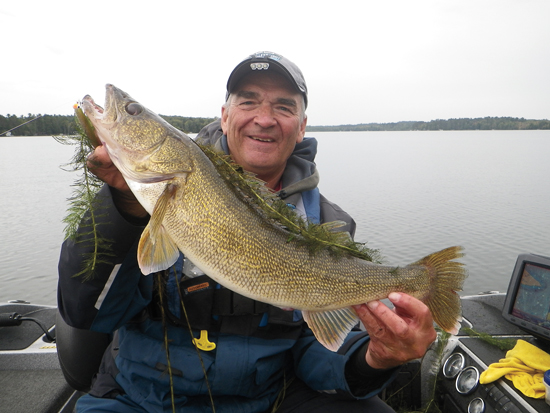
A pair of marble eyes suspended in green shadows. Last thing seen by many a baitfish. The weed-walleye connection is well documented, and many walleye tournaments have been won by targeting walleyes above, outside, and buried in weeds.
Species of aquatic vegetation used by walleyes vary with environments. Seasons ordain certain species of vegetation as walleye kingdoms while evicting walleyes from others. So what weeds do walleyes use most, or in what order as the environment changes with the seasons?
Some think it’s simple: Follow the forage. But it’s hard to find weeds without forage. Other factors are afoot. Where to start on any given day — in green cabbage? Elodea or coontail? Tobacco cabbage? Some other pondweed. Perhaps milfoil?
Wisconsin’s Greg Bohn puts clients on 10-pound walleyes like Miguel Cabrera hits baseballs — at a record pace. He can take clients trophy hunting or go for numbers, day or night. Either way, count on fishing around weeds. For Bohn, vegetation is more than cover. Plants are indicators, gauges, pointers, and signs on his dashboard. “I’m always excited anticipating how the weeds are going to be developed when the season opens in Wisconsin,” he says. “Lakes can be frozen on opening day, and I’ve seen openers with stalks already three feet high. It’s a guessing game until you get out there and investigate.”
In a warm spring, plants grow quickly and chances are good walleyes are in and around some variety of “cabbage.” What anglers commonly refer to as cabbage is mostly clasping-leaf pondweed. But most seasons start with a different plant species — the first one standing, and Bohn’s best early indicator. “Takes time for some types to develop,” he says. “So you have a growth shallow right away, and it progresses deeper during that first month of the season until you’re fishing around different species at different depths in May than in June.”
Bohn’s walleye compass when the season opens is elodea, sometimes called waterweed. “It’s available right at ice-out,” he says. “Elodea grows from a couple feet out to about 8 feet — sometimes in depths of 10 feet. Walleyes love it early. Find elodea and you find walleyes because it’s the only game in town. Perch are looking for vegetation to spawn on most years when the only greenery is elodea, which grows to a height of 10 inches to a foot. Start searching for it early in 2- to 4-foot depths. It generally appears first in bays where the water warms up sooner than the lake.”
Then he looks for what some call broadleaf, tobacco, or brown cabbage, soon followed by clasping leaf pondweed, also called green or narrow-leaf cabbage. “When green cabbage reaches maximum height, the buds pop out above the surface,” he says. “It’s a tough plant. The main stalk can break light line when a big fish wraps in it. It comes up quick and it’s fast growing. It’s the next thing to take off after elodea, and it’s the first type of vegetation most anglers begin to pattern walleyes in.”
Once a big-fish weedbed, always a big-fish weedbed. “There’s something about certain weedbeds that draw big fish almost every year,” he says. “One particular weedbed in a lake may continue producing big fish all your life at a certain point of the season. The attraction sometimes is a steep drop along one edge into deeper water. Sometimes it’s boulders along it. Sometimes it’s consistency of growth year-to-year. It could be they spent a lot of their young lives there, because it’s close to spawning habitat. Little idiosyncrasies that make it attractive in ways we can’t see — that progression is the neatest thing to follow.”
Walleyes are attracted to peak growths of different species of vegetation, but other conditions may determine how walleyes use it. “Walleyes come in-and-out of weeds a lot,” he says. “They react immediately to a change in the surface chop or a change in the light around weeds. They use vegetation differently, based on conditions and weather. They travel half way across the lake to find warmer water in spring. Your temperature gauge becomes your guide. In the 40°F- to 60°F-range, a few degrees makes all the difference. When it gets cold at night early in the season, deeper water is warmer than shallow water and walleyes are in deeper weeds. On sunny days, you find them moving shallower as the water warms — always to a peaking species of vegetation growing in some slightly different substrate.
“As the season progresses, walleyes might be less concerned about a few degrees of temperature change, but temperature remains critical all summer,” he says. “Plant species shift and walleye preferences change, too. They follow the vegetation to an edge, gradually shifting deeper as vegetation extends downward. The 4-foot plants are unproductive by late June, when 8- to 10-foot weededges become prime. It’s a combination of two things — water temperature and maturity of plant growth.”
Bohn always works vegetation from the outside edge inward. “Don’t pile right into the vegetation,” he says. “Our initial casts don’t even reach the weededge. Any clumps or points off the edge — that’s where the big fish are. Start well outside the weedline and feel for the edge. You often can tell what kind of plants are present by jigging. If not, try to get a look. Most days, the type of vegetation is important. When you start catching walleyes, you have to know what plants to look for on the next spot.”
Mid-summer cabbage lines and coontail clumps stop between 6 and 20 feet, depending on water clarity. “It takes time for the food chain to get going down there,” he says. “Minnows may not inhabit those deep edges for a while. Until the plants mature, baitfish continue to use shallower vegetation. But those plants may become too thick and walleyes seem to avoid beds that are overly dense. They like newer growth coming into peak height. It’s like a stair-step progression. Walleyes use plants at 4 to 6 feet, then within a week or two they move down to those at 8 to 10 feet, and so on. The deepest are coontail and sandgrass down to about 20 feet and that’s the end of the cycle. That’s where they stay until ice-up.”
Patterns and Presentation
“Walleyes are there big-time or not at all,” Bohn says. “It takes a short time to figure out which plants to focus on. Move quickly because walleyes do. It’s amazing what can happen in seven days as the ‘right weeds’ suddenly become too thick for walleyes and they move to a new restaurant just a few feet deeper. Sometimes walleyes cross the lake to find the next stage of weedgrowth. These movements aren’t necessarily taking place on the same piece of structure or in the same area of the lake. Sometimes it seems like the entire walleye population moves into one particular weedbed for a short time. Usually, though, when they move it’s a pattern that persists around the lake. Say they move to a type of vegetation growing at 10 feet on a sandbar. Every sandbar on the lake that has that type of vegetation has walleyes.
“Wind pushes walleyes shallower,” he says, “but I love to fish vegetation on flat, sunny, calm days right after a cold front. Bluebird days after fronts can be awesome in weeds. Walleyes favor shade and hold where feeding is easy. Look for fish activity on the surface. Young perch dimple the surface and outline a weedbed in calm water. Watch for them skipping out of the water, indicating predators on their tail. But windy days are great, too. In either case, I catch walleyes in weeds with 1/16- to 1/8-ounce perch-colored jigs.”
As surface temps warm between 60°F and 68°F, Bohn switches from fatheads and chubs to leeches, then to crawlers under slipbobbers from 68°F and up — but he uses more artificial softbaits than anything else. “When plant growth is developing, panfish become a nuisance, especially at the leech-and-crawler stages,” he says. “Softbaits take off when the water reaches 60°F. At a certain point every summer, I stop bringing livebait. Softbaits outproduce livebait in warm water.”
He jigs with 10-pound Stren Magnathin. “I like mono with plastics,” he says. “Braids work in vegetation, but the drop is less radical with thicker mono. And when you lift with braid, action is more abrupt because of the lack of stretch. It removes the arc in your lift-drop, too. Walleyes tend to hit on the drop, so having that arc, that pause at the top, and that slower fall is critical. Braid is too abrupt. No need for long casts, either. In weeds, short casts are a must.”
Bohn pitches with a rod at least 7 feet long with a medium power and a fast tip. “G. Loomis makes the BSR852, a 7-foot 1-inch stick,” he says. “It’s better known as a bass rod, but it’s an awesome jigging rod for plastics and walleyes. Medium power and fast action are needed to rip weeds free. For jigging I use a slightly heavier jig with plastics. If I’m using a 1/16-ounce jig with minnows, I use a 1/8-ounce one with softbaits. There are many differences between jigging livebait and plastics. To be productive, you have to appreciate those differences.”
Bohn uses 4-inch soft jerkbaits in minnow shapes in 55°F to 75°F water. “Once leeches and crawlers start working, Kalin’s and Berkley grubs excel,” he says. “Paddletail minnows and small swimbaits — a lot of softbaits work, but I have my best luck in warm water with 3-, 4-, and 5-inch action tails that resemble leeches and crawlers. Ring worms and grubs are good in warm water. Once the water starts to cool and days get shorter, minnow-style baits come back. We began catching bigger fish faster with softbaits than we did with livebait years ago. It’s so effective. I was strictly a livebait guy for years, but now I rarely have livebait on board once the water warms.”
After becoming a “plastics guy,” he designed the Walleye Limit Minnow. “It has the right texture and lifelike flexibility,” he says. “Stiff plastics don’t work well for walleyes. They get bumped and tapped, but not eaten. I think those bumps sometimes indicate walleyes are testing the texture of the bait. The Walleye Limit Minnow is the best soft jerk for walleyes I’ve used.”
Most people jig upward all the time. “With softbaits, you need something a little different,” he says. “Every day can be different. Some days it’s pop it up and let it fall, but sometimes they want it moving horizontally then dropping. You have to incorporate a pull, a short swim, or a slow lift, giving walleyes the opportunity to move under the jig. I freeze the rod tip at 11 o’clock, never go beyond noon, and never drop it below 10 o’clock. I watch the bow in the line. When you lower the rod you lose contact with the jig long enough for fish to pick it up and spit it out without feeling a thing. Freeze that rod at 11 o’clock and you feel everything. You see more line strikes and feel more ticks and light bites.”
A jig has to be rigged perfectly with softbaits. “It has to be straight,” he says. “If it’s spinning, circling, or running sideways, it won’t produce. Make sure the lure looks symmetrical and straight — not off balance, bunched up, or crooked. With minnow-shaped softbaits you do more twitching. With action-tails you twitch less and swim more. Hopping them is good, but a slow, steady swim can be best. With livebait, you give them time to get a good hold on it. With softbaits, you want to set the hook immediately. Clients often get bites without setting the hook right away. It’s in and out of their mouths so quickly. Weeds feel almost the same. If you feel a tip or a tap like a perch tapping a nightcrawler, that’s a strike. A lot of strikes are weight strikes — if you feel weight, set the hook.”
With softbaits, you get a lot of “let’s-get-acquainted bumps,” he says. “The best way to get that walleye to strike after a bump is to keep going. Act as if nothing happened and keep jigging. Once you get the lure near the boat, don’t raise it up immediately. Walleyes follow more than muskies. After the lure gets to the boat we catch tons of walleyes by jigging up and down right under the boat. Maybe 6 to 8 inches, and just a couple lift and drops. If they’re there, they react to that abrupt change in retrieve angle. Work it all the way in.”
As mentioned before, Bohn likes perch colors. “Walleyes are on perch-imitating jigs and baits based in green,” he says. “Chartreuse-and-lime, glow watermelon — any shade of green. A perch-glow head in firetiger or parrot is my favorite. All green or green-back, pearl-belly plastics are key in weeds.”
A soft jerk on a small jig swimming through green shadows. Last thing seen by many a marble eye near Greg Bohn.
Shark Attack Statistics: Why, When, and Where They Attack
These fascinating predators are usually presented as creatures coming from the depths of the ocean to hunt and kill humans. But shark attack statistics show that the reality is different.
They reveal that shark bites aren’t as common and deadly as shown in the press. Most attacks are just sharks exploring their territory or mistaking a human for one of the species they like to eat.
But let’s see some of the most exciting numbers on shark attacks.
Top Shark Attack Statistics: Editor’s Pick
- The odds of getting bitten by a shark are 1 in 3,748,067.
- There were 73 unprovoked shark bites on humans in 2021 alone.
- The US tops the list of the highest number of shark attacks recorded.
- Over half of the US shark attacks happen in Florida.
- Surprisingly, death by selfie is more common than being eaten by a shark.
- Great white sharks are the most frequently implicated species in shark attacks.
- There are over 100 million shark deaths per year around the world.
- Shark finning and overfishing are pushing sharks to the brink of extinction.
- Worldwide, Australia is in second place regarding the number of shark attacks.
Curious to learn more about where, why, and how often sharks attack? Read through these eye-opening facts and figures to discover the truth about why these marine animals turn on humans.
Why Do Sharks Attack People
Besides the venomous snake bite, shark attacks account for one of the most common phobias. Even though shark attacks happen, they’re not as common as you think.
However, they still happen, so let’s see how many shark attacks per year there are, why they happen, and when.
1. The odds of a shark attack are 1 in 3,748,067.
(ISAF)
Despite popular belief, shark attacks are pretty rare. There is a higher chance of dying from fireworks than getting eaten by a shark—one in 340,733.
People are also 47 times more likely to die from a lightning strike than a shark bite, a risk surfers take every time they hit the waves during storms.
2. There have been 73 unprovoked shark attacks and bites on humans in 2021.
(ISAF)
Unprovoked shark bites are defined as shark attacks where humans didn’t create any incitement or provocations. There were a total of 137 aggressive human-shark interactions last year, with 39 being labeled as human-initiated.
3. People are more likely to drown than getting bitten by a shark.
(ISAF) (PETA)
The odds of death by drowning are one in 1,134—considerably higher than death by shark bites. Other causes of death more common than shark attacks include traffic accidents, a champagne cork, and a cold.
4. Surprisingly, death by selfie is more common than being eaten by a shark.
(NY Post)
In the period between 2011 and 2017, 259 people around the world died in 137 selfie-taking-related accidents. For comparison, only 50 people were killed by sharks in the same period, according to the data on the average number of shark deaths per year.
5. 51% of shark attacks involve board sports and surfing.
(ISAF)
Boardsports usually take place in surf zones where sharks are known to swim. Also, board sports cause a lot of splashing, i.e., the kind of water disturbances that might attract sharks.
Swimmers were involved in 39% of shark attacks, snorkelers and free divers account for 4% of all attacks, while body surfers make up 6% of incidents.
6. Shark attacks are most likely to occur in September.
(ISAF) (ABC)
When do sharks attack? Analysis of the number of attacks in Florida from 1926 to 2018 shows people are most likely to encounter a shark in September. Data shows there were 103 attacks in September—significantly more than in other months of the year.
Although it’s commonly believed that sharks hunt during dusk and dawn, research indicates that the most dangerous time to be in the water is from 2-3 pm.
7. Several factors contribute to shark attacks on people.
(BBC)
The number of people in the water is directly connected to the number of bites. This could explain why most incidents occur in popular destinations for water activities.
Take the French Reunion Island as an example. It has witnessed a significant rise in tourism and an increase in shark attacks.
Another reason, experts say, is the growing number of seals, one of sharks’ favorite prey. The seal population has increased in Australia and off Cape Cod in the US.
8. Climate change also contributes to shark attacks on humans.
(BBC)
Water pollution, habitat disruption, and a shift in prey distribution due to global warming cause sharks to gather in certain hotspots around the world and thus increase the chances of human-shark interactions.
9. Sometimes, sharks are just curious.
(Britannica)
Shark’s mouth serves as a sensory organ. It allows them to examine an unfamiliar object by biting it. So sharks might bite people to check if they have the same fat content as some of their favorite prey, which we don’t.
The conclusion from analyzing shark attack statistics is that humans are too bony and don’t have enough meat and fat to satisfy sharks’ appetites.
10. There are three kinds of shark attacks.
(ISAF)
As previously stated, sharks don’t always bite to kill. Here are the three most common interactions toward humans:
- “hit-and-run” attacks, which typically take place in surf zones and are the result of poor visibility. In these attacks, sharks usually just bite their prey and—deeming it unsavory—swim away;
- “bump and bite,” associated with feeding intentions, in which sharks first bump into the victim and then bite it repeatedly;
- “sneak” attacks, where biting, unlike with “bump and bite,” happens suddenly and without any warning.
11. Boats and post-mortem bites account for the remaining attacks.
(Forbes) (ISAF)
In 2019, 12 of the remaining 35 shark attacks involved motorized vehicles (up from nine in 2018).
One involved post-mortem bites (down from four in 2018), and one implicated a diver in a public aquarium. Three incidents most likely didn’t involve a shark and were classified as “doubtful.”
US Shark Attack Statistics
The number of shark attacks has been varying over the years—but the US coasts stay among the most shark-infested waters. Let’s see the latest data.
12. The US tops the list of the highest number of unprovoked shark attacks recorded.
(ISAF)
The US accounted for 64% of the total worldwide attacks in 2021, with an estimated 47 cases.
This is 42% higher than in 2020—expectedly, due to more severe COVID restrictions in that period and limited movement of people.
13. 60% of US soil attacks happened off the coast of Florida.
(ISAF)
Known as the shark bite capital of the world, Florida is the state with the highest number of bites historically. In 2021, Florida recorded 28 unprovoked attacks, none of which were fatal. The state also accounts for 38% of all unprovoked interactions in the world.
14. Volusia County, Florida, witnessed over 300 unprovoked shark attacks over the years.
(A-Z Animals)
Experts explain the numbers with murky water due to rain runoff. A shark attack isn’t uncommon in Cocoa Beach (Brevard County) either, with over 155 recorded cases.
Volusia County accounted for 63% of Florida’s total number of unprovoked bites in 2021, with an estimate of 17.
15. There were a number of shark attacks in Hawaii and California.
(ISAF)
In addition to Florida, most shark attacks happened in California and Hawaii.
Hawaii had six shark attacks in 2021, all without any fatalities. Meanwhile, California recorded three attacks, with one person falling victim to the animal.
Other states on the list are South Carolina with four bites and North Carolina with three attacks last year.
16. There was a fatal shark attack in Massachusetts for the first time since 1936.
(Boston.com)
The one deadly attack took place in Cape Cod in 2018, when a 26-year-old boogie boarder died after being bitten by a shark, presumably a great white. This was the first fatal shark bite in the state of Massachusetts in over 82 years.
Where Do the Most Shark Attacks Occur Worldwide
Don’t worry; shark attacks don’t occur everywhere around the world. Here are the most common locations outside the US.
17. Worldwide, Australia is in second place regarding the number of shark attacks.
(ISAF)
There were 12 unprovoked shark attacks in 2021 in the Land Down Under. Out of those, three were fatal attacks. This is lower than Australia’s average of 16 attacks a year over a five-year period.
Australian shark attack statistics indicate that most attacks occurred in New South Wales—six, with two being fatal. In Western Australia, one person died out of a total of four shark attacks.
18. Brazil has had 107 shark attacks and 23 casualties from 1931-2019.
(SurferToday)
Stats show that other countries where shark attacks are frequent include South Africa and the Mascarene Islands.
During the same period, South Africa had 255 attacks, 54 of which were fatal.
Moreover, the Mascarene Islands (Reunion, Mauritius, and Rodrigues) had 46 attacks, 27 of which weren’t fatal.
19. Gansbaai in South Africa is one of the most dangerous shark beaches.
(The Telegraph) (Getaway)
Also known as Shark Alley, this area is home to a colony of 60,000 seals. The great white sharks are known to hunt them.
Data shows there are around five to 10 attacks every year. Most of them happen due to sharks’ curiosity rather than their hunt for humans.
On the other hand, being one of the most dangerous shark beaches comes with economic benefits. Tourists have been swarming to South Africa for a chance to go cage diving with great whites, boosting the local economy.
20. Two fatal attacks occurred in the Bahama Islands and Reunion Island in 2019.
(BBC) (CNN)
One of the deadly attacks occurred off Reunion Island in the Indian Ocean. Surfing and water activities are limited there due to the risks of shark attacks.
This was the 24th incidence and the 11th fatal attack on this island since 2011.
The other fatal incident involved a 21-year-old California resident who had been snorkeling on Rose Island in the Bahamas.
Shark Attack Statistics by Species
Researchers have also discovered that not all shark pieces attack humans. Let’s see what the statistics say about different types of sharks and the likelihood of them attacking humans.
21. Only 5% of over 500 known species of sharks have been involved in attacks on humans.
(Florida Museum of Natural History)
Most shark attacks on humans involve three species: the great white shark, the tiger shark, and the bull shark.
All shark species differ in the way they hunt, where they live, and their motivations. Bull sharks, for example, hunt in shallow and murky water because they rely more on smell and electroreception than sight, the data suggest.
22. The data on the great white shark attacks reveals the species is involved in most human-shark interactions.
(ThoughtCo)
What is the most dangerous shark in the world? Great white sharks are the most intimidating and deadliest. The species is believed to be responsible for 314 unprovoked attacks from 1580-2015, 80 of which were fatal.
These sharks typically eat seals or whales and usually hunt in open waters. Although, judging by some facts, they are known to come close to the shore, as well.
23. Great white shark’s bite force is over 4,000 lbf or 18,216 N.
(A-Z Animals)
The strength of their bite is relative to the shark’s size. Interestingly, female great whites grow 15-16 feet, which is larger than males (11-13). The largest identified reach up to 20 feet in length. The species is also among the fastest sharks, with a cruising speed of 25 mph and bursts of 35 mph.
23. Tiger sharks are the second most dangerous sharks in the world.
(National Geographic)
Tiger sharks have killed 34 people and are responsible for 95 unprovoked nonfatal attacks.
Unlike great whites, who are known to release their prey after they find it uneatable, tiger sharks have a less discerning palate. This means they’re not in the habit of swimming away once they catch their dinner.
24. Bull shark attacks usually occur in shallow waters.
(National Geographic) (Cleaner Seas)
And what is the most aggressive shark? Bull sharks may be the least known species, but they are potentially the most dangerous and aggressive. Because they swim where we swim, the chances of humans interacting with bull sharks are pretty high.
25. There have been no fatalities from hammerhead shark attacks on humans.
(Newsweek)
Only 16 cases of human interactions with this species of shark have been noted from 1900 until today. The majority of attacks by hammerheads happened in Florida. Elsewhere, one occurred in California, one in Australia, and two off the Pacific Islands.
26. The whale shark is the biggest one in the world.
(National Geographic) (Oceana.org)
They might be the largest, but they are less dangerous to humans than some of the smaller shark species. Growing to 60 feet in length, whale sharks only eat plankton.
The shortfin mako—known as the fastest shark in the world—is also not considered dangerous to people. Some fatal attacks have been attributed to this shark, although in most incidents, some other shark species was responsible, most likely a great white.
How Many Sharks Are Killed by Humans Each Year
Statistics show that people kill much more sharks than sharks kill people. It may sound unbelievable, but the numbers don’t lie.
26. There are over 100 million shark deaths annually around the world.
(Insider)
This translates to around 11,000 sharks being killed across the world every hour. On the other hand, there have been 1,400 shark attacks in the US from 1837-2017, only a handful of which were fatal.
27. The demand for shark fin soup causes most shark killings.
(Smithsonian Ocean)
Shark finning is a cruel and vicious method of killing sharks. After the fin is cut off, the rest of the body is thrown back into the ocean, where sharks bleed to death.
When we look at the number of sharks killed by year, we see that 1.3-2.7 million of the sharks killed for fin soup belong to the endangered scalloped hammerhead species and the smooth hammerhead, currently listed as vulnerable by the IUCN.
28. Shark finning and overfishing are pushing sharks to the brink of extinction.
(Smithsonian Ocean)
Sharks are not created for massive fishing because they have low reproductive rates and mature slowly. Therefore, overfishing can destroy an entire population.
Shark population statistics show that certain shark species in Australia have declined by 75-90% due to shark culling. Stats show a growing number of interactions, thus initiating authorities’ deliberate killing of sharks.
Also, the population of some shark species dropped by 60-70% due to overfishing.
29. Sharks are vital to the health of the ocean and the planet.
(Forbes)
As apex predators, sharks keep certain species from becoming too invasive and thus support diversity in the seas, protect coral reefs, and balance the food chain.
Sharks also consume sick and weak animals, maintaining the ocean’s health, and we all know how important that is.
Frequently Asked Questions
What are the odds of being attacked by a shark?
The odds of getting attacked or bitten by a shark are 1 in 3,748,067. Dying by falling, tripping, or slipping are way higher at 1 in 127.
Do most shark attacks happen in 3 feet of water?
Not really.
Divers naturally get more attacked in deep waters, unlike swimmers and surfers whose interactions with sharks happen a lot closer to the coast.
Most divers’ accidents with sharks happen 31-40 feet in the water, while swimmers and surfers get attacked 6-10 feet in.
What beach has the most shark attacks?
The ISAF has named New Smyrna Beach in Volusia County, Florida, “the shark bite capital of the world.”
In 2019, nine shark attacks occurred there, consistent with the annual average for shark bites in the area. In other words, 43% of all incidents in Florida happened in this county.
What are sharks attracted to?
Sharks are believed to react more to sound and smell rather than sight. Some theories propose sharks are attracted to certain sounds made by a surfer in trouble, a sick fish, and the smell of blood.
The presence of blood, however, isn’t enough to provoke a shark attack unless combined with other elements, like splashing in the water or wearing jewelry (which looks like the scales of fish that sharks eat).
Some scientific tests have shown that sharks can distinguish colors, giving rise to “yum yum yellow” theories. Although these theories aren’t scientifically proven, avoiding wearing bright colors in the water might be best.
How far can sharks smell blood?
To be clear—sharks can’t smell a singular drop of blood from a mile. That’s an often repeated myth. They do have a strong sense of smell, however, smelling blood from hundreds of meters away.
What to do if a shark is circling you?
The first and most important thing about reducing the risk of a shark bite is not to panic.
Try to use anything you have as a weapon for striking their sensitive gills and eyes. If you don’t have a weapon, use your hands and feet. Hit as hard as you can and be as hostile as possible.
Sharks aren’t bears, so playing dead won’t work. The best chance of escaping a shark attack is to fight back as well and viciously as possible.
Should you be afraid of sharks?
The short answer is no. As with other animals, it’s more likely that they’re more afraid of us than we are of them.
Sharks have attacked humans, and some attacks are fatal, but so have other animals like mosquitoes, cows, and horses. Also, many interactions between sharks and humans haven’t ended with bites or attacks.
Key Takeaways
Sharks aren’t the dangerous creatures of movies and scary stories. If anything, shark attack statistics show that the number of fatal and nonfatal attacks is declining.
These magnificent fish have survived four mass extinctions of species. Yet, they have trouble surviving humans. More and more sharks are hunted for their fins, caught in nets, and killed.
They are already on the list of endangered species, and their numbers are dwindling. So rather than people worrying about getting attacked by sharks, it’s sharks that should worry about humans and their harmful activities.
Sources
- ABC
- All That Is Interesting
- Amusing Planet
- BBC
- BBC
- BBC
- Boston.com
- Britannica
- Business Insider
- Cleaner Seas
- CNN
- CNN
- Florida Museum
- Florida Museum of Natural History
- Forbes
- Forbes
- Getaway
- Insider
- ISAF
- ISAF
- ISAF
- ISAF
- ISAF
- iucncsg.org
- National Geographic
- National Geographic
- National Geographic
- NY Post
- Oceana.org
- PETA
- Science Daily
- Smithsonian Ocean
- Smithsonian Ocean
- SurferToday
- The Guardian
- The Telegraph
- ThoughtCo
- WFTV

Popular Posts

Air gun 101: What is a PCP air rifle? Is PCP gun the best...

PCP vs Gas Piston: Which One is Better?
