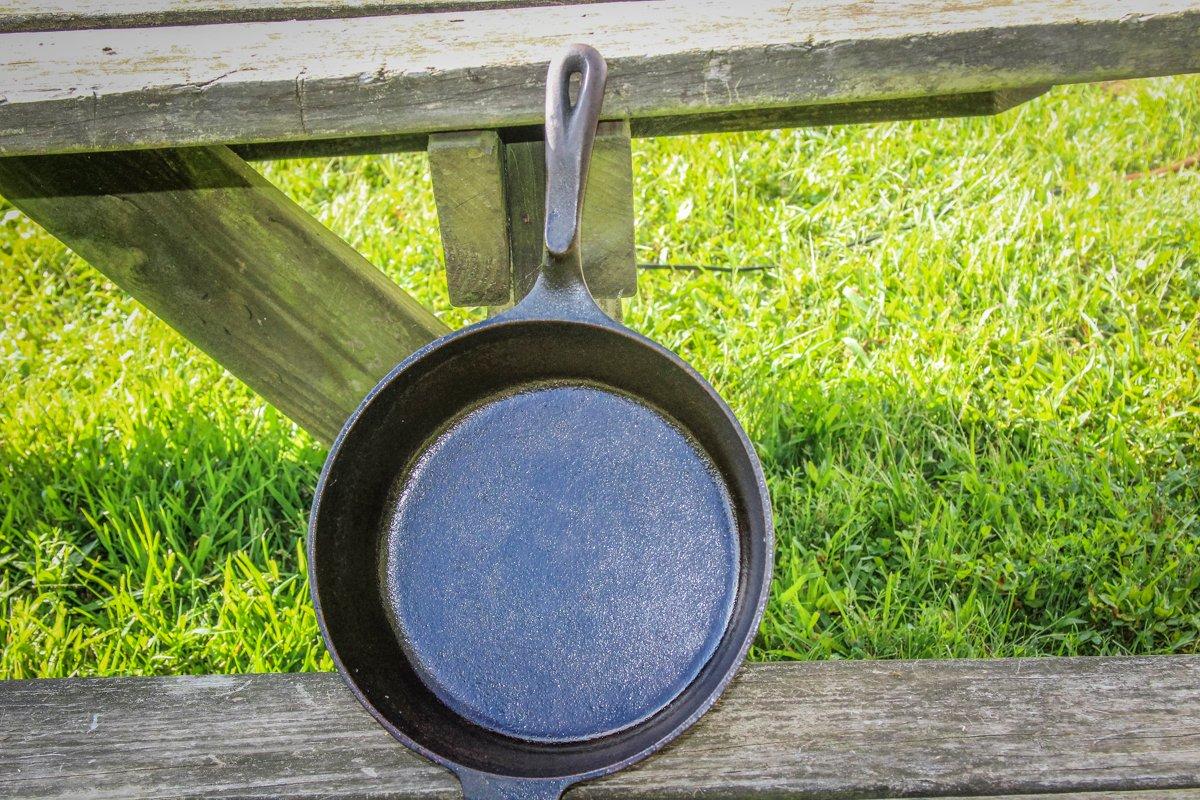
Most people will have a few bags of frozen chicken in their freezer. It can be easy to forget about one or two bags only to discover them too late – when they’re freezer burnt.
Freezer burn has a very distinctive taste, but it’s hard to describe. Off, weird, old, musty, and ‘like the freezer’ are some of my attempts.
So, how do you get rid of the taste of frozen chicken? To get rid of frozen chicken taste, marinate or brine the chicken and cut off any visible bits of freezer burn. You can also opt to use the chicken in a dish where its flavor will be overpowered, such as a curry, enchiladas, or something spicy.
Related: How To Store Raw Chicken In The Freezer
How to make frozen chicken taste better
The freezer taste that clings to your chicken is not a seasoning anyone would choose. A simple frying, grilling, or baking won’t be enough to shake it off.
Sadly you can’t get rid of the taste of freezer-burn completely, but you can improve it to the point where it’s barely noticeable.
Here are a few ways to go about making your frozen chicken disaster edible.
Word of warning: you may see varying success depending on how badly your chicken has suffered in the freezer.
But the way I see it is that the only thing you have to lose is time.
You either throw the meat out straight away or try and save it. If you save it great. If not you can throw it away, but at least you tried.
Cut off any freezer burnt bits
The most important thing to do is to cut off any obvious bits of freezer burn. Cut them off before you cook the chicken.
This will get rid of the worst tasting bits, but it won’t completely solve the problem. Freezer burn affects the whole piece of meat and not just the visible bits. The rest of the chicken probably won’t taste great either, but that’s where the next tactics come into play.
Marinate or brine the meat
Marinating meats is a classic way to flavor them, and it’s even more important when you’re dealing with freezer burnt chicken.
A good, strong marinade will help mask the frozen taste, and adding something acidic to the marinade will help to tenderize the meat.
Acids break down some of the proteins and fats in the meat, making it more tender. Balsamic vinegar is a good option. It’s acidic and adds a slightly sweet flavor to the chicken.
Put a small but concentrated amount of your chosen marinade into a ziploc bag and add the frozen chicken. As the chicken defrosts, the juice from the chicken will mix with the marinade and dilute it. Shaking the bag a few times as the chicken is thawing will help to ensure even coverage.
Brining meat is similar to marinating.
Make a saltwater solution and let the chicken sit in it as it thaws. The primary goal of brining is to tenderize the meat, the flavor comes second.
The salt solution will replace some of the lost moisture in the chicken and help bring it back to life. You can also add some herbs and spices to the brine mix such as sage, black pepper, or garlic. This will help to give the chicken a subtle flavor.
Grind or shred the chicken and put in a sauce
One of the best things you can do to disguise badly frozen chicken is to use it in a dish where the texture or taste of the actual chicken doesn’t matter too much.
Grinding or shredding the meat means you no longer need to worry about the texture of the meat because you’re changing it anyway.
Grind the chicken up with a meat grinder (link to amazon) to make meatballs or burgers and add whatever additional flavors you like to mask the ‘frozen’ taste. Thai chicken meatballs are super tasty and a little different from the usual Italian recipes you’ll find. You need lots of garlic, chili, ginger, and kaffir lime (if you can get hold of it).
Just like ground meat, shredded meat can be easily flavored. You can slow cook it in a crockpot with lots of sauce to mask any off-tastes. Add bbq sauce to make an alternative to pulled pork, or use salsa and black beans to make a delicious burrito filling. You’re basically turning the chicken into a sauce delivery vehicle.
Related: How To Reheat Frozen Shredded Chicken
If you want something cold, you can poach and then shred the meat to make a chicken salad.
Use it to make a stock or soup
If the frozen chicken taste is really offending you, then use it to make soup or stock. That way, you can still make use of the chicken without actually eating it.
Don’t worry. The chicken won’t leave a frozen taste in your stock. It will taste just like regular chicken stock.
Thaw the chicken and simmer it in water along with some vegetables. Once it’s done you can strain the chicken and either get rid of it or shred it and put it back into the soup.
This technique works best if your chicken is on the bone. The bones tend to add a lot of nutrients and extra flavor. However, it will also work fine with boneless chicken.
Make a curry / stew
Curries and stews tend to be very strongly flavored. The sauce is the star of the dish, and the chicken is more of a filler. As a filler, the chicken’s flavor gets lost and you can forget about the fact it doesn’t taste perfect.
Any recipe will do so just pick your favorite curry or stew and get cooking.
If you’re pressed for time a quick alternative to curry is to slather hot sauce on your chicken. This may not mask the texture but it will definitely hide any bad tastes.
Return it (if store bought)
If you bought the chicken pre-frozen from a store then the likelihood is you can return it.
Most food stores will accept returns if you’re not happy with the quality of the food. Simply state you found the taste and texture of the chicken unacceptable.
Of course you wont be able to return the chicken if you bought it fresh and froze it yourself.
What causes frozen chicken to taste bad and how to prevent it from happening again?
It’s no secret that freezing foods can affect their quality, but it’s not always clear why. There are two factors at play with chicken: the chicken’s texture altering and freezer burn.
Texture changes
As the chicken freezes, ice crystals form inside it. The sharp edges of these ice crystals rupture the chicken’s cell walls, causing the muscle fibers to weaken and break down. This noticeably alters the chicken’s texture and means the meat can no longer hold in moisture effectively. As the chicken thaws, lots of moisture will be lost leading to a dry piece of chicken.
You can’t prevent these ice crystals from forming as it’s part of the freezing process. But you can minimize how many form and how big they are. The quicker you freeze the meat, the less time the ice crystals have to form.
Chill the meat in your fridge first so it’s as cold as possible before going into the freezer. Then flash freeze the meat uncovered for a few hours. Uncovered meat will freeze faster than covered meat. Once the meat has frozen solid, make sure to cover it before leaving it for longer-term storage. Effective wrapping of the meat will help to prevent freezer burn.
Freezer burn
Freezer burn is the next issue and can affect both the taste and texture of frozen chicken.
Freezer burn occurs when the chicken is exposed to cold air. The cold air draws moisture out of the surface of the meat, leaving it severely dehydrated. Freezer burn isn’t unsafe to eat, but it doesn’t taste very nice.
It’s easy to see freezer burn on chicken because the meat changes color. The meat will turn white and look visibly tougher.
Luckily, freezer burn is completely preventable. You may have fallen victim to it this time, but you don’t have to again. Prevention is key to avoiding frozen chicken taste.
To prevent freezer burn, you need to prevent any air exposure. One way to do this is to wrap each individual bit of chicken in a double layer of plastic wrap or tin foil and then put it in an airtight container.
Related: How To Break Apart Frozen Chicken
Alternatively, if you have a vacuum sealer at home you can use this. Vacuum sealers are great because you can be sure no air will be in contact with your meat. I recommend the Greyon food saver (amazon link). There is a slight upfront cost involved, but it will save you money in the future because you’ll never need to throw out ruined frozen food again.
Before his untimely death, Gregg Meyer was a cagey multispecies angler who often used spinnerbaits to catch walleyes. “Once the spawn is over, walleyes are all about feeding,” he noted. “They move shallow into warm water where the food chain is in high gear. Banks and shallow flats are loaded with minnows, small panfish — all sorts of prey. Anglers usually use crankbaits and jigs tipped with bait or artificials to work that zone, but at times a spinnerbait can be more effective.
“Since spinnerbaits are snag-resistant, they work better than just about anything else around standing timber, flooded bushes, and brush,” he said. “Walleyes use that cover when feeding on panfish, shad, and minnows. Rocky shores can be good, too, especially when a modest wind is blowing in. I also fish the tops of shallow flats and along drop-offs where the flats breaks into deeper water. Preyfish must be present to get walleyes hunting shallow. In spring and early summer, some days they’re shallow and some days they’re not. You need to experiment, have faith, and not give up on this technique. Like anything else, it doesn’t work all the time.”
Spinnerbait Selection: > For walleyes, select small to medium-size spinnerbaits with ball- bearing swivels, tapered wire, and high-quality hooks and skirts.
Rigging
Meyer uses his bass tackle for spinnerbaiting — a medium-heavy baitcasting outfit 6 ½ feet long and a reel spooled with 10- or 12-pound mono or braid of similar diameter. “If you don’t have baitcasters, your kid’s spincast reel will do,” he says. “You’re fishing shallow, but you still need to be aware of structural elements, so you need sonar, unless you’re familiar with the lake’s layout. The unit also helps pinpoint baitfish when you’re deeper than 5 feet or so.”
Meyer uses spinnerbaits from 1/8- to 3/8-ounce. He wants a true-running bait with good components and uses various models from Stanley Jigs of Huntington, Texas. A tapered-wire shaft enhances vibration that may be a key component of the spinnerbait’s attraction. The Stanley Salty Boss is hard to beat.
“Some days, blade color matters,” he reported. “I switch among silver, gold, white, chartreuse, and key-lime-green blades. For the skirt, baitfish colors work fine in clearer water — silvers, golds, smoke-sparkle, and so on. In murkier water, chartreuse and white do well.”
Meyer says that top-quality polarized sunglasses are vital, as you often are sight-fishing. He favors those that block out light from the sides, such as the Wiley X models with a foam insert that seals the glasses around your face “Look carefully and you can spot walleyes in water as shallow as 6 inches,” he says. “Keep your distance, approach cautiously, and you can catch those fish.
Presentation
Meyer uses a variety of retrieves to trigger walleyes. “When they’re holding shallow and tight to the bank, cast right onto the edge of the shore. It’s common to have fish bite in the first five feet of the retrieve. In deeper water, make the retrieve smooth and slow, so the spinnerbait moves along near bottom. If you’re fishing a sloping area, slow down as the water deepens, to keep the spinnerbait down — what the bass guys call ‘slow-rolling.'”
Meyer uses the lure’s snag resistance to saturate shallow cover, easing it among boulders, weed clumps, brush, and stumps. Make it bump the cover on occasion, as that momentary change in direction can trigger bites from less active fish. He’s also found that a spinnerbait works well when retrieved parallel to a rocky bluff or the riprap face of a dam or causeway. Once you figure the prime depth, you repeat the presentation.
At times it pays to experiment with more erratic action. “Pause the bait and let it flutter,” he recommended. “The blade on a good spinnerbait lets it helicopter down, and that can be deadly on walleyes.”
Bead teaser: Greg Meyer sometimes would string beads and a tiny spinner ahead of his spinnerbait, simulating a fish in pursuit.
Tips for Success
A spinnerbait is essentially a simple lure and at times there’s no wrong way to work it. Like other lures, it doesn’t always work, but when it’s on, it can load the boat with big walleyes. Meyer has a few more tips to help get you started.
Bait: “At times, it pays to tip the spinnerbait with a nightcrawler or minnow. There’s something about the look, smell, and taste of real food. Make sure the lure continues to run perfectly straight when bait is attached. Critters often turn on the hook and ruin the presentation. So I don’t use bait unless it seems necessary.”
Short strikes: “If you get bumped and don’t hook up, try a trailer or stinger hook to nail short strikers. Some days, the stinger gets most of the fish. But it can be a pain around brush and grass, so I don’t use one until I start missing fish.”
Other species: “It’s common to catch both bass and walleyes as you move along a bank — pike as well. But if you start catching nothing but bass, it’s time to move, unless you’re just fishing for fun. I love bass, too, and it’s hard to abandon a fast bite on anything.”
Tackle care: “You’re working through cover, and the line takes a beating, even heavy mono or braid. Moreover, walleyes really slam these things. Check the line and retie to keep from eventually breaking off a lunker. After catching some fish, the lure may get out of balance. Bend the overheard wire back into shape so it runs true. Sharpen the hook, too, and replace skirts when they get threadbare.”
Blinking blade: Customize blades with a magic marker to create an erratic flicker.
Deep Tactics
Spinnerbaits are at their finest around shallow cover and on shallow banks in spring and early summer, but they can also be used deep. Again, the presence of cover often is the key. Across much of the West, when reservoirs rise they flood deeper trees and walleyes often suspend in the tops of those trees. Slow-trolling one-ounce spinnerbaits on a long line through the tops of the trees can be deadly. Anglers also use leadcore line to get spinnerbaits down.
Meyer has also had success with a teaser ahead of a trolled spinnerbait. “Before you tie on, string on a couple beads — -my favorite color, key lime — then a clevis with a tiny Colorado blade, then four more beads. It looks like multiple baitfish being chased by a smaller predatory fish,” he says.
Spinnerbaits use flash and vibration to sell the image of vulnerable prey to a predator. Meyer: “As a spinner turns, it produces a steady flash, since both sides are gold or silver or whatever. But when you watch a school of baitfish, they don’t produce a regular flash; it’s far more random. At times an intermittent flash or flicker is a better trigger than a constant flash. To produce intermittent flash, use a magic marker to blacken the concave side of the blade.”
Some anglers in the West have been using spinnerbaits for many years, but it generally hasn’t caught on elsewhere. Don’t let tradition stand in the way of success. In the right situations, walleyes eat spinnerbaits just as well as they do crankbaits and jigs.
*The late Gregg Meyer, Wilsonville, Nebraska, had a career in law enforcement, in addition to being an avid and innovative angler. This was his last of several contributions to In-Fisherman.
Every subspecies of wild turkey has different behaviors. They all populate a variety of landscapes, live in different weather, and are hunted by different predators — all of which shape their overall behavior. One thing every wild turkey has in common — and something every hunter needs to take advantage of — is the need to fill their bellies. Turkeys have to eat and, much like a whitetail deer, are very patternable on food sources. Once a pattern is found, you must strike.
Several seasons back, my trail cameras were picking up a flock of hens and a trio of gobblers every single day between noon and 2:30 p.m. It was like clockwork. It was the early season, and the birds were scratching through a smattering of fallen cottonwood leaves. They were after invertebrates, which I later discovered to be a massive beetle hatch, along with some ants. The problem was, I waited too long. I took notice of the pattern on a Sunday, confirmed it on a Tuesday, and by Friday the birds had moved to new scratching grounds. If you find a hot food pattern, call in sick and kill your gobbler.
What wild turkeys eat, like all animals, is dictated by what’s available to them. Here’s a breakdown of wild turkey food favorites by subspecies.
RELATED – Escarole and Beans With Smoked Wild Turkey Wings
Merriam’s Turkeys
There are two species of turkey today, the wild turkey and the ocellated turkey. The Merriam’s turkey is a subspecies of wild turkey. A mountain/canyon dweller, Merriams have food sources that vary significantly from year to year based on snow accumulations, snow line melt, spring moisture, and temperature.
During early spring, birds follow the snow line up mountain slopes and take advantage of freshly-sprouted mountain greens. Grasses make up a large part of the birds’ diet. Bugs are also an essential food source; these turkeys will feast on:
Grasses, clover, vetch, flower heads, cactus blooms, and tubers
Grasshoppers, spiders, mosquitos, caterpillars, and other insects
Ponderosa pine seeds, snowberry, bearberry, hawthorn, and chokecherry
Rio Grande Turkeys
The Rio Grande turkey subspecies has adapted well to multiple landscapes; and food, of course, varies based on geographic location. Roughly 35% of the Rio Grande diet is grasses, 20% is mast, and 29% is bugs. In Nebraska and Kansas, harvested corn, bean, and winter wheat fields see constant bird action.
Grains are high in carbohydrates, which attracts the birds, and winter wheat is an excellent protein source. Popular Rio states like Oklahoma and Texas, where ag fields are fewer, force birds to dine on acorns, cedar elm, prickly pear cactus, spiders, and ticks. In cattle country, pastures full of cow crap are red-hot Rio spots. The birds love to dig through semi-dried and dried dung in search of undigested grains, beetles, and other bugs. Look for:
Beetles, grasshoppers, spiders, ticks, roly polys, ants
RELATED – Poutine Recipe Twist: Use Wild Turkey Wing Meat and an Air Fryer
Eastern Turkeys
The most widespread wild turkey subspecies, and one of the largest, the Eastern will eat just about anything it can get its beak around. Hardwood dwellers love acorns and other nuts like chestnuts and black oaks, but Eastern birds that dwell in ag-heavy Midwest locales spend time in cut corn and bean fields.
Eastern birds devour leeches, snails, and spiders. I’ve also seen giant Eastern birds pound salamanders and small snakes. Look for:
Grasses and seeds of native grasses and hedges make up about 36% of their diet
Seeds of white ash, ironwood, water beech, witch hazel, flowering dogwood, corn, soybeans
Found only in Florida, Osceolas have feeding grounds that are relatively simple to find: Look for cow pastures. Any seasoned Osceola hunter will tell you that finding these turkey grocery stations is one of the best ways to kill a bird. Cattle farming is a big deal in the Sunshine State, and birds will often fly, sometimes distances more than 300 yards, from a cypress swamp to an open cattle pasture.
In these pastures, birds can scratch through cow pies searching for seeds, grains, and bugs, but they can also find other food sources like carpet and chufa grass.
Like Eastern birds, Osceolas devour small snakes, aquatic bugs, and insects. Other delicacies include live-oak acorns, berries of cabbage palm, pine seeds, and black gum fruits. You’ll find Osceolas when you find:
Panic grasses, carpet grass, chufa
Black gum fruits, berries of cabbage palm, pine seeds, acorns
Aquatic insects, dragonflies, snails, snakes
RELATED – Escarole and Beans With Smoked Wild Turkey Wings
Gould’s Turkeys
Like the Osceola, the Gould’s is not widespread; it’s found in New Mexico, Arizona, and Mexico. Like the Merriam’s turkey, the Gould is a mountain dweller. The Animas and San Luis Mountains of New Mexico and the Peloncillo Mountains of New Mexico and Arizona hold the most prominent US population.
Food sources in these areas are limited, and birds take advantage of what they find. Various species of grasses fill their craws, as do nuts and insects. Find the following to find Gould’s turkeys:
Mustard forbs and grasses
Piñon nuts, juniper berries, cactus, wild grapes and berries, fruits of manzanita
beetles, ticks
Please keep in mind, this doesn’t cover absolutely everything a wild turkey eats. All subspecies of wild turkey are opportunistic feeders. One of the best ways to find what birds in your area are eating is to harvest one, plug your nose because it stinks, and open the birds’ craw. Separate what you can, and record your findings in a journal.
READ NEXT – New Sitka Turkey Hunting Gear for 2022
The legendary .30-06 Springfield has been one of the most popular centerfire rifle cartridges among North American hunters for over a century. Here are a few of the best 30-06 ammo options that will serve you very well on your next hunt.
First adopted by the United States Army at the beginning of the 20th Century, the .30-06 Springfield also quickly became a favorite among hunters soon after it was released. Providing a good balance of power, accuracy, a relatively flat trajectory, manageable recoil, and plenty of killing power on medium and big game, the .30-06 is still getting it done afield well into the 21st Century.
Even lost of other outstanding cartridges like the .270 Winchester, 7mm Remington Magnum, and the .300 Winchester Magnum have hit the market in the intervening years, the .30-06 Springfield remains a favorite to this day and still consistently ranks among the Top 10 (possibly Top 5) best selling centerfire rifle cartridges in the United States each year.
Not surprisingly, virtually every single major ammunition manufacturer like Barnes, Browning, Buffalo Bore, Fiocchi, Federal Premium, Hornady, HSM, Norma, Nosler, Remington, Sellier & Bellot, Sierra, Swift, and Winchester produces several different variants of .30-06 ammo for hunting deer, elk, moose, bear, and many other big game animals.
While the .30-06 Springfield absolutely excels on deer sized game, it is also an incredibly effective cartridge for use hunting bigger game like elk and even moose when using heavy for caliber, premium ammunition loaded with controlled expansion bullets.
It’s important to realize that different hunting situations necessitate the use of different kinds of .30-06 ammo for best results and using the wrong ammunition can lead to disastrous performance.
For instance, a mild recoiling load that’s ideal for use on whitetail deer at short range would be a terrible choice for use on really big game like moose or elk.
Make no mistake, the .30-06 Springfield can be an extremely effective cartridge for hunting elk and even moose, but you do need to use proper bullets if you plan on using the .30-06 for elk.
Fortunately, hunters now have access to a great selection of controlled expansion bullets that perform very well on really big game like elk and moose.
Lightweight 125 grain and 150-grain bullets are great for deer hunting, but hunters who use those lighter bullets on larger game will very likely experience issues with poor penetration, especially on steeply quartering shots. For this reason, I strongly recommend using premium quality controlled expansion bullets that are 170 grains or heavier (ideally 175-180 grain bullets) if you plan on using the .30-06 for hunting really big game like moose and elk.
Keep all of this in mind when you select .30-06 ammo for an upcoming hunt.
Additionally, while they can be very accurate and are certainly capable of killing big game animals, I don’t recommend using bullets designed for target shooting or marketed as match ammo like the Sierra MatchKing or Hornady A-Max and ELD Match for hunting.
This is because target or match bullets usually aren’t designed for optimum terminal performance on big game animals and you may run into issues with poor penetration.
By the same token, it’s a really bad idea (and often illegal) to hunt with full metal jacket (FMJ) bullets. FMJ ammo (especially Greek or Lake City surplus ammo that’s still floating around out there) is usually very inexpensive and is great for plinking or target shooting. Just don’t hunt with that stuff.
Instead, it’s best to stick with .30-06 ammo specifically designed for hunting that uses soft point, jacketed hollow point, or similar hunting bullets.
Fortunately, there is a wide variety of .30-06 factory loads specifically designed for just almost any big game hunting situation. So, regardless of whether you’re using a bolt action Remington Model 700, a Ruger Hawkeye, a Savage Axis, a Winchester Model 70, or some other hunting rifle, there is pretty much guaranteed to be something for everyone on the list below of the best .30-06 ammunition for hunting.
In this article, I’m going to provide recommendations for the best .30-06 ammo for hunting elk, deer, feral hogs, pronghorn, black bear, moose, and all sorts of other big game. I’ll also go over the strengths and weaknesses of each individual load and so you can select the right ammunition for your specific needs.
Note: some of the links below are affiliate links. This means I will earn a small commission (at no extra cost to you) if you make a purchase of rifle, handgun, rimfire, or shotgun ammunition through those links. This helps support the blog and allows me to continue to create free content that’s useful to hunters like yourself. Thanks for your support.
Additionally, I do not recommend using any of this ammunition in a M-1 Garand.
Barnes VOR-TX
Barnes produces a couple of .30-06 ammo options as part of their LRX and VOR-TX lines. Featuring their legendary copper Tipped Triple Shock X (TTSX) bullets or Long Range Expanding (LRX) bullets, Barnes ammunition is designed for rapid expansion, high weight retention, and deep penetration.
Available using 150 grain, 168 grain, or 180 grain .30 caliber bullets, Barnes offers three outstanding choices for hunters in their VOR-TX line regardless of what they’re after.
The 180 grain load is an excellent choice of .30-06 Springfield ammo for elk, deer, bear, and moose hunting. While it’s not designed for longer range performance, it’s great for shots at typical hunting ranges and retains over 1,500ft-lbs of energy out past 400 yards.
The load featuring a 168 grain Barnes TTSX will also work for larger game like elk in a pinch, but it’s much better suited for deer, bear, and pronghorn. The higher velocity 150-grain load is great .30-06 ammo for deer and pronghorn hunting.
Additionally, Barnes also offers 30-06 ammo as part of their VOR-TX Long Range line. This particular loading uses a 175gr LRX bullet. Designed for use at extended range, these bullets have a higher ballistic coefficient and are built to expand well at lower velocities.
Fortunately, even the LRX bullet is still very tough and will deliver great weight retention and deep penetration. You can also depend on it to perform well at close range. Not every hunter will need the extended range performance of the LRX, but it’s an excellent offering for those who want it.
All four loads are also 100% copper, which makes them an ideal choice of .30-06 hunting ammunition for use in states like California that that don’t permit the use of lead bullets.
I’m a big fan of the Barnes VOR-TX line and the TSX, TTSX, and LRX bullets in general. I’ve used this ammunition with a lot of success on both deer and pronghorn over the past few years. This ammo is also a favorite among many North America, New Zealand, and Africa hunting outfitters.
Muzzle Velocity: 3,000 feet per second (150gr), 2,850 feet per second (168gr), 2,750 feet per second (180gr), 2,800 feet per second (175gr)
GET BARNES VOR-TX 30-06 AMMO HERE
GET BARNES LRX 30-06 AMMO HERE
Also Available at: Brownells, Cabela’s, Lucky Gunner, MidwayUSA, Natchez Shooters Supplies, Optics Planet, and Palmetto State Armory
Nosler Partition
Nosler Trophy Grade’s line featuring the legendary Nosler Partition is my #1 recommendation for hunters who need the best 30-06 ammo for elk, moose, or bear hunting. Loaded with a 180 grain Nosler Partition bullet, this load is great for hunting really big game where it’s really important to use a heavy, well constructed bullet.
With that in mind, this is also perfect .30-06 ammunition for an African safari where really large or tough antelope like zebra, blue wildebeest, kudu, or eland are on the menu. At the same time, this ammunition is not limited to really big, tough game either and will also work great on game like whitetail and mule deer.
The Nosler Partition is a very old bullet design, but it remains one of the best hunting bullets around and has a proven track record over the course of many decades and won’t let you down at the moment of truth. There’s a reason why it’s so darn popular with those who prefer to use handloaded ammunition as well as factory loads.
With proper shot placement, this ammunition will deliver excellent performance if it hits bone or soft tissue. Just aim for the vitals, do your part as a shooter, and the bullet will do the rest.
The Nosler Partition is not the most aerodynamic bullet out there. Even so, this is still some outstanding .30-06 ammo for shots out to a couple hundred yards. Just do your best to keep shots under 250 yards or so with it.
As you’ll see here later, I also recommend the 200 grain Trophy Bonded Bear Claw for use on extremely large game like moose over the 180 grain Nosler Partition. Truth be told, there’s a lot of overlap in their capabilities and both will work great on deer, bear, elk, and moose.
That said, I give the edge to the Partition with elk (even on a really big bull) and as a general purpose hunting bullet and to the Bear Claw for use on extremely large and/or dangerous game like moose or brown bear.
Finally, Federal produces a virtually identical load with a 180 grain Partition as part of their Premium Rifle line. For all intents and purposes, I think it’s practically interchangeable with this Nosler load (links to each are below).
Bullet Type: Nosler Partition
Bullet Weight: 180 grains
Ballistic Coefficient (G1): .474
Muzzle Velocity: 2,700 feet per second
GET NOSLER 30-06 PARTITION AMMO HERE
GET FEDERAL 30-06 PARTITION AMMO HERE
Also Available at: Brownells, Natchez Shooters Supplies, and Optics Planet
Federal Premium Terminal Ascent
Federal’s Terminal Ascent line is another good option of .30-06 hunting ammo for hunters looking for really good extended range performance. This ammunition uses the new Terminal Ascent Bullet, which is also extremely aerodynamic and accurate. It’s not quite as aerodynamic as the Hornady ELD-X, but it still has a relatively high BC and is also much more robustly constructed.
With those things in mind, I personally tend to lean more towards the Terminal Ascent over the ELD-X for hunting bigger game like elk with the .30-06 Springfield. This ammo is another great option for hunters going after game out west like mule deer or pronghorn who need excellent .30-06 ammo for a long range hunting situation.
If this ammunition shoots accurately in your rifle, this is my #2 recommended load (behind the 180gr Nosler Partition) for hunters who need good .30-06 ammo for elk or moose hunting. Terminal Ascent ammo has better long range performance than the Nosler Partition, so this is the stuff you should use if a shot past 250 yards is likely on an upcoming elk hunt.
Bullet Type: Terminal Ascent
Bullet Weight: 175 grains
Ballistic Coefficient (G1): .520
Muzzle Velocity: 2,730 feet per second
GET TERMINAL ASCENT 30-06 AMMO HERE
Also Available at: Brownell’s, Cabela’s, Natchez Shooters Supplies, Optics Planet, and Sportsman’s Warehouse
Federal Premium Trophy Bonded Bear Claw
Federal Premium’s line featuring a 200 grain Trophy Bonded Bear Claw Bullet is my #1 recommendation for hunters who need the absolute best 30-06 ammo for moose, bear, or elk hunting. As they say, really big and tough game needs a really big and tough bullet. I think the 180 grain Nosler Partition (or the Swift A-Frame) is fantastic for elk, but I think the 200 grain Trophy Bonded Bear Claw is a really tough and heavy bullet that’s a little better for bigger and/or more dangerous game.
This load has over 2,800 foot pounds of muzzle energy and is perfect for hunting really big game where it’s really important to use the heaviest and most well constructed bullet possible. This is especially important for situations where you might need to use your hunting rifle on dangerous game, like a brown or grizzly bear on a hunt in Alaska.
Heavier bullets with a higher sectional density (like this 200 grain bullet), tend to penetrate pretty well, especially if they are a premium quality controlled expansion bullet like this one. The fact that this ammunition uses one of the heaviest bullet weights available in factory .30-06 ammo and the fact that it’s a bonded bullet means that this is some of the best ammo for use on the biggest and toughest game you’d conceivably hunt with a .30-06.
This is also really good .30-06 ammunition for an African safari for the bigger species of plains game like kudu and eland are on the menu. I tend to lean a little towards the 180 grain Nosler Partition for that sort of hunting, but the 200 grain Trophy Bonded Bear Claw is also an excellent choice. At the same time, this ammunition is not limited to really big, tough game either and will still work great on game like whitetail and mule deer.
The Trophy Bonded Bear Claw is not the most aerodynamic bullet out there (even less aerodynamic than the 180 grain Nosler Partition). Even so, this is still some outstanding .30-06 ammo for shots out to a couple hundred yards.
Bullet Type: Trophy Bonded Bear Claw
Bullet Weight: 200 grains
Ballistic Coefficient (G1): .395
Muzzle Velocity: 2,540 feet per second
GET TROPHY BONDED 30-06 AMMO HERE
Also Available at: MidwayUSA, Palmetto State Armory, Sportsman’s Warehouse
Remington Core Lokt
If you’re a “meat and potatoes” kind of hunter who wants some dependable and reasonably priced .30-06 ammo for hunting deer, elk, feral hogs, and black bear, then the Remington’s 180 grain Core Lokt soft point will probably work really well for you.
It’s not the latest and greatest stuff by any means. However, the Core Lokt bullet has been around for a long time and countless hunters have successfully used this ammo to take just about every species of big game in North America.
One of those bullets through the vitals of a black bear, elk, deer, or pronghorn will make for a very short tracking job. They don’t call it the “deadliest mushroom in the woods” for nothing.
That said, I don’t think this is the best choice of a hunting round for use on bigger game like elk or moose, especially really big bulls. The Federal .30-06 Springfield load using 180gr Nosler Partition I previously mentioned is my #1 recommendation for elk and moose.
However, Rem Core Lokt will absolutely work in that role and lots of elk and moose hunters use this ammunition successfully each year, especially on immature bulls or cow elk. This ammo is also cheaper and often more widely available than that Federal Load with the Partition.
Indeed, this ammunition has one of the lowest costs per round out of all the .30-06 ammo on this list. If you’re on a strict budget and can’t afford premium ammunition, then I’d suggest using the 180 grain or 220 grain Remington Core Lokt load above any of the other “budget” .30-06 ammo options.
Bullet Type: Core-Lokt Soft Point (PSP)
Bullet Weight: 180 grains or 220 grains
Ballistic Coefficient (G1): .383 (180gr) or .294 (220gr)
Muzzle Velocity: 2,700 feet per second (180gr) or 2,410 feet per second (220gr)
GET CORE LOKT 30-06 AMMO HERE
Also Available at: Brownells, Cabela’s, Lucky Gunner, Natchez Shooter Supplies, Optics Planet, Remington, & Sportsman’s Warehouse
Hornady Precision Hunter
The .30-06 Springfield has a long and distinguished history of use for precision shooting at long range. It should come as no surprise then that Hornady includes the .30-06 in their Precision Hunter line of factory ammo.
Loaded with the extremely aerodynamic Extremely Low Drag eXpanding (ELD-X) bullet, this ammo line is designed for western hunters going after game like mule deer or pronghorn antelope who need the very best ammo for a long range hunting situation. Using a 178 grain ELD-X bullet, that load is a very good .30-06 ammo option for hunters looking to squeeze every bit of long range performance out of the cartridge.
Hornady advertises that the ELD-X bullet has the best-in-class ballistic coefficients over their entire trajectory and that their Precision Hunter ammunition also offers match grade accuracy (usually sub-MOA).
Though the ELD-X does not have a bonded core like the Hornady InterBond, the ELD-X does feature a thicker jacket and the Hornady InterLock ring to help increase weight retention, control expansion, and minimize the chances of core-jacket separation. For this reason, the ELD-X is still devastating on deer and pronghorn sized game, but it’s also a much better choice than their SST bullet for use on larger game.
That said, the ELD-X is still a little too fragile for my tastes. Many hunters use this exact ammunition on elk each year with a lot of success. Personally, I prefer a tougher bullet for elk sized game (like the Terminal Ascent also on this list). I think the ELD-X is perfect for deer sized game though.
Take all that for what you will.
Any way you slice it, this .30-06 ammunition is capable of delivering great terminal performance on a wide range of big game for shots at 400+ yards without dealing with the price or recoil of the big magnum cartridges.
Bullet Type: Hornady Extremely Low Drag eXpanding
Bullet Weight: 178 grains
Ballistic Coefficient (G1): .552
Muzzle Velocity: 2,750 feet per second
GET PRECISION HUNTER 30-06 AMMO HERE
Also Available at: Brownells, Cabela’s, Lucky Gunner, MidwayUSA, Natchez Shooters Supplies, Optics Planet, Palmetto State Armory, & Sportsman’s Warehouse
Winchester Deer Season XP
The .30-06 Springfield is one of the most popular cartridges used by deer hunters in the United States. For this reason, Winchester offers a .30-06 load as part of Deer Season XP line of ammunition. The Extreme Point bullet this rifle ammo uses is similar to Winchester’s Power Point bullet, but the Extreme Point has a large diameter polymer tip that’s specifically designed to produce a gigantic wound channel along with massive impact trauma.
This often results in a short tracking job and a very easy to follow blood trail (if the deer runs at all). Additionally, Deer Season XP ammo is designed specifically to compete with other popular whitetail deer hunting ammo options like Federal Fusion, Federal Power-Shok, Hornady American Whitetail, Winchester Super-X, and Winchester Ballistic Silvertip in terms of price, terminal performance, reliability, and accuracy.
In fact, the Winchester Deer Season XP line has one of the lowest costs per round out of all the .30-06 ammo choices on this list.
So, not only is this some reasonably priced .30-06 ammo, but it also has a solid reputation for producing a giant wound channel and minimizing the distance deer run after being hit. All things considered, this Winchester ammo is one of my top recommended brands of .30-06 ammo for whitetail deer hunting.
I do NOT recommend using Deer Season XP ammo for bigger game like elk or moose. That high velocity, rapidly expanding 150 grain bullet is certainly capable of getting the job done on bigger game, but I think it expands far too rapidly at the expense of penetration for use on big game like that.
So, don’t risk it. If you need a budget ammo option for hunting bigger game, go with the 180 grain Remington Core Lokt I previously recommended.
Finally, Winchester does manufacture a lead-free version of their Deer Season XP ammo loaded with their Copper Impact bullet in 30-06 for use with hunters who are prefer (or are required to) use lead-free ammunition.
Bullet Type: Extreme Point
Bullet Weight: 150 grains
Ballistic Coefficient (G1): .392 or .387 (Copper Impact)
Muzzle Velocity: 2,920 feet per second
GET DEER SEASON XP 30-06 AMMO HERE
GET DEER SEASON COPPER IMPACT 30-06 AMMO HERE
Also Available at: Brownell’s, Cabela’s, Lucky Gunner, Natchez Shooters Supplies, Optics Planet, Palmetto State Armory, & Sportsman’s Warehouse
Nosler Trophy Grade
Nosler manufacturers a loading that uses a 180 grain AccuBond bullet as part of their Trophy Grade line. This is perfect for those in need of some quality and extremely versatile .30-06 ammo for deer, bear, or elk hunting.
Just like the name says, the AccuBond is a bonded bullet where the lead core is chemically bonded to the jacket, so you don’t have to worry about the bullet “grenading” or expanding too rapidly upon impact. It’s not quite as tough as the Nosler Partition, but the AccuBond is still a very robustly constructed bullet and these features make the AccuBond a much better choice for an elk hunt than typical cup and core bullets.
AccuBond bullets are also pretty darn aerodynamic (much more aerodynamic than Partition bullets of the same caliber and weight) and will reliably expand at lower impact velocities. All things considered, this ammunition is tough enough for close range shots on big game while at the same time providing very good extended range performance.
Some of the more specialized .30-06 Springfield loads (which I’ll also cover in this article) offer better performance in specific circumstances. However, this 180 gr AccuBond load is my #1 recommendations as an excellent all around choice for hunters who want a flexible, yet still extremely capable .30-06 hunting load regardless of whether you’re hunting deer in Idaho or elk in Colorado.
Bullet Type: Nosler AccuBond
Bullet Weight: 180 grains
Ballistic Coefficient (G1): .507
Muzzle Velocity: 2,750 feet per second
GET TROPHY GRADE 30-06 AMMO HERE
Also Available at: Brownells, Cabela’s, MidwayUSA, Natchez Shooters Supplies, Optics Planet, Palmetto State Armory, and Sportsman’s Warehouse.
Nosler Ballistic Tip
Nosler also offers a .30-06 Springfield loading using a 125 grain Ballistic Tip bullet. This bullet is also an outstanding choice for hunting thin-skinned game like deer and pronghorn.
However, this load shoots those little 125 grain Ballistic Tip bullets quite a bit faster than than the 150 grain Extreme Point bullets used in the Winchester Deer Season XP load. Even though they’re lighter and not quite as aerodynamic, this Ballistic Tip load still has a flatter trajectory than the comparable Winchester Deer Season XP load.
Ballistic Tip bullets are also designed to deliver devastating terminal effects to game upon impact. Nothing is guaranteed, but these bullets often deliver instant, knock down results on deer sized game.
All things considered, Nosler Ballistic Tip .30-06 ammo is better suited for longer range shots on game like mule deer or pronghorn than the Winchester Deer Season XP. It will also work extremely well on that same sort of game at closer range.
As the saying goes, there’s no such thing as a free lunch.
Those lightweight, high velocity bullets expand rapidly and deliver incredible shock upon impact, but they don’t penetrate very well. This isn’t usually an issue with deer-sized game, but I do NOT recommend using Nosler Ballistic Tip ammo for bigger game like elk or moose.
Instead, stick to game like whitetail deer, mule deer, and pronghorn with the 125 grain Ballistic Tip. You’ll probably be very happy with the results if you do that.
Bullet Type: Nosler Ballistic Tip
Bullet Weight: 125 grains
Ballistic Coefficient (G1): .366
Muzzle Velocity: 3,100 feet per second
GET BALLISTIC TIP 30-06 AMMO HERE
Also Available at: MidwayUSA, Natchez Shooters Supplies, Optics Planet, Palmetto State Armory, and Sportsman’s Warehouse
Hornady Custom Lite
While the .30-06 Springfield isn’t usually thought of as a great hunting cartridge for new, small framed, and/or recoil shy hunters, it’s certainly capable in that role with the right ammo. Indeed, the .30-06 is such a popular hunting cartridge that it shouldn’t be surprising that Hornady offers a reduced recoil .30-06 option as part of their Custom Lite line of ammunition.
This is a reduced power load that uses a lighter bullet fired at a slower than usual velocity. This results in an exceptionally mild recoiling .30-06 load that’s still deadly on deer sized game at short to moderate range.
This ammunition is loaded with a 125 grain Hornady SST bullet. The Super Shock Tip bullet (SST) has a reputation for great accuracy and will also still reliably expand at low impact velocities. These characteristics make it a good choice for a reduced power loading like this one.
There’s no such thing as a free lunch though. This load delivers such mild recoil by firing a light bullet at a low muzzle velocity (just 2,700 fps). For this reason, I DON’T recommend using this ammo on bigger game like elk or taking shots on deer past about 200 yards with it though.
It will deliver good terminal performance on deer sized game. Just don’t expect a complete pass through (even on a broadside shot), especially on bigger bodied animals.
With all that in mind, this is great .30-06 deer hunting ammo for recoil shy hunters. So if you need an accurate and mild recoiling .30-06 ammo choice for your child to deer hunt with, then Hornady’s Custom Lite .30-06 ammo is just about perfect.
Bullet Type: SST
Bullet Weight: 125 grains
Ballistic Coefficient (G1): .305
Muzzle Velocity: 2,700 feet per second
GET CUSTOM LITE 30-06 AMMO HERE
Also Available at: Brownells, MidwayUSA, Natchez Shooters Supplies, Optics Planet, & Palmetto State Armory
Federal Power Shok
It’s not new, trendy, or flashy, but this Federal Power Shok loading with either a 150gr or a 180gr bullet is really good 30-06 ammo for deer hunting. In addition to being very effective, this ammunition is also normally very reasonably priced and has been one of the easier 30-06 ammo options to find during the past few years.
While I think this is outstanding feral hog and deer hunting ammunition, I do not recommend using Federal Power Shok ammo for hunting bigger game like black bear, elk, or moose with a 30-06.
Instead, use one of the other loads I recommend later in this article like the Barnes TTSX, Federal Terminal Ascent, or Nosler Partition.
In addition to being effective on deer sized game, this ammunition has one of the lowest costs per round out of all the .30-06 ammo on this list. All things considered, it’s tough to go wrong with the Federal Power Shok line if you want some great 30-06 ammo for deer hunting.
Bullet Type: Jacketed Soft Point
Bullet Weight: 150 grains or 180 grains
Ballistic Coefficient (G1): .313 (150gr) or .385 (180gr)
Muzzle Velocity: 2,910 or 2,700 feet per second
GET POWER SHOK 30-06 AMMO HERE
Also Available at: Cabela’s and Natchez Shooter Supplies
Federal Premium Berger Hybrid
Berger bullets, especially the Berger VLD and Hybrid Hunter (which is less sensitive to seating depth than the Berger VLD) have long been favorites with handloaders. Fortunately, Federal Premium also offers .30-06 Springfield hunting ammunition loaded with the Berger Hybrid Hunter bullet as a factory load. So those bullets are no longer limited to those who use handloads.
These bullets are known for exceptional accuracy and for being extremely aerodynamic. In fact, this is one of the most accurate .30-06 ammunition options for many hunters.
Though they do quite often deliver match grade accuracy, the Berger Hybrid Hunter is not a run of the mill match bullet. Instead, it’s designed to provide devastating terminal performance on many species of big game.
Most hunting bullets start to expand immediately upon impact. However, Berger bullets are designed to penetrate several inches before expanding. Then, according to Berger, the Hybrid Hunter bullet will shed anywhere from 40% to 90% of its weight (depending on impact velocity) and send countless tiny fragments off into surrounding tissue.
This produces a massive wound cavity and dumps most, if not all, of the bullet’s energy into the animal.
Those features make this load an excellent choice of .30-06 ammo for longer range hunting situations, especially if do a lot of long range shooting and/or if you’re a proponent of the “energy dump” school of thought when it comes to selecting a hunting bullet.
Bullet Type: Berger Hybrid Hunter
Bullet Weight: 168 grains
Ballistic Coefficient (G1): .489
Muzzle Velocity: 2,800 feet per second
GET BERGER 30-06 AMMO HERE
Also Available at: Brownell’s, Cabela’s, Natchez Shooters Supplies, Optics Planet, Palmetto State Armory, and Sportsman’s Warehouse
Enjoy this article about the best 30-06 ammo for hunting? Please share it with your friends on Facebook and Twitter. Good luck!
Make sure you follow The Big Game Hunting Blog on Facebook, Instagram, Twitter, and YouTube.
NEXT: BEST 6.5 CREEDMOOR AMMO FOR HUNTING ELK, DEER, & OTHER BIG GAME
NEXT: BEST 300 WIN MAG AMMO FOR HUNTING ELK, DEER, MOOSE AND OTHER BIG GAME
Whether you are a hunter or just curious about what animal is in the woods near you, being able to identify them by their eyeshine is a pretty cool skill to have. I did a lot of research but had trouble finding a good resource. So, I decided to compile everything I learned and share it here with you. This is what I found out.
In identifying animal eyes at night, you should consider four primary factors – the color, the shape of the eyes, pupil slit orientation, and eyelid shape. Predatory animals have glowing eyes with vertically elongated pupils, while harmless animals have horizontally elongated pupils.
In total, there are five primary eye shine colors that are visible in animals: blue, green, white, yellow, and red.
Here is an eye shine chart of 38 animals:
BlueGreenWhiteYellowRed
By the way, this fascinating book on Amazon covers how animal eye color affects behavior.
This article will examine why some animals have eyes that glow in the dark and how this feature helps them survive. We’ll also share a helpful eyeshine chart that you can use to identify animal eyes in the dead of night.
Why Do Animal Eyes Shine at Night?
Before we look at what colors go with actual animals, let’s talk a bit about the science.
Many animals have a thin reflective membrane at the back of their eyes, known as tapetum lucidum. This reflective membrane layer lies behind the iris and acts as a retroreflector, which means it reflects light back at the source – in this case, back at your flashlight.
It reflects visible light passing through the retina back to increase the amount of light on the photoreceptors. The presence of a tapetum lucidum gives nocturnal carnivores superb night vision.
Animals reflect the light directly toward the light source to give the retina a succinct image to analyze. Cats have incredible night vision because the reflective effects boost their night vision.
By matching the original and reflected light, the reflective layer maintains the image’s contrast and sharpness. The reflective layer uses constructive interference to increase the amount of light passing through the animal’s retina.
This phenomenon is also known as eyeshine because the glowing eyes are simply reflections of the light source trained at the animal. Shining light directly on the face of an animal with a tapetum lucidum causes the eyes to glow.
Eyeshine comes in various colors, including white, yellow, red, blue, pink, or green. Since the reflective layer is iridescent, the pupils’ color is affected by the angle of vision, eye color, and the mineral makeup of the tapetum lucidum.
Related Which Animals’ Eyes Reflect at Night? | A Biological Insight.
Night Vision and Eyeshine
A tapetum lucidum improves an animal’s ability to see in the dark and low-light conditions. The reflective eye membrane is typical in mammals, reptiles, invertebrates, and amphibians.
The eyeshine color depends on the animal and can be red, orange, yellow, pink, blue, or green. The sheen depends on eye color, the shape of the eyes, and the light’s angle shining on the animal.
The intensity of the eye glow varies between species, with some animals glowing brighter than the rest. The animals with the brightest eyeshine have excellent night vision because their eyes have fewer cones. Unfortunately, perfect night vision comes with limited color vision or complete color blindness.
Eyeshine in Predators
Most of the nocturnal predators have a tapetum lucidum to help them see in the dark. Dogs, house cats, big cats, alligators, and ferrets are some of the predators with eyes that reflect in the darkness.
Improved night vision is essential to these predators because it allows them to track prey in pitch darkness.
Cool Fact: Some predatory fish, like walleye, need excellent night vision to hunt in the dark, deep waters. As a result, they have reflective eyes.
Interestingly, while owls have eyes that glow in the dark, they lack a tapetum lucidum in their eyes.
Glowing Eyes in Predators
Unsurprisingly, some of the prey targeted by the predators with improved night vision developed a tapetum lucidum layer. The layer evolved as a defense mechanism to help these herbivores detect predators in low-light conditions.
Some non-predators with excellent night vision include cattle, deer, pigs, camels, kangaroos, and horses.
Identifying Animals by Eye Glow at Night
While it’s possible to identify some animals by their eyeshine, the eye glow color is more of a guideline than accurate science.
Several factors influence the color of an animal’s eyeshine, including:
The color of the light source – flashlight, camera, LED, or moonlight
The color of the animal’s eyes
The size of the animal’s retina
The distance between you and the animal
Your position and light source angle
Here are charts grouping animals by their eyeshine color:
Eyeshine Charts
It’s important to note that accurately identifying an animal at night might require more information than just its eye color. If you can, try to use the animal’s general size, behavior when looking at you, habitat, eye size, and more.
Related What Does Moon Overhead and Underfoot Mean?
Animals With Red Glowing Eyes at Night
Some animals with characteristic red eyes at night include:
Alligators and crocodiles- The large eyeballs of alligators and crocodiles glow fiery red in the dark, making them easy to identify. If you’re near a river, lake, or swamp in an area that these creatures live in, take extra caution if you see red eyes in the dark.
Owls- Owls are nocturnal birds with big eyes that glow red or orange after dark.
Red fox- Foxes have red glowing eyes with perpendicular pupils.
Rabbits- A rabbit’s eyes will exhibit a light red tone when you shine a light on them.
Animals With Yellow Eye Glow at Night
Some animals have glowing yellow eyes at night, including:
Bears- A bear has dark brown eyes that take on a bright yellowish glow when you shine a light on them in the dark.
Cats- Some cats have eyes that give off a yellow glow in the dark, but this can vary depending on the cat in question.
Deer- A deer’s eyes glow yellow in the dark. As deer often live in the same habitats as bears, you should also look at the height and size of the eyes to determine which animal you’re looking at.
Raccoons- Raccoons have big eyes that glow bright yellow in the dark.
Chinchilla- Commonly kept as exotic pets, chinchillas also have big eyes that glow yellow in the dark.
Panthers- This big cat has smallish eyes that glow yellow in the dark. You might not see the yellow glow if you shine the light directly on their face.
Animals With Glowing Green Eyes at Night
Some animals with eyes that glow green in the dark include:
Dogs- Some dogs can have an eerie green nighttime glow that can be unsettling in the dark. A dog’s eyeshine can take on different colors, including blue, orange, green, and red.
Foxes- Some foxes have an intense green glow in their eyes as they forage for food after dark, though a few types of foxes have white or yellow eyes instead.
Opossum- Opossums have big eyes that light up green in the dark. You’re likely to find them perched up high on a tree at night.
Animals With White Eye Glow at Night
Some of the animals with eyes that glow white in the dark include:
Coyotes- Coyotes have big eyes that glow bright white in the dark. While they’re predators that typically hunt in packs, you don’t need to panic if you see a pack of white eyes staring at you, as coyote attacks on humans are extremely rare.
Deer- A deer’s eyes will reflect the white light of a camera equipped with a flash to assume a bright white glow in the dark.
Tigers- Tigers would be difficult to spot in the dark were it not for their large eyes that glow white in the dark.
Why Human Eyes Don’t Shine
Human eyes do not have a reflective layer called the tapetum lucidum. In fact, all haplorhine primates are diurnal and do not have the tapetum lucidum.
To read more about this topic, go here.
Conclusion
Shining a flashlight into the darkness only to see a pair of glowing eyes staring back at you can be a bit frightening. And unless you know whether those eyes belong to a dangerous predator or a harmless herbivore, you won’t know whether to ignore them or be on your guard. Fortunately, you can identify an animal by its eyes at night if you have the correct information.
Some animals have eyes that glow in the dark because they have a special reflective membrane behind their retinas. The membrane is a unique adaptation to help their ability to see at night.
Most common eyeshine colors include white, green, red, yellow, and orange. The eye glow color depends on the specific animal, eye color, and light source, among other factors.
You’d need more information about an animal in addition to its eyeshine, such as habitat, size, behavior, eye size, and more, to identify it accurately.
Still, the included eyeshine chart should help. And don’t forget to check out this book on Amazon, it’s extremely helpful.
I hope this article has provided the info you needed. Thanks for reading!
For more, check out What Can Deer Smell? (How To Avoid Detection).
Despite the hot, muggy, “dog days” of summer, July and August are special months for the avid whitetail hunter. Bucks are formed in bachelor groups and are highly visible as they frequent agricultural fields and other high-quality food sources. This provides opportunities to assess the number, age, and antler quality of bucks in your area. This becomes even more exciting when several quality bucks are sighted on your hunting property. However, this excitement often turns to disappointment and frustration as these bucks magically disappear once the hunting season begins. Did they leave, become nocturnal, or go “underground” as many hunters believe? Thankfully, advancements in technology have enabled wildlife researchers to gain a better understanding of buck movements.
Maryland Study Is Revealing
Equipped with radio-collars that monitor hourly GPS locations, researchers in Maryland recently discovered many new aspects of buck home range and movements. The study took place at Chesapeake Farms, a 3,300-acre wildlife and agricultural research site on the eastern shore of Maryland owned by DuPont Corporation. The research effort was led by James Tomberlin, graduate student from North Carolina State University; Dr. Mark Conner, manager of Chesapeake Farms; and Dr. Richard Lancia, Wildlife and Fisheries Program Coordinator with North Carolina State University.
Chesapeake Farms has been managed under Quality Deer Management (QDM) guidelines since 1994 and boasts a fairly balanced adult sex ratio of 1.5 does per buck, and an older buck age structure with more than half of all bucks harvested being 3 1/2 years of age or older. Approximately 50% of the property is forested, 33% is cropland and the remainder is ponds, marshes, hedgerows, and other areas managed for wildlife and hunting.
From 2003 to 2005, researchers darted 18 bucks that were 2 1/2 years old or older and equipped them with GPS radio collars, which recorded their location and movements 24 hours a day, seven days a week. This information was used to determine buck home range size, core area use and excursions, and unusual movements outside of their home range.
Buck Home Range & Core Area Use
Previous studies have revealed significant variation in buck home range size according to age, habitat type, deer density, buck age structure, and more. Therefore, the following results should be viewed with caution, especially if the habitat or composition of your deer herd is significantly different than those on Chesapeake Farms.
In this study, the average home range size of mature bucks was approximately 700 acres. However, taken alone, this information can be misleading. First, there was considerable variation in home range size among individual bucks. This echoes previous studies that suggest some bucks are “homebodies” while others are “travelers.”
Second, there was considerable seasonable variation, with home range size being largest during the rut and smallest during summer. This is not surprising given a buck’s drive to breed as many does as possible during the rut, and the lack of need to move during the summer, except between bedding and feeding areas. Many bucks also exhibited significant shifts within their home ranges between seasons.
For example, many bucks that spent nearly every moment on or adjacent to an agricultural field during the summer shifted their home ranges a mile or more away during the breeding season. Researchers believed that changes in forage availability was likely responsible for the shift, as agricultural crops at Chesapeake Farms were harvested during early fall and mast crops in nearby hardwood forest areas became available. This could explain why many hunters in agricultural areas don’t see the bucks they watched all summer during the hunting season.
How to Hunt Your Neighbors’ Deer
Finally, and perhaps most important to hunters, the average size of a buck’s core area, or where he spent at least 50% of his time, was only around 100 acres. Like home range size, core area size also varied seasonally and was largest during the rut and smallest during summer. Surprisingly, during the rut, bucks spent 50% or more time in only 16% of their home ranges! Given that their study also confirmed that buck activity was lowest during daylight hours, it is not surprising why many mature bucks seem to disappear during the hunting season.
These findings also stress the need for hunters to identify a buck’s core area—or areas—during the hunting season. This is best accomplished through hunter observations and the use of game cameras. However, just because you took dozens of photos of a particular buck in August doesn’t mean that’s where he will be during November. Remember, within their home ranges, bucks often shift core areas seasonally. Therefore, to harvest a particular buck, you likely will need to shift your hunting areas as well. Bottom line, while the locations of those August photos might be the best place to harvest that buck during early archery season, they may be among the least-likely spots to take him later in the season.
When Bucks Go Wandering
During summer, daily buck movements tended to be short trips from bedding to feeding areas, but this changed dramatically during the breeding season. Beginning during the pre-rut, several bucks covered large portions of their home ranges and then returned to their core areas within eight to 30 hours.
Additionally, 58% of bucks also made excursions outside of their home ranges during the rut, often staying in the new locations six to 24 hours before returning to their home ranges. While unsure, researchers speculated that these bucks likely were in pursuit of an estrous doe. These seemingly random excursions outside of a buck’s normal home range could explain how some bucks that have never been seen or photographed previously, seem to magically appear and either get harvested or vanish—never to be seen again on the property.
Another interesting finding was the change in time of day the excursions occurred. During both the pre-rut and post-rut periods approximately 70% of excursions occurred during nighttime hours; whereas during the peak rut, 70% occurred during daylight hours. This certainly helps explain the increased visibility of bucks by hunters during the rut.
Scouting and Installing Water Sources for Deer
How Will You Change Your Hunting Approach?
So, where do all the big bucks go? From this study, it’s clear there are numerous reasons why a hunter doesn’t cross paths with a particular buck during the hunting season. For example, where a buck spends his summer or early fall may be drastically different from where he will be during the rut. Also, a buck’s core area is smaller than previously believed. If you are not hunting within or very near this core area, you risk hunting locations that are never (or rarely) used by a given buck. Furthermore, except during the rut, a mature buck moves little during daylight hours except for brief periods during early morning and late evening.
To make matters worse, researchers at Chesapeake Farms also confirmed that at least some bucks can pattern hunters. They compared GPS locations of buck movements to those of their permanent hunting stands where all hunting occurred. For example, not once during daylight hours did one 3.5-year-old buck pass within shootable distance of any of these stands during the hunting season. However, at night he used them like mile markers on a highway, and was frequently recorded in their immediate vicinity. Unless this buck made a mistake, he had become essentially “unkillable” —at least by hunters on Chesapeake Farms.
Collectively, the findings of this study confirm what ardent whitetail hunters already knew—harvesting mature whitetails is among the most difficult of hunting challenges. However, armed with this new whitetail science, hopefully you can stack the odds a bit more in your favor this hunting season.
Planning Deer Hunting Vacations: Are Opening or Closing Days Better?
Here’s the how-to on what to do when you don’t have a duck dog or boat. (Photo By: Ioana Filipas/Shutterstock.com)
For those of us who join the flock of waterfowl hunters without an experienced mentor, it’s a long, bumpy road full of absent-minded mistakes and embarrassing mishaps. I’ve made my share of them and I hope that others can avoid getting into the same sticky situations. Now I am not here to willfully endorse going into any hunt without a plan to retrieve killed and wounded birds, but I wholly understand that situations do arise at times, especially for the greenhead greenhorn and first-time ‘fowler who just doesn’t know any better.
Your best bet will always be to have a plan to retrieve birds over open water. You need to bring a dog or a feather-fetching vessel, even if it’s your sister’s hot pink sit-on-top kayak or your kid’s prized pool floatie. It’s our responsibility to make every effort to recover all downed birds. So now that I’ve outgrown my own dunce cap days, I hope to share some hard lessons with three of the worst best bird-saving techniques I’ve come across, should you ever find yourself in a similar situation when every other effort fails.
Wade For It
When I first got into duck hunting, I loaded up on used, budget-friendly gear which included a set of secondhand waders, used and abused decoys, and a hulky, hand-me-down 12-gauge Wingmaster. It was far from perfect, but what this bare minimum, low-cost lot offered me was the freedom and opportunity to start my wingshooting wanderings.
My first hunt was full of wonder all right and it also filled my waders with water. I stood in the cattails as the morning brought the first flight and with it, a single greedy green wing drake that came close enough for me to drop him with a Hail Mary third shell as he sailed to the other side of the marsh. As I made my way over to retrieve the bird, I learned a lot about beaver lodge construction. I went from walking knee deep to the next step that sunk me up to my armpits and tried to waterlog my waders. Turns out beavers like to clear out subterranean tunnels to make their underwater entries and exists a little easier.
Testing the waters ahead of time can be a great way to keep yourself dry during your next hunt. (Photo By: Steve Oehlenschlager/Shutterstock.com)
Since this first foolheaded episode, I’ve seen many others who have gotten in over their heads when attempting to recover dead birds with only their waders. Before hunting any new spot without a dog or boat, wade around and scout it out to become familiar with the various depths and any challenging places where you might get wet and compromise your bird-retrieving efforts. Getting soaked sucks, but remember, we need to recover our birds. This is even more important on larger ponds and lakes that could drop off just a few feet from shore. When you knock one down, walk out in your waders as far as you can. Otherwise, you better be ready to back out, strip down, and swim out to duck dog it yourself—just don’t be too hard-mouthed when your buddy sneaks a snapshot for the memory bank.
Hooking Up
I would later migrate from the small marshes to the bigger open waters of Lake Champlain after learning about the abundance and opportunity for late season divers. There’s a steady stream of bluebill, ringnecks, buffleheads, and “whistlers”—or goldeneye as known in these parts. I learned to build and hunt from rock blinds and hide in the outcroppings along the rugged shoreline of “the big lake.”
After testing the waters and finding relatively shallow shoreline depths, I was confident that I could drop these birds in range and snatch them up easily, with a little added help from the wave action that would wash them back to me, should they fall a little beyond the wading level.
Gearing up to jump shoot the local pond? Don’t go without a plan to retrieve the birds you knock down. (Photo By: Slatan/Shutterstock.com)
By now I was a little more prepared for retrieving birds with a backup plan to stay high and dry—I brought a telescoping fishing pole and a few large crank baits. If I couldn’t catch them by hand, I’d cast out and retrieve them with rod and reel. It worked, but just because something works, doesn’t mean it should be relied upon. If you absolutely need a Plan B, bring a pole, and keep a few extra hook-heavy baits in your blind bag so you don’t have to start fishing for fowl with nothing but a long stick and a prayer.
Commandeer a Craft
I always head to Champlain for the late season diver action, but also because the lake sees fewer visitors and inhabitants. The busy summer cottages and “camps” are abandoned and left vacant for prime shoreline hunting. Most waterfowl hunters around here are hung up on mallards anyway, making it easy for me to get into the overlooked and underrated divers.
After growing a bit tired and frustrated with the aforementioned alternative retrieval techniques, I knew there had to be a better and more effective way. I spent one morning with luck on my side and the first two birds falling straight into the spread of fakes, but then the wind picked up and the waves rolled in a little faster. The next bird fell and bobbed slightly out of reach and without wanting it to drift away, my mind floated back to the sun-bleached, stashed-aside canoe I noted on the walk in. Sure, I had secured permission from the property owner to access the lake, but I was also sure the out-of-sight owners would never learn of my haphazard hijack to pick up my bird. After this successful but shortsighted strategy, I packed up my gear, counted my blessings, and called it a day.
Don’t ever steal a vessel, but if you stumble upon a stasher boat, it could remedy your poorly planned downed bird recovery. (Photo By: BW Folsom/Shutterstock.com)
There’s never been a worse feeling for me, than not being certain I would be able to recover my birds. Many states also have wanton waste laws—and I’m not going into legal advice or a regulation discussion—but it’s our duty as duck hunters to make an ethical attempt to recover all shot and wounded birds.
Now I can assure you that these three makeshift recovery methods do indeed work, but I wouldn’t ever rely on them for retrieving your birds, that’s not the intent of this instruction. They’ll work in a bind, but don’t make them commonplace. I’ve since upgraded to dragging a kayak around to setup my spread and collect downed birds with a next step to bring home a four-legged fetcher to pass on the hard work to. I hope in time you will expand your limits of possibility too.
“Exploring the Legality of Air Rifle Suppressors: A Comprehensive Guide to Understanding the Rules and Regulations Surrounding Suppressor Use for Air Rifles.”
air rifle suppressors legal
The legality of air rifle suppressors varies from country to country and even within different states or regions. In some places, owning and using a suppressor on an air rifle may be completely legal and regulated similarly to firearms suppressors. This is often the case in countries with more relaxed gun laws, where suppressors are seen as a tool for reducing noise pollution and protecting hearing. However, in other jurisdictions, the use of suppressors on air rifles may be heavily restricted or even illegal.
It is important for individuals interested in using air rifle suppressors to thoroughly research the laws and regulations specific to their location before purchasing or using one. In countries where suppressors are legal, owners may need to obtain a permit or license to possess and use them. Additionally, specific restrictions such as maximum noise reduction levels or caliber limitations may apply. Understanding the legal requirements surrounding air rifle suppressors will help ensure compliance with the law and prevent any potential legal issues.
In conclusion, the legality of air rifle suppressors varies across jurisdictions. While some countries allow their use for recreational purposes, others strictly prohibit them. It is crucial for individuals to thoroughly research and comply with local laws before purchasing or using such accessories.
“Unlock Your Inner Sharpshooter: Master the Art of Competitive Air Rifle Shooting with Precision and Focus. Enhance your skills, aim for excellence, and dominate the range as you embark on an exhilarating journey towards becoming a skilled marksman.”
competitive air rifle shooting
Competitive air rifle shooting is a popular sport that requires precision, focus, and skill. Participants use specially designed air rifles to shoot at targets from a set distance. The sport is divided into different categories based on the type of rifle used, such as those with telescopic sights or open sights.
In competitive air rifle shooting, athletes strive for accuracy by aiming to hit the center of the target as consistently as possible. It requires a combination of physical control and mental concentration to achieve excellent results. Competitions are often held in indoor ranges where shooters must contend with various factors like lighting conditions and air flow.
Competitive air rifle shooting has gained recognition as an Olympic sport and is governed by international organizations such as the International Shooting Sport Federation (ISSF). Athletes from around the world train rigorously to participate in major events like the Olympics, World Championships, and Commonwealth Games. The sport not only tests an individual’s shooting skills but also their ability to remain calm under pressure, making it a thrilling and challenging pursuit for enthusiasts worldwide.
In conclusion, competitive air rifle shooting is a thrilling sport that requires precision, focus, and discipline. It offers an exciting platform for individuals to showcase their marksmanship skills and compete at various levels. With its growing popularity and accessibility, this sport continues to attract enthusiasts worldwide. Whether participating for recreation or aiming for professional success, competitive air rifle shooting provides a unique opportunity for individuals to challenge themselves and embrace the spirit of competition.
One of the great things about cast-iron cookware is that it is nearly indestructible. Short of dropping one on the floor and cracking it or breaking off a handle, a cast-iron pan in just about any condition can be restored to better-than-new condition with some work.
How much work? Quite a bit if you try to scrub away the rust, and a little less if you use oven cleaner and let the pan set in a garbage bag for a few days. But who has time to scrub a layer of rust away, and who wants to mess with caustic chemicals if you don’t have to?
Making and using an electrolysis tank (E-tank for short) is much easier. An E-tank will clean even the rustiest and most neglected pan in a matter of days without any work on your end. An E-tank works by using electrical current to transfer the rust from the pan to a sacrificial piece of metal submerged in water. The electrical current comes from a battery charger. The positive clamp gets clamped to the sacrificial piece of metal, while the negative clamp gets clamped to the piece of cast iron you are trying to restore. The current flows through water, pulling the rust particles from the negatively charged cast iron to the positively charged sacrificial metal.
The list of materials needed to build the tank is simple. You probably have most of them laying around the garage already.
You’ll need:
A plastic 20- to 25-gallon tote
A 12-volt battery charger
Water
A sacrificial piece of metal. Stainless steel works best, but any scrap steel or iron will work. It could be piece of angle iron, an old brake hub, a piece of sheet metal, or an old lawnmower blade, as long as it’s metal. The larger the surface area of the sacrificial metal, the faster the tank will work.
Sodium Carbonate: The easiest source for this is Arm and Hammer Washing Soda (not baking soda) found in the laundry detergent section of your local grocery.
String
A clamp
A stick or section of pvc pipe to extend over the tote to suspend the cast iron with string
Get Started
First some safety notes. It goes without saying that you need to take care when working with electricity around water. Don’t place the charger above the tote so that it might accidently get knocked into the water. Never touch the water without unplugging the charger first.
The gas that escapes from the tank is flammable. Do this outdoors or in a garage with great ventilation. Don’t set your tank up next to a pilot light or any other possible ignition sources.
Fill the tote 2/3 or so with water, making sure the water level is deep enough to submerge your cast iron.
Add 1/2 cup of the washing soda per 5 gallons of water. This isn’t a crucial measurement. Just get close. Mix well to dissolve.
Place the sacrificial metal into the tank. I like to leave a corner up out of the water to clamp the charger to, but it can be submerged if you like. I use the clamp to hold the metal in position to one side of the tank.
Extend the stick or pvc pipe across the tote, and tie a section of string to the center of it. Attach your rusty pot to the string and let it sink into the water with only a small amount of metal exposed above the water level.
Clamp the negative clamp from your battery charger to the piece of cast iron you are cleaning just above the water’s surface. Clamp the positive clamp to the sacrificial metal.
Set your charger to a manual, 12-volt setting. (Don’t use the quick-start setting if your charger has one; just the standard 12-volt setting.)
Plug in the charger and go about your daily business. In a day or two, depending on the rust level, your pan will be cleaned and ready to season. You should see tiny foam bubbles start to form around your cast iron after a bit. Foamy rust will rise to the surface after several hours.
If you are like me, you are probably going to be curious about the progress and want to check on your pot from time to time. Always remember to unplug the charger before touching the water. The 12-volt current won’t hurt you, but you don’t want to take a chance on the charger falling into the tank while you are contacting the water.
Once the pan has soaked for 24 to 48 hours, remove it from the tank and and check to see if the rust has loosened to the point that you can wipe it away with your finger. If so, wash well with soapy water. If the pan still looks and feels rusty, return it to the tank for another 24 hours or so.Once washed, immediately dry the pan (a bare iron pan will rust if you look at it wrong) and begin the seasoning process using this method or one of the newer cast-iron seasoning products on the market like Crisbeepuck, Buzzywax or Lodge Seasoning Spray.
The water in the tank may look nasty after a use or two, but it never goes bad. Simply refill your water level when you need to due to evaporation loss. If the water gets to the point that it looks too funky to use, just dump it and start fresh.
Unlock the Perfect Shot: Discover the Best Scope for Break Barrel Air Rifles. Enhance your shooting experience with precision and accuracy, as we delve...
Unveiling the truth behind dry firing a Gamo air rifle, this intriguing headline delves into the possibility of safely practicing without ammunition. Join us...




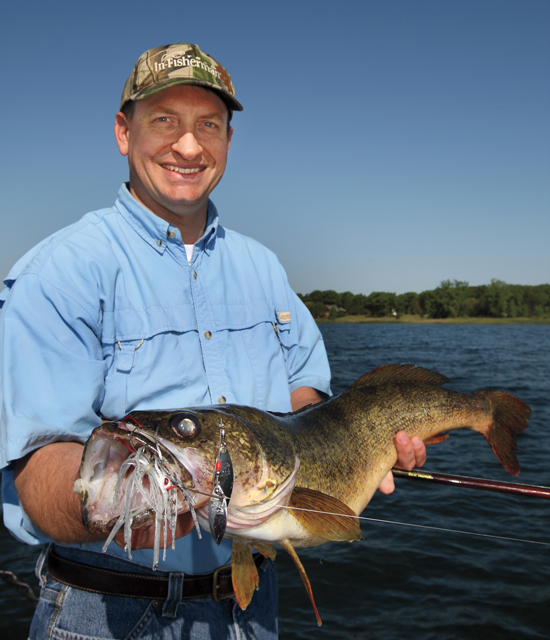
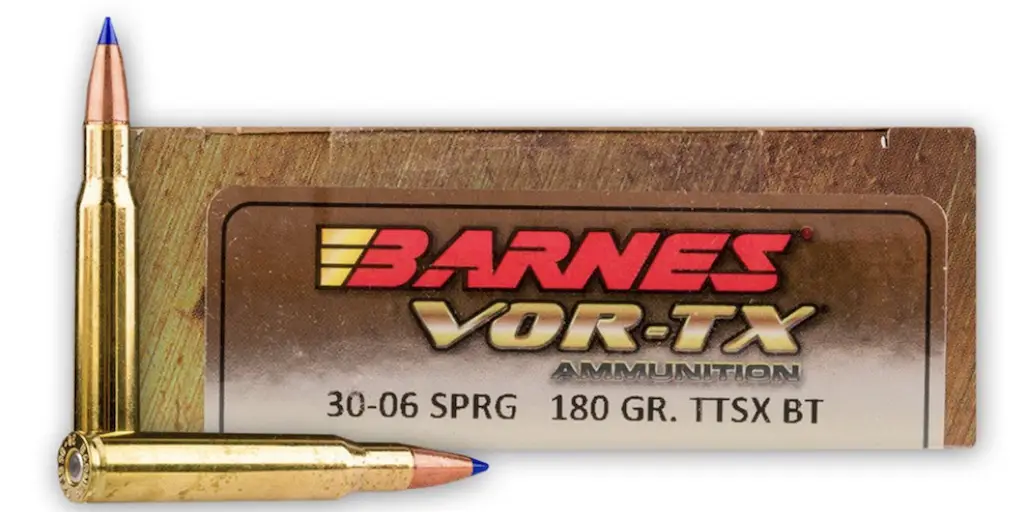

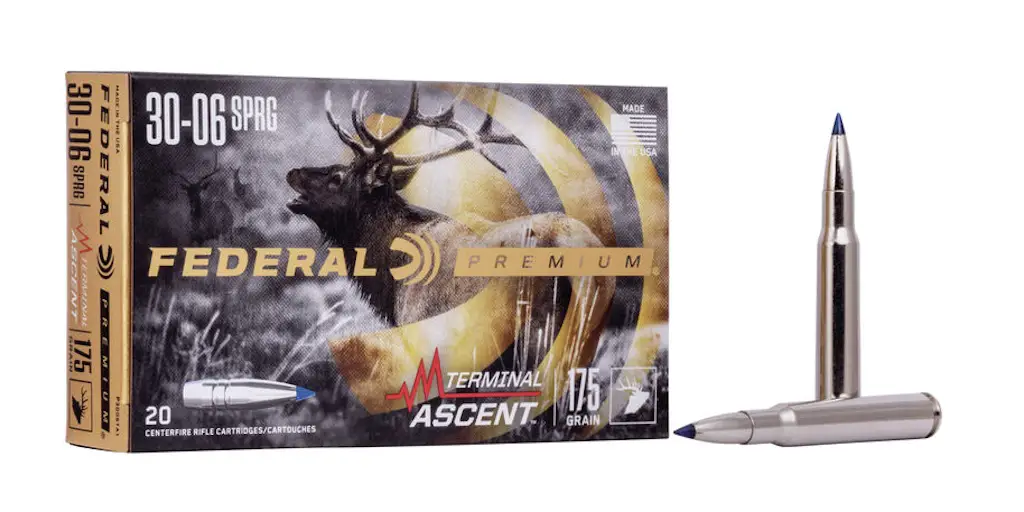
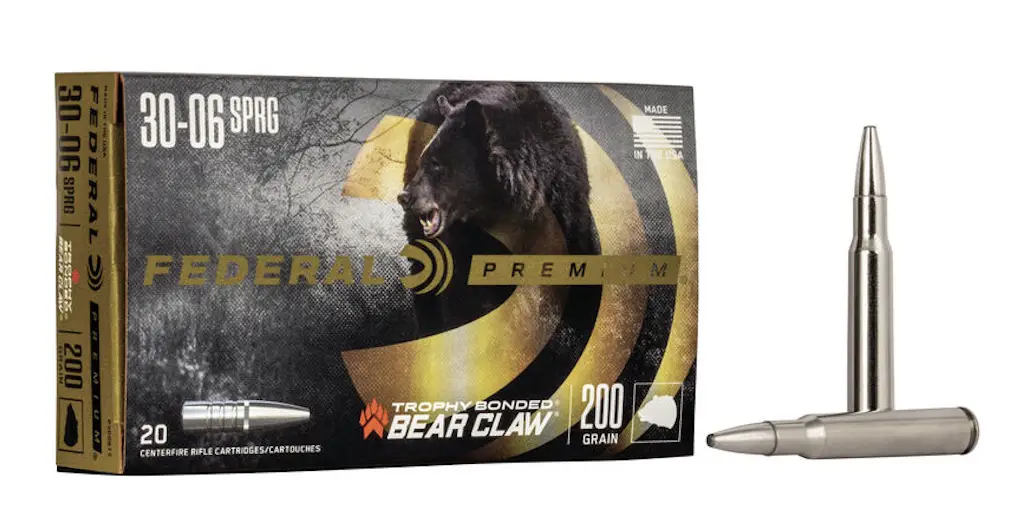
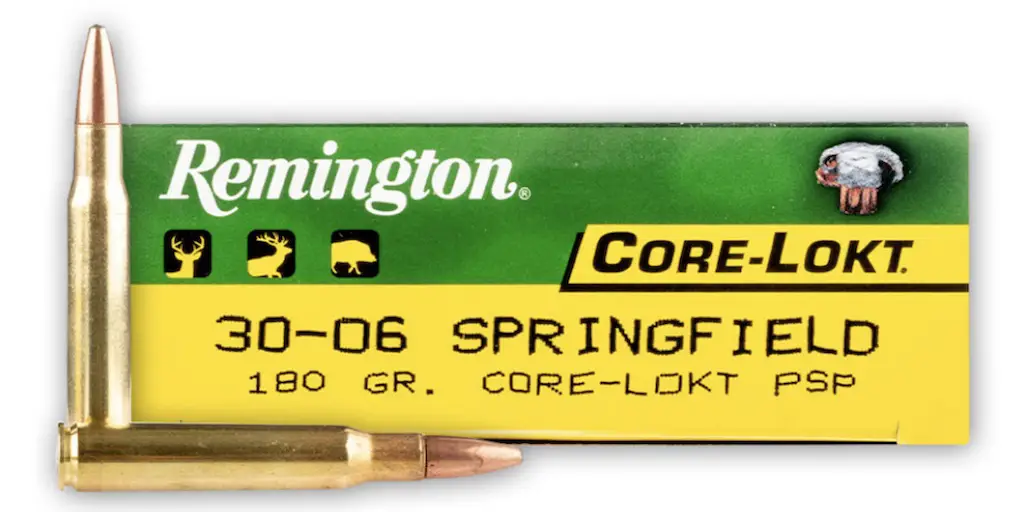
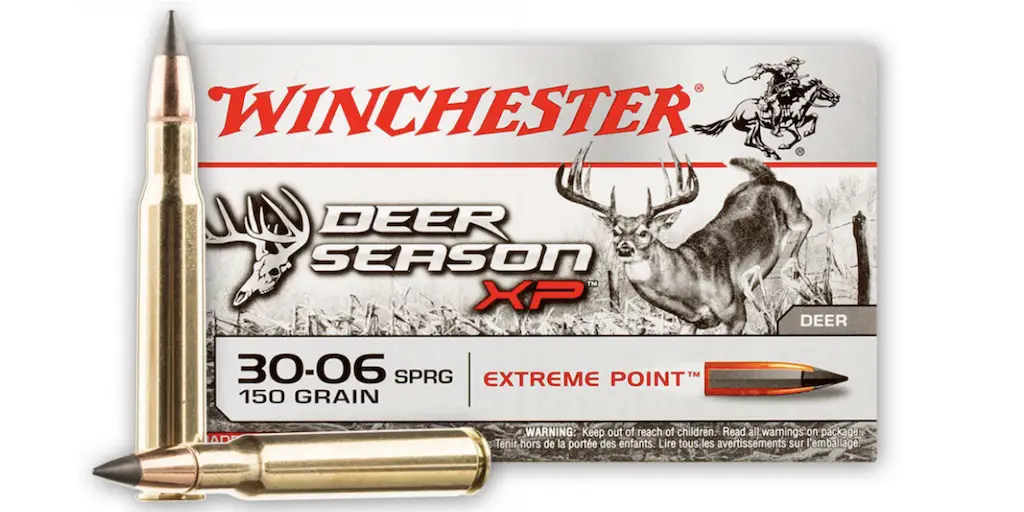
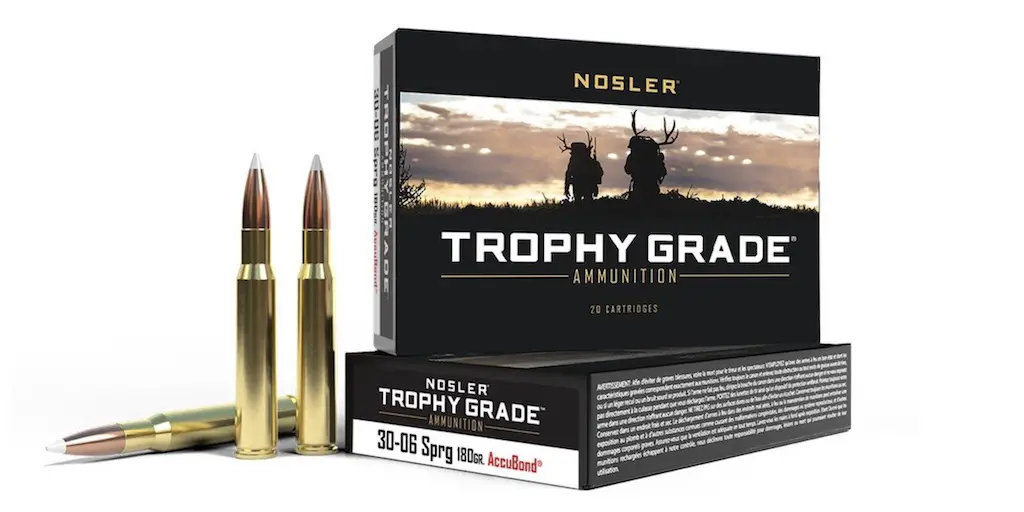
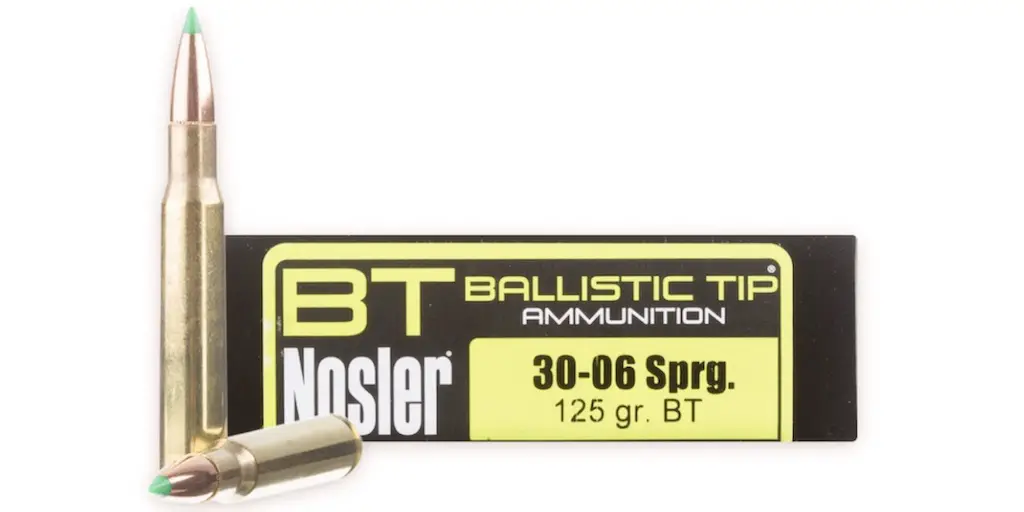
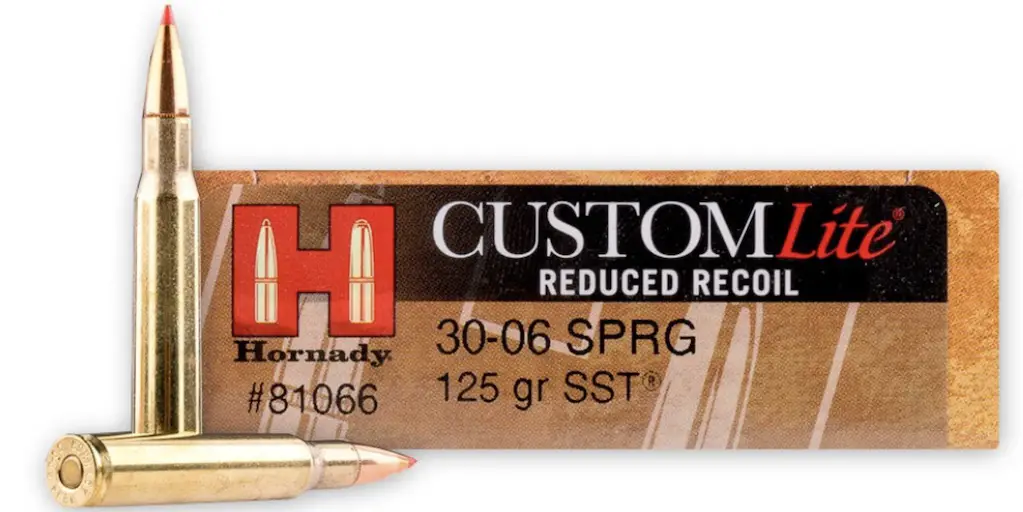
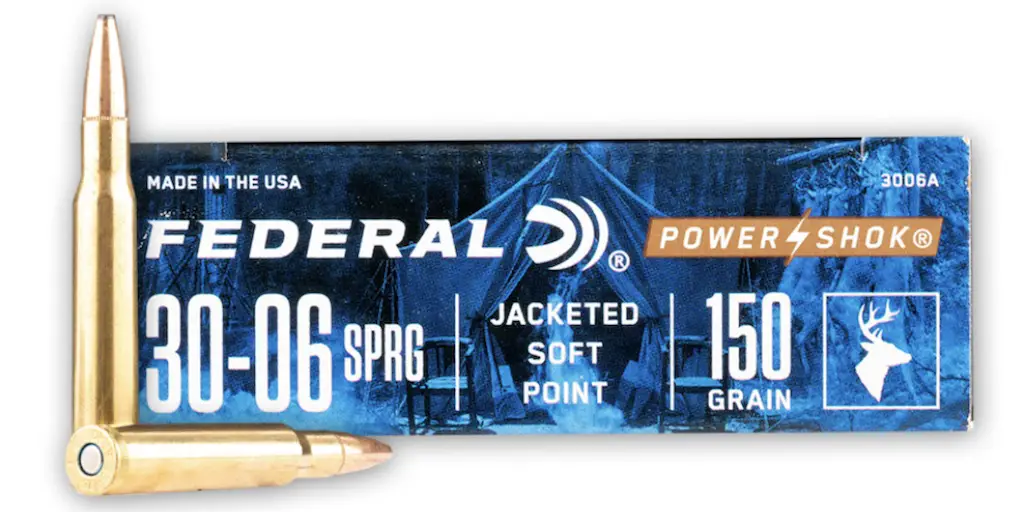
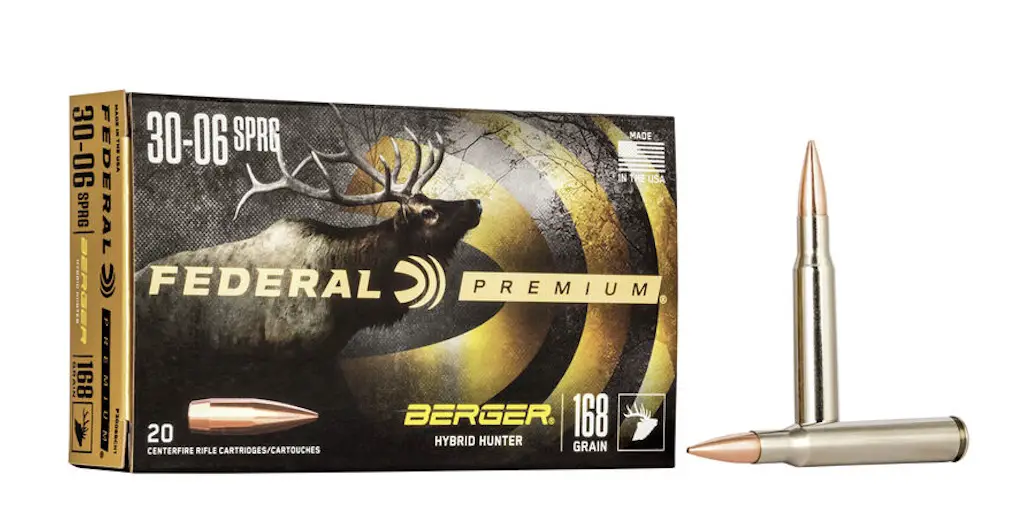





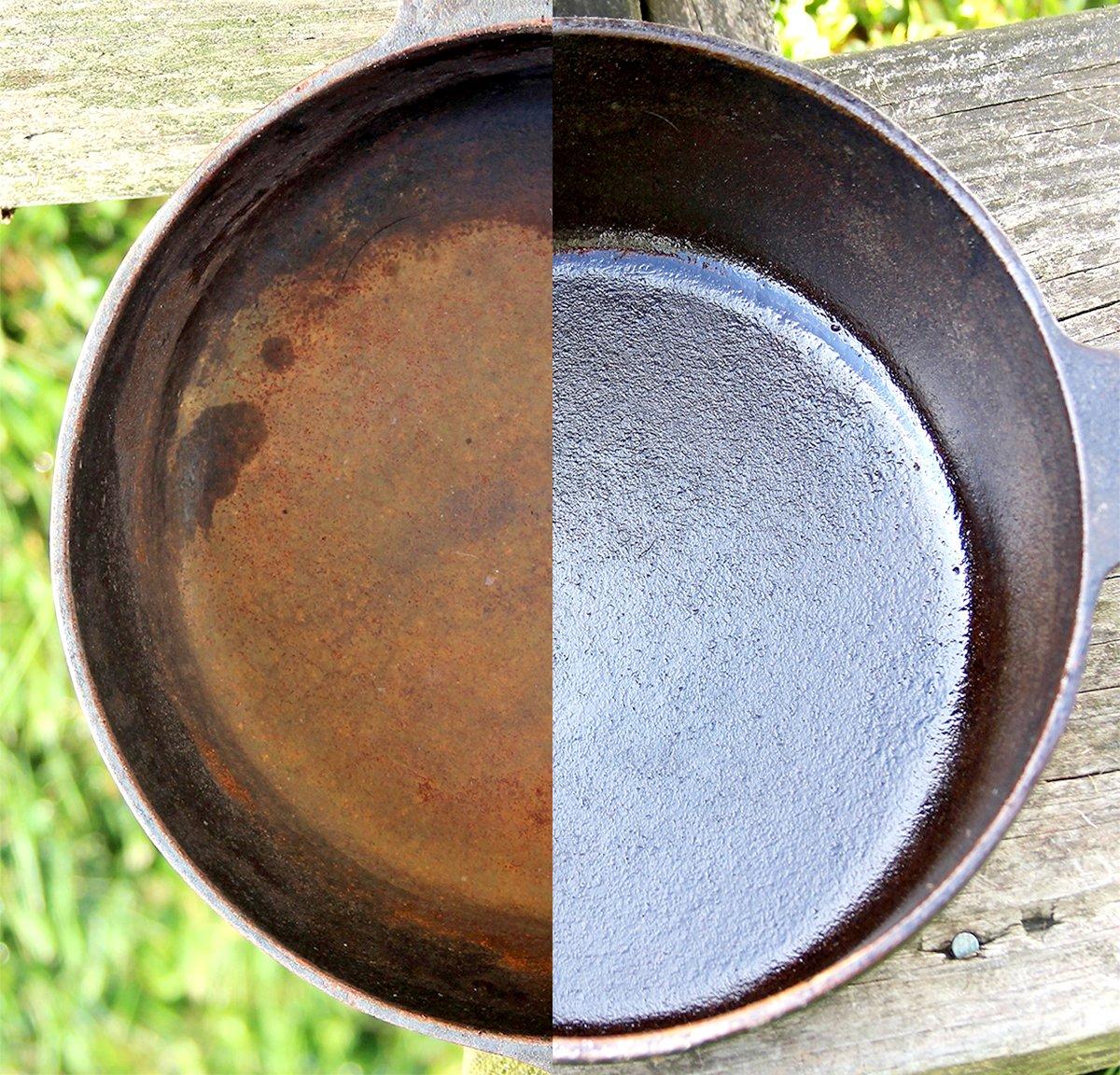
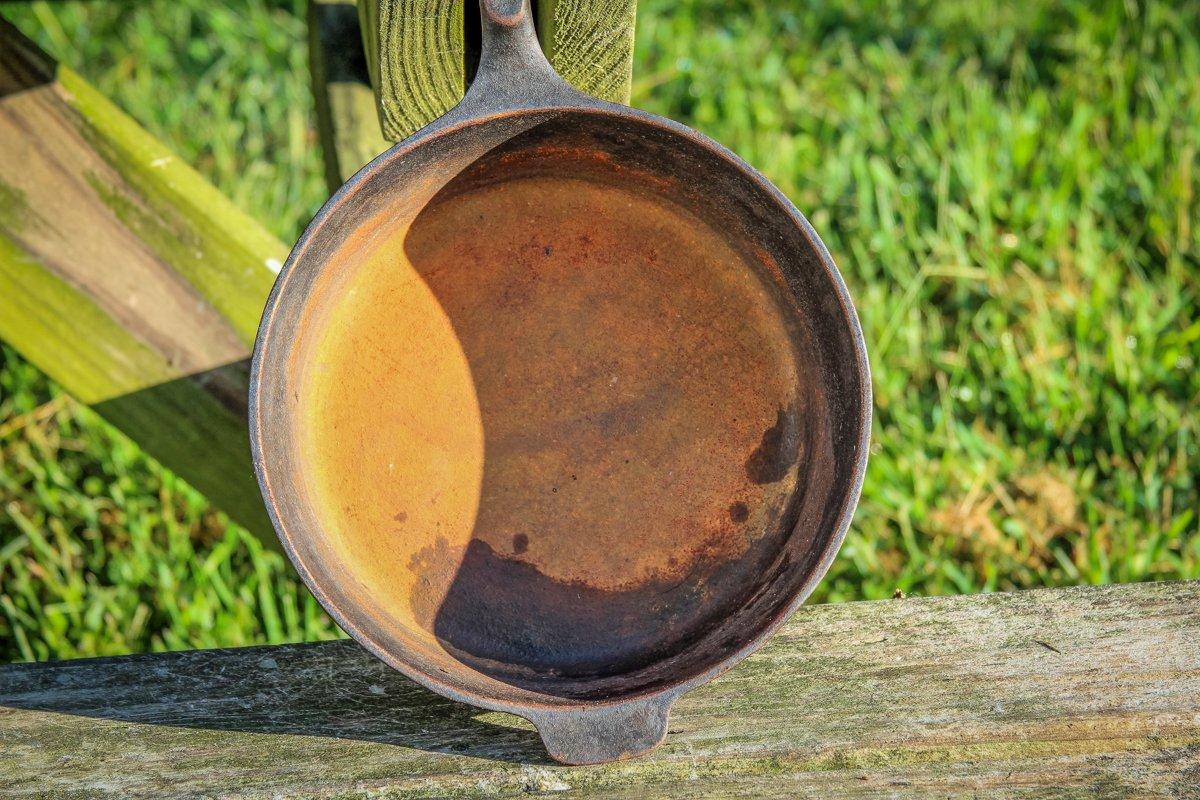
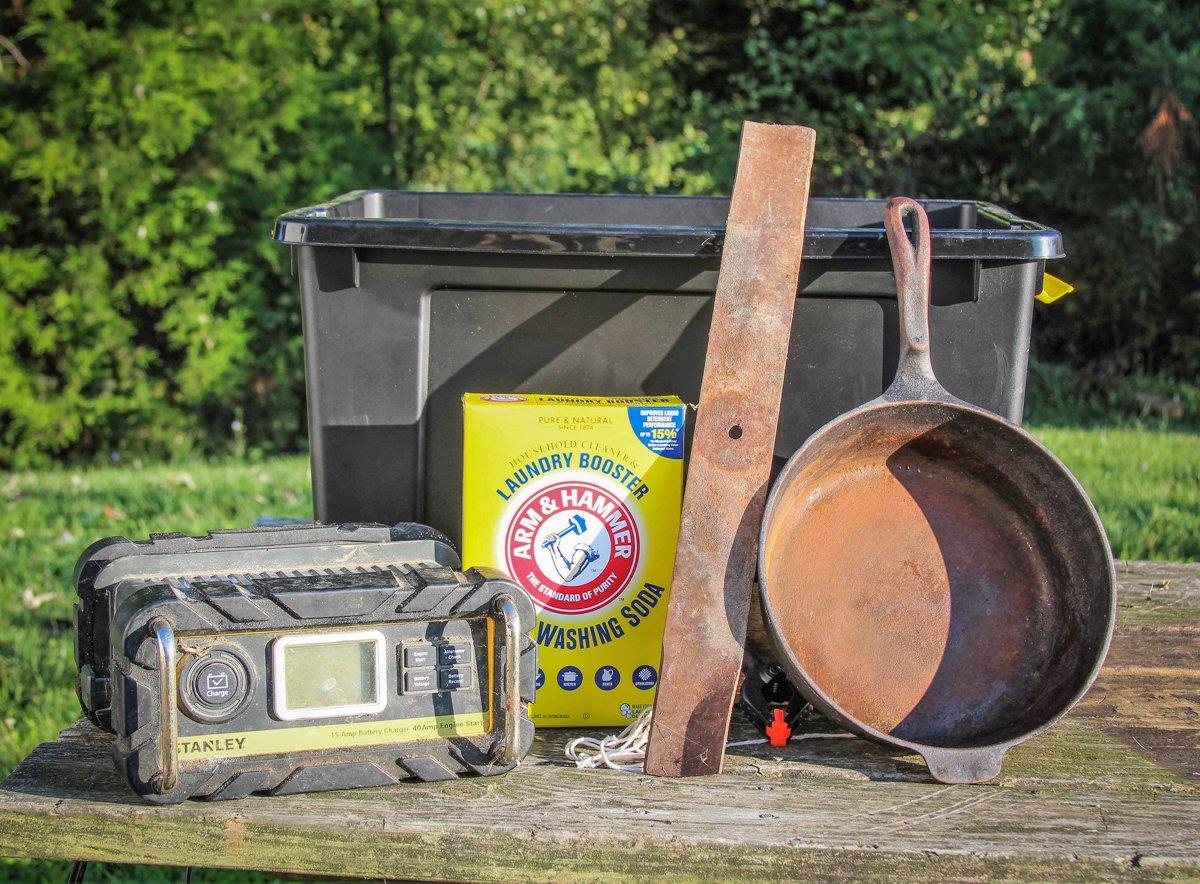
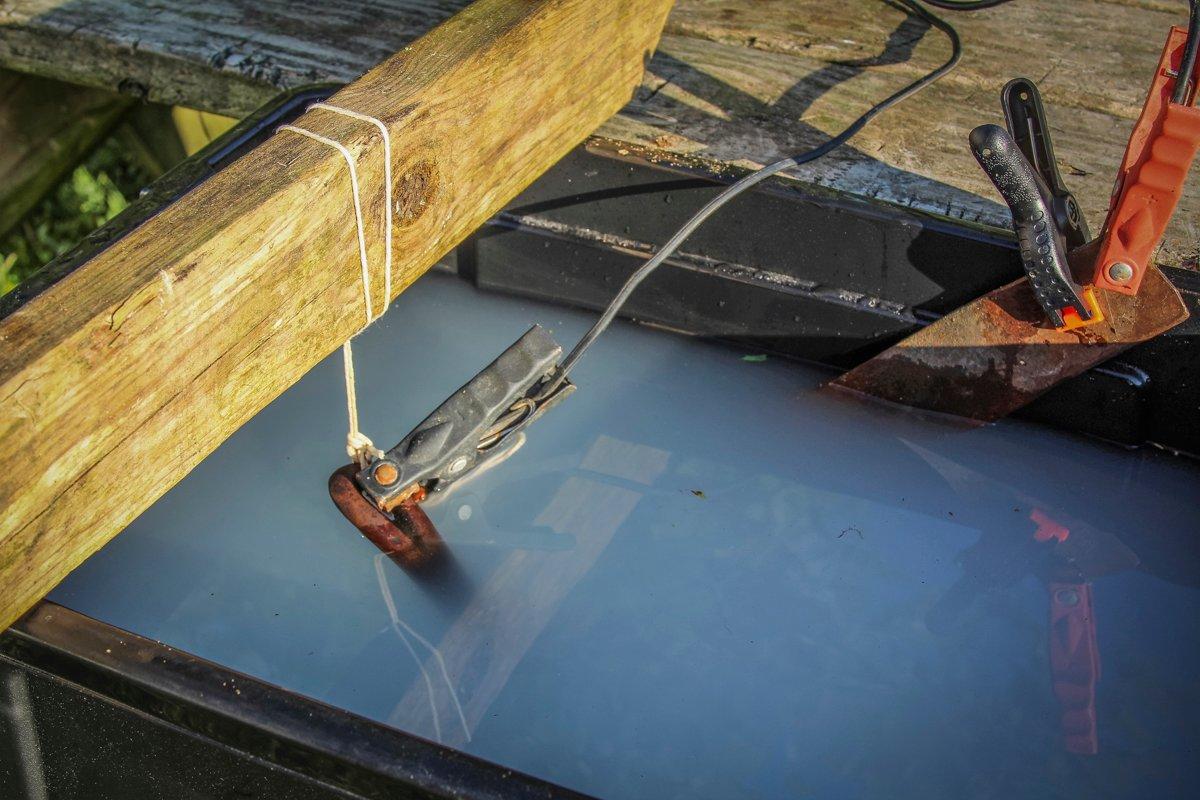
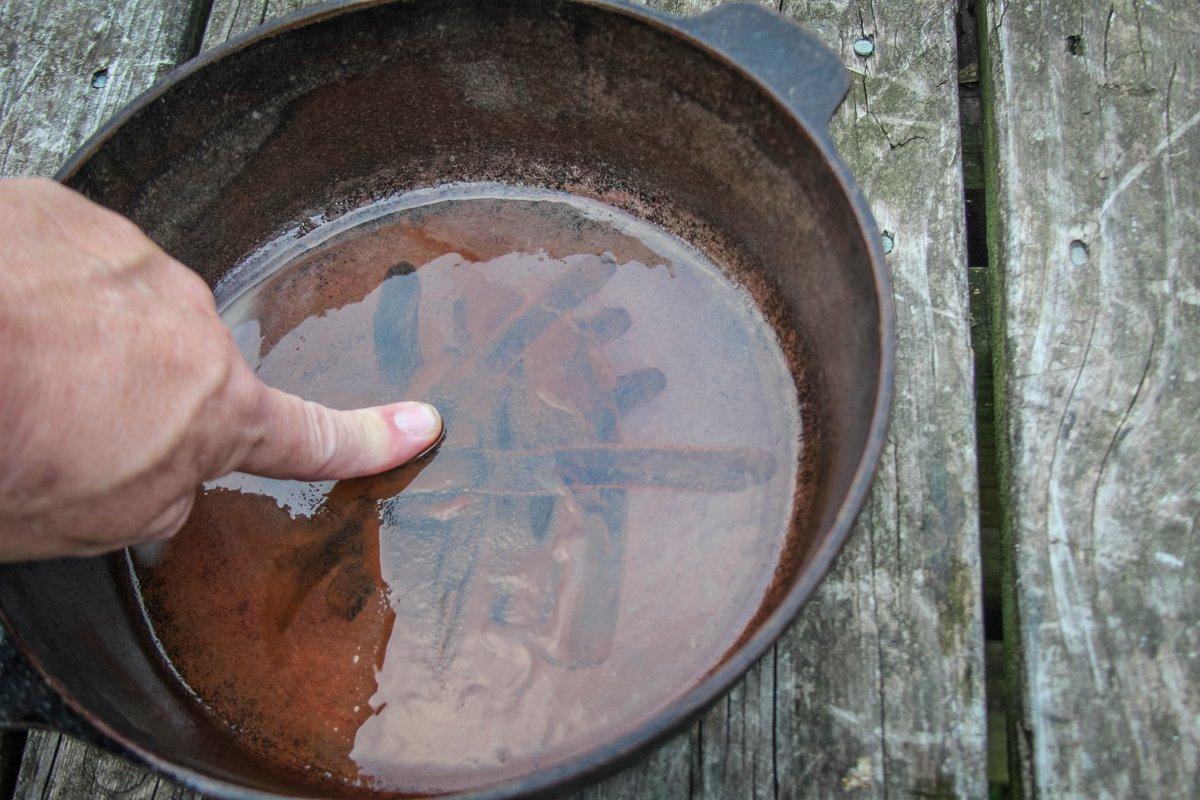 Once washed, immediately dry the pan (a bare iron pan will rust if you look at it wrong) and begin the seasoning process using this method or one of the newer cast-iron seasoning products on the market like Crisbeepuck, Buzzywax or Lodge Seasoning Spray.