Affiliate Disclosure: This page contains affiliate links. We earn from qualifying purchases.
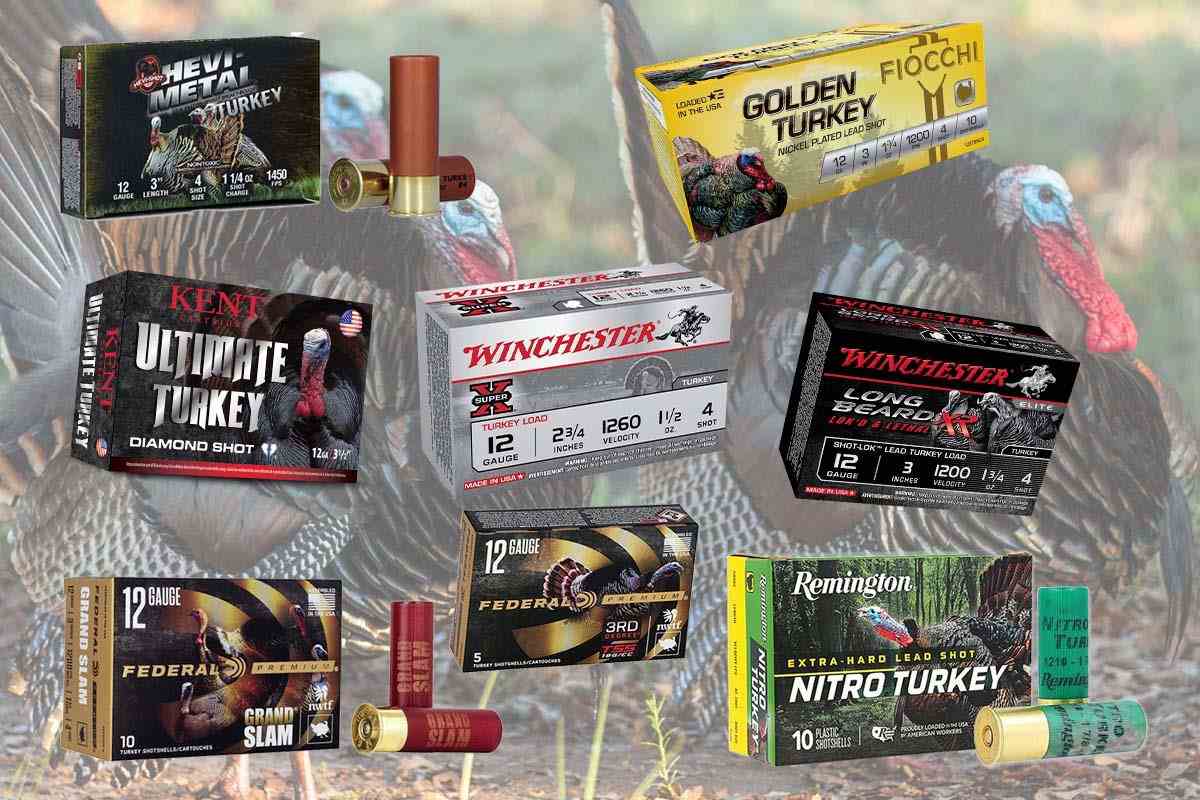
In recent years, expensive high-end specialty loads—some with price tags of $75 or more—have dominated the shotshell aisles when it comes to spring turkey hunting. And that’s easy to understand as the combination of great hunting techniques, specialty choke tubes, and high-end ammunition products combine to help hunters fill a tag or two on America’s grand game bird of the springtime woods.
So, we asked the question: Are there affordable shotshells available, for say under $40, that will still knock down an old wise gobbler while he struts? Yes, if you know where to look. Better yet, just like what lesser-priced shotshell offerings did for decades prior to the super shot revolution in turkey loads, these more economical loads still put a gobbler’s fan on the wall and a hefty longbeard on the dinner table.
Many of these are available at your local hunting retailer, and some are even on sale right now. If you can’t find them in your own backyard, they are readily available at major online retailers.
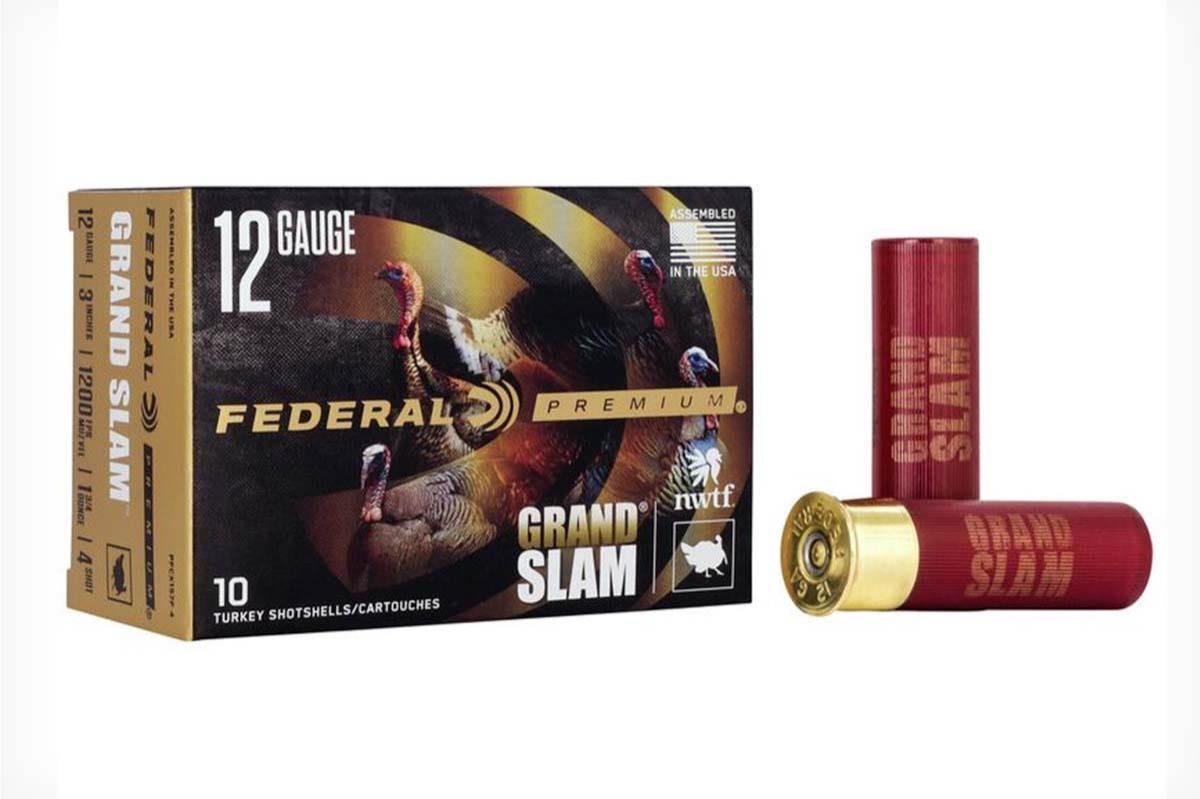
Federal Grand Slam
Federal Grand Slam
A reliable offering from Federal Premium Ammunition, the Grand Slam turkey load uses the Minnesota company’s FLITECONTROL FLEX wad system, which opens from the rear for a controlled release of pellets and pattern density shot after shot, and works in both ported choke tubes and standard choke tubes at the end of the barrel in your turkey scattergun. With an advanced buffering compound kept in place by a roll crimp and clear card wad, the buffering in the shotshell prevents pellet deformation as the copper-plated lead shot travels exits the barrel and choke at 1200 fps. With 10 shotshells (2 3/4-inches) in the box and a portion of the proceeds donated to the National Wild Turkey Federation, this shotshell will help you take a gobbler this spring in the local woods and across the country as you finish out your wild turkey Grand Slam. federalpremium.com | $24.99
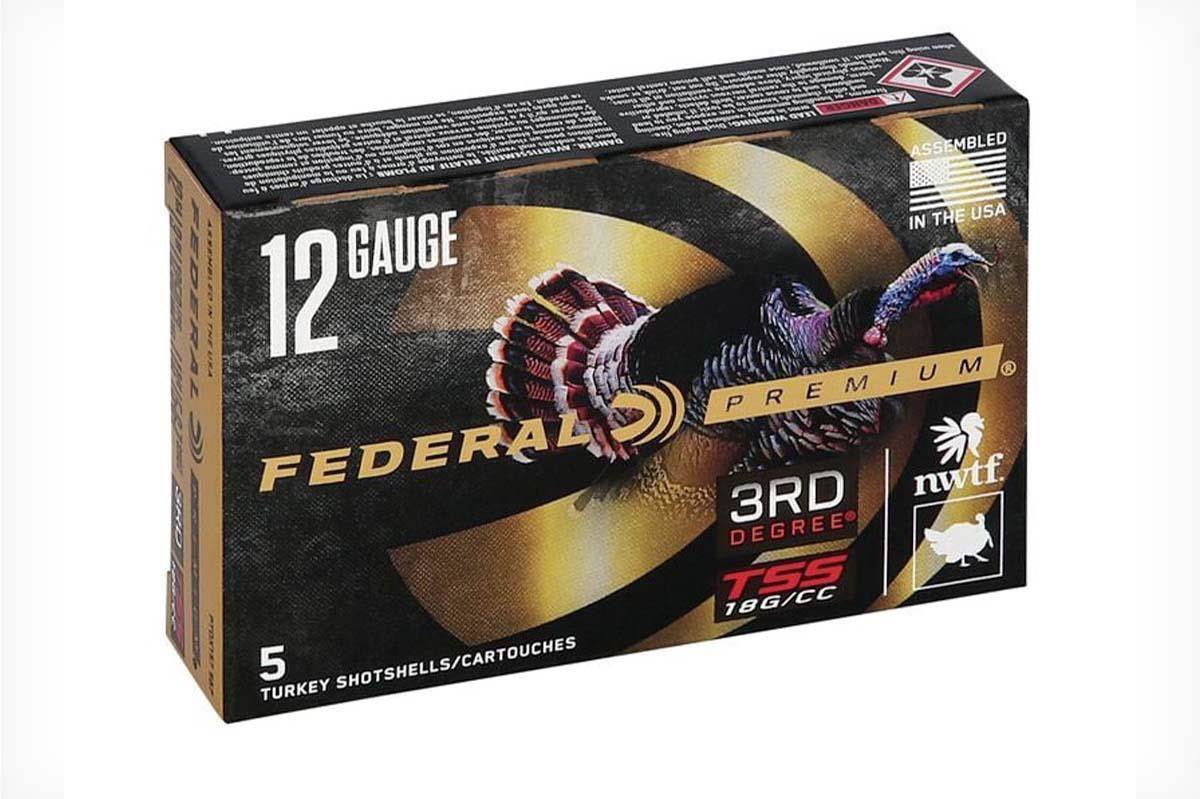
Federal Premium 3rd Degree
Federal Premium 3rd Degree
This shotshell from Federal Premium Ammunition actually gets hunters into the specialty turkey load market, without breaking the bank. That’s thanks to Federal’s 3rd Degree turkey load that combines the Minnesota company’s FLITECONTROL FLEX wad and a three-stage payload blend of #5 copper-plated lead shot, #6 FLITESTOPPER lead, and 18g/cc #7 HEAVYWEIGHT TSS (Tungsten Super Shot). The result according to Federal is pattern forgiveness at close ranges, a lethal knockout at mid-range, and extra-dense, high-energy deadly patterns at ranges of 40 yards or more. It’s a bank account friendly, super-charged turkey shotshell that works no matter the shot situation you are presented with this spring. And as with the Grand Slam from Federal Premium, a portion of the proceeds on this mid-30 dollar range box of shotshells will go to the NWTF to help ensure gobblers are roaming the woods for years to come. federalpremium.com | $35.99
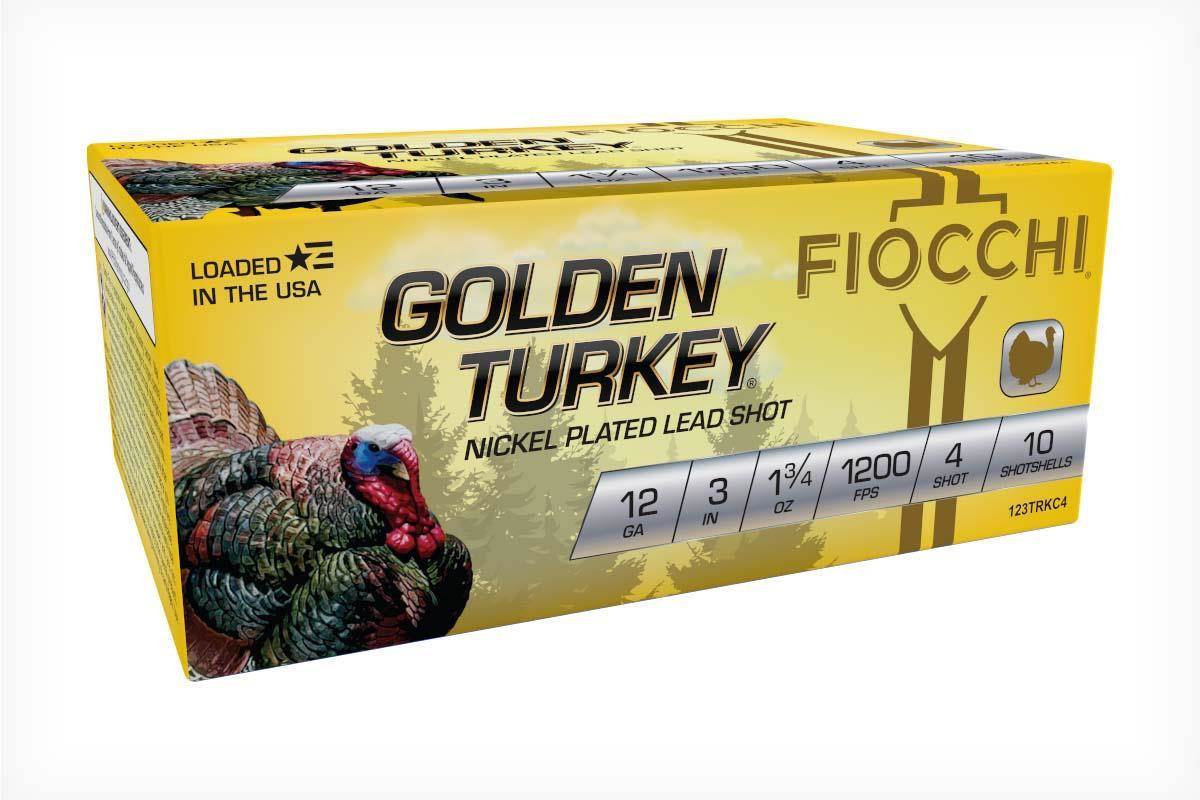
Fiocchi Golden Turkey
Fiocchi Golden Turkey shotshells
Last year, Fiocchi updated its Golden Turkey Load. With three-inch shells using nickel-plated lead shot, an improved wad, and clean-burning powders, the result is a simple shotshell that remains the gold standard for many gobbler-getters. Whether you’re shooting a 12-gauge and wanting #4, #5, or #6 shot sizes, or a 20-gauge and #5 and #6 shot sizes, these shotshells feature 1 3/4-oz. loads and 1 1/4-oz. loads respectively. And with a 1200 fps payload, high-grade construction, and dense patterns downrange, it’s hard not to like these loads, especially since they check in at under $20. fiocchiusa.com | $19.99
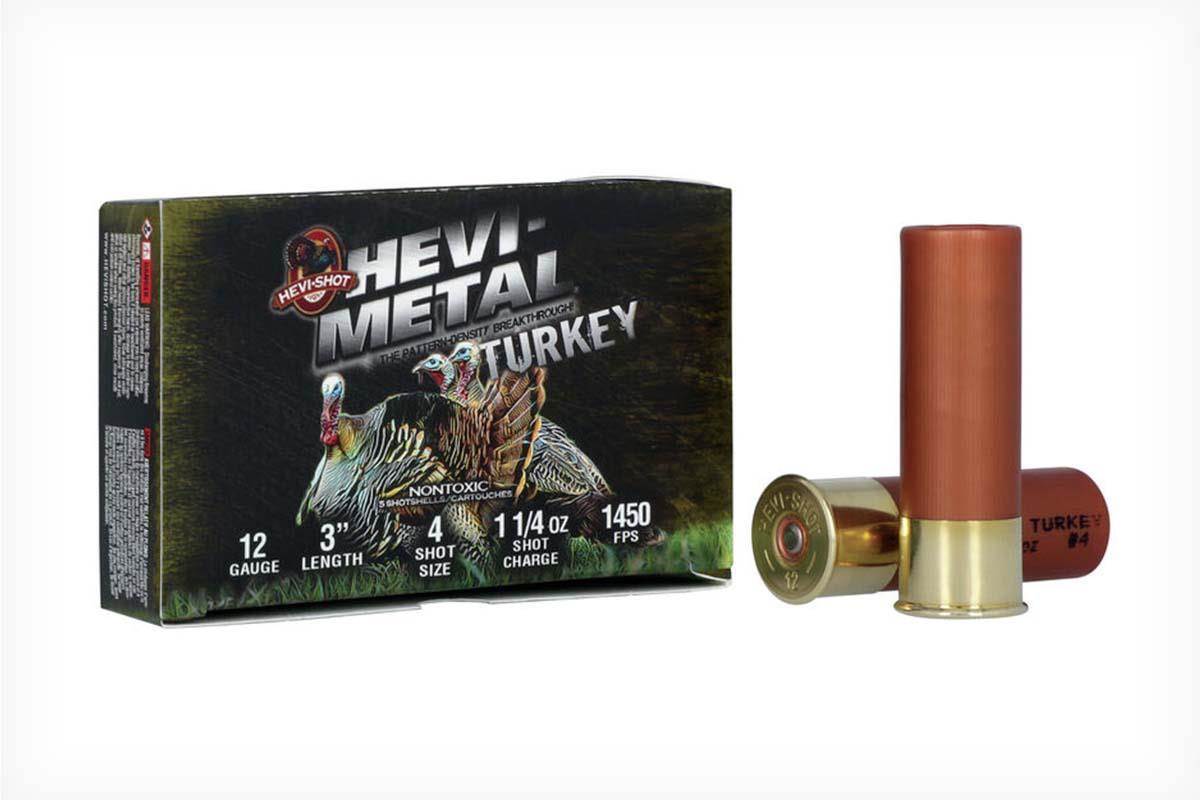
HEVI-Shot HEVI-METAL Turkey
HEVI-Shot HEVI-METAL Turkey shotshells
HEVI-Shot is legendary among waterfowl hunters who need a shotshell that can knock down greenheads at the edge of effective range, or a 20-plus pound Canada goose dropping down into a spread as winds blow during a December snowstorm. But the company is also known for its other high-performance shotshells, and nothing changes in that reputation when we’re talking about a box of HEVI-METAL Turkey loads featuring a blend of #4 and #5 pellets. Add in the company’s Pattern Density Technology to layer in those pellets—including a layer of 30-percent HEVI-Bismuth #5 shot and a layer of 70-percent #4 steel shot-and the result is a hard-hammering load at an amazingly friendly price-point. hevishot.com | $17.99
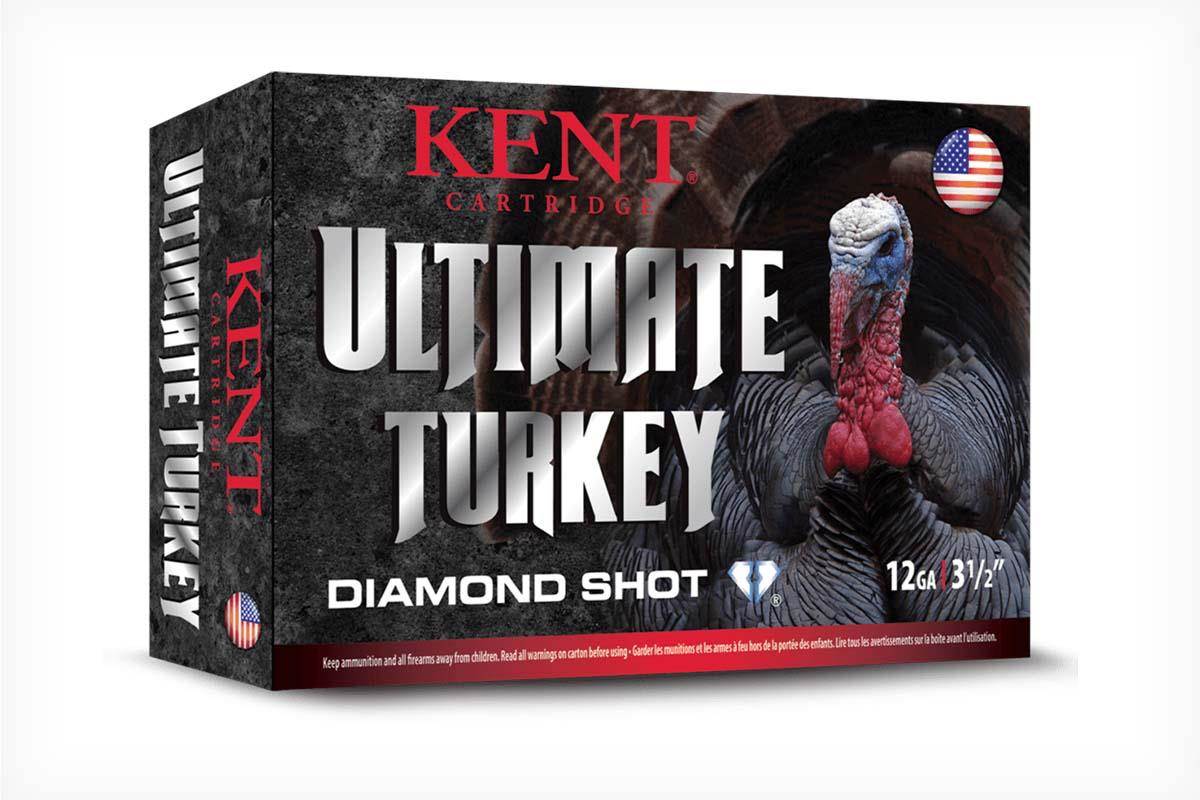
Kent Ultimate Turkey
Kent Ultimate Turkey shotshells
Kent is no stranger in the shotshell-making game, producing great waterfowl and upland bird hunting shotshells for years, making them a favorite in many hunter’s duck blinds and hunting vests. But they also produce great turkey hunting shotshells, too, with a price tag that makes them look like they’re left over from a generation ago. Except, they’re not, they’re the latest shotshell from the West Virginia-based ammunition brand that helps turn out the lights every year on lots of wily old mountain toms, swamp gobblers, and prairie strutters. With the Kent Ultimate Turkey Diamond Shot load, hunters in 2024 get consistent tight patterning thanks to Kent’s high antimony, super-hard Diamond Shot loads in #4 and #5 shot sizes. Add in custom blended powders to go with the uniform pellets, and the result on the patterning board is a tight swarm of pellets. kentcartridge.com | $14.95
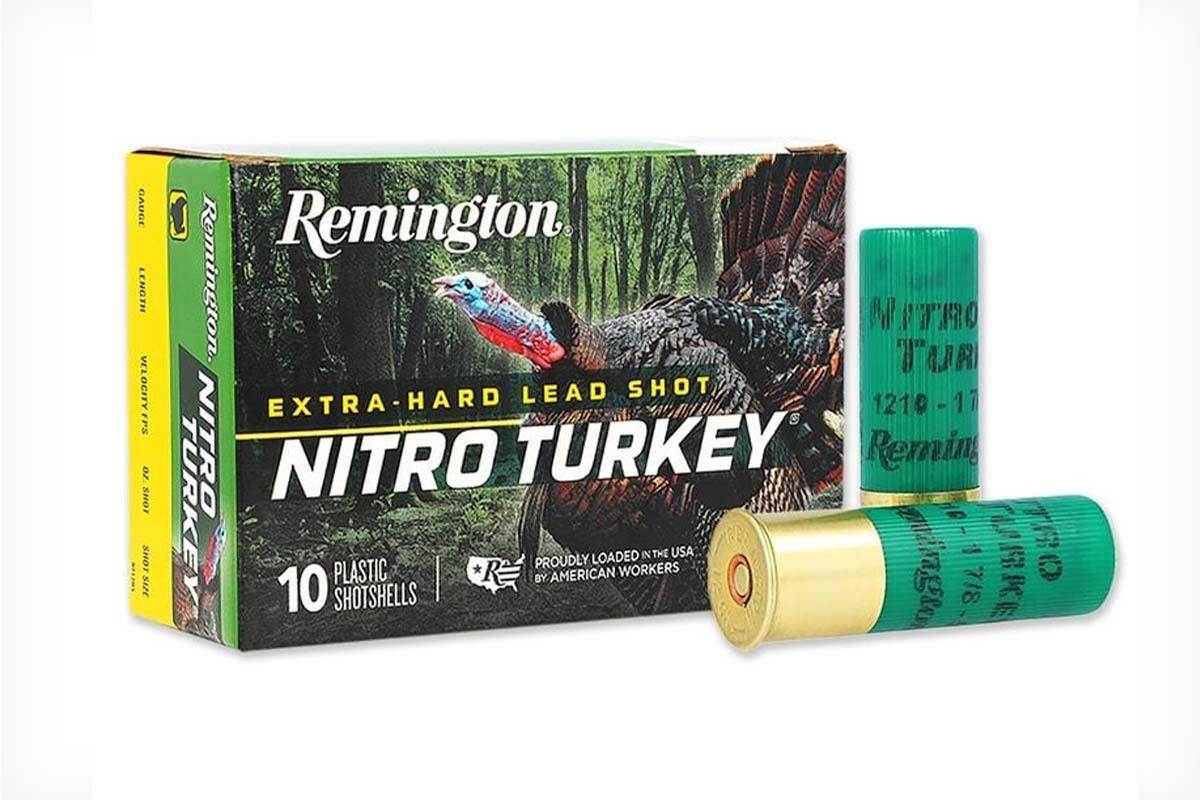
Remington Nitro Turkey
Remington Nitro Turkey shotshells
Growing up, I was a Remington guy, much like some families are Ford and others are Chevy. I didn’t know any different since the local Gibson’s store where I saved up and bought my first shotgun—yup, a Remington 870—carried the line from the famed American gun maker and ammunition maker that fell on hard times in recent years. With the purchase a while back of Remington’s ammo brands by Federal Premium Ammunition, the chance to run a Remington shell is still there for my 870 (a different one since the original one was stolen out of my truck after a dove hunt) thanks to the Remington Nitro Turkey loads that carry copper-plated, buffered loads that gets delivered by a blended powder recipe. Add in a Power Piston one-piece wad, along with a 1 7/8-oz. payload of shot whistling downrange at 1210 fps and the 80-percent pattern density will still kill a longbeard deader than a hammer. remington.com | $14.99
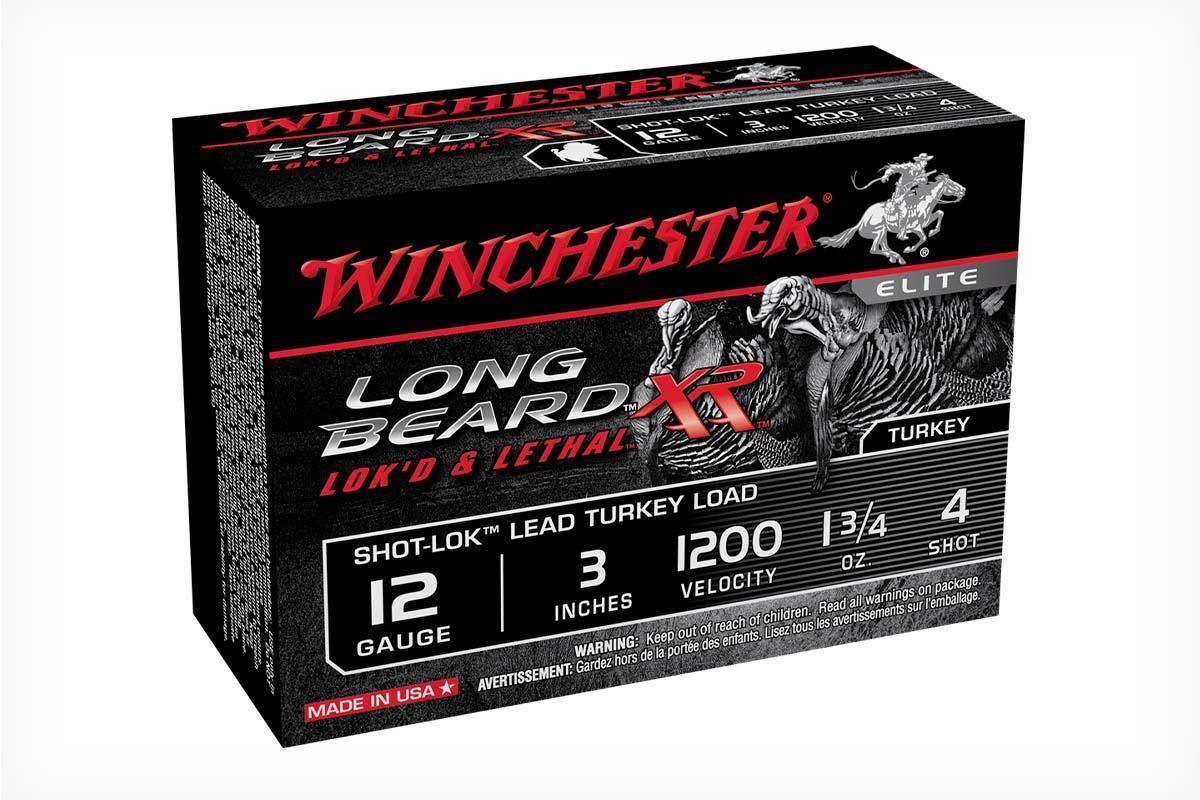
Winchester Long Beard XR
Winchester Long Beard XR shotshells
In years gone by, most turkey hunters kept their shotgun shooting ranges dialed in at 40 yards or less. But with the advent of great turkey hunting specialty chokes and high-performance loads with TSS (Tungsten Super Shot), bismuth, and more, those effective range distances have been extended in recent years. And thanks to Winchester, that’s true with a 12-gauge or a 20-gauge load that doesn’t break the bank, delivered with the company’s tried-and-true Long Beard XR load. That load has been a winner for Winchester and is billed as the most innovative turkey load ever developed by the longtime leader in ammo manufacturing. That’s achieved thanks to Winchester’s Shot-Lok Technology, which helps bring about amazing consistency and longer downrange capabilities with dense patterns hitting overwhelming a 10-inch circle out to 60-yards. While offering the knockdown power of higher priced loads, this shell delivers a deadly punch to a gobbler’s noggin at an easy to digest price-point, while still allowing turkey hunters to push the limits of what they once thought possible when a longbeard would hang up and refuse to come another step closer. winchester.com | $24.99
Winchester Super-X Turkey Load
Winchester Super-X Turkey Load shotshells
This is a tried-and-true turkey load that has given out a RIP dinner table invite to countless longbeards over the years, my household included. With the Super-X line being a part of Winchester’s lineup in some capacity since 1922, the Super-X series has made lots of wingshooters happy down through the decades, including gobbler-getters like myself. That’s because those hunters have come to rely on the Super-X Turkey load’s copper-plated hard shot, custom blend of powders, and Grex Buffering, which combine to deliver tight patterns at long ranges, a high-velocity payload that turns the lights out on a spring turkey noisily strutting about, and cost-effectiveness. In short, this is a well-rated and dependable shotshell from one of America’s legendary ammunition brands that continues to deliver high-quality construction, superior in-the-field performance, and economic value for hunters looking to fill a turkey tag or two. Even if they don’t want to spend most of a Ben Franklin $100 bill on the shotshells that they put into their turkey vests this spring. winchester.com | $11
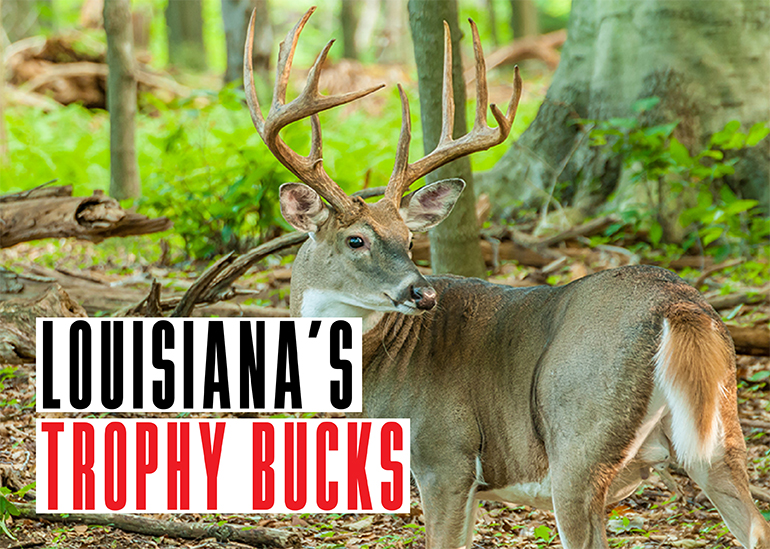
Every deer season, Louisiana hunters take some trophy bucks. Here are the stories behind three from last season.
This time of year, my social media feeds begin filling with photos of huge, once-a-lifetime trophy bucks. Of course, few hunters ever have a chance at a record buck, but hunters should take solace knowing their odds of tagging a big buck are better in Louisiana than in most states.
Remember, Louisiana has everything it takes to build a trophy buck, including highly productive habitat, a diverse and well-developed gene pool and a culture of management-minded stewardship. By mid summer 2018, Johnathan Bordelon, the biologist over the Louisiana Deer Study, added 29 deer to the Louisiana Big Game Recognition Program.
“Bucks meeting the Louisiana Big Game Recognition minimum criteria are harvested across most of the state,” said Bordelon. “Of course, the productive habitat within the Mississippi Alluvial Valley produces more big bucks than other habitats in the state. Older age management is the driving force behind most of it. Louisiana continues to produce its fair share of 3.5 year and older bucks each season. In fact, when compared to the rest of the nation, Louisiana typically ranks in the top three each year in the percentage of 3.5-year and older.”
It is important to understand the framework of Louisiana’s Big Game Recognition Program and what constitutes a quality buck. The program documents white-tailed deer harvested within the state that meet or exceed minimum antler size. Yearly lists are published in early to mid-summer and the all-time list is updated and published every three years. However, since the recognition program is voluntary, there are likely a number of other deer in the state that have not been added to the roll.
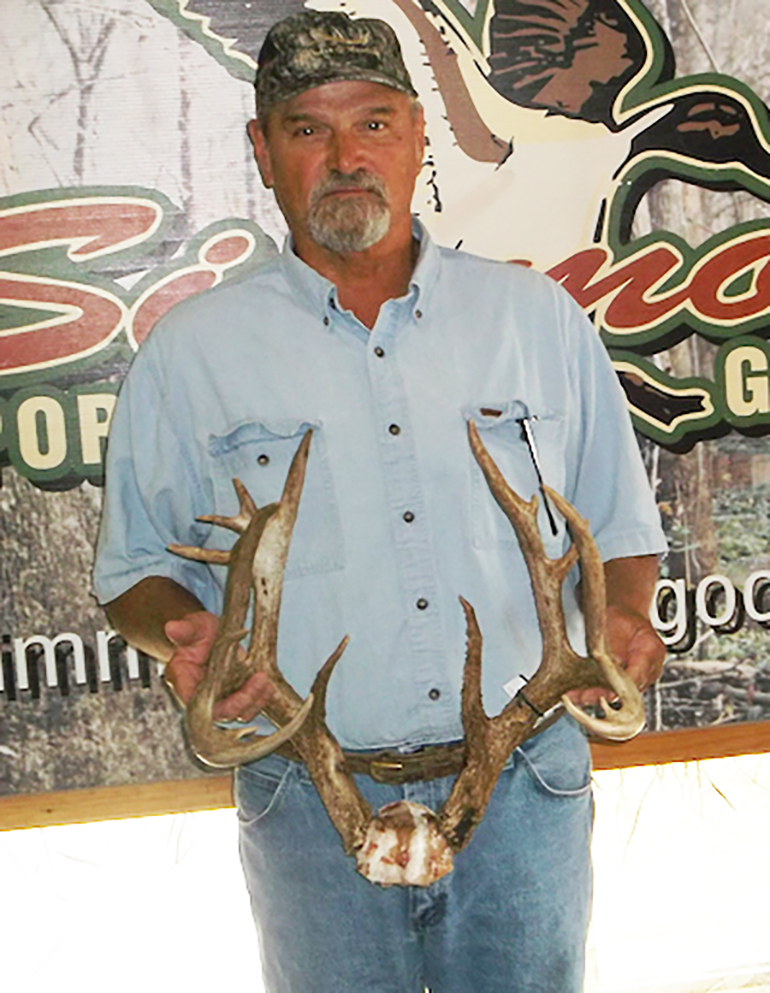
MADISON PARISH — MICHAEL MAY
Michael May started bowhunting with a Ben Pearson Hunter recurve when he was 12 years old, which was over five decades ago. Of course, he has upgraded his bow since then, so the evening of Oct. 4 found him climbing into a stand with his Matthews compound.
The old growth timber he was hunting was located along the banks of one of Madison Parish’s larger lakes. Made up of bottomland hardwoods, his spot had little to no underbrush making it easy to see deer for a distance. Nearby, a regrown thicket provided lots of browse plants for the area deer.
With an easterly wind, May settled in to enjoy an evening hunt. Soon after the woods calmed down, several does approached his stand. Approximately 4:30 in the evening, motion in the distance caught his eye. Unbelievably, a large-antlered buck rose from his apparent bedding spot approximately 100 yards away. The deer began a long creep toward the does. For nearly an hour, the buck crept forward. Soon, the buck was at 40 yards, and still coming. Eventually, the buck paused 20 yards out, turned broadside and offered a shot. Jumping on the opportunity, May drew his bow, found the deer in his sight, and released an arrow. The deer dropped on the spot.
Weighing in at 190 pounds, the deer did not size up with his normally heavier cousins from the Parish, but the 6.5-year-old buck could still hold his own. With an inside spread of 15.5 inches, this dimension only adds a small part of the deer’s 186 5/8 inches.
“I was actually hunting a larger deer that frequented the area,” said May. “I put cameras out about a month before during the first week of September. I saw this deer on camera twice, the first time on Sept. 28, and again on Oct. 3 during daylight hours.”
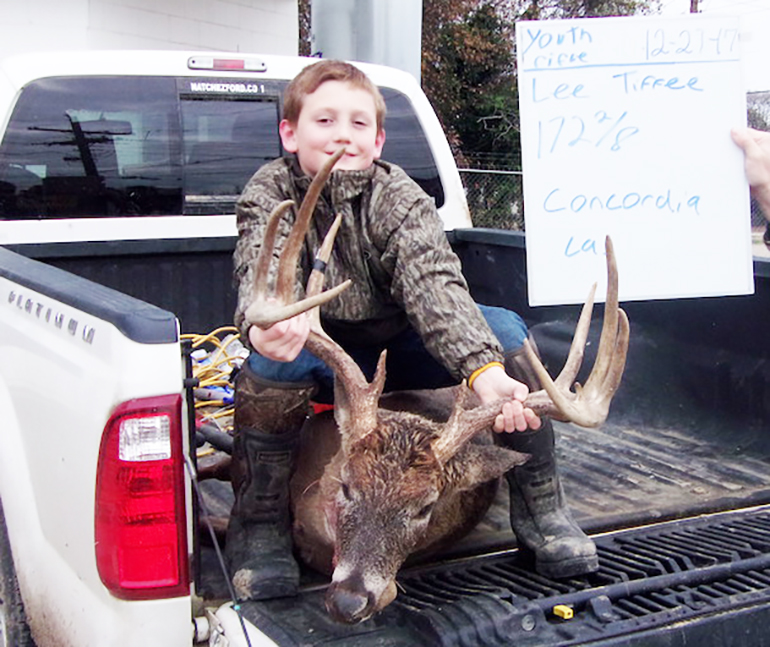
CONCORDIA PARISH — LEE TIFFEE
The best part of the hunting tradition is the hunting stories that accompany it. Each hunt, whether it is successful or not, produces a story. According to Lee Tiffee, a 10-year-old deer hunter from Concordia Parish, the circumstances leading to his encounter with a buck serve to prove that when deer hunting, a hunter needs to be on the lookout at all times.
On December 26, Lee and his father, Tom, climbed their stand on a cold, rainy, afternoon hunt. A family friend accompanied the pair but peeled off about a hundred yards or so. Their stand is found behind their house and overlooks a food plot. The woods surrounding the food plot are enrolled in Wetland Reserve Program, providing thick cover and plenty of browse and bedding areas. If the rain would let up, both hunters thought it likely deer would be moving that evening. Watching the woodline for hours seems like a job reserved for older, more mature individuals, but Lee was ready to hunt this day. A few hours into the hunt, the younger Tiffee recalled seeing a deer appear out of nowhere.
“I looked out on the food plot and saw deer,” said Lee. “It was a cull buck that had a spike antler on one side and four scraggly points on the other side. Dad said I could shoot him.”
Unfortunately, nerves got the best of him and as Lee pulled his rifle up to fire, he was shaking. Just as he was able to calm down, their hunting partner shot and the cull buck busted out of the food plot.
“We figured the woods were all awake after the shot and deer busting through the woods, so we decided we would go help our friend track and drag his deer before it got dark.”
The Tiffees started to depart their stand, but were still in hunt mode. Tom looked up and saw a deer standing on the back side of the food plot. Then, Lee saw him, but couldn’t see his antlers. The rest Tom remembers in slow motion. Lee’s gun was resting on the side of the stand, and before Tom knew what was happening, Lee was shooting at the deer. A round from the Remington 700 found its target and the buck heaved, and broke for the thicket. Now the hunting party had two deer on the ground, but the rain wasn’t letting up. They finally found some blood and tracked the deer down through a gully and up the other side. Upon seeing the buck, the pair was shocked at its size, with Lee calling the grandfather to say that he had killed a monster.
Lee and his dad dragged the deer back to the vehicle, and the rest of the story has been written down in the family history book. Lee’s buck scored 168 5/8 inches, which was enough to win the youth division at a local big buck contest. The buck now hangs proudly on his wall at home and Lee offers his hunting story to any who will listen.
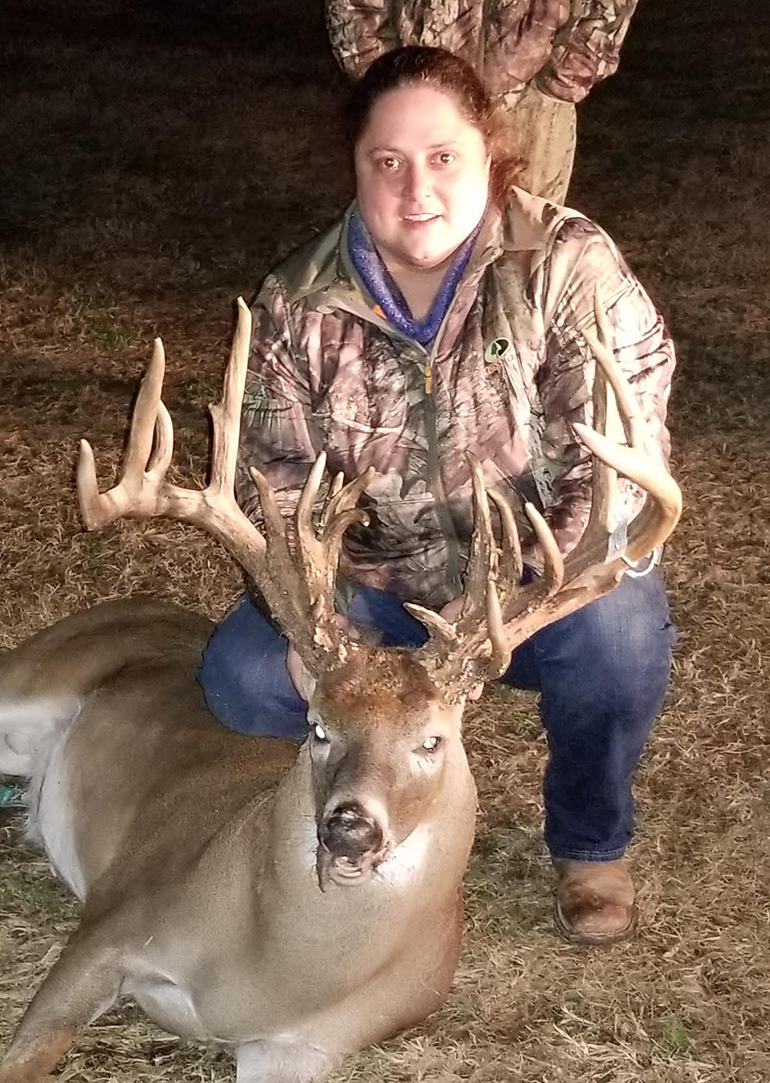
AVOYELLES PARISH — AMANDA SMITH
The second week of January blew into Avoyelles Parish on the backside of rain and saw a cold air mass settle into the region. This weather is normal in northern regions, but can be hard to handle for Deep South hunters. Those brave enough to venture to the woods included Amanda Smith.
“I tried to get my son to sit in the stands that evening, but he didn’t want to,” recalled Amanda. The family hunts a small tract of bottomland behind their home in Avoyelles Parish. Though small, land anywhere in Avoyelles Parish may be holding big deer. This is true for the family’s hunting land.
For seven seasons, the Smiths have watched one deer in particular. The buck always produced non-typical antlers and his crown has grown every year. This week, Scotty had taken over home duty for Amanda and she took a week to hunt. They had meat in the freezer and were buck hunting, having seen the buck on a camera about a month before. He had grown and they were figuring this would be the season they took him. Interestingly, the deer the Smith’s had been watching grow over the years was unknown to their neighbors.
“On January 13th, the wind was in my favor, and I walked to the stand for the evening hunt carrying an extra piece of gear — my portable heater,” Amanda said.
Heater in hand and an H&R .444 slung over her shoulder, Smith took to the woods, using the same trail to their only stand on the property. They don’t move around a lot on the property, which is why they believe they are so successful. The hunt was uneventful and cold, at least until a deer appeared.
“When I saw the deer coming, I reached down, turned the heater off and picked up my rifle,” said Amanda. “Putting it up, I realized that the lens had fogged up. I wiped down the scope, slowly, and made a small circle just enough to see through. I put the deer in the crosshairs.
She was calm, as she believed it was a cull buck — a bent up 6 point with lame legs — they had identified for removal. With the deer standing broadside, she squeezed the trigger and he went down. Smith didn’t realize she had killed a 200-inch monster buck.
“I climbed down, walked up to the deer, realized who it was, and I went crazy,” said Amanda.
Scotty arrived on scene as did the couple’s children, making it a family affair; they kids were very excited. They dragged the deer home where it officially scored 226 2/8 inches, making it the fifth largest non-typical in the state and the biggest ever in Avoyelles Parish.
There are many different companies and brands that produce archery equipment, with many of them producing modern compound bows. With all of these choices, it can be a little difficult to decide on the best compound bow brands for your next purchase.
Whether you are looking for your very first beginner compound bow or are a seasoned shooter, you will want to stick with a good bow brand to ensure you get the proper quality, service, and designs. Let’s go over what makes a good compound bow brand, and a few of the best brands out on the market today!
Elements Of Good Compound Bow Brands
Bow Quality
One of the most important aspects of a bow is the quality. Some brands are known to produce higher quality products than others, so you must choose carefully in order to ensure you are purchasing a bow and other archery equipment that will perform properly and last you for years to come.
Customer Service
Customer service is often overlooked when deciding between brands, but it can be an extremely important factor should you ever need it. From getting your bow serviced to fixing potential problems, customer service can make or break your experience with a particular brand.
Warranty/Guarantee
The best bow brands believe in their products and are proud to support people who buy them. Because of this, they generally offer some type of warranty or guarantee for their equipment just in case you run into any issues or potential defects.
Bow Features
Good bow brands continually innovate and improve upon their designs. In turn, their bows have a wide variety of features including cam designs, grips, materials, and other tech that turns a simple bow into a great one.
Bow Design
Speaking of designs, great bow brands provide a wide variety of different designs and models of bows for different applications. From hunting to competition bows, they offer plenty of different options to choose from.
Top Compound Bow Brands To Consider
Bowtech
Bowtech is a brand that was founded in 1999 and known for its quality. Based out of Eugene, Oregon, they have continued to grow their reach and share of the archery industry.
Bowtech does all of their manufacturing in-house for all of their products and strives to maintain a standard of quality that their customers have come to expect. Besides their excellent quality, Bowtech is also very well known for their customer service. With their motto being “Refuse to Follow”, they offer a lifetime warranty on their products and are always willing to go the extra mile in order to help their customers however they can.
Elite Archery
Elite Archery is a little newer to the archery game than others here on our list but has still been around since 2005. They started in Washington, but are now based out of Rochester, New York. Elite also produces all of its products here in the United States and prides itself on selling “the World’s Most Shootable Bows.”
Elite Archery rose to popularity thanks to its bow designs that give the lowest levels of hand shock and vibrations. With their unique designs of cams and risers, you can instantly recognize a bow that is made by Elite. They also offer a lifetime warranty on all of their products.
PSE Archery
PSE Archery is one of the oldest bow brands here on our list and was founded in 1970 by an engineer named Pete Shepley. Although first established in Illinois, the company is now based out of Arizona and produces everything it makes here in the US. Since its creation, it is now the largest privately owned bow manufacturer in the US, and one of the largest bow companies in the entire world.
PSE also owns over 20 different archery design patents, allowing them to be a leader in design and innovation every year. With many different models of bows available and a great warranty on their products, it is easy to see why so many people shoot a PSE bow!
Hoyt
Among names like PSE and Bowtech, you are sure to hear Hoyt thrown into the mix. Hoyt is also one of the oldest and most established bow brands in the world, tracing its start all the way back to 1931. Although it started off as a knife company, they have since grown to be a leader in design and innovation in the archery world and is one of the most recognized brands out there.
Hoyt is now based out of Utah, and while extremely popular in the bowhunting world they also specialize in competition shooting. In fact, Hoyt bows have won more gold medals at Olympic events than all other bow manufacturers combined. They offer great quality, design, features, and warranties on all of their bows. It is no surprise why Hoyt is as popular as they are.
Bear Archery
Bear Archery, like Hoyt, is another very old company that started off in a different industry. Founded in 1933 as a marketing company, its founder is the legendary archer Fred Bear that quickly changed the company’s focus to archery. While focusing on traditional archery bows and equipment, they eventually got into compound bows as well.
These days, Bear Archery is well known for producing a wide variety of different bow models and being much more on the affordable end when compared to other bow manufacturers. While still producing their recurve bows, their compound bows are designed and engineered to be easy to shoot and reliable.
Mathews
Mathews is a bow brand that is often seen leading the way in new designs and innovations. In fact, they are the ones that came up with the single-cam technology, which many other bow manufacturers soon replicated. Ever since their beginning in 1992, Mathews has continued its commitment to giving archers the designs and features that they ask for.
Mathews is also well known for its excellent customer service. Their company motto is “people first, business second”. With amazing products and a motto like that, you know that every time you shoot a Mathews bow you will have a great experience.
Diamond Archery
Diamond is actually a child company of Bowtech, so you already know that you can expect much of the same quality and commitment that Bowtech offers to its customers. But, unlike Bowtech, Diamond offers its bows at a much more affordable cost in order to target a different market of customers.
Even with lower prices, their affiliation with Bowtech ensures that quality stays the same. With many different models and designs to choose from, Diamond strives to provide a bow with everything a shooter could want without breaking their bank account.
Quest
Quest is a company that is under another company called G5 Outdoors. Very similar to how Diamond is under Bowtech and offers more affordable options to their line of bows, Quest takes the quality of Prime bows and offers them to a different segment of the market at a reduced cost. While you will not see the same designs and features on a Quest bow that you will on a flagship Prime bow, you can still expect similar quality and customer service.
Although Quest bows may not cost as much as a Prime bow, they are still super solid and reliable bows. Not only are they extremely comfortable to shoot, but they are a great blend between high-quality materials and the bare basics to get you an accurate bow that will get the job done regardless of your archery expertise.
G5 Prime
Just like Quest, Prime Archery is owned by G5 Outdoors. G5 Outdoors is a privately owned company based out of Michigan. They were originally not in the bow business, but in the 1980s after purchasing an engineering firm, they created a broadhead company. Finally, in 2009, they created Prime and Quest to better serve archers all around the world.
Prime stands apart from Quest in that its bows feature all of the company’s latest designs and innovations, leading to a higher price tag. A perfect example of this is their Parallel Cam system, which helps avoid cam leaning and provides a more secure shot. Prime continues to impress archers by creating new innovations just like this, allowing them to grow in popularity year after year.
Martin Archery
Martin Archery is another brand that has been around for some time, and during their years of business, they have grown their reputation and quality of products. For over 60 years, Martin has been known for building some quality bows out of the state of Washington and giving archers affordable options for purchasing new equipment.
In 2013, Martin went through a large effort to revitalize its brand and company, and the results can easily be seen today. Not only have they given new dedication to the design and quality of their bows, but their customer service and warranty have been given an update as well. If you are looking for a quality bow from a reputable company, Martin is always a good choice.
Darton Archery
Getting their start in 1950 by producing leather archery accessories, Darton Archery expanded its business after a few years to start making traditional recurve bows. After the introduction of the compound bows, they began production of their own and have since gone on to become a staple name in the archery industry.
Darton has just recently celebrated its 70th year anniversary and still remains committed to giving its customers what they need to be successful. While not as mainstream as other brands such as Hoyt or Bowtech, Darton has been around long enough to prove that it makes good archery equipment and that they will take care of their customers whatever the costs.
Choosing the Right Compound Bow Brand
As you can see there are many different options when it comes to a compound bow brand. How do you choose the right one for you? An easy way to narrow down the list is to consider your personal needs and wants, as well as your budget. If there is a specific feature or design that you need, some companies may offer it while others will not.
Budget can also play an important role in choosing a brand. Many brands are known for producing top-of-the-line, high-quality bows that will run up your price tag. Others are better known for middle-of-the-road, affordable compound bows.
Lastly, it is important to consider how much things like warranties and customer service matter to you. Some people don’t care at all about these things. Others, however, consider it to be a deal-breaker. If you want to be treated well should you run into issues with your bow, it is important to choose a brand that is known for taking care of its customers.
Final Thoughts
Although there are many different compound bow brands to choose from, there is sure to be one or two that fit you and your needs perfectly. Every company has certain things that they excel at, and they all produce bows that are very different from one another. With a little bit of research and thought, you can find the best compound bow brand for you! If you’re looking for compound bow recommendations, check out our recommendations page to see a few bows that we recommend to new archers.
Without a place to go, the most outfitted rig to ever grace the backroads is a bit pointless. It’s simple enough to find trails, backroads, or some other adventurous route, but it isn’t easy to find places to call home for the night. Some parts of the country have a distinct lack of public lands. While other areas are fortunate to have plenty of public lands, those come with a host of regulations.
Some overlanders like to wing it, and there’s nothing wrong with the journey being the destination. However, it only takes a couple of times of driving into the night, searching for a place to catch some shut-eye, before you start pre-planning where you’ll spend the night.
So whether you’re a fly by the seat of your pants type, or an expedition detail planning pro, we have some ideas for places to search for your next home away from home.
Camping on Public Lands
Regardless of other factors, most campsites will fall into either the public or private category. On public lands, you’ll often find options to camp in dispersed sites or in a more formal campground.
Many State and National Forest feature organized campgrounds. These vary widely in size, privacy, and amenities. A few might only be a few flat spots tucked into the woodlands off the main forest road, while others are full campgrounds with bathhouses, electric hookups, and concrete pads. Some might have a reservation system in place, but many are first-come-first-serve and fill up quickly during peak seasons.
READ MORE: How to Find Overland Trails
It’s also worth noting that State and National Parks often have campgrounds, but in our experience, they’re usually relatively tame and tightly packed. They’re fine in a pinch, but with a bit of research or willingness to explore, you can generally find better options.
For a truly wild camping experience, most overlanders will look for dispersed camping opportunities. Unless otherwise posted, dispersed camping is allowed on the majority of public lands. These “sites” are usually unimproved and offer a nice isolated spot for individuals or small groups. We say “sites” because that’s a bit of a misnomer. Sometimes it’s just a vehicle-sized flat spot just off of the forest road or trail, other times it might be roomy enough for a few rigs. You never know until you get there, and that’s all part of the fun. Some of the best options for finding dispersed camping opportunities are at the end of spur roads on public lands and the central portions of large sections of public lands.
Private Land Camping
Not that long ago, private camping options in the US would have been limited to campgrounds in popular areas. Many of those are geared towards RVs and rarely offer a very adventurous experience. However, it seems we’re finally catching up to the rest of the world, and people that live in or near wilderness areas are offering up a spot for campers in exchange for a small fee. However, instead of a simple face-to-face interaction, the chosen platform for arranging these sites is usually a mobile application or website. We’ll discuss some of our favorite options for finding privately owned camping options in a bit.
Mobile Apps & Online Trip Planning
We’re fortunate to have a number of online resources at our disposal. These are useful during the pre-trip planning, and they can save the day on the fly.
Several mobile applications and websites are dedicated to sharing information on formal and informal routes. They usually include information about the difficulty of the terrain, camping opportunities, resupply points, and more. Many applications also allow you to build routes or tracks, mark waypoints, and save all of that information for your upcoming trip.
Look for a program that offers both mobile and web-based platforms. That way, you can do your pre-trip planning on a larger screen, then download it to your mobile or a dedicated device. It’s also important to have the ability to store maps offline. You don’t want to get to the middle of nowhere, only to find your cell service is gone, and now you don’t know how to get to the campsite.
Our own Trips & Trails series is a great place to look for your next trip idea. We highlight trails all over the country, ranging from short jaunts to multiday trips, that can match every overlanders skill level.
Dedicated Websites
If you’re looking for more information about camping on public lands, Reserve America and Recreation.gov can be valuable resources. Reserve America manages online reservations for most state and local government park campgrounds in the United States. However, while Reserve America can serve as a good database of sites, campsites on Federal land are only reservable through Recreation.gov. Nevertheless, when used together, these websites are an excellent resource.
Another great online resource is the Hipcamp website and accompanying mobile application. Hipcamp features options ranging from glamping in a luxury tent to tiny house rentals and our personal favorite, a spot in the woods with a fire ring. You can filter by the type of site you’re looking for, search as you move the map, or by specific days and a destination. We’ve found some gems using Hipcamp, particularly on holiday weekends, when dispersed sites are in high demand and campgrounds are jam-packed.
READ MORE: How to Leave No Trace for Overlanders
There are other options available, and when researching sites for a trip, why not use every tool in the box? With a model similar to Hipcamp, thedyrt.com allows you to browse campsites via a location search or by using their map. Most of the results seem to be park campgrounds and larger private campgrounds. Be warned, while exploring our local area on The Dyrt we found an incorrectly listed campsite that was shown to be half an hour away, when in reality it’s in a different part of the state. Other websites and applications such as iOverlander, Boondocking.com, and the USFS & BLM Campgrounds application are also helpful.
Leave No Trace
Regardless if you’re camping in a huge campground, in a secluded dispersed site on public lands, or a nice spot you found on Hipcamp, you should always practice Leave No Trace ethics. Outside of your own minimal impact practices, it’s always a great idea to leave it better than you found by cleaning up trash when you can. When exploring and camping on public lands, familiarize yourself with the rules and regulations of the area. Wildlife Management Areas, State Forest, National Forest, and other public lands can all have vastly different regulations on anything from required permits to bringing in firewood.
Get Out & Explore
While maps, apps, and other forms of research are great, you can’t beat time on the trail. This holds particularly true if there’s a certain area that you frequently visit. If you’re heading to a new destination, try to tag along with a local, or at the very least gather some insider information. In the age of the internet, you can connect with the locals by searching for hashtags and social media groups.
Woodcock may be one of the greatest game birds to pursue for those interested in becoming a bird hunter or in areas otherwise devoid of wild birds
It comes as no surprise that the popularity of American woodcock hunting has risen with the decline of other upland game species in its flyway. In many areas, the bobwhite quail has become a distant whistle and the ruffed grouse merely a ghost. Woodcock are a migratory bird with flyways that stretch from Canada to Louisiana, east Texas, and even Florida. As a result of their geographic diversity, they have earned a variety of nicknames and cultural nods such as “mud bat” and woodcock gumbo. The entire eastern half of the United States hosts woodcock seasons which are regulated by federal migratory game laws. With a crash course in habitat knowledge, the leap to becoming a woodcock hunter is often easier than with other upland game species. Before you know it, that distinct whistle of rising wings will be a calling card for one of your favorite game species.
Are woodcock the gateway bird of the East?
If you ask me, woodcock represent one of the greatest opportunities for becoming an upland hunter. I may even take it a step further and say that they represent one of the best entry-level pursuits for new hunters all around. They offer exciting wingshooting challenges that can sometimes feel more like video-gaming than hard work. For those of us that drift further into the uplands and find ourselves with a bird dog coming along, we soon discover that woodcock may be a new dog’s (and hunter’s) best friend.
The biggest challenge when making the leap to woodcock hunting is learning about habitat, but this is easily achieved even without advanced degrees in ecology. A few basic concepts will eventually blossom into more elaborate ideas and theories with more time spent in the woods.
Woodcock hunting gear
Woodcock hunting gear can be as complex or as simple as you want, which is one of the beauties of upland hunting. Jeans can suffice if you can stand some thorns, or you could go invest in expensive upland-specific pants—the choice is yours. When it comes to topics like chokes and shot size, there are some specifics that make the most sense for the quarry. When it comes to choosing a hunting dog, should you go down that route, that’s a novel but we can at least get you started.
Woodcock shotguns, chokes, and shot size
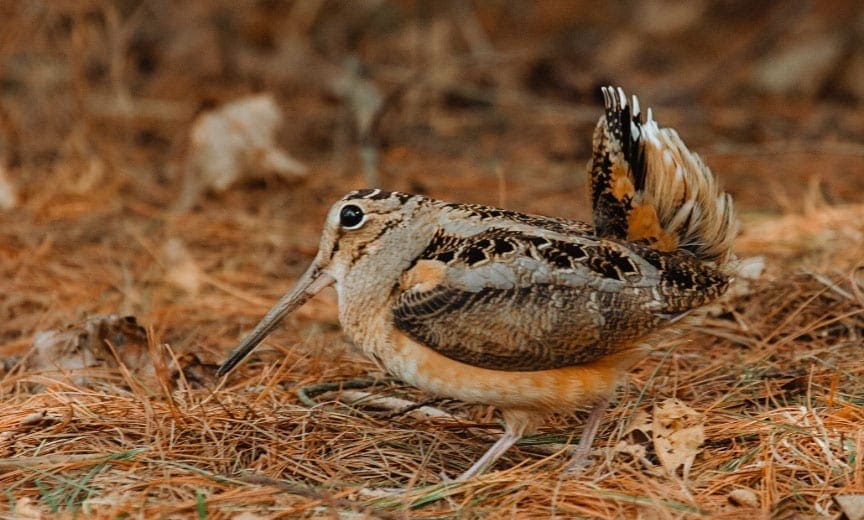
Woodcock are not large birds. On the upper end, a female can weigh as much as a half-pound and on the low end, males can weigh as little as five ounces, so they do not require heavy firepower to bring down effectively and ethically.
The nature of the cover that woodcock inhabit and their behavior towards hunters will make for a lot of close shooting opportunities. This scenario calls for open shogun chokes like cylinder, skeet, and improved cylinder.
The most popular lead shot sizes for hunting woodcock are #7.5, #8 and #9. More obscure specialty loads can take you to #10 shot and to spreader loads, which have a wad designed to allow shot to spread out faster. In the realm of steel, #6 and #7 shot are among the most popular if only because smaller steel loads are very uncommon or non-existent. It does not take a lot to kill a woodcock, so it’s worth considering how many pellets you’re willing to pick out of one before eating. My personal choice is #7 steel.
When it comes to choosing a shotgun for woodcock hunting, it is the answer we all know is always true, but never want to hear: use a shotgun that works for you. The most popular of all the shotgun gauges for woodcock is 20 gauge, but the 12 gauge continues as a cultural staple. More obscure gauges like 16 and 28 find good representation in woodcock hunting, while the more experienced may try the challenge of a .410. The action type does not matter as long as it’s a gun that you can shoot straight with confidence. Note that federal migratory game laws require a shotgun plug when hunting woodcock to reduce the gun’s capacity to three shells. Shotguns with shorter barrels are traditionally valued for woodcock hunting due to the stem density and tight swinging area of their preferred habitat, though there’s plenty of debate over a few extra inches and their added value to overall gun balance… but that’s a discussion for another day.
Woodcock hunting clothing
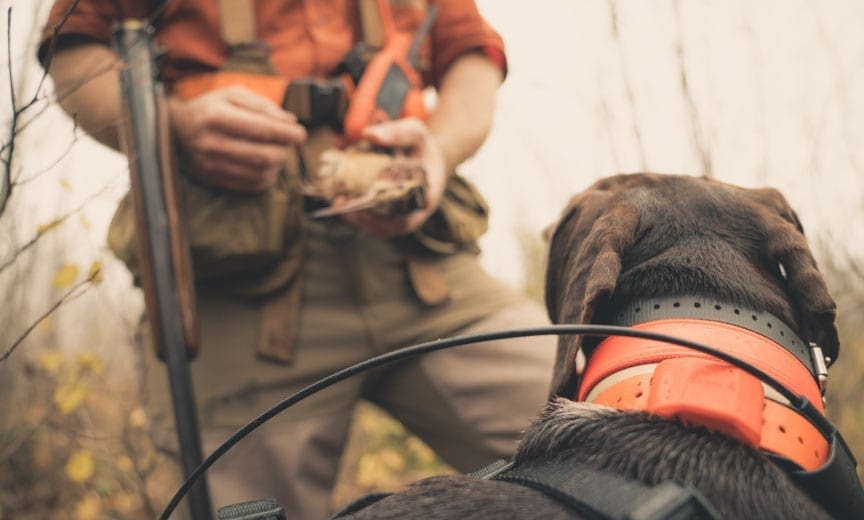
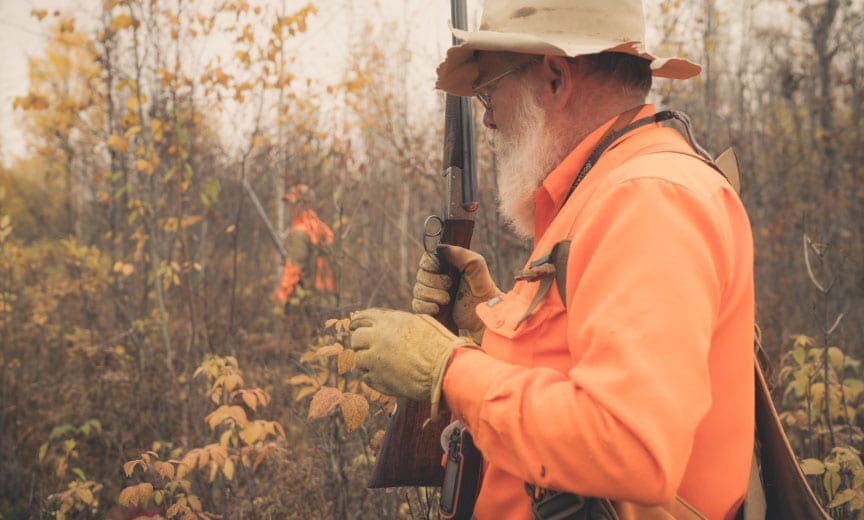
As mentioned, jeans can work just fine in the pursuit of woodcock. There is no need for camouflage, but woodcock hunting certainly calls for blaze orange in the interest of safety. You will need a means to carry shotgun shells (probably 25 depending on your success and shooting consistency), your empty shells, water, birds (hopefully!), and outdoor basics like a compass and even matches and poncho if you wander into remote country. The addition of a dog can increase the list of items to carry quite a bit. Many upland vests and strap vests have been designed over the years by upland junkies, iconic brands, and even some homemade lots. If you get really into it, it’s worth checking out the countless vest options along with a good jacket and upland pants. A pair of leather shooting gloves is nice, but I have survived a solid 25 years in the woods without them.
Boots are the one thing I would not leave open to interpretation. Woodcock tend to live in wet lowland environments as they probe soft soils for earthworms. Some hunters may pitch a solid pair of leather boots, but I will debate it to my grave that rubber boots will always be the best option. Leather boots are great, right up until you step into a wet hole that sends water over the top and into the boot. You can put a fair number of miles in when searching for woodcock, so it’s important to think about comfort and avoiding blisters, too.
Woodcock dogs
Choosing a dog breed (even without a game species involved) is like going to an ice cream stand with an endless number of flavors, not to mention having to choose between cone and cup. You can effectively use a flusher, a pointer, or a dog you rescued at the pound who likes to walk in thick cover. There are some breeds that have even been named because of their particular woodcock hunting ability, like the American and English Cocker Spaniels. But there are also pointing breeds that are just as specialized and well-suited for this type of hunting. I am a pointing dog guy at the end of the day and, just like anything, we all have personal preferences.
If you are considering a dog, think first about what you want out of it. Perhaps join a local hunting dog club like NAVHDA to see some different dogs in action. You should be looking for a dog that has been bred to hunt the region or terrain that encompasses your primary hunting area. Most importantly, once you decide on a breed, carefully vet your breeder. Ask to see their dogs hunt, ask other people for recommendations, and do your homework. It’s an investment of hopefully 12 years or more that will be your shadow each and every day, so it should be taken more seriously than buying a car.
The good thing about hunting the American woodcock with dogs is that the birds generally like to hold tight and not walk. The recent influx of woodcock hunters throughout the flyway certainly seems to be accelerating some walking and running behavior, but still nothing compared to the iconic ruffed grouse, notorious scaled quail, or the classic ring-necked pheasant. Ultimately, for the novice dog handler, woodcock can and will become addicting for both the hunter and the dog.
Getting to know the American woodcock
Woodcock are a migratory bird, so the kinds of places in which they live, nest, and stop over can vary by geographic location. They have two primary flyways: the central, which is essentially from Ontario to northern Louisiana, and the eastern, which is from Quebec to northern Florida. However, we must remember these are man-made lines and recent studies by the United States Fish and Wildlife Service and the American Woodcock Society have shown birds crossing over these flyway systems. The northern reaches of the woodcock flyway are what is considered their “resident” location, which typically includes Canada, upper Midwest states, and parts of New England. The southern areas like Louisiana and east Texas are considered their wintering grounds and are generally dictated by whether the soil freezes, which affects their ability to probe for worms. Any place in between the resident and wintering grounds is often referred to as stop-over states.
Getting to know woodcock cover
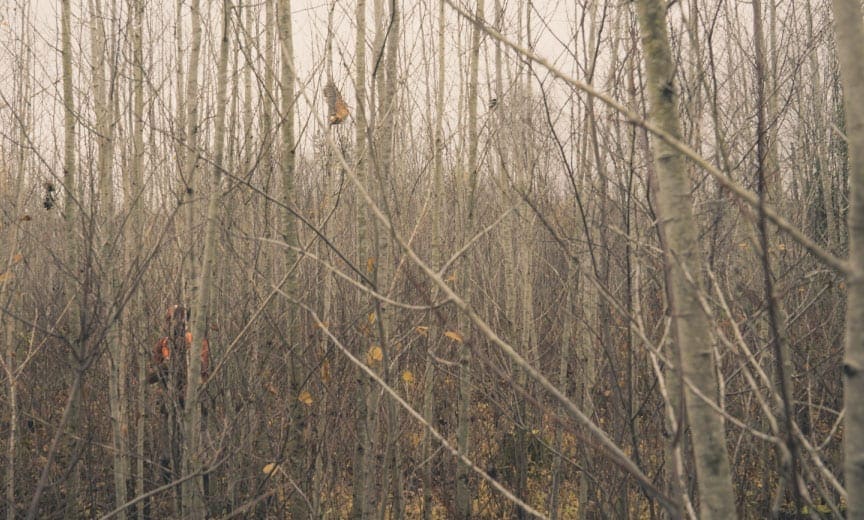
Woodcock like young vegetation with a high stem density, or places considered early succession growth in forests. Add in upland shrubbery or alders and if you have trouble walking through it, you can be sure a woodcock would love it. They also need a place to land to get into the cover. I have found that thick areas adjacent to fields, log landings, trails, and meadows tend to hold birds because they have ample openings to set down. Their food source is primarily earthworms, which has more to do with soil type than anything else. If you are ready for advanced theories on that, you can read “Targeting Worms with GIS Soil Data to find Woodcock Habitat.”
To simplify all this, noting that this is not fine science, this is where I would begin:
There needs to be soft and moist soil
The brush density needs to be such that it’s hard to walk through and swinging a shotgun seems challenging
Check for a nearby opening for landing and access
When all else fails, try hunting along rivers and waterways with dense shrubbery immediately nearby
In recent years I have found woodcock in soft wood (conifer) covers, which is something that trends more commonly as they head south in stop-over states. While I do not know the exact science, my guess is that it’s pretty easy for those short legs to walk on those open floors while still providing cover from predators above.
For the best understanding of woodcock cover, I recommend learning from a biologist and not a novice woodcock hunter like myself. Read: How to Identify American Woodcock Habitat
The nature of migrating birds
The fall woodcock migration is an exciting and sometimes frustrating part of woodcock hunting. If you catch the bug like I did, you may find yourself following the migration south, hunting multiple states and trying to extend your season. When the cold weather comes in, so do the “flights” of woodcocks arriving from north of your location to stop over during the migration to wintering grounds. It’s a tricky thing and many argue the science behind what makes the birds pick up and move, but you will certainly notice that one day a cover can have birds everywhere and the next it will only be a faint memory with remnants of their signs like woodcock splash.
READ: The Unrealized Opportunity of Woodcock Hunting in the Central Midwest
This fleeting presence is something to love, but it is also a warning sign that the birds will eventually be gone. States with no resident populations will find it more inconsistent, so you should not easily give up on a particular spot because things can change from day to day.
OUTDOOR LIFE: How to Hunt the Mysterious Woodcock Migration
Shooting woodcock
There are a couple schools of thought when it comes to wingshooting woodcock. First, it’s important to understand how woodcock tend to flush. The nickname “mud bat” refers to their characteristic rise like that of a bat. Their flight is often like a fluttering, unpredictable dance or zig-zag to the top of the canopy. Once past that, they tend to take off like rocket ships or, as the folks from Modern Wild would say, like “timber rockets.” There are plenty of exceptions to those rules, of course. Sometimes they will liftoff in a deliberate and direct pattern, which some would argue is a tell-tale sign of a resident bird knowing how to escape. Weak flyers are often considered tired flight birds, but neither assumption has been scientifically proven.
One of the greatest things about woodcock—especially if you are hunting with a dog—is that they tend to hold tight, meaning you must come close to stepping on them in order to get them to fly. This is what makes them great for young dogs in training, but can make them a little more challenging to find if hunting without a dog (more on that later).
The most reputable school of thought on shooting technique is to let the bird get away from you a bit before shooting. This allows for their trajectory to stabilize and for your shot to open up to a larger pattern. I usually have an issue containing myself, so as soon as that whistle comes up and the bird is a safe height off the ground, I let the shots fly. You can really approach this however you like, just get some shot safely in the sky when the bird gets up. To be most effective at this, you have to understand one of the more difficult mental barriers in shooting woodcock: ignoring the trees.
I grew up shooting woodcock from as early as I can remember and never once thought about a tree as my barrel swung through thick cover. But for those that did not get programmed at a young age, this can be a hurdle. If the trees and branches get into your head, you will not swing properly and you will always be at a disadvantage when shooting woodcock.
READ: Ignore the Trees when Grouse and Woodcock Shooting for Better Results
Beyond that, understanding the basic theories of effective shotgun shooting, such as the Churchill method, can greatly increase your odds in any wingshooting situation. Practice your gun mount repeatedly, consider the fit of your shotgun, and try patterning your gun to understand the shot pattern before hitting the woods.
Hunting woodcock without a dog
There are undoubtedly people reading this right now and yelling, “Blasphemy!” at their screen. But yes, woodcock can be hunted without a bird dog. Although I started off in my early years hunting over my father’s Brittany, I continued hunting later in life without a dog. Because woodcock hold tight, you will have to carefully grid an area when walking to make sure you have applied ample pressure to get them to flush. They are highly camouflaged, so without a dog’s nose giving you an indication of where they sit, you are unlikely to see them until they take off.
Recovery of shot woodcock without the aid of a dog can be particularly challenging because their camouflaged coloring blends in perfectly with the forest floor. Since they are small and live in dense cover, they can often get hung up on things off the ground, which only adds to the complexity of locating them after the shot. As a conservationist, you owe it to the bird to make a serious effort with or without a dog to recover game in any circumstances.
READ: How to Recover More Birds without a Dog
The controversy and ethics of pass shooting woodcock
Pass shooting woodcock is a technique rarely spoken of and highly controversial. Many consider it to be “unsporting.” I bring it up because you will inevitably discover it and should carefully consider the ethics of such a method. Although legal in some areas, it’s important to remember that legality does not always equate to sustainable practice. As hunters, we should think carefully about the long-term implications of pass shooting woodcock and the impact on future woodcock populations.
Pass shooting woodcock is a method that takes advantage of the final, legal shooting time to shoot woodcock as they move through open areas like fields to move to feeding areas. I often hear stories of early morning waterfowl hunters shooting woodcock at first light, as well. By setting up in a field adjacent to woodcock habitat and waiting for these final or first moments, a hunter will encounter fast-flying birds. These birds are a challenge to hit because they are often at top speeds. At a minimum, I would recommend steering clear of this method and finding a downed woodcock that sailed a long distance is not easy and could certainly start to enter the realm of the unethical. As a responsible culture, we need to make the hard choices even when laws permit it. We should not rely on legislation to dictate our morals and our commitment to sustainable practices.
Eating American woodcock
Although woodcock can be a culinary challenge at first attempt, with a bit of knowledge they can make amazing table fare. A few basic rules can accelerate that process. As renowned upland game chef Hank Shaw would point out, they pluck easily. Aging woodcock is a common practice, accomplished by tossing them in a fridge for a few days with the guts still in and the feathers still on. After a few days, they are better tasting and easier to pluck.
Woodcock cook faster than chicken and must either be cooked to medium rare or for a very long time to allow the meat to fall off the bones. Anything in between will cause you to think that woodcock aren’t worth eating, which is simply untrue. They are “earthy” in flavor and respond well when paired with mushrooms or sweeter things from where they live, such as apples and cranberries. Sure, you can slap bacon on them and of course it will taste great (and like bacon), but they are very good when prepared in other manners as well.
The legs are often thrown away, but it’s worth pointing out that this light, tender meat is arguably the best part of the bird. They can either be cooked as part of a whole bird or saved for a day of woodcock poppers or buffalo legs. Woodcock have become the most common bird prepared in my kitchen.
Woodcock conservation
In speaking of hunting woodcock, we must take note of their current state and their future. Since the populations were first recorded in the 1970s, woodcock have suffered a 1% decline every year. Habitat loss is the largest culprit in this decline, because woodcock often migrate through areas that are heavily developed without consideration for their needs. Recent studies with the Eastern Woodcock Migration Research Cooperative (EWMRC), in partnership with the American Woodcock Society, are hoping to identify areas that are in greatest need of habitat for stop-over cover.
While the populations are considered stable and safe to hunt, and given the migratory nature of the bird, you can feel safe and confident in hunting them in any state that has a legal season. They are currently sustainable and will hopefully begin to rebound if we all do our part to follow the science and support efforts to create more habitat.
Recent mumbling in the scientific community has theorized, but not yet proven, that climate change may be shifting the woodcock range and affecting some breeding behavior. This is worth following as we learn more and consider how this will affect the future of hunting this bird.
Woodcock hunting media content
Woodcock has been written about since medieval times when the Eurasian woodcock would be cooked in court. Eventually hunting practices evolved with dogs to bring them to market. In the Americas, they are known for the poetic culture that surrounds them, which has been explored by many of the upland literature greats. If you are an audio lover, I would suggest heading over to Audible and downloading Woodcock Shooting by Edmund Davis. This 1908 classic is unusual, poetic, and informative. Furthermore, you can check out frequent episodes of the Project Upland Podcast where host Nick Larson’s love for the woodcock and culture is hard to hide.
American woodcock hold the distinct position as the most-covered bird in Project Upland Original Films. Much of that simply reflects the opportunity that surrounded me when my passion brought me along this path. From our first year of films with the Ruffed Grouse Society to the viral film “First Season,” digging through our film library will give many options to get inspired in the poetic vibes of woodcock culture. If seeing drone footage of woodcock points and shooting situations sounds intriguing, check out the film “Legacy.” And for those as nerdy as it comes, you can find our latest film on the topic, “Woodcock Banding,” which explores the unusual ritual of using dogs in the spring to band woodcock with biologist Bailey Petersen.
Project Upland has a long list of woodcock hunting articles that can be found here.
We will continue to evolve this article as we create more content around woodcock hunting in North America, so be sure to check back in. And in the true crowdsource mentality of the Project Upland community, we always like to hear about what questions and ideas you have around the topic. Comment below, email us, or hop onto the Facebook community page to share your thoughts. We hope this article helps with woodcock hunting this season.
In 1987, at 4 a.m. on a foggy August morning in southeast Alaska, William B. Steele had a decision to make: continue driving for 20 miles on gravel roads to reach his Sitka blacktail deer hunting area, or turn around? He’d chosen a large unnamed mountain to hunt, but the closer he got, the thicker the fog became.
When he reached the mountain he decided to hunt. But the weather was so bad, he almost turned around several times during a mile-long hike to the top of a 1,500-foot ridge. An hour later Steele reached a pass on the ridge, and as he picked his way through the fog he inadvertently jumped a few deer. Frustrated, he wondered why he was even there.
Overlooking a large bowl, Steele decided to take a break and glass for animals. As he ate a sandwich, he noticed a group of Sitka blacktails (Odocoileus hemionus sitkensis) 1,200 yards away, across the valley in a muskeg. Through the fog and mist, Steele got a glance at what looked to be a heavy-antlered deer. He decided to work his way across the bowl and try to get closer. He made a mental note of where the deer stood, took a compass bearing, and headed through the brush.
The wind was light and swirling, but mostly in his face as he started to creep through the timber toward the spot where he’d marked the deer. Eventually, he ran out of cover and had to proceed across an open muskeg toward the next stand of trees.
Suddenly, in the wide open, Steele spotted two of the largest bucks he’d ever seen, feeding through the trees, just 125 feet away. They were moving to his right when he noticed a stiff-legged doe to his left. Busted, he froze. The doe knew something was wrong, but couldn’t determine the threat. Out of the corners of his eyes Steele glanced at the bucks. One had fed nearly into view.
Knowing time was running out, Steele slowly raised his .30-06 and leaned to the right as far as he could without tipping over. He could see most of the buck past the tree so he put the crosshairs on its shoulder and squeezed the trigger. The buck jumped and then raced out of sight through the muskeg. It piled up no more than 150 feet away from Steele.
Steele packed out the animal and was on his way home when a dump truck driver behind him signaled him to pull over. The driver got out and told him he had shot a deer the week before that measured in the 125-point class, and he thought that Steele’s looked to be as big. After the velvet was removed and the trophy dried, it was officially scored at 126-2/8 points.
Editor’s Note: When William B. Steele’s Sitka blacktail was originally measured, it was scored as a typical because there was no non-typical category. When the non-typical Sitka blacktail category was created at the beginning of the Boone and Crockett Club’s 25th Awards Period, the score on Steele’s great trophy was changed to 134 points. It now stands as the largest Sitka blacktail ever recorded.
“Optimal Target Placement: Mastering Squirrel Hunting with an Air Rifle. Discover the exact spot to aim, enhancing your accuracy and ensuring humane squirrel control. Uncover effective techniques for responsible hunting, enabling efficient pest management without compromising safety or ethics.”
where to shoot a squirrel with an air rifle
When it comes to hunting squirrels with an air rifle, accurate shot placement is crucial for ethical and humane kills. The ideal target area to shoot a squirrel with an air rifle is the head or chest region. Aim for the head if you are confident in your shooting skills, as a well-placed shot will result in instant death. However, this can be a challenging task due to the small size and quick movements of squirrels. Therefore, many hunters opt for chest shots as they offer a larger target area and have a higher chance of hitting vital organs.
For a chest shot on a squirrel, aim at the center of its body just behind the front legs. This area contains vital organs such as the heart and lungs. It is important to choose an air rifle with sufficient power and accuracy to ensure a clean kill. A.177 or.22 caliber air rifle with adequate velocity is recommended for hunting squirrels effectively. Additionally, always take into consideration your surroundings and make sure you have a safe backstop before taking any shot.
In conclusion, it is crucial to prioritize safety and ethical considerations when deciding where to shoot a squirrel with an air rifle. Aim for a precise headshot, ensuring a quick and humane kill. Always be aware of your surroundings and follow local laws and regulations regarding hunting or pest control.
Do you want to get the keyboard warriors in a frenzy? Start talking about your favourite ice-fishing line. You’ll be summarily drawn and quartered by the internet police. Like most things in fishing, though, there is no right or wrong answer to the question of which ice line is best. Rather, it boils down to a careful trade-off of considerations. That’s why I have either florescent neon fire-coloured Sufix Performance Ice Fuse or bright yellow HV Maxima monofilament spooled on almost every one of the 58 ice rods I have ready to use at a moment’s notice.
Now, as soon as some folks see that I mentioned a super-line, they’ll wince and tell you that it ices up more than mono or fluorocarbon. Guess what? It does. But I ice fish for the better part of five months—from mid-November until mid-April—in temperatures that often dip down so low that it doesn’t matter if you’re talking Celsius or Fahrenheit. And stripping a small glaze of ice off my gel-spun every few minutes is a small price to pay for the benefits of no-stretch line and instant hookset sensitivity. I especially like that four-pound-test Performance Ice Fuse is the same diameter as the silk a spider spits out to build its web, so I can dance my light perch, crappie and ciscoe jigs effortlessly. And the stuff has zero memory, so coiled line is never an issue. I’m more than willing to get all of those benefits if the only price I have to pay is rubbing my hand up the line every few minutes to remove a bit of ice.
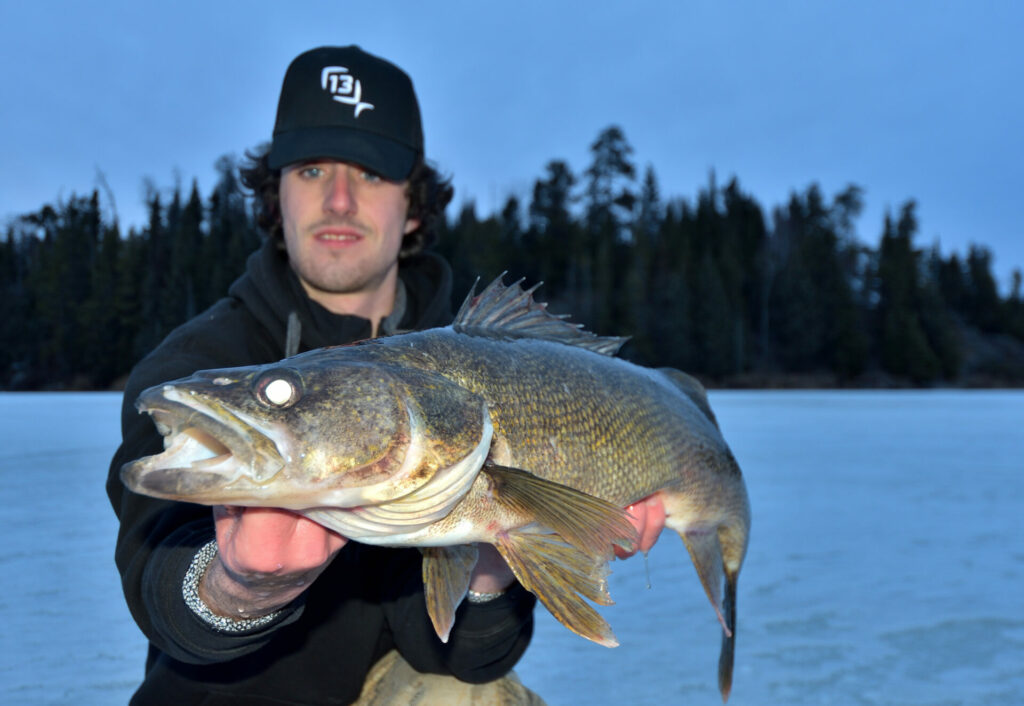
On the other hand, I like the stretch that monofilament gives me when I’m jigging for big walleye on Lake Winnipeg, for example, and lake trout around home. Hefty lake trout, in particular, like to go berserk, and rocket up when you set the hook, so monofilament doesn’t recover as quickly as super-line and you can often control the fish better.
I was talking about this a while back with buddy Donovan Pearase, who runs Blackwater Cats on Lake Winnipeg, and I found his thoughts to be enlightening. “A couple of my guides don’t mind maintaining their braided lines all day long, and stripping the ice off every five minutes,” he said. “But I can’t stand doing that. We’re fishing outside a lot, so I personally use eight-pound mono and a 17-pound test leader that’s as long as the thickness of the ice. That way, when you get a big walleye close to the hole, you will see the swivel, and take your time to get its head up.
“If I am fishing inside a shack, however, I’ll definitely use 15- or 20-pound braid. One of my guides swears by 10-pound braid, because he feels it gives him better jigging and snapping action with a spoon. We’re catching big fish—walleyes up to 15 pounds—so I like a thicker braid tied to a swivel, and then a 17-pound mono or fluoro leader.”
It is interesting, too, that not that long ago we did everything possible to hide our line from the fish, but these days bright red and yellow lines are the go-to for many ice anglers. Just the other day, for example, I had a great time landing 29 black crappies, 11 jumbo perch and two bonus northern pike. And, truth be told, I didn’t feel half a dozen of those fish when they hit. Instead, I kept my Helix 7 sonar unit in front of me, so that my rod tip was lined up like a gun sight, pointing straight at it, and then I simply gazed up and down, alternating between the screen and the spot where my yellow or red line entered the water. As soon as I saw it twitch and ever so subtly straighten out, I set the hook and iced another fish.
A lot of livestock produce manure that can be used in your gardens and on your grass but not all manure is the same. The manure that chickens produce is different from the manure that ducks produce.
This article looks into the differences between chicken manure and duck manure.
Duck manure vs Chicken manure:
You can keep both chickens and ducks on your property to produce eggs, for meat, or even as pets. Both can produce manure that plants can use but the manure isn’t the same, here are the key differences between the two:
The consistency:
If you own chickens and ducks you’ll know that the consistency of these birds’ poop is not the same.
Chickens produce poop that is fairly solid in consistency, it isn’t wet but rather soft. The poop also has a white material on top which is called urates. Chicken poop is also brown or green in color.
Duck poop, on the other hand, is quite runny, this is perfectly normal for ducks. The poop will usually be white in color or will take on the color of whatever the bird is eating.
That being said, the poop of both of these animals can vary in size, shape, and color depending on different situations.
The quantity:
The amount of poop that these birds produce varies slightly.
Chickens poop quite frequently but there are slightly longer breaks between their poops when compared to duck poop. These birds will poop every 20- 30 minutes or so.
Ducks, on the other hand, poop quite a lot, these birds can poop every 15 to 20 minutes on average. These birds will thus produce a lot more poop on a daily basis than chickens will.
Both of these animals have no need to have any control over their bowel movements so both birds will poop wherever they so, please.
Hot or cold:
Whether or not an animal’s poop is hot or cold makes a difference in how you can use it as a fertilizer.
Chicken poop is considered to be “hot’, if poop is classified as hot then this means that the poop contains so much nitrogen that it will burn any plants that you use it directly on.
The poop will cause the plants to wither quickly because it is hot. Hot manure will also cause plants to brown and be stunted.
Duck poop is not considered to be hot, the poop still has high amounts of nitrogen in it but because of its consistency, it will not burn the plants when used in your garden.
When it can be used:
If an animal’s poop is hot then it needs to be processed, by decomposing, before you can apply it to your plants.
Because chicken manure is hot you would have to compost it with carbon-rich materials before you can use it on your plants. Carbon-rich materials include straw and leaves.
Duck manure can be used directly on your plants and will not burn the plants if you choose to not compost the poop first.
That being said, it is recommended that all animal poop for use as fertilizer be composted, mixed, or pelletized before use.
Doing this will increase the nutrient availability of the manure, will change its handling characteristics, and control any pathogens.
How to use it:
You can use chicken poop as fertilizer but you’d need to compost it before you do this.
This involves piling the poop and the carbon-rich materials in layers and letting it sit. This heap needs to be kept moist and aerated throughout the decomposing process.
After a couple of months of this, the poop will be cooler and can be applied to your plants. The heap will become crumbly and black when ready and then it can be applied to your plants or grass.
Duck poop can be used directly on your plants but it may be more difficult to collect because it is runny.
You can shovel the poop and apply it on your plants or you can use the soiled water that your ducks swim in and pour this water on your plants.
If you enjoyed this article then you may also be interested in other duck related articles. Here are some articles that you may be interested in: Duckling Vomiting, Do Geese Get Cold, Why Do Ducks Like Ice Water?, Why Is My Duck Throwing Up Water?, Does Duck Poop Kill Grass?, Duck Eggs Turning Black, How To Keep Ducks Quiet At Night
What’s the difference between first focal plane vs second focal plane?
A first focal plane reticle enlarges and shrinks as you adjust the magnification while the second focal plane remains the same size.
Why does that matter and which focal plane scope should you choose?
By the end of this article, you’ll fully understand both types of focal planes so you can choose the best rifle scope for your needs.
Let’s get started!
What is the First Focal Plane?
There are two locations where a reticle can be installed within a rifle scope: the first focal plane (FFP) or the second focal plane (SFP).
With a first focal plane scope, the reticle is physically placed on the “front” of the erector tube assembly and magnification lenses. The first focal plane is furthest from your eye when looking down the sight.
How does that make a difference?
With a First Focal Plane scope, the size of the reticle will appear to grow or shrink as the scope’s magnification is increased or decreased, respectively.
Now that you’ve got the basics, let’s talk about the pros and cons…
First Focal Plane: Pros and Cons
With the first focal plane optics, the reticle size is going to scale up or down with your magnification adjustments.
This means your trajectory markings, or holdover values, are going to remain accurate regardless of what magnification setting you’re on. This is great news if you hate doing math!
But, it comes at a cost…Literally.
The price is often higher by virtue of its more complicated construction. A first focal plane reticle is also typically associated with higher-end scopes.
With first focal plane scopes, the reticle will look small and thin with less power while the reticle will be thicker at higher power.
It can be easy to lose those thin reticle lines, especially against dark backgrounds. Although, some of the best Leupold riflescopes have illuminated reticles for better visibility.
Also, the reticle can cover too much target at the highest setting. If this is a dealbreaker to you, that’s where Second Focal Plane comes into play…
What is the Second Focal Plane?
The most common design is SFP, or a Second Focal Plane scope. It’s also referred to as Rear Focal Plane.
With a second focal plane scope, the reticle is placed behind the magnification lenses on the erector tube assembly.
The second focal plane scope is closer to your eye. Therefore, the reticle stays the same size at any magnification range.
Now, let’s talk about the pros and cons of this…
Second Focal Plane: Pros and Cons
Its lightweight, great resolution, and durability against heavy cartridges make it a popular choice among hunters and law enforcement.
With the second focal plane, your units of measure per each hash mark (MOA or MRAD) represent the same value regardless of your magnification setting.
However, the spacing for holdover in the reticle is only correct at the highest magnification setting. So, it’s not always reliable for variable long-range shooting.
For example:
Let’s look at the Viper HST 4-16×44. This is a second focal plane scope with a magnification range of 4-16x. The Viper HST has hash marks representing 1 MOA but this is only true at its full magnification: 16x.
Of course, you can always do the math in between. But it becomes complicated and confusing and we all know that’s no bueno.
Second focal plane scopes are more commonly seen in the average riflescope and they’re easier to manufacture. That’s why they’re typically less expensive.
First Focal Plane vs. Second Focal Plane for close-range shooting
A second focal plane scope is more suited for close-range hunting and defensive shooting.
Why?
Because you have a strong and easy-to-see reticle even at the lowest magnification. With low-powered optics, like 1-4X optics, this is a highly undervalued feature.
When it comes to a First Focal Plane scope, you can easily lose sight of your marks at low power. This can be a hassle when you need to make adjustments for the wind or distance— especially for older eyes.
Since you’d have to zoom out to get the rest of the marks in the scope’s view, your target shrinks relative to your view. If you’re hunting small game, this can be an inconvenience.
First Focal Plane vs. Second Focal Plane for long-range shooting
First focal plane scopes are best for competitive and long-range precision shooting.
The hash marks represent the same value across all magnification levels. It allows you to use and trust those holdovers at any given point in your magnification.
This is an advantage for spotting impacts and misses for corrections. It’s also very helpful if you need rapid and precise follow-up shots.
Hitting something at longer ranges means getting as much precision as possible. With a second focal plane scope, making those fractional MOA adjustments becomes far more difficult.
Conclusion
The truth is— it’s a matter of preference and intended use. There is no “better” between the two focal planes.
Higher magnification ranges are better in a first focal plane scope. Lower magnification is fine for second focal plane scopes.
If you’re into precision shooting, especially in matches, and you don’t mind the cost: a first focal plane riflescope is great to have.
If you won’t be taking many shots where you need to “hold” for windage or elevation, a second focal plane scope is more than enough. Plus, it won’t necessarily break the bank.
There are other things you need to consider before buying an optic— like choosing the best quick detach scope mounts. At least when it comes to a SFP scope vs a FFP scope, you won’t be scratching your head anymore.
Since we’re on the topic of upgrades, my AR-15 A2 front sight removal guide is up. Go check it out!
Unveiling the truth behind dry firing a Gamo air rifle, this intriguing headline delves into the possibility of safely practicing without ammunition. Join us...