When most people think of groundhogs, they think of woodchucks. But are these two animals the same? What’s the difference between a woodchuck and a groundhog? Let’s take a closer look at these two creatures to see how they differ.
Woodchucks Vs. Groundhogs: Are They The Same Animal?
The simple answer is yes, they are the same. Woodchuck” is just another name for “groundhog.” These animals are part of the rodent family and they are in the same genus and species. So, if you’re talking about a woodchuck, you’re really talking about a groundhog.
But there is a bit more to the story. These animals are also known by other names, including “whistle-pig” and “land-beaver.” In some parts of the United States, people call them “thickwood badgers.” And in Canada, they are sometimes called “chuckies.”
How Did The Groundhog/Woodchuck Get Its Name?
The name “woodchuck” is thought to come from an Algonquian word, wuchak. It’s also possible that the name is a corruption of the Cree word otchockwia.
The name “groundhog” comes from the fact that these animals spend most of their time on the ground. They are good swimmers and tree-climbers, but they usually stick to the ground where they can dig their burrows.
So, now you know that woodchucks and groundhogs are the same animals. But what do these creatures look like? Let’s find out.
What Do Groundhogs/Woodchucks Look Like?
Groundhogs are medium-sized rodents. They have short legs and low, compact bodies. They typically weigh between 4 and 10 pounds.
Male and female groundhogs look similar, but males are usually larger than females. Groundhogs have brown fur with a light-colored patch on their chest.
Their faces are round with small ears. They have dark eyes and long whiskers. Their tails are short and hairy.
Groundhogs are proficient climbers and can climb trees to escape predators or to get a better view of their surroundings. When they feel threatened, they will often retreat to their burrows where they will be safe from harm.
Where Do Groundhogs/Woodchucks Live?
Groundhogs are found in North America, specifically in the United States and Canada. They are most commonly found in the eastern part of the continent.
These animals typically live in wooded areas, but they can also be found in fields, meadows, and even near houses and farms. They like to live in areas where there is a lot of vegetation so that they can find food to eat.
Groundhogs build their homes by digging burrows underground. These burrows can be up to 4 feet deep and 30 feet long. The entrance to the burrow is usually hidden by grass or other vegetation.
Inside the burrow, there is a nesting area where the groundhog will sleep. There is also a bathroom area where the groundhog will go to the bathroom.
Groundhogs typically live alone, but they will sometimes share their burrows with other groundhogs. A group of groundhogs living together in one burrow is called a colony.
What Do Groundhogs/Woodchucks Eat?
Groundhogs are herbivores, which means that they only eat plants. Their diet consists mostly of grass, leaves, berries, and other vegetation. They will also eat nuts, fruits, and vegetables if they can find them.
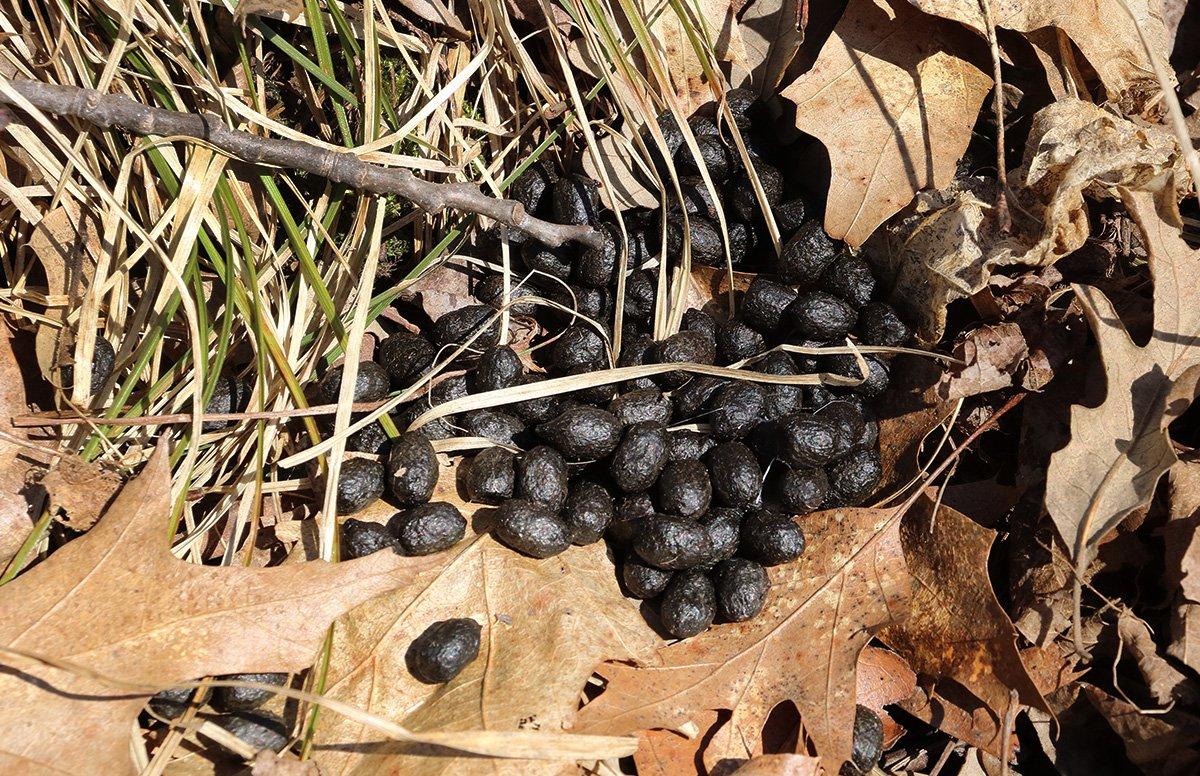
In the wintertime, when food is scarce, groundhogs will often eat their own feces in order to get nutrients.
Groundhogs get most of the water they need from the food they eat. But if they can’t find enough water in their food, they will drink from puddles, streams, and other sources of water.
The Many Names Of The Groundhog :
Whistle-Pig: This name is derived from the sound that a groundhog makes when it is alarmed. These animals are also sometimes called whistle-pigs or wood-pigs.
Thickwood badger: The groundhog is the largest member of the squirrel family and is sometimes referred to as a thickwood badger, particularly in the northern part of its range.
Canada Marmot: Groundhogs are also known as Canada marmots in some parts of their range.
Red monk: In parts of Quebec, groundhogs are referred to as red monks, a name that is derived from the color of their fur.
Scientific Family And Order:
The Eastern groundhog is scientifically known as the Marmota monax. This animal is a member of the squirrel family and the order Rodentia.
No matter what you call them, woodchucks and groundhogs are interesting creatures. Here are a few facts about these animals:
· Groundhogs are one of the largest members of the squirrel family.
· They can weigh up to 14 pounds (6.4 kg).
· They can be as long as 26 inches (66 cm), including their tails.
· Groundhogs have short legs and small ears.
· They are good swimmers and can stay underwater for up to 5 minutes.
· Groundhogs are mostly active during the day.
· They are mainly herbivores, but they will also eat insects, snails, and small rodents.
· Groundhogs can live up to 6 years in the wild and 10 years in captivity.
Groundhogs are interesting animals, but what about their reputation for predicting the weather?
Do Woodchucks Really Predict The Weather?
The groundhog has become famous for its ability to predict the weather. According to legend, if a groundhog sees its shadow on February 2 (Groundhog Day), it means that winter will last for six more weeks. But if the groundhog does not see its shadow, it means that spring is on the way.
This tradition is thought to have started with German immigrants who came to the United States in the 1700s. In Germany, a similar tradition is associated with the badger. But when these immigrants arrived in America, they found that there were no badgers. So, they started using groundhogs instead.
Over time, the groundhog became the official “weather-predictor” in the United States. The first recorded instance of Groundhog Day was in 1841. And in 1886, the first newspaper article about Groundhog Day was published in The Punxsutawney Spirit.
Today, Groundhog Day is a popular event. Every year, people gather in Punxsutawney, Pennsylvania to watch Punxsutawney Phil predict the weather.
Groundhogs As Pests :
Groundhogs can be a nuisance to homeowners and farmers.
They dig burrows on properties, which can damage crops, gardens, and lawns. These animals are also known to eat plants and vegetables.
How To Keep Woodchucks Out:
If you want to keep groundhogs away from your property, there are a few things you can do:
Install a fence: Groundhogs can climb, so it’s important to make sure that the fence is at least 4 feet (1.2 m) high. You can also add an electric wire to the top of the fence to deter these animals.
Remove food sources: If you have a garden or fruit trees on your property, groundhogs may be attracted to these areas. Try to keep these areas clean and free of debris.
Use traps: Trapping is one of the most effective ways to get rid of groundhogs. You can use live traps or lethal traps. But before you set any traps, be sure to check your local laws and regulations.
Hire a professional: If you’re having trouble getting rid of groundhogs, you may need to hire a professional wildlife control company. These companies can help you get rid of these animals in a safe and humane way.
Do it yourself method: Using an air rifle, for example, is one of the cheapest ways to get rid of groundhogs on your property.
For those who are unfamiliar, dry-firing is the practice of pulling the trigger on an airgun without any pellets in the chamber. It can be done with CO2 guns, pump guns, precharged pneumatic (PCP) air rifles, and air pistols. Many people believe that dry-firing is bad for airguns and will damage them, but is this actually true? Let’s take a look at the pros and cons of dry-firing to find out.
Are there good points to dry-firing?
Yes, there are several good points to dry-firing your airgun. First, it’s a good way to check if your gun is loaded without having to chamber a pellet. Second, it allows you to practice your aim without wasting pellets. And third, some people believe that it actually extends the life of your gun by “exercising” the internal parts.
Don’t dry-fire most springers!
While there are some benefits to dry-firing, it’s important to note that you should never do it with most spring-piston guns. This is because the piston seal can be damaged by the impact of the piston when it hits the end of the compression chamber. If you own a springer, check your owner’s manual before dry-firing to see if it’s okay or not.
Springers that are more forgiving
There are some springers on the market that are designed to be more forgiving when it comes to dry-firing. These guns typically have a thicker piston seal that can better withstand the impact of dry-firing. Guns with PTFE (Teflon) seals are extremely tolerant.
Conclusion
So, should you dry-fire your airgun? It depends. If you own a springer, chances are you shouldn’t do it as it could damage your gun. But if you have a different type of airgun, there are some benefits to dry-firing such as being able to practice your aim without wasting pellets.
3. Benjamin Maximus – Best Budget Air Rifle Under $500
The Benjamin Maximus Air Rifle may not be packed with extra features, but it sure is one of the best-rated air rifles under $500 for its price!
It’s a no-frills entry-level air rifle that offers the decent necessities any beginner shooter will enjoy.
Even advanced shooters will be impressed with what this air rifle has to offer.
Value For Money
I know how pricey air rifles can be, but it doesn’t mean you have to purchase the priciest air gun out there to get value.
The Benjamin Maximus proves just that, offering one of the most affordable rifles available
Without compromising on quality and performance.
Granted, it isn’t the quietest and it requires a high-pressure air supply all the time,
Though the rifle makes up for it with its price and ease of filling up.
Excellent Accuracy
The accuracy is spectacular, and it had standard muzzle energy when we tested it.
It offers a maximum muzzle velocity of almost 1,000 FPS, with an energy of between 19-22 ft per lb.
Its consistency is just as admirable, best used with mid-to-heavy weight lead pellets for both accurate and consistent shots that vary only by an ounce or so.
However, you can also use lightweight pellets and still produce similar results.
Just take note, this isn’t a regulated PCP so the velocity drops after firing.
Simple and Efficient
The air rifle is long and pretty lightweight to handle.
For its price and shot performance, it’s easy to hold and maneuver.
Plus, it only requires a 2,000 PSI fill pressure, which makes it easier to fill using hand pumps.
Additionally, it’s easy to shoot with as it offers adequate grip and stability.
The only con is the breech design, which renders it a bit difficult to load pellets.
The Benjamin Maximus only requires a 2,000 PSI fill pressure, which makes it easier to fill using hand pumps.
Pros and Cons
Pros
Cons
One of the most affordable air rifles available
Has an easy to fill pressure of up to 2,000 psi
Offers satisfactory consistency and accuracy
Has no noise suppressor and is quite loud
The air rifle's sight is unprotected
Final Verdict
The Benjamin Maximus Air Rifle offers good value for your money but is best recommended for beginners in training.
If you’re on an extreme budget for an air rifle, this is a satisfactory choice that offers amazing accuracy and ease of use.
I admire the air rifle’s body, which is lightweight and easy to carry around, as it’s only 42 inches long and weighs less than seven pounds.
For an entry-level air rifle at a more affordable price, it has a ton of features to offer, including:
The removable rotary magazine, a velocity of up to 800 FPS, as well as a fill pressure that can take up to 3,365 PSI.
That’s definitely not bad for a cheap air rifle for beginners.
The Gamo Urban has a ton of features to offer, including a removable rotary magazine, a velocity of up to 800 fps, as well as a fill pressure that can take up to 3,365 psi.
Pros and Cons
Pros
Cons
Strong hits and accuracy when shot
Great for beginners with exceptional accuracy
Easy to fill and lightweight body
Quiet operation for added comfort
Not the best pressure gauge and shot count
Some complaints of the trigger comfort
Final Verdict
This entry-level PCP air rifle packs a punch for the cost, handling well regardless of the shooting scenario you’re in.
With its lightweight feel and the beastly power that shoots repeatedly with accuracy, beginners will definitely enjoy practicing with this one.
The only thing I wish is that it had a higher shot count and better pressure gauge.
It’s a beautiful thing when testosterone kicks in and gnarly old mulie bucks quit thinking. Nocturnal monarchs strut around in broad daylight, thicket-loving old hermit bucks stand silhouetted on open ridges, and alpine-country cliff dwellers descend to mingle with does in less protected, more accessible habitat.
In most regions, you’re not allowed to hunt mule deer during the rut. All you can do is take a detour through areas high in doe numbers on your way to work, break out the spotting scope, drool all over the front of your business suit, and take some shaky iPhone photos through the ocular lens.
Mule deer bucks are notorious for using the rough terrain to their advantage. That’s why it’s so crucial to find them when their guard is down during the rut.
But if you really want to hunt bucks during the mule deer rut badly enough, there are ways. No, I’m not talking about poaching.
Several great mule deer states offer some sort of a late-fall rut hunt. Usually, it’s in a limited-draw area, and you’ll put in for half your life in the hopes of pulling a tag. However, there are exceptions. Frequently, those exceptions involve archery equipment and lots of cold weather, so you’ll have to be both adaptable and tough to capitalize on them.
Take my home state of Utah. Ask any local hunter if Utah offers a general-season mule deer rut hunt, and he’ll laugh ruefully in your face. Utah, like many Western states, manages for hunter opportunity, not hunter success.
But after a minute a light will go off in some cobwebbed recess of that local’s brain, and he’ll say something like, “Actually, if you’re willing to work your way through a labyrinth of suburban neighborhoods, park near city water tanks or whatnot, and climb near-vertical slopes into the Wasatch Mountains, there’s an extended-season archery unit€¦.” Hunters may pursue big old bucks until mid to late December on the west-facing, extremely steep slopes above Salt Lake City.
These deer are never rifle hunted. Some years ago, a law prohibiting hunting with rifles was created due to fears of rifle bullets flying out over the city. That’s not to say that the local deer are dumb — far from it.
They get hunted from mid August to the end of the year. But it’s a legitimate rut hunt, and you’ll see big bucks working does among the oak brush clinging to the steep slopes. Whether you’re man enough to climb and put a stalk on one is up to you. I’ve put many a stalk on mature bucks on those slopes and blown all but one.
Just like chasing whitetails, peak movement for mulies will happen when the sun is low.
A buddy and I found a big buck near the bottom of the far slope in a steep, very rugged knife-bottomed draw, tending a doe in estrus. After racking our brains for a way to put a successful stalk on him, it dawned on us that if spooked uphill, the ledges and cliffs above him would funnel him through a 20- yard-wide gap in the rocks atop the far ridge. There was simply no other way for him to go — assuming he went up instead of fishhooking around.
It was worth a try. I won the toss and spent the next three-and-a-half hours in knee-deep snow, dropping clear down to the valley floor to get across the draw without spooking the buck, then climbing the gut-wrenching far ridge. Finally in position, I thumbnail-scraped the eighth-inch layer of ice off my bowstring and arrow and waved at my partner. He piled off the far slope in a cloud of powder, going right at the buck.
Just about the time I could no longer stand to wait, antler tips showed suddenly above the bulge of the slope below me. With my heart doing jumping jacks on my stomach, I focused on a spot at the front edge of his shoulder, planning to smoothly draw my recurve and shoot as he passed only 18 yards away, leading the region I wanted to hit by just a few inches.
Suddenly in the perfect spot, tongue hanging out from climbing the slope, the buck stopped. In disbelief, I drew to anchor, rushed the shot, and missed right over the 170-class buck’s back. I still haven’t forgiven myself.
Destination Testosterone: Where To Hunt
While many hunters believe that the mule deer rut occurs at the same time as the whitetail rut (and in some regions it’s true), most of the violent rutting action I’ve observed occurred after the first of December.
Finding a place to hunt can be complex. Studying the regs in the state you want to hunt is a great start, but a call to a wildlife biologist can prove a worthwhile shortcut. Biologists can point you to areas with high deer populations, tell you about migration patterns you’d otherwise be unaware of, and suggest routes to access remote public land.
Sometimes the land where rut hunts occur is private, and knocking on doors to ask permission to hunt can prove as fruitless as a celebrity marriage. Fish & Game agencies can often help by referring you to cooperating landowners that participate in open-access programs. High-tech GPS mapping programs that display blocks of public within private lands can also be very useful.
Killer Methods: How To Hunt
Once you’ve found a region and a legal spot to hunt and obtained a tag, get your boots on the ground and find out where the does congregate during late November and December. Rutting bucks are as predictable — and as unpredictable — as teenagers with high hormonal levels, and usually the old bucks can be found patrolling doe populations.
I once read that a good way to tag a monster buck during the rut was to find the biggest group of does in the area and watch that group — sniper style — day after day. Sooner or later, a gnarly old buck will swagger out of the nearest thicket and start sticking his nose under the tails of those fine-looking does.
A less boring method is to roam and glass doe groups from a healthy distance. Sooner or later, you’ll find a big buck as he cruises through during the mule deer rut. Be warned: With a bunch of buck-ravished, spooky doe eyes on the lookout, stalking can be tougher than sweet-talking a pretty girl at a church quilting bee.
Hunting mulies requires patience, because you never know what buck will be found in the next group of does.
If there’s good fresh snow, tracking can be effective. Take a skillful buddy along, put him on a promising big track, and veer out to the side, climbing high points in the terrain and watching out in front of your partner as he works the track. You might just catch a big old buck sneaking through the thickets ahead of him.
If you’ve got a long season, where you can relax and have a little fun, try rattling in edge cover near high doe populations. While I’ve never personally rattled in a mulie buck, my brother has — big ones.
If you catch an amorous but lonely buck just right, he might come stomping in snorting steam, blood and fire in his eyes. More probably, the big bucks in the area will just raise their heads at the sound and look long and hard — which can be just the trick you need to get a clear look at a buck to evaluate his rack.
In the end, though, glassing is where it’s at. Cover a lot of country during high movement periods at dusk and dawn and carry powerful binoculars that suck up light, along with the very best spotting scope you can afford. When you find the buck you want, move on him with everything you’ve got because you may never see him again.
Hunting mule deer in the rut is a far cry from hunting rut-crazed whitetails. They don’t vocalize much, they aren’t really callable, and they don’t hold predictable rutting territories. On the other hand, they do become visible.
A highly visible monster mule deer is the most contagious carrier of buck fever in the world, and if you decide that hunting rutting mulies is on your bucket list, you’ll contract it sooner or later.
I’ve heard it a dozen times. You’ve heard it too, or even said it. We all have. But the deer biologists in goggles and gloves who study deer poop for a living (and other, more glamorous things) say it’s actually pretty difficult to distinguish buck and doe droppings.
While the myth of the buck turd is mostly false (more on that momentarily), there are still plenty of things we can learn from deer scat.
1. Fawns poop when does tell them to.
Since a major part of fawn survival hinges on scent reduction, they don’t poop where does hide them. Does will take fawns to neutral areas – well away from daytime hideouts – and let them nurse and poop all at once. Fawns can only defecate after their mothers stimulate them while nursing, according to Duane Diefenbach, wildlife ecology professor and leader of the PA Cooperative Fish and Wildlife Research Unit. Weird as it is, does often consume their fawns’ feces, too. This process reduces scent and helps protect the fawn from predators.
2. Adult deer are very regular.
During fall and winter, most whitetails empty their bowels about 10 to 15 times per day. In spring and summer, this frequency spikes, fluctuating between 20 and 30 times. Interestingly, their bowel movements are so predictable that many wildlife agencies often guestimate deer population densities based on the number of poop piles they discover within a designated area. You can do the same: Hunters who take trail camera surveys seriously can use this method to verify population densities.
3. It’s nearly impossible to distinguish between buck and doe poop.
The commonly held belief is that large, tubular excrements belong to bucks, and small, pelleted piles belong to does. But according to Buckmasters, research shows that it’s virtually impossible for hunters to distinguish between buck and doe poop. Both sexes produce both scat shapes. When comparing tubular scat, bucks can have longer stool pieces, but that’s not always true. The bottom line? Unless you see the deer that dropped it, scat shape alone won’t indicate a deer’s sex.
4. Bucks sometimes drop more pellets, though.
Male deer can, however, produce more pellets than female deer. When comparing pelleted scat, a buck drops 70 to 80 per session on average, while does generally produce 50 to 60. Seriously though – what hunter is going to stop and count? If you’re after a mega-giant though, maybe you should bring a latex glove and a No. 2 pencil, and count to 80.
5. Color and moisture suggest how long the scat has been there.
The coloration and moisture level of a pile helps determine the age of deer poop. Droppings that are still dark, shiny and wet are likely less than 12 hours old. If there’s no moisture and droppings look lighter in color, there’s a good chance the scat is at least 24 hours old, if not several days. Droppings become more fibrous over time, and scat that’s cracked, crusty or broken is usually at least a week old.
6. Digging through poo gives clues.
Learn what deer are eating, and when, by examining scat. A forage’s water content will dictate its composition and shape. Mounds of firm, pelleted dung suggests woody browse (buds, leaves, twigs), grain (corn, oats, soybeans) and hard mast (acorns and nuts). Long, singular, squishier poop indicates recent consumption of broadleaf plants, forbs, grasses, and soft mast (apples, peaches, pears, persimmons, plums, etc.).
7. Handle deer droppings with care.
Prions – malformed proteins shed by CWD-positive deer – are commonly found in deer urine, feces and saliva. While it’s currently believed that humans can’t contract this disease, who really wants to become a lab rat? If you’re going digging, carry gloves or use a stick.
8. Concentration indicates high-traffic areas.
The best lesson you can learn from deer poop is that a lot of it indicates a good hunting spot. Hunters who stumble on extensive piles of poop should take note. Often, excessive scat is located near preferred food sources, water sources, and bedding areas. If you find a bedding area that’s full of it, go mobile and get as tight as you dare on that deer.
There are many good reasons to hunt snow geese without decoys, and there are several situations where you might have to. For example, if they are moving around in one big group, if you don’t have access to the field they are feeding in, or if you have limited hunting time, it may make more sense to set up a quick pass shoot rather than to decoy the birds.
There may be other practical reasons: if snow geese are destroying wheat crops, which could lead to ecological imbalance, or if you’re attempting to harvest as many snow geese as possible because their population is too high. Whether the reasons are practical or necessary, there are several effective ways to harvest snow geese, such as pass shooting, using a cow board, or sneaking. These eight essential snow geese hunting tips can save you money by helping you hunt without decoys.
8 Tips for Hunting Snow Geese Without Decoys
Find Exact Location
The most important variable in hunting snow geese is location. Considerable effort is required to scout them and understand their migratory patterns to locate their feeding, watering, and roosting areas, as they can migrate a remarkable distance within a short period of time.
Therefore, time is of the essence, and scouting will help you make the best use of the time you have. The more critical time is, the less time you can attribute to setting up decoys. Time is better spent making sure you know the exact location of the geese than trying to lure them somewhere.
Take Cover
When scouting, you should also be thinking of spots to conceal yourself effectively. Hide among the trees and woodland in the areas geese land to feed so they can’t see you and refrain from moving as much as possible to not startle them.
Fence lines can also give you some cover to hide. You can also try lying down in weeds in a field and using the ground as camouflage. Don’t startle the geese by jumping the gun. You’ll probably have to lay still for a while, so be patient.
Clothing
When it comes to blending in, you’ll want to wear appropriate clothing that matches the natural background. Wear the colors of the area you’ve scouted and find a comfortable position. There are also many professional layout blinds available designed specifically for hunting geese that you can choose from.
Pass Shooting
Now that you’ve done the basics, it’s time to consider various methods of hunting snow geese without decoys. Pass shooting is among the most popular and obvious. It is a relatively inexpensive method that allows the Geese to pass by an area you have already scouted.
After they arrive, target one or two geese in one group and shoot once or twice when they’re in range while the other group is further away. It’s critical that the second group maintains its usual patterns, so be sparing at first. This will help to increase the number of snow geese you can bag.
Use a Cow Board
Instead of decoys, you can use a cow board, which may seem a bit odd at first but is inexpensive and gives the geese the impression that they’re landing in a normal field devoid of humans. You will need to be a quick shot, however, as you’ll need to move it realistically so the geese don’t understand it’s fake, and be ready to shoot when a bird is in range within about 50 yards.
Sneaking
Sneaking takes some practice but is another effective method once you know how to do it. Naturally, sneaking works best during high harvest in the late season where you can hide more easily, and again you should take pains not to move too much by crawling slowly and making as little noise as possible. Target the geese at the edge of the flock closest to you, and shoot when you feel like you are close but not yet noticed.
Jump Hunting
Jump hunting involves traveling around and looking for flocks of snow geese already feeding in fields. If you have the requisite permission to hunt in the area, you can use the element of surprise to sprint out into the field and shoot as many of them as possible before they get away. First, though, you’ll want to get as close to them as possible by using the stealth methods described above.
Capture Their Attention
You can simulate geese calls from your hiding place, either by training your voice to emit sounds like theirs or, probably more easily, by using pre-recorded sounds and an amplification device. In your scouting and study of snow geese patterns, learn a comprehensive range of geese sounds.
For example, they cluck when they are excited, murmur when they are looking to feed, and honk when they are relaxed. So make calls, or use recordings, that correspond to where you need them to be: cluck when they are at a distance, and murmur when they are heading in your direction.
A Successful Snow Geese Hunt Without Decoys
You can use a combination of any of the methods above, or all of them, for a successful snow geese hunt, though some, such as capturing their attention, will take more practice than others.
Some of the tips are inexorable: you will not be able to bag snow geese without doing the necessary scouting and concealing yourself adequately before discharging your weapon.
The Benefits of Snow Geese Hunting without Decoys
Not using decoys when snow geese hunting is straightforward and easy to learn and can also result in good fun. If you want to save money, save time, or have a reason to eliminate snow geese as quickly as possible, you can easily circumvent the need to use decoys. All it takes is a little practice and patience.
You can also check:
Great Benefits of Hunting Activity
Air Rifles for Small Game (Buying Guide)
How to Start Hunting
Tips to Keep Your Feet Warm During Hunting (Read Article)
Did you follow your favorite archery manufacturer’s social media channels during their coverage of the 2024 ATA Show in January? Did you spy something that enticed you to upgrade, or are you a new archer in need of your first set of equipment? Many manufacturers debut new products during the Show, so there was a lot to see. Wherever you’re at in your archery journey, there’s something out there for you. We compiled a roundup of a few of the many items that debuted at the 2024 ATA Show, via the New Product Launch Showcase, below.
Bear Archery Products
Bear Archery Products launched a 90th anniversary edition of its Grizzly bow. At heart, it’s the same Grizzly bow that Bear has previously produced, a traditional bow designed by Fred Bear himself, but with a new “Green Glass” color scheme and a 90th anniversary logo. Caleb Sorrells, marketing manager for Bear Archery, noted that the new bow has been well received and he predicts that it will do well for Bear. “It will be a great collector’s item on top of being a great bow,” Sorrells said. It’s available in right- or left-hand styles and in six draw weight options from 35 pounds to 60 pounds. It features a crowned, cut-on center arrow shelf with a leather side plate and a bear hair arrow rest. As always, the bow is handcrafted here in the U.S.
PSE Archery
The PSE Fortis debuted at the 2024 ATA Show. Photo Credit: PSE Archery
PSE Archery debuted multiple bows at the 2024 ATA Show, including the Fortis. “The 2024 Fortis optimizes and enhances PSE’s most stable and efficient hunting platform, elevating your shooting experience to the highest levels,” PSE said in a Facebook post about the bow. It can shoot up to 345 feet per second and has PSE’s full draw stability system, EZ.220 Snap Spacers for easier tuning, a new Kill-Shok Damper to reduce bow vibration, a new Traxion Tech Grip and a Picatinny rail to mount your sight. You can choose from the EC2, E2 and S2 cams.
A PSE Facebook post lists the 2024 Nock On Unite as “meticulously engineered to John Dudley’s specifications.” It also comes with the EC2, E2 or S2 cam and is equipped with PSE’s full draw stability system, EZ.220 Snap Spacers and a Picatinny rail. The PSE Facebook post also says the bow delivers “maximum forgiveness with greater speeds.”
T.R.U. Ball/Axcel
Axcel’s new Ranger Pin is an upgraded sight pin on the AXCEL Landslyde sights. With the new Ranger Pin, the distance from the top pin to the bottom pin is .225 inch. The sight can be used for distances between 20 and 40 yards.
T.R.U. Ball’s new Trident handle release is the “first-ever high-end thumb activated target and hunting release that automatically resets itself without any lag. It immediately fires under bow poundage,” according to the T.R.U. Ball website. The website also lists the release as having an ultra-crisp trigger and an ultra-flex personalized fit system with an adjustable three-finger piece that offers 30 degrees of radial rotation, 15 degrees forward and 15 degrees backward.
The Antler Ridge Hunting Stabilizer Kit comes with a 12-inch front bar, a 10-inch back bar, a front and back Kryptos Arc vibration dampener, an Antler Ridge Trilock adjustable offset mount, a zero-degree Centerlock quick disconnect, two 2-ounce Black Nitride weights on the front bar and two 2-ounce Black Nitride weights on the back bar.
The new Axcel Achieve XP 1.5 and Achieve XP 2.0 sights remove up to 1 ounce from the target end of the sight and are designed to improve balance and reduce vibration, according to a video by T.R.U. Ball. You can also adjust all three of the sight axes and you can align the scope to your eye. It also has a new variable range plate that accommodates compound and recurve archers and is designed for fixed-distance and multi-distance tournaments, so you can use the same sight for all your tournaments.
Next Steps
Eager to place an order for some new gear after seeing this preview? Check out each of the companies’ websites to learn more about the products. Upgrading your gear can be a great way to reinvigorate your passion for the sport. We all love products that make things a little easier, give us more options, or are simply neat to look at and archery gear is no exception.
Visit or call your local archery shop to see if they have the products you’re interested in in stock.
Designers have tried to make use of human nature by combining a circular front sight with a circular rear aperture sight.
It becomes easy for most hunters to fit a circle within a bigger circle.
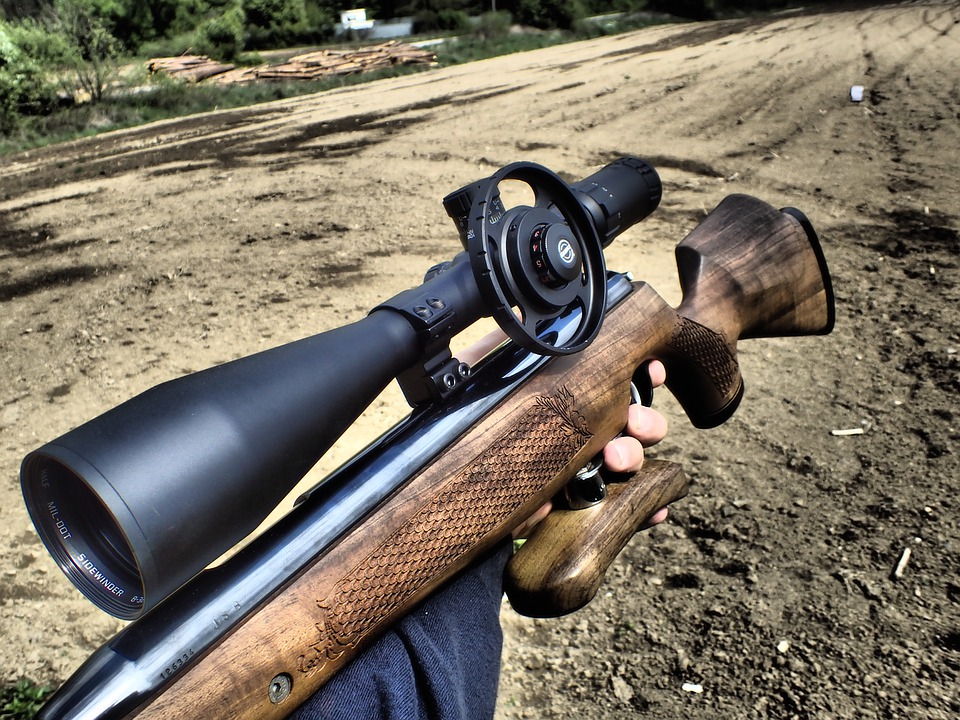
3. Optic sights
These can also be referred to as telescopic sights or simply, ‘tele’.
They are also more popularly known as scopes.
The name tells you its operation closely resembles that of a real telescope.
As such, it consists of two lenses, the front, and the rear.
The front lens, also known as the objective lens, allows light into the scope.
The rear lens, also known as the ocular lens, is the one into which the shooter looks.
Conventionally, both the front and rear ends of the scope are widened to house the lenses.
The two lenses are connected through a narrowed cylinder referred to as the tube of the scope.
Scope tubes are mostly designed to be 25 mm or 30 mm in diameter.
The 1-inch tube dominated the market for decades until manufacturers saw the need for a larger tube to accommodate bigger lenses which are better.
Some have even gone a step further and made scopes with a 34 mm scope tube – e.g. the Discovery HD 3-18X50 FFP SS.
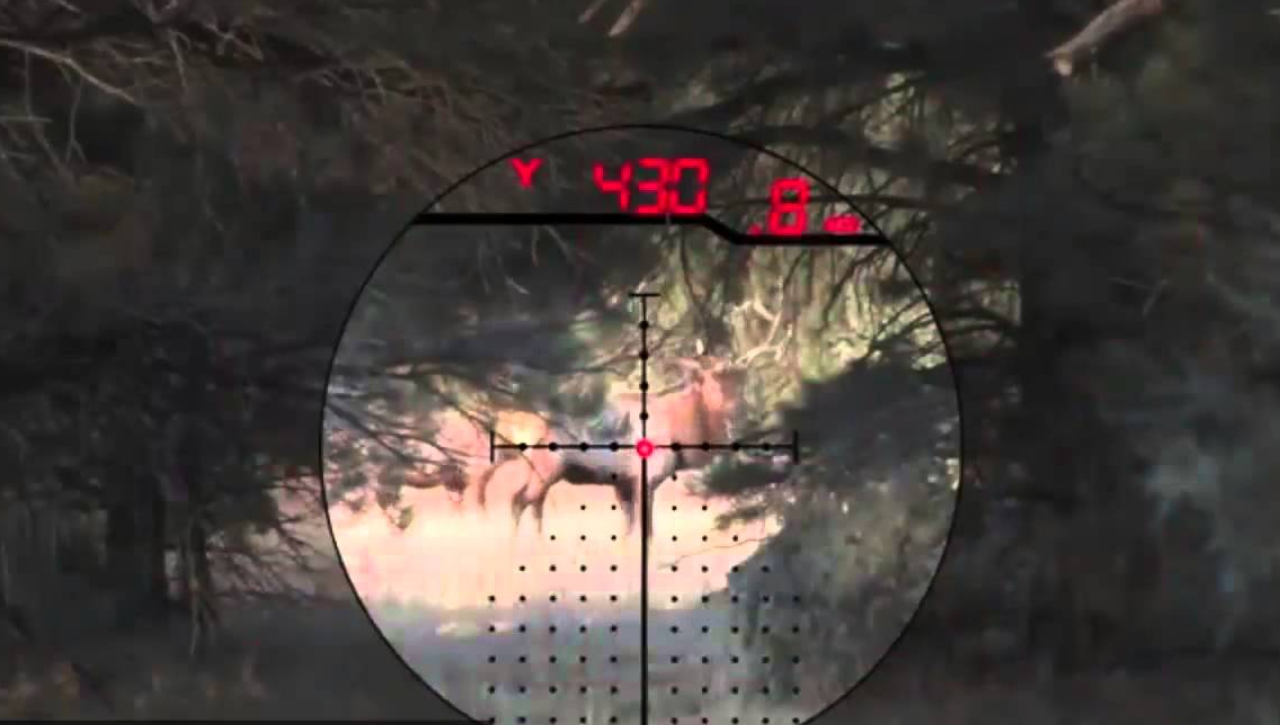
The scope tube houses reticles.
Perhaps a more familiar term is the crosshairs.
Again, there are quite a variety of reticles to choose from.
It all depends on how you are wired.
a. Fine crosshair
This must be the simplest of all, in that it comprises two thin lines intersecting at the center of the field of view.
With this, you can view a larger part of the target without obstruction.
The only downside is that the thin crosshairs may be difficult to view when the target is somewhat dark.
However, they work well in high contrast backgrounds – think of bright targets like a yellow metal plate or a bright green soda can.
To solve the problem of sighting against dark backgrounds, some manufacturers illuminate the reticles with battery power to bright colors such as red, green, or blue.
You can then comfortably switch to the color you see best against the current background.
b. Duplex crosshair
Considering the disadvantages of the fine crosshairs, designers thought of thickening the hairs along the periphery of the field of view and leaving the hairs thin around the intersection.
Small dots are added to the thin hairs towards the intersection, simply to boost visibility against dark backgrounds.
d. Target dot
This is a modification of the fine crosshairs with a dot added at the center.
The center dot is meant to rest at the center of the target.
This improves the fine crosshairs but it may not prove useful where the target is very small, as the dot is likely to cover the entire target.
c. Circle
Instead of the center dot described above, this comprises a full circle around the intersection of the crosshairs.
This is meant to improve visibility but has the unexpected effect of cluttering the target.
Pros of optic sights
Perfect for long-range hunting
Perfect for tiny targets
Comes in fixed and variable varieties
Hundreds of options to choose from
Easy to use
Cons of optic sights
Can prove difficult to use if the target keeps moving
Adjustment settings change quickly with every turn of the several knobs
Other variations
From the basic optic sights with front and rear lens and reticles, designers have added a whole battalion of features to scopes to enhance the hunter’s experience.
Let us look at some of these.
Lasers
These basically project a beam with the aim to assist in rangefinding.
A rangefinder calculates the exact distance between you and the target and additionally presents a crystal-clear image of the target
So that you are not left guessing what you are aiming at.
It enables you to pull the trigger with a high degree of surety.
Pros
Great for situations where you are likely to be jerked out of the shooting position
Gives you a perfect aim at the target in the shortest time possible
Cons
Makes new shooters poor at aiming
Visibility problems arise when the sun shines too brightly
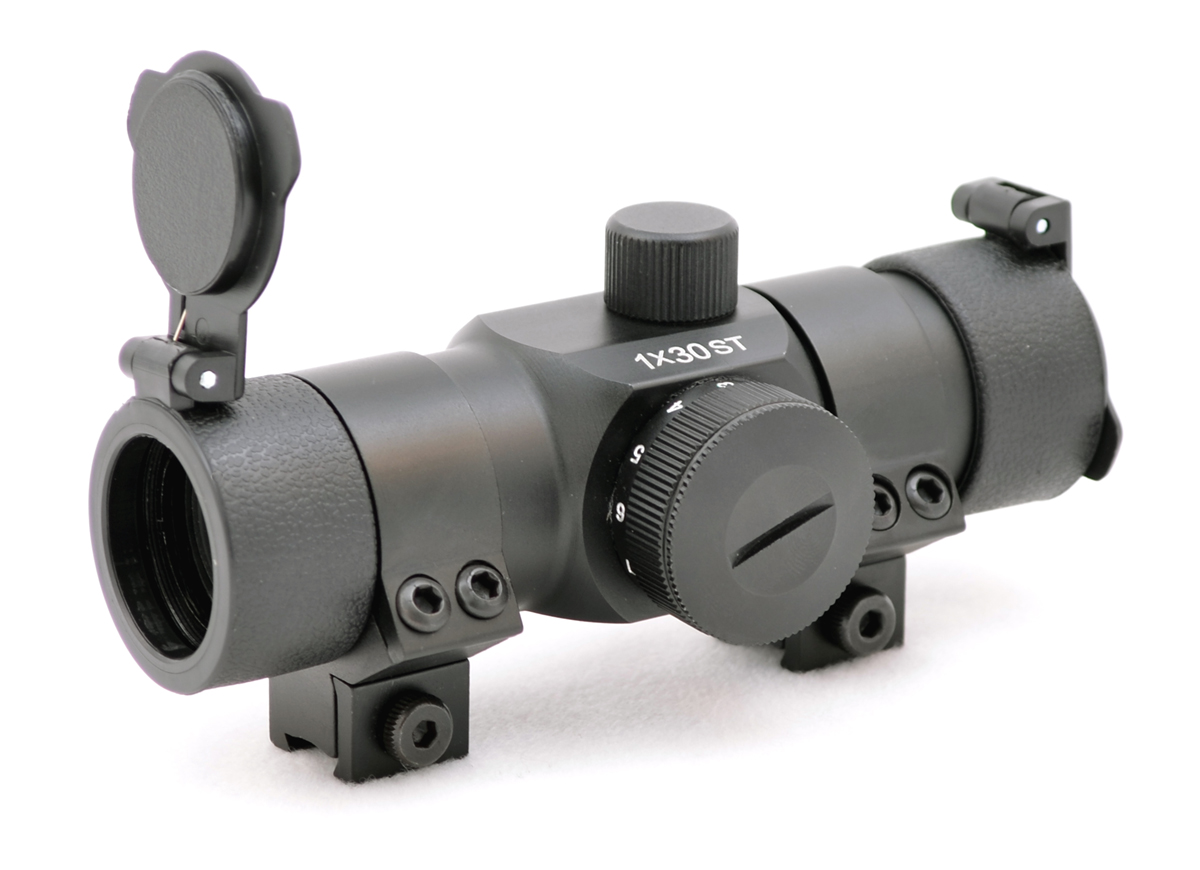
Red dot sight
A red dot sight likewise allows the hunter to view a holographic sight picture of the target within the optic.
It becomes quite easy to place the red dot right on the target.
Depending on the model, you are able to enlarge the target up to sixteen times, or even eighty times for more advanced scopes.
All this does is provide a clearer picture of the target – you see the stomach, head, shoulders, legs, back, etc.
You then narrow down to the specific part you are interested in and pull the trigger with higher chance of hitting the intended part.
To adjust the magnification power, you simply need to rotate the power ring to the desired magnification level.
You will mostly find the power ring at the rear end of the scope near your eye.
Additionally, most scopes with magnification ability come with the ocular focus ring.
This is used to ensure the reticle is in focus, however far or near the target is.
And now to the two variations of scopes in regards to magnification ability:
Variable scopes – This is what we just discussed. You can alter the magnification power to a value of your choice, basically by rotating an adjustment knob.
Fixed scopes – These do not allow you to change the magnification. For this reason, you better use them for targets that are not too far away – preferably for plinking and target shooting practice. If used for hunting, ensure that the prey is at close range.
As much as they seem limited, fixed scopes have the one advantage of requiring no adjustment once they are mounted.
Pros of Red Dot sights
Can be used for varying light conditions
The prey can’t view the red dot and so will never know it’s being aimed at.
Cons of red dot sights
With hundreds of brands and models to choose from, you feel confused right away
Can prove a bit pricey if you fancy more advanced features
Fiber optic sights
The crosshairs for this sight are made of an optical fiber that is transparent and flexible, usually of a diameter next to that of human hair.
The optical fiber allows light to pass through it, thus enhancing the visibility of the target.
It is interesting how optical fibers interact with light.
They’re usually made from an inner core and outer covering.
Both the inner and outer components have a low refractive index, implying that they do not bend light.
However, the outer covering has high reflectivity, so it reflects light along its entire length.
Even in conditions of poor light, the optical fiber is able to pick up the little light and transmit it along the full length of the cable.
This makes it ideal for foresight.
You can place the well-lit fiber on the target without much problem.
As such, they find great use in low-light settings.
Better still, they come in two main colors – red and green.
Which one strikes a chord with you? Go for it!
In case your eyes are not that good, consider purchasing a fiber-optic sight with a bigger circumference.
At least you won’t strain a lot.
Here is a list of some popular air rifles that come bundled with fiber optic sights:
Great for beginner shooters who are just starting out
Very useful in poor light conditions
Budget-friendly
Have easy-to-change rods
Cons
Some are fragile – you can easily break the glass tubes
Fiber optic rods may be affected by a number of cleaning solutions – with some like acetone bleaching the rod
Understanding scope models
You can get easily confused by the numerous numerical numbers you see on different scope models.
Take the example of the CenterPoint 6-20X50 AO Rifle Scope.
The numbers 6-20 mean that you can magnify the target 6-20 times, while the number 50 points to the size of the objective lens in mm.
The larger the objective lens, the larger the objective bell.
You need this information before you make the purchase so that you can ensure the scope will fit onto the mounting rails of your air rifle.
In addition to that, the bigger the lens, the stronger the magnification.
Go for the largest objective lens if you intend to go hunting at dusk or dawn.
Lastly, AO means Adjustable Objective, implying that the adjustment feature for parallax is fitted onto the objective bell of the scope.
You will also find some scopes with the suffix AOE – lightly meaning Around the Objective End.
Other terms you may come across in scopes include:
IR – Illuminated reticle
SF – Side Focus – the turret for adjustment of parallax is mounted on one side of the scope tube.
HD – High Definition
MOA – Minute of angle – refers to the accuracy of groupings at a particular range. MOA is actually 1/60th of a degree. 1 MOA implies groupings of 1” at 100 yards.
SWAT – Special weapons and tactics
Air rifle scopes vs firearm scopes
It would seem an incredible hack to simply mount your old firearm scope onto your new air rifle.
Don’t! Air rifle scopes are specially designed to counteract the unique vibration and double recoil of airguns.
As a matter of fact, spring-powered airguns require especially rated air rifles that can withstand the sometimes high recoil.
Springers are known to easily damage other scopes.
Frequently Asked Questions
1. What is a 6 o’clock sight picture?
There are quite a number of sight pictures that shooters use to improve their shooting accuracy.
This is especially so if you are working with open sights.
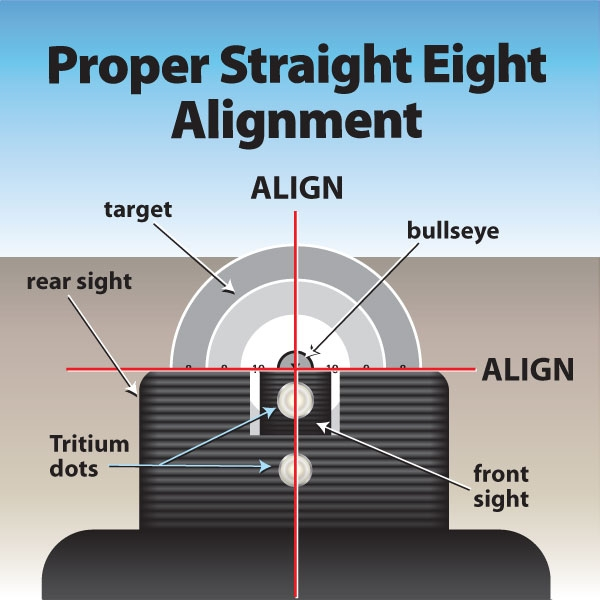
Sight pictures are obtained by aligning the rear and front sights in a specific relationship with the target.
The best one is that which allows you to have the smallest groupings.
Some of the popular sight pictures are elaborated below:
Center hold – this involves placing the front sight directly in the center of the target.
6 O’clock – this involves placing the front sight at the lower part of the aiming black.
Sub 6 – this favors those shooters who experience difficulties with the 6 O’clock hold by including a small white line between the front sight and the aiming black.
Frame hold – this involves placing the front sight at the center of the rear sight. In case there is no distinct aiming point, the front sight can be adjusted to the 6 or 12 O’clock position. This works quite well in low-light settings.
2. Why should you aim with your dominant eye?
Think of it this way – you are either left-handed or right-handed.
If left-handed, your dominant hand is the left one, with which you easily handle many tasks.
The opposite is true for right-handed persons.
This concept also applies to the eyes.
FYI, One of your eyes is stronger than the other.
In most cases, right-handed persons have the right eye as the dominant one
But there are instances where the dominant eye can be the opposite of the dominant hand.
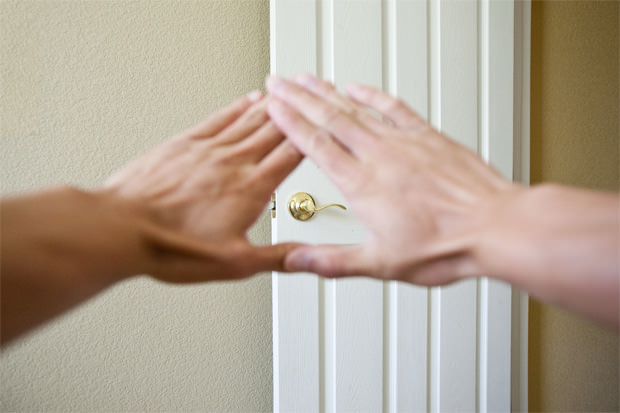
To know your dominant eye, Hunter-Ed proposes the 5 steps below:
Use your four fingers and the thumb to create a triangular opening.
Extend the arms away from your eyes.
Try looking at a far object through the opening with both eyes open.
Gradually pull the arms towards your eyes, ensuring your focus on the object does not waver.
The opening will naturally land on your dominant eye.
You may also try closing one eye at a time.
The dominant eye tends to remain focused on the object while the other eye sees the back of your hands.
To keep your shooting as accurate as possible, always use the dominant eye.
I am right-handed and my right eye is dominant. What about you?
3. What is proper sight alignment?
Sight alignment is basically the link between the front and rear sights.
You ideally peep through the rear sight with the intention of seeing the front sight right at the center.
On the other hand, the sight picture refers to the link between the aligned sights and the aiming bull on the target, which may be in the form of a post or bead.
Before I sign off, I’ll add yet another term for your keeps – eye relief. This refers to the distance between your eye and the rear sight.
You should master keeping a relatively constant distance between your eye and the sight.
You don’t want to bump the sight with your eye or place it very far away.
As a rule of thumb, aim at a minimum of 2 inches, and don’t go beyond 5 inches.
Step into the world of BaddieHub, the digital playground where confidence reigns and self-expression thrives. This rising star in social media isn’t just another platform—it’s a movement, a community, and a creative powerhouse all rolled into one stylish package.
Understanding BaddieHub: More Than Just a Platform
BaddieHub is a specialized online platform and digital community centered around the “baddie” aesthetic and lifestyle. The term “baddie” originated in social media culture, describing individuals—predominantly women—who exude confidence, embrace bold fashion choices, and display a distinctive sense of style characterized by attention-grabbing makeup, trendy outfits, and an unapologetic approach to self-presentation.
Unlike broader social networks, BaddieHub creates a dedicated ecosystem where this specific aesthetic is celebrated, supported, and cultivated. It serves multiple functions simultaneously:
Content Repository: A curated collection of fashion inspiration, beauty tutorials, lifestyle guidance, and wellness advice tailored to the baddie aesthetic
Social Network: A community space where like-minded individuals connect, share experiences, and build relationships
Creator Platform: A stage for content creators to showcase their work, build audiences, and potentially monetize their digital presence
Educational Resource: A learning environment where beginners can access mentorship, tutorials, and practical advice
This multifaceted approach positions BaddieHub as more than just another social media platform—it’s a comprehensive digital habitat for a specific cultural movement.
The Evolution of Baddie Culture
To understand BaddieHub’s significance, it’s essential to recognize the cultural phenomenon it’s built upon. The “baddie” aesthetic emerged organically through platforms like Instagram and TikTok, characterized by:
Bold makeup techniques with strong contouring, dramatic eyeliner, and defined eyebrows
Fashion choices that blend streetwear, luxury brands, and trend-forward styles
A distinctive photography style emphasizing carefully curated images with particular poses and settings
An emphasis on confidence and self-assurance as essential components of the look
What began as a hashtag and visual trend has evolved into a recognized subculture with its own codes, influencers, and community practices. BaddieHub represents the institutionalization of this aesthetic movement, providing it with a dedicated home beyond the constraints of general-purpose social platforms.
Content Offerings: The Heart of BaddieHub
At its core, BaddieHub provides access to diverse content aligned with the baddie aesthetic:
Fashion and Style
The platform showcases the latest fashion trends, outfit inspirations, and styling tips that embody the baddie look. From streetwear combinations to elevated casual ensembles, users can explore various interpretations of the aesthetic tailored to different occasions, body types, and personal preferences.
Beauty and Makeup
Makeup plays a central role in the baddie aesthetic, and BaddieHub offers comprehensive tutorials, product recommendations, and technique demonstrations. Content ranges from everyday glam to special occasion looks, with particular emphasis on signature elements like perfect winged eyeliner, flawless foundation, sculpted contours, and bold lip choices.
Lifestyle Content
Beyond fashion and beauty, BaddieHub encompasses broader lifestyle elements including:
Home decor and personal space styling
Travel destinations and experiences
Wellness routines and self-care practices
Fitness regimens and body confidence approaches
Community Interaction
What distinguishes BaddieHub from mere content repositories is its emphasis on community engagement. Users can:
Comment on and discuss content
Share their own interpretations and creations
Participate in challenges and themed events
Join specialized groups based on specific interests within the broader aesthetic
User Experience and Interface
BaddieHub’s design philosophy appears centered on creating an intuitive, visually appealing experience that aligns with the aesthetic sensibilities of its user base:
Visual Priority: The platform likely emphasizes high-quality images and videos, with layouts designed to showcase visual content effectively
Intuitive Navigation: Easy-to-use menus and search functions help users discover content relevant to their specific interests
Mobile Optimization: A responsive design and dedicated mobile app ensure on-the-go access to the platform
Interactive Elements: Features that encourage engagement, such as reaction buttons, comment sections, and sharing capabilities
The user journey through BaddieHub appears designed to be both educational and inspirational, guiding users from casual browsing to active participation and potentially to content creation.
Creator Ecosystem: Nurturing Digital Expression
One of BaddieHub’s most distinctive features is its focus on supporting content creators at all stages of their journey:
For Aspiring Creators
BaddieHub offers resources specifically designed for beginners:
Mentorship programs connecting novices with experienced creators
Educational content on content creation techniques and strategies
Guidelines for building an audience and developing a personal brand
Support for transitioning from hobbyist to professional creator
For Established Creators
More experienced users benefit from:
Expanded reach through a targeted, interested audience
Potential monetization opportunities through subscriptions or premium content
Networking with other creators for collaborations and knowledge sharing
Tools for audience engagement and content distribution
Monetization Framework
While specific details vary, BaddieHub appears to offer multiple avenues for creator monetization:
Subscription-based models for exclusive content
Tipping or direct support mechanisms
Possible advertising revenue sharing
Branded partnership opportunities
This holistic approach to creator support distinguishes BaddieHub from platforms that either focus solely on content consumption or provide creator tools without the supportive community context.
The Business Model: Balancing Community and Commerce
Based on available information, BaddieHub likely operates on a multi-faceted business model:
Freemium Structure: Basic access to content and community features available for free, with premium features or exclusive content behind paywalls
Creator Revenue Sharing: Taking a percentage of transactions between creators and their audiences
Advertising Integration: Targeted advertising relevant to the platform’s demographic
Possible Subscription Tiers: Different levels of access and features based on monthly subscription fees
This diversified approach allows BaddieHub to generate revenue while maintaining accessibility for casual users and providing income opportunities for active creators.
Cultural Significance and Positioning
BaddieHub’s existence reflects several significant trends in contemporary digital culture:
Niche Community Formation
As mainstream social platforms grow increasingly broad and algorithmic, there’s a countervailing trend toward specialized spaces catering to specific interests and aesthetics. BaddieHub exemplifies this movement toward digital communities united by shared visual and lifestyle preferences.
The Creator Economy
BaddieHub operates within the broader “creator economy”—a paradigm shift where individual content creators can build sustainable careers through direct audience relationships. By providing both the tools and the audience, BaddieHub facilitates this economic model specifically for creators within the baddie aesthetic.
Representation and Inclusivity
While centered on a specific aesthetic, BaddieHub appears to emphasize diversity and inclusivity within that framework, showcasing various interpretations of the baddie look across different body types, skin tones, and backgrounds. This positions it as part of a broader movement challenging traditional beauty standards while establishing new visual codes.
Digital Identity Construction
The platform reflects contemporary approaches to identity formation through digital self-presentation, where aesthetic choices become significant markers of personal and social identity. BaddieHub provides both the templates and the stage for this identity work.
Challenges and Considerations
Despite its appealing features, BaddieHub navigates several challenges common to digital platforms:
Content Moderation
Ensuring appropriate content while fostering creative expression requires sophisticated moderation approaches. BaddieHub likely implements both automated systems and human review to maintain community standards.
Beauty Standards and Ethical Considerations
Any platform centered on aesthetic presentation must contend with questions about beauty standards and potential impacts on user self-image. BaddieHub appears to approach this by emphasizing confidence and authenticity alongside specific visual styles.
Privacy and Data Security
As with all digital platforms, BaddieHub must address concerns about user data protection, privacy policies, and information security, particularly if financial transactions occur on the platform.
Sustainability and Evolution
To remain relevant, BaddieHub must evolve with changing aesthetic trends while maintaining its core identity and community connections. This requires continuous innovation in features, content approaches, and community engagement strategies.
The BaddieHub Experience: From Consumer to Creator
The typical user journey on BaddieHub might progress through several phases:
Discovery: Finding the platform through social media mentions, influencer recommendations, or direct searches for baddie-related content
Consumption: Browsing available content for inspiration and education
Participation: Engaging with the community through comments, likes, and shares
Creation: Beginning to contribute original content, starting with simple posts and potentially developing more sophisticated offerings
Monetization: For some users, transitioning to creating premium content and building a dedicated audience
This progressive engagement model creates multiple entry points and pathways through the platform, accommodating various levels of interest and commitment.
Beyond the Platform: BaddieHub’s Broader Reach
BaddieHub extends its presence beyond its primary platform through:
Social Media Integration: Connections with established platforms like Facebook for additional community engagement
BaddieHub TV: A specialized content channel focusing on video presentations of baddie-related content
Mobile Applications: Dedicated apps providing optimized mobile experiences
Rewards Programs: Points systems and perks encouraging continued engagement and platform loyalty
These extensions create a broader ecosystem around the core platform, increasing accessibility and deepening user engagement.
Conclusion: BaddieHub as a Digital Cultural Phenomenon
BaddieHub represents more than just another social media platform—it exemplifies the evolution of digital spaces toward more specialized, community-focused environments where specific aesthetics and interests can flourish. By combining content delivery, community building, and creator support within a unified ecosystem, it creates a distinctive value proposition for both casual enthusiasts and serious creators within the baddie aesthetic.
As digital culture continues to fragment into more specialized communities, platforms like BaddieHub demonstrate how online spaces can foster deeper connections around shared visual and lifestyle preferences. Whether it’s providing inspiration for a casual follower of the aesthetic or offering economic opportunities for dedicated creators, BaddieHub illustrates the potential of niche digital platforms to create meaningful cultural spaces in an increasingly diverse online landscape.
For users seeking a digital environment that celebrates confidence, bold style choices, and authentic self-expression through the baddie aesthetic, BaddieHub offers a comprehensive ecosystem that goes beyond mere image sharing to create a true community of shared interests, aspirations, and creative expressions.
North Carolina is one of the top 10 hunting states with almost 700,000 paid license holders. And these hunters are serious about whitetail deer. It’s the most popular game animal with nearly 250,000 hunters spending an average of 15 days per season going after their quarry. If you want to harvest one of the more than 200,000 deer taken in the state each year, be sure you’re aware of the season dates and regulations.
2022-2024 Season Dates
North Carolina deer hunting seasons vary by region, though it’s worth noting that the archery season starts on September 10 everywhere.
Also be aware that the “gun” season for each zone applies to antlered deer only. You can only hunt antlerless deer in an “either-sex gun” season. These are a bit more complicated, so it has its own separate section below.
The archery seasons are either sex unless otherwise specified.
Northeastern and Southeastern Zones
WeaponDates
Central Zone
WeaponDates
Northwestern Zone
WeaponDates
Western Zone
WeaponDates
Either-Sex Deer Seasons
Regardless of their zone, each county in North Carolina follows one of five types of either-sex season in which both antlered and antlerless deer can be taken. These often coincide with part of the standard antlered-only gun season.
Type of Either-Sex SeasonDatesCounties
North Carolina Bag Limits
North Carolina has a pretty high bag limit of six deer, though there’s a season maximum of two antlered deer. There is no daily bag limit.
If you want to hunt more than six deer, it is possible to get bonus antlerless harvest report cards that allow for an additional two antlerless deer per card during the special urban archery season in the participating towns and cities.
Urban archery season lasts from January 14-February 19, and you can find the participating municipalities on page 66 of the North Carolina Inland Fishing, Hunting & Trapping Regulations Digest. The report card costs $11 for both residents and non-residents.
North Carolina Licenses and Costs
North Carolina is a fairly hunter-friendly state in that all you need is a license to hunt deer and any other game animal. In fact, you can even get a combo license that covers both hunting and fishing.
That said, there are many different kinds of licenses divided between annual and lifetime licenses with different prices for residents and non-residents. To be considered a resident, you have to have lived in North Carolina for six months or have established a permanent residence for 60 days. Students attending a university in North Carolina as well as active-duty military stationed in North Carolina or from North Carolina and stationed outside the state.
Anyone hunting in North Carolina needs a license except for:
A landowner, their spouse or their dependents under 18 hunting on their own land
Members of the armed forces serving outside of North Carolina in the state on leave for 30 days or less
Youth under age 16 as long as they have completed a hunter safety course or are accompanied by an adult
Combo Licenses
Annual LicenseDetailsResident CostNon-Resident CostLifetime LicenseDetailsResident CostNon-Resident Cost*For those born on or before August 1, 1953, residents can buy senior lifetime licenses when they turn 65. For those born after that date, they may purchase the senior lifetime license at age 70.
Big game includes deer, bear and wild turkey, so if you’re a whitetail hunter, make sure to get the appropriate license. If you already have a lesser license but want to hunt deer, you can add it on. It costs $14 for residents and $100 for non-residents.
In addition to the above prices, residents of Georgia, South Carolina, Tennessee and Virginia receive specific discounted non-resident prices for licenses, so make sure you check the digest.
Hunter Education Requirement
You must take a hunter education course and receive a certificate of completion to get a hunting license in North Carolina. The only exceptions are if you have a valid license acquired before July 1, 2013, or obtain an apprentice permit. Hunters with an apprentice permit must be accompanied by a licensed adult 18 years old or older. The Hunting Heritage Apprentice Permit is free.
What Weapons Can You Hunt With in North Carolina?
Archery
North Carolina allows bowhunting with longbows, recurve bows, compound bows and crossbows. Recurve and longbows must have a draw weight of at least 40 pounds while compound bows must have a draw weight of at least 35 pounds. Crossbows have a minimum draw weight of 100 pounds. Broadheads must have a cutting diameter of at least ⅞ inch.
Blackpowder
During blackpowder season, North Carolina only allows firearms manufactured before 1898 that cannot use fixed ammunition or replicas of such a weapon that haven’t been modified to fire fixed ammunition.
Gun
During deer gun season, North Carolina allows the use of shotguns no larger than 10 gauge and pistols with no restrictions on length or caliber. Additionally, any rifle is legal except for fully automatic rifles or those prohibited by specific counties.
Can You Hunt With an AR-15 in North Carolina?
Yes, you can hunt with an AR-15 in North Carolina. The only exceptions are if you have modified your AR-15 or similarly styled rifle for automatic fire or if the specific county has a law that supersedes the state regulation.
What Types of Deer Are Popular in North Carolina?
Whitetail deer are the only species of deer native to North Carolina. There are around 200 elk present in the state, but it is not legal to hunt them. As a result, whitetail deer is by far the most popular game animal, which is also true for the country in general. In 2022 North Carolina deer hunting season, nearly 250,000 hunters spent 3.7 million days harvesting overing 200,000 deer.
What Else Is Popular to Hunt in North Carolina?
Although more people hunt deer in North Carolina than any other game, it’s actually only the fourth most harvested animal. In 2022, doves were by far the most heavily hunted with a total harvest of more than 830,000. Ducks and squirrels were second and third respectively.
"Understanding the Legalities: Felon Ownership of Air Rifles in Tennessee"
can a felon own an air rifle in tennessee?
In the state of Tennessee, the ownership...