Welcome to my review of the best rangefinders with built-in ballistics calculators.
Technology has come a long way in improving the overall user experience of a variety of different pieces of outdoor gear. Rangefinders have greatly benefited from these advancements in technological capabilities as many shooters are now using them to calculate long distance shots in both hunting and competitive shooting.
Many hunters in the field and competitive shooters have a limited number of shots—often only one—to make an accurate shot on their target. Having a rangefinder with a built-in ballistics calculator goes a long way in helping the user make the right calls and compensate for things like angles and other factors that can influence the path of your bullet.
Highest Rated Rangefinders with Built In Ballistics Calculators
If you’re looking for a rangefinder that offers a built-in ballistics calculator, expect to spend a bit more money as these models typically have much more features than your average version. We’ve combed through some of the most reputable brands and best models to compile this list of the best rangefinders with built-in ballistics calculators.
Leupold RX-2800 TBR Laser Rangefinder
Leupold is among the best in the business when it comes to making high-quality rangefinders that are equipped with ballistics calculators. Their RX-2800 TBR Laser Rangefinder offers exceptional levels of ballistics calculations, as well as a number of other top-end features that sets this one apart from the rest on our list.
This rangefinder is made with Leupold’s True Ballistic Range with Wind (TBR-W) technology which is able to account for inclines and declines, as well as range to target, and other ballistics information. This feature works alongside the continuous scanning mode that lets users range a number of different objects while they’re looking across their line of sight.
The Leupold RX-2800 TBR Laser Rangefinder offers 3 different reticle options for increased customization and is fully waterproof, fog proof and is also backed by the company’s Gold Ring 2-year warranty. All things considered, this one is tough to beat for users seeking a great rangefinder with a built-in ballistics calculator.
Leica is a company that has long been at the top of the rangefinder industry because of their ability to produce exceptional products that out-perform most other competitors. Their Rangemaster CRF 2800.COM Compact Laser Rangefinder is capable of immediately calculating ballistics ranges and plenty of other information in the blink of an eye.
This rangefinder makes a strong case for being the best product that also offers built-in ballistics calculation, but it works alongside a smartphone app, which might not always function as it should. Leica’s headline model features automatic brightness control which provides clear and razor-sharp images and guarantees reliable reading of distances and the ballistic output values.
It’s able to calculate these ballistics values based on the caliber, bullet type, trajectory and weight of the user’s cartridge.
Related: Best Long Range Shooting Rangefinders
Sig Sauer Kilo 1800 BDX
Sig Sauer is a brand that’s well-known for listening to what outdoor enthusiasts need and then working to deliver exactly what they want. Their Sig Sauer Kilo 1800 BDX rangefinder is among the best you’ll find in 2024. This rangefinder is made with their patented Ballistics Data Xchange system which works with Sig Sauer BDX riflescopes to provide exceptional levels of accuracy when it comes to computing ballistics.
One drawback to this product is that it only works with the BDX scopes, but that shouldn’t be a reason for most users to turn this model down. The Sig Sauer Kilo 1800 BDX works with the BDX riflescope to provide an automatic illuminated holdover dot through Bluetooth pairing.
According to the Sig Sauer website, “ the onboard Applied Ballistics Ultralite calculator sends ballistic drop data via Bluetooth directly to the SIERRA3BDX’s BDX-R1 reticle, providing an illuminated holdover dot and wind hold.”
In addition to the BDX features, this model is packed with plenty of other capabilities and components that make it a clear choice for users looking to get their hands on the latest and greatest rangefinder technology.
Vortex Optics Ranger 1800
We’ve come to expect top notch products for a more reasonable price from the Vortex brand and the Vortex Optics Ranger 1800 is no exception. This rangefinder offers built-in ballistics calculation and can be purchased for around $500 in most cases.
This rangefinder is an exceptionally well-made product that offers a lot of features, including ballistics calculation that works by Line of Sight mode (LOS) which is intended for shooters who are using ballistic drop data cards, ballistic calculation apps, or PDAs with ballistic programs and are shooting at distances beyond 500 yards.
Competitive shooters are especially fond of this rangefinder as it can easily be used in conjunction with devices that calculate bullet wind drifts under steep slopes or long-range conditions as doing this will greatly increase your accuracy.
Bushnell Elite Rangefinder
If you’re in the market for a more budget-friendly rangefinder that still offers ballistics calculation, look no further than the Bushnell Elite Rangefinder. This rangefinder is available for under $400 in most cases and offers everything you need in relation to ballistics calculation, especially for hunters.
It operates with CONX technology which operates using a laser that wirelessly communicates with the CONX app on both iOS and Android platforms and allows configuration via smartphones. Users can load up to three custom ballistics curves using this app calculator. As with other rangefinder models, the Bushnell Elite can be used in conjunction with certain wind meters to accurately calculate the effect that wind speed and direction might have in relation to your shot angle and other factors.
This rangefinder also offers Arc Rifle mode, which provides bullet-drop and holdover data, and also allows sight-in distance options of 100, 150, 200 or 300 yards. The Bushnell Elite is capable of ranging targets out to 1 mile (1,760 yards) and is capable of working in continuous scanning mode to range multiple targets in one sweep.
If you are interested in more rangefinder content, we have another post on the best hunting rangefinders of 2024, right here. Click the link to read more!
Conclusion: Top Rated Rangefinders With Ballistic Calculator
Those are the best of the best if you want a rangefinder that has an internal calculator. Thank you for reading and good luck in the field!
Dual purpose chickens are bred for both egg production and meat. It may sound perfect but there is a trade off.
If you’re new to chickens and you’ve been perusing the catalogs planning your new chick order you might have come across the term ‘dual-purpose chicken’ and been confused or intrigued.
We all know chickens have more than two purposes but we’re going to ignore the lawn ornaments and exhibition breeds.
Egg Laying Chickens
All hens will lay eggs if they stay out of the freezer long enough but there are certain chickens bred specifically for laying eggs.
Egg laying breeds tend to have a slighter build, they put most of their energy into laying eggs, not bulking up. They are also less likely to go broody, when hens sit on eggs they stop laying and won’t start back up until they are done with their chicks.
The best layers in terms of numbers are going to the be hybrid layers. The egg-laying hybrid chicken breeds include Golden Comets and Cinnamon Queens. Both breeds can lay up to 320 eggs in their first year laying.
I have raised a few hybrid layers years ago and they were nice enough birds but they tend to burn out quickly and they were the only birds I’ve ever lost to ascites or waterbelly.
Some people keep the hybrid layers for a few years and then when they stop laying they cull them all and turn them into broth and soup. They don’t have a lot of meat but they still have that chicken-y flavor.
Easter Eggers, or the chickens that lay blue and green eggs, are hybrids but unlike the other birds I mentioned they weren’t developed for extreme egg production.
They are on the slight side and probably wouldn’t be worth dragging out the scalding pot. They can lay 200-280 eggs a year.
If you’d prefer to skip the hybrids you’ll be happy to know there are some common chicken breeds that will lay almost as many eggs as the hybrid ladies. White & Brown Leghorns can lay up to 300 white eggs per year and Rhode Island Reds can lay up to 280 brown eggs (these guys are dual purpose by the way!).
Popular Egg Laying breeds include:
White & Brown Leghorn (220-300 white eggs/year)
Easter Egger (200-280 blue/green eggs/year)
Red Jungle Fowl (250-300 cream eggs/year)
Cream Legbar (180-200 blue eggs/year)
Appenzeller Spitzhauben (150 white eggs/year)
Meat Chickens
If eggs aren’t your thing and you just want some birds for the table meat birds are for you. Just like with the egg layers, if you want to maximize the return on your investment you want to look for Cornish Crosses.
Cornish cross are hybrid meat chickens that reach butchering size at 6 weeks. You need to be on your game with them too, you don’t want to keep these birds alive much longer than 10 weeks.
When I was growing up my grandparents raised Cornish crosses and compared to the laying flock they had it was like dealing with two different species.
Cornish crosses will eat themselves to death, grow so large they break their own legs, and drop dead from heart attacks. It probably goes without saying that Cornish Cross are not the birds you want if you’re looking for a flock of layers.
When I raised meat chickens I skipped over the Cornish crosses and went with Freedom Rangers. They grow slightly slower than the CC but still faster than the dual-purpose types.
Freedom Rangers are meat birds but they were developed to be heartier than the CC and will do better on a range or pasture.
Popular Meat breeds include:
Jumbo Cornish Cross
Freedom Ranger
Dark Cornish
Dual Purpose Chickens
So you’ve got super layers and quick-growing meat birds, and right in the middle you’ve got the dual-purpose chickens. They lay more eggs than a meat bird (a lot more) and carry more weight than a layer.
It probably won’t surprise you to know that most of the classic barnyard chicken breeds like Buff Orpingtons and Barred Rocks are dual-purpose.
They are popular for a reason. Dual purpose birds are the classic farm bird that does everything, they do well free ranging, they are good at foraging, they lay lots of eggs and they hold enough meat on their bones to make it worth butchering.
A lot of the heritage breeds are considered dual purpose. These birds tend to be thiccc and hardy. They carry quite a bit more weight than a layer and tend to be good winter layers.
If you’re looking for a self-sustaining flock a dual purpose breed is a good choice. Broodiness has been bred out of many of the production layers but dual purpose hens tend to retain that habit.
Popular Dual Purpose breeds include:
Barred & White Rock (200-280 brown eggs/year)
Black Australorp (200-280 brown eggs/year)
Buff Orpington (200-280 brown eggs/year)
Buckeye (180-260 brown eggs/year)
Dominique (180-260 brown eggs/year)
Jersey Giant (180-260 brown eggs/year)
Wyandottes (180-260 brown eggs/year)
Light Brahma (180-240 brown eggs/year)
Speckled Sussex (180-240 light brown eggs/year)
Marans (180+ dark brown eggs/year)
Standard Cochin (110-160 brown eggs/year)
Raising Dual Purpose Chickens for Eggs
When they aren’t going broody dual purpose chickens can be really good layers. They lay less frequently that the hybrid layers but they also lay for a longer time.
Rhode Island Reds/White and Barred Rocks will lay up to 280 eggs/year, Jersey Giants, Wyandottes and Buckeyes will lay up to 260 eggs/year, and Marans and Barnavelders will lay up to 200 eggs/year.
Dual purpose chickens are also known for being good winter layers. Bigger birds handle the cold weather easier and are able to put more energy into laying versus just surviving.
I keep lights in my coop so my poor New York birds don’t spend 18 hours a day in darkness but I still notice when the days start to get longer in January and February just based on my egg basket.
Most of my birds lay light brown eggs but during the coldest months I notice a larger proportion of dark brown eggs (coming from my Marans & Welsummers) and green eggs from my olive eggers. None of my white egg layers are dual purpose and I rarely get a white egg in the winter!
Read more about Picking Chickens for Rainbow Eggs
Raising Dual Purpose Chickens for Meat
You can buy or hatch out a batch of chicks and keep the hens for eggs and process the roosters after 6-9 months. Most hatcheries will sell male chicks for a low price just to get rid of them.
If you have the space to run a few dozen cockerels on pasture for a few months it’s not a bad way to fill the freezer. Dual purpose roosters will usually reach 6 pounds around 4.5 months.
Do you Need a Rooster in Your Flock? Find out
You will have plenty of time to get them processed before the hormones kick in and they turn into jerks. Deadlines aren’t as much of an issue with these guys because they grow so much slower than the Cornish Crosses.
Some dual purpose chicken breeds will get pretty big, like my favorites, the Brahmas. Brahma cockerels (male chickens less than one-year-old) can reach up to ten pounds and the roosters can hit 12 pounds.
Dual purpose breeds will look different on the table than the standard chickens you’re used to. One of the biggest differences is lack of giant breast meat, they will have large frames (more bones for stock!) and less meat over all. They also have more flavor and the meat won’t be quite as tender.
Crock pots are a great way to cook dual purpose birds, the slow cooking help relax and tenderize the meat. And don’t forget Coq Au Vin! The braised chicken dish is traditionally made with an old rooster.
Looking for more info? Check out my Chicken Keeping page or start here:
Petersburg resident, Kaleb Baird, poses with the world record mountain goat he harvested on Cleveland Peninsula, in Southeast, AK Sept. 11. Measuring 53 4/8 inches, it is the largest mountain goat taken by a bow hunter in North America. (Photo by Kaleb Baird)
A Petersburg resident has set a new world record for the largest mountain goat harvested by bow in North America. The hunt in Southeast Alaska was the first time Kaleb Baird had ever been out targeting a mountain goat. KFSK’s Angela Denning talked with him and has this story:
Before Kaleb Baird set off on his solo hunt, he did his homework. He had never been hunting for mountain goats before. But he grew up bow hunting deer and birds in Kansas. He knew the importance of being prepared. So, he spent half a year just researching.
“Studying maps and talking to the experts,” said Baird. “I talked to some biologists. I found a really good contact, a fella that used to hunt this population and lived down in that area for a number of years.”
Baird is not from this area. The 33-year-old had visited Petersburg for many years where his dad commercial fished but he didn’t become a permanent resident until last year. That opened up his options to go after a unique, isolated herd of mountain goats on the Cleveland Peninsula between Wrangell and Ketchikan.
The odds were not in his favor. This particular hunt is a lottery draw.
Baird: ‘“I think there was about 150 total hunters that applied and two winners,” Baird said.
KFSK: “So, you were lucky.”
Baird: “Yes, extremely lucky.”
A nanny nurses her kid on a mountain on Cleveland Peninsula in Southeast, AK. (Photo by Kaleb Baird)
That was in February. Fast forward to September and Baird is climbing the mountains of the peninsula with eight days of food on his back and more supplies stashed near the beach.
Baird: “I could’ve used a rifle on this hunt but growing up a bow hunter, I’ve just kind of been a bow hunter my whole life. There’s some incredible equipment out there anymore with regards to compound bows, which is what I shoot. But comfortably, me shooting at an animal, I’m usually 50 yards and inside. And on a hunt like this, 40 and closer, where you’re looking at uneven terrain, and big tough critters, you want to make a good, clean ethical shot.”
KFSK: “That is really close, 50 yards is really close.”
Baird: “(Laughs) Yeah, yeah, no kidding.”
KFSK: “So, it’s all probably strategy on how to do that?”
Baird: “Yeah, utilize the terrain, and wind, and sun and a number of things. Usually, it’s a patience game trying to get them bedding in the right spot and then you can decipher the rest and try to get in tight.”
KFSK: “When did you know that this could be a world record billy?”
Baird: “So, I killed him and I found him that day-I think it was day four of the hunt—and he dropped off of a pretty significant avalanche chute. And he lost about 7-800 foot in elevation from where I shot to where he died and probably did it in a manner of seconds. He basically dove off an avalanche chute. Took me a couple of hours to get down to him. Finally did, and the way he came to rest, his right horn was buried in some gravel in this avalanche chute and initially I thought it was shattered. But I lifted his head up and certainly, like I said, this is my first specifically targeting mountain goat hunt. I mean, I knew a little about size but not enough to really like lift up and say, ‘Oh man, this is going to be the world record’ type deal. I knew he was big just by putting my hands up to him and kind of taking some just some little guesstimates as to how long he was. That type of deal. But I didn’t really know until I got him back and checked him in with Fish and Game.”
KFSK: “So, what does being the world record holder mean to you? What has it mean so far?”
Baird: “Right now personally, I’m still kind of trying to wrap my head around it. It’s pretty surreal. Like I said, this was my first time. It wasn’t like I went up there—I did joke over the summer with some friends and family, I think, that I was going to shoot a world record but that was (laughs) completely in jest. I didn’t really think that that was ever going to be a possibility.”
That was just the beginning of a long process. The horns were measured ten ways by an official measurer and scored at 53-4/8 inches. A panel of judges in Arizona with the bow hunting organization Pope and Young confirmed the new record on December 5th.
Baird doesn’t know how much the mountain goat weighed because he quartered him and carried all the meat down the mountain. He also saved the head and part of the hide, which he plans to mount.
Depending on the pandemic, Baird could be recognized in April in Reno, Nevada at a convention that brings together a thousand bow hunters from around the world.
Baird’s mountain goat is the largest one ever harvested by bow in North America. A slightly larger mountain goat, measuring 57-4/8 inches from British Columbia holds the record for one harvested by rifle.
A mountain goat that Kaleb Baird saw during his hunt on Cleveland Peninsula in Southeast, AK. (Photo by Kaleb Baird)
The Thompson Center Encore Pro Rifle is a single-shot, break-action firearm. It’s also a switch-barrel rifle, meaning the barrel is interchangeable. Any Encore barrel will fit, which lets you customize the gun to fit any need. Whether you’re looking for a gun suitable for hunting, target shooting or self-defense, the Encore Pro is great for all types of shooters. Here’s why.
Accuracy
The precision rifling of the TC Encore Pro gives you accuracy you can count on. The 28” barrel gives you the best velocities you can expect from a given rifle cartridge. Like most rifles, the accuracy definitely varies based on what kind of ammo you use. I’ve noticed that I get the best, most consistent accuracy when I use powder instead of pellets. When I used between 185-200 grains, my 3 five-shot groups averaged 1.72 inches, and when I used 140 grains, it was around 1.2 inches. With most loads, you can expect excellent accuracy. The more often you clean the gun—and riflescope—the better shot groups you get. The trigger makes it a little harder to get even smaller groups, because it has a longer lock time. But, this tends to come with the territory with a hammer-fired gun.
Reliability
Thompson Center rifles are known to be great quality, and TC is a reputable company. The Encore is one of the best break-actions on the market, with no misfires to report, and extreme durability and robustness. However, there’s one downside: loading the gun with a dirty barrel. I had a couple bullets get stuck and had to clean the gun in order to get them out. For the most part, however, it’s a reliable gun you can count on no matter what you’re using it for. You can maintain optimum control in any conditions, wet or dry, with the overmolded pistol grip. It’s definitely a stand-out in comparison to similar models.
Handling
This is a well-built, well machined gun. The fit, the feel, and the balance are all fantastic, and the pistol grip stock fits perfectly in your hand. It’s one of the most comfortable grips I’ve ever experienced! One of the coolest features of the Encore Pro is the interchangeable barrels. It’s pretty simple to change them out:
Just remove two screws from the forearm, pull out the hinge pin, switch the barrels, replace the pin and screws, and… done! It’s quick and easy to transform it from a muzzleloader, to a slug gun, to a centerfire rifle.
It also comes standard with an ambidextrous Swing Hammer. A couple of downsides:
Cleaning the rifle is a bit challenging because in order to remove the breech, you need to first remove the fixed extractor. This involves removing two screws on the forearm, one on the extractor, and then reassembling the rifle after cleaning it. However, this is easier with an E-Z tip primer extractor. When you have one of these, it’s easier to clean, and you’re more willing to clean it often, which improves accuracy. There’s also no safety on the gun. But you can still move safely, even with a round in the chamber, by keeping the hammer forward.
Trigger
The Encore’s trigger is pretty good. It’s firm but crisp, which helps to offset the heavier pull—around 5 to 6 lbs. There’s a little inconsistency with the trigger pull, but other than that, it’s pretty impressive! No take-up, no sand, no creep, and no grit to speak of. The travel before the hammer snaps is minimal.
Magazine & Reloading
The TC Encore Pro is a break-action, single-shot rifle, and one of the best break-action muzzleloaders on the market. It features a Quick Load Accurizer with reduced rifling at the tip, which allows for easy loading. To open the action, you just pull back on the trigger guard lever and load your shell! One downside is that it comes with an extractor rather than an ejector, so you have to manually remove the cartridges or cases.
Length & Weight
The standard barrel of the Encore is advertised at 28,” but since the barrel is interchangeable, this all depends on what you choose. Overall, it measures around 42.” It’s relatively lightweight, and depending on the accessories you use, weighs anywhere from 7.5 to 8.25 lbs.
Recoil Management
Recoil management is definitely something TC got right with the Encore. It comes with a FlexTech recoil reducing stock, which boasts four layers of Limbsaver navcom material. The stock also comes with pliable inserts in the butt and comb, which makes the gun shoot softer. The buttpad is soft enough to absorb most of the recoil from firing. This firearm is great because it can handle tough-recoiling loads without making the shooter absorb all the recoil.
Price
The MSRP for the Encore Pro is around $790. For an extremely customizable, smooth shooting rifle, it’s not a bad price! It’s tried and true, and the customizability it offers at this price point is steller. It’s within most people’s budget, and perfect for families that need one gun for any situation, or for the “one-gun-man.”
My Verdict?
The TC Encore Pro is a great hunting rifle, and is perfect for anyone looking for an inexpensive gun for hunting, target shooting, and self-defense all rolled into one. Here are some of the best features:
Interchangeable barrels
Squishy buttpad to absorb even the most intense recoil
Weather Shield coating makes it extremely resistant to corrosion
Ability to shoot different calibers based on the game and terrain
So if you’re looking for the best in versatile hunting guns, look no further than the Thompson Center Encore Pro.
Richard Douglas is a firearms expert and educator. His work has appeared in large publications like The Armory Life, Daily Caller, American Shooting Journal, and more. In his free time, he reviews optics on his Scopes Field blog.
Ever since the sushi fad first touched down in Canada, we have been avid consumers. Starting hesitantly, as most did, with California Rolls and eventually working our way up to plates full of Sashimi, sushi has become a staple of our diet and has become the same for millions of people across North America.
Being avid anglers, however, eating this much fish caught by other people seemed somewhat wrong. Lake caught walleye and pike had always been more enticing to us than haddock or cod and our choice of salmon has always favoured lake-bound Kokannee over farmed Atlantics.
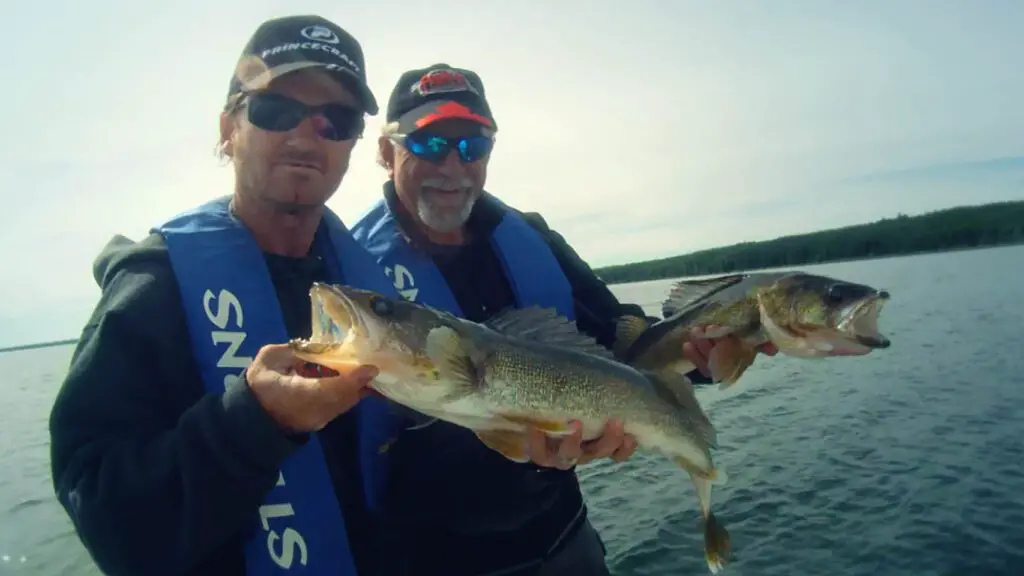
So, to combine our favourite hobby with one of our favourites foods, we decided to give our favourite freshwater quarry the full sushi treatment – taking a freshly caught walleye from a pristine northern Ontario lake, filleting it on the front of the boat, and eating walleye sashimi right on the water as we fished.
All was perfect in the world of Fish’n Canada… that was until we told a local biologist about our experiment.
After a full lecture about metre-long worms, small yellow grubs, and other parasites, we were just happy to have made it home alive.
Fast-forward 20 years, the fear instilled in us by that biologist has all but worn out and we are ready to tackle the subject once more and, with a little help from our friends, answer the question of “can you eat freshwater fish raw?” once and for all.
The Doc’s Perspective
“The Doc” Gord Pyzer
Gord Pyzer is known as “the Doc” not just because he has put doctorate-level hours into fishing, but because he has over 30 years of experience as a senior manager with Ontario’s Ministry of Natural Resources.
This made him the perfect man to run our raw fish questions by as he would know exactly what kind of potential parasites our favourite fish were holding and what kind of damage they would do if they were consumed by humans.
What kind of parasites do freshwater fish carry?
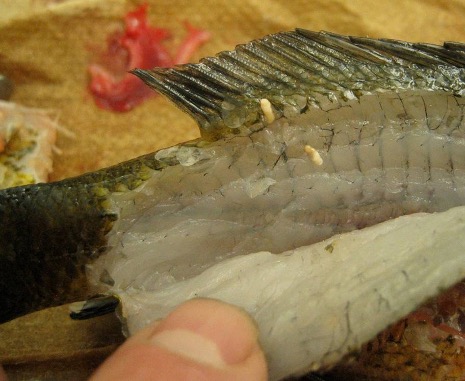
Yellow Grub
Yellow Grubs nestled into a Bluegill (Photo courtesy Craig Banner, Oregon Department of Fish and Wildlife)
Yellow Grubs are perhaps the most common parasite we see in our fresh water fish, often found nestled into the tails and flesh of panfish such as Perch and Bluegill. These unsightly grubs (actually parasitic flukes) make their way into the water via fish-eating birds, where they then mature inside aquatic snails before venturing out in their mature form to find their host fish.
Thankfully, these grubs are harmless to humans and, even if eaten live and raw, would only add a bit more protein to your diet.
Black Grub
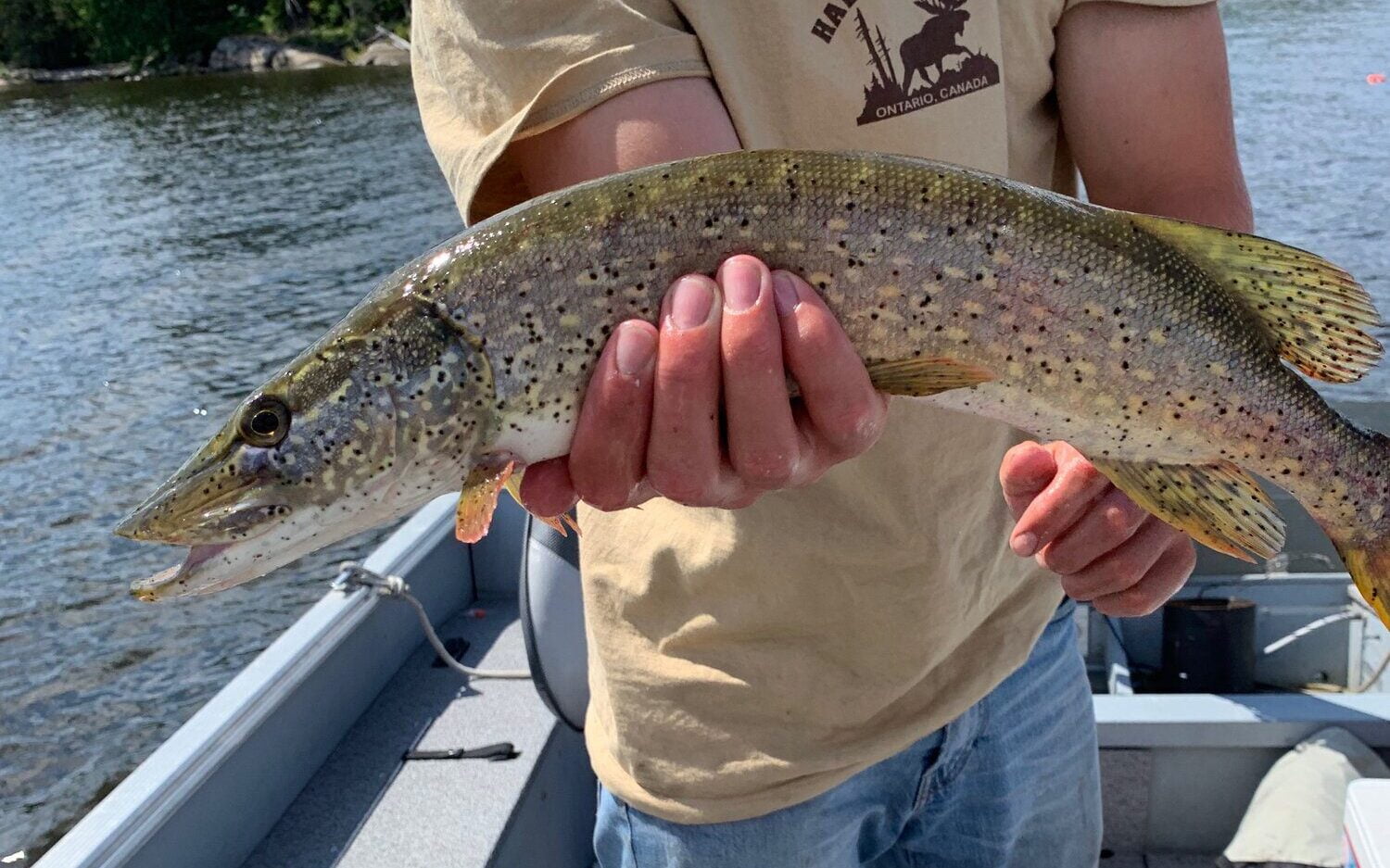
A Northern Pike infected with Back Spot Disease
Black Grubs, more commonly called Black Spots, are very similar to Yellow Grubs in every way except the markings they leave on the fish.
Like the Yellow Grubs, these parasitic flukes enter the water through fish-eating birds, mature inside of snails, and then find their target fish.
Once the worm enters its final host, the fish responds by forming a hard cyst made from a black pigment to trap the worm, creating small black spots throughout the fish’s body and temporarily pausing the spread of the parasite. These cysts remain closed until the fish is eaten, typically by birds, where the cycle starts over again.
Thankfully (again), this parasite is not transmittable to humans but will add a bit of crunch to your fillets if they are not picked out.
Broad Fish Tapeworm
If you found the last two parasites gross, you may want to stop reading.
Known formally as Diphyllobothrium latum, the broad fish tapeworm is the largest tapeworm that can infect humans and is present in many of our freshwater fish. “Large”, in fact, may be a bit of an understatement as these behemoths have been measured in humans at over 30 feet in length.
In our recent podcast episode, Gord gets into a story about a friend of his experiencing this first hand after consuming some undercooked Lake Trout.
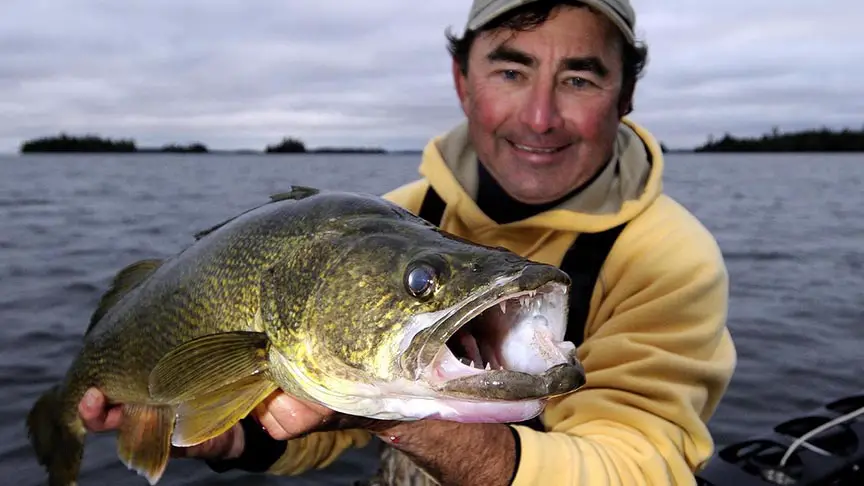
Since these parasites like cold water, Lake Trout are one of the more frequent hosts of these worms, however, they are also very prominent in Whitefish, Northern Pike, Walleye, and Smallmouth Bass.
Fortunately, for those cooking their fish, these worms will not survive the frying, baking, or smoking process and, if you have eaten a lot of trout, you have likely consumed them without noticing. For us sushi eaters, however, contracting these worms is a real possibility.
Gord’s Reccomendation:
Gord says that the decision to eat raw fish ultimately comes down to your perception of risk vs. reward. As he says in the podcast, “is eating that piece of raw fish really worth a 25-foot tapeworm?”
From Gord’s perspective, the answer to this question is obvious and he would much rather fry up his fresh-caught walleye than take the chance and consume it raw. As Gord says, “there are no medals for self-inflicted wounds.”
The Chef’s Perspective
Chef Antonio Meleca
After getting scared to death by Gord’s tapeworm stories, we wanted a more positive take on eating raw freshwater fish.
Chef Antonio Meleca is not only a chef to the stars and host of Fish’n Canada’s Fish du Jour series on YouTube, but is also an avid angler who frequently consumes his catches raw
In fact, Antonio has blended his hobby and his work on several occasions, including once with Kit Harington of Game of Thrones fame, where he prepared Smallmouth sushi and sashimi, caught by the actor right on the shores of Lake Nipissing (listen here).
So how did Kit and Antonio survive the process tapeworm-free?
How do you prepare freshwater sushi?
Antonio says that anytime he prepares freshwater sushi, he uses the same process he would for tuna or salmon. This starts with the gutting process, which should start as soon as possible after the fish is caught. When filleting, Antonio says he is then always keeping a close eye on the flesh for grubs or worms. In most of our non-bottom-dwelling freshwater fish, these parasites are not microscopic and can be easily spotted or felt.
Next, the fish has to be frozen for at least 48 hours below -18 C. In the sushi world, this is called IQF (Individually Quick Frozen) and is the time and temperature necessary to kill any harmful parasite that could be living in the meat. Unfortunately, most household freezers cannot reach these temperatures so some local connections to those with commercial-grade freezers may have to be made.
After the freezing process has been completed, the fish can be prepared any way you like. On the day with Kit Harington, sashimi and ceviche were the preference. However, Antonio has also used raw Smallmouth and Walleye for rolls which are sweetened with brown sugar and soya sauce.
Antonio’s Reccomendation:
Antonio says that freezing fish at the IQF standard -18C for two days makes it perfectly safe for consumption and, when done correctly, can make excellent tasting sushi of your favourite freshwater fish. Antonio does emphasize, however, that household freezers DO NOT reach these temperatures and, as a disclaimer, he cannot recommend making sushi at home without the proper equipment.
The Food Safety Perspective
To break the tie, we wanted to interview someone who could give us the food safety perspective of eating freshwater fish raw.
That man was Ken Cashin, a food safety consultant at Innovative Quality Solutions on Prince Edward Island.
In our interview with Ken, he echoed much of what both Gord and Antonio had said by stating that when eating any raw food, whether it be trout, salmon, beef or oysters, there is always a risk.
However, some fish provide a far greater risk than others. With oysters, for example, which act in the ocean as filters for known toxins, people rarely think twice about consuming them raw despite the massive health risks that can result from improper handling.
With something like a raw freshwater trout or walleye, on the other hand, the risks of serious illness are far lower yet many people wouldn’t dream of consuming it raw.
Ken’s Reccomendation
Like Gord, Ken says eating raw fish is all about weighing risks and deciding how much you really want that sushi. Like Antonio, Ken also reiterates that all risks can be avoided through proper handling and freezing. “The process is simple,” said Ken, “freeze the product, kill the worm.”
The Verdict
So can you eat freshwater fish raw?
The quick answer is yes.. with a caveat.
As both Antonio and Ken pointed out, the parasites found in our freshwater fish cannot survive the IQF freezing process carried out on traditional sushi, meaning all you have to do to make your fish safe to eat raw is to freeze it at -18 C for at least two days.
This, however, is much easier said than done as most household freezers cannot reach these temperatures.
For those looking to skip this process, the decision to eat raw freshwater fish ultimately comes down to your own calculation of risk vs. reward and whether you think your eyes are keen enough to spot the tapeworms that are patiently waiting to grow to record sizes in their next host.
Let us know in the comments below whether freshwater sushi will be added to your next shore lunch menu.
For the full interviews with all three of our guests, check out the podcast on Apple Podcast, Spotify, Google Play, or wherever else you get your podcasts.
Walleye fishing is a popular sport among anglers and enthusiasts, and having the right equipment is essential for success. A good walleye rod and reel combo is a must-have, as it can make a significant difference in your fishing experience.
With so many options available on the market, it can be overwhelming to choose the right one for your needs. That’s why we have put together this guide to recommend the best walleye rod and reel combos available online.
We’ll also provide you with some tips on what to consider when selecting the perfect combo for your fishing style and preferences.
So, whether you’re a seasoned angler or a beginner looking to get started, keep reading to discover the best walleye rod and reel combos that will help you land that prized catch.
Factors to Consider When Choosing a Walleye Rod and Reel Combo
When choosing a walleye rod and reel combo, there are several factors to consider to ensure that you get the best equipment for your fishing style and preferences. Here are some key factors to keep in mind:
Length and Power of the Rod: The length and power of the rod determine its sensitivity and strength. Longer rods provide greater casting distance and better line control, while shorter rods offer more precision and control. Power refers to the rod’s stiffness, with heavier power providing more strength and lighter power being more sensitive. Consider the type of water you’ll be fishing in and your preferred casting distance when choosing the length and power of the rod.
Type of Action: Rod action refers to how much the rod bends when pressure is applied to it. Fast-action rods bend only at the tip, while moderate-action rods bend more in the middle. Fast-action rods provide more power for hook sets and long casts, while moderate-action rods are better for casting accuracy and playing fish.
Reel Size and Gear Ratio: The size of the reel should match the size of the rod, with larger reels being better for longer casts and heavier lines. Gear ratio refers to the number of times the spool rotates with one turn of the handle. Higher gear ratios provide faster retrieval, while lower gear ratios offer more power. Consider the type of lure you’ll be using and the depth of the water when choosing the reel size and gear ratio.
Type of Line: The type of line you use depends on the water conditions and the size of the fish you’re targeting. Monofilament lines are versatile and work well for most situations, while braided lines provide greater strength and sensitivity for heavy cover and deep water.
Personal Preferences and Budget: Finally, consider your personal preferences and budget when choosing a walleye rod and reel combo. Some anglers prefer specific brands or styles of equipment, while others prioritize affordability. Determine what features are most important to you and how much you’re willing to spend before making your final decision.
By considering these factors, you’ll be able to choose a walleye rod and reel combo that matches your fishing style and preferences and helps you catch more walleye.
Penn Battle III Spinning Rod And Reel Combo
The Penn Battle III Spinning Reel and Fishing Rod Combo is a top-rated choice for walleye fishing online. This combo features a high-quality spinning reel and a durable rod that can handle a variety of fishing conditions.
The Penn Battle III Spinning Reel has a full-metal body and side plate that provides excellent durability and strength. It also has a CNC Gear technology system that ensures smooth and precise gear alignment, allowing for longer casts and more accurate retrieves. This reel also features a 5+1 stainless steel bearing system that ensures smooth operation and reduces wear and tear on the internal components.
The rod included in this combo is made from graphite composite blanks that provide excellent sensitivity and strength. It has stainless steel guides with aluminum oxide inserts that help prevent line wear and provide smooth line flow. The rod also features EVA handles that provide a comfortable grip even when wet.
The Penn Battle III Spinning Reel and Fishing Rod Combo comes in a variety of lengths and powers, so you can choose the one that best matches your fishing needs. This combo is also reasonably priced, making it an excellent value for its quality and performance.
Abu Garcia Pro Max & Max Pro Spinning Rod And Reel Combo
The Abu Garcia Pro Max & Max Pro Spinning Reel and Fishing Rod Combo is another excellent option for walleye fishing online. These combos offer high-quality spinning reels and rods that provide excellent sensitivity and strength.
The Abu Garcia Pro Max Spinning Reel has a lightweight graphite body and rotor that provides excellent balance and performance. It features an Everlast bail system that provides durability and a slow oscillation design that ensures even line lay. The reel also has a 7+1 stainless steel bearing system that ensures smooth operation and reduces wear and tear.
The Abu Garcia Max Pro Spinning Reel is a step up from the Pro Max, providing even better performance and features. It has a lightweight aluminum body and rotor that provide excellent durability and balance. The reel features an AMGearing system that provides precision-machined gears for smooth and accurate operation. It also has a Rocket Line Management System that provides better line control and longer casting distances.
Both the Pro Max and Max Pro spinning reels are paired with high-quality fishing rods that provide excellent sensitivity and strength. The rods are made from 24-ton graphite blanks that provide excellent balance and sensitivity. They also feature stainless steel guides with Zirconium inserts that help prevent line wear and provide smooth line flow. The rods have EVA handles that provide a comfortable grip even when wet.
The Abu Garcia Pro Max & Max Pro Spinning Reel and Fishing Rod Combos come in a variety of lengths and powers, so you can choose the one that best matches your fishing needs. These combos are also reasonably priced, making them an excellent value for their quality and performance.
Ugly Stik Elite Spinning Rod And Reel Combo
The Ugly Stik Elite Spinning Combo is a great choice for walleye fishing online. This combo features a high-quality spinning reel and a durable rod that can handle a variety of fishing conditions.
The Ugly Stik Elite Spinning Rod is made from Ugly Tech™ graphite and fiberglass construction, providing excellent strength and sensitivity. It has stainless steel guides with Ugly Tuff™ one-piece stamped stainless steel guides that provide maximum durability and eliminate insert pop-outs. The rod also has Ugly Stik® Clear Tip® design that provides excellent sensitivity and strength, allowing you to detect even the slightest bite.
The spinning reel included in this combo is also of high quality, featuring a 4+1 ball bearing system that provides smooth operation and reduces wear and tear. It has a machined aluminum spool that provides excellent line management, allowing for longer casts and better line control. The reel also features a durable graphite body and rotor that provide excellent balance and performance.
The Ugly Stik Elite Spinning Combo comes in a variety of lengths and powers, so you can choose the one that best matches your fishing needs. This combo is also reasonably priced, making it an excellent value for its quality and performance.
Quantum Reliance Spinning Rod And Reel Combo
The Quantum Reliance Spinning Reel and Fishing Rod Combo is a highly-rated option for walleye fishing online. This combo features a durable and high-performing spinning reel and rod that can handle a variety of fishing conditions.
The Quantum Reliance Spinning Reel has a solid aluminum body and rotor that provides excellent durability and strength. It also features a ceramic carbon drag system that delivers smooth and consistent drag pressure, allowing you to fight and land bigger fish. The reel also has a 5+1 stainless steel bearing system that ensures smooth operation and reduces wear and tear.
The rod included in this combo is made from a high-quality graphite blank that provides excellent sensitivity and strength. It has stainless steel guides with zirconium inserts that help prevent line wear and provide smooth line flow. The rod also features a split-grip cork handle that provides a comfortable and secure grip, even when wet.
The Quantum Reliance Spinning Reel and Fishing Rod Combo comes in a variety of lengths and powers, so you can choose the one that best matches your fishing needs. This combo is also reasonably priced, making it an excellent value for its quality and performance.
Pflueger President Spinning Rod And Reel Combo
Lastly, the Pflueger President Spinning Reel and Fishing Rod Combo is a top-rated choice for walleye fishing online. This combo features a high-quality spinning reel and a durable rod that can handle a variety of fishing conditions.
The Pflueger President Spinning Reel has a lightweight graphite body and rotor that provide excellent balance and performance. It features a sealed drag system that delivers smooth and consistent drag pressure, allowing you to fight and land bigger fish. The reel also has a 10-bearing system that ensures smooth operation and reduces wear and tear.
The rod included in this combo is made from a high-quality graphite blank that provides excellent sensitivity and strength. It has stainless steel guides with aluminum oxide inserts that help prevent line wear and provide smooth line flow. The rod also features a cork handle that provides a comfortable and secure grip, even when wet.
The Pflueger President Spinning Reel and Fishing Rod Combo comes in a variety of lengths and powers, so you can choose the one that best matches your fishing needs. This combo is also reasonably priced, making it an excellent value for its quality and performance.
The Benefits Of Buying A Walleye Rod And Reel Combo
Buying a rod and reel combo is an excellent option for anglers who want to save time and money while ensuring that their equipment is well-matched and ready to use. Here are some benefits of buying a rod and reel combo:
Convenience: Buying a rod and reel combo saves you the time and effort of having to search for and buy separate rod and reel components. With a combo, you get everything you need in one purchase, saving you time and hassle.
Cost-Effective: Buying a combo is often more cost-effective than buying a rod and reel separately. Combos typically offer a discount over buying the components separately, allowing you to save money without sacrificing quality.
Well-Matched Components: Rod and reel combos are designed to be well-matched, ensuring that the rod and reel are compatible in terms of length, power, and other specifications. This ensures that you get the best performance out of your equipment and allows you to focus on catching fish instead of worrying about whether your equipment is compatible.
Improved Performance: With a well-matched combo, you can expect improved performance and ease of use. Combos are designed to work together, ensuring that you get the best possible performance out of your equipment.
Variety: Rod and reel combos come in a variety of lengths, powers, and styles, allowing you to choose the one that best matches your fishing needs and preferences. Whether you’re a beginner or an experienced angler, there is a combo available that will work for you.
Overall, buying a rod and reel combo is a convenient, cost-effective, and efficient way to ensure that your equipment is well-matched and ready to use. With a well-matched combo, you can expect improved performance and ease of use, allowing you to focus on catching more fish.
Guided Walleye Fishing With Captain Lonney
For 25 years Green Bay Trophy Fishing has guided and provided helpful information to anglers in and around Door County. We are some of the most experienced fishing guides in Green Bay and pride ourselves on being experts on everything related to fishing in the area.
If you are interested in booking a walleye fishing charter, you can view our rates or contact us here.
If you’re reading this with a pack of freezer-burned chicken on the counter, help is here! You’ll learn that it’s safe to eat and how to cook it so it’s not rubbery and dry.
With the tips below, you’ll also learn how to prevent this from happening in the future so you can enjoy your favorite chicken recipes for dinner.
What is Freezer Burn?
Freezer burn is the evaporation of the moisture contained in the chicken meat being drawn out, and freezing around the chicken. This means the chicken will be drier once it is thawed out.
Is Freezer Burn Chicken Safe to Eat?
Chicken that is freezer burned is still perfectly safe to eat. If it was fresh when you froze it, you can still cook and enjoy it! I’m going to show you how to prevent this from happening and the best methods for cooking freezer burn chicken so that it
Why Does Freezer Burn Happen?
Freezer burn happens when food is stored in the freezer in packaging that is too thin to protect it from the frigid temperatures of your freezer.
Using thick, freezer-safe zip bags is the best way to prevent freezer burn.
One of the most common mistakes people make (I’ve been guilty of this too many times!) is placing chicken directly in the freezer when you get home from the store. The grocery store packaging is too thin to provide the protection the chicken needs to avoid freezer burn.
I also made a video to address this topic and give you a visual aid on the proper way to freeze chicken:
How to Tell if Chicken Has Freezer Burn?
At first glance, you’ll notice a layer of ice crystals have formed around the chicken itself. Depending on how long the chicken has been in the freezer the color of the meat itself may have a grayish hue to it.
Once cooked, freezer burned chicken can often have a leathery texture since the chicken has lost some of its moisture content in the freezer over time.
How to Cook Freezer Burned Chicken
Chicken that has been freezer-burned can still be enjoyed in a variety of ways. Each of these four methods provides extra moisture and flavor during the cooking process to disguise the fact that the chicken was slightly dehydrated from having freezer burn.
PoachPoaching chicken consists of cooking it in hot water and aromatics, infusing it with moisture and flavor. It’s a great way to cook freezer-burned chicken you plan to shred and add to soup or my Homemade Chicken Salad recipe.
CrockpotSlow-cooking freezer-burned chicken in a sauce will coat the meat with flavor and prevent it from being bone dry. My Slow Cooker Salsa Chicken is a perfect recipe, and you can use it to create tacos, loaded potatoes, and sliders.
Bake This method works great for skin-on cuts like thighs and whole chickens since the layer of skin locks in moisture while the fat drains to the bottom of the pan and hydrates the meat as it cooks. Test it out with these juicy Oven-Baked Chicken Thighs.
Make soup! The soup’s broth will rehydrate the chicken and mask any off-putting flavor. Cook the chicken with your method of choice (except grilling) and shred it before adding to the soup. My Chicken Taco Soup would be a great way to test out this method.
If you’re working with boneless, skinless chicken breasts, avoid using the oven since there’s no skin or fat to prevent moisture loss.
Classic zip bags that are not specifically marked as “freezer” bags, are not thick enough on their own to provide the needed protection for freezing chicken. If you don’t have freezer bags handy you can double up on the classic bags to provide an additional layer of protection from freezer burn for your chicken.
When you’re ready to prepare your chicken, be sure to use one of these safe methods for thawing frozen chicken.
Many people use the flat shooting and hard hitting .300 Win Mag for hunting elk, deer and many other species of big game with excellent results. Here are a few great brands of .300 Win Mag ammo that will probably serve you very well next time you’re afield.
The .300 Winchester Magnum cartridge exploded onto the scene in the 1960s and quickly surpassed older .30 caliber magnum rifle cartridges like the .300 Weatherby Magnum and .308 Norma Magnum in popularity. It has also displayed a lot of staying power and remains a favorite among hunters all over the world to this day. For that reason, just about every big manufacturer like Barnes, Black Hills, Federal Premium, Fiocchi, Hornady, Norma, Prvi Partizan (PPU), Sellier & Bellot, Sig Sauer, Remington, and Winchester produces several different variants of .300 Win Mag ammo for hunting elk, deer, moose, bear, and many other big game animals.
Known for being really accurate, having a flat trajectory, and for retaining lots of kinetic energy at extended range, versatility is the name of the game with the .300 Win Mag and it’s well suited for hunting a wide range of big game at short, medium, and even long range. However, different situations (like deer or pronghorn at long range vs moose at short range) necessitate the use of different kinds of .300 Win Mag ammo for best results.
While they are very accurate and are certainly capable of killing big game animals, I don’t recommend using bullets designed for target shooting like the Hornady ELD Match and Sierra MatchKing hollow point boat tail (HPBT) for hunting because they usually aren’t designed for optimum terminal performance on big game animals. The same goes for open tip match (OTM) or boat tail hollow point (BTHP) bullets.
Instead, it’s best to stick with .300 Winchester Magnum ammo specifically designed for hunting that uses soft point, jacketed hollow point, or similar bullets.
Fortunately, the .300 Winchester Magnum is one of the most popular hunting cartridges in North America and there are a wide variety of .300 Win Mag factory loads specifically designed for just about every conceivable big game hunting situation. So, regardless of whether you’re using a bolt action Winchester Model 70, a Remington Model 700, a Ruger Hawkeye, a Savage 110, a Mauser M18, a Weatherby Vanguard, or some other hunting rifle, there is pretty much guaranteed to be something for everyone on the list below of the best .300 Win Mag ammunition for hunting.
In today’s post, I’m going to show you the best .300 Win Mag ammo for hunting elk, deer, feral hogs, black bear, and all sorts of other big game and go over the pros and cons of each individual load.
Note: some of the links below are affiliate links. This means I will earn a small commission (at no extra cost to you) if you make a purchase of rifle, handgun, rimfire, or shotgun ammunition through those links. This helps support the blog and allows me to continue to create free content that’s useful to hunters like yourself. Thanks for your support.
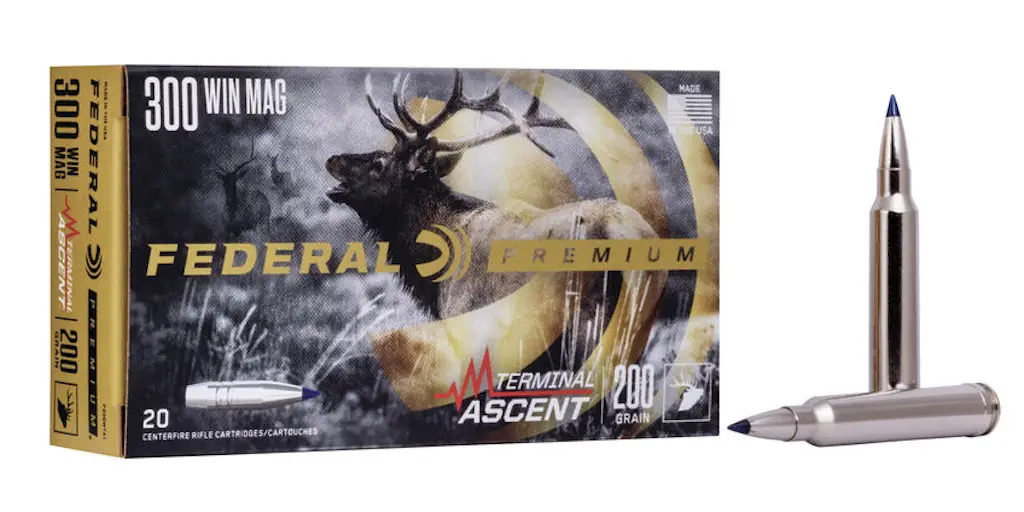
Federal Premium Terminal Ascent
Federal’s Terminal Ascent line is an excellent option of .300 Win Mag hunting ammo for hunters looking for really good extended range performance on medium and large game. This ammunition uses the new Terminal Ascent Bullet, which is also extremely aerodynamic and accurate. It has a very high BC (higher than the 200gr Hornady ELD-X) and is also much more robustly constructed.
With those things in mind, I personally tend to lean more towards the Terminal Ascent over the ELD-X for hunting bigger game like elk with the .300 Win Mag. This ammo is another great option for hunters going after game out west like mule deer or pronghorn who need excellent .300 Win Mag ammo for a long range hunting situation.
Don’t misunderstand me though: it will also work great on all manner of game at shorter ranges too. I’ve had a number of clients in Africa use this 300 Win Mag ammo with outstanding results on plains game ranging in size from impala (about the size of deer) all the way up to zebra, gemsbok, and kudu (about the size of elk) at ranges from 50-200 yards.
If this ammunition shoots accurately in your rifle, this is one of my to recommended loads (right there with the Nosler Partition) for hunters who need good .300 Win Mag ammo for elk or moose hunting. Terminal Ascent ammo has better long range performance than the Nosler Partition, so this is definitely the stuff you should use if a shot past 250 yards is likely on an upcoming elk hunt.
Bullet Type: Terminal Ascent
Bullet Weight: 200 grains
Ballistic Coefficient (G1): .608
Muzzle Velocity: 2,810 feet per second
GET TERMINAL ASCENT 300 WIN MAG AMMO HERE
Also Available at: Cabela’s, Lucky Gunner, Optics Planet, and Sportsman’s Warehouse
Barnes VOR-TX
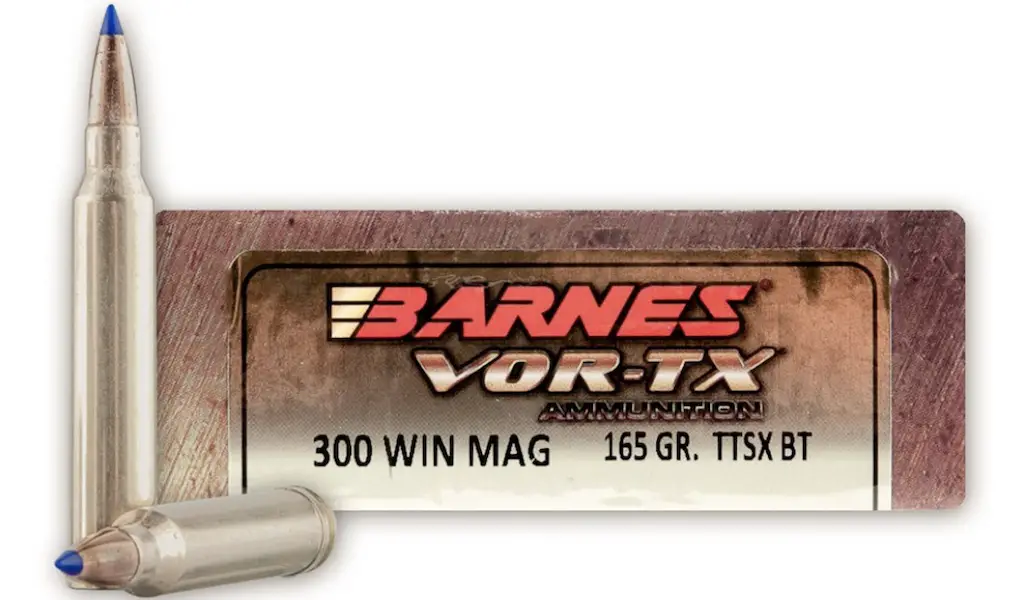
If you’re a hunter who loves Barnes bullets, then you’re in luck because Barnes produces some great .300 Win Mag ammo as part of their VOR-TX line. Featuring their legendary copper Tipped Triple Shock X (TTSX) bullet, this ammunition is designed for rapid expansion, high weight retention, and deep penetration. Available using 150 grain, 165 grain, or 180 grain .30 caliber bullets, Barnes offers three outstanding choices for hunters regardless of what they’re after.
The 180 grain load is quite possibly the best .300 Win Mag ammo for elk, bear, and moose hunting. The 165 grain load will also work for larger game like elk, but it’s perfect for bigger deer and bear. That high velocity 150 grain load is great .300 Win Mag ammo for deer and pronghorn hunting, especially for hunters who want a couple hundred extra fps and a really flat trajectory to minimize their holdover for a longer shot. All that being said, there’s certainly a lot of overlap on the acceptable hunting uses for those three bullet weights as well.
All three loads are also 100% copper, which makes them an ideal choice of .300 Win Mag hunting ammunition for use in states like California that that don’t permit the use of lead bullets.
Though I’ve since switched over to Federal Premium Trophy Copper ammo (next on this list), the Barnes VOR-TX line is still great ammunition and was my personal favorite .300 Win Mag ammo for a long time. I used that 165 grain load with a lot of success on both deer and pronghorn over the past few years and this ammo is also a favorite among many North America, New Zealand, and Africa hunting outfitters.
Bullet Type: TTSX Boat Tail
Bullet Weight: 150 grains, 165 grains, or 180 grains
Muzzle Velocity: 3,285 feet per second, 3,120 feet per second, or 2,960 feet per second
GET BARNES 300 WIN MAG AMMO HERE
Also Available at: Cabela’s, Lucky Gunner, Optics Planet, & Sportsman’s Warehouse
Hornady Outfitter
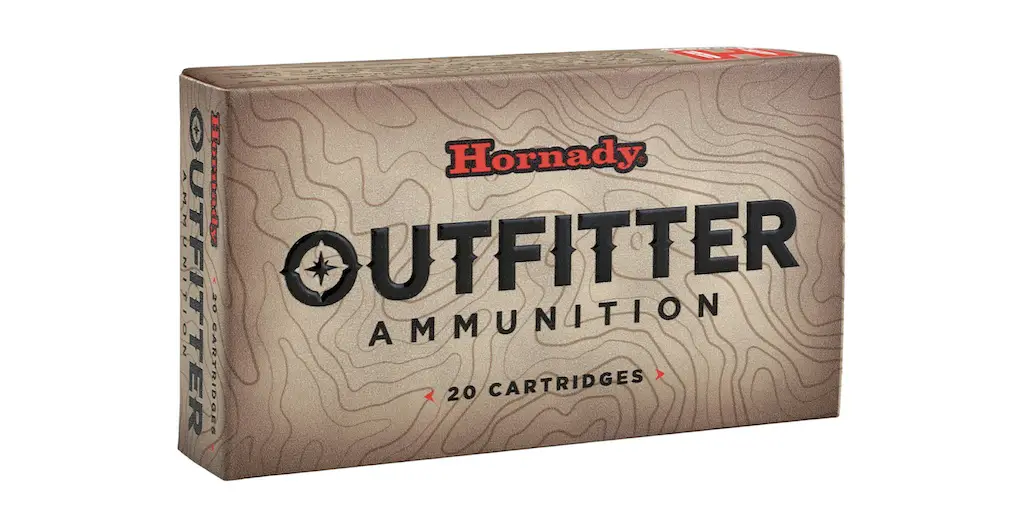
Hornady recently introduced their new Outfitter line of ammunition. Though it will also work quite well on a whitetail deer hunt in the back 40, the company markets this .300 Win Mag ammo for use on guided hunts in really tough environments like a moose hunt in Canada or a kudu hunt in South Africa.
This ammunition is loaded with an extremely tough 180 grain CX bullet that’s designed for controlled expansion, high weight retention, and deep penetration on large, heavy boned animals like elk, bear, and moose. This ammunition also uses nickel-plated case for reliable feeding and corrosion resistance under the most demanding conditions
With all those things in mind, it’s easy to see why Hornady advertises their Outfitter .300 Win Mag ammo for use on a big hunt that’s the culmination of years of saving and planning. After all, when the chips are down on the hunt of a lifetime, the absolute last thing you need is for your ammo to fail at the moment of truth.
The CX bullet used in Hornady Outfitter ammunition is lead free, which makes this ammo another good choice for use in states like California. Note: the CX bullet replaced the older GMX bullet from Hornady and is a tiny bit more aerodynamic, but retains the great terminal performance of the GMX.
Bullet Type: CX
Bullet Weight: 180 grains
Ballistic Coefficient (G1): .469
Muzzle Velocity: 2,960 feet per second
GET HORNADY OUTFITTER 300 WIN MAG AMMO HERE
Also Available at: Cabela’s, Lucky Gunner, & MidwayUSA
Hornady Precision Hunter
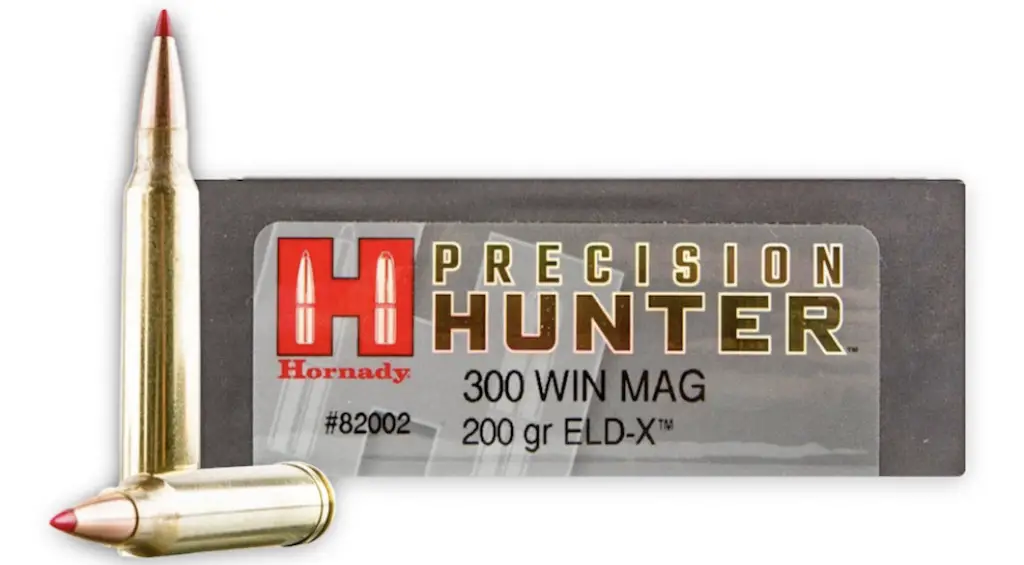
The .300 Winchester Magnum is an excellent long range cartridge and Hornady’s Precision Hunter line contains an outstanding .300 Win Mag ammo option for hunters looking to squeeze every bit of long range performance out of the cartridge. Loaded with the extremely aerodynamic Extremely Low Drag eXpanding (ELD-X) bullet, this ammo is perfect for western hunters going after game like elk, mule deer, or pronghorn who need the very best .300 Win Mag ammo for a long range hunting situation.
Hornady advertises that the ELD-X bullet has the best-in-class ballistic coefficients over their entire trajectory and that their Precision Hunter ammunition also offers match grade accuracy (usually sub-MOA).
Though the ELD-X does not have a bonded core like the Hornady InterBond, the ELD-X does feature a thicker jacket and an InterLock ring to help control expansion, increase weight retention, and minimize the chances of core-jacket separation. For this reason, the ELD-X is still devastating on deer and pronghorn sized game, but it’s also a much better choice than their SST bullet used in the Hornady Superformance line for use on larger game.
Add it up and you have some .300 Winchester Magnum ammunition that’s capable of delivering great terminal performance on a wide range of big game for shots at 400+ yards.
Bullet Type: Hornady Extremely Low Drag eXpanding
Bullet Weight: 200 grains
Ballistic Coefficient (G1): .597
Muzzle Velocity: 2,850 feet per second
GET PRECISION HUNTER 300 WIN MAG AMMO HERE
Also Available at: Brownells
Remington Core Lokt
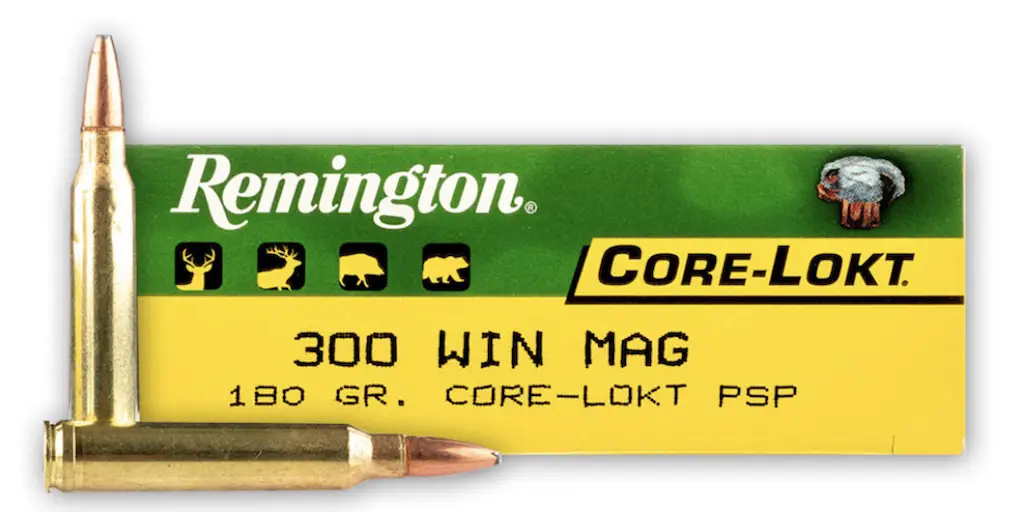
If you’re a “meat and potatoes” kind of hunter who wants some reasonably priced and dependable 300 Win Mag ammo for hunting deer, elk, feral hogs, and black bear, then the Remington’s 180 grain Core Lokt soft point will probably work really well for you (it’s also available as a 150 grain soft point load which is good for deer hunting).
It’s not the latest and greatest stuff by any means, but this .300 Win Mag ammunition has been around for a long time and countless hunters have successfully used Core Lokt ammo to take just about every species of big game in North America. The same goes for hunts overseas in places like New Zealand or Africa: one of those bullets through the vitals of a red stag, kudu, eland, or wildebeest will make for a very short tracking job.
Finally, this ammunition is very reasonably priced and has one of the lowest costs per round out of all the .300 Win Mag ammo on this list.
Bullet Type: Core-Lokt Pointed Soft Point (PSP)
Bullet Weight: 180 grains
Ballistic Coefficient (G1): .383
Muzzle Velocity: 2,960 feet per second
GET CORE LOKT 300 WIN MAG AMMO HERE
Also Available at: Brownells, Cabela’s, Lucky Gunner, & MidwayUSA
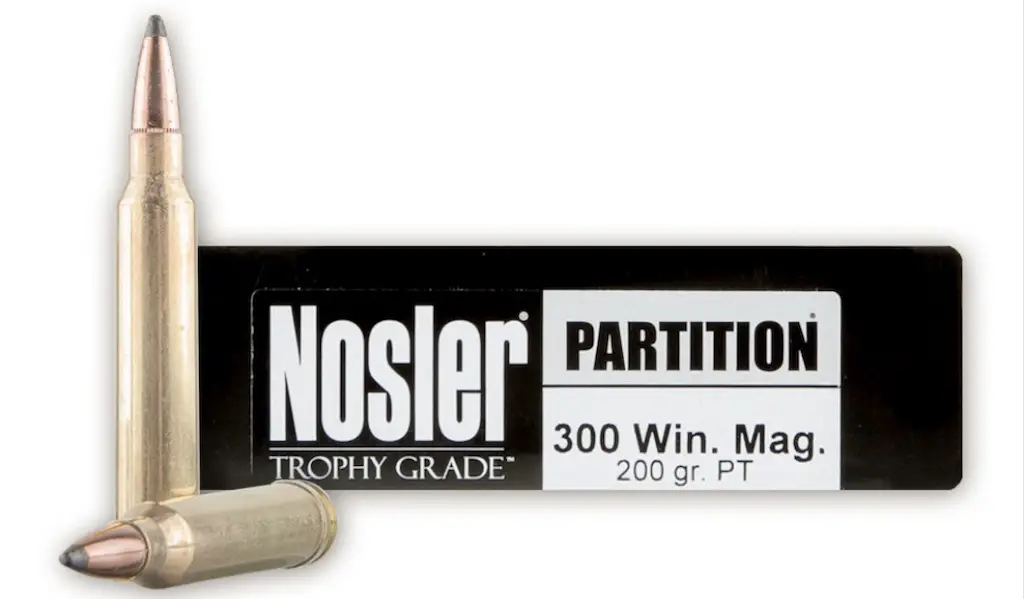
Nosler Trophy Grade
The Nosler Trophy Grade line of ammo will very likely fit the bill for those looking for some seriously heavy hitting .300 Win Mag ammo for elk, moose, or bear hunting. Loaded with a 180 grain or a 200 grain Nosler Partition bullet, this load is perfect for hunting really big game where it’s really important to use a heavy, well constructed bullet. With that in mind, this is also perfect .300 Win Mag ammunition for an African safari for really large or tough game like kudu, blue wildebeest, or eland.
This ammunition is not limited to use on bigger and tougher animals either and will also work extremely well on game like deer. Indeed, a heavier 180gr or 200gr bullet like those used in this loading will also probably cause less meat damage on deer-sized game than lighter and faster 150gr and 165gr bullets.
Though it doesn’t have the flattest trajectory out there, this load retains energy very well, so this is still excellent .300 Win Mag ammo for hunting at a reasonable range. The Nosler Partition is a very old bullet design, but it remains one of the best hunting bullets around and has a proven track record over the course of many decades and won’t let you down at the moment of truth. Nosler also produces a similar load in their Trophy Grade line featuring the newer Nosler Accubond bullet.
Bullet Type: Nosler Partition
Bullet Weight: 180 grains or 200 grains
Ballistic Coefficient (G1): .361 (180gr) or .481 (200gr)
Muzzle Velocity: 2,950 feet per second (180gr) or 2,750 feet per second (200gr)
GET NOSLER PARTITION 300 WIN MAG AMMO HERE
Also Available at: Brownells and Lucky Gunner
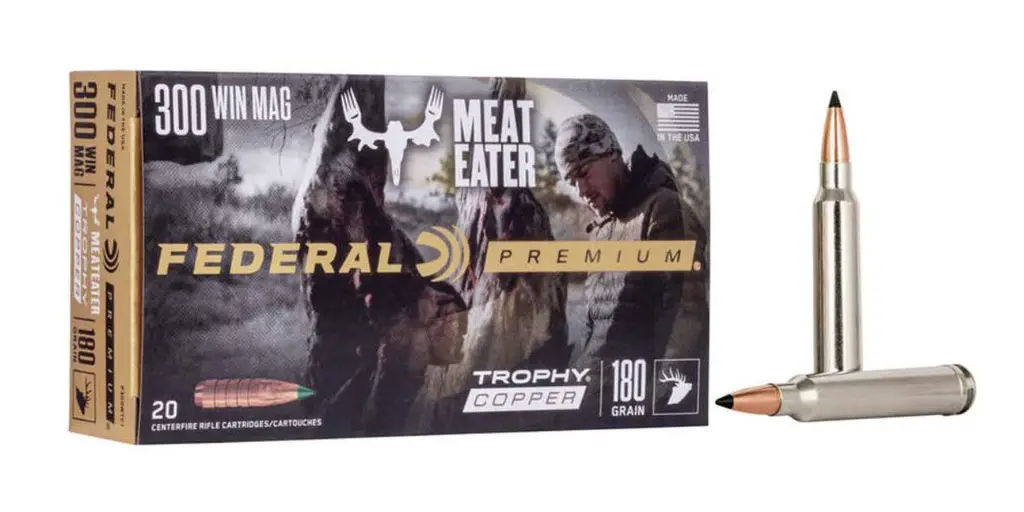
Federal Premium Trophy Copper
Hunters in search of a high quality alternative to Barnes bullets should definitely check out Federal Premium’s new Trophy Copper line of ammunition. Like the Barnes TTSX, the Trophy Copper provides a devastating mix of high weight retention, rapid, yet controlled controlled expansion (to approximately twice the original diameter), and deep straight-line penetration. This ammunition is available using either a 165 grain or 180 grain .30 caliber bullet and the whole line has been endorsed by the MeatEater crew.
The 180 grain load is an outstanding choice of .300 Win Mag ammo for elk, moose, or bear hunting while the the lighter 165 grain load is perfect for deer, pronghorn, and bear. Both of those loads use a slightly more aerodynamic bullet than the comparable factory loads in the Barnes VOR-TX line. Especially with regards to the 180 grain Trophy Copper, the result is some .300 Win Mag ammo with a flatter trajectory, more retained energy at long range, and more resistance to wind drift than comparable Barnes ammo.
Federal Premium Trophy Copper ammunition is also a tiny bit more accurate in my rifle. While Barnes VOR-TX ammo is great and has served me well for many years, the improved accuracy combined with the slightly better ballistics of the Federal ammunition were enough for me to make the switch from Barnes to Federal Premium in 2020.
With those things in mind (and after seeing the performance of this ammo in the field), the Federal Premium Trophy Copper line is my new personal favorite .300 Win Mag ammo for all my hunting. I could not have asked for better performance on elk than what I received using that 180 grain load. Regardless of whether you’re hunting deer, elk, and bear in North America or one of the big species of African antelope, this ammo will serve you well and get the job done if you do your part as a shooter.
Both Federal Premium Trophy Copper loads are also lead free, which makes them an ideal choice of .300 Win Mag hunting ammunition for use in states like California that that don’t permit the use of lead bullets.
Bullet Type: Trophy Copper
Bullet Weight: 165 grains or 180 grains
Ballistic Coefficient (G1): .503 (165 gr) or .523 (180 gr)
Muzzle Velocity: 3,050 feet per second or 2,960 feet per second
GET TROPHY COPPER 300 WIN MAG AMMO HERE
Also Available at: Sportsman’s Warehouse and Optics Planet
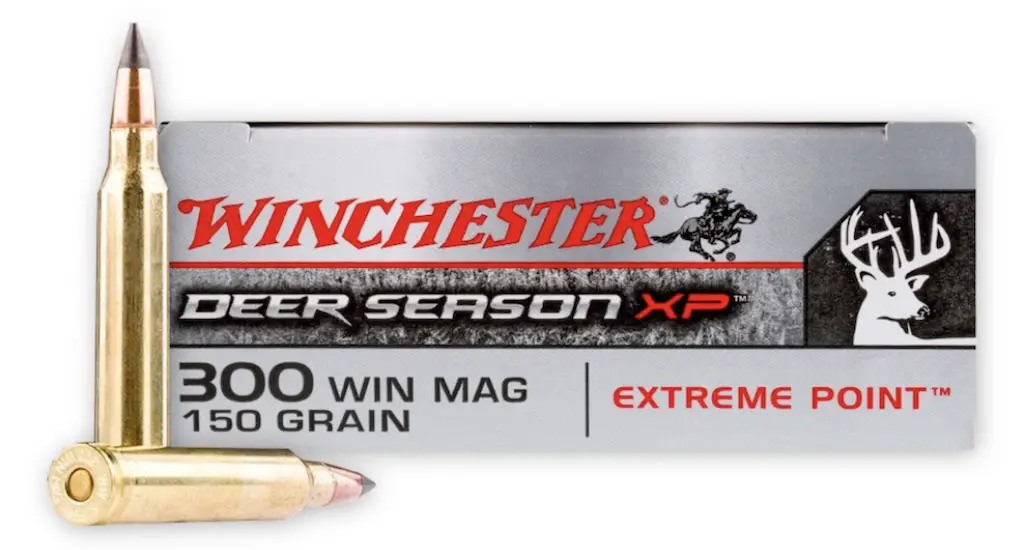
Winchester Deer Season XP
Winchester’s Deer Season XP line of ammunition is a really good choice choice if you’re planning on taking your .300 Win Mag deer hunting. The Extreme Point bullet this rifle ammo uses is similar to Winchester’s Power Point bullet (same goes for the Ballistic Tip and Ballistic Silvertip), but the Extreme Point has a large diameter polymer tip that’s specifically designed to produce a gigantic wound channel along with massive impact trauma. This normally results in a very short tracking job and a very easy to follow blood trail. Even so, it’s designed specifically to compete with popular whitetail deer hunting ammo like the Federal Fusion, Federal Power-Shok, Hornady American Whitetail, Remington Core-Lokt, and Winchester Super-X in terms of accuracy and reliability.
The Winchester Deer Season XP line is also competitively priced and has one of the lowest costs per round out of all the .300 Win Mag ammo on this list.
So, not only is this some very reasonably priced .300 Win Mag ammo, but it also has a very good reputation for producing a giant wound channel and minimizing the distance deer run after being hit. In fact, this Winchester ammo is one of my top recommended brands of 300 Win Mag ammo for whitetail deer hunting. That being said, I would NOT recommend using it for bigger game like elk or moose.
Finally, Winchester does manufacture a lead-free version of their Deer Season XP ammo loaded with their Copper Impact bullet in 300 Win Mag for use with hunters who are prefer (or are required to) use lead-free ammunition.
Bullet Type: Extreme Point
Bullet Weight: 150 grains
Ballistic Coefficient (G1): .392
Muzzle Velocity: 3,260 feet per second
GET DEER SEASON XP 300 WIN MAG AMMO HERE
GET COPPER IMPACT 300 WIN MAG AMMO HERE
Also Available At: Brownell’s, Cabela’s and Lucky Gunner
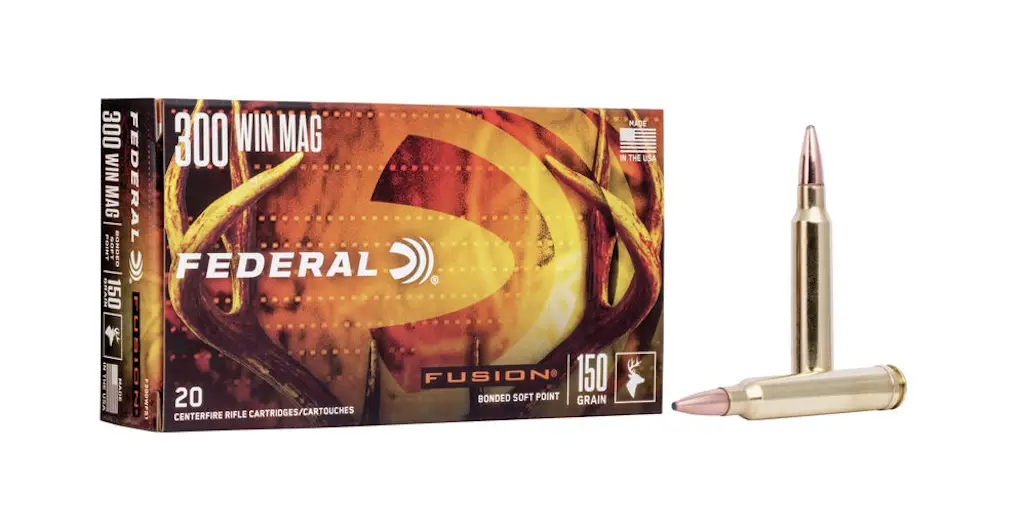
Federal Fusion
It’s far from the latest and greatest stuff, but this Federal Fusion loading with either a 150gr or a 180gr bullet is really good 300 Win Mag ammo for deer hunting. In addition to being very effective, this ammunition is also somewhat reasonably priced and has been one of the easier to find 300 Win Mag ammo options during the past few years.
Additionally, Fusion bullets have a bonded lead core to help with weight retention. Combined with a skived tip to help initiate expansion, Federal Fusion 300 Win Mag ammo delivers a really good balance of controlled expansion, high weight retention, and deep penetration. Federal Fusion ammunition also has a good reputation for accuracy.
While I think Fusion 300 Win Mag ammo is better for elk hunting than some of the other loads out there, this is ideal ammo for feral hog and deer hunting. You could also include game like pronghorn and maybe black bear in there as well.
It will definitely work on bigger like elk or moose in a pinch, but I do not recommend using Federal Fusion 300 Win Mag ammo for hunting really big game like that unless you can’t find anything better. Instead, use one of the other loads I recommend later in this article like the Barnes TTSX, Federal Terminal Ascent, or Nosler Partition.
Like I said though, this is outstanding on deer sized game though and it’s to go wrong with Federal Fusion 300 Win Mag ammo for deer hunting.
Bullet Type: Fusion Soft Point
Bullet Weight: 150 grains or 180 grains
Ballistic Coefficient (G1): .410 (150gr) or .485 (180gr)
Muzzle Velocity: 3,200 (150gr) or 2,960 feet per second (180gr)
GET FEDERAL FUSION 300 WIN MAG AMMO HERE
Also Available at: Natchez Shooter Supplies and Optics Planet
NEXT: BEST 6.5 CREEDMOOR AMMO FOR HUNTING ELK, DEER, & OTHER BIG GAME
NEXT: 223 REM vs 5.56 NATO: WHICH SHOULD YOU USE IN YOUR AR-15 CARBINE?
NEXT: 6.8 SPC vs 6.5 GRENDEL: WHAT YOU NEED TO KNOW
NEXT: 101 BEST GIFTS FOR HUNTERS
Enjoy this article about the best .300 Win Mag ammo for hunting? Please share it with your friends on Facebook and Twitter.
Make sure you follow The Big Game Hunting Blog on Facebook, Instagram, Twitter, and YouTube.
Splitting wood is a common task for homeowners who use wood for heat or various outdoor projects. Having the right tools for the job is essential, and one of the most critical tools is a splitting axe. A maul or splitting axe is ideal for larger logs and hardwoods, while a splitting maul is better for knotty or thick wood. A traditional axe offers versatility and precision for smaller logs or softer wood, and a double-bit axe is less commonly used for wood splitting. In this blog, we will explore the different types of axes available for splitting wood and help you determine which is best suited for your needs.
Splitting Axe
A splitting axe is a heavy, wedge-shaped axe for splitting wood. It typically has a long handle, usually between 28-36 inches, and a heavy head, weighing up to 10 pounds. The head is often wider and flatter than a traditional axe, with a blunt, rounded edge designed to deliver maximum force and easily split wood. The long handle provides leverage, allowing you to generate more power with each swing and split wood more efficiently.
A maul, or splitting axe, is ideal for splitting larger, hardwood logs that are difficult to handle with a regular axe. The weight and wedge-shaped head make it effective for splitting wood along the grain, allowing you to separate logs into smaller pieces with minimal effort. Due to its weight and size, it may not be suitable for smaller logs or tasks that require more precision.
Splitting Maul
A splitting maul is another type of axe for splitting wood. It looks similar to a splitting axe, with a heavy head and a long handle, but it typically has a more pronounced wedge shape with a sharper edge. The sharp edge allows the splitting maul to penetrate the wood more easily, making it suitable for splitting logs with knots or thicker boards.
A splitting maul is ideal for splitting large logs or logs with knots that may be challenging to cut with a regular axe. The sharp edge helps create a clean split, and the head provides the necessary force to split the wood effectively. Like the maul or splitting axe, a splitting maul may not be as suitable for smaller logs or tasks.
Traditional Axe
A traditional axe, also known as a felling axe or a chopping axe, is a versatile tool that can be used for several tasks, including splitting wood. It typically has a shorter handle, usually 24-28 inches, and a narrower, sharper head than a maul or splitting axe. The head is designed for cutting across the grain rather than splitting along the grain.
A traditional axe can split smaller logs or softer wood with more precision than a maul or splitting axe. Due to its smaller size and narrower head, it may require more effort and multiple swings to split larger logs or hardwoods.
Double-bit Axe
A double-bit axe has two cutting edges on the same head, with a blade on each side of the axe. This axe is less commonly used for splitting wood and is typically used in forestry or logging applications. The double-bit design allows for versatility in cutting from both sides, but it may not be as efficient or suitable for splitting wood as other types of axes.
Safety Considerations
Remember to prioritize safety when using an axe for wood splitting. Wear appropriate protective gear such as gloves, safety goggles, and sturdy footwear. Properly maintain your axe by keeping it sharp and in good condition. Always use proper technique and caution when swinging the axe to avoid injury.
Conclusion
Ultimately, the best type of axe for splitting wood will depend on your specific needs, the wood you are working with, and your personal preference. Consider the size and type of logs you will be splitting, as well as your physical ability and comfort level with different types of axes. With the right axe and proper technique, you can make wood splitting a breeze and enjoy the benefits of a well-stocked woodpile for your heating or outdoor projects.
When it comes to shotguns, the stock is more than just a piece of wood or synthetic material that rests against your shoulder. It’s a critical component that influences the balance, handling, and overall performance of your firearm. Selecting the right stock for your shotgun can greatly enhance your shooting experience, whether in hunting, sport shooting, or tactical scenarios.
Balance: A well-chosen stock helps maintain the shotgun’s center of gravity.
Handling: The stock shape affects how the shooter grips and maneuvers the gun.
Performance: Comfort and fit can impact shooting accuracy and fatigue.
Overview of Different Stock Types
Shotgun stocks come in a variety of shapes and materials, each with its own purpose and advantage. Understanding the differences is key to making an informed decision. Below are some common types of shotgun stocks:
Traditional Wood Stocks
Synthetic Stocks
Adjustable Stocks
Collapsible/Folding Stocks
Pistol Grip Stocks
Thumbhole Stocks
Stocks for Youth and Women
Recoil-Reducing Stocks
Custom Stocks
Tactical and Specialist Stocks
Basic Anatomy of a Shotgun Stock
Components of a Shotgun Stock
A shotgun’s stock is composed of several parts, each serving a function that contributes to the weapon’s ergonomics and aesthetics. Here are the primary components:
Butt: The rear end that sits against the shooter’s shoulder.
Comb: The top part where the cheek rests.
Grip: The part where the trigger hand holds the stock.
Fore-end: The section below the barrel that the non-trigger hand supports.
How Stocks Affect Shotgun Performance
The design of a shotgun stock impacts the shooter’s comfort and the shotgun’s behavior during firing. An ergonomically sound stock can improve accuracy by offering better control and stability. Various stock shapes and lengths of pull (distance from the trigger to the end of the stock) cater to shooters’ diverse needs and preferences, impacting factors such as:
Recoil management: Some stocks are designed to absorb shock better.
Sight alignment: The stock’s height and angle can affect how the shooter aligns with the shotgun’s sights.
Factors to Consider When Choosing a Shotgun Stock
Shooting Discipline and Application
The intended use of your shotgun plays a significant role in determining the type of stock that’s most suitable for you. For example, a trap shooter might prefer a stock with an adjustable comb, while a tactical operator could opt for a stock with a pistol grip for better control.
Shooting Disciplines:
Hunting
Trap/Skeet Shooting
Tactical/Law Enforcement
Body Type and Ergonomics
Shotgun stocks should complement the shooter’s stature to prevent strain and improve performance. The right stock should feel natural in your hands and against your shoulder. It’s essential to consider features like the length of pull, drop at comb, and overall weight when selecting a stock.
Ergonomic Considerations:
Length of Pull
Drop at Heel and Comb
Grip Size and Shape
Material and Durability
Stocks are manufactured from various materials, each with its advantages and limitations in durability and field performance. It’s important to choose a stock material that can withstand environmental conditions and the rigors of use.
Many shotgun enthusiasts prefer wood stocks for their natural feel and traditional appearance. A well-crafted wood stock not only looks impressive but can also provide a warm and comfortable grip during colder weather.
Visual Attractiveness: Each wood stock has a unique grain pattern.
Sensory Experience: Wood provides a tactile warmth not found in synthetic materials.
Wood Types and Characteristics
Different woods offer various properties that affect the stock’s performance and longevity. Walnut is a popular choice due to its balance between weight, durability, and attractiveness. Other options include maple and laminate, which provide distinct advantages.
Wood Stock Options:
Walnut: Durable, with a rich finish.
Maple: Heavier, often with a striking grain.
Laminate: Layers of wood for added strength and unique color patterns.
Maintenance and Care for Wood Stocks
To preserve the beauty and function of a wood stock, it’s vital to perform regular maintenance. Exposure to moisture and temperature changes can affect the wood, so proper care is crucial.
Wood Stock Maintenance Tips:
Use a quality stock finish to protect against moisture.
Store the shotgun in a controlled environment to prevent warping.
Regularly clean and oil the wood to maintain its luster.
Synthetic Shotgun Stocks
Benefits of Synthetic Materials
Synthetic stocks, made from polymers or fiberglass, are gaining popularity due to their resistance to environmental wear and reduced maintenance compared to wood. They are an excellent option for shooters who frequently hunt or operate in harsh conditions.
Durability: Synthetic stocks can resist impacts, scratches, and weather.
Low Maintenance: Less susceptible to moisture and temperature fluctuations.
Varieties of Synthetic Stocks
Synthetics come in diverse forms, each designed to enhance the shooter’s experience and meet specific requirements. High-tech materials like carbon fiber offer strength with reduced weight, while other polymers provide affordability and ruggedness.
Types of Synthetic Stocks:
Polymer: Cost-effective and durable.
Fiberglass: Rigid and stable.
Carbon Fiber: Lightweight with high strength.
Weather Resistance and Durability
One of the main advantages of synthetic stocks is their ability to endure extreme weather conditions, from the dampness of marshlands to the dry heat of deserts, without significant wear.
Benefits of Synthetic Stock Weather Resistance:
Consistency: Performs reliably in a range of temperatures.
Longevity: Maintains structural integrity over time and use.
Adjustable Shotgun Stocks
Advantages of Adjustability
Whether you’re a competitive shooter looking to fine-tune your fit or a recreational shooter who wants a stock to accommodate different clothing and situations, adjustable stocks can be invaluable. They provide a personalized fit that can enhance performance and comfort.
Adjustable Stock Features:
Adjustable Comb: Aligns eye with the sights.
Adjustable Length of Pull: Fits a variety of arm lengths.
Adjustable Butt Pad: Alters recoil impact angle.
Types of Adjustment Features
Modern adjustable stocks come with several features tailored to improve the shooting experience. Each adjustment can make a significant difference in the shooter’s accuracy and comfort.
Common Adjustments:
Comb height and lateral position.
Length of pull adjustments using spacers or mechanical systems.
Adjustable recoil pads and cheek risers.
Target Shooters and Tactical Use
For target shooters, an adjustable stock allows for consistent cheek weld and eye alignment with the sights for every shot. In tactical environments, adjustability can aid in quickly adapting to body armor or various shooting positions.
Target Shooting:
Fine-tuning for precision shots.
Consistency between multiple shots.
Tactical Use:
Adaptability for different gears and scenarios.
Rapid adjustments to meet operational demands.
Collapsible or Folding Shotgun Stocks
Compactness and Portability
Collapsible and folding stocks are designed for shooters who need their shotguns to be as portable and discreet as possible. They’re commonly used in home defense scenarios or situations where storage space is at a premium.
Collapsible Stocks: Can be telescoped in for a shorter overall length.
Folding Stocks: The stock hinge allows it to fold alongside the receiver.
Legal Considerations and Restrictions
Before choosing a collapsible or folding stock, be aware of local and federal regulations regarding shotgun configurations, as these can vary considerably. Compliance with the law is crucial to avoid potential consequences.
Legal Aspects to Consider:
Overall length requirements.
Restrictions on collapsible or folding stock features.
Tactical and Home Defense Applications
Shotguns with collapsible or folding stocks are often favored for tactical operations and home defense, where maneuverability is essential, and the ability to quickly stow away the firearm is beneficial.
Tactical and Home Defense Considerations:
Ease of transport and storage.
Quick deployment in confined spaces.
Pistol Grip Shotgun Stocks
Pistol Grip Only vs. Pistol Grip with Shoulder Stock
Shotgun pistol grips come in two primary styles: pistol grip only and pistol grip with a traditional shoulder stock. The former offers maximum compactness, while the latter provides better stability and accuracy by allowing the shooter to shoulder the firearm.
Pistol Grip Styles:
Pistol Grip Only: For breaching and extremely close-quarters use.
Full Stock with Pistol Grip: Enhanced control with traditional shouldering.
Control and Maneuverability Aspects
A pistol grip helps in handling the shotgun, making it easier to operate and aim, especially in high-stress scenarios. It allows for a strong wrist position and potentially quicker target acquisition.
Control Advantages:
Strong and ergonomic grip.
Improved handling during dynamic movements.
Hunting versus Tactical Usage
Hunters may find traditional stocks more advantageous for the steady aim required in their discipline, while individuals interested in home defense or tactical applications might lean toward a shotgun with a pistol grip for its better control in compact spaces.
Usage Considerations:
Hunting: Traditional stocks are often preferred for stability.
Tactical: Pistol grips favored for maneuverability.
Thumbhole Shotgun Stocks
Design and Ergonomics
Thumbhole stocks integrate the grip and the butt into a single streamlined unit, allowing shooters to lock their hand in place more securely. This design can offer improved grip stability and ergonomics, which is beneficial for precision shooting.
Ergonomic Benefits:
Enhanced control during the aiming and firing process.
Reduced strain on the shooter’s wrist and forearm.
Benefits for Precision Shooting
Precision shooters, such as those engaging in sporting clays or hunting at longer distances, may prefer thumbhole stocks for the increased stability and support they provide. The design aids in maintaining consistency between shots.
Precision Shooting Advantages:
Consistent hand placement for repeatable accuracy.
Better rifle-like control for slug shooting.
Hunting and Sport Shooting Preferences
While thumbhole stocks are becoming increasingly popular in hunting and sport shooting circles, it’s essential to choose one that feels comfortable and does not impede the natural movement needed for these activities.
Sporting Preferences:
Stability for long-range hunting shots.
Comfort for extended periods at the range.
Youth and Women-Specific Shotgun Stocks
Importance of Proper Fit
Proper stock fit is crucial for all shooters, but it’s particularly vital for women and youth, who may find standard stocks too long or heavy. A well-fitted stock can make a significant difference in handling comfort and shot accuracy.
Benefits of Proper Fit:
Enhanced control and ease of use.
Increased confidence and shooting pleasure for younger or smaller shooters.
Reduced Length of Pull and other Adjustments
Shotgun stocks designed for women and youth often feature a reduced length of pull and other adjustments to cater to smaller frames. Recoil pads designed for lighter shooters can also help manage felt recoil.
Adjustments Specific to Youth and Women:
Shorter length of pull.
Smaller grip circumference.
Lighter overall weight.
Stock Options for Smaller Statures
Recognizing the diverse needs of shooters, manufacturers are offering more youth and women-specific stock options, ensuring comfortable and effective shotgun operation for everyone.
Options Available:
Compact models of popular shotguns.
Aftermarket stocks with adjustment possibilities.
Recoil-Reducing Shotgun Stocks
Technology and Features for Recoil Absorption
Recoil-reducing gun stocks incorporate technology and design features that dissipate the energy generated when a shotgun is fired. Hydraulic systems, spring mechanisms, and specialized recoil pads are some of the features used to reduce felt recoil.
Recoil Reduction Features:
Springs or hydraulic cylinders.
Sorbothane or gel recoil pads.
Counterweights and dampening systems.
Importance for Shooter Comfort and Follow-Up Shots
Minimizing recoil is not only about comfort; it can also lead to more accurate follow-up shots and reduced shooter fatigue during extended shooting sessions, such as in waterfowl hunting or competitive shooting events.
Shooter Comfort Advantages:
Less shoulder and cheek slap.
Ability to maintain focus and aim for longer periods.
Considerations for High-Volume Shooters
Shooters who spend a lot of time at the range or in the field shooting large volumes of ammunition should consider investing in a recoil-reducing stock to help mitigate long-term shoulder wear and fatigue.
Considerations for High-Volume Shooting:
Preserving shoulder health.
Extending shooting sessions without discomfort.
Custom Shotgun Stocks
Tailor-Made for Individual Needs
Custom stocks are crafted to fit an individual shooter’s specific physique and preferences. A custom fitting session with a stock maker can result in a shotgun stock that feels like an extension of the shooter’s body, potentially improving every aspect of shotgun handling.
Custom Fitting Benefits:
Precise adjustments to suit body measurements.
Craftsmanship that matches personal style and comfort requirements.
Process of Custom Stock Fitting
The custom stock fitting process often involves measuring a shooter’s dimensions and shooting stance. A stock maker then uses these measurements to craft a stock tailored for optimum fit and performance.
Custom Stock Fitting Steps:
Detailed measurement of the shooter’s physique.
Consideration of shooting style and discipline.
Creation of a stock that satisfies functional and aesthetic demands.
Costs and Benefits of Customization
While custom shotgun stocks can be a significant investment, many shooters find that the benefits in comfort, performance, and enjoyment are well worth the expense.
Custom Stock Considerations:
Higher cost compared to off-the-shelf stocks.
Long-term value in improved shooting results and satisfaction.
Tactical and Specialist Shotgun Stocks
Specialized Stocks for Law Enforcement and Military
Tactical and specialist shotgun stocks are designed to meet the stringent requirements of law enforcement and military operations. Features such as adjustability, rugged construction, and additional accessory mounting options are commonplace.
Key Features for Tactical Stocks:
Robustness to withstand rough handling.
Modular designs for attaching lights, lasers, and slings.
Conclusion
Tactical stocks often feature design elements that facilitate rapid deployment and manipulation under stress. Materials used in these stocks are typically chosen for their durability and functionality in adverse conditions.
Elements of Tactical Stock Design:
Non-slip surfaces for secure grip in all conditions.
Ergonomic shape to accommodate rapid movement and positioning.