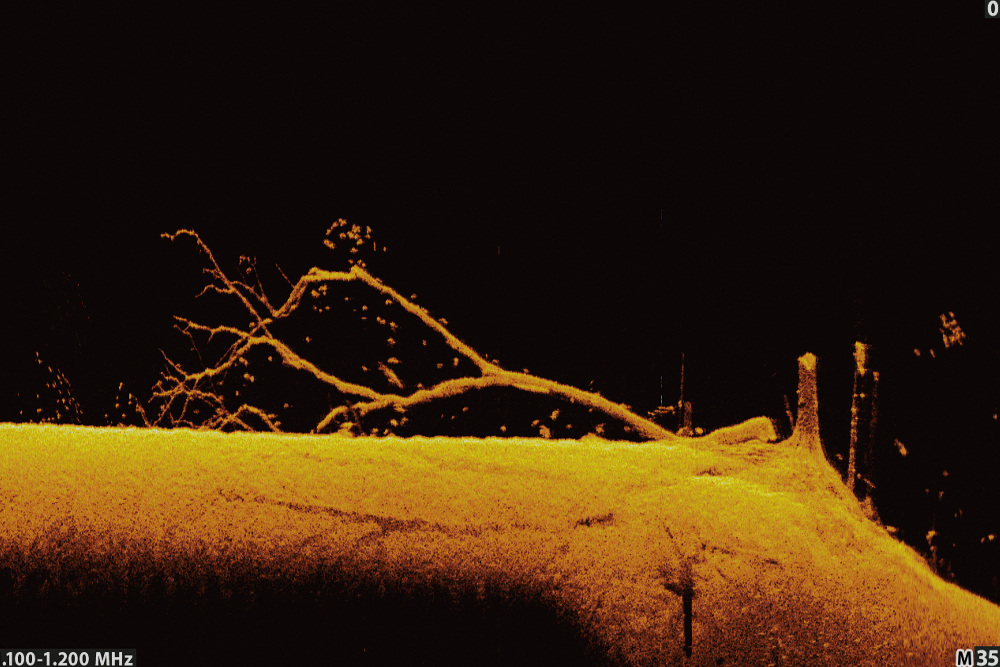
Good sonar units can make the difference between fish in the boat and just a boat ride. (Photo: John Phillips)
Sonar for Slabs- Tech Done Right, by Ed Mashburn
Setting up and using sonar fish finders properly is important elements of good crappie fishing.
Of all the tools used by crappie anglers, probably no other modern development has made more fish come over the side of the boat than sonar fish finders. These amazing little black boxes can help anglers find crappie that would otherwise be completely passed over. These electronic marvels show the angler what lies below the surface with remarkable detail and clarity.
But just because a crappie angler buys a sonar unit and plugs it in, that doesn’t guarantee best results. Like most fishing tools, sonar fish finders can be used well or poorly, and most crappie anglers can improve their fishing performance with their fish finders.
Help from an Expert
Tony Adams fishes for crappie a lot both as a guide and for his own enjoyment in the lakes of eastern Alabama. A vital part of his crappie fishing success comes from his use of technology- the sonar fish finder.
Modern sonar units with a down imaging view reveal extreme structure and fish details. (Photo: John Phillips)
Adams says, “My best advice to anyone wanting to use electronics to catch more crappie is to invest in a quality product with good imaging. I highly recommend Humminbird products, especially the Helix 12.”
Of course, the latest craze among hardcore crappie anglers is the Garmin Panoptix LiveScope outlined in another article in this issue [HOTLINK TO FRAZEE LIVESCOPE ARTICLE]. Lowrance also offers many comparable units to the Helix as well as their version of the Garmin LiveScope called Livesight.
Adams says, “I’m using the Helix12 and I find it’s great for locating crappie. It has a large 12-inch screen that’s easy to see. It is hard to see crappie on the small screens.”
The Helix 12 is almost as expensive as the Garmin LiveScope, depending upon the whistles and bells you include. However smaller Helix units, such as the Helix 7, are available for just a few hundred dollars.
“The Helix has great side-imaging which helps to find the structure and the crappie. After finding the structure, I use the down-imaging to get a better look at the fish. The Helix 12 has all the features you will need to find crappie, and I often use the mapping and boat navigation features of the unit. The only feature I pass on is the 360 imaging, but others may find that feature handy.”
Modification to Factory Settings
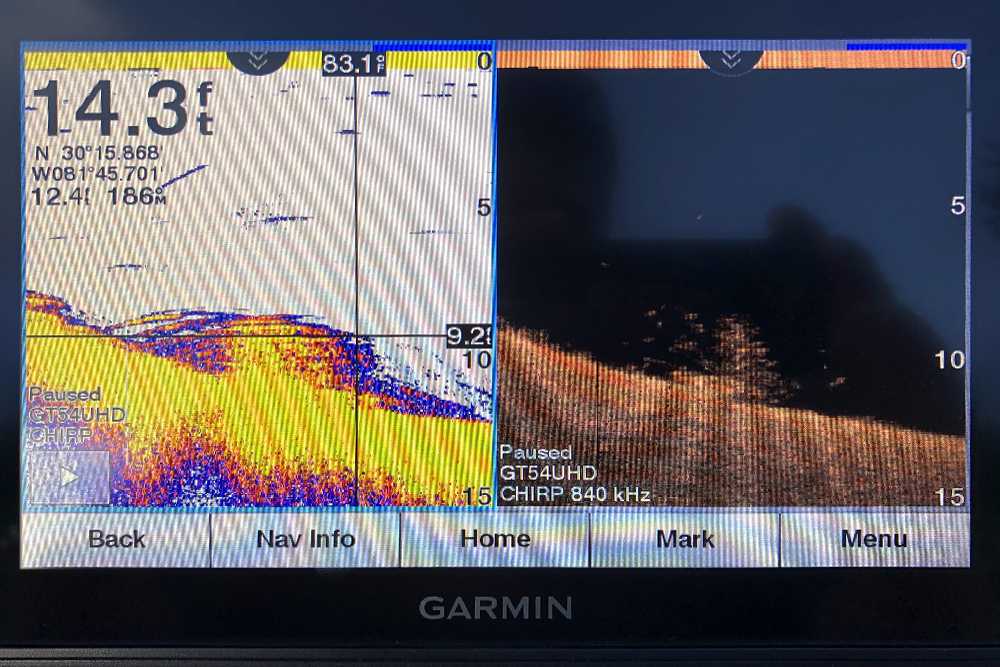
Standard sonar views (left) don’t always show good definition or detail to tell the difference between bottom structure and fish. However, units with good down imaging (right) reveal more detail allowing an angler to tell the difference between structure and fish. (Photo: Ed Mashburn)
Anglers often find that the settings of any fish finder unit out of the box may not be the optimum for finding crappie. Some units can be more difficult to adjust, and anglers need to investigate the ease of making setting changes before purchase.
“The setup and adjustment of the Humminbird unit is easy, said Adams. “The changes I’ve made to the factory settings is to adjust the sensitivity and contrasts. I set this unit’s sensitivity at 10 and Contrast at 19. I put my down sensitivity at 12 and DI contrast at 10.”
By making changes to suit particular anglers and waters, crappie anglers can maximize the performance of any sonar fish finder.
How He Uses the Unit
Crappie anglers searching for the best concentrations of crappie need to know what they’re looking for. It’s a busy world down under the surface of the water, and there are lots of things which can confuse both a fish finder and an angler. It takes some time and experience to fully understand or interpret exactly what the screen is showing, and most crappie anglers new to the sonar game experience some confusion at the start.
My best advice to anyone wanting to use electronics to catch more crappie is to invest in a quality product with good imaging.
Adams says, “When searching for good crappie concentrations, I look for clusters of dots or specks on the screen gathered in and around the structure. After finding the structure with side imaging, I go to down imaging for a better look at the depth of the fish.”
Crappie themselves will often show a stronger, definite return image, and most of the time, there will be several individual returns. Crappie, after all, are schooling fish.
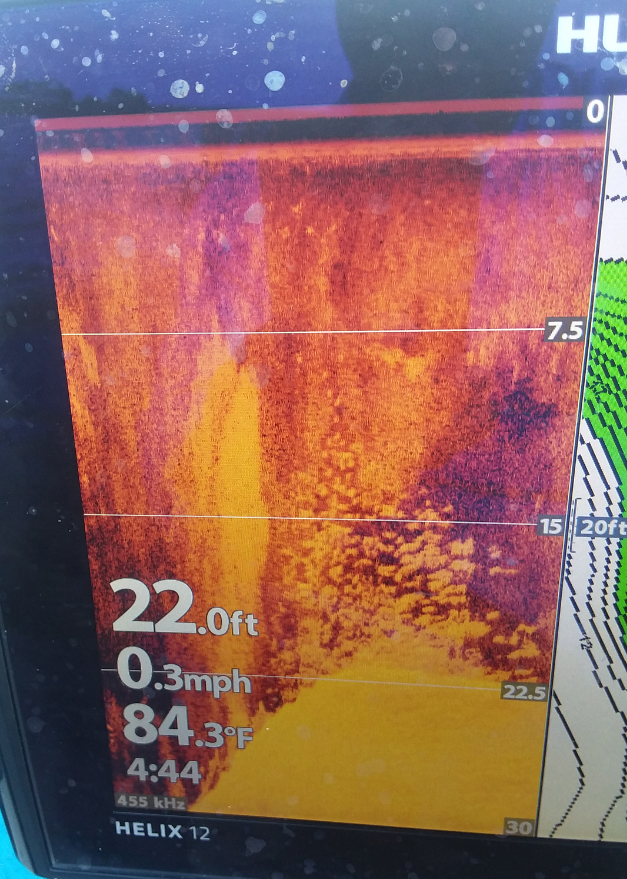
Bait fish are shown a “cloud” above the “22 ft.” readout. Crappie are the individual dots to the right. (Photo: Ed Mashburn)
And quite often smart anglers won’t look only for the crappie. Finding baitfish is crucial in finding crappie. Crappie will follow school of shad and other smaller baitfish, and when bait is found, the crappie will be close. But finding bait is not as easy- the individual shad for example are small and give a poor individual sonar return. But put those little shad in a big school, and there is something for the sonar to read. Adams says, “Bait fish will look like clouds and will not be as defined as the crappie.”
But when an angler finds a “cloud” return on the screen with stronger, larger “dots” around, this is a spot which demands fishing attention. When crappie are closing associated with the “cloud” of bait, they are usually feeding actively, and a bait or lure dropped to them will usually get results.
Finding structure is key with fish finder use for crappie. The structure is what holds the bait and the bait is what attract the big crappie. Adams adds, “On the structure, I look for trees, stumps, humps and ledges. That’s one reason I really like using this Humminbird unit. You will see definition of the structure with the crappie in and around it.”
For crappie anglers who would like to contact Tony Adams for a Lake Eufaula crappie trip, you will find him on Facebook or by calling 334-695-3003.
(Ed Mashburn is a retired school teacher, outdoor writer and photographer. He lives in southern Alabama, but he fishes for anything – carp and trout in Arizona, smallmouth bass and crappie in Wisconsin to snook and snapper in the Florida Keys.)
While the MeatEater crew may not publish directly a list of their specific equipment, with a little patience and some research we have identified some of the rifles that Steve Rinella does in fact shoot. These rifles are all similar but each are unique. Each of them is a high quality option, and represents a variety of budgets.
Steven Rinella shoots a variety of rifle models but always chooses left-hand actions and currently prefers the Weatherby Mark V Meateater Edition Rifle that he helped design. He has also been seen using a Savage Arms 110 rifle, a Custom Carolina Rifle, a custom built Weaver Rifle, and a CZ Model 452 for small game.
A similarity between all these rifles is all are left handed actions. Below we will talk about each one of these rifles. Keep reading to find out more about these rifles.
Weatherby Mark V Meateater Edition
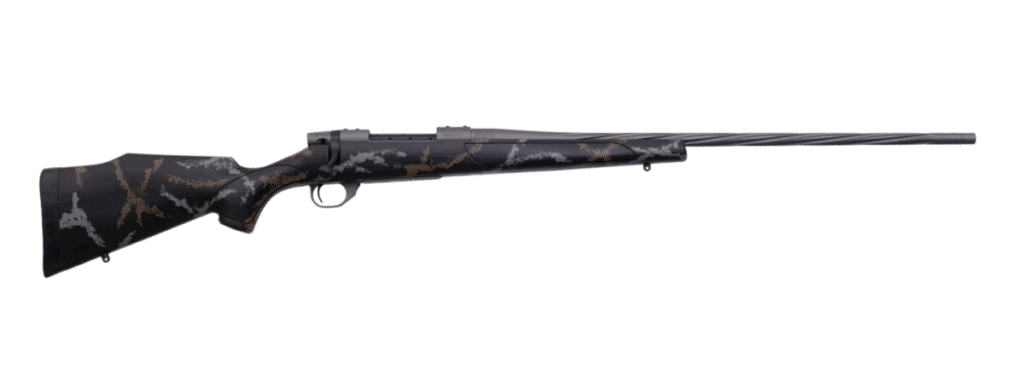
If you were to find Steve Rinella out hunting today, there is a good chance Steve would have his custom Weatherby Mark V MeatEater edition rifle in tow. This rifle was designed by Steve and is exclusively available in a left handed action. The rifle has the legendary Mark V action, which is one of the strongest bolt actions in the world thanks to its 9 locking lugs.
It also boasts an amazing 54 degree bolt lift, providing plenty of room for the largest optics. Like all Mark V rifles, the MeatEater edition has a SUB-MOA accuracy guarantee, a custom Trigger Tech Trigger and threaded barrel. The rifle comes with the with Weatherby’s Accubrake ST installed on the threaded barrel to reduce felt recoil.
The custom features of this edition include a unique #2 contour barrel with spiral fluting. The fluting allows the use of a heavier barrel contour, which helps with accuracy, but keeps the rifle weight down for those long spot and stalk hunts Steve is known for. The fluting also helps keep the barrel cooler between shots, another great way to increase the shot to shot accuracy of the rifle. All the metal of the rifle is coated with Cerakote to withstand any weather. The color scheme was pick by Steve, and is a combination of tungsten and black.
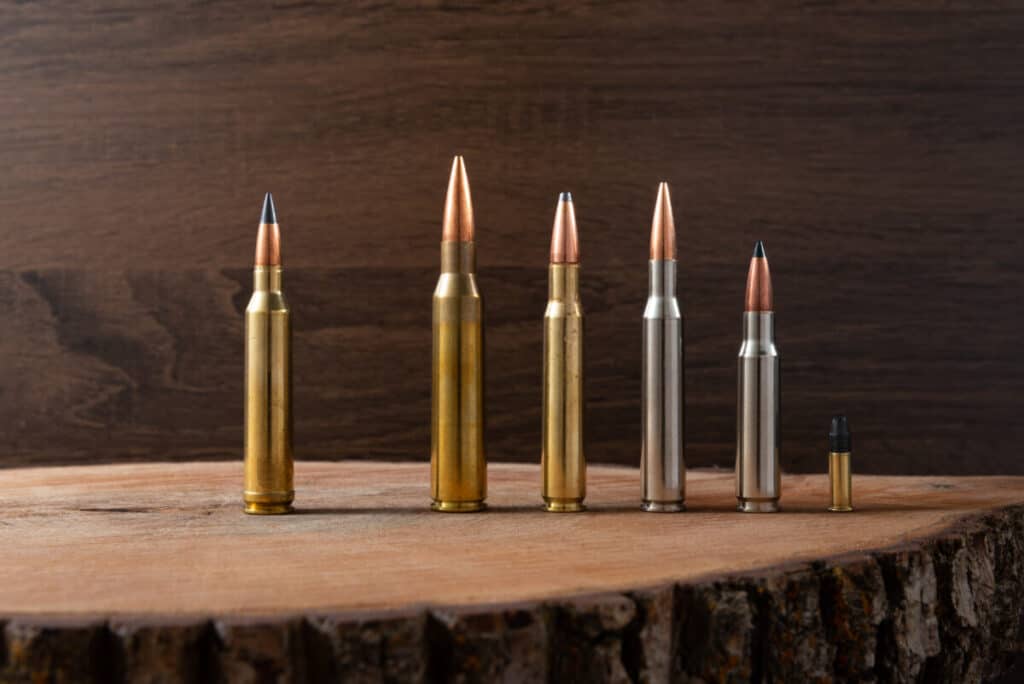
This custom rifle is paired with a hand laid, fiberglass stock. The stock is black with custom brown and gray accents. The stock is a Monte Carlo style for a solid cheek weld, and classic look. Currently this edition is only available in three calibers: .257 Weatherby Magnum, .300 Weatherby Mangrum, and 6.5-300 Weatherby magnum. I wasn’t able to determine in my research which of these calibers Steve has personally selected, but if I had to take a guess I would put my money on the .300 Weatherby magnum, with the 6.5-300 Weatherby magnum as a second choice.
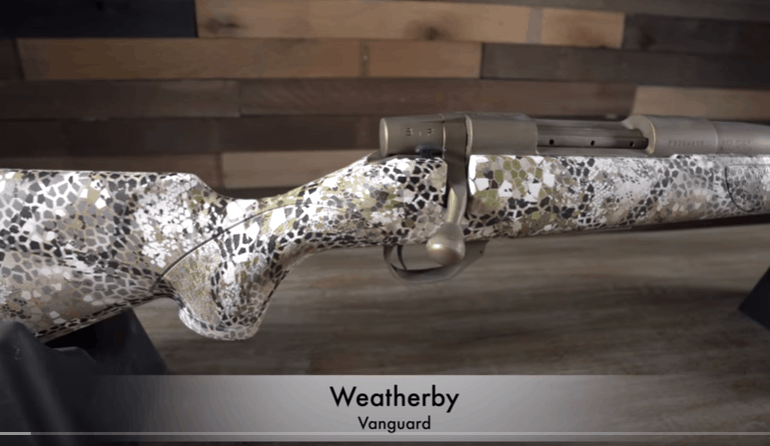
Currently the rifle is listed with an MSRP of $2099.00 dollars on the Weatherby website. While the cost of this rifle is high, a full custom rifle easily exceeds this price. Should you wish to have something similar without the high cost, consider the MeatEater Edition Weatherby Vanguard, a full featured rifle for less than half the cost of the Mark V.
Savage Arms Rifle
Prior to his partnership with Weatherby, Steve was partnered with Savage Arms. This partnership comes as no surprise, Savage makes fine hunting rifles and Savage has a long history of providing left handed rifles, something Steve prefers as a left handed shooter. While my research didn’t turn up a lot of specifics regarding the specific rifle Steve was using from Savage, a few educated guess can help us have an idea of what he was using.
Steve said of his savage rifle, in a video on rifle fit, that he liked his Savage rifle because for an off the shelf rifle it fit him great. Paired with Talley scope mounts and a Vortex Razor scope Steve felt like he never had trouble finding his target even when shooting from very unconventional positions.
After watching some video and looking at photos of Steve using his Savage rifle I determined a few details. The rifle was most likely from the Savage 110 family of rifles. Steve’s specific rifle appeared to have stainless steel barrel with a very heavy contour. The stock appeared to be the classic Savage Accustock. Steve did confirm in a video that he uses Talley scope mounts.
If I were to venture a guess on his specific caliber for this rifle, I would lean towards 7mm Remington magnum or .300 Winchester magnum, as Steve has made mention on the MeatEater blog about preferring cartridges that are capable for taking cleanly all the north American game animals and those two calibers are mention specifically as good choices. Prices on the Savage 110 varies from low cost to high-end, allowing a wide variety of budgets the ability to have a quality hunting rifle.
Custom Carolina Rifle
Prior to his partnership with Savage Arms, Steve could often be seen hunting with his Custom Carolina Rifle (CCR for short) in the field. This rifle made by Carolina Custom Rifles was, and likely still is, one of Steve’s favorite rifles. His chambering of choice for this rifle was the 7mm Remington Magnum.
Custom Carolina Rifles builds solid, accurate, high end rifles. When you choose to hunt with a Custom Carolina Rifle, this company will become your partner, including you in all the decision making to make sure your rifle is exactly what you need it to be. While I wasn’t able to track down the exact specs of Steve’s CCR rifle, I can tell you that CCR uses only the best actions, barrels and stocks. Some of the parts are from Lilja, or Hart custom barrels. Actions from Stiller Predator are blueprinted and paired with stock options from companies like H-S Precision, McMillan, or Manners. Buyers can expect triggers by Timney or Jewell triggers, according to the CCR rifles website.
A quick look into the MeatEater social media posts and photos and you can tell that his CCR has a custom fluted barrel, paired with a solid and great looking camouflaged stock. One of the points that Steve makes about his experience with CCR rifles is that they not only built the rifle based on the demands of his hunting schedule, but CCR service also includes pairing the rifle with the perfect Vortex optic and provided assistance establishing a great custom hand load for supreme accuracy.
Rifles from CCR begin at $4795.00, no small sum of money, however this expense provides not only an amazing rifle guaranteed to shoot 1/2 MOA or less, but includes amazing customer service and additional resources and help beyond just the rifle.
Weaver Custom Rifle
A deep dive into Steve’s twitter revealed another great custom built rifle from Weaver Custom Rifle based out of Peyton, CO. Chambered in .270 WSM this rifle was described as a lightweight mountain rifle. Using a left handed Winchester model 70 action, Steve paired it with a 4-16 x 50mm Vortex optic. The stock is a Synthetic HT stock, color is tan with black webbing. Weaver Rifles included a custom floor plate engraved with the MeatEater Logo.
Should one wish to build a Weaver custom rifle, you can expect to spend $3000.00 dollars or more. They have tons of pictures of the rifles they have built available to view on their website. I recommend checking them out if you are in the market for a custom rifle.
One of the most unique parts of this rifle is the caliber selected. .270 WSM is a great flat shooting cartridge with a short action, perfect for a lightweight mountain rifle that doesn’t have punishing recoil. Finding the ammunition on the shelf might be trickier that other calibers, but this is great choice for big horn sheep and mountain goat hunting.
CZ 452
If you spend a little time looking through Steve Rinella’s social media, you might find a picture of him hunting squirrels. His pictures often show him shooting at his quarry from a variety of unconventional positions, but if your looking at what rifle he is shooting, high chance it is his left handed CZ 452. I couldn’t determine for sure the caliber for Steve’s rifle, but if I were to guess I would bet it is a .22 LR.
The CZ model 452 is a classic bolt action rimfire rifle. Available in all the classic rimfire cartridges, what likely made it the choice of Steve Rinella was that it was available with a left handed action. Should you wish to obtain one of these high quality rifles, you’ll either need to find the model 452 second hand or move to the updated model 457. MSRP on the 457 is around $475.00 or more depending on configuration.
For serious hunters, archers, and long-range shooters, understanding how and when to use target and range modes is crucial for ensuring optimal accuracy when a shot opportunity presents itself.
We’ve all been there: you’ve spent hours stalking your prey or setting up the perfect shot, only to flat out miss. Often these ruined opportunities aren’t just about shaky hands or poor conditions; they can also be due to incorrectly using your laser rangefinder.
Read on to learn how and when to use your Vortex® laser rangefinder’s target and range modes so that every time you squeeze the trigger or release an arrow, your aim is as accurate as it can be.
RANGE AND TARGET MODES EXPLAINED
Range and target modes are specialized settings on a rangefinder designed to help hunters, archers, and long-range shooters adapt to varying conditions and target characteristics. Range modes can provide distance readings that factor in elevation, angle, and atmospheric conditions, while target modes help distinguish the intended prey from its surroundings.
Choosing the appropriate mode is critical for shooting and hunting success, as it ensures that you get the most accurate distance measurements, thereby enhancing your shot’s precision when it counts.
RANGE MODES
LOS MODE
WHAT IT DOES: LOS Mode displays the actual “Line of Sight” range from the rangefinder to the target along with the slope angle.
WHEN TO USE IT: This mode is intended for shooters utilizing ballistic devices and shooting at distances beyond 500 yards with slopes greater than 15 degrees. Most commonly used ballistic devices require line of sight range input for accurate results.
HCD MODE
WHAT IT DOES: HCD or “Horizontal Component Distance” Mode is the default and primary mode for most rifle and archery applications. HCD Mode displays the slope angle compensated distance to the target.
WHEN TO USE IT: This mode is most useful for archers shooting out of a treestand, mountain hunters, and precision competitors who need an angle compensated distance for an accurate shot. Shooters simply use the appropriate level of bullet drop and wind adjustment for the range displayed and shoot. Archers use the appropriate level ground sight pin.
WHEN TO USE IT: This mode is intended for shooters utilizing ballistic devices and shooting at distances beyond 500 yards with slopes greater than 15 degrees. Most commonly used ballistic devices require line of sight range input for accurate results.
TARGET MODES
Depending on the model, Vortex® laser rangefinders offer up to four target modes to deliver accurate ranges in any hunting or shooting situation.
NORMAL MODE
WHAT IT DOES: The default Normal Mode is the standard mode that provides the targets range with the strongest range result. Utilizing the scan feature by pressing and holding the range button while in Normal Mode results in a yardage display that’s constantly updated.
WHEN TO USE IT: Normal Mode is recommended for most situations.
FIRST MODE
WHAT IT DOES: First Mode displays the closest distance when ranging.
WHEN TO USE IT: This mode is ideal for ranging a smaller target in front of other larger or more reflective objects; for example, a mule deer bedded in front of distant rocks.
LAST MODE
WHAT IT DOES: Last Mode displays the farthest distance when ranging.
WHEN TO USE IT: Last Mode is ideal for ranging a specific target behind a group of objects like brush, trees, or rocks; for example, when ranging an approaching whitetail through leaves and branches.
ELR MODE
WHAT IT DOES: ELR or “Extended Laser Range” Mode is ideal for ranging targets at extreme distances. A slightly longer response time allows for greatly extended range distances. The use of a tripod is recommended for best results.
WHEN TO USE IT: ELR Mode is perfect for ranging when Normal Mode is unable to obtain a desired range. This mode is also useful for planning long stalks. For example, range a distant landmark near the animal’s location. Drop a pin on your mobile mapping app and use this destination as a checkpoint to relocate your target.
WHICH LASER RANGEFINDER IS RIGHT FOR YOU?
The Vortex® rangefinder lineup delivers exceptional optical clarity and accuracy essential for precise shot calculations based on the terrain, weather, and type of target. Vortex® also delivers a range of models catering to different skill levels and budgets, all backed by the VIP Warranty. Watch this Vortex® Laser Rangefinder Comparison video for a breakdown on what makes each unit unique.
Visit your local Vortex® dealer to get your hands on the different models, try out all the features, and find the best one for your hunting and shooting needs.
It’s our hope you can learn and laugh along with the expert voices we feature on this blog. We want to be clear that the opinions you see featured here are just that: opinions. The content belongs to the authors and is not necessarily the opinion of Vortex Optics.
To learn more about what you’ve read, please like, follow, and otherwise support our authors.
Nymphing: The act of fishing with artificial flies that imitate aquatic insects in their juvenile, larval state or other sub-aquatic lifeforms including worms and crustaceans that trout find irresistible.In other words, a fly fishing technique to catch lots and lots of fish in practically any body of water, any month of the year, and any time of day whether there?s a hatch happening or not.
Before mayflies, caddisflies, and stoneflies become creatures of the air, they spend their humble juvenile lives underwater as nymphs. Some cling to rocks in cocoon-like husks and some crawl around or scoot through the water, inevitably getting washed downstream by the river’s current.
Regardless of the specific species and how they look and behave, at some point, all nymphs “hatch,” leaving behind their sub-surface dwellings to become winged adults. They shed their nymphal exoskeletons, rise through the water column, emerge through the surface film, dry their wings, then head skyward to mate, lay their eggs, and die.
Why should you care about these strange aquatic insects and their anti-climactic life cycle?
Because nymphs are trout food.
And if you want to catch trout consistently ? both in size and numbers ? knowing how to fish flies that imitate nymphs is absolutely essential.
To get started, let’s dive into why you should be fishing in the first place.
A couple years ago I wrote a mini book, that I gave away at the classes I taught. Get a FREE Download eBook called – Expert Nymphing Secrets
Why Nymphing is More Effective than Any Other Style of Fly Fishing
Although dry flies get most of the attention and praise among fly anglers, the truth is that trout spend the vast majority of their time feeding underwater ? not on the surface.
And what are they eating down there?
You guessed it ? lots and lots of nymphs.
No matter the time of year or hour of the day, nymphs are present in rivers and lakes. And most of the time, trout are snacking away.
That’s why fishing nymphs is so effective ? since trout are always eating nymphs, you don’t have to time it right or wait for a hatch to catch fish. Simply tie on one or more nymph flies in approximately the size and color that matches the natural insects in the water and get to fishing.
When and Where to Fish Nymphs
The beautiful thing is that just about every type of water ? be it a fast-flowing freestone, a glassy spring creek, or even a stillwater lake or pond ? likely hold resident populations of aquatic insects. And like we mentioned, the nymphs are underwater all day long, regardless of whether a hatch is happening or not.
So no matter what stream or lake you’re on and when you’re fishing, you can use nymph flies to catch fish. The first key to success, then, is to know what kind of natural nymphs the trout are eating so you can match your artificial to the real thing. The second key is to know how to read the water in order to deliver your offering to the right spot with the proper presentation to entice a trout to bite.
We’ll get into the specifics of how to do all this later on, but the point is, if you know there are trout in a stream or lake, you can use nymphs to catch them.
What are my Favorite Nymph Flies
I’ve got a dozen articles on nymph flies. The best way to fill your fly box is to get a great foundation of flies. Pheasant Tails Hare’s Ears, Caddis, Midge….here are some pictures and sizes, plus a FREE download with my list.
Guide Tip: I probably shouldn’t be giving this away, but in the class I teach I have a download to help folks get a great selection of flies. Get the DOWNLOAD HERE
What Gear do You Need to Start Nymph Fishing?
Many times in fly fishing, going after a new species or learning a new style of casting requires an expensive trip to the fly shop to buy all new specialized gear. Luckily, this isn’t the case with nymph fishing.
Nymph fishing rods can get a little technical. If you really want to get into this kind of fishing, (it really catches lots of fish) you should think about getting the TFO Drift Fly Rod. It’s a 3 wt 9 foot fly rod in it’s basic form.
The ground breaking feature of this rod is that you can add length without un-stringing your fly line. The rod sections extend the rod from 9 foot up to over 12 feet. Read about the rod in this article – The Best Nymph Fishing Fly Rod or in my recommended gear section – HERE.
If you want to check the prices and reviews on the TFO Drift here’s a link to AMAZON – TFO Drift Fly Rod – Definitive Nymph Fly Rod.
Most of the nymphing techniques we’ll cover involve short casts, so a high-performance rod isn’t necessary. Unless you hook into a true giant, your fly reel won’t see much action when nymphing other than conveniently storing line ? most fish can be landed by stripping line by hand.
To give you an idea of the basic fly fishing outfit required for nymph fishing, here’s a quick gear list:
Rod: 9-foot 4,5, or 6-weight, medium to fast action
Reel: Standard single action fly reel matched to rod
Line: Weight-forward floating line
Leader: 9-foot nylon tapered leader
Tippet: Spools of 3X, 4X, 5X, and 6X
Pretty simple, right? Of course, you’ll still need some flies and several other nymphing-specific pieces of tackle, but as long as you have that basic rod and reel setup, you’re ready to start putting the nymphing techniques we’ll cover to the test!
I’ve got an article called Nymph Fishing Putting it All Together (Link to article). It summarizes many of the articles on this website.
Have you ever wondered what it means when you come across a deer laying down? Discover the hidden messages behind this behavior and unlock the fascinating insights into the world of deer. Explore the possible reasons and symbolism associated with a deer resting, as we delve into their habits and instincts.
1. Understanding the Meaning of a Deer Laying Down: Rest or Distress?
Resting or Taking a Nap
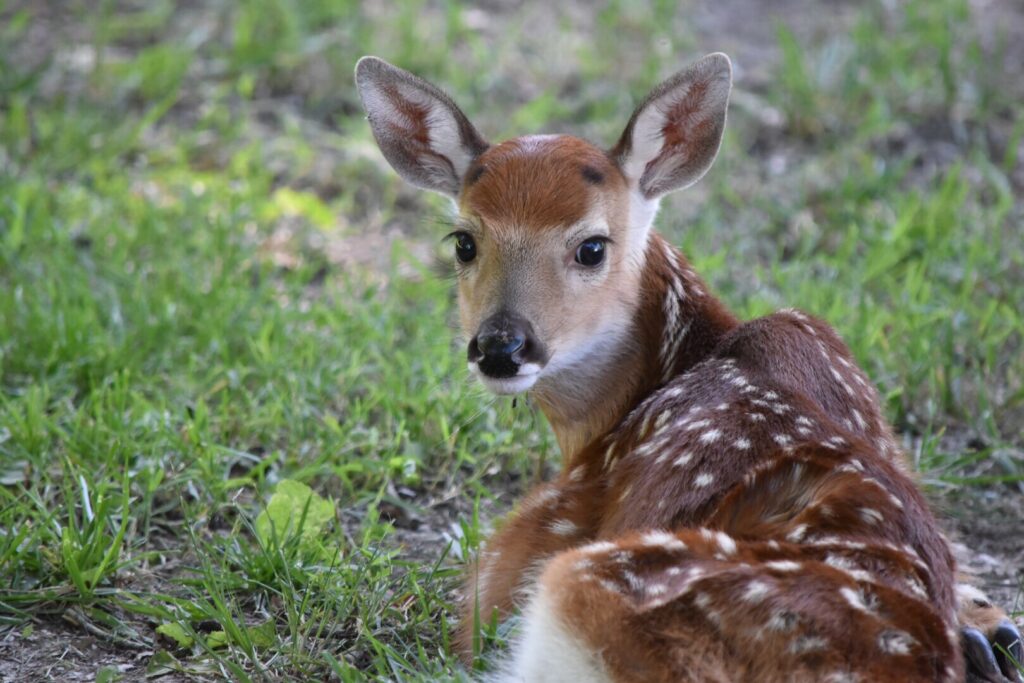
In some cases, when you see a deer laying down, it may simply mean that the deer is resting or taking a nap. Deer often lay down to conserve energy, especially during the heat of the day. They may fold their legs beneath their body and have their head up or resting on the ground. This relaxed posture indicates that the deer is at ease and not engaged in any immediate activity.
Injured or in Distress
However, if the deer appears to be injured or in distress, it could be a sign that something is wrong and the deer may need help. In such cases, it’s best to contact local wildlife authorities or animal rescue organizations to provide assistance to the deer. If you observe a deer lying down in the same position for an extended period, it may indicate that it is resting rather than deeply asleep.
Distinguishing Sleep Patterns
Distinguishing whether a deer is sleeping or simply lying down can be challenging as they do not exhibit clear-cut sleep patterns like humans do. However, there are some behavioral and physical cues that can help differentiate between the two:
– Posture: When a deer is lying down to rest, its body position is relatively relaxed with folded legs beneath its body.
– Eye Movement: Deeply sleeping deer usually have closed eyes, but they may enter lighter sleep stages where their eyes remain open or partially closed.
– Awareness and Reaction: Sleeping deer are generally less alert and responsive to their surroundings compared to those who are merely resting.
– Duration: Deer do not sleep for extended periods like humans do; their rest periods are often shorter and intermittent.
– Movement: Awake and alert deer may shift their body position or change the orientation of their head or ears.
It’s important to note that interpreting deer behavior can be challenging, and individual deer may exhibit variations in their resting or sleep patterns. It is crucial to maintain a safe distance and avoid disturbing or approaching deer in their natural habitat.
2. Decoding the Significance of a Deer Lying Down: Resting or Injured?
When encountering a deer lying down, it is important to determine whether it is simply resting or if there may be an underlying issue such as injury or distress. In some cases, a deer may be laying down to conserve energy and take a nap, especially during the heat of the day. This behavior is common for deer and is considered a normal resting position.
However, if the deer appears to be injured or in distress, it could be an indication that something is wrong and the deer may require assistance. In such situations, it is best to contact local wildlife authorities or animal rescue organizations who can provide the necessary help for the deer.
To differentiate between a resting deer and an injured one, several cues can be observed. When a deer is lying down to rest, its body position is relaxed with its legs folded beneath its body. The head may either be up or resting on the ground. The overall appearance of the deer’s body suggests ease and lack of immediate activity.
In terms of eye movement, sleeping deer typically have their eyes closed. However, they may also enter a lighter sleep stage where their eyes remain open or partially closed. In this state, their eyes might appear glassy or unfocused, occasionally blinking or moving their eyelids.
Another factor to consider is the awareness and reaction of the deer. Sleeping deer are generally less alert and responsive to their surroundings. If a deer is merely resting, it may still exhibit some level of vigilance by scanning its surroundings or twitching its ears in response to stimuli like sounds or movements.
Duration also plays a role in distinguishing between rest and deep sleep for deer. While humans have extended periods of sleep, deer’s rest periods are often shorter and intermittent. If you notice a deer lying down in the same position for an extended period without any significant movement, it is more likely to be resting rather than deeply asleep.
Lastly, slight movements by the deer can indicate that it is still awake and alert to some extent. They may shift their body position or change the orientation of their head or ears while lying down.
It is important to note that interpreting deer behavior can be challenging, and individual deer may exhibit variations in their resting or sleep patterns. Therefore, it is crucial to maintain a safe distance and avoid disturbing or approaching deer in their natural habitat.
3. Interpreting the Behavior of a Deer Laying Down: Resting or Seeking Help?
When observing a deer laying down, it is important to consider the context and behavior of the deer to determine whether it is simply resting or in need of help. Here are some factors to consider:
1. Posture: A deer that is resting will typically have a relaxed body position, with its legs folded beneath its body and possibly its head up or resting on the ground. The deer’s body appears at ease and not engaged in any immediate activity.
2. Eye movement: When deer are in a state of deep sleep, their eyes are usually closed. However, they may enter a lighter sleep stage where their eyes remain open or partially closed. In this state, their eyes may appear glassy or unfocused, and they may occasionally blink or move their eyelids.
3. Awareness and reaction: Sleeping deer are generally less alert and responsive to their surroundings. If a deer is merely resting, it may still exhibit some level of vigilance, regularly scanning its surroundings or twitching its ears in response to stimuli like sounds or movements.
4. Duration: Deer do not sleep for extended periods like humans do. Their rest periods are often shorter and intermittent. If you observe a deer lying down in the same position for an extended period, it is more likely resting rather than deeply asleep.
5. Movement: When deer are lying down, they may shift their body position or change the orientation of their head or ears slightly. This slight movement indicates that they are still awake and alert to some extent.
It’s important to note that interpreting deer behavior can be challenging, as individual deer may exhibit variations in their resting or sleep patterns. It is also crucial to maintain a safe distance and avoid disturbing or approaching deer in their natural habitat.
If you suspect that the deer may be injured or in distress, it is best to contact local wildlife authorities or animal rescue organizations to get the deer the assistance it needs.
4. Unraveling the Mystery: What Does it Mean When You Spot a Deer Laying Down?
When you see a deer laying down, it can have different meanings depending on the context. In some cases, it may simply indicate that the deer is resting or taking a nap to conserve energy, especially during the heat of the day. However, if the deer appears injured or distressed, it could be a sign that something is wrong and the deer may need assistance.
If you come across a deer that seems to be in distress or injured, it’s best to contact local wildlife authorities or animal rescue organizations for help. They can provide the necessary assistance and care for the deer.
The behavior of deer can vary depending on factors such as time of day and moon phase. Generally, deer tend to bed down during the heat of the day and are more active at dusk and dawn. They may also feed at night, but this can be influenced by moon phase and local weather conditions.
If a deer suddenly appears out of nowhere, it may be a sign for you to follow your intuition. In Native American folklore, if the Deer is your Spirit Animal, it signifies that you are a highly sensitive person with strong intuition. You navigate through life gracefully but with purpose and are able to adapt quickly when necessary. The deer also symbolizes regeneration and has the ability to handle challenges with gentleness and grace.
Distinguishing between whether a deer is sleeping or simply lying down can be challenging as they do not exhibit clear-cut sleep patterns like humans do. However, there are some behavioral and physical cues that can help differentiate between the two.
When a deer is lying down to rest, its body position is usually relaxed with its legs folded beneath its body. Its head may be up or resting on the ground, indicating ease and lack of immediate activity.
In deep sleep, deer typically close their eyes; however, they may also enter a lighter sleep stage where their eyes remain open or partially closed. In this state, their eyes may appear glassy or unfocused, and they may occasionally blink or move their eyelids.
Sleeping deer are generally less alert and responsive to their surroundings compared to resting deer. Resting deer may still exhibit some level of vigilance by scanning their surroundings or twitching their ears in response to stimuli like sounds or movements.
Deer do not sleep for extended periods like humans do. Their rest periods are often shorter and intermittent. If you observe a deer lying down in the same position for an extended period, it is more likely resting rather than deeply asleep.
When deer are lying down, they may shift their body position or change the orientation of their head or ears slightly. This slight movement indicates that they are still awake and alert to some extent.
It’s important to note that interpreting deer behavior can be challenging, and individual deer may exhibit variations in their resting or sleep patterns. It is crucial to maintain a safe distance and avoid disturbing or approaching deer in their natural habitat.
Overall, spotting a deer laying down can have various meanings depending on the circumstances. Whether it signifies rest and conservation of energy or indicates distress and need for help, it is essential to respect the natural behavior of these beautiful creatures and seek professional assistance when necessary.
5. The Symbolism Behind a Deer Laying Down: Rest, Intuition, or Something Else?
Seeing a deer laying down could mean a few different things, depending on the context. In some cases, it could simply mean that the deer is resting or taking a nap. Deer are known to lay down to conserve energy, especially during the heat of the day.
However, if the deer appears to be injured or in distress, it may be a sign that something is wrong and the deer may need help. In such cases, it’s best to contact local wildlife authorities or animal rescue organizations to get the deer the assistance it needs.
It maybe nothing, could be injured, depends on time of day and moon phase. Usually deer bed down in the heat of the day, they tend to move at dusk and dawn. Many feed at night, but again depends on moon phase and local weather. Many days of high winds and driving rain will force deer to lay low. Then after the storm passes they may feed at any time.
If you see a deer appear out of nowhere it is a sign that you must follow your intuition. If the Deer is your Spirit Animal, in Native American folk lore it means that you are a highly sensitive person with strong intuition. You move though life gracefully but with purpose, and can change directions quickly if necessary. The deer also has the ability to regenerate because he is highly attuned to life’s mysteries. He also has the power to handle challenges with gentleness and grace.
Distinguishing whether a deer is sleeping or simply lying down can be challenging, as deer do not exhibit clear-cut sleep patterns like humans do. However, there are some behavioral and physical cues that can help differentiate between the two:
– Posture: When a deer is lying down to rest, its body position is relatively relaxed. Its legs are typically folded beneath its body, and it may have its head up or resting on the ground. The deer’s body appears at ease and not engaged in any immediate activity.
– Eye movement: When deer are in a state of deep sleep, their eyes are usually closed. However, they may also enter a lighter sleep stage where their eyes remain open or partially closed. In this state, their eyes may appear glassy or unfocused, and they may occasionally blink or move their eyelids.
– Awareness and reaction: Sleeping deer are generally less alert and responsive to their surroundings. If a deer is merely resting, it may still exhibit some level of vigilance, regularly scanning its surroundings or twitching its ears in response to stimuli like sounds or movements.
– Duration: Deer do not sleep for extended periods like humans do. Their rest periods are often shorter and intermittent. If you observe a deer lying down in the same position for an extended period, it is more likely resting rather than deeply asleep.
– Movement: When deer are lying down, they may shift their body position or change the orientation of their head or ears. This slight movement indicates that they are still awake and alert to some extent.
Keep in mind that interpreting deer behavior can be challenging, and individual deer may exhibit variations in their resting or sleep patterns. It’s important to maintain a safe distance and avoid disturbing or approaching deer in their natural habitat.
6. Exploring the Different Interpretations of a Deer Lying Down: From Rest to Spiritual Signs
Seeing a deer lying down can have various meanings depending on the context. In some cases, it may simply indicate that the deer is resting or taking a nap. Deer often lie down to conserve energy, especially during the heat of the day.
However, if the deer appears to be injured or in distress, it could be a sign that something is wrong and that the deer may need help. In such situations, it is best to contact local wildlife authorities or animal rescue organizations to ensure the deer receives appropriate assistance.
The behavior of deer lying down can also depend on factors such as the time of day and moon phase. Typically, deer bed down during the heat of the day and are more active at dusk and dawn. They may also feed at night, although this can vary depending on moon phase and local weather conditions. Additionally, high winds and driving rain may cause deer to seek shelter and stay low until the storm passes.
In Native American folklore, seeing a deer appear out of nowhere can hold spiritual significance for those who consider the deer their spirit animal. It suggests that you are a highly sensitive person with strong intuition. You navigate through life gracefully but with purpose and have the ability to adapt quickly when necessary. The deer’s symbolism also encompasses regeneration, as they are attuned to life’s mysteries and possess the power to handle challenges with gentleness and grace.
Differentiating between a sleeping deer and one simply lying down can be challenging since they do not exhibit clear-cut sleep patterns like humans do. However, certain behavioral and physical cues can help distinguish between the two:
– Posture: When a deer is resting, its body position is relaxed. Its legs are typically folded beneath its body, and its head may be up or resting on the ground.
– Eye movement: During deep sleep, deer usually close their eyes. However, they may enter a lighter sleep stage where their eyes remain open or partially closed. In this state, their eyes may appear glassy or unfocused, and they may occasionally blink or move their eyelids.
– Awareness and reaction: Sleeping deer are generally less alert and responsive to their surroundings. If a deer is merely resting, it may still exhibit some level of vigilance by scanning its surroundings or twitching its ears in response to stimuli.
– Duration: Deer do not sleep for extended periods like humans do. Their rest periods are often shorter and intermittent. If you observe a deer lying down in the same position for an extended period, it is more likely resting rather than deeply asleep.
– Movement: When deer are lying down, they may shift their body position or change the orientation of their head or ears slightly. This indicates that they are still awake and somewhat alert.
It is important to remember that interpreting deer behavior can be challenging, as individual deer may exhibit variations in their resting or sleep patterns. It is crucial to maintain a safe distance and avoid disturbing or approaching deer in their natural habitat.
Overall, understanding the different interpretations of a deer lying down can provide insights into the behavior and symbolism associated with these majestic creatures. Whether it signifies rest, distress, or spiritual significance, observing and respecting deer from afar allows us to appreciate their beauty while ensuring their well-being in the wild.
In conclusion, if you spot a deer lying down, it is likely that they are simply resting or seeking shelter from the elements. This behavior is normal and does not necessarily indicate any immediate danger or distress. However, it is important to maintain a respectful distance and avoid disturbing them to ensure their well-being in their natural habitat.
Freezing cold toes are no fun when you are out for a ride. These boa snowmobile boots will protect your little piggies when the mercury drops.
No one likes to get cold feet, especially when snowmobiling, and maybe when getting married. Picking the right pair of snowmobile boots is vital to the enjoyment of the ride. Not only do you need warm boots, but also supportive boots that function just as well off the sled as they do on.
While not absolutely essential, the boa closure system is ideally suited to snowmobilers. Lacing up your boots, or simply tightening or loosening them a little, can be done with the turn of a dial. You can even do it with a gloved hand – perfect for those cold winter morning rides. Boa snowmobile boots make it faster and easier to take them off or put them on. Plus, they are laced with stainless steel wire that is built to last, so you won’t have to worry about breaking a lace before you get out and ride. The boa closure system adds some cost to your snowmobiling boots, but when you consider you may own a pair for many years, the added convenience makes up for it – at least in our opinion.
Here are some staff favorite boa snowmobile boots that pass the test of being warm, functional, comfortable and ready to take on the adventure that you have in mind.
Lead Photo Courtesy Shuttestock/Wlad Go
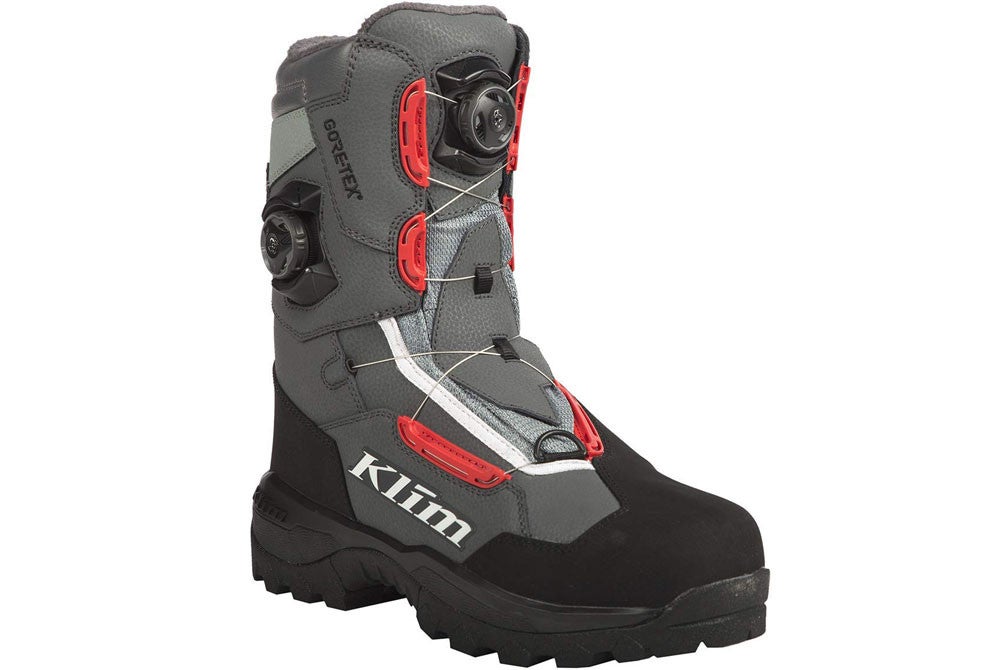
1. Editor’s Choice: KLIM Adrenaline Pro GTX BOA
Of course, you know Klim is going to bring it when it comes to technical riding gear. The all-new Adrenaline Pro GTX boot is Klim’s latest advancement in comfortable boots made for extremely technical conditions. The plan going into the these boa snowmobile boots was to tweak their previous design to add more support for your foot and for you as you tackle the terrain. The GTX boots have an advanced Boa closure and 600g Thinsulate insulation. They are guaranteed to keep you dry with complete GORE-TEX outers. They recommend a technical sock be worn to get the most out of the boot, which isn’t a bad idea anyway. These boots also have a forward design with stiff support against movement that aren’t going forward. This helps keep you planted and protected, while at the same time, being comfortable – Just as you’d expect from Klim.
Check Price
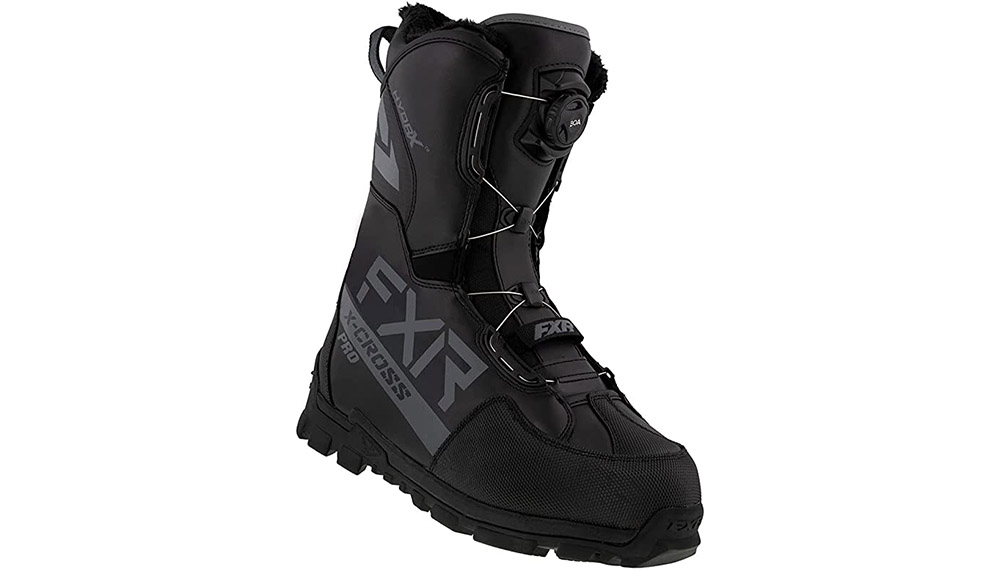
2. Runner Up: FXR Black Ops X-Cross Pro
Boa technology is something you’ll see with many of the top boots. It is a simple system that has replaced standard tie-laces and lets you really get a snug and secure fit. FXR Racing created the Black Ops X-Cross Pro for those wanting the ultimate in extreme terrain riding and warmth. They are rated to -40° C with 600-gram insulation, but there’s so much more to these boots. The 2-piece tongue provides a positive fit for maximum comfort so you get the best flexibility, stability and protection while on your sled. Additionally, this boot has a fixed liner with fur lining for further comfort and warmth, while minimal seams in the sled-contact areas minimize possible damage from high contact points. When you’re off the sled, the 20mm thick EVA midsole gives you plenty of traction in the snow, and the 2mm rubber reinforced toe cap provides protection from cold and whatever you might stumble across under the snow.
Check Price
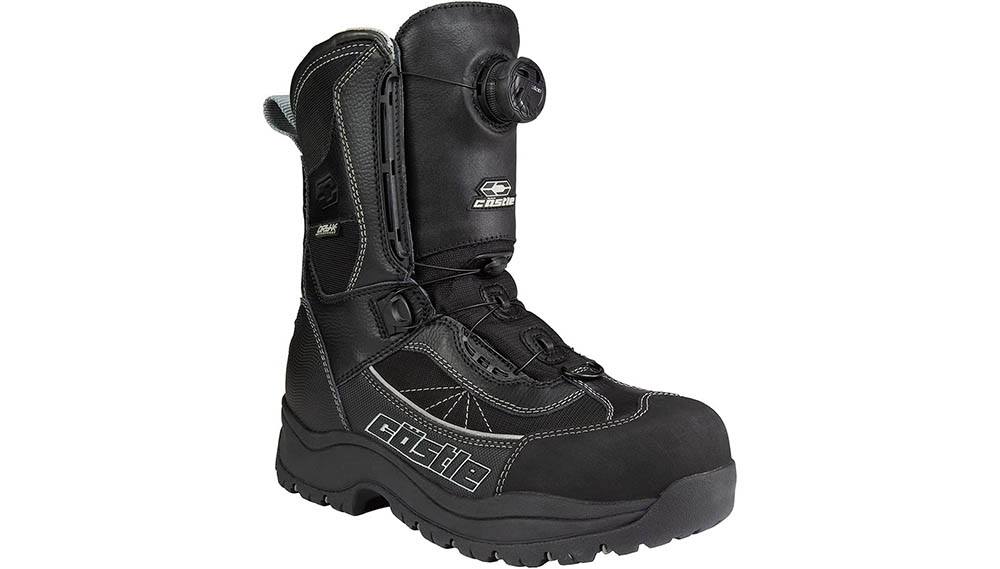
3. CastleX Charge Atop
As one of the leaders in performance snowmobile gear, CastleX has a boot that comes in at a close second on our list of best BOA snowmobile boots. This rugged snowmobile boot features a 3-layer Merino Wool blend that provides plenty of insulation to keep you warm, while providing plenty of moisture wicking air mesh to keep your feet dry. Furthermore, the CastleX Charge Atop has a fully integrated Castle DRY-X waterproof membrane to keep your feet dry even in deep snow, and the ColdShield Technology from CastleX helps to keep your feet comfortable with the removable insole that is manufactured from wool with a metallic heat reflecting layer.
Check Price
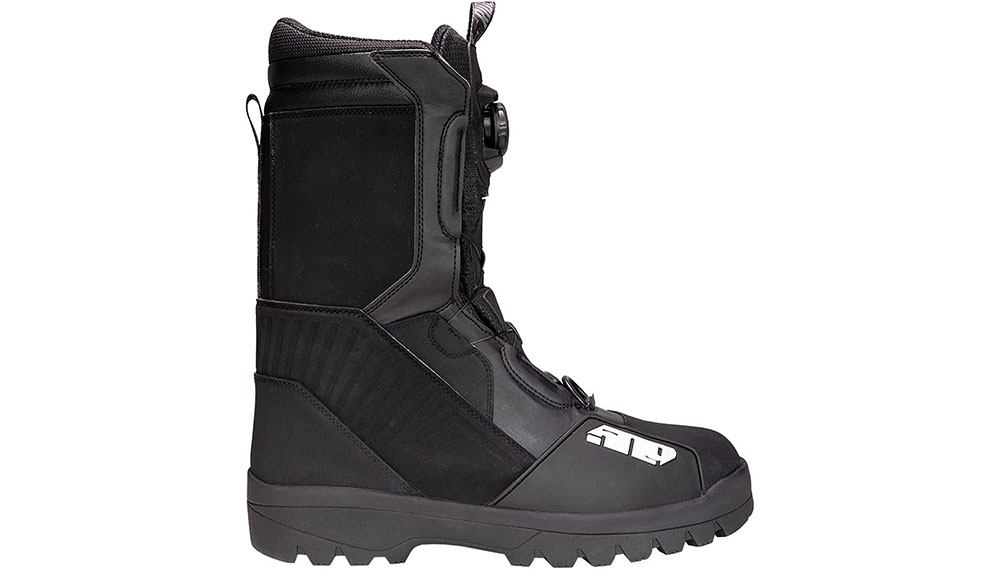
4. 509 Raid Single Boa
Probably best known for its lineup of snowmobile goggles, 509 has some other gear worth looking into. The 509 Raid Boa snowmobile boot comes with 600g of Thinsulate insulation, 5TECH waterproof and breathable liner, Raid rubber reinforcements engineered to stand up to sharp running boards, and a dual boa lacing system with quick release M3 Lace reels and aircraft stainless wire. That dual boa lacing system lets you fine tune the upper and lower zone fit with the turn of a dial. All of this combines to make the 509 Raid Boa one of the best snowmobiling boots available.
Check Price
5. Korker Polar Vortex 1200
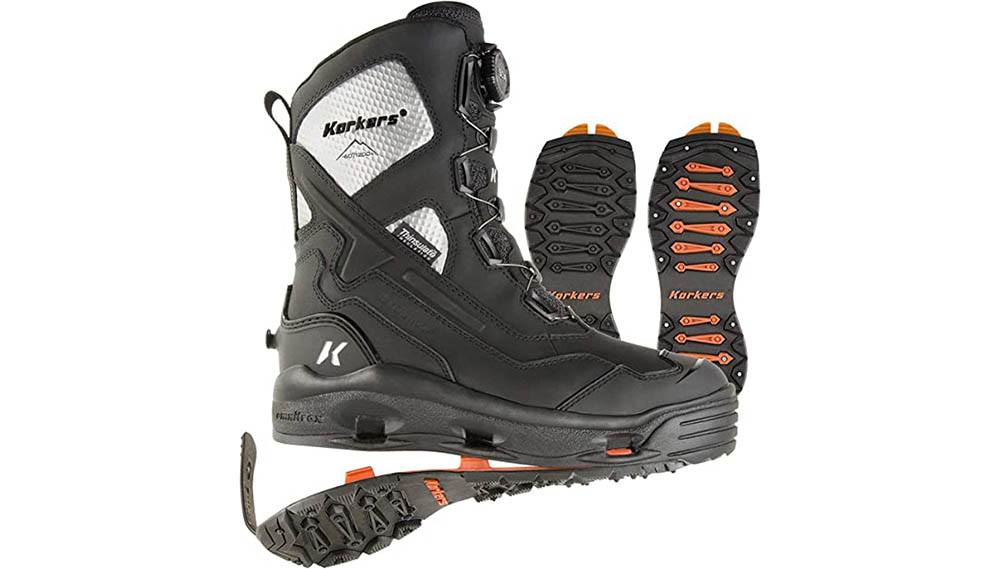
While not a traditional snowmobile boot, these boots from Korker are something you should look at for a warm, dry boot that has tremendous support for activities on the sled and off. These boots feature 1200g of 3M Thinsulate insulation for maximum warmth of your feet while out on your sled, and the 100% waterproof construction ensures that your tootsies stay dry. If you venture out and feel a little chill in your feet, don’t fret because for additional warmth, Korker has integrated Farenheight Heat Warmer compatibility into their premium aerogel frost barrier footbed. One of the best selling points of these comfy winter boots is that they’re available with their OmniTrax 3.0 Interchangeable soles. You’ll get one set of Winter Rubber Lug soles and for those icy days, you can swap the soles out for the IceTrac Studded Rubber Lug soles that feature a total of 332 carbide studs to give you solid traction on the slippery stuff.
Check Price
Why is the Boa lace system better than traditional laces?
In one word, simplicity. The Boa lace system allows for tightening of your boots with simple turn of a knob, quickly and evenly. No more fiddling around with two laces, trying to pull them together with frostbitten fingers. Even with gloves on, you can secure and even tighten the boots if they settle after a little bit. They’re just easy and convenient.
What are the most important factors to look for in boots?
First and foremost for us, you want your boots to be warm. Why bother spending the money on them if you end up with frostbitten toes at the end of your riding day. Your boots should have plenty of insulation in addition to being 100% waterproof that helps to keep your feet warm, and of course with all of this you want your boots to be comfortable. Think that you’ll be in these for hours and how much can you really enjoy your riding if your feet are killing you. Finally we like our boots to have a good sturdy sole with plenty of traction. Remember that you’re not on your sled the entire time of your riding adventures. You want to have good traction while you’re taking your breaks as well.
Additional Resources
Best Snowmobile Gloves To Keep Your Fingers Warm
Best Snowmobile Jackets
Recent Updates
10/18/2022: Removed obsolete product, added new product (Korkers Polar Vortex 1200, FXR Black Ops X-Cross Pro, and CastleX Charge Atop), Added FAQ
We are committed to finding, researching, and recommending the best products. We earn commissions from purchases you make using the retail links in our product reviews. Learn more about how this works.
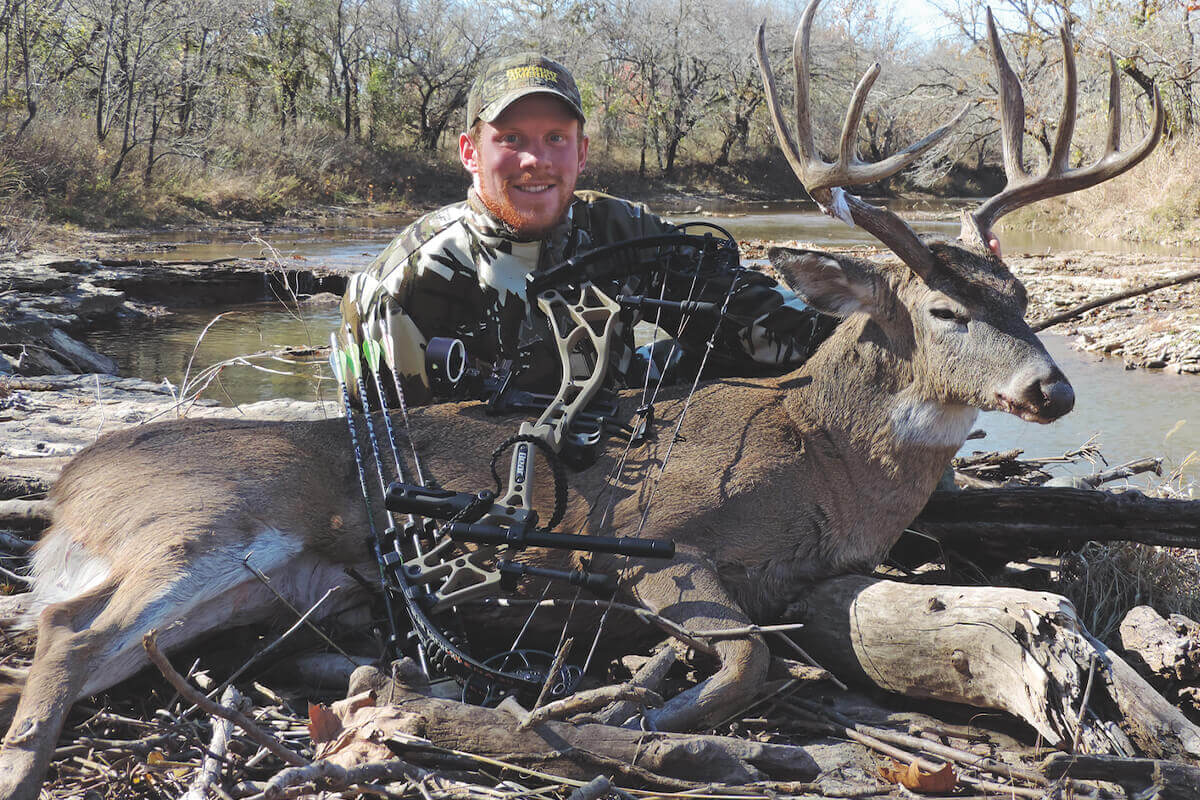
The author did his research and hunted a WMA to bag a long-tined tallgrass trophy. (Photo by Darron McDougal)
This article was featured in the November issue of Game & Fish Magazine (South edition). Click to subscribe
With temperatures reaching 93 degrees, conditions inside the ground blind were sauna-like. Despite the heat, my guide assured me that it’d be a great evening. So, as sweat beads trickled down my back and forehead, I monitored the wide-open food plot in front of me, hoping one of the surrounding draws would manufacture a mature buck.
As darkness slowly swallowed the daylight, I knew I’d be picked up soon and my evening hunt would be over. Suddenly, a big, mature 8-pointer and another buck appeared on the skyline 150 yards away. I felt a wash of adrenaline coarse through my veins as they beelined for the feeder. Suddenly, there he stood, quartering toward me at just 30 paces.
Two minutes of legal shooting light remained when he finally turned. In that instant I released my arrow, sure it would be a winner. To this day I’m not sure what went wrong. When we found the arrow there was next to no blood on it and no blood trail to be found. We spent hours looking everywhere for that deer to no avail. Needless to say, I was sick. Since I’d made contact, my hunt was over. But I’d be back in Oklahoma in November for another chance.
For the next month, I researched Oklahoma wildlife management areas for my next Sooner State hunt. The one I chose was some 200 miles from where my October hunt had unfolded. Three days in, I arrowed my then-best whitetail, a 150-inch-plus beauty. He is a tremendous trophy, especially since I took him the first time I hunted that particular WMA.
Oklahoma’s geographic location—sandwiched between whitetail meccas Kansas and Texas—is well-appointed to offer excellent deer hunting. According to QDMA’s 2020 Annual Report, 66 percent of bucks harvested in Oklahoma in 2017 and 2018 were 3 1/2 years old or older. This means that many bucks reach the age class that sees peak antler potential.
Some 4.6 percent of Oklahoma is public land. While that may not sound like a lot, in addition to sprawling national forests and grasslands, the Oklahoma Department of Wildlife Conservation manages more than 80 WMAs across the state. So, when visiting Oklahoma, you won’t struggle to find places to hunt. And, if a do-it-yourself hunt isn’t your thing, the Sooner State has many outfitters who offer a quality hunting experience.
From mountains to prairies, Oklahoma is a venerable ecological cornucopia with enormous biodiversity. Here are six of the best ecoregions in Oklahoma to hunt.
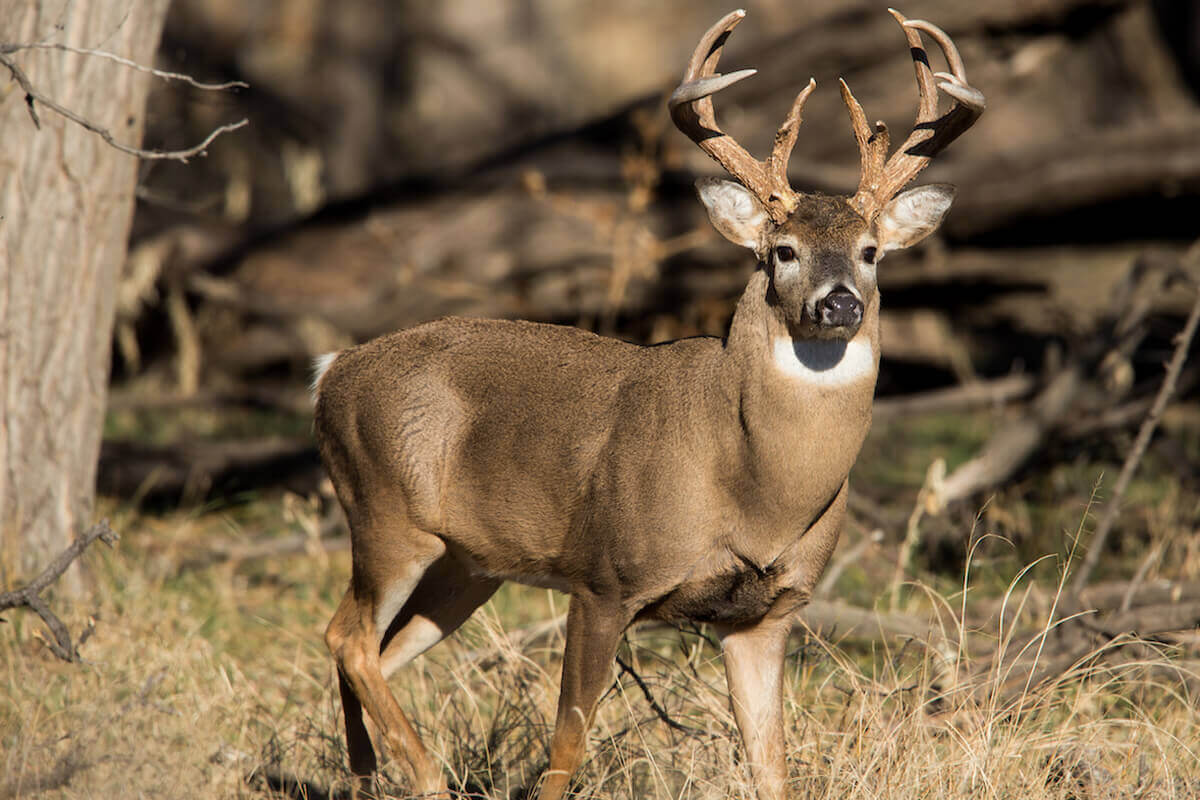
Pictured: Oklahoma Panhandle white-tailed buck. Oklahoma is an oft-overlooked whitetail destination that receives minimal hunting pressure compared to many states in the South. As such, bucks here regularly achieve their maximum antler potential. (Photo by William T Smith/Shutterstock.com)
CENTRAL/SOUTHERN SHORTGRASS PRAIRIE
In Oklahoma’s Panhandle lies a sea of prairie habitat surrounded by an agricultural checkerboard. Far from population centers, hunting pressure during archery season is minimal, and a bit busier during firearms season. Folks from the eastern part of the South will find the Panhandle completely different from the deer habitat back home. If you’re a treestand hunter, most of the scouting is already done—just find some trees in the wide-open habitat and park your backside there daily.
Public-hunting options in the Panhandle include the Rita Blanca National Grasslands, Optima WMA and Beaver River WMA. Native forages include ragweed and sunflower; additionally, the state cultivates small food plots on these areas. Windmills and guzzlers have also been installed to provide hydration for wildlife in this arid habitat.
Lodging options can be found in Guymon, Boise City and Beaver. Primitive camping is available at Optima WMA and Beaver River WMA, and RV hookups can be had at Beaver Dunes State Park.
MIXED-GRASS PRAIRIE
Just east of the Panhandle is a large area that stretches more than 100 miles wide (east to west) and from the northcentral border with Kansas to the southwest border with Texas. Due to size and scope, it offers great habitat diversity and varying whitetail genetics.
The 30,710-acre Black Kettle National Grasslands in Roger Mills County offers ample opportunities to stretch your legs and find your own slice of whitetail heaven. Like the panhandle, native forages are ragweed and sunflower. While the Black Kettle is scattered into nearly 100 units, wildlife plantings and water are available on most units. Primitive camping is allowed on the entire area, and three developed camping facilities exist.
If you’re looking for a large, contiguous tract, the nearby Packsaddle WMA in Ellis County encompasses 19,659 acres of rolling upland habitat consisting of buffalo grass, sagebrush, sand plum, shinnery oak and occasional mesquite. Cottonwood, elm and hackberry line the Canadian River bottoms on the Packsaddle’s southern fringe. Vehicle access is minimal to limit impact on wildlife and improve hunting.
SOUTHERN TALLGRASS PRAIRIE
Split into two sectors, the tallgrass prairie includes Kay, Osage, Pawnee, Wagoner, Mayes and Rogers counties, among others in Oklahoma’s northern and northeastern sections. Expect an ideal mixture of prairies, agriculture, brushy thickets and riparian habitat. In this region, WMAs like the 16,254-acre Kaw and 21,798-acre Fort Gibson offer solid hunting opportunities with rich soils teeming with wheat, milo, corn and soybeans, to name a few of the plantings the state implements on these WMAs.
Oaks here are abundant. During a bumper acorn crop, focus on hunting the timber, as deer will move less since food is available in or near bedding areas. Many other hunters will hunt field edges, especially those planted in soybeans. While they may be full of deer sign, most activity in the fields will be at night, so getting deep into the timber puts you in the heart of deer activity and gets you away from pressure.
Primitive camping is available on the Kaw WMA at dedicated areas, while camping near the Fort Gibson WMA can be found on U.S. Army Corps of Engineers campgrounds. If motel lodging better suits you, check out Ponca City and Newkirk near the Kaw or Wagoner near Fort Gibson.
Western Oklahoma’s mixed-grass prairie teems with whitetails and includes plenty of public land on which to chase them. (Photo by Darron McDougal)
OZARKS
Next door to Arkansas is Oklahoma’s own small Ozark region, which covers Adair, Delaware and Cherokee counties. It also touches parts of a few other adjoining counties. Vastly different from the areas we’ve covered so far, expect heavily timbered habitat with oaks and hickory amidst rolling to rocky, steep terrain. Acorns are a primary food source, while native grasses provide valuable forage and thickets provide additional cover. The area sees 40-plus inches of rainfall annually, rendering it far more fertile than the ecoregions found in the western part of the state.
Worthwhile public hunting parcels are the Cherokee and Cookson WMAs. The Cherokee WMA encompasses 31,360 acres, 16,000 of which are open year-round to legal hunting with several controlled hunts made throughout the year. Between 200 and 300 acres are planted in food plots.
SOONER STATE GIANT: 3-Year Quest Ends with Huge Typical Whitetail
The Cookson WMA has 14,725 acres, with more than 100 acres planted in food plots, providing vital and attractive forages. Both of these WMAs have ponds throughout, some stocked with fish like bass and catfish. Elk roam this country, too, so keep your eyes peeled.
Limited camping options are available in the two WMAs and on surrounding U.S. Army Corps of Engineers campgrounds. Modern accommodations are available in Tahlequah and Muskogee. If you like hunting in the timber, you’ll love this area.
CROSSTIMBERS
The Crosstimbers region cuts a narrow swath through the tallgrass prairie region up north, then widens out around Tulsa and runs south clear to the Red River on the Texas border. Essentially, it covers most of central Oklahoma. Plentiful stands of oaks and eastern red cedar cover this region’s rolling hills and draws. There are also numerous cattle ranches, farmlands and river bottoms throughout it.
At the Love Valley WMA in southcentral Oklahoma, you’ll find good deer numbers on 7,746 acres of mixed upland habitat, with post oak-blackjack timber and riparian habitat featuring hardwoods along the Red River. To the northeast, in Pittsburg and Latimer counties, sits the sprawling 21,353-acre James Collins WMA in the Sans Bois Mountains. It features diverse habitat, including pine forests, oak and hickory timber, not to mention uplands and native grasslands.
If hunting at Love Valley WMA, lodge in Ardmore or camp primitively at the WMA. If hunting at James Collins WMA, camp at the WMA entrance or lodge at McAlester.
OUACHITA MOUNTAINS/ARKANSAS RIVER VALLEY
In southeastern Oklahoma you’ll find dense deer populations. Big pine forests intermixed with oaks in varied terrain ranging from gentle to rugged provide ample places for big bucks to hide and mature.
Want some room to roam? The gigantic 216,503-acre Three Rivers WMA in McCurtain and Pushmataha counties delivers. Nonresidents must purchase an $85 access permit, which reciprocates for access to the nearby 91,721-acre Honobia Creek WMA, too. Both WMAs features pine plantations and hardwoods. Terrain funnels are common, and if you’re willing to hike, hunting pressure can be evaded without much trouble.
MUST READ: Hunter’s Red-Dirt Redemption in Pursuit of ‘Ghost’ Buck
While no designated camping areas exist on either of the aforementioned WMAs, primitive camping is acceptable anywhere on both. If hunting at Honobia Creek, consider modern lodging in the town of Clayton. If hunting at Three Rivers, lodge in Hochatown or in Broken Bow.
The Ecoregions of Oklahoma
RED DIRT OUTFITTERS
These operations are ready, willing and able to provide an unforgettable whitetail adventure.
Mixed-Grass Prairie Region
Todd Rogers owns and operates Rut-N-Strut Guide Service in Elk City, offering hunts on approximately 31,000 acres of prime deer habitat with food plots, protein and mineral sites. Rolling red hills drop into creeks and river bottoms where clients hunt from ladder stands, pop-up ground blinds and box blinds. A quality mature buck at Rut-N-Strut typically measures 130 to 150 inches, with some considerably larger. Lodging is in a two-bedroom, two-bathroom house with a kitchen, washer, dryer and satellite TV. (580-799-1920; rutnstrutguideservice.com)
Central/Southern Shortgrass Prairie Region
James Burnett owns and operates Cimarron Valley Outfitters, which is based in Elkhart, Kan., but runs whitetail hunts in the Sooner State. Cimarron Valley’s Oklahoma hunts occur from the Colorado border in the panhandle all the way to northcentral Oklahoma against the Kansas border. Quality bucks typically range from 125 to 170 inches. The muzzleloader season can be outstanding while deer are still on feeding patterns, with late muzzleloader having some good pre-rut action. (620-360-4735; cvohunts.com)
Southern Tallgrass Prairie Region
The Stuart Ranch has been family-owned and -operated since 1868, and it encompasses some 46,000 acres. Hunts take place on two ranch divisions, located in Waurika and Caddo, both in southern Oklahoma. Various types of terrain are hunted, including vast prairie grasses, rolling hills and dense woodlands. Package whitetail hunts include lodging, kitchen facilities and meals (as requested). Stuart Ranch provides transportation to and from the ranch, cleaning and cold storage of harvested deer. The ranch is set up to accommodate archery, muzzleloader and rifle hunters. (580-512-7004; stuartranchoutfitters.com)
Ouachita Mountains/Arkansas River Valley Region
The Choctaw Hunting Lodge is located in Pittsburg, Okla., and situated on 44,000 privately owned acres. The lodge is a full-service operation, offering both preserve (high fence) and native (free range) whitetail hunts. Choctaw Hunting Lodge offers four- and five-day hunts, which include a private room, meals, hors d’oeuvres, snacks and beverages, transportation to and from the field, and taxidermy prep. CHL can accommodate archery, muzzleloader and rifle hunters. (580-740-0040; choctawhuntinglodge.com)
I reviewed over 30 bushcraft axes and hatchets and found that the Council Tool Woodcraft Pack Axe is the top choice.
An axe seems like a simple tool. However, to select the best bushcraft axe, there are many things to consider. We cover all of these in this extensive buying guide.
When I was a child, we used firewood for heat and cut it from our own property. I learned how to use an axe at a young age and have nearly 40 years of experience using them. During bushcraft trips and even just quick camping trips, a good bushcraft axe is essential. Around my property, I also use my bushcraft axe quite often.
I took my experience along with my team and others in the bushcraft community to put together this review. We looked at over 30 axes that met our criteria and narrowed them down to this list. I own a few of these axes for my personal use and only recommend the ones I think have good value.
Keep reading to find my tips on picking the best bushcraft axe for you!
Quick Comparison of Our Favorite Bushcraft Axes and Hatchets
The Best Bushcraft Axe
Council Tool Woodcraft Pack Axe – Best Overall
Type: Pack/Camp Axe
Head Weight: 2 lb
Handle Length: 19”
The Council Tool Woodcraft Pack Axe is our choice for the best bushcraft axe. It is part of Council Tool’s Woodcraft line of axes designed specifically for Bushcraft. This is a true multipurpose axe that is made in the USA.
Council Tool has made axes and other similar tools in southeast North Carolina since 1886. All of their axes are drop forged by hand, using similar methods that are used by the European manufacturers.
The head is made from 5160 high carbon steel and is guaranteed for life. This steel is perfect for a bushcraft axe due to its toughness. While it will dull quicker than other steels, it is easy to sharpen and can handle tough hardwoods and cold conditions without chipping.
Both the bit and the poll of the head are heat treated, allowing me to use the poll as a hammer for driving other metal objects like tent stakes. The bit comes extremely sharp right out of the box, and the flat 25-degree Scandi grind makes it easy for me to sharpen.
The handle is made from Appalachian Hickory, and the grain is aligned with the head as it should be. The handle comes lightly treated with linseed oil. This can be good or bad, depending on your personal preference. Some people like to finish and treat their own handle, while others do not. Personally, I like to treat my own.
I like that the Handle is secured to the head with a metal wedge. The handle and wedge are cut off smooth above the head, a surprising attention to detail.
My axe came with a few rough spots on the handle that I took care of with some fine grit sandpaper. I then treated it with linseed oil to keep it from drying out too much. See our guide below for how often you should treat your axe handle.
I like the custom leather sheath that comes with the axe, it fits very well. It is a must-have since the edge is so sharp. The book that comes with the axe is also a nice touch. The history of the company and the old photos are interesting.
This axe feels great and swings nicely with one or two hands. The weight and balance are perfect. The affordable price along with being made in the USA, pushed it past the competition to be our top pick.
Recommended for:
The Council Tool Woodcraft Pack Axe is for someone wanting a high-quality bushcraft axe that is made in the USA. The head design, weight, and material are the best for the variety of tasks that I do at camp.
Granfors Bruks Small Forest Axe – Best Swedish Made Bushcraft Axe
Type: Pack/Camp Axe
Head Weight: 1.5 lb
Handle Length: 19”
The Gransfors Bruks Small Forest Axe is thought by many to be one of the best. Gransfors Bruks makes some of the finest axes in the world and have been since at least 1902. They are handmade in Sweden by skilled craftsman. This allows them to monitor the full production process to ensure every axe has no defects. The axe head has a 20-year guarantee, so they stand behind their work.
The axe head is forged from high-carbon steel. It is then ground, hardened, and tempered by hand through the same process the company perfected years ago. It comes very sharp, much sharper than any axe I have found in a hardware store. The steel used is recycled steel, but quality control measures have been established to ensure high quality.
The handle is made from Hickory and is shaped so the grains are aligned with the head. It is attached to the head with a traditional wooden wedge. The handle is soaked with linseed oil and then treated with beeswax to protect it from dirt and water.
Grunsfors Bruks only uses steel wedges for their splitting axe handles. Steel wedges offer extra head security for axes that experience higher forces. Keep in mind that this axe is not meant for heavy duty splitting since it has a wood wedge.
This axe comes with a custom leather sheath that is vegetable tanned, a process that dates back thousands of years.
I like how the axe feels. The head weight and handle length are perfectly balanced. I also like the axe book that comes with the axe that details how to properly maintain it. Be sure to study it!
I would personally prefer that the head weighed closer to 2 lb and had a steel wedge to secure it. Also recycled steel is not the best choice in my mind. However, this axe is made for light-duty work around the campsite.
Recommended for:
The Grunsfors Bruks Small Forest Axe is for someone looking for a high-quality, ready-to-go bushcraft axe. If you want an axe that is ready for a long stay in the woods, this axe is the best choice. If you need something for heavy work, this axe may not be the best for you.
Hults Bruk Aneby Axe
Type: Pack/Camp Axe
Head Weight: 2 lb
Handle Length: 20”
The Hults Bruk Aneby Axe is the perfect sized bushcraft axe. Hults Bruk has been making axes in Sweden since 1697, over 300 years. They even say there are artifacts on their manufacturing site of stone axes. Let’s just say they have some experience with axes.
The head is a Scandinavian design using Swedish steel. The steel and hardness level is balanced to result in a tough yet sharp axe. The head is a little thicker with a convex grind, so it lends itself to splitting more than cutting. The head has a finger notch for one-handed carving and a rounded poll for skinning.
The axe comes fairly sharp, but I found it really needs to be touched up with a stone to get it to the level of the other axes. The center of the bit tends to be duller than the edges.
The handle is American Hickory and is treated with linseed oil at the factory. A steel ring wedge is used to attach the handle to the head, ensuring a secure fit.
I like the leather sheath that comes with the axe and the book that details how to care for it as well.
The weight of this axe feels just right for bushcraft. The upper part of the handle is a little thicker, which makes it feel more precise for detail work.
Recommended for:
The Hults Bruk Aneby Axe is for anyone looking for the perfect sized Swedish made bushcraft axe. This axe is a handcrafted piece of art, and it is something you can hand down to younger generations.
Helko Werk Rheinland Pack Axe
Type: Pack/Camp Axe
Head Weight: 1.5 lb
Handle Length: 20”
The Helko Werk Rheinland Pack Axe is made in Germany by Helko Werk. They have been making axes since 1844, so they certainly have experience.
The axe heads are hand-made through a drop forge process. The craftsman works the hot C50 steel through the forming process, controlling the temperature and time to ensure a tough axe head. The head is then tempered based on their many years of experience to achieve a perfect level of hardness.
The head is a German-wide bit, which is similar to a Scandinavian head and a Hudson Bay head, but a little bigger.
I feel that, on one hand, it makes it a good bushcraft axe since it will handle a variety of tasks, from cutting and splitting to fine carving as well. On the other hand, it does add some weight to the front of the head, so it throws the balance off some. At just 1.5 pounds, it is a little on the light side.
The handle is made from American Hickory and coated in linseed oil. It is secured with a metal wedge, so the head coming loose is not an issue. The handle does feel a little bit bigger to me than the other axes. It may be OK for someone with bigger hands but seemed a little off to me.
I like the vegetable tanned leather sheath that comes with the axe. It has an adjustable buckle strap that holds it in place well. Even if it loosens over time, you can use the next hole in the strap. I also like the fact that it comes with a bottle of protective oil for the head, something that the other axes do not come with.
Recommended for:
The Helko Werk Rheinland Pack Axe is a great-looking axe for someone looking for a high-quality axe that is right up there with Swedish manufacturers. The handle is a little on the big-side, and the overall balance is not as good as some of the others. The larger head is nice though for a variety of tasks.
Snow & Nealley Hudson Bay Axe – Best Budget Bushcraft Axe
Type: Pack/Camp Axe
Head Weight: 1.75 lb
Handle Length: 24”
The Snow & Nealley Hudson Bay axe is made by the Amish in Maine. The Amish are known for their quality craftmanship, and they have been making axes since 1864.
The head is a traditional Hudson Bay style head made from 1080 steel, which I like for cold weather Bushcraft work. At a little less than 2 pounds, it is still heavy enough to do some light splitting without weighing my pack down.
The head is hand-tempered and ground, but it does not come with a final edge on it. I found that it took quite a bit of hand work to get a good edge on it. The Hardness is on the lower end of most axes, so it is durable yet easy to sharpen.
Since this is a traditional Hudson Bay head, it could loosen over time since the length of the eye is short. This is not a defect in manufacturing but rather just a result of the design.
I like to soak the head in linseed oil when I feel it getting loose. This helps to keep the handle from shrinking in the head. In an emergency in the woods, I have also soaked it in water, but only as a last resort. This makes it loosen even more when it dries.
The handle is American Hickory and is 24” long. This is a little longer than a typical camp axe, and it allows me to get a little more power into cutting wood. The balance is a little farther down the handle, which also lends itself to cutting.
I did not like that the head and handle were coating a lacquer/clear coat finish. I prefer to finish my handle and oil my axe heads. I found that it did come off during use, so eventually, I have to either treat the areas where it came off or remove it from the entire axe.
The clear coat is good for someone that wants a low-maintenance axe, just throw it in your truck and don’t worry about it.
This axe is the most affordable on our list, so it is a big plus. It is half the cost of some others, so it is significant. It also comes with a leather sheath, so there are no worries about them leaving this key item out to get the price down.
Recommended for:
The Snow & Nealley Hudson Bay axe is for someone looking for a low-cost bushcraft axe. The longer handle makes it feel more like a felling axe without the heavy weight. The lacquer finish is a personal preference. Just keep in mind that you will need to put the final edge on this axe.
The Best Bushcraft Hatchet
Council Tool Hudson Bay Belt Hatchet – Best Overall Bushcraft Hatchet
Type: Belt Hatchet
Head Weight: 1.25 lb
Handle Length: 14”
The Council Tool Hudson Bay Belt Hatchet is a great choice for bushcraft. It is made by the same company as our top pick for axes and has many of the same qualities.
The head is made from 5160 steel, the best choice for a bushcraft axe. It is a Hudson Bay style head, which is great for not only processing wood but also for carving and skinning. The larger curved toe of the head lends itself to more detail work.
Both the bit and poll are hardened, so I can use the poll to hammer tent stakes. The head is guaranteed for life.
The handle is made from Grade A Appalachian Hickory. It has been lightly treated with linseed oil but still should be treated regularly to maintain it. The length is perfect for a hatchet and is balanced with the head.
Hudson Bay axes are known for the head to loosen from the handle over time since the eye length is short. Council Tool has solved this issue by redesigning the eye with ribs to create more contact area with the handle. This makes the head more secure on the handle a solves the loosening condition that used to be common. A metal wedge is also used to secure it.
A very nice leather sheath is included with this hatchet, which makes it easy to carry on my belt or pack.
Recommended for:
The Council Tool Hudson Bay Belt Hatchet is our top pick for the best bushcraft hatchet. It is for anyone looking for a smaller hatchet with all of the qualities of a camp axe. It is also more affordable than its European counterparts.
Gransfors Bruks Wildlife Hatchet
Type: Belt Hatchet
Head Weight: 1 lb
Handle Length: 13.5”
The Gransfors Bruks Wildlife Hatchet is a smaller version of its big brother, the small forest axe.
This hatchet is made of the same materials and craftsmanship as the small forest axe but is a hatchet length and weight for use with one hand.
It comes with a vegetable-tanned leather sheath custom-made for the hatchet.
The steel on this hatchet can be a little on the hard side, so it may not be the best for hardwood in the wintertime. Hard blows can cause the edge to chip, and the harder steel makes it harder to sharpen.
Since this is a lighter hatchet, it should only be used for light-duty work around the campsite. It is not the best for splitting large pieces of firewood.
This hatchet felt a little small to me. But if you are looking for a lightweight hatchet to keep on your belt, this is a good choice.
Recommended for:
The Gransfors Bruks Wildlife Hatchet is for someone that wants a premium handmade hatchet from a company with a great reputation. It is small and lightweight, perfect for hanging on my belt.
Hults Bruk Almike Hatchet
Type: Hatchet
Head Weight: 1 lb
Handle Length: 16”
The Hults Bruk Almike hatchet is hand forged in Sweden, so the quality is top-notch.
The head on this hatchet is a little lighter than most, so I found it is perfect when I need to save save weight in my pack. It is made from Swedish steel and holds an edge well. I like my bits super sharp (a sharp axe is a safe axe), so I had to put in a little stonework after I received it.
The handle is made from American Hickory and is treated in linseed oil. I treated mine when I received it and then I reapply regularly (see our guide below). The handle is secured by a metal wedge, which I like.
This axe feels great, and the lighter head with a longer handle allows me to swing it with less effort than the other hatchets. The undercut near the head makes it easy to control for detail work.
The leather sheath is custom-made and covers the entire head. I like the leather pull cord that holds the sheath in place, but over time it can tend to get loose. When I hang it on my belt, I am sure that the sheath is snug.
Recommended for:
The Hults Bruk Almike hatchet is great for anyone looking for a high-quality, Swedish-made hatchet that is lightweight for their belt or packs. This one is less than 2 pounds overall, so great for anyone looking to save weight where they can.
Helko Werk Rheinland Hatchet
Type: Hatchet
Head Weight: 1.25 lb
Handle Length: 14”
The Helko Werk Rheinland Hatchet is a smaller version of Helko Werk’s Pack Axe. It is made from the same quality materials and hand-made by craftsmen in Wuppertal, Germany. They also have their own North American distribution center, so getting them is easy, and customer service is US based.
Like the Pack Axe, the head has a wide German style bit. This is mostly a personal preference, but for a hatchet, it lends itself more to carving and skinning and less to splitting. If you plan to have an axe and a hatchet, this would be a great option.
The large bit can have some inconsistencies since it is hand sharpened. I noticed that the center was not as sharp as the edges out of the box, but easily took care of it with a stone.
The handle is American Hickory and secured with a metal wedge. It is lightly finished with linseed oil, which does need to be reapplied a few more times.
I like the head weight of this hatchet, and the overall feel is good. I also like the knob at the end of the handle. For light work, it swings well one-handed.
The leather sheath is nice, and they have a leather handle collar also available. This helps to protect the handle from misplaced strikes and is a great option.
Recommended for:
The Helko Werk Rheinland Hatchet is great for someone looking for a quality hatchet with a broad head for carving, skinning, and general light woodwork. It goes great with a pack-axe combo.
Snow & Neally Outdoorsmans Belt Axe
Type: Hatchet
Head Weight: 1.25 lb
Handle Length: 15”
The Snow & Neally Outdoorsmans Belt Axe is made in Maine by the Amish, just like the Hudson Bay axe above.
This hatchet has a forged head made from 1080 steel. Snow & Neally outsources the forging process and brings the heads in-house to hand temper and grind them. In the early 2000s, they were sourcing heads from China but have since changed back to a US supplier.
The handles are made in Tennessee from Appalachian Hickory and finished by hand in Maine. There has been concern from some customers on the grain of the handle properly aligning with the axe head.
I found that Snow & Nealley is planning to move handle production in house to better control this issue. In the meantime, they are monitoring the fitment closely to make sure the handles have been made correctly.
The weight of this axe and the handle are balanced well for one-handed use. I found that it works well for splitting kindling.
This hatchet comes with a lacquer/clear coat coating like the Hudson Bay Axe. As I mentioned, this is a personal preference, if you like it or not. We also found we needed to put the final edge on the axe and could choose if we wanted a flat scandi grind or more of a convex grind.
A custom leather sheath that is handmade in Maine is included also. The quality of the sheath is outstanding.
Recommended for:
The Snow & Neally Outdoorsmans Belt Axe is for someone looking for an American-made Bushcraft Hatchet that is lower cost. Since the forged head is finished to a lower hardness, it is great for very cold weather and is easy to sharpen to your preference.
Prandi German Style Hatchet – Best Budget Bushcraft Hatchet
Type: Hatchet
Head Weight: 1.35 lb
Handle Length: 14.25”
The Prandi German Style Hatchet is made by Prandi in their facility in Northern Italy. They have been making over 150 models of axes and hatchets there since 1969. In 2004 they achieved ISO certification, which means they have documented their entire process to ensure the same results with every axe.
The head on this hatchet is forged from C45 steel – then hardened and polished by hand. The head design is a traditional German hatchet, so it has a wider curved blade. This makes this hatchet great for light splitting and cutting but also for carving and skinning.
The Handle is made from American Hickory and is secured to the head with a metal ring wedge. Some have found that the head becomes loose after heavy use or throwing but is easily reset by driving the wedge further into the handle slightly.
Note that the price of this hatchet is great, less than half the price of some of the others on our list. However, it will require some maintenance and some initial sharpening to get it bushcraft pack-ready.
A leather sheath is included with this hatchet. It is an Ok sheath, but not one of the best.
The balance and weight of this hatchet are good. I think a slightly longer handle would make it even better for delimbing and other light work. It is a good length for carving, though.
Recommended for:
The Prandi German Style Hatchet is for someone looking for a budget Bushcraft Hatchet that has a quality forged head and Hickory handle. This hatchet tends to be better for carving but also works well for light cutting and splitting around the campsite. It would make a nice combo with a camp axe.
Bushcraft Axe Buying Guide
There are many different types of axes on the market today. You can walk into any hardware store and find a few different shapes and sizes of axes. Often, I find that none of these are the best axes for bushcraft specifically.
A Bushcraft axe is somewhat of a personal decision depending on the area you plan to camp, what you plan to do at camp, and how much weight you want to carry. It may be that you need two axes, or possibly none at all.
One thing is for sure though. Whenever I am on a long trip out in the woods, I find that I really need an axe. Just take a look at the winners of Alone, they all selected an axe as one of their 10 items. It is an essential bushcraft and survival tool.
What Makes the Best Bushcraft Axe?
I have found that the Best Bushcraft axe mostly depends on the type of work I am planning to do, what I want to carry, what is legal where I am camping, and my personal preferences.
In my experience a pack style or boy’s axe that has a two-pound head and about a 20” handle is the best choice. This is the best size for most work that I need to accomplish on a bushcraft or camping trip. This is also a good size to just keep around my home for utility work when I don’t need a big axe.
When I plan to camp where cutting down trees is not allowed, a smaller bushcraft type hatchet is sometimes better. It is lighter to carry and allows me to process smaller pieces of wood easier.
Over time, as I gained experience with my bushcraft skills, I found that I needed both a larger pack axe and a hatchet. I have talked to some people that camp when they are hunting and like the utility that a pack axe and tomahawk offers.
Using this guide as a basis, helping you pick what is best for you is our goal.
The Bushcraft Axe Head
The head is the working end of the axe, and there are many different configurations on the market. Some are good for more general bushcraft work, while others are dedicated.
Material
The head of a bushcraft axe should be made from some type of Carbon steel. Carbon steel will hold an edge while still being tough enough to withstand impacts. 5160 high-carbon steel is one of the best choices because of its durability.
Cheap axes are made from low carbon recycled cold or hot rolled steel and can have pits and voids internally. They will not hold an edge and can break with heavy impacts.
The hardness of the steel is also important, and many manufacturers consider it part of their trade secret. There is a delicate balance between too hard and too soft. A soft bit will be tougher but lose its edge quickly, while a harder bit will be more likely to crack and chip.
I have found when using my axe in sub-freezing temperatures, a lower hardness is better. The higher the hardness, the more brittle the steel becomes at low temperatures. Overall, I look for a hardness between 52 and 56 HRC.
Weight
A heavier axe head will generate more force when it strikes the wood. It also takes less inertia to get it moving. In general, I find need more room to use a heavier axe. However, a heavier axe head means a heavier axe to carry.
For felling trees over about 6” in diameter, a 3-pound axe head is a good size. For general bushcraft work where I am not processing large trees, a 2-pound axe head like on a boy’s axe is my top choice. For smaller hatchets, around 1.5 pounds or so is a good weight.
Size and Shape
There are many different sizes and shapes of axe heads. Most were designed years ago and named for the place they were first used or the type of head. The major difference between them is polled single bit and double bit.
In my experience, polled single-bit heads are the best for bushcraft. They have a cutting edge on one side and a pole or flat face on the other. Often the poll is also hardened and can be used as a hammer for driving tent stakes or wedges.
For general bushcraft work, I find that a Hudson Bay or Scandinavian-style head works well since it is a multi-purpose shape and can do both cutting and splitting.
Edge Type or Grind
There are a few different grinds that you will see on axes. For bushcraft axes, there are really two that should be considered.
A Convex edge is more of a round profile from the tip of the bit back to the bevel. In general, this type of edge is the strongest. For any structural shape, a curve is better than a flat since it distributes the forces. A corner is where forces concentrate and can cause failure.
A Convex edge is better at splitting wood and not so much for cutting wood. I find that it may not penetrate damp or frozen wood and will take more energy to use. Also, a convex edge is harder to sharpen since it is a gradually curved surface.
A flat or Scandi edge basically forms a triangle at the point. This edge is better at cutting but is not quite as durable as a convex edge. It is a good multipurpose grind for both cutting and splitting and finer work such as making stakes or cutting notches. I find that it is easier to sharpen since I have a flat, fixed angle to grind.
The Bushcraft Axe Handle
The handle of a bushcraft axe is just as important as the head. The handle should be strong, comfortable, and made for the main tasks that the axe will be used for.
Material
When I walk into my local hardware store, I see axes with wood, metal, and fiberglass handles.
Metal handles are certainly durable, but I find they transmit too much shock into my hands and arms.
Fiberglass handles absorb shock a little better but are not any more durable than wood and cannot be replaced.
Wood handles are the best choice for a bushcraft axe handle. They absorb shock well and can be replaced easily. I can make a replacement in the woods if I had to. Hardwoods like Hickory and Ash are the best.
When selecting my bushcraft axe, I make sure the grain of the wood in the handle is perpendicular to the axe head. Wood is the strongest when loads are perpendicular to the grain. An easy way to remember this is to think of how a tree grows. The grains are going straight up, and this is what keeps trees from easily falling.
Shape and Length
In general, the heavier the axe head, the longer the handle should be. A handle around 18” to 20” is best for a bushcraft axe. This length is long enough to do some heavier work with two hands but short enough for finer detail with one hand as well.
If I know that I don’t need to fell any trees (in some areas, it is not allowed), then I find a shorter hatchet length handle of around 12” to 15” is better. It takes up less room and is lighter in my pack.
The shape of the handle can either be straight or curved with a knob at the end. I find that a straight handle gives me a little better control for detail work, while a curved handle gives me more cutting power. For larger axes and multipurpose bushcraft axes, a curved handle with a knob at the end is best.
Alignment of the Handle to the Head
Bushcraft axe handles that are curved should be aligned with the head of the axe. This allows me to accurately strike with the bit hitting the wood perpendicular and not glancing off. This is very important for both safety and the effort required to process wood.
I make sure the knob on the lower end of the handle curves out parallel to the head. I can check this by laying the axe on a flat surface. I found that after having experience using an axe, it was easy to tell when I picked up any axe.
This is checked on higher quality axes since they are hand crafted. On mass-produced axes, the handle may be pressed into the head by a machine, which could result in an incorrect alignment. With my experience as an engineer in the manufacturing business for 30 years, believe me, you don’t want an axe made by a machine.
The attachment of the head to the handle is also important. Metal ring or spike wedges are more secure than just wood wedges.
Balance
The balance of a finished axe is important for safety and how much effort I must expend while using it. The overall center of gravity should be a few inches from the head on the handle. This allows me to both swing it efficiently and hold it near the head for detail work.
Lower-quality axes made from inferior materials I find are not be balanced and are awkward to handle. I can pick up a bushcraft axe and immediately know if they are well-balanced or not.
Cover or Sheath
The best bushcraft axes will come with a leather cover for the head. This is very important for both storage and safety. The edge of the axe should be maintained and kept sharp. The sharper, the better. It is easy to damage a sharp edge when it comes into contact with other metal objects, especially at odd angles.
Of course, any sharp edge can cut you if you contact it accidentally. I always keep my axe covered when I am not using it. It both protects me and my axe and is a necessary accessory.
Quality
Like most things, you get what you pay for. Most of the axes you find in hardware stores are made overseas in a factory from cheap materials. While these are OK for the homeowner who needs to cut an occasional tree limb, they are not what you want to be counting on deep in the woods on a bushcraft trip. Even worse, they can come apart and injure you or someone nearby.
The absolute best axes are hand forged in Sweden. These are the standard for axes, and they have been made there for hundreds of years. Drop-forged heads in the US and Germany are good also and can serve you well. Avoid any axe made in China.
Bushcraft Axe Accessories
Here are some accessories that I have and recommend.
File – for taking care of any large nicks to the bit.
Sharpening Puck – to sharpen your axe periodically.
Wedges – to use when you are splitting larger lengths of wood.
Linseed oil – used for treating the handle. Treat a new handle every day for a week, every week for a month, and every month for a year. Then touchup depending on use.
How to Sharpen your Bushcraft Axe
This video from Council Tool shows some methods to keep your axe in top shape.
Bushcraft Axe Safety
Here is a great video by Ray Mears on Selecting a Bushcraft Axe and Bushcraft Axe Safety.
Choose your Bushcraft Axe
Now that you understand what to look for, which will you choose? Our top pick, the Council Tool Woodcraft Pack Axe, is the best all-around bushcraft axe. However, you may prefer a bushcraft hatchet or want both for your next trek in the woods. It all depends on where you will be camping and what type of tasks you like to accomplish with your axe.
Now that you have selected an axe to process some firewood, check out our guides on bushcraft shelters and wool blankets to keep you warm at night. Our Bushcraft Guides and Gear Reviews also has a ton of great info to help you on your next tramp in the woods!
Scoring an impressive 247 4/8’s this monster was not brought down by a hunter
“Michigan’s Biggest Buck” is a very powerful statement. The current Michigan record is a buck shot with a firearm in 1976 by Paul M. Mickey that scores 238 2/8 Non-Typical, Boone & Crockett points. The buck in the pictures accompanying this article has an amazing gross green score of 257 2/8 and a green net score of 247 4/8! If this score holds up, it will blow way past this long standing record by nearly 10 inches.
This new buck cannot officially be recognized as the state record until April 6, at which time it will be eligible for an official panel-score. The current tallies came about when Commemorative Bucks of Michigan scorer, Dennis Sheets measured the massive headgear accompanying this buck. These scores are considered “green” because the current record keeping systems require a 60 day period of “drying” after the antlers are acquired.
This impressive buck was not brought down by a hunter but rather it was found dead by Sharon Weidmayer while she was taking her dog “Camy” for a walk through some overgrown pasture land. Ms. Weidmayer found the buck on February 7, 2010 and informed her hunting friend Ron Waldron of her find and asked him to come and get the deer.
Two days later, Sharon took Ron to the dead animal. When Ron saw the monstrous buck he exclaimed in jest, “That’s not a deer, that’s an elk.”
Ron could not wait to show the antlers to his son-in-law/hunting partner, Mike Guenther. As soon as Mike saw the trophy he knew they had something really special and contacted the authorities to acquire a permit to own the deer.
This buck has 26 scoreable points and carries an incredible 29 inch inside-spread, and main beams that measure 31 inches. The deer was found dead in Clinton, Michigan which is in Lenawee County. This is the same county that produced the 200 class buck taken by Jeremy Collingsworth during the 2009 archery season and was featured on the cover of the January 2010 issue of Woods-N-Water News.
Mr. Guenther reports that the big buck that his father-in-law brought home hadn’t been dead for very long. The deer had been eaten by coyotes but the eyes were intact and the meat remained red. The cause of death is unknown but there were no visible holes or broken bones. The jaw and teeth wear indicate maybe a 4 ½ year old deer.
Ironically, another 4 ½ year old deer that was also found dead is the world record non-typical buck. This deer is known as the “Missouri Monarch” and scores 333 7/8. The highest scoring buck killed by a hunter was shot with a muzzleloader by 15 year-old Tony Lovstuen in Iowa and scores 319 4/8.
The highest scoring Michigan non-typical taken by hunters include the aforementioned Mickey buck which also holds the firearm record at 238 2/8. Aaron M. Davis has the archery record with a Hillsdale County buck that scores 225 7/8. Calhoun County is the home of the state record muzzleloader buck shot by Tim Tackett and it scores 215 1/8. The handgun record is held by Carl Mattson with a score of 218 1/8.
Mike Guenther states that Sharon also found the previous year’s shed from the buck’s right side and that the brow tine curls the same and it even has matching “sticker” points. Guenther goes on to say that the buck put on a lot of mass since the previous year.
When word spread of their great discovery over 200 people toured their pole barn to view the spectacular trophy. Ron and Mike are passionate hunters themselves and are “quite glad to be able to share such a wonderful buck with the public.”
Ask most any experienced turkey hunter and they can quickly rattle off the names of the four subspecies or races of wild turkey recognized by The National Wild Turkey Federation for purposes of their Grand Slam. A fair number could probably add a fifth for the North American Slam and a sixth for the World Slam. For those not already familiar with them, they are as follows:
Eastern – The Eastern is the largest and most wide-spread race, occurring in every state east of the Mississippi River and along the length of the river’s western side, as well as eastern portions of several plains states and Texas. They are the largest (heaviest) race, sport the longest beards and are best distinguished by chestnut brown tips of their tail feathers and tail coverts. They’re strong, deep-throated gobbles are symbolic of the wild turkey.
Osceola – The Osceola (or Florida) turkey has the narrowest range, occurring only in central and south Florida. They closely resemble Easterns except they tend to be leaner with longer legs, and their primary wing feathers have heavy black barring, as opposed to Eastern where the black-white barring is more even. Their gobble is essentially indistinguishable from an Eastern.
Rio Grande – The Rio Grande’s range spans roughly from Kansas, south through Texas and into Northeastern Mexico, with transplanted populations in California and Oregon (and Hawaii). They are best distinguished by the tan tips of their tail feathers and tail coverts. Their gobble is noticeably different from that of Eastern and Osceola, being more high-pitched and warbly.
Merriam’s – The Merriam’s is scattered across parts of Arizona, New Mexico, up through the mountain states into Nebraska, the Dakotas, and along the Washington, Oregon and Idaho borders. It is best distinguished by the light buff to white tail band and coverts, and showing more white than dark banding in the primaries. While similar to the Rio, its gobble is even higher pitched and softer.
Those are the general guidelines, but for every rule there are exceptions. A century ago, much of what is now their current range was unoccupied by wild turkeys. Thanks to the efforts of state wildlife agencies and NWTF volunteers, turkeys have been restored to most of their historical range through trap and transfer programs. But the folks conducting those efforts weren’t too particular about where their birds came from, as long as they were wild birds. As a result, current subspecies distribution is not nearly as distinct as it once was. In general, the variance is local or regional. For example, Massachusetts’ turkeys came from New York, and Maine’s came from Vermont and Connecticut, but variability is all over the map.
Alabama provides an interesting example. In areas that were repopulated with transplants, the turkeys resemble those in neighboring states. But in areas where the native stock was never extirpated, turkeys look more like Osceola turkeys, with slim bodies and long legs. Some think these birds and Osceolas are representative of a true southeastern strain. Then there are more glaring exceptions. The most extreme is probably Washington, where you can find Eastern, Rio Grande and Merriam’s.
While man played the predominant hand, some of the racial integration was and still is done by the birds themselves, mostly where the geographical range of subspecies overlap. There, you’ll find a lot of hybridization. In east-central Kansas, for example, you may find birds that gobble like Easterns but look more like Rios, and vice versa. And they tend to be among the largest. Nebraska and South Dakota have hybridization of Eastern and Merriam’s. Occasionally there’s just no explanation for what you observe. I hunted a ranch south of San Antonio where we shot birds that had that silly little girl, laughing gobble of a Rio Grande, but looked like Easterns, with brown tail bands and coverts. And on a single hunt in western Nebraska I killed three birds, one resembling an Eastern, one a Rio and the third looked pure Merriam’s. Because translocation and hybridization have led to so much diverse integration, taxonomists tend to ignore subspecies or races and simply lump them all under one species. The lines on a map distinguishing subspecies range are largely just that, lines on a map. However, they do serve as geographic boundaries for purposes of recording your Grand Slam. To my knowledge, Texas is the only state has separate regulations for different subspecies (but I could be wrong about that.)
IF YOU LOVE WILDLIFE AND WANT TO IMPROVE HABITAT SUBSCRIBE TODAY!
Management
Back when I was a budding wildlife student, my professors would tell us that much of wildlife management is people management, and that’s especially true when it comes to wild turkeys. For the most part, the birds do quite well if left to fend for themselves. At the state level, most management programs simply involve regulating hunter harvest to ensure the resource remains healthy and renewable. However, there’s a lot that can be done at the local level to produce and maintain healthier populations.
When it comes to turkey habitat, the good news is, most of what you do to manage or improve the deer habitat on your ground also benefits turkeys. Both are considered edge species, preferring the ecotone, or interface between habitat types – so, in general, the more edge and diversity, the better the habitat. Beyond that, there are some more specific steps you can take.
However, it’s difficult to get too specific with turkey habitat management recommendations because conditions vary so much across the species’ range, and because they’re such an adaptable species. In general, you want to maximize the general habitat variables: food, cover, water and space. Then look for the lowest hole in the bucket – which element is in least abundance – and patch it. And as with deer, you want to make sure your habitat meets the turkey’s changing needs throughout all four seasons.
Year-Round
Let’s start with their year-round needs, and at the top of the list is “roost trees.” Turkeys need a place to sleep at night. In my part of the world, it’s usually a big white pine. If the birds can find one, they’ll shun all other suitable trees. Height provides protection from terrestrial predators, and thick evergreen branches offer protection from owls and the elements. In the south it might be a giant oak or other hardwood, which are usually in good supply in bottom lands and stream protection zones. Out west, it’s likely to be a cottonwood, which you’ll also find near stream bottoms and shelter belts. But as mentioned, turkeys make do with what they have, and I’ve seen birds in Texas roost on power poles, shooting houses and 10 foot tall mesquite bushes. Bottom line – try to keep sufficient roost trees on the property, the more and the bigger, the better, at least when it comes to turkeys.
Just like whitetails, turkeys love edge habitat, and many things you do to help whitetails will also benefit turkeys. Here you see the stomach contents of a recently harvested gobbler – lots of acorns, some berries, grubs, green grass shoots, and it even looks like there are three #4 shot pellets.
Spring
Spring means green-up, an increasing abundance of herbaceous greens. The birds can usually find enough to eat on their own, but give them more in the form of food plots and they’ll be better off for it, now and later on. Again, your deer plots will do just fine, but if you want to plant specifically for turkeys it’s hard to beat clover and chufa. The former you can plant almost anywhere while the latter requires loose, sandy soils. Gobblers need strutting areas. A tom will strut most anywhere when he’s in the mood but he’d much rather be in the open, where the ladies can see him, and he can see predators. That could be food plots, or just logging roads and two-tracks, all things in fairly good supply on most managed properties.
More important is spring nesting cover. Somewhat like a strutting tom, a hen will nest where she has to, but she’d much prefer some dense cover. That might be as complex as those same hinge-cuts you made for deer bedding areas, or as simple as a slash pile left over from your winter firewood cut. They will also nest in CRP areas and densely vegetated fields, so adjust your mowing schedule accordingly.
Far more important for productivity and poult recruitment is predator control, and you don’t need me to tell you how to do that. First, I’m no expert. Second, it would take another entire article, and then some. If you know what you’re doing, do it. If not, consider hiring a professional who does. Chances are it will also help with your fawn production, especially if you have coyotes.
BECOMING A GAMEKEEPER IS NOT JUST THE BEST WAY TO PRODUCE GREAT HUNTING… IT’S THE BEST LIFE! SUBSCRIBE TODAY.
Summer
At the risk of sounding like a tourism brochure, summer is the time of plenty, when nature abounds with life. Absent of some environmental catastrophe, there’s plenty of food. But the easier it is for turkeys to find the right food, the better. Right now, rapidly growing poults need protein, in the form of insects and invertebrates. They’ll find some in the forest but an open field or food plot full of hoppers and crickets is like an “all you can eat salad bar” for them. Even the skid roads and two tracks the toms used for strut zones will have more insects for their growing offspring. Summer can also be the driest period. For the most part, turkeys will get the moisture they need from their food, as evidenced by their abundance in even the most arid regions. Add water, where it’s scarce, and it only makes finding food easier. And the turkeys will come simply to drink – that’s why lying in ambush near a tank is a popular tactic in Texas.
Fall
The key for fall is food, and we’ll lump late summer in here as well. As summer draws to a close, herbaceous plants are maturing. It can be somewhat stressful for deer as the greenery begins losing its nutritional value, but it’s a boom for birds because maturing forbs and grasses produce seeds. Meanwhile, vines and shrubs are also producing a smorgasbord of soft mast like grapes and berries. Many species grow wild, particularly in disturbed areas like cut-overs, and along those well exposed habitat edges mentioned above. But mast production and availability from wild plants can be variable and unreliable. If you’ll pardon the pun, you can hedge your habitat bets by planting groves or patches of soft mast producing shrubs and trees.
Speaking of trees, many of the same species you plant in your mast orchards for deer will also benefit turkeys, particularly after the soft mast crop passes. As that group of plants dies or goes dormant, the turkeys now turn their attention to what’s left: nuts and that remains the case through winter, when food and cover are most scarce, and when turkeys can sometimes make themselves quite unwelcome. In the west, they may tear into hay bales meant for livestock. In the northeast they’ll do the same to the plastic sheeting covering silage piles. The birds will make the most of whatever they have and somehow they find a way to withstand winter. They’ll scratch away the frozen leaves to find acorns overlooked or possibly even stowed away by small mammals. They’ll plow and paw through deep powder to eat frozen clover. If the snow freezes to a crust they’ll walk on top and feed on the windblown catkins and seeds of birch and ash.
If you provide enough food on your ground, you stand a better chance of keeping the turkeys home and healthy, and keeping your neighbors happy. It’s always preferable to provide natural food but if you’re going to provide supplemental feed this is the time to do it. Just be conscientious and careful how you go about it because like deer, turkeys can quickly become dependent on you for survival when fed supplementally.
Summary
All things considered, turkeys are much easier to manage than deer. Make sure they have a sufficient amount of the proper habitat variables, which is typically the case on most managed and many unmanaged properties. Keep the predators down, time your mowing and burning to avoid nesting periods and manage your harvest rates to avoid over-exploitation. The turkeys will take care of the rest themselves. They even do a pretty good job of limiting harvest by outwitting us more often than not.
Bob Humphrey is a wildlife biologist who participated in the first modern turkey hunt in Massachusetts in 1980. Later he assisted with turkey translocation efforts in Maine and in 2006 became the first per-son to officially record a wild turkey Grand Slam with a crossbow.
Wyatt Earp has said:
Fast is fine, but accuracy is everything
And I just thought how many airgunners are obsessed with muzzle velocity and muzzle energy,...