The link between where you are likely to find a buck’s shed antlers and where you are likely to shoot that buck in the fall is way overrated.
In winter when a buck’s antlers are dropping, his life revolves around finding the best quality food to replenish his body after the peak rut period. Bucks will be worn down from fighting, chasing and breeding does, and the weather. Bucks also will seek the best cover for security and protection. These are the keys to finding where he spends his time.
If you are going to find a buck’s shed antlers, these two main areas are where you should concentrate your efforts.
High-Carb Foods
Winter is a rough time for whitetail bucks. They are run down from the rigors of the rut and they need energy to fight off the cold. Foods high in carbohydrates provide quick energy and can easily be stored as fat. The buck’s stomach tells him what he needs to eat and he seeks it out. Corn and soybeans are buck magnets in the winter for this very reason. Find the right foods and you’ll find where the deer are concentrated.
Windblown Hilltops
When the snow gets deep, food can be hard to find, but the tops of hills provide areas where the snow is blown off and the food is easier to access. This is where the deer will feed. My first set of matching Boone & Crockett sheds were found 200 yards apart; one on top of a windblown hill in soybean stubble and the other in thick cover at the edge of the field.
Related: When do deer shed their antlers?
Thermal Bedding Cover
I divide the bedding areas into two categories, the first is thermal cover and it’s usually the snarliest, nasty thicket within a quarter mile of the food source. This is where the deer bed when the weather is windy, the snow is blowing or it’s overcast. Thermal bedding cover is often in creek bottoms where the deer can get out of the elements.
Solar Bedding Cover
Solar cover is the type of bedding area the deer will use on sunny days. The southern slopes of hills with open canopy of trees provide them with a place they can see in front of them and smell what’s behind them. They will lie in the openings where the sun’s warming rays can hit them.
As the sun moves across the sky they will get up and move out of the shade. The more they move, the more they are likely to drop an antler. South slopes experience earlier snowmelt, allowing the shed hunter a chance to go picking when snow is still covering other areas.
Trail Troubles
The fifth spot seems obvious at first; the deer bed and the deer feed, so look to the trails where these areas connect. But there are high-percentage spots even on the trails. Some of my most consistent shed producers are where the deer leap over a ditch, and where they jump the fences surrounding crop fields. This can be just what it takes to jar a loose antler completely off. Areas with heavy overhanging cover can be hotspots for bone collecting too.
Pay attention to where the deer are spending most of their time in the winter, and spend your time looking in these places. You’ll find more antlers per mile by doing so.
The Benjamin Marauder air rifle’s reservoir is filled via hand pump, tank, compressor, or other accessories that we are going to discuss in detail later.
The air pressure inside the reservoir increases due to the blockage that the valve creates.
When you pull the trigger, a little gap is created through which the pressurized air escapes, launching the projectile.
Benjamin Marauder is one of the best PCP air rifles you can buy right now
You must understand that the air pressure and the performance are not always proportionate.
With too much air pressure your rifle will stop working at all
This is why we will discuss in detail the best air pressure range for this model along with the Benjamin Marauder .25 cal.
The basic feature that I would like you to understand is that this is a multi-shot gun — once you pull the trigger you can fire up to ten shots.
This particular model has auto-indexing which looks after the accuracy for the succession of shots.
a marauder is an expert in pest control. furthermore, with higher caliber and proper accessories, you can use it for medium games like squirrels, rabbits, chipmunks, etc.
A PCP gun has numerous advantages over spring-piston guns, accuracy chief among them.
Secondly, the Benjamin Marauder doesn’t need to be cocked again and again, as you can charge it once for multiple shots.
Stock
There are two types of stock available: wood and synthetic.
Let’s deal with the wooden one here.
The black powder finish is worth the comment.
The stock also comes in a black synthetic version.
The metal parts have bluing, which is intended to protect them from rust.
It may lack the beautiful mirror finished look of an air rifle, but this stock gives it a very realistic appearance.
Let’s be honest, a Marauder is not just made to be looked at.
It is for SHOOTING with serious power!
The wooden stock gives you an authentic look but it could be harder to use in extreme weather conditions,
While the synthetic stock would do just fine and remains lighter in weight.
The synthetic one may lack the authentic touch but it is more easily carried.
Known for its performance and durability, I do not need to mention these features specifically.
It will go for years unless you neglect it.
It requires very little hassle, as I mentioned above.
With a little care, your marauder will keep you company for years.
Marauder is the model in which affordability meets the standards. Anything better than this will cost you 3 to 4 times of its price
Specifications
Here I am charting out the entire specifications once more so you can see it all together.
10 shots repeater rifle with an auto indexing features.
Air pressure range from 2000-3000 psi.
The muzzle velocity can be adjusted with different pellets and so is the muzzle energy. The accuracy depends on the pellets.
There is an internal shroud present in the gun that makes it very quiet, turning the ping into a thud.
Choked barrel ensures better accuracy and repetitive hit on the target.
The two-stage trigger is made of metal, which is robust and smart looking.
In case of circular magazines, they made the process easier with the raised breech made of aluminum.
Original model comes with dovetail ring of 11 mm.
The stock is made of hardwood. The forearm and grip are checkered and you can adjust the comb.
Reversible bolt is present in this air rifle, which can be switched from left to right making it ambidextrous and suitable for both right and left hand shooters.
In-built manometer to keep track of the pressure inside the reservoir.
The size of the air reservoir is 215cc.
Benjamin Marauder wood stock gen 1 rifle weighs around 8.2 lbs without scope. The heavy weight helps in improving accuracy.
At the end of the reservoir, there is a quick disconnect male foster fitting which is used with a quick disconnect female fitting for filling up the tank from a pump or air tank.
Swivel studs for sling along with one magazine is provided.
The valve has been increased from the previous model which gives more shots. In case of the .177/.22 caliber the number of shots is almost 32 whereas it is 16 in case of the .25 caliber.
Another feature that varies with caliber is the noise. The loudness of the rifle increases with an increase in caliber.
Customer review
Customers are very satisfied with Benjamin Marauder wood stock air rifle gen 1 and delighted after shooting with it.
They emphasize accuracy, durability, quietness, and a smart look.
There have been few complaints about this air rifle and the brand names live up to the expectations.
Critics are also happy with the products, and different air rifle selling sites have detailed customer reviews which are absolutely positive.
At the end of the day, all I can say is that the Benjamin Marauder is the name you trust for accuracy and durability.
It will last for long years and serve you well.
At this price, it is hard to find a better air rifle that has this degree of performance with all these high-end features and quietness.
How Benjamin Marauder compared to other guns?
Benjamin Marauder vs Armada
Specifications
Benjamin Marauder
Benjamin Armada
Max velocity
1100 fps
1000 fps
Loudness
2-low-medium
2-low-medium
Barrel Length
20.0”
20.0”
Overall Length
42.8”
42.8”
Shot capacity
10
10
Barrel
Rifled
Rifled
Front sight
None
None
Rear Sight
None
None
Scopeable
11mm dovetail
Weaver/Picatinny
Buttplate
Soft rubber recoil pad
Plastic
Trigger Pull
1.5 lbs
1.5 lbs
Action
Bolt action
Bolt action
Safety
Manual
Manual
Powerplant
Pre-charged pneumatic
Pre-charged pneumatic
Function
Repeater
Repeater
Max shots per fill
32
30
Weight
7.3 lbs
7.3 lbs
Cylinder size
215 cc
215 cc
Shrouded
Yes
Yes
Stock
Synthetic
Synthetic
Grip
Ambidextrous
Ambidextrous
Color
Black
Black
As is evident above, the Benjamin Armada is very similar to the Benjamin Marauder PCP air rifle.
Perhaps the most striking difference is the tactic-cool stuff the Armada has been upgraded with.
The Benjamin Armada has a fancier stock than the Benjamin Marauder.
In this sense, the Armada is largely seen as a cosmetic upgrade of the Marauder.
The rest of the functions are pretty much the same.
If you’re onto aesthetics, do not hesitate to purchase Benjamin Armada.
Below is a comparison of the maximum muzzle velocities for the different models of Benjamin Marauder and Benjamin Armada:
Rick Eutsler (Air Gun Web) did a match-up between Benjamin Marauder and Armada here:
Benjamin Marauder vs Hatsan (AT 44, AT 44S-10, BT65)
Specifications
Benjamin Marauder
Hatsan AT44-10 Long QE
Hatsan AT44S-10 Tact QE PCP
Hatsan BT65 SB Elite QE
Caliber
.177
.25
.22
.22
Max velocity
1100 fps
970
970 fps
1180 fps
Loudness
2-low-medium
2-low-medium
2-low-medium
4-medium-high
Barrel Length
20.0”
22.8”
19.4”
23.0”
Overall Length
42.8”
48.9
45.0”
48.8”
Shot capacity
10
9
10
10
Barrel
Rifled
Rifled
Rifled
Rifled
Scopeable
11mm dovetail
Weaver and 11 mm dovetails
Weaver and 11 mm dovetails
Weaver and 11 mm dovetails
Buttplate
Soft rubber recoil pad
Adjustable
Rubber
Rubber, Adjustable
Action
Bolt action
Sidelever
Sidelever
Bolt action
Safety
Manual
Automatic
Automatic
Dual – manual and automatic
Powerplant
Pre-charged pneumatic
Pre-charged pneumatic
Pre-charged pneumatic
Pre-charged pneumatic
Function
Repeater
Repeater
Repeater
Repeater
Max shots per fill
32
35
10
40
Weight
7.3 lbs
8.6 lbs
9.5 lbs
9.75 lbs
Cylinder size
215 cc
230 cc
180 cc
255 cc
Stock
Synthetic
Synthetic
Synthetic
Synthetic
Grip
Ambidextrous
Ambidextrous
Ambidextrous
Right
Color
Black
Black
Black
Black
The table above compares and contrasts Benjamin Marauder to the three models of Hatsan.
The Hatsan BT65 SB is the longest of the four PCP air rifles.
All the three Hatsan models are heavier than the Benjamin Marauder
The Hatsan AT44S-10 has a notably small size cylinder (180 cc) that can yield only 10 shots per fill.
Benjamin Marauder has a 215 cc cylinder that yields 32 shots per fill.
Benjamin Marauder and Hatsan BT65 use bolt action while Hatsan AT44 and Hatsan AT44S10 use side lever action.
People have different preferences when it comes to choosing between bolt action and side lever action.
The majority prefer side lever actions, because of their smoothness and the ease of cocking the gun.
Bolts can sometimes move out of position when stalking game, however.
Below is a comparison of the maximum muzzle velocities for the different models of Benjamin Marauder and Hatsan AT44:
The Legendary Jim Chapman (American Air gun Hunter) did a head-to-head review between Benjamin Marauder and Hatsan BT65 here:
Benjamin Marauder vs Diana Outlaw
Specifications
Benjamin Marauder
Diana Outlaw
Caliber
.177
.177
Max velocity
1100 fps
1000 fps
Overall Length
42.8”
41”
Shot capacity
10
13
Front sight
None
Scope 3-9×40
Rear Sight
None
None
Scopeable
11mm dovetail
11 mm dovetail optics rail
Buttplate
Soft rubber recoil pad
Soft Rubber
Action
Bolt action
Side lever
Safety
Manual
Manual
Powerplant
Pre-charged pneumatic
Pre-charged pneumatic
Max shots per fill
32
13
Weight
7.3 lbs
6.6 lbs
Cylinder size
215 cc
210 cc
Shrouded
Yes
Yes
Stock
Synthetic
Walnut-stained German beech
Grip
Ambidextrous
Ambidextrous
Color
Black
Brown stock, Black barrel
In terms of weight, Diana Outlaw is lighter than Benjamin Marauder by about 0.7 lbs.
Diana Outlaw offers you fewer shots per fill (13) than Benjamin Marauder (32).
This is despite the fact that Diana Outlaw has a cylinder with slightly less capacity than that of Benjamin Marauder – 210 vs 215 cc.
For the .177 caliber, Benjamin Marauder exhibits a higher muzzle velocity (1100 fps) than Diana Outlaw (1000 fps).
While Benjamin Marauder operates on a bolt action, Diana Outlaw operates on Side lever action.
Below is a comparison of the maximum muzzle velocities for the different models of Benjamin Marauder and Diana Outlaw:
Benjamin Marauder vs Gamo Urban
Specifications
Benjamin Marauder
Gamo Urban
Caliber
.177
.22
Max velocity
1100 fps
800 fps
Loudness
2-low-medium
3-medium
Overall Length
42.8”
42.0”
Shot capacity
10
10
Barrel
Rifled
Rifled
Front sight
None
None
Rear Sight
None
None
Scopeable
11mm dovetail
11 mm dovetail
Buttplate
Soft rubber recoil pad
Soft rubber recoil pad
Trigger Pull
1.5 lbs
3.0 lbs
Action
Bolt action
Bolt action
Safety
Manual
Manual
Powerplant
Pre-charged pneumatic
Pre-charged pneumatic
Function
Repeater
Repeater
Max shots per fill
32
30
Weight
7.3 lbs
6.7 lbs
Cylinder size
215 cc
105 cc
Stock
Synthetic
Synthetic
Grip
Ambidextrous
Ambidextrous
Color
Black
Black
The trigger pull for the Gamo Urban (3.5 lbs) is double that of the Benjamin Marauder (1.5 lbs).
This tells you that you can have better control of the trigger when using the Gamo Urban.
Lighter triggers can still work but are not the preference of more experienced shooters.
Another significant difference is the cylinder size of the guns,
Where the Benjamin Marauder comes with a 215 cc cylinder while the Gamo Urban comes with a 105 cc cylinder.
The larger the cylinder the more shots per fill you expect.
The 0.6 lbs difference in weight between the two air rifles may not be that noticeable.
Below is a comparison of the maximum muzzle velocities for the different models of Benjamin Marauder and Gamo Urban:
Benjamin Marauder vs Gamo Coyote
Specifications
Benjamin Marauder
Gamo Coyote
Caliber
.177
.22
Max velocity
1100 fps
1000 fps
Loudness
2-low-medium
3-medium
Barrel Length
20.0”
24.5”
Overall Length
42.8”
42.9”
Shot capacity
10
10
Barrel
Rifled
Rifled
Front sight
None
None
Rear Sight
None
None
Scopeable
11mm dovetail
11 mm dovetail
Buttplate
Soft rubber recoil pad
Ventilated rubber
Action
Bolt action
Bolt Action
Safety
Manual
Manual
Powerplant
Pre-charged pneumatic
Pre-charged pneumatic
Function
Repeater
Repeater
Max shots per fill
32
25
Cylinder size
215 cc
153 cc
Shrouded
Yes
Yes
Stock
Synthetic
Beech
Grip
Ambidextrous
Ambidextrous
Color
Black
Brown
With the Gamo Coyote, you expect about 25 shots per every fill of the 153cc cylinder.
On the other hand, the 215cc cylinder of the Benjamin marauder yields about 32 shots per fill.
Below is a comparison of the maximum muzzle velocities for the different models of Benjamin Marauder and Gamo Coyote:
Keep in mind that you can use Benjamin Marauder for coyotes like Chip Hunnicutt (Marketing Manager at Crosman Corporation) did:
Benjamin Marauder vs Umarex Gauntlet
Specifications
Benjamin Marauder
Umarex Gauntlet
Caliber
.177
.177
Max velocity
1100 fps
1000 fps
Loudness
2-low-medium
3-medium
Barrel Length
20.0”
23.5”
Overall Length
42.8”
46.0”
Shot capacity
10
10
Barrel
Rifled
Rifled
Front sight
None
None
Rear Sight
None
None
Scopeable
11mm dovetail
11 mm dovetail
Buttplate
Soft rubber recoil pad
Rubber
Trigger Pull
1.5 lbs
2.9 lbs
Action
Bolt action
Bolt action
Safety
Manual
Manual
Powerplant
Pre-charged pneumatic
Pre-charged pneumatic
Function
Repeater
Repeater
Max shots per fill
32
70
Weight
7.3 lbs
8.5 lbs
Cylinder size
215 cc
213 cc
Shrouded
Yes
Yes
Stock
Synthetic
Synthetic
Grip
Ambidextrous
Ambidextrous
Color
Black
Black
The Umarex Gauntlet is slightly longer than the Benjamin Marauder, by about 4 inches.
For this reason, the Umarex Gauntlet is also heavier than Benjamin Marauder by about 1.2 lbs.
Let this guide your choice as you know how strong you are.
Other than that, the Umarex Gauntlet gives you a clean 70 shots per fill.
This lets you shoot and shoot and shoot before you think of refilling the gun again.
The 30 shots per fill for the Benjamin Marauder are however not that bad, bearing in mind other guns offer you only 8 shots per fill.
Below is a comparison of the maximum muzzle velocities for the different models of Benjamin Marauder and Umarex Gauntlet:
Benjamin Marauder vs Field and Target version of itself
Specifications
Benjamin Marauder
Benjamin Marauder Field and Target Rifle
Caliber
.177
.177
Max velocity
1100 fps
1000 fps
Loudness
2-low-medium
2-low-medium
Barrel Length
20.0”
20.0”
Overall Length
42.8”
43.0”
Shot capacity
10
10
Barrel
Rifled
Rifled
Front sight
None
None
Rear Sight
None
None
Scopeable
11mm dovetail
Weaver/Picatinny
Buttplate
Soft rubber recoil pad
Soft rubber recoil pad
Action
Bolt action
Bolt-action
Safety
Manual
Manual
Powerplant
Pre-charged pneumatic
Pre-charged pneumatic
Function
Repeater
Repeater
Max shots per fill
32
80
Cylinder size
215 cc
215 cc
Shrouded
Yes
Yes
Stock
Synthetic
Hardwood
Grip
Ambidextrous
Ambidextrous
Color
Black
Brown
You will certainly fall for the Hardwood stock of the Benjamin Marauder Field and Target Rifle.
The hardwood stocks give you the confidence and pride of outdoor hunting more than synthetic stock will ever do.
But on the other hand, synthetics can be more durable given the effect of weather on wood.
Again, the Field and Target Version stays true to its name
By giving you an incredible 80 shots per each fill of the air cylinder, compared to the 32 shots per fill for the basic Benjamin Marauder.
Below is a comparison of the maximum muzzle velocities for the different models of Benjamin Marauder and Benjamin Marauder Field and Target Version:
Benjamin Marauder vs Benjamin Fortitude
Specifications
Benjamin Marauder
Benjamin Fortitude
Caliber
.177
.177
Max velocity
1100 fps
950 fps
Loudness
2-low-medium
2-low-medium
Barrel Length
20.0”
23.31”
Overall Length
42.8”
42.6”
Shot capacity
10
10
Barrel
Rifled
Rifled
Front sight
None
None
Rear Sight
None
None
Scopeable
11mm dovetail
11 mm dovetail
Buttplate
Soft rubber recoil pad
Plastic
Action
Bolt action
Bolt action
Safety
Manual
Manual
Powerplant
Pre-charged pneumatic
Pre-charged pneumatic
Function
Repeater
Repeater
Max shots per fill
32
60
Weight
7.3 lbs
5.3 lbs
Cylinder size
215 cc
135 cc
Shrouded
Yes
Yes
Stock
Synthetic
Synthetic
Grip
Ambidextrous
Ambidextrous
Color
Black
Black
The Benjamin Fortitude is way lighter than the Benjamin Marauder by a whole 2lbs.
Go for the Fortitude if you are young or of small stature.
The 60 shots per fill for the Fortitude is also something to wow you.
See below the performance comparison.
Below is a comparison of the maximum muzzle velocities for the different models of Benjamin Marauder and Benjamin Fortitude:
Conclusion
Benjamin marauder is very unlikely to disappoint you when it comes to performance.
It has a single-shot action so you can shoot only once at a time.
The barrel is rifled which means that it has helical grooves inside the bore to make the bullet spin.
Moreover, the barrel is made of brass (an alloy made of copper and zinc).
Brass barrels give you lots of advantages:
First, it is pretty much non–corrosive and doesn’t rust easily.
Second, it is self-healing; as small scratches from inside the barrel, subsequent firing will smooth out these imperfections and give you much better accuracy.
In summary, having a brass barrel is a huge advantage that can make your gun last for years .
The Benjamin 397 doesn’t have a scope rail to mount the scope, so if you insist on using one, you will need either a Crosman 3/8 Intermount or the Air Venturi Weaver/Picatinny Intermount.
One thing to remember here is that you have to mount the ring in the center of the base to keep it solid,
And if the scope were any further back, it would interfere with the bolt handle
So you should get a forward-mounted scope to be able to pump the rifle in the normal way.
Even when you do mount the scope this way, the long eye relief will make the scope too hard to see through
So do yourself a favor and get theWilliam peep sight (shown below) instead :
Next, let’s take a look at the performance of this rifle – The common shooting groups achieved with Benjamin 397 are:
0.5” at 33 yardst,
3/4″ at 30 yards,
1” at 25 yards,
2” at 20 yards,
1 1/2” at 35 yards out of the box,
2” at 30 yards,
1/4″ at 40 yards,
1/4″ at 25 yards,
1/4″ at 15 meters with Crosman Premiere Hollow Point,
1/4″ and dime size at 30 – 40 yards.
Moreover, it can:
headshot a squirrel at 50 yards,
kill moles, squirrels,
hit a milk cap at 12-13 yards,
shoot a dove at 20-30 yards,
kill 2 birds with Crosman pointed 7.9 gr at 41 yards,
penetrate 3/8” in a phone book 2” thick with RWS target at 10 feet for 5 pumps,
penetrate 1/2″ phone book 2” thick at 10 feet for 5 pumps,
penetrate 1/2” in a 2” phone book with RWS target at 10 feet for 8 pumps,
penetrate 5/8” in a 2” phone book with Gamo gold pellet at 10 feet for 8 pumps.
This gun packsone hell of a punch and if you have a problem with backyard varmint then this is a quiet, fast way to get rid of them and have some fun in the process .
Shooting Ability
The effective shooting range of the 397 is up to 50 yards.
It is ideal for spinning paper targets, casual plinking, or pest control
Loudness
Many owners report that the Benjamin 397 is relatively loud.
You can try using a heavier pellet, more of the energy will be absorbed launching the pellet and it should be a little quieter
Maintenance
To maintain the seal for a long time, always remember to put 1 pump of air into the gun when you are done shooting whether you plan to shoot again the next day or not again for another 2 years.
Specifications
Caliber: .177
Velocity: 800 FPS
Loudness: 4 – Medium – High
Barrel Length: 19.25”
Overall Length: 36.25”
Shot Capacity: Single shot
Cocking Effort: 3-8 pumps
Barrel: Rifled
Front Sight: Blade and Ramp
Rear Sight: Adjustable for windage and elevation
Scopeable: No
Trigger : Two-stage non-adjustable
Buttplate: plastic
Suggested for: Small game hunting/plinking
Trigger pull: 5.5 lbs
Action: Bolt-Action
Safety: Manual
Powerplant: Multi-pump pneumatic
Function: single-shot
Weight: 5.5 lbs
Customer review
Customers are generally satisfied with the quality of this gun.
In positive reviews, they love this gun because of its classic design, ease of handling, superb accuracy, and exciting knockdown power.
Nothing arises as a serious issue.
There are a few complaints here and there about mounting the scope on this gun
But as I said earlier in this review, you’re better off getting the William peep sight for maximum performance.
Pros and Cons
Pros
Cons
Handsome woodstock
Solid construction
Ergonomic Monte Carlo design
Long-lasting brass barrel
Actual velocity close to advertised numbers
Impressive accuracy
Fantastic power
Quiet
Decent open sight
No scope or accessory rail but you can fix this problem as I said earlier in this review
Price
The price for this rifle is about 150 dollars.
It’s a good price if you consider all the pros and cons of this gun.
Oh, and remember to save some bucks to get the Intermount if you insist on using the scope on this gun.
It’s built to last for years with the simple but effective operation, classic design, great power, and amazing accuracy.
For those interested in firearms and ammunition, you might want to explore more on 357 magnum brass to enhance your knowledge of ammunition components and reloading options. Additionally, if you’re looking to optimize your shooting experience, it’s essential to stay informed about the various ammunition choices available.
SHARP CHOICE: Muzzy’s new Merc was sharpest among the 14 broadheads in this year’s field, according to independent test results.
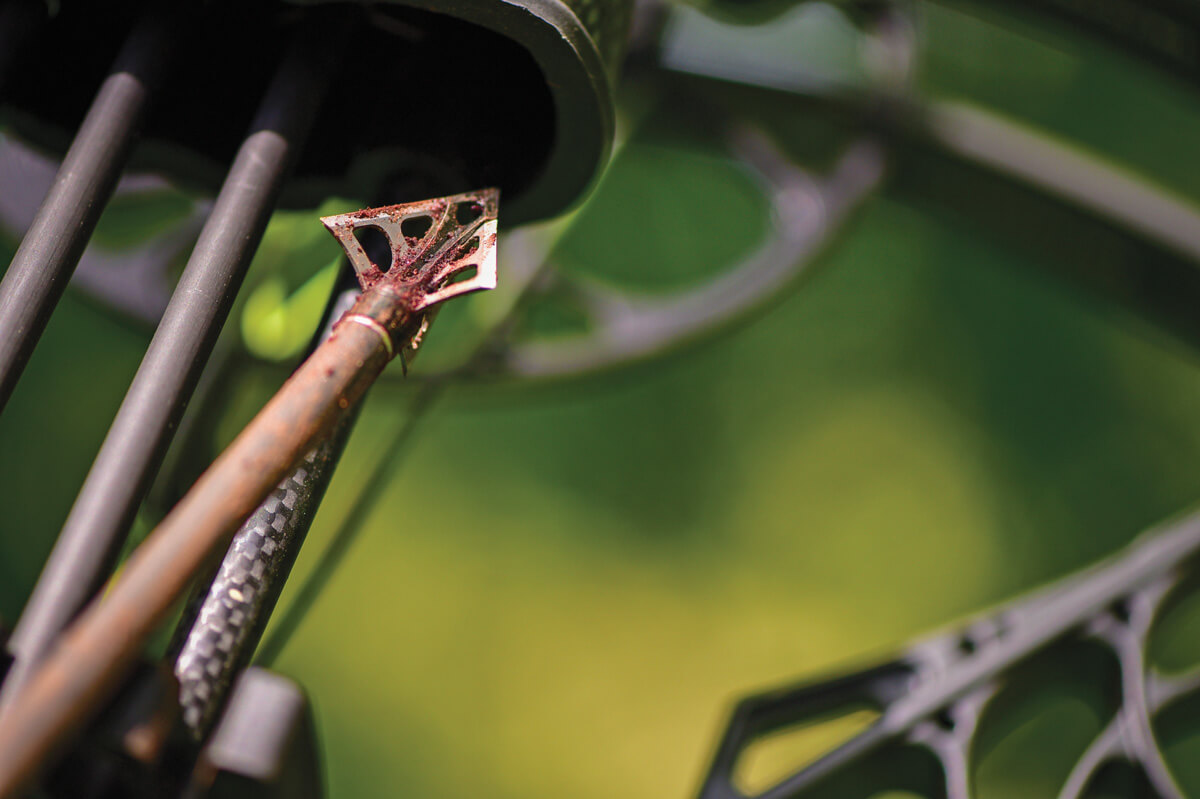
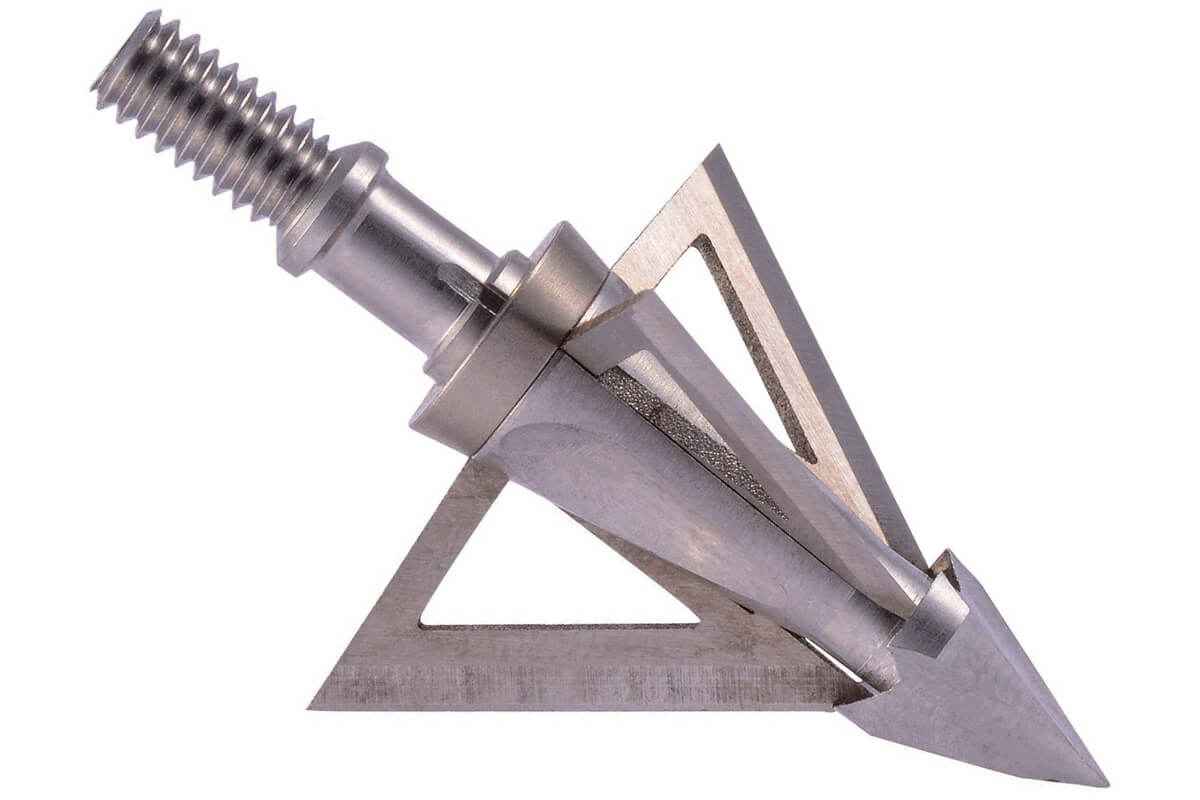
This year marks a major milestone here at Petersen’s BOWHUNTING — our 10th Anniversary Broadhead Test. Oh, what a journey it has been. When I consider the time (weeks) and energy it takes to do our annual broadhead test, it amazes me we ever made it to year two!
Back when we first began in 2013, we unknowingly set ourselves up for a testing marathon by tackling 25 broadheads — 13 fixed-blade models and 12 mechanicals — at once. None of our tests were proven, forcing to us to run back and forth to the hardware store for additional supplies as we adjusted on the fly. We were also forced to acquire additional test heads from the stock inventory at Lancaster Archery Supply, because we were running out as we forged ahead like madmen through an extended period of trial and error.
They say experience is a great teacher, and that’s certainly true in our case. I’m pleased to report we’ve become not just older but wiser over the past decade, alternating our annual test between fixed-blade heads and mechanicals to keep our workload manageable and give manufacturers additional time to release new models in each category.
But while we’ve changed some things and have continually refined our testing procedures, one big thing that has not changed — and never will — is our commitment to doing whatever it takes to make this the most consistent, credible and unbiased broadhead test available to bowhunters anywhere. The cornerstone of our testing is a desire to create a level playing field for all, and over the years we’ve eliminated some tests that did not meet this high standard and modified others to ensure they do.
Perhaps the biggest single testing improvement we’ve made over the years came in 2014, when we upgraded the shooting platform to our custom-built, one-of-a-kind X-Ring Machine that is far superior to any commercially available shooting machine. Weighing more than 200 pounds, the X-Ring Machine offers rock-solid stability along with micro-adjustable windage and elevation and a laser sighting system! Driven by a servo motor, the draw sled that pulls the bowstring back rides on linear slides and is controlled by draw-position sensors. The X-Ring Machine is also controlled via proprietary software that takes precise measurements during the draw cycle and automatically calculates data for things such as kinetic energy and dynamic efficiency. Another milestone that came in 2014 was the decision to outsource broadhead sharpness testing to CATRA (Cutlery & Allied Trades Research Association) in the United Kingdom. That’s right; we ship broadhead blades all the way across the Atlantic Ocean to give you the most accurate and reliable sharpness comparison available!
During our 10-year broadhead testing journey, we have been invited to use some great facilities near our Pennsylvania headquarters, including ranges at Black Eagle Bowmen, Lancaster Archery Supply, Weaver’s Archery and Drop Tine Archery. As for the testing itself, we’re pleased to report that more than 40 manufacturers have submitted broadheads for evaluation, not to mention additional manufacturers such as Mathews, PSE, Bowtech, Last Chance Archery and Rinehart Targets have donated bows, targets and other equipment to assist in our testing.
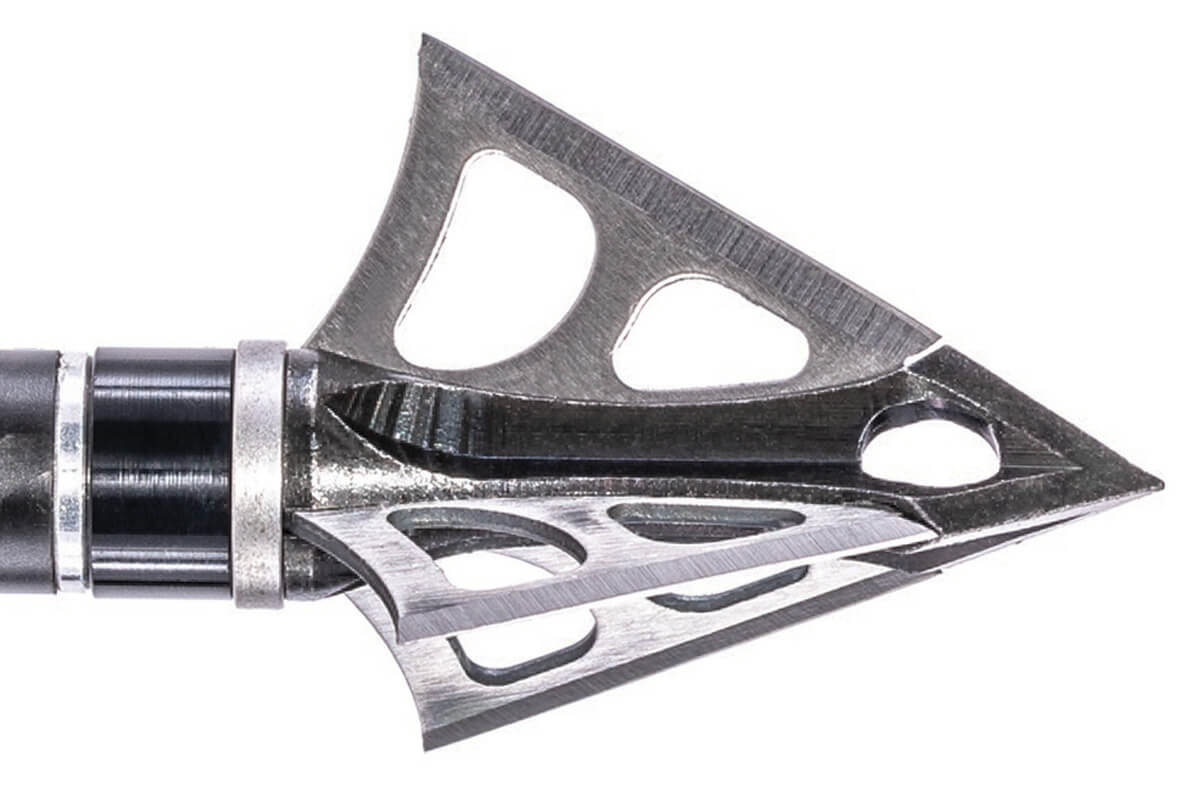
In summary, the past decade has allowed us to build a significant depth of experience and expertise in broadhead testing and demonstrated that we’ll go to great lengths to bring you only the most technically sound and relevant data possible — no bias and no BS! This year, we dive deep into 14 of the hottest fixed-blade broadhead options with tests that measure penetration, durability, blade sharpness, flight precision and more. It’s our hope that you enjoy reading the results as much as we enjoy bringing them to you.
Annihilator 100 XL
Annihilator 100 XL
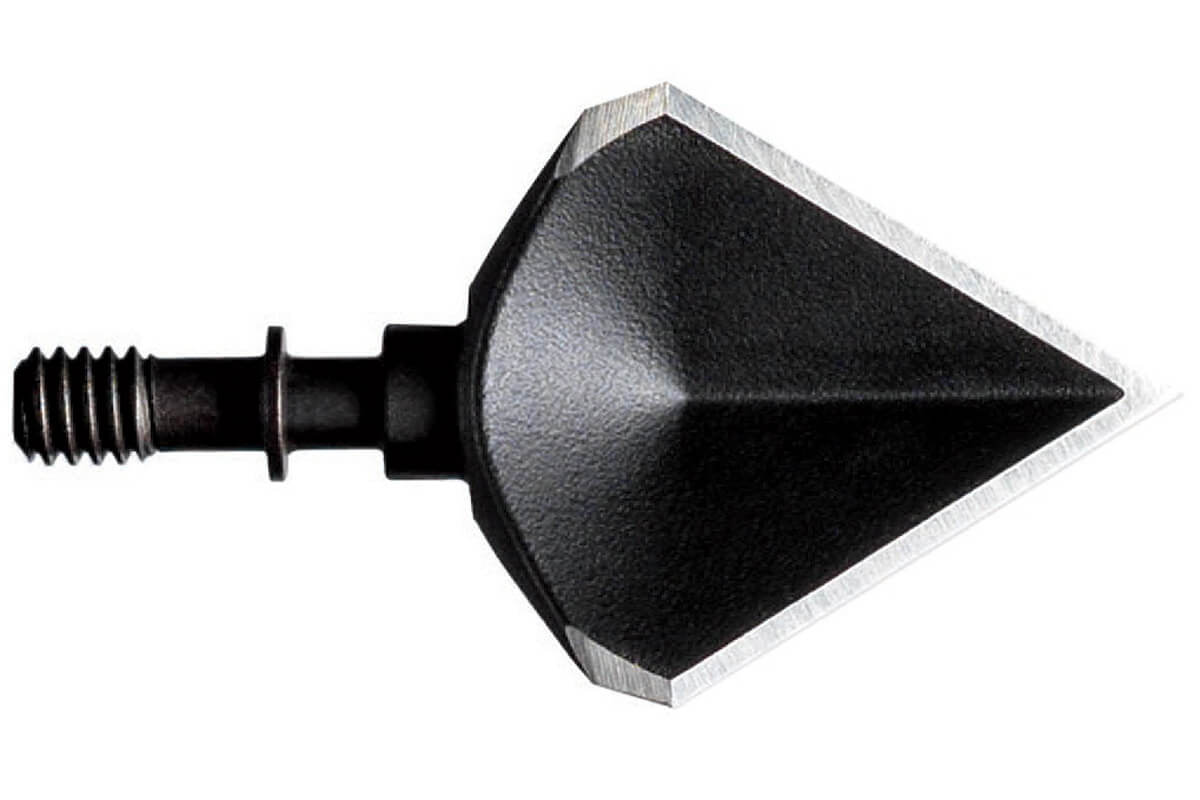
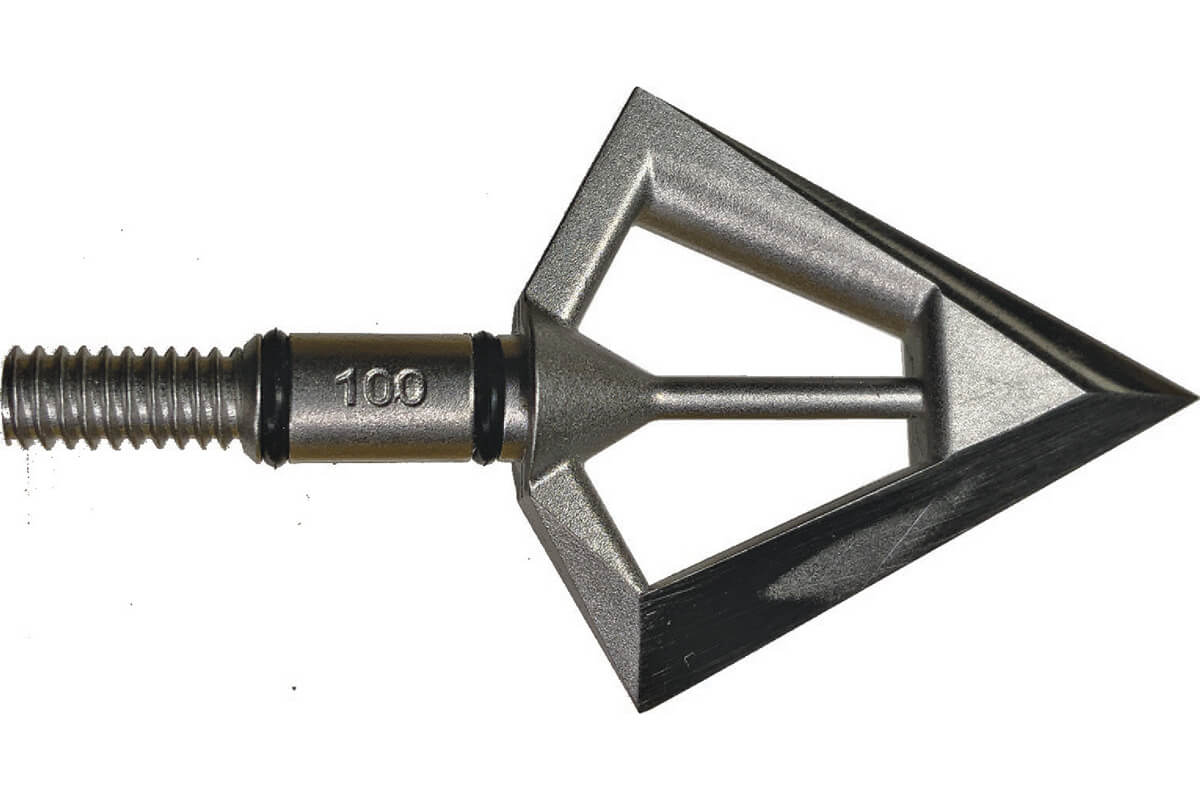
Annihilator is a relative newcomer to the archery world; however, they have turned plenty of heads and built a solid following in a short time. The nearly indestructible 100 XL is made from a single piece of 4140 alloy steel and hardened to Rockwell RC 52. Edges are beveled at 30 degrees to enhance edge retention and durability and are easily re-sharpened on a flat stone. The unique, scooped-out shape is without cutouts or vents and designed to quietly fly like a fieldpoint at long range and cause maximum damage through wound channels that won’t close up and induce pressure changes inside the animal’s body. The 100 XL has proven effective with all bow styles and a wide range of arrow/bolt speeds. Sporting a 1.0625-inch cutting diameter, these heads are made in the USA and guaranteed to weigh within ±.2-grain of one another.
$62.99 per 3 | annihilatorbroadheads.com
Top Test Finishes: 1st in Double Combo Penetration and Hemorrhage
Cobra Barbarian
Cobra Barbarian
Cobra jumps into the broadhead market with the Barbarian line that includes both fixed and mechanical heads. Cobra’s FXT (Fixed Crossbow Titanium) heads were originally intended exclusively for the crossbow market, but the company wanted compound users to have the opportunity to shoot them as well. So, Cobra came up with a two-collar system. The straight collars match up with bolt diameters, and the tapered collars are more in line with standard arrow diameters. Cobra’s solid, one-piece ferrule is made of titanium to take advantage of its high strength-to-weight ratio and overall durability. Blades are replaceable and made of 420 stainless steel that is .033-inch thick. The Barbarian’s cutting diameter is a generous 1.25 inches and its trocar tip is designed to take on the harshest of shots. Heads are spin-tested at the factory.
$54.99 per 3 | cobraarchery.com
Top Test Finish: 4th in Total Cutting Potential
Firenock Dagger
Firenock Dagger
Firenock is known for engineering products and components that work well together. In fact, their Traumahawk broadhead was designed specifically to work with the company’s airfoil-based Aerovane; however, it required too much speed and power for some applications. Enter the Dagger, which has fewer use restrictions for a wider range of applications. This head is made from 420 stainless steel and uses compound single bevels providing rotation to, and through, the animal. The rotation inside the animal is advertised to cause cavitation resulting in faster death. Metal Injection Molding (MIM) during the manufacturing process makes the Dagger even more effective. The two-blade head has a 1.01-inch cutting diameter and a cut-on-contact design for maximum penetration.
$69.95 per 3 | firenock.com
Top Test Finish: 10th in Hemorrhage
G5 Striker X
G5 Striker X
G5 continues to bring top-notch heads to market with the new Striker X fixed-blade broadhead. The Striker X features four replaceable Lutz blades that have a reputation for being super sharp and a track record to back it up. The four blades, each measuring approximately 1 inch long, create a 1.25-inch cutting diameter. G5 broadheads are spin-tested at the factory and advertised to have improved flight characteristics versus the competition. The all-steel Striker X is also available in a crossbow model and comes in your choice of 100 or 125 grains. A BMP practice head and blade-replacement kits are also available.
$46.95 per 3 | g5outdoors.com
Top Test Finishes: 1st in Total Cutting Potential, 4th in Hemorrhage and 5th in Sharpness
Grim Reaper Micro Hades
Grim Reaper Micro Hades
Grim Reaper, known for creating devastating broadheads, designed the new, 3-blade Micro Hades to maintain excellent flight performance at any speed produced by today’s compounds and crossbows. The Pro Tip is hand sharpened and built to bust through bone. With its 100-percent stainless steel construction, the Micro Hades is made to withstand anything you can throw at it. The .035-inch thick, 440 stainless blades, which reach to a 1.0625-inch cutting diameter, are anchored to the ferrule with Grim Reaper’s four-point blade locking system. Made in Provo, Utah, the Micro Hades is all about inspiring confidence through durability, lethality and overall performance.
$39.99 per 3 | grimreaperbroadheads.com
Top Test Finishes: 2nd in Sharpness and 3rd in Double Combo Penetration
Innerloc American Eagle
Innerloc American Eagle
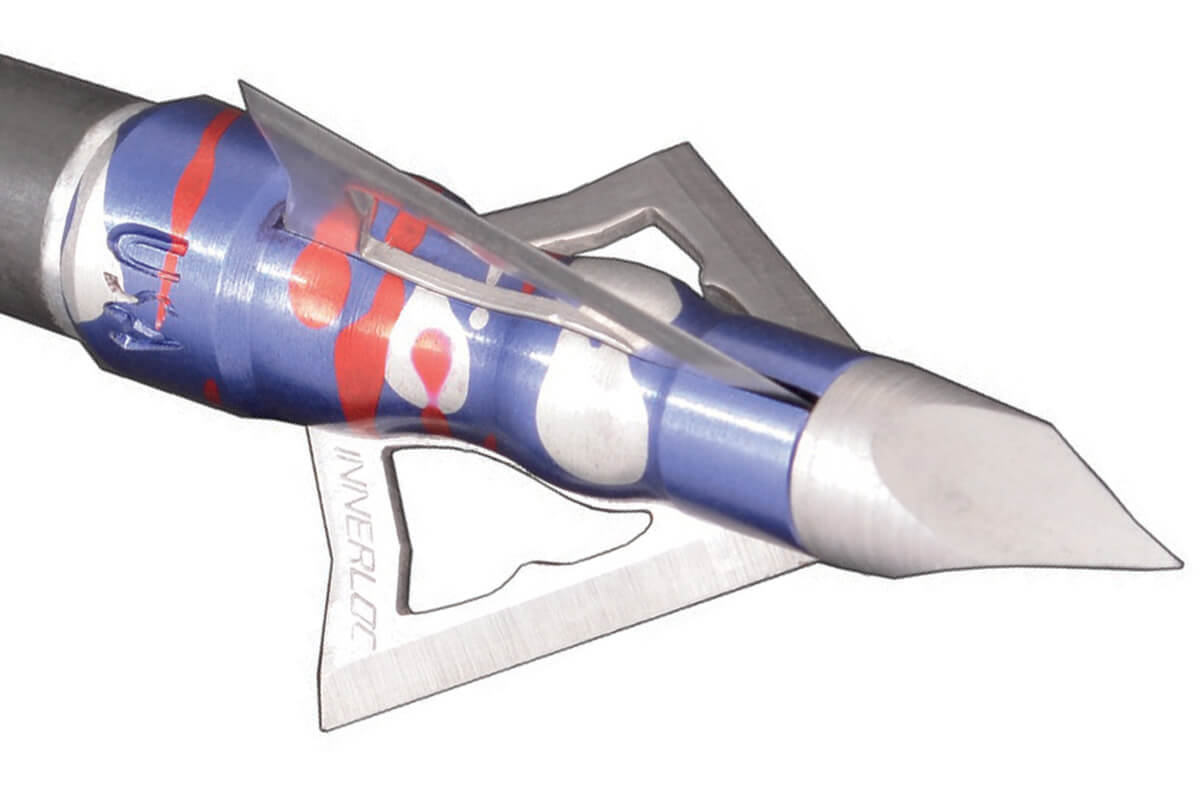
Innerloc’s Patriot Package — including three American Eagle broadheads, six eagle-inspired, patriotic arrow wraps and a Deadly by Design Innerloc Country can cooler — was put together as a tribute to all American patriots. The American Eagle broadhead features a red, white and blue anodized aluminum ferrule that sports an eagle stamp at its base along with eagle-shaped blade cutouts. The 3-blade head weighs 100 grains and produces a 1-inch cutting diameter. Innerloc’s proven Center Locking System uses matching bevels on the ferrule and stud to create a self-aligning, clamping action for the .027-inch thick, L-shape blades with bases that match the inner-diameter of the ferrule. The company’s Endur-Edge is built through specialized manufacturing and tempering processes to create a durable edge that will hold its form and sharpness.
$35.99 per 3 | innerloc.com
Top Test Finishes: 3rd in Triple Combo Penetration and 4th in Sharpness
Muzzy Merc
Muzzy Merc
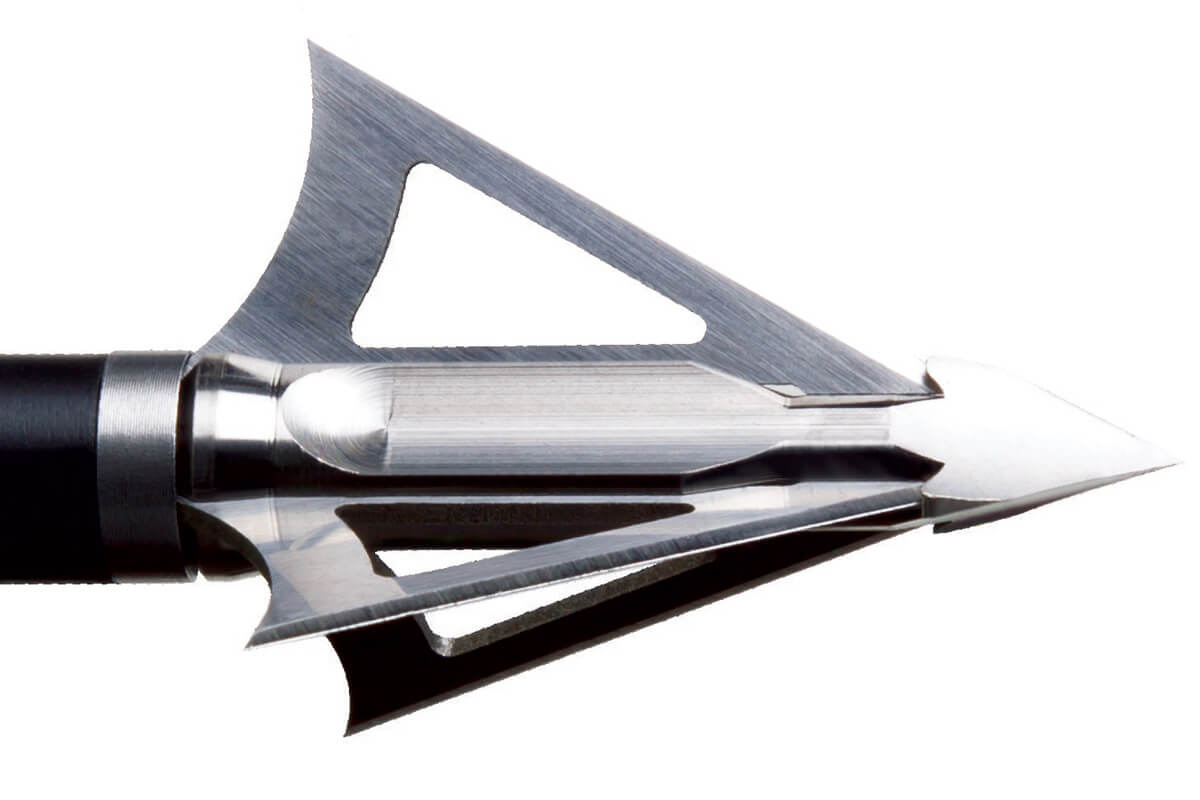
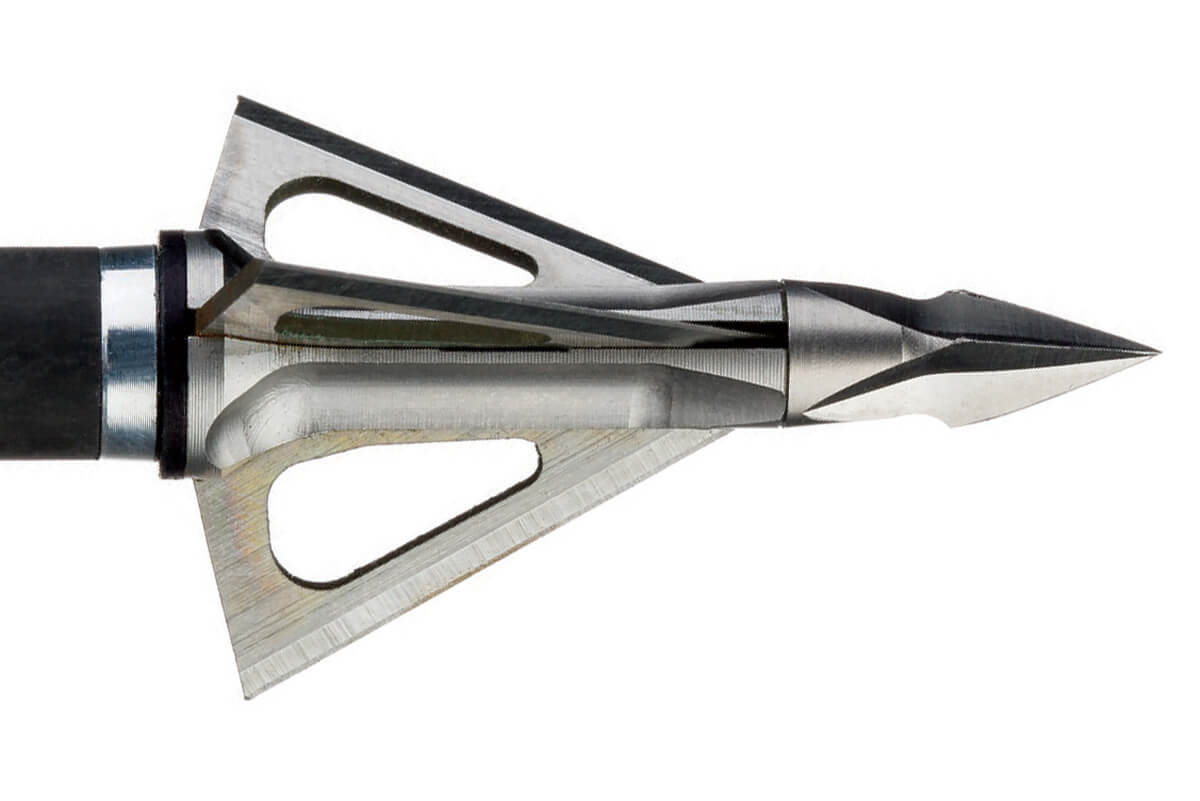
Muzzy, one of the most trusted broadhead manufacturers, builds its new, 3-blade Merc with a one-piece, solid stainless steel ferrule to ensure toughness. The ferrule shape and venting, along with the Hybrid Cut-on-Contact Tip, promote quiet flight and increased penetration. The .030-inch thick blades transition smoothly into the correlating edges of the ferrule for a continuous cut from tip to the blades’ base. Blades are generously vented, have a 1.0625-inch cutting diameter and are locked in place by an aluminum blade-retention collar. Muzzy says the Merc’s unique geometry and venting deliver stable flight and extreme bloodletting.
$44.95 per 3 | feradyne.com/muzzy-broadheads
Top Test Finishes: 1st in Sharpness and 2nd in Triple Combo Penetration
NAP Endgame
NAP Endgame
NAP machines its 2-blade Endgame from a single piece of Grade 5 titanium to achieve precision while taking advantage of the material’s impressive strength-to-weight ratio, tensile strength, ruggedness and corrosion resistance. The oversized Bone Breaker Tip, machined directly into the titanium structure, is designed to cut on contact for greater penetration. An X-Lock blade-retention system secures the .031-inch, replaceable, stainless steel blades to the ferrule. Cutting diameter is 1.1875 inches. All heads are spin tested at the factory to ensure optimum performance, and a set of replacement blades and practice blades are included.
$54.99 per 3 | newarchery.com
Top Test Finish: 3rd in Hemorrhage, 4th in Double Combo Penetration and 5th in Triple Combo Penetration
QAD Exodus
QAD Exodus
QAD broadheads are unique in their design, as they employ Blade Over Shaft technology that anchors the blades to a very short ferrule while allowing the length of the blades to reach back over the shaft. The ferrule length and hardened stainless steel tip equal that of a fieldpoint, which reportedly improves flight characteristics and accuracy. This compactness also increases penetration and pass-throughs. The three, .040-inch thick stainless steel blades are set at a steep angle to reach a 1.25-inch cutting diameter in a short distance. Blades are replaceable; the head comes in 85, 100 and 125 grains in swept-back and full-blade models.
$42.99 per 3 | qadinc.com
Top Test Finish: 1st in Triple Combo Penetration, 2nd in Double Combo Penetration, 5th in Total Cutting Potential
Slick Trick SS3
Slick Trick SS3
Slick Trick’s new-for-2022 SS3 is a single-piece head machined from a solid block of 416 stainless steel and finished with a black-oxide coating. There are no blade vents or separate pieces — this is a solid unit from top to bottom, which is advertised to reduce flight noise, increase strength and maximize durability. The three, built-in blades produce a cutting diameter of 1.125 inches. A proven mix of overall geometry and weight distribution are said to create laser-like flight from any bow. Slick Trick designed the blades to stabilize the head quickly and leave a slug-like hole in whatever you put it through. The chisel tip is built to be aerodynamic and begin cutting on impact for increased penetration.
$47.99 per 3 | slicktrickbroadheads.com
Top Test Finish: 5th in Double Combo Penetration
Swhacker Levi Morgan #262
Swhacker Levi Morgan #262
Known for its popular mechanical heads, Swhacker also has a substantial fixed-blade offering. Swhacker founder Rick Forrest teamed up with one of the planet’s best archers in multi-time world champion Levi Morgan to design the new #262 fixed-blade broadhead. The 3-blade, 100-grain head features a black-anodized, aircraft-grade aluminum ferrule and a hardened, high-carbon steel chisel tip that is advertised as cut-on-contact. Blades are made of stainless steel, have a .032-inch thickness and produce a 1.25-inch cutting diameter. The swept back, independent blades rotate when pulled back so they are not considered barbed.
$54.95 per 3 | swhacker.com
Top Test Finish: 3rd in Total Cutting Potential and 5th in Hemorrhage
SYKD Hunt Endurance
SYKD Hunt Endurance
SYKD Hunt enters the fixed-blade broadhead arena with the 3-blade Endurance, featuring a 1-inch cutting diameter. SYKD says the optimized design allows the Endurance to be used with both compounds and crossbows. Blades are made of stainless steel, measure approximately .028-inch thick and are individually hand-sharpened. A front-end, blade-locking system is designed to secure the blades during flight and penetration. The aggressive chisel tip is built to bust through bone, causing maximum damage and increasing penetration.
$32.99 per 3 | sykdhunt.com
Top Test Finish: 6th in Triple Combo Penetration
Tooth of the Arrow S-Series XL
Tooth of the Arrow S-Series XL
The 4-blade S-Series XL has a 1.1875-inch cutting diameter, and it’s machined from one piece of high-carbon steel, heat-treated for strength and durability.
Blade edges are sharpened at 45-degree angles and designed to create large entry and exit wounds. The compact ferrule puts 70 percent of the head’s weight in line with the arrow shaft and, when coupled with the low-profile design, enhances aerodynamics and optimizes flight characteristics. A chisel point offers maximum impact on bone, and black-oxide plating protects the head, which comes in 100, 125 and 175 grains.
$49.99 per 3 | toothofthearrowbroadheads.com
Top Test Finish: 2nd in Total Cutting Potential and Hemorrhage
Wasp Mortem
Wasp Mortem
Wasp demonstrates its dedication to producing some of the most durable heads available by outfitting the new Mortem with a one-piece, stainless steel ferrule. Sitting atop the ferrule is a solid, one-piece stainless steel trocar tip that is hardened for strength and durability, precision-machined and perfectly aligned with the blades to increase penetration from any shot angle. Three stainless steel blades, sharpened to a surgical edge, reach out to produce a 1.125-inch cutting diameter. Blades are easily replaced.
$33.99 per 3 | wasparchery.com
Top Test Finish: 3rd in Sharpness and 4th in Triple Combo Penetration
Test Philosophy
Our goal is to objectively test a series of characteristics critical to the successful completion of a broadhead’s mission — killing game quickly. Tests are conducted with materials and processes that result in accurate, unbiased results. Since conducting our first broadhead test in 2013, we have built on our experiences year after year and continuously made enhancements and modifications where they will benefit the test and, in turn, the reader. We use technology such as the Petersen’s BOWHUNTING X-Ring Machine that is advanced far beyond any commercially available shooting machine and an IDT Motion Xtra N4 high-speed video camera. Where we do not have the resources to conduct our own testing, we source it from outside. For example, we ship broadhead blades all the way across the Atlantic to have sharpness measured by the Cutlery & Allied Trades Research Association in Sheffield, England.
Test Setup
A Mathews V3X was set up with a 29-inch draw length and 65-pound draw weight. It was equipped with a NAP QuikTune 3000 arrow rest and D-loop. Three dozen factory fletched Easton FMJ 340 arrows were cut to 29.375 inches long and weighed at 376 grains (not including point weight). Completed arrows weighed 476 grains (with 100-grain broadhead or fieldpoint) and flew at 272 fps as measured by our chronograph. The Mathews V3X bow was mounted to the X-Ring Machine and tuned with the Easton arrows to achieve a perfect bullet hole at various distances. This setup was used for all test shots except the Hemorrhage Test, which was conducted as noted below.
Physical Dimensions: A Mitutoyo 8-inch dial caliper was used to determine the size of each broadhead’s cutting diameter, blade length, blade thickness and the length of the head beyond the end of the arrow. Cutting diameter on 3-blade heads was calculated by laying two of the blade tips along one jaw of the caliper and the third on the opposite jaw. That number was divided by 1.5 and then multiplied by 2. Example: Greatest distance is .75/1.5 = .5 x 2 = 1-inch cutting diameter.
An Easton Digital Grain Scale, calibrated according to manufacturer instructions, was used to determine the mass weight of each individual broadhead. Three separate heads were measured and averaged for a final result.
Total Cutting Potential: The ability of a head to cut, and the amount of cutting that takes place, is a factor of sharpness, cutting diameter and the number of blades. With this in mind, we calculate the Total Cutting Potential (TCP) of a head by multiplying the radius by the number of blades. We consider it “potential,” because a lost blade in bone or otherwise means you have that much less to do the cutting once the head breaks through into the body cavity. Blade angle is not considered in determining TCP, since angle does not change the amount of flesh that is cut as long as penetration is equal.
Here are two examples of TCP calculations: A 2-blade, 2-inch cutting diameter head has a radius of 1 inch. To get the TCP, you multiply the radius by the number of blades, which gives you a TCP of 2 inches. Now, consider a 3-blade head with a cutting diameter of 1.375 inches. The radius is .6875-inch, so you would multiply .6875 by the number of blades, 3. Your TCP would be 2.0625 inches, which means you will cut slightly more than the 2-blade head with a 2-inch cutting diameter.
Hemorrhage Test: Behind the scenes, this is known as the “blood bag” test! It was designed to take a relative measure of how much bleeding each broadhead will cause. For each head, a thick plastic bag containing exactly two gallons of red (for effect) colored water was sealed, suspended from a fixture and marked with a reference line. Using a Wicked Ridge Raider 400 crossbow, each head was fired low through the bag. We used frame-by-frame time stamps from a Nikon D5600 camera to measure elapsed time from impact until the water level matched the reference line.
Sharpness: Three blades (one blade from three different heads) from each broadhead model were sent to CATRA in the United Kingdom to measure blade sharpness with the association’s Razor Edge Sharpness Test (REST) machine. The machine measures the force required, in Newtons, to cut through a rubber test medium. The less force required to cut the rubber, the sharper the blade. As a reference point, a shaving razor blade will typically result in a reading near .3 Newtons. Additional information about the REST machine can be found online at catra.org.
Hard-Impact Test: The hard-impact test is designed to simulate the performance of a head after it encounters and passes through a hard material such as bone. We all want to know our broadhead will still do its job and keep cutting even after hitting a rib or shoulder. This test was performed at 20 yards, using .03-inch thick sheet metal as the impact material. General results can be found in the accompanying chart, with high-speed video footage on our YouTube channel showing each head’s performance in great detail.
Penetration Tests: This year, we eliminated one of the penetration tests we’ve been doing for years and replaced it with a new test we started last year. The pure foam test was scrapped, as it did not correlate to any situation one would encounter in the field; we hunt animals with a hide or other tough outer layer, such as thick feathers on a turkey. So, as we started last year, we added rubber-backed carpet on the outside of the foam. This “Double Combo” penetration test is designed to simulate a hide/body hit during which no bone is encountered. Our second penetration test, or “Triple Combo” test, consisted of rubber-backed carpet, .03-inch thick sheet metal and foam, to simulate a hide/body hit during which bone is encountered. Targets for our penetration tests are made by stacking the carpet, metal and foam plates and wrapping them with stretch-wrap film.
Over the years, many people have asked why we don’t use actual animal carcasses, or even a side of beef, to conduct our penetration tests. Our answer is simply that using such methods would not provide consistent, repeatable results from shot to shot. Instead, we use manmade materials to simulate basic properties (soft, hard, firm) while maintaining the consistency required for valid test results.
To conduct our penetration tests, three brand new heads from each broadhead model were fired into both types of block. The section of arrow protruding from the target was then measured for each shot, with a final average being calculated. That number was then reconciled with the arrow length for each test broadhead (different models have different overall lengths) to determine the actual depth of penetration.
Crash Test: The Crash Test is a violent test of a broadhead’s overall integrity. It was conducted by shooting each model into a fieldstone at 20 yards and evaluating the overall condition of the head after impact. Not surprisingly, most heads in the test sustained considerable damage as a result of impact. General results can be seen in the accompanying chart, with high-speed video footage on our YouTube channel showing each head’s performance in great detail.
Fieldpoint Comparison Test: A fieldpoint was shot from the X-Ring Machine at 25 yards to give us a reference point for measuring the broadhead impact locations on the target. We performed the test and found our groups relative to the fieldpoint were not in line with previous years. So, we tweaked the arrow rest and assured all test arrows were straight, properly aligned and spun true on a Last Chance Archery Revolution Arrow Tuner (engineered by Travis “T-Bone” Turner). We then repeated the test with much better results!
Three shots were fired with each test model, and the impact points were averaged to plot the data in the accompanying chart. As has been common in recent years, all the test heads flew well, with none varying more .7-inch in windage or elevation from the fieldpoint, and we had to enlarge the scale of the results chart just so you can identify each head’s point of impact. This is a testament to how much broadhead manufacturing has improved over the past 20 years and offers proof that — with a properly tuned bow and arrows — you can get your hunting broadheads to fly quite similarly to your practice points.
Assistant Editor Brian Fortenbaugh took this nice droptine buck. Age is a big factor in droptines. The buck was aged at 6.5 years.
Question: I read Dr. Dave Samuel’s explanation of why “Slingshot,” the buck in Curt Wells’ October 2022 article had an extra antler sticking out of his forehead. Could Dave explain how droptines and double main beams occur in whitetails? Craig S., via e-mail
Answer: There is no question that older bucks tend to develop droptines more readily than young bucks, and usually genetics is involved. The genes for droptines (and sticker points and extra points) tend to be expressed when bucks get older. The fact that we don’t see many bucks with droptines in the wild is because we kill lots of younger bucks before they can manifest their full potential. Some biologists believe that almost half of all bucks have some genes for nontypical points that would become visible if the bucks lived long enough. Proving this would be difficult, but it sure appears to be true.
Another factor that complicates the impact of genetics on droptines is the doe. Her genes most certainly play a role here, and some have suggested that her role is even more important than that of the buck. Again, that would be hard to prove, but deer-game farmers keep track of all their breeders — bucks and does. And they can and do breed for big, older nontypical bucks because such bucks bring in more money.
The cause for double main beams is something totally different, because genetics is not involved. Almost certainly, a double main beam is caused by an injury to the pedicle. Let me review what Curt wrote in his article in our October issue. The pedicle is the bony projection of the frontal bone where the antler develops. It has a special cell layer on it where the new antler grows. Research has shown that if you take some of those special cells and move them, a new antler tine often develops. In fact, years ago a researcher in Canada grafted some of these cells on the leg bone of a deer, and an antler tine grew there. In the case of “Slingshot,” those cells moved to the center of the frontal bone — yielding a “unicorn” buck.
Antler anomalies like this buck has are often caused by injuries to the pedicle.
But for double antlers, the cells move just as a new antler is starting to grow. At that time, if the buck bumps that area of his head, he may displace some of those cells right beside the base of the pedicle. When that happens, a second antler may start to grow there. If you look at photos of bucks with a double main beam, that second antler’s base is right beside or against the pedicle. When these special cells end up at the base of the pedicle, you may not get a second antler. There are times when the pedicle is bumped just as the antler starts to grow, in which case you just get a jumble of smaller tines around the base of the original antler. But on rare occasions, you’ll get a whole new antler.
Such bucks are not genetically inferior; they just have an extra antler. It will shed when the normal antlers shed. And it will most likely grow there the next year because the specialized cells that form the spot where the antler grows are still there.
The trauma to the pedicle, just as the antler starts to grow, can be caused by most anything. The buck may just bump his head on a tree limb or by sparring with another buck. Growing antlers are subject to damage that affects the resulting antler, and double main beams is one such outcome.
Trolling motors are a fantastic little add-on to your kayak that essentially transforms your once paddle-powered vessel into a high-performance motorized boat.
If you’ve been thinking about adding a trolling motor to your kayak, whether that be for fishing purposes or to simply run circles around your kayaking buddies, then you’ve come to the right place.
We’ve created the ultimate guide to trolling motors, including the benefits of kayak trolling motors, the best trolling motors for kayaks on the market, and the main things to look out for before purchasing.
So, if you’re wondering what are the best kayak trolling motors for your specific kayak, keep on reading as you’re about to become an expert.
What is a Trolling Motor?
A trolling motor is a relatively small electric engine that attaches to the back of a kayak to help propel it through the water at faster speeds. These motors are often used by kayak anglers as they emit very minimal sound and allow fishermen to creep up on their potential catch.
In general, trolling motors are fairly straightforward pieces of gear, and it doesn’t take a genius to figure out how to use one. To turn in any direction, you simply move the handle of the motor left or right. And if you don’t want the motor in the water for any reason, you can quickly and easily pull it out thanks to the rotational clamp that secures the motor to your kayak.
Benefits of a Trolling Motor
Granted, kayak makers originally designed kayaks to be powered by paddle, but no one ever said you couldn’t amp up the kayak’s performance by adding a motor. Motors are a great way to transform your recreational kayak into the ultimate streamlined fishing vessel, and if you weren’t already swayed into purchasing your own trolling motor, you will be thanks to these incredible benefits.
No Splashes
The first major benefit of a trolling motor is the fact that they barely disturb the water. This reason alone is what draws in many kayak anglers, as with a trolling motor, you’re able to creep up on fish in a way you wouldn’t be able to with a paddle.
Hands-Free Fishing
Another huge benefit to a trolling motor is the fact that it removes the need to paddle, meaning you can be hands-free at all times. As well as freeing up your hands to hold other things such as a fishing rod, eliminating a paddle also gives your arms a break as we all know how tiring paddling a kayak can actually be.
Convenient and Useful in Emergencies
There is no shame in getting tired mid-paddle because, after all, just an hour of paddling can burn roughly 476 calories. A trolling motor allows older or slower paddlers to keep up with the pack without getting physically exhausted. They are also extremely useful in the event of an emergency as they’ll get you back to shore far quicker than a paddle ever would.
You Can Head Down to Smaller Tributaries
If you’re trying to decide between a regular fishing boat or a trolling motor-fitted kayak, then in our opinion, the kayak will come out on top. Kayaks that are fitted with a trolling motor are extremely streamlined and portable, meaning you can head over to more remote or narrower tributaries that larger boats can’t enter.
GILI’s Top Picks: By Budget
8 Superior Trolling Motors for Kayaks
Newport Vessels NK 180
It doesn’t get much more premium in the world of kayak trolling motors than the Newport Vessels NK 180. Newport Vessels designed the NK 180 specifically for kayaks, and the 24-volt, 60 pounds thrust motor will have you zipping through the water quickly, efficiently, and most importantly, quietly.
If you have a drill on hand, you can easily attach the aluminum motor mount to the back of your kayak. Once you’ve attached the motor mount, you can then further attach the motor as the package comes with (almost) everything you’d need to get out on the water. For those with a power pole already installed to their kayak, the good news, the installation process will be even easier.
The one thing you will need to purchase separately is a lead acid deep cycle or a lithium deep cycle battery that has a nominal output voltage between 24V and 29V. And then, once you’ve installed the battery, you’ll be ready to hit the water using the speed controller, the digital throttle control, and the steering cables.
Newport Vessels 55 lbs Thrust Kayak Series
The Newport Vessels’ Kayak Series made it onto our best kayak trolling motor list thanks to its impressive 55 pounds of thrust. And yes, you won’t need anywhere near that amount for your tiny little kayak, but it’s always nice to have the option.
Newport Vessels gave their 55 lbs thrust electric kayak motor a 24-inch adjustable shaft, which is ideal for most standard kayaks. And as the adjustable feature makes the motor versatile, if you ever upgrade your ‘yak in the future or if you switch over to a canoe, you won’t need to buy a new motor.
Staying on the topic of the motor’s shaft, Newport Vessels designed their motor out of fiberglass so you can use it as a freshwater or saltwater kayak trolling motor. This ability to kayak in any water type of waterway makes the Newport Vessel’s trolling motor an excellent option for recreational kayakers who like to switch up their kayaking destinations.
To help improve the trolling motor’s performance, Newport Vessel equipped it with a 6-inch telescoping handle and eight different speeds: five of which propel the kayak forward and three which reverse it back.
And to finish off, Newport Vessels also added an interesting feature to the throttle. The throttle on the 12-volt trolling motor clicks when you change gears or when you turn the motor off which helps prevent you from accidentally leaving the motor on and subsequently draining the battery.
AQUOS Haswing Electric Trolling Motor
The AQUOS Haswing Electric Trolling Motor comes in at the mid-range price point for trolling motors, and with an available and adjustable shaft length of 24.4 inches, it is a suitable option for kayaks and other small boats.
AQUOS equipped their saltwater trolling motor with five forward and three reverse speed options to give the user ultimate speed control while out on the water. And then, to further help with controlling the motor, AQUOS added an ergonomic adjustable 13.7-inch handle so you can steer and direct your kayak from the comfort of your kayak seat.
Some other mentionable features of the Haswing Electric Motor include the ability to tilt the motor out of the water when the depth of the water changes, the corrosion-resistant metal components making it perfect for saltwater fishing, and the LED power reader that lets you check your battery power at any time.
GoPlus Electric Trolling Motor
The Goplus Electric Trolling Motor comes in a 46 lbs, 55 lbs, and 86 lbs thrust variation, however, as you’re only powering a kayak, we’re focusing on the smallest of the three. Goplus designed their electric trolling motor to have 8-speed control settings, 5 of which run forward and 3 in reverse. You can easily adjust these speed controls by turning the dial on the ergonomic telescopic handle, which can also be adjusted for optimum comfort.
To make the motor as sturdy as possible, Goplus created it out of fiberglass composite rods, die-cast aluminum heads, and reinforced composite materials so it is able to withstand damage, warping, and bending in both salt and freshwater conditions.
And if you find yourself traveling through different water depths, you can adjust the shaft height and the shaft angle at the mounting bracket tilt mechanism for proper depth placement. This feature also means that you can comfortably steer your kayak from a sitting or standing position without any issues.
Cloud Mountain FineFind 36 lbs Thrust Electric Trolling Motor
The Cloud Mountain FineFind Electric Motor is another motor that comes in a range of different thrust options, from the smallest 36 lbs, which we’re focusing on today, to the largest 86 lbs, which is suitable for larger boats.
Cloud Mountain designed their 36 lbs motor out of corrosion-resistant fiberglass and ensured that you can adjust the shaft for proper depth placement in all types of water conditions. Then, to aid even further in durability, they added a reinforced nylon bracket and saltwater-compatible hardware so your motor will stand the test of time for years to come.
As with many other trolling motors on this list, the FineFind Electric Trolling Motor has 5 forward and 3 reverse speed setting on the 6-inch telescoping adjustable handle so you can control the speed and direction in which your kayak is going.
Watersnake Tracer Transom Mount Trolling Motor
The first Watersnake trolling motor to make our list is the Tracer Transom Mount Trolling Motor. This motor, in particular, has 30 pounds of thrust, however, there are larger options if you’d like a more versatile and powerful motor.
Watersnake gave their trolling motor 7 different speed options, five forwards and two in reverse, which you can control by the speed dial on the extendable handle. And speaking of extendability, the shaft is also adjustable and designed out of chrome-plated steel, so you can use the motor in saltwater.
Watersnake T18 ASP
If you’re after an incredibly lightweight trolling motor, then look no further than the Watersnake T18 ASp. This 18-pound thrust motor weighs only 4.85 lbs making it the lightest option (by far) on our list.
Most kayak trolling motors come with much larger thrust power, but if you’ll only be using the motor for kayaking, then this 18-pound thrust option will provide you with all the power you’ll ever need. If you do want the ability to switch the motor onto a different vessel, however, then the Watersnake T18 ASP also comes in a 24-pound thrust version.
Watersnake fitted their T18 ASP motor with an adjustable mount fitting that is compatible with a variety of fishing kayak fittings. They also decided on a 24-inch shaft length and created it out of alloy and stainless stress, so it is suitable for both fresh and saltwater.
Minn Kota Freshwater Trolling Motor
The good news for those shopping on a budget, cheaper trolling motors such as the Minn Kota Freshwater Trolling Motor will still provide you with all the power you need to get your kayak from A to B. The Endura Minn Kota Trolling Motors has a 30 to 42-inch shaft and provides kayakers with thrust levels of 30 to 55 pounds.
During the design process, Minn Kota created their motor from composite materials and gave it five forward and three backward rev settings. Something they also improved with this model is the battery life which now allows you to spend more time on your favorite lake or river without having to worry about your battery running out.
Comfort and ease of use were also heavily thought about, so Minn Kota equipped the Endura with a six-inch telescopic tiller that improves the motor’s overall comfort and ease of use.
Things to Consider When Choosing a Trolling Motor for a Kayak
Before purchasing a trolling motor for your kayak, there are a few things you need to keep in mind.
Power
Kayaks are fairly small boats, and trolling motors, in general, are designed for boats far larger than your diddy little ‘yak. This means that you won’t need to worry too much about the power of your trolling motor, but we understand it’s useful to know what kind of voltage range is suitable.
For the most part, a 12-volt trolling motor would be more than enough for a kayak seating one or two people.
A general rule when it comes to kayak motors is that you’ll need 2 pounds of thrust for every 100 pounds of loaded weight. And when you’re on the market for a trolling motor, you’ll soon notice that even the puniest electric motor will provide you with more than enough thrust to power your kayak.
Control Type
Many electric trolling motor models will come with a foot pedal, and although foot pedals are incredibly useful on bass boats, they’re essentially pointless on a kayak. Instead, you’ll want a tiller handle trolling motor, which allows you to simply direct the direction of the boat by pushing the handle right or left.
You will also find remote-controlled trolling motors on the market, but these are more expensive than a standard tiller handle trolling motor.
Shaft Length
Trolling motors come in a range of shaft lengths, often being fairly long to reach the water from a bass boat. When it comes to kayaks, however, these long shafts cause a problem, so you need to pay close attention to how long the shaft of your motor is.
When purchasing your kayak trolling motor, you need to ensure that the propeller of the motor would sit 12 inches under the water. If the propeller is higher than 12 inches, it will suck air from the surface and create a lot of noise.
To figure out if the shaft length would be suitable for your kayak, measure from the horizontal bar of your motor mount to the surface of the water. Then, add 12 inches to this figure and a further 3-4 inches if you’ll be kayaking in rougher waters. This combined figure is your ideal trolling motor shaft length.
Mounting System
Most trolling motors are designed for bow mounting on a bass boat, but with a kayak, you’ll need a transom mounting system. Transom mounting systems fit the scuppers in your kayak’s cockpit, and once installed, the system will provide you with a solid bar that you can then mount your trolling motor.
Weight
Something many people don’t consider is the additional weight a trolling motor adds to your kayak. All kayaks have a maximum weight capacity, and your weight, the weight of any fishing gear (if you’re using your kayak for kayak fishing), and the additional weight of a trolling motor could tip you over the limit and cause your kayak to sink into the water.
Before you purchase a trolling motor, calculate your weight, the weight of any passengers (if you’re paddling tandem), and the weight of any gear that’ll be on board at any given time. Then add on the weight of the trolling motor you have in mind and ensure that you remain under your kayak’s maximum weight limit.
Diana Stormrider comes from the queen of air rifles, Diana, a German-based manufacturer of compressed air and small-caliber weapons.
Since 1892, Diana has been a muse for hunters regardless of age, country, or shooting level.
Diana Stormrider is the first of a production line where Diana tried to make something in action like deviating from their performance line.
Though Diana Stormrider is on its experimental stage, the manufacturers have already come up with an updated version.
Performance in terms of accuracy is one thing that Diana did right with Stormrider.
You cannot ask for a better product at this price range.
A Stormrider which is a PCP gun costs you around $200, and this could not get any better.
Stormrider got its name for all right reasons and from performance to look, and everything in between you can easily rely on this multi-shot air rifle.
It is lightweight both in physical and financial terms.
The sleek design, high accuracy, pre-charged pneumatic feature set a new benchmark for low-cost air rifles.
I advise you not to go with the price tag.
You will soon understand what a gem a Stormrider is when it comes to serious shooting.
There exists a cheekpiece on the left side, and it is considerably raised for better positioning of this pellet gun.
This feature, though made for right-handed shooters, could be easily adjusted and helps the left-handed shooters as well, making it ambidextrous.
The grip and forearm are contoured with the checkered patterns, which are pretty much simple lines scribed by machine on the wood but good at the price point,
And you can easily find the perfect hold anywhere along the length of the checkered contour.
This will give you a confident hold of the gun.
The bolt action of Stormrider is pretty easy and light.
There is an integrated pressure gauge in the air gun for you to tack the air pressure inside the tank easily.
The butt comes with a rubber pad which is thin enough to go overlooked but contributes to a better grip.
For durability, I noticed bluing on the metal, and the breech was coated with powder considerably.
Though the wood looks somewhat dull compared to any high-end wood stock air gun, it has no actual defects.
Sight
Diana Stormrider comes with a regular open sight, which we can see on the top of the barrel band.
However, it lacks all the fiber-optic features.
The rear sight can be adjusted according to your need.
You can use a flat blade screwdriver for adjusting the rear sight which offers adjustment for windage and elevation.
An 11 mm dovetail ring is a feature of the Diana Stormrider and both the barrel and breech are grooved with it.
You can easily mount any scope of your choice.
The rear sight is removable and in reality, you actually have to remove it for mounting any scope longer than 10”.
This is because the breach is too small to accommodate both the rear sight and a long scope.
To use the barrel band as a front scope ring, this adjustment is necessary.
However, you can think of it as too much hassle, so we have a remedy for that too.
You have a choice of using the UTG BugBuster scope from Leaper that has a medium height air gun ring that you can attach to your Stormrider.
It fits perfectly in Diana Stormrider without removing the rear scope or irritating the magazine at all.
More importantly, the rear sight in this particular arrangement does not tamper with the sight picture through the scope.
You can go for any high-end scope as well which you can adjust easily by removing the rear sight
But most of such scopes which offer better performance are heavyweight.
The BugBuster is neither too big nor too heavy which is a big advantage considering the handling could be overbalanced due to weight.
The Stormrider was made to be compact and lightweight and any heavy scope just fails its purpose in the first place.
Velocity, accuracy and power
In case you are using large scopes, your chosen location to mount the scope ring should be the front of the breech, and the dovetail ring that we see on the barrel band.
In such cases, you must be worried about removing the iron sights but let me tell you it is no rocket science.
First, you get a small, around 2 mm Allen wrench with which you can open the front sight by just undoing a set screw.
In the case of rear sight removal, you need a flat blade as I mentioned above.
Velocity, speed, and accuracy are the trio that could make all the other points irrelevant when it comes to air guns.
You can adjust everything, compromise a little and forget about some uncomfortable positioning
But where modification can do nothing is in its velocity and accuracy specification.
This is why we will produce some test results made by using Diana Stormrider so you can get a clear picture of what it is capable of doing.
You may have other requirements or different expectations from your air gun so it is better you have the actual picture in mind.
Diana Stormrider Gen 2 follows the basic pattern of all PCP guns that shows a decrease in muzzle velocity with an increase in grain weight
And for the same condition increase in muzzle power.
Here, the test includes seven different pellets from five different manufacturers which are Gamo Raptor, H&N, Crossman, JSB, and RWS.
The velocity ranges from 1068 to 883 fps whereas the energy shows a range of 12-18 ft/lbs.
Before I get to the conclusion, I am going to present the actual test results
So you know on what basis I am deciding the best pellets for Diana Stormrider.
As I mentioned at the beginning, the first-generation Diana Stormrider comes with a single-stage trigger which is also non-adjustable.
The main problem with one stage triggers is unpredictability.
You keep pulling it and most of the time you have no idea when it would go off.
With Stormrider, you don’t have to worry about that.
It’s pretty predictable, and you will know the breaking point which will improve the performance and chance of hitting the target.
The trigger pull is also less so if safety is not on it could result in an accidental discharge.
The accuracy will also be less than that of any two-stage trigger.
In the first generation, the trigger pull weight is 3lbs 1oz with metal blades.
While in generation two, they provided a two-stage trigger that is adjustable.
They have better accuracy and safety as the trigger pull is higher.
You can adjust the position between the two stages as well.
The accuracy improves because after the first pull you can very conveniently make little changes in target and then pull the trigger for the final fire off.
Cocking and loading
The cocking and loading process in Diana Stormrider Gen 2 is also simple though somewhat strenuous.
The cock on opening action makes it harder to pull the bolt handle at the back than push it forward.
Pushing the bolt forward is actually easy and the action is light and simple.
While pulling the bolt back you may find it small and hard to grip, which also adds to the difficulty.
The magazine is loaded in a usual manner where you first rotate the top cover and put the first pellets in the rear of the magazine skirt first.
Then you put the rest of the pellets in nose-first.
Loudness
Diana Stormrider Gen 2 is not fully shrouded so it is not quiet like a Marauder, but it is also not a very loud gun.
There is a short suppressor at the front of the barrel which makes it quieter than other completely un-silenced air guns.
What I mean to say here is that you can shoot at it in your backyard, but it is definitely going to cause some eyes to roll.
While there is a shooting spree with a bunch of air guns, you can easily call it quiet compared to a lot of other louder ones.
The generation one Diana Stormrider sound rate is 3/5 whereas the second generation has a rate of 2/5.
Shooting Ability
Without wasting too many words I am giving the verdict.
Diana Stormrider is undoubtedly pleasant to shoot! It could be because of the lightweight and sleek design even a scope is mounted.
There is ample under the scope so you have easy access to the magazine.
The use of a single-shot tray is also easy and hassle-free.
However, the bolt handle and knob are smaller in size and can be troublesome for people with average hand size.
It is good for plinking, target shooting, small gaming,
Although shooters across the world are overwhelmed with its performance in target shooting.
What To Look For When Choosing A Crossbow Under $500
You might think that when looking for a budget crossbow under $500 that you have to sacrifice certain features or preferences. That isn’t the case, though. You can still be picky. Here are some specific things to look at.
Brand Name
RELATED: Best Crossbow
It’s not always necessary to get a brand name, but in the case of crossbows, certain brands do give you the confidence that they’ll be well crafted. When looking for a budget crossbow, specifically, several name brands help assure you that the low price doesn’t necessarily mean lower quality. These include:
Barnett
PSE Archery
TenPoint (who also make Wicked Ridge models)
Bowtech/Excalibur
Bear Archery
Centerpoint
Killer Instinct
RELATED: Best Hunting Gear
Compound, Recurve or Reverse Draw
Among the three main types of crossbows, compound models are by far the most common. They provide power and speed without being too bulky. Plus, they minimize draw weight without sacrificing power.
As opposed to compound crossbows, recurve models are much simpler. As a result, they rarely break down, require minimal maintenance and are easier to use. This makes them good for beginners. Their main downside is size, specifically ATA width. They also usually have a bit less power, but this can also be good for beginners.
Reverse-draw crossbows are a newer type of crossbow with a more innovative design that involves, well, drawing the crossbow the opposite way. The advantage is that you get a longer power stroke, which means the bowstring accelerates the bolt for more time, giving you more speed and power with a narrower ATA. They also tend to shoot more quietly.
Unfortunately, reverse-draw models are a bit more complicated to use and are usually more expensive. They’re a better choice for experienced archers looking for something new.
Speed
Crossbow bolt speed, measured in feet per second, or FPS, usually ranges between 300 and 500 FPS and is one of the most important features to look at. While just about any crossbow is fast enough to hunt medium-sized game like deer, you may want a more powerful model for big game like elk, moose or bear.
RELATED: Best Place To Shoot A Deer With A Crossbow
Additionally, while faster bolt speeds give you more range and improve accuracy, they can be hard to handle for beginners, and the effective range of the crossbow does not really change that much. We usually recommend you stay under 400 FPS for your first crossbow, but over 400 is fine if you have some experience.
Draw Weight
Draw weight is less of an issue for crossbows compared to vertical bows because pretty much any crossbow is going to be impossible for someone to cock without some kind of device. However, a lower draw weight may be easier to cock just using a foot stirrup rather than a cocking rope or crank. This is important for archers who don’t have a lot of upper body strength.
Cocking Method
Unless you’re a record-holding powerlifter, you’ll almost certainly need some kind of cocking device to cock your crossbow. The simplest way is with a foot stirrup. By putting your foot through the stirrup, you get leverage that allows you to pull up the bowstring.
However, other methods can make things a lot easier. For example, a cocking rope better distributes the draw weight so it takes less effort to pull up the bowstring.
The easiest way, though, is with a crank. By rotating the crank, you slowly draw back the bowstring with little effort at all. Some crossbow models come with a crank that’s integrated into the frame, a great feature to look for.
A crank also works to decock a crossbow, which makes them that much more valuable.
Safety
Crossbows are dangerous weapons, so safety should always be a priority, doubly so if you’re shopping for a youth or beginner crossbow shooter. Standard safety features include trigger safeties and anti-dry-fire mechanisms that keep the crossbow from releasing the bowstring if there isn’t a bolt loaded. Dry firing can damage a crossbow and even cause it to splinter and injure the shooter.
More advanced safety features include finger wings, trigger guards and even rail sensors. These do their best to prevent your fingers from crossing the plane of the crossbow bowstring which moves so fast that it could potentially cut off your finger.
Accessories
It’s always nice when a crossbow comes with accessories so you don’t have to buy them separately. Essential accessories you should look for so you can start hunting right off the bat include:
Crossbow bolts
Scope
Some kind of cocking method (stirrup, cocking rope or crank)
Of course, some crossbows also come with other accessories that can increase your chances of hunting success. These add a lot of value to the package and include:
Quiver
Carrying case
Sling
Limb dampeners
String silencers
Rail lube
We also want to mention crossbow broadheads. You need hunting broadheads to go hunting, but these are rarely included in hunting packages, even if they come with bolts. If the package does, that’s a great feature.
Warranty
With proper maintenance and care, your crossbow should last for years, but it’s always worth checking the warranty a given crossbow comes with. For one thing, a long warranty lets you buy with the reassurance that you can return or repair it if there is some kind of defect. More importantly, long warranties signal that the manufacturer is confident in their product and has crafted it with care.
Final Thoughts
Even if you’re on a budget, you can still get a crossbow with the features and accessories you need. Our best overall crossbow under $500 is the Wicked Ridge Rampage 360, but the staff here at DeerHuntingGuide.net really love the PSE Archery Fang HD as well.
Make sure you’ve considered all the reviews and how each crossbow might fit your personal hunting needs and situation.
Now it’s time to go buy your favorite crossbow on the list, take it out in your yard and get it sighted in, just in time for the hunting season!
Prepare to follow me down a naturalist’s rabbit hole.
Not long after moving to Idaho’s mountains in 2005, I became acquainted with an odd burr that kept attaching to my shoes and socks and to the coats of my two Malamutes when we explored the forest. Local friends told me they were called beggar’s lice.
A green houndstongue plant with a new crop of green seeds stands in front of a couple dead houndstonge plants still covered in last year’s seeds.
A distasteful name perfectly suited to the annoying plant seed.
Lice (louse, singular) are parasitic insects that feed on the blood of host birds and mammals, including people, clinging at the base of hair or feathers or sucking into skin.
Beggar’s lice are seeds from the houndstongue plant (cynoglossum officinale). The seeds are nature’s Velcro, covered in tiny prongs that grab and stick to anything that happens to brush the plant when the seeds are mature. Your shoes, socks and pant legs, your dogs’ coats, the hides of deer and elk, bears, coyotes, wolves, cougars, and livestock (horses, sheep and cattle) are all wonderful hosts for beggar’s lice.
Talk about an effective and efficient seed disbursement strategy for a plant. Imagine how far the seeds might travel embedded on the hides of wildlife.
According to an article published by the Montana State University Extension:
In Montana, a single houndstongue plant typically produces 300 to 675 seeds per year, but exceptionally robust plants may produce up to 2000 seeds. Seeds either fall nearby to the ground or remain on the parent plant where they are positioned to attach to a passing animal or person. Seeds may be carried long distances this way. Seeds on the soil surface often dry out and fail to germinate, whereas seeds buried about an inch under the soil may remain viable for two to three years. Houndstongue seeds do not form large or persistent seeds banks in the soil, and germination generally requires some form of scarification or softening of the seed coat. [Scarification means breaching the natural seed coat by mechanical, thermal, or microbial methods.]
In the forest I regularly haunt, houndstongue grows in disturbed areas – where there’s been logging, or trail or road building. I usually see it surrounding logging slash piles alongside abandoned logging roads, whether the pile was burned or not. In early summer they produce pretty purple blooms, belying the nastiness of the seeds to come.
Now that I have two male dogs, I’ve noticed that houndstongue plants are as popular with canids for marking in the forest as fire hydrants and mail boxes are for dogs in cities. Perhaps it’s because the plants are growing alongside much-traveled paths and are tall, up to four feet high, allowing the scent to disperse easily over a greater distance. My dogs smell the marker left by some other creature – dog, fox, coyote, wolf – and feel compelled to add their own, resulting in seeds attaching in large numbers to their heads and necks as they get a good sniff of any existing scent, then to their flanks as they get close enough to lift a leg and leave their own mark.
Usually I watch helplessly as this transpires, and remember fondly have only female dogs. I try to call the boys away from the plants, but that rarely works. Biology requires they cover the other canid’s mark. It’s how they all communicate. It’s a rare foray into the forest that doesn’t result in a least a few beggar’s lice on one or both dogs.
Conall with just a few of the beggar’s lice he acquired on this morning’s walk in the forest.
When the boys do end up with a generous portion of beggar’s lice on their coats on the trail, I try to pull most of them off immediately before they have a chance to get tangled deeper into their fur. In winter, this means taking off gloves in frigid temperatures because the seeds will stick to my gloves. It’s an annoyance I’ve gotten used to, and the boys have learned to stay still while I pull the seeds off, muttering bad words under my breath.
Once home I take the boys into the yard and use a standard hair brush to remove most of the remaining beggar’s lice and, in late summer, the grass seeds they also acquire. I invariably miss some, but the boys are quite adept at removing those they can reach with their mouths, pulling the beggar’s lice from their fur with their small front teeth and either spitting them out onto the floor (or my bed) or swallowing them for later natural disposal.
Beggar’s lice and dog fur removed with hair brush.
Any seeds that remain, that they can’t reach, I eventually find by massaging my fingers through their coat and pulling out what I find. The beggar’s lice and grass seeds that attach to their feet can become a problem if they work their way between toes or into the crevices between pads, so I check feet regularly and either pull the seeds out, or in some cases cut them out with scissors if they’re so tangled that pulling is painful. The sharp, black grass seeds that are prolific right now can work their way into the skin, especially between toes, causing painful ulcerations. Neither dog likes me poking between their toes with my fingers, but we all suffer through it in order to prevent something worse.
Finn begins working on removing some beggar’s lice from his frills (the longer fur on the back of his front legs) while Conall sits outside, awaits an attack of the grooming brush, after our morning walk in the forest.
In the 15 years I’ve played in this forest, I’ve learned to take the long, philosophical view: beggar’s lice are here to stay. It’s a waste of energy to get mad when the dogs get into them, or to try to avoid the plants altogether. They’re too prolific. I’ve no doubt beggar’s lice, along with cockroaches, will survive the worst impacts of climate change and could probably survive a nuclear holocaust. On a positive note, picking beggar’s lice and other seeds from my dogs’ coats and feet is a sort of bonding ritual, not unlike that of chimpanzees grooming parasites from each other. I don’t eat the seeds I pick, though.
Way More Than You Need to Know, But It’s Kind of Interesting
Houndstongue is native to Asia and Europe. An invasive species in the United States, it most likely arrived in the late 1800s in contaminated cereal seed. It’s now listed as a noxious weed in seven western states: Colorado, Idaho, Nevada, Oregon, Washington, Wyoming, and Montana. It’s a hardy little bugger (pun intended). One year it will send down a tap root as far as three feet into the ground, storing food for year two when it produces all those beggar’s lice.
Houndstongue is known by a number of common names: beggar’s lice, dog’s tongue, sheep bur, dog bur, sheep lice, glovewort, and woolmat – which suggest the problematic nature of its barbed seeds that stick to fur, fleece, and clothing.
Montana State University Extension
Houndstongue foliage can also be toxic to livestock, particularly horses and cattle.
As with most plants, throughout time humans have found medicinal uses for houndstongue. The Wikipedia entry for the plant contains the following subcategory describing some of its past uses:
Herbalism: In 1725, houndstooth was presented in the family dictionary, Dictionaire oeconomique, as part of a cure for madness. In that book, madness was viewed as “a distemper, not only of the understanding, but also of the reason and memory, proceeding from a cold, which drys up everything it meets with that is humid in the brain.” To cure madness, Dictionaire oeconomique noted:
“You must shave the head of the unhappy patient, and after that, apply to it a pidgeon, or a hen quite alive; or else bathe it with some brandy distilled with rosemary, elder, hounds tooth, and the roots of bugloss, or with the oyl of elder flowers: they rub their heads and wash their feet with a decoction of the flowers of camomile, melilot, balm gentle and laurel; they put into their noses the juice of comfrey, with either two or three spoonfuls of honey-water, broth, or white-wine, wherein wormwood and sage are infus’d ; or else they do for five and twenty days together, mix with their broth in the morning, half a dram of the ashes of tortoise, and they put into the pot bugloss, borage, with a pinch of rosemary to season it.”
…By the end of the 1830s, doctors in England were using houndstooth as an antiaphrodisiac to combat venereal excesses.
No thanks!
Ironic that a plant producing so many madness-inducing Velcro-like seeds was once considered a cure for madness. I can, though, see it as an effective anti-aphrodisiac, especially if beggar’s lice are involved. The name alone would be effective.
Additional lore and uses, both practical and magical, included in the MSU Extension article:
• The name houndstongue comes from the belief that a leaf worn in the shoe could ward off dog attacks.
• Extracts of roots and leaves of houndstongue have been used in folk remedies for various ailments including fever, eczema, acne vulgaris, and hemorrhoids.
• Houndstongue ointment is said to cure baldness.
• The red pigments of the outer root surface are antibacterial and reportedly have wound-healing properties.
• Roots and leaves have been used as pesticides and leaves have been used to repel moles in gardens and rodents from stored foods.
And finally, from a 1983 article for Mother Earth News, a tip for an easy way to remove beggar’s lice from clothing: A corn cob can serve as a clothes brush, too. For example, if you’ve ever traipsed through the woods, you’re probably familiar with those dry little burrs called beggar’s-lice that have a habit of clinging to your clothing. Well, whenever I come home covered with the stickers, I don’t waste my time picking the pesky seeds off one by one. I simply grab a corn cob and scrub them off with a few quick swipes.
Re-emerging from the Rabbit Hole
Whew. Sorry, that was a rather deep rabbit hole I took you down, one probably littered with beggar’s lice plucked from the fur of the hare that lives there using its little buck teeth. But kind of fun, right? I might go buy some fresh corn ears at the local farmer’s market, see whether the cob makes a good clothing and/or dog brush.
Featured photo: close up of beggar’s lice found on this morning’s walk in the Payette National Forest, after Conall removed several by brushing against it.
This air rifle uses 10-shot magazines that are easy to load, though you can also use single-shot adapters if you want single loading.
Its bolt action functioned without issues throughout my test, which improved the bolt operation and my shooting experience.
You’ll enjoy shooting with this air rifle because of its comfort and excellent accuracy.
And although this gun has a sleek design and compact size, it is surprisingly heavy when compared with other air rifles!
Just like other high-power air rifles, this one isn’t best used with lightweight pellets.
It gives off better accuracy and high muzzle energy when using mid-weight to heavy lead pellets.
The accuracy of the Gamo Coyote was most consistent when using mid-weight pellets made by another manufacturer.
With that being said, being able to use non-Gamo pellets is a huge plus .
This makes purchasing pellets more accessible and convenient.
You still get the best speed and accuracy even when using other pellet types, so long as they fit the mid-weight or heavier weight range.
Again, I don’t recommend using pellets with lighter weights!
Velocity, accuracy and power
The Gamo Coyote’s design is not just for looks.
Because it is a regulated design, the design actually improves muzzle velocity
And provides a greater accuracy potential when shot in longer ranges.
The Gamo Coyote offers a muzzle velocity of over 1,000 FPS when using lightweight PBA pellets.
With lead pellets, it can achieve a 960 FPS muzzle velocity.
For example on the 0.177 caliber, and depending on the pellets you use, it has a power of up to 40 FPE and a velocity that reaches 1,345 FPS.
As for its consistency, the Gamo Coyote was superb, with a trigger pull weight that averaged two pounds and only varied by one ounce!
The accuracy was excellent when using mid-sized pellets as opposed to lighter ones.
The gun tested with excellent accuracy goes to the Crosman Premier HP 14.3 Grain, while the only poor test was from the Gamo Raptor Platinum 9.7 Grain.
The Gamo Coyote also offers extreme accuracy for its price range, competing against even costlier air rifles out there.
Its consistency and accuracy are what make it enjoyable to shoot any time, anywhere.
Heavier pellets were able to be shot with consistent accuracy.
This makes the Gamo Coyote one of the most consistent air rifles to date.
My only dislike was using smaller pellets (which I normally don’t like anyway).
Chrony tests give us results as follows:
Pellets
FPS
FPE
Gamo Raptor Platinum 9.7 Grain (.22)
1054.93
23.97
H&N Field Target Trophy Green 10.03 Grain (.22)
1033.17
23.77
RWS Hobby 11.9 Grain (.22)
958.16
24.26
Crosman Premier HP 14.3 Grain (.22)
901.91
25.83
JSB Jumbo Exact 14.35 Grain (.22)
891.82
25.34
H&N Field Target Trophy 14.66 Grain (.22)
893.60
26.00
H&N Baracuda Match 21.14 Grain (.22)
758.31
26.99
The Crosman Premier HP 14.3 Grain was by far the best-tested air rifle with the most accuracy.
The only poor test was from the Gamo Raptor Platinum 9.7 Grain. The rest had good to very good accuracy.
It’s important to note that the Gamo Coyote comes without double feed prevention.
So avoid operating your bold action more than once before you pull the trigger to prevent jams.
The legendary Keith Warren from High Road Hunting used the Gamo Coyote to drop a hog with one single head shot.
Sight
The Gamo Coyote only comes with the scope, but you can choose from a variety of scope styles.
There aren’t any fitted iron sights, though it does have the long scope dovetails which are located on top of the air rifle’s breech.
These dovetails are a great addition since you’ll be able to easily install eye relief requirements and the scope of your liking.
Besides the scope, it comes with a warranty and instruction manual.
The instruction manual covers all the basics but should be expanded;
It provides only two pages of instructions for each language.
I would appreciate more information on refilling the air rifle and other necessary details.
It also does not come with an adapter for probe connection to refill the tank nor does it come with built-in silencers.
You’ll need to purchase these individually.
Specifications
Here are the key features and specifications the Gamo Coyote has to offer:
• Available in .177,.22 and .25 caliber
• 10rd removable rotary magazine
• Comes with a built-in manometer
• Self-regulated valve
• Ambidextrous stock
• Checkered forearm and grip
• Shock Wave Absorber recoil pad
• Multi-shot mechanism
• Maximum velocity of up to 1,000 fps
• The loudness of up to three-medium
• 10-shot capacity
• Rifled barrel
• No front or rear sighs
• 11mm dovetail scope
• Two-stage adjustable trigger
• Ventilated rubber buttplate
• Bolt-action
• Manual safety
• Pre-charged pneumatic power plant
• Repeater air rifle
• 20 maximum shots per fill
• 153cc cylinder size
• Shrouded
• Best used for small game hunting or plinking
• Barrel length: 24.5 inches
• Overall length: 42.9 inches
• Weight: 7.65 pounds
Warranty
One helpful aspect when purchasing the Gamo Coyote SE PCP Air Rifle is that it comes with a five-year limited warranty from Gamo themselves.
However, they don’t offer spare parts in case there are any repairs or maintenance needed once the warranty expires.
It makes upgrading a hassle and expensive since you have to look for parts compatible with the air rifle.
Customer review
Many customers have raved about the Gamo Goyote’s usability and its shooting capabilities, which are impressive.
Compared to many air rifles within a similar price range, it still has the best accuracy and consistency.
This makes it such an enjoyable air rifle to use in any shooting situation, may it be for hunting small to medium game, or in the shooting range and competitions!
While the Gamo Coyote SE PCP Air Rifle is exceptional and well-known for its speed and accuracy,
There are still some issues users hope will improve in the long run.
There is one minor design flaw, which is where the pressure gauge is located.
It’s located near the air tube’s end, making it difficult to read immediately.
To assess the pressure gauge you are forced to look down from the muzzle,
Which is fairly uncomfortable and can be a safety hazard if your safety isn’t engaged while checking the levels.
Overall, this gun is a worthy long-term investment since it is built with all-around exceptional accuracy.
This beautiful air rifle will last in the long run. I recommend it to anyone with a moderate budget for the mid-range Gamo Coyote PCP Air Rifle.
Pros and Cons
Pros
Cons
It feels comfortable to shoot with
The air rifle has the compact design
Offers excellent accuracy even with heavy pellets
Solid and durable, built for any shooting situations
Big shroud for silent shooting
Cycles smoothly without much effort
Ambidextrous and easy to switch hand use
Easy to adjust the custom action trigger
Excellent quality construction made from Europe
Power and accuracy superb even from long distances
Great for hunting and the shooting range
Need to purchase shroud or it shoots loud
Doesn't come with sling studs
The pressure gauge is located inefficiently
Has a difficult probe fill system
Moderator is made of plastic, though works okay
Compact but a bit on the heavier side
Extra magazines come at an expensive price
Price
The Gamo Coyote Whisper is an excellent purchase for beginners and intermediate shooters alike and is priced at $500.
Though it isn’t the cheapest option, it still provides users with great value for their money, offering high-quality European parts and an amazing build.
Furthermore, it comes with a five-year warranty from Gamo to ensure that you’re fully covered in case you experience any issues.
Additionally, its design is favorable since it comes with well-blued metal parts and a smooth finish.
"Unleash the Power: Mastering Break Barrel Air Rifles for Maximum Performance. Discover expert tips and techniques to enhance the power and precision of your...