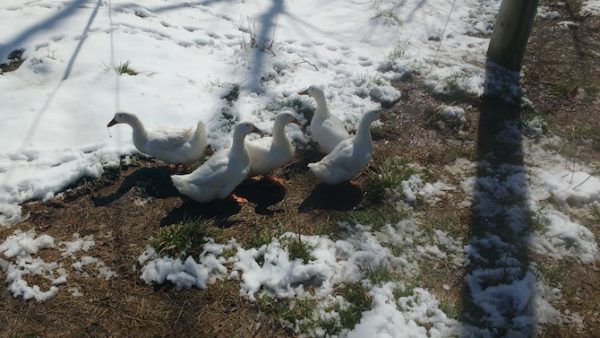
There are so many reasons to want to add ducks to your homestead – ease of care, eggs, meat, insect control, and entertainment, to name a few.
For me, though, one of the most incredible things about raising ducks is how much they poop. Yes – I know, this isn’t something most people talk about (at least not in public). But, if you are a homesteader and growing your food, finding good sources of fertilizer for your garden and edible landscapes is a top priority.
So, I say yahoo for duck poo! And here’s why:
Quantity: You get about 0.065 pounds of poop per day, per pound of laying chicken. But you get 0.11 pounds of poop per pound of duck per day. Although it may not sound like a big difference, if you have ten ducks that are 6 pounds each, that means 6.6 pounds of manure per day on average. The same 60 pounds worth of laying hens gets you 3.9 pounds of poop per day. In a year, using ducks as a source of fertilizer, you get almost 1000 pounds more duck poop from a similarly sized flock.
Nutrient Content: Almost all livestock manure is awesome for your garden (so long as the animals were raised well), but duck poop is the bomb! Duck poop is basically like a 2.8:2.3:1.7 NPK fertilizer. According to the same source, no other livestock manure has NPK ratio this high. The closest one is turkey with 2.8/2.4/1.2 but with less poop per pound per day. This means with duck you get the most poop per day and you need the least poop to get the same level of fertilizer.
Dispersal: Duck poop is more liquid than other forms of manure which mean between regular rain and ducks plodding over it, duck manure disperses very quickly into the soil.
Now that you know why duck poop is such a powerful source of fertilizer on the homestead let’s talk about a few ways to use it.
Ways to Use Duck Poop to Fertilize Your Garden
Method 1: Edible Access
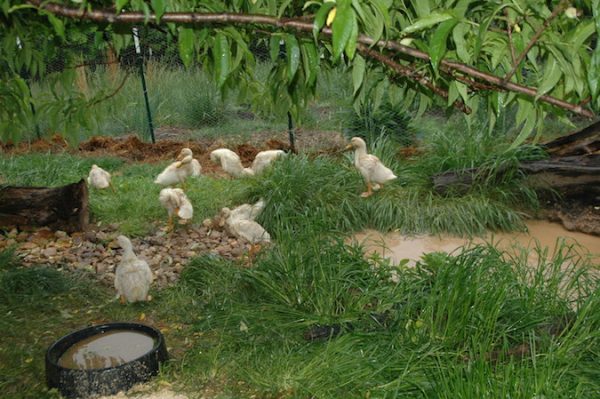
Letting your ducks wander directly through your edible landscapes is an excellent way to spread the ‘goodness’ with minimal work on your part. But there are a few things you need to know though.
Ducks need direction. They are creatures of habit, and if you just let them have total access to your landscape at all times, they will forage a bit. Then they’ll spend the rest of their day lounging out in their favorite places. If they are allowed to lounge too long in any one area, they overload areas with poop and stifle plant growth.
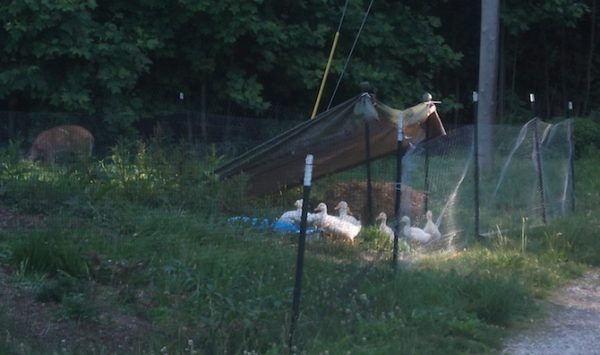
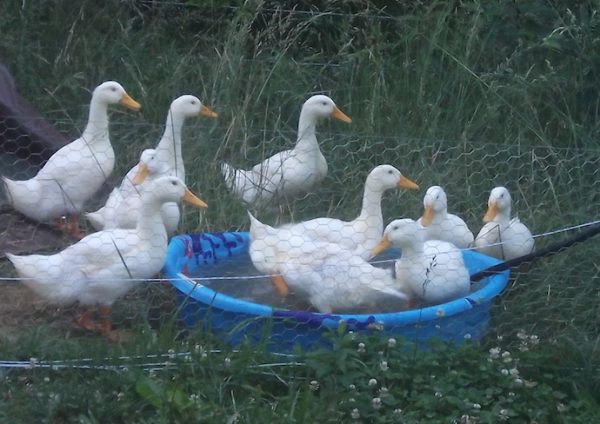
If you want to move ducks around your landscape, get them in the habit of following you to a new area every few days using a feed bucket. Fill kiddie pools with water and set them in that location to encourage ducks to stick around. Make sure there are shaded areas and sunny spots so ducks can be comfortable.
Sometimes just moving their food and water sources to new areas, full of fresh weeds and bugs, will be enough to direct their droppings. However, if you happen to have a large pond or more alluring spaces that might tempt ducks away from their work, then you will have to use temporary fencing to keep ducks where you want them.
When using ducks in undeveloped areas with no shade, you can create temporary shelters using straw bales, stakes, and tarps.
Electric poultry netting works well so long as you have an excellent charger. Ducks are heavily feathered and tend to be more resistant to shock discouragement than other kinds of livestock.
For birds that don’t fly well, just putting up inexpensive plastic netting (e.g. the 100-foot rolls you can get for deer protection) around garden stakes can also work well to keep most of your ducks contained. Since ducks tend to stick together, as long as most of them stay in the designated areas, even escape artist ducks will linger close to the confinement area.
This method works best in established edible landscapes with mature plants, for example under fruit trees. It also works well to develop new areas that have not yet been planted. Avoid letting ducks wander among newly planted areas as disturbed soil encourages them to dig for insects with their beaks. Ducks also tend to trample tender plants.
Method 2: Water Your Growing Areas with Pond Water
If you have a permanent pond that ducks swim and poop in, you can usually directly water your garden and edible landscape areas with your pond water. You can simply dip a bucket and dump it where you need it. Or you can get a bit more sophisticated and use gravity or pumps to do the work for you.
If you are just getting started and can choose where to site your duck pond, aim high. If your pond is higher than the rest of your landscape, you can use gravity to do the work of moving duck water for you.
One of our ponds sits uphill from our garden. We have a flock of ducks that live on and around that pond during the growing season. All we have to do to move water from the pond to our garden, is put one end of a hose in our pond, create a suction to draw out the water, and then let it run downhill to our garden.
We’re super low-tech around here. So we connected our pond hose to our house hose bib. We turned on the water from our house and let it run until it was pouring out at the pond. Then we turned off the water at the house which then began to draw back the water from the pond. We quickly connected our hose to a float valve. The float valve keeps that suction we created on all the time.
We put the float valve on a 55-gallon drum, so we always have a ready supply of water in the garden. We can also just take off the float valve and directly water our garden using the hose any time we want. Then we can reconnect the float valve to stop the flow and keep the suction going.
If you don’t have a high pond, then you’ll have to look into pumps. Electric, gas, and even human-powered pumps can all work. You just have to do some research to make sure you get the right pump to move water over both the distance and elevation change to your edible landscape locations.
Kiddie ponds can be emptied daily directly under fruit trees and other established plants.
Method 3: Compost your Duck Litter
I confine my ducks at dusk until about 9:00 am to collect their eggs and keep them safe from predators. It also makes it easier for me to collect their overnight manure.
As we mentioned earlier, duck poop is a bit runny. So, you can’t just scrape and sweep it up like you can with chickens. Given the quantity produced, you’re going to need a lot of litter to keep your ducks from dancing in doo each night. But that’s OK because:
Litter + Poop = Compost
Since hay grows well in my area, is super cheap, and is almost always minimally sprayed, I use hay as duck litter. It takes about one square bale of hay each week for 20 ducks.
Each morning when I let the ducks out, I dump their water around their duck house to more evenly disperse their manure. I layer on about an inch of fresh hay. Straw, wood shavings, and sawdust will also work.
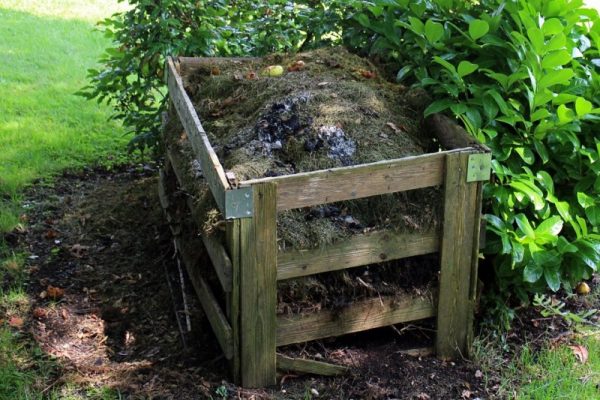
At night, I fill their water and food bowls and close the ducks in at night. The next day I dump the water and apply hay. I do this for about two weeks. Then I use a pitchfork and move all that manured hay into a compost pile. I usually just build the pile to about 4 feet high by 4 feet wide and let it sit there for six months until it is mostly black and crumbly.
Method 4: Don’t Want to Build a Pile? Go Mobile!
If pitchforking poop is not your thing, then think about a mobile duck coop. Ducks don’t like to climb ramps and roost high as chickens do. So consider using a movable chain link cube with wheels and a tarp top as a duck house alternative.
You can just let ducks have the floor overnight. Add in a couple of movable nest boxes (or not since ducks don’t necessarily use them anyway), and you’re set!
Put your coop in place. Use the same procedure detailed above for a fixed coop. Then after two weeks move your coop. Leave all that good stuff in place, and come back and plant in it a month later.
If you have a lot of predator pressure, consider an electric fence to protect your ducks at night better.
Method 5: Duck and Cover (Crops)
If your land is light on organic matter, consider using ducks to help you with your cover cropping. After using either the Go Mobile or the Edible Access method, plant your cover crops.
When you would normally bring in the mower to chop and drop all those cover crops, instead bring back the ducks. The ducks will eat your cover crops, apply more poop, and smother whatever they don’t eat. Then you can move the ducks off, plant your next round cover crop and repeat. If you do this several times, you’ll build soil mass in a hurry and help cut your duck feed costs as well.
Make sure you plant things that are edible for your ducks. Most cover crops are, but do a little research just to be sure. Buckwheat, hard winter wheat, tillage radishes, mustard, rye, Austrian peas, and clovers all work well.
I don’t know about you, but I think all these great ways to use duck poop around the homestead are worth crowing about! So, say it with me…
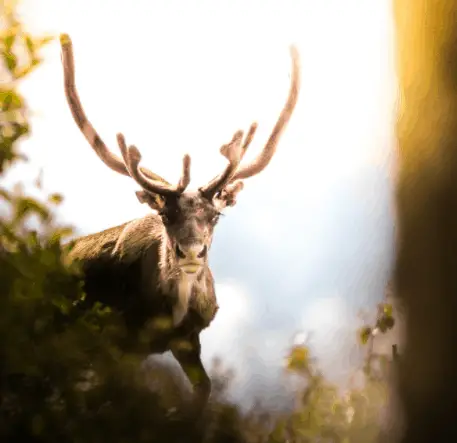
As a hunter, you want to score the deer with the highest number of points. Harvesting a 10-points buck is not only a matter of conquest but also of prestige. That brings us to the question, what are 10-points bucks?
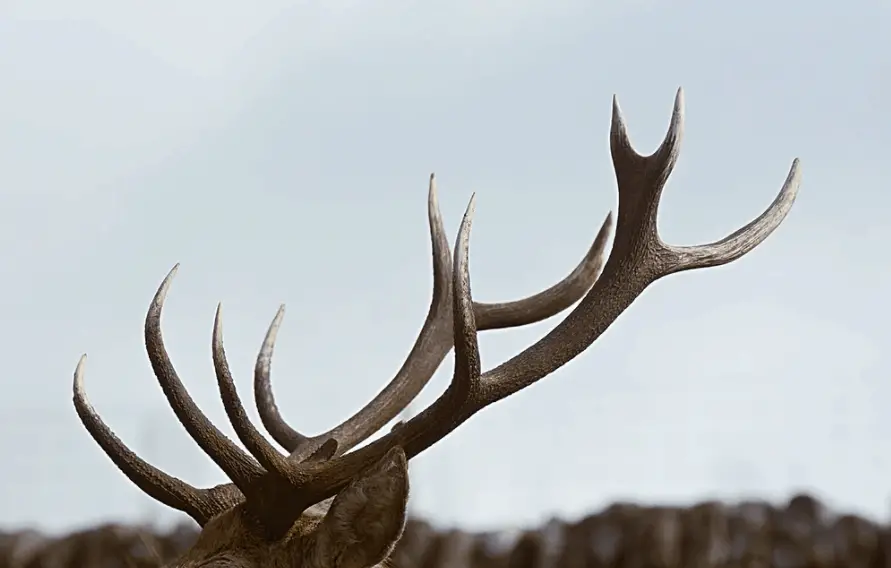
Points on a buck are the distinct tines on its antlers. The more the tines, the more points a buck has. A 10-point buck has ten tines on its antlers.
For deer hunters keen on getting unique souvenirs from the animal, learning how to tell them apart by their points is a bonus. Not all bucks come with antlers that can be mounted as trophies. Continue reading as I explain what 10-point bucks are and how you can readily identify or even harvest one.
Are Buck Points Counted From the Size of His Antlers?
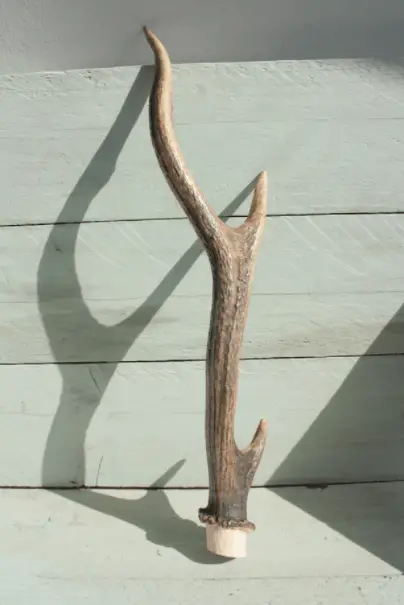
A deer’s antlers are made up of various parts. The main components are the beam, burr, brow tines, bay tines, tray tines, surroyal tines, plus the fork and crown. The beam or shaft is the central stem of the antler. The bony rim of the pedicle is known as the burr.
Brow tines refer to the place at which the first antler branches off. A bay tine is the second branching-off, while tray tines refer to the third branch-off. The fourth is the surroyal tine, and the fork is the point where an antler forks out into two tines. The tine at the top of a buck’s antlers is called a crown.
When antlers are developing during the late spring and summer, they have a consistent blood supply to help with growth. They’re usually covered with a soft hair-like material called velvet. In early fall, the blood supply declines, and the antlers harden.
A buck will rub its antlers against tree trunks, brush, and even rocks to get rid of the velvet. The points, therefore, refer to the number of tines on a buck’s antlers. That means that the rack will have ten points inclusive of all the tines and the central beam.
10-point Bucks Explained
10-point bucks are male deer that are mainly between three to five years of age. A 10-point describes the antlers’ size, not the weight or height of the buck. The size of these antlers is mainly determined by genetics, nutrition, and the deer’s age.
However, it’s important to note that some bucks, where there’s adequate food supply, manage to achieve the 10-points at an earlier age.
Typically, antlers start forming in April as the bucks get to enjoy more sunlight. During this growth period, they are covered by velvet, and their texture is spongy. The antlers become fully formed after only four months, and they harden completely during fall.
After the breeding season, that is, in between December and March, the antlers are now shed. A buck has a single antler on each side of the head, and each antler drops off by itself.
How to Count Bucks’ Points
A tine is any growth that protrudes from the main beam of the antler. Tines must be an inch long or more to qualify as a point. Any growths or nubs that measure less than one inch aren’t counted as points. So, for a 10-point buck, it will have ten tines, five on each side.
There isn’t an exact way to accurately calculate the age of a buck in the course of hunting besides examining its teeth. On the other hand, a buck between three and five years old will be a 10-point buck.
The antlers may start shrinking in size when the bucks reach approximately five and half years and above. As a hunter, you’ll need to consider other factors in distinguishing the bucks’ ages. Mostly, however, a healthy and mature 3 to 5-year-old buck will be a 10-point buck.
There are two methods of counting the points on a buck’s antlers. There is the Eastern Count and the Western Count.
Eastern Point Count
The Eastern Count takes into consideration all the total points on both antlers, including the eye guards. Therefore, in the Eastern Count, a 10-points buck will mean that the buck has 5 points on each side of its antlers, including the eye guards.
Western Point Count
The Western Count does not consider the eye guards and only counts the points from one side. So the same 10-points buck would be a 4-point buck when it is scored using the Western Count.
It is also essential to observe that most Whitetail deer are described according to the Eastern Count. The Western Count is usually applied for Mule deer and elk scoring.
How to Differentiate Bucks in their Various Age Brackets
Bucks in their different age brackets have other physical characteristics that make it possible to tell them apart. Hunters must learn how to tell the specific age of a buck by just looking at them. It comes in handy when making harvest decisions, which allows younger bucks a better chance of survival.
For instance, if you search for a 10-point buck, you need to know the exact physical characteristic to look out for.
The following are the age brackets of the bucks as well as their characteristics:
One-Year-Old Bucks
One-year-old bucks are very easy to identify. These male deer have similar builds with the does when you compare them to older bucks. They have thin necks, and their limbs appear more extended, which gives them a slim-looking body build.
There’s also a unique line that separates the shoulders and neck and some muscle definition. Their tarsal glands are slightly stained during the rut.
Two-Year-Old Bucks
Their waists are thin, and their legs still look like they are longer than their bodies. The tarsal glands are round, small, and stained moderately. The spread of antlers is similar in width to the ears.
For two-year-old bucks, there may be some slight muscle build-up on the neck during the rut.
Three-Year-Old Bucks
Three-year-old bucks have visible stomach lines, and backs are relatively taut and straight. Their necks are distinct from their shoulders, having thicker muscles. The chest starts to become deep compared to their hindquarters, but they still have thin waists.
Three-year-old bucks have legs that appear proportional to their bodies. The antlers now have an even spread outside or within the ears. The tarsal glands are dark and display plenty of staining during the rut.
These bucks have now achieved fifty to seventy-five percent of the maximum antler growth potential. Some of these deer qualify as 10-point bucks.
Four-Year-Old Bucks
Bucks in this age bracket will mostly qualify to be 10-point bucks. They have fully muscled necks that blend well into their deep chests and shoulders. Their backs and stomachs aren’t sagging, yet their high-end have rounded and filled-out appearances.
Four-year-old bucks have taut skin surrounding the jaws. The antlers are heavy, with many points, and they start to show off their potential. They have large, dark-stained tarsal glands during the rut that possibly extend to the legs.
Four-year-old male deer reach up to seventy-five to ninety percent of the maximum antler growth potential with proper nutrition. These bucks are different from their younger versions.
Five to Seven-Year-Old Bucks
Very few bucks live beyond five years except in some places with very favorable conditions. Bucks that are between five and seven years are mainly 12-point bucks. Five to seven-year-old bucks have very short legs for their bodies, and they have quite a number of the characteristics of four-year-olds.
The differentiating factor is that they may have pot bellies, sagging backs, and they have more rounded appearances making them look like small cows.
Eight-Year-Old and Above
A few of the free-ranging bucks will live beyond eight years, also known as the post-mature age. The bucks start to regress in their antler size and body. They also start losing the skin on the shoulders, necks, and faces. Additionally, they have pointy hip bones and shoulders while their antlers begin to show abnormalities related to aging, such as curvy or wavy tines or abnormal points.
While studying the specific physical characteristics of bucks in different age brackets, you’ll realize that there aren’t any specific age-related antler characteristics. Therefore, it’s a good idea not to rely mainly on the antler size when coming up with bucks’ ages.
Six Tips for Scoring 10-Point Bucks
It’ll soon be deer season, and there are ways to make your hunting more productive, with a pair of antlers to mount over your mantelpiece. The following tips will help you to hunt 10-point bucks more successfully. They include;
Scent Control
Bucks have susceptible protective systems in their noses that alert them when predators are close, including human beings. You must be invisible if you hope to hunt any of the 10-point bucks.
Use scent-free soap, which is highly recommended before going hunting. Even the towels you use to dry yourself up must be free from any scents. The same goes for your hunting clothes. Make it a habit of cleaning them with scent-free detergents, and remember to cover your face and head if possible.
Befriend the Wind
Paying attention to the wind is another superb strategy for controlling your scent. Failure to master the wind direction is a huge mistake that makes it difficult for hunters to hit their targets. The buck’s nose is the primary defense mechanism. If it smells a foreign scent, it will take off.
Observe Silence
Being quiet makes it hard for bucks to tell if the movement is from hunters or other animals. Bear in mind that bucks know precisely how human beings sound. Observe silence when getting your gun or bow up to the hunting stand.
It’s also a good idea to wrap metallic gear in duct tape to minimize noise while in the woods. In instances where you feel like coughing, try as much as possible to muffle it up.
Look for Coverage
Whether you are using lock-on stands or climbing stands, it’s advisable to select a tree that is close to another tree around it, behind it, or beside it. That offers some form of cover. Bucks have different lines of sight compared to humans.
If there are trees, leaves, or branches, use these for camouflaging your presence without blocking your shot. On a stand, hunting up in the trees is an added advantage since your scent will be blowing way higher above the ground.
Familiarize Yourself with the Hunting Ground
Be familiar with the hunting ground if you’re to find where the 10-point bucks are at any given time and where they are going. The buck trucks will always tell you if the bucks were already there.
Learn to Stalk the Does
Stalking the does is an excellent tip for any hunter hoping to bag a couple of 10-point bucks. That’s because when the rut is starting, bucks will generally go after the does.
Remember that the rut brings many changes, and most hunters know that this is the easiest time to hunt male deer. Bucks that mostly tend to move during the night will come out during the day.
There are several other tips that you can follow, but if you can faithfully follow the ones above, you’re bound to have an incident-free hunting experience. Most important is to have a keen eye, making it possible for you to point out a 10-point buck from a group of them.
Conclusion
When hunting, it’s advisable to give the younger bucks a chance to survive longer, which increases their chances of reproducing more.
If you are a hunter searching for a trophy, killing bucks eight years old and above isn’t advisable. The reason behind this is that their antlers will most likely have deformities. 10-point bucks are easy to pick out due to their distinctive features.
Canada goose hunting is the fastest growing hunting sport in Minnesota. Our state harvests more geese than any state in the country.
Many hunters new to the sport are unaccustomed to firing at such a big bird. More familiar with shooting ducks, they often fire with too light a load at geese too far away. To improve hunters’ effectiveness and reduce the crippling of geese caused by ill-placed shots, the DNR has begun teaching hunters how to shoot more effectively. Through a brochure, “Get Your Goose,” and seminars held each fall at Thief Lake and Lac Qui Parle wildlife management areas, hunters are learning how to improve their odds of bagging a honker.
Although it’s a big bird, a goose has a relatively small vital zone. The total area in which pellets will kill a goose is just one-tenth the bird’s total size. To ensure they hit the vital zone with enough ?oomph,? waterfowl hunters need to pattern their guns and find the correct loads.
Most experts say the best loads for geese are sizes 1, BB, BBB, or T steel shot. For most hunting situations, BB or BBB shot is the most effective shot size. Both have plenty of pellets, but still enough energy to bring down a goose. Guns are usually 10- or 12-gauge. Because steel shoots tighter patterns than lead does, the best chokes for geese are modified and improved modified. However, each shotgun choke is unique, which is why hunters should pattern their particular guns.
To test loads, place a 40- by 40-inch-square sheet of paper at the same distance as flying geese that will be shot at. (For most hunters and situations, that’s about 30 to 50 yards). Fire at an aiming point you mark on the paper. Do this on five sheets. Then, on each sheet, draw a 30-inch diameter circle around the densest pattern area on each sheet and count the pellets that hit inside the circle. This is the “pattern density.” Try different loads and chokes until one is found that puts enough pellets (from 35 for heavier loads up to 55 for lighter loads) into the circle, which ensures that enough will hit the goose’s vital zone for a clean kill. Another common mistake of beginning hunters is to shoot at geese flying out of range (“skybusting”). This can cripple birds, flare off approaching geese, and may cause approaching flocks to fly even higher. Some exceptional shooters have the skill to occasionally drop a bird “from the stratosphere,” but for most hunters, a kill at over 50 yards is just dumb luck and poor sportsmanship. A good rule of thumb recommended by goose guides is this: If the end of your gun barrel covers more than half the bird, it is beyond 45 yards and is too far away for a clean kill.
It takes practice to find the correct lead for geese. The big birds have slow wing beats that make them appear to be lumbering along. But actually, geese move as fast as a mallard. Lead accordingly.
You’ll find the nests of the hawks before leaves start to grow on trees. Therefore, they’re called early nest builders.
Due to this habit, numerous large hawk nests can be found on spring trees. Thus, it’s easy for a person to identify a hawk’s nest located in Michigan.
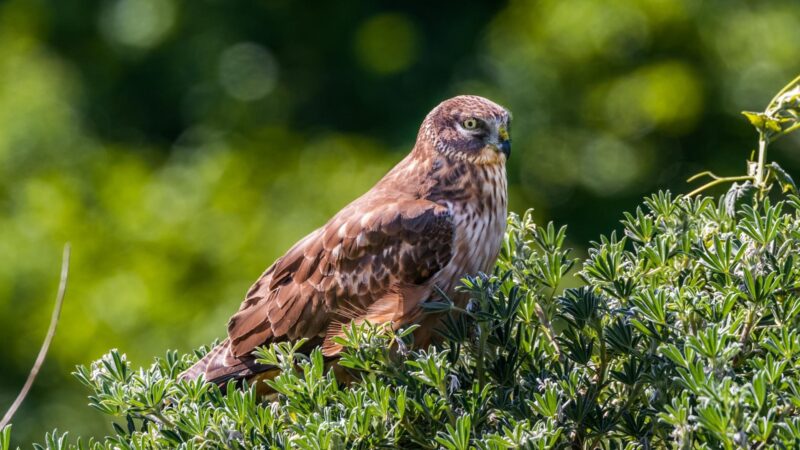
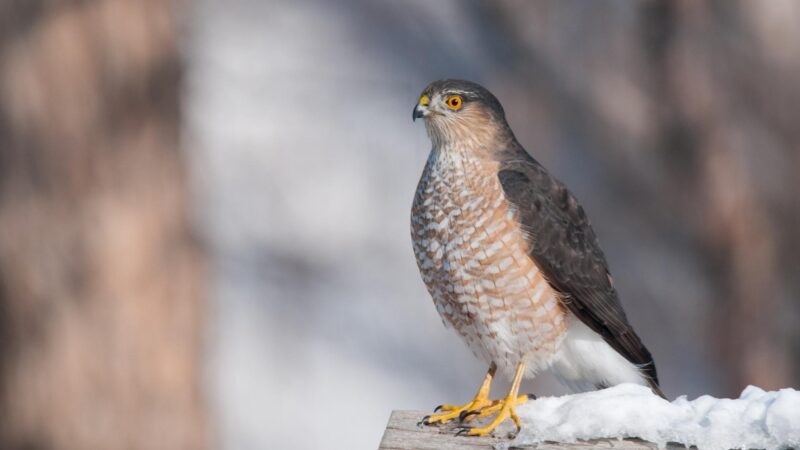
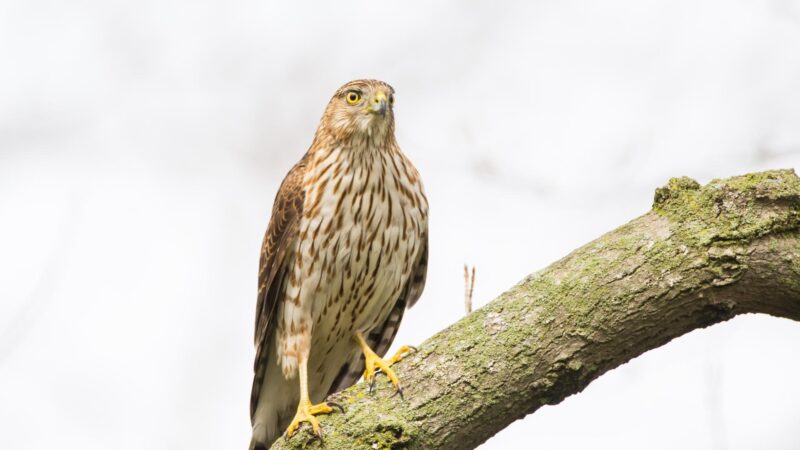
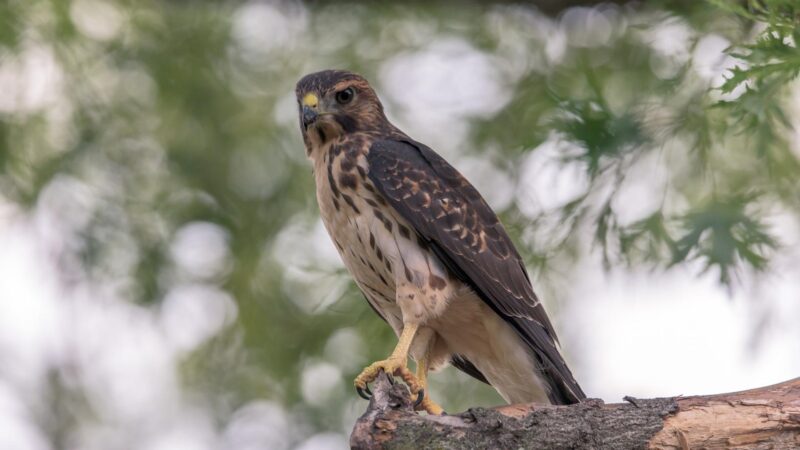
What are the different hawks found in Michigan? The different hawks found in Michigan are Osprey, Rough-legged hawk, Northern Harrier, Sharp-shinned hawk, Cooper’s hawk, Red-shouldered hawk, Broad-winged hawk, Northern Goshawk, and Red-tailed hawk.
These hawk species are economically harmless. Some of their nests can be found on the ground and 75 feet from the ground when situated on a tree.
To identify the hawks that reside in Michigan, you have to know their appearance and behavior. This article has all the information for every hawk species that are mentioned.
Do Hawks Live in Michigan?
Hawks live in Michigan, a nesting site for these birds. The earliest record of this activity is in 1934.
How to Identify a Hawk in Michigan?
Binoculars can help you identify a hawk in Michigan, and you have to weigh these factors.
Plumage – The underside and back plumage should be compared. The plumage of the most common hawks in Michigan, called red-tail and sharp-shinned, highly varies all over their bodies. On the other hand, the matching underside and back plumage is seen on rough-legged hawks and osprey.
Beak shape and color – Every hawk has a unique beak. A species has a distinct one that is similar to adults and juveniles alike.
Habitat – You can readily expect what species you can find when you know the habitat of some hawks. For instance, rough-legged and red-tailed hawks are likely to be found in farmlands, woodlands, and city areas. Since sharp-shinned hawks feed on fish, they are around waterways.
Forms in-flight – You can’t just see the hawks perched on a tree. Even when they fly up above, you can distinguish them through their forms while flying.
9 Hawks in Michigan
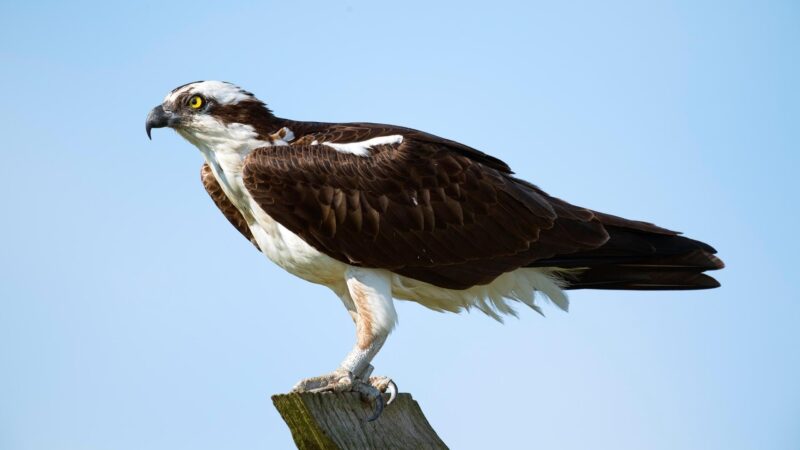
Osprey
This is a large species with long wings that have carpal joints. Ospreys have unique fishing techniques, as supported by their body parts. They have long legs, curved claws, and spicules which are spiny footpads to easily grip slippery fish.
Because they dive when fishing, they have nasal valves and oily, dense plumage to prevent water from entering their nostrils.
Appearance: It has a dark brown back and a bright white underside. There’s a morphological variation based on the regions that they occupy. Those that are in tropical and subtropical areas are smaller.
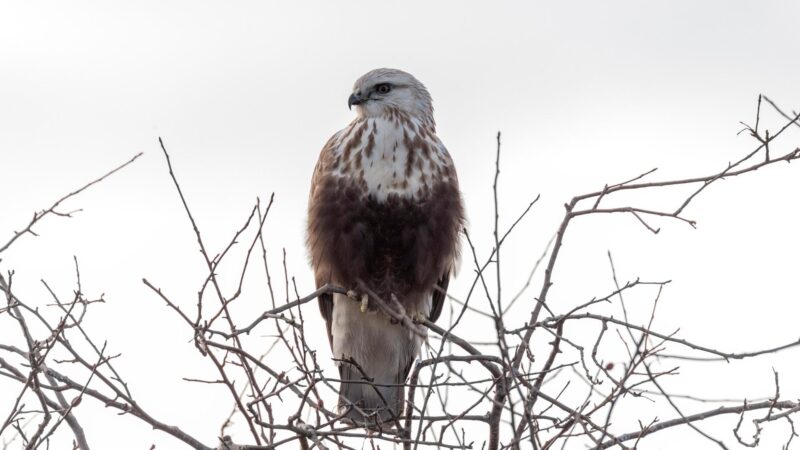
You won’t see rough-legged hawks walk as they tend to soot downs when gathering food and getting near a mate. They also fly low for their size, and they just flap their wings to reach a certain altitude.
Appearance: Both males and females have dark and light morphs. However, the coloration varies between adults and young. There’s a black band on the edges of this bird’s underside.
Northern harries don’t only fly, but they also hop and walk. You’ll usually see them flying low and slow near the ground. On some occasions, they would soar high. The male is more agile and flies faster than his female counterpart.
Appearance: A Northern harrier can easily be spotted due to some unique features. Specialized feathers surround their face, so there’s like a disc that directs the sound to their ears. When it’s on a flight, a white rump patch is visible.
The Sharp-shinned hawk is the smallest species in North America, but it’s an opportunistic hunter. Since thus territorial, it would chase, call, and attack intruders.
Appearance: The back of this hawk is bluish-gray or slate, and the underside is white. It has a crown in a dark hue. Moreover, it has a dark-colored beak in a hook shape.
This hawk perches on a tree and waits for its prey. It lives in forests and open lands. You will be astonished to see it as this is a swift flier. With a rapid wingbeat, it can search through heavily vegetated woodlands for its food.
Appearance: A Cooper’s hawk is medium-sized with a long, lean body. The ones that reside in the west are smaller than those in the east. When in flight, its wings appear short and rounded, while the tail is long and barred. It has a hooked bill suitable for tearing meat.
Appearance: This is a large, heavy species with broad wings and a long tail. The upper part of its body has the colors brown and red, while the underside is creamy. It doesn’t form a flock, as most red-shouldered hawks don’t migrate. Only those that breed in the Northern part of the US and South of Canada migrate to the North of Mexico in winter.
Although the Broad-winged hawk is inclined to stay in dense forests, it prefers to be near open areas like road trails, meadows, and wetlands. It doesn’t like to be near humans.
When in the peak of migration, thousands of broad-winged hawks flock together. Hence, it results in a thermal current, so every bird minimizes its energy when flying.
Appearance: This is a small and stocky species. As a dark-colored bird, you can easily spot the white, broad stripe and the two thin lines in the middle of its body. When flying, it has pointed wing tips. But these wingtips don’t reach the tail when this bird is perched.
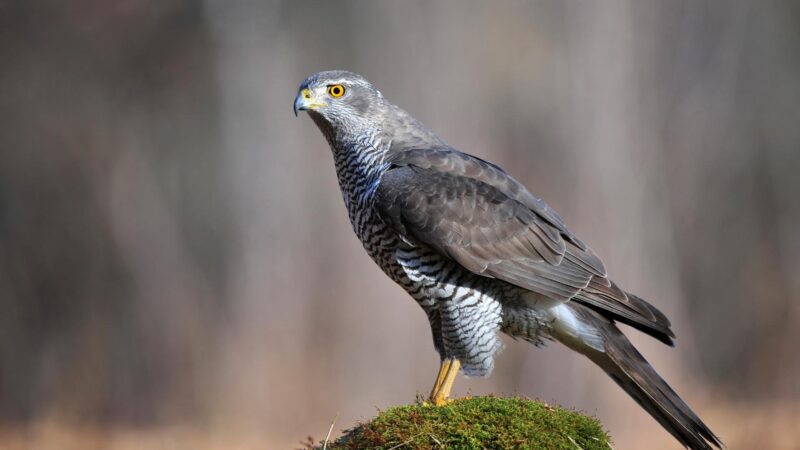
This is the largest accipiter species. It’s fascinating that it spends its entire lifetime in the same nesting area. It will only leave during winter and go to the southern area, but it returns when spring comes.
Appearance: As an accipiter, it has a distinct white grouping of feathers, and this is like a band over the eye. You’ll also notice that the band seen on a Northern Goshawk is more striking than the other species. It has dark coloring, but the eyes are reddish-brown.
A pair of Red-tailed hawks stay in the same territory for life. This bird can adapt to different kinds of habitats at various altitudes.
It can be found in grasslands, agricultural fields, forests, and woodlands. When it comes to laying eggs, its preferred spots are large trees in an open area, wooden fence rows, and forest edges.
Appearance: The back part of a Red-tailed hawk varies from auburn to deep brown, but the underbelly is always lighter than the other body parts. Its legs, feet, and skin on the base of the beak are all yellow.
Osprey is the biggest hawk in Michigan, with a wingspan of over 5 feet and a maximum weight of 2,000 grams which is twice or even four times the weight of other species.
How Big Are the Hawks in Michigan?
It depends on the species. While Osprey, Northern Goshawk, Rough-legged hawk, and red-tailed hawk are larger and weigh over a thousand grams, there are smaller species like Broad-winged hawk, Red-shouldered hawk, Northern Harrier, Cooper’s hawk, and Sharp-shinned hawk.
They just weigh a few hundred grams or around half a thousand grams. The smallest among them is a sharp-shinned hawk that can weigh 200 grams.
Can You Shoot a Hawk in Michigan?
Hawks are protected under Federal law enacted in 1918 called Migratory Bird Treaty Act. So, you can’t just shoot a hawk in Michigan any time you want.
Is It Illegal to Shoot Hawks in Michigan?
It’s illegal to shoot hawks in Michigan if you don’t have a permit. A depredation permit is usually given when the hawks are a threat to public health and safety.
What Is the Largest Bird in Michigan?
The majestic golden eagle is the largest bird in Michigan. It’s based on its 7.5 wingspans and more than 6,000 grams weight.
How Do You Tell the Difference Between a Falcon and a Hawk?
Here are the factors that you have to take note of to differentiate a falcon from a hawk:
Size, speed, and taxonomy – Although hawks are bigger than falcons, they have shorter wings. Since falcons have longer wings, they fly faster than hawks.
Beak vs. talon – Falcons dive and use their beaks with a notch to grab and stab prey. Hawks have talons or claws to catch their prey. They have slightly curved beaks.
What Is the Rarest Bird in Michigan?
The rarest bird in Michigan is Kirtland’s Warbler. It’s in yellow and blue-gray colors. The size of this elusive bird is the same as the sparrow.
Where to See Thousands of Hawks as They Migrate Through Michigan?
Different bird species follow the path of the Great Lakes in Michigan when they migrate. Hence, it creates a fascinating view. You’ll see thousands of hawks from the Detroit River to Keweenaw Peninsula.
Thousands of hawks create a wonderful view in the Straits of Mackinac as Lake Huron and Lake Michigan attract these avian migrants to their funnel effect.
Summary
Apart from identifying the species of hawks in Michigan, you’ll also be able to tell them apart from other birds like falcons.
If you have this ability, you won’t be confused. With this knowledge, bird watching will be more fun as you can name the birds. Even only hawk species can make identification challenging as there are variations.
Related: 8 Hawks in New Jersey | Check for Photos!
List of Sources
Ward, L. (1934). Hawks and Their Nests in Michigan. Searchable Ornithological Research Archive.
Kirschbaum, K., Watkins, P. S. (2000). Pandion haliaetus. Animal Diversity Web.
Limas, B. (2001). Circus cyaneus. Animal Diversity Web.
Good, G. (2008). Buteo lagopus. Animal Diversity Web.
Dewey, T., Perepelyuk, V. (2011). Accipiter cooperii. Animal Diversity Web.
“Understanding the Legality: Can a Felon Own a PCP Air Rifle? Discover the regulations surrounding felons’ ownership of PCP air rifles, exploring legal restrictions, potential consequences, and exceptions in different jurisdictions. Gain insight into the intricate intersection of criminal records and firearm possession to make informed decisions.”
can a felon own a pcp air rifle?
In the United States, the ownership of firearms by felons is generally prohibited, including traditional firearms such as handguns and rifles. However, when it comes to PCP (pre-charged pneumatic) air rifles, the laws regarding felons’ ownership can vary from state to state. In some states, felons are allowed to possess PCP air rifles because they are not classified as firearms under federal law.
PCP air rifles use compressed air or gas to propel projectiles, making them distinct from traditional firearms that utilize explosive propellants. As a result, some states do not consider PCP air rifles as firearms and do not restrict felons from owning them. Nevertheless, it is crucial for felons to research their specific state laws and regulations regarding the possession of PCP air rifles to ensure compliance with the law.
In most states, felons are prohibited from owning firearms, including PCP air rifles. It’s crucial to understand and comply with the local laws governing firearm ownership, as violating these regulations can lead to serious legal consequences.
Many people still use the venerable .30-30 for hunting deer and many other species of big game with excellent results. Here are a few great brands of .30-30 ammo that should serve you well next time you hit the woods.
Though the cartridge has been around since the 1890s, the legendary .30-30 Winchester is still an excellent deer hunting cartridge. In fact, as is the case with other older cartridges like the .45-70 Government, .30-30 ammo is now even more effective for hunting many species of big game than ever due to advances in smokeless powder and bullet technology that have occurred over the last century.
Known for its manageable recoil in lightweight and easy to carry rifles and reliable performance at short to medium range, hunters all over the United States still utilize the .30-30 for deer hunting in thick conditions. The .30-30 Winchester is also a very effective rifle cartridge on other species of big game like black bear, feral hogs, and mountain lions.
Fortunately, the major ammunition manufactures like Barnes, Fiocchi, Federal Premium, Hornady, Nosler, Prvi Partizan, Remington, Sellier & Bellot, and Winchester currently offer multiple varieties of .30-30 factory loads specifically designed for hunters. For that reason, regardless of whether you’re using a Marlin 336, a Winchester Model 94, a Savage Model 99, a Thompson Center Contender handgun, or something else, there is something for everyone on the list below of the best .30-30 Winchester ammunition for hunting.
In today’s post, I’m going to show you the best .30-30 ammo for hunting and go over the pros and cons of each individual load.
Note: some of the links below are affiliate links. This means I will earn a small commission (at no extra cost to you) if you make a purchase. This helps support the blog and allows me to continue to create free content that’s useful to hunters like yourself. Thanks for your support.
Hornady LeverRevolution
If you’re looking to squeeze every bit of performance out of the .30-30 Winchester, then go with the Hornady Leverevolution line of ammo. Available with either a 160 grain FTX bullet or a 140 grain MonoFlex bullet (both of which have a flexible tip), this line of ammo is still safe to use in a lever action rifle with a tubular magazine, but those pointed (spitzer) bullets have a higher ballistic coefficient than traditional flat tipped or round nosed bullets.
Though it doesn’t transform the .30-30 Winchester into a long range cartridge, this load does have a flatter trajectory and better downrange performance than just about any other .30-30 Winchester ammo out there.
The MonoFlex bullets are also made of a 100% copper alloy, which also makes them a great choice if you’re a California resident and need lead free .30-30 ammo for hunting.
Before going hunting with this rifle ammo though, make sure you spend some time at the range with it to ensure it functions reliably and shoots accurately in your rifle. If it does shoot well in your hunting rifle, then this is my pick for the best 30-30 ammo for a Marlin 336, a Winchester 94 30-30, or any other lever action or bolt action rifle chambered in that cartridge with a tubular magazine.
Bullet Type: Hornady Flex Tip Expanding (FTX) or MonoFlex
Bullet Weight: 160 grains (FTX) or 140 grains (MonoFlex)
Muzzle Velocity: 2,400 feet per second (FTX) or 2,500 feet per second (MonoFlex)
BUY LEVEREVOLUTION 30-30 AMMO HERE
Also available at: Brownells (FTX), Cabela’s, Lucky Gunner, and Optics Planet
Remington Core Lokt
If you’re a “meat and potatoes” kind of hunter who wants some reasonably priced and dependable 30-30 ammo for hunting deer, feral hogs, and black bear then the Core Lokt 170 grain soft point by Remington Ammunition will probably work really well for you (it’s also available in a 150 grain jacketed hollow point load which is also very good).
It’s not the latest and greatest stuff by any means, but this .30-30 rifle ammunition by Remington has been around for a long time and countless hunters have successfully used Core Lokt ammo to take just about every species of big game in North America.
Bullet Type: Core-Lokt Soft Point
Bullet Weight: 170 grains
Muzzle Velocity: 2,200 feet per second
GET 30-30 CORE LOKT AMMO HERE
Also available at: Brownells, Lucky Gunner, & Remington
Winchester Super X
Winchester’s Super X line of ammo is a great choice for hunters who want some reasonably priced, “no frills” .30-30 ammo. It’s not a sexy or exciting load, but it will really get the job done when hunting deer, black bear, and feral hogs. In addition to the 170 grain round nose .30-30 load pictured above, it’s also available in a 150 grain jacketed hollow point (JHP) load. Buy a box or two of these bullets, sight your rifle in at 100 yards, and it will probably serve you well as a great hunting load for years.
Bullet Type: Power Point
Bullet Weight: 170 grains
Muzzle Velocity: 2,200 feet per second
GET WINCHESTER 30-30 AMMO HERE
Also available at: Brownells and Lucky Gunner
Federal Non-Typical Whitetail
The .30-30 Winchester is an outstanding cartridge for deer hunting and many of the big ammunition companies make special lines of ammo designed specifically for hunting whitetail deer. Federal’s Non-Typical Whitetail is a great example.
Loaded with a 150 grain soft point flat nose bullet, this ammunition delivers hard hitting terminal performance on thin-skinned game like deer. Like all Federal Premium ammunition, this stuff is also renowned for really good accuracy and reliability. It’s also pretty darn reasonably priced.
If you’re looking for the best .30-30 ammo for deer hunting, then Federal Non-Typical Whitetail is a really good choice. Place your shot where it needs to go and no deer will run very far afterwards.
Bullet Type: Soft Point Flat Nose (SPFN)
Bullet Weight: 150 grains
Muzzle Velocity: 2,390 feet per second
GET FEDERAL NON-TYPICAL WHITETAIL 30-30 AMMO HERE
Also available at: Federal
Federal Fusion
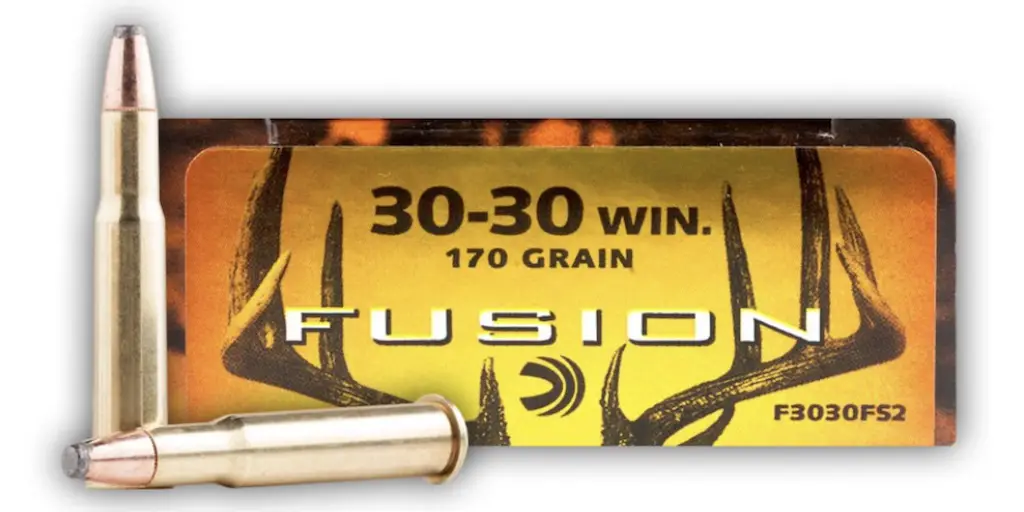
Federal’s Fusion line of ammunition utilizes a bullet with a molecularly fused jacket and a pressure-formed core for a more durable construction than many other comparable bullets. The goal was to build a very durable bullet that would offer more controlled expansion and high weight retention. So, this ammunition
They successfully accomplished those goals and Fusion ammunition is known for being very robustly constructed. In general, this .30-30 ammo probably won’t deliver quite as much expansion as stuff like Federal Non-Typical, Winchester Super X, or Winchester Deer Season XP ammo.
Available in both 150gr and 170gr bullet weights, this ammunition is acceptable for hunting a wide range of game. While both will work on thin-skinned game like deer, the 150gr bullets are best suited for that sort of hunting and the 170gr bullets are better for tougher game like feral hogs and black bear. Heck, those 170gr bullets will also work if you want to use your .30-30 for elk or moose hunting.
Bullet Type: Fusion Soft Point
Bullet Weight: 150 grains or 170 grains
Muzzle Velocity: 2,390 feet per second (150 grains) or 2,200 (170 grains)
GET 150gr FEDERAL FUSION AMMO HERE
GET 170gr FEDERAL FUSION AMMO HERE
Also available at: Federal, Lucky Gunner (150gr & 170gr)
Barnes VOR-TX
If you’re a hunter who loves Barnes bullets, then you’re in luck because Barnes also produces .30-30 Winchester ammo featuring their legendary hollow point copper Triple Shock X-Bullet. Designed for rapid expansion, high weight retention, and deep penetration, this is a wonderful load for hunters after game like feral hogs, black bear, and whitetail deer.
This is also a great hollow point bullet for those who want to hunt moose with the .30-30. It’s also 100% copper, which makes this another ideal brand of .30-30 Winchester hunting ammunition for use in states like California that that don’t permit the use of lead bullets.
Bullet Type: TSX Flat Nose
Bullet Weight: 150 grains
Muzzle Velocity: 2,335 feet per second
GET BARNES 30-30 AMMO HERE
Barnes VOR-TX ammo also made cut for my 2019 holiday gift recommendations. To see what other stuff is on the list, check out the following article:
101 Best Gifts For Hunters In 2019
Winchester Deer Season XP
If you’re planning on taking your .30-30 Winchester deer hunting, then Winchester’s Deer Season XP line of ammunition is another interesting choice. It sports a polymer tip similar to the Hornady Leverevolution, but it’s designed specifically to compete with popular deer hunting ammo like the Hornady American Whitetail, Federal Power-Shok, Federal Fusion, Remington Core-Lokt, and the Winchester Ballistic Silvertip in terms of accuracy, price, and outstanding terminal performance.
So, not only is this some very reasonably priced .30-30 ammo, but it also has a very good reputation for producing a giant wound channel and minimizing the distance deer run after being hit. In fact, this would be one of my other top recommended brands of 30-30 ammo for deer hunting.
Bullet Type: Extreme Point
Bullet Weight: 150 grains
Muzzle Velocity: 2,390 feet per second
GET 30-30 WINCHESTER DEER SEASON XP AMMO HERE
Enjoy this article about the best .30-30 ammo for hunting? Please share it with your friends on Facebook and Twitter.
Make sure you follow The Big Game Hunting Blog on Facebook, Instagram, Twitter, and YouTube.
NEXT: BEST 6.5 CREEDMOOR AMMO FOR HUNTING ELK, DEER, & OTHER BIG GAME
Learn how to find and identify the best wood for Bow Drill to start a fire using a Bow Drill Kit. The top trees and plants in North America for bow drill friction fire kits.
Choosing the best wood for your Bow Drill Kit is critical to success. Even if everything else is PERFECT, choosing the wrong wood will likely result in failure. This article will highlight the best trees and woody stalked plants in North America to use for carving your Bow Drill Kit. Before we get into the specific species, let first discuss some basic wood properties.
DOWNLOAD my 6 Identification Guides for the Best Bow Drill Woods in North America – FREE – just enter email below.
Best Wood for Bow Drill: Wood Properties & Selection
Dry
If the wood you choose is not bone dry then you will not succeed in making fire with your bow drill kit. An ember can only be born in the near absence of moisture. For this reason, live green wood should never be used for the spindle or the hearth board. (Live green wood is actually preferred for the bearing block, which we will discuss later.)
EXPERT FIELD TIP
It can sometimes be difficult to determine by touch if a piece of wood is dry. I’ve found that the lips, cheeks and chin are more reliable than my fingertips in determining if a piece of wood contains moisture.
If at all possible, wood for the spindle should not be gathered from the ground. With few environmental exceptions (such as extremely arid locales) wood found on the ground will be less desirable because it will have absorbed moisture. Dead standing wood and low-hanging branches are almost always drier because they are exposed to sun and wind.
Wood Types
Although I have successfully used many different types of wood for spindles, certain varieties work best. While I want you to be familiar with specific trees and plants that make excellent spindles, it’s important that you first understand their key properties.
Soft and lightweight woods are preferred over hard and dense varieties. A popular rule of thumb [LM1] is that you should be able to use your fingernail to make an indentation in the wood with little effort. While soft is preferred, the wood should not be ”punky” or rotted. It should be firm.
EXPERT FIELD TIP
I prefer to use the same exact type of wood for both the spindle and the hearth board. I’ve had the most success with this arrangement. Exceptions can be made, of course, but I prefer to cut both components from not only the same type of wood but the same piece of wood as well.
I also like to use tree branches and suckers (these are saplings growing from the base of larger trees) as opposed to the main trunks. This faster-growth wood has a more porous texture than the dense, main trunk and creates a faster ember with less effort. Along that same line, I’ve found that the faster the tree grows, the better it is for bow drill spindles. Single-season growth is always an excellent choice. It just so happens that the tree varieties that work best for bow drills also grow extremely fast.
Finally, any wood you choose should be as straight as possible and free of knots or cracks.
Drying a Green Kit
You may not find dead, standing wood of the variety you need, but you can cut live green wood and let it dry. For one kit, I typically cut a branch or sucker (preferred) about the diameter of my wrist and at least one foot long. I then split this piece in half and let it dry on a south-facing window sill for at least a week. Splitting the branch allows for a faster drying time.
DOWNLOAD my 6 Identification Guides for the Best Bow Drill Woods in North America – FREE – just enter email below.
Best Wood for Bow Drill: Specific Tree Species
As mentioned earlier, soft woods make ideal bow drill kits. Below is a list of trees in order of my preference for both the spindle and hearth board. Where applicable I also list other noteworthy facts about these incredible survival resources.
Best Bow Drill Wood: Basswood (American Linden) (Tilia Americana)
Besides balsa, I know of no softer wood than basswood. Also known as the American Linden, basswood is a favorite of wood carvers and one of the best woods for bow drill. My friends from Britain refer to this tree as Lime. Except for areas of extreme climates, basswood can be found in most of the northern hemisphere. It is a water lover and will almost always be found growing around water.
Basswood leaves are somewhat heart shaped and almost always asymmetrical. They have a small, pea-shaped fruit that dangles from a tongue-shaped bract. Young, tender basswood leaves are among my favorite wild edible greens. I make basswood salads several times a week in early spring.
The ”bass” in basswood comes from the word ”bast,” which means fiber. The inner-bark fibers of the basswood tree make incredible natural cordage. Instant basswood bark cordage can easily be obtained in spring and summer months by peeling the bark from younger suckers or saplings. You will find this cordage to be flexible and strong. I have made many a bow drill string using basswood cordage. The bark from slightly older basswood trees (3 – 5 inches in diameter) can be pounded and peeled from the trunk during the same time of year when the sap is flowing heavy. After soaking in water for 3 – 4 weeks (called “retting”) the inner bark fibers will easily peel away from the rough exterior bark in long, ribbon-like sheets.
I recall one summer when lightning struck a large basswood tree at the edge of the pond near my training facility. This powerful strike caused the bark of that large tree to be blown from the trunk in several massive sheets, around 2 feet wide and 20 feet long. After soaking them in the pond I was able to gather several wheelbarrows of basswood cordage, which I used in training for many years after.
While I’ve used basswood of every age and type for bow drill kits, my favorite is that which is sourced from sucker trees that are 2 – 4 inches in diameter. The consistency of fast-growing sucker wood is unlike wood cut from the main tree. However, green sucker wood will require drying time. If you find a standing sucker tree that’s already dead, count yourself lucky. If suckers are not available, low-hanging branches are a good second choice.
Best Bow Drill Wood: Eastern Cottonwood (Populus deltoides)
Cottonwoods were a favorite among Native Americans across North America, as the trees were used to make dugout canoes. (Often, these were coal burned.) Cottonwood trees have a triangular-shaped leaf with toothed edges. The bark is deeply fissured. Like basswoods, cottonwoods grow primarily around water. I’ve seen massive cottonwoods along streams from Arizona to Virginia. When it comes down to it, some would argue that cottonwood is the best wood for bow drill.
Cottonwoods grow very fast—almost too fast for their own good. The combination of this fast growth and their soft wood makes for very weak branches, which is a good thing when searching for stock to make your spindle and hearth board. Dead, broken branches can almost always be found littering the base of large cottonwoods and hung up in smaller trees or underbrush nearby.
During the spring, when the cottonwood bears the source of its name, one can gather not only wood for the spindle and hearth boards, but tinder bundles as well. Cottonwoods produce seeds that are covered in cotton-like down. When gathered together, these downy clusters make a very flammable tinder bundle.
Best Bow Drill Wood: Eastern Red Cedar (Juniperus virginiana)
The eastern red cedar grows primarily in the northern woods of the United States and into Canada, but I’ve had success with many different cedar varieties including western red cedar from the Pacific Northwest. Cedars are coniferous evergreens and are easily identified by their flat, fan-like branches with scaly leaves.
The dead lower branches (also known as “squaw wood”) often make excellent spindle and hearth board choices. Shredded cedar bark makes one of the most effective tinder bundles. It can easily be processed by scraping a knife at a 90-degree angle against the tree. The bark will shred off in fibrous masses that can be further processed by rubbing the shredded bark between the palms of your hands until they reach a hair-like consistency.
LEAD MAGNET: DOWNLOAD IDENTIFICATION GUIDES
Best Bow Drill Wood: Willow (Salix spp.)
There are hundreds of species of willow throughout the world, and for many, it is the best wood for bow drill. They belong to the genus Salix, and are simply called that in many areas. They love water and grow in nearly all temperate regions of the world where water is available. I’ve seen them along the banks of arroyos in the Sonoran Desert and in the marshy swamps of Maine. They grow in nearly every roadside ditch, along rivers, and at the edges of ponds. If you cut a live willow twig (called a cutting) off the tree and shove it in the ground, it will likely root and grow into a tree of its own. I’ve planted hundreds of willow trees on my own property using this method.
Willow leaves are typically long and narrow. They are widest in the middle and taper to a point on both ends. The leaf margins are finely toothed. The upper-side of the leaf is bright green, and the underside is often pale green, which gives many willows (such as the white willow, Salix alba) a silvery appearance from a distance. The bark of young trees and branches is very smooth and becomes darker and furrowed with age. Many varieties of willow, especially those related to Salix alba have brightly colored bark in early spring that can range from yellow to red.
Best Bow Drill Wood: Sycamore (Platanus occidentalis)
The sycamore tree, another water lover, is nearly impossible to misidentify and is a good wood for bow drill. Its very unique bark has a winter camouflage effect: mottled with whites, tans, creams and grays. As the tree grows, the exterior bark peels off to the ground in thin, brown curls, leaving a pure white base layer exposed. No other tree in the forest has bark that looks like or behaves like the sycamore’s. When layered into a large cigar-style roll, a thick tube of sycamore bark also makes for an excellent fire carry. It will smolder a red hot ember, which can be used to blow a tinder bundle into flame when desired.
The sycamore tree also produces small balls of clustered seeds in the fall, which can be broken apart and incorporated into a tinder bundle. The seed clusters alone don’t make an ideal tinder bundle, but they are great filler when mixed with dried grasses, pine needles or bark fibers.
Like the cottonwood, the base of all sycamores will be littered with dead and broken branches all year round. These branches make very serviceable spindles and hearth boards. Sycamores also grow suckers at the base, which can be used.
Other noteworthy bow drill trees are:
Red Alder
Staghorn Sumac
Aspen
Tulip Poplar
Best Wood for Bow Drill: Woody Stalked Plants
My first successful bow drill kit wasn’t made from a tree at all, but from a woody, stalked plant – the yucca. In fact, there are several noteworthy plants with woody stalks that make fantastic bow drill spindles and hearth boards. Some of the fastest embers I’ve seen generated with a bow drill were from those carved from woody, stalked plants. Let’s discuss a few of the most popular of these.
Yucca (Yucca spp.)
I list yucca first because it has a special place in my heart since it was the first material I learned to use in my bow drill kit. It makes an excellent choice for first-time drillers. Yucca is a plant native to America’s Southwest, not to be confused with yuca, also known as manioc or cassava, which has an edible root. Yucca is a popular ornamental plant and can now be found all over the United States and throughout the world. It grows in arid deserts as well as the four-season eastern woodlands. Even the harshest of winters will not kill it. I’ve often found it growing in old cemeteries, where it no doubt was planted as an ornamental.
The leaves of the yucca are green and sword-like. Beware of the very sharp points on the tips. They grow from a central rosette and remain green year-round. There are many different species of yucca (some even growing into large yucca trees). While not edible, the yucca root is loaded with saponins and can be crushed and used as soap for washing.
Yucca’s claim to fame is its fibrous leaves, which are filled with long, strong fibers that can be woven into durable survival cordage. (This process is covered in great detail in my Pocket Field Guide entitled NATURTAL CORDAGE.) Immediate cordage can be sourced from the green leaves, but I prefer to use the dead leaves that typically can be found around the base of the plant. It is very easy to slough off the brown, flakey exterior and extract the fibers from the already-dead, dried leaves. I have successfully used yucca leaf cordage combined with a yucca stalk spindle and hearth board for many bow drill kits. Yucca is nearly a one-stop shop when it comes to gathering bow drill kit components.
The stalk of the yucca grows from the center of the plant starting in early spring. The height and diameter it reaches depends upon the species and age of the plant. Beautiful white flowers (which are actually edible) bloom all around the stalk, creating a very impressive display in spring and summer. Soon after full bloom, the yucca stalk begins to die, dry, and harden. By late fall and all through the winter it’s ready to be cut off at the base and used for a bow drill spindle and hearth board. The lightweight, porous consistency of this dead, dry, woody stalk makes for one of the best bow drill spindles available on earth. The trick can sometimes be finding a stalk that is thick enough AND straight enough to be used as a drill and hearth.
Sotol (Dasylirion spp.)
Sotol, also known as desert spoon, is similar in appearance to yucca. It, too, is an evergreen and produces long, thin, sword-shaped leaves in a circular pattern around the base. Unlike yucca, sotol cannot handle prolonged cold and therefore grows exclusively in the warm, arid environments of America’s Southwest, including the Sonoran Desert of Arizona.
Like the yucca, sotol produces a central flower stalk that is adorned with a bristle-like plume of tiny white flowers. This stalk can grow as tall as 20 feet, and I’ve seen them as large as 2 – 3 inches in diameter. The leaf edges are lined with sharp, barbed thorns, so use caution when cutting the stalk from the base.
The dead, dry, and woody stalk is used extensively for the fire plow method of friction fire-starting and is large enough to make many bow drill kits. This stalk works incredibly well for bow drill and is highly recommended if you reside in an area where the sotol plant is native.
Elderberry (Sambucus spp.)
Elderberry is a deciduous shrub found throughout the Northern Hemisphere, except in areas with extreme climates. A year-round identifying feature of the elderberry it its bark. The exterior of the bark is covered with evenly spaced little raised ”bark warts.” This is a very unique feature of the elderberry.
In spring, the elderberry bush produces flat, dinner-plate-sized flowers, which are actually made up of many small white flowers. These flowers can be battered and fried (elderberry fritters), but they are traditionally used to make elderberry syrup after being steeped in sugar water. If left to their own devices, the flowers will ultimately transform into clusters of berries colored from purple to black. These are used to make jellies, jams, wines, and all sorts of other delicious treats. All other parts of elderberry are poisonous.
The elderberry branch is unique in that it has a very large pith with a Styrofoam consistency. It’s one of the very few bushes/trees/woody, stalked plants that can be hollowed out. It’s the soft wood of the elderberry combined with its pithy center that makes it a wonderful bow drill spindle candidate. An elderberry spindle is better paired with a hearth board made from a different type of wood. It’s challenging to create a proper hearth from an elderberry stalk because of its central pith.
*Special Note: Because of the pithy center, it can be difficult to carve the top of the spindle to a point. Consequently, it is better left rounded.
Download my 6 Bow Drill Wood Identification Guides – FOR FREE! Just enter your email below!
Mullein (Verbascum thapsus)
The dead, dry stalk of the mullein plant in fall and winter makes a very suitable bow drill spindle. Much like elderberry, it is better paired with a hearth board made from a different wood because a suitable hearth board is difficult to split out from a pithy-centered mullein stalk.
Mullein, also known as lamb’s ear, has large, pale-green, fuzz-covered leaves in spring and summer. The plant has a two-year life cycle. The first year it grows a low rosette of large fuzzy leaves that are nature’s perfect toilet paper and padded inserts for shoes. During its second year it shoots up a tall, straight, and woody stalk topped with masses of beautiful little yellow flowers. This stalk is almost always perfectly straight and I’ve started many a bow drill fire with a mullein spindle.
The woody stalk is firm, yet soft, and the center is filled with a dense pith. One fall I built an entire bow drill kit (excluding the bow string) from one giant mullein. I used the root for the bearing block; the stalk for the spindle, hearth and bow; and the leaves and seed head for the tinder bundle.
*Special Note: Because of the pithy center, it can be difficult to carve the top of the spindle to a point. Consequently, it is better left rounded.
Best Wood for Bow Drill: Carving Your First Kit
Material selection is only one component that you have to get right when starting a friction fire using the Bow Drill. You must also carve the kit correctly. To help make sure you carve the kit correctly, I’d like to give you my BOW DRILL CARVING TEMPLATES to use as your guide. They are FREE for you to use – all you have to do is enter your email below so that I know where to send them!
Download my FREE Bow Drill Carving Template by entering your email below!
Thanks for checking out my article about how to choose the best Bow Drill Wood – I hope you’ve found it helpful!
FPS: 830Caliber: .22Power Source:On Board High-Pressure Tank
The Chief II is a bargain for the build quality and shooting experience you get. I was a little surprised for how nice a gun you get for around the $200 mark. In the PCP world, you really need to spend north of $300 to really get some amazement, but the Chief II is a mighty fine airgun to shoot targets or small game. It doesn’t have a ton of five-star reviews on Amazon, but I think that is more a user error than a fault of the gun.
The .22 caliber of this PCP air rifle has often been a topic of admiration, striking a fine balance between power and grace, attributes that have frequently translated into humane and respectful hunts. During my expeditions, it has morphed into an extension of myself, helping me blend effortlessly with the serene surroundings, creating a harmonious symphony of man and nature engaged in a respectful duel.
One thing that really grabbed my attention while using the Chief II Plus was its straightforward knack for packing a punch in every shot, without causing a ruckus in the quiet surroundings. It gives me the elbow room to tweak my shooting preferences, especially when I’m having a go at target shooting with mates.
The adjustable trigger system comes in handy here, letting me switch from a light pull for quick shots to a heavier pull for those moments when I’m taking a careful aim. It’s like having a casual chat with an old friend, where the conversation just flows naturally, unfolding in the relaxed backdrop of the great outdoors.
Furthermore, its integrated scope mounting system has been a reliable ally, offering a stable platform that has often been the difference between a missed opportunity and a successful hunt. Its ergonomic design, coupled with a grip that seems to understand the contours of my hand, transforms long hours in the field into an experience of connection and enjoyment.
Why I Picked It:
The Chief II Plus .22 PCP found its way into my heart and my list for the sheer experience it promises. Its high-velocity shots, coupled with the adjustable trigger system, have often heightened my connection with the surroundings, allowing for a hunt that is as respectful as it is successful.
Its seamless integration into the natural setting, promising a harmonious and quiet operation, has often heightened the sense of connection I feel during my hunting expeditions. It stands as a testament to a hunting experience that is not just about the hunt, but the journey and the deep connection forged with nature.
Pros:
High-Velocity Performance: Delivers powerful shots, ensuring a successful and ethical hunt.
Adjustable Trigger System: Allows for a personalized shooting experience, enhancing the connection between the hunter and the rifle.
Integrated Scope Mounting System: Provides a stable platform for optics, promising precise shots that elevate the hunting experience.
Cons:
Weight: Its substantial build might be a bit taxing during extended hunting sessions, requiring periodic breaks to prevent fatigue.
Learning Curve: The nuances of the adjustable trigger system might require a bit of getting used to, especially for novices.
Prior to European settlement, the grizzly bear (Ursus arctos) called much of California home. Today, despite appearing on the California state flag, the grizzly is extinct throughout the state; the last known California grizzly was killed close to Sequoia National Park in 1922. The savvy Sierran black bear population (Ursus americanus), however, is still thriving.
Size
Size can vary dramatically between black bears. By adulthood, males usually range from 150 to 400 pounds (70 to 180 kg), and females from 90 to perhaps 300 pounds (40 to 135 kg). Males gain weight until they are ten years old or more, while after three years females grow only slowly and stop after seven. Differences in size are indistinct until puberty, at which point females redirect nutrition from growth to reproduction.
Male bears lose weight rapidly through the spring and then gain weight from July until denning in the fall. This seasonal weight change may be explained by mating behavior – male bears expend substantial energy visiting the home ranges of eligible females at a time when food resources are at their lowest. Conversely, female bears are at their lowest weight upon emergence from the den and gain steadily through the year. Females, however, do pay a substantial weight penalty for reproduction; sows with young are 15% lighter than cubless females and may gain only a fourth as much weight from May to September.
Color
Despite their name, black bears range in color from blond through various shades of brown to black. About 95% of bears in the Sierra are some shade of brown and only about 5% are truly black. Color changes through the year are common in bears. Guard hairs start bleaching immediately after the molt, which occurs sometime between May and September. Molting is signaled by the appearance of new guard hairs, which are shorter and darker. They first emerge around the eyes and lower limbs, and then extend up the limbs and down the face and flanks, finishing along the spine.
Lifespan
Longevity for bears in the Sierra varies, but the average lifespan is 18 years. The most common causes of death include accidents with vehicles, disease, enemies, old age, and starvation due to loss of functional teeth.
Communication
Black bears communicate through posturing, marking with odors or other sign, and vocalization. Unlike dogs that can display teeth or curl a lip, a bear’s ability to communicate with facial expressions is poor. The most significant and productive act of communicating for a bear is through its body posture. Bears are often seen in movies and television standing on their two hind legs, growling and looking quite ferocious. In real life however, black bears “stand up” when they are trying to get a better look or smell at something that has piqued their curiosity, and growling is rarely a sound that you will hear from a black bear. When bears assess other bears, staring, slapping the ground, and bluff charging are aggressive behaviors, while lowering the head is submissive. To mark a tree, bears will rub the trunk with their shoulder, neck, and rump. They claw and bite bark and roll on the ground at the base of trees as well.
Although bears are generally silent animals, they do have several vocalizations:
Huffing: a single rapid, highly audible exhalation of air through the open lips, produced by both cubs and adults.
In-Out Huffing: rapid inhalation and exhalation similar to single huffing repeated rapidly.
Bawling: a long hoarse wailing sound produced by cubs.
Grunting: a soft “clungk, clungk” made deep in the throat with the mouth closed. Produced by mothers in the presence of cubs.
Jaw-Popping: a rapid snapping of the jaws and popping of the lips, produced by all bears.
Tooth-Clicking: the jaws are snapped together two or three times, more softly than jaw-popping. This is another sound produced by mothers with cubs.
Moaning: a falling note from deep in the throat, much like a human moans, and produced by all bears.
Grunting and tooth clicking seem to be the sounds with the most specific intentions and are almost exclusively used by mother bears with cubs. Grunting seems to mean, “come here” and tooth-clicking is usually followed by the cubs climbing trees. Bawling is done by cubs separated from their mothers, while huffing and jaw-popping often precede or follow bluff charges. This behavior is usually used by animals on the defensive and is used as an alternative to physical contact. In-out huffing is commonly used by bears climbing trees to escape a nearby threat and is a “last ditch” response while fleeing. Bears that are kept in trees for long periods often moan, perhaps implying resignation or defeat.
Reproduction
Female black bears in the Sierra Nevada are usually between three to five years of age when they have their first litter. Courtship and mating usually takes place in a two or three week period in June, July and sometimes as late as August. Bears are polygamous, and a single male may mate with several females. The gestation period for black bears is 235 days (about 8 months), but embryonic growth only takes about two months. This is because bears have a unique reproduction system called embryonic delay, or delayed implantation. Although mating takes place in the summer, the fertilized ovum does not implant for many months. Because of this, bears are only able to give birth when they are in good condition. If the sow has not gained enough weight to support herself and her cubs during the winter, she will abort, and the blastocyst is absorbed by her body.
If a sow is healthy enough, she will give birth during hibernation inside the den in late January or February. Average litter size is two cubs; however, three cubs are not uncommon in the Sierra Nevada. Cubs weigh about 8 ounces at birth and grow to approximately 10 to 12 pounds by the time they leave the den three months later. The cubs will stay with their mother for the rest of the year and will den with her the next winter. After emerging from the den the second year, they will stay as a family unit until the sow is ready to mate again in early summer.
Temperature Regulation:
Like humans, a black bear’s normal body temperature is around ninety-eight to ninety-nine degrees Fahrenheit (though it can vary during hibernation). A black bear’s thick fur serves as excellent insulation during the cold winter months, but it can be problematic in warm weather. Bears, like dogs, do not have sweat glands. Because of this, they must cool themselves through other means:
Balancing energy expenditure and food intake
Resting in shady day beds
Lying with their bellies fully touching the cool ground
This stock has dual raised cheekpieces on the left and right sides so it’s extremely useful for left-handed shooters.
Besides, it has checkering on the grip and forearm to add friction to your hand when shooting, prevent slippage from the shooter’s sweat, and enhance accuracy.
Furthermore, the stock has a pistol grip:
It orients the hand in a forward, vertical way similar to the position one would take with a conventional pistol
So it gives you a natural and comfortable hold of the gun.
The Bone Collector’s stock features SWA – Shock Wave Absorber.
Let’s talk about it for a moment.
There is an entire industry centered around making after-market recoil pads.
Their intents are to reduce felt recoil because constant recoil pounding to your shoulders is painful and will stop you from shooting as much as you want.
While the gas piston is going to seriously reduce the vibration, the SWA buttplate will stop you from feeling most of the recoil and from the remaining movement of the gun.
In fact, it provides up to 74% more recoil absorption than a standard buttpad.
Moreover, it’s an adjustable buttpad with three removable absorption cells so you can customize it according to your own need.
Now you can shoot comfortably and enjoy long-hour shooting without pain on your shoulders.
More on the Gamo Bone Collector IGT here:
Ammo
With 2 types of calibers available, Gamo Bone Collector Bull Whisper has 2 corresponding types of pellets:
.177 caliber uses .177 pellet and .22 caliber use .22 pellet .
As you may know, a .177 pellet is cheap: you can buy a bunch of .177 pellets for half the money for the same amount of .22 pellets.
Besides, .177 is lighter and gives you higher velocity so it’s great for plinking and target shooting.
On the other hand, .22 pellets are heavier, more stable on their trajectory, and have more than enough muzzle energy to get the job done.
In the past, Gamo customers have swapped out their triggers for aftermarket ones.
There’s no need to do that anymore.
The Smooth Action Trigger (SAT), is light years better than the previous version.
It’s smooth and predictable.
What will that do for you?
It’ll improve your grouping because a heavy, unpredictable trigger is responsible for delivering large groups.
You’ll be amazed at how good a shot you are when you shoot the Bone Collector with the brand-new SAT trigger.
Velocity, accuracy and power
Gamo Bone Collector produces velocity up to 1300 FPS with .177 pellets and 975 FPS with .22 pellets.
These are exceptionally high velocities compared to other air guns on the market
And it puts this rifle belonging to the magnum class in the air gun world.
In addition, since the speed of sound is 1100 FPS (varying with altitude and temperature),
You may hear the loud crack if you buy a .177 caliber because the lightweight pellet breaks the sound barriers.
If you buy a .22 one then this is not an issue at all.
Chrony tests with both types of pellets give us the following results:
In .22:
Pellet (.22)
FPS
FPE
Crosman Premiere 14.3 gr
745
17.63
18.2 gr pellet
640
16.56
PBA 9.7 gr
975
20.48
In .177:
Pellet (.177)
FPS
FPE
Beeman laser 7.1 grains
926
13.52
PBA Gamo Raptor 5.4 gr
1300
20.27
Red Flame 7.9 gr
1000
17.55
As you can see, the velocities match the advertised numbers and even surpass them!
This is a phenomenon you don’t usually see because the advertising velocity is often the highest speed an air gun can achieve with its already-made capacity.
For this IGT pellet rifle, various shooting tests have been conducted by different shooters with positive results.
The common shooting groups are:
1/4″ at 20 yards,
1 1/2″ at 30 yards,
dime size at 20 yards,
dime size at 30 feet,
1/4″ at 20 yards,
1” at 30 yards,
1/2″ at 10 yards,
cloverleaf group at 15 yards,
1/2″ at 60-70 feet using RWS 7.4 gr,
nickel size at 30 yards,
1/4″ at 75 feet,
3/4″ at 30 yards,
nickel size at 50 feet with H&N Field Trophy and Baracuda Match pellet,
1.5” at 50 feet with Crow Magnum,
1/4″ at 10 yards,
1/2″ at 50 yards using Crosman Ultra Magnum 10.5 gr,
The package includes a 4×32 scope, mounts, elasticized lens covers, hex wrench, cleaning cloth, and dozens of PBA ammo.
Specifications
Caliber: Available in both .177 and .22
Velocity: 1300 FPS with .177cal. 975 FPS with .22 cal.
Loudness: 3- Medium
Barrel Length: 19.13”
Overall Length: 43.75”
Shot Capacity: 1
Barrel: Rifled
Front Sight: None
Rear Sight: None
Scopeable : 11mm dovetail
Trigger: Two-stage adjustable
Buttplate: Rubber
Suggested for: Target shooting/Plinking/Small game hunting/Pest control
Trigger Pull: 3.74 lbs
Action: Break Barrel
Safety: Manual
Powerplant: Gas-piston
Function: Single-shot
Body Type: Rifle
Weight: 5.95 lbs
Cocking Effort: 32 lbs.
Customer review
There are lots of mixed customer reviews about this gun.
In positive reviews, we see that people love its outstanding features, awesome technology, great fit and finish, quality stock, incredible accuracy, and power.
In negative reviews, people mostly complain about 2 things.
The first is the low-quality scope: you can solve this issue simply by attaching another scope of your choice to it.
The second is the loud noise, and much louder than what they expect from a “whisper” gun.
There are effective solutions for those problems:
Make sure you clean the barrel several times to get rid of diesel in the bore,
And use heavier pellets instead of lightweight ones to make the gun go subsonic and doesn’t break the sound barrier.
Pros and Cons
Pros
Cons
Astonishing IGT and ND52 technology
Sensational forest-theme design
Incredible composite stock with rubber grip insert
Excellent trigger
Fantastic velocity
Jaw-dropping power
Decent scope
Not quiet as "whisper" with lightweight pellet
Dirty barrel out of the box
Price
The price for Gamo Bone Collector is about 200$.
It’s a bargain for a unique rifle that integrates a bunch of proven technology and produces superb power and dead-on accuracy.
The Bone Collector has made quite a buzz in the air gun world.
Endorsed by iconic TV personalities, this gun paved its own way into the best-selling air rifle list on many retailer sites such as Amazon, Walmart, Pyramyd Air, etc.
Even if you are not a “Bone Collector” like Travis Turner, you will love this gun for its aesthetically pleasing look and extraordinary quality.
An air rifle's effective shooting range depends on various factors, including the type of rifle, the caliber, and the power source. Generally speaking, most...