Home Blog Page 185

What Powder Is the Only Kind That Should Be Used In a Muzzleloader?

0

The muzzleloader hunting season is when many new muzzleloading rifle hunters begin harvesting prey using trusty, old-method firearms. With more game options and fewer hunters in the field, this early phase has the most excellent weather; it offers a chance to fill your entire season’s limit. But what powder is the only kind that you should use in a muzzleloader?

Black powder is the only variety of powder that you should load in a muzzleloader. Although synthetic alternatives exist, you should only use approved substitutes and never the new smokeless types. This propellant is easily ignitable, with a widespread reputation in the muzzleloading community.

Keep reading as I dissect the ins and outs of powder for muzzleloaders. We’ll talk about how to use and why only specific varieties are suitable for your firearm.

What’s a Muzzleloader Firearm?

With a muzzleloader hunting license, you’re entitled to one deer, rabbits, squirrels, quail, and migratory birds. Unlike modern firearms, you must load this rifle from the muzzle, which goes for each shot. There are no mechanical levers or bolts for load or reload, and designs include the inline and break action.

Your inline muzzleloader features a threaded breech plug at the end of a long tube on the shooter’s end. A nipple on this plug holds the primer, after which a hammer striker combination is the igniter or detonator of your powder charge. As the powder burns, gas pressure drives the propellant, often a ball, down the barrel and out the muzzle.

Many modern inline muzzleloaders use a 209 shotgun primer that doesn’t require a unique tool for capping or de-capping. Percussion caps are also used to make the powder explode. However, their breach plugs are different so that you can use 209 primers and Number Eleven caps interchangeably.

Break action muzzleloaders use a lever to pivot the barrel away from the stock, exposing the primer bay or recess. There are also falling block, trap door, plunger, and bolt action muzzleloader models.

What Is Black Powder, and Which Type Should Be Used in a Muzzleloader?

Are you starting as a muzzleloader shooter, or maybe the staggering options on offer for propellants are overwhelming? Contrary to years ago, this sector has come a long way in powder choices. It remains your choice of which brand is the best fit for your firearm.

Black powder is made from sulfur, charcoal, and potassium nitrate, also called saltpeter. This granular substance can be black, grey, or brown and ignites in a dense cloud of white smoke.

As the only powder that you should use in a muzzleloader firearm, black powder is available in four distinct granulations;

  • Fg is the coarsest grained black powder used mainly in cannons, ten or larger gauge shotguns, and rifled of .75 caliber or more.
  • FFg is medium-grained and typically used in shotguns of 20 to 12 gauge, muzzleloaders of .50 to .75 caliber, and pistols in .50 caliber and above.
  • FFFg is a fine-grained black powder that’s best used in pistols under .50 caliber, smaller shotguns, and rifles.
  • FFFFg is an extra fine-grained black powder used as a primer in flint-locking rifle flash pans.

The coarser the granulation of powder, the larger the caliber or gauge of your firearm. Unfortunately, the original substance is mainly inefficient and corrosive, not to mention messy. Actual black powder produces so much smoke because only about 50% of the loaded sample burns. Much of this is blown out of the muzzle as smoke, while other residues remain within your barrel.

Alternatives to Pure Black Powder for Use in a Muzzleloader

One of the ingredients of black powder for muzzleloader priming and firing is sulfur. That’s the reason a foul smell is emitted once you’ve fired your fire-stick, often confused with rotten eggs. The composition is also hygroscopic, meaning that it’ll absorb moisture that affects its ability to ignite when exposed.

This charge is a sensitively combustive compound that can be highly hazardous when mishandled. As such, black powder is classified by the federal government as an explosive. There are strict regulations concerning the manufacture, transportation, and storage of this propellant, leading to its unavailability commercially.

Black powder for muzzleloaders also comes in two presentations, including loose and pelletized powder. In the US, Swiss Black Power and Goex are the two most famous black powder brands among muzzleloader hunters. While Goex is more readily available, Swiss Black Power is regarded as the finer-grained and better propellant.

Loose Black Powder:

This is an accurate and precise propellant that will offer incredible pellet groups 200 yards. Blackhorn 209 is the most accurate loose powder substitute in the market. It is best when you’re looking to have an advantage at the range or against prey in the woods.

Pelletized Black Powder:

The pelletized black powder comes in pre-measured pellets that offer simplicity and ease of use with muzzleloaders. Sizes range from 30, 50, and 60 grains. All you need to do is to drop them into your firearm without measuring volume or mass. It’s, however, challenging to accomplish the fine-tuning of your grain usage with these black powder substitutes.

What’s the Safest Black Powder Substitute for Use in a Muzzleloader?

Issues with its storage, presentation, and how black powder ignites have driven many muzzleloaders to opt for substitute powders instead. Typically classified as smokeless propellants, alternatives aren’t subject to the same stringent regulations that surround true black powder. As such, they’re readily available commercially, leave less residual pollution and offer a powerfully efficient burn.

While more difficult to ignite than the original, some substitutes are available in pellet form, making loading easier. If you use 209 primers, you’ll have fewer ignition hangfires, familiar with Number 11 percussion caps and muskets. Another thing to keep in mind is that every substitute is denser than black powder, varying on the brand, and you should use volume and not mass load measures.

Pyrodex

Pyrodex is a popular black powder substitute that was the first developed for muzzleloader shooters. Although supposedly an alternative, this substitute is messy, smoky, and corrosive, just like the original black powder.

However, Pyrodex is easier to find on gun store shelves, unlike its predecessor, and it stimulates projectile performance up a notch. While more difficult to ignite than black powder, this alternate propellant is the easiest at combustion than other substitute powders.

If yours is a musket, an inline or side lock muzzleloader, or when you’re using a No. 11 caps, Pyrodex is an excellent substitute option. It’s available commercially in three granulation levels equivalent to similar black powder ratings. These include;

  • Pyrodex P:

This is equivalent to black powder of FFFg granulation and works best with pistols of less than .45 caliber and muzzleloader rifles.

  • Pyrodex RS:

Close to FFg black powder in size, Pyrodex RS works best with muzzleloading rifles and shotguns of 12-gauge or above.

  • Pyrodex Select:

This is the newer Pyrodex variant that’s more consistent in performance with shotguns of .45 caliber and above as well as muzzleloaders. While similar in granulation to Pyrodex RS, it’s more accurate and cleaner burning than Pyrodex P.

You can also find Pyrodex substitute powder in 50-grain pellets that assist in faster muzzleloader firearm loading.

Hodgon’s Triple Se7en

Known as triple 7 or 777, this is another popular black powder substitute that’s in use for muzzleloader hunting applications. Triple se7en is a relatively new propellant and is more powerful and consistent while burning much cleaner. Being slightly less corrosive than Pyrodex or true black powder, it’s slowly edging out other alternatives, including Pyrodex as the best propellant in use with muzzleloading firearms.

Hodgon’s 777 is available in loose powder presentations of both FFg and FFFg granulation. There are also 30, 50, and 60-grain pellets, and the company recently started offering 33-grain FireStar pellets. These propellants are star-shaped instead of the typical cylindrical pellet shape, and the manufacturer claims they offer higher velocities without much fouling.

Out of all the loads I tested, the 777 FireStar matched up well against other black powder substitutes. Apart from overall performance, the alternate propellant also produced consistent velocities compared to other muzzleloader loads that I put to the test.

Triple Se7ev is widely available commercially, and you’ll find them in any self-respecting sporting goods store. While there are no ignition issues if you’re using 209 primers, 777 is more difficult to ignite than Pyrodex and true black powder. For my CVA Optima Northwest and Wolf inline muzzleloaders, Hodgon’s is my preferred substitute powder, but I don’t recommend you use it inside lock muskets.

Accurate Blackhorn 209

The newest kid on the block for black powder substitutes is Blackhorn 209, featuring the highest velocities of all available alternatives. This powder has excellent performance consistency, which helps with its trajectory accuracy. As one of the cleanest burning muzzleloader propellants, it’s also non-corrosive, and it’s unnecessary to use bore swabs between shots.

Accurate Blackhorn 209, while not as readily available as Triple Se7en or Pyrodex, is still pretty easy to obtain that true black powder. As defined in its name, this substitute powder is designed for 209 primers like CCI 209M and Federal 209A.

This black powder substitute works best with breech plus and specific primers. I wouldn’t recommend using it with No.11 percussion caps or pistol and musket muzzleloader primers to avoid ignition problems. Instead, use an inline muzzleloader as a hunting choice for great results, but you can’t exceed a 120-grain charge.

What’s Best for Muzzleloader Loading, Pelletized, or Loose Black Powder?

Whether you are using loose or pelletized powder, you’ll prefer a load charge of around 100 grains. You can also use heavier projectiles that’ll max out your muzzleloader rifles on longer shots, such as 120 grains of Blackhorn 209. 150-grains of pelletized or loose powder will also work well, but maximum loading charge can cause you to lose placement and shot consistency.

I’ve seen hunters and shooters hit a bull’s-eye and then their following few projectiles pattern between 12 and 18 inches off the mark. The question for me for using both pelletized and loose powder is one of shot distance, ease of use, and cost. When I am shooting less than 150 yards, I employ pellets, but above that, I find loose powder a bit more accurate.

Avoid using a muzzleloader that’s not designed to shoot smokeless powder, as it can cause a barrel explosion. Smokeless varieties are those used in rifle cartridges and shotgun shells.

With new inline muzzleloaders, ignition uses the ubiquitous 209 shotshell primers, and for that reason, it’s not a problem to light off. Using an older No. 11 percussion cap, as is prevalent in unaltered original Knight Rifles, it’s better to use Pyrodex pellets. That’s because these feature a true black powder ring that’s easily ignited, thus offering the advantages of both original and substitute powders in one.

Conclusion

You can find true black powder in granular form, while its substitutes offer pellets that make it easy to load your muzzleloader. While these are the only powders that you should use with your firearm, you must measure loose powder before pouring it down your barrel.

Powder measures ensure that you have a consistent load every time. As such, you shouldn’t use a powder horn or manufacturer shorn to load your charge. Store muzzleloader powders of any type in cool, dry safes or lockboxes.

M1 Garand 30-’06 Rifle Ammo Test: What’s The Best?

0
M1 Garand 30-'06 Rifle Ammo Test: What's The Best?

.30-06 Test Ammo Headstamps

[PLEASE NOTE: This article originally appeared in the Jan. 2021 print issue of Firearms News. The ammunition prices mentioned herein are not current.]

I have been a Garandaholic since I was a teenager in the ‘70s. My interest in this great battle rifle was spurred by my father’s memories of his World War 2 service. Like many vets of World War 2 and Korea he spoke of the M1 with reverence. The only source for G.I. surplus M1s in my youth was the Director of Civilian Marksmanship (DCM), the forerunner of the current Civilian Marksmanship Program (CMP). I recall the DCM selling them for $99 each. The catch was that the buyer had to be an NRA High Power Rifle competitor and I didn’t start shooting in rifle competitions until over a decade later.

NRA
A five-round clip of Black Hills 155 gr. ELDs awaits testing on the shooting bench.

On December 11, 1975 I walked into a local gun shop and found a Garand for sale. It was built on a rewelded receiver and the barrel had been fabricated from a 1903A3 barrel, although I wasn’t aware of those things at the time. My fate was sealed. From that point on I would always have M1s. That first M1 remained in a closet during my tour with Jimmy Carter’s Army and I never really started shooting it until I became interested in High Power Rifle competition toward the end of the ‘80s. I re-barreled it to .308 for logistical reasons. The Maine Army National Guard marksmanship team issued me 7.62 NATO for practice and that beats buying ammo.

Garand Ammo Test Five-Round Clip of Black Hills 155 gr. ELDs
Loads from just about every major manufacturer were tested for this article.

.308 Garands shoot quite well, but most of the rifles out there will still be found in .30-06. This old cartridge has been around for over a hundred years and it is still popular with hunters and military rifle shooters. The Garand, due to its gas-operated action, is easy on the shoulder compared to a bolt-action rifle firing the same round and it comes equipped with the best sights ever issued on a battle rifle. An old-school rifleman who appreciates wood and steel blasters will find the M1 a pleasure to shoot.

Garand Ammo Test Loads From Major Manufacturers
Burris 2-7x scout scopes were fitted to each of the test Garands to reduce human error.

A concern of M1 shooters is finding the correct ammunition. But, you say, .30-06 ammo is everywhere. True, but a lot of the ammo commercially available today is not loaded to the original pre-World War 2 military spec for which the Garand was designed. The gas system was configured to operate efficiently and reliably with the military issue Caliber .30 Ball Cartridge M1 (and later M2). The gas port size and internal dimensions of the gas cylinder were optimized for the military powders of that era resulting in the correct bolt velocity as it travels rearward after unlocking. Excessive bolt speed can damage the weapon and in extreme cases the rear of the receiver may fail. One can only imagine the discomfort experienced by the shooter who is whacked in the face by a high-velocity receiver heel! For decades M1 shooters fired military surplus ammo with no worries but that supply is gone now. Luckily for Garandaholics, several commercial manufacturers have stepped up to the plate and offer specific loads tailored for the Garand gas system. The purpose of this article is to sort through current offerings testing them for accuracy, velocity and function so you can determine what product best fits your needs and budget. If Consumer Reports did ammo tests they would read something like this.

Test standards: All loads were fired for accuracy at 100 yards. Obviously, the heavy bullet loads would shine at longer distances, but my home range is 100 yards and considering the many man-hours spent testing a couple thousand rounds traveling to another range simply wasn’t feasible. Rifles were fired from a bench rest. I used a CTK Ultimate Shooting Rest for the M1s. The Savage bolt gun was fired from a bipod. As much as I would like to think of myself as a human machine rest I am just an old man who likes M1s but this was a pretty solid setup.

Garand Ammo Test Burris 2-7x Scout Scopes
Bottom view of the Amega scope showing the clamping plate and screws.

Targets were the IBS Hunter Rifle target with six bullseyes. I fired six five-shot groups with each type of ammo from each rifle and averaged the four best. Why five-shot clips? Because Firearms News test standards for rifles are based on five-shot groups so if you are comparing Garand accuracy to some other rifle we keep test standards uniform across the board. Five-shot clips are available for Garands (Brownell’s 901-000-004). I feel that averaging the groups of many targets results in a trend that reveals the most accurate loads. Shot groups were measured center to center with a caliper as accurately as possible.

Garand Ammo Test Amega Scope
Test rifle #1 shown mounted on the CTK shooting rest employed in accuracy testing.

To reduce human error, I fitted the M1 rifles with scopes. Heresy, you say. I agree, but the point of this test is to rate the accuracy of available ammo, not my marksmanship. Scopes reduce human error. Due to the top-loading design of the rifle, a scope cannot be positioned directly over the receiver. However, a “scout” scope with eye relief of approximately 9-1/2 to 10 inches mounted just forward of the receiver works fine. I used the Mini Scout Mount from Amega Mounts (AmegaMounts.com) which clamps to a standard profile M1 barrel replacing the rear handguard. The mount never loosened during testing.

Garand Ammo Test Test Rifle 1
The Garand test rifles with scopes mounted as tested.

I employed two different scopes: a Hi-Lux 2-7x BDC and a Burris 2-7x 32 Scout. All testing was done at 6x. The Burris was a bit brighter with a finer reticle but also cost over twice as much as the Hi-Lux. The first Hi-Lux I mounted failed after several hundred rounds. The manufacturer replaced it. If you shoot a lot, you know scopes will fail occasionally. If the manufacturer stands behind their product its nothing to worry about.

Garand Ammo Test Test Rifles
Test rifle #4 was a Savage 110 Police Special from the 1990s that had been restocked.

The rifles: All test rifles were from my personal collection. These are not match-conditioned rifles, but they were inspected for mechanical issues that may cause inaccuracy such as loose gas cylinders, poor op rod fit, little to no stock compression, etc. and corrected as needed. I guess you could say they were “blueprinted.” About halfway through the test, guns #2 and #3 stopped grouping. The actions were loosening in the stocks. To tighten them I inserted a short piece of 1/16″ walnut veneer under the forward end of the receiver rails. These pieces of wood served to lever the barrel upward slightly increasing pressure between the stock ferrule and lower band. Tensioning the barrel through shimming or bedding results in increased accuracy from M1s and M1As. After this simple modification, our test guns started shooting again.

Garand Ammo Test Savage 110 Police Special
An incredible .485″ 5-shot group fired from Garand #1 (Black Hills 155 ELDs).

Rifle #1 is a Korean War era M1 produced by H&R. I re-barreled it with a Fulton Armory standard weight barrel a dozen years ago. Aside from the commercial barrel it is a standard issue infantry rifle. When fed ammo of the correct spec it will function reliably and shoot accurately all day. The barrel probably had less than 200 rounds through it at the beginning of testing. This is one of my best shooting rifles.

Garand Ammo Test .485-inch 5-Shot Group
Our best five-shot group with Creedmoor 150 FMJ from the CMP: .073 inch.

Rifle #2 is from Springfield Armory and was produced in 1944. I purchased it from DCM in 1991 for $165 and it was shipped to me registered mail from Anniston Army Depot. It came equipped with a G.I. Springfield Armory barrel dated 10-63 and at the time this test commenced had approximately 2,000 rounds down the tube. It is 100% G.I. in issue condition. This rifle does not shoot as well as rifle #1 but with good ammo it will shoot almost as well. This is a beautiful weapon and I will probably never modify it.

Garand Ammo Test Creedmoor 150 FMJ Shot Group
A Garand is prominently displayed on this box of American Eagle indicating its intended use.

Rifle #3 is another beautiful Garand purchased from CMP in 1999 for $400. This one sports a G.I. Springfield Armory barrel dated 12-65 with about the same wear on it as Rifle #2 as indicated by a G.I. throat erosion gage. The rifle went through a rebuild in 1966 at Red River Army Depot and probably didn’t see much use after that. Like the previous two rifles it is unmodified G.I. issue in excellent condition. This rifle was also used to chronograph all loads.

Garand Ammo Test Garand on American Eagle Box
Surplus German MEN ammo in 20-round boxes manufactured in 1967.

Rifle #4 is a Savage 110 Police Tactical rifle produced in the late ‘90s. I bought it used and I have no idea how many rounds it has digested but it is a reliable shooter producing slightly under 3/4 MOA groups with good ammo and I thought it would be interesting to throw a bolt gun into the mix to judge the accuracy of the loads if, for instance, you will be shooting a vintage sniper match with the same ammo. I did not have a 1903A4 available for testing. The Savage was bolted into a Bell & Carlson M40 style stock and equipped with a very nice 2.5-16×42 Bushnell Elite 6500 scope. One thing I noted about the Savage was from the first cold bore shot to the last shot from a smoking hot barrel the point of impact didn’t wander. The action has been blueprinted by Larry Racine, one of the great bolt rifle mechanics of our time.

Over 2,400 rounds were fired during this test. It took months to complete. 60 to 90 rounds were fired during each visit to the range and the rifle bores were patched out in between trips. Obviously, weather conditions varied.

Garand Ammo Test German MEN Ammo
The headstamp on the Ethiopian surplus ball indicated 1980 manufacture.

The Ammo

A few comments are in order about the ammo I tested. Please note that any ammo purchased was pre-Wuhan Virus so ammo prices have increased compared to those I list in the ammo cost chart.

Black Hills

Black Hills has been a manufacturer of premium quality ammunition for many years. I have evaluated some of their offerings in 5.56mm, .308 Winchester and .45ACP but I was unfamiliar with their .30-06 ammo. I didn’t even know if it was compatible with the Garand gas system. I contacted them, and they assured me it was and sent test samples loaded with both 155 and 168-grain Hornady ELD-M projectiles. The accuracy of the Black Hills rounds was stunning. While testing the 155s I shot one five-round group that measured 1/2″ center to center. Amazing. And remember, I’m shooting G.I. issue grade rifles, not match rifles. The only downside to factory ammo this good is cost. At $2/round it simply isn’t practical for most of us to shoot it a lot. That being said, I will keep some Black Hills .30-06 ammo on hand for occasional use to impress my friends who think M1 Garands don’t shoot well. I love to prove them wrong…

Garand Ammo Test Headstamp on Ethiopian Surplus Ball
A fine group fired with Hornady 168 ELD Match ammo.

Creedmoor

Creedmoor is the house brand ammo for the Civilian Marksmanship Program and is specifically loaded for Garands and vintage sniper rifles. I obtained it directly from CMP. The 150-grain FMJ-BT load consists of Hornady brass and bullets. Averaging less than 2 MOA in all three Garand test rifles and costing less than a buck a round this load would be a good choice for a rifleman who wants decent accuracy without taking out a second mortgage to pay for ammo. The second Creedmoor load I tested was loaded in Lapua brass (!) with Lapua 167-grain Scenar bullets and was a bit more expensive. I had high hopes for this load but at 100 yards it didn’t shoot better on average than the 150-grain load although the bolt gun liked it. The higher ballistic coefficient of the 167-grain bullet would be an advantage at longer ranges. At 100 yards I would stick with the 150 FMJ load for less money.

Hornady
Lake City M72 Match ammo was issued in 20-round boxes or loaded on 8-round clips.

Ethiopian Surplus

I saw this Ethiopian ball for sale at SG Ammo. It was loaded in eight-round clips and packed in bandoliers, obviously loaded for Garands. I was not aware that Ethiopia manufactured their own ammo but the experts of the International Ammunition Association assured me they did in fact produce this stuff. The manufacturer’s code on the clips appeared to be French. The cartridge cases are Berdan primed and the primers are crimped. I experienced a few malfunctions in the Garands with this load and the Savage bolt action rifle would not chamber it. Closer inspection revealed the size of the cases (base to shoulder) was larger than what SAAMI would consider normal. Accuracy was not exceptional. Based on my experience with this load I cannot recommend it.

Garand Ammo Test Hornady 168 ELD Match Ammo Group
Prvi Partizan ball ammo is marketed specifically for Garands and the boxes are so marked.

Federal American Eagle

I have shot a ton of Federal American Eagle AE3006M1 ammo in rifles I rebarreled for customers. It shoots quite well in new barrels with short throats but not so well in a G.I. barrel with a couple thousand rounds down the pipe. I believe this situation is caused by the short overall length of the round. For instance, the traditional OAL of the .30-06 cartridge in reloading manuals is 3.34 inches. A sample G.I. (LC72) M2 ball round I pulled out of my pile measured 3.33 inches. The Federal cartridge is 3.1 inches. The base to bullet ogive length was .128 of an inch shorter than the G.I. ammo from Lake City. This means the Federal bullet has to jump 1/8 of an inch farther before it engages the rifling. Looking at the accuracy chart, the Federal load shot great in Garand #1 with a fairly new barrel but really choked in the G.I. guns with throats that were farther forward. I like this round. It functions great in any Garand and the cost isn’t stupid. I just wish the bullet wasn’t stuffed so far down in the case.

Garand Ammo Test Lake City M72 Match Ammo
Prvi Partizan ball ammo was successfully test-fired in a vintage M1919A4 machinegun.

German Surplus by MEN

I picked this stuff up on a whim. It was packed in 20-round cardboard boxes marked “.30 Browning.” I have no way of knowing if it is loaded to the correct pressure curve for M1s but if the label refers to the .30 Browning machinegun it should be ok. MEN is Metallwerk Elisenhutte GMBH, Nassau, Lahn, Germany. The number 67 probably refers to the year it was loaded. West Germany did employ M1 Garands after World War 2 to some extent. The brass is Berdan primed and the ammo functioned ok in the M1s. Accuracy was average. The bolt gun did not particularly like it. Cost was equal to the Privi Partizan and Sellier & Bellot offerings, but the brass is not reloadable, so I probably wouldn’t purchase this ammo again. Velocity was the highest of any ammo tested prompting me to worry about excessive bolt velocity in the Garands.

Garand Ammo Test Prvi Partizan Ball Ammo
Sellier & Bellot 150 FMJ loaded for the Garand is a best buy of currently available choices.

Greek Surplus Ball

The CMP sold this stuff for years with various headstamp dates packed loosely, on clips or in sealed metal tins. They have since run out of it and there is no source for it in quantity as far as I know. Some lots were better than others. Suitable for the weekend blaster or a highpower shooter practicing offhand, the brass is reloadable. Fifteen years ago, many of the choices we enjoy in commercial ammo loaded for Garands today didn’t exist and Greek was one of the few alternatives to handloading. That being said, I wouldn’t pay a premium for it today. Some of the Greek clips seem to be a bit out of spec in my experience. Like the Federal load, it seemed to do well in a new barrel but not so great in a used G.I. barrel.

Garand Ammo Test Prvi Partizan Ball Ammo Successful Test-Fired
The iconic M1 Garand will still draw a crowd at the local range.

Hornady

Hornady 168 grain A-Max is a load that has been discontinued. I had enough on hand to test it in 3 out of 4 rifles. It shot well but on average no better than the new ELD load.

Hornady 168 grain ELD Match was my second load from this manufacturer (Hornady.com). Cost, availability and accuracy considered, this was probably the best ammo of the whole test. Averaging over $.50 per round less than the excellent Black Hills load utilizing the same bullet, it was equal in accuracy. If I were buying match ammo to shoot out to 600 yards this would be the stuff. Hornady introduced this product and an earlier (slightly more expensive) version loading the A-Max bullet specifically for the Garand and vintage sniper rifles. Velocity is similar to the original M72 military match load. More expensive than the common M2 ball clones, but not excessively so, this product is a winner. In all three rack-grade rifles it averaged only 1.33 inches. My handloads aren’t quite that good but I’m working on it.

Garand Ammo Test Sellier & Bellot 150 FMJ Best Buy
WW2 commemorative packaging from Winchester for its Garand load.

Lake City

I was fortunate to have stashed a quantity of LC 68 M72 Match which is an original military sniper load from years ago. Originally developed by Frankford Arsenal in the late 1950s, and standardized as Cal. 30 Match M72 in 1958, this load featured a 173-grain boattail full metal jacket bullet. Production appears to have ceased in late 1968, or thereabouts, so this particular lot may have been one of the last loaded by Lake City. Interestingly, it was still available to the Army National Guard into the 1990s. According to the History of Modern U.S. Military Small Arms Ammunition, Vol. 3 by Hackley, Woodin and Scranton (2015), M72 components (casings and bullets) continued to be produced into the 1970s for use by military teams with the last cases headstamped LC 78. In the unlikely event you can acquire a quantity of this ammo for a reasonable price keep in mind it shoots about 2 MOA in rack-grade guns. It may have been considered match grade 50 years ago, but times have changed, and bullets have improved in the interim. Your money will be spent more effectively on modern fodder such as the Hornady ELD load. That being said, the LC .30 cal. Match brass is very nice to reload if you can find some. My sample batch was loaded in 8-round clips, 264 rounds per .30 cal. ammo can.

Garand Ammo Test Draws a Crowd
An eye-popping .457″ 5-shot group fired with hand- load #1.

LC 72 U.S.G.I. issue M2 ball ammo is where it all started. M2 ball ammo was approved as the U.S. issue rifle cartridge in 1940, replacing the previous M1 ball cartridge. Although the M1 rifle (adopted in 1936) was developed for M1 ammo, testing proved the new M2 round actually improved the performance of the Garand and M1 ball was phased out. The main difference between the two cartridges was bullet weight. M1 ball (standardized in 1926) was loaded with a 173-grain boattail bullet while the new M2 sported a 150-grain boattail bullet. Although corrosive priming was standard during wartime M2 production, non-corrosive primers were developed during the war and incorporated into M2 production by the early 1950s. During World War 2, M2 ball was replaced by M2 AP (armor piercing) for combat use in 1943 but the standard ball round remained in production into the early 1970s. The sample lot I tested was, in fact, produced at Lake City in 1972. Primers were crimped, creating an extra step for reloaders.

Garand Ammo Test Winchester WW2 Commemorative Packaging
Another day at the office. There are worse jobs than shooting M1s!

Prvi Partizan

Produced in Serbia, with boxes clearly marked “For Rifle M1 Garand,” Prvi Partizan 150-gr. FMJ is designed to mimic M2 ball (PrviPartizan.com). The brass is boxer primed and the primers are not crimped. Expect accuracy to be in the 2-3 MOA range. The main attraction of this product is its relatively low cost of approximately $.70 per round. For a shooter that wants reliable ammunition with the correct Garand pressure curve for weekend plinking this is a good choice. On a whim, I took some of this ammo to a machinegun shoot and fired it in an original M1919A4 BMG. The BMG and the Garand fired the same ammo, so it should work. We plowed through 100 rounds loaded on a cloth belt without incident. Function was perfect. Some of my handloads tested for this article were loaded using PPU brass.

Garand Ammo Test .457

Sellier & Bellot

Sellier & Bellot 150-gr. FMJ is made in the Czech Republic and marketed as part of S&B’s Tactical Ammo line (SellierBellot.us). The 20-round boxes are clearly marked “FOR M1 GARAND.” This is good. No confusion as to its intended purpose. The brass is boxer primed and reloadable. The primers are not crimped, and the primer pockets were nice and tight when I reloaded some once fired cases. This ammo outshot some of the expensive “match” loads which is pretty impressive considering it cost $.65/round. I would absolutely recommend it as a best buy. The higher BC loads would beat it at distance, but at 100 or 200 yards S&B is a good choice.

Garand Ammo Test Accuracy Chart

SIG Sauer

I shot some pretty decent groups with SIG Sauer’s 175 gr. HPBT Match (especially with rifle #3). It probably wasn’t optimized for Garands although SIG said the pressure curve was suitable. The Savage bolt gun really liked it and I’m betting this load was developed in and for bolt guns. The only reason I would avoid it for Garands is cost: $.35/rnd more than the Hornady 168 ELD load which shot better.

Steinel

Steinel M2 ball, 150 FMJ is a relatively new product from Steinel Ammunition in Ohio. It is intended for M1s and is part of their Vintage Military Ammunition line which includes some interesting hard-to-find cartridges like 6.5 and 7.7 Arisaka and several flavors of .45/70 ammo with a couple intended for safe use in old Springfield Trapdoors. My samples were loaded in federal brass, but the CEO informed me that by the time you read this they may switch to Starline brass now that it is available. As far as commercial M2 ball goes, this Steinel load ranked behind S&B and Creedmoor in performance but it is still a solid choice. You can buy cheaper imported ammo, but it may not shoot as well as domestic products. I wish this new ammo company luck in the future. Steinel ammo is packed in very nice re-useable slip-top plastic boxes (reloaders take note).

Garand Ammo Test Accuracy Chart

Winchester

Winchester USA 147 gr. FMJ is a low-cost offering in Winchester’s “white box” line, the Garands didn’t like it. I doubt it was ever intended for use in M1s and I wouldn’t recommend it for that purpose when just about every other type of ball ammo shot better. Stick with the next product if you want to shoot Winchester.

Winchester .30 cal. Ball M2 X3006WW2 is a new offering in World War 2 packaging, even including brown military-type cardboard boxes, this is a decent ball load for M1s. Not the best or the worst, it is under a buck a round and designed for use in Garands. More accurate than some imports, domestic offerings Creedmoor and Steinel were slightly more accurate for a bit more money. Cost and accuracy considered, this would be a solid choice for the Garand owner.

Handload #1

I have a long history with the 168 BTHP match bullets. I have shot literally thousands of them through M1 Garands and M1As. They are solid performers. In recent years this bullet has been eclipsed for long range use by the new generation of low drag, high BC products offered by seemingly every bullet maker. I don’t care about that. I no longer shoot in competition and almost all my ammo is expended at 100 yards. I know this bullet will do the job out to 600 yards and I still have a pile of them, so they are my choice in M1s and M1As. In fact, Lake City loaded the 168 BTHP in their excellent M852 7.62mm match ammo which eventually became the military sniper load after someone in the legal arm of DoD determined the “hollow point” in the bullet was not designed for expansion and therefore didn’t violate Geneva Convention references to “Dum Dums.” Handload #1 was 46 grains of IMR 4064 under the aforementioned bullet in a PPU or S&B case sparked by a Winchester Large Rifle primer. Common components, excellent accuracy.

Handload #2

Same load with different powder. 46.5 grains of Hodgdon H4895. I used H4895 in match loads for years shooting M1As. It meters super smooth in my ancient Pacific powder measure. I don’t think load #2 shoots as well on average as load #1 so in the future I will stick with IMR 4064.

Everyone is looking for a bargain and the hard reality is that good .30-06 ammo will be much more painful to the wallet than bulk 5.56mm (especially these days). Generally speaking, I think any ammo that consistently shoots under 2 MOA in most guns is worthy of consideration. But, as far as surplus ammo goes, forget it. The price isn’t cheap, and the accuracy of G.I.-grade ammo will not impress. The best bang for the buck will be imported ball such as Privi Partizan and S&B. Personally, I prefer not to buy imported ammo during times when American ammo companies are laying people off (call me a hater), so I would lean toward the slightly more expensive Creedmoor 150 FMJ and Steinel M2 ball. If I was looking for the best deal in match ammo I would choose the Hornady 168 gr. ELD load (especially for longer ranges) and possibly the Federal 150 FMJ for testing freshly rebuilt guns with new barrels. I am quite fond of the Black Hills 155 ELD load but with a cost of $2 a round (during normal buying times) and limited availability I won’t shoot a lot of it.

I think most people will be impressed with how well a 60-year-old battle rifle will shoot if fed decent ammo. Bench rest rifle? No, but certainly adequate for most other purposes.

What is the 9mm Pistol Effective Range?

0

Introduction

If you define the effective range as the distance a shooter can deliver a hit to a man-sized target, then the maximum effective range for a 9mm round fired from a handgun is about 1800 meters. If it sounds absurd, it is because the assumption is ridiculous.

However, the estimate takes into account match grade ammo when fired from a perfectly maintained weapon and by a skilled marksman in a stable shooting position. The target is motionless and at a known distance in the perfect environmental conditions.

The basic answer to this question varies based on the gun and the shooter abilities. The safe estimate for both target and combat shooting is, however, between 25 and 50 meters. And this estimate is for the average effective range for an average shooter using average equipment on an average day. Significantly less because there are just so many factors to account for.

From experience, a reasonably skilled shooter with a 9mm handgun may be able to hit a man-sized target out to a hundred yards on a practice range. Sometimes 200 yards and that is if the gods of luck smile. In the real world, in cases of life and death situations, or self-defense shootings, it is quite common for shooters to miss their targets seven out of ten times within a few yards distance.

=> Check latest 9mm ammo prices

What is a Pistol For?

To expand on this question we must understand the purpose of having a pistol and its primary use. You have to ask yourself, what is the use of a handgun? A pistol was never intended to be a battle weapon. In combat situations, it plays the role of the sword in the bygone eras and it is used as a last resort. Compared to a rifle, the handgun is a prosecuting firearm at close quarter combat.

Rarely are handguns used in hunting and the 9mm is not a hunting cartridge. But for the most part, a handgun’s primary purpose is a personal defense weapon. Personal defense does not include a range beyond 25 yards. Throughout history, most personal defense situations are between 10 yards or closer. I see a scenario where one tries to explain to a jury an assailant more than 30-40 feet away puts you at risk of causing you grievous bodily harm or death.

If it was in the defense of others, 25 yards is still far enough away, and I estimate it to be the limit of the average shooter to get a sure hit. However, the consequences of missing could still be tragic and all individual shooters with a 9mm handgun must know the effective range of the cartridge. It is also imperative that one knows their overall effective range.

What Affects the Effective Range of a 9mm Handgun

The effective range of a 9mm handgun has two interwoven components. That is the distance the cartridge can kill with a lethal hit and the likelihood of an average person making a lethal hit at a given range.

Range

If you consider the range, a 9mm has a potential killing power out to several hundred yards. As a practical matter, an average shooter can consistently make a hit within less than 30 yards. If you also use a scope with your handgun then the effective range and accuracy increase tremendously.

Barrel length

Shooting at long range is challenging as the pistol is the most difficult to master as the bullets are very slow and this makes them arc a lot at long range. But if the pistol barrel becomes longer, that distance increases. If the sight radius of a pistol is elongated, the sighting becomes easier and accuracy increases.

We need to differentiate between lethality and effectiveness. Bullets can be lethal at any distance as long as it still has its stopping power. But at very long distances, a human-size target is smaller than the front sight post, and this reduces accuracy. At this point, you will just be lobbying rounds and hoping to hit something.

For the average shooter, trying to get a hit rate at 100 meters with a handgun is world-class shooting.

Action

The effective range also depends on the gun that fires the round. A bolt action rifle does not use propelling gas to operate or reload mechanism. Both semi-auto and automatic rifles use some propellant gas to reload. The gas comes from a hole in the last piece of the barrel.

Most pistols are designed to reload immediately and if there are lots of propelling gas escaping the wrong way the shot power is compromised. Therefore, the amount of propelling gas ultimately affects the effective range of a handgun.

For example, a Glock 17 has an effective range of 25meters. The range is only for the pistol though and not the bullet. If the same bullet from a pistol is fired from a pistol caliber carbine a shooter can be very accurate at those distances and slightly higher.

Stock/Design

If you buy the .22 Long Rifle rimfire round you must have seen the warning it embodies on the box.

“Dangerous Within One Mile.”

Most handguns like the 9mm are chambered and tuned for reliability and not so much pinpoint accuracy. The sights are designed to withstand abuse and allow a shooter to have a rapid visual acquisition. It means that most pistols are for short-range use.

The delivery system is what limits the range, and for most service pistols, to hit fifty yards under street conditions is a difficult and long shot to take and make a hit.

What is the Lethal Range of a 9mm?

There is no definitive answer for this as well. But if you ask me, I will place it at 50 yards give or take. And that is a pretty lucky shot if the circumstances are favorable.

The variables include the 9mm ammo brand and power, the rifling in the barrel, the accuracy of the pistol, and its constructive impact on the bullet’s trajectory. Also, you must factor the external conditions that include density and moisture among others.

Now, a lethal range certainly means a handgun capable of inflicting deadly or serious damage to a person or animal. Also, consider that there is no limit for any safe and out of bounds area. I mean that fluke shots are still lethal although the target is far away and the shot unintended.

Other factors that make a shot lethal include, point of entry, impact angle, and area of entry. There are a whole lot of things that could make a shot lethal or not. Sometimes at close range, a bullet may pass through flesh missing vital organs and therefore inflicting only flesh wounds instead of fatality.

Therefore, despite all the arguments of the lethal range, the first rule of gun handling is to ensure that firearms are always pointed downwards. Always practice safe use to ensure your safety and the safety of others around you.

How Far Does a 9mm Bullet Travel?

There are some variables that we must consider before we give a blanket answer. First, is based on the type of 9mm round. Some ammo is loaded at a higher pressure and will leave the gun faster than others. Other bullet shapes will cause less drag than others.

Also, the type of firearm will determine the velocity of a bullet. Longer barrels allow the bullet to reach higher initial velocities than a short barrel handgun

Understanding Velocity

If you already know the velocity at which the bullet will fall, then all we need to do is calculate how fast it travels when it leaves the barrel. For example, a standard 115-grain bullet leaves the 4.5-inch barrel of a typical handgun at about 1100 feet per second.

When calculating velocity, it is essential to know that all guns fire bullets at a small upward angle. The reason is that the sights are “zeroed” at some distance. For handguns, the distance is about 25 yards

Understanding Drag

When you fire a bullet it travels through a medium. In this case it is air. The bullet slows down because of the friction caused by the medium. It is what we refer to as drag. Drag varies with the ballistic coefficient of the bullet as this is determined by the shape of the bullet. A 9mm handgun bullet, having a round, as opposed to a spire nose will not have a very good ballistic coefficient.

9mm versus .40 Smith & Wesson

There are three key things to consider when picking the best self-defense caliber.

Cost

Everywhere you go, wisdom dictates that shot placement is more important than the caliber you use to shoot. It does not mean that calibers do not have an impact on a shooter’s outcome. Small rounds may not penetrate bones or breastplate when hunting.

Caliber does matter. However, the emphasis on shot placement is to remind you that when you miss it is the same as shooting a zero caliber bullet. Therefore, shot placement is not necessarily king but rather it is the proficiency of the firearm you will use. It is why the cost of the ammo matters.

For example, if a 9mm costs about 14 cents a round. And a.40 S&W costs about 19 cents a round.

There is only a 5 cent difference. Eventually, it all adds up though. Suppose you use 1000 rounds that means you pay about $80 more for your ammunition when shooting with the .40 S&W.

Regardless of your budget, if you shoot the 9mm you will get more training for your money, and therefore become more proficient with your gun. In effect, you will have a better-shot placement.

Recoil

The .40 S&W is essentially just a short 10mm round, therefore it features a higher breach pressure than the 9mm. Because it is a heavy round, the .40 S&W has more felt recoil.

High-pressure rounds that produce a recoil impulse can be uncomfortable for some shooters and also more challenging to shoot with one hand.

If a shooter spends time and resources training to shoot with the same handgun, chambered in 9mm, in the end, they become faster and more precise. There is less recoil energy to absorb and control in a 9mm round.

Magazine Capacity

I cannot see a situation where having more rounds is not better. Take the context of self-defense, reloading can be impossible. To reduce the chances of having to reload, the magazine capacity should be high.

Provided you are comparing two guns of the same size, the 9mm will always have a higher magazine capacity than .40 S&W. Therefore, a 9mm handgun enables you to perform better than .40 S&W.

However, the .40 S&W is also a perfectly viable self-defense round. Though it takes more training, it is a darling to many shooters.

Conclusion

But, if you want to shoot a lot and also want to be a better shot for less money, you should consider using a 9mm handgun for both home and personal defense. It is a sure way to save money and time without compromising defensive performance.

Benjamin Marauder Synthetic Stock (Gen 2) Review

0

Years ago, we saw Crossman and Benjamin Marauder come along in the world of air guns.

Later, Crossman acquired Benjamin but the brand names remained intact, and day by day it got stronger.

As Crossman predicted back then, it did nothing but add brand value to Crossman.

When it comes to air guns, Benjamin Marauder has always been the undisputed star on the market.

Be it power or accuracy, the Benjamin Marauder is going to take your shooting experience to another level.

For every shooter who takes their shooting seriously, Benjamin Marauder is an asset, a name you can trust.

This silent PCP gun not only offers you the best performance but also goes easy on your pocket. 

The first generation of Benjamin Marauder (a.k.a Benjamin Marauder Gen 1) comes with a wooden stock.

(For an in-depth review of Benjamin Marauder Gen 1 wood stock, see this post)

This second generation Benjamin marauder is a treat to shooters of all levels with a much lighter synthetic stock.

Here, we are going to review the Benjamin Marauder Synthetic Stock Gen 2, going into detail on all its features.

So you can make a wise choice while choosing the best PCP air gun for the money.

Benjamin Marauder Synthetic Stock – Guntype

This is a pre-charged pneumatic gun.

Like all PCP guns, it works on compressed air.

Don’t get overwhelmed with all the technical terms by the way, you can read more about PCP guns in this post .

In pre-charged pneumatic (PCP) guns, the driving power of the system is the pressure generated from compressed air,

Which is a result of mechanical work inside the system.

There is no chemical reaction taking place inside a PCP gun .

So let’s settle this here — It’s all AIR!

Now that you know what drives the gun let me explain how to clear the air.

In any PCP gun you will see a tank.

That air tank acts as a reservoir.

There are numerous valves alongside the reservoir that keep the air compressed giving rise to air pressure.

When you pull the trigger a small opening is created for the air to escape the reservoir.

The compressed air escapes the system, firing the projectile.

Now I think the picture is clear for everyone.

However, do not get confused with air pressure and performance of Benjamin marauder.

Crossman has made a very helpful and detailed manual for Marauder’s enthusiasts,

And it clearly states the highest pressure needed for your reservoir.

I advise you not to go above that because with extreme pressure, your air gun will jam.

It is always wise to follow the manual while using an air gun.

It will help you understand your weapon on a deeper level.

The tank in your marauder can be filled with a hand pump or air compressor.

While a hand pump is a cheaper option, it will tire you down to fill a 215cc air reservoir.

On the other hand, there are numerous air compressors available that will do your job efficiently and faster, leaving you to focus your energy on shooting.

I will discuss the compressor details in the accessories part.

Benjamin Marauder is a multi-shot rifle. 

In PCP air guns, there is a piston that uses air to fire the pellets.

The motion caused by this piston works on the bolt and makes it fire,

And with the spring action in the play, it comes back to the previous position to repeat the same action for the next shot.

In any single-shot gun, you have to make that one shot count

Because otherwise, you have to go through the hassle of loading the gun

And before you know it, the moment is gone.

Let’s be honest, there are times when you are not in your best form or when the timing is just off.

In cases like this, you can always use another shot instantly.

Benjamin Marauder Synthetic Stock Gen 2 lets you fire up to 10 shots

And offers you auto-indexing, which keeps you accurate with successive shots.

Benjamin Marauder is always celebrated for one feature which took it to another level altogether — The silent action.

A Marauder is an extremely silent rifle which is why you seldom hear it.

The Gen 2 comes with a fully shrouded barrel which does its job of eliminating the noise perfectly,

Though with the higher caliber it could get comparatively louder.

(For more on things you should know about air rifle barrels before buying, see this post.)

So if you are doing pest control or some squirrel is messing with your garden, I suggest you take up a marauder

And deal with it silently without catching the attention of your neighbors.

(For more on the best air rifle for squirrels, see this post)

Another striking feature in a Marauder is the trigger.

I can vouch for this trigger is one of the safest available in the market.

This is a two-stage adjustable trigger that works for both accuracy and safety.

Benjamin Marauder brings you various caliber choices such as .177, .22, and .25.

All the features like speed, air pressure, accuracy, and energy change with caliber.

(For more on how to choose the right air gun caliber for your game, see this post.)

The choked barrel plays a great role in maintaining the accuracy, shaping the shot spread in the initial stages.

This is the basic anatomy of the Benjamin marauder synthetic stock gen 2 air rifle,

And this serves you better than any conventional spring-piston gun, which takes a lot of effort to reload frequently.

Now I will give you a better insight into some very important parts of the air gun so you will know if it’s the right investment for you.

Stock

As the name suggests, this Benjamin marauder gen 2 model comes with a synthetic stock.

It is lighter than the gen 1 wooden stock.

Though it lacks the authenticity of the wooden stock, it has several advantages over the first one.

The synthetic stock comes with a powder coating of black for better weather resistance.

The metal parts have bluing on them as to not get affected by rust.

Honestly, though, the synthetic stock does look less charming than the wooden one.

However, let us discuss the pros of having a synthetic stock.

Firstly, they are lighter.

You can carry it easily here and there.

Get a sling loop and a sling with it and you are all set.

The synthetic is an entire pound lighter in weight than the wood stock.

Secondly, you can use them in extreme weather conditions.

Wooden stocks are more easily affected by weather, and wood can be easily damaged in snow or rain,

Whereas this synthetic stock will serve you long term and has unquestionable durability.

Therefore, even if it lacks class, it is more practical to get a synthetic as a Marauder is not to be shown as a trophy but to improve your shooting experience.

(For more on the in-depth comparison between synthetic and wood stock, see this post.)

Another feature that the marauder offers is an ambidextrous stock.

This is a huge upgrade compared to other products available on the market.

You reverse the bolt according to your dominant hand and you are good to go.

The stock has padding too so you can have a comfortable experience and a comb that can be adjusted vertically.

Sight

Sight is one of the most important deciding factors in the shooting.

Your success depends on the right kind of scope and the perfect adjustment of it.

The proper alignment of the target, illumination, and surveying equipment with range can do wonders for your shooting.

In Benjamin marauder synthetic stock gen – 2, across the receiver top, there is an 11 mm dovetail rail.

It does not come with an open iron scope, which should be duly noted.

However, you get an open door to choose your favorite scope, which would also fit your purpose and pocket.

If you are getting a marauder which comes with a Lothar Walther barrel, then it will feature a Picatinny or Weaver rail.

You can always switch between rails and scope with a simple use of an adapter.

If it gets too confusing for you to get a perfect scope, you can always order a marauder premium package that will include all the necessary accessories.

This package offers the CenterPoint 4-16x40mm Rifle Scope.

(For more on how many types of air gun sights are out there and which one is suitable for you, see this post.)

Although you can go for Lothar Walther barrel with Picatinny or Weaver rail, I don’t think you would need one

As there is very little recoil to handle with the Benjamin Marauder.

Velocity, accuracy and power

An air gun is chosen for its power and accuracy, and velocity is another important point you simply cannot avoid while judging an air gun.

The Benjamin Marauder comes with huge possibilities if properly tunes.

I am strictly prohibiting anyone who has no profound knowledge of air guns to tamper with the tuning.

You only change things when you know what you are doing.

There is a huge potential with simple tuning in this air gun, and proper tuning of things like hammer spring tension, striker ravel, or valve output would open new doors for you.

However, note this carefully, you only change the tune with a proper chronograph, profound technical knowledge, and ample time in hand.

For the rest of us, who are just beginning, we are fine to go with the preset tune which is also wonderful and keeps your performance level constant.

With tuning, you can get variable muzzle velocity but one thing you must remember is that you have to monitor the air pressure throughout the process,

Or you will end up with faulty muzzle velocity or air pressure that hampers your performance.

Here I am sharing my test results of Benjamin marauder .22 calibers with different pellets

So you get a thorough idea of its power and velocity along with accuracy.

I used seven different pellets of varying weights and got a range of velocities of 1041.83 FPS to 843.85 FPS.

The power range was from 23.38 ft-lbs to 33.43 ft-lbs.

WeightPelletsFirst shot muzzle velocityTenth shot muzzle velocityAverage muzzle velocityAverage muzzle energyAccuracy
9.70 grainGamo Raptor Platinum1057.94 FPS1030.82 FPS1041.83 FPS23.38 FT/LBSGOOD
10.03 grainH&N field target trophy green1038.43 FPS1007.23 FPS1024.70 FPS25.00 FT/LBSPOOR (vertical stringing)
11.90 grainRWS hobby994.08 FPS963.31 FPS980.30 FPS25.40 FT/LBSGOOD
14.30 grainCrossman premier HP950.15 FPS922.70 FPS935.83 FPS27.81 FT/LBSGOOD
14.35 grainJSB Jumbo Exact953.59 FPS929.36 FPS941.61 FPS28.26 FT/LBSBEST OF THE TESTED
14.66 grainH&N field target trophy954.80 FPS927.51 FPS941.99 FPS28.89 FT/LBSGOOD
21.14 grainH&N barracuda match848.93 FPS836.84 FPS843.85 FPS33.43 FT/LBSGOOD

The accuracy of a Benjamin marauder is unbeatable in any given condition.

However, the range changes with a change in caliber.

The accuracy a Marauder offers is much higher than the price range in which it comes.

For the same or the nearest higher accuracy, the price just doubles or even triples.

For .25 you can go up to 50-100 yards, but while the caliber decreases you have to map your range with it too.

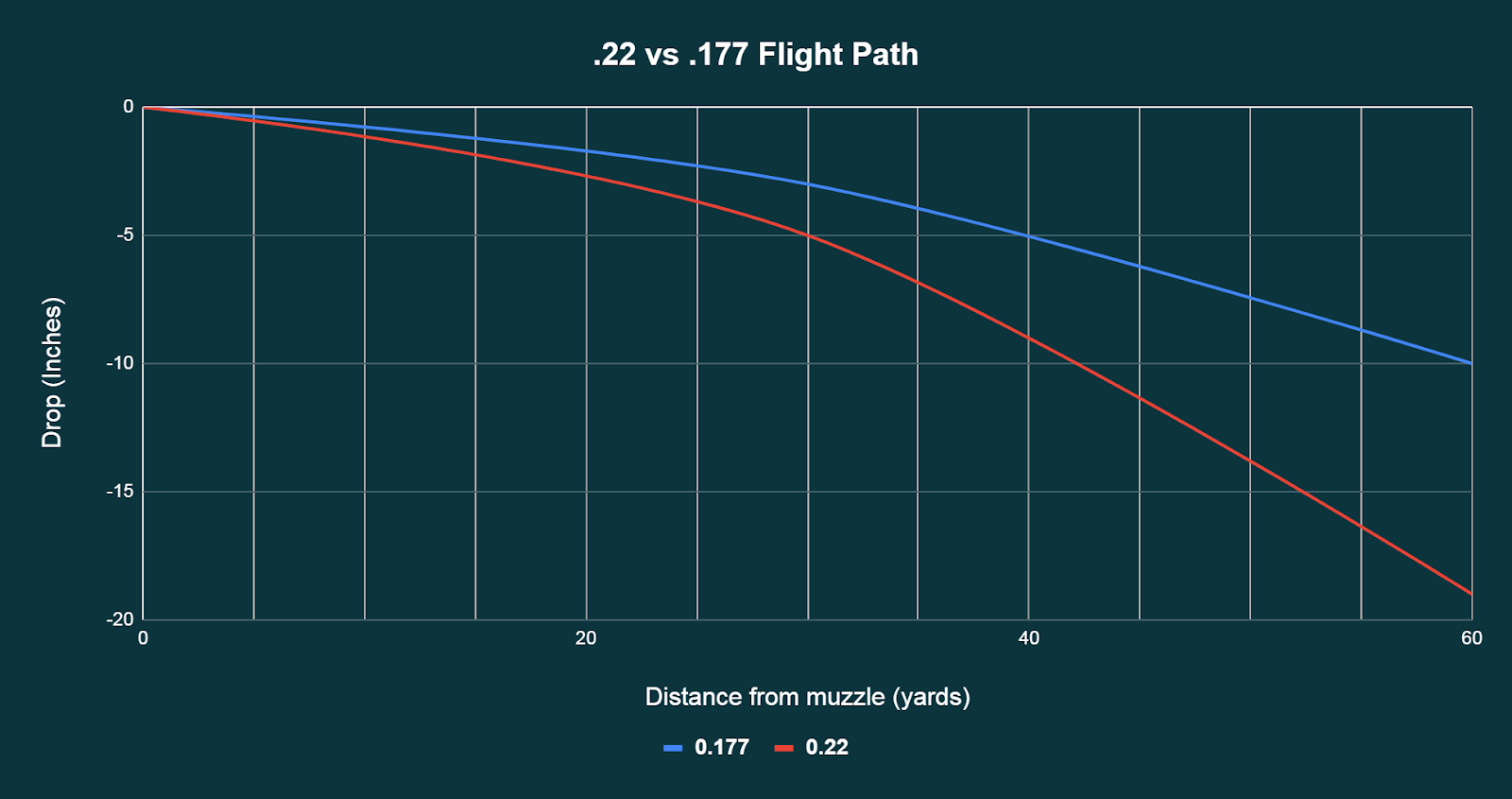
.22 is good to go up to 30 yards and small games like rabbits or squirrels are good to go.

.177 is suitable for paper shots.

(For more on the differences between .177 & .22 and which jobs they do best, see this post.)

.25 is so far the most suitable one for gaming and with proper tuning and informed settings, it could get you some coyotes or other big games.

Rick Eutsler from AirgunWeb took an in-depth look at the Benjamin Marauder Synthetic stock here:

Trigger

Can we just all take a second to grasp the fact that Benjamin marauder not only offers us a metal trigger, but they are also adjustable!?

Oh, don’t let me stop there — they also have two-stage adjustable triggers.

When we think about the positive let off or crisp functioning of any air gun the topic comes to an end at the trigger feature.

What kind of trigger your device has can make a huge difference in your shooting, and you will feel this once you get to the field and start the actual job.

A two-stage trigger offers you two basic facilities that any conventional trigger fails to deliver.

The first one is accuracy.

Two-stage triggers do wonders when it comes to accurate shots.

Their working principle is the key here.

There are two pulls required from your end.

If you do not make the target in the first pull then you can pause, make the adjustment and then go for the second pull.

BAM! That’s your target.

The minimal effort required for this inter-stage adjustment makes a huge difference in shooting experience and success.

The second advantage is safety.

When it comes to shooting, we have to be very careful all the time of accidental or undesired discharge.

A two-stage trigger lowers the possibility of such incidents because of its heavier pull weights.

It weighs around 3 lbs and unless you pull it with intention, there are very few chances of accidental fire.

The Benjamin Marauder also features a safety that is in direct contact with the trigger.

Moving on to trigger settings, you can change the pull weight or trigger blade position according to your needs.

The Crossman manual is very detailed and user-friendly with all the information one might need to make any change in any setting.

However, just like tuning, I would suggest you do it only with adequate knowledge.

A trigger is something you should not mess with in any firearm.

It could lead to several undesired incidents and the worst you can expect is an accident.

Do not go hard on your trigger.

Change one thing or two at a time, understand what you did, give your system time, and let it work on it,

And then you understand how it changes the output.

Throughout the process keep a sharp eye on safety. Care will always reward you

Cocking and loading

Cocking and loading is a simplified process in a marauder.

Like all other air guns or rifles, you start with pulling the bolt back, slide the magazines like a pro

And push it back to its initial position, and you are good to go.

Now while talking about magazines, I will mention some practical issues which may seem funny but in real life makes a lot of difference.

First, what you should know is the size of magazines and pellets that you will use in your marauder synthetic stock gen 2.

They are comparatively on the smaller side, and you may end up losing a lot if not careful throughout the process.

If you have bigger hands, it could add to your troubles.

However, this is nothing that could stop you from loading a marauder, just don’t end up wasting too many pellets.

They know circular magazines loading could be tricky, so they have an elevated aluminum breech to make it less messy.

The bolt is reversible, which could be a new feature to you and may take some time, but you will get used to it before long.

Loudness

This heading should be quiet because a marauder does not deal with loud business.

The barrel of Benjamin marauder synthetic stock gen 2 is fully choked, and this makes this gun awfully quiet.

In the updated version, they have used an in-built de-pinger which eliminates the sharp ping of a shot, and instead, you hear a dull thud.

The USP of a Marauder should be quietness and accuracy.

People claim to kill squirrels with it without scaring off anything else from the lawn.

Shooting Ability

At the beginning of the Benjamin marauder synthetic stock gen 2 reviews, I mentioned it is a 10-shots-gun with auto-indexing.

Anyone finding this alien? Fear not, they have single shot trays available too,

Though you will never need one once you start using the multi-shot feature and realize how great it actually is.

Another shooting feature present in the Marauder which steals the show is how it shows the number of remaining pellets in the magazine.

This not only helps you in planning your shots but also keeps you safe from double feeding and jamming.

Double feed control is often absent in air guns, and this particular feature comes in handy for avoiding jamming.

Double feeding jams the air gun, and clearing this stoppage is a different job altogether.

Therefore, it is better you keep a track of your shooting.

The above feature also helps to eliminate the accidental double discharge.

You can use the cheek weld for higher accuracy, and this is possible because of the adjustable stock comb height which I mentioned earlier.

This also helps in mounting scopes.

The ambidextrous stock helps both right and left-handed shooters and goes perfectly with a wide range of accessories available in the market.

Durability

Benjamin marauder is well known for its durability.

This is a gun that will cost you little to keep in good shape.

A marauder, with just a little care, will keep you busy in hunting for a really long time.

Benjamin marauder synthetic stock gen 2 rifle is not high maintenance and could go for ages because of its sturdy parts and high-quality building blocks.

Accessories

A Benjamin marauder is a pretty neat gun and does not demand a lot of side parts.

However, being a PCP gun, one thing that you cannot ignore is an air pump.

The air tank is its powerhouse and for compressed air pressure, you have filled the tank with air.

Now, there are two ways of filling the reservoir.

One with a hand pump, second with a compressor or scuba tank.

If you are not sure, I urge you to read this awesome guide on how to choose the right air source for your PCP air rifle.

The first one is more conventional though it could be very tiring.

The reservoir is 215cc, and the air ranges over around 2000-3000 psi. which is a modest amount in terms of air pressure.

It also depends on your physical ability.

You can always use a scuba tank or air compressor to do the job for you so you can save your energy for shooting.

Numerous air compressors are available on the market.

Some of the most popular air compressors are venturi compressor 4500 psi, Benjamin traveler 4500 psi compressor, air venture nomad portable air compressor, etc.

But you can also go for a Marauder value pack if you want something cheaper.

In the case of hand pumps, Air Venturi g6,  g7 or Hill MK4 could be your options.

Another accessory which you will need is scope as it does not come with one.

Scopes are an important deciding factor, and you can use your preferred one that goes with the factory dovetail rail.

You can go with Hawke sports optics, UTG-3 9*32 1” Bugbuster scope, Winchester products, etc.

Maintenance

As I have already mentioned, the Benjamin marauder synthetic stock gen 2 is not a high-maintenance air gun.

It is very little you have to do to keep a marauder functioning.

After some hundreds of pellets, clean the magazines and cock so there is no lead build-up.

You can use any good air rifle lube, and it will be as good as new.

For other metallic parts, keep a microfiber handy and wipe the gun off occasionally for it to have a shiny and print-free look.

Pros and Cons

ProsCons
  • Extremely quiet functioning.
  • Outstanding accuracy and performance.
  • Durable material.
  • Ambidextrous stock.
  • Reversible bolt.
  • Multi shot gun.
  • Low maintenance.
  • Wide range of accessories available.
  • Variable muzzle velocity and energy.
  • With the decrease in air pressure, the performance graph falls, and it shows signs of malfunctioning.
  • With the higher caliber this air gun somehow becomes noisy.
  • There is no attached scope.
  • While using hand pump filling the enormous reservoir could be tiring.
  • The synthetic stock does not look classy.

Price

A marauder offers you the best price while giving the performance of an elite rifle.

When we talk about air rifles, we talk about a price range that starts from $100 to several thousand.

A Benjamin combines superiority with affordability.

I am not saying you can’t get a better air rifle, but I’ll bet you can’t get one in this price range.

Anything better with the same features will cost you at least twice if not thrice this price.

You can get a marauder for between $500-550 depending on your choice of barrel and stock.

Accessories like compressors or scopes will cost you another $200-250 but can go up if you can afford higher-quality materials.

Specifications

So far, I have discussed all the features of this marauder upgraded model in detail,

But in case you are in a hurry and have to take it all in one go then here are the specifications that you will get in this air gun.

  1. Benjamin marauder synthetic stock gen 2 air gun weighs around 7.3 lbs, which is almost 1lb less than the wood stock which is about 8.2lbs.
  2. It is about 42.8” long, which is not what is recorded in the manual.
  3. This is a PCP gun with a reservoir of 215 cc.
  4. It uses compressed air pressure, which is around 2000-3000 psi for the best performance.
  5. The velocities can vary depending on the air gun setting, which, in other words, mean this rifle offers you variable velocities.
  6. Benjamin marauder has an inbuilt pressure gauge to keep track of the pressure inside the air tank.
  7. There is a quick disconnect arrangement on the air tank so while filling the tank you can use one female quick disconnect and finish the job easily.
  8. Internal shroud mechanism makes it one of the quietest air guns available in the market.
  9. The choked barrel is all about accuracy.
  10. Aluminum breech is elevated so as to load circular magazines easily.
  11. This model of Benjamin offers 10 repetitive shots with an auto indexing feature.
  12. It comes with two-stage adjustable metal trigger for better safety and accuracy.
  13. The stock is ambidextrous and suitable for both left and right hand shooters.
  14. The bolt is reversible, which makes it open to all kinds of accessories available in the market and can be used by both left and right handed shooters easily.
  15. You get a magazine along with swivel sling stud with Benjamin marauder synthetic stock gen 2 air gun.

Customer review

Customers from all over the world love Benjamin marauder synthetic stock gen 2 air guns and there has been a little complaint against it.

The accuracy, durability, and versatility along with affordability have so far secured the greatest fan base among the shooters.

Conclusion

Overall, the Benjamin marauder synthetic stock gen 2 is one of a kind for all its great features, and it will be worth your money. 

I hope you got a clear picture of Benjamin Marauder’s synthetic stock gen 2 and by now are prepared to invest in your ammunition wisely.


Which Bullet Does the Most Damage?

0

When learning about firearms, it’s important to be precise. There’s a wealth of terminology and an even greater number of products on the market.

So when wondering about ammo, simply asking “what bullets do the most damage?” is a vague question.

You must qualify it for it to make sense. For example, a shotgun slug will do far more damage to a barn door than a .22 will do to a pig, yet the .22 caliber has been used in more killings than the shotgun slug.

OK, then what are we talking about here? There are only a few reasons why this conversation would be taking place.

The first is sheer curiosity. Some bullets look pretty gnarly, and naturally you would think they would do severe damage to anything they encounter.

You might wonder why all bullets aren’t made that way. Another reason this discussion might come up is to cause debate amongst friends or in political circles.

The final reason — and the one being addressed here — is if someone is trying to make an informed decision about which rounds best suit home defense or everyday carry needs.

All Bullets Can Be Lethal

Let’s start off with a little cold, hard truth that many people simply don’t like. All bullets are inherently lethal.

Even so-called “non-lethal” or “less-than-lethal” rounds have accidentally killed people.

All bullets are dangerous — in fact, even the use of blank-firing cartridges has led to deaths in some extremely rare cases.

This brings us to the next point: Despite what gun legislation opponents will tell you, no bullet is “designed for the battlefield” and inherently more dangerous than others.

Almost every caliber round has been used somewhere in a theater of war.

While there are some obscure rounds that were never used in battle, there’s honestly no round that is somehow safer than another because the military isn’t currently using it.

This brings up another point worth mentioning: Hollow points and full metal jacket rounds are inherently no different from each other at their most basic level.

They are both projectiles designed to be fired from a gun and can both kill. In fact, for those that think hollow points are somehow more deadly, the U.S. military doesn’t use hollow point ammunition in infantry units.

It uses FMJ. Again, that doesn’t mean they are more deadly. It just means that a bullet is a bullet.

The point here is that there are many misconceptions about different ammunition and the reality is that most of them are conjecture at best and outright lies at worst.

What Constitutes Damage?

When it comes to the measurement of ammunition capabilities, damage is measured in a couple of ways.

First, most rounds are measured by ballistic coefficient. Next, rounds are often judged by penetration ability.

Lastly, damage can be measured by the size of the overall hole left on the object the bullet struck.

Ballistic Coefficient

What exactly is a ballistic coefficient? In the simplest terms, a ballistic coefficient is the ability of the bullet to overcome air resistance in flight.

The better a bullet is able to overcome air resistance as it flies, the more energy it retains through flight.

The more energy the bullet retains over the course of flight, the more energy it has to deliver into the target.

While this isn’t the only thing you should be looking at in terms of judging your potential rounds for the damage they can do, it’s a good indicator that you’re on the right track.

There are other factors involved here too, like the mass of the bullet, but that is a part of the calculation for the ballistic coefficient.

So, as a general rule, the higher the ballistic coefficient number, the more damage the bullet is capable of inflicting.

It doesn’t mean it will — just that it could.

Penetration

This is also a factor that can be misleading. Like the ballistic coefficient, the penetration capability of the round deals with the potential of the round to deliver damage.

Rounds with the ability to penetrate well into the target are more capable of delivering energy into the target.

In older times, to ensure something that was shot was truly shot, manufacturers would try to load as much powder as possible into loads.

This was because some rounds that were made for handguns but that could be fired from rifles — such as the .44 Long Colt — might not actually enter into the target far enough to accomplish the intended goal.

Plus, thick layers of clothing or degrees of distance could cause some rounds to fail at truly damaging an intended target.

This is where a round’s penetration ability became important.

The powder loads were adjusted over time, along with bullet designs and materials used, to ensure a more stable flight path for the round.

This has allowed modern loads to use only enough powder to deliver the round while ensuring it’s able to penetrate the target on arrival.

Now, rather than running the risk of over or under penetration, the rounds are more consistent throughout their journey.

As far as damage is concerned, this penetration ability can translate to larger cavities as the round travels farther into and even through the intended target.

But, as with the other measurements, this factor alone is not a solid judgement of what makes a round do more damage.

The .223/5.56, for example, is known for penetration ability, but there is a ton of evidence of people being shot and having rounds go right through them without them even knowing.

Penetration alone is not enough of a barometer.

Exit Wound/Wound Cavity

Another factor for measuring damage is the size of the wound cavity a round makes and the exit hole it leaves.

Some rounds deliver their energy in such a way that the force pushes through, causing a cavity to form around the bullet.

Most rounds create a cavity much larger than the round itself, so the size of the round is not a factor. What can be important is a combination of the size and other factors as well as the composition of the target.

In addition, when this occurs, it leaves an exit wound with a much larger hole than that of the entry wound.

Again, this one factor alone is not enough to judge which rounds do the most damage.

It’s a combination of all factors, plus the type of gun being used and the conditions at the time of fire.

Rounds are designed to very specific standards and tolerances, and any number of factors can throw them off.

Everything from the weather to the way you hold the gun can negatively impact the ability of the round to perform optimally.

Most Damaging Rounds

So, what does the most damage then?

Which rounds have the best combination of those factors aside from the person pulling the trigger?

However, the answer is simple: It isn’t about what’s best, but rather what’s best for you.

It’s going to depend on what gun you’re using and your purpose for that gun.

Someone going to war has different needs than someone carrying for self-defense. But that said, the most popular calibers of bullets are popular for a reason.

For handguns, you can’t go wrong with a 9mm, a .40 or a .45 caliber. Based on ballistic tests, all these rounds are capable of doing more than enough damage to suit your needs.

Similarly, for rifles, the .223/5.56 rounds, .308, 7.62 x 39mm and even .300 Blackout are all equally damage-inducing depending on application.

The reality of the situation is that for modern uses, there is no one round that does more damage in all situations for all shooters.

They all do fantastic jobs depending on why you’re buying them. Like everything else, it’s situationally driven.

So get out there and find what works best for you; the exploration is the fun part.

The Best Baitcasting Reels for Fishing Enthusiasts

0

Finding Your Ideal Baitcasting Reel: A Buyer’s Guide

Baitcasting reels are an essential piece of equipment for any serious fisherman. These reels are designed to give anglers greater control over their casts. They are typically used for targeting larger fish species, such as bass, musky and pike. Unlike spinning reels, which are designed to be easy to use, baitcasting reels require a bit more skill to operate. With practice, however, you can achieve greater casting distance and accuracy.

While the right baitcasting reel can help you cast further with greater accuracy, with so many different models and brands available, it can be difficult to know what to look for when selecting your new reel. In this buyer’s guide, we’ll go through each of the key features you should consider when choosing a baitcasting reel, so you can make an informed decision.

How To Choose the Right Baitcasting Reel

Gear ratio

The gear ratio is the number of times the spool rotates for each turn of the handle. It determines how quickly you can retrieve your line and how much power you have when reeling in a fish. A higher gear ratio means a faster retrieve, but with less power. A lower gear ratio means slower retrieval but more power. When choosing a gear ratio, consider the type of fishing you’ll be doing and the size of the fish you’re targeting.

Line capacity

Line capacity refers to the amount of fishing line the spool can hold. It’s important to choose a reel with enough line capacity for the type of fishing you’ll be doing. For example, if you’ll be fishing in deeper waters or targeting larger fish, you’ll need a reel with a higher line capacity.

Drag system

The drag system determines how much resistance the fish feels when it pulls on the line. A good drag system is essential for reeling larger fish without breaking your line. Look for a reel with a smooth drag system that’s easy to adjust.

Bearings

Bearings are important for smooth operation and the longevity of the reel. The more bearings a reel has, the smoother it will operate. Opt for a reel with high-quality bearings that are corrosion-resistant.

Brake system

The brake system is designed to prevent backlash and ensure accurate casting. There are two types of brake systems: magnetic and centrifugal. Magnetic brakes are easier to adjust but may not be as effective in windy conditions. Centrifugal brakes are more effective in windy conditions but may be harder to adjust.

Handle material and grip

The handle material and grip are important for comfort and control. Look for a reel with a comfortable grip that’s easy to hold, even when wet. Handles made from materials like cork or EVA foam are popular choices.

Frame and body construction

The frame and body construction of a baitcasting reel can affect its durability and weight. Look for a reel with a lightweight but strong frame and body. Materials like aluminum and graphite are popular choices for high-quality reels.

Weight distribution

The weight distribution of a reel can affect how it feels in your hand and how easy it is to cast. Look for a reel with a balanced weight distribution that feels comfortable to hold and cast.

Anti-reverse system

An anti-reverse system is designed to prevent the handle from turning backward when you’re reeling in a fish. This can help you maintain tension on the line and prevent the fish from escaping. Look for a reel with a high-quality anti-reverse system that’s easy to engage and disengage.

Line guide system

The line guide system helps prevent your line from tangling and ensures smooth casting. Look for a reel with a high-quality line guide system that’s easy to adjust.

Price point

Baitcasting reels can range in price from less than $50 to several hundred dollars. While a more expensive reel may offer better features and durability, it’s important to choose a reel that meets your needs and fits your budget.

Brand reputation and customer reviews

When choosing a baitcasting reel, it’s important to consider the reputation of the brand and read customer reviews. Look for a brand with a good reputation for quality and customer service. Reading customer reviews can give you an idea of how well the reel performs in real-world fishing situations.

How to Process a Deer at Home: The Ultimate Guide

0

Many hunters each season harvest a deer and pay a processing facility to butcher the animal. One of the comments we saw a lot when we made our video on butchering a deer at home was the amount of meat that many processors waste. That’s exactly why we wanted to put this guide together.

There is a special relationship you will find knowing that you harvested your venison, dressed, skinned, and butchered the meat, and made a meal that your friends and family will talk about for years. You can butcher a deer at home and know that you wasted nothing, plus you’ll save money. Once you know the best way to butcher a deer, you can do it quickly, often finishing the major steps in less than half an hour.

Skinning Your Deer the Right Way

A properly harvested deer begins with good shot placement and field dressing the animal quickly. We have put together guides for you to properly field dress a deer in print and on our Youtube channel.

For this process, we are going to use the Outdoor Edge RazorMax. This knife has interchangeable blades, so you can quickly switch from a 5” boning knife to a 3.5” drop point. You can purchase our favorite knives right from our website.

Begin skinning your deer by making a cut down the back of the hind legs. Be careful not to cut the Achilles tendon, as you will hang the deer from that at a later stage. After you have made the incision, you can start to pull the skin down the leg, like removing a sock. Keep the meat as clean as possible. Disposable gloves are a good idea, and you should change them when they are contaminated.

As you pull the skin down, you will find a joint. You can make an incision with your knife around and into the joint and snap the lower leg off. Continue pulling the hide down and rolling it so that the hair does not touch the meat and expose the tendon. Do this for both back legs.

You can go to the front and do the same thing as with the back legs. Simply find the joint, make an incision, and snap the lower leg off. Now you are ready to finish skinning your deer.

Hanging Your Deer

The easiest way to skin a deer is by hanging it. We are lucky to have an overhead hoist in our butcher shop. If you don’t have access to a hoist, there are a number of ways to hang a deer. You can use a chain fall and gambrel from the rafters in your garage. You can even use a sturdy tree. Placing a waterproof tarp underneath will help with cleanup.

If hanging a deer to skin is not possible, it can be done on the ground, but it is much more difficult and you should plan on making sure your carcass stays clean. Use tarps.

You will fit the gambrel through the tendons of the back legs and lift the carcass up to about chest level. This will give you good leverage to push the hide down. You’ll hardly use your knife as you skin the haunches. You can finish your cut through the groin and pull the skin back to the haunches.

When you start to work along the front of the legs, be careful not to cut the flap meat. You will find a membrane that holds the flap, and you want to make sure not to cut into it. You want the flap meat to stay on the carcass, because it will make pulling the hide off much easier.

At this point, you can pull the hide down and cut through the tail. Continue to grasp the hide and push down with your hand or fist. Be careful to avoid contaminating your deer. Change your gloves regularly. When you have gotten down to the chest area, you should raise your deer up again if possible.

Finishing the Skinning Process

The hide will be more difficult to remove in the neck, particularly with a buck. If you’re not cutting the cape for a shoulder mount, you can cut the hide down the throat to the jaw. This will make it easier to pull the hide off. Use your knife to cut through the spine at the base of the skull. Cut through the esophagus and pull the hide off the rest of the way.

Pull the esophagus through. Now you will have an opening through the neck. Your carcass should be pretty clean without any hair on it. You can rinse the cavity out to get rid of any blood. If your deer was gut shot, you should not rinse it. All you are doing is spreading contamination around. You will need to cut the contaminated parts out and discard them.

Skinning an animal is a skill that takes practice to get good at doing. When you first start out skinning, it will take you a long time to do the job, and that’s fine. You should be patient and be careful to make sure you remove the hide cleanly without damaging your meat.

A few tips that can help a lot:

Start with a Sharp Knife

This may seem obvious, but you wouldn’t believe how many times we have seen mangled, hacked up deer because someone tried to use a dull knife. You should become skilled at sharpening a knife and you should have a basic knife sharpener with you on your hunt. Regularly ensuring the blade of your hunting knife is kept sharp will speed up your skinning process. Even the best knife in the world will not hold an edge forever. One of the reasons we recommend the Outdoor Edge RazorMax is the quick-change blades. This way, you don’t have to stop halfway through the process to sharpen a blade.

Use Correct Knife Technique

A sharp knife makes it easy to cut, but you still must be cautious about the way you use your knife. Always be aware of where your hands, or a helper’s hands are when working with a knife. It’s unbelievably easy to accidentally cut someone or yourself when skinning. Make short, precise cuts away from yourself. Keep your knife handle clean. A non-slip handle is very beneficial.

Wear Gloves

Gloves will significantly help your cleanup process, but most importantly, they help prevent spreading contaminants around while you are skinning and butchering. It is particularly important to prevent spreading hair around on the meat. Changing your gloves periodically while skinning will help to keep the hair on the hide and off your dinner.

Use the Buddy System

Skinning any large animal is a chore to do by yourself. Once you have plenty of experience, it won’t be as difficult, but an extra set of hands and eyeballs can really come in handy for balancing the carcass while skinning and butchering.

With these tips and our guide, you should be able to start skinning like the professionals. Practice makes perfect, so keep at it. Offer to help others who are skinning, just so you have the opportunity to see and experience the process. The more you do it, the easier it becomes. For a visual breakdown of the process, make sure you check out or video below.

Next, we will show you how we butcher a deer so that you can learn to do it at home, save money on processing charges, and get the cuts of venison you really want. Later, we’ll show you some of our favorite ways to prepare venison and share some family favorite recipes and techniques.

So you field dressed and skinned your deer, but what’s next? In this article, we’re going to explain the process and techniques we use at home to butcher a deer and prepare the meat for final cuts. A lot of the information here can also be found on our Youtube channel if you would like to see the process we use.

It’s key to make sure your deer is completely clean and free of hair and dirt before butchering. Cleanliness is essential. You do not want to accidentally ruin your venison because of carelessness.

Butcher a Deer

We are going to go through and show you how to break the carcass down into the different muscle groups, then we will come back and show you how to further process those parts. We are using the Outdoor Edge Butcher’s Knife Kit. It comes with all of the essential tools you need. We’re going to use the bone saw, the boning knife, and a larger butcher blade that is similar to a Bowie knife. This is a great set of tools to pick up, we highly recommend them for your at home butchering. Let’s get started!

Tenderloins or Fish Tenders

The first thing you will do is reach inside the carcass and find the tenderloins. We call them fish tenders because, well, they are about the size of a fish fillet. Once you get them started, they pull out easily. A lot of people miss these or cut into them when field dressing their deer, which is really a waste of one of the best parts.

Rear Quartering

We are going to use the Outdoor Edge bone saw to quickly remove the hind quarters. This just makes the next steps easier. First, trim the flap meat, then cut through above the hip joints.

Switching back to the boning knife, you will use some downward pressure to separate the hip joints and slice the haunch off. You can use the edge of the table as you cut to get leverage. This will help separate the joint. Set the rear haunches aside for now. Later, we will break those down into the sirloin, top, bottom, and eye of round roasts and tell you how to make some jerky.

Front Quartering

Most of the time as you are butchering an animal, you will see visual cues where to cut. As you work along the front legs, you will find a membrane between the muscles. Just follow that with your knife, and the shoulder will come apart easily. Use short strokes with your knife and apply pressure with your other hand. The muscle groups will usually come apart. Set the shoulders aside. Later, we will clean these up and describe how to cut a venison flat iron steak.

Ribs and Backstrap

Use your knife and make an incision down the spine. Cut along the carcass to the rib, and work the knife back toward your first cut. Like filleting a fish, if you make these cuts right, your backstrap will come right off. The backstrap is one of the most prized parts of a deer. You will make these cuts on both sides to remove the backstraps. Later, we will tell you how to finish processing these and make them into chops.

This is where the heavier bladed butcher knife comes in handy. You will need to cut through the sternum to separate the ribs. There is a piece of cartilage that makes cutting easier. You can also use the bone saw to quickly hack through the sternum.

Use the heavier knife and a sawing motion to cut the ribs from the spine and remove them. These are great on the smoker as is, but if they are too big, you can cut the bottom portion off. Find the cartilage and cut through it to remove. You can process that part later to add to ground venison. Now, you have St. Louis style ribs.

Use the bone saw to remove the remainder of the ribs. An extra set of hands comes in very handy on this step. A pro tip is to use your knife to cut through the muscle to the bone before starting to cut with the saw. This way, you are not wasting energy cutting muscle with the saw.

Waste Not, Want Not

Carefully go over the remaining spine and neck portion to remove any usable bits of muscle. These can be ground up with other trimmings and make amazing sausage. Most of the bones can be boiled down and used to make stock. Venison bone stock makes out-of-this-world gravy, and is an excellent natural immune system booster. The only bones you should not use are the skull, brain, and spinal cord. Some animals can carry diseases that may be transferable to humans and can withstand industrial heat sanitation temperatures. It’s just not safe to use these parts.

Many people have very strong opinions on using deer fat, and there are some serious things you should consider before embarking on rendering your fat.

Probably the most important thing to consider is the diet of the animal you harvested. Deer feeding on grasses, grains, or acorns are likely to have fat similar to that of grass-fed beef and will be pleasant. Deer eating scrub brush and such should be avoided. These deer are likely to have little fat, and what they do have will not taste good.

Fat you find inside the carcass and surrounding the liver is called suet. This is used to make tallow for candles and can be saved, but is usually discarded when field dressing a deer. If you want to embark on a candle-making adventure, or if you know someone who is interested in buying suet to make tallow, you can save these parts.

If you do render deer fat for cooking, remember a little goes a long way. Too much, and it will coat your mouth in an unpleasant way. Deer fat does not keep and will go rancid within three to four months even in the freezer.

Getting Ready for the Next Step

Your deer has been broken down into the major groups now, so it is time to move on to the types of cuts you can get from your deer. We have videos on our Youtube channel that show the best way how to skin and butcher the deer you have harvested.

In Part Three, we will discuss how to get the best cuts and share with you some of our favorite ways to make venison at home using The Bearded Butcher Blend spices and seasonings.

Once you have finished the basic butchering steps outlined in part two of this guide to butchering at home, it is time to process your quarters into proper cuts of meat.

As we go along here, we will explain the different cuts and give you some tips about the way we like to prepare and season venison using our Bearded Butcher Blend Spices. We are going to continue using the Outdoor Edge Butchering Kit. The knives in this set are excellent for making great cuts of venison at home.

Back to the Venison Backstrap

The first thing you want to do when trimming your backstrap is to find the seam in the muscle. You can open this up by hand, and then give it just a little help with the knife to expose the edge. Trim the long edge off and save it for trimmings.

Next, find the thick spinal sinew that runs all the way down the backstrap and cut that out. This is often used to make traditional bowstrings. Now, we need to remove the silver skin.

Use the fish fillet method by starting at the thick end of the backstrap and cutting down to, but not through the silver skin. Then carefully press the knife away from you while gently pulling the edge of the silver skin and the silver skin will come off. If some parts are missed, you can flip the backstrap over and angle your knife blade against the skin and gently cut away from yourself. This way, you can catch the skin and lift it off without destroying the backstrap.

With the silver skin and sinews removed, you can cut the backstrap into 1 ¼” slices for chops. These are some of the most desirable cuts of venison.

Dressing up a Deer Backstrap

A way to cut and prepare a backstrap that is sure to impress is to butterfly the backstrap. To do this, you will cut the backstrap into thirds. Using the thickest portions, place your hand on top of the backstrap and use your knife to cut as close to the table as possible without cutting through the backstrap. Using your other hand, gently unroll the backstrap as you cut. You can continue to cut and unroll the backstrap until you have one uniform, thin layer.

You can season this with Bearded Butchers Spices. The Original is a personal favorite on a backstrap like this. Next, you will layer whatever filling you would like. Feta cheese, spinach, and onions is a good choice. So is cream cheese and jalapenos for a creamy spicy kick. All you have to do is roll the butterflied backstrap up and tie it off. Smoker, grill, or the oven, this is a great way to make a backstrap.

Breaking Down the Deer Hind Quarter

Next, we are going to separate the hind quarters. These parts can be used for many great dishes. The major portions are the round steaks. These are the ideal cuts for jerky. We are also going to detail how to get a great sirloin roast from a hind quarter.

Get started by applying a little downward force with your knife at the knee joint. When you are in the right spot, you will cut the shank off cleanly. Alternatively, you can use the bone saw to cut through the joint, but be sure to start with your knife. Bone saws don’t work well on muscle.

Using your boning knife, follow the femur bone down until it is separated from the meat. Cut around the bone and lift it out of the muscle. Now you will have a 100 percent boneless piece of venison.

There are four muscle groups we are going to deal with in the haunch. The first is the round point. The round point, also called a sirloin when it is properly dressed, has a membrane that holds it in place. You can start working it free by hand and use your knife sparingly to trim it out. This is the best piece to make roast venison, but you can also cut it up into cubes for stew meat. If you remove the connective tissue, you can also slice this into jerky.

From here, you are going to separate the other three muscle groups. These muscles will pull apart pretty easy when you find the seam in the membrane. This will take experience to learn to do quickly. A trick is
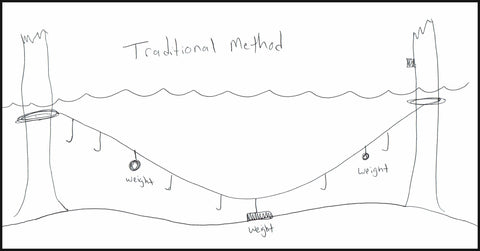
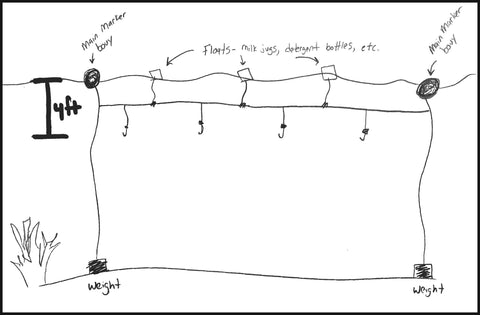
Cellular Trail Camera Plans — How Much Is a Cellular Trail Camera Plan?

0

Whether you’re a first-time hunter or have years of hunting experience under your belt, you know the importance of scouting the area beforehand. Getting a feel for the surrounding wildlife and lay of the land gives you an advantage when you set out on your next trip.

Trail cameras are the perfect solution to giving you the upper hand. With coverage of your entire property, you can have a clear view of many outdoor angles to better strategize your next hunting venture. Many of these cameras work on cellular plans to give you real-time visibility regarding what’s happening around your property.

On average, trail camera plans can range anywhere from free to costing $60 or so each month, often paid upfront for a year. Some plans run about $1,000 annually. Others cost more or less depending on the number of cameras on your data plan and whether that company charges for data usage or on a picture-by-picture basis.

Incorporating a cellular trail camera into your hunting and scouting process, security or wildlife photography hobby can enhance your experience. Learn the benefits of choosing Moultrie Mobile as your cellular trail camera provider by reading below.

Benefits of Choosing Reliable Trail Cameras

Integrating a cellular trail camera with a data plan is one of the best ways to ensure your trail cam photos are easily accessible and stored somewhere safe. With the proper connection, you can check up on areas of your property any time you desire without worrying about a choppy feed, disconnected coverage or lagging.

Some benefits of choosing trail cameras that send pictures to your phone include:

  • Access to your photos from anywhere you have a cellular signal — regardless of your proximity to your trail camera. You can also view pictures via your log-in credentials on the mobile website.
  • The option to store your photos in cloud-based storage, keeping them safe and secure if anything happens to your phone.
  • The ability to customize your data plan to match how many cameras you have and how often you plan to use them.
  • Additional perks and features, like built-in AI capabilities, the ability to change camera settings remotely, image filtering and sorting options and push alerts when photos are taken or delivered.

You can enjoy the views of the great outdoors right from your fingertips with reliable coverage sent to your phone. If you’re scouting out your next hunt, choosing the right trail cameras offers you all the above benefits as you explore the great outdoors.

Now that you know more about the benefits of cellular trail camera data plans, you might be wondering how much you can expect to pay for the costs of these connectivity packages. The answer depends on several factors, including:

  • Whether you are paying monthly or for an entire year upfront.
  • The brand, model and type of trail camera you are using.
  • How much data and photos you anticipate using each month.
  • Whether you opt for thumbnail-size or full-resolution images.
  • Any add-ons or bonus features, like access to cloud storage, may cost additional fees, depending on the manufacturer.

Exploring your options for the best trail camera manufacturer plans can give you a better idea of which choice gives you more bang for your buck. Comparing the quality and costs of each one can make your decision easier.

The-Best-Cellular-Trail-Camera-Plans-With-Moultrie-Mobile

The Best Cellular Trail Camera Plans With Moultrie Mobile

Every game camera manufacturer provides different services from others. Prices vary across the industry, and the value of any 4G wireless trail camera plan depends on how well that manufacturer meets your specific needs. Some of your needs may include the following:

  • Compatibility with a cellular service provider that has extensive coverage in your area.
  • Whether the data plan includes the cost of photo transmissions or total data usage.
  • High-quality products that are suitable for your intended use.
  • Availability of multi-camera packages and other add-on options.
  • Your budget for both the initial camera purchase and monthly fees.
  • The ability to pay monthly, quarterly or annually.
  • The overall quality of the product, service and ongoing care.

At Moultrie Mobile, we take all of these crucial factors into consideration when helping you find quality coverage that fits your budget.

As a long-time leader in the trail camera industry, we designed the Moultrie Mobile cellular trail camera plans to integrate seamlessly into your lifestyle and offer convenient features that enable you to get the most out of your camera footage. All plans below include unlimited cloud storage, HD versions of images available for on-demand download and advanced image recognition — all with no contract required.

Our plans are compatible with Verizon- and AT&T-connected cellular trail cameras, offering maximum coverage. Additionally, our Moultrie Mobile App is also easy to use, allowing you to access and monitor your camera’s status and settings when you’re away.

Choose from one of these flexible, cost-efficient Moultrie cellular train camera plans:

  • Standard: The Standard plan includes 1,000 images and 10 videos each month. It costs $8.99 per month if you pay annually and $9.99 if you pay each month.
  • Unlimited: The Unlimited plan includes a limitless number of images and 50 videos each month, which costs $12.99 per month when paid annually and $16.99 when paid monthly.
  • Pro Series Unlimited: The Pro Series Unlimited plan includes unlimited images and 50 videos each month, and you save more when you have four or more cameras on this plan. Your first camera is $34.99 per month, and additional cameras are $7.99 per camera each month.

Every Moultrie Mobile plan offers competitive pricing and includes convenient features and anytime-access to our helpful team of customer service representatives.

Do you need a few more pictures for one month than you do in another? Moultrie has you covered. Our plans are flexible and adaptable to your lifestyle. For the Standard plans, you can easily add 500 more images to your plan for an additional $4.99, or add 50 videos for $1.

With every Moultrie Mobile monthly plan, you also have the option to pay annually rather than monthly, saving up to 40% on total monthly costs. Plus, you can upgrade or downgrade your plan anytime and there is never an activation or cancellation fee. Regardless of the Moultrie Mobile plan you choose, you’ll have access to valuable features that will enhance your hunting and scouting experience.

Cellular Service Providers for Trail Cameras

Some cellular game data plans are compatible with only one cellular service provider, while others are compatible with two or more. Always consider the service provider when choosing your trail camera plan and check that their high-speed coverage extends to the areas where you install your cameras.

The two most popular service providers compatible with 4G cellular trail camera plans are Verizon and AT&T:

  • Verizon: You need a connected device plan to access Verizon cellular game camera plans. Verizon’s connected device plans can work through your account’s unlimited or shared data plan, or you can opt for a single-device plan instead. Single-device data plans range from 500MB to 1GB, while shared data plans can reach 10GB. You can also use add-on data boosts for your Verizon cellular trail camera plans for an additional fee. Verizon covers more than 99% of the U.S. population, so you likely won’t have trouble picking up a strong signal where you need it most.
  • AT&T: With wireless coverage in every state, AT&T has both prepaid and standard contract data plans. AT&T game trail camera service prepaid data options include an 8GB high-speed data plan, an unlimited data plan and an unlimited plus data plan that includes a 10GB mobile hotspot. Standard contract AT&T trail camera plans include unlimited and mobile share options, so you can adapt them to fit multiple cameras if necessary.

Why Moultrie Mobile Offers the Best Cellular Trail Camera Plan

With adaptable, cost-efficient plans, flexible coverage options and world-class customer support, Moultrie Mobile is the best cellular trail camera plan for anyone who wants reliable quality and convenient built-in features. Here’s what you get when you choose Moultrie Mobile:

  • Multiple coverage options: With the ability to choose between Verizon, AT&T and other major cellular networks as your service provider, you can select the one with the best coverage in your area. You are not bound to whichever company currently services your cellphone — our plans are their own entity and can exist on a different network from your cell phone.
  • Flexible plan options: We offer several different plan options to suit various needs and lifestyles, all with no required contracts and no fine print. You have the opportunity to pay either monthly or upfront for the year, which saves you money. As your needs and lifestyle change, you can easily adjust your plan to a lower or higher tier, or add 500 photos to your current month for an extra charge.
  • Unlimited cloud storage: Every plan has free unlimited cloud storage, so your photos are easily accessible and safely stored. Even if your phone breaks, you can access your images without issue.
  • Advanced image recognition: Our advanced image recognition system helps you get the most value for your money, sifting through your game cam photos to identify and tag ones with deer, buck, turkey, people and vehicles in them.
  • Trained customer support: Our highly trained support team is based in the U.S. and is always available to help if you have questions or require assistance — even on nights and weekends. Enjoy further peace of mind with our three-year hassle-free warranty program.
  • Easy setup: It only requires three simple steps to set up and you’re ready to receive photos and improve your hunting.
  • More than a trail camera: The Moultrie Mobile app includes quality features and technology that is sure to impress. You’ll have everything you need with one innovative app.
  • High resolution: You’ll receive HDR images and HD videos with sound directly to your phone. You’ll have the ability to scout from virtually anywhere.
  • Free two-year warranty: You’ll be backed with our industry-leading warranty for up to two years after the purchase date. Remember to register your camera to ensure the two-year warranty covers you.

Learn-More-About-Moultrie-Mobile

Best Time Of Day To Duck Hunt: Morning, Evening, Or Mid Day?

0

Best Time Of Day To Duck Hunt: Morning, Evening, Or Mid Day?

Is duck hunting best in the morning or evening? If you ask different hunters, you’ll get different answers as to when the best time of day to duck hunt is. Some swear that the crack of dawn presents the best opportunity of the day – while others claim you’ll never go home empty-handed if you hunt in the evening. There are even some people who claim the middle of the day is the sweet spot.

The morning vs mid-day vs evening debate is one of the most hotly contested among duck hunters. That’s why today, we’re going to weigh all sides of the argument to present you with our unbiased take. You’ll learn if there really is the best time of day to duck hunt – and if so, whether it is in the morning, afternoon, or evening. Let’s get right into the debate!

Is There Really A Best Time Of Day To Duck Hunt?

Most duck hunters have their personal preferences as to when the best time to hunt ducks is. But is there really any difference in conditions from morning to afternoon to evening? As a matter of fact, there are some advantages that different times of day have over others.

For example – you have more hours to hunt in the morning compared to the evening. However, those who prefer evening hunts will point to the lack of energy and focus you have if you wake up at 3 am. Meanwhile, those who prefer to hunt in the evening claim that the afternoon winds present the perfect conditions to push birds down into your decoys for a rest.

As you can imagine, though, you may also experience certain disadvantages depending on what time of day you hunt. We’ll be sure to cover those as well as we make our way through this debate so you have the full picture.

But before we get into the pros and cons of hunting ducks at different times of day, we want to provide you with a few key pieces of information. First and foremost, you must be aware of legal shooting hours in your specific region. Most of the time, you cannot hunt ducks until it is light outside. This means you are going to be limited to certain hours of the day. With that said, let’s get into the morning vs afternoon vs evening debate.

So, Is Duck Hunting Better In The Morning Or Evening?

So, is duck hunting better in the morning or evening? Or does the afternoon shift take the cake? The fact of the matter is that you can enjoy a successful hunt in the morning, afternoon, and evening. It really just comes down to your unique preferences.

To help you plan out your next hunting time, we’ll explain the advantages each time of day offers. Stick around to the very end and we’ll give you our personal opinion on when you should hunt. Let’s kick things off by making a case for the morning shift in your duck blind:

Advantages Of Duck Hunting In The Morning

There is a strong case for the morning shift as the premier time of day for hunting. Here’s why:

  • More hunting hours – The earlier you start in the day, the longer you’ll have to hunt. Getting to your blind at 4 am and preparing your decoys, then patiently waiting for legal shooting hours is your best bet to reach your bird limit that day.
  • Feeding at sunrise – One of the main feeding times for ducks and other waterfowl is at first light. They’ll leave their roosts and head to a water source to locate food – and you’ll be there waiting to say good morning to them!
  • You can still make use of the rest of your day – In favorable conditions and with a bit of luck, you can reach your limit in the first few hours of the day by starting at first light. That means you can still make use of your afternoon and evening. And if you’ve got a job to get to, you can still hunt in the mornings on weekdays without calling out.
  • Adjust your blind/decoys throughout the day – If you start in the morning, you can afford to make changes to your blind location/decoy set up as the day goes on. If you are hunting in the afternoon or evening, however, you won’t have the time to make changes on the fly.

All things considered, hunting in the morning is a great choice. There are a few drawbacks, however. First and foremost, you’re going to have to get up early. You need to have your entire blind and decoy strategy in place before first light. If you’re not a morning person, this may be worth noting.

It’s also important to note that you need a good breeze to guide ducks to your shooting zone. In the mornings, you may not get the strong wings you need for this. Furthermore, the morning sun can really affect your vision if conditions are just right (or, perhaps wrong).

Advantages Of Duck Hunting In The Middle Of The Day

We’re not going to lie – we don’t really encourage many hunters to go out in the middle of the day. In our opinion, the debate is really between mornings vs evening. Unless, of course, this is your only option. If you can’t bring yourself to wake up early, and you need to be home for an early dinner, here are the benefits you’ll enjoy of your mid-day hunt:

  • Winds pick up in the afternoons – Remember that wind factor we were just discussing? Well, winds tend to pick up as the day goes on, tapering off as the sun goes down. That means you’ll catch those later divers that don’t even start flying until late morning or early afternoon.
  • Perfect conditions for jump-shooting wood ducks – If you’re after wood ducks or geese, you’ll find that the afternoon shift presents the ideal conditions for jump-shooting. As ducks finish their morning meal and are preparing to head out until dinner, you can take your shot.

Advantages Of Duck Hunting In The Evening

When it comes to duck hunting in the evening, you’ll find all sorts of advocates claiming that it’s the ideal time. Here’s why:

  • Sleep in – Perhaps the most obvious benefit of hunting in the evening is that you get to sleep in, enjoy a nice breakfast, get some work done around the house, and still get out to set up your blind and decoys before the birds flock in. You’ll be fully alert and firing on all cylinders.
  • Feeding in the evening – As the sun goes down and temperatures drop, birds will flock back to their water for one last feeding for the day before heading to the roost. This is where you can make a killing as a hunter – literally. Once they’re done feeding they’ll head out for the evening – presenting another great opportunity.

The biggest drawback to hunting ducks in the evening is that your window for legal shooting time is going to be small. Sometimes, you may only have a 15-minute period from when ducks are flying into your shooting zone to the point when you can no longer legally shoot. It sucks spending all that time preparing just to come up empty-handed – but that is the reality for many evening duck hunters.

The Best Time Of Day To Duck Hunt: Our Verdict

All this considered, you’re probably starting to lean towards one particular time of day as the best choice for you. As we mentioned, it will come down to personal preference. And, there are many other factors to consider as well. You should also take into account the weather, the time of year, and other conditions.

With that said, our preferred time of day to hunt is in the morning. It presents the best opportunity to fill your bag and meet your limit. However, there is really no bad time to hunt!

Final Thoughts On The Best Time Of Day To Duck Hunt

Want to learn more about what it takes for a successful hunt? Our beginner’s guide on how to start duck hunting is an amazing introductory resource. We also have an essential duck hunting gear list you should check out so you can be prepared for any conditions.

No matter what time of day you decide to hunt, be sure you have all the duck hunting gear you need for a successful, comfortable, and most importantly, safe hunt. At Texas Fowlers, we’ve got everything you need at the best prices online. From waterfowl jackets to duck hunting bibs, big and tall waders, and even other duck hunting accessories or duck hunting bags. Experience all we have to offer and shop today.

Becoming the "10%" — how to be a more successful hunter

0

In my younger years, one of my favorite things to do was plop down on a Saturday morning and watch hunting shows with my dad. These guys made it look so easy. It was the same hunters, too, might I add. Time after time, year after year, bucks, bulls and whatever else they were hunting would hit the ground. I felt the same way about flipping through hunting magazines. The same faces graced the pages with each lap the earth took around the sun. Grins from ear to ear sitting behind a set of giant antlers. And, again, I noticed the same pattern on hunting forums and social media. For some reason, it is the same exact people every season filling tags. The old saying goes, “10% of the hunters kill 100% of the game.” I accepted that as truth, but questioned how to become part of that 10%. Were they all just that lucky? I’m a far stretch away from a master, but I’ve managed to maintain a consistency throughout the years with filling tags. I’ve also had the pleasure of observing “the how” of very successful hunters around me. There are no doubt some commonalities I’ve noticed among the “lucky” 10%.

They are relentless

My first years of learning to bear hunt here in Arizona were rough to say the least. I just couldn’t crack the code on these things. So, when a bear hunting mentor of mine offered to come out scouting with me, my truck door flew open for him so fast it dang near came off the hinges. Before that, though, he said, “Meet me at this gas station at 1 a.m.” I’m no stranger to getting up early, but that was next level early or I guess it could be called late at that point. We found a great bear that morning though and that’s when everything started to click for me. This guy was one of the most successful hunters I knew and now it was apparent why.

Nothing is too far and no alarm is too early. The boundaries that most hunters put up are nonexistent among the 10%. I’ve noticed that all of them have a no quit, whatever it takes attitude. If the only way to effectively hunt an area is to hike three hours in the dark before light, then that’s what they do. If an animal is a 45 minute hike away and there is an hour left of light, guess what? They’re making a run for it. I’ve also noticed that most hunters indeed know this stuff. They know what it would take to kill that animal. However, what separates the 10% from them is the 10% are willing to actually do these things and much more. They are relentless and there is no stopping them.

A mind built of steel

Tough hunts have a way of eating away at someone. The day after day grind of no animals, bad weather, hunting pressure, etc., can become all too frustrating. And I can guarantee that every season I’ll witness someone throwing in the towel for one of those reasons or similar ones. Which is a shame really. This thing that we look forward to so much being tossed at the wayside because the hunt wasn’t as smooth as we envisioned. Things are rarely perfect on hunts and tags aren’t going to be filled sitting at home. When that 10% becomes submerged in a pool of adversity is where they really shine. Mental fortitude is a value that is rich among them. They know how quickly things can change and, by merely being present, they are opening themselves up for opportunity. These hunters know how to take a hit and run with it. Which brings me to my next point.

Failure is their friend

With my headlamp bouncing up and down through the high desert of Arizona, I had a smile on my face. I had just experienced the best day of bear hunting ever and while there were arrows missing from my quiver, my backpack was squeaky clean. My arrows indeed took a one way trip to the danger zone, but never connected. Nonetheless, the numerous lessons I learned that evening was worth much more than just my arrow zipping through the lungs of a bear. Don’t get me wrong: that would have provided some much appreciated instant gratification. However, the lessons are part of the long game and are equally appreciated.

If there is just one thing that all of these consistently successful hunters have in common, it’s that they’ve all failed beyond belief in the field. What differentiates them from the rest is that they’ve learned how to take their failures and look at them more as lessons instead of something negative. Failure is often looked at as a bad thing, but in all reality it puts you that much closer to success. Whether it’s missing a shot or blowing a stalk, you just learned something valuable that you didn’t know beforehand. In these moments, genuine gold nuggets of information are bestowed upon us. These are things that we can only learn from being in the moment, in the field. So, no matter how bent you might be about messing up, recognize where you fell short, but let it shine light on what you can do right next time. Failure is a friend, not an enemy.

Preparation meets opportunity

You see it every day. I’m sure you do as your thumb effortlessly glides across the screen of your phone. Some hunters out there are hitting the ground running literally every day in preparation for their hunts. Whether it’s shooting, training or scouting, they’re committed to the game that they play and have every intention of winning it. And, as we’ve established, quite often they do. While some might think it’s for attention on social media, this hunting preparation is far from that. These folks know how stacked the deck is against them and are trying to mitigate that at every turn. Instead of waiting to get lucky, they make their own luck through unwavering effort and dedication. A professional fighter doesn’t sit on the couch eating bags of chips before a fight. Athletes like this train hard with purpose and they train to win. Hunting is no different and that’s why these select few hunters tend to get more opportunities than others. And, just like a fighter, when that opportunity presents itself, they recognize it and capitalize on it.

When the rubber meets the road

Every person I’ve met or talked to in the 10% club shares what I’ve listed above to some degree. What is evident after talking about all of this is that if you want great results, then you need to put out great effort. There are no magic tricks to being part of the 10%. It isn’t a certain piece of gear that will push you into the success bracket. Just choices and acting upon them. Being willing to do what most wouldn’t, go where most won’t and embrace every aspect of hunting from the preparation to pulling the trigger. Revel in both failure and success. Enjoy the whole process. That’s the secret. 10% of the hunters do kill 100% of the game, but they put in 90% more effort to get there.

Best Air Rifle Deals

Popular Posts

Air gun 101: What is a PCP air rifle? Is PCP gun the best...

0
A PCP air gun is one of five types of air rifles in the market today. PCP air guns have become more and more...

How Far Can a .22 Air Rifle Pellet Travel?

0
"Unveiling the Power: Exploring the Distance Capabilities of a 22 Air Rifle Pellet. Discover the fascinating journey of a 22 air rifle pellet as...

Can a Felon Legally Possess an Air Rifle in Tennessee?

0
"Understanding the Legalities: Felon Ownership of Air Rifles in Tennessee" can a felon own an air rifle in tennessee? In the state of Tennessee, the ownership...